Automated Synthesis Platforms in Organic Chemistry: A New Paradigm for Drug Discovery and Research
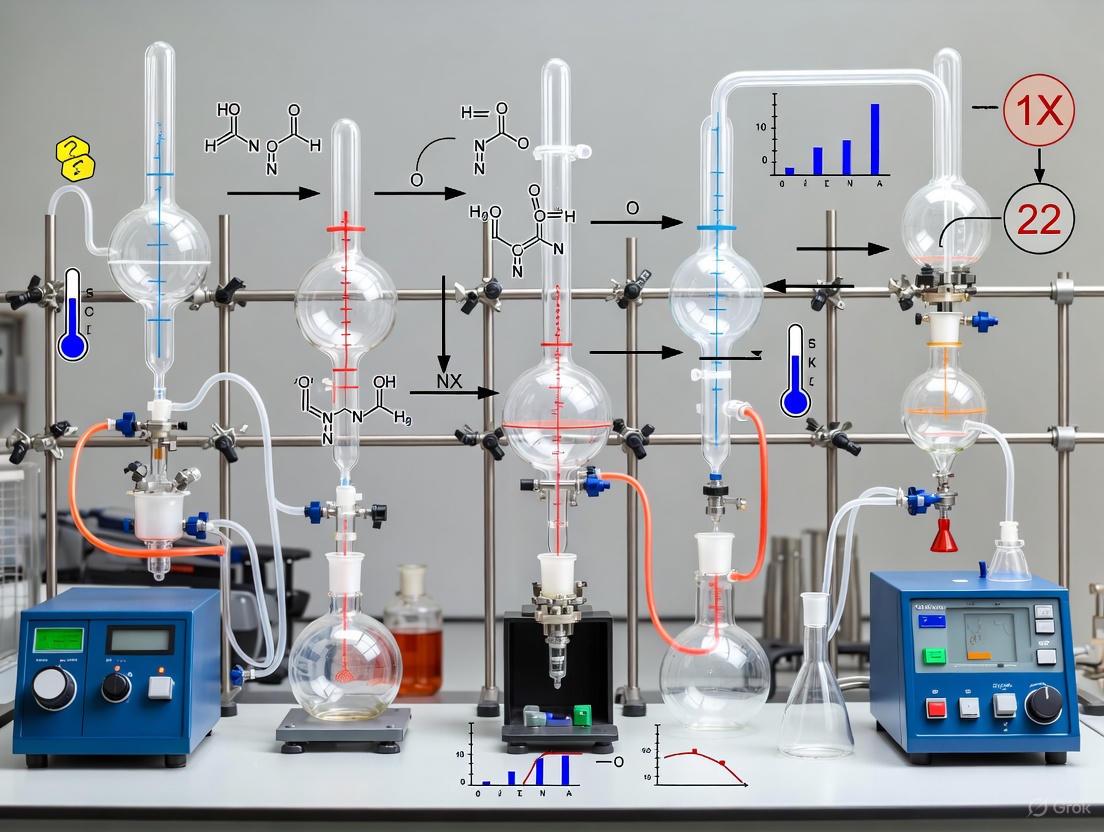
Automated synthesis platforms are revolutionizing organic chemistry by integrating robotics, artificial intelligence, and advanced engineering to accelerate molecular discovery.
Automated Synthesis Platforms in Organic Chemistry: A New Paradigm for Drug Discovery and Research
Abstract
Automated synthesis platforms are revolutionizing organic chemistry by integrating robotics, artificial intelligence, and advanced engineering to accelerate molecular discovery. This article provides a comprehensive overview for researchers and drug development professionals, covering the foundational principles of these systems—from AI-driven synthesis planning to robotic execution in both flow and batch configurations. It delves into practical applications across medicinal chemistry, including the synthesis of complex peptoids and pharmaceuticals, while also addressing key challenges such as system flexibility and purification. The content further explores optimization strategies through self-learning algorithms and in-line analytics, validates platform efficacy through comparative case studies, and concludes with the transformative impact these technologies are having on the speed, reproducibility, and safety of chemical research.
The Foundations of Lab Automation: From Robotic Arms to AI Planning
Automated synthesis refers to the use of specialized, computer-controlled equipment and robotic systems to perform chemical synthesis, enabling the highly efficient and reproducible production of chemical compounds, particularly complex molecules like peptides and pharmaceuticals [1] [2]. This approach represents a paradigm shift from traditional manual methods, offering increased speed, precision, and scalability for research and development in organic chemistry [1] [3]. In the context of modern organic chemistry research, automated synthesis platforms are foundational to achieving higher throughput, improving experimental reproducibility, and accelerating the discovery and optimization of new molecules for drug development and materials science [3] [4].
Core Concepts
The fundamental principle behind automated synthesis is the modularization and computer-control of common physical operations required to perform chemical reactions [5]. This typically involves robotic execution of a sequence of steps such as transferring precise amounts of starting materials to a reaction vessel, heating or cooling the vessel while mixing, purifying and isolating the desired product, and analyzing the product for quality and yield [2] [5]. These platforms can function as standalone automated systems or can be integrated into closed-loop, self-driving laboratories where machine learning algorithms analyze results and select the next set of experiments without human intervention [3].
A key conceptual framework in modern automated synthesis is the translation of an experimental goal into a hardware-agnostic sequence of operations. This is often achieved through specialized chemical programming languages, such as the Chemical Descriptive Language (XDL), which allows synthetic procedures to be described in a standardized, computer-readable format [6] [5]. This enables the same synthetic protocol to be executed across different robotic platforms, enhancing reproducibility and collaboration [5].
Key Terminology
- Automated Synthesis: A comprehensive term for techniques that use robotic equipment, run by software control, to perform chemical synthesis [2].
- High-Throughput Experimentation (HTE): A technique that leverages a combination of automation, parallelization of experiments, advanced analytics, and data processing to streamline repetitive experimental tasks, reduce manual intervention, and significantly increase the rate of experimental execution compared to traditional experimentation [3].
- Self-Optimizing System: A closed-loop platform that integrates automated synthesis, in-line analysis, and a machine learning algorithm to autonomously optimize reaction conditions (e.g., for yield or selectivity) by using the analytical results to propose and test improved conditions [3] [5].
- Retrosynthesis Software: Computer-aided synthesis planning (CASP) tools that use data-driven approaches, often based on artificial intelligence, to propose viable synthetic routes to a target molecule [5]. Examples include ASKCOS, Synthia, and IBM RXN [5].
- Merrifield Solid-Phase Peptide Synthesis: A seminal automated synthesis technique where the growing peptide chain is covalently attached to an insoluble polymeric support, enabling simplified purification and automation of coupling and deprotection steps [1].
- Chemical Programming Language: A domain-specific language, such as XDL, designed to describe chemical synthesis procedures in a structured, unambiguous, and hardware-independent manner [5].
- Batch Synthesis: An automated approach where reactions are performed in discrete, parallel vessels (e.g., well plates or vials) without continuous flow of materials [3].
- Flow Synthesis: A method where reactants are continuously pumped through a reactor, offering advantages for heat and mass transfer and integration with in-line analysis [5].
- Iterative Homologation: An automated synthetic strategy involving the stepwise, repeated extension of a carbon chain, such as the one-carbon insertion into boronic esters, to build complex molecular structures [2].
Quantitative Data and Performance Metrics
Table 1: Performance Metrics of Automated Synthesis Platforms
| Platform / Technique | Throughput (Reactions) | Timeframe | Key Outcome / Yield | Primary Application |
|---|---|---|---|---|
| Chemspeed SWING (Batch) [3] | 192 reactions | 4 days | Exploration of stereoselective Suzuki–Miyaura couplings | Reaction condition screening |
| Mobile Robot Chemist [3] | Not Specified | 8 days | Hydrogen evolution rate of ~21.05 µmol·hâ»Â¹ | 10-dimensional parameter search for photocatalysis |
| Automated Peptide Synthesis [1] | Significantly higher than manual | Shorter timeframe | High reproducibility and consistency | Production of therapeutic peptides |
| Text-to-Action-Sequence Model [6] | N/A (Data Processing) | N/A | 60.8% perfect action sequence match from text | Translating experimental procedures to executable steps |
Table 2: Comparison of Common Automated Synthesis Reactor Types
| Reactor Type | Key Features | Advantages | Limitations / Challenges |
|---|---|---|---|
| Batch (Well Plates) [3] | Parallel reactions in multi-well plates (e.g., 96, 48, 24-well). | High throughput for screening; excellent for varying stoichiometry and chemical formulation. | Individual control of time/temperature per well is difficult; challenges with high-temperature/reflux conditions. |
| Flow Reactors [5] | Continuous flow of reagents through a reactor. | Improved heat/mass transfer; easier integration with in-line analysis. | Requires additional planning for solubility; potential for clogging. |
| Modular Batch (e.g., Chemputer) [5] | Automated operations in classic glassware (round-bottom flasks, etc.). | High flexibility; mimics traditional lab workflow. | Requires complex engineering for sample transfer between modules. |
Experimental Protocols
Protocol 1: High-Throughput Screening of Reaction Conditions in Batch
Application: Rapid optimization of catalytic reactions (e.g., Suzuki–Miyaura coupling) [3].
- Experimental Design: Define the reaction parameter space (variables: catalyst, ligand, base, solvent, temperature, concentration). Use a design of experiments (DoE) approach or machine learning algorithm to select the initial set of conditions for the first screening round.
- Reaction Setup:
- A liquid-handling robot equipped with a syringe or pipette dispense head is used to transfer specified volumes of solvents, stock solutions of reagents, and catalysts into the wells of a 96-well reaction block [3].
- The reactor block is sealed to prevent evaporation.
- Reaction Execution: The reaction block is transferred to a heater/shaker module. Reactions proceed with mixing and heating at the predefined temperature for a set duration [3].
- Analysis: After the reaction time has elapsed, an autosampler injects crude reaction mixtures from each well into an LC/MS for analysis to determine conversion and yield [3].
- Data Processing and Iteration: Analytical data is automatically processed. A machine learning algorithm (e.g., Bayesian optimization) uses the results to predict the next, more optimal set of reaction conditions to test, and the process repeats in a closed loop [3].
Protocol 2: Automated Multi-Step Synthesis Using a Modular Platform
Application: Target-oriented synthesis of a novel organic molecule without manual intervention [5].
- Synthesis Planning: Input the target molecule structure into retrosynthesis software (e.g., ASKCOS, Synthia). The software proposes one or more viable synthetic routes [5].
- Procedure Translation: The selected synthetic route is translated into a structured, hardware-agnostic sequence of actions using a chemical programming language like XDL [5].
- Platform Execution:
- A robotic arm or gripper transfers the starting reaction vessel to a liquid handling station.
- Reagents and solvents are dispensed from a centralized chemical inventory into the vessel.
- The vessel is moved to a station for stirring and heating/cooling.
- After reaction completion, the vessel is moved to a workup station, where liquid-liquid extraction or other workup procedures may be performed automatically [5].
- The crude product may be purified using an integrated flash chromatography system.
- The purified intermediate is analyzed (e.g., by LC/MS or NMR) to confirm identity and purity before proceeding to the next step [5].
- Iteration: The process is repeated for each subsequent synthetic step, with the platform handling the transfer and setup for each new reaction until the final target molecule is synthesized and isolated.
Workflow Diagram
Automated Synthesis Workflow
The Scientist's Toolkit: Research Reagent Solutions
Table 3: Essential Reagents and Materials for Automated Synthesis
| Reagent / Material | Function in Automated Synthesis |
|---|---|
| Pre-filled Reagent Cartridges [7] | Disposable capsules containing pre-measured reagents for specific reaction classes (e.g., reductive amination, Suzuki coupling); enable consistent, push-button operation and simplify liquid handling. |
| MIDA-Boronates [5] | Bench-stable boronate esters used in iterative cross-coupling; their stability allows for automated "catch-and-release" purification strategies, simplifying multi-step synthesis. |
| Solid-Phase Supports (Resins) [1] | Insoluble polymeric supports to which growing molecules (e.g., peptides, oligonucleotides) are attached; facilitate automation by allowing excess reagents to be washed away without isolating the intermediate product. |
| Air-/Moisture-Sensitive Reagents | Reagents stored in specialized, sealed containers or cartridges under an inert atmosphere; integrated platforms can handle these reagents without manual glovebox use, expanding reaction scope. |
| De-gassing Agents/Enzymes [2] | Substances used in automated platforms to remove oxygen from reaction mixtures, enabling oxygen-tolerant controlled radical polymerizations (e.g., Enz-RAFT, ATRP). |
| De-protecting Agents [7] | Reagents (e.g., for Boc deprotection, silyl deprotection) available in standardized formats for automated removal of protecting groups in multi-step synthesis sequences. |
| Esomeprazole magnesium salt | Esomeprazole magnesium salt, MF:C17H19MgN3O3S, MW:369.7 g/mol |
| NMS-P715 | NMS-P715, MF:C35H39F3N8O3, MW:676.7 g/mol |
The field of organic chemistry research has undergone a profound transformation through the integration of automation, evolving from specialized peptide synthesizers to flexible, mobile robotic chemists. This evolution represents a fundamental shift in research methodology—from automated tools that execute predefined protocols to intelligent systems capable of exploratory synthesis and decision-making. The journey began with solid-phase peptide synthesis (SPPS) in the 1960s, which introduced the paradigm of insoluble polymeric supports to simplify purification and enable stepwise chain elongation [8]. For decades, automation in chemistry was characterized by highly specialized, rigid systems optimized for specific tasks like peptide synthesis or high-throughput screening [9].
The contemporary era is defined by the emergence of the "robochemist"—integrated systems where robotics and artificial intelligence (AI) converge to create platforms that not only execute experiments but also analyze results and plan subsequent steps [9] [10]. These systems mark a critical transition from automation to autonomy, with mobile robots now capable of sharing existing laboratory equipment with human researchers without monopolizing it or requiring extensive redesign [11]. This article traces this technological evolution through its key developmental stages, provides detailed experimental protocols, and explores the implications of these advancements for the future of organic chemistry research and drug development.
Historical Development and Key Technological Transitions
The Solid-Phase Revolution and Early Automation
The foundation of modern automated synthesis was laid in 1963 when Bruce Merrifield developed solid-phase peptide synthesis on crosslinked polystyrene beads, a breakthrough that would earn him the Nobel Prize [12]. The core innovation was anchoring the C-terminal amino acid to an insoluble resin support, allowing reagents in large excess to drive reactions to completion before cleaving the relatively pure peptide from the support [12]. This approach naturally lent itself to automation, with the first automated solid-phase synthesizer appearing in 1968 [12].
The 1970s and 1980s witnessed crucial refinements in SPPS methodology. In 1970, Carpino and Han introduced the base-labile 9-fluorenylmethoxycarbonyl (Fmoc) protecting group as a chemically mild alternative to the acid-labile t-butyloxycarbonyl (Boc) group [12] [8]. This established the concept of orthogonal protection schemes, where different protecting groups could be removed selectively using different mechanisms [8]. The subsequent development of specialized resins like Wang's p-alkoxybenzyl alcohol resin (1973) and Rink's TFA-labile resin (1987) further expanded synthetic capabilities [12].
Table 1: Key Historical Milestones in Automated Synthesis
| Year | Development | Significance |
|---|---|---|
| 1963 | Merrifield develops SPPS | Foundation for solid-phase synthesis and automation [12] |
| 1968 | First automated peptide synthesizer | Enabled automated stepwise peptide assembly [12] |
| 1970 | Introduction of Fmoc protecting group | Provided milder, orthogonal protection scheme [12] [8] |
| 1978 | Fmoc/tBu strategy with Wang resin | Established modern Fmoc chemistry protocol [12] |
| 1987 | Commercial multiple peptide synthesizer | Made automated synthesis widely accessible [12] |
| 2000 | Introduction of stapled peptides | Demonstrated application for potential drug leads [12] |
| 2024 | Autonomous mobile robotic chemists | Integrated mobility, AI decision-making, and multiple analytical techniques [11] |
The adoption of these technologies shifted over time. In 1991, core facilities were equally divided between Boc and Fmoc chemistry, but by 1994, 98% of participating laboratories in ABRF studies used Fmoc chemistry, citing its milder conditions and reduced side reactions [8]. Instrumentation evolved in parallel, with companies like CEM Corporation introducing microwave-assisted peptide synthesizers that dramatically reduced cycle times from hours to minutes [13].
High-Throughput Experimentation and the Station-Based Paradigm
Building on the automation principles established by peptide synthesis, the 1990s saw the pharmaceutical industry embrace High-Throughput Experimentation (HTE), integrating robotics, miniaturization, and parallelization into automated platforms [9]. HTE fundamentally changed the exploration of chemical space by enabling the evaluation of miniaturized reactions in parallel, in contrast to the traditional "one variable at a time" approach [14].
This era was characterized by station-based automation—dedicated systems for specific tasks like liquid handling, reaction execution, or analysis. These systems delivered transformative gains in throughput and reproducibility but were typically highly specialized and rigid [9]. They relieved chemists of repetitive manual work but remained limited to narrow functions and demanded constant supervision by trained specialists [9]. Despite these limitations, HTE established crucial infrastructure and methodologies for parallel experimentation that would pave the way for more autonomous systems.
The Rise of Mobile Robotic Chemists
The most significant paradigm shift in recent years has been the development of mobile robotic chemists that physically navigate standard laboratory environments. Unlike traditional stationary automation, these systems use mobile manipulators to transfer samples between specialized but physically separated stations for synthesis, analysis, and processing [11] [9].
This architectural innovation creates inherently modular and scalable workflows. In a landmark 2024 demonstration, mobile robots were integrated into an autonomous laboratory by operating a Chemspeed ISynth synthesis platform, a liquid chromatography–mass spectrometer, and a benchtop NMR spectrometer [11]. The critical advancement was that these robots could share existing laboratory equipment with human researchers without requiring extensive redesign [11]. This approach mimics human experimentation protocols more closely than previous automated systems, drawing on multiple characterization techniques (NMR and UPLC-MS) to make informed decisions about subsequent synthetic steps [11].
Table 2: Comparison of Automated Synthesis Platforms
| Platform Type | Key Features | Advantages | Limitations |
|---|---|---|---|
| Early Peptide Synthesizers | Solid-phase support; Stepwise amino acid addition; Repetitive deprotection/coupling cycles [8] | Simplified purification; Enabled automation of peptide assembly; Driven to completion with excess reagents [8] | Limited to peptide synthesis; Rigid programming; Minimal analytical integration |
| High-Throughput Screening Platforms | Miniaturization; Parallel reaction arrays; Automated liquid handling [14] | Rapid exploration of chemical space; Good for optimization; Material efficient [14] | Specialized equipment; Limited reaction scope; Often single analysis technique |
| Mobile Robotic Chemists | Free-roaming robots; Modular instrumentation; AI decision-making; Multiple analytical techniques [11] [9] | Flexible and adaptable; Uses existing lab equipment; Mimics human decision-making; Suitable for exploratory synthesis [11] | Higher complexity; Integration challenges; Currently slower than dedicated high-throughput systems |
Concurrent with these hardware advances, artificial intelligence has become increasingly embedded in autonomous systems. AI-driven platforms like "Synbot" integrate retrosynthesis planning, experimental design, and optimization modules with robotic execution systems [10]. These systems can autonomously plan synthetic routes, execute them in batch reactors, analyze outcomes, and iteratively refine their approaches based on experimental feedback [10]. The integration of large language models for extracting synthesis methods from literature further enhances their autonomous capabilities [15].
Experimental Protocols
Protocol 1: Traditional Solid-Phase Peptide Synthesis (SPPS)
Principle and Planning
SPPS involves the stepwise addition of protected amino acids to a growing peptide chain covalently attached to an insoluble resin support [8]. The C-terminal functionality (acid or amide) determines resin selection—Wang or 2-chlorotrityl resin for acids; Rink amide or Sieber amide resin for amides [16]. The protection scheme must be selected based on peptide sequence: Boc/Bzl protection for long or difficult sequences prone to aggregation; Fmoc/tBu for acid-sensitive peptides or those requiring side-chain modifications [16].
Materials and Reagents
- Resin: Appropriate solid support (e.g., Wang resin for acids; Rink amide resin for amides)
- Amino Acid Derivatives: Fmoc- or Boc-protected amino acids with appropriate side-chain protection
- Coupling Reagents: HBTU/HATU with DIEA, or DIC with HOBt/Oxyma
- Deprotection Reagents: 20-50% piperidine in DMF for Fmoc; 50% TFA in DCM for Boc
- Solvents: DMF, DCM, NMP (high purity)
- Cleavage Cocktail: TFA with appropriate scavengers (e.g., water, triisopropylsilane, ethanedithiol)
Stepwise Procedure
- Resin Swelling: Suspend the resin (0.1-0.5 mmol) in DCM or DMF (5-10 mL/g resin) for 15-30 minutes.
- Fmoc Removal (if using Fmoc chemistry): Treat resin with 20% piperidine in DMF (2 × 5-10 mL/g resin, 3-10 minutes each). Wash thoroughly with DMF (5-6 ×).
- Coupling Reaction: Add 3-5 equivalents of Fmoc-amino acid dissolved in DMF, followed by 3-5 equivalents of coupling reagent (e.g., HBTU/HATU) and 6-10 equivalents of base (e.g., DIEA). Mix for 30-90 minutes.
- Washing: After coupling, wash resin sequentially with DMF (3×), DCM (2×), and DMF (3×).
- Repetition: Repeat steps 2-4 for each additional amino acid.
- Final Deprotection: After assembling sequence, perform final Fmoc removal.
- Cleavage: Treat resin with cleavage cocktail (TFA with appropriate scavengers, 10 mL/g resin) for 2-4 hours.
- Precipitation and Isolation: Filter to remove resin, concentrate filtrate, precipitate peptide in cold diethyl ether, collect by centrifugation, and purify by preparative HPLC [8] [16].
Protocol 2: Autonomous Synthesis Using Mobile Robotic Chemists
System Configuration
This protocol describes the modular workflow for autonomous exploratory synthesis using mobile robots [11].
Equipment and Software
- Synthesis Module: Chemspeed ISynth or equivalent automated synthesizer
- Analytical Modules: UPLC-MS and benchtop NMR spectrometer
- Mobile Robots: Free-roaming robotic agents with sample manipulation capabilities
- Control Software: Central scheduling and decision-making software
- Database: Centralized data repository for experimental results
Stepwise Procedure
Experiment Initiation:
- Human researchers select target chemistry and building blocks.
- Synthesis platform prepares reaction mixtures in parallel.
- ISynth synthesizer takes aliquots of each reaction mixture and reformats them separately for MS and NMR analysis.
Sample Transportation and Analysis:
- Mobile robots transport samples to appropriate analytical instruments.
- UPLC-MS analysis performed autonomously.
- Benchtop NMR analysis performed autonomously.
- Data saved in central database with experiment identifier.
Decision-Making Cycle:
- Heuristic decision-maker processes orthogonal NMR and UPLC-MS data.
- Binary pass/fail grading applied to each analysis based on experiment-specific criteria.
- Combined results determine which reactions proceed to next stage.
- Successful reactions advanced for further elaboration or scale-up.
Iterative Optimization:
- System automatically checks reproducibility of screening hits.
- Subsequent synthesis operations determined algorithmically.
- Process continues through multiple synthesis-analysis-decision cycles without human intervention [11].
The Scientist's Toolkit: Essential Research Reagents and Materials
Table 3: Key Research Reagent Solutions for Automated Synthesis
| Reagent/Material | Function | Application Notes |
|---|---|---|
| Fmoc-Amino Acids | Building blocks for peptide synthesis | Use with side-chain protecting groups stable to base deprotection but labile to TFA [8] [16] |
| Rink Amide Resin | Solid support for C-terminal amide peptides | Cleavage with 50% TFA with scavengers; standard substitution 0.5-1.2 mmol/g [16] |
| HBTU/HATU | Coupling reagents | Activates carboxyl group for amide bond formation; use with DIEA base [8] |
| Wang Resin | Solid support for C-terminal acid peptides | p-alkoxybenzyl alcohol linker; cleavage with 50% TFA [12] [16] |
| 2-Chlorotrityl Chloride Resin | Solid support for protected peptide fragments | Highly acid-sensitive; cleavage with 1% TFA for side-chain protected peptides [16] |
| TFA Cleavage Cocktail | Peptide-resin cleavage and side-chain deprotection | Typically TFA:water:triisopropylsilane (95:2.5:2.5); adjust scavengers for specific residues [8] |
| Buparlisib Hydrochloride | Buparlisib Hydrochloride, CAS:1312445-63-8, MF:C18H22ClF3N6O2, MW:446.9 g/mol | Chemical Reagent |
| MK2-IN-1 | MK2-IN-1, CAS:1314118-92-7, MF:C27H25ClN4O2, MW:472.97 | Chemical Reagent |
Workflow and System Architecture Diagrams
SPPS Cyclic Coupling Workflow
Autonomous Mobile Robotic Chemist Workflow
Modular Laboratory Architecture
The evolution from dedicated peptide synthesizers to mobile robotic chemists represents a fundamental transformation in how chemical research is conducted. What began as specialized automation for a specific class of molecules has matured into general-purpose robotic systems capable of autonomous exploratory synthesis across diverse chemical domains [11] [9]. This transition has been enabled by converging technologies: mobile robotics that provide physical interconnection between standard laboratory equipment, advanced AI that enables intelligent decision-making, and modular architectures that allow flexible reconfiguration for different chemical challenges [11] [10].
These autonomous systems are particularly valuable for exploratory synthesis where outcomes are not easily reduced to a single optimization metric, such as in supramolecular chemistry or reaction discovery [11]. Unlike traditional automation focused on optimizing known reactions, modern robotic chemists can navigate complex, multi-dimensional chemical spaces and identify promising synthetic targets based on multiple analytical criteria [11]. The future direction points toward increasingly symbiotic partnerships between human intuition and robotic precision, where AI-driven systems handle repetitive tasks and data-intensive analysis while human researchers focus on high-level strategy and creative problem-solving [9].
As these technologies mature and become more accessible, they promise to accelerate discovery across pharmaceutical development, materials science, and sustainable manufacturing. The integration of large language models for literature-based planning [15], along with more sophisticated decision algorithms that can reason across diverse data types, will further enhance the capabilities of autonomous chemical research systems. The history of automated synthesis platforms demonstrates that each technological advance has expanded the scope of addressable chemical problems, with mobile robotic chemists representing the current frontier in this ongoing evolution.
In modern organic chemistry research, particularly within automated synthesis platforms for drug development, the physical execution of designed experiments rests on three core hardware components: reaction modules, robotic grippers, and chemical inventories. These systems transform digital synthesis plans into physical reality, enabling high-throughput, reproducible, and data-rich experimentation. Their integration is crucial for advancing the Design-Make-Test-Analyze (DMTA) cycle, with automation specifically targeting the "Make" phase, often the primary bottleneck in chemical discovery [17]. This application note details the specifications, operational protocols, and integration methodologies for these components, providing a framework for their implementation in research-scale automated platforms.
Reaction Modules: Automated Synthesis Execution
Reaction modules are automated systems that perform chemical reactions by replacing manual operations like reagent addition, mixing, and heating with programmable hardware. They are primarily categorized into batch and flow systems, each with distinct advantages.
Table 1: Comparison of Automated Reaction Module Types
| Feature | Automated Batch Reactors | Automated Flow Reactors |
|---|---|---|
| Reaction Vessel | Vials (e.g., microwave), round-bottom flasks [5] [18] | Tubing or fixed-bed reactors [5] |
| Typical Scale | ~1-1000 mL total volume [18] | Continuous process, scalable [5] |
| Key Strengths | Versatility, mimics traditional lab setup [5] | Enhanced heat/mass transfer, precise parameter control [18] [4] |
| Common Hardware | Chemspeed platforms [18], "Chemputer" [5] | SRI's SynFini [5], iChemFoundry [4] |
| Automation Consideration | Requires robotic transfer between steps [5] | Requires planning for solubility, pressure [5] |
Experimental Protocol: Multi-Step Synthesis in an Automated Batch Platform
Objective: Execute a two-step synthesis with an intermediate workup and analysis using a vial-based automated batch system.
Materials:
- Automated platform (e.g., Chemspeed AUTOPLANT [18])
- Reaction vials (e.g., 100 mL total volume)
- Stock solutions of starting materials, reagents, and solvents
- Purification cartridges (e.g., for liquid-liquid extraction or drying)
- Online or autosampler-coupled LC/MS [5]
Procedure:
- Platform Initialization: Verify that all necessary solvents and reagents are available in the platform's chemical inventory. Execute a system cleaning cycle and initialize all hardware units, including the liquid handler, heater/shaker block, and analytical autosampler.
- Reaction Vessel Preparation: The robotic gripper places an empty, tared reaction vial onto the balance. The liquid handler dispenses the prescribed solvent and stock solutions of starting materials gravimetrically, confirming accurate dispensing [18].
- Reaction Execution: The gripper transfers the sealed vial to a heater/shaker block. The reaction proceeds under programmed conditions (e.g., 80°C, 600 rpm, 2 hours). The system monitors and logs parameters like temperature and pressure.
- Intermediate Analysis & Workup: After the reaction time elapses, the gripper moves the vial to a cooling station. An autosampler withdraws a crude sample for LC/MS analysis [5]. Based on a successful outcome, the liquid handler adds workup reagents (e.g., quenching solution, extraction solvent). The mixture is transferred through a purification cartridge (e.g., for drying) [18], and the gripper moves the product-containing solution to a new vial.
- Second-Step Synthesis: The liquid handler adds reagents for the second synthetic step. The procedure repeats from Step 3.
- Final Product Isolation: After the final reaction and workup, the purified product is dispensed into a labeled vial for collection or transferred to a storage location, with its new identity and location logged in the digital inventory [19].
Figure 1: Workflow for a multi-step synthesis protocol on an automated batch platform.
Robotic Grippers: The Hand of the Automated Chemist
Robotic grippers serve as the interface between the automated system and laboratory ware, enabling the transport of vessels between stations. The design of the end-effector is critical for reliability and flexibility.
Table 2: Characteristics of Robotic Gripper Types for Laboratory Automation
| Gripper Type | Mechanism | Key Advantages | Limitations | Reliability/Grasp Failure Rate |
|---|---|---|---|---|
| Parallel Jaw (Industry Standard) | Two fingers close in parallel motion | High reliability for known objects, simple control [20] | Requires bespoke fingers for different vessels; poor adaptability [21] | ~88-92% per-task success in integrated systems [20] |
| Soft Cable Loop (CLG) | A cable forms a loop that tightens around the object | High adaptability to various sizes/shapes; minimal clearance needed [21] | Specialized design; potential for cable wear over time | ≤1% grasp failures in testing [21] |
| Universal (e.g., Granular Jamming) | A soft pouch conforms to object shape then stiffens | Can grasp highly irregular objects [21] | Can be bulky; more complex control | Not specified in results |
Experimental Protocol: Reliable Vial Grasping with a Cable Loop Gripper (CLG)
Objective: Securely grasp cylindrical and prismatic laboratory vials of different sizes from a densely-packed tray with minimal clearance.
Materials:
- Robotic manipulator arm (e.g., Universal Robots UR5 [21])
- Cable Loop Gripper (CLG) end-effector [21]
- Tray containing various vials (e.g., 4-20 mL scintillation vials)
Procedure:
- Object Localization: Using a vision system (e.g., a DenseSSD object detector with >95% precision [20]), the robot identifies the type and 3D position of the target vial in the tray.
- Gripper Positioning: The robotic arm maneuvers the CLG so the cable loop is positioned around the target vial. The compliant nature of the cable allows it to be draped around the object with minimal clearance [21].
- Loop Tightening: The gripper's actuator shortens the cable, causing the loop to tighten and enclose the vial completely. The inherent compliance of the cable ensures force is distributed, accommodating slight variations in vial geometry.
- Stabilization: As the cable tightens further, the vial is pulled snugly against a rigid "finger" or support structure on the gripper. This provides stability and corrects for minor positional errors, ensuring the vial is aligned for a secure lift [21].
- Transport and Release: The robot moves the vial to its destination (e.g., a balance or heater/shaker). The actuator then releases tension on the cable, expanding the loop and releasing the vial.
Chemical Inventories: The Digital and Physical Library
A centralized and digitally-linked chemical inventory is the cornerstone of an autonomous platform, ensuring that the system knows what compounds are available and where they are located.
Table 3: Key Features of Modern Chemical Inventory Management Software
| Software Feature | Functional Role | Example Implementation |
|---|---|---|
| Structure & Sub-structure Search | Instantly find compounds by name, CAS number, or chemical structure [22] | ChemInventory [22] |
| Inventory Tracking | Real-time tracking of container location, quantity, and usage history [19] | Dotmatics Lab Inventory Management [19] |
| GHS Safety Information | Displays hazard pictograms and precautionary codes for safe handling [22] | ChemInventory [22] |
| Order Management | Streamlines the process of requesting and tracking new chemical orders [22] | ChemInventory [22] |
| Integration with ELN/RMS | Allows inventory checks and data access directly within electronic lab notebooks [19] | Dotmatics [19] |
Experimental Protocol: Automated Reagent Verification and Usage
Objective: Ensure a planned synthesis uses the correct, in-stock reagent and automatically update inventory after dispensing.
Materials:
- Chemical Inventory Software (e.g., ChemInventory [22], Dotmatics [19])
- Integrated Laboratory Information System (LIMS) or Electronic Lab Notebook (ELN)
- Automated platform with barcode/RFID reader
- Smart storage locations with IoT sensors (e.g., RFID, load cells [20])
Procedure:
- Synthesis Plan Integration: The synthesis planning software (e.g., ASKCOS [5]) generates a procedure and sends a query to the chemical inventory system to verify the availability of required reagents.
- Reagent Location & Identity Check: The inventory system returns the specific storage location (e.g., "Solvent Bay A, Position 3") of the reagent container. The robotic system navigates to this location. Optionally, a barcode or RFID reader on the gripper can scan the container to confirm its identity [20].
- Dispensing and Quantity Update: The robot dispenses the required mass or volume of the reagent. Integrated load cells in the smart tray or balance confirm the amount dispensed.
- Automated Inventory Update: The chemical inventory software automatically updates the remaining quantity of the reagent using the formula:
ΔW = W_stable - W_previous[20]. If the remaining quantity falls below a pre-set threshold, the system can automatically flag the item for reordering. - Data Logging: The software logs the transaction, creating a full audit trail that links the experiment to the specific lot and quantity of chemical used, which is critical for reproducibility [19].
The Scientist's Toolkit: Research Reagent Solutions
Table 4: Essential Research Reagents and Software for Automated Synthesis
| Item Name | Category | Function in Automated Synthesis |
|---|---|---|
| MIDA-boronates | Specialized Reagent | Enables iterative cross-coupling reactions via automated "catch and release" purification, simplifying multi-step synthesis [5]. |
| LC/MS with Autosampler | Analytical Instrument | Provides rapid, serial analysis of reaction outcomes for success/failure determination and yield quantification [5]. |
| AiZynthFinder | Software | An AI-powered tool for retrosynthetic planning that integrates with automated platforms to design viable synthetic routes [23]. |
| XDL (Chemical Description Language) | Software | A hardware-agnostic programming language used to describe chemical synthesis procedures for execution on different automated platforms [5]. |
| Smart Tracking Tray | Hardware/Software | An IoT-enabled tray (with RFID/load cells) that automatically logs chemical usage and updates inventory levels in real-time [20]. |
| Fmoc-Val-Cit-PAB-MMAE | Fmoc-Val-Cit-PAB-MMAE, MF:C73H104N10O14, MW:1345.7 g/mol | Chemical Reagent |
| (S)-Dolaphenine hydrochloride | (S)-Dolaphenine hydrochloride, MF:C11H13ClN2S, MW:240.75 g/mol | Chemical Reagent |
The seamless integration of robust reaction modules, adaptive robotic grippers, and intelligent chemical inventories forms the essential hardware foundation for modern, data-driven organic synthesis platforms. These components collectively enhance the reproducibility, throughput, and overall efficiency of research, particularly in demanding fields like drug development. As these technologies continue to evolve, they will play an increasingly pivotal role in closing the loop of fully autonomous discovery, allowing scientists to focus on higher-level design and interpretation.
The Role of AI and Machine Learning in Retrosynthesis Planning
The integration of Artificial Intelligence (AI) and Machine Learning (ML) into retrosynthesis planning represents a paradigm shift in organic chemistry and drug discovery. This transition moves the field away from intuition-based approaches and toward data-driven strategies, which are becoming central to automated synthesis platforms. Retrosynthesis planning, the process of deconstructing a target molecule into simpler, commercially available precursors, is a foundational task in synthetic chemistry. Modern AI models, particularly deep learning architectures, are now capable of learning the "rules" of chemical transformations from vast reaction databases, thereby accelerating the design of viable synthetic routes [24] [5]. This document provides detailed application notes and experimental protocols for leveraging these technologies, specifically framed within the context of automated organic synthesis research.
State-of-the-Art AI Models in Retrosynthesis
Current AI models for retrosynthesis can be broadly categorized into template-based, semi-template-based, and template-free methods. The performance of these models is typically evaluated on standard benchmark datasets like USPTO-50k, which contains approximately 50,000 reaction examples.
Table 1: Performance Comparison of State-of-the-Art Retrosynthesis Models on the USPTO-50k Dataset
| Model Name | Architecture/Type | Key Feature | Reported Top-1 Accuracy (%) |
|---|---|---|---|
| RSGPT [25] | Generative Transformer (Template-free) | Pre-trained on 10 billion synthetic data points; uses RLAIF | 63.4 |
| RetroExplainer [24] | Molecular Assembly / Multi-sense Graph Transformer | Interpretable, formulates task as molecular assembly | 53.2 (Class Known) |
| Graph2Edits [25] | Semi-template-based | End-to-end model integrating two-stage procedures | ~55 (approx., from context) |
| NAG2G [25] | Graph-based | Combines 2D molecular graphs and 3D conformations | ~55 (approx., from context) |
| SCROP [25] | Template-free Transformer | Integrates a grammar corrector for valid SMILES | ~55 (approx., from context) |
The quantitative data in Table 1 demonstrates that the RSGPT model currently achieves state-of-the-art performance [25]. Its success is attributed by its developers to pre-training on an extremely large dataset of over 10 billion algorithmically generated reaction datapoints, which allows the model to acquire extensive chemical knowledge. Furthermore, it incorporates Reinforcement Learning from AI Feedback (RLAIF), where the model is refined using AI-generated feedback on the validity of its predictions, more accurately capturing the relationships between products, reactants, and templates [25].
Application Notes & Experimental Protocols
Protocol A: Implementing a Transformer-Based Retrosynthesis Model (RSGPT)
This protocol outlines the steps for utilizing a large-scale generative transformer model like RSGPT for single-step retrosynthesis prediction.
1. Principle: The model treats retrosynthetic planning as a sequence-to-sequence translation task, where the Simplified Molecular-Input Line-Entry System (SMILES) string of the target product is "translated" into the SMILES string of the corresponding reactants. The model is pre-trained on massive datasets to learn the grammar of chemistry and is fine-tuned for the specific retrosynthesis task.
2. Research Reagent Solutions & Essential Materials:
Table 2: Essential Computational Tools and Datasets
| Item Name | Function/Description | Example Sources |
|---|---|---|
| Reaction Dataset | Provides labeled data for training and fine-tuning models. Contains product-reactant pairs. | USPTO-50k, USPTO-FULL, USPTO-MIT [25] [24] |
| Template Library | A set of transformation rules derived from known reactions, used for data generation or template-based methods. | RDChiral [25] |
| Cheminformatics Toolkit | Handles molecular representation, fingerprint calculation, and SMILES validation. | RDKit [23] |
| Synthesis Planning Software | A framework that integrates the retrosynthesis model for multi-step pathway search. | AiZynthFinder [23] [26] |
| Hardware-Agnostic Execution Language | Translates a planned synthetic route into machine-readable instructions for automated platforms. | XDL (Chemical Description Language) [5] |
3. Procedure:
- Step 1: Molecular Input. Represent the target molecule in a SMILES string format.
- Step 2: Model Inference. Feed the product SMILES into the pre-trained and fine-tuned RSGPT model.
- Step 3: Prediction Generation. The model generates a ranked list of candidate reactant sets. The top-ranked prediction is the model's most probable suggestion.
- Step 4: Validation Check. The generated reactants and the implied template can be validated for chemical reasonableness using a rule-based algorithm like RDChiral, which provides feedback for reinforcement learning [25].
- Step 5: Route Expansion. For multi-step synthesis, feed the predicted reactants (if not commercially available) back into the model recursively until all leaf nodes are purchasable starting materials.
The workflow for this protocol, from input to validated output, is illustrated below.
Protocol B: Interpretable Retrosynthesis via Molecular Assembly (RetroExplainer)
This protocol uses a molecular assembly paradigm to provide transparent and interpretable predictions, moving away from "black box" models.
1. Principle: RetroExplainer formulates retrosynthesis as a step-wise molecular assembly process, breaking down the target molecule through a series of interpretable, substructure-level actions guided by deep learning. This process provides quantitative attribution, showing the contribution of different molecular sub-structures to the final prediction [24].
2. Procedure:
- Step 1: Molecular Representation. Encode the target molecule using a Multi-sense and Multi-scale Graph Transformer (MSMS-GT). This model captures both local molecular structures and long-range atomic interactions, creating a robust molecular representation [24].
- Step 2: Retrosynthetic Action Prediction. The model predicts a sequence of "retrosynthetic actions," such as breaking specific bonds or removing functional groups. This is guided by a dynamic adaptive multi-task learning (DAMT) objective that balances different prediction tasks [24].
- Step 3: Structure-Aware Contrastive Learning. Employ contrastive learning to ensure that structurally similar molecules have similar representations in the model's latent space, improving the model's ability to generalize [24].
- Step 4: Pathway Attribution and Energy Curve. The model generates an energy decision curve that breaks down the prediction into stages, allowing for "counterfactual" analysis and providing confidence scores for specific chemical transformations (e.g., bond disconnections) [24].
The logical flow of this interpretable assembly process is as follows.
Integration with Automated Synthesis Platforms
For an AI-driven retrosynthesis plan to be realized, it must be translated into physical actions by an automated synthesis platform. This integration involves several critical steps and considerations.
1. From Digital Plan to Physical Execution: The synthetic route generated by AI models must be translated into a hardware-agnostic programming language, such as the Chemical Description Language (XDL), which describes the procedure in terms of generic steps like "Add," "Stir," and "Heat" [5]. This XDL file is then compiled into low-level instructions specific to the robotic hardware of the platform, such as liquid handlers and robotic grippers [5].
2. Error Handling and Adaptive Learning: A key challenge is the platform's ability to handle unexpected outcomes. An ideal autonomous platform should be adaptive, capable of using analytical data (e.g., from in-line LC/MS) to detect reaction failures and trigger re-optimization or re-planning routines [5]. Bayesian optimization, for instance, can be used to refine reaction conditions based on real-time feedback [5].
3. Case Study: Neuro-Symbolic Programming for Group Synthesis A recent advancement involves algorithms inspired by neurosymbolic programming, which learn reusable synthesis patterns for groups of similar molecules—a common scenario in drug discovery when optimizing lead compounds [27]. The system operates in three phases:
- Wake Phase: The platform attempts to solve retrosynthetic planning tasks, recording successful and failed routes.
- Abstraction Phase: The system analyzes the recorded data to extract useful multi-step strategies, such as "cascade chains" (sequences of consecutive transformations) and "complementary chains" (interdependent reactions).
- Dreaming Phase: The system uses the abstracted strategies to generate synthetic data ("fantasies"), on which its neural models practice and refine their planning capabilities [27]. This approach has been shown to significantly reduce inference time when planning synthesis for groups of structurally similar molecules [27].
The full integration cycle, from AI planning to physical execution and learning, is depicted below.
In organic chemistry research, the reproducibility of synthetic procedures represents a significant challenge, with surveys indicating that a majority of researchers have been unable to replicate published results [28]. This reproducibility crisis stems from factors such as inconsistent chemical nomenclature, incomplete procedural descriptions in publications, and human error in manual execution [28]. Automated synthesis platforms are emerging as a powerful solution to these challenges by standardizing experimental procedures, enhancing precision, and generating comprehensive, structured data [5] [14]. This Application Note details the key drivers behind adopting automated platforms and provides detailed protocols for their implementation to accelerate discovery while ensuring reproducibility.
Key Drivers for Adoption
Automated synthesis platforms are transforming organic chemistry research by addressing critical bottlenecks. The table below summarizes the primary drivers and their impact.
Table 1: Key Drivers for Adopting Automated Synthesis Platforms
| Driver | Impact on Research | Quantitative/Qualitative Benefit |
|---|---|---|
| Enhanced Reproducibility | Standardizes reaction execution and eliminates manual variability [5] [14]. | Automated platforms improve experiment precision and reproducibility compared to manual experimentation [14]. |
| Accelerated Discovery | Enables high-throughput experimentation (HTE) by miniaturizing and parallelizing reactions [14]. | Testing of 1536 reactions simultaneously via ultra-HTE significantly accelerates data generation [14]. |
| Structured Data Capture | Converts unstructured experimental procedures into structured, automation-friendly action sequences [6]. | 60.8% of sentences in test sets were perfectly converted to action sequences [6]. |
| Access to Unexplored Chemical Space | Facilitates the exploration of non-standard reagents and conditions, reducing selection bias [14]. | Mitigates reliance on familiar, available reagents to uncover novel catalysts and reactivity [14]. |
| System Integration & Self-Learning | Combines robotic hardware with AI-driven synthesis planning and outcome prediction [5] [4]. | Platforms can learn from generated data, transitioning from mere automation to full autonomy [5]. |
Experimental Protocols
Protocol 1: Automated Multi-Step Synthesis Using a Batch Platform
This protocol describes the automated synthesis of a target molecule using a vial-based batch system, such as the Chemputer or platforms from Chemspeed [5] [29]. The workflow involves synthesis planning, hardware setup, reaction execution, and product analysis.
Table 2: Research Reagent Solutions for Automated Synthesis
| Item | Function | Example/Note |
|---|---|---|
| Chemical Inventory | Provides a library of building blocks and reagents for diverse synthesis [5]. | Eli Lilly's inventory can store five million compounds [5]. |
| Pre-packed Reagent Cartridges | Ensures precise, ready-to-use doses for specific reaction classes [30]. | SynpleChem cartridges for reactions like amidation, Suzuki coupling, and Boc protection [30]. |
| Solvent Dispensing System | Automates the delivery of various solvents for reactions and work-up. | Must accommodate solvents with a range of surface tensions and viscosities [14]. |
| Liquid Handling Robot | Precisely transfers liquid reagents and solvents [5]. | Critical for dose accuracy and reproducibility. |
| Solid Dispensing System | Gravimetrically dispenses solid catalysts, ligands, and reagents [29]. | Chemspeed's system enables paradigm shift in catalyst screening [29]. |
| Analysis & Purification Modules | Provides inline analysis (e.g., LC/MS) and automated purification [5]. | LC/MS is most common; online NMR is available in advanced systems [5] [29]. |
Procedure:
- Synthesis Planning: Use a computer-aided synthesis planning (CASP) tool like ASKCOS or SYNTHIA to generate a plausible synthetic route for the target molecule [5]. Translate the proposed route into a hardware-agnostic code, such as an XDL (Chemical Description Language) script [5] [6].
- Platform Setup:
- Ensure the platform's chemical inventory is stocked with the required starting materials, reagents, and solvents [5].
- Load the appropriate reaction vessels (e.g., microwave vials) onto the platform deck.
- Verify that all fluidic paths are primed and that the system is purged for air-sensitive chemistry if required [5] [14].
- Reaction Execution:
- The platform executes the XDL script, which may include the following automated actions [5] [6]:
Add: Transfer a specified volume of solvent to the reaction vessel.Add: Dispense solid and liquid starting materials.Stir: Initiate mixing of the reaction mixture.HeatorCool: Bring the reaction to a specified temperature for a defined duration.Wait: A delay action for the reaction to proceed.
- After the reaction is complete, the platform performs a
Quenchaction if needed.
- The platform executes the XDL script, which may include the following automated actions [5] [6]:
- Work-up and Purification:
- The platform performs a
Extractaction, diluting the crude mixture with a solvent like ethyl acetate and washing it with an aqueous solution (e.g., NaOH) [6]. - The organic layer is separated and dried over a solid drying agent like sodium sulfate (
Dryaction) [6]. - The solution is
Filteredto remove solids andConcentrated in vacuo to isolate the crude product. - The crude material is purified by automated column chromatography (
Purifyaction) [5] [6].
- The platform performs a
- Product Analysis:
- An autosampler injects the purified product into an inline Liquid Chromatography-Mass Spectrometry (LC/MS) system for analysis [5].
- The platform records yield, purity, and analytical data (e.g., mass spectrum), associating them directly with the executed procedure.
Protocol 2: High-Throughput Reaction Screening & Optimization
This protocol uses High-Throughput Experimentation (HTE) to optimize reaction conditions or explore new reactivities by testing numerous variables in parallel [14].
Procedure:
- Experimental Design:
- Define the variables to screen (e.g., catalysts, ligands, solvents, bases, temperatures).
- Use a liquid handler to prepare a Microtiter Plate (MTP) where each well contains a different combination of these components. Designs can be generated using statistical methods or AI to maximize information gain [14].
- Platform Setup:
- Reaction Initiation:
- Use a multi-channel dispenser or a coordinated liquid handler to add a common starting material solution to all wells of the MTP simultaneously, initiating the reactions.
- Seal the plate and set the platform to the desired temperature with uniform stirring across all wells to mitigate spatial bias [14].
- High-Throughput Analysis:
- After the reaction time has elapsed, the plate is automatically sampled.
- Analyze the samples in a high-throughput manner using techniques like flow-injection mass spectrometry or automated LC/MS [14].
- Data Management and Analysis:
- Export analytical results (e.g., conversion, yield) into a data analysis software.
- Visualize the data using heat maps or parallel coordinate plots to identify optimal conditions and trends [14].
- The high-quality dataset generated can be used to train machine learning models for future prediction and optimization [14] [4].
Workflow and System Diagrams
Automated Synthesis Workflow
Autonomous Synthesis Platform Architecture
Platforms in Action: Flow Chemistry, Robotic Systems, and Real-World Applications
Within modern organic chemistry research, particularly in the development of automated synthesis platforms, the selection between continuous-flow and batch-based methodologies is a fundamental strategic decision. Batch chemistry, the traditional cornerstone of synthetic laboratories, processes reactants in discrete, self-contained vessels. In contrast, continuous-flow chemistry involves the steady pumping of reactants through a tubular reactor, where reactions occur as the stream progresses through the system without interruption [31]. This application note provides a detailed technical comparison of these two platforms, framing them within the context of automated synthesis to guide researchers and drug development professionals in selecting and implementing the optimal approach for their specific applications. The content is structured to furnish not only a theoretical comparison but also actionable protocols and tools for practical implementation.
Technical Comparison at a Glance
The following tables summarize the core characteristics, performance metrics, and suitability of batch and continuous-flow platforms.
Table 1: Fundamental Process Characteristics
| Feature | Batch Chemistry | Continuous-Flow Chemistry |
|---|---|---|
| Basic Principle | Reactions proceed in a discrete, sealed vessel [31]. | Reactions proceed as fluids are pumped through a reactor [31]. |
| Process Flow | Distinct start and end points for each batch; sequential processing [32]. | Uninterrupted, steady-state operation [32] [33]. |
| Operational Scale | Limited by vessel volume [34]. | Determined by operational runtime [34]. |
| Heat Transfer | Less efficient, risk of hot/cold spots in large vessels [31]. | Highly efficient due to high surface-area-to-volume ratio [31] [35]. |
| Mixing Efficiency | Dependent on stirrer type and speed; can be inhomogeneous [31]. | Highly efficient via molecular diffusion in narrow channels [34]. |
| Reaction Time Control | Determined by manual quenching/addition [31]. | Precisely controlled by adjusting flow rate and reactor volume [31]. |
Table 2: Quantitative Performance and Economic Metrics
| Metric | Batch Chemistry | Continuous-Flow Chemistry |
|---|---|---|
| Equipment Utilization | 60-70% [33] | 85-95% [33] |
| Typical Lead Time | 2-4 weeks [33] | 2-7 days [33] |
| Scale-Up Process | Non-linear, often requires re-optimization [31] | Linear, often by numbering-up or extended runtime [31] [34] |
| Initial Capital Cost | Lower [31] [33] | Higher [31] [33] |
| Production Cost per Unit | Higher [33] | Lower at high volumes [33] |
| Labor Cost per Unit | Higher [33] | Lower [33] |
| Material Waste | 5-15% [33] | 1-5% [33] |
Table 3: Application Suitability and Limitations
| Aspect | Batch Chemistry | Continuous-Flow Chemistry |
|---|---|---|
| Ideal Production Volume | Small to medium volumes, custom syntheses [31] [32] | High-volume, consistent demand [32] [33] |
| Flexibility & Customization | High; easy to change reactants and conditions between batches [31] [32] | Lower; optimized for a specific, standardized process [32] |
| Handling of Solids | Excellent; standard reactor setups cope well with precipitates [34] | Challenging; high risk of reactor clogging [36] |
| Safety Profile | Higher risk for exothermic or hazardous reactions due to large volume [31] | Superior safety; small reactor volume minimizes inherent risk [31] [35] |
| Best for Exploratory Synthesis | Excellent [31] | Poor |
| Best for Optimized, Repetitive Production | Poor | Excellent [31] |
Experimental Protocols
Protocol for a Standard Batch Suzuki-Miyaura Cross-Coupling
This protocol exemplifies a typical batch reaction suitable for automated parallel screening platforms.
3.1.1. Reagents and Materials
- Aryl halide (e.g., 4-bromotoluene), 1.0 equiv.
- Aryl boronic acid (e.g., phenylboronic acid), 1.5 equiv.
- Base (e.g., K₂CO₃), 2.0 equiv.
- Palladium catalyst (e.g., Pd(PPh₃)₄), 2 mol%
- Solvent: Toluene/Ethanol/Water mixture (e.g., 3:1:1 v/v/v)
- Inert atmosphere source (Nâ‚‚ or Ar)
3.1.2. Equipment
- Jacketed round-bottom flask (e.g., ReactoMate system [34])
- Magnetic stirrer hotplate or overhead stirrer
- Reflux condenser
- Heating circulator (e.g., connected to DrySyn block [34])
- Syringes or cannulae for reagent addition
- Automated liquid handling system (for HTS)
3.1.3. Procedure
- Charge Reactor: Place the aryl halide, boronic acid, base, and palladium catalyst into the round-bottom flask.
- Purge and Atmosphere: Add the solvent mixture. Purge the headspace of the flask with an inert gas (Nâ‚‚/Ar) for 5 minutes and maintain a slight positive pressure.
- Initiate Reaction: With stirring, heat the reaction mixture to the target temperature (e.g., 80°C) and maintain it using the heating circulator.
- Monitor Reaction: Track reaction progress by manual sampling or inline PAT (e.g., ReactIR). Typical reaction time is 2-16 hours.
- Quench and Work-up: Once complete (as determined by TLC or HPLC), cool the reaction mixture to room temperature. Transfer the mixture to a separatory funnel, dilute with water and ethyl acetate, and separate the organic layer.
- Purification: Wash the organic layer with brine, dry over anhydrous MgSOâ‚„, filter, and concentrate under reduced pressure. Purify the crude product by flash chromatography.
Protocol for a Continuous-Flow Photoredox Catalysis Reaction
This protocol demonstrates a photochemical reaction where flow chemistry offers distinct advantages in light penetration and control [35].
3.2.1. Reagents and Materials
- Substrate A (e.g., alkyl carboxylate), 1.0 equiv.
- Substrate B (e.g., fluorinating agent), 1.2 equiv.
- Photocatalyst (e.g., flavin derivative), 2 mol%
- Base (e.g., Cs₂CO₃), 2.0 equiv.
- Solvent: Acetonitrile (degassed)
3.2.2. Equipment
- Syringe pumps or HPLC pumps (two or more)
- Tubing (e.g., PFA, stainless steel) and fittings
- Photoreactor (e.g., Vapourtec UV150 [35] or Borealis [34])
- Back-pressure regulator (BPR)
- Inline degasser (optional)
- Inline PAT (e.g., FTIR or UV flow cell)
3.2.3. Procedure
- Prepare Feed Solutions: Prepare separate solutions of Substrate A and Photocatalyst in one vessel, and Substrate B and Base in another, using degassed acetonitrile.
- Prime Flow System: Load feed solutions into syringes or pump reservoirs. Prime the pumps and flow lines with solvent to remove air.
- Set Reaction Parameters: Activate the BPR to maintain system pressure (e.g., 50-100 psi). Set the flow rates of both feed pumps to achieve the desired residence time (e.g., 5-10 minutes) and stoichiometry in a T-mixer before the photoreactor.
- Initiate Flow and Irradiation: Start the pumps to combine reagent streams. Once the flow is stable and the reactor is filled, activate the LED light source in the photoreactor.
- Monitor and Collect Output: Use inline PAT to monitor conversion in real-time. Collect the product stream exiting the BPR into a receiving flask.
- Work-up and Purification: Concentrate the product stream under reduced pressure. Purify the residue via standard techniques (e.g., flash chromatography).
System Architecture and Workflow Visualization
Batch vs. Continuous-Flow Fundamental Operation
The diagram below illustrates the core architectural differences between batch and continuous-flow platforms.
High-Throughput Experimentation (HTE) Optimization Workflow
This diagram outlines a modern, automated workflow for reaction optimization, integrating both batch and flow principles with machine learning.
The Scientist's Toolkit: Essential Research Reagent Solutions
Table 4: Key Equipment and Reagents for Automated Synthesis Platforms
| Item | Function/Description | Application Notes |
|---|---|---|
| Jacketed Reactor Systems (e.g., ReactoMate, Datum) | Provides temperature control for batch reactions via an external circulator [34]. | Scalable from 50 mL to 50 L+. Essential for traditional batch process development. |
| DrySyn Multi Blocks | Aluminum blocks with wells for vials or flasks, enabling parallel reactions on a single hotplate/stirrer [34]. | Key tool for high-throughput batch screening in medicinal chemistry. |
| Microreactors / Tubular Reactors | The core component of a flow system where the reaction occurs; typically made of glass, PFA, or steel [36]. | High surface-to-volume ratio enables superior heat transfer and control. |
| Syringe & HPLC Pumps | Precisely deliver reagents at a constant, pulsed-free flow rate [36]. | Critical for maintaining stable residence times and reagent stoichiometry in flow. |
| Back-Pressure Regulator (BPR) | Maintains a set pressure within the flow system, allowing for the use of solvents above their boiling points [36]. | Enables access to superheated conditions, accelerating reaction rates. |
| In-line Sensors (FTIR, UV) | Process Analytical Technology (PAT) for real-time monitoring of conversion, intermediate formation, and impurities [36] [37]. | Enables closed-loop feedback control and autonomous optimization. |
| Photoreactors (Batch & Flow) | Provides uniform irradiation for photochemical reactions. Batch: Lighthouse; Flow: Borealis [34]. | Flow photoreactors overcome light penetration issues inherent to batch. |
| Automated Optimization Software | Machine learning algorithms that design experiments and analyze results to rapidly find optimal conditions [38] [37]. | Drives the "self-optimizing reactor," drastically reducing development time. |
| Alisol F | Alisol F, CAS:155521-45-2, MF:C30H48O5, MW:488.7 g/mol | Chemical Reagent |
| SID 26681509 | SID 26681509, CAS:958772-66-2, MF:C27H33N5O5S, MW:539.65 | Chemical Reagent |
The Chemputer is a modular, programmable robotic platform designed for the autonomous execution of chemical synthesis. Its operation is governed by the Chemical Description Language (XDL, χDL), a universal, high-level programming language that provides a standardized ontology for encoding chemical procedures in a hardware-independent manner [39]. This integrated system aims to address critical challenges in modern synthetic chemistry, including poor reproducibility, the labor-intensive nature of manual synthesis, and the inability to efficiently scale and explore complex chemical spaces [40] [39]. The core philosophy is one of chemputation—the concept that chemical code (XDL) should be able to run on any compatible hardware (the Chemputer) to yield the same result every time, analogous to the interoperability in traditional computing [39]. This framework is particularly vital for pharmaceutical research and development, where it can accelerate the discovery and optimization of new active molecules and their synthetic pathways [41].
XDL: The Language of Digital Chemistry
Core Concepts and Structure
XDL is an executable standard language for programming chemical synthesis, optimization, and discovery. Its primary function is to serve as a hardware-independent description of chemical operations, which can be compiled to run on various robotic platforms [42]. The language is built upon the universal abstraction that all batch chemical synthesis comprises four fundamental stages: Reaction, Workup, Isolation, and Purification [39]. This modular abstraction allows complex, multi-step procedures to be broken down into reusable, standardized blocks of operations.
The syntax of XDL is designed to be both human- and machine-readable. A typical XDL script defines a sequence of steps that dictate the synthesis procedure. The code example below illustrates a basic XDL structure for a reaction:
Example 1: Basic XDL execution pseudocode, demonstrating the process from loading the procedure to execution on a specific hardware platform [43].
Advanced Programming Constructs
To harness the full potential of programmable automated systems, XDL has been expanded with structured programming concepts familiar from computer science:
- Reaction Blueprints: These function as chemical analogs to software functions, allowing a set of synthesis operations to be defined once and applied to different reagents and conditions [44]. This enables the digital encoding of general synthetic procedures in a template-like form.
- Logical Control Flow: The language now supports variables, loops, and conditional statements (IF/ELSE), enabling complex, non-linear execution paths based on real-time data [44].
- Iteration and Parallelization: Procedures can be designed to execute iteratively or to run multiple syntheses in parallel, dramatically increasing throughput for optimization campaigns and library synthesis [44].
These features represent a paradigm shift from simply translating manual processes into code towards developing genuinely digital-native synthetic protocols that are more efficient, reproducible, and generalizable [44].
Quantitative Performance and Application Data
The utility of the Chemputer platform is demonstrated by its application to complex synthetic challenges. The table below summarizes key quantitative results from published studies.
Table 1: Performance Data from Automated Syntheses on the Chemputer Platform
| Synthesis Target | Type of Synthesis | Yield (%) | Scale (g) | Key Metric / Outcome | Citation |
|---|---|---|---|---|---|
| Diarylprolinol Silyl Ether (S)-Cat-1 | 3-step uninterrupted sequence | 58% | Multi-gram | Comparable to expert manual synthesis | [44] |
| Diarylprolinol Silyl Ether (S)-Cat-2 | 3-step uninterrupted sequence | 77% | Multi-gram (3.5 g) | 34-38 hours autonomous operation | [44] |
| Diarylprolinol Silyl Ether (S)-Cat-3 | 3-step uninterrupted sequence | 46% | Multi-gram (2.1 g) | Showcased blueprint reusability | [44] |
| Chiral Products | Organocatalyzed transformations | 42-97% | N/A | Up to >99:1 enantiomeric ratio (er) | [44] |
| Molecular Machines ([2]Rotaxanes) | Multi-step synthesis | N/A | N/A | Real-time monitoring via NMR/LC | [40] |
Table 2: Sensor and Analytical Instrumentation Integrated for Process Monitoring
| Sensor/Instrument | Measured Parameter | Application Example | Citation |
|---|---|---|---|
| RGBC Sensor | Colour / Turbidity | End-point detection in nitrile synthesis; formazine turbidity monitoring | [41] |
| Temperature Probe | Reaction Temperature | Preventing thermal runaway during exothermic oxidations | [41] |
| Liquid Sensor | Material Transfer | Detecting hardware failure; confirming fluid flow during filtration | [41] |
| NMR Spectrometer | Reaction Conversion | Real-time feedback for molecular machine synthesis | [40] [41] |
| HPLC System | Product Purity/Yield | Closed-loop optimization of Ugi and Van Leusen reactions | [41] |
| Raman Spectrometer | Reaction Progress | Monitoring reaction pathways for optimization | [41] |
Detailed Experimental Protocols
Protocol: Automated Synthesis of a Hayashi-Jørgensen Organocatalyst
This protocol details the automated three-step synthesis of a diarylprolinol silyl ether catalyst, a representative example utilizing reaction blueprints and logical control flow [44].
Principle: The synthesis follows a general sequence starting from an N-protected proline ester: 1) organometallic addition of a Grignard reagent, 2) N-deprotection, and 3) O-silylation. The procedure is encoded as a reusable blueprint where only the input reagents and specific parameters (e.g., Grignard formation time) are modified for different catalyst variants [44].
Table 3: Research Reagent Solutions for Organocatalyst Synthesis
| Reagent / Material | Function / Role | Blueprint Parameter |
|---|---|---|
| N-Boc Proline Ester | Core prolinol scaffold building block | Input Reagent |
| Aryl Halide (e.g., Ar-X) | Precursor for Grignard reagent; defines catalyst aryl group | Input Reagent |
| Magnesium Turnings | Source for Grignard reagent formation | Fixed in Blueprint |
| Trifluoroacetic Acid (TFA) | Reagent for N-Boc deprotection | Parameter (can be switched to HCl) |
| Silyl Chloride (e.g., TBDMS-Cl) | Electrophile for O-silylation | Input Reagent |
| Triethylamine (Base) | Acid scavenger during silylation | Fixed in Blueprint |
Procedure:
Reaction Blueprint: Grignard Formation and Addition
- Add the specified aryl halide and magnesium turnings to the reaction vessel in an anhydrous ethereal solvent under an inert atmosphere.
- Heat the mixture to reflux for a defined period (a key Parameter, e.g., 2 hours). The blueprint can include a dynamic step where a colour sensor monitors the onset of the Grignard reaction.
- Cool the resulting Grignard reagent solution to 0 °C.
- Add a solution of the N-Boc proline ester in an ethereal solvent slowly via the liquid handling system, maintaining the temperature.
- Stir the reaction mixture at 0 °C, allowing it to warm to room temperature gradually, and monitor for completion (e.g., via in-line LC or a fixed time).
Reaction Blueprint: N-Deprotection
- Quench the reaction mixture carefully with a saturated aqueous ammonium chloride solution.
- Extract the aqueous layer with an organic solvent (e.g., ethyl acetate). The blueprint defines the liquid-liquid extraction steps.
- Add the specified acid (TFA or HCl, a critical Parameter) to the combined organic extracts to remove the N-Boc protecting group.
- Stir until deprotection is complete, as determined by in-line analysis or a predefined time.
Reaction Blueprint: O-Silylation
- Add the specified silyl chloride (e.g., TBDMS-Cl) and a stoichiometric base (e.g., triethylamine) to the reaction mixture.
- Stir the reaction at room temperature until the silylation is complete.
- Workup and Isolate the product via a standardized workup and purification blueprint, which may include washing, drying, and solvent evaporation steps.
Notes:
- The entire sequence runs autonomously over 34-38 hours [44].
- The power of blueprints is shown by the ability to troubleshoot: if deprotection with TFA leads to side-products (as encountered for (S)-Cat-2 and (S)-Cat-3), the acid parameter can be changed to HCl in the XDL code without altering the core procedure [44].
- All stoichiometries are encoded using relative values, and the Chemputer's software calculates absolute volumes and masses based on the defined properties (e.g., density, molecular weight) of the input reagents [44].
Protocol: Closed-Loop Self-Optimization of a Reaction
This protocol describes how the Chemputer platform is used for autonomous reaction optimization, leveraging dynamic XDL steps and in-line analytics [41].
Principle: A baseline XDL procedure for a target reaction is executed. An in-line analytical instrument (e.g., HPLC, NMR) quantifies the reaction outcome (e.g., yield). An optimization algorithm (e.g., from the Summit or Olympus frameworks) processes this result and suggests a new set of reaction conditions (e.g., temperature, stoichiometry) for the next experiment. The system dynamically updates the XDL procedure and repeats the cycle [41].
Procedure:
Initialization:
- The user provides the baseline XDL procedure, a hardware graph, and a configuration file specifying the variable parameters to optimize and the desired objective (e.g., maximize yield).
- The ChemputationOptimizer software is initialized with the chosen optimization algorithm [41].
Optimization Loop:
- The system compiles and executes the XDL procedure on the Chemputer.
- Upon reaction completion, an automated sampling step is triggered.
- The sample is transferred to an in-line analytical instrument (e.g., HPLC). The
AnalyticalLabwarePython package controls the instrument and acquires the data (e.g., a chromatogram) [41]. - The data is processed in real-time (e.g., peak integration) to calculate the reaction outcome (yield).
- The outcome and corresponding parameters are stored in a database.
- The optimization algorithm analyzes all accumulated data and proposes a new set of reaction conditions for the next iteration.
- The original XDL procedure is dynamically updated with these new parameters.
Termination:
- The loop continues until a predefined terminal condition is met, such as a target yield, a maximum number of iterations (e.g., 25-50), or convergence of the algorithm [41].
Application Example: This approach has been successfully demonstrated for the Van Leusen oxazole synthesis, a four-component Ugi reaction, and manganese-catalysed epoxidations, achieving yield improvements of up to 50% over 25-50 iterations [41].
System Architecture and Workflow Visualization
The following diagrams, generated using the DOT language, illustrate the logical architecture of the Chemputer/XDL system and a core programming concept.
Diagram 1: Integrated Chemputer System Architecture. This diagram shows the flow from a high-level, hardware-independent XDL procedure to its compilation and execution on the physical Chemputer hardware, including the critical feedback loops for autonomous optimization.
Diagram 2: Reaction Blueprint Concept. This diagram illustrates how a single, general reaction blueprint can be instantiated with different input parameters to produce distinct chemical outputs, enabling the rapid synthesis of compound libraries.
The evolution of solid-phase synthesis has fundamentally transformed the landscape of synthetic organic chemistry, enabling the efficient production of complex biomolecules. Automated solid-phase synthesizers have emerged as pivotal platforms for constructing sequence-defined polymers, including peptides, peptoids, and various oligonucleotide analogues. These instruments facilitate the rapid, precise assembly of molecular chains through iterative coupling cycles while attached to an insoluble support, significantly reducing manual labor and enhancing reproducibility. Within pharmaceutical research and drug development, automated synthesizers have become indispensable for generating diverse compound libraries, optimizing therapeutic candidates, and advancing personalized medicine initiatives.
This article examines the application of automated solid-phase synthesizers for the production of peptoids (N-substituted glycine oligomers) and related oligomeric compounds. We will explore the technological capabilities of modern instrumentation, detail practical synthetic protocols, and analyze the growing market landscape to provide researchers with a comprehensive resource for implementing these automated platforms in organic chemistry research.
The global market for Solid-Phase Peptide Synthesizers (SPPS) demonstrates robust expansion, reflecting their critical role in biomedical research and therapeutic development. The market is projected to reach approximately USD 1,200 million by 2025, growing at a Compound Annual Growth Rate (CAGR) of around 8.5% during the forecast period of 2025-2033 [45]. This growth is primarily fueled by the pharmaceutical industry's escalating demand for therapeutic peptides, diagnostics, and specialized research applications.
Table 1: Global Solid-Phase Synthesizer Market Outlook (2025-2033)
| Segment | Projected Dominance/Forecast | Key Drivers |
|---|---|---|
| Application | Pharmaceutical Industry | Demand for peptide-based drugs for oncology, metabolic disorders, and infectious diseases [45]. |
| Type | Automated Synthesizers | Superior efficiency, reproducibility, and scalability for complex/long sequences [45]. |
| Region | North America | Robust pharmaceutical R&D ecosystem, presence of key manufacturers, high adoption of advanced technologies [45]. |
| Market Value | ~USD 1,200 Million (by 2025) | Rising peptide pipeline, advancements in automation, and growing emphasis on personalized medicine [45]. |
Technological advancements are propelling market adoption, with innovations focusing on enhanced efficiency, greater automation, and improved cost-effectiveness [45]. Modern systems integrate advanced software for protocol optimization, real-time monitoring via UV sensors, and precision fluidic designs that minimize reagent waste and prevent cross-contamination [46]. The incorporation of artificial intelligence (AI) and machine learning (ML) is a key trend, enabling dynamic optimization of synthesis conditions and predictive modeling to improve yields and purity, particularly for challenging sequences [47].
Automated Synthesizer Technology Platform
Automated solid-phase synthesizers are sophisticated instruments whose operational success hinges on the seamless integration of hardware, software, and fluidic systems.
Core System Components
The hardware of an automatic SPPS system typically includes a series of reaction vessels, precision pumps and valves to manage reagent flow, temperature controls, and agitation mechanisms to ensure optimal reaction conditions [47]. Many modern systems also employ robotic arms for reagent handling, drastically reducing manual intervention [47]. The heart of the system's reliability lies in its fluidic design. Minimizing dead volume and using chemically inert components are critical for reducing reagent consumption and preventing cross-contamination between synthesis cycles [46].
Software and Monitoring
The software interface is the command center, allowing users to design complex peptide and peptoid sequences, select synthesis parameters, and monitor progress in real-time [47]. Advanced software provides user-friendly GUIs, protocol management for project-specific needs, and predictive alerts for potential issues [46]. A significant enhancement is real-time UV monitoring, which allows researchers to track the deprotection reaction (e.g., release of the Fmoc group) to verify reaction completion, ensuring each coupling cycle proceeds efficiently and safeguarding the integrity of the entire synthesis [46].
Heating and Scalability
Enhanced temperature control is a vital feature for addressing difficult sequences. Techniques such as induction heating enable accelerated coupling reactions, which can significantly improve crude purity and overall yield [46]. Furthermore, automated platforms are designed with scalability in mind. They cater to diverse needs, from flexible, small-scale research setups with smaller reaction vessels to high-volume industrial production systems that offer streamlined workflows for gram-to-kilogram scale manufacturing, including under Good Manufacturing Practice (GMP) conditions [46] [48].
Synthesis Protocol: Automated Peptoid Production
Peptoids, or N-substituted glycine oligomers, are a prominent class of biomimetic polymers valued for their protease resistance and structural versatility. The submonomer solid-phase synthesis method, pioneered by Zuckermann et al., is the cornerstone of their automated production [48]. This method uses readily available primary amines as building blocks, making it highly efficient for generating diverse libraries.
The following diagram illustrates the automated workflow for peptoid synthesis using the submonomer method.
Required Materials and Reagents
Table 2: Essential Research Reagent Solutions for Automated Peptoid Synthesis
| Reagent/Component | Function/Explanation |
|---|---|
| Solid Support (Resin) | Polymer bead (e.g., PAL-PEG resin) that serves as the solid anchor for the growing peptoid chain [49] [50]. |
| Bromoacetic Acid | Acylating agent used in the first submonomer step to install a reactive halide handle [49]. |
| Activation Reagent (DIC) | Coupling activator (e.g., N,N'-Diisopropylcarbodiimide) that facilitates the acylation of the resin-bound amine with bromoacetic acid [50]. |
| Primary Amines | Diverse set of amine submonomers that define the side-chain diversity and ultimate function of the peptoid [49]. |
| Solvents (DMF, DCM) | Dimethylformamide (DMF) and Dichloromethane (DCM) are used to swell the resin and as a medium for reactions and washing [49]. |
| Deprotection Reagent | Solution (e.g., Piperidine in DMF) for removing the Fmoc protecting group from the N-terminus if a monomer approach is used, or for cleaving the final product from the resin [51]. |
Detailed Stepwise Protocol
This protocol is adapted for a standard automated synthesizer using the submonomer method on a 10 μmol scale [49] [50].
- Resin Loading and Setup: Load the chosen pre-loaded resin (e.g., PAL-PEG resin for C-terminal amide formation) into the reaction vessel of the synthesizer. Prime all reagent lines and ensure the system is properly purged.
- Acylation Step: Dispense a solution of bromoacetic acid (0.6 M in DMF) and the activator DIC (0.6 M in DMF) into the reaction vessel. The typical reaction time at room temperature is 30-60 minutes. This step forms an activated ester on the resin, resulting in a bromoacetamide.
- Washing: Drain the reaction solution and wash the resin thoroughly with DMF (3-5 times) to remove all excess bromoacetic acid and activator, preventing unwanted side reactions.
- Displacement (Amination) Step: Introduce a solution of the desired primary amine (1.0 - 2.0 M in DMF) into the reaction vessel. Allow the reaction to proceed for 30-60 minutes at room temperature. This nucleophilic displacement replaces the bromide atom with the amine submonomer, introducing the side chain and regenerating the free secondary amine for the next cycle.
- Washing: Drain the amine solution and wash the resin extensively with DMF (3-5 times) to remove the excess amine and by-products.
- Cycle Repetition: Repeat steps 2 through 5 for each additional monomer unit until the desired peptoid sequence is assembled.
- Cleavage and Isolation: Once synthesis is complete, cleave the crude peptoid from the resin using a suitable cleavage cocktail (e.g., Trifluoroacetic acid (TFA)-based mixture with scavengers). Precipitate the product in cold diethyl ether, isolate via centrifugation, and purify using reversed-phase HPLC. Characterize the final product by analytical HPLC and mass spectrometry.
Synthesis Protocol: Morpholino-Based Oligomers
The versatility of automated solid-phase synthesizers extends to the production of other non-natural oligomers, such as morpholino-based nucleopeptides [50]. These oligomers, which alternate morpholino nucleosides with natural amino acids, are of significant interest for their ability to bind DNA and RNA with high affinity.
The synthesis workflow for these oligomers resembles standard Fmoc-SPPS but uses specialized morpholino monomers.
Required Materials and Reagents
Table 3: Essential Research Reagent Solutions for Morpholino-Oligomer Synthesis
| Reagent/Component | Function/Explanation |
|---|---|
| Fmoc-Morpholino Monomers | Building blocks (e.g., Fmoc-protected morpholino thymine, 'mT') containing the nucleobase, which are coupled like amino acids [50]. |
| Fmoc-Amino Acids | Standard Fmoc-protected amino acids (e.g., Fmoc-Ala-OH, Fmoc-Gly-OH) that form the alternating backbone [50]. |
| Activation Reagents (DIC/HOBt) | N,N'-Diisopropylcarbodiimide (DIC) and Hydroxybenzotriazole (HOBt) are used together to activate both amino acids and morpholino monomers for coupling [50]. |
| Deprotection Reagent | Piperidine (e.g., 20% in DMF) for the repeated removal of the Fmoc group to expose the growing chain for the next coupling [50]. |
| Solid Support (PAL-PEG Resin) | A polyethylene glycol-based resin suitable for yielding the final oligomer as a C-terminal amide upon cleavage [50]. |
Detailed Stepwise Protocol
This protocol outlines the synthesis of morpholino-oligomers on a 10 μmol scale using Fmoc chemistry [50].
- Resin Preparation: Place the PAL-PEG resin (e.g., 0.2 mmol/g loading) into the synthesizer's reaction vessel and swell it in DMF.
- Fmoc Deprotection: Remove the Fmoc protecting group from the resin by treating it with 20% piperidine in DMF (1 x 1 min, 1 x 10 min).
- Washing: Drain the deprotection solution and wash the resin with DMF (5 times).
- Amino Acid Coupling: Couple the first Fmoc-amino acid (e.g., Fmoc-Ala-OH). Use a solution of the Fmoc-amino acid (4 equiv), HOBt (4 equiv), and DIC (4 equiv) in DMF. Allow the coupling to proceed for 60 minutes.
- Washing: Drain the coupling solution and wash the resin with DMF (3 times).
- Fmoc Deprotection and Washing: Repeat steps 2 and 3 to remove the Fmoc group from the amino acid.
- Morpholino Monomer Coupling: Couple the Fmoc-morpholino monomer (e.g., mT). Use a solution of the monomer (4 equiv), HOBt (4 equiv), and DIC (4 equiv) in DMF. The coupling reaction typically requires 60 minutes.
- Washing: Drain the coupling solution and wash the resin with DMF (3 times).
- Cycle Repetition: For an alternating sequence, repeat steps 2-8, alternating between the desired Fmoc-amino acid and Fmoc-morpholino monomer until the target sequence is assembled.
- Final Deprotection and Cleavage: After the final cycle, perform a final Fmoc deprotection. Cleave the oligomer from the resin and simultaneously remove any side-chain protecting groups using a standard TFA-based cleavage cocktail (e.g., TFA:Water:Triisopropylsilane, 95:2.5:2.5) for 2-3 hours. Precipitate, isolate, and purify the crude product as described for peptoids.
Automated solid-phase synthesizers represent a cornerstone technology in modern organic chemistry research, enabling the precise and efficient production of sophisticated oligomers like peptoids and morpholino-based nucleopeptides. The integration of advanced hardware, intelligent software, and robust synthetic protocols empowers researchers to explore vast chemical spaces and accelerate drug discovery and materials science. As the field progresses, the convergence of automation, artificial intelligence, and high-throughput experimentation promises to further enhance the capabilities of these platforms, ushering in a new era of predictive synthesis and design. The continued adoption and development of these systems are poised to maintain their critical role in driving innovation across the chemical and life sciences.
Application Note
The integration of artificial intelligence (AI) and robotics is heralding a paradigm shift in drug discovery, transforming traditional, labor-intensive processes into automated, data-driven workflows [52] [53]. This case study details the application of an integrated AI-robotics platform for the synthesis of a diverse library of 15 drug-like compounds, demonstrating a closed-loop design-make-test-analyze (DMTA) cycle. The broader context of this work aligns with the urgent need within the pharmaceutical industry to overcome soaring research and development costs, which can exceed $2.5 billion per approved drug, and development timelines that often span 12-15 years [53] [54]. By leveraging AI for in-silico molecular design and retrosynthesis planning, coupled with robotic high-throughput experimentation (HTE) for synthesis and purification, this platform achieves a significant compression of the early-stage discovery timeline, enabling the rapid generation of novel chemical entities for downstream biological screening [52] [14].
Our automated synthesis platform is architected around the synergy of computational intelligence and physical automation. The process initiates with AI-driven generative chemistry models, which design novel molecular structures optimized for specific pharmacological profiles, including potency, selectivity, and absorption, distribution, metabolism, and excretion (ADME) properties [52] [55]. This is followed by AI-powered retrosynthetic analysis to deconstruct target molecules into commercially available building blocks and plan viable synthetic routes [23]. The physical synthesis is executed by a flexible robotic workstation, which automates tasks such as reagent dispensing, reaction setup under inert atmospheres, and real-time reaction monitoring [56]. This "smart lab" environment ensures high reproducibility, minimizes human error, and operates with high throughput, allowing for the parallel synthesis and optimization of multiple compounds [14] [56]. The entire workflow embodies the "Centaur Chemist" approach, where algorithmic computational power is seamlessly integrated with human chemical expertise and oversight to iteratively design, synthesize, and test novel compounds [52].
Protocol
Computational Design and Route Planning
AI-Driven Molecular Generation
- Objective: To generate a library of novel, synthetically accessible small molecules with predicted activity against a specific biological target (e.g., a kinase or G-protein coupled receptor).
- Procedure: a. Model Setup: Employ a Generative Adversarial Network (GAN) or a Reinforcement Learning model trained on large chemical databases (e.g., ChEMBL, ZINC). The model should be conditioned on a multi-parameter optimization function that includes desired properties such as: * Predicted binding affinity (IC50/Ki < 100 nM) * Lipinski's Rule of Five compliance * Synthetic Accessibility Score (SAscore < 4) * Low predicted cytotoxicity [55] [23]. b. Generation: Execute the model to propose 500 candidate molecules. c. Selection: Filter the generated molecules using QSAR/QSPR models (e.g., using tools like Chemprop) to predict ADMET properties. Manually review the top 50 candidates with medicinal chemists to finalize a list of 15 target compounds based on structural diversity and novelty [23].
Retrosynthetic Planning and Analysis
- Objective: To determine feasible synthetic routes for the 15 target molecules.
- Procedure: a. Route Prediction: Input the SMILES string of each target molecule into an AI-based retrosynthesis platform (e.g., IBM RXN, AiZynthFinder, or ASKCOS) [23]. b. Route Evaluation: For each target, the platform will propose multiple synthetic pathways. Select the route with the highest combined score based on: * Route length (number of steps) * Commercial availability and cost of building blocks * Predicted yield for each step * Safety and green chemistry considerations (e.g., avoidance of hazardous reagents) [23]. c. Condition Prediction: Use reaction condition prediction tools (e.g., IBM RXN) to suggest optimal solvents, catalysts, and temperatures for each reaction step [57].
Robotic High-Throughput Synthesis
Laboratory Setup and Preparation
- Equipment: The automated platform consists of integrated workstations:
- Liquid Handling Robot: For precise nanoliter-to-microliter dispensing.
- Robotic Arm: For transporting microtiter plates between stations.
- Modular Reactor Blocks: Capable of heating, cooling, and stirring reactions in parallel, with some blocks housed within a glovebox for air-sensitive chemistry [56].
- In-line Analysis: An integrated LC-MS or UHPLC system for real-time reaction monitoring.
- Post-processing Station: For automated liquid-liquid extraction, filtration, and solid-phase extraction [14] [56].
- Reagent Preparation: a. Prepare stock solutions of all starting materials, catalysts, and bases in appropriate anhydrous solvents at a standardized concentration (e.g., 0.5 M). b. Load stock solutions and empty reaction vials (in a 96-well microtiter plate format) into the designated racks of the automated system.
Automated Reaction Execution
- Protocol Upload: Translate the finalized synthetic routes and conditions into a machine-readable script (e.g., using a Python-based API) for the robotic platform.
- Reaction Setup: a. The liquid handler dispenses calculated volumes of starting materials, catalysts, and solvents into individual wells of the reaction plate according to the script. b. For air- or moisture-sensitive reactions, the entire procedure is performed within an inert atmosphere glovebox module [14].
- Reaction Initiation and Monitoring: a. The robotic arm transfers the sealed reaction plate to a heated/cooled agitator block to initiate the reaction. b. At predetermined time intervals, the system automatically samples minute aliquots from each reaction well and injects them into the in-line LC-MS for analysis. c. Reaction conversion is tracked by integrating the peak areas of starting materials and products. The reaction is deemed complete when >95% conversion is achieved or after a maximum of 24 hours [56].
Purification and Analysis
- Automated Work-up: a. Upon completion, the reaction plate is transferred to the post-processing station. b. The system automatically quenches the reactions (if necessary) and performs liquid-liquid extraction or passes the crude mixture through a solid-phase extraction cartridge to remove impurities.
- Purification: The crude products are purified using an automated preparative HPLC system.
- Compound Verification: The final purified compounds are analyzed by UHPLC-MS and NMR (off-line) to confirm chemical identity and assess purity (>95%).
Results and Data
The AI-robotic platform successfully designed and synthesized the target library of 15 drug-like compounds. The quantitative outcomes are summarized in the table below.
Table 1: Synthesis Metrics for the 15 Drug-like Compound Library
| Compound ID | Molecular Weight (g/mol) | Calculated LogP | Synthetic Steps | Average Predicted Yield per Step | Overall Isolated Yield | Purity (UHPLC, %) |
|---|---|---|---|---|---|---|
| CPD-01 | 387.5 | 2.1 | 3 | 85% | 61% | 98.5 |
| CPD-02 | 425.6 | 3.5 | 4 | 78% | 37% | 97.2 |
| CPD-03 | 356.4 | 1.8 | 3 | 88% | 68% | 99.1 |
| CPD-04 | 468.7 | 4.2 | 5 | 75% | 24% | 96.0 |
| CPD-05 | 398.5 | 2.5 | 3 | 82% | 55% | 98.0 |
| CPD-06 | 441.5 | 2.9 | 4 | 80% | 41% | 97.8 |
| CPD-07 | 372.4 | 1.5 | 3 | 90% | 73% | 99.5 |
| CPD-08 | 405.6 | 3.1 | 3 | 84% | 59% | 98.2 |
| CPD-09 | 389.5 | 2.7 | 4 | 79% | 39% | 96.5 |
| CPD-10 | 454.6 | 3.8 | 4 | 76% | 33% | 95.7 |
| CPD-11 | 376.5 | 2.0 | 3 | 87% | 66% | 98.9 |
| CPD-12 | 418.5 | 3.3 | 4 | 81% | 43% | 97.5 |
| CPD-13 | 395.4 | 2.4 | 3 | 86% | 64% | 98.7 |
| CPD-14 | 432.6 | 3.6 | 5 | 74% | 22% | 95.1 |
| CPD-15 | 381.5 | 2.2 | 3 | 89% | 70% | 99.3 |
| Average | 407.2 | 2.8 | 3.7 | 81.7% | 49.7% | 97.6% |
The entire process, from initial AI design to the isolation of the 15 purified compounds, was completed within three weeks. This represents a significant acceleration compared to traditional manual synthesis, which could require several months for a library of similar size and complexity [52] [58].
Workflow and Pathway Visualizations
Automated Synthesis Platform Workflow
Diagram 1: Closed-loop workflow for AI-informed robotic synthesis.
Computational Design and Analysis Pipeline
Diagram 2: Computational pipeline for AI-driven molecular design and screening.
The Scientist's Toolkit: Research Reagent Solutions
Table 2: Essential Reagents and Materials for AI-Robotic Synthesis
| Item Name | Function/Brief Explanation |
|---|---|
| AI Design & Planning Tools | |
| Generative AI Models (e.g., GANs) | Generates novel molecular structures based on multi-parameter optimization (potency, ADMET) [55]. |
| Retrosynthesis Software (e.g., IBM RXN, AiZynthFinder) | Deconstructs target molecules and proposes viable synthetic routes from available building blocks [23]. |
| Chemical Building Blocks | |
| Diverse Boronic Acids & Halides | Core building blocks for Suzuki-Miyaura and other cross-coupling reactions, commonly used in automated synthesis [14]. |
| Common Amine & Carboxylic Acid Derivatives | For amide coupling reactions, one of the most prevalent transformations in medicinal chemistry. |
| Reagents & Catalysts | |
| Pd-based Catalysts (e.g., Pd(PPh3)4, Pd(dtbpf)Cl2) | Essential catalysts for cross-coupling reactions (e.g., Suzuki, Buchwald-Hartwig) [14]. |
| Coupling Reagents (e.g., HATU, EDCI) | Activates carboxylic acids for amide bond formation with amines. |
| Bases (e.g., Cs2CO3, K3PO4, DIPEA) | Used to neutralize acid byproducts and facilitate key reaction steps. |
| Laboratory & Automation | |
| 96-well Microtiter Plates | Standardized format for high-throughput parallel reactions in robotic systems [14]. |
| Automated Liquid Handling System | Precisely dispenses microliter volumes of reagents and solvents for reproducibility [56]. |
| In-line LC-MS System | Provides real-time reaction monitoring and analysis without manual intervention [56]. |
| TC Hsd 21 | TC Hsd 21, MF:C17H12BrNO3S2, MW:422.3 g/mol |
The integration of advanced automation, artificial intelligence (AI), and robotics within pharmaceutical development represents a paradigm shift in organic chemistry research. This application note details the industrial deployment of Eli Lilly's remote-controlled current Good Manufacturing Practice (cGMP) lab and high-throughput platforms, situating these technologies within the broader context of automated synthesis platform organic chemistry research. These systems are designed to accelerate the Design-Make-Test-Analyze (DMTA) cycle—the iterative core of chemical discovery—by compressing timelines from years to months, minimizing human intervention, and enhancing data-driven decision-making [5] [17]. The platforms discussed herein exemplify a strategic move towards AI-native, digitally integrated pharmaceutical research and development.
Eli Lilly's automated infrastructure is architected around two synergistic pillars: a powerful, centralized AI computing system and a distributed, remotely operated laboratory network. This architecture facilitates a seamless flow from in silico design to physical compound synthesis and testing.
The AI Factory: Computational Foundation
At the core of Lilly's strategy is a partnership with NVIDIA to build what is described as the most powerful AI supercomputer wholly owned by a pharmaceutical company [59] [60]. This "AI factory" is powered by over 1,000 NVIDIA Blackwell Ultra GPUs, delivering immense computational capacity for training large-scale biomedical foundation models. This system enables:
- Foundation Model Training: Training AI models on millions of past experiments and public research to generate and test new antibodies, nanobodies, and novel molecules with high accuracy [60].
- Digital Twins: Utilizing the NVIDIA Omniverse platform to create digital twins of manufacturing lines, allowing for modeling, stress-testing, and optimization of entire supply chains before physical implementation [60].
- Intelligent Agent Development: Employing NVIDIA NeMo software to create AI agents that can reason, plan, and act across digital and physical labs, assisting in molecule design and in vitro testing [60].
The TuneLab Ecosystem: Federated AI for Discovery
A key component of Lilly's computational strategy is the Lilly TuneLab platform, an AI and machine learning hub. Its architecture is critical for collaborative, data-driven discovery [61]:
- Federated Learning: TuneLab uses a federated learning system, built on NVIDIA FLARE, which allows partner biotechs to run Lilly's AI models on their own proprietary data locally. Only the model updates—not the raw data—are shared back with Lilly. These updates are combined and redistributed as an improved model, benefiting all participants without compromising data privacy [61] [60].
- Proprietary Data Assets: The initial release includes 18 AI models trained on proprietary datasets valued at over $1 billion, covering drug disposition, safety, and preclinical results from hundreds of thousands of unique molecules [61].
- Open Model Access: TuneLab is the first platform to offer both Lilly's proprietary models and NVIDIA Clara open foundation models for healthcare and life sciences, expanding AI access across the biotech ecosystem [60].
Remote-Controlled cGMP Lab & High-Throughput Synthesis
The physical manifestation of this strategy involves automated systems for chemical synthesis. Lilly has been a leader in automated multi-step synthesis, designing platforms around microwave vials as reaction vessels and maintaining a significant chemical inventory [5]. These systems automate the key operations of a chemist: transferring starting materials, controlling reaction vessels (heating, cooling, mixing), and automating purification and analysis [5]. This paradigm, advanced by systems like the Chemputer, uses a chemical description language (XDL) to translate chemical intent into hardware-agnostic physical operations [5]. The overarching goal is to achieve autonomous, data-driven organic synthesis, moving beyond mere automation to systems capable of adaptiveness and self-learning [5].
Table 1: Key Specifications of Lilly's Deployed Platforms
| Platform Component | Key Specification | Primary Function |
|---|---|---|
| AI Supercomputer (w/ NVIDIA) | 1,016 NVIDIA Blackwell Ultra GPUs [60] | Training foundation models, digital twins, AI agents |
| Lilly TuneLab AI Platform | 18 initial models; >$1B proprietary data [61] | Federated learning for collaborative drug discovery |
| Automated Synthesis Platform | Based on microwave vials; large chemical inventory [5] | High-throughput, multi-step synthesis of novel molecules |
Application Note: Deployment in Automated Synthesis
Accelerating the DMTA Cycle
A primary application of these platforms is to overcome the major bottleneck in the DMTA cycle: the "Make" phase, or the synthesis of target compounds [17]. Lilly's generative AI systems are designed to output structures with good activity, drug-like properties, novelty, and—crucially—synthetic feasibility [17]. This focus ensures that computational designs can be rapidly translated into physical molecules by the automated synthesis platforms. It is estimated that this integration could reduce the time to identify a clinical candidate from six years to just one year [17].
Case Study: AI-Driven Oligonucleotide Therapeutics
Lilly's commitment to this integrated approach is further demonstrated in a landmark $1 billion+ collaboration with Creyon Bio. This partnership focuses on advancing RNA-targeted therapies using Creyon's AI-Powered Oligo Engineering Engine [62]. This platform utilizes quantum chemistry principles to design and optimize RNA-targeted drug candidates, moving away from traditional trial-and-error screening processes and significantly accelerating development timelines [62].
Experimental Protocols
The following protocols outline standard operating procedures for utilizing Lilly's integrated platforms for autonomous chemical synthesis and analysis.
Protocol 1: Federated Model Training via TuneLab
This protocol enables external biotech partners to leverage and contribute to Lilly's AI models without sharing proprietary data [61].
I. Prerequisites
- Selection as a biotech partner by Eli Lilly.
- Secure computational infrastructure capable of running TuneLab models locally.
- Proprietary chemical dataset for internal use.
II. Procedure
- Platform Access & Model Download: Securely access the Lilly TuneLab platform and download the latest AI model of interest (e.g., small molecule property predictor).
- Local Model Execution: Run the downloaded model on your local, proprietary dataset within your secure environment.
- Model Update Generation: The federated learning system automatically generates model updates (weights and parameters) based on the local data run. Note: Raw data never leaves the local server.
- Secure Update Transmission: Transmit only the cryptographically secured model updates back to the central Lilly TuneLab aggregation server.
- Global Model Aggregation: The Lilly server aggregates updates from all participating partners to create a new, improved global model.
- Model Redistribution: The updated global model is redistributed to all platform participants, enhancing predictive accuracy for all users.
Protocol 2: High-Throughput Synthesis & Reaction Optimization
This protocol describes a closed-loop workflow for the automated synthesis and optimization of small molecule libraries [5] [63].
I. Prerequisites
- Automated synthesis platform (e.g., vial- or plate-based system with liquid handling, heater/shaker blocks).
- Integrated analytical instrumentation (e.g., LC-MS or direct mass spectrometry).
- Chemical inventory of required building blocks and reagents.
II. Procedure
- Target Input & Retrosynthesis: Input target molecular structures into the integrated computer-aided synthesis planning (CASP) tool (e.g., a system based on ASKCOS or Synthia) [5].
- Route Validation & Condition Prediction: The AI model validates the proposed synthetic route and predicts initial reaction conditions (concentrations, solvents, catalysts, temperature, time).
- Automated Reaction Setup: A liquid handling robot prepares reaction mixtures in parallel (e.g., in a 96-well plate) according to the predicted conditions.
- Reaction Execution: The reaction plate is transferred to a computer-controlled heater/shaker block for incubation.
- High-Speed Reaction Analysis:
- Option A (LC-MS): An autosampler injects crude reaction mixtures from the plate into an LC-MS for analysis [5].
- Option B (Direct MS): For higher throughput, use a direct mass spectrometry method (e.g., as developed by the Blair group) to determine reaction success/failure in approximately 1.2 seconds per sample, based on diagnostic fragmentation patterns [17].
- Data Analysis & Adaptive Optimization: Machine learning algorithms (e.g., Bayesian optimization) analyze the yield/outcome data. If yields are suboptimal, the system automatically designs a new set of conditions for the next iteration [63].
- Iterative Loop: Steps 3-6 are repeated in a closed loop until a predefined performance threshold (e.g., >90% yield) is met or the optimal conditions are identified.
Table 2: Key Research Reagent Solutions for Automated Synthesis Platforms
| Reagent/Material | Function in Automated Workflow |
|---|---|
| Chemical Building Block Library | Diverse set of starting materials enabling rapid exploration of chemical space without manual preparation [5]. |
| Pre-weighed Reagents in Vials | Facilitates automated liquid handling and precise dispensing by robotic systems, improving accuracy and speed. |
| LC-MS Grade Solvents | Essential for consistent, high-fidelity analytical results during high-throughput reaction analysis [5]. |
| Calibration Standards (for CAD, etc.) | Enables universal calibration for quantitation without user-provided product standards, crucial for autonomy [5]. |
Workflow Visualization
The following diagrams illustrate the logical workflows and architecture of the deployed systems.
Federated Learning Model in TuneLab
Diagram 1: Federated learning workflow in TuneLab.
Autonomous Synthesis & Optimization Workflow
Diagram 2: Closed-loop autonomous synthesis workflow.
Navigating Challenges and Optimizing Performance for Robust Automation
Within the context of automated synthesis platforms for organic chemistry research, the seamless integration of purification, continuous operation without clogging, and predictable solute-solvent interactions remain significant technical hurdles. These challenges directly impact the efficiency, reproducibility, and throughput of automated systems in drug development and molecular discovery. This application note details structured protocols and data-driven solutions to address these bottlenecks, leveraging recent advancements in robotic systems and artificial intelligence (AI) to enhance platform reliability and performance.
Purification Automation in Automated Synthesis Platforms
Current State and Integrated Systems
In automated organic synthesis, the purification module is a critical component, yet its full integration presents a considerable challenge. Automated systems generally consist of four modules: reagent storage, reactors, a purification module, and reaction analytics [64]. True end-to-end automation requires seamless data and physical workflow between these components. Recent innovations have demonstrated increased integration; for instance, one automated radial synthesizer arranges multiple continuous flow modules around a central core, performing both linear and convergent synthetic processes without requiring manual reconfiguration between steps [65]. This system incorporates inline monitoring with Nuclear Magnetic Resonance (NMR) and Infrared (IR) spectroscopy, providing real-time data for analysis and feedback to optimize the process [65].
Another integrated robotic chemistry system showcases distinct capabilities for solid-phase combinatorial synthesis, including managing six different washing solvents for separation and purification [66]. Such systems are vital for producing large compound libraries via methods like the one-bead-one-compound (OBOC) technique, where automated handling of washing solvents is essential for purification after each reaction step [66].
AI-Driven Purification and Protocol
AI-Assisted Purification Decision-Making Machine learning and AI are increasingly applied to purification challenges. An automated platform has been developed that collects polarity estimations by inline thin-layer chromatography (TLC) [65]. The trained AI platform estimates the probability of compound separation and proposes optimal purification conditions, reducing the need for manual intervention [65].
Protocol: Automated Solid-Phase Synthesis and Purification This protocol is adapted from the operation of an integrated robotic system for solid-phase synthesis [66].
- Objective: To perform automated multi-step synthesis on solid support with integrated purification washes.
- Materials:
- Integrated robotic system (e.g., comprising a 360° Robot Arm, Liquid Handler, Capper-Decapper, Split-Pool Bead Dispenser) [66].
- Solid support resin (e.g., 2-chlorotrityl chloride resin).
- Reagents and solvents for synthesis (e.g., DCM, DIPEA, building blocks, catalysts).
- Wash solvents (e.g., DMF, DCM, MeOH, water) – the system should manage at least six different solvents [66].
- Procedure:
- Bead Dispensing: The Split-Pool Bead Dispenser (SPBD) aspirates and dispenses a measured quantity of solid beads into the reaction vessel.
- Reaction Step: The Liquid Handler (LH) transfers the required reagents and solvents to the vessel. The reaction proceeds under controlled conditions (e.g., heating, shaking, microwave irradiation).
- Washing/Purification: After the reaction is complete, the LH aspirates the reaction solution. A series of wash solvents are dispensed by the LH, agitated by the system, and aspirated to remove excess reagents and by-products. This cycle is repeated with the appropriate solvents as defined by the software command sequence.
- Iteration: Steps 2 and 3 are repeated for each subsequent synthetic step.
- Cleavage: The final product is cleaved from the solid support using a cleavage cocktail (e.g., TFA/DCM), which is then transferred to a collection vial.
- Automation Software: The entire process is controlled by customized software that reads a user-created command sequence, coordinating all robotic components [66].
Automated Solid-Phase Purification Workflow
Addressing Column Clogging in Automated Flow Systems
Root Causes and Prevention Strategies
Clogging in chromatography columns or flow reactors halts automated processes, reduces efficiency, and damages equipment. Prevention is critical for maintaining uninterrupted operation in high-throughput and automated environments [67].
Prevention Strategies:
- Filtration: Filter all samples and mobile phases before injection. Use a filter pore size of 0.45 microns or smaller for columns with a particle size of 5 microns [67].
- Compatible Materials: Ensure filter material is compatible with the mobile phase to avoid introducing contaminants [67].
- Regular Flushing: Flush columns regularly to remove residual adsorbed compounds. This should be performed before and after each run, and with a strong solvent weekly to restore performance and extend column lifetime [67].
- Proper Storage: When not in use, store columns in a suitable preservative solvent, seal the ends, and keep them in a cool, dry place [67].
Protocol: Preventive Maintenance for Automated Chromatography Systems
- Objective: To implement a routine maintenance schedule preventing clogging in automated chromatography systems.
- Materials:
- Compatible in-line filters (0.45 µm or smaller).
- High-purity solvents for flushing (e.g., acetonitrile, methanol, water).
- Syringes and appropriate fittings.
- Procedure:
- Pre-Injection Filtration:
- Pass all mobile phases through a 0.2 µm membrane filter.
- Pass all samples through a 0.45 µm or smaller filter compatible with the sample solvent.
- Pre-Run Flush:
- Flush the system and column with the starting mobile phase composition for at least 30 minutes at a slow flow rate.
- Post-Run Flush:
- After the final run, flush the system and column with a strong solvent (e.g., 100% acetonitrile for reversed-phase) for 30-60 minutes to elute strongly retained compounds.
- Weekly Deep Clean:
- Flush the column with 20-40 column volumes of a strong solvent or a solvent series as recommended by the column manufacturer.
- Pre-Injection Filtration:
Table 1: Clogging Prevention Checklist for Automated Platforms
| Step | Action | Frequency | Key Consideration |
|---|---|---|---|
| Sample/Mobile Phase Prep | Filter through 0.45 µm or 0.2 µm filter | Before every injection | Ensure chemical compatibility of filter membrane [67] |
| System Flush | Flush with starting mobile phase | Pre-run | Ensures system is equilibrated |
| Column Cleaning | Flush with strong solvent (e.g., 100% ACN) | Post-run and weekly | Removes strongly adsorbed residues [67] |
| Storage | Seal ends and store in appropriate solvent | When not in use | Prevents drying out and microbial growth [67] |
Solubility Challenges and Enhancement Strategies
Fundamental Principles and Solvent Selection
Solubility, governed by the principle of "like dissolves like," is a major factor in reaction efficiency and purification in automated synthesis [68] [69]. Polar solutes dissolve in polar solvents (e.g., water, methanol), and non-polar solutes dissolve in non-polar solvents (e.g., hexane, toluene) [69]. The solubility of organic compounds in water is often low if they possess a large hydrophobic carbon skeleton, even if they contain a polar functional group [69]. As a rough guideline, a molecule should have one polar group for every 6-7 carbon atoms to be soluble in a solvent like acetone or dichloromethane [69].
Table 2: Solvent Selection Guide for Automated Synthesis
| Solvent | Polarity | Common Applications in Automation | Notes |
|---|---|---|---|
| Water | High | Polar solutes, bioreactions | Limited solubility for organic compounds [69] |
| Methanol (MeOH) | High | Dissolving polar intermediates, washing | Good for compounds with O/N-containing groups [69] |
| Dimethylformamide (DMF) | High | High-temperature reactions, peptide synthesis | High boiling point can make removal difficult [69] |
| Acetonitrile (MeCN) | High | HPLC analysis, reaction medium | |
| Tetrahydrofuran (THF) | Medium | Grignard reactions, polymer synthesis | Good for compounds containing halogens [69] |
| Ethyl Acetate (EA) | Medium | Extraction, chromatography | Less dense than water [69] |
| Dichloromethane (DCM) | Medium | Extraction, reaction medium | Denser than water [69] |
| Toluene | Low | Non-polar reactions, washing | Replaces carcinogenic benzene [69] |
| Hexane | Low | Non-polar compounds, chromatography | Very nonpolar [69] |
Advanced Solubilization Techniques
Hydrotropy Hydrotropes are small molecules with both polar and apolar components that increase the solubility of apolar compounds in water without forming micelles like surfactants [70]. They interact directly with the apolar solute, arranging around it to stabilize it in an aqueous environment [70]. This offers a sustainable alternative to large quantities of organic solvents, aligning with green chemistry principles in automated platforms.
AI-Driven Solubility Management Large Language Model (LLM) based frameworks, such as the LLM-based reaction development framework (LLM-RDF), integrate agents like the Experiment Designer and Result Interpreter [71]. These agents can recommend solvent systems based on extracted literature data and analyze reaction outcomes to suggest solubility improvements, helping to overcome solubility challenges through data-driven insights [71].
Protocol: Evaluating and Improving Solubility for Automated Reactions
- Objective: To systematically identify a suitable solvent for a reaction or purification step in an automated platform.
- Materials:
- Candidate solvents (see Table 2).
- Small-scale vials or microtiter plates.
- Automated liquid handler or pipettes.
- Sonication and heating/agitating capability.
- Procedure:
- Initial Screening:
- Using an automated liquid handler, dispense 1 mg of your solute into multiple vials.
- Add 1 mL of different candidate solvents to each vial.
- Agitate the vials at room temperature for 1 hour.
- Visually inspect for complete dissolution.
- Secondary Screening (if needed):
- For solutes that did not dissolve, subject the vials to sonication for 15 minutes or mild heating (e.g., 40°C), then re-inspect.
- Hydrotrope Screening (for aqueous systems):
- If water is the desired solvent, prepare aqueous solutions with different hydrotropes (e.g., glycerol ethers, sodium salicylate) at various concentrations.
- Repeat Step 1 with these solutions to assess solubility enhancement [70].
- Initial Screening:
Solubility Evaluation and Solution Workflow
The Scientist's Toolkit: Key Research Reagent Solutions
Table 3: Essential Reagents and Materials for Automated Synthesis
| Reagent/Material | Function | Application Note |
|---|---|---|
| Solid Support Resins (e.g., 2-chlorotrityl chloride resin) | Solid-phase synthesis anchor | Enables simplified purification by filtration; used in automated combinatorial library synthesis [66]. |
| Palladium Catalysts (e.g., Pd(OAc)â‚‚) | Cross-coupling reactions | Essential for C-C bond formation (e.g., Heck reaction in automated BMB library synthesis) [66]. |
| Hydrotropes (e.g., custom glycerol ethers) | Solubility enhancement in water | Increases aqueous solubility of apolar compounds via solute-specific molecular interactions, reducing organic solvent use [70]. |
| Multi-Solvent Arrays (e.g., DCM, DMF, MeOH, ACN) | Reaction medium and washing | Automated systems require access to a range of solvents for diverse chemistries and efficient purification workflows [66]. |
| In-line Filters (0.45 µm, 0.2 µm) | Particulate removal | Critical for preventing clogging in automated chromatography systems and flow reactors [67]. |
The expansion of automated synthesis into new areas of chemical space is contingent on platforms that can handle a wide array of reaction types with high efficiency and reproducibility. A significant challenge in this field is the inherent conflict between achieving broad applicability and maintaining experimental precision. Traditional automation, often designed for specific, well-defined reaction classes, struggles with the diverse physical properties, reagent compatibilities, and condition requirements of organic synthesis [14]. Modern strategies now focus on creating modular, flexible systems that use integrated machine learning and real-time analytics to dynamically adapt to different chemical requirements. This document details practical protocols and application notes for incorporating diverse reaction types into automated platforms, framed within a broader thesis on advancing automated organic synthesis research.
Core Strategies for Enhancing Reaction Scope
Modular High-Throughput Experimentation (HTE)
Principle: High-Throughput Experimentation (HTE) enables the parallel, miniaturized screening of numerous reaction variables, moving beyond the traditional "one-variable-at-a-time" (OVAT) approach. This strategy is foundational for rapidly exploring chemical space and identifying optimal conditions for diverse transformations [38] [14].
Implementation: Modern HTE leverages automated platforms to conduct hundreds to thousands of experiments in parallel using microtiter plates (MTPs). This is particularly valuable for initial condition and substrate scoping, especially when historical data or predictive models are lacking.
- Protocol: HTE for Substrate Scope Evaluation
- Objective: To rapidly identify suitable substrates and initial conditions for a new catalytic system, such as the Cu/TEMPO-catalyzed aerobic oxidation of alcohols.
- Materials:
- Automated liquid handling system.
- MTPs (96-well or 384-well format, compatible with organic solvents).
- Stock solutions of diverse alcohol substrates.
- Stock solutions of catalysts, ligands, and bases.
- Portfolio of anhydrous solvents.
- Procedure:
- Plate Design: Program the liquid handler to dispense different combinations of substrates, catalysts, and solvents into the wells of the MTP according to a predefined design matrix.
- Reaction Initiation: If required, use the liquid handler to add a common initiator (e.g., an oxygen source) to all wells simultaneously to start the reactions.
- Environmental Control: Seal the MTP and maintain it at the target temperature with continuous agitation. For air- or moisture-sensitive reactions, perform all steps in an inert atmosphere glovebox or using sealed, purged vessels [14].
- Quenching & Dilution: After a specified time, automatically quench the reactions and dilute aliquots for analysis.
- Analysis: Analyze the reaction outcomes using an integrated high-throughput analysis system, such as GC-MS or LC-MS.
- Considerations: Spatial effects within the MTP (e.g., edge wells experiencing different evaporation or temperature) can bias results. Using internal standards and randomized plate designs is critical to mitigate this [14].
Dynamic Process Control with Real-Time Analytics
Principle: For reactions where outcomes are sensitive to transient intermediates or exothermicity, a static protocol is insufficient. Dynamic control uses in-line sensors to monitor reactions and adjust parameters in real-time, ensuring safety and optimizing yield [41].
Implementation: Integrating low-cost sensors (e.g., for color, temperature, pH) and advanced analytical tools (e.g., HPLC, Raman, NMR) with a dynamic programming language allows the platform to make intelligent decisions during reaction execution.
- Protocol: Self-Correcting Execution for an Exothermic Oxidation
- Objective: To safely scale up a thioether oxidation with hydrogen peroxide, preventing thermal runaway by monitoring internal temperature.
- Materials:
- Chemputer or equivalent programmable chemical synthesis platform.
- Reaction vessel with an internal temperature probe.
- Programmable syringe pump for reagent addition.
- Procedure:
- Initial Setup: The platform is programmed with a standard χDL (chemical description language) procedure for the reaction, including a dynamic step for oxidant addition.
- Execution with Feedback: The platform begins the slow addition of hydrogen peroxide.
- Real-Time Monitoring: The internal temperature probe continuously streams data to the control software.
- Dynamic Adjustment: The control software is configured with a rule: "If the internal reaction temperature exceeds T₠°C, pause oxidant addition until the temperature stabilizes below T₂ °C."
- Completion: The addition resumes once the temperature is back under control, and the reaction proceeds to completion once all oxidant is added [41].
- Considerations: This approach is also valuable for end-point detection, for instance, using a color sensor to determine when a reaction is complete, dynamically adjusting the reaction time [41].
Data-Driven Workflows Powered by Large Language Models (LLMs)
Principle: LLM-based agents lower the barrier to using complex automated platforms by allowing researchers to interact via natural language, handling tasks from literature search to experimental design and data interpretation [71].
Implementation: A framework like LLM-RDF employs specialized agents (Literature Scouter, Experiment Designer, Hardware Executor, etc.) that work in concert to guide the entire synthesis development process.
- Protocol: LLM-Guided End-to-End Reaction Development
- Objective: To develop a synthesis procedure for a target molecule, from literature search to optimized isolated product.
- Materials:
- LLM-RDF platform or similar integrated software environment.
- Access to academic databases (e.g., Semantic Scholar).
- Connected automated synthesis and analysis hardware.
- Procedure:
- Literature Scouting: The user prompts the "Literature Scouter" agent with a natural language request (e.g., "Search for synthetic methods that can use air to oxidize alcohols into aldehydes"). The agent queries databases and returns summarized methods with references and key experimental details [71].
- Experiment Design: The "Experiment Designer" agent uses the extracted information to propose an initial set of conditions for substrate scoping or optimization. This can be formatted into an executable script for the HTE platform.
- Hardware Execution: The "Hardware Executor" translates the designed experiment into machine commands, which are executed on the automated platform.
- Analysis & Interpretation: The "Spectrum Analyzer" and "Result Interpreter" agents process the analytical data (e.g., GC-MS spectra) to quantify yields and identify trends, suggesting subsequent experiments for optimization [71].
Table 1: Key LLM-Based Agents in a Reaction Development Framework
| Agent Name | Core Function | Application Example |
|---|---|---|
| Literature Scouter | Automated literature search and data extraction. | Identifying the Cu/TEMPO system for aerobic alcohol oxidation from recent publications [71]. |
| Experiment Designer | Translates chemical goals into experimental plans. | Designing a high-throughput screening plate to test 20 substrates under 4 different conditions [71]. |
| Hardware Executor | Converts experimental plans into instrument commands. | Executing the designed screening plate on a liquid handling robot [71]. |
| Spectrum Analyzer | Interprets analytical data (e.g., GC, NMR). | Quantifying reaction conversion from GC chromatograms [71]. |
| Result Interpreter | Analyzes results to suggest next steps. | Recommending a set of conditions for kinetic studies based on initial screening results [71]. |
Integrated Case Study: Cu/TEMPO Aerobic Alcohol Oxidation
This case study demonstrates how the above strategies converge in the development of a specific reaction.
Workflow Overview: The following diagram illustrates the end-to-end automated workflow for developing and optimizing the Cu/TEMPO aerobic oxidation reaction.
Application Note: Overcoming Spatial Bias in Photoredox Catalysis
Challenge: In HTE, photoredox reactions are particularly susceptible to spatial bias due to inconsistent light irradiation across a microtiter plate, leading to poor reproducibility and erroneous conclusions [14].
Solution: A combination of careful hardware design and data analysis strategies.
- Hardware: Use MTPs with optically clear bottoms and ensure the light source provides uniform, high-intensity irradiation across all wells. Consider systems that agitate plates to ensure consistent mixing and light exposure.
- Data Analysis: Include control substrates in both center and edge wells to quantify and correct for spatial effects. Employ internal standards in every well to normalize conversion calculations.
Protocol: Kinetic Study and Scale-Up
- Objective: To determine the reaction kinetics and successfully scale up the optimized Cu/TEMPO oxidation conditions.
- Materials: Programmable syringe pump, in-line ReactIR or Raman spectrometer, automated liquid handler for sampling.
- Procedure:
- In-line Monitoring: Set up the reaction in a vessel equipped with an in-line spectrometer probe.
- Data Collection: Continuously monitor the disappearance of the alcohol starting material or the appearance of the aldehyde product over time.
- Kinetic Modeling: Fit the concentration-time data to a kinetic model to determine the rate law.
- Informed Scale-up: Use the kinetic parameters to design a safe and efficient scale-up protocol on a dynamic platform capable of controlling addition rates and temperature, as described in Section 2.2 [41].
Table 2: Research Reagent Solutions for Featured Experiments
| Reagent/Material | Function | Example in Context |
|---|---|---|
| Cu(OTf)â‚‚ & TEMPO | Dual catalytic system for aerobic oxidation. | Core catalysts in the model Cu/TEMPO alcohol oxidation reaction [71]. |
| mCPBA | Epoxidizing agent. | Reagent used to validate model predictions for alkene epoxidation selectivity [72]. |
| N-Methylimidazole | Base. | Used as a critical additive in the Cu/TEMPO catalytic system [71]. |
| Acetonitrile (MeCN) | Solvent. | Common solvent for the Cu/TEMPO oxidation and many other homogeneous catalytic reactions [71]. |
| Ruppert–Prakash Reagent (TMSCF₃) | Trifluoromethyl source. | Reagent used in explorative trifluoromethylation reactions optimized on an automated platform [41]. |
The integration of modular HTE, dynamic process control, and LLM-powered data science creates a powerful and flexible framework for automating diverse chemical reactions. The strategies and detailed protocols outlined herein provide a roadmap for researchers to expand the scope of their automated synthesis campaigns. By adopting these integrated approaches, scientists can systematically tackle the complexities of organic synthesis, accelerating the discovery and development of new molecules in drug discovery and beyond. The future of autonomous synthesis lies in the continued refinement of these adaptable, data-rich, and intelligent platforms.
The transition to automated synthesis in organic chemistry represents a paradigm shift in research and drug development, moving from traditional, labor-intensive manual processes to highly parallelized, data-rich experimentation [14]. Central to the success of this transformation is the creation of control system software that is not only powerful and flexible but also accessible to the chemists and researchers who use it daily. The primary challenge lies in designing systems that can manage immense complexity—orchestrating robotic hardware, managing high-dimensional data, and executing sophisticated experimental plans—while presenting a coherent and intuitive interface to the user [20] [38]. Failure to address this user-experience challenge can render even the most advanced automated platforms inaccessible, undermining their potential to accelerate discovery. This application note explores the architecture and practical implementation of user-friendly control systems, providing detailed protocols for their evaluation and deployment within organic chemistry research.
Core Architectural Frameworks for Control Systems
The foundation of a user-friendly control system is a robust and modular software architecture that abstracts underlying hardware complexity and provides a structured environment for experimental design.
Workflow Management with Directed Acyclic Graphs (DAGs)
Modern platforms, such as AlabOS, represent experiments as Directed Acyclic Graphs (DAGs) [20]. In this model:
- Nodes represent discrete, modular experimental tasks (e.g., dispensing, mixing, heating, analysis).
- Edges encode the dependencies between these tasks, defining the sequence of operations. This graph-based representation allows the software to manage complex, branching protocols and identify tasks that can be executed in parallel, thereby optimizing throughput and resource utilization.
Resource Management and Scheduling
To prevent device contention and ensure smooth operation, advanced systems employ a resource reservation mechanism [20]. Before execution, a task must secure all required devices and sample positions from a central manager. These resources are held atomically and released immediately upon task completion, preventing deadlocks and enabling the simultaneous execution of multiple heterogeneous workflows on a shared hardware platform.
Hardware Integration and Interoperability
Frameworks like ARCHemist and those built on the Robot Operating System (ROS) provide a layer of abstraction between high-level experimental commands and low-level hardware instructions [20]. They achieve widespread compatibility through vendor-agnostic drivers, allowing the same experimental protocol to be executed on different combinations of robotic arms, grippers, and analytical instruments without modification, which is critical for platform flexibility and longevity.
Quantitative Analysis of Control System Components
The performance and usability of a control system can be quantified by evaluating its core components. The table below summarizes the key characteristics of these components for easy comparison.
Table 1: Quantitative and Qualitative Analysis of Control System Components
| System Component | Key Metric/Feature | Impact on Usability & Efficiency |
|---|---|---|
| Workflow Scheduler (e.g., AlabOS) | Manages >3,500 samples in parallel [20] | Enables high-throughput experimentation; reduces manual scheduling burden |
| Perception System (e.g., DenseSSD) | >95% mean average precision for object detection [20] | Enhances safety and reliability by preventing handling errors |
| Task Success Verification | 88-92% per-task success rate with multimodal sensing [20] | Enables automated error detection and recovery, increasing autonomy |
| AI-Driven Optimization | Uses Bayesian optimization for parameter search [20] | Minimizes experimental burden for reaction optimization |
Experimental Protocol: Implementing a Multi-Step Synthesis Workflow
This protocol details the procedure for executing a multi-step organic synthesis using an automated platform, highlighting the interaction between the user and the control system.
- Objective: To autonomously synthesize and characterize a target organic molecule.
- Primary Techniques: Automated liquid handling, solid-phase synthesis, reaction quenching, and product analysis via mass spectrometry.
- Prerequisites: Calibrated robotic manipulator, functional analytical instruments, and prepared stock solutions of reagents.
Required Materials and Reagents
Table 2: Research Reagent Solutions and Essential Materials
| Item | Function/Description |
|---|---|
| Denso VS-060 Robotic Arm | A 6-axis industrial robot for dexterous manipulation of labware [20] |
| Robotiq Hand-E Parallel Gripper | End-effector for securely gripping vials, tubes, and other lab equipment [20] |
| WiFi-Connected Syringe Pump | Enables precise, wireless dispensing of liquid reagents [20] |
| Microtiter Plates (MTPs) | Platforms for miniaturized, parallel reaction setup [14] |
| Smart Tracking Tray (IoT) | Tray with integrated RFID and load cells for automated inventory logging [20] |
| Modular Workflow Software (e.g., AlabOS) | Graph-based software for defining, scheduling, and managing experimental workflows [20] |
Step-by-Step Procedure
- Workflow Definition: The user defines the experimental steps in a YAML recipe or via a graphical interface, specifying reagents, volumes, reaction times, temperatures, and analytical checkpoints [20].
- System Initialization and Calibration:
- Power on all robotic systems, analytical instruments, and the central control computer.
- Execute calibration routines for the robotic arm and liquid handling systems.
- The control system performs a self-check to verify the status and availability of all hardware components.
- Resource Allocation and Scheduling:
- The workflow manager parses the YAML recipe into a DAG.
- The scheduler allocates resources (e.g., robotic arm time, HPLC instrument time) to each task.
- Reaction Execution:
- The robotic arm retrieves a reaction vial and places it in a designated work area.
- The syringe pump dispenses the specified solvents and reagents into the vial.
- The arm performs mixing via agitation or stirring.
- For heating or cooling, the vial is transferred to a temperature-controlled block.
- In-Line Analysis and Decision Making:
- At defined intervals, the system may pause to sample the reaction mixture for analysis (e.g., via MS) [14].
- The control system processes the analytical data to monitor reaction conversion.
- Based on pre-set criteria, the system decides whether to continue the reaction, quench it, or proceed to the next step.
- Workup and Purification:
- Upon completion, the robotic arm executes workup procedures, which may include quenching, filtration, or liquid-liquid extraction [20].
- Final Analysis and Data Logging:
- The final product is prepared for analysis (e.g., HPLC, NMR).
- All experimental parameters, sensor data, and analytical results are automatically recorded in a FAIR-compliant database [20].
- System Cleanup: The robotic system cleans or replaces labware to prepare for the next experiment.
Visualization of System Architecture and Workflow
The following diagrams, generated with Graphviz, illustrate the core logical relationships and data flow within a user-friendly control system.
High-Level Control System Architecture
Multi-Agent Experimental Workflow (DMTA Cycle)
Overcoming Key Usability Challenges
Intuitive Interfaces: Bridging the Gap with Natural Language
A significant usability breakthrough is the integration of Large Language Models (LLMs) as natural language interfaces [20]. Systems like Organa and GPT-Lab allow researchers to describe experimental goals in conversational language, which the AI then translates into structured, executable workflows. This eliminates the need for researchers to learn complex programming languages or scripting syntax, dramatically flattening the learning curve and reducing setup time and frustration.
Ensuring Experimental Robustness with Multimodal Sensing
User trust is built on reliability. To this end, advanced control systems employ multimodal sensing (vision, force, tactile) combined with behavior trees for real-time task verification [20]. The success of a task is not determined by a single sensor but by a weighted vote across multiple sensory channels. This allows the system to robustly detect failures, such as a mis-capped vial, and attempt recovery autonomously, ensuring the integrity of long, unattended experimental runs.
Data Management and Traceability
A user-friendly system must also manage the data it generates. FAIR-compliant data management systems automatically log all experimental parameters, outcomes, and inventory changes [20]. IoT devices like the Smart Tracking Tray automatically record chemical usage, providing real-time inventory tracking and freeing the researcher from manual record-keeping. This creates a fully traceable and reproducible experimental record, which is essential for both scientific integrity and regulatory compliance in drug development.
The development of automated synthesis platforms represents a paradigm shift in organic chemistry research, transitioning from traditional, labor-intensive experimentation to data-driven, autonomous discovery. Within this framework, self-optimizing chemical systems integrate advanced algorithms with robotic hardware to accelerate reaction optimization dramatically. These systems function as closed-loop workflows where experimental results continuously inform subsequent experiments, enabling efficient navigation of complex chemical parameter spaces with minimal human intervention. The core algorithmic engines powering this automation are Design of Experiments (DoE) and Bayesian Optimization (BO), which provide complementary strategies for tackling the multi-dimensional optimization challenges inherent to chemical synthesis [38] [73].
This protocol details the implementation of these algorithms within automated platforms, providing application notes for researchers developing next-generation synthesis capabilities for drug development and molecular discovery.
Algorithmic Foundations and Comparative Analysis
Design of Experiments (DoE)
DoE provides a statistical framework for systematically planning experiments to build predictive models of reaction outcomes. Unlike traditional one-variable-at-a-time (OVAT) approaches, which ignore variable interactions, DoE explicitly accounts for these relationships, enabling more efficient identification of optimal conditions [74]. Classical DoE methodologies include full factorial designs (examining all possible combinations of factor levels) and fractional factorial designs (examining a carefully chosen subset), which are particularly valuable for initial screening of significant variables before refined optimization [14].
Bayesian Optimization (BO)
BO is a machine learning strategy for optimizing expensive-to-evaluate "black-box" functions, making it ideally suited for chemical reaction optimization where experiments are resource-intensive. Its sample efficiency stems from a probabilistic approach that balances exploration (probing uncertain regions) and exploitation (refining known promising areas) [74].
The BO workflow operates iteratively [74]:
- A probabilistic surrogate model (commonly a Gaussian Process) is used to model the objective function based on collected data.
- An acquisition function leverages the surrogate's predictions to select the next most promising experiment by balancing exploration and exploitation.
- The experiment is executed, and the new data point is used to update the surrogate model.
- The cycle repeats until convergence or resource exhaustion.
For multi-objective optimization, algorithms like Thompson Sampling Efficient Multi-Objective (TSEMO) are employed to efficiently develop Pareto frontiers, which represent optimal trade-offs between conflicting objectives such as yield and environmental impact [74].
Algorithm Selection Guide
Table 1: Comparative analysis of optimization algorithms for chemical synthesis.
| Algorithm | Strengths | Limitations | Ideal Use Case |
|---|---|---|---|
| One-Variable-at-a-Time (OVAT) | Intuitive; simple to implement [74]. | Ignores variable interactions; inefficient; high risk of sub-optimal results [74]. | Preliminary, intuition-guided scouting. |
| Design of Experiments (DoE) | Models variable interactions; systematic framework [74]. | Can require substantial data for complex models, raising experimental costs [74]. | Initial factor screening and building response surface models. |
| Bayesian Optimization (BO) | High sample efficiency; handles noisy data; suitable for black-box functions [74]. | Computational overhead; performance depends on surrogate model and acquisition function choice [74]. | Optimization of complex reaction systems with limited experimental budget. |
| Multi-Objective BO (e.g., TSEMO) | Efficiently identifies Pareto-optimal trade-offs between multiple objectives [74]. | Higher computational complexity than single-objective BO. | Optimizing conflicting objectives (e.g., yield, cost, E-factor). |
Experimental Protocol: Implementation on an Automated Platform
This protocol outlines the implementation of a closed-loop self-optimizing system for a model reaction: the copper/TEMPO-catalyzed aerobic oxidation of alcohols to aldehydes [71].
Prerequisite Equipment and Software
Table 2: Essential research reagents and platform components for self-optimizing systems.
| Category | Item | Specification/Function |
|---|---|---|
| Hardware | Automated Liquid Handler | Chemspeed SWING, Zinsser Analytic, or equivalent with syringe/pipette pump [73]. |
| Reactor Module | Heated/stirred reactor block (96-well or 48-well plates common) [73]. | |
| In-line Analytical Instrumentation | HPLC, GC, Raman spectrometer, or NMR for reaction monitoring [41] [71]. | |
| Sensors | pH, color, temperature probes for real-time process monitoring [41]. | |
| Software | Optimization Framework | Summit [74], Olympus [74], or ChemputationOptimizer [41]. |
| Dynamic Execution Platform | Chemputer platform with XDL language for procedural encoding [41]. | |
| Reagents | Catalyst | Copper(II) salts (e.g., Cu(OTf)â‚‚), TEMPO or derivatives [71]. |
| Solvents | Acetonitrile (MeCN), others as required by design space [71]. | |
| Substrates | Target alcohol substrates for oxidation [71]. |
Step-by-Step Procedure
Step 1: Define Optimization Objective and Variables
- Clearly define the Primary Objective (e.g., maximize yield, maximize selectivity, minimize cost) and any secondary objectives.
- Define the Chemical Parameter Space:
- Continuous Variables: Temperature (°C), time (h), catalyst loading (mol%), concentration (M).
- Categorical Variables: Solvent identity, ligand type, base additive.
Step 2: Initial Experimental Design (DoE)
- If the reaction system is poorly understood, initiate the campaign with a DoE screening design (e.g., a fractional factorial or Plackett-Burman design) to identify the most influential factors [74] [14].
- Program the liquid handler to prepare reaction mixtures according to the design matrix in a 96-well plate. A typical setup for 1 mL total volume per well is sufficient.
- Execute the reactions by transferring the plate to the heated reactor block for the specified time.
Step 3: Analytical Workflow and Data Processing
- Upon reaction completion, automatically sample the reaction mixture using an integrated liquid handler.
- Transfer the sample to an in-line HPLC or GC for analysis [71].
- Use integrated software (e.g., the
AnalyticalLabwarePython package [41] or a dedicatedSpectrum AnalyzerLLM agent [71]) to process chromatographic data and calculate conversion/yield.
Step 4: Configure and Launch Bayesian Optimization Loop
- Input the collected initial data (from DoE or a small random set) into the BO software (e.g., Summit).
- Configure the algorithm:
- The algorithm will suggest the next set of reaction conditions predicted to improve the objective.
Step 5: Closed-Loop Execution
- The optimization framework automatically translates the suggested conditions into a robotic procedure (e.g., an XDL script for the Chemputer) [41].
- The platform executes the procedure, runs the reaction, and analyzes the outcome.
- The new result is fed back to the BO algorithm, which updates its model and suggests the next experiment.
- Continue the loop for a predefined number of iterations (typically 20-50) or until convergence (e.g., no significant improvement over 5-10 iterations) [41].
Example: Optimization of Van Leusen Oxazole Synthesis
The following case study illustrates a completed optimization campaign [41].
Table 3: Multi-objective Bayesian optimization parameters for Van Leusen oxazole synthesis.
| Parameter | Details | Values / Range |
|---|---|---|
| Objectives | Maximize Yield, Maximize Purity | --- |
| Variables | Temperature | 60 - 120 °C |
| Reaction Time | 1 - 24 h | |
| Solvent | DMF, DMSO, Toluene | |
| Base Equivalents | 1.0 - 3.0 eq | |
| Algorithm | Surrogate Model | Gaussian Process |
| Acquisition Function | TSEMO | |
| Results | Iterations | 50 |
| Outcome | ~50% yield improvement over baseline [41] |
Critical Notes and Troubleshooting
- Data Quality is Paramount: The performance of ML algorithms is contingent on high-quality, reproducible data. Ensure robotic precision and analytical calibration [14].
- Handization of Categorical Variables: BO requires categorical variables (e.g., solvent) to be encoded numerically. Use one-hot encoding or specialized kernels for GPs [74].
- Real-Time Reaction Monitoring: For reactions with safety risks (e.g., exotherms), integrate real-time sensor feedback. Implement dynamic steps in XDL to pause reagent addition if a temperature threshold is exceeded [41].
- Hardware Failures: Automated systems are susceptible to failures like syringe breakage. Incorporate vision-based monitoring to detect anomalies and alert operators [41].
- Human-in-the-Loop: Despite automation, expert oversight remains crucial for evaluating agent suggestions, interconnecting different system modules, and ensuring safety [71].
The adoption of automated synthesis platforms in organic chemistry research represents a significant capital investment. This document outlines the economic framework for evaluating this expenditure against the substantial long-term return on investment (ROI), providing detailed protocols and data to guide researchers and drug development professionals in making informed decisions. The transition from traditional, labor-intensive methods to automated, high-throughput systems is driven by the need for greater efficiency, reproducibility, and accelerated discovery timelines within the pharmaceutical and specialty chemicals sectors [75] [14].
Quantifying the Investment and Return
The economic justification for automated synthesis platforms hinges on translating their operational advantages into tangible financial metrics. The following tables summarize key quantitative data.
Table 1: Market Context and Financial Drivers of Automated Synthesis
| Metric | Value / Characteristic | Implication for ROI |
|---|---|---|
| Global Electro-Organic Synthesis Market Value (2025) | ~$1.5 billion [75] | Indicates a growing, established market for enabling technologies. |
| Projected Market CAGR (2025-2033) | 8% [75] | Suggests sustained long-term growth and relevance. |
| Leading Application Segment | Pharmaceutical Industry (~60% market share) [75] | High-value applications (drug discovery) can better absorb upfront costs. |
| Key Innovation Characteristics | Miniaturization, Automation, Process Intensification [75] | Direct drivers of efficiency and cost-reduction. |
| Primary Growth Catalysts | Demand for sustainable/green chemistry; Stringent environmental regulations [75] | Automation supports compliance and reduces waste disposal costs. |
Table 2: Economic Analysis: Traditional vs. Automated Workflow
| Factor | Traditional Manual Workflow | Automated Synthesis Platform | Impact on ROI |
|---|---|---|---|
| Initial Capital Expenditure | Low (standard lab equipment) | High (robotic platforms, in-line analytics) | Major initial financial hurdle [75]. |
| Experiment Throughput | Low (OVAT - One Variable at a Time) | High (Parallelized, High-Throughput Experimentation - HTE) | Drastically reduces time-per-data-point, accelerating project timelines [14]. |
| Material Consumption | High (macro scale) | Low (miniaturized reactions) | Reduces reagent costs, especially for expensive substrates [14]. |
| Data Quality & Reproducibility | Prone to human error and variance | High precision and enhanced reproducibility [14] | Reduces costly rework and failed reproducibility checks. |
| Operational Labor | High (researcher time per experiment) | Shifted to programming, maintenance, and data analysis | Frees highly-skilled personnel for higher-value tasks [71]. |
| Reaction Optimization Speed | Slow, iterative cycles | Rapid, closed-loop optimization (e.g., 25-50 iterations) [76] | Faster route to optimal processes, shortening development cycles. |
Experimental Protocols for ROI Demonstration
To empirically demonstrate the value of an automated platform, the following protocols can be executed to benchmark performance against manual methods.
Protocol 1: High-Throughput Substrate Scope Investigation for a Model Reaction
1. Objective: To rapidly evaluate the functional group tolerance and yield of a catalytic reaction across a diverse library of substrates using an automated platform.
2. Research Reagent Solutions & Essential Materials
| Item | Function/Benefit |
|---|---|
| Automated Liquid Handling System | Precisely dispenses micro-scale volumes of substrates, reagents, and catalysts to 96- or 384-well plates [14]. |
| Agitation and Temperature-Controlled Reactor Block | Ensures uniform reaction conditions (mixing, temperature) across all parallel reactions [14]. |
| In-line or At-line Analytical Instrument (e.g., UPLC-MS, GC-MS) | Provides rapid, automated analysis of reaction outcomes for high-throughput data generation [4] [76]. |
| LLM-RDF or Similar Software Framework | An AI-powered framework (e.g., using GPT-4) to design experiments, interface with hardware, and interpret results via natural language, lowering the coding barrier [71]. |
3. Methodology:
- Step 1: Experimental Design. Using the LLM-based "Experiment Designer" agent [71], input the base reaction conditions and the list of substrates to be screened. The agent will output a configuration file for the automated platform.
- Step 2: Automated Plate Setup. The "Hardware Executor" agent [71] translates the configuration into commands for the liquid handling system. Solvent, catalyst, and base are dispensed into each well, followed by the diverse substrate library.
- Step 3: Parallel Reaction Execution. The reaction plate is transferred to the controlled reactor block to initiate and run the reactions for the specified time.
- Step 4: Automated Quenching & Analysis. Post-reaction, a quenching agent is automatically added. An aliquot from each well is automatically injected into the UPLC-MS for analysis.
- Step 5: Data Interpretation. The "Result Interpreter" agent [71] processes the chromatographic data, calculates conversion or yield for each substrate, and compiles a summary report.
4. ROI Analysis: Compare the total time and researcher hours required to screen 96 substrates manually versus using this automated protocol. The automated method will demonstrate a >10x reduction in active researcher time, showcasing immediate efficiency gains.
Protocol 2: Closed-Loop Reaction Optimization
1. Objective: To autonomously optimize reaction conditions (e.g., temperature, stoichiometry, solvent ratio) to maximize yield using a self-correcting, data-driven feedback loop.
2. Research Reagent Solutions & Essential Materials
| Item | Function/Benefit |
|---|---|
| Programmable Robotic Platform (e.g., Chemputer) | A platform that abstracts chemical operations into a programmable language (χDL), enabling dynamic execution [76]. |
| In-line Spectrometer (e.g., Raman, NMR) | Provides real-time reaction monitoring or end-point quantification without manual sampling [76]. |
| Process Sensors (pH, color, temperature) | Low-cost sensors enable real-time adaptation and ensure safety (e.g., detecting exotherms) [76]. |
| Optimization Algorithm Software (e.g., Summit, Olympus) | Algorithms like Bayesian optimization suggest the next set of conditions based on previous results to efficiently navigate to an optimum [76]. |
3. Methodology:
- Step 1: Define Optimization Parameter Space. Specify the variables to be optimized (e.g., temperature: 25-100°C; reagent equivalence: 0.8-2.0) and the objective (e.g., maximize yield quantified by HPLC).
- Step 2: Initialization. The system executes a baseline procedure defined in the dynamic χDL language [76].
- Step 3: Analysis and Decision Loop. After the reaction, the in-line HPLC analyzes the mixture. The yield is calculated and fed to the optimization algorithm.
- Step 4: Iterative Optimization. The algorithm suggests a new set of parameters for the next experiment. The robotic platform dynamically updates the χDL procedure and executes it. This loop continues for a set number of iterations or until the yield target is met.
- Step 5: Result Validation. The final optimized conditions are executed in triplicate to confirm reproducibility.
4. ROI Analysis: This protocol exemplifies "process intensification" [75]. By converging on the optimal conditions in 25-50 iterations [76] with minimal human intervention, it drastically shortens development time for a manufacturing process, leading to significant cost savings and faster time-to-market.
Visualizing the Automated Workflow and Its Economic Logic
The following diagrams, created using the specified color palette and contrast rules, illustrate the operational and economic flow within an automated synthesis platform.
Diagram 1: LLM-Agent Powered Synthesis Workflow
Diagram 2: Economic Logic of Automation Investment
Measuring Impact: Efficacy, Reproducibility, and Benchmarking Against Manual Synthesis
The integration of automation and artificial intelligence (AI) is fundamentally reshaping organic chemistry research, offering transformative gains in productivity and reproducibility. Automated synthesis platforms, encompassing high-throughput experimentation (HTE), robotic workstations, and AI-driven data analysis, are transitioning from niche tools to core components of the modern chemical laboratory [14] [4]. These technologies enable the rapid execution and analysis of thousands of reactions in parallel, facilitating deep and efficient exploration of chemical space. This Application Note details specific protocols and quantifies the benefits of these platforms, providing researchers and drug development professionals with a framework for implementation within organic chemistry workflows. The documented advancements underscore a paradigm shift towards data-driven, accelerated synthesis that enhances both the volume and reliability of research output.
Quantitative Benefits of Automated Synthesis Platforms
The adoption of automated platforms yields significant, quantifiable advantages across key research metrics. The data, synthesized from recent literature, is summarized in the table below.
Table 1: Quantified Benefits of Automation and AI in Chemical Research
| Metric | Traditional Method | Automated/AI Method | Gain | Context & Source |
|---|---|---|---|---|
| Reaction Throughput | ~100 reactions/week (1980s) [14] | >10,000 reactions/day (modern HTE) [14] | >60x | Evolution from manual to high-throughput screening for biological activity [14] |
| Experiment Reproducibility (Gene Expression) | Spearman correlation: 0.86 (manual) [77] | Spearman correlation: 0.92 (automated) [77] | ~7% increase in correlation | Automated cDNA synthesis and labelling for microarrays; higher correlation indicates reduced variance between replicates [77] |
| Developer Productivity | Baseline (Year 0) [78] | ~70% gain projected over 5 years [78] | ~70% | Phased integration of generative AI in software development for chemical and IT projects [78] |
| Systematic Review Workload | 100% manual screening [79] | 6- to 10-fold decrease at 95% recall [79] | 85-90% reduction | Application of AI to evidence gathering and abstract screening in systematic literature reviews [79] |
| Synthesis Protocol Transfer | Manual reproduction, prone to error and assumption [80] | Successful peer-to-peer transfer via χDL [80] | Near-perfect reproducibility | Use of a universal chemical programming language (χDL) to encode and perform synthetic processes across different, independent automated platforms [80] |
The data demonstrates that automation leads to more than just speed. The increase in the Spearman correlation coefficient from 0.86 to 0.92 signifies a substantial improvement in experimental reproducibility, which directly increases the statistical power to detect subtle effects, such as differentially expressed genes or minor yield improvements in reaction optimization [77]. Furthermore, the concept of reproducible protocol transfer using a standardized language like χDL is a critical advancement for ensuring that synthetic methods can be reliably replicated across different laboratories and automated platforms without process-specific knowledge [80].
Essential Research Reagent Solutions
The effective operation of an automated synthesis platform relies on a suite of specialized reagents and tools. The following table details key components for a generalized high-throughput workflow.
Table 2: Key Research Reagent Solutions for Automated Synthesis Platforms
| Item | Function | Example in Context |
|---|---|---|
| Microtiter Plates (MTP) | Miniaturized reaction vessels for parallel experimentation. | Standard 96- or 384-well plates for screening catalysts/solvents; ultra-HTE uses 1536-well plates [14]. |
| Paramagnetic Beads | Automated purification of nucleic acids or other molecules. | Carboxylic acid-coated beads used for automated cDNA purification in microarray sample prep, enabling high-throughput processing [77]. |
| Cheminformatics Toolkits | Software for molecular visualization, descriptor calculation, and data mining. | RDKit, used for standardizing chemical data and predicting molecular properties [23]. |
| AI-Driven Retrosynthesis Tools | Platforms to design and predict viable synthetic routes. | IBM RXN, AiZynthFinder, and Synthia automate retrosynthetic planning and suggest novel routes [23]. |
| LLM-Based Agent Framework | An AI system to manage end-to-end synthesis tasks via natural language. | LLM-RDF uses GPT-4-based agents for literature search, experiment design, and analysis [71]. |
| Automated Liquid Handling Systems | Robotic workstations for precise, high-speed dispensing of reagents. | Used for all pipetting and reagent dispensing in high-throughput screening, ensuring accuracy and reproducibility [77] [81]. |
Detailed Protocols for Automated Workflows
Protocol: High-Throughput Substrate Scope Screening with Integrated AI Analysis
This protocol outlines a procedure for investigating the substrate scope of a reaction using an automated platform, leveraging AI agents for design and analysis, as demonstrated in an aerobic alcohol oxidation study [71].
Key Equipment & Reagents:
- Automated liquid handling workstation
- Microtiter plates (e.g., 96-well)
- Reagents and substrates for the target reaction
- LLM-RDF web application or equivalent AI agent framework [71]
- Integrated analytical instrumentation (e.g., GC-MS, HPLC)
Procedure:
- Experiment Design: a. Prompt the Experiment Designer agent with the goal: "Design a high-throughput screening experiment to test [List of 50 Substrates] against [List of 5 Catalysts] and [List of 10 Solvents] for the copper/TEMPO aerobic oxidation reaction, based on the literature procedure by Stahl et al. [71]." b. The agent will return a detailed plate map and a list of liquid handling instructions. A human chemist reviews and approves this plan.
Automated Reaction Execution: a. The approved experimental design is sent to the Hardware Executor agent. b. This agent translates the instructions into machine code for the automated liquid handling workstation. c. The platform automatically dispenses all substrates, catalysts, solvents, and reagents into the designated wells of the microtiter plate in a parallel fashion [71]. d. The reaction plate is agitated and heated as required.
Automated Reaction Analysis: a. After the set reaction time, the platform quenches the reactions. b. An aliquot from each well is automatically transferred to a GC-MS or HPLC system for analysis. c. The Spectrum Analyzer agent processes the raw chromatographic data, identifies peaks, and quantifies product formation and yield [71].
Result Interpretation: a. The Result Interpreter agent compiles all yield data from the Spectrum Analyzer. b. It generates a summary report, identifying trends, top-performing conditions for each substrate, and any outliers. c. The agent can be prompted to visualize the data, for example: "Create a scatter plot of yield versus substrate electronic parameter for all conditions." [71]
Troubleshooting:
- Spatial Bias: Ensure the thermal and stirring uniformity across the microtiter plate, as edge wells can experience different conditions, especially in photoredox chemistry [14].
- Evaporation: Use sealed plates or maintain a humidified environment if reactions are sensitive to solvent loss [77].
Protocol: Achieving Reproducible Synthesis with a Universal Chemical Programming Language (χDL)
This protocol describes how to encode a synthetic procedure using the χDL language to ensure perfect reproducibility and transfer between automated platforms [80].
Key Equipment & Reagents:
- Any automated synthesis platform compatible with χDL (e.g., platforms at University of British Columbia or University of Glasgow) [80]
- Standard chemical reagents for the synthesis
Procedure:
- Procedure Encoding:
a. A synthetic procedure is written in the χDL language. This human- and machine-readable language standardizes every detail of the process, including amounts, addition sequences, stirring rates, temperatures, and workup steps [80].
b. Example χDL code block for a generic reaction:
Platform Transfer and Validation: a. The χDL file is shared from a host platform (e.g., Platform A) to a peer platform (e.g., Platform B), akin to digital file sharing [80]. b. The receiving platform loads the χDL file, which its automated system directly interprets and executes without modification.
Analysis and Comparison: a. Outputs (e.g., yield, purity) from both platforms are compared. b. Successful validation is achieved when the results from Platform B fall within an acceptable pre-defined margin of error of the results from Platform A, confirming reproducibility [80].
Workflow and System Diagrams
The following diagrams illustrate the logical flow of the automated processes described in this note.
End-to-End AI-Powered Synthesis Workflow
Reproducible Protocol Transfer via χDL
The integration of automation and robotic systems into organic chemistry research represents a paradigm shift, offering transformative solutions to long-standing challenges. Within the context of automated synthesis platforms, two critical advantages emerge: the enhanced safety profile for handling hazardous materials and the novel capability for remote work and supervision. These platforms, which combine robotic hardware with artificial intelligence (AI) and cheminformatics software, are reshaping the operational landscape of drug development and chemical research [23]. They mitigate intrinsic risks associated with manual chemical synthesis while introducing unprecedented flexibility in how and where research can be directed and performed. This application note details the specific safety protocols, operational advantages, and implementation guidelines that underpin these benefits, providing researchers and drug development professionals with a framework for adopting these advanced technologies.
Safety Advantages in Handling Hazardous Materials
Automated synthesis platforms fundamentally enhance laboratory safety by minimizing direct human interaction with hazardous substances. The core of this improvement lies in the robotic execution of tasks such as reagent dispensing, mixing, and reaction quenching, which confines hazardous materials within engineered systems [2] [82]. This section outlines the quantitative safety benefits and the specific protocols that ensure safe operations.
Key Safety Mechanisms and Protocols
- Engineering Controls: Automated platforms serve as integrated engineering controls. Robotic arms and liquid-handling systems perform repetitive tasks with high accuracy, physically separating the researcher from chemical exposures [83] [23]. Continuous flow systems, in particular, enhance safety by flowing material within channels from stock containers to reactors, minimising human contact with the chemical process [82].
- Personal Protective Equipment (PPE) as a Secondary Defense: While automation reduces exposure, PPE remains a critical last line of defense. The selection of PPE must be based on the specific hazards of the substances being handled. For instance, some chemicals require gloves made from a particular material to prevent penetration [84]. A pre-use inspection protocol for any signs of wear or damage is mandatory, with compromised equipment replaced immediately [84].
- Secure Storage and Handling Protocol: Hazardous materials used in automated systems must be stored in a cool, dry, designated area away from direct sunlight or heat sources [84]. The protocol requires the use of appropriate containers designed for chemical storage, clearly labeled with contents and hazard symbols. A critical step is the segregation of incompatible materials (e.g., acids and bases) within the automated system's input stage to prevent dangerous reactions [84].
Quantitative Safety and Performance Data
The following table summarizes performance data from an automated platform, highlighting its efficiency and reproducibility, which are intrinsically linked to safety by ensuring predictable and controlled process outcomes.
Table 1: Performance Metrics of an Automated Synthesis Platform for Nanomaterial Synthesis [15]
| Material Synthesized | Key Performance Metric | Result | Implication for Safety and Reproducibility |
|---|---|---|---|
| Au Nanorods (Au NRs) | Deviation in characteristic LSPR peak (reproducibility) | ≤ 1.1 nm | High reproducibility ensures process control and reduces unpredictable reactions. |
| Au Nanorods (Au NRs) | Deviation in FWHM (reproducibility) | ≤ 2.9 nm | Consistent product quality indicates a stable and well-controlled automated process. |
| Multi-target Au NRs | Number of experiments for optimization | 735 | The platform efficiently navigates a large experimental space without manual intervention. |
| Au NSs / Ag NCs | Number of experiments for optimization | 50 | Demonstrates rapid optimization for some targets, reducing lab time and potential exposure. |
Operational Advantages for Remote Work
Automated synthesis platforms decouple the physical act of experimentation from the intellectual process of research design and analysis. This enables new modes of remote operation and supervision, increasing operational flexibility and resilience.
Technical Framework for Remote-Enabled Platforms
A typical remote-enabled automated platform integrates several key components, as visualized in the workflow below. This system allows a researcher to design an experiment, initiate execution, and monitor results from a remote location.
Regulatory and Practical Considerations for Remote Supervision
The ability to supervise laboratory work remotely is not only a technical challenge but also a regulatory one. An interpretation from the Pipeline and Hazardous Materials Safety Administration (PHMSA) confirms that remote supervision of untrained employees is permissible under specific conditions [85].
Table 2: Conditions for Remote Supervision of Hazmat Employees as per PHMSA [85]
| Condition | Description |
|---|---|
| Effective Instruction | The supervising hazmat employee must be able to instruct the remote employee on how to properly perform the function. |
| Direct Observation | The supervisor must be able to observe the employee's performance of the function via the video feed. |
| Immediate Corrective Action | The supervisor must be able to take immediate corrective action if the function is not performed in conformance with regulations. |
| Training Compliance | The untrained employee must complete full hazmat training within the mandated 90-day period. |
This regulatory stance underscores that the critical factor is not the physical presence of the supervisor, but the ability to fulfill specific supervisory responsibilities. This principle can be extended to the remote supervision of automated synthesis platforms, where a principal investigator can oversee the work of trainees or technicians from off-site.
Detailed Experimental Protocol: Automated Optimization of Au Nanorod Synthesis
The following protocol is adapted from a published study on a data-driven automated platform for nanomaterial synthesis, which exemplifies the integration of AI with robotic hardware to safely and efficiently optimize a chemical synthesis [15].
Research Reagent Solutions
Table 3: Essential Materials for Automated Au Nanorod Synthesis [15]
| Item | Function / Description |
|---|---|
| Prep and Load (PAL) System | A commercial robotic platform (model: DHR) featuring robotic arms, agitators, a centrifuge, and a UV-vis module for end-to-end automation. |
| Gold Salt Precursor | e.g., Chloroauric acid (HAuClâ‚„). The primary source of gold atoms for nanoparticle growth. |
| Reducing Agents | e.g., Ascorbic acid. Initiates the reduction of metal ions to form nanoparticles. |
| Structure-Directing Agents | e.g., Cetyltrimethylammonium bromide (CTAB). Directs the anisotropic growth of nanorods. |
| AI/Software Suite | Integration of a Generative Pre-trained Transformer (GPT) model for literature mining and the A* algorithm for closed-loop parameter optimization. |
Step-by-Step Workflow Protocol
Literature Mining and Initial Script Generation (Remote Step):
- The researcher accesses the platform's literature mining module, which uses a GPT model trained on over 400 papers on Au nanoparticles [15].
- Input a natural language query (e.g., "synthesis of Au nanorods with LSPR at 800 nm") to retrieve a summarized synthesis method.
- Based on the generated experimental steps, either manually edit an existing automation script (
.mthor.pzmfile) or directly call an existing execution file [15].
Platform Setup and Reagent Loading:
- Load all necessary reagents and solvents into the designated, labeled containers within the PAL system's solution module [15] [84].
- Ensure the robotic arms are fitted with the correct tools (e.g., specific pipettes) in their parking stations.
- Perform a system check, including a fast wash cycle for the injection needles to prevent cross-contamination.
Initiating the Closed-Loop Optimization:
- Input the target parameters (e.g., LSPR peak between 600-900 nm) and initial synthesis parameters into the A* algorithm software module [15].
- Start the automated run. The system will then execute the following sequence without human intervention:
- Liquid Handling: Robotic arms transfer reagents from stock containers to reaction bottles.
- Reaction and Mixing: The reaction bottles are transferred to an agitator module for mixing and incubation.
- Product Characterization: An aliquot of the product is transferred to the integrated UV-vis spectrometer for analysis.
- Data Feedback: The characteristic LSPR peak and FWHM data are automatically uploaded to a specified location for the A* algorithm.
- Algorithmic Decision: The A* algorithm processes the data and heuristically determines the next set of synthesis parameters to test.
- Iteration: The cycle repeats until the synthesis outcome meets the predefined target criteria [15].
Post-Experiment Analysis and Validation:
- Upon completion, the system generates a report containing the optimized parameters and all experimental data.
- For validation, the researcher can command the platform to synthesize a final batch using the optimized parameters.
- Perform targeted sampling for characterization by Transmission Electron Microscopy (TEM) to verify product morphology and size, providing feedback on the synthesis results [15].
The logical flow of this closed-loop optimization, central to the platform's autonomous function, is illustrated below.
Automated synthesis platforms are redefining the safety and operational standards in organic chemistry research. By systematically enclosing hazardous processes and leveraging digital connectivity, they offer a robust framework for minimizing occupational risk and enabling remote research capabilities. The integration of AI-driven optimization not only accelerates discovery but does so with a level of reproducibility and precision that is difficult to achieve manually. As these platforms continue to evolve, their adoption is poised to become imperative for laboratories aiming to enhance the safety, efficiency, and flexibility of their drug development and chemical research programs.
Application Note
This application note provides a direct comparative analysis of modern automated synthesis platforms against traditional manual methods in organic chemistry. Framed within broader thesis research on automation in organic chemistry, this document details how high-throughput experimentation (HTE) and machine learning (ML) drivers are reshaping synthesis optimization, offering researchers and drug development professionals validated protocols and quantitative data to guide platform selection.
The integration of high-throughput experimentation (HTE) and machine learning (ML) has catalyzed a paradigm shift in chemical synthesis, moving away from labor-intensive, one-variable-at-a-time (OVAT) approaches [38] [73]. Automated platforms enable the synchronous optimization of multiple reaction variables, dramatically accelerating the development of robust, scalable processes [86]. Quantitative comparisons demonstrate that these advanced methods consistently identify conditions that meet or exceed the performance of traditional techniques in yield, purity, and scalability, while simultaneously reducing process development timelines from months to weeks [86].
Quantitative Performance Comparison
The following tables summarize key performance metrics from recent studies, providing a direct comparison between traditional and automated approaches.
Table 1: Comparison of Overall Optimization Performance
| Metric | Traditional OVAT Methods | Automated/ML-Driven HTE | Source/Context |
|---|---|---|---|
| Optimization Approach | One-Variable-At-A-Time (OVAT) | Synchronous multi-variable optimization [38] | General Workflow [73] |
| Experimental Throughput | Low (sequential experiments) | High (96–1536 reactions in parallel) [14] [73] | HTE Platforms |
| Typical Campaign Duration | Several months | A few weeks [86] | Pharmaceutical Case Study [86] |
| Data Quality & Use | Guided by intuition; negative data often unreported | Comprehensive datasets for ML; includes negative results [14] | Data Management |
Table 2: Comparative Reaction Outcomes for Specific Transformations
| Reaction Type | Traditional Method Yield/Selectivity | Automated/ML Method Yield/Selectivity | Notes |
|---|---|---|---|
| Ni-catalyzed Suzuki Coupling | Not specified (Failed to find successful conditions) | 76% AP Yield, 92% Selectivity [86] | ML outperformed chemist-designed HTE plates [86] |
| Pharmaceutical API Synthesis (e.g., Suzuki, Buchwald-Hartwig) | Not specified (Previous 6-month development) | >95% AP Yield and Selectivity [86] | Identified improved process conditions at scale in 4 weeks [86] |
| Photocatalytic H2 Evolution | Not specified | ~21.05 µmol·h-1 [73] | Achieved via a 10-dimensional parameter search by mobile robot [73] |
Table 3: Scalability and Purification Metrics
| Aspect | Traditional/Small Scale | Scaled-Up Process | Basis |
|---|---|---|---|
| Flash Chromatography Purification | 100 mg crude on 10-g column (1% load) | 1 g crude on 100-g column; 15 g crude on 1500-g column [87] | Direct scalability using constant load percentage [87] |
| Purification Yield (Normal-phase Flash) | 49% - 58% of crude [87] | Consistent yield when load % is maintained [87] | Multi-scale synthesis example [87] |
| Purification Purity | >95% by flash-MS [87] | >95% by flash-MS [87] | Multi-scale synthesis example [87] |
Detailed Experimental Protocols
Protocol 1: ML-Driven Reaction Optimization in a 96-Well HTE Platform
This protocol describes the optimization of a nickel-catalyzed Suzuki reaction, a challenging transformation in non-precious metal catalysis, using a scalable machine learning framework (Minerva) [86].
Key Research Reagent Solutions
- Catalysts: Nickel-based catalysts (e.g., Ni(cod)2, NiCl2·glyme).
- Ligands: A diverse library of phosphine and nitrogen-based ligands.
- Bases: Inorganic bases (e.g., K3PO4, Cs2CO3) and organic bases.
- Solvents: A broad selection of solvents adhering to pharmaceutical guidelines.
Step-by-Step Workflow
- Reaction Space Definition: A chemist defines a discrete combinatorial set of plausible reaction conditions, including reagents, solvents, and temperatures. The framework automatically filters out unsafe or impractical combinations [86].
- Initial Experiment Selection: The algorithm uses quasi-random Sobol sampling to select an initial batch of 96 reaction conditions, maximizing diversity and coverage of the reaction space [86].
- Automated Reaction Execution:
- A liquid handling system dispenses reagents and solvents into a 96-well plate.
- The reactor module performs heating and mixing of the parallel reactions.
- Reaction Analysis: Reaction outcomes are quantified using ultra-high-performance liquid chromatography (UPLC) or HPLC, reporting yield as Area Percent (AP) [86].
- Machine Learning and Next-Batch Selection:
- A Gaussian Process (GP) regressor is trained on the collected data to predict reaction outcomes and their uncertainties for all possible conditions.
- A scalable multi-objective acquisition function selects the next most promising batch of 96 experiments, balancing exploration of new regions and exploitation of known high-performing conditions [86].
- Iteration: Steps 3-5 are repeated for several iterations until performance converges or the experimental budget is exhausted.
Protocol 2: A Modular Workflow for Exploratory Synthesis Using Mobile Robots
This protocol leverages a modular autonomous platform for exploratory synthesis, ideal for reaction discovery and multi-step synthesis where outcomes are not defined by a single scalar metric [11].
Key Research Reagent Solutions
- Building Blocks: Diverse sets of amines, isothiocyanates, isocyanates, and other relevant synthons.
- Reagents: Standard coupling and condensation reagents.
- Analytical Standards: For instrument calibration.
Step-by-Step Workflow
- Reaction Setup: A Chemspeed ISynth synthesizer prepares reaction mixtures in parallel, combining building blocks combinatorially [11].
- Sample Aliquoting: The synthesizer automatically takes an aliquot from each reaction and reformats it for subsequent MS and NMR analysis.
- Robotic Sample Transport: Mobile robots collect the sample vials and transport them to remotely located, unmodified analytical instruments [11].
- Orthogonal Analysis:
- UPLC-MS Analysis: Provides molecular weight and purity information.
- Benchtop NMR Analysis: Provides structural integrity confirmation.
- Heuristic Decision-Making:
- A decision-maker algorithm, using heuristics defined by a domain expert, autonomously grades each reaction as a "pass" or "fail" based on the combined MS and NMR data [11].
- Reactions that pass both analyses are automatically selected for scale-up or further elaboration in subsequent synthetic steps without human intervention [11].
Visualization of Workflows
ML-Driven High-Throughput Optimization
Modular Robotic Synthesis and Analysis
The Scientist's Toolkit: Essential Research Reagent Solutions
Table 4: Key Reagents and Equipment for Automated Synthesis Platforms
| Item | Function/Role in Workflow | Example Specifications/Notes |
|---|---|---|
| HTE Batch Reactor | Parallel execution of reactions under varied conditions. | 24, 48, 96, or 1536-well plates; heating and stirring capabilities [73]. |
| Liquid Handling Robot | Automated, precise dispensing of reagents and solvents. | Syringe or pipette-based; capable of handling diverse solvent viscosities [73]. |
| Machine Learning Framework | Data-driven selection of optimal reaction conditions. | Frameworks like Minerva for multi-objective Bayesian optimization [86]. |
| Orthogonal Analytics (UPLC-MS & NMR) | Comprehensive reaction outcome characterization. | Essential for exploratory synthesis; enables heuristic decision-making [11]. |
| Mobile Robot Agents | Physical integration of modular synthesis and analysis stations. | Transports samples between non-integrated instruments [11]. |
| Scalable Purification System | Isolation of pure products from milligram to kilogram scales. | Flash chromatography systems (e.g., Biotage Selekt/Isolera); scalability based on constant load percentage [87]. |
The discovery and development of novel therapeutics are increasingly reliant on the efficient synthesis and validation of complex molecular architectures. Natural products and their synthetic analogues have historically been a major source of pharmacotherapeutic agents, particularly in the realms of oncology and infectious diseases [88]. However, the pursuit of natural product-based drug discovery presents significant challenges, including technical barriers to screening, isolation, characterization, and optimization [88]. In recent years, technological and scientific developments—including improved analytical tools, genome mining and engineering strategies, and microbial culturing advances—are addressing these challenges and opening new opportunities for natural product-based drug leads [88].
This article explores the integration of advanced synthesis methodologies within automated platforms to accelerate the validation of complex therapeutic candidates. We present detailed application notes and protocols demonstrating how modern synthetic strategies combined with high-throughput experimentation and artificial intelligence are bridging the gap between natural product discovery and targeted therapeutic development.
Synthesis Strategies for Probing Biologically Relevant Chemical Space
Traditional and Contemporary Approaches
Synthetic chemists have traditionally approached natural product synthesis through total synthesis efforts followed by the synthesis of simplified derivatives to gather structure-activity relationship (SAR) information [89]. While this approach has proven fruitful, it often does not incorporate hypotheses regarding structural features necessary for bioactivity at the synthetic planning stage, instead focusing primarily on the rapid assembly of the targeted natural product [89].
Several modern synthetic design strategies have emerged to streamline the process of finding bioactive molecules while gathering SAR data for targeted natural products [89]:
- Function-Oriented Synthesis (FOS): Focuses on designing and synthesizing simplified analogues that retain the biological function of the natural product [89].
- Biology-Oriented Synthesis (BIOS): Utilizes natural products as "privileged" structures to inspire the synthesis of focused analogue libraries with higher probability of bioactivity [89].
- Diversity-Oriented Synthesis (DOS): Aims to generate structurally diverse compound libraries covering large volumes of 3D chemical space for identifying initial hit compounds [89].
- Pharmacophore-Directed Retrosynthesis (PDR): A strategy developed to incorporate pharmacophore hypotheses directly into the retrosynthetic planning process [89].
High-Throughput Experimentation in Synthesis
High-throughput experimentation (HTE) has emerged as a powerful method for accelerating synthetic chemistry investigations. HTE involves the miniaturization and parallelization of reactions, enabling the evaluation of numerous experimental conditions simultaneously [14]. Modern HTE applications in organic chemistry include:
- Library Generation: Building diverse target compound libraries, particularly in medicinal chemistry [14].
- Reaction Optimization: Simultaneously varying multiple parameters to identify optimal conditions for yield and selectivity [14].
- Reaction Discovery: Expanding beyond optimization to identify unique transformations [14].
- AI-Driven Synthesis: Leveraging artificial intelligence to analyze large datasets across diverse substrates, catalysts, and reagents [14].
Table 1: Comparison of Synthesis Strategies for Targeted Therapeutics
| Strategy | Key Features | Advantages | Limitations |
|---|---|---|---|
| Function-Oriented Synthesis (FOS) | Design and synthesis of simplified functional analogues | Retains bioactivity with synthetic efficiency | Requires deep understanding of structure-activity relationships |
| Biology-Oriented Synthesis (BIOS) | Libraries inspired by natural product scaffolds | Higher probability of bioactivity; focused libraries | Limited structural diversity compared to DOS |
| Diversity-Oriented Synthesis (DOS) | Generation of highly diverse compound libraries | Broad coverage of chemical space; suitable for phenotypic screening | Synthetic efforts not always directed toward specific targets |
| Pharmacophore-Directed Retrosynthesis (PDR) | Incorporates pharmacophore hypotheses into synthetic planning | Balances synthetic efficiency with SAR data collection | Requires advanced retrosynthetic analysis capabilities |
| High-Throughput Experimentation (HTE) | Miniaturization and parallelization of reactions | Rapid data generation; comprehensive parameter space exploration | Requires specialized equipment and infrastructure |
Automated Platform for Nanomaterial Synthesis: A Case Study
System Architecture and Workflow
We developed an automated experimental system integrating artificial intelligence (AI) modules for the synthesis of nanomaterials with controlled properties [15]. The platform demonstrates how AI models can make effective decisions even with limited input data, addressing key challenges in traditional nanomaterial development.
The system comprises three core modules [15]:
- Literature Mining Module: Utilizes GPT and Ada embedding models to search and process academic literature for nanoparticle synthesis methods.
- Automated Experimental Module: Executes synthesis protocols using commercial automation hardware (PAL DHR system).
- A* Algorithm Optimization Module: Implements a heuristic search algorithm for parameter optimization.
The workflow operates as follows [15]:
- The literature mining module processes academic literature to generate practical nanoparticle synthesis methods.
- Users edit scripts or call existing execution files based on GPT-generated experimental steps.
- Automated synthesis proceeds, followed by characterization using UV-vis spectroscopy.
- Synthesis parameters and characterization data are uploaded as input for the A* algorithm.
- The process iterates until results meet researcher criteria.
Figure 1: Automated Nanomaterial Synthesis Workflow. The process integrates AI-driven literature mining with automated experimentation and heuristic optimization.
Experimental Protocol: Au Nanorod Synthesis and Optimization
Materials and Equipment:
- PAL DHR automated platform with Z-axis robotic arms, agitators, centrifuge module, and UV-vis spectrometer [15]
- Gold(III) chloride trihydrate (HAuCl₄·3H₂O)
- Sodium borohydride (NaBHâ‚„)
- Cetyltrimethylammonium bromide (CTAB)
- Silver nitrate (AgNO₃)
- L-ascorbic acid
Synthesis Procedure:
- Seed Solution Preparation:
- Transfer 5 mL of 0.5 mM HAuClâ‚„ solution to reaction vial using automated liquid handling.
- Add 5 mL of 0.2 M CTAB solution while maintaining stirring at 1200 rpm.
- Rapidly inject 0.6 mL of fresh 10 mM NaBHâ‚„ solution cooled in ice bath.
- Continue stirring for 2 minutes until solution color turns brownish-yellow.
- Maintain seed solution at 25°C for 2 hours before use.
Growth Solution Preparation:
- Transfer 5 mL of 0.5 mM HAuClâ‚„ to separate reaction vial.
- Add 5 mL of 0.2 M CTAB solution.
- Introduce 0.1 mL of 4 mM AgNO₃ solution.
- Add 0.08 mL of 0.1 M ascorbic acid, resulting in colorless solution.
Nanorod Formation:
- Inject 0.012 mL of seed solution into growth solution using automated liquid handling.
- Mix gently and let stand for 3 hours at 25°C.
- Centrifuge at 2600 × g for 10 minutes to separate nanorods.
- Resuspend in deionized water for characterization.
A* Algorithm Optimization:
- Input initial parameters: reagent concentrations, temperature, reaction time.
- Characterize products using UV-vis spectroscopy to determine LSPR peaks.
- Compute heuristic cost function based on deviation from target LSPR (600-900 nm).
- Generate new parameter sets exploring discrete parameter space.
- Iterate until LSPR target achieved (typically 50-735 experiments) [15].
Table 2: Optimization Results for Nanomaterial Synthesis Using A Algorithm*
| Nanomaterial | Target Properties | Experiments Required | Achieved Deviation | Reproducibility (FWHM) |
|---|---|---|---|---|
| Au Nanorods (Au NRs) | LSPR: 600-900 nm | 735 | ≤1.1 nm | ≤2.9 nm |
| Au Nanospheres (Au NSs) | Diameter: 15-20 nm | 50 | ≤0.8 nm | ≤1.5 nm |
| Ag Nanocubes (Ag NCs) | Edge length: 30-40 nm | 50 | ≤1.2 nm | ≤2.1 nm |
| PdCu Nanocages | Wall thickness: 2-3 nm | 120 | ≤1.5 nm | ≤3.2 nm |
The Scientist's Toolkit: Research Reagent Solutions
Table 3: Essential Materials for Automated Nanomaterial Synthesis
| Reagent/Material | Function | Application Example | Considerations |
|---|---|---|---|
| Gold(III) chloride trihydrate | Metal precursor | Au nanorod synthesis | Concentration critical for size control |
| Cetyltrimethylammonium bromide (CTAB) | Surfactant/templating agent | Anisotropic nanoparticle growth | Concentration affects morphology |
| Silver nitrate | Structure-directing agent | Au nanorod aspect ratio control | Trace amounts significantly impact shape |
| Sodium borohydride | Reducing agent | Seed nanoparticle formation | Fresh preparation required for activity |
| L-ascorbic acid | Mild reducing agent | Growth solution preparation | Concentration affects reduction kinetics |
| PAL DHR Automated Platform | Robotic liquid handling | High-throughput synthesis | Modular design enables protocol transfer |
Analytical and Computational Methods for Validation
Advanced Metabolomic Profiling
The validation of complex syntheses requires sophisticated analytical technologies. Modern metabolomic tools enable comprehensive characterization of natural products and synthetic compounds [88]:
Liquid Chromatography-High-Resolution Tandem Mass Spectrometry (LC-HRMS/MS):
- Provides accurate mass measurements and structural information through fragmentation patterns [88]
- Enables dereplication of known compounds early in discovery process [88]
- Coupled with solid-phase extraction-NMR for complete structural elucidation [88]
NMR Profiling Techniques:
- Advanced NMR methods including 2D experiments for stereochemical determination [88]
- Combined with computational approaches for structure verification [88]
- Enables identification of novel compounds in complex mixtures [88]
Data Management and Integration
Effective validation of complex syntheses requires robust data management practices [14]:
- FAIR Principles: Ensuring data is Findable, Accessible, Interoperable, and Reusable [14]
- Integration of Quantitative and Qualitative Evidence: Combining different data types for comprehensive understanding [90]
- Machine Learning Integration: Using HTE-generated data for predictive model training [14]
Figure 2: Data Integration and Validation Workflow. Combining synthesis, analytical, and biological data for model training and predictive validation.
The integration of automated synthesis platforms with advanced computational methods and analytical techniques represents a paradigm shift in natural product research and targeted therapeutic development. The case studies and protocols presented demonstrate how contemporary approaches enable efficient exploration of chemical space while maintaining the ability to validate complex molecular structures.
Future developments in this field will likely focus on increasing integration between AI-driven synthesis planning, automated execution, and real-time analytical validation. As these technologies mature, we anticipate accelerated discovery and development of novel therapeutics inspired by natural product scaffolds but optimized through computational design and high-throughput experimentation.
The pharmaceutical industry is increasingly adopting automation and artificial intelligence to overcome critical bottlenecks in the drug discovery process. For researchers and drug development professionals, these technologies are transforming the traditional Design-Make-Test-Analyze (DMTA) cycle from a sequential, time-consuming process into a highly integrated and accelerated workflow. Automated synthesis platforms represent a paradigm shift in organic chemistry research, enabling unprecedented efficiency in molecular design and synthesis. This application note details the specific implementations and quantitative outcomes achieved by three industry leaders—AstraZeneca, AbbVie, and Merck—providing both performance data and practical protocols for research scientists seeking to leverage these advanced technologies in their own workflows.
AstraZeneca: Integrated Automation in the iLab and High-Throughput Experimentation
The iLab Concept and DMTA Cycle Integration
AstraZeneca's iLab in Gothenburg, Sweden, serves as a prototype for a fully automated medicinal chemistry laboratory that seamlessly integrates with their Molecular AI group. The primary objective is to accelerate the entire DMTA cycle through comprehensive automation and AI-driven decision-making. The platform automatically synthesizes small molecule compounds, purifies them, and prepares screening-ready solutions for biological testing. Once testing is complete, AI analyzes the data and suggests new compounds for subsequent design and synthesis cycles [91].
Experimental Protocol 2.1: Automated DMTA Workflow Execution
- Objective: To complete one full iteration of the Design-Make-Test-Analyze cycle for a small molecule compound series using an integrated automated platform.
- Materials:
- AstraZeneca iLab automated synthesis platform (incorporating synthesis, purification, and solution preparation modules) [91].
- CHRONECT XPR Automated Powder Dosing System (Mettler Toledo/Trajan) [92].
- AI-driven design software (e.g., conditional recurrent neural network models for chemical space exploration) [91].
- 96-well array manifolds and sealed vials (2 mL, 10 mL, 20 mL) [92].
- NanoSAR (miniaturized high-frequency synthetic process coupled with biophysical screening) technology [91].
- Procedure:
- DESIGN: The Molecular AI group uses conditional recurrent neural networks to generate novel compound structures based on previous cycle analysis and target product profiles. Proposed structures are checked for synthetic feasibility within the platform's capabilities [91].
- MAKE: a. The CHRONECT XPR system dispenses solid reagents and catalysts with a target mass deviation of <10% at sub-mg to low single-mg scales and <1% at masses >50 mg [92]. b. Liquid handling robots add solvents and liquid reagents in an inert atmosphere glovebox. c. Parallel synthesis is conducted in a 96-well array manifold with controlled heating/cooling. d. Automated purification is performed via integrated chromatography systems. e. Compounds are reformatted into screening-ready solutions automatically.
- TEST: The nanoSAR system performs miniaturized, high-frequency biophysical screening on the synthesized compounds to generate biological activity data [91].
- ANALYZE: AI and machine learning models process the biological test results, identify structure-activity relationships, and propose optimized compounds for the next design cycle [91].
- Key Performance Metric: The overarching goal of this integrated system is to reduce the time required to identify potential drug candidates by 50% compared to traditional methods [91].
High-Throughput Experimentation (HTE) for Reaction Screening
AstraZeneca has developed robust HTE capabilities to accelerate reaction optimization and catalysis research. Their 20-year development program has established automated workflows that significantly increase throughput while maintaining data quality [92].
Experimental Protocol 2.2: High-Throughput Reaction Screening for Catalytic Reactions
- Objective: To screen a library of 20 catalytic reactions per week to identify optimal conditions for a target transformation.
- Materials:
- CHRONECT XPR Workstation for automated powder dosing (1 mg to several grams) [92].
- Flexiweigh robot (Mettler Toledo) for initial solid handling.
- Minimapper robot and Miniblock-XT (24 tubes with resealable gasket) for liquid handling [92].
- Inert atmosphere gloveboxes.
- Pre-weighted building blocks from vendor collections (e.g., Enamine, eMolecules) [93].
- Procedure:
- Library Setup: Design a Library Validation Experiment (LVE) where one axis of a 96-well plate evaluates building block chemical space and the opposing axis screens catalyst types and solvent choices [92].
- Reagent Dosing: a. Use the CHRONECT XPR to dose a wide range of solids, including transition metal complexes, organic starting materials, and inorganic additives [92]. b. Program the system for 1-32 different dosing heads to accommodate diverse reagent sets. c. Validate dosing accuracy: for low masses (sub-mg to low single-mg), accept <10% deviation from target mass; for higher masses (>50 mg), accept <1% deviation [92].
- Liquid Handling: Employ automated liquid handlers to add solvents and liquid reagents within the inert atmosphere glovebox to prevent evaporation and maintain reaction integrity [92].
- Reaction Execution: Conduct reactions in parallel within the 96-well array at controlled temperatures with agitation.
- Analysis: Utilize high-throughput LC-MS or NMR systems for rapid reaction conversion analysis.
- Notes: For catalytic cross-coupling reactions, automated powder dosing for 96-well plates has proven significantly more efficient and eliminates "significant" human errors associated with manual weighing at small scales [92].
The quantitative benefits of AstraZeneca's HTE implementation are demonstrated in the performance data from their Boston oncology discovery facility:
Table 1: Performance Metrics of AstraZeneca's HTE Implementation in Oncology Discovery [92]
| Metric | Pre-Automation (Q1 2023) | Post-Automation (Subsequent 6-7 Quarters) |
|---|---|---|
| Average Screen Size (per quarter) | ~20-30 | ~50-85 |
| Number of Conditions Evaluated (per quarter) | <500 | ~2000 |
| Time per Weighing Operation | 5-10 minutes per vial (manual) | <30 minutes for entire 96-well experiment (automated) |
AbbVie: AI-Driven Data Integration for Target Discovery and Drug Design
The R&D Convergence Hub (ARCH) for Target Identification
AbbVie has developed a machine learning-driven platform called the R&D Convergence Hub (ARCH) to streamline early-stage drug discovery by centralizing data access and surfacing hidden relationships across massive, fragmented datasets [94].
Experimental Protocol 3.1: Leveraging ARCH for Novel Drug Target Identification
- Objective: To identify and validate a novel drug target for a specified disease area using integrated multi-omics data.
- Materials:
- ARCH platform with access to >200 internal and external structured and unstructured data sources [94].
- Machine learning algorithms for pattern recognition and relationship mapping across datasets.
- Over 2 billion points of scientific knowledge across genomics, proteomics, and clinical research domains [94].
- Procedure:
- Hypothesis Generation: Input initial disease parameters, pathway associations, or known biological mechanisms into the ARCH platform.
- Data Integration: The platform automatically connects and cross-references relevant data from:
- Genomic databases (e.g., GWAS studies, mutation databases)
- Proteomic datasets (e.g., protein-protein interaction networks, expression data)
- Clinical databases (e.g., patient records, trial results)
- Literature sources (structured and unstructured text) [94]
- Relationship Mapping: Use machine learning models to identify non-obvious connections and patterns across the integrated datasets that would be difficult to detect through manual review.
- Target Prioritization: Generate a ranked list of potential drug targets based on:
- Biological plausibility within disease mechanism
- Druggability assessment (presence of binding pockets, etc.)
- Safety considerations (expression in healthy tissues, genetic validation)
- Novelty and intellectual property landscape
- Validation Planning: Design experimental validation studies based on the AI-generated insights and prioritized target list.
- Key Performance Metric: While AbbVie does not disclose specific time-saving metrics for ARCH, the platform has contributed to an accelerated R&D output—leading to 19 major product or indication approvals since 2021, with another 12 expected by 2025, compared to 5 new drug approvals between 2016 and 2021 [94].
Generative AI for Molecular Design and Optimization
AbbVie applies generative AI and deep learning models to expand molecular exploration beyond traditional chemical libraries and accelerate lead discovery [94].
Experimental Protocol 3.2: Generative AI for Small Molecule Design
- Objective: To generate novel small molecule compounds with optimized binding affinity and drug-like properties for a specified biological target.
- Materials:
- Procedure:
- Model Training: Train generative models on comprehensive datasets of:
- Known active and inactive compounds for the target class
- Chemical structures with associated ADMET properties
- Successful clinical candidates and marketed drugs
- Constraint Definition: Input design constraints including:
- Target binding site characteristics
- Desired physicochemical properties (e.g., logP, molecular weight, polar surface area)
- Specific structural constraints or scaffold requirements
- Avoidance of known toxicophores or problematic substructures
- Compound Generation: Use the generative model to create novel molecular structures that meet the defined constraints.
- Virtual Screening: Apply predictive algorithms to rank the AI-generated compounds based on:
- Predicted binding affinity to the target
- Drug-likeness scores
- Synthetic accessibility
- Potential off-target interactions
- Synthesis Prioritization: Select top-ranking compounds for synthesis and biological testing, focusing on structural novelty and predicted potency.
- Model Training: Train generative models on comprehensive datasets of:
- Key Performance Metric: Industry research cited by AbbVie estimates that AI-enabled drug discovery can reduce development costs by up to 30% and accelerate timelines by as much as 40% [94].
Table 2: AbbVie's AI and Automation Platforms for Drug Discovery
| Platform/Technology | Primary Function | Key Components | Reported Impact |
|---|---|---|---|
| ARCH (R&D Convergence Hub) | Target identification and validation [94] | >200 data sources; 2B+ scientific data points; ML algorithms for pattern recognition [94] | Accelerated R&D output; 19 major approvals since 2021 [94] |
| Generative AI for Small Molecules | Novel molecular design [94] | Generative models trained on chemical libraries; predictive algorithms for binding and properties [94] | Industry data suggests 30% cost reduction and 40% timeline acceleration [94] |
| Protein Language Models | Antibody engineering and optimization [94] | LLMs trained on amino acid sequences; structure-function prediction [94] | Enables generation of sequences with desired stability and binding traits [94] |
Merck: Automating Clinical Development and Laboratory Workflows
Generative AI for Clinical Study Report Generation
Merck has implemented an internal generative AI platform that significantly accelerates the creation of clinical study reports (CSRs), which are traditionally labor-intensive documents required for regulatory submissions [95].
Experimental Protocol 4.1: AI-Assisted Clinical Study Report Generation
- Objective: To reduce the time required to produce first drafts of clinical study reports from 2-3 weeks to 3-4 days using generative AI.
- Materials:
- Merck's proprietary generative AI platform developed in collaboration with McKinsey & Company and QuantumBlack [95].
- Large language models (LLMs) specifically fine-tuned for clinical and regulatory documentation.
- Advanced table pre-processing and data extraction systems.
- Secure, validated environment for processing clinical trial data.
- Procedure:
- Data Ingestion: The platform automatically ingests and pre-processes thousands of pages of clinical data, including:
- Patient demographic information
- Efficacy endpoints and statistical analyses
- Safety and adverse event data
- Laboratory values and vital signs
- Table Processing: Advanced algorithms map, extract, style, and validate data from complex clinical tables into standardized formats.
- Narrative Generation: LLMs generate coherent regulatory-grade narratives describing:
- Study methodology and patient disposition
- Primary and secondary efficacy outcomes
- Safety findings and their clinical significance
- Statistical analyses and conclusions
- Human Review: Qualified medical writers rigorously review and edit the AI-generated draft, focusing on:
- Data accuracy and consistency
- Regulatory compliance and messaging
- Clinical interpretation and context
- Terminology and citation verification
- Quality Control: Implement automated checks for data, messaging, citations, terminology, and typography to reduce errors by 50% compared to manual drafting [95].
- Data Ingestion: The platform automatically ingests and pre-processes thousands of pages of clinical data, including:
- Key Performance Metrics:
Laboratory Automation with the AAW Workstation
Merck's Life Science business has launched the AAW Automated Assay Workstation to automate routine laboratory experiments, reducing hands-on time and ensuring consistency across diverse experimental settings [96].
Experimental Protocol 4.2: Automated Assay Execution with the AAW Workstation
- Objective: To automate routine protein, molecular, and cell biology assays while ensuring reproducibility and reducing manual intervention.
- Materials:
- Procedure:
- Protocol Selection: Choose from pre-verified assay protocols in protein, molecular, or cell biology applications.
- System Setup: Utilize the plug-and-play design for effortless integration into existing laboratory workflows.
- Reagent Loading: Load reagents and samples according to the workstation specifications.
- Automated Execution: Run the automated protocol which handles:
- Liquid handling and transfers
- Incubation steps with precise temperature control
- Time-based reagent additions
- Signal detection and preliminary data acquisition
- Data Integration: Automatically sync results with laboratory information management systems (LIMS) and electronic lab notebooks (ELN) for complete data traceability.
- Key Applications:
- Protein quantification and characterization assays
- Molecular biology applications (PCR setup, library preparation)
- Cell-based assays (viability, proliferation, functional readouts)
- High-throughput screening support activities
The Scientist's Toolkit: Essential Research Reagent Solutions
Table 3: Key Research Reagent Solutions for Automated Synthesis Platforms
| Product/Technology | Vendor/Developer | Primary Function | Application in Automated Workflows |
|---|---|---|---|
| CHRONECT XPR | Mettler Toledo/Trajan [92] | Automated powder dosing | Weighing solids (1mg-several grams) for HTE; handles free-flowing, fluffy, granular, or electrostatic powders [92] |
| SYNTHIA Retrosynthesis Software | Merck KGaA, Darmstadt, Germany [97] | Computer-assisted synthesis planning | AI-powered retrosynthetic analysis using >12 million commercially available starting materials [97] |
| AAW Automated Assay Workstation | Merck (powered by Opentrons) [96] | Laboratory automation for routine assays | Plug-and-play automation of protein, molecular, and cell biology applications [96] |
| MADE (MAke-on-DEmand) Building Blocks | Enamine [93] | Access to virtual chemical space | >1 billion synthesizable compounds via pre-validated protocols; delivery within weeks [93] |
| Chemical Inventory Management System | Various (In-house implementations) [93] | Management of chemical inventory | Real-time tracking, secure storage, regulatory compliance; integrates with vendor catalogues [93] |
| NanoSAR | AstraZeneca [91] | Miniaturized high-frequency synthesis & screening | Enables rapid exploration of molecular space around lead compounds [91] |
Workflow Visualization: Automated Synthesis Platform Integration
The following diagrams illustrate the core workflows and technological integration points described in the application note.
Conclusion
Automated synthesis platforms represent a fundamental shift in organic chemistry, merging AI-driven design with robotic precision to create a more efficient, reproducible, and safe research environment. The integration of synthesis planning, execution, and in-line analysis is dramatically shortening the design-make-test cycle, a critical advancement for drug discovery. As these platforms evolve from being merely automated to truly autonomous through advanced self-learning capabilities, they promise to unlock new chemical space and accelerate the development of novel therapeutics. Future progress will depend on overcoming remaining challenges in universal purification, system flexibility, and data curation. The continued convergence of chemistry, engineering, and computer science is poised to further empower researchers, freeing them from routine tasks to focus on complex, creative problem-solving in biomedical science.
References
- 1. Automated Synthesis - (Organic Chemistry) [https://fiveable.me/key-terms/organic-chem/automated-synthesis]
- 2. Automated synthesis [https://en.wikipedia.org/wiki/Automated_synthesis]
- 3. BJOC - Emerging trends in the optimization of organic synthesis through high-throughput tools and machine learning [https://www.beilstein-journals.org/bjoc/articles/21/3]
- 4. Automated Intelligent Platforms for Highâ€Throughput ... [https://www.sciencedirect.com/science/article/pii/S2949747724000150]
- 5. Autonomous platforms for data-driven organic synthesis [https://www.nature.com/articles/s41467-022-28736-4]
- 6. Automated extraction of chemical synthesis actions from ... [https://www.nature.com/articles/s41467-020-17266-6]
- 7. Automated Chemical Synthesis [https://www.merckmillipore.com/QA/en/products/chemistry-and-biochemicals/synthesis-enabling-tools/automated-chemical-synthesis]
- 8. Introduction to Peptide Synthesis - PMC [https://pmc.ncbi.nlm.nih.gov/articles/PMC3564544/]
- 9. Rise of the Robochemist [https://arxiv.org/html/2510.10337v1]
- 10. AI-driven robotic chemist for autonomous synthesis of ... [https://pmc.ncbi.nlm.nih.gov/articles/PMC10619927/]
- 11. Autonomous mobile robots for exploratory synthetic chemistry [https://www.nature.com/articles/s41586-024-08173-7]
- 12. Solid Phase Peptide Synthesis Brief History | AAPPTec [https://www.peptide.com/resources/solid-phase-peptide-synthesis/solid-phase-peptide-synthesis-history/]
- 13. Peptide Synthesizers [https://cem.com/peptide-synthesizers]
- 14. Advancing Organic Chemistry Using Highâ€Throughput ... [https://pmc.ncbi.nlm.nih.gov/articles/PMC12462754/]
- 15. A chemical autonomous robotic platform for end-to- ... [https://www.nature.com/articles/s41467-025-62994-2]
- 16. Planning a Peptide Synthesis | AAPPTec [https://www.peptide.com/resources/solid-phase-peptide-synthesis/planning-a-peptide-synthesis/]
- 17. Hot Topics in Chemistry 2025: New Directions in the DMTA ... [https://chemaxon.com/blog/hot-topics-in-chemistry]
- 18. Automated flow chemistry (FLOWCHEM) [https://www.chemspeed.com/example-solutions/multiplant-autoplant-flowchem/]
- 19. Enterprise Lab Inventory Management Software [https://www.dotmatics.com/capabilities/lab-inventory-management]
- 20. Chemistry Lab Automation [https://www.emergentmind.com/topics/chemistry-lab-automation]
- 21. A soft cable loop based gripper for robotic automation of ... [https://www.nature.com/articles/s41598-024-59372-1]
- 22. Laboratory Chemical Inventory Software [https://www.cheminventory.net/]
- 23. Why Cheminformatics is Important for Organic Chemists in ... [https://neovarsity.org/blogs/cheminformatics-for-organic-chemists]
- 24. Retrosynthesis prediction with an interpretable deep- ... [https://www.nature.com/articles/s41467-023-41698-5]
- 25. RSGPT: a generative transformer model for retrosynthesis ... [https://www.nature.com/articles/s41467-025-62308-6]
- 26. [2508.01459] Fast and scalable retrosynthetic planning ... [https://arxiv.org/abs/2508.01459]
- 27. A data-driven group retrosynthesis planning model ... [https://www.nature.com/articles/s41467-024-55374-9]
- 28. Can Reproducibility in Chemical Research be Fixed? [https://www.enago.com/academy/the-reproducibility-crisis-in-chemistry/]
- 29. Automated Synthesis & Reaction Screening [https://www.chemspeed.com/synthesis/]
- 30. Automated Chemical Synthesis [https://www.sigmaaldrich.com/US/en/products/chemistry-and-biochemicals/synthesis-enabling-tools/automated-chemical-synthesis?srsltid=AfmBOor0KUSjQNA7MvVllEp-qDuN0aoFR5TvXwXFSOvxDMv4NtF9bclS]
- 31. Batch vs. Continuous Flow Chemistry: Which Process is ... [https://www.labmanager.com/batch-vs-continuous-flow-chemistry-which-process-is-more-suitable-for-your-lab-33666]
- 32. Batch Process vs Continuous Process: Key Differences ... [https://snicsolutions.com/blog/batch-process-vs-continuous-process]
- 33. Continuous Process Manufacturing: Complete 2025 Guide [https://qoblex.com/blog/complete-guide-to-continuous-process-manufacturing-definition-benefits-implementation/]
- 34. Benefits of Flow Chemistry vs Benefits of Batch Chemistry [https://www.asynt.com/blog/benefits-of-flow-chemistry-vs-benefits-of-batch-chemistry/]
- 35. Flow chemistry as a tool for high throughput experimentation [https://pubs.rsc.org/en/content/articlehtml/2025/dd/d5dd00129c]
- 36. Flow Chemistry: Advantages, Tools, and Limitations [https://www.linkedin.com/posts/ramdas-borhade-3967a522_advanced-technologies-in-synthetic-chemistry-activity-7392410785001459712-upjy]
- 37. Continuous Flow Chemistry: How AI is Making Batch ... [https://www.chemcopilot.com/blog/continuous-flow-chemistry-how-ai-is-making-batch-processing-obsolete]
- 38. Emerging trends in the optimization of organic synthesis ... [https://www.sciencedirect.com/science/article/pii/S1860539725000088]
- 39. Chemputation and the Standardization of Chemical Informatics [https://pmc.ncbi.nlm.nih.gov/articles/PMC8549037/]
- 40. Article A programmable modular robot for the synthesis of ... [https://www.sciencedirect.com/science/article/pii/S2451929425000944]
- 41. An integrated self-optimizing programmable chemical ... [https://www.nature.com/articles/s41467-024-45444-3]
- 42. XDL 2.0 Standard [https://croningroup.gitlab.io/chemputer/xdl/standard/index.html]
- 43. GitHub - mcrav/xdl: XDL synthesis description language. ... [https://github.com/mcrav/xdl]
- 44. Reaction blueprints and logical control flow for parallelized ... [https://www.nature.com/articles/s41467-024-54238-6]
- 45. Opportunities in Solid Phase Peptide Synthesizers (SPPS) ... [https://www.datainsightsmarket.com/reports/solid-phase-peptide-synthesizers-spps-1574592]
- 46. Automated Peptide Synthesis [https://americanpeptidesociety.org/explore/automated-peptide-synthesis/]
- 47. How Automatic Solid Phase Peptide Synthesizers (SPPS ... [https://www.linkedin.com/pulse/how-automatic-solid-phase-peptide-synthesizers-opvhf/]
- 48. Short interview with Peptoid pioneer Ron Zuckermann [https://www.gyrosproteintechnologies.com/peptides/short-interview-with-peptoid-pioneer-ron-zuckermann]
- 49. Solid-Phase Synthesis of N-Substituted Glycine Oligomers ... [https://www.mdpi.com/1420-3049/15/8/5282]
- 50. Morpholino-based peptide oligomers: Synthesis and DNA ... [https://www.sciencedirect.com/science/article/abs/pii/S0006291X21003004]
- 51. Solid Phase Peptide Synthesis (SPPS) explained [https://www.bachem.com/articles/peptides/solid-phase-peptide-synthesis-explained/]
- 52. Leading AI-Driven Drug Discovery Platforms [https://www.sciencedirect.com/science/article/abs/pii/S0031699725075118]
- 53. Why Drug Discovery Needs Robots and Artificial Intelligence [https://www.news-medical.net/health/Why-Drug-Discovery-Needs-Robots-and-Artificial-Intelligence.aspx]
- 54. AI in drug discovery: Use cases, market, and funding in 2025 [https://xenoss.io/blog/ai-drug-discovery]
- 55. Artificial Intelligence (AI) Applications in Drug Discovery and ... [https://pmc.ncbi.nlm.nih.gov/articles/PMC11510778/]
- 56. The Artificial Intelligence-Driven Intelligent Laboratory for ... [https://www.mdpi.com/2076-3417/15/13/7387]
- 57. Machine learning advancements in organic synthesis [https://www.sciencedirect.com/science/article/pii/S2949747724000071]
- 58. How AI is taking over every step of drug discovery - C&EN [https://cen.acs.org/physical-chemistry/computational-chemistry/AI-taking-over-step-drug/103/web/2025/10]
- 59. Weekly Rundown: Lilly, NVIDIA to build pharma's most ... [https://www.drugdiscoverynews.com/weekly-rundown-lilly-nvidia-to-build-pharma-s-most-powerful-ai-supercomputer-16770]
- 60. Lilly Deploys World's Largest, Most Powerful AI Factory for ... [https://blogs.nvidia.com/blog/lilly-ai-factory-nvidia-blackwell-dgx-superpod/]
- 61. Eli Lilly's AI platform could boost biotechs' productivity with ... [https://www.drugdiscoverynews.com/eli-lilly-s-new-ai-platform-could-boost-biotechs-productivity-with-a-catch-16643]
- 62. Eli Lilly backs Creyon's quantum chemistry platform in $1B ... [https://www.drugtargetreview.com/news/160535/eli-lilly-backs-creyons-quantum-chemistry-platform-in-1b-rna-drug-deal/]
- 63. Adaptive experimentation and optimization in organic ... [https://www.beilstein-journals.org/bjoc/articles/21/180]
- 64. Automated synthesis: current platforms and further needs [https://www.sciencedirect.com/science/article/abs/pii/S1359644620303664]
- 65. Synthetic Automations: A Revolution from Stone Age to ... [https://www.synthiaonline.com/resources/white-paper/synthetic-automations-a-revolution-from-stone-age-to-modern-era]
- 66. A robotic system for automated chemical synthesis of ... [https://pmc.ncbi.nlm.nih.gov/articles/PMC11181120/]
- 67. How can you prevent clogging in chromatography columns? [https://www.linkedin.com/advice/0/how-can-you-prevent-clogging-chromatography-hk6be]
- 68. Solubility and Factors Affecting Solubility [https://chem.libretexts.org/Bookshelves/Physical_and_Theoretical_Chemistry_Textbook_Maps/Supplemental_Modules_(Physical_and_Theoretical_Chemistry)/Equilibria/Solubilty/Solubility_and_Factors_Affecting_Solubility]
- 69. Solubility of Organic Compounds [https://www.chemistrysteps.com/solubility-of-organic-compounds/]
- 70. Solving a solubility problem | Nature Reviews Chemistry [https://www.nature.com/articles/s41570-020-0202-3]
- 71. An automatic end-to-end chemical synthesis development ... [https://www.nature.com/articles/s41467-024-54457-x]
- 72. Quantitative interpretation explains machine learning ... [https://www.nature.com/articles/s41467-021-21895-w]
- 73. Emerging trends in the optimization of organic synthesis ... [https://pmc.ncbi.nlm.nih.gov/articles/PMC11730176/]
- 74. Bayesian Optimization for Chemical Synthesis in the Era of ... [https://www.mdpi.com/2227-9717/13/9/2687]
- 75. Electro-Organic Synthesis Systems Strategic Insights [https://www.archivemarketresearch.com/reports/electro-organic-synthesis-systems-438042]
- 76. An integrated self-optimizing programmable chemical ... [https://pmc.ncbi.nlm.nih.gov/articles/PMC10858227/]
- 77. Automation of cDNA Synthesis and Labelling Improves ... [https://pmc.ncbi.nlm.nih.gov/articles/PMC2763127/]
- 78. Quantifying the Productivity Gains of Generative AI for ... [https://medium.com/@JerryCuomo/quantifying-the-productivity-gains-of-generative-ai-for-developers-86fa3a76b63c]
- 79. How much can we save by applying artificial intelligence in ... [https://pubmed.ncbi.nlm.nih.gov/39959426/?utm_source=SimplePie&utm_medium=rss&utm_campaign=pubmed-2&utm_content=1XqGRY609Fj8TJiVttclp9x3tcpZ1RdCEJlX58Y2mroNpanUNO&fc=20230331095846&ff=20250217153854&v=2.18.0.post9+e462414]
- 80. Reproducing synthesis [https://www.nature.com/articles/s44160-024-00529-1]
- 81. Automated high-throughput DNA synthesis and assembly [https://www.sciencedirect.com/science/article/pii/S2405844024029980]
- 82. Digitising chemical synthesis in automated and robotic flow [https://pmc.ncbi.nlm.nih.gov/articles/PMC8163218/]
- 83. How automation & parallel systems improve chemical ... [https://helgroup.com/blog/how-can-automation-and-parallel-systems-improve-chemical-synthesis-processes/?srsltid=AfmBOopl7HNbXASc3pSS7KJz8nWUbIpE5CBGkIbZdM-kB3U9fS73rEzw]
- 84. Ensure Remote Work Safety with Hazardous Materials [https://www.linkedin.com/advice/3/heres-how-you-can-ensure-safety-when-handling-onrlf]
- 85. Can Hazmat Employees Be Supervised Over a Video Call? [https://www.lion.com/lion-news/april-2023/can-i-directly-supervise-hazmat-employees-remotely]
- 86. Highly parallel optimisation of chemical reactions through ... [https://www.nature.com/articles/s41467-025-61803-0]
- 87. How Scalable is Flash Chromatography? [https://www.biotage.com/blog/how-scalable-is-flash-chromatography]
- 88. Natural products in drug discovery: advances and ... [https://www.nature.com/articles/s41573-020-00114-z]
- 89. Bridging the Gap Between Natural Product Synthesis and ... [https://pmc.ncbi.nlm.nih.gov/articles/PMC7718793/]
- 90. Synthesising quantitative and qualitative evidence to ... [https://pmc.ncbi.nlm.nih.gov/articles/PMC6350750/]
- 91. The AstraZeneca iLab [https://www.astrazeneca.com/r-d/our-technologies/ilab.html]
- 92. Automation Revolutionizes High Throughput ... [https://chronect.trajanscimed.com/news/high-throughput-experimentation-hte]
- 93. Accelerating compound synthesis in drug discovery [https://pmc.ncbi.nlm.nih.gov/articles/PMC12560346/]
- 94. Artificial Intelligence at AbbVie - Two Use Cases [https://emerj.com/artificial-intelligence-at-abbvie-two-use-cases/]
- 95. Merck Expands Innovative Internal Generative AI Solutions ... [https://www.merck.com/news/merck-expands-innovative-internal-generative-ai-solutions-helping-to-deliver-medicines-to-patients-faster/]
- 96. Merck Launches AAWâ„¢ Workstation to Advance Lab ... [https://www.businesswire.com/news/home/20250715183465/en/Merck-Launches-AAW-Workstation-to-Advance-Lab-Automation]
- 97. Retrosynthesis Platform | About Synthia [https://www.synthiaonline.com/about]