Liquid Handling Robots for Chemical Reaction Setup: A 2025 Guide to Precision, Efficiency, and Automation
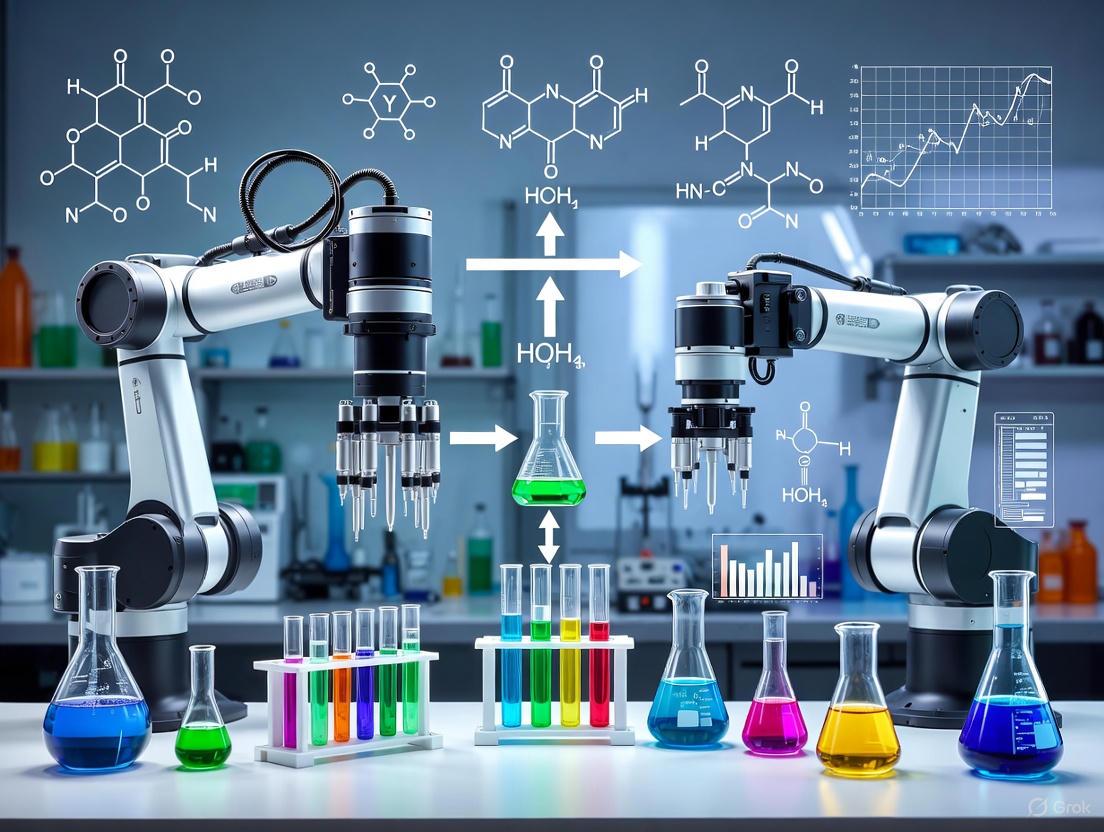
This article provides researchers, scientists, and drug development professionals with a comprehensive analysis of liquid handling robots for chemical reaction setup.
Liquid Handling Robots for Chemical Reaction Setup: A 2025 Guide to Precision, Efficiency, and Automation
Abstract
This article provides researchers, scientists, and drug development professionals with a comprehensive analysis of liquid handling robots for chemical reaction setup. It covers the foundational principles and evolving market landscape, delves into specific methodological applications in drug discovery and materials science, explores advanced optimization and troubleshooting strategies for peak performance, and offers a comparative validation of systems and their return on investment. The guide synthesizes current data, cost analyses, and emerging trends to serve as an essential resource for laboratories aiming to enhance precision, safety, and throughput through automation.
Liquid Handling Robots 101: Understanding Core Technology and the Evolving Market in 2025
Automated Liquid Handling (ALH) systems are robotic devices that perform precise liquid transfers via computerized systems, forming the backbone of modern high-throughput laboratories [1] [2]. These systems revolutionize modern laboratories by replacing manual, repetitive pipetting tasks with automated, computerized protocols, significantly enhancing throughput, reproducibility, and data quality [3]. The technology spans from simple benchtop units for specific applications to complex, integrated workstations that form complete automated workflow solutions [4] [2].
The global ALH market demonstrates robust growth, driven by increasing demands from pharmaceutical, biotechnology, and life sciences research sectors. Market data, however, varies between sources due to different reporting methodologies and market segment definitions.
Table 1: Automated Liquid Handling Market Size Projections
| Report Source | Market Size 2024/2025 | Projected Market Size | Forecast Period | CAGR |
|---|---|---|---|---|
| ResearchAndMarkets.com | USD 3.26 billion (2025) | USD 6.35 billion | 2025-2035 | 6.9% [5] |
| Intelmarketresearch.com | USD 851 million (2024) | USD 1.24 billion | 2024-2032 | 5.6% [6] |
This growth is primarily fueled by the need for higher throughput in drug discovery, genomics, and clinical diagnostics, alongside advantages over manual methods including enhanced precision, significant time savings, and improved workflow efficiency [5] [7]. The Asia-Pacific region represents both the largest and fastest-growing market, followed by North America and Europe [6] [7].
Key growth drivers include:
- Integration with AI-Driven Platforms: Automation paired with machine learning compresses hit-to-lead cycles in drug discovery, with some case studies showing timeline reductions of up to 75% [7].
- Expansion of Personalized Medicine: Companion diagnostics require precise, traceable sample workflows, making robotic platforms essential for maintaining assay fidelity [7].
- Throughput Requirements in Genomic Screening: Laboratories processing thousands of clinical genomes daily require full automation to achieve feasible costs per sequence [7].
ALH System Configurations and Technologies
ALH systems are categorized by their level of automation, physical configuration, and liquid displacement technology, allowing laboratories to select solutions matching their specific throughput needs, space constraints, and application requirements.
Levels of Automation and System Configuration
Table 2: ALH System Types and Characteristics
| System Type | Throughput | Relative Cost | Typical Applications | Key Manufacturers/Examples |
|---|---|---|---|---|
| Manual Pipettes | Low | Low | Various molecular biology protocols; Wide application range | Eppendorf, Gilson, Sartorius [2] |
| Semi-Automated/Electronic | Moderate | Low to Medium | Automating specific workflow parts; Guided pipetting | Integra, PlatR (BioSistemika) [2] |
| Benchtop Workstations (Stand-alone) | Medium to High | Medium | Balanced speed and price for clinical labs and mid-sized biotechs | Hamilton Microlab Prep/NIMBUS, Revvity Fontus [8] [4] [7] |
| Integrated Modular Systems | Very High | High | End-to-end workflow automation; Flexible layouts linking multiple instruments | Hamilton Microlab STAR/VANTAGE, Formulatrix F.A.S.T. [8] [9] |
Stand-alone benchtop robots held a 61.2% market share in 2024, suited for labs with limited space and capital expenditure [7]. However, modular architectures are growing faster (8.1% CAGR) as facilities pursue flexible layouts that link liquid handlers, incubators, and analytical instruments into single, continuous workflows [7].
Pipetting Technologies
The core liquid handling technologies differ in their operating principles, each with distinct advantages for specific applications and liquid types:
- Air Displacement Pipetting: Utilizes an air cushion and disposable tips to aspirate and dispense liquid, reducing cross-contamination risks. Ideal for extensive volume ranges and handling biohazardous or radioactive materials [1].
- Liquid Displacement (Positive Displacement): Employs a piston making direct contact with the liquid, suitable for positive-pressure pipetting, tube piercing, and multi-dispensing volumes below 5 microliters. This technology is liquid-class agnostic, making it effective with viscous, volatile, or foaming liquids [1] [9].
- Acoustic Technology: Uses sound energy to transfer liquids without physical contact, enabling non-contact dispensing of picoliter volumes and eliminating cross-contamination risks [2].
- Free-jet Technology: Another non-contact dispensing method suitable for low-volume applications [5].
Key Applications and Experimental Protocols
ALH systems are foundational to numerous high-throughput applications in modern laboratories. Below are detailed protocols for two common applications: PCR Setup and Serial Dilution for assay preparation.
Protocol 1: PCR Setup Using Automated Liquid Handling
Application Note: Automated PCR setup minimizes human error, increases throughput, and enhances reproducibility for sensitive molecular biology applications [1] [9].
Table 3: Research Reagent Solutions for PCR Setup
| Reagent/Material | Function | Considerations for Automation |
|---|---|---|
| DNA Template | Target sequence for amplification | Sample integrity; Plate positioning |
| PCR Master Mix | Contains polymerase, dNTPs, buffers, MgClâ‚‚ | Maintain cold chain; Avoid repeated freeze-thaw cycles |
| Primers (Forward/Reverse) | Sequence-specific amplification | Stability; Concentration accuracy |
| Nuclease-free Water | Reaction volume adjustment | Sterility; Low contamination risk |
| Microplates (96 or 384-well) | Reaction vessel | SBS-format compatibility; Sealing compatibility |
Experimental Protocol:
System Initialization:
- Power on the ALH system and associated software.
- Perform required system checks and priming procedures if using liquid displacement technology.
- Initialize the deck configuration, defining positions for source and destination labware [9].
Labware Positioning:
- Place a fresh box of disposable tips (if using air displacement) or ensure tip availability.
- Position the source labware containing DNA templates, PCR master mix, primers, and nuclease-free water in designated deck locations.
- Load the appropriate microplate (96 or 384-well) as the destination plate [9].
Protocol Programming:
- Using the system's software interface, create a new protocol.
- Define liquid transfer steps:
- First, transfer calculated volumes of nuclease-free water to each reaction well.
- Add primers to respective wells.
- Pipette DNA template to designated wells.
- Finally, add PCR master mix to all reaction wells.
- Utilize the software's "cherry-picking" function if transferring different DNA templates to specific wells [9].
- Set appropriate mixing parameters after each addition if required.
Volume and Liquid Class Parameters:
- For air displacement systems, select the appropriate liquid class for each reagent to ensure volumetric accuracy [1].
- For positive displacement systems (liquid class agnostic), define volumes without specific liquid class adjustments [9].
- Set aspiration and dispense speeds according to reagent viscosity to minimize foaming or splashing.
Protocol Execution and Completion:
- Save the protocol and initiate the run.
- Monitor initial transfers for accuracy before proceeding with the full plate.
- Upon completion, seal the plate thoroughly for thermal cycling.
- Dispose of tips automatically if the system includes this functionality [9].
Protocol 2: Serial Dilution for Assay Preparation
Application Note: Automated serial dilution standardizes compound dilution series for high-throughput screening, dose-response studies, and assay preparation, improving accuracy over manual methods [1] [9].
Experimental Protocol:
System Preparation:
- Initialize the ALH system and software.
- Select appropriate tips based on volume range (e.g., 13 µL low volume or 50 µL high volume tips for Formulatrix F.A.S.T. system) [9].
Labware Setup:
- Position the source compound plate in a defined deck location.
- Load destination plates (96 or 384-well) for the dilution series.
- Place dilution buffer reservoir in a designated position.
- Ensure sufficient tips are available for the entire process.
Protocol Programming:
- Access the "serial dilution" function in the software.
- Define dilution parameters:
- Starting concentration
- Dilution factor (e.g., 1:2, 1:3, 1:10)
- Number of dilution points
- Final volume in each well
- Program the system to:
- Transfer a specified volume of dilution buffer to all destination wells.
- Create a concentrated stock solution in the first column of the destination plate.
- Perform sequential transfers from higher to lower concentrations across the plate.
- Include mixing steps at each dilution to ensure homogeneity [9].
Execution and Quality Control:
- Initiate the protocol and monitor initial transfers.
- For systems with computer vision, utilize tip scanning and arrangement features to maximize tip usage efficiency [9].
- Upon completion, verify dilution accuracy through absorbance measurement or other appropriate methods if required.
Benefits, Challenges, and Future Directions
Advantages of Automated Liquid Handling
The adoption of ALH systems provides laboratories with significant operational and scientific benefits:
- Enhanced Accuracy and Precision: Automated systems eliminate human error and variability in pipetting technique, delivering CVs as low as 5% even at 0.1 µL volumes, which is crucial for miniaturized assays and reagent cost savings [1] [9].
- Increased Throughput and Efficiency: ALH systems process hundreds to thousands of samples per run, significantly increasing data generation while reducing hands-on time through walk-away operation [8] [7].
- Contamination Reduction: Disposable tips and non-contact dispensing technologies minimize cross-contamination and carry-over between samples, ensuring data integrity [1] [9].
- Personnel Benefits: Automation reduces repetitive strain injuries associated with manual pipetting and allows highly-trained staff to focus on more valuable tasks, increasing job satisfaction [1].
- Cost Reduction: While initial investment can be substantial, ALH systems reduce reagent consumption through miniaturization, decrease labor costs, and minimize expensive reruns caused by human error [1] [3].
Implementation Challenges and Solutions
Despite the clear benefits, implementing ALH technology presents several challenges that laboratories must address:
- High Initial Capital Investment: Advanced systems range from $100,000 to over $1 million, making them prohibitive for some laboratories [2]. Solutions: Consider refurbished systems, leasing models, or entry-level benchtop units [1]. Vendors are also developing lower-cost robots to broaden market access [2].
- Technical Complexity and Skill Gaps: Operating advanced systems requires programming expertise (e.g., Python scripting) that may not exist in traditional laboratory settings [7]. Solutions: Vendors are creating more intuitive software interfaces with graphical user interfaces that are quicker to learn [2]. Comprehensive training programs and remote-support subscriptions also help bridge this gap [8] [7].
- Integration Challenges: Connecting ALH systems with existing laboratory information management systems (LIMS) and other instruments can be complex [7]. Solutions: Modular systems with standard interfaces simplify third-party instrument docking [7]. Vendors offering vendor-qualified methods for specific applications (e.g., over 120 methods for NGS kits from Revvity) significantly reduce implementation time [3].
Emerging Trends and Future Outlook
The ALH landscape continues to evolve with several emerging trends shaping future development:
- Software and Connectivity Advancements: Cloud-based platforms enable remote monitoring and protocol sharing, while AI-powered systems autonomously optimize methods and identify errors [3] [10] [2].
- Miniaturization and Integration: Systems handling smaller volumes (picoliter to nanoliter) enable reaction miniaturization, reducing reagent costs and increasing throughput [7] [9]. Integration with other instruments creates end-to-end workflow solutions [10].
- Advancements in Non-contact Dispensing: Acoustic and other non-contact technologies gain prominence for their ability to handle ultra-low volumes without cross-contamination [2].
- Self-driving Laboratories: The integration of ALH with AI and machine learning progresses toward fully autonomous systems that can design experiments, execute protocols, and analyze results with minimal human intervention [10].
The automated liquid handling market is a cornerstone of modern life sciences, enabling unprecedented precision, efficiency, and reproducibility in research and diagnostics. This sector is characterized by robust growth, driven by the escalating demand for automation in pharmaceutical and biotechnology workflows.
Market Size and Growth Projections
The following table summarizes the key quantitative data and growth projections for the automated liquid handling market.
Table 1: Automated Liquid Handling Market Size and Growth Projections
| Metric | Value | Time Period/Notes |
|---|---|---|
| 2024 Market Size | USD 3.74 billion | Global baseline [11] |
| 2033 Projected Market Size | USD 6.53 billion | Global projection [11] |
| Compound Annual Growth Rate (CAGR) | 7.21% | Forecast period from 2024 to 2033 [11] |
| Annual Global Unit Shipments | Over 18,000 units | Data from 2023 [11] |
| High-Throughput System Cost | Upwards of $150,000 | For advanced platforms [11] |
| Error Reduction via Automation | Over 55% | Reduction in human pipetting errors [11] |
| Throughput Increase | Up to 70% | Increase in sample processing throughput [11] |
Market Dynamics
The growth of this market is fueled by several key drivers, while also facing significant constraints and opportunities.
- Primary Driver: A surge in pharmaceutical and life science automation, with over 4,200 pharmaceutical R&D labs adopting these systems in 2023. Automation reduces manual labor by 55% and speeds up pipetting workflows by 45% [11].
- Key Restraint: High upfront equipment and ongoing maintenance costs, which can exceed $5,000 annually per unit, present a significant barrier to adoption for smaller laboratories [11].
- Significant Opportunity: The expansion of personalized medicine and molecular diagnostics. By 2024, over 1,200 facilities globally were using automation for personalized drug formulation, and next-generation sequencing labs saw a 50% increase in pipetting workflows requiring automation [11].
Application Notes
Automated liquid handlers have moved from being specialized equipment to essential infrastructure in laboratories aiming for high-quality, reproducible science. The following application notes detail their use in two critical, high-growth areas.
Application Note 001: Miniaturized Assay Setup for High-Throughput Screening (HTS)
Objective: To leverage acoustic droplet ejection technology for nanoliter-scale compound dispensing in high-throughput screening campaigns, significantly reducing reagent consumption and costs.
Background and Context: In early-stage drug discovery, researchers must rapidly screen vast chemical libraries against biological targets. Traditional manual pipetting in 96- or 384-well plates is slow, variable, and consumes large quantities of expensive reagents and compounds. Non-contact acoustic dispensing enables rapid, precise transfer of nanoliter volumes into 1536-well formats, slashing reagent use by up to 65% and enabling previously cost-prohibitive screens [12]. This miniaturization is critical for expanding the scope of screening campaigns without exponentially increasing costs.
Key Experimental Insights:
- Precision at Low Volumes: Acoustic liquid handlers can accurately dispense volumes in the nanoliter range, enabling assays in 1536-well plates and beyond. This precision is unattainable with traditional air-displacement pipettes [12].
- Contamination Control: Non-contact dispensing eliminates the risk of carryover contamination between samples, a common issue with tip-based systems, thereby enhancing data integrity [12].
- Workflow Integration: Modern systems like the Beckman Coulter Echo 525 seamlessly integrate with laboratory information management systems (LIMS) for fully traceable results, from compound management to data analysis [13].
Application Note 002: Automated Next-Generation Sequencing (NGS) Library Preparation
Objective: To automate the multi-step, labor-intensive process of NGS library preparation using a integrated robotic pipetting system, improving throughput and run-to-run reproducibility.
Background and Context: The demand for genomic data in research and diagnostics has exploded, but manual NGS library prep is a bottleneck characterized by complex, multi-step protocols prone to human error. Automated systems standardize this process, allowing a single operator to prepare dozens of libraries in parallel with minimal intervention. This is particularly vital for clinical diagnostics, where consistency and traceability are paramount.
Key Experimental Insights:
- Process Standardization: Automated systems execute identical pipetting motions for every sample, eliminating the inter-operator variability common in manual protocols. This is crucial for generating comparable sequencing data across different batches and days [14].
- Complex Protocol Handling: Workstations like the Hamilton Microlab STAR can be programmed to manage the entire NGS workflow, including enzymatic reactions, bead-based cleanups, and normalization, which involve numerous liquid transfer and incubation steps [13].
- Error Reduction: Automation reduces human errors in pipetting, tube labeling, and protocol tracking. One study found that over 35% of research centers faced integration delays due to workflow incompatibilities, underscoring the need for careful protocol validation on the automated system [11].
Experimental Protocols
Protocol 001: High-Throughput Compound Screening in 1536-Well Format Using Acoustic Dispensing
This protocol describes the procedure for screening a library of 10,000 compounds against a target enzyme using an acoustic liquid handler.
The Scientist's Toolkit: Research Reagent Solutions
Table 2: Essential Reagents and Materials for High-Throughput Screening
| Item | Function | Example/Notes |
|---|---|---|
| Acoustic Liquid Handler | Precise, non-contact transfer of nanoliter volumes. | Beckman Coulter Echo 525 [13] |
| Source Microplates | Holds compound library for acoustic dispensing. | Echo Qualified 384-Well Polypropylene Plate |
| Assay Plate | The vessel for the final biochemical reaction. | 1536-Well, Low-Volume, Flat-Bottom Microplate |
| Enzyme Solution | The biological target of the screening assay. | Recombinant kinase in assay buffer. |
| Substrate/ATP Cocktail | Reactants for the enzymatic reaction. | Fluorescently-labeled peptide and ATP. |
| Detection Reagent | For quantifying the enzymatic output. | Homogeneous, "add-and-read" fluorescence quencher. |
Methodology:
- System Initialization: Power on the acoustic liquid handler and associated barcode reader. Launch the control software (e.g., Echo Software) and initialize the method for transferring 50 nL of compound from the source plate to the 1536-well assay plate [13].
- Plate Labelling: Affix a unique barcode to each source and assay plate to ensure full sample traceability throughout the workflow.
- Reagent Plate Setup:
- Dilute the compound library in DMSO to a standard concentration (e.g., 10 mM) and dispense into source plates.
- Centrifuge source plates at 1,000 × g for 1 minute to settle liquid at the bottom of the wells and remove bubbles.
- Compound Transfer:
- Load the source plates and empty 1536-well assay plates onto the deck of the liquid handler.
- Run the transfer method. The system uses sound energy to eject 50 nL droplets of each compound from the source well into the corresponding well of the assay plate.
- Biochemical Assay Assembly:
- Manually or using a bulk reagent dispenser, add 2 µL of the enzyme solution to each well of the assay plate.
- Centrifuge the plate briefly and incubate for 15 minutes at room temperature.
- Add 2 µL of the substrate/ATP cocktail to initiate the reaction.
- Incubate the plate for the required reaction time (e.g., 60 minutes).
- Reaction Detection:
- Add 2 µL of the detection reagent to stop the reaction and develop the signal.
- Incubate for 10 minutes and then read the plate on a compatible microplate reader.
Workflow Diagram:
Diagram 1: HTS assay workflow
Protocol 002: Automated NGS Library Preparation using a Robotic Pipetting Workstation
This protocol outlines the steps for preparing 96 Illumina-compatible NGS libraries from fragmented DNA samples using an integrated liquid handling robot.
The Scientist's Toolkit: Research Reagent Solutions
Table 3: Essential Reagents and Materials for NGS Library Prep
| Item | Function | Example/Notes |
|---|---|---|
| Robotic Pipetting Workstation | Automated execution of all liquid handling steps. | Hamilton Microlab STAR [13] |
| Library Preparation Kit | Provides enzymes and buffers for end repair, A-tailing, and adapter ligation. | Illumina DNA Prep Kit |
| Dual-Indexed Adapters | Unique molecular barcodes for sample multiplexing. | Illumina CD Indexes |
| SPRIselect Beads | Magnetic beads for DNA purification and size selection. | Beckman Coulter |
| 96-Well PCR Plates | Reaction vessel compatible with the liquid handler. | LoBind, skirted PCR plate |
| Ethanol (80%) | For washing magnetic beads during clean-up steps. | Prepared fresh daily. |
Methodology:
- Workstation Setup: Power on the liquid handler (e.g., Hamilton STAR). Ensure deck positions are correctly configured for the tip boxes, reagent reservoirs, sample plates, and magnetic bead station. Load the protocol in the control software (e.g., VENUS Software) [13].
- Sample and Reagent Loading:
- Place the plate containing 50 µL of fragmented DNA (50 ng) in the designated deck position.
- Load a trough with end-prep master mix and another with the bead mixture.
- Place racks with sterile pipette tips in assigned positions.
- End Repair and A-Tailing:
- The robot transfers the end-prep master mix to each DNA sample.
- The plate is automatically transferred off-deck to a thermal cycler for the incubation program.
- After cycling, the plate is returned to the deck.
- Adapter Ligation:
- The robot adds unique dual-indexed adapters and ligation master mix to each sample.
- The plate is incubated on the deck at room temperature.
- Post-Ligation Cleanup:
- The robot adds SPRIselect beads to bind the DNA libraries.
- The plate is moved to the on-deck magnetic stand. After bead pelleting, the robot aspirates and discards the supernatant.
- The robot performs two washes with 80% ethanol while the beads are immobilized.
- The beads are air-dried and eluted in Tris-HCl buffer.
- Library Amplification & Final Cleanup:
- The robot adds PCR master mix and primers to the eluted library.
- The plate is transferred off-deck for PCR cycling.
- Upon return, a final bead-based clean-up is performed to purify the final NGS library.
- Quality Control:
- The robot transfers an aliquot of each library to a separate plate for quantification (e.g., via fluorometry).
Workflow Diagram:
Diagram 2: NGS library prep process
The Future Outlook: Integration with AI and Self-Driving Labs
The future of automated liquid handling lies in its evolution from a tool that executes predefined protocols to an intelligent component within a closed-loop, "self-driving" laboratory. This concept integrates artificial intelligence (AI) with robotic platforms to create an autonomous system for scientific discovery.
The core of this paradigm is the Design-Make-Test-Analyze (DMTA) cycle [15]:
- Design: An AI algorithm, trained on existing data, proposes a new set of experiments or chemical formulations to test a hypothesis.
- Make: The automated liquid handler and associated robotics physically execute the experiments, such as synthesizing a new compound or preparing a specific assay.
- Test: The resulting materials or assays are automatically characterized by integrated analytical instruments (e.g., plate readers, spectrometers).
- Analyze: The collected data is fed back to the AI, which analyzes the outcomes, refines its model, and designs the next, more informed, round of experiments.
This closed-loop system significantly accelerates research cycles, which typically take "months to years" when performed manually, and enables the efficient exploration of vast experimental spaces, such as optimizing multi-component formulations for organic semiconductor lasers or drug delivery systems [16] [15]. Software platforms like ChemOS are designed to orchestrate these autonomous workflows, making high-throughput, AI-driven discovery accessible to more research groups [15].
Conceptual Diagram:
Diagram 3: Self-driving lab DMTA cycle
Market Landscape and Key Quantitative Data
The global liquid handling systems market is characterized by robust growth, driven by increasing automation in pharmaceutical, biotechnology, and life sciences research. The market is moderately consolidated, with a handful of established players commanding a significant share [17] [18].
Market Size and Growth Projections
Table 1: Global Liquid Handling Systems Market Forecast
| Market Segment | 2024/2025 Value (USD Billion) | 2030/2032/2033 Forecast (USD Billion) | Compound Annual Growth Rate (CAGR) | Source Report |
|---|---|---|---|---|
| Liquid Handling Systems (Overall) | 4.34 (2024) | 6.75 (2030) | 7.64% | [19] |
| Liquid Handling Systems (Overall) | 5.1 (2025) | 7.4 (2030) | 8.0% | [20] [17] |
| Automated Liquid Handling (Segment) | 1.49 (2024) | 2.83 (2032) | 8.30% | [18] |
| Automated Liquid Handling Systems | - | 4.7 / 5.7 (2033) | ~9.9% | [21] |
Leading Vendors and Market Concentration
The market landscape is dominated by several key players who offer a wide range of automated liquid handlers, reagents, consumables, and software solutions. These vendors compete on precision, throughput, integration capabilities, and after-sales support [20] [22].
Table 2: Key Industry Players and Product Differentiators
| Vendor | Example Automated Liquid Handler Models | Key Technologies & Differentiators |
|---|---|---|
| Agilent Technologies | BioTek ELx405 [13] | Automated microplate washers with ultrasonic washing technology; integration with robotic systems [13]. |
| Beckman Coulter Life Sciences (Danaher) | Echo 525, Biomek NGeniuS [13] | Acoustic liquid handling technology (contact-free); focused on next-generation sequencing (NGS) and genomics workflows [13] [18]. |
| Eppendorf | epMotion 5075v [13] | Automated pipetting systems with barcode identification; solutions for NGS, ELISA, and cell-based assays [13]. |
| Hamilton Robotics | Microlab STAR [13] | Air displacement pipetting; highly sophisticated systems with robotic arms for complex, high-throughput workflows [13]. |
| Thermo Fisher Scientific | Not specified in results | Extensive portfolio of laboratory automation; strong presence in life sciences, diagnostics, and applied markets [17]. |
| Tecan Group Ltd. | Not specified in results | High-precision, modular liquid handling platforms for diagnostics and research labs [17]. |
Market analysis indicates that the top five players hold an estimated 60-65% of the worldwide market share, signaling a moderately consolidated landscape [17]. Thermo Fisher Scientific is recognized as a leader due to its extensive end-to-end solutions, while other prominent players like Danaher (through its subsidiary Beckman Coulter), Eppendorf, Agilent Technologies, and Tecan hold significant shares [13] [17]. The remaining 35-40% of the market is comprised of regional and niche players that often compete through specialized innovations or cost-effectiveness [17].
Detailed Market Segmentation and Regional Analysis
Key Application Segments and End Users
Table 3: Market Segmentation by Application and End User (Forecast Period CAGRs)
| Segmentation | Dominant Segment | Segment with Highest Projected Growth (CAGR) |
|---|---|---|
| By Application | Drug Discovery & Development [19] [21] | Genomics [20] |
| By End User | Pharma & Biotech Companies [19] [21] | Academic & Research Institutes [20] |
| By Product Type | Pipettes [19] [20] | Automated Liquid Handling Workstations [18] |
Geographic Distribution and Regional Leaders
North America is the dominant region, accounting for approximately 30% [19] to 40.5% [18] of the global market share, driven by a strong presence of pharmaceutical and biotechnology companies and high R&D expenditures. However, the Asia-Pacific region is anticipated to be the fastest-growing market due to increasing investments in life science research and a burgeoning biotech sector [18] [21].
Experimental Protocol: High-Throughput Reaction Condition Screening
This protocol outlines a methodology for robot-assisted mapping of chemical reaction hyperspaces, adapted from a pioneering study published in Nature [23]. The approach enables the high-throughput quantification of reaction yields and by-products across thousands of conditions using primarily optical detection.
Research Reagent Solutions
Table 4: Essential Reagents and Materials for Hyperspace Screening
| Item | Function/Description |
|---|---|
| Robotic Liquid Handler | An automated platform (e.g., house-built or commercial) capable of handling organic solvents and setting up 1000+ reactions per day with precise liquid dispensing [23]. |
| UV-Vis Spectrophotometer | Integrated with the robotic platform for rapid acquisition of absorption spectra (∼8 seconds per spectrum) of crude reaction mixtures [23]. |
| Basis Set Compounds | Purified samples of all substrates, solvents, reagents, and potential products. Used to construct reference concentration-absorbance calibration curves [23]. |
| Chromatography System | Used for the bulk separation of a combined crude mixture from all hyperspace points to isolate and identify all possible products (the "basis set") [23]. |
| Spectral Unmixing Software | Custom algorithm to decompose complex UV-Vis spectra from crude mixtures into linear combinations of reference spectra, thereby estimating component concentrations [23]. |
Step-by-Step Workflow Methodology
- Define Reaction Hyperspace: Select the reaction parameters to be investigated (e.g., concentrations of substrates, temperature, reaction time) and define the multidimensional grid of conditions to be tested [23].
- Robotic Reaction Setup: The automated liquid handler prepares reactions in sequence according to the defined grid. Each reaction is set up in a suitable vessel for optical analysis. The platform used in the cited research could execute roughly 1,000 reactions per day [23].
- UV-Vis Spectral Acquisition: After a specified reaction time, the robotic system acquires a UV-Vis absorption spectrum for each crude reaction mixture directly, without purification. This process takes approximately 8 seconds per spectrum [23].
- Bulk Mixture Analysis: Combine small aliquots from every crude reaction mixture into one complex "bulk" sample. Separate this mixture using traditional techniques like High-Performance Liquid Chromatography (HPLC) and identify all isolated components (the "basis set" of products) using NMR and Mass Spectrometry (MS) [23].
- Create Calibration Curves: Measure the UV-Vis absorption spectra of each purified "basis set" component at known, varying concentrations to construct reference calibration curves [23].
- Spectral Unmixing and Yield Estimation: Use a vector decomposition algorithm to fit the complex UV-Vis spectrum from each individual crude reaction to a linear combination of the reference spectra from the "basis set." This fitting procedure, constrained by reaction stoichiometry, provides estimates of the concentration and yield of each component in every condition [23].
- Anomaly Detection: Calculate the residual difference between the experimental and fitted spectra. Systematic anomalies may indicate the formation of an unexpected product in specific regions of the hyperspace, prompting further investigation [23].
Key Technical Considerations and Validation
- Precision and Accuracy: This method has been validated to provide yield estimates within 5% of the true value when compared to traditional purification and analysis methods [23].
- Spectral Quality: The reliability of the spectral unmixing improves with a wider spectral range, particularly extending into the UV region where organic compounds have more distinctive absorption features [23].
- Application Scope: The protocol is suitable for a wide range of reactions, including couplings, condensations, and cycloadditions, but is not applicable to compounds lacking UV-Vis chromophores (e.g., some aliphatic scaffolds) [23].
Emerging Market Trends and Future Outlook
The liquid handling systems market is evolving rapidly, influenced by several key technological and operational trends [24] [22]:
- AI and Machine Learning Integration: The use of AI and ML is enhancing precision and workflow optimization. Algorithms can now perform real-time monitoring, predict experimental outcomes, and flag inconsistencies, enabling smarter experimental design [18] [22].
- Modularity and Composability: Buyers increasingly prefer modular building blocks (e.g., acoustic dispensers, pipetting modules) that can be configured into bespoke workflows, moving away from monolithic, fixed systems [22].
- Miniaturization and Advanced Technologies: The growth of acoustic dispensing and microfluidic handling is enabling assays at nanoliter scales, reducing reagent consumption and unlocking new applications in genomics and high-content screening [18] [22].
- Workforce Dynamics: Chronic staffing shortages and the need for highly reproducible results are pushing laboratories to adopt automation, creating a demand for systems that are easier to operate and integrate [22].
- Supply Chain and Tariff Considerations: Shifting trade policies and tariffs are influencing procurement decisions and supplier selection, with an increased focus on supply chain resilience and local service footprints [22].
The integration of automation and robotics is fundamentally transforming laboratory practices, particularly in the domain of liquid handling. This evolution from manual pipetting to fully autonomous systems is a cornerstone for accelerating research in chemical synthesis and drug development. This Application Note details the quantitative benefits, provides a structured protocol for automated method development, and presents a conceptual framework for autonomous laboratories. The content is framed within a broader thesis on deploying liquid handling robots for chemical reaction setup, providing actionable information for researchers and scientists.
The Quantitative Leap: Manual vs. Automated Systems
The transition to automation is driven by demonstrable improvements in precision, throughput, and cost-efficiency. The following tables summarize key comparative data and market trends.
Table 1: Performance and Cost Comparison of Liquid Handling Methods
| Parameter | Manual Pipetting | Semi-Automated Pipetting | Fully Automated Pipetting |
|---|---|---|---|
| Throughput (samples/hour) | Low (< 10) [25] | Medium (10 - 100) [25] | High (> 100) [25] |
| Typical Reproducibility (CV) | Variable, user-dependent | High [25] | Very High (e.g., <10% CV at 1 µL) [26] |
| Best Suited For | Simple applications, low throughput, low budget [27] [25] | Moderate throughput, improved accuracy, flexible workflows [2] | High-throughput, repetitive tasks, complex protocols [27] [25] |
| RSI Risk for Operators | Yes [25] [26] | Potential [25] | No [25] [26] |
| Upfront Cost | Low (pipettes and consumables) [27] | Moderate | High ($10,000 to >$500,000) [25] [2] |
| Exposure to Hazardous Liquids | Yes [25] | Yes [25] | Minimal to None [25] [26] |
Table 2: Automation Technology Analysis and Market Context
| Aspect | Key Data | Source/Context |
|---|---|---|
| Lab Automation Market Growth | $5.2B (2022) to $8.4B (2027 (Projected) | Driven by pharma, biotech, and environmental sectors [10] |
| Chemical Robot Cost (2025) | $50,000 - $300,000+ | Varies from compact lab units to large industrial systems [28] |
| ROI Timeline for Automation | 18 to 36 months | Faster payback with 24/7 operation and high-value chemicals [28] |
| Common Liquid Handling Technologies | Air Displacement, Positive Displacement, Acoustic | Each has distinct volume ranges and liquid type suitability [25] |
| Precision of Automated Systems | ±0.025 mm repeatability (e.g., RO1 robot) | Critical for consistent chemical ratios and reaction conditions [28] |
Experimental Protocol: Automated Method Development for Synthetic Peptides
This protocol is adapted from a presentation by Gesa Schad (Shimadzu Europe) at HPLC 2025, which described a machine learning-based approach for peptide analysis [10]. It provides a detailed methodology for automating the development of a liquid chromatography method to resolve a target peptide from its impurities.
Research Reagent Solutions and Essential Materials
Table 3: Key Reagents and Equipment for Automated Method Development
| Item Name | Function/Description |
|---|---|
| Target Peptide & Impurities | The analytes of interest for which the separation method is being developed. |
| Various Mobile Phases | Solvents (e.g., water, acetonitrile, methanol) with different buffers and pH modifiers to test elution strength and selectivity. |
| Multiple Stationary Phases | A selection of HPLC columns with different chemistries (e.g., C18, C8, phenyl) to assess interactions with the analytes. |
| Automated Liquid Handler | A system (e.g., from Agilent, Shimadzu, Tecan) capable of preparing mobile phase gradients and transferring samples. |
| LC-MS System | A Liquid Chromatography system coupled to a Single Quadrupole Mass Spectrometer for precise peak tracking and identification [10]. |
| Chromatography Data System (CDS) | Software (e.g., OpenLab CDS) to control the instrumentation, collect data, and in advanced setups, run AI-powered optimization algorithms [10]. |
Step-by-Step Procedure
Initial Setup and Parameter Definition:
- Prepare stock solutions of the target peptide and five known impurities.
- Select a range of stationary phases (e.g., 3-4 different columns) and mobile phase conditions (e.g., pH, organic modifier) to create a broad screening design space.
- Define the critical resolution (Rs) target between the target peptide and the closest eluting impurity.
Automated Screening and Data Acquisition:
- Program the automated liquid handler and LC system to sequentially inject the sample mixture across the different stationary and mobile phase combinations. The system should vary key parameters such as gradient time, concentration, and flow rate [10].
- The integrated mass spectrometer tracks the retention time and profile of each peak precisely.
Data Visualization and AI-Driven Optimization:
- Import the chromatographic results (e.g., resolution, retention time) into the CDS software.
- Visualize the initial data using a color-coded design space to identify promising regions of the parameter space [10].
- Activate the AI algorithm (e.g., within the CDS) that uses the initial data set to autonomously propose the next set of chromatographic conditions to test, with the goal of meeting the resolution target more efficiently.
Iterative Refinement and Final Method Selection:
- The system automatically executes the AI-suggested experiments in a closed-loop fashion.
- This iterative process continues until the algorithm converges on an optimal method that satisfies the pre-defined resolution criteria, significantly reducing the required number of manual experiments and development time.
The workflow for this protocol is logically structured to enable autonomous operation, as shown in the diagram below.
The Pathway to Full Laboratory Autonomy
The evolution beyond standalone automated workstations leads to fully autonomous "self-driving" labs. Research from the University of North Carolina at Chapel Hill proposes a helpful framework of five levels to categorize this progression [29].
Table 4: Five Levels of Laboratory Automation
| Automation Level | Name | Description | Current Penetration |
|---|---|---|---|
| A1 | Assistive Automation | Individual tasks (e.g., liquid handling) are automated; humans handle most work. | Widespread, most labs today [29] |
| A2 | Partial Automation | Robots perform multiple sequential steps; humans responsible for setup and supervision. | Common in industry [29] |
| A3 | Conditional Automation | Robots can manage entire experimental processes; humans intervene for unexpected events. | Leading-edge labs [29] |
| A4 | High Automation | Robots execute experiments independently and can react to unusual conditions. | Developmental Stage [29] |
| A5 | Full Automation | Robots and AI operate with complete autonomy, including self-maintenance and safety. | Science fiction today [29] |
This progression is enabled by the tight integration of artificial intelligence (AI), robotic experimentation systems, and automation technologies into a continuous closed-loop cycle [30]. In an ideal case, an AI model, trained on literature data, generates initial synthesis schemes. Robotic systems then automatically execute the synthesis, from reagent dispensing to product analysis. The resulting data is fed back to the AI, which proposes improved synthetic routes, creating a rapid "Design-Make-Test-Analyse" loop that minimizes human intervention and maximizes the speed of discovery [29] [30].
The following diagram illustrates the core operational loop of a fully autonomous laboratory.
The evolution from manual pipettes to autonomous laboratories represents a paradigm shift in chemical research. The quantitative benefits in throughput, precision, and operational safety are clear drivers for adopting automated liquid handling. As exemplified in the provided protocol, even complex optimization tasks like chromatographic method development can be streamlined using AI and automation. The conceptual framework of self-driving labs, while still emerging, points toward a future where the entire "Design-Make-Test-Analyse" loop is executed autonomously, dramatically accelerating the pace of discovery in drug development and materials science.
Transforming Workflows: Key Applications in Drug Discovery and Chemical Synthesis
High-Throughput Screening (HTS) for Drug Discovery and Combination Screening
High-Throughput Screening (HTS) represents a foundational technology in modern drug discovery, enabling the rapid and automated testing of thousands to millions of chemical compounds against biological targets. This approach has revolutionized early drug discovery by accelerating the identification of potential therapeutic candidates, known as "hits" [31]. The integration of advanced automation and miniaturized assay formats has made HTS an indispensable tool for pharmaceutical companies, academic institutions, and research organizations worldwide. The core principle of HTS involves the systematic screening of diverse compound libraries to identify starting points for the development of biologically active compounds, significantly compressing the timeline from target identification to lead candidate selection [32].
The evolution of HTS technologies has progressed alongside improvements in liquid handling robotics, detection methodologies, and data analysis capabilities. Modern HTS platforms routinely utilize 384-well or 1536-well microplates, with assay volumes that minimize reagent costs while maximizing throughput [33] [31]. The fitness of any HTS campaign relies heavily on both the quality of the compound library and the robustness of the assay system, requiring careful consideration of automation compatibility, physicochemical properties, and appropriate statistical validation metrics [32] [31]. Within this technological landscape, automated liquid handling systems serve as the critical backbone, ensuring precise and reproducible liquid manipulations that are fundamental to reliable HTS outcomes.
Experimental Design and Assay Selection
The successful implementation of an HTS campaign requires careful consideration of assay format, detection method, and platform compatibility. Researchers must select between target-based and phenotypic approaches based on their specific research objectives and available resources.
Table 1: Comparison of Primary HTS Assay Formats
| Assay Format | Primary Application | Key Advantages | Common Detection Methods |
|---|---|---|---|
| Biochemical | Enzyme activity, receptor binding [31] | Defined system, high reproducibility, minimal cellular complexity [31] | Fluorescence polarization (FP), TR-FRET, luminescence [31] |
| Cell-Based Phenotypic | Pathway analysis, phenotypic changes [31] [34] | Physiological relevance, targets in cellular context [35] [34] | High-content imaging, flow cytometry [35] [34] |
| Bead-Based Immunoassay | Protein-protein interactions, secretion profiling [35] | Multiplexing capability, high sensitivity [35] [36] | Fluorescence intensity, flow cytometry [35] [36] |
High-Throughput Flow Cytometry
Flow cytometry has emerged as a particularly powerful platform for HTS applications, especially through systems like the iQue HTS Cytometer and HyperCyt technology that overcome traditional throughput limitations [33] [35]. These advanced platforms can process samples at rates of up to 40 wells per minute, enabling the analysis of a full 384-well plate in approximately 12 minutes [35]. The technology's strength lies in its ability to perform multiparametric measurements at the single-cell level, providing rich data on multiple biomarkers or cellular characteristics simultaneously from living cells [33] [36].
A key advantage of high-throughput flow cytometry is its multiplexing capability, which allows researchers to measure multiple assay endpoints in a single sample. This can include combining receptor binding readouts with cell viability indicators or simultaneously assessing multiple cell populations through fluorescent barcoding strategies [35]. This multiplexing approach generates exponential gains in information content per sample while conserving valuable reagents and compounds. The application of flow cytometry to both target-based and phenotypic screening approaches makes it particularly valuable for comprehensive drug discovery campaigns, as it enables the assessment of specific molecular interactions while maintaining the physiological context of cellular responses [36].
Liquid Handling Automation Requirements
Automated liquid handling systems form the core infrastructure of any HTS operation, ensuring precision, reproducibility, and efficiency throughout the screening process. Modern systems like the Myra Liquid Handling System demonstrate performance characteristics critical for HTS success, including precision of <1% CV at 5μL volumes and liquid level detection through pressure sensing to monitor the aspirate and dispense process for errors [37]. These systems facilitate complex protocols through user-friendly programming interfaces and API integration capabilities that enable connectivity with other laboratory instruments [38].
For HTS applications, liquid handlers must accommodate a range of plate formats (96-, 384-, and 1536-well) while maintaining precision at low volumes. Systems like the Formulatrix F.A.S.T. and FLO i8 PD liquid handlers offer precision of <5% CV at 100 nL volumes, enabling significant reagent cost savings through miniaturization [38]. The Mantis and Tempest tipless dispensers further reduce contamination risk through non-contact dispensing with isolated fluid paths, making them particularly suitable for sensitive cell-based assays and critical reagent dispensing [38]. These automated systems are essential for implementing complex Design of Experiments (DoE) approaches that efficiently optimize multiple assay parameters simultaneously, replacing the more traditional and resource-intensive One-Factor-At-a-Time (OFAT) method [38].
Materials and Reagents
Research Reagent Solutions
Table 2: Essential Research Reagents for HTS Implementation
| Reagent/Material | Function/Purpose | Application Notes |
|---|---|---|
| Compound Libraries | Source of small molecules for screening [32] [39] | Diverse collections (127K+ compounds); focused libraries for specific target classes (kinases, GPCRs); known bioactives for validation [39] |
| Detection Reagents | Enable measurement of biological activity [33] [31] | Fluorescent antibodies, viability dyes, calcium-sensitive dyes; require titration and lot-to-lot variability assessment [33] [36] |
| Assay Kits | Optimized ready-to-use reagents [31] | Transcreener platform for kinase, ATPase, GTPase activity; homogeneous mix-and-read format [31] |
| Quality Control Beads | Instrument calibration and standardization [33] | Fluorescent calibration beads for MESF/ABC quantification; compensation beads for multicolor panels [33] [36] |
| Cell Lines | Biological system for compound testing [35] [36] | Immortalized lines for scalability; primary cells for physiological relevance; require consistent culture conditions [36] |
Compound Library Selection and Design
The composition and quality of compound libraries are fundamental to HTS success. Contemporary screening collections typically comprise hundreds of thousands of compounds carefully selected through computational filtering approaches. The Stanford HTS facility, for example, maintains a library of over 225,000 diverse compounds, including a 127,500-member diverse screening collection and numerous targeted libraries for specific applications [39]. Library design involves rigorous filtering to remove compounds with problematic functionalities that may cause assay interference or represent Pan Assay Interference Compounds (PAINS) [32] [39].
Critical considerations in library design include appropriate physicochemical properties aligned with Lipinski's "Rule of Five" parameters (molecular weight ≤500, AlogP ≤5, hydrogen bond donors ≤5, hydrogen bond acceptors ≤10) and structural filters to eliminate reactive compounds [32] [39]. Additionally, modern library design increasingly considers molecular complexity, three-dimensionality, and chirality to enhance the likelihood of identifying viable lead compounds, particularly for challenging targets such as protein-protein interactions [32]. For organizations with specific research programs, focused libraries containing privileged scaffolds for target classes like kinases or GPCRs may provide more efficient screening paths compared to fully diverse collections [32] [39].
Detailed Protocols
Protocol: High-Throughput Flow Cytometry for Phenotypic Screening
This protocol describes a method for screening compounds using high-throughput flow cytometry to identify modulators of T regulatory cell proliferation and function, adapted from Joslin et al. (2018) [34] [36].
Materials:
- Primary human CD4+ T cells
- T cell enrichment kit
- Treg polarization media
- Test compounds in DMSO
- Rapamycin (positive control)
- Fluorochrome-labeled antibodies (CD4, CD25, FoxP3)
- 384-well microplates
- High-throughput flow cytometer (e.g., iQue or IntelliCyt HTFC system)
Procedure:
- Cell Preparation: Isolate and enrich CD4+ T cells from human peripheral blood using standard separation techniques.
- Plate Setup: Dispense 50 μL of cell suspension (2×10^5 cells/mL) into each well of 384-well plates using automated liquid handling.
- Compound Addition: Transfer test compounds using acoustic dispensing or pin tools, maintaining final DMSO concentration ≤0.1%. Include vehicle-only controls and rapamycin reference compound.
- Polarization: Culture plates for 72-96 hours under Treg-polarizing conditions (TGF-β, IL-2, anti-CD3/CD28 stimulation).
- Staining: Add surface marker antibodies (CD4, CD25) directly to culture plates, incubate 30 minutes, then fix, permeabilize, and stain for intracellular FoxP3.
- Acquisition: Analyze plates using high-throughput flow cytometer with automated plate loader. Collect a minimum of 5,000 events per well at rates up to 25,000 events/second.
- Analysis: Identify hits as compounds producing >2-fold change in Treg proliferation compared to vehicle control.
Protocol: Automated Biochemical Screening with the Transcreener Platform
This protocol describes a universal biochemical assay for detecting enzyme activity, particularly suitable for kinase targets, using automated liquid handling for HTS applications [31].
Materials:
- Transcreener ADP2 Assay Kit
- Purified kinase enzyme
- Appropriate substrate for target kinase
- ATP solution
- Test compounds in DMSO
- 384-well or 1536-well low-volume microplates
- Automated liquid handler (e.g., Myra, Formulatrix F.A.S.T.)
- Fluorescence detection capable of FP, FI, or TR-FRET
Procedure:
- Reaction Setup: Using an automated liquid handler, dispense 2 μL of kinase reaction buffer into assay plates.
- Compound Transfer: Add 50 nL of test compounds or controls to appropriate wells via acoustic dispensing or contact transfer.
- Enzyme/Substrate Addition: Add 2 μL of enzyme/substrate mixture to all wells, initiating reactions.
- Incubation: Incubate plates for suitable time (typically 60-120 minutes) at room temperature.
- Detection: Add 4 μL of Stop & Detect solution containing fluorescent ADP tracer and antibodies.
- Reading: Incubate for 10-60 minutes, then read plates using FP, FI, or TR-FRET detection.
- Quality Control: Calculate Z'-factor using controls; values of 0.5-1.0 indicate excellent assay robustness.
Results and Data Analysis
Performance Metrics and Quality Assessment
Robust HTS implementation requires stringent quality control metrics to distinguish true biological activity from assay artifacts. The Z'-factor is the gold standard for assessing assay quality, with values between 0.5 and 1.0 indicating excellent robustness [31]. Additional critical parameters include the signal-to-noise ratio, coefficient of variation across wells and plates, and dynamic range to effectively distinguish active from inactive compounds [31].
In phenotypic flow cytometry screens, such as the Treg proliferation assay, hit identification typically focuses on compounds producing a >2-fold change in the measured parameter compared to vehicle controls [36]. For the Transcreener biochemical platform, performance validation includes demonstration of precision with <5% CV at 100 nL volumes and compatibility with miniaturized 1536-well formats to enable cost-effective screening of large compound collections [31]. These validation parameters ensure that HTS campaigns generate high-quality data that can reliably inform downstream lead optimization efforts.
Combination Screening Applications
High-throughput flow cytometry particularly excels in combination screening approaches where multiple parameters are assessed simultaneously. The technology enables multiplexed analysis of cell health, surface markers, and intracellular targets within a single well, providing rich datasets from limited sample material [35] [36]. For example, in antibody screening campaigns, flow cytometry can simultaneously detect both antibody binding and functional blockade of ligand-receptor interactions, as demonstrated in the anti-PD-1 antibody discovery work by Phakham et al. [36].
This multiplexing capability makes combination screening particularly efficient, as multiple readouts can be obtained without additional wells or plates. Advanced platforms like the iQue HTS Cytometer incorporate air-gap technology that prevents sample carryover while maintaining throughput rates as rapid as 5 minutes per 96-well plate [33]. This enables researchers to design sophisticated combination studies that would be prohibitively resource-intensive using single-parameter detection methods.
Troubleshooting and Technical Notes
Low Z'-factor Values: Ensure proper assay optimization through reagent titration and maintain consistent cell culture conditions. Check liquid handler performance for consistent dispensing across all wells [31] [36].
High False Positive Rates: Implement counter-screening assays to identify promiscuous inhibitors and compounds with interference properties (PAINS). Use cheminformatics filters during library design to eliminate compounds with problematic functionalities [32] [39].
Flow Cytometry Variability: Establish standardized instrument calibration procedures using QC beads. Include reference compounds with known activity in each plate to monitor assay performance over time [33] [36].
Liquid Handling Inaccuracy: Regularly maintain and calibrate automated systems. For small volumes (<1μL), consider positive displacement or non-contact dispensing technologies to improve precision [37] [38].
Data Analysis Bottlenecks: Implement automated analysis pipelines for flow cytometry data, particularly when screening large compound collections. Machine learning approaches can improve consistency and throughput in hit identification [35] [36].
Automated Chemical Synthesis and Combinatorial Formulation
The integration of advanced liquid handling robots with machine-readable synthesis protocols is transforming chemical research and drug development. This paradigm shift enables the execution of complex, multi-step synthetic sequences and the creation of vast combinatorial libraries with minimal human intervention, significantly accelerating the discovery and optimization of new molecular entities. Central to this automation are platforms like the BioSyntheSizer and the Chemputer, which provide the physical hardware for precise reagent manipulation, coupled with standardized digital languages like XDL (Chemical Description Language) for unambiguous procedural control [40] [41]. This technological synergy is being further amplified by artificial intelligence, including Large Language Models (LLMs) that can extract and structure synthetic procedures from unstructured text in scientific literature, feeding automated platforms with executable instructions [42] [43]. These developments are critical for advancing applications in dynamic combinatorial chemistry (DCC) for drug discovery and the high-throughput formulation of complex molecules, such as molecular machines and metal-organic polyhedra (MOPs) [44] [41] [43].
Automated Synthesis Platforms and Capabilities
Automated liquid handling workstations form the core physical infrastructure for modern automated synthesis. These systems range from compact, highly configurable platforms to larger, fully integrated workcells, each designed to maximize precision, flexibility, and throughput.
Table 1: Key Automated Liquid Handling Platforms for Chemical Synthesis
| Platform Name | Key Features | Synthesis Applications | Liquid Handling Precision |
|---|---|---|---|
| BioSyntheSizer [40] | Modular tools (7 Z-axes); Piezoelectric picolitre pipettes; Interchangeable reactors (up to 150°C, 8 bar); Centralized media control (F-Box). | Synthesis of biopolymers, hydrogels, radiopharmaceutical tracers; Peptide array synthesis; Chemical synthesis in array format. | Piezoelectric pipettes: sub-nanoliter range; Solenoid valves: nanolitre range. |
| GeneArrayer [45] | 96-tip transfer head; Integrated barcode scanner; Ultrasonic tip wash station; Integrated plate sealer. | Automated sample replication; PCR reaction setup; High-throughput assay preparation. | Dispense Jet: 0.8 – 20 µL (CV < 3%); 96 Head: 0.5 – 10 µL (CV < 5%). |
| GeneArrayer Pro [45] | Includes all GeneArrayer features plus robotic arm for automated plate movement. | Continuous, fully automated sample replication and reaction setup. | Comparable to GeneArrayer. |
| Chemputer [41] | Platform-agnostic robotic architecture; Integrated on-line NMR and liquid chromatography; Programmed via XDL. | Multi-step organic synthesis; Synthesis of molecular machines ([2]rotaxanes); Automated purification. | Compatible with standard liquid handling systems for macroscale synthesis. |
The BioSyntheSizer exemplifies flexibility, supporting a wide array of tools including pipette tips, grippers, powder pipettes, and UV lamps on a single platform [40]. Its application in synthesizing dense collagen bioinks for 3D bioprinting demonstrates its capability to handle challenging materials through automated aspiration-dispensing cycles [40]. In contrast, the Chemputer platform emphasizes a universal and programmable approach to chemical synthesis. It leverages the XDL language to describe synthetic procedures in a machine-readable format, allowing for the reproducible execution of complex sequences—averaging 800 base steps over 60 hours for the synthesis of [2]rotaxanes [41]. A key innovation is the integration of on-line analytics (NMR, LC) that provide real-time feedback, enabling the system to dynamically adjust process conditions and make autonomous decisions about reaction progression and purification [41].
Application Note: Automated Protein-Directed Dynamic Combinatorial Chemistry
Background and Principle
Protein-Directed Dynamic Combinatorial Chemistry (P-D DCC) is a powerful fragment-based drug discovery strategy. It utilizes a biological target of interest as a template to direct the synthesis of its own high-affinity ligands from a dynamic combinatorial library (DCL) [44]. The DCL is composed of building blocks that undergo reversible, thermodynamic reactions in the presence of the protein template. According to Le Chatelier's principle, the protein selectively binds and stabilizes the best-fitting ligand, thereby shifting the equilibrium and amplifying its concentration within the library [44]. This process allows for the one-step identification of potent inhibitors from a vast pool of potential compounds.
Experimental Protocol for P-D DCC
Materials:
- Protein Template: Purified, stable protein target (e.g., enzyme, receptor).
- Building Blocks (BBs): A diverse set of compounds (e.g., aldehydes and hydrazides for acylhydrazone exchange) with molecular recognition motifs.
- Reversible Chemistry Reagents: Acylhydrazone, disulfide, or oxime-forming reagents, often with a catalyst (e.g., aniline for acylhydrazone formation).
- Biocompatible Buffer: Aqueous buffer (e.g., PBS, Tris) with minimal organic co-solvent (e.g., <5% DMSO) to maintain protein native state.
- Analytical Tools: LC-MS, SEC-MS, or NMR system for library analysis.
Procedure:
- Template and Buffer Preparation: Prepare a stock solution of the protein target in an appropriate aqueous buffer. The buffer composition (pH, ionic strength) must be optimized to ensure template stability and compatibility with the reversible chemistry [44].
- DCL Assembly: Combine the building blocks in the biocompatible buffer to form the dynamic combinatorial library. The total concentration of building blocks should be in stoichiometric alignment with the template concentration to ensure effective competition [44].
- Adaptive Library Equilibration: Add the protein template to the DCL mixture. Incubate the reaction to allow the system to reach thermodynamic equilibrium under the directing influence of the template. This "adaptive DCL" approach enables continuous selection of the best binders [44]. For less stable templates, a "pre-equilibrated DCL" method (equilibration without template first, followed by re-equilibration after addition) is used.
- Library Analysis and Hit Identification: Analyze the composition of the DCL using a suitable analytical technique (e.g., LC-MS). Compare the chromatograms of the protein-containing DCL with a reference DCL (without protein) [44].
- Hit Validation: Identify the amplified peaks in the protein-containing sample. Isolate and characterize these hits. Synthesize them separately via irreversible synthesis and validate their binding affinity and functional activity using independent biochemical assays [44].
Workflow Diagram
Key Research Reagent Solutions
Table 2: Essential Reagents for Protein-Directed DCC
| Reagent / Material | Function / Role in Experiment | Example from Literature |
|---|---|---|
| Protein Template | Biological target that thermodynamically templates the self-assembly of its own high-affinity ligand from the DCL. | γ-Glucosidase, α-amylase, 14-3-3 protein, NCS-1/Ric8a complex, and other pharmacologically relevant targets [44]. |
| Aldehyde & Hydrazide Building Blocks | Core components for the reversible formation of acylhydrazones, a common and biocompatible reaction in DCC. | Used in multiple recent P-D DCC studies for target identification [44]. |
| Aniline Catalyst | Nucleophilic catalyst that accelerates the rate of acylhydrazone exchange, allowing for faster library equilibration. | Commonly used at mM concentrations in PBS or other buffers at room temperature [44]. |
| Biocompatible Buffer (PBS, Tris) | Maintains the native fold and stability of the protein template during the DCC experiment. | PBS buffer at pH ~6.2-7.5 is frequently employed [44]. |
Protocols for Data Extraction and Structured Workflow Generation
A critical prerequisite for automation is the conversion of unstructured experimental procedures from the literature into a structured, machine-readable format.
Protocol: LLM-Powered Extraction of Synthesis Procedures
Materials:
- Source Text: Experimental procedure from a patent or scientific paper.
- Computational Tools: Access to a Large Language Model (LLM) with advanced prompting capabilities.
- Structured Schema/Ontology: A target data schema (e.g., a custom synthesis ontology, XDL template).
Procedure [43]:
- Document Preprocessing: Compile the text of the experimental procedure, ensuring it is digitally readable.
- Prompt Engineering: Design a sophisticated prompt for the LLM incorporating strategies such as:
- Role Prompting: Instruct the model to act as an expert chemist.
- Chain-of-Thought (CoT): Request the model to reason step-by-step.
- Schema-Aligned Output: Define the exact JSON or XML structure the model should output, based on your synthesis ontology.
- Few-Shot Learning: Provide the model with a few annotated examples of text-to-structure conversion.
- Execution and Extraction: Submit the preprocessed text along with the engineered prompt to the LLM.
- Structured Output Generation: The LLM returns a structured representation of the synthesis, identifying reactants, products, quantities, equipment, and a sequence of actions (e.g., Stir, Wash, Purify).
- Integration into Knowledge Graph: Use computational agents to parse the structured output and upload it into a centralized knowledge system like The World Avatar (TWA), linking the new synthesis data to existing chemical entities [43].
This method has demonstrated a high success rate, processing over 90% of publications in a fully automated pipeline for extracting metal-organic polyhedra (MOP) syntheses [43].
Workflow Diagram
The Scientist's Toolkit: Key Reagent Solutions
This table details essential reagents and materials commonly used in the automated synthesis workflows described.
Table 3: Essential Research Reagent Solutions for Automated Synthesis
| Item | Function / Role | Application Context |
|---|---|---|
| Piezoelectric Picolitre Pipettes | Non-contact dispensing of volumes in the picolitre range for high-density microarraying and miniaturized reactions. | Array synthesis of peptides on glass slides; handling of expensive reagents [40]. |
| Displacement Pipets & Syringe Units | Accurate aspiration and dispensing of liquid volumes from microliters to milliliters. | Standard liquid transfer operations in automated synthesis platforms like the BioSyntheSizer [40]. |
| Septum Vials & Microcentrifuge Tubes | Secure storage and reaction vessels for a wide range of chemical syntheses, including inert and pressurized reactions. | General synthesis work on automated platforms; crimp vials are used for azeotropic drying [40]. |
| XDL (Chemical Description Language) | A standardized, machine-readable language for describing chemical synthesis procedures, ensuring reproducibility and platform interoperability. | Programming the Chemputer for multi-step synthesis of molecules like rotaxanes [41]. |
| Building Blocks for Dynamic Combinatorial Chemistry | Molecular fragments that undergo reversible exchange to form a library of potential ligands in the presence of a protein template. | Drug discovery campaigns using P-D DCC to identify enzyme inhibitors [44]. |
| TMI-1 | TMI-1, MF:C17H22N2O5S2, MW:398.5 g/mol | Chemical Reagent |
| D-Pantothenic acid hemicalcium salt | D-Pantothenic acid hemicalcium salt, MF:C18H32CaN2O10, MW:476.5 g/mol | Chemical Reagent |
Sample Preparation for Genomics, Proteomics, and Clinical Diagnostics
The foundation of any successful experiment in modern bioscience lies in the initial steps of sample preparation. For genomics, proteomics, and clinical diagnostics, the process of converting raw biological samples into analyzable data is critical. Liquid handling robots have become indispensable in this domain, bringing unprecedented levels of precision, reproducibility, and efficiency to laboratory workflows. This is particularly true for complex procedures like setting up chemical reactions for sequencing or assay development, where manual pipetting introduces significant variability. The adoption of automation mitigates these risks, minimizing the presence of cellular aggregates, dead cells, and biochemical inhibitors that can compromise results [46]. This article provides detailed application notes and protocols, framed within the context of automated liquid handling, to guide researchers in preparing samples for a range of cutting-edge applications.
Sample Preparation for Genomics
Genomics research, driven by techniques like Next-Generation Sequencing (NGS), demands rigorous sample preparation to ensure data accuracy and reliability.
General Workflow for NGS Library Preparation
The transformation of nucleic acids from biological samples into sequencer-ready libraries involves a multi-stage process, each step benefiting from automation [47].
Figure 1: The core workflow for preparing Next-Generation Sequencing (NGS) libraries [47].
Protocol: Automated NGS Library Construction using a Liquid Handler
This protocol is optimized for a medium-to-high-throughput liquid handling system capable of handling low volumes, such as those from Formulatrix or BRAND [38] [48].
Key Materials:
- Input Material: 50-100 ng of high-quality genomic DNA.
- Liquid Handling Robot: System with thermal control and 96-channel head (e.g., Formulatrix FLO i8 PD, BRAND Liquid Handling Station).
- Reaction Plates: 96-well PCR plates.
- Library Prep Kit: Commercial kit containing fragmentation enzymes, adapters, and master mix.
- Magnetic Beads: For post-reaction clean-up.
Procedure:
- DNA Normalization: Program the liquid handler to dilute all gDNA samples to a uniform concentration (e.g., 5 ng/µL) in a 96-well plate. Automation ensures consistency critical for uniform sequencing depth [47].
- Enzymatic Fragmentation and Adapter Ligation:
- The robot dispenses a precise mixture of fragmentation enzyme and master mix to each DNA sample.
- The plate is transferred to an on-deck thermal cycler for a controlled incubation to shear DNA into desired fragments (e.g., 200-500 bp).
- Following fragmentation, the liquid handler adds adapter ligation mix. The system's high precision is crucial for this step, as inefficient adapter ligation leads to poor library complexity and chimeric fragments [47].
- Library Clean-Up: The protocol uses magnetic beads. The robot performs the precise additions and aspirations required for binding, washing, and eluting the purified library, minimizing human error and cross-contamination.
- Library QC: A small aliquot of the final library is transferred by the robot to a separate plate for quality control analysis (e.g., fragment analyzer).
Table 1: Performance Metrics of Select Automated Liquid Handlers in Genomics Workflows
| Liquid Handler Model | Technology | Precision (CV) | Optimal Volume Range | Key Genomics Application |
|---|---|---|---|---|
| Formulatrix Mantis [38] | Microdiaphragm Pump | < 2% at 100 nL | 100 nL - ∞ | High-combinatorial screening, PCR setup |
| Formulatrix Tempest [38] | Microdiaphragm Pump | < 3% at 200 nL | 200 nL - ∞ | Assay miniaturization, reagent dispensing |
| Formulatrix F.A.S.T. [38] | Positive Displacement | < 5% at 100 nL | 100 nL - 13 µL | Low-volume NGS library prep |
| BRAND Liquid Handling Station [48] | Air Displacement | Not Specified | Low to medium volumes | PCR setup, ELISA, HMW-DNA extraction |
Addressing Challenges with Automation
Automated liquid handlers provide solutions to common NGS preparation challenges [47]:
- Minimizing Bias: Non-contact dispensers (e.g., Mantis) reduce sample shearing and contamination risk, while precise liquid handling minimizes the over-amplification that leads to PCR duplicates [38] [47].
- Improving Reproducibility: Automated systems eliminate operator variability in repetitive tasks like serial dilution or reagent dispensing, ensuring consistent results across plates and runs [38] [48].
Sample Preparation for Proteomics
Top-down proteomics (TDP), which analyzes intact proteoforms, presents unique sample preparation challenges that automation can help address.
Workflow for Clinical Top-Down Proteomics
Sample cleanup is a critical, yet challenging, step in TDP to remove salts and detergents that interfere with mass spectrometry analysis [49].
Figure 2: Key workflow steps for top-down proteomics, highlighting the essential cleanup phase [49].
Protocol: Filter-Aided Sample Preparation (FASP) for TDP
This protocol leverages automation for efficient processing of multiple protein samples simultaneously, enhancing reproducibility for clinical applications [49].
Key Materials:
- Protein Input: 10-100 µg of protein extract from cells or tissue.
- Liquid Handling Robot: System compatible with deep-well plates and viscous liquids (e.g., Formulatrix FLO i8 PD).
- Filtration Units: 30 kDa molecular weight cut-off (MWCO) filters arranged in a 96-well format.
- Buffers: Lysis buffer, urea-based wash buffer, and digestion buffer.
Procedure:
- Denaturation and Loading: The liquid handler aliquots the protein lysate into each well of the filter plate. It then adds a denaturing urea buffer to unfold the proteins.
- Automated Washes: The system performs a series of buffer additions and centrifugations (if an integrated centrifuge is available) to remove contaminants. This includes multiple steps of adding wash buffer, mixing, and filtering, which is highly repetitive and ideal for automation.
- Enzymatic Digestion (for Bottom-Up) or Buffer Exchange (for Top-Down):
- For TDP, the robot performs a buffer exchange into a volatile MS-compatible solution like ammonium bicarbonate.
- The precise and hands-off nature of this process is vital for minimizing sample loss and avoiding the introduction of artefactual modifications [49].
- Elution: The final purified protein (for TDP) is eluted by the robot into a collection plate ready for MS analysis.
The Scientist's Toolkit: Proteomics Research Reagents
Table 2: Essential Reagent Solutions for Proteomics Sample Preparation
| Reagent / Solution | Function in Workflow | Key Consideration for Automation |
|---|---|---|
| Lysis Buffer (e.g., with SDS) | Disrupts cells and solubilizes proteins. | Viscosity can challenge liquid handlers; positive displacement tips are often required [38]. |
| Molecular Weight Cut-off (MWCO) Filters | Retains proteins while allowing contaminants to pass through. | Available in 96-well plates for high-throughput processing on liquid handlers [49]. |
| Urea / Guanidine HCl | Denaturant that unfolds proteins to improve enzyme access and prevent aggregation. | |
| Trypsin (or other proteases) | Enzymatically digests proteins into peptides for bottom-up proteomics. | Automated dispensers can add enzyme with high temporal precision to start reactions simultaneously. |
| Solid-Phase Extraction (SPE) Plates | Desalting and concentrating samples prior to MS. | Ideal for automation, allowing parallel processing of 96 samples with precise control over wash and elution steps [49]. |
| ZM223 | ZM223, MF:C23H17F3N4O2S2, MW:502.5 g/mol | Chemical Reagent |
| Perospirone-d8 | Perospirone-d8, MF:C23H30N4O2S, MW:434.6 g/mol | Chemical Reagent |
Sample Preparation for Clinical Diagnostics
Trends in clinical diagnostics for 2025 emphasize speed, point-of-care (POC) availability, and non-invasiveness, all areas where liquid handling automation is transformative [50].
Key Diagnostic Trends Influencing Sample Prep
- Liquid Biopsies: Non-invasive tests that detect cancers and other diseases from blood samples require highly sensitive and reproducible handling of often low-abundance analytes, a perfect application for automated systems [50].
- Point-of-Care Testing (POCT): While performed on smaller devices, the development and manufacturing of POC test cartridges rely heavily on automated liquid handling for precision dispensing of reagents during production [50].
- AI and Automation: 95% of lab professionals believe automation is essential for enhancing patient care, primarily by reducing manual steps, improving quality, and speeding up test turnaround times, especially amid workforce shortages [50].
Protocol: Automated Setup for a Multiplex PCR Diagnostic Assay
This protocol outlines how a liquid handling robot can be used to prepare samples for a multiplex PCR assay, crucial in the fight against Antimicrobial Resistance (AMR) [50].
Key Materials:
- Sample: Extracted DNA from a patient sample (e.g., blood, swab).
- Liquid Handling Robot: A compact system like the BRAND Liquid Handling Station, which can operate in confined spaces [48].
- PCR Plates: 96-well optical reaction plates.
- Multiplex PCR Master Mix: Contains primers specific for multiple pathogens or resistance genes.
- Sealing Foils: Optical clear seals for real-time PCR detection.
Procedure:
- Plate Barcoding: The liquid handler dispenses a unique barcode into each well of the PCR plate for sample tracking, a critical feature for clinical data integrity.
- Sample and Reagent Dispensing: The robot aliquots a precise volume of each patient DNA sample into its assigned well. Following this, it dispenses the multiplex PCR master mix.
- The system's software allows for easy definition of complex pipetting routines, ensuring no cross-contamination between samples [48].
- Sealing and Centrifugation: The plate is automatically sealed with a foil and, if the system is integrated with a centrifuge, briefly spun down to collect all liquid at the bottom of the wells.
- Transfer to Analyzer: The prepared plate is transferred directly to a real-time PCR thermocycler for amplification and detection.
Table 3: Comparison of Liquid Handling Methods in Clinical Diagnostics
| Method | Throughput | Precision & Reproducibility | Best Suited For | Example System |
|---|---|---|---|---|
| Manual Pipetting | Low | Subject to operator fatigue and variability; low reproducibility. | Low-volume labs, simple protocols. | Single-channel pipettes |
| Electronic Pipettes | Medium | Improved precision for manual steps; reduces user variability. | Labs transitioning to automation, semi-routine workflows. | - |
| Benchtop Automated Liquid Handlers | Medium to High | High precision and reproducibility; eliminates operator variability. | Clinical diagnostic labs, drug discovery, biobanking. | BRAND Liquid Handling Station [48] |
| Fully Automated Robotic Systems | Very High | Maximum precision and walk-away time; integrated with other instruments. | High-volume core labs, large-scale syndromic testing. | Integrated workcells |
The integration of automated liquid handling systems into sample preparation protocols for genomics, proteomics, and clinical diagnostics is no longer a luxury but a necessity for labs aiming to produce high-quality, reproducible, and reliable data. As the field moves forward, the adoption of systems that offer flexibility, intuitive programming, and high precision for low volumes will be key. This will enable researchers and clinicians to fully leverage advancements in sequencing, mass spectrometry, and rapid diagnostics, ultimately accelerating the pace of discovery and improving patient outcomes. The establishment of standardized, automated protocols, as underscored by initiatives like the updated SPIRIT 2025 statement for trial protocols, is essential for the wider adoption and validation of these technologies in clinical and research settings [51].
Integration with AI and Mobile Robots for End-to-End Autonomous Laboratories
The convergence of artificial intelligence (AI), robotics, and open data standards is catalyzing a paradigm shift in chemical and life sciences research: the emergence of the end-to-end autonomous laboratory. Within the specific context of chemical reaction setup research using liquid handling robots, this integration enables self-directing experimentation, where AI systems plan experiments, robotic systems execute the physical setup, and mobile robots provide the material transport links, all within a closed-loop system that learns from each iteration [52]. This transformation moves laboratory automation beyond isolated, automated islands toward a seamlessly connected ecosystem that accelerates discovery, enhances reproducibility, and optimizes resource utilization.
The core impetus behind this shift is the demand for greater rigor and reproducibility in scientific research, particularly in high-stakes fields like drug development [12]. Funders and journals are increasingly mandating stringent data and process standards. Automated systems, when properly integrated, execute protocols with unerring precision, ensuring that liquid handling steps for chemical synthesis are performed identically every time, thereby producing more defensible and reproducible results [12]. The technological evolution is being driven by advancements in several key areas: the rise of proactive, agentic AI that can understand intent and take action; the development of autonomous mobile robots (AMRs) to bridge physical gaps between instruments; and the growing adoption of open communication protocols that allow different vendors' equipment to interoperate seamlessly [52].
Key Technological Components
AI and Data Infrastructure
The intelligence of an autonomous lab is governed by its AI and data infrastructure. Agentic AI represents a significant leap beyond reactive AI chatbots. These systems are designed to follow instructions, understand intent, and carry out tasks within a specific scientific context [52]. In practice, for a chemical reaction setup, an agentic AI could interpret a researcher's goal to "optimize reaction yield," retrieve relevant historical data from a Laboratory Information Management System (LIMS), apply scientific models to design a new set of experiments, and then summarize the results—all without requiring the scientist to manually coordinate each system [52]. The effectiveness of these AI models is contingent upon high-quality, de-siloed data. Adhering to FAIR (Findable, Accessible, Interoperable, Reusable) data principles is not merely a data management exercise but a prerequisite for training effective, domain-specific AI models that understand the nuances of chemical research [52].
Digital Twin Technology provides a virtual replica of the laboratory's physical workflows, processes, and equipment [53]. This allows labs to simulate and optimize new workflow designs for chemical reaction setups before they are executed in the physical world, identifying inefficiencies and predicting potential equipment failures, thereby maximizing operational efficiency and reducing downtime and waste [53].
Robotic Systems
The physical execution in an autonomous lab is handled by a suite of robotic systems, each serving a distinct function.
- Liquid Handling Robots: The workhorses of chemical reaction setup, these systems have evolved significantly. Modern platforms offer microfluidic precision for nanoliter-scale dispensing, a critical capability for miniaturization and conserving precious reagents [53]. They can make real-time environmental adjustments, modifying pipetting parameters based on sample viscosity and temperature [53]. Furthermore, they integrate seamlessly with LIMS to ensure end-to-end traceability from a digital experiment plan to a physical sample [53].
- Autonomous Mobile Robots (AMRs): AMRs are the logistical backbone, moving samples, consumables, and reagents between instruments, storage areas, and rooms [52]. They "close the gap between otherwise well-automated islands," enabling a truly continuous workflow [52]. For instance, once a liquid handling robot completes a reaction plate, an AMR can transport it to an analytical scale or a storage incubator without human intervention.
- Collaborative Robots (Cobots): Unlike traditional caged robots, cobots are designed to work side-by-side with lab technicians [53]. They can handle hazardous materials, reducing risks in chemical and biosafety labs, and assist in tasks like sample preparation, centrifugation, and reagent management, all while integrating with LIMS to ensure every action is digitally recorded and traceable [53].
Integration and Communication Frameworks
The synergy between AI, stationary robots, and mobile robots depends entirely on robust integration frameworks. Proprietary communication protocols have historically been a major barrier, forcing labs into single-vendor ecosystems [52]. The industry is gradually shifting towards open standards like SiLA 2 (Standardization in Lab Automation) and data formats like the Allotrope Framework, which improve plug-and-play integration and data portability across equipment from different manufacturers [52]. This allows a liquid handler from one vendor, an AMR from another, and an AI software platform from a third to function as a cohesive unit.
The following tables summarize key quantitative data relevant to the implementation of robotics and automation in a laboratory setting, covering costs, performance, and financial metrics.
Table 1: Chemical Robot Cost and Specification Ranges (2025)
| Robot Type | Cost Range (USD) | Typical Applications | Key Specifications |
|---|---|---|---|
| Lab-based Chemistry Robot | $50,000 - $150,000+ | Automated synthesis, sample preparation, spectroscopy, chromatography [28] | High precision, often benchtop-sized, designed for research and development [28]. |
| Industrial Chemical Robot | $50,000 - $300,000+ | Bulk mixing, reaction control, hazardous material handling [28] | Corrosion-resistant construction, high payload, often ATEX-certified for explosive atmospheres [28]. |
| Collaborative Robot (Cobot) | ~$37,000 (e.g., RO1 model) | Chemical handling, dosing, inspection, assembly [28] | ±0.025 mm repeatability, 18 kg payload, AI-driven, safe for human collaboration [28]. |
Table 2: Performance Metrics and Financial Considerations
| Parameter | Typical Value or Range | Context and Notes |
|---|---|---|
| ROI Payback Timeline | 18 to 36 months [28] | Faster ROI is achievable with 24/7 operation, high-value materials, and reduced safety incidents [28]. |
| Liquid Handling Precision | Nanoliter scale and beyond [12] | Enabled by non-contact technologies like Acoustic Droplet Ejection (ADE) for 1536-well formats [12]. |
| Global Market Projection | $6.1 Billion by 2033 [28] | Projected value of the global plastic and chemical robotics market, growing at 10.5% annually [28]. |
Experimental Protocol: Implementing a Closed-Loop Experiment for Reaction Optimization
This protocol details the steps to execute a closed-loop, AI-driven experiment to optimize a chemical reaction using integrated liquid handling robots and AMRs.
Pre-Experiment Setup and Requirements
- Objective: To autonomously screen and optimize reaction conditions (e.g., catalyst loading, solvent, temperature) for a given chemical synthesis to maximize yield.
- AI/Software Setup:
- Hardware Setup:
- Liquid Handling Robot: Calibrate for the required volume range (e.g., microliters to milliliters). Pre-load method libraries for the planned dispensing operations [12].
- AMR: Map the routes between the liquid handler, reagent storage, and analytical instrument (e.g., HPLC). Verify charging status.
- Analytical Instrument: Ensure the target analytical instrument is calibrated and its API is accessible for remote triggering.
- Material Preparation:
- Prepare stock solutions of all reagents, catalysts, and solvents.
- Load stock solutions into designated, barcoded reservoirs on the liquid handling deck.
- Place a sufficient quantity of barcoded reaction vessels (e.g., 96-well plates) in the designated input location for the AMR.
Step-by-Step Execution Workflow
- Experiment Design: The researcher provides a high-level objective (e.g., "maximize yield of compound X") and constraints to the agentic AI system. The AI queries historical data, uses predictive models to design an initial set of experiments (e.g., a Design of Experiments matrix), and sends the digital experimental plan to the LIMS [52].
- Workflow Orchestration: The central orchestration software (e.g., a SiLA 2-compliant master controller) interprets the plan from the LIMS. It issues a command to the AMR to transport an empty reaction plate from storage to the liquid handling station [52].
- Reaction Setup:
- The liquid handling robot receives the specific instructions for the plate.
- It executes the protocol: dispensing precise volumes of substrates, catalysts, and solvents into the designated wells according to the AI-generated plan [53] [12].
- The plate is sealed (e.g., with a crimped lid) if required for the reaction conditions.
- Upon completion, the liquid handler updates the LIMS, confirming the physical setup is complete and associating the plate barcode with the experimental run data.
- Initiation and Transport: The orchestration software directs the AMR to pick up the prepared reaction plate and transport it to a controlled environment (e.g., a heated shaker or glovebox). After the reaction is complete, the AMR transports the plate to the analytical instrument (e.g., HPLC, MS) [52].
- Analysis and Data Processing: The analytical instrument automatically processes the plate, generating raw data. The data is automatically processed and fed back into the data lake [52].
- AI Analysis and Iteration: The agentic AI system interprets the analytical results, compares them against the objective, and uses machine learning to design a subsequent, refined set of experiments [52]. The cycle (steps 2-6) repeats until the optimization objective is met or a stopping criterion is reached.
Data Management and Analysis
- All data generated—including liquid handling logs, AMR transport logs, raw analytical data, and processed results—must be automatically logged to the LIMS/ELN with full traceability [53].
- The AI model relies on this continuous stream of FAIR data to improve its predictions and experimental designs with each iteration [52].
System Workflow and Architecture Visualization
AI-Driven Autonomous Lab Workflow
This diagram illustrates the closed-loop feedback system of an autonomous laboratory, integrating AI decision-making with physical robotic execution to iteratively optimize a scientific objective.
The Scientist's Toolkit: Research Reagent Solutions
The following table details essential materials and their functions in automated chemical reaction setups.
Table 3: Essential Research Reagent Solutions for Automated Reaction Setup
| Item | Function | Considerations for Automation |
|---|---|---|
| Stock Solutions | Pre-mixed solutions of reagents, catalysts, and substrates at standardized concentrations [12]. | Enables precise, reproducible dispensing by liquid handlers. Must be chemically compatible with reservoir materials. |
| Barcoded Reagent Reservoirs | Containers for holding stock solutions on the liquid handler deck. | Barcodes allow for automated tracking and verification by the system, ensuring the correct reagents are used [53]. |
| Barcoded Microplates | Standardized reaction vessels (e.g., 96-well or 384-well plates) for conducting reactions at small scale. | Barcodes link the physical vessel to its digital experimental record in the LIMS for full traceability [53]. |
| Compatible Solvents | Liquids used to dissolve reagents and facilitate reactions. | Must be selected to minimize evaporation during dispensing and be compatible with instrument components (e.g., seals, tubing) [12]. |
| Calibration Standards | Solutions of known concentration and properties used to verify liquid handler performance. | Critical for Quality Control (QC) to ensure volume accuracy and precision, which is foundational for reproducible results [12]. |
| 5-HT1AR agonist 3 | 5-HT1AR agonist 3, MF:C21H26N6OS, MW:410.5 g/mol | Chemical Reagent |
| Heliosupine N-oxide | Heliosupine N-oxide, CAS:31701-88-9, MF:C20H31NO8, MW:413.5 g/mol | Chemical Reagent |
Maximizing ROI: Strategies for Optimization, Maintenance, and Overcoming Challenges
In the context of automated chemical reaction setup, liquid handling is a fundamental yet time-consuming process. Recent research has demonstrated that the execution time of these operations can be significantly reduced by reformulating the problem not as a laboratory procedure, but as a classic logistics and transportation challenge [54]. This application note details how formulating liquid handling tasks as a Capacitated Vehicle Routing Problem (CVRP) enables reductions in execution time of up to 37% for randomly generated tasks, and as much as 61 minutes in a real-world high-throughput materials discovery campaign, all without requiring any hardware modifications [54] [55]. This approach is particularly valuable for drug development professionals and researchers engaged in combinatorial experimentation, where efficient resource utilization is critical for accelerating discovery timelines.
Key Concepts and Rationale
The Liquid Handling Problem in Chemical Research
In automated chemical laboratories, robotic systems, often equipped with multi-channel pipettes, are tasked with transferring numerous liquid samples between various labware formats such as well-plates and vial racks [54]. The conventional method for executing these tasks often relies on simple baseline strategies, such as sorting transfers by source or destination well, which fails to account for the spatial arrangement of wells and the independent controllability of modern pipette channels. This inefficiency creates a significant bottleneck in high-throughput workflows for reaction screening and compound characterization [10] [54].
The Vehicle Routing Problem Analogy
The Capactitated Vehicle Routing Problem is a well-established problem in logistics and operations research. It involves finding the optimal set of routes for a fleet of vehicles to deliver goods to a set of customers, given that each vehicle has a limited capacity. The direct analogy to liquid handling is as follows [54]:
- Vehicle An individual pipette channel on a robotic liquid handler.
- Customer A specific well that requires a liquid transfer (either as source or destination).
- Demand The volume of liquid to be transferred to or from a well.
- Vehicle Capacity The maximum volume a pipette channel can hold.
- Route The sequence of aspirate and dispense actions performed by a single channel.
- Objective Minimize the total travel time or distance of the pipette head.
This novel formulation allows researchers to leverage powerful, pre-existing heuristic solvers from the field of logistics optimization to find near-optimal liquid handling sequences that were previously inaccessible [54].
The following table summarizes the key performance metrics reported for the CVRP-based optimization strategy compared to traditional baseline methods.
Table 1: Performance Metrics of CVRP-Optimized Liquid Handling
| Performance Measure | CVRP Optimization | Baseline Sorting Method | Improvement | Context / Labware |
|---|---|---|---|---|
| Execution Time Reduction | Up to 37% faster | Baseline (0%) | 37% reduction | Randomly generated tasks across different labware formats [54] |
| Real-World Time Savings | 61 minutes saved | Best-performing sorting strategy | 61 minutes reduction | Real-world high-throughput materials discovery campaign [54] |
| Optimization Efficiency | 3 minutes of optimization time | Not applicable | N/A | Resulted in 61 minutes of execution time savings [54] |
| Key Enabling Technology | 8-channel pipette with individually controllable tips | Standard pipetting | Enables complex routing | Crucial for implementing optimized routes [54] |
Experimental Protocol: Implementing CVRP Optimization
This section provides a detailed methodology for applying the CVRP optimization strategy to a liquid handling workflow for chemical reaction setup.
Research Reagent Solutions and Essential Materials
Table 2: Essential Materials and Software for Protocol Implementation
| Item Name | Function / Description | Specification Considerations |
|---|---|---|
| Robotic Liquid Handler | Executes the physical liquid transfers. | Must have an 8-channel (or similar) pipette with individually controllable tips [54]. |
| Source Labware | Holds starting reagent and solvent solutions. | Well-plates (e.g., 96-well) or vial racks [54]. |
| Destination Labware | Receives transferred liquids for reaction setup. | Well-plates (e.g., 96-well) or vial racks [54]. |
| Liquid Class Definitions | Software settings that define pipetting parameters for specific liquids. | Critical for ensuring accuracy and precision with different solvents (e.g., DMSO, water) [28]. |
| CVRP Heuristic Solver | Software that computes the optimal liquid handling routes. | Open-source or commercial solvers traditionally used in logistics planning [54]. |
| Automation Integration Software | Bridges the scheduling software and the robot. | Converts the optimized route into executable commands for the specific robot model. |
Step-by-Step Workflow
Step 1: Task Definition and Input Parameterization Define the complete liquid handling task. This includes specifying:
- The source labware and well locations for each reagent.
- The destination labware and well locations for the final reaction mixtures.
- The precise volume to be transferred from each source to each destination.
- The channel capacity of the pipette (e.g., 300 µL).
Step 2: CVRP Formulation Map the liquid handling parameters onto the CVRP framework as described in Section 2.2. This creates a data model where the goal is to "serve" all destination wells (customers) with the required liquids (demand) using the pipette channels (vehicles) without exceeding their volume capacity.
Step 3: Optimization via Heuristic Solver Input the formulated CVRP into a suitable heuristic solver. These solvers (e.g., based on genetic algorithms, simulated annealing, or other metaheuristics) are designed to efficiently find high-quality, near-optimal solutions to complex routing problems. The output is a sequence of aspirate and dispense commands that minimizes the total pipette travel time.
Step 4: Translation and Execution The optimized command sequence is translated into instrument-specific instructions compatible with the robotic liquid handler's control software. The robotic system then executes the transfers according to the computationally derived, optimal plan.
Validation and Quality Control
- Visual Check: Perform a visual inspection of the destination labware post-transfer to check for obvious errors like empty wells or meniscus issues.
- Gravimetric Analysis: Weigh the destination labware before and after transfers to verify that the total dispensed volume matches the expected value.
- Spectrophotometric Validation: For critical applications, use a plate reader to measure the absorbance of a diluted dye in the destination wells to confirm volume accuracy and consistency across the plate.
Integration in Automated Chemical Laboratories
The CVRP optimization strategy aligns with the broader trend toward full laboratory automation and the development of "self-driving labs" [10]. This algorithm can be integrated as a smart scheduling module within a larger automated workflow, which may include centralized analytical platforms like LC-MS and NMR for immediate compound characterization [10]. By drastically reducing the time required for reaction setup, this method accelerates the entire cycle of synthesis, characterization, and analysis, thereby increasing the overall throughput of drug discovery and materials development campaigns.
For researchers and scientists in chemical reaction setup and drug development, the adoption of automated liquid handling (ALH) robots represents a significant strategic investment. The global market for these systems is growing robustly, with a projected value of USD 6.75 to 7.48 billion by 2030, demonstrating their increasing importance in modern laboratories [19] [20]. The core challenge, however, lies in justifying the high initial capital expenditure (CapEx). A comprehensive understanding of the costs, a methodical calculation of the return on investment (ROI), and a clear view of the payback period are therefore essential for making a sound business case. This application note provides a detailed framework for navigating this financial decision, grounded in current market data and practical protocols, with the well-documented industry benchmark of an 18 to 36-month payback period as a guiding principle [28].
Quantitative Cost and ROI Analysis
A precise financial analysis requires a clear breakdown of both initial costs and the factors that contribute to a return. The following tables summarize the critical quantitative data for informed decision-making.
Table 1: 2025 Liquid Handling Robot Initial Investment Cost Breakdown
| Cost Component | Price Range / Cost Impact | Details & Specifications |
|---|---|---|
| System Type / Scale | ||
| Lab-based / Benchtop Units | $50,000 - $150,000+ | Suitable for automated synthesis, sample prep, and analysis [28]. |
| Industrial / High-throughput Systems | $50,000 - $300,000+ | Adapted for chemical environments; high-end, explosion-proof models exceed $300,000 [28]. |
| Associated Costs | ||
| Specialized Materials & Safety | Cost Premium | e.g., Titanium alloys, fluoropolymer coatings for corrosion resistance [28]. |
| System Integration & Safety Retrofits | Significant Contribution to Total | Integration with PLC/MES systems; custom containment and safety systems [28]. |
| Annual Maintenance | ~20-30% of Initial Software Cost | Ongoing service contracts and potential parts replacement [20]. |
| Training & Implementation | ~15% of Overall Expenditure | Covers system integration, operator training, and workflow design [20]. |
Table 2: Key Factors Influencing ROI and Payback Period
| ROI Factor | Impact & Quantifiable Benefit | Effect on Payback Period |
|---|---|---|
| Operational Throughput | ||
| Continuous 24/7 Operation | Eliminates downtime between shifts; significantly increases output [28]. | Accelerates payback, often to the lower end of the 18-36 month range [28]. |
| Reduced Labor Costs | Allows reallocation of skilled staff from repetitive tasks to higher-value analysis [56]. | A key driver for ROI; one technician can oversee multiple automated stations [56]. |
| Material & Quality | ||
| Improved Product Consistency | Reduces rejected batches and reagent waste [28]. | Directly saves on high-value material costs [28]. |
| Miniaturization (e.g., 384-well plates) | Slashes reagent use by up to 80% [7]. | Significant operational cost savings that improve ROI. |
| Safety & Compliance | ||
| Automation of Hazardous Tasks | Reduces PPE costs, potential safety incidents, and associated compliance expenses [28]. | Mitigates financial risk and contributes to long-term savings. |
Experimental Protocol for ROI Calculation
This protocol provides a step-by-step methodology for calculating the potential ROI of a liquid handling robot in a chemical research setting, based on established economic evaluation methods [57].
Objective
To quantitatively assess the financial viability of acquiring an automated liquid handling robot by calculating the expected payback period and return on investment.
Materials and Data Requirements
- Financial Data: Historical data on labor costs (including benefits), reagent consumption, and costs associated with experimental errors or batch failures.
- Operational Data: Current metrics for manual liquid handling, including samples processed per hour per technician, average experiment preparation time, and error rates.
- Vendor Quotes: Detailed pricing for the desired liquid handling system, including hardware, software, annual maintenance contracts, and estimated installation/integration costs.
Procedure
Define Baseline (Manual Process) Metrics:
- Measure the total labor hours spent monthly on manual liquid handling tasks (pipetting, dilution, plate setup).
- Calculate the fully burdened monthly labor cost for these tasks.
- Quantify monthly reagent costs and estimate waste due to pipetting inaccuracy or human error.
Quantify Incremental Benefits (ΔE) of Automation:
- Labor Savings: Estimate the reduction in hands-on time for the tasks above. Multiply the hours saved by the hourly labor cost to determine monthly labor savings.
- Reagent Savings: Calculate savings from reduced volumes used (e.g., via miniaturization) and lower error-related waste.
- Throughput Increase: Assign a value to the increased number of experiments or samples processed per month.
- Error Reduction: Quantify the cost avoidance from fewer failed experiments or compromised results.
Calculate Incremental Costs (ΔC):
- Sum the total initial investment (robot + integration + training).
- Add the annual recurring costs (maintenance, specialized consumables).
Perform Payback Period Calculation:
- Annual Net Savings = (Total Annual Incremental Benefits) - (Annual Recurring Costs)
- Payback Period (years) = (Total Initial Investment) / (Annual Net Savings)
Sensitivity Analysis:
- Recalculate the payback period under different scenarios (e.g., conservative, normal, aggressive) by adjusting key variables like throughput increase or labor savings. This accounts for uncertainty in projections [57].
Expected Outcome
Following this protocol will yield a data-driven payback period. A study on Total Laboratory Automation (TLA) found a payback period of approximately 4.75 years based primarily on staff cost reduction, validating this methodological approach [57]. For a focused liquid handling robot, the typical outcome aligns with the industry standard of 18 to 36 months [28].
Diagram 1: ROI calculation workflow for investment decision-making.
The Scientist's Toolkit: Key Research Reagent Solutions
The financial payback of a liquid handling system is intimately linked to its efficient use with high-quality reagents and consumables. The following table details essential materials for a robust automated chemical reaction setup.
Table 3: Essential Reagents and Consumables for Automated Liquid Handling
| Item | Function in Automated Workflow | Key Consideration for ROI |
|---|---|---|
| Low-Dead Volume Tips | Precisely transfer liquid samples in microplate formats. | Quality and fit are critical for accuracy, minimizing reagent waste and ensuring data integrity [7]. |
| PCR Plates & Seals | Serve as reaction vessels for thermal cycling applications. | Robotic-compatible, clear seals prevent cross-contamination and evaporation, protecting sample integrity [58]. |
| Lubricant-Infused Tips | Specialized tips for handling viscous liquids (e.g., glycerol, proteins). | Significantly reduce sample carry-over and cross-contamination, enhancing assay reliability and throughput [7]. |
| Assay-Ready Chemical Libraries | Pre-dispensed compounds in microplates for high-throughput screening (HTS). | Enable direct use on automated platforms, drastically reducing setup time and pipetting errors in drug discovery [19]. |
| QC Reference Standards | Used for periodic calibration and validation of liquid handler performance. | Essential for maintaining precision and ensuring the integrity of all data generated by the automated system [56]. |
The initial investment in a liquid handling robot is substantial, but a systematic approach to calculating ROI demystifies the decision. By focusing on the quantifiable benefits of increased throughput, reduced labor and reagent costs, and enhanced data quality, research managers can build a compelling financial case. The widely cited 18 to 36-month payback period is an achievable benchmark, provided the analysis is grounded in the specific operational metrics of the laboratory. Adopting this rigorous, data-driven framework empowers researchers and drug development professionals to leverage automation not just as a technical upgrade, but as a strategic investment driving long-term efficiency and discovery.
Addressing Integration Hurdles and Specialized Maintenance Requirements
Application Note: Strategic Integration of Automated Liquid Handlers
The integration of automated liquid handlers (ALHs) into chemical reaction setup and drug discovery research presents significant technical and operational challenges. These precision instruments are vital for achieving high-throughput screening and ensuring reproducible results in genomics, proteomics, and pharmaceutical development [7]. This application note details a structured framework for overcoming integration hurdles and establishing robust maintenance protocols, enabling research facilities to maximize operational efficiency and data integrity.
Identified Major Integration Hurdles
Successful integration requires proactively addressing several common obstacles:
- Technical Complexity and Compatibility: Integrating new ALH systems with a laboratory's existing ecosystem of legacy devices and data systems is a primary challenge. Many laboratories use instruments from different manufacturers with incompatible interfaces, requiring thoughtful system architecture planning to avoid inefficiencies [59].
- High Initial Investment: The significant capital expenditure (CapEx) for flexible deck workstations is a major barrier, particularly for smaller laboratories and emerging markets. The total cost includes not only the hardware but also specialized enclosures, safety systems, and integration services [28] [7].
- Skill Gap in Programming and Maintenance: A significant obstacle is the shortage of personnel trained in both robotics programming and chemical process safety. Maintenance teams need specialized training in robotics service and chemical safety to prevent contamination and sustain performance, which adds time and cost to implementation [28] [7].
Quantitative Analysis of Integration Factors
Table 1: Cost and Payback Analysis for Chemical Robotics and Liquid Handlers
| Factor | Typical Range/Impact | Context & Notes |
|---|---|---|
| System Cost | $\text{\textdollar}50,000$ - $\text{\textdollar}300,000+$ | Cost depends on scale; lab-based units start at $\text{\textdollar}50,000$, while high-end industrial systems can exceed $\text{\textdollar}300,000$ [28]. |
| ROI Payback Timeline | 18 - 36 months | Achieved through reduced waste, lower labor costs, and minimized safety incidents. Faster payback is possible in 24/7 operations handling high-value chemicals [28]. |
| High CapEx Impact | -0.9% on CAGR Forecast | High initial cost for flexible workstations is a significant market restraint, especially in emerging markets [7]. |
| Skill Gap Impact | -1.1% on CAGR Forecast | The global shortage of automation expertise is a long-term restraint on market growth [7]. |
Table 2: Liquid Handler Performance Specifications for Integration Planning
| Parameter | Mantis [38] | Tempest [38] | F.A.S.T. [38] | FLO i8 PD [38] |
|---|---|---|---|---|
| Dispensing Technology | Microdiaphragm pump | Microdiaphragm pump | Positive Displacement | Positive Displacement |
| Precision (CV) | < 2% at 100 nL | < 3% at 200 nL | < 5% at 100 nL | < 5% at 0.5 µL |
| Volume Range | 100 nL - ∞ | 200 nL - ∞ | 100 nL - 13 µL | 200 nL - 1 mL |
| Throughput | Low to Medium | Medium to High | Medium to High | Low to Medium |
| Contamination Risk Mitigation | Non-contact dispensing, isolated fluid path | Non-contact dispensing, isolated fluid path | Disposable tips | Disposable tips |
Implementation Strategy
A gradual, phased approach is recommended for successful integration [59]:
- Pilot Project: Begin by automating a single, repetitive task such as sample preparation or PCR mix creation using a benchtop unit. This builds internal competence and demonstrates value without disrupting core workflows.
- Workflow Analysis and Layout Planning: Conduct a thorough analysis of the intended workflow. Assess available space and plan for safety zones, maintenance access, and proper positioning for handling chemical materials efficiently [28].
- System Compatibility Assessment: Ensure the selected ALH can interface with the laboratory's existing control infrastructure, such as PLCs (Programmable Logic Controllers), MES (Manufacturing Execution Systems), and especially LIMS (Laboratory Information Management Systems) for fully traceable results [28] [59].
- Modular Deployment: To minimize production or research downtime, use a staged integration. The ALH can be set up and validated alongside current manual processes before a full cut-over [28].
Protocol for Maintenance and Calibration
Scope
This protocol outlines the specialized maintenance, calibration, and troubleshooting procedures essential for ensuring the sustained precision and operational reliability of automated liquid handlers in a research environment.
Prerequisites
- Personnel: Trained laboratory technicians or engineers.
- Safety: Appropriate PPE (lab coat, safety glasses, gloves).
- Materials: Calibration standards, manufacturer-recommended cleaning solutions, isopropyl alcohol, lint-free wipes, certified weight set.
- Software: Manufacturer's calibration and maintenance software.
Workflow for Maintenance and Calibration
The following diagram illustrates the logical sequence and relationship between the different maintenance and calibration procedures.
Step-by-Step Procedures
Daily/Pre-Run Checks
- Visual Inspection: Examine the instrument for any visible spills, debris, or mechanical damage. Pay close attention to the robotic head, pipetting channels, and deck.
- Liquid System Check: Verify that all solvent reservoirs are filled and that waste containers are empty. Check for any air bubbles in the tubing or fluid paths.
- Tip Compatibility Verification: Ensure the correct type and size of tips are loaded and that the boxes are properly seated.
- Software Pre-Check: Confirm the software recognizes all deck components and peripherals.
Weekly Maintenance
- Deck and Housing Cleaning: Power down the system. Clean the work surface, robotic arms, and external housing with a lint-free cloth moistened with a mild detergent or 70% isopropyl alcohol. Avoid abrasive cleaners.
- Prime/Purge Fluid Lines: Execute the manufacturer's recommended procedure to prime and purge the fluidic system to prevent clogging and ensure hydraulic consistency.
- Seal and O-Ring Inspection: Visually inspect critical seals and O-rings for signs of wear, cracking, or chemical degradation. Chemical exposure can degrade these components faster than in other industries [28].
Monthly Calibration
- Gravimetric Calibration:
- Use a calibrated microbalance.
- Program the ALH to dispense a specific volume (e.g., 1 µL, 10 µL, 100 µL) of pure water into a tared microtube positioned on the balance.
- Record the mass delivered. Calculate the actual volume dispensed using the density of water at the lab's temperature.
- Compare the actual volume to the target volume. Adjust the instrument's calibration factors in the software until the accuracy (bias) and precision (CV) meet manufacturer specifications (e.g., CV < 5% for 100 nL as seen in Table 2) [38].
- Positional Accuracy Check: Use a calibration plate or jig to verify the robot's positional accuracy and repeatability in accessing critical deck locations.
Quarterly Validation
- Full Workflow Validation: Run a complete, well-characterized experimental workflow from start to finish (e.g., a serial dilution and plate read) using a known standard.
- Data Output Analysis: Compare the results (e.g., absorbance, fluorescence) against historical validation data to ensure the entire system—from liquid handling to detection—is performing within acceptable parameters. This supports compliance with GMP or GLP standards by ensuring traceability [28] [59].
- Preventive Maintenance Kit: Install any preventive maintenance parts supplied in a kit by the manufacturer, which may include replacement seals, tubing, or filters.
The Scientist's Toolkit: Research Reagent Solutions
Table 3: Essential Materials for Automated Liquid Handling Experiments
| Item | Function & Importance |
|---|---|
| Calibration Standards | Solutions like DNA, fluorescein, or pure water used for gravimetric and photometric calibration to verify volumetric accuracy and detector linearity. |
| Certified Weight Set | Used in gravimetric calibration to validate the microbalance, which is the gold standard for verifying pipetted volumes. |
| LIMS (Laboratory Information Management System) | A software platform that manages samples, associated data, and workflow processes. Integration is crucial for traceability and regulatory compliance [28] [59]. |
| URCaps / Device Drivers | Software add-ons (like "apps") that enable the robotic system to interface with and control third-party devices such as grippers, cameras, or specialized tools directly from its main interface [60]. |
| LAP (Laboratory Automation Protocol) | A standardized script-based format for encoding molecular biology protocols. LAPs enhance implementation, simplify development, and allow for the creation of customized workflows by combining modular components [61]. |
Troubleshooting Guide
Table 4: Common Maintenance Issues and Solutions
| Problem | Potential Cause | Corrective Action |
|---|---|---|
| Low Precision (High CV) | Clogged tip or line, worn seal, dirty pipetting head. | Perform fluid path purge, replace tip/seat, clean orifice. If problem persists, replace seal. |
| Volume Inaccuracy (Bias) | Incorrect calibration setting, contaminated calibration standard, temperature fluctuation. | Reperform gravimetric calibration using fresh, pure water. Allow system to acclimate to lab temperature. |
| Positional Error | Mechanical backlash or hysteresis from gear wear or stress on components [62]. | Perform robot recalibration and positional accuracy check. Investigate for mechanical obstructions or wear. |
| Software Communication Error | Network timeout, firmware incompatibility, corrupted protocol. | Restart software and controller, check for and install firmware updates, reload protocol from backup. |
| Sample Cross-Contamination | Tip-to-well contact, aerosol generation, liquid carryover. | Ensure proper tip fitting, use filter tips, implement adequate washing routines between aspirates. |
Software and AI-Driven Solutions for Error Reduction and Adaptive Protocol Planning
The adoption of artificial intelligence (AI) and sophisticated software represents a paradigm shift in the operational efficiency and reliability of automated chemical laboratories. In the specific context of liquid handling robots for chemical reaction setup, these technologies are critical for minimizing human error, optimizing complex protocols, and accelerating research cycles in fields such as drug development and materials science. This document provides detailed application notes and protocols for implementing AI-driven solutions, focusing on error reduction and adaptive planning to enhance the capabilities of liquid handling robotic systems.
AI and Software Applications in Liquid Handling
Error Reduction via Process Optimization
Software and AI contribute to error reduction by introducing robust optimization and validation layers into experimental workflows.
- Routing Optimization: A prominent strategy formulates the liquid handling task as a Capacitated Vehicle Routing Problem (CVRP), where the robot's pipette channels are "vehicles" that must visit "locations" (wells) to dispense liquids without exceeding channel capacity. Solving this with heuristic algorithms can achieve up to a 37% reduction in execution time for random tasks and a 61-minute reduction in a real-world high-throughput materials discovery campaign compared to baseline methods [54]. This minimizes operational time and the potential for errors associated with prolonged system use.
- Protocol and Design Error Checks: AI assistants can be deployed to automatically identify and correct methodological inconsistencies in experimental protocols. This includes verifying randomization strategies and statistical analysis plans a priori, which is crucial for maintaining data integrity. In clinical trials, such automation has been shown to reduce expenses associated with methodological errors by 30-40% [63], a principle directly transferable to automated chemical research.
Adaptive Protocol Planning
Adaptive protocols, powered by AI, enable real-time modification of experiments based on incoming data, moving beyond rigid, pre-defined workflows [64].
- AI-Enhanced Adaptive Designs: Machine learning models can analyze complex datasets (e.g., real-time reaction analytics) to guide dynamic adjustments. This can include re-allocating resources to more promising reaction conditions or altering dosing sequences without stopping the experiment, significantly accelerating study timelines [64].
- Predictive Simulations: AI-driven in-silico trials can simulate patient cohorts and treatment responses, reducing costly trial failures [64]. In a chemical context, this translates to simulating reaction outcomes under various conditions to pre-select the most viable experimental protocols for robotic execution, thereby conserving valuable reagents and time.
Quantitative Performance Data
The following table summarizes key performance metrics from implemented AI and software solutions in automated laboratory environments.
Table 1: Quantitative Performance of AI-Driven Optimizations
| Optimization Method | Key Metric | Baseline Performance | AI-Optimized Performance | Improvement | Application Context |
|---|---|---|---|---|---|
| CVRP for Liquid Handling [54] | Total Execution Time | Best sorting-based strategy | 61 minutes shorter | 61 minutes reduced | High-throughput materials discovery |
| CVRP for Liquid Handling [54] | Execution Time | Not specified | Up to 37% reduction | 37% faster | Randomly generated liquid handling tasks |
| AI Protocol Checking [63] | Cost of Methodological Errors | Not specified | 30-40% reduction in expenses | 30-40% cost saving | Clinical trial design (principle applicable to chem. protocols) |
| AI Protocol Planning [63] | Trial Setup/Completion Time | Not specified | 20-30% acceleration | 20-30% faster | Clinical trial design (principle applicable to chem. protocols) |
Detailed Experimental Protocol: AI-Optimized Liquid Handling
This protocol details the application of CVRP-based optimization for a robotic liquid handling system equipped with an 8-channel pipette.
Objective: To efficiently transfer a set of reagents from source labware (e.g., a 96-well plate) to destination labware (e.g., a 96-well reaction plate) for a combinatorial chemical synthesis, minimizing total operation time.
The Scientist's Toolkit: Research Reagent Solutions
Table 2: Essential Materials and Reagents
| Item Name | Function / Explanation |
|---|---|
| Robotic Liquid Handler | An automated system (e.g., from Hamilton, Tecan, or Beckman) equipped with an 8-channel pipetting head with independently controllable tips [54]. |
| Source Labware (e.g., 96-well plate) | Contains the stock solutions of various chemical reagents to be dispensed. |
| Destination Labware (e.g., 96-well plate) | The vessel where reagent combinations are assembled for chemical reactions. |
| CVRP Solver Software | Custom or commercial software (leveraging heuristic algorithms) that calculates the optimal liquid handling route [54]. |
Methodology:
Task Definition and Data Input:
- Define the liquid transfer requirements: for each destination well, specify the volume and source location for each reagent.
- Input the parameters of the liquid handler into the CVRP solver: number of pipette channels (e.g., 8), minimum and maximum volume per channel, and the labware physical layout.
Optimization Execution:
- The CVRP solver software processes the input. It models the pipette channels as vehicles with a capacity (maximum volume) and the required liquid transfers as demands that must be met.
- The solver uses heuristic algorithms to generate an optimal route that minimizes total travel path (and thus time) while ensuring no pipette channel is overfilled during any transfer step.
Protocol Implementation:
- Execute the optimized transfer protocol generated by the solver on the robotic liquid handling platform.
- The robot follows the computationally derived instruction set, which typically involves non-intuitive but highly efficient movement patterns.
Validation and Analysis:
- Confirm successful liquid transfer using appropriate methods (e.g., gravimetric analysis or dye-based absorbance measurements).
- Compare the total execution time against a traditional, sorted-transfer method to quantify efficiency gains.
Workflow and System Diagrams
Below are graphical representations of the core concepts and workflows described in this document.
AI for Laboratory Error Reduction
CVRP Liquid Handling Optimization
Selecting the Right System: A Data-Driven Comparison of Performance and Value
The acquisition of an automated liquid handling (ALH) robot represents a significant capital investment for any research laboratory focused on chemical reaction setup and drug discovery. The global market for these systems is experiencing robust growth, projected to increase at a compound annual growth rate (CAGR) of 7.64% to 10.9%, underscoring their expanding role in modern laboratories [19] [65]. The financial commitment ranges considerably, from approximately $50,000 for entry-level systems to over $300,000 for high-end, fully integrated workstations, with the broader automated liquid handler market valued at USD 851 million in 2024 [6] [58].
This cost-benefit analysis provides a structured framework for researchers and laboratory managers to evaluate the investment in ALH technology. The decision extends beyond the initial purchase price, encompassing long-term gains in throughput, data quality, and operational efficiency. Key market drivers fueling adoption include the growing demand for high-throughput screening in drug discovery, increased focus on laboratory automation, and the necessity for highly reproducible results in genomics and proteomics research [19] [20]. A thorough understanding of both the tangible and intangible returns on investment is crucial for justifying this strategic capital expenditure.
System Cost Tiers and Specifications
Automated liquid handling systems can be categorized into three primary tiers based on their capabilities, complexity, and cost. The table below summarizes the key characteristics and financial considerations for each tier.
Table 1: Cost-Benefit Analysis of Automated Liquid Handler Tiers
| System Tier | Price Range | Core Characteristics | Typical Applications | Justification Factors |
|---|---|---|---|---|
| Entry-Level / Benchtop | $50,000 - $100,000 | Single- or multi-channel (e.g., 8) pipetting; basic software; compact footprint [66] [58]. | Routine sample prep, PCR setup, reagent dispensing in small-to-mid-scale labs [66]. | Low initial investment; ideal for specific, repetitive tasks; reduces human error in manual workflows [65]. |
| Mid-Range / Modular | $100,000 - $300,000 | Higher channel count (e.g., 24, 96); modular designs for expansion; advanced software with scheduling [66] [58]. | High-throughput screening (HTS), complex assay workflows, NGS library prep [58] [20]. | Balanced cost for high throughput; flexibility for evolving research needs; significant time savings over manual methods [67]. |
| High-Throughput / Integrated | $300,000+ | Fully integrated robotic workstations with grippers, stackers, and ancillary devices (washers, heaters) [68] [20]. | End-to-end automated workflows for large-scale drug discovery and clinical diagnostics [68] [20]. | Maximum throughput and walk-away time; essential for large-scale projects; ensures superior consistency and data integrity [19] [20]. |
Beyond the initial purchase price, laboratories must account for the Total Cost of Ownership (TCO), which can add 20-30% or more to the initial investment over the system's lifespan. Key TCO components include:
- Consumables: Regular purchase of tips, tubes, and microplates.
- Maintenance and Service Contracts: Annual contracts can cost 5-15% of the system's purchase price.
- Training and Implementation: Can add ~15% to the overall expenditure, crucial for efficient operation [20].
- System Integration: Costs associated with integrating the ALH system with existing Laboratory Information Management Systems (LIMS) and other laboratory instruments [20].
Key Justification Factors for Investment
Quantitative and Operational Benefits
The financial justification for an ALH robot is rooted in concrete operational improvements and cost savings.
- Enhanced Precision and Data Quality: Automation drastically reduces human error. Studies demonstrate that automated protocols can achieve an intraclass correlation coefficient of 0.998, with replicates showing one-third the variation of manual methods [67]. This high level of precision is critical for generating reliable and publishable data.
- Dramatic Time Savings and Increased Throughput: ALH systems operate at speeds unattainable manually. For instance, free-dispense operations can fill a 96-well plate up to three times faster than manual wet-dispensing, and processes like RNA extraction and cDNA synthesis can be fully automated for 96 samples at once [67]. This directly translates to faster project completion and higher output.
- Reagent Cost Reduction through Miniaturization: Automation enables the reliable handling of sub-microliter volumes. Studies show that automated protocols can reduce reaction volumes up to 50 times, leading to substantial savings on expensive reagents without sacrificing data quality [67].
- Labor Cost Reallocation: By automating repetitive, time-consuming tasks, ALH robots free up highly skilled researchers to focus on more complex analytical and interpretive work, thereby increasing the intellectual ROI of the laboratory [66] [67].
Strategic and Qualitative Benefits
Beyond direct cost savings, strategic factors play a crucial role in justifying the investment.
- Reproducibility and Standardization: Automated systems ensure that assay steps are performed consistently, free from human error and learning curves, from run to run and across different operators [68] [67]. This is indispensable for research reproducibility and compliance with stringent regulatory standards [66] [20].
- Accelerated Research Cycles: In drug discovery, automating high-throughput screening allows researchers to test thousands of compounds rapidly, significantly shortening the timeline for identifying lead candidates [19] [20].
- Improved Workplace Safety: Automating the handling of volatile, viscous, or otherwise hazardous solvents reduces researcher exposure and enhances lab safety [67].
- Competitive Advantage: Access to automated technology allows laboratories to undertake more ambitious projects, improve their research quality, and remain competitive in securing grants and partnerships.
Experimental Protocols and Applications
Protocol: Automated High-Throughput PCR Reaction Setup
This protocol is designed for a mid- to high-throughput ALH system and outlines the setup for a 10 µL PCR reaction in a 96-well plate.
Research Reagent Solutions Table 2: Essential Reagents for Automated PCR Setup
| Reagent/Solution | Function | Considerations for Automation |
|---|---|---|
| PCR Master Mix | Contains DNA polymerase, dNTPs, and buffer. | Often viscous; may require a custom liquid class with slower aspiration speed to avoid air bubbles [67]. |
| Primers (Forward & Reverse) | Sequence-specific oligonucleotides that define the target amplicon. | Typically aqueous; a standard water-based liquid class can be used, potentially with touch-off to prevent carryover [67]. |
| Nuclease-Free Water | Solvent to achieve the final reaction volume. | Used for calibration; its predictable properties make it the baseline for most liquid classes [67]. |
| DNA Template | The sample containing the target DNA to be amplified. | Samples can vary in composition; a robust liquid class is essential for consistency across different sample types. |
Methodology
- System Preparation: Power on the ALH robot and barcode scanner (if available). Ensure the deck is clean and load the necessary tip boxes.
- Labware and Reagent Positioning: Map the deck layout in the software:
- Position a 96-well PCR plate as the destination plate.
- Place source tubes or plates containing Nuclease-Free Water, PCR Master Mix, Primer Mix, and DNA templates in their assigned locations.
- Liquid Class Selection: In the software method editor, assign the appropriate liquid class for each reagent. For the Master Mix, a custom "Viscous" class with aspirate/dispense speeds reduced by up to 80% may be necessary [67].
- Protocol Programming: Script the following transfer sequence using a multi-channel (e.g., 8-channel) pipetting head:
- Step 1: Transfer
XµL of Nuclease-Free Water to all 96 wells (free dispense). - Step 2: Transfer
YµL of Primer Mix to all wells (wet dispense with touch-off to ensure complete ejection). - Step 3: Transfer
ZµL of DNA Template to each respective well (wet dispense). - Step 4: Mix the components in the plate by aspirating and dispensing the total volume 3-5 times.
- Step 5: Perform a seal operation (if an integrated plate sealer is available).
- Step 1: Transfer
- Execution and Downstream Processing: Run the method. Once completed, manually or automatically transfer the sealed plate to a thermal cycler for PCR amplification.
The workflow for this automated protocol is summarized in the following diagram:
Understanding Liquid Handling Mechanisms
The accuracy of the protocol above depends on selecting the right dispensing technology for the liquids used. The core mechanisms are:
- Air Displacement Pipetting: The most common method, it functions like a manual pipette but with greater control. It is ideal for aqueous solutions but can be inaccurate with viscous, volatile, or non-aqueous liquids due to the compressible air cushion [67].
- Positive Displacement Pipetting: This mechanism eliminates the air cushion by having the piston come into direct contact with the liquid. It is superior for handling viscous samples (e.g., glycerol), volatile solvents (e.g., DMSO, methanol), and proteins, as it prevents bubble formation and volume inaccuracies [67].
- Acoustic Transfer: This non-contact method uses finely tuned sound waves to eject nanoliter-scale droplets from a source plate to a destination plate. It is ideal for transferring dimethyl sulfoxide (DMSO) solutions in compound management and for precious samples, as it ensures zero cross-contamination [67].
- Peristaltic Pump: This system uses rollers to compress flexible tubing, creating a vacuum to move liquid. It is well-suited for continuous flow applications, dispensing into microplates, and handling corrosive chemicals or cell suspensions [67].
Application Note: Validation of System Performance
To quantitatively demonstrate the benefit of an ALH system, a validation experiment comparing its performance against manual pipetting is essential.
Experimental Design for Precision and Accuracy
- Objective: To determine the precision (Coefficient of Variation, CV) and accuracy (deviation from expected value) of volume delivery for both manual and automated methods.
- Method: A fluorescent dye solution is serially diluted in a buffer across a 96-well plate using both manual pipetting and the ALH system. The ALH method will utilize both free-dispense and wet-dispense functions with appropriately calibrated liquid classes. The actual concentration in each well is determined using a fluorescence plate reader and compared to the theoretical concentration.
- Key Metrics:
- Precision: Calculated as the CV (%) across replicate wells.
- Accuracy: Measured as the percentage difference from the expected value.
Results and Interpretation Studies have shown that automated systems can achieve CV values of less than 1% for volumes greater than 5 µL with aqueous solutions, a level of precision difficult to sustain manually [67]. For challenging liquids like glycerol, optimized liquid classes can still maintain CVs below 5% for volumes greater than 20 µL [67]. The data will typically show that automation reduces variation by 60-70% compared to manual methods, directly supporting the justification through improved data quality and reliability [67].
The decision to invest in an automated liquid handling robot, with costs ranging from $50,000 to over $300,000, requires a holistic cost-benefit analysis. Justification hinges on demonstrating a clear return on investment through quantifiable gains in precision, throughput, and reagent savings, as well as strategic advantages in reproducibility, researcher productivity, and project scalability. The expanding scope of genomics, proteomics, and high-throughput drug discovery makes this technology increasingly central to modern chemical and biological research. By carefully matching the system's capabilities and cost tier to specific laboratory needs and applying rigorous validation protocols, research organizations can make a compelling case for this transformative investment.
In the realm of automated chemical reaction setup, the performance of liquid handling robots is paramount for ensuring reproducible, reliable, and efficient research outcomes. For scientists in drug development and related fields, two metrics are critically evaluated: precision and accuracy. Although often used interchangeably, they represent distinct aspects of performance. Accuracy refers to the closeness of a measured volume to the intended target volume, representing systematic error. It is calculated as the percentage difference between the mean delivered volume and the target volume [69]. Precision, on the other hand, is a measure of the random error or variability between a series of consecutive liquid transfers, typically expressed as the Coefficient of Variation (CV) [69] [70]. A highly precise system will dispense volumes with very little variation from one transfer to the next, which is crucial for maintaining consistent concentrations and reaction conditions, especially in high-throughput screening and assay development.
A more granular analysis of precision involves examining it across multiple dimensions [70]:
- Intra-run precision: Measures the variability of a single dispensing channel during a continuous operation.
- Inter-run precision: Assesses the system's stability and reproducibility across multiple runs, accounting for pauses.
- Tip-to-tip precision: Evaluates the volumetric variation between different dispensing channels on the same instrument.
Beyond these foundational metrics, throughput—the number of samples processed per unit of time—is a key determinant of a laboratory's operational capacity. Throughput is directly influenced by the instrument's channel configuration. The choice between an 8-channel, 12-channel, 24-channel, 96-channel, or 384-channel pipetting system represents a fundamental trade-off between flexibility and speed, directly impacting experimental design and workflow efficiency in chemical synthesis and bioanalysis [28] [71].
Comparative Analysis of Liquid Handling Configurations
Liquid handling systems are available in various channel configurations, each offering a unique balance of throughput, versatility, and application suitability. The selection depends heavily on the specific workflow requirements, such as the need for adaptability versus maximum speed.
Key Configuration Specifications
The table below summarizes the typical performance metrics and compatible labware for common liquid handler channel configurations, illustrating the direct relationship between channel count and throughput capabilities.
Table 1: Performance and Configuration Comparison of Common Liquid Handling Systems
| Channel Configuration | Typical Volume Range (μL) | Compatible Labware (Well Count) | Key Applications and Strengths |
|---|---|---|---|
| Single Channel [71] | 0.5 - 5000 | Tubes, 96, 384 | Sample addition from tubes; highly flexible for disparate source labware. |
| 8-Channel [71] [72] | 0.2 - 1250 | 96, 384 | Filling plates by row/column; serial dilutions; plate reformatting. |
| 12-Channel [71] [72] | 0.5 - 125 | 96, 384 | Filling plates by row/column; efficient for standard microplates. |
| 24-Channel [71] | 10 - 1250 | 24, 48, 96, 384 | Filling full 96-well plates in 4 steps; higher throughput processing. |
| 96-Channel [71] | 0.5 - 1250 | 96, 384 | Filling a full 96-well plate in a single step; very high throughput. |
| 384-Channel [71] | 0.5 - 125 | 384, 1536 | Filling 384-well and 1536-well plates; ultra-high throughput screening. |
Detailed Performance Metrics by Volume Range
For researchers requiring specific volumetric performance, the following table provides exemplary accuracy and precision data (expressed as CV) for different models of 8-channel and 12-channel electronic pipettes.
Table 2: Exemplary Accuracy and Precision Metrics for 8 and 12-Channel Pipettes
| Model | Channel Count | Volume (μL) | Accuracy (%) | Accuracy (μL) | Precision (CV %) | Precision (μL) |
|---|---|---|---|---|---|---|
| AQE-10 [72] | 8 | 1 | ± 2.50 | ± 0.025 | 1.50 | 0.015 |
| 5 | ± 1.20 | ± 0.060 | 0.40 | 0.020 | ||
| 10 | ± 0.80 | ± 0.080 | 0.25 | 0.025 | ||
| AQE-100 [72] | 8 | 10 | ± 0.20 | ± 0.020 | 1.00 | 0.100 |
| 50 | ± 0.40 | ± 0.200 | 0.24 | 0.120 | ||
| 100 | ± 0.50 | ± 0.500 | 0.15 | 0.150 | ||
| AQT-10 [72] | 12 | 1 | ± 2.50 | ± 0.025 | 1.50 | 0.015 |
| 5 | ± 1.20 | ± 0.060 | 0.40 | 0.020 | ||
| 10 | ± 0.80 | ± 0.080 | 0.25 | 0.025 | ||
| AQT-100 [72] | 12 | 10 | ± 0.20 | ± 0.020 | 1.00 | 0.100 |
| 50 | ± 0.40 | ± 0.200 | 0.24 | 0.120 | ||
| 100 | ± 0.50 | ± 0.500 | 0.15 | 0.150 |
Throughput and Application Workflow Mapping
Different channel configurations are suited for specific tasks. Adjustable tip spacing pipettes, like the VOYAGER with 4-12 channels, are ideal for transferring samples between different labware formats, such as from tubes to microplates, offering a speed increase of up to 12x over single-channel pipettes [71]. In contrast, 96-channel and 384-channel instruments are designed for operations on entire microplates, dramatically increasing throughput for applications like genomic library preparation or high-throughput compound screening [71] [20]. The following diagram illustrates the decision process for selecting a channel configuration based on experimental needs.
Experimental Protocols for Performance Validation
Before deploying a liquid handling robot for critical experiments, it is essential to validate its performance. The following protocols provide methodologies for assessing precision, accuracy, and throughput.
Protocol 1: Gravimetric Determination of Accuracy and Precision
This protocol is suitable for volumes ≥ 5 μL and provides a direct measurement of volumetric performance [69].
3.1.1 The Scientist's Toolkit
Table 3: Essential Reagents and Materials for Gravimetric Validation
| Item | Function/Description |
|---|---|
| Analytical Balance | High-precision balance (e.g., 0.1 mg readability) for measuring the mass of dispensed liquid. |
| Purified Water | Type 1 purified water is the standard test liquid for gravimetric analysis. |
| Weighing Vessel | A small, stable container suitable for the balance pan. |
| Density Table | A temperature-dependent water density table to convert mass to volume. |
| Data Collection Software | Software (e.g., Excel, Artel's system) to record mass and calculate volume, accuracy, and CV. |
3.1.2 Procedure
- System Preparation: Turn on and calibrate the analytical balance. Allow it and the purified water to equilibrate to the laboratory's ambient temperature. Record the water temperature to determine its exact density.
- Instrument Setup: Program the liquid handler to dispense the target volume into the weighing vessel. Ensure the liquid class parameters (e.g., aspirate/dispense speed, blowout volume) are correctly configured for water.
- Data Collection: Tare the balance with the weighing vessel. Initiate the liquid handler to dispense the target volume. Record the mass displayed on the balance. Repeat this process for at least 10 replicates per channel to obtain a statistically significant dataset [69].
- Data Analysis: For each replication, convert the mass to volume using the density of water at the recorded temperature. Calculate the mean delivered volume, systematic error (accuracy) and CV (precision) using the formulas provided in Section 3.3.
Limitation: Gravimetry is not reliable for volumes below 5 μL due to the substantial impact of evaporation on the measured mass [69].
Protocol 2: Photometric Determination of Accuracy and Precision
This method is ideal for validating the performance of volumes below 5 μL, where gravimetry fails [69].
3.2.1 The Scientist's Toolkit
Table 4: Essential Reagents and Materials for Photometric Validation
| Item | Function/Description |
|---|---|
| Absorbance Microplate Reader | Instrument to measure the absorbance of the dye solution in a microplate. |
| Colored Dye Solution | A concentrated, stable dye (e.g., tartrazine) for dissolution in a diluent. |
| Diluent | A compatible aqueous buffer to dilute the dye stock solution. |
| UV-Transparent Microplate | A microplate suitable for the absorbance wavelength of the chosen dye. |
3.2.2 Procedure
- Reagent Preparation: Prepare a concentrated stock solution of a colored dye in a compatible diluent. The concentration should yield a linear absorbance curve in the working volume range of the microplate reader.
- Dispensing: Program the liquid handler to dispense a series of the dye solution into the wells of a microplate. Include a sufficient number of replicates to assess both intra-run and tip-to-tip precision.
- Dilution and Measurement: Add a known, fixed volume of diluent to each well using a validated method to ensure homogeneity. Mix the plate thoroughly.
- Absorbance Reading: Measure the absorbance of each well using the plate reader at the appropriate wavelength for the dye.
- Data Analysis: Calculate the concentration of dye in each well based on the absorbance and a pre-established standard curve. The concentration is directly proportional to the volume dispensed. Use these calculated volumes to determine accuracy and precision.
Data Analysis and Performance Calculation
After collecting data, use the following standard formulas to quantify the liquid handler's performance [69].
Table 5: Formulas for Calculating Liquid Handling Performance Metrics
| Metric | Formula | Description |
|---|---|---|
| Systematic Error (Accuracy) | (Mean Delivered Volume - Target Volume) / Target Volume x 100% |
The percent deviation of the average dispensed volume from the target. |
| Random Error (Standard Deviation) | √[ Σ (Volumeᵢ - Mean Volume)² / (N - 1) ] |
The statistical measure of the dispersion of individual volumes. |
| Coefficient of Variation, CV (Precision) | (Standard Deviation / Mean Volume) x 100% |
The relative standard deviation, allowing for comparison across different volume ranges. |
Discussion: Application in Chemical Synthesis and Drug Development
The integration of automated liquid handling systems is transforming research in chemical synthesis and drug development. These platforms provide the foundation for high-throughput experimentation (HTE), enabling the rapid synthesis and screening of vast chemical libraries. The precision of modern systems, which can achieve CVs below 1% for many volumes, is critical for setting up parallel reactions with minimal deviation, ensuring that observed outcomes are due to chemical variables rather than volumetric error [28] [73]. Furthermore, the adoption of intelligent, AI-driven platforms allows for the automation of not just dispensing, but also synthetic route design and outcome prediction, creating closed-loop systems for autonomous chemical discovery [73].
The choice of channel configuration has a direct impact on experimental design. For instance, a 12-channel pipette is highly efficient for performing serial dilutions or reagent additions across a standard 96-well plate, processing the plate in 8 steps. In contrast, a 96-channel head can accomplish the same task in a single step, drastically reducing hands-on time and increasing throughput for applications like ADC (Antibody-Drug Conjugate) screening or NGS (Next-Generation Sequencing) library prep [71] [20]. The ongoing trend towards miniaturization, using 384-well and 1536-well plates, makes high-channel-count systems indispensable for conserving precious reagents and compounds while exponentially increasing screening capacity [74] [20].
The following workflow diagram maps the typical process of utilizing a liquid handling robot for a high-throughput chemical synthesis application, from experimental design to data-driven iteration.
The automation of liquid handling has become a cornerstone of modern research laboratories, bringing unprecedented levels of precision, reproducibility, and efficiency to experimental workflows. For researchers focusing on chemical reaction setup, particularly in fields like drug discovery and materials science, selecting the appropriate automated liquid handling system is crucial for accelerating project timelines and enhancing data quality. These systems enable the rapid setup of complex reaction matrices, serial dilutions, and high-throughput screening assays that would be prohibitively time-consuming and error-prone if performed manually [19].
The global liquid handling systems market, valued at $4.34 billion in 2024 and projected to reach $6.75 billion by 2030, reflects the growing importance of this technology across pharmaceutical, biotechnology, and academic research sectors [19]. This growth is largely driven by increased focus on laboratory automation, the expanding role of genomics and proteomics in research, and the continuous need for efficient drug discovery and development processes. This application note provides a detailed comparison of leading liquid handling vendors—Tecan, Hamilton, Agilent, Opentrons, and others—framed within the specific context of chemical reaction setup for research applications, complete with experimental protocols and implementation guidance.
Vendor Landscape Analysis
Comparative Vendor Strengths and Positioning
The liquid handling robot market features established industry leaders alongside innovative newcomers, each offering distinct advantages for different research scenarios and budgetary considerations. The table below provides a structured comparison of key vendors based on their strengths, typical applications, and other differentiating factors.
Table 1: Comprehensive Vendor Comparison for Liquid Handling Systems
| Vendor | Technology Strengths | Ideal Use Cases | Chemical Workflow Features | Cost Positioning |
|---|---|---|---|---|
| Tecan | High-precision instrumentation, robust OEM components, strong clinical diagnostics focus [75] [76] | Pharmaceutical R&D, clinical diagnostics, high-throughput screening [75] | Freedom EVO for complex workflows, multi-omics capabilities with Veya platform [75] | Premium |
| Hamilton | Modular benchtop systems, extensive grant programs, strong service support [77] | Academic research, biopharma applications requiring flexibility [77] | Microlab Prep for automated benchtop liquid handling, customizable modules [77] | Mid to Premium (with grant options) |
| Agilent | Bravo platform with BenchCel microplate handler, verified application protocols [78] [79] | NGS library prep, drug discovery, routine screening assays [78] [80] | Bravo NGS Workstation with on-deck thermal cycler, validated protocols [78] | Mid to Premium |
| Opentrons | Open-source Python API, zero-code Protocol Designer, extensive educational resources [81] | Academic teaching labs, budget-conscious research teams, protocol development [81] | OT-2 and Flex platforms, integration with BD Rhapsody for single-cell multiomics [82] | Entry-level to Mid |
| Other Prominent Vendors (Eppendorf, Thermo Fisher, etc.) | Diverse product portfolios, strong brand recognition, global service networks [19] | General laboratory applications, specific validated workflows | Application-specific configurations | Varies |
Detailed Vendor Capabilities for Chemical Research
Tecan stands out in the high-performance segment with its recently launched Veya platform, a multi-omics liquid handling workstation designed to overcome key barriers in laboratory automation by simplifying workflows and boosting productivity [75]. The company's strong focus on the clinical diagnostics segment, particularly for genomic testing, makes its systems well-suited for regulated environments requiring robust validation and documentation. Tecan's Partnering Business also provides original equipment manufacturer (OEM) components and systems, demonstrating their engineering expertise in developing reliable liquid handling technology [75].
Hamilton distinguishes itself through significant researcher support programs like the Hamilton Research Support Grant, which provides qualifying labs with benchtop instruments valued at up to $150,000 at no cost [77]. This program, available to US and Canadian researchers impacted by funding cuts, highlights Hamilton's commitment to the academic research community. Their Microlab Prep and related benchtop instruments are specifically designed to help labs "save time, boost productivity, and do more with less" – key considerations for chemical reaction setup where reagent costs can be substantial [77].
Agilent offers the Bravo Automated Liquid Handling Platform, which features a compact design that conserves valuable bench space while maintaining high-throughput capabilities [80]. The platform is frequently integrated with the BenchCel Microplate Handler and Labware MiniHub, creating a comprehensive system for complex multi-step protocols common in chemical reaction workflows. Agilent's VWorks software provides a unified control environment for instrument operation and workflow integration [79]. The company has also demonstrated commitment to sustainability, with Bravo disposable pipette tips receiving the ACT label from My Green Lab [79].
Opentrons has carved out a unique position in the market through its focus on accessibility and ease of use. The company's open-source approach with Python-based protocol development and zero-code Protocol Designer lowers the barrier to entry for laboratories with limited automation experience [81]. This has made Opentrons systems particularly popular in educational settings, such as the automation courses at Imperial College London where students use OT-2 robots for tasks ranging from universal indicator development to acid-base pH titrations [81]. Their recent collaboration with BD to integrate Opentrons Flex robots with BD Rhapsody systems for single-cell multiomics demonstrates growing adoption in advanced research applications [82].
Application Notes & Protocols for Chemical Reaction Setup
Automated Setup of Organic Synthesis Reactions
Background: Automated liquid handling systems can significantly accelerate the setup of organic synthesis reactions while improving reproducibility. The Greenaway lab at Imperial College London has pioneered the use of Opentrons robots for automating supramolecular chemistry workflows, including synthesis of photoswitches and metal-organic cage assemblies [81].
Protocol: Automated Batch Synthesis of Molecular Organic Materials
Reagents and Materials:
- Monomer solutions in appropriate solvents
- Catalyst solutions
- Solvents for dilution and quenching
- 96-well reaction plates with sealable lids
- Optional: Custom 3D-printed labware for specialized reaction vessels
Equipment:
- Liquid handling robot (Opentrons OT-2 or Flex for academic settings; Tecan Freedom EVO or Agilent Bravo for high-throughput needs)
- Additional modules: temperature control, shaking, or centrifugation if available
Procedure:
- System Preparation: Calibrate pipetting channels for the specific solvents and reagent viscosities being used. Pre-rinse tips with appropriate solvents to prevent contamination.
- Reagent Distribution: Program the liquid handler to dispense monomer solutions in varying stoichiometries across the reaction plate to create a matrix of different reaction conditions.
- Catalyst Addition: Add catalyst solutions using the liquid handler's smallest volume capabilities to ensure precise delivery.
- Solvent Adjustment: Bring all reactions to equal volume with appropriate solvent using the liquid handler's multi-channel capabilities.
- Mixing: Initiate orbital mixing if available, or program the pipettor to mix via aspiration and dispensing.
- Reaction Initiation: For temperature-sensitive reactions, program the transfer of the reaction plate to an integrated temperature control module.
- Sealing: Automatically seal the reaction plate if the system includes a plate sealer module, or manually seal before proceeding to incubation.
Troubleshooting Tips:
- For viscous solutions, reduce pipetting speeds and include pre-wet steps to improve accuracy.
- When working with air-sensitive compounds, utilize inert atmosphere chambers or glove boxes integrated with the liquid handler.
- Validate mixing efficiency for heterogeneous reactions by including control reactions with manual mixing.
High-Throughput Screening of Reaction Conditions
Background: High-throughput screening allows researchers to rapidly explore vast parameter spaces for chemical reaction optimization. Liquid handling robots excel at preparing multi-dimensional arrays of reaction conditions with minimal human intervention.
Protocol: Multi-Parameter Reaction Optimization
Reagents and Materials:
- Substrate solutions at multiple concentrations
- Catalyst libraries
- Additive screens (ligands, bases, acids, etc.)
- 384-well reaction plates
- Low-volume tips to minimize reagent consumption
Equipment:
- High-precision liquid handler (Tecan Veya, Agilent Bravo, or Hamilton Microlab Prep)
- Plate hotel or stacker for unattended operation (e.g., Agilent BenchCel with MiniHub)
- On-deck spectrophotometer or other real-time monitoring if available
Procedure:
- Experimental Design: Create a experimental design matrix specifying the combinations of reactants, catalysts, and additives to be tested.
- Plate Mapping: Program the liquid handler to follow the specific plate map, ensuring proper tracking of each reaction condition.
- Dilution Series: Utilize the liquid handler's serial dilution capabilities to create concentration gradients of key components across the plate.
- Template Dispensing: Begin by dispensing buffer or solvent to all wells according to the final volume requirements.
- Substrate Addition: Add substrate solutions using multi-channel pipetting for efficiency.
- Catalyst/Ligand Screening: Dispense different catalyst/ligand combinations to designated well rows or columns.
- Additive Implementation: Add various additives to create the final experimental matrix.
- Reaction Initiation: Program the simultaneous addition of initiating reagent (e.g., reducing agent, initiator) across all wells to ensure consistent reaction start times.
- Incubation and Monitoring: Transfer plates to integrated incubators or readers for time-course analysis.
Optimization Considerations:
- Implement liquid class optimization for each reagent type to ensure volumetric accuracy.
- Use staggered plate processing for large screens to minimize time disparities between first and last reactions.
- Include appropriate positive and negative controls distributed throughout the plate to monitor positional effects.
Protocol Visualization: Automated Reaction Screening Workflow
The following diagram illustrates the logical workflow for automated high-throughput reaction screening, showing the sequence of steps and decision points in the process:
Figure 1: Automated Reaction Screening Workflow. This diagram illustrates the sequential steps for setting up high-throughput reaction screening experiments using automated liquid handling systems.
The Scientist's Toolkit: Essential Research Reagent Solutions
Successful implementation of automated liquid handling for chemical reaction setup requires not only the right instrumentation but also appropriate consumables and reagents designed for automated workflows. The following table details key materials and their functions in automated chemical research applications.
Table 2: Essential Research Reagents and Materials for Automated Chemical Reaction Setup
| Item Category | Specific Examples | Function in Automated workflows | Compatibility Notes |
|---|---|---|---|
| Specialized Liquid Handling Tips | Low-retention tips, wide-bore tips for viscous solutions | Ensure accurate volumetric delivery, minimize reagent retention | Vendor-specific tip compatibility; universal tips may have performance variations |
| Reaction Vessels | 96-well and 384-well PCR plates, deep-well blocks | Provide standardized format for parallel reaction setup | Verify chemical resistance to solvents; check for evaporation control |
| Sealing Solutions | Heat-sealing films, silicone mat seals | Prevent evaporation and cross-contamination during incubation | Match with plate type and temperature requirements |
| Quality Control Reagents | Colorimetric standards, fluorescent tracers | Verify liquid handler performance and volumetric accuracy | Use for periodic calibration and protocol validation |
| Sample Tubes and Racks | Matrix tubes, cluster tubes | Organized reagent storage for automated accessing | Ensure proper barcoding for sample tracking |
| Application-Specific Reagents | Tecan's acquired ELISA kits [75], Grifols biomarker panels [75] | Provide validated starting points for specialized applications | May require specific liquid classes for optimal performance |
Implementation Considerations for Research Laboratories
Selection Criteria Based on Research Applications
Choosing the appropriate liquid handling system requires careful consideration of current and anticipated research needs. For high-throughput drug discovery applications in pharmaceutical settings, Tecan's Veya platform or Agilent's Bravo system with BenchCel handler offer the necessary precision, speed, and integration capabilities for complex screening campaigns [75] [80]. For academic research laboratories with limited automation expertise or budget constraints, Opentrons systems provide an accessible entry point with their open-source approach and user-friendly Protocol Designer interface [81]. The Imperial College London case study demonstrates how these systems can be successfully implemented in both undergraduate and graduate-level chemistry courses, providing students with valuable hands-on automation experience [81].
Budget-constrained laboratories should investigate support programs such as the Hamilton Research Support Grant, which provides benchtop instruments at no cost to qualifying labs in the US and Canada [77]. This program, running from October 2025 through June 2026, can significantly reduce the financial barrier to implementing automation for chemical research. Alternatively, considering pre-owned systems from reputable vendors like the Agilent Bravo platform available for $37,995 (significantly below new system pricing) can provide access to high-quality equipment at reduced cost [80].
Integration and Scalability Planning
When implementing liquid handling automation, consider both current applications and future needs. Modular systems from vendors like Hamilton and Agilent offer the flexibility to add capabilities as research requirements evolve [77] [79]. For laboratories planning to scale their automation efforts, systems with established integration capabilities, such as the Opentrons Flex platform being integrated with BD Rhapsody systems for single-cell multiomics, provide pathways for expanding automated workflows [82].
The integration of liquid handlers with other laboratory instruments creates more complete automated workflows. As demonstrated in the Imperial College London programs, combining liquid handling with detection systems such as plate readers or with specialized modules like robotic arms for pH measurement creates more comprehensive experimental systems [81]. When evaluating systems, consider the availability of APIs for custom integration, compatibility with laboratory information management systems (LIMS), and the vendor's track record of supporting integrated solutions.
The landscape of liquid handling robots offers solutions for virtually every research need and budget constraint. Tecan and Agilent provide robust, high-performance systems suitable for regulated environments and high-throughput applications. Hamilton offers flexible modular systems with strong support programs for academic researchers. Opentrons delivers accessible, user-friendly platforms that lower the barrier to automation implementation. As the field continues to evolve with advancements in microplate reagent dispensers, integration capabilities, and sustainability features, researchers have an expanding array of tools to accelerate chemical discovery through automation [19].
By carefully matching system capabilities to research requirements and taking advantage of support programs and pre-owned options, laboratories of all sizes can implement automated liquid handling to enhance the efficiency, reproducibility, and throughput of their chemical reaction setup workflows. The protocols and implementation guidance provided in this application note offer a foundation for successful automation integration in chemical research environments.
Liquid handling robots are transforming chemical reaction setup in research and drug development by automating pipetting, dilution, and plate preparation. These systems enhance throughput, minimize human error, and ensure reproducibility. However, their performance must be rigorously validated through structured pilot programs and adherence to quality standards like Good Manufacturing Practice (GMP) and ISO norms to meet regulatory and scientific demands. This document details protocols for pilot programs, validation workflows, and compliance integration, providing a framework for deploying liquid handling robots in regulated research environments.
Pilot Programs for System Validation
Pilot programs are small-scale, controlled studies conducted before full implementation to evaluate feasibility, identify risks, and optimize processes [83]. For liquid handling robots, they validate precision, scalability, and integration into existing workflows.
Key Objectives of a Pilot Program
- Feasibility Testing: Assess the robot’s ability to perform specific tasks (e.g., serial dilution, high-throughput screening) under real-world conditions [83].
- Performance Evaluation: Quantify accuracy, precision, and throughput compared to manual methods [84] [83].
- Risk Mitigation: Identify operational challenges (e.g., reagent compatibility, software errors) before full-scale deployment [83].
- Compliance Assurance: Ensure alignment with GMP/ISO requirements for documentation and traceability [83] [85].
Structured Workflow for Pilot Programs
The diagram below outlines a phased approach for executing a pilot program:
Figure 1: Pilot Program Workflow for Liquid Handling Robot Validation
Scale and Duration
- Scale: Treat a fraction (e.g., 10–20%) of total sample volume to simulate full operation [83].
- Duration: Typically 3–12 months, covering initial testing, iterative optimization, and long-term reliability checks [84] [83].
Experimental Protocols for Validation
Validation requires testing operational parameters and documenting results against predefined criteria. Below are standardized protocols for liquid handling robots.
Key Performance Parameters and Test Methods
Table 1: Performance Validation Protocols for Liquid Handling Robots
| Parameter | Test Method | Acceptance Criteria | Frequency |
|---|---|---|---|
| Volume Accuracy | Gravimetric analysis (weight of dispensed water) | Deviation ≤ ±1.5% for volumes ≥10 µL [28] | Daily (pre-run) |
| Precision (Repeatability) | Coefficient of variation (CV) across 10 replicates | CV ≤ 2% [86] | Weekly |
| Cross-Contamination | Fluorescence-based assays (e.g., dye transfer) | Signal carryover ≤ 0.5% [86] | Monthly |
| Software Integration | Protocol upload/execution via LIMS | Zero data transfer failures [20] | Post-installation |
| Hardware Reliability | Continuous operation for 24–72 hours | No mechanical failures [28] | Quarterly |
Data Collection and Analysis
- Sampling: Use gravimetric (for volume) and spectrophotometric (for contamination) methods [83].
- Documentation: Record all data in electronic lab notebooks (ELNs) compliant with 21 CFR Part 11 [85].
- Statistical Tools: Calculate mean, standard deviation, and CV using software (e.g., Python, JMP).
Compliance with GMP and ISO Standards
Adherence to GMP and ISO ensures product safety, regulatory approval, and audit readiness. Key differences and synergies are outlined below.
GMP vs. ISO: Scope and Requirements
Table 2: Comparison of GMP and ISO Standards for Liquid Handling Robotics
| Aspect | GMP | ISO 13485 (Medical Devices) | ISO 9001 (QMS) |
|---|---|---|---|
| Regulatory Status | Mandatory (enforced by FDA/EMA) [87] | Voluntary (required for market access) [88] | Voluntary [87] |
| Primary Focus | Product safety and manufacturing consistency [87] | Risk management across device lifecycle [88] | Process efficiency and customer satisfaction [87] |
| Documentation | Batch records, equipment logs [87] | Design controls, post-market surveillance [88] | QMS manuals, audit reports [87] |
| Validation | Equipment IQ/OQ/PQ mandatory [85] | Process validation for intended use [88] | System performance checks [87] |
| Auditing Body | Government agencies (e.g., FDA) [87] | Accredited third-party bodies [88] | Certified auditors [87] |
Integrated Compliance Workflow
The diagram illustrates how GMP and ISO requirements intersect in validation:
Figure 2: Integration of GMP and ISO in Robot Validation
Critical Compliance Steps
- Personnel Training: Train operators on robotics, software, and GMP/ISO documentation [85].
- Change Control: Document any hardware/software modifications and revalidate post-change [85].
- CAPA: Implement corrective actions for deviations (e.g., calibration failures) [88].
Essential Research Reagent Solutions
Table 3: Key Reagents and Materials for Validation Experiments
| Reagent/Material | Function | Example Application |
|---|---|---|
| Certified Reference Liquids | Calibrate dispensing volume | Gravimetric accuracy tests [86] |
| Fluorescent Dyes (e.g., Fluorescein) | Detect cross-contamination | Carryover assays in plate-to-plate transfers [86] |
| PCR Master Mixes | Validate bioassay setup | High-throughput PCR plate preparation [89] |
| LIMS/ELN Software | Manage experimental data | Traceability and audit trails [20] |
| Corrosion-Resistant Tips | Handle aggressive chemicals | Acid/base dispensing in chemical synthesis [28] |
Validating liquid handling robots requires a systematic approach combining pilot programs for risk reduction and GMP/ISO compliance for quality assurance. By following the protocols and workflows outlined here, researchers can ensure robust, reproducible, and regulatory-compliant automation for chemical reaction setup. Future directions include AI-driven validation and cloud-based monitoring to enhance precision and scalability.
Conclusion
Liquid handling robots have become indispensable for modern chemical reaction setup, offering unparalleled gains in precision, reproducibility, and throughput. The integration of advanced optimization algorithms and AI is pushing the boundaries of efficiency, enabling exploration of vast chemical spaces faster than ever before. For biomedical and clinical research, these advancements directly accelerate drug discovery and materials development. The future points toward more intelligent, flexible, and integrated systems—where AI-driven autonomous labs, cloud-based protocol sharing, and collaborative robots (cobots) will become standard. To maintain a competitive edge, laboratories must strategically adopt these technologies, focusing on modular systems that offer scalability and seamless data integration, ultimately forging a path to fully autonomous discovery.
References
- 1. The Benefits of Automated Liquid Handling [https://newlifescientific.com/blogs/new-life-scientific-blog/benefits-of-automated-liquid-handling?srsltid=AfmBOorVV4vI1VVIFJjTk_Co_2iTwHu_yPFX9eQ2jUZldz1_rf5krUCV]
- 2. The complete overview of liquid handling systems [https://biosistemika.com/blog/complete-overview-of-liquid-handling-systems/]
- 3. Automated liquid handling systems - than pipetting robots. [https://www.revvity.com/blog/automated-liquid-handling-systems-more-pipetting-robots]
- 4. Liquid Handling Workstations [https://www.revvity.com/category/liquid-handling-workstations]
- 5. Automated Liquid Handling Systems Market Report 2025 ... [https://finance.yahoo.com/news/automated-liquid-handling-systems-market-152900323.html]
- 6. Automated Liquid Hler Market Outlook 2025-2032 [https://www.intelmarketresearch.com/automated-liquid-handler-market-12910]
- 7. Automated Liquid Handlers Market Size & Share Analysis [https://www.mordorintelligence.com/industry-reports/automated-liquid-handlers-market]
- 8. Automated Liquid Handling [https://www.hamiltoncompany.com/automated-liquid-handling?srsltid=AfmBOortulaiVsU-rdopZE_H0nnZS3biYINFmi1tC2u-3il8XpzP-hod]
- 9. FAST TM Liquid Handler [https://formulatrix.com/liquid-handling-systems/fast-liquid-handler/]
- 10. HPLC 2025 Day 1: Automating The Analytical Laboratory [https://www.chromatographyonline.com/view/hplc-2025-day-1-automation]
- 11. Automated Liquid Handling Market Size & Share [2033] [https://www.marketgrowthreports.com/market-reports/automated-liquid-handling-market-113716]
- 12. The Future of Lab Automation: Trends in Liquid Handling ... [https://www.apollotechnical.com/the-future-of-lab-automation/]
- 13. Top 5 Manufacturers of Automated Liquid Handlers [https://www.rootsanalysis.com/key-insights/top-automated-liquid-handlers-manufacturing-companies.html]
- 14. Liquid Handling Robot Performance Monitoring - Why is it ... [https://www.synthace.com/blog/liquid-handling-robot-performance-monitoring-why-is-it-important]
- 15. Challenges and Perspectives on Establishing a Self-Driving Lab [https://pmc.ncbi.nlm.nih.gov/articles/PMC9454899/]
- 16. Can AI and Robotics Reshape Drug Formulation? [https://pmc.ncbi.nlm.nih.gov/articles/PMC11582498/]
- 17. Liquid Handling System Companies ... [https://www.marketsandmarkets.com/ResearchInsight/liquid-handling-system-market.asp]
- 18. Automated Liquid Handling Market Size, Trends, Growth ... [https://www.databridgemarketresearch.com/reports/global-automated-liquid-handling-market?srsltid=AfmBOorvfKzoAR1-aP5CkSx7DKmSo5sS_x-9SjQl3o2hVS6IVKGgd_qz]
- 19. Liquid Handling Systems Market Insights Report 2025-2030 [https://finance.yahoo.com/news/liquid-handling-systems-market-insights-102400648.html]
- 20. Liquid Handling System Market Growth, Drivers, and ... [https://www.marketsandmarkets.com/Market-Reports/liquid-handling-system-market-192124302.html]
- 21. Global Automated Liquid Handling Systems Market $5.7 ... [https://www.ihealthcareanalyst.com/global-automated-liquid-handling-systems-market/]
- 22. Liquid Handling Robotic Market Size & Share 2025-2032 [https://www.360iresearch.com/library/intelligence/liquid-handling-robotic]
- 23. Robot-assisted mapping of chemical reaction hyperspaces ... [https://www.nature.com/articles/s41586-025-09490-1]
- 24. Top Automated Liquid Handling Robots Companies & How ... [https://www.linkedin.com/pulse/top-automated-liquid-handling-robots-companies-how-6zupc/]
- 25. Automated Pipetting Systems - Comparison Guide [https://www.sptlabtech.com/automated-pipetting-the-complete-guide]
- 26. The Advantage of Automatic Pipetting Over Manual Pipetting [https://biomolecularsystems.com/the-benefits-of-using-an-automated-pipetting-system-over-manual-pipetting/]
- 27. Automated Liquid Handlers vs. Manual Pipetting: Pros and ... [https://synapse.patsnap.com/article/automated-liquid-handlers-vs-manual-pipetting-pros-and-cons]
- 28. Chemical robot: 2025 guide to costs, uses, and benefits [https://standardbots.com/blog/chemical-robot]
- 29. Letting robots into the lab could speed up science. Here's ... [https://www.soci.org/chemistry-and-industry/cni-data/2025/1/robots-coming-to-a-chemistry-lab-near-you]
- 30. Artificial intelligence-driven autonomous laboratory for ... [https://www.oaepublish.com/articles/cs.2025.66]
- 31. High Throughput Screening Assays for Drug Discovery [https://bellbrooklabs.com/high-throughput-screening-assays-drug-discovery/?srsltid=AfmBOopXzhnfzjPM1jmydAVmVHb3nj5hK5G1FyfC5stJZRJOTZhGNrPs]
- 32. Selecting, Acquiring, and Using Small Molecule Libraries for ... [https://pmc.ncbi.nlm.nih.gov/articles/PMC4687755/]
- 33. The Basics of High-Throughput Screening (HTS), through ... [https://www.sartorius.com/en/products/high-throughput-cytometry/high-throughput-cytometry-resources/the-basics-of-high-throughput-screening-through-flow-cytometry]
- 34. A Fully Automated High-Throughput Flow Cytometry ... [https://www.sciencedirect.com/science/article/pii/S2472555222068861]
- 35. Cell-Based Screening Using High-Throughput Flow Cytometry [https://pmc.ncbi.nlm.nih.gov/articles/PMC3045571/]
- 36. Advancing Drug Discovery: The Power of Flow Cytometry ... [https://kcasbio.com/blogs/advancing-drug-discovery-the-power-of-flow-cytometry-in-compound-screening/]
- 37. Myra: Automated Liquid Handler [https://biomolecularsystems.com/myra-liquid-handling-system/]
- 38. Automated Liquid Handling for Assay Development and ... [https://formulatrix.com/automated-liquid-handling-for-assay-development-and-optimization/]
- 39. Compound Libraries Available for HTS - Stanford Medicine [https://med.stanford.edu/htbc/compounds.html]
- 40. BioSynthesizer - A Liquid Handling Robot and More [https://gesim-bioinstruments-microfluidics.com/liquid-handling-robot/]
- 41. Article A programmable modular robot for the synthesis of ... [https://www.sciencedirect.com/science/article/pii/S2451929425000944]
- 42. Automated extraction of chemical synthesis actions from ... [https://www.nature.com/articles/s41467-020-17266-6]
- 43. Extraction of chemical synthesis information using the World ... [https://pubs.rsc.org/en/content/articlehtml/2025/dd/d5dd00183h]
- 44. Dynamic combinatorial chemistry directed by proteins and ... [https://pubs.rsc.org/en/content/articlehtml/2025/cs/d5cs00223k]
- 45. Automated Liquid Handling Workstation [https://3crbio.com/automated-pcr-setup-genotyping-instruments/automated-liquid-handling-systems/]
- 46. Cell Preparation for Single Cell Protocols [https://www.10xgenomics.com/support/universal-five-prime-gene-expression/documentation/steps/sample-prep/single-cell-protocols-cell-preparation-guide]
- 47. Sample Preparation for NGS – A Comprehensive Guide [https://frontlinegenomics.com/sample-preparation-for-ngs-a-comprehensive-guide/]
- 48. the automation of liquid handling | BRAND pipetting robot [https://www.brand.de/en/pipettingrobot-liquid-handling-station]
- 49. Sample preparation and cleanup methods for clinical top ... [https://pubmed.ncbi.nlm.nih.gov/40717221/]
- 50. What are the 2025 Trends in Diagnostics? [https://www.hartmannyoung.com/resources/blog/what-are-the-2025-trends-in-diagnostics-/]
- 51. SPIRIT 2025 statement: Updated guideline for protocols of ... [https://pmc.ncbi.nlm.nih.gov/articles/PMC12037212/]
- 52. AI and Automation: Preparing Your Lab for the Next Stage [https://www.labmanager.com/ai-and-automation-preparing-your-lab-for-the-next-stage-34464]
- 53. Innovations at SLAS 2025: Future of Lab Automation [https://www.lablynx.com/resources/articles/innovations-unveiled-at-slas-2025-the-future-of-lab-automation/]
- 54. Optimization of robotic liquid handling as a capacitated ... [https://pubs.rsc.org/en/content/articlelanding/2025/dd/d5dd00233h]
- 55. Optimization of robotic liquid handling as a capacitated ... [https://www.sciencedirect.com/org/science/article/pii/S2635098X25001548]
- 56. Modular Laboratory Automation Market Size and Share [https://www.mordorintelligence.com/industry-reports/global-modular-lab-automation-market-industry]
- 57. Economic Evaluation of Total Laboratory Automation in the ... [https://pmc.ncbi.nlm.nih.gov/articles/PMC8368223/]
- 58. Automated Liquid Handling Robots 2025-2033 Analysis [https://www.archivemarketresearch.com/reports/automated-liquid-handling-robots-467309]
- 59. HPLC 2025 Preview: The Present and Future of ... [https://www.chromatographyonline.com/view/hplc-2025-preview-the-present-and-future-of-automation-in-analytical-laboratories]
- 60. Seven ways to program Universal Robots in 2025 - EVS Robot [https://www.evsint.com/seven-universal-robots-programming/]
- 61. The Laboratory Automation Protocol (LAP) Format and ... [https://pmc.ncbi.nlm.nih.gov/articles/PMC7615385/]
- 62. What is robot calibration? [https://standardbots.com/blog/what-is-robot-calibration]
- 63. AI Assistant Optimizes Clinical Trial Protocols to Reduce ... [https://arkangel.ai/resources/app/ai-assistant-optimizes-clinical-trial-protocols-to-reduce-errors-and-accelerate-approvals]
- 64. Adaptive Protocols in Early Trials: Boosting Success with AI [https://maxisclinical.com/insights/blog/adaptive-protocols-in-early-trials-boosting-success-with-ai/]
- 65. Global Automated Liquid Handling Robots Market Growth 2025 ... [https://infinitymarketresearch.com/report/automated-liquid-handling-robots-market/13552]
- 66. Latest Market Research Indicates Rapid Growth for the ... [https://www.linkedin.com/pulse/latest-market-research-indicates-rapid-growth-liquid-handling-hgi4f]
- 67. Liquid Class Principles: Understanding Automated ... [https://www.bostonind.com/blog/liquid-class-principles-understanding-automated-liquid-handling?srsltid=AfmBOoob_cOcqACihBHH6FE3RcfGI8YJi5eH_tavodY-cRvGpSpPAE3Y]
- 68. Liquid-Handling Robotic Workstations for Functional ... [https://www.sciencedirect.com/science/article/pii/S1535553504030473]
- 69. Liquid Handling for Reproducible Science Post 1: Basics of ... [https://formulatrix.com/life-science-automation-blog/liquid-handling-for-reproducible-science-post-1-basics-of-accuracy-and-precision/]
- 70. Precision and accuracy in liquid handling [https://dispendix.com/blog/precision-and-accuracy-in-liquid-handling]
- 71. Compare INTEGRAs Electronic Pipettes [https://www.integra-biosciences.com/united-states/en/electronic-pipettes/compare-integras-electronic-pipettes]
- 72. AQUA Multi Channel Electronic Micropipette (8 Channel & ... [https://www.microlit.com/product/multi-functional-electronic-8-channel-12-channel-micropipette-new2/]
- 73. Automated Intelligent Platforms for Highâ€Throughput ... [https://www.sciencedirect.com/science/article/pii/S2949747724000150]
- 74. Global Liquid Handling Technology Market | 2019-2030 [https://www.kenresearch.com/global-liquid-handling-technology-market]
- 75. Q1 2025 Qualitative Update: Tecan reports performance in ... [https://www.tecan.com/corporate-news/q1-2025-qualitative-update-tecan-reports-performance-in-line-with-expectations-and-confirms-outlook-for-full-year-2025-63327?hsLang=en]
- 76. Tecan Journal Library | Liquid Handling & Robotics [https://www.tecan.com/tecan-journal/topic/liquid-handling-robotics]
- 77. Hamilton Research Support Grant [https://www.hamiltoncompany.com/hamilton-research-support-grant?srsltid=AfmBOopbcTQiFzwg4iFkqShOZBBPJdvyQdmEYw3hJhrc5bHtMN9yqFfl]
- 78. Bravo NGS Workstation [https://www.agilent.com/en/product/automated-liquid-handling/automated-liquid-handling-applications/bravo-ngs-workstation?srsltid=AfmBOorRNJsR0k0D5qmj0MOMC2xTzUl2SuXt3oLCcHgJtHB9sVSx1roK]
- 79. Automated Liquid Handling Platforms [https://www.agilent.com/en/product/automated-liquid-handling/automated-liquid-handling-platforms?srsltid=AfmBOop35RaYp0-ufYqKybuo_PUwjSuUplRyZYbA9GTtMsOHjn9biK8x]
- 80. Agilent Bravo Automated Liquid Handling Platform with ... [https://www.bostonind.com/agilent-bravo-automated-liquid-handling-platform-with-benchcel-platform?srsltid=AfmBOoo6LRpChevlHniZHWX6JTPX4oF0dAc3gMHIgOE0r8AF1W7TlUWp]
- 81. Education Initiative Case Study: Imperial College London [https://opentrons.com/archives/customer-stories/education-initiative-case-study-imperial-college-london?srsltid=AfmBOoqQeMmZXoO00iWkLGzBWqSPE7rkL79m6v_uErsQMn6pb1EHI4Ux]
- 82. BD and Opentrons Collaborate to Accelerate Single-Cell ... [https://opentrons.com/archives/news/bd-and-opentrons-collaborate-to-accelerate-single-cell-multiomics-discoveries-with-robotic-automation?srsltid=AfmBOorH_ezDWtsEzUppw2L-Z-zbKBuI8PQ48zScGS8HAgcU8XmFRlFk]
- 83. Everything you Need to Know About Pilot Programs [https://www.jmarksystems.com/blog/everything-you-need-to-know-about-pilot-programs]
- 84. Guide of Pilot Plant Scale-Up Techniques [https://adesisinc.com/a-comprehensive-guide-to-pilot-plant-scale-up-techniques/]
- 85. 7 Must-Have Elements for a Great Validation Plan [https://www.materials.zone/blog/must-have-elements-for-a-great-validation-plan]
- 86. Robotic liquid hling Equipment Market Outlook 2025-2032 [https://www.intelmarketresearch.com/robotic-liquid-handling-equipment-2025-2032-29-2609]
- 87. GMP vs. ISO: Key Differences Pharma Teams Must Know [https://pharmuni.com/2025/08/05/gmp-vs-iso-key-differences-pharma/]
- 88. GMP and ISO 13485 Standards [https://www.bprhub.com/blogs/gmp-iso-13485-differences-comparisons]
- 89. Liquid Handling Robotic 2025-2033 Analysis [https://www.archivemarketresearch.com/reports/liquid-handling-robotic-219701]