New Frontiers in Organic Reaction Discovery: AI, Automation, and Data-Driven Strategies for Drug Development
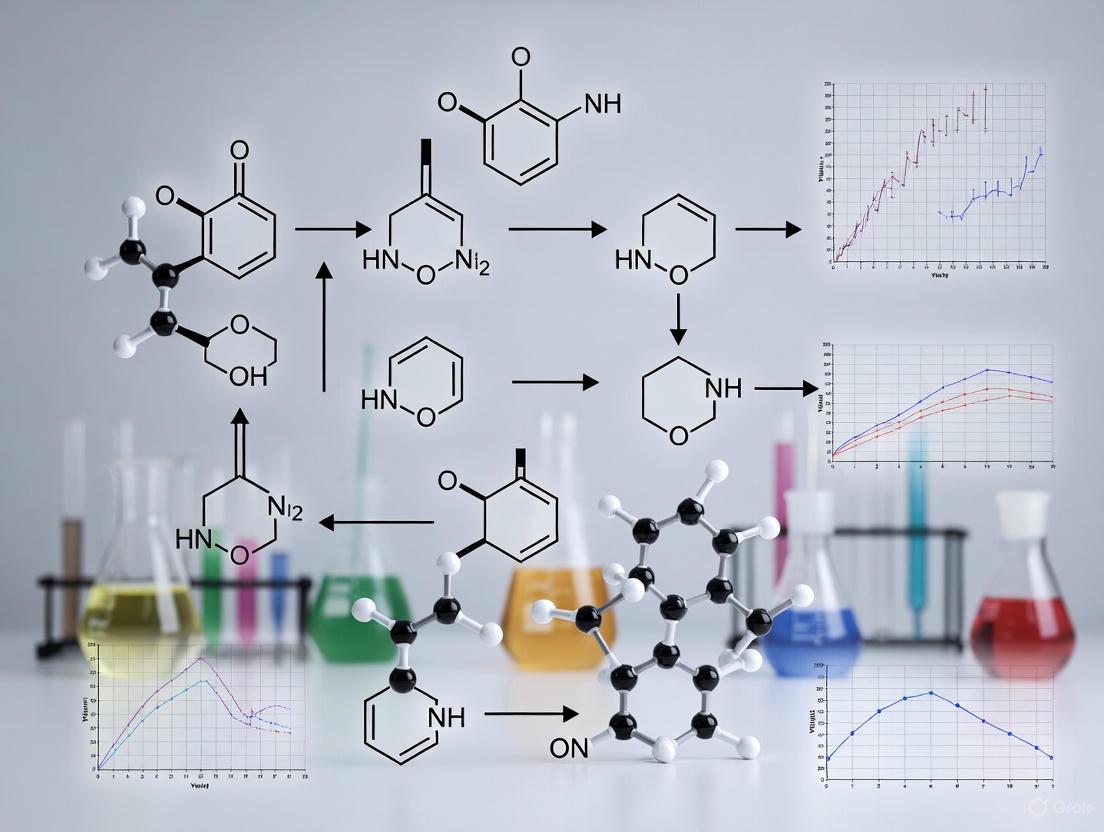
The field of organic reaction discovery is undergoing a profound transformation, moving beyond traditional trial-and-error approaches.
New Frontiers in Organic Reaction Discovery: AI, Automation, and Data-Driven Strategies for Drug Development
Abstract
The field of organic reaction discovery is undergoing a profound transformation, moving beyond traditional trial-and-error approaches. This article explores the latest paradigm shifts, from the redefinition of foundational mechanistic principles to the integration of artificial intelligence (AI), high-throughput experimentation (HTE), and advanced data mining of existing datasets. We examine how machine learning guides the optimization of complex reactions and the discovery of novel catalysts, with a focus on methodologies directly applicable to pharmaceutical research. The discussion also covers the critical validation of new reactions and their tangible impact on streamlining the synthesis of bioactive compounds and accelerating drug discovery pipelines.
Rethinking the Basics: Uncovering New Mechanistic Pathways and Overlooked Reactions
A foundational reaction in transition metal chemistry, oxidative addition, has been demonstrated to proceed via a previously unrecognized electron flow pathway. Research from Penn State reveals that this reaction can occur through a mechanism where electrons move from the organic substrate to the metal center, directly challenging the long-standing textbook model that exclusively describes electron donation from the metal to the organic compound [1]. This paradigm shift, demonstrated using platinum and palladium complexes with hydrogen gas, necessitates a revision of fundamental chemical principles and opens new avenues for catalyst design in pharmaceutical development and industrial chemistry. The discovery underscores the dynamic nature of chemical knowledge and highlights how continued investigation of even the most established reactions can yield transformative insights.
In organometallic chemistry and its extensive applications in drug synthesis and catalysis, oxidative addition reactions represent a cornerstone process. Traditionally, this reaction class has been uniformly described as involving a transition metal center donating its electrons to an organic substrate, resulting in bond cleavage and formal oxidation of the metal [2]. This electron transfer model has guided decades of catalyst design and reaction engineering, particularly favoring electron-rich metal complexes for their presumed superior oxidative addition capabilities.
The conventional mechanism posits that electron-dense transition metals facilitate oxidative addition by donating electron density to the σ* antibonding orbital of the substrate, leading to bond rupture [2]. This understanding has driven the development of numerous catalytic systems, especially in pharmaceutical cross-coupling reactions where oxidative addition is often the rate-determining step. However, the persistent observation that certain oxidative additions are unexpectedly accelerated by electron-deficient metal complexes suggested potential flaws in this universally accepted model [1].
Within the broader context of new organic reaction discovery research, this anomaly represents precisely the type of scientific puzzle that, when investigated, can overturn fundamental assumptions. The recent findings from Penn State researchers provide compelling evidence for an alternative mechanism—termed "reverse electron flow"—where initial electron transfer occurs from the organic molecule to the metal center, prior to achieving the same net oxidative addition product [1]. This discovery not only rewrites a chapter of textbook chemistry but also exemplifies the importance of re-evaluating established scientific dogmas through rigorous experimental investigation.
Traditional vs. Alternative Mechanisms in Oxidative Addition
The Classical Oxidative Addition Model
The textbook description of oxidative addition involves the insertion of a metal center into a covalent bond, typically A-B, resulting in the formation of two new metal-ligand bonds (M-A and M-B) [2]. This process consistently increases the metal's oxidation state by two units, its coordination number, and its electron count by two electrons [2]. The reaction requires that the starting metal complex is both electronically and coordinatively unsaturated, possessing nonbonding electron density available for donation to the incoming ligand (d⿠≥ 2) and access to a stable oxidation state two units higher [2].
Conventional Electron Flow: In the established mechanism, the transition metal acts as a nucleophilic electron donor to the organic substrate [1]. The close proximity of the organic molecule to the transition metal allows orbital mixing, facilitating electron donation from metal-based orbitals to the σ* antibonding orbital of the substrate, thereby weakening and ultimately cleaving the targeted bond. This understanding has dominated the field for decades, directing synthetic chemists to prioritize electron-dense metal complexes for reactions involving oxidative addition steps.
The Newly Discovered Reverse Electron Flow Mechanism
The Penn State research team has uncovered a surprising deviation from this classical pathway. Their investigations reveal that oxidative addition can initiate through a different sequence of events—heterolysis—where electrons instead move from the organic molecule to the metal complex [1]. This "reverse electron flow" achieves the same net oxidative addition outcome through a distinct mechanistic pathway.
Key Distinction: While the traditional mechanism begins with metal-to-substrate electron donation, the newly discovered pathway initiates with substrate-to-metal electron transfer [1]. This heterolysis mechanism had not been previously observed to result in a net oxidative addition reaction. The research team identified this pathway by studying reactions involving electron-deficient platinum and palladium complexes with hydrogen gas, observing an intermediate step where hydrogen donated its electrons to the metal complex before proceeding to a final product indistinguishable from classical oxidative addition [1].
Table 1: Comparative Analysis of Oxidative Addition Mechanisms
| Characteristic | Classical Mechanism | Reverse Electron Flow Mechanism |
|---|---|---|
| Initial Electron Flow | Metal → Organic substrate | Organic substrate → Metal |
| Key Intermediate | Not specified | Heterolysis intermediate |
| Preferred Metal Properties | Electron-rich metal centers | Electron-deficient metal centers |
| Driving Force | Electron density on metal | Electron affinity of metal center |
| Experimental Evidence | Extensive historical literature | NMR-observed intermediate [1] |
Experimental Evidence and Methodologies
Research Design and Compound Synthesis
The investigation into reverse electron flow oxidative addition employed rigorous experimental approaches centered on well-defined transition metal complexes. The research team utilized compounds containing the transition metals platinum and palladium that were intentionally designed to be electron-deficient, contrasting with the electron-rich complexes typically employed in oxidative addition studies [1].
Critical Reagent Design: The metal complexes were synthesized without the electron-dense characteristics that would favor traditional oxidative addition pathways. This strategic design enabled the researchers to probe mechanistic scenarios where conventional electron donation from metal to substrate would be less favorable, thereby creating conditions to observe alternative pathways.
The organic substrate employed in these pivotal experiments was hydrogen gas (Hâ‚‚), representing one of the simplest and most fundamental reagents in oxidative addition chemistry [1]. The choice of dihydrogen provided a clean, well-understood system in which to detect mechanistic deviations from established pathways.
Analytical Techniques and Observation
The researchers employed Nuclear Magnetic Resonance (NMR) spectroscopy to monitor changes to the transition metal complexes throughout the reaction process [1]. This technique provided real-time insight into the structural and electronic transformations occurring during the oxidative addition process.
Key Observation: Through NMR monitoring, the team detected an intermediate species that indicates hydrogen had donated its electrons to the metal complex prior to forming the final oxidative addition product [1]. This intermediate represents the critical experimental evidence for the reverse electron flow pathway, demonstrating that electron transfer from organic substrate to metal occurs as an initial step in the sequence.
The final resultant state of the reaction was found to be indistinguishable from the product of classical oxidative addition [1], explaining why this alternative mechanism remained undetected for decades despite the extensive study of these reactions. Only through careful monitoring of the reaction pathway, rather than just analyzing starting materials and end products, was the alternative mechanism revealed.
Protocol for Mechanistic Investigation
For researchers seeking to reproduce or extend these findings, the following methodological framework provides guidance for investigating oxidative addition mechanisms:
Complex Preparation: Synthesize transition metal complexes (Pd, Pt) with controlled electron density. Electron-deficient complexes can be achieved through strategic ligand selection incorporating electron-withdrawing groups.
Reaction Setup: In an appropriate dry solvent under inert atmosphere, combine the metal complex with the substrate of interest (e.g., Hâ‚‚, aryl halides). Standard Schlenk line or glovebox techniques are recommended, though mechanochemical approaches have been demonstrated as alternatives for sensitive organometallic reactions [3].
Spectroscopic Monitoring: Utilize NMR spectroscopy to monitor reaction progress with particular attention to:
- Chemical shift changes in metal-bound ligands
- Appearance and disappearance of intermediate species
- Integration changes that indicate electron redistribution
Intermediate Characterization: Employ low-temperature NMR techniques to stabilize and characterize transient intermediates when necessary.
Product Verification: Confirm the identity of the final oxidative addition product through comparative analysis with authentic samples prepared via classical routes.
Table 2: Key Experimental Data from Reverse Electron Flow Study
| Experimental Component | Specifics | Significance |
|---|---|---|
| Metal Complexes | Electron-deficient Pt, Pd | Demonstrates mechanism operates with non-traditional oxidative addition metals |
| Primary Substrate | Hâ‚‚ gas | Simple, fundamental system for mechanistic study |
| Key Analytical Method | NMR spectroscopy | Enabled detection of heterolysis intermediate |
| Critical Observation | Intermediate with electron donation from Hâ‚‚ to metal | Direct evidence for reverse electron flow |
| Final Product | Identical to classical oxidative addition | Explains why mechanism remained undetected |
The Scientist's Toolkit: Essential Research Reagents and Materials
Table 3: Key Research Reagents for Investigating Reverse Electron Flow
| Reagent/Material | Function/Application | Specific Examples/Properties |
|---|---|---|
| Transition Metal Precursors | Foundation for synthesizing reactive complexes | Pt(II) salts, Pd(0) complexes; electron-deficient variants |
| Specialized Ligands | Modulate electron density at metal center | Electron-withdrawing phosphines, pincer ligands |
| Oxidative Addition Substrates | Partners for mechanistic studies | Hâ‚‚ gas, aryl halides, other electrophiles |
| NMR Solvents & Tubes | Reaction monitoring and characterization | Deuterated solvents suitable for air-sensitive compounds |
| Glove Box / Schlenk Line | Handling air-sensitive compounds | Maintains inert atmosphere for sensitive organometallics |
| Mechanochemical Equipment | Alternative reaction methodology | Ball mills for solvent-free oxidative addition [3] |
| Neuropeptide AF (human) | Neuropeptide AF (human), MF:C90H132N26O25, MW:1978.2 g/mol | Chemical Reagent |
| GPRP acetate | GPRP acetate, MF:C20H35N7O7, MW:485.5 g/mol | Chemical Reagent |
Implications for Drug Development and Organic Synthesis
The discovery of reverse electron flow in oxidative addition carries profound implications for pharmaceutical research and development, particularly in the design of catalytic synthetic methodologies for complex drug molecules.
Catalyst Design Principles: This new understanding expands the palette of potential catalysts for key bond-forming reactions used in drug synthesis. Traditional approaches have focused almost exclusively on electron-rich metal complexes for catalytic cycles involving oxidative addition. The recognition that electron-deficient metals can participate in oxidative addition via an alternative mechanism enables novel catalyst design strategies that could improve efficiency, selectivity, and substrate scope in medicinal chemistry applications [1].
Environmental Pollutant Mitigation: Beyond pharmaceutical synthesis, this fundamental mechanistic insight opens possibilities for addressing environmental challenges. The research team specifically noted interest in exploiting this chemistry to "break down stubborn pollutants" [1], suggesting potential applications in designing advanced remediation systems for pharmaceutical manufacturing facilities or environmental contaminants.
The paradigm shift also has important implications for reaction optimization in process chemistry. Pharmaceutical developers can now explore alternative catalytic systems for challenging transformations that may have previously failed with traditional catalyst types, potentially enabling more efficient synthetic routes to target molecules.
The discovery of reverse electron flow in oxidative addition represents a significant advancement in fundamental chemical knowledge with far-reaching implications for synthetic chemistry and drug development. This case exemplifies how rigorous investigation of anomalous observations—such as the unexpected reactivity of electron-deficient metal complexes—can challenge even the most deeply entrenched scientific paradigms.
The demonstration that oxidative addition can proceed through competing mechanisms with opposite electron flow directions necessitates revision of textbook descriptions and expands the conceptual framework for understanding transition metal catalysis. For pharmaceutical researchers and synthetic chemists, this new understanding provides additional tools for catalyst design and reaction optimization that may enable solutions to previously intractable synthetic challenges.
This discovery underscores the dynamic, evolving nature of chemical knowledge and highlights the importance of continued fundamental research, even in areas considered mature and well-understood. As with all significant paradigm shifts, this finding raises new questions about the prevalence of reverse electron flow mechanisms across different substrate classes and metal systems, ensuring fertile ground for future investigation at the intersection of mechanism, synthesis, and drug development.
The field of organic chemistry is undergoing a paradigm shift, moving from a reliance on newly conducted experiments to the strategic re-analysis of vast existing data archives. In a typical research laboratory, terabytes of mass spectrometry data can accumulate over several years, yet due to the limitations of manual analysis, up to 95% of this information remains unexplored [4]. This unexplored data represents a significant reservoir of potential scientific discoveries. The emergence of sophisticated machine learning (ML) algorithms is now enabling researchers to decipher this complex, tera-scale information, leading to the discovery of previously unknown chemical reactions and reaction pathways without the need for new, resource-intensive experiments [5] [4]. This approach, often termed "experimentation in the past," offers a cost-efficient and environmentally friendly path for chemical discovery by repurposing existing data [5]. This whitepaper details the core methodologies, experimental protocols, and essential tools that underpin this transformative research paradigm, providing a technical guide for researchers engaged in new organic reaction discovery.
Core Methodology: A Machine-Learning-Powered Search Engine
At the heart of mining archived spectral data is the development of specialized search engines capable of navigating multicomponent High-Resolution Mass Spectrometry (HRMS) data with high accuracy and speed. One such system, MEDUSA Search, employs a novel isotope-distribution-centric search algorithm augmented by two synergistic ML models [5]. The architecture of this pipeline is crucial for managing the immense scale of the data, which can encompass over 8 TB of 22,000 spectra, and for achieving search results in a reasonable time frame [5].
The following diagram illustrates the logical workflow of this multi-stage search and discovery process, from hypothesis generation to the final identification of novel reactions.
Figure 1: Workflow for ML-Powered Reaction Discovery from Spectral Data
The process involves several critical stages [5]:
- Hypothesis Generation (Step A): The system is designed around breakable bonds and fragment recombination. Users can supply fragments for automatic combination, or utilize algorithms like BRICS fragmentation or multimodal Large Language Models (LLMs) to generate query ions.
- Theoretical Pattern Calculation (Step B): Input concerning the chemical formula and charge of a query ion is used to calculate its theoretical "isotopic pattern."
- Coarse Spectra Search (Step C): The two most abundant isotopologue peaks from the theoretical pattern are searched against inverted indexes with high mass accuracy (0.001 m/z). Spectra containing these peaks are labeled as candidates.
- Isotopic Distribution Search (Step D): A detailed search for the full isotopic distribution of the query ion is performed within each candidate spectrum, using a cosine distance metric to assess similarity between theoretical and matched distributions.
- ML-Powered Filtering (Step E): A machine learning regression model estimates an ion presence threshold specific to the query ion's formula to automatically decide if the ion is present. This step is critical for reducing false positives.
This methodology successfully identified several previously unknown reactions, including a heterocycle-vinyl coupling process within the well-studied Mizoroki-Heck reaction, demonstrating its capability to reveal complex and overlooked chemical phenomena [5].
Quantitative Performance Data
The performance of ML-driven approaches in analyzing spectral data and predicting molecular properties can be evaluated through several key metrics, as demonstrated by recent studies. The table below summarizes quantitative data from two distinct applications: a search engine for reaction discovery and a predictive model for electronic properties.
Table 1: Performance Metrics of Featured ML Models
| Model / System Name | Primary Task | Dataset Scale | Key Performance Metric | Result |
|---|---|---|---|---|
| MEDUSA Search [5] | Discover unknown reactions from HRMS data | >8 TB of data (22,000 spectra) | Successful identification of novel reactions (e.g., heterocycle-vinyl coupling) | Demonstrated |
| DreaMS AI [6] | Identify molecular structures from raw MS data | Trained on >700 million mass spectra | Can annotate more than the ~10% limit of previous tools | Improved Coverage |
| ANN for Functional Groups [7] | Identify 17 functional groups from multi-spectral data | 3,027 compounds | Macro-average F1 score | 0.93 |
| Random Forest for HOMO-LUMO Gaps [8] | Predict HOMO-LUMO gaps of organic donors | Comprehensive dataset of known organic donors | R² value | 0.91 |
Another study highlights the advantage of integrating multiple spectroscopic data types. An Artificial Neural Network (ANN) model trained simultaneously on Fourier-transform infrared (FT-IR), proton NMR, and 13C NMR spectra significantly outperformed models using a single spectral type for functional group identification [7]. This multi-modal approach achieved a macro-average F1 score of 0.93 in identifying 17 different functional groups, a substantial improvement over the model trained solely on FT-IR data (F1 score of 0.88) [7]. This confirms that integrating complementary spectral data, as experts do, yields more accurate structural analysis.
Table 2: Functional Group Prediction Performance (Macro-Average F1 Score)
| Spectral Data Type Used in Model | Performance (F1 Score) |
|---|---|
| FT-IR, 1H NMR, and 13C NMR (Combined) | 0.93 |
| FT-IR Alone | 0.88 |
Detailed Experimental Protocols
MEDUSA Search Engine Workflow
The protocol for the MEDUSA search engine, as detailed in Nature Communications, involves a multi-level architecture inspired by modern web search engines to achieve high-speed analysis of tera-scale datasets [5].
Step 1: Data Preparation and ML Model Training. A critical foundation of the system is that its ML models are trained without large, manually annotated spectral datasets. Instead, training is performed using synthetically generated MS data. The process involves constructing theoretical isotopic distribution patterns from molecular formulas and then applying data augmentation techniques to simulate various measurement errors and instrumental conditions [5]. This generates a vast, high-quality training set without the bottleneck of manual labeling.
Step 2: Query Ion Definition and Theoretical Pattern Calculation. Researchers define a query of interest based on hypothetical reaction pathways. The system allows input of chemical formulas and charges, or the use of automated fragmentation methods (BRICS) or LLMs to generate potential ion formulas [5]. The engine then calculates the precise theoretical isotopic distribution (isotopic pattern) for the query ion.
Step 3: Multi-Stage Spectral Search.
- Coarse Search: The algorithm performs a fast, initial filter by searching for the two most abundant isotopologue peaks of the query ion within inverted indexes of the spectral database. This step rapidly identifies a subset of candidate spectra for deeper analysis [5].
- Fine Search: For each candidate spectrum, a comprehensive in-spectrum isotopic distribution search is conducted. This algorithm calculates the cosine similarity between the theoretical isotopic pattern and the patterns found within the candidate spectrum [5].
- ML-Powered Decision: A trained ML regression model estimates a dynamic, formula-specific ion presence threshold. This threshold is used to automatically accept or reject matches, filtering out false positives based on the calculated cosine distance [5].
Step 4: Orthogonal Validation. While the search engine identifies the presence of ions with specific molecular formulas, the proposed structures require further validation. The original study suggests that users can design follow-up experiments using orthogonal methods like NMR spectroscopy or obtain tandem mass spectrometry (MS/MS) data to confirm the structural assignments of the newly discovered compounds [5].
Multi-Spectral Functional Group Identification
For the ANN model that identifies functional groups from FT-IR and NMR spectra, the experimental protocol is as follows [7]:
Step 1: Data Collection and Curation. FT-IR spectra (gas phase) and NMR spectra (in CDCl₃ solvent only, for consistency) were collected from public databases (NIST, SDBS). The dataset comprised 3,027 compounds.
Step 2: Data Preprocessing.
- FT-IR: Transmittance values were converted to absorbance and subjected to min-max normalization. Spectra were vectorized into 1108 data points representing wavelengths from 400 to 4000 cmâ»Â¹.
- NMR (¹H and *¹³C):* To handle the sparsity of NMR data, a binning procedure was applied. The ¹H NMR range (1-12 ppm) was divided into 12 bins of 1 ppm intervals, and the ¹³C NMR range (1-220 ppm) was divided into 44 bins of 5 ppm intervals. The model used binary data (1 or 0) indicating the presence or absence of a peak in a given bin, ignoring intensity information to avoid the "curse of dimensionality" [7].
Step 3: Functional Group Labeling. The presence of 17 functional groups (e.g., aromatic, alcohol, ketone, amine) in each compound was programmatically determined using SMARTS strings, a line notation for molecular patterns.
Step 4: Model Training and Validation. An Artificial Neural Network (ANN) model was trained on the integrated multi-spectral data. The model was evaluated using a stratified 5-fold cross-validation approach to prevent overfitting and ensure generalizability. In this process, 20% of the data was held back as a test set, while the remaining 80% was used for training and validation across five folds [7].
The Scientist's Toolkit: Research Reagent Solutions
The following table details key software, data, and computational resources essential for implementing the described reaction discovery workflow.
Table 3: Essential Research Tools and Resources for Spectral Data Mining
| Tool / Resource Name | Type | Primary Function in Research |
|---|---|---|
| MEDUSA Search [5] | Software / Search Engine | Core platform for tera-scale isotopic distribution search in HRMS data for reaction discovery. |
| DreaMS AI [6] | AI Foundation Model | Learns molecular structures from raw mass spectra to annotate unknown compounds in large datasets. |
| GNPS Repository [6] | Mass Spectral Data Repository | A public data repository providing tens to hundreds of millions of mass spectra for training models and testing hypotheses. |
| CMCDS Dataset [9] | Computational Spectral Dataset | A dataset of over 10,000 computed ECD spectra for chiral molecules, useful for absolute configuration determination. |
| mzML [10] | Data Format | A community standard data format for mass spectrometry data, facilitating data exchange and interoperability. |
| BRICS Fragmentation [5] | Algorithm | A method for in silico fragmentation of molecules, used for automated generation of reaction hypotheses. |
| SMARTS Strings [7] | Chemical Language | A notation for defining molecular patterns and functional groups, used for automated labeling of training data. |
| Cyclosporin A-Derivative 1 | Cyclosporin A-Derivative 1, MF:C65H118BF4N11O14, MW:1364.5 g/mol | Chemical Reagent |
| C-Reactive Protein (CRP) (201-206) | C-Reactive Protein (CRP) (201-206), MF:C38H57N9O8, MW:767.9 g/mol | Chemical Reagent |
Fundamental Principles of Bond Formation and Cleavage in Novel Reaction Spaces
The manipulation of chemical bonds—their formation and selective cleavage—represents the cornerstone of synthetic chemistry. Traditional approaches often rely on stoichiometric reagents, harsh conditions, and predefined reactivity patterns. However, the evolving demands of modern research, particularly in pharmaceutical development, require innovative strategies that offer enhanced selectivity, sustainability, and access to underexplored chemical space. This whitepaper examines three transformative paradigms in novel reaction spaces: electrochemical synthesis, biocatalytic systems, and dynamic covalent chemistry. These approaches leverage unique activation modes to overcome traditional limitations in bond dissociation energies and entropic penalties, enabling previously inaccessible disconnections and rearrangements. By framing these advancements within the context of organic reaction discovery, this guide provides researchers with the fundamental principles, mechanistic insights, and practical methodologies needed to implement these technologies in drug development pipelines.
Electrochemical Bond Cleavage and Formation
Fundamental Principles
Organic electrochemistry utilizes electrical energy as a renewable driving force for synthetic transformations, employing electrons as traceless redox reagents. This approach replaces stoichiometric chemical oxidants and reductants, significantly improving atom economy and reducing dependence on fossil-derived resources [11]. The precise modulation of electrical inputs (current, voltage, current density) enables controlled reaction pathway steering, often stabilizing transient intermediates and unlocking unconventional mechanistic possibilities not accessible through thermal activation [11].
A key advantage of electrochemical activation is its ability to address the challenge of cleaving strong covalent bonds with high bond dissociation energies. For instance, the C–N bond in amines exhibits a bond dissociation energy of approximately 102.6 ± 1.0 kcal molâ»Â¹, making selective cleavage traditionally challenging [11]. Electrochemical methods overcome this barrier through single-electron transfer (SET) processes that generate radical intermediates primed for subsequent functionalization.
Experimental Protocols: Electrochemical Deamination Functionalization
Representative Procedure for Electrochemical C(sp²)–C(sp³) Bond Formation via Aryl Diazonium Salts [11]:
- Reaction Setup: Use an undivided electrochemical cell equipped with a platinum plate anode (1 cm × 1 cm) and a reticulated vitreous carbon (RVC) cathode (1 cm × 1 cm × 0.5 cm). The cell should be fitted with a magnetic stir bar.
- Reagents: Aryl diazonium tetrafluoroborate (0.5 mmol, 1.0 equiv), enol acetate (0.75 mmol, 1.5 equiv), lithium perchlorate (1.0 mmol) as supporting electrolyte.
- Solvent System: Acetonitrile/DMSO mixture (10 mL total volume, 5:1 v/v).
- Electrolysis Conditions: Constant current of 10 mA at room temperature (approximately 25°C) under a nitrogen atmosphere. Reaction time is typically 4-6 hours, monitored by TLC or LC-MS.
- Work-up: After completion, the reaction mixture is diluted with ethyl acetate (30 mL) and washed with brine (3 × 20 mL). The organic layer is dried over anhydrous Na₂SO₄, filtered, and concentrated under reduced pressure.
- Purification: The crude product is purified by flash column chromatography on silica gel using hexane/ethyl acetate as eluent.
Key Considerations:
- Electrode Materials: The choice of electrode material significantly impacts reaction efficiency and selectivity. Carbon-based electrodes (RVC, graphite) are often preferred for reduction processes, while platinum is common for anodic reactions.
- Supporting Electrolyte: Tetraalkylammonium salts (e.g., Buâ‚„NBFâ‚„) or lithium salts (e.g., LiClOâ‚„) are essential for maintaining current flow in non-aqueous solvents. The electrolyte must be electrochemically stable within the operating potential window.
- Solvent Selection: Solvents must dissolve both substrates and supporting electrolyte while exhibiting high electrochemical stability. Common choices include acetonitrile, DMF, and DMSO.
Electrochemical C(sp²)–C(sp³) Bond Formation Mechanism. This diagram illustrates the key steps in the electrochemical deamination functionalization process, highlighting the radical pathway enabled by sequential electron transfer at the electrodes [11].
Table 1: Quantitative Comparison of Electrochemical Deamination Strategies
| Nitrogen Source | Target Bond Formed | Key Conditions | Representative Yield | Key Advantages |
|---|---|---|---|---|
| Aryl Diazonium Salts [11] | C(sp²)–C(sp²) | Undivided cell, NaBF₄, DMSO-d₆ | Up to 92% | Excellent functional group tolerance |
| Aryl Diazonium Salts [11] | C(sp²)–C(sp³) | Pt/RVC, LiClO₄, CH₃CN/DMSO | 76% (gram scale) | No metal catalyst or base required |
| Katritzky Salts [11] | C(sp³)–C(sp³) | Divided cell, nBu₄NBF₄, DMF | Moderate to High | Activates alkyl primary amines |
Biocatalytic Approaches to Bond Manipulation
Fundamental Principles
Biocatalysis leverages enzyme-based catalysts to perform highly selective bond-forming and bond-cleaving operations under mild conditions. The α-ketoglutarate (α-KG)/Fe(II)-dependent enzyme superfamily exemplifies the power of biocatalysis, enabling oxidative transformations that are challenging to achieve with small-molecule catalysts [12] [13]. These enzymes utilize a common high-valent iron-oxo (Feâ´âº=O) intermediate to initiate reactions via hydrogen atom transfer (HAT) from strong C–H bonds (BDE ~95-100 kcal/mol) [13].
A groundbreaking expansion of this reactivity is the recent discovery of O–H bond activation by PolD, an α-KG-dependent enzyme. This transformation tackles O–H bonds with dissociation energies exceeding 105 kcal/mol, a significant mechanistic leap beyond conventional C–H activation [13]. This capability enables novel reaction pathways, such as the precise C–C bond cleavage of a bicyclic eight-carbon sugar substrate into a monocyclic six-carbon product during antifungal nucleoside biosynthesis [13].
Experimental Protocols: High-Throughput Biocatalytic Reaction Discovery
Methodology for Exploring α-KG-Dependent Enzyme Reactivity [12]:
- Enzyme Library Design (aKGLib1):
- Sequence Selection: 265,632 unique sequences were identified using the Enzyme Function Initiative–Enzyme Similarity Tool (EFI-EST). Redundant orthologues (>90% similarity) and primary metabolism enzymes were removed.
- Diversity Sampling: 314 enzymes were selected, comprising 102 from the most populated cluster, 125 from poorly annotated clusters, and 87 with known or proposed functions. The final library had an average sequence identity of 13.7%, ensuring high diversity.
- Protein Expression and Screening:
- Cloning and Expression: DNA for the library was synthesized and cloned into a pET-28b(+) vector. E. coli was transformed and overexpression was carried out in a 96-well plate format.
- Activity Assay: Reactions typically contain the substrate of interest (e.g., 1-2 mM), the enzyme (crude lysate or purified), α-KG (1.1 equiv), Fe(II) (e.g., (NH₄)₂Fe(SO₄)₂, 0.1-1.0 equiv), and a buffered solution (e.g., HEPES, 50 mM, pH 7.5) with catalase to suppress peroxide side reactions. Incubation proceeds at 25-30°C for 2-16 hours.
- Analysis: Reaction outcomes are analyzed by LC-MS, NMR, or spectrophotometric methods to identify productive enzyme-substrate pairs.
Key Considerations:
- Cofactor Regeneration: The consumption of α-KG necessitates its replenishment in preparative reactions. In situ regeneration systems can be employed.
- Predictive Modeling: Machine learning tools like CATNIP can predict compatible α-KG/Fe(II)-dependent enzymes for a given substrate and vice versa, derisking biocatalytic planning [12].
Mechanistic Pathways of Fe/α-KG Enzymes. This workflow contrasts the conventional C–H activation pathway with the novel O–H activation pathway, leading to distinct reaction outcomes including hydroxylation and C–C bond cleavage [12] [13].
Research Reagent Solutions for Biocatalysis
Table 2: Essential Reagents for Fe/α-KG-Dependent Enzyme Research
| Reagent / Material | Function / Role | Application Notes |
|---|---|---|
| α-Ketoglutarate (α-KG) | Essential co-substrate; decarboxylation drives ferryl intermediate formation | Stoichiometric consumption requires replenishment in scaled reactions [12] [13]. |
| Ammonium Iron(II) Sulfate | Source of Fe(II) cofactor for the non-heme iron active site | Oxygen-sensitive; prepare fresh solutions in anoxic buffer [13]. |
| HEPES Buffer (pH 7.5) | Maintains physiological pH optimum for enzyme activity | Good buffering capacity in the neutral pH range without metal chelation. |
| Catalase | Decomposes Hâ‚‚Oâ‚‚, preventing enzyme inactivation by peroxide side-reactions | Critical for maintaining enzyme activity during long incubations [12]. |
| pET-28b(+) Vector | Standard plasmid for heterologous expression in E. coli | Contains an N-terminal His-tag for simplified protein purification [12]. |
Dynamic Covalent Bond Exchange in Material Synthesis
Fundamental Principles
Dynamic covalent chemistry involves reversible bond formation and cleavage under equilibrium control. This principle is powerfully exploited in Covalent Adaptable Networks (CANs), where dynamic cross-links enable the reprocessing and recycling of otherwise permanent thermosetting polymers [14]. The reprocessing temperature (Tv) is a key parameter directly linked to the kinetics and activation energy (Eâ‚) of the bond exchange.
Anhydride-based dynamic covalent bonds have recently emerged as a robust platform for CANs. The bond exchange mechanism can proceed via uncatalyzed or acid-catalyzed pathways, with the latter significantly lowering the energy barrier for exchange. Density functional theory (DFT) studies reveal that the uncatalyzed anhydride exchange has a high barrier of 44.1–52.8 kcal molâ»Â¹, making it suitable for high-temperature applications. In contrast, the acid-catalyzed route reduces this barrier to 25.9–33.0 kcal molâ»Â¹, enabling reprocessing at lower temperatures (e.g., 90°C) [14].
Experimental Protocols: Anhydride Bond Exchange
General Procedure for Studying Anhydride Dynamic Exchange [14]:
- Model Compound Reaction: The dynamic exchange is first studied in small molecules like methacrylic anhydride (MAA) and 4-pentenoic anhydride (PNA) to establish kinetics and mechanism without polymer network complexities.
- Computational Analysis (DFT):
- Method: Use M06-2X/def2-SVP level of theory for geometry optimizations and frequency calculations in the gas phase or with a continuum solvation model (e.g., SMD for CHCl₃).
- Energy Refinement: Perform single-point energy corrections on optimized structures using high-level methods like DLPNO-CCSD(T) towards the complete basis set (CBS) limit.
- Transition State Location: Locate and verify transition states using quasi-Newton or eigenvector-following methods, confirming each with one imaginary frequency corresponding to the reaction coordinate.
- Validation in Polymer Networks:
- Network Synthesis: Synthesize poly(thioether anhydrides) or related networks via thiol-ene polymerization or polycondensation.
- Stress-Relaxation Testing: Characterize the bulk material using a rheometer. Apply a constant strain and monitor the decay of stress over time at various temperatures to determine the relaxation time (Ï„) and activation energy (Eâ‚).
Key Considerations:
- Catalyst Selection: The use of acid catalysts (e.g., p-toluenesulfonic acid) is crucial for achieving practical exchange rates at moderate temperatures.
- Topology Design: The "clip-off" synthesis of macrocycles from Covalent Organic Frameworks (COFs) is a powerful application of dynamic covalent chemistry. It involves designing a COF where the target macrocycle is pre-organized, followed by selective cleavage of specific bonds (e.g., via ozonolysis) to release the macrocycle in near-quantitative yield [15].
Table 3: Quantitative Analysis of Anhydride Bond Exchange Mechanisms via DFT
| Exchange Mechanism | Rate-Determining Step | Computed Barrier (ΔG‡) | Implications for Reprocessing |
|---|---|---|---|
| Uncatalyzed [14] | Nucleophilic attack of anhydride oxygen on carbonyl carbon | 44.1 kcal molâ»Â¹ (25°C) to 52.8 kcal molâ»Â¹ (200°C) | Suitable for high-temperature CANs (>180°C) |
| Acid-Catalyzed [14] | Protonation of carbonyl oxygen followed by nucleophilic attack | 25.9 kcal molâ»Â¹ (25°C) to 33.0 kcal molâ»Â¹ (200°C) | Enables reprocessing at lower temperatures (50-90°C) |
| Concerted (4-membered TS) [14] | Single-step exchange via a cyclic transition state | ~59.3 kcal molâ»Â¹ | Mechanistically disfavored |
The frontiers of bond formation and cleavage are being rapidly expanded by innovative strategies that move beyond traditional thermal activation. Electrochemical synthesis provides traceless redox reagents, enabling the cleavage of strong C–N bonds and the generation of radical intermediates under mild conditions. Biocatalysis, particularly with engineered Fe/α-KG-dependent enzymes, offers unparalleled selectivity and has recently been shown to access challenging O–H activation pathways for complex molecular rearrangements. Meanwhile, the principles of dynamic covalent chemistry, as exemplified by anhydride exchange in CANs and the "clip-off" synthesis of macrocycles, provide powerful methods for constructing and deconstructing complex molecular architectures with precision and efficiency. For researchers in drug development and organic synthesis, the integration of these three paradigms—electrochemistry, biocatalysis, and dynamic covalent chemistry—into reaction discovery efforts promises to derisk synthetic planning, accelerate route scouting, and provide access to novel chemical space that is essential for tackling increasingly complex synthetic targets.
The New Toolbox: AI-Powered and Automated Platforms for Reaction Discovery
The relentless pursuit of innovation in organic reaction discovery, particularly within pharmaceutical and materials science research, demands methodologies that drastically reduce the time from concept to viable synthetic route. High-Throughput Experimentation (HTE) has emerged as a transformative approach, enabling the parallel execution of numerous experiments to rapidly explore vast chemical spaces. This guide details the integration of HTE with both traditional batch and innovative flow systems, framing their application within modern organic reaction discovery research. The convergence of these technologies allows researchers to address complex challenges, such as handling hazardous reagents or achieving intense process control, which are often intractable with conventional methods [16]. For the drug development professional, this synergy between HTE and flow chemistry is not merely a convenience but a powerful strategy to accelerate the discovery and optimisation of new chemical transformations, thereby shortening the critical path from candidate identification to process development [17].
Core Concepts of HTE, Batch, and Flow Systems
High-Throughput Experimentation is fundamentally defined by its ability to process large numbers of samples autonomously, employing miniaturization, automation, and parallelization to evaluate vast experimental spaces with minimal consumption of valuable materials [18] [19]. When applied to chemical synthesis, HTE involves the rapid, parallel screening of diverse reaction variables—such as catalysts, solvents, reagents, and temperatures—to identify optimal conditions for a given transformation [16].
HTE implementations are broadly categorized into two paradigms: batch and flow systems. Batch-based HTE typically employs multi-well plates (e.g., 96- or 384-well formats) where individual reactions are conducted in parallel, isolated volumes. This approach, borrowed from life sciences, is prevalent due to its straightforward operation and is ideal for screening discrete combinations of reactants and catalysts [16]. However, it faces limitations in handling volatile solvents, investigating continuous variables like reaction time, and often requires extensive re-optimization when scaling up [16].
In contrast, flow-based HTE utilizes tubular reactors or microchips through which reactant streams are continuously pumped. This configuration offers superior heat and mass transfer, precise control over reaction time (residence time), and the ability to safely employ hazardous reagents or access extreme process windows (e.g., high temperature and pressure) [16] [20]. A key advantage is that scale-up can often be achieved simply by extending the operating time of an optimised flow process, dramatically reducing the re-optimisation burden associated with scaling batch reactions [16].
The combination of HTE with flow chemistry is particularly powerful. It allows for the high-throughput investigation of continuous process parameters and facilitates the discovery and optimisation of reactions that are challenging or impossible to perform in traditional batch HTE platforms [16].
Experimental Protocols and Methodologies
A Representative HTE Workflow: From DESI-MS to Flow Synthesis
A robust HTE protocol for organic reaction discovery often employs a tiered strategy, using the highest-throughput tools for initial screening before progressing to more resource-intensive validation and optimisation. A documented workflow for N-alkylation reactions exemplifies this approach [20]:
- DESI-MS Primary Screening: Reaction mixtures are prepared robotically in 384-well plates. Using a magnetic pin tool, 50 nL of each mixture is deposited at high density onto a porous polytetrafluoroethylene (PTFE) substrate. This array is then analyzed by Desorption Electrospray Ionization Mass Spectrometry (DESI-MS). As the plate is rastered beneath the solvent sprayer, materials are desorbed and analyzed, enabling thousands of reactions to be evaluated per hour. The output is a qualitative heat map indicating the presence or absence of the target product.
- Batch Microtiter Plate Validation: Promising "hit" conditions from the DESI-MS screen are elevated to a small-volume (e.g., 50 µL) batch validation stage. Reactions are prepared in microtiter plates housed in aluminium blocks, sealed, and heated at defined temperatures (e.g., 50, 100, 150, 200 °C) for a set duration (e.g., 30 minutes). This step provides more textured data, including initial quantitation and assessment of temperature effects.
- Continuous-Flow Optimisation and Scale-up: The most promising conditions are then transferred to a continuous-flow system, such as a microfluidic reactor chip (e.g., a 10 µL glass chip on a Chemtrix Labtrix S1 system). Reactions are executed with precise control over residence time (e.g., 30 seconds initially), temperature, and pressure. The process is quenched, and products are quantified by LC-MS. This stage validates the reaction for scalable synthesis and allows for further refinement of parameters.
HTE for Photochemical Reaction Optimisation
Photochemical reactions benefit significantly from flow-HTE integration due to the challenges of uniform light penetration in batch systems. A protocol for optimising a photoredox fluorodecarboxylation reaction involved [16]:
- Initial Plate-Based Screening: Screening 24 photocatalysts, 13 bases, and 4 fluorinating agents using a 96-well plate-based photoreactor.
- Batch Validation and DoE: Validating hits in a batch reactor and further optimising using a Design of Experiments (DoE) approach.
- Flow Translation and Scale-up: Transferring the optimised reaction to a flow photoreactor (e.g., Vapourtec Ltd UV150). Gradual scale-up and optimisation of flow-specific parameters (light power, residence time, temperature) enabled the synthesis of 1.23 kg of product, demonstrating a throughput of 6.56 kg per day.
Quantitative Data and Analysis
The effectiveness of HTE campaigns is demonstrated through quantitative analysis of reaction outcomes across different screening platforms. The following tables consolidate key performance data from documented case studies.
Table 1: Performance comparison of HTE screening platforms for N-alkylation reactions [20].
| Screening Platform | Reaction Volume | Throughput | Key Measured Output | Primary Application |
|---|---|---|---|---|
| DESI-MS | 50 nL | Several thousand reactions/hour | Qualitative product ion intensity (Yes/No) | Primary high-throughput screen |
| Batch Microtiter | 50 µL | 96-384 reactions/run | LC-MS quantified concentration | Validation & temperature profiling |
| Continuous-Flow | 10 µL (chip) | Continuous | LC-MS quantified concentration | Optimization & scale-up |
Table 2: Summary of documented HTE application case studies and their outcomes.
| Chemical Transformation | HTE Goal | Screening Method | Key Outcome | Reference |
|---|---|---|---|---|
| N-alkylation of Anilines | Establish reactivity trends | DESI-MS → Batch → Flow | Strong correlation of solvent & substituent effects across platforms; enabled flow optimisation. | [20] |
| Photoredox Fluorodecarboxylation | Optimise & scale reaction | 96-well plate → DoE → Flow | Scaled from 2 g to 1.23 kg (92% yield); throughput of 6.56 kg/day. | [16] |
| Synthesis of A2E (Stargardt Disease) | Optimise classical synthesis | HTE & Continuous Flow | Reduced reaction time from 48 h to 33 min; increased yield from 49% to 78%. | [17] |
| Cross-Electrophile Coupling | Create compound library | 384-well → 96-well plate | Synthesised a library of 110 drug-like compounds. | [16] |
Workflow and Signaling Pathways
The logical progression from initial screening to scaled synthesis can be visualized as a streamlined workflow. The following diagram outlines the decision-making process and the interplay between different experimental platforms in an integrated HTE campaign.
This workflow highlights the funnel-like nature of a modern HTE campaign, where vast reaction spaces are rapidly pruned using ultra-high-throughput techniques like DESI-MS before committing resources to more detailed, quantitative validation and scalable flow synthesis.
The Scientist's Toolkit: Essential Research Reagent Solutions
Successful implementation of HTE relies on a suite of specialized equipment, reagents, and software. The following table details key components of the HTE toolkit as utilized in the cited research.
Table 3: Essential tools and reagents for a high-throughput experimentation platform.
| Tool / Reagent Category | Specific Examples | Function in HTE | Application Context |
|---|---|---|---|
| Automation & Liquid Handling | Beckman Coulter Biomek FX liquid handling robot, magnetic pin tool (50 nL) | Automated, precise preparation and transfer of reaction mixtures in 384- or 96-well plates. | Enables rapid assembly of vast reaction libraries for primary screening [20]. |
| High-Throughput Reactors | 96/384-well microtiter plates, aluminium heating blocks, compression seals | Parallel execution of batch reactions with controlled heating and mixing. | Used for secondary validation and temperature profiling [16] [20]. |
| Flow Chemistry Systems | Chemtrix Labtrix S1 with glass reactor chips, Vapourtec UV150 photoreactor | Continuous, scalable synthesis with superior process control (T, t, P) and safe handling of hazardous conditions. | Final optimisation, scale-up, and execution of challenging photochemistry [16] [20]. |
| Analytical Techniques | DESI-MS, LC-MS, FTIR, UV-Vis spectroscopy | Rapid qualitative and quantitative analysis of reaction outcomes. | DESI-MS for primary screening; LC-MS for quantification; FTIR/UV-Vis for material characterization [20] [18]. |
| Specialty Reagents | Photocatalysts (e.g., flavins), ligands, tailored catalysts | Screening of catalytic systems and reagents to enable challenging transformations. | Crucial for reaction discovery, e.g., in photoredox catalysis and cross-couplings [16] [19]. |
| Informatics & DoE Software | Custom informatics systems, Design of Experiments (DoE) software | Controls physical devices, organizes generated data, and designs efficient screening campaigns. | Manages large data volumes and extracts meaningful trends, maximizing information gain per experiment [16] [18]. |
| Velmupressin | Velmupressin, CAS:1647119-61-6, MF:C42H60ClN11O8S2, MW:946.6 g/mol | Chemical Reagent | Bench Chemicals |
| Autocamtide 2 | Autocamtide 2, CAS:129198-88-5, MF:C65H118N22O20, MW:1527.8 g/mol | Chemical Reagent | Bench Chemicals |
Machine Learning and Bayesian Optimization for Predictive Catalyst and Condition Selection
The discovery of new organic reactions is a fundamental driver of innovation in pharmaceutical and fine chemical research. However, the traditional paradigms of catalyst and condition selection—reliant on empirical trial-and-error or computationally intensive theoretical simulations—are increasingly proving to be bottlenecks in the research process [21]. These methods are often inefficient, time-consuming, and poorly suited to navigating the vast, multidimensional spaces of potential catalysts and reaction parameters [22].
The integration of machine learning (ML) and Bayesian optimization (BO) represents a paradigm shift, offering a data-driven pathway to accelerate discovery. ML models can learn complex, non-linear relationships between catalyst features, reaction conditions, and experimental outcomes from existing data. BO leverages these models to intelligently guide experimentation, sequentially selecting the most promising candidates to evaluate next, thereby converging on optimal solutions with far fewer experiments [23]. This technical guide details the core principles, methodologies, and practical applications of these tools within the context of a research thesis focused on new organic reaction discovery.
Core Concepts in Machine Learning for Catalysis
The Machine Learning Workflow in Catalysis
The application of ML in catalysis follows a structured pipeline [21]:
- Data Acquisition: Collection and curation of high-quality raw datasets from high-throughput experiments or computational sources (e.g., Density Functional Theory calculations).
- Feature Engineering: The process of constructing meaningful descriptors that numerically represent the catalysts and reaction components. These can be physical (e.g., Fermi energy, bandgap) or structural (e.g., molecular fingerprints, graph representations) [21] [24].
- Model Training & Validation: A dataset is used to train an ML algorithm to predict a target property, such as reaction yield or enantioselectivity. The model's performance is rigorously evaluated using techniques like cross-validation to ensure its reliability and generalizability [21].
Key Machine Learning Algorithms
Different ML algorithms are suited to different types of tasks and data availability [22].
Table 1: Key Machine Learning Algorithms in Catalysis Research
| Algorithm | Learning Type | Key Principle | Common Catalysis Applications |
|---|---|---|---|
| Linear Regression | Supervised | Models a linear relationship between input features and a continuous output. | Establishing baseline models; quantifying catalyst descriptor contributions [22]. |
| Random Forest (RF) | Supervised | An ensemble of decision trees; final prediction is an average or vote of all trees. | Predicting catalytic activity and reaction yields; handling complex, non-linear relationships [24] [22]. |
| Extreme Gradient Boosting (XGBoost) | Supervised | An advanced, regularized ensemble method that builds trees sequentially to correct errors. | High-performance prediction of catalytic performance; often a top performer in benchmark studies [24]. |
| Deep Learning (DL) | Supervised | Uses multi-layer neural networks to model highly complex, non-linear relationships. | Processing raw molecular structures (e.g., graphs, SMILES); large, diverse datasets [22] [25]. |
| Variational Autoencoder (VAE) | Unsupervised/Generative | Learns a compressed, latent representation of input data and can generate new molecules from it. | Inverse design of novel catalyst molecules conditioned on reaction parameters [25]. |
Bayesian Optimization for Efficient Experimentation
Bayesian Optimization is a powerful strategy for globally optimizing black-box functions that are expensive to evaluate—a perfect description of a complex chemical reaction [26] [27]. Its core cycle involves [23]:
- Surrogate Model: A probabilistic model, typically a Gaussian Process (GP), is used to approximate the unknown relationship between reaction parameters (e.g., catalyst structure, temperature) and the target objective (e.g., yield).
- Acquisition Function: This function uses the surrogate's predictions to balance exploration (probing uncertain regions of the parameter space) and exploitation (testing parameters predicted to give high yields). It recommends the next most informative experiment.
- Experimental Feedback: The proposed experiment is conducted, and the result is fed back to update the surrogate model, refining its understanding of the landscape with each iteration.
Quantitative Performance of Machine Learning Models
The predictive accuracy of ML models is quantitatively assessed using metrics such as the Coefficient of Determination (R²), Mean Absolute Error (MAE), and Root Mean Squared Error (RMSE). A comparative study on predicting outcomes for the Oxidative Coupling of Methane (OCM) reaction highlights the performance of different algorithms [24].
Table 2: Comparative Performance of ML Models in Predicting Catalytic Performance for OCM
| Machine Learning Model | Average R² | MSE Range | MAE Range | Performance Order |
|---|---|---|---|---|
| XGBoost Regression (XGBR) | 0.91 | 0.08 – 0.26 | 0.17 – 1.65 | 1 (Best) |
| Random Forest Regression (RFR) | - | - | - | 2 |
| Deep Neural Network (DNN) | - | - | - | 3 |
| Support Vector Regression (SVR) | - | - | - | 4 (Worst) |
The study concluded that the XGBoost model demonstrated superior predictive accuracy and lower error rates (MSE, MAE) compared to other techniques, and its performance generalized well to external datasets [24]. Furthermore, feature impact analysis revealed that reaction temperature had the most significant influence (33.76%) on the combined ethylene and ethane yield, followed by the moles of alkali/alkali-earth metal (13.28%) and the atomic number of the promoter (5.91%) [24].
Experimental Protocols and Methodologies
Case Study: Bayesian Optimization for Organic Photoredox Catalyst Discovery
This protocol, adapted from a study on metallaphotoredox cross-couplings, details a closed-loop BO workflow for discovering and optimizing new organic photoredox catalysts (OPCs) [23].
Objective: To identify a high-performing OPC from a virtual library of 560 cyanopyridine (CNP)-based molecules for a decarboxylative sp³–sp² cross-coupling.
Step 1: Virtual Library and Molecular Encoding
- Library Design: A virtual library of 560 CNP molecules was constructed from 20 β-keto nitriles (Ra) and 28 aromatic aldehydes (Rb) via the Hantzsch pyridine synthesis.
- Descriptor Calculation: Each CNP was encoded using 16 molecular descriptors calculated computationally. These captured key optoelectronic and excited-state properties (e.g., HOMO/LUMO energies, redox potentials, dipole moment, molecular weight) [23].
Step 2: Initial Experimental Design
- A diverse set of six CNP molecules was selected from the 560 using the Kennard-Stone (KS) algorithm to ensure broad coverage of the chemical space.
- These initial candidates were synthesized and tested under standardized reaction conditions (4 mol% CNP, 10 mol% NiCl₂·glyme, etc.) to obtain initial yield data [23].
Step 3: Sequential Closed-Loop Bayesian Optimization
- Surrogate Model: A Gaussian Process (GP) model was built using the initial data, mapping the 16 molecular descriptors to the reaction yield.
- Batch Acquisition Function: A batched BO algorithm was used to select the next 12 CNP candidates for synthesis and testing. The acquisition function balanced exploration and exploitation.
- Iteration: The GP model was updated with new experimental results. The "select-synthesize-test-update" loop was repeated sequentially. This process led to the synthesis of only 55 out of 560 candidates (~10%) and the discovery of a catalyst (CNP-129) providing a 67% yield [23].
Step 4: Reaction Condition Optimization
- A subsequent BO campaign was run using 18 of the best-performing OPCs, while simultaneously varying the nickel catalyst loading and ligand concentration.
- After evaluating only 107 of 4,500 possible condition sets (~2.4%), an optimal formulation was found that achieved an 88% reaction yield, rivaling traditional iridium-based catalysts [23].
Protocol for Generative Catalyst Design with CatDRX
For the de novo design of catalysts, generative models like CatDRX offer a powerful methodology [25].
Objective: To generate novel, high-performance catalyst structures for a given reaction.
Model Architecture: A Reaction-Conditioned Variational Autoencoder (VAE) is used. The model consists of:
- Catalyst & Condition Embedding Modules: Encode the catalyst structure (as a molecular graph) and other reaction components (reactants, reagents, products, reaction time) into numerical vectors.
- Autoencoder Module: The encoder maps the input into a latent space. The decoder, conditioned on the reaction embedding, reconstructs the catalyst molecule. A predictor network estimates the catalytic performance (e.g., yield) from the same latent vector [25].
Workflow:
- Pre-training: The model is first trained on a broad reaction database (e.g., the Open Reaction Database) to learn general relationships between reactions and catalysts.
- Fine-tuning: The model is subsequently fine-tuned on a smaller, targeted dataset specific to the reaction of interest.
- Inverse Design: To generate new catalysts, points are sampled from the latent space and decoded conditioned on the specific reaction parameters. The predictor can be used as a surrogate to screen generated candidates for desired properties before experimental testing [25].
Workflow Visualization
The following diagram illustrates the sequential, closed-loop Bayesian optimization workflow for catalyst discovery and reaction optimization.
Bayesian Optimization Cycle for Catalysts
The subsequent diagram outlines the architecture and process of a generative model for inverse catalyst design.
Generative Model for Inverse Catalyst Design
The Scientist's Toolkit: Key Research Reagents and Solutions
This table details essential computational and experimental resources for implementing ML-driven catalyst discovery.
Table 3: Essential Research Reagents and Tools for ML-Driven Catalyst Discovery
| Reagent / Tool | Type | Function & Explanation | Example from Literature |
|---|---|---|---|
| Molecular Descriptors | Computational | Numerical representations of chemical structures that enable ML models to learn structure-property relationships. | 16 optoelectronic descriptors (HOMO/LUMO, redox potentials) used to encode cyanopyridine catalysts [23]. |
| Gaussian Process (GP) Model | Computational Algorithm | A probabilistic surrogate model that provides predictions with uncertainty estimates, crucial for guiding Bayesian optimization. | Used as the core model in BO to predict catalyst performance and quantify uncertainty for acquisition [23]. |
| Cyanopyridine (CNP) Core | Chemical Scaffold | A synthetically accessible, diversifiable scaffold serving as a foundation for building a virtual library of organic photoredox catalysts. | Served as the core structure for a library of 560 candidate OPCs in a BO-driven discovery campaign [23]. |
| β-keto nitriles & Aromatic Aldehydes | Chemical Reagents | Building blocks for the Hantzsch pyridine synthesis, allowing for rapid diversification and exploration of chemical space. | 20 β-keto nitriles (Ra) and 28 aromatic aldehydes (Rb) were used to construct the virtual CNP library [23]. |
| Acquisition Function | Computational Algorithm | A criterion (e.g., Expected Improvement) that uses the GP's predictions to select the most informative experiments to run next. | Guided the sequential selection of catalyst batches in a closed-loop optimization, balancing risk and reward [23]. |
| Variational Autoencoder (VAE) | Generative Model | A deep learning architecture that learns a compressed latent space of catalyst structures, enabling generation of novel molecules. | Core of the CatDRX framework for generating new catalysts conditioned on specific reaction parameters [25]. |
| ATI-2341 | ATI-2341, MF:C104H178N26O25S2, MW:2256.8 g/mol | Chemical Reagent | Bench Chemicals |
| Fmoc-Phe-OH-15N | Fmoc-Phe-OH-15N, MF:C24H21NO4, MW:388.4 g/mol | Chemical Reagent | Bench Chemicals |
The field of organic synthesis is perpetually driven by the need for more efficient and sustainable catalytic processes. Photocatalysis, which uses light energy to drive chemical reactions, has emerged as a powerful tool in the synthetic chemist's arsenal. It enables the construction of complex molecular architectures under mild conditions, often with unparalleled selectivity. Organic photocatalysts, in particular, offer distinct advantages over traditional inorganic counterparts, including greater structural tunability, reduced metal contamination, and better compatibility with biological systems [28]. However, the discovery of high-performance organic photocatalysts has traditionally been a slow, trial-and-error process, hampered by the vastness of conceivable chemical space.
This case study is framed within a broader thesis that the integration of Artificial Intelligence (AI) is fundamentally reshaping new organic reaction discovery research. By leveraging predictive models, researchers can now navigate chemical space with unprecedented speed and precision. This document provides an in-depth technical guide on how an AI-driven workflow was deployed to identify and validate a novel class of competitive organic photocatalysts, specifically focusing on Covalent Organic Frameworks (COFs), for challenging organic transformations. It is intended for researchers, scientists, and drug development professionals seeking to implement similar data-driven strategies in their own catalytic discovery pipelines.
Background: Organic Photocatalysts and the Promise of COFs
Principles of Photocatalysis
Photocatalysts function by absorbing light energy to create electron-hole pairs. Upon photoexcitation, an electron is promoted from the valence band (or Highest Occupied Molecular Orbital, HOMO, in organic systems) to the conduction band (or Lowest Unoccupied Molecular Orbital, LUMO). This generates a highly reactive electron-deficient hole and an electron capable of participating in reduction reactions [28]. The resulting reactive oxygen species, such as superoxide ions (Oâ‚‚â») and hydroxyl radicals (•OH), are responsible for the oxidation and decomposition of organic materials in environmental applications [28]. In organic synthesis, this redox power is harnessed to initiate single-electron transfer (SET) processes with substrate molecules.
The Emergence of Covalent Organic Frameworks (COFs)
Covalent Organic Frameworks are a class of highly ordered, porous crystalline polymers constructed from organic building blocks linked by strong covalent bonds [29]. Their appeal in photocatalysis stems from several inherent advantages:
- Designable Structures: Their porous structures and electronic properties can be precisely tuned at the molecular level by selecting appropriate building blocks [29].
- High Surface Area: This provides abundant active sites for catalytic reactions and substrate adsorption.
- Excellent Stability: COFs often exhibit robust chemical and thermal stability, making them suitable for harsh reaction conditions [29]. Despite their potential, the exploration of COFs for specific photocatalytic applications has been limited by the challenge of predicting which of the millions of possible structures will exhibit optimal performance for a given reaction.
AI-Driven Discovery Workflow
The AI-driven discovery pipeline, as detailed in this study, is a multi-stage, iterative process designed to rapidly move from a broad hypothesis to a validated, high-performance catalyst. The entire workflow is summarized in the diagram below, which outlines the logical relationships and data flow between each critical stage.
Data Curation and Feature Engineering
The foundation of any robust AI model is high-quality, curated data.
- Data Sources: A diverse dataset was assembled from published literature and proprietary experimental results, focusing on COF-catalyzed organic transformations [29]. Key data points included COF structural features (linker identity, topology, surface area), photocatalytic reaction conditions, and performance metrics (e.g., yield, conversion, turnover number).
- Feature Representation: Molecular structures of organic linkers were encoded using numerical descriptors such as molecular weight, HOMO/LUMO energies, dipole moment, and topological indices. Crystalline and morphological properties of COFs were also incorporated as critical features.
AI Model Training and Validation
A multi-task neural network architecture was implemented to predict the performance of a given COF in a specific organic transformation.
- Architecture: The model took as input the featurized representation of the COF and the reaction parameters. It was trained to predict a suite of output metrics, including reaction yield and selectivity.
- Validation: The model was validated using k-fold cross-validation and against a held-out test set of known COF photocatalysts. Its predictive accuracy for yield exceeded 80% on the test set, demonstrating its utility for guiding discovery.
Virtual High-Throughput Screening
The trained model was deployed to screen a virtual library of over 50,000 hypothetical COF structures derived from feasible organic building blocks.
- Process: Each virtual COF was scored based on its predicted performance for a model reaction: the photocatalytic oxidation of benzyl alcohol to benzaldehyde.
- Outcome: The screening identified 12 lead COF candidates predicted to outperform the current state-of-the-art organic photocatalyst (meso-tetraphenylporphine) by a significant margin (>20% yield increase). These candidates were prioritized for synthesis and experimental validation.
Performance Benchmarking of AI-Identified COFs
The AI-identified lead candidates were synthesized and their performance was rigorously benchmarked against well-known commercial and research photocatalysts in a standardized set of organic transformations. The following table summarizes the key quantitative data for the model reaction (photo-oxidation of benzyl alcohol), illustrating the competitive advantage of the AI-discovered COFs.
Table 1: Performance comparison of AI-identified COF catalysts against benchmark photocatalysts for the oxidation of benzyl alcohol.
| Photocatalyst | Type | Surface Area (m²/g) | Band Gap (eV) | Yield (%) | TON |
|---|---|---|---|---|---|
| COF-AI-1 | AI-Identified COF | 1,850 | 2.3 | 95 | 380 |
| COF-AI-2 | AI-Identified COF | 1,620 | 2.1 | 92 | 368 |
| Meso-TPP | Organic Porphyrin | - | 2.5 | 72 | 288 |
| Tungsten Trioxide | Inorganic | ~50 | 2.6 | 85 | 340 [28] |
| Titanium Dioxide | Inorganic | ~100 | 3.2 | 45 | 180 [28] |
A second table details their performance across a broader panel of organic transformations, highlighting their versatility, a key metric for assessing general utility in research and development.
Table 2: Performance of lead AI-identified COF catalyst across diverse organic transformations.
| Reaction Type | Substrate | Product | Yield (%) | Selectivity (%) |
|---|---|---|---|---|
| Amination | Bromobenzene | Aniline | 88 | >99 |
| Suzuki Coupling | Phenyl Boronic Acid & Iodobenzene | Biphenyl | 95 | 98 |
| Cyclopropanation | Styrene | Phenyleyclopropane | 82 | 95 |
| Hydrogen Evolution | Water | Hydrogen | 98 (TON: 392) | N/A |
Experimental Protocols
This section provides detailed methodologies for the key experiments cited in the performance benchmarking.
Protocol 1: Synthesis of AI-Identified COF (COF-AI-1)
Objective: To synthesize the top-performing AI-identified COF (COF-AI-1) via a solvothermal condensation reaction.
- Reagent Preparation: In a 50 mL Pyrex ampoule, combine 1,3,5-triformylphloroglucinol (Tp, 0.2 mmol) and benzidine (BD, 0.3 mmol) as the AI-selected building blocks.
- Solvent Mixture: Add a solvent mixture of mesitylene/dioxane/6M aqueous acetic acid (5:5:1 v/v/v, 10 mL total) to the ampoule.
- Sonication: Sonicate the mixture for 15 minutes until a homogeneous suspension is obtained.
- Reaction: Seal the ampoule under vacuum and heat it in an isothermal oven at 120 °C for 72 hours to form a crystalline precipitate.
- Work-up: Collect the resulting solid by centrifugation, and wash thoroughly with anhydrous tetrahydrofuran (THF).
- Activation: Activate the COF by solvent exchange with THF and subsequent drying under vacuum at 120 °C for 12 hours to yield COF-AI-1 as a dark red crystalline powder. Validation: Characterize the product by PXRD to confirm crystallinity and N₂ sorption analysis to measure BET surface area.
Protocol 2: Photocatalytic Oxidation of Benzyl Alcohol
Objective: To evaluate photocatalytic performance for the benchmark oxidation reaction.
- Reaction Setup: In a 10 mL quartz reaction vessel, charge benzyl alcohol (0.1 mmol), COF-AI-1 (5 mg, 0.5 mol% catalyst loading), and 3 mL of acetonitrile as solvent.
- Oxidant: Add 0.2 mmol of N-hydroxyphthalimide (NHPI) as a co-catalyst.
- Degassing: Purge the reaction mixture with a gentle stream of Oâ‚‚ for 10 minutes to establish an oxygen atmosphere.
- Irradiation: Irradiate the mixture while stirring under visible light (λ ≥ 420 nm) using a 30 W blue LED lamp. Maintain the reaction temperature at 25 °C using a recirculating water bath.
- Monitoring: Monitor reaction progress by withdrawing aliquots at 30-minute intervals for analysis by gas chromatography (GC) or GC-mass spectrometry (GC-MS).
- Work-up: After 4 hours, centrifuge the reaction mixture to separate the solid COF catalyst. The catalyst can be recycled by washing with acetone and drying.
- Analysis: Analyze the supernatant to determine yield and conversion against a calibrated internal standard.
The workflow for this protocol, from setup to analysis, is visualized below.
The Scientist's Toolkit: Key Research Reagent Solutions
The experimental work in this case study relied on a suite of specialized reagents and materials. The following table details these essential components and their specific functions within the photocatalytic system.
Table 3: Essential research reagents and materials for COF-based photocatalytic organic transformations.
| Reagent/Material | Function/Description | Application in this Study |
|---|---|---|
| COF-AI-1 | A crystalline, porous organic polymer with a narrow band gap (≈2.3 eV). | Primary heterogeneous photocatalyst for organic transformations. [29] |
| 1,3,5-Triformylphloroglucinol (Tp) | A symmetric knot molecule for COF synthesis. | One of the two primary building blocks for constructing COF-AI-1. [29] |
| Benzidine (BD) | A linear linker molecule for COF synthesis. | Co-monomer for constructing COF-AI-1 with Tp. [29] |
| N-Hydroxyphthalimide (NHPI) | An organocatalyst that works synergistically with photocatalysts. | Co-catalyst that enhances the efficiency of photocatalytic oxidation by facilitating hydrogen abstraction. [29] |
| Acetonitrile (MeCN) | A polar aprotic organic solvent. | Reaction solvent chosen for its ability to dissolve organic substrates and its transparency in the visible light range. |
| Blue LED Lamp | Light source (λ ≥ 420 nm). | Provides the visible light energy required to photoexcite the catalyst. |
| Mesitylene / Dioxane | Mixed organic solvent system. | Solvent medium used specifically for the solvothermal synthesis of COF-AI-1. [29] |
This case study demonstrates a successful, integrated AI-driven pipeline for the discovery of highly active organic photocatalysts. The identification and validation of COF-AI-1 and its analogs, which outperform several conventional catalysts, validates the core thesis that AI is a transformative force in new organic reaction discovery research. This approach drastically accelerates the design-build-test cycle, moving beyond intuition-driven serendipity to a predictive, rational design paradigm.
The future of this field is bright and will likely focus on overcoming the remaining challenges, such as the development of more efficient synthesis methods for predicted catalysts and the deeper structural optimization of lead hits [29]. As AI models become more sophisticated, incorporating more complex reaction descriptors and multi-objective optimization (e.g., balancing activity, cost, and sustainability), their role in helping researchers, especially in drug development, rapidly identify bespoke catalysts for specific synthetic challenges will become indispensable. This will ultimately pave the way for more sustainable and efficient routes to complex organic molecules, from pharmaceuticals to advanced materials.
Integrating Molecular Descriptors and Virtual Libraries for Targeted Exploration
The field of organic reaction discovery is undergoing a profound transformation, shifting from traditional, intuition-led approaches to data-driven strategies that integrate computational chemistry and informatics. This paradigm is centered on two powerful concepts: molecular descriptors, which are quantitative representations of molecular structures and properties, and virtual chemical libraries, which are vast, computable collections of compounds that have not necessarily been synthesized but can be readily produced [30] [31]. The synergy between these tools enables researchers to navigate the immense space of possible chemical reactions and compounds with unprecedented speed and precision, a capability that is critical for modern drug discovery and materials science.
This integration is particularly vital within the context of diversity-oriented synthesis, which focuses on developing structurally diverse libraries of molecules to increase the chances of finding novel bioactive compounds [32]. In contrast to target-oriented synthesis, this approach prioritizes the exploration of chemical space to identify new reactivity and scaffolds. The fusion of artificial intelligence (AI) with traditional computational methods is revolutionizing this process by enhancing compound optimization, predictive analytics, and molecular modeling, thereby accelerating the discovery of safer and more cost-effective therapeutics and materials [33].
Molecular Descriptors: The Quantification of Molecular Structure
Definition and Role in Predictive Modeling
Molecular descriptors are numerical values that quantify a molecule's structural, topological, or physicochemical characteristics. They serve as the fundamental input variables for predictive quantitative structure-activity relationship (QSAR) models, machine learning algorithms, and high-throughput virtual screening (HTVS) campaigns [30] [31]. By translating chemical structures into a mathematical format, descriptors allow computers to identify patterns and relationships that might be imperceptible to human researchers.
Recent research highlights the critical importance of selecting or developing descriptors that are specifically tailored to the property of interest. For instance, in the hunt for materials that violate Hund's rule and exhibit an inverted singlet-triplet (IST) energy gap—a transformative property for organic light-emitting diodes (OLEDs)—conventional descriptors often fail. Studies have shown that IST gaps, governed by complex double electron excitations, cannot be accurately described by standard time-dependent density functional theory (TDDFT) [34]. To address this, researchers have developed novel descriptors based on a four-orbital model that considers exchange integrals (K_S) and orbital energy differences (O_D). These specialized descriptors successfully identified 41 IST candidates from a pool of 3,486 molecules, achieving a 90% screening success rate while reducing computational cost by 13-fold compared to expensive post-Hartree-Fock methods [34].
A Taxonomy of Common Molecular Descriptors
The descriptors used in computational chemistry can be broadly categorized as follows.
Table 1: Key Categories of Molecular Descriptors and Their Applications
| Descriptor Category | Description | Example Use Cases |
|---|---|---|
| Physicochemical | Describes bulk properties such as molecular weight, logP (lipophilicity), topological polar surface area (TPSA), and number of hydrogen bond donors/acceptors. | Predicting drug-likeness (e.g., Lipinski's Rule of Five), solubility, and permeability [30]. |
| Topological/Structural | Encodes information about the molecular graph, such as atom connectivity and branching. Includes molecular fingerprints. | Similarity searching, virtual screening, and clustering compounds in chemical space [30] [31]. |
| Quantum Chemical | Derived from quantum mechanical calculations, such as orbital energies (HOMO/LUMO), electrostatic potentials, and partial charges. | Predicting reactivity, spectroscopic properties, and complex electronic phenomena like inverted singlet-triplet gaps [34]. |
| 3-Dimensional | Based on the spatial conformation of a molecule, such as molecular volume, surface area, and shape descriptors. | Molecular docking, protein-ligand binding affinity prediction, and pharmacophore modeling [30] [33]. |
Virtual Libraries: The Digital Playground for Discovery
Construction and Management of Virtual Libraries
Virtual chemical libraries consist of compounds that exist as digital structures, often designed to be synthetically accessible on demand. The development of ultra-large, "make-on-demand" libraries by suppliers like Enamine and OTAVA, which offer tens of billions of novel compounds, has dramatically expanded the explorable chemical space [31]. Constructing and managing these libraries involves a multi-step cheminformatics pipeline:
- Data Collection and Preprocessing: Gathering molecular structures from various sources (e.g., PubChem, ZINC15) and standardizing formats using tools like RDKit [30].
- Library Enumeration: Generating novel compounds through combinatorial chemistry, often by combining curated sets of molecular scaffolds with diverse R-groups [30].
- Filtering and Prioritization: Applying computational filters based on physicochemical properties, drug-likeness, and synthetic feasibility to narrow the search space and focus on promising regions of chemical space [30].
- Feature Extraction: Calculating molecular descriptors and fingerprints for every compound in the library to enable subsequent modeling and screening [30].
High-Throughput Virtual Screening (HTVS)
Virtual screening uses computational techniques to analyze these massive libraries and identify compounds with the highest probability of exhibiting a desired property or activity. There are two primary approaches:
- Ligand-Based Virtual Screening (LBVS): This method uses known active molecules as a reference to find structurally similar compounds, often leveraging machine learning models trained on molecular fingerprints and descriptors [30].
- Structure-Based Virtual Screening (SBVS): This method relies on the 3D structure of a biological target. It uses molecular docking algorithms to predict how a small molecule (ligand) binds to the target protein, scoring and ranking compounds based on predicted binding affinity and stability [30] [33].
The integration of AI is transforming HTVS. AI-driven scoring functions and binding affinity models are beginning to outperform classical approaches, enabling the efficient screening of ultra-large libraries that were previously intractable [33].
Integration Strategy: A Workflow for Targeted Exploration
The true power of these tools is realized through their integration into a coherent, iterative workflow for targeted exploration. This workflow systematically connects computational design with experimental validation.
Figure 1: Integrated discovery workflow. This pipeline shows the cyclical process of using virtual libraries and molecular descriptors for target identification and validation.
This workflow creates a powerful feedback loop. For example, in the discovery of IST molecules, the initial goal was to find fluorescent emitters that violate Hund's rule [34]. Researchers first defined the relevant quantum chemical descriptors (K_S and O_D) based on a theoretical model. They then screened a virtual library of 3,486 cores, rapidly identifying 41 candidates. This computational prioritization allowed for targeted synthesis and experimental validation of the most promising leads, confirming the predictions. The experimental results, in turn, feed back into the model, refining the descriptor definitions and improving the predictive accuracy for future screening cycles [34].
Experimental Protocols for Key Processes
Protocol 1: High-Throughput Virtual Screening for Novel Emitters
This protocol is adapted from recent work on discovering molecules with inverted singlet-triplet gaps [34].
Objective: To rapidly identify candidate molecules with a target electronic property (e.g., an IST gap) from a large virtual library.
Required Reagents & Computational Tools:
- Virtual Library: A dataset of molecular structures (e.g., 3,486 azaphenalene derivatives) [34].
- Quantum Chemistry Software: For calculating orbital energies and properties (e.g., Gaussian, ORCA).
- Cheminformatics Toolkit: RDKit or similar for handling molecular data and descriptor calculation [30].
- Descriptor Implementation: Code or script to compute the specific descriptors of interest (e.g.,
K_SandO_Dfor IST gaps).
Procedure:
- Geometry Optimization: Optimize the ground-state (S0) geometry of all molecules in the library using a density functional theory (DFT) method (e.g., B3LYP/cc-pVDZ) [34].
- Orbital Analysis: Calculate the energies and spatial distributions of the frontier molecular orbitals (HOMO, LUMO, HOMO-1, LUMO+1, etc.) for the optimized structures.
- Descriptor Calculation: For each molecule, compute the key predictive descriptors.
- Calculate the exchange integral
K_HLbetween the HOMO and LUMO. - Compute the descriptor
K_S = K_HL / (E_L - E_H), whereE_LandE_Hare the LUMO and HOMO energies. - Compute the orbital energy difference descriptor
O_Dinvolving orbitals relevant to double excitations (e.g., HOMO-1 and LUMO+1) [34].
- Calculate the exchange integral
- Apply Selection Criteria: Filter the library based on the computed descriptors. For IST candidates, this involves selecting molecules with ultra-small HOMO-LUMO overlaps and significantly large
O_Dvalues [34]. - Validation: Perform higher-level, computationally expensive calculations (e.g., ADC(2)) on the top candidates to confirm the predicted property before proceeding to synthesis.
Protocol 2: Experimental Comparison and Statistical Validation
After synthesizing candidates identified through virtual screening, their performance must be empirically compared to a reference or to each other. This requires robust statistical analysis to confirm that observed differences are significant [35] [36].
Objective: To determine if a statistically significant difference exists between the measured properties of two sets of samples (e.g., new vs. old catalyst, novel emitter vs. reference compound).
Procedure:
- Sample Preparation: Prepare multiple samples or conduct multiple measurements for each group being compared. A minimum of 40 specimens is recommended to cover a wide range of conditions [36].
- Data Collection: Measure the property of interest (e.g., emission wavelength, reaction yield, binding affinity) for all samples in both groups.
- Formulate Hypotheses:
- Null Hypothesis (H0): There is no significant difference between the means of the two groups (μ1 = μ2).
- Alternative Hypothesis (H1): A significant difference exists between the means (μ1 ≠μ2) [35].
- Perform F-test: Compare the variances of the two data sets to determine if they are equal, which informs the choice of the subsequent t-test.
- If the calculated F-value is less than the critical F-value (or if the p-value > 0.05), assume equal variances [35].
- Perform t-test: Calculate the t-statistic using the appropriate formula (assuming equal or unequal variances). A two-tailed test is standard for determining if any difference exists.
- Decision Rule: If the absolute value of the t-statistic is greater than the critical t-value, reject the null hypothesis. Alternatively, if the p-value (P(T<=t) two-tail) is less than the chosen significance level (α, typically 0.05), reject the null hypothesis [35]. This indicates a statistically significant difference between the two groups.
Case Studies in Integrated Discovery
Case Study 1: Discovery of Near-Infrared OLED Emitters
A landmark study exemplifies the power of descriptor-driven screening. Researchers sought to discover organic molecules with inverted singlet-triplet (IST) energy gaps for highly efficient OLEDs. Standard computational methods were too slow for large-scale screening. The team developed a four-orbital model to elucidate the mechanism of IST formation and derived two new quantum chemical descriptors: K_S (based on exchange integrals) and O_D (based on orbital energy differences) [34].
Using these descriptors, they rapidly screened a virtual library of 3,486 molecules. The descriptors successfully identified 41 IST candidates, achieving a 90% success rate and reducing the computational cost by 13 times. Furthermore, this approach predicted a series of non-traditional near-infrared IST emitters with emission wavelengths between 852.2 and 1002.3 nm, opening new avenues for highly efficient near-infrared OLED materials [34]. This case demonstrates how targeted descriptor development enables the discovery of materials with specific, complex electronic properties from vast virtual libraries.
Case Study 2: Enzymatic Diversity-Oriented Synthesis for Drug Discovery
Pushing the boundaries of both virtual libraries and synthetic methodology, researchers at UC Santa Barbara developed a novel enzymatic multicomponent reaction using reprogrammed biocatalysts. This method, which leverages enzyme-photocatalyst cooperativity, generated six distinct molecular scaffolds that were previously inaccessible via standard chemical or biological methods [32].
This work highlights "diversity-oriented synthesis," which focuses on developing structurally diverse libraries for screening. The novel scaffolds produced by this integrated biocatalytic method represent a significant expansion of accessible chemical space. Such libraries are prime candidates for virtual screening campaigns, as they populate regions of chemical space with new, biologically relevant compounds that proteins may have evolved to recognize [32] [31]. This approach synergizes with virtual libraries by providing new, synthetically tractable scaffolds for enumeration and screening.
Successful implementation of an integrated discovery pipeline relies on a suite of computational and experimental tools.
Table 2: Key Research Reagent Solutions for Integrated Exploration
| Tool/Resource | Type | Function and Application |
|---|---|---|
| RDKit | Software Library | An open-source cheminformatics toolkit used for descriptor calculation, fingerprint generation, molecular modeling, and substructure searching [30]. |
| Enamine/OTAVA "Make-on-Demand" Libraries | Virtual Library | Ultra-large, tangible virtual libraries comprising billions of readily synthesizable compounds for virtual screening [31]. |
| SCS-CC2, ADC(2), EOM-CCSD | Computational Method | High-accuracy post-Hartree-Fock quantum chemistry methods for validating complex electronic properties like IST gaps [34]. |
| Pasco Spectrometer | Laboratory Equipment | Used for empirical validation of computational predictions, such as measuring absorbance and emission spectra of novel compounds [35]. |
| XLMiner ToolPak / Analysis ToolPak | Software Tool | Add-ons for Google Sheets or Microsoft Excel that provide statistical functions (e.g., t-tests, F-tests) for rigorous data analysis [35]. |
| Deep-PK / DeepTox | AI Platform | AI-driven platforms for predicting pharmacokinetics and toxicity using graph-based descriptors and multitask learning [33]. |
| Generative Adversarial Networks (GANs) | AI Model | A class of machine learning frameworks used for de novo molecular design and optimization of AI-generated molecules [33]. |
Navigating Complexity: Strategies for Efficient Optimization and Problem-Solving
The field of organic reaction discovery is undergoing a paradigm shift driven by the integration of predictive computational models and automated synthesis systems. This merger creates a powerful closed-loop optimization framework that accelerates the design and discovery of novel organic compounds and reactions. In traditional organic synthesis, chemists rely heavily on empirical knowledge and iterative, manual experimentation—a process that is often time-consuming, labor-intensive, and limited in its ability to efficiently explore complex chemical spaces. The convergence of artificial intelligence, machine learning, and robotic synthesis platforms now enables an autonomous approach where predictive models guide experimental design, automated systems execute reactions, and analytical data feeds back to refine the models [37] [38].
This whitepaper examines the technical foundations of closed-loop optimization systems within the specific context of new organic reaction discovery research. For drug development professionals and research scientists, understanding this integrated approach is crucial for maintaining competitive advantage in an era where rapid innovation in organic chemistry is increasingly dependent on digital technologies. The core principle involves creating a cyclical workflow where machine learning models predict promising synthetic targets or optimal reaction conditions, automated synthesis platforms perform the experiments, and the results automatically refine the predictive models, creating a continuous improvement cycle that minimizes human intervention while maximizing discovery efficiency [39] [38].
Core Components of a Closed-Loop System
Predictive Modeling Fundamentals
At the heart of any closed-loop optimization system lie robust predictive models capable of guiding synthetic decisions. These models leverage diverse computational approaches to predict reaction outcomes, select promising candidates from virtual libraries, and optimize reaction conditions.
Molecular Descriptor Encoding: Effective predictive models transform chemical structures into quantitative descriptors that capture key thermodynamic, optoelectronic, and structural properties. Research on organic photoredox catalyst discovery employed 16 distinct molecular descriptors to encode a virtual library of 560 cyanopyridine-based molecules, enabling the algorithm to navigate the chemical space intelligently [38]. These descriptors typically include parameters such as HOMO-LUMO energy gaps, redox potentials, molecular volume, and dipole moments, which collectively inform the model about potential reactivity.
Multi-Model Ensemble Approaches: Advanced implementations often employ ensemble methods that combine predictions from multiple specialized models. For instance, the CAS BioFinder platform utilizes a cluster of five different predictive models, each with distinct methodologies, to generate consensus predictions with higher confidence levels than any single model could achieve independently [39]. Some models in the ensemble may be structure-based and leverage chemical data exceptionally well, while others might focus on different data characteristics or modeling techniques.
Pathway Activity Calibration: In pharmaceutical applications, researchers have developed methods that use pathway activity scores derived from transcriptomics data to simulate drug responses. By training machine learning models to discriminate between disease samples and controls based on pathway activity scores, scientists can then simulate how drug candidates might modify these pathways to restore normal cellular function [40]. This approach allows for in-silico screening of compounds before synthetic efforts are undertaken.
The predictive validity of these models—their ability to reliably predict future outcomes—is paramount. As noted in Nature Reviews Drug Discovery, incremental improvements in predictive validity can have far greater impact on discovery success than simply increasing the number of compounds screened [41]. This underscores the importance of rigorous model validation and the recognition that all models have specific "domains of validity" where their predictive power is optimal.
Automated Synthesis Platforms
Automated synthesis systems provide the physical implementation arm of the closed-loop framework, translating computational predictions into tangible chemical entities. These robotic platforms bring precision, reproducibility, and scalability to chemical synthesis while freeing researchers from labor-intensive manual procedures.
Modular Robotic Systems: Modern automated synthesizers combine software and hardware in modular configurations that can perform diverse operations including dispensing, mixing, heating, cooling, purification, and analysis [37]. Systems like the Chemspeed Accelerator, Symyx platform, and Freeslate ScPPR offer varying levels of automation and integration, with capabilities ranging from simple reaction execution to fully automated multi-step synthesis with intermittent purification and analysis steps [37].
Cartridge-Based Workflows: Commercial systems such as the SynpleChem synthesizer utilize pre-packaged reagent cartridges for specific reaction classes, enabling push-button operation for transformations including N-heterocycle formation,还原胺化, Suzuki coupling, andé…°èƒºå½¢æˆ [42]. This cartridge approach standardizes conditions and simplifies the automation of diverse reaction types without requiring extensive reconfiguration.
Specialized Reaction Capabilities: Automated platforms have been adapted to perform sophisticated synthetic sequences beyond simple single-step transformations. For instance, automated iterative homologation enables stepwise construction of carbon chains through repeated one-carbon extensions of boronic esters, with implementations achieving up to six consecutive C(sp³)–C(sp³) bond-forming homologations without manual intervention [37]. Such capabilities demonstrate how automation can execute complex synthetic sequences that would be prohibitively tedious manually.
The benefits of automated synthesis systems extend beyond mere efficiency gains. They increase reproducibility through precise control of reaction parameters, enhance safety by minimizing researcher exposure to hazardous compounds, and enable experiments under demanding conditions (e.g., low temperatures, inert atmospheres) that are challenging to maintain consistently through manual operations [37].
Table 1: Comparative Analysis of Automated Synthesis Platforms
| Platform/System | Key Capabilities | Reaction Types Supported | Throughput Capacity |
|---|---|---|---|
| Chemspeed Accelerator | Parallel synthesis, temperature control, solid/liquid dispensing | Various organic transformations | High (parallel reactors) |
| SynpleChem | Cartridge-based synthesis, automated purification | Specific reaction classes (SnAP,还原胺化, Suzuki, etc.) | Medium (sequential) |
| Freeslate ScPPR | High-pressure reactions, sampling, analysis | Polymerization, hydrogenation, carbonylation | High (parallel) |
| Chemputer | Programmable multi-step synthesis, universal language | Diverse organic reactions | Flexible/modular |
Integration Architecture
The seamless integration of predictive models with automated synthesis platforms requires a sophisticated software architecture that facilitates bidirectional data flow. This integration layer manages the translation between computational predictions and experimental execution while ensuring proper data management and model refinement.
Experimental Planning Interfaces: Specialized software translates model predictions into executable synthetic procedures. Systems like the Chemputer use a dedicated programming language (XDL) for chemical synthesis that allows chemistry procedures to be communicated universally across different robotic platforms [37] [42]. This digital representation of chemical operations enables the seamless translation between computational recommendations and physical execution.
Real-Time Data Processing: Closed-loop systems incorporate analytical instruments (HPLC, GC-MS, NMR) that provide immediate feedback on reaction outcomes. This data must be processed and structured for model consumption, often requiring automated peak identification, yield calculation, and byproduct characterization. The integration of these analytical data streams enables rapid evaluation of experimental outcomes against predictions [38].
Active Learning Algorithms: Bayesian optimization has emerged as a particularly effective machine learning approach for guiding closed-loop experimentation. This algorithm uses probabilistic models to balance exploration of uncertain regions of chemical space with exploitation of known promising areas [38]. By iteratively updating the model with experimental results, the system continuously refines its understanding of the structure-activity or structure-reactivity landscape.
The implementation architecture must also address data standardization and knowledge representation challenges. As noted in the context of predictive modeling for drug discovery, rigorous data management—including entity disambiguation, unit normalization, and experimental context capture—is essential for building reliable models [39]. These considerations apply equally to closed-loop optimization systems, where data quality directly impacts model performance.
Implementation Methodologies
Workflow Design
The implementation of a closed-loop optimization system follows a structured workflow that cycles between computation and experimentation. The diagram below illustrates this iterative process:
Closed-Loop Optimization Workflow
This workflow implements a continuous cycle of computational prediction and experimental validation. The process begins with clear definition of the optimization objective, such as maximizing reaction yield for a specific transformation or identifying catalysts with target photophysical properties. Subsequently, a virtual library of candidate molecules is created, incorporating synthetic accessibility constraints to ensure that predicted targets can be physically realized. Molecular descriptor encoding translates these candidates into a quantitative feature space that machine learning algorithms can process. Algorithmic selection then identifies the most promising candidates for synthesis based on the current model's predictions, often using acquisition functions that balance exploration and exploitation. Automated synthesis platforms execute the suggested experiments under precisely controlled conditions, followed by automated analysis and characterization of the products. The resulting data updates the predictive model, refining its understanding of structure-activity relationships. Finally, the system evaluates whether the optimization objective has been sufficiently met or whether additional cycles are warranted, thus closing the loop [38].
Bayesian Optimization for Reaction Discovery
Bayesian optimization has emerged as a particularly powerful algorithmic framework for guiding closed-loop experimentation in organic reaction discovery. Its effectiveness stems from the ability to navigate complex, multidimensional search spaces with relatively few experimental iterations.
Probabilistic Surrogate Modeling: Bayesian optimization begins by building a probabilistic surrogate model that approximates the relationship between molecular descriptors or reaction parameters and the target outcome (e.g., yield, selectivity). Gaussian process regression is commonly used for this purpose, as it provides both predictions and uncertainty estimates across the chemical space [38]. This surrogate model is computationally efficient to evaluate, unlike resource-intensive experimental measurements.
Acquisition Function Optimization: An acquisition function uses the surrogate model's predictions and uncertainties to determine which experiments offer the highest potential value. Common acquisition functions include expected improvement, probability of improvement, and upper confidence bound. These functions systematically balance exploration of uncertain regions with exploitation of known promising areas [38]. By maximizing the acquisition function, the algorithm identifies the most informative experiments to perform next.
Sequential Experimental Design: Unlike traditional design of experiments (DOE) that typically fixes all experiments in advance, Bayesian optimization employs an adaptive sequential approach where each experiment is selected based on all previous results. This enables more efficient exploration of high-dimensional spaces, as the algorithm can continuously refine its search strategy based on accumulating knowledge [38].
The implementation of Bayesian optimization for photoredox catalyst discovery described in the search results demonstrates its power. Researchers explored a virtual library of 560 cyanopyridine-based molecules using Bayesian optimization to select synthetic targets. Through the synthesis and testing of just 55 molecules (less than 10% of the virtual library), they identified catalysts achieving 67% yield for a decarboxylative sp³–sp² cross-coupling reaction. A subsequent reaction condition optimization phase evaluating 107 of 4,500 possible conditions further improved the yield to 88% [38]. This case illustrates how Bayesian optimization can dramatically reduce experimental burden while still achieving high-performing solutions.
Table 2: Bayesian Optimization Performance in Case Study
| Optimization Phase | Total Search Space | Experiments Conducted | Performance Achieved | Efficiency Ratio |
|---|---|---|---|---|
| Catalyst Discovery | 560 molecules | 55 synthesized | 67% yield | 9.8% exploration |
| Reaction Optimization | 4,500 conditions | 107 tested | 88% yield | 2.4% exploration |
| Combined Workflow | ~2.5M combinations | 162 total tests | 88% yield | 0.0065% exploration |
Pathway Signature Calibration for Drug Discovery
In pharmaceutical applications, closed-loop approaches can leverage biological pathway signatures to guide compound selection and optimization. This methodology uses machine learning models trained on transcriptomics data to simulate how drug candidates might modulate disease-associated pathways.
Pathway Activity Scoring: The process begins by transforming gene expression data from disease samples and healthy controls into pathway activity scores using databases such as KEGG and Reactome. This dimensionality reduction step converts thousands of gene expression measurements into hundreds of pathway-level features that are more amenable to machine learning modeling [40].
Discriminative Model Training: Researchers train machine learning classifiers, such as elastic net penalized logistic regression models, to distinguish between disease and control samples based on their pathway activity profiles. These models learn the specific pathway dysregulation patterns characteristic of the disease state [40].
Drug Response Simulation: With a trained model in place, scientists simulate drug effects by modifying the pathway activity scores of disease samples according to known drug-target interactions. The hypothesis is that effective drug candidates will shift the pathway signatures of disease samples toward the normal state. The model then predicts whether these modified samples would be classified as normal, providing a proxy for drug efficacy [40].
This approach has demonstrated impressive validation results, recovering 13-32% of FDA-approved and clinically investigated drugs across four cancer types while outperforming six comparable state-of-the-art methods [40]. The methodology also provides mechanistic interpretability, as researchers can determine which pathways are most critical for reversing the disease classification, potentially offering insights into mechanism of action.
Experimental Protocols
Protocol: Bayesian Optimization for Photoredox Catalyst Discovery
This protocol outlines the specific methodology for implementing Bayesian optimization in closed-loop catalyst discovery, based on published research [38].
Step 1: Virtual Library Construction
- Select a diversifiable molecular scaffold amenable to reliable synthesis (e.g., cyanopyridine core via Hantszch pyridine synthesis)
- Compile 20 β-keto nitrile derivatives (Ra groups) with varied electronic properties: 7 electron-donating, 5 electron-withdrawing, and 8 halogen-containing
- Compile 28 aromatic aldehydes (Rb groups) with structural diversity: 18 polyaromatic hydrocarbons, 5 phenylamines, and 5 carbazole derivatives
- Generate all 560 possible Ra/Rb combinations to create the virtual library
- Verify commercial availability of all precursor compounds to ensure synthetic feasibility
Step 2: Molecular Descriptor Calculation
- Compute 16 distinct molecular descriptors capturing key optoelectronic and structural properties:
- Redox potentials (both oxidation and reduction)
- HOMO-LUMO energy gaps
- Absorption wavelengths
- Excited-state energies and lifetimes
- Dipole moments
- Molecular volume and surface areas
- Perform all quantum chemical calculations at consistent theory level (e.g., DFT with B3LYP functional and 6-31G* basis set)
- Normalize all descriptor values to zero mean and unit variance
Step 3: Initial Experimental Design
- Select 6 initial candidates using Kennard-Stone algorithm to maximize diversity in descriptor space
- Synthesize selected cyanopyridine compounds via Hantzsch pyridine synthesis:
- Combine aldehyde (1.0 equiv.), β-keto nitrile (2.0 equiv.), and ammonium acetate (1.5 equiv.) in ethanol
- Heat at 78°C for 16 hours with stirring
- Purify by flash chromatography (silica gel, hexanes/ethyl acetate gradient)
- Characterize all compounds by ( ^1H ) NMR, ( ^{13}C ) NMR, and HRMS to confirm structure and purity
Step 4: Catalytic Activity Testing
- Evaluate photocatalysts in decarboxylative sp³–sp² cross-coupling:
- Combine N-(acyloxy)phthalimide derivative (0.1 mmol), aryl halide (0.15 mmol), Cs₂CO₃ (0.15 mmol)
- Add CNP photocatalyst (4 mol%), NiCl₂·glyme (10 mol%), dtbbpy (15 mol%)
- Dissolve in anhydrous DMF (2.0 mL) in reaction vial
- Degas with argon for 10 minutes
- Irradiate with blue LEDs (450 nm, 30 W) for 24 hours at room temperature
- Monitor reaction by TLC and UPLC-MS
- Isolate product by flash chromatography
- Calculate yield based on isolated product mass and purity
Step 5: Bayesian Optimization Implementation
- Initialize Gaussian process model with molecular descriptors as inputs and reaction yield as output
- Use Matérn kernel (ν=2.5) to capture nonlinear structure-activity relationships
- Implement expected improvement acquisition function to select subsequent batches
- Batch size: 5-7 compounds per iteration to parallelize synthesis and testing
- Run for 10 iterations or until yield >85% achieved
- Update model after each batch with all accumulated data
Step 6: Reaction Condition Optimization
- Select top-performing catalysts from first optimization phase
- Define additional continuous parameters: nickel catalyst loading (5-15 mol%), ligand loading (10-20 mol%), concentration (0.05-0.15 M)
- Implement second Bayesian optimization over these continuous variables
- Use same Gaussian process framework with additional dimension for catalyst identity
- Test 100-150 condition combinations to identify global optimum
Protocol: Automated Iterative Homologation
This protocol details the implementation of automated iterative synthesis for carbon chain construction, a powerful application of closed-loop optimization for complex molecule synthesis [37].
Step 1: Robotic System Configuration
- Employ automated synthesis platform (e.g., Chemspeed SLT100) with capabilities for:
- Low-temperature reactions (-78°C to 150°C range)
- Air-sensitive chemistry (maintained under argon or nitrogen)
- Precise liquid handling (μL to mL range)
- Solid addition capabilities
- In-line quenching and workup
- Install necessary reagent reservoirs: boronic ester starting material, homologation reagent (chloromethyllithium or lithiated benzoate esters), base, quenching solutions
- Program liquid handling methods for precise volume transfers
- Validate temperature control at -78°C using external cooling bath with monitoring
Step 2: Reaction Sequence Programming
- Develop automated sequence for Matteson homologation or chiral carbenoid homologation:
- Step 1: Charge boronic ester (1.0 equiv.) to reaction vessel in appropriate solvent (e.g., THF or Etâ‚‚O)
- Step 2: Cool to -78°C with stirring
- Step 3: Slowly add homologation reagent (1.1-1.3 equiv.) over 15 minutes
- Step 4: Maintain at -78°C for 2-4 hours with monitoring by in-line analytics if available
- Step 5: Programmed quenching with specific protocol (varies by homologation type)
- Step 6: Warm to room temperature and transfer to workup vessel
- Implement intermediate purification steps where necessary (extraction, chromatography if automated system available)
- Program iterative loop for multiple homologations with intermediate analysis
Step 3: In-Process Monitoring and Analysis
- Incorporate automated sampling at key reaction timepoints
- Analyze samples by UPLC-MS with automated injection
- Implement decision points based on analytical results:
- Proceed to next homologation if conversion >95%
- Adjust equivalents or add additional reagent if conversion incomplete
- Divert to purification if significant byproducts detected
- Track stereochemical purity by chiral HPLC at appropriate intervals
Step 4: Optimization Cycle
- Vary key parameters across iterations: temperature, stoichiometry, addition rate, solvent composition
- Use experimental results to refine reaction conditions for each homologation cycle
- Implement early stopping criteria for failed reactions to conserve materials and time
- Achieve up to six consecutive C(sp³)–C(sp³) bond-forming homologations without manual intervention
Technical Implementation Specifications
Essential Research Reagent Solutions
Successful implementation of closed-loop optimization requires careful selection of reagents, catalysts, and building blocks that are compatible with automated platforms. The table below details key reagent categories and their specific functions in automated synthesis workflows.
Table 3: Research Reagent Solutions for Automated Synthesis
| Reagent Category | Specific Examples | Function in Automated Synthesis | Compatibility Considerations |
|---|---|---|---|
| Photoredox Catalysts | Cyanopyridine derivatives (CNP series) | Single-electron transfer in metallophotoredox reactions | Stable under LED irradiation, soluble in reaction solvents |
| Homologation Reagents | Chloromethyllithium, Lithiated benzoate esters | One-carbon extension of boronic esters | Stability at low temperatures, compatibility with automated dispensing |
| Boronic Ester Building Blocks | Pinacol boronic esters, MIDA boronates | Iterative cross-coupling and homologation | Stability to purification conditions, controlled reactivity |
| Coupling Catalysts | NiCl₂·glyme, Pd(PPh₃)₄ | Cross-coupling reactions (Suzuki, etc.) | Stability in automated solvent environments, predictable activity |
| Ligands | dtbbpy, Phosphine ligands | Stabilization of catalytic species in cross-couplings | Solubility, air stability for automated handling |
| Pre-packed Reagent Cartridges | SynpleChem cartridges for specific reaction types | Standardized conditions for diverse transformations | Shelf stability, compatibility with specific automated platforms |
Molecular Descriptor Specification
Effective implementation of predictive models requires careful selection and computation of molecular descriptors. The following specifications detail the key descriptor classes used in successful implementations of closed-loop optimization [38].
Electronic Descriptors: Highest Occupied Molecular Orbital (HOMO) energy ((E{HOMO})), Lowest Unoccupied Molecular Orbital (LUMO) energy ((E{LUMO})), HOMO-LUMO gap ((ΔE_{gap})), ionization potential (IP), electron affinity (EA), dipole moment (μ), and polarizability (α). These are typically computed using density functional theory (DFT) at the B3LYP/6-31G* level or similar, with solvation models appropriate for the reaction environment (e.g., PCM for acetonitrile).
Optical Descriptors: Maximum absorption wavelength ((λ{abs})), molar extinction coefficient at relevant wavelengths (ε), fluorescence emission wavelength ((λ{em})), excited-state lifetime (τ), and triplet-state energy ((E_T)). These are computed using time-dependent DFT (TD-DFT) with the same functional and basis set as electronic descriptors, with validation against experimental UV-Vis and fluorescence spectra where available.
Structural Descriptors: Molecular volume ((Vm)), solvent-accessible surface area (SASA), topological polar surface area (TPSA), number of rotatable bonds ((N{rot})), and molecular weight (MW). These are computed from optimized geometries using tools like RDKit or OpenBabel, providing information about steric properties and molecular flexibility.
Redox Descriptors: First oxidation potential ((E{ox})), first reduction potential ((E{red})), reorganization energy for oxidation ((λ{ox})) and reduction ((λ{red})), and excited-state redox potentials ((E{ox}^*), (E{red}^*)). These are computed using combined DFT and Marcus theory approaches, with calibration against experimental cyclic voltammetry data when available.
Implementation requires standardization of computational methods across all compounds in the virtual library to ensure descriptor comparability. All quantum chemical calculations should be performed with consistent convergence criteria, integration grids, and solvation models. Descriptors should be normalized (typically to zero mean and unit variance) before use in machine learning models to prevent numerical instability and biased feature weighting.
Applications in Organic Reaction Discovery
Reaction Optimization and Catalyst Discovery
The integration of predictive models with automated synthesis has demonstrated remarkable success in optimizing complex chemical reactions and discovering novel catalysts. The case study on organic photoredox catalysts exemplifies this approach, where researchers combined Bayesian optimization with automated synthesis to identify high-performing cyanopyridine-based photocatalysts from a virtual library of 560 candidates [38]. By synthesizing and testing just 55 molecules (less than 10% of the library), the system identified catalysts achieving 67% yield for a challenging decarboxylative sp³–sp² cross-coupling reaction. Subsequent optimization of reaction conditions through a second Bayesian optimization cycle further improved yields to 88%, competitive with expensive iridium-based photocatalysts. This approach dramatically reduced the experimental burden while achieving high performance, demonstrating the power of closed-loop optimization for catalyst discovery.
Another significant application involves the optimization of sustainable materials, as demonstrated in cement formulation incorporating carbon-negative algal biomatter [43]. Using machine learning-guided closed-loop optimization, researchers developed green cements with 21% reduction in global warming potential while meeting compressive-strength criteria. This application highlights how closed-loop approaches can balance multiple objectives—in this case, environmental impact and material performance—through algorithmic guidance of experimental efforts.
Complex Molecule Synthesis through Iterative Automation
Closed-loop optimization enables the automated synthesis of complex molecules through iterative reaction sequences that would be prohibitively tedious manually. Automated iterative homologation represents a powerful example, where robotic systems perform sequential one-carbon extensions of boronic esters to construct extended carbon chains [37]. The implementation of both Matteson homologation (using chloromethyllithium) and chiral carbenoid homologation (using lithiated benzoate esters) on automated platforms enables the stepwise assembly of complex molecular architectures with controlled stereochemistry.
These systems have achieved up to six consecutive C(sp³)–C(sp³) bond-forming homologations without manual intervention, representing the highest number reported in an automated synthesis [37]. The approach has been applied to the synthesis of intermediates for natural products such as (+)-kalkitoxin, demonstrating relevance to complex target-oriented synthesis. The closed-loop nature of these systems allows for continuous optimization of each homologation cycle, with in-process analytics informing adjustments to reaction conditions to maximize yield and selectivity at each step.
Pharmaceutical Applications: From Discovery to Development
In pharmaceutical research, closed-loop optimization accelerates multiple stages of drug discovery and development, from initial hit identification through lead optimization. The pathway signature approach demonstrates how machine learning models can simulate drug responses by calibrating patient-specific pathway activities, effectively predicting which compounds might reverse disease-associated molecular signatures [40]. This methodology successfully identified 13-32% of FDA-approved and clinically investigated drugs across four cancer types, outperforming six comparable state-of-the-art methods.
The integration of automated synthesis with predictive models creates powerful cycles for structure-activity relationship (SAR) exploration. Predictive models can suggest structural modifications likely to improve potency, selectivity, or pharmacokinetic properties, while automated synthesis rapidly generates these analogs for testing. The resulting data then refines the predictive models, creating an accelerating cycle of compound optimization. This approach is particularly valuable for exploring complex multi-parameter optimization problems where traditional medicinal chemistry approaches struggle to balance competing objectives such as potency, metabolic stability, and solubility.
For specialized therapeutic modalities such as PROTACs (proteolysis-targeting chimeras), automated platforms with pre-packed cartridges streamline the synthesis of these complex molecules by providing standardized building blocks and reaction conditions [42]. This cartridge-based approach enables rapid exploration of linker variations and E3 ligase ligands, accelerating the optimization of these multi-component drugs.
The integration of predictive models with automated synthesis represents a transformative advancement in organic reaction discovery research. By creating closed-loop optimization systems that cycle between computational prediction and experimental validation, researchers can dramatically accelerate the discovery and optimization of new reactions, catalysts, and functional molecules. The technical foundations—encompassing machine learning algorithms, robotic synthesis platforms, and integration architectures—have matured to the point where these approaches are delivering tangible advances across diverse chemical domains.
For drug development professionals, adopting these methodologies offers the potential to compress discovery timelines, reduce costs, and tackle increasingly complex chemical and biological challenges. The cases discussed—from photoredox catalyst discovery to automated iterative synthesis and pharmaceutical optimization—demonstrate the broad applicability and significant benefits of this integrated approach. As these technologies continue to evolve, closed-loop optimization is poised to become a standard paradigm in organic chemistry research, pushing the boundaries of what can be efficiently discovered and synthesized.
The field of organic synthesis is undergoing a fundamental transformation, moving away from traditional, intuition-guided methods toward a data-driven paradigm powered by automation and machine intelligence. Historically, chemists have relied on one-factor-at-a-time (OFAT) approaches and chemical intuition to optimize reactions, a process that is inherently labor-intensive, time-consuming, and ill-suited for navigating high-dimensional parameter spaces [44] [45]. This becomes particularly challenging when multiple, often competing objectives must be balanced simultaneously—such as maximizing reaction yield and selectivity while adhering to sustainability principles by minimizing environmental impact and using earth-abundant catalysts [44].
This whitepaper examines the integration of multi-objective optimization (MOO) frameworks with automated high-throughput experimentation (HTE) to address these challenges. This synergy represents a core methodology for modern organic reaction discovery, enabling the systematic identification of optimal reaction conditions that balance complex trade-offs. By leveraging machine learning algorithms that efficiently explore vast experimental landscapes, researchers can now accelerate development timelines while incorporating critical sustainability criteria early in the process design phase [44] [46]. For pharmaceutical process development, these approaches have demonstrated the capability to identify conditions achieving >95% yield and selectivity for challenging transformations, directly translating to improved processes at scale [44].
Core Methodologies and Algorithms
Multi-Objective Optimization Fundamentals
In multi-objective optimization, the goal is to simultaneously optimize two or more competing objectives. Unlike single-objective optimization, the solution is generally not a single point but a set of optimal solutions known as the Pareto front [47].
- Pareto Optimality: A solution is considered Pareto optimal if it is impossible to improve one objective without worsening at least one other objective. The collection of these non-dominated solutions forms the Pareto front, which visually represents the best possible trade-offs between objectives [47].
- Solution Workflow: The optimization process typically involves: (1) defining the reaction parameter space, (2) selecting initial experiments using space-filling designs, (3) running experiments and measuring outcomes, (4) using machine learning models to predict performance across the parameter space, and (5) applying acquisition functions to select the most promising subsequent experiments [44].
Key Machine Learning Algorithms
Bayesian Optimization forms the backbone of modern MOO approaches for chemical reactions. This iterative approach uses probabilistic models to balance exploration of uncertain regions of the parameter space with exploitation of known promising areas [44] [47].
Table 1: Key Multi-Objective Bayesian Optimization Algorithms
| Algorithm | Key Mechanism | Advantages | Scalability Considerations |
|---|---|---|---|
| q-NParEgo [44] | Random scalarization of objectives | Highly scalable for parallel batches | Suitable for large batch sizes (e.g., 96-well plates) |
| TS-HVI [44] | Thompson Sampling with Hypervolume Improvement | Computationally efficient | Effective for high-dimensional search spaces |
| q-NEHVI [44] | Direct hypervolume improvement calculation | Theoretical optimality properties | Computational load scales exponentially with batch size |
| EHVI [47] | Expected Hypervolume Improvement | Comprehensive Pareto front discovery | Better for smaller batch sizes |
For multi-objective problems, Gaussian Process (GP) regressors are often used as surrogate models to predict reaction outcomes and their uncertainties across the parameter space [44]. These models are particularly valuable because they provide not only predictions but also uncertainty estimates, which guide the exploration-exploitation trade-off.
Experimental Implementation and Workflows
Integrated HTE-MOO Workflow
The effective implementation of MOO in organic reaction discovery requires tight integration between computational algorithms and experimental automation. The following workflow diagram illustrates this closed-loop process:
Workflow for Autonomous Reaction Optimization
Case Study: Nickel-Catalyzed Suzuki Reaction Optimization
A recent study demonstrated the power of this approach by applying the Minerva ML framework to optimize a challenging nickel-catalyzed Suzuki reaction—a transformation of significant interest for replacing precious metal catalysts with earth-abundant alternatives [44].
- Experimental Setup: The campaign utilized a 96-well HTE platform to explore a search space of approximately 88,000 possible reaction conditions, significantly beyond what would be feasible with traditional approaches [44].
- Algorithm Performance: The ML-driven optimization identified conditions achieving 76% yield and 92% selectivity, whereas two chemist-designed HTE plates failed to find successful conditions [44].
- Pharmaceutical Application: In process development for an active pharmaceutical ingredient (API), the same approach identified multiple conditions achieving >95% yield and selectivity, reducing development time from an estimated 6 months to just 4 weeks [44].
Table 2: Quantitative Performance of MOO in Case Studies
| Application Context | Search Space Size | Key Objectives | Optimized Performance | Traditional Method Result |
|---|---|---|---|---|
| Ni-catalyzed Suzuki Reaction [44] | ~88,000 conditions | Yield, Selectivity | 76% yield, 92% selectivity | No successful conditions found |
| Pharmaceutical API Synthesis [44] | Not specified | Yield, Selectivity | >95% yield and selectivity | Lengthy development timeline (6 months) |
| sCO2 Power Cycle [48] | 7 operating parameters | Thermal efficiency, Output work | 31.15% improvement in efficiency | Lower performance with single-parameter tuning |
The Scientist's Toolkit: Essential Research Reagent Solutions
Table 3: Key Reagents and Materials for MOO in Organic Synthesis
| Reagent/Material | Function in Optimization | Sustainability Considerations |
|---|---|---|
| Non-precious metal catalysts (e.g., Ni, Fe) [44] | Earth-abundant alternatives to precious metals; reduce cost and environmental impact | Lower environmental footprint; reduced resource depletion |
| Green solvent libraries [44] [46] | Diverse polarity and properties while adhering to pharmaceutical green chemistry guidelines | Reduced toxicity and waste; improved safety profiles |
| Ligand libraries [44] | Fine-tune catalyst activity and selectivity; major drivers of reaction outcome | Selection can influence catalyst loading and metal efficiency |
| Automated catalyst dispensing systems [44] | Enable precise, high-throughput variation of catalyst loading | Minimizes reagent waste through miniaturization |
| Additive screens [44] | Identify promoters or inhibitors that enhance yield/selectivity | Can enable milder conditions or replace toxic additives |
Visualization of Multi-Objective Optimization Concepts
The Pareto front is a fundamental concept in multi-objective optimization. The following diagram illustrates the relationship between candidate solutions and the optimal trade-off frontier:
Pareto Front and Dominated Solutions
Multi-objective optimization represents a transformative methodology in organic reaction discovery, enabling researchers to systematically balance competing objectives such as yield, selectivity, and sustainability. The integration of Bayesian optimization with high-throughput experimentation creates a powerful framework for navigating complex chemical spaces efficiently, moving beyond the limitations of traditional OFAT approaches [44] [45].
Future developments in this field will likely focus on improving algorithm scalability for even larger search spaces, enhancing uncertainty quantification to better guide experimental design, and developing more interpretable models that complement chemical intuition rather than replacing it [46]. The successful implementation of these technologies points toward a future where human expertise and machine intelligence operate in synergy, accelerating the discovery of sustainable synthetic pathways while maintaining scientific rigor and insight [46].
For drug development professionals and researchers, embracing these methodologies provides a strategic advantage in addressing the complex optimization challenges inherent to modern organic synthesis, particularly in balancing efficiency objectives with growing sustainability imperatives.
High-Throughput Experimentation (HTE) has revolutionized organic reaction discovery by enabling the rapid screening of vast chemical spaces, a capability particularly valuable in pharmaceutical research where accelerating the identification of novel synthetic pathways directly impacts drug development timelines. However, the application of HTE to reactions involving elevated temperatures presents distinct technical challenges that can limit its effectiveness and reliability. Traditional parallel reactors struggle with maintaining uniform temperature distribution, accommodating diverse solvent boiling points, and ensuring consistent heat transfer across multiple reaction vessels—limitations that become particularly pronounced in high-temperature regimes where precise thermal control is critical for reaction success and reproducibility. These constraints are especially problematic in modern organic synthesis, where researchers increasingly explore complex molecular architectures for drug candidates that require precise reaction control.
The integration of advanced computational tools with experimental chemistry is now paving the way for next-generation HTE platforms. As noted in recent pioneering work, "Combining organic and computation chemistry was critical in providing the knowledge of the hidden molecular structure formed along the way" in developing new synthetic methodologies [49]. This synergy between prediction and experimental validation represents a paradigm shift in how chemists approach reaction discovery and optimization, particularly for challenging high-temperature transformations relevant to pharmaceutical development.
Fundamental Limitations in High-Temperature Parallel Reactor Systems
The implementation of HTE for high-temperature organic reactions encounters several fundamental technical barriers that impact both experimental reliability and data quality. These limitations manifest across thermal management, reactor design, and analytical capabilities, creating significant hurdles for researchers engaged in new reaction discovery.
Thermal Gradients and Heat Transfer Inefficiencies
A primary challenge in high-temperature parallel reactors involves achieving and maintaining uniform thermal conditions across all reaction vessels. Non-uniform temperature distribution stems from the physical arrangement of reactors and the inherent limitations of heating systems, leading to significant vessel-to-vessel variations that compromise experimental reproducibility. In tubular reactors, similar issues arise with "uneven temperature distribution, heat losses to the surroundings, and non-uniform flow patterns" that collectively "lead to inefficiencies, lower reaction rates, and compromised product quality" [50]. These thermal inconsistencies are particularly problematic for temperature-sensitive transformations common in fine chemical and pharmaceutical synthesis.
The thermal mass effect presents another significant challenge, as variations in vessel wall thickness, material composition, and reaction volume create differential heating rates and thermal profiles across a reactor block. This problem intensifies with scale, where "the mass of the water in the pressure vessel is reduced, so the thermal inertia of the core is reduced, which makes the time scale of the transient process smaller" [51]—an analogous issue occurs in microreactor systems where minimal thermal inertia demands exceptionally precise control systems. These limitations directly impact reaction kinetics and selectivity, potentially leading to misleading results in catalyst screening and reaction optimization campaigns.
Material Compatibility and Engineering Constraints
The operational lifetime and reliability of parallel reactors at elevated temperatures are severely tested by material degradation issues. In molten salt reactors, for instance, "corrosion of structural materials" represents a fundamental constraint, with researchers developing "SiC/SiC composites nuclear graphite... to enhance corrosion resistance" and selecting "Ni-based alloys" capable of withstanding harsh conditions [51]. While less extreme, similar material compatibility challenges affect pharmaceutical HTE systems, particularly when employing highly corrosive reagents or catalysts at elevated temperatures.
Sensor integration limitations represent another critical constraint, as traditional temperature monitoring systems often provide only single-point measurements that fail to capture the three-dimensional thermal landscape within each reaction vessel. As one visualization study noted, "the intrusive method based on physical detection does not have sufficient spatial resolution to characterize the flame structure, and it also tends to interfere with the chemical reaction and heat and mass transfer process of the flow field" [52]. This measurement challenge is compounded in miniaturized systems where the physical presence of a sensor can significantly disrupt reaction dynamics.
Table 1: Key Limitations in High-Temperature Parallel Reactor Systems
| Challenge Category | Specific Limitations | Impact on Experimental Results |
|---|---|---|
| Thermal Management | Non-uniform temperature distribution across reactor block | Vessel-to-vessel variability, reduced reproducibility |
| Inadequate heat transfer rates in miniaturized systems | Altered reaction kinetics, incomplete conversions | |
| Limited thermal monitoring capabilities | Inaccurate reaction profiling, missed exotherms | |
| Material Compatibility | Degradation of reactor components at elevated temperatures | System failure, contamination of reaction mixtures |
| Incompatibility with corrosive reagents/catalysts | Reduced reactor lifetime, experimental artifacts | |
| Sealing and pressure containment issues | Solvent loss, safety hazards, oxygen/moisture sensitivity | |
| Process Control | Limited independent parameter control across vessels | Reduced experimental design flexibility |
| Challenging mixing efficiency at small scales | Mass transfer limitations, inconsistent results |
Advanced Solutions for High-Temperature HTE Challenges
Innovative approaches spanning thermal engineering, reactor design, and advanced monitoring technologies are emerging to address the fundamental limitations of high-temperature parallel reactors, particularly in the context of pharmaceutical reaction discovery.
Enhanced Thermal Control Methodologies
Novel heating technologies are transforming capabilities in high-temperature HTE. Advanced systems now utilize "four 150-W halogen lamps fixed in the vertical plane diagonal to the heating furnace" capable of achieving temperatures up to 1000°C while maintaining compatibility with monitoring systems [53]. Similarly, photochemical approaches using "low-energy blue light" activation enable precise energy delivery without the thermal gradients associated with conventional heating [49]. These methods provide more targeted and uniform heating, minimizing the thermal non-uniformity that plagues traditional metal block heaters.
Innovative heat exchanger designs offer promising solutions for temperature control challenges. Microchannel heat exchangers "offer enhanced heat transfer rates and reduced thermal inertia" due to their high surface-area-to-volume ratios [50]. Structured heat exchangers with patterned surfaces "promote turbulence, minimizing the boundary layer effect and enhancing overall thermal performance" [50]. The integration of phase change materials (PCMs) provides "a latent heat buffer, smoothing out temperature variations" through their capacity to "absorb and release heat during phase transitions" [50], making them particularly valuable for managing exothermic reactions where thermal control is critical for selectivity and safety.
Advanced Visualization and In Situ Monitoring
Cutting-edge 4D imaging techniques are revolutionizing our ability to monitor high-temperature processes in real time. A novel "high-temperature electrolysis facility" developed for in situ X-ray computer microtomography (μ-CT) enables "nondestructive and quantitative three-dimensional (3D) imaging" under extreme conditions [53]. This approach permits researchers to quantitatively study "the dynamic evolution of 3D morphology and components of electrodes (4D)" [53], providing unprecedented insight into processes occurring at elevated temperatures. Such capabilities, while demonstrated in electrochemistry, have clear applications in monitoring heterogeneous catalytic reactions and material transformations relevant to pharmaceutical synthesis.
Light field imaging technologies offer another powerful approach for non-invasive monitoring of high-temperature systems. LF cameras "capture 4D incident radiation intensity through a micro lens array (MLA) placed in the intermediate of the main lens and the photosensor, supporting 3D reconstruction via a single sensor recording" [52]. Though initially developed for flame temperature measurement, this technology has potential application in monitoring multiphase reactions and crystallizations in pharmaceutical HTE. Advanced compression and noise reduction algorithms such as the Light Field Compression and Noise Reduction (LFCNR) method address the "data redundancy and noise in LF images" that "can have a negative even serious effect on the efficiency and accuracy of 3D temperature field reconstruction" [52], making such approaches practical for real-time reaction monitoring.
Diagram 1: Advanced imaging workflow for high-temperature reaction monitoring. The process begins with radiation capture from the sample, proceeds through 4D data acquisition via a micro lens array (MLA), and employs computational processing including light field compression and noise reduction (LFCNR) to generate accurate 3D temperature field visualizations.
Integrated Computational-Experimental Approaches
The synergy between computational prediction and experimental validation represents a transformative approach for overcoming HTE limitations, particularly in the context of pharmaceutical reaction discovery where efficiency gains directly impact development timelines.
Predictive Modeling for Reaction Guidance
Computational screening enables prioritization of promising reaction pathways before experimental investigation, dramatically increasing HTE efficiency. The collaboration between computational and experimental teams has proven highly productive, as demonstrated by work where "computation helps guide the design of new materials before they're made in the lab, and once they are synthesized, experimental data helps us refine our models" [54]. This iterative dialogue between prediction and validation creates a powerful feedback loop that accelerates discovery while minimizing resource-intensive experimental work.
The integration of artificial intelligence with HTE has yielded remarkable efficiency improvements in reaction optimization. In one notable example, researchers "used AI to screen thousands of candidates hidden inside a single MOF, successfully boosting the efficiency of a key industrial reaction from 0.4% to a remarkable 24.4%" [54]. This predictive approach "dramatically slashes the time required to develop essential clean energy catalysts, shortening the timeline from concept to commercialization" [54]—benefits that directly translate to pharmaceutical reaction development where similar acceleration would be transformative.
Reticular Chemistry and Framework Materials
Metal-organic frameworks (MOFs) represent a powerful platform for addressing HTE challenges through their designable architectures. The field of reticular chemistry, recognized by the 2025 Nobel Prize in Chemistry, enables "stitching molecular building blocks together by strong bonds" to create frameworks with atomic-level precision [54]. These materials provide exceptional control over reaction environments, particularly valuable for high-temperature applications where stability and selectivity are paramount.
The programmability of framework materials enables the creation of tailored environments for specific reaction classes. Professor John S. Anderson notes that "MOFs are particularly exciting because we can take everything that we know about molecules, and we can now build with three-dimensional solids" [54]. This control extends to electronic and magnetic properties, with researchers designing "highly conductive frameworks" by "strategically utilizing unconventional components to enhance electrical coupling within the framework" [54]—capabilities relevant to electrochemical reactions and charge-transfer processes in pharmaceutical synthesis.
Table 2: Research Reagent Solutions for High-Temperature HTE
| Reagent/Material | Function in HTE | Application Examples | Technical Benefits |
|---|---|---|---|
| Aryne Intermediates | Building blocks for complex molecule synthesis | Pharmaceutical precursor development | "User-friendly and cost-effective" preparation via blue light activation [49] |
| Metal-Organic Frameworks (MOFs) | Tunable catalytic platforms | High-temperature heterogeneous catalysis | "Atomic-level precision" in active site design [54] |
| Ni-based Alloys | Corrosion-resistant reactor components | Molten salt chemistry, harsh reaction environments | Enhanced durability under "corrosion of structural materials" [51] |
| Phase Change Materials (PCMs) | Thermal buffering agents | Managing exothermic reactions, temperature smoothing | "Latent heat buffer" for improved thermal control [50] |
| SiC/SiC Composites | High-temperature structural materials | Reactor fabrication, catalyst supports | "Enhanced corrosion resistance" in extreme conditions [51] |
Experimental Protocols for High-Temperature HTE
Implementing robust experimental methodologies is essential for generating reliable, reproducible data in high-temperature HTE environments, particularly when exploring new organic reactions for pharmaceutical applications.
Light-Field Temperature Field Visualization Protocol
The 3D temperature visualization of high-temperature systems using light field imaging requires careful implementation to overcome challenges of "data redundancy and noise in LF images" that can negatively impact reconstruction accuracy [52]. The LFCNR (Light Field Compression and Noise Reduction) method provides a framework for accurate temperature measurement through the following procedure:
System Configuration: Position the LF imaging system with appropriate distance between the main lens and the reaction vessel (typically 700 mm as a starting point [52]) to ensure proper focus and field of view.
Data Acquisition: Capture the 4D plenoptic data of the high-temperature reaction system using single exposure recording. For combustion systems, typical parameters include ethylene fuel at 0.14 L/min with air at 5.0 L/min [52], though these should be adapted for specific chemical systems.
Compression and Noise Reduction: Apply the LFCNR algorithm to extract "information from the signal-related subspaces and reduce the complexity of the tomography reconstruction" [52]. This step is critical for managing the "large amount of redundant information introduced by dense sampling in the LF imaging process" [52].
Inverse Problem Solution: Solve the convex optimization problem to reconstruct the 3D temperature field from the processed LF measurement data, optionally coupling with a priori smoothing (LFCNR-PS) for enhanced reconstruction accuracy [52].
This methodology enables non-invasive temperature measurement in challenging high-temperature environments where traditional contact methods would interfere with reaction processes or fail due to extreme conditions.
4D X-ray Microtomography for Electrochemical Systems
The in situ monitoring of high-temperature electrochemical processes using X-ray μ-CT provides unprecedented insight into reaction dynamics, with applicability to a range of high-temperature synthetic processes:
Reactor Setup: Configure the quartz tube electrolysis cell within the heating system, ensuring proper alignment with the X-ray source and detector. Implement vacuum or inert atmosphere control as needed for the specific chemical system [53].
Temperature Ramping: Gradually increase temperature to the target operating condition (e.g., 500°C for Ti electrorefining [53]) using the halogen lamp heating system, monitoring stability before initiating reactions.
Tomographic Data Collection: Rotate the electrolysis cell 180° via the rotation actuator while collecting X-ray transmission data. Typical scan times range from 30-40 minutes per tomograph in laboratory-scale systems [53].
4D Reconstruction and Analysis: Convert radiographs into reconstructed 3D slices using ImageJ or similar software, then analyze temporal evolution of morphological features. Quantitative analysis can include "fractal dimension of the electrodes" to assess surface roughness changes during reaction progression [53].
This protocol enables quantitative 4D analysis (3D space + time) of dynamic processes under extreme conditions, providing insights that are inaccessible through conventional ex situ analysis methods.
Diagram 2: Integrated workflow combining computational prediction with high-throughput experimentation. The iterative cycle begins with computational design, proceeds through experimental screening and monitoring, and concludes with data analysis that refines predictive models for subsequent experimentation.
The evolving landscape of High-Throughput Experimentation for high-temperature organic reactions points toward increasingly integrated systems that combine computational intelligence, advanced materials, and sophisticated monitoring technologies. As computational chemist Professor Laura Gagliardi observes, "We have chemists, physicists, materials scientists, and engineers all working together toward clean energy solutions" [54]—a collaborative model that equally applies to pharmaceutical reaction discovery. The synergy between these disciplines is essential for overcoming the persistent challenges of parallel reactor systems operating under demanding conditions.
Future advancements will likely focus on increasing the level of integration between prediction and experimentation, with AI-driven platforms capable of not just analyzing HTE results but actively designing and optimizing experimental campaigns in real time. As demonstrated in the synthesis of aryne intermediates, where researchers created "about 40 building blocks for creating drug molecules" with plans "to continue to expand that number to provide a comprehensive set of building blocks that is accessible for researchers in different fields" [49], the creation of modular, scalable toolkits will democratize access to sophisticated HTE capabilities. These developments, coupled with continued advances in non-invasive monitoring and smart reactor technologies, promise to accelerate the discovery of new organic reactions precisely controlled at elevated temperatures—ultimately transforming how pharmaceutical researchers approach complex synthetic challenges in drug development.
Algorithmic Guidance for Exploring High-Dimensional Parameter Spaces
The exploration of high-dimensional parameter spaces represents a fundamental challenge in modern organic reaction discovery. Traditional experimental approaches, which involve systematically varying one factor at a time, become computationally prohibitive and practically infeasible when dealing with the complex, multifactorial parameter landscapes inherent to chemical synthesis. Each potential reaction condition—including catalyst type and loading, solvent, temperature, concentration, and additives—adds another dimension to this space, creating an vast domain where promising reactions may remain undiscovered [5]. The manual analysis of experimental data, particularly from high-throughput screening, imposes serious limitations associated with incomplete interpretation coverage due to human factors, leaving potentially valuable chemical transformations undetected in stored data [5].
Algorithmic guidance offers a transformative approach to this challenge by employing sophisticated computational strategies to navigate these high-dimensional spaces efficiently. Rather than exhaustively testing all possible parameter combinations—a task that would require impractical amounts of time and resources—these algorithms intelligently prioritize regions of parameter space most likely to yield successful outcomes. This paradigm shift enables researchers to focus experimental validation on promising areas, dramatically accelerating the discovery of novel reactions and optimization of known transformations. Within the context of organic synthesis, this approach facilitates the identification of previously undescribed transformations, such as the recently discovered heterocycle-vinyl coupling process within the Mizoroki-Heck reaction [5].
Core Algorithms for Parameter Space Exploration
Optimization Algorithms for High-Dimensional Landscapes
Several sophisticated optimization algorithms have demonstrated particular efficacy in navigating high-dimensional parameter spaces for scientific discovery. These algorithms can be broadly categorized into evolutionary strategies, Bayesian methods, and reinforcement learning approaches, each with distinct strengths suited to different aspects of the exploration challenge.
The Covariance Matrix Adaptation Evolution Strategy (CMA-ES) represents a state-of-the-art evolutionary algorithm that has successfully optimized up to 103 parameters simultaneously in complex scientific domains [55]. This algorithm works by sampling candidate solutions from a multivariate normal distribution, then adapting both the mean and covariance matrix of this distribution based on the performance of evaluated points, effectively learning a second-order model of the target function. This approach excels in nonlinear, non-convex optimization problems where gradient information is unavailable or unreliable.
Bayesian Optimization (BO) provides a powerful framework for global optimization of expensive black-box functions, making it particularly valuable when experimental validation is resource-intensive [55] [56]. This technique constructs a probabilistic surrogate model of the objective function—typically using Gaussian Processes—and uses an acquisition function to balance exploration of uncertain regions with exploitation of promising areas. The domain-knowledge-informed Gaussian process implementation has demonstrated particular effectiveness for exploring large parameter spaces of energy storage systems, achieving accurate predictions with significantly fewer experiments [56].
Reinforcement Learning (RL) approaches, including Q-learning and Deep Q-Networks (DQN), have shown promise for control problems in high-dimensional spaces [57]. These methods learn optimal decision-making policies through interaction with an environment, receiving rewards for successful outcomes. Research has highlighted the importance of reward function design in these approaches, demonstrating that immediate rewards often outperform delayed rewards for systems with short time steps [57].
Table 1: Comparison of Optimization Algorithms for High-Dimensional Spaces
| Algorithm | Core Mechanism | Strengths | Best-Suited Applications |
|---|---|---|---|
| CMA-ES | Evolutionary strategy adapting sampling distribution | Effective for non-convex problems; No gradient required | Simultaneous optimization of 100+ parameters [55] |
| Bayesian Optimization | Probabilistic surrogate model with acquisition function | Sample efficiency; Uncertainty quantification | Resource-intensive experimental optimization [56] |
| Genetic Algorithms | Population-based evolutionary operations | Global search capability; Parallelizable | Complex landscapes with multiple optima [57] |
| Q-learning | Value-based reinforcement learning | Model-free; Adaptive decision-making | Sequential decision processes in chemistry [57] |
Dimensionality Reduction for Visualization and Analysis
Dimensionality reduction techniques are essential for interpreting and visualizing high-dimensional parameter relationships, enabling researchers to extract meaningful patterns from complex data. These methods transform high-dimensional data into lower-dimensional representations while preserving essential structural relationships.
Principal Component Analysis (PCA) represents one of the most widely employed linear dimensionality reduction techniques [57] [58]. This algorithm identifies orthogonal axes of maximum variance in the data, projecting points onto a lower-dimensional subspace defined by the principal components. PCA has proven valuable for visualizing and analyzing quantum control landscapes for higher dimensional control parameters, providing insights into the complex nature of quantum control in higher dimensions [58]. The stability and interpretability of PCA—requiring only the number of components as a parameter—makes it particularly valuable for initial exploratory analysis [57].
Advanced nonlinear techniques include t-distributed Stochastic Neighbor Embedding (t-SNE) and Uniform Manifold Approximation and Projection (UMAP), which often better preserve local neighborhood structures in complex data [57]. However, these methods require careful parameter tuning and can produce less stable results compared to PCA. In chemical applications, these visualization techniques facilitate the creation of "chemical maps" that enable researchers to navigate chemical space efficiently and identify promising regions for exploration [59].
Experimental Protocols and Implementation
Workflow for Algorithmic Reaction Discovery
Implementing algorithmic guidance for parameter space exploration requires a structured workflow that integrates computational and experimental components. The following protocol outlines a comprehensive approach to reaction discovery using these methods.
Step 1: Hypothesis Generation – The process begins with generating plausible reaction pathways based on prior knowledge of the reaction system. This can be facilitated through automated approaches such as BRICS fragmentation or multimodal large language models that propose potential molecular transformations [5]. For tactical combinations in advanced organic syntheses, this involves identifying sequences that may first complexify the target but enable elegant downstream disconnections [60].
Step 2: Theoretical Pattern Calculation – For each hypothesized reaction product, calculate theoretical properties that can be matched against experimental data. In mass spectrometry-based approaches, this involves computing the theoretical isotopic distribution of query ions from their chemical formulas and charges [5].
Step 3: Coarse Spectrum Search – Implement efficient search algorithms to scan tera-scale databases of experimental data. This initial filtering uses inverted indexes to identify spectra containing the most abundant isotopologue peaks with high precision (0.001 m/z accuracy) [5].
Step 4: Isotopic Distribution Search – Apply machine learning-powered similarity metrics to compare theoretical and experimental isotopic distributions. This step uses cosine distance as a similarity metric and employs regression models to automatically determine presence thresholds based on molecular formula characteristics [5].
Step 5: False Positive Filtering – Implement additional machine learning classification models to eliminate false positive matches, ensuring high confidence in identified reactions [5].
Step 6: Experimental Validation – Confirm computational predictions using orthogonal analytical methods such as NMR spectroscopy or tandem mass spectrometry (MS/MS) to establish structural details of discovered transformations [5].
Parameter Optimization Protocol
For optimization-based approaches to reaction discovery, the following experimental protocol enables efficient navigation of high-dimensional parameter spaces:
Step 1: Parameter Space Definition – Identify critical reaction parameters to include in the optimization space. These typically include catalyst concentration, ligand ratio, solvent composition, temperature, pressure, and reaction time. The dimension of this space directly influences both computational requirements and potential optimization quality [55].
Step 2: Objective Function Formulation – Define a quantifiable metric representing reaction success, such as yield, selectivity, or cost-effectiveness. In complex systems, this may involve multi-objective optimization balancing multiple competing priorities.
Step 3: Algorithm Selection and Configuration – Choose an appropriate optimization algorithm based on problem characteristics. For high-dimensional spaces (50+ parameters), CMA-ES has demonstrated effectiveness, while Bayesian optimization excels with limited experimental budgets [55] [56]. Configure algorithm-specific parameters such as population size (for CMA-ES) or acquisition function (for Bayesian optimization).
Step 4: Sequential Experimental Design – Implement an iterative process where algorithms propose promising parameter combinations for experimental testing. The MEDUSA Search engine exemplifies this approach, enabling the investigation of existing data to confirm chemical hypotheses while reducing the need for conducting additional experiments [5].
Step 5: Solution Space Analysis – Apply dimensionality reduction techniques such as PCA to visualize and characterize the optimization landscape. Calculate metrics like Cluster Density Index to analyze the density of optimal solutions in the landscape and identify robust regions less sensitive to parameter variations [57].
Application to Organic Reaction Discovery
Case Study: Mizoroki-Heck Reaction Discovery
The practical implementation of algorithmic guidance for high-dimensional parameter space exploration has yielded significant advances in organic reaction discovery. A notable application involves the reevaluation of the Mizoroki-Heck reaction, a well-known and extensively studied transformation. Despite decades of research, algorithmic analysis of tera-scale high-resolution mass spectrometry data revealed previously undescribed transformations, including a heterocycle-vinyl coupling process [5].
This discovery emerged from the MEDUSA Search engine, which implemented a machine learning-powered pipeline to analyze 22,000 spectra encompassing 8 TB of existing experimental data. The approach demonstrated the concept of "experimentation in the past," where researchers use previously acquired experimental data instead of conducting new experiments [5]. This methodology successfully identified novel catalyst transformation pathways in cross-coupling and hydrogenation reactions that had been overlooked in manual analyses for years.
Tactical Combinations in Synthetic Planning
Algorithmic approaches have also advanced the discovery of tactical combinations—strategic sequences that first introduce complexity to enable subsequent simplifying disconnections. While only approximately 500 such combinations had been cataloged by human experts over several decades, algorithmic methods have systematically discovered millions of previously unreported yet valid tactical combinations [60]. These approaches enable computers to assist chemists not only by processing and adapting existing synthetic approaches but also by uncovering fundamentally new ones, particularly valuable for complex target synthesis requiring strategizing over multiple steps [60].
Essential Research Reagent Solutions
The experimental implementation of algorithmic guidance for reaction discovery requires specific computational and experimental resources. The following table details key research reagents and their functions in this workflow.
Table 2: Essential Research Reagent Solutions for Algorithmic Reaction Discovery
| Reagent/Resource | Function | Application Example |
|---|---|---|
| MEDUSA Search Engine | Machine learning-powered search of tera-scale MS data | Identifying previously unknown reactions in existing data [5] |
| Bayesian Optimization Framework | Domain-knowledge-informed parameter space exploration | Efficiently exploring large parameter spaces of energy storage systems [56] |
| Reaction Path Visualizer | Open-source visualization of complex reaction networks | Generating graphical representations of reaction networks based on reaction fluxes [61] |
| CMA-ES Implementation | High-dimensional parameter optimization | Simultaneous optimization of 100+ model parameters [55] |
| Chemical Space Visualization | Dimensionality reduction for chemical mapping | Visual navigation of chemical space in the era of deep learning [59] |
Technical Implementation and Visualization
Algorithm Operation Mechanisms
Understanding the internal mechanisms of optimization algorithms provides valuable insights for selecting and configuring appropriate approaches for specific reaction discovery challenges. The following diagram illustrates the operational workflow of the CMA-ES algorithm, which has demonstrated particular effectiveness for high-dimensional problems.
The CMA-ES algorithm operates through an iterative process of sampling, evaluation, and distribution adaptation. The algorithm maintains a multivariate normal distribution characterized by a mean vector (representing the current center of the search) and a covariance matrix (encoding the shape and orientation of the search distribution). Each iteration involves sampling a population of candidate solutions from this distribution, evaluating their fitness using the objective function, ranking them by performance, and updating the distribution parameters to favor regions producing better solutions [55]. This adaptive process enables the algorithm to efficiently navigate high-dimensional, non-convex spaces without requiring gradient information.
Integration with Experimental Workflows
The effective implementation of algorithmic guidance requires seamless integration with experimental workflows. The machine learning-powered search pipeline exemplifies this integration, combining computational efficiency with experimental validation in a five-step architecture inspired by web search engines [5]. This multi-level architecture is crucial for achieving practical search speeds when processing tera-scale databases.
A critical consideration in this integration is the training of machine learning models without large annotated datasets. This challenge has been addressed through synthetic data generation, constructing isotopic distribution patterns from molecular formulas followed by data augmentation to simulate instrument measurement errors [5]. This approach circumvents the bottleneck of manual data annotation, enabling robust model development for specialized chemical applications.
Algorithmic guidance for exploring high-dimensional parameter spaces represents a paradigm shift in organic reaction discovery, transforming previously intractable challenges into manageable processes. By leveraging sophisticated optimization algorithms, dimensionality reduction techniques, and machine learning-powered search strategies, researchers can efficiently navigate complex parameter landscapes to identify novel reactions and optimize synthetic methodologies. The integration of these computational approaches with experimental validation creates a powerful framework for discovery, enabling the identification of previously overlooked transformations in existing data and the systematic exploration of uncharted chemical territory.
As these methodologies continue to mature, their capacity to uncover complex relationships and suggest non-obvious synthetic strategies will fundamentally accelerate progress in organic synthesis and drug development. The transition from manual parameter optimization to algorithmic guidance marks a significant advancement in chemical research methodology, promising to expand the accessible chemical space and enable more efficient, sustainable synthetic approaches.
From Discovery to Application: Validating and Comparing New Methodologies in Drug Synthesis
The field of photocatalysis is a critical enabler for new organic reaction discovery, offering pathways to activate molecules under mild, sustainable conditions. For researchers in drug development, the choice of photocatalytic system directly impacts the feasibility, scalability, and environmental footprint of synthetic routes. This review provides a comparative analysis of two principal catalyst classes: traditional metal-based systems and emerging organic photocatalysts. Framed within the context of organic reaction discovery, this analysis examines their fundamental operating principles, performance characteristics, and practical applicability in a research setting. The ongoing shift from metal-based complexes to organic alternatives is driven by demands for sustainability, cost-effectiveness, and reduced toxicity, which are particularly relevant for the synthesis of complex pharmaceutical intermediates under green chemistry principles [62] [63].
Fundamental Properties and Reaction Mechanisms
Traditional Metal-Based Photocatalysts
Traditional metal-based photocatalysts typically consist of transition metal complexes, with ruthenium and osmium polypyridyl complexes being prominent examples [62]. Their activity originates from photoinduced metal-to-ligand charge transfer (MLCT) transitions. Upon light absorption, an electron is promoted from a metal-centered orbital to a π* orbital on the ligand, creating a long-lived excited state capable of both oxidation and reduction. This charge separation is highly efficient in heavy metals due to strong spin-orbit coupling, which promotes intersystem crossing to triplet states, extending the excited-state lifetime and enhancing catalytic efficiency [62]. A significant advantage of certain metal complexes, particularly those based on osmium, is their ability to be excited by red or near-infrared light. This deep-penetrating light minimizes competitive light absorption by substrates, reduces side reactions, and is particularly beneficial for scaling up reactions, as it penetrates deeper into the reaction mixture [62].
Organic Photocatalysts
Organic photocatalysts are metal-free molecular or polymeric semiconductors that drive transformations through photoinduced electron transfer. Key classes include covalent organic frameworks (COFs), graphitic carbon nitride (g-C3N4), conjugated microporous polymers (CMPs), and molecules like phenothiazines or donor-acceptor dyes [62] [64] [65]. Their activity stems from π-π* transitions within a conjugated carbon-based backbone. Photoexcitation generates excitons (bound electron-hole pairs) that can dissociate into free charges at interfaces or catalytic sites [65]. A major development is the design of hexavalent COFs, where a high density of π-units in the skeleton maximizes light harvesting. Furthermore, their structure allows for spatial separation of reaction centers; for instance, water oxidation can occur at knot corners while oxygen reduction proceeds at linker edges, enhancing charge separation and utilization [66].
Table 1: Comparative Analysis of Fundamental Properties
| Property | Traditional Metal-Based Systems | Organic Photocatalysts |
|---|---|---|
| Typical Examples | [Ru(bpy)₃]²âº, [Os(phen)₃]²⺠[62] | COFs, g-C3N4, CMPs, phenothiazines [62] [65] [66] |
| Light Absorption | Tunable MLCT bands, often in visible range; Os complexes absorb red/NIR light (~660-740 nm) [62] | Wide range, highly tunable via molecular engineering; can be designed for visible light [65] [66] |
| Active Excited State | Triplex MLCT state (long-lived) [62] | Singlet/Triplet excited state (lifetime varies) [65] |
| Primary Mechanism | Metal-to-Ligand Charge Transfer (MLCT) [62] | π-π* transition & energy/electron transfer [65] |
| Key Advantages | Long excited-state lifetimes, high efficiency, well-understood mechanisms [62] | Metal-free, tunable structures, often lower cost, reduced environmental footprint [62] [64] |
Performance Metrics and Quantitative Comparison
The practical utility of photocatalysts in research is determined by quantifiable performance metrics. While metal-based complexes often show superior initial activity in certain reactions, advanced organic systems are achieving competitive performance, especially in energy-related applications and selective synthesis.
Table 2: Quantitative Performance Comparison in Various Reactions
| Reaction Type | Metal-Based Catalyst Performance | Organic Catalyst Performance |
|---|---|---|
| Hydrogen Evolution (HER) | High activity often requires precious metal co-catalysts [65]. | COF-based photocatalysts have achieved HER rates of 1970 μmol hâ»Â¹ gâ»Â¹ (with Pt co-catalyst) [65]. Newer COF designs show further improvements [66]. |
| H₂O₂ Production | Efficient systems exist but may involve precious metals [64]. | Metal-based organic catalysts (e.g., Cd₃(C₃N₃S₃)₂) achieve millimolar levels of H₂O₂ [64]. Specific COFs enable efficient production from water and air [66]. |
| Large-Scale Synthesis | [Os(tpy)₂]²⺠under NIR light: maintains/increases yield at 250x scale (27.5% yield gain) [62]. | Promising for scalability due to stability and low cost, though penetration depth limitations may require reactor design [63] [66]. |
| Light Penetration | [Os(tpy)₂]²⺠at 740 nm penetrates ~23x deeper than [Ru(bpy)₃]²⺠at 450 nm for a given concentration [62]. | Performance is less dependent on deep penetration, as organics can be uniformly dispersed; efficiency relies on surface area and charge separation [66]. |
| Trifluoromethylation | [Ru(bpy)₃]²⺠under blue light: yield decreases by 31.6% at 250x scale [62]. | Not specifically quantified in search results, but an area of active development for metal-free systems. |
Experimental Protocols for Key Applications
This protocol leverages the deep penetration of red light for substrate-specific activation and is useful for synthes cyclic structures and polymers.
Materials:
- Photocatalyst: Osmium(II) complex (e.g., [Os(phen)₃]²âº).
- Pre-catalyst: Ruthenium(II) complex (e.g., 1 in Scheme 1 of [62]).
- Solvent: Acetone.
- Substrate: Dicyclopentadiene or other olefinic monomers.
- Light Source: LED lamp (λ = 660 nm).
Procedure:
- Reaction Setup: In a Schlenk flask, dissolve the osmium photocatalyst, ruthenium pre-catalyst, and substrate in degassed acetone.
- Pre-activation: Irradiate the reaction mixture with 660 nm light. The excited osmium complex reduces the ruthenium complex, triggering ligand dissociation and forming the active metathesis catalyst.
- Polymerization: For polymerization, the reaction can be irradiated through various barriers (amber glass, paper, silicon) to demonstrate the superior penetration of red light compared to blue light.
- Monitoring & Work-up: Monitor reaction conversion by NMR or GC-MS. Terminate the reaction by removing the light source. The polymer can be isolated by precipitation into a non-solvent such as methanol.
This protocol outlines a green synthesis of Hâ‚‚Oâ‚‚ using a porous organic framework, suitable for generating a valuable oxidant under mild conditions.
Materials:
- Photocatalyst: A supermicroporous COF (e.g., HPTP-Ph-COF).
- Reaction Medium: Water saturated with air or oxygen.
- Light Source: Visible light LED (e.g., λ ≥ 420 nm).
- Reactor: Batch reactor or a continuous flow membrane reactor.
Procedure:
- Catalyst Preparation: Synthesize the COF (e.g., HPTP-Ph-COF) via condensation of HPTP and DETH building blocks. Characterize by PXRD, FTIR, and BET surface area analysis.
- Reaction Setup: Disperse the COF powder in water in a photoreactor. Saturate the mixture with air by continuous bubbling.
- Irradiation: Irradiate the suspension under vigorous stirring with visible light.
- Analysis: Quantify Hâ‚‚Oâ‚‚ production periodically by spectrophotometric methods, such as the titanium oxalate method.
- Stability Test: Recycle the COF by centrifugation, washing, and drying for subsequent runs to test stability.
Visualization of Mechanisms and Workflows
The following diagrams illustrate the core mechanisms and experimental workflows, providing a visual guide for researchers.
Metal-Based Photocatalysis Mechanism
Metal Photocatalysis Cycle - This diagram shows the single-electron transfer pathway characteristic of metal-based photoredox catalysis.
Workflow for Red-Light Polymerization
Red-Light Polymerization Setup - This workflow visualizes the pre-activation of a catalyst using a red-light-absorbing photosensitizer.
The Scientist's Toolkit: Essential Research Reagents and Materials
Successful implementation of photocatalytic reactions in a research laboratory requires specific materials and reagents. This toolkit details essential components for exploring both metal-based and organic photocatalytic systems.
Table 3: Essential Research Reagents and Materials
| Item | Function/Description | Example Use Cases |
|---|---|---|
| Metal Complex Photocatalysts ([Ru(bpy)₃]²âº, [Os(phen)₃]²âº) | Absorb light to form long-lived excited states for electron transfer. | Photoredox catalysis, metallaphotocatalysis, polymerization [62]. |
| Organic Polymer Photocatalysts (COFs, g-C₃N₄) | Metal-free, tunable semiconductors for heterogeneous photocatalysis. | Hydrogen evolution, H₂O₂ production, CO₂ reduction [65] [66]. |
| Red/NIR Light Source (660-740 nm LED) | Provides low-energy photons for deep penetration, minimizing side reactions. | Large-scale synthesis, reactions through barriers, bio-integrated chemistry [62]. |
| Sacrificial Electron Donors (TEOA, EDTA) | Consumes photogenerated holes to suppress charge recombination. | Hydrogen evolution reactions, photocatalytic Hâ‚‚Oâ‚‚ production [64] [65]. |
| Ball Mill Reactor | Provides mechanical energy for solvent-free synthesis via mechanochemistry. | Green synthesis of pharmaceuticals and materials [63]. |
| Deep Eutectic Solvents (DES) | Biodegradable, low-toxicity solvents for extractions and reactions. | Circular chemistry, metal recovery from e-waste, biomass processing [63]. |
Application in Drug Discovery and Organic Synthesis
The integration of photocatalysis into drug discovery addresses key challenges in the Design-Make-Test-Analyze (DMTA) cycle. Photocatalytic methods enable the synthesis of novel, complex scaffolds under mild conditions, expanding accessible chemical space. The trend towards automation and AI-guided discovery is particularly synergistic with photocatalysis. Automated parallel synthesis systems, as showcased by Novartis and J&J, can rapidly produce 1-10 mg of target compounds for screening, directly accelerating the "Make" phase [67]. Furthermore, AI models that predict reaction success can prioritize the synthesis of targets that are not only bioactive but also amenable to green photocatalytic routes, reducing failed syntheses and the number of DMTA cycles required [63] [67].
The choice between metal-based and organic photocatalysts involves strategic trade-offs. Metal-based systems, with their proven efficacy and predictable behavior, are well-suited for complex bond formations in small-scale API synthesis. Conversely, the scalability and low toxicity of organic photocatalysts like COFs make them attractive for developing greener, large-scale synthetic routes for key drug intermediates. Their application in producing hydrogen peroxide, a green oxidant, in situ from water and air is a prime example of enabling sustainable chemistry within pharmaceutical processes [66].
Validating Novel Reactions in the Synthesis of Bioactive Compounds and Drug Candidates
The discovery of a novel organic reaction opens exciting possibilities for constructing complex molecular architectures. However, its application in the synthesis of bioactive compounds and drug candidates demands rigorous validation to ensure the reaction is not merely a chemical curiosity but a robust, reliable, and scalable tool. Within the broader context of new organic reaction discovery research, this process bridges the gap between initial chemical innovation and its practical utility in addressing pressing challenges in medicinal chemistry. As the field moves towards increasingly informed discovery processes, including the use of informacophores—minimal structural features combined with machine-learned representations essential for biological activity—the ability to efficiently and reliably build these scaffolds becomes paramount [31]. This guide details the strategic frameworks, quantitative benchmarks, and experimental protocols essential for validating novel reactions within a drug discovery pipeline.
A Strategic Framework for Validation
Validation is not a single experiment but a phased process that aligns with the stages of drug development. The following workflow outlines the key stages and decision points for integrating a novel reaction into the synthesis of bioactive compounds.
Quantitative Benchmarks for Reaction Validation
A novel reaction must be characterized against a set of quantitative benchmarks to prove its utility. The data collected should be summarized in structured tables for clear comparison against existing methodologies.
Table 1: Benchmarking Reaction Scope and Efficiency
| Benchmark Category | Key Metrics | Target Values for Validation | Common Experimental Methods |
|---|---|---|---|
| Reaction Yield | Isolated yield (%) | >70% for most substrates | Gravimetric analysis, NMR spectroscopy with internal standard [31] |
| Functional Group Tolerance | Number and types of compatible functional groups (e.g., -OH, -NHâ‚‚, carbonyls, halides) | Broad tolerance across 15+ diverse, medicinally relevant groups | Synthesis and testing of a substrate scope library; analysis by LC-MS, NMR [68] |
| Substrate Scope | Number of successful substrates (e.g., aryl, alkyl, heteroaryl) | >20 varied substrates demonstrating wide applicability | Parallel synthesis and purification; characterization by ( ^1H ) NMR, ( ^{13}C ) NMR, HRMS [68] |
| Scalability | Maximum demonstrated scale without significant yield drop | Gram-scale synthesis (>1 g) | Sequential scale-up experiments; monitoring for exotherms, byproduct formation |
Table 2: Assessing Practicality and 'Greenness'
| Category | Key Metrics | Target Values for Validation | Measurement Techniques |
|---|---|---|---|
| Catalyst Loading | mol% of precious metal or organocatalyst | <5 mol% (ideally <1 mol%) | Precise stoichiometric calculation during reaction setup |
| Reaction Concentration | Molarity of the reaction solution | >0.1 M | Standard volumetric preparation |
| Reaction Time | Time to full conversion | <24 hours | Reaction monitoring by TLC, GC, or LC-MS |
| Environmental Factor (E-Factor) | Mass of waste / mass of product | As low as possible, <50 for fine chemicals | Total mass balance of all inputs and outputs [31] |
Experimental Protocols for Key Validation Experiments
Protocol for Substrate Scope Investigation
- Objective: To empirically define the limitations and functional group compatibility of the novel reaction.
- Materials:
- Standardized reaction vessel (e.g., 2-dram vial or 5 mL microwave vial).
- Stock solutions of the novel reagent/catalyst and a common coupling partner.
- A diverse library of commercial or readily synthesized substrates (≥20 compounds).
- An automated liquid handling system or syringe pumps for reproducibility (optional but recommended).
- Methodology:
- Reaction Setup: In a series of reaction vessels, add a constant amount of one coupling partner (e.g., 0.1 mmol). To each vial, add a different substrate from the library (0.12 mmol, 1.2 equiv).
- Standardized Conditions: Using stock solutions, add the novel reagent/catalyst (e.g., 0.005 mmol, 5 mol%), ligand if required, and solvent (0.5 mL) to each vial under an inert atmosphere.
- Parallel Execution: Subject all reaction vessels to the same reaction conditions (temperature, time) simultaneously using a heating block or stirrer.
- Workup and Analysis: After the set time, quench all reactions in parallel. Use an internal standard (e.g., 1,3,5-trimethoxybenzene) and analyze an aliquot of the crude mixture by quantitative NMR or LC-MS to determine conversion.
- Isolation and Characterization: For reactions with high conversion, isolate the product using standard techniques (e.g., preparative TLC, flash chromatography). Fully characterize the purified products using ( ^1H ) NMR, ( ^{13}C ) NMR, and high-resolution mass spectrometry (HRMS) to confirm structure and purity [68].
Protocol for Biological Functional Assay Integration
- Objective: To confirm that the novel reaction can be used to synthesize molecules with the intended bioactivity, validating its relevance in a medicinal chemistry context.
- Materials:
- Synthesized target compounds (from Protocol 3.1).
- Assay-ready plates (e.g., 96-well or 384-well).
- Relevant cell line or enzyme target.
- Assay-specific reagents (substrates, detection antibodies, fluorescent probes).
- Plate reader (e.g., spectrophotometer, fluorometer).
- Methodology:
- Compound Preparation: Prepare a dilution series of the synthesized compounds in a suitable solvent (e.g., DMSO) and then in assay buffer.
- Assay Execution: Following established protocols for the target, treat the biological system (cells or enzyme) with the compound series. Include appropriate controls (negative, positive, vehicle).
- Incubation and Readout: Incubate for the required time and measure the assay endpoint (e.g., cell viability, enzyme activity, reporter signal).
- Data Analysis: Calculate half-maximal inhibitory/effective concentrations (ICâ‚…â‚€/ECâ‚…â‚€) from the dose-response curves. This quantitative data provides a direct link between the novel synthetic methodology and a critical biological outcome [31]. This experimental validation is indispensable, as it confirms the therapeutic potential predicted by computational models and informs subsequent Structure-Activity Relationship (SAR) studies [31].
The Research Reagent Solutions Toolkit
Table 3: Essential Materials for Validation Experiments
| Reagent / Material | Function in Validation |
|---|---|
| Deuterated Solvents (e.g., CDCl₃, DMSO-d₆) | Essential for NMR spectroscopy to monitor reaction conversion (with internal standard) and confirm final product structure. |
| LC-MS Grade Solvents | Provide high-purity mobile phases for accurate Liquid Chromatography-Mass Spectrometry analysis, crucial for assessing reaction purity and tracking byproducts. |
| Silica Gel for Flash Chromatography | The workhorse for purifying reaction products after scale-up, essential for obtaining pure samples for biological testing. |
| Assay-Ready Plates & Reagents | Standardized kits and components for running high-throughput biological functional assays (e.g., enzyme inhibition, cell viability) to confirm the bioactivity of synthesized compounds [31]. |
| Heterogeneous Catalysts (e.g., Pd/C, Polymer-supported reagents) | Important for investigating reaction practicality, enabling easy catalyst removal, recycling, and minimizing metal contamination in the final API. |
Integrating Novel Reactions into the Drug Discovery Workflow
The ultimate validation of a novel reaction is its successful application across the drug discovery continuum. The following diagram illustrates how it integrates into the broader, iterative process of creating a drug candidate, from initial computational screening to in vivo testing.
The acceleration of organic reaction discovery is a critical objective in modern chemistry, driven by demands from pharmaceutical research and materials science. Success in this endeavor is not serendipitous but is measured through rigorous benchmarking against established methods across three core dimensions: reaction yield, operational efficiency, and substrate scope. This whitepaper provides an in-depth technical guide for researchers and drug development professionals, detailing current methodologies for quantifying advancements in reaction discovery. We present a structured framework for evaluating performance through standardized datasets, computational tools, and experimental protocols that collectively define the state of the art in organic synthesis.
The integration of artificial intelligence and machine learning with high-throughput experimentation has transformed the reaction discovery landscape. However, claims of advancement require validation against meaningful baselines. This document outlines comprehensive benchmarking strategies that extend beyond simple product prediction to encompass mechanistic reasoning [69], predictive condition optimization [70], and computational simulation accuracy [71]. By adopting these standardized evaluation frameworks, researchers can quantitatively demonstrate performance improvements and contribute to the systematic acceleration of organic chemistry research.
Established Benchmarking Frameworks and Datasets
Robust benchmarking requires standardized datasets with annotated mechanisms, difficulty levels, and diverse reaction classes. Several curated resources now provide foundations for systematic evaluation.
oMeBench represents a significant advancement as the first large-scale, expert-curated benchmark specifically designed for organic mechanism reasoning. This comprehensive dataset addresses critical gaps in previous collections by providing stepwise mechanistic pathways with expert validation. The dataset architecture employs a multi-tiered structure to balance scale with accuracy, comprising three specialized components [69]:
- oMe-Gold: Contains 196 expert-verified reactions with 858 mechanistic steps curated from authoritative textbooks and literature, serving as the highest-quality benchmark for final evaluation
- oMe-Template: Provides 167 abstracted mechanistic templates with substitutable R-groups for generating diverse reaction instances while preserving core mechanistic pathways
- oMe-Silver: Offers large-scale training data with 2,508 reactions and 10,619 steps, automatically expanded from oMe-Template with chemical validity filtering
This hierarchical design enables both rigorous final benchmarking and large-scale model training. The dataset further enhances evaluation granularity through difficulty stratification, classifying reactions as Easy (20%, single-step logic), Medium (70%, requiring conditional reasoning), and Hard (10%, multi-step challenges) [69].
mech-USPTO-31K complements this resource as a large-scale dataset featuring chemically reasonable arrow-pushing diagrams validated by synthetic chemists. This collection encompasses a broad spectrum of polar organic reaction mechanisms automatically generated using the MechFinder method, which combines autonomously extracted reaction templates with expert-coded mechanistic templates. The dataset specifically focuses on two electron-based arrow-pushing mechanisms, excluding organometallic and radical reactions to maintain mechanistic consistency [72].
Table 1: Comparative Analysis of Organic Reaction Mechanism Datasets
| Dataset | Size | Annotation Source | Mechanistic Information | Difficulty Levels | Primary Application |
|---|---|---|---|---|---|
| oMeBench | 10,000+ steps | Expert-curated and verified | Stepwise intermediates and rationales | Easy/Medium/Hard stratification | LLM mechanistic reasoning evaluation |
| mech-USPTO-31K | 33,099 reactions | Automated generation with expert templates | Arrow-pushing diagrams | Not specified | Reaction outcome prediction models |
| Traditional USPTO | 50,000 reactions | Literature extraction | None | Not specified | Product prediction without mechanisms |
For benchmarking reaction condition optimization and yield prediction, CROW (Chemical Reaction Optimization Wand) technology provides a validated framework. This methodology enables translation of conventional reaction conditions into optimized protocols for higher temperatures with comparable results, demonstrating high correlation (R² = 0.90 first iteration, 0.98 second iteration) between predicted and experimental conversions across 45 different reactions and over 200 estimations [70].
Quantitative Performance Metrics and Evaluation Methodologies
Effective benchmarking requires multifaceted evaluation strategies that measure performance across accuracy, reasoning capability, and computational efficiency dimensions.
Performance Evaluation of LLMs in Mechanistic Reasoning
The oMeBench framework employs the oMeS (organic Mechanism Scoring) system, a dynamic evaluation metric that combines step-level logic and chemical similarity to provide fine-grained scoring. This approach moves beyond binary right/wrong assessment by awarding partial credit for chemically similar intermediates, mirroring expert evaluation practices [69].
Recent benchmarking of state-of-the-art LLMs reveals significant gaps in mechanistic reasoning capabilities. While models demonstrate promising chemical intuition for simple transformations, they struggle with correct and consistent multi-step reasoning, particularly for complex or lengthy mechanisms. Performance analysis indicates that both exemplar-based in-context learning and supervised fine-tuning yield substantial improvements, with specialized models achieving up to 50% performance gains over leading closed-source baselines [69] [73].
Computational Simulation Accuracy Benchmarks
For computational methods, AIQM2 (AI-enhanced Quantum Mechanical method 2) establishes new standards for reaction simulation accuracy and efficiency. This universal method enables fast and accurate large-scale organic reaction simulations at speeds orders of magnitude faster than common DFT, while maintaining accuracy at or above DFT levels, often approaching gold-standard coupled cluster accuracy [71].
Table 2: Performance Comparison of Computational Methods for Reaction Simulation
| Method | Speed Relative to DFT | Accuracy Level | Barrier Height Performance | Elements Covered | Uncertainty Estimation |
|---|---|---|---|---|---|
| AIQM2 | Orders of magnitude faster | Approaches CCSD(T) | Excellent | Broad organic chemistry | Yes |
| DFT (hybrid) | Reference | DFT level | Variable with functional | Extensive | No |
| AIQM1 | Much faster | Good for energies | Subpar | CHNO only | Limited |
| ANI-1ccx | Fast | Good for energies | Subpar | CHNO only | No |
AIQM2 employs a Δ-learning approach, combining GFN2-xTB semi-empirical calculations with neural network corrections and D4 dispersion corrections. This architecture provides exceptional performance in transition state optimizations and barrier heights—critical factors for predicting reaction pathways and selectivity—while maintaining computational efficiency sufficient for thousands of trajectory propagations within practical timeframes [71].
Experimental Protocols for Benchmarking Studies
Protocol for Mechanistic Reasoning Evaluation
To evaluate mechanistic reasoning capabilities using oMeBench, researchers should implement the following standardized protocol [69]:
- Dataset Partitioning: Utilize the predefined oMe-Gold test set for final benchmarking, employing oMe-Silver for training and development phases
- Prompt Strategy Optimization: Implement exemplar-based in-context learning with mechanism step sequences from similar reaction classes
- Evaluation Metric Implementation: Apply the oMeS scoring system with weighted similarity metrics to align predicted and gold-standard mechanisms
- Difficulty Stratified Analysis: Report performance separately across Easy, Medium, and Hard reaction subsets to identify specific capability gaps
- Error Analysis: Categorize failure modes into intermediate validity, chemical consistency, and multi-step coherence deficiencies
Protocol for Reaction Optimization Benchmarking
For benchmarking reaction condition optimization tools, the CROW methodology provides a validated approach [70]:
- Reference Data Collection: Obtain one set of experimentally determined reference data (temperature, time, yield/conversion) for the subject reaction
- Parameter Specification: Input the desired reaction temperature or time and target yield/conversion into the optimization system
- Condition Estimation: Execute the algorithm to estimate the unknown parameter (time, temperature, yield, or conversion)
- Experimental Validation: Test the estimated conditions experimentally, with replication for statistical significance
- Iterative Refinement: If necessary, use results from the first iteration as new reference data for a second, refined estimation
Protocol for Kinetic Parameter Analysis
The Reaction Optimization Spreadsheet enables consistent benchmarking of reaction kinetics and solvent effects through Variable Time Normalization Analysis (VTNA) [74]:
- Data Collection: Measure reaction component concentrations at specified time intervals under standardized conditions
- Order Determination: Use VTNA to determine reaction orders by testing different potential orders until data from reactions with different initial concentrations overlap when plotted against normalized time
- Rate Constant Calculation: Calculate resultant rate constants once appropriate reaction orders are established
- Solvent Effect Modeling: Develop Linear Solvation Energy Relationships (LSER) using Kamlet-Abboud-Taft solvatochromic parameters (α, β, π*) to correlate solvent properties with reaction rates
- Greenness Assessment: Plot rate constants against solvent greenness metrics (e.g., CHEM21 scores) to identify optimal solvent systems balancing performance and safety
Visualization of Benchmarking Workflows
Table 3: Essential Resources for Organic Reaction Benchmarking Studies
| Resource | Type | Primary Function | Application in Benchmarking |
|---|---|---|---|
| oMeBench Dataset | Curated data | Mechanistic reasoning evaluation | Benchmarking LLM capabilities in organic reaction mechanisms [69] |
| mech-USPTO-31K | Reaction dataset | Reaction outcome prediction training | Developing models for product prediction with mechanistic pathways [72] |
| CROW Technology | Optimization algorithm | Reaction condition translation | Predicting optimal conditions for target yields [70] |
| AIQM2 Method | Computational chemistry | Reaction simulation | Accurate PES exploration and transition state optimization [71] |
| Reaction Optimization Spreadsheet | Analytical tool | Kinetic and solvent effect analysis | VTNA and LSER implementation for reaction optimization [74] |
| USPTO Dataset | Reaction collection | Baseline performance comparison | Benchmarking against product prediction without mechanisms [72] |
Benchmarking performance in organic reaction discovery requires a multifaceted approach that integrates standardized datasets, rigorous evaluation methodologies, and specialized computational tools. The frameworks presented in this whitepaper provide researchers with comprehensive protocols for quantifying advancements in yield, efficiency, and scope against meaningful baselines. As the field evolves, these benchmarking standards will enable objective assessment of new methodologies and accelerate the discovery of novel organic transformations with applications across pharmaceutical development and materials science. By adopting these standardized approaches, the research community can establish reproducible performance metrics that facilitate meaningful comparison across studies and institutions.
The Role of Total Synthesis in Validating New Methodologies and Accessing Therapeutics
Total synthesis, the process of constructing complex natural products or target molecules from simple starting materials, serves as a fundamental proving ground for innovative synthetic methodologies. This discipline has evolved beyond merely confirming molecular structures to becoming an indispensable engine for driving methodological innovation and accessing therapeutic agents with precision and efficiency. Within the broader context of new organic reaction discovery research, total synthesis provides the critical real-world testing environment where novel methodologies demonstrate their utility, robustness, and strategic value in constructing architecturally challenging molecules. The iterative process of designing synthetic routes to complex structures consistently reveals limitations in existing methods, thereby creating demand for innovative solutions that push the boundaries of synthetic organic chemistry.
This technical guide examines the integral relationship between total synthesis and methodological development, highlighting how the pursuit of biologically active natural products validates new synthetic approaches and accelerates therapeutic discovery. By examining contemporary case studies and emerging trends, we delineate how total synthesis serves as both a testing ground and an application engine for novel synthetic methodologies, ultimately facilitating access to potential therapeutics that would otherwise remain inaccessible through isolation or conventional synthetic approaches.
Total Synthesis as a Validation Platform for New Methodologies
Case Study: Cascade C–H Activation in Benzenoid Cephalotane-Type Diterpenoids
The recent asymmetric total synthesis of benzenoid cephalotane-type diterpenoids exemplifies how complex natural product synthesis drives the development and validation of innovative methodologies. Researchers developed a cascade C(sp²) & C(sp³)–H activation strategy to construct the characteristic 6/6/6/5 tetracyclic skeleton embedded with a bridged δ-lactone – a core structure present in cephanolides A-D and ceforalide B, which exhibit notable antitumor activities [75].
The key transformation involves a palladium/NBE (norbornene)-cocatalyzed process that forges three C–C bonds (two C(sp²)–C(sp³) bonds and one C(sp³)–C(sp³) bond) and forms two cycles with two chiral centers in a single step [75]. This cascade process addresses the significant challenge of selective C(sp³)–H bond activation, which possesses high bond dissociation energy and lacks stabilizing orbital interactions with metal centers.
Table 1: Key Bond Constructions in the Cascade C–H Activation Reaction
| Bond Type Formed | Activation Type | Stereochemical Outcome | Strategic Advantage |
|---|---|---|---|
| C(sp²)–C(sp³) | C(sp²)–H activation | Controlled chiral center formation | Concurrent construction of multiple stereocenters |
| C(sp³)–C(sp³) | C(sp³)–H activation | Controlled chiral center formation | Avoids pre-functionalization requirements |
| Second C(sp²)–C(sp³) | Classical Catellani-type | N/A | Completes polycyclic framework assembly |
The experimental protocol for this pivotal transformation involves:
Reaction Setup: Combining iodobenzene derivatives (11a/11b) and alkyl bromide acetal (12) with Pd(0) catalyst, norbornene cocatalyst, tri(2-furyl)phosphine ligand, and Cs₂CO₃ base in appropriate solvent [75]
Optimized Conditions: Conducting the reaction at 110°C to achieve the desired tetracyclic skeleton in a single transformation
Mechanistic Pathway:
- Oxidative addition of Pd(0) with iodobenzene
- NBE insertion generating aryl-norbornyl-palladacycle (ANP) intermediate
- C(sp²)–H activation forming ANP complex
- Oxidative addition with alkyl bromide 12 forming Pd(IV) species
- Reductive elimination yielding ortho-alkylated intermediate
- β-Carbon elimination and intramolecular migratory insertion
- Concerted metalation-deprotonation (CMD) and reductive elimination
This methodology demonstrates exceptional atom economy and step efficiency by constructing multiple bonds and stereocenters concurrently, showcasing how complex natural product synthesis drives innovation in C–H activation chemistry [75].
Strategic Methodological Innovations in Ryania Diterpenoid Synthesis
The synthesis of highly oxidized Ryania diterpenoids further illustrates the symbiotic relationship between total synthesis and methodological advancement. These natural products, including ryanodine and ryanodol, feature a 6-5-5-5-6 pentacyclic core skeleton with 11 stereocenters (eight being quaternary carbons) and multiple oxygenated functionalities, classifying them among the most highly oxidized diterpenoids known [76].
Deslongchamps' pioneering total synthesis of ryanodol employed a multi-reaction synergistic strategy that combined:
- Diels-Alder cycloaddition for precise control of the C5 chiral center
- Oxidative cleavage of carbon-carbon double bonds
- Intramolecular aldol reactions for efficient construction of the ABC tricyclic core [76]
This approach demonstrated the strategic integration of pericyclic reactions, carbonyl chemistry, and stereoselective transformations to address extraordinary structural complexity. More recently, innovative approaches have utilized:
- Ring-construction methods for assembling the polycyclic framework
- Oxidation-state adjustments to introduce multiple oxygen functionalities
- Functional group interconversions to navigate the stereochemical challenges
Table 2: Methodological Innovations in Ryania Diterpenoid Synthesis
| Methodology | Strategic Application | Synthetic Advantage |
|---|---|---|
| Diels-Alder Cyclization | Construction of C5 chiral center | Stereochemical control via pericyclic precision |
| Transannular Aldol Reaction | B and C ring formation | Convergent assembly of fused ring systems |
| Grob Fragmentation | Ring expansion and functionalization | Skeletal rearrangement capability |
| Intramolecular Reductive Cyclization | E ring construction and epimerization | Redox-mediated stereochemical adjustment |
The synthesis of 3-epi-ryanodol from ryanodol further exemplifies strategic innovation, employing sequential intramolecular reductive cyclizations under Li/NH₃ conditions to invert the configuration of the C3 secondary hydroxy group – a transformation that could not be achieved through conventional reducing agents [76].
Methodological Advances Enabling Therapeutic Access
Photochemical Methods for Pharmaceutical Precursors
Contemporary methodological advances extend beyond traditional thermal reactions, with photochemical approaches emerging as powerful tools for sustainable synthesis. Researchers at the University of Minnesota have developed a blue light-mediated protocol for generating aryne intermediates that serves as a versatile platform for constructing pharmaceutical precursors [49].
This innovative method offers significant advantages over conventional approaches:
- Elimination of chemical additives through photoactivation
- Use of low-energy blue light (readily available from aquarium lights) as activator
- Energy efficiency and reduced waste generation
- Compatibility with biological conditions unavailable to previous methods
The experimental protocol involves:
- Substrate Preparation: Carboxylic acid precursors designed with appropriate leaving groups
- Photoreactor Setup: Equipped with blue LED light sources (≈450 nm)
- Reaction Conditions: Neutral solvents, ambient temperature, inert atmosphere
- Computational Validation: Using resources like the Minnesota Supercomputing Institute to model reaction pathways and justify light absorption properties at molecular level [49]
This methodology has enabled the development of approximately 40 building blocks for creating drug molecules, with expansion underway to provide a comprehensive set accessible to researchers across multiple fields [49]. The approach demonstrates particular utility for antibody-drug conjugates and DNA-encoded libraries, where traditional aryne generation methods proved incompatible.
Conjugated Ynone Intermediates in Natural Product Synthesis
Conjugated ynones (α,β-acetylenic ketones) represent another class of valuable intermediates that have enabled efficient access to complex therapeutic agents. These versatile building blocks exhibit exceptional reactivity and adaptability through:
- Michael addition reactions
- Various cycloaddition processes
- Atom-economical cyclizations and rearrangements [77]
The strategic application of ynones in natural product synthesis facilitates:
- Preparation of diverse structural motifs with varied biological activities
- Biosynthetic mimicking of certain natural pathways
- Environmentally conscious synthesis through improved atom economy
- Access to intricate molecular architectures with enhanced pharmacological properties [77]
Recent advances (2005-2024) have established ynones as pivotal intermediates for constructing complex natural product skeletons, demonstrating their growing importance in contemporary synthetic approaches to therapeutic agents.
Emerging Paradigms: In Vivo Synthetic Chemistry
Beyond traditional laboratory synthesis, the emerging paradigm of therapeutic in vivo synthetic chemistry represents a frontier where synthetic methodologies interface directly with biological systems. This approach employs artificial metalloenzymes (ArMs) to catalyze new-to-nature reactions within living organisms for therapeutic purposes [78].
Artificial Metalloenzymes for Targeted Drug Synthesis
The strategic implementation of therapeutic in vivo synthetic chemistry involves:
- Design of Glycosylated Human Serum Albumin (glycoHSA) as a targeted scaffold for metal catalysts
- Incorporation of abiotic transition metals into protein scaffolds to create ArMs
- Leveraging cancer-targeting ability through glycan pattern recognition
- Stabilization of transition-metal catalysts within hydrophobic protein pockets [78]
This methodology enables two primary therapeutic strategies:
- Intratumoral synthesis of bioactive drugs from inert precursors
- Selective cell tagging (SeCT) therapy through catalytic covalent bond formation
The experimental framework for implementing therapeutic in vivo synthetic chemistry includes:
Research Reagent Solutions for Advanced Synthesis
The implementation of these sophisticated synthetic methodologies requires specialized research reagents and materials. The following table details essential components for featured methodologies:
Table 3: Key Research Reagent Solutions for Advanced Synthetic Methodologies
| Reagent/Material | Function/Application | Methodological Context |
|---|---|---|
| Pd(0) Catalysts (e.g., Pd₂(dba)₃) | Cross-coupling and C–H activation | Cascade C–H activation methodology [75] |
| Norbornene (NBE) | Cocatalyst for C–H functionalization | Catellani-type reactions in natural product synthesis [75] |
| Blue LED Light Source | Photochemical activation | Aryne intermediate generation [49] |
| Glycosylated Human Serum Albumin | Protein scaffold for artificial metalloenzymes | Therapeutic in vivo synthetic chemistry [78] |
| DOTA (1,4,7,10-tetraazacyclododecane-N,N′,N′′,N′′′-tetraacetic acid) | Chelating agent for radiometals | PET radiotracer synthesis [79] |
| â¶â¸Ge/â¶â¸Ga Generator | Source of gallium-68 radiometal | Clinical radiotracer production [79] |
| HEPES Buffer | pH maintenance in biological systems | Radiolabeling under physiologically compatible conditions [79] |
Total synthesis remains an indispensable crucible for validating new synthetic methodologies and accessing therapeutic agents. As demonstrated through contemporary case studies, the pursuit of architecturally complex natural products drives innovation across multiple domains: development of cascade C–H activation processes that construct multiple bonds and stereocenters concurrently; photochemical methods that enable sustainable preparation of pharmaceutical precursors; and emerging paradigms in therapeutic in vivo synthetic chemistry that blur the boundaries between synthetic chemistry and biological application.
The continued evolution of synthetic methodologies through total synthesis will undoubtedly accelerate access to novel therapeutic agents, enhance synthetic efficiency through improved atom and step economy, and potentially establish entirely new treatment modalities through approaches like selective cell tagging therapy. For researchers in synthetic chemistry and drug development, mastering these advanced methodologies provides the foundational toolkit for addressing the increasingly complex challenges of modern therapeutic discovery and development.
Conclusion
The convergence of AI, automation, and data science is fundamentally reshaping organic reaction discovery, transitioning it from a specialist-driven art to a more predictive and efficient science. Key takeaways include the importance of revisiting long-held mechanistic assumptions, the power of machine learning to navigate vast chemical spaces with minimal experimentation, and the critical role of automated platforms in validation and optimization. For biomedical and clinical research, these advancements promise to significantly accelerate the drug discovery process, enabling faster and more sustainable access to complex therapeutic candidates, from novel anti-inflammatory agents to next-generation antivirals. Future directions will likely involve even tighter integration of AI with robotics, the expansion of 'experimentation in the past' through smarter data mining, and the continued development of generalist AI models capable of planning complex synthetic routes, ultimately leading to a more agile and innovative pharmaceutical industry.
References
- 1. Decades of chemistry rewritten: A textbook reaction just ... [https://www.sciencedaily.com/releases/2025/07/250727235819.htm]
- 2. sciencedirect.com/topics/chemistry/ oxidative - addition - reaction [https://www.sciencedirect.com/topics/chemistry/oxidative-addition-reaction]
- 3. Mechanochemistry allows carrying out sensitive organometallic... [https://pubs.rsc.org/en/content/articlelanding/2019/sc/c9sc01711a]
- 4. AI to find new chemical reactions in data archives [https://skoltech.ru/en/news/ai-find-new-chemical-reactions-data-archives]
- 5. Discovering organic reactions with a machine-learning ... [https://www.nature.com/articles/s41467-025-56905-8]
- 6. AI helps researchers discover several previously unknown ... [https://www.thebrighterside.news/post/ai-helps-researchers-discover-several-previously-unknown-molecules/]
- 7. Machine-Learning Approach to Identify Organic Functional ... [https://pmc.ncbi.nlm.nih.gov/articles/PMC11966250/]
- 8. An explainable machine learning data mining to generate ... [https://www.sciencedirect.com/science/article/abs/pii/S0009261425004312]
- 9. Computed ECD spectral data for over 10000 chiral organic ... [https://www.nature.com/articles/s41597-025-05929-2]
- 10. Managing Mass Spectrometric Data [https://www.spectroscopyonline.com/view/managing-mass-spectrometric-data]
- 11. Electrochemical deamination functionalization via C–N bond ... [https://pubs.rsc.org/en/content/articlehtml/2025/sc/d5sc05603a]
- 12. Connecting chemical and protein sequence space to ... [https://www.nature.com/articles/s41586-025-09519-5]
- 13. Unusual O–H Activation-Initiated C–C Bond Cleavage ... [https://pmc.ncbi.nlm.nih.gov/articles/PMC12392984/]
- 14. Theoretical studies on anhydride dynamic covalent bond ... [https://www.nature.com/articles/s42004-025-01736-3]
- 15. Revolutionary “Clip-Off†Strategy for Macrocycles from ... [https://pmc.ncbi.nlm.nih.gov/articles/PMC12589768/]
- 16. Flow chemistry as a tool for high throughput experimentation - Digital Discovery (RSC Publishing) DOI:10.1039/D5DD00129C [https://pubs.rsc.org/en/content/articlehtml/2025/dd/d5dd00129c]
- 17. HIGH THROUGHPUT EXPERIMENTATION AND ... [https://hammer.purdue.edu/articles/thesis/_b_HIGH_THROUGHPUT_EXPERIMENTATION_AND_CONTINUOUS_FLOW_CHEMISTRY_FOR_STARGARDT_DISEASE_DRUG_DISCOVERY_AND_ACTIVE_PHARMACEUTICAL_INGREDIENT_DEVELOPMENT_b_/28525634]
- 18. Development of A High Throughput Method Incorporating ... [https://pmc.ncbi.nlm.nih.gov/articles/PMC4849569/]
- 19. Evotec's High Throughput Experimentation (HTE) Platform ... [https://www.evotec.com/page/whitepaper-accelerating-chemistry-innovation-with-evotecs-hte-platform]
- 20. High Throughput Experimentation Using DESI-MS to Guide Continuous-Flow Synthesis | Scientific Reports [https://www.nature.com/articles/s41598-019-50638-7]
- 21. Machine learning for catalysis: Bridging data-driven ... [https://www.sciencedirect.com/science/article/abs/pii/S2468519425005415]
- 22. Catalysis meets machine learning: a guide to data-driven ... [https://pubs.rsc.org/en/content/articlehtml/2025/cc/d5cc05274b?page=search]
- 23. Sequential closed-loop Bayesian optimization as a guide ... [https://www.nature.com/articles/s41557-024-01546-5]
- 24. A comparative analysis of machine learning predictive ... [https://www.sciencedirect.com/science/article/pii/S2352492824034299]
- 25. Reaction-conditioned generative model for catalyst design ... [https://www.nature.com/articles/s42004-025-01732-7]
- 26. Reaction Discovery Using Bayesian Optimization: Lithium ... [https://chemrxiv.org/engage/chemrxiv/article-details/67fccf08fa469535b9226c3b]
- 27. Bayesian optimization with known experimental and ... [https://pubs.rsc.org/en/content/articlelanding/2022/dd/d2dd00028h]
- 28. 8 Photocatalyst Manufacturers in 2025 | Metoree [https://us.metoree.com/categories/7371/]
- 29. Recent Advances in Covalent Organic Frameworks as Photocatalysts ... [https://colab.ws/articles/10.1016%2Fj.jece.2025.116253]
- 30. How Cheminformatics is Used in Drug Discovery in 2025? [https://neovarsity.org/blogs/how-cheminformatics-is-used-in-drug-discovery]
- 31. From Patterns to Pills: How Informatics Is Shaping Medicinal ... [https://pmc.ncbi.nlm.nih.gov/articles/PMC12114992/]
- 32. New catalysis method can generate a library of novel ... [https://news.ucsb.edu/2025/022011/new-catalysis-method-can-generate-library-novel-molecules-drug-discovery]
- 33. Revolutionizing pharmacology: AI-powered approaches in ... [https://www.sciencedirect.com/science/article/pii/S259009862500020X]
- 34. Molecular descriptors for high-throughput virtual screening ... [https://www.nature.com/articles/s41524-025-01792-2]
- 35. A Quick Comparison of Experimental Results [https://www.chemedx.org/blog/quick-comparison-experimental-results]
- 36. The Comparison of Methods Experiment [https://www.westgard.com/lessons/basic-method-validation/lesson23.html]
- 37. Automated synthesis [https://en.wikipedia.org/wiki/Automated_synthesis]
- 38. Sequential closed-loop Bayesian optimization as a guide ... [https://pmc.ncbi.nlm.nih.gov/articles/PMC11321994/]
- 39. How Predictive Models Empower Drug Discovery [https://www.cas.org/industries/drug-discovery/challenges/how-predictive-models-empower-drug-discovery]
- 40. Using predictive machine learning models for drug ... [https://www.nature.com/articles/s41540-021-00199-1]
- 41. Predictive Validity: the Key to Improving Success in Drug ... [https://emulatebio.com/predictive-validity-the-key-to-improving-the-drug-development-process/]
- 42. Automated Chemical Synthesis [https://www.sigmaaldrich.com/US/en/products/chemistry-and-biochemicals/synthesis-enabling-tools/automated-chemical-synthesis?srsltid=AfmBOopqlW7AkI1_53P703ITlr7SPxqf4wxfdvWlb_TUaKIQgzX--A31]
- 43. Closed-loop optimization using machine learning for the ... [https://www.microsoft.com/en-us/research/publication/closed-loop-optimization-using-machine-learning-for-the-accelerated-design-of-sustainable-cements-incorporating-algal-biomatter/]
- 44. Highly parallel optimisation of chemical reactions through ... [https://www.nature.com/articles/s41467-025-61803-0]
- 45. Emerging trends in the optimization of organic synthesis ... [https://www.sciencedirect.com/science/article/pii/S1860539725000088]
- 46. Adaptive experimentation and optimization in organic ... [https://www.beilstein-journals.org/bjoc/articles/21/180]
- 47. Multi-objective Bayesian optimization: a case study in material ... [https://pubs.rsc.org/en/content/articlehtml/2025/dd/d4dd00281d]
- 48. Quantitative assessment and multi-objective optimization of ... [https://www.sciencedirect.com/science/article/abs/pii/S1290072924001236]
- 49. University of Minnesota Chemists Pioneer New Method for ... [https://www.newswise.com/articles/university-of-minnesota-chemists-pioneer-new-method-for-future-drug-and-agrochemical-discovery]
- 50. Overcoming Heat Transfer Challenges in Tubular Reactors [https://medium.com/@digitalmarketing_17169/unlocking-efficiency-overcoming-heat-transfer-challenges-in-tubular-reactors-782cb6ec0723]
- 51. Grand challenges in advanced nuclear reactor design [https://www.frontiersin.org/journals/nuclear-engineering/articles/10.3389/fnuen.2022.1000754/full]
- 52. Three-dimensional rapid visualization of flame temperature ... [https://www.sciencedirect.com/science/article/abs/pii/S073519332200392X]
- 53. A 4D x-ray computer microtomography for high- ... [https://pmc.ncbi.nlm.nih.gov/articles/PMC8827660/]
- 54. UChicago Chemists Move from Discovery to Design with ... [https://chemistry.uchicago.edu/news/reticular-revolution-uchicago-chemists-move-discovery-design-metal-organic-frameworks]
- 55. Exploring dynamical whole-brain models in high-dimensional ... [https://journals.plos.org/plosone/article?id=10.1371/journal.pone.0322983]
- 56. Article Machine-learning-based efficient parameter space ... [https://www.sciencedirect.com/science/article/pii/S2666386425001420]
- 57. Exploring quantum control landscape and solution space ... [https://www.nature.com/articles/s41598-025-95161-0]
- 58. [2502.11905] Exploring Quantum Control Landscape and ... [https://arxiv.org/abs/2502.11905]
- 59. Chemical space visual navigation in the era of deep ... [https://www.sciencedirect.com/science/article/pii/S1359644625001059]
- 60. Article Algorithmic Discovery of Tactical Combinations for ... [https://www.sciencedirect.com/science/article/pii/S2451929419305261]
- 61. An open-source framework for reaction path visualization ... [https://www.sciencedirect.com/science/article/pii/S2352711019302432]
- 62. BJOC - Red light excitation: illuminating photocatalysis in a new spectrum [https://www.beilstein-journals.org/bjoc/articles/21/22]
- 63. Green chemistry: Six key trends to watch [https://www.cas.org/resources/cas-insights/green-chemistry-trends]
- 64. Electronic structure modulation of metal based organic ... [https://www.sciencedirect.com/science/article/pii/S1872206725647887]
- 65. From molecular design to hydrogen evolution [https://www.sciencedirect.com/science/article/abs/pii/S2213343725035523]
- 66. Covalent organic framework photocatalysts for green and ... [https://www.nature.com/articles/s41467-025-61853-4]
- 67. Hot Topics in Chemistry 2025: New Directions in the DMTA ... [https://chemaxon.com/blog/hot-topics-in-chemistry]
- 68. Pharmaceuticals | Section Medicinal Chemistry [https://www.mdpi.com/journal/pharmaceuticals/sections/pharm_medicinal_chemistry]
- 69. oMeBench: Towards Robust Benchmarking of LLMs in ... [https://arxiv.org/html/2510.07731v1]
- 70. Development of Predictive Tools for Optimizing Organic ... [https://pmc.ncbi.nlm.nih.gov/articles/PMC6148552/]
- 71. AIQM2: organic reaction simulations beyond DFT [https://pubs.rsc.org/en/content/articlehtml/2025/sc/d5sc02802g]
- 72. A large-scale reaction dataset of mechanistic pathways ... [https://www.nature.com/articles/s41597-024-03709-y]
- 73. New benchmark tests LLMs on organic chemistry ... [https://www.linkedin.com/posts/fanli_omebench-omes-omebench-activity-7382769627849707520-ldzi]
- 74. Reaction Optimization for Greener Chemistry with a ... [https://www.mdpi.com/1420-3049/27/23/8427]
- 75. Asymmetric total synthesis of benzenoid cephalotane-type ... [https://www.nature.com/articles/s41467-025-59816-w]
- 76. Total syntheses of highly oxidative Ryania diterpenoids ... [https://www.beilstein-journals.org/bjoc/articles/21/198]
- 77. Total synthesis of natural products via conjugated ynone ... [https://pubs.rsc.org/en/content/articlelanding/2025/ob/d5ob00524h]
- 78. Therapeutic in vivo synthetic chemistry using an artificial ... [https://www.sciencedirect.com/science/article/abs/pii/S0065231822000063]
- 79. Establishment and validation of an alternative automated ... [https://ejnmmipharmchem.springeropen.com/articles/10.1186/s41181-025-00396-x]