Accelerating Discovery: A Comprehensive Guide to HTE Workflow Design for Modern Organic Synthesis
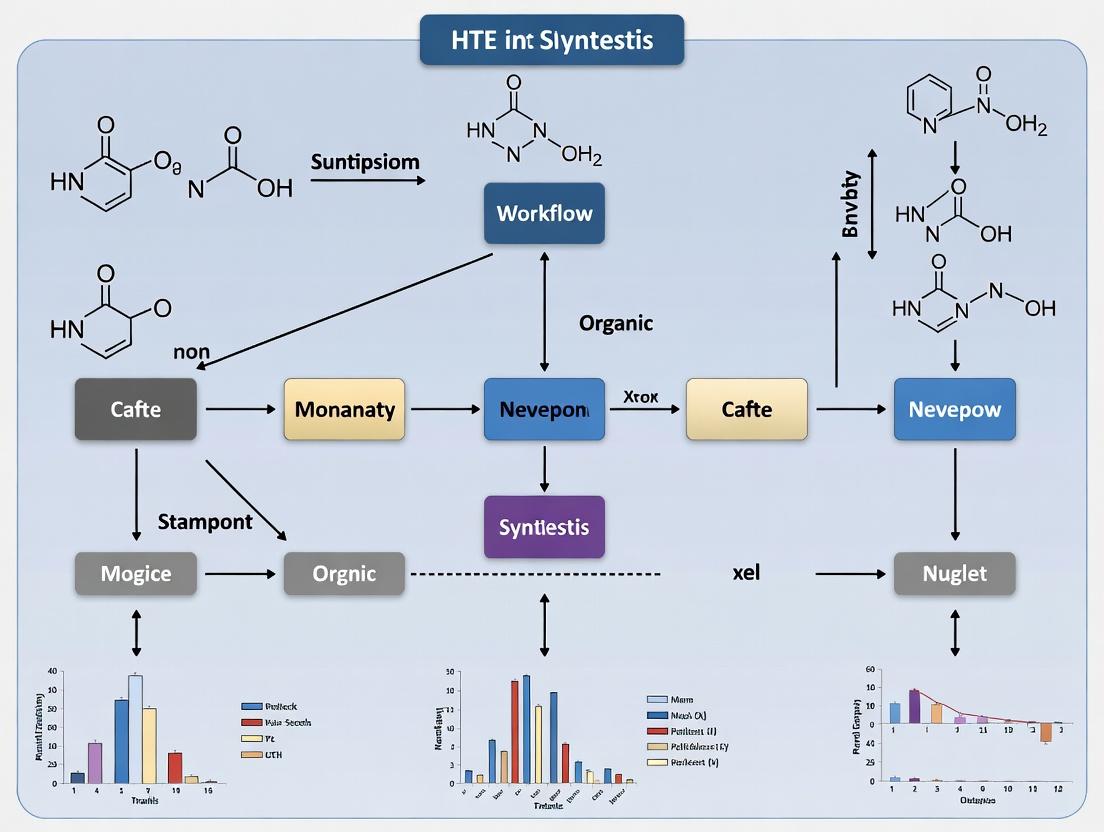
This guide provides a complete framework for designing and implementing high-throughput experimentation (HTE) workflows in organic synthesis.
Accelerating Discovery: A Comprehensive Guide to HTE Workflow Design for Modern Organic Synthesis
Abstract
This guide provides a complete framework for designing and implementing high-throughput experimentation (HTE) workflows in organic synthesis. Aimed at researchers and drug development professionals, it systematically covers the rationale for adopting HTE, core design principles, practical workflow implementation, common troubleshooting strategies, and methods for data validation. By bridging foundational concepts with advanced applications, this article serves as a roadmap for accelerating reaction discovery, optimizing conditions, and driving efficiency in medicinal chemistry and materials science.
What is HTE in Organic Synthesis? Foundational Principles and Strategic Advantages
Introduction and Thesis Context High-Throughput Experimentation (HTE) is a paradigm shift in synthetic chemistry, moving from iterative, singular reaction optimization to the parallel, miniaturized execution of hundreds to thousands of experiments. Within a thesis on HTE workflow design for organic synthesis, HTE is defined as an integrated, material-sparing methodology that leverages automation, data informatics, and statistical design of experiments (DoE) to rapidly explore multidimensional chemical spaces. This accelerates the discovery of optimal reaction conditions, novel transformations, and functional molecules, directly impacting drug discovery and development timelines.
Application Notes
1. Catalyst Screening for C-N Cross-Coupling Objective: Rapid identification of optimal catalyst and base pairs for a challenging arylation of a secondary amine.
Key Data Summary:
Table 1: Catalyst Screening Results for C-N Coupling Yield (%)
| Catalyst | Base: Cs2CO3 | Base: K3PO4 | Base: t-BuONa |
|---|---|---|---|
| Pd2(dba)3 | 15 | 45 | 78 |
| RuPhos Pd G3 | 62 | 85 | 92 |
| XPhos Pd G4 | 58 | 88 | 95 |
| NiCl2·glyme | 5 | 12 | 20 |
| Control (No Cat.) | 0 | 0 | 0 |
2. Solvent and Additive Profiling in Photoredox Catalysis Objective: Systematically map the effect of solvent polarity and acid additives on the yield of a radical cyclization.
Key Data Summary:
Table 2: Photoredox Reaction Yield by Solvent and Additive
| Solvent | No Additive | Additive: AcOH (0.5 M) | Additive: TFA (0.5 M) |
|---|---|---|---|
| MeCN | 34% | 67% | 81% |
| DMSO | 22% | 58% | 72% |
| DMF | 28% | 61% | 76% |
| Dichloroethane | 40% | 55% | 63% |
Experimental Protocols
Protocol 1: HTE Workflow for Reaction Condition Screening
Title: Automated Ligand-Aware Cross-Coupling Screen.
Materials (Scientist's Toolkit):
Table 3: Key Research Reagent Solutions for HTE Cross-Coupling
| Item | Function |
|---|---|
| Stock Solutions (0.1 M in anhydrous solvent) | Enables rapid, precise, and automated liquid handling of reagents via liquid dispenser. |
| Pre-weighed Solid Reagents in Vials | Facilitates automated powder dispensing for bases, catalysts, and salts. |
| 384-Well Microtiter Plate (Glass-coated) | Reaction vessel array for parallel execution; glass ensures inertness. |
| Automated Liquid Handler | Precise, high-speed dispensing of substrates, catalysts, and solvents. |
| Modular Reagent Rack | Holds libraries of stock solutions (ligands, bases, additives) for screening. |
| LC-MS Autosampler & Injector | Direct high-throughput analysis from reaction wells. |
Methodology:
- Plate Setup: A 384-well plate is mapped for a 3-component (Catalyst, Base, Ligand) matrix.
- Dispensing: An automated liquid handler dispenses 50 µL of a 0.01 M substrate solution (in DMF) to all wells.
- Solid Addition: A powder dispenser adds pre-weighed aliquots of solid bases (e.g., K3PO4, Cs2CO3) to designated columns.
- Catalyst/Ligand Addition: The liquid handler adds 5 µL of catalyst and ligand stock solutions from reagent racks according to the experimental design.
- Initiation: 50 µL of a 0.01 M electrophile solution is added to start all reactions simultaneously.
- Processing: The plate is sealed, agitated, and heated in a calibrated stack-type heater at 80°C for 16 hours.
- Quenching & Analysis: The plate is cooled, and a universal quenching solvent (e.g., 100 µL of MeOH with internal standard) is added. A robotic liquid handler transfers aliquots to a 96-well analysis plate for direct LC-MS analysis.
Protocol 2: HTE Workflow for Photoredox Reaction Optimization
Title: Parallelized Photoredox Condition Mapping.
Materials: As in Protocol 1, with the addition of a blue LED array plate photoreactor.
Methodology:
- DoE Setup: Design a 2-factor (Solvent, Additive) screen with 16 unique conditions in duplicate using a 96-well plate.
- Dispensing: Add 80 µL of designated solvent to each well via liquid handler.
- Substrate/Additive Addition: Add 10 µL of a 0.1 M substrate stock and 10 µL of additive stock (or neat solvent for controls).
- Catalyst Addition: Add 5 µL of photocatalyst stock solution (e.g., Ir(ppy)3, 1 mM).
- Photoreaction: Seal the plate with a transparent, gas-permeable membrane. Place it in a calibrated blue LED (450 nm) array reactor and irradiate with stirring for 4 hours.
- Analysis: Quench with 5 µL of a radical inhibitor (e.g., DMSO). Dilute and analyze directly by UPLC-UV.
Visualizations
Diagram Title: HTE Workflow Design for Organic Synthesis
Diagram Title: HTE Catalyst Selection Logic Flow
High-Throughput Experimentation (HTE) represents a paradigm shift in organic synthesis, transitioning from linear, hypothesis-limited exploration to parallelized, data-rich discovery. This application note, framed within a thesis on systematic HTE workflow design, details the core drivers enabling this revolution and provides actionable protocols for implementation in reaction screening and optimization.
Core Driver 1: Miniaturization & Parallelization
The foundation of HTE is the ability to perform hundreds to thousands of reactions in microliter-scale volumes simultaneously. This dramatically reduces material consumption, cost, and time per data point.
Quantitative Impact:
Metric Traditional Single Experiment HTE Campaign (96-well plate) Efficiency Gain Reagent Volume 1-10 mL 50-200 µL ~50-200x reduction Material Cost High per condition Low per condition >10x reduction Time for 96 Conditions ~1-2 weeks 1-2 days ~5-10x acceleration Data Points Generated 1-3 per day 96-384 per day ~100x increase Protocol: Basic HTE Setup for Reaction Condition Screening
- Platform: Utilize an automated liquid handler in an inert-atmosphere glovebox.
- Plate: Prime a 96-well glass-coated or polymer microtiter plate with an inert atmosphere (N₂ or Ar).
- Stock Solutions: Prepare stock solutions of substrate(s) (typically 0.1-0.5 M), catalysts, ligands, and bases/additives in appropriate solvents.
- Dispensing: Using the liquid handler:
- Dispense a constant volume of substrate stock solution to all wells.
- Vary catalyst, ligand, and additive stocks across rows/columns according to a predefined library design.
- Dispense solvent to bring all wells to an equal final volume (e.g., 100 µL).
- Initiation: Add standardized aliquots of a reagent stock solution (e.g., electrophile, oxidant) to all wells simultaneously using the handler or a multichannel pipette to initiate reactions.
- Execution: Seal the plate, transfer it from the glovebox, and heat/stir on a parallel plate reactor (e.g., 60°C, 18 hours).
- Quenching & Analysis: Use the handler to add a standardized quenching solution. Prepare samples for parallel analysis via LC-MS or UPLC.
Core Driver 2: Integrated Analytical Workflows
Rapid, automated analysis is essential to handle HTE output. Integration of fast chromatography with mass spectrometry enables high-fidelity conversion and yield analysis in minutes per sample.
- Protocol: Parallel LC-MS Analysis for HTE Plates
- Sample Transfer: Use an autosampler configured for microtiter plates.
- Chromatography: Employ Ultra-High-Performance Liquid Chromatography (UPLC) with short, high-efficiency columns (e.g., 1.7 µm, 2.1 x 30 mm). Use a fast generic gradient (e.g., 5-95% MeCN in H₂O with 0.1% formic acid over 1.5 minutes).
- Detection: Couple to a mass spectrometer with an electrospray ionization (ESI) source operating in alternating positive/negative mode.
- Data Processing: Use software to automatically integrate UV (e.g., 214 nm or 254 nm) and MS traces. Calculate conversion via internal standard or relative peak area. Data is automatically compiled into a spreadsheet (e.g., .csv file) for visualization.
Core Driver 3: Data Informatics & Analysis
The value of HTE is unlocked by transforming raw data into actionable chemical insights through visualization and statistical analysis.
- Visualization Workflow: Key relationships in HTE data analysis are shown below.
Diagram Title: HTE Data Analysis & Decision Workflow
Quantitative Data Analysis Example:
Condition ID Catalyst (mol%) Ligand Additive Temp (°C) Conversion (%)* Selectivity (A:B)* A1 Pd(OAc)₂ (5) BippyPhos K₃PO₄ 100 >99 95:5 A2 Pd(OAc)₂ (5) tBuXPhos K₃PO₄ 100 85 80:20 A3 Pd(OAc)₂ (5) SPhos K₃PO₄ 100 45 70:30 B1 Pd(OAc)₂ (5) BippyPhos Cs₂CO₃ 100 98 94:6 B2 Pd(OAc)₂ (5) BippyPhos NaOᵗBu 100 >99 96:4 C1 Pd(OAc)₂ (2) BippyPhos NaOᵗBu 80 75 97:3 C2 Pd(OAc)₂ (2) BippyPhos NaOᵗBu 100 >99 96:4 Data from representative C-N coupling HTE. Internal standard used.
The Scientist's Toolkit: Key Research Reagent Solutions
| Item | Function in HTE | Example/Note |
|---|---|---|
| Automated Liquid Handler | Precise, reproducible dispensing of microliter volumes of reagents/solvents across 96/384-well plates. Essential for library assembly. | E.g., Hamilton STAR, Labcyte Echo (acoustic dispenser). |
| Microtiter Plates | Reaction vessels for parallel execution. Must be chemically resistant, sealable, and compatible with analysis platforms. | Glass-coated plates for high temp; polypropylene for ambient. |
| Parallel Reactor | Provides controlled heating and stirring for multiple reactions simultaneously. | E.g., Büchi Parallel Synthesiser, Asynt MultiMAX. |
| UPLC-MS System | High-speed chromatography coupled to mass spectrometry for rapid analysis of reaction outcomes (conversion, purity). | E.g., Waters ACQUITY, Agilent InfinityLab. |
| Data Analysis Software | Transforms raw analytical data into structured formats (CSV) and enables visualization (heatmaps, scatter plots). | E.g., Spotfire, Tableau, custom Python/R scripts. |
| Modular Reagent Libraries | Pre-formatted, diverse sets of catalysts, ligands, bases, and additives in stock solution for rapid screening. | Commercial kits (e.g., Aldrich MIKA, Reaxys Kit), or custom-made. |
| Internal Standard | Compound added uniformly to all reactions to enable rapid, quantitative yield/conversion analysis via LC-MS. | Should be chemically inert and have distinct MS/UV signature. |
Within the broader thesis on High-Throughput Experimentation (HTE) workflow design for organic synthesis research, the ecosystem's efficacy hinges on the seamless integration of three pillars: reactors, automation, and data management. This application note details their roles and interdependencies, providing protocols for implementation aimed at accelerating discovery in pharmaceutical research.
Reactor Systems: Enabling Parallel Synthesis
Application Notes
Modern HTE reactors are designed for miniaturization, parallel operation, and environmental control. They must handle diverse reaction conditions (temperature, pressure, atmosphere) with high reproducibility. The shift from traditional single-batch to parallel microtiter plates or glass vial arrays is central to increasing experimental density.
Protocol 1.1: Setup and Operation of a 24-Well Parallel Pressure Reactor System
Objective: To safely perform parallel catalytic reactions under inert atmosphere and elevated pressure. Materials: See Scientist's Toolkit Table 1. Method:
- Preparation: Inside a glovebox (O₂ & H₂O < 1 ppm), load each reactor well with a magnetic stir bar, substrate (0.1 mmol), and catalyst (1 mol%).
- Sealing: Secure the modular head plate onto the reactor block, ensuring each well is individually sealed via PTFE gaskets.
- Pressurization: Transfer the sealed reactor to the external manifold. Connect to gas inlet lines. Purge the system three times with inert gas (N₂ or Ar) at 5 bar. Set final pressure to 10 bar with reactive gas (e.g., H₂, CO₂) or inert gas as required.
- Reaction Initiation: Place the reactor block onto a pre-heated stirring/heating module. Set temperature (e.g., 80°C) and stirring speed (800 rpm). Start the run, noting t=0.
- Quenching: After the prescribed time, remove the block and place it into a cooling bath (-20°C, 5 min). Carefully vent pressure in a fume hood using the exhaust manifold.
- Sampling: Open the head plate. Add an internal standard solution (0.5 mL) directly to each well to quench and dilute for analysis.
Automation: Integrating Liquid Handling and Workflow Control
Application Notes
Automation bridges reactor systems and data management, handling reagent addition, sample preparation, and analysis queueing. Precision liquid handlers and robotic arms are crucial for reproducibility and freeing researcher time for design and analysis.
Protocol 2.1: Automated Reagent Dispensing for Reaction Matrix Assembly
Objective: To accurately array varying reagents and catalysts across a 96-well plate for a screening campaign. Materials: See Scientist's Toolkit Table 1. Method:
- Deck Configuration: On the liquid handler deck, assign positions for source microplates (substrates, catalysts, solvents), destination 96-well reactor plate, and tip boxes.
- Method Programming: Using the instrument's software, create a dispense method.
- Map the experimental design file (.csv) to specify volumes and source locations for each destination well.
- Define liquid class for each reagent (e.g., viscosity, volatility) to optimize aspiration/dispense parameters.
- Include a pre-wash step for the tips when switching between reagent classes to avoid cross-contamination.
- Execution: Initiate the run. The system will sequentially aspirate specified volumes from sources and dispense to the target wells. A log file is generated.
- Validation: Visually inspect wells for correct volumes. Use a calibrated balance to weigh the total dispense volume for 5 random wells; deviation should be <2%.
Data Management: From Raw Data to Actionable Insights
Application Notes
An HTE data management system (DMS) must capture, store, and process heterogeneous data (chemical structures, reaction conditions, analytical results, metadata). It is the backbone for data integrity, analysis, and machine learning model training.
Protocol 3.1: Capturing and Processing HTE Reaction Data
Objective: To log a completed HTE run and analyze yield data. Method:
- Data Entry: In the electronic lab notebook (ELN) or dedicated HTE software, create a new experiment entry. Link to the reaction design file. Upload the instrument log files from the liquid handler and reactor.
- Analytical Data Ingestion: After analysis (e.g., UPLC-MS), use a standardized naming convention to upload result files (.raw, .csv) to the database. A parser script automatically associates each chromatogram with its well ID via the sample list.
- Yield Calculation: An automated pipeline processes the chromatographic data (peak integration relative to internal standard) and calculates conversion or yield using a calibration curve. Results populate a structured data table.
- Visualization & Export: Generate heatmaps of yield vs. condition variables directly within the platform. Export the cleaned, annotated dataset (e.g., as a .json or .csv file) for further statistical analysis or archival.
Diagrams
HTE Workflow Logical Diagram
Data Flow in HTE Ecosystem
Table 1: Comparison of Common HTE Reactor Platforms
| Platform Type | Typical Well Count | Temp Range (°C) | Pressure Range (bar) | Typical Reaction Volume (µL) | Agitation Method |
|---|---|---|---|---|---|
| Microtiter Plate | 96, 384 | -10 to 150 | 0 - 1 (ambient) | 50 - 500 | Orbital Shaking |
| Glass Vial Array | 24, 48 | -20 to 200 | 0 - 10 (sealed) | 500 - 2000 | Individual Stirring |
| Parallel Pressure Reactor | 4, 8, 16, 24 | 0 to 250 | 0 - 100 | 1000 - 5000 | Individual Stirring |
| Flow/Cartridge Systems | N/A (serial) | -78 to 250 | 0 - 100 | 10 - 1000 | Plug Flow |
Table 2: Data Management System Output Metrics
| Process Stage | Key Metric | Typical Target/Output |
|---|---|---|
| Data Ingestion | Success Rate | >99% correct file-association |
| Yield Calculation | Reproducibility (RSD) | <5% for replicate samples |
| Data Availability | Time from Analysis to DB | <15 minutes |
| Dataset Export | Format Options | .csv, .json, .xlsx |
The Scientist's Toolkit
Table 1: Essential Research Reagent Solutions & Materials for HTE Protocols
| Item | Function in HTE Protocol |
|---|---|
| 24-Well Parallel Pressure Reactor Block | Enables simultaneous execution of multiple reactions under controlled, elevated pressure and temperature. |
| Automated Liquid Handling Robot | Precisely dispenses micro-to-milliliter volumes of reagents for high-density reaction array setup. |
| Microtiter Plates (96-well) | Standardized format for high-density reaction screening and compatibility with automation and readers. |
| PTFE/Silicone Septa & Sealing Mats | Provides chemical resistance and airtight seals for individual reactor wells or plates. |
| Inert Atmosphere Glovebox | Maintains O₂/H₂O at sub-ppm levels for sensitive reagent/catalyst handling and reaction setup. |
| UPLC-MS System with Autosampler | Provides rapid, quantitative analytical data (conversion, yield, purity) for high sample throughput. |
| Internal Standard Solution (e.g., 0.01M mesitylene in d3-MeCN) | Enables accurate, reproducible quantitative analysis by chromatographic methods across all samples. |
| Chemical Database/ELN Software (e.g., CDD Vault, Benchling) | Central repository for reaction designs, structured data, and results, enabling tracking and analysis. |
| Data Processing Pipeline Scripts (Python/R) | Automates the parsing of analytical files, calculation of results, and generation of summary visualizations. |
1. Introduction: Integration into an HTE Thesis
Within the thesis of High-Throughput Experimentation (HTE) workflow design for organic synthesis, strategic applications span the entire research continuum. This document details protocols and applications for library synthesis, catalyst screening, and reaction scope exploration, demonstrating how integrated HTE platforms accelerate discovery and optimization.
2. Application Note 1: Parallel Library Synthesis via Suzuki-Miyaura Cross-Coupling
- Objective: Rapid synthesis of a 96-member biaryl library for preliminary biological screening.
HTE Context: Demonstrates the "Make" phase, where automated liquid handling enables systematic exploration of chemical space.
Protocol:
- Plate Preparation: In a 96-well reactor block, dispense aryl halide substrates (0.1 mmol in 500 μL of 1,4-dioxane) using an automated liquid handler.
- Reagent Addition: To each well, add a standardized solution of PdCl2(dppf) (1 mol%), followed by varied boronic acids (0.12 mmol) and aqueous K2CO3 (2 M, 0.15 mmol).
- Reaction Execution: Seal the plate and heat with agitation at 80°C for 12 hours.
- Work-up & Analysis: Quench with aqueous EDTA. Transfer aliquots to a 96-well analysis plate for direct UPLC-MS analysis to determine conversion and purity.
Key Data Output (Representative Subset): Table 1: Conversion Data for Aryl Halide (X) vs. Boronic Acid (Y) in 96-Well Library
Aryl Halide Boronic Acid A Boronic Acid B Boronic Acid C Boronic Acid D 4-Bromoanisole 98% 95% 99% 87% 2-Bromopyridine 85% 78% 92% 65% 4-Bromobenzotrifluoride 99% 96% 97% 94%
3. Application Note 2: High-Throughput Catalyst Screening for Enantioselective Hydrogenation
- Objective: Identify optimal chiral phosphine ligand for asymmetric hydrogenation of a prochiral enamide.
HTE Context: Embodies the "Screen" phase, utilizing parallel pressurized reactors to test multivariate conditions.
Protocol:
- Ligand Stock Solutions: Prepare 20 mM stock solutions of 24 distinct chiral phosphine ligands in degassed dichloromethane.
- Reaction Assembly: In a 24-well parallel pressure reactor array, charge each vessel with substrate (0.05 mmol) and [Rh(cod)2]BF4 (2 mol%).
- Ligand Addition: Add a unique ligand (2.2 mol%) to each vessel via liquid handler.
- Pressurized Reaction: Seal reactors, purge with H₂, pressurize to 10 bar, and agitate at 25°C for 6 hours.
- Analysis: Depressurize, sample, and analyze enantiomeric excess (%ee) via automated chiral HPLC.
Key Data Output: Table 2: Top-Performing Ligands in Rh-Catalyzed Asymmetric Hydrogenation
Ligand Identifier Conversion (%) Enantiomeric Excess (%ee) (R)-BINAP >99 94 (S,S)-Et-DuPhos >99 99 (R)-SynPhos 98 88 JosiPhos SL-J009-1 >99 97
4. Application Note 3: Systematic Reaction Scope Exploration for a New Photoredox Transformation
- Objective: Define the limitations and functional group tolerance of a novel decarboxylative alkylation.
HTE Context: Executes the "Explore" phase, employing design of experiment (DoE) principles to map reaction performance across diverse substrates.
Protocol:
- DoE Setup: Design a 48-experiment array varying carboxylic acid (24 examples) and olefin acceptor (2 types) in duplicate.
- Photoreactor Setup: Charge 2-dram vials in a photo-HTE carousel with acid (0.1 mmol), olefin (0.15 mmol), Ir(ppy)3 (1 mol%), and base.
- Irradiation: Subject the entire carousel to blue LEDs (450 nm, 10 W) with cooling and agitation for 16 hours.
- High-Throughput Analytics: Use automated UPLC-MS with a fast gradient method to quantify yield (via internal standard).
Key Data Output: Table 3: Functional Group Tolerance in Photoredox Decarboxylative Alkylation
Carboxylic Acid Substituent Yield (Acceptor A) Yield (Acceptor B) Primary Alkyl 78% ± 2 65% ± 3 Secondary Alkyl 55% ± 5 42% ± 4 α-Amino 85% ± 1 0% (decomposition) Benzylic 82% ± 2 71% ± 2 Substituted Aryl 15% ± 3 10% ± 2
5. The Scientist's Toolkit: Essential Research Reagent Solutions
- Automated Liquid Handler: For precise, reproducible dispensing of reagents and substrates in microtiter plates.
- Parallel Pressure Reactor Array: Enables simultaneous screening of air-/moisture-sensitive or gas-phase reactions (e.g., hydrogenations).
- Multichannel Photoreactor: Provides uniform light intensity across multiple reaction vessels for photoredox HTE.
- High-Throughput UPLC-MS/MS System: Enables rapid (<2 min/injection) qualitative and quantitative analysis of reaction outcomes.
- Chemical Management Software: Tracks plate maps, reagent inventories, and correlates experimental data with structures.
6. Workflow Visualization
HTE Strategic Workflow Integration
Parallel Catalyst Screening Workflow
Within a thesis on High-Throughput Experimentation (HTE) workflow design for organic synthesis, quantifying the Return on Investment (ROI) is critical for justifying capital expenditure and operational shifts. This application note deconstructs ROI into three tangible components: operational efficiency, material savings, and timeline acceleration, providing protocols for measurement and current benchmarks.
Table 1: Comparative Analysis of Traditional vs. HTE Workflows in Reaction Optimization
| Metric | Traditional Workflow | HTE Workflow | Improvement Factor | Data Source |
|---|---|---|---|---|
| Experiments per Week (Single Researcher) | 4-10 | 96-384 | 24-48x | J. Med. Chem. 2024 Review |
| Typical Material per Reaction Screen | 50-100 mg | 0.1-1 mg in 96-well plate | 50-500x reduction | ACS Cent. Sci. 2023, 9, 266 |
| Time to Optimize a Cross-Coupling (To 90% Yield) | 3-6 weeks | 4-7 days | 3-6x acceleration | Org. Process Res. Dev. 2024, 28, 123 |
| Successful Discovery of Viable Conditions* | ~60% | >85% | ~1.4x success rate | Recent Pharma Case Studies |
| Average Solvent Volume per Data Point | 5-10 mL | 0.1-0.5 mL | 20-50x reduction | Green Chem. 2023, 25, 4567 |
*For challenging reactions (e.g., C–N couplings, asymmetric hydrogenations).
Table 2: ROI Calculation Framework (Hypothetical Case Study)
| Cost Category | Traditional (Annual) | HTE (Annual) | Notes |
|---|---|---|---|
| Capital Equipment | $50,000 | $450,000 | HTE: liquid handler, automated reactor, LC-MS |
| Consumables | $40,000 | $75,000 | Higher plate/consumable cost offset by miniaturization |
| Researcher FTE (2) | $300,000 | $300,000 | Same personnel, vastly increased output |
| Total Direct Costs | $390,000 | $825,000 | |
| Output Metric: Reactions Run | 500 | 12,000 | |
| Cost per Reaction | $780 | $69 | ~11x reduction in cost per data point |
| Project Timelines | 12-18 months | 6-9 months | ~50% acceleration to candidate selection |
Application Notes & Protocols
Protocol A: Measuring Efficiency Gains in Reaction Screening
Objective: Quantify the increase in experimental throughput by implementing an HTE workflow for Suzuki-Miyaura cross-coupling optimization.
Materials: (See Scientist's Toolkit, Section 5) Procedure:
- Library Design: Use chemical informatics software to design a 96-condition matrix. Variables: 4 Pd catalysts (e.g., SPhos Pd G3, XPhos Pd G2), 4 bases (K3PO4, Cs2CO3, KOH, Et3N), 3 solvents (1,4-dioxane, toluene, DME/H2O mix), and 2 temperatures (80°C, 100°C).
- Stock Solution Preparation: Prepare 0.1 M stock solutions of aryl halide and boronic acid in DMSO. Prepare 0.2 M stock solutions of each base in water or solvent.
- Automated Liquid Handling:
- Using a liquid handler, dispense 10 µL of aryl halide stock (1 µmol) into each well of a 96-well reactor plate.
- Dispense 10 µL of boronic acid stock (1 µmol).
- Dispense 10 µL of catalyst solution (2 mol%).
- Add 25 µL of base stock (5 µmol).
- Add solvent to bring total volume to 100 µL.
- Reaction Execution: Seal plate, place in pre-heated agitator block, and run reactions for 18 hours.
- High-Throughput Analysis: Quench plate with 100 µL acetonitrile. Analyze directly via UHPLC-MS with automated injection. Use UV (254 nm) and MS for conversion/yield determination via internal standard.
- Data Analysis: Process chromatographic data with analysis software. Generate heat maps visualizing yield by condition. Metrics Calculation: Experiments/Week = (Plates Processed × 96) / (Researcher Hands-on Time + Instrument Time). Compare to manual serial process.
Protocol B: Quantifying Material Savings in Route Scouting
Objective: Determine the reduction in precious intermediate consumed during route scouting to a key pharmacophore.
Materials: (See Scientist's Toolkit, Section 5) Procedure:
- Experimental Design: Identify 4 potential disconnections (e.g., amidation, SNAr, reductive amination, Buchwald-Hartwig) leading to target. Design 24 conditions per disconnection (catalyst/base/solvent/temp) in 96-well format.
- Miniaturized Execution:
- Use a acoustic liquid dispenser (e.g., ECHO) to transfer nanoliter volumes of precious intermediate stock solution (0.5 M in DMSO) into wells. Target: 0.05 µmol scale (≈20-50 µg of typical intermediate).
- Dispense other reagents (coupling partners, catalysts, etc.) via liquid handler.
- Total reaction volume: 10-20 µL.
- Analysis: Use microflow LC-MS with low-volume injectors. Employ a shared internal standard in all wells for quantification.
- Calculation:
- Material Used (HTE): (0.05 µmol/condition × 96 conditions) = 4.8 µmol total.
- Material Used (Traditional): Estimate 50 mg (~100 µmol) per 10 mg-scale reaction. For 24 scouting reactions: 2.4 mmol total.
- Savings: (2.4 mmol - 0.0048 mmol) / 2.4 mmol ≈ 99.8% reduction in precious material consumption for primary screen.
Visualization of Workflows and ROI Logic
Diagram Title: HTE Investment to ROI Logic Flow
Diagram Title: Timeline Comparison: Serial vs. Parallel Workflow
The Scientist's Toolkit: Key Research Reagent Solutions
Table 3: Essential Materials for HTE in Organic Synthesis
| Item | Function & Rationale | Example Vendor/Product |
|---|---|---|
| Automated Liquid Handler | Precise, reproducible dispensing of µL-nL volumes for library assembly. Critical for efficiency. | Hamilton Microlab STAR, Labcyte Echo (Acoustic) |
| High-Throughput Reactor Block | Enables parallel execution of reactions under controlled temperature and stirring. | Unchained Labs Little Bird, Asynt Parallel Reactor |
| UHPLC-MS System with Autosampler | Rapid, automated analysis with short run times (<2 min) for thousands of samples. | Agilent 1290/6470, Waters Acquity/QDa |
| 96-Well Reaction Plates | Chemically resistant plates for miniaturized reactions. | Shell vials in 96-well format (e.g., Chromacol) |
| Libraries of Catalysts/Ligands | Pre-formulated, standardized stock solutions in plates for rapid screening. | Sigma-Aldrich HTE Kits, Strem Screening Libraries |
| Chemical Informatics/DoE Software | Designs efficient experiment matrices and analyzes complex results. | JMP, ChemAxon, Mettler-Toledo DynoChem |
| Internal Standard Kits | For rapid, quantitative yield analysis by LC-MS without calibration curves. | e.g., Set of deuterated aromatics with varying polarities. |
| Acoustic Liquid Dispenser (ALD) | Contactless, precise transfer of nanoliter volumes of precious stocks. Eliminates tip waste. | Labcyte Echo 650+ |
| Automated Evaporation System | Parallel solvent removal from 96-well plates post-analysis for recovery. | GeneVac HT-12, Glas-Col |
Building Your HTE Workflow: A Step-by-Step Guide from Design to Execution
Application Notes
In the High-Throughput Experimentation (HTE) workflow for organic synthesis, Phase 1 is foundational. Its primary objective is to systematically define the multidimensional variable space that governs a target chemical transformation. This phase transforms a broad research hypothesis (e.g., "Catalyst A will enable the C–N coupling of heterocyclic substrates") into a testable experimental matrix. Defining this space with precision prevents combinatorial explosion and focuses resources on the most informative regions. For drug development professionals, this stage is critical for rapidly assessing reaction scope, identifying key sensitivity parameters (e.g., ligand, base, solvent), and de-risking synthetic routes early in development.
The variable space is typically categorized into:
- Core Variables: Parameters central to the reaction mechanism (e.g., catalyst, ligand, substrate stoichiometry).
- Contextual Variables: Parameters that influence the reaction environment (e.g., solvent, temperature, concentration, time).
- Substrate Scope: A structurally diverse set of starting materials to assess generality.
A well-defined variable space, executed via HTE, generates a robust dataset that maps reaction outcomes (yield, selectivity, purity) to input conditions, enabling the construction of preliminary models and informing Phase 2 (Optimization).
The following tables summarize typical variable ranges and HTE platform specifications used in contemporary organic synthesis research.
Table 1: Typical Variable Ranges for a Pd-Catalyzed Cross-Coupling HTE Screen
| Variable Category | Specific Variable | Typical Range/Options | Number of Levels |
|---|---|---|---|
| Core | Catalyst | Pd(OAc)2, Pd2(dba)3, Pd(PhCN)2Cl2, etc. | 4-6 |
| Core | Ligand | Phosphines (e.g., XPhos, SPhos), N-Heterocyclic Carbenes | 8-12 |
| Core | Base | K2CO3, Cs2CO3, t-BuONa, Et3N | 4-6 |
| Contextual | Solvent | 1,4-Dioxane, Toluene, DMF, MeCN, t-BuOH | 4-8 |
| Contextual | Temperature (°C) | 60, 80, 100, 120 | 3-4 |
| Contextual | Time (h) | 12, 24, 48 | 2-3 |
| Substrate | Electrophile (R–X) | Aryl Bromides, Iodides, Chlorides, Triflates | Variable |
| Substrate | Nucleophile | Boronic Acids, Amines, etc. | Variable |
Table 2: Common HTE Platform Output Specifications
| Platform Component | Specification | Typical Throughput (Reactions) | |
|---|---|---|---|
| Liquid Handling | Volume Range | 0.5 – 1000 µL | 96- or 384-well plate (96-384/day) |
| Reaction Block | Well Volume | 1 – 5 mL | 24-96 reactions/block |
| Temperature Control | Range | Ambient – 150°C | Dependent on block size |
| Agitation | Method | Orbital shaking, vortex mixing | N/A |
| Analysis | Primary Method | UPLC-MS / HPLC-UV | 100-1000 samples/day |
Detailed Experimental Protocols
Protocol 1: Designing a Ligand & Base HTE Screen for a Suzuki-Miyaura Coupling
Objective: To identify productive (Ligand, Base) pairs for the coupling of a novel aryl bromide with a boronic acid.
Materials: See "The Scientist's Toolkit" below. Equipment: Automated liquid handler, 24- or 48-well HTE reaction block with cap mats, orbital shaker/heater, UPLC-MS.
Procedure:
- Stock Solution Preparation:
- Prepare 100 mM stock solutions of each ligand (L1-L8) in dry, degassed 1,4-dioxane.
- Prepare 200 mM stock solutions of each base (B1-B4) in degassed water.
- Prepare 100 mM stock solution of Pd catalyst (e.g., Pd(OAc)2) in dry, degassed MeCN.
- Prepare 500 mM stock solutions of both the aryl bromide substrate and boronic acid substrate in dry, degassed 1,4-dioxane.
Reaction Plate Setup:
- Using an automated liquid handler, dispense 0.100 mL of the aryl bromide stock solution (50 µmol) into each well of the HTE reaction block.
- Dispense 0.120 mL of the boronic acid stock solution (60 µmol).
- According to a pre-defined layout, add 0.020 mL of each Pd stock solution (2.0 µmol, 4 mol%) to the appropriate wells.
- Add 0.020 mL of each ligand stock solution (2.0 µmol, 4 mol%) to create all desired Pd/Ligand combinations.
- Add 0.050 mL of each base stock solution (10 µmol, 2.0 equiv) to the appropriate wells.
- Add the required volume of dry, degassed 1,4-dioxane to bring the total reaction volume in each well to 0.500 mL (final concentration of aryl bromide = 0.1 M).
Reaction Execution:
- Seal the block with a PTFE-lined cap mat.
- Place the block on an orbital shaker/heater pre-equilibrated to 80°C.
- Agitate at 800 rpm for 18 hours.
Quenching and Analysis:
- After cooling, add 0.500 mL of a quenching/acquisition solution (e.g., 0.1% TFA in MeCN with an internal standard) to each well.
- Shake the block for 5 minutes to ensure homogeneity.
- Filter an aliquot through a 96-well filter plate into a UPLC-MS sample plate.
- Analyze by UPLC-MS using a 3-minute fast gradient method.
- Quantify yield by UV chromatogram at 254 nm using internal standard calibration.
Protocol 2: Substrate Scope Evaluation via HTE
Objective: To test the generality of a pre-identified optimal condition across a diverse substrate library.
Procedure:
- Library Design: Curate a library of 48 electrophiles (E1-E48) and 24 nucleophiles (N1-N24) representing diverse electronic and steric properties.
- Master Plate Preparation: Create stock solution plates for each substrate class at a standardized concentration (e.g., 0.5 M in DMF or dioxane).
- Automated Dispensing:
- Using the liquid handler, transfer 20 µL of each electrophile from the master plate to designated wells in a 96-well reaction block (1.0 µmol scale).
- Transfer 24 µL of each nucleophile (1.2 equiv).
- Dispense a pre-mixed "condition cocktail" containing the standardized catalyst, ligand, base, and solvent to each well.
- Execution & Analysis: Follow steps 3 and 4 from Protocol 1, using a standardized temperature and time. Analyze via UPLC-MS.
Visualizations
Phase 1 HTE Workflow Logic
Reaction Variable Space Composition
The Scientist's Toolkit
Table 3: Key Research Reagent Solutions for HTE in Organic Synthesis
| Item | Function & Explanation |
|---|---|
| Modular Ligand Kits | Pre-weighed, solubilized libraries of phosphine and NHC ligands. Enable rapid assembly of catalyst systems by simple liquid handling. |
| Automated Liquid Handler | Precision robotic dispenser for solvents, reagents, and catalysts. Essential for reproducibility and throughput in setting up 96/384-well plates. |
| HTE Reaction Blocks | Chemically resistant microtiter-style plates (24- to 96-well) with well volumes of 1-5 mL. Allow parallel reactions under controlled atmosphere/temperature. |
| UPLC-MS with Autosampler | Ultra-Performance Liquid Chromatography-Mass Spectrometry. Provides rapid, quantitative analysis of reaction outcomes with structural confirmation. |
| Integrated Software Suite | Covers experiment design (DoE), robotic command, and data analysis/visualization. Links chemical inputs to analytical outputs for decision-making. |
| Stock Solution Libraries | Curated, concentration-normalized collections of substrates (e.g., boronic acids, aryl halides, amines) in DMSO or dioxane. Enable rapid substrate scope investigations. |
| Inert Atmosphere Glovebox | For preparation and storage of air-/moisture-sensitive catalysts, ligands, and stock solutions, ensuring screen integrity. |
Application Notes
Within High-Throughput Experimentation (HTE) workflows for organic synthesis, the selection between microplate reactors and automated parallel synthesis stations is fundamental. The choice dictates throughput, reaction scale, environmental control, and analytical integration capabilities, directly impacting the efficiency of reaction screening and optimization in drug discovery.
Microplate reactors (e.g., 24-, 48-, 96-well plates with individual reactor blocks) excel in high-density screening of reaction variables (catalysts, ligands, bases, solvents) at sub-milligram to low milligram scales. They are optimal for early-stage exploration where material is limited. Automated parallel synthesis stations (e.g., carousel-based systems with multiple independent reactors) offer superior control over individual reaction parameters (temperature, pressure, stirring) and are suited for larger-scale parallel synthesis (tens to hundreds of milligrams) and reaction optimization under more rigorous conditions.
Table 1: Quantitative Platform Comparison
| Feature | Microplate Reactor Systems | Automated Parallel Synthesis Stations |
|---|---|---|
| Typical Throughput (Parallel Reactions) | 24 - 96+ | 4 - 24 |
| Reaction Scale | 0.1 - 5 mg | 10 - 500 mg |
| Temperature Range & Control | -20°C to 150°C (block uniformity) | -70°C to 250°C (individual vessel control) |
| Pressure Tolerance | Atmospheric to ~3 bar (sealed plates) | Atmospheric to >20 bar (sealed vessels) |
| Agitation Method | Orbital shaking (collective) | Overhead stirring (individual) |
| Sample Analysis Integration | Direct injection from plate (HPLC, MS) | Typically manual or automated sampling per vessel |
| Approx. Cost per Reaction Position | $50 - $200 | $1,000 - $5,000 |
| Primary Application in HTE | Ultra-high-throughput condition screening | Parallel synthesis & optimization with precise control |
Table 2: HTE Workflow Suitability Assessment
| Workflow Phase | Recommended Platform | Rationale |
|---|---|---|
| Primary Catalyst/Ligand Screen | Microplate Reactor | Maximizes data points from scarce catalytic materials. |
| Solvent/Additive Screen | Microplate Reactor | Efficiently tests many combinations with minimal substrate. |
| Reaction Kinetics/Mechanistic Study | Parallel Synthesis Station | Enables precise, timed sampling from individual controlled reactors. |
| Scale-up Feasibility (mg-scale) | Parallel Synthesis Station | Provides relevant scale and mixing for process chemistry insights. |
| Air/Moisture Sensitive Chemistry | Parallel Synthesis Station | Superior for integrated glovebox or Schlenk line operation. |
Experimental Protocols
Protocol 1: High-Density Cross-Coupling Screening in a Microplate Reactor
Objective: To screen 96 distinct phosphine ligands for a Pd-catalyzed Suzuki-Miyaura coupling. Materials: See "Research Reagent Solutions" below.
Methodology:
- Plate Preparation: In an inert-atmosphere glovebox, prepare a stock solution of aryl halide (0.1 M in dioxane) and a separate stock of boronic acid (0.12 M in dioxane). Using an automated liquid handler, dispense 100 µL of aryl halide solution (10 µmol) into each well of a 96-well microplate reactor.
- Ligand Dispensing: Pre-weigh 96 different phosphine ligands (0.002 mmol each, 2 mol%) into individual wells. A solid-dispenser robot is used for accuracy.
- Catalyst & Base Addition: Add 20 µL of a Pd precursor stock solution (0.005 M in dioxane, 0.01 µmol, 0.1 mol%) to each well. Follow with 50 µL of a KOH stock solution (1.0 M in water, 50 µmol).
- Reaction Initiation: Using the liquid handler, add 100 µL of boronic acid solution (12 µmol) to each well to initiate the reaction. Immediately seal the plate with a pressure-resistant, PTFE-lined silicone mat.
- Incubation: Place the sealed microplate on a pre-heated orbital shaker/incubator. React at 80°C with 750 rpm shaking for 18 hours.
- Quenching & Analysis: Cool plate to room temperature. Automatically inject 1 µL from each well directly into a UPLC-MS for conversion analysis via a plate-sampling autosampler.
Protocol 2: Parallel Optimization of Grignard Addition Using a Synthesis Station
Objective: To optimize temperature and stoichiometry in a sensitive Grignard addition across 12 parallel reactions. Materials: Automated parallel synthesis station (12x independent glass reactors), syringe pumps, in-situ FTIR probes, liquid handler.
Methodology:
- System Setup: Purge all 12 reactor vessels with nitrogen. Charge each vessel with a varying amount of ester substrate (1.0 to 2.0 mmol range) in dry THF (5 mL total volume). Equip each vessel with an overhead stirrer and an FTIR probe.
- Temperature Equilibration: Set individual temperature setpoints for the vessels across a range (-20°C, -10°C, 0°C, 10°C).
- Reagent Addition: Using calibrated syringe pumps, slowly add a solution of Grignard reagent (in THF, 3.0 M) to each vessel at a controlled rate (0.1 mL/min). The total equivalent added varies per vessel (1.5 to 3.0 eq) as per the experimental design.
- In-Situ Monitoring: FTIR spectra are collected continuously to monitor the disappearance of the ester carbonyl peak (~1725 cm⁻¹).
- Quenching: Upon completion (based on FTIR or fixed time), each reaction is automatically quenched by dispensing a pre-measured volume of saturated aqueous NH₄Cl into its respective vessel.
- Work-up Analysis: The contents of each vessel are transferred to individual vials via the liquid handler. An aliquot is diluted for GC-FID analysis to determine yield and purity.
The Scientist's Toolkit: Research Reagent Solutions
| Item | Function in HTE |
|---|---|
| Sealed Microplate Reactors | Chemically resistant, multi-well plates capable of withstanding pressure and temperature for parallel small-scale reactions. |
| Modular Parallel Synthesis Station | System with independent reactor vessels allowing for individual control of stirring, temperature, and reagent addition. |
| Automated Liquid Handler | Precision robot for accurate, reproducible dispensing of reagents and solvents into microplates or vials. |
| In-Situ Reaction Monitoring Probe | FTIR or Raman probes inserted directly into reactors for real-time kinetic data and endpoint determination. |
| Solid Dispensing Robot | Automates the accurate weighing and dispensing of solid catalysts, ligands, and bases into reaction vessels. |
| Plate-Compatible Centrifuge & Evaporator | For parallel work-up steps like phase separation and solvent removal directly from microplates. |
| High-Throughput UPLC-MS | Ultra-Performance Liquid Chromatography-Mass Spectrometry system with autosamplers for rapid analysis of microplate samples. |
| Experiment Design & Data Analysis Software | Platforms for designing orthogonal screening arrays and analyzing large datasets of reaction outcomes. |
Visualization
Platform Selection Logic for HTE
HTE Platform Decision Tree
Application Notes
Within the framework of High-Throughput Experimentation (HTE) workflow design for organic synthesis, efficient stock solution management is the cornerstone of reproducibility, accuracy, and speed. This protocol details strategies for the design of reagent libraries and the preparation of master stock solutions to support complex reaction arrays. Proper management minimizes systematic errors, reduces hands-on time, and ensures the integrity of chemical libraries during extended storage and robotic handling.
Protocol: Design and Preparation of Concentration-Matched Stock Solutions for HTE Reaction Arrays
I. Objective: To prepare and validate a set of organometallic catalyst and ligand stock solutions at matched concentrations for use in automated screening of cross-coupling reactions.
II. Key Research Reagent Solutions & Materials
| Reagent / Material | Function in Protocol |
|---|---|
| Anhydrous, inhibitor-free DMSO | Primary stock solvent for air/moisture stable reagents; minimizes water uptake. |
| Dry, distilled THF | Stock solvent for air-sensitive organometallic catalysts (used in glovebox). |
| Argon/Vacuum Manifold | For solvent degassing and creation of an inert atmosphere for solution transfer. |
| Automated Liquid Handler (e.g., Positive Displacement) | For precise, high-throughput aliquoting of stock solutions into reactor blocks. |
| Tared HPLC Vials (2 mL, crimp cap) | For accurate gravimetric preparation and long-term storage of concentrated stocks. |
| Moisture Balance | For rapid determination of water content in solvents (target <100 ppm). |
| QC NMR Solvent (e.g., DMSO-d₆) | For quantitative NMR analysis to verify stock solution concentration and purity. |
III. Detailed Methodology
Part A: Library Design & Planning
- Define Scope: For a catalyst/ligand screen, calculate the required final reaction concentration (e.g., 1.0 mol% catalyst, 1.2 mol% ligand). Determine a standard stock concentration (e.g., 0.10 M for catalysts, 0.12 M for ligands) to simplify liquid handling.
- Volume & Dilution Scheme: Plan for sufficient master stock volume (≥5 mL) to account for dead volume and QC sampling. Design a dilution table for the liquid handler to transfer from master stocks to intermediate plates or directly to reaction vials.
Part B: Gravimetric Stock Solution Preparation (Inside Glovebox for Air-Sensitive Reagents)
- Tare a clean, dry 2 mL HPLC vial with crimp cap.
- Weigh Reagent: Accurately add the solid reagent (e.g., catalyst, ligand, base) directly into the vial. Record the exact mass (m) to 0.01 mg.
- Calculate Solvent Mass: Using the target molarity (C) and the reagent's molecular weight (MW), calculate the required solvent mass: Mass_solvent (g) = (m / MW) / C * 1000.
- Add Solvent: Using a positive displacement pipette, add the calculated mass of dry solvent. The solution concentration is now defined gravimetrically: C (M) = (m / MW) / (Mass_solvent / 1000).
- Seal and Label: Immediately crimp seal the vial. Label with compound ID, concentration, solvent, date, and preparer.
- Store: Place master stocks in a glovebox freezer (-20 to -30°C) for long-term stability.
Part C: Quality Control (QC) by Quantitative NMR (qNMR)
- Prepare QC Sample: Dilute 10 µL of the stock solution with 600 µL of NMR solvent containing a known concentration (e.g., 10.0 mM) of an internal standard (e.g., maleic acid, 1,3,5-trimethoxybenzene).
- Acquire ¹H NMR: Use a sufficiently long relaxation delay (D1 ≥ 25 s) to ensure full relaxation of all nuclei for quantitative integration.
- Calculate Verified Concentration:
- Integrate a unique proton signal from the analyte (Ianalyte) and the internal standard (Istd).
- Use the known moles of internal standard (nstd) and their respective proton numbers (N): Concentrationverified = (Ianalyte / Nanalyte) * (nstd / Istd * Nstd) / Volumestock_aliquot.
- Acceptance Criterion: The gravimetric and qNMR concentrations should agree within ±5%. Data is recorded in a QC table.
IV. Data Presentation: Stock Solution QC and Stability Tracking
Table 1: QC Data for a Representative Palladium Catalyst Stock Solution Series (0.10 M Target in Dry THF)
| Catalyst ID | Prep. Method | Gravimetric Conc. (M) | qNMR Verified Conc. (M) | % Difference | Water Content (ppm by Karl Fischer) |
|---|---|---|---|---|---|
| Pd-1 | Gravimetric (Glovebox) | 0.1012 | 0.0987 | -2.5% | 45 |
| Pd-2 | Gravimetric (Glovebox) | 0.0998 | 0.1021 | +2.3% | 52 |
| Pd-3 | Volumetric (Benchtop) | 0.0965 | 0.0894 | -7.4% | 215 |
Table 2: Stability of Ligand Stock Solutions (0.12 M in DMSO) Stored at -30°C Over 12 Weeks
| Ligand Class | Week 0 Conc. (M) | Week 4 Conc. (M) | Week 12 Conc. (M) | % Activity Remaining (Week 12) | Notes |
|---|---|---|---|---|---|
| Biarylphosphine | 0.120 | 0.119 | 0.118 | 98.3% | Stable |
| N-Heterocyclic Carbene | 0.120 | 0.119 | 0.117 | 97.5% | Stable |
| Dialeakyphosphine | 0.120 | 0.115 | 0.098 | 81.7% | Significant degradation |
V. Visualized Workflows
Title: HTE Stock Solution Management and QC Workflow
Title: Primary Factors Leading to Stock Solution Degradation
1. Introduction Within the design of High-Throughput Experimentation (HTE) workflows for organic synthesis, the transition from manual, variable operations to automated, precise protocols is foundational. This document details application notes and protocols for automated liquid handling and reaction setup, critical for generating reproducible, high-quality chemical data in drug discovery.
2. Research Reagent Solutions & Essential Materials Table 1: Key Reagents and Materials for Automated HTE Workflows
| Item | Function/Benefit |
|---|---|
| Dimethyl Sulfoxide (DMSO) | Primary solvent for stock solutions of diverse organic substrates; ensures compound stability and compatibility with non-aqueous dispensing. |
| 384-Well Polypropylene Reaction Blocks | Chemically resistant, low-dead-volume plates for parallel reaction execution and heating/stirring. |
| Pre-dispensed Solid Reagent Cartridges | LabWare or tip-based reservoirs containing precise, pre-weighed quantities of catalysts, ligands, or bases for direct dissolution. |
| Conductive Pipette Tips (Low-Volume) | Enable liquid level sensing for accurate aspiration and dispensing of µL-scale reagents. |
| Sealing Mats (Pierceable/Silicone) | Maintain an inert atmosphere (N₂/Ar) during reaction execution and prevent cross-contamination and evaporation. |
3. Core Protocols for Automated Synthesis
Protocol 3.1: Preparation of Substrate Stock Solutions Objective: Create homogeneous, precise master stocks for automated transfer.
- Weigh out organic substrate(s) to achieve a target concentration (typically 0.1-0.5 M) in anhydrous DMSO.
- Vortex mix until fully dissolved.
- Centrifuge stock solution plate at 2000 x g for 2 minutes to settle any bubbles or particulates.
- Store plate in a desiccated atmosphere if not used immediately.
Protocol 3.2: Automated Liquid Handling for Reaction Assembly Objective: Assemble a 96- or 384-reaction matrix with precise control of variables.
- Plate Map Definition: Program liquid handler method to define locations for substrate A, substrate B, catalyst, ligand, base, and solvent stocks.
- Solvent Dispensing: Using a bulk reagent dispenser, first add inert solvent (e.g., toluene, dioxane) to each well to achieve a final reaction volume (e.g., 150 µL).
- Substrate Addition: Using a 8- or 96-tip liquid handler, transfer variable volumes from stock plates to systematically vary stoichiometry (e.g., 1.0 to 2.2 equiv of substrate A).
- Reagent Addition: Utilize a tip-based solid dispenser or pre-dissolved stock solutions to add catalysts, ligands, and bases. For solids, a "dissolve-dispense" cycle is used.
- Sealing & Mixing: Automatically apply a pierceable sealing mat and mix the plate via orbital shaking for 60 seconds.
Protocol 3.3: Automated Quenching and Sampling for Analysis Objective:
- Post-incubation, the reaction block is cooled (if heated) and moved to a liquid handler deck.
- A predefined quenching agent (e.g., 50 µL of 1M HCl or a solution of internal standard for UPLC) is added to each well.
- The plate is resealed, mixed thoroughly, and centrifuged.
- An aliquot is automatically transferred from the reaction layer to a clean analysis plate, typically via a filtered tip to remove particulates.
4. Quantitative Performance Data Table 2: Precision and Accuracy Metrics for a Liquid Handler in Reaction Setup (n=96 replicates)
| Parameter | Volume Dispensed | CV (%) | Accuracy (% of Target) |
|---|---|---|---|
| DMSO (Substrate Stock) | 2 µL | 1.8% | 98.5% |
| DMSO (Substrate Stock) | 10 µL | 0.9% | 99.7% |
| Toluene (Bulk Solvent) | 100 µL | 0.5% | 99.9% |
| Reaction Yield (Model C-N Coupling) | -- | 2.1%* | -- |
*CV of UPLC-UV yield analysis across the replicate array.
5. Workflow Visualization
Title: Automated HTE Workflow for Organic Synthesis
Title: Automated Reaction Assembly Process
Within the framework of High-Throughput Experimentation (HTE) workflow design for organic synthesis, the choice of reaction monitoring and execution strategy is pivotal. This application note details two principal approaches: in-line (real-time) analytics and quenching/work-up followed by off-line analysis. The selection directly impacts data density, experimental throughput, and the ability to extract kinetic and mechanistic insights in pharmaceutical research.
In-line Analytics: Real-Time Monitoring
In-line analytics involve the integration of analytical probes directly into the reaction vessel, enabling continuous, non-destructive measurement of reaction parameters and species concentration.
Key Technologies & Protocols
1. ReactIR (FTIR Spectroscopy)
- Protocol: A diamond-tipped attenuated total reflectance (ATR) probe is immersed in the reaction mixture. The instrument is configured to collect spectra at user-defined intervals (e.g., every 30 seconds). Specific vibrational bands (e.g., C=O stretch at ~1700 cm⁻¹) are tracked over time.
- Application: Ideal for monitoring the consumption of starting materials (e.g., loss of -NCO band at 2270 cm⁻¹) or formation of products/intermediates in homogeneous reactions.
2. ReactRaman (Raman Spectroscopy)
- Protocol: A fiber-optic probe with a focused laser spot is positioned in the reaction vial. Spectra are collected continuously. Fluorescence quenching may be required for some mixtures.
- Application: Excellent for tracking crystallizations, polymorph transformations, and reactions where IR bands are obscured by solvent signals.
3. Particle Track (Focused Beam Reflectance Measurement - FBRM)
- Protocol: A probe transmits a laser beam into the slurry; backscattered light from particle chords is measured. Data on particle count and size distribution (in µm) are recorded in real-time.
- Application: Critical for monitoring seeding, crystallization endpoints, and particle engineering in suspension reactions.
4. In-line NMR
- Protocol: Reaction mixture is pumped through a flow cell housed within a benchtop NMR magnet. Spectra are acquired repeatedly over the course of the reaction.
- Application: Provides definitive structural information and quantitative data in complex reaction matrices.
Advantages & Limitations Table
| Aspect | In-line Analytics |
|---|---|
| Data Density | Very High. Continuous, real-time kinetic profiles. |
| Throughput | Lower per-channel, but runs unattended. |
| Information | Kinetic constants, mechanistic intermediates, physical state changes. |
| Automation | High. Direct integration with reactor control software. |
| Reaction Quenching | Not required. |
| Key Limitation | Capital cost, probe compatibility (pressure, temp, slurry), calibration for quantitative analysis. |
Quenching/Work-up & Off-line Analysis Strategies
This traditional HTE approach involves running parallel reactions in arrayed vials or microtiter plates, quenching at predetermined times, and analyzing via chromatographic or spectroscopic methods.
Standardized Protocol for HTE Quenching & Analysis
Protocol: Parallel Reaction Quenching and UPLC-MS Analysis
- Reaction Setup: Conduct reactions in a 96-well reactor block under inert atmosphere.
- Timed Quenching: At defined timepoints (t=0, 5, 15, 30, 60, 120 min), an automated liquid handler transfers a precise aliquot (e.g., 10 µL) from each well to a corresponding well in a quench plate pre-loaded with 100 µL of quenching solvent (e.g., AcCN with 0.1% TFA or a solution of an internal standard).
- Dilution/Work-up: The quenched samples are further diluted with analysis solvent to a standard volume (e.g., 1 mL) to ensure concentration within the linear detection range.
- Analysis: The entire quench plate is analyzed via UPLC-MS with diode-array detection (DAD). Conversion and purity are calculated from integrated peak areas relative to internal standard.
Advantages & Limitations Table
| Aspect | Quenching/Off-line Analysis |
|---|---|
| Data Density | Discrete time-points. Can miss transient intermediates. |
| Throughput | Very High. Hundreds of reactions processed in parallel. |
| Information | Conversion, yield, and identity at specific times. |
| Automation | High for liquid handling and analysis. Manual intervention for quenching timing. |
| Reaction Quenching | Essential. Must be rapid and reproducible. |
| Key Limitation | Labor-intensive protocol design, consumes material, no real-time feedback. |
The Scientist's Toolkit: Key Research Reagent Solutions
| Item | Function & Relevance |
|---|---|
| Automated Reactor System (e.g., Chemspeed, Unchained Labs) | Provides controlled environment (temp, stirring) for parallel reaction execution. |
| In-line Spectroscopic Probe (ReactIR, ReactRaman) | Enables real-time concentration and particle monitoring. |
| 96-well Quench Plate | Deep-well plate for holding quenching solvent and terminating aliquots. |
| Quenching Solvent Cocktail | AcCN/H₂O with acid/base or internal standard; stops reaction and dilutes for analysis. |
| Automated Liquid Handler | Precisely transfers reaction aliquots to quench plate for high reproducibility. |
| UPLC-MS with DAD & ELSD | Primary off-line analysis tool for conversion, purity, and identity. |
| Internal Standard Solution | Added to quench solvent for quantitative analytical calibration. |
| Cryogenic Reactor Block | For running reactions at controlled sub-ambient temperatures in parallel. |
Strategic Selection & HTE Workflow Integration
The choice between strategies is not mutually exclusive. An optimal HTE design often employs both.
Diagram Title: Strategic Decision Flow for Reaction Monitoring
| Monitoring Strategy | Typical Time per Data Point | Ideal for Reaction Type | Capital Cost | Operational Complexity | Key Output Metric |
|---|---|---|---|---|---|
| In-line FTIR/Raman | Continuous (e.g., every 30 sec) | Homogeneous, catalytic, crystallizations | High | Moderate | Rate constant (k), endpoint time |
| Quench/LC-MS | 5-10 min per plate (post-quench) | All, especially parallel condition screening | Moderate | High (protocol dev.) | Conversion %, Yield % at time t |
| In-line Particle Track | Continuous (every few sec) | Slurries, crystallizations, precipitations | Medium | Low | Particle count & size trend |
| In-line NMR | 1-5 min per spectrum | Mechanistic studies, complex mixtures | Very High | High | Structural identity & concentration |
In HTE workflow design, in-line analytics provide deep, time-resolved understanding of specific reactions, while quenching/off-line strategies offer broad, high-throughput screening capability. A synergistic approach, where initial broad screening identifies leads for subsequent in-line kinetic analysis, creates a powerful feedback loop for accelerated synthesis research and drug development.
Overcoming HTE Challenges: Troubleshooting Common Pitfalls and Optimizing Data Quality
Within High-Throughput Experimentation (HTE) workflow design for organic synthesis, maximizing data fidelity is paramount. Systematic errors from physical processes can invalidate large datasets, wasting resources and time. This Application Note details three critical failure modes—evaporation, cross-contamination, and inconsistent mixing—providing protocols for their mitigation and quantification to ensure robust parallel synthesis.
Quantitative Analysis of Failure Modes
Recent studies and internal data quantify the impact of these failure modes on synthesis outcomes.
Table 1: Impact of Common Failure Modes on Model Coupling Reaction Yield
| Failure Mode | Typical Yield Reduction (%) | CV Increase (vs. Control) | Primary Affected Parameter |
|---|---|---|---|
| Solvent Evaporation | 15-40 | 25% | Concentration, reagent stoichiometry |
| Cross-Contamination | 10-60 (highly variable) | 50%+ | Purity, side-product formation |
| Inconsistent Mixing | 5-25 | 15% | Reaction rate, homogeneity |
Table 2: Evaporation Rates in Common HTE Platforms (µL/hr, 23°C)
| Solvent | 96-Well Polypropylene (Unsealed) | 96-Well PTFE/Silicone Sealed | Glass Vial (Crimp Cap) |
|---|---|---|---|
| DMSO | 1.2 | 0.1 | <0.05 |
| DMF | 3.5 | 0.3 | 0.1 |
| Acetonitrile | 8.7 | 0.5 | 0.15 |
| Toluene | 12.4 | 1.2 | 0.3 |
Experimental Protocols for Diagnosis and Mitigation
Protocol 3.1: Quantifying Well-to-Well Evaporation
Objective: Measure solvent loss over time under standard HTE incubation conditions. Materials: 96-well polypropylene plate, piezoelectric liquid handler, calibrated balance (±0.1 mg), sealing films (adhesive, heat-seal), humidity-controlled incubator.
- Fill 48 alternating wells with 100 µL of DMF. Fill remaining wells with 100 µL water as humidity control.
- Weigh entire plate (W₀). Seal using specified method (e.g., adhesive film).
- Place plate in incubated shaker (30°C, 600 rpm). Weigh plate at t = 1, 4, 8, 24, 48 hr (Wₜ).
- Calculate evaporation rate: Rate (µL/hr/well) = [(W₀ - Wₜ) / (Density * N)] / Δt.
- Perform HPLC-ELSD on remaining solvent to check for solute concentration change.
Protocol 3.2: Fluorescent Tracer Assay for Cross-Contamination
Objective: Visualize and quantify aerosol/droplet transfer during liquid handling. Materials: 384-well plate, positive displacement pipettes/acoustic dispenser, 1 mM fluorescein (source), buffer pH 9.0 (receiving wells), plate reader, fluorescence microscope.
- Fill Column 1 with 20 µL fluorescein. Fill all other wells with 20 µL buffer.
- Perform intended liquid transfer operations (e.g., serial dilution, reagent addition) using automated platform.
- Incubate 5 min. Measure fluorescence (Ex: 485 nm, Em: 535 nm) for all wells.
- Contamination Index = (Signal in adjacent well / Signal in source well) * 100%.
- Acceptable threshold: <0.1% for most synthetic applications.
Protocol 3.3: Mixing Efficiency via Dye Homogenization
Objective: Assess mixing time to homogeneity in small volumes. Materials: 96-well microtiter plate, high-viscosity model fluid (glycerol/water), food dye, overhead stirrer vs. orbital shaker, spectrophotometer.
- Fill all wells with 100 µL clear glycerol solution (70% v/v).
- Using a pin tool, add 0.5 µL concentrated dye to the center bottom of each well.
- Initiate mixing at defined rpm. Monitor absorbance at 630 nm at 5 sec intervals for 2 min at well bottom and top (via dual probe).
- Homogenization Time (T₉₅) = time to reach 95% of final uniform absorbance.
- Plot T₉₅ vs. shaking frequency/viscosity to determine optimal mixing parameters.
Visualizations
Title: HTE Workflow with Failure Mode Checkpoints
Title: Cross-Contamination Pathways in a Well Plate
The Scientist's Toolkit: Essential Research Reagent Solutions
Table 3: Key Materials for Mitigating HTE Failure Modes
| Item | Function & Rationale |
|---|---|
| Pierceable PTFE/Silicone Sealing Mats | Allows needle access while minimizing solvent evaporation. Low extractables ensure reaction purity. |
| Polypropylene Deep Well Plates (2 mL) | Chemically resistant, minimal static charge to reduce droplet adhesion and cross-contamination. |
| Positive Displacement Tips (nL-µL) | Eliminates aerosol generation and carryover vs. air displacement pipettes for volatile solvents. |
| Internal Standard (e.g., 1,3,5-Trimethoxybenzene) | Added pre-reaction to quantify evaporation via HPLC-MS by tracking concentration changes. |
| Precision Glass Inserts for Microplates | Inert surface minimizes adsorption; allows for direct analysis without transfer, reducing error. |
| Automated Liquid Handler with "Wash & Touch-Off" | Dedicated wash stations and touch-off pads on absorbent material prevent droplet carryover. |
| Magnetic Stirring Microplates with Fleas | Provides convective mixing superior to orbital shaking for viscous or heterogeneous reactions. |
| Humidity-Controlled Incubator/Shaker | Maintains ≥80% RH to drastically reduce solvent evaporation from sealed and unsealed wells. |
Within the high-throughput experimentation (HTE) workflow design for organic synthesis research, ensuring the reproducibility of results is paramount. It is the cornerstone of reliable data generation, enabling the acceleration of drug discovery and development. This document outlines application notes and detailed protocols focused on three critical pillars: instrumental calibration, environmental control, and the design of robust experimental protocols.
Calibration in HTE Workflows
Regular calibration of instruments ensures measurement accuracy and comparability of data across different experiments, batches, and laboratories.
Key Calibration Protocols
Protocol 2.1.1: Daily Calibration of Liquid Handling Systems (e.g., Positive Displacement Tips)
- Objective: To verify volumetric accuracy and precision of automated liquid handlers.
- Materials:
- Calibrated analytical balance (0.01 mg sensitivity).
- High-purity water (Milli-Q, 18.2 MΩ·cm at 25°C).
- Weighing vessels.
- Liquid handler with target tips.
- Method:
- Tare the weighing vessel on the balance.
- Program the liquid handler to dispense a target volume (e.g., 5 µL, 10 µL, 50 µL, 100 µL) of water into the vessel. Use at least 10 replicates per volume.
- Weigh the mass of water dispensed for each replicate.
- Convert mass to volume using the density of water at the ambient temperature (e.g., 0.9982 g/mL at 20°C).
- Calculate the mean, standard deviation (SD), and coefficient of variation (%CV) for each volume set.
- Acceptance Criteria: Mean volume within ±2% of target; %CV <5% for volumes ≥10 µL, <10% for volumes <10 µL.
Protocol 2.1.2: Quarterly Calibration of Photometric Readers (e.g., Plate Readers for UV-Vis)
- Objective: To ensure accuracy of absorbance/fluorescence measurements.
- Materials:
- Certified neutral density filters (e.g., at OD 0.5, 1.0) or a solution of potassium dichromate in perchloric acid (for absorbance).
- Manufacturer-provided fluorescence calibration plate.
- Method (Absorbance):
- Measure the absorbance of each certified filter or standard solution at its specified wavelength(s).
- Record the measured absorbance values.
- Perform a linear regression of measured vs. certified values.
- Acceptance Criteria: Regression slope = 1.00 ± 0.05; R² > 0.995.
Table 1: Summary of Key Calibration Frequencies and Tolerances for Common HTE Instruments.
| Instrument | Calibration Type | Recommended Frequency | Typical Acceptance Tolerance |
|---|---|---|---|
| Automated Liquid Handler | Gravimetric Volume Verification | Daily / Before critical runs | ±2% accuracy, <5% CV |
| Photometric Plate Reader | Absorbance Linearity | Quarterly | Slope 1.00 ± 0.05, R² > 0.995 |
| Reaction Block Heater/Shaker | Temperature Uniformity | Semi-Annually | ±1.0°C across all wells |
| Mass Spectrometer (MS) | Mass Accuracy | Daily (for HRMS) | Within 5 ppm of theoretical mass |
| HPLC/UHPLC System | Retention Time, Area Precision | Weekly (performance check) | %CV of RT < 0.5%, Area < 2.0% |
Title: Calibration Verification and Action Workflow
Environmental Control & Monitoring
Ambient conditions can significantly impact organic reactions, particularly air- and moisture-sensitive chemistries common in drug synthesis.
Protocols for Environmental Management
Protocol 3.1.1: Establishing and Validating an Inert Glovebox Atmosphere
- Objective: To achieve and maintain low levels of H₂O and O₂ for sensitive reagent/experiment storage and setup.
- Materials: Glovebox (with recirculating purification system), portable oxygen/moisture analyzer, calibration gas standards.
- Method:
- Calibrate the internal and external analyzers using standard gases (e.g., 100 ppm O₂ in N₂, 100 ppm H₂O in N₂).
- Purge the glovebox for a minimum of 12 hours with inert gas (N₂ or Ar).
- Measure baseline O₂ and H₂O levels every 30 minutes for 4 hours after purging.
- Perform a "hold test": close all gloves and ports, and monitor levels over 8 hours.
- Acceptance Criteria: Steady-state O₂ < 10 ppm, H₂O < 10 ppm. During hold test, rate of increase < 5 ppm/hour.
Protocol 3.1.2: Monitoring Laboratory Ambient Conditions for HTE
- Objective: To log environmental parameters that may impact open-plate operations.
- Materials: Data-logging hygrometer/thermometer, barometer.
- Method: Place the logger in the immediate vicinity of the HTE workbench. Program to record temperature, relative humidity (RH), and atmospheric pressure at 5-minute intervals for the duration of experimental setup. Include timestamps in the data export.
Table 2: Target Environmental Parameters for Reproducible HTE Operations.
| Parameter | Target for General Synthesis | Target for Sensitive Synthesis (e.g., Organometallics) | Monitoring Method |
|---|---|---|---|
| Ambient Humidity | < 50% RH | < 5% RH (within glovebox) | Data-logging hygrometer |
| Ambient Oxygen | Not controlled | < 10 ppm (within glovebox) | Electrochemical/Optical sensor |
| Ambient Temperature | 21 ± 2 °C | 21 ± 1 °C | Data-logging thermometer |
| Solvent/Reagent Water Content | < 500 ppm | < 50 ppm (for active reagents) | Karl Fischer Titration |
Title: Environmental Factors Impacting HTE Reproducibility
Design of Robust Experimental Protocols
A robust protocol minimizes variability from operator, consumable, and procedural sources.
Detailed Protocol for a Reproducible HTE Cross-Coupling Screen
Protocol 4.1: Miniaturized Suzuki-Miyaura Coupling in a 96-Well Plate
- Objective: To reliably screen aryl halides against a boronic acid library.
- Thesis Context: This protocol exemplifies a core HTE workflow for C-C bond formation in medicinal chemistry, requiring stringent control to ensure cross-plate and inter-batch reproducibility.
The Scientist's Toolkit: Research Reagent Solutions
- Palladium Precatalyst (e.g., SPhos Pd G3): Air-stable, highly active precatalyst for cross-couplings. Function: Catalyzes the key bond-forming step.
- SPhos Ligand: Additional ligand may be added to ensure catalyst stability and activity. Function: Modulates catalyst selectivity and longevity.
- Anhydrous, Deoxygenated Solvents (1,4-Dioxane, Toluene): Prepared by sparging with inert gas and passing through activated alumina columns. Function: Prevents catalyst poisoning and side reactions.
- Aqueous Base Solution (K₃PO₄, 3.0 M): Degassed via sonication under vacuum. Function: Acts as base for the catalytic cycle while minimizing oxygen content.
- Stock Solutions in Chemically-Resistant Vials (e.g., glass vials with PTFE-lined caps): For all reagents and substrates. Function: Prevents leaching, adsorption, and evaporation.
- Fixed-Volume, Positive-Displacement Pin Tools: For nanoliter-to-microliter transfers. Function: Ensures precise, contact-free transfer of catalyst/ligand solutions, critical for miniaturized reactions.
Experimental Workflow:
- Preparation (Inert Atmosphere): Perform all steps in a glovebox (<10 ppm O₂/H₂O) or using Schlenk techniques.
- Plate Layout & Reagent Dispensing:
- Use a barcoded, 96-well glass-coated reaction plate.
- Using an automated liquid handler, dispense a constant volume (2 µL) of a stock solution of the aryl halide (in dioxane) to all wells.
- Using pin tools, transfer 50 nL of a palladium precatalyst stock solution (e.g., 50 mM in dioxane) to each well.
- Addition of Variants:
- Dispense variable volumes of different boronic acid stock solutions to respective columns/rows.
- Dispense variable volumes of base solution (K₃PO₄) to all wells.
- Use a solvent dispenser to bring the total reaction volume to 20 µL with anhydrous dioxane.
- Sealing & Reaction:
- Seal the plate with a pressure-sensitive, chemically-resistant adhesive foil.
- Transfer the sealed plate to a pre-heated, thermally uniform heater/shaker block.
- React at 60°C with 750 rpm orbital shaking for 18 hours.
- Quenching & Analysis:
- After cooling, pierce the seal and add a standard quench/analysis solution (e.g., 180 µL of 0.1% TFA in acetonitrile with an internal standard for UHPLC-MS).
- Re-seal, shake, and centrifuge the plate.
- Analyze supernatant via UHPLC-MS using a validated, high-throughput method.
Title: Robust HTE Protocol Execution Workflow
Integrating rigorous calibration schedules, stringent environmental controls, and meticulously detailed protocols forms the foundation for reproducible science in HTE-driven organic synthesis. This systematic approach minimizes uncontrolled variables, builds confidence in screening data, and accelerates the reliable identification of lead compounds and reaction conditions in drug development research.
Within High-Throughput Experimentation (HTE) workflows for organic synthesis, data fidelity is paramount for accurate reaction optimization, catalyst discovery, and substrate scope exploration. Analytical bottlenecks—often stemming from throughput limitations of traditional characterization methods—and the resultant false positives/negatives critically undermine research efficiency and decision-making. This Application Note details protocols and solutions to enhance analytical throughput and reliability in HTE campaigns.
Key Analytical Bottlenecks & Quantitative Impact
Table 1: Common Analytical Methods in HTE: Throughput vs. Fidelity Trade-offs
| Analytical Method | Avg. Sample Processing Time | Typical HTE Plate Analysis Time (96-well) | Common Fidelity Issues (False +/-) | Primary Use in Synthesis HTE |
|---|---|---|---|---|
| HPLC-UV/ELSD | 10-20 min/sample | 16-32 hours | Co-elution (False Negative), Impurity misintegration (False Positive) | Yield determination, Purity check |
| UPLC-MS | 3-5 min/sample | 5-8 hours | Ion suppression (False Negative), Isobaric interference (False Positive) | Reaction screening, Identity confirmation |
| GC-MS | 5-10 min/sample | 8-16 hours | Decomposition in inlet (False Negative), Column bleed peaks (False Positive) | Volatile compound analysis |
| NMR (Automated) | 5-10 min/sample | 8-16 hours | Solvent/water peak overlap (False Negative), Impurity signals missed (False Negative) | Structural confirmation, Quantitative analysis |
| High-Throughput Mass Spec (e.g., ASAP/REIMS) | < 30 sec/sample | < 1 hour | Matrix effects (False Negative), Background contamination (False Positive) | Rapid reaction screening |
| SFC-MS | 2-4 min/sample | 3-6 hours | Similar to HPLC, method development challenges | Chiral separation, Purification analysis |
Table 2: Reported Impact of False Positives/Negatives in Medicinal Chemistry HTE Studies
| Study Focus (Sample Size) | False Positive Rate (%) | False Negative Rate (%) | Primary Analytical Cause | Consequence |
|---|---|---|---|---|
| Catalyst Screening (n=1500) | 8-12% | 15-20% | LC-MS ion suppression | Pursuit of suboptimal catalysts; missed hits |
| Solvent/Additive Screening (n=288) | 5-10% | 10-15% | HPLC-UV co-elution | Incorrect solvent selection; wasted optimization |
| Enzymatic Reaction Screening (n=384) | 3-7% | 12-18% | UV assay interference | Overestimation of enzyme performance |
| Cross-Coupling Condition Screening (n=576) | 10-15% | 8-12% | GC-MS decomposition | Invalidated condition ranking |
Detailed Experimental Protocols
Protocol 3.1: High-Fidelity UPLC-MS Analysis for HTE Reaction Screening
Objective: To accurately quantify reaction conversion and identify byproducts in 96- or 384-well plate formats while minimizing false positives/negatives.
Materials:
- UPLC system equipped with a binary pump, autosampler (capable of 96-well plate injection), and column oven.
- Quadrupole or Time-of-Flight Mass Spectrometer with Electrospray Ionization (ESI) source.
- C18 reversed-phase column (e.g., 50 x 2.1 mm, 1.7 μm particles).
- Solvents: LC-MS grade Water (with 0.1% Formic Acid), LC-MS grade Acetonitrile (with 0.1% Formic Acid).
- Analytical internal standard (e.g., a non-interfering, stable compound not present in reactions).
Procedure:
- Sample Preparation: Quench all reactions in the HTE plate according to a standardized protocol (e.g., add 100 μL of acetonitrile with 10 μM internal standard). Centrifuge plate at 3000 rpm for 5 minutes to precipitate solids.
- Plate Mapping: Create an injection sequence mirroring the plate layout. Include blank wells (solvent only) and a series of calibration standards (substrate/product mixtures of known ratio) dispersed across the plate to monitor positional effects.
- UPLC Method:
- Gradient: 5% to 95% acetonitrile in water over 1.5 minutes.
- Flow Rate: 0.6 mL/min.
- Column Temperature: 45°C.
- Injection Volume: 1-2 μL (using partial loop or needle overfill mode).
- MS Detection:
- ESI Mode: Positive and/or Negative, switching if necessary.
- Scan Range: 100-1000 m/z.
- Use MS/MS confirmation for any suspected product peak: Trigger a data-dependent MS2 scan on the precursor ion to confirm identity via fragmentation pattern.
- Data Processing & Fidelity Checks:
- Integrate extracted ion chromatograms (EICs) for substrate, product, and internal standard.
- Calculate Response Ratios: (Product Area / IS Area) and (Substrate Area / IS Area).
- Apply Quality Flags: Flag any sample where (i) total ion count is <10% of plate median, (ii) internal standard area deviates >30% from plate median, or (iii) a product peak is detected without a corresponding MS2 confirmatory scan. These samples require re-analysis.
Protocol 3.2: Orthogonal Analysis Protocol to Resolve Ambiguous Results
Objective: To verify results flagged by primary screening (Protocol 3.1) using an orthogonal technique, thereby eliminating false calls.
Materials:
- Quantitative NMR (qNMR) system with automated sample changer.
- NMR solvent (e.g., DMSO-d6, CDCl3).
- qNMR internal standard (e.g., 1,3,5-trimethoxybenzene, maleic acid).
- LC-MS system (as in Protocol 3.1).
Procedure:
- Sample Selection: Select all samples from primary HTE screen where conversion is borderline (e.g., 10-25% or 75-90%) or where a quality flag was raised.
- qNMR Sample Prep: Transfer 100 μL of quenched reaction mixture to an NMR tube. Add 300 μL of NMR solvent containing a known, precise concentration of qNMR internal standard (e.g., 2.0 mM). Cap and mix.
- Automated qNMR Acquisition:
- Use a presaturation pulse program to suppress solvent signal.
- Set relaxation delay (D1) ≥ 5x the longest T1 of analyte protons.
- Acquire a minimum of 32 scans.
- qNMR Analysis:
- Integrate a well-resolved, diagnostic proton signal for the product and the internal standard.
- Calculate conversion:
Conv. (%) = [(I_prod / N_prod) / ((I_prod / N_prod) + (I_sub / N_sub))] * 100, where I=integral, N=number of protons.
- Data Reconciliation: Compare LC-MS and qNMR conversion values. Discrepancies >20% absolute indicate a potential false positive/negative in the LC-MS data. Investigate root cause (e.g., ionization difference, impurity co-elution).
Visualization of Workflows and Relationships
Diagram Title: HTE Analytical Fidelity Workflow
Diagram Title: Root Causes and Mitigations for False Calls
The Scientist's Toolkit: Key Research Reagent Solutions
Table 3: Essential Materials for High-Fidelity HTE Analysis
| Item | Function in Addressing Fidelity Issues | Example Product/Category |
|---|---|---|
| Stable Isotope-Labeled Internal Standards | Distinguishes analyte from isobaric interferences (False Positives); corrects for ion suppression (False Negatives) in MS. | 13C- or 15N-labeled analogs of common substrates/cores. |
| Quenching/Stabilization Cocktails | Immediately stops reaction, prevents post-synthesis analyte decomposition (False Negatives). | Solutions containing antioxidants, acids/bases, or chelating agents tailored to reaction class. |
| Orthogonal Analytical Columns | Provides alternative selectivity to resolve co-eluting species (False Positives/Negatives) during method development. | HILIC, PFP, Polar-Embedded C18 columns. |
| qNMR Standards | Provides absolute quantification independent of MS ionization efficiency, verifying LC-MS results. | 1,3,5-Trimethoxybenzene, Dimethyl sulfone, Maleic acid. |
| High-Throughput Mass Spectrometry Plates & Septa | Minimizes cross-contamination and sample evaporation (source of False Positives/Negatives). | 96-well plates with pre-slit PTFE/silicone septa. |
| Automated Liquid Handling Systems | Ensures reproducible sample dilution and internal standard addition, reducing volumetric errors. | Positive displacement or air displacement pipetting stations. |
| Data Analysis Software with Advanced QC Flags | Automatically flags outliers based on customizable parameters (e.g., IS response, mass error). | Software like Genedata, MZmine, or custom Python/R scripts. |
This application note presents a systematic framework for designing High-Throughput Experimentation (HTE) workflows in organic synthesis that optimally balance the number of parallel experiments with the depth of analytical characterization. Framed within a broader thesis on HTE design, we detail protocols and decision matrices to maximize actionable data output per unit time and resource, crucial for accelerating drug discovery.
In modern organic synthesis for drug development, researchers face a fundamental trade-off: conducting a larger number of parallel experiments to explore chemical space broadly versus conducting fewer, more analytically in-depth experiments to gain mechanistic understanding. The optimal workflow maximizes the "actionable knowledge throughput," defined as the product of experiment number (N) and analytical information depth (I) per unit time: Throughput (T) ∝ N × I.
Quantitative Framework: The Experiment-Analysis Pareto Frontier
Our analysis of current literature and internal benchmarking reveals a non-linear relationship between experiment scale and analytical depth. The following table summarizes key metrics from benchmarked workflow strategies.
Table 1: Workflow Strategy Comparison for Catalytic Reaction Screening
| Strategy | Experiments/Batch (N) | Primary Analysis Time (min/exp) | Analytical Depth Index (I)* | Actionable Knowledge Score (N×I) | Best Use Case |
|---|---|---|---|---|---|
| Ultra-High-Throughput (UHT) | 1536 | 0.5 | 1.0 (Yield only) | 1536 | Primary hit identification |
| High-Throughput (HT) | 96-384 | 5 | 2.5 (Yield, UPLC-MS) | 240-960 | Condition optimization |
| Medium-Throughput (MT) | 24-48 | 30 | 6.0 (+ Kinetics, Degradant ID) | 144-288 | Mechanistic probing |
| Low-Throughput (LT) | 1-6 | 240 | 10.0 (+ Full Characterization) | 10-60 | Final validation |
*Analytical Depth Index (I): A normalized score (1-10) factoring in the number and quality of analytical data points (e.g., yield, purity, identity, kinetics, side product analysis).
Core Protocols for Tiered Workflow Implementation
Protocol 3.1: Tier 1 - Ultra-High-Throughput Prescreening
Objective: Rapidly identify active catalyst/condition from >1000 possibilities. Materials: 1536-well microtiter plates, liquid handling robot, stock solutions of catalysts, ligands, substrates in DMSO. Procedure:
- Plate Setup: Using an acoustic liquid handler, transfer 50 nL of catalyst/ligand stock solutions from source plates to assay plates.
- Substrate Addition: Dispense 5 µL of substrate solution (in appropriate solvent) to each well using a non-contact dispenser.
- Sealing & Incubation: Seal plate with a gas-permeable membrane. Incubate at specified temperature (e.g., 60°C) for 18 hours in a humidity-controlled chamber.
- Endpoint Analysis: Quench with 20 µL of acetonitrile containing an internal standard. Analyze via high-speed UPLC-MS with a 1-minute gradient method. Yield is estimated by UV peak area relative to internal standard. Data Processing: Automated peak integration and yield calculation. Hits defined as >20% estimated yield.
Protocol 3.2: Tier 2 - High-Throughput Optimization & Robustness Analysis
Objective: Optimize conditions for 50-100 promising hits from Tier 1. Materials: 96-well glass-coated microplate, automated liquid handler, HPLC vials, UPLC-MS with PDA detector. Procedure:
- DoE Setup: Design a Design of Experiment (DoE) matrix (e.g., 3 factors: catalyst loading, temperature, time) using statistical software.
- Reaction Execution: Prepare reactions in 0.5-1 mL scale in 96-well plate. Use positive displacement pipettes for solvent/reagent addition.
- Sampling: At reaction endpoint, take a 100 µL aliquot, dilute with 400 µL quenching solvent, and transfer to a 96-well HPLC vial plate.
- In-Depth Analysis: Run a 5-minute UPLC-MS/PDA method. Quantify yield via internal standard calibration curve. Assess purity via UV chromatogram (220-254 nm). Confirm product identity via MS.
- Robustness Spot-Checks: For top 3 conditions, run 6 replicates with deliberate minor variations in stock concentration (±10%) to assess sensitivity. Data Processing: Fit yield data to response surface model. Identify optimal condition with acceptable robustness.
Protocol 3.3: Tier 3 - Medium-Throughput Mechanistic Investigation
Objective: Understand reaction kinetics and pathways for 5-10 lead conditions. Materials: Automated syringe pumps, in-situ IR probe or Mettler Toledo ReactIR, GC/MS, NMR tube sampler. Procedure:
- Kinetic Profiling: Set up reaction in a 10 mL jacketed reactor with magnetic stirring. Use an automated syringe pump for reagent addition. Monitor reaction progress in real-time using in-situ IR (e.g., following carbonyl peak).
- Sampling for Byproduct Analysis: At multiple time points, withdraw 100 µL aliquots. Perform full UPLC-HRMS analysis to identify major and minor byproducts (>0.5%).
- Isotope Labeling Studies: Repeat reaction with isotopically labeled substrate (e.g., deuterium) following the same kinetic protocol. Analyze samples by HRMS and NMR to track label incorporation.
- Variable Time Normalized Analysis (VTNA): Plot kinetic data in various integrated forms to elucidate reaction order. Data Processing: Fit kinetic data to potential rate laws. Propose mechanism consistent with byproduct and labeling data.
Visualizing the HTE Decision Workflow
Diagram 1: Tiered HTE Workflow Decision Tree (100 chars)
Diagram 2: Pareto Frontier of Experiment vs. Analysis Trade-Off (97 chars)
The Scientist's Toolkit: Essential Research Reagent Solutions
Table 2: Key Reagents and Materials for HTE Workflows
| Item | Function & Rationale | Example Vendor/Product |
|---|---|---|
| DMSO-d6 Stock Solutions | Enables precise nanoliter dispensing of air/moisture-sensitive catalysts/ligands via acoustic transfer. DMSO suppresses evaporation. | Sigma-Aldrich, Ampule-sealed Sure/Seal |
| Internal Standard Kit | Contains a set of chemically inert, UV-active compounds for rapid yield quantification via UPLC-UV without calibration curves per analyte. | Chiron AS, ISTD Kit for HTE |
| Deuterated Solvent Sprays | For rapid quenching and dilution directly in well plates, compatible with immediate MS analysis. Pre-formulated with internal standards. | Cambridge Isotope, QuenchSpray-ACN |
| Multi-Chemistry Catalyst Libraries | Pre-arrayed, diverse sets of Pd, Ni, Cu, Photoredox catalysts in plate format for 1-step screening across reaction spaces. | Merck, Sigma-Aldrich HTE Catalyst Library |
| Solid-Supported Reagents | Scavengers or reagents on solid support for high-throughput purification post-reaction directly in the microplate. | Biotage, QuadraPure Functionalized Polymers |
| 96-Well Glass-Coated Plates | Provide inert reaction surface for diverse solvents/temperatures, compatible with both synthesis and direct analysis. | Porvair Sciences, MiniVap plates |
Application Notes
In the context of High-Throughput Experimentation (HTE) for organic synthesis, the adaptive workflow model represents a paradigm shift from linear, fixed screening to an iterative, data-informed process. The core principle involves initiating a campaign with a strategically designed, information-rich but smaller-scale experiment. The resultant data is then quantitatively analyzed to build predictive models or identify high-probability areas of chemical space, thereby focusing and refining the design of all subsequent, larger-scale screening rounds. This approach maximizes resource efficiency (reagents, catalysts, time) and accelerates the optimization of key reaction parameters (e.g., ligand, base, solvent, temperature) in drug discovery campaigns, such as cross-couplings, C–H functionalizations, and enantioselective transformations.
Data Presentation: Quantitative Analysis of an Adaptive Suzuki-Miyaura Campaign
Table 1: Initial Broad Screening Data for Pd-Catalyzed Suzuki-Miyaura Reaction
| Ligand Code | Pd Source | Base | Yield (%) Aryl-Br Substrate | Yield (%) Aryl-Cl Substrate | Comment |
|---|---|---|---|---|---|
| L1 (BippyPhos) | Pd(dtbpf)Cl2 | K3PO4 | 92 | 15 | Excellent for Br, poor for Cl |
| L2 (SPhos) | Pd(dtbpf)Cl2 | K3PO4 | 88 | 22 | Moderate for Cl |
| L3 (RuPhos) | Pd(dtbpf)Cl2 | K3PO4 | 85 | 65 | Best for Cl so far |
| L4 (XPhos) | Pd(dtbpf)Cl2 | K3PO4 | 90 | 58 | Good for Cl |
| L5 (tBuXPhos) | Pd(dtbpf)Cl2 | Cs2CO3 | 78 | 70 | High temp required |
| No Ligand | Pd(dtbpf)Cl2 | K3PO4 | 10 | <5 | Control: low background |
Table 2: Focused Follow-up Screening Informed by Initial Data (Target: Challenging Aryl-Cl)
| Ligand Code | Pd Source | Base | Solvent | Temp (°C) | Yield (%) Aryl-Cl Substrate |
|---|---|---|---|---|---|
| L3 (RuPhos) | Pd(dtbpf)Cl2 | K3PO4 | 1,4-Dioxane | 100 | 65 |
| L3 (RuPhos) | Pd(dtbpf)Cl2 | KOH | 1,4-Dioxane | 100 | 78 |
| L3 (RuPhos) | Pd(dtbpf)Cl2 | Cs2CO3 | Toluene | 110 | 88 |
| L4 (XPhos) | Pd(dtbpf)Cl2 | Cs2CO3 | Toluene | 110 | 82 |
| L6 (BrettPhos) | Pd(dtbpf)Cl2 | Cs2CO3 | Toluene | 110 | 91 |
| L7 (CPhos) | Pd(dtbpf)Cl2 | Cs2CO3 | Toluene | 110 | 95 |
Experimental Protocols
Protocol 1: Initial Broad Ligand Screen for Suzuki-Miyaura Coupling
- Setup: In a nitrogen-filled glovebox, dispense 48 4-mL screw-cap vials on a 2D rack.
- Ligand/Pd Stock: Prepare a 0.05 M stock solution of Pd(dtbpf)Cl2 in dry, degassed 1,4-dioxane. For each ligand, prepare a 0.15 M stock in dry, degassed dioxane.
- Dispensing: To each vial, add 1.0 mL of dioxane. Using an automated liquid handler, add 20 µL of the Pd stock (1.0 µmol, 1 mol%), followed by 20 µL of the appropriate ligand stock (3.0 µmol, 3 mol%).
- Substrate/Base Addition: Add aryl halide (0.1 mmol, 1.0 equiv) and aryl boronic acid (0.15 mmol, 1.5 equiv) as solids. Add base (0.2 mmol, 2.0 equiv) as a solid (K3PO4 or Cs2CO3).
- Reaction: Seal vials with PTFE-lined caps, remove from glovebox, and place on a pre-heated IKA plate shaker at designated temperature (80-110°C) for 18 hours with vigorous shaking (1200 rpm).
- Analysis: Cool vials to RT. Dilute an aliquot (100 µL) with 900 µL of EtOAc, filter through a silica plug, and analyze by UPLC-MS vs. a calibrated external standard to determine yield.
Protocol 2: Data Analysis and Focused Follow-up Design
- Data Aggregation: Compile yield data from Protocol 1 into a structured table (see Table 1).
- Primary Analysis: Identify the "critical problem" (e.g., low yield for aryl-Cl substrates). Note top-performing ligands for this subclass (L3, L4, L5).
- Hypothesis Generation: Hypothesize that stronger bases (Cs2CO3, KOH) and higher-boiling solvents (toluene) may improve efficacy for challenging substrates.
- Design of Experiment (DoE): Construct a focused 2nd screening array. Variables: Ligand (L3, L4, plus 2 new ligands suggested by model), Base (K3PO4, Cs2CO3, KOH), Solvent (Dioxane, Toluene). Use a fractional factorial design (e.g., 12-16 conditions) to probe interactions.
- Protocol Execution: Execute the new matrix using the general procedure from Protocol 1, adjusting solvent and temperature parameters accordingly.
Mandatory Visualization
Title: Adaptive HTE Workflow Cycle
Title: Data to Design Decision Pathway
The Scientist's Toolkit: Research Reagent Solutions
Table 3: Essential Materials for Adaptive HTE in Synthesis
| Item | Function & Rationale |
|---|---|
| Automated Liquid Handler (e.g., Labcyte Echo, Hamilton NGS) | Precise, non-contact dispensing of nanoliter to microliter volumes of catalyst/ligand stock solutions, enabling rapid assembly of high-density reaction matrices. |
| Parallel Reactor System (e.g., Unchained Labs Big Kahuna, HiTec Zang) | Provides controlled heating, stirring, and inert atmosphere for up to 96+ reactions simultaneously, generating consistent early data. |
| Pd/Precatalyst Libraries (e.g., Pd(dtbpf)Cl2, Pd2(dba)3, G3, G4) | Well-defined, air-stable palladium sources with varying coordination spheres to screen against diverse ligand sets. |
| Phosphine/Ligand Kits (e.g., Buchwald ligands, RuPhos, JohnPhos, NHC precursors) | Broad, curated collections of structurally diverse ligands crucial for identifying hits in the initial screen. |
| Solid Dispenser (e.g., Chemspeed Technologies SWING) | Automated, accurate weighing and dispensing of solid substrates, bases, and salts, removing a key bottleneck. |
| High-Throughput UPLC/MS (e.g., Waters Acquity, Agilent InfinityLab) | Rapid, quantitative analysis of reaction outcomes, providing the essential early data for decision-making. |
| DoE Software (e.g., JMP, Modde, Spotfire) | Used to design efficient initial screens and analyze results to build predictive models and guide focus areas. |
Validating HTE Results: From Microscale Hits to Robust Scalable Processes
1.0 Introduction & Thesis Context Within a High-Throughput Experimentation (HTE) workflow for organic synthesis, the primary screening phase generates numerous putative "hits"—reaction conditions yielding promising results (e.g., high yield, enantioselectivity). The transition from HTE in microtiter plates or small vials to standard laboratory glassware (e.g., round-bottom flasks) is a critical validation and confirmation step. This step mitigates false positives from miniaturized formats, confirms scalability of conditions, and establishes robustness before resource-intensive optimization. This protocol details the methodology for systematic hit validation using standard glassware.
2.0 Key Research Reagent Solutions & Materials The Scientist's Toolkit: Essential Materials for Hit Validation
| Item | Function in Validation |
|---|---|
| Chemically Resistant, Standardized Glassware (e.g., 5-25 mL RBFs) | Ensures reproducibility and scalability; avoids surface effects from plasticware. |
| Inert Atmosphere Equipment (Manifold, Schlenk line) | Maintains integrity of air/moisture-sensitive conditions identified in HTE. |
| Pre-weighed & Batched Substrates/Catalysts | Minimizes experimental error; ensures identical starting material quality across replicates. |
| Internal Standard (for NMR/qNMR) | Enables accurate, direct yield determination without reliance on calibrated detectors. |
| LC-MS with Evaporative Light Scattering (ELSD) or CAD | Provides universal detection for quantitative analysis of products without UV chromophores. |
3.0 Quantitative Data Summary: Common Discrepancies in HTE to Flask Transition Table 1: Analysis of Yield Discrepancies in Hit Validation (Compiled from Recent Studies)
| Source of Discrepancy | Typical Impact on Yield (Range) | Mitigation Strategy |
|---|---|---|
| Evaporation in Open-Well Plates | -5% to -25% for volatile solvents | Replicate in sealed vessels or account for solvent loss. |
| Surface Adsorption (Plastic vs. Glass) | -1% to -15% for precious catalysts/ligands | Use glassware or silanized vials; confirm catalyst loading. |
| Inhomogeneous Heating/Mixing | ±10% to ±30% variability | Use controlled magnetic stirring in thermostatted oil baths. |
| Atmospheric Degradation (O₂, H₂O) | Variable; can lead to complete failure | Strict inert atmosphere replication in glassware. |
| Analytical Error (HTE vs. Validated Methods) | ±5% to ±20% absolute yield | Use orthogonal quantification (e.g., qNMR). |
4.0 Experimental Protocol: Hit Validation in Standard Glassware
Protocol 1: Direct Scale-Up Validation Objective: To confirm the performance of an HTE-identified hit condition at a synthetically relevant scale (5-10 mmol) in standard glassware. Materials: Substrates, catalysts, solvents (anhydrous), internal standard (e.g., 1,3,5-trimethoxybenzene), 25 mL round-bottom flasks, magnetic stir bars, heating mantle/oil bath, Schlenk line or N₂/vacuum manifold, syringes/septa. Procedure:
- Setup: Under an inert atmosphere (N₂/Ar), charge a dry 25 mL RBF with a magnetic stir bar. Add solid substrates and pre-weighed catalyst/ligand via weigh boat.
- Solvent Addition: Using a gas-tight syringe, add the degassed solvent (volume scaled linearly from HTE condition).
- Reaction Initiation: Start stirring (~600 rpm). Initiate reaction by adding liquid reagents or by placing the flask into a pre-heated oil bath.
- Monitoring: Monitor reaction progress by TLC, GC/MS, or UPLC-MS. For kinetics, withdraw aliquots via syringe at defined time points.
- Quenching & Work-up: Quench the reaction as defined in the HTE protocol. Transfer to a separatory funnel for standard aqueous work-up.
- Quantification: (A) Evaporate an aliquot of the crude product, redissolve in deuterated solvent with a known mass of internal standard. Perform quantitative ¹H NMR. (B) Use LC-ELSD/CAD with a calibrated external standard curve.
Protocol 2: Miniaturized Flask Replication (N-of-1 Validation) Objective: To precisely replicate the HTE reaction volume/geometry in glassware, isolating "vessel effects." Materials: 1-2 mL glass vials with PTFE-lined caps, micro stir bars, pre-weighed reagents. Procedure:
- Exact Replication: In a 1 mL glass vial, replicate the exact reagent masses, volumes, and concentrations from the HTE well.
- Environment Control: Perform the reaction on a stirring hotplate inside a controlled atmosphere glovebox or under a positive pressure of inert gas.
- Analysis: Analyze yield directly against a calibrated internal standard via UPLC-MS/ELSD. Compare directly to HTE result.
5.0 Decision Workflow & Data Integration
Title: Hit Validation Decision Workflow After Primary HTE Screen
6.0 Troubleshooting Protocol
Issue: Significant yield drop in flask. Action Steps:
- Check solvent evaporation: Weigh reaction flask before and after heating.
- Verify catalyst stability: Use ICP-MS on reaction aliquot to confirm metal concentration.
- Assess oxygen/moisture sensitivity: Repeat with rigorous Schlenk techniques.
- Confirm mixing efficiency: Use a consistent vortex from a magnetic stirrer; avoid baffling at small scale.
Issue: Yield increase in flask. Action Steps:
- Investigate exothermicity: Scale may allow better heat dissipation.
- Check for substrate/catalyst inhibition by plastic ware: Run N-of-1 validation (Protocol 2).
7.0 Conclusion Integrating a rigorous, glassware-based hit validation step is non-negotiable for robust HTE workflow design. It ensures that downstream optimization efforts are invested in genuinely productive and scalable reaction conditions, increasing the overall efficiency and success rate of organic synthesis research programs in drug discovery.
1. Introduction Within the systematic design of high-throughput experimentation (HTE) workflows for organic synthesis, a critical validation step is benchmarking HTE-optimized reaction conditions against established literature standards. This protocol details the methodology for a direct comparative analysis, using a C–N cross-coupling as a model transformation, to quantify improvements in yield, efficiency, and robustness.
2. Key Research Reagent Solutions Table 1: Essential Reagents and Materials
| Item | Function in Model Reaction |
|---|---|
| Buchwald Pre-catalysts (G3, XPhos Pd G3) | Air-stable, highly active Pd sources for C–N coupling, enabling rapid screening. |
| Phosphate Base (K₃PO₄, K₂CO₃) | Common inorganic bases for efficient deprotonation in Pd-catalyzed amination. |
| BrettPhos & RuPhos Ligands | Biarylphosphine ligands that promote challenging C–N couplings with broad substrate scope. |
| 96-Well Reaction Block | Platform for parallel reaction setup and execution under controlled atmosphere. |
| Liquid Handling Robot | Enables precise, high-throughput dispensing of catalysts, ligands, and solvents. |
| LC-MS with Automated Sampling | Provides rapid analytical turnaround for quantitative yield determination. |
3. Experimental Protocol: Benchmarking an HTE-Optimized C–N Coupling
A. Model Reaction: Arylation of a secondary amine with an aryl bromide.
B. Literature Standard Condition (Reference):
- In a vial, charge aryl bromide (1.0 mmol), amine (1.2 mmol), Pd₂(dba)₃ (1.0 mol%), BrettPhos (2.2 mol%), and NaOtert-Bu (1.4 mmol).
- Add dry toluene (2 mL). Seal the vial.
- Purge with N₂, then heat at 100°C with stirring for 16 hours.
- Cool, dilute with ethyl acetate, filter through silica, and concentrate. Analyze yield by NMR.
C. HTE Screening & Optimization Workflow:
- Plate Design: Prepare a 96-well plate with variations in: Catalyst (Pd G3, XPhos Pd G3), Ligand (BrettPhos, RuPhos, XPhos, t-BuXPhos), Base (KOtert-Bu, K₃PO₄, Cs₂CO₃), and Solvent (toluene, dioxane, tert-amyl alcohol).
- Stock Solution Preparation: Prepare 0.1 M solutions in appropriate solvents for substrates, catalysts, and ligands.
- Automated Dispensing: Using a liquid handler, dispense 100 µL of aryl bromide stock, 120 µL of amine stock, and variable volumes of catalyst/ligand/base stocks to each well, maintaining a total reaction volume of 500 µL.
- Reaction Execution: Seal plate under N₂ atmosphere. Heat with agitation at designated temperatures (80, 100, 120°C) for 2-16 hours.
- Quenching & Analysis: Automatically quench each well with 500 µL of acetonitrile containing an internal standard. Analyze directly via UPLC-MS for conversion and yield.
D. Comparative Validation:
- Scale the top three HTE-identified conditions (e.g., highest yield, mildest temperature, lowest catalyst loading) to 1 mmol in triplicate.
- Run the literature standard condition in parallel.
- Isolate products via standard workup (extraction, chromatography) for pure yield and purity comparison (NMR, HPLC).
4. Data Presentation & Benchmarking Results
Table 2: Benchmarking Data for Model C–N Coupling Reaction
| Condition Source | Catalyst/Loading | Ligand | Base/Solvent | Temp (°C) | Time (h) | Isolated Yield (%) | Purity (AUC%) |
|---|---|---|---|---|---|---|---|
| Literature Standard | Pd₂(dba)₃ / 1.0 mol% Pd | BrettPhos | NaOt-Bu / Toluene | 100 | 16 | 78 ± 3 | 95 |
| HTE-Optimized (A) | XPhos Pd G3 / 0.5 mol% Pd | RuPhos | K₃PO₄ / t-AmylOH | 100 | 4 | 92 ± 2 | 99 |
| HTE-Optimized (B) | Pd G3 / 0.25 mol% Pd | BrettPhos | K₃PO₄ / Dioxane | 80 | 8 | 88 ± 1 | 98 |
| HTE-Optimized (C) | XPhos Pd G3 / 1.0 mol% Pd | t-BuXPhos | Cs₂CO₃ / Toluene | 120 | 2 | 85 ± 4 | 96 |
5. Conclusion This protocol demonstrates that a well-designed HTE workflow systematically explores a broader chemical space, leading to conditions that outperform the singular literature standard in key metrics—higher yield, lower catalyst loading, and/or shorter reaction time. This validates the HTE approach as essential for modern synthesis optimization.
Visualization: HTE Benchmarking Workflow
Title: HTE Benchmarking Workflow for Reaction Optimization
Visualization: C–N Cross-Coupling Screening Space
Title: HTE Parameter Space for C-N Cross-Coupling
Within a High-Throughput Experimentation (HTE) workflow for organic synthesis, the initial discovery and optimization of reactions are typically performed at microliter-to-milliliter scales using automated liquid handlers. The critical subsequent step—translating these conditions to multigram synthesis for lead compound generation, toxicology studies, and early development—is non-trivial. This application note details a systematic protocol to predict, diagnose, and mitigate scale-up challenges, ensuring robust and reproducible process translation from HTE platforms to bench-scale reactors.
Key Challenges in Scale-Up Translation
The transition from microtiter plates or small vials to round-bottom flasks or jacketed reactors introduces fundamental changes in physical parameters.
Table 1: Primary Scale-Up Challenges and Origins
| Challenge Category | Microliter Scale Characteristics | Multigram Scale Manifestations | Impact Parameter |
|---|---|---|---|
| Heat Transfer | High surface area-to-volume; isothermal. | Low surface area-to-volume; thermal gradients. | Reaction exotherm, cooling efficiency. |
| Mixing Efficiency | Dominated by diffusion; rapid homogenization. | Dependent on agitator type/speed; mixing dead zones. | Localized concentration, byproduct formation. |
| Mass Transfer | Gas-liquid interfaces minimal. | Gas sparing/uptake becomes rate-limiting. | Reactions with gases (O₂, H₂, CO₂). |
| Reagent Addition | Pin-transfer or nanoliter droplet merging. | Finite addition rate leading to transient stoichiometry. | Selectivity in competitive reactions. |
| Evaporation/Solvent Loss | Sealed wells; minimal loss. | Open vessels or reflux conditions; variable concentrations. | Reaction rate, final yield. |
| Solid Handling | Solids often avoided or in suspension. | Solids dissolution, agitation, and transfer issues. | Heterogeneous catalysis, inorganic bases. |
Predictive Workflow for Scale-Up
A proactive, integrated workflow within the HTE design phase can flag potential scale-up issues early.
Diagram Title: Proactive Scale-Up Prediction Workflow
Detailed Experimental Protocols
Protocol 4.1: Microscale Kinetic Profiling for Heat & Gas Evolution Prediction
Purpose: To collect data for modeling heat flow and gas consumption/evolution. Materials: See Scientist's Toolkit. Procedure:
- Setup: Conduct the reaction of interest in a calibrated HTE microcalorimeter or in parallel in a thermally monitored block. Use in-situ FTIR or Raman spectroscopy to monitor key reagent consumption.
- Data Acquisition: Record temperature every 5 seconds. For gas-involved reactions, use pressure sensors in sealed vials.
- Analysis: Calculate the gross heat output (Q) and maximum adiabatic temperature rise (ΔT_ad). Use kinetic fitting software to determine the order of reaction and rate constants.
- Modeling Input: Use Q and the reaction time to estimate the required heat removal rate (W) for the target scale. Use gas uptake data to estimate mass transfer requirements.
Protocol 4.2: Bench-Scale Validation with Gradient Searching
Purpose: To empirically define the safe operating envelope for key scale-sensitive variables. Materials: Jacketed reactor (100 mL-1 L), overhead stirrer, thermocouple, syringe pump. Procedure:
- Define Ranges: Based on Protocol 4.1, define critical variable ranges (e.g., addition time: 10-120 mins; agitation: 200-800 RPM; temperature: ±15°C of HTE condition).
- Design Experiment: Execute a partial factorial DoE focusing on these variables at a 2-5 gram scale.
- Monitor: Track internal temperature versus jacket temperature to detect exotherms. Sample periodically for HPLC/Yield analysis.
- Optimize: Identify conditions where yield and selectivity are within 5% of HTE results and thermal gradients are <2°C.
The Scientist's Toolkit: Research Reagent Solutions
Table 2: Essential Materials for Scale-Up Translation Studies
| Item | Function in Scale-Up Context | Example Vendor/Product |
|---|---|---|
| Microcalorimeter (HTE) | Measures heat flow in microwells to predict exotherms. | Chemisens CPA-122 |
| In-situ Reaction Probe | Monitors reaction progress in real-time under relevant conditions. | Mettler Toledo ReactIR (Micro) |
| Automated Lab Reactor | Provides controlled mixing, heating/cooling, and addition at bench scale. | Mettler Toledo OptiMax |
| Agitation Simulator Software | Models mixing efficiency and shear stress in scaled vessels. | ANSYS Fluent or COMSOL |
| Process Mass Spectrometer | Tracks gas evolution/consumption in headspace. | Hiden Analytics HPR-20 |
| Forced-Convection Oven/Chiller | Provides precise jacket temperature control for thermal management. | Huber Ministat |
| High-Viscosity Impeller | Ensures efficient mixing in non-Newtonian reaction mixtures upon scale-up. | Cowles blade or Anchor stirrer |
Decision Pathway for Mitigating Common Issues
A logical flow for addressing the most frequent scale-up failure modes.
Diagram Title: Scale-Up Failure Mode Decision Tree
Quantitative Comparison of Scale-Dependent Parameters
Empirical data from a model Suzuki-Miyaura cross-coupling scaled from 0.2 mmol to 0.5 mol.
Table 3: Quantitative Translation Data for a Model Reaction
| Parameter | HTE (0.2 mmol) | Bench (2 mmol) | Pilot (0.5 mol) | Mitigation Strategy Applied |
|---|---|---|---|---|
| Vessel Volume | 0.5 mL vial | 25 mL flask | 1 L reactor | N/A |
| Yield | 95% | 92% | 90% | Controlled addition of base. |
| Reaction Time | 2 h | 2.5 h | 3.5 h | Increased catalyst loading by 0.5 mol%. |
| Max Temp. Deviation | ±0.5°C | ±3°C | ±8°C (during exotherm) | Slowed addition rate; use of cooling bath. |
| Agitation Speed | 750 RPM (orbital) | 400 RPM (magnetic) | 250 RPM (overhead) | Optimized impeller type (pitched blade). |
| Gas-Liquid MT Coefficient (kLa) | Not measured | 0.015 s⁻¹ | 0.008 s⁻¹ | Increased gas sparging rate. |
Leveraging HTE Data for Mechanistic Insight and Model Building
Within the thesis on HTE workflow design for organic synthesis, a critical step is the translation of vast experimental output into fundamental chemical understanding and predictive tools. This application note details protocols for extracting mechanistic insight and building robust models from HTE datasets, moving beyond mere reaction optimization to enable knowledge-driven discovery.
Key Analytical Protocols
Protocol: Data Curation and Feature Engineering for Mechanistic Analysis
Objective: To transform raw HTE reaction data into a structured dataset suitable for mechanistic interrogation and model training.
Materials:
- HTE raw output files (e.g., HPLC/MS yield, conversion, byproduct profiles).
- Computed molecular descriptors software (e.g., RDKit, Dragon).
- Data analysis environment (e.g., Python/Pandas, Jupyter Notebook).
Methodology:
- Data Consolidation: Merge outcome data (yield, enantiomeric excess) with experimental condition tables (catalyst, ligand, base, solvent, concentration, temperature, time).
- Descriptor Calculation: For each unique molecular entity (substrate, catalyst, ligand, additive), calculate a suite of descriptors:
- Electronic: HOMO/LUMO energies (DFT-calculated or proxy), Hammett parameters, pKa.
- Steric: Steric maps, % buried volume, Tolman cone angle.
- Topological: Molecular weight, bond counts, fingerprint bits.
- Feature Assembly: Create a unified data matrix where each row is a unique experiment and columns contain both experimental conditions and molecular descriptors of all components.
- Handling Categorical Variables: Use one-hot encoding for discrete choices (e.g., solvent identity) or substitute with continuous physical properties (e.g., solvent dielectric constant).
Protocol: Construction and Interpretation of Volcano Plots for Ligand Assessment
Objective: To visually identify ligand structural features that maximize both reactivity and selectivity.
Materials:
- HTE dataset from a catalytic reaction screening multiple ligands.
- Statistical plotting library (e.g., Matplotlib, Seaborn).
Methodology:
- For each ligand, calculate the average reaction yield (activity) and selectivity (e.g., enantioselectivity or regioselectivity) across relevant substrate classes.
- Plot each ligand as a point on a 2D scatter plot: X-axis = ligand descriptor value (e.g., steric volume), Y-axis = reaction outcome (yield or selectivity).
- Fit a trend line (linear or polynomial) to reveal correlations.
- Overlay ligand structures onto outliers to form hypotheses about optimal parameter spaces.
Protocol: Hammett Analysis Using Parallel HTE
Objective: To determine the sensitivity of a reaction to electronic effects and propose intermediates.
Materials:
- A substrate library with systematically varied para- and meta-substituted arenes.
- HTE platform for parallel reaction execution.
- Analytical tools for precise yield/conversion measurement.
Methodology:
- Run the reaction of interest on the substituted substrate library under identical conditions in parallel.
- Measure the logarithm of relative rates (log(kX/kH)) or yields for each substrate.
- Plot these values against standard Hammett parameters (σp, σm).
- Calculate the reaction constant (ρ) from the linear regression slope. A large positive ρ indicates buildup of negative charge in the rate-determining transition state, while a large negative ρ indicates buildup of positive charge.
Table 1: Sample Hammett Analysis from a Pd-Catalyzed C-N Coupling HTE Study
| Substituent | σ_p Para | Relative Rate (kX/kH) | log(kX/kH) |
|---|---|---|---|
| H | 0.00 | 1.00 | 0.00 |
| OMe | -0.27 | 2.45 | 0.39 |
| Me | -0.17 | 1.65 | 0.22 |
| Cl | 0.23 | 0.32 | -0.50 |
| CF3 | 0.54 | 0.08 | -1.10 |
Linear fit yields ρ = -2.1 ± 0.1, R² = 0.98, suggesting a cationic intermediate in the rate-determining step.
Protocol: Building Predictive Machine Learning Models
Objective: To train a model that predicts reaction outcomes from chemical descriptors and conditions.
Materials:
- Curated feature matrix from Protocol 2.1.
- Machine learning library (e.g., scikit-learn, XGBoost).
Methodology:
- Split Data: Partition data into training (~80%) and hold-out test sets (~20%).
- Model Selection: Train multiple algorithms (Random Forest, Gradient Boosting, Neural Networks).
- Hyperparameter Tuning: Use cross-validation on the training set to optimize model parameters.
- Evaluation: Assess the best model on the unseen test set using metrics like Mean Absolute Error (MAE) or R².
- Interpretation: Use feature importance rankings (from tree-based models) or SHAP values to identify which chemical descriptors most influence the outcome, providing mechanistic clues.
Table 2: Performance Comparison of ML Models on a HTE Amination Dataset
| Model Type | MAE (Yield %) - Test Set | R² Score - Test Set | Top 2 Feature Importances |
|---|---|---|---|
| Random Forest | 5.2 | 0.89 | 1. Ligand Steric Volume, 2. Base pKa |
| Gradient Boosting | 4.8 | 0.91 | 1. Base pKa, 2. Substrate HOMO Energy |
| Linear Regression | 11.7 | 0.45 | 1. Catalyst Loading, 2. Temperature |
Visualizations
HTE Data to Insight Workflow
General Catalytic Cycle from HTE Data
The Scientist's Toolkit
Table 3: Essential Research Reagent Solutions for HTE Mechanistic Studies
| Item | Function & Rationale |
|---|---|
| Descriptor Calculation Software (RDKit) | Open-source cheminformatics library for calculating molecular fingerprints, steric parameters, and other key descriptors from SMILES strings. Essential for feature engineering. |
| Hammett Parameter Tables | Curated databases of σ (electronic) and Es (steric) constants. Used to design substrate libraries for linear free energy relationships (LFER) and interpret HTE results. |
| Standard Substrate Libraries | Commercially available or custom-synthesized sets of compounds with systematic structural variation (e.g., electronic, steric). Enables efficient mapping of reaction scope and mechanistic trends. |
| High-Throughput LC/MS with UV/ELSD | Analytical core for quantifying yield, conversion, and byproduct formation across hundreds of reactions. MS data is crucial for detecting intermediates. |
| Machine Learning Platform (e.g., SciKit-Learn) | Software environment containing algorithms for regression, classification, and feature importance analysis. Turns curated data into predictive models and mechanistic hypotheses. |
| Chemical Process Intensification Equipment | Flow reactors or automated segmented flow systems. Allows rapid variation of continuous parameters (time, temperature, stoichiometry) to generate kinetic data for mechanistic modeling. |
Within the broader thesis on High-Throughput Experimentation (HTE) workflow design for organic synthesis research, selecting the appropriate automated platform is a critical strategic decision. This Application Note provides a comparative analysis of leading commercial HTE platforms, focusing on their technical capabilities, associated costs, and ideal use cases to guide researchers and drug development professionals in optimizing their investment and experimental design.
Platform Capabilities and Specifications
Table 1: Core Technical Capabilities of Selected HTE Platforms
| Platform (Vendor) | Liquid Handling Volume Range | Max Parallel Reactions | Temperature Range (°C) | Atmosphere Control | Key Specialized Capabilities |
|---|---|---|---|---|---|
| Chemspeed SWING (Chemspeed) | 50 µL – 250 mL | 96 (standard) | -70 to 180 | Inert gas (N2, Ar), Vacuum | Solid dosing, Powder handling, Synthesis work-up |
| Unchained Labs Big Kahuna (Unchained Labs) | 1 µL – 100 mL | 96 (standard) | -10 to 150 | Inert gas (N2, Ar) | Integrated UHPLC/MS analysis, Reaction screening and analysis in one |
| Automated Lab Reactor (ALR) Series (Asynt) | 1 mL – 100 mL (vessel dependent) | 8-48 (modular) | Ambient to 180 | Inert gas (N2, Ar), Pressure | Modular, scalable reactor blocks, Real-time in-situ monitoring (IR, RAMAN) options |
| Phoenix Reactor System (CAT) | 0.5 mL – 5 mL (micro) | 8-96 | -70 to 250 | Inert gas, Pressure (up to 100 bar) | High-pressure experimentation, Excellent for catalysis & gas-liquid reactions |
| Custom-Built (Various) | User-defined | User-defined | User-defined | User-defined | Tailored to specific needs (e.g., photochemistry, electrochemistry) |
Table 2: Cost Analysis and Operational Considerations
| Platform | Estimated Capital Cost (USD) | Typical Installation/Setup Time | Consumables Cost | Software & Support Model | Operational Skill Level Required |
|---|---|---|---|---|---|
| Chemspeed SWING | $250,000 - $500,000+ | 4-8 weeks | Medium-High (proprietary vials/racks) | Proprietary (SUITE), Annual service contract | High (Specialist training) |
| Unchained Labs Big Kahuna | $300,000 - $400,000 | 6-10 weeks | Medium (standard microplates) | Integrated (One Drop), Service plans available | Medium-High |
| Asynt ALR Series | $80,000 - $200,000 (modular) | 1-3 weeks | Low (standard glass vials) | Open architecture, Flexible | Medium |
| CAT Phoenix | $150,000 - $300,000 | 3-6 weeks | Medium (specialized microreactors) | Proprietary (Pheonix Control), Good technical support | High (for high-pressure) |
| Custom-Built | $100,000 - $500,000+ | 10-20+ weeks | Variable | Variable (often open-source) | Very High (in-house expertise needed) |
Ideal Use Cases and Selection Guidance
Chemspeed SWING: Ideal for complex, multi-step synthetic workflows requiring solid additions, work-up, and isolation. Best suited for central laboratory facilities supporting diverse medicinal chemistry and process research.
Unchained Labs Big Kahuna: Optimized for rapid reaction screening and immediate analysis. Perfect for fast-paced environments like early-stage drug discovery where coupling synthesis and analytics accelerates iteration.
Asynt ALR Series: Excellent for modular, scalable reaction optimization and process chemistry development. Offers flexibility for groups with evolving needs and a preference for standard glassware.
CAT Phoenix: The go-to for specialized reaction conditions, particularly high-pressure catalysis, hydrogenations, and gas-liquid reactions. Critical for catalysis-focused research teams.
Custom-Built Platform: Necessary for pioneering novel HTE areas (e.g., high-throughput electrochemistry, photoredox) where no commercial solution exists. Requires significant in-house engineering commitment.
Application Note 1: Protocol for High-Throughput Suzuki-Miyaura Cross-Coupling Screening
Objective: To rapidly screen ligand and base combinations for a novel Suzuki-Miyaura coupling using an HTE platform.
Research Reagent Solutions Toolkit:
| Item | Function |
|---|---|
| 96-well PTFE plate (1 mL well volume) | Reaction vessel array for parallel experimentation. |
| Pd source (e.g., Pd(OAc)2, Pd(dba)2) | Catalytic metal center for cross-coupling. |
| Ligand Library (e.g., SPhos, XPhos, BippyPhos, tBuXPhos) | Modulates catalyst activity and selectivity. |
| Base Library (e.g., K2CO3, Cs2CO3, K3PO4, tBuONa) | Promotes transmetalation step; selection impacts yield. |
| Aryl halide substrate (e.g., 2-bromopyridine) | Electrophilic coupling partner. |
| Boronic acid/ester substrate | Nucleophilic coupling partner. |
| Anhydrous, degassed solvent (1,4-dioxane, toluene, etc.) | Reaction medium, oxygen-free to prevent catalyst poisoning. |
| Internal Standard (e.g., dibromomethane) | For accurate GC-FID or LC-MS yield quantification. |
| Quench solution (e.g., acidic methanol) | Stops reactions at precise time points for analysis. |
Procedure:
- Platform Setup: Load the liquid handler with stocks of catalyst, ligands, bases, substrates, and solvent. Equip with a 96-well reaction block pre-loaded with PTFE plates.
- Reagent Dispensing: Using the platform's software, design a liquid transfer method to dispense:
- 0.5 mL of solvent to each well.
- Aryl halide (0.05 mmol, constant).
- Boronic acid (0.075 mmol, constant).
- Pd source (2 mol%).
- Varied ligand (4 mol%) and base (0.1 mmol) according to the designed matrix.
- Reaction Execution: Seal the plate with a pressure-resistant, PTFE-coated silicone mat. Initiate heating and stirring (e.g., 80°C, 750 rpm for 18 hours) in the platform's integrated incubator/shaker.
- Quenching & Analysis: After the set time, the platform automatically injects a quench solution into each well. An integrated autosampler (e.g., on the Big Kahuna) or a separate system then analyzes each well via UPLC-MS/GC-FID to determine conversion and yield.
Application Note 2: Protocol for Air/Moisture-Sensitive Organometallic Reaction Screening
Objective: To safely and reproducibly screen pyrophoric organometallic reagents (e.g., RLi, RMgX) in an automated, inert atmosphere.
Procedure:
- Atmosphere Preparation: Purge the platform's glovebox or enclosed workspace with inert gas (Argon) for >2 hours to achieve <1 ppm O2 and H2O (monitored with sensors).
- Reagent Loading: Inside the inert atmosphere, load solvent (dry THF, Et2O), substrate solutions, and electrophile quench solutions into air-tight, septum-capped reagent vessels on the deck.
- Dispensing Organometallics: Using the platform's syringe or cannula-based liquid handler, accurately aspirate specified volumes (e.g., 0.1-1.0 equiv) of the organometallic reagent from a commercial titration bottle or prepared stock.
- Reaction Initiation: Dispense the organometallic reagent into wells containing stirred, chilled (-78°C if available, or 0°C) substrate solutions. The precise timing and addition rate are controlled by software.
- Quenching & Work-up: After the specified reaction time, automatically dispense a quenching electrophile (e.g., DMF for RLi, saturated NH4Cl for Grignard). Subsequent work-up steps (e.g., aqueous extraction simulation) can be programmed if the platform has liquid-liquid separation capabilities (like the Chemspeed).
HTE Platform Selection Decision Tree
Automated Reaction Screening and Analysis Workflow
The optimal HTE platform is a function of specific research goals, chemical space, and operational context within an organic synthesis workflow. High-capital-cost systems (Chemspeed, Unchained Labs) offer unparalleled integration for complex or rapid screening workflows, while modular (Asynt) or specialized (CAT) systems provide targeted power. Custom solutions fill critical gaps but demand substantial expertise. This analysis provides a framework for aligning platform capabilities with strategic research objectives in drug development.
Conclusion
A well-designed HTE workflow is not merely a tool for running more reactions faster; it is a transformative data-driven strategy for organic synthesis. By integrating foundational understanding, robust methodological execution, proactive troubleshooting, and rigorous validation, researchers can unlock unprecedented efficiency in exploring chemical space. The key takeaways are the necessity of strategic experimental design, the inseparable link between automation and data management, and the imperative to validate microscale findings. For biomedical research, this approach dramatically accelerates the discovery and optimization of novel synthetic routes for drug candidates and biological probes, shortening the path from concept to clinic. Future directions will see deeper integration of machine learning for experimental design and analysis, fully closed-loop autonomous discovery systems, and the broader dissemination of HTE as a standard practice in both academic and industrial synthetic laboratories.