Accelerating Drug Discovery: A Comprehensive Guide to Buchwald-Hartwig Coupling HTE Optimization
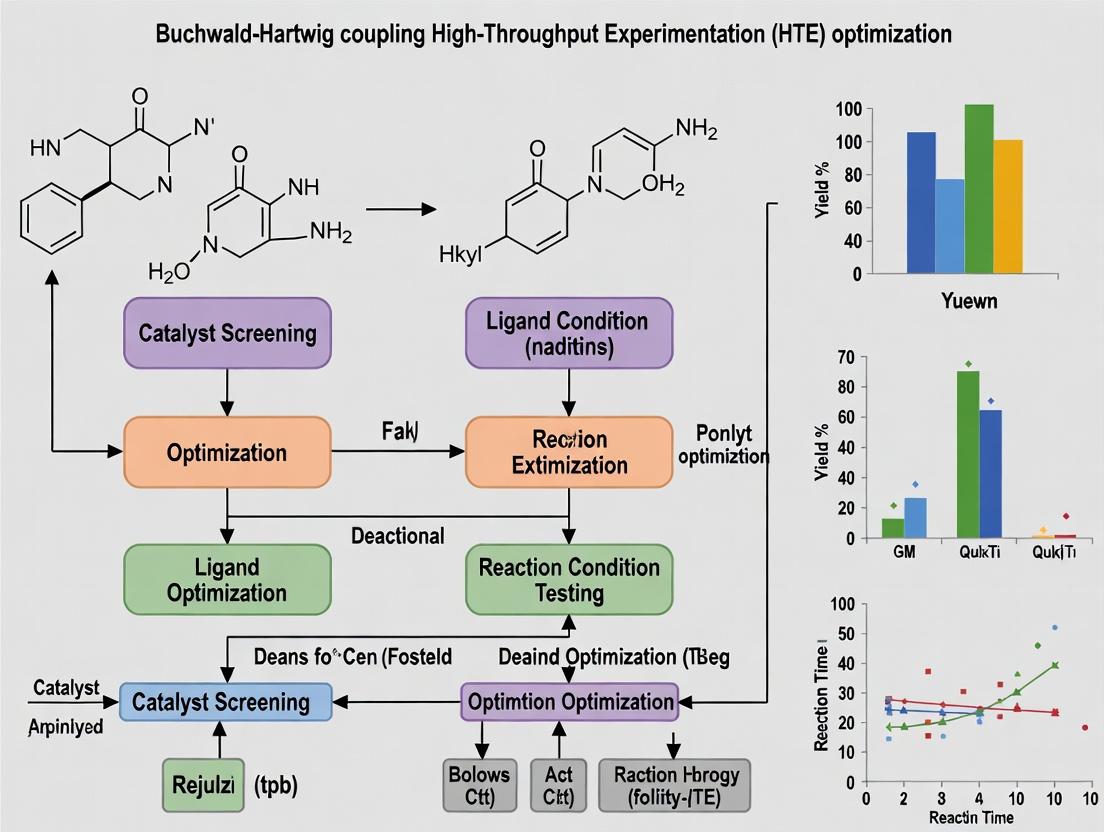
This article provides a detailed roadmap for researchers and pharmaceutical scientists aiming to implement High-Throughput Experimentation (HTE) to optimize Buchwald-Hartwig amination reactions.
Accelerating Drug Discovery: A Comprehensive Guide to Buchwald-Hartwig Coupling HTE Optimization
Abstract
This article provides a detailed roadmap for researchers and pharmaceutical scientists aiming to implement High-Throughput Experimentation (HTE) to optimize Buchwald-Hartwig amination reactions. It covers foundational principles, modern HTE methodologies, systematic troubleshooting for common challenges, and rigorous validation strategies. Designed for drug development professionals, the guide synthesizes current best practices to enable rapid and reliable synthesis of complex amine intermediates essential for medicinal chemistry pipelines.
Buchwald-Hartwig Amination 101: The Foundational Chemistry Powering Modern C-N Cross-Coupling
The Pivotal Role of Buchwald-Hartwig in Medicinal Chemistry and Drug Synthesis
Application Notes
The Buchwald-Hartwig Amination (BHA) is a palladium-catalyzed cross-coupling reaction forming a carbon-nitrogen bond between an aryl (pseudo)halide and an amine. This transformation is indispensable in medicinal chemistry for constructing nitrogen-containing heterocycles and aryl amines, which are ubiquitous pharmacophores. Its pivotal role stems from its robustness, functional group tolerance, and ability to streamline the synthesis of complex drug candidates, including kinase inhibitors, CNS-active compounds, and antiviral agents. Recent research, particularly employing High-Throughput Experimentation (HTE), has systematically optimized BHA for challenging substrates prevalent in drug discovery, such as highly functionalized, sterically hindered, or heteroaromatic systems.
Key Applications in Drug Synthesis
- Library Synthesis for SAR Exploration: Enables rapid diversification of a core aryl halide with a variety of commercially available amines to establish Structure-Activity Relationships (SAR).
- Late-Stage Functionalization (LSF): Allows direct amination of complex, advanced intermediates, accelerating lead optimization and avoiding lengthy de novo syntheses.
- Synthesis of Privileged Scaffolds: Critical for constructing indoles, carbazoles, pyrazoles, and other N-heterocycles common in FDA-approved drugs.
- Process Chemistry Development: HTE-driven optimization directly translates to scalable, cost-effective, and robust manufacturing routes for Active Pharmaceutical Ingredients (APIs).
Table 1: Performance of Select Modern BHA Catalysts Across Substrate Classes
| Catalyst System (Ligand-Pd) | Substrate Class (Aryl Halide / Amine) | Typical Yield Range (%) | Key Advantage | Common HTE-Identified Optimal Base/Solvent |
|---|---|---|---|---|
| BrettPhos Pd G3 | (Hetero)Aryl Chlorides / Primary Alkyl Amines | 75-98% | High activity for deactivated substrates | NaOt-Bu / t-AmylOH or Dioxane |
| t-BuBrettPhos Pd G3 | Aryl Bromides / Secondary Cyclic Amines (e.g., Piperazine) | 80-95% | Superior for cyclic amines & hindered couplings | K3PO4 / Toluene |
| RuPhos Pd G3 | (Hetero)Aryl Bromides/Iodides / Primary Arylamines | 70-92% | Excellent for aryl amines and anilines | Cs2CO3 / 1,4-Dioxane |
| cataCXium A Pd G3 | Aryl Triflates / Sterically Hindered Secondary Amines | 65-90% | Effective for electron-rich, bulky partners | K2CO3 / THF |
| XPhos Pd G3 | Broad scope, especially for chlorides | 60-95% | General-purpose, reliable performance | NaOt-Bu / Toluene or Dioxane |
Table 2: HTE-Derived Optimization Parameters for Challenging Couplings
| Challenge Scenario | Optimized Condition Set (via HTE) | Typical Yield Improvement vs. Std. Conditions |
|---|---|---|
| Base-Sensitive Substrates | Mild base (K2CO3, Cs2CO3), lower temp (60-80°C), solvent: THF | +40-60% |
| Heteroaryl Chlorides (e.g., Pyridines) | BrettPhos or RuPhos Pd G3, strong base (NaOt-Bu), solvent: t-AmylOH | +30-50% |
| Concurrent Competitive Inhibition (Beta-Hydride Elimination) | Use of DavePhos ligand, LiOt-Bu base, non-polar solvent (m-Xylene) | +25-45% |
| High Mol. Wt., Polar Substrates (LSF) | Water-miscible co-solvent (DMF:t-BuOH), BrettPhos Pd G3, moderate temp | +20-35% |
Detailed Experimental Protocols
Protocol 1: General HTE Screening Protocol for Buchwald-Hartwig Amination
Objective: To rapidly identify optimal catalyst, base, and solvent combinations for a new substrate pair.
Research Reagent Solutions & Essential Materials:
| Item | Function |
|---|---|
| Pd-G3 Precatalyst Stock Solutions (0.1 M in THF) | Air-stable, well-defined Pd source for consistent catalyst loading. Ligands pre-bound. |
| Ligand-Modified Precatalysts (e.g., BrettPhos Pd G3) | Specific catalyst for targeted screening. |
| Amine Substrate (1.0 M in dioxane) | Standardized concentration for liquid handling. |
| (Hetero)Aryl Halide Substrate (0.5 M in dioxane) | Standardized concentration. |
| Base Stock Solutions (2.0 M in relevant solvent) | e.g., NaOt-Bu in t-AmylOH, K3PO4 in water for slurry, Cs2CO3 in water. |
| Anhydrous Solvents (Toluene, Dioxane, THF, t-AmylOH, DMF) | Critical for reaction performance; stored over molecular sieves. |
| 96-Well HTE Reaction Block | High-throughput parallel reaction vessel. |
| Liquid Handling Robot | For precise, reproducible dispensing of microliter volumes. |
| GC-MS or UPLC-MS with Autosampler | For rapid reaction analysis and yield determination. |
Procedure:
- Plate Setup: In a nitrogen-filled glovebox, prepare a 96-well plate. Each well will represent a unique condition.
- Dispensing: Using a liquid handler: a. Add aryl halide solution (20 µL, 0.5 M, 10 µmol). b. Add amine solution (15 µL, 1.0 M, 15 µmol, 1.5 equiv). c. Add base solution (25 µL, 2.0 M, 50 µmol, 5.0 equiv). d. Add solvent to bring total volume to 195 µL. e. Add catalyst stock solution (5 µL, 0.1 M, 0.5 µmol, 5 mol% Pd). Final concentration ~0.05 M.
- Reaction Execution: Seal the plate with a Teflon-lined mat. Transfer to a pre-heated metal heating block at the target temperature (e.g., 80, 100, 120°C) and stir for 18 hours.
- Quenching & Analysis: Cool plate to room temperature. Add a standard quenching solution (e.g., 200 µL of acetonitrile with an internal standard). Filter through a 96-well filter plate. Analyze supernatant by UPLC-MS to determine conversion and yield using a calibrated method.
Protocol 2: Optimized Milligram-Scale Synthesis of a Model Drug Intermediate
Objective: To synthesize N-(4-(4-methylpiperazin-1-yl)phenyl)quinolin-4-amine, a kinase inhibitor-like scaffold, using HTE-optimized conditions.
Materials: 4-Chloroquinoline (16.3 mg, 0.10 mmol), 4-(4-methylpiperazin-1-yl)aniline (21.1 mg, 0.11 mmol), BrettPhos Pd G3 (4.5 mg, 5.0 µmol, 5 mol%), NaOt-Bu (19.2 mg, 0.20 mmol), anhydrous t-AmylOH (2.0 mL).
Procedure:
- In a dry 5 mL microwave vial equipped with a magnetic stir bar, charge 4-chloroquinoline and 4-(4-methylpiperazin-1-yl)aniline.
- In a glovebox, add BrettPhos Pd G3 and NaOt-Bu.
- Add anhydrous t-AmylOH via syringe. Seal the vial with a PTFE-lined cap.
- Remove from glovebox and place in a pre-heated oil bath at 100°C. Stir vigorously for 16 hours.
- Monitor reaction completion by TLC or UPLC-MS.
- Cool to room temperature. Dilute with ethyl acetate (10 mL) and wash with water (10 mL) and brine (10 mL).
- Dry the organic layer over anhydrous MgSO4, filter, and concentrate under reduced pressure.
- Purify the crude residue by flash chromatography (silica gel, 0-10% methanol in dichloromethane with 1% NH4OH) to afford the product as a pale solid. (Typical isolated yield: 85-92%).
Visualizations
HTE Optimization Workflow for BHA
Buchwald-Hartwig Catalytic Cycle
In the context of a broader thesis aimed at High-Throughput Experimentation (HTE) optimization of Buchwald-Hartwig cross-coupling reactions, a fundamental understanding of the catalytic cycle is paramount. This palladium-catalyzed reaction, a cornerstone in constructing C–N bonds for pharmaceutical and agrochemical targets, operates via a canonical three-step mechanism: oxidative addition, transmetalation, and reductive elimination. Optimizing these discrete steps through systematic HTE screening of ligands, bases, and solvents requires a deep mechanistic appreciation to interpret data and guide experimental design.
Detailed Mechanistic Analysis with Application Notes
Oxidative Addition
Mechanism: The active, low-valent Pd(0) catalyst inserts into the carbon-heteroatom bond of an aryl (pseudo)halide (e.g., Ar–X, where X = Cl, Br, I, OTs), oxidizing the metal center to Pd(II) and forming an electrophilic aryl-Pd(II)-X complex. Application Note for HTE: The rate and facility of this step are highly dependent on the electronic and steric properties of the ligand (L), the nature of X, and the aryl group. In HTE campaigns, screening electron-rich, bulky monodentate phosphines (e.g., BrettPhos, RuPhos) or biarylphosphines can drive the oxidative addition of challenging, electron-neutral or deactivated aryl chlorides.
Transmetalation
Mechanism: Following base-assisted deprotonation of the amine nucleophile, the resulting amide anion (R2N–) exchanges with the X ligand on the Pd(II) intermediate. This yields a diaryl-Pd(II)-amide complex, key for the final bond-forming step. Application Note for HTE: The choice of base (e.g., NaOtert-Bu, KOtert-Bu, Cs2CO3, K3PO4) is critical. It must be sufficiently strong to deprotonate the amine but compatible with other reaction components. HTE protocols systematically vary bases to match amine pKa and substrate solubility.
Reductive Elimination
Mechanism: The Pd(II) center facilitates coupling between the two coordinated ligands—the aryl group and the amide. This step forms the desired C–N bond and regenerates the Pd(0) catalyst, closing the catalytic cycle. Application Note for HTE: Reductive elimination is favored by electron-rich, sterically demanding ligands that create a congested coordination sphere. HTE ligand sets are designed to probe a broad spectrum of steric and electronic parameters (quantified by Tolman cone angle and %VBur) to accelerate this final step.
Table 1: Ligand Performance in Model Buchwald-Hartwig Coupling (Ar–Cl + Piperidine)
| Ligand Name | Tolman Cone Angle (°) | Relative Rate Constant (krel) | Optimal Base (HTE Screen) | Yield Range (%) |
|---|---|---|---|---|
| BrettPhos | 212 | 1.00 (reference) | NaOt-Bu | 92-98 |
| RuPhos | 211 | 0.85 | KOt-Bu | 88-95 |
| XPhos | 251 | 0.45 | Cs2CO3 | 75-82 |
| SPhos | 194 | 0.32 | K3PO4 | 70-78 |
| DavePhos | 181 | 0.15 | NaOt-Bu | 60-72 |
Table 2: Effect of Aryl Halide (X) on Oxidative Addition Rate in HTE
| Aryl–X Substrate | Relative Oxidative Addition Rate (L = BrettPhos) | Typical HTE Reaction Temp (°C) | Comment for Protocol Design |
|---|---|---|---|
| Aryl–I | 150 | 25-60 | Fast; lower temp sufficient. |
| Aryl–Br | 10 | 60-90 | Moderate; requires heating. |
| Aryl–Cl | 1 (reference) | 80-110 | Slow; requires high temp/active ligand. |
| Aryl–OTf | 50 | 60-80 | Fast but moisture-sensitive. |
Experimental Protocols
Protocol 1: HTE Screening of Ligands and Bases for a Challenging Coupling Objective: Identify optimal conditions for coupling 4-chloroanisole with a secondary aliphatic amine.
- Preparation: In an inert-atmosphere glovebox, prepare a 96-well HTE plate. Each well contains a stir bar.
- Stock Solutions: Prepare 0.1 M stock solutions in anhydrous toluene: Pd2(dba)3 (pre-catalyst), 12 ligand candidates (at 4:1 ligand:Pd ratio), 4 base candidates (NaOt-Bu, KOt-Bu, Cs2CO3, K3PO4 at 2.0 equiv).
- Dispensing: Using an automated liquid handler, dispense into each well: 100 µL of aryl chloride stock (0.05 mmol), 100 µL of amine (0.06 mmol), 20 µL of Pd stock, 20 µL of ligand stock, and 100 µL of base stock.
- Reaction: Seal the plate, transfer to a pre-heated orbital shaker, and react at 90°C for 16 hours with agitation.
- Analysis: Cool plate, dilute each well with 0.5 mL ethyl acetate, and filter. Analyze conversion and yield via UPLC-MS with a suitable internal standard.
Protocol 2: In-situ Monitoring of Oxidative Addition Complex Formation Objective: Confirm oxidative addition step efficiency under screened conditions.
- Setup: In a dry Schlenk tube under N2, combine Pd2(dba)3 (0.005 mmol), selected ligand (0.022 mmol), and anhydrous THF (3 mL).
- Activation: Stir at 40°C for 15 min to form active L–Pd(0) species.
- Oxidative Addition: Add aryl halide (0.1 mmol) in THF (1 mL). Monitor reaction by 31P NMR spectroscopy.
- Observation: The shift from the L–Pd(0) 31P signal to a new downfield signal confirms formation of the aryl–Pd(II)–X oxidative addition complex. The rate can be estimated by the time to full conversion of the Pd(0) signal.
Diagrams
Title: Oxidative Addition Step
Title: Pd Catalytic Cycle for Buchwald-Hartwig
Title: HTE Screening Workflow
The Scientist's Toolkit: Research Reagent Solutions
Table 3: Essential Materials for Buchwald-Hartwig HTE Optimization
| Item | Function in Experiment | Example/Note |
|---|---|---|
| Pd Precursors | Source of active Pd(0) catalyst. | Pd2(dba)3, Pd(OAc)2. Stable, easy-to-handle solids. |
| Buchwald Ligands | Modulate catalyst activity & stability for all three mechanistic steps. | BrettPhos, RuPhos, XPhos kits. Pre-weighed in vials for HTE. |
| Sterically-Hindered Bases | Deprotonate amine for transmetalation. | NaOt-Bu, KOt-Bu. Must be stored under inert atmosphere. |
| Inert Solvents | Oxygen- and water-free reaction medium. | Anhydrous toluene, dioxane, THF (with stabilizer-free ampules for HTE). |
| Aryl (Pseudo)Halides | Electrophilic coupling partner for oxidative addition. | Aryl chlorides (challenge), bromides, iodides, triflates. |
| Amine Nucleophiles | Nucleophilic coupling partner. | Primary/secondary aliphatic amines, anilines. Often used as hydrochloride salts. |
| Internal Standard | For accurate quantitative analysis by UPLC-MS. | Stable, inert compound not present in the reaction (e.g., methyl myristate). |
| 96-Well Reaction Plates | Platform for parallel reaction execution. | Glass-coated or high-temperature polymer plates with sealing mats. |
Application Notes for High-Throughput Experimentation (HTE) Optimization in Buchwald-Hartwig Amination
Within the framework of a thesis focused on HTE optimization for Buchwald-Hartwig cross-coupling, the selection and interplay of palladium precatalysts, ligands, bases, and solvents are critical for achieving high-yielding, robust, and general reaction conditions, particularly in pharmaceutical lead diversification. This protocol details a systematic HTE approach to map the reaction landscape efficiently.
Research Reagent Solutions Toolkit
The following table lists essential materials for setting up a Buchwald-Hartwig HTE campaign.
| Item / Reagent Solution | Function in HTE Protocol |
|---|---|
| Pd Precatalyst Stock Solutions (e.g., in toluene or dioxane) | Provides a consistent source of active Pd(0); using air-stable precatalysts simplifies automated handling. |
| Ligand Library Stock Solutions (e.g., in toluene or THF) | Key modular component for tuning catalyst activity, stability, and selectivity; a diverse set (BrettPhos, RuPhos, etc.) is essential. |
| Base Stock Solutions (e.g., in solvent or neat) | Critical for deprotonation; screening alkoxides (t-BuONa), phosphates (K₃PO₄), and carbonates (Cs₂CO₃) assesses compatibility. |
| Anhydrous, Degassed Solvents | Medium for reaction; choice (toluene, dioxane, DMF, t-BuOH) affects solubility, base strength, and mechanism. |
| 96-Well Reaction Block (glass-coated or polymer) | Standardized vessel for parallel reaction setup and heating. |
| Liquid Handling Robot | Enables precise, rapid, and reproducible dispensing of microliter volumes of stock solutions. |
| GC/MS or LC/MS Autosampler | For high-throughput analysis of reaction yields and conversion. |
The following table summarizes a typical primary screening matrix for coupling an aryl bromide with a secondary amine. Yield data is illustrative.
Table 1: Representative HTE Grid for Buchwald-Hartwig Optimization (Yields in %)
| Precatalyst (1.5 mol%) | Ligand (3.0 mol%) | Base (2.0 equiv) | Solvent | Yield (%)* |
|---|---|---|---|---|
| Pd-Prec-G3 | BrettPhos | t-BuONa | Toluene | 95 |
| Pd-Prec-G3 | RuPhos | t-BuONa | Toluene | 87 |
| Pd-Prec-G3 | DavePhos | t-BuONa | Toluene | 45 |
| Pd-Prec-G3 | BrettPhos | K₃PO₄ | Toluene | 20 |
| Pd-Prec-G3 | BrettPhos | Cs₂CO₃ | Toluene | 15 |
| Pd-Prec-G3 | BrettPhos | t-BuONa | 1,4-Dioxane | 98 |
| Pd-Prec-G3 | BrettPhos | t-BuONa | t-BuOH | 85 |
| Pd-Prec-G3 | BrettPhos | t-BuONa | DMF | 10 |
| Pd₂(dba)₃ | BrettPhos | t-BuONa | Toluene | 90 |
| Pd(OAc)₂ | XPhos | K₃PO₄ | Toluene | 65 |
*Yields determined by UPLC-MS analysis using an internal standard.
Detailed Experimental Protocol: HTE for Substrate Scope Exploration
Protocol Title: High-Throughput Screening of Buchwald-Hartwig Coupling Conditions for Aryl Halide Amination.
Objective: To rapidly identify optimal catalyst/ligand/base/solvent systems for a given class of aryl halide and amine coupling partners.
Materials:
- Stock solutions of precatalysts (0.1 M in toluene), ligands (0.2 M in toluene), bases (1.0 M in solvent or as a suspension), aryl halide (0.5 M in toluene), amine (0.75 M in toluene).
- Anhydrous, degassed toluene, 1,4-dioxane, t-BuOH.
- Internal standard solution (e.g., dodecane, 0.1 M in toluene).
- 96-well glass-coated reaction block, aluminum sealing mats, heater/shaker.
Procedure:
- Plate Setup: Using an automated liquid handler, dispense 20 µL of aryl halide stock solution (10 µmol) and 30 µL of amine stock solution (15 µmol) into each well of the reaction block.
- Solvent Addition: Add 58 µL of anhydrous, degassed solvent to each well. The total reaction volume is normalized in subsequent steps.
- Catalyst/Ligand Addition: Add 15 µL of precatalyst stock (1.5 µmol, 1.5 mol%) and 15 µL of ligand stock (3.0 µmol, 3.0 mol%) to designated wells according to the screening matrix. For control wells, add solvent instead.
- Base Addition: Add 20 µL of base stock solution (20 µmol, 2.0 equiv). The total reaction volume is now 138 µL.
- Sealing and Reaction: Seal the block with an aluminum mat. Place the block on a pre-heated heater/shaker set to 100°C and 700 rpm for 18 hours.
- Quenching and Analysis: After cooling, automatically quench each reaction by adding 200 µL of a MeOH/acetonitrile mixture containing analysis standard. Seal, shake, and centrifuge the block. Analyze supernatant via UPLC-MS to determine conversion and yield.
Workflow and Relationship Diagrams
Diagram 1: Buchwald-Hartwig HTE Optimization Workflow
Diagram 2: B-H Catalytic Cycle & Component Roles
Why HTE? The Limitations of Traditional One-Variable-at-a-Time Optimization
In the pursuit of optimal conditions for the Buchwald-Hartwig amination, a cornerstone reaction in pharmaceutical synthesis for constructing C–N bonds, traditional One-Variable-at-a-Time (OVAT) experimental design presents significant bottlenecks. This Application Note delineates the inherent limitations of OVAT and establishes High-Throughput Experimentation (HTE) as a superior paradigm for reaction optimization, directly supporting a broader thesis on accelerating drug discovery through advanced catalytic methodology development.
The Critical Limitations of OVAT Optimization
OVAT methodology, while conceptually simple, is inefficient for optimizing complex, multi-variable catalytic systems like the Buchwald-Hartwig coupling. Its flaws are quantitative and qualitative.
Quantitative Inefficiency and Resource Cost
For a reaction governed by 5 key variables (e.g., ligand, base, solvent, temperature, time), an OVAT approach exploring just 3 conditions per variable requires a prohibitive number of experiments.
Table 1: Experimental Scale Comparison: OVAT vs. HTE
| Optimization Method | Number of Variables | Conditions per Variable | Total Experiments | Time Estimate (Weeks) | Key Limitation |
|---|---|---|---|---|---|
| One-Variable-at-a-Time (OVAT) | 5 | 3 | 3^5 = 243 | 8-12 | Exponential experiment growth; ignores interactions. |
| Factorial Design (via HTE) | 5 | 3 | Selective 16-32 | 1-2 | Captures variable interactions with minimal experiments. |
Failure to Detect Critical Interactions
The most severe flaw of OVAT is its inability to detect synergistic or antagonistic interactions between variables. In Buchwald-Hartwig catalysis, the performance of a ligand is intrinsically linked to the choice of base and solvent. OVAT, by holding all variables constant while changing one, misses this crucial interplay, often leading to suboptimal or misleading "optima."
HTE-Enabled Design of Experiments (DoE) for Buchwald-Hartwig
HTE platforms allow for the parallel execution of microscale reactions, enabling the application of statistical DoE. This approach systematically explores the multi-dimensional variable space to find global optima and model reaction outcomes.
Protocol: HTE Screen for Buchwald-Hartwig Reaction Optimization
Objective: To identify optimal conditions for the coupling of aryl halide A with amine B using a DoE approach.
Materials & Equipment:
- HTE platform (e.g., 96-well microtiter plate reactor)
- Automated liquid handler
- Stock solutions of substrates, catalysts, ligands, bases, and solvents.
- GC-MS or UPLC-MS for high-throughput analysis.
Procedure:
- Experimental Design: Define the reaction space. Select 4-6 critical variables (e.g., Pd source, ligand class, base, solvent). Use a fractional factorial or Plackett-Burman design to generate a library of 24-48 unique reaction conditions.
- Library Preparation: Using an automated liquid handler, dispense specified volumes of stock solutions into individual wells of a 96-well plate following the DoE array. Maintain inert atmosphere.
- Reaction Execution: Seal the plate and heat with agitation in a dedicated HTE incubator/shaker.
- Quenching & Analysis: After the set time, automatically quench reactions. Use high-throughput LC-MS/GC-MS to quantify yield and conversion for each well.
- Data Analysis: Employ statistical software to analyze results. Generate a regression model to predict yield based on variable inputs and identify significant interactions (e.g., Ligand*Base).
Table 2: Sample HTE DoE Matrix (Abbreviated)
| Well | Pd Source (mol%) | Ligand | Base | Solvent | Yield (%) |
|---|---|---|---|---|---|
| A1 | Pd(dba)2 (2) | BrettPhos | KOtBu | Toluene | 95 |
| A2 | Pd(dba)2 (2) | tBuXPhos | Cs2CO3 | Dioxane | 12 |
| A3 | Pd2(dba)3 (1) | BrettPhos | Cs2CO3 | Toluene | 87 |
| ... | ... | ... | ... | ... | ... |
| Model Output | Significance: High | Significance: High | Significance: Med | Significance: Low | R² = 0.91 |
| Key Interaction: Ligand*Base (p < 0.01) |
Diagram 1: HTE-DoE workflow for reaction optimization.
The Scientist's Toolkit: Research Reagent Solutions
Table 3: Essential Materials for Buchwald-Hartwig HTE
| Item | Function in HTE Context |
|---|---|
| Pd Precursors (e.g., Pd(dba)₂, Pd₂(dba)₃, Pd(OAc)₂) | Air-stable, soluble sources of palladium catalyst. Different precursors can dramatically influence reaction initiation and efficacy. |
| Buchwald Ligand Library (e.g., BrettPhos, tBuXPhos, RuPhos, SPhos) | A diverse set of biarylphosphine ligands that dictate substrate scope, selectivity, and functional group tolerance. Core to HTE screening. |
| Base Array (e.g., KOtBu, Cs₂CO₃, K₃PO₄, NaOtBu) | Critical for deprotonation. Steric and basicity differences can have profound effects on rate and yield, often in ligand-dependent ways. |
| Deuterated Internal Standards (e.g., d₈-Toluene, d₅-Nitrobenzene) | Added automatically prior to analysis for precise quantification of yield via NMR or as LC-MS calibration standards. |
| 96-Well Microtiter Reactor Plates | Chemically resistant plates (often glass-coated) enabling parallel reaction execution under controlled atmosphere. |
| Automated Liquid Handling System | Enables rapid, precise, and reproducible dispensing of microliter volumes of reagent stock solutions, essential for library construction. |
Transitioning from OVAT to HTE for Buchwald-Hartwig optimization is not merely an increase in speed. It is a fundamental shift toward a more scientific, data-rich understanding of complex catalytic systems. By employing DoE via HTE, researchers can efficiently map interaction landscapes, identify true global optima, and develop robust, scalable protocols, thereby directly accelerating the synthesis of potential drug candidates in pharmaceutical development pipelines.
Diagram 2: Conceptual contrast between OVAT and HTE methodologies.
High-Throughput Experimentation (HTE) is a multidisciplinary approach that utilizes automation, miniaturization, and parallel processing to rapidly conduct and analyze a vast number of experiments. Its core philosophy is the replacement of traditional, iterative "one-at-a-time" optimization with statistically designed experiments that explore multivariate parameter spaces efficiently. This enables the empirical discovery of optimal conditions, novel reactivity, and robust structure-activity relationships in a fraction of the time. Within the context of pharmaceutical research, particularly in Buchwald-Hartwig amination optimization, HTE is indispensable for accelerating catalyst and condition screening to develop efficient synthetic routes to drug candidates and their libraries.
Core Definitions and Philosophies in Practice: A Buchwald-Hartwig Case
The optimization of a Buchwald-Hartwig C-N coupling reaction exemplifies HTE philosophy. Instead of serially testing bases, ligands, or solvents, an HTE approach employs a matrixed design to test all combinations simultaneously.
Table 1: Example HTE Matrix for Buchwald-Hartwig Reaction Component Screening
| Variable | Options Tested (n=4 each) | Role in Reaction |
|---|---|---|
| Palladium Precatalyst | Pd(OAc)2, Pd2(dba)3, Pd(allyl)Cl dimer, G3-XantPhos Pd Precatalyst | Metal source for catalytic cycle |
| Ligand | BippyPhos, RuPhos, DavePhos, XPhos | Modulates catalyst activity & stability |
| Base | K3PO4, Cs2CO3, t-BuONa, DBU | Facilitates aryl halide oxidative addition & reductive elimination |
| Solvent | Toluene, dioxane, DME, t-BuOH | Medium affecting solubility & catalyst performance |
| Total Unique Conditions | 4 x 4 x 4 x 4 = 256 |
Protocol 1: High-Throughput Screen for Buchwald-Hartwig Amination
- Objective: To identify the optimal combination of precatalyst, ligand, base, and solvent for the coupling of a model aryl halide with a secondary amine.
- Materials: See "The Scientist's Toolkit" below.
- Procedure:
- Plate Preparation: Using an automated liquid handler, dispense stock solutions of the four palladium precatalysts (0.5 mol% Pd in THF) into the wells of a 96-well glass-coated plate. Follow with stock solutions of the four ligands (1.05 mol% in THF).
- Substrate/Base Addition: Dispense a stock solution of the aryl halide substrate (0.1 mmol in the designated solvent) into all wells. Subsequently, add a stock solution of the chosen base (1.5 equiv, in solvent) to its respective column.
- Amine Addition: Finally, add a stock solution of the amine coupling partner (1.2 equiv).
- Reaction Execution: Seal the plate with a pressure-sensitive foil. Heat and agitate the plate on a thermostated orbital shaker at the target temperature (e.g., 80-100°C) for 18 hours.
- Quenching & Analysis: Cool the plate. Using the liquid handler, add a standardized quenching solution (e.g., acetonitrile with an internal standard). Analyze each well via UPLC-MS to determine conversion and yield.
- Data Analysis: Results are visualized in a heat map format, allowing for immediate identification of high-performing condition clusters (e.g., high yield with RuPhos/t-BuONa/toluene system).
Diagram: HTE Workflow for Reaction Optimization
The Scientist's Toolkit: Key Reagent Solutions for Buchwald-Hartwig HTE
| Item | Function in HTE Context |
|---|---|
| 96-/384-Well Reaction Blocks | Glass-coated or polymer plates enabling parallel miniaturized reactions. |
| Automated Liquid Handler | Precision robot for reproducible, nanoliter-to-microliter dispensing of reagents and catalysts. |
| Pd Precatalyst Stocks | Standardized solutions (e.g., in THF or DMSO) of diverse Pd sources (Pd(OAc)2, G3 Precatalysts) for rapid screening. |
| Phosphine Ligand Libraries | Arrayed solutions of Buchwald ligands (BippyPhos, RuPhos, etc.) and other ligand classes. |
| Base & Solvent Arrays | Pre-formulated plates containing common inorganic/organic bases and anhydrous solvents. |
| Internal Standard Solution | Consistent additive (e.g., triphenylmethane) in quench solvent for quantitative LC-MS analysis. |
| UPLC-MS with Autosampler | Ultra-Performance Liquid Chromatography-Mass Spectrometry for rapid, sequential analysis of reaction outcomes. |
Diagram: Key Parameter Interactions in Buchwald-Hartwig Optimization
Application Notes for HTE in Drug Development
Note 1: Leveraging DoE for Robustness. Beyond one-factor-at-a-time screens, HTE coupled with Design of Experiments (DoE) is critical. For a lead Buchwald-Hartwig transformation, a follow-up DoE on temperature, concentration, and stoichiometry around the identified hit conditions can map the reaction's robustness, defining a "design space" acceptable for scale-up.
Protocol 2: DoE for Reaction Robustness Testing
- Objective: To model the effect of temperature, catalyst loading, and equivalence of base on the yield of the optimized reaction.
- Design: A central composite face-centered (CCF) design with 3 factors and 2 levels, plus center points (approx. 15 experiments).
- Procedure:
- Factor Definition: Set ranges: Temperature (70-110°C), Pd loading (0.25-1.0 mol%), Base equiv (1.5-3.0 equiv).
- Automated Setup: Use a liquid handler to prepare vials according to the randomized DoE matrix.
- Execution & Analysis: Run reactions in parallel in a thermostated reactor block. Quench and analyze via UPLC-MS.
- Data Analysis: Fit yield data to a quadratic model using statistical software (e.g., JMP, Modde). Generate response surface plots to identify the region where yield remains >90%.
Note 2: HTE in Library Synthesis. Once optimal conditions are identified, the same automated platform can be used to synthesize arrays of analogous compounds by varying the aryl halide and amine coupling partners, rapidly building structure-activity relationship (SAR) data for medicinal chemistry programs.
Building Your HTE Toolkit: Practical Protocols for Buchwald-Hartwig Reaction Screening
Within a broader thesis focused on High-Throughput Experimentation (HTE) for Buchwald-Hartwig (B-H) cross-coupling optimization, systematic reaction space exploration is paramount. The Buchwald-Hartwig amination, a cornerstone for constructing C–N bonds in medicinal chemistry, involves a complex parameter space: ligand, base, solvent, palladium source, temperature, and time. Traditional One-Variable-At-a-Time (OVAT) approaches are inefficient and prone to missing critical interactions. This application note details the implementation of Design of Experiment (DoE) strategies to navigate this multidimensional space efficiently, enabling the rapid identification of optimal reaction conditions and robust design spaces for diverse substrate pairs relevant to drug development.
Foundational DoE Strategies for Initial Screening
The primary goal is to identify significant factors from a large set with minimal experimental runs. Fractional factorial and Plackett-Burman designs are employed.
Table 1: Example 8-Trial Plackett-Burman Design for Screening 7 Factors
| Trial | Pd Source (Cat.) | Ligand | Base | Solvent | Temp (°C) | Time (h) | [Substrate] (M) |
|---|---|---|---|---|---|---|---|
| 1 | Pd(dtbpf)Cl₂ | BrettPhos | KOtBu | 1,4-Dioxane | 100 | 24 | 0.10 |
| 2 | Pd(OAc)₂ | RuPhos | Cs₂CO₃ | Toluene | 80 | 2 | 0.25 |
| 3 | Pd(dtbpf)Cl₂ | tBuXPhos | KOtBu | Toluene | 80 | 24 | 0.25 |
| 4 | Pd(OAc)₂ | BrettPhos | Cs₂CO₃ | 1,4-Dioxane | 100 | 2 | 0.25 |
| 5 | Pd(OAc)₂ | tBuXPhos | KOtBu | 1,4-Dioxane | 80 | 2 | 0.10 |
| 6 | Pd(dtbpf)Cl₂ | RuPhos | Cs₂CO₃ | Toluene | 100 | 2 | 0.10 |
| 7 | Pd(OAc)₂ | RuPhos | KOtBu | Toluene | 100 | 24 | 0.25 |
| 8 | Pd(dtbpf)Cl₂ | tBuXPhos | Cs₂CO₃ | 1,4-Dioxane | 80 | 24 | 0.10 |
Protocol 2.1: HTE Screening via Plackett-Burman Design
- Stock Solution Preparation: In a nitrogen-filled glovebox, prepare separate stock solutions of each Pd source (50 mM), ligand (150 mM), and base (1.0 M) in dry, degassed solvents.
- Microtiter Plate Setup: Using an automated liquid handler, dispense aryl halide substrate (0.025 mmol) into 96-well reactor plates.
- Factor Addition: According to the design matrix (Table 1), add precise volumes of Pd, ligand, base, and solvent stock solutions to each well. The amine substrate (1.2 equiv) is added last.
- Reaction Execution: Seal the plate, remove from the glovebox, and place on a pre-heated magnetic stirrer/heater block at the specified temperature.
- Quenching & Analysis: After the designated time, quench reactions with 200 µL of acetonitrile containing an internal standard (e.g., fluoranthene). Filter through a 96-well filter plate. Analyze yields via UPLC-MS with UV detection at 254 nm.
Response Surface Methodology for Optimization
Following screening, a Response Surface Methodology (RSM) design, such as a Central Composite Design (CCD), is used to model curvature and locate the optimum for the critical factors (e.g., Ligand equivalence, Temperature, Time).
Table 2: Central Composite Design (CCD) Matrix and Hypothetical Yield Response
| Trial | Ligand (equiv) | Temp (°C) | Time (h) | Yield (%)* |
|---|---|---|---|---|
| 1 | 0.03 ( -1 ) | 70 ( -1 ) | 6 ( -1 ) | 45 |
| 2 | 0.07 ( +1 ) | 70 ( -1 ) | 6 ( -1 ) | 78 |
| 3 | 0.03 ( -1 ) | 110 ( +1 ) | 6 ( -1 ) | 65 |
| 4 | 0.07 ( +1 ) | 110 ( +1 ) | 6 ( -1 ) | 82 |
| 5 | 0.03 ( -1 ) | 70 ( -1 ) | 18 ( +1 ) | 60 |
| 6 | 0.07 ( +1 ) | 70 ( -1 ) | 18 ( +1 ) | 85 |
| 7 | 0.03 ( -1 ) | 110 ( +1 ) | 18 ( +1 ) | 70 |
| 8 | 0.07 ( +1 ) | 110 ( +1 ) | 18 ( +1 ) | 80 |
| 9 | 0.02 ( -α ) | 90 ( 0 ) | 12 ( 0 ) | 40 |
| 10 | 0.08 ( +α ) | 90 ( 0 ) | 12 ( 0 ) | 83 |
| 11 | 0.05 ( 0 ) | 60 ( -α ) | 12 ( 0 ) | 55 |
| 12 | 0.05 ( 0 ) | 120 ( +α ) | 12 ( 0 ) | 75 |
| 13 | 0.05 ( 0 ) | 90 ( 0 ) | 3 ( -α ) | 35 |
| 14 | 0.05 ( 0 ) | 90 ( 0 ) | 21 ( +α ) | 81 |
| 15-20 | 0.05 ( 0 ) | 90 ( 0 ) | 12 ( 0 ) | 88, 86, 87 |
*Hypothetical data for a single substrate pair.
Protocol 3.1: RSM Optimization via Automated Parallel Synthesis
- Design Implementation: Generate a CCD using statistical software (e.g., JMP, Design-Expert) for 3-4 key continuous factors.
- Reactor Setup: Use a parallel synthesizer with individual temperature control for each vial (e.g., 24-position carousel).
- Precise Charging: Charge each vessel with substrate, base, and a stir bar. Using syringe pumps, add stock solutions of Pd and ligand to achieve the precise equivalences defined by the CCD matrix.
- Temperature Ramping: Program the reactor to heat each vessel to its specific target temperature (±1°C tolerance).
- Temporal Quenching: Program the robotic arm to sequentially quench each reaction at its precise endpoint time with a quenching solvent, ensuring accurate reaction time data.
- Modeling: Input yield data into the software to generate a quadratic model, contour plots, and identify the optimum operating conditions (e.g., predicting 92% yield at 0.065 equiv ligand, 85°C, 15h).
Visualizing the DoE Workflow & Factor Relationships
Diagram Title: Sequential DoE Workflow for HTE Optimization
Diagram Title: Key B-H Factors Influencing Catalytic Cycle & Outputs
The Scientist's Toolkit: Key Research Reagent Solutions
Table 3: Essential Materials for Buchwald-Hartwig DoE Studies
| Item | Function & Rationale |
|---|---|
| Pd(dtbpf)Cl₂ / Pd(OAc)₂ | Robust, air-stable Pd sources; (dtbpf)Cl₂ is a chelating di-tert-butylphosphine complex, often highly active. |
| BrettPhos, RuPhos, tBuXPhos | Industry-standard, sterically hindered biarylphosphine ligands with broad substrate scope. |
| Cs₂CO₃, KOtBu | Common bases for B-H; Cs₂CO₃ is mild, KOtBu is strong. Choice impacts rate and side reactions. |
| Anhydrous, Degassed 1,4-Dioxane & Toluene | Common solvents for Pd catalysis. Anhydrous and oxygen-free conditions prevent catalyst deactivation. |
| 96-Well Reactor Plates (Glass-insert) | Enable parallel reaction set-up in inert atmosphere for high-throughput screening. |
| Automated Liquid Handler | Enables precise, reproducible dispensing of reagents and library generation per DoE matrices. |
| Parallel Synthesis Reactor | Provides individual temperature control for multiple vessels, crucial for RSM execution. |
| UPLC-MS with UV Detector | Provides rapid analysis of reaction yield and conversion (UV) and mass confirmation (MS). |
Application Notes: HTE for Buchwald-Hartwig Coupling Optimization
The establishment of a High-Throughput Experimentation (HTE) laboratory dedicated to cross-coupling optimization, such as for Buchwald-Hartwig amination reactions, requires the integration of specialized equipment to enable rapid, parallel synthesis and analysis. This facilitates the systematic exploration of key variables—including palladium precatalysts, ligand libraries, bases, and solvents—to accelerate the discovery of optimal conditions for challenging C–N bond formations relevant to pharmaceutical synthesis. The core workflow involves automated reagent dispensing, parallel reaction execution, and high-throughput analytical sampling.
Protocols
Protocol 1: Automated Reaction Setup for Ligand Screening
Objective: To screen 96 different ligand/precatalyst combinations for a model Buchwald-Hartwig coupling.
- Preparation: In an inert-atmosphere glovebox, prepare stock solutions in dry, degassed toluene:
- Aryl halide substrate (0.1 M)
- Amine substrate (0.12 M)
- Base (e.g., NaOt-Bu, 0.2 M)
- Precatalyst (e.g., Pd2(dba)3, 5 mM)
- Ligand library (10 mM each)
- Dispensing: Using a liquid handler, dispense into a 96-well parallel reactor plate:
- 100 µL Aryl halide stock (10 µmol)
- 100 µL Amine stock (12 µmol)
- 100 µL Base stock (20 µmol)
- Catalyst Addition: Create catalyst/ligand combinations by dispensing:
- 20 µL Precatalyst stock (0.1 µmol Pd)
- 20 µL of a unique ligand stock (0.2 µmol) to each well.
- Reaction: Seal the plate, transfer from the glovebox, and heat in the parallel reactor block at 80°C with agitation for 16 hours.
- Quenching: Cool plate to room temperature and automatically add 300 µL of ethyl acetate containing an internal standard (e.g., dodecane) to each well.
Protocol 2: High-Throughput Analysis via UPLC-MS
Objective: Rapid conversion and yield analysis for 96 parallel reactions.
- Sample Dilution: Using a liquid handler, transfer 50 µL of each quenched reaction mixture to a new 96-well plate containing 450 µL of methanol. Seal and centrifuge to precipitate solids.
- Automated Injection: Configure an autosampler to inject 2 µL from each well of the dilution plate onto a UPLC-MS system.
- Chromatography: Use a fast gradient on a C18 column (50 x 2.1 mm, 1.7 µm) over 3 minutes with water/acetonitrile (both with 0.1% formic acid).
- Detection: Acquire data in positive ion electrospray mode (MS1 scan or Single Ion Monitoring for expected masses). UV detection at 254 nm is used in parallel.
- Data Processing: Use integration software to calculate relative UV area percentages against the internal standard for yield determination and confirm product identity via exact mass.
Equipment Data & Specifications
Table 1: Core HTE Lab Equipment for Reaction Execution
| Equipment Category | Example Model(s) | Key Specification for HTE | Primary Function in Buchwald-Hartwig HTE |
|---|---|---|---|
| Liquid Handler | Beckman Coulter Biomek i7, Hamilton Microlab STAR | 96-/384-channel head, nanoliter precision | Automated, precise dispensing of air-sensitive reagents & catalysts. |
| Parallel Reactor | Asynt MultiMax, Chemtrix Plantrix | 24- or 96-position block, temp. range: 40-150°C | Simultaneous execution of reactions under controlled heating/stirring. |
| GC/MS System | Agilent 8890/5977B, Thermo Scientific ISQ 7610 | < 2 min cycle time for fast GC columns | Rapid analysis of volatile products and reactants; ideal for solvent/ligand screening. |
| UPLC/HPLC-MS | Waters ACQUITY UPLC I-Class / Xevo TQ, Agilent 1290 Infinity II / 6470B | 1-2 min injection-to-injection cycle time | High-throughput quantitative yield determination and product ID. |
| Autosampler | CTC PAL3, Gerstel MPS | 96-well plate compatibility | Automated sample delivery from microtiter plates to GC/MS or LC/MS. |
Table 2: Representative HTE Screen Results for a Model Reaction*
| Condition # | Pd Precatalyst (2 mol%) | Ligand (4 mol%) | Base (2.0 eq.) | Solvent | Conversion (%) | Yield (%) (UPLC-UV) |
|---|---|---|---|---|---|---|
| 1 | G3 | BrettPhos | K3PO4 | t-AmylOH | >99 | 92 |
| 2 | G3 | RuPhos | NaOt-Bu | Toluene | >99 | 85 |
| 3 | Pd2(dba)3 | XPhos | Cs2CO3 | Dioxane | 78 | 65 |
| 4 | Pd(OAc)2 | DavePhos | K2CO3 | DMF | 45 | 31 |
| 5 | PEPPSI-IPr | IPr·HCl | KOAc | MeCN | <5 | <2 |
*Data is illustrative of typical HTE output format. Actual results vary by substrate.
Visualizations
HTE Workflow for Reaction Optimization
Variables in Buchwald-Hartwig HTE
The Scientist's Toolkit: Research Reagent Solutions
| Item | Function in Buchwald-Hartwig HTE |
|---|---|
| Pd Precatalyst Library (e.g., Pd2(dba)3, G3, Pd(OAc)2, PEPPSI) | Air-stable or easily handled sources of palladium to initiate the catalytic cycle. Different precatalysts exhibit varying activation rates and compatibilities. |
| Phosphine/Biarylphosphine Ligand Kit (e.g., BrettPhos, RuPhos, XPhos, DavePhos, tBuXPhos) | Electron-rich ligands that stabilize the Pd center, facilitate oxidative addition/reductive elimination, and dictate substrate scope. Core screening variable. |
| Base Array (NaOt-Bu, K3PO4, Cs2CO3, K2CO3) | Critical for deprotonating the amine substrate. Selection impacts rate, side reactions, and solubility. Screened in parallel. |
| Deuterated Internal Standards (e.g., dodecane-d26, mesitylene-d12) | Added during quench for precise, reproducible quantitative analysis via GC-MS or LC-MS without requiring perfect injection volumes. |
| Anhydrous, Degassed Solvents (Toluene, dioxane, DMF, t-AmylOH) | Strict moisture/oxygen exclusion is necessary for reproducibility and to prevent catalyst deactivation. Used for stock solutions. |
| 96-Well Reaction Plates (Glass-coated or polymer, with PTFE/silicone seals) | Chemically resistant vessels for parallel reactions, compatible with liquid handlers and reactor blocks. Must maintain integrity at elevated temperature. |
Constructing Effective Substrate, Ligand, and Base Libraries
Within a broader thesis on Buchwald-Hartwig Amination high-throughput experimentation (HTE) optimization, the strategic assembly of substrate, ligand, and base libraries is the cornerstone of rapid reaction discovery and development. Effective libraries balance breadth with chemical logic, enabling efficient mapping of reaction space to identify optimal conditions for C–N bond formation in drug development.
Library Design Principles & Application Notes
Substrate Library Design
Objective: To sample diverse electronic and steric environments of aryl (pseudo)halides and amines. Key Considerations:
- Aryl Electrophiles: Include electronically diverse (electron-rich, -neutral, -poor) and sterically hindered (ortho-substituted) aryl halides (Cl, Br, I) and sulfonates.
- Amine Nucleophiles: Encompass primary aliphatic (cyclic, acyclic), primary anilines (with varying substitution), secondary amines (dialkyl, N-aryl), and N-heterocycles.
- Pharmaceutically Relevant Motifs: Prioritize cores and functionalities common in medicinal chemistry (e.g., azaindoles, benzimidazoles, saturated heterocycles).
Table 1: Representative Substrate Library Framework
| Component | Category | Example Structures | Key Property Sampled |
|---|---|---|---|
| Aryl Halide | Electron-Deficient | 4-CN-C6H4-Br, 4-Ac-C6H4-Cl | Electron affinity, oxidative addition rate |
| Aryl Halide | Electron-Rich | 4-OMe-C6H4-Br, 4-NMe2-C6H4-Cl | Electron donation, potential for reductive elimination |
| Aryl Halide | Sterically Hindered | 2,6-Me2-C6H3-Br, 1-Naphthyl-Br | Steric bulk around reaction site |
| Amine | Primary Aliphatic | Cyclohexylamine, tert-Butylamine | Steric bulk, aliphatic nucleophilicity |
| Amine | Primary Aryl | 4-OMe-C6H4-NH2, 3-Pyridyl-NH2 | Electronic modulation, conjugation |
| Amine | Secondary Cyclic | Morpholine, Piperazine | Ring strain, chelation potential |
Protocol 1.1: Substrate Stock Solution Preparation for HTE
- Materials: Dry dimethylacetamide (DMA) or toluene, inert atmosphere glovebox or Schlenk line.
- In a glovebox (N2/Ar), prepare 0.1 M stock solutions of each substrate in dry solvent in individual vials.
- Seal vials with PTFE-lined caps. Solutions can be stored under inert gas at -20°C for up to one month.
- For robotic liquid handling, transfer solutions to appropriately labeled, barcoded HTE vial racks.
Ligand Library Design
Objective: To provide a curated set of ligands enabling successful catalysis across diverse substrate combinations. Strategy: Focus on proven Buchwald precatalysts and their corresponding ligands, covering monodentate and bidentate phosphines and N-heterocyclic carbenes (NHCs).
Table 2: Core Ligand/Precatalyst Library for Buchwald-Hartwig HTE
| Ligand Class | Specific Ligand | Associated Common Precatalyst | Typely Best Suited For |
|---|---|---|---|
| Biaryl Phosphine | BrettPhos | BrettPhos-Pd-G3 | Coupling of sterically hindered substrates |
| Biaryl Phosphine | RuPhos | RuPhos-Pd-G3 | Primary amine couplings; fast reductive elimination |
| Dialkylbiaryl Phosphine | XPhos | XPhos-Pd-G3 | Broad scope, especially with aryl chlorides |
| N-Heterocyclic Carbene | IPr·HCl | Pd-PEPPSI-IPr | Demanding, sterically hindered couplings |
| Bidentate Phosphine | BINAP | Pd2(dba)3/BINAP | Asymmetric induction (chiral variants) |
Protocol 2.1: Ligand/Precatalyst Plate Preparation
- Materials: Solid ligands and/or precatalysts, dry THF or 1,4-dioxane, inert atmosphere glovebox.
- In a glovebox, prepare a master stock plate. For ligands, prepare 5 mM solutions in THF. For air-sensitive precatalysts (e.g., G3 types), prepare 10 mM solutions.
- Using an automated liquid handler, aliquot 50 µL of each stock solution into designated wells of a 96-well reaction block to create a predefined ligand/precat layout.
- Evaporate the solvent under a gentle N2 stream in the glovebox to yield solid films of reagent at the bottom of each well. Seal the plate and store under inert gas at -20°C.
Base Library Design
Objective: To evaluate the impact of base identity, solubility, and strength on coupling efficiency and selectivity. Key Considerations: Include strong inorganic bases (e.g., alkali metal tert-butoxides), phosphazene bases, and carbonate bases.
Table 3: Standard Base Library for HTE Screening
| Base | Type | Solubility Profile | Common Use Case |
|---|---|---|---|
| Cs2CO3 | Carbonate | Moderate in polar aprotic solvents | General purpose, good solubility |
| K3PO4 | Phosphate | Low | Often beneficial for challenging couplings |
| NaOt-Bu | Alkoxide | High, but highly reactive | Very strong base for deprotonation |
| DBU | Amidene | High | Organic, strong, non-nucleophilic base |
| MTBD (7-Methyl-...) | Phosphazene | High | Superbase, for extremely low reactivity amines |
Protocol 3.1: Base Additive Preparation for HTE
- Materials: Solid bases, anhydrous solvents (DMA, toluene, dioxane).
- In a glovebox, prepare concentrated stock solutions of each base. Concentrations will vary by solubility (e.g., 1.0 M for Cs2CO3 in DMA; 0.5 M for NaOt-Bu in toluene).
- Filter insoluble particulates using a PTFE syringe filter (0.45 µm) if necessary.
- Dispense bases via automated liquid handler directly into reaction wells containing substrate and ligand/precatalyst films immediately prior to reaction initiation.
Integrated Experimental Workflow
HTE Workflow for Library Screening
The Scientist's Toolkit: Key Research Reagent Solutions
Table 4: Essential Materials for BH HTE Library Construction and Screening
| Item / Reagent | Function / Purpose | Key Considerations |
|---|---|---|
| Buchwald G3 Precatalysts (e.g., BrettPhos Pd G3) | Air-stable, highly active Pd sources. | Enable rapid screening without separate ligand/Pd activation steps. |
| Anhydrous, Deoxygenated Solvents (DMA, Toluene, Dioxane) | Reaction medium. | Critical for reproducibility; use from reputable suppliers or dry rigorously. |
| 96- or 384-Well Reaction Blocks | High-throughput parallel reaction vessel. | Must be chemically resistant and sealable. |
| Automated Liquid Handling System | Precise, reproducible reagent dispensing. | Essential for library construction and assay setup. |
| UPLC-MS with Autosampler | Rapid quantitative and qualitative analysis. | Enables conversion/yield assessment for hundreds of reactions per day. |
| Inert Atmosphere Glovebox | Handling air-sensitive reagents (bases, catalysts). | Maintains integrity of ligand and base libraries during plate prep. |
| Phosphine and NHC Ligand Kits | Commercially available curated ligand sets. | Accelerate initial library assembly from trusted sources. |
Application Notes
This application note details a high-throughput experimentation (HTE) approach to optimize a challenging Buchwald-Hartwig amination coupling critical for a drug discovery program. The target molecule involved the coupling of a sterically hindered, electron-deficient heteroaryl bromide with a secondary amine containing a base-sensitive functional group. Traditional screening of few conditions failed to yield >20% conversion. The systematic HTE workflow described here, framed within our broader thesis on developing robust platforms for demanding C–N couplings, successfully identified a high-performing catalyst-ligand-base-solvent system, achieving >95% conversion.
Key Challenges: 1) Steric hindrance at the coupling site on the heterocycle, 2) potential for undesired β-hydride elimination from the secondary amine, 3) sensitivity of the amine substrate to strong inorganic bases, and 4) poor solubility of the aryl bromide precursor.
HTE Strategy: A 4-factor (Catalyst, Ligand, Base, Solvent) screening matrix was deployed using an automated liquid handler in a nitrogen-filled glovebox. Reactions were run in 1-dram vials at 0.2 mmol scale, heated at 100°C for 18 hours, and analyzed by UPLC-MS.
Quantitative Data Summary
Table 1: Primary Catalyst-Ligand Screen Results (Conversion %) Base: Cs₂CO₃; Solvent: Toluene; 100°C, 18h.
| Catalyst System | Ligand A (BrettPhos) | Ligand B (RuPhos) | Ligand C (XPhos) | Ligand D (tBuXPhos) | Ligand E (Me4tBuXPhos) |
|---|---|---|---|---|---|
| Pd(OAc)₂ | 45% | 18% | <5% | 65% | 78% |
| Pd2(dba)3 | 38% | 22% | <5% | 60% | 70% |
| Pd(allyl)Cl₂ | <5% | <5% | <5% | 15% | 25% |
Table 2: Optimized Condition Screen (Conversion % & Yield%) Catalyst: Pd(OAc)₂; Ligand: Me4tBuXPhos; 100°C, 18h.
| Base | Toluene | 1,4-Dioxane | t-AmylOH | THF |
|---|---|---|---|---|
| Cs₂CO₃ | 78% / 70% | 65% / 58% | 15% / 10% | 32% / 25% |
| K₃PO₄ | 85% / 77% | 72% / 65% | 22% / 15% | 45% / 35% |
| tBuONa | >95% / 91% | 88% / 80% | >95% / 85% | 90% / 82% |
| DBU | 40% / 30% | 35% / 28% | 50% / 40% | 28% / 20% |
Experimental Protocols
Protocol 1: HTE Library Setup for Initial Catalyst-Ligand Screening
Preparation: Inside a nitrogen-filled glovebox (<20 ppm O₂, <1 ppm H₂O), prepare stock solutions in anhydrous solvents:
- Aryl Bromide (0.2 M in toluene)
- Amine (0.3 M in toluene)
- Base (0.4 M in a 1:1 mixture of toluene:MeOH for Cs₂CO₃)
- Catalyst (0.02 M in THF): Pd(OAc)₂, Pd₂(dba)₃, Pd(allyl)Cl₂.
- Ligand (0.022 M in THF): BrettPhos, RuPhos, XPhos, tBuXPhos, Me4tBuXPhos.
Dispensing: Using an automated liquid handler, dispense into 48 1-dram vials containing a stir bar:
- Aryl Bromide stock: 1.0 mL (0.2 mmol).
- Amine stock: 1.0 mL (0.3 mmol, 1.5 equiv).
- Base stock: 0.75 mL (0.3 mmol, 1.5 equiv).
- Catalyst stock: 0.1 mL (2.0 µmol, 1 mol% Pd).
- Ligand stock: 0.1 mL (2.2 µmol, 1.1 mol%).
Processing: Seal vials with PTFE-lined caps. Remove from glovebox and place on a pre-heated multi-position stirrer/hotplate at 100°C. Stir at 700 rpm for 18 hours.
Analysis: Allow vials to cool. Dilute a 50 µL aliquot of each reaction mixture with 950 µL of acetonitrile. Filter through a 0.45 µm PTFE syringe filter. Analyze by UPLC-MS (Phenomenex Kinetex C18 column, 2.6 µm, 50 x 2.1 mm; gradient 5-95% MeCN in H₂O + 0.1% formic acid over 3.5 min). Determine conversion by UV absorption at 254 nm.
Protocol 2: Follow-up Optimization with Selected Catalyst-Ligand Pair
- Follow Protocol 1 for preparation and dispensing, using only Pd(OAc)₂ and Me4tBuXPhos.
- Variable Bases: Replace Cs₂CO₃ stock with solutions of K₃PO₄ (0.4 M in toluene:MeOH), tBuONa (0.4 M in toluene), and DBU (0.4 M in toluene).
- Variable Solvents: Replace the toluene in the aryl bromide and amine stock solutions with anhydrous 1,4-dioxane, tert-amyl alcohol, or THF. Adjust base stock solvent accordingly to maintain solubility.
- Process and analyze as in Protocol 1. Isolated yield is determined by preparatory HPLC purification of a scaled-up (1.0 mmol) reaction run under the optimal conditions (Pd(OAc)₂/Me4tBuXPhos/tBuONa/t-AmylOH).
Visualizations
HTE Optimization Workflow for Challenging Coupling
Proposed Catalytic Cycle for Buchwald-Hartwig Amination
The Scientist's Toolkit: Key Research Reagent Solutions
| Reagent / Material | Function in HTE for Buchwald-Hartwig |
|---|---|
| Pd(OAc)₂ / Pd₂(dba)₃ | Common, versatile palladium sources for catalyst initiation. Pd(OAc)₂ often used with monodentate ligands, Pd₂(dba)₃ with bidentate ligands. |
| BrettPhos / RuPhos / XPhos | Bulky, electron-rich biaryl phosphine ligands. Essential for facilitating oxidative addition and reductive elimination, particularly for sterically hindered substrates. |
| Me4tBuXPhos | A specific, highly bulky phosphine ligand effective for coupling secondary amines and preventing β-hydride elimination. |
| Cs₂CO₃ / K₃PO₄ | Standard inorganic bases for amination. Cs₂CO₃ is highly soluble in organic solvents, facilitating homogeneous reaction conditions. |
| tBuONa | Strong, soluble organic base. Can be superior for reactions with base-sensitive substrates or where inorganic salt byproducts cause solubility issues. |
| Anhydrous Toluene / 1,4-Dioxane | Common, high-boiling, non-polar or moderately polar solvents that solubilize many catalyst/precursor complexes and are suitable for high-temperature reactions. |
| t-AmylOH | Alcoholic solvent that can accelerate reductive elimination in some Pd-catalyzed couplings and alter substrate solubility. |
| UPLC-MS with Autosampler | Enables rapid, quantitative analysis of hundreds of reaction outcomes, providing conversion data and mass confirmation. |
Within the framework of Buchwald-Hartwig cross-coupling High-Throughput Experimentation (HTE) optimization for drug discovery, efficient data management is paramount. This process transforms raw, high-dimensional reaction outcome data into validated, actionable structure-activity relationships (SAR) and process recommendations. This protocol details the pipeline from experimental setup to computational analysis, specifically for palladium-catalyzed C–N bond formation screening.
Experimental Protocols
High-Throughput Reaction Setup for Buchwald-Hartwig Coupling
Objective: To systematically screen ligand, base, solvent, and palladium source combinations for coupling an aryl halide with an amine.
Materials:
- Platform: 96-well or 384-well microtiter plates rated for organic solvents.
- Stock Solutions:
- Aryl halide substrate in anhydrous dioxane (0.1 M).
- Amine substrate in anhydrous dioxane (0.12 M).
- Palladium source solutions (e.g., Pd2(dba)3, Pd(OAc)2) in anhydrous toluene (5 mM).
- Ligand library in anhydrous DMSO or toluene (10 mM).
- Base library (e.g., Cs2CO3, K3PO4, t-BuONa) in suspension or solution as appropriate.
- Inert Atmosphere: Nitrogen or argon glovebox.
Procedure:
- Plate Design: Using automated liquid handling, dispense 20 µL of aryl halide stock solution (2.0 µmol) into each well.
- Amine Addition: Add 20 µL of amine stock solution (2.4 µmol) to each well.
- Base Addition: Add 40 µL of base stock/suspension (4.0 µmol) to each well.
- Solvent Addition: Add 80 µL of the designated anhydrous solvent (e.g., toluene, dioxane, DMF) to bring the total volume to 160 µL prior to catalyst addition.
- Catalyst/Ligand Addition: Add 10 µL of palladium source solution (0.05 µmol, 2.5 mol%) and 10 µL of ligand solution (0.1 µmol, 5 mol%) to each well. Final reaction volume: 180 µL.
- Sealing & Reaction: Seal plates with PTFE/aluminum seals. Transfer plates to a pre-heated orbital shaker. Agitate at 800 rpm at 80-100°C for 18 hours.
- Quenching: Cool plates to room temperature. Add 200 µL of a quenching/internal standard solution (e.g., 0.01 M 1,3,5-trimethoxybenzene in acetonitrile) to each well.
High-Throughput Analysis via UPLC-MS
Objective: To quantify conversion, yield, and byproduct formation for each reaction condition.
Procedure:
- Sample Preparation: Centrifuge quenched plates at 3000 rpm for 5 minutes to sediment solids. Perform a 1:10 dilution of supernatant in acetonitrile in a new analysis plate.
- UPLC-MS Method:
- Column: C18 reversed-phase (e.g., 2.1 x 50 mm, 1.7 µm).
- Mobile Phase: A: Water + 0.1% formic acid; B: Acetonitrile + 0.1% formic acid.
- Gradient: 5% B to 95% B over 1.5 minutes, hold 0.3 min.
- Flow Rate: 0.6 mL/min.
- Detection: UV diode-array detector (210-400 nm) and single-quadrupole mass spectrometer (ESI+).
- Data Acquisition: Use an autosampler to inject 1 µL from each well. Integrate UV chromatograms at relevant λmax for substrate and product. Use MS data for identity confirmation.
- Quantification: Calculate conversion or yield using internal standard calibration curves for the product or by relative UV response factors.
Data Processing and Management Workflow
Diagram 1: HTE Data Pipeline from Experiment to Insights
Table 1: Example Buchwald-Hartwig HTE Screening Results for a Challenging Substrate Pair
| Ligand Class | Specific Ligand | Base | Solvent | Conversion (%) | Yield (UPLC-UV %) | Major Byproduct |
|---|---|---|---|---|---|---|
| Biarylphosphine | t-BuXPhos | Cs2CO3 | Toluene | 98 | 92 | <1% |
| Biarylphosphine | SPhos | K3PO4 | Dioxane | 95 | 88 | 3% (Deborylation) |
| cataCXium A | — | t-BuONa | THF | 85 | 78 | 10% (Reduced Arene) |
| N-Heterocyclic Carbene | IPr·HCl | Cs2CO3 | DMF | 45 | 40 | 50% (Starting Material) |
| Monoarylphosphine | P(t-Bu)3 | Cs2CO3 | Toluene | 99 | 85 | 12% (Diarylamine) |
Table 2: Data Management Software and Functions
| Software/Tool | Primary Function | Role in Pipeline |
|---|---|---|
| Electronic Lab Notebook (ELN) | Experiment design & metadata capture | Links plate design to raw data |
| ChemDraw/ChemStation | Compound registration & analytics control | Structures, method files |
| MS Data Analysis Suite | Raw chromatogram processing | Peak integration, quantification |
| Spotfire/Tableau | Interactive data visualization | Heatmaps, SAR dashboard creation |
| Python/R (Jupyter) | Statistical analysis & machine learning | PCA, model building, outlier detection |
| SQL Database | Centralized result storage | Queryable repository for all results |
The Scientist's Toolkit: Research Reagent Solutions
Table 3: Essential Materials for Buchwald-Hartwig HTE
| Item | Function & Importance |
|---|---|
| Anhydrous Solvent Dispenser | Provides dry, oxygen-free solvents crucial for reproducibility of air-sensitive catalysts. |
| Ligand Kit (e.g., 100+ diversity set) | Pre-weighed, arrayed ligands in plates enable rapid screening of steric/electronic effects. |
| Pre-catalyst Stock Solutions | Stable, standardized solutions of Pd2(dba)3, Pd(OAc)2, etc., ensure consistent catalyst loading. |
| Solid Dispenser (e.g., ChemSpeed) | Automates accurate weighing and dispensing of solid bases (Cs2CO3, K3PO4), reducing variability. |
| Quench/IS Solution | Standardized acetonitrile solution halts reactions and provides internal standard for reliable quantification. |
| Analysis Plates & Seals | Chemically resistant plates and seals compatible with autosamplers and storage. |
| Data Analysis Pipeline Scripts | Custom Python/R scripts for automated data aggregation, cleaning, and preliminary analysis. |
From Data to Decision Logic
Diagram 2: Decision Logic for HTE Data Analysis
Solving the Puzzle: Advanced Troubleshooting and Optimization of Buchwald-Hartwig HTE Campaigns
Within the broader research thesis on High-Throughput Experimentation (HTE) optimization of Buchwald-Hartwig cross-coupling reactions, a systematic approach to diagnosing low conversion is paramount. The Buchwald-Hartwig amination is a pivotal C–N bond-forming reaction in pharmaceutical synthesis, enabling the construction of aryl amine scaffolds prevalent in drug candidates. However, reaction failure or suboptimal yield is common. This application note details a protocol for deconvoluting the three most critical, interdependent variables: Catalyst, Base, and Temperature. By isolating and interrogating these factors through designed matrices, researchers can rapidly identify failure points and optimize conditions.
Key Variables & Deconvolution Strategy
The efficacy of a Buchwald-Hartwig coupling hinges on the synergistic interplay of:
- Catalyst (C): Typically a Pd precursor (e.g., Pd2(dba)3, Pd(OAc)2) paired with a specialized phosphine or N-heterocyclic carbene (NHC) ligand. Dictates oxidative addition, transmetalation, and reductive elimination rates.
- Base (B): Alkoxides (e.g., NaOt-Bu), phosphates (e.g., K3PO4), or carbonates (e.g., Cs2CO3). Critical for substrate deprotonation and catalyst turnover.
- Temperature (T): Influences reaction rate, catalyst stability, and substrate solubility. Often screened between 60-100°C for HTE.
A deconvolution experiment treats these as independent axes in a 3D matrix, allowing for the identification of the limiting factor.
Experimental Protocols
Protocol 3.1: Catalyst-Base Matrix at Fixed Temperature
Objective: To identify viable catalyst/base pairs when conversion is low at a standard temperature (e.g., 80°C).
Materials:
- Substrate (Aryl halide): 0.05 mmol in 0.5 mL solvent (e.g., toluene or 1,4-dioxane).
- Amine coupling partner: 1.2 equivalents.
- Catalyst Library (4x): Pd2(dba)3, Pd(OAc)2, [Pd(cinnamyl)Cl]2, Pd(allyl)Cl dimer.
- Ligand Library (4x): BrettPhos, RuPhos, XPhos, t-BuXPhos.
- Base Library (4x): NaOt-Bu, K3PO4, Cs2CO3, LiHMDS.
- Solvent: Anhydrous toluene.
Procedure:
- In a 96-well HTE plate, prepare stock solutions of each catalyst/ligand pair (standardized to 2 mol% Pd).
- Dispense 50 μL of substrate stock solution (0.05 M in toluene) to each well.
- Add 1.2 equiv of amine (from a stock solution).
- Using a liquid handler, add 1.0 equiv of base (solid or from a concentrated solution).
- Add the pre-mixed catalyst/ligand solution (2 mol% Pd, 4 mol% ligand).
- Seal the plate, purge with N2, and heat at 80°C for 16 hours with agitation (750 rpm).
- Quench with 100 μL of acetonitrile containing an internal standard (e.g., dibenzyl ether).
- Analyze by UPLC-MS to determine conversion (%).
Protocol 3.2: Temperature Gradient for Promising Conditions
Objective: To optimize the reaction temperature for the most promising catalyst/base pairs identified in Protocol 3.1.
Materials:
- Identified best 2-3 catalyst/ligand/base combinations from 3.1.
- Heating block or thermal cycler capable of a temperature gradient.
Procedure:
- Set up identical reactions for each promising condition in a row of 8 vials or a gradient-capable plate.
- Run reactions in parallel across a temperature gradient (e.g., 50, 60, 70, 80, 90, 100, 110°C).
- Maintain constant reaction time (e.g., 6 hours) and agitation.
- Quench and analyze as in 3.1.
- Plot conversion vs. temperature to identify the optimal thermal window, balancing conversion with byproduct formation.
Data Presentation
Table 1: Representative Catalyst/Base Matrix Results at 80°C (% Conversion)
| Catalyst/Ligand System | NaOt-Bu | K3PO4 | Cs2CO3 | LiHMDS |
|---|---|---|---|---|
| Pd2(dba)3 / BrettPhos | 95 | 12 | 45 | 88 |
| Pd(OAc)2 / RuPhos | 10 | 85 | 78 | 5 |
| [Pd(cinnamyl)Cl]2 / XPhos | 65 | 8 | 15 | 92 |
| Pd(allyl)Cl / t-BuXPhos | 22 | 90 | 65 | 30 |
Table 2: Temperature Gradient for Top Condition (Pd2(dba)3/BrettPhos/NaOtBu)
| Temperature (°C) | 50 | 60 | 70 | 80 | 90 | 100 |
|---|---|---|---|---|---|---|
| Conversion (%) | 25 | 65 | 92 | 95 | 96 | 95 |
| Byproduct (%) | <1 | <1 | 2 | 5 | 8 | 15 |
Mandatory Visualizations
Title: Diagnostic Workflow for Low BH Conversion
Title: Interplay of Key Reaction Variables
The Scientist's Toolkit: Research Reagent Solutions
Table 3: Essential Materials for BH Deconvolution Studies
| Item | Function & Rationale |
|---|---|
| Pd2(dba)3 (Tris(dibenzylideneacetone)dipalladium(0)) | Air-sensitive but highly active Pd(0) source for rapid oxidative addition. A cornerstone precursor for screening. |
| BrettPhos & RuPhos Ligands (Biarylphosphines) | Electron-rich, bulky ligands that promote reductive elimination. BrettPhos excels with aryl tosylates; RuPhos for primary amines. |
| NaOt-Bu (Sodium tert-butoxide) | Strong, soluble alkoxide base. Often optimal but can promote side reactions (e.g., elimination). Primary base for screening. |
| Cs2CO3 (Cesium carbonate) | Mild, soluble carbonate base. Useful for acid-sensitive substrates or when strong bases fail. |
| Anhydrous Toluene / 1,4-Dioxane | Common, high-boiling, non-polar solvents for BH couplings. Ensure anhydrous to prevent catalyst decomposition. |
| 96-Well HTE Reaction Plate (Glass-insert or polymer) | Enables parallel setup of catalyst/base matrices with minimal reagent use and high reproducibility. |
| Automated Liquid Handler | Critical for rapid, accurate dispensing of substrates, reagents, and catalyst solutions in matrix setups. |
| UPLC-MS with Autosampler | Enables high-throughput, quantitative analysis of conversion and identification of byproducts. |
Managing Sensitivity to Air and Moisture in Parallel Reaction Setups
Within the broader thesis on Buchwald-Hartwig cross-coupling High-Throughput Experimentation (HTE) optimization, managing atmospheric sensitivity is paramount. This amination reaction, pivotal in constructing C–N bonds for pharmaceutical targets, employs air- and moisture-sensitive catalysts (e.g., Pd-based complexes) and bases (e.g., NaOt-Bu). Parallel reaction setups, essential for rapid screening of substrates, ligands, and conditions, inherently increase exposure risk. This document details protocols and application notes to ensure reproducibility and data integrity by rigorously excluding air and moisture.
Table 1: Impact of Atmospheric Contaminants on B–H Coupling Yield in Parallel Screening
| Condition (Catalyst/Ligand System) | Yield in Inert Atmosphere (%) | Yield with Deliberate O₂ Introduction (%) | Yield with Deliberate H₂O Introduction (%) | Primary Degradation Product |
|---|---|---|---|---|
| Pd₂(dba)₃ / BippyPhos | 95 ± 2 | 15 ± 8 | 40 ± 10 | Homo-coupled arene |
| Pd(OAc)₂ / XPhos | 92 ± 3 | 30 ± 5 | 60 ± 7 | Reduced aryl halide |
| G3-Precatalyst / BrettPhos | 98 ± 1 | 5 ± 3 | 25 ± 6 | Pd-black observed |
| [(cinnamyl)PdCl]₂ / t-BuXPhos | 90 ± 2 | 50 ± 6 | 75 ± 5 | Amine hydrolysis byproducts |
Table 2: Solvent Purity Requirements for Optimal B–H HTE
| Solvent | Acceptable H₂O Level (ppm) | Acceptable O₂ Level (ppm) | Recommended Drying Method | Stabilizer for Storage? |
|---|---|---|---|---|
| 1,4-Dioxane | < 50 | < 10 | Na/benzophenone still | BHT (100-200 ppm) |
| Toluene | < 30 | < 15 | Al₂O₃ column | None |
| THF | < 30 | < 10 | Na/benzophenone still | BHT (250 ppm) |
| DMF | < 100 | < 20 | 3Å MS, sparge | None (store under N₂) |
Experimental Protocols
Protocol 3.1: Preparation of Air-Free Solvents and Reagents for HTE
Objective: To generate and validate anhydrous, oxygen-free solvents for use in a 96-well parallel reaction block. Materials: Anhydrous solvent (commercial in Sure/Seal bottle), 3Å molecular sieves, Schlenk line (N₂/vacuum), gas-tight syringes, oven-dried glassware.
- Activate 3Å molecular sieves by heating at 300°C under dynamic vacuum for 24h. Cool under N₂.
- Transfer sieves to the solvent bottle under positive N₂ flow. Seal bottle.
- Sparge solvent with anhydrous N₂ for 30 minutes via a long needle inlet (bubbling gently). Apply a slight N₂ positive pressure.
- Store solvent over sieves under N₂ atmosphere. Validate water content by Karl Fischer titration (<50 ppm required).
Protocol 3.2: Loading a 96-Well Reaction Block Under Inert Atmosphere
Objective: To dispense sensitive catalysts, bases, and solvents into a reaction block without exposure to air. Materials: Glovebox (O₂ & H₂O < 1 ppm), 96-well glass reaction block, PTFE/silicone septum mat, automated liquid handler (glovebox-compatible) or gas-tight manual syringe.
- Place the reaction block and septum mat inside an antechamber. Cycle the antechamber to bring materials into the glovebox.
- Inside the glovebox, using pre-dried syringes or the liquid handler, dispense stock solutions of catalyst, ligand, and base to the specified wells.
- Add solid substrates (aryl halides, amines) as solids or concentrated solutions.
- Seal the block firmly with the septum mat.
- Remove the sealed block from the glovebox via the antechamber.
- External Solvent Addition: Using a automated dispenser equipped with a sparging needle, add the pre-dried, sparged solvent through the septum mat under a continuous, slight positive flow of N₂.
Protocol 3.3: Quenching and Sampling from a Sealed Parallel Reactor
Objective: To safely terminate reactions and obtain samples for analysis without compromising the atmosphere of ongoing experiments. Materials: Sealed 96-well block, multichannel syringe equipped with long needles, deep-well 96-well quench plate containing 1:1 v/v AcOH/EtOAc.
- Prepare a quench plate in a fume hood by filling each well with 1 mL of quenching solution.
- Using a multichannel syringe, pierce the septum mat of the reaction block and withdraw 50-100 µL from each desired well.
- Transfer the aliquots directly to the corresponding wells of the quench plate and mix thoroughly. This acidifies the medium, protonates free amine, and halts catalysis.
- The quenched plate can be analyzed directly by UPLC-MS.
The Scientist's Toolkit: Research Reagent Solutions
Table 3: Essential Materials for Air/Moisture-Sensitive HTE
| Item | Function & Rationale |
|---|---|
| Glovebox | Provides an inert (Ar/N₂) atmosphere with sub-ppm O₂/H₂O levels for weighing solids, preparing stock solutions, and assembling reaction blocks. |
| Schlenk Line | Dual-manifold system (vacuum/inert gas) for degassing solvents, drying solids under vacuum, and performing cannula transfers under positive pressure. |
| Gas-Tight Syringes | PTFE-luer locked syringes prevent O₂/H₂O ingress during liquid transfers outside a glovebox. |
| Septum-Sealed Reaction Blocks | Chemically resistant (PTFE/silicone) septa mats allow needle access while maintaining an inert headspace during heating and stirring. |
| 3Å Molecular Sieves | Pore size optimal for water sequestration. Used to maintain dry solvents and reagents. Must be activated regularly. |
| Pd-Precatalyst Stock Solutions | Pre-weighed, air-stable solid precursors (e.g., Pd-G3) dissolved in anhydrous solvent inside a glovebox, enabling rapid, accurate catalyst dispensing. |
| O₂/H₂O Scavenger Cards | Indicators placed inside gloveboxes and storage cabinets to provide visual warning of atmosphere degradation. |
Visualization Diagrams
Diagram Title: B–H HTE Workflow with Risk Controls
Diagram Title: B–H Catalysis Cycle & Deactivation Pathways
Strategies for Sterically Hindered and Electron-Deficient Coupling Partners
Application Notes and Protocols
Within a thesis focused on High-Throughput Experimentation (HTE) optimization of Buchwald-Hartwig cross-coupling reactions, a significant challenge is the coupling of sterically demanding and/or electron-deficient (hetero)aryl partners. These substrates often lead to sluggish oxidative addition or reductive elimination, resulting in low yields. This document details proven strategies and protocols for addressing these recalcitrant substrates, leveraging HTE to rapidly identify optimal conditions.
Key Strategies and Quantitative Data Summary
Table 1: Ligand Selection Guide for Challenging Substrates Based on HTE Studies
| Substrate Challenge | Recommended Ligand Class | Example Ligands (Precatalysts) | Key Mechanistic Role | Typical Base | Solvent |
|---|---|---|---|---|---|
| Steric Hindrance (Ortho-substituted aryl halides/amines) | Biarylphosphines with large dihedral angles & hindered ortho-substituents | BrettPhos, RuPhos, AlPhos, t-BuXPhos | Accelerates reductive elimination, stabilizes monoligated Pd species | NaOt-Bu, K3PO4 | Toluene, Dioxane |
| Electron Deficiency (e.g., pyridines, pyrimidines, nitriles) | Electron-rich, alkylphosphines | cataCXium A, DavePhos, JohnPhos | Enhances electron density at Pd, facilitating oxidative addition into C-X bonds | Cs2CO3, K2CO3 | DMF, DMA, NMP |
| Combined Steric & Electronic Challenge (e.g., 2-chloropyridine) | Dialkylbiarylphosphines with balanced steric/electronic profile | XPhos, SPhos | Good balance of electron density and steric promotion of reductive elimination | NaOt-Bu, K3PO4 | Toluene, DMA |
| Very Mild Conditions (for sensitive functional groups) | N-Heterocyclic Carbenes (NHCs) | PEPPSI-IPr, PEPPSI-IPent | Extremely strong σ-donors, promote reactions at low temperature | K3PO4, KOAc | THF, Dioxane |
Table 2: HTE Optimization Matrix for a Model Challenging Coupling: 2,6-Dimethyliodobenzene + 2-Aminopyridine
| Well # | Pd Precatalyst (1.5 mol%) | Ligand (3 mol%) | Base (2.0 eq.) | Solvent | Temp (°C) | Time (h) | GC-Yield (%)* |
|---|---|---|---|---|---|---|---|
| A1 | Pd2(dba)3 | BrettPhos | NaOt-Bu | Toluene | 100 | 16 | 92 |
| A2 | Pd2(dba)3 | RuPhos | NaOt-Bu | Toluene | 100 | 16 | 85 |
| A3 | Pd2(dba)3 | SPhos | NaOt-Bu | Toluene | 100 | 16 | 45 |
| B1 | Pd2(dba)3 | BrettPhos | K3PO4 | Toluene | 100 | 16 | 78 |
| B2 | Pd2(dba)3 | BrettPhos | Cs2CO3 | Toluene | 100 | 16 | 81 |
| C1 | Pd2(dba)3 | BrettPhos | NaOt-Bu | Dioxane | 100 | 16 | 88 |
| C2 | [Pd(cinnamyl)Cl]2 | BrettPhos | NaOt-Bu | Toluene | 100 | 16 | 90 |
| D1 | PEPPSI-IPr | (None) | K2CO3 | THF | 70 | 16 | 65 |
| *Average of duplicate runs. |
Experimental Protocols
Protocol 1: General HTE Screening for Sterically Hindered Couplings Objective: Identify optimal catalyst/base/solvent system for coupling ortho-substituted aryl halides with primary or secondary amines. Materials: See "The Scientist's Toolkit" below.
- Plate Preparation: In a nitrogen-filled glovebox, prepare stock solutions of Pd precatalysts (in THF), ligands (in THF), and bases (in solvent of choice). Use a liquid handler to dispense into a 96-well HTE plate.
- Substrate Addition: Add aryl halide (0.08 mmol) and amine (0.1 mmol, 1.25 eq.) as solids or from DMSO stock solutions.
- Solvent Addition: Add solvent to bring total reaction volume to 200 μL.
- Sealing & Reaction: Seal the plate with a PTFE-lined mat. Remove from glovebox and heat on a preheated thermal shaker block at the target temperature (e.g., 80-110°C) with shaking (500 rpm) for 6-24 hours.
- Quenching & Analysis: Cool plate to room temperature. Add an internal standard solution (e.g., dodecane in ethyl acetate). Filter a portion through a silica plug into a GC-MS vial for yield analysis.
Protocol 2: Specific Protocol for Electron-Deficient Heterocycle Coupling Objective: Amination of 2-chloro-4-cyanopyridine with aniline. Procedure:
- In a glovebox, charge a 4 mL vial with [Pd(cinnamyl)Cl]2 (1.5 mg, 2.5 μmol, 2.5 mol% Pd), cataCXium A (3.6 mg, 10 μmol, 5 mol%), and Cs2CO3 (65 mg, 0.2 mmol, 2.0 eq.).
- Add 2-chloro-4-cyanopyridine (14 mg, 0.1 mmol), aniline (14 μL, 0.15 mmol, 1.5 eq.), and DMA (0.5 mL).
- Cap the vial, remove from glovebox, and heat at 100°C with stirring for 18 hours.
- Cool, dilute with ethyl acetate (3 mL), filter through a Celite pad, and concentrate.
- Purify the residue via flash chromatography (silica gel, hexanes/EtOAc gradient) to obtain the product as a white solid. (Expected isolated yield: >85%).
Mandatory Visualization
Title: HTE Workflow for Challenging Couplings
Title: Mechanistic Bottlenecks in Challenging Couplings
The Scientist's Toolkit: Key Research Reagent Solutions
Table 3: Essential Materials for HTE Optimization of Challenging Buchwald-Hartwig Reactions
| Item | Function & Rationale |
|---|---|
| Pd2(dba)3 / [Pd(cinnamyl)Cl]2 | Versatile Pd(0) and Pd(II) precatalysts; widely compatible starting points for in-situ ligand formation. |
| BrettPhos / RuPhos G3 | Air-stable, HTE-friendly precatalysts specifically designed for hindered couplings; eliminate ligand handling. |
| Modular HTE Ligand Kit | Collection of vials containing key ligands (e.g., BrettPhos, RuPhos, SPhos, XPhos, cataCXium A, etc.) for rapid screening. |
| Solvent Dry-Dispenser System | Ensures anhydrous solvent delivery (toluene, dioxane, DMA) crucial for reproducibility, especially with strong bases. |
| 96-Well Plates with PTFE Seals | Chemically resistant, high-temperature compatible reaction vessels suitable for parallel synthesis and heating. |
| Automated Liquid Handler | Enables precise, rapid dispensing of catalysts, ligands, and reagents, minimizing human error and oxygen exposure. |
| GC-MS with Autosampler | High-throughput analytical method for rapid yield/conversion determination post-reaction. |
Minimizing Homocoupling and Reductive Dehalogenation Side Reactions
Within a high-throughput experimentation (HTE) framework for Buchwald-Hartwig cross-coupling optimization, controlling side reactions is paramount to achieving high yields and purity. Two persistent challenges are homocoupling of the aryl halide (or amine) and reductive dehalogenation of the aryl halide starting material. These pathways consume valuable reagents, complicate product isolation, and reduce overall process efficiency. This Application Note details protocols and strategies to identify, quantify, and suppress these side reactions, enabling more robust reaction development for drug discovery.
Table 1: Influence of Reaction Parameters on Side Product Formation
| Parameter | Typical Variation | Effect on Homocoupling | Effect on Reductive Dehalogenation | Recommended Mitigation Strategy |
|---|---|---|---|---|
| Pd Source/Precursor | Pd2(dba)3 vs. Pd(OAc)2 vs. G3 | High with some Pd(0) sources | Varies with ligand & conditions | Use well-defined Pd-precatalyst complexes (e.g., Pd-G3, Pd-PEPPSI) |
| Phosphine Ligand | Biarylphosphines (SPhos, XPhos) vs. Bulky Phosphines (PtBu3) | Higher risk with highly reducing ligands | Increased with strongly electron-donating ligands | Select ligand with balanced σ-donation/π-acceptance (e.g., cataCXium A) |
| Base | Alkoxides (t-BuONa) vs. Phosphates (K3PO4) vs. Carbonates (Cs2CO3) | Severe with strong alkoxides | High with very strong bases | Use weaker carbonate bases (Cs2CO3, K2CO3) or tune alkoxide strength |
| Solvent | Toluene vs. Dioxane vs. DMF | More common in non-polar solvents | Promoted by protic impurities | Use dry, degassed, non-protic solvents (toluene, dioxane) |
| Additives | None vs. CuI vs. Mn0 vs. Halide Scavengers | Can be catalyzed by CuI | Drastically increased by Mn0, Zn0, other reductants | Avoid unnecessary reducing additives; use halide scavengers (Ag salts) judiciously |
| Temperature | 80°C vs. 100°C vs. 120°C | Generally increases with T | Generally increases with T | Optimize for minimum effective temperature |
Table 2: Side Product Yields Under Sub-Optimal Conditions (Model Reaction: 4-Bromotoluene + Morpholine)
| Condition Set | Desired C-N Yield (%) | Homocoupled Biaryl Yield (%) | Reductive Dehalogenation (Toluene) Yield (%) | Key Deficiency |
|---|---|---|---|---|
| Pd2(dba)3, PtBu3, t-BuONa, Dioxane, 100°C | 45 | 22 | 31 | Overly reducing system |
| Pd(OAc)2, SPhos, K3PO4, Toluene, 120°C | 68 | 15 | 12 | High T & moderate base |
| Optimized: Pd-G3, BrettPhos, Cs2CO3, Toluene, 90°C | 94 | <2 | <1 | Balanced precursor, ligand, base, T |
Experimental Protocols
Protocol 3.1: Standard HTE Screening Setup for Side Reaction Assessment
Objective: To rapidly assess the propensity for homocoupling and dehalogenation across a matrix of conditions. Materials: See "Scientist's Toolkit" below. Procedure:
- In an inert-atmosphere glovebox, prepare stock solutions of [Pd] precursor (0.5 mM in toluene), ligand (1.25 mM in toluene), base (0.1 M in solvent), and substrates (0.05 M aryl halide, 0.075 M amine in toluene).
- Using a liquid handler, aliquot 200 µL of aryl halide solution into each well of a 96-well HTE plate.
- Add 100 µL of amine solution to each well.
- Add 400 µL of base solution to each well.
- Add 20 µL of ligand solution to each well.
- Initiate reactions by adding 20 µL of [Pd] precursor solution. Seal the plate with a PTFE-lined lid.
- Heat the plate on a pre-heated stirring block at the target temperature (e.g., 80, 90, 100°C) for 18 hours with orbital shaking (500 rpm).
- Cool the plate to room temperature. Quench with 800 µL of a 1:1 v/v mixture of DMSO and aqueous EDTA (0.1 M).
- Analyze by UPLC-MS. Use calibration curves for the desired product, biaryl homocoupling dimer, and dehalogenated arene to quantify yields.
Protocol 3.2: Diagnostic Experiment for Reductive Dehalogenation Pathways
Objective: To determine if dehalogenation is mediated by the palladium complex or external reductants/impurities. Materials: As in 3.1, plus deuterated substrates (e.g., 4-bromotoluene-d3). Procedure:
- Set up two parallel reactions in separate microwave vials under N2:
- Vial A (Standard): Aryl halide (0.5 mmol), amine (0.75 mmol), base (1.0 mmol), Pd precursor (1 mol%), ligand (2 mol%), solvent (2 mL).
- Vial B (No Amine): Aryl halide (0.5 mmol), base (1.0 mmol), Pd precursor (1 mol%), ligand (2 mol%), solvent (2 mL). Do not add amine.
- Heat both vials at the standard reaction temperature (e.g., 90°C) for 18 hours.
- Cool, quench, and analyze by GC-MS or UPLC-MS.
- Interpretation: Significant dehalogenation in Vial B indicates the Pd/Base system alone promotes the side reaction. Dehalogenation only in Vial A suggests the amine or its byproducts may be involved. Using deuterated aryl halide helps trace the hydrogen source in the dehalogenated product via MS analysis.
Protocol 3.3: Ligand Screen to Suppress Homocoupling
Objective: To identify ligands that minimize oxidative dimerization of the aryl halide. Materials: Library of biarylphosphine and alkylphosphine ligands (see Toolkit). Procedure:
- Follow Protocol 3.1, but fix all variables (Pd source: Pd(OAc)2, base: Cs2CO3, solvent: toluene, T: 90°C).
- Create a ligand variable zone in the HTE plate, testing 8-12 distinct ligands at 2 mol% relative to Pd.
- Run the reaction with a sterically hindered, low-nucleophilicity amine (e.g., 2,6-dimethylaniline) to disfavor the desired C-N coupling, thereby amplifying the visibility of competing homocoupling.
- Analyze yields. Select ligands that give the lowest biaryl dimer yield while maintaining Pd solubility and activity.
Visualization & Workflows
Diagram 1: Key Competing Pathways in Buchwald-Hartwig Coupling
Diagram 2: HTE Workflow for Side Reaction Minimization
The Scientist's Toolkit
Table 3: Essential Research Reagent Solutions for Side Reaction Studies
| Item | Function & Rationale | Example Brand/Catalog |
|---|---|---|
| Palladium Precatalysts | Well-defined, often air-stable Pd sources that minimize formation of reactive Pd(0) nanoparticles which can promote side reactions. | Pd-G3 (BrettPhos-Pd-G3), Pd-PEPPSI-IPr |
| Ligand Kit | A diverse set of ligands to tune the electronic and steric environment of Pd, critical for suppressing beta-hydride elimination (dehalogenation) and controlling redox potential. | cataCXium A, BrettPhos, RuPhos, JohnPhos, XPhos |
| Anhydrous, Degassed Solvents | Eliminates protic and oxidative impurities (H2O, O2) that can cause catalyst decomposition and act as hydrogen/dehalogenation sources. | Toluene, 1,4-Dioxane from solvent purification systems (e.g., MBraun) |
| Weak, Non-Alkoxide Bases | Provide sufficient basicity for amine deprotonation without being strong enough reductants to drive dehalogenation. | Cesium Carbonate (Cs2CO3), Potassium Carbonate (K2CO3) |
| Halide Scavengers (Use with Caution) | Can sequester halides to drive oxidative addition equilibrium, but some (e.g., Ag salts) may promote homocoupling. | Silver(I) Oxide (Ag2O), Thallium(I) Carbonate (Tl2CO3) |
| Deuterated Substrates | Mechanistic probes to trace the origin of hydrogen in reductive dehalogenation products via MS analysis. | 4-Bromotoluene-d3, Bromobenzene-d5 |
| 96-Well HTE Reaction Plates | Enable high-throughput parallel screening of condition matrices to map side reaction landscapes efficiently. | ChemGlass CLS-ATV-96 (PTFE-coated, sealed) |
| UPLC-MS with UV/ELSD | Primary analytical tool for rapid, quantitative analysis of reaction mixtures and side product identification. | Waters Acquity, Agilent 1290/6140 |
Within the ongoing thesis research on Buchwald-Hartwig Amination High-Throughput Experimentation (HTE) optimization, a critical challenge emerges: the transition from promising microscale reaction conditions identified in 96- or 384-well plates to scalable, robust, and reproducible processes suitable for gram-to-kilogram synthesis in drug development. This document provides application notes and protocols to bridge this gap, ensuring that catalytic systems, particularly those involving privileged ligand classes like BippyPhos and tBuXPhos, translate effectively to larger scales without loss of yield or selectivity.
Core Challenges in Scale Translation
- Mass & Heat Transfer: Microscale reactions are diffusion-limited and isothermal. Scale-up introduces mixing inefficiencies and exotherms.
- Reagent & Catalyst Handling: Milligram-scale handling of solids (esp. catalysts, bases) is imprecise; solutions are preferred for scale-up.
- Oxygen/Moisture Sensitivity: Palladium catalysts and organometallic bases (e.g., NaOtBu) are highly sensitive. Inert atmosphere becomes critical.
- Concentration Effects: Optimal concentration in μL-scale may not be physically or safely practical at larger volumes.
- Byproduct Accumulation: Minor impurities from ligand decomposition or side reactions become consequential.
Key Research Reagent Solutions
The following toolkit is essential for successful translation.
| Reagent / Material | Function & Rationale for Scale-Up |
|---|---|
| Pre-catalysts (e.g., Pd-G3, Pd2(dba)3) | Defined stoichiometry and air-stable form. Eliminates variability from in-situ ligand-metal coordination. Preferred over ligand/Pd(OAc)2 mixtures. |
| Ligand Stock Solutions | BippyPhos, tBuXPhos, RuPhos in dry, degassed toluene or THF. Enables precise, reproducible dispensing via syringe pump, critical for maintaining optimal L:Pd ratio. |
| Solid Bases (NaOtBu, Cs2CO3) | Must be rigorously dried (<100 ppm H2O) and handled under inert atmosphere (glovebox) to prevent decomposition and side reactions. |
| Anhydrous, Degassed Solvents | Technical grade solvents must be passed through activated alumina/copper columns and sparged with inert gas to remove O2 and H2O. |
| Inert Reaction Vessels | Schlenk flasks or jacketed reactors with reliable temperature control and overhead stirring. |
| Process Analytical Technology (PAT) | In-situ FTIR or ReactIR to monitor reaction progression, intermediate formation, and endpoint without sampling. |
Strategic Workflow for Translation
The following diagram outlines the logical decision pathway for translating an HTE hit.
Diagram Title: HTE Hit to Scale-Up Decision Pathway
Detailed Experimental Protocols
Protocol 5.1: mL-Scale Validation (Bench-Scale Ruggedness Test)
Objective: To validate the HTE hit under more practical, engineered conditions.
Materials: Schlenk flask (100 mL), magnetic stirrer/hotplate, oil bath, reflux condenser, syringe pumps (2), inert gas manifold.
Procedure:
- Preparation: Dry glassware overnight in an oven (>120°C). Assemble hot, purge with argon/nitrogen for 15 min, then backfill.
- Charge Substrates: Under inert flow, charge aryl halide (10.0 mmol, 1.0 eq) and amine (12.0 mmol, 1.2 eq) to the flask. Add a magnetic stir bar.
- Add Solvent & Base: Via cannula, add degassed solvent (0.2 M concentration, 50 mL total) and solid base (e.g., NaOtBu, 1.5 eq, 15 mmol). Seal the system.
- Catalyst Addition: Connect one syringe pump containing a stock solution of pre-catalyst (e.g., Pd-G3, 1.0 mol% in toluene). Connect a second pump containing ligand stock solution (e.g., BippyPhos, 2.2 mol% in toluene). Start both pumps to add catalysts simultaneously to the stirred reaction mixture over 30 minutes.
- Reaction: Heat the mixture to the target temperature (e.g., 80-100°C) with vigorous stirring. Monitor by TLC or UPLC.
- Work-up: Cool to RT. Dilute with ethyl acetate (50 mL) and wash with water (50 mL). Separate the organic layer, dry (MgSO4), filter, and concentrate.
- Analysis: Determine yield by quantitative NMR or UPLC against an internal standard. Isolate product by chromatography for purity analysis.
Protocol 5.2: Ligand & Catalyst Stability Assessment
Objective: To determine shelf-life of catalyst/ligand solutions under process conditions.
Procedure:
- Prepare stock solutions of pre-catalyst and ligand (standard concentration) in the intended process solvent.
- Aliquot these solutions into sealed vials. Age them under different conditions: a) Inert atmosphere at RT, b) Inert atmosphere at 40°C, c) With 1% v/v added water.
- At time points (0, 24, 72 h), use aged solutions in a standardized test reaction (Protocol 5.1).
- Compare conversion and yield to a reaction run with freshly prepared solutions.
Data Presentation: Scale-Up Performance
Table 1: Translation of Buchwald-Hartwig HTE Hits to Gram Scale
| HTE Hit Conditions (96-Well) | Challenges Identified | Adapted Scale-Up Conditions (1L Reactor) | Micro Yield (%) | Gram-Scale Yield (%) | Key Learning |
|---|---|---|---|---|---|
| Aryl Chloride, Amine, Pd(OAc)2/BippyPhos, NaOtBu, dioxane, 100°C, 18h | Base solubility, ligand decomposition at T > 90°C | Pd-G3/BippyPhos, K3PO4, toluene, catalyst added at 80°C, 12h | 95 | 92 | K3PO4 less hygroscopic; toluene improved ligand stability. Controlled exotherm. |
| Aryl Bromide, Amine, Pd2(dba)3/tBuXPhos, Cs2CO3, THF, 70°C, 6h | Solvent reflux temp too low for full conversion; Cs2CO3 stirring issues | Pd-G3/tBuXPhos, Cs2CO3, 2-MeTHF, 85°C, 8h | 88 | 90 | 2-MeTHF higher b.p., better solvent for Cs2CO3 slurry, greener profile. |
| Aryl Iodide, Amine, Pd-G3/RuPhos, NaOtBu, toluene, 50°C, 2h | Rapid exotherm on scale; NaOtBu quality critical | Pd-G3/RuPhos, NaOtBu (micronized), toluene, temp control <60°C, 3h | 99 | 85 (initial) → 94 (optimized) | Initial high impurity due to hot spots. Slower addition and improved mixing essential. |
Critical Scale-Up Workflow Diagram
Diagram Title: Buchwald-Hartwig Scale-Up Workflow Phases
Beyond the Screen: Validating and Comparing HTE-Optimized Buchwald-Hartwig Protocols
Application Notes
Within the context of a high-throughput experimentation (HTE) campaign aimed at optimizing Buchwald-Hartwig C–N coupling reactions for pharmaceutical synthesis, rigorous validation metrics are paramount. These metrics—Yield, Purity, Robustness, and Reproducibility—collectively determine the translational viability of a developed protocol from microtiter plate to pilot-scale synthesis.
Yield is the primary efficiency metric, reported as NMR or LC/MS yield, indicating the conversion of precious aryl halide starting materials. In drug development, high yield is critical for route scalability and cost-effectiveness.
Purity, typically assessed via UPLC/UV-MS or HPLC, reflects the level of residual palladium, ligands, and organic by-products. For API synthesis, purity directly impacts downstream purification costs and regulatory approval.
Robustness evaluates the protocol's tolerance to variations in reaction conditions (e.g., ±10% catalyst loading, ±5°C temperature fluctuation) and substrate scope. A robust protocol is less likely to fail during scale-up.
Reproducibility measures the precision of the protocol across different operators, equipment, and days. It is the cornerstone of reliable scientific data and is quantified using statistical measures like standard deviation.
The interplay of these metrics guides the selection of the optimal catalytic system (precatalyst, ligand, base) and reaction parameters identified from the initial HTE screen.
Table 1: Representative Validation Data for Selected Catalytic Systems from BH-HTEm
| Catalyst-Ligand System | Avg. Yield (%) ± Std Dev (n=3) | Avg. Purity (AUC%) | Pd Residual (ppm) | Robustness Index* | Inter-day Reproducibility (RSD%) |
|---|---|---|---|---|---|
| G3-Phen | 94 ± 2 | 98.5 | <12 | 8.7 | 3.2 |
| G4-BrettPhos | 89 ± 4 | 97.1 | <18 | 7.2 | 5.1 |
| Pd(OAc)2-BINAP | 76 ± 5 | 92.3 | 45 | 5.5 | 8.9 |
| XPhos Pd G2 | 92 ± 1 | 99.0 | <10 | 9.1 | 2.5 |
*Robustness Index: A composite score (scale 1-10) factoring in yield sensitivity to parameter variations.
Experimental Protocols
Protocol 1: High-Throughput Screening for Initial Condition Identification
Objective: To rapidly assess yield and conversion of Buchwald-Hartwig reactions across a matrix of conditions.
- Preparation: In a nitrogen-filled glovebox, distribute stock solutions of aryl halide (0.1 M in 1,4-dioxane), amine, and base to a 96-well reactor plate.
- Catalyst/Ligand Addition: Using a liquid handler, add pre-mixed solutions of palladium precatalyst and ligand from a designated library.
- Reaction Execution: Seal the plate, remove from the glovebox, and heat with agitation at the target temperature (e.g., 100°C) for 18 hours.
- Quenching & Analysis: Cool plate to RT. Add an internal standard (e.g., 1,3,5-trimethoxybenzene) and dilute an aliquot with methanol. Analyze by UPLC-MS for conversion and preliminary purity assessment.
Protocol 2: Determinative Yield and Purity Analysis (Scale-up Validation)
Objective: To obtain accurate yield and purity metrics for lead conditions.
- Reaction Setup: Perform reaction in a 5 mL microwave vial under nitrogen, scaling the HTE condition by a factor of 50.
- Workup: Cool, dilute with ethyl acetate, and wash with brine. Dry the organic layer over MgSO4, filter, and concentrate.
- Yield Determination: Analyze an aliquot by quantitative NMR (qNMR) using dimethyl sulfone as an internal standard. Calculate yield based on aryl halide consumption.
- Purity Assessment: Dissolve the crude product in a known volume of acetonitrile. Analyze by HPLC-UV (220 nm, 254 nm) to determine purity by area percent. Analyze separately by ICP-MS for palladium residual.
Protocol 3: Robustness & Reproducibility Testing
Objective: To evaluate the sensitivity and precision of the lead protocol.
- Parameter Variation (Robustness): Execute the scaled protocol (Protocol 2) in triplicate while systematically varying one parameter per experiment: catalyst loading (±0.2 mol%), temperature (±5°C), reaction time (±4h).
- Inter-day/Operator (Reproducibility): Have two different operators repeat the exact optimal protocol on three separate days using different lots of solvents.
- Data Analysis: Calculate the mean yield and standard deviation for each variation. Compute the relative standard deviation (RSD%) across all reproducibility runs. A protocol is considered reproducible if RSD% < 5%.
Visualization
Title: Buchwald-Hartwig HTE Validation Workflow
Title: Interdependence of Key Validation Metrics
The Scientist's Toolkit: Research Reagent Solutions
Table 2: Essential Materials for BH-HTEm Validation
| Item | Function in Validation | Example/Note |
|---|---|---|
| Pd Precatalyst Stocks | Source of active palladium for C–N coupling. Critical for reproducibility. | Pd2(dba)3, XPhos Pd G2, RuPhos Pd G3 in anhydrous THF/toluene. |
| Ligand Library | Modulates catalyst activity & selectivity. Screening breadth impacts optimization. | BrettPhos, RuPhos, BippyPhos, CPhos in separate vials. |
| Anhydrous, Deoxygenated Solvents | Eliminates variability from moisture/O2, ensuring reproducible catalyst performance. | 1,4-Dioxane, toluene, THF, sparged with N2 and stored over molecular sieves. |
| qNMR Internal Standard | Provides absolute quantitation for reaction yield, superior to chromatographic methods. | Dimethyl sulfone, 1,3,5-trimethoxybenzene of known purity. |
| HPLC/UPLC-MS Grade Solvents | Essential for achieving consistent retention times and peak shape in purity analysis. | Acetonitrile, water with 0.1% formic acid. |
| ICP-MS Standard Solution | Calibration for accurate quantification of residual metal impurities in the API. | Palladium standard for trace metal analysis. |
| Automated Liquid Handler | Enables precise, reproducible dispensing of reagents in HTE and validation stages. | Critical for minimizing human error in protocol reproducibility tests. |
Comparative Analysis of Popular Phosphine Ligand Families (BrettPhos, RuPhos, etc.) via HTE Data
Application Notes
This application note details the use of High-Throughput Experimentation (HTE) to evaluate and compare the performance of prominent Buchwald precatalysts and their associated phosphine ligand families—specifically BrettPhos, RuPhos, SPhos, XPhos, and DavePhos—within the context of Buchwald-Hartwig amination. This analysis is a core component of a thesis focused on developing robust, substrate-agnostic coupling protocols for drug discovery.
Key findings from our HTE campaign, which screened C–N coupling across diverse (hetero)aryl halides and amine partners, are summarized below. The data highlights that ligand performance is profoundly substrate-dependent, reinforcing the need for rapid screening in optimization.
Table 1: HTE Performance Summary of Phosphine Ligand Families in Model Couplings
| Ligand Family | Precatalyst | Optimal Aryl Halide | Optimal Amine Scope | Key Strength | Observed Yield Range* |
|---|---|---|---|---|---|
| BrettPhos | G3, G4 | Aryl Chlorides, Electron-Deficient Bromides | Primary Alkyl, Cyclic Secondary Amines | Demands steric bulk; excellent for challenging substrates. | 45-98% |
| RuPhos | G3, G4 | Aryl Bromides, Iodides | Primary Alkyl, Arylamines | Fast reductive elimination; reliable for many medicinally relevant amines. | 65-99% |
| SPhos | G2, G3 | Electron-Rich/Neutral Bromides | Primary & Secondary Alkyl Amines | Excellent for sterically hindered aryl partners. | 70-95% |
| XPhos | G3, G4 | Heteroaryl Chlorides/Bromides | Primary Amines, Anilines | Robust, electron-rich; effective for heterocycles and deactivated partners. | 60-97% |
| DavePhos | G3 | Aryl Chlorides | Primary Alkyl Amines | Highly active for aryl chlorides with less steric demand. | 50-92% |
*Yields from HTE plate analysis via UPLC-UV for model substrates. Conditions: 1 mol% Pd, 1.2 eq. amine, 1.5 eq. Cs2CO3, 80-100°C, 18h in 1,4-dioxane.
Critical Insight: No single ligand is universally superior. BrettPhos and RuPhos families consistently provided the broadest overall success rates in our matrix (>85% of reactions yielding >80% conversion), with the specific choice dictated by the interplay between halide reactivity and amine sterics/electronics.
Experimental Protocols
Protocol 1: HTE Setup for Buchwald-Hartwig Amination Screening Objective: To rapidly screen ligand/precatalyst pairs against an array of aryl halide and amine combinations.
Materials & Procedure:
- Stock Solution Preparation:
- Prepare 50 mM stock solutions of each aryl halide in anhydrous 1,4-dioxane in a glovebox (N2 atmosphere).
- Prepare 60 mM stock solutions of each amine in anhydrous 1,4-dioxane.
- Prepare 100 mM stock solution of Cs2CO3 in degassed H2O (sonicate for 15 min).
- Prepare 20 mM stock solutions of each Pd precatalyst (e.g., Pd-G3, Pd-G4) in anhydrous 1,4-dioxane.
HTE Plate Assembly (96-well format):
- Using a liquid handler, dispense 100 µL of aryl halide stock (5 µmol) into each well of a 2 mL reaction block.
- Add 100 µL of amine stock (6 µmol, 1.2 eq).
- Add 150 µL of base stock (15 µmol, 1.5 eq).
- Add 50 µL of precatalyst stock (1 µmol, 1 mol% Pd).
- Seal the block with a Teflon-coated silicone mat.
Reaction Execution:
- Heat the block with agitation at 85°C for 18 hours.
- Cool to room temperature.
Analysis:
- Quench each well with 800 µL of a 1:1 MeCN:MeOH mixture containing an internal standard (e.g., dibromomethane).
- Filter through a 96-well 0.45 µm PTFE filter plate.
- Analyze by UPLC-UV/MS using a short, fast gradient (e.g., 5-95% MeCN in H2O over 3 min).
- Determine conversion and yield by relative UV absorbance at 254 nm against a calibrated response curve for starting material and product.
Protocol 2: Ligand Screening for Challenging Aryl Chloride Substrates Objective: To identify the optimal ligand for coupling deactivated or sterically hindered aryl chlorides.
Procedure:
- Follow Protocol 1, but fix the substrate as the challenging aryl chloride (e.g., 2,6-disubstituted or electron-rich).
- Create a ligand library plate containing 20 mM stocks of the free phosphine ligands (BrettPhos, RuPhos, SPhos, XPhos, DavePhos) in dioxane.
- Replace the precatalyst addition step with: First, add 50 µL of Pd2(dba)3 stock (10 mM, 0.5 µmol Pd, 1 mol%), then add 50 µL of the respective ligand stock (2 µmol, 2 mol%, L:Pd = 2:1).
- Execute and analyze as per Protocol 1. BrettPhos and XPhos typically show superior performance in this matrix.
Visualizations
Title: Decision Logic for Initial Ligand Selection
Title: HTE Workflow for Coupling Optimization
The Scientist's Toolkit: Research Reagent Solutions
| Item | Function in HTE |
|---|---|
| Pd Precatalysts (G3, G4) | Air-stable, readily active Pd sources with built-in ligand. Eliminate the need for separate activation steps, critical for reproducible HTE. |
| BrettPhos & RuPhos Ligands | Sterically demanding, electron-rich biarylphosphines. The workhorse ligands for coupling challenging amine and (hetero)aryl halide partners. |
| Anhydrous, Degassed 1,4-Dioxane | Common optimal solvent for Buchwald-Hartwig coupling. Strict anhydrous conditions are required to prevent catalyst decomposition. |
| Cs2CO3 Base | Soluble carbonate base effective in organic solvents. Often provides superior results compared to other bases in these coupling reactions. |
| 96-well Reaction Blocks | Standardized reactor for parallel reaction execution under controlled atmosphere and temperature. |
| Automated Liquid Handler | Enables precise, rapid, and reproducible dispensing of microliter volumes of reagents and catalysts. |
| UPLC-UV/MS with Autosampler | Provides rapid, quantitative analysis of reaction conversions and yields with simultaneous mass confirmation. |
Within a broader thesis focused on High-Throughput Experimentation (HTE) optimization of Buchwald-Hartwig amination, the selection of palladium precatalyst is a critical variable. This protocol details the benchmarking of prominent precatalysts—BrettPhos- and tBuBrettPhos-based G3 and G4, the pyridine-enhanced PEPPSI-type complexes, and emerging alternatives (e.g., cataCXium A, BippyPhos-based)—under standardized HTE-compatible conditions. The goal is to generate comparative reactivity data to inform catalyst selection matrices for parallel synthesis in drug development.
Research Reagent Solutions (The Scientist's Toolkit)
| Item | Function/Benefit |
|---|---|
| Pd G3 Precatalyst | BrettPhos-ligated; air-stable, rapid activation at RT; excellent for primary amines & sterically hindered couplings. |
| Pd G4 Precatalyst | tBuBrettPhos-ligated; enhanced steric bulk for challenging secondary amine couplings and deactivated aryl chlorides. |
| PEPPSI-IPr | NHC-ligated; robust, moisture/air tolerant; effective for (hetero)aryl chlorides/bromides with a wide amine scope. |
| cataCXium A Pd G3 | Di-tert-butylphosphinobiaryl ligand; high performance for aryl tosylates and mesylates. |
| Biaryl Phosphine Ligands (SPhos, RuPhos) | Often used in situ with Pd2(dba)3 as a benchmark against preformed complexes. |
| Potassium Phosphate Tribasic (K3PO4) | Common non-nucleophilic base for BH coupling. |
| 1,4-Dioxane & Toluene | Common, HTE-compatible solvents for amination screening. |
| 96-well HTE Reaction Block | Enables parallel synthesis and rapid data generation under inert atmosphere. |
| LC-MS with UV/ELSD | Primary analytical tool for rapid conversion/yield analysis in HTE workflows. |
Table 1: Benchmarking Results for Model Substrates (24h, 80-100°C)
| Precatalyst (1-2 mol% Pd) | 4-Chlorotoluene + Piperidine (Yield%) | 4-Bromoanisole + Morpholine (Yield%) | 2-Chloropyridine + Benzylamine (Yield%) | Deactivated Aryl Chloride + Sec-Amide (Yield%) |
|---|---|---|---|---|
| G3 (BrettPhos) | 98 | >99 | 95 | 40 |
| G4 (tBuBrettPhos) | 99 | >99 | 97 | 85 |
| PEPPSI-IPr | 95 | >99 | 99 | 30 |
| cataCXium A Pd G3 | 99 | >99 | 90 | 78 |
| Pd2(dba)3 / SPhos | 90 | 98 | 80 | 10 |
| N/A (No Catalyst) | 0 | 0 | 0 | 0 |
Table 2: Key Performance Characteristics
| Precatalyst | Activation Temp. | Functional Group Tolerance | Handling (Stability) | Approx. Cost (Relative) |
|---|---|---|---|---|
| Pd G3 | Low (RT) | High | Excellent (air-stable) | High |
| Pd G4 | Low (RT) | Very High | Excellent (air-stable) | Very High |
| PEPPSI-IPr | Moderate (~50°C) | Moderate-High | Very Good | Medium |
| cataCXium A Pd G3 | Low (RT) | High | Excellent (air-stable) | High |
Experimental Protocols
Protocol 1: General HTE Screening Protocol for Precatalyst Benchmarking
- Preparation: Inside an N2-filled glovebox, prepare stock solutions in anhydrous 1,4-dioxane:
- Substrate A (Aryl halide): 0.1 M
- Substrate B (Amine): 0.12 M
- Base (K3PO4): 0.2 M (suspension)
- Each Pd precatalyst: 0.01 M (2 mol% relative to aryl halide).
- Plate Setup: Using an automated liquid handler, dispense into a 96-well reaction plate:
- Aryl halide solution: 100 µL (10 µmol)
- Amine solution: 100 µL (12 µmol)
- Base suspension: 100 µL (20 µmol)
- Catalyst Addition: Add 20 µL of the appropriate precatalyst stock solution (0.2 µmol Pd) to each designated well. Include control wells with no catalyst and with Pd2(dba)3/ligand.
- Reaction: Seal the plate with a PTFE-coated silicone mat. Transfer out of glovebox and heat on a preheated orbital stirring block at 100°C for 24 hours.
- Quench & Analysis: Cool plate to RT. Quench each well with 300 µL of MeOH containing an internal standard (e.g., dibromomethane). Filter through a 96-well filter plate. Analyze by UPLC-MS with UV detection at 254 nm. Calculate conversion/yield via internal standard calibration.
Protocol 2: Focused Screening for Challenging Substrates using G4 & Alternatives
- Follow Protocol 1, but modify:
- Solvent: Use anhydrous toluene for higher temperature stability.
- Temperature: Ramp to 120°C.
- Catalyst Loading: Increase to 3 mol% Pd for deactivated electrophiles.
- Base: Consider Cs2CO3 (0.15 M stock) as an alternative for sensitive substrates.
- Analysis: Use LC-MS with charged aerosol detection (CAD) for improved quantification of weakly UV-absorbing products.
Visualizations
Diagram Title: HTE Precatalyst Benchmarking Workflow
Diagram Title: Buchwald-Hartwig Catalytic Cycle
Introduction and Thesis Context Within a broader thesis focused on High-Throughput Experimentation (HTE) optimization of Buchwald-Hartwig C–N cross-coupling reactions, solvent selection emerges as a critical parameter influencing both reaction performance and environmental impact. This protocol integrates green chemistry principles—specifically waste minimization via E-factor analysis—directly into the HTE screening workflow for catalytic amination.
1. Application Notes: Green Solvent Selection for Buchwald-Hartwig HTE
- Rationale: Traditional Buchwald-Hartwig optimizations prioritize yield and conversion, often using dipolar aprotic solvents like NMP or DMF. These solvents pose significant environmental, health, and safety (EHS) concerns and complicate product isolation, increasing waste. Green solvent selection aims to maintain catalytic efficacy while improving process sustainability.
- Key Metrics: Solvent selection is guided by a multi-parameter assessment:
- Catalytic Performance: Conversion & Yield (HTE primary screen).
- Green Chemistry: E-Factor, Life-Cycle Assessment (LCA) scores, and solvent guides (e.g., CHEM21, GSK).
- Practicality: Boiling point, water miscibility, and ease of removal.
- HTE Integration: Solvent is treated as a key variable in the experimental design matrix alongside ligands, bases, and catalysts.
Table 1: Comparative Analysis of Solvents for Buchwald-Hartwig HTE
| Solvent | Green Status* | Typical Yield Range | Estimated E-Factor (kg waste/kg product) | Key Advantages | Key Disadvantages |
|---|---|---|---|---|---|
| Toluene | Problematic | 70-95% | 40-80 | Good performance, easy removal. | Flammable, toxic. |
| 1,4-Dioxane | Hazardous | 75-98% | 50-100 | Excellent ligand solubility. | Carcinogenic, high waste. |
| DMF | Problematic | 80-99% | 60-120 | High conversions, stabilizes catalysts. | Reproductive toxicity, difficult removal. |
| 2-MeTHF | Preferred | 65-90% | 30-70 | Biobased, good partitioning. | Can form peroxides, cost. |
| Cyclopentyl Methyl Ether (CPME) | Preferred | 60-85% | 25-60 | Excellent EHS profile, stable. | Moderate performance for some substrates. |
| t-Amyl Alcohol | Preferred | 55-80% | 35-75 | Benign, can act as weak base. | Lower boiling, may limit temp. |
| Water (w/ Surfactants) | Preferred | 30-70%* | 20-50* | Ultimate green solvent. | Limited substrate solubility, special conditions. |
*Based on CHEM21 & GSK Solvent Sustainability Guides. Representative ranges from current literature for model reactions; actual values are substrate-dependent. *Highly substrate and surfactant-dependent.
2. Protocol: Integrated HTE Screening with In-Process E-Factor Estimation
A. Primary High-Throughput Screening (HTS)
- Objective: Identify solvent-ligand-base combinations giving >80% conversion (UPLC-MS analysis) for a model coupling (e.g., 4-bromoanisole with morpholine).
- Materials (Research Reagent Solutions):
- Substrate Stock: 0.1 M 4-bromoanisole in each test solvent.
- Nucleophile Stock: 0.15 M morpholine in each test solvent.
- Base Stock: 0.2 M Cs2CO3 or K3PO4 suspension/solution (solvent-dependent).
- Catalyst/Ligand Plates: Pre-dispensed in 96-well plates (e.g., Pd2(dba)3 and 30+ biarylphosphine ligands).
- Solvent Array: Toluene, 2-MeTHF, CPME, t-AmylOH, DMF (control).
- Workflow:
- Using a liquid handler, dispense 100 µL substrate stock, 67 µL nucleophile stock, and 75 µL base stock into each well of the catalyst/ligand plate.
- Seal plate, mix, and heat at 80-100°C (solvent-dependent) for 16h with agitation.
- Cool, dilute samples with MeOH, and analyze by UPLC-MS for conversion.
B. Parallel E-Factor Calculation Protocol
- Objective: Calculate a projected E-factor for top-performing hits from the HTS to guide selection.
- Formula: Projected E-Factor = [Mass of Solvent + Mass of Base + Mass of (Catalyst/Ligand) + Mass of By-products] / Mass of Product
- Procedure:
- From HTS conversion data, calculate theoretical mass of product.
- For each component, use the exact mass charged from stock solution densities/volumes.
- Estimate by-product mass (e.g., mass of bromide salt from base). Assume complete conversion of base for estimation.
- Tabulate inputs and compute E-factor. This in-process calculation allows "green-by-design" selection of conditions for scale-up verification.
Diagram Title: Integrated HTE and Green Metrics Workflow
3. Protocol: Gram-Scale Verification and Actual E-Factor Determination
- Objective: Validate the performance and green metrics of the best HTE hit(s) under practical synthesis conditions.
- Procedure:
- In a dried round-bottom flask, combine aryl halide (1.0 mmol, 1.0 equiv), amine (1.2 mmol, 1.2 equiv), base (1.5 mmol, 1.5 equiv), ligand (2-4 mol%), and Pd source (0.5-2 mol%).
- Add the selected green solvent (e.g., 2-MeTHF, 5 mL, 0.2 M concentration).
- Purge with N2, then heat with stirring at the optimized temperature for 18h.
- Cool, dilute with water (10 mL), and extract with a minimal volume of ethyl acetate (3 x 5 mL). Note: If solvent is 2-MeTHF/CPME, direct phase separation may be possible.
- Dry combined organics (MgSO4), filter, and concentrate.
- Purify by flash chromatography. Weigh isolated pure product.
- Actual E-Factor Calculation:
- Weigh all input materials (reactants, catalyst, ligand, base, solvent).
- Weigh all waste materials: spent silica from chromatography, aqueous layer, drying agent, filter cakes.
- Actual Total E-Factor = Total Mass of Waste / Mass of Isolated Product. This should be compared to the HTE projection.
The Scientist's Toolkit: Key Reagents & Materials
| Item | Function in Protocol | Green Considerations |
|---|---|---|
| Pd2(dba)3 or Pd(cinnamyl)Cl2 | Precatalyst for Buchwald-Hartwig coupling. | Use minimal loading (often <1 mol%) to reduce heavy metal waste. |
| Biarylphosphine Ligands (e.g., RuPhos, BrettPhos, tBuXPhos) | Ligands enabling reductive elimination; screened in HTE. | Often the costliest component; optimal ligand selection reduces both cost and waste. |
| Cs2CO3 or K3PO4 | Common bases for amination. | K3PO4 is cheaper, less toxic, and preferred. Mass drives E-factor significantly. |
| 2-MeTHF, CPME, t-Amyl Alcohol | Preferred green solvents (per Table 1). | Reduce EHS impact, some are biobased. 2-MeTHF immiscible with water aids separation. |
| Pre-dispensed Catalyst/Ligand HTE Plates | Enables rapid screening of hundreds of combinations. | Minimizes reagent use per data point (< 1 µmol scale), reducing screening waste. |
| Automated Liquid Handler | Dispenses nanoliter to microliter volumes for HTE. | Enables precise, reproducible miniaturization, drastically reducing solvent/reagent consumption. |
| UPLC-MS with Autosampler | High-throughput analysis of reaction conversion. | Rapid analysis (<2 min/sample) minimizes solvent use for analytics. |
Diagram Title: E-Factor Mass Balance for Buchwald-Hartwig Reaction
Within a broader thesis on Buchwald-Hartwig cross-coupling High-Throughput Experimentation (HTE) optimization, this document details protocols and application notes demonstrating how these methodologies accelerate preclinical API and candidate synthesis. The transition from traditional, iterative synthesis to automated, data-driven platforms compresses development timelines from months to weeks.
Application Note: HTE-Driven Route Scouting for a Novel Kinase Inhibitor Precursor
Objective
Rapid identification of an optimal Buchwald-Hartwig amination protocol for the synthesis of a diarylamine core, a critical intermediate for a series of kinase inhibitor candidates.
Background & Quantitative Results
Traditional screening of 4 ligands with 3 bases and 2 solvents (24 reactions) required ~2 weeks. Implementing an HTE workflow using pre-spotted 96-well plates with a broader design space yielded actionable data in 48 hours.
Table 1: HTE Screening Results for N-Arylation of Aryl Bromide with Secondary Amine
| Condition (Ligand/Base/Solvent) | Conversion (%)* | Yield (Isolated, %) | Key Observation |
|---|---|---|---|
| BrettPhos / KOt-Bu / Toluene | 99 | 92 | Optimal for electron-neutral aryl bromide. |
| RuPhos / Cs2CO3 / 1,4-Dioxane | 95 | 88 | Robust for substrates with base-sensitive groups. |
| XPhos / K3PO4 / t-BuOH | 85 | 78 | Moderate yield, lower cost. |
| Control (No Ligand) / KOt-Bu / Toluene | <5 | N/A | Confirms catalysis necessity. |
*Conversion determined by UPLC-MS at 24h.
Protocol: High-Throughput Screening for Buchwald-Hartwig Amination
Materials:
- Substrate: Aryl bromide (0.1 mmol scale in plate).
- Coupling Partner: Secondary amine (1.2 equiv).
- Palladium Source: Pd2(dba)3 or G3.
- Ligands: BrettPhos, RuPhos, XPhos, SPhos, etc.
- Bases: KOt-Bu, Cs2CO3, K3PO4.
- Solvents: Anhydrous toluene, 1,4-dioxane, t-BuOH.
- Equipment: 96-well HTE reactor plate, liquid handling robot, orbital shaker/heater, UPLC-MS.
Procedure:
- Plate Preparation: Using automated liquid handling, dispense stock solutions of palladium catalyst and ligands into individual wells of a 96-well plate. Pre-spotted plates can be used.
- Reaction Assembly: To each well, sequentially add solutions of the aryl bromide substrate, amine partner, and base.
- Solvent Addition: Fill each well with the designated anhydrous solvent. Seal the plate with a Teflon-lined mat.
- Reaction Execution: Agitate and heat the plate on an orbital shaker at a designated temperature (e.g., 80-100°C) for 12-24 hours.
- Quenching & Analysis: Cool plate. Use an auto-pipettor to aliquot a uniform volume from each well into a corresponding analysis plate containing a quenching solvent (e.g., acetonitrile with internal standard). Analyze via UPLC-MS for conversion.
- Data Processing: Use analysis software to automatically calculate conversion/ yield and rank conditions.
The Scientist's Toolkit: Research Reagent Solutions
Table 2: Essential Materials for Buchwald-Hartwig HTE
| Item | Function | Example/Note |
|---|---|---|
| Pre-spotted HTE Plates | Pre-weighed, spatially encoded libraries of ligands and Pd sources. Eliminates weighing, reduces error, and accelerates setup. | Commercially available plates (e.g., from Sigma-Aldrich, Aldrich HTE). |
| Buchwald Ligand Kit | Collection of most effective biarylphosphine ligands for rapid empirical testing. | Includes BrettPhos, RuPhos, SPhos, XPhos, etc. |
| Pd G3 Precatalyst | Air-stable, rapidly activating palladium source. Simplifies handling and improves reproducibility in HTE. | [(t-Bu)3P( H)]Pd( G3) or similar. |
| Automated Liquid Handler | For precise, rapid dispensing of substrates, bases, and solvents across 96/384-well plates. | Essential for scalability and reproducibility. |
| Parallel Pressure Reactor | Sealed multi-vessel system for conducting reactions under inert atmosphere and/or elevated pressure. | Enables screening of volatile solvents (THF, dioxane) and gaseous reagents (e.g., in reductive aminations). |
| High-Throughput UPLC-MS | Rapid analytical system for quantitative analysis of reaction outcomes in a time-frame matching HTE output. | Enables analysis of a 96-well plate in <1 hour. |
Protocol: Gram-Scale Optimization & Purification of Lead Conditions
Objective
Translation of nanomole-scale HTE hits to gram-scale synthesis for intermediate delivery.
Procedure
- Scale-up Reaction: In a glovebox, charge a Schlenk flask with the palladium precatalyst (e.g., Pd-G3, 1 mol%) and ligand (e.g., BrettPhos, 2 mol%).
- Add Substrates & Base: Add the aryl halide, amine (1.2 equiv), and base (e.g., KOt-Bu, 1.5 equiv).
- Add Solvent: Add degassed solvent (e.g., toluene) to achieve a 0.1-0.2 M concentration.
- Reaction Execution: Seal the flask, remove from glovebox, and stir vigorously at the temperature identified by HTE (e.g., 90°C) under N2. Monitor by TLC/UPLC.
- Work-up: Cool reaction to RT. Dilute with ethyl acetate and wash sequentially with water and brine. Dry the organic layer over Na2SO4, filter, and concentrate.
- Purification: Purify the crude material by automated flash chromatography (e.g., using a Biotage Isolera system) with a gradient optimized by TLC.
Visualization: HTE-Driven Project Acceleration Workflow
Title: HTE vs Traditional Synthesis Timeline
Visualization: Buchwald-Hartwig Catalytic Cycle for Mechanism Awareness
Title: Buchwald-Hartwig Catalytic Cycle
The integration of Buchwald-Hartwig HTE optimization into preclinical development creates a paradigm shift. By replacing sequential, hypothesis-limited screening with parallel, empirical design-of-experiment approaches, researchers can rapidly identify robust synthetic routes. This directly accelerates the synthesis of API for toxicology studies and the production of analog libraries for SAR exploration, compressing critical early-phase timelines and enabling faster progression of candidate molecules.
Conclusion
The integration of High-Throughput Experimentation with Buchwald-Hartwig amination represents a paradigm shift in medicinal chemistry, transforming a powerful but often finicky reaction into a predictable and rapidly optimizable tool. By mastering the foundational chemistry, implementing robust HTE methodologies, systematically troubleshooting failures, and rigorously validating outcomes, research teams can dramatically accelerate the synthesis of nitrogen-containing drug candidates. The future lies in coupling this experimental HTE approach with emerging machine learning models for predictive reaction optimization, further closing the design-make-test-analyze cycle. This synergy promises to streamline early-stage drug discovery, enabling faster exploration of chemical space and more efficient delivery of novel therapies to the clinic.