Accelerating Drug Discovery: A Comprehensive Guide to DNA-Encoded Library (DEL) Screening for Hit Identification
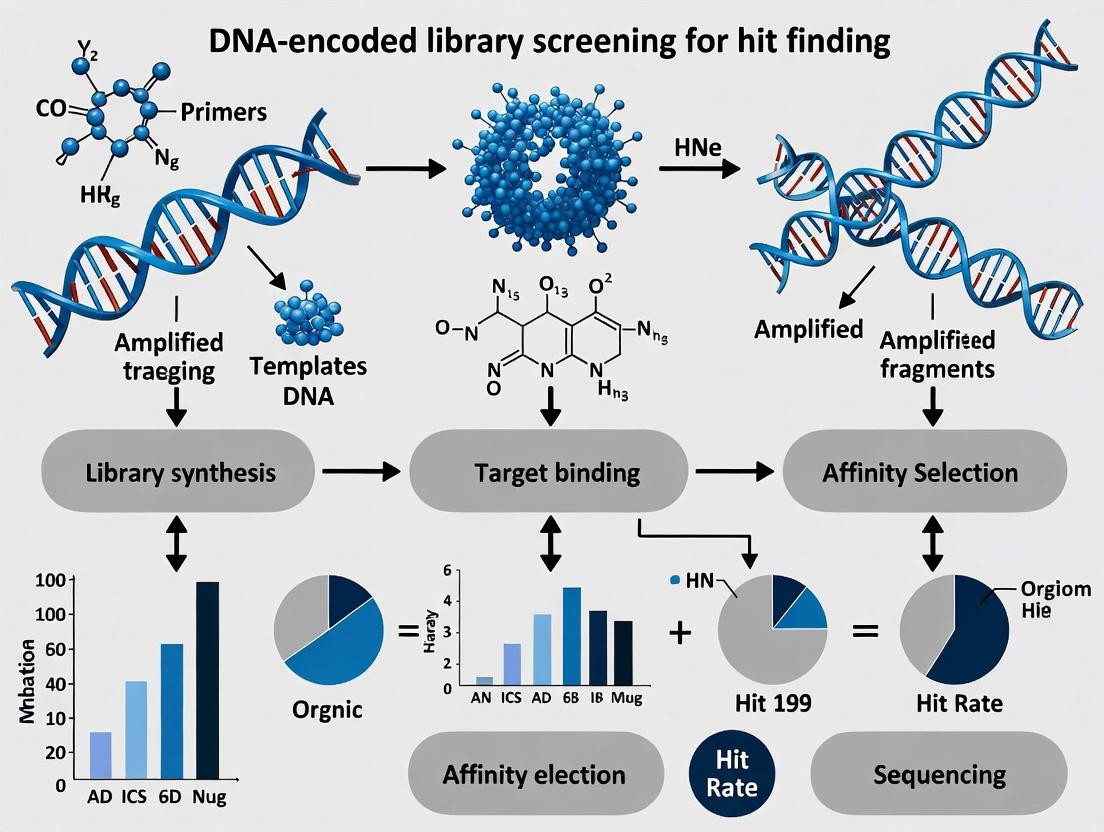
This article provides a detailed roadmap for drug discovery professionals on the implementation and application of DNA-Encoded Library (DEL) technology for hit finding.
Accelerating Drug Discovery: A Comprehensive Guide to DNA-Encoded Library (DEL) Screening for Hit Identification
Abstract
This article provides a detailed roadmap for drug discovery professionals on the implementation and application of DNA-Encoded Library (DEL) technology for hit finding. We first explore the foundational concepts and evolution of DELs, defining key advantages over traditional high-throughput screening (HTS). Next, we delve into the methodological workflow, from library design and synthesis to affinity-based selection and hit decoding. The guide then addresses common technical challenges and strategies for experimental optimization to enhance success rates. Finally, we examine validation protocols, compare DEL technology to other hit-finding methodologies, and showcase successful case studies. This holistic resource aims to empower researchers to effectively leverage DEL screening for faster and more cost-effective early drug discovery.
What are DNA-Encoded Libraries? The Foundational Guide to DEL Technology for Hit Discovery
Within the thesis context of DNA-encoded library screening for hit finding research, this document serves as a detailed application note. DEL technology has revolutionized early-stage drug discovery by enabling the ultra-high-throughput screening of vast chemical libraries (10^6 to 10^12 compounds) against purified protein targets. This protocol outlines the core concepts, workflows, and key applications.
Table 1: Key Quantitative Benchmarks in DEL Technology
| Parameter | Typical Range | Notes |
|---|---|---|
| Library Size | 10^6 to 10^12 unique compounds | Combinatorial synthesis allows for massive diversity. |
| Screening Quantity | 1 – 10 nmol of total library | Mass spectrometry quantitation is standard. |
| Selection Cycles | 2 – 5 rounds | Iterative enrichment of binders. |
| PCR Cycles (Decoding) | 15 – 25 cycles | Amplify recovered DNA tags for sequencing. |
| Hit Confirmation (Off-DNA IC50) | nM to μM range | Validated hits are re-synthesized without DNA tag. |
| Process Duration (Synthesis to Hit ID) | 4 – 12 weeks | Significantly faster than HTS campaigns. |
Table 2: Comparison of Library Encoding Strategies
| Encoding Method | DNA Record | Chemical Space | Synthesis Complexity |
|---|---|---|---|
| Split & Pool | Combinatorial (Record of each step) | Very Large (Billions) | High, requires meticulous logistics |
| Chemical Ligation | Direct conjugation to building block | Large (Millions) | Moderate |
| PCRable Linker | Photocleavable linker for amplification | Moderate | Lower, allows for PCR post-conjugation |
Detailed Protocol: DEL Selection and Hit Identification
Protocol 1: Affinity Selection against a Purified Protein Target
Objective: To enrich DNA-tagged small molecules that bind to a target protein from a complex DEL mixture.
Materials & Reagents: See "The Scientist's Toolkit" section.
Procedure:
- Immobilization: Immobilize 100-500 pmol of purified, biotinylated target protein on streptavidin-coated magnetic beads in 1x Selection Buffer (PBS + 0.05% Tween-20 + 1 mg/mL BSA) for 30 minutes at 4°C with gentle rotation.
- Blocking: Wash beads twice with 1 mL of selection buffer. Resuspend in 500 μL of selection buffer containing 1 mM DTT and 100 μM cAMP (or other relevant small molecules) to block non-specific binding sites. Incubate for 15 minutes at room temperature.
- Library Incubation: Dilute the DEL (typically 1-10 nmol total in DMSO) into 1 mL of selection buffer. Add the diluted library to the blocked protein-bead complex. Incubate for 1-2 hours at room temperature with rotation.
- Stringency Washes: Pellet beads using a magnetic rack. Perform a series of 5-8 washes with 1 mL of ice-cold selection buffer. For increased stringency, a final wash with 1 mL of PBS (no detergent) can be performed.
- Elution: Elute bound library members by one of two methods:
- Heat Denaturation: Resuspend beads in 100 μL of PCR-grade water. Heat at 95°C for 10 minutes. Quickly place on magnet and transfer supernatant.
- Proteinase K Digest: Resuspend beads in 100 μL of buffer containing 0.5% SDS and 1 mg/mL Proteinase K. Incubate at 56°C for 30 minutes.
- DNA Recovery: Purify the eluate containing the DNA tags using a standard silica-column PCR purification kit. Elute in 30 μL of EB buffer or PCR-grade water.
- PCR Amplification & Sequencing: Amplify the recovered DNA tags using a high-fidelity polymerase for 15-25 cycles with primers containing Illumina sequencing adapters. Purify the PCR product and submit for next-generation sequencing (NGS).
- Data Analysis: Process NGS reads to count the frequency of each unique DNA barcode sequence. Compounds with statistically significant enrichment over background/control selections are identified as putative hits.
Visualizations
Title: DEL Split and Pool Synthesis Workflow
Title: DEL Affinity Selection and Hit ID Process
The Scientist's Toolkit: Key Research Reagent Solutions
Table 3: Essential Materials for DEL Selection Experiments
| Item | Function & Description | Example/Vendor |
|---|---|---|
| Biotinylated Target Protein | Enables clean immobilization on streptavidin beads for selection. Requires native folding and activity. | Produced in-house or sourced from recombinant suppliers (e.g., Sino Biological). |
| Streptavidin Magnetic Beads | Solid support for capturing protein-ligand complexes. Enable efficient washing. | Dynabeads MyOne Streptavidin C1 (Thermo Fisher). |
| DEL Selection Buffer | PBS-based buffer with additives (BSA, detergent, DTT) to minimize non-specific binding of DNA tags. | Must be prepared fresh, often with 0.05% Tween-20 and 1 mg/mL BSA. |
| High-Fidelity PCR Kit | For minimal-bias amplification of minute amounts of recovered DNA tags prior to sequencing. | KAPA HiFi HotStart ReadyMix (Roche). |
| DNA Purification Kit | Silica-membrane columns for cleaning up eluted DNA tags and PCR products. | MinElute PCR Purification Kit (Qiagen). |
| Next-Generation Sequencer | Platform for ultra-deep sequencing of DNA barcodes to decode enriched compounds. | Illumina MiSeq or NextSeq. |
| DEL-Compatible Chemical Building Blocks | Monomers with orthogonal reactivity and a latent site for DNA conjugation (e.g., carboxylic acids, amines). | Commercially available from Enamine, WuXi LabNetwork, etc. |
| DNA Headpieces & Encoding Tags | Defined double-stranded DNA oligonucleotides containing unique barcode sequences for ligation. | Custom synthesized (IDT, Twist Bioscience). |
Application Notes on DEL Evolution and Screening
The journey of DNA-encoded libraries (DELs) from a conceptual framework to a cornerstone of modern drug discovery reflects a convergence of combinatorial chemistry, molecular biology, and high-throughput sequencing.
Key Historical Milestones in DEL Technology
The development of DELs is characterized by pivotal innovations that transformed theoretical possibilities into practical screening platforms.
Table 1: Milestones in DEL Evolution
| Year | Milestone | Key Contributor(s) | Significance |
|---|---|---|---|
| 1992 | Conceptual Proposal | Brenner & Lerner | Proposed encoding synthetic molecules with DNA tags. |
| 2004 | First Practical Demonstration | Neri Group & Others | Reported synthesis and screening of a peptide-based DEL. |
| 2009 | Early Small-Molecule DELs | GSK, Praecis | Demonstrated hit discovery against protein targets. |
| 2012 | Advent of NGS for DECoding | Multiple Groups | Adoption of Next-Gen Sequencing revolutionized data analysis. |
| 2015-Present | Industrial Mainstream Adoption | X-Chem, DyNAbind, Ensemble, GSK, Novartis | Platform maturation, diverse chemistry, high-throughput workflows. |
| 2020-Present | Advanced Modalities & AI Integration | Vipergen, DeepDELVE | DELs for PROTACs, covalent inhibitors, machine learning-guided design. |
Quantitative Impact on Hit Finding
The mainstream adoption of DELs is underscored by its quantitative advantages in screening efficiency and library scale.
Table 2: Quantitative Comparison of DEL Screening vs. Traditional HTS
| Parameter | Traditional HTS | DNA-Encoded Library Screening | Advantage Factor |
|---|---|---|---|
| Library Size | 10^5 – 10^6 compounds | 10^8 – 10^11 compounds | 10^3 – 10^6 |
| Material Consumption | ~nmol-µmol per compound | ~fmol-pmol per compound | ~10^6 reduction |
| Screening Speed (Per Target) | Weeks to months | Days to weeks | ~2-5x faster |
| Typical Hit Rate | 0.001 – 0.01% | 0.01 – 0.1% | ~10x higher |
| Re-synthesis & Validation | Required for all actives | Required only for decoded hits | Drastic reduction in early resource use |
Current Application Landscape
Modern DEL applications extend beyond simple soluble target binding assays.
- Target Classes: Soluble proteins (kinases, proteases), membrane proteins (GPCRs, ion channels), protein-protein interactions, nucleic acids.
- Screening Modalities: Affinity selection, immobilized target, cell-based selections, tissue homogenates.
- Hit-to-Lead: DEL hits routinely provide validated chemical starting points with measurable affinity (µM to nM range).
Detailed Protocols for Key DEL Experiments
Protocol: Affinity Selection Screening with a DNA-Encoded Library
Objective: To identify library members binding to a purified, immobilized protein target.
Key Research Reagent Solutions:
| Item | Function |
|---|---|
| Biotinylated Target Protein | Enables immobilization on streptavidin-coated solid support. |
| Streptavidin Magnetic Beads | Solid phase for capturing the protein-ligand complex. |
| DEL in Selection Buffer | Library typically in PBS + 0.05% Tween 20, 1-100 pM per compound. |
| Stringency Wash Buffers | Buffers with varying ionic strength or mild detergents to reduce non-specific binding. |
| Proteinase K Elution Buffer | Enzymatically cleaves the DNA tag from the bead for PCR amplification. |
| PCR Mix for NGS Prep | High-fidelity polymerase and primers to amplify the encoding DNA tags. |
| NGS Library Prep Kit | Commercial kit (e.g., Illumina) to prepare amplicons for sequencing. |
Methodology:
- Target Immobilization: Incubate biotinylated target protein (100-500 nM) with pre-washed streptavidin magnetic beads for 30 min at 4°C. Block beads with 1% BSA and sonicated salmon sperm DNA.
- Equilibration: Wash beads 3x with selection buffer.
- Library Incubation: Resuspend beads in selection buffer containing the DEL (typical final library concentration 1-10 nM total DNA). Incubate with gentle rotation for 1-16 hours at 4-25°C.
- Stringency Washes: Pellet beads and perform a series of washes (e.g., 5-10x) with cold selection buffer. Optional: include washes with buffer containing 0.1-0.5 M NaCl or 0.01% SDS for challenging targets.
- Elution of Bound Ligands: Two methods:
- Direct PCR: Resuspend beads in PCR mix and amplify directly.
- Enzymatic Elution: Resuspend beads in buffer with Proteinase K (0.2 mg/mL), incubate at 55°C for 1-2 hours to release DNA tags. Purify supernatant (PCR clean-up kit) before PCR.
- PCR Amplification: Perform limited-cycle (10-20 cycles) PCR to amplify the eluted DNA codes.
- NGS Library Preparation & Sequencing: Prepare the PCR product for NGS per kit instructions. Sequence on an Illumina MiSeq or NextSeq system to obtain 1-10 million reads per selection.
- Data Analysis: Use proprietary or open-source software to count sequence reads, compare to a control selection (no target or denatured target), and calculate enrichment factors to identify hits.
Protocol: Hit Validation via Off-DNA Resynthesis and Binding Assay
Objective: To confirm the binding activity of a DEL-derived chemical structure synthesized without its DNA tag.
Key Research Reagent Solutions:
| Item | Function |
|---|---|
| Hit Structure & Building Blocks | For chemical resynthesis via standard organic chemistry. |
| Biotinylated Target Protein | For immobilization in validation assays. |
| Streptavidin Sensor Chip (SPR) or Streptavidin-Coated Plates (ELISA) | For quantitative binding analysis. |
| Reference Compound | Known binder/inhibitor for assay control. |
Methodology:
- Off-DNA Synthesis: Chemically synthesize the proposed hit compound using standard solid-phase or solution-phase chemistry, based on the decoded structure.
- Validation Assay Setup (e.g., SPR): a. Immobilize biotinylated target on a streptavidin sensor chip. b. Prepare a dilution series of the off-DNA hit compound (e.g., 0.1 nM – 100 µM). c. Flow compounds over the chip surface in running buffer. Include a DMSO control and reference compound. d. Monitor association and dissociation in real-time.
- Data Analysis: Fit sensorgrams to a binding model (e.g., 1:1 Langmuir) to determine the equilibrium dissociation constant (KD) or inhibition constant (Ki).
- Counter-Screens: Test compound against unrelated proteins to assess specificity.
Visualizations
Title: DEL Affinity Selection and Screening Workflow
Title: Key Phases in the Evolution of DEL Technology
Title: From DEL Sequence to Validated Chemical Hit
This document provides detailed application notes and protocols for the core components of DNA-encoded library (DEL) technology, a transformative platform in hit-finding research for drug discovery. The central thesis frames DELs as a synergy of three interdependent elements: diverse chemical building blocks, unique DNA tags, and robust encoding strategies. Together, they enable the synthesis and screening of libraries containing billions to trillions of compounds, vastly exceeding the capacity of traditional high-throughput screening (HTS).
Application Notes & Protocols
Chemical Building Blocks
Function: Provide the structural diversity and pharmacophoric elements of the library. They are the small molecule moieties that form the putative drug-like compounds.
Core Considerations:
- Chemical Compatibility: Must withstand aqueous buffer conditions, enzymatic ligation steps, and PCR amplification.
- Reactive Functionality: Equipped with orthogonal chemical handles (e.g., amines, carboxylic acids, alkynes, azides) for stepwise conjugation to DNA.
- Drug-like Properties: Ideally follow rule-of-five guidelines to increase the likelihood of identifying leads with favorable ADMET profiles.
Protocol 1.1: Qualification of a New Chemical Building Block for DEL Synthesis
Objective: To validate the compatibility of a novel building block with standard DEL synthesis and encoding workflows.
Materials:
- Candidate building block (e.g., carboxylic acid, amine).
- DNA headpiece (HP) with complementary functional group (e.g., amine-modified for carboxylic acid coupling).
- Coupling reagents (e.g., EDC/sulfo-NHS for amide bond formation).
- Desalting spin columns (e.g., Illustra NAP-5, Sephadex G-25).
- Analytical HPLC with C18 column.
- LC-MS system.
Procedure:
- Conjugation Reaction: In a 1.5 mL microcentrifuge tube, combine:
- DNA Headpiece (HP, 100 µM): 10 µL
- Building Block (0.1 M in DMSO): 5 µL
- Coupling Buffer (0.1 M MES, pH 6.0): 30 µL
- EDC (0.1 M in H₂O): 5 µL
- Sulfo-NHS (0.1 M in H₂O): 5 µL
- Nuclease-free H₂O to 100 µL.
- Incubate at 25°C for 2 hours with gentle shaking.
Purification: Purify the reaction mixture using a desalting spin column according to the manufacturer's protocol to remove excess reagents and DMSO. Elute with nuclease-free water.
Analysis: Analyze 5 µL of the purified product by LC-MS.
- Expected Outcome: A clear mass shift corresponding to the addition of the building block to the DNA headpiece, with minimal signal from the unmodified starting material.
PCR Test: Subject 1 µL of the purified conjugate (diluted to ~10 nM) to a 20-cycle PCR using primers flanking the constant regions of the HP.
- Expected Outcome: Efficient amplification (>80% yield by gel electrophoresis) comparable to a control unmodified HP, indicating the conjugate does not inhibit polymerase activity.
Qualification Table for Building Blocks:
| Parameter | Acceptance Criterion | Typical Value (Example) |
|---|---|---|
| Coupling Efficiency (by LC-MS) | >90% conversion | 95% |
| PCR Amplifiability | >80% yield vs. control | 85% |
| Aqueous Solubility (of conjugate) | >100 µM | 500 µM |
| Purity (Post-Purification) | >90% by HPLC (A260) | 95% |
DNA Tags
Function: Serve as unique, amplifiable barcodes that record the synthetic history of each compound. They enable the deconvolution of screening hits via high-throughput sequencing.
Core Considerations:
- Sequence Design: Must avoid secondary structure formation, homopolymers, and cross-hybridization.
- Chemical Modification: Includes a terminal primary amine or other linker for chemical conjugation.
- Stereochemical Purity: Must be synthesized with high fidelity to prevent tag ambiguity.
Protocol 1.2: Preparation and QC of Double-Stranded DNA Tags for Encoding
Objective: To generate ready-to-use double-stranded DNA tags from single-stranded oligonucleotide precursors.
Materials:
- Single-stranded DNA (ssDNA) Tag Oligo (100 µM in TE buffer).
- Complementary Primer (100 µM in TE buffer).
- Thermocycler.
- T4 Polynucleotide Kinase (PNK) and 10x Buffer.
- ATP (10 mM).
- Desalting spin columns.
Procedure:
- Phosphorylation: In a PCR tube, combine:
- ssDNA Tag Oligo: 10 µL (1 nmol)
- 10x PNK Buffer: 2 µL
- ATP (10 mM): 2 µL
- T4 PNK: 1 µL (10 U)
- Nuclease-free H₂O: 5 µL
- Incubate at 37°C for 30 min, then 65°C for 20 min to inactivate the enzyme.
Annealing: Add 10 µL of the complementary primer (100 µM) directly to the phosphorylated oligo mix. Incubate in a thermocycler using the following program:
- 95°C for 2 min.
- Ramp down to 25°C at a rate of 0.1°C/sec.
- Hold at 4°C.
Purification: Purify the double-stranded DNA (dsDNA) product using a desalting column. Elute in 50 µL nuclease-free water. Quantify by absorbance at 260 nm.
Encoding Strategies
Function: Defines the methodology by which chemical reactions are recorded onto the DNA tag. It is the logical framework linking chemistry to genetics.
Comparison of Major Encoding Strategies:
| Strategy | Principle | Chemistry Recorded | Pros | Cons |
|---|---|---|---|---|
| Split & Pool (SBS) | Physical splitting of beads/compounds for separate reactions, followed by pooling. | Linear, step-by-step. | Immense library size (10^9-10^12). Efficient use of building blocks. | Requires stringent reaction control. |
| DNA-Templated (DTL) | Proximity-induced reaction between building blocks co-localized on complementary DNA strands. | Proximity-driven, can be non-linear. | Enables challenging reactions in water. | Library size limited by template design (~10^6). |
| Chemical Ligation | Direct chemical modification/extension of the DNA tag itself (e.g., phosphorothioate alkylation). | Direct tag modification. | Simple, robust. | Limited coding density and chemical versatility. |
Protocol 1.3: Performing a Single Cycle of "Split & Pool" Encoding
Objective: To attach a specific chemical building block and its corresponding DNA barcode to a growing compound-DNA conjugate in one synthesis cycle.
Materials:
- Starting compound-DNA conjugates (on solid support or in solution).
- Set of N chemical building blocks (BB1...BBN).
- Set of N corresponding dsDNA Tags (T1...TN).
- Ligation reagents (e.g., T4 DNA Ligase and buffer) or chemical coupling reagents.
- Multi-well plates or reaction vessels.
- Centrifugal filters (for solution-phase).
Procedure:
- Split: Aliquot an equal volume/mass of the starting compound-DNA conjugate into N separate reaction vessels.
- React & Encode: To each vessel i:
- Add Building Block i and necessary reagents for the planned chemical reaction (e.g., amide coupling). Incubate to complete the reaction.
- Purify the intermediate (e.g., wash beads, use centrifugal filters).
- Add the corresponding dsDNA Tag i and DNA ligase (or chemical ligation reagents) to attach the barcode. Incubate.
- Purify to remove excess tag and reagents.
- Pool: Combine all N reaction vessels into one single pool. This pool now contains a mixture of compounds, each uniquely encoded for the building block added in this cycle.
- QC: Sample a small aliquot (~1%) from the pool. Amplify the DNA tags via PCR and sequence to verify equal representation and fidelity of all N tags.
Diagram 1: DEL Construction & Screening Workflow
Diagram 2: DNA Tag Structure & Encoding
The Scientist's Toolkit: Essential Research Reagent Solutions
| Item | Supplier Examples | Function in DEL |
|---|---|---|
| Modified DNA Headpieces | Metabion, IDT, Biosearch Tech | Initiates library synthesis; contains first chemical linker and constant PCR primer regions. |
| Building Block Kits | Enamine, ChemBridge, Sigma-Aldrich | Pre-curated sets of diverse, DEL-compatible molecules with orthogonal reactive groups. |
| T4 DNA Ligase (High-Concentration) | New England Biolabs, Thermo Fisher | Efficiently ligates dsDNA barcodes to growing DNA strands during encoding. |
| Magnetic Streptavidin Beads | Dynabeads (Thermo Fisher) | For target immobilization during affinity selection and for solid-phase synthesis/purification. |
| Next-Gen Sequencing Kit | Illumina (MiSeq), Oxford Nanopore | Decodes the identity of enriched compounds from selection outputs via massive parallel sequencing. |
| Desalting Spin Columns | Illustra (Cytiva), Zeba (Thermo Fisher) | Rapid buffer exchange and purification of DNA-conjugate intermediates away from salts and small molecules. |
Application Notes: Integrating DNA-Encoded Library (DEL) Screening into the Hit-Finding Workflow
DNA-encoded library (DEL) screening is a transformative technology in early-stage drug discovery, enabling the ultra-high-throughput interrogation of chemical space against purified protein targets. Its primary application is the rapid identification of novel, small-molecule "hits" that bind to a target of interest, which are then evolved into "leads" for further optimization. Within the thesis context of advancing hit-finding research, DEL bridges the gap between target validation and lead generation by providing a rich source of structurally diverse starting points with associated binding data.
The core advantage lies in the library's structure: each unique small molecule is covalently tagged with a DNA barcode that records its synthetic history. This allows millions to billions of compounds to be pooled and screened simultaneously in a single tube via an affinity-based selection process. Hits are identified by sequencing the DNA barcodes of compounds that remain bound to the immobilized target after stringent washing. The quantitative data derived from sequence count enrichment allows for preliminary structure-activity relationship (SAR) analysis even at the hit identification stage.
Table 1: Representative DEL Screening Output Metrics for a Model Protein Target (Kinase)
| Metric | Typical Result Range | Interpretation |
|---|---|---|
| Library Size Screened | 1 Billion - 10 Billion Compounds | Scale of chemical diversity interrogated. |
| Number of Selection Cycles | 3-5 Rounds | Balances signal-to-noise and identifies high-affinity binders. |
| Initial Hit Clusters (from sequencing) | 50 - 500 | Unique chemical scaffolds showing enrichment. |
| Confirmed Hits (Off-DNA resynthesis & validation) | 5 - 50 Compounds | Compounds with verified binding/activity in biochemical assays. |
| Typical Hit Affinity (KD or IC50) | 1 nM - 10 µM | Range of binding strengths for initial hits. |
| Success Rate (Targets with confirmed hits) | ~70-80% (Literature estimate) | Demonstrates technology robustness for soluble proteins. |
Detailed Experimental Protocols
Protocol 1: Affinity Selection Screen with a DNA-Encoded Library Objective: To isolate DNA-encoded small molecules that bind to an immobilized protein target from a pooled library.
Materials:
- Purified, biotinylated target protein.
- Pooled DNA-encoded chemical library (e.g., 1-10 billion compounds).
- Streptavidin-coated magnetic beads.
- Selection Buffer (e.g., PBS, 0.01% Tween-20, 1 mM DTT, 0.1% BSA).
- Wash Buffer (Selection Buffer without BSA).
- Elution Buffer (e.g., 6 M Guanidine HCl, 20 mM EDTA, pH 8.0).
- PCR reagents and primers for barcode amplification.
- Thermal cycler, magnetic rack, thermomixer.
Procedure:
- Target Immobilization: Incubate biotinylated target protein (100-500 nM) with streptavidin magnetic beads (100 µL slurry) in Selection Buffer for 30 minutes at 4°C. Use a negative control (beads only or irrelevant protein).
- Equilibration: Wash beads 3x with 500 µL Selection Buffer.
- Library Incubation: Resuspend the prepared beads in 200 µL Selection Buffer. Add the pooled DEL library (final compound concentration ~1-10 nM per compound). Incubate with gentle rotation for 1-16 hours at 4-25°C.
- Stringent Washes: Pellet beads on a magnetic rack. Carefully remove supernatant. Wash beads 5-8x with 500 µL cold Wash Buffer (incubate 1-2 minutes per wash). Transfer beads to a new tube after the 2nd wash to reduce non-specific carryover.
- Elution: Resuspend beads in 100 µL Elution Buffer. Incubate at 95°C for 15 minutes to denature the protein and release bound DNA-encoded compounds. Separate supernatant containing eluted DNA tags.
- DNA Recovery & Amplification: Purify the eluted DNA using a standard silica-membrane kit. Amplify the barcode region via PCR (10-15 cycles) using primers compatible with the subsequent sequencing platform (e.g., Illumina).
- Sequencing & Analysis: Perform high-throughput sequencing. Analyze read counts to identify significantly enriched barcodes compared to control selections. Cluster enriched barcodes to identify hit compound structures.
Protocol 2: Off-DNA Hit Resynthesis and Biochemical Validation Objective: To chemically synthesize the small-molecule hit without the DNA tag and confirm its activity.
Materials:
- Hit compound structure from DEL data.
- Standard organic synthesis reagents and equipment.
- Purified target protein for biochemical assay (e.g., kinase).
- Assay reagents (e.g., substrate, ATP, detection system).
- Microplate reader.
Procedure:
- Design & Synthesis: Based on the decoded structure, design a synthetic route for the free small molecule, including any necessary solubility-enhancing groups (e.g., carboxylic acid) to replace the DNA-attachment linker. Synthesize and purify the compound (>95% purity, confirmed by LC-MS and NMR).
- Dose-Response Biochemical Assay: In a 96-well plate, titrate the synthesized compound (e.g., 10 µM to 0.1 nM, 3-fold serial dilution in duplicate) against the target protein in assay buffer. Initiate the reaction with substrate/cofactor. For a kinase, measure phosphorylation output via a coupled detection system (e.g., ADP-Glo, fluorescence).
- Data Analysis: Plot reaction velocity vs. compound concentration. Fit the data to a four-parameter logistic equation to determine the half-maximal inhibitory concentration (IC50). Compare to the negative control (DMSO only) and a known inhibitor positive control.
- Secondary Validation: Perform orthogonal assays such as Surface Plasmon Resonance (SPR) or Thermal Shift Assay (TSA) to confirm direct binding and measure affinity (KD).
Signaling Pathways and Workflow Visualizations
DEL Hit Finding Workflow Overview
Mechanism: Inhibitor Binding Blocks Catalysis
The Scientist's Toolkit: Key Research Reagent Solutions
Table 2: Essential Materials for DEL Screening & Validation
| Item | Function & Rationale |
|---|---|
| Biotinylated Target Protein | Enables specific, reversible immobilization on streptavidin beads, crucial for performing stringent washes to remove non-binders. |
| Streptavidin Magnetic Beads | Solid support for target presentation. Magnetic separation allows for efficient, automatable liquid handling during washing steps. |
| DEL Selection Buffers (with BSA/Tween) | Reduces non-specific library binding to beads or target. Maintains protein stability and native conformation during incubation. |
| High-Fidelity PCR Kit | For minimal-bias amplification of eluted DNA barcodes prior to sequencing. Critical for maintaining quantitative representation of hits. |
| NGS Library Prep Kit | Prepares the PCR-amplified barcode pool for sequencing on platforms like Illumina, adding required adapters and indexes. |
| Off-DNA Hit Synthesis Reagents | Standard building blocks and catalysts for synthesizing the validated hit structure without the DNA tag for functional testing. |
| Biochemical Assay Kit (e.g., Kinase-Glo) | Provides a homogeneous, sensitive method to quantify target enzyme activity and determine inhibitor potency (IC50). |
| Surface Plasmon Resonance (SPR) Chip | For orthogonal, label-free confirmation of direct binding and measurement of binding kinetics (kon, koff, KD). |
The DEL Screening Workflow: Step-by-Step Methodology from Library to Hit
The initial step of library construction is the most critical determinant of success in DNA-encoded library (DEL) technology for hit finding in drug discovery. This phase integrates split-and-pool combinatorial synthesis with rigorously optimized DNA-compatible reactions to generate vast libraries (10^6 to 10^11 unique compounds) tethered to unique DNA barcodes. The quality, diversity, and chemical space covered in this step directly impact the probability of identifying high-affinity binders against biological targets in subsequent screening campaigns.
Application Notes: Core Principles and Recent Advances
Foundational Principles of Split-and-Pool Synthesis for DELs
The split-and-pool methodology enables exponential library growth with linear synthetic effort. Each chemical building block addition is encoded by ligation of a corresponding DNA oligonucleotide tag, creating a record of the synthetic history.
Evolution of DNA-Compatible Reaction Toolkits
A major research focus is expanding the repertoire of chemical transformations that can proceed under aqueous, mild conditions without damaging the DNA oligonucleotide. Key advances include:
- Improved Cross-Coupling Reactions: Development of palladium and photoredox/nickel dual catalysis systems for C–N, C–O, and C–C bond formations.
- On-DNA Bioconjugation: Robust methods for amide coupling, reductive amination, and click chemistry (e.g., SPAAC, inverse-electron demand Diels-Alder).
- Recent Novel Methodologies: DNA-templated synthesis, redox-neutral reactions, and enzymatic transformations are pushing boundaries.
Table 1: Comparison of Key DNA-Compatible Reaction Classes
| Reaction Class | Representative Transformation | Typical Yield Range* (2023-2024) | Key Considerations for DEL Synthesis |
|---|---|---|---|
| Nucleophilic Substitution | SNAr, Amine Alkylation | 70-95% | High yielding, robust; limited by electrophile reactivity with DNA. |
| Amide Coupling | Carbodiimide (EDC), Activator-Based | 80-98% | Workhorse reaction; requires careful coupling agent selection to minimize DNA degradation. |
| Reductive Amination | Aldehyde + Amine + NaBH3CN | 60-90% | Excellent for diversity; substrate-dependent yields; borate side-products must be removed. |
| Click Chemistry | Copper-Catalyzed Azide-Alkyne (CuAAC) | 85-99% | Extremely reliable; requires copper scavenging post-reaction. |
| Cross-Coupling | Suzuki-Miyaura, Buchwald-Hartwig | 40-85% | Expanding chemical space; catalyst and ligand screening is crucial for each new substrate type. |
| Photoredox/Nickel Dual Catalysis | C-N, C-O Cross-Coupling | 50-80% | Emerging, powerful method for aryl couplings; requires specialized equipment. |
*Yields are generalized from recent literature and can vary significantly with specific substrates.
Detailed Experimental Protocols
Protocol 3.1: Standard Split-and-Pool Cycle for Triazine Library Synthesis
Objective: To add a diversity element (amine) to a dichlorotriazine core and encode the step via DNA ligation.
Materials:
- Starting Material: DNA-headpiece conjugated dichlorotriazine (HP-Triazine-Cl2).
- Reagents: 20+ amine building blocks (100 mM stock in DMSO/H2O), 1M HEPES buffer (pH 8.5), 10% SDS.
- Encoding: T4 DNA Ligase, T4 Polynucleotide Kinase, ATP, DTT, unique dsDNA linker for each amine.
Procedure:
- Split: Distribute equal aliquots of HP-Triazine-Cl2 solution into 20+ separate reaction vessels.
- React: To each vessel, add a unique amine building block (final conc. 50 mM) and HEPES buffer (final 100 mM). Incubate at 37°C for 16 hours.
- Quench & Pool: Add 10% SDS to each reaction to 0.1% final concentration. Combine all reactions into a single tube.
- Desalt: Purify the pooled mixture via size-exclusion chromatography (e.g., NAP-10 column) or ethanol precipitation. Lyophilize.
- Encode: Redissolve the pooled compound-DNA conjugates in ligation buffer. For each amine used in Step 2, add its unique dsDNA linker encoding that identity. Add T4 DNA Ligase and ATP. Incubate at 25°C for 2 hours.
- Purify: Purify the ligated product via HPLC or solid-phase extraction to remove excess linkers and enzyme. The library is now ready for the next split-and-pool cycle.
Protocol 3.2: DNA-Compatible Suzuki-Miyaura Cross-Coupling
Objective: To form a biaryl bond on a DNA-conjugated aryl halide.
Materials:
- Substrate: DNA-conjugated aryl bromide (e.g., HP-Ar-Br).
- Reagents: Arylboronic acid (200 mM in DMSO), Pd catalyst (e.g., Pd(XPhos)Cl2, 50 mM in DMSO), K2CO3 (1M in water).
- Quenching: Tris(3-hydroxypropyl)phosphine (THPP, 500 mM) or DMTL resin.
Procedure:
- Reaction Setup: In a low-binding tube, mix HP-Ar-Br, arylboronic acid (10 eq), Pd catalyst (0.2 eq), and K2CO3 (50 eq) in a final ratio of 5:4:1 (Water:DMSO:Base Soln) to achieve final substrate concentration of ~10 µM.
- Incubation: Seal the tube and heat at 60°C for 12-16 hours with gentle shaking.
- Catalyst Scavenging: Cool to RT. Add THPP (final 50 mM) or DMTL resin slurry. Incubate at 37°C for 2 hours to sequester palladium.
- Purification: Desalt the reaction mixture using a size-exclusion column pre-equilibrated with 0.1% SDS solution, followed by ethanol precipitation.
- Analysis: Confirm coupling and DNA integrity by analytical HPLC and PCR amplification/sequencing of the barcode region.
Visualizations
Diagram 1: Core Split-Pool-Encode Cycle for DEL Synthesis
Diagram 2: DNA-Compatible Suzuki-Miyaura Reaction & QC Workflow
The Scientist's Toolkit: Key Research Reagent Solutions
Table 2: Essential Materials for DEL Synthesis & Encoding
| Item | Function in DEL Synthesis | Key Considerations |
|---|---|---|
| DNA Headpiece (HP) | Double-stranded DNA initiating conjugate; contains primer sites for PCR and initial encoding site. | Must be highly pure, QC'd by MS; sequence determines compatibility with encoding ligases. |
| Building Block Library | Collections of commercially available or synthesized small molecules (amines, acids, boronic acids, etc.). | Solubility in aqueous/organic mix is paramount. Pre-screened for DNA reactivity. |
| Encoding Oligonucleotides | Unique double-stranded DNA tags for each building block, encoding its chemical identity. | Designed with non-complementary overhangs for specific, ordered ligation. Must be nuclease-free. |
| T4 DNA Ligase | Enzyme that ligates encoding dsDNA tags to the growing DNA strand on the conjugate. | High-concentration, high-fidelity formulations are essential for efficient, error-free encoding. |
| Palladium Catalysts (e.g., XPhos Pd G3) | Enables cross-coupling reactions (Suzuki, Buchwald-Hartwig) on-DNA. | Ligand choice is critical for activity and minimizing DNA degradation. Requires rigorous scavenging post-reaction. |
| Scavenging Resins (DMTL, THPP) | Removes residual metal catalysts and other small-molecule reagents after reaction. | Essential for maintaining DNA integrity for PCR amplification in later stages. |
| Size-Exclusion Columns (e.g., NAP-10) | Rapid buffer exchange and desalting of DNA-conjugate reactions. | Fast, recoverable method to remove salts, SDS, and small molecules without losing conjugate. |
| HEPES Buffer (pH 8.5) | Primary reaction buffer for many on-DNA reactions (e.g., SNAr, amination). | Maintains optimal pH for both chemical reaction and DNA stability. Preferable over phosphate buffers. |
Within DNA-encoded library (DEL) screening for hit finding, the preparation and presentation of the biological target are critical determinants of success. A well-characterized and stably immobilized target enables the efficient selection of high-affinity binders from vast combinatorial libraries. This application note details current strategies for target purification, bioconjugation, and immobilization, with a focus on maintaining structural integrity and activity throughout the selection process.
Key Considerations for Target Selection and Validation
| Consideration | Description | Quantitative Metrics |
|---|---|---|
| Purity | Degree of homogeneity, free from contaminants that can cause non-specific binding. | >90% by SDS-PAGE; SEC-MALS polydispersity < 1.2. |
| Activity/Integrity | Functional competence and correct folding of the target protein. | Enzymatic kcat/KM within 2-fold of literature; SPR/BLI binding to known ligand. |
| Stability | Ability to withstand buffer conditions and handling during selection (often 24-72 hrs at RT or 4°C). | <20% degradation/aggregation after 72h in selection buffer by SEC or DLS. |
| Concentration | Sufficient target density for effective library capture. | Typical immobilization density: 50-500 pmol of target per mg of solid support. |
| Tag Availability | Presence of a compatible tag (e.g., His, Avi, SNAP) for oriented, covalent immobilization. | High labeling efficiency (>80%) for site-specific tags. |
Immobilization Strategy Comparison
| Strategy | Principle | Pros | Cons | Typical Support |
|---|---|---|---|---|
| Streptavidin-Biotin | High-affinity (KD ~10-15 M) non-covalent capture of biotinylated targets. | Extremely stable; oriented capture; gentle elution possible. | Requires biotinylation; potential for non-specific streptavidin binding. | Streptavidin-coated magnetic beads, agarose. |
| His-Tag/Ni-NTA | Coordination chemistry between polyhistidine tag and immobilized Ni2+ ions. | Simple, widely used; high capacity. | Metal ion leakage; non-specific binding to metal matrix; lower affinity. | Ni-NTA magnetic or agarose beads. |
| Covalent Covalent (amine) | Reaction between surface NHS esters and primary amines (lysines) on the target. | Permanent immobilization; high density. | Random orientation; potential to modify active site. | NHS-activated magnetic beads, agarose. |
| Covalent & Oriented (SNAP/CLIP/Halo) | Enzyme-mediated ligation of a tagged protein to a benzylguanine- or chloroalkane-coated surface. | Site-specific, oriented capture; preserves activity. | Requires genetic fusion and specialized reagents. | Benzylguanine- or HaloTag ligand-coated beads. |
| Passive Adsorption | Non-specific hydrophobic/ionic interaction with plastic or silica. | Simple, no modification needed. | Uncontrolled orientation; denaturation risk; high non-specific binding. | Polystyrene plates, magnetic silica beads. |
Detailed Protocols
Protocol 4.1: Site-Specific Biotinylation and Streptavidin Bead Immobilization
Objective: To immobilize a recombinantly expressed AviTag-fused protein onto streptavidin-coated magnetic beads for DEL selection.
Materials: Purified AviTag-protein, BirA enzyme (commercial kit), streptavidin magnetic beads (e.g., Dynabeads M-280), selection buffer (e.g., PBS + 0.05% Tween-20 + 1 mg/mL BSA), magnetic rack.
Procedure:
- Biotinylation: Perform in vitro biotinylation using the BirA enzyme per manufacturer's instructions. Typical reaction: 50 µM protein, 5 µM BirA, 1 mM ATP, 1 mM MgCl2, 50 µM biotin, in appropriate buffer, 30°C for 1 hour.
- Clean-up: Desalt the reaction mixture into selection buffer using a Zeba spin desalting column (7K MWCO) to remove excess biotin and ATP.
- Bead Preparation: Wash 1 mg (approx. 50 µL slurry) of streptavidin magnetic beads 3x with 200 µL of selection buffer using a magnetic rack.
- Immobilization: Incubate the biotinylated protein (50-100 pmol) with the pre-washed beads in a final volume of 100 µL for 30 minutes at room temperature with gentle rotation.
- Washing: Separate beads, remove supernatant, and wash 3x with 200 µL of selection buffer. The target-immobilized beads are now ready for the DEL binding incubation.
Protocol 4.2: Covalent & Oriented Immobilization via SNAP-Tag
Objective: To covalently and site-specifically immobilize a SNAP-tagged protein onto benzylguanine (BG)-functionalized beads.
Materials: Purified SNAP-tag fusion protein, BG-coated magnetic agarose beads (commercially available), selection buffer, blocking buffer (selection buffer + 1-5% BSA), 1 mM BG quencher (e.g., BG-ORA).
Procedure:
- Bead Equilibration: Wash 50 µL of BG-bead slurry 3x with 200 µL of selection buffer.
- Blocking: Incubate beads with 200 µL of blocking buffer for 1 hour at 4°C to minimize non-specific binding. Wash 2x with selection buffer.
- Conjugation: Incubate the SNAP-tag protein (50-100 pmol) with the beads in 100 µL of selection buffer for 2 hours at 4°C with rotation.
- Quenching: Add BG-ORA to a final concentration of 1 mM and incubate for 15 minutes to block unreacted BG groups.
- Washing: Wash the beads thoroughly (5x with 200 µL of selection buffer). The covalently captured target is now ready for DEL screening.
Visualizations
Target Immobilization Strategy Decision Tree
DEL Selection Workflow Following Target Immobilization
The Scientist's Toolkit: Key Research Reagent Solutions
| Item | Function in Target Prep/Immobilization | Example Product/Type |
|---|---|---|
| Streptavidin Magnetic Beads | Solid support for high-affinity capture of biotinylated targets. Provides easy magnetic separation. | Dynabeads M-270 Streptavidin, Pierce Streptavidin Magnetic Beads. |
| BirA Biotinylation Kit | Enzymatic system for site-specific, in vitro biotinylation of AviTag-fused proteins. | BirA-500 Kit (Avidity), SiteClick Biotinylation Kit. |
| SNAP-Capture Magnetic Beads | Beads functionalized with benzylguanine for covalent, oriented capture of SNAP-tag fusion proteins. | SNAP-Capture Magnetic Beads (NEB). |
| Ni-NTA Magnetic Beads | For immobilization of His-tagged proteins via metal affinity. High binding capacity. | His Mag Sepharose (Cytiva), Ni-NTA Magnetic Agarose Beads (Qiagen). |
| NHS-Activated Beads | For random, covalent immobilization via target lysine residues. Creates a stable, dense surface. | NHS-Activated Magnetic Beads (Thermo Scientific). |
| Spin Desalting Columns | Rapid buffer exchange to remove excess salts, biotin, or labeling reagents post-modification. | Zeba Spin Desalting Columns, PD-10 Desalting Columns. |
| Size Exclusion Columns | For final target purification and removal of aggregates immediately prior to immobilization. | Superdex Increase columns (Cytiva). |
| BLI/SPR System | For validating target activity and quantifying immobilization density/activity pre-selection. | Octet BLI systems, Biacore SPR systems. |
Within the framework of DNA-encoded library (DEL) screening for hit finding in drug discovery, the affinity selection process is the critical step where putative binders to a protein target are physically isolated from a library of billions to trillions of unique compounds. This process leverages the covalent linkage between each small molecule and its unique DNA barcode. The core principle involves incubating the DEL with an immobilized target, removing non-binders through stringent washing, and subsequently eluting and identifying the DNA tags of bound molecules. This application note details the refined protocols for binding, washing, and elution that are essential for minimizing background and maximizing the identification of true hits.
Key Research Reagent Solutions
The following table lists essential materials and reagents used in a standard DEL affinity selection protocol.
| Item | Function in Protocol | Key Considerations |
|---|---|---|
| Immobilized Target Protein | The biological target of interest, typically biotinylated and captured on streptavidin beads or directly coupled to a solid support. | Maintains protein stability and activity during selection; minimizes non-specific binding to the solid phase. |
| DEL in Selection Buffer | The DNA-encoded library, resuspended in a binding buffer optimized for the target. | Buffer contains salts (e.g., PBS), carrier proteins (e.g., BSA), and detergents (e.g., Tween-20) to reduce non-specific interactions. |
| Streptavidin Magnetic Beads | A common solid support for capturing biotinylated targets. | Magnetic beads allow for rapid buffer exchange and minimal handling loss compared to resin columns. |
| Stringent Wash Buffers | Solutions used to remove non-specifically bound DEL members. | Typically contain increased salt concentration (e.g., 0.5M NaCl), detergents, and/or competitors (e.g., tRNA) to disrupt weak interactions. |
| Elution Buffer | Solution that dissociates bound DEL compounds from the target. | Can be denaturing (e.g., proteinase K, high temperature, urea) or non-denaturing (e.g., soluble competitor, pH shift). |
| PCR Reagents (qPCR mix) | For quantifying recovered DNA post-elution. | Used to assess selection yield and to amplify DNA for sequencing. |
| Neutralization Buffer | Stabilizes eluted DNA post-denaturing elution. | Protects DNA barcodes from damage prior to PCR amplification. |
Detailed Experimental Protocols
Protocol A: Standard Binding, Washing, and Denaturing Elution
Objective: To isolate target-specific binders from a DEL using a biotinylated protein and denaturing elution.
Materials: Biotinylated target protein, Streptavidin-coated magnetic beads, DEL stock, Binding Buffer (1X PBS, 0.05% Tween-20, 1 mM EDTA, 0.1 mg/mL BSA, 0.1 mg/mL sheared salmon sperm DNA), Wash Buffer 1 (Binding Buffer with 0.5 M NaCl), Wash Buffer 2 (10 mM Tris-HCl, pH 8.0), Elution Buffer (10 mM Tris-HCl, pH 8.0, 1% SDS, 10 mM EDTA), 95°C heat block, magnetic rack.
Methodology:
- Target Immobilization: Incubate biotinylated target (50-500 nM) with pre-washed streptavidin magnetic beads (100 μL slurry) in Binding Buffer (500 μL total) for 30 min at 4°C with gentle rotation. Use a no-target control (beads only) in parallel.
- Bead Washing: Separate beads on a magnetic rack. Remove supernatant. Wash beads twice with 500 μL of Binding Buffer.
- DEL Incubation (Binding): Resuspend the target-bound beads in 200 μL of Binding Buffer. Add DEL (1-100 pmol in DNA concentration). Incubate for 1-2 hours at 4°C or room temperature with rotation.
- Stringent Washes: Separate beads. Remove supernatant (this contains unbound DEL). Perform a series of washes:
- Wash 3x with 500 μL of cold Wash Buffer 1 (high salt).
- Wash 3x with 500 μL of cold Binding Buffer (standard stringency).
- Wash 1x with 500 μL of cold Wash Buffer 2 (low salt/no detergent).
- Denaturing Elution: Resuspend beads in 100 μL of Elution Buffer. Incubate at 95°C for 15 minutes to denature the protein and release bound DNA-molecule conjugates.
- Recovery: Immediately place tube on magnetic rack and transfer the eluate (containing DNA) to a fresh tube. The eluted DNA is now ready for purification and PCR amplification for sequencing.
Protocol B: Competitive Elution for Binder Characterization
Objective: To elute binders using a known high-affinity ligand, providing evidence of specific binding to the active site.
Materials: Materials as in Protocol A through step 4. Competitive Elution Buffer (Binding Buffer with 1-100 μM high-affinity ligand).
Methodology:
- Perform steps 1-4 of Protocol A.
- Competitive Elution: Resuspend the washed beads in 100 μL of Competitive Elution Buffer. Incubate for 1 hour at room temperature with rotation.
- Recovery: Separate beads on a magnetic rack. Transfer the eluate to a fresh tube. This eluate contains binders displaced by the competitor.
- Denaturing Control Elution: Resuspend the beads from step 3 in 100 μL of Denaturing Elution Buffer (as in Protocol A, step 5) and heat to 95°C for 15 min to recover any remaining binders. This step controls for total recovery.
The efficiency of the affinity selection process is typically evaluated using quantitative PCR (qPCR) to track DNA recovery at key stages. The following table summarizes typical yield data from a successful selection round against a soluble protein target.
Table 1: Typical qPCR Yield Data from a Single DEL Selection Round
| Process Stage | Approximate DNA Yield (fmol) | % of Input DNA | Purpose of Measurement |
|---|---|---|---|
| Input DEL Library | 10,000 | 100% | Baseline quantification. |
| Post-Binding Supernatant | 9,990 - 9,999 | 99.9 - 99.99% | Confirms majority of library is non-binding. |
| Post-Stringent Washes (Beads) | 1 - 10 | 0.01 - 0.1% | Total bound fraction pre-elution. |
| Final Eluate (Recovered) | 0.5 - 5 | 0.005 - 0.05% | Hits for sequencing. Enrichment is calculated relative to control. |
| No-Target Control Eluate | 0.001 - 0.01 | 0.00001 - 0.0001% | Background from non-specific bead binding. |
Visualization of Workflows and Pathways
Diagram 1: DEL Affinity Selection & Elution Workflow
Diagram 2: Molecular Architecture of DEL Binding Event
Within the DNA-encoded library (DEL) screening workflow for hit finding, Step 4 is the critical decoding phase. Following affinity selection and recovery of bound library members, the minuscule amounts of recovered DNA must be amplified and sequenced to identify the small-molecule structures binding to the protein target. This step translates molecular binding events into digital, sequenceable data, enabling the deconvolution of active compounds from libraries containing billions to trillions of unique members.
PCR amplification is essential to generate sufficient DNA material for NGS while preserving the relative abundance information of enriched library members. Subsequent NGS analysis provides high-throughput, quantitative readouts, mapping each DNA sequence back to its corresponding chemical building blocks. The fidelity and depth of this process directly determine the success of the entire DEL campaign, as false positives or amplification biases can lead to erroneous hit identification.
Detailed Experimental Protocols
Protocol: Post-Selection PCR Amplification for NGS Library Preparation
Objective: To amplify the recovered DNA from DEL selection while maintaining representation of enriched sequences.
Materials:
- Recovered DNA eluate from Step 3 (selection wash/elution).
- High-fidelity DNA polymerase (e.g., Q5, KAPA HiFi).
- dNTP mix.
- Forward and Reverse primers containing Illumina adapter sequences, sample indexes (barcodes), and sequences complementary to the DEL's constant regions.
- Nuclease-free water.
- PCR purification kit.
- Qubit fluorometer and dsDNA HS assay kit.
- Bioanalyzer or TapeStation.
Procedure:
- Assemble PCR Reaction: In a 50 µL reaction, combine:
- 1-10 µL of recovered DNA (or water for no-template control).
- 25 µL of 2X High-Fidelity Master Mix.
- 2.5 µL each of Forward and Reverse Primer (10 µM stock).
- Nuclease-free water to 50 µL.
- Thermocycling: Perform amplification using the following conditions:
- Initial Denaturation: 98°C for 30 seconds.
- Cycling (15-20 cycles):
- Denature: 98°C for 10 seconds.
- Anneal: 60-65°C (primer-specific) for 20 seconds.
- Extend: 72°C for 20 seconds.
- Final Extension: 72°C for 2 minutes.
- Hold: 4°C.
- Note: Keep cycles to the minimum required for detectable product to reduce bias.
- Purification: Purify the PCR product using a silica-membrane-based PCR cleanup kit. Elute in 20-30 µL of nuclease-free water or EB buffer.
- Quantification and QC: Quantify DNA concentration using Qubit. Assess fragment size distribution and purity using Bioanalyzer (High Sensitivity DNA chip).
Protocol: Next-Generation Sequencing and Data Analysis for DEL Hit Identification
Objective: To sequence the amplified DNA pools and bioinformatically identify enriched chemical structures.
Materials:
- Purified, barcoded PCR amplicons.
- Illumina sequencing platform (MiSeq, NextSeq, or NovaSeq).
- Standard Illumina sequencing reagents.
- Computational cluster/server with ≥16GB RAM.
- Bioinformatics software: FASTQC, Cutadapt, custom DEL analysis pipelines (e.g., in Python/R).
Procedure: Part A: Sequencing
- Pooling and Normalization: Equimolar pool all barcoded samples based on Qubit and Bioanalyzer data.
- Sequencing: Dilute pool to appropriate concentration for the chosen Illumina platform (e.g., 1.8 pM for MiSeq). Perform paired-end sequencing (e.g., 2x150 bp) to ensure complete coverage of the DNA tag region.
Part B: Bioinformatics Analysis
- Demultiplexing: Use Illumina's
bcl2fastqor similar to assign reads to individual samples based on index sequences. - Quality Control & Trimming: Use
FASTQCto assess read quality. Trim adapter sequences and low-quality bases usingCutadapt.
- Sequence Alignment & Decoding: Map reads to the DEL chemical structure blueprint (a reference file linking DNA sequences to chemical building blocks). Count the frequency of each unique DNA tag.
- Enrichment Analysis: Calculate fold-enrichment for each unique sequence by comparing its frequency in the selected sample to its frequency in the pre-selection naive library.
- Enrichment (E) = (Countselected / Totalreadsselected) / (Countnaive / Totalreadsnaive)
- Hit Calling: Rank compounds by enrichment score. Apply statistical thresholds (e.g., Z-score > 5, minimum read count > 10) to identify significant hits. Cluster hits by structural similarity.
Table 1: Typical NGS Metrics and Outcomes for DEL Screening
| Metric | Naive Library (Pre-Selection) | Selected Library (Post-Selection) | Ideal Target/Note |
|---|---|---|---|
| Total Sequencing Reads | 10-50 million | 10-50 million | Ensures sufficient sampling |
| Unique DNA Tags Detected | 1e8 - 1e11 (library dependent) | ~1e3 - 1e6 | Drastic reduction indicates specific selection |
| PCR Cycles Used | 15-20 | 15-20 | Minimize to reduce bias |
| Reads per Unique Tag (Avg.) | Very low (0.1-10) | Highly variable | High counts indicate enrichment |
| Fold-Enrichment Threshold | N/A | 5 - 1000+ | Target-dependent; higher is better |
| Final Hit Count | N/A | 10 - 500 compounds | Manageable for validation |
Table 2: Common Issues and Troubleshooting in Hit Decoding
| Problem | Potential Cause | Solution |
|---|---|---|
| Low sequence diversity in selected pool | Over-amplification, stringent selection | Reduce PCR cycles, adjust selection conditions |
| High background/noise | Non-specific binding, carryover | Include more stringent washes, use control selections |
| Poor PCR yield | Insufficient recovered DNA, inhibitor | Increase selection scale, repurify DNA |
| Skewed size distribution | Primer dimer, nonspecific amplification | Optimize annealing temperature, clean up PCR |
Visualizations
The Scientist's Toolkit: Key Research Reagent Solutions
Table 3: Essential Reagents and Kits for DEL Hit Decoding
| Item | Function in Protocol | Example Product/Type |
|---|---|---|
| High-Fidelity DNA Polymerase | Amplifies recovered DNA with minimal error to preserve sequence integrity. | Q5 Hot Start (NEB), KAPA HiFi HotStart |
| Indexed NGS Primers | Contain Illumina adapter sequences, sample barcodes, and DEL-specific regions for multiplexing. | Illumina TruSeq CD indexes, custom synthesized oligos |
| PCR Purification Kit | Removes excess primers, dNTPs, and enzymes post-amplification. | Qiagen MinElute, AMPure XP beads |
| dsDNA HS Assay Kit | Accurate quantification of low-concentration PCR products for library pooling. | Qubit dsDNA HS Assay (Thermo Fisher) |
| High Sensitivity DNA Analysis Kit | Assesses size distribution and quality of NGS library fragments. | Agilent High Sensitivity DNA Kit (Bioanalyzer) |
| Illumina Sequencing Reagents | Chemistry for cluster generation and sequencing-by-synthesis. | MiSeq Reagent Kit v3 (600-cycle) |
| Sequence Analysis Software | For demultiplexing, trimming, and aligning reads to decode tags. | Illumina bcl2fastq, FASTQC, Cutadapt |
Application Notes
Following the affinity selection cycles in a DNA-encoded library (DEL) screen, the transition from raw sequencing data to prioritized chemical hit structures is a critical, multi-step analytical process. This phase determines the success of the campaign by distinguishing true binders from background noise. Modern analysis pipelines integrate bioinformatics, cheminformatics, and statistical modeling.
Key Challenges & Solutions:
- Background Noise: Non-specific binding and PCR amplification bias are addressed through rigorous control experiments (e.g., using an off-target protein or no-protein control) and statistical normalization (e.g., Z-score, enrichment score).
- Sequence-to-Structure Decoding: The fidelity of the DNA tag, impacted by PCR errors or recombination events, is managed by using robust encoding schemes (e.g., single, double, or triple pharmacophore encoding) and applying sequence quality filters (minimum read count, consensus sequence building).
- Hit Validation: Prioritized compounds require off-DNA synthesis and validation using orthogonal biophysical techniques (e.g., SPR, ITC) to confirm binding independent of the DNA tag.
Quantitative Metrics for Hit Prioritization: Data from a representative DEL screen against a kinase target are summarized below.
Table 1: Key Metrics for DEL Hit Prioritization
| Metric | Formula/Description | Typical Threshold | Purpose |
|---|---|---|---|
| Read Count | Raw sequencing reads per unique tag. | > 100 (post-filter) | Filters out low-abundance, potentially erroneous sequences. |
| Enrichment (E) | (Readstarget / Readscontrol) or (Cyclen / Cycle1). | > 10-fold | Measures increase in abundance due to selection pressure. |
| Z-score | (Countsample - Meancontrol) / SD_control. | > 3 | Standardizes read counts relative to control distribution. |
| Hit Frequency | (Total reads of a compound / Total reads in sample). | Variable | Identifies most abundant binders in selected pool. |
| Chemical Clustering | Structural similarity (Tanimoto coefficient) of enriched compounds. | N/A | Identifies structure-activity relationships (SAR) and validates target engagement. |
Table 2: Comparison of Common Analysis Tools & Pipelines
| Tool/Pipeline | Primary Function | Input | Output | Key Feature |
|---|---|---|---|---|
| DEL-Selector | Sequence processing & enrichment analysis. | FASTQ files, library structure file. | Enrichment table, chemical structures. | GUI-based, supports multiple encoding schemes. |
| DELPipeline | Modular workflow for sequence analysis. | FASTQ, sample metadata. | Normalized counts, QC plots. | Command-line, highly customizable. |
| Knime/CHEM*ist | Integrated cheminformatics workflow. | Enrichment data, SMILES. | Clustered hits, visualizations. | Node-based, no coding required for basic analysis. |
| Custom Python/R | Tailored statistical & cheminformatic analysis. | Processed count tables. | Advanced models, custom plots. | Maximum flexibility for complex analysis. |
Experimental Protocols
Protocol 1: NGS Data Preprocessing and Counting
Objective: To convert raw sequencing reads into accurate counts for each unique DNA-encoded molecule.
Materials: Illumina sequencing FASTQ files (R1 & R2), reference library structure file (defining the chemical building blocks associated with each DNA codon), computing cluster or high-performance workstation.
Procedure:
- Demultiplexing: Use
bcl2fastqorguppyto assign reads to individual samples based on their sample barcodes. Output separate FASTQ files per DEL selection condition. - Sequence Trimming & Quality Filtering: Use
CutadaptorTrimmomatic.- Remove constant adapter sequences (e.g., primer binding sites).
- Trim low-quality bases (Q-score < 20) from the 3' end.
- Discard reads with a post-trimming length below the expected tag length.
- Sequence Alignment & Counting: For each sample, align filtered reads to the known library codebook.
- Method A (Exact Matching): Use
grepor a Python dictionary for perfect sequence matching. Efficient for small libraries (< 10^7 compounds). - Method B (Approximate Matching): Use tools like
ssw(Smith-Waterman) orbowtie2to align reads, allowing for 1-2 mismatches to account for PCR errors. Map each read to its corresponding chemical structure identifier.
- Method A (Exact Matching): Use
- Aggregation: Sum the total reads for each unique DNA tag across all forward and reverse reads, generating a raw count table (Compound ID vs. Read Count).
Protocol 2: Statistical Enrichment Analysis and Hit Identification
Objective: To normalize raw counts and identify significantly enriched compounds relative to control selections.
Materials: Raw count tables from Protocol 1 for both target and control samples (e.g., no-protein, off-target protein), statistical software (R, Python with Pandas/NumPy).
Procedure:
- Data Normalization: Normalize read counts across samples to account for varying sequencing depths.
- Calculate the total number of reads per sample.
- Divide each compound's count by the sample's total count and multiply by a scaling factor (e.g., 10^6 to get counts per million - CPM).
- Calculate Enrichment Scores:
- For each compound, compute the fold-change:
FC = (CPM_target + pseudocount) / (CPM_control + pseudocount). A pseudocount (e.g., 1) is added to avoid division by zero. - Compute the Z-score:
Z = (Count_target - Mean_control) / Standard Deviation_control. Use the distribution of counts in the control sample(s) as the null model.
- For each compound, compute the fold-change:
- Hit Calling: Apply thresholds to identify primary hits.
- Threshold 1: Enrichment Fold-Change > 10.
- Threshold 2: Z-score > 3 (or p-value < 0.001 from a tailored statistical test like DESeq2).
- Threshold 3: Raw read count in target sample > 100 (to ensure robustness).
- Compounds passing all thresholds are designated as "enriched hits."
Protocol 3: Cheminformatics Clustering and SAR Analysis
Objective: To organize enriched hits into structural families and infer preliminary Structure-Activity Relationships (SAR).
Materials: List of enriched hit structures in SMILES format, cheminformatics toolkit (RDKit, Open Babel, Schrodinger's Canvas), visualization software.
Procedure:
- Structure Preparation: Generate canonical SMILES and desalt structures. Generate 2D coordinates and compute molecular descriptors (e.g., molecular weight, LogP, number of rotatable bonds).
- Structural Clustering:
- Calculate pairwise structural similarity using the Tanimoto coefficient based on extended connectivity fingerprints (ECFP4).
- Perform hierarchical clustering or Butina clustering to group similar compounds.
- Visualize results as a dendrogram or a 2D t-SNE/UMAP plot colored by cluster.
- SAR Interpretation:
- Within each cluster, examine the relationship between structural features (e.g., R-group substitutions) and enrichment metrics (e.g., Z-score magnitude).
- Identify conserved chemical motifs that may represent a key pharmacophore for target binding.
- Select 2-3 representative compounds from each major cluster for off-DNA synthesis and validation.
Diagrams
Title: DEL Data Analysis Workflow: Reads to Structures
Title: Cheminformatics Clustering for SAR
The Scientist's Toolkit
Table 3: Essential Research Reagent Solutions & Materials for DEL Data Analysis
| Item | Function in DEL Analysis | Example/Notes |
|---|---|---|
| High-Fidelity PCR Mix | Amplifies DNA tags post-selection for NGS library prep with minimal errors. | KAPA HiFi HotStart ReadyMix, Q5 High-Fidelity DNA Polymerase. |
| NGS Library Prep Kit | Prepares the selected DEL pool for sequencing (adds adapters, indexes). | Illumina DNA Prep, Nextera XT DNA Library Preparation Kit. |
| Sequence Alignment Software | Maps processed reads to the DEL chemical codebook. | Bowtie2, Smith-Waterman aligner (ssw), custom Python scripts. |
| Statistical Analysis Suite | Performs normalization, enrichment calculations, and statistical testing. | R (DESeq2 package), Python (SciPy, Pandas). |
| Cheminformatics Toolkit | Handles chemical structure manipulation, fingerprinting, and clustering. | RDKit (open-source), Schrodinger Canvas, Open Babel. |
| Control Selection Samples | Provides essential background for statistical comparison (noise model). | Beads-only, non-target protein (e.g., BSA), known binder spiked-in. |
| Reference Library Codebook | The digital key linking DNA tag sequences to chemical building blocks. | A CSV/TSV file defining the structure for every possible tag combination. |
Within the broader thesis on utilizing DNA-encoded library (DEL) screening for hit finding, this document addresses the translation of DEL-derived hits into novel therapeutic modalities. Traditional small-molecule inhibitors often fail against challenging targets like protein-protein interfaces (PPIs) or non-enzymatic scaffold proteins. This note details the application of two advanced strategies: direct Protein-Protein Interaction (PPI) Inhibitors and heterobifunctional Proteolysis-Targeting Chimeras (PROTACs). DEL technology is uniquely suited for discovering ligands for these approaches, as it can screen vast chemical spaces against complex, multi-domain protein targets to identify warheads for either inhibition or degradation.
Application Notes & Comparative Analysis
Table 1: Key Characteristics of PPI Inhibitors vs. PROTACs
| Feature | PPI Inhibitors | PROTACs |
|---|---|---|
| Primary Mechanism | Occupancy-driven; blocks binding interface. | Event-driven; induces ubiquitination and degradation. |
| Target Scope | Disruptable PPIs with "hot spots". | Any protein with a liganded domain. |
| Potency (Typical) | nM to μM (often higher due to large interface). | Sub-nM to nM (catalytic mechanism). |
| Selectivity | High if interface is unique. | Potentially higher (requires ternary complex). |
| "Undruggable" Targets | Some (e.g., Bcl-2, MDM2-p53). | Broad (transcription factors, scaffolding proteins). |
| Key Challenge | Achieving sufficient binding affinity. | Optimizing linker chemistry & ternary complex kinetics. |
| Role of DEL Screening | Identify novel, potent warheads for flat, large interfaces. | Identify two warheads: one for target, one for E3 ligase. |
Table 2: Quantitative Metrics from Recent Preclinical Studies (2022-2024)
| Modality | Target | Disease Area | Key Metric (IC50 / DC50 / in vivo effect) | Source (Type) |
|---|---|---|---|---|
| PPI Inhibitor | KRAS G12C:RAF1 | Oncology | IC50 = 42 nM (binding); Tumor growth inhibition: 78% (mouse xenograft) | J. Med. Chem. (2023) |
| PPI Inhibitor | SARS-CoV-2 Spike:ACE2 | Virology | IC50 = 150 nM (pseudo-virus neutralization) | Nature Comm. (2022) |
| PROTAC | BTK | Immunology/Oncology | DC50 = 1.3 nM; >90% degradation at 24h; sustained in vivo efficacy post-dose | Cell Chem. Biol. (2023) |
| PROTAC | SMARCA2/4 (BRM/BRG1) | Oncology | DC50 < 10 nM; Antitumor activity in SMARCA4-mutant models | Nature (2023) |
Experimental Protocols
Protocol 3.1: DEL Screening for a PPI Inhibitor Warhead
Aim: Identify binders to a novel PPI target protein using a DEL. Materials: Biotinylated target protein, streptavidin magnetic beads, DEL library (≥1e10 compounds), selection buffer (PBS, 0.05% Tween-20, 1% BSA), qPCR reagents. Procedure:
- Immobilization: Incubate biotinylated target protein (100 nM) with streptavidin beads for 30 min at 4°C. Wash 3x with buffer.
- Positive Selection: Incubate immobilized target with the DEL (1-10 nM library concentration) in selection buffer for 1-2 hours at RT with rotation.
- Washes: Perform 5-8 stringent washes with buffer containing 0.1-0.5% Tween-20 to remove non-binders.
- Elution: Elute bound DNA-encoded compounds using 95°C water or PCR buffer for 10 min.
- PCR Amplification & Sequencing: Amplify eluted DNA via qPCR. Submit for NGS. Analyze sequencing data to identify enriched chemical structures.
- Off-DNA Synthesis & Validation: Synthesize top hits without DNA tag. Validate binding via Surface Plasmon Resonance (SPR) and PPI inhibition in a cellular co-immunoprecipitation assay.
Protocol 3.2: Characterization of a PROTAC Molecule
Aim: Assess degradation efficacy, kinetics, and mechanism of a PROTAC. Materials: PROTAC compound, DMSO, target cell line, cycloheximide, MG-132 (proteasome inhibitor), MLN4924 (neddylation inhibitor), antibodies for target & loading control, Western blot supplies. Procedure:
- Dose-Response Degradation:
- Seed cells in 12-well plates. The next day, treat with a PROTAC dose range (e.g., 1 nM – 10 µM) or DMSO control for 6-24 hours.
- Lyse cells, perform SDS-PAGE and Western blot for target protein and β-actin.
- Quantify band intensity. Calculate DC50 (degradation concentration 50%) and Dmax (maximal degradation).
- Kinetics Study: Treat cells with a single PROTAC concentration (e.g., 100 nM). Harvest lysates at multiple time points (0.5, 1, 2, 4, 8, 24, 48h). Analyze by Western blot to determine t₁/₂ of degradation and resynthesis.
- Mechanistic Validation:
- Proteasome Dependence: Pre-treat cells with 10 µM MG-132 for 1h before adding PROTAC. Degradation should be blocked.
- Ubiquitin Pathway Dependence: Pre-treat cells with 1 µM MLN4924 for 6h before adding PROTAC. Degradation should be inhibited.
- Ternary Complex Requirement: Co-treat with excess E3 ligase ligand (to compete for PROTAC binding). This should reduce degradation efficiency.
Diagrams
Title: PROTAC-Induced Target Degradation Pathway
Title: Hit-to-Lead Development Workflow
The Scientist's Toolkit: Research Reagent Solutions
Table 3: Essential Reagents for PPI Inhibitor & PROTAC Research
| Reagent / Material | Primary Function in Context | Key Consideration |
|---|---|---|
| Biotinylated Target Protein | Immobilization for DEL selection or SPR validation. | Ensure biotinylation does not disrupt native folding or PPI interface. |
| DEL Library (≥1e10 compounds) | Source of potential warheads for PPIs or PROTACs. | Diversity, chemical tractability, and library design are critical. |
| E3 Ligase Ligand Toolbox | Warheads for recruiting CRBN, VHL, IAP, etc., for PROTAC assembly. | Permeability, affinity, and selectivity profile vary. |
| Proteasome Inhibitor (MG-132) | Validates proteasome-dependent mechanism of PROTACs. | Use as a control in degradation assays. |
| Neddylation Inhibitor (MLN4924) | Validates cullin-RING ligase (CRL) involvement in PROTAC action. | Key mechanistic control for most common E3s. |
| Selective Target & E3 Antibodies | Detection of protein levels in degradation/mechanistic studies. | Validate specificity for Western blot/Co-IP. |
| Cellular Thermal Shift Assay (CETSA) | Measures target engagement by PPI inhibitor or PROTAC warhead in cells. | Confirms cellular on-target activity. |
| Ternary Complex Assays (e.g., SPR, AlphaScreen) | Quantifies cooperative binding crucial for PROTAC efficiency. | Essential for rational PROTAC optimization. |
Maximizing DEL Success: Troubleshooting Common Pitfalls and Optimization Strategies
Application Notes
In DNA-encoded library (DEL) screening, false positives from non-specific binding (NSB) and polymerase bias critically compromise hit validation efficiency. NSB arises from promiscuous interactions between library elements and non-target surfaces, while polymerase bias during library synthesis and PCR amplification skews sequence representation. Effective management requires integrated strategies across library design, screening, and data analysis.
Key Quantitative Metrics for Managing False Positives
Table 1: Impact of Common Mitigation Strategies on Assay Metrics
| Mitigation Strategy | Target Application | Typical Reduction in False Positive Rate | Potential Impact on True Positives |
|---|---|---|---|
| Pre-blocking with Carrier Proteins | Reduce NSB to surfaces | 60-80% | Minimal (<5% loss) |
| Stringency Washes (High Salt/Detergent) | Reduce weak NSB interactions | 40-70% | Moderate (up to 20% loss of weak binders) |
| Competitive Elution with Off-Target Proteins | Counter-select polypharmacology | 50-90% | Selective (removes promiscuous binders) |
| PCR Duplicate Removal (NGS Analysis) | Correct for amplification bias | 90-95% of PCR artifacts | None (post-screening computational) |
| UMI (Unique Molecular Identifier) Tagging | Quantify initial molecule count | Enables absolute quantification, corrects bias | Prevents loss of low-copy sequences |
| Klenow Fragment (exo-) Use | Reduce PCR bias from damaged/lesioned DNA | Up to 70% reduction in skewed representation | Preserves library diversity |
Table 2: Comparison of Polymerases for DEL Handling
| Polymerase | Key Feature | Bias Profile | Recommended Use in DEL |
|---|---|---|---|
| Taq DNA Polymerase | High processivity | High (GC-content & sequence-dependent) | Avoid for critical amplification steps |
| Phusion High-Fidelity | High fidelity, low error rate | Moderate | Library final amplification for sequencing |
| Kapa HiFi HotStart | High fidelity, robust amplification | Low | Preferred for PCR from enriched pools |
| Vent (exo-) Polymerase | 3'→5' exonuclease deficient | Low, handles modified substrates | On-bead PCR of DEL-target complexes |
| T4 DNA Polymerase | Strong strand displacement | N/A | Library repair pre-amplification |
Experimental Protocols
Protocol 1: Pre-Screening Bead-Based Blocking for NSB Reduction Objective: To block non-specific interaction sites on solid supports (e.g., streptavidin beads). Materials: Target protein (biotinylated), Streptavidin-coated magnetic beads, Blocking buffer (1M NaCl, 0.5% BSA, 0.1% Tween-20 in 1x PBS), DEL in selection buffer. Procedure:
- Bead Preparation: Wash 100 µL of streptavidin bead slurry 3x with 1x PBS.
- Target Immobilization: Incubate beads with 10-100 nM biotinylated target protein for 30 min at RT with rotation. Wash 3x.
- Pre-blocking: Resuspend beads in 200 µL of blocking buffer. Incubate for 60 min at 4°C with rotation.
- Counter-Screening Block: Critical Step: Incubate the same beads with 10 µM of an off-target protein (e.g., BSA, lysozyme) for 30 min. Do not wash.
- DEL Addition: Add the DEL library directly to the bead slurry (final volume 500 µL). Incubate with rotation for the desired selection period.
- Stringency Washes: Perform 5 washes: 3x with wash buffer (0.1% Tween-20 in PBS) and 2x with high-stringency buffer (0.5M NaCl, 0.1% Tween-20 in PBS).
Protocol 2: PCR Amplification with UMIs for Bias Correction Objective: To amplify enriched DEL pools while enabling computational removal of PCR duplicates and bias. Materials: Recovered DNA eluate, Kapa HiFi HotStart ReadyMix, UMI-adapter primers (forward and reverse), Solid-phase reversible immobilization (SPRI) beads. Primer Design: Forward primer: [Illumina P5] + [8-12 random nucleotide UMI] + [DEL-specific forward sequence]. Reverse primer: [Illumina P7] + [DEL-specific reverse sequence]. Procedure:
- First-Strand Synthesis: In a 50 µL reaction, mix eluted DNA (25 µL), 1x Kapa HiFi mix, and 0.5 µM of each UMI primer.
- Thermocycling: 98°C for 45s; 12-15 cycles of (98°C for 15s, 60°C for 30s, 72°C for 30s); 72°C for 1 min.
- Purification: Clean up PCR product using 1.8x SPRI bead ratio. Elute in 25 µL nuclease-free water.
- Indexing PCR: Use 5 µL of purified product as template in a second, 8-cycle PCR with standard Illumina indexing primers.
- Sequencing & Analysis: Sequence. Cluster reads by UMI and genomic coordinates; count unique UMI families to determine initial molecule abundance, ignoring PCR duplicate counts.
Mandatory Visualizations
Title: DEL Screening Workflow with NSB Mitigation Steps
Title: Computational Correction of PCR Amplification Bias
The Scientist's Toolkit: Key Research Reagent Solutions
Table 3: Essential Materials for Managing False Positives in DEL Screening
| Reagent/Material | Function & Role in Mitigation | Example Product/Catalog |
|---|---|---|
| Streptavidin Magnetic Beads | Solid support for immobilizing biotinylated target. High-quality beads minimize NSB. | Dynabeads M-270 Streptavidin |
| Bovine Serum Albumin (BSA), Fraction V | Universal blocking agent to saturate non-specific protein binding sites on surfaces and targets. | GeminiBio 700-100P |
| Tween-20 | Non-ionic detergent used in wash buffers to disrupt hydrophobic NSB interactions. | Sigma-Aldrich P9416 |
| Kapa HiFi HotStart PCR Kit | High-fidelity, low-bias polymerase for robust amplification of enriched pools prior to NGS. | Roche KK2502 |
| UMI Adapter Primers | Custom oligonucleotides containing random nucleotide regions to tag each original molecule uniquely. | Integrated DNA Technologies (Custom) |
| SPRIselect Beads | Size-selective magnetic beads for PCR clean-up and size selection, ensuring pure amplicon libraries. | Beckman Coulter B23318 |
| Klenow Fragment (exo-) | DNA polymerase I large fragment used to repair nicks/damage in library DNA before PCR, reducing bias. | NEB M0212S |
| Commonly Used Off-Target Proteins (Lysozyme, Casein) | Proteins used in counter-blocking steps to pre-absorb promiscuous library binders. | Sigma-Aldrich L6876, C7078 |
Application Notes
In the context of DNA-encoded library (DEL) screening for hit finding, library design is a critical pre-screening determinant of success. An optimally designed DEL maximizes the probability of identifying high-quality binders against diverse biological targets by strategically navigating the trade-offs between molecular diversity, coverage of desirable chemical space, and synthetic feasibility under DNA-compatible chemistry constraints.
Recent data (2023-2024) indicates that lead-like and fragment-like chemical spaces are prioritized in modern DEL designs to enhance hit developability. Analysis of published DELs shows that libraries exceeding 10^8 unique compounds are now common, but sheer size is not correlative with success. Instead, the quality of the underlying chemical space, measured by properties like Fraction of SP3 (Fsp3), rule-of-3/5 compliance, and the presence of privileged scaffolds, is paramount.
Table 1: Quantitative Metrics for Modern DEL Design Optimization
| Design Parameter | Target Range (Lead-like) | Target Range (Fragment-like) | Common Measurement |
|---|---|---|---|
| Molecular Weight | 350 - 450 Da | 150 - 300 Da | Average per library |
| cLogP | 1 - 3 | 0 - 3 | Calculated distribution |
| H-bond Donors | ≤ 3 | ≤ 3 | Count |
| H-bond Acceptors | ≤ 6 | ≤ 6 | Count |
| Fraction SP3 (Fsp3) | > 0.42 | > 0.36 | Average; higher = better 3D shape |
| Rotatable Bonds | ≤ 7 | ≤ 5 | Count |
| Synthetic Feasibility Score | > 0.7 (Scale: 0-1) | > 0.8 (Scale: 0-1) | AI/ML-based prediction |
| Structural Diversity | MaxMin Fingerprint Tanimoto < 0.15 | Similar to Lead-like | Pairwise similarity |
The integration of AI/ML tools for in silico library design and synthetic route prediction has become standard. These tools enable virtual enumeration of billions of compounds, followed by filtering based on the above parameters and predictive models for DNA-compatibility, before committing to resource-intensive synthesis.
Protocols
Protocol 1:In SilicoLibrary Design & Feasibility Filtering
Objective: To computationally design a diverse, lead-like DEL with high predicted synthetic feasibility. Materials: Cheminformatics software (e.g., RDKit, Knime), AI-based retrosynthesis tool (e.g., ASKCOS, GLN), access to building block catalogs.
- Building Block Curation: Compile lists of commercially available, DNA-compatible building blocks (BBs) for each planned synthesis cycle (e.g., carboxylic acids, amines, aldehydes, boronates).
- Virtual Enumeration: Perform virtual combinatorial coupling of BBs using defined reaction rules (e.g., amide coupling, Suzuki-Miyaura, reductive amination). Output: Raw virtual library (10^7 - 10^10 compounds).
- Property Calculation & Filtering: For all virtual compounds, calculate key physicochemical properties (MW, cLogP, HBD/HBA, etc.). Apply lead-like/fragment-like filters based on Table 1 ranges.
- Diversity Analysis: Cluster filtered compounds using extended-connectivity fingerprints (ECFP4) and MaxMin picking to select a representative subset ensuring maximal structural diversity.
- Synthetic Feasibility Scoring: Submit the representative subset structures to an AI retrosynthesis platform. Assign a feasibility score (0-1) based on predicted yield, number of steps, and DNA compatibility of each step. Filter out compounds with scores < 0.7.
- Final Selection: The remaining compounds constitute the designed library. Map selected compounds back to required building blocks for procurement.
Protocol 2: DNA-Compatible Chemistry Validation for Library Synthesis
Objective: To experimentally validate the yield and fidelity of a proposed combinatorial reaction step on DNA-conjugated substrate. Materials: DNA-headpiece conjugated starting material, building blocks, appropriate palladium catalyst/ligand (for cross-coupling) or coupling reagent (for amide formation), PCR thermocycler for controlled heating, HPLC-MS for analysis.
- Reaction Scale-Down: Perform the desired reaction on a 1-5 nmol scale of DNA-substrate in a 96-well PCR plate. Test a panel of 8-12 representative building blocks under 3-4 different conditions (e.g., varying catalyst, ligand, buffer, temperature).
- Quenching & Desalting: Quench reactions and remove small-molecule reagents using size-exclusion spin columns or ethanol precipitation.
- Analytical PCR & Sequencing: Amplify the DNA barcode region via PCR and submit for next-generation sequencing (NGS).
- Data Analysis: Calculate the relative abundance of each product barcode. Successful conditions will show even representation of all expected barcodes. Confirm product identity for a subset via LC-MS/MS of the intact DNA-conjugate.
- Condition Selection: Choose the condition yielding the highest average conversion across all building blocks with minimal side-products.
Visualizations
Title: DEL In Silico Design & Filtering Workflow
Title: DEL Screening & Hit ID Process from Designed Library
The Scientist's Toolkit: Key Research Reagent Solutions
Table 2: Essential Materials for DEL Design & Synthesis
| Item / Reagent | Function / Role in DEL Context |
|---|---|
| DNA Headpieces | Double-stranded DNA with a reactive terminus (e.g., amine, azide, alkynyl) for initial small-molecule conjugation. The foundation of the library. |
| DNA-Compatible Building Blocks | Chemically modified reagents (e.g., acids, amines, boronic acids) designed to react efficiently in aqueous buffer while preserving DNA integrity. |
| Palladium Catalysts (e.g., Pd(PPh3)4, cataCXium A Pd G3) | Enables key DNA-compatible cross-coupling reactions (Suzuki-Miyaura, Sonogashira) to expand chemical diversity. |
| Photoredox Catalysts (e.g., Ir(ppy)3) | Facilitates radical-based reactions under mild, DEL-compatible conditions, accessing non-traditional chemical space. |
| Coupling Reagents (e.g., EDC, HATU with HOAt) | Drives amide bond formation, the most common reaction in DEL synthesis, in aqueous-organic solvent mixes. |
| NGS Library Prep Kit | For preparing amplified DNA barcodes from selection outputs for sequencing, enabling hit identification. |
| Cheminformatics Software (RDKit, Knime) | Open-source platforms for virtual library enumeration, property calculation, and diversity analysis. |
| AI Retrosynthesis Platform (ASKCOS, GLN) | Predicts feasible synthetic routes and scores compounds for synthetic accessibility prior to physical library production. |
Within the hit-finding paradigm of DNA-encoded library (DEL) screening, the selection buffer is not merely a background solution but a primary determinant of success. It defines the chemical environment that governs the binding interaction between immobilized protein targets and the vast, heterogeneous DEL. Suboptimal buffer conditions can lead to overwhelming non-specific background binding, obscuring rare, high-affinity ligands. This application note details the systematic optimization of salt concentration, pH, and detergent type to maximize binding specificity, thereby enriching true hits over non-binders in DEL selections.
Theoretical Framework & Quantitative Guidelines
The table below summarizes the mechanistic roles and recommended starting points for key buffer components, based on current literature and empirical data from DEL campaigns.
Table 1: Key Buffer Components for DEL Selection Specificity
| Component | Primary Role in Specificity | Mechanism of Action | Typical Range for DEL | Notes |
|---|---|---|---|---|
| Salt (NaCl/KCl) | Modulates electrostatic interactions. | Shields non-specific ionic attractions between library and target surface. Reduces nonspecific polyanion (DNA) binding. | 50–300 mM | High salt (>500 mM) can weaken specific polar interactions. Use stepwise increases to suppress background. |
| pH Buffer | Controls protonation state of target and ligands. | Impacts H-bonding, ionic pairs, and protein conformation. Critical for maintaining active target state. | pKa ± 0.5 pH units | Choose buffer with minimal metal chelation (e.g., HEPES, Tris). Match physiological or target-relevant pH. |
| Non-ionic Detergent (e.g., Tween-20) | Reduces hydrophobic non-specific binding. | Masks hydrophobic patches on target, well surfaces, and beads. Prevents protein aggregation. | 0.01–0.1% (v/v) | Vital for preventing DEL adhesion to plates/tubes. Avoid ionic detergents (SDS) which denature proteins. |
| Carrier Protein (BSA) | Competes for non-specific binding sites. | Saturates adhesive surfaces on beads and plates, blocking non-targeted DEL adsorption. | 0.1–1 mg/mL | Use acetylated or fatty-acid-free BSA to avoid small molecule binding pockets. |
| Divalent Chelator (EDTA) | Inhibits metalloproteinase/DNase activity. | Protects DNA barcode integrity by chelating Mg2+/Mn2+. Prevents metal-dependent aggregation. | 0.1–1 mM | Essential for selections using purified proteins from cell lysates. |
Detailed Protocols for Systematic Buffer Optimization
Protocol 1: Salt Titration for Background Suppression
Objective: To determine the optimal NaCl concentration that minimizes non-specific DEL binding without abolishing specific target-ligand interactions.
Materials:
- Purified target protein, biotinylated and immobilized on streptavidin beads.
- Pre-constructed DNA-encoded library (e.g., 10^10 unique compounds).
- Selection Buffer Base: 50 mM HEPES pH 7.4, 0.05% Tween-20, 1 mM EDTA, 0.1 mg/mL BSA.
- NaCl stock solution (5M).
- Magnetic streptavidin beads.
- PCR reagents and qPCR system.
Procedure:
- Prepare six selection buffers using the Buffer Base, with final NaCl concentrations of 0, 50, 100, 150, 250, and 500 mM.
- For each condition, incubate 100 nM of target protein (or negative control, e.g., streptavidin alone) with 1 pmol of DEL in 100 µL of the respective buffer for 1 hour at 4°C with gentle rotation.
- Wash beads 3x with 200 µL of the corresponding buffer (critical for consistent stringency).
- Elute bound DEL compounds with 50 µL of PCR-compatible elution buffer (e.g., 95°C water or 0.1 M NaOH neutralized with Tris-HCl).
- Quantify the amount of recovered DNA for each condition via qPCR using primers specific to the DEL constant regions. Perform in triplicate.
- Analysis: Plot log(recovered DNA) vs. [NaCl]. The optimal salt concentration is the point just before the steep drop in recovery for the target sample, indicating maximal suppression of non-specific binding (from the negative control) while retaining specific interactions.
Protocol 2: pH Profiling for Target Activity Window
Objective: To identify the pH range that maintains target protein integrity and active conformation for ligand binding.
Materials:
- Buffers with overlapping pKa ranges: Citrate (pH 4.0-6.0), MES (pH 5.5-6.7), HEPES (pH 6.8-8.2), Tris (pH 7.5-9.0), CHES (pH 8.6-10.0). All adjusted to contain 150 mM NaCl and 0.05% Tween-20.
- Active site probe or known high-affinity binder-conjugate (if available).
- DEL and target protein as in Protocol 1.
Procedure:
- Immobilize the target protein on beads as per standard protocol.
- In parallel selections, incubate the immobilized target with the DEL in each pH buffer (e.g., pH 6.0, 6.5, 7.0, 7.5, 8.0, 8.5) for 1 hour at 4°C.
- Wash and elute as in Protocol 1, using a neutralization buffer post-elution if needed.
- Quantify recovery via qPCR. Optional: If a known binder exists, run parallel selections with it to benchmark "specific" recovery vs. total DEL recovery.
- Analysis: Identify the pH plateau of maximal specific recovery. Avoid the edges where recovery drops sharply, indicating loss of target activity or library integrity.
The Scientist's Toolkit: Research Reagent Solutions
Table 2: Essential Reagents for DEL Selection Buffer Optimization
| Item | Function in DEL Selection | Recommended Product/Example |
|---|---|---|
| High-Purity Buffering Agents | Maintain precise pH with minimal metal binding. Essential for reproducible selections. | HEPES, UltraPure, pH 7.0-8.2 (Thermo Fisher). |
| Protease-/Nuclease-Free BSA | High-quality carrier protein to block non-specific sites without interfering with binding. | Acetylated BSA (New England Biolabs). |
| Molecular Biology-Grade Detergents | Consistent, low-background surfactants to minimize hydrophobic interactions. | Tween-20, Molecular Biology Grade (Sigma-Aldrich). |
| PCR-Compatible Elution Reagents | Efficiently dissociate DNA-associated binders without inhibiting subsequent qPCR or PCR steps. | 0.1 M NaOH / 1 M Tris-HCl neutralization system or commercial DNA elution buffers. |
| Magnetic Beads with Low DNA Binding | Streptavidin-coated beads engineered for minimal nucleic acid adsorption. | Dynabeads M-270 Streptavidin (Invitrogen). |
| qPCR Master Mix for Direct Eluates | Robust amplification from low-copy, potentially impure elution samples. | SYBR Green or TaqMan-based mixes tolerant to buffer carryover. |
Visualization of Workflows and Relationships
Diagram 1: DEL Selection Buffer Optimization Workflow
Diagram 2: Buffer Component Effects on Molecular Interactions
Diagram 3: Buffer Stringency Directly Determines Hit Purity
DNA-encoded library (DEL) technology has revolutionized hit identification in drug discovery by enabling the screening of vast chemical repertoires (10^8 to 10^13 compounds) against purified protein targets. However, its application to traditionally "undruggable" target classes—such as integral membrane proteins and proteins where modulation requires targeting allosteric sites—presents unique challenges. This application note details advanced protocols and strategies for applying DEL screening to these difficult targets, framed within the broader thesis of expanding the druggable genome through encoded library chemistry.
DEL Screening Against Purified Membrane Protein Targets
Membrane proteins, particularly G protein-coupled receptors (GPCRs) and ion channels, are critical pharmaceutical targets but are often unstable in detergent-solubilized, purified form.
Protocol 1.1: Stabilization and Immobilization of a GPCR for DEL Selection Objective: To prepare a functionally folded, detergent-solubilized GPCR for affinity-based DEL screening. Materials: Recombinant GPCR with a C-terminal AviTag, membrane preparation kit, appropriate detergent (e.g., DDM/CHS), BirA biotin-protein ligase, Streptavidin-coated magnetic beads, selection buffer (20 mM HEPES pH 7.4, 100 mM NaCl, 0.05% DDM, 0.01% CHS, 1 mM TCEP). Method:
- Solubilization: Solubilize purified cell membranes containing the Avi-tagged GPCR using 1% DDM/0.2% CHS for 2 hours at 4°C. Clarify by ultracentrifugation (100,000 x g, 45 min).
- Biotinylation: Incubate the solubilized fraction with BirA enzyme, ATP, and biotin for 1 hour at 30°C. Remove excess biotin via desalting column.
- Immobilization: Incubate the biotinylated GPCR with pre-washed streptavidin magnetic beads for 30 min at 4°C. Wash 3x with 10 bead volumes of selection buffer.
- DEL Binding: Resuspend GPCR-bound beads in selection buffer. Add DEL (typically 1-100 nM in library constructs, 500 µL final volume). Incubate with gentle rotation for 12-16 hours at 4°C.
- Washing: Wash beads stringently (6-10 times) with ice-cold selection buffer supplemented with 0.1% BSA, followed by 2 washes with pure buffer.
- Elution & PCR: Elute bound DNA-encoded molecules by heat denaturation (95°C, 10 min) in PCR-grade water. Amplify the DNA barcodes via PCR for NGS sequencing and decode.
Table 1: Representative Yield Data for GPCR-DEL Selections
| GPCR Target | Detergent System | Protein Amount per Selection | DEL Library Size | Number of Unique Hits Identified | Validation Hit Rate (IC50 < 10 µM) |
|---|---|---|---|---|---|
| GPCR A | DDM/CHS | 50 pmol | 5 billion | 150 | 12% |
| GPCR B | LMNG/CHS | 100 pmol | 10 billion | 85 | 18% |
Targeting Protein Allosteric Sites with DELs
Allosteric modulators offer advantages in specificity and can modulate targets considered untreatable with orthosteric inhibitors. DELs can discover both orthosteric and allosteric binders, but protocols require optimization to favor allostery.
Protocol 2.1: Competitive Elution to Enrich for Allosteric Binders Objective: To disfavor selection of orthosteric binders and enrich for ligands binding to alternative sites. Method:
- Prepare the immobilized target protein (soluble or membrane) as per standard or Protocol 1.1.
- Perform the primary DEL binding incubation in the presence of a high-affinity, reversible orthosteric ligand or substrate (at 10x its Kd).
- Proceed with standard washing steps.
- Competitive Elution: Instead of direct denaturation, perform a two-step elution:
- a. Incubate beads with a high concentration of the orthosteric ligand (100x Kd) for 30 min. Collect supernatant. This eluate is enriched for orthosteric binders.
- b. Wash beads again to remove the orthosteric ligand.
- c. Perform the final elution via heat denaturation. This eluate is enriched for non-orthosteric (e.g., allosteric) binders.
- Process both eluate fractions separately through PCR and NGS. Compare the decoded hit lists to identify sequences uniquely enriched in the final (allosteric-enriched) elution.
Table 2: Analysis of Competitive Elution Strategy for a Kinase Target
| Elution Fraction | Total DNA Sequences Recovered | Unique Chemotypes Identified | Confirmed Binders in Validation | Mechanism Confirmed (X-ray/Cryo-EM) |
|---|---|---|---|---|
| Orthosteric Elution | 5.2 x 10^6 | 8 | 7 (Orthosteric) | Orthosteric site |
| Allosteric Elution | 8.7 x 10^5 | 5 | 3 (Allosteric) | Novel allosteric pocket |
The Scientist's Toolkit: Key Research Reagent Solutions
Table 3: Essential Materials for Difficult Target DEL Screening
| Reagent/Material | Supplier Examples | Function in DEL for Difficult Targets |
|---|---|---|
| Membrane Scaffold Proteins (MSPs) | Sigma, Avanti Polar Lipids | Form nanodiscs to stabilize membrane proteins in a native-like lipid bilayer for DEL screening. |
| Biotin Ligase (BirA) & AviTag Peptide | Avidity, GenScript | Enables site-specific, high-efficiency biotinylation for uniform, oriented protein immobilization. |
| Glyco-diosgenin (GDN) Detergent | Anatrace | A stabilizing detergent superior for many ion channels and complex membrane proteins during solubilization. |
| Streptavidin Magnetic Beads (Low Non-specific Binding) | Dynabeads, NEB | Solid support for immobilizing biotinylated targets; low DNA absorption is critical for low background. |
| Tag-specific Antibody Beads (Anti-FLAG, Anti-His) | GenScript, Thermo Fisher | Alternative immobilization strategy for tagged soluble proteins or protein complexes. |
| DEL Library with Enhanced 3D Fragments | Enamine, WuXi AppTec | Libraries with higher Fsp3 and stereochemical diversity improve odds against flat, allosteric sites. |
Visualizations
Diagram 1: Workflow for Membrane Protein DEL Screening
Diagram 2: Competitive Elution for Allosteric Binder Enrichment
Application Notes
Within DNA-encoded library (DEL) screening, the post-binding washing regime is a critical determinant of success. Insufficient washing yields high hit rates with numerous false positives from non-specific binders, while overly stringent washing discards valid, lower-affinity interactions. This protocol details a methodical approach to titrate washing stringency, enabling the identification of a balanced workflow that maximizes the recovery of high-quality binders specific to a protein target of interest.
The core principle involves systematically varying parameters such as wash buffer composition, ionic strength, detergent concentration, number of washes, and incubation time. Each condition is applied in parallel selections against both the target and a negative control (e.g., a functionally irrelevant protein or bare solid support). High-throughput sequencing (HTS) of the resulting enriched DNA tags allows for the quantitative comparison of library member enrichment under each condition.
Key Quantitative Metrics:
- Hit Rate: Total number of unique library compounds (DNA tags) exceeding a threshold enrichment fold over the initial library.
- Signal-to-Noise (S/N) Ratio: Average enrichment of compounds in the target selection vs. the negative control selection.
- Sequence Diversity: Measurement of the clustering or uniqueness of enriched sequences; lower diversity can indicate non-specific enrichment of a few promiscuous binders.
- Validation Rate (Downstream): Percentage of chemically synthesized and validated hits from a selection condition that confirm binding/activity in orthogonal assays (e.g., SPR, ELISA).
Table 1: Impact of Washing Parameters on Selection Outcomes
| Parameter | Low Stringency | High Stringency | Primary Effect on Hit Rate | Primary Effect on Quality (S/N) |
|---|---|---|---|---|
| Number of Washes | 1-3 | 6-10 | Increases hit rate | Improves S/N up to a plateau |
| Wash Duration | 30 sec | 5-10 min | Increases hit rate | Significantly improves S/N |
| Buffer Ionic Strength | Low (e.g., PBS) | High (e.g., 500 mM NaCl) | Decreases hit rate (salt can disrupt weak specifics) | Can improve S/N by reducing ionic non-specific binding |
| Detergent (e.g., Tween-20) | 0.01% | 0.1-0.5% | Moderately decreases hit rate | Significantly improves S/N by reducing hydrophobic non-specific binding |
| Denaturant (e.g., Urea) | 0 mM | 100-500 mM | Sharply decreases hit rate | Can improve S/N for some targets by eliminating very weak binders |
Table 2: Example Data from a Model Selection (Target: Kinase XYZ)
| Wash Condition | Total Reads | Unique Hits (EF>10) | Avg. Enrichment (Target) | Avg. Enrichment (Control) | S/N Ratio | Downstream Validation Rate |
|---|---|---|---|---|---|---|
| Mild (3x PBS, 0.01% Tween) | 5.2M | 1,850 | 155x | 45x | 3.4 | 15% |
| Standard (6x PBS, 0.05% Tween) | 4.8M | 623 | 98x | 8x | 12.3 | 62% |
| Stringent (6x PBS/500mM NaCl, 0.1% Tween) | 3.1M | 95 | 65x | 2x | 32.5 | 83% |
Experimental Protocols
Protocol 1: Titration of Washing Stringency in DEL Selections
I. Objective: To empirically determine the optimal wash buffer conditions for a specific protein target that balances hit recovery and specificity.
II. Materials & Reagents (Research Reagent Solutions)
- Immobilized Target Protein: Purified target protein covalently immobilized on magnetic beads or a solid surface.
- Negative Control Matrix: Beads with immobilized irrelevant protein (e.g., BSA) or quenching agent only.
- DNA-Encoded Library (DEL): A combinatorial library of small molecules, each conjugated to a unique DNA tag.
- Selection Buffer (Base): Typically PBS or Tris-buffered saline (TBS), pH 7.4, with 0.01-0.1% BSA.
- Wash Buffer Stocks:
- 1M NaCl in Selection Buffer
- 10% (v/v) Tween-20 in H₂O
- 1-2M Urea in Selection Buffer
- PCR Reagents: Primers for amplifying the DNA barcodes, high-fidelity DNA polymerase, dNTPs.
- High-Throughput Sequencing (HTS) Platform (e.g., Illumina).
III. Procedure:
- Pre-equilibration: Aliquot equal amounts of immobilized target and control beads into separate tubes (e.g., 1.5 mL LoBind tubes). Wash 2x with 1 mL of base Selection Buffer.
- Library Incubation: Resuspend beads in 1 mL of Selection Buffer. Add a pre-determined amount of the DEL (e.g., 100 pmol in library diversity). Incubate with gentle rotation for 1-2 hours at 4°C or room temperature.
- Stringency Wash Titration: Prepare a series of wash buffers with escalating stringency (e.g., Condition A: 0.05% Tween; B: 0.1% Tween; C: 0.1% Tween + 250 mM NaCl; D: 0.1% Tween + 500 mM NaCl).
- Parallel Washing: For each wash condition (A-D), split the target and control incubation mixtures into new tubes.
- Wash Steps: Perform the prescribed number of washes (e.g., 6x) with 1 mL of the specific wash buffer per condition. For timed washes, incubate the bead suspension in the wash buffer for the specified duration (e.g., 2 minutes) with gentle agitation before magnetic separation and buffer removal.
- Elution: After the final wash, elute specifically bound library members by denaturing the protein. Typically, add 100 µL of a hot (95°C) elution buffer (e.g., 1% SDS, 50 mM EDTA, pH 8.0) and incubate for 15 minutes. Separate the supernatant containing the eluted DNA tags.
- DNA Recovery & Amplification: Purify the eluted DNA using a silica-membrane column (e.g., PCR cleanup kit). Amplify the DNA barcodes via PCR using a limited number of cycles (10-15) to minimize bias.
- HTS & Analysis: Pool PCR amplicons from different conditions, prepare the HTS library, and sequence. Analyze data to calculate enrichment for each unique DNA tag under each wash condition for both target and control.
Protocol 2: Orthogonal Validation of Enriched Hits
I. Objective: To confirm the binding of selected compounds from different stringency conditions using an assay independent of DNA tags.
II. Procedure:
- Hit Picking: Based on HTS data, select the top 20-50 enriched compounds from the "Standard" and "Stringent" wash conditions for chemical synthesis without the DNA tag.
- Binding Assay (e.g., Surface Plasmon Resonance - SPR):
- Immobilize the target protein on an SPR chip.
- Inject a range of concentrations (e.g., 0.1 µM to 100 µM) of each synthesized compound over the chip surface.
- Record the binding response (Resonance Units, RU). A true positive will show a concentration-dependent binding signal that fits a kinetic binding model.
- Analysis: Calculate the confirmation rate (% of compounds showing measurable, specific binding) for hits derived from each wash condition.
Mandatory Visualizations
Title: DEL Selection Workflow with Stringency Control
Title: Trade-off Between Wash Stringency and Selection Output
The Scientist's Toolkit
Table 3: Essential Research Reagent Solutions for DEL Stringency Optimization
| Item | Function in Protocol | Key Considerations |
|---|---|---|
| Streptavidin Magnetic Beads | Solid support for immobilizing biotinylated target proteins. Enables rapid buffer exchange via magnetic separation. | Particle size (e.g., 1 µm) affects binding kinetics and washing efficiency. Use high-binding-capacity, low-non-specific binding grades. |
| Biotinylated Target Protein | The protein of interest, site-specifically biotinylated for controlled, oriented immobilization on streptavidin beads. | Biotinylation should not disrupt the active site. Molar ratio of biotin:protein should be ~1-2 to avoid protein cross-linking. |
| DEL Selection Buffer (with BSA) | Provides physiological pH and ionic strength. BSA blocks non-specific binding sites on beads and tubes. | Must be nuclease-free. BSA concentration (typically 0.01-0.1%) is a variable for non-specific binding blocking. |
| Stringency Wash Buffers | Solutions with variable detergent, salt, or denaturant concentrations to dissociate non-specifically or weakly bound library members. | Prepare fresh or from sterile stocks. Include EDTA (1-5 mM) to inhibit potential metal-dependent nucleases. |
| Hot Elution Buffer (SDS/EDTA) | Denatures the target protein to release all specifically bound library compounds with high efficiency. | High temperature (95°C) is critical. SDS must be thoroughly removed in DNA purification steps prior to PCR. |
| High-Fidelity PCR Mix | Amplifies the low-abundance eluted DNA barcodes for sequencing with minimal introduction of errors. | Use a polymerase with proofreading capability. Optimize cycle number to stay in the exponential phase and avoid over-amplification. |
| Dual-Index HTS Library Prep Kit | Prepares the amplified DNA barcodes for next-generation sequencing, allowing multiplexing of samples from different conditions. | Ensures each experimental condition (wash stringency, target vs. control) receives a unique index pair for downstream demultiplexing. |
1. Introduction & Thesis Context Within DNA-encoded library (DEL) screening for hit finding, the primary output is Next-Generation Sequencing (NGS) data consisting of millions to billions of DNA sequence reads. The core challenge in post-selection analysis is to distinguish true, target-binding "signal" molecules from background "noise" arising from non-specific binding, amplification bias, or sequencing errors. This document provides application notes and detailed protocols for the validation and analysis of DEL-NGS data, a critical step in the broader thesis of translating DEL screening outputs into credible chemical starting points for drug discovery.
2. Core Data Analysis Metrics & Quantitative Benchmarks Post-selection analysis relies on key quantitative metrics to evaluate enrichment. The following table summarizes essential calculations derived from NGS read counts.
Table 1: Key Quantitative Metrics for DEL-NGS Data Analysis
| Metric | Calculation Formula | Interpretation & Threshold |
|---|---|---|
| Read Count | Raw NGS reads per unique DNA barcode. | Initial abundance measure; highly variable. |
| Frequency | (Reads for a specific compound) / (Total reads in library) | Normalizes abundance within a selection. |
| Fold-Enrichment (FE) | (Frequency in selected sample) / (Frequency in naive library) | Primary signal indicator. FE > 10-50x often considered initial hit threshold. |
| Copy Number | Absolute count of a unique barcode observed. | Reliability measure; copy number > 10-20 increases confidence. |
| Hit Score / Z-Score | (FE - Mean FE of all compounds) / (Std. Dev. of FE of all compounds) | Statistical measure of outlier enrichment. Z-score > 3-4 suggests significant signal. |
| Pearson Correlation (R) | Correlation of log(frequency) between technical or biological replicates. | Data reproducibility metric. R² > 0.8-0.9 indicates high reproducibility. |
3. Detailed Experimental Protocols
Protocol 3.1: Basic NGS Data Processing & Enrichment Calculation Objective: To convert raw NGS FASTQ files into fold-enrichment values for each library member. Materials: High-performance computing cluster, FASTQ files from naive and selected libraries, DEL barcode-to-structure decoder file. Procedure:
- Demultiplexing: Use
bcl2fastqor similar to assign reads to samples based on index sequences. - Barcode Extraction: For each read, identify and extract the variable DEL barcode region using a custom script or tool (e.g.,
cutadapt). - Barcode Counting: Collapse identical barcode sequences, counting their occurrences per sample to create count tables.
- Filtering: Apply a minimum read count filter (e.g., ≥ 2 reads) per barcode in the naive library to remove potential sequencing errors.
- Frequency Normalization: Calculate frequency: F = (Count_barcode) / (Total_counts_sample).
- Fold-Enrichment Calculation: For each barcode, compute FE = F_selected / F_naive. Apply a pseudocount (e.g., +1 to all counts) to avoid division by zero.
- Output: Generate a table with columns: Barcode, SMILES, CountNaive, CountSelected, FE, CopyNumber.
Protocol 3.2: Statistical Hit Calling via Z-Score Analysis Objective: To identify statistically significant enrichments beyond background noise distribution. Procedure:
- Using the FE table from Protocol 3.1, apply a log2 transformation to the FE values to normalize the distribution.
- Calculate the mean (µ) and standard deviation (σ) of the log2(FE) for the entire library population.
- For each compound, compute the Z-score: Z = (log2(FE)_compound - µ) / σ.
- Set a significance threshold (commonly Z ≥ 3.0 or 3.5). Compounds exceeding this threshold are designated as primary hits.
- Filter the primary hit list by requiring a minimum copy number in the selected sample (e.g., ≥ 20) to ensure robustness.
Protocol 3.3: Off-Target Counterselection Validation Objective: To validate target-specific binding by subtracting binders to related off-target proteins (e.g., homologous proteins, affinity tags). Materials: NGS data from selections against the primary target and one or more off-target controls. Procedure:
- Perform Protocol 3.1 independently for the primary target (T) and off-target (OT) selections.
- For each compound, calculate the selectivity ratio: SR = FE_T / FE_OT.
- Compounds with FE_T above hit threshold and SR > 5-10 are considered target-specific.
- Visualize results in a 2D scatter plot of log(FET) vs. log(FEOT); specific hits populate the upper-left quadrant.
4. Visualizing Analysis Workflows and Relationships
Title: DEL-NGS Post-Selection Analysis Core Workflow
Title: Signal vs Noise in DEL Analysis
5. The Scientist's Toolkit: Essential Research Reagents & Materials
Table 2: Key Research Reagent Solutions for DEL Post-Selection Analysis
| Item | Function in Post-Selection Analysis |
|---|---|
| High-Fidelity PCR Mix (e.g., Q5, KAPA HiFi) | Amplifies the DEL template for NGS library prep with minimal bias and errors, crucial for accurate barcode representation. |
| Dual-Indexed NGS Library Prep Kit (Illumina-compatible) | Attaches sequencing adapters and sample-specific indices, enabling multiplexed sequencing of multiple selection outputs. |
| SPR or BLI Buffer Kits (e.g., HBS-EP+) | Used in complementary biophysical assays to validate binding kinetics of NGS-derived hits, confirming true signal. |
| Next-Generation Sequencing Reagents (e.g., MiSeq v3, NovaSeq S4) | Chemistry for the sequencing run itself; longer reads (2x150bp) are often required for full DEL barcode coverage. |
| Bioinformatics Software (e.g., CUTADAPT, Pandas, R) | Tools for processing raw FASTQ files, parsing barcodes, counting, and performing statistical enrichment analysis. |
| Control Protein (e.g., Streptavidin if using biotinylated target) | Used in off-target/counterselection experiments to identify and subtract binders to non-relevant protein surfaces or tags. |
Validating DEL Hits: A Comparative Analysis with HTS, FBDD, and Virtual Screening
Within the broader thesis of DNA-encoded library (DEL) screening for hit finding, the identification of library-derived chemical structures is merely the starting hypothesis. The essential, non-negotiable next step is the triangulation of initial DEL selection data through 1) the synthesis of the proposed hit compound without the DNA tag ("off-DNA"), and 2) its rigorous biochemical validation in standard affinity and functional assays. This application note details the protocols and strategic considerations for this critical phase, transforming encoded library signals into credible starting points for medicinal chemistry.
Application Notes: Strategic Considerations
Hit Prioritization for Synthesis: Not all enriched compounds from a DEL screen are equal. Prioritization for off-DNA synthesis should be based on a multi-parameter analysis. Key quantitative metrics from the DEL screen must be consolidated to guide this decision.
Table 1: Quantitative Metrics for DEL Hit Prioritization
Metric Description Typical Threshold for Synthesis Rationale Selection Enrichment (Fold-Change) Counts in target selection vs. counter-selection. >10-15x Indicates specificity over background binding. Copy Number Absolute sequencing reads for the specific compound. >100 reads Ensures statistical significance and reduces PCR/sequencing artifact risk. Chemical Tractability Synthetic feasibility, MW, LogP, presence of unwanted functionalities. MW < 550, LogP < 5 Focuses on developable chemical space. Cluster Membership Number of structurally similar compounds also enriched. ≥3 compounds Increases confidence that the signal is real and not a single outlier. The Validation Funnel: Post-synthesis, a tiered biochemical validation strategy is employed to confirm activity and quantify potency.
Table 2: Tiered Biochemical Validation Cascade
Tier Assay Type Typical Format Information Gained Success Criteria (Example) Tier 1: Binding Affirmation Biochemical Binding (e.g., SPR, BLI) Label-free, direct binding. Confirms direct, measurable binding to the purified target. KD < 10 µM; Sensorgram fit to 1:1 binding model. Tier 2: Functional Activity Biochemical Activity (e.g., enzymatic inhibition) Target-specific activity readout. Determines if binding translates to functional modulation. IC50 < 30 µM; Clear dose-response. Tier 3: Selectivity & Specificity Counter-Screen vs. related targets or general assay interference tests. Panel or cascade format. Assesses selectivity over related family members and rules out pan-assay interference compounds (PAINS). >10x selectivity over nearest related target; Clean interference profile.
Detailed Experimental Protocols
Protocol 1: Off-DNA Synthesis of DEL Hits (Representative Example for a Generic Amide Coupling)
- Objective: To synthesize the proposed hit compound, identified via DNA sequence decoding, without the oligonucleotide tag.
- Materials: See "The Scientist's Toolkit" below.
- Procedure:
- Design & Planning: Based on the decoded structure, plan a synthetic route. For common DEL pharmacophores (e.g., amines, carboxylic acids), this often involves a final amide coupling. Procure or synthesize the required building blocks.
- Sample Reaction (Amide Bond Formation):
- In a vial, dissolve carboxylic acid building block (1.0 equiv, ~0.1 mmol) in anhydrous DMF (1 mL).
- Add amine building block (1.2 equiv), HATU (1.1 equiv), and DIPEA (3.0 equiv).
- Cap the vial and stir the reaction mixture at room temperature for 16 hours.
- Monitor reaction completion by LC-MS.
- Purification: Dilute the reaction mixture with ethyl acetate (10 mL) and wash sequentially with water (2 x 5 mL), 1M HCl (5 mL), saturated NaHCO3 (5 mL), and brine (5 mL). Dry the organic layer over anhydrous Na2SO4, filter, and concentrate in vacuo. Purify the crude product via flash chromatography (e.g., 0-10% MeOH in DCM gradient).
- Characterization: Analyze the purified compound by ¹H NMR, ¹³C NMR, and High-Resolution Mass Spectrometry (HRMS). Purity must be >95% by analytical LC-UV (214 nm/254 nm). Critical: Spectroscopic data must match the proposed, discrete small molecule structure, confirming the on-DNA chemistry proceeded as intended.
Protocol 2: Biochemical Validation via Surface Plasmon Resonance (SPR)
- Objective: To quantify the binding affinity (KD) and kinetics (kon, koff) of the off-DNA compound to the immobilized target protein.
- Materials: See "The Scientist's Toolkit" below.
- Procedure:
- Immobilization: Dilute the purified target protein to 10-50 µg/mL in sodium acetate buffer (pH 4.0-5.5). Using a Biacore/Cytiva series or equivalent SPR instrument, activate a CMS sensor chip surface with a 1:1 mixture of 0.4 M EDC and 0.1 M NHS for 7 minutes. Inject the protein solution over a single flow cell until the desired immobilization level (~5-10 kRU) is achieved. Deactivate any remaining active esters with a 7-minute injection of 1 M ethanolamine-HCl (pH 8.5).
- Binding Experiment: Use HBS-EP+ (10 mM HEPES, 150 mM NaCl, 3 mM EDTA, 0.05% v/v Surfactant P20, pH 7.4) as the running buffer. Prepare a 2-fold serial dilution of the off-DNA compound (e.g., from 100 µM to 0.78 µM) in running buffer containing 1-5% DMSO.
- Kinetic Measurement: At a flow rate of 30 µL/min, inject each compound concentration over the protein surface and a reference surface for 60 seconds (association phase), followed by a 120-second dissociation phase with running buffer. Regenerate the surface with two 30-second pulses of running buffer containing 2-5% DMSO or a mild regenerant (e.g., 10 mM glycine pH 2.0).
- Data Analysis: Subtract the reference flow cell and buffer control sensorgrams from the sample data. Fit the resulting concentration series to a 1:1 binding model using the instrument's evaluation software (e.g., Biacore Evaluation Software) to determine the association rate (kon), dissociation rate (koff), and the equilibrium dissociation constant (KD = koff/kon).
Visualizations
DEL Hit Triangulation Workflow
Biochemical Validation Funnel
The Scientist's Toolkit: Research Reagent Solutions
Table 3: Essential Materials for Off-DNA Synthesis and Validation
| Category | Item/Reagent | Function & Rationale |
|---|---|---|
| Synthesis & Characterization | Anhydrous Solvents (DMF, DCM) | Essential for coupling reactions; water can quench reagents and inhibit reactions. |
| Coupling Reagents (HATU, EDCI) | Activates carboxylic acids for efficient amide bond formation with amines. | |
| LC-MS & HRMS Systems | For monitoring reaction progress and confirming final compound molecular identity with high accuracy. | |
| NMR Spectrometer | Gold-standard for definitive structural confirmation of the synthesized small molecule. | |
| Biochemical Validation (SPR) | Biacore/Cytiva Series SPR Instrument | Label-free platform for real-time, quantitative measurement of biomolecular interactions. |
| CMS Sensor Chips | Gold sensor surface with a carboxymethylated dextran matrix for covalent protein immobilization. | |
| EDC/NHS Coupling Kit | Standard chemistry for activating carboxyl groups to immobilize proteins via amine coupling. | |
| HBS-EP+ Buffer | Standard running buffer, provides stable pH and ionic strength, minimizes non-specific binding. | |
| General | Ultra-Pure Target Protein | High-purity, functional protein is critical for generating interpretable binding data in any assay. |
| DMSO (Hybrid-Max Grade or equivalent) | High-purity solvent for compound stocks; minimizes contaminants that could affect assays. |
Application Notes
The pursuit of novel therapeutic hits remains a cornerstone of drug discovery. This document provides a comparative analysis of two primary screening methodologies—DNA-Encoded Library (DEL) screening and Traditional High-Throughput Screening (HTS)—within the framework of hit-finding research. The objective is to equip researchers with a data-driven understanding of each platform's capabilities, enabling informed strategic decisions based on project-specific goals, target class, and resource availability.
Core Philosophical and Operational Divergence: Traditional HTS assays discrete, pre-synthesized compounds in a well-based format, requiring each compound to be individually tracked and dispensed. In contrast, DEL operates on the principle of affinity selection, where vast libraries of small molecules, each covalently linked to a unique DNA barcode, are pooled and interrogated simultaneously against a target of interest. The "hit" identity is decoded via sequencing of the enriched DNA tags.
Strategic Application Guidelines:
- Employ Traditional HTS when: The target is well-characterized with a robust, quantitative biochemical or cellular assay; protein purity and stability are high; and the project aims to find hits with immediate, well-understood functional readouts (e.g., enzyme inhibition, receptor antagonism).
- Employ DEL Screening when: The target is challenging to assay functionally (e.g., protein-protein interactions), is available in limited quantities (µg scale), or the chemical space to be explored needs to exceed millions of compounds rapidly and cost-effectively. DEL is particularly powerful for orphan targets or for generating starting points where no prior chemical matter exists.
Quantitative Comparison Data
Table 1: Strategic and Operational Comparison
| Parameter | Traditional HTS | DNA-Encoded Library (DEL) |
|---|---|---|
| Library Size | 10^5 – 10^6 compounds | 10^8 – 10^11 compounds |
| Screening Throughput | Medium-High (1000s of wells/day) | Ultra-High (Entire library in 1-3 experiments) |
| Compound Consumption | High (nmol per compound) | Very Low (fmol-pmol per compound) |
| Protein Consumption | High (mg quantities) | Very Low (µg quantities) |
| Primary Readout | Functional (Activity, % Inhibition) | Affinity (Enrichment of DNA Barcode) |
| Cycle Time (Hit ID) | Weeks to Months | Days to Weeks |
| Capital Investment | Very High (automation, detection) | Moderate (sequencing, PCR) |
| Chemical Space | Defined, discrete compounds | Encoded, pooled combinatorial synthesis |
| Ideal Target State | Purified, assayable protein | Purified, immobilizable protein |
Table 2: Typical Hit Output Characteristics
| Characteristic | Traditional HTS | DNA-Encoded Library (DEL) |
|---|---|---|
| Hit Rate | 0.01% - 0.5% | 0.001% - 0.1% (by sequence count) |
| Affinity Range (Initial Hits) | nM – µM | µM – mM (requires optimization) |
| Structural Novelty | Often moderate (within known chemotypes) | Can be very high |
| Immediate Functional Data | Yes | No (requires off-DNA synthesis & validation) |
| False Positive Drivers | Assay interference, compound aggregation | Non-specific protein binding, PCR bias |
Experimental Protocols
Protocol 1: Core DEL Affinity Selection Workflow
Objective: To identify small-molecule binders from a pooled DNA-encoded library against an immobilized target protein.
Key Research Reagent Solutions:
- Immobilized Target Protein: Purified target with affinity tag (e.g., His-tag, GST) coupled to compatible beads.
- Pooled DEL: A single pool containing the entire DNA-encoded chemical library.
- Selection Buffer: PBS or similar with added surfactant (e.g., 0.01% Tween-20) and carrier protein (e.g., 0.1% BSA) to reduce non-specific binding.
- Magnetic Beads (e.g., Streptavidin): For capturing biotinylated target or tag.
- PCR Reagents: Primers specific to the DEL's constant regions, high-fidelity polymerase.
- NGS Library Prep Kit: For preparation of enriched DNA for sequencing.
Procedure:
- Incubation: Dilute the pooled DEL in selection buffer. Incubate with the immobilized target (e.g., His-tagged protein bound to Ni-NTA beads) for 1-2 hours at 4°C with gentle rotation.
- Washing: Pellet beads and carefully aspirate supernatant. Wash beads 3-5 times with cold selection buffer (500-1000 µL per wash) to remove unbound and weakly bound library members.
- Elution: Elute specifically bound library members. Methods include competitive elution (with a known high-affinity ligand), heat denaturation (95°C), or direct bead PCR.
- PCR Amplification: Amplify the eluted DNA barcodes using a limited number of PCR cycles (typically 10-20) to prevent bias.
- Sequencing & Analysis: Prepare the PCR product for next-generation sequencing (NGS). Sequence and analyze data to identify enriched barcode sequences relative to a control (no-protein or off-target protein) selection.
- Hit Triage: Decode enriched barcodes to their corresponding chemical structures. Clusters of related structures with high enrichment factors are prioritized for off-DNA synthesis and validation.
Diagram: Core DEL Affinity Selection Protocol
Protocol 2: Traditional HTS Biochemical Assay (Example: Kinase Inhibition)
Objective: To screen a discrete compound library for inhibitors of a target kinase using a luminescence-based assay.
Key Research Reagent Solutions:
- Recombinant Kinase Protein: Purified, active kinase.
- ATP Substrate: Provided in the assay kit.
- ADP-Glo Kinase Assay Kit: A luminescent kit that detects ADP formed by the kinase reaction.
- Test Compounds: Library compounds pre-dispensed in assay plates (e.g., 384-well), typically in DMSO.
- Positive Control Inhibitor: A known potent inhibitor (e.g., Staurosporine).
- White, Solid-Bottom Assay Plates: Compatible with luminescence readers.
Procedure:
- Assay Setup: In a 384-well plate, add 2.5 µL of compound in DMSO or control. Add 5 µL of kinase in reaction buffer to all wells. Initiate the reaction by adding 5 µL of ATP/substrate mixture. Incubate at room temperature for 60 minutes.
- Reaction Termination & Detection: Add 10 µL of ADP-Glo Reagent to terminate the kinase reaction and deplete remaining ATP. Incubate for 40 minutes. Add 20 µL of Kinase Detection Reagent to convert ADP to ATP, which is then measured via a luciferase/luciferin reaction. Incubate for 30-60 minutes.
- Readout: Measure luminescence signal on a plate reader.
- Data Analysis: Calculate % inhibition relative to controls (100% activity = DMSO only; 0% activity = positive control inhibitor). Apply statistical thresholds (e.g., Z'-factor > 0.5) to validate assay quality. Compounds exhibiting >50% inhibition are typically flagged as primary hits for dose-response confirmation (IC50 determination).
Diagram: Traditional HTS Biochemical Assay Workflow
The Scientist's Toolkit: Essential Materials
Table 3: Key Reagents and Solutions for Featured Experiments
| Item | Function | Primary Use Case |
|---|---|---|
| Tagged Purified Protein (His/GST) | Target molecule for binding/activity assays. | Both (DEL: Immobilization; HTS: Assay reagent) |
| Magnetic Beads (Ni-NTA/Streptavidin) | Solid support for immobilizing tagged proteins during selections. | DEL |
| Pooled DEL Library | Ultra-large chemical library for affinity-based screening. | DEL |
| HTS Compound Library (Discrete) | Curated collection of pre-synthesized compounds in plate format. | Traditional HTS |
| Biochemical HTS Assay Kit (e.g., ADP-Glo) | Provides optimized reagents for robust, homogeneous activity readouts. | Traditional HTS |
| PCR Master Mix & NGS Prep Kit | Amplifies and prepares DNA barcodes for sequencing-based deconvolution. | DEL |
| Automated Liquid Handler | Precisely dispenses nanoliter volumes of compounds and reagents. | Traditional HTS |
| Plate Reader (Luminescence/FL) | Detects spectroscopic signals from microplate assays. | Traditional HTS |
| Next-Generation Sequencer | Decodes millions of DNA barcodes in parallel to identify enriched hits. | DEL |
Application Notes
DNA-Encoded Library (DEL) screening and Fragment-Based Drug Discovery (FBDD) are two cornerstone technologies in modern hit identification. When framed within a thesis on DEL screening, it is critical to understand how these approaches compare, contrast, and, most importantly, complement each other in a hit-finding campaign.
Core Philosophy & Comparison: DEL screening leverages vast combinatorial libraries (10^6 to 10^12 compounds), each tagged with a DNA barcode, enabling the selection of binders from pools of millions via affinity capture against immobilized targets. In contrast, FBDD uses small, simple chemical fragments (typically <300 Da) screened at high concentrations using sensitive biophysical methods like SPR or NMR to detect weak but efficient binding. The former excels in sampling vast chemical space to find hits with moderate affinity, while the latter identifies high-quality starting points with superior ligand efficiency, ideal for structure-guided optimization.
Synergy in a Hit-Finding Thesis: A strategic workflow begins with FBDD to map the target's hot spots with fragments, providing critical structural insights. These insights can then inform the design of a bespoke DEL, focusing combinatorial chemistry around privileged fragment motifs. Conversely, hits from a broad DEL screen can be deconstructed to their core fragment components to assess ligand efficiency and guide synthetic follow-up. The quantitative data below summarizes their complementary characteristics.
Table 1: Quantitative Comparison of DEL and FBDD
| Parameter | DNA-Encoded Library (DEL) | Fragment-Based Drug Discovery (FBDD) |
|---|---|---|
| Typical Library Size | 10^6 - 10^12 compounds | 500 - 20,000 fragments |
| Molecular Weight Range | 200 - 550 Da | 100 - 300 Da |
| Starting Affinity (Kd) | nM - µM range | µM - mM range (weak) |
| Primary Screening Method | Affinity Selection + NGS | Biophysical (SPR, NMR, X-ray, DSF) |
| Key Output Metric | Enrichment Value (DNA count) | Ligand Efficiency (LE > 0.3 kcal/mol/HA) |
| Hit Rate | 0.001% - 0.1% | 0.1% - 5% |
| Structural Information | Indirect (requires resynthesis) | Direct (often from X-ray co-crystal) |
| Cycle Time to Validated Hit | Weeks (includes DNA analysis) | Weeks-Months (depends on structural method) |
| Typical Follow-up | Resynthesis & validation, hit expansion | Fragment growth/merging/linking, optimization |
Experimental Protocols
Protocol 1: DEL Screening Affinity Selection and NGS Decoding
Objective: To identify small-molecule binders to a protein target from a pooled DNA-Encoded Library.
- Target Immobilization: Incubate purified, biotinylated target protein with streptavidin-coated magnetic beads for 30 minutes at 4°C. Wash 3x with selection buffer (e.g., PBS + 0.05% Tween-20 + 1 mM DTT).
- Library Incubation: Block beads with 0.1 mg/mL sheared salmon sperm DNA for 10 min. Incubate the immobilized target with the pooled DEL (1-10 nM library complexity) in selection buffer for 1-16 hours at 4°C with gentle rotation.
- Affinity Capture & Washing: Capture beads on a magnet. Perform a series of stringent washes (e.g., 8-10 washes with selection buffer, followed by 2-3 quick washes with PCR-grade water).
- Elution: Elute bound library members by denaturing the protein (e.g., with 95°C water or a mild denaturant like 50 mM NaOH).
- PCR Amplification: Amplify the eluted DNA barcodes using a high-fidelity polymerase. Use a limited number of PCR cycles (10-18) to minimize bias.
- Next-Generation Sequencing (NGS): Prepare the amplicon library per sequencer specifications (e.g., Illumina). Sequence to sufficient depth (>100 reads per expected unique compound).
- Data Analysis: Process raw reads to count barcode frequencies. Compare frequencies in the selected sample versus a control (no protein or inactive protein) to calculate enrichment scores. Triangulate enriched barcodes to identify the chemical structure of hit compounds.
Protocol 2: FBDD Screen via Surface Plasmon Resonance (SPR)
Objective: To detect and characterize the binding of low molecular weight fragments to a target protein.
- Target Immobilization: Using a Biacore or equivalent SPR system, immobilize the purified target protein on a CMS sensor chip via amine coupling to achieve a density of 5-15 kRU. Use a reference flow cell activated and deactivated without protein.
- Fragment Library Preparation: Prepare the fragment library (typically 500-2000 Da) as a 100-500 mM stock in DMSO. Dilute in running buffer (e.g., PBS-P+, 1-5% DMSO) to a final screening concentration of 100-500 µM.
- Primary Binding Screen: Run samples in single-cycle kinetics or multi-cycle kinetics mode. Inject each fragment solution over the target and reference surfaces for 30-60 seconds at a high flow rate (e.g., 30 µL/min). Monitor the association and dissociation phases.
- Data Analysis (Primary): Subtract the reference flow cell response. Identify hits as fragments producing a significant binding response (>3x standard deviation of background) and a sensogram shape consistent with specific binding.
- Dose-Response Confirmation: For primary hits, perform a full dose-response analysis (e.g., 8 concentrations in 2- or 3-fold increments). Fit the equilibrium binding responses to a 1:1 binding model to determine the equilibrium dissociation constant (Kd).
- Competition Assay (Optional): To confirm binding at the site of interest, co-inject the fragment with a known ligand. A reduction in signal indicates competitive binding.
Visualizations
Title: Complementary Hit-Finding Workflow for Thesis Research
Title: DEL Screening and NGS Decoding Protocol
The Scientist's Toolkit: Key Research Reagent Solutions
Table 2: Essential Materials for DEL and FBDD Experiments
| Item | Function in Experiment | Example Vendor/Product (Illustrative) |
|---|---|---|
| Biotinylated Target Protein | Enables clean immobilization on streptavidin surfaces for DEL selection or SPR. | In-house expression with site-specific biotinylation kit (e.g., Avidity NanoBIT). |
| Streptavidin Magnetic Beads | Solid support for affinity capture of target and bound DEL members. | Thermo Fisher Scientific Dynabeads MyOne Streptavidin C1. |
| DEL Library (Pooled) | The vast chemical space of DNA-barcoded compounds for selection. | Commercially licensed from X-Chem, DyNAbind, etc., or custom-synthesized. |
| High-Fidelity PCR Mix | Accurate amplification of eluted DNA barcodes for NGS preparation. | KAPA HiFi HotStart ReadyMix (Roche). |
| NGS Library Prep Kit | Prepares the amplified DNA barcode pool for sequencing. | Illumina DNA Prep Kit. |
| SPR Sensor Chip (CMS Series) | Gold surface for covalent immobilization of target protein for FBDD. | Cytiva Series S Sensor Chip CMS. |
| Fragment Library | Curated collection of low molecular weight, soluble compounds. | Maybridge Ro3 Fragment Library (Thermo Fisher). |
| Running Buffer (SPR Grade) | Low-particle, degassed buffer for stable baseline in SPR experiments. | Cytiva HBS-EP+ Buffer (10x). |
| Analysis Software | For processing NGS barcode counts or fitting SPR sensogram data. | Galahad (for DEL) or Biacore Evaluation Software. |
The integration of DNA-Encoded Library (DEL) screening with computational methods represents a paradigm shift within hit-finding research. The broader thesis posits that DEL is not a standalone technology but a powerful data-generation engine whose true potential is unlocked through synergy with in silico techniques. This integration creates a virtuous cycle: computational methods (virtual screening, AI/ML models) prioritize libraries and interpret DEL results, while DEL outputs vast, experimentally validated datasets to train and refine these very models. This application note details the protocols and frameworks for achieving this synergy, moving beyond simple triaging to active, iterative learning.
Application Notes
Pre-Screen Computational Triage & Library Design
Objective: To computationally prioritize sub-libraries or synthetic routes for physical screening, maximizing the exploration of relevant chemical space.
Concept: Before costly synthesis and screening, virtual screening (VS) and AI-based generative models are used to design or filter virtual libraries against a protein target of known structure (or a high-quality homology model). Compounds predicted to have favorable binding are encoded into preferred synthons for DEL synthesis.
Key Workflow: Target Preparation → Virtual Library Docking/Scoring → AI-Based Property Filtering → Selection of Prioritized Building Blocks → DEL Synthesis.
Table 1: Comparison of Pre-Screen Triage Methods
| Method | Typical Library Size Processed | Key Output | Advantages | Limitations |
|---|---|---|---|---|
| Structure-Based Virtual Screening (Docking) | 10^6 - 10^8 | Ranked list of predicted binders | Leverages 3D structural data; provides binding pose hypotheses. | Dependent on target structure quality; scoring function inaccuracies. |
| Ligand-Based AI/ML (QSAR, Pharmacophore) | 10^5 - 10^9 | Prediction of activity/property | Can be used without a target structure; very fast screening. | Requires existing ligand data for model training. |
| Generative AI (e.g., GANs, VAEs) | N/A (de novo design) | Novel, designed molecules meeting criteria | Explores novel chemical space not in existing libraries. | Synthetic accessibility of generated molecules must be constrained. |
Post-Screen Hit Analysis & Enrichment
Objective: To move from DEL sequencing "hit" counts to confident, prioritizable chemical series.
Concept: Raw DEL sequencing data yields millions of read counts. AI/ML models are trained to distinguish true binders from background noise and experimental artifacts (e.g., PCR bias, non-specific binding). Furthermore, cheminformatics clustering and scaffold analysis group hits into series for follow-up.
Key Workflow: NGS Data → Count Normalization → AI-Based Noise Filtering → Clustering & Scaffold Analysis → Off-DNA Synthesis Prioritization.
Table 2: Post-Screen Data Analysis Metrics & Outcomes
| Analysis Step | Key Quantitative Metrics | Typical Value/Range | Purpose |
|---|---|---|---|
| Read Count Normalization | Enrichment Factor (EF) | 1.0 (no enrich.) to >100 | Normalizes for library representation and PCR bias. |
| Statistical/AI Filtering | p-value, Z-score, ML Confidence Score | p < 0.01, Z > 3, Conf. > 0.8 | Identifies statistically significant binders above noise. |
| Clustering | Tanimoto Similarity (Tc) within cluster | Tc ≥ 0.4 | Groups hits into coherent chemical series for SAR. |
| Off-DNA IC₅₀ Validation | Confirmation Rate | 20% - 70% (field-dependent) | Measures success of computational triage in yielding verified hits. |
Iterative Active Learning Cycle
Objective: To establish a closed-loop system where DEL results continuously improve computational models.
Concept: Validated off-DNA hit data (both active and inactive compounds) is fed back as training data for ligand-based AI models. These refined models are then used to design the next generation of DELs or to perform more accurate virtual screening on expanded chemical spaces, creating a self-improving discovery engine.
Key Workflow: DEL Screen → Off-DNA Validation → Data Curation → AI Model Retraining → New Library Design/Filtering → Next DEL Screen.
Detailed Protocols
Protocol 3.1: Integrated Pre-Screen Triage for DEL Building Block Selection
Aim: Select amine building blocks for a 3-cycle DEL via docking to a kinase target (e.g., EGFR).
Materials: See "Scientist's Toolkit" below.
Procedure:
- Target Preparation:
- Obtain EGFR crystal structure (e.g., PDB: 1M17). Prepare protein using MOE or Schrodinger's Protein Preparation Wizard: remove water molecules, add missing side chains, assign protonation states (His, Asp, Glu), and optimize H-bond network.
- Define the binding site using the co-crystallized ligand's coordinates (10 Å radius).
Virtual Library & Docking:
- Access a virtual library of 50,000 commercially available primary amines.
- Generate 3D conformers for each amine using OMEGA.
- Dock each amine into the ATP-binding site using FRED or GLIDE, keeping the pose that best complements the hinge region (key hydrogen bonds).
- Score poses using the Chemgauss4 or ChemPLP scoring function.
Ranking & Selection:
- Rank all amines by docking score.
- Apply a drug-like property filter (using RDKit): MW < 300, LogP < 3, no reactive functional groups.
- Select the top 1,000 amines. Further curate for synthetic compatibility with the planned DEL chemistry (e.g., acylation).
- The final list of 500-800 amines is sent for DEL synthesis as the first cycle building blocks.
Protocol 3.2: AI-Enhanced Post-Screen Hit Triage
Aim: Analyze NGS data from a 10-million-member DEL screen against a protein target to identify true binders.
Materials: See "Scientist's Toolkit" below.
Procedure:
- Data Preprocessing:
- Demultiplex NGS reads and decode to chemical structures. Aggregate counts per unique DNA barcode.
- Normalize read counts across all library subunits to correct for synthesis and PCR bias (e.g., using the "non-hit" median count method).
Statistical Enrichment Calculation:
- For each compound (i), calculate an Enrichment Factor (EF):
- EF(i) = (CountSelection(i) / TotalReadsSelection) / (CountControl(i) / TotalReadsControl)
- Calculate a Z-score for each compound based on the distribution of EFs for the entire library.
- For each compound (i), calculate an Enrichment Factor (EF):
Machine Learning Classification:
- Feature Generation: Compute molecular descriptors (Morgan fingerprints, physicochemical properties) for all compounds.
- Labeling: Use preliminary filters (EF > 5, Z > 2, presence in multiple replicates) to create a provisional "active" set. A random sample from low-scoring compounds serves as the "inactive" set.
- Model Training: Train a Random Forest or XGBoost classifier on 70% of the labeled data.
- Prediction & Prioritization: Apply the trained model to the entire, unlabeled dataset. Compounds with a high prediction probability (>0.85) and high EF are prioritized for off-DNA synthesis.
Clustering & Series Identification:
- Cluster all ML-prioritized hits using Butina clustering based on Morgan fingerprints (radius 2, threshold 0.4).
- Identify the core scaffold of the largest, most enriched clusters for follow-up.
Visualizations
Diagram 1: DEL-Computational Synergy Cycle (Active Learning)
Diagram 2: Post-Screen Hit Triage & Analysis Workflow
The Scientist's Toolkit: Key Research Reagent Solutions
Table 3: Essential Materials for Integrated DEL-Computational Workflows
| Item / Solution | Function in Protocol | Key Providers/Examples |
|---|---|---|
| DEL Synthesis Kits (e.g., Amine, Carboxylic Acid) | Provides pre-encoded, chemistry-compatible building blocks for rapid DEL assembly. | X-Chem, DyNAbind, Philochem, WuXi AppTec DELofferings. |
| NGS Library Prep Kit | Prepares the DNA-barcoded DEL selection output for high-throughput sequencing. | Illumina (Nextera), Thermo Fisher (Ion Torrent). |
| Structure-Based Drug Design Suite | For target prep, docking, and scoring in pre-screen triage (Protocol 3.1). | Schrodinger Suite, OpenEye Toolkits, MOE, CCDC GOLD. |
| Cheminformatics & ML Software | For molecular descriptor calculation, model building, and clustering (Protocol 3.2). | RDKit (Open Source), KNIME, DataWarrior, Scikit-learn. |
| Validated Off-DNA Chemical Synthesis Services | To resynthesize and purify hits without DNA tags for biochemical validation. | Contract research organizations (CROs) with DEL follow-up expertise. |
| High-Quality Protein Structure (PDB) | The foundation for structure-based pre-screen triage. | RCSB Protein Data Bank, homology modeling services (AlphaFold2). |
| Cloud/High-Performance Computing (HPC) | Provides the computational power for large-scale virtual screening and AI model training. | AWS, Google Cloud, Azure, local HPC clusters. |
1. Introduction Within the thesis that DNA-Encoded Library (DEL) technology has fundamentally redefined the economics and throughput of early-stage hit finding in drug discovery, this application note provides a framework for assessing its Return on Investment (ROI). The assessment is based on direct comparisons of cost, time, and resource efficiency against traditional high-throughput screening (HTS) and fragment-based drug discovery (FBDD).
2. Quantitative Efficiency Comparison
Table 1: Comparative Analysis of Hit-Finding Methodologies
| Parameter | DNA-Encoded Libraries (DEL) | Traditional HTS | Fragment-Based Screening |
|---|---|---|---|
| Library Size | (10^9) - (10^{12}) compounds | (10^5) - (10^6) compounds | (10^3) - (10^4) compounds |
| Library Synthesis & Screening Time | 2-4 weeks (split-and-pool) | 6-12 months (synthesis) + 1-3 months (screening) | 1-3 months (synthesis & screening) |
| Material Consumed per Screen | ~1 nmol of target protein | ~10-100 µmol of target protein | ~1-10 µmol of target protein |
| Approximate Cost per Compound Screened | \$0.00001 - \$0.0001 | \$0.1 - \$1.0 | \$1.0 - \$10.0 |
| Primary Screening Throughput | Billions per experiment | Thousands-tens of thousands per day | Hundreds per experiment |
| Hit Rate | 0.001% - 0.1% | 0.01% - 0.1% | 1% - 5% (weak binders) |
| Key Resource Advantage | Ultra-high diversity, minimal protein, centralized synthesis. | Well-established, direct pharmacologic readouts. | High ligand efficiency, explores chemical space deeply. |
3. Core Experimental Protocols
Protocol 1: Affinity Selection Screening with a DEL Objective: To identify small molecule binders to a purified protein target from a DEL. Materials: Purified target protein (biotinylated or immobilized), DEL (e.g., 1 billion member library), selection buffer (PBS with 0.05% Tween-20 and BSA), streptavidin magnetic beads, PCR reagents, NGS platform. Procedure:
- Incubation: Dilute the DEL to ~100 nM in 1 mL of selection buffer. Add purified target protein to a final concentration of 50-100 nM. Incubate with gentle rotation for 1-2 hours at 4°C.
- Capture: Add pre-washed streptavidin magnetic beads (100 µL slurry) to the mixture. Incubate for 30 minutes at room temperature.
- Washing: Separate beads using a magnetic rack. Wash 5-8 times with 1 mL of cold selection buffer to remove non-specifically bound library members.
- Elution: Elute bound library members by heating beads at 95°C for 10 minutes in PCR-grade water or via protein denaturation (e.g., with 8M urea).
- PCR Amplification & Sequencing: Amplify the DNA tags from the eluate using a limited-cycle PCR. Purify the PCR product and submit for Next-Generation Sequencing (NGS).
- Data Analysis: Process NGS reads to count the frequency of unique DNA codes. Enriched codes (vs. a no-protein control) correspond to putative hit compounds.
Protocol 2: Hit Validation & Off-DNA Synthesis Objective: To confirm binding of identified hits synthesized without the DNA tag. Materials: Hit DNA sequence data, solid-phase peptide synthesizer or organic chemistry tools, SPR or BLI instrumentation. Procedure:
- Design: Decode the enriched DNA sequences to their corresponding chemical structures.
- Off-DNA Synthesis: Chemically synthesize the proposed hit compound without the DNA headpiece and linker using standard medicinal chemistry techniques.
- *Biophysical Validation: Determine binding affinity (K_D) of the off-DNA compound using a technique such as Surface Plasmon Resonance (SPR) or Bio-Layer Interferometry (BLI). A dose-response binding curve confirms the target engagement.
- Specificity Testing: Counter-screen against unrelated proteins to assess binding specificity.
4. Visualizing the DEL Screening Workflow
DEL Screening and Hit ID Process
5. The Scientist's Toolkit: Key Research Reagent Solutions
Table 2: Essential Materials for DEL Screening
| Item | Function & Importance |
|---|---|
| Encoded Library (Commercial or Custom) | The core asset. Contains vast chemical diversity linked to unique DNA barcodes for amplification and identification. |
| Biotinylated Target Protein | Enables efficient capture of protein-compound complexes onto streptavidin-coated beads. High purity and activity are critical. |
| Streptavidin Magnetic Beads | Facilitate rapid separation and washing of bound complexes, reducing non-specific background. |
| Selection Buffer with Carrier Protein (BSA) | Maintains protein stability and reduces non-specific binding of the DNA-encoded library to the target or equipment. |
| High-Fidelity PCR Mix | Accurately amplifies the minimal amount of recovered DNA tags for sequencing without introducing bias. |
| NGS Library Prep Kit | Prepares the amplified DNA tags for sequencing on platforms like Illumina, ensuring proper adapter ligation. |
| qPCR Instrument | Quantifies DNA recovery after selection and optimizes PCR cycles for NGS library preparation to avoid over-amplification. |
Conclusion
DNA-Encoded Library screening has matured into a robust and indispensable pillar of modern hit-finding strategies. As explored, its foundational power lies in accessing vast chemical space with exceptional efficiency. By mastering the methodological workflow and implementing rigorous troubleshooting and optimization, researchers can significantly de-risk the early discovery pipeline. The validation and comparative analysis confirm that DEL is not a replacement but a powerful complement to HTS, FBDD, and computational methods, often excelling where other techniques face limitations. Future directions point toward even larger and more diverse libraries, the integration of machine learning for library design and hit prediction, and expanding applications to novel target classes like RNA. For the biomedical research community, the continued evolution of DEL technology promises to further accelerate the delivery of novel therapeutics to patients, solidifying its role as a cornerstone of 21st-century drug discovery.