Accelerating Drug Discovery: A Comprehensive Guide to High Throughput Experimentation in Flow Chemistry
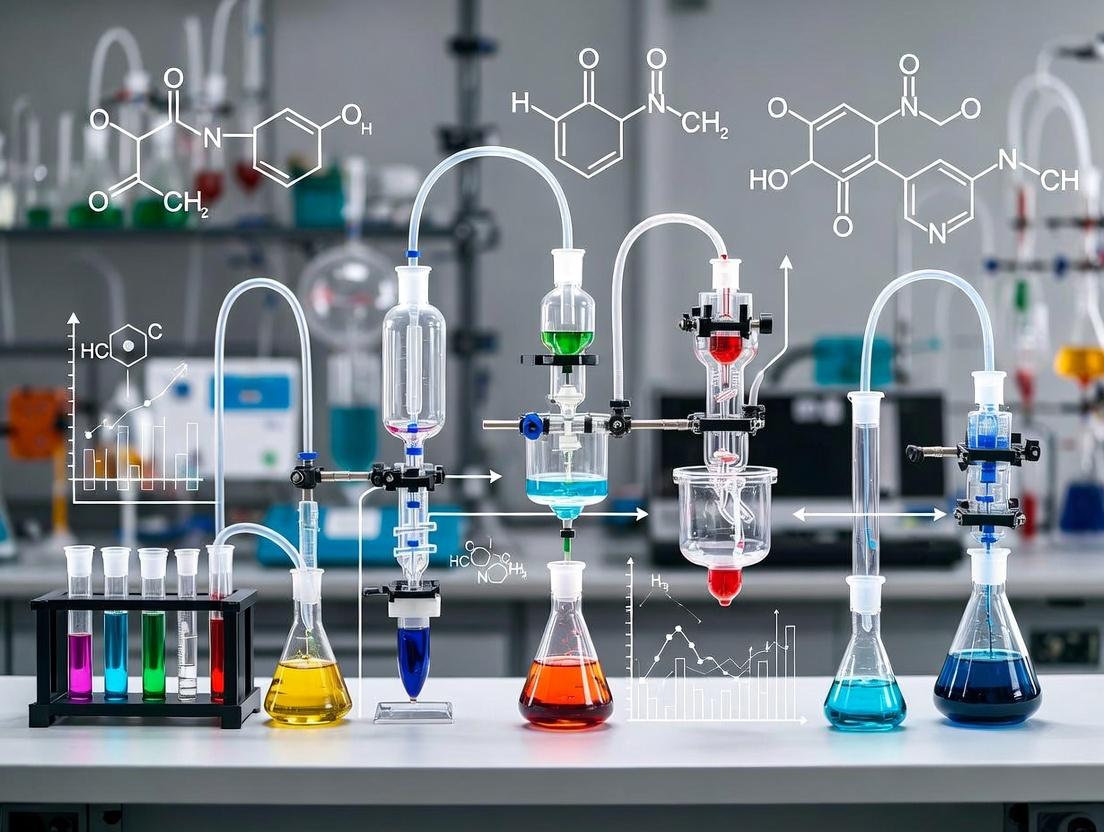
This article provides a detailed exploration of high throughput experimentation (HTE) techniques in flow chemistry for researchers and drug development professionals.
Accelerating Drug Discovery: A Comprehensive Guide to High Throughput Experimentation in Flow Chemistry
Abstract
This article provides a detailed exploration of high throughput experimentation (HTE) techniques in flow chemistry for researchers and drug development professionals. It begins with the foundational principles and advantages of merging HTE with continuous flow systems. We then delve into methodological approaches, including reactor design, automation, and real-world applications in library synthesis and reaction screening. The guide addresses common challenges and optimization strategies for parameters like mixing, temperature, and residence time. Finally, it covers validation protocols and comparative analyses against traditional batch methods, highlighting throughput, reproducibility, and material efficiency. This resource aims to equip scientists with the knowledge to implement and leverage HTE-flow systems to dramatically accelerate R&D cycles.
HTE Meets Flow: Foundational Principles and the Paradigm Shift in Chemical Synthesis
High Throughput Experimentation (HTE) in flow chemistry represents the synergistic integration of continuous flow reactor platforms with automated, parallelized experimental design and analysis. This methodology enables the rapid screening and optimization of chemical reactions and processes by performing dozens to hundreds of experiments per day. Within the broader thesis on HTE flow chemistry techniques, it is defined as a paradigm shift from traditional one-at-a-time batch investigations to a data-rich, automated, and digitally driven approach, accelerating discovery and development timelines in pharmaceuticals and materials science.
Core Principles and Quantitative Advantages
The synergy between HTE and flow chemistry arises from the inherent compatibility of flow systems with automation, precise parameter control, and real-time analytics. The table below quantifies the operational advantages of HTE-flow over conventional batch methods for a typical reaction optimization campaign.
Table 1: Comparative Throughput and Efficiency: HTE-Flow vs. Batch
| Parameter | Traditional Batch HTE | Integrated HTE-Flow | Improvement Factor |
|---|---|---|---|
| Experiments per Day | 10 - 50 | 50 - 500+ | 5x - 10x |
| Reagent Consumption per Experiment | 1 - 10 mL | 0.1 - 2 mL | 5x - 10x reduction |
| Parameter Control (Temp, Time) | Moderate | High (±0.5°C, ±0.1s) | Significantly Enhanced |
| Data Point Generation Rate | Low to Moderate | Very High | >10x |
| Typical Optimization Campaign Duration | 2 - 4 weeks | 1 - 7 days | 4x - 8x reduction |
Application Notes & Detailed Protocols
Application Note 1: Rapid Optimization of a Palladium-Catalyzed Cross-Coupling Reaction
Objective: To optimize yield and selectivity for a Suzuki-Miyaura coupling using HTE-flow.
Research Reagent Solutions Toolkit:
| Item | Function in HTE-Flow |
|---|---|
| Automated Liquid Handler | Precides dispensing of catalyst, ligand, base, and substrate stock solutions into microtiter plates for reactor feed. |
| Multi-Channel Syringe Pump | Delivers multiple reagent streams simultaneously at precise, computer-controlled flow rates. |
| Microfluidic Chip Reactor (PFA) | Provides consistent residence time, efficient mixing, and rapid heat transfer for the reaction. |
| In-line FTIR or UV-Vis Analyzer | Provides real-time reaction monitoring for key functional group conversion. |
| Automated Sample Collector | Interfaces with the flow reactor outlet to collect time- or condition-resolved fractions for offline analysis. |
| LC-MS Autosampler & Analysis Suite | Automates the analysis of collected fractions, providing yield and purity data. |
Protocol:
- Stock Solution Preparation: Using an automated liquid handler, prepare separate stock solutions in DMF of aryl halide (0.1 M), boronic acid (0.12 M), palladium catalyst (e.g., Pd(dppf)Cl2, 0.005 M), and base (Cs2CO3, 0.2 M).
- HTE-Flow System Setup: Connect feed lines from the multi-channel pump to the chip reactor (e.g., 10 µL volume). Connect the reactor outlet to an in-line UV-Vis flow cell and then to an automated fraction collector.
- Design of Experiment (DoE): Use software (e.g., MATLAB, custom Python script) to generate a DoE matrix varying: Residence Time (30-300 s), Temperature (50-120°C), and Catalyst Loading (1-5 mol%). This generates 50 unique condition sets.
- Automated Execution: The pump autonomously adjusts the flow rates of each reagent stream according to the DoE to achieve the desired residence time and stoichiometry. The temperature controller adjusts the chip heater block per condition.
- In-line & Offline Analysis: The UV-Vis monitors reaction progression in real-time. Fractions are collected for each condition and analyzed via automated LC-MS.
- Data Analysis: Yield data from LC-MS is fed into response surface modeling software to identify optimal conditions and predict the reaction performance landscape.
Diagram 1: HTE-Flow Optimization Workflow
Application Note 2: High-Throughput Screening of Photoredox Catalysts
Objective: To screen a library of 24 iridium and ruthenium photoredox catalysts for a decarboxylative coupling reaction.
Protocol:
- Library Preparation: Prepare a 24-well plate with catalyst stock solutions (0.001 M in MeCN) using an automated liquid handler.
- Continuous Flow Setup: Utilize a commercially available photochemical flow reactor (e.g., with a coiled fluorinated ethylene propylene (FEP) tube around a LED array).
- Automated Screening: The system uses a single set of reactant streams (acid, oxidant, dissolved in MeCN). A selector valve switches the catalyst stream inlet among the 24 different catalyst solutions from the plate.
- Constant Residence Time: Total flow rate is kept constant. The system spends 5 minutes at each catalyst condition, allowing steady-state data collection.
- In-line Analysis: Use in-line NMR or Raman spectroscopy for direct conversion measurement.
- Hit Identification: The software ranks catalyst performance based on conversion from the in-line data, identifying top candidates for further optimization.
Diagram 2: Catalyst Screening Flow Path
Within the paradigm of modern drug discovery, high-throughput experimentation (HTE) using continuous flow chemistry represents a transformative approach. This methodology directly addresses the critical bottlenecks in pharmaceutical research by leveraging four core advantages: Speed, Safety, Scalability, and Data Density. These advantages synergize to accelerate the Design-Make-Test-Analyze (DMTA) cycle, enabling the rapid exploration of chemical space and the identification of viable lead compounds. This application note details specific protocols and frameworks that operationalize these advantages within a research context focused on optimizing synthetic routes and reaction discovery.
Application Notes & Experimental Protocols
Protocol 1: High-Speed Optimization of Cross-Coupling Reactions via Automated Flow Screening
Objective: To rapidly identify optimal conditions for a Pd-catalyzed Suzuki-Miyaura coupling using minimal reagents. Core Advantage Demonstrated: Speed & Data Density.
Detailed Methodology:
- Reagent Preparation: Prepare stock solutions of the aryl halide (0.1 M), boronic acid (0.12 M), base (0.5 M, e.g., K2CO3), and catalyst/ligand (0.01 M Pd(OAc)2 with SPhos) in a degassed mixture of THF/H2O (4:1).
- System Priming: Load solutions into separate syringes on a multi-line automated flow platform (e.g., Vapourtec R-series, Syrris Asia). Prime all fluidic paths.
- DoE Execution: Program the platform using manufacturer software to execute a predefined Design of Experiments (DoE) matrix. Variables include:
- Residence Time: 1-10 minutes (controlled by total flow rate and reactor volume).
- Temperature: 25-100°C.
- Catalyst Loading: 0.5-2.0 mol%.
- Equivalents of Base: 1.0-3.0.
- Continuous Operation: Initiate the DoE run. The system automatically mixes streams in a T-mixer, passes the mixture through a temperature-controlled coil reactor (10 mL volume), and collects discrete product fractions at the outlet into a 96-well plate.
- Inline Analysis: Direct a portion of the outlet stream via a flow cell to an inline UV-Vis or IR spectrometer for real-time conversion analysis.
- Work-up & Validation: Post-run, analyze collected fractions via UPLC-MS for yield and purity. Validate top conditions with a steady-state run for isolated yield.
Data Density Output: A single 8-hour run can generate 96-144 distinct data points, mapping a multi-dimensional reaction space.
Protocol 2: Safe Handling of Hazardous Reagents in Azide Chemistry
Objective: To demonstrate the safe synthesis of an alkyl azide using trimethylsilyl azide (TMS-N3) in flow. Core Advantage Demonstrated: Safety & Scalability.
Detailed Methodology:
- System Configuration: Set up a two-stream flow system with all wetted parts made of PFA or PTFE. Install a back-pressure regulator (BPR) set to 50 psi. Conduct the run inside a ventilated fume hood.
- Reagent Streams:
- Stream A: Alkyl bromide (0.2 M) and tetrabutylammonium fluoride (TBAF, 0.22 M) in anhydrous DMF.
- Stream B: Trimethylsilyl azide (0.3 M) in anhydrous DMF.
- Process: Use syringe pumps to deliver Stream A and Stream B at equal flow rates (e.g., 0.1 mL/min each) to a static mixer. Pass the combined stream through a 5 mL coil reactor heated to 60°C (residence time ~25 min).
- Quenching & Isolation: Direct the reactor outlet into a vigorously stirred quenching solution of saturated NaHCO3 (ice-cooled). The small, continuous volume of reactive intermediate minimizes the inventory of hazardous azide. Scale-out is achieved by running the process for extended time (Numbering-Up).
- Monitoring: Use inline FTIR to monitor the disappearance of the alkyl bromide peak (~1150 cm⁻¹) and appearance of the azide peak (~2100 cm⁻¹).
Safety Note: The total inventory of TMS-N3 in the reactor at any time is < 0.15 mmol, drastically reducing explosion hazard compared to batch.
Table 1: Comparative Analysis of Flow vs. Batch for Model Reactions
| Parameter | Batch Method (100 mmol scale) | Flow Method (100 mmol scale) | Advantage Factor |
|---|---|---|---|
| Reaction Time (Suzuki) | 12 hours | 20 minutes (residence time) | 36x Speed |
| Hazardous Azide Inventory | ~15 g (100 mmol) | < 20 mg (< 0.15 mmol) | >750x Safety |
| Data Points per Day (DoE) | 8-12 | 96-144 | 12x Data Density |
| Scale-up Path (Pilot) | New vessel, re-optimization | Linear scale-up via pump rate or numbering-up | Direct Scalability |
| Solvent Usage per kg API* | 50-100 L | 10-30 L | 3-5x Reduction |
API: Active Pharmaceutical Ingredient; Example based on literature meta-analysis.
Visualizations
Title: High-Throughput Reaction Optimization Workflow in Flow
Title: Safety and Scalability Pathway for Hazardous Chemistry
The Scientist's Toolkit: Research Reagent Solutions
Table 2: Essential Materials for High-Throughput Flow Chemistry
| Item / Reagent Solution | Function & Rationale |
|---|---|
| Perfluorinated Alkoxy (PFA) Tubing & Coils | Chemically inert reactor material for broad solvent/reagent compatibility and excellent temperature/pressure tolerance. |
| High-Precision Diaphragm or Syringe Pumps | Provide pulseless, precise fluid delivery (μL/min to mL/min) essential for reproducibility and accurate residence time control. |
| Solid-Supported Reagents & Catalysts | (e.g., polymer-bound diazonium salts, silica-supported scavengers). Enable reagent simplification and purification in flow. |
| Integrated Back-Pressure Regulators (BPR) | Maintain system pressure above the solvent boiling point, enabling superheating and use of gases in solution. |
| Inline Analytical Flow Cells | (FTIR, UV-Vis, Raman). Enable real-time reaction monitoring for immediate feedback and adaptive experimentation. |
| Automated Liquid Handling Robots | Interface with flow platforms for automated sample preparation (stock solutions) and collection (into microtiter plates). |
| Modular Microfluidic Chips | For ultra-fast screening of reaction conditions (sub-second residence times) with extreme data density. |
| Digitally-Designed Ligand Libraries | Commercially available diverse sets of ligands (e.g., phosphines, N-heterocyclic carbenes) for rapid catalyst screening in metal-catalyzed transformations. |
Application Notes
High-Throughput Experimentation (HTE) in flow chemistry accelerates reaction discovery, optimization, and scale-up in pharmaceutical research. The integration of robust pumps, versatile reactors, and inline analytical interfaces creates a closed-loop system capable of rapidly generating high-quality data. Within the broader thesis on HTE-flow techniques, this synergy is critical for establishing automated, data-rich workflows that map chemical space with unprecedented speed.
1. Pumps: The Pulse of Precision Modern HTE-flow systems prioritize pulseless, highly accurate fluid delivery to ensure reproducible residence times and reagent stoichiometry. Recent advancements emphasize multi-channel parallel pumping for true high-throughput screening.
Table 1: Comparison of Pump Technologies for HTE-Flow
| Pump Type | Typical Flow Rate Range | Key Advantage for HTE | Limitation |
|---|---|---|---|
| Syringe Pump | 1 µL/min to 100 mL/min | Excellent precision & pulseless flow | Limited reservoir volume, slower refill |
| Diaphragm Pump | 0.1 mL/min to 10 L/min | High chemical resistance, continuous operation | Can induce minor pulsation |
| Peristaltic Pump | 0.01 mL/min to 400 mL/min | Fluid contact only with tubing, easy swap | Higher pulsation, tubing wear |
| HPLC-type Piston Pump | 10 µL/min to 50 mL/min | High pressure capability (>100 bar) | Complexity, cost for multi-channel setups |
2. Reactors: The Engine of Transformation HTE-flow reactors facilitate rapid mixing, precise temperature/pressure control, and varied residence times. Parallel microreactor arrays (e.g., 8-, 16-, or 32-channel) are now standard for screening campaigns.
Table 2: Common HTE-Flow Reactor Types & Performance Data
| Reactor Type | Typical Volume (µL) | Max Temp (°C) | Max Pressure (bar) | Mixing Principle |
|---|---|---|---|---|
| Chip Microreactor | 5 – 100 | 150 | 20 | Laminar/Diffusive |
| Tubular Coil | 100 – 2000 | 250 | 100 | Segmented Flow |
| Packed-Bed Column | 50 – 500 | 150 | 100 | Convective |
| Automated CSTR Array | 1000 – 5000 | 200 | 10 | Mechanical Stirring |
3. Analytical Interfaces: The Feedback Loop Inline or at-line analysis provides real-time reaction monitoring, enabling immediate decision-making. Fourier Transform Infrared (FTIR) and Ultra-High-Performance Liquid Chromatography (UHPLC) are most prevalent, with sampling handled by automated stream selection valves.
Table 3: Analytical Techniques for Inline HTE-Flow Monitoring
| Technique | Approx. Analysis Time | Key Measurable | Suitability for Automation |
|---|---|---|---|
| Inline FTIR | 10-30 seconds | Functional group conversion | Excellent, real-time |
| At-line UHPLC-MS | 1-3 minutes | Yield, purity, identity | High (with autosampler) |
| Inline UV-Vis | < 1 second | Concentration of chromophores | Excellent |
| Patented Flow NMR | 30-120 seconds | Structural elucidation | Moderate (specialized) |
Experimental Protocols
Protocol 1: Parallelized Reaction Screening for Cross-Coupling Optimization Objective: To screen 16 distinct ligand/pressure combinations for a Pd-catalyzed C-N coupling in parallel. Materials: See "The Scientist's Toolkit" below. Workflow:
- System Priming: Purge all 4 pump lines and 16 reactor channels with anhydrous DMF at 0.2 mL/min for 5 minutes.
- Reagent Preparation: Prepare stock solutions: Aryl bromide (0.1 M in DMF), Amine (0.15 M in DMF), Base (0.2 M in DMF), and Catalyst/Ligand mix (4 different ligands, each at 5 mol% Pd/6 mol% ligand in DMF).
- Parameter Programming: Using the system software, define a 4x4 parameter matrix: Pump A (Catalyst/Ligand set 1-4) x Pump B (Pressure setpoints: 2, 5, 10, 15 bar). Set reactor block temperature to 100°C.
- Flow Setup: Configure the 16-reactor array. Each reactor receives a combined stream from Pumps A, B, C (aryl bromide), and D (amine/base mix). Total flow rate per channel: 0.5 mL/min, yielding a 2-minute residence time.
- Run & Sample Collection: Initiate the parallel run. After stabilization (3 residence times), collect output from each reactor channel into a pre-weighted 96-well plate for 5 minutes.
- Analysis: Seal the plate and analyze via at-line UHPLC-MS using a calibrated calibration curve for product and starting material.
Protocol 2: Real-Time Kinetic Profiling Using Inline FTIR Objective: To monitor the disappearance of a carbonyl starting material in a reductive amination reaction. Workflow:
- Calibration: Establish a calibration curve of carbonyl peak area (e.g., ~1700 cm⁻¹) vs. concentration using standard solutions flowed through the IR flow cell (0.1 mm path length).
- System Configuration: Set up a single-pass flow system: Two reagent streams (Carbonyl compound + Amine in MeOH; NaBH₃CN in MeOH) meet at a T-mixer, then pass through a 1 mL temperature-controlled coil reactor (25°C), then directly into the IR flow cell.
- Data Acquisition: Start flow at a combined rate of 0.25 mL/min (residence time = 4 min). Initiate continuous IR spectral acquisition (1 scan/sec).
- Residence Time Variation: Using a gradient pump program, progressively increase the total flow rate from 0.25 to 2.0 mL/min over 30 minutes, effectively decreasing residence time.
- Data Processing: Use software to integrate the relevant peak area for each spectrum. Plot concentration vs. residence time to derive kinetic parameters.
Visualizations
Title: HTE-Flow Closed-Loop Feedback System
Title: Inline FTIR Kinetic Analysis Setup
The Scientist's Toolkit: Key Research Reagent Solutions for HTE-Flow
Table 4: Essential Materials for HTE-Flow Experiments
| Item | Function & Specification | Example Vendor/Product |
|---|---|---|
| Multi-Channel Syringe Pump | Provides precise, pulseless flow for up to 4-8 reagent lines simultaneously. | Vapourtec R-Series, Chemyx Fusion 6000 |
| Silicon Carbide (SiC) Microreactor | Offers exceptional thermal conductivity and chemical resistance for high-T/P reactions. | Corning Advanced-Flow G1 Reactor |
| PFA Tubing (1/16" OD) | Flexible, chemically inert tubing for most connections and coil reactors. | IDEX Health & Science |
| Injection Valves (6/8-port) | Enables automated switching for reagent injection or stream selection for analysis. | VICI Valco, Cheminert M6 Series |
| In-situ FTIR Probe with Flow Cell | Allows real-time IR spectral acquisition for kinetic and mechanistic studies. | Mettler Toledo ReactIR 702L |
| Automated Liquid Handler | For preparation of stock solution plates and transfer of output to analysis plates. | Hamilton Microlab STAR |
| HTE Software Suite | Orchestrates hardware, designs experiments (DoE), and manages resulting data. | HEL Flowcat, Siemens Opcenter R&D |
| Catalyst/Ligand Kit | Pre-formulated libraries (e.g., Buchwald ligands) for rapid screening in metal catalysis. | Sigma-Aldrich Aldrich Market Select |
| Deuterated Solvents for Flow NMR | For continuous-flow process NMR analysis when structural confirmation is critical. | Cambridge Isotope Laboratories |
In high-throughput experimentation (HTE) for flow chemistry in drug development, the shift from a linear, one-variable-at-a-time (OVAT) approach to an informational, Design of Experiments (DoE) mindset is transformative. This paradigm treats each experimental campaign as a system for generating maximally informative data, optimizing resource use to accelerate the discovery and optimization of synthetic routes, catalysts, and reaction conditions.
Core Principles: OVAT vs. DoE
Table 1: Comparison of Experimental Mindsets in Flow Chemistry HTE
| Aspect | Single Experiment/OVAT Mindset | Informational/DoE Mindset |
|---|---|---|
| Goal | Find a "working" condition. | Model the response surface; understand factor interactions. |
| Efficiency | Low; many runs for limited information. | High; every run is strategically placed to extract maximum information. |
| Factor Interaction | Cannot be detected or quantified. | Explicitly modeled and quantified. |
| Outcome | A point solution; limited understanding. | A predictive model; robust process understanding. |
| Optimum | Likely local and not robust. | Global, with defined confidence intervals. |
| Resource Use | Often wasteful in the long term. | Strategically efficient per data point obtained. |
Application Note: DoE for Optimizing a Flow-Based Photoredox Cross-Coupling
Objective: Maximize the yield of a pharmaceutical intermediate via a heterogeneous photoredox reaction in a continuous flow microreactor.
Key Factors & Ranges (Identified via prior screening):
- A: Catalyst loading (mg): 10 - 50
- B: Residence time (min): 2 - 10
- C: Light Intensity (mW/cm²): 20 - 100
- D: Temperature (°C): 30 - 70
Experimental Protocol
Title: High-Throughput DoE Protocol for Photoredox Catalysis Optimization in Flow.
1. Equipment & Setup:
- Syringe pumps for reagent delivery.
- Packed-bed flow photoreactor (with immobilized photocatalyst).
- Tunable LED light source with intensity control.
- In-line temperature control module.
- Automated liquid handler for quench & collection.
- UPLC-MS for yield analysis.
2. Experimental Design Execution:
- Design: A 2⁴ Full Factorial Design (16 runs) with 3 center points (total 19 experiments).
- Procedure:
- Prepare stock solutions of starting materials in designated solvent.
- Program the factor levels for each run in the HTE control software.
- For each experimental condition: a. Set reactor temperature. b. Set light intensity. c. Flow reagents through the system at the calculated rate to achieve target residence time. d. Allow system to stabilize for 3 residence times. e. Collect product stream via automated fraction collector into pre-prepared quench vials.
- Analyze all fractions via UPLC-MS using a calibrated internal standard.
- Record yield (%) as the primary response.
3. Data Analysis:
- Input yield data and factor levels into statistical software (e.g., JMP, Design-Expert).
- Perform multiple linear regression to generate a model.
- Identify significant main effects and interaction effects (e.g., AB, CD).
- Validate model using center point data and ANOVA.
- Use model prediction to run 1-3 confirmation experiments at predicted optimum.
Table 2: Example DoE Results & Model Coefficients
| Term | Coefficient | p-value | Interpretation |
|---|---|---|---|
| Intercept | 78.5 | <0.001 | Estimated yield at center point. |
| A: Catalyst | +12.3 | <0.001 | Positive effect; more catalyst increases yield. |
| B: Time | +8.1 | 0.002 | Positive effect. |
| C: Light | +5.4 | 0.01 | Positive effect. |
| D: Temp | -1.2 | 0.25 | Not statistically significant in this range. |
| A*B | +6.9 | 0.005 | Significant interaction: High catalyst benefits more from longer time. |
| C*D | -4.7 | 0.02 | Significant interaction: High light intensity works better at lower temp. |
| Model R² | 0.94 | - | Excellent model fit. |
The Scientist's Toolkit: Key Research Reagent Solutions
Table 3: Essential Materials for Flow Chemistry HTE Campaigns
| Item | Function in HTE/DoE |
|---|---|
| Modular Flow Reactor Kits (e.g., glass microreactors, packed-bed columns) | Enable rapid reconfiguration for different reaction types (photochemistry, electrochemistry, high pressure). |
| Immobilized Catalyst Cartridges | Simplify screening of heterogeneous catalysts; enable easy swapping and reuse. |
| Reagent Stock Solutions in HTE Vials | Prepared by automated liquid handlers for high reproducibility and rapid dispensing. |
| Integrated Photoredox Modules (LED arrays with control) | Provide precise and variable light intensity as a DoE factor. |
| Automated In-line Dilution & Quench Systems | Prepare samples directly from the flow stream for analysis, essential for high-throughput. |
| UPLC-MS with Autosamplers | Provide rapid, quantitative analysis of reaction outcomes (yield, purity). |
| DoE Software & HTE Control Platforms | Design experiments, randomize runs, control hardware, and integrate data for analysis. |
Visualization: The Informational Workflow
Diagram Title: The Informational DoE Workflow in HTE
Diagram Title: Mindset Comparison: OVAT vs DoE Pathway
Current Landscape and Major Drivers in Pharmaceutical and Fine Chemicals R&D
1. Introduction and Landscape Overview The R&D landscape in pharmaceuticals and fine chemicals is defined by the imperative to accelerate discovery and development while managing costs and sustainability. High Throughput Experimentation (HTE) integrated with flow chemistry represents a paradigm shift, enabling the rapid screening of reaction conditions, exploration of complex chemical space, and development of safer, more efficient synthetic routes. This Application Note details protocols and key insights framed within a thesis on advancing HTE-flow chemistry integration.
2. Key Quantitative Drivers: A Data Summary Table 1: Major R&D Drivers and HTE-Flow Chemistry Impact
| Driver | Current Industry Benchmark / Pressure | HTE-Flow Chemistry Contribution |
|---|---|---|
| R&D Efficiency | Average drug development cost: ~$2.3B (2023 est.) | Enables 10-100x faster reaction screening vs. batch. Parallel experimentation reduces cycle times. |
| Sustainability (Green Chemistry) | Solvents account for ~56% of process mass intensity (PMI) in API synthesis. | Reduces solvent use by >90% via miniaturization. Enables precise heat/ mass transfer, improving E-Factor. |
| Supply Chain Resilience | >70% of API manufacturing relies on globalized, batch-centric supply. | Facilitates distributed, continuous manufacturing. Reduces reliance on large batch infrastructure. |
| Molecular Complexity | >60% of candidate compounds involve synthetic challenges (e.g., air/moisture sensitivity). | Enables handling of unstable intermediates, hazardous reagents (e.g., diazo, ozonolysis) with improved safety. |
| Data-Driven Development | <30% of historical reaction data is machine-readable. | Generates structured, high-fidelity data intrinsic to automated platforms for AI/ML model training. |
3. Application Notes & Detailed Protocols
Application Note AN-101: HTE Optimization of a Palladium-Catalyzed Cross-Coupling in Flow
Objective: Rapidly identify optimal ligand, base, and residence time for a Suzuki-Miyaura coupling.
Research Reagent Solutions & Essential Materials: Table 2: Key Reagents and Materials
| Item | Function | Example/Supplier |
|---|---|---|
| Automated Flow Platform | Precise reagent delivery, mixing, and temperature/pressure control. | Vapourtec R-Series, Syrris Asia Flow. |
| HTE Reaction Chip/Cartridge | Enables parallel microfluidic screening of conditions. | Chemtrix Plantrix MR-Series. |
| Palladium Precatalyst | Cross-coupling catalyst source. | Pd(OAc)2, Pd2(dba)3. |
| Ligand Library | Modulates catalyst activity and selectivity. | SPhos, XPhos, BippyPhos, etc. |
| Pre-weighed Base Plates | Accelerates experimentation; minimizes handling. | 96-well plates with Cs2CO3, K3PO4, etc. |
| In-line IR / UV Analyzer | Real-time reaction monitoring and conversion analysis. | Mettler Toledo FlowIR, Pathed Flow Cell. |
Protocol:
- System Preparation: Prime the flow chemistry system with anhydrous solvent (e.g., THF, 1,4-dioxane). Load reagent solutions into designated syringe pumps or HPLC pumps: Pump A (Aryl halide + substrate), Pump B (Boronic acid), Pump C (Base stock solution), Pump D (Catalyst/Ligand library in solvent).
- Library Design & Encoding: Using control software, design a 48-condition experiment varying: Ligand (4 types), Base (3 types: Cs2CO3, K3PO4, Et3N), Residence Time (4 times: 2, 5, 10, 20 min). Temperature is held constant at 80°C.
- Execution: Initiate automated run. The platform mixes streams from Pumps A-D according to the design matrix, passes the mixture through a temperature-controlled reactor coil (dimensions calibrated for desired residence time), and then directs the output to a designated collection vial containing a quenching agent (e.g., aqueous citric acid).
- Analysis: Collect samples from each vial. Analyze conversion and yield via UPLC-MS using a validated method. Data is automatically logged into a electronic lab notebook (ELN).
- Data Analysis: Construct response surfaces (Yield vs. Ligand/Base/Time) to identify the optimal parameter set. The highest yielding condition is selected for scale-up in continuous flow.
Application Note AN-102: Continuous Flow Synthesis of an Unstable Fine Chemical Intermediate
Objective: Safely generate and consume a hazardous diazonium intermediate en route to a target fine chemical.
Protocol:
- Reaction Sequence Design: The workflow consists of two continuous flow reactors (PFRs) in series. Reactor 1 performs diazotization. Reactor 2 performs the subsequent coupling reaction.
- Reactant Preparation: Prepare separate solutions of the primary aromatic amine in dilute aqueous HCl (Stream 1) and sodium nitrite in water (Stream 2). Prepare the coupling partner (e.g., a β-ketoester) in a suitable solvent (Stream 3).
- System Setup & Safety: Use a flow system equipped with pressure regulators and temperature control. Employ PTFE tubing/reactors for corrosion resistance. The entire setup is placed within a ventilated safety cabinet.
- Diazotization (Reactor 1): Pre-cool a PFR (e.g., coiled tubing in an ice bath) to 0-5°C. Use a T-mixer to combine Stream 1 and Stream 2 precisely. Maintain a residence time of <2 minutes to minimize diazonium salt decomposition.
- In-line Quenching & Coupling (Reactor 2): Immediately combine the output of Reactor 1 with Stream 3 via a second T-mixer. Direct this combined stream into a second PFR (held at 60°C, residence time 10 min) to facilitate the coupling reaction.
- Work-up: The output is directed into a continuous liquid-liquid separator, where the product is extracted into an organic phase. The organic stream is then passed through an in-line cartridge containing silica gel for partial purification before collection.
4. Visualizations of Workflows and Relationships
Diagram 1: HTE-Flow Chemistry Iterative Development Cycle
Diagram 2: Flow Synthesis of Unstable Diazonium Intermediate
Building and Applying HTE-Flow Systems: Methodologies for Accelerated Discovery
High-Throughput Experimentation (HTE) in flow chemistry is a transformative paradigm for accelerating research in drug discovery and materials science. A core challenge within this thesis on High Throughput Experimentation Flow Chemistry Techniques is the efficient screening of reaction parameters (catalysts, ligands, solvents, temperatures, residence times) across diverse chemical spaces. This necessitates modular reactor designs that enable parallelization, miniaturization, and rapid reconfiguration. This application note details the implementation and protocol for three principal modular reactor formats: chip-based microfluidic systems, tube-based plug-flow reactors, and plate-based continuous flow arrays. Their integration into an HTE workflow drastically reduces the time and material required to establish optimal reaction conditions.
System Comparison & Quantitative Data
The selection of a reactor platform depends on the specific screening goals, including throughput, required sample volume, operational pressure, and analytical integration. The following table summarizes key characteristics based on current commercial and research systems.
Table 1: Comparison of Modular Reactor Platforms for HTE Screening
| Feature | Chip-Based Microreactor | Tube-Based Plug-Flow Reactor | Plate-Based Flow Array |
|---|---|---|---|
| Typical Volume/Channel | 10 nL - 10 µL | 10 µL - 100 µL (per plug) | 100 µL - 5 mL (per well) |
| Parallelization Capacity | High (8-64 channels on a chip) | Medium-High (4-32 parallel tubes) | Very High (24-, 48-, 96-well formats) |
| Mixing Efficiency | Excellent (diffusive/convective) | Good (within-plug turbulence) | Variable (depends on agitation) |
| Residence Time Control | Excellent (precise, seconds-minutes) | Good (flow rate dependent) | Limited (batch-like in well) |
| Max Operating Pressure | Moderate (~10-20 bar) | High (>>50 bar) | Low (<5 bar) |
| Reagent Consumption | Very Low (nanomole scale) | Low (micromole scale) | Medium (millimole scale) |
| Typical Screening Output | Reaction kinetics, catalyst stability | Parameter space mapping (T, P, t) | Discrete condition screening |
| Key Advantage | Ultra-fast heat/mass transfer, minimal volume. | Rugged, high-pressure/temperature capability. | Direct compatibility with standard lab automation. |
| Primary Limitation | Potential for clogging, limited scalability. | Parallel flow matching can be challenging. | Lower intrinsic mixing and heat transfer. |
The Scientist's Toolkit: Essential Research Reagent Solutions
Table 2: Key Reagents and Materials for Modular Flow HTE
| Item | Function in HTE Flow Screening |
|---|---|
| Immobilized Catalyst Cartridges | Enables rapid screening of heterogeneous catalysts across parallel streams without cross-contamination. |
| Ligand Kit Libraries | Pre-weighed, solubilized ligand stocks in plate format for rapid addition to metal catalyst precursors. |
| Pre-mixed Reagent "Flow Kits" | Syringes or vials pre-loaded with stoichiometric reagent mixtures for direct injection, saving set-up time. |
| Fluorescent Process Indicators | Dyes for real-time, in-line monitoring of mixing efficiency, phase separation, or reaction progress in transparent chips/tubes. |
| Perfluorinated Polyether (PFPE) Fluids | Inert, immiscible carrier fluid for generating stable segmented flow (plugs) in tube-based systems, preventing cross-talk. |
| Automated Liquid Handler (ALH) | Robotics for precise, parallel loading of reagents, catalysts, and solvents into chip inlets, tube loops, or multi-well plates. |
| In-line IR/UV Flow Cell | Miniaturized spectroscopic cell for real-time reaction monitoring, providing immediate analytical data for each condition. |
| High-Pressure Syringe Pumps (Multi-channel) | Provides steady, pulseless flow to multiple reactor channels simultaneously, ensuring consistent residence times. |
Experimental Protocols
Protocol 1: Parallel Catalyst Screening in a Tube-Based Plug-Flow Reactor System
Objective: To screen eight distinct palladium-based catalyst/ligand combinations for a C-N cross-coupling reaction.
Materials:
- 8-Channel modular tube reactor (e.g., Vapourtec R-Series modules, or custom PFA tubing coils in thermostatted blocks).
- 8 x High-pressure syringe pumps.
- Automated liquid handler.
- Substrate solution A (Aryl Halide, 0.1 M in DMF).
- Substrate solution B (Amine, 0.12 M in DMF with base).
- Catalyst/Ligand stock solutions (8 variants in DMF).
- PFPE carrier fluid.
- In-line UV analyzer and fraction collector.
Method:
- Reactor Setup: Configure eight identical PFA tubing coils (ID 0.5 mm, Volume 250 µL each) in a parallel, temperature-controlled manifold.
- Reagent Preparation: Using an ALH, prepare eight distinct catalyst/ligand mixtures in separate vials by combining 1 mL of substrate solution A with 100 µL of each catalyst/ligand stock.
- Fluid Loading: Load each catalyst-substrate A mixture into a separate syringe pump channel. Load substrate solution B into a single syringe connected to a splitter for all eight lines.
- Flow Initiation & Segmentation: Initiate flow for all A and B lines at 50 µL/min each. Simultaneously, introduce PFPE carrier fluid at 30 µL/min at a T-junction before reactor entry to create segmented liquid plugs.
- Reaction Execution: Pass the segmented flow through the reactor coils held at 100°C. The residence time is ~1.25 minutes.
- Analysis & Collection: Monitor product formation in real-time via an in-line UV flow cell at 254 nm. Collect the organic output plugs from each channel separately in a fraction collector for subsequent UPLC-MS quantification.
- Data Analysis: Plot conversion (%) versus catalyst/ligand identity to identify the top-performing system.
Protocol 2: Rapid Kinetic Profiling Using a Chip-Based Microreactor
Objective: To determine the kinetic profile of a photoredox-catalyzed reaction by varying residence time on a single chip.
Materials:
- Glass or PMMA microfluidic chip with a long, serpentine reaction channel and integrated LED photoirradiation.
- Precision syringe pumps (2).
- Micro-injection valves.
- Substrate solution (0.05 M in MeCN).
- Photocatalyst solution (0.001 M in MeCN).
- On-chip micro UV detector.
Method:
- Chip Priming: Flush all chip channels with dry MeCN to remove air and prime the system.
- Flow Rate Calibration: Program the syringe pumps to generate a gradient of total flow rates (e.g., from 5 µL/min to 100 µL/min) while maintaining a 1:1 ratio of substrate to catalyst streams.
- Reaction Execution: Initiate the flow. The two streams merge at a T-junction and mix via diffusion as they travel through the irradiated serpentine channel. The residence time varies inversely with the total flow rate.
- Real-Time Monitoring: The on-chip UV detector positioned at the channel outlet records absorbance data continuously.
- Data Processing: For each flow rate, calculate the residence time (channel volume / flow rate) and the corresponding conversion (from UV calibration). Plot conversion vs. residence time to extract kinetic data.
Protocol 3: Discrete Condition Screening in a Plate-Based Flow Array
Objective: To screen 24 different solvent/base combinations for a nucleophilic aromatic substitution reaction.
Materials:
- 24-well flow plate (reactor blocks with inlet/outlet ports for each well).
- Multiposition valve for solvent selection.
- Peristaltic pump or multi-channel syringe pump.
- Substrate stock solution.
- Nucleophile stock solution.
- Library of 4 solvents and 6 bases.
Method:
- Plate Preparation: Using an ALH, dispense different combinations of solvent and base into each of the 24 wells (1.5 mL working volume per well).
- Flow Loop Setup: Connect the pump outlet to a multiposition valve inlet. Connect each valve outlet to a single well's inlet port. Connect each well's outlet port to a common waste or collection manifold.
- Sequential Screening: Program the system to sequentially address each well. For each well: i) The valve switches to the selected well. ii) The pump delivers a steady flow of substrate and nucleophile solutions (pre-mixed inline) into the well, where reaction occurs under stirring. iii) The reaction mixture overflows from the well to the fraction collector for a defined period (e.g., 2 minutes).
- Collection & Analysis: Collect the output from each well in separate vials. Analyze all 24 samples via UPLC-MS to determine yield for each solvent/base pair.
Workflow & System Diagrams
HTE Modular Flow Screening Workflow
Modular HTE Flow System Architecture
The integration of automated liquid handling, real-time Process Analytical Technology (PAT), and centralized control software establishes a closed-loop, high-throughput experimentation (HTE) platform essential for accelerating flow chemistry research in drug development. This convergence enables the rapid execution, in-line monitoring, and adaptive control of chemical reactions, moving from empirical batch optimization to data-driven continuous processes.
Key Application Areas:
- Automated Reaction Screening & Optimization: Liquid handlers execute precise variations of reaction parameters (stoichiometry, catalysts, temperature, residence time). PAT probes monitor outcomes in real-time, feeding data to software for immediate analysis and next-experiment design via Design of Experiments (DoE) algorithms.
- Continuous Flow Process Development: Integrated systems manage sustained flow synthesis, with PAT ensuring Critical Quality Attributes (CQAs) remain within specified limits. Software triggers automated adjustments to pump flow rates or heater temperatures to maintain setpoints.
- Nucleation and Crystallization Studies: Automated slurry sampling coupled with in-line PAT (e.g., FBRM, PVM) provides granular data on particle size and shape distribution, enabling precise control over solid form.
- Catalyst and Enzyme Kinetics: High-throughput, automated workflows facilitate the generation of robust kinetic data under varying conditions, with PAT tracking substrate depletion and product formation in real time.
Quantitative Benefits of Integration: Table 1: Comparative Analysis of Workflow Efficiency
| Metric | Manual, Offline Analysis | Automated, PAT-Integrated | Improvement Factor |
|---|---|---|---|
| Reactions per Week | 20-50 | 200-500 | 10x |
| Data Point Generation | ~100 | 10,000+ | 100x |
| Optimization Cycle Time | 2-3 weeks | 1-2 days | ~15x |
| Material Used per Experiment | 100-500 mg | 1-20 mg | ~20x (reduction) |
| Process Upscaling Lag | 6-12 months | 1-3 months | ~4x |
Detailed Experimental Protocols
Protocol 1: Automated DoE Screening for Photoredox Catalysis in Flow
Objective: To autonomously screen and optimize a photoredox-catalyzed C–N coupling reaction.
Materials & Equipment:
- Automated Liquid Handler (e.g., Hamilton Microlab STAR, Opentrons OT-2)
- Continuous Flow Photoreactor (e.g., Vapourtec E-Series with Photo Reactor Module)
- PAT Tools: In-line UV-Vis spectrometer (e.g., Ocean Insight FX-UVVis), FTIR (e.g., Mettler Toledo ReactIR).
- Control Software: Unchained Labs Benchling, Chemaxon, or custom Python scripts.
- Reagents: Substrates (aryl halide, amine), photocatalyst (e.g., Ir(ppy)₃), base, degassed solvent (MeCN).
Procedure:
- DoE Setup: In control software, define a response surface model (RSM) with variables: Catalyst loading (0.1-2.0 mol%), Residence time (1-10 min), Light intensity (20-100%), Equivalents of base.
- Liquid Handler Protocol: a. Prepare stock solutions of all reactants in designated vials. b. For each experimental condition, aspirate specified volumes from stock vials and dispense into a clean reactor feed vial, creating a homogeneous reaction mixture. Seal vials. c. Load feed vials onto the flow chemistry system's injection valve carousel.
- Flow & PAT Integration: a. The software scheduler initiates each run. Pumps draw from the specified feed vial. b. The mixture passes through the temperature-controlled photoreactor coil. c. The reaction stream flows through the PAT flow cell. UV-Vis and FTIR spectra are collected continuously (1 scan/sec).
- Data Analysis & Decision: a. Software algorithms convert spectral data (e.g., peak height at specific λ) to conversion/yield using pre-calibrated models. b. Results for all experiments are compiled. The software fits the data to the RSM, identifies optimal conditions, and can propose a subsequent round of focused experiments.
- Validation: The system automatically prepares and runs the predicted optimal condition in triplicate to confirm reproducibility.
Protocol 2: Closed-Loop Control of a Grignard Reaction Using In-line Titration
Objective: To maintain consistent product quality by real-time adjustment of reagent feed based on PAT data.
Materials & Equipment:
- Automated Syringe Pumps (e.g., Chemyx Fusion 6000) controlled via API.
- PAT Tool: In-line automated titration unit (e.g., Metrohm 856 Conductometric Titrator) or ATR-FTIR.
- Control Software: LabVIEW or Python with PID control toolkit.
- Reagents: Alkyl halide, Magnesium turnings, Ketone/aldehyde substrate, Dry THF.
Procedure:
- System Priming: Set up a continuous stirred-tank reactor (CSTR) for Grignard formation. Establish a baseline feed of alkyl halide in THF.
- PAT Calibration: Correlate conductivity or IR spectral features (e.g., Mg-C bond formation) with active Grignard reagent concentration using offline titrations.
- Closed-Loop Operation: a. The PAT probe measures the concentration of Grignard species in the CSTR outflow in real-time. b. This value is streamed to the control software and compared against the user-defined setpoint (e.g., 0.5 M). c. A Proportional-Integral-Derivative (PID) algorithm calculates the required adjustment to the alkyl halide pump's flow rate. d. The software sends a command to the pump to increase or decrease the feed rate accordingly. e. The adjusted flow stabilizes the Grignard concentration, ensuring consistent stoichiometry for the subsequent coupling step.
- Monitoring: All concentration data, setpoints, and control actions are logged for full process traceability.
System Architecture and Workflow Diagrams
Title: Closed-Loop HTE Flow Chemistry Platform Architecture
Title: Automated DoE Optimization Workflow for Flow Chemistry
The Scientist's Toolkit: Essential Research Reagent Solutions
Table 2: Key Reagents and Materials for Automated Flow Chemistry HTE
| Item Name | Function/Application | Key Consideration for Automation |
|---|---|---|
| Pre-weighed, 96-well Reagent Plates | Supply of catalysts, ligands, bases, and additives for screening. | Ensures precise, rapid dispensing by liquid handlers; minimizes manual weighing. |
| Deuterated Solvents in Septum Vials | For automated in-line NMR sample preparation and analysis. | Compatibility with vial piercing systems; chemical stability. |
| Internal Standard Solutions | Pre-mixed standards for quantitative PAT (e.g., qNMR, LC-MS). | Enables automated addition for accurate, reproducible quantification. |
| Stable Isotope-labeled Substrates | For detailed mechanistic studies and kinetic profiling. | Integration with automated sampling and MS analysis workflows. |
| Solid-Supported Reagents & Scavengers | For inline purification in multistep telescoped flow sequences. | Packed in disposable cartridges compatible with flow reactor modules. |
| Calibration Standard Kits | For PAT tool calibration (UV, IR, Raman). | Essential for maintaining data integrity in automated, unattended runs. |
| Degassed, Anhydrous Solvents | For air/moisture-sensitive reactions. | Supplied in sealed, pressurizable containers for direct integration with inerted systems. |
This application note details the integration of high-throughput experimentation (HTE) with continuous flow chemistry for accelerated reaction optimization and condition scouting, a core pillar of modern synthetic methodology development and drug discovery pipelines.
1. Introduction Within the broader thesis on HTE flow chemistry, the ability to rapidly explore multi-dimensional chemical spaces is paramount. Traditional batch optimization is rate-limited by manual operations and heat/mass transfer. HTE flow systems automate reagent mixing, reaction parameter control, and product analysis, enabling the systematic scouting of hundreds to thousands of conditions in days, dramatically accelerating the development of robust, scalable synthetic protocols.
2. Key Quantitative Advantages: HTE Flow vs. Batch Table 1: Comparative Throughput and Efficiency Metrics
| Parameter | Traditional Batch Optimization | HTE Flow Chemistry Optimization |
|---|---|---|
| Typical Experiment Duration | 1-2 weeks | 24-48 hours |
| Conditions Tested per Day | 5-20 | 50-500+ |
| Reagent Consumption per Experiment | 10-100 mg | 0.1-10 mg |
| Parameter Dimensions Scouted (e.g., solvent, catalyst, temp.) | Typically 2-3, sequentially | 4-6+, in parallel DoE |
| Data Points for ML Model Training | 10-50 | 100-10,000 |
3. Core Experimental Protocol: HTE Scouting of a Pd-Catalyzed Cross-Coupling
Objective: Optimize yield and selectivity for a model Suzuki-Miyaura coupling across 96 discrete conditions.
Materials & Equipment (Scientist's Toolkit): Table 2: Essential Research Reagent Solutions & Materials
| Item | Function/Description |
|---|---|
| Automated Liquid Handling Platform | For precise, high-speed dispensing of reagent stock solutions into microtiter plates or flow reactor wells. |
| Modular Microfluidic Chip Reactor Array | Contains multiple independent reactor channels for parallel experimentation with controlled residence time and temperature. |
| Prepared Stock Solutions (e.g., 0.1 M Aryl Halide, 0.11 M Boronic Acid, 0.005 M Pd Catalysts in various solvents) | Ensures consistency and enables rapid combinatorial mixing. |
| In-line or At-line UPLC/MS with Automated Sampler | Provides rapid chromatographic separation and mass spec identification for high-frequency reaction monitoring. |
| DoE Software Suite | For experimental design, data analysis, and response surface modeling to identify optimal conditions. |
Procedure:
- Design of Experiment (DoE): Using statistical software, define a 96-condition matrix varying: Pd catalyst (4 types), ligand (4 types), base (3 types), solvent (2 types), and temperature (2 levels). A fractional factorial design is typically employed.
- HTE Plate Preparation: An automated liquid handler prepares a "reagent plate" by dispensing the appropriate volumes of stock solutions into each well according to the DoE matrix.
- Flow Reaction Execution: The reagent plate is coupled to the flow reactor system. Each well's mixture is injected into its respective microfluidic reactor channel, held at the specified temperature for the programmed residence time (e.g., 10 min).
- Automated Quenching & Analysis: The reactor effluent is automatically quenched into a collection plate containing a standard analytical internal solution. This plate is transferred to a UPLC/MS for sequential analysis.
- Data Processing & Modeling: Analytical data (peak area, conversion, yield) is automatically parsed and linked to the experimental conditions. Data analysis software fits a model to predict the optimal combination of parameters.
4. Workflow and Data Logic Visualization
Title: HTE Flow Chemistry Optimization Workflow
Title: Data Flow for Machine Learning in HTE
Application Notes
Within the context of advancing High Throughput Experimentation (HTE) for flow chemistry, the parallel synthesis of compound libraries represents a paradigm shift in medicinal chemistry and drug discovery. This technique leverages the intrinsic advantages of continuous flow systems—enhanced heat and mass transfer, precise residence time control, and improved safety—while incorporating parallelization strategies to exponentially increase synthetic throughput. By transitioning from traditional batch-based, sequential synthesis to automated, parallel flow platforms, researchers can rapidly explore vast chemical space, accelerate structure-activity relationship (SAR) studies, and expedite hit-to-lead optimization.
Key enabling technologies include multiplexed pumping systems, segmented flow or droplet-based microfluidics for compartmentalization, and integrated real-time analytics. The convergence of these tools with robust reaction screening protocols allows for the systematic investigation of multiple variables (reagents, catalysts, temperatures, stoichiometries) in a single, integrated experiment. This approach significantly reduces the time and material required per compound, aligning with the core principles of green chemistry and sustainable pharmaceutical development.
Quantitative Data Summary
Table 1: Comparison of Library Synthesis Methodologies
| Parameter | Traditional Batch (Sequential) | Automated Parallel Flow | Improvement Factor |
|---|---|---|---|
| Typical Library Size (compounds) | 10-50 | 50-1000+ | 10-20x |
| Average Synthesis Time per Compound | 4-24 hours | 1-10 minutes | >50x |
| Typical Reaction Scale | 10-1000 mg | 1-100 mg | 10-100x reduction |
| Material Efficiency (Avg. Solvent Use) | High | Low | 5-10x reduction |
| Key Enabling Features | Manual/robotic workstations | Continuous reactors, multi-channel pumps, in-line analytics | Automation & Integration |
Table 2: Exemplar Parallel Flow Library Synthesis Campaign (Recent Literature)
| Reaction Class | Library Size | Parallel Channels | Key Variable Screened | Success Rate | Primary Analysis Method |
|---|---|---|---|---|---|
| N-Arylation (Buchwald-Hartwig) | 96 | 8 (12 substrates each) | Phosphine ligands, bases | 92% | UPLC-MS |
| Heterocycle Formation (Cycloaddition) | 48 | 6 (8 conditions each) | Temperature, dipolarophile | 85% | HPLC-UV/MS |
| Photoredox Alkylation | 24 | 4 (6 photocatalysts each) | Photocatalyst, donor | 88% | NMR, LC-MS |
Detailed Experimental Protocols
Protocol 1: Parallelized Amide Coupling Library Synthesis via a Multi-Channel Flow System
Objective: To synthesize a 24-member amide library by varying carboxylic acids and amines using a parallel continuous flow setup.
Materials: See "The Scientist's Toolkit" below.
Method:
- System Priming: Assemble four identical flow reactor modules in parallel. Each consists of a T-mixer, a 10 mL PFA coil reactor (0.75 mm ID), and a back-pressure regulator (BPR) set to 50 psi.
- Reagent Preparation: Prepare four separate 0.5 M solutions of carboxylic acid substrates (A1-A4) in anhydrous DMF. Prepare six separate 0.55 M solutions of amine substrates (B1-B6) in anhydrous DMF.
- Activation Agent Solution: Prepare a 0.55 M solution of HATU and a 1.1 M solution of DIPEA, both in anhydrous DMF.
- Parallel Pump Configuration: Use a multi-channel syringe pump or peristaltic pump array. For each of the four parallel lines:
- Line 1: Pump Carboxylic Acid A1 solution.
- Line 2: Pump Carboxylic Acid A2 solution.
- Line 3: Pump Carboxylic Acid A3 solution.
- Line 4: Pump Carboxylic Acid A4 solution.
- A common pump feeds the HATU/DIPEA solution (pre-mixed 1:2 v/v from stocks) to a manifold, splitting it equally to mix with each acid line at the first T-mixer.
- Activation Step: The combined acid/activator streams pass through a 5 mL residence coil (RT, 2 min) for pre-activation.
- Coupling Step: Each activated acid stream is then combined with a selected amine stream (B1-B6, varied sequentially) at a second T-mixer. The combined stream enters the 10 mL reaction coil, maintained at 25°C in a thermostated bath (residence time: 5 min).
- Collection: The reactor effluent for each channel is collected into individual vials containing a quenching solution (1M aqueous HCl). This process is repeated, cycling the amine input for each channel to generate the 4x6 matrix.
- Work-up & Analysis: Collected solutions are extracted with ethyl acetate. The organic layers are concentrated under reduced pressure. Purity and yield are determined by UPLC-UV/MS against a calibrated internal standard.
Protocol 2: Droplet-Based Parallel Screening of Catalytic C-N Cross-Coupling Conditions
Objective: To screen 8 distinct catalyst/ligand systems against 12 aryl halide substrates in a segmented (droplet) flow format.
Method:
- Droplet Generation Setup: Configure a single continuous flow reactor with a droplet generator at the inlet. Use an inert perfluorinated oil (PFO) containing 2% surfactant as the continuous phase.
- Reactor: Use a 5 mL PFA coil reactor (1.0 mm ID) housed in a heated aluminum block.
- Reagent Plates: Prepare two 96-well plates.
- Plate 1 (Substrate Library): Each well contains a pre-mixed solution of one aryl halide (0.1 M) and one base (0.15 M) in dioxane.
- Plate 2 (Catalyst Library): Each well contains a pre-mixed solution of one Pd catalyst (2 mol%) and one ligand (4 mol%) in dioxane.
- Automated Injection: Use an autosampler coupled to a multi-position valve. The system sequentially: a. Draws a 50 µL aliquot from a well of Plate 1 (Substrate/Base). b. Draws a 50 µL aliquot from the corresponding well of Plate 2 (Catalyst/Ligand). c. Injects the combined 100 µL aqueous segment into the flowing PFO stream, creating a discrete droplet. d. The droplet travels through the reactor at 100°C (residence time: 10 min).
- In-Line Analysis: The droplet stream passes through a flow-cell UV-Vis spectrometer for initial reaction progress monitoring.
- Collection & Off-Line Analysis: Droplets are collected in a 96-well plate configured with a phase separator. The organic phase in each well is automatically transferred to a UPLC-MS vial for final analysis and yield determination.
Visualization
Parallel Flow Library Synthesis Workflow
HTE Flow Chemistry Experiment Logic
The Scientist's Toolkit: Essential Research Reagent Solutions
Table 3: Key Materials for Parallel Flow Library Synthesis
| Item | Function & Rationale |
|---|---|
| Multi-Channel Syringe Pump (e.g., 4-8 channels) | Provides precisely synchronized, pulseless flow of multiple reagent streams to parallel reactors or for droplet generation. Essential for reproducibility. |
| Chemically Resistant Tubing (PFA, ETFE) | Inert tubing (typically 0.5-1.0 mm ID) for reactor coils and fluidic connections. Ensves compatibility with broad solvent/reagent scope. |
| Droplet Generation Chip (Fluidic Connector) | Microfluidic device or tee-union to generate uniform aqueous/organic droplets within an inert carrier oil. Enables high-throughput screening in a single channel. |
| Integrated Back-Pressure Regulator (BPR) | Maintains constant system pressure, preventing gas evolution and ensuring consistent residence time, especially for volatile solvents or elevated temperatures. |
| Automated Fraction Collector | Collects reactor output into multi-well plates or vials based on time or signal trigger. Critical for linking synthesis output to analytical data. |
| Reagent Library in 96-Well Plate Format | Standardized format for storing and dispensing arrays of substrates, catalysts, and reagents using automated liquid handlers. |
| HATU / T3P Coupling Reagents | Highly efficient amide/ester bond formation agents with favorable kinetics for short residence times in flow. |
| Pd-Precatalysts (e.g., Pd-PEPPSI, G3) | Air-stable, highly active catalyst complexes for rapid C-N, C-C cross-coupling in flow with minimal catalyst screening. |
| In-line IR/UV Flow Cell | Provides real-time reaction monitoring for key functional group conversions or chromophore appearance/disappearance, enabling rapid condition optimization. |
Within the broader research thesis on High-Throughput Experimentation (HTE) and Flow Chemistry Techniques, the integration of photoredox catalysis and electrochemical synthesis represents a paradigm shift. These methodologies enable precise, external-potential-controlled activation of molecules, aligning perfectly with HTE's core goals: accelerating reaction discovery, optimizing conditions with minimal material, and enhancing reproducibility for scale-up in drug development. This case study details practical applications and protocols that leverage HTE platforms for the rapid development of these transformative reactions.
Key Advantages in an HTE/Flow Chemistry Framework
| Advantage | Photoredox HTE | Electrochemical HTE |
|---|---|---|
| Reaction Discovery Speed | Parallel screening of photocatalysts & substrates | Parallel screening of electrode materials, potentials, & electrolytes |
| Material Efficiency | Microscale (< 0.1 mmol) reactions in 24-96 well plates | Flow microreactors with electrode arrays; minimal reagent consumption |
| Parameter Control | Precise LED wavelength & intensity control via automated reactors | Digitally controlled applied potential/current in flow cells |
| Safety & Green Chemistry | Mild conditions; use of visible light | Innate redox agent replacement (electrons as reagents) |
| Scalability Link | Direct translation from batch HTE to continuous flow photoreactors | Seamless scale-up via number-up of flow electrolysis cells |
Application Notes & Quantitative Data
Recent studies highlight the efficiency gains from applying HTE to these fields. The following table summarizes key quantitative outcomes from recent literature (2023-2024).
Table 1: HTE-Optimized Photoredox & Electrochemical Reactions
| Reaction Type | Key Optimized Parameters (Screened via HTE) | HTE Platform | Optimal Conditions Identified | Yield (%) | Time vs. Traditional Screening |
|---|---|---|---|---|---|
| C-N Cross-Coupling (Photoredox) | 24 Photocatalysts, 8 Bases, 4 Solvents | Automated vial array with blue LED panel | Ir[dF(CF₃)ppy]₂(dtbbpy)PF₆, DIPEA, MeCN | 94 | 48h → 6h |
| Deoxyfluorination (Electro) | 6 Electrolytes, 4 Potentials, 3 Flow Rates | Parallelized microflow electrolysis cells | n-Bu₄NBF₄, +3.0V vs. Ag/Ag⁺, 0.1 mL/min | 91 | 1 week → 8h |
| Metallaphotoredox Arylation | 12 Ligands, 8 Ni catalysts, PC ratios | HTE photoreactor block (465 nm) | NiCl₂·glyme, dtbbpy, 4CzIPN | 89 | 72h → 12h |
| Electrochemical C-H Oxidation | 10 Mediators, 3 Electrode Materials | High-throughput scan in 96-well plate | 2,6-lutidine, carbon anode, constant current | 85 | N/A (new discovery) |
Detailed Experimental Protocols
Protocol 4.1: HTE Screening of a Photoredox-Catalyzed Decarboxylative Arylation
Objective: Rapidly identify optimal photocatalyst and nickel catalyst combination for a novel substrate.
Materials:
- HTE Reactor: Commercial photoredox screening station (e.g., Hel Photon) or custom array with temperature-controlled plate positioner and 455 nm LED array.
- Plate: 24-well glass vial array with septum caps.
- Liquid Handler: Automated dispenser for solvents and stock solutions.
Procedure:
- Stock Solution Preparation: Prepare 0.1 M stock solutions in DMF of the carboxylic acid substrate, aryl bromide coupling partner, and base (DIPEA). Prepare 5 mM stock solutions of 24 candidate photocatalysts and 8 Ni(II)/ligand complexes.
- Reaction Setup: Using liquid handler, dispense into each well: 100 µL acid stock (0.01 mmol), 120 µL aryl bromide stock (0.012 mmol), 150 µL base stock (0.015 mmol).
- Catalyst Variation: Add 20 µL of a unique photocatalyst stock to each of 24 wells. Then, add 20 µL of a unique Ni/ligand stock across the array in a grid pattern.
- Initiation: Seal vials, purge with N₂ for 5 min via manifold. Initiate irradiation with constant stirring at 25°C for 18 hours.
- Analysis: Quench with 100 µL of sat. NH₄Cl solution. Analyze via UPLC-MS using an autosampler. Convert peak area to yield via calibration curve.
Protocol 4.2: High-Throughput Electrochemical Optimization in Flow
Objective: Screen electrolyte and applied potential for a reductive dehalogenation.
Materials:
- HTE Flow System: Parallel modular electrolysis flow cells (e.g., 8-channel) with shared potentiostat and syringe pumps.
- Electrodes: Carbon felt working electrodes, Pt counter electrodes, Ag/Ag⁺ reference electrodes.
- Analytics: In-line UV-Vis or fraction collector coupled to LC-MS.
Procedure:
- Assembly: Load 8 identical flow cells with electrolyte stock solutions (0.1 M in DMAC) varying in electrolyte salt (e.g., NBu₄PF₆, LiClO₄, etc.).
- Feed Solution: Prepare 50 mL of 20 mM substrate in the same DMAC/electrolyte base.
- Parallel Operation: Connect each cell to a separate syringe pump line from a multi-channel pump. Set flow rate to 0.2 mL/min. Apply a different constant potential (from +2.0V to +4.0V vs. Ag/Ag⁺) to each cell.
- Collection & Analysis: Collect outflow for 10 min after reaching steady state. Dilute fractions 1:10 with quenching solvent (MeOH) and analyze by LC-MS for conversion and selectivity.
The Scientist's Toolkit: Key Research Reagent Solutions
Table 2: Essential Materials for Photoredox/Electrochemistry HTE
| Item | Function & Rationale |
|---|---|
| Photoredox Catalyst Kit | A diverse set of Ir(III) (e.g., [Ir(dF(CF₃)ppy)₂(dtbbpy)]PF₆), Ru(II) (e.g., Ru(bpy)₃Cl₂), and organic photocatalysts (e.g., 4CzIPN). Enables rapid structure-activity relationship (SAR) screening. |
| Electrolyte Salt Library | A selection of high-purity, dried salts (e.g., NBu₄PF₆, NBu₄ClO₄, LiBF₄). Critical for optimizing conductivity, solubility, and electrochemical window. |
| HTE-Compatible Redox Mediators | Stock solutions of mediators like TEMPO, ferrocene derivatives, or arylamines. Used to shuttle electrons, lower overpotentials, and prevent substrate/electrode degradation. |
| Pre-fabricated Electrode Arrays | Miniaturized, standardized electrodes (carbon, Pt, Ni foam) designed for 96-well plates or microfluidic flow cells. Ensures consistency across parallel experiments. |
| Degassed Solvent Packs | Ampules or bottles of anhydrous, degassed common solvents (MeCN, DMF, DMSO). Essential for oxygen-sensitive photoredox and electrochemical reactions. |
| Automated Quenching/Work-up Station | Integrated module for adding quenching agents (e.g., sat. NH₄Cl) and internal standards post-reaction, preparing samples for direct injection into analytical instruments. |
Visualized Workflows
Title: HTE Workflow for Photoredox & Electrochemical Reaction Development
Title: Simplified Photoredox Catalysis Cycle
Within the thesis on High Throughput Experimentation (HTE) flow chemistry techniques for accelerated drug discovery, the generation of large, multi-dimensional datasets presents a significant challenge. This Application Note details structured protocols and tools for managing and extracting value from HTE-flow campaigns, where thousands of unique reaction conditions are screened in parallel or in rapid succession.
Core Data Management Framework
HTE-flow campaigns integrate continuous flow reactors with automated sampling, inline analytics (e.g., UPLC-MS, IR), and robotic handling. The resulting data ecosystem is complex, requiring a unified management strategy.
Key Data Types Generated:
- Reaction Parameters: Flow rates, temperatures, pressures, residence times, reagent stoichiometries.
- Analytical Results: Chromatographic peak areas, MS spectra, conversion yields, purity metrics, byproduct profiles.
- Material Data: Reagent and catalyst identifiers (SMILES, InChIKey), stock concentrations, wellplate mappings.
- Process Data: Pump performance logs, reactor block temperatures, system pressure traces.
Application Note: Structured Data Capture & Storage
Objective: To establish a reproducible, queryable data repository for an HTE-flow campaign screening catalyst libraries for a key C–N coupling reaction.
Protocol 3.1: Experimental Data Capture Workflow
Pre-experiment Planning:
- Define a unique campaign identifier (e.g.,
HTE_2023_014). - Using an Electronic Laboratory Notebook (ELN), create a master experiment table template linking all planned reactions to specific reactor modules and analytical queue positions.
- Encode all chemical starting materials using a canonical identifier (InChIKey) in a dedicated "Reagents" table.
- Define a unique campaign identifier (e.g.,
Runtime Data Acquisition:
- Configure the flow chemistry control software (e.g., Chempeed, Vapourtec, or custom Python scripts) to log all process parameters with timestamps to a structured file (e.g., JSON or CSV).
- Configure analytical instruments to export results files to a designated network directory, with filenames containing the experiment ID.
Post-run Data Consolidation:
- Execute a consolidation script (Python/R) that:
- Ingests the process log files.
- Parses analytical result files (e.g., .mzML for MS data, .csv from chromatographs).
- Extracts key metrics (e.g., yield calculated from UV peak area).
- Merges all data points into a single, indexed database table (SQLite or PostgreSQL), linked by the unique experiment ID and timestamp.
- Execute a consolidation script (Python/R) that:
Diagram: HTE-Flow Data Capture and Consolidation Workflow
Application Note: Analysis of a Reaction Optimization Campaign
Objective: To identify optimal conditions from a 1,536-experiment campaign optimizing a photoredox-mediated decarboxylative coupling.
Experimental Protocol 4.1: High-Throughput Screening Setup
- Reactor System: Commercially available photochemical flow reactor (e.g., Vapourtec UV-150) with a 10 mL PFA coil.
- Library: A 24 x 64 matrix varying:
- Catalyst (24 conditions): 18 different iridium and ruthenium photocatalysts (0.5 mol%), 6 organocatalysts.
- Base (64 conditions): 8 different bases (e.g., DIPEA, K2CO3, NaOH) at 8 concentrations (0.05 – 2.0 equiv).
- Fixed Parameters: Substrates (1.0 equiv each), residence time (5 min), temperature (25°C), solvent (MeCN).
- Analysis: Inline LC-MS with a 3-minute fast gradient method. Yield determined via internal standard calibration.
Data Analysis Protocol 4.2: Multivariate Statistical Analysis
Data Extraction: Query the master database for the campaign ID
PhotoDecarb_HTE_01. Export a table of reaction parameters (catalystID, baseID, baseequiv) and results (Yield, Purity, MS[M+H]+ intensity).Data Cleaning:
- Remove experiments where system pressure exceeded limits (failed runs).
- Impute missing yield values for 5% of runs using k-nearest neighbors (k=3) based on reaction parameters.
Primary Analysis:
- Perform Analysis of Variance (ANOVA) to determine the relative contribution (%) of each factor (catalyst, base, concentration) to the variance in yield.
- Generate a main effects plot to visualize the trend for each factor level.
Advanced Modeling:
- Train a Random Forest regression model (scikit-learn) to predict yield from reaction features.
- Calculate feature importance scores from the model to identify critical parameters and potential interaction effects.
Table 1: Summary of Statistical Analysis for Photoredox HTE Campaign (n=1,536)
| Analysis Method | Key Finding | Top Performing Condition | Predicted Yield | Feature Importance (Rank) |
|---|---|---|---|---|
| ANOVA | Base identity contributed 65% to yield variance. | Catalyst: Ir(dF(CF3)ppy)2(dtbbpy)PF6 | 92% | 1. Base Type 2. Catalyst Type 3. Base Equiv. |
| Main Effects Plot | Yield plateaued at >1.0 equiv of base DIPEA. | Base: DIPEA (1.5 equiv) | 89% | N/A |
| Random Forest Model | Non-linear interaction between catalyst & base conc. identified. | As per Top Condition | 94% ± 3% (R² = 0.87) | 1. Catalyst Type 2. Base Conc. 3. Base Type |
The Scientist's Toolkit: Essential Research Reagent Solutions
Table 2: Key Reagents & Materials for HTE-Flow Data Management
| Item / Solution | Function in HTE-Flow Data Management | Example Vendor/Product |
|---|---|---|
| ELN with API | Centralizes experimental planning, reagent registry, and provides structured data export for analysis. | Benchling, LabArchives, Chemotion ELN |
| Structured Data Formats (JSON, .mzML) | Provides standardized, machine-readable containers for analytical and process data, enabling automation. | AnIML (Analytical Information Markup Language), Allotrope Foundation Models |
| Relational Database (SQL) | Stores merged experimental data in queryable tables, ensuring data integrity and relationship mapping. | PostgreSQL, SQLite |
| Statistical Software (Python/R) | Performs data cleaning, visualization, statistical testing, and machine learning on consolidated datasets. | Python (pandas, scikit-learn, seaborn), R (tidyverse, caret) |
| Chemical Cartridge (for DB) | Enables direct chemical queries (substructure, similarity) within the database by understanding chemical identifiers. | RDKit PostgreSQL Cartridge, |
| Visualization Dashboard | Provides interactive plots and tables for real-time monitoring of campaign results and data quality. | Plotly Dash, Streamlit, Spotfire |
Diagram: Logical Data Relationship Model
Overcoming Challenges: Troubleshooting and Optimizing HTE-Flow Processes
Application Notes for High-Throughput Experimentation (HTE) Flow Chemistry
Within the broader thesis on advancing High-Throughput Experimentation (HTE) flow chemistry techniques for accelerated drug discovery, this document addresses three critical operational pitfalls: microreactor clogging, poor mixing leading to irreproducible results, and inadequate pressure management. These interconnected issues directly compromise data quality, equipment integrity, and experimental throughput. The following notes and protocols provide detailed methodologies for mitigation, based on current best practices.
Table 1: Primary Causes and Frequencies of Clogging in HTE Flow Chemistry
| Cause Category | Specific Cause | Approximate Frequency in Screening Campaigns* | Typical Particle Size Range |
|---|---|---|---|
| Solid Formation | Precipitation of product/intermediate | 35% | 5 - 500 µm |
| Solid Formation | Incomplete dissolution of reagents | 25% | 50 - 1000 µm |
| Particulate Contamination | Degraded seals/ tubing fragments | 20% | 10 - 200 µm |
| Biological | Microbial growth in solvent lines | 10% | 1 - 10 µm aggregates |
| Agglomeration | Particle aggregation at junctions | 10% | 50 - 1000 µm |
*Data synthesized from recent literature on pharmaceutical HTE platforms (2022-2024).
Table 2: Mixing Efficiency Metrics for Common Micro-Mixer Geometries
| Mixer Type | Channel Width (µm) | Reynolds Number (Re) Range | Mixing Time (ms)* | Optimal Flow Rate Range (µL/min) |
|---|---|---|---|---|
| T-Junction | 250 | 1-50 | 100 - 1000 | 50 - 500 |
| Split-and-Recombine (SAR) | 200 | 10-100 | 10 - 100 | 100 - 1000 |
| Herringbone (Passive) | 150 | 5-70 | 1 - 50 | 200 - 2000 |
| Ultrasonic (Active) | 500 | N/A | 0.5 - 5 | 500 - 5000 |
*Time to achieve >95% homogeneity for a diffusion-limited species.
Experimental Protocols
Protocol 2.1: Proactive Clogging Susceptibility Screening
Objective: To predict and identify conditions leading to solid precipitation within an HTE reaction matrix prior to flow experimentation. Materials: See Scientist's Toolkit. Method:
- Plate Preparation: In a 96-well microtiter plate, prepare stock solutions of all reactants in the intended reaction solvent at 10x the target flow concentration.
- Automated Liquid Handling: Use a liquid handler to combinatorially mix reactant stocks to generate the full reaction matrix in duplicate. Include wells with single components and solvent blanks.
- Incubation & Monitoring: Seal the plate and incubate at the target reaction temperature on a plate reader/heater. Monitor each well optically (turbidity at 620 nm) every 30 seconds for 1 hour.
- Data Analysis: Identify wells where turbidity increases exceed 5% relative to the solvent blank. Correlate these conditions with the reaction matrix to flag high-risk combinations for flow screening.
- Mitigation Planning: For flagged conditions, plan for 1) increased solvent polarity, 2) use of a dedicated "slug flow" reactor with integrated back-pulsing, or 3) a switch to a continuous stirred-tank reactor (CSTR) cascade for that subset.
Protocol 2.2: Quantitative Mixing Efficiency Validation via Villermaux-Dushman Reaction
Objective: To experimentally determine the mixing performance of a new or suspected microreactor. Materials: 0.01M H₂SO₄, 0.1M KI, 0.00133M KIO₃, 0.05M Borate buffer (pH 9.2), UV-Vis flow cell or offline spectrophotometer. Method:
- System Setup: Prime the reactor system separately with the acidic iodide-iodate solution (Solution A: 0.1M KI, 0.00133M KIO₃ in 0.01M H₂SO₄) and the borate buffer (Solution B: 0.05M, pH 9.2).
- Flow Calibration: Precisely calibrate pump flow rates for the desired volumetric ratio (typically 1:1 for A:B). Ensure system is at thermal steady-state.
- Reaction Execution: Initiate flow, allowing adequate time for residence time stabilization. Collect effluent into a quench solution or directly analyze via inline UV-Vis at 352 nm (triiodide absorption).
- Segmented Sampling (Optional): For low flow rates, collect timed effluent segments into vials containing a known volume of quench buffer for offline measurement.
- Analysis: Calculate the Segregation Index (Xs). Xs = (Yexp / Yst). Yexp is the measured triiodide yield. Yst is the yield under perfectly segregated conditions (determined in a separate experiment with no mixing). An Xs < 0.05 indicates excellent mixing.
Protocol 2.3: System-Wide Pressure Management and Surge Testing
Objective: To map system pressure profiles and establish safe operating limits to prevent catastrophic failure. Materials: Inline pressure sensors (P1, P2, P3), data logger, back-pressure regulator (BPR), blank reactor or restriction capillary. Method:
- Sensor Placement: Install pressure sensors (P1) at the pump outlet, (P2) immediately before the reactor inlet, and (P3) immediately after the reactor outlet but before the BPR.
- Baseline Profile: With the system filled with pure solvent and the BPR set to a low baseline pressure (e.g., 2 bar), incrementally increase the total flow rate. Record steady-state pressures at P1, P2, P3. Plot flow rate vs. pressure for each sensor.
- Surge Simulation: Set the BPR to the maximum allowable system pressure (e.g., 20 bar). At a fixed flow rate, rapidly toggle a downstream valve to simulate a sudden blockage (for <100 ms if possible, using automation). Record the maximum instantaneous pressure spike at P2 and the time to return to baseline.
- Safety Margin Determination: Calculate the ratio of pressure spike max to operating pressure. Establish a rule that the maximum system pressure rating must exceed the observed spike by a factor of at least 1.5.
- Protocol Update: Based on data, implement a safety protocol: "If ΔP (P2-P3) exceeds 15 bar for >5 seconds, automated shutdown and pump reversal shall initiate."
Visualization: Logical Workflows
Title: Relationship Between Common Flow HTE Pitfalls and Their Outcomes
Title: Integrated Workflow for Mitigating Pitfalls in HTE Flow Screening
The Scientist's Toolkit
Table 3: Essential Research Reagent Solutions and Materials for HTE Flow Chemistry
| Item | Function & Rationale |
|---|---|
| In-line Micro Filters (2 µm, PEEK) | Placed pre-pump and pre-reactor to exclude external particulates; sacrificial element to protect expensive components. |
| Back-Pressure Regulator (BPR), Electro-Pneumatic | Precisely controls system pressure independent of flow rate, ensuring stable fluid properties and preventing outgassing. |
| Non-Contact Optical Flow Sensor | Monitors droplet/segment flow without obstruction; critical for detecting flow stoppages indicative of clogging. |
| Pressure Transducer (0-30 bar), Trio Set | Monitors pressure differentials across the reactor (ΔP) to identify developing clogs or increased viscosity. |
| Ultrasonic Active Mixer Module | Provides intense, on-demand mixing energy for fast reactions, overcoming limitations of passive laminar mixers. |
| Automated Solvent Selection Valve | Enables rapid switching to a "wash solvent" (e.g., strong polar aprotic) for in-situ dissolution of precipitated solids. |
| "Wash Solvent" Reservoir (e.g., DMSO, DMF) | Used for emergency purges and periodic system cleanout to dissolve amorphous precipitates that cause clogs. |
| Villermaux-Dushman Reaction Kits | Standardized solutions for the quantitative assessment of mixing efficiency in any microreactor (Protocol 2.2). |
| PFA or PTFE Capillary Tubing (0.5mm ID) | Low chemical adhesion and fouling compared to stainless steel; reduces nucleation sites for precipitation. |
Context: This document is part of a thesis on High Throughput Experimentation (HTE) in Flow Chemistry Techniques, focusing on the systematic optimization of three interlinked parameters critical to reaction performance, selectivity, and scalability in pharmaceutical development.
Table 1: Impact of RTD, Temperature, and Stoichiometry on a Model Amination Reaction (Yield %)
| Residence Time (min) | Temperature (°C) | Reagent A : Substrate B Ratio | Mean Yield (%) | Selectivity (A:B) |
|---|---|---|---|---|
| 5 | 25 | 1.0 : 1.0 | 45 | 88 : 12 |
| 5 | 25 | 1.5 : 1.0 | 68 | 92 : 8 |
| 5 | 50 | 1.5 : 1.0 | 92 | 95 : 5 |
| 10 | 50 | 1.5 : 1.0 | 94 | 96 : 4 |
| 10 | 70 | 1.5 : 1.0 | 90 | 85 : 15 |
| 2 | 50 | 2.0 : 1.0 | 75 | 80 : 20 |
Table 2: Key RTD Metrics for Common Flow Reactor Types
| Reactor Type | Typical Variance (σ²) | Dispersion Number (D/uL) | Approx. Number of CSTRs in Series |
|---|---|---|---|
| Ideal PFR | ~0 | ~0 | >50 |
| Tubular (Laminar) | High | 0.01 - 0.1 | 5 - 20 |
| Packed Bed | Low-Medium | 0.001 - 0.05 | 20 - 100 |
| CSTR (Single) | Very High | ~1 | 1 |
| CSTRs in Series (4) | Medium | 0.25 | 4 |
Experimental Protocols
Protocol 1: Determining Residence Time Distribution (RTD) via Tracer Pulse Experiment Objective: Characterize the flow system's RTD to quantify deviation from ideal plug flow.
- Setup: Operate the flow reactor (e.g., coiled tube, packed bed) at desired baseline flow rates using a primary solvent (e.g., MeCN).
- Tracer Injection: At time t=0, rapidly inject a narrow pulse (≤2% of reactor volume) of a non-reactive tracer (e.g., 10 mM acetone or a fluorescent dye) into the inlet stream.
- Detection: Monitor tracer concentration at the outlet using an in-line UV-Vis or fluorescence flow cell connected to a data logger.
- Data Analysis: Record outlet concentration (C(t)) over time. Calculate the mean residence time (τ) as ∫tC(t)dt / ∫C(t)dt. Calculate variance (σ²) = ∫(t-τ)²C(t)dt / ∫C(t)dt.
- Modeling: Fit the C(t) curve to tanks-in-series or dispersion models to derive the number of equivalent CSTRs or the Peclet number.
Protocol 2: High-Throughput Optimization of Temperature & Stoichiometry Objective: Rapidly identify optimal conditions for a new coupling reaction using an automated flow platform.
- Platform: Utilize a commercial HTE flow system with multiple reagent syringe pumps, a heated microfluidic chip reactor, and an automated back-pressure regulator.
- DoE Setup: Design a 2-factor (Temperature, Stoichiometry) by 3-level experiment. (e.g., Temp: 30, 50, 70°C; Stoichiometry of Electrophile: 1.0, 1.5, 2.0 equiv).
- Automated Execution: Program the platform to sequentially execute the 9 conditions. Each condition runs for ≥5 residence volumes to reach steady state.
- Inline Analysis: Direct the outlet stream through an in-line IR or UPLC/MS flow cell for real-time conversion analysis.
- Sample Collection: At steady state, collect a sample for each condition for offline validation and purification.
- Data Processing: Plot yield/selectivity response surfaces to identify the optimal interactive region.
Diagrams
Title: Interdependence of RTD, Temperature, and Stoichiometry
Title: HTE Flow Optimization Workflow for Critical Parameters
The Scientist's Toolkit: Research Reagent Solutions & Essential Materials
Table 3: Key Materials for HTE Flow Chemistry Parameter Studies
| Item | Function & Relevance |
|---|---|
| Microfluidic Chip Reactors (e.g., glass, Si) | Provides well-defined channel geometry for predictable RTD, excellent heat transfer for precise temperature control, and low reagent consumption for HTE. |
| Syringe Pumps (Multi-channel, precise) | Delivers highly accurate and pulse-free flows (μL/min to mL/min) to control residence time and stoichiometry precisely. |
| Non-Reactive Tracers (Acetone, NaNO₂, Fluorescein) | Used in RTD studies to characterize system hydrodynamics without interfering with chemistry. |
| In-line Spectroscopic Flow Cells (UV-Vis, FTIR, Raman) | Enables real-time monitoring of reaction progress, crucial for identifying steady-state and optimizing T & S. |
| Automated Back-Pressure Regulators (BPR) | Maintains constant system pressure, preventing solvent degassing and allowing studies above solvent boiling points (superheated conditions). |
| Temperature-Controlled Reactor Blocks (Peltier, convective oven) | Ensures precise and uniform temperature control of the reactor zone, a critical optimization variable. |
| Chemical-Resistant Tubing & Fittings (PFA, ETFE) | Ensures compatibility with a wide range of solvents and reagents during prolonged screening campaigns. |
| HTE Experiment Design Software | Facilitates the design of efficient Design of Experiments (DoE) matrices to explore T and S space with minimal experiments. |
Strategies for Handling Heterogeneous Reactions and Solids in Flow
Within the paradigm of high-throughput experimentation (HTE) for flow chemistry, the shift from homogeneous to heterogeneous catalytic and stoichiometric reactions presents significant challenges and opportunities. Handling solids—whether as catalysts, reagents, or products—is a critical bottleneck in continuous processing. This Application Note details current strategies, protocols, and tools to reliably integrate heterogeneous phases into flow reactors, enabling accelerated reaction discovery and optimization in drug development.
Core Strategies and Quantitative Comparison
The primary strategies for solid handling are defined by the mobility of the solid phase relative to the reactor.
Table 1: Comparative Analysis of Heterogeneous Flow Strategies
| Strategy | Solid Type | Reactor Configuration | Key Advantage | Key Limitation | Typical Application |
|---|---|---|---|---|---|
| Fixed-Bed (Packed Bed) | Immobilized catalyst or reagent | Column packed with solid particles. | High catalyst loading, excellent phase separation. | Channeling, pressure drop, catalyst deactivation. | Heterogeneous catalysis (e.g., hydrogenation), scavenger columns. |
| Suspended/Slurry Flow | Particulate reagent or catalyst in suspension | Particles pumped as a slurry. | High surface area, ease of catalyst replenishment. | Risk of clogging, solid sedimentation, requires filtration. | Stoichiometric reagents (e.g., polymer-supported reagents), metal powders. |
| Tube-in-Tube & Membrane Reactors | Gas/Liquid/Solid segregation | Permeable membrane separates phases. | Precise gas/liquid/solid contacting, enhanced mass transfer. | Membrane fouling, added complexity. | Gas-liquid reactions (H₂, O₂) with solid catalysts. |
| Oscillatory Flow / Pulsed Flow | Suspended particles | Flow with periodic reversal or pulsation. | Prevents settling, improves mixing and mass transfer. | Complex pump requirements, scalability questions. | Crystallization, slurry reactions with viscous media. |
Detailed Experimental Protocols
Protocol 2.1: Establishing a Fixed-Bed Catalytic Hydrogenation Reactor
Objective: To perform high-throughput screening of heterogeneous hydrogenation catalysts for a library of nitroarenes.
Materials & Setup:
- Reactor: Hastelloy or stainless steel tube (ID: 2.1 mm, L: 10 cm) with appropriate fittings.
- Packing: Commercially available catalyst pellets (e.g., 5% Pd/C, 5% Pt/Al₂O₃) sieved to 100-200 µm.
- Pumps: Two HPLC pumps for liquid substrate feed and one for reagent.
- Gas Delivery: Mass flow controller (MFC) for H₂.
- Back Pressure Regulator (BPR): Set to 20 bar.
- Detection: In-line IR spectrometer or sampling loop to UPLC-MS.
Procedure:
- Packing the Reactor: Secure the empty reactor vertically. Add a small glass wool plug to the outlet end. Gently slurry the catalyst in a suitable solvent (e.g., methanol) and use a syringe to transfer the slurry into the column. Tap gently to settle. Add a second glass wool plug to secure the bed.
- System Assembly & Leak Test: Connect the packed column between the liquid feed pump and the BPR. Connect the H₂ line via a T-mixer upstream of the column. Pressurize the system with an inert solvent (e.g., MeOH) at 30 bar and check for leaks. Gradually reduce to operating pressure (15 bar).
- Catalyst Activation: Flow a reducing agent (e.g., stream of H₂-saturated solvent or formic acid solution) through the bed for 30 minutes at 1.0 mL/min and 60°C to activate the metal surface.
- Reaction Execution: Prepare a 0.1 M solution of the nitroarene substrate in MeOH:EtOAc (9:1). Pump this solution at 0.2 mL/min. Simultaneously, deliver H₂ gas via the MFC at 5 sccm (standard cubic centimeters per minute). Set the reactor oven to the target temperature (e.g., 80°C). The BPR maintains super-atmospheric pressure.
- Sampling & Analysis: Allow 5 residence times (≈15 min) for the system to reach steady state. Collect the reactor effluent via an automated sampling valve into a UPLC-MS vial for conversion/yield analysis. Use in-line IR to monitor the disappearance of the nitro group signature peak in real-time.
- Catalyst Re-use Screening: To test stability, run the reaction continuously for 24-48 hours, sampling at regular intervals to plot conversion vs. time.
Protocol 2.2: Performing a Stoichiometric Reaction Using a Slurry of Solid Reagent
Objective: To oxidize a secondary alcohol using a suspended solid oxidant (Oxone) in flow.
Materials & Setup:
- Reactor: Perfluoralkoxy (PFA) tubing (ID: 1.0 mm, L: 10 mL coil).
- Slurry Delivery: Peristaltic pump or diaphragm pump capable of handling slurries.
- Static Mixer: A T-mixer for combining streams.
- In-line Filtration: A high-pressure, low-dead-volume filter (e.g., 2 µm frit) placed post-reactor.
- BPR: Downstream of the filter.
Procedure:
- Slurry Preparation: Prepare a 0.25 M solution of the alcohol substrate in acetonitrile. In a separate vessel, prepare a slurry of Oxone (2.0 equiv) in a 1:1 mixture of acetonitrile:water. Use an overhead stirrer to maintain a homogeneous suspension.
- Priming the System: Prime the liquid substrate line with pure solvent. Prime the slurry line, ensuring the slurry reservoir is continuously stirred.
- Reaction Execution: Start both pumps. Pump the substrate solution and the Oxone slurry at equal flow rates (e.g., 0.5 mL/min each) into a T-mixer. The combined stream enters the PFA coil reactor immersed in a 40°C heated bath (residence time ≈ 10 min).
- Solid-Liquid Separation: The reactor effluent passes directly through the in-line filter. The solid Oxone by-products (KHSO₄, K₂SO₄) are retained on the filter, yielding a clear solution of the product.
- Monitoring & Filter Management: Monitor system pressure. A steady increase indicates filter cake build-up. Implement a parallel or switchable dual-filter setup to allow periodic filter replacement or back-flushing without interrupting the flow.
- Product Analysis: Collect the clear filtrate. Analyze by UPLC-MS and ¹H NMR to determine yield and purity.
Visualizing Workflows and Relationships
Title: Slurry Flow with In-line Filtration Workflow
Title: Decision Logic for Solid Handling Strategy Selection
The Scientist's Toolkit: Key Research Reagent Solutions
Table 2: Essential Materials for Heterogeneous Flow Chemistry
| Item / Reagent Solution | Function & Rationale |
|---|---|
| Immobilized Catalyst Cartridges (e.g., Pd EnCat, SiliaCat) | Pre-packed, standardized catalyst units for fixed-bed reactors. Ensure reproducibility in HTE screening campaigns. |
| Polymer-Supported Reagents (e.g., PS-PPh₃, polymer-bound scavengers) | Enable stoichiometric use with simplified workup via filtration. Critical for automation and telescoped sequences. |
| In-line Filters & Filter-Switches (e.g., 2-10 µm frits, dual switching valves) | Essential for continuous solid-liquid separation in slurry flows, preventing reactor clogging and downstream contamination. |
| Solid-Slurry Capable Pumps (e.g., diaphragm, peristaltic, or specialized slurry HPLC pumps) | Provide reliable, pulseless(ish) delivery of solid suspensions without sedimentation or particle degradation. |
| Back Pressure Regulators (BPR) | Maintain super-atmospheric pressure to prevent outgassing, control gas solubility, and ensure consistent flow rates. |
| Tubing Reactor Materials (PFA, ETFE, Hastelloy) | Chemically resistant materials compatible with a wide range of reagents, catalysts, and temperatures under pressure. |
| Mass Flow Controller (MFC) | Precisely meters gaseous reagents (H₂, O₂, CO) for reactions involving solid catalysts, ensuring stoichiometric control and safety. |
| In-line Particle Size Analyzer | Monitors particle size distribution and solid concentration in slurries in real-time, crucial for process control. |
Minimizing Reagent and Solvent Consumption in High-Throughput Screening
High-throughput screening (HTS) is a cornerstone of modern drug discovery, enabling the rapid testing of thousands to millions of chemical compounds against biological targets. However, traditional HTS methodologies are often characterized by significant reagent and solvent consumption, leading to high costs, substantial waste generation, and logistical challenges in compound management. This application note, framed within a broader thesis on high-throughput experimentation (HTE) and flow chemistry techniques, details practical protocols and strategies for drastically minimizing material consumption in HTS campaigns without compromising data quality. The integration of microfluidic technologies, nanoliter dispensing, and sophisticated assay miniaturization is central to this paradigm shift towards sustainable and economical screening.
Key Strategies and Quantitative Comparison
The following table summarizes the core strategies for consumption minimization, comparing them to traditional methods.
Table 1: Comparison of Traditional vs. Minimized-Consumption HTS Approaches
| Parameter | Traditional HTS (96-/384-well) | Miniaturized HTS (1536-well) | Ultra-HTS (nL-scale, Acoustic Dispensing) | Savings Achieved |
|---|---|---|---|---|
| Assay Volume | 50-100 µL | 2-10 µL | 100 nL - 2 µL | 95-99.9% |
| Compound Consumption per Test | 1-5 µL of 10 mM stock | 50-200 nL of 10 mM stock | 2-10 nL of 10 mM stock | 98-99.9% |
| Reagent Consumption (e.g., enzyme) | High (µg per well) | Moderate (ng-µg per well) | Very Low (pg-ng per well) | >90% |
| Solvent Waste per 100k Tests | 5-10 L | 0.2-1 L | 0.01-0.2 L | >95% |
| Throughput (compounds/day) | 10,000 - 50,000 | 50,000 - 100,000 | 100,000 - 500,000+ | Throughput Increased |
| Key Enabling Technology | Pipetting Robots | Microplate Miniaturization | Acoustic/Echo Dispensers, Microfluidics | N/A |
Detailed Protocols
Protocol 3.1: Nanoliter-Scale Compound Transfer via Acoustic Dispensing for uHTS
This protocol enables the transfer of compounds in the 2.5 nL to 100 nL range directly from a source plate to an assay-ready plate, eliminating intermediate dilution steps and saving >99% of compound and DMSO solvent.
Materials & Reagents:
- Acoustic liquid handler (e.g., Labcyte Echo).
- Source Microplates: Polypropylene 384-well or 1536-well, low-dead-volume.
- Assay/Destination Plates: 1536-well or 3456-well microplates, polystyrene or polypropylene.
- Compound Libraries: Pre-dissolved in 100% DMSO at 1-10 mM.
- Assay Buffer: Phosphate-buffered saline (PBS) or relevant physiological buffer.
Procedure:
- Plate Preparation: Centrifuge source compound plates at 1000 x g for 1 minute to collect liquid at the bottom. Ensure destination assay plates contain the appropriate volume of assay buffer (e.g., 2 µL) for subsequent compound dilution.
- Acoustic Transfer Programming: Using the instrument software, design a transfer map. Specify the source well location, destination well location, and the precise volume (e.g., 10 nL) for each transfer.
- Calibration: Perform a system calibration using water or DMSO as per manufacturer instructions to ensure volume accuracy.
- Dispensing: Execute the transfer protocol. The instrument uses focused sound waves to eject nanoliter droplets directly from the surface of the source liquid into the destination wells.
- Mixing: Following transfer, seal the destination plate and centrifuge briefly (500 x g, 30 seconds). For homogeneous assays, agitate on an orbital shaker for 1-2 minutes to ensure mixing.
- Assay Initiation: Proceed with the addition of biological reagents (enzyme, cells) to initiate the assay reaction.
Protocol 3.2: Miniaturized Cell-Based Viability Assay in 1536-Well Format
This protocol describes a luminescent ATP-based cell viability assay scaled to a 5 µL total volume.
Materials & Reagents:
- Cell line of interest (e.g., HeLa, HEK293).
- Cell culture medium (appropriate for cell line).
- CellTiter-Glo 2.0 reagent (or equivalent luminescent ATP assay).
- 1536-well white, solid-bottom assay plates.
- Multidispenser or piezoelectric dispenser capable of µL-volume additions.
- Centrifuge with microplate rotor.
- Plate reader capable of detecting luminescence in 1536-well format.
Procedure:
- Cell Seeding: Harvest and count cells. Using a multidispenser, dispense a 2 µL suspension containing 200-500 cells directly into each well of a 1536-well plate.
- Pre-Incubation: Centrifuge plates at 100 x g for 1 minute to settle cells. Incubate plates in a humidified 37°C, 5% CO₂ incubator for 4-24 hours to allow cell attachment.
- Compound Addition: Add test compounds (or controls) following Protocol 3.1, transferring 10 nL to achieve the desired final concentration in the 5 µL total assay volume. Include DMSO controls (0.1-0.5% final).
- Incubation: Incubate plates with compounds for the desired treatment period (e.g., 48-72 hours).
- Assay Reagent Addition: Equilibrate CellTiter-Glo 2.0 reagent to room temperature. Using a dispenser, add 3 µL of reagent to each well (resulting in a 5 µL total volume). Mix by orbital shaking for 2 minutes.
- Signal Development: Incubate plate at room temperature for 10 minutes to stabilize luminescent signal.
- Detection: Read luminescence on a compatible plate reader. Data is expressed as Relative Luminescence Units (RLU).
Visualization of Workflows and Relationships
Diagram 1: HTS Miniaturization Technology Pathway
Diagram 2: Ultra-Miniaturized Screening Workflow
The Scientist's Toolkit: Essential Research Reagent Solutions
Table 2: Key Materials for Minimized-Consumption HTS
| Item | Function & Relevance to Minimization |
|---|---|
| Acoustic Liquid Handler (e.g., Echo 655T) | Enables contactless, precise transfer of nanoliter compound volumes, eliminating pipette tips and reducing DMSO/solvent waste by >99%. |
| Ultra-Low-Volume Microplates (1536-/3456-well) | Feature well volumes from 2-10 µL, forcing assay miniaturization and reducing total reagent consumption per data point. |
| Non-Contact Piezoelectric Dispensers (e.g., Biodot) | For dispensing cells, enzymes, and detection reagents in µL to nL volumes with high accuracy, minimizing precious biological reagent use. |
| Concentrated/Direct Detect Assay Kits | Assay reagents (e.g., HTRF, AlphaLISA) formulated for high concentration to allow use in sub-µL volumes without signal loss. |
| DMSO-Tolerant Detection Systems (e.g., Luminescence) | Allow direct compound addition from DMSO stocks without intermediate dilution, streamlining workflows and saving buffer/solvent. |
| High-Speed Plate Readers | Equipped with sensitive detectors and optics for 1536/3456-well plates, enabling rapid reading of low-volume, low-signal assays. |
| Automated Microfluidic Platforms (e.g., I-DOT) | Use disposable tips and pressurized dispensing to handle picoliter to microliter volumes with high precision for assay assembly. |
Article: This Application Note details the protocols and design principles essential for achieving robust, reliable, and unattended operation in high-throughput experimentation (HTE) flow chemistry platforms. Within a broader thesis on accelerating drug discovery through HTE flow techniques, unattended operation is critical for maximizing productivity and ensuring data integrity over extended campaigns. This document provides actionable guidance for researchers and development scientists.
Core Pillars of Unattended Operation
Successful unattended operation rests on four interconnected pillars, implemented through both hardware/software design and rigorous experimental protocols.
| Pillar | Description | Key Metrics for Reliability |
|---|---|---|
| System Health Monitoring | Continuous, automated tracking of all critical hardware and fluidic parameters. | Pressure (PSI), Temperature (°C), Flow Rate (μL/min), UV/Vis Baseline (mAU), Valve Actuation Count. |
| Automated Error Detection & Response | Logic-based rules to identify faults and execute pre-defined mitigation protocols without human intervention. | Time to Fault Detection (s), Success Rate of Primary Mitigation (%), Frequency of Escalation to Safe State. |
| Redundancy & Fail-Safes | Physical and logical backups for critical components and pathways to maintain system function or achieve a safe shutdown. | Pump Redundancy (Y/N), Solvent Switchover Valves, Emergency Waste Collection Vessel. |
| Data Integrity & Logging | Comprehensive, time-stamped logging of all actions, parameters, and decisions for post-run audit and analysis. | Logging Frequency (Hz), Data Completeness (%), Timestamp Synchronization (ms offset). |
Detailed Experimental Protocol: Unattended HTE Reaction Screening Campaign
This protocol outlines a 96-hour unattended campaign for screening cross-coupling reaction conditions using an integrated flow chemistry platform.
A. Pre-Run System Validation & Calibration
- Objective: Ensure all subsystems are within specification prior to initiating the campaign.
- Protocol:
- Fluidic Prime & Purge: Execute a full system prime with each solvent (e.g., DMF, MeCN, Toluene). Confirm no bubbles in flow cells via in-line camera or pressure stability.
- Sensor Calibration:
- Pressure: Bleed system to atmosphere, calibrate all transducers to 0 PSI.
- Temperature: Immerse in-line temperature probe in calibration baths at 25°C and 80°C.
- UV/Vis: Perform a baseline scan with pure solvent and a standard (e.g., 10mM uracil in MeCN) for intensity validation.
- Actuator Check: Command each valve (selection, injection, switching) through 10 full cycles, verifying position via feedback sensors.
- Leak Test: Pressurize all fluidic lines to 1.5x maximum operating pressure (e.g., 300 PSI) and monitor for pressure decay (< 0.5 PSI/min).
B. Campaign Execution with In-Line Analysis
- Objective: Perform sequential reactions with varying catalysts, ligands, and residence times, using in-line analytics for real-time conversion assessment.
- Protocol:
- Reagent Preparation: Load stock solutions of aryl halide (0.1M), nucleophile (0.15M), base (0.2M), and 4 distinct catalyst/ligand complexes (0.005M) into dedicated, purged solvent reservoirs.
- Method Programming: The automated method will, for each condition: a. Command selection valves to load a specific catalyst slug (50 μL) into a sample loop. b. Set pumps to deliver the three main reagent streams and the catalyst slug to a T-mixer. c. Route the combined stream through a temperature-controlled reactor coil (PFA, 10m, ID 0.5mm) at a set temperature (e.g., 100°C) and residence time (e.g., 2 min, 5 min, 10 min). d. Dilute the reactor outlet stream with a quenching/make-up solvent via a second T-mixer. e. Direct the diluted stream through a bypassable UHPLC module with a fast C18 column or an in-line FTIR/UV flow cell for analysis. f. Based on the calculated conversion from the analytical signal, direct the output to either a "Success" or "Low Conversion" collection vial.
- Health Monitoring Interlocks: The following rules are active throughout:
- If Pressure > 250 PSI for > 30s: Initiate Protocol C.1.
- If Pump Flow Rate Error > 5% of setpoint: Initiate Protocol C.2.
- If UV Lamp Intensity < 80% of nominal: Flag data, continue, but send alert.
C. Error Response Protocols
- C.1. High-Pressure Mitigation Protocol:
- Immediately stop all pumps.
- Open system pressure relief valve for 10 seconds.
- Attempt to flush the reactor coil with a strong solvent (e.g., DMF) at low flow rate (100 μL/min) for 60s.
- If pressure normalizes, resume method from the last completed condition.
- If pressure remains high, route all fluidics to waste, activate standby pump to flush entire system with DMF, and enter Safe Sleep State (all heaters off, pressures bled).
- C.2. Pump Flow Error Protocol:
- Switch fluidic pathways to a redundant backup pump for the affected solvent line.
- Re-calibrate the faulty pump's stepping motor using the in-line flow sensor (if available).
- Log the error and continue operation using the backup system.
Visualizations
Title: Pillars of Unattended Automated Operation
Title: Unattended HTE Flow Screening Workflow
The Scientist's Toolkit: Essential Research Reagent Solutions
| Item | Function in Unattended HTE Flow | Rationale for Reliability |
|---|---|---|
| Degassed, HPLC-Grade Solvents | Primary reaction medium and carrier fluid. | Minimizes bubble formation, which can disrupt pumps, cause pressure spikes, and interfere with in-line analytics. |
| Stabilized Stock Solutions | Precise, consistent delivery of reagents and catalysts. | Prevents precipitation or decomposition over multi-day runs. Use of solvent-compatible stabilizers (e.g., BHT) may be required. |
| In-Line Silica Cartridges or Filters | Placed pre-pump or pre-injector. | Removes particulates that could clog microfluidic channels (ID 0.1-0.5mm) or damage pump seals. |
| Internal Standard Solution | Co-injected at a known, constant rate. | Enables normalization of in-line analytical signals (UV, IR), correcting for minor flow fluctuations or baseline drift. |
| Dedicated Flush/Solubilizing Solvent | High-solvency solvent (e.g., DMF, DMSO) in a separate, pressurized reservoir. | Used by automated error protocols to clear blockages and clean the system between diverse chemistries. |
| PFA or HPFA Tubing & Connectors | Material for reactor coils and fluidic paths. | Chemically inert, flexible, and transparent for visual inspection. Withstands typical HTE temperatures (< 150°C) and pressures. |
| Feedback-Enabled Components | Pumps with pressure sensors, valves with position sensors, heaters with PID and RTD feedback. | Provides the essential real-time data for the System Health Monitoring pillar, enabling automated error detection. |
Benchmarking Success: Validating and Comparing HTE-Flow to Batch Methods
Within high-throughput experimentation (HTE) flow chemistry research, the transition from microscale discovery to meso- or pilot-scale production presents significant challenges. This document outlines validation protocols designed to establish robust correlations between discovery-phase HTE results and scaled-up continuous flow processes, ensuring data reproducibility and translational fidelity.
Key Quantitative Benchmarks for Translation
Critical parameters must be monitored and compared across scales to validate translation.
Table 1: Key Performance Indicators (KPIs) for Translation from Lab to Pilot Scale in Flow Chemistry
| KPI | Discovery Scale (µL/min) | Pilot Scale (mL/min) | Acceptable Deviation | Primary Measurement Method |
|---|---|---|---|---|
| Residence Time (τ) | 0.5 - 5 min | 5 - 30 min | ≤ ±15% | τ = Reactor Volume / Flow Rate |
| Reaction Yield | 85 - 95% | ≥ 80% | ≤ ±10% absolute | UPLC/NMR Analysis |
| Product Purity | ≥ 95% | ≥ 90% | ≤ ±5% absolute | UPLC/LC-MS |
| Space-Time Yield (STY) | 50 - 200 g L⁻¹ h⁻¹ | 20 - 150 g L⁻¹ h⁻¹ | ≤ ±20% | [Mass Product] / [Vol Reactor * Time] |
| Flow Rate Stability | CV < 2% | CV < 5% | — | Pump calibration & mass flow meter |
| Temperature Uniformity | ± 0.5 °C | ± 2.0 °C | — | Inline IR thermography / probes |
Table 2: Common Scale-Up Challenges & Mitigation Strategies
| Challenge | Root Cause at Scale | Validation Checkpoint Protocol |
|---|---|---|
| Reduced Mixing Efficiency | Increased Reynolds number, laminar flow dominance | Perform vial test with competing parallel reactions to assess mixing quality. |
| Axial Dispersion/Broadening | Longer reactor coils, fittings, and path length | Use a step-change tracer (e.g., dye) and monitor outlet concentration via UV-Vis. |
| Thermal Gradient Formation | Decreased surface-to-volume ratio | Map temperature profile along reactor length using multiple embedded thermocouples. |
| Precipitation & Clogging | Increased material throughput, particle aggregation | Implement in-line particle image velocimetry (PIV) or pressure drop monitoring. |
| Residual Time Distribution (RTD) | Deviations from ideal plug flow | Conduct Residence Time Distribution (RTD) analysis with a non-reactive tracer. |
Core Validation Protocols
Protocol 3.1: Residence Time Distribution (RTD) Analysis for Flow Reactor Characterization
Objective: To quantify deviations from ideal plug flow behavior and identify dead volumes or channeling upon scale-up.
- Setup: Equip the outlet of the reactor system with a suitable flow-through detector (UV-Vis, conductivity).
- Tracer Injection: At time t=0, introduce a sharp pulse (step-change) of a non-reactive tracer (e.g., NaNO₂ for UV detection at 254 nm, NaCl for conductivity) into the process stream.
- Data Acquisition: Record the detector response (C(t)) at high frequency (≥10 Hz) until the signal returns to baseline.
- Data Analysis: Calculate the mean residence time: τ_mean = ∫₀^∞ tC(t)dt / ∫₀^∞ C(t)dt. Compare *τ_mean to the theoretical residence time (τ_theo). Calculate the variance (σ²) to quantify dispersion.
- Validation Criterion: For successful translation, the normalized variance (σ²/τ_mean²) should not increase by more than 25% from the discovery to the pilot reactor.
Protocol 3.2: In-Line Spectroscopic Reaction Monitoring for Kinetics Validation
Objective: To ensure reaction kinetics and intermediate profiles are conserved during scale-up.
- Setup: Install appropriate in-line flow cells (e.g., ATR-FTIR, UV-Vis, Raman) immediately after the reactor outlet.
- Calibration: Develop a univariate or multivariate calibration model (e.g., PLS) linking spectral features to concentration for key reactant, intermediate, and product species using standard solutions.
- Continuous Run: Execute the target reaction at the pilot scale under designated conditions.
- Real-Time Data Collection: Continuously collect spectra at a defined interval (e.g., every 30 seconds).
- Analysis: Convert spectral data to concentration-time profiles. Compare the profile shape, time-to-maximum for intermediates, and final conversion to the profiles obtained at the discovery scale.
- Validation Criterion: The time-concentration profile at pilot scale should be superimposable on the discovery-scale profile when normalized for residence time, with an R² ≥ 0.95 for key trajectory points.
Protocol 3.3: Material Compatibility & Fouling Stress Test
Objective: To assess the long-term stability of the process and identify scale-dependent fouling issues.
- Procedure: Operate the pilot-scale flow system continuously at the target conditions for a minimum period of 24 hours (or equivalent to 5 reactor volume turnovers).
- Monitoring: Record system pressure at the reactor inlet and outlet every 15 minutes. Periodically sample the output (e.g., every 2 hours) for yield and purity analysis.
- Post-Run Analysis: Flush the system and inspect reactor coils, mixers, and tubing for solid deposits or corrosion.
- Validation Criterion: A steady-state operation is defined by: (i) pressure fluctuation < ±10% of initial value, (ii) no statistically significant downward trend in yield or purity (p > 0.05 in t-test comparing first and last 3 samples).
Visualization of Workflows and Relationships
Title: Validation Workflow from Lab to Pilot
Title: Linking HTE Data to Pilot via Validation
The Scientist's Toolkit: Essential Research Reagent Solutions
Table 3: Key Reagents & Materials for Validation Protocols
| Item | Function in Validation | Example/Notes |
|---|---|---|
| Non-Reactive Tracers | For RTD analysis (Protocol 3.1). | NaNO₂ (UV tracer), NaCl (conductivity), deuterated solvents (NMR). |
| In-Line Flow Cells | Enables real-time spectroscopic monitoring (Protocol 3.2). | ATR-FTIR (Si, Diamond), UV-Vis (Quartz), Raman (Sapphire). |
| Calibration Standards | For quantitative in-line analysis. | High-purity (>99%) samples of all reaction components. |
| High-Precision Syringe/Pumps | For accurate and reproducible flow rates at all scales. | Pulsation-free pumps with digital pressure feedback. |
| In-Line Pressure Transducers | Monitors system stability and detects clogging (Protocol 3.3). | Chemically resistant (e.g., Hastelloy, PEEK wetted parts). |
| Static Mixer Elements | Ensines consistent mixing upon scale-up. | Micromixers (T/Jet) for lab; larger scale static mixer inserts. |
| Chemically Resistant Tubing/Seals | Prevents material incompatibility and leachables. | PTFE, PFA, or ETFE tubing; FFKM/EPDM seals per solvent. |
| Process Analytical Technology (PAT) Software | For data acquisition, visualization, and multivariate analysis. | Enables real-time trending of KPIs and statistical validation. |
The integration of High-Throughput Experimentation (HTE) with continuous flow chemistry represents a paradigm shift in modern chemical research, particularly in pharmaceutical development. This approach systematically explores vast chemical spaces with miniaturized, automated platforms. The overarching thesis posits that HTE flow chemistry uniquely enables the simultaneous optimization of throughput (experiments per unit time), cost (materials, labor, capital), and environmental impact. This document provides Application Notes and Protocols for quantifying and comparing these critical metrics, focusing on Process Mass Intensity (PMI) and Environmental Factor (E-Factor) as key green chemistry indicators.
Table 1: Comparative Analysis of Synthesis Platforms
| Metric | Traditional Batch (Bench Scale) | HTE Batch (Microplate) | HTE Flow Chemistry (Microreactor) | Ideal Target |
|---|---|---|---|---|
| Throughput | 1-10 exp/week | 100-1000 exp/week | 50-200 exp/day (continuous) | >200 exp/day |
| Reagent Scale | 1-100 mmol | 0.001-0.1 mmol (microscale) | 0.01-10 mmol/h (continuous flow) | Minimized |
| Typical PMI | 50 - 100 | 20 - 60 | 10 - 40 | < 10 |
| Typical E-Factor | 25 - 100+ | 10 - 30 | 5 - 20 | < 5 |
| Material Cost/Exp | High | Medium | Low | Minimized |
| Automation Level | Low | High | Very High | Full |
| Data Density | Low | High | Very High | Maximized |
Notes: PMI = (Total mass in process) / (Mass of product); E-Factor = (Total waste mass) / (Mass of product). Data synthesized from recent literature on HTE and flow chemistry (2020-2023).
Experimental Protocols
Protocol 3.1: High-Throughput Screening of Cross-Coupling Conditions in Flow
Aim: To rapidly identify optimal catalyst, base, and solvent for a Suzuki-Miyaura coupling using an integrated HTE flow platform.
Materials: Automated syringe pumps, heated microreactor chip (µL volume), in-line IR analyzer, automated liquid handler, collection unit. Procedure:
- Library Preparation: Using an automated handler, prepare stock solutions of Substrate A (aryl halide), Substrate B (boronic acid), Catalyst (Pd-Precursors, 8 options), Base (6 options), and Solvent (4 options) in designated vials.
- Platform Setup: Prime the flow system with a cleaning solvent. Configure the pump array to draw from the stock vials according to a pre-defined DOE (Design of Experiments) array (e.g., 192 unique condition combinations).
- Continuous Reaction Execution: Initiate the experiment. The platform will autonomously mix reagent streams at specified ratios, pass them through the temperature-controlled microreactor (residence time: 2-10 min), and monitor conversion in real-time via in-line IR.
- Product Collection: Direct outflow to a fraction collector triggered by condition index.
- Analysis & Metric Calculation: Use LC-MS to confirm purity/yield of collected fractions. For each condition, calculate throughput (experiment time from start of first to end of last condition), cost (summed cost of reagents used), and E-factor/PMI (from masses of all input materials vs. product mass).
Protocol 3.2: Determination of PMI and E-Factor for an Optimized Reaction
Aim: To calculate precise PMI and E-Factor for a reaction condition identified in Protocol 3.1.
Procedure:
- Scale-out Reaction: Perform the optimized reaction in a scaled-out flow reactor (e.g., 1 mL volume) to produce ~500 mg of product.
- Mass Tracking: Accurately weigh (mg precision) all input materials: substrate(s), catalyst, ligand, base, solvent(s).
- Isolation: Use an in-line liquid-liquid separator or a short scavenger column to isolate crude product. Evaporate volatile solvents and weigh the crude product.
- Purification (if required): Perform purification (e.g., automated flash chromatography). Weigh all solvents and solids used in purification. Weigh the final purified product.
- Calculation:
- PMI = (Total mass of all materials used in process, including water) / (Mass of final purified product).
- E-Factor = (Total mass of waste) / (Mass of final purified product). Waste = Total mass input - Mass of product.
- Record results in a centralized database for cross-platform comparison.
Visualization: Workflow and Relationship Diagrams
Diagram 1: HTE Flow Chemistry Optimization Cycle
HTE Flow Chemistry Optimization Cycle
Diagram 2: Metric Interdependencies in HTE Flow
Key Metric Dependencies in HTE Flow
The Scientist's Toolkit: Key Research Reagent Solutions
Table 2: Essential Materials for HTE Flow Chemistry Experiments
| Item | Function in HTE Flow Chemistry |
|---|---|
| Automated Syringe Pump Module | Provides precise, pulseless delivery of multiple reagent streams at µL/min to mL/min flow rates. Enables DOE execution. |
| Micromixer Chip (PEEK, SS) | Ensures rapid and efficient mixing of reagents at micro-scale, critical for kinetics and reproducibility. |
| Temperature-Controlled Microreactor | Allows precise and rapid heating/cooling of reaction slugs, enabling exploration of diverse thermal conditions. |
| In-line IR/UV Flow Cell | Provides real-time reaction monitoring for conversion, enabling immediate feedback and adaptive experimentation. |
| Solid Supported Reagents/Scavengers | Cartridges for in-line purification, removing excess reagents or catalysts, directly lowering PMI. |
| Automated Liquid Handler | Prepares stock solutions and reagent libraries from source vials, feeding the flow system. |
| Fraction Collector | Collects output based on time or condition index, linking product to specific experimental parameters. |
| Modular Reaction Database Software | Records all experimental parameters (flows, T, time) and analytical results, linking them to calculated PMI/E-Factor. |
Within the broader thesis on High-Throughput Experimentation (HTE) flow chemistry techniques, this application note provides a direct, quantitative comparison of reaction space exploration using an integrated HTE-Flow platform versus traditional batch screening methods. The accelerated discovery of optimal reaction conditions is critical for drug development timelines. This analysis focuses on a model Suzuki-Miyaura cross-coupling reaction, a cornerstone transformation in pharmaceutical synthesis.
Key Quantitative Comparison
Table 1: Performance Metrics for Reaction Space Exploration
| Metric | Traditional Batch Screening | Integrated HTE-Flow Platform |
|---|---|---|
| Total Experiments | 96 | 96 |
| Total Reaction Volume | 9.6 mL (100 µL/well) | 1.92 mL (20 µL/plug) |
| Total Consumed Substrate | 960 mg (10 mg/well) | 192 mg (2 mg/plug) |
| Screening Duration | 8 hours (setup + 5h parallel reaction + workup) | 1.5 hours (continuous flow) |
| Material Cost per Experiment | $4.20 | $0.84 |
| Data Points per Day | ~288 | ~1,536 |
| Key Advantage | Well-understood, parallel processing. | Minimal reagent use, rapid serial analysis, superior data density. |
| Key Limitation | High material consumption, slow kinetics probing. | Initial setup complexity, requires specialized equipment. |
Table 2: Optimized Condition Results from Screening
| Parameter | Traditional Batch Optima | HTE-Flow Optima |
|---|---|---|
| Catalyst | Pd(dppf)Cl₂ | XPhos Pd G3 |
| Ligand | SPhos | t-BuBrettPhos |
| Base | K₃PO₄ | K₂CO₃ |
| Solvent | 1,4-Dioxane | THF |
| Temperature | 80 °C | 60 °C |
| Yield (UPLC) | 87% | 94% |
| Space-Time Yield | 2.1 g L⁻¹ h⁻¹ | 8.7 g L⁻¹ h⁻¹ |
Experimental Protocols
Protocol A: Traditional Batch HTE Screening (96-Well Plate)
- Plate Preparation: Using a liquid handler, dispense stock solutions of aryl halide (0.1 M in dioxane, 50 µL) into each well of a 96-well polypropylene plate.
- Catalyst/Ligand Addition: From separate stock solutions, add variable volumes of Pd catalyst and ligand libraries using the liquid handler to create a matrix of conditions.
- Base/Solvent Addition: Add stock solutions of the boronic acid (0.12 M) and selected base (0.3 M). Adjust total solvent volume to 100 µL per well.
- Reaction Initiation: Seal the plate with a PTFE-coated silicone mat. Place the plate on a pre-heated orbital shaker/incubator at the target temperature (e.g., 80°C) for 5 hours with shaking at 500 rpm.
- Quenching & Analysis: Remove the plate and allow to cool. Automatically inject 10 µL from each well into a UPLC-MS system equipped with an autosampler, using a methanolic quench solution in the injection loop.
Protocol B: Integrated HTE-Flow Screening
- System Priming: Prime all fluidic lines (typically 4-5 reagent lines: substrate A, substrate B, catalyst, base, solvent) with their respective stock solutions using syringe pumps.
- Method Programming: Define a method in the flow controller software to automatically vary pump flow rates according to a pre-designed DoE, generating a continuous stream of discrete reaction plugs (e.g., 20 µL each) with varying compositions.
- Reaction Execution: Direct the combined stream through a temperature-controlled packed-bed reactor (e.g., 10 mL volume, 60°C). Residence time is controlled by total flow rate and reactor volume.
- In-line Analysis: Direct the reactor outlet through a back-pressure regulator and into an in-line UPLC or UV/Vis flow cell for immediate conversion analysis. Data is logged against the precise time of formation of each plug.
- Fraction Collection (Optional): If needed, direct the stream to an automated fraction collector for off-line MS/NMR analysis of specific hits.
The Scientist's Toolkit: Key Research Reagent Solutions
| Item | Function in HTE Screening |
|---|---|
| Precursor Libraries | Arrays of aryl halides/boronic acids for rapid SAR exploration. |
| Ligand Kits (e.g., SPhos, XPhos, BrettPhos) | Pre-weighed, diverse ligand sets in plate format to evaluate catalyst performance. |
| Pd G3/G4 Precatalysts | Air-stable, well-defined Pd complexes for reproducible catalytic activity. |
| Solvent Screening Kits | Pre-dispensed solvents/solvent mixtures for dielectric constant/ polarity studies. |
| Automated Liquid Handlers | For precise, reproducible dispensing in batch HTE setup. |
| Syringe Pump Arrays (Flow) | For high-precision, pulseless delivery of multiple reagents in flow HTE. |
| Packed-Bed/Microfluidic Reactors | Provides precise temperature and residence time control for flow reactions. |
| In-line IR/UV Analyzers | For real-time reaction monitoring and kinetic profiling. |
Visualized Workflows
Application Notes
This application note details a high-throughput experimentation (HTE) flow chemistry study to optimize a critical three-step synthetic sequence for a kinase inhibitor API candidate, Compound X. The goal was to compare two divergent strategic approaches—linear synthesis versus convergent synthesis—under continuous flow conditions to rapidly identify the most efficient, scalable, and robust route for preclinical development. The study was conducted using an integrated modular flow chemistry platform, enabling precise control and real-time analytical feedback for each synthetic transformation.
The core hypothesis, framed within our broader thesis on HTE flow chemistry, is that micro-scale, automated flow platforms can rapidly generate decisive chemical process data, de-risking route selection early in development. Key metrics for comparison included overall yield, total residence time, purity profile, and solvent/s reagent consumption per gram of final API.
Experimental Data Summary
Table 1: Head-to-Head Comparison of Synthetic Routes for Compound X
| Metric | Linear Route (A→B→C→X) | Convergent Route (A→C + D→E; C+E→X) |
|---|---|---|
| Overall Yield | 47% ± 2% | 68% ± 3% |
| Total Flow Residence Time | 42 min | 28 min |
| Total Volume of Solvent (L/g API) | 12.5 | 7.8 |
| Final API Purity (HPLC Area %) | 98.5% | 99.6% |
| Number of In-Line Purifications Required | 2 | 1 |
| Key Impurity Level | 0.9% (Des-fluoro byproduct) | <0.1% |
Table 2: Key Reaction Step Parameters & Outcomes
| Step | Transformation | Key Conditions (Flow) | Yield (Isolated) | Notes |
|---|---|---|---|---|
| Lin-2 / Conv-1 | Suzuki-Miyaura Cross-Coupling | 10 mol% Pd-PEPPSI-IPr, 2.0 eq. K3PO4, MeOH/THF/H2O (3:3:1), 80°C, 12 min | 92% (Conv) / 94% (Lin) | Consistent high yield in both routes. |
| Lin-3 / Conv-3 | Amide Coupling | 1.5 eq. DIC, 2.0 eq. OxymaPure, DMF, 25°C, 20 min (Lin) / 10 min (Conv) | 51% (Lin) / 95% (Conv) | Convergent route intermediate E showed superior reactivity, minimizing epimerization. |
| Conv-2 | Boc Deprotection | 4.0 M HCl in Dioxane, 40°C, 5 min | 99% | Clean, quantitative deprotection enabling direct in-line coupling. |
Detailed Experimental Protocols
Protocol 1: General HTE Flow Platform Configuration for Route Screening
- Equipment: Vapourtec R-Series/E-Series modules, Corning G1 Reactor modules (PFA, 10 mL internal volume), Knauer HPLC pumps, Zaiput Flow Technologies membrane separators, Mettler Toledo FlowIR and FlowNMR for in-line analysis, back pressure regulators (BPRs) set to 50 psi.
- Procedure: Each synthetic step was established as an independent flow module. Stock solutions of starting materials, reagents, and catalysts were prepared in appropriate solvents at 0.1-0.2 M concentration. Solutions were loaded into sample loops or fed via syringe pumps. For multi-step sequences, outputs from upstream reactors were directed through in-line liquid-liquid separators or catch-and-release scavenger columns (e.g., for phosphate removal post-Suzuki) before entering the next reactor. Effluent from final steps was collected and analyzed offline by UPLC-MS and quantitative NMR.
Protocol 2: Convergent Route - Final Amide Coupling (Step C + E → X)
- Solution Preparation: Prepare solution of acid Intermediate C (0.15 M in anhydrous DMF) and amine Intermediate E (0.15 M in anhydrous DMF). Prepare a separate solution of coupling agents: DIC (0.225 M) and OxymaPure (0.30 M) in anhydrous DMF.
- Flow Setup: Connect two reactant lines and one reagent line to a standard T-mixer, followed by a PFA coil reactor (10 mL volume). Maintain system at 25°C using a recirculating chiller.
- Operation: Initiate flow of all three streams at equal flow rates of 0.333 mL/min, resulting in a combined total flow rate of 1.0 mL/min and a reactor residence time of 10 minutes.
- Collection & Work-up: Direct the reactor effluent into a stirred quench solution of 1M aqueous citric acid. The resulting slurry is filtered, and the solid is washed with water and a 1:1 mixture of MTBE/heptane, then dried under vacuum to afford Compound X as a white solid. Purity is assessed by UPLC (294 nm).
Visualizations
Diagram 1: HTE Flow Route Comparison Workflow
Diagram 2: Linear vs Convergent Synthesis Pathways
The Scientist's Toolkit: Key Research Reagent Solutions
Table 3: Essential Materials for HTE Flow API Synthesis
| Item | Function & Rationale |
|---|---|
| Palladium Precatalysts (e.g., Pd-PEPPSI-IPr) | Air-stable, highly active for C-C cross-couplings (Suzuki, Negishi) in flow, minimizing catalyst loading and reactor fouling. |
| Coupling Agents (e.g., DIC/OxymaPure) | Promotes efficient amide bond formation with low epimerization risk; OxymaPure is non-explosive, ideal for safe flow processing. |
| Immobilized Reagents/Scavengers | Packed-bed columns for in-line purification (e.g., catch-and-release of metals, scavenging excess reagents), enabling telescoped steps. |
| Fluoropolymer Tubing/Reactors (PFA, FEP) | Chemically inert, pressure-resistant, and transparent for visual monitoring; standard for constructing micro/mesofluidic flow reactors. |
| In-line Analytical Probes (FlowIR, UV) | Provides real-time reaction monitoring, enabling immediate feedback on conversion, endpoint detection, and impurity formation. |
| Membrane Liquid-Liquid Separators | Enables continuous phase separation (organic/aqueous) between reaction steps, critical for telescoping and work-up automation. |
Application Notes
Within the thesis on High Throughput Experimentation (HTE) flow chemistry techniques, the paradigm for pharmaceutical process development is shifting. The integration of HTE platforms with continuous manufacturing (CM) represents a direct, data-rich pathway from micro-scale discovery to robust production-scale synthesis. This application note details how HTE-generated kinetic and optimization data is not merely for screening but serves as the foundational dataset for the mechanistic modeling and control strategy required for successful continuous flow scale-up.
Core Principles for Translation
- Data Richness Over Data Quantity: HTE-flow platforms must be designed to generate mechanistically informative data—varied residence times, temperatures, and concentrations—rather than just optimum condition data.
- Inherent Scalability of Flow: The consistency of continuous flow reaction parameters (heat/mass transfer) from micro-scale (< 100 µL) to meso-scale (10-100 mL) reactors allows for direct linear scaling based on residence time, provided fluid dynamics (Reynolds number) are maintained.
- Closed-Loop Development: HTE data feeds into pharmacokinetic (PK) and pharmacodynamic (PD) modeling, which in turn refines the target molecule profile and informs subsequent rounds of HTE for route scouting, creating an integrated design-make-test-analyze cycle.
Key Benefits of the HTE-to-CM Pathway
- Reduced Timelines: Accelerated optimization and elimination of traditional batch-wise pilot plant stages.
- Enhanced Process Understanding: High-density data enables superior kinetic modeling and definition of the design space per ICH Q11/Q13 guidelines.
- Improved Sustainability: Flow chemistry typically offers reduced solvent waste and energy consumption, metrics which can be optimized during HTE.
- Risk Mitigation: Early identification of chemical (e.g., fouling, precipitation) and safety (exotherm, unstable intermediates) challenges.
Protocols
Protocol 1: HTE-Flow Platform Setup for Kinetic Data Acquisition
Objective: To configure an automated HTE-flow reactor system for the generation of comprehensive kinetic and parameter space data suitable for scale-up modeling.
Materials & Equipment:
- HTE-Flow System: Commercially available system (e.g., Vapourtec R-Series, Syrris Asia, Uniqsis FlowSyn) or custom-built platform with:
- Multiple, precise syringe or HPLC pumps (≥ 3).
- Thermally controlled microreactor chip or coiled tube reactor (PFA, SS, or Hastelloy; 10-500 µL volume).
- Automated sampling valve coupled to online analytics (HPLC, UPLC, or ReactIR flow cell).
- Back pressure regulator (BPR).
- Chemicals: Substrate solution, reagent solutions, and solvent(s) of appropriate purity.
Procedure:
- System Priming: Purge all pump lines, the reactor, and the sample loop with dry, degassed solvent. Set the BPR to a suitable pressure (e.g., 2-5 bar) to prevent gas evolution.
- Parameter Definition: Using the control software, define the experimental matrix. A minimum of three variables (e.g., temperature, residence time, stoichiometry) should be varied across ≥ 3 levels each.
- Calibration: Establish a calibration curve for the key reactant and product using the integrated online analyzer.
- Automated Execution: Initiate the automated run sequence. The system will: a. Set the reactor temperature and allow equilibration. b. Activate pumps at specified flow rates to achieve the desired residence time and stoichiometry. c. Allow the system to reach steady-state (typically 3-5 reactor volumes). d. Trigger the sampling valve to inject the reaction mixture into the online analyzer. e. Record the conversion and selectivity data. f. Iterate through the next condition in the matrix.
- Data Logging: Ensure all raw data (chromatograms, spectra), process parameters (T, flow rate, pressure), and calculated results (conversion, yield) are automatically logged to a structured database.
Protocol 2: From HTE Data to Continuous Flow Scale-Up
Objective: To utilize HTE-derived data to design and commission a meso-scale continuous flow process for gram-to-kilogram production.
Materials & Equipment:
- HTE dataset (conversion vs. residence time at multiple temperatures).
- Meso-scale continuous flow reactor (e.g., Corning AFR, Chemtrix Plantrix, or custom shell-and-tube reactor; 10-100 mL volume).
- Process control software (e.g., LabVIEW, Siemens PLC) for monitoring (T, P, flow rate).
Procedure:
- Kinetic Modeling: Fit the HTE concentration-time data to a plausible kinetic model (e.g., nth order, Michaelis-Menten for biocatalysis) using software (e.g., MATLAB, Python with SciPy). Extract activation energy (Ea) and rate constants.
- Reactor Sizing & Scale-Up Calculation:
a. Define the target production rate (e.g., 1 kg/day).
b. Using the kinetic model, calculate the required reactor volume (V) to achieve >95% conversion at the chosen scale-up temperature:
V = F * τ, whereFis the total volumetric flow rate andτis the modeled residence time. c. Ensure the geometry (channel/tube diameter) of the meso-reactor maintains similar mixing and heat transfer characteristics (similar Reynolds & Damköhler numbers) as the micro-scale HTE reactor. - Commissioning & Steady-State Operation: a. Install the meso-scale reactor, pumps, and in-line analytics (e.g., PAT tools like FTIR or Raman). b. Start with a conservative flow rate (longer τ) and the optimized temperature from HTE. c. Gradually adjust the flow rate towards the target while monitoring conversion via PAT. d. Once steady-state is confirmed, run the process continuously for an extended period (24-72 hours) to demonstrate robustness and collect data for Quality by Design (QbD) documentation.
- Control Strategy Implementation: Use the HTE-defined design space to set appropriate process parameter limits (e.g., temperature minimum/maximum, flow rate ranges) for the control system.
Data Presentation
Table 1: Comparative Performance of HTE-Optimized vs. Traditional Batch Scale-Up
| Metric | HTE-Flow to CM Pathway | Traditional Batch Development |
|---|---|---|
| Time to Pilot Data (Weeks) | 4-6 | 12-24 |
| Typical Yield at Pilot Scale | 85-92% (consistent with HTE) | 70-88% (often reduced from lab) |
| Solvent Volume per kg API (L/kg) | 50-200 | 200-1000 |
| Critical Process Parameter (CPP) Identification | Early, via full factorial HTE | Late, during pilot campaign |
| Data Points for Modeling | 100-300 | 10-30 |
Table 2: Example HTE Dataset for a Nucleophilic Aromatic Substitution (SNAr) in Flow
| Experiment ID | Temperature (°C) | Residence Time, τ (min) | Equivalents of Amine | Conversion (%) | Selectivity (%) |
|---|---|---|---|---|---|
| HTE_01 | 80 | 5 | 1.0 | 45 | >99 |
| HTE_02 | 100 | 5 | 1.0 | 78 | >99 |
| HTE_03 | 120 | 5 | 1.0 | 95 | 98 |
| HTE_04 | 120 | 2.5 | 1.0 | 85 | 98 |
| HTE_05 | 120 | 10 | 1.0 | 99 | 97 |
| HTE_06 | 120 | 5 | 1.5 | 99 | 96 |
| HTE_07 | 140 | 5 | 1.0 | >99 | 90 |
The Scientist's Toolkit
Table 3: Key Research Reagent Solutions & Essential Materials for HTE-Flow
| Item | Function & Importance |
|---|---|
| Perfluorinated Alkoxy (PFA) Tubing/Reactors | Chemically inert, transparent tubing for micro/meso-scale reactors. Allows visual monitoring and handles a wide pH and temperature range. |
| Precision Syringe Pumps | Provide pulseless, highly accurate (µL/min to mL/min) fluid delivery essential for reproducible residence times and stoichiometry. |
| Solid-Supported Reagents & Scavengers | Enable telescoped flow syntheses by integrating purification (e.g., catch-and-release) within the continuous sequence. |
| In-Line PAT Probes (FTIR, Raman) | Provide real-time, non-destructive monitoring of reaction progression, crucial for kinetic profiling and identifying steady-state. |
| Back Pressure Regulator (BPR) | Maintains liquid phase for reactions above solvent boiling point, expands accessible temperature range. |
| Automated Liquid Handling Robot | For preparatory solution making and loading of reagent libraries into the HTE platform, ensuring accuracy and reproducibility. |
| Data Analysis Suite (e.g., Python/Pandas, Spotfire) | For managing, visualizing, and modeling the large, multivariate datasets generated by HTE campaigns. |
Visualizations
HTE to CM Development Cycle
HTE Kinetic Data Acquisition Protocol
Conclusion
The integration of high throughput experimentation with flow chemistry represents a transformative leap for chemical research and drug development. This guide has detailed how foundational principles enable a shift towards data-rich, automated experimentation (Intent 1), which is realized through modular, application-focused methodologies (Intent 2). Success requires navigating technical challenges with informed optimization strategies (Intent 3), but the payoff is validated by clear superiorities in speed, efficiency, and direct scalability compared to batch paradigms (Intent 4). The future of biomedical research will be increasingly driven by these accelerated feedback loops, enabling faster discovery of novel therapeutics and more sustainable manufacturing processes. Embracing HTE-flow is no longer just an option for efficiency gains; it is becoming a strategic imperative for leading-edge R&D.