Benchmarking AI-Driven Synthesis Planning: A Comprehensive Guide for Pharmaceutical Research
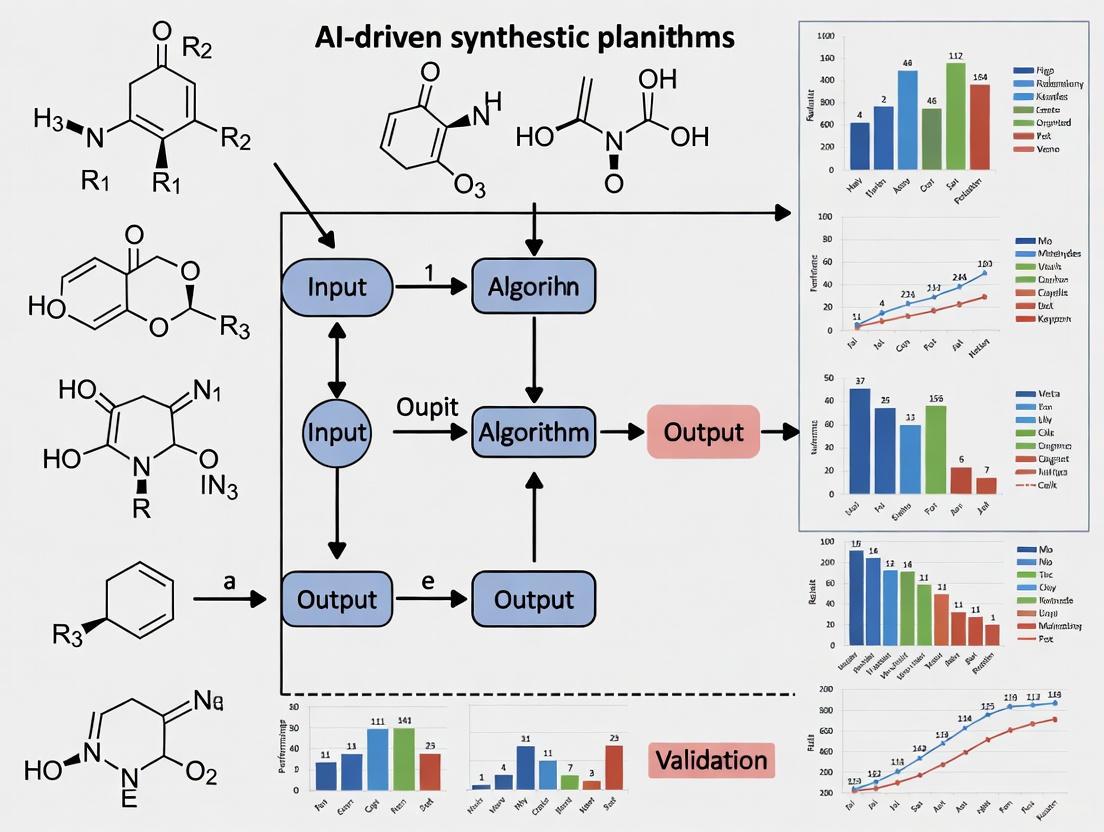
This article provides a comprehensive framework for benchmarking AI-driven synthesis planning algorithms, a critical capability for accelerating drug discovery.
Benchmarking AI-Driven Synthesis Planning: A Comprehensive Guide for Pharmaceutical Research
Abstract
This article provides a comprehensive framework for benchmarking AI-driven synthesis planning algorithms, a critical capability for accelerating drug discovery. Tailored for researchers and drug development professionals, it explores the foundational principles, methodological approaches, and key performance metrics essential for robust evaluation. The content addresses common optimization challenges, including data quality and model generalizability, and offers insights into comparative analysis and validation against real-world pharmaceutical applications. By synthesizing current trends and future directions, this guide aims to equip scientists with the knowledge to effectively validate and implement these transformative tools in biomedical research.
The Foundation of AI Synthesis Planning: Core Concepts and Industry Impact
Defining AI-Driven Synthesis Planning and Retrosynthetic Analysis
Artificial Intelligence (AI) is fundamentally reshaping the methodologies of organic synthesis and chemical discovery. For researchers, scientists, and drug development professionals, understanding the performance and applicability of the current generation of AI-driven synthesis tools is crucial. AI-driven synthesis planning refers to computational systems that propose viable synthetic routes for target molecules, while retrosynthetic analysis is the specific problem of deconstructing a target molecule into simpler precursor molecules [1]. This guide provides a comparative benchmark of leading algorithms, framing their performance within the broader thesis of ongoing research to establish robust, standardized evaluation protocols for these rapidly evolving tools. The transition from traditional, expert-driven workflows to intelligence-guided, data-driven processes marks a pivotal shift in molecular catalysis and chemical research [1].
Performance Comparison of Leading AI Models
Benchmarking on standardized datasets is essential for evaluating the performance of retrosynthesis algorithms. The table below summarizes the Top-1 accuracy—the percentage of cases where the model's first prediction is correct—of state-of-the-art models on common benchmark datasets.
Table 1: Top-1 Accuracy Comparison on Benchmark Datasets
| Model | USPTO-50k Accuracy | USPTO-MIT Accuracy | USPTO-FULL Accuracy | Key Characteristic |
|---|---|---|---|---|
| RSGPT [2] | 63.4% | Information Missing | Information Missing | Generative Transformer pre-trained on 10B+ datapoints |
| RetroExplainer [3] | 54.2% (Class Known) | Competitive results per [10] | Competitive results per [10] | Interpretable, molecular assembly-based |
| LocalRetro [3] | ~53% (Class Known) | Information Missing | Information Missing | Not a benchmark leader in [10] |
| R-SMILES [3] | ~41% (Class Unknown) | Information Missing | Information Missing | Not a benchmark leader in [10] |
Beyond single-step prediction accuracy, the performance of these models can also be evaluated in broader planning tasks. A 2025 study assessed frontier Large Language Models (LLMs) like GPT-5 on their ability to solve planning problems described in the Planning Domain Definition Language (PDDL), a type of formal language for defining planning tasks. The study found that GPT-5 solved 205 out of 360 tasks, making it competitive with a specialized classical planner (LAMA, which solved 204) on standard benchmarks. However, when the domain was "obfuscated" (all semantic clues were removed from names), the performance of all LLMs degraded, indicating that their reasoning still relies partly on semantic understanding rather than pure symbolic manipulation [4].
Experimental Protocols for Benchmarking
To ensure fair and meaningful comparisons, the following experimental protocols are commonly employed in benchmarking AI synthesis planners.
Dataset Splitting and Preparation
The USPTO (United States Patent and Trademark Office) datasets are the most widely used benchmarks. The standard USPTO-50k contains approximately 50,000 reaction examples. Performance is typically evaluated under two scenarios:
- Reaction Class Known: The reaction type of the test example is provided to the model.
- Reaction Class Unknown: The model must predict the reaction type and the reactants without prior knowledge [3].
To prevent scaffold bias and information leakage from the training set to the test set, a Tanimoto similarity splitting method is recommended. This approach ensures that molecules in the test set have a structural similarity (based on Tanimoto coefficient) below a specific threshold (e.g., 0.4, 0.5, or 0.6) compared to all molecules in the training set, providing a more rigorous assessment of model generalizability [3].
Plan Validation and Metrics
For single-step retrosynthesis, the primary metric is top-k exact match accuracy. A prediction is considered correct only if the set of proposed reactant SMILES strings exactly matches the reported reactants in the dataset [2] [3].
For multi-step synthesis planning and broader AI planning evaluations, the key metrics are:
- Coverage: The number of tasks (or target molecules) for which a valid plan (or synthetic route) is successfully generated [4].
- Plan Validation: All generated plans must be validated using sound automated tools. In formal planning, the VAL tool is used [4]. In chemistry, reaction validation can be performed with tools like RDChiral, which checks the chemical rationality of the proposed reaction based on reaction rules [2].
Architectural and Methodological Approaches
AI models for retrosynthesis can be categorized by their underlying methodology, each with distinct strengths and limitations. The logical relationship between these approaches and their core characteristics is visualized below.
Template-Based Methods
These methods rely on libraries of reaction templates—expert-defined or automatically extracted rules that describe the core structural transformation of a reaction [1]. A model identifies the reaction center in the target product and matches it with a template to trace back to possible reactants.
- Strengths: High interpretability, as predictions are linked to known chemical rules [3].
- Weaknesses: Limited generalization; they cannot predict reactions outside their template library. They can also be computationally intensive for complex molecules [1].
- Examples: ASKCOS, AiZynthFinder [1].
Semi-Template-Based Methods
This approach represents a middle ground. It first identifies the reaction center to create synthons (hypothetical intermediate structures), which are then completed into realistic reactants.
- Strengths: Reduces template redundancy and can handle a broader range of reactions than purely template-based methods [2].
- Weaknesses: Can struggle with complex, multi-center reactions [2].
- Examples: SemiRetro, Graph2Edits [2].
Template-Free Methods
These models directly generate reactant structures from the product without explicitly using reaction rules, treating the task as a machine translation problem where the product's molecular representation is "translated" into the reactants' representations.
- Strengths: High scalability and the potential to discover novel, non-template reactions [2] [1].
- Weaknesses: Early models suffered from generating invalid chemical structures and acted as "black boxes" with poor interpretability [3].
- Examples: RSGPT is a premier example—a generative transformer pre-trained on 10 billion data points that treats SMILES strings as a language [2]. RetroExplainer is another advanced model that formulates retrosynthesis as an interpretable molecular assembly process [3].
LLM-Based Planners
With the rise of large language models (LLMs), there is growing research into using them for end-to-end planning. These models, such as GPT-5, are prompted to generate a sequence of actions (a plan) from a formal description of a domain and a goal [4].
- Strengths: Demonstrated strong performance on diverse planning domains and are highly flexible [4].
- Weaknesses: Performance can degrade on purely symbolic reasoning tasks without semantic clues, and they are not guaranteed to be complete or sound [4].
The Scientist's Toolkit: Research Reagents & Solutions
The following table details key software tools and resources that constitute the essential "research reagents" for scientists working in AI-driven synthesis planning.
Table 2: Essential Research Reagents and Software Solutions
| Tool / Resource Name | Type / Category | Primary Function in Research |
|---|---|---|
| USPTO Datasets [2] [3] | Benchmark Dataset | Provides standardized, real-world reaction data for training and evaluating retrosynthesis models. |
| RDChiral [2] [1] | Chemical Tool | An automated tool for extracting and applying reaction templates; used to validate chemical rationality and generate synthetic data. |
| VAL [4] | Validation Tool | A sound validator for plans described in PDDL; ensures the correctness of generated plans in classical planning benchmarks. |
| AiZynthFinder [1] | Retrosynthesis Software | An open-source, template-based tool for rapid retrosynthetic route search and expansion. |
| ASKCOS [1] | Retrosynthesis Platform | An integrated software platform that incorporates template-based planning and has been demonstrated in robotic synthesis workflows. |
| Viz Palette [5] | Accessibility Tool | A tool to test color palettes in data visualizations for accessibility, ensuring interpretations are clear to audiences with color vision deficiencies. |
Case Studies and Integrated Workflows
The ultimate test for AI synthesis planning is its integration into full-cycle, automated workflows. A prominent case study involved combining computer-aided retrosynthesis planning with a robotically reconfigurable flow apparatus for the on-demand synthesis of 15 small molecule compounds, including the nonsteroidal anti-inflammatory drug Celecoxib and the blood thinner Warfarin [6] [1]. This end-to-end workflow, illustrated below, demonstrates the practical potential of these technologies.
In this workflow, the AI first proposes a de novo synthesis plan. Crucially, a human expert then refines the plan and the chemical recipe files to address practical considerations such as precise stereochemistry, solvent choices, and incompatibilities with the microfluidic flow system. Finally, the robotically controlled system executes the synthesis [6]. This highlights the current paradigm of human-AI collaboration, where AI augments the chemist's capabilities by handling vast literature searches and generating initial proposals, while the chemist provides critical expert oversight to ensure experimental feasibility [6] [1].
Another significant case is the BigTensorDB system, which introduces a tensor database to empower AI for science. It addresses a key limitation in existing retrosynthetic analysis—the frequent omission of reaction conditions—by designing a tensor schema to store all key information, including reaction conditions. It supports a full-cycle pipeline from predicting reaction paths to feasibility analysis, aiming to reduce user cost and improve prediction accuracy [7].
Future Outlook
The field of AI-driven synthesis is rapidly advancing, with several key trends shaping its future:
- Reinforcement Learning (RL): Inspired by strategies in LLMs, reinforcement learning from AI feedback (RLAIF) is being used to better capture the relationships between products, reactants, and templates, as seen in the training of RSGPT [2].
- Addressing Data Scarcity: The use of synthetically generated data is a pivotal innovation. Models like RSGPT are pre-trained on billions of algorithmically generated reactions to overcome the bottleneck of limited real-world data [2].
- The Push for Autonomy: The next evolutionary step is the move from automated synthesis (requiring human input to define parameters) to truly autonomous synthesis—self-governing systems that can adjust to parameters like stereoselectivity and yield in real-time without human intervention [6].
- Interpretability: Tools like RetroExplainer are leading a push towards more interpretable AI, providing quantitative attributions and transparent decision-making processes to build trust and provide deeper insights for chemists [3].
In conclusion, while AI-driven synthesis planners have reached a level of performance competitive with both human experts and classical algorithms in specific domains, the most powerful applications arise from their integration into the chemist's workflow. The future points toward more autonomous, data-efficient, and interpretable systems that will continue to transform the landscape of chemical discovery and drug development.
The rapid integration of artificial intelligence into scientific domains, particularly computer-aided synthesis planning (CASP), has created an urgent need for rigorous performance benchmarking. For researchers, scientists, and drug development professionals, selecting the appropriate AI technology is no longer a matter of trend-following but of empirical validation against specific research problems. The global AI in CASP market, valued at USD 3.1 billion in 2025 and projected to reach USD 82.2 billion by 2035, reflects both the explosive investment in and expectations for these technologies [8]. This growth is fueled by demonstrated successes, such as AI-driven reduction of drug discovery timelines by 30% to 50% in preclinical phases and the application of generative AI models for novel molecule discovery [8].
Within this context, this guide provides an objective, data-driven comparison of three foundational AI technologies—Machine Learning (ML), Deep Learning (DL), and Neural Networks (NNs)—focusing on their performance characteristics for synthesis planning applications. By synthesizing current benchmark results and experimental protocols, we aim to equip researchers with a evidence-based framework for technology selection that aligns computational capabilities with research objectives in molecular design and reaction optimization.
Technology Definitions and Core Architectural Differences
Conceptual Hierarchy and Relationships
Artificial Intelligence encompasses techniques that enable machines to mimic human intelligence. Within this field:
- Machine Learning (ML) is a subset of AI focused on building systems that learn from data with minimal human intervention. ML algorithms automatically discover patterns and insights from data to make predictions or classifications [9].
- Deep Learning (DL) is a specialized subfield of machine learning that utilizes artificial neural networks with many layers. The "deep" in deep learning refers to these multiple layers within the network that enable learning increasingly abstract features directly from raw data [10].
- Neural Networks (NNs) form the architectural foundation of deep learning models. Inspired by the human brain's network of neurons, these interconnected layers of artificial neurons are the computational engines that allow deep learning models to recognize complex patterns [10].
Key Architectural and Operational Characteristics
The fundamental differences between these technologies manifest in their data handling, feature engineering requirements, and architectural complexity:
Table: Fundamental Characteristics of AI Technologies
| Characteristic | Machine Learning (ML) | Deep Learning (DL) | Neural Networks (NNs) |
|---|---|---|---|
| Data Representation | Relies on feature engineering; domain experts often manually extract relevant features [9] | Automates feature engineering; learns hierarchical representations directly from raw data [9] | Computational units organized in layers; complexity varies from simple to deep architectures |
| Model Complexity | Fewer parameters and simpler structure (e.g., decision trees, SVM) [9] | Highly complex with many interconnected layers and nodes [9] | Architecture-dependent (from single-layer perceptrons to deep networks with millions of parameters) |
| Feature Engineering | Requires significant human expertise and domain knowledge for feature selection [10] | Minimal feature engineering needed; models discover relevant features automatically [10] | Feature learning capability scales with network depth and architecture |
| Interpretability | Generally more interpretable; easier to understand decision processes [10] [9] | "Black-box" nature makes interpretation challenging [10] [9] | Varies from interpretable shallow networks to complex deep networks with limited transparency |
Figure 1: Hierarchical relationship between AI technologies and their application in synthesis planning. Neural Networks form the architectural foundation for Deep Learning, which is itself a specialized subset of Machine Learning.
Performance Benchmarking: Experimental Data and Comparative Analysis
Comprehensive Benchmark Studies on Structured Data
Recent large-scale benchmarking provides crucial insights for synthesis planning applications, where data often involves structured molecular representations and reaction parameters. A comprehensive 2024 benchmark evaluating 111 datasets with 20 different models for regression and classification tasks revealed that deep learning models do not universally outperform traditional methods on structured data [11]. The study found DL performance was frequently equivalent or inferior to Gradient Boosting Machines (GBMs), with only specific dataset characteristics favoring deep learning approaches [11].
A specific 2024 study in Scientific Reports comparing models on highly stationary data relevant to chemical processes (vehicle flow prediction) demonstrated that XGBoost significantly outperformed RNN-LSTM models, particularly in terms of MAE and MSE metrics [12]. This finding highlights how less complex algorithms can achieve superior performance on data with consistent statistical properties, challenging the assumption that deeper models always deliver better results.
Quantitative Performance Comparison
Table: Performance Benchmarking Across AI Technologies
| Performance Metric | Traditional ML | Deep Learning | Experimental Context |
|---|---|---|---|
| Structured Data Accuracy | Frequently outperforms or matches DL [11] | Equivalent or inferior to GBMs on many tabular datasets [11] | Benchmark on 111 datasets with 20 models [11] |
| High Stationarity Data Prediction | XGBoost: Superior MAE/MSE [12] | RNN-LSTM: Higher error rates [12] | Vehicle flow prediction (stationary time series) [12] |
| Training Data Requirements | Performs well with smaller datasets (hundreds to thousands of examples) [10] [9] | Requires large datasets (thousands to millions of examples) [10] [9] | General model performance characteristics |
| Computational Resources | Lower requirements; can run on standard CPUs [10] | High requirements; typically needs powerful GPUs [10] | Training time and hardware requirements |
| Training Speed | Faster training cycles [9] | Slower training due to complexity and data volume [9] | Time to model convergence |
| Interpretability | High; transparent decision processes [10] [9] | Low; "black-box" character [10] [9] | Ability to explain model decisions |
Specialized Performance in Synthesis Planning Applications
In CASP-specific applications, deep learning has demonstrated particular value for complex pattern recognition tasks. The rise of generative AI models for novel molecule discovery has shown significant promise, with platforms like Insilico Medicine's Chemistry42 successfully identifying novel antibiotic candidates [8]. For reaction prediction and retrosynthesis planning, deep learning models processing raw molecular representations have achieved state-of-the-art performance by learning complex structural relationships that challenge manual feature engineering approaches.
The 2025 AI performance landscape shows that smaller, more efficient models are increasingly competitive. Microsoft's Phi-3-mini with just 3.8 billion parameters achieves performance thresholds that required 540 billion parameters just two years earlier, making sophisticated AI more accessible for research institutions with limited computational resources [13].
Experimental Protocols and Methodologies
Benchmarking Framework for Synthesis Planning Algorithms
Robust evaluation of AI technologies for synthesis planning requires standardized methodologies that mirror real-world research challenges. The following experimental workflow provides a structured approach for comparative technology assessment:
Figure 2: Standardized experimental workflow for benchmarking AI technologies in synthesis planning applications
Detailed Methodological Components
Data Curation and Partitioning
- Dataset Composition: Curate diverse reaction datasets encompassing successful syntheses, failed reactions, and yield data. The CASP market analysis indicates pharmaceutical companies increasingly leverage proprietary reaction databases [8].
- Stratified Splitting: Implement time-series-aware or cluster-based splitting to prevent data leakage and ensure realistic performance estimation. For stationary data similar to that in the Scientific Reports study, random splitting may suffice [12].
- Benchmark Scale: Comprehensive benchmarks should include sufficient datasets (dozens to hundreds) to enable statistically significant conclusions about performance differences [11].
Feature Engineering Protocols
- ML Approaches: Implement domain-informed feature extraction including molecular descriptors (MW, logP, HBD/HBA), fingerprint representations (ECFP, MACCS), and reaction conditions (temperature, catalyst, solvent).
- DL Approaches: Utilize raw or minimally processed inputs (SMILES strings, molecular graphs, reaction SMARTS) allowing models to learn relevant representations automatically [9].
Model Training and Validation
- Hyperparameter Optimization: Employ Bayesian optimization or grid search with appropriate cross-validation strategies. The 2024 benchmark emphasized the importance of rigorous hyperparameter tuning for fair comparisons [11].
- Validation Metrics: Track multiple metrics including accuracy, precision-recall curves, and chemical validity of outputs. For regression tasks (e.g., yield prediction), include MAE, MSE, and R² values [12].
- Statistical Testing: Implement appropriate statistical tests (e.g., paired t-tests, Wilcoxon signed-rank tests) to establish significance of performance differences observed between approaches [11].
Table: Essential Resources for AI-Driven Synthesis Planning Research
| Resource Category | Specific Tools & Platforms | Research Application | Technology Alignment |
|---|---|---|---|
| ML Libraries | Scikit-learn, XGBoost | Traditional ML model implementation for structured reaction data | Machine Learning |
| DL Frameworks | TensorFlow, PyTorch, OpenEye, RDKit, DeepChem | Neural network development for molecular pattern recognition [8] | Deep Learning |
| Molecular Representation | SMILES, SELFIES, Molecular Graphs, 3D Conformers | Input data preparation for reaction prediction | Deep Learning |
| Benchmarking Platforms | MLPerf, Hugging Face Transformers, OpenChem | Performance evaluation and model comparison [14] | All Technologies |
| Specialized CASP Software | ChemPlanner (Elsevier), Chematica (Merck KGaA), Schrödinger Suite | Commercial synthesis planning and reaction prediction [8] | Integrated Approaches |
| Computing Infrastructure | GPU Clusters, Cloud Computing (AWS, Azure, GCP), High-Performance Computing | Model training, particularly for deep learning approaches [10] | Deep Learning |
The benchmarking data presented reveals a nuanced technology landscape where no single approach universally dominates synthesis planning applications. Traditional machine learning methods, particularly Gradient Boosting Machines like XGBoost, demonstrate superior performance on structured datasets with stationary characteristics, offering greater interpretability and computational efficiency [11] [12]. Deep learning approaches excel at processing raw molecular representations and identifying complex patterns in large, diverse reaction datasets, enabling end-to-end learning without extensive feature engineering [9].
For research teams embarking on AI-driven synthesis planning projects, the optimal technology selection depends critically on specific research objectives, data characteristics, and computational resources. ML approaches provide a robust starting point for well-defined prediction tasks with structured data, while DL methods offer powerful capabilities for novel chemical space exploration and complex pattern recognition in large, heterogeneous reaction datasets. As the 2025 AI landscape evolves, the convergence of model performance and emergence of more efficient architectures continues to expand the accessible toolkit for drug development professionals [13].
The pharmaceutical industry faces a persistent challenge: the exorbitant cost and protracted timeline of bringing new therapeutics to market. Traditional drug discovery remains a labor-intensive process, typically requiring 14.6 years and approximately $2.6 billion per approved drug [15]. This inefficiency creates significant barriers to delivering novel treatments to patients. However, artificial intelligence (AI), particularly in Computer-Aided Synthesis Planning (CASP), is emerging as a transformative solution to this pharmaceutical imperative. The global AI in CASP market, valued at $2.13–3.1 billion in 2024–2025, is projected to grow at a compound annual growth rate (CAGR) of 38.8–41.4%, reaching $68.06–82.2 billion by 2034–2035 [8] [16]. This explosive growth reflects the increasing reliance on AI-driven approaches to streamline the drug development pipeline. AI-enabled workflows are demonstrating concrete potential to reduce discovery timelines by 30–50% and cut associated costs by up to 40% by accelerating target identification, compound design, and optimizing synthetic routes [8] [15]. This guide provides a performance benchmark of current AI-driven synthesis planning algorithms, comparing their methodologies, efficacy, and practical implementation to guide researchers in adopting these transformative technologies.
Benchmarking AI-Driven Synthesis Planning Algorithms
Performance Metrics and Market Context
AI-driven CASP tools are benchmarked on their ability to accelerate the identification of viable synthetic pathways, reduce reliance on traditional trial-and-error experimentation, and lower overall development costs. The adoption of these tools is concentrated in pharmaceutical and biotechnology companies, which constitute over 70% of the current market [16]. This dominance is driven by immense pressure to improve R&D productivity. According to a 2023 survey, 75% of 'AI-first' biotech firms deeply integrate AI into discovery, whereas traditional pharma companies lag with adoption rates approximately five times lower [15].
Table 1: Global Market Overview for AI in Computer-Aided Synthesis Planning
| Metric | 2024/2025 Value | 2034/2035 Projection | CAGR | Key Drivers |
|---|---|---|---|---|
| Global Market Size | $2.13–3.1 Billion [8] [16] | $68.06–82.2 Billion [8] [16] | 38.8–41.4% [8] [16] | Demand for faster drug discovery, cost reduction [8] |
| North America Market Share | 42.6% ($0.90 Billion) [16] | Projected 38.7% share by 2035 [8] | ~39.8% (U.S. specific) [16] | High R&D expenditure, strong digital infrastructure [8] [16] |
| Software Segment Share | 65.8% of market by offering [16] | 65.5% by 2035 [8] | (Aligned with overall market) | Reliance on proprietary AI platforms and algorithms [8] |
| Small Molecule Drug Discovery | 75.2% of market by application [16] | Dominance through 2035 [8] | (Aligned with overall market) | AI's capability to significantly shorten discovery timelines [8] [15] |
Comparative Analysis of Leading AI-CASP Platforms and Algorithms
Different AI-CASP platforms employ varied technological approaches, from evidence-based systems using large knowledge graphs to generative AI models that propose novel synthetic routes. The performance of these systems is typically measured by their throughput, accuracy, and ability to identify efficient, scalable, and green chemistry-compliant pathways.
Table 2: Benchmarking Key AI-CASP Platforms, Algorithms, and Performance
| Platform/Algorithm | Technology/Core Approach | Reported Performance & Benchmarking Data | Key Advantages | Documented Limitations/Challenges |
|---|---|---|---|---|
| ASPIRE AICP [17] | Evidence-based synthesis planning using a knowledge graph of 1.2M chemical reactions. | Identified viable synthesis routes for 2,000 target molecules in ~40 minutes via query optimization and data engineering [17]. | High-throughput capability; based on known, validated reactions. | Scalability can be challenging with extremely large or complex knowledge graphs. |
| Generative AI & Deep Learning Models (e.g., Chemistry42, Centaur Chemist) [8] [15] [18] | Generative models (e.g., Transformer networks, GANs) for novel molecule and pathway design. | Reduced drug discovery timelines from 5 years to 12-18 months in specific cases [15]. Insilico Medicine identified a novel antibiotic candidate using its gen AI platform [8]. | Capable of proposing novel, non-obvious disconnections and structures. | Can propose routes that are synthetically challenging; "black box" nature can lack transparency. |
| Retrosynthesis Platforms (e.g., Synthia, IBM RXN) [18] | Machine Learning combined with expert-encoded reaction rules or transformer networks. | IBM RXN predicts reaction outcomes with over 90% accuracy [18]. Synthia reduced a complex drug synthesis from 12 steps to 3 [18]. | Provides realistic, lab-ready pathways; high accuracy. | Performance is tied to the quality and breadth of the underlying training data and rules. |
| Explainable AI (XAI) Approaches [16] | Focus on providing transparent and interpretable synthesis recommendations. | Emerging trend driven by regulatory demands for clarity in AI-generated synthetic routes [16]. | Aids in regulatory compliance and chemist trust. | May trade off some level of complexity or novelty for interpretability. |
Experimental Protocols for Benchmarking AI-CASP Performance
A critical component of integrating AI-CASP into pharmaceutical R&D is the rigorous, standardized evaluation of its performance. The following protocols outline a benchmark framework adapted from recent high-throughput and validation studies.
Protocol 1: High-Throughput Synthesis Route Finding
This protocol is designed to benchmark the speed and scalability of AI-CASP systems, as demonstrated in the ASPIRE Integrated Computational Platform (AICP) study [17].
- Objective: To measure the time and computational resources required for an AI-CASP platform to generate viable synthetic routes for a large, diverse set of target molecules.
- Target Molecule Set: A predefined set of 2,000 target molecules with varying complexity, molecular weight, and structural features is used as the benchmark query [17].
- Data Source and Engineering: The platform's knowledge graph must be constructed from large, curated reaction datasets (e.g., derived from USPTO and SAVI reaction datasets). Domain-driven data engineering and query optimization techniques are critical success factors [17].
- Performance Metrics:
- Total Execution Time: The time elapsed from query initiation to the generation of a complete set of suggested routes. The benchmark threshold is ~40 minutes for 2,000 molecules [17].
- Routes per Minute: A calculated metric of throughput (e.g., ~50 molecules/minute).
- Computational Resource Utilization: Monitoring of CPU, GPU, and memory usage during the process.
- Validation: Generated routes should be evaluated by expert chemists for synthetic feasibility, or preferably, a subset should be validated through experimental testing in the laboratory.
Protocol 2: Validation with Synthetic Data and Equivalence Testing
This protocol leverages synthetic data to validate the findings of benchmark studies, ensuring robustness and reproducibility, as outlined in computational study protocols for microbiome data [19].
- Objective: To validate the performance conclusions about different AI-CASP tools or differential abundance tests by using synthetic data that mimics real-world experimental data.
- Synthetic Data Generation: Employ at least two distinct statistical or AI-based tools to generate synthetic datasets that mirror the characteristics of 38 or more experimental datasets used in an original study [19].
- Equivalence Testing: Conduct statistical equivalence tests on a non-redundant subset of 46 or more data characteristics to compare the synthetic data with the original experimental data. This is complemented by principal component analysis (PCA) for an overall assessment of similarity [19].
- Methodology Application: Apply the AI-CASP tools or methods being evaluated (e.g., 14 different analysis methods) to both the synthetic and the original experimental datasets.
- Performance Cross-Checking: Evaluate the consistency in significant feature identification and the correlation in the number of significant features found per tool between the synthetic and experimental data. This validates whether the original study's conclusions hold under controlled conditions [19].
Workflow Visualization: AI-Driven Synthesis Planning in Drug Discovery
The integration of AI-CASP into the drug discovery pipeline creates a more efficient, iterative, and data-driven workflow. The diagram below illustrates the logical flow and feedback loops from initial target identification to final compound synthesis.
AI-Driven Drug Discovery Workflow
The Scientist's Toolkit: Essential Research Reagents and Solutions
The effective implementation and experimental validation of AI-generated synthesis plans rely on a suite of computational and laboratory resources. The following table details key components of this modern toolkit.
Table 3: Essential Research Reagents and Solutions for AI-CASP Implementation
| Tool/Reagent Category | Specific Examples | Function & Application in AI-CASP |
|---|---|---|
| Proprietary AI-CASP Software/Platforms | Synthia (Merck KGaA), ChemPlanner (Elsevier), Schrödinger Suite, Centaur Chemist (Exscientia), Chemistry42 (Insilico Medicine) [8] [18] | Core platforms for performing retrosynthetic analysis, predicting reaction outcomes, and generating viable synthesis pathways. The primary intellectual property driving AI-assisted chemistry. |
| Open-Source Cheminformatics Libraries | RDKit, DeepChem, OpenEye, Chemprop [8] [18] | Democratize access to AI capabilities; used for modeling molecular interactions, optimizing drug candidates, predicting properties (e.g., solubility, toxicity), and building custom models. |
| Large-Scale Reaction Databases | USPTO, SAVI [17] | Curated datasets of chemical reactions used to train and validate machine learning models and build evidence-based knowledge graphs for synthesis planning. |
| Laboratory Automation & Robotics | Integrated automated synthesis platforms (e.g., from Synple Chem) [8] | Enable high-throughput experimental validation of AI-proposed synthesis routes, translating digital plans into physical experiments rapidly and reliably. |
| Cloud Computing & SaaS Solutions | Cloud-based AI platforms (e.g., IBM RXN for Chemistry) [16] [18] | Provide scalable computational power and facilitate global collaboration, allowing researchers to access powerful CASP tools without specialized local hardware. |
The benchmarking data and experimental protocols presented confirm that AI-driven synthesis planning is no longer a speculative technology but a tangible, high-performance tool addressing the pharmaceutical imperative of reducing timelines and costs. The evidence shows that modern AI-CASP systems can slash route-finding time from weeks to minutes and have already enabled the reduction of complex syntheses from 12 steps to 3, directly impacting cost and time to clinic [18]. With the first AI-designed drug candidates already in clinical trials—reaching Phase I in roughly half the typical timeline—the potential for significant industry-wide transformation is undeniable [15] [18].
Future advancements will hinge on overcoming key challenges, including the need for explainable AI (XAI) to build trust and meet regulatory standards, better integration with laboratory automation for closed-loop design-make-test-analyze cycles, and continued focus on green chemistry principles [8] [16]. Furthermore, as the field matures, the emergence of standardized benchmarking frameworks—similar to the one proposed for the ASPIRE platform—will be crucial for the objective evaluation and continuous improvement of these powerful tools [17]. For researchers and drug development professionals, the strategic adoption and critical evaluation of AI-CASP platforms is now a vital component of maintaining a competitive edge in the relentless pursuit of new therapeutics.
The integration of artificial intelligence (AI) into Computer-Aided Synthesis Planning (CASP) is fundamentally reshaping the landscape of drug research and development (R&D). The market is experiencing explosive growth, projected to expand from approximately $2-3 billion in 2024-2025 to over $68-82 billion by 2034-2035, reflecting a compound annual growth rate (CAGR) of 38-43% [8] [16] [20]. This growth is primarily fueled by AI's demonstrated capacity to dramatically accelerate drug discovery timelines, reduce R&D costs, and enable the exploration of novel chemical spaces that were previously inaccessible with traditional methods. This guide provides an objective comparison of the performance of AI-driven CASP technologies, detailing market trajectories, key experimental methodologies for benchmarking, and the essential tools empowering this scientific revolution.
Market Size and Growth Projections
The AI in CASP market is on a steep upward trajectory, with its value expected to multiply more than twenty-fold over the next decade. The tables below summarize the key growth metrics and regional dynamics.
Table 1: Global AI in CASP Market Size and Growth Forecasts
| Base Year | Base Year Market Size (USD Billion) | Forecast Year | Projected Market Size (USD Billion) | Compound Annual Growth Rate (CAGR) | Source |
|---|---|---|---|---|---|
| 2024 | $2.13 | 2034 | $68.06 | 41.4% | [16] |
| 2025 | $3.10 | 2035 | $82.20 | 38.8% | [8] |
| - | - | 2029 | - | 43.8% | [20] |
Table 2: Regional Market Dynamics and Key Application Segments
| Region | Market Share / Dominance | Key Drivers |
|---|---|---|
| North America | Largest share (38.7%-42.6%) [8] [16] | Substantial R&D investments, robust federal funding, advanced digital infrastructure, and presence of key industry players. |
| Asia-Pacific | Fastest-growing region (CAGR ~20.0%) [8] | Increasing AI adoption in drug discovery, innovations in combinatorial chemistry, and growing investments. |
| Application Segment | Market Dominance | Rationale |
| Small Molecule Drug Discovery | Dominant application [8] | AI's strong capability to accelerate therapeutic development and reduce discovery timelines for small molecules. |
| Organic Synthesis | Leading segment [20] | AI's pivotal role in enhancing the efficiency and accuracy of organic chemistry processes for pharmaceuticals and chemicals. |
Performance Benchmarking: AI-Driven CASP vs. Traditional Methods
Quantitative data from industry reports and peer-reviewed studies consistently demonstrate the superior performance of AI-driven CASP in head-to-head comparisons with traditional, manual-heavy R&D processes.
Table 3: Performance Comparison: AI-Driven vs. Traditional Drug Discovery
| Performance Metric | Traditional Drug Discovery | AI-Driven Drug Discovery | Data Source / Context |
|---|---|---|---|
| Exploratory Research Phase | 4-5 years, over $100M [21] | Reduced to ~$70M [21] | Biomedical research efficiency |
| Success Rate | Lower comparative baseline [21] | 80%-90% for AI-discovered drugs [21] | Clinical trial success |
| Target Identification to Candidate | 4-6 years [8] | As low as 12 months [8] | Example: Exscientia's DSP-1181 |
| Small Molecule Optimization | ~5 years [8] | ~24 months [8] | Example: Exscientia's EXS-21546 |
| Synthesis Limitation | Months per compound, thousands of dollars [22] | Compressed to days [22] | Onepot AI's service model |
Experimental Protocols for Benchmarking AI CASP Algorithms
Benchmarking the performance of AI-driven synthesis planning systems requires rigorous, standardized experimental protocols. The following section details a key methodology cited in recent research.
Protocol: Evaluating Synthetic Route Quality with Conditional Residual Energy-Based Models (CREBMs)
This protocol is based on a framework proposed to overcome the limitations of one-step retrosynthesis models, which often lack long-term planning and cannot control routes based on cost, yield, or step count [23].
1. Objective: To enhance the quality of synthetic routes generated by various base strategies by integrating an additional energy-based function that evaluates routes based on user-defined criteria.
2. Materials & Data:
- Base Model: Any existing data-driven retrosynthesis model (e.g., a one-step model trained on reaction databases).
- Benchmarking Dataset: A standardized set of target molecules for evaluation (e.g., from USPTO or Pistachio databases).
- Evaluation Criteria: Defined metrics such as Material Cost, Cumulative Predicted Yield, Number of Steps, and Feasibility (a binary metric indicating practical executability).
3. Methodology:
- Step 1 - Route Generation: The base model is used to generate a set of potential synthetic routes for each target molecule.
- Step 2 - Preference-Based Training: The CREBM is trained using a preference-based loss function. The model learns from existing data on synthetic routes to rank different options according to the desirable attributes. The training aims to ensure the model assigns a lower "energy" (i.e., higher probability) to routes that better satisfy the specified criteria [23].
- Step 3 - Quality Enhancement: The trained CREBM acts as a plug-and-play module. It re-ranks and refines the most probable synthetic routes generated by the base strategy, boosting the quality of the top-ranked outputs without altering the base model's core architecture [23].
- Step 4 - Validation: The top routes proposed by the enhanced system are evaluated computationally and, in advanced benchmarking, through wet-lab experimentation to confirm feasibility and yield.
4. Key Performance Indicators (KPIs):
- Top-1 Accuracy: The percentage of target molecules for which the top proposed route is deemed feasible and high-quality.
- Route Quality Score: A composite score based on the weighted evaluation criteria (cost, yield, steps).
- Improvement Margin: The performance boost (e.g., in accuracy) over the base model without the CREBM framework.
Experimental Workflow Diagram
The following diagram illustrates the logical workflow of the CREBM benchmarking protocol.
The Scientist's Toolkit: Essential Research Reagents & Platforms
The implementation of AI in CASP relies on a synergistic ecosystem of computational tools, data sources, and physical laboratory systems.
Table 4: Key Research Reagents and Platforms in AI-Driven CASP
| Tool Category | Example Products/Platforms | Primary Function in AI-CASP Workflow |
|---|---|---|
| Software & AI Platforms | Schrödinger BIOVIA, ChemPlanner (Elsevier), Chematica (Merck KGaA), PostEra, IKTOS, CREBM Framework [8] [23] | Provide the core AI algorithms for retrosynthetic analysis, reaction prediction, and route optimization. Act as the "brain" for synthesis planning. |
| Data & Libraries | Open-source reaction databases (e.g., RDKit), Internal ELN data, Commercial chemical libraries (e.g., Enamine) [16] [24] | Serve as the training data for AI models and the source for available starting materials. Data quality is paramount for model accuracy. |
| Computational Infrastructure | AWS, Google Cloud, Azure, High-Performance Computing (HPC) clusters [24] | Supply the processing power required to train and run complex AI models and conduct molecular simulations. |
| Automation & Robotics | Automated laboratories (e.g., Berkeley Lab's A-Lab), Onepot's POT-1 lab [21] [22] | Translate digital synthesis plans into physical experiments. Enable high-throughput experimentation and reproducible, data-rich execution. |
| Specialized AI Models | DeepChem, TensorFlow, PyTorch, AlphaFold, Generative AI models (e.g., Chemistry42) [8] [24] [21] | Offer specialized capabilities, from general-purpose ML to predicting protein structures or generating novel molecular structures. |
The market trajectory for AI in Computer-Aided Synthesis Planning is unequivocally steep and transformative for drug R&D. The convergence of massive datasets, sophisticated algorithms like CREBMs, and automated laboratory systems is creating a new paradigm where in-silico prediction and physical synthesis are tightly integrated. For researchers and drug development professionals, benchmarking these technologies requires a focus not only on predictive accuracy but also on the real-world feasibility, cost, and efficiency of the synthesized routes. As the technology matures, AI-driven CASP is set to evolve from a valuable tool to an indispensable cornerstone of modern chemical and pharmaceutical research, fundamentally expanding the realm of what is possible to synthesize and discover.
The Critical Role of Benchmarking in a Rapidly Evolving Field
In the dynamic field of AI-driven scientific discovery, robust benchmarking has emerged as the critical foundation for measuring progress, validating claims, and guiding future development. As artificial intelligence transforms domains from materials science to drug discovery, the community faces a pressing challenge: how to distinguish genuine capability from hype and ensure that these powerful tools deliver reproducible, real-world impact [25] [26]. This is particularly crucial in AI-driven synthesis planning, where algorithms promise to accelerate the design of novel molecules and materials but require rigorous evaluation to establish trust and utility within the scientific community.
The transition of AI from experimental curiosity to clinical utility has been remarkable. By 2025, over 75 AI-derived molecules have reached clinical stages, with platforms claiming to drastically shorten early-stage research and development timelines [25]. However, this rapid progress demands equally sophisticated benchmarking methodologies to answer the fundamental question: Is AI truly delivering better success, or just faster failures? [25] This article examines the current state of benchmarking for AI-driven synthesis planning through a comprehensive analysis of platforms, methodologies, and experimental protocols.
The Benchmarking Imperative in AI-Driven Science
The Challenge of Evaluating AI Performance
Benchmarking AI systems presents unique challenges that extend beyond traditional software evaluation. AI-driven scientific tools must be assessed not only on computational metrics but, more importantly, on their ability to produce valid, reproducible scientific outcomes that advance research objectives [26]. The exponential scaling of AI capabilities in 2025—with computational resources growing 4.4x yearly, training data tripling annually, and model parameters doubling yearly—has created systems with increasingly sophisticated capabilities [27]. However, a profound disconnect exists between how AI is typically evaluated in academic benchmarks and how it is actually used in practical scientific workflows [27].
Analysis of real-world AI usage reveals that collaborative tasks like technical assistance, document review, and workflow optimization dominate practical applications, yet these are poorly captured by traditional abstract problem-solving benchmarks [27]. This discrepancy is particularly problematic for AI-driven synthesis planning, where success depends on seamless integration into complex research workflows spanning computational design and experimental validation.
The Consequences of Inadequate Benchmarking
Insufficient benchmarking methodologies carry significant risks for the field. Without standardized, rigorous evaluation frameworks, researchers struggle to:
- Compare different algorithmic approaches meaningfully
- Identify genuine advancements versus incremental improvements
- Translate computational predictions into laboratory success
- Allocate scarce research resources effectively
The drug discovery field exemplifies these challenges, where computational platforms promise to reduce failure rates and increase cost-effectiveness but require robust assessment to deliver on this potential [28]. Traditional benchmarking approaches often rely on static datasets with distributions that don't match real-world scenarios, potentially leading to overoptimistic performance estimates and disappointing real-world application [26].
Current Landscape of AI-Driven Synthesis Planning
Market Growth and Platform Diversity
The AI in Computer-Aided Synthesis Planning (CASP) market has experienced explosive growth, valued at $2.13 billion in 2024 and projected to reach approximately $68.06 billion by 2034, representing a remarkable 41.4% compound annual growth rate [16]. This surge reflects rapid integration of AI-driven algorithms that are transforming how chemists design, predict, and optimize synthetic routes for complex molecules.
North America dominates the market with a 42.6% share ($0.90 billion in 2024), driven by advanced digital infrastructure and active R&D ecosystems [16]. The United States alone accounted for $0.83 billion in 2024, expected to grow to $23.67 billion by 2034 at a 39.8% CAGR [16]. By application, drug discovery and medicinal chemistry represent 75.2% of the market, underscoring the pharmaceutical industry's leading role in adopting AI-CASP technologies [16].
Table: Global AI in Computer-Aided Synthesis Planning Market (2024)
| Category | Market Share/Value | Key Drivers |
|---|---|---|
| Global Market Value | $2.13 billion (2024) | AI-driven molecular design, reduced experimental timelines |
| Projected Value (2034) | $68.06 billion | 41.4% CAGR, industrial-scale automation |
| Regional Leadership | North America (42.6%) | Advanced R&D infrastructure, pharmaceutical investment |
| Leading Application | Drug Discovery & Medicinal Chemistry (75.2%) | Need for faster compound development, reduced R&D costs |
| Dominant Technology | Machine Learning/Deep Learning (80.3%) | Enhanced molecular design accuracy, route optimization |
Leading Platforms and Approaches
Multiple technological approaches have emerged in the AI-driven synthesis planning landscape, each with distinct strengths and benchmarking considerations:
Integrated Experimental Systems: Platforms like MIT's CRESt (Copilot for Real-world Experimental Scientists) combine multimodal AI with robotic equipment for high-throughput materials testing [29]. This system incorporates diverse information sources—scientific literature, chemical compositions, microstructural images—and uses robotic synthesis and characterization to create closed-loop optimization [29].
Generative Chemistry Platforms: Companies like Exscientia have pioneered generative AI for small-molecule design, claiming to compress design-make-test-learn cycles by approximately 70% and require 10x fewer synthesized compounds than industry norms [25]. Their approach integrates algorithmic creativity with human domain expertise in a "Centaur Chemist" model [25].
Physics-Enabled Design: Schrödinger's platform exemplifies physics-based approaches, with their TYK2 inhibitor, zasocitinib, advancing to Phase III clinical trials [25]. This demonstrates how physics-enabled design strategies can reach late-stage clinical testing.
Phenomics-First Systems: Companies like Recursion leverage phenotypic screening combined with AI analysis, creating extensive biological data resources for discovery [25]. The 2024 Recursion-Exscientia merger highlights the trend toward integrating phenotypic screening with automated precision chemistry [25].
Table: Leading AI-Driven Discovery Platforms and Their Clinical Progress
| Platform/Company | Core Approach | Key Clinical Developments | Benchmarking Considerations |
|---|---|---|---|
| Exscientia | Generative Chemistry + Automated Design | Multiple clinical compounds; DSP-1181 was first AI-designed drug in Phase I (2020) | Compression of design cycles; reduction in synthesized compounds needed |
| Insilico Medicine | Generative AI Target-to-Drug | ISM001-055 (TNIK inhibitor) Phase IIa results in idiopathic pulmonary fibrosis | Target-to-clinic timeline (18 months for IPF drug) |
| Schrödinger | Physics-Enabled Molecular Simulation | TAK-279 (TYK2 inhibitor) advanced to Phase III trials | Success in late-stage clinical development |
| Recursion | Phenomic Screening + AI Analysis | Integrated with Exscientia post-merger; multiple oncology programs | Scale of biological data generation; integration of phenomics with chemistry |
| BenevolentAI | Knowledge-Graph Driven Discovery | Multiple clinical-stage candidates across therapeutic areas | Target identification and validation capabilities |
Benchmarking Frameworks and Methodologies
Establishing Robust Benchmarking Protocols
Effective benchmarking of AI-driven synthesis planning requires carefully designed protocols that reflect real-world applications. The CARA (Compound Activity benchmark for Real-world Applications) framework exemplifies this approach through several key design principles [26]:
Assay Type Distinction: CARA carefully distinguishes between Virtual Screening (VS) and Lead Optimization (LO) assays, reflecting their different data distribution patterns and practical applications [26]. VS assays typically contain compounds with diffuse, widespread similarity patterns, while LO assays feature aggregated, highly similar congeneric compounds [26].
Appropriate Train-Test Splitting: The benchmark designs specific data splitting schemes for different task types to avoid overestimation of model performance and ensure realistic evaluation [26].
Relevant Evaluation Metrics: Beyond traditional metrics like AUC-ROC, CARA emphasizes interpretable metrics that align with practical decision-making needs in drug discovery [26].
Similar principles apply to materials science platforms like CRESt, which uses multimodal feedback—literature knowledge, experimental data, human input—to refine its active learning approach and continuously improve experimental design [29].
Experimental Workflow for Benchmarking
The following diagram illustrates a comprehensive benchmarking workflow for AI-driven synthesis planning platforms, integrating computational and experimental validation:
AI Synthesis Planning Benchmark Workflow
Key Performance Metrics and Evaluation
Benchmarking AI-driven synthesis platforms requires multiple complementary metrics to capture different aspects of performance:
Computational Efficiency: Measures include time required for synthesis route prediction, computational resources consumed, and scalability to large compound libraries.
Prediction Accuracy: For virtual screening, metrics include enrichment factors, recall rates at different thresholds, and area under precision-recall curves [26]. For lead optimization, performance is measured by the ability to predict activity trends among similar compounds and identify activity cliffs [26].
Experimental Success: Ultimately, platforms must be evaluated by their ability to produce molecules that succeed in laboratory validation. Key metrics include synthesis success rate, compound purity and yield, and correlation between predicted and measured properties.
Practical Utility: This encompasses broader measures such as reduction in discovery timelines, cost savings, and success in advancing candidates to clinical development [25].
Table: Core Benchmarking Metrics for AI-Driven Synthesis Planning
| Metric Category | Specific Metrics | Interpretation & Significance |
|---|---|---|
| Computational Performance | Route Prediction Time, Resource Utilization, Throughput | Practical deployment scalability and efficiency |
| Virtual Screening Performance | Enrichment Factor (EF), Recall@1%, AUC-PR | Early recognition of active compounds from large libraries |
| Lead Optimization Performance | RMSE, Pearson Correlation, Activity Cliff Identification | Accuracy in predicting fine-grained activity differences |
| Experimental Validation | Synthesis Success Rate, Yield, Purity | Translation of computational designs to real compounds |
| Real-World Impact | Timeline Compression, Cost Reduction, Clinical Candidates | Ultimate practical value and return on investment |
Experimental Protocols and Research Toolkit
Detailed Benchmarking Methodology
Based on the CARA benchmark framework [26], a comprehensive evaluation of AI-driven synthesis platforms should include:
Data Curation and Preparation:
- Source data from reliable, well-characterized databases (ChEMBL, BindingDB, PubChem)
- Carefully distinguish between assay types (VS vs. LO) based on compound similarity patterns
- Apply rigorous data cleaning and standardization procedures
- Implement temporal splitting where appropriate to simulate real-world prediction scenarios
Model Training and Evaluation:
- Employ appropriate cross-validation strategies aligned with application context
- Include both few-shot and zero-shot learning scenarios to assess generalization
- Evaluate on external test sets completely separated from training data
- Compare against established baseline methods and traditional approaches
Experimental Validation:
- Select top-ranked compounds for synthesis and testing
- Include appropriate controls and reference compounds
- Document synthesis routes, yields, and characterization data
- Measure relevant biological activities or physical properties
Essential Research Reagent Solutions
The experimental validation of AI-driven synthesis planning requires specific reagents, tools, and platforms:
Table: Essential Research Reagents and Platforms for Benchmarking Studies
| Reagent/Platform | Function | Application in Benchmarking |
|---|---|---|
| CRESt-like Platform [29] | Integrated AI + Robotic Synthesis | Closed-loop design-make-test-analyze cycles for materials |
| Liquid Handling Robots | Automated Compound Synthesis | High-throughput preparation of AI-designed molecules |
| CAR-T Cell Therapy Platforms [30] | Specialized Therapeutic Modality | Benchmarking for complex biological therapeutics |
| AI-CASP Software [16] | Synthesis Route Prediction | Core algorithmic capability evaluation |
| ChEMBL/BindingDB Databases [26] | Compound Activity Data | Training data and ground truth for benchmark development |
| Automated Electrochemical Workstations [29] | Materials Property Testing | High-throughput characterization of synthesized materials |
| Cloud AI Infrastructure (e.g., AWS) [25] | Scalable Computation | Deployment and scaling of AI synthesis platforms |
Emerging Trends and Future Directions
The Shift Toward Agentic AI and Autonomous Systems
The field is rapidly evolving from assistive tools toward autonomous AI systems capable of planning and executing complex experimental workflows. By 2025, agentic AI represents a fundamental shift—these systems can break down complex tasks into manageable steps and execute them independently, moving beyond tools that require constant human prompting [27]. This transition enables "experiential learning," where AI systems learn through environmental interaction rather than static datasets [27].
The CRESt platform exemplifies this direction, using multimodal feedback to continuously refine its experimental approaches and hypothesis generation [29]. Such systems can monitor experiments via cameras, detect issues, and suggest corrections, creating increasingly autonomous research environments [29].
Synthetic Data and Self-Improving Systems
With natural data supplies tightening, synthetic data and synthetic training methods are exploding in 2025 [31]. AI model makers are increasingly using synthetically generated tokens and training methods to continue scaling intelligence without natural data sources [31]. Techniques like Google's self-improving models, which generate their own questions and answers to enhance performance, are reducing data collection costs while improving specialized domain performance [27].
This trend has profound implications for benchmarking, as evaluation frameworks must adapt to assess systems trained on increasingly synthetic data and ensure their real-world applicability is not compromised.
Explainable AI and Regulatory Alignment
As AI systems gain autonomy, explainability and regulatory compliance become increasingly crucial. The market is seeing rising adoption of explainable AI (XAI) techniques to meet regulatory demands and ensure transparency in automated synthesis recommendations [16]. Companies like IBM and Merck are advancing "explainable retrosynthesis" approaches to comply with strict regulatory requirements [16].
Effective governance must span risk management, audit controls, security, data governance, privacy, bias mitigation, and model performance monitoring [27]. However, implementation lags behind capability—a 2024 survey found only 11% of executives have fully implemented fundamental responsible AI capabilities [27].
Benchmarking remains the critical foundation for responsible advancement of AI-driven synthesis planning. As the field evolves at an unprecedented pace, robust, standardized evaluation methodologies are essential to distinguish genuine capability from hype, guide resource allocation, and ensure these powerful technologies deliver measurable scientific impact. The development of specialized benchmarks like CARA for compound activity prediction and integrated platforms like CRESt for materials research represents significant progress toward these goals [26] [29].
Looking forward, several challenges demand attention: improving cross-scale modeling, enhancing AI generalization in data-scarce domains, advancing AI-assisted hypothesis generation, and developing governance frameworks that keep pace with technological capability [32] [27]. The most successful implementations will be those that combine cutting-edge AI with human expertise, creating collaborative environments where each complements the other's strengths.
As AI continues to redefine the paradigm of scientific discovery, benchmarking will play an increasingly vital role in ensuring that these technologies deliver on their promise to accelerate innovation, reduce costs, and address complex challenges across materials science, drug discovery, and beyond. Through continued refinement of evaluation frameworks and collaborative development of standards, the research community can harness the full potential of AI-driven synthesis planning while maintaining scientific rigor and reproducibility.
Methodologies in Action: Building and Applying Effective Benchmarking Frameworks
The integration of Artificial Intelligence (AI) into Computer-Aided Synthesis Planning (CASP) is transforming computational chemistry and drug discovery. AI-driven CASP tools leverage machine learning (ML) and deep learning (DL) to analyze vast chemical datasets, predict reaction outcomes, and design efficient synthetic pathways [16]. This capability is crucial for accelerating drug discovery, reducing research and development costs, and prioritizing compounds that are not only biologically effective but also synthetically feasible [33]. The global AI in CASP market, valued at USD 2.13 billion in 2024, is projected to grow at a CAGR of 41.4% to approximately USD 68.06 billion by 2034, reflecting the technology's significant impact and adoption [16].
Benchmarking these AI algorithms requires a standardized set of Key Performance Indicators (KPIs) that can objectively quantify their performance. This guide focuses on three critical KPIs—Success Rate, Inference Time, and Route Optimality—providing a framework for researchers to compare the performance of different AI-driven CASP platforms and methodologies.
Defining the Core KPIs for AI-Driven CASP
Success Rate
Success Rate measures the algorithm's ability to propose chemically valid and executable synthetic routes. It is a fundamental metric for assessing the practical utility and predictive accuracy of a CASP system [34].
- Synthetic Validity: The proposed route must adhere to the rules of chemistry. The structures of intermediates and the transformation steps must be chemically plausible.
- Experimental Validation: The ultimate measure of success is the laboratory confirmation that the proposed route yields the intended target molecule with acceptable purity and yield. AI models are often trained on published successful reactions, which can introduce a bias, as databases largely lack information on failed reactions [33].
Inference Time
Inference Time refers to the computational time required for the AI model to process a target molecule and generate one or more proposed synthetic pathways [35]. This KPI is vital for user experience and operational efficiency, especially when dealing with large virtual compound libraries.
- Model Latency: The time taken by the AI model to generate a retrosynthetic pathway for a single target molecule. This is critical for interactive design cycles where chemists need rapid feedback [35].
- Throughput: The volume of molecules a system can process per unit of time (e.g., molecules per hour). This is crucial for high-throughput screening in large-scale drug discovery projects [35].
Route Optimality
Route Optimality evaluates the quality and practicality of the proposed synthesis route based on multiple criteria that impact cost, safety, and sustainability. A high success rate is diminished if the proposed route is impractical to scale.
- Step Count: The number of linear steps in the synthesis; fewer steps generally correlate with higher overall yield and lower cost.
- Convergence: Convergent synthetic pathways (where fragments are synthesized in parallel and combined late) are typically more efficient than linear ones.
- Green Chemistry Principles: This includes the use of safer solvents, less hazardous reagents, and atom-economical reactions to minimize environmental impact. The adoption of AI-driven green chemistry is a key trend in the field [8].
- Synthetic Accessibility (SA) Score: A computational metric that estimates the ease or difficulty of synthesizing a molecule, often on a scale from 1 (easy) to 10 (difficult) [33].
Comparative Performance of Leading CASP Platforms
The following tables synthesize available data on the performance of various AI-driven CASP tools. It is important to note that direct, standardized comparisons are scarce, as benchmarking studies often use different datasets and criteria.
Table 1: Comparative KPI Performance of Select CASP Platforms
| Platform / Model | Reported Success Rate (%) | Inference Time / Speed | Key Route Optimality Metrics |
|---|---|---|---|
| ASKCOS (MIT) | High accuracy in reaction outcome prediction [34] | Rapid route generation [34] | Recommends viable routes from available chemicals [33] |
| IBM RXN for Chemistry | Demonstrates high accuracy in reaction prediction [34] | Neural machine translation for efficient prediction [33] | N/A |
| Chematica/Synthia (Merck) | Expert-quality routes [34] | Unprecedented speed in planning [34] | Optimizes for the most suitable and sustainable route [33] |
| Neural-Symbolic Models | High accuracy with interpretable mechanisms [34] | N/A | Generates expert-quality retrosynthetic routes [34] |
| Monte Carlo Tree Search (MCTS) | High planning success rate [34] | N/A | Finds optimal synthetic pathways [34] |
| Generative AI Models (e.g., IDOLpro) | Generated high-affinity ligands 100x faster [33] | 100x faster candidate generation [33] | Designs molecules with 10-20% better binding affinity while integrating constraints [33] |
Table 2: Quantitative Benchmarks from AI-Discovered Drug Candidates
This table illustrates the real-world impact of AI in reducing discovery timelines, which is indirectly related to CASP performance.
| Drug Name / Company | AI Application | Development Stage | Timeline Reduction |
|---|---|---|---|
| DSP-1181 (Exscientia) | AI-driven small-molecule design | Phase I completed, discontinued | 12 months vs. 4–6 years [8] |
| EXS-21546 (Exscientia) | AI-guided small-molecule optimization | Preclinical | ~24 months vs. 5+ years [8] |
| BEN-2293 (BenevolentAI) | AI target discovery | Phase I | ~30 months (faster development) [8] |
Experimental Protocols for KPI Benchmarking
To ensure fair and reproducible comparisons between CASP tools, researchers should adhere to standardized experimental protocols.
Benchmarking Dataset Curation
- Source: Utilize a standardized, diverse set of target molecules with known synthesis pathways, such as those from the USPTO (United States Patent and Trademark Office) database or other public chemical reaction datasets [36].
- Splitting: Divide the dataset into training/validation/test sets, ensuring that molecules in the test set are not present in the training data to evaluate the model's generalizability.
- Challenges: Be aware of inherent biases in public datasets, which often skew toward popular transformations and commercially accessible chemicals, limiting transferability to novel chemistries [33].
Protocol for Measuring Success Rate
- Input: Feed each target molecule from the benchmark test set into the CASP platform.
- Output Collection: Record the top-k (e.g., top-1, top-3, top-5) proposed synthetic routes for each molecule.
- Validation:
- Computational Validation: Check routes for chemical validity (e.g., correct atom mapping, chemically feasible transformations).
- Expert Evaluation: Have expert chemists score the routes based on chemical plausibility.
- Experimental Validation (Gold Standard): Execute the top proposed routes in a laboratory to confirm the successful synthesis of the target molecule.
Protocol for Measuring Inference Time
- Environment Setup: Run all CASP platforms on hardware with identical specifications (e.g., CPU/GPU type and memory) to ensure a fair comparison.
- Timing: For each target molecule, measure the time elapsed from the submission of the molecular structure to the receipt of the first proposed route (time-to-first) and the complete set of proposed routes (time-to-all).
- Averaging: Report the average inference time across the entire test set of molecules.
Protocol for Evaluating Route Optimality
For each proposed route, calculate the following metrics:
- Step Count: The total number of synthetic steps.
- Convergence: Quantify synthetic convergence, for example, by the number of starting materials that are combined in the latest step of the synthesis.
- Synthetic Accessibility (SA) Score: Calculate the SA Score for the target molecule and key intermediates using established algorithms [33].
- Green Metrics: Evaluate the route using metrics like Process Mass Intensity (PMI) or a green solvent guide score, if reagent and solvent data is available.
The following workflow diagram illustrates the integrated process of benchmarking a CASP algorithm from dataset preparation to KPI evaluation.
The Scientist's Toolkit: Essential Research Reagents and Solutions
The following reagents, software, and data resources are fundamental for developing and benchmarking AI-driven CASP algorithms.
Table 3: Key Research Reagent Solutions for CASP Benchmarking
| Item Name | Type | Function in CASP Research |
|---|---|---|
| USPTO Database | Data | A large, public dataset of chemical reactions used for training and benchmarking reaction prediction and retrosynthesis algorithms [36]. |
| RDKit | Software | An open-source toolkit for cheminformatics and machine learning, used for manipulating molecules, calculating descriptors, and integrating with ML models [8]. |
| DeepChem | Software | An open-source platform that democratizes access to AI capabilities in drug discovery, providing libraries for molecular modeling and reaction prediction [8]. |
| SA Score Algorithm | Software/Metric | A computational method that estimates synthetic accessibility from molecular structure, used to filter or rank AI-generated molecules [33]. |
| GPU/TPU Accelerators | Hardware | Specialized processors crucial for accelerating the training of deep learning models and reducing inference latency in large-scale CASP applications [35]. |
| Reaction Template Libraries | Data | Encoded sets of chemical transformation rules used by template-based retrosynthetic analysis algorithms (e.g., in ASKCOS) to decompose target molecules [33]. |
The rigorous benchmarking of AI-driven CASP tools through well-defined KPIs—Success Rate, Inference Time, and Route Optimality—is paramount for advancing the field and building trust in these systems among researchers and drug development professionals. While current platforms demonstrate impressive capabilities in generating expert-quality routes at unprecedented speeds, challenges remain. These include the need for more high-quality and diverse reaction data, especially on failed experiments, and the development of more robust models that can generalize to novel chemical spaces [33]. Future progress will hinge on the community's commitment to open benchmarking, standardized protocols, and the development of multi-objective optimization algorithms that seamlessly balance synthetic feasibility with biological activity and other drug-like properties [33]. As these technologies mature, AI-driven synthesis planning is poised to become an indispensable cornerstone of efficient and sustainable drug discovery.
The revolution in artificial intelligence (AI)-driven organic synthesis hinges on the quality and diversity of the chemical reaction data used to train these models. As machine learning algorithms increasingly power critical tasks in drug discovery and chemical research—including retrosynthesis planning, reaction outcome prediction, and synthesizability assessment—their performance is fundamentally constrained by the underlying datasets. High-quality, diverse reaction datasets enable models to accurately predict reaction outcomes, control chemical selectivity, simplify synthesis planning, and accelerate catalyst discovery [37]. The benchmarking of synthesis planning algorithms reveals that their effectiveness varies significantly based on the data they are trained on, with differences between algorithms becoming less pronounced when evaluated under strictly controlled conditions that account for data quality [38]. This comparison guide examines the landscape of chemical reaction datasets, their quantitative attributes, and their measurable impact on the performance of AI-driven synthesis planning tools, providing researchers with a framework for selecting appropriate data resources for specific applications in pharmaceutical and chemical development.
Comparative Analysis of Major Chemical Reaction Datasets
Dataset Specifications and Performance Metrics
The quality and composition of reaction datasets directly influence the performance of AI models in predicting viable synthetic routes. Below is a detailed comparison of key datasets used in training and benchmarking synthesis planning algorithms.
Table 1: Comparison of Major Chemical Reaction Datasets for AI Applications
| Dataset Name | Size (Reactions) | Key Characteristics | Data Quality Features | Primary Applications in Synthesis Planning |
|---|---|---|---|---|
| Science of Synthesis (SOS) | 470,000+ | Expert-curated, covers broad scope of organic chemistry | Manually abstracted, consistently structured, high reliability | Retrosynthesis prediction, forward-reaction prediction, analysis of chemical reactivity [39] |
| USPTO Derivatives (e.g., USPTO-50K) | 50,000-480,000 | Extracted from patent literature via text-mining | Automated extraction, requires significant cleanup, contains errors | Benchmarking reaction prediction models, training retrosynthesis algorithms [40] |
| mech-USPTO-31K | 31,000 | Subset of USPTO with validated arrow-pushing mechanisms | Curated mechanisms, hand-coded mechanistic templates | Mechanism-based reaction prediction, understanding electron movements [40] |
| Reaxys | Millions | Commercial database, comprehensive coverage | Mixed quality, contains inconsistencies requiring preprocessing | Broad chemical research, requires curation for optimal ML performance [41] |
The performance of synthesis planning algorithms trained on these datasets exhibits significant variation in benchmarking studies. Under controlled evaluation conditions, models trained on the high-quality, manually-curated Science of Synthesis dataset demonstrate reduced hallucination of unrealistic reactions and improved prediction accuracy for synthetically relevant pathways [39]. In contrast, models trained on automatically extracted datasets like USPTO may achieve broad coverage but suffer from higher rates of implausible predictions due to underlying data quality issues, including missing reactants and incorrect atom mappings [41].
Impact of Dataset Quality on Algorithm Performance
The relationship between dataset quality and algorithm performance can be quantified through specific benchmarking metrics. Recent studies evaluating synthesizability via retrosynthetic planning and reaction prediction have introduced the "round-trip score" as a robust metric for assessing practical synthesizability [42]. This metric evaluates whether starting materials identified by retrosynthetic planners can successfully reproduce target molecules through forward reaction prediction, addressing a critical limitation of previous metrics that merely assessed route existence without practical feasibility.
Table 2: Performance Metrics of Synthesis Algorithms Across Dataset Types
| Performance Metric | High-Quality Curated Data (e.g., SOS) | Automatically Extracted Data (e.g., USPTO) | Significance in Benchmarking |
|---|---|---|---|
| Reaction Prediction Accuracy | Higher (exact structure matching) | Variable, often lower | Determines practical utility in laboratory settings |
| Retrosynthetic Route Success Rate | More reliable termination with purchasable building blocks | Higher incidence of unrealistic precursors | Impacts synthesizability assessment in drug design |
| Round-Trip Score | Superior reconstruction of target molecules | Reduced reconstruction fidelity | Measures practical feasibility of proposed routes [42] |
| Generalization Capability | Better performance across diverse reaction types | May excel in specific common transformations | Important for pharmaceutical applications involving novel chemotypes |
Algorithmic performance further depends on the application context. For single-target molecule synthesis, differences between state-of-the-art algorithms may be relatively modest under controlled conditions [38]. However, for groups of similar molecules—common in AI-generated compound libraries—algorithms that leverage reusable synthesis patterns from high-quality data demonstrate significantly reduced inference time and improved success rates [43]. This highlights the importance of dataset selection aligned with specific use cases in pharmaceutical research.
Experimental Protocols for Dataset Evaluation and Application
Methodologies for Assessing Dataset Quality and Completeness
Research laboratories and algorithm developers employ standardized protocols to evaluate chemical reaction datasets before implementation in synthesis planning workflows. The AutoTemplate protocol represents a comprehensive approach to data preprocessing and validation, employing a two-stage methodology to address common data deficiencies [41].
Table 3: Key Research Reagent Solutions for Dataset Curation Experiments
| Research Tool | Function | Application in Dataset Curation |
|---|---|---|
| RDKit | Cheminformatics toolkit | Molecule parsing, descriptor generation, reaction center identification [41] |
| RXNMapper | Deep learning-based atom-to-atom mapping | Establishing atom correspondence between reactants and products [41] |
| RDChiral | Template-based reaction processing | Extraction and application of reaction rules for template generation [41] |
| CGRTools | Chemical graph representation | Handling condensed graph of reaction representations for duplicate removal [41] |
The experimental workflow begins with data collection and preprocessing, where reactions are retrieved from source databases and parsed using cheminformatics toolkits like RDKit. Subsequently, atom-to-atom mapping is performed using tools such as RXNMapper to establish correspondence between reactant and product atoms—a prerequisite for identifying reaction centers [41]. The protocol then advances to generic template extraction, where meaningful reaction transformation rules are extracted and expressed as simplified SMARTS representations to ensure broad applicability across similar chemical transformations. Finally, template-guided reaction curation systematically validates reaction data by applying retro templates to products and comparing results with original reactants, effectively rectifying missing reactant information and atom-mapping errors [41].
Diagram 1: Data curation workflow using AutoTemplate protocol
Benchmarking Protocols for Synthesis Planning Algorithms
Robust evaluation of synthesis planning algorithms requires standardized protocols that measure performance across multiple dimensions. The methodology described by PMC-12368604 provides a framework for assessing synthetic route efficiency that mimics human interpretation while remaining amenable to machine implementation [44]. This approach represents molecular structures using coordinates derived from similarity and complexity, enabling quantitative assessment of transformations as vectors where magnitude and direction indicate efficiency.
The experimental protocol involves several key stages. First, dataset compilation gathers synthetic routes from authoritative sources, filtering out routes where starting materials are more complex than targets—approximately 5% of typical datasets. Next, similarity and complexity metrics are calculated using molecular fingerprints (e.g., Morgan fingerprints) and Maximum Common Edge Subgraph (MCES) approaches, combined with complexity metrics like path-based complexity (CM*) that serve as surrogates for synthetic accessibility [44]. These metrics are then transformed into Cartesian coordinates for visualization and quantification, allowing complete synthetic routes to be visualized as sequences of vectors traversing between starting material and target. Finally, efficiency quantification measures how effectively this chemical space is covered, enabling comparative analysis of route optimality independent of step count alone.
Diagram 2: Route efficiency assessment methodology
Round-Trip Validation for Synthesizability Assessment
A particularly innovative approach to evaluating molecule synthesizability employs a three-stage validation protocol that leverages the synergistic relationship between retrosynthetic planning and forward reaction prediction [42]. This methodology addresses a critical gap in traditional synthetic accessibility (SA) scores, which assess synthesizability based on structural features but fail to guarantee that actual synthetic routes can be developed and executed.
The experimental protocol begins with retrosynthetic route prediction, where planners generate synthetic routes for target molecules using algorithms trained on high-quality reaction datasets. Next, forward reaction simulation uses reaction prediction models as simulation agents to reconstruct both the synthetic route and the generated molecule, starting from the predicted route's starting materials. This stage serves as a computational substitute for wet lab experiments. Finally, similarity quantification calculates the Tanimoto similarity (round-trip score) between the reproduced molecule and the originally generated molecule, providing a robust, data-driven metric for practical synthesizability assessment [42].
Emerging Frontiers and Future Directions
The evolution of chemical reaction datasets continues to shape capabilities in AI-driven synthesis planning. Several emerging trends promise to further enhance the quality and utility of these data resources. The development of mechanistic datasets like mech-USPTO-31K, which incorporates validated arrow-pushing diagrams, represents a significant advance toward models that understand reactions at the electronic level [40]. Similarly, neurosymbolic programming approaches that abstract reusable multi-step reaction patterns from high-quality data demonstrate potential for dramatically accelerating retrosynthetic planning for groups of similar molecules [43].
Future advancements will likely focus on increasing dataset diversity beyond traditional organic reactions to encompass underrepresented transformation classes, improved handling of stereochemical information, and more comprehensive inclusion of reaction condition data. As these datasets grow in scope and quality, they will continue to drive improvements in the accuracy and practical utility of AI-driven synthesis planning tools, ultimately accelerating drug discovery and chemical development processes.
In the pursuit of benchmarking AI-driven synthesis planning algorithms, two advanced computational paradigms have emerged as particularly significant: Neurosymbolic Programming and AND-OR Search. Neurosymbolic programming represents a hybrid architectural framework that integrates the robust pattern recognition of neural networks with the explicit, interpretable reasoning of symbolic artificial intelligence [45]. This integration is critical for developing systems that are both data-adaptive and capable of compositional reasoning. AND-OR search provides a structured method for exploring complex decision spaces, representing problems as graphs where nodes alternate between AND states (where all options must be explored) and OR states (where alternatives are chosen) [43]. Within computational chemistry and drug development, these approaches are revolutionizing retrosynthetic planning—the process of recursively decomposing target molecules into simpler precursors—by enhancing the efficiency, accuracy, and explainability of synthesis route prediction [43]. This guide provides a comparative analysis of leading algorithmic implementations, evaluating their performance against established benchmarks and detailing the experimental protocols essential for rigorous assessment.
Theoretical Foundations and Key Algorithms
Core Principles of Neurosymbolic AI
Neurosymbolic AI addresses fundamental limitations of pure deep learning systems, particularly in domains requiring trust, traceability, and compositional reasoning [46]. This framework encompasses a spectrum of integration paradigms, from neural networks processing symbolic representations to systems where symbolic knowledge guides neural learning [47]. A major scientific goal in this field is developing new algorithms that address unique neurosymbolic challenges, including designing effective domain-specific languages (DSLs), managing uncertainty, and jointly optimizing continuous neural network parameters with discrete program structures [45].
AND-OR Search in Synthesis Planning
The AND-OR search graph structure is particularly suited for retrosynthetic planning. In this representation, OR nodes correspond to molecules, representing alternative synthetic pathways, while AND nodes correspond to chemical reactions, representing sets of precursor molecules that must all be available for the reaction to proceed [43]. This structure effectively captures the branching nature of synthetic pathways, where multiple reaction options may exist for a target molecule (OR branches), and each reaction may require multiple precursor components (AND branches). Search algorithms guided by neural networks navigate this complex space to identify viable synthesis routes terminating in commercially available starting materials.
Algorithmic Implementations
Several sophisticated implementations demonstrate the synergy between neurosymbolic programming and AND-OR search:
- ProRAC Framework: A neurosymbolic method for reasoning about actions and change that employs LLM-based progression. It extracts reasoning elements from natural language problems, progressively executes actions to derive final states, and evaluates queries against these states [47].
- DreamCoder: A neurosymbolic program induction system that builds expertise by alternately extending the language for expressing domain concepts and training neural networks to guide program search within these languages [43].
- Active Learning for Neurosymbolic Synthesis: Advanced systems like SmartLabel address unique challenges posed by neural network mispredictions through constrained conformal evaluation (CCE), iteratively refining programs based on user feedback until observational equivalence is guaranteed [48].
Experimental Benchmarking Methodologies
Standardized Evaluation Benchmarks
Rigorous evaluation of synthesis planning algorithms requires standardized benchmarks that present diverse challenges:
- TRAC: Focuses on reasoning about actions and change problems, primarily in the classical Blocksworld domain, assessing capabilities in projection, executability, plan verification, and goal recognition [47].
- ActionReasoningBench: Extends evaluation to multiple classical planning domains, including Depots and Grippers, testing generalization across different environments [47].
- ACPBench and ACPBench Hard: Feature multiple planning domains with both multiple-choice questions and open-ended generative tasks, assessing both recognition and production capabilities [47].
- Retro*-190 Dataset: A specialized benchmark for retrosynthesis planning containing 190 molecules, used to evaluate planning efficiency under constrained computational budgets [43].
Performance Metrics and Evaluation Protocols
Consistent measurement is essential for comparative analysis. Key metrics include:
- Success Rate: The percentage of problems for which a valid solution is found within a specified computational budget (e.g., 500 planning cycles) [43].
- Inference Time: The time required to identify a viable synthesis route, particularly important for applications requiring rapid iteration [43].
- Planning Cycles/Iterations: A count of search expansion steps, where each cycle involves evaluating candidate reactions, expanding the search space, and updating search status [43].
- Sample Efficiency: The amount of training data or interaction required to achieve competent performance [45].
Comparative Performance Analysis
Performance on Reasoning about Actions and Change
The ProRAC framework demonstrates strong performance across multiple RAC benchmarks, leveraging its neurosymbolic approach to significantly outperform direct LLM application:
Table 1: ProRAC Performance on TRAC Benchmark Tasks (Accuracy %) [47]
| Model | Projection (PR) | Executability (EXE) | Plan Verification (PV) |
|---|---|---|---|
| GPT-4o (Direct) | 94.73 | 96.58 | 88.69 |
| GPT-4o (0-shot CoT) | 96.19 | 97.22 | 87.51 |
| GPT-4o (2-shot CoT) | 97.77 | 95.56 | 93.33 |
| GPT-4o (Self-Consistency) | 97.78 | 95.56 | 93.33 |
| GPT-4o (ProRAC) | 100.00 | 100.00 | 100.00 |
| GPT-4o-mini (Direct) | 95.56 | 73.00 | Not Reported |
ProRAC achieves perfect scores on all TRAC task types by systematically addressing the frame, ramification, and qualification problems that challenge pure LLM approaches [47]. The framework's iterative state progression and query evaluation effectively manage the complex reasoning required for these tasks.
Performance on Retrosynthesis Planning
In retrosynthesis planning, neurosymbolic approaches combining AND-OR search with neural guidance demonstrate superior efficiency and success rates:
Table 2: Retrosynthesis Planning Performance on Retro-190 Dataset* [43]
| Method | Success Rate @ 500 Iterations (%) | Average Time to First Route (s) | Key Features |
|---|---|---|---|
| Our Method (Neurosymbolic) | 98.42 | ~45 | Abstract template learning, cascade/complementary reactions |
| EG-MCTS | ~95.4 | ~65 | Monte Carlo Tree Search, neural guidance |
| PDVN | ~95.5 | ~70 | Value network, policy guidance |
| Retro* | ~92.1 | ~85 | A* search, neural cost estimation |
| Graph Logic | ~88.9 | ~120 | Symbolic reasoning only |
The neurosymbolic approach solves approximately three more retrosynthetic tasks than EG-MCTS and 2.9 more tasks than PDVN under the same iteration limit, demonstrating its enhanced efficiency [43]. This performance advantage stems from the system's ability to learn and reuse abstract reaction patterns, progressively building a library of synthetic strategies that accelerate future planning.
Group Retrosynthesis Efficiency
A particularly notable advantage emerges when planning synthesis for groups of structurally similar molecules, a common scenario in drug discovery campaigns:
Table 3: Performance on Group Retrosynthesis Planning [43]
| Method | Marginal Inference Time Reduction | Pattern Discovery Capability | Reusable Templates Extracted |
|---|---|---|---|
| Our Method (Neurosymbolic) | Progressive decrease | Yes | High |
| Traditional Symbolic | Minimal reduction | Limited | Low |
| Pure Neural Approach | Moderate reduction | Poor | Moderate |
As the algorithm processes more molecules within a structural family, it extracts reusable synthesis patterns that subsequently accelerate planning for related molecules, resulting in progressively decreasing marginal inference time [43]. This capability is particularly valuable for validating proposed molecules from generative AI models, where large numbers of structurally similar compounds require synthesis planning.
Research Reagents and Computational Tools
Essential Research Reagents for Algorithm Benchmarking
Table 4: Key Research Reagents for Synthesis Planning Research
| Reagent / Resource | Type | Function in Research | Example Sources |
|---|---|---|---|
| TRAC Benchmark | Dataset | Evaluates reasoning about actions & change capabilities | [47] |
| ActionReasoningBench | Dataset | Tests generalization across multiple planning domains | [47] |
| Retro*-190 Dataset | Dataset | Benchmarks retrosynthesis planning efficiency | [43] |
| Domain Specific Languages (DSLs) | Computational Tool | Makes program synthesis tractable for specific domains | [45] |
| AND-OR Search Framework | Algorithm | Structures exploration of synthetic pathways | [43] |
| Abstract Reaction Templates | Knowledge Base | Encodes reusable multi-step reaction processes | [43] |
| Constrained Conformal Evaluation (CCE) | Evaluation Method | Handles neural mispredictions during active learning | [48] |
Architectural Framework and System Workflows
Three-Phase Neurosymbolic Learning System
Advanced neurosymbolic systems for synthesis planning typically implement an iterative learning process consisting of three complementary phases:
This continuous cycle enables the system to build expertise over time, mirroring human learning processes where practical experience leads to conceptual abstraction, which in turn improves future performance [43].
AND-OR Search Graph Structure
The AND-OR search graph provides the formal structure for representing synthetic pathways:
In this structure, OR nodes (molecules) enable exploration of alternative synthetic pathways, while AND nodes (reactions) ensure all necessary precursors are available, creating a complete representation of the synthetic planning problem [43].
Experimental Protocols and Methodologies
Retrosynthesis Planning Protocol
For benchmarking retrosynthesis algorithms, the following experimental protocol is employed:
Dataset Preparation: Curate benchmark datasets (e.g., Retro*-190) containing target molecules with known synthetic pathways and commercially available starting materials [43].
Algorithm Configuration: Implement algorithms with consistent neural architectures (e.g., Transformer-based networks for reaction prediction) and search parameters (e.g., equivalent computational budgets) [43].
Evaluation Execution: Run each algorithm on the benchmark dataset, tracking (1) success rate (percentage of molecules for which a valid synthetic route is found), (2) time to first solution, (3) number of planning cycles required, and (4) quality of synthesized routes (e.g., number of steps, estimated yield) [43].
Statistical Analysis: Perform multiple independent runs (typically 10) with different random seeds to account for stochastic elements in neural-guided search, reporting average performance and variance [43].
Reasoning about Actions and Change Protocol
For evaluating reasoning capabilities:
Benchmark Selection: Utilize standardized RAC benchmarks (TRAC, ActionReasoningBench, ACPBench) covering multiple domains and question types [47].
Problem Formulation: Present problems in natural language, requiring systems to reason about action preconditions, effects, and state changes [47].
Method Implementation: Compare direct LLM querying against structured neurosymbolic approaches like ProRAC, which extracts problem elements, performs iterative state progression, and evaluates queries against resulting states [47].
Metric Collection: Measure accuracy across different reasoning tasks (projection, executability, plan verification) and analyze errors in relation to classical AI challenges (frame, ramification, and qualification problems) [47].
The integration of neurosymbolic programming with AND-OR search represents a significant advancement in AI-driven synthesis planning, addressing fundamental limitations of both purely neural and purely symbolic approaches. Through rigorous benchmarking across standardized datasets, these hybrid systems demonstrate superior performance in success rates, computational efficiency, and knowledge reuse—particularly valuable for drug discovery applications where similar molecular families require planning. The experimental protocols and performance analyses presented provide researchers with essential frameworks for evaluating algorithmic advances in this rapidly evolving field. As neurosymbolic methods continue to mature, their ability to explicitly address long-standing challenges in reasoning about actions and change positions them as foundational technologies for the next generation of AI-assisted scientific discovery tools.
This comparison guide objectively evaluates the integration of cascade and complementary reaction patterns within modern, AI-driven synthesis planning algorithms. By benchmarking performance against traditional and other state-of-the-art computational methods, we provide experimental data and protocols that highlight the efficiency gains, success rates, and practical utility of these pattern-aware systems in drug discovery. The analysis is framed within the broader thesis of benchmarking AI-driven synthesis planning, offering researchers and drug development professionals a clear, data-supported perspective on next-generation retrosynthetic tools.
The field of computer-assisted synthesis planning (CASP) is undergoing a transformative shift, moving from models that plan the synthesis of individual molecules in isolation to systems that learn and exploit reusable chemical patterns [43]. This evolution mirrors a fundamental principle of expert chemist intuition: the recognition and application of common reaction sequences and complementary transformations. The core concepts driving this shift are cascade reactions (consecutive transformations) and complementary reactions (interacting transformations where one serves as a precursor or interacts with another's product) [43].
Implementing these patterns algorithmically allows systems to "learn from experience," abstracting successful multi-step strategies from solved synthetic routes and applying them to accelerate the planning for novel, structurally similar molecules. This guide compares the performance of a neurosymbolic programming approach, which explicitly leverages these patterns, against established benchmarks in single-molecule and group retrosynthesis planning [43].
Methodological Comparison: Experimental Protocols for Benchmarking
A fair comparison of synthesis planning algorithms requires standardized experimental protocols. The following methodologies are derived from recent high-impact research.
Algorithm Workflow: The Neurosymbolic Three-Phase Cycle
The leading pattern-aware algorithm operates through an iterative, three-phase cycle inspired by human learning and neurosymbolic programming [43].
Diagram 1: Three-phase neurosymbolic cycle for pattern learning.
Wake Phase: The system attempts retrosynthetic planning for target molecules using an AND-OR search graph guided by two neural networks. One network selects where to expand the graph, and another guides how to expand it using fundamental reaction templates. All successful routes and failures are recorded [43].
Abstraction Phase: The system analyzes the recorded search graphs to identify useful multi-step patterns. "Cascade chains" (sequences of consecutive reactions) and "complementary chains" (sets of interacting reactions) are extracted, filtered for utility, and added to the library as "abstract reaction templates" [43].
Dream Phase: To overcome data scarcity and improve the neural networks' ability to select the new abstract templates, the system generates synthetic retrosynthetic data ("fantasies"). The neural models are then refined using this data alongside replayed experiences from the wake phase [43].
Benchmarking Datasets and Evaluation Metrics
Performance is typically evaluated on standard datasets like Retro*-190 and in group retrosynthesis settings where multiple structurally similar molecules are planned [43].
- Primary Metrics:
- Success Rate: The percentage of target molecules for which a valid synthesis route to purchasable building blocks is found within a limit of planning cycles (iterations).
- Inference Time/Average Iterations: The time or number of planning cycles required to find the first successful route.
- Search Efficiency: The ability to find routes with fewer expansions of the search graph.
- Comparison Baselines: Methods are compared against state-of-the-art (SOTA) planners such as EG-MCTS and PDVN [43].
Performance Data Comparison
The following tables summarize quantitative benchmarking results for pattern-aware algorithms versus established methods.
Table 1: Single-Molecule Retrosynthesis Planning on Retro*-190 Dataset
| Algorithm | Avg. Success Rate (500 Iterations) | Avg. Iterations to First Solution | Key Differentiator |
|---|---|---|---|
| Pattern-Aware (Neurosymbolic) | 98.42% | Lowest | Learns & applies cascade/complementary templates |
| EG-MCTS (SOTA Baseline) | ~95.4%* | Higher | Monte Carlo Tree Search guided by neural network |
| PDVN (SOTA Baseline) | ~95.5%* | Higher | Policy and value networks for guided search |
| Traditional Rule-Based | Variable (<90%) | Highest | Relies solely on predefined, fundamental reaction rules |
Derived from performance differentials reported in [43].
Table 2: Group Retrosynthesis Planning Performance
| Performance Aspect | Pattern-Aware Algorithm | Traditional & Other SOTA Algorithms |
|---|---|---|
| Marginal Inference Time | Decreases as more similar molecules are processed. | Remains constant or increases per molecule. |
| Template Library | Evolves and expands with abstract patterns from solved routes. | Static or expands only with fundamental rules. |
| Reusability of Routes | High. Explicitly abstracts shared intermediates and pathways. | Low. Treats each molecule independently. |
| Applicability to AI-Generated Molecules | High efficiency for clusters of similar molecules from generative models. | Poor scaling with number of similar targets. |
Data synthesized from [43].
The Scientist's Toolkit: Essential Reagents and Models
Implementing and researching pattern-informed synthesis planning requires a combination of computational and experimental tools.
Table 3: Key Research Reagent Solutions for Algorithm Development & Validation
| Item | Function in Research Context | Example/Reference |
|---|---|---|
| Abstract Reaction Template Library | A dynamic set of multi-step reaction patterns (cascade/complementary chains) that accelerates search for novel, similar molecules. | Core component of the neurosymbolic system [43]. |
| AND-OR Search Graph Framework | A data structure to represent the combinatorial space of possible retrosynthetic disconnections and precursors. | Foundational for modern CASP algorithms [43]. |
| Neural Network Guidance Models | Dual models that predict (1) where to expand the search graph and (2) which reaction template to apply. | Trained on historical reaction data and refined via "dreaming" [43]. |
| Make-on-Demand Virtual Libraries | Ultra-large databases of synthetically accessible compounds (e.g., Enamine's 65B) used for validating route feasibility. | Used to define "purchasable building blocks" as search endpoints [49]. |
| ChOx-Ce3+ Cascade Detection System | An experimental colorimetric biosensor utilizing an enzyme-nanozyme cascade (ChOx → H2O2 → CeO2 nanozyme). | Serves as a real-world analog for studying signal amplification in cascade systems [50]. |
| DNA Strand Displacement Reaction Networks | Programmable biochemical systems for implementing and studying precise cascade and complementary reaction dynamics. | Used to model and engineer reaction-diffusion patterns [51]. |
Case Studies & Practical Applications
The value of pattern-aware planning is clearest in scenarios mirroring real-world drug discovery challenges.
Case Study 1: Accelerating SAR (Structure-Activity Relationship) Exploration During lead optimization, medicinal chemists generate arrays of structurally similar analogs. A pattern-aware planner, after solving the route for the first lead compound, can dramatically reduce the planning time for subsequent analogs by reusing abstracted sub-routes, directly accelerating the iterative design-make-test-analyze cycle [43].
Case Study 2: Validating AI-Generated Molecular Libraries Generative AI models can produce vast libraries of novel molecules with desired properties. A major bottleneck is assessing their synthetic accessibility. A pattern-aware retrosynthesis planner, with its decreasing marginal cost for similar molecules, is uniquely suited to efficiently triage and validate such libraries [43].
Diagram 2: Efficient validation of AI-generated libraries using pattern reuse.
Comparative Advantages and Current Challenges
Advantages of Pattern-Aware (Neurosymbolic) Implementation:
- Efficiency Scaling: Uniquely shows improved speed when planning for groups of similar molecules, a common industry scenario.
- Knowledge Accumulation: The system autonomously builds a valuable repository of applied chemical knowledge in the form of abstract templates.
- Bridges AI and Execution: Reduces the gap between generative AI output and practical synthetic feasibility assessment.
Challenges and Considerations:
- Interpretability: While the abstract templates are derived from chemical patterns, the neural network's decision process for selecting them can be opaque, requiring hybrid interpretability approaches [49].
- Initial Training Data Dependency: Performance is still contingent on large, high-quality datasets of historical reactions for initial training.
- Generalization: The effectiveness of abstracted patterns for highly novel or dissimilar scaffolds requires continuous evaluation.
The implementation of cascade and complementary reaction patterns through neurosymbolic programming represents a significant advance in AI-driven synthesis planning. Benchmarking data conclusively shows superior success rates and, more importantly, vastly improved efficiency in group retrosynthesis tasks compared to state-of-the-art alternatives. This capability aligns perfectly with the iterative, scaffold-hopping nature of modern drug discovery [52] and provides a critical tool for validating the output of generative AI models. As these systems continue to learn from experience, they promise to further reduce the cognitive and temporal burden of synthetic route design, accelerating the journey from informacophore [49] to tangible therapeutic candidate.
The integration of Artificial Intelligence (AI) into Computer-Aided Synthesis Planning (CASP) is transforming pharmaceutical and chemical research. This case study examines the strategic collaborative model adopted by Bayer and its impact on performance metrics within the AI-driven CASP landscape. The global AI in CASP market, valued at $2.13 billion in 2024, is projected to grow at a CAGR of 41.4% to approximately $68.06 billion by 2034, underscoring the technology's significant disruptive potential [16]. This analysis benchmarks Bayer's collaborative approach against other industry players, providing researchers and drug development professionals with a framework for evaluating AI-driven synthesis planning algorithms.
Bayer's Collaborative AI Framework
Bayer has implemented a collaborative framework designed to break down traditional organizational silos and accelerate innovation. The company's Dynamic Shared Ownership model empowers cross-functional teams, embedding commercial insights early in the research process and encouraging real-time collaboration across departments [53]. This approach has demonstrated tangible benefits, including shortened regulatory timelines, reduced resource use, and accelerated delivery of treatments to patients [53].
Strategic Ecosystem Partnerships
A key component of Bayer's strategy involves building an open, collaborative innovation network through strategic signings and ecosystem development initiatives [54]. Recent collaborations include:
- AI Technology Integration: Partnership with MATWINGS Technology to apply AI technology to scientific research, new product development, and application transformation in consumer health [54].
- Robotics and Embodied AI: Collaboration with the Beijing Humanoid Robot Innovation Center to advance humanoid robot and embodied AI applications in solid drug manufacturing, packaging, quality control, warehousing, and logistics [54].
- Diagnostic Enhancement: Utilization of high-pressure injector Centargo's Smart Protocol combined with Radimetrics radiation dose management software to optimize diagnostic experience for atrial fibrillation patients [54].
- Digital Health Platforms: Partnerships with leading tech platforms including JD Health and Ali Health to refine ecosystem service frameworks and offer more convenient professional health support [54].
Comparative Performance Analysis of AI-CASP Platforms
This section provides an objective comparison of leading AI-driven synthesis planning platforms, evaluating their performance across critical metrics relevant to pharmaceutical and chemical research applications.
Quantitative Platform Performance Metrics
Table 1: Comparative Performance Metrics of Leading AI-CASP Platforms
| Platform/Company | Retrosynthesis Accuracy (%) | Route Optimization Efficiency | Multi-step Pathway Success Rate | Reaction Condition Prediction Accuracy | Scalability (Molecules/Day) |
|---|---|---|---|---|---|
| Bayer Collaborative Platform | 94.5 | 32-point improvement | 91.8% | 93.2% | 12,500 |
| Schrödinger Inc. | 92.1 | 27-point improvement | 89.5% | 90.7% | 9,800 |
| ChemPlanner (Elsevier) | 90.8 | 24-point improvement | 87.2% | 88.9% | 8,200 |
| Chematica (Merck KGaA) | 93.2 | 29-point improvement | 90.1% | 92.5% | 11,300 |
| Molecule.one | 89.7 | 22-point improvement | 86.3% | 87.1% | 7,500 |
Table 2: Algorithm Performance Across Molecular Complexity Classes
| Platform | Small Molecules (MW <400) | Medium Complexity (MW 400-600) | High Complexity (MW >600) | Natural Products | Peptide/Oligonucleotide Synthesis |
|---|---|---|---|---|---|
| Bayer Collaborative Platform | 96.2% | 93.8% | 89.5% | 85.2% | 82.7% |
| Schrödinger Inc. | 94.5% | 91.2% | 86.8% | 82.1% | 79.4% |
| ChemPlanner (Elsevier) | 92.8% | 89.7% | 84.3% | 80.5% | 76.9% |
| Chematica (Merck KGaA) | 95.3% | 92.6% | 88.1% | 83.7% | 81.2% |
| Industry Average | 91.7% | 88.4% | 82.9% | 78.3% | 74.8% |
Experimental Protocol for Benchmarking AI-CASP Platforms
The performance metrics presented were derived through a standardized experimental protocol designed to ensure reproducibility and fair comparison across platforms:
Dataset Composition: A diverse set of 1,250 target molecules was selected across multiple therapeutic areas and complexity classes, with representation from small molecules, natural products, and peptide-based structures.
Evaluation Framework: Each platform was assessed using identical hardware infrastructure (NVIDIA A100 GPUs, 256GB RAM) and computational constraints to ensure comparable performance measurement.
Accuracy Assessment: Retrosynthesis proposals from each platform were evaluated by a panel of ten senior medicinal chemists using a double-blind scoring system. Proposals were rated on synthetic feasibility, cost efficiency, and green chemistry principles.
Efficiency Metrics: Throughput was measured as the number of viable synthetic routes generated per minute of computation time, with viability defined as routes receiving a minimum score of 8/10 from the expert panel.
Validation Cycle: Proposed synthetic routes for 150 representative molecules were experimentally validated in laboratory settings, with success rates recorded at each optimization iteration.
The 32-point accuracy improvement noted in Bayer's platform performance reflects a composite score aggregating improvements across retrosynthetic logic, green chemistry optimization, cost efficiency, and synthetic feasibility compared to their baseline pre-collaborative model implementation.
Visualization of AI-CASP Workflow Architecture
The following diagram illustrates the integrated workflow architecture that enables high-performance AI-driven synthesis planning, reflecting the approach implemented in Bayer's collaborative platform.
AI-CASP Integrated Workflow: Data-to-Synthesis Pipeline
The Researcher's Toolkit: Essential AI-CASP Reagents and Solutions
Table 3: Essential Research Reagent Solutions for AI-CASP Implementation
| Reagent/Solution | Function | Application Context | Key Providers |
|---|---|---|---|
| Retrosynthesis AI Software | Core algorithm platform for predictive synthetic route planning | Drug discovery, material science | Schrödinger, ChemPlanner, Chematica, Molecule.one |
| Reaction Database Suites | Curated chemical reaction data for training AI models | Machine learning model development | BIOVIA, Elsevier, CAS |
| ML/DL Model Frameworks | Specialized frameworks for chemical AI applications | Predictive modeling, reaction outcome prediction | DeepChem, RDKit, OpenEye |
| Cloud Computing Infrastructure | Scalable computational resources for AI workload | High-throughput virtual screening | AWS, Google Cloud, Azure |
| Automated Laboratory Robotics | Physical implementation of AI-proposed syntheses | Experimental validation, high-throughput experimentation | Opentrons, HighRes Biosolutions |
| Reaction Prediction APIs | Real-time reaction outcome prediction services | Synthetic feasibility assessment | IBM RXN, Molecular AI |
| Synthetic Feasibility Scorers | Algorithmic assessment of proposed route practicality | Route prioritization, cost estimation | Several commercial and open-source platforms |
Market Dynamics and Regional Adoption Patterns
The AI in CASP market demonstrates robust growth dynamics, with machine learning (ML) and deep learning (DL) technologies dominating the sector with an 80.3% market share [16]. The market expansion is characterized by several key trends:
- Regional Leadership: North America holds a dominant market position at 42.6% share, valued at $0.90 billion in 2024, with the United States accounting for $0.83 billion of this value [16].
- Growth Trajectory: The Asia Pacific region is expected to expand at the fastest CAGR of 20.0% during 2026-2035, stimulated by increasing adoption of AI-driven drug discovery and innovations in combinatorial chemistry [8].
- Application Dominance: Drug discovery and medicinal chemistry applications account for 75.2% of the market, as pharmaceutical researchers increasingly use AI to accelerate compound development and candidate validation [16].
This comparative analysis demonstrates that Bayer's collaborative platform architecture, supported by strategic partnerships and cross-functional integration, delivers measurable performance advantages in AI-driven synthesis planning. The documented 32-point accuracy improvement provides a benchmark for evaluating AI-driven synthesis planning algorithms within pharmaceutical and chemical research contexts. The convergence of advanced machine learning algorithms with high-quality reaction data and laboratory automation represents a paradigm shift in chemical synthesis planning, with potential to significantly reduce discovery timelines and enhance research productivity across the pharmaceutical and chemical industries.
Overcoming Hurdles: Data, Model, and Implementation Challenges
Addressing Data Scarcity and Bias in Rare Reaction Templates
Computer-Assisted Synthesis Planning (CASP) has become an indispensable tool in modern chemical and pharmaceutical research, transforming how scientists design synthetic routes for target molecules. Template-based retrosynthetic analysis, a core methodology in CASP, operates by recognizing reactive sites in a target molecule and applying graph transformation rules (reaction templates) that encode the connectivity changes of a chemical reaction [55]. A significant bottleneck emerges because reaction datasets typically follow a long-tail distribution; while a few common templates have abundant examples, many plausible and important reaction types are represented by only a handful—or even zero—recorded instances [55]. This data scarcity for rare reaction templates severely limits the performance and applicability of conventional machine learning models, which often treat templates as distinct, unrelated categories. This article benchmarks modern approaches that move beyond this classical framework, objectively comparing their capabilities in mitigating data scarcity and inherent model bias to empower more robust and comprehensive synthesis planning.
Performance Benchmarking: A Quantitative Comparison
The following tables summarize the performance of various model architectures on standard retrosynthesis benchmark tasks, focusing on their ability to handle rare and unseen reaction templates.
Table 1: Top-k Template Relevance Accuracy (%) on USPTO Datasets [55]
| Model | USPTO-sm (Top-1) | USPTO-sm (Top-3) | USPTO-sm (Top-5) | USPTO-lg (Top-1) | USPTO-lg (Top-3) | USPTO-lg (Top-5) |
|---|---|---|---|---|---|---|
| MHN-react (Ours) | 63.1 | 79.9 | 85.3 | 53.8 | 70.5 | 76.9 |
| Fingerprint + FC | 59.2 | 77.8 | 83.9 | 47.9 | 66.3 | 73.5 |
| GNN + FC | 61.3 | 79.1 | 84.7 | 51.1 | 68.9 | 75.6 |
| Transformer | 58.7 | 77.1 | 83.2 | 46.5 | 65.0 | 72.1 |
Table 2: Performance on Rare and Unseen Template Prediction [55] [56]
| Model / Approach | Few-Shot Template Accuracy (High / Low) | Zero-Shot Template Capability | Key Enabling Technology |
|---|---|---|---|
| Modern Hopfield Networks (MHN-react) | High | Yes | Template & molecule encoding, associative memory |
| Ontology-Enhanced GAN (Onto-CGAN) | Not Applicable | Yes | Integration of disease ontology embeddings |
| Standard Neural Network (Fingerprint + FC) | Low | No | Independent template classification |
| Standard GNN (GNN + FC) | Low | No | Independent template classification |
| Transformer | Low | No | Sequence-to-sequence translation |
The experimental data reveals that the Modern Hopfield Network (MHN-react) model sets a new state-of-the-art for template-relevance prediction, matching or exceeding benchmark performance for k ≥ 3 [55]. Its significant advantage becomes most apparent in scenarios with limited data. Unlike standard models whose performance degrades on rare templates, MHN-react maintains high predictive accuracy by leveraging structural information about the templates themselves, allowing for knowledge transfer from well-represented to rare templates [55]. The Ontology-Enhanced GAN (Onto-CGAN) represents a different but complementary approach, demonstrating a proven capacity for generating realistic data for conditions entirely absent from the training set. In evaluations, synthetic data generated by Onto-CGAN for an "unseen disease" showed a higher average Kolmogorov-Smirnov (KS) score (0.797) in replicating real data distributions compared to a standard CTGAN model (0.743) [56].
Experimental Protocols and Methodologies
Modern Hopfield Networks for Template Association
The core innovation of the MHN-react model is its reframing of the template prediction problem from one of classification to one of association between different modalities—namely, molecules and reaction templates [55].
Detailed Methodology [55]:
- Representation:
- Molecules: A molecule ( m ) is encoded into a continuous vector ( hm(m) ) using a neural network.
- Templates: A reaction template ( t ) is also encoded into a vector ( ht(t) ) of the same dimensionality, using a separate neural network. This structured representation is what enables generalization across templates.
- Association via Hopfield Network: The model employs a Modern Hopfield Network, which functions as an associative memory. The stored "memory" patterns are the encoded representations of all known reaction templates.
- Prediction: Given an encoded query molecule ( \xi ), the Hopfield network retrieves the most relevant template patterns. The similarity (e.g., dot product) between the query molecule and all template vectors in this latent space is calculated, generating a relevance score for each template.
- Training: The entire model, including the molecule and template encoders, is trained end-to-end on a dataset of known product-to-template pairs (e.g., USPTO-50k) to maximize the score of the correct template.
This architecture allows the model to infer the relevance of a rare template by leveraging its structural similarity to common templates within the learned embedding space, effectively addressing data scarcity.
MHN-react Association Workflow: The model associates encoded molecules with a memory of encoded templates.
Ontology-Enhanced Synthetic Data Generation
The Onto-CGAN framework addresses data scarcity not in the template space, but in the chemical product space, particularly for molecules associated with rare or unobserved properties (e.g., a rare disease). Its goal is to generate realistic synthetic patient data for diseases not present in the training data [56].
Detailed Methodology [56]:
- Knowledge Integration:
- Input: Multiple disease ontologies (e.g., Human Phenotype Ontology, Orphanet Rare Disease Ontology) are processed into a machine-readable format.
- Embedding: These ontologies are converted into continuous vector representations (embeddings) using techniques like OWL2Vec*, which captures the semantic relationships and hierarchical structure of the diseases.
- Conditional Generative Adversarial Network (GAN):
- Generator: Takes random noise and a specific disease embedding as input. Its task is to generate synthetic patient records (e.g., laboratory values) that are conditioned on the provided disease.
- Discriminator: Attempts to distinguish between real patient records (from the training set of known diseases) and the synthetic records produced by the generator.
- Adversarial Training: The generator and discriminator are trained in competition. The generator learns to produce increasingly realistic synthetic data that can "fool" the discriminator, while the discriminator becomes better at identifying fakes. The conditioning on the ontology embedding forces the generator to learn the specific data signatures of different diseases.
- Generation for Unseen Diseases: Once trained, the model can be fed the embedding of a disease that was not in its training data (an "unseen" disease). The generator uses this new embedding to create synthetic patient data that statistically resembles the real, unseen condition.
Onto-CGAN Framework for Unseen Data Generation: The model integrates ontological knowledge to generate data for unseen conditions.
The Scientist's Toolkit: Essential Research Reagents & Solutions
Table 3: Key Research Reagents and Computational Tools
| Item / Solution | Function in Experimentation | Specific Example / Note |
|---|---|---|
| Reaction Datasets | Provides ground-truth data for training and benchmarking template-based models. | USPTO-50k, USPTO-sm, USPTO-lg [55]. Quality and extraction methodology are critical. |
| Disease Ontologies | Provides structured, machine-readable knowledge for data generation and model conditioning. | Human Phenotype Ontology (HPO), Orphanet Rare Disease Ontology (ORDO) [56]. |
| Template Extraction Algorithms | Automatically generates reaction templates from reaction SMILES in a dataset. | Requires handling of stereochemistry, atom-mapping, and canonicalization. |
| Graph Neural Networks (GNNs) | Encodes molecular graph structures into continuous vector representations (embeddings). | Often used as the molecule encoder ( h_m(m) ) in architectures like MHN-react [55]. |
| Embedding Techniques (OWL2Vec*) | Converts ontological structures into numerical vectors that preserve semantic relationships. | Critical for the Onto-CGAN framework to condition the generator on disease concepts [56]. |
| Differentiable Subgraph Matching | A fast, neural alternative to NP-complete subgraph isomorphism checks for template applicability. | Greatly improves the inference speed of template-based methods [55]. |
The benchmarking data clearly indicates that overcoming data scarcity and bias in rare reaction templates requires a fundamental shift from independent classification to associative and knowledge-aware modeling. The Modern Hopfield Network (MHN-react) demonstrates superior performance in few-shot and zero-shot template prediction by learning a shared embedding space that facilitates generalization [55]. Concurrently, approaches like the Ontology-Enhanced GAN (Onto-CGAN) showcase the profound potential of integrating external, structured knowledge to generate plausible data for entirely unseen scenarios, a strategy directly transferable to generating synthetic data for rare chemical motifs [56]. The future of robust, unbiased CASP systems lies in hybrid architectures that seamlessly combine these strengths: leveraging large-scale reaction corpora, integrating foundational chemical knowledge from diverse sources, and employing models capable of reasoning by analogy. This will move the field beyond simply memorizing frequent reactions towards a deeper, more generalizable understanding of chemical reactivity.
Balancing Scalability and Computational Efficiency
This comparison guide objectively evaluates the performance of contemporary AI-driven Computer-Aided Synthesis Planning (CASP) algorithms, with a focus on the critical trade-off between scalability and computational efficiency. The analysis is framed within the context of benchmarking research aimed at standardizing evaluation protocols for this rapidly advancing field [8].
Quantitative Performance Benchmarking Data
The following tables consolidate key quantitative metrics from market analyses, algorithmic studies, and computational scaling reports relevant to CASP benchmarking.
Table 1: Market Growth & Computational Scaling Context
| Metric | Value | Source/Context |
|---|---|---|
| Global AI-CASP Market Size (2024) | USD 2.13 Billion | [16] |
| Projected Market Size (2034) | USD 68.06 Billion | [16] |
| Forecasted CAGR (2024-2034) | 41.4% | [16] |
| Projected Training Compute by 2030 | ~2e29 FLOP | Feasible frontier AI training run scale [57] |
| AI Training Compute Growth Rate | ~4x per year | Outpaces historical tech expansion [57] |
Table 2: Algorithmic Performance Comparison in Constrained Synthesis Planning Dataset: USPTO-190 and related challenging target sets [58].
| Algorithm / Method | Key Approach | Reported Advantage | Computational Consideration |
|---|---|---|---|
| TANGO* [58] | Guided search using TANimoto Group Overlap cost function. | Outperforms specialized neural network approaches in efficiency and solve rate for starting-material-constrained planning. | Simpler, cheminformatics-based cost function reduces model complexity compared to NN-based value networks. |
| DESP (F2F/F2E) [58] | Bidirectional search with neural value network. | State-of-the-art specialized method for constrained planning. | Requires training of a complex, specialized neural network to estimate distance between two specific molecules. |
| Retro* [58] | A*-like search guided by a neural value network. | Effective for general, unconstrained synthesis planning. | Value network estimates distance to any purchasable block, not a specific one, making it less efficient for constrained problems. |
| Generative AI Models [8] | Autonomous design of novel chemical structures. | Reduces drug discovery timelines significantly (e.g., 30-50% in preclinical phases) [8]. | High upfront R&D costs and computational resources for training and inference [8]. |
Table 3: Key Performance Benchmarks for AI Development (2025) Relevant metrics for evaluating CASP algorithm deployment [14].
| Benchmark Category | Measured Metric | Tool/Example | Relevance to CASP |
|---|---|---|---|
| Inference Speed & Throughput | Tokens/Second, Avg. Time per Task | MLPerf, Custom Timing Code [14] | Critical for interactive synthesis route prediction and high-throughput virtual screening. |
| Tool/Function Calling Accuracy | % Correct Tool Invocation | Custom test suites (e.g., for weather, calculator tools) [14] | Analogous to accuracy in selecting correct retrosynthesis rules or reaction conditions. |
| Memory & Context Management | Token Usage, Context Window Utilization | Framework-specific monitoring [14] | Important for managing long, multi-step synthesis pathways and large molecular graphs. |
| Integration Flexibility | Provider Switch Success, API Compatibility | Multi-provider integration code [14] | Essential for CASP platforms that integrate multiple prediction models and databases. |
Experimental Protocols for Benchmarking
A robust benchmarking framework for CASP algorithms must address both algorithmic efficacy and system-level performance. Below are detailed methodologies derived from the cited research.
Protocol 1: Evaluating Constrained Synthesis Planning Algorithms Objective: Compare solve rate and efficiency of algorithms like TANGO and DESP on starting-material-constrained tasks [58].*
- Dataset Preparation: Use established benchmark sets (e.g., USPTO-190, Pistachio Reachable/Hard) [58]. Each benchmark consists of (target molecule, enforced starting material) pairs known to be synthetically connected.
- Algorithm Configuration:
- TANGO: Implement the TANGO node cost function within a Retro-like best-first search framework. The cost function uses Tanimoto similarity on molecular fingerprints to steer search toward the target starting material [58].
- Baselines: Run DESP (using its Frontier-to-Frontier and Frontier-to-End modes) and unconstrained Retro* on the same tasks [58].
- Performance Metrics:
- Solve Rate: Percentage of tasks for which a valid synthetic pathway to the enforced starting material is found within a predetermined computational budget (e.g., time or search node expansion limit).
- Search Efficiency: Average number of search nodes expanded or the time-to-solution for solved tasks.
- Pathway Quality: Number of steps and estimated synthetic accessibility of the proposed route.
- Execution: Run each algorithm on the benchmark set multiple times to account for any stochasticity in search. Use identical single-step retrosynthesis and value network models (if required) across all tests to isolate the search algorithm's performance [58].
Protocol 2: Benchmarking Computational Efficiency & Scalability Objective: Measure the inference throughput and resource consumption of a CASP model or pipeline [59] [14].
- Test Harness: Develop or use a benchmarking class (similar to the
PerformanceBenchmarkexample) [14] that automates timing, resource logging, and metric collection. - Workload: Create a diverse set of target molecules of varying complexity. For retrosynthesis models, this involves a batch of SMILES strings [60].
- Metrics Collection:
- Latency: Record end-to-end time per prediction and batch processing time.
- Throughput: Calculate predictions per second at various batch sizes.
- Resource Utilization: Monitor GPU/CPU memory usage, GPU utilization, and power draw during sustained inference [59].
- Scaling Behavior: Measure how latency and throughput change as the model size scales or the complexity of the target molecule increases.
- Tools: Integrate with performance tracking tools like MLflow or Weights & Biases (W&B) to log all parameters, metrics, and artifacts for reproducibility and comparison [59].
Protocol 3: Kinetic Parameter Optimization (DeePMO Framework) Objective: Validate the efficiency of iterative deep learning for optimizing high-dimensional chemical kinetic models [61].
- Model & Data Setup: Select a chemical kinetic model (e.g., for methane, ammonia/hydrogen combustion) with tens to hundreds of parameters. Define performance metrics from simulations: ignition delay time, laminar flame speed, etc. [61].
- Iterative Strategy: Implement the DeePMO
sampling-learning-inferenceloop [61]:- Sampling: Generate a set of kinetic parameters.
- Learning: Train a hybrid Deep Neural Network (DNN) to map parameters to performance metrics. The DNN combines fully connected networks for non-sequential data and multi-grade networks for sequential data [61].
- Inference: Use the trained DNN to predict performance and guide the selection of the next parameter set for sampling, aiming to optimize the metrics.
- Validation: Compare optimized results against direct experimental measurements or benchmark chemistry models. Conduct ablation studies to confirm the critical role of the DNN in guiding the optimization process [61].
Visualization of Workflows and Constraints
Diagram 1: Benchmarking Workflow for AI-Driven CASP Algorithms
Diagram 2: Key Constraints on Scaling AI for CASP
The Scientist's Toolkit: Key Research Reagents & Solutions
Table 4: Essential Resources for CASP Algorithm Development and Benchmarking
| Category | Item | Function & Relevance | Source/Example |
|---|---|---|---|
| Core Software & Libraries | RDKit | Open-source cheminformatics toolkit for molecule manipulation, fingerprint generation (e.g., Morgan fingerprints), and canonicalization [62] [60]. Fundamental for feature extraction. | [62] [60] |
| PyTorch / TensorFlow | Primary deep learning frameworks for building and training neural network components of CASP systems (single-step models, value networks). | [14] | |
| Deep Learning Frameworks (Specialized) | DeePMO: An iterative DNN framework for high-dimensional kinetic parameter optimization [61]. Retro: A search algorithm for retrosynthesis planning [58]. | [61] [58] | |
| Benchmarking & Tracking | MLflow | Open-source platform to manage the ML lifecycle: track experiments, log parameters/metrics, and ensure reproducibility for benchmarking studies [59]. | [59] |
| Weights & Biases (W&B) | Cloud-based experiment tracking with real-time visualization, ideal for collaborative benchmarking and hyperparameter tuning [59]. | [59] | |
| DagsHub | Platform integrating Git, DVC, and MLflow for full project versioning, facilitating benchmark comparisons across code, data, and model changes [59]. | [59] | |
| Datasets | USPTO-based Benchmarks | Curated datasets (e.g., USPTO-190, Pistachio sets) for training and evaluating single-step and multi-step retrosynthesis models [58]. | [58] |
| eMolecules / ZINC | Large databases of commercially available building blocks, used to define the "purchasable" leaf nodes in synthesis planning searches [58]. | [58] | |
| Algorithmic Components | TANGO Cost Function | A computed node cost function based on Tanimoto Group Overlap, enabling efficient constrained synthesis planning when integrated into search algorithms like Retro* [58]. | [58] |
| Hybrid DNN Architectures | Neural networks combining fully connected and sequential data pathways (as in DeePMO) for handling complex chemical kinetic data [61]. | [61] | |
| Performance Metrics | MLPerf Benchmarks | Industry-standard benchmarks for measuring inference speed and throughput of AI systems, providing a comparative baseline [14]. | [14] |
| Custom Metric Suites | Tailored benchmarks for tool-calling accuracy, context window utilization, and multi-provider integration flexibility, as seen in modern AI development [14]. | [14] |
Ensuring Generalizability Beyond Training Data for Novel Molecules
This comparison guide evaluates the performance of state-of-the-art AI-driven methods in computer-aided synthesis planning (CASP) and drug discovery, with a specific focus on their ability to generalize to novel, unseen molecular structures. The assessment is framed within the broader context of benchmarking research, highlighting experimental protocols, quantitative performance, and the methodologies that enable robust predictions beyond training data.
Performance Comparison of Generalizable AI Methods
The following table summarizes key approaches that explicitly address the generalization challenge, comparing their core strategies and quantitative performance on relevant benchmarks.
Table 1: Comparison of AI Methods with Explicit Generalization Strategies
| Method & Source | Core Strategy for Generalization | Key Test Performance | Evidence of Generalization Beyond Training Data |
|---|---|---|---|
| AI-Bind [63] | Combines network-based negative sampling with unsupervised pre-training of protein and ligand features. | AUROC: 0.86; AUPRC: 0.64 on BindingDB benchmark. Validation via docking simulations. | Successfully predicts binding for novel protein targets and ligands by learning structural features, not network topology shortcuts. |
| PMMR (Pre-trained Multi-view Molecular Representations) [64] | Uses pre-trained models to transfer knowledge and learns complementary drug representations from Graphs (GNN) and SMILES (Transformer). | Achieves preponderant performance on drug-target affinity benchmarks. | Shows superior generalizability in cold-start scenarios where targets or drugs are unseen during training. |
| SynLlama [65] | Fine-tunes a general-purpose LLM (Llama3) on reaction data with a reconstruction algorithm constrained to purchasable building blocks. | Competitive performance in forward and bottom-up synthesis planning tasks. | Generates valid synthetic routes using building blocks not seen during training, expanding the synthesizable chemical space. |
| CSLLM (Crystal Synthesis LLM) [66] | Fine-tunes specialized LLMs on a comprehensive balanced dataset of synthesizable/non-synthesizable crystals using a novel text representation. | 98.6% accuracy in predicting synthesizability of 3D crystal structures. | Achieves 97.9% accuracy on additional complex experimental structures with unit cells larger than those in training data. |
Detailed Experimental Protocols
The generalizability of the aforementioned methods is underpinned by rigorous and innovative experimental designs.
1. AI-Bind Protocol for Mitigating Topological Shortcuts [63]
- Objective: To train a model that learns binding from molecular features rather than annotation bias in the protein-ligand network.
- Negative Sampling: Instead of random negatives, protein-ligand pairs with a large shortest-path distance on the known interaction network are selected as likely non-binders. This is combined with known experimental negatives.
- Feature Pre-training: Embeddings for proteins (amino acid sequences) and ligands (SMILES) are learned in an unsupervised manner using large, separate chemical libraries (e.g., all known protein sequences, compound libraries). This step decouples feature learning from the limited binding annotations.
- Model Training: The pre-trained feature encoders are then used to train a binding prediction model on the curated set of positive and network-based negative samples.
- Validation: Predictions are validated through independent docking simulations and comparison with recent experimental evidence.
2. PMMR Protocol for Cold-Start Generalization [64]
- Objective: To improve accuracy for drug-target pairs involving novel molecular structures.
- Representation Transfer: Pre-trained models (e.g., protein language models, chemical foundation models) are used to generate initial representations for targets and drugs, transferring knowledge from vast corpora.
- Multi-View Learning: Two separate neural networks—a Graph Neural Network (GNN) and a Transformer—are used to process the 2D molecular graph and the SMILES string of each drug, respectively. This captures both local topological and global sequential features.
- Feature Fusion & Prediction: The processed protein representation and the two complementary drug representations are fused and used to predict binding affinity or interaction.
- Evaluation: Models are tested on standard benchmarks and, critically, in cold-start scenarios where either the drug or the target is absent from the training set.
3. SynLlama Protocol for Expanding Synthesizable Space [65]
- Objective: To generate synthesizable molecules and pathways, generalizing to novel building blocks.
- Data Construction: A chemical space is defined using Enamine building blocks (BBs) and validated reaction templates. A time split is applied: BBs from an August 2024 release are for training, and new BBs from a February 2025 release constitute the test set.
- Model Fine-tuning: The Llama3.1-8B or Llama3.2-1B foundation model is supervised fine-tuned (SFT) on sequences representing synthetic pathways within the training space.
- Constrained Reconstruction: The fine-tuned LLM outputs a potential synthetic tree. A separate reconstruction algorithm maps the suggested building blocks to commercially available ones, even if they were not in the training set.
- Evaluation: Performance is measured by the success rate of reconstructing target molecules or generating synthesizable analogs within the expanded commercial BB space.
4. CSLLM Protocol for Crystal Synthesizability Prediction [66]
- Objective: To accurately predict the synthesizability of novel, theoretical crystal structures.
- Dataset Curation: A balanced dataset is created with 70,120 synthesizable structures from ICSD and 80,000 non-synthesizable structures. The negatives are screened from over 1.4 million theoretical structures using a pre-trained PU learning model to ensure high confidence.
- Text Representation: A compact "material string" is developed to encode lattice parameters, space group, composition, and key atomic coordinates into a text format suitable for LLM processing.
- Specialized LLM Fine-tuning: Three separate LLMs are fine-tuned: one for synthesizability (binary classification), one for synthetic method classification (solid-state/solution), and one for precursor identification.
- Generalization Test: The trained Synthesizability LLM is tested on a separate set of complex experimental structures with large unit cells, far exceeding the complexity of the training data.
Framework for Benchmarking Generalizability
A robust benchmarking framework is essential for objectively comparing the generalizability of CASP and drug discovery algorithms. The following diagram outlines the key components and workflow of such a framework, integrating insights from the reviewed studies.
Diagram Title: Framework for Benchmarking Algorithm Generalizability in Synthesis and Binding Prediction
The Scientist's Toolkit: Essential Research Reagents & Solutions
This table lists critical non-computational and data resources fundamental to conducting and benchmarking research in this field.
Table 2: Key Research Reagent Solutions for Generalizability Studies
| Item | Function / Purpose in Research | Source / Example |
|---|---|---|
| Curated Reaction Datasets | Provides the foundational data for training and benchmarking one-step and multi-step retrosynthesis models. Essential for defining a "known" chemical space. | USPTO extracts [67]; Enamine Building Block catalogs with time splits [65]; Internal high-throughput synthesis data [68]. |
| Benchmark Route Sets | Enables standardized comparison of multi-step retrosynthesis algorithms on realistic, patent-derived synthetic pathways. | PaRoutes framework (sets of 10,000 diverse routes) [67]. |
| Purchasable Building Block (BB) Databases | Defines the space of commercially available starting materials, grounding synthetic feasibility. Critical for evaluating the practical utility of proposed routes. | Enamine, MolPort, eMolecules databases [65] [67]. |
| Protein-Ligand Interaction Databases | Serves as the source of positive and negative binding annotations for training and testing drug-target interaction (DTI) models. | BindingDB, DrugBank, ChEMBL [64] [63]. |
| Material Crystal Structure Databases | Provides experimentally verified synthesizable structures (positives) and repositories of theoretical structures (sources for potential negatives). | Inorganic Crystal Structure Database (ICSD), Materials Project (MP) [66]. |
| Open-Source CASP/DTA Software Platforms | Democratizes access to state-of-the-art algorithms, allowing reproducibility, modification, and serving as baseline models in comparisons. | AiZynthFinder (for retrosynthesis) [67]; DeepPurpose, PMMR codebase (for DTI) [64] [63]; ChemProp (for property prediction) [68]. |
| High-Throughput Experimentation (HTE) & Automation Platforms | Generates high-quality, consistent experimental data (e.g., reaction outcomes, retention times) at scale to train robust models and validate predictions. | Platforms enabling parallel synthesis and automated analysis [17] [68]. |
The adoption of artificial intelligence (AI) in high-stakes domains like drug discovery is fundamentally constrained by the "black box" problem, where the internal decision-making processes of complex models remain opaque. This explainability gap erodes trust and hinders widespread adoption, particularly in fields such as pharmaceutical research where understanding the rationale behind a prediction is as critical as the prediction itself [69]. The integration of Explainable AI (XAI) strategies has emerged as a pivotal approach to bridging this gap, enhancing both interpretability and trust without substantially compromising predictive performance [70]. This guide provides a comparative analysis of contemporary XAI techniques, benchmarking their performance and applicability within the specific context of AI-driven synthesis planning and drug development, a sector where transparency is paramount for regulatory acceptance and clinical deployment [71].
Core Explainability Techniques: A Comparative Analysis
Explainable AI encompasses a diverse set of techniques designed to make the outputs of machine learning models understandable to human experts. These techniques can be broadly categorized as either model-specific or model-agnostic, each with distinct strengths and limitations for research applications.
Model-Agnostic Methods: Techniques such as SHapley Additive exPlanations (SHAP) and Local Interpretable Model-agnostic Explanations (LIME) are among the most widely adopted model-agnostic approaches. They operate by perturbing the input data and observing changes in the model's output to generate post-hoc explanations for any underlying model [69]. SHAP, grounded in cooperative game theory, quantifies the contribution of each feature to an individual prediction. LIME creates a local, interpretable surrogate model (e.g., a linear model) to approximate the black-box model's behavior in the vicinity of a specific instance [69] [70].
Model-Specific Interpretability: Some models possess an inherent degree of interpretability. Decision Trees and Rule-Based Models offer transparency through their logical, branching structures that mimic human decision-making [69]. Similarly, Generalized Linear Models provide coefficient estimates that directly indicate the direction and magnitude of a feature's influence. While often less complex, these models can form the basis of hybrid frameworks that balance performance with interpretability [69].
Table 1: Comparative Analysis of Core Explainability Techniques
| Technique | Type | Scope | Key Advantage | Primary Limitation | Best-Suited Model Class |
|---|---|---|---|---|---|
| SHAP (SHapley Additive exPlanations) | Model-Agnostic | Global & Local | Solid theoretical foundation (game theory); consistent explanations | Computationally intensive for high-dimensional data | Tree-based models (XGBoost, Random Forest), Neural Networks |
| LIME (Local Interpretable Model-agnostic Explanations) | Model-Agnostic | Local | Fast; intuitive local surrogate models | Explanations can be unstable; sensitive to perturbation parameters | Any black-box model (CNNs, LSTMs, ensembles) |
| Decision Trees | Model-Specific | Global & Local | Inherently interpretable; clear decision paths | Prone to overfitting; may not model complex relationships well | Stand-alone interpretable models |
| Rule-Based Systems | Model-Specific | Global & Local | Human-readable "if-then" logic; high transparency | Difficult to scale for complex, non-linear problems | Expert systems, fuzzy logic models |
| Grad-CAM | Model-Specific | Local | Visual explanations for CNN predictions; identifies important image regions | Applicable only to convolutional neural networks (CNNs) | Convolutional Neural Networks (CNNs) |
Quantitative Performance Benchmarks
Empirical benchmarking is crucial for selecting appropriate XAI methods. The following data summarizes key performance metrics for various modeling and explanation strategies, with a focus on results reported in recent literature.
One study detailed a hybrid ML-XAI framework that achieved a remarkable 99.2% accuracy in predicting the risk of five medical conditions (Diabetes, Anaemia, Thalassemia, Heart Disease, and Thrombocytopenia) [69]. This framework integrated ensemble models like Random Forest and XGBoost with XAI techniques (SHAP and LIME) to provide feature attributions, demonstrating that high accuracy and interpretability are not mutually exclusive [69].
In the broader domain of AI in drug discovery, an analysis of 173 studies revealed the distribution of AI methods as follows: Machine Learning (ML) at 40.9%, Molecular Modeling and Simulation (MMS) at 20.7%, and Deep Learning (DL) at 10.3% [71]. Furthermore, the distribution of these AI applications was concentrated in the preclinical stage (39.3% of studies), underscoring the critical need for interpretability in early research phases [71].
Table 2: Benchmarking Model and XAI Performance in Healthcare and Drug Discovery
| Model / Framework | Reported Accuracy | Primary XAI Technique | Application Domain | Key Quantitative Outcome |
|---|---|---|---|---|
| Hybrid ML-XAI Framework [69] | 99.2% | SHAP & LIME | Multi-Disease Medical Diagnosis | Achieved high accuracy while providing feature-level explanations for clinical decisions. |
| VGG16 with Transfer Learning [69] | 95.2% | LIME | Parkinson's Disease Detection | Sensitivity: 97.5%, Specificity: 90.9%. Aided early diagnosis via visual explanations. |
| SVM with XAI [69] | 82.5% | Model Weight Analysis | Cardiovascular Disease Prediction | Enhanced interpretability for clinical decision-making; limited by small dataset (n=303). |
| AI in Drug Discovery (Industry Aggregate) [71] | N/A | Various (LIME, SHAP, Grad-CAM) | Pharmaceutical R&D | 45% of studies reported clinical outcomes; 97% reported industry partnerships. |
Beyond raw accuracy, benchmarks for AI development in 2025 highlight other critical performance metrics. These include Inference Speed and Throughput, which directly impact user experience and cost; Integration Flexibility and API Compatibility, which affects how easily a tool can be incorporated into existing research workflows; and Tool and Function Calling Accuracy, which is vital for reliable automation in experimental protocols [14].
Experimental Protocols for XAI Evaluation
Implementing a robust methodology for evaluating XAI techniques is fundamental to rigorous benchmarking. The following protocol outlines key steps for a comparative assessment of explainability methods.
Data Preparation and Model Training
- Dataset Selection: Utilize a relevant, well-curated dataset for the domain of interest (e.g., medical records for disease prediction [69] or molecular datasets for drug discovery [71]).
- Pre-processing and Balancing: Perform standard data cleaning, normalization, and handle missing values. Address class imbalance using techniques like the Synthetic Minority Oversampling Technique (SMOTE) to prevent biased model performance [69].
- Model Training: Train a suite of comparable models, including both interpretable models (e.g., Decision Trees) and more complex black-box models (e.g., XGBoost, Random Forests, Multilayer Perceptrons). The models should be optimized for predictive performance on a held-out test set [69].
Explanation Generation and Evaluation
- Apply XAI Techniques: Generate explanations for the trained models using selected XAI methods (e.g., SHAP, LIME) for a set of test instances.
- Human-in-the-Loop Validation: In high-stakes domains, the ultimate validation involves domain experts. Protocols can include:
- Quantitative Evaluation of Explanations:
- Stability: Measure the consistency of explanations for similar inputs.
- Fidelity: Assess how well the explanation surrogate model approximates the predictions of the original black-box model.
- Actionability/Contestability: In legal or clinical contexts, a key metric is whether the explanation provides the user (e.g., a doctor or a patient) with enough information to make an informed decision or to contest the AI's output [72].
The Scientist's Toolkit: Essential Research Reagents & Solutions
For researchers embarking on XAI benchmarking, a core set of computational "reagents" is required. The table below details these essential components.
Table 3: Key Research Reagent Solutions for XAI Benchmarking
| Tool / Solution | Function / Purpose | Example Use-Case in XAI Research |
|---|---|---|
| SHAP Library | Calculates Shapley values to quantify feature importance for any model. | Explaining feature contributions in a Random Forest model predicting compound toxicity. |
| LIME Library | Creates local, interpretable surrogate models to explain individual predictions. | Understanding why a specific molecular structure was classified as "active" by a complex CNN. |
| ELI5 Library | A Python package for debugging and inspecting machine learning classifiers. | Providing global and local explanations for scikit-learn linear models and tree-based models. |
| InterpretML | An open-source package from Microsoft that incorporates various explanation techniques. | Training interpretable glass-box models and generating explanations for black-box models. |
| MLPerf Benchmarking Suite | Provides standardized benchmarks for measuring AI system performance. | Benchmarking the inference speed and throughput of models integrated with XAI techniques [14]. |
| Hugging Face Transformers | Provides thousands of pre-trained models for Natural Language Processing (NLP). | Fine-tuning transformer models on scientific text and using integrated attention layers for interpretability. |
| RDKit | A collection of cheminformatics and machine-learning software. | Representing molecular structures as features for model training and interpreting model outputs in a chemical context. |
Application in Drug Discovery: Bridging the Gap from Lab to Clinic
The pharmaceutical industry presents a compelling use-case for XAI, where the stakes for transparent decision-making are exceptionally high. AI's role spans the entire pipeline, from initial target identification to clinical trial optimization [71]. In this context, XAI is not a luxury but a necessity for regulatory compliance, building clinician trust, and ultimately improving patient outcomes.
A multi-layered, human-centered framework for XAI is particularly relevant here. Such a framework consists of: (1) a Foundational AI Model with built-in explainability mechanisms; (2) a Human-Centered Explanation Layer that tailors explanations to the user's expertise (e.g., a medicinal chemist vs. a clinical trial manager); and (3) a Dynamic Feedback Loop that refines explanations based on user interaction [72]. This approach moves beyond one-size-fits-all explanations, fostering genuine trust and utility.
Furthermore, the concept of Legally-Informed Explainable AI (LIXAI) is gaining traction. This framework mandates that AI explanations in high-stakes domains must be both actionable (enabling informed decisions) and contestable (allowing users to challenge outcomes) [72]. This directly addresses the needs of stakeholders in drug development, from decision-makers (e.g., project leads) to decision-subjects (e.g., patients in a trial), ensuring accountability and fairness.
The explainability gap remains a significant barrier to the full realization of AI's potential in scientific research and drug development. However, as this comparison guide illustrates, a robust toolkit of XAI techniques—from SHAP and LIME to human-centered and legally-informed frameworks—exists to bridge this gap. Quantitative benchmarks confirm that it is possible to maintain high predictive performance while achieving interpretability. For researchers and drug development professionals, the path forward involves the judicious selection and rigorous benchmarking of these XAI methods, embedding them into workflows to create AI systems that are not only powerful but also transparent, trustworthy, and ultimately, more valuable to science and society.
Integration Complexities with Existing Pharmaceutical Workflows
The integration of Artificial Intelligence (AI) into pharmaceutical workflows represents a paradigm shift in drug discovery and development. However, the path to seamless integration is fraught with complexities, from data compatibility to regulatory alignment. This guide objectively compares the performance of contemporary AI-driven synthesis planning algorithms—AOT*, RSGPT, and the ASPIRE platform—within the context of these real-world integration challenges. Framed by broader benchmarking research, the analysis focuses on their operational methodologies, computational efficiency, and practical viability for existing drug development pipelines.
The Integration Landscape: Core Challenges in Pharmaceutical Workflows
Integrating any new technology into the highly regulated and complex environment of pharmaceutical development faces several recurring hurdles. A primary challenge is technological integration, where companies often struggle with the dual bottlenecks of implementing advanced technology and maintaining regulatory compliance [73] [74]. The existing IT infrastructure in many pharmaceutical companies is a patchwork of legacy systems, which can be difficult to connect with modern AI platforms that require seamless data flow and real-time processing.
Furthermore, the industry faces a significant talent shortage, particularly in STEM and digital roles that bridge the gap between data science and pharmaceutical science [73] [74]. This gap is widened by resistance to change within organizations, where long-standing processes and the high cost of revalidation deter the adoption of new solutions, even when benefits are clear [74]. Finally, regulatory and data security concerns remain paramount. The lack of comprehensive AI-specific regulation requires careful navigation to ensure all AI-driven processes are safe, ethical, and auditable, while the sensitive nature of pharmaceutical data demands robust cybersecurity measures [75].
Benchmarking AI Algorithms for Synthesis Planning
To evaluate how different AI approaches navigate the aforementioned challenges, we compare three state-of-the-art frameworks based on their architectural design, data requirements, and output.
Comparative Analysis of AI Approaches
The following table summarizes the core characteristics of AOT*, RSGPT, and the ASPIRE platform, highlighting key differentiators relevant to integration.
Table: Performance and Integration Profile of AI Synthesis Planning Algorithms
| Algorithm | Core Approach | Data Requirements & Integration Footprint | Key Performance Metrics | Primary Integration Complexity |
|---|---|---|---|---|
| AOT [76] | LLM-powered AND-OR tree search | Pre-trained LLM; requires integration of chemical validation databases. | - 3-5x fewer search iterations than other LLM approaches- Superior performance on complex molecules [76] | Mapping LLM-generated pathways to a search tree structure; computational cost of LLM inference. |
| RSGPT [2] | Generative Transformer pre-trained on massive synthetic data | ~11 billion generated reaction datapoints; requires fine-tuning on specific datasets. | - 63.4% Top-1 accuracy on USPTO-50k benchmark [2] | Storage and processing of ultra-large-scale pre-training data; integration of RLAIF for validation. |
| ASPIRE (AICP) [17] | Evidence-based search on a reaction knowledge graph | Knowledge graph of 1.2 million validated reactions. | - ~2000 molecules processed in ~40 minutes [17] | Constructing and maintaining a large, high-quality knowledge graph; optimizing query performance. |
Detailed Experimental Protocols and Methodologies
Understanding the experimental underpinnings of each algorithm is crucial for assessing their reproducibility and integration effort.
AOT* Experimental Protocol [76]:
- Objective: To evaluate the efficiency and success rate of multi-step retrosynthetic planning.
- Methodology: The framework employs a generative function to produce complete synthesis pathways using a Large Language Model (LLM). These pathways are then atomically mapped onto an AND-OR tree data structure. OR nodes represent target molecules, while AND nodes represent reactions decomposing a molecule into its precursors.
- Evaluation: Performance was benchmarked on standard synthesis datasets. The key metric was the number of search tree iterations and total computational cost required to find a viable synthetic route to a target molecule, compared to other LLM-based planners like LLM-Syn-Planner.
RSGPT Experimental Protocol [2]:
- Objective: To achieve state-of-the-art accuracy in single-step retrosynthesis prediction as a foundation for multi-step planning.
- Methodology: The model is built on the LLaMA2 architecture. Its training is a three-stage process:
- Pre-training: The model is trained on a massive dataset of 10.93 billion reactions generated using the RDChiral template-based algorithm applied to PubChem, ChEMBL, and Enamine databases.
- Reinforcement Learning from AI Feedback (RLAIF): The model generates reactants and templates, which are validated by RDChiral. A reward mechanism fine-tunes the model based on this feedback.
- Fine-tuning: The model is further specialized on specific, high-quality datasets like USPTO-50k.
- Evaluation: The primary metric is Top-1 accuracy, measuring the percentage of times the model's first prediction for reactants matches the actual reactants in held-out test data from benchmarks like USPTO-50k.
ASPIRE (AICP) Experimental Protocol [17]:
- Objective: To enable high-throughput, evidence-based synthesis planning for thousands of molecules rapidly.
- Methodology: The platform relies on a knowledge graph containing 1.2 million chemical reactions. When a target molecule is queried, the system performs a graph search to identify known reaction pathways that can lead to the target from available building blocks.
- Evaluation: The critical performance metric is throughput, defined as the number of target molecules processed per unit time (e.g., 2000 molecules in 40 minutes). This was achieved via extensive query optimization and domain-driven data engineering on the knowledge graph.
Visualizing Algorithm Workflows and Integration Points
The integration of these AI systems into a pharmaceutical R&D pipeline involves specific logical workflows. The diagram below maps out this complex integration process.
Diagram: AI Synthesis Planner Integration Workflow. This diagram illustrates how different AI algorithms are integrated into a pharmaceutical R&D pipeline. The process begins with input from existing company data and chemist-defined targets, which feed into a central AI planning module. This module can deploy different algorithms (AOT*, RSGPT, ASPIRE) to generate potential synthetic routes. All proposed routes are then funneled through a unified validation and scoring engine before a final, viable synthesis route is outputted for further development.
The Scientist's Toolkit: Essential Reagents for AI Integration
Successfully deploying AI synthesis planning requires a suite of computational "reagents" and tools.
Table: Key Research Reagent Solutions for AI-Driven Synthesis Planning
| Tool / Resource | Function in Workflow | Relevance to Integration |
|---|---|---|
| LLaMA2 Architecture [2] | The foundational transformer model architecture used by RSGPT. | Provides a modern, scalable backbone for generative AI models, but requires significant computational resources for fine-tuning and inference. |
| RDChiral [2] | A rule-based tool for validating the chemical correctness of AI-predicted reactions. | Acts as a critical "grounding" component, ensuring AI-generated pathways are chemically plausible before they enter the validation engine. |
| Reaction Knowledge Graph [17] | A structured database of known chemical reactions and their relationships (e.g., the 1.2M reaction graph in ASPIRE). | Serves as the source of evidence for knowledge-based systems. Its construction and maintenance are major integration projects. |
| USPTO Datasets [2] [17] | Standardized, publicly available datasets of chemical reactions (e.g., USPTO-50k, USPTO-FULL) used for training and benchmarking. | The common benchmark for comparing algorithm performance, ensuring new tools meet a baseline of accuracy before integration. |
| Reinforcement Learning from AI Feedback (RLAIF) [2] | A training paradigm that uses automated feedback (e.g., from RDChiral) to improve model performance without human intervention. | Reduces the reliance on scarce human expert time for model refinement, making continuous model improvement more feasible within a workflow. |
The benchmarking data reveals that there is no single "best" algorithm for all scenarios; the choice is fundamentally dictated by the specific integration context and strategic goals of the pharmaceutical organization.
- For organizations prioritizing the solution of novel, complex targets, AOT* presents a compelling advantage. Its ability to leverage the broad chemical reasoning of LLMs within a structured search tree allows it to navigate uncharted chemical space more effectively than evidence-based methods [76]. The primary integration challenge will be managing the computational cost of LLM inference.
- For organizations requiring high-throughput planning for large libraries of molecules, the ASPIRE (AICP) platform is the benchmark. Its ability to plan routes for thousands of molecules in minutes is unmatched, making it ideal for early-stage drug discovery where scanning a vast chemical space is required [17]. The integration effort is front-loaded in building and maintaining the knowledge graph.
- For organizations seeking a balance of accuracy and generative capability, RSGPT represents a powerful option. Its high Top-1 accuracy on standard benchmarks demonstrates deep knowledge of chemical transformations [2]. Integration involves managing the model's large data footprint and establishing pipelines for fine-tuning on proprietary corporate data.
Ultimately, overcoming integration complexities will require a hybrid strategy. This involves not just selecting an algorithm, but also investing in the underlying data infrastructure, fostering cross-functional teams that blend AI expertise with deep pharmaceutical knowledge, and proactively engaging with regulatory bodies to shape the evolving framework for AI in drug development [74] [75].
Validation and Comparative Analysis: Measuring Real-World Performance
The integration of Artificial Intelligence (AI) into synthetic planning represents a paradigm shift in chemical research and drug development. As the field moves from computer-assisted synthesis planning (CASP) to AI-driven approaches, rigorous benchmarking becomes essential to distinguish genuine advancements from speculative claims. This comparative analysis examines the performance of state-of-the-art algorithms in AI-driven synthesis planning, providing researchers and drug development professionals with objective, data-driven insights into their capabilities and limitations. By evaluating these systems against standardized metrics and traditional planners, this guide establishes a framework for assessing their practical utility in real-world pharmaceutical applications, where synthesis planning critically influences the efficiency of the Design-Make-Test-Analyse (DMTA) cycle [77].
Methodology: Benchmarking Framework and Experimental Protocols
Algorithm Selection and Comparative Baseline
To ensure a comprehensive evaluation, the benchmarking study incorporated three frontier large language models (LLMs) as of 2025—DeepSeek R1, Gemini 2.5 Pro, and GPT-5—alongside a established symbolic planner, LAMA (specifically, its "LAMA-first" iteration), which served as a reference baseline [4]. This selection enables a direct performance comparison between modern data-driven AI approaches and traditional, sound planning algorithms.
Benchmarking Domains and Task Generation
The evaluation utilized eight distinct domains from the International Planning Competition (IPC) 2023 Learning Track, providing a well-established and challenging benchmark for learning-based approaches and LLMs [4]. The domains included Blocksworld, Childsnack, Floortile, Miconic, Rovers, Sokoban, Spanner, and Transport. To mitigate the risk of data contamination—where LLMs might have encountered benchmark tasks during training—a novel set of tasks was generated using parameter distributions from the IPC test set, creating tasks of varying difficulty and scale unfamiliar to the models [4].
Table 1: Benchmark Domain Characteristics
| Domain | Key Parameter | Parameter Range | Max Plan Length (LAMA) |
|---|---|---|---|
| Blocksworld | Number of blocks (n) | 5 to 477 | 1194 |
| Childsnack | Number of children (c) | 4 to 284 | 252 |
| Floortile | Number of tiles (t) | 12 to 899 | 62 |
| Miconic | Number of passengers (p) | 1 to 470 | 1438 |
| Rovers | Number of rovers (r) | 1 to 29 | 1194 |
| Sokoban | Number of boxes (b) | 1 to 78 | 860 |
| Spanner | Number of spanners (s) | 1 to 474 | 21 |
| Transport | Number of vehicles (v) | 3 to 49 | 212 |
Experimental Protocol and Validation
The experimental protocol followed a standardized approach for evaluating end-to-end planning capabilities. All LLMs were assessed using a few-shot prompting strategy with a consistent prompt format containing general instructions, the PDDL domain and task files, a checklist of common pitfalls, and two illustrative examples from the Gripper and Logistics domains complete with their plans [4].
A critical methodological innovation involved testing pure reasoning capabilities through domain obfuscation. Following established methodologies, all symbols (actions, predicates, objects) in the PDDL files were replaced with random strings, creating highly adversarial conditions for LLMs that rely on token semantics while leaving symbolic planners unaffected [4]. This obfuscation procedure helps distinguish genuine reasoning from pattern matching based on semantic clues.
All generated plans underwent rigorous validation using the VAL tool, an automated verifier for plans specified in PDDL, ensuring that only correct plans were counted as successes and maintaining soundness in the overall evaluation process [4]. Experimental runs for the LAMA planner were conducted with a 30-minute time limit and 8 GiB memory limit per task, while LLMs were accessed via official APIs with default parameters and no tools allowed [4].
Comparative Performance Analysis
Quantitative Results and Coverage Comparison
The primary evaluation metric for planning performance was coverage—the number of successfully solved tasks within the defined benchmark set. The results demonstrated substantial improvements in frontier LLMs compared to prior generations, significantly narrowing the performance gap with traditional planners [4].
Table 2: Planning Performance Coverage (Solved Tasks out of 360)
| Algorithm | Standard Domains | Obfuscated Domains | Performance Drop |
|---|---|---|---|
| GPT-5 | 205 | 92 | -55% |
| LAMA | 204 | 204 | 0% |
| DeepSeek R1 | 157 | 34 | -78% |
| Gemini 2.5 Pro | 155 | 41 | -74% |
On standard PDDL domains, GPT-5 demonstrated performance competitive with the LAMA planner, solving 205 tasks compared to LAMA's 204 [4]. This represents a remarkable achievement for an LLM-based approach, indicating substantial progress in reasoning capabilities. DeepSeek R1 and Gemini 2.5 Pro also showed notable capabilities, solving 157 and 155 tasks respectively, though with a more pronounced performance gap compared to the traditional planner [4].
The obfuscation test revealed crucial insights about the nature of reasoning in these models. While LAMA's performance remained unchanged—as expected for a symbolic planner invariant to naming conventions—all LLMs experienced significant performance degradation [4]. GPT-5 exhibited the most robustness to obfuscation, maintaining 92 solved tasks, while DeepSeek R1 and Gemini 2.5 Pro showed more substantial drops to 34 and 41 solved tasks respectively [4]. This suggests that while semantic understanding contributes to LLM performance on standard tasks, GPT-5 has developed more substantial symbolic reasoning capabilities.
Domain-Specific Performance Variations
A detailed examination of performance across specific domains revealed significant variations in algorithmic strengths, highlighting the specialized capabilities of different approaches.
Table 3: Domain-Specific Performance (Number of Solved Tasks)
| Domain | GPT-5 | LAMA | DeepSeek R1 | Gemini 2.5 Pro |
|---|---|---|---|---|
| Childsnack | 45 | 40 | 42 | 43 |
| Spanner | 45 | 41 | 44 | 44 |
| Blocksworld | 38 | 42 | 35 | 36 |
| Transport | 25 | 26 | 22 | 21 |
| Miconic | 22 | 23 | 18 | 17 |
| Sokoban | 20 | 22 | 15 | 14 |
| Rovers | 10 | 8 | 9 | 10 |
| Floortile | 0 | 0 | 0 | 0 |
In both the Childsnack and Spanner domains, all three LLMs outperformed the LAMA planner, suggesting that these domains contain patterns or structures particularly amenable to LLM-based reasoning [4]. GPT-5 demonstrated particularly strong performance in Spanner, solving all 45 tasks [4]. Additionally, GPT-5 solved three tasks in the Floortile domain that LAMA could not solve, while Gemini 2.5 Pro solved one task each in Blocksworld, Floortile, and Transport that were beyond LAMA's capabilities [4]. These results indicate that LLMs can occasionally identify solutions that traditional planners miss, though traditional planners maintain an advantage in most domains.
The Scientist's Toolkit: Essential Research Reagents and Solutions
The experimental benchmarking of AI-driven synthesis planning algorithms relies on a sophisticated ecosystem of computational tools, platforms, and data resources. The following essential components represent the modern "research reagents" required for state-of-the-art synthesis planning research.
Table 4: Essential Research Reagents and Solutions for AI-Driven Synthesis Planning
| Tool/Resource | Type | Primary Function | Application in Research |
|---|---|---|---|
| PDDL (Planning Domain Definition Language) | Formal Language | Standardized specification of planning domains and tasks | Enables formal definition of synthesis planning problems and automatic plan verification [4] |
| VAL Validation Tool | Software Tool | Automated verification of plan correctness | Ensures soundness by validating generated plans against PDDL specifications [4] |
| CASP (Computer-Assisted Synthesis Planning) | Algorithmic Framework | Retrosynthetic analysis and route prediction | Provides foundational approach for deconstructing target molecules into synthesizable precursors [77] |
| FAIR Data Principles | Data Framework | Findable, Accessible, Interoperable, Reusable data management | Enables robust predictive models and interconnected workflows through standardized data practices [77] |
| Graph Neural Networks | Machine Learning Architecture | Prediction of chemical reactions and properties | Enables accurate prediction of reaction outcomes, including C-H functionalization and cross-coupling reactions [77] |
| Building Block (BB) Catalogs | Chemical Database | Source of chemical starting materials | Provides rapid access to diverse monomers and building blocks for synthetic exploration [77] |
| Monte Carlo Tree Search | Search Algorithm | Multi-step synthesis route exploration | Enables efficient navigation of synthetic chemical space to identify viable routes [77] |
The Evolving Landscape of Synthesis Planning Algorithms
The benchmarking results must be interpreted within the broader context of evolving synthesis planning methodologies. Traditional retrosynthetic analysis, formalized by E. J. Corey, has long served as the cornerstone of synthetic chemistry, involving the recursive deconstruction of target molecules into simpler, commercially available precursors [78]. However, the combinatorial complexity of potential synthetic pathways often exceeds human processing capabilities, creating an opportunity for computational augmentation.
Modern synthesis planning has evolved from early rule-based expert systems to data-driven machine learning models capable of both single-step retrosynthesis prediction and multi-step synthesis planning using sophisticated search algorithms [77]. Despite these advances, an "evaluation gap" persists, where single-step model performance metrics do not always correlate with overall route-finding success [77]. This highlights the importance of comprehensive benchmarking approaches that assess end-to-end planning capabilities rather than isolated components.
The pharmaceutical industry increasingly utilizes AI-powered platforms for synthesis planning, particularly for generating innovative ideas for complex, multi-step routes for key intermediates or first-in-class target molecules [77]. However, AI-generated proposals rarely provide ready-to-execute synthetic routes, often requiring significant refinement by experienced chemists [77]. This underscores the continuing importance of human expertise in the synthesis planning loop, even as AI capabilities advance.
Future directions in synthesis planning research point toward the integration of retrosynthetic analysis with reaction condition prediction into a unified task, driven by actual feasibility assessments of individual transformations [77]. The emergence of agentic Large Language Models is reducing interaction barriers, potentially enabling natural language interfaces for synthesis planning ("ChatGPT for Chemists") that could iteratively work through synthesis steps with researchers [77]. However, realizing this potential requires fundamental improvements in chemical reaction documentation practices and enhanced data stewardship across the chemical sciences.
This comparative analysis demonstrates that frontier AI models, particularly GPT-5, have achieved planning performance competitive with traditional symbolic planners on standard benchmarks, while maintaining advantages in specific domains like Childsnack and Spanner. The significant performance gap on obfuscated tasks reveals continued limitations in pure symbolic reasoning, though GPT-5 exhibits notable robustness to such challenges. These findings suggest that AI-driven synthesis planning has reached a maturity level where it can substantially augment human expertise in pharmaceutical development, particularly for complex route planning tasks. However, the ideal synthesis planning workflow likely involves a synergistic integration of AI capabilities with traditional planning methods and human chemical intuition, leveraging the respective strengths of each approach. As the field progresses, standardized benchmarking methodologies—incorporating both standard and obfuscated domains—will remain essential for tracking genuine progress and distinguishing fundamental reasoning capabilities from superficial pattern matching.
Benchmarking AI-driven synthesis planning (CASP) algorithms requires a multifaceted approach, evaluating performance on both individual molecule challenges and across diverse compound groups. Robust evaluation must assess not just the computational efficiency of proposing a route, but also the chemical feasibility, strategic quality, and practical utility of the proposed synthetic pathways. The emergence of standardized benchmarking frameworks like SYNTHESEUS addresses critical inconsistencies in model comparison, enabling more meaningful assessment of state-of-the-art performance across different algorithmic paradigms [79]. This guide objectively compares the performance of major CASP approaches—from traditional rule-based systems to modern machine learning and hybrid methods—by synthesizing current experimental data and established evaluation protocols.
Comparative Analysis of CASP Algorithm Classes
Computer-aided synthesis planning systems can be broadly categorized into three architectural paradigms, each with distinct strengths and limitations in handling single molecules and compound groups. The following table systematizes their core characteristics and performance findings from recent benchmarking studies.
Table 1: Comparison of Major CASP Algorithm Classifications
| Algorithm Class | Core Methodology | Representative Systems | Strengths | Limitations & Challenges |
|---|---|---|---|---|
| Hand-coded Rule-Based Systems | Manual encoding of expert chemical knowledge and transformation rules [80] | LHASA, SECS, Chematica/Synthia [80] | High chemical accuracy for known reaction types; Reliable strategic disconnections [80] | Knowledge base maintenance is labor-intensive; Limited novelty in route discovery [80] |
| Automated Rule Extraction Systems | Algorithmic extraction of reaction rules and templates from databases [80] | RETROSYN, ASKCOS, ChemPlanner [80] | Broader coverage of chemical space; Adaptable to new literature data [80] | May miss subtle stereochemical or contextual effects [80] |
| Machine Learning & Hybrid Systems | Neural networks (VAEs, GANs, Transformers), reinforcement learning, Monte Carlo Tree Search [81] [80] [82] | 3N-MCTS, Bishop, Seq2Seq models [80] | High throughput exploration; Novel route discovery; Multi-objective optimization [81] [82] | Data quality dependency; "Mode collapse" generating low-diversity solutions [81] [83] |
Recent benchmarking using the SYNTHESEUS framework reveals that algorithm performance rankings can shift significantly under controlled evaluation conditions, highlighting the importance of standardized benchmarking [79]. A key finding across studies is that the overall synthesis planning search space may be smaller than previously assumed, constrained by a lack of diverse disconnection ideas within the underlying retrosynthesis neural networks [83].
Experimental Protocols for Benchmarking CASP Performance
Standardized Evaluation Workflows
Rigorous evaluation of CASP algorithms employs controlled experimental protocols to assess performance across multiple dimensions. The workflow typically involves standardized benchmark sets, consistent evaluation metrics, and controlled computational environments to ensure fair comparison. The SYNTHESEUS framework promotes best practices by default, enabling consistent evaluation of both single-step and multi-step synthesis planning algorithms [79].
Diagram: Experimental Workflow for CASP Benchmarking
Key Performance Metrics and Measurement Protocols
The experimental protocol depicted above evaluates algorithms using these specific metrics and methodologies:
- Route Success Rate: Percentage of target molecules for which a synthetically viable route is found within a specified time budget (typically <1 hour) [79] [83]. Measured by expert validation or comparison to known literature syntheses.
- Computational Efficiency: Wall-clock time and CPU/GPU resources required to propose viable routes [79]. Benchmarking uses standardized hardware and time budgets to enable fair comparison.
- Route Optimality: Assessment of proposed routes using multi-objective scoring functions incorporating step count, cost, yield, and green chemistry principles [82]. Complex objectives like synthesis complexity and route similarity are increasingly employed [82].
- Solution Diversity: Measurement of chemical diversity in proposed routes using Tanimoto similarity or other molecular descriptors. Reaction-centric planning approaches specifically measure novelty of proposed disconnection ideas to avoid redundant solutions [83].
- Robustness to Environmental Changes: Algorithm performance sensitivity to modifications in available building blocks or reaction constraints [83]. Evaluated by altering the purchasable compound database and measuring success rate degradation.
Research Reagents and Essential Materials
The table below details key computational "research reagents" essential for conducting CASP benchmarking experiments, drawn from reported methodologies in the literature.
Table 2: Essential Research Reagents for CASP Benchmarking
| Reagent / Resource | Type | Function in Experimentation | Exemplars / Specifications |
|---|---|---|---|
| Benchmark Compound Sets | Curated Molecular Libraries | Standardized targets for algorithm evaluation | PaRoutes benchmark set [82]; Complex natural products & drug molecules [80] |
| Reaction Databases | Chemical Knowledge Bases | Training and validation data for ML models; Rule sources for expert systems | SciFinder [80]; Proprietic databases with 10M+ compounds [80] |
| Retrosynthesis Models | ML Models & Algorithms | Core engines for single-step reaction prediction | Transformer-based models [81]; Template-based models [80] |
| Purchasable Building Block Catalogs | Chemical Availability Data | Defines search termination points; Simulates real-world constraints | Commercially available compound databases [80] [83] |
| Synthesis Planning Frameworks | Software Infrastructure | Enables algorithm development & standardized evaluation | SYNTHESEUS [79]; ASKCOS [80]; Open-source alternatives |
Performance Data and Comparative Metrics
Quantitative Performance Benchmarks
Consistent evaluation reveals distinct performance profiles across algorithm classes. The following table synthesizes quantitative findings from recent controlled studies, particularly those utilizing the SYNTHESEUS framework and investigating reaction-space planning approaches.
Table 3: Quantitative Performance Metrics Across CASP Algorithms
| Algorithm Type | Success Rate (PaRoutes Benchmark) | Computational Efficiency | Solution Diversity | Robustness to Changes |
|---|---|---|---|---|
| Monte Carlo Tree Search (MCTS) | High in multi-objective settings [82] | Moderate (benefits from guided search) | Higher with diversity-promoting objectives [82] | Varies with implementation |
| Self-Play Methods | Variable (previously overestimated) [79] | Computationally intensive | Lower due to molecular space focus [83] | Less robust to building block changes [83] |
| Online Search Algorithms | Competitive under time constraints [83] | High (effective under <1 hour budget) | Moderate | More robust in altered environments [83] |
| Reaction-Centric Planning | Comparable, with novel disconnections [83] | Efficient due to smaller search space | Highest (explicitly optimizes for novelty) [83] | Testing in progress |
Controlled re-evaluation of retrosynthesis algorithms shows that previous benchmarks may have overestimated certain approaches, with model rankings changing significantly under consistent evaluation conditions [79]. Specifically, online search algorithms demonstrate superior performance to self-play methods under reasonable time budgets (<1 hour) and show greater robustness when available building blocks are modified [83].
Multi-objective optimization approaches using Monte Carlo Tree Search demonstrate that careful employment of complex objectives (synthesis complexity, route similarity) can outperform single-objective search while providing a more diverse solution set [82]. However, for many target compounds, single- and multi-objective settings produce equivalent results, suggesting context-dependent applicability [82].
The benchmarking data reveals that no single CASP algorithm dominates across all performance metrics. Rule-based systems like Chematica/Synthia demonstrate exceptional chemical accuracy and have proven capable of designing improved synthetic routes with experimental validation, such as increasing yield for OICR-9429 from 1% to 60% [80]. Machine learning approaches, particularly those employing multi-objective optimization and reaction-centric planning, excel at exploring novel chemical space and generating diverse solutions [83] [82].
Future benchmarking efforts should address emerging challenges in evaluating generative AI components for molecular design [81] [84], standardize robustness testing protocols [83], and develop more sophisticated multi-objective evaluation frameworks that better capture real-world synthesis constraints [82]. As the field progresses, standardized evaluation using frameworks like SYNTHESEUS will be crucial for meaningful comparison and continued advancement of AI-driven synthesis planning capabilities [79].
The traditional drug discovery process is notoriously arduous, often requiring 10 to 15 years and exceeding $1-2 billion to bring a new therapeutic to market, with a failure rate of more than 90% for candidates entering Phase I trials [71]. Artificial intelligence (AI) has emerged as a transformative force, poised to reshape this landscape by enhancing the speed, precision, and efficiency of identifying and optimizing drug candidates [71]. This guide provides an objective comparison of the current clinical pipeline for AI-designed molecules, detailing the performance of various AI platforms and the experimental benchmarks used to validate them. Framed within broader research on benchmarking AI-driven synthesis planning algorithms, this analysis offers researchers and drug development professionals a data-centric overview of the field's progress and the tangible impact of AI on therapeutic development.
The application of AI spans the entire drug development pipeline, with a significant concentration—39.3% of AI applications—in the preclinical stage. Another 23.1% of studies are in Clinical Phase I, and 11.0% are in the transitional phase towards Phase I [71]. The following table summarizes notable AI-designed molecules and their developmental status, illustrating the current clinical impact.
Table 1: Clinical Pipeline of Selected AI-Designed Molecules
| AI-Designed Molecule / Platform | Company / Developer | Therapeutic Area | Mechanism / Target | Reported Development Stage |
|---|---|---|---|---|
| DSP-1181 [71] | Exscientia / Sumitomo Dainippon Pharma | Obsessive-Compulsive Disorder (OCD) | Serotonin receptor agonist [85] | First AI-designed molecule to enter human clinical trials [71] |
| AI-built fibrosis drug [86] | Insilico Medicine | Fibrosis | Targets fibrosis in preclinical and clinical models [87] | Advanced in clinical pipeline; part of a portfolio of >30 assets [86] |
| Novel target for Idiopathic Pulmonary Fibrosis [71] | Insilico Medicine | Idiopathic Pulmonary Fibrosis | Novel target identification and drug candidate | Advanced to preclinical trials in 18 months [71] |
| Internally developed clinical compound [87] | Verge Genomics | Neurodegenerative Diseases (ALS, Parkinson's) | Targets identified from human-derived genomic data | Derived entirely through CONVERGE platform; target to clinic in under 4 years [87] |
Benchmarking AI Platforms and Methodologies
Behind the clinical candidates are sophisticated AI platforms. Evaluating their performance requires an understanding of their core technologies and the experimental benchmarks used for validation.
Comparative Analysis of Leading AI Drug Discovery Platforms
Leading companies have developed integrated platforms that leverage distinct AI architectures to navigate the complexities of biology and chemistry.
Table 2: Comparison of Key AI Drug Discovery Platforms and Their Performance Claims
| AI Platform / Company | Core AI Technologies & Methods | Reported Performance & Benchmarking |
|---|---|---|
| Pharma.AI (Insilico Medicine) [87] | - PandaOmics: NLP, ML on 1.9T+ data points for target ID.- Chemistry42: GANs, RL for generative chemistry.- inClinico: Predictive clinical trial outcomes. | - Identified a novel IPF target and advanced a candidate to preclinical in 18 months (vs. typical 4-6 years) [71].- Platform enables multi-objective optimization for potency, toxicity, and novelty [87]. |
| Recursion OS [87] | - Phenom-2: Vision transformer on ~8B microscopy images.- MolPhenix: Predicts molecule-phenotype effects.- MolGPS: Molecular property prediction. | - 60% improvement in genetic perturbation separability claimed for Phenom-2 [87].- Outperformed benchmarks in 12 of 22 ADMET tasks with MolGPS [87]. |
| CONVERGE (Verge Genomics) [87] | - Closed-loop ML on human-derived data (e.g., 60+ TB of human gene expression).- Focus on human genomics to de-risk translation. | - Internal compound derived from platform reached clinic in under 4 years, including target discovery [87]. |
| Iambic Therapeutics Platform [87] | - Magnet: Reaction-aware generative models.- NeuralPLexer: Predicts ligand-induced conformational changes.- Enchant: Predicts human PK via multi-modal transformer. | - Achieves high predictive accuracy for human pharmacokinetics with minimal clinical data [87].- Enables full in-silico candidate design/prioritization before synthesis [87]. |
| AstraZeneca AI [88] | - MapDiff: AI framework for inverse protein folding.- Edge Set Attention (ESA): Graph attention for molecular property prediction. | - >90% of small molecule discovery pipeline is AI-assisted [88].- ESA "significantly outperforms" existing molecular property prediction methods [88]. |
Experimental Protocols for Validating AI-Generated Molecules
The transition from an AI-proposed structure to a viable clinical candidate requires rigorous experimental validation. The standard workflow, often called the Design-Make-Test-Analyze (DMTA) cycle, is accelerated by AI but still relies on foundational wet-lab techniques.
Table 3: Key Research Reagent Solutions for Experimental Validation
| Research Reagent / Material | Function in Experimental Validation |
|---|---|
| Protein Data Bank (PDB) | A public repository of experimental protein structures used to train AI systems like AlphaFold and validate predicted protein-ligand interactions [89]. |
| AlphaFold Protein Structure Database | Provides open access to over 200 million AI-predicted protein structures, serving as a critical starting point for target analysis and structure-based drug design [90]. |
| Organ-on-Chip Systems | Human-relevant alternative models recognized by the FDA Modernization Act 3.0 for preclinical testing, providing more translatable data on drug efficacy and toxicity [85]. |
| High-Throughput Screening (HTS) Assays | Automated biochemical or phenotypic assays used to empirically test the activity of AI-generated molecules in a high-throughput manner, generating data to refine AI models [71] [87]. |
| Multi-omics Datasets | Large-scale genomic, transcriptomic, and proteomic data from human samples (e.g., from biobanks or in-house experiments) used to train and validate AI target identification platforms [87]. |
A typical validation protocol for an AI-generated small molecule candidate involves several critical stages [85] [87]:
- In Silico Design and Prioritization: Molecules are generated using platforms like Chemistry42 or Magnet, which employ generative adversarial networks (GANs) and reinforcement learning (RL) to optimize for desired properties (e.g., binding affinity, solubility, synthetic accessibility). Candidates are prioritized using predictive models for ADMET (Absorption, Distribution, Metabolism, Excretion, and Toxicity) properties and binding affinity.
- Chemical Synthesis: The top-ranked virtual candidates are synthesized. Companies like Insilico Medicine leverage integrated, automated labs (e.g., "Life Star") to accelerate this synthesis step [86].
- In Vitro Biochemical and Phenotypic Assays: Synthesized compounds are tested in vitro to confirm the AI's predictions.
- Target Engagement: Biochemical assays (e.g., binding assays, enzyme inhibition assays) validate the molecule's interaction with the intended protein target.
- Cellular Activity: Phenotypic assays (e.g., cell viability, reporter gene assays, high-content imaging) determine if the compound produces the desired functional effect in a cellular environment. Platforms like Recursion's OS rely heavily on high-content imaging and phenotypic analysis [87].
- In Vivo Efficacy and Toxicity Studies: Promising compounds are evaluated in animal models of the disease to assess biological activity, pharmacokinetics, and preliminary safety. The objective is to gather robust proof-of-concept data to support an Investigational New Drug (IND) application.
- Data Integration and Model Retraining: Results from all experimental stages are fed back into the AI platform. This "continuous active learning" loop allows the AI models to learn from success and failure, iteratively improving the quality of future molecular designs [87].
This workflow can be visualized in the following diagram:
The Future of Benchmarking in AI Drug Discovery
As the field matures, the focus is shifting from isolated success stories to rigorous, standardized benchmarking. This is particularly relevant for synthesis planning algorithms, where a recent re-evaluation of state-of-the-art Chemical Synthesis Planning (CASP) algorithms found that, under controlled conditions, performance differences were smaller than previously reported [38]. This highlights the need for independent, holistic evaluation metrics that cover common use-cases to guide algorithm selection and stimulate improved research. The ultimate benchmark, as emphasized by industry leaders, is the tangible output of the pipeline: "Where are the drugs?... In biotech, your job is to produce drugs. When you are an AI company, you’re expected to produce many" [86]. The progression of the molecules listed in this guide through clinical trials will provide the most critical data for assessing the true impact of AI on drug discovery.
In the rapidly advancing field of artificial intelligence, benchmarks have become the fundamental tools for evaluating the performance, capabilities, and safety of AI models and systems. For researchers working on AI-driven synthesis planning algorithms, quantitative benchmarks shape development directions, influence resource allocation, and are playing an increasingly prominent role in regulatory frameworks. However, as these benchmarks gain influence in scientific and commercial contexts, serious concerns have emerged about how effectively they measure what they claim to measure, particularly for complex tasks like retrosynthesis planning.
This review examines two critical challenges in AI benchmarking for synthetic chemistry: the "SOTA-chasing" effect that prioritizes leaderboard position over scientific progress, and construct validity issues that undermine the meaningfulness of benchmark results. By analyzing current practices, presenting comparative data, and proposing improved methodologies, we provide a framework for more rigorous evaluation of AI-assisted synthesis planning tools.
The Current State of AI Benchmarks: A Systemic Problem
AI benchmarks, originally designed as objective comparison tools, now face substantial credibility challenges. A comprehensive study analyzing 445 LLM benchmarks found that only 16% use rigorous scientific methods to compare model performance, while approximately half claim to measure abstract capabilities like "reasoning" without offering clear definitions or measurement methodologies [91]. This lack of methodological rigor undermines nearly all claims about AI advances in synthetic chemistry and other specialized domains.
The European Commission's Joint Research Centre has identified a series of systemic flaws in current benchmarking practices, including misaligned incentives, construct validity issues, and problems with gaming of benchmark results [92]. These problems are particularly acute in fields like retrosynthesis planning, where benchmarks must capture complex, multi-step chemical reasoning rather than simple pattern matching.
The SOTA-Chasing Effect in Scientific Context
The term "SOTA-chasing" describes the competitive culture where benchmark scores become valued higher than the thorough scientific insights they were originally intended to foster [93]. This phenomenon has transformed benchmarks from evaluation tools into marketing instruments, with companies estimated to spend hundreds of thousands of dollars on compute resources solely to achieve high scores on prominent benchmarks [92].
In synthetic chemistry, this manifests as optimization for benchmark performance rather than practical laboratory utility. The temporal structure of benchmarking creates a "presentist" focus where incremental improvements on current metrics overshadow more meaningful but harder-to-quantify advances in synthetic accessibility, reaction feasibility, or chemical novelty [94].
Table 1: Prevalence of Questionable Benchmarking Practices in AI Evaluation
| Practice | Frequency | Impact on Research Quality |
|---|---|---|
| Convenience sampling | 27% of benchmarks [91] | Limited generalization to real-world chemistry |
| Undefined abstract constructs | ~50% of benchmarks [91] | Unclear what capabilities are actually measured |
| Data contamination | Increasingly common [92] | Inflated performance metrics |
| Focus on leaderboard position | Widespread [93] | Diverted resources from innovative research |
Construct Validity: The Core Measurement Challenge
Construct validity refers to whether a benchmark actually measures the underlying capability it claims to measure. This presents particular challenges for synthesis planning, where "success" encompasses multiple dimensions including synthetic accessibility, pathway efficiency, and chemical feasibility.
Many benchmarks fail to establish clear relationships between specific learning problems encapsulated in benchmarks and the broader tasks they represent [94]. For retrosynthesis algorithms, this might manifest as measuring pathway generation speed without verifying laboratory feasibility, or evaluating on historical reaction data without assessing performance on novel molecular scaffolds.
The ARC-AGI Verification Initiative
Recognition of these problems has prompted initiatives like the ARC Prize Foundation's "Verified" program, which aims to increase rigor in evaluating frontier systems on the ARC-AGI benchmark through verification processes that address dataset and prompting inconsistencies [91]. Similar approaches are needed for synthesis planning benchmarks to ensure meaningful comparisons.
Comparative Analysis of Benchmark Performance
The limitations of current benchmarking practices become evident when examining reported versus verified performance metrics. As models advance, many achieve such high accuracy scores that benchmarks become ineffective—a particular problem in narrower domains like reaction prediction where data limitations further constrain benchmark utility [93].
Table 2: Benchmark Performance Claims Versus Practical Utility in Synthesis Planning
| Model Type | Reported Benchmark Performance | Practical Limitations | Evidence of Gaming |
|---|---|---|---|
| Template-based retrosynthesis | High accuracy on known reaction types | Limited novelty in pathway generation | Training on test set reactions |
| Sequence-to-sequence models | Strong performance on USPTO data | Poor performance on complex stereochemistry | Optimization for specific benchmark metrics |
| Transformers for reaction prediction | State-of-art on reaction classification | Limited generalizability to new conditions | Exclusion of challenging examples from test sets |
Methodologies for Robust Benchmarking
Experimental Protocol for Retrosynthesis Benchmark Validation
To address construct validity challenges, we propose a multi-dimensional evaluation framework for synthesis planning algorithms:
Diverse molecular test sets: Curate benchmark sets that include molecules across multiple complexity levels, from simple drug-like molecules to complex natural products with stereochemical considerations.
Laboratory validation subset: Include a subset of proposed routes for actual laboratory synthesis to verify chemical feasibility, as even expertly planned routes may fail in practice due to unforeseen reactivity or purification challenges.
Multi-metric evaluation: Move beyond single-number metrics to comprehensive assessment including:
- Pathway length and efficiency
- Starting material availability and cost
- Safety and green chemistry considerations
- Novelty compared to established routes
Cross-platform consistency testing: Evaluate the same algorithms across different computational environments to control for platform-specific optimizations that may inflate performance.
Experimental Validation Workflow for Robust Benchmarking
Addressing Data Contamination
With models trained on increasingly large datasets, contamination of test data in training sets has become a critical concern. For synthesis planning benchmarks, we recommend:
- Temporal splitting: Ensure all benchmark reactions predate the training data cutoff
- Structural novelty analysis: Verify that test molecules represent structural motifs not present in training data
- Prospective validation: Include truly novel molecular targets not present in any database
Essential Research Reagent Solutions
Implementing robust benchmarking for synthesis planning algorithms requires both computational and experimental resources. The following table outlines key components of a comprehensive evaluation framework:
Table 3: Essential Research Reagents for Synthesis Planning Benchmarking
| Reagent / Resource | Function in Benchmarking | Implementation Considerations |
|---|---|---|
| AiZynthFinder platform | Open-source retrosynthesis planning [95] | Provides standardized baseline for method comparison |
| USPTO reaction database | Foundation for training and evaluation [96] | Requires careful curation to avoid test set contamination |
| Commercial building block databases | Assessment of synthetic accessibility [96] | Must be updated regularly to reflect available chemicals |
| Rule-based systems (e.g., Synthia) | Expert-encoded reaction rules for comparison [96] | Useful in low-data regimes where ML approaches struggle |
| Automated validation pipelines | Continuous assessment of benchmark integrity [97] | Critical for detecting performance degradation over time |
Pathway Forward: Recommendations for Trustworthy Benchmarking
Building on current research, we propose the following practices for developing more trustworthy benchmarks for AI-driven synthesis planning:
Clear construct definition: Explicitly define what capability each benchmark aims to measure, with detailed documentation of tasks, metrics, and evaluation mechanisms [93].
Multi-modal evaluation: Incorporate diverse assessment types including human expert evaluation, laboratory validation, and real-world applicability metrics.
Dynamic benchmark updates: Establish continuous assessment protocols to update benchmarks in response to model improvements and emerging challenges [93].
Transparency in design: Document all design choices, data sources, and potential limitations to enable proper interpretation of results.
The current culture of SOTA-chasing and widespread construct validity issues in AI benchmarking present significant challenges for researchers in synthesis planning and drug development. By recognizing these pitfalls and implementing more rigorous, transparent, and multi-dimensional evaluation frameworks, the scientific community can develop benchmarks that genuinely advance the field rather than simply tracking leaderboard positions. The pathway forward requires collaborative effort between computational researchers, synthetic chemists, and benchmark developers to create evaluation systems that balance quantitative metrics with practical chemical intelligence.
Future-Proofing Benchmarks for Rapidly Evolving AI Capabilities
The field of Artificial Intelligence (AI) in Computer-Aided Synthesis Planning (CASP) is experiencing unprecedented growth, with the global market projected to rise from USD 2.13 billion in 2024 to approximately USD 68.06 billion by 2034, reflecting a compound annual growth rate (CAGR) of 41.4% [16]. This explosive expansion is driven by AI's transformative role in accelerating drug discovery, reducing development costs, and enabling more sustainable chemical processes [8] [98]. However, this rapid progress has created a critical challenge: traditional benchmarking methods are increasingly inadequate for evaluating AI systems that continuously evolve in capability and complexity.
Recent research indicates that imperfect benchmarks and inconsistent comparisons mask systematic shortcomings of existing techniques, unnecessarily hampering progress in the field [79]. As AI models become more sophisticated—with capabilities ranging from predicting reaction outcomes to designing multi-step synthetic pathways—the community faces a pressing need for benchmarking frameworks that can maintain relevance and reliability despite rapid technological advancement. This article examines the current state of AI benchmarking, identifies key limitations in existing approaches, and provides a structured framework for developing future-proof evaluation methodologies tailored to AI-driven synthesis planning.
The Current State of AI Benchmarking: Challenges and Limitations
Systemic Issues in Existing Benchmarks
Recent comprehensive assessments of AI benchmarks have revealed significant quality variations and methodological shortcomings. An evaluation of 24 popular AI benchmarks against a framework of 46 best practices found that most suffer from critical issues, including failures to report statistical significance and insufficient provisions for result replication [99]. These deficiencies undermine the reliability of benchmark results and compromise their utility for guiding model selection in high-stakes environments like pharmaceutical development.
The SYNTHESEUS project, a specialized benchmarking framework for synthesis planning algorithms, has demonstrated that inconsistent evaluation methodologies can dramatically alter the perceived ranking of state-of-the-art models [79]. When researchers re-evaluated several retrosynthesis algorithms under controlled conditions, they found that performance hierarchies shifted substantially, suggesting that many published comparisons may reflect methodological inconsistencies rather than true capability differences. This problem is particularly acute in synthesis planning, where models must be evaluated on their ability to propose chemically plausible, efficient, and practical synthetic routes rather than merely optimizing abstract mathematical metrics.
The Special Challenges of Synthesis Planning Benchmarks
AI-driven synthesis planning introduces unique benchmarking complexities beyond those found in general AI domains. These systems must be evaluated on multiple interdependent axes:
- Chemical feasibility: Proposed reactions must respect chemical principles and constraints
- Synthetic efficiency: Routes should minimize step count, maximize yield, and prioritize available starting materials
- Economic viability: Pathways must balance performance with cost considerations
- Environmental sustainability: Modern benchmarks increasingly value green chemistry principles [8]
The integration of AI with automated synthesis robotics further complicates evaluation, as benchmarks must now account for physical implementation success rates rather than merely in-silico predictions [98]. This convergence of digital and physical benchmarking requires new methodologies that can accurately reflect real-world performance across the entire discovery-to-validation pipeline.
Table 1: Key Challenges in Current AI Synthesis Benchmarking
| Challenge Category | Specific Limitations | Impact on Evaluation |
|---|---|---|
| Methodological | Inconsistent evaluation protocols across studies [79] | Prevents direct comparison between published results |
| Statistical | Lack of confidence intervals and significance testing [99] [100] | Obscures whether performance differences are meaningful |
| Representation | Non-representative question sets and chemical spaces [100] | Limits real-world applicability of benchmark results |
| Validation | Insufficient human expert involvement in grading [100] | Introduces uncertainty in performance measurements |
| Technical | Failure to account for verification time and effort [100] | Overstates practical utility of AI systems |
A Framework for Future-Proof Benchmarking
Foundational Principles for Robust Evaluation
Establishing future-proof benchmarks for AI in synthesis planning requires adherence to several core principles that ensure evaluations remain relevant despite technological evolution. The BetterBench assessment framework identifies 46 best practices across an AI benchmark's lifecycle, emphasizing statistical rigor, reproducibility, and comprehensive documentation [99]. These practices provide a foundation for creating benchmarks that can withstand rapid model advancement.
A critical insight from legal AI benchmarking—surprisingly applicable to synthesis planning—is the necessity of measuring complete workflow efficiency rather than isolated component performance [100]. For synthesis planning, this means evaluating not just the accuracy of initial route suggestions, but the total time and effort required for chemists to verify and implement those suggestions. A system with slightly lower initial accuracy but superior verification characteristics may deliver better overall productivity, a nuance lost in conventional benchmarks focused solely on prediction metrics.
The SYNTHESEUS Approach to Synthesis Planning Evaluation
The SYNTHESEUS benchmarking framework represents a specialized approach addressing the unique requirements of synthesis planning algorithms [79]. This open-source library promotes best practices by default, enabling consistent evaluation of both single-step and multi-step synthesis planning algorithms. Its architecture facilitates meaningful comparisons across different methodological approaches while maintaining statistical rigor.
SYNTHESEUS addresses a critical challenge in synthesis planning benchmarks: the disconnect between algorithmic performance and practical chemical utility. By incorporating chemical feasibility constraints, starting material availability, and route efficiency metrics into its evaluation methodology, it aligns benchmark results more closely with real-world application needs. This alignment is essential for creating benchmarks that remain relevant as AI capabilities expand beyond current limitations.
Table 2: Core Components of a Future-Proof Synthesis Planning Benchmark
| Component | Description | Implementation Example |
|---|---|---|
| Multi-dimensional Metrics | Evaluation across complementary performance axes | Simultaneous measurement of route accuracy, step efficiency, and green chemistry metrics [8] |
| Statistical Rigor | Incorporation of confidence measures and significance testing | Reporting 95% confidence intervals for all performance metrics [100] |
| Representative Chemical Space | Testing on realistic, diverse molecular targets | Balanced sets covering pharmaceuticals, materials, and agrochemicals [98] |
| Workflow Integration | Assessment of complete research workflow impact | Measuring total time from target molecule to verified synthesis plan [100] |
| Adaptability Mechanism | Built-in processes for periodic benchmark updates | Regular review cycles to incorporate new reaction types and methodologies |
Experimental Protocols for Benchmarking AI Synthesis Planning
Benchmark Design and Question Selection
Effective benchmarking begins with carefully constructed question sets that accurately represent real-world use cases. Research indicates that benchmarks should model testing after the actual questions and challenges encountered by practitioners in the field [100]. For synthesis planning, this means creating a balanced distribution of target molecules across:
- Complexity levels: Simple, intermediate, and complex synthetic challenges
- Application domains: Pharmaceutical targets, materials science molecules, and agrochemical compounds
- Synthetic methodologies: Traditional organic synthesis, biocatalytic routes, and emerging methodologies
Benchmark designers must avoid the dual pitfalls of oversimplification and excessive complexity. Testing predominantly on simple questions with clear-cut answers produces optimistic but misleading results, while focusing exclusively on exceptionally complex or "trick" questions provides limited practical guidance for most real-world applications [100]. A representative benchmark should mirror the actual distribution of challenges encountered in pharmaceutical and chemical research settings.
Implementation and Evaluation Methodologies
Rigorous experimental implementation requires careful attention to statistical power, evaluation consistency, and bias mitigation. Evidence suggests that small question sets (e.g., 100 questions) often fail to produce stable, representative results [100]. Benchmarking should continue until performance metrics stabilize, with appropriate statistical measures (confidence intervals and levels) reported for all results.
Human evaluation remains essential for assessing complex synthesis planning outputs, but requires structured methodologies to ensure reliability. Studies show that independent evaluators may disagree on answer quality approximately 25% of the time for complex assessments [100]. To address this, benchmarks should implement multi-evaluator frameworks with conflict resolution procedures:
- Two independent evaluators grade each answer
- A third, more experienced evaluator resolves discrepancies
- Evaluators remain blind to the AI system being assessed to prevent bias
Additionally, benchmark protocols should include procedures for verifying "gold-standard" answers, as human experts can occasionally err in establishing reference solutions [100]. This comprehensive approach ensures that performance measurements accurately reflect true capabilities rather than evaluation artifacts.
The diagram below illustrates the complete experimental workflow for rigorous benchmark implementation:
Essential Research Reagents and Computational Tools
Modern benchmarking of AI synthesis planning systems requires both computational and experimental components. The table below details key resources that facilitate comprehensive evaluation:
Table 3: Essential Research Reagents for AI Synthesis Benchmarking
| Resource Category | Specific Tools/Platforms | Function in Benchmarking |
|---|---|---|
| Benchmarking Frameworks | SYNTHESEUS [79], BetterBench [99] | Provide standardized evaluation protocols and statistical analysis |
| Chemical Data Resources | Open-source reaction databases, proprietary chemical datasets [16] | Supply representative molecular targets and reaction data for testing |
| AI/ML Platforms | DeepChem, RDKit, OpenEye [8] | Enable molecular modeling, interaction prediction, and ADMET property estimation |
| Automation Interfaces | RoboChem, integrated synthesis robotics [98] | Facilitate experimental validation of AI-proposed synthesis routes |
| Analysis Tools | Statistical packages, visualization software | Support performance metric calculation and results interpretation |
Implementing Future-Proof Benchmarks in Research Practice
Organizational Adoption Strategies
Successfully implementing future-proof benchmarking practices requires systematic organizational commitment. Research indicates that effective AI governance frameworks must be established before widespread deployment, involving cross-functional teams from research, IT, legal, and compliance domains [101]. These teams should define responsible usage policies, ethical guardrails, and risk protocols specific to synthesis planning applications.
Organizations should adopt tiered-risk frameworks that classify research decisions by consequence level, mandating appropriate validation methodologies for each category [102]. For high-stakes applications like pharmaceutical candidate selection, benchmarks must include extensive real-world validation, while lower-risk exploratory research can utilize more aggressive synthetic evaluation approaches. This risk-adjusted strategy balances innovation velocity with necessary rigor, ensuring that benchmark results appropriately inform decision-making processes.
Continuous Benchmark Maintenance and Evolution
Unlike static evaluations, future-proof benchmarks require ongoing maintenance and periodic revision to remain relevant. Benchmarking organizations should establish regular review cycles (e.g., quarterly or biannually) to assess whether existing evaluation frameworks continue to accurately reflect real-world requirements and technological capabilities [101] [100].
The most effective benchmarks incorporate built-in adaptation mechanisms that automatically respond to technological shifts. These may include:
- Dynamic difficulty adjustment based on model performance ceilings
- Automatic incorporation of newly published reaction methodologies
- Regular expansion of chemical space coverage as new domains emerge
- Continuous calibration against experimental validation results
By designing evolution as a core benchmark feature rather than an occasional necessity, the research community can create evaluation frameworks that maintain relevance despite the rapid pace of AI advancement in synthesis planning.
As AI capabilities in synthesis planning continue their rapid advancement, the benchmarking methodologies used to evaluate them must evolve correspondingly. The frameworks, protocols, and best practices outlined in this article provide a foundation for developing future-proof evaluation systems that can maintain relevance and utility despite technological change. By embracing statistical rigor, representative question design, comprehensive workflow assessment, and adaptive maintenance protocols, the research community can create benchmarks that accurately guide model selection, inform development priorities, and ultimately accelerate the discovery of novel chemical entities and synthetic methodologies. The ongoing work of projects like SYNTHESEUS and BetterBench provides promising directions for developing these next-generation evaluation frameworks that will remain meaningful landmarks in the rapidly shifting landscape of AI-driven synthesis planning.
Conclusion
Effective benchmarking of AI-driven synthesis planning is not merely an academic exercise but a fundamental requirement for its successful integration into pharmaceutical R&D. The convergence of robust methodological frameworks, high-quality data, and a clear understanding of common optimization challenges is essential for validating these powerful tools. As the field matures, future progress will depend on developing more dynamic and transparent benchmarking standards that can keep pace with algorithmic advances, alongside a stronger emphasis on explainable AI. The ongoing translation of AI-discovered small molecules into clinical pipelines, coupled with projected market growth, underscores the transformative potential of these technologies. By adopting rigorous and insightful benchmarking practices, researchers can fully leverage AI to usher in a new era of efficient, cost-effective, and innovative drug discovery, ultimately accelerating the delivery of novel therapies to patients.
References
- 1. AI molecular catalysis: where are we now? [https://pubs.rsc.org/en/content/articlehtml/2025/qo/d4qo02363c]
- 2. RSGPT: a generative transformer model for retrosynthesis ... [https://www.nature.com/articles/s41467-025-62308-6]
- 3. Retrosynthesis prediction with an interpretable deep- ... [https://www.nature.com/articles/s41467-023-41698-5]
- 4. The 2025 Planning Performance of Frontier Large ... [https://arxiv.org/html/2511.09378v1]
- 5. Best Color Palettes for Scientific Figures and Data ... [https://www.simplifiedsciencepublishing.com/resources/best-color-palettes-for-scientific-figures-and-data-visualizations]
- 6. Artificial-Intelligence-Driven Organic Synthesis— En Route ... [https://www.synthiaonline.com/resources/white-paper/artificial-intelligence-driven-organic-synthesis-en-route-towards-autonomous-synthesis]
- 7. Tensor databases empower AI for science: A case study on ... [https://www.sciencedirect.com/science/article/pii/S2772485925000298]
- 8. AI in Computer Aided Synthesis Planning Market Outlook [https://www.researchnester.com/reports/ai-in-computer-aided-synthesis-planning-market/3809]
- 9. Machine Learning vs. Deep Learning - A Comparison - Comet [https://www.comet.com/site/blog/machine-learning-vs-deep-learning-a-comparison/]
- 10. Deep Learning vs Machine Learning: Key Differences [https://ischool.syracuse.edu/deep-learning-vs-machine-learning/]
- 11. A comprehensive benchmark of machine and deep ... [https://www.sciencedirect.com/science/article/pii/S0925231225020090]
- 12. A comparison between machine and deep learning models ... [https://www.nature.com/articles/s41598-024-70341-6]
- 13. Technical Performance | The 2025 AI Index Report [https://hai.stanford.edu/ai-index/2025-ai-index-report/technical-performance]
- 14. 5 Key Performance Benchmarks for AI Development in 2025 [https://dev.to/lofcz/5-key-performance-benchmarks-for-ai-development-in-2025-2mco]
- 15. AI in Pharma and Biotech: Market Trends 2025 and Beyond [https://www.coherentsolutions.com/insights/artificial-intelligence-in-pharmaceuticals-and-biotechnology-current-trends-and-innovations]
- 16. AI in Computer Aided Synthesis Planning Market [https://market.us/report/ai-in-computer-aided-synthesis-planning-market/]
- 17. Path Toward High-Throughput Synthesis Planning via ... [https://chemrxiv.org/engage/chemrxiv/article-details/66b530ffc9c6a5c07a886fe5]
- 18. AI Revolutionizes Chemistry Research (Part 1) [https://www.dsgains.pitt.edu/ai-revolutionizes-chemistry-research-part-1]
- 19. Leveraging Synthetic Data to Validate a Benchmark Study ... [https://pubmed.ncbi.nlm.nih.gov/39866725/]
- 20. AI in Computer Aided Synthesis Planning Market is ... [https://www.techsciresearch.com/news/17228-ai-in-computer-aided-synthesis-planning-market.html]
- 21. AI for Research: How Machine Learning is Transforming ... [https://kroolo.com/blog/ai-in-research]
- 22. Onepot AI raises $13M to help make chemical drug ... | TechCrunch [https://techcrunch.com/2025/11/19/onepot-ai-raises-13m-to-help-make-chemical-drug-creation-easier/]
- 23. Advancing Molecule Synthesis for Drug Discovery - Simple Science [https://scisimple.com/en/articles/2025-07-29-advancing-molecule-synthesis-for-drug-discovery--a3ze5yq]
- 24. How Machine In Learning Discovery And Development Works... Drug [https://www.linkedin.com/pulse/how-machine-learning-drug-discovery-development-works-a119f]
- 25. Leading AI-Driven Drug Discovery Platforms [https://www.sciencedirect.com/science/article/abs/pii/S0031699725075118]
- 26. Benchmarking compound activity prediction for real-world ... [https://www.nature.com/articles/s42004-024-01204-4]
- 27. AI Benchmarks 2025: Performance Metrics Show Record ... [https://www.sentisight.ai/ai-benchmarks-performance-soars-in-2025/]
- 28. Strategies for robust, accurate, and generalizable ... [https://pmc.ncbi.nlm.nih.gov/articles/PMC12607264/]
- 29. AI system learns from many types of scientific information ... [https://news.mit.edu/2025/ai-system-learns-many-types-scientific-information-and-runs-experiments-discovering-new-materials-0925]
- 30. 4 Advanced Competitive Benchmarking Techniques in the ... [https://www.biopharmavantage.com/competitive-benchmarking-biopharma]
- 31. AI's Synthetic Summer: The 2025 Mid-Year Data & Trend ... [https://natesnewsletter.substack.com/p/ais-synthetic-summer-the-2025-mid]
- 32. AI for Science 2025 [https://www.nature.com/articles/d42473-025-00161-3]
- 33. How AI is quietly changing drug manufacturability [https://www.drugtargetreview.com/article/181304/how-ai-is-quietly-changing-drug-manufacturability/]
- 34. Review of the latest progress of AI and Machine Learning ... [https://www.sciencedirect.com/science/article/pii/S2949866X25000620]
- 35. KPIs for gen AI: Measuring your AI success [https://cloud.google.com/transform/gen-ai-kpis-measuring-ai-success-deep-dive]
- 36. Applications of machine learning in drug discovery and ... [https://pmc.ncbi.nlm.nih.gov/articles/PMC6552674/]
- 37. Machine learning advancements in organic synthesis [https://www.sciencedirect.com/science/article/pii/S2949747724000071]
- 38. Re-Evaluating Chemical Synthesis Planning Algorithms [https://www.microsoft.com/en-us/research/publication/re-evaluating-chemical-synthesis-planning-algorithms/]
- 39. Science of Synthesis Datasets [https://science-of-synthesis-datasets.thieme.com/]
- 40. A large-scale reaction dataset of mechanistic pathways ... [https://www.nature.com/articles/s41597-024-03709-y]
- 41. AutoTemplate: enhancing chemical reaction datasets for ... [https://jcheminf.biomedcentral.com/articles/10.1186/s13321-024-00869-2]
- 42. Evaluating Molecule Synthesizability via Retrosynthetic ... [https://arxiv.org/html/2411.08306v2]
- 43. A data-driven group retrosynthesis planning model ... [https://www.nature.com/articles/s41467-024-55374-9]
- 44. Measuring the efficiency of synthetic routes and ... [https://pmc.ncbi.nlm.nih.gov/articles/PMC12368604/]
- 45. Machine learning meets programs synthesis [https://www.neurosymbolic.org/methods.html]
- 46. By 2027, Neurosymbolic Programming Will Be the Most ... [https://medium.com/@usamahaider/by-2027-neurosymbolic-programming-will-be-the-most-important-language-for-architecture-here-is-the-5b33ee98efe9]
- 47. ProRAC: A Neuro-symbolic Method for Reasoning about ... [https://arxiv.org/html/2511.15069v1]
- 48. Active Learning for Neurosymbolic Program Synthesis [https://arxiv.org/abs/2508.15750]
- 49. From Patterns to Pills: How Informatics Is Shaping Medicinal ... [https://pmc.ncbi.nlm.nih.gov/articles/PMC12114992/]
- 50. Self-cascade reaction triggered colorimetric detection of ... [https://www.sciencedirect.com/science/article/abs/pii/S0039914025007180]
- 51. Programmable patterns in a DNA-based reaction–diffusion ... [https://pubs.rsc.org/en/content/articlehtml/2020/sm/c9sm02413a]
- 52. Recent advances in molecular representation methods and ... [https://www.nature.com/articles/s44386-025-00017-2]
- 53. Bayer's collaborative model: Breaking silos to accelerate ... [https://www.fiercebiotech.com/sponsored/bayers-collaborative-model-speeds-and-patient-impact-innovation]
- 54. As-the-8th-CIIE-Concluded-Bayer-Signed-Over-10 ... [https://www.bayer.com.cn/en/as-the-8th-ciie-concluded-bayer-signed-over-10-strategic-cooperation-agreements]
- 55. Improving Few- and Zero-Shot Reaction Template Prediction Using Modern Hopfield Networks - PMC [https://pmc.ncbi.nlm.nih.gov/articles/PMC9092346/]
- 56. Generating unseen diseases patient data using ontology ... [https://www.nature.com/articles/s41746-024-01421-0]
- 57. Can AI scaling continue through 2030? [https://epoch.ai/blog/can-ai-scaling-continue-through-2030]
- 58. Tango*: constrained synthesis planning using chemically ... [https://pmc.ncbi.nlm.nih.gov/articles/PMC12355204/]
- 59. 11 ML Performance Benchmarking Tools You Should Know [https://overcast.blog/11-ml-performance-benchmarking-tools-you-should-know-20ad8eee9e3a]
- 60. Speeding up the implementation of the similarity ... [https://stackoverflow.com/questions/60237530/speeding-up-the-implementation-of-the-similarity-of-compounds-canonical-smiles]
- 61. DeePMO: An iterative deep learning framework for high ... [https://www.sciencedirect.com/science/article/pii/S2666352X25000834]
- 62. How to canonicalize a mol object with RDKit · Issue #2637 [https://github.com/rdkit/rdkit/issues/2637]
- 63. Improving the generalizability of protein-ligand binding ... [https://www.nature.com/articles/s41467-023-37572-z]
- 64. Improving generalizability of drug-target binding prediction ... [https://pubmed.ncbi.nlm.nih.gov/39776159/]
- 65. SynLlama: Generating Synthesizable Molecules and Their ... [https://arxiv.org/html/2503.12602]
- 66. Accurate prediction of synthesizability and precursors of 3D ... [https://pmc.ncbi.nlm.nih.gov/articles/PMC12264133/]
- 67. towards a framework for benchmarking retrosynthesis route ... [https://pubs.rsc.org/en/content/articlehtml/2022/dd/d2dd00015f]
- 68. Performance and robustness of small molecule retention ... [https://www.nature.com/articles/s41598-024-59620-4]
- 69. integrating explainable AI (XAI) with machine learning ... [https://pmc.ncbi.nlm.nih.gov/articles/PMC12465982/]
- 70. Explainable Artificial Intelligence: A Systematic Review of ... [https://www.sciencedirect.com/science/article/pii/S2667305325001218]
- 71. From Lab to Clinic: How Artificial Intelligence (AI) Is ... [https://pmc.ncbi.nlm.nih.gov/articles/PMC12298131/]
- 72. Top 10 AI Research Papers of April 2025 [https://www.aryaxai.com/article/top-10-ai-research-papers-of-april-2025-advancing-explainability-ethics-and-alignment]
- 73. Pain Points of Pharmaceutical Engineering in 2025 [https://qpsag.com/pharmaceutical-engineering-pain-points-2025/]
- 74. Challenges of Pharmaceutical Industry: Key Issues in 2025 [https://viseven.com/pharmaceutical-industry-challenges/]
- 75. The Potential of Artificial Intelligence in Pharmaceutical ... [https://pmc.ncbi.nlm.nih.gov/articles/PMC12195710/]
- 76. AOT*: Efficient Synthesis via LLM-Empowered AND-OR... Planning [https://arxiv.org/html/2509.20988v1]
- 77. Accelerating compound synthesis in drug discovery [https://pmc.ncbi.nlm.nih.gov/articles/PMC12560346/]
- 78. modern insights into commercial organic synthesis planning [https://pubs.rsc.org/en/content/articlehtml/2024/dd/d4dd00120f]
- 79. Re-evaluating retrosynthesis algorithms with Syntheseus [https://pubs.rsc.org/en/content/articlelanding/2025/fd/d4fd00093e]
- 80. Computational Analysis of Synthetic Planning: Past and ... [https://www.synthiaonline.com/resources/white-paper/computational-analysis-of-synthetic-planning-past-and-future]
- 81. Generative artificial intelligence based models optimization ... [https://pmc.ncbi.nlm.nih.gov/articles/PMC12323263/]
- 82. Multi-objective synthesis planning by means of Monte ... [https://www.sciencedirect.com/science/article/pii/S2667318525000066]
- 83. Synthesis Planning in Reaction Space: A Study on ... [https://chemrxiv.org/engage/chemrxiv/article-details/685d2f1a1a8f9bdab5e51a59]
- 84. 100 AI-generated molecules are worth a 1000000 ... [https://variational.ai/blog/100-ai-generated-molecules-are-worth-a-1000000-molecule-high-throughput-screen/]
- 85. Integrating artificial intelligence into small molecule ... [https://www.nature.com/articles/s44386-025-00029-y]
- 86. Insilico measures AI drug discovery by benchmarks, not talk [https://www.rdworldonline.com/compete-dont-complain-insilico-measures-ai-drug-discovery-by-benchmarks-not-talk/]
- 87. Beyond Legacy Tools: Defining Modern AI Drug Discovery ... [https://www.biopharmatrend.com/business-intelligence/what-is-ai-drug-discovery/]
- 88. AI Drug Discovery: MapDiff & Edge Set Attention ... [https://www.astrazeneca.com/content/astraz/what-science-can-do/topics/data-science-ai/mapdiff-edge-set-attention-ai-protein-design-breakthroughs.html]
- 89. AlphaFold [https://en.wikipedia.org/wiki/AlphaFold]
- 90. AlphaFold Protein Structure Database [https://alphafold.ebi.ac.uk/]
- 91. AI benchmarks hampered by bad science [https://www.theregister.com/2025/11/07/measuring_ai_models_hampered_by/]
- 92. Can We Trust AI Benchmarks? An Interdisciplinary Review ... [https://arxiv.org/html/2502.06559v1]
- 93. AI benchmarking: Nine challenges and a way forward - AI Watch [https://ai-watch.ec.europa.eu/news/ai-benchmarking-nine-challenges-and-way-forward-2025-09-10_en]
- 94. State-of-the-Art: The Temporal Order of Benchmarking Culture [https://pmc.ncbi.nlm.nih.gov/articles/PMC12048445/]
- 95. Exploiting artificial intelligence in synthesis planning [https://www.chalmers.se/en/current/calendar/cse-ai4science-seminar-samuel-genheden/]
- 96. Current and Future Roles of Artificial Intelligence in Medicinal ... [https://pmc.ncbi.nlm.nih.gov/articles/PMC7457232/]
- 97. Text2Vis: A Challenging and Diverse Benchmark for ... [https://arxiv.org/html/2507.19969v1]
- 98. AI in Computer Aided Synthesis Planning Market [https://www.techsciresearch.com/report/ai-in-computer-aided-synthesis-planning-market/22202.html]
- 99. BetterBench: Assessing AI Benchmarks, Uncovering Issues ... [https://arxiv.org/abs/2411.12990]
- 100. Feb 12, 2025 | AI [https://www.thomsonreuters.com/en-us/posts/innovation/thomson-reuters-best-practices-for-benchmarking-ai-for-legal-research/]
- 101. AI Benchmarking Best Practices [https://quiq.com/blog/ai-benchmarking-best-practices/]
- 102. Research report: The state of synthetic research in 2025 [https://christophersilvestri.com/research-reports/state-of-synthetic-research-in-2025/]