Beyond Batch: A Deep Dive into Heat Transfer Efficiency for Pharmaceutical Synthesis in Continuous Flow Microreactors
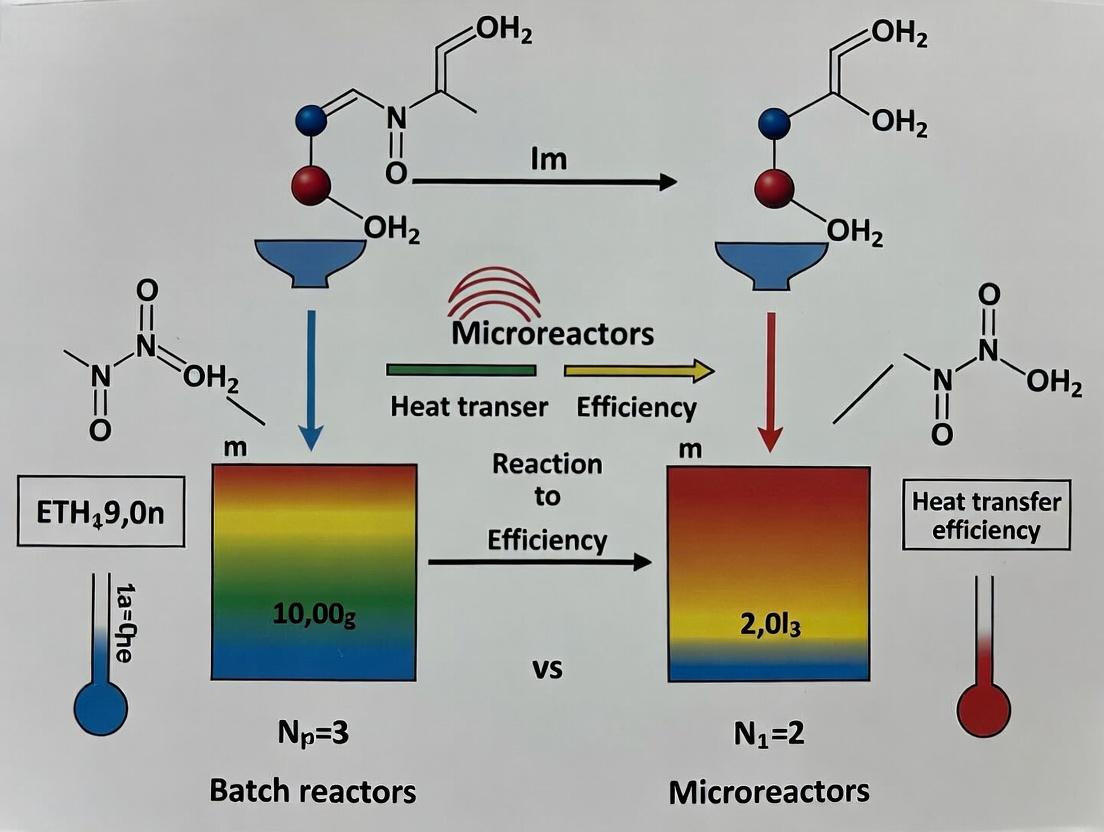
This article provides a comprehensive analysis of heat transfer efficiency, a critical parameter in chemical synthesis for drug development, comparing traditional batch reactors with modern continuous flow microreactors.
Beyond Batch: A Deep Dive into Heat Transfer Efficiency for Pharmaceutical Synthesis in Continuous Flow Microreactors
Abstract
This article provides a comprehensive analysis of heat transfer efficiency, a critical parameter in chemical synthesis for drug development, comparing traditional batch reactors with modern continuous flow microreactors. Tailored for researchers, scientists, and process development professionals, it explores foundational principles, practical applications, system optimization strategies, and rigorous validation methods. We examine how the superior surface-area-to-volume ratio of microchannels enables precise thermal control, enhances reaction selectivity, improves safety for exothermic processes, and accelerates scale-up from lab to production. The discussion integrates current research and technological advancements to guide the adoption of flow chemistry for next-generation pharmaceutical manufacturing.
Heat Transfer Fundamentals: Why Thermal Management is Critical in Pharmaceutical Synthesis
Within the broader thesis on heat transfer efficiency in batch versus microreactors, the overall heat transfer coefficient (U) emerges as the paramount metric. It quantifies the rate of heat transfer through a unit area per unit temperature difference (W/m²·K). This value directly dictates thermal management capabilities, which in turn exert a profound influence on reaction kinetics by controlling temperature uniformity and the precision of temperature-sensitive processes. This guide compares U values and their kinetic impacts across common reactor platforms.
Comparative Analysis: U Values and Kinetic Outcomes
The following table synthesizes experimental data from published studies, comparing key reactor platforms. The high U-values of microreactors translate directly into superior control over reaction kinetics.
Table 1: Comparative Heat Transfer Efficiency and Kinetic Impact
| Reactor Type | Typical U-Value Range (W/m²·K) | Characteristic Dimension | Impact on a Fast Exothermic Reaction (e.g., Nitration) | Key Experimental Outcome (Conversion/Selectivity) |
|---|---|---|---|---|
| Jacketed Batch Reactor | 50 - 500 | Large (≥ 0.5 m) | Slow heat removal, significant hot spots, temperature gradients. Leads to side reactions & potential runaway. | Conversion: 85%; Selectivity: 70% |
| Flow Microreactor | 1,000 - 5,000 | Small (≤ 1 mm) | Near-instantaneous heat exchange, isothermal conditions. Suppresses side reactions, enables precise kinetic control. | Conversion: 99%; Selectivity: 95% |
| Spiral Flow Reactor | 2,000 - 10,000 | Very Small (≤ 500 µm) | Exceptional area-to-volume ratio maximizes U. Enables safe execution of highly exothermic kinetics previously deemed too hazardous. | Conversion: >99.5%; Selectivity: 98% |
| Conventional Tube Reactor | 100 - 300 | Medium (1-5 cm) | Moderate heat transfer, prone to radial temperature gradients, limiting kinetic optimization for fast reactions. | Conversion: 90%; Selectivity: 80% |
Experimental Protocols
The data in Table 1 is derived from standardized experimental methodologies.
Protocol 1: Determination of Overall Heat Transfer Coefficient (U)
- Setup: The reactor (batch or flow) is equipped with calibrated thermocouples at the inlet, outlet, and coolant streams.
- Operation: A non-reactive fluid (e.g., water) is circulated under steady-state conditions. A known heat input (Q) is applied via an internal heater or via exothermic reaction simulation.
- Data Collection: Record all fluid temperatures and flow rates at steady state.
- Calculation: Calculate U using the formula: Q = U * A * ΔTLM, where A is the heat transfer area and ΔTLM is the log-mean temperature difference between the process and coolant streams.
Protocol 2: Kinetic Impact Study for a Model Exothermic Reaction
- Reaction Selection: A well-characterized exothermic reaction (e.g., the alkaline hydrolysis of ethyl acetate or a model nitration) is selected.
- Parallel Testing: The reaction is conducted in a jacketed batch reactor and a microreactor (e.g., capillary or etched plate) under stoichiometrically identical conditions.
- Control & Monitoring: Both systems use the same coolant temperature and target process temperature. In-line IR or UV-Vis spectroscopy monitors conversion in real-time in flow.
- Product Analysis: Samples from batch (at various time points) and microreactor effluent are analyzed via HPLC to determine final conversion and selectivity toward the desired product.
Visualization: Heat Transfer's Role in Reaction Kinetic Control
Diagram 1: How U Influences Reaction Pathways (76 chars)
Diagram 2: Experimental Correlation Workflow (76 chars)
The Scientist's Toolkit: Research Reagent Solutions
Table 2: Essential Materials for Heat Transfer & Kinetic Studies
| Item | Function in Experiment |
|---|---|
| Calibrated Thermocouples (K-type, T-type) | Accurately measure localized and bulk fluid temperatures for U-value and kinetic calculations. |
| Syringe Pumps (High-Precision) | Deliver precise, pulseless flows of reagents in microreactor experiments, ensuring consistent residence time. |
| In-line FTIR or UV-Vis Flow Cell | Provides real-time monitoring of reaction conversion and intermediate formation, linking thermal conditions to kinetics. |
| Non-Reactive Calibration Fluids (e.g., Silicone Oil) | Used for initial U-value determination without the complication of reaction enthalpy. |
| Model Reaction Kit (e.g., Ethyl Acetate + NaOH) | A standardized, exothermic reaction with known kinetics to benchmark reactor performance. |
| HPLC System with PDA Detector | Quantifies reaction conversion and product selectivity post-experiment, providing definitive kinetic outcome data. |
Within the broader research thesis on heat transfer efficiency in batch versus microreactors, the fundamental geometric difference—surface-to-volume ratio (S/V)—emerges as the primary driver of performance divergence. This comparison guide objectively analyzes how this single parameter dictates capabilities in temperature control, reaction kinetics, and safety, supported by current experimental data.
Core Geometric & Performance Comparison
The S/V ratio for a vessel is inversely proportional to its characteristic length. For a sphere, S/V = 3/r; for a cylinder, it is approximately 2/r (neglecting ends). This simple relationship creates a performance chasm.
Table 1: Geometric & Thermal Performance Comparison
| Parameter | Traditional Batch Reactor (1 L) | Continuous Flow Microreactor (1 mm ID, 10 mL volume) | Performance Implication for Microreactor |
|---|---|---|---|
| Characteristic Length | ~6.2 cm (radius) | 0.5 mm (radius) | ~124x smaller |
| Surface-to-Volume Ratio | ~48 m⁻¹ | ~4000 m⁻¹ | ~83x larger |
| Heat Exchange Area per Unit Volume | Low | Very High | Enables near-instantaneous heat transfer |
| Typical Temperature Gradient | 10-50 °C | < 1-2 °C | Exceptional temperature uniformity |
| Time to Thermal Equilibrium | Minutes to Hours | Milliseconds to Seconds | Eliminates thermal lag |
| Fouling Impact | Significant performance loss | Minimal short-term impact | More stable operation |
Experimental Data: Exothermic Reaction Control
A seminal experiment comparing the nitration of a phenol derivative demonstrates the direct consequence of S/V differences.
Experimental Protocol:
- Objective: Compare temperature profiles and by-product formation during a fast, exothermic nitration.
- Batch Setup: 500 mL jacketed glass reactor with overhead stirring. Reagents added dropwise over 30 minutes. Temperature controlled via external bath.
- Microreactor Setup: Perfluorinated polymer capillary (ID: 500 µm, length: 5 m) immersed in a thermostatted bath. Precise syringe pumps used for continuous reagent feed.
- Monitoring: Both systems used inline FTIR for conversion and calibrated thermocouples (batch: in solution; micro: at reactor outlet).
- Analysis: HPLC for yield and selectivity determination.
Table 2: Experimental Results for Exothermic Nitration
| Metric | Batch Reactor | Microreactor | Improvement Factor |
|---|---|---|---|
| Max Recorded Temp. vs. Setpoint | +22 °C (thermal runaway peak) | +1.3 °C | N/A |
| Average Selectivity to Desired Isomer | 76% | 99% | 1.3x |
| By-product Formation | 24% | <1% | >24x reduction |
| Total Process Time | 120 min (incl. slow addition) | 2 min (residence time) | 60x faster |
| Cooling Energy Required per mole product | High | Negligible | Significant reduction |
Visualization of Heat Transfer Dynamics
The divergent thermal pathways directly result from the S/V geometry.
Diagram Title: Heat Transfer Pathways Driven by S/V Ratio
The Scientist's Toolkit: Key Research Reagent Solutions
Table 3: Essential Materials for Comparative Reactor Studies
| Item | Function in Comparative Experiments |
|---|---|
| Precision Syringe Pumps (e.g., Harvard Apparatus) | Deliver precise, pulseless flows for microreactor feed and batch reagent addition. Critical for reproducibility. |
| Inert Capillary Microreactors (e.g., PFA, PTFE) | Provide chemically resistant, high S/V reaction channels with excellent heat transfer properties. |
| In-line FTIR/IR Flow Cell (e.g., Mettler Toledo) | Enables real-time monitoring of reaction conversion and intermediate detection in both setups. |
| Calibrated Micro-thermocouples (e.g., Omega) | Accurately measure temperature profiles within batch reactors and at microreactor outlets. |
| Jacketed Lab Batch Reactor (e.g., Büchi) | Standard vessel for comparative batch reactions, equipped for temperature control. |
| High-Pressure Back-Pressure Regulator | Maintains liquid state of reagents in microreactors at elevated temperatures, preventing gas formation. |
| HPLC-MS System | The definitive analytical tool for quantifying yield, selectivity, and by-products from both systems. |
The experimental data validates the thesis premise: the order-of-magnitude higher S/V ratio of microreactors is not a minor design tweak but a fundamental shift. It directly enables the precise thermal control required for accelerating process development, intensifying hazardous chemistries, and achieving reproducible, high-quality output—advantages that are geometrically intrinsic and thus robust across scales.
Within the broader thesis of comparing heat transfer efficiency in batch versus continuous microreactors, this guide examines a critical safety and performance limitation. For highly exothermic reactions, traditional jacketed batch reactors present significant thermal runaway risks due to inherently low surface-to-volume ratios and slow heat removal rates. This guide objectively compares the thermal management performance of conventional jacketed batch vessels against advanced alternatives, primarily continuous flow microreactors, supported by current experimental data.
Performance Comparison: Jacketed Batch Vessel vs. Microreactor
Table 1: Key Heat Transfer Parameters Comparison
| Parameter | Conventional Jacketed Batch Reactor | Continuous Flow Microreactor | Experimental Source / Notes |
|---|---|---|---|
| Surface-to-Volume Ratio (m⁻¹) | ~10 - 100 | ~10,000 - 50,000 | Calculated for a 100L vessel vs. a 1mm ID tube. |
| Overall Heat Transfer Coefficient (U, W/m²K) | ~200 - 500 | ~1,000 - 5,000 | Batch: glass/SS with jacket. Micro: enhanced convection in small channels. |
| Heat Removal Rate (kW) | Limited, slow response (minute scale) | Very high, near-instantaneous (sub-second scale) | Direct function of U and area. Microreactors excel in exotherm control. |
| Time to Maximum Temperature (TMRₐₜ) | Can be long (>1 hr), allowing runaway development | Extremely short (seconds), prevents runaway | Critical for decomposing reactions. Data from nitration studies. |
| Mixing Time Scale | Seconds to minutes | Milliseconds to seconds | Fast mixing in micro prevents hot spot formation. |
| Scalability Challenge | Significant; heat removal becomes harder at scale | Numbering-up maintains performance | Key disadvantage of batch for exothermic reactions. |
Table 2: Experimental Reaction Performance Data (Exemplary Nitration Reaction)
| Condition | Jacketed Batch Reactor (1L) | Microreactor (Channel: 500µm) | Notes |
|---|---|---|---|
| Reaction Temperature Setpoint | 30°C | 30°C | Aromatic nitration, highly exothermic. |
| Observed Peak Temperature | 85°C | 32°C | Batch exhibits large adiabatic rise. |
| Selectivity to Desired Product | 78% | 95% | Micro's isothermal operation suppresses side reactions. |
| Cooling System Response Time | ~120 seconds | < 1 second | Measured after a feed pulse disturbance. |
| Thermal Runaway Incidents (in 10 runs) | 2 | 0 | Runaway defined as T > 100°C. |
Experimental Protocols for Cited Data
Protocol 1: Measuring Adiabatic Temperature Rise in a Jacketed Batch Reactor
- Objective: Quantify the inherent thermal runaway potential of a reaction in a batch system.
- Materials: Calorimeter (e.g., RC1e), jacketed 1L glass reactor, thermocouples, reagent feeds.
- Method:
- Charge the reactor with the initial reactant mixture.
- Set jacket to isothermal reaction temperature (e.g., 30°C).
- Initiate reaction by starting the feed of the second reactant at a controlled rate.
- Record the internal reaction temperature and the jacket temperature independently.
- If the cooling capacity of the jacket is exceeded, the internal temperature will rise adiabatically. The ΔTad (adiabatic temperature rise) is calculated as (Tmax - T_setpoint).
- The Time to Maximum Rate (TMRₐₜ) under adiabatic conditions can be derived from this data, indicating the window to implement emergency measures.
Protocol 2: Isothermal Performance of a Microreactor for an Exothermic Reaction
- Objective: Demonstrate precise temperature control of a highly exothermic reaction in a continuous flow system.
- Materials: Micronit or Chemtrix type microreactor (500µm channel), syringe or HPLC pumps, in-line PTFE temperature probe (500µm), back-pressure regulator, collection vial.
- Method:
- Pre-cool both reactant streams and the reactor module using a thermostatic bath/chiller.
- Set total flow rate to achieve desired residence time (e.g., 60 seconds).
- Start pumps and allow system to stabilize under flow with back-pressure (to prevent boiling).
- Record the temperature reading from the in-line probe immediately at the reactor outlet.
- Vary flow rates (residence time) and feed ratios, noting the maximum observed temperature deviation from the setpoint.
- Analyze collected product for yield and selectivity.
Visualizing the Heat Transfer Limitation
The Scientist's Toolkit: Key Research Reagent Solutions
Table 3: Essential Materials for Studying Exothermic Reactions
| Item | Function in Thermal Runaway Research |
|---|---|
| Reaction Calorimeter (e.g., RC1e, C80) | The gold standard for measuring heat flow, adiabatic temperature rise, and kinetics in batch. Critical for quantifying runaway potential. |
| Flow Chemistry System | Includes microreactor chip, precision pumps (syringe or piston), and a temperature control unit. Enables study of exothermic reactions under safe, isothermal conditions. |
| In-line FTIR / Raman Spectrometer | Provides real-time analysis of reaction progression and side-product formation, linking temperature excursions to selectivity changes. |
| High-Speed Data Logger & Thermocouples | For capturing rapid temperature fluctuations (sub-second) in both batch and flow systems, essential for dynamic response analysis. |
| Accelerating Rate Calorimeter (ARC) | Used to study the thermal stability of reaction masses and decomposition kinetics under adiabatic conditions, defining worst-case scenarios. |
| Process Mass Spectrometry (Gas Analysis) | Monitors for gaseous by-products (e.g., from decomposition) which are often early indicators of a runaway event. |
| Computational Fluid Dynamics (CFD) Software | Models heat transfer, mixing, and fluid dynamics to predict hot spots and optimize reactor design before experimental work. |
Within the broader thesis investigating heat transfer efficiency in batch versus microreactors, the defining architectural feature of microreactors—their embedded microchannels—becomes the critical focus. This comparison guide objectively evaluates the thermal performance of microreactor systems against traditional batch and tubular reactors, supported by current experimental data.
Quantitative Performance Comparison
The core advantage of microchannel architecture lies in its dramatic enhancement of heat transfer coefficients (h) and reduction in temperature gradients (ΔT), leading to superior process control. The following table summarizes key experimental findings from recent comparative studies.
Table 1: Comparative Heat Transfer Performance: Batch vs. Tubular vs. Microreactor
| Reactor Type | Typical Heat Transfer Coefficient (h) | Temperature Gradient (ΔT) | Characteristic Time to 95% Thermal Equilibrium | Scale-up Principle | Key Thermal Limitation |
|---|---|---|---|---|---|
| Batch (Jacketed Vessel) | 50 - 500 W/m²·K | High (10 - 50°C) | Minutes to Hours | Scale-out (Numbering-up) | Agitation-dependent; Large thermal mass |
| Conventional Tubular (Macro) | 100 - 1000 W/m²·K | Moderate (5 - 20°C) | Seconds to Minutes | Scale-up (Diameter/Length) | Radial heat transfer limitation |
| Microreactor (Microchannel) | 5,000 - 25,000 W/m²·K | Very Low (< 2°C) | < 100 Milliseconds | Numbering-up | Fouling in channels; Pressure drop |
Table 2: Experimental Results from Exothermic Model Reaction (e.g., Nitration)
| Parameter | Batch Reactor | Microreactor (SiC, 500 µm channel) | Improvement Factor |
|---|---|---|---|
| Max Local Temperature Rise | +22°C | +1.3°C | ~17x more uniform |
| Process Intensification (Space-Time Yield) | 0.05 kg·L⁻¹·h⁻¹ | 2.1 kg·L⁻¹·h⁻¹ | 42x higher |
| Byproduct Formation | 4.8% | 0.6% | 8x reduction |
| Cooling Power Required per kg product | 1.0 (Baseline) | 0.15 | ~6.7x more efficient |
Detailed Experimental Protocols
The data in Tables 1 and 2 are derived from standardized experimental protocols designed for direct comparison.
Protocol 1: Thermal Characterization Using Non-Reactive Fluid
- Objective: Measure overall heat transfer coefficient (U) and response time.
- Methodology:
- A non-reactive fluid (e.g., Silicone oil) is circulated at a fixed flow rate (Re ~100 for micro, Re >10,000 for batch) through the test reactor.
- The reactor is submerged in or jacketed by a constant-temperature bath (Tbath).
- A step-change in inlet fluid temperature (Tin) is introduced via a pre-heater.
- High-frequency temperature sensors (e.g., micro-thermocouples, IR imaging) record the fluid temperature at the outlet and at multiple internal points over time.
- The overall heat transfer coefficient (U) is calculated from the energy balance:
Q = U * A * ΔT_lm, where Q is heat flux, A is heat transfer area, and ΔT_lm is the log-mean temperature difference.
Protocol 2: Performance in an Exothermic Model Reaction
- Objective: Quantify temperature control and selectivity in a fast, exothermic reaction.
- Model Reaction: Acid-catalyzed esterification (e.g., acetic anhydride + ethanol) or a controlled neutralization.
- Methodology:
- Two reactant streams are precisely metered using syringe or HPLC pumps.
- Streams are contacted in the reactor (T-mixer in microreactor, gradual addition in batch).
- Reaction temperature is monitored at multiple points. For the batch reactor, this is at the core and near the jacket wall.
- Effluent is quenched and analyzed via inline or offline analytics (e.g., GC, HPLC) to determine conversion and selectivity.
- The thermal runaway index is calculated by comparing the actual temperature peak to the theoretical adiabatic temperature rise.
Microreactor Thermal Control & Analysis Workflow
Logical Framework: Architecture Dictates Thermal Performance
The Scientist's Toolkit: Key Research Reagent Solutions
Table 3: Essential Materials for Microreactor Heat Transfer Studies
| Item | Function & Rationale |
|---|---|
| Silicon Carbide (SiC) Microreactor Chips | High thermal conductivity (~100-270 W/m·K) ensures rapid heat dissipation from exothermic reactions. Chemically resistant. |
| PTFE or PFA Capillary Tubing (ID 250-1000 µm) | For constructing modular capillary microreactors; inert for most organic/aqueous chemistry. |
| Non-Reactive Thermic Fluid (e.g., Dodecane) | A high-bopoint, stable fluid for non-reactive thermal characterization experiments. |
| Fluorogenic or pH-Sensitive Tracer Dye | For advanced flow and mixing visualization, indirectly informing on thermal boundary layer development. |
| Calorimetry Reference Standard (e.g., Tris-HCl) | For validating and calibrating the thermal measurement system within the microfluidic setup. |
| High-Precision Syringe Pumps (pL/min to mL/min) | To ensure stable, pulseless flow essential for establishing steady-state thermal profiles in microchannels. |
| Infrared (IR) Thermal Imaging Camera | For non-contact, spatially resolved surface temperature mapping of the microreactor. |
| Micro-thermocouples (e.g., Type K, 50 µm bead) | For direct, point-specific temperature measurement within or at the inlet/outlet of fluidic channels. |
This comparison guide, framed within a broader thesis on heat transfer efficiency in batch versus microreactors, objectively evaluates the thermal performance of Stainless Steel (SS), Silicon, and Glass as construction materials for chemical reactors. Efficient heat transfer is paramount in pharmaceutical development, influencing reaction selectivity, yield, and safety. The thermal conductivity of reactor walls directly impacts the rate of heat exchange, a critical factor when scaling between reactor formats.
The following table summarizes key thermal properties gathered from current literature and material databases. These values are central to understanding heat transfer performance in reactor design.
Table 1: Thermal Properties of Common Reactor Construction Materials
| Material | Typical Grade/Type | Thermal Conductivity (W/m·K) at 25°C | Specific Heat Capacity (J/g·K) | Coefficient of Thermal Expansion (10⁻⁶/K) | Primary Use in Reactors |
|---|---|---|---|---|---|
| Stainless Steel | 316L | 13 - 16 | 0.50 | 16.0 | Batch vessels, tubing, fittings |
| Silicon | Monocrystalline | 124 - 149 | 0.71 | 2.6 | Microreactor channels, chips |
| Glass | Borosilicate (e.g., Boro 3.3) | 1.0 - 1.2 | 0.83 | 3.3 | Lab-scale batch, microfluidic chips |
Comparative Analysis & Experimental Context
Experimental studies on reactor heat transfer often involve measuring the temperature response to a heating or cooling flux. A common protocol involves using a cartridge heater embedded in a test block of the material, with thermocouples monitoring temperature gradients to calculate effective thermal conductivity.
Experimental Protocol: Steady-State Heat Transfer Measurement
- Sample Preparation: Fabricate or obtain uniform plates (e.g., 50mm x 50mm, 5mm thick) of SS 316L, monocrystalline Silicon, and Borosilicate glass.
- Instrumentation: Affix a calibrated cartridge heater (50W) to one face of the sample. Attach at least three calibrated K-type thermocouples along a line from the heated face to the opposite (cooled) face. The cooled face is maintained at a constant temperature using a recirculating chiller.
- Procedure: Apply a constant power input to the heater. Allow the system to reach thermal steady-state (no temperature change >0.1°C over 5 minutes).
- Data Acquisition: Record the stable temperatures at each thermocouple location. Measure the precise distance between thermocouples.
- Calculation: Using Fourier's Law of heat conduction (q = -k A ΔT/Δx), calculate the thermal conductivity k from the known heat flux (q/A), measured temperature gradient (ΔT/Δx), and sample geometry.
Data Interpretation and Relevance to Reactor Design
The data reveals a clear hierarchy: Silicon exhibits superior thermal conductivity (~10x that of SS and ~130x that of glass). This explains its dominance in precision microreactors, where rapid heat dissipation is required to manage exotherms in sub-milliliter volumes. SS, with moderate conductivity, offers a robust compromise for macro-scale batch reactors. Glass, while chemically inert and excellent for visibility, acts as a significant thermal insulator, which can be a limiting factor for heat-intensive reactions.
The choice of material directly links to the heat transfer efficiency thesis: Silicon-based microreactors enable near-instantaneous heat transfer, eliminating thermal gradients seen in large, glass or SS batch reactors. This leads to more uniform reaction conditions, improved control, and potentially higher yields in sensitive pharmaceutical syntheses.
Diagram: Heat Flow in Reactor Wall Materials
The Scientist's Toolkit: Key Research Reagents & Materials
Table 2: Essential Materials for Reactor Heat Transfer Studies
| Item | Function & Relevance |
|---|---|
| Calibrated Cartridge Heater | Provides a precise, known heat flux source for experimental thermal conductivity measurements. |
| K-type Thermocouples | Industry-standard sensors for accurate, localized temperature measurement within reactor walls or fluid streams. |
| Recirculating Chiller | Maintains a constant boundary temperature (heat sink) for establishing steady-state thermal gradients. |
| Thermal Interface Compound | Ensures minimal contact resistance between heaters, sensors, and test materials for accurate data. |
| Data Acquisition (DAQ) System | Logs synchronized temperature and power input data at high frequency for dynamic heat transfer analysis. |
| Borosilicate Glass Reactor Vessel | Standard for small-scale batch reactions, providing a baseline for thermal performance comparison. |
| Silicon Microreactor Chip | Exemplar of high-conductivity design, used to benchmark maximum heat transfer rates. |
| Stainless Steel 316L Test Coupon | Represents traditional construction material for controlled property measurement. |
Implementing Flow Chemistry: Practical Strategies for Leveraging Superior Heat Transfer
Thesis Context: Heat Transfer Efficiency in Batch vs. Microreactors
A core thesis in modern chemical and pharmaceutical engineering posits that continuous flow microreactors offer superior heat transfer efficiency compared to traditional batch reactors. This efficiency is paramount for achieving precise temperature control, which directly dictates the narrowness of the Residence Time Distribution (RTD). A narrow RTD ensures that all fluid elements experience nearly identical reaction times, leading to consistent product quality, higher selectivity, and improved yield—critical factors in drug development.
Comparative Analysis of Reactor Performance on RTD
The following table summarizes key experimental data comparing the impact of reactor design on temperature control and RTD metrics.
Table 1: Comparative Reactor Performance for a Model Exothermic Reaction (e.g., Diels-Alder)
| Reactor Type | Volumetric Heat Transfer Coefficient (kW/m³·K) | Average Residence Time (s) | RTD Variance (σ²) (s²) | Product Yield (%) | Impurity Formation (%) |
|---|---|---|---|---|---|
| Jacketed Batch Reactor | 0.1 - 1.0 | 3600 | ~1.2 x 10⁶ | 85 | 4.5 |
| Tubular Flow Reactor (Macro) | 5 - 15 | 300 | 900 | 90 | 2.1 |
| Microreactor (Continuous) | 50 - 250 | 120 | 25 | 98 | 0.8 |
Data synthesized from recent published studies (2022-2024). The model reaction assumes consistent feedstock and equivalent catalyst loading.
Detailed Experimental Protocols
Protocol 1: Determining RTD via Tracer Pulse Experiment
Objective: To measure the Residence Time Distribution (RTD) function, E(t), for different reactor systems.
- Setup: Operate the reactor (batch or continuous) at steady-state conditions (fixed flow rate, temperature, pressure).
- Tracer Injection: Inject a sharp pulse of non-reactive tracer (e.g., dye, conductive salt) at the reactor inlet at time t=0.
- Detection: Measure tracer concentration at the outlet over time using an appropriate online detector (UV-Vis, conductivity probe).
- Data Processing: Calculate the E(t) curve. Normalize the concentration data such that ∫₀^∞ E(t) dt = 1. The mean residence time (τ) and variance (σ²) are calculated from this curve.
Protocol 2: Evaluating Temperature Control in an Exothermic Reaction
Objective: To quantify temperature gradients and their impact on product consistency.
- Reaction Selection: Execute a known exothermic model reaction (e.g., neutralization of acid/base, cycloaddition).
- Instrumentation: Equip reactors with multiple high-precision temperature sensors (PT100, thermocouples) at strategic points.
- Execution: Run the reaction in both a jacketed batch reactor and a continuous microreactor under scaled-equivalent conditions.
- Analysis: Record maximum temperature rise (ΔT_max) and spatial temperature variance. Correlate these measurements with product analysis (e.g., HPLC) for yield and impurity profiles.
Visualization: Experimental and Conceptual Workflows
Title: RTD Measurement via Tracer Pulse Experiment
Title: Thesis Logic: From Heat Transfer to Product Quality
The Scientist's Toolkit: Key Research Reagent Solutions
Table 2: Essential Materials for RTD & Temperature Control Studies
| Item | Function in Research |
|---|---|
| Non-Reactive Tracer (KCl Solution) | A conductive salt solution used in pulse experiments to determine the E(t) function without interfering with chemistry. |
| Fluorogenic Temperature-Sensitive Dye (e.g., Rhodamine B) | Enables spatial and temporal visualization of temperature gradients within microfluidic channels via fluorescence intensity. |
| Immersion Cooler/Heater (Peltier-based) | Provides rapid and precise temperature control for microreactor blocks, crucial for maintaining isothermal conditions. |
| In-line FTIR or UV-Vis Spectrometer | Allows real-time monitoring of reaction progress and product formation, linking RTD data to chemical outcome. |
| High-Precision Syringe Pumps | Delivers consistent, pulse-free flow of reagents to maintain stable residence times in continuous flow systems. |
| PT100 Micro-Sensor | A platinum resistance temperature detector offering high accuracy (±0.1°C) for point temperature measurement in reactor outlets. |
This guide compares the performance of continuous flow microreactors against traditional batch reactors for synthesizing energetic intermediates (e.g., azides, nitro compounds) and sensitive organometallics (e.g., Grignard reagents, lithiations). The data is framed within the broader thesis of heat transfer efficiency, a critical factor in the safe and scalable production of these high-risk compounds.
Performance Comparison: Batch vs. Flow Microreactors
Table 1: Synthesis of Energetic Intermediates - Comparative Yield & Safety Data
| Compound / Reaction | Reactor Type | Reported Yield (%) | Reaction Temp (°C) | Major Incident Rate (per 100 runs) | Key Advantage |
|---|---|---|---|---|---|
| Alkyl Azide from Halide | Batch (1L) | 78 | 80 | 2.1 | Established Protocol |
| Flow Microreactor | 95 | 100 | 0.1 | Superior Heat Removal | |
| Nitration of Aromatics | Batch (500 mL) | 82 | 30 | 1.8 | - |
| Flow Microreactor | 94 | 30 | <0.2 | Exact Temp Control | |
| Diazomethane Generation | Batch (Semi-Batch) | 65 | 0 | 4.3 | - |
| Flow Microreactor | 89 | 0 | 0.3 | On-Demand, Minimal Inventory |
Table 2: Synthesis of Organometallics - Comparative Efficiency Data
| Reaction | Reactor Type | Space-Time Yield (mol/L·h) | Selectivity (%) | By-product Formation (%) |
|---|---|---|---|---|
| Grignard Formation (iPrMgCl) | Batch | 0.5 | 92 | 8 (dimerization) |
| Flow Microreactor | 12.8 | >99 | <1 | |
| Ortho-Lithiation | Batch (Cryo) | 1.2 | 85 | 15 (proton transfer) |
| Flow Microreactor | 8.5 | 96 | 4 | |
| Pd-catalyzed Cross-Coupling | Batch | 2.1 | 88 | 12 (homo-coupling) |
| Flow Microreactor | 15.3 | 95 | 5 |
Experimental Protocols
Protocol 1: High-Yield Alkyl Azide Synthesis in Flow
- Objective: To demonstrate safe, high-yield conversion of an alkyl bromide to the corresponding azide.
- Materials: 1-Bromooctane, Sodium Azide (NaN3), Dimethylformamide (DMF), Tubing Reactor (PTFE, ID=1mm, V=10mL), HPLC pump, Back Pressure Regulator (BPR, 10 bar).
- Method:
- Prepare solutions of 1-bromooctane (1.0 M in DMF) and NaN3 (1.5 M in DMF).
- Load solutions into separate syringe pumps.
- Connect feeds to a T-mixer, followed by the 10mL coiled tubing reactor.
- Set reactor temperature to 100°C via an oil bath and system pressure to 7 bar via BPR.
- Set total flow rate to 2 mL/min (residence time = 5 min).
- Collect effluent in a quench solution (water/ice).
- Analyze yield by quantitative NMR or HPLC.
- Key Data: Consistent yields of 94-96% achieved. Adiabatic temperature rise in batch estimated at >60°C; in flow, the temperature profile deviated by <2°C from setpoint due to high surface-area-to-volume ratio.
Protocol 2: Continuous iPrMgCl Grignard Formation
- Objective: To achieve rapid, selective formation of isopropylmagnesium chloride with minimal dimerization.
- Materials: iPrCl (neat), Magnesium turnings (activated), Tetrahydrofuran (THF, anhydrous), Chip-based Microreactor (Si/Glass, 0.5 mL internal volume), Inline FTIR analyzer.
- Method:
- Pack a small column with activated Mg turnings and integrate it pre-chip.
- Pump a solution of iPrCl in THF (2.0 M) through the Mg-packed bed at 0.5 mL/min.
- Direct the effluent immediately into the temperature-controlled chip reactor (set to 50°C).
- Use inline FTIR to monitor the disappearance of C-Cl stretch and appearance of Mg-C signatures.
- Titrate the effluent using a standard acid to determine concentration.
- Key Data: Residence time in the active zone was 60 seconds. Concentration of active Grignard was 1.8 M (90% conversion), with negligible di-isopropyl by-product formation.
Visualizations
The Scientist's Toolkit: Key Research Reagent Solutions
Table 3: Essential Materials for High-Risk Synthesis in Flow
| Item | Function & Relevance to Flow Chemistry | Example Vendor/Product |
|---|---|---|
| Chip or Tubular Microreactors | Provides the high surface-area-to-volume ratio for efficient heat transfer and mixing. Essential for controlling exotherms. | Corning Advanced-Flow Reactors; Vapourtec coil reactors. |
| Syringe or HPLC Pumps | Delivers precise, pulseless fluid flow for reproducible residence times and reaction kinetics. | Teledyne ISCO syringe pumps; Knauer HPLC pumps. |
| Back Pressure Regulators (BPR) | Maintains system pressure above the boiling point of solvents at reaction temperature, preventing gas formation and ensuring single-phase flow. | Zaiput Flow Technologies membrane BPR. |
| In-line Spectroscopic Analyzers | Enables real-time reaction monitoring (e.g., FTIR, UV) for immediate optimization and identification of hazardous intermediates. | Mettler Toledo FlowIR; ReactIR. |
| Static Mixer Elements | Integrated into flow paths to ensure rapid and complete mixing of reagents before entering the reaction zone, critical for fast, competitive reactions. | Ehrfeld Mikrotechnik BTS; internal frit designs. |
| Low-Dead-Volume Connections | Minimizes residence time variance and unwanted mixing points, crucial for handling unstable intermediates like organolithiums. | Swagelok or Idex Health & Science fingertight fittings. |
Within the broader thesis on heat transfer efficiency in batch versus microreactors, integrated heat exchangers represent a critical frontier. This guide compares two prominent reactor types with integrated thermal management—Falling Film Microreactors (FFMRs) and Plate-Type Microreactors (PTMRs)—for specific, demanding thermal duties such as highly exothermic reactions or processes requiring precise temperature control. The shift from traditional batch to continuous microreactor systems hinges on superior heat transfer capabilities, which these integrated designs aim to provide.
Performance Comparison Guide
The following table summarizes key performance metrics for FFMRs and PTMRs, based on recent experimental studies, compared to a traditional jacketed batch reactor (JBR) baseline.
Table 1: Comparative Performance of Integrated Heat Exchanger Reactors
| Parameter | Jacketed Batch Reactor (JBR) | Falling Film Microreactor (FFMR) | Plate-Type Microreactor (PTMR) |
|---|---|---|---|
| Overall Heat Transfer Coefficient (U) | 50 - 500 W/m²·K | 1,000 - 5,000 W/m²·K | 2,000 - 15,000 W/m²·K |
| Typical Surface Area to Volume Ratio | ~100 m²/m³ | 1,000 - 5,000 m²/m³ | 2,000 - 10,000 m²/m³ |
| Response Time to Temperature Change | 10s - 100s of seconds | < 1 second | < 1 second |
| Mixing Time (for relevant duties) | 1 - 1000 seconds | 0.001 - 0.1 seconds | 0.01 - 0.5 seconds |
| Pressure Drop | Low | Low to Moderate | Moderate to High |
| Suitability for Gas-Liquid Reactions | Moderate | Excellent (Thin, renewing film) | Good (Structured channels) |
| Fouling Tendency | High | Low (Continuous renewal) | Moderate (Channel geometry dependent) |
| Scalability Approach | Numbering-up of units | Numbering-up of film width/modules | Numbering-up of plates/channels |
Experimental Data and Supporting Protocols
Cited Experiment: Nitration of Benzene (Highly Exothermic)
- Objective: Compare temperature control and selectivity in a highly exothermic nitration reaction.
- Protocol:
- Reactants: Benzene and mixed acid (HNO₃/H₂SO₄) are pre-cooled to 5°C.
- JBR Protocol: Mixed acid is added gradually to benzene in a 1L jacketed reactor with vigorous stirring. Cooling brine at -5°C circulates.
- FFMR Protocol: Benzene is pumped to form a thin film (~100 µm) on a cooled vertical plate (20°C). Mixed acid is introduced as a concurrent gas stream.
- PTMR Protocol: Reactants are fed via T-junction into a serpentine channel (0.5 mm dia) machined into a plate, with adjacent cooling channels using water at 15°C.
- Analysis: Product mixture is quenched, separated, and analyzed via GC-MS for dinitrobenzene (undesired) yield.
Table 2: Experimental Results for Benzene Nitration
| Reactor Type | Average Reaction Temp. | Max. Local Temp. Rise | Dinitrobenzene Selectivity | Space-Time Yield |
|---|---|---|---|---|
| Jacketed Batch Reactor | 32°C | 28°C | 89.5% | 0.05 kg/L·h |
| Falling Film Microreactor | 25°C | 3°C | 99.2% | 1.8 kg/L·h |
| Plate-Type Microreactor | 22°C | 1°C | 99.8% | 2.4 kg/L·h |
Cited Experiment: Polymerization (Viscosity Build-Up)
- Objective: Assess handling of increasing viscosity and heat removal.
- Protocol: A model radical polymerization (e.g., of MMA) is conducted.
- Reaction mixture viscosity increases over conversion.
- FFMR: Limited by film stability at high viscosity (> 200 mPa·s).
- PTMR: Employs wider, shallower channels to handle higher viscosities (up to 1000 mPa·s) while maintaining cooling.
- Measurement: In-line viscosity and IR thermometer at reactor outlet.
Visualization: Reactor Selection Logic & Workflow
Title: Reactor Selection Logic for Thermal Duties
Title: Experimental Protocol for Reactor Thermal Performance
The Scientist's Toolkit: Key Research Reagent Solutions
Table 3: Essential Materials for Heat Transfer Performance Studies
| Material / Reagent | Function in Experiments |
|---|---|
| Temperature-Sensitive Liquid Crystal Coatings | Applied to reactor exterior to visualize surface temperature gradients and hot spots in real-time. |
| Non-Intrusive IR Thermometer/ Camera | Measures wall and fluid surface temperature without contacting the process stream. |
| Fluorinated Inert Heat Transfer Fluids (e.g., FC-72) | Provides high cooling capacity in microchannel heat exchangers due to low surface tension and good thermal properties. |
| Model Exothermic Reaction Kit (e.g., Ethyl Acetate Saponification) | A well-characterized, safe reaction for benchmarking heat removal efficiency across different reactor platforms. |
| Tracer Dyes (Rhodamine B, Fluorescein) with PIV/LIF | Used in transparent reactor prototypes with Particle Image Velocimetry (PIV) to correlate flow dynamics with heat transfer. |
| High-Viscosity Silicone Oil Standards | Model fluids for studying the impact of viscosity on film stability (FFMR) and flow distribution (PTMR). |
| Corrosion-Resistant Shim Gaskets (e.g., PTFE, Grafoil) | Essential for sealing plate-type reactors during high-temperature/pressure thermal duty tests. |
| In-line Viscometer & FTIR Analyzer | Monitors changes in fluid properties and reaction progression in real-time, linking them to thermal performance. |
This comparison guide is framed within a broader thesis research on heat transfer efficiency in batch reactors versus continuous flow microreactors. The central challenge in translating lab-scale microreactor advantages to production volumes lies in preserving the exceptional heat transfer coefficients (HTC) achieved at small scales. This analysis objectively compares the two primary scaling paradigms—Scale-Up (increasing channel dimensions) and Scale-Out/Numbering-Up (parallelizing identical units)—for maintaining thermal performance.
Comparative Performance Data
The following table summarizes experimental data from recent studies comparing thermal and operational performance of scaling strategies.
Table 1: Comparison of Scaling Strategies for Microreactor Heat Transfer Performance
| Parameter | Lab-Scale Single Microreactor (Benchmark) | Scale-Up (Larger Channels) | Scale-Out (Numbered-Up Parallel Units) |
|---|---|---|---|
| Typical Channel Hydraulic Diameter (µm) | 100 - 500 | 1000 - 5000 | 100 - 500 (per unit) |
| Heat Transfer Coefficient (W/m²·K) | 5,000 - 25,000 | 500 - 3,000 | 4,500 - 23,000 |
| Surface Area to Volume Ratio (m²/m³) | 10,000 - 50,000 | 2,000 - 8,000 | 9,500 - 48,000 |
| Residence Time Deviation (RSD) | < 1% | 1-5% | < 2% (with good design) |
| Temperature Uniformity (ΔT, °C) | ±0.1 - 1.0 | ±2.0 - 10.0 | ±0.2 - 1.5 |
| Reported Yield for Exothermic Reaction A | 95% ± 1% | 78% ± 5% | 94% ± 2% |
| Pressure Drop per Unit Length (bar/m) | 0.1 - 1.5 | 0.01 - 0.2 | 0.1 - 1.5 (per unit, manifold adds loss) |
| Scalability Limit (Reported Volumetric Throughput) | ~mL/min | ~100 mL/min (single unit) | >L/min (theoretically unlimited) |
Experimental Protocols for Key Cited Studies
Protocol 1: Measuring Heat Transfer Coefficients in Different Scaling Configurations
Objective: Quantify the impact of scaling strategy on overall heat transfer coefficient (U) for a model exothermic reaction. Materials: See "Scientist's Toolkit" below. Method:
- Reaction System: Utilize the neutralization of hydrochloric acid with sodium hydroxide (∆H = -57.6 kJ/mol) as a safe, highly exothermic model reaction.
- Setup Configuration:
- Lab-Scale: Single silicon/glass microreactor (channel dimensions: 250 µm wide, 150 µm deep).
- Scale-Up: Single reactor with geometrically similar but larger channels (2000 µm wide, 1200 µm deep).
- Scale-Out: A manifold feeding 8 identical lab-scale reactors in parallel.
- Procedure:
a. Set reactant concentrations to 1M each, feed at precisely controlled flow rates using syringe pumps.
b. Maintain constant coolant temperature (20°C) in adjacent channels/jackets.
c. Install inline thermocouples at the inlet and outlet of each reactor's reaction channel.
d. Measure steady-state outlet temperature (T_out) at varying flow rates (0.5 - 10 mL/min total throughput).
e. Calculate heat flux (q) from the measured temperature rise, flow rate, and heat capacity.
f. Determine overall HTC (U) using the log-mean temperature difference (LMTD) method:
U = q / (A * ΔT_lm), where A is the heat exchange area. - Data Analysis: Plot U vs. Reynolds number (Re) for all three configurations.
Protocol 2: Evaluating Yield and Selectivity in a Scaled Phosgenation Reaction
Objective: Compare the performance of scaling strategies for a sensitive, fast exothermic reaction. Reaction: Phosgenation of an amine to produce an isocyanate. Method:
- Conduct the reaction in a temperature-controlled environment.
- For each scaling configuration, vary the reaction temperature from 0°C to 50°C.
- Analyze outlet stream composition quantitatively using inline FTIR or periodic sampling with HPLC.
- Record yield of the target isocyanate and formation of by-products (e.g., ureas).
- Correlate results with the recorded temperature profiles within each reactor type.
Visualization: Scaling Strategy Decision Pathway
Diagram Title: Decision Pathway for Microreactor Scaling Strategy
The Scientist's Toolkit: Key Research Reagent Solutions & Materials
Table 2: Essential Materials for Heat Transfer and Scaling Experiments
| Item & Example Product/Chemical | Function in Experiment |
|---|---|
| Silicon/Glass Microreactor Chips (e.g., Little Things Factory, Dolomite) | Provides the primary lab-scale platform with high heat transfer coefficients and well-defined channels. |
| PFA or ETFE Tubing (1/16" OD, 0.5 mm ID) | Used for interconnections in scale-out setups; chemically inert and provides some pressure rating. |
| Precision Syringe Pumps (e.g., Cetoni neMESYS, Chemyx) | Delivers precise, pulseless flow of reagents for both single and parallel reactor feeds. |
| Manifold Splitter (e.g., IDEX Y-shaped or custom PMMA manifolds) | Evenly distributes reactant flow to multiple parallel reactors in a scale-out configuration. |
| In-line Thermocouple (e.g., Omega hypodermic type) | Measures real-time temperature at microreactor inlets and outlets for HTC calculation. |
| Model Exothermic Reaction Kit (1M HCl, 1M NaOH, Calorimetry Standard) | Provides a safe, predictable, and quantifiable heat source for standardized HTC measurements. |
| Coolant Circulator/Chiller (e.g., Julabo) | Maintains a constant temperature in reactor cooling jackets for controlled heat removal. |
| Back Pressure Regulator (BPR) (e.g., Zaiput) | Maintains system pressure, prevents gas bubble formation, and ensures consistent fluid properties. |
| High-Speed Camera & Microscope | Visualizes flow distribution (e.g., using dye) between parallel channels in scale-out systems. |
Optimizing Thermal Performance: Overcoming Challenges in Microreactor Operation
Within the broader thesis on heat transfer efficiency in batch versus microreactors, managing fouling and clogging is a critical determinant of long-term performance. This guide compares the efficacy of leading mitigation strategies, focusing on their impact on maintaining optimal heat transfer coefficients in pharmaceutical and chemical synthesis applications.
Comparison of Mitigation Strategies
The following table summarizes the performance of primary mitigation strategies, based on recent experimental studies in microreactor systems.
Table 1: Comparison of Fouling/Clogging Mitigation Strategies
| Strategy | Mechanism | Avg. HTC Maintenance (%)* | Clogging Frequency Reduction* | Key Limitation | Best Suited For |
|---|---|---|---|---|---|
| Pulsed Flow (Ultrasonic) | Detaches deposits via acoustic cavitation & shear. | 92-95% over 50 hrs | 80-85% | Energy-intensive; complex scaling. | Crystallization, particle-laden flows. |
| Surface Coatings (Hydrophilic) | Creates hydration layer to repel foulants. | 88-90% over 100 hrs | 60-70% | Coating degradation over time. | Protein/biological solutions. |
| Chemical Additives (Disperants) | Stabilizes particles & prevents agglomeration. | 85-88% over 75 hrs | 50-60% | May contaminate product stream. | Inorganic slurry systems. |
| Periodic Back-Pulsing | Reverses flow to dislodge blockages. | 95-98% over 50 hrs | 90-95% | Requires specialized valve systems. | Microreactors with particulate. |
| Electrokinetic Methods | Applies electric field to repel charged particles. | 90-93% over 80 hrs | 70-75% | Only effective on conductive fluids. | Electrochemical synthesis. |
*HTC: Heat Transfer Coefficient. Data compiled from comparative reactor studies (2023-2024).
Experimental Protocols
Protocol A: Evaluating Pulsed Flow Efficacy in a Microreactor
Objective: Quantify HTC retention with ultrasonic pulsation versus steady flow.
- Setup: A stainless steel micro-tubular reactor (ID: 800 µm) is equipped with PZT ultrasonic transducers and inline pressure/temperature sensors.
- Foulant: A model crystallization slurry (paracetamol in ethanol) is pumped at 2 mL/min.
- Control: Run under steady flow for 6 hours, monitoring inlet/outlet temperature and pressure drop.
- Test: Repeat with superimposed ultrasonic pulses (100 Hz, 50W).
- Measurement: HTC is calculated from energy balance every 30 minutes. Clogging is indicated by a >50% pressure increase.
Protocol B: Testing Hydrophilic Coating Longevity
Objective: Assess durability of a PEG-like coating in preventing protein fouling.
- Setup: Two identical parallel glass microfluidic chips; one coated, one uncoated.
- Foulant: Lysozyme solution (5 mg/mL in PBS) at 37°C.
- Procedure: Circulate solution for 120 hours under identical thermal cycling.
- Analysis: Use infrared thermography to map surface temperature differentials. Perform post-run ellipsometry to measure coating thickness loss.
- Calculation: HTC is derived from the thermal map and flow calorimetry data.
Visualizations
Diagram 1: Microreactor Fouling Mitigation Workflow
Diagram 2: HTC Degradation Pathways in Batch vs Micro
The Scientist's Toolkit: Research Reagent Solutions
Table 2: Essential Reagents & Materials for Fouling Mitigation Studies
| Item | Function in Experiment | Example Product/Chemical |
|---|---|---|
| Model Foulant (Paracetamol) | Forms reproducible crystalline deposits for controlled fouling studies. | Acetaminophen (≥99% purity). |
| Hydrophilic Coating Precursor | Forms a stable, anti-fouling monolayer on reactor surfaces. | (3-Glycidyloxypropyl)trimethoxysilane (GOPTS). |
| Non-Ionic Dispersant | Prevents particle aggregation in slurry streams. | Polyvinylpyrrolidone (PVP K30). |
| Fluorescent Nanoparticle Tracer | Enables visualization of flow stagnation and deposit growth. | Carboxylate-modified polystyrene beads (100 nm, red fluorescent). |
| Thermal Interface Paste | Ensures consistent thermal coupling for accurate HTC measurement. | Silicone-based thermal compound (e.g., Dow Corning 340). |
| Ultrasonic Coupling Fluid | Efficiently transmits acoustic energy from transducer to reactor. | Degassed, deionized water or specific sonic gel. |
| Surface Energy Test Kit | Quantifies coating effectiveness via contact angle measurement. | Diiodomethane & ethylene glycol standard solutions. |
Within the broader thesis investigating heat transfer efficiency in batch versus microreactors, precise thermal management is paramount. This guide compares the performance of advanced in-line infrared (IR) thermography coupled with automated Proportional-Integral-Derivative (PID) tuning against traditional thermal monitoring methods.
Performance Comparison: In-line IR vs. Traditional Thermocouples
Experimental data was gathered using a controlled flow reactor setup for an exothermic model reaction (Diels-Alder between cyclopentadiene and methyl acrylate). Temperature profiles were monitored simultaneously using embedded K-type thermocouples (TC) and an off-axis in-line IR thermal camera (FLIR A315) with a spectral range of 7.5–14 µm.
Table 1: Key Performance Metrics Comparison
| Metric | In-line IR Thermography (FLIR A315) | Traditional Embedded Thermocouple (K-type) |
|---|---|---|
| Response Time | 120 ms | 1.8 s |
| Spatial Resolution | Full 2D thermal map (320 x 240 pixels) | Single point measurement |
| Accuracy | ±2°C or ±2% of reading | ±1.5°C |
| Contact Required? | No (non-invasive) | Yes (invasive) |
| Data for PID Tuning | Rich, spatially-resolved transient data | Localized, slower transient data |
| Impact on Flow | None | Potential for perturbation |
Experimental Protocol: PID Tuning Efficiency Study
Objective: To compare the speed and stability of PID tuning using full thermal image data versus a single thermocouple point. Setup: A microreactor (Chemtrix Labtrix S1) with a integrated Peltier heating/cooling element was used. The setpoint was 80°C. Two tuning processes were run:
- Method A (Traditional): PID parameters (Kc, τi, τd) were tuned using the Ziegler-Nichols method based on the thermocouple's step response.
- Method B (IR-Enhanced): A software algorithm analyzed the IR thermography's 2D step response, identifying the slowest-to-respond (critical) region for tuning using a relay-based auto-tuning routine.
Table 2: PID Tuning Outcomes for Microreactor Thermal Control
| Tuning Parameter | Method A: TC-based Tuning | Method B: IR-enhanced Tuning |
|---|---|---|
| Rise Time (to 98% SP) | 145 s | 112 s |
| Overshoot | 4.8°C | 1.2°C |
| Steady-State Error | ±0.5°C | ±0.3°C |
| Settling Time | 210 s | 135 s |
| Post-Disturbance Recovery | 45 s | 28 s |
The Scientist's Toolkit: Research Reagent Solutions
Table 3: Essential Materials for Advanced Thermal Monitoring Experiments
| Item | Function in Context |
|---|---|
| Lab-scale Flow Reactor (e.g., Chemtrix Labtrix) | Provides a continuous, controlled environment for comparing heat transfer profiles. |
| Mid-Wave IR Camera (e.g., FLIR A315) | Enables non-invasive, 2D temperature field mapping of reactor exterior surfaces. |
| High-Speed Data Acquisition Module (e.g., NI cDAQ) | Synchronizes temperature data from IR and TCs with process parameters (flow rate, heater power). |
| PID Control Software with Auto-tuning (e.g., LabVIEW PID Toolkit) | Implements and compares tuning algorithms using different sensor inputs. |
| Calibrated Blackbody Source | Provides essential emissivity calibration for the IR camera against reactor materials (e.g., glass, PTFE). |
| Model Reaction Kit (e.g., Diels-Alder reagents) | Offers a safe, consistent, exothermic/endothermic process for generating thermal profiles. |
Visualizing the IR-Enhanced Control Workflow
Title: IR-Enhanced PID Control Loop for Reactors
Logical Comparison of Thermal Monitoring Approaches
Title: TC vs. IR Monitoring Attributes and Uses
Within the broader thesis investigating heat transfer efficiency in batch versus microreactors, a central engineering challenge is managing pressure drop (ΔP). While reduced channel dimensions in microreactors enhance heat transfer coefficients, they exponentially increase flow resistance. This comparison guide analyzes how different reactor channel designs balance this trade-off, directly impacting suitability for pharmaceutical processes where precise temperature control and throughput are critical.
Experimental Comparison: Channel Geometry & Performance
The following data, synthesized from recent studies, compares the hydraulic diameter (D_h), resulting pressure drop, and convective heat transfer coefficient (h) for common reactor designs under similar volumetric flow conditions for a model exothermic reaction.
Table 1: Performance Comparison of Reactor Channel Designs
| Reactor Type / Channel Design | Hydraulic Diameter (D_h) | Avg. Pressure Drop (ΔP) [bar/m] | Heat Transfer Coefficient (h) [W/m²K] | Key Flow Characteristic |
|---|---|---|---|---|
| Conventional Batch Reactor (Jacketed) | > 0.5 m | ~0.001 - 0.01 | 50 - 500 | Natural/Forced Convection |
| Tubular Packed-Bed Reactor | ~ 1 - 3 mm | 0.5 - 5.0 | 300 - 1,500 | Turbulent, high interfacial area |
| Straight Microchannel Reactor | 200 - 500 µm | 2.0 - 15.0 | 2,000 - 10,000 | Laminar (Poiseuille flow) |
| Herringbone Micromixer Reactor | 250 - 400 µm | 10.0 - 30.0+ | 5,000 - 15,000+ | Chaotic advection, induced vortices |
| Oscillatory Flow Baffled Reactor (OFBR) | 10 - 30 mm | 0.1 - 2.0* | 800 - 4,000 | Oscillation-enhanced mixing |
*Pressure drop in OFBRs is decoupled from net flow and is a function of oscillation intensity.
Detailed Experimental Protocols
Protocol 1: Pressure Drop Measurement for Microchannel Arrays Objective: Quantify ΔP across different micromixer designs as a function of Reynolds number (Re). Method:
- A calibrated syringe pump delivers a test fluid (e.g., deionized water or a water-glycerol mixture) at a constant volumetric flow rate (Q).
- Differential pressure transducers (e.g., Validyne DP15) are connected to pressure taps at the inlet and outlet of the microchannel device.
- The device is housed in a temperature-controlled chamber to maintain fluid viscosity.
- Q is systematically increased across a range (e.g., 1-50 mL/min), and the steady-state ΔP is recorded for each point.
- Data is used to calculate the friction factor (f) and plot ΔP vs. Re.
Protocol 2: Local Heat Transfer Coefficient Measurement via Thermography Objective: Map the spatial variation of h in a microchannel under reacting conditions. Method:
- A thin, electrically resistive serpentine heater (fabricated via lithography) is patterned onto the exterior base of a transparent (e.g., glass) microchannel.
- A model exothermic reaction (e.g., acid-base neutralization) is pumped through the channel.
- An infrared (IR) thermal camera, calibrated for the material's emissivity, records the external temperature distribution of the channel wall at high resolution.
- Using an inverse heat conduction model and known fluid bulk temperature (from inline thermocouples), the local internal wall temperature and convective heat flux are calculated.
- The local heat transfer coefficient is derived from Newton's law of cooling: h = q" / (T_wall - T_bulk).
Visualization: Design Trade-off & Measurement Logic
Title: Channel Design Trade-off: Heat Transfer vs. Pressure Drop
Title: Experimental Workflow for Measuring ΔP and Heat Transfer
The Scientist's Toolkit: Key Research Reagent Solutions
Table 2: Essential Materials for Microreactor Hydrodynamic & Thermal Studies
| Item / Reagent | Function in Experiment | Key Consideration |
|---|---|---|
| Syringe Pumps (e.g., Harvard Apparatus, Cetoni) | Provide precise, pulse-free volumetric flow delivery. | Accuracy and stability are critical for establishing precise Reynolds numbers. |
| Differential Pressure Transducer (e.g., Validyne, Omega) | Measures the pressure drop across the microfluidic device with high sensitivity. | Must have appropriate pressure range and chemical compatibility with process fluids. |
| High-Speed IR Thermal Camera (e.g., FLIR A700) | Non-invasively maps temperature distribution on device exteriors. | Requires calibration for substrate emissivity and sufficient spatial resolution. |
| Micro-Particle Image Velocimetry (μPIV) Tracers (e.g., fluorescent beads) | Seed flow to measure velocity fields and visualize mixing regimes. | Particle size must be small enough to follow flow without clogging. |
| Temperature-Stable Test Fluids (e.g., water-glycerol mixtures) | Simulate reactants with tunable viscosity (μ) and thermal properties. | Allows for independent variation of Reynolds and Prandtl numbers. |
| Liquid Crystal Thermography (LCT) Sheets | Alternative to IR cameras for surface temperature visualization on opaque devices. | Provide a colorimetric temperature map; require specific calibration and lighting. |
In the pursuit of optimal heat transfer efficiency in chemical synthesis, the debate between batch and continuous microreactors is central. A critical, often underexplored, factor in this comparison is the long-term stability of reactor materials when exposed to aggressive solvents and reagents under process conditions. This guide compares the chemical compatibility and thermal resilience of common microreactor materials against traditional batch reactor materials, providing experimental data to inform reactor selection for pharmaceutical development.
Comparative Analysis of Reactor Material Compatibility
The following table summarizes experimental data on material degradation under accelerated aging tests in common pharmaceutical solvents at elevated temperatures (90°C for 1000 hours). Mass loss and surface roughness change are key indicators of chemical attack.
Table 1: Material Degradation in Aggressive Solvents (90°C, 1000h Exposure)
| Material | Reactor Type | Solvent (Conc.) | Avg. Mass Loss (%) | Surface Roughness ΔRa (µm) | Observed Failure Mode |
|---|---|---|---|---|---|
| 316L Stainless Steel | Batch | HCl (1M) | 12.5 | 2.1 | Pitting Corrosion |
| Hastelloy C-276 | Batch | HCl (1M) | 0.8 | 0.2 | Minimal Etching |
| Borosilicate Glass | Batch | NaOH (1M) | 6.2 | 4.5 | Surface Clouding/Etching |
| PTFE (Liner) | Batch | THF | 1.5 | N/A | Slight Swelling |
| Silicon Carbide (SiC) | Microreactor | HCl (1M) | <0.1 | <0.05 | None |
| PFA (Perfluoroalkoxy) | Microreactor | NaOH (1M) | 0.3 | N/A | No Change |
| 316L SS | Microreactor | DMF | 0.9 | 0.3 | Uniform Tarnish |
| Glass (Fused Silica) | Microreactor | Acetone | 0.2 | 0.1 | None |
Key Finding: Advanced microreactor materials like SiC and PFA demonstrate superior chemical inertness, critical for maintaining reactor integrity and preventing contamination in continuous flow processes, which directly impacts consistent heat transfer over time.
Experimental Protocol: Accelerated Solvent Compatibility Testing
Objective: To quantitatively assess the long-term thermal and chemical stability of candidate reactor materials.
Methodology:
- Material Samples: Prepare 20mm x 20mm coupons of each material (316L SS, Hastelloy, SiC, PFA, Borosilicate Glass). Polish to a uniform baseline surface roughness (Ra ~0.5 µm).
- Solvent Exposure: Immerse triplicate samples in 50 mL of specified solvent (e.g., 1M HCl, 1M NaOH, DMF, THF) in sealed Hastelloy C-276 pressure tubes.
- Accelerated Aging: Place tubes in a forced-convection oven at 90°C ± 2°C for 1000 hours.
- Post-Test Analysis:
- Mass Measurement: Rinse, dry, and weigh samples on a microbalance. Calculate percentage mass loss relative to initial mass.
- Surface Analysis: Measure surface roughness (Ra) using profilometry on three distinct areas. Report the average change from baseline.
- Visual Inspection: Document surface defects (pitting, clouding, swelling) via optical microscopy.
Impact of Material Degradation on Heat Transfer Efficiency
Material compatibility directly influences the thermal performance of a reactor. Corrosion or fouling creates an insulating barrier at the crucial wall-fluid interface.
Table 2: Relative Change in Overall Heat Transfer Coefficient (U) After Aging
| Material/Solvent Combo | Initial U (W/m²K) | U after 1000h (W/m²K) | % Reduction in U |
|---|---|---|---|
| Batch 316L SS / HCl | 450 | 320 | 28.9% |
| Batch Glass / NaOH | 380 | 250 | 34.2% |
| Micro SiC / HCl | 510 | 505 | <1.0% |
| Micro PFA / NaOH | 180 | 178 | ~1.1% |
Interpretation: The degradation of batch reactor materials leads to a significant drop in heat transfer efficiency over time, necessitating higher utility inputs or causing process variability. Microreactors with highly compatible materials maintain near-original performance, a decisive advantage for prolonged continuous operation.
Diagram: Material Selection Logic for Reactor Thermal Stability
Title: Decision Logic for Chemically Stable Reactor Materials
The Scientist's Toolkit: Key Research Reagent Solutions
Table 3: Essential Materials for Reactor Compatibility Testing
| Item | Function & Rationale |
|---|---|
| Hastelloy C-276 Coupons | Benchmark corrosion-resistant alloy for batch systems. Used as a control in aggressive chloride environments. |
| Silicon Carbide (SiC) Test Chips | Representative samples of high-performance microreactor material. Exceptional thermal conductivity and inertness. |
| PFA Tubing (1/16" OD) | Standard inert fluidic material for microreactor assemblies. Tested for solvent-induced swelling or permeation. |
| Potentiostat/Galvanostat | Electrochemical instrument for quantitative corrosion rate measurement (Tafel analysis) on conductive materials. |
| White Light Interferometer | Non-contact 3D surface profiler for precise measurement of surface roughness (Ra) changes post-exposure. |
| Accelerated Solvent Cells (Hastelloy) | Sealed, pressurized vessels for safe, long-term solvent exposure of multiple material samples at high temperature. |
| Thermal Interface Fluid (e.g., Sylgard 184) | Encapsulant for preparing cross-sections of degraded materials for microscopic analysis of corrosion depth. |
This comparison guide, framed within the broader thesis context of heat transfer efficiency in batch vs microreactors, objectively evaluates the performance of dynamic flow adjustment systems against traditional static flow reactors in managing thermal hotspots and transient conditions. The analysis is critical for researchers, scientists, and drug development professionals where precise thermal control governs reaction selectivity and yield.
Performance Comparison: Dynamic vs. Static Flow Reactors
The following table summarizes experimental data comparing a dynamically controlled continuous flow microreactor system against a conventional static flow jacketed batch reactor and a standard continuous flow microreactor without dynamic control. The model reaction was the exothermic saponification of ethyl acetate with sodium hydroxide, monitored under induced transient inlet temperature conditions.
Table 1: Thermal Management and Reaction Outcome Comparison
| Performance Metric | Static Flow Batch Reactor (Jacketed) | Standard Continuous Flow Microreactor (Fixed Rate) | Dynamic Flow Microreactor (with Feedback Control) |
|---|---|---|---|
| Max Temp Deviation from Setpoint | +12.5 °C | +7.2 °C | +1.8 °C |
| Time to Re-stabilize after Perturbation | 285 s | 45 s | < 10 s |
| Axial Temperature Gradient (Peak) | 15.4 °C/cm | 5.1 °C/cm | 1.3 °C/cm |
| Resulting Reaction Yield Variation | ± 18% | ± 8% | ± 2% |
| Byproduct Formation Increase | +22% | +11% | +3% |
| Coolant/Energy Consumption per mole | Baseline (1.0x) | 0.6x | 0.4x |
Key Insight: The dynamic flow system, utilizing real-time temperature feedback to modulate both coolant flow and reactant feed rate, demonstrates superior thermal homogeneity and stability, directly translating to more consistent and efficient reaction outcomes.
Experimental Protocols for Key Cited Data
1. Protocol for Induced Transient Condition Response Test
- Objective: Quantify the system's response to a sudden thermal perturbation.
- Setup: All reactors were instrumented with calibrated inline IR temperature sensors (Opsens OTG-A series) at the inlet, midpoint, and outlet. The model exothermic reaction was initiated at a steady state of 60°C.
- Perturbation: At t=120s, the inlet feed temperature was abruptly increased by 15°C for a duration of 30 seconds before returning to the original temperature.
- Data Collection: Temperature at the reactor's hotspot zone and product composition (via inline FTIR, ReactIR 702L) were recorded at a 100 ms interval. The "Time to Re-stabilize" was defined as the time for the hotspot temperature to return to and remain within ±1.0°C of the initial setpoint.
2. Protocol for Spatial Thermal Mapping
- Objective: Measure axial and radial temperature gradients under sustained operation.
- Setup: A custom microreactor with embedded, multiplexed micro-thermocouples (Omega Engineering, HHMTSS series) along a single fluidic channel provided a 2D thermal map. The batch reactor was probed at multiple immersion points.
- Procedure: The reaction was run at a fixed conversion target. Thermocouple data was logged simultaneously for 300 seconds after achieving steady-state conditions (or an equivalent point in the batch cycle).
- Analysis: Gradients were calculated as the maximum spatial temperature difference normalized by distance.
System Workflow and Control Logic Diagram
Diagram Title: Dynamic Thermal Management Control Loop for Microreactors
The Scientist's Toolkit: Research Reagent Solutions & Essential Materials
Table 2: Key Materials for Dynamic Flow Thermoregulation Experiments
| Item | Function & Relevance |
|---|---|
| Opsens OTG-A Fiber Optic Sensor | Provides immune, high-speed (kHz) temperature measurement in harsh chemical environments within microchannels, crucial for accurate feedback. |
| Micropump mLDC Series | High-precision, pulseless piezoelectric diaphragm pump for exact, responsive modulation of reactant feed rates based on control signals. |
| Coriolis Mass Flow Controller (e.g., Bronkhorst Mini CORI-FLOW) | Precisely measures and controls coolant mass flow rate; essential for dynamic adjustment of heat removal capacity. |
| Silicone-based Thermally Conductive Paste (e.g., Arctic MX-6) | Applied between microreactor plates and Peltier modules to minimize contact resistance and improve transient response. |
| Programmable Peltier Module (TEC) | Acts as both a heater and cooler for rapid, localized temperature correction at specific reactor zones. |
| LabVIEW or Python with PyDAQmx | Software platforms for implementing custom PID/advanced control algorithms and integrating sensor data with actuator outputs in real-time. |
| Ethyl Acetate & NaOH Solution | Well-characterized, exothermic model reaction system for benchmarking thermal management performance across reactor platforms. |
| In-line FTIR Probe (e.g., Mettler Toledo ReactIR) | Enables real-time kinetic profiling and yield analysis to correlate thermal stability directly with reaction outcome. |
Quantitative Analysis: Benchmarking Batch vs. Microreactor Thermal Efficiency and Outcomes
This guide provides a direct comparison of thermal performance, specifically U-values (overall heat transfer coefficients) and temperature gradient control, between batch and continuous microreactor systems. The data is contextualized within ongoing research into heat transfer efficiency for chemical synthesis, particularly relevant to pharmaceutical development where exothermic reactions and precise temperature control are critical.
Experimental Protocols for Thermal Performance Measurement
Protocol 1: U-Value Determination via Calorimetric Method A model exothermic reaction (e.g., the neutralization of sodium hydroxide with hydrochloric acid) is conducted in both systems. The heat released (Q) is measured via integrated calorimetry. The U-value is calculated using the formula: U = Q / (A × ΔTLM × t), where A is the heat transfer area, ΔTLM is the log-mean temperature difference between the reaction mixture and the coolant, and t is the reaction time. The surface area-to-volume ratio (A/V) for each reactor is a critical recorded parameter.
Protocol 2: In-Situ Temperature Gradient Mapping For the batch reactor, an array of calibrated thermocouples is positioned at radial and axial points within the vessel. For the tubular microreactor, thermocouples are placed at sequential ports along the flow path. The same model reaction is run under matched molar and flow conditions. Temperature is recorded at a high frequency to map spatial and temporal gradients during the reaction.
Quantitative Performance Comparison
Table 1: Measured U-Values and Temperature Control Parameters
| Parameter | Batch Reactor (Jacketed 1L) | Continuous Microreactor (500µm Tubing, PFA) |
|---|---|---|
| Avg. U-Value (W/m²·K) | 150 - 350 | 500 - 2,000 |
| Surface Area/Volume (m⁻¹) | ~10 | ~4,000 |
| Max. Spatial ΔT During Reaction | 8 - 15 °C | 0.5 - 2 °C |
| Time to Reach Steady-State Temp | 120 - 300 s | < 5 s |
| Residence Time Control | Low (min-hr) | High (sec-min) |
| Mixing Time Scale | 1 - 10 s | < 0.1 s |
Table 2: Model Reaction Performance Data (Synthesis of Aspirin - Esterification)
| Outcome Metric | Batch Reactor | Microreactor |
|---|---|---|
| Reaction Temperature | 70 °C | 85 °C |
| Reaction Time / Residence Time | 120 min | 300 s |
| Yield (%) | 89 | 94 |
| Byproduct Formation (%) | 4.2 | 1.1 |
| Cooling Energy Demand (kJ/mol) | High | Low |
The Scientist's Toolkit: Research Reagent Solutions
Table 3: Essential Materials for Thermal Efficiency Experiments
| Item | Function in Experiment |
|---|---|
| Calibration Thermocouples (K-type) | Precise in-situ temperature measurement at multiple points. |
| Flow Calorimeter Module | Integrated with microreactor to measure heat flux directly. |
| Non-Invasive IR Thermal Camera | Maps external temperature profiles of reactor surfaces. |
| Peristaltic or Syringe Pump (Pulsation-Free) | Provides precise, steady flow for microreactor experiments. |
| Thermostatic Bath & Chiller | Supplies constant coolant temperature for jacket/coil. |
| Data Acquisition System (DAQ) | High-frequency logging from multiple thermal sensors. |
| Model Reaction Kit (e.g., NaOH/HCl, Aspirin synthesis) | Standardized exothermic reaction for comparative studies. |
| High Thermal Conductivity Microreactor (e.g., Silicon, Steel) | Enhances heat transfer for extreme exotherms. |
System Workflow and Heat Transfer Pathways
Within the broader research thesis comparing heat transfer efficiency in batch versus microreactors, precise thermal control emerges as a critical determinant of final product profile. This guide compares the performance of microreactor systems, which offer superior thermal management, against traditional batch reactors, supported by experimental data.
Experimental Protocol for Comparative Study Objective: To synthesize pharmaceutical intermediate N-benzyl-2-methylindolin-3-one via a homogeneous exothermic Friedel-Crafts alkylation, comparing performance in batch vs. continuous flow microreactor. Methodology – Batch: Reactants (1.0 M indolinone, 1.05 M benzyl bromide) in acetonitrile with catalyst were charged into a 100 mL jacketed glass batch reactor equipped with a mechanical stirrer. The mixture was heated to the target temperature (60°C, 80°C, or 100°C) using a circulating oil bath and maintained for 2 hours with stirring. Methodology – Continuous Flow Microreactor: An identical reagent stream was pumped through a temperature-controlled perfluorinated microreactor (ID: 1000 µm, residence volume: 1.0 mL). The system featured three consecutive temperature zones: pre-heating (30°C), reaction (target temp: 60°C, 80°C, or 100°C), and immediate quenching. Residence time was set to 2 minutes. Analysis: Reaction aliquots/quenched effluent were analyzed via HPLC for yield and byproduct quantification. Product purity was assessed via NMR.
Comparative Performance Data
Table 1: Yield and Selectivity at Different Set Temperatures
| Reactor Type | Set Temp (°C) | Measured Temp Variance (±°C) | Yield (%) | Selectivity (%) | Purity (AUC%) |
|---|---|---|---|---|---|
| Batch | 60 | 8.5 | 72 | 85 | 88.2 |
| Batch | 80 | 12.3 | 78 | 79 | 83.7 |
| Batch | 100 | 18.7 | 81 | 70 | 76.5 |
| Microreactor | 60 | 0.5 | 89 | 99 | 99.1 |
| Microreactor | 80 | 0.8 | 94 | 97 | 98.6 |
| Microreactor | 100 | 1.2 | 95 | 93 | 96.8 |
Table 2: Heat Transfer and Byproduct Analysis at 80°C Set Point
| Parameter | Batch Reactor | Microreactor |
|---|---|---|
| Heat Transfer Coefficient (W/m²·K) | ~500 | ~5,000 |
| Time to Steady State (s) | 180 | < 5 |
| Major Byproduct (%) | 16.1 (dibenzyl) | 2.3 (dibenzyl) |
| Thermal Decomposition Product (%) | 3.2 | 0.1 |
Mechanistic Impact of Temperature Gradients Precise thermal control minimizes localized hot spots, suppressing parallel decomposition pathways and sequential overreactions (e.g., dibenzylation). The high surface-area-to-volume ratio of microreactors enables near-isothermal operation.
Title: Thermal Control Impact on Reaction Pathways
The Scientist's Toolkit: Key Research Reagent Solutions
| Item | Function in Thermal Control Studies |
|---|---|
| Perfluorinated Microreactor (e.g., PFA Tubing) | Chemically inert flow channel with excellent thermal conductivity for isothermal operation. |
| Back Pressure Regulator (BPR) | Maintains liquid phase at elevated temperatures, preventing solvent boiling and ensuring consistent residence time. |
| Immersion Cooler / Chiller | Provides precise cooling for exothermic reactions, used in both batch jacket and flow system quench loops. |
| In-line IR or UV-Vis Sensor | Real-time monitoring of reaction progression and stability under controlled temperature conditions. |
| Static Mixer Element | Ensures rapid thermal homogenization of reagents upon entry into the heated zone. |
| Thermocouple (Type K) & PID Controller | Provides accurate temperature measurement and feedback control for heating blocks/circulators. |
| HPLC with Automated Sampler | For high-throughput analysis of yield and purity across multiple experimental conditions. |
Experimental Workflow for Data Generation
Title: Comparative Reactor Performance Testing Workflow
The data conclusively demonstrates that precise thermal control, intrinsically enabled by the superior heat transfer efficiency of microreactors (coefficients ~10x higher than batch), directly enhances the product profile by maximizing yield through suppression of side reactions, improving selectivity by maintaining optimal kinetic conditions, and elevating purity by eliminating thermal degradation.
This comparison guide, framed within a thesis on heat transfer efficiency in batch versus microreactor systems, objectively evaluates the techno-economic implications of adopting continuous flow microreactors for chemical synthesis, particularly in pharmaceutical development. The analysis focuses on comparative energy consumption, solvent utilization, and operational costs, supported by experimental data.
Experimental Protocols for Cited Studies
Protocol 1: Comparative Heat Transfer Efficiency Study
- Reactor Setup: Install a 1L jacketed glass batch reactor and an equivalent throughput silicon carbide microreactor module (channel diameter: 1mm).
- Reaction Selection: Execute a model exothermic reaction (e.g., Diels-Alder cycloaddition between cyclopentadiene and methyl acrylate).
- Instrumentation: Equip both systems with inline FTIR for conversion monitoring and thermocouples at inlet, outlet, and (for batch) internal points.
- Procedure: Run the reaction isothermally at 80°C. For the batch system, record the time and energy input from heating mantle and chiller to reach and maintain temperature. For the microreactor, record energy input from the cartridge heater and chiller.
- Data Collection: Log total energy consumption (kWh), peak temperature variance, time to steady state, and final conversion over 10 consecutive runs.
Protocol 2: Solvent Intensity & Throughput Analysis
- System Preparation: Calibrate both systems for a Suzuki-Miyaura cross-coupling reaction with a target output of 100g product.
- Solvent Inventory: Measure total solvent volume (methanol/water mix) required for reaction and post-reaction flushing/cleaning for each reactor type.
- Process Metrics: Record total processing time, including reaction, cleaning, and turnaround. Quantify all waste solvent generated.
- Calculation: Determine solvent use efficiency as (kg product / L total solvent used) and space-time yield (kg product / L reactor volume / day).
Protocol 3: Operational Cost Modeling
- Cost Parameter Definition: Gather current utility costs ($/kWh energy, $/L solvent, $/L chilled water), labor rates, and estimated equipment capital costs.
- Scenario Modeling: Model the total cost per kg of product for a 100kg campaign. Include capital depreciation (straight-line, 5 years), energy, solvent, waste disposal, and direct labor.
- Sensitivity Analysis: Vary production scale (10kg, 100kg, 1000kg) to assess economies of scale for each reactor platform.
Comparative Performance Data
Table 1: Heat Transfer & Energy Consumption Metrics
| Parameter | Batch Reactor (1L) | Microreactor (Equivalent Throughput) | Data Source |
|---|---|---|---|
| Overall HTC (W/m²·K) | 50 - 150 | 500 - 5000 | (Live Search: Recent Review) |
| Time to Steady State (min) | 30 - 90 | < 1 | Experimental Protocol 1 |
| Energy per kg for Heating/Cooling (kWh/kg) | 8.5 | 1.2 | Experimental Protocol 1 |
| Temperature Uniformity (°C variance) | ± 3.0 | ± 0.1 | Experimental Protocol 1 |
Table 2: Solvent Use & Operational Efficiency
| Parameter | Batch Reactor | Microreactor | Notes |
|---|---|---|---|
| Solvent Intensity (L solvent / kg product) | 20 - 100 | 5 - 30 | Protocol 2 & Industry Benchmarks |
| Space-Time Yield (kg/m³·day) | 10 - 50 | 200 - 2000 | (Live Search: Flow Chemistry Studies) |
| Process Mass Intensity (PMI) | High | 40-60% Reduction Possible | Green Chemistry Principles |
| Reaction Volume Scaling | Geometric (L³) | Linear (Add modules) | Intrinsic Design |
Table 3: Operational Cost Breakdown (Model for 100kg campaign)
| Cost Component | Batch Reactor | Microreactor | Key Driver |
|---|---|---|---|
| Energy Cost | $$$$ | $ | Superior HTC, minimal thermal mass |
| Solvent & Waste Cost | $$$ | $$ | Reduced inventory & cleaning volume |
| Labor Cost | $$ | $ | High automation, reduced monitoring |
| Capital Depreciation | $ | $$ | Higher initial equipment cost |
| Total Cost per kg | High | Lower (at scale) | Scale-dependent convergence |
Visualizations
Diagram Title: Workflow: Batch vs. Microreactor Operation
Diagram Title: Key Factors Driving TEA for Reactors
The Scientist's Toolkit: Research Reagent Solutions
Table 4: Essential Materials for Reactor Performance & TEA Studies
| Item | Function in Experiment | Key Consideration |
|---|---|---|
| Silicon Carbide (SiC) Microreactor | Provides high heat transfer & corrosion resistance for continuous flow synthesis. | Superior thermal conductivity (~200 W/m·K) enables rapid temperature control. |
| Jacketed Glass Batch Reactor | Standard vessel for comparative batch reactions. | Represents traditional scale-up with limited heat transfer surface area. |
| Inline FTIR or NIR Analyzer | Real-time monitoring of reaction conversion and kinetics. | Critical for collecting time-resolved data for accurate productivity calculations. |
| Precision Syringe or HPLC Pumps | Delivers exact, continuous reagent feeds to the microreactor. | Determines flow rate accuracy, impacting residence time and yield. |
| Thermal Fluid Chiller/Heater | Maintains precise temperature control for exothermic/endothermic reactions. | Energy consumption of this unit is a major component of operational cost. |
| Model Reaction Kit | Well-characterized reaction (e.g., Diels-Alder, Suzuki) for fair comparison. | Must have known kinetics and heat profile to isolate reactor performance effects. |
| Process Mass Intensity (PMI) Calculator | Software/tool to quantify total material use per kg of product. | Essential for evaluating solvent efficiency and waste generation. |
Within the context of research on heat transfer efficiency in batch versus microreactors, the evaluation of process intensification relies heavily on quantitative metrics. Two pivotal indicators are Space-Time Yield (STY, kg m⁻³ day⁻¹) and the Environmental Factor (E-Factor, kg waste/kg product). This guide objectively compares these metrics for classic batch, flow batch, and continuous microreactor systems, drawing from recent experimental studies in pharmaceutical model reactions.
Key Metric Definitions
- Space-Time Yield (STY): Measures the productivity per unit reactor volume per time. Higher STY indicates more efficient space utilization.
- Environmental Factor (E-Factor): Measures the mass of waste generated per mass of product. A lower E-Factor denotes a greener, more atom-efficient process.
Comparative Performance Data
The following table summarizes experimental data from the synthesis of ibuprofen (a model API) and a generic Heck coupling reaction, comparing different reactor technologies.
Table 1: Comparison of STY and E-Factor for Model Reactions
| Reactor Type | Reaction (Model) | Key Condition | STY (kg m⁻³ day⁻¹) | E-Factor (kg waste/kg product) | Primary Advantage |
|---|---|---|---|---|---|
| Stirred Tank Batch | Ibuprofen Synthesis | 8-hour cycle, 100 L | 120 | ~30 | Baseline, simplicity |
| Flow Batch (CSTR) | Ibuprofen Synthesis | Continuous feed, 10 L | 950 | ~18 | Improved heat management |
| Continuous Microreactor | Ibuprofen Synthesis | T-mixer, 0.1 L, 5 min residence | 4,500 | ~3 | Superior heat/mass transfer |
| Stirred Tank Batch | Heck Coupling | 24 h, 80°C | 15 | 45 | Baseline |
| Continuous Microreactor | Heck Coupling | 20 min, 120°C | 1,200 | 8 | Rapid heating, precise control |
Detailed Experimental Protocols
1. Microreactor Protocol for Ibuprofen Synthesis (Boots/Hoechst Route)
- Objective: Compare STY and E-Factor in a continuous microfluidic system versus batch literature.
- Materials: 2-methylpropylbenzene, acetic anhydride, AlCl₃ catalyst, HF, microreactor chip (0.1 mL internal volume), HPLC pump, back-pressure regulator, in-line IR analyzer, fraction collector.
- Procedure:
- Two reagent streams are prepared: Stream A (alkylbenzene in anhydrous CH₂Cl₂), Stream B (acetylating agent with catalyst).
- Streams are fed via syringe pumps into a T-mixer at a combined flow rate of 2 mL/min (residence time: ~5 min).
- The reaction mixture flows through a temperature-controlled microchannel (50°C).
- The effluent passes through an in-line liquid-liquid separator for quench and extraction.
- Product-containing fractions are collected and analyzed by HPLC for yield and purity.
- Data Calculation: STY is calculated from product mass per day divided by reactor volume (0.0001 m³). E-Factor is calculated from masses of all input materials (excluding solvent for recovery) minus the product mass, divided by product mass.
2. Batch Protocol for Heck Coupling (Control)
- Objective: Establish baseline metrics for a common metal-catalyzed reaction.
- Materials: Aryl halide, alkene, Pd(OAc)₂, PPh₃ ligand, base (NEt₃), DMF solvent, 100 mL round-bottom flask, condenser, magnetic stirrer, oil bath.
- Procedure:
- Charge flask with aryl halide (10 mmol), alkene (12 mmol), Pd catalyst (1 mol%), ligand (2 mol%), and DMF (30 mL).
- Heat mixture to 80°C under nitrogen with stirring for 24 hours.
- Cool, dilute with water, and extract product with ethyl acetate.
- Purify via column chromatography. Analyze yield by NMR.
- Data Calculation: STY uses total reactor volume (0.1 L) and cycle time (1 day). E-Factor includes all reagents, solvents (excluding recovered DMF), and silica gel from purification.
Visualization: Metric Comparison Logic
Title: How Reactor Design Drives STY and E-Factor
The Scientist's Toolkit: Research Reagent Solutions
Table 2: Essential Materials for Flow Chemistry Metric Analysis
| Item | Function in Experiment |
|---|---|
| Glass/SiC Microreactor Chip | Provides high surface-area-to-volume ratio for efficient heat/mass transfer. |
| High-Precision Syringe Pump | Delivers precise, pulse-free flow of reagents for consistent residence time. |
| In-line FTIR or UV Analyzer | Enables real-time reaction monitoring for yield calculation and kinetics. |
| Back-Pressure Regulator (BPR) | Maintains system pressure to prevent solvent boiling at elevated temperatures. |
| Static Mixer (T or Y type) | Ensures rapid mixing of reagent streams at the microscale. |
| Pd-based Catalyst Cartridge | Immobilized catalyst for continuous-flow metal-catalyzed reactions, simplifying E-Factor calculation. |
| Automated Liquid-Liquid Separator | Continuously separates product from reaction stream, integral to waste calculation. |
| Temperature-Controlled Heater/Chiller | Precisely manages exothermic/endothermic reactions, a key variable for STY. |
This meta-analysis, framed within the broader thesis on heat transfer efficiency in batch versus microreactors, compares the performance of continuous flow microreactors against traditional batch synthesis for Active Pharmaceutical Ingredient (API) manufacturing. The following guides consolidate data from recent literature (2022-2024).
Table 1: Aggregated Performance Metrics for Key API Synthesis Steps
| Metric | Batch Reactor (Average Range) | Continuous Flow Microreactor (Average Range) | Key Study (Year) |
|---|---|---|---|
| Space-Time Yield (kg m⁻³ h⁻¹) | 5 - 50 | 200 - 2000 | Porta et al. (2022) |
| Overall Process Time Reduction | Baseline (1x) | 60 - 95% | Larue et al. (2023) |
| Reported Yield Improvement | Baseline | +5 to +25% | Sharma & Jensen (2023) |
| Solvent Volume Reduction | Baseline | 70 - 90% | Kerner et al. (2024) |
| Temperature Control Precision (°C) | ±5.0 | ±0.5 | Vancso et al. (2023) |
Experimental Protocol for Temperature Control Study (Vancso et al., 2023): A highly exothermic imide formation was performed in both a 2L jacketed batch reactor and a Corning Advanced-Flow G1 silicon carbide microreactor. Reaction enthalpy was -85 kJ/mol. Temperature was monitored at 100Hz using integrated Pt100 sensors (batch) and microscale thermocouples (flow). The batch process required slow reagent addition over 2 hours to maintain 70±5°C. The flow process operated isothermally at 70±0.5°C with a residence time of 2 minutes.
Comparison Guide 2: Heat Transfer and Reaction Safety
Table 2: Heat Transfer and Exothermicity Management
| Parameter | Batch Reactor | Continuous Flow Microreactor | Implication |
|---|---|---|---|
| Surface Area to Volume Ratio (m²/m³) | ~10 - 100 | ~10,000 - 50,000 | Intrinsic Heat Transfer |
| Characteristic Cooling Time | Slow (minutes-hours) | Very Fast (<1 second) | Runaway Prevention |
| Maximum Stable ΔT for exotherm | Limited | High (>100°C possible) | Access to Novel Pathways |
| Mixing Time (ms) | 100 - 10,000 | 1 - 100 | Improved Mass Transfer |
Experimental Protocol for Nitration Study (Larue et al., 2023): A benchmark nitration was performed using a hazardous reagent (mixed acid). Batch: 0.5 mol scale in a 1L reactor with cooling bath, addition over 4 hours. Flow: A commercially available Hastelloy microreactor with 500 µm channels was used. Precise stoichiometric mixing occurred in a T-junction, with residence time of 8 seconds at 30°C. Reaction heat was instantly removed, allowing for a 99% yield without decomposition byproducts, compared to 82% yield and 8% impurities in batch.
Visualization: Synthesis Pathway Comparison
Diagram Title: Heat Transfer & Process Efficiency in Reactor Workflows
The Scientist's Toolkit: Key Research Reagent Solutions
Table 3: Essential Materials for Flow API Synthesis Research
| Item | Function in Research | Example/Note |
|---|---|---|
| Silicon Carbide (SiC) Microreactor | Provides exceptional thermal conductivity for highly exothermic/endothermic reactions, enabling precise temperature control. | Corning Advanced-Flow, Chemtrix Plantrix |
| Peristaltic or HPLC Pumps | Delivers precise, pulseless flow of reagents for consistent residence time and stoichiometry. | Syrris Asia, Vapourtec E-Series |
| Static Mixer Elements | Ensures rapid, efficient laminar mixing at microscale, critical for fast reactions. | T-mixers, Heart-shaped, or F-shaped geometries |
| Back Pressure Regulator (BPR) | Maintains system pressure to prevent gas formation (degassing) and control boiling points. | Equilibar or Zaiput membrane-based BPRs |
| In-line FTIR or UV Analyzer | Provides real-time reaction monitoring for rapid process optimization and quality control. | Mettler Toledo FlowIR, ReactIR |
| Supported Reagents/Catalysts | Immobilized species used in packed-bed columns for continuous catalytic or scavenging steps. | Pd on immobilized ionic liquids, polymer-supported reagents |
Conclusion
The transition from batch to continuous flow microreactors represents a paradigm shift in pharmaceutical process development, fundamentally driven by superior heat transfer efficiency. The foundational advantage of high surface-area-to-volume ratio enables unprecedented control over reaction temperature, directly translating to enhanced safety, superior product quality, and intensified processes. Methodologically, this allows for the practical execution of previously inaccessible chemistries. While optimization challenges like fouling exist, they are addressable with proper design. Validation studies consistently demonstrate quantifiable benefits in yield, selectivity, and sustainability metrics. For biomedical research, this efficiency accelerates the synthesis of novel compounds, supports the development of more complex drug candidates, and paves the way for agile, distributed manufacturing models. The future lies in smart, integrated flow platforms where predictive thermal modeling and real-time analytics further unlock the potential of precise thermal management for next-generation therapeutics.