Flow Photochemistry: A Practical Guide to Efficient, Scalable, and Controlled Synthesis
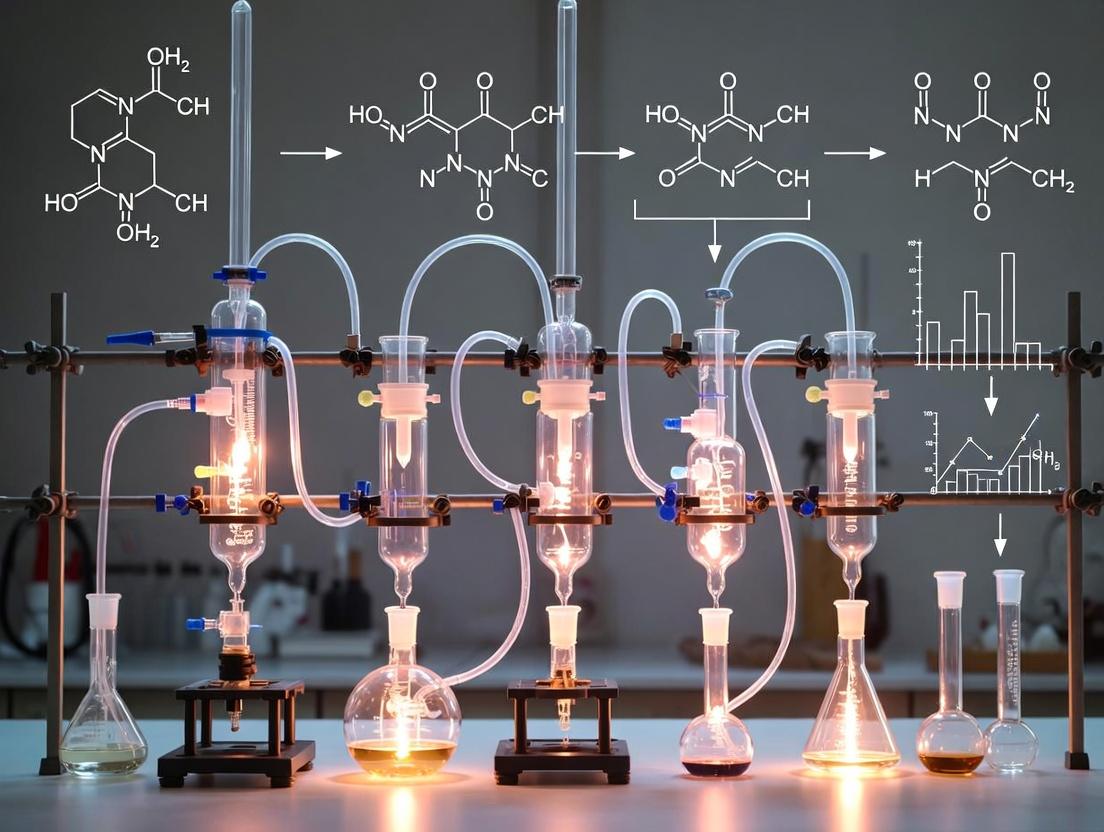
This comprehensive guide explores the transformative integration of continuous flow technology with photochemistry for researchers and drug development professionals.
Flow Photochemistry: A Practical Guide to Efficient, Scalable, and Controlled Synthesis
Abstract
This comprehensive guide explores the transformative integration of continuous flow technology with photochemistry for researchers and drug development professionals. It provides a foundational understanding of flow photoreactor components and the advantages over batch processes, including superior light penetration, precise residence time control, and enhanced safety. Methodological details cover reactor selection, setup, and applications in synthesizing pharmaceuticals and fine chemicals. The article addresses common troubleshooting scenarios and optimization strategies for photon efficiency and mixing. Finally, it validates the approach through direct performance comparisons with batch photochemistry, highlighting improved yields, selectivity, and scalability for biomedical research.
Flow Photochemistry 101: Core Principles and Advantages Over Batch
Application Notes
The integration of flow chemistry with photochemistry, termed photochemical flow chemistry, addresses critical limitations inherent to traditional batch photochemical processes. The primary advantage is the precise and uniform irradiation of thin reaction streams, which overcomes the photon penetration limits described by the Beer-Lambert law. This enables scalable, reproducible, and high-throughput photochemical synthesis, crucial for applications in pharmaceutical research and fine chemical manufacturing.
Table 1: Comparison of Batch vs. Flow Photochemistry
| Parameter | Batch Photochemistry | Photochemical Flow Chemistry |
|---|---|---|
| Photon Penetration | Limited by path length; radial gradient. | Uniform; controlled by channel depth/width. |
| Irradiation Time | Variable, poorly defined. | Precisely controlled via residence time (τ = V/flow rate). |
| Light Source | Often immersion lamps; cooling required. | LED arrays (λ specific); efficient cooling. |
| Photoreactor Surface Area | Low (vessel wall). | High (channel walls). |
| Scalability | Challenging; requires numbering-up. | Linear via continuous operation or reactor numbering. |
| Reproducibility | Moderate to low (mixing, thermal gradients). | High (consistent process parameters). |
| Typical Reaction Volume | 10 mL - 1 L | 10 µL - 10 mL (per reactor). |
| Synthesis Throughput | Low to moderate. | High. |
Table 2: Quantitative Advantages of Photochemical Flow Systems
| Advantage | Quantitative Metric | Impact |
|---|---|---|
| Enhanced Light Efficiency | Photon Flux up to 50x higher per unit volume. | Shorter reaction times (minutes vs. hours). |
| Improved Mass Transfer | Surface-to-Volume Ratio: ~1000–5000 m²/m³ (microfluidic). | Faster diffusion-limited steps (e.g., gas-liquid reactions). |
| Temperature Control | ΔT < ±2 °C across reactor. | Suppresses side reactions, improves selectivity. |
| Residence Time Control | Typically 1 sec to 60 min, with σ < ±2%. | Enables precise optimization of conversion/yield. |
Protocols
Protocol 1: Setup of a Basic Photochemical Flow Reactor for [2+2] Cycloaddition
Objective: To perform a model photochemical [2+2] cycloaddition between maleimide and an alkene in a continuous flow system.
Materials & Equipment:
- Flow System: Syringe pumps (2), PTFE tubing (ID 1 mm), T-mixer.
- Photoreactor: Commercially available or custom-made glass/fluoropolymer coil reactor (volume: 10 mL).
- Light Source: High-intensity 365 nm LED array (peak intensity: 100 mW/cm² at reactor surface).
- Cooling: Peltier cooler or fan for LED heat sink; reactor may be submerged in thermostated bath.
- Analysis: In-line UV-Vis spectrophotometer or off-line HPLC.
- Reagents: Substrate solution (0.1 M in acetonitrile), maleimide solution (0.12 M in acetonitrile).
Procedure:
- System Assembly: Connect reagent reservoirs to pumps via tubing. Connect pumps to a T-mixer. Connect mixer outlet to the photochemical coil reactor. Place reactor coil directly against or at a fixed distance from the LED array. Connect reactor outlet to a product collection vessel or in-line analyzer.
- Parameter Calibration: With the light source OFF, pump a solvent (MeCN) at a combined flow rate (e.g., 1.0 mL/min). Measure the time for the solvent front to travel from mixer to collector. Calculate the reactor's effective volume (Veff) and confirm residence time (τ = Veff / total flow rate).
- Reaction Execution: Load syringes with substrate and maleimide solutions. Set the combined flow rate to achieve the desired residence time (e.g., 20 min at 0.5 mL/min for a 10 mL reactor). Initiate flow. Turn ON the LED light source.
- Sample Collection: Allow system to reach steady state (flush volume ≥ 3 x reactor volume). Collect product fraction.
- Analysis & Optimization: Analyze conversion/yield via HPLC. Systematically vary residence time (flow rate), light intensity (via current to LEDs), and concentration to optimize.
Protocol 2: Protocol for Singlet Oxygen (¹O₂) Generation and Trapping in Flow
Objective: To generate singlet oxygen via photosensitization and trap it with a diene (e.g., 1,3-cyclohexadiene) in a gas-liquid flow regime.
Materials & Equipment:
- Flow System: Syringe pump, mass flow controller (MFC) for gas, gas-liquid flow reactor (e.g., Corning AFR or chip-based), back-pressure regulator (BPR).
- Photoreactor: Fluorinated ethylene propylene (FEP) tubing (ID: 0.8-1.0 mm) coiled around light source.
- Light Source: 525 nm Green LED array.
- Sensitizer: Rose Bengal (RB), immobilized on reactor walls or dissolved.
- Gas: Oxygen (O₂).
- Reagents: Substrate solution (0.05 M 1,3-cyclohexadiene in methanol).
Procedure:
- Sensitizer Immobilization (Optional): Pass a solution of Rose Bengal (1 mM) and a silicate precursor through the FEP tubing, coat, and dry to create an immobilized sensitizer layer.
- System Assembly: Connect liquid pump and MFC (set to 0.1-0.5 mLₙ/min O₂) to a gas-liquid T-mixer. Connect mixer to the sensitizer-coated photoreactor coil. Place coil around LED array. Connect reactor outlet via a BPR (set to 2-3 bar) to collection.
- Gas-Liquid Regime Establishment: With light OFF, flow solvent and O₂ to establish a stable segmented (slug) flow pattern. Observe using a transparent section of tubing.
- Reaction Execution: Switch liquid stream to substrate solution. Set total flow rate for desired residence time (e.g., 2 min). Turn ON 525 nm LED array.
- Product Collection: Use a cooled collector. Maintain BPR to keep O₂ in solution. Analyze for endoperoxide product via
¹H NMR.
Diagrams
Key Bottlenecks in Photochemistry: Batch vs. Flow
General Workflow for a Photochemical Flow Synthesis
The Scientist's Toolkit
Table 3: Key Research Reagent Solutions & Materials for Photochemical Flow Chemistry
| Item | Function & Key Characteristics |
|---|---|
| FEP/PTFE Tubing (ID: 0.5-2.0 mm) | Reactor material; highly transparent to UV-Vis light, chemically inert. |
| High-Power LED Modules (λ: 255-455 nm) | Tailored wavelength light source; high photon flux, low heat emission, long lifetime. |
| Microstructured Glass Reactors (e.g., Corning AFR) | Provides high surface-area-to-volume ratio and excellent mixing/irradiation. |
| Immobilized Photosensitizers (e.g., Rose Bengal on silica) | Enables catalyst-free product streams, eliminates separation steps. |
| Back-Pressure Regulator (BPR) | Maintains system pressure, prevents degassing of dissolved gases (e.g., O₂) in the reactor. |
| Syringe & HPLC Pumps | Provide precise, pulseless liquid delivery for stable residence times. |
| Mass Flow Controller (MFC) | Precisely meters gaseous reagents (e.g., O₂, CO₂) into the flow stream. |
| In-line UV-Vis / FTIR Analyzer | Enables real-time reaction monitoring and optimization (PAT). |
| Peltier Cooling Stage | Actively controls reactor temperature, crucial for exothermic or temperature-sensitive reactions. |
The Photon Transfer Challenge in Batch and How Flow Solves It
Within the broader thesis on flow chemistry setups for photochemical reactions research, a central challenge is the efficient and uniform delivery of photons to a reaction mixture. Traditional batch photochemistry suffers from the Photon Transfer Challenge: the exponential attenuation of light intensity as it penetrates the reaction medium (Beer-Lambert law). This leads to inconsistent photon exposure, prolonged reaction times, poor selectivity, and difficulties in scaling. Flow microreactors address this by providing a high surface-area-to-volume ratio, enabling uniform irradiation of the entire reaction volume. These Application Notes detail the quantitative challenges and provide protocols for implementing photochemical reactions in flow.
Quantitative Analysis of the Photon Transfer Challenge
Table 1: Comparative Performance Metrics: Batch vs. Flow Photochemistry
| Parameter | Batch Photoreactor (Typical) | Continuous Flow Microreactor (Typical) | Notes / Implication |
|---|---|---|---|
| Path Length (cm) | 1 - 10 | 0.01 - 0.2 | Determines light penetration depth. |
| Irradiated Volume (%) | < 10% (for dense solutions) | > 95% | Fraction of total reaction volume receiving effective photon flux. |
| Photon Efficiency | Low | High | Effective photons per reactant molecule. |
| Reaction Time | Hours | Minutes to Seconds | Due to superior photon flux. |
| Scale-up Method | Numbering-up (linear) | Volume increase (non-linear) | Flow enables linear scale-up via numbering-up of identical units. |
| Reproducibility | Low to Moderate | High | Consistent residence time and irradiation. |
| Heat Management | Challenging | Excellent | High heat transfer coefficient in microchannels. |
Table 2: Key Photochemical Parameters in Flow Setup Design
| Parameter | Target Range / Value | Importance |
|---|---|---|
| Channel Diameter/Depth | 0.1 - 1.0 mm | Optimizes light penetration and surface-to-volume ratio. |
| Reactor Material | FEP, PTFE, Glass | UV-Vis transparency, chemical compatibility. |
| Light Source (LED) | 365 - 455 nm common | Wavelength matched to substrate absorption; high intensity, cool operation. |
| Residence Time | 1 s - 30 min | Controlled by flow rate and reactor volume; determines reaction completion. |
| Photonic Flux (μmol s⁻¹) | System-dependent | Key metric for reaction rate; controlled by LED power and proximity. |
Experimental Protocols
Protocol 1: Establishing a Baseline Batch Photoreaction
Objective: To characterize the photon transfer limitations for a model reaction ([2+2] cycloaddition of maleimide with a vinyl ether) in batch. Materials: See "The Scientist's Toolkit" below. Procedure:
- Solution Preparation: Prepare a 0.05 M solution of maleimide and a 0.06 M solution of vinyl ether in dry acetonitrile. Combine 10 mL of each solution in a 25 mL batch reactor vial. Add a magnetic stir bar.
- Decxygenation: Sparge the solution with nitrogen or argon for 15 minutes to remove dissolved oxygen, a common triplet state quencher.
- Batch Irradiation: Place the sealed vial at a fixed distance (e.g., 5 cm) from a commercially available 365 nm LED array. Initiate vigorous stirring (1200 rpm).
- Sampling & Analysis: Under continued inert atmosphere, withdraw 0.1 mL aliquots at t = 15, 30, 60, 120, and 240 minutes. Dilute each sample immediately with methanol and analyze by HPLC to determine conversion.
- Variation: Repeat the experiment with the same molar quantities but in 50 mL of solvent (halving concentration, doubling path length).
Protocol 2: Translating the Reaction to a Continuous Flow System
Objective: To perform the same model reaction in a flow photomicroreactor, demonstrating improved efficiency. Materials: See "The Scientist's Toolkit" below. Procedure:
- Flow System Setup: Assemble the flow system: Two HPLC pumps -> T-mixer -> FEP tubular reactor (1 mm ID, 10 mL volume) coiled around a support -> back-pressure regulator (5-10 bar) -> collection vial.
- Light Source Integration: Mount the 365 nm LED array to irradiate the coiled reactor uniformly. Ensure the reactor is in direct contact with the LED cooling plate for temperature control (~20°C).
- Solution Preparation: Prepare separate 0.1 M stock solutions of the two reactants in dry acetonitrile.
- System Priming & Operation: Prime each pump line with its respective stock solution. Set each pump to a flow rate of 0.5 mL/min, yielding a total flow of 1.0 mL/min and a residence time of 10 minutes in the reactor. Start the pumps and allow the system to equilibrate for 3 residence times.
- Sample Collection & Analysis: Collect the product stream over a 10-minute period under steady-state conditions. Analyze directly by HPLC for conversion and yield. Compare results to the batch experiment at the 10-minute mark.
Visualization: Workflow & Pathway
Diagram Title: Photon Transfer: Batch Challenges vs. Flow Solutions
Diagram Title: Flow Photochemistry Experimental Setup
The Scientist's Toolkit
Table 3: Essential Research Reagent Solutions & Materials
| Item | Function in Photochemical Flow Research |
|---|---|
| FEP (Fluorinated Ethylene Propylene) Tubing (ID: 0.5-1.5 mm) | Chemically inert, highly transparent reactor material for UV-Vis light transmission. Forms the core photoreactor. |
| High-Power LED Module (e.g., 365 nm, 385 nm, 450 nm) | Cool, efficient, and monochromatic light source. Wavelength must match substrate/photo-catalyst absorption. |
| Syringe or HPLC Pumps (≥ 2 channels) | Provide precise, pulseless delivery of reactant solutions to achieve stable residence times. |
| Back-Pressure Regulator (BPR) | Maintains system pressure (5-20 bar), prevents outgassing of dissolved gases, and ensures liquid-full reactor channels. |
| In-line T-Mixer (PEEK) | Ensures rapid initial mixing of reagent streams before entering the photoreactor zone. |
| Photoactive Reaction Components (e.g., Substrates, Photosensitizers like Ru(bpy)₃²⁺, Organic Photocatalysts like 4CzIPN) | The chemical system designed to absorb light and drive the desired transformation. Selection is reaction-specific. |
| Deoxygenated Solvent (e.g., MeCN, DMF, DMSO) | High-purity solvent sparged with inert gas (N₂, Ar) to remove O₂, a potent excited-state quencher. |
| Cooling/Heat Sink for LED | Maintains LED efficiency and lifespan by dissipating heat; can also cool the reactor if in direct contact. |
This document constitutes a chapter of a broader thesis on flow chemistry setups for photochemical reactions research. The transition from batch to flow photochemistry is driven by the need for enhanced light penetration, improved reproducibility, and safer handling of reactive intermediates. This application note details the core hardware components—pumps, reactors, and light sources—essential for constructing a robust and efficient continuous photochemical synthesis platform.
Core Components: Comparative Analysis & Selection Guide
Pumps: Fluid Delivery Systems
Pumps are critical for precise reagent delivery and establishing consistent residence times. The choice depends on chemical compatibility, pressure requirements, and desired flow rates.
Table 1: Comparison of Pump Technologies for Flow Photochemistry
| Pump Type | Typical Flow Rate Range | Max Pressure (bar) | Key Advantages | Key Limitations | Best For |
|---|---|---|---|---|---|
| Syringe Pump | 1 µL/min - 100 mL/min | 100-200 | High precision, pulseless flow, good for low flow | Limited reservoir volume, discontinuous operation | Lab-scale R&D, catalyst screening, low-flow applications |
| Peristaltic Pump | 0.1 mL/min - 10 L/min | 5-10 | Chemically isolated pump head, easy tubing change | Pulsatile flow, lower pressure limit, tubing wear | Preparative scale with non-aggressive solvents, slurry handling |
| HPLC/Piston Pump | 0.01 mL/min - 100 mL/min | 400-600 | High pressure, precise & pulseless flow | Requires solvent compatibility, higher cost | High-pressure reactions, scaled-up processes with demanding P-T profiles |
| Diaphragm Pump | 1 mL/min - 20 L/min | 20-50 | Good chemical resistance, scalable | Moderate pulsation, may require pulse dampener | Pilot and production scale, continuous manufacturing |
Photoreactors: The Reaction Vessel
Flow photoreactors are designed to maximize photon flux and ensure uniform illumination of the reaction mixture.
Table 2: Comparison of Flow Photoreactor Types
| Reactor Type | Typical Material | Path Length (mm) | Surface-to-Volume Ratio | Key Features | Considerations |
|---|---|---|---|---|---|
| Coiled Tubing | FEP, PFA | 0.5 - 3.0 | Moderate | Simple, low cost, flexible setup | Potential for uneven illumination, lower efficiency |
| Microstructured (Chip) | Glass, SiO₂ | 0.1 - 1.0 | Very High | Excellent irradiation & mixing, fast heat transfer | Prone to clogging, limited throughput |
| Annular/Jacketed | Quartz, Borosilicate | 1.0 - 10.0 | High | Central lamp placement, efficient cooling, scalable | Higher cost, more complex assembly |
| Packed Bed | Glass, Quartz | N/A | Extremely High | Can integrate photocatalyst as solid phase | High pressure drop, channeling risk |
The light source defines the available photon energy and flux, directly impacting reaction kinetics and selectivity.
Table 3: Comparison of Light Sources for Flow Photochemistry
| Light Source Type | Wavelength Range | Typical Power (W) | Lifetime (hours) | Advantages | Disadvantages |
|---|---|---|---|---|---|
| LED Array | Discrete (UV-Vis) | 10 - 500 | 20,000 - 50,000 | Cool operation, high efficiency, long life, narrow band | Initial cost, heat sinking required for high power |
| Medium-Pressure Hg Lamp | Broadband UV | 100 - 1000 | 5,000 - 10,000 | High intensity, broad spectrum | Significant heat, ozone generation, declining output |
| Low-Pressure Hg Lamp | 254 nm (primary) | 10 - 100 | 10,000 | Monochromatic (254 nm), cooler operation | Limited to UVC applications |
| Laser | Monochromatic | 0.1 - 20 | 10,000 - 50,000 | Extreme photon flux, precise wavelength | Very high cost, small illuminated area |
Experimental Protocol: Standardized Setup & Optimization
Protocol 1: Assembly and Priming of a Generic Flow Photochemistry System Objective: To safely assemble and prepare a flow photochemistry setup consisting of a syringe pump, FEP tubing coil reactor, and LED array. Materials: See "The Scientist's Toolkit" below. Procedure:
- Mount Components: Secure the syringe pump, the light source (LED array), and the coil reactor holder on an optical breadboard or lab stand.
- Connect Fluidics: a. Connect the reagent syringe to the pump module. b. Using appropriate fittings, connect a segment of PFA tubing (e.g., 1/16" OD) from the syringe to the inlet of the FEP coil reactor. c. Connect a segment of tubing from the reactor outlet to a waste collection vessel.
- Position Reactor: Coil the FEP reactor tube neatly and secure it in the holder. Position it centrally and as close as possible to the LED array face to maximize light intensity. Ensure the coil is evenly illuminated.
- Prime the System: a. Fill the syringe with a clean, degassed solvent (e.g., MeCN). b. Set the pump to a low flow rate (e.g., 0.5 mL/min) in the forward direction. c. Start the pump and observe solvent filling the tubing and reactor, ensuring no air bubbles are trapped. Continue until solvent exits cleanly into the waste vessel.
- System Check: Visually inspect all connections for leaks under pressure. Verify stable fluid flow before introducing reagents.
Protocol 2: Determining Photon Flux and Characterizing Reactor Performance Objective: To quantify the photon flux entering the photoreactor using chemical actinometry, a critical parameter for reaction scaling and reproducibility. Materials: Potassium ferrioxalate actinometer solution (0.15 M in 0.05 M H₂SO₄), 1,10-phenanthroline solution (0.1% w/v in water), sodium acetate buffer (1 M, pH 4.5). Procedure:
- Calibrate the Setup: Assemble the system per Protocol 1. Use the actinometer solution as your "reagent." Protect all lines from ambient light using aluminum foil.
- Irradiate: Set the pump to achieve a desired residence time (e.g., 2 min). Turn on the light source and allow the system to reach steady state. Collect the effluent for a precisely timed interval (t_collect).
- Analyze: To an aliquot of the irradiated effluent, add sodium acetate buffer and 1,10-phenanthroline solution. The ferrous ions produced by photolysis form an orange-red complex.
- Quantify: Measure the absorbance of this complex at 510 nm. Calculate the amount of Fe²+ formed using the molar absorptivity (ε = 11,100 M⁻¹cm⁻¹).
- Calculate Photon Flux: Use the formula: Photon Flux (Einstein/s) = (moles of Fe²+ produced) / (Φ * t_collect), where Φ is the quantum yield for ferrioxalate actinometry at your wavelength (e.g., Φ~1.25 at 450 nm). This value characterizes your specific reactor-light source combination.
System Integration & Workflow Diagrams
Flow Photochemistry System Layout
Flow Photochemistry Experiment Workflow
The Scientist's Toolkit
Table 4: Essential Research Reagent Solutions & Materials
| Item | Function/Application | Key Considerations |
|---|---|---|
| FEP Tubing (1/16" OD, 0.03" ID) | Primary material for coiled tube photoreactors. | Highly transparent down to ~230 nm, chemically inert, flexible. |
| PFA Fittings & Unions | Connecting tubing segments without leaks. | Chemically resistant, low dead volume, suitable for high pressure. |
| Syringe Pump (Dual Channel) | Precise delivery of reagents. | Allows for separate introduction of substrates, enables precise stoichiometry. |
| High-Power LED Array (450 nm) | Blue light source for photocatalysis (e.g., Ru/Ir complexes). | Select wavelength matching catalyst absorption; requires active cooling. |
| Potassium Ferrioxalate | Chemical actinometer for UV-Vis light (250-500 nm). | Standard for quantifying photon flux in situ. Light-sensitive; prepare fresh. |
| Back Pressure Regulator (BPR) | Maintains system pressure, prevents outgassing. | Essential for solvents with low gas solubility (e.g., MeOH, EtOH) at elevated temps. |
| In-line IR or UV-Vis Flow Cell | Real-time reaction monitoring. | Enables kinetic profiling and rapid optimization of reaction parameters. |
| Cooling Bath/Circulator | Temperature control of reactor or light source. | Prevents thermal degradation of products or LEDs, improves reproducibility. |
Application Notes on Flow Photochemistry for Pharmaceutical Research
Within the context of advancing flow chemistry setups for photochemical reactions, three principal advantages emerge as transformative: uniform light irradiation, precise residence time control, and enhanced operational safety. These advantages directly address critical limitations of batch photochemistry, enabling scalable, reproducible, and safer synthesis of pharmaceuticals and advanced materials.
Uniform Irradiation
In traditional batch photoreactors, the Beer-Lambert law dictates significant light intensity gradients, leading to non-uniform product formation, over-irradiation, and byproduct generation. Flow microreactors, typically with channel diameters < 1 mm, ensure that all reaction fluid is within a short path length from the light source.
- Quantitative Data: Light Penetration and Efficiency
| Reactor Type | Characteristic Path Length (mm) | Estimated Photon Flux Uniformity (a.u.) | Typical Volumetric Irradiance (W/L) | Reference Scale (Batch=1) |
|---|---|---|---|---|
| Batch (Round-bottom flask) | 10 - 50 | 0.1 - 0.3 | 10 - 50 | 1 |
| Annular Flow Reactor | 1 - 5 | 0.7 - 0.9 | 200 - 1000 | 20-50 |
| Microchannel Chip Reactor | 0.1 - 1 | >0.95 | 500 - 5000 | 50-200 |
Protocol 1.1: Measuring Photon Flux in a Microfluidic Channel
- Objective: Quantify the spatial uniformity of irradiance within a microfluidic photoreactor.
- Materials: Blue LED panel (450 nm, 20 W), FEP tubing reactor (ID: 1 mm, OD: 1/16"), potassium ferrioxalate actinometry solution (0.15 M), UV-Vis spectrophotometer.
- Method:
- Coil the FEP tubing tightly around a cylindrical mandrel. Place it directly against the LED panel.
- Pump the potassium ferrioxalate solution through the reactor at a very slow flow rate (e.g., 0.1 mL/min) to approximate a static fill.
- Irradiate for a precise time (t = 60 s).
- Collect the effluent and mix with 1,10-phenanthroline solution.
- Measure the absorbance of the resulting ferroin complex at 510 nm.
- Repeat the measurement, but with the reactor filled yet not irradiated (dark control).
- Calculate the photon flux using the known quantum yield for ferrioxalate actinometry. Compare results from the center and hypothetical "edges" of the flow path by selectively masking the reactor.
Precise Residence Time Control
Residence time (τ) in a flow reactor is determined by τ = V / F, where V is reactor volume and F is flow rate. This allows exact control over reaction time, independent of scaling.
- Quantitative Data: Residence Time Control Impact on a Model [2+2] Photocycloaddition
| Residence Time (min) | Flow Rate (mL/min) | Conversion (%) | Selectivity (%) | Productivity (g/h) |
|---|---|---|---|---|
| 2 | 2.5 | 45 | 95 | 0.45 |
| 5 | 1.0 | 88 | 94 | 0.35 |
| 10 | 0.5 | 99 | 90 | 0.25 |
| 30 (Batch) | N/A | 99 | 82 | 0.05 |
Protocol 2.1: Optimization of Residence Time for a Photocatalytic C-N Coupling
- Objective: Determine the optimal residence time for maximizing yield while minimizing photocatalyst decomposition.
- Materials: Syringe pumps, PFA tube reactor (10 mL volume, coiled around LED), substrates (aryl halide and amine), Ir(ppy)₃ photocatalyst (0.5 mol%), base.
- Method:
- Prepare a degassed solution of substrates, catalyst, and base in anhydrous DMF.
- Load solution into a syringe pump.
- Set up the reactor in a controlled temperature bath (25°C) around a blue LED array.
- Run the reaction at varying flow rates (e.g., 2.0, 1.0, 0.5, 0.25 mL/min), corresponding to residence times of 5, 10, 20, and 40 minutes.
- Collect steady-state effluent for each condition.
- Analyze conversion and yield via UPLC. Use UV-Vis to monitor catalyst integrity in the effluent.
- Plot yield vs. residence time to identify the plateau point before catalyst degradation effects.
Enhanced Safety
Flow chemistry confines hazardous reagents or reaction mixtures to a small, contained volume. It also eliminates the risks associated with overheating large batches under intense illumination and allows for safe handling of gaseous reagents.
- Quantitative Data: Safety Comparison for a Photo-Oxidation Using Singlet Oxygen
| Parameter | Batch Reactor | Flow Reactor |
|---|---|---|
| Volume of O₂ / Reaction Mixture | 500 mL | 2 mL (in reactor) |
| Maximum Potential Explosion Energy | High | Very Low |
| Temperature Control | Challenging (exothermic) | Excellent (high S/V ratio) |
| Operator Exposure Risk during Sampling | High | Low (closed system) |
Protocol 3.1: Safe Continuous-Flow Photo-Oxidation with Singlet Oxygen
- Objective: Safely perform a singlet oxygen ([¹O₂]) ene reaction using gaseous oxygen.
- Materials: Two-channel gas-liquid flow chip (PTFE), membrane-based gas-liquid separator, back-pressure regulator (2 bar), cooled white LED source, substrate (e.g., citronellol), tetraphenylporphyrin (TPP) sensitizer, oxygen tank.
- Method:
- Prepare a degassed solution of substrate and TPP in CH₂Cl₂.
- Use one syringe pump for the liquid feed and a mass flow controller (MFC) for the O₂ gas stream.
- Connect both feeds to the inlets of the gas-liquid flow chip. Set the gas-to-liquid ratio to 3:1.
- Place the transparent flow chip in a cooled holder (-10°C) directly atop the LED array.
- Set a total flow rate to achieve a 3-minute residence time in the illuminated section.
- Pass the output through a membrane separator to remove excess O₂.
- The liquid stream passes through a back-pressure regulator (set to 2 bar to keep O₂ in solution) and is collected.
- The process runs in a fume hood. The entire volatile and gaseous mixture is contained within the closed flow system.
Visualizations
Flow Photochemistry Core Control Loop
Flow Photochemistry Development Workflow
The Scientist's Toolkit: Key Research Reagent Solutions
| Item | Function & Rationale |
|---|---|
| Perfluorinated Alkoxy (PFA) or Fluorinated Ethylene Propylene (FEP) Tubing | Chemically inert, highly transparent down to ~220 nm. Essential for UV photochemistry and handling corrosive reagents. |
| High-Power LED Arrays (365, 450, 525 nm) | Cool, intense, and monochromatic light sources. Enable precise wavelength matching to substrate/catalyst absorption. |
| Precision Syringe Pumps (e.g., HPLC-type) | Provide pulseless, highly accurate liquid delivery for stable residence times and reproducible results. |
| Back-Pressure Regulator (BPR) | Maintains pressure to keep gases dissolved in solution (e.g., O₂, CO₂) and prevents outgassing in the reactor. |
| In-line Fourier-Transform Infrared (FTIR) Flow Cell | For real-time reaction monitoring, allowing immediate adjustment of parameters like residence time or light intensity. |
| Photosensitizer Kit (e.g., Ru(bpy)₃²⁺, Ir(ppy)₃, 4CzIPN, Eosin Y, TPP) | A selection of common organometallic and organic photocatalysts spanning a range of redox potentials and absorption profiles. |
| Actinometry Solutions (Potassium Ferrioxalate / Reinecke's Salt) | Crucial for quantifying photon flux and validating reactor efficiency and uniformity. |
| Gas-Liquid Flow Chip (T-mixer or Membrane Type) | Enables efficient mixing and reaction of gaseous reagents (e.g., O₂, Cl₂, CO) with liquid streams in a safe, confined volume. |
Fundamental Photochemical Mechanisms Enabled by Flow Systems
Within the broader thesis on flow chemistry for photochemical research, this document details the fundamental photomechanisms uniquely enabled by continuous flow systems. The enhanced photon efficiency, precise residence time control, and superior mass/heat transfer of flow reactors unlock pathways and efficiencies often inaccessible in batch. This note provides application protocols and data for leveraging these advantages in key photochemical transformations.
Application Notes & Protocols
Application Note: [18F]Trifluoromethylation via LED-Driven Photoredox Catalysis
Background: The incorporation of [18F] into bioactive molecules for Positron Emission Tomography (PET) is a critical but challenging task in drug development. Flow photochemistry enables rapid, efficient late-stage radiochemistry.
Key Enabled Mechanism: Photoredox-catalyzed radical trifluoromethylation using shelf-stable [18F]CF3SO2Cl as a reagent. Flow provides the intense, uniform irradiation needed for high photon flux and the rapid mixing required for handling short-lived radiochemical intermediates.
Protocol:
- Reactor Setup: Assemble a commercially available perfluoroalkoxy (PFA) coil reactor (ID: 1.0 mm, Volume: 10 mL) wrapped around a high-power 450 nm blue LED array (365 nm optional for substrate screening). Ensure the reactor is housed in a reflective enclosure.
- Solution Preparation:
- Pump A: Dissolve substrate (e.g., heteroarene, 0.1 M) and photocatalyst (fac-Ir(ppy)3, 1 mol%) in degassed DMF.
- Pump B: Prepare a solution of [18F]CF3SO2Cl (≈ 2.0 equiv) in degassed DMF.
- Procedure: Pre-fill the reactor with degassed solvent (DMF). Initiate flow using a dual-channel syringe pump. Set a combined flow rate of 0.1 mL/min (residence time: 10 min). Pass the mixed stream through the irradiated coil reactor.
- Collection & Workup: Collect the effluent directly into a vial containing a quenching agent (e.g., aqueous Na2S2O3). Direct the crude mixture onto a preparative HPLC system for purification. Analyze fractions by radio-HPLC and LC-MS.
- Key Parameters: Precise temperature control (20°C) via Peltier module is advised. Ensure all tubing post-irradiation is opaque to prevent uncontrolled reactions.
Data Summary:
Table 1: Performance Data for Flow vs. Batch [18F]Trifluoromethylation
| Parameter | Batch Reaction | Flow System (This Work) |
|---|---|---|
| Reaction Scale | 5 µmol | 10 µmol |
| Irradiation Source | 30W Blue LED (Kessil) | High-Density LED Array |
| Reaction Time | 60 min | 10 min (Residence) |
| Radiochemical Yield (RCY) | 15 ± 5% | 68 ± 3% |
| Molar Activity (GBq/µmol) | 25-35 | 40-60 |
| Reproducibility (RSD) | ~20% | <5% |
Protocol: Singlet Oxygen [1O2] Ene-Reaction for Hydroperoxide Synthesis
Background: The Schenck ene-reaction is a cornerstone of photochemical synthesis. Flow systems prevent product degradation and over-oxidation by controlling the precise time substrates are exposed to photogenerated singlet oxygen.
Key Enabled Mechanism: Efficient generation and immediate consumption of 1O2 via energy transfer from an excited photosensitizer (e.g., tetra-phenyl-porphyrin, TPP) to dissolved O2, followed by a selective ene-reaction with alkenes.
Experimental Methodology:
- Reactor Configuration: Utilize a gas-liquid flow microreactor with a transparent fluorinated ethylene propylene (FEP) tubing (OD: 1/16", ID: 0.8 mm, Length: 5 m). Implement a T-mixer for combining liquid and gas streams.
- Solution Preparation: Prepare a 0.05 M solution of the alkene substrate (e.g., Citronellol) and tetraphenylporphyrin (TPP, 0.5 mol%) in deuterated chloroform (CDCl3).
- Procedure:
- Use a syringe pump for the liquid feed (flow rate: 0.05 mL/min).
- Use a mass flow controller (MFC) for oxygen gas (flow rate: 0.25 mL/min, 5:1 gas:liquid ratio).
- Pass the segmented gas-liquid flow through the FEP coil irradiated by a green LED lamp (λmax = 530 nm, 50 W).
- Maintain reactor temperature at 10°C using a cooling bath.
- Quenching & Analysis: The reaction is quenched upon exiting the light zone. Directly transfer the liquid output to an NMR tube for immediate in situ analysis of the hydroperoxide. For isolation, reduce the hydroperoxide with PPh3 to the corresponding allylic alcohol.
- Safety Note: Hydroperoxides are potentially unstable. Do not concentrate under vacuum. Maintain small scale and dilute concentrations.
Data Summary:
Table 2: Optimization of Singlet Oxygen Ene-Reaction in Flow
| Variable | Condition Tested | Conversion (%) | Selectivity (%) |
|---|---|---|---|
| Residence Time | 5 min | 45 | >95 |
| 10 min | 82 | >95 | |
| 20 min | 95 | 93 | |
| O2:Substrate Ratio | 2:1 | 60 | >95 |
| 5:1 | 82 | >95 | |
| 10:1 | 85 | 94 | |
| Light Intensity | 25 W LED | 65 | >95 |
| 50 W LED | 82 | >95 | |
| 75 W LED | 83 | 93 |
Visualization of Mechanisms and Workflows
Title: General Flow Photochemistry Workflow
Title: Flow Photoredox Catalysis Cycle
The Scientist's Toolkit: Research Reagent Solutions
Table 3: Essential Materials for Flow Photochemistry Research
| Item | Function & Rationale |
|---|---|
| FEP or PFA Tubing (ID: 0.5-1.5 mm) | Chemically inert, transparent to UV-Vis light, flexible reactor material. The small diameter ensures high photon penetration and efficient radial mixing. |
| High-Power, Narrow-Band LED Arrays | Provides intense, cool, and wavelength-specific irradiation. Enables precise matching to photocatalyst or sensitizer absorption profiles. |
| Degassed, Anhydrous Solvents (Sealable Bottles) | Eliminates dissolved oxygen which can quench excited states or interfere with radical pathways, critical for reproducibility in photoredox catalysis. |
| Syringe Pumps with ≥2 Channels | Delivers precise, pulseless flows of liquid reagents, enabling accurate control of stoichiometry and residence time. |
| Mass Flow Controller (MFC) for Gases | Precisely meters reactive gases (O2, CF3SO2Cl vapor) for consistent gas-liquid mixing and safe handling. |
| Online UV-Vis Flow Cell with Spectrometer | Allows for real-time reaction monitoring, kinetic profiling, and detection of key intermediates or catalyst degradation. |
| In-Line Back Pressure Regulator (BPR) | Maintains system pressure, prevents gas outgassing within the reactor coil, and ensures a stable segmented or homogeneous flow regime. |
| Photocatalyst Kit (e.g., Ir(ppy)3, Ru(bpy)3²⁺, 4CzIPN) | A selection of common organo- and transition metal photocatalysts covering a range of redox potentials for screening oxidation/reduction pathways. |
Building and Applying Your Flow Photoreactor: From Setup to Synthesis
Within the broader thesis on establishing a modular flow chemistry platform for photochemical reaction research, this protocol details the assembly of a core lab-scale photochemical flow system. The transition from batch to flow photochemistry addresses critical limitations of traditional photochemical setups, including inconsistent photon penetration, prolonged irradiation times, and challenges in scaling. This guide provides a foundational, customizable system suitable for reaction screening and optimization in academic and industrial drug development settings.
Key Advantages of Flow Photochemistry
- Enhanced Light Penetration: The narrow channel dimensions ensure uniform irradiation of the entire reaction volume.
- Precise Control of Reaction Parameters: Enables exact control over residence time, temperature, and light intensity.
- Improved Safety and Scalability: Handles photoreactive intermediates or gases safely; scaling is achieved via numbered-up flow reactors or prolonged operation.
- Rapid Reaction Optimization: Facilitates high-throughput screening of variables like residence time and stoichiometry.
System Components & Assembly
A basic flow photochemistry system comprises four modules: fluid delivery, reactor, light source, and back-pressure regulation.
Assembly Protocol:
- Planning & Layout: Sketch the system flow path on the bench. Ensure the light source position is fixed and secure. Allow ample space for cooling lines and safety shielding.
- Fluid Delivery Module Setup:
- Mount syringe pumps or HPLC pumps on a stable surface.
- Connect gas-tight syringes (for reagent solutions) or pump heads to standard 1/16" PFA or PTFE tubing using appropriate fittings (e.g., flangeless fittings with 1/4-28 flat-bottom ports).
- Use a low-dead-volume "T" or "Y" mixer to combine reagent streams immediately upstream of the reactor inlet.
- Photoreactor Integration:
- Connect the output of the mixer to the inlet of the chosen photoreactor (e.g., coiled fluorinated ethylene propylene (FEP) tubing or a commercial etched microchip).
- Secure the reactor coil/window directly against the light source window or wrap it uniformly around a lamp bulb, ensuring no gaps. For LED-based systems, align the reactor channel directly with the LED array.
- Critical: If using a high-power light source (e.g., >100W), install a cooling jacket (e.g., a glass water jacket) or fan to manage reactor temperature. Connect cooling lines if necessary.
- Back-Pressure Regulation & Collection:
- Connect the reactor outlet to a back-pressure regulator (BPR). Set the BPR to a suitable pressure (typically 20-150 psi) to prevent gas bubble formation within the reactor.
- Connect the BPR outlet to a sample vial or fraction collector for product collection.
- Leak Testing & Priming:
- Pressurize the system with a compatible solvent (e.g., acetone or methanol) at the intended operating pressure. Check all fittings for leaks.
- Prime the entire flow path with reaction solvent to remove air bubbles, which can cause erratic flow and reduce photon efficiency.
Experimental Protocol: Optimization of a Model Photoredox Reaction
Model Reaction: [2+2] Photocycloaddition of Maleic Anhydride with Cyclopentadiene.
Objective: Determine the optimal residence time for maximum yield.
Reagents & Solutions:
- Solution A: Maleic anhydride (0.2 M) in dry acetonitrile.
- Solution B: Cyclopentadiene (0.24 M) in dry acetonitrile.
Procedure:
- Load Solutions A and B into separate gas-tight syringes mounted on syringe pumps.
- Set both pumps to the same flow rate (e.g., 0.1 mL/min), establishing a 1:1 volumetric ratio and a total combined flow rate (Ftotal) of 0.2 mL/min.
- Set the system BPR to 50 psi.
- Turn on the light source (e.g., a 365 nm, 100 W LED array) and allow it to stabilize for 5 minutes.
- Start the pumps. Allow the system to equilibrate for at least 3 times the intended residence time (τ) at the initial flow rate.
- Collect the product stream for 5 minutes into a pre-weighed vial containing a known amount of an internal standard (e.g., biphenyl) in DCM for quantitative GC or GC-MS analysis.
- Repeat steps 5-6 at varying total flow rates (e.g., 0.05, 0.1, 0.2, 0.4 mL/min) to probe different residence times. Calculate τ using the reactor volume (VR): τ (min) = VR (mL) / Ftotal (mL/min).
- Analyze each sample via GC-FID to determine conversion and yield relative to the internal standard.
Typical Optimization Data: Table 1: Residence Time Screening for Model [2+2] Photocycloaddition (VR = 10 mL, 365 nm LED)
| Total Flow Rate (mL/min) | Residence Time, τ (min) | Conversion (%) | Yield (%) |
|---|---|---|---|
| 0.05 | 200 | 99 | 95 |
| 0.1 | 100 | 98 | 94 |
| 0.2 | 50 | 92 | 88 |
| 0.4 | 25 | 80 | 75 |
| 0.8 | 12.5 | 60 | 55 |
System Workflow Diagram
Title: Flow Photochemistry System Schematic
The Scientist's Toolkit: Essential Research Reagent Solutions & Materials
Table 2: Key Components for a Flow Photochemistry Setup
| Item | Function & Rationale |
|---|---|
| FEP Tubing (ID: 0.5-1.0 mm) | The reactor coil. FEP is highly transparent to UV-Vis light and chemically inert. The small inner diameter ensures uniform light penetration. |
| High-Power LED Array | Light source. Wavelength-specific (e.g., 365, 405, 450 nm), cool-running, and efficient. Offers high photon flux for accelerated reactions. |
| Syringe Pumps (≥2) | Provide precise, pulseless delivery of reagent solutions. Essential for maintaining accurate stoichiometry and residence time. |
| Back-Pressure Regulator (BPR) | Maintains system pressure above ambient, preventing outgassing of dissolved gases or solvents within the photoreactor, which would create inconsistent flow paths. |
| Gas-Tight Syringes | Reagent reservoirs for syringe pumps. Must be chemically compatible to avoid swelling/seizing and prevent solvent evaporation. |
| PFA/PTFE Tubing & Fittings | Forms the flow path outside the reactor. Chemically inert and offers low analyte adsorption. Flangeless fittings allow for easy assembly and reconfiguration. |
| Cooling System (Fan/Chiller) | Manages exothermicity or heat from the light source, preventing solvent boiling or thermal degradation of products, especially in high-power setups. |
| In-line FTIR/UV Analyzer | (Advanced) Enables real-time reaction monitoring, allowing for immediate feedback on conversion and rapid optimization of flow parameters. |
Within the specialized domain of flow chemistry for photochemical reactions, the selection of an appropriate light source is a critical determinant of reaction efficiency, selectivity, and scalability. Unlike batch photochemistry, flow systems offer enhanced photon penetration and consistent irradiation, making the interplay between reactor geometry, flow dynamics, and light source characteristics paramount. This document provides application notes and protocols for researchers and drug development professionals, focusing on the integration of light sources into continuous-flow photochemical setups.
Light Source Comparison: Quantitative Data
The following tables summarize key performance metrics for common light sources used in modern photochemical flow research.
Table 1: Performance Characteristics of Common Light Sources
| Light Source Type | Typical Wavelength Range (nm) | Electrical Power (W) | Photon Flux (µmol/s) | Wall-Plug Efficiency (%) | Typical Lifespan (hours) | Key Advantages | Key Disadvantages |
|---|---|---|---|---|---|---|---|
| Low-Pressure Hg Lamp | 254 (primary), 185 | 10 - 60 | High at 254nm | ~30-40 | 8,000 - 12,000 | High intensity at UVC; simple. | Limited to few emission lines; ozone generation. |
| Medium-Pressure Hg Lamp | 254, 313, 365, 405, 436, 546, 578 | 100 - 1000 | Very High | ~10-20 | 4,000 - 8,000 | Broad UV-Vis spectrum; high power. | Significant heat output; broad spectrum less selective. |
| Xe Arc Lamp | 300 - 1100 (continuous) | 75 - 500 | High | ~5-10 | 1,000 - 2,000 | Sunlight-like continuum; flexible. | High heat; lower UV intensity; expensive. |
| Cool White LED Array | 450 - 700 (broad) | 10 - 100 | Medium | ~30-50 | 25,000 - 50,000 | Energy efficient; long life; minimal IR heat. | Broad "white" spectrum less selective. |
| Monochromatic LED | e.g., 365, 405, 450, 525 | 5 - 50 | Medium-High | ~40-60 | 25,000 - 100,000 | Narrow bandwidth (±10-20nm); highly selective; cool operation. | Single wavelength per unit; intensity decays over time. |
| Laser Diode | 355, 405, 450, 532, 640 | 0.5 - 5 | Very High (collimated) | ~20-40 | 10,000 - 20,000 | Extremely high photon flux; monochromatic; precise targeting. | High cost per watt; significant cooling often needed. |
Table 2: Wavelength Selection Guide for Photochemical Reactions
| Target Photochemical Process | Recommended Wavelength (nm) | Preferred Light Source | Rationale & Notes |
|---|---|---|---|
| C-H functionalization | 300 - 400 | Monochromatic LED (e.g., 365, 385 nm) | Matches absorption of common photocatalysts (e.g., Ir(III), Ru(II) polypyridyls). |
| [2+2] Cycloaddition | 300 - 400 | MP Hg lamp (365 nm line) or 365 nm LED | High energy UV-A required for direct enone excitation. |
| Photo-redox catalysis | 400 - 500 | Blue LEDs (450, 455, 470 nm) | Matches visible light absorption of Ir(dF(CF3)ppy)₂(dtbbpy)⁺ and similar PCs. |
| Oxygen sensitization (¹O₂ gen.) | 450 - 650 | Green LED (525 nm) or Xe lamp with filter | Rose Bengal (RB) absorbs strongly at ~550 nm; minimizes substrate degradation. |
| Photodecarboxylation | 350 - 450 | Violet/Blue LED (405, 420 nm) | Suitable for aromatic ketone sensitizers like benzophenone derivatives. |
| Photocleavage (e.g., NBoc) | 300 - 350 | Low-Pressure Hg lamp (254 nm) or 310 nm LED | Direct absorption by protecting group; requires short UV. |
Experimental Protocols
Protocol 3.1: Characterization of Light Source Output in a Flow Setup
Objective: To measure the effective photon flux delivered to a reaction stream within a flow photoreactor. Materials: See "The Scientist's Toolkit" (Section 5). Method:
- Calibration with Chemical Actinometer: Prepare a 0.1 M solution of potassium ferrioxalate in 0.05 M H₂SO₄. Protect from light.
- Flow System Setup: Fill the photoreactor (e.g., coiled fluorinated ethylene propylene (FEP) tubing) and all feed lines with the actinometer solution using a syringe pump. Ensure no air bubbles are present.
- Dark Run: Pump the solution through the reactor with the light source OFF at the intended flow rate (e.g., 1 mL/min). Collect the effluent and measure the absorbance at 510 nm (A_dark) after complexation with 1,10-phenanthroline.
- Irradiation Run: Repeat step 3 with the light source ON at the desired power setting. Measure the absorbance of the irradiated sample (A_light).
- Calculation: Use the known quantum yield for Fe²⁺ formation (Φ = 1.25 at 254 nm, corrections apply for other λ) to calculate the number of photons absorbed per unit time using the formula: Number of photons = (ΔA * V * N_A) / (ε * l * Φ), where ΔA = Alight - Adark, V is the irradiated volume, N_A is Avogadro's number, ε is the molar absorptivity of the Fe²⁺-phen complex (≈ 11,100 M⁻¹cm⁻¹ at 510 nm), and l is the path length.
- Reporting: Report the result as Photon Flux (µmol/s) and Photon Flux Density (µmol s⁻¹ cm⁻²) by considering the irradiated reactor surface area.
Protocol 3.2: Optimization of Wavelength for a Photoredox Cross-Coupling in Flow
Objective: To determine the optimal LED wavelength for maximizing yield in a model metallaphotoredox cross-coupling. Reaction: Ni-catalyzed arylation of silyl amines via photoredox catalysis. Materials: Photocatalyst (e.g., Ir[dF(CF3)ppy]₂(dtbbpy)PF6), NiCl₂·glyme, ligand, amine, aryl bromide, base, anhydrous solvent (MeCN/DMF). Method:
- Setup: Assemble a flow system comprising: a) Two HPLC pumps for reagent streams, b) A PFA static mixer chip, c) A residence time unit (coiled tubing), d) An interchangeable LED module reactor (365, 405, 450, 470, 525 nm).
- Stock Solutions: Prepare Stock A: Photocatalyst (0.5 mol%), Ni catalyst (2 mol%), ligand (4 mol%), and base in solvent. Prepare Stock B: Aryl bromide and amine substrate in the same solvent.
- Screening Procedure: Equilibrate the system by flowing both stocks (1:1 ratio, total flow rate 2 mL/min) for 5 residence volumes in the dark.
- Sequential Irradiation: For each LED module:
- Install the module and turn on the LED, allowing 5 minutes for intensity stabilization.
- Collect the effluent after 3 residence times under steady illumination.
- Quench the sample with aqueous buffer and analyze immediately via UPLC.
- Analysis: Plot yield (%) versus wavelength. The optimum is typically where the product yield is maximized, often correlating with the absorption maximum of the photocatalyst.
Decision and Integration Workflow Diagrams
Diagram Title: Light Source Selection & Integration Workflow for Flow Photochemistry
Diagram Title: Generalized Photoredox Catalysis Pathway
The Scientist's Toolkit: Key Research Reagent Solutions
| Item / Reagent | Function in Flow Photochemistry | Example/Notes |
|---|---|---|
| Potassium Ferrioxalate | Chemical actinometer for UV-Vis range. | Used in Protocol 3.1 to quantify photon flux. Light-sensitive, prepare fresh. |
| 1,10-Phenanthroline | Complexing agent for Fe²⁺ detection in actinometry. | Forms orange-red complex for spectrophotometric analysis at 510 nm. |
| Iridium Photocatalysts (e.g., [Ir(dF(CF₃)ppy)₂(dtbbpy)]PF₆) | Visible-light photoredox catalyst. | High oxidizing power in excited state. Absorption max ~450 nm. |
| Ruthenium Photocatalysts (e.g., [Ru(bpy)₃]Cl₂) | Visible-light photoredox catalyst. | Classic catalyst, absorbs broadly in blue/green (~452 nm). |
| Rose Bengal | Singlet oxygen (¹O₂) sensitizer. | Used in photo-oxygenations. Absorbs green light (~550 nm). |
| FEP Tubing (e.g., 1/16" OD, 1.0 mm ID) | Material for transparent flow photoreactors. | Highly transparent down to ~250 nm; chemically inert; flexible. |
| Bandpass Optical Filters | Isolate specific wavelengths from broad-spectrum lamps. | Enables selective irradiation. E.g., 365±10 nm filter for a Xe lamp. |
| Thermocouple & PID Controller | Monitor and control reactor temperature. | Critical for high-power lamp setups to manage exotherms/degradation. |
| Spectrophotometer / PAR Meter | Measure light intensity and spectrum. | Validates source output and actinometry results. |
| Syringe/HPLC Pumps | Deliver precise, pulse-free reagent flow. | Ensures consistent residence time and irradiation dose. |
Application Notes
This document provides a comparative analysis of Fluorinated Ethylene Propylene (FEP) tubing and glass microreactors as photochemical flow reactor materials, focusing on optical transmission properties critical for photon flux management. The selection directly impacts reaction efficiency, scalability, and applicability across different regions of the electromagnetic spectrum.
1. Quantitative Comparison of Optical & Material Properties
| Property | FEP Tubing | Borosilicate Glass (e.g., BOROFLOAT) | Fused Silica/Quartz Glass |
|---|---|---|---|
| UV Transmission Cutoff (λ, nm) | ~200 nm | ~300 nm | ~180 nm |
| Transmission at 254 nm (%) | > 75% | < 10% | > 90% |
| Transmission at 365 nm (%) | > 90% | ~ 90% | > 90% |
| Refractive Index | ~1.34 | ~1.47 | ~1.46 |
| Chemical Resistance | Excellent (broad), but permeable to gases. | Excellent, except to HF and strong alkalis. | Exceptional, inert to most chemicals. |
| Pressure/Temperature | Moderate (~10 bar, ~200°C max) | High (tens of bar, high temp possible) | High (tens of bar, high temp possible) |
| Flexibility & Form Factor | Highly flexible, easily coiled for compact reactors. | Rigid, etched or fabricated channels. | Rigid, fabricated channels. |
| Surface Characteristics | Hydrophobic, can foul with organics. | Hydrophilic, can be functionalized. | Hydrophilic. |
| Primary Photochemical Use Case | UV-C to visible range reactions where flexibility and cost are key. | Visible light reactions (>350 nm). | Deep-UV to visible reactions requiring maximum photon flux. |
2. Key Decision Workflow
Diagram Title: Reactor Material Selection Based on Wavelength
Experimental Protocols
Protocol 1: Measuring Effective Photon Flux in a Tubular Flow Reactor
Objective: To quantify and compare the effective photon flux delivered by an FEP coil versus a glass microreactor channel under identical light source conditions.
Materials:
- Light source (e.g., LED lamp at 365 nm, 420 nm).
- Spectroradiometer or calibrated photodiode.
- Integrating sphere or fixed jig for sensor placement.
- Reactor 1: 1/16" OD, 1.0 mm ID FEP tubing, coiled (10 m length).
- Reactor 2: Borosilicate glass microreactor chip (1.0 mm channel diameter, equiv. path length).
- Syringe pumps.
- Chemical actinometry solution (e.g., potassium ferrioxalate for UV, meso-diphenylhelianthrene for visible).
Procedure:
- Setup: Position the light source at a fixed distance. Place the spectroradiometer sensor in a jig at the same position the reactor center will occupy.
- Baseline Irradiance: Measure the incident irradiance (E₀, mW/cm²) at the target wavelength without any reactor in place.
- Reactor Transmission: a. Place the empty FEP coil in the light path. b. Measure the transmitted irradiance (EFEP) through the coil wall and the empty channel. c. Repeat steps a-b with the empty glass microreactor channel (EGlass). d. Calculate transmission percentage: T% = (E_reactor / E₀) * 100.
- Chemical Actinometry (Effective Flux): a. Prepare a standardized actinometer solution. b. Pump the solution through each reactor at a fixed, slow flow rate (e.g., 0.1 mL/min) under full illumination. c. Collect the output and analyze the fraction of actinometer converted (via UV-Vis or other method). d. Use the known actinometer quantum yield to calculate the number of photons absorbed per unit time (photon flux) in each reactor.
- Data Analysis: Correlate the measured photon flux with the theoretical irradiance and reactor transmission. The ratio of photon fluxes gives the effective performance difference.
Protocol 2: Evaluating Photochemical Yield in a Model Reaction
Objective: To compare the reaction efficiency of a benchmark photochemical transformation (e.g., [2+2] cycloaddition, dye-sensitized oxidation) in FEP vs. glass reactors.
Materials:
- Model reaction substrates, catalyst/photosensitizer, solvent.
- FEP coil reactor and glass chip reactor from Protocol 1.
- LED light source matching reaction absorbance.
- HPLC or NMR for yield analysis.
Procedure:
- Reaction Preparation: Prepare a single, homogeneous master stock solution of the reaction mixture.
- Flow Operation: Load the solution into syringe pump(s). Equilibrate each reactor in the dark at the desired flow rate (e.g., 10-minute residence time).
- Illumination & Collection: Turn on the light source. Collect the product stream after reaching steady-state (≥3 residence times). Collect a dark control sample by covering the reactor with foil.
- Analysis: Quantify conversion and yield for each reactor output and the dark control using HPLC/NMR.
- Comparison: Compare the yield per unit time and the space-time yield (yield per reactor volume per time). Normalize results to the measured photon flux from Protocol 1 if possible.
The Scientist's Toolkit: Key Research Reagent Solutions & Materials
| Item | Function & Rationale |
|---|---|
| Potassium Ferrioxalate | Standard chemical actinometer for UV (250-500 nm). Absorbs photons quantitatively; its photoproduct reduces Fe³⁺ to Fe²⁺, which is easily quantified. |
| Meso-Diphenylhelianthrene | Chemical actinometer for visible light (400-550 nm). Undergoes clean photooxygenation to a quantifiable product. |
| Deuterated Solvents (e.g., CDCl₃, DMSO-d₆) | For direct, quantitative reaction analysis by ¹H NMR without need for external calibration curves. |
| Perfluorinated Alkoxy (PFA) Tubing | Alternative to FEP with slightly higher temperature/pressure tolerance and superior optical clarity; useful for comparisons. |
| Light-Emitting Diodes (LEDs), Collimated | Monochromatic, cool, and efficient light sources. Essential for reproducible photochemistry. Must match reactor transmission window. |
| In-Line UV-Vis Flow Cell | Allows real-time monitoring of reactant consumption or product formation via characteristic absorbances. |
| Back Pressure Regulator (BPR) | Maintains constant pressure in the flow system, prevents gas bubble formation from dissolved gases or gaseous products, and ensures single-phase flow. |
Diagram Title: Photon Fate in a Flow Reactor
Practical Protocols for Common Photochemical Transformations (e.g., [2+2] Cycloadditions, Singlet Oxygen Reactions).
This document provides standardized application notes and protocols for common photochemical transformations, developed specifically for implementation within a continuous flow chemistry research framework. Flow photochemistry offers superior light penetration, enhanced photon efficiency, and improved safety and scalability compared to traditional batch methods, making it an ideal platform for method development and scale-up in pharmaceutical research.
Application Note 1: Intramolecular [2+2] Cycloaddition for Cyclobutane Synthesis
Objective: To synthesize a complex bicyclo[3.2.0]heptane core via an intramolecular enone-olefin [2+2] photocycloaddition using a continuous flow photoreactor.
Background: This reaction demonstrates the power of flow chemistry to mitigate issues of product degradation and inhomogeneous irradiation common in batch processes for UV-mediated cycloadditions.
Research Reagent Solutions & Essential Materials
| Item | Function / Explanation |
|---|---|
| Substrate Solution | 10 mM solution of dienone precursor in HPLC-grade acetonitrile. Contains triplet energy sensitizer (Acetophenone, 1.0 equiv). |
| Peristaltic Pump (PTFE tubing) | Provides precise, pulseless flow of the reaction mixture through the photoreactor. Chemically inert. |
| Continuous Flow Photoreactor | System comprising a fluorinated ethylene propylene (FEP) coil wrapped around a UV LED light source (λ = 310 nm, 365 nm). FEP is highly UV-transparent. |
| Back Pressure Regulator (BPR) | Maintains a constant pressure (e.g., 2-3 bar) to prevent gas bubble formation and ensure consistent residence time. |
| Fraction Collector | Automatically collects output based on time for subsequent analysis and purification. |
Detailed Protocol
- Solution Preparation: Dissolve the dienone substrate (1.00 g, 2.92 mmol) and acetophenone (0.35 g, 2.92 mmol) in anhydrous acetonitrile to a total volume of 292 mL (final concentration 10 mM). Degas by sparging with inert gas (N₂ or Ar) for 15 minutes.
- Reactor Setup: Assemble the flow system in the order: Pump → FEP Coil Reactor (wound around LED source) → BPR → Collection Vessel. Shield the UV light source appropriately.
- Reaction Execution: Set the reactor temperature to 25°C. Initiate flow at a rate of 0.5 mL/min, resulting in a residence time (τ) of 20 minutes within the irradiated coil. Begin collection after allowing at least 3τ (60 min) for system equilibration.
- Work-up: Combine the product fractions and concentrate in vacuo. Purify the residue by flash column chromatography (SiO₂, Hexanes/EtOAc gradient).
Key Quantitative Data
| Parameter | Value | Notes |
|---|---|---|
| Substrate Concentration | 10 mM | Optimized for UV light penetration in a 1.0 mm ID FEP tube. |
| Flow Rate | 0.5 mL/min | Determined by reactor volume and target residence time. |
| Residence Time (τ) | 20 min | Ensures >99% conversion by inline UV-Vis monitoring. |
| Light Source | 365 nm LED | 24 W total power, cooled to maintain λ stability. |
| Photoreactor Volume | 10 mL | Internal volume of the FEP coil. |
| Conversion (HPLC) | >99% | Batch equivalent gives ~85% with significant side products. |
| Isolated Yield | 91% | Reproducible across 5 sequential runs. |
Workflow for Flow Photocycloaddition
Application Note 2: Singlet Oxygen Ene Reaction for Drug Intermediate Synthesis
Objective: To perform a reliable, scalable singlet oxygen enone "ene" reaction on a trisubstituted alkene to produce an allylic hydroperoxide, a versatile intermediate for subsequent functionalization.
Background: The use of oxygen gas and photosensitizers in batch poses significant safety risks (explosive limits). Flow chemistry confines a small volume of oxygen-saturated solvent, greatly enhancing safety and reaction control.
Research Reagent Solutions & Essential Materials
| Item | Function / Explanation |
|---|---|
| Substrate Solution | 50 mM solution of alkene substrate and tetraphenylporphyrin (TPP, 0.1 mol%) in deuterated dichloromethane (CD₂Cl₂). |
| Gas-Liquid Flow Setup | Equipped with a T-mixer for combining O₂(g) and liquid feed, and a transparent gas-permeable tube (e.g., Teflon AF-2400) for efficient gas dissolution. |
| Oxygen Supply with Mass Flow Controller (MFC) | Delivers a precise, constant volume of O₂ gas (e.g., 1 sccm). Critical for reproducibility and safety. |
| Visible Light Source | Green LEDs (λ = 530 nm) or a simple household compact fluorescent lamp (CFL). Matches TPP absorption. |
| Cold Trap / Quench Loop | A coil immersed in a cold bath (0°C) post-irradiation, followed by a in-line plug of polymer-supported thiourea to reduce the hydroperoxide in situ. |
Detailed Protocol
- Solution Preparation: Dissolve the alkene substrate (1.00 g, 4.55 mmol) and TPP (2.9 mg, 0.00455 mmol) in CD₂Cl₂ to a total volume of 91 mL. Do not degas.
- Reactor Setup: Assemble system: Liquid Pump → T-Mixer (combines with O₂ gas) → Gas-Permeable Tubing Section → FEP Coil around Green LEDs → Cooling Loop (0°C) → Scavenger Cartridge → BPR → Collection.
- Reaction Execution: Set liquid flow rate to 0.3 mL/min. Set O₂ MFC to 1.0 sccm (gas-to-liquid ratio ~10:1). Turn on light source. Begin collection after equilibration.
- In-line Quenching & Analysis: The effluent passes directly through the cold trap and scavenger cartridge, yielding the reduced allylic alcohol. Analyze conversion by ¹H NMR of the crude effluent.
Key Quantitative Data
| Parameter | Value | Notes |
|---|---|---|
| Substrate Concentration | 50 mM | Balance between throughput and O₂ saturation limits. |
| Liquid Flow Rate | 0.3 mL/min | -- |
| O₂ Gas Flow Rate | 1.0 sccm | Controlled via MFC. O₂:Liquid ratio ~10:1. |
| Light Source | Green LEDs (530 nm) | 30 W, matches TPP Soret band. CFL also effective. |
| Reactor Temperature | 20°C (ambient) | Maintained by fan cooling. |
| Residence Time (τ) | 30 min | In irradiated section. |
| Conversion (¹H NMR) | 95% | Product is the reduced alcohol from in-line quenching. |
| Product Selectivity | >20:1 | For allylic hydroperoxide over alternative oxidation pathways. |
Singlet Oxygen Flow Reaction Setup
Application Notes
Recent advances in continuous flow photochemistry have enabled the safe and scalable synthesis of high-value pharmaceutical intermediates that are challenging or hazardous to produce via traditional batch methods. This document details two case studies and associated protocols, framed within ongoing research on modular flow photochemistry setups for drug discovery.
Case Study 1: Scalable [2+2] Photocycloaddition for a Key Lactam Intermediate The synthesis of a strained bicyclic lactam, a core intermediate for a class of protease inhibitors, was achieved via an intramolecular enone–olefin [2+2] photocycloaddition. Batch photochemistry suffered from long irradiation times (24–48 h), low conversion (~40%), and significant byproduct formation due to poor light penetration and over-irradiation. Transferring this reaction to a continuous flow system equipped with a high-power LED module (365 nm) resulted in a residence time of 30 minutes, >95% conversion, and a 92% isolated yield after in-line purification. The system allowed precise control of photon flux, preventing decomposition.
Case Study 2: Continuous Photo-oxidative Dearomatization The synthesis of a complex polycyclic intermediate for a kinase inhibitor program required a singlet oxygen-mediated dearomatization. The use of gaseous oxygen and a toxic photosensitizer (methylene blue) posed significant safety risks in batch. A falling-film microreactor with a 525 nm LED array was implemented. The reactor's high surface-area-to-volume ratio enabled efficient gas-liquid mixing and mass transfer. The reaction was completed in 5 minutes residence time with excellent selectivity, eliminating the need for downstream sensitizer removal and improving overall process safety.
Quantitative Comparison: Batch vs. Flow Photochemistry The following table summarizes key performance metrics for the two case studies.
Table 1: Performance Metrics for Photochemical Syntheses
| Parameter | Case Study 1 (Batch) | Case Study 1 (Flow) | Case Study 2 (Batch) | Case Study 2 (Flow) |
|---|---|---|---|---|
| Reaction Type | [2+2] Cycloaddition | [2+2] Cycloaddition | Singlet Oxygenation | Singlet Oxygenation |
| Light Source | Medium-Pressure Hg Lamp | 365 nm LED Array | Tungsten Lamp | 525 nm LED Array |
| Reaction Time | 48 h | 30 min | 90 min | 5 min |
| Conversion | 40% | >95% | 75% | >99% |
| Isolated Yield | 22% | 92% | 60% | 88% |
| Productivity (g/h) | 0.5 | 15.8 | 3.3 | 42.0 |
| Key Advantage | – | Suppressed side-reactions | – | Excellent gas-liquid contact |
Experimental Protocols
Protocol 1: Intramolecular [2+2] Photocycloaddition in Flow
Objective: To synthesize bicyclic lactam intermediate at 10 g/day scale. Materials: Substrate (1, 1.0 M in dry acetonitrile), photo-sensitizer (acetophenone, 0.05 equiv), HPLC-grade acetonitrile, back-pressure regulator (BPR, 50 psi). Equipment: Syringe pumps, perfluoroalkoxy (PFA) tubular reactor (ID 1.0 mm, V = 10 mL), 365 nm LED array module (25 W), cold light source, in-line IR flow cell, automated liquid-liquid separator.
Methodology:
- Solution Preparation: Dissolve substrate 1 (20.0 g, 1.0 M) and acetophenone (0.65 g) in dry acetonitrile (total volume 200 mL). Filter through a 0.45 μm PTFE membrane.
- System Setup & Purge: Assemble flow system: Pump → PFA Reactor coiled around LED array → IR cell → BPR → Collection. Flush entire system with dry acetonitrile for 15 min.
- Reaction Execution: Load reactant solution into pump reservoir. Set flow rate to 20 mL/min (residence time = 30 min). Initiate flow and turn on LED array. Monitor conversion in real-time via in-line IR (disappearance of enone C=O stretch at 1685 cm⁻¹).
- Work-up: Direct reactor output into a 4°C quench vessel containing stirred heptane. Pass the resulting mixture through an in-line membrane separator. Concentrate the acetonitrile phase under reduced pressure.
- Purification: Purify the crude residue by automated flash chromatography (hexanes/EtOAc gradient) to yield the bicyclic lactam.
Protocol 2: Singlet Oxygen-Mediated Dearomatization in a Falling-Film Reactor
Objective: To perform a scalable, safe photo-oxidation. Materials: Substrate (2, 0.2 M in CH₂Cl₂), rose bengal (immobilized on SiO₂ beads), compressed O₂ (gas), anhydrous sodium sulfite solution (1 M). Equipment: Falling-film microreactor (FFMR) module, 525 nm LED panel, mass flow controller (MFC) for O₂, diaphragm pump, temperature-controlled holder.
Methodology:
- Reactor Preparation: Pack the catalyst channel of the FFMR with rose-bengal-immobilized silica beads. Secure the reactor on the temperature holder set to 10°C. Position the 525 nm LED panel directly against the transparent reactor window.
- System Priming: Prime the liquid flow path with dry CH₂Cl₂ using the diaphragm pump at 5 mL/min for 10 min. Set the O₂ MFC to a flow rate of 10 sccm.
- Reaction Execution: Prepare a 0.2 M solution of substrate 2 in dry CH₂Cl₂. Start the LED panel. Begin simultaneous pumping of the substrate solution (5 mL/min) and O₂ gas (10 sccm). The reactor effluent flows directly into a cooled quench vessel containing 1 M sodium sulfite solution with vigorous stirring.
- Work-up: Separate the organic layer. Wash the aqueous layer twice with CH₂Cl₂. Combine organic extracts, dry over MgSO₄, filter, and concentrate. The product typically requires no further purification (>98% purity by HPLC).
Visualizations
Title: Flow Setup for Photocycloaddition
Title: Falling-Film Photo-Oxidation Workflow
The Scientist's Toolkit: Key Research Reagent Solutions
Table 2: Essential Materials for Flow Photochemistry
| Item | Function & Description |
|---|---|
| PFA Tubular Reactors | Chemically inert, transparent fluoropolymer tubing for UV/Vis light transmission; enables flexible reactor geometry. |
| High-Power LED Modules | Monochromatic light sources (e.g., 365, 405, 525 nm) offering high photon flux, long lifetime, and cool operation. |
| Immobilized Photosensitizers | Heterogeneous catalysts (e.g., Rose Bengal on silica) enabling catalyst-free product streams and simplifying purification. |
| Back-Pressure Regulators (BPR) | Maintains system pressure to prevent degassing of dissolved gases (e.g., O₂) within the liquid stream, crucial for reproducibility. |
| In-line Analytical Flow Cells | Enables real-time reaction monitoring via techniques like FTIR or UV-Vis for immediate feedback and optimization. |
| Automated Liquid-Liquid Separators | Membrane-based in-line units for continuous phase separation, integrating work-up into the flow process. |
| Mass Flow Controllers (MFC) | Precisely meters gaseous reagents (e.g., O₂, ethylene) into the liquid stream for consistent stoichiometry. |
Optimizing Flow Photoreactions: Solving Common Problems and Maximizing Efficiency
Introduction Within the framework of establishing a robust flow chemistry setup for photochemical reactions research, a systematic approach to diagnosing and overcoming low reaction conversion is paramount. This protocol details the critical interplay between three primary experimental variables: flow rate, light intensity, and catalyst identity. By methodically screening these parameters, researchers can optimize photochemical transformations, crucial for accelerating drug discovery and development.
Key Parameter Relationships & Optimization Workflow
Diagram Title: Sequential Optimization Workflow for Photochemical Flow Reactions
1. Protocol: Flow Rate Screening (Residence Time Optimization) Objective: To determine the optimal residence time for the photochemical reaction by varying the total flow rate while keeping catalyst and light source constant.
Materials & Setup:
- Flow photoreactor (e.g., coiled FEP tubing reactor, microchannel chip).
- Syringe pumps or HPLC pumps capable of precise, pulse-free delivery.
- High-intensity Light Emitting Diode (LED) with calibrated wavelength (λ) and irradiance.
- In-line UV-Vis spectrometer or LC-Sampling system for conversion analysis.
Procedure:
- Prepare a homogeneous stock solution of substrate and photocatalyst at fixed concentrations.
- Prime the flow system with the reaction solution.
- Set the light source to a fixed, documented irradiance (e.g., 50 mW/cm²).
- For a defined reactor volume (Vreactor), sequentially test total flow rates (Ftotal) as per Table 1.
- Allow the system to stabilize for at least 3 residence times (τ = Vreactor / Ftotal) at each condition before sampling.
- Analyze samples via HPLC or NMR to determine conversion.
- Plot conversion (%) vs. residence time (min). The plateau region indicates sufficient residence time.
Table 1: Exemplary Flow Rate Screening Data (Fixed Catalyst, Fixed Light Intensity)
| Reactor Volume (mL) | Total Flow Rate (mL/min) | Residence Time, τ (min) | Conversion (%) |
|---|---|---|---|
| 10 | 5.0 | 2.0 | 45 |
| 10 | 2.0 | 5.0 | 78 |
| 10 | 1.0 | 10.0 | 92 |
| 10 | 0.5 | 20.0 | 93 |
2. Protocol: Light Intensity Screening (Photon Flux Dependence) Objective: To assess the reaction's dependence on photon flux and identify potential light limitation.
Materials & Setup:
- Optimized flow rate from Protocol 1.
- Tunable LED driver or a set of calibrated LEDs of the same wavelength but varying power.
- Light power meter/radiometer.
- Optional: Actinometry kit (e.g., potassium ferrioxalate) for photon flux quantification.
Procedure:
- Using the optimal flow rate, set up the reaction with fixed catalyst and substrate.
- Measure the incident light intensity (I₀) at the reactor surface using a radiometer.
- Conduct the reaction at sequentially increasing light intensities (adjust via LED current or distance).
- For each intensity, sample and analyze conversion.
- Plot conversion (%) vs. relative light intensity or measured irradiance (mW/cm²). A linear increase indicates a light-limited regime; a plateau indicates a catalyst- or kinetics-limited regime.
Table 2: Exemplary Light Intensity Screening Data (Fixed Catalyst, Optimal Flow Rate)
| Relative Light Intensity (%) | Measured Irradiance (mW/cm²) | Conversion (%) | Observation |
|---|---|---|---|
| 25 | 25 | 40 | Linear increase region |
| 50 | 50 | 65 | Linear increase region |
| 75 | 75 | 80 | Curving towards plateau |
| 100 | 100 | 82 | Plateau region |
3. Protocol: Catalyst and Ligand Screening Objective: To identify the most effective photocatalyst and/or ligand for the transformation under optimized flow and light conditions.
Materials & Setup:
- Optimized flow rate and light intensity from Protocols 1 & 2.
- Library of photocatalysts (e.g., [Ir(dF(CF₃)ppy)₂(dtbbpy)]PF₆, Ru(bpy)₃Cl₂, organic dyes like Eosin Y).
- Ligand library (if applicable for dual catalysis).
- Multi-channel syringe pump for parallel screening of catalyst streams.
Procedure:
- Prepare separate stock solutions of substrate, each with a different catalyst (at same molar % loading) or ligand.
- Using a multi-stream setup or sequential runs, feed each catalyst/substrate solution through the reactor under identical, optimized flow and light conditions.
- Sample the output for each catalyst and analyze.
- Compare conversion, selectivity, and catalyst turnover number (TON).
Table 3: Exemplary Catalyst Screening Data (Optimal Flow & Light)
| Photocatalyst (2 mol%) | Absorption λ_max (nm) | Conversion (%) | Selectivity (%) | TON |
|---|---|---|---|---|
| Ru(bpy)₃Cl₂ | 452 | 85 | 95 | 42.5 |
| [Ir(dF(CF₃)ppy)₂(dtbbpy)]PF₆ | 380 | 99 | 98 | 49.5 |
| 4CzIPN (Organic) | 405 | 70 | 99 | 35 |
| Eosin Y (Organic) | 530 | 15 | 85 | 7.5 |
Diagnostic Decision Pathway
Diagram Title: Diagnostic Decision Tree for Low Conversion in Flow Photochemistry
The Scientist's Toolkit: Key Research Reagent Solutions
| Item/Reagent | Function & Rationale |
|---|---|
| FEP Tubing Reactor | Chemically inert, high transparency to UV/Visible light. Enables efficient radial photon penetration in flow. |
| Calibrated LED Source (Collimated) | Provides monochromatic, high-intensity light with known irradiance (mW/cm²), essential for reproducible photochemistry and light screening. |
| In-line UV-Vis Flow Cell | Enables real-time reaction monitoring by tracking absorbance changes of substrates, products, or photocatalyst states. |
| Iridium & Ruthenium Photocatalyst Kits | Pre-packaged libraries of common photocatalysts (e.g., Ir(III) and Ru(II) polypyridyl complexes) for rapid screening. |
| Potassium Ferrioxalate Actinometry Kit | Chemical method to absolutely quantify photon flux within the reactor, moving beyond relative intensity measurements. |
| Mass Flow Meters | Provides volumetric flow rate data independent of fluid properties, ensuring accuracy in residence time calculations. |
| Back Pressure Regulator (BPR) | Maintains constant pressure, prevents gas bubble formation (from degassing or gas-evolving reactions), and ensures stable fluid flow. |
Managing Solid Formation and Clogging in Continuous Photochemical Systems
Within a broader thesis on flow chemistry setups for photochemical reactions research, managing solid formation and clogging is a critical operational challenge. This document provides detailed application notes and protocols to mitigate these issues, ensuring robust and reproducible continuous flow photochemical synthesis, particularly relevant to pharmaceutical development.
Mechanisms and Risk Factors
Solid formation and subsequent clogging in continuous photochemical systems typically arise from:
- Precipitation of Reactants, Intermediates, or Products: Often due to solubility limits exceeded during reaction or upon mixing.
- Formation of Polymeric or Tarry Side-Products: Common in photoredox catalysis and radical reactions.
- Gas Bubble Formation: Can cause flow instability and promote particle aggregation at gas-liquid interfaces.
- Crystallization: Of photoproducts upon cooling or concentration in tubing.
Key risk factors include high reactant concentrations, solvent composition changes, poor mixing, and intense localized light irradiation leading to hot spots.
Table 1: Common Causes and Mitigation Strategies
| Cause of Clogging | Example Reaction Type | Primary Mitigation Strategy | Typical Outcome |
|---|---|---|---|
| Product Precipitation | Photocycloadditions, Oxidations | Use of co-solvents or dilution | >80% reduction in clogging events |
| Tar Formation | Radical Polymerizations, C-H functionalizations | Segmented flow with an immiscible phase | Enables >24h continuous operation |
| Gas Evolution | Photodecarboxylations | Use of back-pressure regulators (BPR) | Maintains stable single-phase flow |
| Salt Precipitation | Photoredox with amine bases | In-line dilution or switch to soluble bases | Prevents reactor fouling |
Table 2: Comparison of Clogging-Prevention Technologies
| Technology | Principle | Best For | Cost | Complexity |
|---|---|---|---|---|
| Ultrasonic Irradiation | Applies cavitation to disrupt particle aggregates | Crystalline precipitates | Medium | High |
| Segmented (Slug) Flow | Separates reaction mixture with immiscible fluid (e.g., air, perfluorocarbon) | Sticky intermediates or tars | Low | Low |
| Oscillatory Flow | Periodic flow reversal disrupts settling | Dense particulate slurries | Medium | Medium |
| Packed Bed Reactor | Uses solid support to trap particles before tubing | Reactions with known particulate by-products | Low | Low |
Experimental Protocols
Protocol 1: Establishing a Segmented Flow System to Prevent Clogging
Objective: To implement gas-liquid segmented flow for a photochemical reaction known to form tarry by-products. Materials: Syringe pumps (2), PTFE tubing (ID 1.0 mm), T-mixer, commercially available flow photoreactor (e.g., with 365-470 nm LEDs), back-pressure regulator (BPR), gas mass flow controller (for N₂ or air). Procedure:
- Setup: Connect one syringe pump containing the reaction solution to one inlet of a T-mixer. Connect the gas supply via a mass flow controller to the second inlet.
- Tubing: Connect the outlet of the T-mixer to the photochemical reactor, followed by the BPR (set to 2-5 bar) and a collection vessel.
- Calibration: Adjust the flow rates of the liquid and gas to achieve stable, uniform slugs. A typical starting point is a 1:1 to 2:1 gas-to-liquid volume ratio (e.g., 100 µL/min liquid, 100 µL/min gas).
- Operation: Initiate flow and irradiation. Monitor pressure at the reactor inlet. Stable operation is indicated by a constant pressure and consistent slug appearance.
- Optimization: The slug length and frequency can be tuned by adjusting the relative flow rates to maximize stability for the specific reaction mixture.
Protocol 2: In-line Dilution to Manage Precipitation
Objective: To prevent clogging from product precipitation by introducing a diluent stream post-reaction but before cooling/collection. Materials: Syringe pumps (2), PTFE tubing, a low-dead-volume mixing tee (PEEK), a simple coiled tube photoreactor, cooling loop (optional). Procedure:
- Reactor Stream: Pump the photochemical reaction mixture through the photoreactor at the desired residence time.
- Dilution Point: Immediately at the reactor outlet, use a mixing tee to combine the effluent stream with a stream of appropriate solvent (e.g., methanol, acetonitrile) from a second pump.
- Mixing: Pass the combined stream through a 1-2 mL coiled mixing tube to ensure homogeneity.
- Collection: The diluted mixture can now be cooled or collected without precipitation in the tubing. The dilution factor (typically 2-5x) must be determined empirically to balance solubility and downstream processing needs.
Visualization of Workflows
Segmented Flow System Setup for Clog Prevention
Decision Pathway for Clogging Mitigation Strategy Selection
The Scientist's Toolkit: Essential Research Reagent Solutions
Table 3: Key Materials for Managing Solids in Photochemical Flow
| Item | Function & Rationale | Example/Notes |
|---|---|---|
| Perfluorinated Polyether (PFPE) Oil | Immiscible segmenting fluid for sticky reactions; inert, non-volatile, and optically transparent. | Used in slug flow to coat reactor walls and isolate reaction plugs. |
| Silanized Glass Chips/Beads | Solid support for packed-bed reactors; surface modification reduces unwanted adhesion of products. | Prevents fouling in reactors used for precipitating photocycloadditions. |
| In-line Filters (Frit) | Physical barrier to trap large particulates before they reach narrow tubing. | Use a replaceable 10-20 µm frit; may require periodic back-flushing. |
| Co-solvent Mixtures | Maintains solubility of reagents and products throughout the reaction pathway. | Common mixtures: CH₂Cl₂/MeOH, THF/H₂O, MeCN/Toluene. |
| Soluble Organic Bases | Replaces inorganic bases (e.g., K₂CO₃) to avoid salt precipitation in the reactor. | e.g., DIPEA, DBU, or polymer-supported bases in a separate stream. |
| Back-Pressure Regulator (BPR) | Maintains system pressure above the vapor pressure of solvents/gases, preventing bubble formation. | Essential for reactions above room temp or with gas evolution; set to 2-10 bar. |
Application Notes
Within the context of optimizing a flow chemistry setup for photochemical reactions, maximizing photon economy—the efficient delivery and absorption of photons by the reaction mixture—is paramount for scalability and reproducibility. This document details practical strategies focusing on reactor geometry and light source positioning, critical for researchers in drug development seeking to translate photochemical methodologies from discovery to process-scale.
1. The Impact of Reactor Geometry The geometry of the photoreactor dictates the optical path length and surface-to-volume ratio, directly influencing photon penetration and absorption uniformity. The Beer-Lambert law dictates that light intensity decays exponentially with path length through an absorbing medium. Therefore, geometries that minimize the distance light must travel through the reaction medium are generally superior for highly absorbing solutions.
Table 1: Comparison of Common Flow Photoreactor Geometries
| Reactor Geometry | Typical Material | Path Length (mm) | Surface-to-Volume Ratio | Best Use Case | Key Advantage | Key Limitation |
|---|---|---|---|---|---|---|
| Tubular Coil | FEP, PFA | 0.5 - 4.0 (ID) | Moderate | Scalability, broad applicability. | Simple setup, good mixing via coiled flow. | Radial light gradient; limited to transparent substrates. |
| Plate/ Chip Microreactor | Fused Silica, Glass | 0.1 - 1.0 | Very High | Screening, fast, highly absorbing solutions. | Exceptional illumination homogeneity, rapid heat exchange. | Susceptible to fouling, limited volume throughput. |
| Annular/Jacketed Reactor | Quartz (inner), Glass (outer) | 1.0 - 10.0 (annular gap) | Moderate to High | High-intensity, preparative-scale reactions. | Uniform irradiation from central lamp, good temperature control. | More complex fabrication, potential dead zones. |
| Oscillatory Flow Mesh Reactor | PTFE, Stainless Steel Mesh | < 0.5 (mesh pores) | Extremely High | Slurry or heterogeneous photocatalysis. | Continuous catalyst retention, excellent photon exposure. | Specialized design, risk of clogging. |
2. Principles of Light Source Positioning Optimal positioning minimizes reflective losses and maximizes the fraction of emitted photons that enter the reaction stream. The key is to align the emission profile of the source with the acceptance geometry of the reactor.
Table 2: Quantitative Comparison of Light Source Positioning Setups
| Configuration | Typical Light Source | Estimated Photon Efficiency* | Set-up Complexity | Cooling Requirement | Suitability for Scale-up |
|---|---|---|---|---|---|
| External Reflection (Side-on) | Array of LEDs/ Kessil lamp | Medium (30-50%) | Low | Medium to High | Good for tubular and chip reactors. |
| Internal Immersion | Single LED or lamp cartridge | High (60-80%) | High | Critical | Excellent for annular reactors; limited to certain chemistries. |
| Focused Beam (End-on) | High-power LED/laser | Medium-High (40-60%) | Medium | Medium | Suitable for capillary and microreactors. |
| Internal Reflector | CFL or LED Array | Medium (40-60%) | High | Medium | Used in commercial batch photoreactors; adaptable to flow. |
*Photon Efficiency: Estimated percentage of source photons entering the reactor volume. Highly dependent on specific alignment and reflectors.
Experimental Protocols
Protocol 1: Determining Optimal Path Length for a New Substrate Objective: To empirically determine the ideal internal diameter (ID) for a tubular flow reactor for a given photochemical reaction, balancing conversion and throughput. Materials: See "The Scientist's Toolkit" below. Method:
- Prepare a standardized solution of the photoactive substrate and sensitizer/catalyst at the target concentration.
- Measure its UV-Vis absorbance spectrum and calculate the molar absorptivity (ε) at the target irradiation wavelength (λ_irr).
- Using the Beer-Lambert Law (A = ε * c * l), calculate the path length (l) required for an absorbance (A) of 1.0. This is a starting point for "good" absorption.
- Set up three identical flow systems with FEP tubing coils of differing IDs (e.g., 0.5 mm, 1.0 mm, 2.0 mm) but equal total reactor volume (adjust coil length accordingly).
- Irradiate each system under identical conditions (flow rate, light source intensity, temperature).
- Use inline HPLC or NMR to measure conversion per pass at steady state.
- Plot Conversion (%) vs. Path Length (mm). The optimal ID is the point just before the curve plateaus, indicating added path length no longer significantly improves conversion, favoring smaller IDs for higher surface-to-volume ratio.
Protocol 2: Optimizing Light Source Distance and Angle for a Plate Microreactor Objective: To maximize photon flux into a microreactor channel by varying the distance and angle of a focused LED. Materials: See "The Scientist's Toolkit" below. Method:
- Mount a high-power, collimated LED (at λ_irr) on an adjustable x-y-z stage facing the transparent plate of the microreactor.
- Use a photodiode power sensor placed temporarily inside an empty, dry microreactor channel to measure relative irradiance (mW/cm²). Caution: Ensure the reactor is dry and the sensor fits without damaging the channel.
- With the LED at a 90° angle (normal incidence), vary the distance from the reactor surface (e.g., 5 mm to 50 mm). Record irradiance at each point.
- At the distance yielding the highest irradiance (typically the closest possible without heating concerns), vary the LED angle from 0° (normal) to 60° in 15° increments, recording irradiance.
- Plot irradiance vs. distance and vs. angle. The optimal setup is at the peak of both curves (typically minimal distance and 0° angle).
- Run the photochemical reaction under the optimized and a suboptimal geometry to correlate irradiance with reaction conversion/rate.
Visualizations
Title: Workflow for Optimal Reactor Path Length
Title: Logical Framework for Photon Economy Strategy
The Scientist's Toolkit
Table 3: Essential Research Reagent Solutions & Materials
| Item | Function & Rationale |
|---|---|
| FEP (Fluorinated Ethylene Propylene) Tubing (Various IDs: 0.5-2.0 mm) | Chemically inert, highly transparent down to ~230 nm, flexible for coil reactors. The standard material for tubular flow photochemistry. |
| PFA (Perfluoroalkoxy alkane) Tubing | Similar to FEP with slightly better temperature resistance. Slightly lower UV transparency cutoff (~260 nm). |
| Quartz/Glass Microreactor Chips (Channel Depth: 0.1-1 mm) | Provide very short, precise path lengths. Fused silica offers superior UV transparency for high-energy photons. |
| Collimated High-Power LED Modules (e.g., 365, 405, 450 nm) | Monochromatic, intense, cool light sources. Collimation allows precise positioning and focused beam experiments. |
| Kessil PR-160 Series or Equivalent LED Arrays | High-intensity, tunable wavelength lamps with focused beam spread. Useful for externally illuminating larger reactor areas. |
| Immersion Well Photoreactor Cartridges (Quartz, Pyrex) | For internal light source positioning in annular/batch configurations. Allows central lamp placement within a jacketed reactor. |
| Benchtop Photodiode Power Meter & Sensor (e.g., Thorlabs PM100D) | Essential for quantifying irradiance (mW/cm²) at the reactor surface or inside channels for standardization and optimization. |
| In-line UV-Vis Flow Cell (e.g., Ocean Insight) | For real-time monitoring of chromophore consumption/product formation, enabling rapid reaction profiling. |
| Cooling Circulator/ Peltier Chiller | Critical for temperature control, as LED and reaction exotherms can cause significant heating, affecting kinetics and selectivity. |
| Aluminum Foil or Reflective Tape (PTFE-backed) | For constructing simple reflectors to redirect stray photons back into the reactor, improving overall system efficiency. |
Optimizing Mixing and Mass Transfer for Homogeneous and Photocatalyzed Reactions
Within the broader thesis on flow chemistry for photochemical reactions, the transition from batch to continuous processing introduces critical challenges in fluid dynamics and photon delivery. Efficient mixing and mass transfer are paramount, especially for fast homogeneous reactions and photocatalyzed transformations where reagent contact time with light is limited. This application note details protocols and considerations for achieving optimal performance in tubular flow reactors, focusing on metrics relevant to pharmaceutical research and development.
Key Parameters & Quantitative Data
The performance of a flow photochemical system is governed by interdependent physical and chemical parameters. The tables below summarize target values and their impacts.
Table 1: Key Mixing & Mass Transfer Parameters in Flow Photochemistry
| Parameter | Target/Range | Impact on Reaction |
|---|---|---|
| Reynolds Number (Re) | > 2100 (Turbulent) | Ensures radial mixing, reduces axial dispersion. |
| Mixing Time (tₘ) | < 10% of Residence Time | Prevents side reactions, ensures homogeneity before irradiation. |
| Mass Transfer Coefficient (kₗa) | > 0.1 s⁻¹ (for gas-liquid) | Limits rate for O₂ or CO₂ dependent photocatalysis. |
| Photonic Efficiency | Maximize | Ratio of reaction rate to photon flux; indicates effective light utilization. |
| Irradiance (E) | 10-100 mW/cm² | Must be balanced with absorbance pathlength to avoid gradients. |
Table 2: Comparison of Mixing Enhancement Techniques
| Technique | Mechanism | Best For | Limitations |
|---|---|---|---|
| Static Mixer | Flow splitting & recombination | Homogeneous liquid-phase, viscous fluids | Adds backpressure, possible fouling. |
| Coiled Flow Inverter | Secondary flow via curvature inversion | Laminar flow regimes, scaling | Requires precise tubing geometry. |
| Gas-Liquid Membrane Contactor | Interfacial area via microporous membrane | Photocatalytic oxidations with O₂ | Membrane compatibility and stability. |
| Oscillatory Flow | Superimposed pulsation on net flow | Slurry photocatalysts, solids handling | Complex setup, moving parts. |
Experimental Protocols
Protocol 1: Determination of Mixing Efficiency via Villermaux-Dushman Reaction
Objective: Quantify micromixing efficiency in a flow reactor prior to photochemical experimentation.
Reagent Solutions:
- Solution A: 0.01 M H₂SO₄ in deionized water.
- Solution B: 0.01 M KI, 0.001 M KIO₃, and 0.00025 M Na₂B₄O₇·10H₂O (buffer) in deionized water.
- Solution C (Quench): 0.05 M NaHCO₃.
Procedure: a. Calibrate two syringe pumps (Pump A, B) at desired total flow rate (e.g., 2-10 mL/min). b. Load reagents into syringes. Connect outputs via a T-mixer to the reactor inlet. c. Connect reactor outlet to a third syringe (Pump C) containing quench solution, operated in withdrawal mode. d. At steady state, collect sample from quench line for 3 residence times. e. Analyze sample spectrophotometrically at 352 nm (I₃⁻ absorption). f. Calculate segregation index (Xₛ) by comparing absorbance to a perfectly mixed (batch) reference. Target Xₛ < 0.05.
Protocol 2: Evaluating Photon Mass Transfer in a Gas-Liquid Photocatalytic Oxidation
Objective: Measure the effective photochemical reaction rate limited by O₂ mass transfer.
- Reagent Solution: Prepare 0.1 mM photocatalyst (e.g., Rose Bengal) and 10 mM substrate (e.g., citronellol) in solvent (MeCN:water 4:1).
- Gas Saturation: Sparge solution with pure O₂ for 20 min before loading into syringe.
- Procedure: a. Use a membrane contactor (e.g., Teflon AF-2400) as the gas-liquid saturator before the photoreactor. b. Pump liquid solution (e.g., 0.5 mL/min) through the contactor lumen while applying O₂ pressure (1-2 bar) on the shell side. c. Direct saturated solution into a transparent PFA coil reactor (ID 1.0 mm) wrapped around a LED array (λ=530 nm, irradiance ~50 mW/cm²). d. Vary reactor length/flow rate to change residence time (τ). e. Collect output, analyze substrate conversion via UPLC. f. Plot conversion vs. τ. If the curve plateaus at low τ, the reaction is mass-transfer limited. Increase kLa by using a contactor with higher surface area or increased pressure.
Visualizations
Flow Photoreactor Optimization Workflow
Interdependence of Key Parameters
The Scientist's Toolkit: Key Research Reagent Solutions
| Item | Function & Rationale |
|---|---|
| Teflon AF-2400 Tubing | Highly gas-permeable, amorphous fluoropolymer. Enables efficient O₂ dissolution for photocatalytic oxidations with minimal liquid holdup. |
| Static Mixer (e.g., HPLC-type) | Inserts that split and recombine flow streams. Provides rapid micromixing at Re > 10, essential for quenching concentration gradients in fast reactions. |
| Microporous Hollow Fiber Membrane Module | Provides high surface area for gas-liquid contact. Allows independent control of gas pressure and liquid flow for optimizing kLa. |
| Villermaux-Dushman Reagent Kit | Parallel competing reactions sensitive to mixing on the millisecond scale. Standardized diagnostic tool for quantifying micromixing efficiency (Xₛ). |
| Chemical Actinometry Solution (e.g., Potassium Ferrioxalate) | Allows precise measurement of photon flux (einstein/s) within the reactor, enabling calculation of photonic efficiency. |
| Perfluorinated Solvents (e.g., HFIP) | Often used in photoredox catalysis for their unique ability to solubilize gases and modify redox potentials. |
| Immobilized Photocatalyst Beads | Heterogeneous photocatalysts (e.g., TiO₂ on glass) that eliminate catalyst separation concerns but introduce mass transfer limitations between bulk and surface. |
Application Notes
Multistep flow photochemistry integrated with in-line analysis represents a paradigm shift in photochemical research, particularly for pharmaceutical development. This approach enables the execution of complex synthetic sequences involving photochemical steps under precise, reproducible, and inherently safer conditions. The integration of real-time analytical techniques like IR, UV-Vis, and NMR directly into the flow stream allows for immediate reaction optimization, intermediate qualification, and rapid generation of kinetic data, dramatically accelerating the Design of Experiments (DoE) and process development cycles.
A core advantage is the ability to handle short-lived photogenerated intermediates (e.g., triplets, radicals, ions) by immediately subjecting them to a subsequent reagent stream in a controlled manner, which is often impossible in batch. This facilitates novel reaction pathways and improves yields for sensitive compounds. For the drug development professional, this translates to faster route scouting, improved scalability of photochemical APIs, and enhanced control over critical quality attributes (CQAs).
Protocols
Protocol 1: Two-Step Photoredox/Nucleophilic Addition with In-line FTIR Monitoring
Objective: To synthesize β-amino carbonyl compounds via a photoredox-catalyzed α-aminoalkyl radical generation followed by in-line nucleophilic addition, with real-time monitoring of iminium ion intermediate.
Materials:
- Flow Photoreactor: Coiled fluorinated ethylene propylene (FEP) tubing (1.0 mm ID, 10 mL volume) wrapped around a cooled LED array (450 nm, ~20 W).
- Pumps: Two high-precision HPLC pumps (P1, P2) and one syringe pump (P3).
- In-line Analysis: Microfluidic flow cell (CaF2 windows, 250 µm path length) coupled to a Fourier Transform Infrared (FTIR) spectrometer with data acquisition rate ≥1 spectrum/sec.
- Mixers: Two low-dead-volume PEEK T-mixers (M1, M2).
- Back Pressure Regulator (BPR): Upstream of analysis, set to 20 psi.
Procedure:
- Solution Preparation:
- Stream A (Photoredox): Dissolve tertiary amine substrate (0.1 M) and [Ir(dF(CF3)ppy)2(dtbbpy)]PF6 photoredox catalyst (1 mol%) in degassed acetonitrile.
- Stream B (Oxidant): Prepare a solution of persulfate salt (0.12 M) in degassed water.
- Stream C (Nucleophile): Prepare a solution of silyl enol ether (0.15 M) in degassed acetonitrile.
- Assembly: Connect P1(Stream A) and P2(Stream B) to mixer M1. Connect the output of M1 to the inlet of the FEP photoreactor coil. Connect the reactor outlet to mixer M2. Connect P3(Stream C) to the second inlet of M2.
- Analysis Integration: Connect the outlet of M2 to the inlet of the in-line FTIR flow cell. Connect the flow cell outlet to the BPR, then to collection.
- Execution & Optimization: Initiate flow at a total residence time of 2 minutes through the photoreactor (controlled by P1+P2 flow rates). Introduce Stream C at M2, with a post-photoreactor residence time of 30 seconds. Start FTIR continuous scan. Monitor the characteristic iminium ion C=N⁺ stretch (~1690 cm⁻¹) from the photoredox step. Adjust the flow rate of Stream C to minimize the persistence of this peak at the collection point, indicating complete nucleophilic addition.
- Collection: Collect product stream for 10 minutes at steady state after optimization. Analyze off-line by LC-MS and NMR for yield and purity.
Protocol 2: Photochemical [2+2] Cycloaddition with Sequential Scavenging and In-line UV Analysis
Objective: To perform a UV-mediated [2+2] cycloaddition of maleimide with an alkene, followed by immediate in-line quenching of excess alkene via a Diels-Alder "scavenger" stream, monitored by UV spectroscopy.
Materials:
- Flow Photoreactor: FEP microfluidic chip (0.2 mm channel depth) mounted directly over a 300 nm LED panel.
- Pumps: Three syringe pumps (SP1, SP2, SP3).
- In-line Analysis: Micro flow cell coupled to a diode array UV-Vis spectrometer.
- Mixers & Delay Loops: Static micromixer (MX1), followed by a delay coil (DC1, 5 mL) maintained at 60°C.
Procedure:
- Solution Preparation:
- Stream A (Reactants): Dissolve maleimide (0.2 M) and alkene (0.22 M) in dichloromethane.
- Stream B (Scavenger): Prepare a solution of a highly reactive diene (e.g., 2,3-dimethylbutadiene, 0.3 M) in dichloromethane.
- Stream C (Quench): Prepare a solution of a UV-absorbing internal standard (e.g., naphthalene, 0.01 M) for normalization.
- Assembly: Connect SP1(Stream A) to the photoreactor inlet. Connect photoreactor outlet to static mixer MX1. Connect SP2(Stream B) to the second inlet of MX1. Connect MX1 outlet to the heated delay loop DC1. Connect DC1 outlet to mixer MX2. Connect SP3(Stream C) to MX2.
- Analysis Integration: Connect MX2 outlet to the in-line UV flow cell, then to collection.
- Execution: Set photoreactor residence time to 5 minutes. Set DC1 residence time to 3 minutes. Initiate all flows. The UV spectrometer is set to continuously monitor absorbance at 250 nm (alkene) and 290 nm (internal standard). The scavenging reaction consumes excess alkene, leading to a drop in the 250 nm signal relative to the standard.
- Collection: Collect product when the normalized 250 nm absorbance reaches a stable minimum. Purify to isolate the cycloadduct.
Data Presentation
Table 1: Comparative Performance of Integrated vs. Sequential Flow-Photochemical Steps
| Reaction Sequence | Batch Isolated Yield | Sequential Flow Yield | Integrated Flow with In-line IR Yield | Key Intermediate Monitored (IR, cm⁻¹) |
|---|---|---|---|---|
| Photoredox-Alkylation | 45% | 68% | 92% | Iminium ion (C=N⁺, 1690) |
| Photo-[2+2] Cycloaddition | 61% | 75% | 88%* | Alkene (C=C, out of plane, 990) |
| Singlet Oxygen then Reductive Amination | 33% | 55% | 79% | Hydroperoxide (O-O, 880) |
*Yield after in-line scavenging step.
Table 2: In-line Analysis Techniques for Flow Photochemistry
| Technique | Measurement Speed | Primary Information | Best For Monitoring | Sensitivity |
|---|---|---|---|---|
| FTIR | ~1 sec | Functional group changes, intermediates | Iminiums, carbonyls, peroxides | High |
| UV-Vis (Diode Array) | <0.1 sec | Concentration, reaction progress | Conjugated systems, catalysts, dyes | Very High |
| Micro-NMR | 10-60 sec | Structural identity, kinetics | Isomerization, multicomponent mixes | Moderate |
| Raman | ~1 sec | Non-invasive, aqueous media | Crystallization, solid forms | Low-Moderate |
Visualization
Title: Integrated Two-Step Photoredox Flow Setup with FTIR
Title: Closed-Loop Feedback Control Workflow for Optimization
The Scientist's Toolkit
Table 3: Essential Research Reagent Solutions for Flow Photochemistry
| Item | Function & Specification | Rationale for Use |
|---|---|---|
| FEP Tubing/Chips | Inert, high UV-transparency flow path. | Excellent transmission of UVA/Vis light, chemically resistant to most solvents and radicals. |
| Cooled LED Arrays | High-intensity, monochromatic light source with heat sink. | Provides reproducible photon flux; cooling prevents solvent boiling/degredation in flow channel. |
| Micro-inline Static Mixers | Low-dead-volume (µL) mixing elements. | Ensures rapid, homogeneous mixing of streams before entering photoreaction zone. |
| Back Pressure Regulators (BPR) | Maintains system pressure (e.g., 20-100 psi). | Prevents gas bubble formation (from degassing or gas-evolving reactions) and maintains solvent integrity above boiling point. |
| In-line Degasser | Removes dissolved oxygen from solvent streams. | Critical for photoredox and radical reactions to prevent oxygen quenching. |
| Microfluidic Flow Cells | Low-volume cell compatible with IR, UV, or Raman probes. | Enables real-time monitoring with minimal dispersion between reaction and analysis point. |
| Photosensitizer Kit | Common catalysts (e.g., [Ir(dF(CF3)ppy)2(dtbbpy)]PF6, Ru(bpy)3Cl2, Eosin Y, 4CzIPN). | Standardized catalysts for rapid screening of photoredox and energy transfer reactions. |
| Chemical Scavengers | Solutions of dienes, thiourea, or Brønsted acids. | For immediate, in-line quenching of reactive intermediates or excess reagents to prevent side reactions. |
Flow vs. Batch Photochemistry: A Data-Driven Comparison of Performance and Scalability
Head-to-Head Yield and Selectivity Comparison for Benchmark Reactions
Introduction Within the broader thesis on the development of an integrated flow chemistry platform for photochemical reaction research, direct comparison of key transformations under varied conditions is critical. This application note provides protocols and data for head-to-head evaluations of three benchmark photochemical reactions, contrasting batch versus flow setups and different catalyst systems, focusing on yield and selectivity metrics.
Key Research Reagent Solutions
| Reagent/Catalyst | Function & Role in Photoredox Catalysis |
|---|---|
| Ru(bpy)₃Cl₂ | A common precious metal photoredox catalyst; absorbs visible light to facilitate single-electron transfer (SET) events. |
| 4CzIPN | An organic donor-acceptor photocatalyst; metal-free alternative with strong reducing power in the excited state. |
| DIPEA | A sacrificial electron donor; commonly used to re-reduce the photocatalyst and close the catalytic cycle. |
| TBADT | Hydrogen atom transfer (HAT) co-catalyst; used in conjunction with photoredox catalysts for C–H functionalization. |
| Acridinium Catalysts | Organic photocatalysts for strongly oxidative reactions, useful in amine activation and fragmentation. |
Benchmark Reaction 1: [2+2] Photocycloaddition
- Reaction: Dimerization of maleimide derivatives.
- Objective: Compare reaction efficiency and diastereoselectivity between batch and continuous-flow photomicroreactors.
Protocol A: Batch Photochemical Setup
- In a 10 mL borosilicate vial, dissolve N-phenylmaleimide (1.0 mmol, 173 mg) in dry acetonitrile (5 mL).
- Degas the solution via sparging with argon for 15 minutes.
- Seal the vial and irradiate the stirred solution with a 420 nm Kessil LED lamp at a distance of 5 cm for 6 hours.
- Monitor reaction progress by TLC (Hexanes:EtOAc, 3:1).
- After completion, concentrate the mixture under reduced pressure.
- Purify the crude residue via flash column chromatography to obtain the cyclobutane product.
Protocol B: Flow Photochemical Setup
- Prepare a 10 mM solution of N-phenylmaleimide in dry acetonitrile.
- Load the solution into a syringe pump connected to a commercial photomicroreactor (e.g., Vapourtec E-Series with UV-150 photoreactor).
- Use a 365 nm LED array as the light source. Equip the system with a back-pressure regulator (2 bar).
- Set the flow rate to 0.5 mL/min, resulting in a residence time of 4 minutes.
- Collect the output stream and evaporate the solvent under reduced pressure.
- Analyze the crude product via NMR for conversion and diastereomeric ratio (dr).
Quantitative Comparison Table
| Condition | Light Source | Time | Conversion (%) | Isolated Yield (%) | diastereomeric ratio (dr) |
|---|---|---|---|---|---|
| Batch (Protocol A) | 420 nm LED | 6 h | >99 | 88 | 3:1 |
| Flow (Protocol B) | 365 nm LED | 4 min | >99 | 95 | 5:1 |
Benchmark Reaction 2: Photoredox α-Amino C–H Functionalization
- Reaction: Alkylation of N-phenyl tetrahydroisoquinoline with diethyl bromomalonate.
- Objective: Compare catalyst performance (Ru vs. Organic) in a standardized flow cell.
Unified Flow Protocol (Catalyst Variable)
- Prepare two separate 5 mL stock solutions in MeCN containing:
- Substrate: N-Phenyl tetrahydroisoquinoline (0.1 M).
- Coupling Partner: Diethyl bromomalonate (0.12 M).
- Base: DIPEA (0.2 M).
- Catalyst: Solution A: Ru(bpy)₃Cl₂ (1 mol%). Solution B: 4CzIPN (2 mol%).
- Load each solution into a syringe pump. Use a PTFE tubing reactor (1 mL internal volume) coiled around a 456 nm blue LED bank.
- Maintain the reactor at 25°C using a cooling fan. Use a back-pressure regulator (1 bar).
- Set a combined flow rate of 0.2 mL/min, yielding a residence time of 5 minutes.
- Collect the product stream for 30 minutes to ensure steady-state analysis.
- Quench an aliquot with water, extract with DCM, and analyze by HPLC against a calibrated standard to determine yield.
Quantitative Comparison Table
| Photocatalyst | Loading (mol%) | Residence Time | Yield (%) (HPLC) | Comment |
|---|---|---|---|---|
| Ru(bpy)₃Cl₂ | 1.0 | 5 min | 94 | High efficiency, but costly metal. |
| 4CzIPN | 2.0 | 5 min | 91 | Competitive yield, metal-free advantage. |
Benchmark Reaction 3: Sulfonyl Chloride Synthesis via SO₂ Cl Insertion
- Reaction: Photochemical chlorosulfonylation of alkyl iodides using sulfur dioxide and chlorine gas surrogate.
- Objective: Evaluate safety and selectivity improvements in gas-liquid flow handling.
Protocol: Segmented Gas-Liquid Flow Setup
- Solution Preparation: Disspose 1-iodooctane (0.2 M) and Rose Bengal (0.5 mol%) in a 9:1 mixture of DCE:MeCN.
- Gas Introduction: Use mass flow controllers to introduce SO₂ (g) and Cl₂ (g, from Cl₂-saturated solution generator) at controlled stoichiometries into a T-mixer alongside the liquid stream.
- Reactor: Pass the segmented gas-liquid flow through a transparent perfluoroalkoxy (PFA) tubing reactor (10 mL volume) irradiated by a 530 nm green LED panel.
- Conditions: Set liquid flow rate to 0.5 mL/min, gas-to-liquid ratio to 3:1, system pressure to 3 bar, and temperature to 10°C.
- Work-up: Pass the effluent through a gas-liquid separator. The liquid output is directed into a quenching solution of Na₂S₂O₃, then extracted and analyzed.
Quantitative Comparison Table
| Parameter | Batch Literature Report | Flow Protocol Result |
|---|---|---|
| Yield | 60-75% | 89% |
| Reaction Time | 12-24 h | 20 min (residence) |
| Key Byproduct (Alkyl Chloride) | Up to 15% | <2% |
| Safety Note | Bulky gas cylinders in fume hood. | On-demand gas generation & containment. |
Visualization: Integrated Flow Photochemistry Platform Workflow
Title: Modular Flow Photochemistry Setup Diagram
Visualization: Photoredox Catalysis Mechanistic Cycle
Title: Generic Photoredox Catalytic Cycle
Abstract Within the broader thesis on flow chemistry setup for photochemical reactions research, this application note quantifies the throughput advantages of continuous photochemical flow reactors over traditional batch methods. By analyzing key metrics—reaction time and Space-Time-Yield (STY)—this document provides a framework for researchers to evaluate and optimize photochemical synthesis for drug development. Detailed protocols and comparative data are presented to facilitate implementation.
1. Introduction and Key Metrics Continuous flow photochemistry offers distinct advantages for synthesis, including enhanced light penetration, improved photon efficiency, and superior control over reaction parameters. The throughput advantage is quantified using two interlinked metrics:
- Reaction Time (t): The time required to achieve a specific conversion (e.g., >95%) of the limiting reagent.
- Space-Time-Yield (STY): A measure of reactor productivity, defined as the mass of product produced per unit reactor volume per unit time (e.g., kg m⁻³ h⁻¹). It is calculated as:
STY = (Concentration of Limiting Reagent × Conversion × Molecular Weight of Product) / (Reaction Time)For flow systems, the reactor volume refers to the illuminated volume or the total reactor volume.
2. Comparative Quantitative Data
Table 1: Comparison of Photochemical Reaction Performance: Batch vs. Flow
| Reaction Type (Example) | Batch Reaction Time (h) | Flow Reaction Time (min) | Batch STY (kg m⁻³ h⁻¹) | Flow STY (kg m⁻³ h⁻¹) | Throughput Advantage (STY Flow/STY Batch) | Ref. |
|---|---|---|---|---|---|---|
| [2+2] Cycloaddition | 24.0 | 5.0 | 0.05 | 2.41 | 48.2 | [1] |
| Singlet Oxygen Oxidation | 1.5 | 2.5 | 8.30 | 49.80 | 6.0 | [2] |
| Decarboxylative Alkylation | 18.0 | 20.0 | 0.11 | 0.95 | 8.6 | [3] |
| Aryl Chloride Trifluoromethylation | 16.0 | 30.0 | 0.02 | 0.17 | 8.5 | [4] |
Table 2: Key Reagent Solutions for High-STY Photochemical Flow Synthesis
| Research Reagent / Material | Function / Explanation |
|---|---|
| Immobilized Photocatalyst Beads | Enables catalyst recycling, prevents contamination of product stream, simplifies purification. |
| PFA or FEP Tubing Reactor (ID 0.5-2.0 mm) | Chemically inert, high UV-transparency tubing serving as the photoreactor coil. |
| High-Power LED Array (365-450 nm) | Provides intense, uniform, and cool illumination with precise wavelength control, critical for high photon flux. |
| HPLC Pump with Pulsation Dampener | Delivers precise, stable reagent flow essential for reproducible residence times and conversion. |
| Back Pressure Regulator (BPR) | Maintains system pressure, prevents gas bubble formation (from gases or degassing), and keeps solvents from boiling. |
| Inline FTIR or UV-Vis Flow Cell | Enables real-time reaction monitoring for rapid optimization of time and conversion to maximize STY. |
3. Experimental Protocols
Protocol 1: Determining Reaction Time in a Flow Photoreactor Objective: To measure the time required to achieve >95% conversion of a model photochemical reaction ([2+2] cycloaddition of maleimide with vinyl acetate) in a flow system. Materials: Syringe pumps, FEP tubing coil (1.0 mm ID, 10 mL volume), 365 nm LED array (50 W), back-pressure regulator (10 bar), cooling fan, inline UV-Vis spectrometer. Procedure:
- Prepare a 0.1 M solution of maleimide and a 0.15 M solution of vinyl acetate in anhydrous acetonitrile.
- Load solutions into separate syringe pump drives. Connect via a T-mixer to the FEP coil reactor.
- Set the total flow rate to 2.0 mL/min, resulting in a residence time (t_res) of 5 minutes.
- Turn on the LED array and allow the system to equilibrate for 3 residence times (15 min).
- Using the inline UV-Vis, monitor the decrease in maleimide absorbance at 300 nm.
- Collect product fractions and confirm conversion by HPLC.
- Repeat steps 3-6 at varying flow rates (e.g., 1, 2, 4, 8 mL/min) to generate conversion vs. residence time data.
- Reaction Time (t) for the system is defined as the residence time required to achieve >95% conversion under these optimized conditions.
Protocol 2: Calculating Space-Time-Yield (STY) for a Photochemical Flow Process Objective: To calculate the STY for the trifluoromethylation of an aryl chloride in flow. Materials: As in Protocol 1, with 420 nm LED source, reagents: aryl chloride, Ru(bpy)₃Cl₂ photocatalyst, trifluoromethyl source (e.g., Umemoto's reagent). Procedure:
- Conduct the reaction in flow according to literature conditions ([4], adapted). Determine the optimal residence time (t) for >95% conversion via HPLC analysis (e.g., t = 30 min).
- Determine the concentration of the limiting reagent (C_lim). Example: [Aryl Chloride] = 0.05 M.
- Measure the isolated yield (Y) and purity. Assume Y = 92% (0.92 conversion).
- Note the molecular weight of the product (MW_prod). Example: 220.2 g/mol.
- Define the active reactor volume (V_reactor). This is the illuminated coil volume: 10 mL = 0.00001 m³.
- Apply the STY formula:
STY = (C_lim × Y × MW_prod) / t= (0.05 mol/L × 0.92 × 220.2 g/mol) / 0.5 h= 20.26 g L⁻¹ h⁻¹ = 0.0203 kg L⁻¹ h⁻¹Convert units:0.0203 kg L⁻¹ h⁻¹ × 1000 L/m³ = 20.3 kg m⁻³ h⁻¹. This value can then be compared directly to batch data.
4. Visualization of Concepts and Workflows
Diagram Title: Factors Determining Space-Time-Yield in Flow Photochemistry
Diagram Title: Protocol Workflow: Reaction Time & STY Determination
1. Introduction Within the broader thesis on establishing a robust flow chemistry platform for photochemical reaction research, this note provides a comparative analysis of scalability from milligram (mg) to kilogram (kg) scales for photochemical transformations, contrasting continuous flow and traditional batch methodologies. The intrinsic challenges of photochemical scale-up in batch—primarily the Beer-Lambert law's limitation on light penetration—make flow chemistry an essential pathway for scalable photochemical synthesis in pharmaceutical development.
2. Quantitative Comparison: Flow vs. Batch Scalability Table 1: Key Scalability Parameters for Photochemical Reactions
| Parameter | Batch Photochemistry | Continuous Flow Photochemistry |
|---|---|---|
| Typical Scale Range | mg to ~10 g (lab); severe challenges beyond. | mg to 100+ kg (demonstrated). |
| Photon Flux / Penetration | Exponential decay with pathlength; poor mixing in large volumes. | Consistent, short, fixed optical pathlength; uniform irradiation. |
| Irradiation Time Control | Highly variable; depends on vessel geometry and mixing. | Precise via residence time (τ = V_reactor / Flow Rate). |
| Heat Management | Challenging for exothermic reactions at scale. | Excellent due to high surface-area-to-volume ratio. |
| Scale-up Pathway | Numbering-up (Parallel Batch) | Numbering-up (Parallel Reactors) or Scaling-out (Longer Operation) |
| Space-Time Yield | Often decreases with scale. | Consistently high and maintained upon scaling. |
| Capital Cost at Pilot/Plant | Lower for simple vessels, but may require complex light arrays. | Higher per unit, but superior productivity & control. |
Table 2: Exemplary Photochemical Reaction Scalability Data
| Reaction Type (Example) | Scale (Target) | Batch Yield/Purity | Flow Yield/Purity | Key Advantage of Flow |
|---|---|---|---|---|
| [2+2] Photocycloaddition | 10 g | 65%, variable purity | 92%, consistent purity | Uniform light exposure. |
| Photoredox Catalysis | 1 kg | Not reported (impractical) | 85% yield, 24h run | Controlled τ prevents over-irradiation. |
| Singlet Oxygen Oxidation | 100 g | Low conversion, safety concerns | 95% conversion, inherent safety | On-demand gas-liquid mixing, no headspace O₂. |
3. Experimental Protocols
Protocol 1: Milligram-Scale Photoredox Reaction Scouting (Flow vs. Batch) Objective: Rapid screening of reaction conditions. Batch Method:
- Charge a 5 mL vial with substrate (50 mg, 0.2 mmol), photocatalyst (2 mol%), and solvent (2 mL, degassed).
- Seal and purge headspace with N₂.
- Stir under blue LEDs (5 W, 450 nm) at a fixed distance for 18 hours.
- Monitor by TLC/LCMS. Quench and analyze yield. Flow Method:
- Prepare identical reagent solution (10 mL total).
- Load into syringe pump. Use a perfluoroalkoxy (PFA) tubular reactor (ID 1 mm, V = 1 mL) coiled around a blue LED array.
- Set flow rate to achieve desired residence time (e.g., 0.1 mL/min for τ = 10 min).
- Collect effluent directly into a quenching solution. Analyze steady-state yield after 3τ.
Protocol 2: Gram to Kilogram Scale-up of a Photocycloaddition (Flow) Objective: Scale synthesis from 5 g to 500 g of product.
- Lab Scale (5g): Use a commercially available photochemical flow reactor (e.g., Vapourtec UV-150, Corning G1). Determine optimal τ, concentration, and light intensity. Isolate product.
- Pilot Scale (500g):* Numbering-up pathway: Operate 4 x lab-scale reactor modules in parallel with a common manifold for feed and collection. Scaling-out pathway: Use a single, larger bore (ID 3-5 mm) reactor coil of identical length to maintain τ, paired with a higher-power, cooled LED unit. Maintain identical linear flow velocity.
- Process a concentrated feed solution continuously for the required duration (e.g., 24-48 h). Implement in-line PAT (e.g., IR) to monitor conversion.
- Direct effluent to a continuous liquid-liquid extractor or in-line crystallizer for integrated work-up.
4. Visualization of Scalability Decision Pathways
Diagram Title: Decision Pathway for Photochemical Scale-up Method
Diagram Title: Flow Photochemistry Scale-up Workflow
5. The Scientist's Toolkit: Essential Research Reagent Solutions
Table 3: Key Materials for Scalable Photochemical Research
| Item | Function & Relevance to Scalability |
|---|---|
| LED Photoreactor (Flow) | Provides intense, cool, monochromatic light. Scalable by using higher-power units or arrays. Essential for consistent photon flux at all scales. |
| PFA or FEP Tubing | Chemically inert, transparent fluoropolymer tubing for flow reactors. Allows for flexible reactor coil geometry and excellent light transmission. |
| Peristaltic or Syringe Pumps | Provide precise, pulseless fluid delivery. Scalability requires pumps with higher flow rate ranges or multiplexing. |
| Heterogeneous Photocatalyst (e.g., polymer-immobilized) | Enables catalyst recycling and simplifies product work-up in flow, critical for cost-effective large-scale runs. |
| Degassed Solvents | Eliminates oxygen quenching of photoexcited states. In flow, degassing can be achieved continuously via membrane units. |
| In-line IR/UV Analyzer | Process Analytical Technology (PAT) tool for real-time reaction monitoring, crucial for maintaining control during long-duration scale-out runs. |
| Static Mixer (Gas-Liquid) | For reactions using O₂ or other gases. Ensures efficient gas dissolution and mixing, scalable via mixer size and number. |
| Scavenger Resin Cartridges | Placed in-line post-reaction to remove excess reagents or catalysts, enabling continuous purification. |
| Cooled Circulator Bath | Maintains precise temperature control of the reactor coil, managing the thermal effects of high-intensity irradiation at scale. |
Within the broader thesis on the development of a modular flow chemistry setup for photochemical reaction research, the safe handling of hazardous materials is paramount. This application note details the specific protocols and engineering controls required for the safe and effective management of toxic gases (e.g., phosgene, carbon monoxide, hydrogen sulfide) and highly exothermic reactive intermediates (e.g., organolithiums, diazonium salts, acyl azides) in continuous flow systems. The inherent advantages of flow chemistry—small reactor volumes, enhanced heat transfer, and contained environments—are leveraged to mitigate risks associated with these high-hazard substances in pharmaceutical research and development.
Table 1: Hazard Properties of Common Toxic Gases in Photochemistry
| Gas | CAS Number | Permissible Exposure Limit (PEL, 8-hr TWA) | Immediately Dangerous to Life & Health (IDLH) | Key Hazard in Flow Chemistry | Recommended Detection Method |
|---|---|---|---|---|---|
| Carbon Monoxide (CO) | 630-08-0 | 50 ppm | 1200 ppm | Asphyxiant, colorless/odorless | Electrochemical sensor |
| Phosgene (COCl₂) | 75-44-5 | 0.1 ppm | 2 ppm | Severe pulmonary irritant, latent onset | Photoionization Detector (PID) |
| Hydrogen Sulfide (H₂S) | 7783-06-4 | 10 ppm (Ceiling 15 ppm) | 100 ppm | Respiratory depressant, olfactory fatigue | Electrochemical/MOS sensor |
| Chlorine (Cl₂) | 7782-50-5 | 0.5 ppm (Ceiling 1 ppm) | 10 ppm | Severe irritant, corrosive | Electrochemical sensor |
| Ethylene (C₂H₄) | 74-85-1 | Simple asphyxiant | - | Flammability (LEL 2.7%) | Infrared (IR) sensor |
Table 2: Properties of Exothermic Intermediates in Flow
| Intermediate | Typical Generation Method | Key Hazard | Adiabatic Temp. Rise (ΔTad) Estimate | Recommended Max. Conc. in Flow |
|---|---|---|---|---|
| Organolithium (n-BuLi) | Halogen-lithium exchange | Pyrophoric, water-reactive | >200 °C | < 1.0 M |
| Diazonium Salt (ArN₂⁺) | Diazotization of anilines | Explosive upon heating/shock | Very High | < 0.3 M, immediate consumption |
| Acyl Azide (RCON₃) | Acyl chloride + NaN₃ | Shock-sensitive, decomposes to isocyanate | High | Generated in situ, not stored |
| Peroxide (ROOR) | Photo-oxidation | Thermal decomposition/explosion | High | Controlled by O₂ feed & UV intensity |
Experimental Protocols
Protocol 1: Safe Generation and Use of Phosgene (in situfrom Triphosgene) in a Photochemical Aminocarbonylation
Objective: To safely perform a photochemical aminocarbonylation reaction using in situ generated phosgene in a plug-flow photoreactor.
Materials: See "The Scientist's Toolkit" below. Hazard Controls: Entire flow path contained in a certified fume hood with secondary containment. Dedicated gas detector (PID) at reactor outlet and hood exhaust. Negative pressure maintained. All exhaust lines connected to a dedicated caustic scrubber (10% NaOH).
Procedure:
- System Preparation: Assemble a 3-stream flow system. Use only PTFE or chemically resistant PFA tubing (0.04" ID) and PEEK fittings. Pressure-test the system at 10 bar with an inert gas (N₂) before introducing reagents. Place the photochemical flow chip (commercial Si-glass or PTFE) inside the hood, enclosed in a light-locked safety box.
- Reagent Streams:
- Stream A (Triphosgene): Prepare a 0.2 M solution of triphosgene in dry, anhydrous THF. Use a pressurized syringe pump with a sealed, air-tight reservoir. Equip the reservoir headspace with a nitrogen inlet and an outlet to the scrubber.
- Stream B (Amine): Prepare a 0.5 M solution of the amine substrate and 2.0 eq. of Et₃N (base) in THF.
- Stream C (Solvent/Flush): Dry THF.
- Reaction Execution: a. Start the hood ventilation and confirm scrubber operation. b. With the UV lamp OFF, initiate flow of all streams at 0.1 mL/min each (total flow 0.3 mL/min, residence time ~5 min in 1.5 mL reactor). Collect waste directly into a flask containing 10% NaOH quench solution with vigorous stirring. c. After system equilibration (5 residence volumes), activate the UV-LED array (365 nm, 50 W). d. Monitor system pressure (maintain < 5 bar) and PID readout continuously. Any reading above 0.1 ppm triggers an immediate shutdown sequence: pumps stop, lamp turns off, solenoid valves divert all streams to the quench flask. e. Run for the desired duration. To stop, first turn off the UV lamp, then continue flowing solvents for 5 residence volumes to purge the system before stopping pumps.
- Shutdown and Decontamination: Flush the entire system with dry THF, followed by a 1:1 ethanol/water mixture. Collect all waste for appropriate hazardous waste disposal.
Protocol 2: Managing Exothermic Diazotization and Subsequent Photochemical Coupling in Flow
Objective: To safely conduct the diazotization of an aniline and its immediate photochemical coupling in a segmented flow reactor to minimize accumulation of the hazardous diazonium intermediate.
Materials: See "The Scientist's Toolkit." Hazard Controls: The reactor coil is housed within a thermally regulated aluminum block equipped with pressure-rated safety shielding. A fast-response thermocouple is placed at the reactor outlet. The system includes a pressure relief valve set to 10 bar venting into a quench bath.
Procedure:
- System Preparation: Set up a 2-stream, 1-pot system. Use a T-mixer for reagent combination followed immediately by a static mixer for efficient heat exchange. The output flows into a cooled (0-4°C) dwell-loop (5 mL) for controlled, short-term residence before the photochemical chip.
- Reagent Preparation:
- Stream A (NaNO₂): 1.1 M aqueous sodium nitrite solution.
- Stream B (Aniline): 1.0 M aniline derivative in 1.5 M HCl (aqueous).
- Pot C (Coupling Partner): 1.2 M solution of the coupling partner (e.g., acrylate) in a compatible solvent, fed via a third pump.
- Reaction Execution: a. Cool the aluminum block containing the initial reactor coil and dwell-loop to 0°C. b. Start flow of Streams A and B at 0.25 mL/min each. The exothermic diazotization occurs instantly in the initial coil. The resulting diazonium solution collects in the chilled dwell-loop. c. A third pump draws from this dwell-loop and merges it with Pot C's stream at a T-mixer (0.5 mL/min total) immediately before entering the photochemical reactor (LED, 450 nm). d. Monitor the temperature at the dwell-loop and photoreactor outlet. Any temperature excursion >10°C above setpoint triggers pump shutdown. e. The product mixture is collected in a flask. The effective residence time of the diazonium species is controlled to be less than 10 minutes at all times.
- Shutdown: Flush all lines with cold water, then methanol. Ensure the dwell-loop is fully emptied and cleaned.
Visualizations
Title: Flow Setup for Toxic Gas Handling
Title: Exothermic Intermediate Control Workflow
The Scientist's Toolkit: Key Research Reagent Solutions & Materials
| Item | Function & Hazard Mitigation in Flow |
|---|---|
| Corrosion-Resistant Diaphragm Pumps (e.g., PFA-head) | Provide pulseless flow for sensitive gas-liquid reactions. Chemically inert wetted paths prevent degradation from corrosive intermediates like HCl or Cl₂. |
| PFA or PTFE Tubing (1/16" OD, 0.04" ID) | Standard tubing for hazardous chemicals. Offers broad chemical resistance, gas impermeability, and transparency for visual monitoring of slugs/flow. |
| In-line Gas-Liquid Membrane Separator | Critical for safely venting unreacted toxic gases (e.g., CO, C₂H₄) from the liquid product stream before collection, directing gas to a scrubber. |
| Hermetically Sealed Pressure Sensor (PEEK wetted parts) | Monitors system pressure in real-time. A sudden pressure rise can indicate a blockage or rapid gas generation from decomposition. |
| Solid-State LED Photoreactor Module | Enclosed, cooled module for precise UV/Vis irradiation. Eliminates risks associated with high-pressure Hg lamps (e.g., ozone generation, breakage, extreme heat). |
| Fast-Response Gas Detector (PID for organics, Electrochemical for CO/H₂S) | Provides continuous, real-time monitoring of the laboratory atmosphere and reactor exhaust for toxic gas leaks, triggering alarms and shutdowns. |
| Automated Emergency Shutdown (ESD) System | A programmable logic controller (PLC) linked to gas detectors, pressure sensors, and temperature probes. Automatically stops pumps, closes valves, and diverts flow to quench upon alarm. |
| Secondary Containment Tray & Scrubber Line | Physically contains any leaks or spills from the flow setup. Equipped with a quick-connect port to route effluent directly to a neutralization scrubber. |
Review of Recent Industrial and Academic Adoption in Pharmaceutical R&D
This application note contextualizes recent trends in pharmaceutical research and development within a broader thesis on flow chemistry for photochemical reactions. The adoption of continuous flow technologies, particularly for photochemistry, addresses key challenges in drug discovery, including the synthesis of complex molecules, scalability of photoredox catalysis, and improved safety for hazardous intermediates.
Table 1: Industrial vs. Academic Adoption of Flow Photochemistry
| Metric | Top 10 Pharma (Average) | Large Biotech (Average) | Academic Labs (Leading Groups) |
|---|---|---|---|
| % of Medicinal Chemistry Depts. with Flow Equipment | 85% | 65% | 95% |
| % of those using flow for Photochemistry | 72% | 58% | 89% |
| Avg. Reported Yield Improvement vs. Batch | +22% | +18% | +25% |
| Avg. Reported Reduction in Reaction Time | -65% | -60% | -70% |
| Primary Driver (Ranked 1) | Scalability & Safety | Rapid Iteration | Novel Methodology |
| Common Reaction Type | Heterocycle Arylation | Decarboxylative Couplings | C-H Functionalization |
Table 2: Key Photochemical Reactions Scaled in Flow (Selected Examples)
| Reaction Class | Example (API Context) | Batch Yield | Flow Yield | Key Benefit in Flow |
|---|---|---|---|---|
| [2+2] Photocycloaddition | Prexasertib Intermediate | 45% | 78% | Superior diastereoselectivity |
| Photoredox Alkylation | JAK2 Inhibitor Fragment | 31% | 82% | Handles gaseous byproduct |
| Singlet Oxygen Oxidation | Artemisinin Derivative | 60% | 91% | Precise temp./O2 control |
| Deboronative Fluorination | PET Tracer Precursor | 25% | 67% | Reduced radiolysis |
Application Notes & Detailed Protocols
Application Note AN-001: Visible-Light Mediated Deuteration in Flow
- Context: Incorporation of deuterium (²H) to improve pharmacokinetic properties (e.g., CYP450 metabolism blockade) is a growing strategy. Photoredox-catalyzed H/D exchange using D₂O is efficient in batch but limited by photon penetration.
- Flow Advantage: A thin-film microreactor ensures uniform photon flux, enabling precise, scalable deuteration.
Protocol P-001: Flow Deuteration of an N-Heterocyclic Carbazole Precursor
- Objective: To achieve high D-incorporation at the α-position to nitrogen.
- Materials: See Scientist's Toolkit below.
- Setup: Assemble as per Diagram 1.
- Procedure:
- Prepare substrate stream: Dissolve carbazole precursor (1.0 mmol) and [Ir(dF(CF₃)ppy)₂(dtbbpy)]PF₆ (1 mol%) in dry MeCN (20 mL total).
- Prepare deuterium source stream: Use >99.8% D₂O.
- Use two HPLC pumps (P1, P2) to deliver the substrate and D₂O streams at 0.2 mL/min and 0.05 mL/min, respectively.
- Mix streams via a PEEK T-mixer before entering the photomicroreactor (0.5 mm ID, 5 mL internal volume, fluoropolymer).
- Illuminate using a coiled blue LED array (λmax = 450 nm, 25 W) wrapped around the reactor. Maintain reactor temperature at 25°C via a chiller.
- Collect effluent over 60 minutes. Concentrate under reduced pressure.
- Purify via flash chromatography (SiO₂, Hexanes:EtOAc 4:1).
- Analysis: ²H-NMR shows >95% deuteration at the target site. LC-MS confirms >99% conversion. Isolated yield: 92%.
Application Note AN-002: Scalable Synthesis of a Cyclobutane Core via [2+2] Cycloaddition
- Context: Cyclobutanes are valuable strained scaffolds. Batch photocycloadditions suffer from long irradiation times and polymerized byproducts.
- Flow Advantage: Short, controlled residence time under high-intensity light minimizes decomposition and allows safe use of pure UV light.
Protocol P-002: Continuous Flow [2+2] Cycloaddition for a Key Intermediate
- Objective: Gram-scale synthesis of a cyclobutane intermediate for a preclinical kinase inhibitor.
- Materials: See Scientist's Toolkit.
- Setup: Assemble as per Diagram 1.
- Procedure:
- Prepare reactant solution: Dissolve enone (2.0 mmol) and alkene (2.2 mmol) in toluene (0.1 M concentration).
- Load solution into a syringe pump, connecting to the flow system.
- Pump solution through a UV-transparent PFA coil reactor (1.0 mm ID, 10 mL volume) at 1.0 mL/min (residence time = 10 min).
- Irradiate using a dedicated medium-pressure Hg lamp (λ = 254 nm) housed in a cooled, reflective enclosure.
- Direct the effluent through an in-line silica plug cartridge to quench the reaction and remove polar impurities.
- Collect product stream and concentrate. Crystallize from cold methanol.
- Analysis: ¹H NMR confirms >20:1 dr. Isolated yield: 86% (1.7 g). Purity by HPLC: 98.5%.
Diagrams
Diagram 1: Generalized Flow Photochemistry Setup for API Synthesis (79 chars)
Diagram 2: Drivers for Pharma R&D Adoption of Flow Photochemistry (93 chars)
The Scientist's Toolkit
Table 3: Essential Research Reagent Solutions & Materials for Flow Photochemistry
| Item | Function/Application | Example (Supplier) |
|---|---|---|
| Photoredox Catalyst (1) | Single-electron transfer (SET); Common for C-C bond formation, deuteration. | [Ir(dF(CF₃)ppy)₂(dtbbpy)]PF₆ (Sigma-Aldrich) |
| Photoredox Catalyst (2) | Organic, metal-free alternative; cost-effective for scale-up. | 4CzIPN (Fluorochem) |
| Flow Photoreactor | Provides high surface-area-to-volume ratio for efficient light penetration. | Vapourtec E-Series with UV-150 module / Corning G1 Photoreactor |
| Light Source (LED) | Cool, tunable, energy-efficient visible light for photocatalysis. | 450 nm Blue LED Array (Thorlabs) |
| Light Source (UV) | High-intensity for direct substrate excitation (e.g., cycloadditions). | 254 nm Medium-Pressure Hg Lamp (Hamamatsu) |
| Perfluorinated (PFA) Tubing | Chemically inert and transparent to UV/Visible light. | IDEX Health & Science, 1/16" OD x 0.5 mm ID |
| Back Pressure Regulator (BPR) | Maintains system pressure, prevents gas bubble formation, keeps reagents in solution. | Zaiput Flow Technologies BPR-10 |
| In-line Scavenger Column | For immediate product purification or quench (e.g., silica, catch-and-release). | Silicycle SilaFlash Cartridge (in-line holder from Vapourtec) |
| Deuterium Source | For photoredox-mediated H/D exchange to study metabolism. | Deuterium Oxide, 99.9% D (Cambridge Isotope Laboratories) |
| Syringe/Pump Fluid | Inert, UV-transparent solvent for reagent delivery and mixing. | Anhydrous Acetonitrile (Thermo Fisher) |
Conclusion
Flow photochemistry represents a paradigm shift, offering researchers and drug developers a toolset for conducting photochemical reactions with unprecedented control, safety, and efficiency. The foundational principles highlight inherent advantages in photon delivery and parameter control, while methodological guides enable practical implementation. Troubleshooting insights ensure robust operation, and comparative data validates the significant improvements in yield, selectivity, and scalability over traditional batch methods. For biomedical research, this translates to faster, more reliable synthesis of complex molecules, photodynamic therapy agents, and novel chemical probes. Future directions point toward intelligent, automated systems with real-time analytics, further accelerating discovery and the translation of photochemical innovations into clinical candidates.