High-Throughput Experimentation in Photocatalysis: Accelerating Reaction Discovery and Optimization for Drug Development
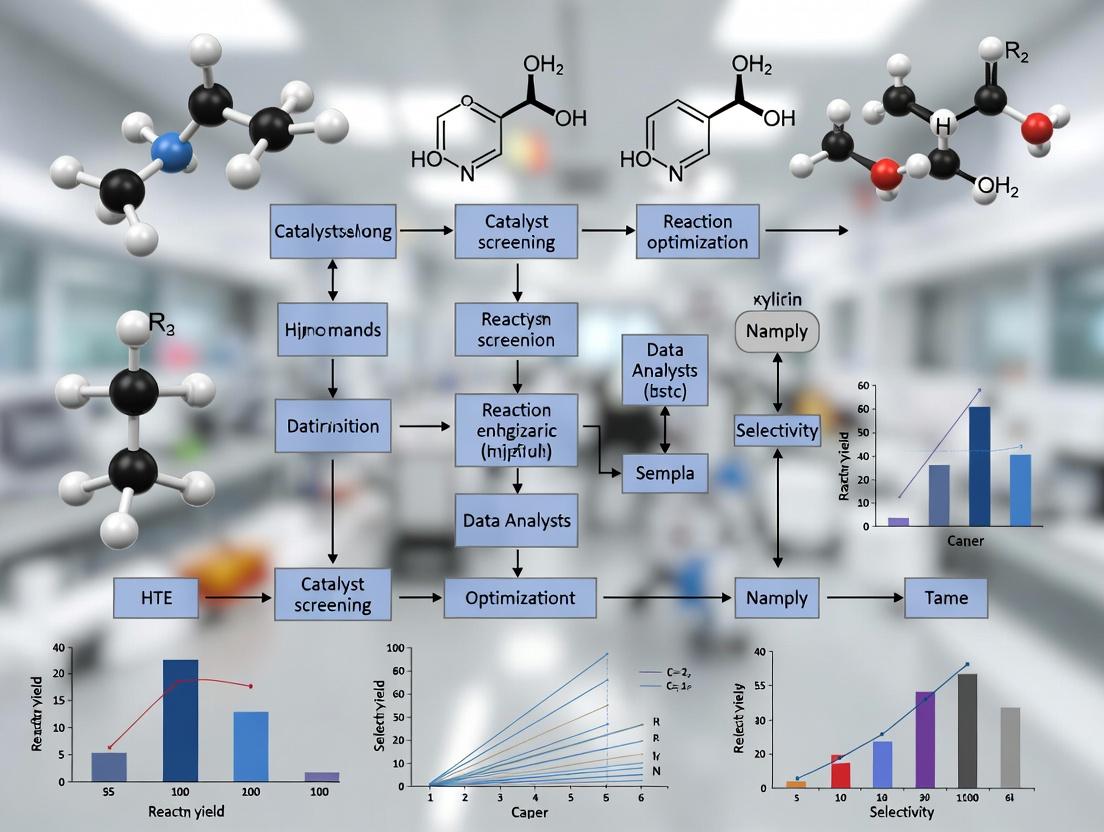
This article explores the transformative role of High-Throughput Experimentation (HTE) in optimizing photocatalytic reactions for pharmaceutical research.
High-Throughput Experimentation in Photocatalysis: Accelerating Reaction Discovery and Optimization for Drug Development
Abstract
This article explores the transformative role of High-Throughput Experimentation (HTE) in optimizing photocatalytic reactions for pharmaceutical research. Tailored for researchers and drug development professionals, it provides a comprehensive guide spanning from foundational principles to advanced applications. We cover the core concepts of HTE-photocatalysis synergy, detail practical methodologies for platform setup and reaction screening, address common experimental challenges, and present frameworks for validating and comparing results. The synthesis offers actionable insights for implementing HTE to rapidly discover and scale novel photocatalytic transformations, ultimately accelerating preclinical synthetic workflows.
What is HTE-Driven Photocatalysis? Core Principles and Synergies for Discovery
Application Notes
High-Throughput Experimentation (HTE) represents a paradigm shift in the exploration and optimization of photocatalytic reactions. Within the broader thesis of photocatalytic reaction optimization research, HTE serves as the critical engine for rapidly mapping complex, multivariate reaction spaces that are otherwise intractable. This approach synergistically combines parallel reactor systems, automated liquid handling, and rapid analysis to systematically evaluate catalysts, ligands, substrates, and conditions. The core synergy lies in HTE's ability to generate expansive, high-quality data sets that reveal non-linear interactions and "sweet spots" in parameter space, directly accelerating the development of novel photocatalytic methodologies for pharmaceutical relevant transformations, such as C-H functionalization, cross-couplings, and asymmetric synthesis.
Key Quantitative Insights from Recent HTE Photocatalytic Studies:
Table 1: Representative HTE Screening Results for Photoredox-Catalyzed C-N Coupling
| Variable Screened | Range Tested | Optimal Condition Identified | Yield Impact vs. Baseline | Key Finding |
|---|---|---|---|---|
| Photocatalyst (PC) | 24 Ir, Ru, & Organic PCs | [Ir(dF(CF₃)ppy)₂(dtbbpy)]PF₆ | +68% | Organic PC outperformed in select cases with electron-deficient substrates. |
| Lewis Acid Additive | 12 Metal Salts | Ni(OTf)₂ | +155% | Synergistic effect with PC enabled challenging amine couplings. |
| Solvent | 8 Solvents | DMA | +42% | Polar aprotic solvents universally superior for heterogeneous electron transfer. |
| Light Intensity | 5-100 mW/cm² | 25 mW/cm² | Peak at 25 mW/cm² | Evidence of diminishing returns/over-irradiation at higher intensities. |
Table 2: HTE-Driven Discovery of a New Triple Catalytic Cycle
| Catalyst Component | Library Size | HTE Reaction Outcomes | Optimal Combination | Maximum Yield |
|---|---|---|---|---|
| Photoredox Catalyst | 16 | 384 parallel reactions | Ir(ppy)₃ | 92% |
| Hydrogen Atom Transfer (HAT) Catalyst | 4 | Analyzed via UPLC-MS | Thiol A | 92% |
| Nickel Catalyst (Ligand Library) | 48 | Machine learning model trained | NiCl₂·glyme / L⁺ (a bipyridine derivative) | 92% |
Experimental Protocols
Protocol 1: High-Throughput Screening of Photocatalyst & Ligand Combinations for Metallaphotoredox Cross-Coupling
Objective: To identify synergistic photocatalyst and nickel ligand pairs for the arylation of a secondary pharmaceutical-like amine.
Materials: 96-well glass reaction block (silanized for inertness), automated liquid handler, LED array plate reactor (450 nm, calibrated intensity), centrifuge, UPLC-MS with autosampler.
Procedure:
- Plate Setup: Using an automated liquid handler, dispense stock solutions to a 96-well reaction block under an inert atmosphere.
- Column 1-12: Varied Photocatalyst (0.5 mol% in 50 µL DME).
- Rows A-H: Varied Ni Ligand (1.5 mol% in 50 µL DME).
- All wells: Add aryl bromide substrate (0.1 mmol in 50 µL), amine substrate (0.15 mmol), NiCl₂·glyme (1.0 mol%), and base (Cs₂CO₃, 2.0 equiv). Bring total volume to 200 µL with DME.
- Sealing & Reaction: Seal the block with a transparent, pressure-resistant mat. Place in the LED array reactor and irradiate with 450 nm light (≈20 mW/cm²) with constant agitation for 18 hours at 25°C.
- Quenching & Analysis: Centrifuge the block to settle particulates. Use the autosampler to inject a diluted aliquot from each well into the UPLC-MS.
- Data Processing: Convert chromatographic peak areas to yield using an internal standard calibration curve. Visualize results in a heat map (X-axis: PC, Y-axis: Ligand).
Protocol 2: Parallel Light Intensity & Wavelength Investigation
Objective: To determine the optimal light parameters for a benchmark photoredox decarboxylative coupling.
Materials: Multi-LED photoreactor with independently addressable wells (different wavelengths/intensities), 24-vial carousel, fiber-optic light meter.
Procedure:
- Vial Preparation: Prepare a master stock solution of the reaction (PC, substrates, etc. in solvent). Using a pipetting robot, aliquot equal volumes into 24 identical glass vials. Cap each vial with a septum.
- Reactor Configuration: Program the multi-LED reactor so that each vial position receives a unique combination of light condition (e.g., 390nm@10mW, 450nm@5mW, 525nm@20mW, etc.). Confirm intensities with a fiber-optic meter at each well prior to the experiment.
- Irradiation & Sampling: Place the carousel in the reactor and start the irradiation protocol. Remove a representative vial from each condition at t=1, 2, 4, 8, and 16 hours for analysis.
- Kinetic Analysis: Quantify conversion for each time point via GC-FID. Plot conversion vs. time for each light condition to identify the most efficient (fastest kinetics for lowest photon dose).
Visualizations
HTE-Driven Photocatalysis Optimization Workflow
Synergistic Triple Catalysis Mapped by HTE
The Scientist's Toolkit: Key Research Reagent Solutions
Table 3: Essential Materials for HTE Photocatalysis Research
| Reagent/Material | Function in HTE Photocatalysis | Example |
|---|---|---|
| Photoredox Catalyst Kit | Provides a diverse library of excited-state redox potentials and stabilities for initial screening. | Commercial kits containing Ir(III), Ru(II), Cu(I), and organic photocatalysts. |
| Ligand Library for Metallaphotoredox | Enables rapid matching of metal catalyst properties (Ni, Cu, Co) with photocatalytic cycle demands. | Diverse phosphines (e.g., SPhos, XantPhos), bipyridines, and diamines. |
| HTE-Compatible Reaction Blocks | Allows parallel reactions in an inert, light-transparent format compatible with automation. | 96-well glass blocks or plate-based vials with silicone/PTFE seals. |
| Calibrated LED Array Reactor | Provides uniform, tunable, and quantifiable light irradiation to all parallel reactions. | Commercially available multi-well photoreactors with intensity and wavelength control. |
| Internal Standard Kit | Enables rapid, accurate yield quantification by high-throughput analytics (UPLC-MS/GC). | A set of chemically inert compounds with distinct retention times for various methods. |
| Automated Liquid Handling System | Enables precise, reproducible dispensing of microliter volumes of reagents, catalysts, and substrates. | Positive displacement or liquid-handling robots. |
| High-Throughput UPLC-MS | Rapidly analyzes reaction outcomes (conversion, yield, byproducts) with minimal sample preparation. | Systems with fast gradients and autosamplers capable of handling 96-well plates. |
Within the context of a thesis on High-Throughput Experimentation (HTE) for photocatalytic reaction optimization, the development of an integrated platform is paramount. This platform accelerates the discovery and optimization of photocatalytic reactions, which are critical in pharmaceutical synthesis for C-H functionalization, cross-couplings, and novel bond formations. The core triad of this platform consists of specialized reactors enabling parallel testing, automation for reproducibility and scale, and robust analytical techniques for rapid data generation.
Reactor Systems for HTE Photocatalysis
The reactor is the physical site where the photochemical transformation occurs. HTE demands systems that allow for parallel, reproducible, and controlled irradiation of multiple reaction vessels.
Key Design Considerations:
- Uniform Irradiation: Ensuring consistent light intensity and spectral distribution across all wells is critical for meaningful comparison.
- Material: Vessels must be transparent to the relevant wavelength (often using borosilicate glass or specific plastics like Quartz or UV-transmissive acrylic) and chemically inert.
- Temperature Control: Photocatalysis can be exothermic; precise temperature control (often via Peltier coolers or recirculating chillers) is necessary.
- Mixing: Efficient stirring or agitation is required to suspend catalysts and ensure homogeneity, especially with solid photocatalysts or in slurry systems.
- Atmosphere Control: Many photocatalytic reactions are sensitive to oxygen or moisture, requiring inert atmosphere capability (N₂, Ar).
Common HTE Reactor Types:
- Microplate-based Systems: 24-, 48-, or 96-well plates housed in a dedicated photoreactor chamber with overhead LED arrays. Ideal for initial screening.
- Parallel Tube Reactors: Arrays of individual vial positions (e.g., 8-16 vials) where each vial is irradiated by its own dedicated LED module, offering excellent intensity control.
- Droplet-based Microfluidic Reactors: Emerging technology for ultra-high-throughput screening with picoliter to nanoliter volumes, though scaling remains a challenge.
Table 1: Comparison of Common HTE Photoreactor Types
| Reactor Type | Typical Throughput (Reactions) | Volume Range | Light Uniformity Control | Atmosphere Control | Best For |
|---|---|---|---|---|---|
| Microplate System | 24 - 96 | 0.5 - 2 mL | Moderate (single source) | Chamber purge | Primary reaction condition screening |
| Parallel Tube Reactor | 8 - 24 | 1 - 10 mL | High (individual sources) | Per-vial headspace purge | Optimization & kinetic studies |
| Microfluidic Chip | 100+ | nL - µL | High | Pre-mixed streams | Catalyst & substrate scoping |
Protocol 1: Initial Photocatalyst Screening in a 24-Well Plate HTE System
- Objective: Identify active photocatalysts for a novel C-N cross-coupling.
- Materials: 24-well glass-coated microplate, HTE photoreactor with 450 nm LED array, automated liquid handler, inert atmosphere glovebox.
- Procedure:
- In a glovebox (N₂ atmosphere), prepare stock solutions of substrate A (0.1 M in DMA), substrate B (0.12 M in DMA), base (0.2 M in DMA), and each photocatalyst (PC1-PC6, 1 mM in DMA).
- Using an automated liquid handler, dispense into each well: 100 µL substrate A, 100 µL substrate B, 50 µL base, and 20 µL of a distinct photocatalyst stock (wells 1-6) or DMA blank (wells 7-8). Total volume = 270 µL (0.27 mmol of A).
- Seal the plate with a transparent, pierceable PTFE/silicone mat.
- Transfer the sealed plate to the pre-equilibrated (25°C) HTE photoreactor. Purge the reactor chamber with N₂ for 5 minutes.
- Irradiate the plate at 450 nm (≈20 mW/cm² intensity) with continuous shaking for 16 hours.
- Quench reactions by transferring an aliquot from each well to a deep-well plate containing 500 µL of acetonitrile with an internal standard.
- Seal and centrifuge the quenched plate (3000 rpm, 5 min) prior to HPLC analysis.
Diagram 1: HTE Photocatalyst Screening Workflow
Automation and Liquid Handling
Automation is the engine of HTE, translating experimental design into physical reactions with precision and minimal human intervention.
Core Automated Components:
- Liquid Handling Robots: For accurate dispensing of substrates, catalysts, bases, and solvents in µL volumes across 96+ wells. Integrated with gloveboxes for air-sensitive chemistry.
- Weighing and Powder Dispensing: Automated systems for dispensing solid catalysts, ligands, or reagents, critical for heterogeneous photocatalysis.
- Reactor Integration: Robotic arms for moving plate stacks between storage, dispensing stations, photoreactors, and quenching stations.
- Software and Scheduling: Experiment control software (e.g., UNICORN, Momentum) to design workflows, track samples, and schedule resource usage.
Protocol 2: Automated Reaction Quenching and Sample Preparation for UPLC-MS
- Objective: Prepare samples from a 96-well photocatalytic plate for high-throughput analysis.
- Materials: Automated liquid handler with 96-channel head, deep-well 96-well collection plate, quenching solvent (ACN with 0.1% Formic Acid and ISTD).
- Procedure:
- Program the liquid handler to transfer a fixed aliquot (e.g., 10 µL) from each reaction well of the irradiated plate to the corresponding well of a clean 1 mL deep-well plate.
- Command the handler to immediately add 300 µL of quenching solvent to each well, diluting and stopping the reaction.
- The handler then adds an additional 290 µL of a generic UPLC-compatible solvent (e.g., MeOH/H₂O mix) to ensure optimal volume and composition for injection.
- The collection plate is sealed automatically, vortex-mixed (if the station has this capability), and transferred to a centrifuge queue.
- After centrifugation, the plate is ready for direct injection via an autosampler coupled to UPLC-MS.
High-Throughput Analysis and Data Management
Rapid, information-rich analysis turns parallel reactions into quantitative data. Data management systems are required to handle the resulting large datasets.
Primary Analytical Techniques:
- UPLC-MS with Autosamplers: The gold standard. Provides conversion (via UV/ELSD) and identity/selectivity (via MS) in runs of 1-2 minutes per sample. Autosamplers directly from microplates are essential.
- GC-MS/FID: Suitable for volatile compounds.
- HPLC-UV/ELSD: Robust for conversion analysis if MS is not required.
- In-situ/Online Monitoring: Techniques like FTIR or NMR are emerging but not yet standard for true HTE.
Table 2: High-Throughput Analysis Techniques for Photocatalysis
| Technique | Analysis Time/Sample | Primary Data Output | Throughput (96-well plate) | Key Advantage |
|---|---|---|---|---|
| UPLC-MS | 1 - 3 min | Conversion, Yield, MS ID | 4 - 8 hours | Unmatched information per run |
| GC-FID/MS | 2 - 5 min | Conversion, Yield, ID (MS) | 6 - 12 hours | Excellent for volatiles |
| HPLC-UV/ELSD | 3 - 6 min | Conversion, Yield | 8 - 16 hours | Cost-effective, robust |
| SFC-MS | 1 - 2 min | Conversion, Yield, MS ID | 4 - 8 hours | Ideal for chiral separations |
Data Analysis Pipeline: Raw chromatographic data is processed by specialized software (e.g., Chromeleon, MassHunter, Mestrelab's Mnova) to integrate peaks and calculate conversions/yields using internal standards. This data is then fed into a digital laboratory notebook (ELN) and data analysis platform (e.g., Spotfire, TIBCO, custom Python/R scripts) for visualization (heat maps, scatter plots), statistical analysis, and model building (e.g., for Design of Experiments, DoE).
Diagram 2: HTE Analysis & Data Management Pipeline
The Scientist's Toolkit: Key Research Reagent Solutions
Table 3: Essential Materials for an HTE Photocatalysis Platform
| Item | Function & Rationale |
|---|---|
| Glass-coated 24/96-Well Plates | Chemically inert reaction vessels with minimal light scattering and absorption compared to standard plastic. |
| PTFE/Silicone Sealing Mats | Provide airtight seals for inert atmosphere reactions while allowing needle penetration for sampling. |
| Deuterated Light Sources (LED Arrays) | Provide monochromatic, cool, and intense irradiation at specific wavelengths (e.g., 390, 450, 525 nm) crucial for reproducible photocatalyst excitation. |
| Acetonitrile (with 0.1% Formic Acid) | Standard quenching/dilution solvent for UPLC-MS; acidifies to stop reactions and improves MS ionization. |
| Internal Standard (e.g., Trifluorotoluene, Methyl Benzoate) | Added uniformly to quenching solvent to enable precise, automated calculation of conversion/yield from chromatographic data. |
| Photocatalyst Library | A curated collection of organometallic (e.g., Ir(ppy)₃, Ru(bpy)₃²⁺) and organic (e.g., 4CzIPN, Eosin Y) photocatalysts covering a range of redox potentials. |
| Oxygen/Moisture Scavengers | Packets or resins used in storage chambers to maintain integrity of air-sensitive stock solutions. |
| Calibration Standard Mix | A known mixture of starting material and product for daily UPLC-MS system suitability tests, ensuring data quality. |
Why Photocatalysis Benefits Uniquely from High-Throughput Approaches
Photocatalysis, the acceleration of a chemical reaction by light in the presence of a catalyst, is inherently complex and multivariate. Optimization requires simultaneous consideration of catalyst composition, light source (wavelength, intensity), reactor geometry, substrate concentration, and solvent environment. This multi-dimensional parameter space makes traditional one-variable-at-a-time (OVAT) experimentation inefficient and often incapable of identifying global optima or synergistic effects. High-Throughput Experimentation (HTE) is uniquely beneficial for photocatalytic research because it enables rapid, parallel exploration of these factors, dramatically accelerating discovery and optimization cycles. Within the broader thesis on HTE for photocatalytic reaction optimization, this article provides specific application notes and protocols for implementing these approaches.
Application Notes: Key Areas for HTE in Photocatalysis
Photocatalyst Discovery and Formulation Screening
HTE allows for the synthesis and testing of hundreds of catalyst compositions (e.g., doped metal oxides, covalent organic frameworks, perovskite variants) in parallel. This is critical for identifying novel materials with optimal band gaps, charge separation efficiency, and surface reactivity.
Reaction Condition Optimization
A single photocatalytic transformation is influenced by:
- Light intensity & wavelength
- Catalyst loading
- Solvent identity
- Substrate concentration
- Additives (sacrificial donors, co-catalysts)
- Reaction time & atmosphere
HTE platforms can systematically vary these parameters to construct detailed performance maps.
Substrate Scope Evaluation
For a newly developed photocatalytic method, quickly evaluating its applicability across a diverse library of substrates (e.g., drug-like molecules) is essential to define its utility in synthesis and drug development.
Detailed Experimental Protocols
Protocol 1: High-Throughput Screening of Heterogeneous Photocatalyst Libraries for H₂ Evolution
Objective: To identify the most active composition from a 96-member library of Co-doped TiO₂-ZrO₂ composite catalysts for photocatalytic hydrogen evolution from a water/methanol solution.
Research Reagent Solutions & Essential Materials:
| Item | Function |
|---|---|
| TiO₂ Precursor Solution (Titanium isopropoxide in isopropanol) | Source of titanium for catalyst synthesis. |
| ZrO₂ Precursor Solution (Zirconium(IV) propoxide in propanol) | Source of zirconium for catalyst synthesis. |
| Co Dopant Solution (Cobalt(II) nitrate in ethanol) | Source of cobalt dopant to modify band structure. |
| 96-Well Plate (Glass Bottom) | Platform for parallel catalyst synthesis and testing. Must be transparent for light irradiation. |
| Automated Liquid Handling Robot | For precise, high-speed dispensing of precursor solutions to create composition gradients. |
| LED Array Light Source (365 nm) | Provides uniform, controlled UV irradiation to all wells simultaneously. |
| Quantitative Gas Chromatography (GC) System | For parallel measurement of hydrogen gas produced in each well. |
| Methanol/Water Solution (1:1 v/v) | Sacrificial electron donor mixture. |
Methodology:
- Catalyst Library Preparation: Using an automated liquid handler, dispense varying ratios of TiO₂ and ZrO₂ precursor solutions into each well of a 96-well plate. Add a gradient of Co dopant solution. Dry at 80°C and calcine in-situ at 450°C for 2 hours using a programmable furnace.
- Reaction Initiation: To each well, add 200 µL of a 1:1 methanol/water solution. Seal the plate with a gas-tight, transparent septum.
- Irradiation: Place the sealed plate under a uniform 365 nm LED array (intensity: 10 mW/cm²). Irradiate for 4 hours under constant stirring.
- Analysis: Using an automated GC sampling system, analyze 100 µL of the headspace gas from each well to quantify hydrogen production. Use a calibration curve for absolute quantification.
- Data Processing: Normalize H₂ production rates to catalyst mass or surface area. Plot activity against composition to identify "hit" formulations.
Results Summary (Representative Data):
| Catalyst Composition (TiO₂:ZrO₂:Co) | Avg. H₂ Production (µmol/g·h) | Band Gap (eV) |
|---|---|---|
| 100:0:0 (Pure TiO₂) | 12.5 ± 1.2 | 3.20 |
| 80:20:0 | 18.3 ± 2.1 | 3.15 |
| 80:20:1 | 152.7 ± 10.5 | 3.02 |
| 60:40:1 | 89.4 ± 7.8 | 2.98 |
| 80:20:5 | 45.6 ± 4.3 | 2.85 |
Protocol 2: HTE Optimization of a Photoredox-Catalyzed C-N Cross-Coupling
Objective: To optimize the yield of a drug-relevant C-N coupling reaction catalyzed by an Ir photoredox catalyst using HTE to vary key reaction parameters.
Research Reagent Solutions & Essential Materials:
| Item | Function |
|---|---|
| Ir Photoredox Catalyst Stock Solution ([Ir(dF(CF₃)ppy)₂(dtbbpy)]PF₆ in DMSO) | Absorbs visible light to initiate redox cycles. |
| Substrate A (Aryl Halide) Library | Electrophilic coupling partner. |
| Substrate B (Amine) Library | Nucleophilic coupling partner. |
| Base Solutions (e.g., DIPEA, K₃PO₄) | Scavenges acid and facilitates deprotonation. |
| Solvent Library (MeCN, DMF, DMSO, DMAc) | Varied polarity and coordinating ability. |
| 24-Well Photoreactor Block | Individual vials with magnetic stirring, placed under a common LED panel. |
| UPLC-MS with Autosampler | For rapid quantitative analysis of reaction conversions and yields. |
Methodology:
- Experimental Design: Use a software-guided approach to prepare a 24-experiment array varying: Solvent (4 types), Base (3 types), Base Equivalents (2.0 or 3.0 equiv), and Light Intensity (Blue LED, 5 or 15 mW/cm²). Keep catalyst loading (0.5 mol%) and substrate concentrations constant.
- Plate Setup: An automated dispenser aliquots the designated solvent, base, and substrates into 24 separate reaction vials. The photoredox catalyst solution is added last.
- Reaction Execution: The vial block is placed under the LED panel, set to the appropriate intensity, and irradiated with stirring for 18 hours at room temperature.
- High-Throughput Analysis: An autosampler quenches a small aliquot from each vial into a UPLC-MS plate. Conversion is determined by the relative depletion of the limiting starting material.
- Data Analysis: Construct a response surface model to identify optimal conditions and significant interaction effects between parameters.
Results Summary (Key Finding Table):
| Condition Set (Solvent/Base/Light) | Avg. Conversion (%) | Key Observation |
|---|---|---|
| MeCN / DIPEA / High | 95% | Optimal combination. High polarity and tertiary base work best. |
| DMSO / DIPEA / High | 88% | Good yield, but purification more difficult. |
| MeCN / K₃PO₄ / High | 40% | Inorganic base ineffective under these conditions. |
| MeCN / DIPEA / Low | 65% | Confirms light intensity is a critical positive factor. |
Visualized Workflows and Relationships
HTE Cycle for Photocatalysis Research
HTE vs OVAT in Multidimensional Space
Critical Photophysical and Chemical Parameters to Map in Early Screening
In the high-throughput experimentation (HTE) pipeline for photocatalytic reaction optimization, early-stage screening is pivotal. Efficient mapping of key photophysical and chemical parameters enables rapid identification of promising catalyst-reaction pairings and reaction conditions, accelerating discovery in pharmaceuticals and fine chemical synthesis. This document outlines the critical parameters to measure, detailed protocols for their acquisition, and the essential toolkit for implementation.
Critical Parameters & Quantitative Benchmarks
The following parameters are foundational for evaluating photocatalytic systems. Data should be collected in a standardized format to enable comparative analysis.
Table 1: Core Photophysical Parameters for Screening
| Parameter | Definition & Impact | Target Range (Typical) | Measurement Technique |
|---|---|---|---|
| Absorption λ_max & ε | Wavelength of max absorption & molar absorptivity. Determines light source compatibility & penetration depth. | UV-Vis to >450 nm for blue light; ε > 10³ M⁻¹cm⁻¹ | UV-Vis Spectrophotometry |
| Emission λmax & Quantum Yield (Φem) | Wavelength of max emission & efficiency of photon emission. Inversely related to catalytic activity (for photo-redox). | Φ_em < 5% for photo-redox catalysts; >70% for photosensitizers | Integrating sphere; comparative method |
| Triplet State Energy (ET) & Lifetime (τT) | Energy and duration of the excited triplet state. Critical for energy transfer processes. | ET: 40-80 kcal/mol; τT: > 1 µs (solution, 298K) | Phosphorescence spectroscopy; Laser Flash Photolysis (LFP) |
| Excited State Redox Potentials (E_ox, E_red) | Oxidation/reduction power of the photoexcited catalyst. Drives electron transfer steps. | Span: ±0.8 to ±2.0 V vs. SCE | Cyclic Voltammetry + UV-Vis (Methacrylate quenching) |
| Photosability (Degradation Quantum Yield, Φ_deg) | Fraction of absorption events leading to catalyst decomposition. Determines functional lifetime. | Φ_deg < 10⁻⁴ | HPLC or NMR monitoring under irradiation |
Table 2: Key Chemical & Catalytic Parameters for Screening
| Parameter | Definition & Impact | Target Benchmark | Measurement Technique |
|---|---|---|---|
| Turnover Number (TON) | Moles product per mole catalyst. Measures total productivity. | > 20 for early hits | Quantitative HPLC/GC |
| Turnover Frequency (TOF) | TON per unit time. Measures intrinsic activity under conditions. | Early screen: > 1 h⁻¹ | Kinetic monitoring (in-situ IR, GC) |
| Chemical Yield | Moles product per limiting reactant. Measures efficiency. | > 50% (context-dependent) | Quantitative HPLC/GC with internal standard |
| Quantum Yield (Φ_rxn) | Moles product per mole photons absorbed. Measures photonic efficiency. | > 0.1 for viable systems | Actinometry (e.g., potassium ferrioxalate) |
| Substrate/Catalyst Loading (mol%) | Optimization variable for cost and efficiency. | Catalyst: 0.1-2 mol%; Substrate: 0.1M | Varied in HTE plate design |
Experimental Protocols
Protocol 1: High-Throughput Determination of Excited State Redox Potentials
Principle: Estimate E_ox/* using the Rehm-Weller equation from ground-state potentials and spectroscopic energy. Materials: Potentiostat, UV-Vis spectrometer, degassed solvent (e.g., MeCN), electrolyte (NBu₄PF₆), ferrocene internal standard. Procedure:
- Ground-State Potentials: Perform cyclic voltammetry (CV) of catalyst (0.5 mM) in a three-electrode cell. Measure Eox and Ered vs. Fc/Fc⁺.
- Spectroscopic Energy: Record emission spectrum. Determine the zero-zero excitation energy (E_0₀) from the intersection of normalized absorption and emission plots.
- Calculation:
- Eox/* = Eox - E0₀
- Ered/* = Ered + E0₀
- Validation (Optional): Perform oxidative/reductive fluorescence quenching studies with a redox partner series to confirm trends.
Protocol 2: Parallelized Photosability Assessment via HPLC
Principle: Quantify catalyst decomposition under operational irradiation. Materials: HTE photoreactor (e.g., multi-LED array), 96-well plate, HPLC with photodiode array (PDA) detector, inert atmosphere glovebox. Procedure:
- Prepare standard catalyst solutions (0.1 mM) in reaction solvent in a 96-well plate. Seal under inert atmosphere.
- Irradiate wells simultaneously at target wavelength (e.g., 450 nm) for a defined time series (e.g., 0, 15, 30, 60 min).
- For each time point, inject an aliquot directly into HPLC-PDA.
- Quantify remaining catalyst via integrated peak area at λ_max (absorption). Plot normalized concentration vs. photon dose.
- Calculate approximate Φ_deg using actinometer data from the same irradiation setup.
Protocol 3: HTE Quantum Yield (Φ_rxn) Screening using Actinometry
Principle: Measure photons absorbed by the reaction vs. product formed. Materials: Collimated LED source, calibrated power meter, potassium ferrioxalate actinometry kit, 8-well vial strip. Procedure:
- Photon Flux Determination: Fill a reactor vial with ferrioxalate solution. Irradiate for precisely 60s. Develop with phenanthroline and measure absorbance at 510 nm. Calculate photon flux (I₀, einstein s⁻¹).
- Reaction Setup: In parallel vials, prepare reactions with varying catalyst/substrate. Use a magnetic stir bar.
- Irradiation & Sampling: Irradiate all vials for a time ensuring <20% conversion. Periodically sample for product quantification (GC/HPLC).
- Calculation: For each vial, Φrxn = (Δ[moles product]) / (I₀ * (1 - 10^(-A)) * t), where A is the reaction mixture's absorbance at λirr, and t is time.
The Scientist's Toolkit: Key Research Reagent Solutions
Table 3: Essential Materials for Photocatalytic HTE Screening
| Item | Function & Critical Feature |
|---|---|
| Photoredox Catalyst Library | E.g., Iridium(III) (e.g., [Ir(dF(CF₃)ppy)₂(dtbbpy)]PF₆), Ruthenium(II) (e.g., [Ru(bpy)₃]Cl₂), organic dyes (e.g., 4CzIPN). Provides diverse redox potentials and excited state energies. |
| Organic Actinometers | Potassium ferrioxalate (UV-vis), Reinecke's salt (visible). Enables accurate photon flux measurement for any light source geometry. |
| Deuterated Reaction Solvents | For in-situ NMR kinetic monitoring. Acetonitrile-d3, DMSO-d6, etc. |
| Oxidative/Reductive Quenchers | Series of compounds with known redox potentials (e.g., aryl amines for oxidation, aryl bromides for reduction). For mechanistic probing. |
| Singlet Oxygen Quenchers/Traps | E.g., Sodium azide, 9,10-dimethylanthracene. Diagnose energy transfer pathways. |
| Radical Trapping/Scavenging Agents | E.g., TEMPO, BHT, 1,1-diphenylethylene. Confirm radical chain mechanisms. |
| Oxygen & Moisture Scavengers | Molecular sieves (3Å/4Å), copper catalyst for oxygen removal. Essential for air-sensitive photocatalysts. |
| Calibrated Light Sources | LEDs with narrow bandwidth (±10 nm) and calibrated intensity. Enables reproducible photon delivery. |
Workflow & Pathway Visualizations
Title: HTE Photocatalysis Screening Workflow
Title: Photocatalytic Reaction Pathways & Key Parameters
Within a High-Throughput Experimentation (HTE) framework for photocatalytic reaction optimization, the systematic definition and measurement of success metrics are paramount. Moving beyond simplistic single-output metrics (e.g., yield) to a multi-faceted benchmarking approach is critical for capturing the complex performance landscape of a photocatalytic transformation. This protocol provides detailed application notes for defining, measuring, and interpreting key performance indicators (KPIs) that enable robust comparison across catalyst libraries, light sources, and reaction conditions.
Core Performance Metrics: Definitions and Measurement Protocols
Effective benchmarking requires quantitative metrics across four domains: Efficiency, Productivity, Sustainability, and Functional Group Tolerance.
Table 1: Defined Core Metrics for Photocatalytic Reaction Benchmarking
| Metric Category | Specific Metric | Definition & Calculation | Ideal Measurement Method |
|---|---|---|---|
| Efficiency | Quantum Yield (Φ) | Φ = (Number of product molecules formed) / (Number of photons absorbed). The fundamental measure of photochemical efficiency. | Actinometry (e.g., using potassium ferrioxalate). Requires precise photon flux measurement. |
| Reaction Yield (Y) | Y (%) = (Moles of product / Moles of limiting reagent) * 100. Standard chemical yield at a defined time point. | Quantitative analysis via calibrated internal standard (e.g., GC-FID, HPLC-UV/ELSD). | |
| Turnover Number (TON) | TON = (Moles of product) / (Moles of photocatalyst). Measures catalyst productivity before deactivation. | Calculated from yield and precise catalyst loading. | |
| Productivity | Space-Time Yield (STY) | STY = (Mass of product) / (Reactor Volume * Time). Measures practical reactor productivity. | Derived from yield, reaction scale, and total run time. |
| Figure of Merit (FOM) | FOM = (TON * Yield) / (Catalyst Loading * Time). Composite metric balancing multiple factors. | Calculated from primary experimental data. | |
| Sustainability | Process Mass Intensity (PMI) | PMI = (Total mass of inputs in kg) / (Mass of product in kg). Measures environmental footprint. | Summation of all reagent, solvent, and material masses used. |
| E Factor | E-Factor = (Total waste mass) / (Product mass). PMI - 1. Focuses on waste generation. | Calculated from PMI. | |
| Sensitivity | Functional Group Tolerance Index (FGTI) | FGTI = (Number of successful diverse substrates) / (Total number tested) * 100%. | Screen against a standardized diverse substrate library (e.g., 20 compounds). |
Detailed Experimental Protocols for Key Metric Determination
Protocol 3.1: Determination of Apparent Quantum Yield (Φ) Using Chemical Actinometry
Objective: To measure the fraction of absorbed photons that drive the desired chemical transformation. Materials: Photoreactor with calibrated light source (LED), monochromator or bandpass filter, potassium ferrioxalate actinometer solution, reaction components. Procedure:
- Photon Flux Calibration: In the dark, prepare a quartz cuvette with potassium ferrioxalate actinometer solution. Irradiate at the target wavelength (λ) for a precise time (t). Quantify the formed Fe²⁺ via spectrophotometry after complexation with 1,10-phenanthroline. Calculate incident photon flux (P, Einstein s⁻¹) using the known quantum yield for ferrioxalate actinometry at λ.
- Reaction Setup: In parallel, set up the photocatalytic reaction of interest in an identical reactor geometry.
- Absorbance Measurement: Prior to irradiation, measure the absorbance (A) of the reaction mixture at λ. Calculate the fraction of light absorbed (f_abs) = 1 - 10^(-A).
- Product Quantification: Irradiate for time t. Quantify moles of product (n_product) formed via calibrated analytical methods.
- Calculation: Φ = nproduct / (P * fabs * t).
Protocol 3.2: High-Throughput Screening for Functional Group Tolerance Index (FGTI)
Objective: To rapidly assess substrate scope and calculate the FGTI. Materials: 96-well glass-lined microtiter plate, parallel photoreactor array (e.g., with LED panels), liquid handling robot, stock solutions of photocatalyst, base, and 20 diverse substrate analogs, UPLC-MS for analysis. Procedure:
- Plate Setup: Using a liquid handler, dispense constant volumes of photocatalyst and base stock solutions into all wells.
- Substrate Dispensing: Dispense a different substrate from the standardized library into each well (n=20). Include control wells without catalyst and without light.
- Irradiation: Seal the plate under inert atmosphere and irradiate in a parallel photoreactor under identical intensity and temperature for a fixed time (e.g., 6 hours).
- Analysis: Quench reactions and analyze via UPLC-MS using a short, fast generic method.
- Data Processing: Convert peak areas to conversion or yield using external calibration curves. Define a "success" threshold (e.g., yield ≥ 40%).
- Calculation: FGTI = (Number of wells meeting "success" criteria) / 20 * 100%.
The Scientist's Toolkit: Essential Reagent Solutions & Materials
Table 2: Key Research Reagent Solutions for Photocatalytic Benchmarking
| Item | Function & Explanation |
|---|---|
| Iridium(III) Photocatalysts (e.g., [Ir(dF(CF₃)ppy)₂(dtbbpy)]PF₆) | Standard organometallic photocatalysts with long excited-state lifetimes, strong oxidizing/reducing power, and known quantum yields; serve as benchmark catalysts. |
| Acridine Organophotocatalysts (e.g., Mes-Acr-Ph⁺ BF₄⁻) | Organic metal-free alternatives; useful for benchmarking sustainability (lower PMI) and cost. |
| Chemical Actinometry Kits (Potassium Ferrioxalate) | Calibrated solution for absolute measurement of photon flux in the UV/blue region, essential for quantum yield. |
| Standardized Substrate Scope Library | A curated set of 20 electronically and sterically diverse substrate analogs for consistent FGTI determination across projects. |
| Internal Standards (e.g., Trifluorotoluene, Dibromomethane) | Chemically inert, non-volatile compounds for precise quantitative yield analysis via GC-FID or GC-MS. |
| Bandpass Filters & Longpass Edge Filters | Isolate specific wavelengths from broad-spectrum sources to determine wavelength-dependent efficiency. |
| Integrating Sphere Spectrometer | Measures total photon output (radiant flux) of LED or lamp sources, enabling light source calibration. |
| Oxygen & Moisture Scavengers | Ensure inert reaction environments, as photocatalysts and intermediates are often sensitive to quenching by O₂ or H₂O. |
Workflow & Data Integration Visualization
Title: HTE Photocatalysis Benchmarking Workflow
Title: Photocatalytic Cycle with Linked Metrics
Building Your HTE Photocatalysis Workflow: From Library Design to Reaction Execution
Design of Experiment (DoE) Strategies for Efficient Photocatalyst and Substrate Library Design
1. Introduction Within a High-Throughput Experimentation (HTE) framework for photocatalytic reaction optimization, strategic library design is paramount. Traditional one-factor-at-a-time (OFAT) approaches are inefficient for exploring complex, multi-parameter catalytic spaces. This application note details Design of Experiment (DoE) methodologies to construct minimal, information-rich photocatalyst and substrate libraries, accelerating the discovery and optimization of photocatalytic transformations for pharmaceutical and chemical synthesis.
2. Core DoE Strategies & Comparative Data The choice of DoE strategy depends on the experimental phase: initial screening or subsequent optimization. Quantitative comparisons of common designs are summarized below.
Table 1: Comparison of Screening DoE Designs for Initial Photocatalyst/Substrate Scouting
| DoE Design | Number of Experiments for 4 Factors (k=4) | Assesses Interactions? | Primary Use Case in Photocatalysis |
|---|---|---|---|
| Full Factorial | 2^k = 16 | Yes (All) | Small-scope exploration of catalyst & substrate electronic parameters. |
| Fractional Factorial (Resolution IV) | 2^(k-1) = 8 | Yes (Some, confounded) | Efficient screening of catalyst metal center, ligand, substrate sterics, & light wavelength. |
| Plackett-Burman | 12 | No (Main effects only) | Ultra-high-throughput primary screening of >6 factors (e.g., catalyst, additive, solvent, temp, etc.). |
Table 2: Comparison of Optimization DoE Designs for Reaction Condition Refinement
| DoE Design | Experiment Count (Example) | Model Fitted | Ideal for Photocatalytic Optimization of |
|---|---|---|---|
| Central Composite (CCD) | ~20-30 for 3 factors | Full quadratic | Critical parameters: Light intensity, catalyst loading, reaction time, and concentration. |
| Box-Behnken | 15 for 3 factors | Full quadratic | Parameters with hard practical constraints (e.g., temperature, solvent ratio). |
| Doehlert Matrix | 13 for 3 factors | Quadratic | Sequential optimization where factor ranges may shift post-initial analysis. |
3. Experimental Protocols
Protocol 1: Fractional Factorial Screening for Dual Photocatalyst/Substrate Library Objective: To identify main effects and critical two-factor interactions influencing reaction yield across a library of 4 photocatalysts and 4 substrate derivatives. Materials: See "Scientist's Toolkit" (Section 5). Method:
- Define Factors & Levels: Assign catalysts (Cat A-D) and substrates (Subst 1-4) as discrete numeric levels. Include two continuous factors: catalyst loading (mol%) and light intensity (mW/cm²).
- Design Matrix: Generate a 2^(4-1) Resolution IV fractional factorial design (8 experiments) using statistical software (e.g., JMP, Design-Expert).
- Library Synthesis: In an HTE reactor block (e.g., 96-well plate), prepare reactions according to the design matrix. Use a liquid handler to dispense stock solutions of catalysts, substrates, and solvent.
- Photoreaction: Seal plates under inert atmosphere (N2/Ar). Irradiate simultaneously in a parallel photoreactor with calibrated LED panels.
- Analysis: Quench reactions simultaneously. Analyze yields via UPLC-MS using an autosampler. Convert peak areas to yield using a calibration curve.
- Analysis: Fit main effects and interaction models to the yield data. Identify which catalyst and substrate properties (e.g., redox potential, Hammett constant) correlate with high performance.
Protocol 2: Central Composite Design (CCD) for Optimizing a Lead System Objective: To model the nonlinear response surface and find optimal conditions for a lead photocatalyst-substrate pair. Method:
- Define Center Point: Use best conditions from screening as the design center (e.g., 2 mol% catalyst, 20 mW/cm², 12 h).
- Construct CCD: For 3 key factors, create a CCD with 6 axial points (alpha=±1.682), 8 factorial points, and 6 center point replicates (total 20 experiments).
- Execution: Perform experiments in randomized order to avoid bias.
- Modeling: Fit a second-order polynomial model (Y = B0 + ΣBᵢXᵢ + ΣBᵢⱼXᵢXⱼ + ΣBᵢᵢXᵢ²) to the yield data.
- Validation: Predict optimal point from the model. Run 3 confirmatory experiments at these predicted conditions. Validate model accuracy if the average yield is within the prediction interval.
4. Visualized Workflows
DoE Strategy for Photocatalytic HTE Workflow
HTE-DoE Integration for Photocatalyst Screening
5. The Scientist's Toolkit: Key Research Reagent Solutions
Table 3: Essential Materials for DoE-Driven Photocatalytic HTE
| Item | Function & Relevance to DoE |
|---|---|
| Photoredox Catalyst Kit | A diverse library (e.g., [Ir(dF(CF₃)ppy)₂(dtbbpy)]⁺, Ru(bpy)₃²⁺, organic dyes) enabling categorical factor variation in screening designs. |
| Substrate Stock Solutions | Pre-prepared solutions in DMF, MeCN, or DMSO for accurate, automated dispensing across dozens of DoE-defined experimental conditions. |
| Parallel Photoreactor | Enables simultaneous irradiation of all experiments in a design matrix (e.g., 24/96-well) with controlled intensity (a key continuous factor). |
| Liquid Handling Robot | Critical for reproducibility and precision in implementing DoE plans, minimizing manual dispensing error. |
| UPLC-MS with Autosampler | Provides rapid, quantitative analysis for the high-density data points generated by DoE, enabling robust statistical modeling. |
| DoE Software (JMP, Design-Expert) | Used to generate design matrices, randomize run order, and perform analysis of variance (ANOVA) and response surface modeling. |
| Inert Atmosphere Glovebox | Essential for preparing oxygen-sensitive photocatalyst and substrate libraries, ensuring baseline reproducibility. |
Within the framework of High-Throughput Experimentation (HTE) for photocatalytic reaction optimization, the ability to screen multiple reaction conditions simultaneously is paramount. Parallel photoreactor setups accelerate the discovery and optimization of photocatalytic transformations critical to pharmaceutical and materials synthesis. This guide details the core components and protocols for establishing a robust parallel photoreaction platform, focusing on reproducibility, scalability, and precise environmental control.
Core Components & Research Toolkit
The choice of light source dictates the reaction wavelength, photon flux, and uniformity across parallel vessels.
Table 1: Comparative Analysis of Parallel Photoreactor Light Sources
| Light Source Type | Typical Wavelength Range (nm) | Max Power Output (per position) | Key Advantage for HTE | Primary Limitation |
|---|---|---|---|---|
| LED Arrays (Cooled) | 365 - 455 (selectable) | 100 - 500 mW/cm² | Excellent wavelength specificity & long lifetime; individual well control possible. | Heat management required for high power. |
| Xenon Arc Lamps with Filter Wheels | 300 - 800+ (broad spectrum) | Up to 1000 mW/cm² (filtered) | Broad spectrum mimics solar light; flexible wavelength selection via filters. | Significant IR heat output; bulb degradation over time. |
| Fluorescent Lamp Banks | Broad (e.g., "UVA" 350-400) | Low to Moderate (10-50 mW/cm²) | Inexpensive; provides uniform illumination over large area. | Low intensity; limited wavelength control; phosphor decay. |
| Laser Diodes (Multiplexed) | Single wavelength (e.g., 405, 450) | Very High (W/cm² range) | Extremely high intensity and precision; suitable for microreactors. | High cost; small illumination area; safety concerns. |
Reaction Vessels & Configurations
Vessels must ensure consistent optical path length, stirring, and sealing.
Table 2: Parallel Photoreactor Vessel Options
| Vessel Type | Material | Typical Volume | Sealing Method | Best For |
|---|---|---|---|---|
| Multi-Well Plates (e.g., 24, 96-well) | Glass-bottom (PYREX), Quartz | 0.5 - 2 mL | PTFE/Silicone septa mats | Ultra-high-throughput initial screening. |
| Parallel Tube Reactors (Carousel) | Borosilicate glass, Quartz | 5 - 50 mL | Screw caps with septum/valve | Medium-throughput optimization & scale-up. |
| Immersion-Well Reactors (Parallel) | Quartz immersion well, Pyrex jacket | 10 - 100 mL | Ground glass joints, O-rings | Reactions requiring intense, focused irradiation. |
| Microfluidic Chip Arrays | Fused silica, PDMS | µL scale | Integrated | Photochemical kinetics studies with precise residence time. |
Atmosphere Control Systems
Maintaining an inert or reactive gas atmosphere is critical for oxygen/moisture-sensitive photocatalysts and substrates.
Table 3: Atmosphere Control Methods for Parallel Setups
| Method | Equipment Needed | Protocol Complexity | Level of Control | Suitability |
|---|---|---|---|---|
| Glovebox Integration | Glovebox, sealed reactor transfer shuttle | High | Very High (persistent <1 ppm O₂/H₂O) | Air-sensitive catalyst preparation and reaction initiation. |
| Schlenk Line Manifold | Multi-port Schlenk manifold, cold traps | Medium | High | Multiple vessels can be evacuated/refilled in parallel. |
| Septum & Purge | Needles, gas lines, bubbler | Low | Medium (requires vigilance) | Lower-cost setup; suitable for less sensitive systems. |
| Automated Gas Handling | Mass flow controllers, solenoid valves, sensors | High | Very High & Programmable | Precise dosing of reactive gases (e.g., CO₂, O₂, H₂). |
The Scientist's Toolkit: Essential Materials for Parallel Photocatalysis
| Item | Function & Specification | Example Vendor/Product |
|---|---|---|
| Quartz or PYREX Inserts | Provide consistent UV-Vis transmission for multi-well plates. | Hellma Analytics, Sigma-Aldrich |
| Magnetic Stirring Bases (Multi-point) | Ensure homogeneous mixing in each parallel vessel. | IKA RCT series, Heidolph |
| Calibrated Radiometer | Quantify light intensity (mW/cm²) at each reaction position to ensure uniformity. | Ocean Insight Spectrometers, International Light ILT950 |
| High-Purity Gas Regulators & Lines | Deliver inert (Ar, N₂) or reactive gases without contamination. | Swagelok, Sigma-Aldrich |
| PTFE/Silicone Septa | Provide airtight seals for repeated sampling/injection. | Chemglass, Grace |
| Photocatalyst Library | Diverse set of catalysts (e.g., Ir(III), Ru(II), organic dyes, semiconductors) for HTE screening. | Sigma-Aldrich, Strem, TCI |
| Actionmetry Solution (e.g., Potassium Ferrioxalate) | Quantify photon flux and validate reactor performance. | Prepare in-lab per IUPAC protocol |
Experimental Protocols
Protocol 1: Standardized Setup & Calibration for a 24-Well Parallel Plate Reactor
Objective: To establish uniform illumination and atmosphere control for photocatalytic screening.
Materials:
- Parallel photoreactor with tunable LED array (365-455 nm).
- 24-well plate with quartz glass bottoms.
- Calibrated USB radiometer/photodiode.
- Potassium ferrioxalate actinometry solution.
- Schlenk line or manifold with Argon supply.
- Septa mat for 24-well plate.
- Multichannel pipette.
Procedure:
- Light Uniformity Calibration: a. Place the radiometer sensor in the center well of the empty reactor plate. b. Set LED intensity to target level (e.g., 50% power). Record mW/cm². c. Move sensor sequentially to all 24 positions, recording intensity at each. Calculate coefficient of variation (CV). Aim for CV < 10%. d. Adjust LED array height or individual zone outputs to homogenize intensity.
Photon Flux Quantification (Chemical Actinometry): a. Fill all wells with 1.5 mL of 0.006 M potassium ferrioxalate solution. b. Seal plate with a transparent, inert septa mat. c. Irradiate at desired wavelength and power for a measured time (t). d. Use a multichannel pipette to transfer solution from each well to a UV-Vis plate. e. Measure absorbance of the Fe(II)-phenanthroline complex at 510 nm. f. Calculate photon flux per well using the known quantum yield. Document for reproducibility.
Atmosphere Control via Purge-Seal Method: a. Prepare substrate/catalyst solutions in an Ar-filled glovebox. b. Aliquot solutions into each well using a multichannel pipette. c. Immediately place and crimp the septa mat onto the plate. d. Using a hypodermic needle array connected to an Ar line, puncture the septa. Purge the headspace of all wells simultaneously for 15 minutes at a low flow rate. e. Remove needle array and immediately seal puncture holes with PTFE tape or a pre-applied adhesive layer.
Protocol 2: Parallel Optimization of a Photoredox-Catalyzed Cross-Coupling
Objective: To screen catalyst, ligand, and base combinations for a model C-N coupling.
Reaction: Arylbromide + Amine → Arylamine (via Ni/photoredox dual catalysis).
HTE Design:
- Variables: 4 Photocatalysts (PC), 3 Ni Ligands (L), 2 Bases (B).
- Layout: 24-well plate, 1 mL reaction volume per well.
- Controls: 1 dark control (foil-covered), 1 no-PC control per plate.
Procedure:
- In a glovebox, prepare stock solutions of substrate, amine, base, Ni salt, ligands, and photocatalysts.
- Using liquid handling robotics or multichannel pipettes, dispense in the following order to each well according to the design matrix:
- 0.8 mL solvent (DMA)
- 50 µL arylbromide stock (0.1 M, 5 µmol)
- 50 µL amine stock (0.15 M, 7.5 µmol)
- 25 µL base stock (0.2 M, 5 µmol)
- 25 µL Ni co-catalyst stock (0.02 M, 0.5 µmol)
- 25 µL ligand stock (0.04 M, 1.0 µmol)
- 25 µL photocatalyst stock (0.002 M, 0.05 µmol)
- Immediately seal plate using Protocol 1, Step 3.
- Place plate on pre-cooled (e.g., 15°C) stirring base inside the photoreactor.
- Irradiate with 450 nm LED array at 30 mW/cm² for 18 hours with continuous stirring.
- Quench reactions by adding 100 µL of 10% acetic acid via multichannel pipette.
- Analyze yield via UPLC-MS with an autosampler configured for 96-well plates.
Visualization of Workflows
Title: HTE Workflow for Photocatalytic Optimization
Title: Parallel Photoreactor System Schematic
Data Presentation & Analysis
Table 4: Example HTE Results from a Photoredox C-N Coupling Screen (Selected Conditions)
| Well # | Photocatalyst (mol%) | Ni Ligand | Base | Yield (%) [UPLC-MS] | Conversion (%) |
|---|---|---|---|---|---|
| A1 | [Ir(dF(CF₃)ppy)₂(dtbbpy)]PF₆ (1%) | 4,4'-dtbbpy | DIPEA | 92 | >99 |
| B1 | Ru(bpy)₃Cl₂ (1%) | 4,4'-dtbbpy | DIPEA | 45 | 78 |
| C1 | 4CzIPN (2%) | 4,4'-dtbbpy | DIPEA | 85 | 95 |
| A2 | [Ir(dF(CF₃)ppy)₂(dtbbpy)]PF₆ (1%) | BpyPhos | DIPEA | 15 | 30 |
| B2 | Ru(bpy)₃Cl₂ (1%) | BpyPhos | DIPEA | <5 | 10 |
| D6 (Control) | None | 4,4'-dtbbpy | DIPEA | <2 | <5 |
| F1 (Dark) | [Ir(dF(CF₃)ppy)₂(dtbbpy)]PF₆ (1%) | 4,4'-dtbbpy | DIPEA | <2 | 5 |
Implementing a parallel photoreactor system with standardized light calibration, versatile vessel options, and robust atmosphere control is foundational for effective HTE in photocatalysis. The protocols and frameworks provided enable rapid, reproducible screening and optimization, directly feeding into the iterative cycle of hypothesis generation and testing that drives modern photocatalytic research in drug development and beyond.
Automated Liquid Handling and Sample Preparation for Photocatalytic Reactions
Application Notes
Within high-throughput experimentation (HTE) for photocatalytic reaction optimization, automated liquid handling (ALH) is transformative. It enables the rapid, precise, and reproducible preparation of micro-scale reaction arrays necessary to screen multidimensional parameter spaces. Key applications include:
- Photocatalyst Library Screening: Automated dispensing of diverse homogeneous photocatalysts (e.g., Ir(III)/Ru(II) polypyridyl complexes, organic dyes) or heterogeneous suspensions into multi-well plates.
- Substrate Scope Investigation: Parallel preparation of reactions across a broad range of substrates with varying electronic and steric properties to establish reaction generality.
- Reaction Condition Optimization: Systematic variation of critical parameters such as light intensity/wavelength, reagent stoichiometry, solvent composition, and additive concentration.
- Quenching and Sampling for Kinetic Analysis: Timed, automated addition of quenching agents or sampling for time-point analysis to elucidate reaction kinetics and mechanisms.
The integration of ALH minimizes human error, ensures consistent irradiation exposure by standardizing setup timing, and dramatically increases experimental throughput. This allows for the generation of large, high-fidelity datasets essential for training machine learning models and deriving robust structure-activity relationships in photocatalytic research.
Protocols
Protocol 1: High-Throughput Screening of a Photocatalyst Library in a 96-Well Plate
Objective: To evaluate the performance of 24 distinct photocatalysts across a model C-N cross-coupling reaction in quadruplicate.
Materials & Equipment:
- Automated liquid handling system (e.g., Hamilton Microlab STAR, Beckman Coulter Biomek)
- Agitated microplate shaker/heater with transparent lid
- Blue LED array plate photoreactor (λmax = 450 nm, uniform intensity)
- 96-well clear round-bottom polypropylene plate
- Aluminum sealing tape
- Centrifuge with microplate rotor
- UPLC-MS system with autosampler
Procedure:
- Plate Layout Design: Define a plate map assigning photocatalysts (PC1-PC24) to columns 1-6 (four replicates per catalyst). Columns 7-12 are reserved for positive/negative controls.
- Stock Solution Preparation: Prepare stock solutions in dry, degassed solvent:
- Substrate A (aryl bromide): 100 mM in MeCN
- Substrate B (amine): 200 mM in MeCN
- Base (e.g., DIPEA): 300 mM in MeCN
- Photocatalysts (PC1-PC24): 2 mM in MeCN
- Automated Dispensing:
- Using the ALH system, dispense 50 µL of MeCN to all reaction wells.
- Dispense 10 µL of each photocatalyst stock to its four designated wells.
- Dispense 20 µL of Substrate A stock to all reaction and positive control wells.
- Dispense 15 µL of Substrate B stock to all reaction and positive control wells.
- Dispense 25 µL of Base stock to all reaction and positive control wells.
- For negative controls, omit the photocatalyst.
- Reaction Initiation: Seal the plate with aluminum tape, vortex mix for 1 minute, and centrifuge briefly to collect liquid at the bottom.
- Irradiation: Place the plate in the blue LED photoreactor and irradiate with agitation (500 rpm) for 18 hours at 25°C.
- Quenching & Analysis: Via ALH, add 100 µL of a UPLC-compatible quenching solvent (e.g., MeCN with internal standard) to each well. Seal, mix, centrifuge. Submit plate for UPLC-MS analysis.
Protocol 2: Automated Time-Point Sampling for Photocatalytic Reaction Kinetics
Objective: To monitor the progression of a photocatalytic decarboxylative coupling reaction over time.
Materials & Equipment:
- ALH system with cooling deck and time-scheduling software.
- Single-channel photoreactor vial station.
- 2 mL clear glass vials with stir bars.
- Pre-filled 1.5 mL quenching vials (containing 1 mL of 0.1 M HCl in EtOAc).
Procedure:
- Master Reaction Setup: In a 20 mL vial, prepare a master mixture of photocatalyst, substrate, carboxylate salt, and solvent. Stir under N2.
- Aliquoting: Using the ALH, transfer 1.0 mL of the master mixture into each of 8 reaction vials on a cooled deck (10°C).
- Irradiation & Sampling: Transfer the first vial to the photoreactor station (stirring, 30°C, LED on). Using a pre-programmed method, the ALH arm withdraws a 50 µL aliquot at t = 5, 15, 30, 60, 120, 240, 360, and 1440 minutes.
- Automated Quenching: Each aliquot is immediately dispensed into a corresponding quenching vial and vortex-mixed by the ALH system.
- Analysis: Quenched samples are centrifuged and analyzed by GC-FID to determine conversion vs. time.
Data Presentation
Table 1: Performance of Selected Photocatalysts in Model C-N Coupling (Protocol 1)
| Photocatalyst Class | Specific Catalyst | Avg. Yield (%) (n=4) | Std. Dev. (%) | Relative Reaction Rate |
|---|---|---|---|---|
| Ir(III) Complex | [Ir(dF(CF₃)ppy)₂(dtbbpy)]PF₆ | 92 | 1.8 | 1.00 |
| Ru(II) Complex | [Ru(bpy)₃]Cl₂ | 45 | 3.2 | 0.31 |
| Organic Acridinium | Mes-Acr⁺BF₄⁻ | 88 | 2.1 | 0.95 |
| Organic DPZ | 4CzIPN | 78 | 2.5 | 0.82 |
| Control (No PC) | N/A | <2 | 0.5 | N/A |
Table 2: Kinetic Data from Time-Point Sampling (Protocol 2)
| Timepoint (min) | Conversion (%) | [Product] (mM) | ln([Substrate]) |
|---|---|---|---|
| 5 | 12 | 1.2 | 2.04 |
| 15 | 35 | 3.5 | 1.66 |
| 30 | 55 | 5.5 | 1.32 |
| 60 | 78 | 7.8 | 0.82 |
| 120 | 92 | 9.2 | 0.33 |
| 240 | 95 | 9.5 | 0.20 |
| 360 | 96 | 9.6 | 0.18 |
| 1440 | 96 | 9.6 | 0.18 |
Visualizations
HTE Workflow for Photocatalysis
Automated Kinetic Sampling Protocol
The Scientist's Toolkit: Research Reagent Solutions
Table 3: Essential Materials for Automated Photocatalytic HTE
| Item | Function & Rationale |
|---|---|
| Polypropylene 96/384-Well Plates | Chemically resistant to organic solvents, minimal light scattering, compatible with ALH tips and sealing films. |
| Optically Clear Sealing Tape (Aluminum/Pierceable) | Prevents solvent evaporation and oxygen ingress while allowing light penetration for photoreactions in plates. |
| Degassed, Anhydrous Solvents in ALH-Compatible Reservoirs | Eliminates variability from dissolved oxygen and water, which can quench excited states or inhibit catalysts. |
| Integrated Photocatalyst/Substrate Stock Libraries | Pre-arrayed, concentration-normalized stock solutions in plates enable rapid combinatorial screening via ALH. |
| Quenching Solution with Internal Standard | Automated addition stops reaction at precise times; internal standard enables robust quantitative analysis. |
| Heterogeneous Photocatalyst Slurry Dispensing Module | Specialized ALH tips with agitation enable handling of solid/liquid suspensions (e.g., TiO₂, CdS quantum dots). |
| Multi-Well Plate LED Photoreactor | Provides uniform, tunable light intensity and wavelength across all wells, standardizing the photon flux variable. |
| UPLC/GC Autosampler with Plate Compatibility | Direct injection from reaction plates enables analysis of hundreds of samples without manual transfer. |
Application Notes
Within the context of high-throughput experimentation (HTE) for photocatalytic reaction optimization, the selection of analytical technique is critical for rapid, accurate, and information-rich data acquisition. These techniques must be compatible with miniaturized reactions (e.g., in microtiter plates) and enable quantitative or semi-quantitative analysis of reaction components.
LC-MS (Liquid Chromatography-Mass Spectrometry): The workhorse for monitoring polar, non-volatile, and thermally labile photocatalytic products common in pharmaceutical research. Ultra-High-Performance LC (UHPLC) coupled with high-resolution mass spectrometry (HRMS) enables rapid separation (<5 minutes per sample) and precise identification of reaction products and intermediates via exact mass. Time-course analysis is streamlined using automated sampling from reaction blocks.
GC-MS (Gas Chromatography-Mass Spectrometry): Essential for volatile and semi-volatile organic compounds. In photocatalytic optimization, it excels in monitoring dehalogenation, coupling of small molecules, or CO2 reduction products. Fast-GC methods and robotic headspace sampling significantly increase throughput. Its quantitative robustness is superior for small organic molecules.
NMR (Nuclear Magnetic Resonance): Provides definitive structural elucidation and quantitative data without the need for calibration curves. High-throughput flow NMR systems, such as the Plate Sampler or capillary flow systems, allow for the direct analysis of samples from microtiter plates. It is indispensable for distinguishing isomers and quantifying reaction yields directly from crude mixtures, a key advantage in rapid screening.
Protocols
Protocol 1: High-Throughput UHPLC-HRMS Analysis for Photocatalytic Reaction Screening
Objective: To quantitatively assess conversion and identify major products from 96-well photocatalytic reaction plates.
- Reaction Setup: Perform photocatalytic reactions in a 96-well microtiter plate with a clear bottom. Use 0.5-2 mL total reaction volume per well. Seal the plate with a PTFE-coated silicone mat.
- Quenching & Dilution: At designated time points, use a liquid handler to transfer 10 µL from each reaction well to a dedicated 96-well analysis plate containing 190 µL of quenching solvent (e.g., MeCN with 0.1% formic acid and an internal standard).
- Plate Preparation: Seal the analysis plate, vortex-mix, and centrifuge (5 min, 3000 rpm) to precipitate solids.
- UHPLC-HRMS Parameters:
- Column: C18 reversed-phase (e.g., 2.1 x 50 mm, 1.7 µm particle size).
- Mobile Phase: A: H2O (0.1% Formic Acid), B: MeCN (0.1% Formic Acid).
- Gradient: 5% B to 95% B over 3.5 minutes, hold for 0.5 min.
- Flow Rate: 0.6 mL/min.
- Injection Volume: 2 µL.
- MS: ESI source, positive/negative switching, full scan range 100-1000 m/z at 70,000 resolution (at 200 m/z). Data-dependent MS/MS acquisition enabled.
- Data Analysis: Use software to integrate peaks for starting material and product. Calculate conversion using internal standard normalized area-under-the-curve (AUC). Identify unknowns via exact mass and MS/MS library matching.
Protocol 2: Automated Headspace GC-MS for Volatile Product Analysis
Objective: To monitor the formation of volatile photocatalytic products (e.g., ethylene, alkanes, chlorinated intermediates).
- Reaction Setup: Conduct reactions in sealed headspace vials (e.g., 10 mL) or a specialized 96-well headspace plate. Agitate constantly.
- Automated Sampling: Utilize a robotic headspace autosampler. The needle heats to 80°C, pressurizes the vial, and injects a fixed volume of headspace gas.
- GC-MS Parameters:
- Column: Capillary GC column (e.g., DB-5ms, 30 m x 0.25 mm, 0.25 µm film).
- Carrier Gas: Helium, constant flow.
- Oven Program: 40°C (hold 2 min), ramp at 30°C/min to 250°C.
- Inlet: Split mode (10:1), 250°C.
- MS: Electron Impact (EI) source at 70 eV, scan range 30-300 m/z.
- Data Analysis: Quantify target volatiles by integrating selected ion monitoring (SIM) peaks against a pre-run external calibration curve.
Protocol 3: Flow NMR for Direct Quantitative Analysis of Crude Reaction Mixtures
Objective: To obtain direct quantitative yield and structural confirmation without chromatography.
- Sample Preparation: After reaction, dilute 100 µL of the crude mixture with 300 µL of deuterated solvent (e.g., DMSO-d6) containing a known concentration of a quantitative internal standard (e.g., 1,3,5-trimethoxybenzene). Transfer to a 96-well NMR plate.
- Automated Acquisition: Load the plate into a flow NMR system with an automated sample handler.
- NMR Parameters:
- Probe: 3 mm inverse detection flow probe.
- ¹H NMR: Number of scans = 16, relaxation delay (D1) = 5 seconds (ensures full relaxation for quantitative accuracy), acquisition time = 2 seconds.
- ²⁹Si or ¹⁹F NMR: Acquired if relevant to photocatalytic substrate.
- Data Processing & Quantification: Apply automatic phasing and baseline correction. Integrate characteristic peaks of starting material and product. Yield is calculated by comparing the integral ratio (product/standard) to that of a calibrated reference.
Data Tables
Table 1: Comparison of Key Analytical Parameters for HTE Reaction Monitoring
| Parameter | LC-HRMS | GC-MS | Flow NMR |
|---|---|---|---|
| Optimal Sample Type | Non-volatile, polar, labile | Volatile, thermally stable | Any soluble compound |
| Throughput | ~2-5 min/sample | ~3-10 min/sample | ~3-7 min/sample |
| Primary Data | Retention time, exact mass, MS/MS | Retention time, EI spectrum | Chemical shift, multiplicity, integral |
| Quantitation | Excellent (with IS) | Excellent (with IS/ESTD) | Absolute (no IS required) |
| Structural Insight | High (via fragmentation) | Moderate (library match) | Definitive |
| Sample Prep | Dilution/filtration | Minimal (headspace) | Dilution in deuterated solvent |
Table 2: Example Quantitative Data from a Model Photocatalytic C-N Coupling Screen (n=96)
| Analytical Method | Average Yield (%) | Std Dev (%) | RSD (%) | Key Identified Byproduct |
|---|---|---|---|---|
| LC-HRMS | 78 | ±4.2 | 5.4 | Homocoupled arene (detected by exact mass) |
| Flow NMR (¹H) | 75 | ±5.1 | 6.8 | - |
| Key Metric | Total Analysis Time | Data Acquired | ||
| 6.5 hours | 96 x (UV trace, HRMS, MS/MS) |
Visualizations
HTE Analytical Workflow for Reaction Monitoring
Technique Selection Logic Tree
The Scientist's Toolkit: Essential Research Reagents & Materials
| Item | Function in HTE Analysis |
|---|---|
| 96-Well Microtiter Plates (Clear Bottom) | Standardized vessel for parallel photocatalytic reactions with direct light exposure. |
| PTFE/Silicone Sealing Mats | Prevents cross-contamination and evaporation during reaction and storage. |
| Deuterated NMR Solvents (e.g., DMSO-d6, CD3CN) | Provides locking signal for NMR, used for dilution in quantitative flow NMR. |
| Quantitative NMR Internal Standard (e.g., 1,3,5-Trimethoxybenzene) | Enables direct yield calculation from ¹H NMR integrals without pure standards. |
| LC-MS Internal Standard (e.g., deuterated analog of SM) | Corrects for injection variability and ion suppression in mass spectrometry. |
| Quenching Solvent with 0.1% Formic Acid | Stops photocatalytic reactions, aids in solubility and ionization for LC-MS. |
| Automated Liquid Handler | Enables precise, high-throughput transfer, quenching, and plate preparation. |
| High-Resolution Mass Spectrometer | Provides exact mass measurement for unambiguous formula assignment of products. |
| Fast GC Column (e.g., DB-5ms) | Enables rapid separation of volatile components, increasing GC-MS throughput. |
| Robotic Headspace Autosampler | Automates sampling of vial headspace, critical for volatile product analysis. |
This document presents a series of application notes and protocols developed within the broader thesis research focused on High-Throughput Experimentation (HTE) for photocatalytic reaction optimization. The systematic application of HTE platforms accelerates the discovery and refinement of photocatalytic protocols, enabling rapid mapping of chemical space for challenging transformations relevant to pharmaceutical development. The following case studies exemplify this approach for C–X bond formation, decarboxylative couplings, and late-stage functionalization (LSF).
Case Study 1: HTE for Photoredox-Catalyzed C–N Bond Formation
Application Note: Optimizing a photoredox-catalyzed cross-coupling of aryl halides with primary and secondary amines for library synthesis. Objective: To identify optimal photocatalyst, base, and solvent combinations maximizing yield and minimizing side products.
Key HTE Parameters Screened:
- Photocatalysts (PCs): [Ir(dF(CF₃)ppy)₂(dtbbpy)]PF₆, Ru(bpy)₃Cl₂, 4CzIPN, Eosin Y, Mes-Acr⁺.
- Bases: DIPEA, Cs₂CO₃, K₃PO₄, NaOAc.
- Solvents: DMSO, DMF, MeCN, DMA, Toluene.
- Substrates: 4-Bromobenzotrifluoride (electron-deficient) and 4-bromoanisole (electron-rich) coupled to morpholine.
Protocol:
- Plate Preparation: In a nitrogen-filled glovebox, dispense stock solutions of photocatalyst (0.5 mol% in 25 µL solvent), base (1.5 equiv), and amine (1.2 equiv) into wells of a 96-well glass microtiter plate.
- Reaction Initiation: Add a stock solution of aryl halide (1.0 equiv, 0.1 M final concentration) to each well using a liquid handler. Seal the plate with a transparent, gas-permeable membrane.
- Irradiation: Place the plate on a commercially available parallel photoreactor (e.g., equipped with 456 nm LEDs, ~10 mW/cm² intensity) and irradiate with stirring for 18 hours at room temperature.
- Quenching & Analysis: Quench reactions with 100 µL of 1M HCl. Analyze yields via UPLC-MS with an internal standard (e.g., dibromomethane). Normalize conversion and yield against calibration curves.
Quantitative Data Summary: Table 1: Top-Performing Conditions for C–N Coupling of 4-Bromobenzotrifluoride with Morpholine
| Photocatalyst | Base | Solvent | Average Yield (%) (n=3) | Comment |
|---|---|---|---|---|
| [Ir(dF(CF₃)ppy)₂(dtbbpy)]PF₆ | DIPEA | DMSO | 94 ± 2 | Highest yield, consistent |
| 4CzIPN | Cs₂CO₃ | DMSO | 88 ± 3 | Cost-effective organic PC |
| Ru(bpy)₃Cl₂ | DIPEA | MeCN | 82 ± 4 | Moderate yield |
| Eosin Y | K₃PO₄ | DMF | 45 ± 5 | Visible light, low yield |
Visualization: HTE Workflow for Photoredox Optimization
Diagram Title: HTE Photocatalysis Optimization Workflow
Case Study 2: Decarboxylative Giese-Type Coupling
Application Note: Development of a redox-neutral, metallaphotoredox decarboxylative coupling of alkyl carboxylic acids with electron-deficient olefins. Objective: To overcome substrate-dependent variability by screening Ni co-catalysts and ligands at microscale.
Protocol:
- Substrate Preparation: Generate alkyl redox-active esters (RAE) in situ: In a 96-well plate, combine alkyl carboxylic acid (1.0 equiv), N-hydroxyphthalimide (NHPI, 1.1 equiv), and N,N'-dicyclohexylcarbodiimide (DCC, 1.1 equiv) in DCM. Stir for 1h at RT, then proceed without purification.
- Reaction Assembly: To each well containing the crude RAE, add via dispenser: Michael acceptor (e.g., dimethyl maleate, 1.5 equiv), photocatalyst (4CzIPN, 1 mol%), NiCl₂·glyme (5 mol%), ligand (varied, 10 mol%), and DIPEA (2.0 equiv). Dilute with DMF to 0.05 M.
- Photoreaction: Seal plate and irradiate with 450 nm LEDs (∼15 mW/cm²) while stirring for 24h.
- Analysis: Quench with aqueous EDTA solution. Perform quantitative GC-FID analysis using dodecane as internal standard.
Quantitative Data Summary: Table 2: Ligand Screening for Ni-Catalyzed Decarboxylative Coupling
| Ligand Class | Specific Ligand | Yield (%) Primary Acid | Yield (%) Secondary Acid |
|---|---|---|---|
| Bipyridine | 4,4'-dtbbpy | 12 | 5 |
| Terpyridine | terpyridine | 65 | 40 |
| Bisphosphine | dppf | 8 | <2 |
| Pyridinophane | MeO-PyBox | 91 | 78 |
| Diamine | TMEDA | 25 | 15 |
Case Study 3: Late-Stage C–H Functionalization of Drug-Like Molecules
Application Note: Employing HTE to achieve site-selective C–H arylation on a complex drug intermediate using a directing-group strategy. Objective: To rapidly evaluate a matrix of Pd catalysts, oxidants, and additives to achieve selective mono-arylation.
Protocol:
- Plate Setup: In a 96-well plate, prepare a master stock of the substrate (a Boc-protated aminoquinoline derivative, 1.0 equiv) in a 1:1 mixture of toluene and acetic acid (0.02 M final).
- HTE Matrix: Using an automated dispenser, add variable components: Pd source (e.g., Pd(OAc)₂, Pd(TFA)₂, 5 mol%), oxidant (AgOAc, Ag₂CO₃, PhI(OAc)₂, 1.5-2.5 equiv), and additive (e.g., pivalic acid, 1,4-benzoquinone, 0-50 mol%). Finally, add aryl iodide coupling partner (1.2 equiv).
- Reaction Execution: Seal the plate, heat to 100°C on a digital metal heating block for 16h with orbital shaking.
- Workup & Analysis: Centrifuge the plate. Dilute supernatants with MeOH. Analyze by LC-MS for conversion and regioisomeric ratio. Isolated yields are obtained by scaling up the top 3 conditions.
Quantitative Data Summary: Table 3: HTE Results for C–H Arylation of a Drug-like Intermediate
| Condition # | Pd Source | Oxidant | Additive | Conversion (%) | Mono:Di Selectivity |
|---|---|---|---|---|---|
| A1 | Pd(OAc)₂ | Ag₂CO₃ | PivOH (20 mol%) | >99 | 15:1 |
| B4 | Pd(TFA)₂ | AgOAc | 1,4-BQ (10 mol%) | 95 | 12:1 |
| C3 | Pd(OAc)₂ | PhI(OAc)₂ | None | 78 | 5:1 |
| D2 | Pd(TFA)₂ | Ag₂CO₃ | None | 45 | 8:1 |
Visualization: Mechanistic Pathway for Directed C–H Arylation
Diagram Title: Directed C-H Arylation Catalytic Cycle
The Scientist's Toolkit: Research Reagent Solutions
Table 4: Key Materials for HTE in Photocatalysis
| Reagent/Material | Function & Rationale |
|---|---|
| Ir(dF(CF₃)ppy)₂(dtbbpy)]PF₆ | Highly oxidizing and reducing photocatalyst with long excited-state lifetime; ideal for challenging bond formations. |
| 4CzIPN (Organic PC) | Cost-effective, strongly reducing thermally activated delayed fluorescence (TADF) photocatalyst. |
| Nickel(II) Chloride Glyme | Air-stable, soluble Ni source for dual photoredox/Ni-catalyzed cross-couplings. |
| MeO-PyBox Ligand | Effective chiral or achiral ligand for Ni/Co-catalyzed steps, enhancing reactivity in decarboxylative couplings. |
| N-Hydroxyphthalimide (NHPI) | Forms redox-active esters (RAEs) with carboxylic acids, enabling decarboxylative radical generation. |
| Silver(I) Carbonate (Ag₂CO₃) | Oxidant and halide scavenger in Pd-catalyzed C–H functionalization reactions. |
| 96-Well Glass Microtiter Plates | Chemically resistant and transparent for uniform light penetration in parallel photoreactions. |
| Parallel Photoreactor (456 nm LEDs) | Provides consistent, tunable light intensity across all wells for reproducible screening. |
Solving Common HTE-Photocatalysis Challenges: From Light Delivery to Data Artifacts
Ensuring Consistent Photon Flux and Wavelength Control Across Parallel Reactions
Within High-Throughput Experimentation (HTE) frameworks for photocatalytic reaction optimization, reproducibility is paramount. A core challenge is the delivery of uniform photon flux and precise wavelength control across multiple parallel reaction vessels. Inconsistent irradiation leads to variable reaction rates and product distributions, confounding data interpretation and hindering the reliable identification of optimal conditions. This application note details protocols and solutions to ensure photonic consistency, a critical prerequisite for robust HTE in photocatalysis research for pharmaceutical development.
Key Challenges & Quantitative Analysis
The primary variables affecting photonic consistency in parallel reactors are summarized in Table 1.
Table 1: Key Variables Impacting Photonic Consistency in Parallel HTE
| Variable | Impact Metric | Typical Range in Uncontrolled Systems | Target for Consistency |
|---|---|---|---|
| Photon Flux (Irradiance) | Power per unit area (mW/cm²) | Variation up to ±40% across array | ≤ ±5% coefficient of variation (CV) |
| Spectral Distribution | Peak wavelength (λ_max) & bandwidth (FWHM) | λ_max shift up to ±15 nm (LEDs) | λ_max shift ≤ ±2 nm |
| Spatial Uniformity | Irradiance across vessel footprint (e.g., well plate) | Hotspots & shadows; uniformity <70% | >95% spatial uniformity |
| Thermal Management | Reaction temperature rise (°C) | +10°C to +30°C above ambient | Maintained at setpoint ±2°C |
| Temporal Stability | Flux output over time (Decay) | >5% decay over 24h (some sources) | <1% fluctuation over experiment duration |
Core Experimental Protocols
Protocol A: Calibration of Photon Flux Across a Reaction Array
Objective: To measure and equalize irradiance at each reaction position. Materials: Calibrated silicon photodiode sensor on XY translation stage, optical power meter, adjustable LED driver(s), reaction block or microtiter plate. Procedure:
- Position the empty reaction block/plate holder in the photoreactor.
- Align the photodiode sensor centrally at the bottom of the first reaction vessel position.
- Activate the light source at a standard current. Record the power (mW) and calculate irradiance (mW/cm²) based on sensor area.
- Systematically move the sensor to each reaction position, recording the irradiance.
- Calculate the mean and CV for the array.
- For individually addressable LEDs: Adjust driver current for each LED to match the mean irradiance.
- For a single light source: Insert a custom-designed diffuser or lens array to homogenize the beam. Re-measure to confirm CV ≤5%.
- Document final calibration settings for all future experiments.
Protocol B: Spectral Verification and Wavelength Control
Objective: To confirm spectral output and ensure wavelength-specific reaction integrity. Materials: Spectrometer with cosine corrector or integrating sphere, optical fiber, wavelength standards (e.g., holmium oxide filter). Procedure:
- Connect the optical fiber from the spectrometer to the measurement probe.
- Place the probe at a representative reaction position, capturing light directly from the source.
- Measure the emission spectrum. Record λ_max and Full Width at Half Maximum (FWHM).
- Validate wavelength accuracy using a certified standard.
- For multi-wavelength studies (e.g., LED arrays of different colors), repeat for each channel, ensuring minimal cross-talk (<1%).
- Implement source-specific bandpass or cut-off filters if necessary to eliminate unwanted spectral contamination (e.g., UV bleed into blue LEDs).
Protocol C: Integrated Workflow for HTE Photocatalytic Screening
Objective: To execute a reproducible photocatalytic HTE screen with controlled photonic parameters. Materials: Calibrated parallel photoreactor, temperature-controlled agitator, stock solutions of photocatalyst, substrates, and reagents, inert atmosphere glove box or Schlenk line. Procedure:
- Pre-experiment: Verify photon flux (Protocol A) and spectrum (Protocol B) for the intended reactor configuration.
- Setup: In an inert atmosphere, dispense stock solutions into the reaction vessels (e.g., 96-well plate). Use a liquid handler for precision.
- Sealing: Seal each vessel with a transparent, chemically inert membrane (e.g., PTFE-silicone laminate).
- Irradiation: Place the array in the pre-calibrated photoreactor. Initiate irradiation simultaneously for all vessels. Start agitation.
- Timing: Use an electronic shutter or synchronized driver to control exposure duration precisely.
- Quenching: At time intervals, automatically inject a quencher or remove the array to a dark location.
- Analysis: Use HPLC, UPLC-MS, or other analytical techniques to quantify conversion/yield.
Visualization: Workflow and System Design
Diagram 1: HTE Photocatalysis Consistency Workflow
Diagram 2: Parallel Photoreactor System Schematic
The Scientist's Toolkit: Essential Research Reagent Solutions
Table 2: Key Materials for Consistent Parallel Photocatalysis
| Item | Function & Rationale |
|---|---|
| Calibrated Silicon Photodiode & Meter | Provides traceable, absolute measurement of photon flux (irradiance) for system calibration and validation. |
| Integrating Sphere Spectrometer | Enables accurate measurement of spectral output (λ_max, FWHM) independent of source geometry. |
| Individually Addressable LED Array | Allows fine-tuning of current to each LED to equalize output across all reaction positions. |
| Engineered Optical Diffuser | Creates a spatially uniform illumination field, eliminating hotspots in multi-well plates. |
| Thermoelectric Peltier Plate | Actively cools reaction arrays to counteract radiative heating, maintaining constant temperature. |
| Gas-Permeable Sealing Membrane | Allows maintenance of an inert atmosphere while being transparent to relevant wavelengths. |
| Automated Liquid Handler | Ensures precise, reproducible dispensing of catalyst, substrate, and reagent solutions prior to irradiation. |
| In-situ Fiber Optic Probe | Enables periodic spectral verification without disturbing the reaction array. |
Managing Oxygen and Moisture Sensitivity in High-Throughput Format
1. Introduction & Thesis Context
Within the broader thesis on High-Throughput Experimentation (HTE) for photocatalytic reaction optimization, managing atmospheric variables is a critical, yet often underappreciated, frontier. Photocatalysis frequently involves radical intermediates, transition-metal catalysts, and photosensitizers that are highly sensitive to both oxygen (quenching excited states, oxidizing catalysts) and moisture (hydrolyzing substrates, deactivating catalysts). Reproducible and efficient HTE campaign design necessitates the rigorous exclusion of these agents. These Application Notes provide protocols and solutions for integrating robust O₂/H₂O management into automated HTE workflows, enabling the exploration of sensitive photocatalytic space with confidence.
2. Key Challenges & Quantitative Data Summary
The following table summarizes primary deactivation pathways and their impact on common photocatalytic systems.
Table 1: Impact of O₂ and H₂O on Photocatalytic Components
| Component Class | Effect of O₂ | Effect of H₂O (Moisture) | Typical Tolerance Level (Approx.) |
|---|---|---|---|
| Iridium/ Ruthenium Polypyridyl PS (e.g., [Ir(ppy)₃]) | Quenches triplet excited state (3MLCT). Oxidizes reduced catalyst forms. | Generally low sensitivity. | O₂: <10 ppm for reliable kinetics. H₂O: <1000 ppm often acceptable. |
| Organic Dyes (e.g., Eosin Y, 4CzIPN) | Singlet Oxygen (1O₂) generation, dye degradation. Can promote alternative pathways. | Can protonate/counterion exchange, altering redox potentials. | O₂: Highly variable; often <50 ppm. H₂O: Can be significant (<500 ppm). |
| Nickel/ Copper Cross-Coupling Catalysts | Oxidizes low-valent metal centers (Ni⁰/Ni¹, Cu¹) to off-cycle species. | Ligand protonation, metal hydroxide/oxide formation. | O₂: <1 ppm often required. H₂O: <100 ppm critical. |
| Organometallic Reductants (e.g., [Ir(dF(CF₃)ppy)₂(dtbbpy)]⁺) | Irreversible oxidation of reduced species. | Reactivity with strong reductants. | O₂: <1 ppm. H₂O: <10-50 ppm. |
| Substrates: Alkyl Halides, Organotrifluoroborates | Minimal direct effect. | Hydrolysis (Sn2, protodeboronation). | O₂: N/A. H₂O: <100 ppm to prevent substrate decay. |
3. Research Reagent Solutions Toolkit
Table 2: Essential Materials for O₂/H₂O Management in HTE
| Item | Function & Explanation |
|---|---|
| Inert-Gas Glovebox (N₂ or Ar) | Primary workstation for catalyst/reservoir preparation, vial/plate dispensing, and seal-capping in a controlled atmosphere (<1 ppm O₂/H₂O). |
| Automated Liquid Handler with Inert Enclosure | Enables transfer of sensitive stock solutions and reagents to reaction vials/plates within a localized inert atmosphere. |
| Pre-dried HPLC/GC Vials & Septa | Vials should be oven-dried (e.g., 130°C) and stored in a desiccator or glovebox. PTFE/silicone septa provide a resealable barrier. |
| Crimp Caps with Aluminium Seals | For absolute, permanent seal integrity in vial-based HTE. Compatible with heater/shaker stations. |
| 96-Well Plate Heat/Seal Foils (Aluminium-Polypropylene) | Creates a hermetic, pierceable seal for microplate-based HTE. Applied with a commercial plate sealer. |
| O₂ & H₂O Scavenger Resins | Packed in disposable columns or as cartridges for in-line purification of inert gas streams or solvent dispensing lines. |
| Anhydrous, Deoxygenated Solvents | Purchased in Sure-Seal bottles or prepared by sparging with inert gas followed by passage through activated molecular sieves. |
| Salt Pastes for Visual Monitoring | e.g., Purple/Black Manganese-based O₂ indicators; Blue/White CuSO₄ for H₂O. Placed inside enclosures for rapid status checks. |
| Portable Residual Gas Analyzer | For validating O₂/H₂O levels inside gloveboxes, incubators, or sealed reactor stations post-preparation. |
4. Experimental Protocols
Protocol 4.1: Preparation of a Master Stock Solution Plate in a Glovebox Objective: To prepare a 96-well source plate of catalyst and substrate solutions for an automated HTE run. Materials: Inert glovebox (O₂, H₂O <1 ppm), automated liquid handler (optional), dried 96-well polypropylene plate, adhesive seal, anhydrous/deoxygenated solvents, stock solutions in gas-tight syringes.
- Place all materials (empty plate, solvent bottles, stock solution vials, pipette tips) inside the glovebox antechamber and purge per manufacturer protocol.
- Transfer materials to the main chamber. Verify atmosphere purity via monitors.
- Using a calibrated pipette or liquid handler, dispense calculated volumes of anhydrous, deoxygenated solvent to each target well.
- Sparingly add concentrated stock solutions of substrates, catalysts, etc., to create the desired final concentrations upon later dilution. Mix via aspiration-dispense.
- Immediately seal the plate with a pierceable, adhesive aluminum foil seal using a manual roller inside the box.
- Store the sealed master plate inside the glovebox freezer (-20°C) until ready for use in the reaction plate setup.
Protocol 4.2: Sealed Vial HTE Workflow for a Photocatalytic Screen Objective: To set up an array of photocatalytic reactions in sealed 2-mL vials with rigorous exclusion of air/moisture. Materials: Glovebox, 24-position vial rack, 2-mL GC vials with PTFE-lined caps, crimper, anhydrous solvents, master stock plate (from Protocol 4.1), automated liquid handler with inert enclosure.
- Inside the glovebox, place dried vials and caps in the rack.
- Transfer the sealed master stock plate from Protocol 4.1 into the inert enclosure of the liquid handler.
- Using the liquid handler, first dispense the required volume of solvent to each vial.
- Subsequently, pierce the master plate seal and transfer the appropriate aliquots of substrates, catalysts, etc., from the master plate to the corresponding vials. Change tips between reagents to avoid cross-contamination.
- After all additions, cap each vial tightly with a PTFE-lined cap inside the glovebox.
- Remove the rack of capped vials from the glovebox and immediately crimp each cap with an airtight aluminum seal using a manual crimper.
- Place the crimped vial rack into a photoirradiation station (e.g., LED array) equipped with temperature control for the reaction.
Protocol 4.3: In-line Solvent Purification and Degassing for Automated Dispensing Objective: To provide a continuous supply of dry, O₂-free solvent to an automated liquid handler outside a glovebox. Materials: Solvent reservoir, positive inert gas pressure line (Ar/N₂), two in-line purification columns (e.g., activated alumina/Q5 for H₂O, copper catalyst for O₂), gas-tight tubing, liquid handler.
- Connect the solvent reservoir to an inert gas line with a pressure regulator. Maintain a slight positive pressure (1-2 psi).
- Plumb the outlet from the reservoir through a series of two in-line, disposable solvent purification columns: first for water scavenging, second for oxygen scavenging.
- Connect the outlet of the final column to the solvent inlet line of the automated liquid handler using gas-tight tubing (e.g., PFA).
- Before use, purge the entire system by flowing solvent (at high rate) to waste for 30 minutes to remove residual air and equilibrate the columns.
- The liquid handler can now dispense purified solvent directly into reaction vials/plates placed on its deck, maintaining an atmosphere of inert gas in the headspace during dispensing.
5. Visualization: Experimental Workflow Diagram
Title: Workflow for Oxygen and Moisture Sensitive HTE
6. Conclusion
Integrating these protocols into an HTE framework for photocatalytic research creates a foundation for reliable data generation. By systematically controlling O₂ and H₂O, the experimental noise they introduce is minimized, allowing the thesis research to accurately map the true effects of intentional catalytic, stoichiometric, and optical variables. This approach is essential for building predictive models and discovering robust, scalable photocatalytic transformations.
Application Notes and Protocols
Introduction Within the context of High-Throughput Experimentation (HTE) for photocatalytic reaction optimization, two persistent challenges that confound data interpretation and catalyst advancement are catalyst decomposition and substrate inhibition. This document provides detailed protocols and analytical frameworks to diagnose and mitigate these issues in screening arrays, enabling more reliable identification of high-performing photocatalytic systems.
Diagnosing Catalyst Decomposition: Protocol & Analysis
Protocol 1: Sequential Photon Irradiation Assay (SPIA) Objective: To quantify catalyst turnover number (TON) and half-life under operational conditions in a high-throughput format. Materials: 96-well glass-coated microtiter plate, multi-channel pipette, plate-reading UV-Vis spectrophotometer with integrated LED array irradiator (450 nm), orbital microplate shaker. Reagents:
- Photocatalyst stock solution (e.g., Ir(ppy)₃, 1 mM in CH₃CN).
- Substrate stock solution (e.g., 4-bromoanisole, 100 mM in CH₃CN).
- Electron donor stock solution (e.g., DIPEA, 200 mM in CH₃CN).
- Internal standard (e.g., 1,3,5-trimethoxybenzene, 10 mM in CH₃CN).
Procedure:
- Prepare a master mix of substrate (10 µL, final 10 mM), donor (10 µL, final 20 mM), and internal standard (5 µL, final 1 mM) in CH₃CN. Dispense 25 µL per well.
- Serially dilute the photocatalyst stock across a row of 8 wells (final concentrations: 100 µM to 0.78 µM). Use the remaining columns for controls (no light, no catalyst).
- Initiate irradiation with orbital shaking. Pause irradiation at fixed time intervals (e.g., 0, 5, 15, 30, 60, 120 min).
- At each interval, quench a designated column of wells with 5 µL of 1M HCl and analyze immediately by UPLC-MS to quantify product yield and catalyst recovery.
- Plot product yield vs. time for each catalyst concentration. Calculate TON = (mol product) / (initial mol catalyst). Fit decay curves to determine apparent catalyst half-life.
Data Interpretation: A plateau in product yield that is independent of increasing initial catalyst concentration is indicative of catalyst decomposition. True TONmax is observed when the yield plateaus.
Table 1: SPIA Data for Model Ir(III) Photoredox Catalyst
| Initial [Cat] (µM) | Yield at Plateau (%) | Apparent TON | Cat. Recovery at t=120min (%) |
|---|---|---|---|
| 100 | 78 | 78 | 45 |
| 50 | 78 | 156 | 48 |
| 25 | 75 | 300 | 51 |
| 12.5 | 72 | 576 | 55 |
| 6.25 | 65 | 1040 | 60 |
Data indicates significant decomposition at high conversion, limiting practical TON.
Addressing Substrate Inhibition: Protocol & Analysis
Protocol 2: Substrate Saturation Kinetics in Microarrays Objective: To identify inhibitory substrate binding and determine optimal concentration ranges. Materials: 384-well microplate, automated liquid handler, continuous-flow photoreactor module for microplates. Reagents:
- Fixed photocatalyst solution (e.g., [Ru(bpy)₃]Cl₂, 50 µM in DMA).
- Variable substrate stock solutions (e.g., aryl halide, 0.1 M to 2.0 M in DMA).
- Constant co-substrate/donor.
Procedure:
- Using an automated handler, prepare an array where columns vary the target substrate concentration (5, 10, 25, 50, 100, 150, 200 mM) and rows vary a potential inhibitor or a second substrate.
- Dispense catalyst solution (20 µL) into all wells.
- Initiate the reaction under continuous, uniform irradiation.
- Quench after a fixed, sub-stoichiometric time (e.g., 5 min) to measure initial rates.
- Analyze conversion via in-plate fluorescence assay or rapid LC-MS injection.
- Plot initial rate (v₀) vs. substrate concentration [S]. Fit data to the Michaelis-Menten equation with inhibition: v₀ = (Vmax * [S]) / (Km + [S] + ([S]²/Ki)).
Data Interpretation: A decrease in v₀ at high [S] suggests substrate inhibition. Ki quantifies the inhibition constant, guiding optimal screening concentrations.
Table 2: Kinetic Parameters for Aryl Amidation Under Photoredox Catalysis
| Substrate | Km (mM) | Vmax (µM/min) | Ki (mM) | Optimal [S] Range (mM) |
|---|---|---|---|---|
| 4-Bromoacetophenone | 12.5 | 4.2 | 110 | 10-50 |
| 2-Bromopyridine | 8.2 | 3.8 | 45 | 5-30 |
| Iodobenzene | 25.6 | 5.1 | >500 | 25-100 |
Integrated Mitigation Workflow A combined diagnostic and mitigation strategy is essential for robust HTE.
Title: Integrated Diagnostic & Mitigation Workflow for HTE
The Scientist's Toolkit: Key Research Reagent Solutions
| Item/Category | Function & Rationale |
|---|---|
| Internal Standards (e.g., 1,3,5-Trimethoxybenzene) | Enables accurate quantification of yield and catalyst recovery via UPLC-MS by correcting for injection variability and ionization suppression. |
| Quencher Solutions (e.g., 1M HCl in MeOH) | Rapidly halts photocatalytic activity at precise timepoints in array formats, essential for kinetic analysis. |
| Chemical Scavengers (e.g., TEMPO, BHT) | Added in control wells to distinguish radical-chain vs. closed-cycle catalytic mechanisms and identify decomposition pathways. |
| Solid-Supported Scavengers (e.g., Polymer-bound thiol) | Used in post-reaction workup to remove metal contaminants before analysis, preventing false positives in catalysis recovery assays. |
| Deuterated Solvents (e.g., CD3CN) | For rapid in-situ NMR monitoring in designated wells of a screening array to track reaction progress and side-product formation. |
| Fluorescent Probe (e.g., Singlet Oxygen Sensor Green) | Detects the formation of reactive oxygen species (ROS) in situ, a common culprit in photo-catalyst decomposition. |
| Microplate-Compatible LED Arrays | Provides uniform, tunable, and high-intensity irradiation across all wells, a critical prerequisite for reproducible HTE kinetics. |
Identifying and Correcting for Data Noise and False Positives/Negatives
Within high-throughput experimentation (HTE) for photocatalytic reaction optimization, the acceleration of discovery is contingent upon data fidelity. Noise, false positives, and false negatives distort reaction yield predictions, catalyst performance rankings, and mechanistic insights. This document outlines protocols for identifying, quantifying, and correcting these data integrity issues, framed as essential methodologies for a robust HTE workflow in photocatalysis research.
| Noise Source | Typical Magnitude (Yield Variance) | Primary Effect | Common Detection Method |
|---|---|---|---|
| Light Source Fluctuation | ±5-15% | Inconsistent photon flux | On-line actinometry |
| Catalyst Heterogeneity | ±3-10% | Irreproducible activity | ICP-MS of stock solutions |
| Microplate Well Position Effects | ±2-12% (edge vs. center) | Systemic spatial bias | Control plate mapping |
| Analytical Sampling Error | ±1-8% | Inaccurate yield quantification | Internal standard validation |
| Ambient Oxygen/Moisture | ±5-25% (for sensitive systems) | Variable side reactions | In-situ headspace analysis |
Table 2: Correction Efficacy of Different Data-Cleaning Protocols
| Protocol | Avg. False Positive Reduction | Avg. False Negative Recovery | Computational Cost | Implementation Complexity |
|---|---|---|---|---|
| Z-Score Outlier Filtering (iterative) | 68% | N/A | Low | Low |
| Control-based Normalization (spatial) | 85% | 15% | Low | Medium |
| Multivariate PCA-based Denoising | 92% | 40% | High | High |
| Internal Standard Calibration (ISM) | 95% | 60% | Medium | Medium |
| Machine Learning (Random Forest) Imputation | 88% | 75% | Very High | Very High |
Experimental Protocols
Protocol 3.1: On-Plate Actinometry for Photon Flux Normalization
Purpose: To correct for spatial inhomogeneity in light intensity across an HTE photoreactor plate. Materials:
- 96-well quartz microplate.
- Chemical actinometer solution (e.g., potassium ferrioxalate).
- UV-Vis plate reader.
- HTE parallel photoreactor. Procedure:
- Prepare a 0.15 M potassium ferrioxalate solution in 0.05 M H₂SO₄. Handle in subdued light.
- Fill all wells of the quartz microplate with 200 µL of actinometer solution.
- Seal plate with a light-transmissive seal.
- Expose the entire plate to the standard photocatalytic light source for a precise duration (t).
- Immediately after irradiation, develop each well by adding 50 µL of 1,10-phenanthroline solution.
- Measure absorbance at 510 nm for each well using a plate reader.
- Calculate the photon flux for each well using the known quantum yield of ferrioxalate actinometry.
- Generate a 2D correction matrix. For subsequent photocatalytic runs, normalize raw yields by the relative photon flux for each well position.
Protocol 3.2: Internal Standard Method (ISM) for Analytical Noise Correction
Purpose: To correct for errors in sampling, dilution, and LC-MS/GC-MS analysis. Materials:
- Deuterated or fluorinated internal standard (IS) structurally analogous to product.
- Automated liquid handler.
- LC-MS/GC-MS with autosampler. Procedure:
- Spiking: Immediately after the photocatalytic reaction, use an automated liquid handler to add a fixed, precise volume of IS solution to each well.
- Quenching & Mixing: Quench the reaction if necessary and ensure homogenization.
- Analysis: Perform standard LC-MS/GC-MS analysis.
- Calculation: For each well, calculate the response ratio (R) = (Product Peak Area / IS Peak Area).
- Calibration: Use a separate calibration curve built from known product concentrations with a constant IS concentration to convert response ratios (R) to absolute yields.
- Correction: This method corrects for injection volume errors, ion suppression in MS, and sample handling losses.
Protocol 3.3: Iterative Z-Score Filtering for Outlier Identification
Purpose: To statistically identify and flag reaction outcomes that are outliers due to systematic error or single-point failures. Procedure:
- After initial normalization (e.g., via Protocol 3.1), compile yield data for a set of replicate experiments.
- For each unique reaction condition, calculate the median yield and Median Absolute Deviation (MAD).
- Calculate the modified Z-score for each data point: Mᵢ = 0.6745 * (xᵢ - median) / MAD.
- Flag any data point with |Mᵢ| > 3.5 as a potential outlier.
- Iteration: Remove flagged outliers, recalculate median and MAD, and repeat step 4 until no new outliers are identified.
- Review: Manually inspect flagged wells for evident physical causes (e.g., empty well, precipitate). Either correct the cause and rerun or exclude the point.
Visualizations
Title: Data Cleaning Workflow for HTE Photocatalysis
Title: Relationship Between Noise, False Positives, and False Negatives
The Scientist's Toolkit: Key Research Reagent Solutions
Table 3: Essential Materials for Data Fidelity in Photocatalytic HTE
| Item | Function | Example Product/Chemical |
|---|---|---|
| Chemical Actinometer | Quantifies photon flux per well for light normalization. | Potassium ferrioxalate, Aberchrome 670. |
| Deuterated Internal Standards | Corrects for analytical variance in MS and NMR quantification. | Deuterated analog of target product. |
| Photostable Fluorescence Dye | Maps light distribution and reactor plate uniformity. | Coumarin 153, Quinine sulfate. |
| High-Purity Solvent Drying Columns | Removes trace water/O₂ to reduce environmental noise. | Alumina-based, copper catalyst columns. |
| Homogeneous Catalyst Stock Solution | Ensures reproducible catalyst loading; analyzed by ICP-MS. | Precise weight/volume in anhydrous solvent. |
| Sealing Films (Gas-Permeable/Light-Transmissive) | Controls atmosphere while allowing irradiation. | PTFE/silicone mats, quartz lids. |
| Multi-Component Calibration Standard Mix | Validates analytical system linearity and detection limits. | Mix of expected products at varying concentrations. |
Within the broader thesis on High-Throughput Experimentation (HTE) for photocatalytic reaction optimization, this application note details the integration of iterative library design with machine learning (ML) for rapid, data-informed refinement of reaction conditions. Traditional one-factor-at-a-time (OFAT) approaches are inefficient for navigating the complex, multi-dimensional parameter spaces inherent to photoredox catalysis (e.g., catalyst, light intensity, solvent, ligand, concentration). This protocol outlines a closed-loop workflow where HTE-generated data trains ML models, which then propose subsequent, optimized experimental libraries, accelerating the discovery of robust, high-yielding conditions for drug development pipelines.
Core Workflow & Conceptual Framework
Logical Workflow Diagram
Diagram Title: ML-Guided HTE Optimization Loop
Key Experimental Protocols
Protocol: Design and Execution of Initial Photocatalytic HTE Library
Purpose: Generate a diverse, informative first dataset for model training.
Materials: See "Scientist's Toolkit" (Section 5).
Procedure:
- Parameter Selection: Define continuous (e.g., catalyst loading (mol%), light intensity (mW/cm²), temperature (°C)) and categorical (e.g., solvent, organic base, ligand) variables. Use a D-optimal or space-filling design (e.g., Latin Hypercube) to maximize information from 96-384 initial reactions.
- Library Preparation: In a nitrogen-filled glovebox, prepare stock solutions of photocatalyst, substrate, and reagents. Use an automated liquid handler (e.g., Labcyte Echo) to transfer nanoliter volumes into barcoded 96-well photoreactor plates.
- Reaction Execution: Seal plates with a gas-permeable membrane. Place plates in a commercial parallel photoreactor (e.g., Vapourtec Photochem) with controlled LED arrays (450 nm). Irradiate with simultaneous stirring for the prescribed time (e.g., 6-24 h).
- Quenching & Analysis: Automatically quench reactions by adding a standard analytical internal control via liquid handler. Use UPLC-MS with a fast autosampler to analyze conversion and yield. Export peak area data to a centralized database (e.g., CDD Vault, Benchling).
Protocol: ML Model Training and Iterative Library Design
Purpose: Use HTE data to build a predictive model and design the next experiment.
Procedure:
- Data Preprocessing: Clean data, handling failed reactions as low-yield outliers. Normalize continuous variables. One-hot encode categorical variables.
- Model Training: Split data (80/20 train/test). Train a Gaussian Process Regression (GPR) model using an Matern kernel. GPR provides predictions with uncertainty estimates, crucial for guiding exploration.
- Acquisition Function Calculation: Apply the Expected Improvement (EI) acquisition function to the model's predictions over the entire parameter space. EI balances exploring high-uncertainty regions and exploiting high-prediction regions.
- Library Selection: Select the top 48-96 conditions that maximize EI. This set becomes the next iterative library.
- Cycle Reiteration: Execute the new library (Protocol 3.1), integrate new data, retrain the model, and repeat for 3-6 cycles until yield/selectivity plateaus or project criteria are met.
Data Presentation & Model Performance
Table 1: Representative Optimization Cycles for a Model C-N Cross-Coupling Photoredox Reaction
| Cycle | Library Size | Avg. Yield (%) ± Std Dev | Max Yield (%) | Key Condition Identified (Catalyst/Ligand/Solvent) |
|---|---|---|---|---|
| 1 (Initial) | 96 | 32 ± 18 | 65 | Ir(ppy)₃ / No Ligand / DMF |
| 2 | 48 | 51 ± 22 | 82 | [Ir(dF(CF₃)ppy)₂(dtbbpy)]PF₆ / No Ligand / MeCN |
| 3 | 48 | 68 ± 15 | 94 | [Ir(dF(CF₃)ppy)₂(dtbbpy)]PF₆ / Bipyridine / DMSO |
| 4 | 48 | 75 ± 11 | 96 | [Ir(dF(CF₃)ppy)₂(dtbbpy)]PF₆ / Phenanthroline / MeCN |
Table 2: Comparison of Optimization Algorithm Performance
| Algorithm | Cycles to Reach >90% Yield | Total Experiments | Final Predicted RMSE (Yield %) |
|---|---|---|---|
| Random Search | 7 | 336 | N/A |
| Bayesian Opt. (GPR) | 4 | 240 | 4.2 |
| Human OFAT | >10 | >480 | N/A |
The Scientist's Toolkit
| Item | Function & Relevance |
|---|---|
| Automated Liquid Handler (e.g., Labcyte Echo 655T) | Enables precise, contactless transfer of nanoliter volumes for rapid library assembly in 1536-well format. Critical for HTE reproducibility. |
| Parallel Photoreactor (e.g., Vapourtec Photochem, ASAP-HP6) | Provides controlled, uniform LED irradiation with temperature control to multiple reaction vessels simultaneously. |
| High-Throughput UPLC-MS (e.g., Waters Acquity UPLC with Isocratic Solvent Manager) | Enables rapid (<2 min/well) analytical turnaround with mass confirmation, essential for generating large datasets. |
| Chemical Database (e.g., CDD Vault) | Securely stores and manages structured HTE data (conditions, outcomes, structures) for model training and collaboration. |
| ML Software Package (e.g., scikit-learn, Dragonfly) | Open-source or specialized platforms for implementing GPR, Random Forest, and Bayesian optimization algorithms. |
| Ir(dF(CF₃)ppy)₂(dtbbpy)]PF₆ | A highly oxidizing and reducing photocatalyst, frequently identified as optimal in ML-driven screens for challenging cross-couplings. |
Decision Pathway for Model-Guided Optimization
Diagram Title: Decision Tree for ML-Guided HTE
Validating HTE Hits and Comparing Photocatalytic Systems: From Microplate to Scale-Up
Protocols for Hit Confirmation and Robustness Testing of Promising Conditions
High-Throughput Experimentation (HTE) in photocatalytic reaction optimization generates numerous candidate "hits"—reaction conditions that show promising yield, selectivity, or efficiency in initial screening. This phase of research, situated within the broader methodological framework of a doctoral thesis, transitions from discovery to validation. The objective is to confirm the initial activity of these hits and rigorously assess their robustness against intentional and unintentional variations. This ensures that the optimized conditions are not artifacts of the screening platform and are transferable to scalable, reproducible synthesis, a critical step for applications in pharmaceutical development.
Hit Confirmation Protocol
The goal is to verify the performance of promising conditions identified from primary HTE screens (e.g., in 96- or 384-well microtiter plates) at a more controlled, moderate scale.
Protocol: Hit Re-Evaluation in Parallel Batch Reactors
- Objective: To independently reproduce the top 5-10% of conditions from the primary HTE screen.
- Materials & Setup:
- Reactor: Set up an array of 4-8 mL screw-cap vials or borosilicate reaction tubes equipped with magnetic stir bars.
- Light Source: Use a calibrated, uniform LED array (e.g., 450 nm blue LEDs) with a defined photon flux. Ensure consistent vial-to-vial irradiance by positioning vials at a fixed distance from the light source. A cooling fan maintains temperature.
- Environment: Conduct reactions under an inert atmosphere (N₂ or Ar) using a glovebox or Schlenk line techniques.
- Procedure: a. Preparation: In a glovebox, charge each vial with the substrate (0.1 mmol), photocatalyst (typically 1-2 mol%), and any other additives (e.g., base, ligand) as per the hit condition. b. Solvent Addition: Add the specified degassed solvent (2 mL) via syringe. c. Initiation: Seal the vials, remove them from the glovebox, place them in the pre-cooled LED array reactor, and start stirring (800 rpm). d. Irradiation: Commence irradiation for the specified time. Use external temperature control (e.g., aluminum block) to maintain 25±2°C. e. Quenching: After the reaction time, turn off the light and open the vials to air or add a quenching agent (e.g., 0.1 mL of saturated NH₄Cl solution). f. Analysis: Add an internal standard (e.g., 0.05 mmol of mesitylene) directly to the reaction mixture. Analyze conversion and yield via quantitative GC-FID or UPLC-MS against a calibrated standard curve for the product.
- Success Criteria: A hit is confirmed if the yield/conv. is within ±15% of the HTE screen result and exceeds a predefined threshold (e.g., >70% yield).
Table 1: Example Hit Confirmation Data from a C-N Cross-Coupling Photo-Redox Screen
| HTE Well ID | Photocatalyst (mol%) | Base | Solvent | HTE Yield (%) | Confirmatory Yield (%) (n=3, Avg ± SD) | Status |
|---|---|---|---|---|---|---|
| B07 | Ir(ppy)₃ (1.5) | Cs₂CO₃ | DMF | 92 | 88 ± 3 | Confirmed |
| D12 | 4CzIPN (2.0) | K₃PO₄ | MeCN | 85 | 91 ± 2 | Confirmed |
| F03 | Ru(bpy)₃²⁺ (1.0) | DIPEA | DMSO | 79 | 62 ± 5 | Failed |
| H09 | Eosin Y (5.0) | NaOAc | EtOH/H₂O | 88 | 86 ± 1 | Confirmed |
Robustness Testing (DoE-Based)
Once confirmed, hits undergo systematic variation using Design of Experiments (DoE) to evaluate robustness and define a design space.
Protocol: Two-Level Fractional Factorial Design for Critical Parameter Assessment
- Objective: To evaluate the sensitivity of the reaction outcome to variations in five key continuous and discrete factors.
- Experimental Design:
- Selected Factors & Ranges:
- A: Catalyst Loading (Low: 0.75x, High: 1.25x optimal mol%)
- B: Substrate Equivalents (Low: 0.9 eq, High: 1.5 eq)
- C: Reaction Concentration (Low: 0.025 M, High: 0.1 M)
- D: Light Intensity (Low: 50%, High: 100% of standard flux)
- E: Solvent Lot (Discrete: Lot A, Lot B from different suppliers)
- Design: A 2^(5-1) fractional factorial design (Resolution V) requiring 16 experiments, plus 3 center point replicates (all factors at optimal level) to check for curvature.
- Selected Factors & Ranges:
- Procedure: a. Setup: Prepare 19 vials according to the randomized run order generated by DoE software (e.g., JMP, Design-Expert). b. Execution: Follow the general procedure from the Hit Confirmation Protocol, adjusting each parameter as specified by the design matrix. c. Analysis: Quantify yield as the response variable.
- Data Analysis:
- Perform ANOVA to identify statistically significant main effects and two-factor interactions.
- Calculate model coefficients to understand the direction and magnitude of each factor's influence.
- A robust condition is indicated by: 1) No statistically significant (p < 0.05) main effects for minor, expected variations (e.g., solvent lot), 2) High yield at center points with low variance, and 3) A large operating window for critical parameters like concentration.
Table 2: DoE Results Summary for a Confirmed Hit (Ir(ppy)₃ Condition)
| Factor | Effect on Yield (%) | p-value | Significance (α=0.05) | Interpretation |
|---|---|---|---|---|
| A: Catalyst Loading | +5.2 | 0.12 | Not Significant | Robust to moderate loading changes |
| B: Substrate Eq. | -1.8 | 0.55 | Not Significant | Robust |
| C: Concentration | -15.7 | 0.003 | Significant | Critical factor; yield drops at higher concentration |
| D: Light Intensity | +8.1 | 0.06 | Borderline | Moderate sensitivity to light flux |
| E: Solvent Lot | +0.9 | 0.78 | Not Significant | Robust to supplier variation |
| Center Points (Avg ± SD) | 85 ± 2% | - | - | Good reproducibility at optimum |
Advanced Validation: Forced Degradation & Stress Testing
Protocol: Stress Testing Under Non-Standard Conditions
- Objective: To probe the reaction's resilience to common "real-world" operational variances.
- Stress Conditions (Performed in Parallel):
- Oxygen Stress: Purge reaction vial with O₂ instead of N₂ before irradiation.
- Water Stress: Add 100 µL of deionized H₂O to the reaction mixture (for ostensibly anhydrous conditions).
- Temperature Stress: Run reaction at 40°C instead of 25°C.
- Light Quality Stress: Use a white light source (broad spectrum) instead of the optimal monochromatic LED.
- Scale Stress: Perform the reaction on a 5x larger scale (0.5 mmol) in a larger vessel with adjusted stirring.
- Analysis: Compare yield to the standard confirmatory run. A loss of <20% yield under stress conditions indicates high robustness.
Visualization of Experimental Workflow
Diagram Title: HTE Hit Validation and Robustness Testing Workflow
The Scientist's Toolkit: Key Research Reagent Solutions
Table 3: Essential Materials for Photocatalytic Hit Validation
| Item | Function in Protocol | Key Considerations |
|---|---|---|
| Degassed Solvents (Sealed Ampules) | Ensure oxygen-free start conditions, critical for photo-redox cycles. | Prevents catalyst quenching and side reactions; enables reproducibility. |
| Internal Standards for Quantitation (e.g., mesitylene, dibromomethane) | Enables accurate yield/conversion calculation via GC-FID/NMR. | Must be inert, well-separated chromatographically, and added consistently. |
| Calibrated LED Photoreactor Arrays | Provide uniform, quantifiable photon flux to all parallel reactions. | Calibration with actinometry (e.g., ferrioxalate) is essential for cross-lab reproducibility. |
| Photocatalyst Library (e.g., Ir(III), Ru(II), organic dyes) | Core photoactive species driving the electron transfer processes. | Must be stored away from light; purity significantly impacts performance. |
| Chemical Quenchers (e.g., saturated NH₄Cl, TEMPO) | Rapidly stop the photocatalytic cycle at precise time points. | Allows for accurate kinetic profiling and prevents post-irradiation reactions. |
| DoE Software (e.g., JMP, Design-Expert) | Designs efficient robustness testing matrices and analyzes factor significance. | Moves beyond one-factor-at-a-time (OFAT) to understand interactions. |
1. Introduction Within the broader thesis on High-Throughput Experimentation (HTE) for photocatalytic reaction optimization, this document details the critical step of validating nanoscale HTE screening results at a synthetically relevant bench scale. The initial discovery phase in photocatalytic drug intermediate synthesis often employs HTE platforms using microliter (μL) volumes and milligram (mg) quantities of solid photocatalysts, reporting yields in "μL/mg" productivity terms. This protocol provides a systematic framework for translating these micro-scale leads into verified, scalable procedures yielding products in the millimole (mmol) and gram (g) range, reported in the conventional "mmol/g" metric.
2. Key Data Translation & Comparison Table Table 1: Translation of HTE Screening Results to Bench-Scale Validation
| Parameter | HTE (Discovery) Scale | Bench (Validation) Scale | Scaling Factor & Rationale |
|---|---|---|---|
| Reaction Volume | 100-500 μL | 10-50 mL | 100-200x: Enables standard lab manipulation, sampling for TLC/GC-MS, and accurate quenching. |
| Substrate Mass | 0.5-2 mg | 50-200 mg | ~100x: Achieves measurable mass for isolation, characterization (NMR, HPLC), and yield calculation. |
| Photocatalyst Loading | 0.5-2 mol% (relative to substrate) | 0.5-2 mol% | 1x: Maintains identical catalytic conditions; mass scaled proportionally with substrate. |
| Productivity Metric | μL product / mg catalyst | mmol product / g catalyst | Translation: Requires density (for μL→mass) and molar mass for final mmol/g calculation. |
| Light Source | Array of single LEDs (450-465 nm) | Single high-power LED or blue LED lamp | Maintains identical wavelength (nm) and calibrated intensity (mW/cm²) at the reaction vessel. |
| Primary Goal | Identify lead catalyst/condition | Confirm yield, isolate product, establish purifiability, assess reproducibility. |
3. Detailed Experimental Protocols
3.1. Protocol A: From HTE Hit to Bench-Scale Reaction Setup Objective: To directly scale a promising condition from a 96-well HTE plate. Materials: Substrate, photocatalyst, solvent (anhydrous), base/additives (if any), 50 mL round-bottom flask, magnetic stir bar, appropriate high-power LED source (e.g., Kessil lamp, 40W 450nm), cooling jacket, argon/vacuum manifold. Procedure:
- Calculate Quantities: Based on the HTE condition (e.g., 0.1 mmol substrate in 200 μL), scale substrate to 10 mmol. Maintain identical molar concentrations (e.g., 0.5 M). Calculate required photocatalyst mass for 1.0 mol% loading.
- Prepare Reactor: Flame-dry the 50 mL flask and stir bar. Under argon, charge the substrate, photocatalyst, and any solid additives.
- Solvent Addition: Using a syringe, add the required volume of anhydrous solvent (e.g., 20 mL for 0.5 M) under argon flow.
- Degassing: Seal the flask with a septum. Apply vacuum via needle, then refill with argon. Repeat this freeze-pump-thaw cycle 3 times or sparge with argon for 20 minutes.
- Irradiation: Place the flask in a cooling jacket (maintained at 25°C) positioned at a fixed distance from the LED light source. Record the light intensity at the flask surface. Initiate stirring and irradiation.
- Monitoring: Periodically monitor reaction progress by removing small aliquots (∼50 μL) under argon for TLC or GC-MS/HPLC analysis.
3.2. Protocol B: Workup, Isolation, and Yield Determination Objective: To isolate and characterize the product, calculating the final mmol/g yield. Materials: Silica gel, TLC plates, appropriate eluent, rotary evaporator, high-vacuum pump, NMR spectrometer, HPLC. Procedure:
- Quenching: After completion (confirmed by analysis), turn off the light and open the flask. Add a quenching agent (e.g., saturated NH₄Cl solution) if needed.
- Extraction: Transfer the mixture to a separatory funnel. Extract with an appropriate solvent (e.g., EtOAc, 3 x 20 mL). Wash the combined organic layers with brine, dry over anhydrous MgSO₄, filter, and concentrate via rotary evaporation.
- Purification: Purify the crude residue by flash column chromatography using the gradient indicated by TLC analysis.
- Characterization: Isolate the pure product. Obtain ( ^1H ) NMR for structural confirmation and HPLC for purity assessment (>95%).
- Yield Calculation: Calculate the isolated yield in mmol. Determine the photocatalyst productivity: (mmol product) / (g catalyst used) = Productivity (mmol/g).
4. Visualization: Workflow Diagram
Title: Workflow for HTE to Bench-Scale Validation
5. The Scientist's Toolkit: Key Research Reagent Solutions Table 2: Essential Materials for Photocatalytic Bench-Scale Validation
| Item / Reagent | Function & Importance |
|---|---|
| Anhydrous, Degassed Solvents | Eliminates water/O₂ that quench photoexcited catalysts and intermediates; critical for reproducibility. |
| High-Purity Photocatalyst (e.g., Ir(ppy)₃, Acr-Mes) | Standardized catalyst stock ensures consistent mol% loading and performance between HTE and bench scales. |
| Calibrated Blue LED Light Source | Provides consistent photon flux (mW/cm²) at the reaction vessel; wavelength must match HTE screening conditions. |
| Cooling Jacket / Chiller | Maintains constant temperature during irradiation, countering exothermicity and LED heat, preventing thermal side-reactions. |
| Argon/Vacuum Manifold | Enables rigorous degassing of solutions via freeze-pump-thaw or sparging, essential for oxygen-sensitive photocatalysis. |
| Inert Atmosphere Glovebox | (Optional but ideal) For handling extremely air-sensitive catalysts/substrates and setting up reactions under pure argon. |
| Quartz Reaction Vessel | For UV-A or higher-energy light; ensures maximum light transmission compared to some glass which absorbs UV. |
Application Notes
This document provides a structured framework for the high-throughput experimental (HTE) evaluation of three principal photocatalyst classes—metallic (e.g., Ir, Ru complexes), organic (e.g., acridinium, eosin Y), and heterogeneous (e.g., TiO₂, CdS)—within a thesis focused on accelerating photocatalytic reaction optimization. The objective is to systematically map catalyst performance landscapes across diverse reaction matrices to inform rational catalyst selection and discovery.
1. Core Performance Metrics: Evaluation across catalyst classes requires a multi-parameter analysis. Key quantitative outputs from HTE campaigns must include:
- Conversion & Yield: Primary efficiency indicators.
- Turnover Number (TON) & Frequency (TOF): For activity and practical utility assessment.
- Quantum Yield (Φ): Critical for comparing intrinsic photocatalytic efficiency independent of light source intensity.
- Scoping Factors: Functional group tolerance, redox potential compatibility, and stability under continuous irradiation.
2. HTE Data Integration for Decision-Making: Data from parallelized screening must be contextualized within the chemical space of the target transformation (e.g., C-H functionalization, cross-coupling, polymerization). Trends identified through comparative analysis guide iterative library design and mechanistic investigation.
Experimental Protocols
Protocol 1: High-Throughput Screening of Photocatalyst Libraries for a Model C-N Cross-Coupling
- Objective: To compare the efficacy of representative catalysts from each class in a photocatalytic oxidative coupling reaction.
- Materials: See "Research Reagent Solutions" table.
- Workflow:
- Plate Preparation: In a 96-well glass-coated microtiter plate, dispense stock solutions to each well to contain substrate (1.0 µmol), coupling partner (1.5 µmol), base (2.0 µmol), and photocatalyst (1 mol %).
- Dispensing: Use an automated liquid handler. Include control wells without catalyst and without light.
- Reaction Execution: Seal the plate under an inert atmosphere (N₂). Place it on a calibrated LED array photoreactor (450 nm ± 15 nm, intensity: 20 mW/cm²). Irradiate with agitation for 18 hours at 25°C.
- Quenching & Analysis: Quench reactions automatically via injection of 100 µL of 1M HCl. Analyze conversions and yields via UPLC-MS with an integrated autosampler, using a 5-minute gradient method. Calibrate with external standards.
- Data Processing: Normalize yields against internal standards. Calculate TON and TOF from conversion data and reaction time.
Protocol 2: Determination of Apparent Quantum Yield (Φ)
- Objective: To measure the photon efficiency of top-performing catalysts from each class.
- Setup: Use a bespoke photoreactor with a bandpass filter (e.g., 450 nm) coupled to a calibrated silicon photodiode or integrating sphere connected to a spectrometer.
- Procedure:
- Prepare a dilute reaction solution (absorbance <0.1 at λirr) in a quartz cuvette to ensure uniform photon absorption.
- Purge with inert gas for 15 minutes.
- Irradiate with monochromatic light while measuring photon flux (I₀, in einstein/s) with the photodiode.
- Run the reaction for a short time (<10% conversion) to determine the rate of product formation (moles/s).
- Calculation: Φ = (Rate of product formation × Number of electrons required) / (Absorbed photon flux). Absorbed flux = I₀ × (1 - 10⁻Å), where A is the absorbance at λirr.
Data Tables
Table 1: Summary of Characteristic Properties by Photocatalyst Class
| Class | Representative Examples | Redox Window (E vs. SCE) | Typical λ_abs (nm) | Stability & Reusability | Approx. Cost (Relative) |
|---|---|---|---|---|---|
| Metallic | [Ir(ppy)₃], [Ru(bpy)₃]²⁺ | Wide (±1.5 to -1.0 V) | 350-500 | High (but metal leaching) | High |
| Organic | Acridinium, 4CzIPN | Moderate (±1.2 to -1.2 V) | 350-550 | Moderate to Low (photobleaching) | Low |
| Heterogeneous | TiO₂ (P25), CdS QDs | Bandgap-dependent | UV to Visible | Very High (easily filtered) | Very Low |
Table 2: Exemplary HTE Screening Results for Aerobic Amine Oxidation*
| Catalyst Class | Specific Catalyst | Avg. Yield (%) | Std Dev (%) | Avg. TON | Φ (450 nm) |
|---|---|---|---|---|---|
| Metallic | [Ir(dF(CF₃)ppy)₂(dtbbpy)]PF₆ | 94 | 2.1 | 94 | 0.15 |
| Organic | 9-Mesityl-10-methylacridinium | 88 | 3.5 | 88 | 0.12 |
| Heterogeneous | Carbon Nitride (g-C₃N₄) | 45 | 5.8 | 45 | 0.04 |
| Control | No Catalyst | <2 | - | - | - |
*Hypothetical data from a unified HTE platform under standardized conditions.
Visualizations
Title: HTE Workflow for Photocatalyst Comparison
Title: Generalized Photocatalytic Cycle via SET
Research Reagent Solutions
| Item | Function & Rationale |
|---|---|
| Glass-Coated 96-Well Plates | Chemically inert, minimize light scattering, and suitable for organic solvents and photoreactions. |
| Automated Liquid Handler | Enables precise, reproducible dispensing of catalyst, substrate, and reagent libraries in microliter volumes. |
| Calibrated LED Photoreactor | Provides uniform, wavelength-specific irradiation with controlled intensity across all wells in a plate. |
| UPLC-MS with Autosampler | Delivers rapid, quantitative analysis of reaction outcomes with short run times (<5 min/sample). |
| Oxygen/Moisture-Free Workstation | Maintains inert atmosphere for air- and moisture-sensitive photocatalytic reactions during plate setup. |
| Quantum Yield Measurement Kit | Includes calibrated photodiode, monochromatic light source, and integrating sphere for accurate Φ determination. |
| Heterogeneous Catalyst Slurry Dispenser | Specialized sonication and dispensing system to ensure uniform suspension of solid catalysts in HTE formats. |
Evaluating Cost, Sustainability, and Scalability of Optimized Photocatalytic Reactions
Application Notes
Within the context of High-Throughput Experimentation (HTE) for photocatalytic reaction optimization, evaluating cost, sustainability, and scalability is paramount for translating discoveries into practical applications. These three pillars are interdependent; an optimization algorithm that minimizes catalyst loading (cost) may inadvertently employ a rare-metal photocatalyst (unsustainable), complicating scale-up.
Cost Drivers: The primary contributors are the photocatalyst (especially noble metals like Ir, Ru), proprietary organic photocatalysts (e.g., Acr-Mes⁺), and specialized equipment (LED arrays, flow reactors). HTE excels at identifying minimum effective catalyst and reagent loadings, directly reducing cost per mole.
Sustainability Metrics: Green Chemistry principles guide this evaluation. Key metrics include Process Mass Intensity (PMI), E-factor, and the use of renewable solvents (e.g., Cyrene, 2-MeTHF). HTE workflows can screen solvent sustainability alongside efficacy. Photocatalyst recyclability and biodegradability are critical for lifecycle assessment.
Scalability Pathways: Batch photoreactors suffer from photon penetration limitations. HTE protocols must therefore evaluate continuous-flow photochemistry early. Flow systems offer superior light exposure, heat management, and consistent output, making them the preferred path from milligram to kilogram scale. HTE can rapidly probe residence times and reactor geometries in microfluidic chips.
Integrated HTE Workflow: A holistic HTE campaign should run parallel screens: one optimizing yield/selectivity, and a secondary "fitness" screen evaluating cost, PMI, and flow compatibility for the most promising hits.
Experimental Protocols
Protocol 1: HTE-Driven Photocatalytic C–N Cross-Coupling with Integrated Sustainability Assessment
Objective: To optimize a metallaphotoredox-catalyzed C–N coupling while collecting data for cost and sustainability evaluation.
Materials: See "The Scientist's Toolkit" below.
Method:
- Reaction Setup: In a 96-well glass microtiter plate maintained under an inert atmosphere, prepare reactions with varying:
- Photocatalyst (PC): 4 types (e.g., [Ir(dF(CF₃)ppy)₂(dtbbpy)]PF₆, Ru(bpy)₃Cl₂, 4CzIPN, Mes-Acr⁺) at 0.1, 0.5, 1.0 mol%.
- Base: 3 types (K₃PO₄, DIPEA, Cs₂CO₃) at 1.0-3.0 equiv.
- Solvent: 4 types (MeCN, DME, DMA, 2-MeTHF) at 0.1 M concentration.
- Photoreaction: Seal the plate with a transparent, gas-permeable membrane. Place under a calibrated blue LED array (450 nm, 20 W total power) and irradiate with agitation for 18 hours. Include dark controls.
- Analysis: Use UPLC-MS to quantify yield and conversion for each well.
- Sustainability & Cost Scoring: For top-10 performing conditions, calculate:
- Cost Score: (mol% PC * PC cost/mmol) + (equiv. base * base cost/mmol).
- PMI: Total mass of inputs (mg) / mass of product (mg). Solvent mass dominates.
- Solvent Greenness: Apply GSK or CHEM21 solvent guide scores.
- Hit Selection: Rank conditions by a combined metric: (Yield * 0.5) + (Cost Score * -0.3) + (PMI * -0.2).
Protocol 2: Scalability Probe in Continuous-Flow Photoreactor
Objective: To translate a batch-optimized reaction to a continuous flow system and assess productivity.
Method:
- System Preparation: Assemble a coiled fluorinated ethylene propylene (FEP) tube reactor (ID 1 mm, length 10 m, volume ~7.8 mL) wrapped around a cooled LED light source (450 nm). Connect to HPLC pumps and a back-pressure regulator.
- Condition Screening: Using the top batch condition from Protocol 1, prepare a stock solution of substrates, photocatalyst, and base.
- Residence Time Variation: Pump the solution through the flow reactor at varying flow rates (0.1-1.0 mL/min), corresponding to residence times (τ) of 78 to 7.8 minutes. Collect steady-state effluent.
- Productivity Analysis: Calculate space-time yield (STY) for each τ: STY = (Concentration of Product * Flow Rate) / Reactor Volume (g L⁻¹ h⁻¹).
- Stability Test: At the optimal τ, run the system for 8 hours, sampling hourly to monitor yield decay and assess photocatalyst/equipment stability.
Data Tables
Table 1: Comparative Analysis of Common Photocatalysts
| Photocatalyst | Typical Loading (mol%) | Relative Cost (per mmol) | λₐₖₛ (nm) | Redox Potential (E₁/₂ vs SCE) | Key Sustainability Concern |
|---|---|---|---|---|---|
| [Ir(dF(CF₃)ppy)₂(dtbbpy)]PF₆ | 0.1-2.0 | 100 (Reference) | 450 | +1.21 V / -1.37 V | Iridium scarcity, high embodied energy |
| Ru(bpy)₃Cl₂ | 0.5-2.0 | 25 | 452 | +1.29 V / -1.33 V | Ruthenium scarcity |
| 4CzIPN (Organic) | 1.0-5.0 | 15 | 380 | +1.35 V / -1.21 V | Higher loadings needed, synthesis PMI |
| Mes-Acr⁺ (Organocatalyst) | 1.0-10.0 | 10 | 455 | +2.06 V / -0.57 V | Lower functional group tolerance |
Table 2: Cost & Sustainability Metrics for Optimized Conditions (Hypothetical Data)
| Condition ID | Yield (%) | PC Cost ($/mol rxn) | Total Input PMI | Solvent | Space-Time Yield (g L⁻¹ h⁻¹) | Fitness Score |
|---|---|---|---|---|---|---|
| HTE-A23 | 92 | 45.60 | 87 | MeCN | 1.2 | 0.72 |
| HTE-B07 | 88 | 12.10 | 120 | 2-MeTHF | 0.9 | 0.65 |
| HTE-C44 | 85 | 5.50 | 95 | Cyrene | 1.5 | 0.80 |
| HTE-D19 | 95 | 98.00 | 78 | DMA | 0.5 | 0.55 |
Visualizations
Title: HTE Optimization Workflow for Sustainable Photocatalysis
Title: Photocatalytic Reaction Scale-Up Pathway
The Scientist's Toolkit: Key Research Reagent Solutions
| Item | Function & Rationale |
|---|---|
| Glass Microtiter Plates | Chemically inert, transparent vessels for parallel HTE photoreactions under controlled atmosphere. |
| Calibrated LED Arrays | Provide uniform, wavelength-specific, and quantifiable photon flux essential for reproducible photocatalysis and kinetic studies. |
| FEP Tubing Flow Reactors | Flexible, transparent to UV-Vis light, and chemically resistant. Enables seamless translation from batch HTE to continuous flow. |
| Organic Photocatalysts (e.g., 4CzIPN) | Metal-free, often lower-cost alternatives to noble-metal photocatalysts, improving sustainability and cost profiles. |
| Green Solvents (e.g., 2-MeTHF, Cyrene) | Renewable, often biodegradable solvents that reduce environmental impact and improve Process Mass Intensity (PMI). |
| Back-Pressure Regulators (BPR) | Maintains solution phase in flow reactors by applying constant pressure, preventing gas bubble formation from degassing. |
| In-Line IR/UV Analyzers | For real-time reaction monitoring in flow, providing immediate conversion/yield data and enabling automated feedback control. |
| Heterogenized Photocatalysts (e.g., on TiO₂, polymers) | Immobilized catalysts facilitate separation and reuse, dramatically reducing cost and waste at scale. |
This application note supports a thesis on High-Throughput Experimentation (HTE) for photocatalytic reaction optimization in pharmaceutical research. It provides a structured comparison between HTE/DoE (Design of Experiments) approaches and the traditional OVAT method, quantifying the advantages in time and resource efficiency critical for accelerating drug development timelines.
Quantitative Benchmarking Analysis
The following table summarizes a simulated but representative benchmarking study for optimizing a model photocatalytic C–H functionalization reaction, a key step in API synthesis. The target is to maximize yield by optimizing four continuous variables: Catalyst Loading (mol%), Light Intensity (mW/cm²), Reaction Time (h), and Substrate Concentration (M).
Table 1: Time and Resource Benchmark: OVAT vs. HTE-DoE
| Metric | Traditional OVAT Approach | HTE-DoE Approach (Fractional Factorial + RSM) | Efficiency Gain (HTE/OVAT) |
|---|---|---|---|
| Total Experiments Required | 65 (Baseline + 4 variables * 16 levels) | 30 (16 screening + 14 optimization) | ~46% Reduction |
| Estimated Lab Time | 65 hours (1 hr/experiment, sequential) | 8 hours (parallel batch in HTE reactor) | ~88% Reduction |
| Material Consumption | 650 mg catalyst, 6.5g substrate | 300 mg catalyst, 3.0g substrate | ~54% Reduction |
| Key Insights Generated | Main effects only; misses interactions | Main effects + all 2-way interactions + quadratic effects | Significantly Richer Model |
| Time to Optimal Condition | ~3 weeks (sequential setup & analysis) | ~1 week (parallel execution & modeling) | ~67% Reduction |
Detailed Experimental Protocols
Protocol A: Traditional OVAT Optimization Workflow
Objective: Systemically vary one factor while holding others constant to find a yield maximum. Materials: Single-well photocatalytic reactor, syringe pump, HPLC for analysis. Procedure:
- Establish Baseline: Run reaction with literature-reported conditions: 2 mol% catalyst, 20 mW/cm² blue LEDs, 12 h, 0.1 M substrate in solvent.
- Optimize Catalyst:
- Hold Light, Time, Concentration constant at baseline.
- Perform reactions at catalyst loadings: 0.5, 1.0, 1.5, 2.0, 2.5, 3.0 mol%.
- Analyze yield via HPLC. Select optimal loading (e.g., 1.5 mol%).
- Optimize Light Intensity:
- Fix Catalyst at new optimum (1.5 mol%). Hold Time, Concentration constant.
- Perform reactions at light intensities: 10, 15, 20, 25, 30 mW/cm².
- Analyze, select optimum (e.g., 25 mW/cm²).
- Repeat Sequentially for Reaction Time (6-24 h) and Substrate Concentration (0.05-0.2 M).
- Final Validation: Run reaction with the concatenated "optimal" conditions from each step.
Protocol B: HTE-DoE Optimization Workflow
Objective: Use statistical design to explore factor space efficiently and build a predictive model. Materials: 24-well parallel photoreactor, liquid handling robot, HPLC with autosampler, DoE software (e.g., JMP, Design-Expert). Procedure:
- Screening Design (Identify Critical Factors):
- Use a 2-Level Fractional Factorial Design (Resolution IV).
- Define low/high bounds for all four factors.
- Execute 16 experiments in parallel in the HTE reactor block.
- Analyze results to determine significant main effects and two-factor interactions.
- Optimization Design (Map the Response Surface):
- For the most significant factors (e.g., Catalyst, Light, Time), employ a Response Surface Methodology (RSM) design (e.g., Central Composite Design).
- Execute 14 additional experiments in parallel.
- Modeling & Prediction:
- Fit a quadratic polynomial model (Yield = β₀ + ΣβᵢXᵢ + ΣβᵢⱼXᵢXⱼ + ΣβᵢᵢXᵢ²) to the combined data (30 runs).
- Use model to locate true optimum (stationary point) and predict yield. Validate prediction with 1-2 confirmatory runs.
Visualizations
Diagram 1: Logical Flow of Optimization Strategies
Title: OVAT vs HTE Strategy Flow
Diagram 2: Resource Consumption Over Time
Title: Project Timeline & Resource Use Comparison
The Scientist's Toolkit: Key Research Reagent Solutions
Table 2: Essential Materials for Photocatalytic HTE Optimization
| Item | Function & Rationale |
|---|---|
| Parallel Photoreactor (e.g., 24-/48-well) | Enables simultaneous, consistent light irradiation of multiple reaction vessels, critical for HTE parallelism and reproducibility. |
| Photocatalyst Library (e.g., Iridium(III), Ruthenium(II) polypyridyl complexes, organic dyes) | A diverse set of photo-redox catalysts to screen for reaction initiation and efficiency. |
| Liquid Handling Robot | Automates precise dispensing of substrates, catalysts, and solvents into microtiter plates, ensuring speed and accuracy. |
| Deuterated Solvents (e.g., CD3CN, DMSO-d6) | For rapid reaction monitoring via automated NMR, providing structural and conversion data. |
| HPLC with Autosampler | Provides high-precision quantitative analysis of reaction yields across large numbers of samples. |
| DoE Software Suite | Facilitates the design of statistically rigorous experiments and the analysis of complex, multifactor data. |
| Oxygen-Scavenging Septa | Ensures an inert atmosphere in microtiter wells, preventing catalyst quenching by oxygen. |
| Calibrated Light Meter | Verifies uniform light intensity across all wells, a critical variable in photocatalysis. |
Conclusion
HTE has emerged as an indispensable paradigm for unlocking the full potential of photocatalysis in drug discovery. By integrating foundational understanding with robust methodological workflows, researchers can systematically navigate vast reaction parameter spaces—encompassing catalysts, ligands, substrates, and light conditions—far beyond the reach of conventional methods. Effective troubleshooting ensures data fidelity, while rigorous validation protocols guarantee that microscale discoveries translate to practical synthetic routes. This HTE-driven approach not only dramatically accelerates the optimization of known transformations but also facilitates the serendipitous discovery of novel photocatalytic mechanisms. For biomedical research, the implication is profound: faster access to complex drug-like molecules, efficient late-stage functionalization of APIs, and the development of more sustainable synthetic pathways. The future lies in the deeper integration of HTE platforms with AI-driven data analysis and autonomous experimentation, paving the way for fully automated, closed-loop systems that will continuously learn and advance the frontiers of synthetic organic chemistry for therapeutic benefit.