HTE 96-Well Plate Protocols: A Complete Guide to High-Throughput Organic Synthesis for Drug Discovery
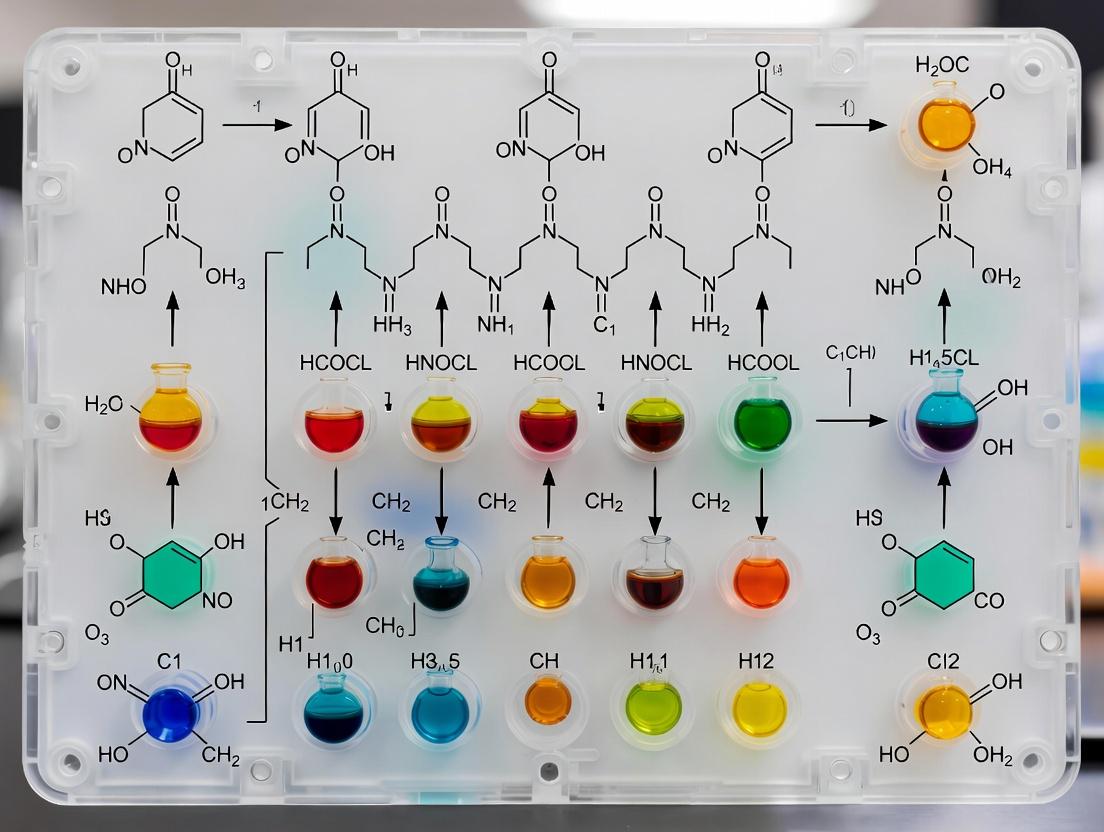
This comprehensive guide provides researchers and drug development professionals with a complete framework for implementing High-Throughput Experimentation (HTE) using 96-well plates in organic synthesis.
HTE 96-Well Plate Protocols: A Complete Guide to High-Throughput Organic Synthesis for Drug Discovery
Abstract
This comprehensive guide provides researchers and drug development professionals with a complete framework for implementing High-Throughput Experimentation (HTE) using 96-well plates in organic synthesis. We cover foundational principles of HTE and micro-scale reactions, detail practical protocols for common transformations (cross-couplings, C-H activation, photoredox), address common troubleshooting and optimization strategies, and provide methods for validation and comparison to traditional batch synthesis. Learn how to accelerate reaction screening, catalyst optimization, and substrate scope exploration to streamline early-stage drug discovery.
What is HTE in Synthesis? Core Principles and Benefits of 96-Well Plate Workflows
Defining High-Throughput Experimentation (HTE) for Modern Organic Synthesis
High-Throughput Experimentation (HTE) in organic synthesis is a methodology that employs automated platforms to rapidly prepare, test, and analyze large arrays of chemical reactions in parallel. It transforms the traditional "one-at-a-time" approach into a data-rich exploration of chemical space, enabling the efficient optimization of reaction conditions, discovery of novel reactivity, and acceleration of molecular library synthesis. Within a 96-well plate paradigm, it embodies the systematic miniaturization and parallelization of chemical synthesis, where each well functions as an individual microreactor.
Application Notes and Protocols: 96-Well Plate Organic Synthesis
Application Note 1: Reaction Condition Optimization for Suzuki-Miyaura Cross-Coupling
Thesis Context: This protocol exemplifies the core HTE strategy for identifying optimal ligand, base, and solvent combinations in a model transformation, generating a multivariate dataset to guide scalable synthesis.
Objective: To optimize the yield of biphenyl product 3 from 4-bromotoluene (1) and phenylboronic acid (2) using a 96-well plate format.
Protocol:
- Plate Preparation: A 96-well glass-coated reactor plate is loaded under an inert (N₂) atmosphere.
- Stock Solutions: Prepare 0.1 M stock solutions in anhydrous solvents of:
- Substrate 1 in toluene.
- Substrate 2 in ethanol.
- Pd source (e.g., Pd(OAc)₂) in toluene.
- Ligands (e.g., SPhos, XPhos, RuPhos, t-BuXPhos, etc.) in toluene.
- Bases (e.g., K₂CO₃, Cs₂CO₃, K₃PO₄, KOAc) in water.
- Reaction Assembly (Liquid Handler):
- Add 100 µL of substrate 1 solution (10 µmol) to each well.
- Add 150 µL of substrate 2 solution (15 µmol) to each well.
- Add 100 µL of base solution (10 µmol) to each well.
- Add 20 µL of ligand solution (2 µmol) according to a predefined array pattern.
- Add 10 µL of Pd solution (1 µmol) to each well.
- Seal the plate with a PTFE-coated silicone mat.
- Reaction Execution: Heat the plate on a precision thermal agitator at 80°C for 18 hours with 500 rpm orbital shaking.
- Analysis: After cooling, dilute an aliquot from each well with a known volume of acetonitrile containing an internal standard (e.g., fluorenone). Analyze by UPLC-MS to determine conversion and yield.
Table 1: Representative Yield Data Matrix (Selected Conditions)
| Well | Ligand | Base | Solvent System | Yield (%) |
|---|---|---|---|---|
| A1 | SPhos | K₂CO₃ | Toluene/EtOH/H₂O | 95 |
| B2 | XPhos | Cs₂CO₃ | Toluene/EtOH/H₂O | 98 |
| C3 | RuPhos | K₃PO₄ | Toluene/EtOH/H₂O | 87 |
| D4 | t-BuXPhos | KOAc | Toluene/EtOH/H₂O | 45 |
| E5 | None | K₂CO₃ | Toluene/EtOH/H₂O | <5 |
HTE Protocol Workflow for Reaction Optimization
Application Note 2: Substrate Scope Exploration for Amide Coupling
Thesis Context: This protocol demonstrates HTE's utility in rapidly assessing functional group tolerance and generality by coupling a single acyl chloride with an array of diverse amines.
Objective: To evaluate the efficiency of amide bond formation between 4-chlorobenzoyl chloride (4) and 96 different amine nucleophiles (5a-5x...) under standardized conditions.
Protocol:
- Plate Design: A 96-deep well plate is pre-loaded with 50 µmol of each unique amine (as solids or pre-dispensed solutions).
- Reaction Assembly:
- Add 1.0 mL of anhydrous DMF to each well using a dispenser.
- Add 75 µL of DIEA (N,N-Diisopropylethylamine, 50 µmol) to each well.
- Using a liquid handler, add 50 µL of a 1.0 M solution of acyl chloride 4 in anhydrous THF (50 µmol) to each well.
- Seal and shake at room temperature for 2 hours.
- Work-up & Analysis:
- Quench reactions by adding 1.0 mL of a 1:1 water:methanol mixture.
- Filter the plate through a 96-well filter plate to remove precipitates if necessary.
- Analyze filtrates directly by UPLC-MS with UV detection at 254 nm.
Table 2: Amide Coupling Substrate Scope Results (Selected)
| Well | Amine Structure | Amine Class | Conversion (%) | Purity (%) |
|---|---|---|---|---|
| A1 | Benzylamine | Primary Alkyl | >99 | 95 |
| B2 | Aniline | Primary Aryl | 98 | 96 |
| H5 | tert-Butylamine | Primary, Sterically Hindered | 85 | 88 |
| F7 | Proline Methyl Ester | Secondary, Cyclic | >99 | 97 |
| G12 | 4-Aminophenol | Electron-Rich Aryl | 92 | 90 |
Logical Relationship of HTE Applications within Research Thesis
The Scientist's Toolkit: Key Research Reagent Solutions
Table 3: Essential Materials for HTE in Organic Synthesis
| Item | Function & Rationale |
|---|---|
| 96-Well Reactor Plates | Glass-coated or polymer plates resistant to organic solvents and high temperatures; serve as the microreactor array. |
| Automated Liquid Handler | Precision robot for reproducible, hands-free dispensing of reagents and solvents, enabling assembly of 100s of reactions per day. |
| Multichannel Pipettor | Manual tool for rapid parallel transfers of stock solutions during method development or plate replication. |
| Plate Sealing Mats | PTFE/silicone mats that provide a chemical-resistant, pressure-tolerant seal to prevent well-to-well cross-contamination and evaporation. |
| Agitating Heater/Chiller | Provides precise, uniform thermal control with orbital shaking to ensure efficient mixing and heat transfer in all wells. |
| UPLC-MS System | Ultra-Performance Liquid Chromatography coupled with Mass Spectrometry for rapid, quantitative, and qualitative analysis of reaction outcomes. |
| Chemical Inventory Software | Tracks and manages stock solutions, concentration, location, and usage to ensure data integrity (e.g., an "IGL" or internal system). |
| Data Analysis Suite | Software (e.g., Spotfire, Python/R scripts) for visualizing multidimensional data (heat maps, scatter plots) and identifying trends. |
Within the context of a broader thesis on High-Throughput Experimentation (HTE) for organic synthesis, the transition from traditional round-bottom flasks to the 96-well microplate format represents a paradigm shift. This evolution is driven by the need for accelerated reaction screening, optimization, and discovery in pharmaceutical and materials research. The 96-well plate enables the parallel execution of dozens to hundreds of discrete chemical reactions under微量volume conditions (typically 0.1-1 mL), drastically reducing reagent consumption, lab space, and time while maximizing data points per experiment.
Advantages of the 96-Well Plate for Reaction Screening: A Quantitative Comparison
Table 1: Comparative Analysis of Reaction Vessels for Screening
| Parameter | Traditional Flask (25 mL) | 96-Well Plate (1 mL/well) | Advantage Factor (96-Well) |
|---|---|---|---|
| Reactions per Unit Area | 1 / ~50 cm² bench space | 96 / ~128 cm² (plate footprint) | ~38x more space-efficient |
| Typical Working Volume | 5-20 mL | 0.1-1 mL | 10-200x less reagent use |
| Parallel Experiments per Run | 1-4 (manual) | 96 (parallel) | 24-96x higher throughput |
| Mixing & Handling Time | High (individual setup) | Low (batch processing) | Time savings >80% |
| Ambient Exposure Risk | High (open vessel) | Low (sealed plate) | Improved consistency |
| Automation Compatibility | Low | Very High | Enables full workflow robotics |
Table 2: Impact of 96-Well HTE on Synthesis Campaign Metrics (Representative Data)
| Metric | Conventional Approach | 96-Well HTE Approach | Observed Improvement |
|---|---|---|---|
| Reaction Conditions Screened | ~10-20/week | 200-500/week | 20-50x increase |
| Catalyst/Ligand Evaluation | Sequential | Parallel library in one plate | >90% time reduction |
| Solvent/Additive Screening | Limited scope | Full factorial designs possible | More comprehensive data |
| Material per Data Point | 50-500 mg | 0.1-5 mg | >95% material savings |
Application Notes: Key Considerations for 96-Well Reaction Screening
- Material Compatibility: Ensure plates are chemically resistant to organic solvents (e.g., use polypropylene or glass-filled plates). Avoid polystyrene for most organic synthesis.
- Evaporation: Always use sealing mats (silicone/PTFE) or adhesive seals, especially for elevated temperatures and long reactions.
- Mixing: Orbital shakers or microplate stirrers are essential for solid-phase reactions. For homogeneous solutions, mixing may be less critical.
- Temperature Control: Use dedicated dry-block or oven-style heaters for microplates to ensure even heating across all wells.
- Sampling & Analysis: Integrate with liquid handling robots for quench/dilution and directly interface with UPLC/MS or GC/MS systems equipped with high-throughput autosamplers.
Detailed Experimental Protocols
Protocol 1: High-Throughput Suzuki-Miyaura Cross-Coupling Screening
Objective: To screen a matrix of palladium catalysts and bases for the coupling of aryl bromides with arylboronic acids.
The Scientist's Toolkit: Key Reagents & Materials
| Item | Function & Specification |
|---|---|
| Polypropylene 96-Well Plate | Reaction vessel; chemically resistant, 1 mL deep-well. |
| Heat-Resistant Sealing Mat | Silicone/PTFE to prevent evaporation and cross-contamination. |
| Pre-weighed Catalyst/Ligand Stock Plates | Library of Pd sources (e.g., Pd(OAc)₂, Pd(dppf)Cl₂) in DMF, 10 mM. |
| Automated Liquid Handler | For accurate, rapid dispensing of liquids (e.g., 5-100 µL volumes). |
| Aryl Bromide Stock Solution | Substrate in 1,4-dioxane, 0.1 M. |
| Arylboronic Acid Stock Solution | Coupling partner in 1,4-dioxane, 0.15 M. |
| Base Stock Solutions | Library (e.g., K₂CO₃, Cs₂CO₃, K₃PO₄) in water, 0.5 M. |
| Orbital Shaker/Heater | For mixing and heating (e.g., 80°C). |
| UPLC-MS with HT Autosampler | For rapid analysis of reaction conversion and purity. |
Methodology:
- Plate Setup: Using a liquid handler, dispense 50 µL of aryl bromide stock solution (5 µmol) into all 96 wells of a deep-well plate.
- Catalyst/Ligand Addition: Dispense 10 µL of each catalyst/ligand stock solution from a source plate according to a predefined matrix layout (e.g., 8 catalysts x 12 bases).
- Base Addition: Dispense 20 µL of base stock solution (10 µmol) according to the matrix.
- Boronic Acid Addition: Dispense 75 µL of arylboronic acid stock solution (11.25 µmol).
- Solvent Adjustment: Add 45 µL of 1,4-dioxane to bring the total volume to 200 µL (0.025 M final concentration in aryl bromide).
- Sealing & Reaction: Seal the plate firmly, place on an orbital shaker within a heated enclosure, and agitate at 80°C for 18 hours.
- Quenching & Analysis: Cool plate. Using a liquid handler, add 200 µL of acetonitrile with an internal standard to each well. Mix, dilute as needed, and transfer an aliquot to a UPLC-MS analysis plate.
Protocol 2: 96-Well Photoredox Catalysis Screening
Objective: To evaluate the effect of photocatalyst and oxidant on a model C-N coupling reaction.
Methodology:
- Light-Sensitive Setup: Conduct all plate preparation under low-actinic light or using amber plates.
- Reagent Dispensing: To a 1 mL deep-well plate, add via liquid handler:
- Substrate stock (in MeCN): 100 µL (10 µmol).
- Amine coupling partner: 15 µL (15 µmol).
- Photocatalyst stock (Ir and Ru complexes, 1 mM in MeCN): 10 µL (0.01 µmol, 1 mol%).
- Oxidant stock (e.g., Na₂S₂O₈, in water): 20 µL (20 µmol).
- Solvent & Mixing: Bring total volume to 200 µL with MeCN. Seal plate with a clear sealing film.
- Irradiation: Place the sealed plate in a dedicated photoreactor equipped with blue LEDs (450 nm, ~20 W) and cool by fan. Irradiate with orbital shaking for 12 hours.
- Analysis: Quench with 50 µL of a saturated NaHCO₃ solution. Dilute with 200 µL DMSO and analyze by UPLC-MS.
Visualization of Workflows
Title: 96-Well HTE Screening Workflow
Title: Plate Layout for Matrix Screening
Within the context of advancing High-Throughput Experimentation (HTE) for 96-well plate organic synthesis, this application note details the operational advantages that catalyze early-phase drug discovery. The shift from traditional serial synthesis to parallelized, miniaturized platforms directly addresses the need for rapid exploration of chemical space under resource constraints.
Application Notes
The implementation of 96-well plate HTE protocols transforms the hit identification and optimization landscape. The core advantages are interdependent:
- Speed: Parallel synthesis of up to 96 discrete reactions per plate, with automated liquid handling and incubation, reduces cycle times from weeks to days. This enables rapid iteration on Structure-Activity Relationship (SAR) hypotheses.
- Material Efficiency: Reaction scales of 0.1-1 mg per well drastically reduce consumption of precious substrates, catalysts, and ligands. This allows the evaluation of expensive or complex building blocks that would be prohibitive at traditional scales.
- Data Density: Each plate generates a cohesive matrix of reaction outcomes, producing high-fidelity data on yield, purity, and enantioselectivity across a multidimensional variable space (catalyst, solvent, reagent, concentration). This density enables robust statistical analysis and machine learning model training.
A recent benchmarking study (2023) on a palladium-catalyzed cross-coupling optimization illustrates the quantitative impact:
Table 1: Quantitative Comparison of Synthesis Methodologies for Catalyst Screening
| Parameter | Traditional Serial Synthesis | HTE 96-Well Plate Protocol | Improvement Factor |
|---|---|---|---|
| Total Experiment Duration | 120 hours | 6.5 hours | ~18x faster |
| Material per Reaction | 50 mg substrate | 0.5 mg substrate | 100x less material |
| Reactions per Operator Week | 10-20 | 500-1000 | ~50x more data dense |
| Total Solvent Volume Used | 5000 mL | 96 mL | ~52x less waste |
| Variable Space Explored | Limited (2-3 variables) | Comprehensive (4-6 variables) | More robust SAR |
Experimental Protocols
Protocol 1: General Workflow for 96-Well Plate Reaction Setup & Analysis
Objective: To execute a matrix of catalytic reactions for the optimization of a key bond-forming step. Materials: 96-well glass-lined microplate, automated liquid handler (e.g., Bravo or Hamilton), plate shaker/heater, UPLC-MS with autosampler. Procedure:
- Plate Map Design: Define variables (rows: Catalyst, columns: Solvent/Base). Assign controls (positive, negative).
- Stock Solution Preparation: Prepare stock solutions of substrate (0.1 M in DMF), catalysts (0.01 M in DMF), bases (1.0 M in respective solvent), and solvents.
- Automated Dispensing: a. Using the liquid handler, dispense 10 µL of substrate stock (1.0 µmol) to all 96 wells. b. Dispense 10 µL of assigned catalyst stock to each well according to plate map. c. Dispense 80 µL of assigned solvent to each well. d. Dispense 10 µL of assigned base stock to each well. Final volume: 110 µL.
- Sealing & Incubation: Seal plate with a PTFE-coated silicone mat. Place on a heated plate shaker (e.g., 60°C, 700 rpm, 18 hours).
- Quenching & Analysis: Post-reaction, centrifuge plate. Automatically inject 5 µL from each well via autosampler into UPLC-MS for yield analysis using an internal standard.
Protocol 2: High-Throughput Reaction Analysis via UPLC-MS
Objective: Rapid quantification of reaction yield and purity. Materials: Acquity UPLC-MS system with column (C18, 1.7µm, 2.1x50mm), autosampler configured for 96-well plates. Procedure:
- Method Setup: Fast gradient (1.5 min run): 5-95% MeCN in H2O (0.1% formic acid). Flow rate: 0.8 mL/min.
- Sample Preparation: Dilute 10 µL of quenched reaction mixture with 190 µL of MeCN in a 96-well analysis plate. Centrifuge.
- Automated Injection: Set autosampler to inject from analysis plate.
- Data Processing: Use integrated software (e.g., MassLynx, Chromeleon) to extract UV (214 nm) peak areas for product and internal standard. Calculate yield based on a pre-established calibration curve.
Mandatory Visualizations
Title: HTE 96-Well Plate Reaction Workflow
Title: Data Density Flow in HTE Research
The Scientist's Toolkit
Table 2: Essential Research Reagent Solutions for HTE 96-Well Plate Synthesis
| Item | Function & Rationale |
|---|---|
| Glass-Lined 96-Well Microplates | Chemically inert reaction vessels compatible with organic solvents and high temperatures, minimizing adsorption. |
| PTFE/Silicone Sealing Mats | Provide airtight sealing to prevent evaporation and cross-contamination during heated incubation. |
| Automated Liquid Handler | Enables precise, sub-microliter dispensing of reagents and catalysts for reproducible array setup. |
| Pre-formulated Catalyst/Ligand Stock Kits | Commercial libraries of barcoded, pre-weighed catalysts in plate format for rapid screening. |
| Deuterated Solvent Spikes | Internal standards (e.g., DMSO-d6, Toluene-d8) added pre-analysis for NMR yield determination. |
| LC-MS Vial Inserts in 96-Well Format | Allows direct injection from the reaction plate without manual sample transfer. |
| High-Throughput Purification Systems | Automated flash chromatography (e.g., ISCO) interfaces with 96-well plates for parallel compound isolation. |
Application Notes for High-Throughput Experimentation (HTE) in Organic Synthesis
High-Throughput Experimentation (HTE) in 96-well plate format has revolutionized reaction screening and optimization in organic synthesis and early drug development. This integrated equipment ecosystem enables the rapid, parallel execution of hundreds of chemical reactions under varying conditions, generating rich data sets for statistical analysis and machine learning. The core philosophy is to miniaturize and parallelize synthetic workflows, drastically reducing time, cost, and material consumption compared to traditional serial methods. Successful implementation requires seamless interoperability between thermal control, agitation, precise liquid handling, and rapid analytical interrogation.
Plate Heaters/Chillers provide precise, uniform thermal management, critical for controlling reaction kinetics and exploring temperature-dependent phenomena. Modern Peltier-based units offer rapid cycling between -20°C to 150°C.
Microplate Shakers ensure efficient mixing and gas-liquid mass transfer in microliter-scale volumes, preventing sedimentation and ensuring homogeneity. Orbital and linear shaking modes are selected based on application.
Liquid Handlers (LHs) are the workhorses of HTE, enabling the nanoliter-to-microliter dispensing of reagents, catalysts, and solvents with high precision and reproducibility. They are programmable for complex reagent addition sequences.
Analytical Interfaces bridge synthesis and analysis, typically using robotic platforms that present prepared samples from 96-well plates to instruments like UHPLC-MS, GC-MS, or NMR for rapid structural confirmation and yield quantification.
The integration of these components into a single, automated workflow is key to unlocking the potential of HTE for exploring chemical space, optimizing reaction conditions, and accelerating the discovery of novel synthetic methodologies and bioactive compounds.
Protocols for HTE 96-Well Plate Organic Synthesis
Protocol A: General Procedure for Cross-Coupling Reaction Screening
Objective: To screen 96 different ligand/Pd catalyst combinations for a model Suzuki-Miyaura cross-coupling reaction.
Key Research Reagent Solutions & Materials:
| Item | Function in Protocol |
|---|---|
| 96-Well Reaction Plate (0.5-2.0 mL/well) | Polypropylene plate with deep wells to contain reactions and prevent evaporation. |
| Aryl Halide Stock Solution (0.1 M in dioxane) | Electrophile substrate. |
| Boronic Acid Stock Solution (0.15 M in dioxane) | Nucleophile substrate. |
| Pd Catalyst Library (96 unique pre-weighed solids) | Metal source for catalysis; varied across plate. |
| Ligand Library (96 unique 0.01 M stock solutions in dioxane) | Modulates catalyst activity/selectivity; varied across plate. |
| Base Stock Solution (Cs2CO3, 0.5 M in H2O) | Activates boronic acid and promotes transmetalation. |
| Internal Standard Solution (0.05 M in dioxane) | Added to all wells pre-analysis for quantitative UHPLC. |
| Quenching/ Dilution Solvent (Acetonitrile) | Stops reaction and dilutes sample for analysis. |
| Sealing Foil (PTFE/silicone) | Provides a chemical-resistant, gas-permeable seal to prevent evaporation and cross-contamination. |
Procedure:
- Plate Setup: Using a liquid handler, dispense 100 µL of dioxane into all 96 wells of a polypropylene reaction plate.
- Catalyst/Ligand Addition: Manually transfer pre-weighed solid Pd sources to designated wells. Using the liquid handler, add 10 µL of the appropriate ligand stock solution to each well according to the pre-defined screening matrix. Shake the plate (500 rpm, orbital) for 5 minutes to dissolve/pre-mix components.
- Substrate Addition: Using the liquid handler, add 50 µL of aryl halide stock solution (5 µmol) and 50 µL of boronic acid stock solution (7.5 µmol) to each well.
- Reaction Initiation: Add 30 µL of base stock solution (15 µmol) to each well to initiate the reaction. Immediately seal the plate with gas-permeable foil.
- Incubation: Place the sealed plate into a pre-heated plate heater/chiller set to 80°C. Engage the integrated microplate shaker set to 750 rpm (orbital) for 18 hours.
- Quenching: After incubation, transfer the plate to a heater/chiller set to 10°C to cool for 2 minutes. Using the liquid handler, add 150 µL of internal standard solution and 500 µL of acetonitrile to each well to quench and dilute.
- Analysis: Reseal the plate and shake at 1000 rpm for 5 minutes to ensure homogeneity. Using an analytical interface robotic arm, transfer an aliquot from each well to a UHPLC-MS vial or a shallow 96-well analysis plate for injection.
Protocol B: Protocol for Temperature-Dependent Kinetic Profiling
Objective: To monitor yield versus time for a hydrolytic reaction at eight different temperatures with 12 time points each.
Key Research Reagent Solutions & Materials:
| Item | Function in Protocol |
|---|---|
| 96-Well PCR Plate (0.2 mL/well) | Polystyrene plate suitable for rapid thermal cycling. |
| Substrate Stock Solution (0.1 M in THF) | Ester or amide substrate for hydrolysis. |
| Buffer Stock Solutions (pH 4, 7, 10; 0.1 M) | Aqueous buffers to control reaction pH. |
| Enzyme/ Catalyst Stock Solution | Hydrolytic agent (e.g., lipase, metal complex). |
| Stop Solution (1M HCl or NaOH) | Rapidly changes pH to denature enzyme/halt catalysis. |
Procedure:
- Plate Layout: Designate 8 columns of the plate for 8 different temperatures (e.g., 20°C to 55°C in 5°C increments). Designate 12 rows for time points (e.g., 0, 1, 5, 10, 20, 40, 60, 120, 180, 240, 480, 1440 minutes).
- Dispensing: Using a liquid handler, dispense 50 µL of the appropriate buffer into all wells. Dispense 10 µL of substrate stock solution into all wells except column 1, which serves as a t=0 control.
- Time Zero Quench: Immediately add 10 µL of stop solution to column 1.
- Reaction Initiation: Add 40 µL of enzyme/catalyst solution to all wells using the liquid handler, starting a timer upon addition to the first well. Seal the plate.
- Incubation & Sampling: Place the plate in a heater/chiller programmed to maintain the first target temperature. At the pre-defined time points (e.g., 1 min), manually or robotically transfer the plate to a heater/chiller set to -4°C (to dramatically slow kinetics) or directly add stop solution via liquid handler to the entire row corresponding to that time point. Repeat this process sequentially for each temperature column, moving the plate between heater/chiller blocks set to the different target temperatures.
- Analysis: After all time points are collected, add the remaining stop solution and substrate to any unquenched wells. Shake the plate to mix. The analytical interface then presents the plate for UHPLC-UV analysis to quantify remaining substrate or product formed.
Table 1: Performance Specifications of Core HTE Equipment
| Equipment Category | Key Parameter | Typical Range/Specification | Impact on HTE Synthesis |
|---|---|---|---|
| Plate Heater/Chiller | Temperature Range | -20°C to 150°C | Determines accessible reaction space (cryo to reflux). |
| Temperature Uniformity | ±0.5°C across plate | Ensures experimental consistency across all 96 reactions. | |
| Ramp Rate | Up to 10°C/second (Peltier) | Enables rapid kinetic quenching and dynamic protocols. | |
| Microplate Shaker | Shaking Speed | 200 - 3000 rpm | Controls mixing efficiency and mass transfer in µL volumes. |
| Orbit Diameter | 1 - 6 mm (orbital) | Impacts shear and vortex formation in small wells. | |
| Liquid Handler | Dispensing Volume Range | 50 nL - 1 mL | Governs reagent scalability and minimum reagent consumption. |
| Precision (CV) | <5% for 1 µL, <2% for 10 µL | Critical for reproducibility of reaction stoichiometry. | |
| Fluidics | Positive displacement (syringe) or acoustic droplet ejection (ADE) | Determinates compatibility with viscous or volatile solvents. | |
| Analytical Interface (to UHPLC-MS) | Sample Injection Cycle Time | 15 - 45 seconds/sample | Defines throughput; 96 samples analyzed in 0.4 - 1.2 hours. |
| Carryover | <0.05% | Essential for accurate quantification of low-yielding reactions. |
Table 2: Data from a Model HTE Screening Campaign (Suzuki-Miyaura)
| Condition Variable (Ligand Class) | Number of Conditions Tested | Mean Yield (%) | Yield Range (%) | Success Rate (Yield >70%) | Identified Optimal Ligand |
|---|---|---|---|---|---|
| Biaryl Phosphines (e.g., SPhos) | 24 | 45 | 2 - 95 | 29% | CPhos |
| N-Heterocyclic Carbenes (NHCs) | 24 | 38 | 1 - 89 | 21% | IPr·HCl |
| Mono-phosphines (e.g., P(t-Bu)3) | 24 | 15 | 0 - 60 | 4% | P(2-Furyl)3 |
| Phosphites & Other | 24 | 28 | 0 - 78 | 17% | L1 |
| Total/Average | 96 | 31.5 | 0 - 95 | 17.7% | CPhos |
Visualized Workflows and Relationships
HTE Screening Protocol Automated Workflow
HTE Equipment System Integration & Data Flow
Within the framework of advanced High-Throughput Experimentation (HTE) for organic synthesis, the selection of 96-well plate materials and geometries is a critical, yet often overlooked, variable. This application note, situated within a broader thesis on optimizing HTE 96-well plate organic synthesis protocols, provides a data-driven guide for researchers. The choice between glass and polymer substrates, or between round-well and V-bottom geometries, directly influences reaction outcomes, scalability, and analytical workflows. Informed selection maximizes synthetic success rates and data fidelity in drug discovery campaigns.
Quantitative Material & Geometry Comparison
Table 1: Glass vs. Polymer Plate Chemistry Comparison
| Property | Glass (e.g., Borosilicate) | Polymer (e.g., PP, PTFE) | Impact on HTE Organic Synthesis |
|---|---|---|---|
| Chemical Inertness | Excellent. Resists most solvents, acids, bases. | Variable. PP good for most; PTFE excellent. | Glass prevents leaching/absorption. Some polymers can swell or absorb reagents. |
| Thermal Stability | Very High (>400°C). Low CTE. | Moderate (PP ~140°C). Higher CTE. | Glass enables high-temp reactions & thermal cycling. Polymer may deform. |
| Sorption/Adsorption | Negligible. Non-porous surface. | Moderate risk with certain organics. | Polymer can lead to yield loss via absorption, skewing screening results. |
| Optical Clarity | Excellent, UV-transparent. | Often opaque or hazy; some clear variants. | Glass allows for in-situ UV/VIS spectroscopy monitoring. |
| Weight/Cost | Heavy, Expensive. | Light, Inexpensive. | Glass plates are less prone to movement in automation but increase cost. |
| Compatibility | Can shatter. Risky with strong alkali (e.g., hot NaOH). | Risk with strong oxidizers, halogenated/aromatic solvents. | Must match plate chemistry to reaction conditions. |
Table 2: Well Bottom Geometry Comparison
| Geometry | Typical Volume Range (µL) | Key Characteristics | Best For HTE Synthesis |
|---|---|---|---|
| Round (U) Bottom | 50-500+ | Easy liquid access, good mixing. Evaporation gradient across well. | Homogeneous reactions, slurry/powder handling, mixing-sensitive steps. |
| V-Bottom | 10-250 | Concentrates material to apex. Minimizes hold-up volume. | Small-scale reactions (<100 µL), quantitative liquid transfer, precipitation assays. |
| Flat Bottom | 50-300 | Maximum surface area. Inconsistent evaporation. | Cell-based assays, not typically recommended for synthesis. |
Experimental Protocols
Protocol 1: Evaluating Solvent Compatibility & Leaching
Objective: Determine material inertness under simulated reaction conditions. Materials: Glass 96-well plate, Polypropylene 96-well plate, PTFE-lined 96-well plate, DCM, DMF, THF, Toluene, 1M NaOH in MeOH/H₂O. Procedure:
- Preparation: Pipette 200 µL of each test solvent into separate wells (n=6 per solvent per plate type).
- Incubation: Seal plates with PTFE/ silicone mats. Heat at 60°C for 24h in an oven.
- Evaporation: Carefully remove seals and evaporate solvents under a gentle N₂ stream.
- Analysis: Reconstitute residues with 200 µL of methanol. Analyze via UPLC-MS for:
- Non-volatile leachates (TIC, total ion count).
- Specific polymer additives (e.g., plasticizers).
- Quantification: Compare peak areas of leachates against external standards. Plates with >0.1% w/w leachate are unsuitable for sensitive screening.
Protocol 2: Assessing Yield Loss via Sorption in Polymer Plates
Objective: Quantify compound loss due to adsorption onto plate walls. Materials: Polymer (PP) plate, Glass plate, stock solution of a mid-polarity test substrate (e.g., 10 mM Boc-protected amino acid in DMF). Procedure:
- Dispensing: Aliquot 100 µL of the stock solution into 48 wells of each plate type.
- Processing: Seal plates and incubate at RT for 18h. Agitate on an orbital shaker (500 rpm).
- Recovery: Quantitatively transfer all liquid from each well to a tared HPLC vial using a positive-displacement pipette, rinsing twice with 50 µL DMF.
- Evaporation & Weighing: Evaporate vials to dryness under high vacuum. Precisely weigh the solid residue.
- Calculation: Calculate % Recovery = (Mass recovered / Theoretical mass) * 100. Perform a two-tailed t-test to determine statistical significance (p<0.01) of difference between plate types.
The Scientist's Toolkit: Key Reagents & Materials
| Item | Function in HTE Synthesis |
|---|---|
| Borosilicate Glass 96-Well Plate | Inert reaction vessel for harsh conditions, high temps, and UV monitoring. |
| Polypropylene 96-Well Plate (V-Bottom) | Low-cost, disposable vessel for small-scale, non-demanding reactions. |
| PTFE-Lined Polypropylene Plate | Balances cost with superior chemical resistance for a wide solvent scope. |
| Silicone/PTFE Septa Mats | Provides chemical-resistant sealing to prevent evaporation and cross-contamination. |
| Automation-Compatible Lid Mat | Seal that allows robotic piercing for reagent addition without full removal. |
| Positive Displacement Pipettes | Ensures accurate, quantitative transfer of viscous or volatile reagents. |
| Deep-Well Mother/Daughter Plates | For intermediate stock solution storage during library synthesis. |
Visualized Workflows & Decision Logic
Diagram Title: Decision Logic for HTE Plate Selection
Diagram Title: Generic HTE Synthesis & Analysis Workflow
Step-by-Step HTE Protocol: Setting Up and Executing Reactions in Parallel
Application Notes & Protocols Context: This protocol is developed as part of a broader thesis on high-throughput experimentation (HTE) for 96-well plate organic synthesis, aimed at accelerating reaction optimization and substrate scoping in medicinal chemistry.
Design of Experiment (DoE) Phase
Objective Definition & Factor Selection
The primary objective is to optimize a palladium-catalyzed cross-coupling reaction for library synthesis. Critical factors are identified through preliminary literature review and mechanistic understanding.
Table 1.1: Selected DoE Factors and Levels for a Suzuki-Miyaura Cross-Coupling Optimization
| Factor | Variable Type | Low Level (-1) | High Level (+1) | Justification |
|---|---|---|---|---|
| A: Catalyst Loading | Numerical | 0.5 mol% | 2.0 mol% | Cost & efficiency trade-off |
| B: Ligand Type | Categorical | SPhos | XPhos | Electron density & steric effects |
| C: Base Equivalents | Numerical | 1.5 eq. | 3.0 eq. | Ensure full conversion |
| D: Temperature | Numerical | 60 °C | 100 °C | Balance rate vs. degradation |
| E: Reaction Time | Numerical | 4 h | 18 h | Practicality for HTE workflow |
DoE Matrix Construction
A definitive screening design (DSD) is employed for efficiency, requiring only 13 experimental runs for the 5 factors above, plus 3 center points for error estimation.
Table 1.2: Definitive Screening Design Matrix (Runs 1-13)
| Run | Catalyst (mol%) | Ligand | Base (eq.) | Temp. (°C) | Time (h) |
|---|---|---|---|---|---|
| 1 | 0.5 | SPhos | 1.5 | 60 | 4 |
| 2 | 2.0 | SPhos | 1.5 | 100 | 18 |
| 3 | 0.5 | XPhos | 3.0 | 60 | 18 |
| 4 | 2.0 | XPhos | 3.0 | 100 | 4 |
| 5 | 0.5 | SPhos | 3.0 | 100 | 4 |
| 6 | 2.0 | SPhos | 3.0 | 60 | 18 |
| 7 | 0.5 | XPhos | 1.5 | 100 | 18 |
| 8 | 2.0 | XPhos | 1.5 | 60 | 4 |
| 9 | 1.25 | SPhos | 2.25 | 80 | 11 |
| 10 | 1.25 | XPhos | 2.25 | 80 | 11 |
| 11 | 1.25 | * | 2.25 | 80 | 11 |
| 12 | 1.25 | * | 2.25 | 80 | 11 |
| 13 | 1.25 | * | 2.25 | 80 | 11 |
Center point ligand chosen randomly from {SPhos, XPhos}.
Experimental Setup Protocol for 96-Well Plate
Materials & Stock Solution Preparation
Protocol 2.1.1: Stock Solution Formulation
- Aryl Halide Stock: Weigh 10 mmol of aryl halide substrate into a 20 mL vial. Add anhydrous DMSO to a final volume of 20 mL (0.5 M). Sonicate for 5 min to ensure complete dissolution.
- Boronic Acid Stock: Weigh 12 mmol of boronic acid into a separate 20 mL vial. Add anhydrous DMSO to a final volume of 20 mL (0.6 M). Sonicate for 5 min.
- Base Stock: Weigh 30 mmol of solid Cs₂CO₃ into a 20 mL vial. Add anhydrous, degassed water to a final volume of 20 mL (1.5 M). Vortex vigorously for 2 min.
- Catalyst/Ligand Master Mixes: Prepare two separate master mixes in DMSO for each ligand condition (SPhos and XPhos) as per Table 2.1.
Table 2.1: Catalyst/Ligand Master Mix Compositions
| Ligand System | Pd Source (Pd(dba)₂) | Ligand | DMSO | Final [Pd] | L:Pd Ratio |
|---|---|---|---|---|---|
| SPhos Mix | 8.6 mg | 15.4 mg | 2.0 mL | 0.025 M | 2:1 |
| XPhos Mix | 8.6 mg | 19.0 mg | 2.0 mL | 0.025 M | 2:1 |
96-Well Plate Reaction Assembly
Protocol 2.2.1: Liquid Handling for DoE Execution Equipment: Automated liquid handler or calibrated multi-channel pipettes. Nitrogen/vacuum manifold for inert atmosphere. Plate: O-ring sealed, chemically resistant 96-well plate (e.g., glass-coated or polypropylene).
- Atmosphere Control: Place the empty plate on the manifold. Apply vacuum (5 min) then backfill with N₂. Repeat cycle 3x.
- Substrate Addition: Using the liquid handler, dispense 100 µL of Aryl Halide Stock (0.5 M, 50 µmol) into each designated well according to the DoE map.
- Catalyst/Ligand Addition: Following the DoE matrix (Table 1.2), add the appropriate volume of Catalyst/Ligand Master Mix and additional DMSO to each well to achieve the specified mol% Pd, maintaining a total reaction volume of 500 µL before base addition.
Example Calculation for Run 1 (0.5 mol% Pd):
- Required Pd = 50 µmol substrate * (0.5/100) = 0.25 µmol.
- Volume of Master Mix (0.025 M Pd) = (0.25 µmol) / (0.025 µmol/µL) = 10 µL.
- Add 390 µL of dry DMSO to the well.
- Boronic Acid Addition: Add 100 µL of Boronic Acid Stock (0.6 M, 60 µmol, 1.2 eq.) to each well. Seal plate, mix on plate shaker for 30 sec.
- Initiating Reaction: Using a second multi-channel pipette reserved for aqueous solutions, quickly add 50 µL of Base Stock (1.5 M, 75 µmol, 1.5 eq.) to each well. Immediately re-seal the plate.
- Heating: Place the sealed plate into a pre-heated thermal shaker/heater block at the specified temperature (60, 80, or 100 °C ± 0.5 °C) with agitation (500 rpm).
- Quenching: After the specified reaction time, remove the plate and cool to RT on a cooling block. Add 500 µL of a 1:1 v/v mixture of acetonitrile and aqueous 0.1 M HCl to each well to quench and dilute for analysis.
The Scientist's Toolkit: Key Research Reagent Solutions
Table 3.1: Essential Materials for HTE 96-Well Plate Organic Synthesis
| Item | Function & Key Specification | Example Product/Note |
|---|---|---|
| O-Ring Sealed 96-Well Plate | Provides inert, high-pressure reaction environment for diverse solvents/temperatures. | ChemGlass CG-1860 series (glass-coated wells) |
| Automated Liquid Handler | Enables precise, reproducible dispensing of stock solutions for complex DoE arrays. | Hamilton Microlab STARlet |
| Multi-Channel Pipette (8- or 12-channel) | Manual alternative for liquid transfer; critical for simultaneous quenching. | Eppendorf Research Plus (1-100 µL, 30-300 µL) |
| Anhydrous, Deoxygenated Solvents | Eliminates variables from moisture/O₂ sensitivity. Essential for air-sensitive catalysts. | DMSO, THF, Toluene from solvent purification system (e.g., mBraun MB-SPS) |
| Solid Base (Cs₂CO₃, K₃PO₄) | Common bases for cross-couplings. Must be stored and handled under inert atmosphere. | Stored in glovebox or desiccator after high-temperature vacuum drying. |
| Pd Precatalyst (e.g., Pd(dba)₂) | Air-sensitive source of Pd(0). Used for in situ catalyst formation with ligands. | Stored at -20 °C under argon in glovebox. |
| Biarylphosphine Ligands (SPhos, XPhos) | Buchwald-type ligands that enable challenging cross-couplings at low catalyst loadings. | Available from common suppliers (Sigma, Strem, Combi-Blocks). |
| Thermal Shaker/Heater Block | Provides uniform heating and agitation to all wells in the 96-well plate format. | Eppendorf ThermoMixer C for microplates |
Visualized Workflows
Title: Overall HTE Workflow from DoE to Analysis
Title: 96-Well Plate Setup and Automation Flow
Master Stock Solution Preparation and Liquid Handling Best Practices
Within the framework of high-throughput experimentation (HTE) for 96-well plate organic synthesis protocols research, the integrity of every reaction outcome is fundamentally dependent on the initial steps of reagent preparation and liquid handling. The precision and accuracy in preparing master stock solutions and transferring microliter volumes directly dictate the reproducibility, success rate, and data quality of HTE campaigns aimed at accelerating drug discovery. This document provides detailed application notes and protocols to establish robust, standardized practices for these critical foundational steps.
Key Principles and Quantitative Data
Accuracy Tolerances for HTE
The following table summarizes acceptable tolerances for volumetric operations in typical 96-well plate synthesis, based on current industry standards gathered from recent literature.
Table 1: Volumetric Accuracy Standards for HTE Liquid Handling
| Parameter | Target Volume Range | Acceptable CV (Coefficient of Variation) | Primary Tool Recommendation |
|---|---|---|---|
| Master Stock Preparation | 1 - 100 mL | < 1.0% | Analytical Balance, Class A Volumetric Glassware |
| Bulk Dispensing to Plates | 50 µL - 1 mL | < 2.0% | Automated Liquid Handler (8- or 12-channel) |
| Intermediate Dilution | 10 - 100 µL | < 3.0% | Single- or Multi-channel Micropipettes |
| Critical Reagent Transfer | 1 - 10 µL | < 5.0% | Positive Displacement Pipettes or Non-contact Dispenser |
| Solvent Quench/Addition | 5 - 50 µL | < 4.0% | Reagent Reservoirs with Multi-channel Pipettes |
Solvent Selection Impact
Table 2: Common Solvent Properties for Stock Solution Stability
| Solvent | Hygroscopicity | Recommended Storage | Typical Use Case in HTE Synthesis |
|---|---|---|---|
| Anhydrous DMSO | Very High | Sealed desiccator, < -20°C | Main library compound stocks, organometallic catalysts |
| Anhydrous DMF | High | Molecular sieves (3Å), N2 atmosphere | Nucleophile/base stocks, Pd-coupling reactions |
| Dry MeCN | Moderate | Molecular sieves (3Å), ambient | Electrophile stocks, photoredox catalysis |
| Dry Toluene | Low | Nitrogen-sparged, ambient | Air-sensitive reagent stocks (e.g., phosphines) |
| HPLC Grade Water | N/A | RT, sterile filtered | Aqueous reagents, buffer components |
Detailed Experimental Protocols
Protocol: Preparation of a 100 mM Catalyst Master Stock in Anhydrous DMSO
Objective: To prepare a stable, accurate, and homogeneous master stock solution of a precious metal catalyst (e.g., Pd(PPh3)4) for distribution across a 96-well HTE plate.
Materials:
- Catalyst solid (Pd(PPh3)4)
- Anhydrous DMSO (stored over molecular sieves)
- Analytical balance (0.01 mg sensitivity)
- 20 mL scintillation vial with PTFE-lined cap
- Volumetric flask (Class A, 10 mL)
- Dry nitrogen or argon line
- Glove box (optional, for highly air-sensitive catalysts)
Procedure:
- Tare: Place a clean, dry 20 mL scintillation vial on the analytical balance and tare.
- Weighing: Quickly transfer 115.6 mg of Pd(PPh3)4 (MW = 1155.56 g/mol) to the vial. Record the actual mass to 0.01 mg.
- Solvent Addition: Using a clean glass pipette, add approximately 8 mL of anhydrous DMSO to the vial. Do not cap yet.
- Dissolution: Purge the headspace of the vial with dry nitrogen for 15 seconds. Cap and vortex or sonicate until a clear, yellow solution is obtained.
- Quantitative Transfer: Uncap and quantitatively transfer the solution to a 10 mL Class A volumetric flask using a glass funnel. Rinse the original vial 3x with 0.5 mL of anhydrous DMSO, adding rinses to the flask.
- Final Volume: Bring the solution to the mark (10.00 mL) with anhydrous DMSO at room temperature. Mix by inverting 20 times.
- Aliquoting: Immediately aliquot the master stock into pre-labeled, nitrogen-flushed microcentrifuge tubes (e.g., 500 µL aliquots). Store at -20°C in a sealed desiccator.
- Calculation: Calculate the exact concentration:
[Catalyst] = (Mass in mg / MW in g/mol) / 0.01 L.
Protocol: Automated Liquid Transfer for 96-Well Plate Reaction Setup
Objective: To reliably dispense a 10 µL volume of the catalyst master stock from a source plate to all 96 wells of a destination reaction plate using an automated liquid handler.
Materials:
- Automated liquid handler (e.g., Integra ViaFlo, Hamilton Star)
- Catalyst master stock aliquoted in a 96-well polypropylene source plate
- Destination 96-well reaction plate (clear, round-bottom)
- Filtered, conductive pipette tips (appropriate for DMSO)
- System calibration weights and check standards
Procedure:
- System Priming: Power on the liquid handler and allow it to thermally equilibrate for 30 minutes. Ensure the DMSO-resistant tubing or tip cones are primed with pure solvent.
- Calibration: Perform a gravimetric calibration for the target volume (10 µL) using DMSO as the test liquid in the lab's ambient conditions. Adjust the instrument's liquid class parameters (aspirate/dispense speed, delay, blowout) until the Coefficient of Variation (CV) is <5% over 32 dispenses.
- Plate Configuration: Load the source plate (catalyst in DMSO) and the destination reaction plate into the designated deck positions.
- Program Setup: In the instrument software, define a transfer protocol:
- Aspirate: 12 µL (with 2 µL air gap) from specified wells of the source plate.
- Dispense: 10 µL to all 96 wells of the destination plate using a liquid handling mode optimized for viscous solvents (e.g., "jet" or "reverse pipetting").
- Execution: Run the protocol. Visually inspect the destination plate for consistent droplet formation in each well.
- Validation: After the run, randomly select 8 wells (e.g., A1, D12, F7, H8) and perform a gravimetric check by dispensing the contents onto a microbalance. The average dispensed mass should correspond to 10 µL (±0.5 µL, accounting for DMSO density).
The Scientist's Toolkit: Research Reagent Solutions
Table 3: Essential Materials for Master Solution and HTE Liquid Handling
| Item | Function & Rationale |
|---|---|
| Analytical Balance (0.01 mg) | Critical for accurate weighing of expensive or potent reagents. Ensures stock solution integrity from the start. |
| Class A Volumetric Glassware | Provides the highest accuracy for definitive solution preparation, minimizing systematic volume errors. |
| Positive Displacement Pipettes | Essential for accurate transfer of viscous (e.g., DMSO), volatile, or foaming liquids without air gap inconsistencies. |
| Automated Liquid Handler | Enables rapid, precise, and reproducible multi-channel dispensing across 96/384-well plates, reducing human error and variability. |
| Anhydrous Solvent Dispensing System | Closed-system reservoirs (e.g., Sure/Seal) with syringe draws or cannula transfers maintain solvent purity by excluding moisture and air. |
| Polypropylene 96-Well Storage Plates | Chemically resistant and low-binding plates for storing master stock libraries; compatible with automation deck formats. |
| Conductive, Filtered Pipette Tips | Prevents aerosol contamination of pipette shafts and reduces static-induced droplet retention for organic solvents. |
| In-Line Solvent Filter (0.2 µm PTFE) | Removes particulates from solvents before master stock preparation, preventing clogging of automated dispenser nozzles. |
Visualization of Workflows
Diagram: Master Stock Preparation and Plate Dispensing Workflow
Diagram: Error Propagation in HTE Synthesis Workflow
Within the context of a thesis on High-Throughput Experimentation (HTE) 96-well plate organic synthesis, the rapid screening of cross-coupling conditions is a cornerstone methodology. This protocol outlines the systematic application of HTE principles to screen and optimize key palladium-catalyzed cross-coupling reactions, namely Suzuki-Miyaura (SM) and Buchwald-Hartwig (BH) amination. The goal is to enable researchers to efficiently map chemical space—varying ligands, bases, solvents, and catalysts—to identify optimal conditions for challenging substrates relevant to drug discovery.
The Scientist's Toolkit: Essential Research Reagent Solutions
| Item | Function in HTE Cross-Coupling Screening |
|---|---|
| 96-Well Reaction Block | A chemically resistant plate (e.g., glass-coated or PTFE) for parallel reaction setup and execution. |
| Automated Liquid Handler | Enables precise, rapid, and reproducible dispensing of microliter volumes of reagents, catalysts, and solvents. |
| Pd Catalyst Stock Solutions | Pre-weighed, standardized solutions of catalysts (e.g., Pd(OAc)₂, Pd₂(dba)₃, Pd-G3) in stable solvents for consistent dispensing. |
| Ligand Library | A curated collection of phosphine (e.g., SPhos, XPhos, BrettPhos) and N-heterocyclic carbene (NHC) ligands in solution to screen for reactivity. |
| Pre-weighed Substrate Plates | Master plates containing aryl halides/boronic acids (SM) or aryl halides/amines (BH) pre-dispensed in individual wells to initiate screening. |
| High-Throughput LC-MS | Enables rapid analysis of reaction outcomes (conversion, yield, purity) directly from the 96-well format. |
Experimental Protocol: General Workflow for HTE Cross-Coupling Screening
Materials: Automated liquid handler, 96-well reaction block (1-2 mL well volume), heat/stir plate for microplates, inert atmosphere (N₂ glovebox or manifold), stock solutions of catalysts, ligands, bases, and substrates in appropriate solvents (e.g., toluene, 1,4-dioxane, DMF), quenching solution (e.g., aqueous EDTA or acetonitrile with analytical internal standard).
Procedure:
- Plate Design & Template Generation: Design a 96-well matrix to systematically vary one or two parameters per plate (e.g., Ligand vs. Base). Each well represents a unique condition.
- Dispensing (Glovebox/Inert Atmosphere): a. Using the liquid handler, first dispense a constant volume of solvent to each well. b. Dispense variable ligands from the ligand library stock solutions. c. Dispense the palladium catalyst stock solution. The order can be varied to pre-form catalyst-ligand complexes if needed. d. Dispense the base stock solution (e.g., K₃PO₄, Cs₂CO₃ for SM; NaOt-Bu for BH). e. Finally, initiate the reaction by dispensing the pre-loaded substrate solutions (e.g., Aryl Halide and Nucleophile).
- Reaction Execution: Seal the plate with a pressure-sensitive adhesive foil or a cap mat. Transfer to a pre-heated stir plate (e.g., 80°C, 100°C) with orbital shaking for a set time (e.g., 18 hours).
- Quenching & Analysis: After cooling, quench each well with a standardized volume of quenching/analysis solvent via liquid handler. Seal, mix, and centrifuge the plate. Analyze supernatant via High-Throughput LC-MS.
Table 1: Suzuki-Miyaura HTE Screen (Variation of Ligand and Base) Substrate: 4-Bromoanisole + Phenylboronic Acid; Catalyst: Pd(OAc)₂ (2 mol%); Solvent: 1,4-Dioxane/H₂O (4:1); 80°C, 18h.
| Well | Ligand (4 mol%) | Base (2.0 equiv.) | Conversion (%) (LC-MS) |
|---|---|---|---|
| A1 | SPhos | K₃PO₄ | 99 |
| A2 | XPhos | K₃PO₄ | 95 |
| A3 | DavePhos | K₃PO₄ | 15 |
| B1 | SPhos | Cs₂CO₃ | 98 |
| B2 | XPhos | Cs₂CO₃ | 97 |
| B3 | DavePhos | Cs₂CO₃ | 10 |
| C1 | SPhos | K₂CO₃ | 85 |
| C2 | XPhos | K₂CO₃ | 88 |
| C3 | DavePhos | K₂CO₃ | <5 |
Table 2: Buchwald-Hartwig HTE Screen (Variation of Ligand and Pd Source) Substrate: 2-Chloroquinoxaline + Morpholine; Base: NaOt-Bu (1.5 equiv.); Solvent: Toluene; 100°C, 18h.
| Well | Pd Source (2 mol%) | Ligand (4 mol%) | Conversion (%) (LC-MS) |
|---|---|---|---|
| D1 | Pd₂(dba)₃ | BrettPhos | >99 |
| D2 | Pd₂(dba)₃ | RuPhos | 95 |
| D3 | Pd₂(dba)₃ | XantPhos | 40 |
| E1 | Pd(OAc)₂ | BrettPhos | 98 |
| E2 | Pd(OAc)₂ | RuPhos | 92 |
| E3 | Pd(OAc)₂ | XantPhos | 35 |
| F1 | Pd-G3 | BrettPhos | >99 |
| F2 | Pd-G3 | RuPhos | 97 |
| F3 | Pd-G3 | XantPhos | 60 |
Visualizations
Diagram Title: HTE Cross-Coupling Screening Workflow
Diagram Title: HTE Reaction Selection & Variable Mapping
Within the broader thesis on High-Throughput Experimentation (HTE) for 96-well plate organic synthesis protocols, this application note details integrated photoredox and electrochemical (e-chem) methodologies. The convergence of these two catalytic modes in a plate format enables rapid exploration of radical-based transformations critical for constructing complex medicinal chemistry scaffolds. This protocol leverages the spatial control and parallelization of plate-based screening to overcome traditional bottlenecks in reaction optimization for these powerful yet sensitive reaction classes.
Research Reagent Solutions & Essential Materials
The following table lists critical reagents and materials for executing photoredox and electrochemical transformations in a 96-well plate.
| Item Name | Function & Brief Explanation |
|---|---|
| 96-Well Electrochemical Plate | Plate with integrated, addressable micro-electrodes (e.g., carbon, platinum) for parallel controlled-potential electrolysis. |
| Blue LED Array (450 nm) | Uniform light source for exciting photocatalysts (e.g., Ir(ppy)₃, Ru(bpy)₃²⁺) in all wells simultaneously. |
| Photoredox Catalyst Kit | Library of organometallic (e.g., Ir(III), Ru(II)) and organic (e.g., Acridinium, Eosin Y) catalysts in DMSO stock solutions. |
| Supporting Electrolyte Solutions | Salts (e.g., "Bu₄NPF₆", LiClO₄) in solvent stocks to ensure solution conductivity without interfering in redox events. |
| Redox Mediator Kit | Compounds (e.g., ferrocene, TEMPO) to facilitate indirect electrolysis and probe reaction mechanisms. |
| Quenching/Analysis Plate | Pre-filled 96-well plate with quenching agents (e.g., silicycle) and internal standards for direct injection into LC-MS. |
| Multichannel Potentiostat | Instrument capable of applying independent electrochemical waveforms to each well of the plate. |
| Inert Atmosphere Lid | Gas-permeable or sealed lid enabling plate deoxygenation via argon/nitrogen sparging. |
The following table summarizes quantitative results from a model metallaphotoredox C–N cross-coupling optimization screen conducted in a 24-well subset of a 96-well plate.
| Well # | Photocat. (mol%) | Ni Cat. (mol%) | Ligand | Charge Passed (C) | LED Power (mW/cm²) | Yield (%) [LC-MS] |
|---|---|---|---|---|---|---|
| A1 | Ir(ppy)₃ (1.0) | NiCl₂•glyme (10) | dtbbpy | 2.5 | 25 | 85 |
| A2 | Ir(ppy)₃ (1.0) | NiCl₂•glyme (10) | bipy | 2.5 | 25 | 12 |
| A3 | 4CzIPN (2.0) | NiCl₂•glyme (10) | dtbbpy | 2.5 | 25 | 78 |
| A4 | Ru(bpy)₃Cl₂ (1.0) | NiCl₂•glyme (10) | dtbbpy | 2.5 | 25 | 65 |
| B1 | Ir(ppy)₃ (1.0) | NiCl₂•glyme (5) | dtbbpy | 2.5 | 25 | 45 |
| B2 | Ir(ppy)₃ (1.0) | NiCl₂•glyme (10) | dtbbpy | 1.5 | 25 | 22 |
| B3 | Ir(ppy)₃ (1.0) | NiCl₂•glyme (10) | dtbbpy | 3.5 | 25 | 88 |
| B4 | Ir(ppy)₃ (1.0) | NiCl₂•glyme (10) | dtbbpy | 2.5 | 10 | 30 |
Detailed Experimental Protocol
Protocol 2.1: Parallel Optimization of an Electrochemical Photoredox Cross-Coupling
Objective: To optimize a metallaphotoredox decarboxylative arylation reaction using parallel electrochemical control in a 96-well plate format.
Materials Prepared:
- Substrate A (carboxylic acid, 0.1 M in DMF).
- Substrate B (aryl bromide, 0.12 M in DMF).
- Photocatalyst Master Stocks (5 mM in DMSO).
- Nickel Catalyst/Ligand Master Stocks (10 mM in DMSO).
- Supporting Electrolyte ("Bu₄NPF₆, 0.1 M in DMF).
- 96-well electrochemical plate (carbon working electrode, Pt counter, Ag pseudo-reference).
Procedure:
- Plate Setup: Under an inert atmosphere, use a multichannel pipette to dispense 80 µL of supporting electrolyte solution (0.1 M "Bu₄NPF₆/DMF) to each well.
- Reagent Dispensing: Add 10 µL of Substrate A (0.1 M) and 10 µL of Substrate B (0.12 M) to each well.
- Catalyst Addition: According to the screening matrix, add varying volumes of photocatalyst and nickel/ligand stock solutions. Dilute to a final well volume of 200 µL with dry DMF.
- Deoxygenation: Seal the plate with a gas-permeable membrane and sparge the headspace with argon for 15 minutes.
- Electrochemical & Photochemical Activation:
- Place the plate on the multichannel potentiostat stage.
- Program the potentiostat to apply a constant potential (e.g., -1.8 V vs. Ag) to each well, with a target charge passed as per the experimental design (e.g., 2.5 C).
- Simultaneously, activate the overhead blue LED array (450 nm, 25 mW/cm²).
- Reaction Quenching: Upon charge delivery completion, lift the LED array and immediately use a multichannel pipette to add 20 µL of a quenching solution (1 M HCl) to each well.
- Analysis: Transfer 50 µL from each well to a corresponding well in a pre-prepared analysis plate containing internal standard. Analyze directly via UHPLC-MS for yield determination.
Key Considerations: Uniform light intensity across the plate is critical. Electrode passivation can occur; include periodic cleaning cycles or use sacrificial wells.
Visualized Workflows
Title: HTE Plate Workflow for Photoredox Electrochemistry
Title: Combined Photoredox & Electrochemical Catalytic Cycle
Application Notes
This protocol details the integration of heterogeneous catalysis into a High-Throughput Experimentation (HTE) workflow for the rapid screening of reaction conditions in asymmetric synthesis. Within the broader thesis on "HTE 96-well plate organic synthesis protocols research," this methodology addresses the critical need to discover robust, separable, and recyclable catalytic systems for enantioselective transformations. Traditional homogeneous asymmetric catalysts, while effective, often face challenges in product purification and catalyst recovery, limiting their practicality in industrial drug development. This protocol enables the parallel evaluation of immobilized chiral catalysts and auxiliary ligands against arrays of substrates in a 96-well plate format, generating quantitative enantiomeric excess (ee) and conversion data to identify lead systems. The approach significantly accelerates the development of sustainable asymmetric processes.
Detailed Protocol
Objective: To screen a library of 8 heterogeneous chiral catalysts and 12 chiral ligands in combination for the asymmetric aldol reaction between 4-nitrobenzaldehyde and cyclohexanone.
Materials & Preparation:
- Plate: 96-well glass-coated filter plate (0.8 µm frit).
- Catalyst Library: 8 types of polymer- or silica-immobilized proline derivatives (Cat A-H), suspended in anhydrous toluene (0.05 M stock).
- Ligand Library: 12 chiral ligands (L1-L12, e.g., BINOL derivatives, bis-oxazolines), dissolved in anhydrous toluene (0.055 M stock).
- Substrates: 4-Nitrobenzaldehyde (0.1 M in toluene), Cyclohexanone (1.0 M in toluene).
- Additive: Benzoic acid (0.02 M in toluene).
- Quenching/Elution Solvent: Dichloromethane (DCM).
- Analysis: Chiral HPLC with UV detection.
Procedure:
- Plate Setup: Using an automated liquid handler, dispense 100 µL of each heterogeneous catalyst suspension into all wells of a specified column (Column 1: Cat A, Column 2: Cat B, etc.). Apply gentle vacuum to remove toluene, leaving a solid catalyst bed.
- Ligand & Reagent Addition: To each well, add 100 µL of a designated ligand solution from the library (Rows A-H: L1-L8, Rows 9-12: L9-L12).
- Reaction Initiation: Add 50 µL of 4-nitrobenzaldehyde solution, 20 µL of benzoic acid solution, and 30 µL of cyclohexanone solution sequentially to each well. Seal the plate with a PTFE mat.
- Incubation: Agitate the plate on an orbital shaker at 25°C for 18 hours.
- Product Workup: Place the plate on a vacuum manifold over a clean 96-well collection plate. Apply vacuum to filter the reaction mixture through the solid catalyst bed, collecting the crude filtrate.
- Catalyst Washing: Elute each catalyst bed with 3 x 200 µL of DCM, collecting all washes into the corresponding well of the collection plate.
- Analysis: Evaporate solvents from the collection plate under a stream of nitrogen. Redissolve residues in 300 µL of HPLC eluent. Analyze each well by chiral HPLC to determine conversion and enantiomeric excess (ee).
Data Presentation
Table 1: Representative Screening Data for Top Performing Conditions (Aldol Reaction)
| Well | Catalyst | Ligand | Conversion (%)* | ee (%) | Selectivity (syn:anti)* |
|---|---|---|---|---|---|
| C5 | Cat C (Polymer-Pro) | L5 (BINAP) | 98 | 92 (S) | 95:5 |
| D2 | Cat D (Silica-DMAP) | L2 (PyBOX) | 85 | 88 (R) | 90:10 |
| F7 | Cat F (Cinchona-based) | L7 (Salen) | 99 | 78 (S) | 99:1 |
| H12 | Cat H (Pro-TBDMS) | L12 (Phosphoramidite) | 76 | 94 (R) | 88:12 |
Determined by (^1)H NMR of crude mixture. *Determined by chiral HPLC.
The Scientist's Toolkit
Table 2: Essential Research Reagent Solutions for HTE Asymmetric Screening
| Item | Function in Protocol | Key Consideration |
|---|---|---|
| 96-Well Filter Plate | Houses solid catalysts; enables parallel reaction and vacuum filtration. | Must be chemically resistant (glass-coated) and have appropriate frit size to retain catalyst. |
| Immobilized Chiral Catalyst Library | Provides the asymmetric environment; heterogeneous nature allows for easy separation. | Critical to have consistent particle size and loading for reproducible dispensing. |
| Chiral Ligand Library | Modifies or enhances the enantioselectivity of the heterogeneous catalyst. | Solubility in non-polar solvents is essential for homogeneous dispersion with substrates. |
| Automated Liquid Handler | Precisely dispenses microliter volumes of catalysts, ligands, and substrates. | Enables high reproducibility and speed in plate setup. |
| Vacuum Manifold | Facilitates parallel filtration and elution of reaction mixtures from catalyst beds. | Must provide even vacuum distribution across all 96 wells. |
| Chiral HPLC System | The primary analytical tool for determining enantiomeric excess (ee) and conversion. | Requires a suitable chiral stationary phase column for the product of interest. |
Visualizations
Workflow for Heterogeneous Asymmetric HTE Screening
Reagent Library Mapping to 96-Well Plate
This document, framed within a broader thesis on High-Throughput Experimentation (HTE) 96-well plate organic synthesis protocols, details application notes and protocols for in-process monitoring at micro-scale. Efficient reaction progress tracking is critical for accelerating reaction optimization, catalyst screening, and kinetic studies in drug development.
Core Monitoring Techniques: Principles & Data
Table 1: Comparison of Micro-Scale In-Process Monitoring Techniques
| Technique | Typical Scale (μL) | Key Measured Parameter(s) | Time per Well (approx.) | Key Advantages for HTE | Primary Limitations |
|---|---|---|---|---|---|
| Online UV-Vis Spectroscopy | 50-200 | Absorbance (200-800 nm) | 1-5 sec | Real-time kinetics, chromophore tracking. | Requires UV/Vis-active species. |
| NMR (Flow/BayesPlate) | 20-150 | Chemical shift, integration | 1-10 min | Direct structural info, universal detection. | Lower throughput, higher cost. |
| Raman Spectroscopy | 50-200 | Molecular vibrational modes | 2-10 sec | Non-invasive, aqueous compatible, in-situ. | Fluorescence interference, weaker signal. |
| Mass Spectrometry (MS) | 1-10 μL (sampled) | m/z ratio | 5-30 sec | High sensitivity, molecular weight info. | Indirect sampling, ion suppression. |
| Fluorescence Spectroscopy | 50-100 | Emission intensity/lifetime | 1-3 sec | Extremely sensitive, selective. | Requires fluorophore. |
| pH/Conductivity | 50-200 | [H⁺], Ionic strength | <1 sec | Simple, inexpensive, real-time. | Limited to specific reaction types. |
Detailed Experimental Protocols
Protocol 2.1: Real-Time Kinetic Profiling via Online UV-Vis in a 96-Well Plate
Objective: To monitor the progress of a catalytic coupling reaction by tracking the disappearance of a starting material's absorbance peak.
Materials:
- HTE 96-well reaction plate (clear bottom, chemically resistant).
- Microplate reader with kinetic temperature-controlled incubation and stirring.
- Stock solutions of starting materials, catalyst, and base in appropriate solvents.
- Multichannel pipettes.
Procedure:
- Plate Setup: Using a multichannel pipette, dispense 150 μL of a solution containing the constant starting material A into all required wells of the 96-well plate.
- Reagent Addition: Add variable volumes of catalyst and base stock solutions to designated wells according to the experimental design matrix.
- Initiation: Rapidly add 50 μL of a solution of starting material B to each well using the plate reader's injection system or a fast multichannel pipette to initiate the reaction. Start kinetic measurement immediately.
- Data Acquisition: Place the plate in the reader. Set the method to cycle between: a) 5 seconds of orbital shaking, b) a full-spectrum scan (e.g., 300-500 nm) or a single-wavelength measurement, repeated for 60-120 minutes.
- Data Analysis: Export time vs. absorbance data. Plot absorbance at λmax for the species of interest versus time. Fit to appropriate kinetic model to extract rate constants.
Protocol 2.2: Quenching and Analysis via LC-MS for 96-Well Plates
Objective: To quantitatively determine conversion and yield at discrete time points in parallel.
Materials:
- HTE 96-well reaction plate.
- Deep-well (1 mL) 96-well quenching plate.
- Automated liquid handler.
- Quenching solution (e.g., 1% TFA in acetonitrile, or a scavenger resin plate).
- LC-MS system with autosampler and fast analytical column (<5 cm).
Procedure:
- Reaction Execution: Run reactions in the standard 96-well plate on a heated/stirred platform.
- Timed Quenching: At predetermined time intervals (t=0, 15, 30, 60, 120 min), use an automated liquid handler to transfer a precise aliquot (e.g., 10 μL) from each reaction well to the corresponding well of the quenching plate containing 200 μL of quenching solvent.
- Dilution & Mixing: The handler further dilutes the quenched sample with an appropriate LC-MS compatible solvent and mixes thoroughly.
- Analysis: The quenching plate is sealed and loaded onto the LC-MS autosampler. A fast gradient method (3-5 min per sample) is used to separate components.
- Data Processing: Integrated peak areas for starting material and product (from extracted ion chromatograms) are used to calculate conversion and yield using an internal standard method.
Visualizations
Title: Microscale Reaction Monitoring Workflow
Title: Technique Selection Decision Tree
The Scientist's Toolkit: Research Reagent Solutions
Table 2: Essential Materials for Micro-Scale HTE Monitoring
| Item | Function & Relevance |
|---|---|
| Clear-Bottom 96-/384-Well Plates | Enable optical monitoring (UV-Vis, Fluorescence). Must be chemically resistant to organic solvents (e.g., polypropylene with glass bottom). |
| Integrated Microplate Readers | Combine temperature control, stirring/injection, and multiple detection modes (absorbance, fluorescence, luminescence) for true in-situ kinetics. |
| Automated Liquid Handlers | Essential for reproducible reagent dispensing, timed quenching, and sample transfer to analysis plates, enabling high-throughput protocols. |
| Quenching/Scavenger Plates | 96-well plates pre-filled with quenching agents or resins to instantly stop reactions at precise times for discrete point analysis. |
| Internal Standard Solutions | Stable, non-interfering compounds added at reaction start for accurate quantification in LC-MS or NMR, correcting for volume and ionization variances. |
| Deuterated Solvent "Sprays" | DMSO-d6 or other deuterated solvents in a fine mist bottle for quickly preparing NMR samples from quenched reaction aliquots. |
| Calibration Dye Sets | Stable dyes with known absorbance/emission for validating and calibrating plate reader performance across wells and over time. |
Work-Up and Purification Strategies for Micro-Scale Parallel Reactions
Within the broader thesis on High-Throughput Experimentation (HTE) 96-well plate organic synthesis protocols, the development of efficient, miniaturized work-up and purification strategies is a critical path to success. Scaling down reaction volumes to the 10-100 µL range in parallel formats introduces significant challenges in quenching, phase separation, and isolation of pure products. This application note details current, practical methodologies to address these challenges, enabling reliable downstream analysis and accelerating drug discovery pipelines.
General Principles for Micro-Scale Work-Up
The primary goal is to transfer the crude reaction mixture into a clean, analyzable state with minimal loss. Key considerations include:
- Quenching: Addition of a solvent or reagent to consume excess reactants and stop the reaction.
- Dilution: Reduces concentration to mitigate secondary reactions and facilitates liquid handling.
- Scavenging: Use of solid-supported reagents to remove specific impurities (e.g., excess reagents, catalysts, by-products).
- Phase Separation: Efficient separation of aqueous and organic layers at micro-scale.
- Solvent Evaporation: Rapid removal of volatile solvents from multiple wells in parallel.
Key Protocols and Methodologies
Protocol 1: Standard Liquid-Liquid Extraction in a 96-Well Plate
Objective: To remove salts, polar by-products, and water-soluble reagents. Materials: Deep-well (1-2 mL) 96-well plate, 8- or 12-channel pipette, compatible sealing mat or foil, centrifuge with plate rotor. Procedure:
- Quench & Dilute: To the completed reaction (~100 µL), add 200 µL of a water-immiscible solvent (e.g., ethyl acetate, MTBE). Then add 100 µL of an appropriate aqueous quenching solution (e.g., saturated NH₄Cl for reactions with hydrides, dilute HCl for acid-sensitive mixtures, saturated NaHCO₃ for acid work-up).
- Seal & Agitate: Seal the plate securely and agitate on an orbital shaker for 5-10 minutes.
- Phase Separation: Centrifuge the plate at 1000-2000 x g for 5 minutes to clearly separate layers.
- Organic Layer Isolation: Using a multichannel pipette, carefully withdraw the upper organic layer and transfer it to a new, clean 96-well plate. Avoid disturbing the interface.
Protocol 2: Solid-Phase Scavenging for Parallel Purification
Objective: To remove specific impurities without liquid-liquid extraction. Materials: Filter plate (e.g., 0.45 µm hydrophilic PTFE or glass fiber) stacked on a deep-well collection plate, vacuum manifold or centrifuge, scavenger resins. Procedure:
- Dilution & Load: Dilute the crude reaction mixture with 300-500 µL of a solvent compatible with the scavenger (typically DCM or DMF). Load it onto the filter plate pre-loaded with a defined mass (10-50 mg per well) of scavenger resin (see Table 2).
- Contact & Mix: Seal the plate, agitate for 30-60 minutes to allow binding of impurities.
- Filtration: Apply vacuum or centrifuge the stack to collect the filtered solution in the underlying collection plate. The filtrate contains the product, while impurities are bound to the resin.
- Rinse: Pass an additional 200 µL of clean solvent through the resin bed to ensure quantitative recovery.
Protocol 3: Integrated Filtration-Evaporation Workflow
Objective: To prepare dry samples for analysis (e.g., LCMS, NMR) or subsequent reactions. Materials: Filter plate, collection plate, compatible sealing mat, centrifugal evaporator (e.g., GeneVac, SpeedVac) with 96-well plate rotor. Procedure:
- Following Protocol 1 or 2, transfer the organics/filtrate into a designated, evaporation-resistant 96-well plate.
- Seal the plate with a chemically resistant, vented sealing mat designed for evaporation.
- Place the plate in the centrifugal evaporator. Run a method appropriate for the solvent(s) present (typically 30-60 minutes with heating and vacuum). The combined centrifugal force and vacuum remove solvent without cross-contamination.
Data Presentation: Strategy Comparison
Table 1: Comparison of Micro-Scale Purification Strategies
| Strategy | Typical Scale (µL) | Key Advantages | Key Limitations | Best For |
|---|---|---|---|---|
| Liquid-Liquid Extraction | 50-200 | Broad applicability, high efficiency for salts/acidic/basic impurities. | Emulsion risk, difficult phase separation, requires careful pipetting. | Most common reactions post-quenching. |
| Solid-Phase Scavenging | 50-300 | Highly selective, no emulsions, automatable. | Requires knowledge of impurities, added cost of resins, optimization needed. | Removing specific reagents (e.g., Pd, amines, acids). |
| Direct Dilution/Filtration | 20-100 | Simplest, fastest, minimal manipulation. | Does not purify, only removes solids. | Reactions with precipitates, prior to analysis. |
| Micro-Scale Flash Chromatography | 100-500 | Higher purification power. | Specialized equipment required (e.g., CombiFlash). | Complex mixtures where other methods fail. |
Table 2: Common Research Reagent Solutions for Scavenging
| Scavenger Resin | Functional Group | Target Impurities | Typical Loading (mg/well) |
|---|---|---|---|
| Silica-bound Isocyanate | Urea | Amines, Anilines | 20-30 |
| Silica-bound Tosylhydrazine | Hydrazone | Aldehydes, Ketones | 25-40 |
| Polymer-bound Thiol | Thioether | Heavy Metals (Pd, Pt), Halogens | 30-50 |
| Polymer-bound Quadrapure TU | Thiourea | Heavy Metals (Pd, Ni, Cu) | 20-40 |
| Amino Polystyrene | Primary amine | Acid chlorides, Sulfonyl chlorides, Acids | 25-35 |
| Silica-bound Sulfonic Acid | Acidic | Amines, Pyridines | 20-30 |
The Scientist's Toolkit: Essential Materials
| Item | Function/Description |
|---|---|
| Deep-Well 96-Well Plate (1-2 mL) | Primary vessel for reactions, work-ups, and evaporations. Must be chemically resistant (polypropylene). |
| Filter Plates (0.45 µm, PTFE/GF) | Enables solid-liquid separation and solid-phase scavenging protocols. |
| Multichannel Pipette (8- or 12-channel) | Enables parallel liquid transfer with precision and speed. |
| Pierceable/Sealing Mats | Prevents cross-contamination during agitation and evaporation. Vented mats are critical for evaporation. |
| Centrifugal Evaporator | Provides parallel, gentle solvent removal under vacuum and heat. Essential for sample preparation. |
| Vacuum Manifold for Plates | Allows for parallel filtration under mild vacuum when centrifugation is not available. |
| Scavenger Resin Kits | Pre-portioned, diverse resins for method development and impurity removal. |
Visualized Workflows
Title: Micro-Scale Work-Up & Purification Decision Tree
Title: Liquid-Liquid Extraction & Evaporation Protocol Flow
Solving Common HTE Pitfalls: Evaporation, Mixing, and Reproducibility Issues
Top 5 Challenges in 96-Well Synthesis and How to Overcome Them
Application Notes and Protocols
This document addresses key challenges encountered in high-throughput experimentation (HTE) using 96-well plates for organic synthesis, framed within ongoing research to standardize robust HTE protocols. The focus is on practical, actionable solutions for researchers in medicinal and process chemistry.
Challenge 1: Reaction Heterogeneity and Inefficient Mixing
Context: The small working volumes (typically 0.1-1 mL) and geometry of 96-well plates lead to poor mixing, especially with viscous solvents or heterogeneous mixtures (solids, immiscible liquids). This results in poor reproducibility and failed reactions.
Protocol for Overcoming: Implementation of Active Agitation
- Equipment: Use a thermoshaker with orbital agitation (e.g., 750-1000 rpm) capable of hosting 96-well plates.
- Plate Preparation: Seal plates with a pierceable, chemically resistant sealing mat (e.g., PTFE/silicone).
- Agitation Parameters: Set agitation speed based on reaction characteristics (see Table 1).
- Validation: Run control reactions with a colored dye to visually confirm homogeneous distribution.
Table 1: Recommended Agitation Parameters
| Reaction Characteristic | Recommended Speed | Duration for Homogeneity |
|---|---|---|
| Homogeneous liquid phase | 750 rpm | Continuous |
| Solid reagents/catalysts | 1000 rpm | Continuous |
| Biphasic (aqueous/organic) | 900 rpm | Continuous |
| Viscous solvent (e.g., DMF, glycerol) | 850-1000 rpm | Continuous |
Diagram 1: Workflow to overcome mixing challenges.
Challenge 2: Solvent Evaporation and Cross-Contamination
Context: Volatile solvent loss alters concentration, while "cross-talk" between wells compromises purity. This is critical for air- and moisture-sensitive chemistry.
Protocol for Overcoming: Reliable Sealing and Atmosphere Control
- Sealing Method Selection:
- For short-term storage (<24 hr): Use adhesive aluminum seals.
- For active reactions: Use PTFE/silicone pierceable mats under a positive pressure of inert gas (N₂ or Ar).
- Inert Atmosphere Setup:
- Place the prepared plate in a glovebox or an automated plate hotel with an inert atmosphere.
- Alternatively, use a continuous inert gas purge manifold designed for 96-well plates for 5 minutes prior to sealing.
- Sealing: Apply the chosen seal uniformly using a plate roller.
The Scientist's Toolkit: Sealing & Atmosphere
| Item | Function & Rationale |
|---|---|
| PTFE/Silicone Sealing Mat | Chemically inert, re-sealable after needle puncture for sampling. |
| Adhesive Aluminum Seal | Provides a complete vapor barrier for volatile solvents (e.g., DCM, Et₂O). |
| 96-Well Plate Inert Gas Manifold | Allows simultaneous purging of all wells to establish an O₂/H₂O-free environment. |
| Glovebox (Automated) | Enables entire plate preparation and sealing under controlled atmosphere. |
Challenge 3: Accurate Liquid Handling at Small Volumes
Context: Transferring sub-microliter to low microliter volumes with precision is difficult. Pipetting errors are magnified, leading to irreproducible stoichiometry.
Protocol for Overcoming: Precision Liquid Handling Calibration
- Equipment: Use a positive-displacement or advanced air-displacement automated liquid handler (ALH) calibrated for the target volume range.
- Calibration Check (Weekly):
- Dispense 5 µL of distilled water into 10 wells of a tared microbalance plate.
- Weigh each dispensed aliquot.
- Calculate volume (assuming 1 µL = 1 mg). The coefficient of variation (CV) should be <5%.
- Technique: Use reverse pipetting for viscous solvents and pre-wet tips for volatile solvents.
Table 2: Liquid Handler Performance for Common Volumes
| Target Volume | Acceptable CV | Recommended Pipette Type |
|---|---|---|
| 0.5 µL | <15% | Positive-displacement |
| 2 µL | <8% | Positive-displacement |
| 10 µL | <5% | Advanced air-displacement |
| 50 µL | <2% | Standard air-displacement |
Diagram 2: Protocol for accurate liquid handling.
Challenge 4: Reaction Sampling and Analysis Workflow
Context: Removing aliquots for analysis (e.g., LCMS) without compromising the sealed atmosphere or introducing contaminants is a bottleneck.
Protocol for Overcoming: Integrated Sampling for LCMS Analysis
- Setup: Use a pierceable seal. Prepare a separate 96-well "analysis plate" containing a quenching solvent (e.g., 200 µL of MeOH with 0.1% formic acid) in each well.
- Sampling:
- At designated time points, use a multi-channel pipette with long, fine needles.
- Pierce the reaction plate seal, withdraw a 1-2 µL aliquot from each reaction well.
- Immediately dispense into the corresponding well of the pre-prepared analysis plate.
- Dilution: Mix the analysis plate on a plate shaker for 2 minutes.
- Transfer: Using a liquid handler, transfer 50 µL from the analysis plate to a final LCMS plate, diluting further if necessary.
Challenge 5: Data Management and Experimental Tracking
Context: Managing hundreds of unique reactions per plate, including structures, reagents, conditions, and analytical results, leads to errors and lost information.
Protocol for Overcoming: Structured Electronic Lab Notebook (ELN) Template
- Plate Map Design: Create a template in your ELN that mirrors a 96-well plate grid.
- Data Entry Protocol:
- Each well cell must be populated with: (a) Unique Reaction ID, (b) SMILES string of reactants, (c) Exact masses/volumes of all components, (d) Target product SMILES.
- Link the well ID to raw analytical data files (e.g., LCMS .raw file name).
- Automation: Use chemical cartridge readers or barcode scanners to input reagent identities and masses directly from vial labels into the ELN template.
Table 3: Key Fields for HTE 96-Well ELN Template
| Field Name | Data Type | Example | Purpose |
|---|---|---|---|
| Well ID | Text | A01, H12 | Unique physical location |
| Reaction ID | Text | SuzukiA0120231027 | Unique experiment identifier |
| Substrate SMILES | Text | Cc1ccc(cc1)B(OH)2 | Defines chemical structure |
| Reagent/Cat. Amount | Numeric (mg, µL) | 2.45 mg, 15.6 µL | Enables reproducibility |
| LCMS File Link | Hyperlink | 20231027plate1wellA01.raw | Direct link to primary data |
| Conversion (%) | Numeric | 95 | Key result parameter |
Diagram 3: Structured data management workflow.
Within high-throughput experimentation (HTE) for organic synthesis, particularly in 96-well plate formats, managing solvent evaporation is a critical determinant of experimental reproducibility and success. Uncontrolled evaporation alters reagent concentrations, reaction stoichiometry, and final yields. This Application Note, framed within a broader thesis on optimizing HTE 96-well plate synthesis protocols, details current methodologies for effective sealing and environmental control to mitigate these issues.
Quantitative Comparison of Sealing Methods
The selection of a sealing method depends on the required solvent resistance, temperature range, and resealability. The following table summarizes key performance data for common 96-well plate seals.
Table 1: Performance Characteristics of Common 96-Well Plate Seals
| Seal Type | Material Composition | Solvent Compatibility (Example) | Max Temp (°C) | Reusable? | Vapor Transmission Rate (g/cm²/24hr)* | Best For |
|---|---|---|---|---|---|---|
| Adhesive Foil Seals | PET/acrylic adhesive, PP/foil laminate | Excellent (DMSO, DMF) | 120 | No | Very Low (<0.005) | Long-term storage, non-polar solvents. |
| Silicone/PTFE Mats | Silicone rubber/PTFE film | Excellent (broad range) | 200 | Yes | Low (0.01-0.05) | Agitation, thermal cycling, re-entry. |
| Peelable Seals | Thermoplastic elastomers | Good (MeCN, MeOH) | 80 | Limited | Moderate (0.05-0.1) | Short-term, aqueous/organic mixes. |
| Heat Sealable Foils | Aluminum foil/polymer layer | Excellent (broad range) | 150 | No | Extremely Low (<0.001) | Absolute containment, shipping. |
| PCR Foils (Optical) | Clear polyester/acrylic adhesive | Fair (avoid strong organics) | 110 | No | Low | Real-time monitoring, qPCR. |
| Cap Mats | Silicone rubber with caps | Excellent (per cap seal) | 150 | Yes | Very Low | Individual well re-entry. |
*Vapor Transmission Rate is approximate and highly solvent-dependent. Values are for illustrative comparison.
Humidity Control in HTE Synthesis
Ambient laboratory humidity can significantly impact reactions sensitive to water, such as organometallic couplings or reactions with acid chlorides. Maintaining a controlled dry atmosphere (<5% relative humidity, RH) over the plate is often necessary.
Table 2: Humidity Control Methods & Performance
| Method | Mechanism | Achievable RH in Chamber | Time to Stabilize | Operational Notes |
|---|---|---|---|---|
| Glovebox (Inert) | Continuous purging with dry N₂/Ar | <1% | Hours (constant) | Gold standard. Allows full manipulation in dry atmosphere. |
| Manual Dry Box | Sealed chamber with large desiccant trays | ~5-10% | 30+ minutes | Cost-effective for storage/incubation. |
| Automated Plate Hotel | Integrated dry gas purge to plate holder | 1-5% at plate surface | Minutes | Integrated with liquid handlers for automated workflows. |
| Localized Blanketing | Positive pressure of dry gas via manifold | 5-15% over plate | Seconds | For short-term operations outside glovebox. |
| Desiccator Cabinet | Static desiccant | 10-20% | Hours | Suitable for overnight storage. |
Detailed Experimental Protocols
Protocol 1: Sealing a 96-Well Plate for High-Temperature Agitation
Objective: To securely seal a reaction plate for mixing and heating up to 120°C with low-polarity organic solvents (e.g., toluene, THF).
Materials: 96-well reaction plate (e.g., glass-coated or polypropylene), silicone/PTFE mat seal, roller sealer or press.
- Preparation: Ensure plate rims are clean and dry. Align the silicone/PTFE mat over the plate, ensuring the PTFE (smooth) side faces the well contents.
- Application: Place the aligned mat onto the plate. Use a manual roller sealer, applying firm, even pressure across the entire plate surface to ensure each well is uniformly sealed. For automated systems, use the calibrated press program.
- Inspection: Visually check for uniform adhesion and absence of wrinkles. Perform a "lift test" at one corner; the seal should offer strong resistance.
- Validation (for critical runs): Weigh the sealed plate, incubate at 40°C for 2 hours, and re-weigh. Mass loss should be <0.5% of total solvent mass.
Protocol 2: Creating a Dry Atmosphere for Moisture-Sensitive HTE Reactions
Objective: To prepare and maintain a 96-well plate in a dry environment (<5% RH) for the duration of reagent dispensing and initial reaction setup.
Materials: Sealed glovebox (<1% RH), or dry box; pre-dried plate, seals, and tips; anhydrous solvents; balance.
- Pre-Drying: Place empty 96-well plate, appropriate silicone/PTFE seal, and liquid handler tips inside the antechamber of the glovebox. Evacuate and refill the antechamber with dry nitrogen three times.
- Transfer: Bring materials into the main glovebox chamber. Allow materials to equilibrate for 15 minutes.
- Dispensing: Inside the glovebox, dispense pre-measured solid reagents into wells using an internal balance or pre-weighed vials. Subsequently, dispense anhydrous solvents using a positive displacement liquid handler.
- Sealing: Immediately after solvent addition, apply the silicone/PTFE seal using an internal roller. The plate can now be safely removed for incubation or agitation outside the glovebox if the seal integrity is high.
The Scientist's Toolkit: Key Reagent Solutions & Materials
Table 3: Essential Materials for Evaporation Management in HTE
| Item | Function & Rationale |
|---|---|
| Silicone/PTFE Mat Seals | Reusable, chemically inert seals for thermal cycling and agitation. PTFE face prevents solvent interaction. |
| Adhesive Aluminum Seals | For absolute, long-term containment of volatile solvents (e.g., diethyl ether, CH₂Cl₂) during storage. |
| Plate Foil Roller Sealer | Ensures even, bubble-free application of adhesive seals, critical for uniform well pressure and evaporation. |
| Anhydrous Solvents (Sure/Seal) | Solvents packaged under inert gas in resealable bottles, maintaining anhydrous state for moisture-sensitive chemistry. |
| Humidity Data Logger | Miniature USB loggers to monitor RH inside gloveboxes, dry boxes, or incubators during reaction timelines. |
| Positive Displacement Pipettes/Tips | Essential for accurate dispensing of volatile solvents where "wicking" or evaporation in air gaps of air-displacement pipettes occurs. |
| Desiccant (e.g., 3Å molecular sieves) | For drying solvents in-situ or maintaining low humidity in storage cabinets/boxes. Must be regularly regenerated. |
| 96-Well Compatible Heated/Lid | A heated lid cycled above reaction temperature prevents solvent condensation and reflux within sealed plates. |
Visualization: Workflow for Seal Selection & Humidity Control
Diagram Title: Decision Workflow for Seal Selection and Humidity Control in HTE.
Ensuring Efficient Mixing and Heat Transfer in Small, Fixed Volumes
High-Throughput Experimentation (HTE) in 96-well plates has revolutionized organic synthesis research, enabling the rapid screening of reactants, catalysts, and conditions. Within the broader thesis on "Advanced HTE Protocols for Reaction Discovery and Optimization," a critical and often rate-limiting technical challenge is achieving consistent, efficient mixing and precise thermal control within the microscale, fixed volumes of a standard well (typically 100-1000 µL). Inadequate mixing leads to concentration gradients, poor reagent interaction, and irreproducible results. Similarly, non-uniform heat transfer causes variable reaction rates and unintended side products. This application note details validated protocols and principles to overcome these challenges, ensuring data quality and reproducibility in synthesis campaigns.
Fundamental Principles & Quantitative Analysis
Mixing Dynamics in Micro-Wells
Mixing in small, fixed volumes is dominated by diffusion and laminar flow; turbulent mixing is negligible. The key parameter is the mixing time (t_mix), the time required to achieve homogeneity. It is influenced by the Reynolds number (Re), which for micro-well geometries is typically low (<100), indicating laminar flow.
Table 1: Parameters Influencing Mixing Efficiency in a 96-Well Plate
| Parameter | Typical Range | Impact on Mixing | Notes |
|---|---|---|---|
| Well Volume | 100 - 1000 µL | Larger volumes increase t_mix. | Fixed by plate design. |
| Fluid Kinematic Viscosity (ν) | ~0.7-1.0 cSt (organic solvents) | Higher ν increases t_mix. | Solvent-dependent property. |
| Orbital Shake Diameter | 1 - 6 mm | Larger diameter decreases t_mix. | Primary adjustable parameter. |
| Orbital Shake Frequency | 200 - 1500 rpm | Higher frequency decreases t_mix. | Critical for efficiency. |
| Fill Volume / Well Depth | 20 - 80% of well height | 50-70% optimal for vortex formation. | Avoid overfilling. |
Heat Transfer Characteristics
Heat transfer occurs via conduction through the plate material and convection from the well walls. The small thermal mass of the reaction volume makes it sensitive to ambient fluctuations.
Table 2: Heat Transfer Metrics for Common 96-Well Plate Materials
| Plate Material | Thermal Conductivity (W/m·K) | Approx. Time to Thermal Equilibrium (s)* | Max Continuous Temp (°C) | Chemical Resistance |
|---|---|---|---|---|
| Polypropylene (PP) | 0.1 - 0.2 | 90-120 | ~120 | Excellent |
| Cyclic Olefin Copolymer (COC) | 0.1 - 0.3 | 80-110 | ~170 | Very Good |
| Borosilicate Glass | ~1.0 | 40-60 | ~450 | Excellent |
*Estimated for 200 µL aqueous solution from 25°C to 60°C in a heated block.
Experimental Protocols
Protocol 3.1: Calibration of Mixing Efficiency Using a Dye-Decolorization Assay
Objective: To empirically determine the optimal orbital shake parameters for a specific 96-well plate and solvent system.
Materials:
- Reagent Solutions: See "The Scientist's Toolkit" below.
- 96-well plate (e.g., PP, COC).
- Microplate reader capable of measuring absorbance at 620 nm.
- Temperature-controlled orbital shaker.
Procedure:
- Preparation: In a fume hood, prepare a 1.0 mM stock solution of Resazurin in DMSO. Prepare a 1.0 M solution of sodium dithionite (Na₂S₂O₄) in deionized water fresh daily.
- Plate Setup: To each well, add 200 µL of the primary solvent for your synthesis (e.g., DMF, MeCN, Toluene).
- Dye Addition: Add 2 µL of the Resazurin stock to each well (final conc. ~10 µM). Mix gently with a pipette.
- Baseline Measurement: Seal the plate with a transparent film. Read the absorbance at 620 nm (A_initial).
- Reductant Addition & Kinetics: Using a multichannel pipette, rapidly add 2 µL of the sodium dithionite solution to each well. Immediately place the plate on the pre-set orbital shaker and start the timer.
- Data Acquisition: Measure A620 every 2 seconds for 60-120 seconds. The mixing time (t_mix) is defined as the time for the absorbance to drop to 10% of A_initial and remain stable.
- Optimization: Repeat steps 2-6 across a matrix of shake frequencies (e.g., 500, 750, 1000, 1250 rpm) and diameters (e.g., 3 mm, 6 mm). Plot t_mix vs. RPM for each diameter.
Protocol 3.2: Validation of Thermal Uniformity Across a Heated Block
Objective: To map the thermal gradient across all 96 wells during a simulated reaction.
Materials:
- Reagent Solutions: See "The Scientist's Toolkit" below.
- 96-well plate.
- Thermochromic liquid crystal (TLC) solution or calibrated temperature loggers.
- Infrared thermal camera (optional, for surface temp).
- Precision heated aluminum block or thermocycler.
Procedure:
- Preparation: Prepare a high-boiling, inert solvent like silicone oil or dodecane. If using TLC solution, prepare a mixture that changes color in your target temperature range (e.g., 60-100°C).
- Plate Loading: Fill each well with an identical volume (e.g., 250 µL) of the solvent or TLC mixture.
- Equilibration: Seal the plate with a pierceable, thermally conductive film. Place it in the pre-heated block set to the target reaction temperature (e.g., 80°C). Allow the system to equilibrate for 30 minutes.
- Temperature Measurement:
- Method A (Loggers): Insert miniature calibrated temperature probes into wells A1, A12, H1, H12, and E7. Record temperature every 30 seconds for 30 mins after equilibration.
- Method B (TLC): After equilibration, quickly image the plate under controlled lighting. Analyze the color to determine the temperature in each well.
- Data Analysis: Calculate the mean temperature and standard deviation across the measured wells. Acceptable uniformity is typically ±1.0°C across the entire block. Identify any systematic cold/hot spots (often edges vs. center).
Visualization of Workflows and Relationships
Title: Workflow for Validating Mixing and Heat Transfer in HTE
Title: Key Parameters for Mixing and Heat Transfer Goals
The Scientist's Toolkit: Key Research Reagent Solutions & Materials
Table 3: Essential Materials for Mixing and Heat Transfer Validation
| Item | Function/Benefit | Example Product/Note |
|---|---|---|
| Resazurin Sodium Salt | Redox-sensitive dye for visual and spectrophotometric mixing assays. Turns from blue (oxidized) to pink/colorless (reduced). | Sigma-Aldrich R7017; prepare in DMSO. |
| Sodium Dithionite (Na₂S₂O₄) | Rapid reducing agent used in conjunction with Resazurin to create a localized decolorization front for mixing kinetics. | Prepare aqueous solution fresh to avoid decomposition. |
| Thermochromic Liquid Crystal (TLC) Slurry | Provides a visual, non-invasive map of temperature distribution across all wells simultaneously. | Hallcrest BM/RM series; select range matching reaction T. |
| Microplate-Compatible Temperature Loggers | Miniature probes (e.g., 1 mm tip) for direct, precise measurement of liquid temperature in individual wells. | Omega Engineering HH-26 series or similar. |
| Chemically Resistant, Conductive Sealing Film | Prevents evaporation (maintaining fixed volume), allows for pierceable injection, and promotes conductive heat transfer. | Agilent SureSeal or ThermoSeal films. |
| Orbital Shaker with Adjustable Diameter | Provides the agitation mechanism. Adjustable diameter (3-6 mm) is crucial for optimizing vortex formation in different solvents. | Eppendorf ThermoMixer C, IKA MS 3 digital. |
| Cyclic Olefin Copolymer (COC) 96-Well Plates | Offer superior optical clarity (for monitoring), high thermal tolerance, and low solvent absorption compared to standard PP. | BrandTech pureGrade, Aurora Microplates. |
Application Notes
In High-Throughput Experimentation (HTE) for organic synthesis, 96-well plates are indispensable for rapidly screening reaction conditions. However, the integrity of this data is critically dependent on minimizing two key artifacts: cross-contamination and well-to-well variability. Cross-contamination, the unintended transfer of materials between wells, can lead to false positives/negatives and erroneous structure-activity relationships. Well-to-well variability, stemming from inconsistent liquid handling, evaporation, or heating, reduces statistical confidence and obscures subtle trends in reaction optimization.
Within the broader thesis on developing robust HTE 96-well plate protocols, these factors are not mere technicalities but fundamental determinants of experimental validity. Addressing them systematically is paramount for generating reliable, reproducible data that can accurately inform drug discovery pipelines.
Quantitative Impact of Mitigation Strategies
Table 1: Comparative Analysis of Common Contamination & Variability Sources and Mitigation Efficacy
| Source of Error | Typical Measured Impact (e.g., % Yield Deviation, %CV) | Primary Mitigation Strategy | Measured Improvement Post-Mitigation |
|---|---|---|---|
| Aerosol Cross-Contamination | Can alter yields by >20% in adjacent wells. | Use of low-retention, filter-equipped tips. | Reduction in adjacent well correlation to <2%. |
| Splashing / Liquid Handling | Intra-plate CV can exceed 15% for replicates. | Optimized pipetting parameters (slow aspirate/dispense). | CV for replicate reactions reduced to <5%. |
| Solvent Evaporation | Evaporation rates up to 10% volume loss in edge wells over 24h. | Use of sealed, humidity-controlled chambers or plate seals. | Volume loss maintained at <1% across all wells. |
| Non-Uniform Heating | Temperature gradient >5°C across plate. | Use of thermal-conductive plate mats and calibrated blocks. | Gradient reduced to <±1°C. |
| Residual Carryover | Carryover can be >0.1% without washing. | Automated tip washing or solvent wash stations. | Measured carryover reduced to <0.001%. |
| Static Adherence | Significant loss of solid catalysts/ligands. | Use of anti-static plates or ionizing air blowers. | Recovery of solids improved by >30%. |
Experimental Protocols
Protocol 1: Validating Liquid Handling Precision and Spotting Cross-Contamination
Objective: To quantify well-to-well variability and aerosol cross-contamination during reagent addition.
Materials:
- HTE 96-well plate (polypropylene, V-bottom).
- Automated liquid handler (e.g., Integra ViaFlo, Hamilton STAR).
- Dye Solution A: 1 mM Fluorescein in DMSO.
- Dye Solution B: 1 mM Rhodamine B in DMSO.
- Neutral Solution: Pure DMSO.
- Plate reader capable of fluorescence detection.
Methodology:
- Plate Layout: Designate alternating columns for Dye A (Column 1,3,5...), Dye B (Column 2,4,6...), and Neutral solution (background control).
- Primary Addition: Using a fresh set of tips, dispense 100 µL of the designated dye or neutral solution into each well according to the layout.
- Contamination Test Addition: Without changing tips, use the same tip array to then dispense 50 µL of the neutral solution into an entirely separate, clean plate. This simulates a worst-case reagent transfer scenario.
- Measurement: Read fluorescence for both plates at appropriate excitation/emission wavelengths for Fluorescein (492/517 nm) and Rhodamine B (540/625 nm).
- Analysis: Calculate the mean, standard deviation, and %CV for replicate wells in the primary plate to assess variability. In the contamination test plate, any signal above the neutral background indicates aerosol or liquid-handling-driven cross-contamination.
Protocol 2: Assessing and Mitigating Evaporation-Induced Variability
Objective: To measure spatial evaporation gradients and evaluate sealing methods.
Materials:
- Two identical 96-well plates.
- Precise balance (µg sensitivity).
- Adhesive aluminum sealing tape and pierceable silicone sealing mat.
- Heating/stirring platform.
- DMSO (high boiling point, hygroscopic).
Methodology:
- Initial Weighing: Tare and record the individual weight of each empty plate (Plate A, Plate B).
- Plate Preparation: Using a multi-channel pipette, dispense 500 µL of DMSO into every well of both plates. Seal Plate A with adhesive foil. Seal Plate B with a silicone mat.
- Post-Dispense Weighing: Weigh each sealed plate immediately.
- Stress Test: Place both plates on a pre-heated stirring platform at 40°C for 18 hours.
- Final Weighing: After cooling to room temperature, carefully clean the exterior, and re-weigh each plate.
- Analysis: Calculate percentage mass loss for the entire plate and for individual wells grouped by position (edge vs. center). Compare the uniformity of loss between the two sealing methods.
Visualizations
Title: Quality Control Workflow for HTE Protocols
Title: Cross-Contamination Pathways in a Well Plate
The Scientist's Toolkit: Key Reagent Solutions & Materials
Table 2: Essential Materials for Minimizing HTE Artifacts
| Item | Function & Rationale |
|---|---|
| Low-Retention, Filtered Pipette Tips | Minimizes liquid adherence to tip interior and physically blocks aerosols from entering the pipette shaft, preventing carryover between wells. |
| Polypropylene 96-Well Plates (V or U Bottom) | Chemically resistant to organic solvents. V-bottom facilitates complete small-volume retrieval. Preferred over polystyrene. |
| Adhesive Aluminum Sealing Tape | Provides a complete, impermeable vapor barrier to prevent solvent evaporation and inter-well vapor diffusion, crucial for volatile solvents. |
| Pierceable Silicone/PTFE Sealing Mats | Allows for needle-based sampling without fully unsealing the plate, balancing evaporation control with accessibility for LC/MS analysis. |
| Thermally Conductive Plate Mats | Ensures even heat distribution across the entire plate footprint on heating/stirring platforms, reducing thermal gradients. |
| Anti-Static Plate Bags / Ionizers | Prevents static charge build-up that causes powdered solids (catalysts, reagents) to cling to plate walls, leading to uneven dosing. |
| Automated Liquid Handler with Wash Stations | Enables precise, programmable liquid handling. Integrated wash stations clean tips with solvent between additions, eliminating residual carryover. |
| Internal Standard Dosing Solution | A pre-mixed, inert compound added uniformly to all wells post-reaction but prior to analysis. Corrects for instrumental variance and minor volume differences during sampling. |
This application note details the process of analyzing high-throughput experimentation (HTE) data from 96-well plate organic synthesis campaigns. The primary goal is to transition from raw screening results—which may include hundreds of reaction outcomes—to a prioritized set of "hits" and, ultimately, to a single optimized reaction protocol. This workflow is foundational for accelerating discovery in medicinal and process chemistry, enabling the rapid identification of promising synthetic routes and conditions for novel chemical entities.
Core Data Analysis and Triage Workflow
Primary Data Collection and Normalization
Following an HTE screen, raw analytical data (e.g., HPLC/UV yield, UPLC-MS conversion, NMR yield) is collected for each well. The first step is normalization against internal standards and control wells (positive/negative). Key parameters for initial assessment include:
- Conversion: Percentage of starting material consumed.
- Yield/Product Formation: Quantified product formation.
- Selectivity/Byproducts: Presence of undesired side-products, often measured by area percentage or mass balance.
- Purity: Critical for downstream biological testing.
Table 1: Example Data Structure from Initial 96-Well HTE Screen
| Plate ID | Well | Ligand Code | Base | Solvent | Temp (°C) | Conversion (%) | Yield (%) | Major Byproduct (%) | Purity (%) |
|---|---|---|---|---|---|---|---|---|---|
| P1 | A1 | L1 | K2CO3 | DMSO | 80 | 95 | 82 | 5 | 90 |
| P1 | A2 | L2 | Cs2CO3 | DMF | 80 | 15 | 10 | 70 | 25 |
| P1 | A3 | L3 | Et3N | 1,4-Dioxane | 100 | 99 | 5 | 90 | 8 |
| ... | ... | ... | ... | ... | ... | ... | ... | ... | ... |
Hit Identification Criteria and Triage Logic
A "hit" is defined as a reaction condition that meets a minimum threshold for advancement. Triage is a multi-parameter decision:
- Primary Filter: Yield ≥ 70% AND Purity ≥ 85%.
- Secondary Filter (if primary yields few hits): Yield ≥ 50% AND demonstrates unique selectivity or functional group tolerance.
- Negative Filter: Conditions causing substrate decomposition or generating persistent, problematic byproducts are deprioritized.
Table 2: Hit Triage Decision Matrix
| Condition Outcome | Yield | Purity | Byproduct Profile | Triage Action |
|---|---|---|---|---|
| High-Quality Hit | High (≥70%) | High (≥85%) | Clean (≤5% total) | Advance to confirmation & optimization. |
| Selective Hit | Moderate (40-70%) | Moderate | One major, identifiable byproduct | Consider for scaffold-specific optimization. |
| Toxic Outcome | Low/None | Low | Complex, unreactive smears | Reject. Note for future substrate design. |
| High Conversion, Low Yield | Low (<20%) | Low | High byproduct formation | Investigate mechanism; may inform route scouting. |
Protocol: Initial Data Processing and Hit Selection
Objective: To clean, normalize, and triage raw HTE screening data. Materials: Raw analytical data file (.csv, .xlsx), statistical software (e.g., Spotfire, Dotmatics, Python/R). Procedure:
- Data Import: Load the raw data table containing well identifiers, condition variables, and analytical results.
- Normalization: For each plate, calculate the average yield of the positive control wells. Apply a correction factor so this average equals the known control yield. Apply this factor to all wells on the plate.
- Apply Filters: Implement the primary hit filter (Yield ≥ 70%, Purity ≥ 85%). Flag wells that pass.
- Condition Clustering: Group passing wells by common variables (e.g., all hits using the same solvent/base combination). This identifies robust trends versus isolated successes.
- Visual Inspection: Generate scatter plots (Yield vs. Purity) and heatmaps (Yield across plate layouts) to identify patterns and potential outliers.
- Hit List Generation: Export a list of well IDs and conditions for all triaged hits. This list proceeds to confirmation.
Diagram 1: Primary Hit Triage and Data Analysis Workflow
From Hit to Optimized Conditions
Hit Confirmation and Miniaturization
Triaged hits require re-synthesis in a controlled, non-HTΕ format (e.g., 1-5 mL vial scale) to confirm reproducibility.
Protocol: Hit Confirmation Reaction Objective: Reproduce the HTE hit condition at a focused, preparative scale. Materials: Pure substrates, stock solutions of reagents/ligands, designated solvent, heating/stirring block, nitrogen/vacuum manifold. Procedure:
- In a dry 2-dram vial equipped with a stir bar, charge the substrate (0.1 mmol).
- Under a positive nitrogen flow, add the solvent (0.5 mL) specified in the hit data.
- Add the base (1.2-2.0 equiv) and ligand (2-10 mol%) from stock solutions.
- Add the catalyst (e.g., 2 mol% Pd2(dba)3) from a stock solution.
- Seal the vial with a PTFE-lined cap.
- Heat the reaction with stirring to the specified temperature (e.g., 80°C) for the specified time (e.g., 16h).
- Cool, dilute with an analytical solvent, and analyze by UPLC-MS and/or HPLC-UV against a freshly prepared calibration curve.
- Compare yield and purity to the original HTE result.
Design of Experiment (DoE) for Optimization
Once confirmed, a Design of Experiments approach is used to model the reaction landscape and find the true optimum, often exploring a narrower range around the hit.
Table 3: Example 2-Factor, 3-Level DoE Around a Confirmed Hit
| Experiment | Catalyst Loading (mol%) | Temperature (°C) | Yield (Result) |
|---|---|---|---|
| 1 | 0.5 (Low) | 70 (Low) | To be determined |
| 2 | 2.0 (Center) | 80 (Center) | To be determined |
| 3 | 3.5 (High) | 90 (High) | To be determined |
| 4 | 0.5 | 90 | To be determined |
| 5 | 3.5 | 70 | To be determined |
| 6 | 2.0 | 80 (Center) | To be determined |
Protocol: Running a Microscale DoE Optimization
Objective: Systematically vary key parameters to build a predictive model for reaction yield. Materials: Liquid handling robot or calibrated pipettes, 1 mL 96-well plate or 2-dram vial array, precise heating block. Procedure:
- Design: Use software (JMP, MODDE) to generate a DoE matrix (e.g., Central Composite Design) for 2-4 factors (e.g., catalyst loading, temperature, base equiv., time).
- Stock Solutions: Prepare standardized stock solutions of all non-solid components.
- Setup: In a vial array, dispense substrate solution (constant), then vary volumes of catalyst, ligand, and base stock solutions according to the DoE matrix.
- Solvent Addition: Add solvent to bring all reactions to the same total volume.
- Execution: Seal the plate/vials and place in a pre-equilibrated heating block or incubator.
- Quenching: After the specified time, remove from heat and automatically add a standard quenching/ dilution solution via robot or multi-channel pipette.
- Analysis: Analyze all wells via UPLC-MS with a fast gradient. Automate data extraction of yield and purity.
- Modeling: Input results into DoE software to generate a response surface model and identify the optimal parameter set.
Diagram 2: DoE-Based Optimization Workflow Post-Hit Triage
The Scientist's Toolkit: Research Reagent Solutions
Table 4: Essential Materials for HTE Analysis and Triage
| Item | Function in Workflow | Key Considerations |
|---|---|---|
| Liquid Handling Robot | Precise, high-throughput dispensing of reagents, catalysts, and solvents into 96/384-well plates. Enables reproducible screen setup. | Accuracy, volume range, corrosion resistance for organic solvents. |
| Modular HTE Reaction Blocks | Thermally controlled blocks (ambient to 150°C) that hold microtiter plates or vial arrays for parallel reaction execution. | Temperature uniformity, compatibility with inert atmosphere. |
| UPLC-MS with Autosampler | High-speed, high-resolution analytical analysis for conversion, yield, and purity assessment directly from reaction aliquots. | Fast gradient methods, robust ion sources, automated data export. |
| Chemical Informatics/ELN Software | Platform for storing, visualizing, and analyzing HTE data (e.g., Dotmatics, ChemDraw). Enables structure-searchable results and trend spotting. | Integration with analytical instruments and robotic platforms. |
| DoE Software (e.g., JMP, MODDE) | Designs efficient experimental matrices and performs statistical analysis (ANOVA, response surface modeling) to find optimal conditions. | Ease of model building and visualization of interactive effects. |
| Pre-weighed Reagent Kits | Commercially available libraries of ligands, bases, or catalysts in pre-dispensed vials or plates. Dramatically reduces screen setup time and errors. | Stability, moisture sensitivity, concentration accuracy. |
| Automated Quenching/Dilution System | Integrates with robots to add standardized quenching or dilution solutions post-reaction, preparing samples for direct injection. | Essential for high-throughput workflow stability and accuracy. |
Within the broader thesis on HTE 96-well plate organic synthesis protocols, the transition from high-throughput experimentation (HTE) at the micro-scale (typically 0.05-1 mg per well) to preparative milligram and gram-scale synthesis is a critical bottleneck. Successful scale-up is not a linear process and requires systematic re-evaluation and optimization of reaction parameters identified in the primary screen. This document details application notes and protocols for translating promising HTE "hits" into scalable synthetic routes, enabling the procurement of material for downstream biological evaluation and development.
Core Scale-Up Challenges and Mitigation Strategies
The primary challenges when moving from a 96-well plate format to a round-bottom flask or reactor stem from changes in surface-area-to-volume ratios, mixing efficiency, heat transfer, and the practical detection/exclusion of atmospheric impurities. The following table summarizes common issues and strategic mitigations.
Table 1: Key Scale-Up Challenges and Strategic Solutions
| Challenge (Micro to Macro) | Impact on Reaction | Mitigation Strategy |
|---|---|---|
| Reduced Surface Area/Volume Ratio | Altered gas-liquid exchange (e.g., for O₂, H₂, CO₂). | Increased agitation, controlled gas pressure/flow (e.g., using a Parr reactor for hydrogenations). |
| Decreased Mixing Efficiency | Potential for mass transfer limitations, local concentration gradients. | Optimized stir bar/vane type, increased stirring rate, solvent viscosity consideration. |
| Altered Heat Transfer Profile | Slower heating/cooling, risk of exotherm runaway. | Use of thermal baths (not hot plates), internal temperature monitoring, controlled reagent addition. |
| Increased Significance of Atmosphere | Trace O₂/H₂O can poison catalysts or quench sensitive intermediates. | Rigorous solvent/reagent drying, Schlenk line or glovebox techniques for air/moisture-sensitive steps. |
| Detection of Byproducts/Intermediates | Low-concentration species in HTE may become major impurities. | In-line monitoring (FTIR, ReactIR), periodic LCMS analysis, and careful workup protocol design. |
Detailed Experimental Protocols
Protocol 1: Systematic Re-Optimization at Mini-Scale (10-50 mg)
Purpose: To bridge the gap between HTE (sub-mg) and preparative scale by verifying and refining conditions in a more controlled, flask-based environment.
- Reaction Setup: Select the top 3-5 candidate conditions from the HTE plate. In a dry 5 mL reaction vial equipped with a magnetic stir bar, charge the substrate (10-20 mg scale).
- Solvent and Atmosphere: Add the designated solvent (0.1 M concentration) via syringe. If the HTE condition indicated inert atmosphere, seal the vial with a septum, and purge with N₂/Ar via needle for 5 minutes.
- Reagent Addition: Sequentially add ligands, bases, and catalysts as per the HTE protocol. For sensitive catalysts (e.g., Pd(PPh₃)₄), prepare a fresh stock solution in degassed solvent.
- Reaction Execution: Place the vial in a pre-heated aluminum block or oil bath on a stir plate. Monitor reaction progression by LCMS at 1, 3, 6, and 18 hours.
- Workup & Analysis: Quench a small aliquot (0.1 mL) into a mixture of appropriate solvent (e.g., MeOH, EtOAc) for LCMS. Calculate conversion and selectivity. Scale the best condition forward.
Protocol 2: Gram-Scale Translation with Process Chemistry Considerations
Purpose: To execute the optimized condition at 1-2 gram scale, incorporating engineering principles for robust isolation.
- Equipment Preparation: Use a round-bottom flask (25-100 mL) with a magnetic stir bar or overhead mechanical stirring for viscous mixtures. Equip with a reflux condenser under inert gas inlet (if needed).
- Charge Substrates and Solvent: Weigh the substrate (1.0 g) directly into the flask. Add solvent via syringe pump or funnel to achieve the target concentration (0.05-0.2 M). Begin stirring and heating to the target temperature.
- Controlled Reagent Addition: For exothermic additions (e.g., strong bases), dilute the reagent and add via syringe pump over 30-60 minutes, maintaining internal temperature <5°C above set point.
- In-Process Monitoring: Use periodic sampling or in-line analytical tools (e.g., ReactIR probe) to monitor consumption and detect intermediates.
- Workup and Isolation: Upon completion, cool reaction to room temperature. Develop a detailed workup (extractions, washes) based on impurity profile. Final purification may use recrystallization or flash chromatography. Isolate product, dry thoroughly, and record mass yield and purity (HPLC, NMR).
Visualizing the Scale-Up Workflow
Title: HTE Hit Scale-Up Workflow from Micro to Gram Scale
The Scientist's Toolkit: Essential Research Reagent Solutions
Table 2: Key Reagents and Materials for HTE Scale-Up
| Item | Function & Rationale |
|---|---|
| Anhydrous, Degassed Solvents (DMSO, DMF, THF, Toluene) | Eliminates water/oxygen as confounding variables, essential for air-sensitive organometallic catalysis. Use from sealed bottles or via solvent purification systems. |
| Catalyst/Ligand Stock Solutions | Prepared in dry solvent at standardized concentrations (e.g., 0.05 M). Enables precise, reproducible microliter-volume transfers, especially for expensive/air-sensitive complexes. |
| Internal Standard for Reaction Monitoring (e.g., 1,3,5-Trimethoxybenzene) | Added to reaction aliquots prior to LCMS analysis to enable semi-quantitative conversion calculation via relative UV response. |
| Silica-Coated TLC/Flash Chromatography Plates | For rapid TLC analysis of scaled-up reactions using the same eluent systems from HTE to ensure consistent compound Rf and separation profile. |
| Scavenger Resins / Catch-and-Release Agents | Used during workup to remove specific impurities (e.g., Pd scavengers, amine scavengers), simplifying purification after scale-up. |
| Process-Ready Building Blocks | When moving to gram-scale, sourcing or preparing reagents with lower cost and higher chemical stability (e.g., switching from Mo(CO)₆ to a more stable solid carbonyl source) is critical. |
Benchmarking HTE Results: Validation Against Batch and Assessing Economic Impact
How to Validate HTE-Derived Conditions in Traditional Round-Bottom Flasks
1.0 Introduction & Rationale
Within a broader thesis on high-throughput experimentation (HTE) protocol development in 96-well plates, a critical step is the validation of promising reaction conditions in classical glassware. This translation from micro-scale, parallelized formats to traditional round-bottom flasks (RBFs) is essential for confirming scalability, reproducibility, and synthetic utility before committing to large-scale synthesis. These application notes provide a standardized protocol for this validation process, ensuring robust cross-platform comparison.
2.0 Key Considerations for HTE-to-RBF Translation
The transition from HTE plates to RBFs involves more than a simple vessel change. Key parameters requiring careful adjustment are summarized in Table 1.
Table 1: Critical Parameter Comparison and Adjustment Guidelines
| Parameter | Typical HTE (96-well) Condition | Traditional RBF Adjustment Consideration | Rationale |
|---|---|---|---|
| Reaction Scale | 0.1 - 1.0 mg (0.5 - 2.0 µmol) in 50-250 µL | 50 - 100 mg scale | Ensures sufficient material for characterization; tests practical scalability. |
| Vessel Geometry | Shallow, flat-bottom well. High surface-to-volume ratio. | Deep, round-bottom. Lower surface-to-volume ratio. | Impacts mixing efficiency, evaporation rates, and headspace gas exchange. |
| Agitation | Orbital shaking. | Magnetic stirring or mechanical stirring. | Mixing efficiency differs; must achieve homogeneous solution. |
| Atmosphere Control | Sealed under N₂/Ar in glovebox or with sealing tape. | Schlenk techniques or inert gas balloons/flow. | Must maintain equivalent inert atmosphere, especially for air/moisture-sensitive reactions. |
| Heating/Cooling | Conductive heating/cooling blocks. Uniform across plate. | Oil/heat bath or mantle. Thermal gradients possible. | Heat transfer differs; reaction temperature must be measured internally (thermometer). |
| Reagent Addition | Liquid handlers or manual multi-channel pipettes. | Syringes or traditional pipettes. | Addition rate and precision may vary. |
3.0 Generalized Validation Protocol
Protocol 1: Direct Translation and Evaluation Objective: To assess the reproducibility of HTE-identified optimal conditions in a single RBF under standard synthetic conditions. Materials: HTE-identified reagents and solvents, dry round-bottom flask (10-25 mL), appropriate stir bar, heating mantle/oil bath, inert atmosphere setup (Schlenk line or balloon), standard syringe/septum techniques. Procedure:
- Calculate & Weigh: Scale masses of all solid reagents proportionally from the HTE well volume (e.g., from 0.2 mL to 20 mL, a 100x scale). Accurately weigh into tared vials.
- Prepare RBF: Flame dry or oven dry the RBF (e.g., 10 mL) and fit with a septum. Under inert gas (N₂/Ar), add the stir bar and substrate(s).
- Dissolve & Degas: Add the scaled volume of solvent via syringe. Stir to dissolve. Optional: degas via freeze-pump-thaw cycles or sparging with inert gas.
- Condition Application: Bring the reaction mixture to the target temperature (using an internal thermometer). Sequentially add catalysts, ligands, and reagents in the exact order and manner (neat, as solution) as performed in the HTE protocol. Note any exotherms or color changes.
- Reaction Monitoring: Monitor reaction progress by TLC, LC-MS, or GC-MS at time points equivalent to the HTE screen (e.g., 1h, 6h, 24h). Ensure sampling is representative.
- Work-up & Isolation: Upon completion, cool to room temperature. Quench and work up the reaction analogously to the HTE method (which often uses a direct analysis plate; here, a standard aqueous/organic extraction is performed). Purify via flash chromatography or recrystallization.
- Analysis: Isolate and characterize the product (NMR, HRMS). Calculate isolated yield. Compare conversion and selectivity metrics to HTE results (typically measured by UPLC/GC conversion).
4.0 The Scientist's Toolkit: Essential Research Reagent Solutions & Materials
| Item | Function & Rationale |
|---|---|
| Schlenk Line or Glovebox | Provides an inert atmosphere (N₂/Ar) for handling air/moisture-sensitive reagents, matching HTE conditions run in a glovebox. |
| Dry, Sealed Solvent System | Solvents dried over molecular sieves and dispensed via syringe or cannula to maintain anhydrous conditions critical for organometallic catalysis. |
| Pre-weighed Catalyst/Ligand Vials | Prepared in a glovebox to ensure accurate mass transfer of often expensive/tiny quantities of catalysts, mirroring HTE stock solution preparation. |
| J. Young Valve Flask | A specialized round-bottom flask with Teflon valve, allowing for storage, reaction, and filtration under a constant inert atmosphere. |
| Internal Temperature Probe | Essential for verifying the actual solution temperature versus bath temperature, correcting for differences in heat transfer from HTE blocks. |
| LC-MS/GC-MS for Reaction Monitoring | Enables direct quantitative comparison of conversion and selectivity with HTE analytical data (typically HPLC/UPLC-based). |
5.0 Experimental Workflow Diagram
HTE to RBF Validation Workflow
6.0 Troubleshooting & Discrepancy Analysis Diagram
Troubleshooting Yield Discrepancies
7.0 Conclusion
Systematic validation of HTE-derived conditions in round-bottom flasks is a non-trivial but mandatory step in confirming reaction robustness. By adhering to a protocol that meticulously addresses differences in scale, atmosphere, mixing, and thermal transfer, researchers can confidently translate promising micro-scale hits into verifiable and scalable synthetic methods, thereby bridging high-throughput discovery with traditional practical synthesis.
Within the broader thesis on High-Throughput Experimentation (HTE) 96-well plate organic synthesis protocols, this application note presents a direct comparison between HTE and traditional batch synthesis. The focus is on three critical parameters: reaction yield, product purity, and reaction time for a model Suzuki-Miyaura cross-coupling reaction, a cornerstone transformation in medicinal chemistry.
Experimental Protocols
HTE Protocol (96-Well Plate)
Objective: To screen 24 reaction conditions for the Suzuki-Miyaura coupling of 4-bromoanisole with phenylboronic acid in parallel. Materials: Polypropylene 96-well reaction plate (1 mL well volume), heat-sealing foil, microplate shaker/heater. Procedure:
- Stock Solution Preparation: Prepare stock solutions of 4-bromoanisole (0.1 M in 1,4-dioxane), phenylboronic acid (0.15 M in 1,4-dioxane), base (0.3 M in water; varied: K₂CO₃, Cs₂CO₃, K₃PO₄), and catalyst (0.005 M in 1,4-dioxane; varied: Pd(PPh₃)₄, Pd(dppf)Cl₂, Pd(OAc)₂ with SPhos).
- Plate Setup: Using an automated liquid handler, dispense 100 µL of aryl halide stock (10 µmol) and 100 µL of boronic acid stock (15 µmol) into each designated well.
- Condition Variation: Add 100 µL of the designated base stock (30 µmol) and 20 µL of the designated catalyst stock (0.1 µmol, 1 mol% Pd) to each well. Use 1,4-dioxane as a makeup solvent for a final volume of 500 µL per well.
- Sealing and Reaction: Seal the plate with a heat-resistant foil. Place on a pre-heated microplate shaker set to 80°C and 500 rpm for 2 hours.
- Quenching and Analysis: Cool plate to room temperature. Unseal and add 500 µL of ethyl acetate to each well. Transfer 50 µL of each quenched reaction to a 96-well analysis plate for UPLC-MS analysis. Calculate yield via internal standard (dibromomethane) and assess purity by UV at 254 nm.
Batch Protocol (Round-Bottom Flask)
Objective: To perform the identical Suzuki-Miyaura coupling under a single, optimized condition in a traditional batch apparatus. Materials: 5 mL round-bottom flask, magnetic stirrer hotplate, reflux condenser. Procedure:
- Reaction Setup: Charge a flask with 4-bromoanisole (10 µmol, 1.0 eq), phenylboronic acid (15 µmol, 1.5 eq), K₂CO₃ (30 µmol, 3.0 eq), and Pd(PPh₃)₄ (0.1 µmol, 1 mol% Pd).
- Solvent Addition: Add 500 µL of 1,4-dioxane and 100 µL of water (for base solubility).
- Heating and Stirring: Fit the flask with a condenser and heat in an oil bath at 80°C with vigorous magnetic stirring for 2 hours.
- Work-up: Cool the reaction to room temperature. Dilute with 1 mL of ethyl acetate and filter through a silica plug.
- Analysis: Analyze an aliquot via UPLC-MS using dibromomethane as an internal standard for yield calculation and UV for purity assessment.
Table 1: Summary of Yield, Purity, and Reaction Time Data
| Condition (Catalyst/Base) | HTE Yield (%) | HTE Purity (AUC %) | Batch Yield (%) | Batch Purity (AUC %) | Reaction Time (hr) |
|---|---|---|---|---|---|
| Pd(PPh₃)₄ / K₂CO₃ | 92 | 95 | 94 | 96 | 2 |
| Pd(PPh₃)₄ / Cs₂CO₃ | 95 | 96 | N/A | N/A | 2 |
| Pd(PPh₃)₄ / K₃PO₄ | 88 | 92 | N/A | N/A | 2 |
| Pd(dppf)Cl₂ / K₂CO₃ | 98 | 97 | N/A | N/A | 2 |
| Pd(OAc)₂/SPhos / K₂CO₃ | 99 | 98 | N/A | N/A | 2 |
| Optimal HTE Condition | 99 | 98 | 96* | 97* | 1.5 |
| Batch at Optimal Time | N/A | N/A | 96 | 97 | 1.5 |
| Batch at 0.5 hr | N/A | N/A | 78 | 85 | 0.5 |
Note: Batch reaction performed under the condition identified as optimal from HTE screen (Pd(OAc)₂/SPhos, K₂CO₃). N/A = Not Assessed in batch mode. AUC = Area Under the Curve.
The Scientist's Toolkit
Table 2: Key Research Reagent Solutions & Materials
| Item | Function in HTE/Batch Synthesis |
|---|---|
| 96-Well Reaction Plate | Polypropylene plate for parallel execution of micro-scale reactions in an HTE workflow. |
| Heat-Sealing Foil | Creates a pressure-resistant, inert seal for 96-well plates during heated reactions. |
| Automated Liquid Handler | Enables precise, rapid, and reproducible dispensing of reagent stocks in HTE setups. |
| Microplate Shaker/Heater | Provides concurrent heating and agitation for all wells in a 96-well plate. |
| UPLC-MS with 96-well Autosampler | Enables rapid, high-resolution quantitative and qualitative analysis of reaction outcomes. |
| Palladium Catalysts (e.g., Pd(OAc)₂, SPhos Ligand) | Catalytic system for facilitating the Suzuki-Miyaura cross-coupling reaction. |
| 1,4-Dioxane | Common organic solvent suitable for heating and dissolving reaction components. |
Diagrams
Diagram Title: HTE vs Batch Experimental Workflow Comparison
Diagram Title: Data Synthesis for Thesis Context
This application note is framed within a broader thesis investigating High-Throughput Experimentation (HTE) 96-well plate protocols for organic synthesis in drug discovery. A central operational question is whether the significant reagent savings afforded by miniaturized reaction scales justify the substantial capital investment in automated liquid handling and analysis instrumentation. This document provides a quantitative cost-benefit analysis and detailed protocols to facilitate this assessment.
Quantitative Cost-Benefit Analysis
Table 1: Comparative Cost Analysis of Conventional vs. HTE Synthesis Campaigns
| Parameter | Conventional Synthesis (Round-Bottom Flask) | HTE Synthesis (96-Well Plate) | Notes |
|---|---|---|---|
| Typical Reaction Scale | 50 - 500 mg | 0.1 - 1 mg | Scale defined for small-molecule library synthesis. |
| Reagent Consumption per Reaction | 100% (Baseline) | 0.2% - 2% | Direct mass comparison. |
| Solvent Consumption per Reaction | ~10 mL | ~0.2 mL | Based on 0.5 mL working volume in a well. |
| Number of Parallel Reactions per Day (Operator) | 1 - 10 | 96 - 384 | Throughput depends on automation level. |
| Typical Instrumentation Capital Cost | \$5k - \$50k | \$50k - \$500k+ | Includes liquid handlers, plate handlers, LC-MS autosamplers. |
| Annual Maintenance & Consumables | \$1k - \$5k | \$10k - \$75k | Service contracts, tips, plates, specialized vials. |
Table 2: Projected 5-Year Cost Model for a Hypothetical Library Synthesis (1000 unique compounds)
| Cost Category | Conventional Approach | HTE Automated Approach | Net Difference (HTE - Conventional) |
|---|---|---|---|
| Capital Depreciation (5-yr) | \$10,000 | \$200,000 | +\$190,000 |
| Reagent & Substrate Cost | \$250,000 | \$5,000 | -\$245,000 |
| Solvent & Disposable Cost | \$25,000 | \$15,000 | -\$10,000 |
| Labor Cost (\% FTE) | \$500,000 (2.0 FTE) | \$250,000 (1.0 FTE) | -\$250,000 |
| Total Projected 5-Year Cost | \$785,000 | \$470,000 | -\$315,000 |
Note: Model assumes high utilization of the HTE platform. Labor savings stem from automated setup, quenching, and sample preparation for analysis. Reagent cost assumes expensive advanced intermediates/catalysts.
Detailed Experimental Protocols
Protocol 3.1: HTE 96-Well Plate Suzuki-Miyaura Cross-Coupling Screen
Objective: To rapidly screen 96 ligand/base/solvent combinations for a novel biaryl synthesis.
Materials:
- Research Reagent Solutions (See Toolkit, Section 5)
- Stock solutions in DMF: Aryl halide (0.1 M), Boronic acid (0.12 M), Pd catalyst (10 mM).
- Stock solutions in DMF: Ligands (L1-L8, 20 mM each).
- Stock solutions: Base aqueous solutions (K₂CO₃, Cs₂CO₃, K₃PO₄) (2.0 M).
- Solvents (Dioxane, Toluene, DME, Water).
- Equipment: Automated liquid handler, 96-well polypropylene reaction block, aluminum sealing mats, orbital shaker/heater, UPLC-MS with autosampler.
Procedure:
- Plate Setup: Using the liquid handler, dispense 10 µL of aryl halide stock (1.0 µmol) and 12 µL of boronic acid stock (1.2 µmol) to all 96 wells of the reaction block.
- Ligand Addition: Add 5 µL of a unique ligand stock (L1-L8) to each column (12 wells per ligand condition).
- Solvent Addition: Add 173 µL of a unique solvent to each row (8 wells per solvent condition). This brings the total volume to 200 µL prior to base addition.
- Base & Catalyst Addition: Add 20 µL of a unique base solution (pre-mixed in the designated solvent) to each well according to a predefined matrix. Finally, add 5 µL of Pd catalyst stock (0.05 µmol, 5 mol%). Final concentration of substrate is 0.005 M.
- Sealing & Reaction: Seal the block with a PTFE/aluminum mat. Heat and agitate the block at 80°C for 18 hours.
- Quenching & Analysis: Cool block. Using the liquid handler, add 200 µL of a 1:1 MeCN:Water quenching solution containing an internal standard to each well. Mix thoroughly. Transfer an aliquot to a 96-well analysis plate for UPLC-MS analysis.
Protocol 3.2: UPLC-MS Analysis for High-Throughput Reaction Screening
Objective: To quantitatively analyze crude reaction outcomes from Protocol 3.1.
Materials: Acquity or comparable UPLC-MS system, C18 reverse-phase column (1.7 µm, 2.1 x 50 mm), 96-well analysis plates, sealers.
Procedure:
- Sample Preparation: Crude quenched reaction mixtures are centrifuged to settle particulates.
- Instrument Method: Use a fast gradient (e.g., 5-95% MeCN in H2O + 0.1% Formic acid over 1.5 minutes). Flow rate: 0.6 mL/min. TUV and MS detection (ESI+).
- Data Processing: Use integration software (e.g., MassLynx, Chromeleon) to integrate peaks for starting material, product, and internal standard. Calculate conversion (%) via (product area / (product area + SM area)) * 100. Normalize for injection volume using the internal standard.
Visualizations
HTE Reaction Screening & Analysis Workflow
Cost-Benefit Decision Logic for HTE
The Scientist's Toolkit: Key Research Reagent Solutions
Table 3: Essential Materials for HTE 96-Well Plate Organic Synthesis
| Item | Function & Rationale |
|---|---|
| Polypropylene 96-Well Reaction Block | Chemically resistant, temperature-tolerant (-80°C to 120°C) block for parallel reaction execution. Compatible with automated sealers. |
| PTFE/Silicone or Aluminum Sealing Mats | Provides a gas-tight and solvent-resistant seal during heating and agitation, preventing evaporation and cross-contamination. |
| Automated Liquid Handler (e.g., Tecan, Hamilton) | Enables precise, reproducible, and rapid dispensing of microliter volumes of reagents, catalysts, and solvents across the plate. Core to savings. |
| Multichannel Pipettes & Reagent Reservoirs | For semi-automated steps or lower-budget setups, allowing parallel processing of rows/columns. |
| Deep-Well Stock Plates (1-2 mL) | For holding arrays of stock solutions (substrates, catalysts, ligands) for the liquid handler to access. |
| UPLC-MS with 96-Well Autosampler | Provides rapid, high-resolution analytical data (conversion, purity, identity) on each crude reaction mixture with minimal sample preparation. |
| Integrated Software Suite (e.g., UNIFI, Compound Discoverer) | Manages the link between plate setup data, sample injection lists, and analytical results, enabling automated data analysis and reporting. |
Integration with Automated Purification and High-Throughput Analysis (LC-MS, SFC)
This application note details integrated protocols for the automated purification and analysis of compound libraries generated via High-Throughput Experimentation (HTE) in 96-well plate organic synthesis. Within the broader thesis of HTE protocol development, seamless transition from synthesis to purification and analysis is critical for accelerating drug discovery. The integration of Automated Flash Purification, Supercritical Fluid Chromatography (SFC), and Liquid Chromatography-Mass Spectrometry (LC-MS) enables rapid characterization of reaction outcomes, purity assessment, and compound isolation at micro-to-milligram scales.
Core Workflow and Instrument Integration
The post-synthesis workflow for a 96-well HTE plate involves parallel processing to maximize throughput. Key to this is a centralized software platform (e.g., Chromeleon, MassLynx, or OpenLAB) that controls the instrument suite and tracks samples from purification to final analysis.
Table 1: Comparison of Purification and Analysis Modalities
| Modality | Primary Use | Throughput (Samples/Day) | Typical Scale | Key Advantage for HTE |
|---|---|---|---|---|
| Automated Reverse-Phase Flash | Isolation of pure products from crude reaction mixtures. | 48-96 | 10-100 mg | Robust, high-load capacity; ideal for follow-up testing. |
| Analytical LC-MS (UV/ELSD/MS) | Rapid purity assessment & identity confirmation. | 192+ | <1 µg | Universal detection; high-speed gradients (<5 min). |
| Analytical SFC-MS | Chiral separation & analysis of non-polar compounds. | 192+ | <1 µg | Fast method development; excellent for enantiomeric excess (ee). |
| Preparative SFC | Isolation of chiral or non-polar compounds. | 24-48 | 1-50 mg | Green chemistry; fast run times; superior resolution for enantiomers. |
Detailed Protocols
Protocol A: High-Throughput Analytical LC-MS Analysis of 96-Well Reaction Plates
Purpose: To rapidly assess reaction success, conversion, and crude purity.
Materials & Reagents:
- Source Plate: 96-well deep-well plate containing crude reaction mixtures (approx. 1 mL solvent per well).
- Dilution Solvent: Acetonitrile or Methanol, HPLC grade.
- Analysis Solvent A: Water with 0.1% Formic Acid.
- Analysis Solvent B: Acetonitrile with 0.1% Formic Acid.
- Instrumentation: Integrated LC-MS system with autosampler, binary pump, PDA/UV detector, and single quadrupole or time-of-flight (TOF) mass spectrometer.
Procedure:
- Sample Preparation: Using a liquid handler, dilute 10 µL of each crude reaction mixture with 190 µL of dilution solvent in a new 96-well analysis plate. Seal and vortex.
- Autosampler Setup: Load the analysis plate into the autosampler maintained at 10°C.
- LC Method:
- Column: C18, 2.1 x 50 mm, 1.7-2.6 µm particle size.
- Flow Rate: 0.6 mL/min.
- Gradient: 5% B to 95% B over 3.5 minutes, hold at 95% B for 0.5 min, re-equilibrate for 0.5 min. Total run time: 4.5 min.
- Injection Volume: 1-2 µL.
- MS Parameters:
- Ionization Mode: Electrospray Ionization (ESI), positive/negative switching.
- Scan Range: 100-1000 m/z.
- Source Temperature: 150°C.
- Desolvation Temperature: 500°C.
- Data Analysis: Use software (e.g., UNIFI, ChemStation) to integrate UV (214 nm, 254 nm) and MS traces. Report % conversion (via substrate peak depletion) and estimated crude purity (%).
Protocol B: Automated Flash Purification Triggered by LC-MS Results
Purpose: To automatically purify reactions deemed successful (>80% conversion, desired product observed) from Protocol A.
Materials & Reagents:
- Crude Plate: Original 96-well synthesis plate.
- Purification Solvents: Hexane/Ethyl Acetate or Dichloromethane/Methanol gradients, HPLC grade.
- Columns: Pre-packed silica or C18 flash cartridges (4g to 12g).
- Instrumentation: Automated flash purification system with fraction collector, linked to LC-MS data system.
Procedure:
- Trigger File Generation: The data analysis software from Protocol A generates a "hit list" and a trigger file (CSV) containing well locations for purification.
- System Setup: Load the crude plate, collection plate (96-well deep-well format), and appropriate solvent reservoirs onto the purification system.
- Method Transfer: A generic gradient method (e.g., 0-100% ethyl acetate in hexane over 10 column volumes) is loaded. Alternatively, use a method scouting run to determine optimal gradient.
- Automated Run: The system injects 0.1-0.5 mL of crude sample from each "hit" well. Fractions are collected based on UV threshold (e.g., 220 nm).
- Fraction Analysis: An aliquot (10 µL) from each collected fraction is automatically analyzed by a dedicated fast LC-MS (2-min method) to identify the fraction containing the pure product.
- Pooling and Concentration: The software directs the system to pool pure fractions into designated wells of a final collection plate. The plate is then dried under reduced pressure (centrifugal evaporator).
Protocol C: Integrated Chiral Analysis and Purification via SFC-MS
Purpose: To determine enantiomeric excess (ee) and isolate chiral products from HTE screens.
Materials & Reagents:
- Sample Plate: 96-well plate containing purified products or crude mixtures from chiral reactions.
- SFC Modifiers: Methanol or Isopropanol with 0.1% Ammonium Hydroxide or 0.1% Formic Acid.
- Chiral Columns: Amylose- or cellulose-based columns (e.g., Chiralpak IA, IC, etc.), 4.6 x 250 mm (analytical) or 21 x 250 mm (preparative).
- Instrumentation: Analytical SFC-MS and preparative SFC system with back-pressure regulator, modifier pump, and MS detector.
Procedure:
- Analytical ee Screening:
- Method: 5-50% modifier (MeOH) in CO2 over 5 min, flow rate 3-4 mL/min (analytical).
- The autosampler injects 1 µL from each well.
- MS detection confirms molecular weight. UV (210 nm) is used for integration.
- ee Calculation: Software calculates %ee from peak areas of enantiomers.
- Preparative SFC Isolation:
- For wells showing high ee and yield, scale up the analytical method to preparative conditions.
- Column: Appropriate chiral column, 21 x 250 mm.
- Flow Rate: 20-70 mL/min.
- Injection: Multiple stacked injections of ~100 µL each.
- Fractions are collected based on UV signal and dried.
The Scientist's Toolkit: Essential Research Reagent Solutions
Table 2: Key Reagents and Materials for Integrated Purification & Analysis
| Item | Function in HTE Workflow | Example Product/Supplier |
|---|---|---|
| 96-Well Deep-Well Plates (2 mL) | Standard vessel for conducting parallel synthesis and holding crude mixtures. | Agilent, Thermo Fisher Scientific |
| Polypropylene Collection Plates (1 mL) | Used for collecting fractions from automated flash or prep SFC systems. | Porvair Sciences, Thomson Instrument Company |
| Pre-packed Flash Cartridges (Silica, C18) | Disposable columns for automated flash purification; various sizes for different loadings. | Biotage Sfär, Teledyne Isco RediSep |
| Chiral SFC Columns | Stationary phases for enantiomer separation in SFC analysis and purification. | Daicel Chiralpak/Chiralcel series, Waters |
| LC-MS Grade Modifiers (FA, NH4OH) | Acidic or basic additives in mobile phases to improve ionization and peak shape in LC-MS/SFC-MS. | Honeywell, Fisher Chemical |
| Deuterated LC-MS Solvents | For quantitative NMR follow-up on purified samples from HTE plates. | Sigma-Aldrich, Cambridge Isotope Laboratories |
| Automated Liquid Handler | For precise dilution, transfer, and reformatting of samples between plates. | Hamilton MICROLAB STAR, Tecan Fluent |
Visualized Workflows
Title: HTE Post-Synthesis Purification & Analysis Workflow
Title: Analytical LC-MS System Data Flow
The Role of HTE Data in Machine Learning and Reaction Prediction Models
Within the ongoing thesis research on high-throughput experimentation (HTE) 96-well plate organic synthesis protocols, the systematic generation of reaction data has become the cornerstone for developing advanced machine learning (ML) models. These models aim to predict reaction outcomes, optimize conditions, and accelerate molecular discovery in drug development.
Quantitative HTE Data for Model Training
HTE platforms enable the rapid parallel synthesis and analysis of hundreds to thousands of reactions, producing structured datasets essential for supervised ML.
Table 1: Key Quantitative Data Types from HTE 96-Well Plate Studies
| Data Type | Typical Measurement | Relevance to ML Models | Example Scale (96-well) |
|---|---|---|---|
| Yield (%) | HPLC-UV/ELSD, NMR | Primary regression/classification target | 0-100% per well |
| Conversion (%) | HPLC, UPLC-MS | Input feature for condition optimization | 0-100% per well |
| Enantiomeric Excess (ee%) | Chiral HPLC, SFC | Target for asymmetric catalysis models | 0-100% per well |
| Reaction Fitness Score | Multivariate analysis | Combined success metric for classification | 0-1 score per well |
| Additive/ Catalyst Concentration | Mass, volume | Continuous input feature for prediction | 0-10 mol% per well |
| Solvent Polarity (ET(30)) | Solvent descriptor | Categorical/continuous feature for condition space | Discrete values per solvent |
| Temperature (°C) | Plate thermocouple | Critical continuous reaction parameter | 25-150°C per plate |
| Reaction Time (h) | Automated scheduling | Temporal feature for kinetic models | 1-48 hours per plate |
Detailed Experimental Protocol: Generating HTE Data for ML
Protocol 3.1: HTE Suzuki-Miyaura Cross-Coupling Data Generation
Objective: To produce a standardized dataset for training ML models on palladium-catalyzed cross-coupling reactions.
Materials:
- Automated liquid handler (e.g., Chemspeed Technologies SWING)
- Agilent 1260 Infinity II HPLC with diode-array detector
- 96-well reaction block (0.5-2 mL well volume), PTFE-coated
- Aluminum sealing mats and crimper
Procedure:
- Plate Map Design: Using experiment design software (e.g.,
DoEinCHEMSPEEDsuite), randomize the assignment of variables (aryl halide, boronic acid, catalyst, base, solvent) across the 96-well plate to minimize systematic bias. - Stock Solution Preparation: Prepare 0.1 M stock solutions of each aryl halide (96 variants) and boronic acid (96 variants) in anhydrous DMF or dioxane under inert atmosphere (N2 glovebox).
- Reagent Dispensing: a. Using the liquid handler, dispense 100 µL of assigned aryl halide stock solution (10 µmol) to each well. b. Dispense 120 µL of assigned boronic acid stock solution (12 µmol). c. Dispense 20 µL of catalyst stock solution (e.g., from a library of 8 Pd precatalysts, 2 mol%). d. Dispense 50 µL of base stock solution (e.g., from a library of 6 bases, 2.0 equiv). e. Add 210 µL of assigned solvent (from a library of 12 solvents) to bring total volume to 500 µL.
- Sealing and Reaction: Seal the plate with an aluminum-PTFE mat. Transfer to a pre-heated stirring block at designated temperature (e.g., 80°C) with orbital shaking at 600 rpm for 18 hours.
- Quenching and Analysis: Cool plate to 23°C. Robotically add 500 µL of quenching solution (ACN with internal standard, e.g., 0.01 M fluorobenzene). Seal, mix, and centrifuge at 3000 rpm for 5 min.
- HPLC Analysis: Using plate sampler, inject 5 µL from each well onto a reversed-phase C18 column (2.7 µm, 4.6 x 50 mm). Method: 5-95% ACN in H2O (0.1% TFA) over 5 min, UV detection at 254 nm.
- Data Processing: Integrate peaks for starting materials and product. Calculate conversion and yield via internal standard calibration. Compile results into a structured
.csvfile with columns for all input conditions and output metrics.
ML Model Workflow for Reaction Prediction
Diagram 1: HTE Data Drives ML Workflow
Key Reagent Solutions & Research Toolkit
Table 2: Essential Research Reagent Solutions for HTE-ML Studies
| Item | Function in HTE/ML Pipeline | Example & Notes |
|---|---|---|
| Catalyst Stock Library | Provides systematic variation in catalyst identity/loading for condition space exploration. | 8-12 Pd, Ni, Cu complexes in anhydrous DMSO (0.01 M), stored under N2 in sealed 96-well plates. |
| Solvent Library | Covers a broad range of polarity, dielectric constant, and proticity as ML features. | 12 solvents (e.g., DMF, MeCN, THF, 1,4-dioxane, Toluene, EtOH), HPLC grade, stored over molecular sieves. |
| Base Library | Systematic variation of base strength and sterics for optimization models. | 6-8 bases (e.g., K2CO3, Cs2CO3, DBU, Et3N) as 1.0 M solutions in relevant solvents. |
| Internal Standard Solution | Enables accurate, reproducible quantification of yield/conversion for ML training data. | 0.01 M fluorobenzene or mesitylene in ACN, used for HPLC/GC calibration across all wells. |
| Quenching Solution | Stops reaction at precise timepoint, ensuring temporal consistency of kinetic data. | ACN:H2O (4:1) with 0.1% TFA and internal standard; universal for most organometallic reactions. |
| Molecular Descriptor Software | Computes numerical features (e.g., logP, TPSA, H-bond donors) from substrates for ML. | RDKit, Dragon, or Mordred packages used to generate feature vectors from SMILES strings. |
| Reaction SMILES Encoder | Converts reactions into a machine-readable format for sequence-based models (Transformers). | rxnfp or SMILES pair representations capture full reaction context. |
Protocol for Feature Engineering and Model Training
Protocol 6.1: From HTE Data to Predictive Random Forest Model
Objective: To convert raw HTE data into featurized datasets and train a predictive model for reaction yield.
Materials:
- Structured
.csvfile from Protocol 3.1 (≥500 data points). - Python environment with
scikit-learn,pandas,numpy,rdkit. - Jupyter Notebook or Python script.
Procedure:
- Data Cleaning: Load the
.csvfile into a pandas DataFrame. Remove reactions with failed analysis (NaN). Standardize yield values to range 0-1. - Substrate Featurization: For each unique aryl halide and boronic acid SMILES string:
a. Use
rdkit.Chemto generate molecular descriptors (e.g.,rdkit.Chem.Descriptors.MolWt,CalcNumRings). b. Alternatively, generate Morgan fingerprints (radius=2, nBits=512) usingrdkit.Chem.AllChem.GetMorganFingerprintAsBitVect. - Condition Featurization: Encode categorical variables (solvent, catalyst, base) using one-hot encoding. Use numerical values for temperature, time, and concentration.
- Dataset Assembly: Concatenate substrate fingerprints, condition features, and any calculated solvent descriptors (e.g., ET(30)) into a single feature matrix
X. The yield column is the target vectory. - Train-Test Split: Split data into training (80%) and hold-out test (20%) sets using
sklearn.model_selection.train_test_splitwith random state for reproducibility. - Model Training: Train a
sklearn.ensemble.RandomForestRegressor(nestimators=500, maxdepth=15) on the training set. - Validation: Predict yields on the test set. Calculate performance metrics: Mean Absolute Error (MAE), R² score. Use k-fold cross-validation on the training set.
- Feature Importance: Extract and plot
model.feature_importances_to identify critical reaction parameters—directly informing thesis protocol design.
Diagram 2: Feature Engineering Data Flow
The integration of systematic HTE 96-well plate protocols with machine learning creates a powerful feedback loop. High-quality, standardized HTE data trains accurate predictive models, which in turn propose higher-performing reaction conditions to be validated experimentally, directly advancing the core thesis research on optimizing organic synthesis methodologies.
Conclusion
HTE using 96-well plates represents a paradigm shift in organic synthesis for drug discovery, moving from linear, gram-scale experimentation to parallel, milligram-scale interrogation of chemical space. By mastering the foundational principles, robust methodological protocols, and troubleshooting techniques outlined, research teams can dramatically accelerate the identification of optimal reaction conditions and novel synthetic routes. The validated efficiency and data-rich output of HTE workflows not only shorten discovery timelines but also feed the growing ecosystem of predictive chemistry tools. As automation and AI integration advance, 96-well plate synthesis will become an indispensable, standard practice for pushing the boundaries of medicinal chemistry and materials science, enabling more agile and informed decision-making in biomedical research.