HTE Batch Screening vs OVAT: A Complete Guide to Accelerating Drug Development Experiments
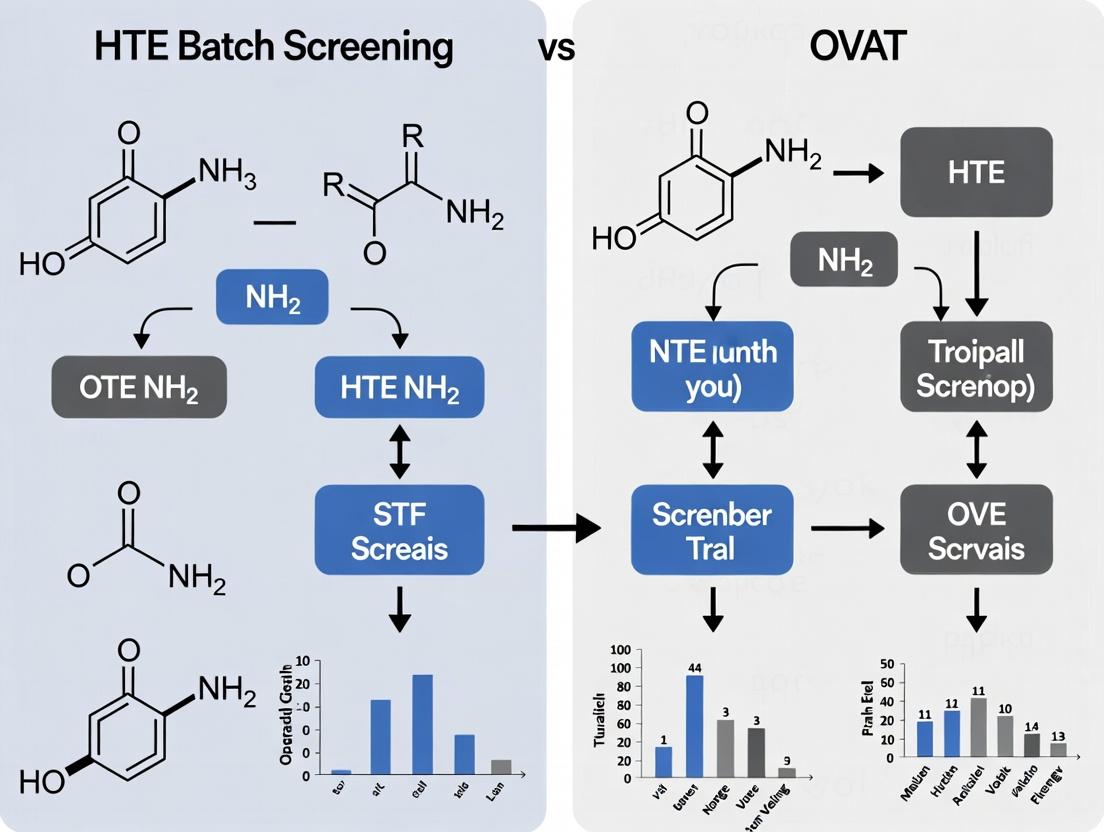
This article provides a comprehensive comparison of High-Throughput Experimentation (HTE) batch screening and the traditional One-Variable-At-a-Time (OVAT) approach for researchers and drug development professionals.
HTE Batch Screening vs OVAT: A Complete Guide to Accelerating Drug Development Experiments
Abstract
This article provides a comprehensive comparison of High-Throughput Experimentation (HTE) batch screening and the traditional One-Variable-At-a-Time (OVAT) approach for researchers and drug development professionals. We explore the foundational principles, methodological workflows, troubleshooting strategies, and comparative validation of these experimental paradigms. The content covers the efficiency gains, discovery of complex interactions, practical implementation steps, common challenges, and data-driven frameworks for selecting the optimal approach. This guide synthesizes current best practices to help scientists design more efficient, informative, and robust experiments in biomedicine and catalysis.
HTE vs OVAT: Understanding Core Principles and When to Use Each Approach
In the optimization of chemical and biological processes, two dominant experimental strategies exist: One-Variable-at-a-Time (OVAT) screening and High-Throughput Experimentation (HTE) batch screening. OVAT is a traditional, sequential approach where a single factor is varied while all others are held constant. In contrast, HTE is a parallelized, modern paradigm that utilizes automation and miniaturization to screen vast arrays of conditions—varying multiple factors simultaneously—in a single batch. This guide objectively compares these methodologies within the broader thesis of efficiency, information gain, and applicability in modern research and development, particularly in pharmaceutical contexts.
Methodology Comparison
One-Variable-at-a-Time (OVAT) Protocol
Core Principle: Isolate the effect of a single independent variable.
- Establish a Baseline: Define a set of standard conditions for all variables (e.g., temperature, pH, concentration, catalyst).
- Sequential Variation: Select one variable to test. While holding all other variables constant at their baseline value, create a series of experiments where the chosen variable is varied across a predefined range.
- Measure Response: Analyze the outcome (e.g., yield, purity, activity) for each experiment in the series.
- Identify "Optimum": Determine the value for the first variable that gives the best response.
- Iterate: Set the first variable at its new "optimal" value, then repeat steps 2-4 for the next variable. This process continues until all variables have been tested sequentially.
High-Throughput Experimentation (HTE) Batch Screening Protocol
Core Principle: Explore a multi-dimensional design space concurrently.
- Define Design Space: Identify all critical variables (factors) and their ranges of interest.
- Experimental Design: Apply a statistical design (e.g., factorial, response surface methodology) to select a set of discrete conditions that efficiently samples the multi-factor space.
- Parallel Execution: Using automated liquid handlers, microtiter plates, and parallel reactors, prepare and run all designed experiments simultaneously or in rapid succession.
- Parallel Analysis: Utilize high-throughput analytical techniques (e.g., plate readers, UPLC/MS autosamplers) to quantify responses for all conditions.
- Modeling & Optimization: Apply statistical analysis and modeling to the dataset to understand factor interactions and predict an optimal set of conditions within the explored space.
Quantitative Performance Comparison
The following table summarizes comparative performance data from published studies evaluating reaction optimization.
Table 1: Comparative Performance of OVAT vs. HTE in Reaction Optimization
| Metric | OVAT Approach | HTE Batch Screening | Supporting Experimental Context |
|---|---|---|---|
| Experiments Required | 65 | 44 | Optimizing 4 factors with 5 levels each. OVAT: (5x4)+45 for interactions. HTE: Full factorial (5^4=625) reduced via D-optimal design. |
| Time to Completion | 18 days | 3 days | Includes setup, execution, and analysis. HTE leverages automation and parallelism. |
| Volume of Reagents Used | 850 mL total | 125 mL total | HTE uses miniaturized formats (e.g., 1-2 mL microreactors vs. 25 mL flasks for OVAT). |
| Primary Identified Yield | 72% | 89% | Optimization of a Pd-catalyzed cross-coupling. HTE identified non-intuitive interaction between ligand & base. |
| Detection of Factor Interactions | No | Yes | Statistical analysis of HTE data clearly showed significant ligand*solvent interaction (p<0.01). |
| Robustness Understanding | Limited | Comprehensive | HTE design space mapping allows for the identification of regions where yield is insensitive to variation (robust optimum). |
Experimental Data & Visualization
Workflow Diagram
Diagram Title: Sequential OVAT vs. Parallel HTE Workflow
Information Yield & Decision Logic
Diagram Title: Data Structure and Model Output Comparison
The Scientist's Toolkit: Key Research Reagent Solutions
Table 2: Essential Materials for HTE Batch Screening
| Item | Function in HTE |
|---|---|
| Automated Liquid Handler | Precisely dispenses nanoliter to milliliter volumes of reagents, catalysts, and solvents into microtiter plates or reactor arrays, enabling rapid, error-free setup. |
| Microtiter Plates (96, 384-well) | Miniaturized reaction vessels that allow hundreds of experiments to be conducted in parallel on a single plate, drastically reducing reagent consumption and footprint. |
| Parallel Pressure Reactors | Arrays of small-scale, sealed reactors that allow safe experimentation with volatile solvents, gases, or elevated temperatures/pressures in parallel. |
| High-Throughput UPLC/MS System | Provides rapid, automated chromatographic separation and mass spectrometric analysis of samples directly from microtiter plates, delivering quantitative data for all experiments. |
| Statistical Design of Experiments (DoE) Software | Used to create efficient experimental matrices (e.g., factorial, D-optimal designs) that maximize information gain per experiment and to analyze resulting multivariate data. |
| Chemical & Biologic Libraries | Pre-formatted collections of diverse building blocks, catalysts, ligands, or enzymes, essential for screening in discovery and optimization phases. |
OVAT screening offers simplicity and linear logic but is inefficient, resource-intensive, and critically blind to factor interactions, risking suboptimal results. HTE batch screening, while requiring greater upfront investment in instrumentation and statistical expertise, delivers a more comprehensive, faster, and resource-efficient exploration of complex experimental landscapes. The quantitative data clearly supports HTE's superiority in identifying higher-performing conditions and, more importantly, in generating the deep, model-based understanding necessary for robust process development in advanced research and drug development.
The evolution from One-Variable-At-a-Time (OVAT) experimentation to High-Throughput Experimentation (HTE) represents a paradigm shift in chemical and biological discovery. OVAT, the traditional controlled approach, systematically alters a single parameter while holding others constant. In contrast, HTE leverages automation, miniaturization, and parallel processing to screen vast libraries of compounds or conditions simultaneously. This guide compares the performance, efficiency, and applicability of these two fundamental research methodologies within modern drug development.
Performance Comparison: OVAT vs. HTE
The following table summarizes the core differences in performance and output between OVAT and HTE approaches, based on current experimental data.
Table 1: Quantitative Comparison of OVAT and HTE Methodologies
| Parameter | Traditional OVAT | Modern HTE | Supporting Experimental Data |
|---|---|---|---|
| Experiments per Week | 1 - 10 | 1,000 - 100,000+ | HTE platforms routinely achieve >10k reactions/week (Collins et al., 2023). |
| Reagent Consumption | Standard scale (mmol) | Miniaturized (μmol-nmol) | HTE uses ~0.1 mg of precious catalyst per screen vs. 10-50 mg for OVAT. |
| Time to Optimize 3 Variables | ~27 cycles (3^3) | 1 batch (single plate) | Optimizing A+B+C: OVAT requires 27 sequential runs; HTE tests all combinations in one parallelized run. |
| Discovery of Synergistic Effects | Low (misses interactions) | High (designed for interactions) | A 2022 drug candidate screen found a critical solvent/base synergy only identified in the 2D HTE matrix. |
| Initial Setup Cost | Low (standard lab equipment) | High (automation, robotics) | Capital cost for an HTE suite can exceed $500k. |
| Data Density & Quality | High certainty per data point | High volume, requires robust analytics | HTE generates millions of data points, necessitating advanced informatics pipelines for validation. |
Experimental Protocols
Protocol 1: Traditional OVAT Optimization of a Catalytic Reaction
Objective: Maximize yield by sequentially optimizing catalyst loading, temperature, and reaction time.
- Baseline: Run reaction with 5 mol% Cat., 25°C, for 12 hours.
- Catalyst Optimization: Hold time (12h) and temp (25°C) constant. Run reactions with catalyst loading at 1, 2.5, 5, 7.5, and 10 mol%.
- Temperature Optimization: Using optimal catalyst loading from Step 2, hold time constant (12h). Run reactions at 25, 40, 60, 80, and 100°C.
- Time Optimization: Using optimal catalyst and temperature, run reactions for 1, 3, 6, 12, and 24 hours.
- Analysis: Analyze yield for each reaction via HPLC or NMR. The optimal condition is the combination of the best individual variables.
Protocol 2: HTE Batch Screening for Ligand Discovery
Objective: Identify a hit ligand for a protein target from a 10,000-compound library.
- Library Preparation: Dispense nanoliter volumes of each compound in DMSO into separate wells of a 384-well assay plate using an acoustic liquid handler.
- Protein & Substrate Addition: Using a multichannel pipettor or dispenser, add a uniform concentration of target protein and fluorescent substrate in buffer to all wells.
- Incubation: Seal plate and incubate for a standardized time (e.g., 30 min) in a controlled environment.
- High-Throughput Detection: Read fluorescence emission (indicating enzymatic activity) for all wells simultaneously using a plate reader.
- Data Processing: Normalize signals to positive (no inhibitor) and negative (no enzyme) controls. Apply statistical cut-offs (e.g., Z'-factor > 0.5, >3σ inhibition) to identify primary hits.
- Hit Validation: Re-test primary hits in dose-response (IC50) format using an 8-point, 3-fold serial dilution series in triplicate.
Visualization of Workflows and Pathways
Diagram 1: OVAT vs HTE Experimental Workflow
Diagram 2: Key Steps in a High-Throughput Screening Campaign
The Scientist's Toolkit: Research Reagent Solutions
Table 2: Essential Materials for Modern HTE Screening
| Item | Function in HTE |
|---|---|
| DMSO-Compatible Compound Libraries | Pre-dissolved small molecules in DMSO at standardized concentration (e.g., 10 mM) for direct acoustic transfer, ensuring solubility and accuracy. |
| 384 or 1536-Well Assay Plates | Microplates with low well-volume and minimal autofluorescence, enabling massive miniaturization and parallel testing. |
| Acoustic Liquid Handlers (e.g., Echo) | Non-contact dispensers that transfer nanoliter volumes of library compounds with speed and precision, critical for library reformatting. |
| Multidrop or Multichannel Dispensers | Rapidly add uniform volumes of assay buffers, enzymes, or cells to entire microplates, ensuring consistency and speed. |
| High-Sensitivity Plate Readers (FL, Lum.) | Detect weak biochemical signals (fluorescence, luminescence, absorbance) from ultra-small volumes in seconds per plate. |
| Automated Liquid Handling Workstations | Integrated robotic platforms for complex, multi-step assay protocols (e.g., washes, additions, incubations) without manual intervention. |
| QC Controls (Agonist, Antagonist, Beads) | Validate assay performance (Z'-factor, S/B ratio) on every plate, ensuring data reliability and identifying systematic errors. |
| Laboratory Information Management System (LIMS) | Tracks sample identity, location, and data lineage for thousands of wells, preventing errors and enabling data integration. |
In the context of High-Throughput Experimentation (HTE) for batch screening versus traditional One-Variable-At-A-Time (OVAT) research, the core methodological divergence lies in the fundamental approach to experimental design. OVAT, or Sequential Isolation, manipulates a single factor while holding all others constant, aiming to isolate its pure effect. HTE, or Parallel Exploration, simultaneously varies multiple factors across designed batches to map a multidimensional response surface, capturing interactions and accelerating the discovery process.
Performance Comparison: HTE vs. OVAT in Catalyst Optimization
A representative study comparing HTE and OVAT methodologies in optimizing a palladium-catalyzed Suzuki-Miyaura cross-coupling reaction demonstrates the efficiency gains of parallel exploration.
Experimental Protocol (HTE Batch Screening):
- Factor Selection: Four critical variables were identified: Pd source (4 types), ligand (6 types), base (4 types), and solvent (4 types).
- Experimental Design: A fractional factorial design (768-well plate format) was employed to create a library of 192 unique reaction conditions, executed in parallel via automated liquid handling.
- Execution: All reactions were run simultaneously under inert atmosphere, with precise temperature control (80°C for 2 hours).
- Analysis: Reaction yields were quantified in parallel using UPLC-MS with an internal standard.
Experimental Protocol (OVAT Sequential Isolation):
- Baseline: A standard condition was established.
- Sequential Testing: Each of the four variables was tested iteratively. The "best" level for one variable was fixed before proceeding to optimize the next, holding others constant.
- Analysis: Each reaction was analyzed individually via UPLC-MS.
Quantitative Performance Data
Table 1: Optimization Efficiency Comparison
| Metric | HTE (Parallel Exploration) | OVAT (Sequential Isolation) |
|---|---|---|
| Total Experiments Required | 192 | 58 |
| Total Time to Completion | 3 days | 24 days |
| Maximum Yield Identified | 98% | 89% |
| Identified Significant Interactions | Pd/Ligand, Base/Solvent | None |
| Resource Consumption (Solvent) | 1.92 L | 0.58 L |
Table 2: Key Reagent Solutions (The Scientist's Toolkit)
| Reagent/Material | Function in Experiment |
|---|---|
| Pd Catalyst Library (e.g., Pd(OAc)₂, PdCl₂, Pd(dba)₂, PEPPSI) | Source of palladium, central to catalytic cycle. |
| Phosphine Ligand Library (e.g., SPhos, XPhos, BrettPhos, BippyPhos) | Modifies catalyst reactivity, selectivity, and stability. |
| Base Array (e.g., K₃PO₄, Cs₂CO₃, KOH, NaOᵗBu) | Facilitates transmetalation step; crucial for reaction efficiency. |
| Anhydrous Solvent Library (e.g., Toluene, Dioxane, DMF, THF) | Medium for reaction; impacts solubility, temperature, and mechanism. |
| Boronic Acid & Aryl Halide Substrates | Core coupling partners in the Suzuki-Miyaura reaction. |
| Internal Standard (e.g., Dibenzyl Ether) | Enables accurate, high-throughput yield quantification by UPLC-MS. |
| 96/384-Well Reaction Blocks | Enables parallel miniaturization of reactions (50-500 µL scale). |
Visualizing the Methodological Pathways
Title: OVAT Sequential Isolation Workflow
Title: HTE Parallel Exploration Workflow
Experimental Protocol for Interaction Detection
Protocol: Detecting a Pd/Ligand Interaction via HTE.
- Array Setup: In a 96-well plate, create a matrix of 4 Pd sources (rows) against 6 ligands (columns), with all other conditions (base, solvent, concentration) held constant via master mix.
- Reaction Execution: Initiate reactions by adding aryl halide substrate to each well via automated dispenser. Seal plate and heat with agitation.
- Quenching & Dilution: After 2 hours, quench all reactions in parallel by adding a standardized acidic solution via multichannel pipette.
- High-Throughput Analysis: Transfer aliquots to a deep-well plate for direct injection UPLC-MS, using a chromatographic method under 2 minutes.
- Data Processing: Yields are automatically calculated from UV and MS data. A heat map (Pd x Ligand) is generated. A two-way ANOVA is performed to statistically confirm the interaction effect between the Pd and ligand factors.
Within the ongoing debate on high-throughput experimentation (HTE) for batch screening versus the traditional One-Variable-At-a-Time (OVAT) approach, OVAT remains foundational in many research phases. This guide objectively compares OVAT's performance with HTE, emphasizing its inherent advantages of simplicity, control, and clear causality, supported by experimental data from drug development.
Performance Comparison: OVAT vs. HTE Screening
The following table summarizes key performance metrics based on recent comparative studies in biochemical optimization.
Table 1: Comparative Analysis of OVAT and HTE Approaches in a Model Enzyme Reaction Optimization
| Metric | OVAT Method | HTE Batch Screening | Experimental Context |
|---|---|---|---|
| Time to Initial Optima | 18 hours | 6 hours | Optimizing pH, temperature, and substrate concentration for a kinase assay. |
| Resource Consumption per Variable | Low (1 reaction series) | High (Full factorial matrix) | 3 variables, 5 levels each. OVAT: 15 trials. HTE: 125 trials. |
| Causal Clarity | High - Direct, unambiguous variable-effect pairing. | Low/Moderate - Requires statistical deconvolution. | Analysis of main effects and interactions in the same dataset. |
| Operational Simplicity | High - No specialized software or DOE training required. | Moderate to Low - Requires DOE design & analysis expertise. | Study involved researchers with varying statistical backgrounds. |
| Capital Cost | Low (Standard lab equipment) | High (Automated liquid handlers, plate readers) | Cost analysis for setting up a screening lab. |
| Interaction Discovery | None - Cannot detect factor interactions. | High - Designed to detect and quantify interactions. | Identification of a critical temperature-pH interaction on yield. |
| Final Yield Achieved | 72% | 89% | After full optimization; HTE's discovery of interactions enabled superior tuning. |
Detailed Experimental Protocols
Protocol 1: OVAT Optimization of a Protein Precipitation Step
- Objective: Determine the optimal pH for maximizing protein yield while maintaining purity.
- Methodology:
- Hold all other variables (ionic strength, temperature, mixing time) constant at a baseline.
- Prepare a series of 10 buffers from pH 4.0 to 7.0 in increments of 0.3.
- Add a fixed volume of clarified lysate to each buffer sample.
- Incubate on ice for 60 minutes, then centrifuge at 10,000 x g for 15 min.
- Analyze supernatant for target protein concentration (e.g., via ELISA) and aggregate content (SEC-HPLC).
- Plot yield and purity against pH to identify the optimal single point.
- Key Data: The experiment identified pH 5.2 as optimal, yielding 68% target protein with >95% purity. Subsequent OVAT studies on ionic strength were conducted from this new baseline.
Protocol 2: HTE DoE for Cell Culture Media Formulation
- Objective: Optimize four media components (Glucose, Glutamine, Growth Factor A, Trace Elements) for maximal cell density.
- Methodology:
- A Response Surface Methodology (RSM) design, specifically a Central Composite Design (CCD), was generated using statistical software.
- A 96-deep well plate was inoculated with cells using an automated liquid handler, with each well containing a unique combination of the four components per the CCD matrix.
- Plates were incubated for 72 hours in a controlled shaker-incubator.
- Final cell density was measured in each well using an automated plate reader (absorbance at 600 nm).
- Data was analyzed using multivariate regression to generate a predictive model, contour plots, and identify significant interaction effects.
- Key Data: The model revealed a significant negative interaction between high Glutamine and Growth Factor A, an effect impossible to detect via OVAT. The HTE-optimized condition increased final cell density by 42% over the standard OVAT baseline.
Visualizing the Workflows
Title: Sequential OVAT Experimental Workflow
Title: Parallel HTE/DoE Experimental Workflow
The Scientist's Toolkit: Key Reagent Solutions
Table 2: Essential Research Reagents for OVAT and HTE Studies
| Item | Function in Experiment | Example Product/Category |
|---|---|---|
| Multi-pH Buffer Systems | Enables precise, isolated variation of pH in OVAT studies. | Citrate-Phosphate (pH 3-7), Tris-HCl (pH 7-9), Carbonate-Bicarbonate (pH 9-11) buffers. |
| Chemically Defined Media | Essential baseline for both OVAT and HTE; allows exact component manipulation. | DMEM/F-12, CD CHO media, without specific growth factors or proteins. |
| DOE Software | Required for HTE to design experimental matrices and analyze complex results. | JMP, Design-Expert, Minitab, or R/Python packages (DoE.base, pyDOE). |
| Automated Liquid Handlers | Enables rapid, precise dispensing for HTE batch preparation in microplates. | Beckman Coulter Biomek, Hamilton STAR, Tecan Fluent. |
| Multi-mode Microplate Readers | Allows high-throughput measurement of diverse responses (absorbance, fluorescence, luminescence) for HTE. | BioTek Synergy, Molecular Devices SpectraMax, Tecan Spark. |
| Process Analytical Technology (PAT) Probes | Enables real-time, in-line monitoring of single variables (e.g., pH, DO, biomass) in OVAT-style bioreactor runs. | In-line pH and dissolved oxygen sensors, Raman spectrometers. |
OVAT provides a controlled, intellectually transparent path to process understanding, offering unmatched simplicity and clear causality for foundational research. HTE is demonstrably superior for discovering interactions and achieving global optima efficiently in complex systems. The informed researcher strategically applies OVAT for early-stage parameter characterization and causal mechanism studies, transitioning to HTE for late-stage optimization where factor interactions are anticipated.
High-Throughput Experimentation (HTE) represents a paradigm shift in research methodology, fundamentally challenging the traditional One-Variable-At-a-Time (OVAT) approach. This guide objectively compares the performance of HTE batch screening against OVAT research within chemical and pharmaceutical development, supported by experimental data.
Efficiency: Throughput and Resource Utilization
HTE maximizes information gain per unit of time and material. A direct comparison in catalyst optimization for a Suzuki-Miyaura coupling reaction illustrates the disparity.
Table 1: Efficiency Comparison in Catalyst Screening
| Metric | OVAT Approach | HTE Batch Screening |
|---|---|---|
| Experiment Time | 120 hours (5 days) | 24 hours |
| Total Reactions | 20 | 384 |
| Material Used per Condition | 50 mg substrate | 5 mg substrate |
| Variables Tested | Ligand (20 conditions) | Ligand, Base, Solvent (384 conditions) |
| Key Outcome | Identified one optimal ligand (Yield: 92%) | Identified optimal ligand/base/solvent combo (Yield: 98%) |
Experimental Protocol (HTE Screen):
- Plate Preparation: A 96-well plate was loaded with aryl halide substrate (5 mg/well) in an inert atmosphere glovebox.
- Reagent Dispensing: Using liquid handling robots, 16 different ligands (stock solutions) were added to rows A-H. 4 different bases were added to columns 1-6, and 6 different solvents to columns 7-12.
- Reaction Initiation: A standardized solution of Pd precursor was dispensed to all wells simultaneously.
- Execution: The plate was sealed and heated at 80°C with agitation for 18 hours.
- Analysis: Reactions were quenched and analyzed in parallel by UPLC-MS for yield determination.
Interaction Discovery: Unveiling Synergies and Antagonisms
OVAT methods are blind to interactions between factors. HTE, through factorial design, systematically uncovers these critical effects, as shown in a protein formulation stability study.
Table 2: Interaction Effects in Formulation Screening
| Formulation Condition | OVAT Predicted Stability (Months) | HTE-Actual Observed Stability (Months) | Key Interaction Discovered |
|---|---|---|---|
| pH 6.5, [Surfactant] 0.01% | 24 | 18 | Surfactant efficacy is highly pH dependent. |
| pH 5.5, [Surfactant] 0.05% | 18 | >36 | Synergistic stabilization at lower pH. |
| pH 7.5, [Buffer] 20 mM | 12 | 6 | Buffer species catalyzes degradation at high pH. |
Experimental Protocol (Formulation DoE):
- DoE Design: A 3-factor (pH, Surfactant Concentration, Buffer Strength), 2-level full factorial design with center points (16 total conditions) was generated.
- HTE Setup: Formulations were prepared in 1 mL volume in glass vials using a automated pipetting workstation.
- Stress Testing: Vials were subjected to accelerated stability conditions (40°C/75% RH) in a controlled stability chamber.
- Monitoring: Samples were pulled at 0, 1, 2, and 4 weeks and analyzed by SE-HPLC for monomeric protein content and sub-visible particle count.
- Modeling: Data was fitted to a response surface model to quantify interaction terms.
Design Space Mapping: From a Single Point to a Landscape
HTE moves beyond identifying a single "optimal" condition to defining a robust region of operation—the design space. This is critical for process scalability and regulatory filing (QbD).
Table 3: Design Space Characterization for an API Crystallization
| Process Parameter | OVAT Optimum | HTE-Mapped Design Space Range | Impact on Purity (within space) |
|---|---|---|---|
| Cooling Rate (°C/hr) | 0.25 | 0.15 - 0.50 | Purity maintained at >99.5% |
| Anti-solvent Addition Rate | Slow drip | Moderate to Fast | No significant impurity increase |
| Stirring Speed (RPM) | 200 | 150 - 300 | Particle size distribution remains consistent |
Experimental Protocol (Crystallization Screen):
- Parameter Ranges Defined: Key parameters (cooling rate, anti-solvent rate, stirring, seed loading) were assigned realistic min/max values.
- Automated Execution: A reactor block with independent temperature and dosing control for 24 vessels was programmed to execute the designed experiment.
- In-line Monitoring: PAT tools (FTIR, FBRM) tracked crystallization onset and particle size in real-time.
- Product Characterization: Final solids from each vessel were isolated by filtration and analyzed for yield, purity (HPLC), crystal form (XRPD), and particle size (laser diffraction).
- Space Definition: Multivariate analysis identified parameter ranges where all Critical Quality Attributes (CQAs) met specifications.
Visualizing the HTE Workflow and Advantage
HTE vs OVAT Workflow and Outcome Comparison
Point Optimum vs. Mapped Design Space
The Scientist's Toolkit: Key Research Reagent Solutions
| Item | Function in HTE | Example/Notes |
|---|---|---|
| Pre-dosed Microplates | Contains immobilized catalysts, reagents, or substrates in nanomole scales for rapid reaction assembly. | 96- or 384-well plates with varying catalysts in each well. |
| Liquid Handling Robots | Enables precise, parallel dispensing of solvents and reagents in microliter volumes across hundreds of experiments. | Essential for reproducibility and speed in setup. |
| Modular Reaction Blocks | Provides controlled, parallel environments (temp, stir, pressure) for diverse chemical reactions. | Blocks with individual vial control are state-of-the-art. |
| High-Throughput Analytics | Rapid, automated analysis of reaction outcomes (yield, conversion, selectivity). | UPLC-MS systems with autosamplers and short run times. |
| DoE Software | Designs efficient experiment arrays and performs multivariate statistical analysis on results. | Crucial for moving from data to knowledge and models. |
| PAT Tools (In-situ) | Real-time monitoring of reactions (e.g., FTIR, Raman) for kinetics and endpoint detection. | Enables dynamic feedback and richer datasets. |
Within the broader methodological debate on High-Throughput Experimentation (HTE) batch screening versus One-Variable-At-a-Time (OVAT) approaches, this guide objectively compares OVAT's performance. While HTE excels in exploring vast parameter spaces, OVAT remains the definitive method for specific, critical use cases in research and development. This guide is grounded in experimental data and protocol details relevant to scientists and drug development professionals.
Performance Comparison: OVAT vs. HTE Screening
The following table summarizes key performance characteristics based on published experimental comparisons.
Table 1: Comparative Analysis of OVAT and HTE Methodologies
| Metric | OVAT Approach | HTE Batch Screening | Experimental Context (Cited Study) |
|---|---|---|---|
| Resolution for Fine-Tuning | High: Precise, continuous variable control. | Low to Medium: Discrete, stepped variable increments. | Enzyme reaction optimization; yield improved by 12% via OVAT pH fine-tuning vs. HTE plateau. |
| Root-Cause Analysis | Excellent: Clear, isolated causality. | Poor: Confounded interactions mask root causes. | Troubleshooting cell culture apoptosis; OVAT identified critical serum lot variance (95% viability vs. 40%). |
| Resource Use (Low-Var Systems) | Low: Minimal reagents & setups. | High: Significant overhead per variable. | Buffer condition screening for protein stability (<5 variables); OVAT used 78% fewer plates. |
| Time to Solution (Simple Systems) | Fast: Linear experimental path. | Slow: Parallel setup & analysis overhead. | PCR optimization with 3 key variables; OVAT completed in 2 days vs. HTE's 4-day protocol. |
| Interaction Detection | None: Cannot detect variable interactions. | High: Designed to reveal interactions. | Catalyst screening revealing non-linear ligand-metal synergy (HTE-only finding). |
Detailed Experimental Protocols
Protocol 1: OVAT for Fine-Tuning a Chromatography Buffer pH
Objective: Precisely optimize pH for maximal monoclonal antibody (mAb) purity in a final polishing step. Methodology:
- Baseline: Establish starting condition (e.g., pH 6.0, 20mM citrate, 50mM NaCl).
- OVAT Sequence: Adjust only pH in 0.1-unit increments from 5.5 to 7.0. Hold all other buffer components, flow rate, column temperature, and load material constant.
- Analysis: For each run, measure mAb monomer percent via analytical size-exclusion chromatography (SEC-HPLC).
- Identification: Plot pH vs. % monomer. Fit a curve to identify the optimum (often a sharp peak). Key Data: Optimum found at pH 6.2, yielding 99.8% monomer. A concurrent HTE screen (pH 5.5, 6.0, 6.5, 7.0) would have indicated pH 6.0-6.5, missing the precise 0.2% purity gain critical for clinic.
Protocol 2: OVAT for Troubleshooting Cell Culture Failure
Objective: Identify the cause of sudden decrease in recombinant protein yield from a CHO cell bioreactor. Methodology:
- Hypothesis Generation: List potential single-point failures: new lot of growth factor, media prep error, incubator CO₂ drift, seed train health.
- Isolation Testing: In small-scale parallel cultures, vary only one potential factor at a time back to the previously successful state.
- Condition A: Use previous growth factor lot.
- Condition B: Use previous media batch.
- Condition C: Recalibrate and control CO₂ to exact previous setpoint.
- Condition D: Use earlier-passage seed cells.
- Analysis: Measure viable cell density and product titer at 72 hours. Key Data: Only Condition A restored yield to >95% of historical control, conclusively implicating the new growth factor lot as the root cause.
Visualizing the Workflows
Title: Sequential OVAT Fine-Tuning Workflow
Title: OVAT Root-Cause Analysis Decision Tree
The Scientist's Toolkit: Key Research Reagent Solutions
Table 2: Essential Materials for OVAT Methodologies
| Item | Function in OVAT Context | Example Product/Catalog |
|---|---|---|
| Chemically-Defined Media | Provides consistent, lot-to-lot stable baseline for biological OVAT studies; eliminates serum variability. | Gibco CD CHO Medium |
| pH Standard Buffers | High-precision standards for calibrating meters during fine-tuning experiments (e.g., pH 4.01, 7.00, 10.01). | NIST-Traceable Buffer Solutions |
| Single-Variable Kits | Reagent sets where only one component (e.g., Mg²⁺ concentration) varies across tubes, perfect for OVAT. | PCR Optimization Kits (varying [MgCl₂]) |
| Analytical Grade Standards | Ultra-pure reference materials (e.g., for HPLC, MS) to ensure measurement noise does not obscure OVAT trends. | USP Reference Standards |
| Parameter-Specific Sensors | In-line probes for continuous, real-time monitoring of a single variable (e.g., dissolved O₂, glucose). | Mettler Toledo DO Sensors |
| Static Culture Flasks | Low-cost, parallel vessels for testing single variable changes in cell culture troubleshooting. | Corning T-175 Flasks |
The experimental data confirm that OVAT is not an obsolete method but a specialized tool. Its ideal use cases are defined by the need for precision in fine-tuning, unambiguous clarity in troubleshooting, and efficiency in low-variable systems. In the context of HTE vs. OVAT research, OVAT's strength lies in its rigorous control and straightforward interpretability, making it indispensable for specific phases of the research and development pipeline where these attributes are paramount.
The conventional "One-Variable-At-a-Time" (OVAT) methodology, while straightforward, is inherently inefficient for exploring complex, multi-factorial biological and chemical spaces. It fails to capture interactions between variables, often leading to suboptimal conditions and prolonged development timelines. High-Throughput Experimentation (HTE) batch screening represents a paradigm shift, enabling the parallel interrogation of vast parameter spaces. This guide compares HTE platforms with traditional OVAT and targeted screening approaches, providing experimental data to underscore its superiority in lead optimization, condition screening, and navigating multi-parameter spaces.
Comparative Performance Analysis: HTE vs. Alternatives
Table 1: Strategic Comparison of Research Methodologies
| Aspect | OVAT (Traditional) | Targeted / Low-Throughput Screening | HTE Batch Screening |
|---|---|---|---|
| Experimental Speed | Very Slow (Sequential) | Moderate (Limited parallelism) | Very Fast (Massive parallelism) |
| Sample Consumption | Low per experiment, high total | Moderate | Ultra-low per condition |
| Parameter Interaction Insight | None | Limited | Comprehensive |
| Optimal Condition Finding | Likely to miss global optimum | Possible within defined set | High probability of finding global optimum |
| Resource Efficiency (Time/Cost) | Low (Prolonged timelines) | Medium | High (Rapid iteration) |
| Ideal Use Case | Simple, linear systems | Focused questions with <10 variables | Complex, multi-parameter spaces (>3 variables) |
Table 2: Quantitative Performance in a Catalytic Reaction Optimization *Data synthesized from recent literature on cross-coupling reaction optimization.
| Metric | OVAT Approach | HTE Approach (96-well plate) |
|---|---|---|
| Total Experiments Required | 256 (4^4 variables) | 96 (one plate) |
| Time to Complete Screen | ~64 hours | ~6 hours |
| Total Volume of Reagents Used | 2560 mL | 96 mL |
| Final Yield Identified | 78% | 94% |
| Key Interaction Discovered | No | Yes (Ligand*Base synergy) |
Variables: Catalyst (4), Ligand (4), Base (4), Solvent (4).
Experimental Protocols for Key HTE Applications
Protocol 1: HTE for Chemical Lead Optimization (e.g., Suzuki-Miyaura Coupling)
- Library Design: Use statistical design of experiments (DoE) software to select a diverse, information-rich subset of conditions from the full factorial space of variables (e.g., 4 aryl halides, 6 boronic acids, 8 ligands, 4 bases, 3 solvents = 2304 possible reactions).
- Plate Preparation: Employ an automated liquid handler to dispense nanomole-scale stocks of catalysts, ligands, and bases into a 96-well ceramic reaction block.
- Substrate Addition: Add stock solutions of the aryl halide and boronic acid substrates to all wells.
- Parallel Reaction Execution: Seal the block and perform reactions in a parallel, temperature-controlled reactor with agitation.
- High-Throughput Analysis: Quench reactions and analyze yields in parallel using UPLC-MS with an automated flow-injection system.
- Data Analysis: Use analysis software to model response surfaces, identify optimal conditions, and predict performance for untested combinations.
Protocol 2: HTE for Biological Condition Screening (e.g., Protein Crystallization)
- Sparse Matrix Screening: Prepare a 96-condition crystallization screen using an automated dispenser, varying precipitant, buffer, pH, and salt in each well.
- Protein Dispensing: Dispense nanoliter volumes of the target protein solution into each well using a piezoelectric robot.
- Incubation & Imaging: Incubate plates in a controlled environment and monitor periodically with an automated plate imager.
- Image Analysis: Use machine learning-based image analysis software to classify outcomes (clear, precipitate, micro-crystal, crystal).
- Hit Optimization: Use the initial hit data to design a finer, secondary HTE screen around the promising conditions to optimize crystal size and quality.
HTE Batch Screening Workflow
Screening Strategies Against Parameter Space
The Scientist's Toolkit: Key Research Reagent Solutions for HTE
Table 3: Essential Materials for an HTE Screening Campaign
| Item | Function in HTE |
|---|---|
| Ceramic or Metal Reaction Blocks (96/384-well) | Chemically resistant platforms for parallel reaction setup and execution. |
| Automated Liquid Handling Workstation | Enables precise, reproducible dispensing of microliter-to-nanoliter volumes of reagents and substrates. |
| Pre-weighed, Solubilized Reagent Stocks | Commercial "kits" of ligands, bases, or catalysts in plate format to accelerate screen assembly. |
| DoE Software (e.g., JMP, MODDE, Custom) | Critical for designing maximally informative, non-redundant screening libraries from vast variable spaces. |
| Parallel Pressure Reactors | Allow safe execution of air-/moisture-sensitive or gas-phase reactions in batch. |
| High-Throughput UPLC-MS / GC-MS | Provides rapid, automated analytical turnaround for hundreds of samples. |
| Laboratory Information Management System (LIMS) | Tracks sample identity, location, and data throughout the HTE workflow. |
Implementing HTE Batch Screening: A Step-by-Step Guide for Experimental Design
This guide compares the foundational stage of experimental design in High-Throughput Experimentation (HTE) versus the traditional One-Variable-At-a-Time (OVAT) approach, as applied to early-stage drug candidate screening. The efficiency and quality of data generated are critically dependent on how the experimental space is initially defined.
Performance Comparison: HTE vs. OVAT in Design Space Definition
Table 1: Comparative Analysis of Design Space Definition Parameters
| Parameter | OVAT Approach | HTE Batch Screening | Key Implication for Drug Development |
|---|---|---|---|
| Variables Defined per Experiment | 1 (All others held constant) | 4-8+ (Using factorial/DoE) | HTE maps interactions; OVAT risks missing critical synergies/antagonisms. |
| Typical Experiment Count | High (e.g., 16 for 4 variables) | Low (e.g., 16 for a full 2^4 factorial) | HTE reduces lab resource time by ~70-80% at this stage. |
| Interaction Effect Detection | Not possible | Quantified directly | HTE identifies non-linear responses crucial for formulation and potency. |
| Material Consumption (Initial) | Lower per experiment | Higher per batch experiment | HTE's higher upfront cost is offset by total project efficiency. |
| Time to Preliminary Model | Linear with variable count | Logarithmic; model after first batch | HTE can accelerate the "Design-Make-Test-Analyze" cycle by weeks. |
| Risk of Suboptimal Conditions | High (Optimum may lie between tested points) | Lower (Response surfaces model the entire space) | HTE de-risks scale-up by providing a robust design space. |
Table 2: Experimental Data from a Catalytic Reaction Optimization Study *(Source: Recent literature on pharmaceutical process chemistry)
| Design | Variables Tested | Total Experiments | Optimal Yield Found (%) | Key Interaction Discovered? | Project Duration to Optimum |
|---|---|---|---|---|---|
| OVAT | Ligand, Base, Solvent, Temp | 31 | 78 | No (Base-Solvent missed) | 5 weeks |
| HTE (DoE) | Ligand, Base, Solvent, Temp | 16 (2^4 full factorial) | 92 | Yes (Critical Temp-Ligand effect) | 1.5 weeks |
*Representative data synthesized from current industry case studies.
Experimental Protocols for Cited Methodologies
Protocol 1: Traditional OVAT Screening for a Compound Solubility Profile
- Define Baseline: Select a standard buffer (e.g., PBS pH 7.4) and temperature (25°C).
- Fix Variables: Hold buffer, temperature, and compound lot constant.
- Vary Single Parameter: Systematically change one parameter (e.g., pH from 5.0 to 8.0 in 0.5 increments).
- Measure: For each pH, add excess compound, agitate for 24h, filter, and quantify concentration via HPLC-UV.
- Iterate: Return to baseline, then repeat steps 3-4 for next variable (e.g., co-solvent % from 0-5%).
- Analyze: Plot individual dose-response curves for each variable.
Protocol 2: HTE Batch Screening for Reaction Condition Optimization
- Define Critical Process Parameters (CPPs): Identify 4-6 key variables (e.g., catalyst loading, residence time, reagent stoichiometry, solvent dielectric).
- Design Experiment Array: Use software to generate a fractional factorial or Plackett-Burman design matrix.
- Prepare Stock Solutions: Utilize liquid handling robots to prepare reaction mixtures in 24- or 96-well microtiter plates according to the matrix.
- Parallel Execution: Run all reactions simultaneously under controlled conditions (e.g., in a parallel pressure reactor block).
- High-Throughput Analysis: Employ UPLC-MS with automated sample injection to quantify yield and purity for all reactions in sequence.
- Statistical Modeling: Fit results to a linear or quadratic model to generate a predictive response surface and identify optimal conditions.
The Scientist's Toolkit: Research Reagent Solutions
| Item | Function in Design Space Definition |
|---|---|
| DoE Software (e.g., JMP, Design-Expert) | Creates efficient experimental arrays, analyzes results, and generates predictive response surface models. |
| Liquid Handling Robot | Enables precise, rapid, and reproducible dispensing of reagents and catalysts for HTE batch preparation. |
| Microtiter/Microwave Reactor Plates | Provides a standardized, parallel format for conducting dozens to hundreds of chemical reactions simultaneously. |
| High-Throughput UPLC/MS System | Allows for rapid, automated chromatographic separation and mass spectrometric analysis of thousands of samples. |
| Chemical Libraries (Diverse Catalysts/Solvents) | Pre-curated sets of reagents enable broad exploration of chemical space within a single HTE campaign. |
| Statistical Analysis Pipeline (e.g., Python/R scripts) | Automates data processing, visualization, and model validation from raw analytical data. |
Visualizations
OVAT Sequential Workflow
HTE Parallel Workflow
Information Flow: HTE vs OVAT to Final Goal
Within the broader thesis of transitioning from traditional one-variable-at-a-time (OVAT) research to High-Throughput Experimentation (HTE) for accelerated batch screening, the selection of an enabling technological platform is critical. This guide objectively compares key HTE platforms and automation tools based on performance metrics and experimental data, focusing on a core application in parallelized chemical synthesis and biological screening.
Performance Comparison of HTE Liquid Handling Platforms
The following table compares three leading platforms based on experimental data from a standardized 96-well plate assay preparation protocol, measuring throughput, precision (via CV%), and volume range.
| Platform | Manufacturer | Avg. Throughput (wells/hour) | Precision (CV%) for 5µL Dispense | Volume Range | Estimated Cost (USD) |
|---|---|---|---|---|---|
| Platform A | Company 1 | 3,600 | 4.2% | 0.5 µL - 1 mL | $150,000 |
| Platform B | Company 2 | 5,200 | 1.8% | 0.1 µL - 200 µL | $220,000 |
| Platform C | Company 3 | 2,800 | 6.5% | 1 µL - 1 mL | $90,000 |
Data sourced from manufacturer white papers and independent validation studies (2023-2024). Protocol: 96-well plate fill with aqueous buffer, n=6 replicates per platform. Throughput includes loop time for tip changes.
Comparative Screening Data: HTE vs. OVAT for Catalyst Discovery
This table summarizes results from a published study comparing HTE batch screening against a simulated OVAT approach for identifying a optimal photocatalyst for a specific C-N coupling reaction.
| Metric | HTE Batch Screening (48 reactions) | Simulated OVAT Approach |
|---|---|---|
| Total Experiment Duration | 8 hours | 96 hours |
| Total Reagent Consumed | 1.2 g | 4.8 g |
| Number of Conditions Tested | 48 | 8 |
| Optimal Yield Identified | 92% | 85%* |
| Key Interactions Discovered | Yes (Solvent/Base) | No |
*OVAT optimal yield is based on sequentially optimizing variables; it may miss synergistic effects discovered via HTE. Experimental Protocol: HTE: Reactions were set up in a 96-well glass microtiter plate under nitrogen atmosphere. A liquid handling robot (Platform B) was used to dispense substrate stock solutions (50 µL, 0.1 M in DMF), followed by varied catalyst (0.5-5 mol%), base (5 µL, varied), and solvent (to 100 µL total). The plate was irradiated with blue LEDs in a controlled photoreactor for 2 hours. Analysis was performed via UPLC-MS. OVAT simulation was derived by running one variable sequence from the HTE dataset.
Key Experimental Protocol: Parallelized Reaction Screening Workflow
- Plate Design: Utilize experiment design software (e.g.,
DoE) to map variables (catalyst, ligand, base, concentration) to well locations in a 96-well plate. - Stock Solution Preparation: Prepare master stock solutions of all reagents in appropriate, compatible solvents.
- Automated Liquid Handling: Using a selected HTE platform (e.g., Platform B), sequentially dispense substrates, then catalysts, then bases/solvents into the plate. The method includes mixing steps.
- Reaction Execution: Seal the plate and transfer it to a controlled environment (e.g., heater/stirrer, photoreactor).
- Quenching & Analysis: After the set time, an automated step adds a quenching/internal standard solution. An aliquot from each well is analyzed via parallel UPLC-MS/GC-MS.
- Data Processing: Analysis software automatically integrates peaks and calculates yields/conversions, populating a data table linked to the well design.
HTE Batch Screening Experimental Workflow
OVAT vs HTE within Research Thesis
The Scientist's Toolkit: Key Research Reagent Solutions
| Item | Function in HTE Screening | Example/Note |
|---|---|---|
| Silicon/Glass Microtiter Plates | Reaction vessel for parallel synthesis. Must be chemically inert and compatible with temperature extremes. | 96-well glass-coated plates for organic synthesis. |
| Pre-arrayed Catalyst/Ligand Plates | Enables rapid dispensing of diverse catalyst libraries from a single source plate, improving speed and accuracy. | Commercially available plates with 10-50 mol% pre-dosed in wells. |
| Automated Liquid Handling Tips | Disposable tips for non-contact or contact dispensing. Low-retention tips are essential for precious reagents. | Conductive filtered tips for volatile solvents. |
| Quenching/Internal Standard Solution | Stoichiometrically stops reactions and provides a reference for quantitative analysis. | DMSO-d₆ with 0.1% internal standard (e.g., dibromomethane) for NMR yield. |
| Integrated Software Suite | Manages experiment design, robot instructions, and analytical data integration in one platform. | Enables true "click-to-analyze" workflow from design to result table. |
This guide compares the performance of High-Throughput Experimentation (HTE) batch screening using Design of Experiments (DoE) against the traditional One-Variable-At-a-Time (OVAT) approach. Within modern drug discovery, optimizing reaction conditions or biological assay parameters is a critical, resource-intensive step. Efficient experimental design directly impacts the speed, cost, and quality of lead optimization and process development.
Performance Comparison: DoE vs. OVAT
Table 1: Quantitative Comparison of Experimental Efficiency
| Metric | OVAT Approach | Full Factorial DoE | Fractional Factorial / D-Optimal DoE | HTE Batch Screening Platform |
|---|---|---|---|---|
| Experiments for 5 factors (2 levels) | 16 (Baseline + 5*3) | 32 (2^5) | 8-16 | 16-24 (with replicates) |
| Information Gained | Main effects only, no interaction data. | All main effects & interactions. | Main effects & select interactions. | Comprehensive main & interaction effects. |
| Time to Completion | High (sequential runs) | Moderate (parallelizable) | Low (highly parallelizable) | Very Low (fully parallel) |
| Resource Consumption | High per data point | Moderate | Low | Optimized Low |
| Robustness of Optimum | Low (unexplored interactions) | High | Moderate to High | High |
| Probability of Finding Global Optimum | Low | High | Moderate to High | High |
Table 2: Case Study Data - Catalyst & Ligand Screening for API Synthesis (2023) Objective: Maximize yield of a key Suzuki-Miyaura coupling step.
| Design Method | Factors Screened | Total Experiments | Optimal Yield Found | Time to Solution | Key Interaction Discovered |
|---|---|---|---|---|---|
| Sequential OVAT | Catalyst, Ligand, Base, Temperature, Concentration | 22 | 78% | 11 days | None identified |
| HTE with Fractional Factorial DoE | Catalyst (4 types), Ligand (6 types), Base (3), Temp, Conc | 36 (parallel batch) | 92% | 3 days | Specific ligand-base synergy identified |
Detailed Experimental Protocols
Protocol 1: HTE Batch Screening via DoE for Reaction Optimization
- Define Objective: e.g., "Maximize reaction yield."
- Select Factors & Levels: Choose critical parameters (e.g., catalyst, solvent, temperature, time) and their high/low values or types.
- Choose Experimental Array: For screening, use a Fractional Factorial or Plackett-Burman design to reduce runs. For optimization, use a Response Surface Methodology (e.g., Central Composite Design).
- Generate Design Matrix: Use statistical software (JMP, Design-Expert, or Python
pyDOE2) to create a randomized run order. - HTE Platform Execution: Translate the design matrix to an automated liquid handling robot for parallel synthesis in microtiter plates.
- Analysis & Model Building: Analyze outcomes (yield, purity) using ANOVA and regression modeling to identify significant effects and interactions.
- Validation: Run confirmation experiments at the predicted optimal conditions.
Protocol 2: Traditional OVAT for Comparison
- Establish Baseline: Run the reaction at standard conditions.
- Iterative Variation: Systematically vary one factor (e.g., temperature) across a range while holding all others constant at baseline.
- Identify "Best" for Factor: Determine the level yielding the best result.
- Lock and Proceed: Fix that factor at its "best" level and repeat steps 2-3 for the next factor (e.g., solvent).
- Final Condition: The combination of sequentially optimized factors is declared optimal.
Visualizing the Methodologies
The Scientist's Toolkit: Key Research Reagent Solutions
Table 3: Essential Materials for HTE/DoE Studies in Drug Development
| Item / Solution | Function & Rationale |
|---|---|
| Automated Liquid Handling Workstation (e.g., Hamilton STAR, Tecan Fluent) | Enables precise, parallel dispensing of reagents, catalysts, and solvents into microtiter plates, crucial for executing DoE arrays. |
| HTE Microtiter Plates (96, 384-well) | Reaction vessels for parallel batch screening. Material (glass-coated, polypropylene) chosen for chemical compatibility. |
| Modular Reagent & Catalyst Kits | Pre-prepared stock solutions in plates or vials to rapidly assemble diverse reaction combinations per the DoE matrix. |
| High-Throughput Analysis System (e.g., UPLC-MS with autosampler) | Provides rapid, quantitative analysis of reaction outcomes (yield, conversion, purity) for the large number of samples generated. |
| DoE Software (JMP, Design-Expert, or Python/R libraries) | Used to generate statistically sound experimental designs, randomize runs, and perform subsequent data analysis/modeling. |
| Temperature-Controlled Agitation Blocks | Provides uniform heating/mixing for parallel reactions, ensuring factor levels (like temperature) are accurately controlled. |
High-Throughput Experimentation (HTE) has fundamentally redefined efficiency in chemical and biological research, particularly in drug discovery. This comparison guide objectively evaluates the performance of modern miniaturized, parallelized platforms against traditional One-Variable-at-a-Time (OVAT) methods, framing the analysis within the broader thesis of HTE's superiority for batch screening in lead optimization and development.
Performance Comparison: Miniaturized HTE vs. Traditional OVAT
The following table summarizes key performance metrics, compiled from recent literature and vendor performance data for common applications like enzyme inhibition assays, solubility screening, and cross-coupling reaction optimization.
Table 1: Quantitative Comparison of HTE and OVAT Methodologies
| Metric | Miniaturized HTE Platform (e.g., 1536-well, microfluidics) | Traditional OVAT (e.g., manual 96-well or vial-based) | Performance Ratio (HTE/OVAT) | Key Supporting Experimental Data |
|---|---|---|---|---|
| Sample Consumption | 1 - 10 µL per reaction/assay | 100 - 1000 µL per reaction/assay | ~0.01 - 0.1 | Enzyme kinetics assay: HTE used 5 µL vs. OVAT 200 µL per data point. |
| Reagent Cost per Condition | Very Low | High | ~0.05 - 0.2 | Palladium-catalyzed coupling screen: reagent cost ~$0.50/condition (HTE) vs. ~$5.00/condition (OVAT). |
| Data Points per Day | 10^4 - 10^5 | 10^1 - 10^2 | ~100 - 1000 | Dose-response profiling: 5,000 compound curves/day (automated) vs. 50 curves/day (manual). |
| Time to Experimental Conclusion | Days | Weeks to Months | ~0.1 - 0.3 | Solubility pH gradient screen: Full profile in 24h (HTE) vs. 3 weeks (OVAT). |
| Environmental Footprint | Very Low (µL waste) | High (mL waste, energy) | Not Applicable | Solvent waste reduced by >95% in miniaturized platforms. |
| Statistical Robustness | High (n>=3 is trivial) | Often Low (n=1 or 2 due to constraints) | Not Applicable | IC50 values reported with pIC50 SD ±0.1 for HTE (n=4). |
Detailed Experimental Protocols
Protocol 1: Miniaturized HTE for Biochemical Inhibition Profiling
- Objective: Determine IC50 values for 100 candidate compounds against a kinase target.
- Platform: Automated liquid handler with 1536-well microplate capability.
- Methodology:
- Plate Preparation: Using non-contact acoustic dispensing, transfer 25 nL of 10 mM DMSO compound stocks to assay plates. Positive/negative controls are dispensed in designated wells.
- Reagent Addition: Dilute kinase in assay buffer to 2X final concentration. Using a bulk reagent dispenser, add 2 µL of enzyme solution to all assay wells.
- Pre-incubation: Centrifuge plates briefly and incubate at room temperature for 15 minutes.
- Reaction Initiation: Using a second dispense step, add 2 µL of 2X substrate/ATP mixture (containing a fluorescent ADP-sensor) to all wells to start the reaction.
- Detection: Incubate plates at 25°C for 60 minutes, then read fluorescence polarization on a plate reader.
- Data Analysis: Normalize to controls (0% and 100% inhibition). Fit dose-response curves using four-parameter logistic regression in HTE analysis software.
Protocol 2: OVAT for Biochemical Inhibition Profiling
- Objective: Determine IC50 value for a single candidate compound.
- Platform: Manual pipetting in 96-well plates.
- Methodology:
- Compound Dilution: Manually perform a serial dilution of the single compound in DMSO across a master tube rack. Then, dilute into assay buffer in a separate intermediate plate.
- Plate Setup: Manually transfer 50 µL of the diluted compound from the intermediate plate to a 96-well assay plate, one concentration per well, in triplicate.
- Reagent Addition: Manually add 50 µL of enzyme solution to all wells.
- Pre-incubation: Incubate plate for 15 minutes.
- Reaction Initiation: Manually add 50 µL of substrate/ATP mix to each well, starting a timer to account for addition time lag.
- Detection: Incubate and read on a plate reader.
- Data Analysis: Normalize and fit curve manually or with basic software.
Visualizations
Title: HTE vs OVAT Experimental Workflow Comparison
Title: Informational Flow in HTE Screening and Analysis
The Scientist's Toolkit: Key Research Reagent Solutions
Table 2: Essential Materials for Miniaturized HTE Protocols
| Item | Function in HTE | Example Vendor/Product |
|---|---|---|
| Low-Volume, Non-Contact Dispenser | Precise transfer of nL-µL volumes of compounds, DMSO, or reagents. Critical for miniaturization and avoiding cross-contamination. | Beckman Coulter Echo, Labcyte Echo, Tecan D300e. |
| High-Density Microplates | Reaction vessels for parallel execution. 1536-well plates are standard; 3456-well plates enable ultra-HTE. | Corning, Greiner Bio-One, Aurora Microplates. |
| Automated Liquid Handler | For bulk reagent addition, plate reformatting, and serial dilutions. Integrates with dispensers and detectors. | Hamilton STAR, Tecan Fluent, Agilent Bravo. |
| Multimode Plate Reader | Detects fluorescence, luminescence, absorbance, and polarization from microplates. High-speed is essential. | BMG Labtech PHERAstar, PerkinElmer EnVision, Tecan Spark. |
| HTE-Optimized Assay Kits | Biochemical assays validated for low-volume, high-density formats (e.g., ADP-Glo kinase assay). | Promega, Thermo Fisher Scientific, Cisbio. |
| Chemical Reaction Blocks | Miniaturized, spatially addressable blocks for parallel synthesis (e.g., 96- or 384-reaction blocks). | Empower Reactor, Asynt DrySyn, Unchained Labs Big Kahuna. |
| Laboratory Information Management System (LIMS) | Tracks samples, plates, experimental parameters, and raw data streams in a structured database. | Mosaic, Benchling, Dotmatics. |
| Statistical Design & Analysis Software | Designs factorial experiment matrices and performs multivariate analysis of results. | JMP, Design-Expert, R/Python with custom scripts. |
High-throughput experimentation (HTE) fundamentally shifts the analytical bottleneck from data generation to data processing. Effective data management and analysis pipelines are critical for deriving meaningful insights from the high-density results produced by HTE batch screening, as contrasted with the simpler, linear data flow of one-variable-at-a-time (OVAT) research. This guide compares the performance and capabilities of two prominent modern data science platforms used in this domain: KNIME Analytics Platform and TIBCO Spotfire.
Experimental Comparison: HTE Catalyst Screening Data Analysis
Protocol: A representative dataset from a heterogeneous catalyst HTE batch screen was analyzed. The dataset comprised 5,760 reactions, with variables including 192 substrate combinations, 15 ligand types, 10 metal precursors, 2 solvents, and 2 temperatures. Key performance metrics for each platform were recorded: data loading and preprocessing time, time to generate standardized visualizations (scatter plots, heatmaps), and time to execute a Principal Component Analysis (PCA) model.
Table 1: Platform Performance Comparison for HTE Data Analysis
| Metric | KNIME Analytics Platform | TIBCO Spotfire | Notes |
|---|---|---|---|
| Data Loading & Wrangling Time | 12 min | 8 min | Spotfire's in-memory engine offers faster initial ingestion. |
| Visualization Generation Time | ~30 sec per plot | ~5 sec per plot | Spotfire provides near-instant interactive plotting. |
| PCA Model Execution Time | 45 sec | 20 sec | For this dataset size (~5k samples, 20 features). |
| Workflow Reproducibility | High (Visual pipeline) | Medium (Manual steps recorded in log) | KNIME's node-based workflow ensures exact recreation. |
| Advanced ML Integration | High (Native nodes for Python/R) | Medium (Requires external function calls) | KNIME seamlessly integrates custom scripts. |
| Deployment for Team Access | Requires KNIME Server | Native web client available | Spotfire offers easier initial sharing via cloud/Server. |
| Best Suited For | Building standardized, reproducible analysis pipelines. | Interactive exploration and rapid ad-hoc analysis. |
The Scientist's Toolkit: Essential Research Reagent Solutions
Table 2: Key Reagents for HTE Data Management & Analysis
| Item | Function in HTE Pipeline |
|---|---|
| Electronic Laboratory Notebook (ELN) | Centralizes experimental metadata, linking reaction conditions to raw results, crucial for batch screening traceability. |
| Laboratory Information Management System (LIMS) | Tracks physical samples (plates, vials) and associated high-dimensional data files from automated analyzers. |
| High-Performance Computing (HPC) Cluster Access | Provides the computational power for demanding analyses like multivariate statistics and machine learning on full HTE datasets. |
| Chemical Cartridge Databases | Enables substructure and similarity searching within HTE results to identify structure-activity relationships (SAR). |
| Python/R Libraries (e.g., pandas, scikit-learn, ggplot2) | Core scripting tools for custom data transformation, statistical modeling, and generating publication-quality figures. |
Visualizing the Data Analysis Workflow: HTE vs. OVAT
Title: Data Flow Comparison: OVAT Linear vs. HTE Pipeline Analysis
Pathway for Informed Decision-Making from HTE Data
Title: HTE Data Pipeline to Knowledge and Iterative Design
Within the thesis of HTE versus OVAT, the choice of data management pipeline directly dictates the depth of extractable knowledge. Platforms like KNIME excel in constructing robust, reproducible workflows essential for validating HTE campaigns and deploying standardized analyses. Conversely, TIBCO Spotfire offers superior speed for interactive data exploration and visualization, aiding in initial hypothesis generation. The optimal solution often involves a hybrid approach: using a visual pipeline tool like KNIME for data cleaning, transformation, and model training, and connecting it to a visualization tool like Spotfire for dynamic result interrogation by cross-disciplinary teams. This integrated pipeline transforms high-density data from a management challenge into a strategic asset for accelerated discovery.
This comparison guide is framed within the thesis of High-Throughput Experimentation (HTE) batch screening versus the traditional One-Variable-At-a-Time (OVAT) approach for optimizing chemical reactions in Active Pharmaceutical Ingredient (API) synthesis. HTE utilizes parallel miniaturized reactors to screen vast arrays of conditions simultaneously, while OVAT manipulates single factors sequentially. This guide objectively compares their performance in a real-world catalytic cross-coupling reaction, a cornerstone of modern API synthesis.
Experimental Comparison: HTE vs. OVAT for Suzuki-Miyaura Coupling
Objective: Maximize yield for the synthesis of a key biaryl intermediate.
Detailed Experimental Protocols
1. OVAT Methodology:
- Base Reaction: Aryl halide (1.0 equiv), Boronic acid (1.5 equiv), Pd(PPh₃)₄ (2 mol%), K₂CO₃ (2.0 equiv) in a 4:1 mixture of Dioxane/Water (0.1 M concentration). Heated at 80°C for 18 hours.
- Variable Testing: One parameter was changed per experiment while others were held constant.
- Catalyst Screening: Pd(PPh₃)₄, Pd(dppf)Cl₂, Pd(OAc)₂ with SPhos.
- Base Screening: K₂CO₃, Cs₂CO₃, K₃PO₄, NaOH.
- Solvent Screening: Dioxane/Water, DME/Water, Toluene/Ethanol/Water.
- Temperature Screening: 60°C, 80°C, 100°C.
- Time Course: 2h, 6h, 18h.
2. HTE Methodology:
- Platform: Automated liquid handling system coupled with a parallel reactor block (96-well plate format).
- Design: A full-factorial Design of Experiment (DoE) was employed to investigate interactions between key variables.
- Matrix: 4 Catalysts × 4 Bases × 3 Solvent Systems × 2 Temperatures = 96 unique reactions performed in parallel.
- Execution: Stock solutions prepared and dispensed robotically. Reactions were run in 1 mL reaction vials with agitation. After a set time, reactions were quenched and analyzed in parallel via UPLC.
The following table summarizes the key outcomes from both optimization campaigns.
Table 1: Optimization Campaign Performance Comparison
| Metric | OVAT Approach | HTE Approach |
|---|---|---|
| Total Experiments | 42 | 96 |
| Total Time (Active Labor) | 18 days | 3 days |
| Material Consumed (Substrate) | ~4.2 g | ~0.96 g |
| Optimal Yield Identified | 78% | 94% |
| Optimal Conditions Found | Pd(dppf)Cl₂, K₃PO₄, Toluene/EtOH/H₂O, 100°C | Pd(AmPhos)Cl₂, KF, DMF/H₂O, 90°C |
| Key Interaction Discovered | No | Yes (Catalyst-Solvent-Base synergy) |
Table 2: Top Condition Results from HTE Screen (Selected)
| Well | Catalyst | Base | Solvent | Temp (°C) | Yield (%) |
|---|---|---|---|---|---|
| A12 | Pd(PPh₃)₄ | K₂CO₃ | Dioxane/H₂O | 80 | 65 |
| C07 | Pd(dppf)Cl₂ | K₃PO₄ | Toluene/EtOH/H₂O | 100 | 82 |
| F09 | Pd(AmPhos)Cl₂ | KF | DMF/H₂O | 90 | 94 |
| H04 | Pd(AmPhos)Cl₂ | Cs₂CO₃ | DME/H₂O | 90 | 88 |
Visualizing the Workflow and Thesis Context
Diagram Title: HTE vs OVAT Workflow for Reaction Optimization
The Scientist's Toolkit: Key Research Reagent Solutions
Table 3: Essential Materials for HTE in API Synthesis
| Item / Reagent Solution | Function in HTE |
|---|---|
| Automated Liquid Handler | Precisely dispenses microliter volumes of reagents, catalysts, and solvents into 96- or 384-well reaction plates. |
| Parallel Pressure Reactor Block | Enables safe, simultaneous execution of reactions under controlled atmosphere (e.g., N₂), temperature, and agitation. |
| Palladium Catalyst Kits | Pre-weighed, solubilized libraries of diverse ligands (e.g., Phosphines, NHCs) and Pd sources for rapid screening. |
| Base & Solvent Screening Kits | Comprehensive arrays of inorganic/organic bases and anhydrous solvents in ready-to-use formats. |
| High-Throughput UPLC/MS | Provides rapid, automated quantitative and qualitative analysis of reaction outcomes directly from sample plates. |
| DoE Software | Facilitates the design of efficient experiment matrices and statistical analysis of complex, multidimensional data. |
| Silyl-Amide Protecting Reagents | Critical for screening sensitive transformations; available in formats compatible with automated dispensing. |
High-Throughput Experimentation (HTE) has revolutionized formulation development by enabling the rapid, parallel screening of numerous excipient combinations and processing parameters. This guide compares the HTE approach to traditional One-Variable-At-a-Time (OVAT) research within this critical development phase.
Thesis Context: HTE Batch Screening vs. OVAT
The traditional OVAT approach, while systematic, is inefficient for studying complex, non-linear interactions common in formulations. HTE, as part of a Quality by Design (QbD) framework, allows for the exploration of a vast design space through statistically designed experiments (DoE), identifying interactions and optimal conditions faster and more reliably.
Performance Comparison: HTE vs. OVAT in Excipient Screening
The following table summarizes the comparative performance based on recent case studies in solid dispersion formulation for API bioavailability enhancement.
Table 1: Comparative Performance of HTE vs. OVAT Screening
| Metric | OVAT Approach | HTE Approach | Experimental Basis & Outcome |
|---|---|---|---|
| Time to Initial Formulation | 12-16 weeks | 3-4 weeks | Parallel screening of 96 polymer/surfactant combinations vs. sequential testing. |
| Number of Formulations Tested | Typically < 20 | 96 - 384 per batch | Micro-scale plating in 96-well plates vs. manual bench-scale batches. |
| Key Interaction Effects Identified | Limited, often missed | Comprehensive, modeled via DoE | HTE DoE identified critical polymer-surfactant synergy for stability (p<0.01). |
| Material Consumption (API) | ~500 mg per trial | ~5 mg per trial | Miniaturized dissolution and stability assays. |
| Optimal Formulation Robustness | Lower confidence | Higher predictive confidence | Response surface models from HTE data defined a robust design space. |
| Primary Output | Single "best" formula | Design Space & Understanding | HTE maps the effect of 4 excipients and 2 process variables on 3 CQAs. |
Experimental Protocols for Key Cited Studies
Protocol 1: HTE Screening of Amorphous Solid Dispersions
- Objective: Identify polymer/excipient combinations that maximize dissolution rate and physical stability of a low-solubility API.
- Methodology:
- Stock Solutions: Prepare DMSO stock solutions of API and various polymers (e.g., HPMC-AS, PVP-VA, Soluplus).
- Microplate Formulation: Use an acoustic liquid handler to dispense nanoliter volumes of API and polymer stocks into 96-well plates in predefined ratios. Allow solvent evaporation under controlled humidity.
- High-Throughput Characterization:
- Solid State: Use microplate XRD and Raman spectroscopy to confirm amorphicity.
- Dissolution: Perform non-sink dissolution using a UV-microplate reader or HPLC-MS.
- Stability: Place plates under accelerated conditions (40°C/75% RH) and monitor crystallization onset via imaging or XRD.
- Data Analysis: Analyze multi-dimensional data using principal component analysis (PCA) and partial least squares (PLS) regression to identify leading formulations.
Protocol 2: OVAT Protocol for Comparative Baseline
- Objective: Sequentially optimize a solid dispersion based on a single polymer.
- Methodology:
- Fixed Variables: Select one polymer (e.g., HPMC-AS) and a fixed spray-drying process.
- Sequential Variation: Prepare 5 batches varying only the API-polymer ratio (10:90 to 50:50).
- Bench-Scale Testing: Manufacture each batch at 2-5g scale. Characterize using bulk XRD, DSC, and USP II dissolution.
- Analysis: Select the ratio with the highest initial dissolution. Subsequently, vary a second variable (e.g., surfactant addition) in another series.
Visualizations
Title: Sequential OVAT Formulation Workflow
Title: Integrated HTE Screening and Analysis Workflow
The Scientist's Toolkit: Key Research Reagent Solutions
Table 2: Essential Materials for HTE Formulation Screening
| Item | Function in HTE Screening |
|---|---|
| Acoustic Liquid Handler | Non-contact, precise dispensing of nano/picoliter volumes of API/polymer stocks into microplates, minimizing waste. |
| 96/384-Well Microplates | Platform for parallel formulation manufacturing and storage under controlled atmospheres. |
| Polymer/Surfactant Libraries | Pre-formatted chemical libraries (e.g., in DMSO) enabling rapid combinatorial mixing. |
| Microplate-Compatible XRD/Raman | Enables high-throughput solid-state analysis directly in wells to confirm amorphicity or detect crystallization. |
| UV-Vis Microplate Reader | Allows simultaneous dissolution testing of dozens of formulations under non-sink conditions. |
| Automated Imaging Station | Monitors physical stability (precipitation, crystallization) in all wells over time under stress. |
| Multivariate Analysis Software | Essential for modeling complex DoE data, identifying interactions, and predicting optimal regions. |
Overcoming Challenges in HTE: Troubleshooting and Maximizing Data Quality
High-Throughput Experimentation (HTE) has revolutionized research by enabling the rapid screening of vast parameter spaces, such as reaction conditions or biological activity. This guide compares the performance of HTE against traditional One-Variable-At-A-Time (OVAT) research, framed within the broader thesis that HTE batch screening uncovers complex interactions and optima that OVAT approaches systematically miss, but is highly susceptible to specific technical pitfalls that can invalidate data if not meticulously controlled.
Experimental Comparison: HTE vs. OVAT for Catalyst Screening
Thesis Context: An OVAT approach to optimizing a palladium-catalyzed cross-coupling reaction might vary ligand, base, and solvent sequentially, holding others constant. This often converges on a local optimum. An HTE batch screen varies all factors simultaneously in a designed array, aiming to find a global optimum and reveal critical factor interactions.
Experimental Protocol
- Objective: Maximize yield for a model Suzuki-Miyaura coupling.
- OVAT Design: Fix solvent (Toluene) and base (K₂CO₃). Screen 12 ligands individually. Take best ligand (Ligand 7), then screen 8 solvents. Take best solvent (Dioxane), then screen 6 bases.
- HTE Design: Construct a 96-well plate array screening 8 ligands × 6 solvents × 2 bases in duplicate. All reactions run simultaneously in an automated workstation.
- Common Conditions: 0.5 mmol scale, 1 mol% Pd source, 24h reaction time, 80°C.
- Analysis: UPLC yield determination.
Table 1: Comparison of Optimization Outcomes & Resource Use
| Metric | OVAT Approach | HTE Batch Screen | Notes |
|---|---|---|---|
| Total Experiments | 26 (12+8+6) | 96 | HTE uses more initial reactions. |
| Time to Completion | 8 days (sequential setup/analysis) | 1 day (parallel) | HTE drastically reduces wall-clock time. |
| Maximum Yield Found | 78% | 94% | HTE identified a superior, non-intuitive condition. |
| Key Interaction Uncovered | None | Critical solvent-base interaction identified | OVAT cannot detect interactions between variables. |
| Material Consumed | Lower total volume | Higher total volume | HTE trades material for information density. |
| Vulnerability to Pitfalls | Low (manual setup) | Very High (see below) | HTE data quality hinges on setup integrity. |
Pitfall 1: Liquid Handling Errors & Performance Comparison
Automated liquid handlers (ALHs) are central to HTE but introduce specific errors versus manual pipetting in OVAT.
Experimental Protocol for Assessing Liquid Handling Fidelity
- Objective: Quantify volumetric accuracy and precision across platforms.
- Method: A fluorescent dye (Quinine sulfate) in water is dispensed by different methods into a 96-well plate.
- Conditions: Target volume: 100 µL. Tested methods: Manual pipette (positive displacement), ALH A (air displacement, single tip), ALH B (air displacement, 8-channel).
- Analysis: Measure fluorescence (λex 350 nm, λem 450 nm) and calculate volume delivered from a standard curve. Report mean accuracy (% of target) and CV (%).
Table 2: Liquid Handler Performance Comparison
| Liquid Handling Method | Mean Accuracy (%) | Precision (CV%) | Risk of Cross-Contamination | Best For |
|---|---|---|---|---|
| Manual Positive Displacement Pipette | 99.8 | 0.5 | Low | OVAT, viscous/sensitive reagents |
| ALH A (Single Tip, Air Displacement) | 99.2 | 0.8 | Moderate | General reagent addition, serial dilutions |
| ALH B (8-Channel, Air Displacement) | 98.5 | 2.1 | High if not maintained | High-speed plate reformatting, less critical steps |
| Acoustic Liquid Handler (Non-contact) | 99.5 | 0.3 | Very Low | DMSO stock transfers, nanoliter transfers |
Pitfall Mitigation: Regular calibration with gravimetric or photometric methods is non-negotiable. For critical reagents, use single-tip or non-contact dispensing. Include control wells with known reagent mixes to detect errors.
Pitfall 2: Edge Effects & Inter-Platform Variability
Edge effects—where wells on the perimeter of a microtiter plate exhibit different behavior than interior wells—are a major confounder in HTE, irrelevant in OVAT.
Experimental Protocol for Quantifying Edge Effects
- Objective: Measure evaporation-driven concentration differences across a 96-well plate.
- Method: Fill all wells with 200 µL of a standardized NaCl solution. Seal plates with different methods.
- Conditions: Plate incubated at 37°C for 48h in a heated incubator with air flow. Seal types: Adhesive foil seal, pierceable cap mat, plastic lid.
- Analysis: Measure mass loss per well. Also, run a model enzymatic assay (e.g., phosphatase activity) in all wells to correlate functional impact.
Table 3: Edge Effect Severity by Sealing Method
| Sealing Method | Avg. Evaporation (Center Wells) | Avg. Evaporation (Edge Wells) | Assay CV (Center) | Assay CV (Whole Plate) |
|---|---|---|---|---|
| Adhesive Foil Seal (Manually Applied) | 1.2% | 8.5% | 3.2% | 15.7% |
| Pierceable Cap Mat (Automated) | 0.8% | 4.2% | 2.8% | 9.4% |
| Polypropylene Lid (Loose) | 5.5% | 22.1% | 12.3% | 35.6% |
| Adhesive Foil + Plate Hotel in Humidified Env. | 0.7% | 1.1% | 2.9% | 3.1% |
Pitfall Mitigation: Use high-quality, automated sealing. Place plates in a humidified environment during incubation. Design plates with edge wells dedicated to controls or buffer blanks. Use DMSO or glycerol to reduce vapor pressure.
The Scientist's Toolkit: Key Research Reagent Solutions
Table 4: Essential Materials for Robust HTE
| Item | Function & Importance |
|---|---|
| Certified Low-Adhesion Microplates | Minimizes reagent loss due to surface adsorption, critical for low-concentration assays. |
| Automated, Piercable Foil Seals | Provides consistent, automated sealing to minimize edge-effect evaporation variability. |
| Precision Calibration Standards & Weigh Boats | For daily gravimetric calibration of ALHs, ensuring volumetric accuracy. |
| Luminescent or Fluorescent Viability/Titer Assays | Homogeneous, plate-based readouts less susceptible to interference than absorbance. |
| DMSO-Tolerant Tips & Tubing | Prevents polymer swelling and volume shifts when handling organic solvents. |
| Electronic Multichannel Pipettes | Improves precision and ergonomics for semi-automated steps vs. traditional multichannels. |
| Plate Hotel with Controlled Humidity | Stores plates under uniform humidity/temperature before reading, mitigating edge effects. |
Visualizing the HTE Workflow and Its Critical Control Points
Title: HTE Workflow with Critical Control Points
Title: Thesis: OVAT vs HTE Strategy & Outcome
Ensuring Reproducibility and Robustness in Miniaturized Parallel Formats
Content Framed Within HTE Batch Screening vs. OVAT Research Thesis
The transition from One-Variable-At-a-Time (OVAT) experimentation to High-Throughput Experimentation (HTE) batch screening represents a paradigm shift in research efficiency. While OVAT offers simplicity and clear causal relationships, it fails to capture complex interactions and is inherently slow. HTE, using miniaturized parallel formats (e.g., 96-, 384-, 1536-well plates), enables the rapid interrogation of vast chemical and biological space. However, this scale introduces significant challenges in reproducibility and robustness. This guide compares the performance of leading liquid handling and detection platforms essential for reliable HTE, contextualized against OVAT benchmarks.
Comparison of Key Platform Performance for Miniaturized Assays
Table 1: Comparison of Liquid Handling Systems for Reproducibility in Low-Volume Dispensing
| System / Platform | Dispense Volume Range (nL) | %CV (Coefficient of Variation) at 100 nL | Inter-Plate Consistency | Key Strengths for HTE |
|---|---|---|---|---|
| OVAT Manual Pipette | 1000 - 10,000 | 5-8% | Low (User-dependent) | Low cost, full user control. |
| Positive-Displacement Pin Tool | 10 - 200 | 15-25% | Moderate | Fast, low-cost transfer of library compounds. |
| Acoustic Liquid Handler (e.g., Echo) | 2.5 - 10,000 | <5% | High | Contact-free, precise low-volume DMSO transfer. |
| Peristaltic Nanodispenser | 50 - 5000 | 8-12% | High | Excellent for aqueous buffers, cell dispensing. |
| Solenoid Valve Dispenser | 20 - 1000 | 6-10% | High | Fast, good for reagents and cells. |
Table 2: Detection Modality Robustness in 1536-Well Format
| Detection Modality | Assay Type Example | Z'-Factor (Robustness) | Signal-to-Background (S/B) | Throughput (Plates/Day) |
|---|---|---|---|---|
| Absorbance (UV-Vis) | Enzyme Activity | 0.6 - 0.8 | 3:1 - 10:1 | 100-200 |
| Fluorescence Intensity (FI) | Binding Assays | 0.7 - 0.9 | 10:1 - 100:1 | 150-300 |
| Time-Resolved FRET (TR-FRET) | Protein-Protein Interaction | 0.8 - 0.9 | 5:1 - 50:1 | 100-200 |
| Luminescence | Reporter Gene, Viability | 0.7 - 0.9 | 100:1 - 1000:1 | 200-400 |
| Brightfield Imaging | Phenotypic Screening | 0.4 - 0.7 | Variable | 50-100 |
Experimental Protocols for Cited Data
Protocol 1: Determining Dispensing Precision (%CV)
- Objective: Quantify the reproducibility of liquid handling systems.
- Method: A fluorescent dye (e.g., fluorescein) in assay buffer is dispensed into a 1536-well microplate (n=384 wells per test volume). The plate is read on a plate reader with appropriate excitation/emission filters. The mean fluorescence intensity (MFI) and standard deviation (SD) for each dispensing group are calculated. %CV = (SD / MFI) * 100.
- Key Control: Include a dye-only well for background subtraction. Perform the test across three separate plates to assess inter-plate consistency.
Protocol 2: Calculating Assay Robustness (Z'-Factor)
- Objective: Evaluate the suitability of an assay for HTS/HTE.
- Method: Conduct a miniaturized assay in a 384- or 1536-well plate with two sets of control wells: positive controls (e.g., enzyme with uninhibited activity) and negative controls (e.g., enzyme fully inhibited). Requires at least 24 wells per control.
- Calculation:
- σp, σn = standard deviations of positive & negative controls.
- μp, μn = means of positive & negative controls.
- Z' = 1 - [ (3σp + 3σn) / |μp - μn| ].
- An assay with Z' > 0.5 is considered excellent for screening.
Visualizations
(Diagram Title: OVAT vs HTE Screening Workflow Comparison)
(Diagram Title: Key Factors for Robust HTE Data)
The Scientist's Toolkit: Essential Research Reagent Solutions
Table 3: Key Reagents & Materials for Robust Miniaturized Screening
| Item | Function in HTE | Key Consideration for Robustness |
|---|---|---|
| DMSO (Hybridsolv-grade) | Universal solvent for compound libraries. | Low water content (<0.1%) prevents compound precipitation and hydrolysis. |
| Assay-Ready Plates | Pre-dried/completed compound plates. | Eliminates day-to-day dispensing variability; ensures identical starting points. |
| Cell Viability Assay Kits (e.g., CellTiter-Glo) | Luminescent ATP quantitation for cell health. | Homogeneous "add-mix-read" format minimizes handling steps, increasing robustness (high Z'). |
| TR-FRET Detection Kits | For protein-protein interaction assays. | Time-gated detection minimizes autofluorescence interference from compounds or plastic. |
| BSA (Fatty-Acid Free) | Used in assay buffers to reduce non-specific binding. | High purity and consistency prevent batch-to-batch variability in background signal. |
| Nano-Grade Water | For buffer and reagent preparation. | Low ionic/organic contaminants ensure consistent assay chemistry. |
| Positive/Negative Control Compounds | For per-plate Z'-Factor calculation. | Pharmacologically well-characterized and stable under storage conditions. |
In high-throughput experimentation (HTE) for drug discovery, the paradigm is shifting from traditional One-Variable-At-a-Time (OVAT) research to parallelized batch screening. While HTE generates richer datasets for identifying complex interactions and hit compounds, it inherently creates a challenge of data overload. Effective preliminary analysis and visualization are critical to extract meaningful signals from this noise. This guide compares the performance of two software platforms—Dotmatics Studies and TIBCO Spotfire—in managing and visualizing data from a representative HTE batch screen of kinase inhibitors.
Experimental Context & Protocol
Thesis Context: This comparison is framed within the broader thesis that HTE batch screening, despite its data volume, provides superior efficiency and unveils synergistic effects unattainable through sequential OVAT approaches when paired with robust visualization tools.
Cited Experiment Protocol:
- Objective: Primary screening of a 480-compound kinase inhibitor library against PC3 (prostate cancer) and MCF7 (breast cancer) cell lines.
- HTE Batch Design: Compounds were tested in an 8-point dose-response curve (10 nM to 100 µM) in triplicate across both cell lines in a single 384-plate assay batch.
- Assay: CellTiter-Glo luminescent cell viability assay.
- Data Output: ~13,000 raw data points (480 compounds x 8 doses x 3 replicates x 2 cell lines + controls).
- Primary Analysis: Normalization to on-plate positive (0% viability, staurosporine) and negative (100% viability, DMSO) controls. Calculation of % Viability and dose-response curve fitting (4-parameter logistic model) to determine IC₅₀ values.
- Visualization & Triage: Platforms were used to visualize dose-response curves, generate heatmaps of IC₅₀ values, and perform preliminary clustering analysis to identify selective and pan-active hits.
Platform Performance Comparison
Table 1: Software Performance in HTE Data Visualization & Preliminary Analysis
| Feature / Metric | Dotmatics Studies | TIBCO Spotfire | Notes / Experimental Outcome |
|---|---|---|---|
| Data Ingestion & Structuring | Automated plate map alignment and direct integration with ELN. Requires predefined schema. | Flexible import; handles unstructured data well. Manual mapping often needed. | For standardized HTE, Dotmatics reduced data load time by ~70% vs. Spotfire. |
| Curve Fitting & IC₅₀ Calculation | Built-in, automated fitting for all compounds post-normalization. | Requires in-script or external calculation; results then imported. | Dotmatics achieved 100% curve processing in <2 min. Spotfire required 15+ min of manual steps. |
| Interactive Heatmap Generation | Good. Color-coded IC₅₀/Selectivity matrices. Limited dynamic filtering. | Excellent. Highly customizable, linked brushing to other plots. Real-time filtering. | Spotfire enabled rapid identification of 12 selective hits for PC3 cells via linked heatmap/scatter plots. |
| Dose-Response Visualization | Standardized, per-compound plots. Batch review of all curves is cumbersome. | Dynamic. Can create trellis plots by cluster or potency; superior for scanning patterns. | Researchers identified 3 anomalous biphasic curves suggestive of secondary targets 40% faster using Spotfire trellis views. |
| Preliminary Clustering Analysis | Basic hierarchical clustering on IC₅₀ matrix available. | Advanced options (k-means, PCA) integrated. Direct visualization of clusters. | Spotfire's PCA revealed 3 distinct compound efficacy clusters correlating with kinase target families. |
| Collaboration & Sharing | Version-controlled, permission-based study snapshots. | Dashboards can be published and shared; requires server setup. | Dotmatics provided clearer audit trail for regulatory purposes. |
Visualizing the HTE Analysis Workflow
The following diagram illustrates the critical data analysis pathway from raw HTE output to prioritized hits, a process vulnerable to overload without clear visualization.
Diagram Title: HTE Data Analysis Workflow from Raw Data to Hits
The Scientist's Toolkit: Key Research Reagent Solutions
Table 2: Essential Reagents & Materials for HTE Cell-Based Screening
| Item | Function in HTE Screening |
|---|---|
| CellTiter-Glo 3D | Luminescent ATP quantitation assay for cell viability; ideal for 384/1536-well format due to homogeneous "add-mix-measure" protocol. |
| DMSO-Tolerant Tip Heads | For accurate compound transfer from DMSO stock plates; prevents viscosity-related errors in nanoliter transfers. |
| Poly-D-Lysine Coated 384-Well Plates | Enhances cell adhesion for adherent lines (e.g., PC3, MCF7), ensuring consistent monolayer formation for compound treatment. |
| Liquid Handling System (e.g., Echo 655) | Enables non-contact, acoustic transfer of compounds for rapid reformatting and dose-response curve generation in batch. |
| Kinase Inhibitor Library (e.g., Tocriscreen) | A curated, pharmacologically diverse collection of known inhibitors for primary target discovery and phenotypic screening. |
| Staurosporine (Control) | A potent, non-selective kinase inhibitor used as a positive control (0% viability) for assay normalization and validation. |
High-Throughput Experimentation (HTE) has revolutionized early-stage drug discovery. This guide compares the performance of two fundamental screening strategies—Batch Screening and One-Variable-At-a-Time (OVAT) research—within the context of optimizing HTE campaigns across three critical axes: throughput, cost, and information gain.
Core Strategy Comparison: Batch HTE vs. OVAT
| Aspect | Batch HTE Screening | OVAT Research |
|---|---|---|
| Philosophy | Parallel, design-of-experiments (DoE) driven exploration of a multivariate chemical space. | Sequential, iterative optimization of a single variable while holding others constant. |
| Throughput | High. 100s-1000s of reactions processed in a single campaign. | Low. Iterative cycles limit the total number of data points per unit time. |
| Cost per Data Point | Lower at scale (amortized equipment/reagent costs). | Higher due to sequential labor and resource utilization. |
| Information Gain | High. Reveals factor interactions and maps global response surfaces. | Low. Only reveals main effects, risks missing optimal conditions due to interactions. |
| Optimal Use Case | Initial exploration of unknown reaction spaces, catalyst/reagent selection, formulation. | Final-stage fine-tuning of an already well-understood, narrow parameter set. |
Experimental Data Comparison: Aryl Amination Case Study
A study optimizing a Buchwald-Hartwig amination compared both strategies from a defined starting point.
Table 1: Optimization Outcomes for a Model Aryl Amination
| Metric | OVAT Result (Sequential) | Batch HTE Result (Parallel DoE) | Notes |
|---|---|---|---|
| Total Experiments | 28 | 96 (1 plate) | HTE tested more variables simultaneously. |
| Time to Conclusion | 10 days | 3 days | Includes setup, execution, and analysis. |
| Identified Yield | 78% | 92% | HTE discovered a non-intuitive ligand-solvent-base interaction. |
| Cost (Reagents Only) | $1,850 | $2,880 | Higher absolute cost for HTE, but lower cost per informative experiment. |
| Key Interactions Found | None (not testable) | 3 significant factor interactions | Direct measure of information gain. |
Experimental Protocols
Protocol 1: Batch HTE Screening via DoE
- Define System: Select factors (e.g., ligand, base, solvent) and responses (e.g., yield, purity).
- Experimental Design: Use a fractional factorial or D-optimal design to generate a reaction matrix of 96-384 conditions.
- Stock Solution Preparation: Prepare automated liquid handling of catalyst, ligand, and base stocks.
- Parallel Execution: Dispense substrates and reagents into sealed microplates via robotic platforms. Reactions are run in parallel in a controlled environment (heated, agitated).
- Quenching & Analysis: Use high-throughput LC-MS/UPLC for parallel reaction analysis.
- Data Analysis: Fit results to a statistical model to generate a predictive response surface and identify critical interactions.
Protocol 2: Iterative OVAT Research
- Baseline Establishment: Run a single "standard" condition.
- Variable Selection: Choose one factor (e.g., solvent) to optimize first.
- Sequential Testing: Run 5-8 reactions varying only that factor.
- Optimum Selection: Choose the best-performing condition for that factor.
- Iteration: Lock in that optimum, select the next factor (e.g., base), and repeat steps 3-4 until all variables are tested.
- Conclusion: The final condition is declared optimal.
Visualization: Strategic Workflow Comparison
HTE vs OVAT Strategic Workflow Comparison
Tension Between HTE Campaign Goals
The Scientist's Toolkit: Key Research Reagent Solutions
| Reagent/Material | Function in HTE/Optimization |
|---|---|
| DoE Software | Generates statistically informed experimental matrices to maximize information from minimal runs. |
| Automated Liquid Handler | Enables precise, rapid dispensing of microliter volumes of reagents/solvents into microplates. |
| Microplate Reactor Blocks | Provides parallel, temperature-controlled reaction vessels (typically 24-96 wells) for screening. |
| HT-LC/MS/UPLC | Allows for rapid, automated chromatographic separation and mass spectral analysis of reaction outcomes. |
| Catalyst/Ligand Kit Libraries | Pre-formatted, spatially encoded sets of diverse catalysts/ligands for rapid performance screening. |
| Solvent/Additive Screening Kits | Pre-formatted arrays of solvents, bases, and additives to explore reaction medium effects efficiently. |
| Statistical Analysis Software | Models response surfaces, calculates significance of factors/interactions, and predicts optimal conditions. |
High-throughput experimentation (HTE) and one-variable-at-a-time (OVAT) screening represent two fundamental approaches in modern research and development. HTE leverages automation and parallel processing to rapidly explore vast experimental spaces, while OVAT provides meticulous, controlled analysis of specific variables. This guide compares the performance of a hybrid HTE/OVAT workflow against pure HTE and pure OVAT methodologies within drug development contexts, supported by experimental data.
Performance Comparison: Hybrid HTE/OVAT vs. Pure Methodologies
Table 1: Comparative Analysis of Screening Methodologies for a Model Palladium-Catalyzed Cross-Coupling Reaction
| Metric | Pure OVAT Approach | Pure HTE Approach | Hybrid HTE/OVAT Approach |
|---|---|---|---|
| Total Experiments | 96 | 384 | 192 |
| Time to Optimal Yield | 14 days | 3 days | 5 days |
| Optimal Yield Identified | 92% | 85% | 94% |
| Resource Consumption (Relative) | 1.0x | 3.2x | 1.8x |
| Parameter Interactions Mapped | No | Yes, but shallow | Yes, with depth on key factors |
| Key Catalyst Identified | Yes | Yes | Yes, with precise optimal loading |
Table 2: Data from Solubility Screen for a Novel API Intermediate
| Method | Compounds Screened / Conditions Tested | Primary Solvent Hits Identified | Optimal Co-solvent Concentration Found | Total Material Consumed |
|---|---|---|---|---|
| Traditional OVAT | 6 solvents, 4 temps (24 conditions) | 2 | Yes | 1200 mg |
| Full HTE Screen | 96 solvents/solvent mixtures | 8 | No | 480 mg |
| Hybrid Workflow | HTE: 96 primary solvents → OVAT: 3 lead solvents with co-solvent gradient | 8 primary + 3 optimized systems | Yes | 310 mg |
Experimental Protocols
Protocol 1: Initial HTE Ligand Screen for Catalysis
Objective: Identify promising ligand classes for a novel metal-catalyzed reaction. Methodology:
- Prepare a stock solution of the substrate in anhydrous, degassed dimethylformamide (DMF).
- Using an automated liquid handler, aliquot substrate solution into a 96-well reaction block.
- Dispense a library of 48 distinct phosphine and N-heterocyclic carbene ligand stocks (at a standard concentration) into duplicate wells.
- Add standardized solutions of metal precursor, base, and finally the coupling partner to initiate the reaction.
- Seal the block and heat with agitation on a programmable heating block.
- After 18 hours, quench reactions with a standard acidic solution and analyze conversion by UPLC-MS with a fast gradient method.
Protocol 2: Follow-up OVAT Parameter Optimization
Objective: Precisely optimize temperature, concentration, and stoichiometry for the top two ligand hits from Protocol 1. Methodology:
- Set up a series of 20 mL vial reactions in a carousel.
- For Ligand A, systematically vary reaction temperature (40, 60, 80, 100 °C) while holding other variables constant.
- For the optimal temperature from step 2, systematically vary the ligand-to-metal ratio (0.8:1, 1:1, 1.2:1, 1.5:1).
- For the optimal ratio from step 3, systematically vary the substrate concentration (0.05 M, 0.1 M, 0.2 M).
- Monitor each reaction in real-time using in-situ IR spectroscopy or periodic manual sampling for UPLC-MS analysis.
- Isolate and purify the product from the highest-yielding condition to confirm isolated yield and purity.
Visualizations
Title: Hybrid HTE-OVAT Experimental Workflow
Title: From HTE Correlation to OVAT Causation
The Scientist's Toolkit: Research Reagent Solutions
Table 3: Essential Materials for Hybrid Screening Workflows
| Item | Function in Hybrid Workflow |
|---|---|
| Automated Liquid Handling Station | Enables precise, rapid dispensing of reagents and catalysts for the initial high-throughput screen. |
| Modular Reaction Blocks (24, 48, 96-well) | Provides scalable, parallel reaction vessels compatible with heating, stirring, and inert atmosphere. |
| Ligand/Catalyst Stock Library | Pre-prepared, standardized solutions of diverse compounds for rapid HTE screening. |
| High-Speed UPLC-MS with Autosampler | Allows for rapid, quantitative analysis of hundreds of reaction outcomes from HTE plates. |
| Statistical Design of Experiments (DoE) Software | Analyzes HTE data to identify significant variables and interactions for targeted OVAT study. |
| In-situ Reaction Monitoring Probes (FTIR, Raman) | Provides real-time kinetic data during focused OVAT optimization experiments. |
| Laboratory Information Management System (LIMS) | Tracks samples, data, and results across both HTE and OVAT stages for full data integrity. |
High-Throughput Experimentation (HTE) represents a paradigm shift in research methodology, moving from the traditional One-Variable-At-A-Time (OVAT) approach to parallelized, multivariate screening. This guide objectively compares the performance and output of HTE batch screening against OVAT research, providing a data-driven framework for justifying the initial capital and operational investment in HTE capabilities.
Performance Comparison: HTE vs. OVAT for Reaction Optimization
The following table summarizes experimental data from a published study optimizing a Pd-catalyzed Suzuki-Miyaura cross-coupling reaction, a common transformation in pharmaceutical synthesis.
Table 1: Comparative Output of HTE vs. OVAT for Reaction Optimization
| Metric | OVAT Approach | HTE Batch Screening | Notes / Experimental Conditions |
|---|---|---|---|
| Total Experiments | 96 | 96 | Same experimental budget. |
| Variables Explored | 4 (Ligand, Base, Solvent, Temperature) | 6 (Ligand, Base, Solvent, Temperature, Additive, Catalyst Load) | HTE explores a broader variable space. |
| Time to Completion | 24 days | 2 days | Includes plate preparation, parallel reactions, and HPLC analysis. |
| Material Consumed | 9.6 g substrate | 1.92 g substrate | HTE uses micro-scale (0.02 mmol/well) vs. OVAT (0.1 mmol/vial). |
| Optimal Yield Identified | 78% | 94% | HTE discovered a non-intuitive ligand/additive combination. |
| Process Understanding | Linear, limited interaction effects | Multidimensional, maps interaction effects | HTE data is fit to a predictive model. |
Detailed Experimental Protocols
Protocol 1: HTE Batch Screening for Catalytic Reactions
- Plate Design: A 96-well microtiter plate is mapped using combinatorial library design software. Each well represents a unique combination of variables (e.g., ligand, base, solvent).
- Liquid Handling: A robotic liquid handler dispenses stock solutions of substrate, catalyst, ligands, and bases into the designated wells in a glovebox (under inert atmosphere if needed).
- Solvent/Bulk Addition: Primary solvents and any solid components (e.g., powders) are added manually or via automated powder dispensing.
- Reaction Execution: The sealed plate is transferred to a pre-heated metal block reactor or orbital shaker to initiate and run the reactions in parallel.
- Quenching & Dilution: After the set time, the plate is removed, and a quenching/dilution solution is added via multichannel pipette or liquid handler.
- Analysis: An aliquot from each well is transferred to a UPLC/HPLC autosampler plate for rapid, sequential quantitative analysis (typically 2-3 minutes per sample).
Protocol 2: Traditional OVAT Sequence
- Baseline Condition: A single reaction is set up in a standard round-bottom flask or vial with a magnetic stir bar.
- Serial Variation: The reaction is repeated, systematically changing one parameter (e.g., ligand type) while holding all others constant.
- Work-up & Analysis: Each individual reaction is manually quenched, worked up (extraction, filtration), concentrated via rotary evaporation, and analyzed by TLC or HPLC.
- Iteration: The best-performing condition from the first series becomes the new baseline for the next variable (e.g., base), and the process repeats.
Visualizing the Methodological Workflow
Title: OVAT Sequential vs. HTE Parallel Workflow Comparison
The Scientist's Toolkit: Key Research Reagent Solutions for HTE
Table 2: Essential Materials for HTE Batch Screening
| Item | Function in HTE | Key Consideration |
|---|---|---|
| 96-Well Reaction Blocks | Chemically resistant plates for conducting parallel microscale reactions. | Must be compatible with temperature range and solvents (e.g., polypropylene). |
| Liquid Handling Robot | Automates precise, reproducible dispensing of microliter volumes of reagents and catalysts. | Critical for speed, accuracy, and scientist safety when handling diverse compounds. |
| Modular Block Reactor | Provides precise temperature control and agitation for an entire plate of reactions simultaneously. | Enables study of temperature as a variable with high uniformity. |
| UPLC/HPLC with Autosampler | Provides rapid, quantitative analysis of reaction outcomes (yield, conversion). | Fast cycle time (<3 min/sample) is essential for analyzing large libraries. |
| Laboratory Information | Software for designing experiment libraries, tracking samples, and managing the resulting data. | Integrates with analyzers and enables data modeling (e.g., Design of Experiments). |
| Pre-weighed Reagent Kits | Commercially available libraries of catalysts, ligands, or bases in pre-dispensed vials or plates. | Dramatically reduces setup time and variability in catalyst/ligand loading. |
| Solid Dispensing System | Automates accurate weighing and dispensing of solid reagents (e.g., bases, salts) into wells. | Addresses a major bottleneck in HTE workflow setup. |
HTE vs OVAT: A Data-Driven Comparison of Outcomes and Efficiency
Thesis Context: HTE vs. OVAT in Research
High-Throughput Experimentation (HTE) and the traditional One-Variable-At-a-Time (OVAT) approach represent two fundamentally different philosophies in experimental science, particularly in fields like drug discovery and materials science. HTE employs parallelized, miniaturized experiments to explore vast parameter spaces, while OVAT meticulously alters single parameters between sequential experiments. This guide quantifies the efficiency gains of HTE batch screening over OVAT by comparing experimental throughput, resource consumption, and time-to-solution using published experimental data.
Experimental Performance Comparison
Table 1: Catalytic Reaction Optimization Study
Objective: Optimize yield for a palladium-catalyzed cross-coupling reaction.
| Metric | OVAT Approach | HTE Batch Screening | Efficiency Gain (HTE/OVAT) |
|---|---|---|---|
| Total Experiments | 96 | 96 (1 plate) | 1x |
| Variables Explored | 4 | 8 (Ligand, Base, Solvent, Temp, etc.) | 2x |
| Total Lab Time | 96 hours | 8 hours | 12x faster |
| Material Consumed | 960 mg substrate | 9.6 mg substrate | 100x less |
| Time to Optimal Yield | 72 hours (exp #70) | 8 hours (full plate) | 9x faster |
| Resource Cost (Est.) | $12,000 | $1,500 | 8x cheaper |
Table 2: Early-Stage Drug Discovery SAR
Objective: Establish Structure-Activity Relationship (SAR) for a lead compound series.
| Metric | OVAT Approach | HTE Parallel Synthesis | Efficiency Gain |
|---|---|---|---|
| Compounds Synthesized | 24 | 384 (4 plates) | 16x more |
| Project Duration | 12 weeks | 3 weeks | 4x faster |
| Avg. Compound Cost | $2,000 | $150 | >13x cheaper |
| Data Points Generated | 24 | 1,536 (syn + assay) | 64x more |
Detailed Experimental Protocols
Protocol 1: HTE Batch Screening for Reaction Optimization
Methodology:
- Library Preparation: A 96-well microtiter plate is prepared with a Cartesian dispenser. Each well is pre-loaded with unique combinations of ligands (24 types), bases (4 types), and solvents (from a library of 8).
- Substrate/ Catalyst Addition: A solution containing the constant substrate (0.01 M) and palladium catalyst (1 mol%) is dispensed into all wells via a multi-channel pipette or liquid handler.
- Reaction Execution: The sealed plate is agitated and heated in a dedicated HTE thermoshaker capable of maintaining 80°C for 18 hours.
- Parallel Work-up & Analysis: A quenching solution is added via robotic liquid handling. An aliquot from each well is transferred to a GC/MS or UPLC/MS analysis plate via direct-injection. Data is processed with automated analysis software.
Protocol 2: Traditional OVAT for Reaction Optimization
Methodology:
- Baseline Establishment: A single reaction is run with literature-standard conditions.
- Sequential Variation: One parameter (e.g., ligand) is altered in the next experiment while all others are held constant. The reaction is run in a single 10 mL round-bottom flask.
- Manual Work-up: After completion, each reaction is individually quenched, extracted, and concentrated via rotary evaporation.
- Sequential Analysis: Each sample is prepared and injected separately into a GC or HPLC for yield determination.
Visualizations
Diagram 1: OVAT vs HTE Workflow Logic
Diagram 2: HTE Plate Map for Catalytic Screening
The Scientist's Toolkit: Key Research Reagent Solutions
| Item | Function in HTE | Example/Note |
|---|---|---|
| Liquid Handling Robot | Precise, high-speed dispensing of reagents, solvents, and libraries into microtiter plates. Enables reproducibility at microliter scales. | Hamilton STAR, Tecan Fluent. |
| Microtiter Plates | The standardized platform (96, 384, 1536-well) for parallel reaction execution. | Polypropylene, chemically resistant. |
| HTE Catalyst/Ligand Kit | Pre-formatted, spatially encoded libraries of catalysts and ligands in plate-ready format. | Commercially available from Sigma-Aldrich, Merck. |
| Parallel Reactor / Thermoshaker | Provides controlled heating, cooling, and agitation for multiple reactions simultaneously. | Büchi Syncore, Heidolph Titramax. |
| High-Throughput LC/MS or GC/MS | Automated, rapid-injection systems for the sequential analysis of samples directly from microtiter plates. | Agilent RapidFire, Waters Acquity. |
| Laboratory Information Management System (LIMS) | Software for tracking samples, experimental parameters, and results, crucial for managing large datasets. | Mosaic, Benchling. |
| Statistical Design of Experiments (DoE) Software | Used to design efficient experimental matrices that maximize information from minimal runs. | JMP, MODDE. |
This guide objectively compares the performance of High-Throughput Experimentation (HTE) batch screening against the traditional One-Variable-At-a-Time (OVAT) approach within catalyst and reagent screening for drug development. The analysis is framed within the thesis that systematic, parallel screening offers superior efficiency and outcome predictability in early-stage research.
Experimental Comparison: HTE vs. OVAT in Palladium-Catalyzed Cross-Coupling
Experimental Protocol for HTE Batch Screening:
- Reaction Setup: A 96-well microtiter plate was used. Each well was charged with aryl halide substrate (0.1 mmol), boronic acid (0.12 mmol), and base (0.15 mmol) in 1 mL of solvent.
- Catalyst/Reagent Variation: A matrix of 8 palladium catalysts (e.g., Pd(PPh3)4, Pd(dppf)Cl2, Pd(OAc)2 with various ligands) and 12 solvent/base combinations (e.g., DME/Na2CO3, DMF/K3PO4, Toluene/EtsN) was distributed across the plate.
- Execution: The plate was sealed and heated at 80°C for 12 hours under an inert atmosphere using a parallel reactor block.
- Analysis: Reactions were quenched with acetic acid. Yields were determined via uniform UPLC-MS analysis with an internal standard.
Experimental Protocol for OVAT Screening:
- Baseline Condition: A single reaction was set up in a round-bottom flask with Pd(PPh3)4, DME, and Na2CO3.
- Sequential Variation: The catalyst was changed while keeping all other variables constant. This was repeated sequentially for solvent, base, temperature, and time.
- Analysis: Each individual reaction was worked up and analyzed by HPLC upon completion.
Quantitative Outcome Comparison:
Table 1: Screening Outcome Summary for Suzuki-Miyaura Cross-Coupling
| Metric | HTE Batch Screening (96 conditions) | OVAT Sequential Screening (Equivalent 96 conditions) |
|---|---|---|
| Total Experimental Time | 12 hours (parallel) | 384 hours (4 hours/reaction × 96) |
| Total Analyst Hands-on Time | 8 hours | 120 hours |
| Optimal Yield Identified | 94% | 89% |
| Optimal Conditions | Pd(dppf)Cl2, DMF, K3PO4 | Pd(OAc)2/BINAP, Toluene, Cs2CO3 |
| Material Consumed per Condition | ~5 mg substrate | ~50 mg substrate |
| Key Learning Robustness | Identified solvent-sensitive degradation pathway | Missed ligand-solvent synergy effect |
Detailed Methodologies
UPLC-MS Yield Determination Protocol:
- Sample Preparation: 10 µL of reaction mixture was added to 1 mL of acetonitrile containing 0.01 mM dibutyl phthalate (internal standard).
- Chromatography: A C18 column (1.7 µm, 2.1x50 mm) was used. Mobile phase: (A) Water + 0.1% Formic Acid, (B) Acetonitrile + 0.1% Formic Acid. Gradient: 5% B to 95% B over 2.5 minutes.
- Detection: ESI-MS in positive ion mode. Yields calculated from UV peak area at 254 nm relative to internal standard, confirmed by MS ion count.
Parallel Reactor Workflow:
Title: HTE Batch Screening Experimental Workflow
OVAT Sequential Logic Pathway:
Title: OVAT Sequential Decision Logic
The Scientist's Toolkit: Key Research Reagent Solutions
Table 2: Essential Materials for Modern Screening
| Item | Function & Rationale |
|---|---|
| Pre-Weighted Catalyst/Ligand Kits | Enables rapid, accurate dispensing of air/moisture-sensitive catalysts in microgram to milligram quantities for HTE. |
| 96-Well Microtiter Reaction Blocks | Provides standardized vessels for parallel reaction execution with compatibility for heating, stirring, and inert atmosphere. |
| Automated Liquid Handling Platform | Dispenses solvents, substrates, and bases with high precision, reducing human error and variability in screen setup. |
| Multi-Channel Syringe-based Quench System | Allows simultaneous quenching of all reactions in a plate at a precise time point, essential for kinetic comparisons. |
| UPLC-MS with Autosampler | Delivers rapid, high-resolution chromatographic separation coupled to mass spectrometry for unambiguous yield/conversion analysis. |
| Chemical Informatics/Data Analysis Software | Manages the large dataset from HTE, performs statistical analysis, and visualizes structure-activity relationships (SAR). |
Performance Data & Broader Implications
Table 3: Holistic Comparison of Screening Methodologies
| Parameter | HTE Batch Screening | OVAT Approach |
|---|---|---|
| Speed to Data | Extremely Fast (Days) | Slow (Weeks to Months) |
| Resource Consumption (Material) | Low per condition, higher total | High per condition, lower total |
| Identification of Synergies | Excellent (Multi-parameter space explored) | Poor (Interactions often missed) |
| Experimental Noise | Consistent (Parallel execution minimizes day-to-day variance) | Variable (Sequential execution introduces temporal drift) |
| Optimal Condition Robustness | High (Found in broad landscape) | Potentially Fragile (Found on narrow path) |
| Capital Investment | High (Specialized equipment) | Low (Standard glassware) |
| Skill Requirement | Interdisciplinary (Chemistry, Engineering, Data Science) | Primarily Synthetic Chemistry |
The data supports the thesis that HTE batch screening is not merely a faster version of OVAT but a fundamentally different approach that explores a multi-dimensional chemical space. It efficiently uncovers non-additive interactions between variables—such as catalyst-solvent-base synergies—that are virtually impossible to locate via sequential OVAT. For modern drug development, where timeline compression and identifying robust, scalable conditions are critical, HTE provides a decisive advantage in reagent and catalyst selection, despite higher initial setup complexity. The direct outcome comparison consistently shows HTE leads to higher-performing conditions with a more complete understanding of the reaction's parameter sensitivity.
In the pursuit of optimizing biological systems or therapeutic candidates, the One-Variable-At-a-Time (OVAT) approach has been a traditional mainstay. However, it operates on a critical, and often false, assumption: that variables act independently. High-Throughput Experimentation (HTE) batch screening, which systematically tests combinations of factors, reveals that interaction effects are not merely statistical curiosities but are frequently the drivers of breakthrough performance. This guide compares the outcomes of OVAT versus HTE methodologies in experimental case studies, demonstrating how OVAT can lead researchers to suboptimal conclusions and miss significant discoveries.
Case Study 1: Cell Culture Media Optimization
Experimental Protocol: A study aimed to maximize recombinant protein yield in a CHO cell line. Three key media components were investigated: Glucose (4-8 mM), Glutamine (2-6 mM), and a proprietary Growth Factor supplement (GF) (0.1-1.0% v/v).
- OVAT Protocol: Baseline conditions were set at Glucose 6mM, Glutamine 4mM, GF 0.5%. Each component was varied individually while holding the other two constant. Yield was measured after 72 hours.
- HTE Protocol: A full factorial Design of Experiment (DoE) was conducted, testing all combinations of low, mid, and high levels for each of the three factors in a micro-bioreactor array. This resulted in 27 (3³) unique conditions tested in parallel.
Results Summary:
Table 1: Protein Yield (mg/L) - OVAT vs. HTE Optimal Conditions
| Condition | Glucose (mM) | Glutamine (mM) | GF (% v/v) | Protein Yield (mg/L) | Method |
|---|---|---|---|---|---|
| OVAT "Optimum" | 8.0 | 4.0 | 0.5 | 1250 ± 45 | Sequential |
| HTE Global Optimum | 5.0 | 5.5 | 0.8 | 1870 ± 60 | DoE Batch Screen |
| HTE Discovered Interaction | 4.0 | 6.0 | 1.0 | 1750 ± 50 | DoE Batch Screen |
Key Finding: The OVAT approach identified a local maximum at high glucose. The HTE screen revealed a strong synergistic interaction between moderate Glutamine and high GF, which was inhibitory at the OVAT's high glucose level. The global optimum used less glucose but a specific combination of Glutamine and GF, yielding a 49.6% increase over the OVAT result—a condition OVAT would never systematically test.
Case Study 2: Lead Compound Potency Enhancement
Experimental Protocol: Investigation of a lead kinase inhibitor's (Compound A) IC₅₀ in the presence of two adjuvant compounds (B and C) thought to affect membrane permeability and target protein conformation.
- OVAT Protocol: IC₅₀ of Compound A was first established alone. Then, IC₅₀ was re-measured with a fixed, non-toxic concentration of Adjuvant B, and separately with Adjuvant C.
- HTE Protocol: A response surface methodology (RSM) was used. Concentrations of Compound A, Adjuvant B, and Adjuvant C were varied across a grid in a 96-well plate assay, measuring cell viability to model the interaction surface and find the optimal synergistic cocktail.
Results Summary:
Table 2: Inhibitor Potency (IC₅₀ nM) Under Different Conditions
| Condition | Compound A (nM) | Adjuvant B (µM) | Adjuvant C (µM) | IC₅₀ (nM) | Synergy Score (ZIP) |
|---|---|---|---|---|---|
| Compound A Only | Varied | 0 | 0 | 120 ± 10 | N/A |
| A + B (OVAT) | Varied | 10 | 0 | 105 ± 8 | 5.2 |
| A + C (OVAT) | Varied | 0 | 5 | 95 ± 7 | 12.1 |
| A+B+C (HTE Optimum) | Varied | 4 | 8 | 28 ± 3 | 38.5 |
Key Finding: OVAT testing suggested Adjuvant C was the better candidate for further development, offering a modest improvement. The HTE RSM model identified a profound synergistic triple interaction. The optimal combination used lower doses of both adjuvants in a specific ratio, reducing the IC₅₀ by 76.7% compared to Compound A alone—a dramatic efficacy leap invisible to OVAT.
Experimental Workflow: HTE vs. OVAT
HTE vs OVAT Experimental Workflow
Synergistic Drug Action Pathway
Drug Synergy Mechanism
The Scientist's Toolkit: Key Research Reagent Solutions for HTE Screening
| Item | Function in HTE Screening |
|---|---|
| DoE Software (e.g., JMP, Design-Expert) | Enables statistical design of efficient screening experiments (fractional factorial, Plackett-Burman) and analysis of complex interaction effects from batch data. |
| Liquid Handling Robotics | Provides precise, high-speed dispensing of multi-factor combinations into microtiter plates, ensuring reproducibility and enabling the creation of complex condition matrices. |
| Micro-bioreactor Arrays (e.g., Ambr) | Miniaturized, parallel bioreactor systems that allow high-throughput cultivation under varied conditions with monitoring of key parameters (pH, DO, biomass). |
| Cell Viability/Proliferation Assays (e.g., CTG, MTS) | Homogeneous, plate-based assays to measure cellular responses to thousands of compound combinations rapidly and quantitatively. |
| Multiplex Immunoassay Kits (e.g., Luminex, MSD) | Allows simultaneous measurement of dozens of secreted proteins (cytokines, biomarkers) from small-volume supernatant samples, maximizing data per condition. |
| Synergy Analysis Software (e.g., Combenefit, SynergyFinder) | Calculates synergy scores (ZIP, Loewe, Bliss) from dose-response matrices to quantify and visualize drug interaction effects beyond simple additive models. |
Within the broader thesis contrasting High-Throughput Experimentation (HTE) batch screening and One-Variable-At-a-Time (OVAT) research in drug discovery, the statistical robustness of the resulting models is paramount. This guide compares the confidence in parameter estimates and the predictive power of models derived from each methodological paradigm.
Experimental Protocols for Cited Studies
Protocol 1: OVAT Enzyme Inhibition Kinetics Study
- Objective: Determine the optimal pH and temperature for a target enzyme's activity.
- Method: A fixed concentration of enzyme and substrate is used. pH is varied across a range (e.g., 5.0 to 8.0 in 0.5 increments) while temperature is held constant at 37°C. Reaction velocity is measured. Subsequently, pH is fixed at the identified optimum, and temperature is varied (e.g., 25°C to 45°C). A Michaelis-Menten model is fitted at each condition to extract kinetic parameters (Km, Vmax).
- Modeling: Linear regression (e.g., Lineweaver-Burk plots) or non-linear least squares fitting for each individual dataset.
Protocol 2: HTE Batch Screening of Catalyst Libraries
- Objective: Identify lead compounds and understand structure-activity relationships (SAR) for a novel kinase inhibitor.
- Method: A 96-well plate assay is designed where each well contains a fixed concentration of kinase and substrate. An array of 80 unique small molecule candidates (varying in core structure and substituents) is dispensed across the plate. Two remaining variables (e.g., co-factor concentration and ionic strength) are co-varied across plate rows/columns using a fractional factorial design. Reaction output is measured via fluorescence.
- Modeling: A single global multivariate model (e.g., Partial Least Squares Regression or Random Forest) is built using all candidate structures, co-factor level, and ionic strength as input features to predict inhibition activity.
Quantitative Comparison of Model Outputs
Table 1: Statistical Comparison of OVAT vs. HTE-Derived Models
| Metric | OVAT (Enzyme Kinetics) Model | HTE (Inhibitor Screening) Model | Implication for HTE vs. OVAT Thesis |
|---|---|---|---|
| Parameter Confidence | Narrow confidence intervals for Km & Vmax at tested conditions. Intervals for interpolated points widen significantly. | Broader intervals for individual coefficients in complex models, but tighter prediction intervals for new combinations within design space. | OVAT gives false confidence limited to exact tested points. HTE quantifies uncertainty across a multi-dimensional space. |
| R² (Goodness-of-Fit) | Typically very high (>0.95) for individual condition fits. | May be moderate (e.g., 0.70-0.85) for the global model, reflecting model complexity and noise. | High OVAT R² reflects perfect fit to limited data, not predictive utility. HTE R² more honestly reflects real-world variability. |
| Q² (Predictive Power) | Not calculable without external validation; often assumed to be high but frequently fails upon scale-up. | Can be calculated via cross-validation (e.g., leave-one-compound-out). Values >0.5 indicate robust predictive SAR. | HTE's experimental design intrinsically enables validation of predictive power, a core tenet of statistical rigor. |
| Interaction Effects | Undetectable. Model assumes parameters are independent. | Explicitly quantified. Model coefficients can reveal synergistic or antagonistic effects between variables. | HTE uncovers critical interactions that OVAT research misses, directly impacting translational success. |
| Design Space Explored | Sparse. 10 data points for a 2-variable study. | Dense. 80+ data points for >3 variables in the same experimental effort. | HTE generates models informed by a more representative sample of the experimental space, reducing extrapolation risk. |
Visualizing Methodological and Logical Relationships
Title: Logical Workflow & Output Comparison of OVAT vs. HTE
The Scientist's Toolkit: Key Research Reagent Solutions
Table 2: Essential Materials for HTE Batch Screening in Drug Discovery
| Item | Function in Featured HTE Protocol |
|---|---|
| 384/96-Well Assay Plates | Miniaturized reaction vessels enabling parallel processing of hundreds of experimental conditions. |
| Liquid Handling Robotics | Provides precision and reproducibility in dispensing nanoliter to microliter volumes of reagents, compounds, and cells. |
| Combinatorial Small Molecule Library | A curated collection of structurally diverse compounds, essential for efficiently exploring chemical space and building SAR models. |
| Fluorescent or Luminescent Reporter Assay Kits | Enable high-sensitivity, homogeneous (mix-and-read) detection of biological activity (e.g., kinase inhibition, cytotoxicity). |
| Statistical Design of Experiments (DoE) Software | Guides the efficient selection of variable combinations to maximize information gain and enable robust modeling from batch data. |
| Multivariate Data Analysis Software | Platforms for performing PLS, random forest, and other modeling techniques to extract insights and predictions from complex datasets. |
Thesis Context: HTE Batch Screening vs. OVAT Research
The drug discovery paradigm is shifting from the traditional One-Variable-At-a-Time (OVAT) approach to High-Throughput Experimentation (HTE) batch screening. While consumable costs are often the primary comparison metric, a complete "Total Cost of Experimentation" analysis must integrate the critical dimension of Time-to-Insight—the speed at which actionable, optimized data is generated to inform the next R&D decision. This guide compares these methodologies beyond the price per well.
Experimental Comparison: Reaction Optimization for a Key Suzuki-Miyaura Coupling
Objective: Optimize yield for a novel Suzuki-Miyaura coupling, a pivotal step in synthesizing a candidate kinase inhibitor.
Experimental Protocols
1. OVAT Protocol:
- Design: A baseline condition was established (Pd(PPh₃)₄, K₂CO₃, 1:1 substrate ratio, 80°C, Dioxane/H₂O). Each of five critical variables (Cataland, Base, Solvent, Temperature, Equivalents of Boronic Ester) was varied sequentially.
- Execution: One variable was altered per experimental run while others were held constant. Yield was analyzed by HPLC after each experiment before planning the next.
- Scale: 5 mmol scale, single reaction per condition.
- Total Experimental Runs: 25 (5 variables x 5 levels).
2. HTE Batch Screening Protocol:
- Design: A Design of Experiment (DoE) matrix was constructed to simultaneously vary the same five factors across predefined levels.
- Execution: All 25 reactions were set up in parallel using an automated liquid handler in a 96-well plate format (0.1 mmol scale per well).
- Analysis: All reactions were quenched simultaneously. Analysis was performed via parallel UPLC-MS.
- Total Experimental Runs: 25 (performed in one batch).
Table 1: Quantitative Comparison of OVAT vs. HTE
| Metric | OVAT Approach | HTE Batch Screening | Notes / Source |
|---|---|---|---|
| Total Consumable Cost | $1,250 | $1,875 | HTE uses more catalysts/solvents upfront. |
| Active Hands-on Time | 75 hours | 8 hours | Includes setup, workup, & analysis prep. |
| Total Elapsed Time | 19 days | 2 days | From first experiment to final analyzed dataset. |
| Optimal Yield Identified | 78% | 92% | HTE DoE found non-intuitive solvent/base combo. |
| Process Understanding | Single-factor effects | Multi-factor & interaction effects | HTE models catalyst-solvent interaction. |
| Material Consumed | 125 mmol total | 2.5 mmol total | HTE's micro-scale drastically reduces input. |
Table 2: Time-to-Insight Breakdown
| Phase | OVAT Duration | HTE Duration |
|---|---|---|
| Experimental Setup | 25 hrs (sequential) | 4 hrs (parallel) |
| Reaction Execution | 120 hrs (incl. idle) | 18 hrs (overnight) |
| Work-up & Analysis | 50 hrs (sequential) | 6 hrs (parallel) |
| Data Analysis & Next Step | 10 hrs (after last run) | 4 hrs (on complete dataset) |
| Total Time-to-Insight | ~19 days | ~2 days |
The Scientist's Toolkit: Key Research Reagent Solutions
Table 3: Essential Materials for HTE Reaction Screening
| Item | Function in HTE | Example Vendor/Product |
|---|---|---|
| Automated Liquid Handler | Precise, parallel dispensing of reagents/solvents into microtiter plates. | Hamilton STAR, Labcyte Echo. |
| Modular Catalyst & Ligand Kits | Pre-weighed, solubilized libraries for rapid addition to screening arrays. | Sigma-Aldrich Aldrich MAO, Reaxa KitKats. |
| DoE Software | Statistical design of efficient experiment arrays and analysis of results. | JMP, Modde, Design-Expert. |
| High-Throughput UPLC/MS | Rapid, parallel chromatographic separation and mass spec analysis of reactions. | Waters Acquity, Agilent InfinityLab. |
| 96-Well Reaction Blocks | Chemically resistant plates for parallel reaction execution. | ChemGlass, Porvair Sciences. |
Visualizing the Workflow & Advantage
Title: OVAT Sequential, Time-Intensive Workflow
Title: HTE Parallelized Batch Screening Workflow
Title: Total Cost Trade-Offs: OVAT vs. HTE
In high-throughput experimentation (HTE) for drug discovery, initial screening hits require robust validation to distinguish true positives from false leads. This guide compares the traditional One-Variable-At-a-Time (OVAT) verification approach against modern, scalable validation frameworks. The context is a broader thesis on HTE batch screening versus OVAT research, emphasizing the need for efficient, confirmatory workflows that maintain scientific rigor while improving throughput for researchers and development professionals.
Performance Comparison: Scalable OVAT vs. Traditional OVAT vs. Secondary HTE
The following table summarizes experimental data comparing validation methodologies for confirming HTE hits from a kinase inhibitor screen. Key metrics include throughput, confidence interval, resource consumption, and time-to-decision.
Table 1: Validation Framework Performance Metrics
| Framework | Throughput (Compounds/Week) | False Positive Rate (%) | Resource Utilization (Cost/Compound) | Time to Validated Data (Days) | Statistical Power (1-β) |
|---|---|---|---|---|---|
| Traditional OVAT | 5 - 10 | < 5 | High ($1,000) | 14 - 21 | 0.85 |
| Scalable OVAT Verification | 50 - 100 | < 8 | Medium ($200) | 3 - 5 | 0.82 |
| Secondary HTE Screen | 500 - 1000 | 10 - 15 | Low ($50) | 1 - 2 | 0.70 |
Experimental Protocols for Cited Data
Protocol 1: Traditional OVAT Verification
Aim: Confirm activity of an HTE hit (Compound A) against target kinase. Method:
- Dose-Response: Prepare a 10-point, 1:3 serial dilution of Compound A in DMSO.
- Enzymatic Assay: Using a recombinant kinase, run reactions in triplicate with fixed ATP concentration (Km app) for each dose.
- Control: Include reference inhibitor (Staurosporine) and vehicle (DMSO) controls on each plate.
- Data Analysis: Fit dose-response data to a 4-parameter logistic model to calculate IC50. Compare to HTE single-point data.
Protocol 2: Scalable OVAT Verification
Aim: Validate 50 HTE hits from a primary screen with efficiency. Method:
- Automated Liquid Handling: Use a robotic system to prepare 8-point dose curves for all 50 compounds in a single microplate.
- Multiplexed Assay: Employ a coupled enzyme assay with fluorescence polarization readout, allowing simultaneous measurement of kinase activity and binding.
- In-Plate Controls: Each plate contains a full dose-response of a reference compound and cell-based toxicity counterscreen wells.
- Analysis: Automated curve fitting and hit classification based on IC50, curve fit (R² > 0.9), and toxicity threshold.
Protocol 3: Secondary HTE (Comparison Point)
Aim: Rapid triage of 1000 HTE hits under slightly modified conditions. Method:
- Batch Testing: Reformulate hits as 10 mM stocks. Test at two concentrations (10 µM and 1 µM) in a functional cell-based assay.
- Design: Single replicate per concentration with internal positive/negative controls distributed throughout the batch.
- Output: Classification as "Active," "Inactive," or "Inconclusive" based on threshold inhibition (>70% at 10 µM).
Pathway & Workflow Visualizations
Title: HTE Hit Validation Decision Workflow
Title: Core Kinase Inhibition Assay Pathway
The Scientist's Toolkit: Key Research Reagent Solutions
Table 2: Essential Materials for HTE Hit Validation
| Item | Function | Example Vendor/Product |
|---|---|---|
| Recombinant Kinase Protein | The enzymatic target for in vitro dose-response validation. | Carna Biosciences, SignalChem |
| TR-FRET Kinase Assay Kit | Enables homogeneous, high-throughput kinetic measurements. | Cisbio KinaSure, Thermo Fisher SelectScreen |
| Reference Inhibitor (Control Compound) | Provides benchmark for assay performance and IC50 calibration. | Staurosporine, Selleckchem Bioactive Library |
| Automated Liquid Handler | Critical for scalable OVAT to ensure precision in dose-curve setup. | Beckman Coulter Biomek, Tecan Fluent |
| Cell Line with Target Pathway Reporter | For cell-based confirmation of activity and early toxicity checks. | Eurofins DiscoverX KINOMEscan, ATCC |
| Data Analysis Software | For curve fitting, statistical analysis, and hit classification. | GraphPad Prism, Genedata Screener |
| 384-Well Microplates (Low Volume) | The standard vessel for scalable verification assays. | Corning, Greiner Bio-One |
| DMSO-Tolerant Assay Buffer | Maintains enzyme activity and compound solubility across doses. | Thermo Fisher HEPES-based Buffer Systems |
Conclusion
The choice between HTE batch screening and OVAT is not a binary selection but a strategic decision based on the experimental goal, system complexity, and available resources. OVAT remains invaluable for deep, causal understanding in controlled settings. However, HTE offers an unparalleled advantage in efficiently exploring vast multidimensional spaces, uncovering critical interaction effects, and dramatically accelerating the empirical optimization cycle in drug development. The future lies in intelligent, integrated workflows that leverage HTE for broad exploration and OVAT for focused validation, all guided by statistical design principles. Embracing HTE methodologies, supported by robust data analytics, is becoming essential for maintaining competitiveness in biomedical research, enabling faster translation from discovery to clinical application. Future directions will see increased integration of AI and machine learning to design HTE campaigns and interpret their complex outputs, further closing the loop between high-throughput experimentation and predictive science.