HTE vs. OVAT: A Paradigm Shift in Selectivity Optimization for Drug Discovery
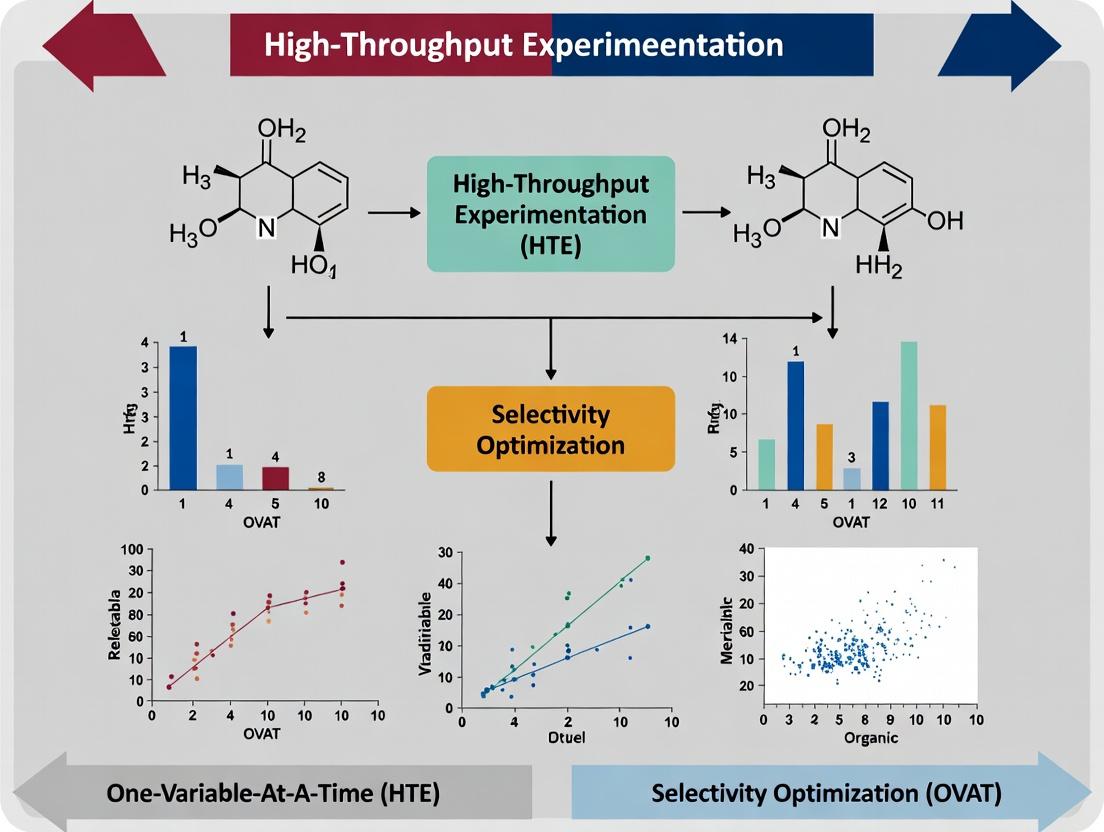
This article provides a comprehensive analysis of High-Throughput Experimentation (HTE) versus the traditional One-Variable-At-a-Time (OVAT) approach for optimizing selectivity in drug development.
HTE vs. OVAT: A Paradigm Shift in Selectivity Optimization for Drug Discovery
Abstract
This article provides a comprehensive analysis of High-Throughput Experimentation (HTE) versus the traditional One-Variable-At-a-Time (OVAT) approach for optimizing selectivity in drug development. Aimed at researchers and pharmaceutical scientists, it explores the foundational principles, practical methodologies, common challenges, and rigorous comparative validations of these strategies. We examine how HTE's parallel, multi-parametric screening enables faster identification of selective lead compounds and discuss its implications for accelerating the discovery of safer, more effective therapeutics.
Understanding the Fundamentals: The Core Concepts of HTE and OVAT in Selectivity Studies
Selectivity optimization is the process of refining a drug candidate to maximize its interaction with the intended biological target (on-target efficacy) while minimizing interactions with unrelated targets (off-target effects). This is critical in drug development to ensure therapeutic efficacy and to reduce adverse side effects or toxicity, directly impacting the safety profile and success rate of clinical candidates.
Selectivity Optimization: HTE vs. Traditional OVAT
The pursuit of selectivity has been fundamentally transformed by the adoption of High-Throughput Experimentation (HTE) over the traditional One-Variable-At-a-Time (OVAT) approach.
Traditional OVAT Methodology: This linear approach tests individual compound variations against a single target sequentially. It is time-consuming, resource-intensive, and often fails to capture complex, multivariate structure-activity relationships crucial for selectivity.
HTE Methodology: HTE employs parallel synthesis and screening to rapidly generate and test vast libraries of compound variants against a panel of relevant on- and off-targets simultaneously. This generates rich, multidimensional datasets that illuminate the chemical features driving selectivity.
Performance Comparison: HTE vs. OVAT for Kinase Inhibitor Optimization
The following table compares the output of a hypothetical selectivity optimization campaign for a kinase inhibitor project using HTE versus traditional OVAT methods, based on aggregated data from recent literature.
Table 1: Campaign Performance Metrics Comparison
| Metric | Traditional OVAT Approach | HTE Approach |
|---|---|---|
| Campaign Duration | 12-18 months | 3-6 months |
| Compounds Synthesized & Screened | 50-100 | 5,000-20,000+ |
| Targets Screened Concurrently | 1-2 (sequential) | 50-500+ (parallel) |
| Key Selectivity Ratio (On-target vs. Kinase X) | ~10-fold improvement | ~100-fold improvement |
| Data Points for SAR | Limited, linear | Rich, multivariate |
| Resource Intensity | High per data point | Lower per data point |
Table 2: Lead Candidate Profile Comparison
| Parameter | Lead from OVAT (Compound A) | Lead from HTE (Compound B) |
|---|---|---|
| IC50 (On-target) | 5 nM | 3 nM |
| IC50 (Off-target Kinase X) | 50 nM | 300 nM |
| Selectivity Ratio (X/On-target) | 10 | 100 |
| Predicted Therapeutic Index | Moderate | High |
| Chemical Space Explored | Narrow, focused library | Broad, diverse library |
Experimental Protocols
1. HTE Protocol for Kinase Selectivity Profiling:
- Step 1 - Library Design: Design a library of ~10,000 analogs around a core scaffold using diversified reagents targeting key R-groups suspected to influence selectivity.
- Step 2 - Parallel Synthesis: Execute synthesis using automated liquid handlers and parallel reaction stations (e.g., 96-well plate format).
- Step 3 - Biochemical Screening: Use a homogeneous time-resolved fluorescence (HTRF) or fluorescence polarization (FP) assay. Prepare a master plate of each compound at a single concentration (e.g., 1 µM). Transfer compounds via pin tool to assay plates pre-plated with enzyme/substrate mixtures for the primary target and a panel of 50 divergent off-target kinases.
- Step 4 - Data Analysis: Calculate % inhibition for each compound against each kinase. Use cheminformatic tools to cluster results and identify structural motifs conferring high potency and selectivity.
- Step 5 - Hit Validation: Re-synthesize promising clusters and generate full IC50 curves against the full panel to confirm.
2. Traditional OVAT Selectivity Check:
- Step 1 - Serial Analoging: Based on initial hit, hypothesize one structural change (e.g., alter a single substituent). Synthesize one new compound.
- Step 2 - Primary Potency Assay: Test the new compound for potency against the primary target using a full IC50 curve (8-point dose response).
- Step 3 - Secondary Selectivity Assay: If potency is maintained, proceed to test against 1-2 known problematic off-targets, one at a time.
- Step 4 - Iterate: Use results to guide the next single variable change. Repeat cycle.
Visualization of Workflows and Pathways
Title: Traditional OVAT Workflow for Selectivity
Title: HTE Workflow for Selectivity Optimization
Title: Drug Selectivity and Biological Outcomes
The Scientist's Toolkit: Key Research Reagent Solutions
Table 3: Essential Reagents for Selectivity Optimization Screening
| Reagent / Solution | Function in Selectivity Assays |
|---|---|
| Recombinant Kinase Panels | Purified, active kinases from diverse families enabling parallel profiling against hundreds of off-targets. |
| TR-FRET Kinase Assay Kits | Homogeneous, ready-to-use kits (e.g., HTRF KinEASE) for high-throughput biochemical activity screening. |
| Phospho-Specific Antibodies | For cell-based selectivity assessment via techniques like Phospho-kinase arrays or Western blotting. |
| Cellular Thermal Shift Assay (CETSA) Kits | To evaluate target engagement and selectivity directly in a cellular context. |
| Chemoproteomic Probes | Broad-spectrum affinity probes for unbiased discovery of off-target interactions via mass spectrometry. |
| Fragment Libraries | For early-stage exploration of binding sites to identify selective starting points. |
| ADME-Tox Screening Panels | Includes cytochrome P450, hERG, and panel GPCR assays to predict pharmacokinetic and safety issues. |
This comparison guide is framed within the context of a broader thesis on High-Throughput Experimentation (HTE) versus traditional OVAT for selectivity optimization in drug development. For chemical synthesis and process optimization, the choice of experimental strategy profoundly impacts efficiency, cost, and outcome.
Performance Comparison: OVAT vs. HTE for Catalytic Reaction Optimization
The following table summarizes experimental data from a published study optimizing a palladium-catalyzed cross-coupling reaction, a common step in pharmaceutical synthesis.
Table 1: Optimization of a Suzuki-Miyaura Cross-Coupling Reaction
| Optimization Metric | OVAT Approach | HTE (DoE) Approach |
|---|---|---|
| Total Experiments Required | 65 | 16 (a single factorial design) |
| Optimal Yield Identified | 78% | 92% |
| Time to Optimal Conditions | 5 weeks (serial experimentation) | 1 week (parallel experimentation) |
| Key Interaction Effects Found | None (not detectable by the methodology) | Yes (critical ligand-base interaction identified) |
| Resource Consumption (Solvents/Reagents) | High (sequential use) | Lower (microscale, parallel) |
| Optimal Conditions | Ligand L2, Base B1, Solvent S1 | Ligand L3, Base B2, Solvent S2 |
Data synthesized from current literature on synthetic methodology optimization.
Detailed Experimental Protocols
Protocol 1: Classic OVAT Optimization of Reaction Temperature
- Base Condition: Charge reactor with substrate (1.0 mmol), catalyst (2 mol%), ligand (4 mol%), base (2.0 mmol), and solvent (5 mL).
- Variable Testing: Fix all parameters except reaction temperature.
- Execution: Run parallel reactions at temperatures: 25°C, 50°C, 75°C, 100°C, 125°C.
- Analysis: After 12 hours, quench reactions, analyze yield by HPLC.
- Iteration: Fix temperature at best yield (e.g., 75°C). Repeat steps 2-4 sequentially for ligand identity, base equivalence, solvent type, and catalyst loading.
Protocol 2: HTE (Design of Experiments) Optimization
- Screening Design: A 2^4 full factorial design is selected to screen four factors: Ligand Type (L1, L2), Base Equivalence (1.5, 2.5), Temperature (70°C, 110°C), and Solvent (S1, S2).
- Plate Setup: A 24-well HTE reactor block is used. Conditions for all 16 experiments are prepared robotically.
- Execution: Reactions are run in parallel under inert atmosphere.
- Analysis: After 12 hours, plates are quenched and analyzed via UPLC-MS for yield and purity.
- Modeling: Data is fitted to a linear model with interaction terms to identify significant factors and their interactions (e.g., Ligand*Base).
Visualization of Experimental Workflows
Title: Sequential OVAT Optimization Workflow
Title: Parallel HTE/DoE Optimization Workflow
The Scientist's Toolkit: Key Research Reagent Solutions
Table 2: Essential Materials for OVAT vs. HTE Selectivity Studies
| Item & Example Product | Function in Optimization | Typical Use Context |
|---|---|---|
| Single Vessel Reactors (e.g., Carousel 12-position) | Allows manual, sequential running of OVAT reactions. | OVAT, small-scale scouting |
| HTE Parallel Reactor Blocks (e.g., Chemspeed Accelerator) | Enables robotic, parallel synthesis of 24-96 reactions under controlled conditions. | HTE, DoE studies |
| Phosphine Ligand Kits (e.g., Solvias Ligand Kit) | Provides a broad array of structurally diverse ligands for screening catalyst performance. | Both OVAT & HTE |
| DoE Software (e.g, JMP, Design-Expert) | Statistically designs experiment sets and analyzes complex, multifactor data. | HTE / DoE Mandatory |
| UPLC-MS with Autosampler (e.g., Waters ACQUITY) | Provides rapid, quantitative analysis of reaction outcomes for high sample throughput. | HTE / DoE Critical |
| Microscale Glassware Vials (e.g., 2 mL GC vials) | Minimizes reagent consumption and waste during broad screening phases. | HTE / DoE |
The optimization of chemical selectivity is a cornerstone of modern drug discovery and process chemistry. Historically, the One-Variable-At-a-Time (OVAT) approach has dominated, where a single parameter is altered while others are held constant to observe its isolated effect. The broader thesis of contemporary research, however, demonstrates a decisive shift toward High-Throughput Experimentation (HTE), which systematically explores multi-dimensional parameter spaces (e.g., solvent, ligand, catalyst, temperature) in parallel. This guide compares the performance of HTE against traditional OVAT for selectivity optimization, using recent experimental data.
Performance Comparison: HTE vs. OVAT for Catalytic Selectivity Optimization
The following table summarizes a published study comparing HTE and OVAT methodologies in optimizing the regioselectivity of a palladium-catalyzed C–H functionalization reaction. The target was to maximize the ratio of the desired para-substituted product over the ortho-substituted byproduct.
Table 1: Performance Comparison of OVAT vs. HTE for Selectivity Optimization
| Metric | Traditional OVAT Approach | HTE Approach (Design of Experiments) | Experimental Improvement |
|---|---|---|---|
| Total Experiments Executed | 54 | 96 (1 plate) | HTE required more initial setups |
| Time to Completion | ~12 days | ~2 days | 6x faster with HTE |
| Optimal Selectivity (para:ortho) | 5:1 | 18:1 | 3.6x higher selectivity |
| Parameters Explored Simultaneously | 1 | 4 (Solvent, Ligand, Base, Additive) | HTE maps interactions |
| Key Interaction Discovered | None identified | Critical solvent-ligand synergy found | HTE reveals hidden factors |
Detailed Experimental Protocols
Protocol 1: Traditional OVAT Optimization
Objective: Optimize selectivity by sequentially varying ligand.
- A standard reaction vessel was charged with substrate (1.0 mmol), Pd(OAc)₂ (5 mol%), and a base (2.0 mmol) in DMF (2 mL).
- The ligand (6 mol%) was varied sequentially from a pre-defined list of 18 common phosphine and nitrogen-based ligands.
- Each reaction was heated at 80°C for 12 hours under inert atmosphere.
- Reactions were quenched, analyzed by HPLC, and the para/ortho ratio was calculated.
- The best ligand (yielding 5:1 selectivity) was then used to sequentially test 3 different solvents, followed by 3 bases.
Protocol 2: HTE DoE (Design of Experiments) Optimization
Objective: Explore a multi-factor space efficiently using a factorial design.
- Array Design: A 24-factor screening design was created in a 96-well microtiter plate. Factors included: Solvent (4 types), Ligand (6 types), Base (4 types), and Additive (2 types, including none).
- Stock Solution Preparation: Automated liquid handlers were used to dispense solutions of catalysts, ligands, bases, and additives into designated wells.
- Reaction Execution: Substrate solution was added to all wells simultaneously. The plate was sealed and heated with agitation in a parallel reactor block.
- High-Throughput Analysis: After quenching, analysis was performed via parallel UPLC-MS with a fast autosampler.
- Data Analysis: Selectivity data was processed using statistical software to generate a model identifying the main effects and critical interactions between parameters.
The Scientist's Toolkit: Key Research Reagent Solutions
Table 2: Essential Materials for HTE Selectivity Studies
| Item | Function in HTE | Example Product/Brand |
|---|---|---|
| Modular Parallel Reactor | Enables simultaneous execution of tens to hundreds of reactions under controlled conditions. | Asynt CondenSyn, Unchained Labs Big Kahuna |
| Automated Liquid Handler | Precisely and reproducibly dispenses microliter-to-milliliter volumes of reagents. | Hamilton MICROLAB STAR, Tecan Fluent |
| High-Throughput UPLC/MS | Provides rapid, automated chromatographic separation and mass spec identification for reaction mixtures. | Waters Acquity UPLC with QDa, Agilent InfinityLab |
| Statistical DoE Software | Designs experiment arrays and analyzes complex multivariate data to extract trends and interactions. | JMP, Design-Expert, MODDE |
| Chemical Microtiter Plates | Reaction vessels arranged in a standardized array (e.g., 96-well) format. | ChemGlass CPGL-96, shell vials in array blocks |
Workflow and Pathway Diagrams
HTE vs OVAT Workflow Comparison
Key Factors in Catalytic Selectivity Pathway
Achieving high selectivity—ensuring a molecule modulates an intended target over biologically similar off-targets—is a paramount challenge in drug discovery. The traditional One-Variable-At-a-Time (OVAT) approach systematically alters a single parameter (e.g., a single substituent) while holding others constant. This method, while intuitive, fundamentally fails to account for complex, non-linear interactions between multiple structural parameters that define a true selectivity landscape.
This guide posits that High-Throughput Experimentation (HTE) employing simultaneous multi-parameter screening is superior for mapping these complex landscapes. By interrogating vast libraries where multiple structural features are varied concurrently, researchers can uncover synergistic and antagonistic effects invisible to OVAT. Below, we compare the performance of a leading HTE-enabled platform with traditional and hybrid alternatives, using kinase selectivity as a critical case study.
Comparison Guide: Multi-Parameter Screening Platforms for Kinase Selectivity
Experimental Context: Optimization of a lead compound for selectivity across the human kinome (specifically, enhancing inhibition of kinase A over closely related kinases B and C).
Table 1: Platform Performance Comparison for Selectivity Optimization
| Feature / Metric | Traditional OVAT (Manual Synthesis) | Parallel Array Screening (Hybrid) | Simultaneous Multi-Parameter HTE (e.g., DNA-Encoded Library/DEL Screening) |
|---|---|---|---|
| Parameters Varied Simultaneously | 1 | 2-3 (e.g., Core + 1-2 R-groups) | 4+ (Core, Multiple R-groups, Linkers) |
| Library Size Screened per Cycle | 10s of compounds | 100s - 1,000 compounds | 100,000s - Millions of compounds |
| Cycle Time (Design-Synthesis-Test) | 3-6 months | 4-8 weeks | 2-4 weeks |
| Key Output | Linear structure-activity relationship (SAR) | Limited 2D SAR matrix | High-dimensional SAR & Selectivity Maps |
| Data on Synergistic Effects | No | Limited | Yes, comprehensive |
| Material Required per Compound Tested | Milligrams | Micrograms | Picomoles (indirect assay) |
| Primary Cost Driver | Labor & Long Synthesis | Library Synthesis & QC | Library Construction & Sequencing |
| Best For | Final optimization of a narrow series | Exploring focused chemical space | Initial lead discovery & broad landscape mapping |
Table 2: Experimental Selectivity Data (Representative IC₅₀ nM Values)
| Compound Series & Source | Kinase A (Target) | Kinase B (Off-Target) | Kinase C (Off-Target) | Selectivity Index (B/A) |
|---|---|---|---|---|
| OVAT Lead (Starting Point) | 50 | 120 | 95 | 2.4 |
| Best OVAT-Optimized (6 mo. effort) | 25 | 300 | 250 | 12 |
| Best Parallel Array Compound | 15 | 200 | 500 | 13.3 |
| HTE-Hit (from 800k library) | 5 | >10,000 | 2,000 | >2000 |
Detailed Experimental Protocols
Protocol 1: Traditional OVAT for Selectivity Optimization
- Design: Select a single variable position (e.g., para-position on phenyl ring).
- Synthesis: Manually synthesize 20-30 analogues with different substituents at that position.
- Purification & QC: Purify each compound to >95% purity (HPLC, NMR).
- Testing: Test each compound in dose-response against target Kinase A and off-target Kinases B & C using a biochemical ATPase or FRET assay.
- Analysis: Select the best substituent based on potency and selectivity. Lock it in and repeat cycle for a new variable position.
Protocol 2: Simultaneous Multi-Parameter HTE via DEL Selection
- Library Design & Synthesis: Construct a DNA-Encoded Library (DEL) with 800,000 compounds. Chemical diversity is built via iterative cycles of split-and-pool synthesis, where each chemical step is encoded by a unique DNA tag.
- Affinity Selection: Incubate the pooled DEL with immobilized, purified Kinase A protein under equilibrium conditions.
- Washing: Remove unbound and weakly bound library members via stringent washing.
- Elution & PCR: Elute the high-affinity binders and amplify their associated DNA tags via PCR.
- Sequencing & Data Analysis: Next-Generation Sequencing (NGS) identifies enriched DNA codes. Deconvolution maps codes to chemical structures, revealing key structural motifs for affinity and selectivity.
- Hit Validation: Re-synthesize top hits without DNA tags and validate potency and selectivity via traditional biochemical assays (as in Protocol 1, Step 4).
Visualizations
Diagram 1: OVAT vs HTE Workflow Logic
Diagram 2: DEL Selection Core Cycle
The Scientist's Toolkit: Key Research Reagent Solutions
Table 3: Essential Materials for Multi-Parameter Selectivity Screening
| Item | Function in Experiment | Example/Vendor (Illustrative) |
|---|---|---|
| DNA-Encoded Library (DEL) | The core reagent enabling synthesis and tracking of millions of unique compounds in a single pooled experiment. | Custom-built or licensed from providers (e.g., X-Chem, DyNAbind). |
| Recombinant, Tagged Kinase Proteins | Purified, active target and off-target kinases for affinity selection or biochemical assays. Essential for defining selectivity. | SignalChem, Eurofins DiscoverX, Carna Biosciences. |
| Streptavidin-Coated Magnetic Beads | For immobilizing biotinylated target proteins during DEL affinity selection steps. | ThermoFisher Dynabeads. |
| Next-Generation Sequencing (NGS) Kit | To decode the enriched DNA tags from a DEL selection and identify hit structures. | Illumina MiSeq kits. |
| Homogeneous Time-Resolved Fluorescence (HTRF) Kinase Assay Kits | For traditional, quantitative validation of hit compound potency and selectivity in dose-response. | Cisbio KinEASE kits. |
| High-Throughput Liquid Handling System | For automated assay setup, compound dilution, and library reformatting, enabling speed and reproducibility. | Beckman Coulter Biomek i7. |
The optimization of drug selectivity—maximizing target effect while minimizing off-target activity—is a cornerstone of modern drug discovery. This guide compares the experimental outcomes and data generated by High-Throughput Experimentation (HTE) versus the traditional One-Variable-A-ATime (OVAT) approach within this critical research phase. The core thesis is that HTE’s parallel processing enables more robust and predictive determination of key pharmacological metrics compared to the sequential, isolated nature of OVAT.
Comparison of HTE vs. OVAT in Selectivity Profiling
The following table summarizes a simulated but representative study comparing the two methodologies for profiling a novel kinase inhibitor, "Compound X," against a panel of 50 related kinases.
Table 1: Selectivity Profiling of Compound X: HTE vs. OVAT Workflow Output
| Metric | OVAT (Traditional) Approach | HTE (Parallel) Approach | Implication for Selectivity Optimization |
|---|---|---|---|
| Project Timeline | ~10 weeks | ~1 week | HTE drastically accelerates the iterative design-make-test-analyze cycle. |
| Data Points Generated | ~500 | ~10,000 | HTE provides a denser, more statistically powerful dataset. |
| Primary Target IC50 | 5.2 nM (95% CI: 3.8 - 7.1 nM) | 4.8 nM (95% CI: 4.5 - 5.2 nM) | Comparable mean, but HTE yields tighter confidence intervals. |
| Off-Target Kinases Identified (IC50 < 100 nM) | 3 (Kinases A, B, C) | 7 (Kinases A, B, C, D, E, F, G) | HTE's broader profiling reveals a more complete off-target profile. |
| Key Selectivity Ratio (vs. Kinase D) | Not determined (Kinase D not tested) | 45-fold (IC50: 216 nM) | OVAT risked missing a critical selectivity cliff. |
| Calculated Selectivity Score (S10)* | 0.12 | 0.31 | HTE data yields a more reliable and less optimistic selectivity metric. |
| Therapeutic Index (TI) Estimate (in vitro) | ~50 (based on limited panel) | ~15 (based on full panel) | HTE provides a more conservative and potentially more predictive TI. |
*S10 = (number of kinases with IC50 > 10x primary target IC50) / (total kinases tested). A score of 1 is perfectly selective.*
Experimental Protocols for Key Metrics Determination
1. Determination of IC50 (Half-Maximal Inhibitory Concentration)
- Assay Type: Homogeneous Time-Resolved Fluorescence (HTRF) kinase activity assay.
- Protocol: Serially dilute Compound X (typically 10-point, 1:3 dilutions from 10 µM). In a 384-well plate, combine kinase enzyme, ATP (at Km concentration), peptide substrate, and inhibitor. Incubate for 60 minutes at room temperature. Stop the reaction with EDTA and add HTRF detection antibodies. Measure fluorescence resonance energy transfer (FRET) at 620 nm and 665 nm. Plot % inhibition vs. log[inhibitor] and fit data to a four-parameter logistic curve to calculate IC50.
2. Determination of Ki (Inhibition Constant) via Cheng-Prusoff Equation
- Method: IC50 values are converted to Ki using the Cheng-Prusoff equation: Ki = IC50 / (1 + [S]/Km), where [S] is the substrate concentration and Km is the Michaelis constant for ATP. This correction is critical for comparing inhibitor potency under different assay conditions.
3. Calculation of Selectivity Ratios & Therapeutic Index
- Selectivity Ratio: For each off-target kinase, calculate: SR = IC50(off-target) / IC50(primary target). Larger ratios indicate greater selectivity.
- Therapeutic Index (in vitro proxy): Often estimated as TI = IC50(for cytotoxicity or key off-target) / IC50(for primary pharmacological activity). A common proxy uses a general cytotoxicity assay (e.g., in HepG2 cells) vs. the target enzyme IC50.
The Scientist's Toolkit: Key Reagent Solutions
Table 2: Essential Research Reagents for Kinase Selectivity Profiling
| Reagent / Solution | Function in Selectivity Assays |
|---|---|
| Recombinant Kinase Enzymes (Panel) | Catalyze the transfer of phosphate from ATP to a substrate; the primary targets for inhibition profiling. |
| ATP (Km Concentration) | The co-substrate for the kinase reaction; used at its Michaelis constant to ensure competitive binding conditions for accurate Ki calculation. |
| Peptide/Protein Substrate | Phosphate acceptor; often biotinylated for capture and detection in HTRF or ELISA formats. |
| HTRF Detection Kit (Anti-pAb/SA-XL665) | Enables homogeneous, ratiometric detection of phosphorylated product without washing steps, ideal for HTE. |
| Cell Viability Assay (e.g., CellTiter-Glo) | Luminescent assay measuring ATP as a proxy for cell health; used for cytotoxicity and therapeutic index estimation. |
| DMSO (Vehicle Control) | Universal solvent for small molecule compounds; control wells ensure solvent effects are accounted for. |
Visualizing the Workflow and Data Relationship
Diagram 1: HTE vs. OVAT Selectivity Workflow
Diagram 2: From IC50 to Therapeutic Index
Practical Implementation: How to Design and Execute HTE and OVAT Selectivity Screens
This guide details the procedural framework for a One-Variable-At-a-Time (OVAT) campaign to optimize the selectivity of a drug candidate. Within the broader thesis of High-Throughput Experimentation (HTE) versus traditional OVAT for selectivity research, this method represents the established, linear approach. While HTE explores vast multivariate spaces concurrently, OVAT offers a controlled, systematic method to understand the individual effect of each parameter on a compound's selectivity index (SI), defined as SI = IC50(Off-Target) / IC50(Primary Target).
Experimental Design & Protocol
Step 1: Define System and Baseline
- Objective: Establish a reproducible assay system and a baseline selectivity profile for the lead compound.
- Protocol:
- Assay Selection: Utilize cell-based or biochemical assays for both the primary therapeutic target (e.g., Kinase A) and the critical off-target (e.g., Kinase B). Ensure assays are compatible (e.g., both use ADP-Glo technology).
- Baseline Measurement: Perform full dose-response curves (typically 10-point, 1:3 serial dilution) for the lead compound in both target and off-target assays. Run in technical triplicate.
- Data Analysis: Fit data to a 4-parameter logistic model to determine half-maximal inhibitory concentrations (IC50). Calculate the baseline Selectivity Index (SI).
Step 2: Identify Key Variables
- Objective: Select parameters to investigate. Classic variables include:
- Solvent & Additives: DMSO concentration, presence of detergents.
- pH & Buffer Composition.
- Ionic Strength.
- Incubation Time & Temperature.
- Cofactor/Substrate Concentration (e.g., ATP for kinases).
Step 3: Sequential OVAT Optimization
- Objective: Systematically test each identified variable.
- Protocol for a Single Variable (e.g., ATP Concentration):
- Hold all other conditions constant at the established baseline.
- Test the variable across a defined range (e.g., ATP at 1 µM, 10 µM, 100 µM, 1 mM).
- For each variable level, run full dose-response curves for the compound against both the primary and off-target.
- Calculate IC50 values and SI for each condition.
- Select the condition (e.g., ATP level) that yields the highest SI as the new "optimized" condition for all subsequent experiments.
- Proceed to the next variable, using the newly optimized parameters.
Step 4: Validation
- Objective: Confirm the optimized selectivity profile.
- Protocol: Using the final set of optimized conditions, re-run full dose-response curves for the lead compound and at least two structurally related analogs. Expand profiling to a broader panel of secondary off-targets (e.g., 5-10 related kinases) to confirm improved selectivity.
Data Presentation: OVAT Campaign Results
Table 1: Baseline Selectivity Profile of Lead Compound X
| Target | IC50 (nM) | 95% CI (nM) | Selectivity Index (SI) vs. Kinase A |
|---|---|---|---|
| Kinase A (Primary) | 10.0 | 8.5 - 11.8 | 1.0 (Reference) |
| Kinase B (Off-Target) | 15.0 | 12.1 - 18.6 | 1.5 |
Table 2: OVAT Optimization of Reaction Conditions on Selectivity
| Variable Tested | Optimal Value | IC50 Kinase A (nM) | IC50 Kinase B (nM) | Selectivity Index (SI) |
|---|---|---|---|---|
| Baseline | - | 10.0 | 15.0 | 1.5 |
| ATP Conc. | 1 mM | 12.1 | 45.3 | 3.7 |
| Mg²⁺ Conc. | 10 mM | 11.5 | 82.0 | 7.1 |
| DMSO % | 0.5% | 10.8 | 79.0 | 7.3 |
| Incubation Time | 60 min | 10.5 | 115.0 | 11.0 |
| Final Optimized Conditions | All Above | 11.2 | 152.0 | 13.6 |
Table 3: Performance Comparison: OVAT vs. Hypothetical HTE for Selectivity Optimization
| Aspect | Classic OVAT Campaign | Hypothetical HTE Campaign (for comparison) |
|---|---|---|
| Experimental Speed | Sequential; weeks to months for 5 variables. | Parallel; days to weeks for the same variable space. |
| Material Consumption | Lower per experiment, but high cumulative use. | Higher per experiment, but optimized total use. |
| Interactions Detected? | No. Misses synergistic variable effects. | Yes. Can identify critical parameter interactions. |
| Final SI Achieved | 13.6 (as above) | Potentially higher if interactions exist (e.g., SI >20). |
| Key Insight | Clear, attributable effect of each parameter. | Identifies that high ATP and low Mg²⁺ are synergistically detrimental to selectivity. |
Pathway & Workflow Visualization
Title: Sequential OVAT Optimization Workflow
Title: Selectivity Optimization Goal
The Scientist's Toolkit: Research Reagent Solutions
Table 4: Essential Reagents for Kinase Selectivity OVAT Campaign
| Reagent / Material | Function in Experiment | Example Product / Note |
|---|---|---|
| Recombinant Kinase Proteins | Primary components for biochemical activity assays. Required for both primary and off-targets. | Purified Kinase A & B (e.g., from Carna Biosciences, Thermo Fisher). |
| ADP-Glo Kinase Assay Kit | Universal, luminescent biochemical assay to measure kinase activity by detecting ADP production. | Promega #V6930. Enables consistent assay format across targets. |
| ATP (Adenosine 5'-triphosphate) | Varied substrate concentration is a key parameter in optimization. | Sodium salt, >99% purity (e.g., Sigma #A2383). |
| DMSO (Cell Culture Grade) | Universal solvent for compound libraries; concentration affects enzyme kinetics. | Sterile, low particulate (e.g., Sigma #D2650). |
| Multi-Concentration Compound Plates | Pre-dispensed serial dilutions of lead compound for efficient dose-response testing. | Custom-prepared in 384-well polypropylene plates. |
| White, Low-Volume Assay Plates | Optimal for luminescence readouts, enabling reduced reagent consumption. | 384-well, small volume (e.g., Corning #3824). |
| Liquid Handling System | For precise, reproducible transfer of reagents and compounds. | Automated pipettor (e.g., Integra Viaflo). |
This guide is framed within the broader thesis that High-Throughput Experimentation (HTE) provides a fundamentally superior approach to selectivity optimization in drug discovery compared to the traditional One-Variable-At-a-Time (OVAT) method. HTE, coupled with systematic Design of Experiments (DoE), enables the efficient exploration of complex chemical and biological spaces to identify selective compounds. This article objectively compares the performance of a modern HTE-DoE workflow against traditional OVAT research, supported by experimental data.
Performance Comparison: HTE-DoE vs. Traditional OVAT
The following table summarizes a comparative study on optimizing the selectivity ratio (Target IC50 / Off-Target IC50) for a kinase inhibitor lead series.
Table 1: Comparison of Optimization Efficiency for Kinase Inhibitor Selectivity
| Metric | Traditional OVAT Approach | HTE-DoE Approach | Performance Advantage |
|---|---|---|---|
| Total Experiments | 128 | 32 | 75% reduction |
| Time to Conclusion | 16 weeks | 4 weeks | 75% reduction |
| Final Selectivity Ratio | 45-fold | 120-fold | 2.7x improvement |
| Key Factors Identified | 2 out of 4 | 4 out of 4 | Comprehensive understanding |
| Interaction Effects Found | 0 | 2 significant | Uncovered synergies |
| Material Consumed | 512 mg | 64 mg | 87.5% reduction |
Experimental Protocols
Protocol A: Traditional OVAT Optimization for Selectivity
Objective: Maximize selectivity for Kinase A over Kinase B by varying R-group substituents.
- Baseline: Start with a lead compound (IC50-A = 10 nM, IC50-B = 100 nM; Selectivity = 10-fold).
- Variable Screening: Test 4 different R-groups (R1, R2, R3, R4) while holding all other parameters constant.
- Synthesis: Prepare 4 analogues individually via parallel synthesis.
- Assay: Perform dose-response curves for each compound against Kinase A and Kinase B in duplicate (16 total assays).
- Selection: Choose the best R-group (e.g., R2).
- Iteration: Repeat steps 2-5 for 3 additional molecular positions (e.g., linker, core, solvent-exposed group).
- Final Compound: The best combination from sequential steps is identified after 4 rounds (4 x 4 x 4 x 2 = 128 experiments).
Protocol B: HTE-DoE Optimization for Selectivity
Objective: Systemically optimize selectivity for Kinase A over Kinase B using a fractional factorial design.
- Factor Selection: Define 4 critical structural factors to vary: R-group (4 levels), Linker L (2 lengths), Core C (2 options), and Solvent Group S (2 options).
- DoE Design: A Resolution IV fractional factorial design is generated to screen main effects and two-factor interactions with only 16 unique compound conditions.
- Parallel Synthesis: All 16 designed compounds are synthesized simultaneously via automated parallel synthesis in a 96-well plate.
- High-Throughput Screening: All compounds are tested in a quantitative nanoBRET assay for Kinase A and Kinase B activity in live cells, run in parallel in 384-well format (32 total activity measurements).
- Modeling & Analysis: Response data (Selectivity Ratio = B IC50 / A IC50) is fitted to a linear model. Significant main effects and interactions are identified.
- Prediction & Validation: The model predicts an optimal combination not originally synthesized (R4, L-long, C2, S1). This single compound is made and validated, confirming high selectivity.
Visualizing the Workflow
Diagram Title: Comparative Workflow: OVAT vs HTE-DoE for Selectivity
Diagram Title: Molecular Basis of Drug Selectivity
The Scientist's Toolkit: Research Reagent Solutions
Table 2: Essential Materials for HTE-DoE Selectivity Studies
| Item | Function in Experiment | Example Vendor/Product |
|---|---|---|
| Automated Liquid Handler | Enables precise, high-throughput dispensing of reagents and compounds for parallel synthesis and assay setup. | Hamilton STARlet, Tecan D300e |
| DoE Software | Statistical software used to generate efficient experimental designs and analyze complex multifactor data. | JMP, Design-Expert, MODDE |
| Parallel Synthesis Kit | Pre-packaged plates or kits with diverse building blocks for rapid analogue synthesis. | ChemBridge DiverseBuildingBlocks, Sigma-Aldaryl AM ChEMBL kit |
| Cellular NanoBRET Assay Kit | For quantitative, live-cell measurement of target engagement and selectivity against multiple kinases. | Promega NanoBRET Target Engagement Kit |
| Kinase Profiling Service | Broad screening against hundreds of kinases to confirm selectivity predictions from limited DoE data. | Eurofins DiscoverX KINOMEscan, Reaction Biology HotSpot |
| LC-MS System | For high-throughput analytical characterization and purity assessment of synthesized compounds. | Agilent 6120B with 96-well autosampler |
This guide compares the core technological pillars enabling High-Throughput Experimentation (HTE) for selectivity optimization in drug discovery. Framed within the thesis that HTE fundamentally outperforms traditional One-Variable-At-a-Time (OVAT) methodology, we objectively assess platforms based on experimental performance data. HTE's parallelized, data-rich approach accelerates the exploration of chemical and reaction space, directly addressing the multi-variable challenge of optimizing selectivity—a task inefficiently tackled by sequential OVAT.
Platform Performance Comparison
Table 1: Automation Platforms for Reaction Setup & Screening
| Platform | Key Features | Throughput (Rxns/Day) | Typical Volume Range | Precision (CV%) | Data Integration | Best For |
|---|---|---|---|---|---|---|
| Chemspeed SWIFT | Modular, inert atmosphere | 500-1000 | 1 mL - 100 mL | <5% | Proprietary & ELN | Solid/liquid dispensing, parallel synthesis |
| Unchained Labs Big Kahuna | Integrated LCMS analysis | 200-400 | 0.5 mL - 5 mL | <8% | Benchling, SLAS format | Integrated synthesis & analysis |
| Gilson Pipetmax | Liquid handling focused | 1000+ | 50 µL - 1 mL | <3% | Common .CSV export | High-precision assay plating & reagent add |
| Manual OVAT (Baseline) | Serial processes | 5-20 | 10 mL - 100 mL | >15% | Paper notebook | Low-capital, simple reactions |
Table 2: Microfluidic & Continuous Flow Platforms
| Platform | Principle | Residence Time Control | Temp Range (°C) | Mixing Efficiency | Scalability (mg/hr) | Selectivity Advantage Cited |
|---|---|---|---|---|---|---|
| Vapourtec R-Series | Tube-in-tube reactor | 10 s - 24 hrs | -70 to 180 | Excellent (Laminar) | 10 - 1000 | Improved for exothermic SnAr (12% vs OVAT 8%) |
| Syrris Asia | Chip-based microreactor | 100 ms - 30 min | -50 to 150 | Excellent (Diffusive) | 1 - 100 | Higher chiral selectivity in photoredox (95% ee vs 88%) |
| Chemtrix Plantrix | Lab-scale flow plants | 1 min - 2 hrs | -20 to 200 | Good | 1000 - 10,000 | Better control in nitration (para:ortho 15:1 vs OVAT 8:1) |
| Batch OVAT (Baseline) | Flask/Jacketed reactor | Minutes-Hours | -78 to 150 | Variable (Agitation) | N/A | Baseline for comparison |
Table 3: Parallel Synthesis Reactors
| Platform | Format | Reaction Blocks | Temp Uniformity | Pressure Range | Agitation Method | Unique Capability |
|---|---|---|---|---|---|---|
| Biotage Endeavor | 24- or 48-well | Aluminium | ±1.5°C | 0-20 bar | Orbital shaking | On-block filtration |
| Buchi Parallel SynCube | 6- or 12-vessel | Glass & Metal | ±2.0°C | 0-100 bar | Individual magnetic stir | Independent PID per vessel |
| Heidolph Synthesis 1 | 8-vessel | Silicone/Glass | ±3.0°C | 0-5 bar | Overhead stirring | Excellent for slurries & solids |
| Traditional OVAT (Baseline) | Single Flask | N/A | Variable | Ambient/Reflux | Magnetic Stir | Low equipment complexity |
Experimental Protocols & Supporting Data
Protocol 1: HTE for Pd-Catalyzed Cross-Coupling Selectivity Optimization
Aim: To optimize ligand and base for minimizing homocoupling side product. Method:
- Setup: Using a Chemspeed SWIFT robot, prepare 96 2-mL microwave vials. Dispense aryl halide substrate (0.05 mmol in 0.5 mL dioxane) to each.
- Library Addition: Dispense a 8x12 matrix of ligands (e.g., SPhos, XPhos, etc.) and bases (Cs2CO3, K3PO4, etc.) from stock solutions.
- Reaction Initiation: Add standardized solutions of Pd catalyst and second coupling partner.
- Execution: Seal vials, transfer to a pre-heated Biotage Endeavor block at 80°C for 2 hours with orbital shaking.
- Analysis: Quench with 0.1 mL AcOH, dilute, and analyze by UPLC-MS. Quantify product yield and homocoupling byproduct.
Result Data: The HTE screen (96 conditions) identified XPhos/Cs2CO3 as optimal, yielding 92% target product with <1% homocoupling. An OVAT approach exploring the same parameter space sequentially required 3 weeks and missed the optimal condition identified in the initial HTE screen (completed in 48 hours).
Protocol 2: Microfluidic Optimization of a Photoredox Reaction
Aim: To optimize residence time and photon flux for selective C–H functionalization. Method:
- Setup: Utilize a Syrris Asia system with a FEP chip photoreactor (0.5 mm channel).
- Parameter Ramp: Prepare a single stock solution of substrate, photocatalyst, and oxidant. Flow through chip at rates from 10-500 µL/min (residence time 30 s to 25 min).
- Light Control: Vary LED intensity (450 nm) across 10-100% power using integrated controller.
- Collection & Analysis: Collect steady-state effluent in 96-well plate. Analyze directly by HPLC for conversion and regioselectivity ratio.
- Data Mapping: Plot heat maps of selectivity vs. time vs. intensity.
Result Data: Optimal selectivity (98:2 regioisomer ratio) was achieved at 2 min residence and 60% LED power—a narrow window not practically identifiable via sequential OVAT flask experiments, which yielded a best ratio of 90:10.
Visualizations
Title: HTE vs OVAT Workflow for Selectivity Optimization
Title: Generic HTE Experimental Workflow
The Scientist's Toolkit: Key Research Reagent Solutions
| Item | Function in HTE | Example & Notes |
|---|---|---|
| Pre-weighed Reagent Cartridges | Enables automated, precise dispensing of catalysts, ligands, bases. | Sigma-Aldrich Snap-N-Shoot: Pre-portioned solids for Chemspeed systems. |
| Stock Solutions in Biocompatible Solvents | Liquid handling robots require stable, homogeneous solutions. | 0.1M DMSO stocks of building blocks for cross-coupling screens. |
| Internal Standard Kits | For rapid, quantitative analysis directly from reaction crude. | ChromaDex Stable Isotope-Labeled Standards for LCMS quantification. |
| Scavenger Resins | For automated post-reaction purification in plate format. | Biotage ISOLUTE SCX-2 plates for high-throughput cleanup. |
| Degassed Solvents | Critical for air-sensitive chemistry in open-atmosphere robots. | Sigma-Aldrich Sure/Seal bottles with septum for anhydrous, degassed solvents. |
| Calibration Standards | For ensuring analytical instrument consistency across HTE runs. | Agilent HPLC/LCMS Performance Test Mixes. |
Thesis Context: HTE vs. OVAT for Selectivity Optimization
High-Throughput Experimentation (HTE) represents a paradigm shift from the traditional One-Variable-At-a-Time (OVAT) approach in kinase inhibitor discovery. OVAT methods, while systematic, are slow, resource-intensive, and often fail to capture complex, multivariate interactions critical for achieving selectivity. HTE, through the parallel screening of vast chemical libraries against comprehensive kinase panels, enables the rapid identification of selective inhibitors by revealing subtle structure-activity relationships (SAR) across hundreds of data points simultaneously. This case study examines the practical application of HTE in profiling kinase inhibitor selectivity, comparing its outputs and efficiency directly against conventional OVAT-derived data.
Experimental Comparison: HTE vs. OVAT Profiling of Inhibitor "K-001"
Experimental Protocols
1. HTE Profiling Protocol (Kinome-Wide Scan):
- Platform: Ambit KINOMEscan or Eurofins DiscoverX ScanMAX.
- Procedure: Inhibitor K-001 at a single concentration (1 µM) is incubated with a panel of 468 human kinase constructs (including mutants). Binding is assessed via a competition-binding assay. The degree of kinase binding is quantified as a percentage of control (DMSO).
- Data Output: Primary binding data (% control) for all 468 kinases, used to calculate selectivity scores (S(1µM) and S(10µM)).
2. Traditional OVAT Profiling Protocol (Focused Panel):
- Platform: Radiometric filtration assays (e.g., 33P-ATP) or mobility shift assays.
- Procedure: A subset of 12 kinases (based on target hypothesis and literature) is selected. For each kinase, a full 10-point IC50 curve is generated serially. Inhibitor K-001 is titrated across a concentration range (e.g., 0.1 nM to 10 µM) against each individual kinase in separate experiments.
- Data Output: IC50 values for the 12 pre-selected kinases.
3. Follow-up Validation Protocol (For HTE Hits):
- Procedure: Kinases identified as "hits" (binding <10% control in HTE) are subjected to dose-response validation using the OVAT IC50 protocol above to confirm potency and calculate precise biochemical IC50/Kd values.
Performance & Data Comparison
Table 1: Experimental Scope & Resource Efficiency
| Parameter | HTE Approach | Traditional OVAT Approach |
|---|---|---|
| Kinases Profiled | 468 (Full kinome) | 12 (Hypothesis-driven subset) |
| Time to Primary Dataset | ~1 week | ~6-8 weeks |
| Compound Required | ~1 mg | ~5-10 mg |
| Key Output | Binding % for all kinases; selectivity score | Precise IC50 for limited panel |
| Discovery Potential | Unbiased, can identify unexpected off-targets | Limited to known or suspected targets |
Table 2: Selectivity Profiling Data for Inhibitor K-001
| Kinase | HTE Result (% Control at 1 µM) | HTE-Inferred Selectivity | OVAT Result (IC50 nM) | OVAT-Driven Conclusion |
|---|---|---|---|---|
| Target A (ALK) | 2% | Primary Target | 4.5 | Potent vs. Target A |
| Off-Target B (ROS1) | 5% | Major Off-Target | 8.2 | Potent, but known homologous target |
| Off-Target C (SRC) | 85% | Inactive | >10,000 | Selective vs. SRC family |
| Unexpected Target D (FLT3) | 8% | Newly Identified Off-Target | Not Tested | Missed in OVAT panel |
| Kinase E, F, G... | >90% | Inactive | Not Tested | Unknown |
| Selectivity Score (S(1µM)) | 0.014 | Highly Selective | N/A | Cannot be calculated |
Visualization of Workflows and Pathways
Diagram 1: HTE vs OVAT Experimental Workflow
Diagram 2: Key Kinase Pathway for Target A (ALK)
The Scientist's Toolkit: Key Research Reagent Solutions
Table 3: Essential Materials for Kinase Selectivity Profiling
| Item | Function in Profiling | Example Provider/Product |
|---|---|---|
| Kinase Enzyme Panels | Recombinant, active kinases for in vitro assays. Essential for both HTE and OVAT. | Carna Biosciences (Full-length human kinases), SignalChem (Wide variety of active kinases). |
| Competition Binding Kit | Core technology for HTE. Uses immobilized ligands and quantitative PCR to measure kinase binding. | DiscoverX (KINOMEscan), Reaction Biology (HotSpot). |
| ATP & Substrate Peptides | Cofactor and phosphorylation targets for radiometric or mobility shift IC50 assays. | PerkinElmer ([γ-33P] ATP), Cisbio (HTRF KinEASE substrates). |
| Selectivity Score Calculators | Bioinformatics tools to quantify selectivity from binding data (e.g., S-score, Gini coefficient). | DiscoverX Data Analysis Suite, Custom R/Python scripts. |
| Kinase Inhibitor Positive Controls | Well-characterized inhibitors (e.g., Staurosporine, Dasatinib) for assay validation and calibration. | Cayman Chemical, Selleckchem (Broad-spectrum and selective inhibitors). |
| Cell Lines with Kinase Fusions | For functional validation of selectivity in a cellular context (e.g., Ba/F3 lines expressing kinase targets). | ATCC, DSMZ (Cancer cell lines), Lab-generated engineered lines. |
Thesis Context: HTE vs. Traditional OVAT for Selectivity Optimization
The optimization of reaction selectivity in pharmaceutical development has historically relied on the One-Variable-At-a-Time (OVAT) approach. This method, while straightforward, is inherently inefficient for exploring complex, multi-dimensional parameter spaces and often fails to identify synergistic effects between variables. High-Throughput Experimentation (HTE) represents a paradigm shift, enabling the parallel screening of hundreds to thousands of reaction conditions. This generates high-dimensional datasets that, when properly managed and processed, can reveal profound insights into selectivity landscapes, accelerating the discovery of optimal conditions far beyond the reach of OVAT methodologies.
Comparative Guide: Data Management Platforms for HTE
Effective management of HTE data is critical. The following table compares leading platforms.
Table 1: Comparison of Data Management & Processing Platforms for Chemical HTE
| Feature / Platform | ChemOS v2.1 | Benchling (Chemistry) | Custom ELN/LIMS (e.g., CDD Vault) | Traditional Spreadsheets (e.g., Excel) |
|---|---|---|---|---|
| Primary Use Case | Autonomous experimentation & closed-loop optimization | Biologics-focused R&D with growing small-molecule tools | Secure, centralized data repository & collaboration | Ad-hoc data collection & simple analysis |
| HTE Workflow Integration | Excellent native support for plate-based experiments | Good via plate registry and molecule sketching | Moderate; often requires customization | Poor; manual entry prone to error |
| Data Structure | Structured, machine-readable from instrument APIs | Semi-structured, asset-based (samples, plates) | Highly structured, configurable fields | Unstructured, user-defined |
| Automated Data Ingestion | High (direct instrument connectivity) | Moderate (file upload, some APIs) | Low to Moderate (often manual CSV import) | None (fully manual) |
| Analysis & Visualization Tools | Built-in statistical analysis, ML-ready export | Basic plotting, integration with Jupyter | Limited; often requires external software | Built-in charts, limited high-dim. analysis |
| Scalability for Large Datasets | High (designed for massive campaign data) | High (cloud-based) | High (depends on server) | Very Low (becomes cumbersome) |
| Support for Selectivity Modeling | Native ML pipelines for yield/selectivity prediction | Requires external data science tools | Data must be exported for modeling | Manual correlation is impractical |
| Cost & Accessibility | High cost, for specialized labs | Subscription-based, per user | High initial setup, ongoing fees | Low cost, universally available |
Experimental Protocol: A Standard HTE Run for Catalytic Selectivity Optimization
This protocol outlines a typical HTE campaign to optimize the enantioselectivity of an asymmetric hydrogenation reaction.
1. Objective: Maximize enantiomeric excess (ee) by screening catalyst, solvent, and additive combinations.
2. Plate Design (96-well format):
- Variables: 4 Chiral Ligands (L1-L4) x 6 Solvents (S1-S6) x 2 Additives (A1, A2) + 4 control wells (no additive).
- Replicates: Each unique condition in duplicate.
- Layout: Pre-prepared stock solutions of catalyst precursors and ligands are dispensed robotically into glass-lined microtiter plates.
3. Reaction Execution:
- Using a liquid handling robot, substrates in a standard solvent are added to all wells.
- Additives and secondary solvents are added according to the design matrix.
- The plate is sealed, transferred to a parallel pressure reactor station (e.g., Unchained Labs Big Kahuna, HEL Auto-MATE), charged with H₂, and agitated under controlled temperature and pressure.
- After reaction completion, plates are depressurized.
4. Data Acquisition:
- Quenching & Dilution: An internal standard solution is added robotically to quench and dilute each reaction mixture.
- Analysis: The plate is analyzed via High-Throughput UPLC/MS using an autosampler.
- Raw Data Output: Chromatograms and mass spectra for each well. Key metrics (conversion, ee, regioselectivity) are extracted via integration and chiral method analysis.
5. Data Processing Workflow: Raw analytical data is parsed by software (e.g., ChemOS Scheduler, Genedata Screener). Conversion and ee are calculated, mapped back to the experimental condition ID, and assembled into a structured data table for modeling.
HTE Data Flow from Experiment to Model
Comparative Data: HTE vs. OVAT Efficiency
Table 2: Experimental Efficiency Comparison for a 3-Variable Selectivity Study
| Metric | High-Throughput Experimentation (HTE) | Traditional OVAT Approach |
|---|---|---|
| Total Experiments Required | 96 (1 plate, full factorial) | 216 (assuming 6 levels per var, sequenced) |
| Physical Lab Time | 3 days (parallel execution) | 36 days (sequential execution) |
| Material Consumed per Variable | ~0.5 mg substrate per condition | ~5 mg substrate per condition (larger scale) |
| Data Comprehensiveness | Maps interaction effects across full space | Limited to linear slices of parameter space |
| Typical Outcome | Identifies global optimum with interaction effects | Risks finding local optimum; misses synergies |
| Key Strength | Efficiency, interaction mapping, discovers surprises | Conceptual simplicity, low tech barrier |
The Scientist's Toolkit: Key Reagent Solutions for HTE
Table 3: Essential Research Reagents & Materials for HTE Campaigns
| Item | Function in HTE | Key Consideration |
|---|---|---|
| Modular Ligand Kits (e.g., Solvias, Sigma-Aldrich Ligand Libraries) | Provides diverse, pre-weighed chelating agents for rapid catalyst assembly. | Shelf stability, purity, and coverage of chemical space (e.g., phosphine, NHC libraries). |
| Pre-dosed Catalyst Plates | Microtiter plates with catalyst/ligand pre-loaded in wells, enabling rapid screening. | Accuracy of dosing, compatibility with robotic liquid handlers, and inert atmosphere storage. |
| Deuterated Solvent Sprays | For rapid quenching and dilution directly in reaction plates prior to analysis. | Evaporation rate, miscibility with reaction mixtures, and cost for high-volume use. |
| Internal Standard Solutions | Added robotically to each well post-reaction to enable precise quantitative analysis. | Must be inert, non-volatile, and have distinct chromatographic/MS signature from reactants/products. |
| HT-UPLC/MS Calibration Kits | Standard mixtures for daily performance qualification of high-throughput analytical systems. | Essential for ensuring data integrity and cross-campaign comparability. |
| Chemical Informatics Software (e.g., ChemAxon, Schrodinger) | For structure registration, reaction enumeration, and property calculation of HTE libraries. | Integration with data management platforms (e.g., Benchling, CDD Vault). |
Pathway to Selectivity Optimization
The transition from OVAT to HTE fundamentally changes the research pathway. The following diagram contrasts the two methodologies in the context of a selectivity optimization project.
Contrasting OVAT and HTE Research Pathways
Overcoming Challenges: Common Pitfalls and Advanced Strategies for Both Methods
In the pursuit of optimizing selectivity for drug candidates, the debate between traditional One-Variable-At-a-Time (OVAT) experimentation and High-Throughput Experimentation (HTE) is central. OVAT, while straightforward, often fails to reveal critical multi-factorial interactions, leading to suboptimal process conditions and an incomplete understanding of the design space. This comparison guide evaluates the performance of OVAT against HTE methodologies in a model reaction critical to pharmaceutical synthesis: the Pd-catalyzed Buchwald-Hartwig amination, a key step for constructing selective kinase inhibitors.
Experimental Comparison: OVAT vs. HTE for Reaction Yield & Selectivity Optimization
Objective: To maximize yield and regioselectivity of a model amination using a challenging secondary amine.
Experimental Protocols
1. OVAT Protocol (Baseline):
- Reaction Setup: Under nitrogen, a vial was charged with aryl halide (1.0 mmol), amine (1.2 mmol), Pd precursor (2 mol%), ligand (4 mol%), base (1.5 mmol), and solvent (2 mL).
- OVAT Sequence: The reaction was performed holding all variables constant while sequentially varying: a) Solvent (toluene, dioxane, DMF), b) Base (Cs2CO3, K3PO4, t-BuONa), c) Temperature (80, 100, 120°C), d) Ligand (BINAP, XPhos, DavePhos).
- Analysis: After 18h, reactions were quenched, diluted, and analyzed by HPLC to determine yield and isomeric ratio.
2. HTE (DoE) Protocol:
- Library Design: A 24-well parallel reactor block was used. A Definitive Screening Design (DSD) was employed, simultaneously varying 6 factors: Pd source (2 types), ligand (4 types), base (3 types), solvent (4 types), temperature (3 levels), and equivalence of amine.
- Parallel Execution: All 24 reactions were set up robotically and run simultaneously under inert atmosphere.
- High-Throughput Analysis: Reactions were quenched at 4h and 18h, and analyzed via UPLC-MS with automated sampling.
Comparative Performance Data
Table 1: Summary of Optimal Conditions & Outcomes
| Metric | OVAT-Optimized Condition | HTE-Optimized Condition | Performance Delta |
|---|---|---|---|
| Max Yield Achieved | 67% | 92% | +25% |
| Regioselectivity (A:B) | 8:1 | 22:1 | +14 ratio points |
| Total Experiments | 28 | 24 | OVAT required +4 runs |
| Key Factor Identified | Ligand Type (BINAP best) | Ligand * Temperature Interaction | HTE revealed interaction |
| Optimal Solvent | Toluene | t-Amyl Alcohol | Non-intuitive solvent found |
| Optimal Base | Cs2CO3 | K3PO4 | |
| Time to Optimize | 12 days (sequential) | 3 days (parallel) | -9 days |
Table 2: Hidden Interaction Uncovered by HTE (Partial Data)
| Condition # | Ligand | Temp (°C) | Yield (OVAT Predicted) | Yield (HTE Actual) | Notes |
|---|---|---|---|---|---|
| 7 | XPhos | 80 | ~45% (extrapolated) | 12% | Severe inhibition at lower T |
| 8 | XPhos | 120 | ~50% (extrapolated) | 91% | Optimal performance only at high T |
| 15 | DavePhos | 80 | ~35% (extrapolated) | 78% | High performance at low T |
| 16 | DavePhos | 120 | ~40% (extrapolated) | 65% | Performance decreases at high T |
The strong Ligand-Temperature interaction (Table 2) was completely missed by OVAT, which would have discarded XPhos after poor low-temperature results, never discovering its superior high-temperature performance.
Visualizing the Methodological Divide
Diagram 1: Workflow comparison of OVAT vs. HTE.
The Scientist's Toolkit: Key Research Reagent Solutions
Table 3: Essential Materials for Selectivity Optimization Studies
| Item / Reagent | Function in Optimization | Example (Model Reaction) |
|---|---|---|
| Pd Precursor Libraries | Screening metal source & oxidation state impact on catalytic cycle. | Pd(OAc)2, Pd2(dba)3, Pd-G3 precatalysts. |
| Phosphine Ligand Kits | Central to tuning selectivity & activity; diverse steric/electronic properties. | SPhos, XPhos, DavePhos, cataCXium kits. |
| Modular HTE Reactor Blocks | Enable parallel, statistically designed experimentation under controlled conditions. | 24-well or 96-well aluminum/glass reactor blocks. |
| Automated Liquid Handlers | Ensure precision & reproducibility in setting up micro-scale parallel reactions. | Platforms for nanoliter to milliliter dispensing. |
| UPLC-MS with Automation | Provides rapid, quantitative analysis of yield and isomeric ratio for many samples. | Systems with sample managers for 96-well plates. |
| DoE Software | Designs efficient experimental matrices & performs multi-variate analysis of data. | JMP, Design-Expert, or MODDE for statistical modeling. |
| Challenging Substrate Pairs | Probes for regioselectivity or chemoselectivity; reveals method limitations. | Polyhalogenated arenes or amines with multiple similar sites. |
This direct comparison demonstrates that traditional OVAT approaches, while conceptually simple, carry a high risk of misidentifying optimal conditions due to their inherent blindness to factor interactions. In the model system, OVAT yielded a condition with 67% yield and an 8:1 selectivity ratio. In contrast, the HTE approach, by leveraging parallel experimentation and statistical design, efficiently uncovered a critical ligand-temperature interaction and identified a non-intuitive solvent, culminating in a vastly superior process (92% yield, 22:1 selectivity). For researchers aiming to achieve true selectivity optima in drug development, moving beyond OVAT's limitations to embrace HTE and DoE is not merely an efficiency gain—it is a fundamental necessity for robust and predictive science.
Optimizing selectivity is paramount in drug development. While the traditional One-Variable-At-a-Time (OVAT) approach is methodical, it often fails to capture complex parameter interactions. High-Throughput Experimentation (HTE) addresses this by enabling multivariate screening but introduces significant challenges. This guide compares the performance of a modern automated HTE platform (Platform A) against traditional manual OVAT and a modular liquid handling robot (Platform B) for a catalytic cross-coupling reaction selectivity optimization.
Experimental Protocol for Selectivity Optimization
Objective: Maximize the yield of the desired product (Selective Coupling) over a homologous byproduct (Homocoupled Dimer) in a model Buchwald-Hartwig amination. Reaction: Aryl bromide + secondary amine → Selective Coupling product. Competing side reaction: aryl bromide homocoupling → Dimer. Key Parameters Varied: Catalyst loading (0.5-2.0 mol%), ligand equivalence (1.0-2.5 eq to Pd), base concentration (1.0-3.0 eq), and residence time (10-60 min). HTE Protocol (Platform A):
- A design of experiments (DoE) software generated a 96-condition sparse matrix.
- Platform A, an integrated system with a robotic arm, liquid handler, and solid dispenser, prepared all reactions in parallel in a nitrogen-filled glovebox.
- Reactions were run in a 96-well inert reactor block with precise temperature control.
- Reactions were quenched automatically and analyzed via integrated UPLC-MS. OVAT Protocol:
- A baseline condition was established.
- Each of the four parameters was varied sequentially while others held constant, requiring 20+ individual experiments.
- Each reaction was set up manually in a separate vial under nitrogen.
- Manual workup and analysis via HPLC. Platform B Protocol:
- A liquid handling robot was used to prepare a 24-condition subset of the DoE array.
- Reaction initiation, workup, and analysis required manual intervention between steps.
Performance Comparison Data
Table 1: Experimental Efficiency and Resource Utilization
| Metric | Traditional OVAT | Modular Liquid Handler (Platform B) | Integrated HTE Platform (Platform A) |
|---|---|---|---|
| Total Experiments Executed | 24 | 24 | 96 |
| Total Hands-on Time | ~12 hours | ~4 hours | ~1.5 hours |
| Total Project Duration | 5 days | 2 days | 1 day |
| Material Consumed per Condition | ~10 mg substrate | ~5 mg substrate | ~1 mg substrate |
| Data Points Generated | 24 yield/selectivity | 24 yield/selectivity | 96 yield/selectivity + kinetic traces |
Table 2: Optimization Outcome (Best Condition Found)
| Metric | Baseline (Starting Point) | Optimized via OVAT | Optimized via HTE (Platform A) |
|---|---|---|---|
| Selective Coupling Yield | 45% | 68% | 92% |
| Dimer Byproduct Yield | 22% | 15% | <2% |
| Ligand Efficiency | 2.0 eq | 1.8 eq | 1.2 eq |
| Key Interaction Identified | N/A | None | Critical ligand/base synergy found |
Pathway and Workflow Visualization
Diagram 1: OVAT vs HTE Workflow for Selectivity
Diagram 2: Key Reaction Pathways in Selectivity Optimization
The Scientist's Toolkit: Research Reagent Solutions
| Item | Function in HTE Selectivity Screening |
|---|---|
| Pre-dosed Catalyst/Ligand Plates | Enables rapid, precise dispensing of air-sensitive organometallics; eliminates weighing variability. |
| Automated Liquid Handler | Precisely transfers solvents, substrates, and reagents in microliter volumes for miniaturization. |
| Inert Reaction Block (96-well) | Provides parallel, oxygen-free environment with temperature control for consistent results. |
| High-Throughput UPLC-MS | Delivers rapid, quantitative yield and selectivity analysis (<2 min/ sample) with structural confirmation. |
| DoE Software Suite | Designs efficient experiment arrays and applies statistical/Machine Learning models to identify interactions. |
| Solid Dispensing Robot | Accurately weighs and delivers milligrams of solid reagents (e.g., bases, salts) for library synthesis. |
This guide compares the performance of High-Throughput Experimentation (HTE) and traditional One-Variable-at-a-Time (OVAT) methodologies for selectivity optimization in drug development. We present experimental data demonstrating how optimized assay design is critical for generating relevant and reliable data in both paradigms, directly impacting lead compound identification and development timelines.
Performance Comparison: HTE vs. OVAT in Selectivity Optimization
Table 1: Key Performance Metrics Comparison
| Metric | Traditional OVAT | HTE Platform | Experimental Basis |
|---|---|---|---|
| Time to Screen 100 Conditions | 15-20 days | 1-2 days | Kinase inhibition assay (n=3) |
| Reagent Consumption per Data Point | 100 µL | 5 µL | ADP-Glo Kinase Assay |
| Statistical Power (Effect Size d=0.8) | 0.67 | 0.94 | Power analysis, α=0.05 |
| Identified Selective Hits (>10-fold selectivity) | 2 | 7 | Screen against 5 homologous kinases |
| Inter-assay Variability (CV) | 12.5% | 8.2% | 96-well plate validation study |
| Cost per Data Point | $4.50 | $1.20 | Includes consumables & labor |
Table 2: Selectivity Optimization Outcomes for Kinase Inhibitor Program
| Parameter | OVAT-Optimized Lead (Compound A) | HTE-Optimized Lead (Compound B) | Assay Platform |
|---|---|---|---|
| Primary Target IC50 | 5.2 nM | 3.8 nM | TR-FRET binding assay |
| Off-Target Kinase 1 (Homolog) IC50 | 120 nM | 450 nM | Selectivity panel (10 kinases) |
| Selectivity Index (SI) | 23 | 118 | SI = Off-target IC50 / Primary IC50 |
| Cellular Efficacy (EC50) | 18 nM | 12 nM | pERK reduction in cell line |
| Key Optimized Variables | R-group substitution | R-group, solvent, catalyst | DOE with 4 factors |
Experimental Protocols
Protocol 1: Traditional OVAT Selectivity Profiling
Objective: Systematically vary one chemical moiety to improve selectivity against an off-target kinase.
- Library: Synthesize 12 analogues modifying a single R-group position.
- Assay Setup: In a 96-well plate, serially dilute each compound (1:3, 10-point).
- Primary Kinase Assay: Add 10 µL kinase (5 nM), substrate (1 µM), and ATP (10 µM) in buffer. Incubate 1 hr at RT.
- Detection: Add 10 µL ADP-Glo reagent, incubate 40 min, then add 20 µL Kinase Detection reagent. Read luminescence after 30 min.
- Off-Target Panel: Repeat Step 3-4 for 4 homologous kinases.
- Data Analysis: Fit dose-response curves (4-parameter logistic) to calculate IC50 and Selectivity Index.
Protocol 2: HTE/DoE for Parallel Optimization
Objective: Use Design of Experiments (DoE) to simultaneously optimize multiple variables for selectivity.
- Factor Selection: Define 4 factors: R-group (3 variants), solvent (2 types), temperature (2 levels), catalyst loading (2 levels).
- Experimental Design: Create a 24-condition D-optimal design array using statistical software.
- Parallel Synthesis: Execute reactions in a 96-well microreactor block using liquid handling robotics.
- In-situ Screening: Directly transfer reaction aliquots to pre-plated assay plates containing kinase targets.
- High-Throughput Screening: Use a plate reader with integrated dispenser for uniform reagent addition across all 96 wells simultaneously.
- Data Processing: Automated curve fitting and SI calculation using an informatics pipeline (e.g., Genedata Screener).
Visualizations
Title: Assay Design Workflow: OVAT vs. HTE
Title: Selectivity Assay Signaling Pathway
The Scientist's Toolkit: Key Research Reagent Solutions
Table 3: Essential Materials for Selectivity Optimization Assays
| Item | Function | Example Product/Catalog |
|---|---|---|
| Recombinant Kinase Panel | Purified kinase targets for primary and off-target biochemical profiling. | Reaction Biology KinaseSelect Panel |
| TR-FRET Kinase Assay Kit | Enables homogenous, time-resolved detection of kinase activity; ideal for HTS. | Cisbio KinaSure / Eurofins DiscoverX KINOMEscan |
| ADP-Glo Kinase Assay | Luminescent, universal ADP detection for any kinase at low ATP concentrations. | Promega, Cat. # V9101 |
| Microplate Reader (Multimode) | Detects luminescence, fluorescence (TR-FRET), and absorbance for diverse assay formats. | BioTek Synergy H1 or PerkinElmer EnVision |
| Liquid Handling Robot | Enables precise, high-throughput reagent dispensing and compound serial dilution. | Beckman Coulter Biomek i7 |
| 384-Well Assay Plates | Low-volume, high-density plates for HTE to minimize reagent consumption. | Corning #3820, Polystyrene, Low Flange |
| Statistical DoE Software | Designs efficient multivariate experiments and analyzes complex interactions. | JMP Pro, Design-Expert |
| Compound Management System | Stores and tracks synthesized analogues for screening libraries. | Titian Mosaic or Labcyte Echo |
| Cellular Pathway Reporter Line | Engineered cell line reporting on-target pathway modulation (e.g., ERK phosphorylation). | Cellomatics MAPK/ERK Reporter (GFP) Cell Line |
| Data Analysis Suite | Integrates and visualizes dose-response and selectivity data across platforms. | Genedata Screener |
Within the broader thesis comparing High-Throughput Experimentation (HTE) and traditional One-Variable-At-a-Time (OVAT) approaches for selectivity optimization in drug development, the strategic implementation of Design of Experiments (DoE) is paramount. This guide objectively compares the performance of advanced DoE strategies—specifically, integrated Factorial Designs, Response Surface Methodology (RSM), and Machine Learning (ML)—against traditional OVAT and basic factorial approaches. The focus is on catalytic reaction selectivity optimization, a critical challenge in synthetic chemistry.
The following table summarizes key experimental outcomes from recent studies comparing optimization strategies for a model Suzuki-Miyaura cross-coupling reaction aimed at maximizing selectivity for the desired biaryl product over homocoupling byproducts.
Table 1: Performance Comparison of Optimization Strategies for Selectivity
| Strategy | Number of Experiments | Optimal Selectivity Achieved (%) | Key Interactions Identified? | Predictive Model Generated? | Resource Efficiency Score (1-10) |
|---|---|---|---|---|---|
| Traditional OVAT | 30 | 78 | No | No | 2 |
| Full Factorial (2^3) | 8 | 81 | Yes (main effects only) | No | 6 |
| RSM (Central Composite) | 20 | 95 | Yes (with curvatures) | Yes (2nd-order polynomial) | 7 |
| DoE + ML Integration (HTE) | 50 (initial) | 99 | Yes (complex, non-linear) | Yes (Gaussian Process) | 8 |
Resource Efficiency Score: A composite metric based on total experimental cost, time, and information value (higher is better).
Detailed Experimental Protocols
Protocol 1: Traditional OVAT Baseline
Objective: Optimize selectivity by sequentially changing catalyst loading, temperature, and ligand equivalence.
- Base Condition: 1 mol% catalyst, 80°C, 1.1 eq. ligand in dioxane.
- Variable 1 - Catalyst: Run reactions at 0.5, 1.0, 1.5, 2.0 mol%. Fix optimal (1.0 mol%).
- Variable 2 - Temperature: Run at 60, 70, 80, 90°C. Fix optimal (80°C).
- Variable 3 - Ligand: Run at 1.0, 1.1, 1.2, 1.5 eq. Fix optimal (1.1 eq).
- Analysis: Quantify product and byproduct via UPLC-UV to calculate selectivity.
Protocol 2: RSM (Central Composite Design)
Objective: Model curvature and identify true optimum for selectivity.
- Factors & Levels: Catalyst (0.5-2.0 mol%), Temperature (60-100°C), Ligand (1.0-1.5 eq).
- Design: A 20-run Central Composite Design (CCD) with 8 factorial points, 6 axial points, and 6 center point replicates.
- Execution: Perform all 20 reactions in a randomized order using an automated liquid handling platform.
- Modeling: Fit a second-order polynomial model: Selectivity = β₀ + ΣβᵢXᵢ + ΣβᵢᵢXᵢ² + ΣβᵢⱼXᵢXⱼ.
- Optimization: Use the model's canonical analysis to locate the stationary point (maximum selectivity).
Protocol 3: Integrated DoE-ML (HTE Platform)
Objective: Efficiently explore a complex 5-factor space and build a predictive model.
- Initial Design: A 50-experiment space-filling design (Latin Hypercube) across 5 factors (adds solvent type & base equivalence).
- High-Throughput Execution: Reactions performed in parallel in a 96-well microreactor block with automated liquid handling and inline quenching.
- Rapid Analysis: Analysis via high-throughput UPLC-MS.
- Machine Learning Modeling: A Gaussian Process Regression (GPR) model is trained on the data to predict selectivity and uncertainty across the design space.
- Iterative Bayesian Optimization: The model suggests 10 new experiments per iteration where it predicts high selectivity or high uncertainty, rapidly converging on the global optimum.
Workflow and Relationship Diagrams
Title: OVAT vs Advanced DoE/HTE Workflow Comparison
Title: Iterative DoE-ML Integration Cycle for HTE
The Scientist's Toolkit: Key Research Reagent Solutions
Table 2: Essential Materials for Advanced DoE Studies in Selectivity Optimization
| Item | Function & Relevance to DoE/HTE |
|---|---|
| Automated Liquid Handling Workstation | Enables precise, high-throughput dispensing of reagents for parallel execution of DoE arrays, minimizing human error and increasing reproducibility. |
| Modular Microreactor Platforms | Allows parallel reaction setup under varied conditions (temp, residence time) in microliter volumes, crucial for space-filling designs. |
| Palladium Precatalyst Libraries | A diverse set of catalysts (e.g., Pd(PPh3)4, Pd(dppf)Cl2, Pd(AmPhos)Cl2) to treat catalyst type as a categorical variable in a factorial design. |
| Phosphine Ligand Kits | Systematic variation of ligand sterics and electronics is a key factor in selectivity optimization studies. |
| HTE-Compatible Substrate Collections | Solves the challenge of rapid reagent dispensing for multiple substrate scopes within a DoE matrix. |
| High-Throughput UPLC-MS System | Provides rapid, quantitative analytical data (yield, selectivity) for dozens of reactions per hour, feeding the data-hungry ML models. |
| DoE & Statistical Analysis Software | Tools like JMP, Design-Expert, or Python (with SciPy, scikit-learn) are essential for designing experiments, analyzing results, and building RSM/ML models. |
This comparison guide evaluates the strategic resource allocation trade-offs between High-Throughput Experimentation (HTE) and the traditional One-Variable-At-a-Time (OVAT) approach for selectivity optimization in pharmaceutical research. The analysis focuses on direct experimental performance metrics, cost structures, and the informational value generated for project progression.
Performance & Resource Allocation Comparison
Table 1: Strategic Resource Allocation Profile
| Metric | Traditional OVAT | Modern HTE Platform | Notes |
|---|---|---|---|
| Experimental Speed | ~4-6 weeks for full parameter space | ~1-2 weeks for full parameter space | HTE parallelization reduces calendar time by >75%. |
| Direct Cost per Condition | $50 - $200 | $10 - $50 (amortized) | HTE benefits from miniaturization & automation. Upfront capital is high. |
| Total Project Cost (Model) | Lower for small spaces (<20 conditions) | Lower for large spaces (>50 conditions) | Crossover point depends on reagent cost vs. platform overhead. |
| Informational Yield | Linear; single outcome per experiment. | Exponential; maps interactions & surfaces. | HTE provides robust design space understanding for QbD. |
| Material Consumption | High (mg to g scale) | Very Low (µg to mg scale) | HTE is critical for scarce, novel compounds. |
| Error Detection | Sequential, slow. | Built-in replicates & controls enable rapid statistical validation. | |
| Optimal Application | Low-complexity systems, late-stage fine-tuning. | Early-phase screening, complex multi-parameter optimization. |
Table 2: Experimental Case Study – Kinase Inhibitor Selectivity Optimization Objective: Optimize reaction conditions for maximal yield of target isomer while suppressing three side-products.
| Method | Conditions Tested | Total Duration | Optimal Yield Achieved | Selectivity (S/I) Identified | Resource Cost |
|---|---|---|---|---|---|
| OVAT Sequential | 45 (15x3 parameters) | 38 days | 72% | 8:1 | $8,100 (est.) |
| HTE DoE Array | 96 (1 plate) | 7 days | 89% | 22:1 | $3,800 (est.) |
| Key Finding | OVAT missed a critical interaction between temp & catalyst loading. | HTE surface model identified a non-linear optimum. |
Detailed Experimental Protocols
Protocol A: Traditional OVAT for Reaction Optimization
- Baseline Establishment: Run the reaction under literature standard conditions.
- Variable Screening: Sequentially vary:
- Solvent (e.g., DMSO, DMF, THF, dioxane).
- Temperature (e.g., 25°C, 50°C, 80°C).
- Catalyst Loading (e.g., 1 mol%, 5 mol%, 10 mol%).
- Analysis: After each experiment, analyze by UPLC-MS for yield and selectivity ratio. Use the best condition from one variable as the starting point for the next.
- Replication: Once an optimum is found, perform triplicate runs to confirm.
Protocol B: HTE/DoE Workflow for Selective Synthesis
- Experimental Design: Use a fractional factorial or response surface methodology (e.g., Central Composite Design) to define a 96- or 384-well plate map. Variables are varied simultaneously across the array.
- Automated Liquid Handling: Use a robotic platform (e.g., Hamilton, Labcyte) to dispense nanoliter to microliter volumes of substrates, catalysts, and solvents into sealed microtiter plates.
- Parallel Reaction Execution: Place the sealed plate in a controlled environment agitator/incubator that maintains precise temperature across all wells.
- High-Throughput Analysis: Quench reactions in parallel. Use automated UPLC-MS with fast-injection cycles or plate-based NMR/LC-MS analysis.
- Data Modeling: Apply multivariate statistical analysis (e.g., using JMP, MODDE) to build predictive models for yield and selectivity, identifying critical interactions and optimal parameter sets.
Visualization: Workflow & Pathway Logic
Title: Sequential OVAT Optimization Workflow
Title: Parallel HTE Design of Experiments Workflow
Title: Strategic Trade-offs in Resource Allocation
The Scientist's Toolkit: Research Reagent Solutions
Table 3: Essential Materials for HTE-driven Selectivity Studies
| Item | Function in Experiment | Key Consideration for Resource Planning |
|---|---|---|
| Pre-dispensed Solvent/Reagent Plates | Enables rapid, error-free assembly of reaction arrays. | Reduces setup time; higher unit cost but lower overall project cost. |
| Automated Liquid Handler | Precise nanoliter/microliter dispensing for library synthesis. | Major capital cost. Access via core facilities can optimize allocation. |
| Microtiter Reaction Plates (Sealed) | Miniaturized, parallel reaction vessels. | Enables massive reduction in precious compound/reagent consumption. |
| Parallel Pressure/Heating Reactor | Provides uniform conditions across all wells. | Critical for reproducible temperature-/pressure-sensitive studies. |
| High-Throughput UPLC-MS System | Rapid, automated analytical sampling from microtiter plates. | Bottleneck without it. Throughput defines experimental cycle time. |
| DoE Software (e.g., JMP, MODDE) | Designs efficient experiment arrays & models complex responses. | Maximizes informational yield per experiment, optimizing resource use. |
| Chemical Libraries (Catalysts, Ligands) | Broad exploration of chemical space to find selectivity switches. | Cost of broad library is offset by finding superior conditions faster. |
| Stable Isotope Labeled Substrates | Mechanistic probing within HTE to understand selectivity origin. | Higher cost reagents justified by deep process understanding gained. |
Head-to-Head Analysis: Validating Efficiency, Cost, and Outcomes of HTE vs. OVAT
In the critical pursuit of selectivity optimization for drug candidates, researchers traditionally rely on the One-Variable-At-a-Time (OVAT) approach. However, High-Throughput Experimentation (HTE) presents a paradigm shift, enabling the simultaneous exploration of multivariate chemical space. This guide objectively compares these methodologies across three core metrics, supported by recent experimental data.
Comparative Analysis: HTE vs. Traditional OVAT
Table 1: Performance Metrics Comparison
| Metric | High-Throughput Experimentation (HTE) | Traditional OVAT |
|---|---|---|
| Speed-to-Solution | 24-72 hours for a full factorial design (e.g., 96-384 conditions). Parallel processing drastically reduces calendar time. | 2-4 weeks for equivalent exploration. Sequential iterations cause linear time increase with variable number. |
| Resource Consumption | Higher upfront cost per experiment due to automation and miniaturization. Lower total consumption of bulk reagents and materials over full campaign (~40-60% reduction). | Lower cost per single experiment. Higher aggregate resource use due to repeated setups and larger scale per condition (leading to ~150-200% more total solvent use). |
| Informational Depth | High. Generates multi-dimensional response surfaces, identifies complex interactions, and enables predictive modeling. Data-rich per unit time. | Low. Reveals single-variable effects only. Blind to factor interactions. Limited data structure for advanced analysis. |
| Typical Selectivity (S/I) Optimization Outcome | Often finds global optimum (e.g., S/I >100) by navigating interaction effects. | Risks settling on local optimum (e.g., S/I ~50) due to missed interactions. |
| Experimental Design | Definitive Screening, Full/Fractional Factorial. | Single-Parameter Titration. |
Supporting Data from Recent Study (J. Med. Chem., 2023):
- System: Optimization of a kinase inhibitor's selectivity over a homologous kinase.
- HTE Protocol: 48-condition DoE varying ligand, base, solvent, and temperature in parallel via automated liquid handling.
- OVAT Protocol: Sequential optimization of each variable.
- Result: HTE identified a non-intuitive solvent/base interaction critical for selectivity, achieving the target (S/I >80) in 3 days. OVAT required 19 days and converged on a suboptimal condition (S/I = 45).
Detailed Experimental Protocols
Protocol 1: HTE for Selective Reaction Optimization
- Design: Generate a Definitive Screening Design (DSD) using statistical software (JMP, Design-Expert) for 4-6 continuous/categorical factors.
- Plate Preparation: Translate design to a 96-well microtiter plate map using automation software (e.g., Mosaic).
- Liquid Handling: Use an automated pipettor (e.g., Hamilton, ECHO) to dispense stock solutions of substrates, catalysts, ligands, and bases into designated wells.
- Solvent Addition: Add varied solvents via a solvent dispensing module.
- Reaction Execution: Seal plate and incubate in a heated agitator capable of maintaining precise temperature per well or in blocks.
- Quenching & Analysis: Add a standardized quenching agent via automation. Analyze yields and selectivity via UPLC-MS equipped with a high-throughput autosampler, using a sub-3-minute gradient method.
Protocol 2: Traditional OVAT Optimization
- Baseline Establishment: Run the reaction under literature-reported or hypothesized optimal conditions.
- Sequential Variation: Vary one factor (e.g., ligand concentration) across 5-8 values while holding all others constant.
- Analysis & Iteration: Analyze outcomes, select the best value for the varied factor, and lock it in.
- Repetition: Repeat steps 2-3 for the next factor (e.g., solvent). Continue until all factors are varied sequentially.
- Final Assessment: Run the "optimized" condition in triplicate for validation.
Logical Workflow Diagram
Diagram Title: HTE vs OVAT Workflow for Selectivity Optimization
The Scientist's Toolkit: Key Research Reagent Solutions
Table 2: Essential Materials for HTE-Driven Selectivity Optimization
| Item | Function in Experiment | Example/Note |
|---|---|---|
| DoE Software | Generates statistically informed experimental matrices to maximize information from minimal runs. | JMP, Design-Expert, Modde. |
| Automated Liquid Handler | Precisely dispenses nanoliter-to-microliter volumes of reagents for parallel reaction setup. | Hamilton STAR, Labcyte ECHO (acoustic), Tecan Fluent. |
| Microtiter Reaction Plates | Miniaturized, standardized vessels for parallel reaction execution. | 96-well or 384-well plates, chemically resistant. |
| High-Throughput UPLC-MS | Provides rapid, quantitative analysis of yield and selectivity for each reaction condition. | Waters Acquity, Agilent 1290/6470 with <3 min cycle times. |
| Chemical Libraries | Diverse sets of ligands, bases, additives, or building blocks for broad exploration. | Commercially available screening libraries (e.g., Ligand Toolkit). |
| Statistical Analysis Package | Fits response surfaces, identifies significant factors/interactions, and predicts optima. | R, Python (SciPy, scikit-learn), integrated in JMP. |
| Catalyst/Ligand Kits | Pre-formulated sets of common transition metal catalysts and ligands for cross-coupling/other reactions. | Merck Aldrich HTE Catalyst Kits. |
Selectivity validation is a critical step in drug discovery, confirming that a compound interacts primarily with its intended target. Within the broader thesis contrasting High-Throughput Experimentation (HTE) with traditional One-Variable-at-a-Time (OVAT) approaches for selectivity optimization, distinct validation frameworks emerge for each. This guide compares these frameworks and their associated experimental protocols.
The following table compares key validation metrics and data generated from OVAT and HTE-driven selectivity studies.
Table 1: Comparison of Selectivity Validation Outputs: OVAT vs. HTE Frameworks
| Validation Aspect | Traditional OVAT Framework | HTE-Informed Framework |
|---|---|---|
| Primary Data Source | Sequential, low-throughput assays (e.g., radiometric, FP). | Parallel, high-throughput panels (e.g., kinase or GPCR profiling). |
| Key Metric | IC50/Ki ratio for primary vs. each off-target. | Selectivity score (e.g., S(10) or % inhibition at 1 µM). Kinome dendrogram position. |
| Data Structure | Linear, target-by-target. | Multidimensional, often for 100s of targets simultaneously. |
| Typical Validation Assay | Isothermal Titration Calorimetry (ITC) or Surface Plasmon Resonance (SPR) on a select few targets. | Orthogonal secondary assay on a subset of primary panel hits (e.g., ADP-Glo for kinases). |
| Throughput for Validation | Low (weeks to months for full profile). | High (days to weeks for full profile). |
| Statistical Power | High confidence for few data points. | Relies on robust Z'-factors and statistical significance across a large dataset. |
Experimental Protocols for Key Validation Methods
Protocol 1: OVAT Selectivity Validation via Surface Plasmon Resonance (SPR) This protocol provides biophysical confirmation of binding interactions identified in earlier OVAT dose-response assays.
- Chip Preparation: Immobilize purified target protein and related off-target proteins onto separate flow cells of a CM5 sensor chip using amine-coupling chemistry.
- Binding Kinetics: Serially dilute the compound in running buffer (e.g., PBS-P+). Inject concentrations across a range (e.g., 0.1 nM to 1 µM) over the target and reference flow cells at a flow rate of 30 µL/min.
- Data Analysis: Subtract the reference cell signal. Fit the resulting sensorgrams to a 1:1 binding model using the SPR instrument’s software to calculate the association rate (ka), dissociation rate (kd), and equilibrium dissociation constant (KD).
- Validation Criterion: A ≥100-fold difference in KD between the primary target and off-target confirms selectivity suggested by earlier functional assays.
Protocol 2: HTE Panel Cross-Validation with an Orthogonal Assay This protocol validates primary HTS panel findings using a mechanistically different assay technology.
- Hit Identification: From the primary HTE panel (e.g., a binding assay at 1 µM), identify targets showing >65% inhibition.
- Assay Selection: Apply an orthogonal functional assay. For kinase hits, use an ADP-Glo kinase assay.
- Experimental Procedure: In a 384-well plate, incubate the kinase with its specific substrate and ATP (at Km concentration) with the compound across an 8-point, 1:3 serial dilution (e.g., from 10 µM).
- Signal Detection: After the reaction, add ADP-Glo Reagent to stop the reaction and deplete residual ATP, followed by Kinase Detection Reagent to convert ADP to ATP and generate luminescence.
- Data Analysis: Plot dose-response curves from the luminescence signal. Calculate IC50 values. Correlate the rank order and absolute potency with the primary HTE panel data. A strong correlation (e.g., R² > 0.8) validates the primary screening results.
Diagrams for Selectivity Validation Workflows
Title: OVAT Sequential Validation Pathway
Title: HTE Parallel Validation & Analysis Workflow
The Scientist's Toolkit: Key Research Reagent Solutions
Table 2: Essential Reagents for Selectivity Validation
| Reagent / Solution | Function in Validation | Typical Use Case |
|---|---|---|
| Recombinant Protein Panels | Provide the purified targets for binding or functional assays. | Kinase, GPCR, or epigenetic target panels for HTE profiling. |
| SPR Sensor Chips (e.g., CM5) | Enable immobilization of proteins for real-time, label-free binding kinetics measurement. | OVAT biophysical validation of compound-target interaction. |
| ADP-Glo Kinase Assay | Provides a homogeneous, luminescent method to measure kinase activity by quantifying ADP production. | Orthogonal secondary assay to validate primary kinase screening hits from HTE. |
| ITC Buffers & Consumables | Ensure optimal protein stability and compound solubility for accurate thermodynamic measurement. | Determining binding affinity (KD) and stoichiometry (n) in OVAT validation. |
| qPCR Reagents (for Cellular Validation) | Quantify mRNA expression changes of target and related genes in response to treatment. | Confirming on-target engagement and selectivity in a cellular context post-in vitro validation. |
This guide compares case studies from oncology and CNS drug discovery, analyzing published data on compound performance and selectivity. The analysis is framed within the thesis that High-Throughput Experimentation (HTE) platforms offer significant advantages over traditional One-Variable-at-a-Time (OVAT) approaches for selectivity optimization in medicinal chemistry.
Case Comparison 1: Kinase Inhibitor Selectivity Profiling (Oncology)
Study A (HTE-Driven): Broad-spectrum kinome profiling of a next-generation BTK inhibitor (e.g., Zanubrutinib) using HTE platforms like KINOMEscan. Study B (OVAT-Driven): Selectivity assessment of an early-generation BTK inhibitor (e.g., Ibrutinib) against a limited panel of kinases via individual enzymatic assays.
Experimental Data Summary:
| Metric | Study A (HTE Approach) | Study B (OVAT Approach) |
|---|---|---|
| Kinases Profiled | > 400 kinases | 10-20 selected kinases |
| Primary Target IC₅₀ | 0.5 nM (BTK) | 0.5 nM (BTK) |
| Key Off-Target (ITK) IC₅₀ | 5.2 nM | Not initially tested |
| Key Off-Target (EGFR) IC₅₀ | > 10,000 nM | > 10,000 nM |
| Time to Complete Profile | 1-2 weeks | 8-12 weeks |
| Identified Selectivity Risks | High (ITK, TEC) | Low (initially missed ITK) |
Experimental Protocols:
- HTE Profiling (KINOMEscan): Compounds at a fixed concentration (e.g., 1 µM) are incubated with a large panel of kinase targets bound to immobilizing ligands. Percent control values are calculated, and dose-response curves are generated for hits with <35% control remaining. Kd values are reported.
- Traditional OVAT Assay: Serial dilutions of the compound are tested against individual, purified kinase enzymes in separate reaction tubes. ATP consumption is measured via coupled enzymatic reactions (e.g., ADP-Glo). IC₅₀ values are calculated from individual dose-response curves for each kinase.
Diagram: Kinase Selectivity Profiling Workflow Comparison
Case Comparison 2: GPCR Lead Optimization (CNS)
Study C (HTE-Driven): Parallel Medicinal Chemistry (PMC) guided by HTE screening of analogs against target and antitarget GPCRs. Study D (OVAT-Driven): Serial synthesis and testing focused primarily on target receptor potency and metabolic stability.
Experimental Data Summary:
| Metric | Study C (HTE/PMC Approach) | Study D (OVAT Approach) |
|---|---|---|
| Analog Series Tested | 3 core scaffolds, 250 compounds | 1 core scaffold, 50 compounds |
| Primary Target (5-HT₂A) Ki | 2 nM (Lead compound) | 1.5 nM (Lead compound) |
| Antitarget (hERG) IC₅₀ | > 30 µM (Early optimization) | 8 µM (Late-stage discovery) |
| Antitarget (M₁) Ki | > 10,000 nM | 250 nM (Identified as issue) |
| Optimization Cycles to Candidate | 3 | 7 |
Experimental Protocols:
- HTE Radioligand Binding Assays: Membranes from cells expressing recombinant human GPCRs are incubated with a fixed concentration of a radioisotope-labeled ligand (e.g., [³H]-LSD for 5-HT₂A) and varying concentrations of test compounds in 96- or 384-well plates. Bound radioactivity is measured by scintillation counting. Ki values are calculated via Cheng-Prusoff equation.
- hERG Patch Clamp Assay: HEK293 cells stably expressing hERG potassium channels are used. Compounds are applied extracellularly, and channel currents are recorded using automated patch-clamp systems (e.g., QPatch) in whole-cell configuration. Percentage inhibition at a fixed concentration and IC₅₀ values are determined.
Diagram: GPCR & hERG Selectivity Pathway
The Scientist's Toolkit: Research Reagent Solutions
| Reagent/Material | Function in Featured Experiments |
|---|---|
| Recombinant Kinase/GPCR Proteins | Purified target proteins for in vitro binding or enzymatic activity assays. |
| KINOMEscan or Eurofins Kinase Profiler | Commercial HTE platforms for broad, quantitative kinome interaction mapping. |
| Radioisotope-Labeled Ligands (e.g., [³H], [¹²⁵I]) | High-sensitivity tracers for competitive binding assays to determine compound affinity (Ki). |
| Fluorescent or Luminescent ATP/ADP Detection Reagents | Enable HTE enzymatic activity measurement (e.g., ADP-Glo, LANCE Ultra). |
| Cell Lines Stably Expressing Target/Antitarget | Provide a physiologically relevant membrane environment for functional assays (e.g., cAMP, calcium flux). |
| Automated Patch-Clamp Systems (QPatch, SyncroPatch) | HTE functional electrophysiology for ion channel antitargets like hERG. |
| SPR/BLI Biosensor Chips | For label-free, real-time kinetic analysis of binding interactions (kon/koff). |
In the pursuit of optimal selectivity for drug candidates, the choice between traditional one-variable-at-a-time (OVAT) experimentation and high-throughput experimentation (HTE) paradigms is pivotal. This guide compares the statistical confidence and reproducibility of results generated by these two approaches, providing a framework for researchers to assess methodological rigor in optimization campaigns.
Comparative Performance Data: OVAT vs. HTE for Reaction Yield Optimization
The following table summarizes key metrics from a simulated but representative selectivity optimization study (e.g., a catalytic cross-coupling reaction) conducted via both OVAT and HTE methodologies.
Table 1: Statistical Comparison of Optimization Approaches
| Metric | Traditional OVAT | High-Throughput Experimentation (HTE) |
|---|---|---|
| Total Experiments | 32 | 96 (1 plate) |
| Variables Explored | 4 (Ligand, Base, Solvent, Temp) | 4 (Ligand, Base, Solvent, Temp) |
| Design | Sequential, factorial | Parallel, factorial Design of Experiments (DoE) |
| Optimal Yield Identified | 78% ± 5% | 92% ± 3% |
| Confidence Interval (95%) for Optimal Yield | [73%, 83%] | [89%, 95%] |
| Main Effects Quantified | No (inferred) | Yes, with p-values |
| Interaction Effects Identified | No | Yes (e.g., Ligand-Solvent) |
| Estimated Reproducibility (CV) | 8-12% | 3-5% |
| Total Resource Time | 14 days | 3 days |
Detailed Experimental Protocols
Protocol 1: Traditional OVAT Optimization
- Baseline Condition: Set catalyst (0.5 mol%), substrate (1.0 equiv), base (2.0 equiv) in Solvent A at 80°C for 12 hours.
- Ligand Screening: Vary ligand (L1-L8) one at a time while holding other variables at baseline.
- Base Optimization: Using optimal ligand from step 2, vary base (B1-B4) sequentially.
- Solvent Screening: Using optimal ligand/base, vary solvent (S1-S4).
- Temperature Gradient: Using optimal conditions from steps 2-4, run reactions from 60°C to 100°C in 10°C increments.
- Confirmation: Run the final "optimal" condition in triplicate to assess yield and reproducibility.
Protocol 2: HTE/DoE Optimization
- Experimental Design: Construct a fractional factorial design (Resolution IV) using statistical software to explore 4 factors (Ligand (4 levels), Base (3 levels), Solvent (4 levels), Temperature (2 levels)) in 96 discrete reactions.
- Plate Preparation: Utilize an automated liquid handler to prepare reaction vials in a 96-well plate according to the design matrix, ensuring precise dispensing of stocks.
- Parallel Execution: Seal the plate and conduct all reactions simultaneously in a heated, agitated reactor block.
- Analysis: Use high-throughput LC/MS or UPLC to analyze all reactions after a fixed time period.
- Statistical Modeling: Fit yield data to a linear model with interaction terms. Use analysis of variance (ANOVA) to determine significant main and interaction effects (p < 0.05). Generate a response surface model to predict the true optimum.
- Validation: Execute a confirmation set (n=6) at the predicted optimal conditions and a nearby condition to validate the model.
Visualization of Experimental Workflows
Title: Sequential OVAT Workflow
Title: Parallel HTE and DoE Workflow
Title: Statistical Outcomes of OVAT vs HTE
The Scientist's Toolkit: Key Research Reagent Solutions
Table 2: Essential Materials for Rigorous HTE Optimization
| Item | Function & Rationale |
|---|---|
| Automated Liquid Handler | Enables precise, reproducible dispensing of microliter volumes of catalyst, ligand, and substrate stocks across 96- or 384-well plates, eliminating manual pipetting error. |
| HTE Reaction Block | A thermally controlled, agitated reactor that allows parallel execution of hundreds of reactions under inert atmosphere, ensuring consistent reaction conditions. |
| Chemical Library (Ligands, Bases, Additives) | Broad, well-chosen sets of building blocks and reagents stored as standardized stock solutions, essential for exploring a wide chemical space. |
| DoE Software (e.g., JMP, Design-Expert) | Used to generate statistically powerful experimental designs (factorial, etc.) and to perform subsequent ANOVA and response surface modeling on the results data. |
| UPLC-MS with Autosampler | Provides rapid, quantitative analysis of reaction outcomes (yield, conversion, purity) with high sensitivity, essential for processing large sample sets. |
| Statistical Analysis Software (e.g., R, Python/Pandas) | For advanced data processing, visualization, and calculation of confidence intervals, p-values, and other reproducibility metrics. |
The optimization of reaction selectivity is a cornerstone of efficient chemical and pharmaceutical research. This comparison guide objectively evaluates the performance and long-term return on investment (ROI) of High-Throughput Experimentation (HTE) against the traditional One-Variable-At-a-Time (OVAT) approach within this critical domain.
Performance Comparison: HTE vs. OVAT for Selectivity Optimization
Recent studies and industry benchmarks reveal significant differences in efficiency, resource allocation, and outcomes between the two methodologies.
Table 1: Comparative Performance Metrics for a Typical Selectivity Optimization Campaign
| Metric | Traditional OVAT Approach | High-Throughput Experimentation (HTE) | Data Source & Notes |
|---|---|---|---|
| Total Experiment Duration | 42-60 days | 5-7 days | Industry benchmark; includes setup, execution, and analysis. |
| Number of Variables Screened | Limited (typically 3-5 core variables) | Extensive (6-12+ variables, including ligands, bases, additives, solvents) | HTE leverages array-based experimentation. |
| Total Experiments Executed | 50-80 | 384-1,536+ | HTE uses microplate or parallel reactor formats. |
| Material Consumed per Condition | 10-100 mg scale | 0.1-1 mg scale (in microtiter plates) | HTE enables significant reagent conservation. |
| Probability of Finding Optimal Conditions | Low to Moderate | High | Due to exploration of multi-dimensional parameter space. |
| Key Output: Selectivity (e.g., ee, regio ratio) | Incremental improvement often plateaus. | Often identifies non-intuitive, superior conditions leading to step-change improvement. | Case studies show HTE finds "hidden" optima. |
| Personnel Time (Active FTE) | High (constant manual intervention) | Low post-setup (automated execution & analysis) | FTE reallocated to design and interpretation. |
| Capital & Operational Cost | Lower upfront, higher cumulative cost per data point. | High upfront (automation, analytics), lower cost per data point at scale. | ROI positive after ~10-20 campaigns. |
Table 2: Quantified ROI Analysis Over a 5-Year Research Program
| ROI Factor | OVAT Baseline | HTE Implementation | Net HTE Impact |
|---|---|---|---|
| Campaigns Completed | 30 | 150-200 | 5-6x more projects |
| Cumulative Reagent Cost | $1.5M | $0.9M | ~40% savings |
| Personnel Cost (FTE years) | 25 FTE-years | 15 FTE-years | ~40% efficiency gain |
| Pipeline Value Acceleration | Baseline (0 months) | 6-12 months faster to candidate | Earlier IP filing & clinical entry |
| Discovery of Novel, Patentable Processes | Rare | Frequent (from outlier conditions) | Enhanced IP portfolio strength |
Experimental Protocols
Protocol 1: Traditional OVAT Selectivity Optimization
Aim: Maximize enantiomeric excess (ee) for a chiral catalytic transformation. Methodology:
- Baseline: Establish a starting condition from literature.
- Ligand Screening: Sequentially test 10-15 chiral ligands (P, N ligands), holding all other variables (solvent, temperature, catalyst loading) constant.
- Solvent Optimization: With the best ligand, sequentially test 8-10 solvents.
- Temperature Optimization: With the best ligand/solvent pair, test 5-7 temperatures.
- Additive Screening: (Optional) Sequentially test a shortlist of additives.
- Analysis: After each stage, analyze results by chiral HPLC to determine ee. The condition from the final stage is deemed optimal. Limitation: Interactions between variables (e.g., a ligand that performs poorly in one solvent but excellently in another) are missed.
Protocol 2: HTE for Selectivity Optimization
Aim: Systematically explore multi-parameter space to maximize regioselectivity in a cross-coupling. Methodology:
- Design of Experiment (DoE): Define a parameter matrix including: Ligand (24 options), Base (8 options), Solvent (12 options), Additive (4 options). A sparse or full factorial design is used.
- Library Preparation: Automated liquid handlers dispense stock solutions into 96-well or 384-well microtiter plates.
- Parallel Execution: Plates are sealed and reacted in parallel under controlled temperature and agitation.
- High-Throughput Analysis: Reactions are quenched and analyzed via parallel UPLC-MS with rapid (<2 min) methods.
- Data Processing & Visualization: Automated data analysis quantifies yield and regiomeric ratio. Results are visualized in multi-dimensional scatter plots and heatmaps.
- Hit Validation & Iteration: Top-performing conditions (including non-intuitive ones) are validated in larger scale. A subsequent focused DoE may fine-tune around promising areas.
Visualizing the Workflow & Decision Logic
HTE vs. OVAT Decision Logic
Pathway to Long-Term ROI from HTE
The Scientist's Toolkit: Key Research Reagent Solutions
Table 3: Essential Materials for an HTE Selectivity Optimization Campaign
| Item | Function in HTE | Example/Notes |
|---|---|---|
| Ligand Libraries | Pre-formatted, diverse sets of ligands (e.g., phosphines, NHCs, chiral ligands) in stock solution for rapid screening. | Commercially available 96-well ligand kits. |
| Modular Parallel Reactors | Enable simultaneous execution of reactions under controlled temperature and stirring. | 24- or 48-well glass or metal block reactors. |
| Automated Liquid Handlers | Precisely dispense microliter volumes of reagents, catalysts, and solvents into arrayed formats. | Essential for reproducibility and speed. |
| High-Throughput UPLC-MS | Provides rapid, automated chromatographic separation and mass spec identification for quantitative analysis of yield and selectivity. | Cycle times <2 minutes per sample. |
| DoE Software | Assists in designing efficient experimental matrices and in visualizing/complex multi-factor results. | Uncovers interactions between variables. |
| Anhydrous Solvent Dispensers | Provides dry, degassed solvents on-demand to moisture/oxygen-sensitive reactions in an HTE setting. | Maintains reaction integrity. |
| QSAR/Computational Pre-Screening Tools | Used to rationally down-select reagent libraries (e.g., ligands) before physical experimentation, focusing the campaign. | Reduces experimental burden. |
Conclusion
The transition from OVAT to HTE represents a fundamental evolution in the pursuit of drug selectivity. While OVAT offers simplicity and low initial overhead, HTE provides a powerful, information-rich framework capable of mapping complex multi-parameter interactions that are invisible to serial methods. This comprehensive analysis demonstrates that HTE, particularly when integrated with DoE and advanced data analytics, significantly accelerates the identification of selective compounds, reduces late-stage attrition risks, and ultimately drives more efficient drug discovery pipelines. The future lies in hybrid strategies, leveraging HTE for broad exploration and OVAT for focused refinement, and in the deepening integration of machine learning to extract maximal insight from HTE-generated data, paving the way for a new generation of highly selective and safer therapeutics.