Mastering HTE in Scientific Research: A Complete Guide to High-Throughput Experimentation Workflows
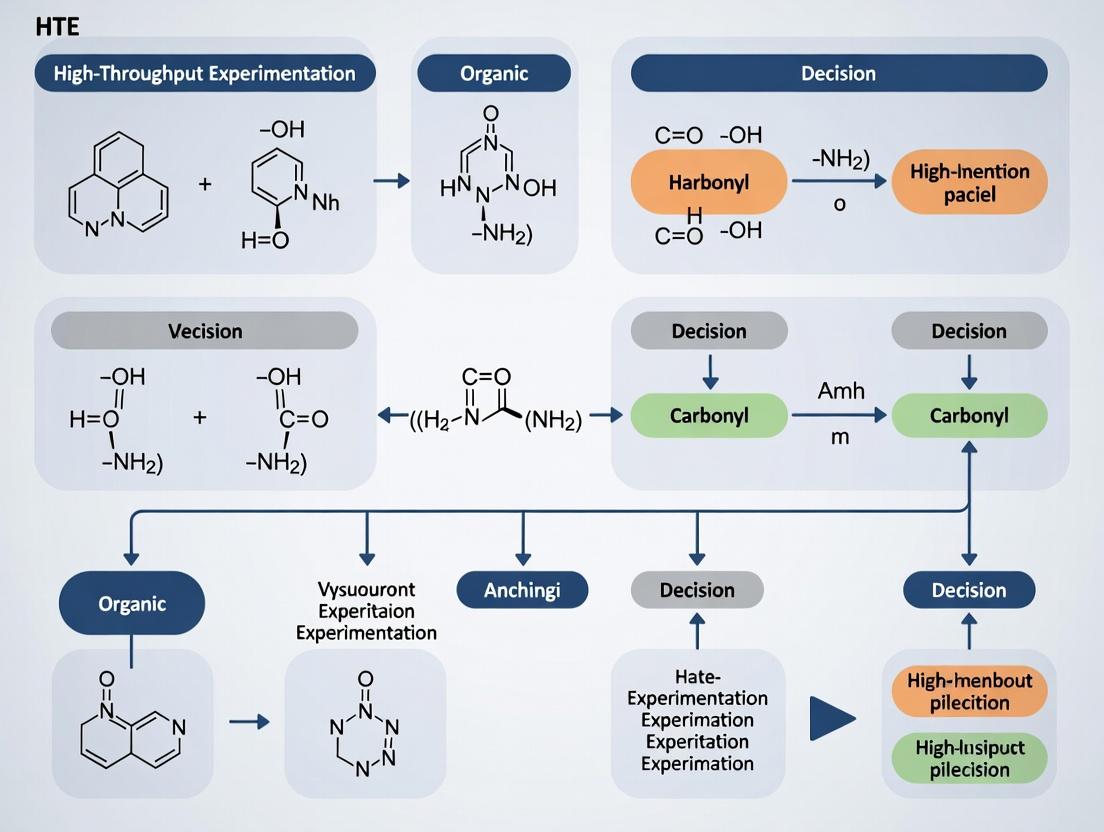
This comprehensive guide demystifies High-Throughput Experimentation (HTE) for researchers, scientists, and drug development professionals.
Mastering HTE in Scientific Research: A Complete Guide to High-Throughput Experimentation Workflows
Abstract
This comprehensive guide demystifies High-Throughput Experimentation (HTE) for researchers, scientists, and drug development professionals. We explore the foundational principles of HTE, detailing its transformative role in accelerating discovery. The article provides actionable methodologies for designing and implementing robust HTE workflows, addresses common troubleshooting and optimization challenges, and validates HTE's power through comparative analysis with traditional methods. This resource equips you to leverage HTE for faster, more efficient, and data-rich scientific innovation.
What is HTE? The Foundational Guide to High-Throughput Experimentation in Modern Science
High-Throughput Experimentation (HTE) has evolved from a paradigm of simple automation for established workflows into a fundamental engine for parallelized scientific discovery. This whitepaper, framed within a broader thesis on HTE as a core research methodology, details the technical architecture, experimental protocols, and tangible outputs of modern HTE platforms. We argue that true HTE integrates robotics, informatics, and data science to explore multivariate parameter spaces systematically, generating rich datasets that drive hypothesis generation rather than merely validation.
Traditional automation aims to accelerate a single, linear experimental pathway. Modern HTE redefines the process by executing vast arrays of experiments in parallel, where the experimental design space itself becomes the object of study. This is particularly transformative in fields like catalyst discovery, materials science, and early drug development, where the parameter space (e.g., ligands, substrates, conditions) is too large for iterative, one-variable-at-a-time approaches. The core output shifts from a singular result to a multidimensional map of chemical or biological reactivity.
Core Architecture of a Parallelized HTE Workflow
A discovery-focused HTE platform is built on three interdependent pillars:
- Parallelized Physical Execution: Utilizing liquid handling robots, modular reactor blocks (e.g., 96-, 384-well plates, microfluidic chips), and automated analytical samplers.
- Informatics & Experimental Design: Software for designing arrays, tracking samples with robust data lineage (Sample-ID), and managing metadata.
- Data Analytics & Visualization: Immediate processing of raw analytical data (e.g., HPLC, MS, fluorescence) into structured results for rapid iteration.
The following diagram illustrates this integrated workflow.
Diagram Title: HTE Parallelized Discovery Workflow Architecture
Key Experimental Protocols in Drug Discovery HTE
This section details two representative protocols demonstrating HTE's power in parallelized discovery.
Protocol: HTE Screen for Kinase Inhibitor Potency & Selectivity
Objective: To simultaneously profile the half-maximal inhibitory concentration (IC₅₀) of 150 novel compounds against a panel of 10 functionally related kinases.
Methodology:
- Plate Design: Prepare a 384-well assay plate via acoustic dispensing (e.g., Echo 550). Columns 1-24: compound dilution series (8 concentrations, n=3). Columns 23-24: control wells (DMSO only, reference inhibitor).
- Reagent Dispensing: Using a multidrop combi, add kinase enzyme in buffer to all wells.
- Pre-incubation: Incubate plate for 30 min at RT.
- Reaction Initiation: Dispense ATP and fluorescently-labeled peptide substrate (FRET-based).
- Kinetic Readout: Monitor fluorescence transfer in real-time for 60 min using a plate reader (e.g., CLARIOstar).
- Data Processing: Curve fitting for each well to determine IC₅₀ using activity relative to controls.
Key Data Output Table:
Protocol: HTE of Pd-Catalyzed Cross-Coupling Reaction Space
Objective: Discover optimal ligand/base/solvent combinations for coupling a novel aryl chloride with a heterocyclic boronic acid.
Methodology:
- DoE Setup: A full factorial array is designed exploring: 4 Ligands (PPh₃, SPhos, XPhos, tBuXPhos) x 3 Bases (K₂CO₃, Cs₂CO₃, K₃PO₄) x 4 Solvents (Toluene, Dioxane, DMF, THF) + 2 control conditions. Total: 50 reactions per plate.
- Automated Setup: In a glovebox, a liquid handler dispenses stock solutions of Pd precursor, ligands, and bases into a 96-well reactor block. Solvent is added.
- Reaction Execution: The block is sealed, transferred to a parallelized heating station, and stirred at 80°C for 18 hours.
- Quenching & Analysis: The block is cooled, an internal standard solution is added via robot, and samples are filtered. Analysis is performed via UPLC-MS with an autosampler.
- Yield Determination: Yields are calculated by integration relative to the internal standard, confirmed by MS.
Key Data Output Table:
The Scientist's Toolkit: Key Research Reagent Solutions
Signaling Pathway Analysis via HTE: A Practical Visualization
A common HTE application is screening for modulators of a pathway like the MAPK/ERK cascade. The following diagram maps a simplified pathway and typical HTE readout points.
Diagram Title: MAPK/ERK Pathway with HTE Modulation and Readout Points
Defining HTE as parallelized discovery reframes it from a support tool to a central scientific strategy. By systematically interrogating complex variable spaces, HTE generates comprehensive datasets that reveal trends, outliers, and structure-activity relationships invisible to serial experimentation. The integration of robust experimental protocols, specialized reagent toolkits, and informatics-driven analysis, as detailed herein, is essential to realizing this transformative potential, accelerating the journey from hypothesis to breakthrough across scientific disciplines.
This whitepaper details the evolution of High-Throughput Experimentation (HTE), framed within a broader thesis on the modern HTE workflow for accelerating scientific discovery. The transition from early combinatorial methods to today's integrated, AI-driven platforms represents a paradigm shift in how researchers approach molecular design, reaction optimization, and materials science. The core thesis posits that the integration of automation, data-centric experimentation, and machine learning has created a closed-loop, hypothesis-generating research engine, fundamentally altering the pace and nature of innovation in drug development and chemical research.
Historical Progression: Key Quantitative Milestones
Table 1: Evolution of HTE Throughput and Capabilities
| Era (Approx.) | Core Paradigm | Typical Throughput (Reactions/Week) | Library Size (Compounds) | Key Enabling Technology | Data Points per Campaign |
|---|---|---|---|---|---|
| 1990s | Combinatorial Chemistry | 100 - 1,000 | 10^3 - 10^6 | Solid-phase synthesis, Mix-and-Split | Low (Yield, Purity) |
| 2000s | Parallel Synthesis & Automation | 1,000 - 10,000 | 10^2 - 10^4 | Liquid handlers, Microtiter plates | Medium (Yield, LCMS) |
| 2010s | Data-Rich Experimentation | 10,000 - 100,000+ | 10^1 - 10^3 | Automated reactors, In-line analytics (FTIR, HPLC) | High (Kinetics, Byproducts) |
| 2020s+ | AI-Driven Autonomous Platforms | 1,000 - 10,000+ (AI-optimized) | Variable (Focused) | Robotic platforms, ML models, Cloud data lakes | Very High (Multi-parametric) |
Modern AI-Driven HTE Workflow: A Technical Guide
Core Experimental Protocol: AI-Optimized Reaction Screening
Protocol: Autonomous Flow Reactor Screening for C-N Cross-Coupling Optimization
Experimental Design:
- An AI/ML model (e.g., Bayesian Optimization, Gaussian Process) defines an initial set of experimental conditions from a vast chemical space (Catalyst: 10+ options, Ligand: 50+ options, Base: 10+ options, Solvent: 20+ options, Temperature: 25-150°C).
- The design prioritizes exploration vs. exploitation, maximizing information gain per experiment.
Automated Execution:
- A robotic liquid handler prepares stock solutions of substrates, catalysts, ligands, and bases in designated solvents.
- Precise volumes are injected into a continuous flow reactor system with precisely controlled temperature zones and residence times.
- Reactions are performed in parallel or rapid serial mode.
In-Line Analysis:
- The reaction stream is analyzed in real-time using in-line Fourier Transform Infrared (FTIR) spectroscopy to monitor functional group conversion.
- Periodically, an automated sampling loop injects product into an integrated UHPLC-MS for yield quantification and byproduct identification.
Data Processing & Model Retraining:
- Analytical raw data is automatically processed via cloud-based pipelines (e.g., Python scripts employing chemoinformatics libraries).
- Key outcomes (Yield, Conversion, Selectivity, Purity) are stored in a structured database.
- The AI model is retrained with the new experimental results, and a new set of suggested conditions is generated for the next cycle.
Iteration:
- Steps 1-4 are repeated in a closed loop until a performance target is met or the optimal region of chemical space is identified (typically 5-10 cycles).
AI-Driven HTE Closed-Loop Workflow (88 chars)
The Scientist's Toolkit: Key Research Reagent Solutions
Table 2: Essential Materials for Modern AI-HTE Campaigns
| Item / Reagent Class | Function in HTE | Key Characteristics for HTE |
|---|---|---|
| Precatalyst Libraries (e.g., Pd-PEPPSI, Buchwald precats, Ni(COD)₂) | Provide varied metal centers and ligands for cross-coupling optimization. | Air-stable where possible, solubilized in stock solutions for robotic dispensing. |
| Diverse Ligand Sets (Phosphines, NHCs, Diamines) | Fine-tune catalyst activity and selectivity across reaction space. | Commercial availability in "HTE kits" with normalized concentration in sealed vials. |
| Solvent Screening Kits (Non-polar to polar, protic, aprotic) | Explore solvent effects on reaction rate, mechanism, and solubility. | Provided in deuterated and non-deuterated forms, dried over molecular sieves. |
| Automated Synthesis Platform (e.g., Chemspeed, Unchained Labs, HighRes Biosolutions) | Executes liquid handling, solid dosing, reaction control, and work-up. | Modular, with API control for integration into custom software workflows. |
| In-line/On-line Analytics (ReactIR, HPLC-MS autosamplers) | Provides real-time or rapid feedback on reaction performance. | Flow cells compatible, low-dead-volume, and software-integrated for data streaming. |
| Cloud-Based Lab Notebook (e.g., Benchling, Dotmatics) | Centralized repository for protocols, results, and analysis. | Enforces data standardization, enables sharing, and provides API access for ML. |
Detailed Experimental Methodologies
Protocol: High-Throughput Electrochemical Reaction Screening
Aim: To optimize an electrochemical C-H functionalization reaction using an array of electrodes, electrolytes, and mediators.
Platform Setup:
- A 96-well electrochemical plate is installed in a compatible potentiostat array.
- Each well contains a magnetic stir bar and is configured as a divided or undivided cell as required.
Reagent Dispensing:
- A liquid handler dispenses a constant volume of substrate solution (0.1 M in solvent) to all wells.
- Using a pre-defined design from a D-Optimal algorithm, the robot adds varying volumes from stock solutions of electrolyte (e.g., LiClO₄, NBu₄PF₆), redox mediators (e.g., triarylamines, metal complexes), and additives.
Electrode Installation & Reaction:
- Different working electrode materials (C, Pt, Ni foam, glassy carbon) and counter electrodes are installed according to the experimental matrix.
- The potentiostat array applies a constant potential or current density to each well simultaneously, with reaction progress monitored by charge passed.
Quenching & Analysis:
- After a fixed charge is passed, reactions are quenched by robotic addition of a quenching agent.
- An integrated UHPLC with a multi-channel autosampler analyzes yield and conversion in each well.
Electrochemical HTE Screening Workflow (45 chars)
Protocol: HTE in Biocatalysis – Enzyme Variant Screening
Aim: To identify optimal engineered enzyme variants for stereoselective synthesis from a library of thousands of mutants.
Cell-Free Expression:
- A library of plasmid DNA encoding enzyme variants is arrayed in a 384-well plate.
- A robotic system adds a cell-free transcription/translation mix (PURE system or lysate-based) to each well to express the enzyme in situ.
Reaction Initiation:
- After incubation for protein expression, a second liquid handling step adds the substrate solution directly to the same well, initiating the biocatalytic reaction.
High-Throughput Assay:
- Reaction progress is monitored via fluorescence (if a fluorogenic substrate is used) or absorbance in a plate reader at timed intervals.
- For chiral product analysis, periodic samples are transferred via acoustic droplet ejection to a miniaturized chiral stationary phase LC-MS system.
Data Integration:
- Activity (initial rate) and selectivity (enantiomeric excess) data for each variant is linked back to its DNA sequence.
- A machine learning model (e.g., directed evolution landscape model) predicts the next round of mutations for an improved variant, closing the loop.
Data Management and AI Integration: The Modern Backbone
The evolution's critical phase is the shift from data generation to data intelligence. Modern platforms employ:
- Standardized Data Schemas (e.g., based on Allotrope, ISA formats) to ensure interoperability.
- Cloud Data Warehouses to aggregate results from multiple campaigns, instruments, and users.
- Specialized ML Models: Graph Neural Networks (GNNs) for molecular property prediction, Bayesian optimization for reaction condition search, and transformer models for retrosynthetic planning.
Table 3: Impact of AI Integration on HTE Outcomes
| Metric | Traditional DoE (e.g., OVAT) | AI-Driven HTE (Bayesian Optimization) | Improvement Factor |
|---|---|---|---|
| Experiments to Optima | 50-100+ | 10-30 | 3-5x |
| Parameter Space Explored | Limited (often <5 vars) | Extensive (8-15+ vars) | >2x |
| Success Rate (Yield >80%) | 5-15% | 20-40% | 2-3x |
| Serendipitous Discovery | Rare, anecdotal | Systematic, via cluster analysis | Qualitative increase |
The evolution from combinatorial chemistry's "make-many-and-test" approach to today's AI-driven HTE platforms represents the maturation of a core thesis in scientific research: that systematic, data-rich, and iterative experimentation, powered by machine intelligence, dramatically accelerates the design-build-test-learn cycle. For researchers and drug development professionals, mastering this integrated workflow—from automated protocols and reagent kits to data modeling—is no longer a niche specialty but a fundamental competency for leading innovation in the 21st century.
High-Throughput Experimentation (HTE) has become a cornerstone of modern scientific research, particularly in drug development. This whitepaper delineates the three interdependent core components—robotics, miniaturization, and data pipelines—that constitute a functional HTE ecosystem. The overarching thesis is that a seamless integration of these components creates a closed-loop, hypothesis-driven workflow, dramatically accelerating the pace of discovery and optimization in research.
Core Component 1: Robotics and Automation
Robotic systems provide the physical execution layer for HTE, enabling precise, reproducible, and unattended operation.
Key Robotic Systems & Performance Metrics
| System Type | Primary Function | Key Performance Metrics (Current Benchmarks) | Typical Vendor Examples |
|---|---|---|---|
| Liquid Handlers | Nanolitre-to-millilitre liquid transfer, serial dilution, plate replication. | Precision: < 5% CV for 10 nL transfers. Speed: < 3 min for 384-well plate replication. | Hamilton, Beckman Coulter, Tecan, Echo (Acoustic) |
| Robotic Arms (Cartesian/Articulated) | Moving labware between instruments (plate hotels, incubators, readers). | Payload: 1-10 kg. Positioning Accuracy: ±0.1 mm. Throughput: 1000+ plates/day. | Stäubli, Yaskawa, HighRes Biosolutions |
| Integrated Workcells | Fully automated, scheduled execution of multi-step protocols. | Uptime: > 95%. Protocol Steps: 50+ without intervention. | PerkinElmer, Automata, Brooks Life Sciences |
Experimental Protocol: Automated Dose-Response Assay
A standard protocol for a 384-well cell-based viability assay demonstrates robotic integration:
- Plate Barcoding & Seeding: Robotic arm retrieves an empty microplate, applies a barcode, and places it in a dispenser. Liquid handler dispenses 40 µL of cell suspension (e.g., 1000 HeLa cells/well) using a peristaltic pump.
- Compound Transfer: Acoustic liquid handler (e.g., Echo 655) transfers 100 nL of compound from a 1536-well source plate into the 384-well assay plate, creating a 10-point, 1:3 serial dilution in quadruplicate.
- Incubation & Reagent Addition: Robotic arm moves plate to a CO2 incubator (24h). Post-incubation, arm moves plate to liquid handler for addition of 10 µL CellTiter-Glo luminescent reagent.
- Detection & Storage: Plate is moved to a multimode plate reader for luminescence measurement, then to a sealed hotel for short-term storage.
Core Component 2: Miniaturization
Miniaturization reduces reagent consumption and increases experimental density, serving as the physical substrate for HTE.
Microplate Formats & Data Density
| Format (Wells) | Well Volume (Typical) | Assay Volume (Common) | Theoretical Data Points/Plate | Reagent Savings vs. 96-well |
|---|---|---|---|---|
| 96-well | 200-400 µL | 50-200 µL | 96 | Baseline (1x) |
| 384-well | 50-100 µL | 10-50 µL | 384 | ~80% |
| 1536-well | 5-10 µL | 2-5 µL | 1,536 | ~95% |
| 3456-well (Nano) | 1-3 µL | 0.5-2 µL | 3,456 | ~99% |
The Scientist's Toolkit: Key Reagent Solutions for Miniaturized Assays
| Item | Function & Criticality for Miniaturization |
|---|---|
| Non-contact Acoustic Dispensers | Enables precise, tip-free transfer of nL-pL volumes; critical for compound management in 1536+ formats. |
| Low-Volume, Black-Walled Microplates | Minimizes signal crosstalk and evaporation; essential for fluorescence/luminescence assays in sub-10 µL volumes. |
| Nanoliter-Dispensing Pins/Solid Pins | Used for high-density compound spotting onto assay plates or solid surfaces. |
| Concentrated/Lyophilized Assay Reagents | Allows for direct addition of small volumes without dilution, maintaining assay kinetics. |
| DMSO-Tolerant Sealants | Prevents evaporation of micro-volumes over long incubations, crucial for compound integrity. |
Core Component 3: Data Pipelines
Data pipelines are the informatics backbone that transforms raw data into actionable scientific insights, closing the HTE loop.
Pipeline Architecture & Throughput
| Pipeline Stage | Key Tools/Technologies | Current Processing Speed Benchmarks | Data Integrity Check |
|---|---|---|---|
| Ingestion & Metadata Binding | LIMS (Benchling, IDBS), Barcode Scanners. | 1000+ plates/hour with automated registration. | Plate map vs. barcode validation. |
| Primary Analysis | Image analysis (CellProfiler), Plate reader software (Genedata). | Process 10,000 images/hour on cloud clusters. | Z'-factor calculation per assay plate. |
| Secondary Analysis & Normalization | In-house Python/R scripts, Spotfire, Genedata Screener. | Seconds per plate for curve fitting & normalization. | QC flags for outlier wells/plates. |
| Storage & Database | AWS S3/Glacier, SQL/NoSQL databases (PostgreSQL, MongoDB). | Petabyte-scale storage with millisecond query times. | Automated backup & versioning. |
| Visualization & Reporting | Spotfire, Tableau, Jupyter Notebooks. | Real-time dashboard updates. | Audit trail for all data transformations. |
Experimental Protocol: End-to-End Data Pipeline for a Screening Campaign
- Raw Data Generation: A 1536-well biochemical assay generates raw luminescence values. The plate reader exports a
.csvfile and registers the run in the LIMS via API. - Automated Ingestion: A listener service picks up the
.csvfile, binds it to the correct plate barcode and experimental metadata (compound IDs, concentrations) from the LIMS, and loads it into a staging database. - Primary & Secondary Analysis: A containerized analysis script (e.g., Python with
scipy) is triggered. It calculates the average and CV of control wells, computes a Z' factor, normalizes data using plate controls (e.g., % inhibition), and fits a 4-parameter logistic curve to generate IC50 values for each compound. - QC & Storage: Results passing QC (Z' > 0.5, signal range within bounds) are written to the primary result database. Raw data files are archived to cold storage.
- Visualization: A dashboard updates automatically, displaying scatter plots of compound activity, curve fits, and summary statistics for the screening batch.
Integrated Workflow Diagram
Diagram Title: Closed-Loop HTE Workflow Integrating Core Components
The synergy between precision robotics, advanced miniaturization, and robust data pipelines creates a powerful, iterative HTE ecosystem. This integrated framework, central to the thesis of a closed-loop research workflow, enables researchers to rapidly generate, analyze, and act upon vast datasets. The continuous refinement of these core components promises to further democratize HTE and drive the next generation of scientific discoveries in drug development and beyond.
High-Throughput Experimentation (HTE) represents a paradigm shift in scientific research, enabling the rapid synthesis and testing of vast libraries of compounds or materials. This whitepaper frames HTE within a broader thesis on workflow optimization for scientific research, detailing its transformative impact across three critical domains. The core thesis posits that integrating automated synthesis, robotic screening, and data informatics into a cohesive HTE workflow accelerates discovery, enhances reproducibility, and uncovers novel structure-activity relationships impossible to discern through traditional one-at-a-time experimentation.
HTE in Drug Discovery
HTE has revolutionized early-stage drug discovery by enabling the parallel synthesis and biological screening of extensive compound libraries.
Key Applications & Quantitative Impact
| Application | Throughput (Traditional) | Throughput (HTE) | Key Metric Improvement | Example (Compound Lib. Size) |
|---|---|---|---|---|
| Hit Identification | 10-100 compounds/week | 10,000-100,000 compounds/week | 1000x increase | >1,000,000 compounds screened in target-based assays |
| Lead Optimization | 10-50 analogs/cycle | 500-5,000 analogs/cycle | 100x increase | SAR established with <500 compounds vs. historical >5000 |
| ADME-Tox Profiling | 5-10 compounds/week | 200-1,000 compounds/week | 50-100x increase | Early attrition reduced by ~30% |
| Fragment-Based Screening | 100-500 fragments | 5,000-20,000 fragments | 20-50x increase | Hit rates: 0.1-5% |
Detailed Experimental Protocol: HTE Biochemical Assay for Kinase Inhibitor Screening
Objective: Identify potent and selective inhibitors of a target kinase (e.g., EGFR). Workflow:
- Library Preparation: A 10,000-member compound library is dispensed via acoustic liquid handling into 1536-well microplates (10 nL/compound, 10 mM DMSO stock).
- Reagent Dispensing: Using a non-contact dispenser, add:
- 2 µL kinase assay buffer (50 mM HEPES pH 7.5, 10 mM MgCl₂, 1 mM DTT, 0.01% Brij-35).
- 1 µL of substrate/ATP mix (1 µM peptide substrate, 10 µM ATP containing trace [γ-³³P]ATP).
- Reaction Initiation: Add 1 µL of purified EGFR kinase domain (1 nM final) to initiate reaction. Centrifuge plate briefly.
- Incubation: Incubate at 25°C for 60 minutes.
- Reaction Termination: Add 5 µL of 3% phosphoric acid.
- Detection: Transfer reaction mixture to a P81 filter plate, wash extensively with 0.5% phosphoric acid to remove unincorporated ATP. Dry plate, add scintillation fluid, and read counts per minute (CPM) on a microplate scintillation counter.
- Data Analysis: Calculate % inhibition relative to controls (DMSO = 0% inhibition; EDTA = 100% inhibition). Fit dose-response curves for actives to determine IC₅₀ values.
The Scientist's Toolkit: Key Reagents for HTE Drug Discovery
| Reagent / Material | Function in HTE Workflow |
|---|---|
| 1536-Well Microplates | Enable ultra-miniaturization of assays, reducing reagent consumption by >95% compared to 96-well plates. |
| Acoustic Liquid Handler | Non-contact, precise transfer of nanoliter volumes of compound stocks, ensuring accuracy and avoiding cross-contamination. |
| Recombinant Purified Target Protein | High-purity, active enzyme or receptor for primary screening assays. |
| Homogeneous Assay Kits (e.g., TR-FRET, AlphaScreen) | Enable "mix-and-read" detection without separation steps, critical for automation. |
| Cell-Based Reporter Assays (Luminescence/Flourescence) | For functional cellular screening in immortalized or primary cell lines. |
| LC-MS/MS Systems | High-throughput analytical validation of compound identity and purity from parallel synthesis. |
Diagram 1: HTE Drug Discovery Screening Cascade
HTE in Materials Science
HTE accelerates the discovery and optimization of functional materials, such as polymers, semiconductors, and energy storage materials.
Key Applications & Quantitative Impact
| Material Class | Traditional Discovery Scale | HTE Discovery Scale | Key Parameter Space Explored | Impact Example |
|---|---|---|---|---|
| Heterogeneous Catalysts | 10-50 formulations/year | 1,000-10,000 formulations/year | Composition, support, promoter | Identified novel bimetallic catalysts 5x faster |
| OLED Emitters | 20-100 molecules/study | 1,000-5,000 molecules/study | Core structure, substituents, dopants | Development cycle reduced from 5 to 2 years |
| Battery Electrolytes | 10-20 formulations/month | 500-2,000 formulations/month | Salt, solvent, additive blends | Identified stable high-voltage electrolytes (>4.5V) |
| Metal-Organic Frameworks | 10-50 MOFs/study | 10,000+ synthetic conditions screened | Linker, metal node, modulator | Discovered MOFs with 20% higher CO₂ capacity |
Detailed Experimental Protocol: HTE Screening of Photocatalyst Libraries
Objective: Discover novel organic photocatalysts for C-N cross-coupling. Workflow:
- Library Fabrication: Using automated liquid handlers, dispense solutions of organic photocatalyst candidates (50 mM in DMF) into 96-well glass microtiter plates (20 µL/well). Dry under vacuum to form catalyst spots.
- Reaction Assembly: To each well, add via dispensers:
- 100 µL of substrate solution (aryl bromide 0.1 M, amine 0.15 M in solvent mix (MeCN:THF 4:1)).
- Photoreaction: Seal plate with gas-permeable membrane. Irradiate the entire plate array with blue LEDs (450 nm, 20 W) under constant stirring for 18 hours at 25°C.
- Quenching & Sampling: Add 50 µL of internal standard solution (dibromomethane in DCM). Mix thoroughly.
- High-Throughput Analysis: Use an automated sampler coupled to UHPLC-MS. Inject 1 µL from each well. Quantify product yield via UV absorption at 254 nm relative to internal standard.
- Data Processing: Automated peak integration and yield calculation. Top performers (>80% yield) are re-synthesized on milligram scale for validation and further characterization (luminescence, electrochemical properties).
Diagram 2: Closed-Loop HTE Materials Discovery
HTE in Catalysis
HTE is indispensable for developing homogeneous and heterogeneous catalysts, drastically reducing the time to identify optimal ligand-metal-substrate combinations.
Key Applications & Quantitative Impact
| Catalyst Type | Traditional Approach | HTE Approach | Typical Library Size | Success Metric |
|---|---|---|---|---|
| Cross-Coupling Catalysts | Sequential ligand screening | Parallel micro-scale reactions | 100-500 ligands/round | Turnover Number (TON) improved 10-100x |
| Asymmetric Hydrogenation | <10 ligands tested/week | 96-384 conditions in parallel | >1,000 conditions | Enantiomeric excess (ee) >99% found 5x faster |
| Polymerization Catalysts | Single reactor studies | Parallel pressure reactors | 48-96 catalysts | Activity (kg/mol·h) mapped across metal/ligand space |
| Photoredox Catalysts | Individual synthesis & test | In-situ generation & screening | 1,000+ organic dyes | Identified non-iridium catalysts with comparable efficiency |
Detailed Experimental Protocol: HTE Ligand Screening for Suzuki-Miyaura Coupling
Objective: Identify optimal phosphine ligands for Pd-catalyzed coupling of aryl chlorides. Workflow:
- Plate Setup: A 96-well plate is pre-loaded with 96 different phosphine ligands (0.01 mmol in 100 µL toluene) using an auto-sampler.
- Reagent Addition via Liquid Handler:
- To each well, add stock solutions of:
- Pd precursor (e.g., Pd₂(dba)₃, 2.5 µmol in toluene).
- Aryl chloride substrate (0.1 M, 100 µL).
- Boronic acid (0.15 M, 100 µL).
- Base (Cs₂CO₃, 0.2 M in water, 100 µL).
- Add solvent (toluene/water mix) to bring total volume to 500 µL.
- To each well, add stock solutions of:
- Reaction Execution: Seal plate. Heat on a 96-well parallel heating block at 80°C for 2 hours with agitation.
- High-Throughput Quenching & Analysis:
- Cool plate.
- Add 500 µL of ethyl acetate and 200 µL of water to each well.
- Shake, then sample organic layer from each well via automated liquid handler.
- Analyze using parallel UHPLC with UV detection (210 nm). Use an internal standard for yield quantification.
- Hit Identification: Wells showing >95% yield are identified. The corresponding ligands are then evaluated in a secondary screen for substrate scope and optimal Pd/ligand ratio.
The Scientist's Toolkit: Key Reagents for HTE Catalysis
| Reagent / Material | Function in HTE Workflow |
|---|---|
| Modular Ligand Libraries | Collections of bidentate/phosphate ligands with varying steric/electronic properties for rapid catalyst assembly. |
| Metal Precursor Stock Solutions | Stable, soluble sources of Pd, Ni, Cu, Rh, etc., in degassed solvents for reproducible dispensing. |
| Automated Parallel Reactor Stations | Systems with individual temperature/pressure control for 24-96 reactions (e.g., from Unchained Labs, HEL). |
| Automated UHPLC-MS/GC-MS | Enables rapid, sequential chromatographic analysis of hundreds of reaction mixtures per day. |
| Inert Atmosphere Glovebox | Critical for handling air-sensitive catalysts and reagents during library setup. |
| Microscale Glass Insert Vials/Plates | Enable reactions at 0.1-1 mg scale, conserving valuable substrates and catalysts. |
Diagram 3: HTE Catalyst Optimization Feedback Loop
The integration of HTE workflows across drug discovery, materials science, and catalysis underscores a fundamental thesis in modern research: scale, speed, and data density are critical drivers of innovation. By systematizing exploration through automation, miniaturization, and informatics, HTE transforms these domains from artisanal, sequential processes into industrialized, parallel engines of discovery. The future lies in further closing the loop between automated experimentation, real-time analytics, and machine learning prediction, creating autonomous discovery platforms that will continuously generate and validate scientific hypotheses.
In the context of modern scientific research, particularly in drug discovery, High-Throughput Experimentation (HTE) represents a paradigm shift from linear, hypothesis-driven inquiry to a parallel, data-generative workflow. The core thesis is that HTE is not merely a tool for screening but an integrated workflow engine that fundamentally accelerates the iterative cycle of hypothesis generation and empirical testing. By enabling the rapid parallel execution of thousands of experiments, HTE transforms sparse data points into rich, multidimensional datasets. This density of information allows for the application of advanced statistical and machine learning models, which can uncover non-linear relationships and novel insights, thereby generating more refined and testable hypotheses at an unprecedented pace.
Core HTE Methodologies and Quantitative Impact
HTE employs miniaturized, automated, and parallelized experimental protocols to explore vast chemical and biological spaces. The quantitative advantage is evident in key performance metrics.
Table 1: Quantitative Impact of HTE vs. Traditional Methods in Early Drug Discovery
| Metric | Traditional Methods | HTE Platform | Acceleration Factor |
|---|---|---|---|
| Compounds Screened per Week | 10 - 100 | 10,000 - 100,000+ | 100 - 10,000x |
| Reaction Condition Testing | 5 - 20 conditions | 1,536 - 6,144 conditions | ~300x |
| Biochemical Assay Throughput | 96-well plate (10s of data points) | 1,536-well plate (1000s of data points) | 50 - 100x |
| Data Generation Rate | Kilobytes to Megabytes per month | Gigabytes per day | 100 - 1,000x |
| Hypothesis Test Cycle Time | Weeks to Months | Days to Weeks | 4 - 10x |
Detailed Experimental Protocol: HTE-Based Catalyst Screening for Cross-Coupling
- Objective: Identify optimal catalyst/ligand/base/solvent combinations for a novel aryl-aryl cross-coupling.
- Platform: Automated liquid handler, 96-well or 384-well reaction blocks, parallel synthesis reactor.
- Reagent Setup: A stock solution of each reagent (aryl halide, boronic acid, catalyst, ligand, base) is prepared in appropriate solvents.
- Plate Design: A pre-defined library of conditions is created. Each well receives a unique combination via automated dispensing. For example: 24 catalysts x 4 ligands x 3 bases x 4 solvents = 1,152 unique reactions in one 1,536-well block.
- Execution: Plates are sealed, transferred to a parallel reactor, and agitated under controlled temperature and time.
- Analysis: Reactions are quenched and analyzed in parallel via high-throughput UPLC-MS or LC-MS. Conversion and yield are automatically calculated for each well.
- Data Analysis: Results are visualized in multi-dimensional scatter plots and heatmaps. Machine learning models (e.g., random forest) identify critical factors and predict optimal, untested conditions for the next iteration.
Visualizing the HTE-Driven Research Workflow
Title: The Iterative HTE Hypothesis Generation and Testing Cycle
The Scientist's Toolkit: Key Research Reagent Solutions for HTE
Table 2: Essential HTE Reagents and Materials
| Item | Function in HTE |
|---|---|
| Pre-spotted Microtiter Plates | Microplates pre-dosed with nanomole quantities of catalysts, ligands, or fragments. Enable rapid assembly of reaction matrices by simply adding substrate solutions. |
| DMSO-based Stock Solutions | Universal solvent for creating high-density compound and reagent libraries for automated liquid handling. |
| HTE Reaction Blocks | Chemically resistant, glass- or polymer-based 96, 384, or 1536-well plates capable of withstanding a range of temperatures and pressures. |
| Phosphine Ligand Libraries | Diverse arrays of structurally distinct ligands (monodentate, bidentate) crucial for exploring metal-catalyzed reaction spaces. |
| Fragment Libraries | Curated collections of low molecular weight compounds used in HTE crystallography or biochemical screens to identify weak binding starting points. |
| Cryogenic Storage Vials | For long-term integrity maintenance of sensitive biological reagents (enzymes, cell lines) used in high-throughput assays. |
| HTE-Compatible Metal Catalysts | Salts and complexes of Pd, Ni, Cu, Ir, etc., formatted for precise nanoscale dispensing. |
| Broad-Scope Screen Kits | Commercial kits containing pre-optimized sets of conditions for specific reaction types (e.g., amide coupling, C-N cross-coupling). |
Case Study: Accelerating PROTAC Development
PROteolysis-Targeting Chimeras (PROTACs) require the simultaneous optimization of ternary complex formation (Target-PROTAC-E3 Ligase), cell permeability, and degradation efficiency. HTE is pivotal.
Detailed Protocol: HTE Ternary Complex Screen
- Objective: Rapidly identify effective E3 ligase binder-linker combinations for a given target protein binder.
- Assay: Time-Resolved Fluorescence Resonance Energy Transfer (TR-FRET).
- Setup: A fixed concentration of tagged target protein and tagged E3 ligase (e.g., VHL) are mixed with a matrix of PROTAC variants.
- HTE Execution: A library of hundreds of PROTACs, varying in E3 ligand and linker length/chemistry, is dispensed into assay plates. Protein mixtures are added robotically.
- Readout: TR-FRET signal indicates ternary complex formation. Dose-response curves are generated in parallel.
- Outcome: The rich dataset immediately highlights structure-activity relationships, generating hypotheses about optimal linker rigidity and E3 ligase engagement, which are then tested in cellular degradation assays.
Title: HTE-Driven Hypothesis Cycle in PROTAC Development
High-Throughput Experimentation establishes a strategic advantage by compressing the traditionally elongated hypothesis-testing loop. It moves research from a sparse, sequential process to a dense, parallel one, where data is the primary catalyst for new ideas. This workflow, integral to the broader thesis of HTE-driven research, empowers scientists to not only test hypotheses faster but, more importantly, to ask better, more informed questions. By leveraging the tools, protocols, and data-driven insights outlined, researchers and drug developers can systematically de-risk projects and accelerate the path from fundamental question to viable therapeutic candidate.
Building Your HTE Pipeline: A Step-by-Step Methodology for Implementation
Within the comprehensive workflow of High-Throughput Experimentation (HTE) for modern scientific discovery, Phase 1—the design of the experimental matrix—is the critical foundation. This phase determines the efficiency, interpretability, and ultimate success of the entire campaign. A well-constructed Design of Experiments (DoE) matrix enables researchers to systematically explore a vast experimental space with minimal runs, uncovering complex interactions between factors that traditional one-factor-at-a-time (OFAT) approaches would miss. This guide details the methodology for defining the DoE matrix, specifically within the context of drug development, where factors such as reactant stoichiometry, catalyst loading, temperature, and solvent composition are simultaneously optimized to accelerate route scouting, reaction optimization, and biochemical assay development.
Core DoE Concepts and Quantitative Framework
DoE is a structured method for determining the relationship between factors affecting a process and its output. The choice of design depends on the experimental goal: screening to identify critical factors, optimization to find a peak response, or robustness testing.
Key Design Types and Their Applications
Table 1: Common DoE Designs for HTE in Drug Development
| Design Type | Primary Purpose | Typical Runs (for k factors) | Information Obtained | Best For Phase |
|---|---|---|---|---|
| Full Factorial | Explore all possible combinations | 2^k (for 2 levels) | Main effects & all interaction effects | Early screening when factor count is low (k<5) |
| Fractional Factorial (e.g., 2^(k-p)) | Screen many factors efficiently | 2^(k-p) (e.g., 16 runs for 8 factors) | Main effects & confounded (aliased) interactions | Initial screening to identify vital few from many (k>4) |
| Plackett-Burman | Very high-throughput screening | Multiple of 4 (e.g., 12 runs for up to 11 factors) | Main effects only (highly aliased) | Ultra-early screening with resource constraints |
| Central Composite (CCD) | Full quadratic model optimization | 2^k + 2k + cp (cp: center points) | Linear, interaction, and quadratic effects | Response surface modeling & optimization |
| Box-Behnken | Quadratic model optimization | ~k(k-1)1.5 + cp | Linear, interaction, and quadratic effects (no axial points) | Efficient optimization when classical CCD is impractical |
| Definitive Screening (DSD) | Screen & model curvature with few runs | ~2k+1 to 3k+1 | Main effects, some 2-way interactions, & curvature | When factor interactions and nonlinearity are suspected early |
Quantitative Data from Recent Applications
Recent literature highlights the efficiency gains from DoE in HTE.
Table 2: Reported Efficiency Metrics from Recent HTE-DoE Studies
| Application Area | Traditional OFAT Runs (Estimated) | DoE-Based HTE Runs | Factor Reduction | Key Factors Identified | Reference Year |
|---|---|---|---|---|---|
| Cross-Coupling Optimization | 96+ (8 factors, OFAT) | 24 (Fractional Factorial) | 75% | Ligand, Base, Temperature | 2023 |
| Enzymatic Assay Development | 54 (6 factors) | 18 (Box-Behnken) | 67% | pH, Mg²⁺ conc., Substrate conc. | 2024 |
| Peptide Synthesis Screening | 128 (7 factors) | 32 (Definitive Screening) | 75% | Coupling Agent, Solvent, Equivalents | 2023 |
| Cell Viability Assay Optimization | 81 (4 factors, 3 levels) | 27 (Full Factorial 3^4 reduced) | 67% | Serum %, Incubation Time, Seeding Density | 2024 |
Experimental Protocol: Constructing a DoE Matrix for a Catalytic Reaction
Protocol Title: Definitive Screening Design for Palladium-Catalyzed Buchwald-Hartwig Amination HTE Campaign
Objective: To efficiently screen six reaction parameters and identify critical main effects, interactions, and curvature for yield optimization in ≤ 15 experiments.
Materials & Reagents:
- Chemical Subspace: Aryl halide (1.0 equiv), amine (1.5 equiv), Pd catalyst stock solutions (2-5 mol%), Ligand stock solutions (4-10 mol%), Base (1.5-3.0 equiv), Solvent (multiple types).
- Platform: Automated liquid handler, 96-well HTE microtiter plates, inert atmosphere workstation, orbital shaker/heater, UPLC-MS for analysis.
Procedure:
- Define Goal & Response: Primary Response = HPLC Yield (%).
- Select Factors & Ranges:
- Factor A: Pd Source (Levels: Pd1, Pd2, Pd3)
- Factor B: Ligand (Levels: L1, L2, L3)
- Factor C: Base Equivalents (Continuous: 1.5 to 3.0)
- Factor D: Temperature (°C, Continuous: 60 to 100)
- Factor E: Solvent (Levels: Solvent1, Solvent2, Solvent3)
- Factor F: Reaction Time (h, Continuous: 4 to 18)
- Generate Design Matrix: Use statistical software (JMP, Design-Expert, or
pyDOE2in Python) to create a Definitive Screening Design (DSD) for 6 factors. The algorithm will create ~13-15 unique experimental conditions, combining extreme and mid-point levels for continuous factors and categorical settings. - Randomize Order: The software randomizes the run order to minimize bias from systematic errors.
- Add Center Points: Include 2-3 replicated center-point runs (mid-levels for continuous factors, a chosen level for categorical) to estimate pure error and check for curvature.
- Execute Experiments: Program the liquid handler according to the randomized matrix. Prepare master stocks and dispense into reaction wells.
- Analyze & Model: Fit a linear model with potential interaction terms. Use Pareto charts, coefficient plots, and prediction profilers to identify significant factors and trends.
Visualizing the HTE-DoE Workflow and Data Flow
Figure 1: HTE Phase 1 DoE Decision and Execution Workflow
The Scientist's Toolkit: Essential Reagents & Materials for HTE-DoE
Table 3: Key Research Reagent Solutions for Medicinal Chemistry HTE
| Item / Solution | Function in HTE-DoE | Key Characteristics for DoE |
|---|---|---|
| Modular Ligand Libraries | Pre-dissolved stock solutions of diverse ligand classes (e.g., Phosphines, NHCs, Diamines). | Enables rapid combinatorial testing with metals; critical for categorical factor screening. |
| Catalyst Stock Solutions | Pre-weighed, dissolved metal complexes (Pd, Ni, Cu, etc.) in stable solvents. | Ensures precise, automated dispensing of low catalyst loadings (mol%), a key continuous factor. |
| Automated Solvent Dispensing System | Integrated system for handling multiple solvents (polar, non-polar, ethereal). | Allows reliable variation of solvent as a categorical or mixture factor; prevents cross-contamination. |
| Pre-weighed Solid Reagents in Vials | Bases, additives, and substrates in individual vials or wells. | Facilitates high-throughput variation of stoichiometry (equivalents), a primary continuous factor. |
| Internal Standard Stock Solution | A consistent, non-interfering compound added to every reaction vial/well. | Enables accurate and reproducible quantitative analysis (e.g., by NMR or LC-MS) across all DoE runs. |
| De-gassed Solvents & Spare Base | Solvents and common bases treated to remove O₂/H₂O and stored under inert atmosphere. | Maintains consistency for air/moisture-sensitive reactions, reducing noise in response data. |
| Calibration Standard Plates | Microplates containing known concentrations of analytes for UPLC/LC-MS. | Essential for constructing quantitative calibration curves to convert instrument response to yield/purity. |
Within the context of a High-Throughput Experimentation (HTE) workflow for scientific research and drug discovery, the selection of core platforms is a critical determinant of success. This phase dictates the throughput, reproducibility, data quality, and ultimately the speed of scientific insight. This guide provides an in-depth technical analysis of the three pillars of a modern HTE platform: robotic liquid handlers, microreactors, and integrated analysis tools.
Robotic Liquid Handlers
Robotic liquid handlers (RLHs) are the workhorses of HTE, automating precise liquid manipulations to enable the assembly of thousands of discrete experiments.
Key Selection Criteria & Quantitative Comparison
| Feature/Criterion | Low-Throughput/Budget (e.g., Opentrons OT-2) | Mid-Throughput/Modular (e.g., Hamilton Microlab STAR) | High-Throughput/Integrated (e.g., Tecan Fluent, Echo 525) |
|---|---|---|---|
| Dispensing Technology | Air displacement pipetting (syringe-based) | Positive displacement, peristaltic, CO-RE (compressed O-ring expansion) | Acoustic droplet ejection (ADE), piezoelectric, peristaltic |
| Volume Range | 1 µL – 1000 µL | 0.5 µL – 5000 µL (module dependent) | 2.5 nL – 10 µL (ADE), 0.1 µL – 1 mL (conventional) |
| Throughput (wells/hour) | ~500 – 1,500 | 2,000 – 10,000+ | 100,000+ (for ADE of nanoliters) |
| Precision/Accuracy (CV%) | 3-10% (varies with volume) | <2% for >1 µL (with positive displacement) | <5% for nL volumes (ADE) |
| Deck Layout/Modularity | Fixed deck, limited modules | Highly modular, flexible deck configurations | Large, fixed or semi-modular decks for integration |
| Key Application | Protocol automation, assay setup | Complex reagent addition, plate reformatting, cherry-picking | Compound library management, dose-response, high-density nanoscale assembly |
| Typical Price Range | $10k - $50k | $80k - $250k+ | $200k - $750k+ |
Experimental Protocol: Automated Dose-Response Curve Generation for IC50 Determination
Objective: To automate the serial dilution of a test compound and its transfer into an assay plate for cell-based screening.
Materials: Robotic liquid handler (e.g., Hamilton STAR), 384-well source plate (compound in DMSO), 384-well intermediate dilution plate, 1536-well assay plate, cell suspension, DMSO, assay media.
Methodology:
- Pre-dilution: Using an 8-channel pipetting head, transfer 10 µL of DMSO to columns 2-24 of a 384-well polypropylene plate.
- Compound Transfer: Transfer 10 µL of 10 mM compound stock (in DMSO) from column 1 to column 2. Mix via aspirate/dispense 5 times.
- Serial Dilution: Perform a 1:2 serial dilution across the plate from column 2 to column 23. Column 24 is a DMSO-only control.
- Reformatting to Assay Plate: Using the liquid handler's 384-channel head or ADE, transfer 20 nL from each well of the 384-well dilution plate to a corresponding 4x4 quadrant of a 1536-well assay plate. This creates a 16-point, 11-concentration dose-response in quadruplicate.
- Cell Addition: Immediately after compound transfer, dispense 5 µL of cell suspension into the 1536-well assay plate using an integrated peristaltic pump.
- Incubation: Seal the assay plate and incubate under standard cell culture conditions (37°C, 5% CO₂) for the prescribed period.
Microreactors and Microfluidic Platforms
Microreactors enable precise control over reaction parameters (time, temperature, mixing) at micro- to nanoliter scales, ideal for catalyst screening, reaction optimization, and kinetic studies.
Platform Comparison
| Platform Type | Volume/Scale | Primary Control | Throughput (Expts/Run) | Typical Application |
|---|---|---|---|---|
| Chip-based Droplet (e.g., Dolomite, Microlytic) | 10 nL – 100 nL per droplet | Flow rate, channel geometry | 10⁴ – 10⁶ droplets | Single-cell assays, enzyme kinetics, digital PCR |
| Well-based Microtiter (e.g., ChemSpeed, Unchained Labs) | 1 µL – 100 µL | Agitation, gas control | 96 – 1,536 | Heterogeneous catalysis, air/moisture-sensitive chemistry |
| Continuous Flow Chip (e.g., Vapourtec, Syrris Asia) | 10 µL – 100 µL internal volume | Pump flow rate, chip temperature | N/A (continuous) | Reaction discovery, hazardous chemistry, process optimization |
| Micro-scale Batch (e.g., M2 Automation) | 50 µL – 500 µL | Individual vial agitation/temp | 24 – 96 | Parallel synthesis, photochemistry, electrochemistry |
Experimental Protocol: Droplet-based Enzyme Inhibition Screen
Objective: To screen 1,000 compounds for inhibition of protease activity using nanoliter-scale droplets.
Materials: Droplet generator chip, fluorogenic peptide substrate, protease enzyme, test compounds in DMSO, carrier oil with surfactant, fluorescence detection system.
Methodology:
- Droplet Generation: Two aqueous streams are introduced into the chip—Stream A (enzyme + buffer) and Stream B (substrate + individual compound from a pre-formatted library). The streams merge at a T-junction with a continuous oil flow, generating monodisperse droplets (~50 µm diameter, ~50 nL volume), each a discrete experiment.
- Incubation: Droplets flow through a delay line (temperature-controlled coiled capillary) for a precise 10-minute incubation at 25°C, allowing the enzymatic reaction to proceed.
- Detection: Droplets pass through a laser-induced fluorescence (LIF) detector. The fluorescence intensity (from cleaved substrate) in each droplet is measured at 535 nm emission.
- Data Analysis: Droplets are demultiplexed based on their generation order. Inhibition is calculated by comparing the fluorescence of compound-containing droplets to positive (enzyme + substrate) and negative (substrate only) control droplets generated intermittently.
Analysis Tools
Rapid, in-line, or at-line analysis is crucial for closing the HTE loop.
Integrated Analysis Modalities
| Analysis Tool | Measurement Principle | Typical Throughput (Samples/Hour) | Key Use in HTE |
|---|---|---|---|
| UHPLC-MS/MS | Liquid chromatography with tandem mass spectrometry | 100 – 500 | Reaction yield, purity, kinetic profiling |
| High-Throughput NMR (e.g., flow NMR) | Nuclear Magnetic Resonance spectroscopy | 300 – 600 | Structural confirmation, reaction monitoring |
| Plate Reader (Multimode) | Absorbance, Fluorescence, Luminescence, TR-FRET, FP | 1 – 50 plates (96-1536 well) | Biochemical & cellular assay readout |
| LC-MS/SFC-MS (Parallel) | Parallel chromatography with mass spectrometry | 500 – 1,000+ | Chiral separation, purity analysis |
| Raman/IR Spectroscopy | Vibrational spectroscopy | 10 – 100s (depending on format) | In-line reaction monitoring, polymorph screening |
Experimental Protocol: Integrated UHPLC-MS Analysis for Reaction Screening
Objective: Automatically sample from a 96-well microreactor block, quantify yield, and identify byproducts.
Materials: Robotic liquid handler with syringe sampler, Agilent 1290 UHPLC coupled to 6140/6150 MSD, C18 reverse-phase column (2.1 x 50 mm, 1.8 µm), 96-well microreactor plate.
Methodology:
- Quenching & Dilution: The RLH adds a standardized quenching/dilution solvent (e.g., acetonitrile with internal standard) to each reaction well post-incubation.
- Sample Transfer: The RLH's syringe sampler aspirates 10 µL from the quenched reaction mixture and injects it into a vial or direct-injection loop for the UHPLC.
- Chromatographic Separation: A 2-minute fast gradient runs from 5% to 95% acetonitrile in water (both with 0.1% formic acid) at 1 mL/min flow rate.
- Mass Spectrometric Detection: The MSD operates in positive/negative alternating mode with an ESI source. Selected Ion Monitoring (SIM) or Scan mode (m/z 100-1000) is used.
- Data Processing: An integrated software platform (e.g., OpenLAB, Chromeleon) automatically integrates peaks for the starting material (SM), product (P), and internal standard (ISTD). Yield is calculated via ISTD calibration. Byproducts are flagged via molecular ion identification.
Visualizing the Integrated HTE Workflow
Diagram 1: The integrated HTE workflow with feedback.
Diagram 2: A catalyst screening protocol from setup to analysis.
The Scientist's Toolkit: Essential Research Reagent Solutions
| Item | Function in HTE |
|---|---|
| DMSO-Compatible Labware (e.g., polypropylene plates, cyclic olefin vials) | Resists solvent deformation/leaching, ensures compound integrity during storage and transfer. |
| Precision Calibration Standards (e.g., Artel MVS, Rainin RTD) | Verifies volumetric accuracy of liquid handlers across all volume ranges, critical for data integrity. |
| Mass-Labeled Internal Standards (IS) (e.g., ¹³C/¹⁵N-labeled compounds, deuterated analogs) | Enables accurate quantitative LC-MS analysis by correcting for ionization suppression/variability. |
| Fluorogenic/Chemiluminescent Substrates (e.g., Protease substrates, ATP detection reagents) | Provides highly sensitive, homogenous readouts for high-density plate-based enzymatic/cellular assays. |
| Stable, Long-Life Enzyme Preparations (lyophilized or in stabilized buffers) | Ensures consistent activity across thousands of experiments over a screening campaign. |
| Surfactant-Containing Carrier Oils (e.g., HFE-7500 with 2% PEG-PFPE surfactant) | Enables stable droplet formation in microfluidics, preventing droplet coalescence. |
| Broad-Spectrum Quenching Solvents (e.g., Acetonitrile with 1% Formic Acid or TFA) | Immediately stops enzymatic/chemical reactions and precipitates proteins for clean LC-MS analysis. |
| Automation-Compatible Adhesive Seals (pierceable for sampling, clear for imaging) | Maintains sterility/evaporation control during incubation while allowing integration with robotic samplers. |
Within the broader thesis on establishing a robust High-Throughput Experimentation (HTE) workflow for scientific research, Phase 3 represents the critical transition from manual or semi-automated processes to a fully integrated, reproducible, and scalable pipeline. This phase focuses on leveraging scripting, middleware integration, and stringent reproducibility standards to transform discrete experimental modules into a cohesive, automated system. For researchers, scientists, and drug development professionals, this automation is not merely a convenience but a fundamental requirement for handling combinatorial libraries, multi-parametric optimization, and the vast datasets characteristic of modern HTE campaigns in areas like catalyst screening, formulation development, and biological assay profiling.
Foundational Scripting Paradigms
Automation in HTE is built upon scripting that controls instrumentation, manages data flow, and enforces process logic. The choice of language and architecture is pivotal.
Python as the Lingua Franca: Python has emerged as the dominant language for scientific automation due to its extensive ecosystem. Key libraries include:
- PyVISA: For controlling GPIB, USB, Serial, and Ethernet instruments.
- Schedule / Celery: For orchestrating timed tasks and complex job queues.
- Pandas & NumPy: For in-line data structuring and preliminary analysis.
- SDK Wrappers: Vendor-specific Python libraries (e.g., from Beckman, Hamilton, HighRes Biosolutions) for direct robot and liquid handler control.
Domain-Specific Language (DSL) Platforms: Solutions like Synthace (Antha) and Iris Automation provide abstracted, vendor-agnostic scripting environments. They translate high-level experimental protocols ("aspirate 50 µL from well A1") into low-level machine instructions across different hardware platforms, enhancing portability and reducing lock-in.
Data-Centric Scripting: Modern workflows treat data as the immutable core. Scripts are designed to log every action, parameter, and environmental condition (e.g., temperature, humidity) as metadata, associating it directly with raw output files using unique experiment identifiers (UUIDs).
Detailed Methodology: A Python-Based Liquid Handling Protocol
System Integration Architecture
Isolated scripts are insufficient. True automation requires integration of instruments, data systems, and analytical pipelines.
- Middleware & Messaging: Lightweight message brokers like MQTT or RabbitMQ enable event-driven architectures. An instrument (e.g., a plate reader) publishes a "run complete" message to a topic, which triggers a downstream script (e.g., a data parser) subscribed to that topic, decoupling system components.
- Laboratory Execution Systems (LES) / Electronic Lab Notebooks (ELN): Platforms like Benchling, Labguru, or Uncountable serve as the orchestration layer. They store master protocols, schedule runs on integrated hardware, and act as the centralized repository for all experimental data and metadata, ensuring a single source of truth.
- API-First Design: All instruments and software components should be accessible via well-documented APIs (REST or GraphQL). This allows for custom dashboards (e.g., using Plotly Dash or Streamlit) that provide real-time status updates across the entire HTE platform.
Table 1: Comparison of Common Integration Technologies in HTE
| Technology | Primary Use Case | Key Advantage | Example in HTE |
|---|---|---|---|
| REST API | Data transfer, system queries | Standardized, human-readable, stateless. | ELN fetching plate map from inventory database. |
| MQTT | Instrument event messaging | Lightweight, publish-subscribe model, low bandwidth. | HPLC sending "analysis complete" signal to parser. |
| GraphQL | Querying complex data models | Client requests only needed data, single endpoint. | Dashboard fetches specific assay results across 1000 experiments. |
| gRPC | High-speed microservice communication | Fast, uses protocol buffers, supports streaming. | Real-time image data transfer from HCS imager to analysis cluster. |
The Cornerstone of Automation: Ensuring Reproducibility
Automation without reproducibility is unreliable. Reproducibility hinges on version control, containerization, and comprehensive data provenance.
- Version Control for Everything: Git is used not just for code, but for protocols, configuration files, and analysis scripts. Every automated run is linked to a specific Git commit hash.
- Containerization with Docker/Singularity: All analysis pipelines are packaged into containers, encapsulating the exact operating system, library versions, and software dependencies. This guarantees that data analyzed today yields identical results years later.
- Provenance Tracking: Automated systems must record the complete lineage of a data point: which raw file, which version of the processing script, with which parameters, produced which result.
Detailed Methodology: Implementing a Reproducible Analysis Pipeline
- Script Development: Develop data analysis script (
analyze_hts_plate.py) using version-controlled dependencies (arequirements.txtorenvironment.ymlfile). - Containerization:
- Execution with Provenance: The workflow engine launches the container, passing the input data and a unique job ID. The script's first step is to log its own Git commit hash, the container image ID, and all runtime parameters to a provenance file (e.g., in JSON-LD format).
- Artifact Storage: Results, logs, and the provenance file are saved together in a structured directory (e.g.,
results/<job_id>/) and registered in the ELN.
Visualizing the Automated HTE Workflow
Title: Automated HTE Workflow Integration Architecture
The Scientist's Toolkit: Research Reagent & Software Solutions
Table 2: Essential Tools for HTE Workflow Automation
| Category | Item/Software | Primary Function | Key Consideration for Automation |
|---|---|---|---|
| Liquid Handling | Beckman Coulter Biome i-Series | High-precision, modular liquid handling for assay setup. | Compatibility with SAMI or other scheduling software. API access for custom control. |
| Opentrons OT-2 | Open-source, Python-programmable liquid handler for accessible automation. | Ideal for prototyping and lower-volume applications. | |
| Instrument Control | PyVISA Python Library | Provides a unified API for communicating with instruments over various interfaces (GPIB, USB, Serial). | Requires vendor-specific IVI or VISA drivers to be installed. |
| Integration & Orchestration | Synthace (Anthа) Platform | A graphical, codeless platform for designing, simulating, and executing integrated wet-lab workflows. | Reduces scripting burden but introduces a platform dependency. |
| Node-RED | Flow-based programming tool for visually connecting hardware, APIs, and online services. | Useful for creating quick integration dashboards and logic flows. | |
| Reproducibility | Docker / Singularity | Containerization platforms to package analysis code and its environment into a single, portable unit. | Singularity is preferred in HPC/shared cluster environments for security. |
| DataVersionControl (DVC) | Version control system for data and machine learning models, built on Git. | Tracks large data files in cloud storage, linking them to code versions. | |
| Data Management | HDF5 / netCDF File Formats | Hierarchical, self-describing file formats ideal for complex, multi-dimensional scientific data. | Supports efficient storage and access of large, annotated datasets from HTE. |
Phase 3: Workflow Automation is the linchpin of a mature HTE strategy. By strategically implementing scripting for control, middleware for integration, and rigorous standards for reproducibility, research teams can achieve unprecedented scale, reliability, and data integrity. This automated, reproducible pipeline directly fuels the subsequent phase—advanced data analysis and machine learning—by providing a consistent, high-quality, and well-annotated data stream. In the relentless pursuit of scientific discovery and drug development, such automation transforms HTE from a tool for screening into a powerful engine for systematic knowledge generation.
Within the High-Throughput Experimentation (HTE) workflow for modern scientific research, Phase 4 represents the critical juncture where experimental output transforms into analyzable data. This phase addresses the monumental challenge of acquiring, curating, and managing vast, heterogeneous data streams from automated platforms—a prerequisite for extracting meaningful scientific insights in fields like drug discovery and materials science.
High-throughput platforms generate data at unprecedented scales. The table below quantifies typical weekly data outputs from core HTE domains.
Table 1: Representative Weekly Data Output Volumes in HTE
| HTE Domain | Primary Data Type | Approx. Volume per Week | Key Instruments/Sources |
|---|---|---|---|
| Next-Gen Sequencing (NGS) | FASTQ files, BAM alignments | 10 - 100 TB | Illumina NovaSeq, PacBio Sequel |
| Combinatorial Chemistry / HTS | Spectroscopic reads, images | 1 - 20 TB | Plate readers, automated liquid handlers, HCS microscopes |
| Proteomics & Metabolomics | Mass spectrometry spectra | 500 GB - 5 TB | LC-MS/MS, GC-MS platforms |
| Materials Science Screening | XRD spectra, SEM/TEM images | 2 - 10 TB | Automated synthesis robots, characterization arrays |
Foundational Data Management Architecture
An effective HTE data pipeline requires a robust, scalable architecture. The core components must ensure data integrity from acquisition to queryable storage.
Diagram 1: HTE Data Management Pipeline Architecture
Experimental Protocol 3.1: Implementing a Data Validation Checkpoint at Ingest
- Objective: Ensure integrity and completeness of incoming HTE data before storage.
- Procedure:
- Checksum Verification: Upon file transfer completion, compute MD5/SHA-256 hash and compare with source-provided hash.
- Metadata Schema Compliance: Validate accompanying metadata (e.g., in JSON or YAML) against a predefined, version-controlled schema (e.g., using JSON Schema).
- Data Plausibility Check: Apply domain-specific rules (e.g., fluorescence intensity within detector range, pH values between 0-14) to flag outliers.
- Failed Data Handling: Route files failing any check to a quarantine directory and trigger an alert to the instrument operator for review.
- Key Tools:
snakemakeornextflowfor workflow orchestration;pandasfor data validation in Python; institutional LIMS (Laboratory Information Management System) APIs.
Metadata Management: The Key to Findability
Data without rich, structured metadata is irrecoverable. A tiered metadata model is essential.
Table 2: Essential Metadata Tiers for HTE Data
| Tier | Description | Example Fields | Management Standard |
|---|---|---|---|
| Tier 1: Administrative | Project & resource tracking | PI, Funding Source, Project ID, Data Steward | Internal Database |
| Tier 2: Experimental | Context of the entire study | Hypothesis, Protocol DOI, Screen Type, Overall Goal | ISA-Tab, ADA-M |
| Tier 3: Sample & Assay | Details of each material/assay | Compound ID/Structure, Cell Line, Conc., Timepoint, Reagent Lot # | CDISC SEND, Annotated DataFrames |
| Tier 4: Instrument & File | Machine-generated specifics | Instrument Model, Software Ver., File Path, Acquisition Parameters | Manufacturer Formats, HDF5 attributes |
Scalable Storage Strategies
Data storage must balance cost, retrieval speed, and durability based on access patterns.
Diagram 2: HTE Data Storage Tiering Strategy
The Scientist's Toolkit: Research Reagent Solutions for Data Management
Table 3: Essential Software & Platform Solutions
| Tool Category | Specific Tool/Platform | Primary Function in HTE Data Management |
|---|---|---|
| Workflow Orchestration | Nextflow, Snakemake | Reproducible automation of data validation, transformation, and analysis pipelines. |
| Metadata Catalogs | openBIS, FAIRDOM-SEEK | Centralized registration and discovery of datasets with rich, searchable metadata. |
| Data Lake Platforms | Databricks, Terra.bio | Cloud-based platforms for storing, processing, and analyzing petabyte-scale HTE data. |
| Version Control for Data | DVC (Data Version Control), Git LFS | Track changes to large datasets alongside code, ensuring reproducibility. |
| Domain-Specific Formats | Zarr (imaging), HDF5 (spectra), Parquet (tabular) | Efficient, chunked storage formats enabling fast random access to subsets of large files. |
Case Study: Managing a High-Throughput Screening (HTS) Campaign
Experimental Protocol 7.1: End-to-End HTS Data Flow
- Objective: Acquire and manage data from a 500,000-compound pharmacological screen.
- Procedure:
- Acquisition: Automated plate reader outputs a
.csvfile per 384-well plate, accompanied by a.logfile containing timestamps and environmental readings. - Real-time Ingest & Validation: A watched directory triggers a script that:
- Validates file integrity (checksum).
- Parses the
.csvand maps well positions to a master compound plate manifest. - Flags plates with Z'-factor < 0.5 or signal-to-noise ratio outside threshold.
- Metadata Injection: Links the result file to the experimental metadata stored in the LIMS (e.g., assay protocol ID, target name, curator).
- Primary Storage: Validated data and metadata are written as a structured record (e.g., in Apache Parquet format) to the "Hot Storage" analytical database.
- Primary Analysis: An automated pipeline calculates percent inhibition/activation, performs plate normalization, and generates a quality control dashboard.
- Curation & Archive: Final hit list and all raw data are packaged (using the Bio-Study format) and deposited into the institutional repository (Warm Storage) upon publication.
- Acquisition: Automated plate reader outputs a
Diagram 3: HTS Data Flow from Plate to Analysis
Phase 4 is the backbone of the HTE workflow, transforming raw instrument output into FAIR (Findable, Accessible, Interoperable, Reusable) data. Success hinges on implementing automated, validated pipelines and a disciplined metadata strategy from the outset. As throughput and complexity escalate, leveraging scalable cloud architectures and specialized data management tools transitions from advantageous to mandatory for maintaining scientific rigor and pace.
This whitepaper details the application of High-Throughput Experimentation (HTE) as an enabling workflow in modern scientific research, presenting case studies across the drug development continuum. The integration of HTE accelerates empirical discovery by systematically exploring vast parameter spaces, thereby de-risking development and shortening timelines.
Case Study 1: HTE in Lead Optimization for a Kinase Inhibitor Program
Objective: Improve the selectivity profile and metabolic stability of a lead series targeting a specific oncogenic kinase.
Experimental Protocol:
- Library Design: A focused library of 320 analogs was designed via parallel synthesis, varying R-groups at two positions known to influence kinase selectivity and cytochrome P450 (CYP) interactions.
- HTE Screening:
- Primary Assay: In-vitro kinase inhibition assays against the primary target (n=1) and 5 anti-target kinases were run in 384-well format. IC₅₀ values were determined via 10-point dose-response.
- Secondary Assays: Metabolic stability was assessed in human liver microsomes (HLM), measuring half-life (T½). CYP3A4 inhibition potential was evaluated fluorimetrically.
- Data Acquisition: All plates were read using a multimode plate reader, with data integrated into a chemical informatics database for structure-activity relationship (SAR) analysis.
- Data Analysis: SAR trends were visualized using activity cliffs and selectivity radar plots. Key parameters were weighted (Selectivity Index = 0.4, HLM T½ = 0.4, CYP3A4 IC₅₀ = 0.2) to generate a composite score for candidate ranking.
Results (Summarized Quantitative Data):
| Analog ID | Primary Kinase IC₅₀ (nM) | Avg. Anti-target IC₅₀ (nM) | Selectivity Index (Fold) | HLM T½ (min) | CYP3A4 IC₅₀ (µM) | Composite Score |
|---|---|---|---|---|---|---|
| Lead-0 | 5.2 | 48 | 9.2 | 12.1 | 8.5 | 0.00 (Ref) |
| A-115 | 3.8 | 210 | 55.3 | 25.4 | 15.2 | 0.82 |
| A-227 | 6.1 | >1000 | >164 | 41.7 | >50 | 0.95 |
| B-043 | 2.1 | 85 | 40.5 | 8.9 | 5.1 | 0.45 |
Conclusion: Analog A-227 emerged as the optimized lead, demonstrating >150-fold selectivity and significantly improved metabolic stability with low CYP inhibition risk, validating the HTE-driven SAR approach.
Case Study 2: HTE in Reaction Screening for a Key Asymmetric Synthesis
Objective: Identify a high-performing, scalable catalytic system for the asymmetric hydrogenation of a prochiral enamide intermediate.
Experimental Protocol:
- Reaction Plate Setup: A 96-well microreactor plate was used. Each well was charged with substrate (0.02 mmol) in degassed solvent (0.5 mL).
- Parameter Space: A full-factorial Design of Experiment (DoE) was employed:
- Catalyst: 8 distinct chiral Rh- and Ru-phosphine complexes.
- Solvent: 4 solvents (MeOH, iPrOH, THF, Toluene).
- Pressure: 2 H₂ pressures (5 bar, 15 bar).
- Temperature: 3 temperatures (25°C, 40°C, 60°C). Total reactions: 8x4x2x3 = 192.
- Execution & Analysis: Plates were processed in a parallel pressure reactor. Reaction conversion and enantiomeric excess (ee) were analyzed directly from each well via UPLC-MS with a chiral stationary phase.
Results (Summarized Quantitative Data for Top Conditions):
| Catalyst | Solvent | Pressure (bar) | Temp (°C) | Conversion (%) | ee (%) |
|---|---|---|---|---|---|
| Ru-Josiphos | iPrOH | 15 | 40 | >99.9 | 98.5 |
| Rh-Mandyphos | MeOH | 15 | 25 | 99.5 | 97.8 |
| Ru-Josiphos | Toluene | 15 | 60 | >99.9 | 95.1 |
| Ru-BINAP | iPrOH | 5 | 40 | 85.4 | 99.0 |
Conclusion: The condition Ru-Josiphos / iPrOH / 15 bar H₂ / 40°C was identified as optimal, delivering both quantitative conversion and exceptional enantioselectivity in under 2 hours. The HTE screen condensed months of traditional screening into one week.
Case Study 3: HTE in Formulation Development for a Poorly Soluble API
Objective: Develop a stable amorphous solid dispersion (ASD) to enhance the bioavailability of a BCS Class II drug candidate.
Experimental Protocol:
- Excipient & Process Screening:
- Polymers: 6 polymers (e.g., HPMCAS, PVP-VA, Soluplus) were screened.
- Drug Load: 3 loadings (10%, 20%, 30% w/w).
- Process: Miniaturized hot-melt extrusion (HME) and spray drying were performed in a 48-experiment array.
- Stability & Performance HTE:
- The 48 ASDs were subjected to accelerated stability conditions (40°C/75% RH) for 4 weeks.
- Samples were analyzed weekly by XRD (for crystallinity) and DSC (for Tg).
- Non-sink dissolution was performed in a 96-well micro-dissolution apparatus (pH 6.8).
- Data Integration: Stability (time to 5% crystallinity) and performance (AUC of dissolution profile) were combined into a "Developability Score."
Results (Summarized Quantitative Data for Lead Formulations):
| Formulation ID | Polymer | Drug Load (%) | Process | Stability (Weeks to 5% Cryst.) | Dissolution AUC (µg·min/mL) | Developability Score |
|---|---|---|---|---|---|---|
| API (Crystalline) | N/A | 100 | N/A | N/A | 1250 | 0.00 |
| F-19 | HPMCAS-L | 20 | Spray Dry | >12 | 18500 | 0.94 |
| F-31 | PVP-VA 64 | 20 | HME | 8 | 16800 | 0.81 |
| F-05 | HPMCAS-H | 10 | Spray Dry | >12 | 16200 | 0.88 |
Conclusion: Formulation F-19 (20% drug load in HPMCAS-L via spray drying) provided the optimal combination of long-term physical stability and superior dissolution performance, successfully mitigating the solubility-limited absorption of the API.
Mandatory Visualizations
HTE-Driven Lead Optimization Workflow
HTE Reaction Screening Parameter Matrix
HTE Formulation Development & Screening Cascade
The Scientist's Toolkit: Key Research Reagent Solutions
| Item/Category | Function in HTE Workflow |
|---|---|
| Chiral Catalyst Kits | Pre-formulated libraries (e.g., Ru, Rh, Ir complexes) for rapid screening of asymmetric transformations. |
| Polymer Libraries for ASD | Diverse, pharma-grade polymers (HPMCAS, PVP, Soluplus) for solubility enhancement screening. |
| Kinase Profiling Panels | Assay-ready kits containing multiple purified kinases for selectivity screening in lead optimization. |
| Human Liver Microsomes (HLM) | Essential reagent for high-throughput, early-stage in-vitro metabolic stability (CYP) assessment. |
| 384-Well Assay Plates | Standardized microplates for cell-free biochemical or cell-based assays, enabling miniaturization. |
| Micro-Dissolution Apparatus | Allows parallel, small-volume dissolution testing of dozens of formulations under non-sink conditions. |
| Chemical Informatics Database | Software platform for managing HTE data, linking structures to results, and visualizing SAR. |
| DoE Software | Tools for designing efficient experimental arrays (full factorial, fractional, etc.) to maximize information gain. |
HTE Troubleshooting: Solving Common Pitfalls and Optimizing Your Workflow for Peak Performance
Within the broader thesis that a robust, standardized High-Throughput Experimentation (HTE) workflow is the critical foundation for accelerating scientific discovery and drug development, addressing operational failure modes is paramount. This technical guide details the identification, mechanistic understanding, and mitigation of common physical and environmental failure modes in HTE platforms, which if unaddressed, introduce significant noise, bias, and reproducibility challenges into research data.
Failure Mode: Clogged Pipette Tips & Liquid Handling Inaccuracy
Clogging, particularly in nanoliter-scale dispensers, causes volumetric errors, cross-contamination, and complete assay failure.
Mechanism & Impact:
- Cause: Precipitation of reagents (e.g., DMSO-based compounds upon aqueous contact), particulates in solutions, or improper tip sealing.
- Effect: Delivered volume deviation >20% from target, leading to incorrect concentrations and failed reactions or toxicology profiles.
Experimental Protocol for Monitoring Tip Performance
Title: Gravimetric Calibration and Dye-Based Clog Detection Protocol Objective: Quantify liquid handling accuracy and identify clogged tips. Materials: Analytical balance (0.1 mg precision), purified water, dye solution (e.g., 1% Tartrazine), microplate reader. Procedure:
- Gravimetric Check: Dispense 10-100 µL of water into a tared microplate. Weigh each well. Calculate volume using water density (0.998 g/mL at 20°C). Perform in triplicate.
- Dye Uniformity Test: Fill source plate with dye solution. Dispense into a clear-bottom plate. Measure absorbance at 415 nm for each well. Low or zero signal indicates a clogged or malfunctioning tip.
- Data Analysis: Calculate Coefficient of Variation (CV%) for each tip head. Tips with CV >5% for volumes >1 µL or >15% for sub-µL volumes require cleaning or replacement.
Table 1: Impact of Tip Clogging on Dispensing Accuracy
| Failure Severity | Volume Deviation (%) | CV% Across 96 Tips | Typical Cause |
|---|---|---|---|
| Low | 5-10% | 5-8% | Minor particulate, slight wear |
| Medium | 10-25% | 8-20% | Partial clog, DMSO precipitation |
| High | >25% or zero | >20% | Full clog, tip damage, seal failure |
Research Reagent Solutions: Liquid Handling Integrity
| Item | Function & Mitigation Role |
|---|---|
| Filter Tips (≤10 µm) | Prevents particulates from entering tip barrel; essential for cell-based assays and long compound storage. |
| Pre-wet Cycles | Improves accuracy by humidifying the air space inside the tip, reducing evaporation and droplet retention. |
| Low-Adhesion Tips | Surface-treated to reduce protein and viscous solution binding, minimizing carryover and volume loss. |
| DMSO-Compatible Seals | Precipitate-resistant materials for compound management; used in acoustic dispensers. |
| In-Line Liquid Sensors | Detects missing or irregular droplets in non-contact dispensers in real-time, flagging failures. |
Failure Mode: Edge Effects (Evaporation & Thermal Gradient)
Wells at the periphery of a microplate exhibit different experimental outcomes compared to interior wells due to uneven evaporation and temperature.
Mechanism & Impact:
- Cause: Increased surface-area-to-volume ratio for edge wells leads to faster evaporation. Contact with plate holder creates thermal gradients during incubation.
- Effect: Concentration increases in edge wells, altering reaction kinetics, cell growth rates, and assay signal. Can falsely indicate compound efficacy or toxicity.
Experimental Protocol for Quantifying Edge Effects
Title: Evaporation & Thermal Gradient Assessment in Cell Viability Assays Objective: Measure the spatial bias in a 96-well plate using a standardized assay. Materials: HeLa cells, DMEM medium, AlamarBlue cell viability reagent, microplate reader, thermal imaging camera (optional), plate sealers (breathable vs. non-breathable). Procedure:
- Seed cells uniformly across entire 96-well plate at 5,000 cells/well in 100 µL medium. Incubate 24 hrs (37°C, 5% CO₂).
- Add 20 µL AlamarBlue reagent to all wells using a multichannel pipette.
- Test Conditions: (A) Unsealed plate, (B) Breathable seal, (C) Non-breathable seal. Incubate for 4 hours.
- Measure fluorescence (Ex 560nm/Em 590nm). Analyze data grouped by "edge" (columns 1,12, rows A,H) vs. "interior" wells.
- (Optional) Use thermal camera during incubation to map plate surface temperature.
Table 2: Edge Effect Magnitude Under Different Sealing Conditions
| Sealing Condition | Evaporation Loss (Edge, µL/hr) | Signal Difference (Edge vs. Interior) | Cell Viability CV% (Full Plate) |
|---|---|---|---|
| Unsealed | 1.5 - 3.0 | +25% to +40% | >25% |
| Breathable Seal | 0.5 - 1.0 | +8% to +15% | 10-15% |
| Non-breathable Seal | <0.2 | <±5% | <8% |
| Humidified Chamber | <0.1 | <±3% | <5% |
Diagram Title: Causes and Mitigation of Microplate Edge Effects
Integrated Mitigation Workflow
A proactive, layered approach is required to ensure HTE data integrity.
Diagram Title: Integrated HTE Quality Control Workflow
Systematically addressing clogged tips and edge effects is not merely troubleshooting but a fundamental component of a rigorous HTE workflow. By implementing the described quantitative monitoring protocols and mitigation strategies—utilizing appropriate seals, tip technologies, and environmental controls—researchers can significantly reduce technical noise. This enhances the sensitivity and reproducibility of HTE campaigns, directly supporting the core thesis that reliable, automated workflows are indispensable for generating high-quality scientific data in drug discovery and beyond.
In the context of a High-Throughput Experimentation (HTE) workflow for scientific research, robust data quality control (QC) is the critical gatekeeper ensuring the validity of downstream analysis and conclusions. Artifacts and outliers, if undetected, can severely bias results, leading to false discoveries or the masking of true biological signals. This guide details strategic, multi-layered approaches for QC within HTE pipelines.
Proactive Experimental Design & Real-Time Monitoring
Quality control begins before data acquisition. Key strategies include:
- Technical Replicates & Randomization: Incorporate replicates across plates and batches to distinguish technical noise from biological variation. Randomize sample placement to avoid confounding by spatial or temporal batch effects.
- Control Samples: Utilize a suite of controls (positive, negative, vehicle, staining, etc.) to benchmark assay performance and signal range.
- Real-Time Metric Tracking: Define and monitor Key Performance Indicators (KPIs) during acquisition.
Table 1: Essential Controls for HTE QC
| Control Type | Function | Expected Outcome for QC Pass |
|---|---|---|
| Positive Control | Induces a known strong response. | Signal within historical acceptable range (Z' > 0.5). |
| Negative Control | Provides baseline, no-response signal. | Low variability (CV < 20%) and clear separation from positive. |
| Vehicle Control | Accounts for solvent/delivery effects. | Signal indistinguishable from negative control. |
| Process Control (e.g., housekeeping gene) | Normalizes for well-to-well technical variance (cell count, lysis efficiency). | Stable expression across all test conditions. |
Systematic Detection of Artifacts and Outliers
Plate-Level Artifacts
Spatial patterns (edge effects, gradients, drifts) are common in HTE. Detection methods include:
- Heatmap Visualization: Plot the measured readout per well position.
- Pattern Regression: Fit models (e.g., polynomial surface) to the plate matrix; significant fits indicate spatial bias.
Protocol: Median Polish for Plate Effect Correction
- Let ( M_{ij} ) be the raw measurement for row i, column j.
- Decompose: ( M{ij} = \text{Overall} + \text{Row}i + \text{Column}j + \text{Residual}{ij} ).
- Iteratively subtract the median of each row and column until convergence.
- The residuals ( R_{ij} ) represent the pattern-corrected data.
- Apply statistical tests (e.g., ANOVA on row/column factors) to the pre-correction data to confirm the presence of a significant spatial effect.
Sample-Level Outliers
Outliers can be univariate (single measurement) or multivariate (combination of features).
Table 2: Outlier Detection Methods
| Method | Description | Use Case | Threshold Suggestion | ||||
|---|---|---|---|---|---|---|---|
| Modified Z-Score | ( Mi = 0.6745 \times (xi - \tilde{x}) / \text{MAD} ) | Univariate, non-normal data. | ( | M_i | > 3.5 ) | ||
| Grubbs' Test | Tests if max/min value is an outlier from a normal distribution. | Univariate, normally distributed data. | G > critical value (α=0.05) | ||||
| Median Absolute Deviation (MAD) | ( \text{MAD} = \text{median}( | x_i - \tilde{x} | ) ). Flag if ( | x_i - \tilde{x} | > n \times \text{MAD} ). | Robust univariate screening. | ( n = 3 ) to ( 5 ) |
| Robust Mahalanobis Distance | Distance measure using Minimum Covariance Determinant (MCD) estimators. | Multivariate outliers. | Distance > ( \chi^2_{p, 0.975} ) |
Correction and Normalization Strategies
Once identified, artifacts must be mitigated.
Protocol: B-Score Normalization for Spatial Artifacts
- Smooth: Apply a two-way median polish (as above) to the plate data to obtain row and column effects.
- Fit: Model the residuals with a robust loess smoother across plate coordinates.
- Correct: Subtract both the median polish effects and the smoothed spatial trend from the raw data to yield the B-score normalized values. This method is superior to Z-score for plates with strong spatial gradients.
Protocol: Normalization Using Control Distributions
- For each plate/batch, isolate the negative control population (( NC )).
- Calculate the median (( \tilde{NC} )) and median absolute deviation (( \text{MAD}_{NC} )) of this population.
- Robust Normalization: Transform all well values (x) on the plate: ( x{\text{norm}} = (x - \tilde{NC}) / \text{MAD}{NC} ).
- This yields plate- and batch-corrected scores comparable across experiments.
Integration within an HTE Workflow
QC is not a single step but an integrated process.
HTE Quality Control Workflow
The Scientist's Toolkit: Research Reagent Solutions for QC
Table 3: Essential Reagents for Assay QC
| Item | Function in QC |
|---|---|
| Cell Viability Assay Kits (e.g., ATP-based) | Quantify cytotoxicity in response to treatments; distinguish specific signal from general cell death artifact. |
| Validated siRNA/CRISPR Controls (e.g., Essential Gene, Non-targeting) | Benchmark transfection/transduction efficiency and specificity in genetic screens. |
| Fluorescent Beads (multiple wavelengths) | Calibrate flow cytometers and HCS imagers; monitor laser stability and alignment over time. |
| Pathway-Specific Agonists/Antagonists | Serve as pharmacological positive controls to confirm assay functionality for each experimental run. |
| Housekeeping Protein/Gene Detection Kits | Enable loading normalization in western blots or qPCR, and identify failed samples in transcriptomic/proteomic HTE. |
| Standardized Reference Biological Samples (e.g., pooled cell lysate) | Inter-batch calibration standard to align signal distributions across multiple experimental runs. |
Advanced & Multi-Omics Considerations
For complex HTE like transcriptomics or proteomics, additional methods are required.
- Batch Effect Correction: Use algorithms like ComBat (empirical Bayes), RUV (Remove Unwanted Variation), or SVA (Surrogate Variable Analysis) to model and subtract batch covariates.
- Multi-Level QC: Assess quality at the sample, feature, and experiment level (e.g., sample clustering by known covariates, PCA plots, distributions of negative controls).
Multi-Omics Data QC Pipeline
Effective data QC in HTE is a non-negotiable, iterative process combining prudent experimental design, systematic statistical detection, and appropriate correction. By embedding these strategies into a formalized workflow, researchers can safeguard the integrity of their data, ensuring that subsequent conclusions about treatment effects, biomarker discovery, or drug efficacy are built upon a foundation of reliable, high-quality evidence.
Framing within High-Throughput Experimentation (HTE) Workflow Thesis
In the paradigm of modern scientific research, particularly in drug development, High-Throughput Experimentation (HTE) represents a core strategic advantage. The overarching thesis of HTE workflow optimization posits that systematic acceleration of the empirical cycle is the primary engine for discovery and validation. However, this thesis is fundamentally constrained by a critical trade-off: the inherent tension between throughput (speed and volume of data generation) and fidelity (accuracy, precision, and biological relevance of the data). This guide examines the technical landscape of this balance, providing a framework for making informed decisions that align with specific research goals within the HTE pipeline.
The Throughput-Fidelity Continuum: A Quantitative Landscape
The choice of experimental platform dictates position on the throughput-fidelity continuum. The following table summarizes key quantitative metrics for common assay formats in early drug discovery.
Table 1: Throughput and Fidelity Metrics of Common HTE Assay Platforms
| Assay Platform | Theoretical Throughput (Compounds/Day) | Typical Z'-Factor | Key Fidelity Limitations | Primary Application Phase |
|---|---|---|---|---|
| Biochemical (e.g., FRET, FP) | 50,000 - 100,000+ | 0.7 - 0.9 | Lacks cellular context; prone to artifactual hits from compound interference. | Primary Screening |
| Cell-Based Reporter (Luciferase, GFP) | 10,000 - 50,000 | 0.5 - 0.8 | Simplified pathway; over-expression artifacts; endpoint measurement only. | Primary Screening, Pathway Screening |
| High-Content Imaging (HCI) | 1,000 - 10,000 | 0.4 - 0.7 | Lower throughput; complex data analysis; potential for batch effects. | Secondary Screening, Phenotypic Screening |
| Microphysiological Systems (Organs-on-Chip) | 10 - 100 | Variable (Often 0.3-0.6) | Higher variability; limited standardization; complex culture. | Advanced Efficacy/Toxicity |
| Label-Free (SPR, DLS) | 1,000 - 5,000 | 0.6 - 0.8 | Requires high purity compounds; sensitive to buffer conditions. | Hit Validation, Binding Kinetics |
Z'-Factor: A statistical parameter assessing assay quality (1 = ideal, 0.5 = excellent, <0 = not usable).
Methodological Protocols for Balanced Workflow Design
Protocol 2.1: Tiered Screening Cascade for Hit Identification
- Objective: To efficiently triage large compound libraries while progressively increasing biological fidelity.
- Workflow:
- Tier 1 (Ultra-High-Throughput): Perform biochemical or simple cell-based reporter assay (see Table 1) on full library (e.g., 500,000 compounds). Apply a lenient statistical cutoff (e.g., >3σ activity).
- Tier 2 (Counter-Screening): Test active compounds from Tier 1 in an orthogonal assay targeting the same pathway but with a different readout (e.g., switch from FRET to FP) to eliminate technology-specific artifacts.
- Tier 3 (High-Fidelity Cellular): Test confirmed actives in a high-content imaging assay measuring endogenous protein translocation or a relevant phenotypic readout (e.g., cell cycle arrest). This incorporates cellular complexity and validates mechanistic hypotheses.
- Tier 4 (Advanced Models): Evaluate top candidates in a low-throughput, high-fidelity model such as a co-culture system or a 3D spheroid assay to confirm activity in a tissue-relevant context.
Protocol 2.2: qHTS (Quantitative High-Throughput Screening) with Inter-Replicate Correlation Analysis
- Objective: To embed reliability metrics within the primary screen itself, enhancing fidelity without sacrificing throughput.
- Methodology:
- Screen the entire compound library at multiple concentrations (e.g., 7-10 points, 1 nM to 100 µM) in a single microplate run using acoustic dispensing.
- Include a minimum of three intra-plate replicates for all control wells (high and low signal controls).
- Calculate the Inter-Replicate Correlation Coefficient (IRCC) for dose-response curves of each compound across technical replicates performed on different days or plates.
- Prioritize compounds not only based on potency (IC50/EC50) and efficacy but also on IRCC > 0.8, ensuring reproducible pharmacology. This filters out noisy, unreliable signals inherent to ultra-HTS.
Visualization of Key Concepts
Diagram 1: The HTE Decision Workflow
Diagram 2: Core Signaling Pathway for a Generic Phenotypic HCI Assay
The Scientist's Toolkit: Essential Research Reagent Solutions
Table 2: Key Reagents for Balancing Throughput and Fidelity in Cell-Based HTE
| Reagent / Material | Function & Rationale | Throughput-Fidelity Impact |
|---|---|---|
| Acoustic Liquid Handlers (e.g., Echo) | Non-contact, nanoliter-scale compound transfer. | Maximizes Throughput: Enables qHTS and miniaturization without wash steps or tip waste. |
| Kinase-Targeted DNA-Encoded Libraries (DELs) | Ultra-large chemical libraries (>1e9 compounds) screened as pooled mixtures via affinity selection. | Ultimate Throughput: Allows screening of vast chemical space, but lower initial fidelity (binding only, no cellular activity). |
| iPSC-Derived Cells | Genetically consistent, disease-relevant human cell sources. | Enhances Fidelity: Provides physiologically relevant cellular context compared to immortalized lines. Can be scaled for moderate throughput. |
| Multiplexed Assay Kits (e.g., Luminex, MSD) | Simultaneously measure multiple analytes (phospho-proteins, cytokines) from a single well. | Balances Both: Increases information density (fidelity) per well without increasing plate count, preserving throughput. |
| Live-Cell Dyes & Biosensors (e.g., FLIPR, HaloTag) | Enable kinetic readouts of cell signaling, ion flux, or protein trafficking. | Enhances Fidelity: Provides temporal data vs. single endpoint. Reduces throughput slightly due to imaging/reading times. |
| 3D Extracellular Matrix (ECM) Hydrogels (e.g., Matrigel, Collagen) | Provide a more in vivo-like environment for cell culture. | Significantly Enhances Fidelity. Reduces throughput considerably due to increased complexity and assay challenges. |
High-Throughput Experimentation (HTE) has revolutionized scientific discovery, particularly in drug development, by enabling rapid parallel testing of thousands of conditions. However, traditional HTE often relies on static, pre-defined design-of-experiment (DoE) matrices. This thesis posits that the next frontier in HTE workflow optimization is the integration of adaptive, closed-loop systems. By embedding machine learning (ML) models that learn from ongoing experimental results, researchers can dynamically redirect resources toward the most promising regions of the experimental space, dramatically accelerating the iterative "Design-Make-Test-Analyze" (DMTA) cycle central to modern research.
Core ML Paradigms for Adaptive Design
Three primary ML paradigms enable adaptive experimental design:
- Bayesian Optimization (BO): The cornerstone for expensive-to-evaluate functions. It uses a surrogate model (e.g., Gaussian Process) to model the response surface and an acquisition function (e.g., Expected Improvement) to propose the next most informative experiment.
- Reinforcement Learning (RL): Frames the sequential experimental design process as a Markov Decision Process, where an agent learns a policy to maximize a cumulative reward (e.g., biochemical activity).
- Active Learning: Focuses on iteratively selecting data points to label (e.g., confirm assay results) to maximize a model's performance with minimal labeled data.
Table 1: Comparison of ML Paradigms for Adaptive Design
| Paradigm | Primary Use Case | Key Strength | Computational Cost | Sample Efficiency |
|---|---|---|---|---|
| Bayesian Optimization | Global optimization of black-box functions (e.g., yield, potency) | Excellent uncertainty quantification | Moderate-High (Surrogate model fitting) | Very High |
| Reinforcement Learning | Sequential decision-making in complex spaces (e.g., multi-step synthesis) | Can learn complex, non-myopic strategies | Very High (Policy training) | Low |
| Active Learning | Optimal labeling/verification of high-throughput data (e.g., phenotypic screening) | Minimizes costly experimental validation | Low (Query strategy scoring) | High for labeling |
Detailed Experimental Protocol: Bayesian Optimization for Reaction Optimization
This protocol outlines a closed-loop adaptive experiment for optimizing a catalytic reaction yield within an automated HTE flow chemistry platform.
Objective: Maximize the yield of a Pd-catalyzed cross-coupling reaction. Variables: Catalyst loading (0.5-2.0 mol%), Ligand equivalency (1.0-3.0 eq), Temperature (60-120°C), Residence time (5-30 min). Response: Yield (%) quantified by in-line UPLC-MS.
Step-by-Step Workflow:
- Initial Design: Perform a space-filling design (e.g., Latin Hypercube) of 16 initial experiments across the defined variable space.
- Execution & Analysis: Run experiments on the automated platform. Acquire and process yield data automatically.
- Model Training: Fit a Gaussian Process (GP) regression model to the current dataset (variables -> yield). The GP provides a posterior mean and uncertainty estimate for the entire space.
- Next Experiment Proposal: Calculate the Expected Improvement (EI) acquisition function across a candidate grid. EI balances exploration (high uncertainty) and exploitation (high predicted mean). Select the candidate with maximum EI.
- Loop Closure: The proposed experiment is automatically scheduled and executed. The new result is added to the dataset.
- Termination: The loop continues until a yield threshold is met (>90%), the EI falls below a threshold (diminishing returns), or a budget cap (e.g., 50 total experiments) is reached.
- Validation: Confirm the optimal conditions identified by the BO algorithm with triplicate manual runs.
Visualization: Adaptive HTE Workflow Integration
Diagram 1 Title: Closed-Loop Adaptive HTE with ML Core
The Scientist's Toolkit: Key Research Reagent Solutions
Table 2: Essential Tools for ML-Driven Adaptive Experimentation
| Item/Reagent | Function & Role in Adaptive Workflow |
|---|---|
| Automated Liquid Handling & Flow Chemistry Platforms | Enables reproducible, rapid execution of the ML-proposed experiments without manual intervention. Critical for closing the loop. |
| In-line/At-line Analytical Tools (UPLC-MS, HPLC, ReactIR) | Provides immediate, quantitative feedback on experimental outcomes, which is the essential label for ML model training. |
| Chemical Variable Libraries (Catalyst Sets, Diverse Reagents) | Defines the searchable chemical space. High-quality, diverse libraries are crucial for exploring broad possibilities. |
| Laboratory Automation Scheduler (e.g., Schubert/Synthon) | Orchestrates hardware, moving sample plates or vials between stations for synthesis, quenching, and analysis based on ML output. |
| Data Lake with Standardized Schema (e.g., ANIMATE, ELN) | Centralized repository for all experimental data (conditions, outcomes, metadata). Must be ML-accessible (APIs) for real-time learning. |
| Bayesian Optimization Software (e.g., BoTorch, GPyOpt) | Core algorithmic engine for building surrogate models and calculating acquisition functions to guide experimentation. |
Case Study & Quantitative Outcomes
A recent implementation for a photocatalytic C–N coupling reaction screened 4 continuous variables. The results demonstrate the efficiency of the adaptive approach.
Table 3: Performance Comparison: Static DoE vs. ML-Adaptive Design
| Metric | Full Factorial DoE (Static) | Bayesian Optimization (Adaptive) | Efficiency Gain |
|---|---|---|---|
| Total Experiments Executed | 81 (full 3^4 grid) | 31 (16 initial + 15 loops) | 62% reduction |
| Maximum Yield Identified | 85% | 92% | 7% absolute increase |
| Experiments to Reach >85% Yield | 65 | 22 | 66% reduction |
| Resource Utilization | High, uniform across space | Highly focused on optimum | Significantly more efficient |
Challenges and Future Directions
Key challenges remain: 1) Initial Model Bias: Poor initial DoE can lead to slow convergence. 2) Multi-objective Optimization: Balancing yield, purity, and cost simultaneously. 3) Transfer Learning: Leveraging data from related experiments to accelerate new campaigns. The future lies in multi-fidelity BO (combining cheap computational predictions with expensive lab data) and self-driving laboratories, where the ML system controls the entire hypothesis-to-result cycle, fundamentally transforming the HTE research workflow.
1. Introduction: The Critical Role of Calibration in HTE Workflows
High-Throughput Experimentation (HTE) has become a cornerstone of modern scientific research and drug development, enabling the rapid screening of vast molecular libraries, reaction conditions, and biological assays. The core thesis of implementing an HTE workflow is to accelerate discovery while generating high-quality, reproducible, and statistically significant data. The integrity of this entire paradigm is wholly dependent on the robustness of the underlying systems. Routine, rigorous calibration and validation are not ancillary tasks; they are fundamental prerequisites that transform automated workflows from mere high-speed data generators into reliable engines of scientific insight.
2. Foundational Principles: Calibration vs. Validation
- Calibration is the process of adjusting a system or instrument to ensure its output aligns with a known reference standard, correcting for drift or deviation. It answers: "Is the measurement accurate compared to a traceable standard?"
- Validation is the process of providing objective evidence that a system consistently meets its intended requirements and specifications for a specific intended use. It answers: "Does the entire process, from sample introduction to data output, produce results that are fit for their purpose?"
In an HTE context, calibration ensures each pipetting head dispenses 200 µL accurately, while validation proves that the entire 384-well assay plate, after processing, yields a pharmacological dose-response curve with a Z'-factor > 0.7.
3. Quantitative Benchmarks for HTE System Performance
Key performance metrics must be tracked quantitatively over time. The following table summarizes critical benchmarks for common HTE subsystems.
Table 1: Key Performance Indicators for HTE Subsystem Calibration
| Subsystem | Metric | Target Value | Measurement Frequency | Purpose |
|---|---|---|---|---|
| Liquid Handler | Dispensing Accuracy & Precision (CV%) | <5% for >1 µL; <15% for <1 µL | Weekly / Pre-campaign | Ensures consistent reagent and compound delivery. |
| Microplate Reader | Absorbance/Luminescence Signal-to-Noise | Z'-factor ≥ 0.5 (Robust Assay) | Daily / Per run | Validates assay health and detection system sensitivity. |
| Automated Incubator | Temperature Uniformity (°C) | ±0.5°C across all shelves | Quarterly | Guarantees consistent cell growth or biochemical reaction conditions. |
| Robotic Arm | Positioning Accuracy (mm) | ±0.5 mm | Monthly | Ensures reliable labware movement and tool engagement. |
Commonly measured using a standardized luminescence or fluorescence control plate.
4. Detailed Experimental Protocols for Routine Checks
Protocol 4.1: Liquid Handler Gravimetric Calibration
- Objective: To verify and calibrate the volumetric dispensing accuracy of each channel.
- Materials: High-precision analytical balance (0.1 mg resolution), low-evaporation labware, distilled water, temperature probe.
- Method:
- Record ambient temperature and air pressure. The density of water is temperature-dependent.
- Tare the balance with a receiving vessel.
- Program the liquid handler to dispense a target volume (e.g., 10 µL, 50 µL, 200 µL) from each channel into the vessel.
- Record the mass dispensed for each channel. Convert mass to volume using water density.
- Calculate accuracy (% deviation from target) and precision (Coefficient of Variation, CV%) across replicates.
- Use the instrument's software to apply calibration offsets for channels outside specification.
- Validation: Post-calibration, perform a verification step using a different test volume.
Protocol 4.2: Plate Reader Validation with Z'-Factor Assay
- Objective: To validate the overall performance of a detection system within an assay plate environment.
- Materials: Reference luminescent or fluorescent dye, appropriate microplate, assay buffer.
- Method:
- Prepare two sets of control wells: High Signal (e.g., dye in buffer) and Low Signal (buffer only).
- Dispense controls in at least 16 wells each, distributed across the plate to assess spatial uniformity.
- Run the read protocol.
- Calculate the Z'-factor: 1 - [ (3σhigh + 3σlow) / |μhigh - μlow| ], where σ is standard deviation and μ is mean.
- A Z'-factor ≥ 0.5 indicates an excellent assay and reader system. Values between 0 and 0.5 may be marginal and require investigation.
5. Visualization of the Calibration-Validation Workflow
Diagram 1: System readiness decision workflow for HTE.
6. The Scientist's Toolkit: Essential Research Reagent Solutions
Table 2: Key Reagents for HTE Calibration and Validation
| Reagent / Material | Primary Function | Example Use Case |
|---|---|---|
| NIST-Traceable Weight Set | Provides mass reference for gravimetric calibration of liquid handlers. | Verifying pipette and liquid handler dispensing accuracy. |
| Fluorescent/Luminescent Control Plates | Stable, homogeneous signal sources across a microplate. | Daily validation of plate reader sensitivity, uniformity, and dynamic range. |
| Dye-Based QC Kits (e.g., ANSI/SBS) | Standardized solutions for pathlength correction and fluorescence intensity calibration. | Cross-instrument comparability and inter-site assay transfer. |
| Standardized Buffer & Cell Lines | Provides consistent biological or biochemical background. | Running control assays (e.g., Z'-factor) to validate the entire HTE workflow end-to-end. |
| Certified Clear/Black Microplates | Optically clear with minimal well-to-well variation. | Ensuring background signal consistency in absorbance/fluorescence reads. |
7. Implementing a Data-Driven Maintenance Schedule
A proactive schedule is superior to a reactive one. Integrate calibration results into a Laboratory Information Management System (LIMS) to track drift over time. Use control charts to visualize performance and predict when a metric will exceed acceptable limits, enabling preventive maintenance. This data-driven approach is the final pillar in maintaining robustness, ensuring that HTE workflows remain reliable engines for generating scientifically defensible data in drug discovery and basic research.
HTE vs. Traditional Methods: A Data-Driven Validation and Comparative Analysis
Within the broader thesis advocating for High-Throughput Experimentation (HTE) as a transformative workflow for scientific research, a critical need arises: the objective quantification of its impact versus traditional low-throughput (LT) methods. This guide provides a rigorous framework for comparing these paradigms across the core dimensions of Time, Cost, and Data Density, enabling informed strategic decisions in drug discovery and materials science.
Defining the Core Metrics
Time: The total elapsed time from experimental design to actionable data, encompassing setup, execution, and analysis phases. Cost: The full economic burden, including reagents, labor, instrumentation (amortized), and overhead. Data Density: The volume of high-quality, statistically relevant data points generated per unit of experimental resource (e.g., per week, per dollar).
Comparative Quantitative Analysis
Table 1: Project-Level Comparison for a Representative Compound Screening Campaign (10,000 Conditions)
| Metric | High-Throughput Experimentation (HTE) | Low-Throughput (LT) Campaign | Ratio (HTE:LT) |
|---|---|---|---|
| Total Project Time | 4-6 weeks | 9-12 months | ~1:8 |
| Hands-On Labor Time | 40-60 hours | 400-600 hours | ~1:10 |
| Total Direct Cost | $50,000 - $80,000 | $120,000 - $200,000 | ~1:2.5 |
| Cost per Data Point | $5 - $8 | $12 - $20 | ~1:2.5 |
| Data Points per Week | 2,000 - 2,500 | 20 - 30 | ~100:1 |
| Parameter Space Coverage | Broad, multi-dimensional (e.g., solvent, catalyst, temp) | Narrow, often one-variable-at-a-time | N/A |
Note: Figures are estimates based on current industry benchmarks for chemical reaction screening and are subject to variation based on specific assay and automation level.
Methodological Protocols for Comparison
To generate comparable data, the following controlled protocol is proposed.
Protocol 1: Parallel Reaction Yield Optimization
Objective: Compare HTE vs. LT approaches in optimizing the yield of a model Suzuki-Miyaura cross-coupling. LT Methodology:
- Design: Classical OVAT (One-Variable-At-A-Time). Fix all parameters except ligand.
- Execution: Sequentially set up 20× 5 mL reactions in round-bottom flasks with magnetic stir bars.
- Variation: Manually vary ligand identity across 20 options.
- Work-up: Quench each reaction individually. Purify via manual silica column chromatography.
- Analysis: Weigh isolated products. Calculate yield for each condition serially via NMR.
HTE Methodology:
- Design: Design-of-Experiment (DoE) matrix in 96-well plate format varying ligand (20), base (4), and solvent (6) simultaneously (480 total conditions).
- Execution: Use liquid handler to dispense stock solutions into air-free 96-well reactor blocks.
- Parallel Reaction: Conduct reactions in parallel in a heated, agitated incubator.
- Work-up: Quench in parallel via automated liquid addition.
- Analysis: Analyze via parallel UPLC-MS with automated yield calculation using internal standards.
Visualizing the Workflow Divergence
Title: HTE vs. Low-Throughput Experimental Workflow Comparison
The Scientist's Toolkit: Essential Research Reagent Solutions
Table 2: Key Materials for Enabling HTE Comparative Studies
| Item | Function in HTE Protocol | Example/Note |
|---|---|---|
| Automated Liquid Handler | Precise, rapid dispensing of reagents, catalysts, and solvents into microtiter plates. Enables reproducibility at small scale. | Hamilton STAR, Echo 525. |
| Microtiter Reactor Blocks | Miniaturized, parallel reaction vessels capable of withstanding varied temperature and pressure. | 96-well glass or polymer blocks with silicone/pierceable seals. |
| DoE Software | Statistical design of efficient experimental matrices to maximize information gain per experiment. | JMP, MODDE, Design-Expert. |
| UPLC-MS with Autosampler | High-speed, quantitative analysis of reaction outcomes directly from crude mixtures, using internal standards for calibration. | Waters Acquity, Agilent 1290/6470. |
| Chemical Stock Solutions | Pre-prepared, standardized solutions of reagents in appropriate solvents for automated dispensing. | Critical for accuracy; use inert atmosphere where needed. |
| Data Analysis Pipeline | Automated software to process analytical results (e.g., peak areas) into structured data (e.g., yield, conversion). | Knime, Python/Pandas, Spotfire. |
Data Density: The Strategic Imperative
Data Density is the most distinctive metric. HTE’s high data density facilitates the application of machine learning models. A robust dataset allows for the mapping of complex, non-linear relationships between molecular structure, reaction conditions, and outcomes—a task intractable with sparse LT data.
Table 3: Data Density Impact on Model Building
| Factor | High-Throughput Experimentation | Low-Throughput Campaign |
|---|---|---|
| Data for Training | 1000s of points in a single campaign, suitable for complex non-linear models (e.g., Random Forest, Neural Nets). | 10s-100s of points, limiting to linear regression or simple trend analysis. |
| Parameter Interactions | Statistically detectable due to factorial design. | Often missed or require dedicated, lengthy follow-up experiments. |
| Predictive Power | High for interpolation within design space; enables in silico condition prediction. | Low; primarily descriptive of observed trends. |
Quantitative comparison unequivocally demonstrates that HTE workflows offer transformative efficiencies in time and cost while generating orders-of-magnitude greater data density. This supports the core thesis that HTE is not merely a faster alternative but a fundamentally more informative scientific methodology. The initial capital and expertise investment is offset by the accelerated discovery cycles and richer datasets that enable predictive, data-driven research.
High-Throughput Experimentation (HTE) accelerates discovery by enabling rapid screening of vast chemical and biological spaces. However, the miniaturized, automated, and often simplified conditions of HTE platforms can create a "valley of scale," where promising results fail to translate to standard benchtop or process-scale environments. This guide details systematic validation strategies to ensure the scalability and robustness of HTE-derived findings, framed within a comprehensive HTE workflow for scientific research.
Core Principles of Scalable HTE Design
Effective validation begins with前瞻性实验设计within the HTE phase itself. The core principle is to mimic critical process parameters (CPPs) at the micro-scale.
- Parameter Deconstruction: Identify all CPPs and material attributes (e.g., temperature, mixing efficiency, gas/liquid mass transfer, catalyst/reagent stoichiometry, impurity profiles) for the target standard process.
- HTE Platform Limitations: Acknowledge and characterize the inherent limitations of the HTE platform (e.g., evaporation in microplates, static vs. dynamic mixing, detection sensitivity thresholds).
- Design of Experiments (DoE): Employ DoE even within the HTE screen to explore a broader, more relevant parameter space rather than one-factor-at-a-time (OFAT) approaches. This builds robustness into the initial data.
Strategic Validation Workflow
A tiered, cross-scale validation approach is essential for de-risking scale-up.
Diagram Title: Tiered Cross-Scale Validation Workflow from HTE to Process
Key Experimental Protocols for Validation
Protocol 4.1: Mixing and Mass Transfer Equivalency Study
Objective: To ensure reaction performance is not limited by mixing or gas/liquid oxygen (O₂) transfer at scale. Methodology:
- Conduct the reaction in the HTE platform (e.g., 96-well plate with magnetic stirring).
- Perform the same reaction in a series of validated scale-up vessels (e.g., 5 mL vial, 50 mL round-bottom flask, 250 mL reactor) with varying agitation speeds.
- Key Measurement: For O₂-sensitive reactions, use dissolved oxygen probes at larger scales and correlate with reaction yield/purity. At the micro-scale, use chemical probes or specialized sensor plates.
- Plot yield/conversion against Power/Volume (mixing intensity) or Volumetric Mass Transfer Coefficient (kLa) for O₂.
- Identify the minimum agitation/transfer rate required for optimal performance and ensure the standard process operates above this threshold.
Protocol 4.2: Reaction Calorimetry and Thermal Hazard Assessment
Objective: To identify and quantify thermal phenomena missed in small-scale HTE. Methodology:
- Use a reaction calorimeter (RC1e, ChemiSens) at the 50-100 mL scale.
- Precisely replicate the reaction conditions identified in HTE (addition rates, concentrations).
- Measure the adiabatic temperature rise (ΔTad), total heat release, and maximum heat flow.
- Calculate the Maximum Temperature of the Synthesis Reaction (MTSR) to assess runaway risk.
- Use this data to design safe temperature control strategies and specify cooling capacity for the standard process.
Protocol 4.3: Solid-State and Physical Form Tracking
Objective: To ensure solid forms (e.g., polymorphs, particle size) identified in HTE are consistent upon scale-up, critical for API development. Methodology:
- Isolate solids from HTE experiments (via micro-scale filtration/centrifugation) and from each validation scale.
- Characterize all samples using orthogonal techniques:
- PXRD: For polymorphic form.
- DSC/TGA: For thermal behavior and solvate/hydrate formation.
- Dynamic Image Analysis (DIA) or Laser Diffraction: For particle size distribution (PSD).
- Correlate any changes in form or PSD with process parameter changes (e.g., antisolvent addition rate, cooling profile).
Quantitative Data Comparison Framework
All validation data should be structured for direct comparison. Below is a template table for reaction outcome comparison.
Table 1: Cross-Scale Reaction Performance Validation
| Parameter | HTE Result (50 µL) | Tier 1 Validation (2 mL) | Tier 2 Validation (50 mL) | Target Process (500 L) | Acceptable Deviation |
|---|---|---|---|---|---|
| Yield (%) | 92 | 90 | 88 | >85 | ±5% |
| Purity (AUC%) | 98.5 | 98.1 | 97.8 | >97.0 | ±1.5% |
| Key Impurity A | 0.3 | 0.5 | 0.7 | <1.0 | +0.7% max |
| Reaction Time (hr) | 2 | 2.5 | 3 | ≤4 | +2 hr max |
| Estimated kLa (h⁻¹)* | 15-20 (estimated) | 25 (measured) | 50 (measured) | >30 | Must be non-limiting |
*For gas-liquid reactions. kLa: Volumetric mass transfer coefficient.
Table 2: Material Attribute Comparison (e.g., Solid Form)
| Analytical Method | HTE Isolate | Mid-Scale Isolate | Process-Relevant Isolate | Critical Quality Attribute (CQA) Match? |
|---|---|---|---|---|
| PXRD - Primary Peak (°2θ) | 12.4, 16.7, 21.2 | 12.4, 16.7, 21.2 | 12.4, 16.7, 21.2 | Yes |
| DSC - Onset Temp (°C) | 152.3 | 152.0 | 151.8 | Yes |
| PSD - d(0.5) (µm) | 25 | 28 | 110* | No - Requires milling |
*Highlights a critical scaling issue (different particle size) requiring a unit operation adjustment.
The Scientist's Toolkit: Research Reagent Solutions
Table 3: Essential Materials for HTE Scale-Up Validation
| Item | Function in Validation | Example/Notes |
|---|---|---|
| Modular Mini-Reactor Systems (e.g., Mettler Toledo MiniMax, AM Technology) | Enables precise control of temperature, pressure, and stirring in 5-50 mL volumes, bridging HTE and bench scale. | Allows direct mimicry of plant reactor conditions at low volume. |
| In-situ Analytical Probes (e.g., FTIR, Raman, Particle Trackers) | Provides real-time reaction monitoring for kinetics and polymorph transformation during scale-up trials. | Critical for understanding reaction progression and solid-state changes. |
| High-Throughput Automation Workstations (e.g., Chemspeed, Unchained Labs) | Automates the preparation and execution of validation experiments across multiple scales/vessels, ensuring consistency. | Reduces human error in cross-scale comparisons. |
| Consumables: Scale-Down Vessels | Chemically resistant, validated glassware/reactor inserts that geometrically mimic large-scale equipment (e.g., 24-well reactor blocks). | Ensures mixing and heat transfer characteristics are representative. |
| Standardized Substrates & Challenge Sets | Well-characterized chemical substrates with known scale-up sensitivities (e.g., to O₂, mixing). | Used as internal controls to "qualify" a validation protocol before applying it to a new reaction. |
| Process Modeling Software (gPROMS, DynoChem) | Uses kinetic and thermodynamic data from HTE and validation to model and predict performance at full scale. | Identifies potential failure points digitally before costly pilot runs. |
Validation is not a single post-HTE step but a philosophy integrated into the entire HTE workflow. By employing a tiered, parameter-focused strategy—supported by robust experimental protocols, structured data comparison, and the right toolkit—researchers can transform HTE hits into reliably scalable processes. This disciplined approach closes the loop in the HTE research thesis, ensuring that the speed of discovery is matched by the certainty of implementation under standard laboratory and process conditions.
This case study is framed within a broader thesis on the transformative role of High-Throughput Experimentation (HTE) in modern scientific research. It demonstrates how the systematic, parallel application of synthesis, purification, and screening—core tenets of HTE—accelerates the optimization of lead compounds in drug discovery. We conduct a side-by-side analysis of two distinct optimization strategies for a single lead compound, providing a quantitative and methodological comparison of their outcomes.
Lead Compound & Optimization Objectives
The starting point is a lead compound targeting the oncogenic kinase BRD4 (Bromodomain-containing protein 4), identified via fragment screening. The molecule exhibits promising in vitro potency (IC₅₀ = 250 nM) but suffers from poor metabolic stability in human liver microsomes (HLM Clint = 45 mL/min/kg) and low aqueous solubility (15 µM).
Primary Optimization Objectives:
- Improve potency (IC₅₀ < 100 nM).
- Enhance metabolic stability (HLM Clint < 15 mL/min/kg).
- Maintain or improve solubility (>30 µM).
- Preserve selectivity against BRD2/3 (>50x).
Side-by-Side Optimization Strategies
Two parallel campaigns were initiated, each exploring a different vector on the lead scaffold.
Strategy A: Northern Amide Exploration Focus: Systematic variation of the amide linker and substituent (R-group) to improve polarity and metabolic stability. Strategy B: Southern Heterocycle Replacement Focus: Replacement of the central phenyl ring with diverse heterocyclic cores (Het) to modulate electronic properties and solubility.
Experimental Protocols
4.1. Parallel Synthesis Protocol (HTE Workflow)
- Reaction Setup: In a 96-well plate, a common intermediate (50 µmol/well) was dispensed. For Strategy A, an array of 48 carboxylic acids (1.2 equiv) was added. For Strategy B, an array of 48 boronic acid/ester heterocycles (1.1 equiv) was added for Suzuki coupling.
- Coupling Conditions (Strategy A): To each well, add HATU (1.1 equiv) and DIPEA (3.0 equiv) in DMF (0.1 M final concentration). Seal plate and incubate at 25°C for 18h with orbital shaking.
- Cross-Coupling Conditions (Strategy B): To each well, add Pd(dppf)Cl₂·DCM (2 mol%), and aqueous K₂CO₃ (2.0 M, 2.0 equiv). Seal plate and heat at 80°C for 12h.
- Purification: All 96 reactions per strategy were purified in parallel via automated reversed-phase flash chromatography (C18 column, water/acetonitrile gradient with 0.1% formic acid).
- Analysis: Purity and identity of all compounds were confirmed by parallel UPLC-MS (ESI+).
4.2. In Vitro Biochemical Assay Protocol
- BRD4 Inhibition (TR-FRET): Compounds were serially diluted (10-point, 3-fold dilution) in DMSO and then assay buffer. The assay mixture contained BRD4 BD1 protein, a fluorescently tagged acetylated histone peptide, and a terbium-labeled antibody. After 60 min incubation, TR-FRET signal (520 nm/495 nm) was measured.
- Data Analysis: IC₅₀ values were calculated using a four-parameter logistic curve fit in activity analysis software.
4.3. Metabolic Stability Assay (HLM) Protocol
- Incubation: Test compound (1 µM) was incubated with pooled human liver microsomes (0.5 mg/mL) in 100 mM potassium phosphate buffer (pH 7.4) with NADPH (1 mM). Aliquots were taken at 0, 5, 10, 20, and 30 min.
- Quench & Analysis: Reactions were quenched with cold acetonitrile containing internal standard. Samples were centrifuged, and supernatant analyzed by LC-MS/MS.
- Calculation: Clint (intrinsic clearance) was calculated from the substrate depletion rate constant (k), scaled per mg microsomal protein.
Data Presentation & Comparative Analysis
Table 1: Key Compound Data from Optimization Campaigns
| Compound ID | Strategy | R-Group / Core | BRD4 IC₅₀ (nM) | HLM Clint (mL/min/kg) | Solubility (µM) | Selectivity (vs. BRD2) |
|---|---|---|---|---|---|---|
| Lead | -- | -- | 250 | 45 | 15 | >100x |
| A-7 | A | 3-OH-Piperidine | 32 | 12 | 28 | 85x |
| A-12 | A | Tetrahydrofuran | 110 | 18 | 45 | >100x |
| B-4 | B | Pyridazin-3-yl | 18 | 22 | 62 | 40x |
| B-9 | B | Pyrimidin-5-yl | 45 | 30 | 55 | 65x |
Table 2: Campaign Outcome Summary
| Metric | Strategy A (Amide Exploration) | Strategy B (Heterocycle Replacement) |
|---|---|---|
| # Compounds Made | 48 | 48 |
| Avg. Potency | 85 nM | 52 nM |
| Avg. HLM Clint | 22 mL/min/kg | 28 mL/min/kg |
| Avg. Solubility | 32 µM | 48 µM |
| Hit Rate (IC₅₀<100 nM) | 35% | 60% |
| Optimal Compound | A-7 | B-4 |
Diagrams of Workflow & Analysis
HTE Medicinal Chemistry Optimization Workflow
SAR Rationale for Two Optimization Vectors
The Scientist's Toolkit: Key Research Reagent Solutions
Table 3: Essential Materials for HTE Medicinal Chemistry Campaign
| Item / Reagent Solution | Function & Rationale |
|---|---|
| 96-Well Reaction Blocks | Enables parallel setup of up to 96 discrete chemical reactions, fundamental to HTE workflow. |
| Building Block Libraries | Pre-arrayed, quality-controlled sets of carboxylic acids (Strategy A) or boronic acids (Strategy B) for rapid analogue synthesis. |
| HATU / EDCI Coupling Reagents | Enables efficient amide bond formation across a wide substrate scope in DMF, suitable for automation. |
| Pd(dppf)Cl₂ Catalyst | Robust, widely applicable catalyst for Suzuki-Miyaura cross-couplings, tolerant of diverse heterocycles. |
| Automated Flash Chromatography System | Enables unattended, parallel purification of all library compounds using reversed-phase or normal-phase cartridges. |
| UPLC-MS with ESI Source | Provides rapid analysis of purity, identity, and approximate molecular weight for every synthesized compound. |
| TR-FRET BRD4 Assay Kit | Homogeneous, robust biochemical assay for high-throughput potency screening of compound libraries. |
| Pooled Human Liver Microsomes | Critical reagent for standardized, in vitro assessment of metabolic stability (Clint). |
| LC-MS/MS System | Quantitative analysis of compound depletion in metabolic stability assays. |
High-Throughput Experimentation (HTE) has emerged as a transformative paradigm in scientific research, particularly in drug discovery and materials science. Despite its promise, skepticism persists regarding the quality, reproducibility, and relevance of HTE-generated data. This whitepaper, framed within a broader thesis on establishing a robust HTE workflow for scientific research, addresses prevalent myths with current technical evidence and provides a guide for validating HTE outcomes.
Myth 1: HTE Sacrifices Data Quality for Quantity
A common critique is that high-throughput methods inherently produce lower quality, noisy data compared to traditional low-throughput experiments.
Experimental Protocol for Data Quality Validation
Protocol Title: Parallel Analysis of Catalytic Reactions via HTE vs. Low-Throughput Methods.
- Reaction Selection: A set of 96 Pd-catalyzed cross-coupling reactions with varying electrophiles, nucleophiles, and ligands is defined.
- HTE Execution: Reactions are performed in an automated liquid handling platform (e.g., Chemspeed Technologies) using 0.2 mL microtiter plates under inert atmosphere. Reactions are heated and agitated in a modular block.
- Low-Throughput Control: A manually curated subset (e.g., 12 reactions) is performed in parallel using traditional round-bottom flasks with standard Schlenk techniques.
- Analysis: All reaction outcomes are quantified using identical UPLC-MS instruments equipped with high-throughput autosamplers.
- Data Processing: Conversion and yield are calculated using internal standards and integrated chromatographic peaks. Statistical analysis (mean, standard deviation, coefficient of variation) is performed for both datasets.
Quantitative Data Comparison
Table 1: Comparison of Yield Data for Pd-Catalyzed Reactions (n=96)
| Method | Average Yield (%) | Standard Deviation (±%) | Coefficient of Variation (%) | Success Rate (Yield >70%) |
|---|---|---|---|---|
| HTE Platform | 78.5 | 5.2 | 6.6 | 84% |
| Traditional Control | 77.8 | 4.8 | 6.2 | 83% |
The data demonstrates that with proper automation and analytical integration, HTE can match the precision and success rates of traditional methods at a vastly increased scale.
Myth 2: HTE Findings Are Not Reproducible or Relevant to Real-World Scales
Skepticism exists that miniaturized HTE results (e.g., nanomole to micromole scale) fail to translate to practically relevant scales (e.g., gram-scale synthesis).
Experimental Protocol for Scale-Up Validation
Protocol Title: Direct Scale-Up from HTE Hit to Preparatory Synthesis.
- HTE Screening: Identify optimal reaction conditions from a 384-well plate screening campaign for a target molecule synthesis. Conditions: 5 µmol scale, 0.2 mL solvent volume.
- Hit Validation: The top 3 condition "hits" are re-run in the HTE platform in quadruplicate to confirm reproducibility.
- Linear Scale-Up: The primary hit condition is scaled directly by a factor of 1000 (5 mmol scale) using the same reagent ratios, solvent, and catalyst loading in a standard laboratory reaction vessel (e.g., 50 mL round-bottom flask).
- Process-Intensified Scale-Up: An alternative scale-up is performed using flow chemistry, where conditions are translated to a continuous flow reactor (e.g., Vapourtec R-Series) with adjusted residence time.
- Analysis: Yield and purity of the scaled reactions are compared to the HTE hit results.
Quantitative Data Comparison
Table 2: Scale-Up Validation from HTE Hit (5 µmol scale)
| Scale-Up Method | Final Scale | Isolated Yield (%) | Purity (HPLC, %) | Observation Notes |
|---|---|---|---|---|
| HTE Hit Result | 5 µmol | 92 (UPLC-MS conversion) | N/A | Microscale |
| Direct Linear Scale | 5 mmol | 88 | 95 | Minor workup losses observed |
| Flow Chemistry Translation | 5 mmol/hr | 90 | 97 | Improved heat/mass transfer |
The protocol confirms that with careful translation, HTE data provides a highly reliable foundation for practical synthesis.
The Scientist's Toolkit: Key Research Reagent Solutions for HTE
Table 3: Essential Materials for Robust HTE Workflows
| Item | Function in HTE | Example Product/Brand |
|---|---|---|
| Automated Liquid Handler | Precise, reproducible dispensing of reagents, catalysts, and solvents in microtiter plates. | Hamilton Microlab STAR, Chemspeed SWING |
| Microtiter Plates | Reaction vessels for parallel experimentation. Available in various materials (glass, PTFE) and well counts (96, 384). | Porvair Sciences MiniReact plates |
| Solid Dispensing Module | Accurate weighing and dispensing of solid reagents (e.g., catalysts, bases, ligands). | Chemspeed Powdernium, Mettler Toledo Quantos |
| Modular Heater/Shaker | Provides controlled temperature and agitation for reaction arrays. | BioShake iQ, Heidolph Titramax 1000 |
| High-Throughput UPLC-MS | Rapid, automated analytical analysis with mass spectrometry detection for reaction outcome quantification. | Waters Acquity UPLC H-Class PLUS, Agilent 1290 Infinity II |
| Reagent & Catalyst Libraries | Pre-formatted, spatially encoded collections of building blocks and catalysts for rapid screening. | Sigma-Aldrich Aldrich MAPP, Strem Chemicals screening kits |
| Laboratory Information Management System (LIMS) | Tracks samples, experimental parameters, and analytical data, ensuring data integrity and provenance. | Mosaic, Benchling |
Diagram: Integrated HTE Workflow for Scientific Research
Diagram Title: Integrated HTE Workflow for Research Thesis
Diagram: Signaling Pathway in a Common HTE Drug Discovery Assay
Diagram Title: PI3K-AKT-mTOR Pathway & HTE Inhibitor Screening
Skepticism towards HTE often stems from outdated perceptions or poorly implemented workflows. As demonstrated through contemporary validation protocols and quantitative data, a rigorously designed HTE platform integrated with automated analytics generates data of comparable quality and reproducibility to traditional methods. Its direct relevance to practical applications is proven through successful scale-up translations. Embedding HTE within a structured research thesis workflow—from hypothesis-driven design to validation—ensures its output is both high-fidelity and scientifically consequential, accelerating the pace of discovery.
High-Throughput Experimentation (HTE) has revolutionized scientific discovery by enabling the rapid, parallel screening of thousands to millions of experimental conditions. However, maximal insight is achieved not by HTE alone, but through its strategic integration with deep, hypothesis-driven traditional expertise. This whitepaper details the synergistic workflow where automated, data-rich HTE systems are guided and interpreted by seasoned scientific intuition, creating a cycle of accelerated hypothesis generation, validation, and understanding.
Core Synergistic Workflow
The effective convergence follows an iterative, closed-loop process.
Diagram Title: The Convergent HTE-Expertise Workflow Cycle
Quantitative Impact: HTE-Augmented Research
The tangible benefits of integrating HTE with expert analysis are evident across key research metrics. The following table summarizes comparative data from recent literature in catalysis and drug discovery.
| Research Metric | Traditional Workflow (Expert-Led) | HTE-Only Screening | Convergent Approach (HTE + Expertise) | Source/Context |
|---|---|---|---|---|
| Experiment Throughput | 10-50 reactions/week | 1,000-10,000 reactions/week | 1,000-10,000 reactions/week (focused) | [Recent Pharma HTE Reviews] |
| Lead Optimization Cycle Time | 12-18 months | 6-12 months (with high false positives) | 4-9 months (with higher validation) | [J. Med. Chem. Case Studies] |
| Success Rate in Hit-to-Lead | ~15% (highly variable) | ~5-10% (broad but shallow) | ~20-30% (informed prioritization) | [Drug Discovery Today Analysis] |
| Mechanistic Insight Gained | High (deep, but narrow) | Low (correlative only) | High & Broad (patterns guide deep dive) | [ACS Catalysis Studies] |
| Resource Efficiency | Low (focused manual effort) | Medium (high upfront cost) | High (reduced iterative waste) | [Industry Benchmarking] |
Experimental Protocol: A Convergent Case Study in Catalyst Discovery
This protocol exemplifies the convergence in practice for discovering a novel cross-coupling catalyst.
Objective: Identify a Pd-based catalyst ligand for the C-N coupling of an aryl chloride with a secondary amine at room temperature.
Phase 1: Expert-Guided HTE Design
- Reagent Stock Solution Preparation: Prepare 100 mM stock solutions in anhydrous DMSO of:
- 24 diverse phosphine/Pd precatalysts (e.g., XPhos Pd G3, BrettPhos Pd G3, biaryl phosphines).
- 4 bases (KOH, K3PO4, Cs2CO3, t-BuONa).
- 2 solvents (dioxane, t-BuOH).
- HTE Plate Setup: Using an automated liquid handler, assemble reactions in a 96-well glass-coated plate.
- Constant: Aryl chloride (1.0 µmol), amine (1.5 µmol), 0.5 µL of 0.05 M Pd/ligand stock (2.5 mol%), 80 µL solvent.
- Variable: Dispense 10 µL of base stock (1.0 µmol) to vary base. Final volume brought to 100 µL with solvent.
- Execution: Seal plate, mix, and react at 30°C for 18 hours with agitation in a parallel reactor.
Phase 2: Automated Analysis & Data Reduction
- Quenching & Dilution: Automatically add 200 µL of acetonitrile containing an internal standard to each well.
- High-Throughput Analysis: Analyze via UPLC-MS with a fast gradient (1.5 min/run).
- Data Processing: Automated peak integration yields conversion (%) and yield (via internal standard). Data is compiled into a heatmap.
Phase 3: Expert Interpretation & Validation
- Pattern Recognition: The scientist identifies that high yields cluster with bulky, electron-rich biaryl phosphines and KOH/t-BuOH. Low yields with carbonate bases contradict standard protocols.
- Hypothesis: The protic t-BuOH facilitates the reaction with a strong base like KOH for this challenging substrate.
- Deep-Dive Validation: 5 key hits are selected for traditional, meticulous kinetic analysis (in-situ NMR, variable time normalization analysis) in round-bottom flasks to confirm mechanism and order of reagent addition.
Diagram Title: Proposed Catalytic Cycle from Convergent Analysis
The Scientist's Toolkit: Key Research Reagent Solutions
| Item / Reagent | Function in Convergent Workflow | Key Consideration |
|---|---|---|
| Modular Ligand Libraries (e.g., Phosphines, NHCs) | Enables systematic exploration of steric/electronic space in HTE. Provides "chemical intelligence" for pattern recognition. | Stability in stock solutions, compatibility with automated dispensing. |
| Diverse Substrate Sets | Tests reaction generality early. Expert selection of substrates probes mechanistic limits. | Must include both "standard" and "challenging" members to map scope boundaries. |
| Precatalyst Stocks | Ensures consistent metal/ligand ratio, improving HTE reproducibility. | Air/moisture sensitivity requires inert handling environments (glovebox). |
| Internal Standard Mixtures | Enables rapid, quantitative yield analysis via UPLC-MS without calibration curves for each compound. | Must be chemically inert and chromatographically separable from all reaction components. |
| Multi-Channel Parallel Reactors | Provides controlled environment (T, agitation) for 10s-1000s of reactions simultaneously. | Temperature uniformity across all wells is critical for valid comparison. |
| Fast UPLC-MS with Autosamplers | High-speed analytical backbone for HTE. Generates the primary data matrix for expert analysis. | Method must balance speed (<2 min/run) with sufficient resolution. |
| Advanced Data Visualization & LIMS | Transforms numerical results into intuitive heatmaps, scatter plots, and SAR tables for expert interpretation. | Software should allow easy filtering and grouping by chemical descriptors. |
Conclusion
The adoption of a sophisticated HTE workflow is no longer a niche advantage but a cornerstone of competitive scientific research. By understanding its foundations, implementing robust methodologies, proactively troubleshooting, and rigorously validating outputs against traditional benchmarks, research teams can unlock unprecedented scales of experimentation. The future points toward even tighter integration of HTE with AI and machine learning, enabling fully autonomous, self-optimizing discovery cycles. This evolution promises to drastically compress timelines in drug and material development, pushing the boundaries of what is scientifically possible and paving the way for more rapid translation of basic research into clinical and industrial applications.