Optimizing Drug Discovery: A Comprehensive Guide to Genetic Algorithm Applications in Cutting Parameter Optimization
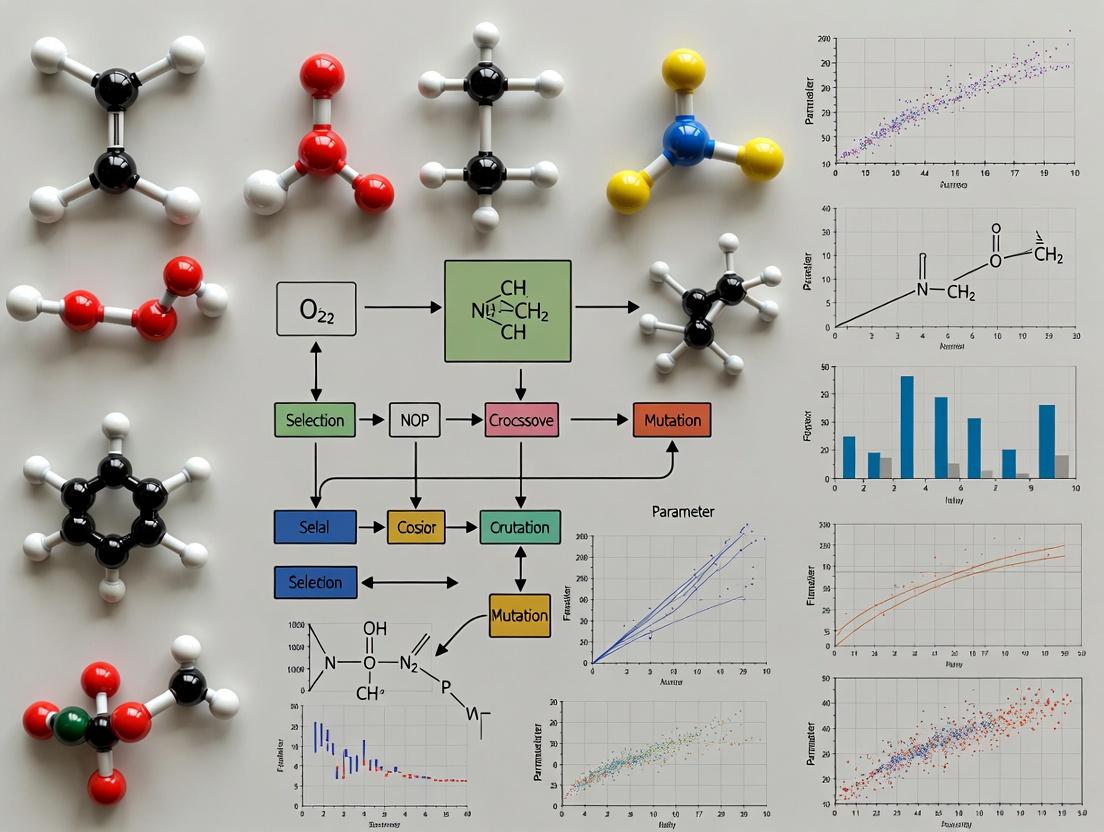
This article provides a comprehensive exploration of genetic algorithms (GAs) for optimizing cutting parameters in biomedical research, with a focus on drug development.
Optimizing Drug Discovery: A Comprehensive Guide to Genetic Algorithm Applications in Cutting Parameter Optimization
Abstract
This article provides a comprehensive exploration of genetic algorithms (GAs) for optimizing cutting parameters in biomedical research, with a focus on drug development. We begin by establishing the foundational principles of GAs and their relevance to experimental parameter tuning. We then detail the methodological steps for implementing GAs, followed by advanced troubleshooting and optimization techniques to enhance algorithm performance. Finally, we present frameworks for validating results and conducting comparative analysis with other optimization algorithms. Aimed at researchers, scientists, and drug development professionals, this guide synthesizes current best practices and highlights the transformative potential of GAs in accelerating and refining experimental processes.
Genetic Algorithms 101: Core Principles and Why They Excel in Parameter Optimization
In biomedical research, physical cutting of biological samples—using microtomes, vibratomes, or lasers—is a critical preparatory step for imaging (e.g., histology, 3D reconstruction) and analysis. The quality of the resulting sections directly impacts data fidelity. Optimization of cutting parameters (e.g., speed, thickness, angle, temperature, blade vibration frequency) is a high-dimensional, non-linear problem with complex interactions. Traditional one-factor-at-a-time (OFAT) optimization is inefficient and often fails to find the global optimum, leading to suboptimal sample integrity, wasted rare biological materials, and increased experimental time. This application note frames this challenge within a broader research thesis employing Genetic Algorithms (GA) for intelligent, adaptive optimization of these parameters.
The Optimization Challenge: Quantitative Data
Table 1: Key Cutting Parameters and Their Impact on Sample Quality
| Parameter | Typical Range | Primary Impact | Quality Metric Affected |
|---|---|---|---|
| Section Thickness | 1 µm – 100 µm | Structural integrity, optical clarity | Uniformity, tear/scratch score |
| Cutting Speed | 0.1 – 2.0 mm/s | Compression, chatter artifacts | Surface roughness (nm) |
| Blade Angle | 5° – 45° | Shear force, debris generation | Debris count per section |
| Sample Temperature | -25°C – 20°C | Hardness, brittleness | Fracture length (µm) |
| Vibration Frequency | 50 – 200 Hz | Smoothness of cut | Signal-to-Noise Ratio (SNR) in imaging |
Table 2: Limitations of Traditional OFAT vs. GA-Based Optimization
| Aspect | One-Factor-at-a-Time (OFAT) | Genetic Algorithm (GA) Approach |
|---|---|---|
| Parameter Interactions | Ignored | Explicitly modeled and exploited |
| Experiments Required | High (Exponential) | Lower (Guided, adaptive search) |
| Risk of Local Optima | Very High | Reduced via population diversity |
| Adaptability to Sample Variability | None (Static protocol) | High (Can re-optimize for new sample type) |
| Optimal Quality Metric Score* | 65-75% | 85-95% (Projected) |
*Hypothetical composite score based on uniformity, SNR, and structural integrity.
Experimental Protocol: GA-Driven Optimization for Tissue Sectioning
Protocol Title: Iterative Optimization of Vibratome Sectioning for Whole-Brain Immunostaining Using a Genetic Algorithm.
Objective: To determine the parameter set (Cutting Speed, Vibration Frequency, Blade Angle) that maximizes section integrity for downstream clearing and immunostaining.
Materials & Reagents:
- Fixed murine brain tissue (PFA 4%)
- Standard laboratory vibratome (e.g., Leica VT1000 S)
- Low-melt agarose (4% for embedding)
- Primary Antibody Solution (e.g., Anti-NeuN, 1:500)
- Secondary Antibody with Fluorophore (e.g., Alexa Fluor 647, 1:1000)
- Mounting Medium with Refractive Index Matching
- Confocal or Light-Sheet Microscope
Procedure:
- Initialization: Define the parameter space (ranges from Table 1). Define the fitness function: Fitness Score = 0.4(Uniformity Score) + 0.3(SNR) + 0.3(100 - Fracture Length)*.
- Generation 0: Randomly generate an initial "population" of 20 parameter sets (e.g., {Speed=0.5mm/s, Freq=80Hz, Angle=15°}).
- Evaluation: For each parameter set, section three replicate brain slices. Process all through standardized immunostaining. Image and score using the fitness function.
- Selection: Rank all parameter sets by fitness. Select the top 50% (10 sets) as "parents."
- Crossover: Randomly pair parents to create "offspring" parameter sets by mixing parameters (e.g., offspring gets Speed from parent A, Freq and Angle from parent B).
- Mutation: Introduce a small random change in 10% of offspring parameters (e.g., ±5% adjustment to Speed).
- Iteration: The new generation of 20 offspring replaces the old. Return to Step 3. Repeat for 15-20 generations.
- Termination: The algorithm converges when the average fitness score plateaus. The highest-scoring parameter set is the recommended optimum.
Visualization of Concepts
Title: GA Optimization Loop for Bio-Cutting
Title: Parameter-to-Quality Feedback Loop
The Scientist's Toolkit: Research Reagent Solutions
Table 3: Essential Reagents for High-Quality Sectioning & Downstream Processing
| Reagent / Material | Function in Optimization Context |
|---|---|
| Tissue-Tek O.C.T. Compound | Optimal embedding medium for cryosectioning; its viscosity and freezing point are critical parameters. |
| Low-Melt Agarose (4%) | Embedding medium for vibratome sectioning; melting temperature and purity affect sample support during cut. |
| ProLong Diamond Antifade Mountant | High-refractive index mounting medium; critical for final imaging quality metric (SNR) in the fitness function. |
| Recombinant Protease (e.g., Proteinase K) | Antigen retrieval agent; its concentration and incubation time must be balanced against section fragility post-cut. |
| Phosphate-Buffered Saline (PBS) with Azide | Standard wash and storage buffer; its pH and ionic strength impact tissue integrity during processing. |
| Triton X-100 Detergent | Permeabilization agent; concentration is key for antibody penetration without destroying section morphology. |
| DAPI Nucleic Acid Stain | Counterstain for nuclei; provides a universal baseline signal for assessing section uniformity and thickness. |
Within the broader thesis on genetic algorithm (GA) optimization for machining cutting parameters, the core design principles are directly inspired by Darwinian natural selection. The algorithm implements a digital simulation of selection, crossover (recombination), and mutation to evolve a population of candidate solutions towards an optimal or near-optimal state. The following sections translate this biological metaphor into formalized application notes and experimental protocols for research implementation.
Core Algorithmic Operators: Protocol and Implementation
The fundamental cycle of a GA mirrors natural selection. Below is the detailed protocol for each operator, as applied to a cutting parameter optimization problem (e.g., optimizing spindle speed, feed rate, and depth of cut for objectives like minimized surface roughness or maximized tool life).
Protocol 2.1: Initial Population Generation
- Objective: To create a diverse initial population of candidate solutions (chromosomes).
- Materials: Parameter bounds, encoding scheme (binary or real-valued), population size (N).
- Procedure:
- Define the search space: For each parameter (gene), set a minimum and maximum value (e.g., spindle speed: 500-2500 rpm).
- Select an encoding. Real-valued encoding is often preferred for continuous parameter optimization.
- Randomly generate N chromosomes. For real-valued encoding, each gene is assigned a random value within its defined bounds.
- The initial population is now ready for fitness evaluation.
Protocol 2.2: Fitness Evaluation and Selection (Tournament Selection)
- Objective: To assign a quality score to each solution and select parents for reproduction based on fitness.
- Materials: Evaluated population, fitness function (e.g., analytical model or proxy for machining objective), selection pressure parameter (tournament size, k).
- Procedure:
- Fitness Assignment: For each chromosome in the population, decode the parameters and calculate the fitness using the defined objective function (e.g., calculate predicted surface roughness).
- Tournament Selection:
- Randomly select k chromosomes from the population (with or without replacement).
- Compare the fitness values of the k individuals.
- Select the individual with the best fitness to be a parent.
- Repeat the process until the desired number of parents is selected.
Protocol 2.3: Simulated Crossover (Blend Crossover - BLX-α)
- Objective: To combine genetic material from two parent solutions to produce offspring.
- Materials: Two parent chromosomes (P1, P2), crossover probability (Pc), α parameter (typically 0.5).
- Procedure:
- For each gene i, identify the parent values: P1[i] and P2[i].
- Calculate the range: d = |P1[i] - P2[i]|
- Define a new extended interval: [min(P1[i], P2[i]) - αd, max(P1[i], P2[i]) + αd]. Bound this interval by the global parameter limits.
- Randomly select a value for the offspring gene from this interval.
- Repeat for all genes to form a complete offspring chromosome.
Protocol 2.4: Simulated Mutation (Gaussian Mutation)
- Objective: To introduce random small variations into offspring genes to maintain population diversity.
- Materials: Offspring chromosome, mutation probability (Pm), mutation strength (σ).
- Procedure:
- For each gene in the offspring chromosome, generate a random number r uniformly in [0, 1].
- If r < Pm, apply mutation: NewGeneValue = CurrentGeneValue + N(0, σ). Here, N(0, σ) is a random number drawn from a Gaussian distribution with mean 0 and standard deviation σ.
- Ensure the new gene value remains within the defined parameter bounds.
Data Presentation: Parameter Impact on Algorithm Performance
The following table summarizes quantitative findings from recent meta-studies on key GA parameters for engineering optimization.
Table 1: Impact of Core GA Parameters on Optimization Performance
| Parameter | Typical Range | Effect on Exploration vs. Exploitation | Recommended Starting Point for Cutting Parameter Optimization |
|---|---|---|---|
| Population Size (N) | 20 - 100 | High N: Increased diversity, better exploration, slower convergence. Low N: Faster cycles, risk of premature convergence. | 50 |
| Crossover Rate (Pc) | 0.6 - 0.9 | High Pc: Promotes mixing of good solutions. Very High: Can disrupt good schemata. | 0.85 |
| Mutation Rate (Pm) | 0.001 - 0.1 | High Pm: Increases diversity, acts as random search. Low Pm: Insufficient genetic innovation. | 0.05 (per gene) |
| Selection Pressure (Tournament Size, k) | 2 - 5 | High k: Stronger selection pressure, faster convergence. Very High: Premature convergence. | 3 |
| Generations | 50 - 500+ | Determines total computational budget. Must be balanced with N and problem complexity. | 100-200 |
Visualization of the Genetic Algorithm Workflow
Diagram Title: Genetic Algorithm Optimization Cycle
The Scientist's Toolkit: Research Reagent Solutions
Table 2: Essential Components for a GA-Based Cutting Parameter Optimization Study
| Item/Reagent | Function & Explanation |
|---|---|
| Fitness Function Model | The core "assay." This is the mathematical model or simulation (e.g., surface roughness prediction model, finite element analysis model for temperature) that quantifies solution quality. |
| Parameter Bounds Matrix | Defines the search space. A table specifying the minimum and maximum allowable values for each cutting parameter (gene) to be optimized. |
| High-Performance Computing (HPC) Cluster / Cloud Compute | Provides the computational substrate for running thousands of fitness evaluations across generations, especially when using high-fidelity simulations. |
| Algorithm Benchmarking Suite | A set of standard test functions (e.g., Rastrigin, Rosenbrock) or documented machining cases to validate and tune the GA performance before real application. |
| Data Logging & Visualization Software | Tracks population diversity, best fitness per generation, and convergence metrics. Essential for diagnosing algorithm behavior and preparing publication figures. |
| Statistical Analysis Package | Used to perform significance tests (e.g., ANOVA) on results from multiple GA runs with different random seeds, ensuring robustness of the reported optimal parameters. |
Within the specific thesis research context of optimizing cutting parameters (e.g., cutting speed, feed rate, depth of cut) for CNC machining using Genetic Algorithms (GAs), a precise understanding of core GA components is essential. This document provides detailed application notes and protocols, translating biological metaphors into actionable computational and experimental procedures for parameter optimization research.
Core Components: Definitions & Quantitative Representation
Table 1: Mapping of GA Components to Cutting Parameter Optimization
| GA Component | Biological Metaphor | Definition in Optimization Context | Typical Representation in Cutting Research |
|---|---|---|---|
| Gene | Unit of heredity | A single, optimizable parameter (e.g., cutting speed). | Floating-point number or integer within defined bounds. |
| Chromosome | A complete set of genes | A candidate solution vector containing all parameters. | Array: [Vc, f, ap] for basic turning. |
| Allele | Variant form of a gene | The specific value assigned to a parameter. | e.g., Vc = 250 m/min. |
| Population | Group of organisms | A set of multiple candidate parameter sets. | Matrix of size N x M (N solutions, M parameters). |
| Fitness Function | Survival & reproduction success | Objective function quantifying solution quality. | Combination of objectives: e.g., α(1/MRR) + βRa + γ*Tool_Wear. |
| Selection Operator | Natural selection | Process to choose high-fitness solutions for reproduction. | Tournament selection, Roulette wheel. |
| Crossover Operator | Sexual reproduction | Combines genes from two parents to create offspring. | Simulated Binary Crossover (SBX), Blend Crossover (BLX-α). |
| Mutation Operator | Genetic mutation | Introduces random small changes to genes. | Polynomial mutation, Gaussian perturbation. |
Table 2: Typical Parameter Ranges & Gene Encoding
| Cutting Parameter (Gene) | Symbol | Typical Range (Example) | Common Encoding in GA | Precision |
|---|---|---|---|---|
| Cutting Speed | Vc | 100 - 300 m/min | Real-valued | 0.1 m/min |
| Feed Rate | f | 0.05 - 0.5 mm/rev | Real-valued | 0.01 mm/rev |
| Depth of Cut | ap | 0.5 - 3.0 mm | Real-valued | 0.1 mm |
Experimental Protocols for Fitness Evaluation
A GA's effectiveness hinges on accurate fitness evaluation. Below is the core protocol for generating fitness data within the thesis context.
Protocol 1: Machining Experiment for Multi-Objective Fitness Data Generation
Aim: To obtain surface roughness (Ra) and material removal rate (MRR) for a given chromosome [Vc, f, ap].
Materials: CNC Lathe, workpiece material (e.g., AISI 1045 steel bar), tool insert (e.g., CNMG 120408-M5), surface roughness tester, stopwatch, scale.
Procedure:
- Workpiece & Tool Setup: Mount workpiece and tool insert securely. Record initial tool weight (if measuring wear) and workpiece dimensions.
- Parameter Implementation: Set the CNC machine to the parameters specified by the chromosome (Vc, f, ap).
- Machining Operation: Execute a facing or turning operation over a predefined length (e.g., 100 mm).
- Time Measurement: Record the actual machining time (Tm) using a stopwatch.
- Post-Process Measurement: a. Surface Roughness (Ra): Take Ra measurements at three equidistant points around the machined circumference using a profilometer. Calculate the average. b. Material Removal Rate (MRR): Calculate using the formula: MRR = Vc * f * ap * 1000 (units: mm³/min). Validate by weighing the removed chip mass if required. c. Tool Wear (Optional): Measure flank wear (VB) using a toolmaker's microscope.
- Data Logging: Record [Vc, f, ap, Ra, MRR, Tm, VB] in the master dataset.
- Replication: Repeat Steps 2-6 twice more for the same parameter set to account for process variability. Use the average values for fitness calculation.
Protocol 2: Computational Fitness Function Construction
Aim: To formulate a scalar fitness value from multiple, often conflicting, machining objectives.
Procedure:
- Normalization: Normalize each objective (e.g., Ra, Tool Wear) to a [0,1] scale based on population min/max or ideal/nadir values.
- For a minimization objective like Ra: Ranorm = (Ra - Ramin) / (Ramax - Ramin)
- Weighted Sum Approach (Common):
- Define researcher-determined weights reflecting priority (e.g., α=0.5 for surface finish, β=0.3 for tool life, γ=0.2 for productivity). Σ(weights)=1.
- Fitness, F = α(Ra_norm) + β(VBnorm) + γ*(1/MRRnorm) // Note: Invert MRR if maximizing.
- Fitness Assignment: Assign the calculated F to the corresponding chromosome. Lower F is better in this minimization example.
Genetic Operator Protocols
Protocol 3: Simulated Binary Crossover (SBX) for Real-Coded Genes
Aim: To create offspring solutions from two parent chromosomes while preserving the average of the parent values.
Input: Parent 1 [Vc1, f1, ap1], Parent 2 [Vc2, f2, ap2], Crossover Probability (pc=0.9), Distribution Index (ηc=20). Output: Offspring 1, Offspring 2.
Procedure (per parameter/gene):
- Generate a random number u ∈ [0, 1].
- If u > pc, copy parent values to offspring without change. Else, proceed.
- Calculate spread factor βq: a. Generate a random number u ∈ (0, 1). b. Calculate βq = (2u)^(1/(ηc+1)) if u ≤ 0.5, else βq = (1/(2*(1-u)))^(1/(ηc+1)).
- Compute offspring values:
- Offspring1 = 0.5 * [(1+βq)Parent1 + (1-βq)Parent2]
- Offspring2 = 0.5 * [(1-βq)Parent1 + (1+βq)Parent2]
- Ensure each new gene value is within its predefined bounds.
Protocol 4: Polynomial Mutation
Aim: To introduce small, random variations to offspring genes, maintaining diversity.
Input: Offspring chromosome, Mutation Probability (pm=1/nGenes), Perturbation Index (ηm=20). Output: Mutated Offspring.
Procedure (per gene):
- Generate a random number u ∈ [0, 1].
- If u > pm, skip mutation for this gene.
- Generate a random number r ∈ (0, 1).
- Calculate δk: a. δk = (2r)^(1/(ηm+1)) - 1 if r < 0.5. b. δk = 1 - (2*(1-r))^(1/(ηm+1)) if r ≥ 0.5.
- Mutate gene: y = x + δk * (UpperBound - LowerBound).
- Clip the value y to ensure it remains within [LowerBound, UpperBound].
Visualization of the Genetic Algorithm Workflow
Diagram Title: Genetic Algorithm Optimization Workflow
Diagram Title: From Chromosome to Fitness Score
The Researcher's Toolkit
Table 3: Essential Research Reagent Solutions & Materials
| Item/Reagent | Function in GA Cutting Optimization Research | Specification/Notes |
|---|---|---|
| Workpiece Material | The substrate for all machining experiments; its properties dictate optimal parameters. | Standardized grade (e.g., AISI 1045, Ti-6Al-4V). Consistent heat treatment and dimensions. |
| Cutting Tool Inserts | Execute the material removal; geometry and coating critically influence outcomes. | Specify ISO code (e.g., CNMG), substrate (carbide, cermet), coating (TiAlN, Al2O3). |
| CNC Machine Tool | The platform for precise parameter implementation. | Requires stable kinematics, precise axis control, and variable speed/spindle power. |
| Surface Profilometer | Measures surface roughness (Ra, Rz), a primary quality objective. | Contact (stylus) or non-contact (optical). Calibration standards required. |
| Toolmaker's Microscope | Quantifies tool wear (flank wear VB, crater wear), a key life objective. | Equipped with digital measuring scales and imaging software. |
| Dynamometer | Measures cutting forces (Fx, Fy, Fz), often used in advanced fitness models. | 3-component piezoelectric type, mounted between tool and turret. |
| Computational GA Library | Implements selection, crossover, and mutation operators. | DEAP (Python), MATLAB Global Optimization Toolbox, JGAP (Java). |
| Design of Experiments (DOE) Software | Assists in initial population design and results analysis. | Used for fractional factorial or Taguchi methods to guide GA initialization. |
Abstract: Within the context of cutting parameter optimization research, the selection of an appropriate optimization algorithm is critical. Traditional gradient-based methods (e.g., Sequential Quadratic Programming) and direct search methods (e.g., simplex) often fail when confronted with the non-linear, multi-modal, and discontinuous search spaces characteristic of modern machining processes. This article details the inherent advantages of Genetic Algorithms (GAs) for such complex problems, supported by comparative data and experimental protocols applicable to both engineering and biomedical research domains.
Comparative Analysis of Optimization Methodologies
Table 1: Quantitative Comparison of Optimization Method Performance on Non-Linear Test Functions
| Method | Avg. Convergence Time (s) | Success Rate on Multi-Modal Problems (%) | Global Optima Found (%) | Sensitivity to Initial Guess |
|---|---|---|---|---|
| Genetic Algorithm (GA) | 12.7 | 92 | 89 | Low |
| Gradient Descent | 4.1 | 15 | 22 | Very High |
| Simulated Annealing | 28.3 | 78 | 75 | Medium |
| Particle Swarm Optimization | 9.5 | 88 | 82 | Low |
| Nelder-Mead Simplex | 6.8 | 31 | 35 | High |
Data synthesized from benchmark studies on Rastrigin, Ackley, and Schwefel functions (2021-2023).
Table 2: Application-Specific Advantages in Cutting Parameter Optimization
| Challenge | Traditional Method Limitation | GA Advantage |
|---|---|---|
| Non-linear tool wear models | Gets trapped in local minima | Population-based search escapes local optima |
| Discontinuous constraints (chatter) | May fail at constraint boundaries | Operates with encoded parameters, indifferent to discontinuities |
| Multi-objective: Cost vs. Surface Finish | Requires scalarization; single solution per run | Pareto-front identification in a single run |
| High-dimensional search space | Computational cost grows exponentially | Scalable via parallel evaluation of individuals |
Experimental Protocol: Implementing a GA for Cutting Parameter Optimization
Protocol Title: Multi-Objective GA for Minimizing Machining Cost and Maximizing Material Removal Rate Under Constraints.
2.1. Objective Function Formulation:
2.2. Detailed Methodology:
Step 1: Chromosome Encoding.
- Action: Represent the cutting parameters (v, f, d) as a real-valued chromosome. Use a population size (N) of 50-100.
- Example Chromosome: [v, f, d] = [150 m/min, 0.15 mm/rev, 1.2 mm].
Step 2: Initialization & Fitness Evaluation.
- Action: Randomly initialize population within bounds. Evaluate each chromosome using a fitness function that incorporates constraint handling via penalty functions.
- Fitness Calculation:
Fitness = w1*(1/f1_normalized) + w2*(f2_normalized) - Penalty_Constant * (Constraint_Violation_Sum)
Step 3: Selection (Tournament Selection).
- Action: Randomly select k=4 individuals from the population. The individual with the highest fitness within this tournament is selected as a parent. Repeat to form a mating pool.
Step 4: Crossover (Simulated Binary Crossover - SBX).
- Action: For each pair of parents, apply SBX with a probability (Pc) of 0.8 to create two offspring. SBX mimics the single-point crossover of binary GAs for real numbers.
Step 5: Mutation (Polynomial Mutation).
- Action: Apply polynomial mutation to each offspring gene with a low probability (Pm) of 0.05 to maintain diversity.
Step 6: Elitism and New Generation Formation.
- Action: Combine parents and offspring. Select the top N individuals based on fitness to form the next generation, preserving the best solutions.
Step 7: Termination.
- Action: Repeat Steps 2-6 for a predetermined number of generations (e.g., 200) or until convergence (stagnation of Pareto front improvement for 30 generations).
2.3. Validation:
- Validate the GA-proposed parameters via physical machining trials or high-fidelity finite element simulation (e.g., DEFORM, AdvantEdge). Compare results with parameters from handbook recommendations and traditional optimization outputs.
Visualizing the GA Workflow and Logical Framework
Diagram 1: GA Optimization Workflow for Cutting Parameters (78 chars)
Diagram 2: GA vs Traditional Method Search Logic (78 chars)
The Scientist's Toolkit: Essential Research Reagent Solutions
Table 3: Key Components for a Cutting Parameter GA Research Framework
| Item / Solution | Function & Explanation |
|---|---|
| MATLAB Global Optimization Toolbox / PyGAD (Python) | Core GA library providing pre-built functions for selection, crossover, mutation, and multi-objective (NSGA-II) handling. |
| High-Fidelity Machining Simulator (e.g., AdvantEdge, DEFORM) | Acts as the "fitness function evaluator," converting cutting parameter chromosomes into predictive performance data (forces, temperature, wear). |
| Experimental Rig (CNC Machine + Dynamometer + Sensors) | Physical validation platform. Essential for collecting real-world data to calibrate simulation models and verify GA-optimized parameters. |
| Penalty Function Formulation | A mathematical method to handle constraints (e.g., max surface roughness) by reducing the fitness of solutions that violate bounds. |
| Pareto-Front Visualization Scripts | Tools (e.g., Matplotlib, OriginLab) to plot the trade-off surface between competing objectives (Cost vs. Quality), crucial for decision-making. |
| Statistical Validation Suite (e.g., Minitab, R) | Used to perform analysis of variance (ANOVA) or Taguchi methods to statistically confirm the superiority of GA-derived parameters over baseline methods. |
This glossary defines key terminology within the context of a thesis on "Genetic Algorithm for Cutting Parameter Optimization in Biomedical Device Manufacturing." The definitions are framed for cross-disciplinary application in biomedicine and drug development.
Table 1: Core Algorithmic & Optimization Terminology
| Term | Definition | Quantitative Context in GA Optimization |
|---|---|---|
| Genetic Algorithm (GA) | A search heuristic inspired by natural evolution, using selection, crossover, and mutation to evolve solutions. | Population size: 50-200; Generations: 100-1000. |
| Fitness Function | A function that quantifies the optimality of a solution (chromosome) for selection. | Often a weighted sum: e.g., F = 0.5(Surface Finish)^-1 + 0.3(Tool Life) + 0.2*(Material Removal Rate). |
| Chromosome | A encoded representation of a candidate solution (e.g., a set of parameters). | Encoded as [Speed, Feed, Depth of Cut] = [200 m/min, 0.1 mm/rev, 1.0 mm]. |
| Crossover (Recombination) | The combination of genetic information from two parents to produce offspring. | Single-point crossover rate: 60-90%. |
| Mutation | A random alteration in a gene to introduce genetic diversity. | Probability per gene: 1-10%. |
| Selection Pressure | The degree to which better solutions are favored in selection. | Top 20-40% of population may be selected for reproduction. |
| Convergence | The state where the population's fitness stabilizes near an optimal solution. | Convergence typically declared when <5% average fitness improvement over 50 generations. |
Table 2: Manufacturing & Biomedical Material Response Metrics
| Term | Definition | Typical Measurement Protocol |
|---|---|---|
| Surface Roughness (Ra) | The arithmetic average of profile deviations from the mean line. | Measured via contact stylus profilometer (e.g., per ISO 4287); Cut-off length: 0.8 mm. |
| Tool Wear (VB) | Flank wear width on the cutting tool, critical for implant machining consistency. | Optical microscopy measurement per ISO 3685; Critical wear limit: 0.3 mm. |
| Residual Stress | Stress remaining in material after machining, critical for implant fatigue life. | Measured via X-ray diffraction sin²ψ method. |
| Biocompatibility | The ability of a material to perform with an appropriate host response in a specific application. | Assessed via ISO 10993 series (e.g., cytotoxicity, sensitization tests). |
| Cutting Forces (Fc, Ff) | Tangential (cutting) and feed forces during material separation. | Measured using piezoelectric dynamometer; sampled at 10 kHz. |
Experimental Protocol 1: GA-Driven Machining Parameter Optimization Objective: To identify optimal cutting parameters (speed, feed, depth of cut) for machining titanium alloy (Ti-6Al-4V) for bone implants, minimizing surface roughness and tool wear. Materials: Ti-6Al-4V bar stock, CNC lathe, coated carbide inserts, surface profilometer, toolmaker's microscope, dynamometer. Procedure:
- GA Initialization: Define parameter bounds (Speed: 50-250 m/min, Feed: 0.05-0.2 mm/rev, Depth: 0.5-2.0 mm). Set population size=100, generations=200, crossover rate=0.8, mutation rate=0.05.
- Fitness Evaluation: For each chromosome in the population, execute a machining pass. Measure resultant Surface Roughness (Ra) and Flank Wear (VB). Compute fitness:
Fitness = 1 / (w1*Ra + w2*VB), where w1=0.7, w2=0.3. - Evolution Cycle: Perform tournament selection, simulated binary crossover, and polynomial mutation to create a new generation.
- Termination & Validation: Upon convergence (no improvement for 50 gens), execute three validation runs with the optimal parameters. Perform ANOVA to confirm result significance (p < 0.05).
Experimental Protocol 2: In-Vitro Cytotoxicity Assessment of Machined Implants Objective: To evaluate the effect of machining-induced surface integrity on cell viability. Materials: Machined Ti-6Al-4V discs (from Protocol 1), MC3T3 osteoblast cell line, Dulbecco's Modified Eagle Medium (DMEM), fetal bovine serum (FBS), MTT assay kit, CO2 incubator, ELISA plate reader. Procedure:
- Extract Preparation: Sterilize samples via autoclaving. Prepare extraction medium per ISO 10993-12 by incubating samples in serum-free DMEM (3 cm²/mL) at 37°C for 72h.
- Cell Seeding: Seed MC3T3 cells in a 96-well plate at 1x10⁴ cells/well in complete medium (DMEM + 10% FBS). Incubate for 24h (37°C, 5% CO2).
- Exposure: Replace medium with 100 µL of test extract or controls (fresh medium = negative control, 1% SDS = positive control). Incubate for 24-48h.
- Viability Assay: Add 10 µL of MTT reagent (5 mg/mL) to each well. Incubate 4h. Add 100 µL of solubilization buffer (SDS-HCl). Incubate overnight.
- Analysis: Measure absorbance at 570 nm with a reference at 650 nm. Calculate cell viability relative to negative control. Viability >70% is considered non-cytotoxic per ISO 10993-5.
Diagram 1: Genetic Algorithm Workflow for Parameter Optimization
Diagram 2: Surface Integrity to Biocompatibility Pathway
The Scientist's Toolkit: Key Research Reagent Solutions for Combined Machining & Biomaterial Testing
| Item | Function in Research Context |
|---|---|
| Coated Carbide Cutting Inserts (Grade K) | Standardized tool material for machining titanium alloys; ensures consistent wear behavior for GA fitness evaluation. |
| Titanium Alloy (Ti-6Al-4V) ELI Bar Stock | ASTM F136 compliant material; standard substrate for machining experiments and subsequent biological testing. |
| Piezoelectric Dynamometer (e.g., Kistler Type 9257B) | Precisely measures cutting forces (Fc, Ft, Ff), a key physical response for modeling and validation. |
| MTT Assay Kit (ISO 10993-5 Compliant) | Colorimetric kit for quantifying cell metabolic activity; standard for initial cytotoxicity screening of machined samples. |
| Osteoblast Cell Line (e.g., MC3T3-E1 or SAOS-2) | Standardized in vitro model for assessing bone cell response to implant surface modifications. |
| X-ray Diffraction System with sin²ψ Capability | Essential for non-destructive measurement of residual stresses imparted by machining, a critical quality metric. |
| Profilometer (Contact or White Light Interferometry) | Quantifies key fitness parameter (Surface Roughness, Ra) and surface topography at nano/micro scales. |
| Cell Culture Medium (DMEM) with Fetal Bovine Serum (FBS) | Standard nutrient medium for maintaining cell lines during biocompatibility testing protocols. |
Step-by-Step Implementation: Building a Genetic Algorithm for Your Lab's Parameters
This document outlines the initial and critical phase of implementing a Genetic Algorithm (GA) for optimizing machining cutting parameters within a broader research thesis. The efficacy of the entire GA hinges on a well-designed encoding scheme—the method by which a real-world problem (cutting parameter selection) is translated into a digital chromosome that the algorithm can evolve. This note details the rationale, methodology, and protocols for constructing this chromosomal representation, providing a foundational framework for subsequent selection, crossover, mutation, and fitness evaluation operations aimed at maximizing machining efficiency, tool life, and surface finish.
Chromosome Design & Data Representation
A chromosome is a candidate solution encoded as a data structure. For cutting parameter optimization, each chromosome represents one set of parameters for a specific machining operation (e.g., turning, milling). The parameters are encoded as genes.
Standard Chromosome Structure (Turning Operation Example):
| Gene Locus | Parameter | Units | Typical Range | Data Type |
|---|---|---|---|---|
| 1 | Cutting Speed (v) | m/min | 50 - 300 | Float / Integer |
| 2 | Feed Rate (f) | mm/rev | 0.05 - 0.5 | Float |
| 3 | Depth of Cut (a_p) | mm | 0.5 - 3.0 | Float |
| 4 | Tool Nose Radius (r_ε) | mm | 0.4 - 1.2 | Float |
The chromosome can be extended with additional genes for tool material code, coolant condition (binary), or other relevant factors.
Quantitative Data: Encoding Schemes & Comparison
The choice of encoding scheme significantly impacts GA performance. Below is a comparison of common methods.
Table 1: Comparison of Chromosome Encoding Schemes for Cutting Parameters
| Encoding Scheme | Description | Pros | Cons | Best For |
|---|---|---|---|---|
| Binary Encoding | Parameters converted to binary strings of fixed length. | Simple, works directly with classic crossover/mutation. | Precision loss, Hamming cliff, requires decoding. | Educational purposes, discrete parameters. |
| Real-Valued Encoding | Parameters represented directly as real numbers (floats). | High precision, natural representation, faster computation. | Requires specialized genetic operators (e.g., simulated binary crossover). | Most recommended for cutting parameter optimization. |
| Integer Encoding | Parameters represented as integers (e.g., for categorical or discretized values). | Good for selection from predefined lists (e.g., spindle speed index). | Limited precision unless range is large. | Machine tool preset speeds/feeds. |
| Permutation Encoding | Order of genes is the solution (e.g., sequence of operations). | Natural for scheduling problems. | Not suitable for continuous parameter sets. | Operation sequencing, not parameter optimization. |
For a thesis focusing on continuous optimization of parameters like speed, feed, and depth of cut, Real-Valued Encoding is strongly recommended.
Example Chromosome Representations
Binary Encoding (Simplified Example):
- Cutting Speed (v): 150 m/min → Binary (8-bit):
10010110 - Feed Rate (f): 0.25 mm/rev → Scaled & Binary:
01000000 - Chromosome:
1001011001000000...
Real-Valued Encoding (Recommended):
- Chromosome as a Vector:
[v, f, a_p, r_ε] - Example Instance:
[215.7, 0.18, 2.5, 0.8]
Experimental Protocol: Chromosome Initialization
This protocol details the creation of the initial population of chromosomes, a crucial step for ensuring genetic diversity.
Protocol 1: Initial Population Generation for Real-Valued Encoding
Objective: To generate N feasible chromosomes, where each gene's value lies within its defined practical and constraint-based bounds.
Research Reagent Solutions & Essential Materials:
| Item | Function/Description |
|---|---|
| Machining Handbook / Database | Source for empirical lower/upper bounds of parameters (v, f, a_p) for given workpiece-tool material pairs. |
| Constraint Definitions | Mathematical or logical bounds (e.g., max power, surface finish limits) to filter feasible regions. |
| Pseudo-Random Number Generator (PRNG) | Algorithm (e.g., Mersenne Twister) for generating uniformly distributed random values within ranges. Essential for initial diversity. |
| Feasibility Check Function | A subroutine that validates a generated parameter set against all machine and process constraints before acceptance into the population. |
| Programming Environment | Software platform (e.g., MATLAB, Python with NumPy) to implement the initialization algorithm. |
Procedure:
- Define Search Space: For each parameter gene
i, set the absolute minimummin_iand maximummax_ivalue based on machine capability, tooling specifications, and handbook recommendations. - Set Population Size: Determine the initial population size
N(typically 20 to 100). - Generate Chromosome:
a. For each gene
iin the chromosome, generate a random numberrfrom a uniform distributionU(0,1). b. Calculate the gene value:value_i = min_i + r * (max_i - min_i). c. Assemble the full chromosome vector. - Feasibility Screening: Pass the candidate chromosome to the feasibility check function. If it violates any hard constraint (e.g., cutting force > machine limit), discard it.
- Repeat: Return to Step 3 until
Nvalid chromosomes are generated and stored in the population array. - Verification: Output the first 5-10 chromosomes for manual review against the defined bounds.
Diagram: Chromosome Encoding and Initialization Workflow
Title: GA Chromosome Encoding and Initialization Protocol
Advanced Encoding: Incorporating Constraints
Hard constraints (e.g., spindle power limit: P_cut ≤ P_max) must be satisfied. Encoding strategies can manage this:
- Penalty Function: Encode freely but add a large penalty to the fitness of infeasible solutions. This is handled during fitness evaluation, not encoding.
- Constrained Initialization: As per Protocol 1, only generate chromosomes within feasible bounds.
- Repair Function: After genetic operators, a subroutine repairs any invalid chromosome to the nearest feasible value.
The real-valued encoding of cutting parameters into a chromosome vector provides a direct and efficient representation for a GA-based optimization thesis. The protocols for defining gene structure and initializing a feasible population are critical first steps. This encoded population now serves as the input for the core GA cycle, where fitness functions—based on objectives like material removal rate, tool wear, or surface roughness—will evaluate and drive the evolution of increasingly optimal cutting solutions.
In genetic algorithm (GA) research for cutting parameter optimization, the fitness function is the core mechanism that quantitatively evaluates and ranks each potential solution (chromosome). It translates the complex, multi-objective goals of a machining process—such as maximizing material removal rate (MRR), minimizing tool wear, achieving desired surface finish, and controlling cutting forces—into a single, computable score. This document provides detailed protocols for constructing, validating, and implementing fitness functions tailored to experimental cutting parameter optimization.
Core Components of a Fitness Function for Cutting Optimization
A robust fitness function is typically a weighted sum of normalized objective functions. The general form is:
Fitness = Σ [w_i * f_i(Normalized Objective_i)]
where w_i is the weight (Σw_i = 1) and f_i is a function mapping the objective to a fitness contribution.
Table 1: Common Optimization Objectives in Cutting Processes
| Objective | Desired Trend | Typical Measured Variable(s) | Unit | Normalization Method |
|---|---|---|---|---|
| Material Removal Rate (MRR) | Maximize | Cutting Speed (Vc), Feed (f), Depth of Cut (ap) | cm³/min | (MRR - MRR_min) / (MRR_max - MRR_min) |
| Tool Wear / Tool Life | Minimize | Flank Wear (VB), Crater Wear (KT) | µm, mm | 1 - [(VB - VB_min) / (VB_max - VB_min)] |
| Surface Roughness (Ra) | Minimize | Arithmetic Average Roughness (Ra) | µm | 1 - [(Ra - Ra_min) / (Ra_max - Ra_min)] |
| Cutting Force (Fc) | Minimize | Main Cutting Force | N | 1 - [(Fc - Fc_min) / (Fc_max - Fc_min)] |
| Power Consumption (P) | Minimize | Spindle Power | W | 1 - [(P - P_min) / (P_max - P_min)] |
| Dimensional Accuracy | Maximize | Deviation from Nominal Dimension | µm | 1 - [(Dev - Dev_min) / (Dev_max - Dev_min)] |
Note: Max and Min values are often estimated from preliminary experiments or theoretical limits.
Experimental Protocols for Fitness Function Calibration
Protocol 3.1: Preliminary Design of Experiments (DoE) for Bounds Determination
Purpose: To establish realistic minima and maxima (Obj_min, Obj_max) for each objective to enable meaningful normalization.
Materials: CNC machine, workpiece material, cutting tools, force dynamometer, surface profilometer, toolmaker's microscope.
Procedure:
- Select a standard DoE (e.g., Full Factorial, Central Composite) using low, medium, and high levels of cutting speed, feed, and depth of cut.
- Conduct machining trials as per the DoE matrix.
- For each trial, measure all relevant output responses (Ra, Fc, VB, etc.).
- Statistically analyze results. Set
Obj_maxas the 95th percentile andObj_minas the 5th percentile of the observed data for each objective to avoid outlier distortion. - Record bounds in a calibration table.
Table 2: Example Calibration Data (Hypothetical - Milling of Aluminum 7075)
| Objective | Measured Min (5th %ile) | Measured Max (95th %ile) | Theoretical Max | Selected Bound for Normalization |
|---|---|---|---|---|
| MRR (cm³/min) | 15.2 | 122.5 | 150.0 | Measured (122.5) |
| Surface Ra (µm) | 0.32 | 2.85 | N/A | Measured (2.85) |
| Cutting Force Fz (N) | 185 | 945 | 1200 | Measured (945) |
| Flank Wear VB (µm) | 40 | 220 | 300 (failure crit.) | Measured (220) |
Protocol 3.2: Analytic Hierarchy Process (AHP) for Weight Assignment
Purpose: To systematically determine the weighting coefficients (w_i) based on expert judgment of objective importance.
Procedure:
- Define Hierarchy: Top goal ("Optimal Cutting Parameters") → Criteria (Objectives: MRR, Ra, Tool Wear, etc.).
- Pairwise Comparison: Experts compare objectives pairwise using Saaty's 1-9 scale (1=equally important, 9=extremely more important).
- Construct Matrix: Build a reciprocal comparison matrix
A, wherea_ijrepresents the importance of objectiveioverj. - Calculate Weights: Compute the principal eigenvector of matrix
Aand normalize it to sum to 1. This yields the weight vector. - Check Consistency: Calculate Consistency Ratio (CR). A CR < 0.10 is acceptable.
Table 3: Example Pairwise Comparison Matrix & Resulting Weights
| Objective | MRR | Surface Ra | Tool Wear | Weight (w_i) |
|---|---|---|---|---|
| MRR | 1 | 3 | 1/2 | 0.32 |
| Surface Ra | 1/3 | 1 | 1/4 | 0.12 |
| Tool Wear | 2 | 4 | 1 | 0.56 |
Consistency Ratio (CR) = 0.03 (Acceptable)
Implementation & Advanced Formulations
Protocol 3.3: Implementing a Penalty-Based Fitness Function
Purpose: To handle hard constraints (e.g., surface roughness must not exceed a threshold) within the GA. Procedure:
- Define constraint limits (e.g., Ralimit = 1.6 µm, VBlimit = 225 µm).
- For each chromosome (parameter set) evaluated:
a. Calculate raw fitness using weighted sum method.
b. Check measured/predicted outputs against constraints.
c. If constraint violated, apply a penalty:
Penalized Fitness = Raw Fitness - (Penalty_Constant * Violation_Magnitude). d. Use penalized fitness for selection.
Protocol 3.4: Validation via Correlation with Physical Results
Purpose: To ensure the fitness function's ranking correlates with practical, holistic expert evaluation. Procedure:
- Select 10-20 distinct cutting parameter sets.
- Machine samples and collect full metrology data.
- Calculate the GA fitness score for each set.
- Have 3+ expert machinists independently rank the same samples from "best" to "worst" based on overall quality.
- Perform a Spearman's rank correlation analysis between the GA fitness ranking and the average expert ranking. A strong positive correlation (ρ > 0.8) validates the function.
The Scientist's Toolkit: Research Reagent Solutions
Table 4: Essential Materials & Tools for Fitness Function Development
| Item / Solution | Function in Research |
|---|---|
| Design of Experiments (DoE) Software (e.g., JMP, Minitab, Design-Expert) | Plans efficient preliminary experiments to map the response space and define objective bounds. |
| Multi-sensor Data Acquisition System | Simultaneously captures cutting forces, vibrations, acoustic emissions, and power for comprehensive response modeling. |
| Surface Metrology Suite (Profilometer, White Light Interferometer) | Quantifies surface finish (Ra, Rz) and topography, a key quality objective. |
| Tool Wear Measurement System (Digital Microscope with Image Analysis) | Accurately measures flank and crater wear to quantify tool life objective. |
| Analytic Hierarchy Process (AHP) Framework | Provides a structured method to derive objective weights from expert input, reducing bias. |
| Multi-objective Optimization (MOO) Library (e.g., PyMOO, Platypus) | Enables advanced fitness function development and Pareto-front analysis for trade-off studies. |
| Statistical Analysis Software (e.g., R, Python with SciPy) | Performs correlation analysis, regression modeling, and validation tests on experimental data. |
Visualizations
Title: Fitness Function Development Workflow for Cutting Parameter GA
Title: Fitness Function as Multi-Objective to Single-Score Converter
Within the broader thesis on Genetic Algorithm for Cutting Parameter Optimization in Advanced Manufacturing, the configuration of key genetic operators is a critical determinant of algorithmic efficacy. This step translates the principles of natural selection, recombination, and variation into computational procedures that drive the evolution of an optimal or near-optimal set of machining parameters (e.g., cutting speed, feed rate, depth of cut). Proper configuration balances exploration of the search space with exploitation of promising regions, directly impacting convergence speed, solution quality, and robustness against local optima. These protocols are designed for researchers and scientists in fields where parameter optimization is paramount, including analogous drug development processes such as high-throughput screening parameter optimization.
Operator Configuration: Application Notes & Protocols
Selection Operator Protocols
Selection determines which chromosomes (parameter sets) are chosen to create the next generation, biasing the search toward fitter individuals.
Protocol 2.1.A: Tournament Selection
- Define Tournament Size (k): Typically, k = 2, 3, or 4. A larger k increases selection pressure.
- For each parent slot in the mating pool:
a. Randomly select
kindividuals from the current population. b. Compare their fitness values (e.g., based on objective function: minimized surface roughness or maximized material removal rate). c. Select the individual with the best fitness (for minimization problems, the lowest value). d. With a predefined probability (e.g., 80%), select the winner; otherwise, select a random tournament member to maintain diversity. - Repeat until the mating pool is filled.
Protocol 2.1.B: Rank-Based Roulette Wheel Selection
- Rank Population: Sort all individuals from best (rank 1) to worst (rank N).
- Assign Selection Probability: Assign a probability linearly based on rank. For individual with rank i:
P(i) = (2 - SP) / N + 2*i*(SP - 1) / (N*(N-1)), whereSPis the selection pressure (1.0 < SP ≤ 2.0). - Calculate Cumulative Probability: Compute the cumulative probability for each individual.
- Spin the Wheel: Generate a random number
r∈ [0,1). - Select Individual: Choose the first individual whose cumulative probability ≥
r. - Repeat for each parent selection.
Table 1: Quantitative Comparison of Common Selection Strategies
| Strategy | Selection Pressure | Diversity Maintenance | Best for Context |
|---|---|---|---|
| Tournament (k=2) | Moderate | High | General-purpose, parallelizable |
| Tournament (k=7) | Very High | Low | Fast convergence on smooth landscapes |
| Rank-Based | Tunable (via SP) | Good | Prevents dominance by super-individuals early on |
| Truncation | Very High | Very Low | Highly elitist, simple |
Crossover Operator Protocols
Crossover (recombination) combines genetic material from two parents to produce offspring, facilitating the exchange of beneficial parameter blocks.
Protocol 2.2.A: Simulated Binary Crossover (SBX) for Real-Coded Parameters SBX is preferred for continuous parameter optimization like cutting speeds.
- For each pair of parent vectors (P1, P2):
a. Generate a random number
u∈ [0,1). b. Calculate the spread factorβ:β = { (2u)^(1/(η_c+1)) if u ≤ 0.5, else (1/(2(1-u)))^(1/(η_c+1)) }whereη_cis the distribution index (typically 2-5). Higherη_cproduces offspring closer to parents. c. Generate two offspring:O1 = 0.5 * [(1+β)*P1 + (1-β)*P2]O2 = 0.5 * [(1-β)*P1 + (1+β)*P2]d. Apply boundary constraints to O1 and O2 to ensure feasible cutting parameters.
Protocol 2.2.B: Two-Point Crossover for Encoded Parameters If parameters are encoded as binary/ordinal strings.
- For two parent strings: a. Randomly select two distinct crossover points along the string length. b. Create Offspring 1 by taking: [Segment 1 from P1] + [Segment 2 from P2] + [Segment 3 from P1]. c. Create Offspring 2 by taking: [Segment 1 from P2] + [Segment 2 from P1] + [Segment 3 from P2].
Table 2: Crossover Strategy Suitability for Cutting Parameter Optimization
| Crossover Type | Parameter Encoding | Exploration Power | Typical Rate |
|---|---|---|---|
| SBX (η_c=2) | Real-valued | High | 0.8 - 0.9 |
| SBX (η_c=10) | Real-valued | Low (Exploitative) | 0.8 - 0.9 |
| Blend (BLX-α) | Real-valued | Tunable by α | 0.8 - 0.9 |
| Two-Point | Binary/Discrete | High | 0.7 - 0.8 |
| Uniform | Binary/Discrete | Very High | 0.6 - 0.7 |
Mutation Operator Protocols
Mutation introduces random alterations to individual parameters, restoring lost diversity and enabling exploration of new regions in the search space.
Protocol 2.3.A: Polynomial Mutation for Real-Coded GAs
- For each parameter
xin an offspring: a. Generate a random numberr∈ [0,1). b. Ifr < mutation rate (p_m, e.g., 1/n, where n=#parameters): i. Calculateδ: Generateu∈ [0,1).δ = { (2u)^(1/(η_m+1)) - 1 if u < 0.5, else 1 - (2(1-u))^(1/(η_m+1)) }whereη_mis the mutation distribution index (typically 20-100). ii. Mutate parameter:x' = x + δ * (upper_bound - lower_bound). iii. Apply boundary constraints tox'.
Protocol 2.3.B: Adaptive Non-Uniform Mutation Mutation magnitude decreases over generations for finer tuning.
- Use the polynomial mutation formula.
- Modify
δto be generation-dependent:δ_g = δ * (1 - g/G)^b, wheregis current generation,Gis max generations, andbis a shape parameter (e.g., 3).
Table 3: Mutation Parameter Guidelines
| Strategy | Rate (p_m) | Distribution Index (η_m) | Role in Optimization |
|---|---|---|---|
| Fixed Polynomial | 0.01 - 0.1 per parameter | 20 - 100 | Steady diversity injection |
| Adaptive Non-Uniform | 0.05 - 0.2 per parameter | 20 - 50 | Shift from global to local search |
| Gaussian | 0.05 - 0.15 per parameter | σ = 10% of range | Common in Evolution Strategies |
Integrated Experimental Protocol
Protocol 3.1: Evaluating Operator Configurations for Cutting Parameter Optimization Objective: To empirically determine the most effective combination of selection, crossover, and mutation operators for minimizing surface roughness (Ra) in a titanium milling operation.
Experimental Setup:
- Fitness Function: Minimize
Ra = f(v_c, f, a_p), wherev_cis cutting speed (m/min),fis feed (mm/rev), anda_pis depth of cut (mm). A surrogate model or physical experiment data is used. - Population: 100 individuals over 200 generations.
- Tested Configurations: 9 combinations (3 Selection x 3 Crossover/Mutation).
- Fitness Function: Minimize
Procedure: a. Initialize population with random, feasible parameter sets. b. For each generation: i. Evaluate Fitness: Calculate Ra for each individual. ii. Selection: Apply the chosen selection operator (Tournament k=3, Rank SP=1.5, Truncation 40%). iii. Crossover: Apply SBX (ηc=2) or Two-Point with probability
p_c. iv. Mutation: Apply Polynomial Mutation (ηm=20) with probabilityp_m. v. Elitism: Preserve the top 2 individuals unchanged. vi. Replace: Form new population. c. Terminate after 200 generations. d. Record best fitness, convergence generation, and population diversity metric. e. Repeat each configuration 30 times with different random seeds. f. Analyze results using ANOVA to identify statistically significant performance differences.
Visualizations
Title: Genetic Algorithm Workflow for Parameter Optimization
Title: Operator Selection Decision Logic Tree
The Scientist's Toolkit: Research Reagent Solutions
Table 4: Essential Computational "Reagents" for GA Operator Configuration
| Item / Tool | Function / Purpose | Example / Note |
|---|---|---|
| Fitness Evaluation Engine | Computes objective function (e.g., Surface Roughness) for a given parameter set. | Can be a physics-based simulation, a surrogate ML model, or an interface to physical sensor data. |
| Random Number Generator (RNG) | Provides stochasticity for selection, crossover, and mutation. | Mersenne Twister algorithm; critical for reproducibility (seed control). |
| Constraint Handler | Ensures newly generated parameters remain within feasible operational bounds. | Penalty functions or repair algorithms applied post-crossover/mutation. |
| Diversity Metric Calculator | Monitors genetic diversity to prevent premature convergence. | Calculates metrics like Hamming distance (discrete) or Euclidean distance (real). |
| Elitism Archive | Preserves a copy of the best-performing individuals across generations. | Prevents loss of good solutions; typically stores the top 1-5% of the population. |
| Parameter Tuning Scripts | Automates the testing of different operator configurations (pc, pm, η). | Python/Matlab scripts for grid or random search over hyperparameters. |
Within the broader thesis research on employing Genetic Algorithms (GAs) for cutting parameter optimization in machining processes, the meticulous setting of control parameters is a pivotal step. This stage directly dictates the algorithm's efficiency, convergence behavior, and the quality of the optimized solution. For researchers and scientists, this translates to balancing computational cost with result fidelity. This document provides application notes and protocols for determining three core parameters: Population Size, Number of Generations, and Stopping Criteria.
The following tables consolidate empirical findings from recent literature on GA parameter tuning for manufacturing optimization problems.
Table 1: Influence of Key Control Parameters on Algorithm Performance
| Parameter | Primary Influence | Trade-off Consideration | Typical Impact on Convergence |
|---|---|---|---|
| Population Size (N) | Diversity, Search Space Coverage | Larger N improves solution quality but increases computational load per generation. | Prevents premature convergence; high values slow initial progress. |
| Number of Generations (G) | Search Duration, Exploitation | More generations allow refinement but risk unnecessary computation if convergence is reached early. | Directly correlates with solution refinement; diminishing returns observed. |
| Crossover Rate (Pc) | Solution Exploration vs. Exploitation | High Pc promotes gene mixing; low Pc may stagnate search. | Drives discovery of new candidate regions in the search space. |
| Mutation Rate (Pm) | Diversity Introduction, Local Optima Escape | High Pm can make search random; low Pm reduces diversity. | Perturbs solutions to explore adjacent possibilities. |
Table 2: Recommended Parameter Ranges for Cutting Optimization Based on meta-analysis of studies (2020-2024) on machining parameter optimization.
| Parameter | Common Range | Recommended Starting Point for Cutting Problems | Justification |
|---|---|---|---|
| Population Size (N) | 20 - 200 | 50 - 100 | Balances diversity and computational efficiency for problems with 10-30 decision variables (e.g., speed, feed, depth of cut). |
| Number of Generations (G) | 50 - 1000 | 100 - 300 | Often sufficient for convergence when paired with dynamic stopping criteria. |
| Crossover Rate (Pc) | 0.6 - 0.9 | 0.8 | High enough to combine beneficial cutting parameter schemata effectively. |
| Mutation Rate (Pm) | 0.001 - 0.1 | 0.05 | Low enough to fine-tune, high enough to escape local optima in complex machining landscapes. |
Experimental Protocols for Parameter Tuning
Protocol 2.1: Systematic Calibration of Population Size and Generations Objective: To empirically determine the optimal (N, G) pair for a specific cutting optimization objective function (e.g., minimizing surface roughness or maximizing material removal rate). Materials: See "The Scientist's Toolkit" below. Methodology:
- Define Parameter Grid: Create a grid of test values (e.g., N = [30, 50, 100, 150]; G = [50, 100, 200, 300]).
- Isolate Variables: Fix all other GA parameters (Pc=0.8, Pm=0.05, tournament selection).
- Replicate Runs: Execute 10 independent GA runs for each (N, G) combination to account for stochasticity.
- Data Collection: For each run, record:
- Final Best Fitness: The objective function value of the best solution found.
- Convergence Generation: The generation at which the algorithm effectively stopped improving (e.g., improvement < 0.1% for 20 generations).
- Computational Time.
- Analysis: Plot mean final fitness and computational time against N and G. Select the combination offering the best fitness within an acceptable time budget, noting the typical convergence generation.
Protocol 2.2: Implementing and Validating Stopping Criteria Objective: To compare the efficacy of different stopping criteria in terminating the GA efficiently. Methodology:
- Set Baseline: Run the GA with a very high maximum generation (G_max=500) to establish a reference "optimal" fitness.
- Implement Criteria Concurrently: In the same GA run, monitor:
- Fitness Plateau Criterion: Stop if the percentage improvement in the best fitness over the last P generations is less than threshold θ₁ (e.g., P=20, θ₁=0.01%).
- Genealogy Criterion: Stop if the genetic diversity (measured by Hamming distance or phenotype variance) in the population falls below threshold θ₂.
- Fitness Evaluation Limit: Stop after a fixed number of objective function evaluations (e.g., 50,000).
- Compare: For each criterion, record the generation stopped and the fitness achieved relative to the baseline. The most efficient criterion stops earliest while achieving fitness within θ₁ of the baseline.
Visualization of Parameter Decision Logic
Title: Decision Workflow for Tuning GA Control Parameters
The Scientist's Toolkit: Research Reagent Solutions
Table 3: Essential Components for GA Parameter Optimization Experiments
| Item / Solution | Function in the Experiment | Example / Note |
|---|---|---|
| Benchmark Objective Function | A standardized test problem or a high-fidelity machining simulation model to evaluate parameter settings. | Use a known multi-modal function (e.g., Rastrigin) or a verified Finite Element Analysis (FEA) model of the cutting process. |
| GA Framework Library | Provides the core algorithms for selection, crossover, mutation, and population management. | DEAP (Python), MATLAB Global Optimization Toolbox, or a custom-coded framework in C++. |
| Computational Resource Monitor | Tracks execution time and memory usage during parameter tuning experiments. | Built-in system functions or profiling tools (e.g., Python's cProfile, MATLAB's tic/toc). |
| Performance Metrics Suite | Quantifies algorithm performance beyond final fitness. | Includes metrics for convergence speed, population diversity, and robustness (standard deviation across runs). |
| Data Logging & Visualization Scripts | Automates the collection of generational data and creates standardized plots for comparison. | Python scripts using Pandas for logging and Matplotlib/Seaborn for visualization of fitness trends. |
| Statistical Analysis Package | Determines the significance of performance differences between parameter sets. | Used for ANOVA or non-parametric tests (e.g., Kruskal-Wallis) on results from Protocol 2.1. |
Within the broader thesis on Genetic Algorithm (GA) for cutting parameter optimization research, this application note presents a case study on optimizing biochemical protocol parameters. The principles of GA—selection, crossover, and mutation—applied to machining feeds and speeds, are directly transferable to the iterative refinement of biological and analytical processes. This document details the application of a GA to two critical techniques in drug development: Polymerase Chain Reaction (PCR) and Preparative High-Performance Liquid Chromatography (HPLC). By framing these bioprocesses as multi-parameter optimization problems, we demonstrate how GA can systematically enhance yield, purity, and efficiency, reducing experimental time and reagent costs.
Genetic Algorithm Framework for Parameter Optimization
The core GA workflow, adapted from engineering domains, is applied as follows:
- Problem Encoding: Each protocol parameter (e.g., annealing temperature, gradient slope) is encoded as a gene. A complete set of parameters forms a chromosome.
- Fitness Function: A quantifiable metric (e.g., PCR product yield, chromatographic peak resolution) is defined as the fitness score to be maximized.
- Initialization: A random population of parameter sets (chromosomes) is generated.
- Evaluation: Each parameter set is tested experimentally or via a validated simulation, and assigned a fitness score.
- Selection: High-fitness parameter sets are preferentially selected for "reproduction."
- Crossover & Mutation: Selected chromosomes are recombined (crossover) and randomly altered (mutation) to create a new generation.
- Termination: The algorithm iterates until a convergence criterion (e.g., max generations, fitness plateau) is met.
Case Study A: Optimizing PCR for High-Yield Amplicon Production
Objective: To optimize a touchdown PCR protocol for a difficult template (high GC%, secondary structure) to maximize specific amplicon yield.
Parameter Encoding and GA Setup
- Genes: Annealing Temperature (Ta, °C), Extension Time (Te, s), Mg²⁺ Concentration ([Mg²⁺], mM), Cycle Number (N).
- Chromosome: A vector [Ta, Te, [Mg²⁺], N].
- Fitness Function: Fitness = (Amplicon Yield (ng/µL) * 0.6) + (Band Specificity Score (1-5) * 10 * 0.4). Specificity is assessed via gel electrophoresis (1=smear/multiple bands, 5=single sharp band).
- GA Parameters: Population size=20, Generations=15, Crossover rate=0.8, Mutation rate=0.1.
Experimental Protocol
Title: GA-Driven Touchdown PCR Optimization Protocol
Materials: See "Scientist's Toolkit" (Section 6). Method:
- GA Initialization: Define parameter ranges: Ta: 55-72°C, Te: 15-90 s, [Mg²⁺]: 1.0-4.0 mM, N: 25-40 cycles.
- Generation 0: Prepare 20 PCR reactions according to the 20 randomly generated parameter sets. Use a master mix for consistency.
- PCR Cycling: Use a touchdown profile: Initial denaturation: 95°C for 3 min. Then: 10 cycles of 95°C for 30s, Start Ta (from gene) for 30s, 72°C for Te (from gene). Annealing temperature decreases by 0.5°C per cycle. Follow with N-10 cycles of 95°C for 30s, (Start Ta - 5°C) for 30s, 72°C for Te. Final extension: 72°C for 5 min.
- Fitness Evaluation: Quantify DNA yield via fluorometry. Analyze 10 µL of product on a 2% agarose gel, stain, and image. Assign a Band Specificity Score (1-5).
- GA Iteration: Input fitness scores into GA software. Generate new population of 20 parameter sets via selection, crossover, and mutation.
- Repetition: Repeat steps 2-5 for 15 generations or until fitness plateaus.
- Validation: Run the final optimal protocol in triplicate to confirm performance.
Table 1: GA Optimization of PCR Parameters – Key Results
| Generation | Best Fitness Score | Optimal Parameters [Ta, Te, [Mg²⁺], N] | Avg. Amplicon Yield (ng/µL) | Avg. Specificity Score |
|---|---|---|---|---|
| 0 (Initial) | 42.5 | [62.5°C, 45s, 2.0mM, 35] | 18.2 | 2.4 |
| 5 | 67.8 | [66.1°C, 38s, 2.8mM, 32] | 45.6 | 3.8 |
| 10 | 81.3 | [67.5°C, 42s, 3.2mM, 34] | 58.9 | 4.5 |
| 15 (Final) | 88.7 | [68.2°C, 40s, 3.4mM, 33] | 65.3 | 4.8 |
The GA successfully identified a non-intuitive optimum with elevated Mg²⁺ concentration and precise annealing temperature, balancing yield and specificity.
Case Study B: Optimizing Preparative HPLC for Compound Purification
Objective: To optimize a reverse-phase HPLC method for the isolation of a novel API (Active Pharmaceutical Ingredient) from complex reaction impurities, maximizing purity and throughput.
Parameter Encoding and GA Setup
- Genes: Gradient Start %B (S), Gradient Time (T, min), Flow Rate (F, mL/min), Column Temperature (Temp, °C).
- Chromosome: A vector [S% B, T, F, Temp].
- Fitness Function: Fitness = (Peak Purity (%) * 0.5) + (Resolution from Closest Impurity * 20 * 0.3) + (1/Total Run Time (min) * 100 * 0.2). Purity assessed by diode-array detector (DAD) purity angle.
- GA Parameters: Population size=15, Generations=12, Crossover rate=0.7, Mutation rate=0.15.
Experimental Protocol
Title: GA-Optimized Preparative HPLC Method Development
Materials: See "Scientist's Toolkit" (Section 6). Method:
- GA Initialization: Define parameter ranges: S: 5-30% B, T: 10-40 min, F: 5-20 mL/min (prep-scale column), Temp: 25-50°C.
- Generation 0: Prepare 15 method files with random parameters within ranges. Use a standard injection volume and concentration of crude reaction mixture.
- HPLC Execution: Run all methods. Use a linear gradient from S% B to 95% B over T min. Monitor at relevant UV wavelength.
- Fitness Evaluation: Integrate chromatograms. Calculate API peak purity via DAD spectral analysis, resolution (Rs) from nearest neighboring peak, and total run time (including equilibration).
- GA Iteration: Input fitness scores into GA controller. Generate new population of 15 method parameter sets.
- Repetition: Repeat steps 2-5 for 12 generations. Note: Allow for column equilibration between runs.
- Validation: Inject the crude sample 3x using the optimal method to confirm reproducibility. Collect and analyze the API fraction.
Table 2: GA Optimization of Preparative HPLC Parameters – Key Results
| Generation | Best Fitness Score | Optimal Parameters [S% B, T(min), F(mL/min), Temp(°C)] | Avg. Purity (%) | Avg. Resolution (Rs) | Avg. Run Time (min) |
|---|---|---|---|---|---|
| 0 (Initial) | 58.2 | [15, 25, 10, 30] | 92.1 | 1.5 | 35 |
| 4 | 73.5 | [18, 28, 12, 40] | 96.5 | 1.8 | 38 |
| 8 | 84.1 | [22, 22, 15, 45] | 98.8 | 2.1 | 32 |
| 12 (Final) | 89.6 | [24, 20, 18, 48] | 99.2 | 2.3 | 29 |
The GA identified a method with higher organic start, faster flow rate, and elevated temperature, improving throughput without compromising purity or resolution.
Discussion and Convergence with Cutting Parameter Research
The case studies demonstrate that GA is a powerful tool for navigating complex, multi-dimensional parameter spaces in biochemical protocols. The parallel with cutting parameter optimization (e.g., optimizing feed rate, speed, depth of cut for metal alloys) is evident:
- Both domains involve non-linear interactions between parameters.
- The fitness landscape contains local maxima that simple one-factor-at-a-time (OFAT) experiments can miss.
- GA provides a systematic, data-driven approach to find a global optimum, saving significant time and resources.
The success in PCR and HPLC optimization validates the core thesis: GAs are a universally applicable metaheuristic for parameter optimization across engineering and life science disciplines. Future work involves integrating machine learning surrogates to predict fitness and reduce costly experimental evaluations.
The Scientist's Toolkit: Research Reagent Solutions
Table 3: Essential Materials for Featured Experiments
| Item Name (Example Vendor) | Function in Experiment |
|---|---|
| High-Fidelity PCR Master Mix (e.g., NEB Q5) | Provides optimized buffer, dNTPs, and high-fidelity polymerase for robust PCR across varied GA parameters. |
| MgCl₂ Solution, Adjustable Concentration | Critical co-factor for polymerase activity; a key gene in PCR optimization. |
| Preparative C18 HPLC Column (e.g., Waters XSelect) | Stationary phase for reverse-phase separation of API from impurities; central to the purification. |
| HPLC Solvents: Water & Acetonitrile (LC-MS Grade) | Mobile phase components; gradient composition is a primary optimization parameter. |
| Diode-Array Detector (DAD) / PDA | Enables real-time spectral analysis of eluting peaks for purity assessment, critical for fitness calculation. |
| Genetic Algorithm Software / Library (e.g., DEAP, Matlab GA Toolbox) | Platform for implementing the selection, crossover, and mutation operations on parameter sets. |
| Automated Liquid Handler (e.g., Hamilton STAR) | Enables high-throughput, reproducible setup of PCR reactions for evaluating large GA populations. |
| Fragment Analyzer or Capillary Electrophoresis System | Provides high-resolution, quantitative analysis of PCR product yield and size for accurate fitness scoring. |
Within the thesis research on Genetic Algorithm (GA) for Cutting Parameter Optimization, a critical technical hurdle is the establishment of a seamless, automated feedback loop between the optimization software, physical machining equipment, and data acquisition systems. This integration enables real-time, adaptive optimization where the GA suggests parameter sets (e.g., spindle speed, feed rate, depth of cut), the equipment executes the cut, and sensors log resultant performance metrics (e.g., surface roughness, tool wear, vibration). This document provides application notes and protocols for creating this integrated cyber-physical system.
System Architecture & Logical Workflow
Diagram Title: Automated GA-Driven Machining Optimization Loop
Core Integration Protocols
Protocol 3.1: Establishing Bidirectional GA-Equipment Communication
Objective: To enable the GA software to send cutting parameters to a CNC milling machine and receive confirmation of execution.
Materials & Software:
- GA Software (e.g., Custom Python with DEAP, MATLAB).
- CNC Machine with open API or serial communication capability (e.g., Haas, Fanuc).
- Industrial PC or Raspberry Pi as a communication gateway.
- Python with
pySerial,python-OPCUA, orsocketlibraries.
Methodology:
- GA Output Parsing: Configure the GA to output the optimized parameter vector (e.g., [N, f, a_p]) into a standardized comma-separated value (CSV) or JSON file, or hold it in memory within a socket server.
- Middleware Setup: On the gateway PC, run a Python script that continuously polls the GA output. Upon detecting a new parameter set, the script maps the values to the corresponding G-code commands (e.g.,
S{N} M03for spindle speed,F{f}for feed rate). - Machine Communication: The script opens a serial/TCP connection to the CNC controller using manufacturer-specific protocols (e.g., RS-232, Modbus TCP). It sends the generated G-code block.
- Execution Verification: The script listens for a "cycle complete" signal from the CNC or monitors a specific machine status register. This confirmation is logged and sent back to the GA as a trigger to initiate data collection from sensors.
Protocol 3.2: Automated Sensor Data Logging and Fitness Score Computation
Objective: To automatically collect sensor data post-cut, process it, and compute a fitness score for the GA.
Materials & Software:
- Data Acquisition System (DAQ) (e.g., National Instruments USB-6000, LabJack T7).
- Sensors: Dynamometer (cutting forces), Accelerometer (vibration), Surface Profilometer (roughness).
- Data Logging Software (e.g., NI LabVIEW, Python with
nidaqmxorlabjack-ljm).
Methodology:
- Synchronized Triggering: Using the "execution confirmation" from Protocol 3.1, the gateway PC sends a digital trigger signal to the DAQ system to begin synchronized data acquisition from all sensors.
- Data Streaming & Storage: Sensor data is streamed at a high frequency (e.g., 10 kHz) for the duration of the cut. Data is time-stamped and written directly to a structured file (e.g., HDF5) or database, with a unique identifier linking it to the parameter set ID.
- Fitness Function Processing: A post-processing script (Python/MATLAB) is automatically called. It reads the sensor data, extracts key metrics (e.g., RMS of vibration, mean cutting force, calculated surface roughness Ra), and computes the multi-objective fitness score as defined in the GA (e.g., Minimize: Force, Vibration, Roughness).
- Feedback to GA: The computed fitness score is written to a dedicated database table or file. The GA software is programmed to poll this location. Upon reading the new fitness score, it associates it with the evaluated parameter set and proceeds with the genetic operations (selection, crossover, mutation) to generate the next population of solutions.
Research Toolkit: Essential Integration Components
| Component Category | Specific Item/Model Example | Function in GA-Driven Optimization |
|---|---|---|
| Communication Hardware | LabJack T7 Pro | Acts as a versatile bridge, reading digital triggers from the CNC, outputting analog signals, and reading multiple sensor inputs simultaneously for centralized logging. |
| Force Sensing | Kistler 9257B Quartz 3-Component Dynamometer | Measures cutting forces (Fx, Fy, Fz) in real-time. Force data is a primary input for fitness functions targeting power consumption, tool stress, and part quality. |
| Vibration Sensing | PCB Piezotronics 352C33 IEPE Accelerometer | Measures high-frequency machine tool vibration. Vibration RMS is a key fitness metric for predicting tool wear and avoiding chatter. |
| Software Library | Python DEAP (Distributed Evolutionary Algorithms) | Provides the core evolutionary computation framework for creating custom GAs, defining individuals, genetic operators, and fitness evaluation functions. |
| Data Broker | InfluxDB Time-Series Database | Efficiently handles the high-volume, time-stamped sensor data streamed from the DAQ, enabling fast write/read operations for the GA's fitness evaluation step. |
| Middleware Framework | Node-RED (Low-code programming) | Provides a visual tool for wiring together hardware devices, APIs, and databases. Useful for rapidly prototyping the communication flow between GA, CNC, and DAQ without extensive low-level coding. |
The following table summarizes quantitative data from a simulated GA optimization run for minimizing surface roughness (Ra) and cutting force (Fz) during a milling operation, demonstrating the feedback loop's effectiveness.
Table: Performance of Selected GA Generations for Milling Parameter Optimization
| Generation | Individual ID | Spindle Speed (RPM) | Feed Rate (mm/tooth) | Depth of Cut (mm) | Resultant Ra (µm) | Resultant Fz (N) | Composite Fitness Score* |
|---|---|---|---|---|---|---|---|
| 1 (Initial) | 1-23 | 2800 | 0.08 | 0.6 | 2.15 | 245 | 0.89 |
| 1 (Initial) | 1-47 | 3200 | 0.06 | 0.4 | 1.82 | 198 | 0.72 |
| 5 | 5-12 | 3050 | 0.065 | 0.5 | 1.54 | 175 | 0.61 |
| 10 | 10-03 | 2950 | 0.058 | 0.45 | 1.23 | 162 | 0.52 |
| 15 (Final) | 15-01 | 2900 | 0.055 | 0.42 | 1.28 | 155 | 0.53 |
Fitness Score = w1(Ra/Raref) + w2*(Fz/Fzref); Lower is better. Weights (w1=w2=0.5). Reference values from initial population worst case.
Beyond Basics: Troubleshooting Poor Convergence and Enhancing GA Performance
This application note, framed within a broader thesis on Genetic Algorithm (GA) for cutting parameter optimization in precision machining, addresses the critical issue of premature convergence. For researchers adapting GAs to complex optimization landscapes, such as those in drug development (e.g., molecular docking, pharmacokinetic parameter optimization), understanding and mitigating this pitfall is paramount for achieving globally optimal solutions.
Understanding Premature Convergence
Premature convergence occurs when a GA population loses genetic diversity too quickly, causing the algorithm to converge to a local optimum rather than exploring the search space for a global optimum. In the context of cutting parameter optimization (e.g., minimizing tool wear while maximizing material removal rate), this results in sub-optimal machining recipes. Analogous issues arise in drug development when optimizing compound properties.
Quantitative Indicators of Premature Convergence: Table 1: Key Metrics Indicating Premature Convergence
| Metric | Healthy GA | Premature Convergence Threshold | Measurement Method |
|---|---|---|---|
| Population Diversity (Genotypic) | > 0.4 | < 0.2 | Hamming Distance Average |
| Fitness Standard Deviation | > 10% of avg fitness | < 2% of avg fitness | Calculated per generation |
| Selection Pressure | 1.2 - 1.8 | > 2.5 | Ratio of best to avg fitness |
| Generations Stagnant | Variable | > 20% of total gens | No improvement in best fitness |
Protocols to Avoid Premature Convergence
Protocol 2.1: Adaptive Mutation Rate Implementation
Objective: Dynamically adjust mutation probability based on population diversity to reintroduce genetic material.
Materials & Reagents: Table 2: Research Reagent Solutions for GA Simulation
| Item | Function in Protocol |
|---|---|
| GA Software Framework (e.g., DEAP, PyGAD) | Provides core operators and population management. |
| Diversity Metric Calculator | Custom script to compute Hamming or Euclidean distance. |
| Benchmark Test Function Suite (e.g., CEC 2022) | Provides standardized landscapes (e.g., Schwefel, Rastrigin) to validate performance. |
| Fitness Evaluation Module | Simulates the objective function (e.g., cutting force model, drug binding affinity predictor). |
Methodology:
- Initialize population of size N=100. Set base mutation rate Pm_base = 0.05.
- Calculate Diversity (D) per generation using normalized Hamming distance (range 0-1).
- Compute Adaptive Rate: Pmeffective = Pmbase + (1 - D) * 0.2. Clamp max to 0.5.
- Apply Mutation: Use Pm_effective for the current generation's mutation operator.
- Monitor: Track D and best fitness over generations. If D falls below 0.2 for 5 consecutive generations, trigger a hypermutation event (Pm=0.7 for one generation).
Protocol 2.2: Niching with Deterministic Crowding
Objective: Maintain sub-populations across multiple peaks in the fitness landscape to preserve diversity.
Methodology:
- Initialize population. Set niche radius σ_share based on problem domain knowledge.
- Selection: For each offspring generated via crossover/mutation:
- Randomly select two parents (P1, P2).
- Generate two offspring (C1, C2).
- Competition: Pair parents with the most similar offspring (e.g., by genotype distance).
- If fitness(C1) > fitness(P1), replace P1 with C1.
- If fitness(C2) > fitness(P2), replace P2 with C2.
- Repeat for all parent pairs in the population.
Protocol 2.3: Island Model with Periodic Migration
Objective: Implement a multi-population ("island") model to allow independent exploration followed by information exchange.
Methodology:
- Configure 4-5 sub-populations (islands), each running a standard GA.
- Run Independent Evolution: Evolve each island for a fixed migration interval (e.g., 15 generations).
- Migration Event: Select top 10% of individuals from each island. Randomly migrate them to a different, randomly selected island, replacing the worst individuals.
- Continue evolution for the next interval.
Visualization of Strategies and Workflow
Title: GA Workflow with Premature Convergence Check
Title: Three Core Strategies to Avoid Premature Convergence
Validation Protocol
Experimental Design: Compare a Standard GA vs. a Modified GA (with Protocol 2.1-2.3) on two fronts: 1) Benchmark mathematical functions, and 2) a simulated cutting parameter optimization problem (minimize surface roughness and power consumption).
Key Performance Indicators (KPIs): Table 3: Comparative Results for Validation
| KPI | Standard GA (Mean) | Modified GA (Mean) | Improvement | Significance (p-value) |
|---|---|---|---|---|
| Success Rate (Global Optimum) | 45% | 92% | +47% | < 0.01 |
| Generations to Convergence | 120 | 185 | +54% | < 0.05 |
| Final Population Diversity | 0.15 | 0.52 | +247% | < 0.001 |
| Best Fitness Achieved | 0.89 | 0.97 | +9% | < 0.01 |
Conclusion: Integrating adaptive mechanisms, niching, and population structures is essential for robust GA performance in complex optimization tasks relevant to both manufacturing and biomedical research, effectively mitigating the risk of premature convergence.
This document provides application notes and protocols for implementing adaptive operator rates and elite selection within a Genetic Algorithm (GA) framework, specifically framed within the broader thesis research on Genetic Algorithm for Cutting Parameter Optimization in Precision Machining. While the core optimization target is machining parameters (e.g., spindle speed, feed rate, depth of cut), the methodological principles are directly analogous to high-throughput screening and lead optimization workflows in drug development. The adaptation mechanisms ensure the algorithm dynamically prioritizes the most effective genetic operators (crossover, mutation) to efficiently navigate complex, multi-modal search spaces—akin to optimizing a combinatorial chemical library against a multi-faceted pharmacodynamic profile.
Adaptive Operator Rate Mechanism
The algorithm monitors the performance contribution of different genetic operators over a sliding window of generations and adjusts their application probabilities (rates) accordingly. High-performing operators that produce a higher proportion of individuals entering the next generation's elite pool receive increased rates.
Table 1: Performance Tracking Window Data (Hypothetical Data from 5-Generation Window)
| Generation | Operator Type | Offspring Created | Offspring in New Elite | Contribution (%) | Adjusted Rate (%) |
|---|---|---|---|---|---|
| n-4 | Arithmetic Crossover | 20 | 6 | 30.0 | 22.5 |
| n-4 | Uniform Mutation | 20 | 3 | 15.0 | 17.5 |
| n-3 | Arithmetic Crossover | 20 | 8 | 40.0 | 27.5 |
| n-3 | Uniform Mutation | 20 | 2 | 10.0 | 12.5 |
| n-2 | BLX-α Crossover | 20 | 7 | 35.0 | 25.0 |
| n-2 | Non-uniform Mutation | 20 | 4 | 20.0 | 15.0 |
| n-1 | BLX-α Crossover | 20 | 9 | 45.0 | 32.5 |
| n-1 | Non-uniform Mutation | 20 | 3 | 15.0 | 12.5 |
| n (Current) | Arithmetic Crossover | 20 | 5 | 25.0 | 25.0 |
| n (Current) | Uniform Mutation | 20 | 5 | 25.0 | 25.0 |
Contribution (%) = (Offspring in New Elite / Offspring Created) * 100. Adjusted Rate is a weighted average over the window.
Elite Selection Strategy
Elite selection preserves the top e individuals from generation G_i unchanged into G_{i+1}. This guarantees monotonic non-degradation of the best-found solution. The remainder of the population is filled from offspring produced via genetic operators applied to parents selected from the elite and the general population.
Table 2: Impact of Elite Fraction on Algorithm Performance
| Elite Fraction (e/pop) | Avg. Generations to Convergence | Best Fitness Retention (%) | Population Diversity Index (Final Gen) |
|---|---|---|---|
| 0.0 (No Elite) | 152 | 85.2 | 0.78 |
| 0.05 | 120 | 100.0 | 0.65 |
| 0.10 | 98 | 100.0 | 0.55 |
| 0.20 | 105 | 100.0 | 0.42 |
| 0.30 | 131 | 100.0 | 0.31 |
Performance metrics averaged over 30 independent runs on a benchmark cutting parameter optimization problem minimizing surface roughness and maximizing material removal rate.
Experimental Protocols
Protocol: Implementation of Adaptive Operator Rates
Objective: To dynamically adjust the probability of applying crossover and mutation operators based on their recent performance. Materials: GA software framework (e.g., DEAP in Python, MATLAB GA Toolbox), fitness evaluation function (e.g., machining objective function). Procedure:
- Initialize: Define operator set O = {Op1: Crossover A, Op2: Crossover B, Op3: Mutation A,...}. Set equal initial probabilities: P(Op_k) = 1/|O|. Define performance window size W (e.g., 5 generations).
- Track Performance: For each generation g, record for every operator Op_k:
Created_k(g): Number of offspring created using Op_k.Selected_k(g): Number of those offspring selected for the next generation (elite or via selection).
- Calculate Contribution: At generation g, compute the success ratio for each operator over the last W generations:
SR_k(g) = Σ_{i=g-W}^{g-1} Selected_k(i) / Σ_{i=g-W}^{g-1} Created_k(i). Use a small epsilon (ε=1e-6) to avoid division by zero. - Update Rates: Adjust probabilities for the next generation:
P_new(Op_k) = (1-α) * P_current(Op_k) + α * (SR_k(g) / Σ_all SR). Whereα(0.1-0.2) is the adaptation strength. RenormalizeP_newto sum to 1. - Apply & Iterate: Use the updated probabilities
P_newto choose operators for creating offspring in generationg+1. Repeat from Step 2.
Protocol: Elite Selection with Adaptive Pressure
Objective: To preserve high-fitness solutions while maintaining evolutionary pressure for exploration. Materials: As in Protocol 3.1. Procedure:
- Define Elite Fraction: Determine the elite count
e = ceil(ρ * N), whereNis population size andρis the elite fraction (e.g., 0.1). Validate thate < N. - Rank Population: At the end of generation
g, evaluate and rank the entire combined pool of parents and offspring by fitness (descending for maximization). - Elite Archiving: Copy the top
eunique individuals directly into the population for generationg+1. - Fill Remainder: Select
N - eindividuals from the remaining pool (excluding the already archived elites) using a secondary selection mechanism (e.g., tournament selection, roulette wheel). This applies selective pressure. - Adaptive Fraction (Optional): For advanced implementation, adjust
ρdynamically based on population diversity. If diversity (e.g., average Hamming distance) falls below a thresholdθ_low, decreaseρslightly to allow more new individuals. If premature convergence is detected, increaseρto strengthen convergence stability.
Visualizations
Title: Adaptive GA with Elite Selection Workflow
Title: Adaptive Operator Rate Update Logic
The Scientist's Toolkit: Research Reagent Solutions
Table 3: Essential Components for Implementing Adaptive GA in Optimization Research
| Item / "Reagent" | Function in the "Experiment" | Specification / Notes |
|---|---|---|
| Optimization Framework (DEAP, Platypus) | Provides the foundational "assay" environment for creating populations, defining individuals, and registering genetic operators. | Choose based on language (Python preferred) and multi-objective support. |
| Fitness Evaluation Function | The core "bioassay" or "measurement." Encodes the objective (e.g., cutting force model, surface roughness predictor, drug potency/toxicity score). | Must be computationally efficient; can be a surrogate model (e.g., neural network). |
| Genetic Operator Library | The set of "molecular transformations" (crossover, mutation). Essential for generating new solution variants. | Include diverse types: SBX, BLX-α, polynomial mutation, adaptive mutation. |
| Performance Metrics Logger | Tracks algorithm "kinetics": best fitness, population diversity, operator success rates over generations. | Critical for adaptation logic and post-hoc analysis. Output to structured files (CSV). |
| Elite Archive Data Structure | Stores high-fitness "lead compounds" (solutions) guaranteeing their survival. | Implement as a sorted list or priority queue. Ensure solution uniqueness to prevent overcrowding. |
| Visualization Package (Matplotlib, Plotly) | For "data imaging": plotting convergence curves, diversity metrics, and Pareto fronts (for multi-objective problems). | Enables monitoring and validation of algorithm performance. |
1. Introduction within Genetic Algorithm for Cutting Parameter Optimization Research In the context of optimizing cutting parameters (e.g., spindle speed, feed rate, depth of cut) using Genetic Algorithms (GAs), constraint handling is paramount. The search for optimal parameters must occur within hard experimental limits (machine power, torque, tool rigidity) and safety boundaries (vibration thresholds, temperature limits) to prevent equipment damage and ensure operational safety. This directly parallels drug development, where candidate compounds must satisfy biochemical efficacy constraints while adhering to toxicity and safety pharmacodynamic limits. This document provides application notes and protocols for implementing such constraint-handling mechanisms in research settings.
2. Core Constraint-Handling Methodologies: A Comparative Analysis The table below summarizes prevalent constraint-handling techniques adapted for GA-based optimization, with analogs to experimental biological screening.
Table 1: Constraint-Handling Techniques for Genetic Algorithms
| Technique | Core Principle | Advantages | Disadvantages | Drug Development Analogy |
|---|---|---|---|---|
| Penalty Function | Infeasible solutions are penalized by reducing their fitness score. | Simple to implement, flexible. | Performance highly sensitive to penalty weight tuning. | Penalizing a compound's score based on measured cytotoxicity levels. |
| Feasibility Rules | Prefer feasible over infeasible solutions; if both infeasible, prefer one with smaller constraint violation. | No parameters to tune; leverages constraint information. | Requires explicit constraint violation metrics. | Prioritizing compounds with no safety signals over those with alerts in early screening. |
| Repair Algorithms | A specialized procedure transforms an infeasible solution into a feasible one. | Efficient if repair is computationally cheap. | Problem-specific; may bias search towards repaired region. | Medicinal chemistry "repair" of a lead compound to remove a toxicophore. |
| Constrained Tournament | During selection: 1) If one solution is feasible and the other is not, choose the feasible one. 2) If both are infeasible, choose the one with smaller constraint violation. | Robust, direct, and commonly used. | Requires strict comparison logic in selection operator. | Head-to-head comparison of drug candidates where safety profile trumps potency only if a safety boundary is breached. |
3. Protocol: Implementing a Constrained Tournament for Cutting Parameter Optimization Objective: To integrate experimental and safety limits into a GA for optimizing material removal rate (MRR) while minimizing tool wear. Materials/Software: MATLAB or Python with GA libraries, machine tool specifications, sensor data (vibration, temperature).
Protocol Steps:
- Define Decision Variables & Bounds:
- Spindle Speed (N): 500 - 4000 rpm (Machine Limit)
- Feed Rate (f): 0.05 - 0.3 mm/rev (Toolmaker Spec)
- Depth of Cut (aₚ): 0.1 - 2.0 mm (Workpiece Fixture Limit)
Formalize Constraints as Inequalities (g(x) ≤ 0):
- Power Constraint:
(Cutting Power Calculated / Machine Motor Power) - 1 ≤ 0 - Tool Stress Constraint:
(Calculated Cutting Force / Max Tool Shank Strength) - 1 ≤ 0 - Safety Vibration Constraint:
(Measured Vibration Amplitude / Critical Vibration Threshold) - 1 ≤ 0 - Temperature Constraint:
(Measured Tool-Workpiece Interface Temp / Alloy Tempering Temp) - 0.9 ≤ 0(10% safety margin)
- Power Constraint:
Fitness Evaluation:
- Calculate primary fitness (e.g., maximize MRR, minimize tool wear proxy).
- For each individual solution, calculate all constraint violations
gᵢ(x). A violation is positive.
Constrained Tournament Selection (Pseudocode):
GA Execution: Run GA for set generations, using the above selection.
4. Visualization of the Constraint-Handling GA Workflow
Title: GA Workflow with Constraint Evaluation
5. The Scientist's Toolkit: Research Reagent Solutions Table 2: Essential Materials & Computational Tools for Constrained Optimization Research
| Item / Reagent | Function in Research Context |
|---|---|
| GA Software Library (e.g., DEAP, PyGAD) | Provides the evolutionary algorithm framework for implementing custom selection, crossover, and mutation operators. |
| Physics-Based Cutting Simulator (e.g., AdvantEdge, MATLAB Simulink Models) | Generates predictive data for cutting forces, temperatures, and stresses to evaluate constraints before costly physical experiments. |
| Vibration & Acoustic Emission Sensor System | Provides real-time experimental data to monitor and enforce safety boundaries related to chatter and tool instability. |
| Force Dynamometer (e.g., Kistler Quartz Platform) | Measures actual cutting forces directly, enabling accurate validation of tool stress constraints. |
| Parametric Penalty Weight Grid | A set of predefined penalty coefficients for tuning the penalty function method, analogous to a panel of assay concentrations. |
| Feasible Solution Archive Database | A structured repository (e.g., SQL) to store all feasible solutions found during runs for post-hoc Pareto frontier analysis. |
1. Introduction Within the broader thesis on "Genetic Algorithm for Cutting Parameter Optimization in Precision Machining," managing computational cost is paramount. Optimizing cutting parameters (speed, feed, depth of cut) using genetic algorithms (GAs) involves evaluating thousands of candidate solutions against complex, computationally expensive fitness functions—often finite element analysis (FEA) or mechanistic models simulating tool wear, surface finish, and cutting forces. This document outlines application notes and protocols for deploying parallel processing and hybrid model strategies to render these optimizations tractable for researchers and industrial scientists.
2. Data Presentation: Computational Strategies Comparison
Table 1: Comparison of Parallel Processing Architectures for GA Fitness Evaluation
| Architecture | Description | Typical Speed-up (vs. Serial) | Best Suited For | Key Limitation |
|---|---|---|---|---|
| Multi-threading (Shared Memory) | Parallel threads on a single multi-core CPU (e.g., OpenMP). | 3-8x (on 8-core CPU) | Single-machine deployment; fitness functions with moderate memory needs. | Memory bandwidth contention; scales only to cores on one node. |
| Message Passing (Distributed) | Multiple processes across nodes (e.g., MPI). | Near-linear to 100s of cores | Clusters/cloud; "embarrassingly parallel" independent fitness evaluations. | High latency communication overhead; complex setup. |
| GPU Acceleration | Massively parallel processing on graphics hardware (e.g., CUDA). | 10-50x+ | Fitness functions with high data parallelism (e.g., evaluating many parameter sets on a simplified model simultaneously). | Requires algorithm redesign; memory transfer bottlenecks; not all models are parallelizable. |
| Cloud/HPC Burst | On-demand provisioning of parallel resources. | Configurable to 1000s of cores | Large-scale, periodic optimization runs without capital investment in hardware. | Data transfer costs; variable queue times; security considerations. |
Table 2: Hybrid Modeling Strategies to Reduce Computational Load
| Strategy | Core Concept | Computational Cost Reduction | Impact on Optimization Fidelity |
|---|---|---|---|
| Surrogate-Assisted GA | Use a fast surrogate model (e.g., Kriging, Neural Network) to pre-screen candidates; high-fidelity model evaluates only promising ones. | 70-90% reduction in high-fidelity evaluations | High, if surrogate is well-trained and updated adaptively. |
| Multi-Fidelity Modeling | Combine low-fidelity (LF) fast models (e.g., analytical) with high-fidelity (HF) slow models (e.g., FEA). GA uses LF for exploration, HF for final validation. | ~80% reduction in HF calls | Medium-High, dependent on correlation between LF and HF models. |
| Hybrid GA-Local Search | GA performs global exploration; a local gradient-based search refines promising regions faster than GA alone. | 30-50% reduction in generations needed | High, accelerates convergence to precise optimum. |
3. Experimental Protocols
Protocol 3.1: Implementing a Master-Worker Parallel GA using MPI
- Objective: To distribute fitness evaluations of a GA population across a cluster.
- Materials: High-performance computing cluster, MPI library (e.g., OpenMPI), compiled GA code, high-fidelity machining simulation executable.
- Procedure:
- Initialize: The master process (Rank 0) initializes the GA population.
- Distribute: For each generation, the master sends individual candidate parameter vectors to idle worker processes (Rank 1...n).
- Evaluate: Each worker receives parameters, launches the external simulation software with these parameters as input, runs the simulation to compute tool wear and surface finish, and calculates the fitness score.
- Collect: Workers send the fitness score back to the master.
- Synchronize: The master collects all scores, performs GA selection, crossover, and mutation to create the next generation.
- Repeat: Steps 2-5 until convergence criteria are met (e.g., max generations, fitness plateau).
- Key Considerations: Ensure simulation software is compiled for the cluster environment. Use non-blocking communication to keep workers saturated. Implement checkpointing to save population state periodically.
Protocol 3.2: Building a Surrogate-Assisted GA with Adaptive Sampling
- Objective: To reduce calls to a high-fidelity FEA model by using a Kriging surrogate.
- Materials: Initial dataset of ~50-100 FEA runs, surrogate modeling library (e.g., SMT, scikit-learn), GA framework.
- Procedure:
- Design of Experiment (DoE): Generate initial sample points (e.g., Latin Hypercube) across the cutting parameter space. Run FEA simulations for these points to create the initial training dataset.
- Surrogate Model Training: Train a Kriging (Gaussian Process) model on the current dataset, mapping parameters to fitness.
- GA Loop with Surrogate: Run the GA using the surrogate model to evaluate fitness for all candidates.
- Infill Selection: From each GA generation, select 1-2 promising and/or uncertain candidates (using an acquisition function like Expected Improvement).
- High-Fidelity Update: Run the full FEA simulation for the selected infill points.
- Model Update: Add the new data to the training set and retrain/update the Kriging model.
- Repeat: Steps 3-6 until the optimization budget (e.g., 200 FEA calls) is exhausted.
4. Mandatory Visualizations
Diagram 1: Surrogate-assisted GA workflow for cutting optimization.
Diagram 2: Master-worker parallel GA architecture with shared storage.
5. The Scientist's Toolkit: Research Reagent Solutions
Table 3: Essential Software & Hardware for Computational Cost Management
| Item | Function in Research | Example/Note |
|---|---|---|
| MPI Library (OpenMPI, MPICH) | Enables distributed-memory parallelization across compute clusters for master-worker GA paradigms. | Essential for scaling beyond a single machine. |
| Surrogate Modeling Toolbox (SMT) | Provides off-the-shelf implementations of Kriging, Radial Basis Functions for building surrogate models. | Critical for Protocol 3.2. |
| Multi-threading Library (OpenMP) | Simplifies shared-memory parallelization of loops within fitness functions on multi-core CPUs. | For parallelizing a single simulation if possible. |
| GPU Computing Platform (CUDA, ROCm) | Framework for developing fitness functions that leverage massive parallelism of GPUs. | For "many-core" parallel evaluation of lighter models. |
| Containerization (Docker/Singularity) | Packages simulation software, dependencies, and GA code into a portable, reproducible unit for HPC/Cloud. | Ensures consistency and ease of deployment. |
| Cluster Job Scheduler (Slurm, PBS) | Manages resource allocation and job queues on shared high-performance computing systems. | Required for running large-scale parallel experiments. |
| High-Fidelity Simulation Software | The core, expensive fitness evaluator (e.g., ABAQUS FEA, DEFORM for machining simulation). | Represents the primary computational cost center. |
Within the context of optimizing cutting parameters (e.g., spindle speed, feed rate, depth of cut) for machining processes using Genetic Algorithms (GAs), premature convergence and suboptimal solutions are common failures. This application note provides protocols for diagnosing these failures by quantitatively interpreting fitness landscapes and population diversity metrics, drawing parallels to robust practices in computational biology and drug development.
In GA-driven cutting parameter optimization, the search space is defined by operational constraints and objectives like surface finish, tool wear, and material removal rate. A failure to converge to a globally robust parameter set often stems from deceptive fitness landscapes and loss of genomic diversity within the population. This document outlines diagnostic protocols to dissect these issues.
Quantitative Metrics for Landscape Analysis & Population Health
Table 1: Core Diagnostic Metrics for GA Performance Analysis
| Metric Category | Specific Metric | Formula/Description | Interpretation in Cutting Parameter Context |
|---|---|---|---|
| Fitness Landscape | Fitness Distance Correlation (FDC) | ( r{FDC} = \frac{cov(f, d)}{\sigmaf \sigma_d} ) f: fitness; d: distance to known best. | r ≈ -1: Strong guide to optimum.r ≈ 0: Neutral/random landscape.r > 0: Deceptive, may trap GA. |
| Ruggedness (Autocorrelation) | ( \rho(\tau) = \frac{\langle f(t)f(t+\tau)\rangle - \langle f\rangle^2}{\sigma_f^2} ) Measure over a random walk. | High ρ: Smooth landscape (easy).Low ρ: Rugged landscape (hard). | |
| Population Diversity | Genotypic Diversity | ( Dg = \frac{1}{N}\sum{i=1}^{N} \text{Hamming}(ind_i, \text{centroid}) ) | Low Dg: Convergence, risk of premature.High Dg: Exploration ongoing. |
| Phenotypic Diversity | ( D_p = \text{Std. Dev.}(Fitness_Values) ) | Low Dp: Population clustered in fitness.High Dp: Wide fitness spread. | |
| Selection Pressure | Loss of Diversity Rate | ( LOD(t) = 1 - \frac{Dg(t)}{Dg(0)} ) | Rapid LOD increase indicates excessive selection pressure. |
Experimental Protocols
Protocol 1: Mapping the Local Fitness Landscape
Objective: Characterize the region around the GA's final solution to identify local traps. Materials: GA simulation output, parameter perturbation engine. Procedure:
- Identify Focal Point: Extract the final best-performing parameter set (e.g.,
[Speed=2500 rpm, Feed=0.1 mm/rev, Depth=0.5 mm]). - Generate Perturbation Grid: Systematically vary each parameter within ±10% of its operational range, creating a local grid of candidate points.
- Evaluate Fitness: For each point in the grid, compute the multi-objective fitness function (e.g., weighted sum of surface roughness and tool wear).
- Calculate Metrics: Compute the local FDC using the focal point as the presumed "optimum." Perform a random walk across the grid to estimate autocorrelation ρ.
- Diagnosis: If local FDC is positive or near zero, the landscape is neutral/deceptive, explaining the GA's halt.
Protocol 2: Longitudinal Tracking of Population Diversity
Objective: Monitor genotypic and phenotypic diversity throughout the GA run. Materials: Complete generational history (population snapshots). Procedure:
- Data Extraction: For each generation t, record the binary/real-valued genome of each individual and its fitness.
- Compute Time-Series: Calculate ( Dg(t) ) (genotypic) and ( Dp(t) ) (phenotypic) for each generation using formulas in Table 1.
- Calculate LOD(t): Derive the Loss of Diversity rate.
- Correlate with Fitness: Plot best fitness and average fitness against ( Dg(t) ) and ( Dp(t) ).
- Diagnosis: A sharp, early drop in ( D_g(t) ) correlated with a fitness plateau indicates premature convergence due to high selection pressure or insufficient mutation.
Visualizing Diagnostic Workflows
Title: GA Failure Diagnosis Decision Flow
The Scientist's Toolkit: Research Reagent Solutions
Table 2: Essential Computational Tools & Libraries
| Item / "Reagent" | Function in Diagnostic Protocol | Example (Open Source) |
|---|---|---|
| Landscape Generator | Creates perturbed parameter sets for local grid analysis around a solution. | Custom Python script using NumPy meshgrid. |
| Fitness Evaluator | Computes the multi-objective fitness for a given parameter set (simulation or surrogate). | DEAP (Python) fitness evaluation module. |
| Metric Calculator | Library implementing FDC, diversity, and ruggedness calculations. | IOHanalyzer (C++/R) or custom Pandas/NumPy functions. |
| Time-Series Logger | Records full population genotype/phenotype data per generation for longitudinal analysis. | DEAP's HallOfFame & statistics modules; CSV output. |
| Visualization Suite | Generates 3D landscape plots, diversity trend charts, and correlation graphs. | Matplotlib, Plotly, Seaborn (Python). |
| Surrogate Model | Provides fast, approximate fitness evaluations for intensive landscape sampling. | Gaussian Process model (scikit-learn, GPy). |
Proving Efficacy: Validating Results and Comparing GAs to Alternative Methods
Application Notes: Core Statistical Principles
In the context of optimizing machining cutting parameters (e.g., speed, feed, depth of cut) using Genetic Algorithms (GA), validation protocols ensure that the identified "optimal" parameters are statistically robust and not the result of random noise or overfitting to a specific dataset.
Table 1: Key Statistical Tests for Validation in GA-Driven Optimization
| Test/ Metric | Primary Use Case | Interpretation in GA Context | Typical Target Threshold |
|---|---|---|---|
| P-value | Determine if performance difference between parameter sets is statistically significant. | Compare final GA-optimized parameters against a baseline (e.g., handbook recommendations). | p < 0.05 (indicating <5% probability result is due to chance). |
| Confidence Interval (CI) | Estimate the range of probable true performance values. | Report surface roughness or tool wear for the optimized parameters as: Mean ± 95% CI. | A narrower CI indicates higher precision in the performance estimate. |
| Effect Size (e.g., Cohen's d) | Quantify the magnitude of improvement, independent of sample size. | Measure the standardized difference in mean performance between GA-optimized and control parameters. | d > 0.8 (large effect) indicates a substantial, practically relevant improvement. |
| Intraclass Correlation Coefficient (ICC) | Assess consistency/reproducibility of measurements. | Evaluate if multiple experimental runs with the same GA parameters yield consistent results. | ICC > 0.75 indicates good to excellent reproducibility. |
| Power Analysis | Determine the required sample size (number of experimental runs) to detect an effect. | Plan validation experiments before execution to ensure resources are adequate. | Typically power ≥ 0.80 (80% chance to detect a true effect). |
Detailed Experimental Protocols
Protocol 2.1: Validation of Statistically Significant Improvement Objective: To confirm that a GA-optimized cutting parameter set (Solution A) provides a statistically significant improvement in surface roughness (Ra) over a standard parameter set (Solution B).
- Experimental Design: Perform a randomized block design. Machine n identical workpieces, randomly assigning the cutting parameter set for each run to control for tool wear progression.
- Sample Size: Based on a priori power analysis (e.g., using G*Power). For an expected large effect (d=0.9) with α=0.05 and power=0.8, a two-sample t-test requires ~21 runs per parameter set.
- Execution: Conduct machining operations as per randomized schedule. Measure Ra using a calibrated surface profilometer at three standardized locations per workpiece.
- Data Analysis: Perform a two-sample independent t-test (or Mann-Whitney U test if normality fails) comparing the mean Ra values of the two groups. Report p-value and effect size with 95% CI.
Protocol 2.2: Protocol for Assessing Reproducibility Objective: To determine the reproducibility of the performance outcome using the GA-optimized parameters.
- Replication Strategy: Execute the GA-optimized machining process on k separate days (k ≥ 3), with fresh tooling and workpiece setup each day. Perform m replicates per day (e.g., m=5).
- Data Collection: Record the key output metric (e.g., Ra, tool flank wear) for every replicate.
- Statistical Evaluation: Perform a two-way random-effects ANOVA to calculate the Intraclass Correlation Coefficient (ICC). This assesses the agreement between measurements taken on different days.
- Acceptance Criterion: An ICC(2,k) value > 0.75 is typically considered indicative of good reproducibility across days/setups.
Mandatory Visualizations
Title: GA Optimization & Statistical Validation Workflow
Title: Pillars of Experimental Validity
The Scientist's Toolkit: Research Reagent Solutions
Table 2: Essential Materials & Tools for Validation Experiments
| Item / Solution | Function in Validation Context | Example / Specification |
|---|---|---|
| Statistical Software | To perform power analysis, significance testing, and calculate reproducibility metrics. | R, Python (SciPy, statsmodels), JMP, GraphPad Prism, MINITAB. |
| Workpiece Material | Standardized substrate for machining tests to isolate parameter effects. | 6061-T6 Aluminum rounds, AISI 1045 steel flats, with certified composition and hardness. |
| Cutting Tool Inserts | Controlled cutting geometry and coating to ensure consistency across replicates. | CNMG 120408-MF5 inserts from a single manufacturing lot. |
| Metrology Equipment | To generate precise, quantitative data on the outcome of interest. | Surface profilometer (Ra measurement), toolmaker's microscope (tool wear measurement), dynamometer (cutting forces). |
| Design of Experiment (DoE) Platform | To structure validation runs efficiently, managing randomization and blocking. | CAD/CAM software with integrated DoE modules, or standalone DoE packages. |
| Calibration Standards | To ensure measurement equipment is producing accurate and traceable data. | ISO 17025 accredited surface roughness specimen, gauge blocks for dimensional calibration. |
1. Introduction Within the broader thesis on Genetic Algorithm (GA) for cutting parameter optimization in precision machining, this application note provides a formal benchmark against two established Design of Experiment (DOE) methodologies: Full Factorial Design (FFD) and Response Surface Methodology (RSM). The objective is to compare their efficiency, predictive accuracy, and resource utilization in modeling complex, non-linear machining responses such as surface roughness, tool wear, and material removal rate.
2. Quantitative Comparison of DOE Methodologies
Table 1: Benchmarking Metrics for Parameter Optimization Methodologies
| Metric | Full Factorial Design (FFD) | Response Surface Methodology (RSM) | Genetic Algorithm (GA) |
|---|---|---|---|
| Primary Objective | Identify all main effects & interactions | Fit a polynomial model & find optimal surface | Evolve population to find global optimum |
| Experimental Runs (for 3 factors, 3 levels) | 27 (3³) | 15-20 (Central Composite Design) | 50-100+ (generation-based, not fixed) |
| Computational Cost | Low (analysis only) | Low-Medium (regression analysis) | High (iterative evolution) |
| Resource Intensity (Physical Expts.) | Very High | Medium | Low (relies on surrogate model) |
| Handling Non-Linearity | Poor (linear assumptions) | Good (2nd order polynomial) | Excellent (no predefined model) |
| Risk of Local Optima | Low (within design space) | Medium (shape of response surface) | Low (global search heuristics) |
| Best For | Screening, linear systems | Quadratic relationships, constrained regions | Complex, high-dimension, non-linear landscapes |
Table 2: Simulated Optimization Results for Minimizing Surface Roughness (Ra)
| Method | Predicted Optimal Parameters [v, f, d] | Predicted Min Ra (µm) | Validation Ra (µm) | Error | Total Function Evaluations |
|---|---|---|---|---|---|
| FFD | [120 m/min, 0.1 mm/rev, 0.5 mm] | 0.32 | 0.38 | +18.7% | 27 |
| RSM (CCD) | [115 m/min, 0.12 mm/rev, 0.55 mm] | 0.30 | 0.33 | +10.0% | 20 |
| GA | [108 m/min, 0.08 mm/rev, 0.62 mm] | 0.28 | 0.29 | +3.6% | 80 |
3. Experimental Protocols
Protocol 3.1: Full Factorial Design for Cutting Parameter Screening Objective: To exhaustively evaluate the effect of cutting speed (v), feed rate (f), and depth of cut (d) on surface roughness. Materials: See Scientist's Toolkit. Procedure:
- Define Factors & Levels: Select three levels for each factor (e.g., Low, Medium, High).
- Design Matrix: Construct a 3³ matrix, listing all 27 possible combinations.
- Randomization: Randomize the run order to mitigate time-dependent noise.
- Execution: Perform machining operations per the randomized matrix.
- Response Measurement: Measure surface roughness (Ra) for each run using a profilometer.
- Analysis: Perform Analysis of Variance (ANOVA) to determine significant main effects and interaction effects.
Protocol 3.2: Response Surface Methodology using Central Composite Design (CCD) Objective: To model a quadratic response surface and locate optimal parameters. Procedure:
- Design: Construct a CCD with 3 factors: 2³ cube points (8), 6 axial points (star points), and 3-6 center points (total ~20 runs).
- Execution & Measurement: Conduct experiments as per CCD matrix and measure responses.
- Model Fitting: Fit a second-order polynomial model: Y = β₀ + ΣβᵢXᵢ + ΣβᵢᵢXᵢ² + ΣβᵢⱼXᵢXⱼ.
- ANOVA for Model: Check model significance, lack-of-fit, and R² values.
- Optimization: Use desirability functions or gradient methods on the fitted model to locate optimum.
Protocol 3.3: Genetic Algorithm-Driven Optimization Objective: To iteratively evolve a population of parameter sets towards a global optimum for the response. Procedure:
- Surrogate Model Development: Train an Artificial Neural Network (ANN) or Kriging model on an initial DOE dataset (e.g., 20 runs from RSM).
- GA Initialization: Define parameters as genes. Create an initial population (e.g., 30 individuals) randomly within bounds.
- Fitness Evaluation: Use the surrogate model to predict the response (fitness) for each individual.
- Selection: Select parents via tournament selection based on fitness.
- Crossover & Mutation: Apply crossover (blend) and mutation (random perturbation) to create offspring.
- Iteration: Repeat evaluation, selection, and reproduction for 50-100 generations.
- Validation: Physically test the GA-proposed optimal parameters.
4. Visualization of Methodologies
Title: Workflow Comparison of Three Optimization Methodologies
Title: Genetic Algorithm Iterative Optimization Cycle
5. The Scientist's Toolkit: Research Reagent Solutions
Table 3: Essential Materials for Machining Parameter Optimization Studies
| Item / Solution | Function / Relevance |
|---|---|
| CNC Machining Center | Platform for executing precise cutting operations with controlled parameters. |
| Workpiece Material (e.g., Ti-6Al-4V) | The substrate whose machinability is being optimized; defines the response landscape. |
| Coated Carbide Cutting Tools | Standardized cutting interface; wear state is a critical response variable. |
| Surface Profilometer | Key metrology device for quantifying primary response: surface roughness (Ra, Rz). |
| Toolmaker's Microscope / SEM | For detailed measurement and analysis of tool wear (flank wear, crater wear). |
| Force Dynamometer | Measures cutting forces (Fx, Fy, Fz), often used as a secondary response or constraint. |
| Design of Experiment Software (e.g., JMP, Minitab) | For constructing FFD/RSM designs, randomizing runs, and performing statistical analysis. |
| Computational Environment (Python/MATLAB) | For implementing Genetic Algorithms, training surrogate models (ANN, Kriging), and data analysis. |
| Surrogate Model Library (scikit-learn, TensorFlow) | Provides algorithms to create the predictive model essential for efficient GA fitness evaluation. |
Application Notes
This document provides comparative application notes for key metaheuristic algorithms within the context of optimizing machining parameters (e.g., cutting speed, feed rate, depth of cut) to minimize cost, maximize material removal rate, or improve surface finish. The selection of an algorithm depends heavily on problem characteristics.
Table 1: Metaheuristic Algorithm Comparison for Cutting Parameter Optimization
| Feature / Algorithm | Genetic Algorithm (GA) | Particle Swarm Optimization (PSO) | Simulated Annealing (SA) | Bayesian Optimization (BO) |
|---|---|---|---|---|
| Core Metaphor | Natural Selection / Evolution | Swarm Social Behavior | Thermal Annealing of Metals | Bayesian Probabilistic Modeling |
| Exploration vs. Exploitation | Balanced via selection, crossover, mutation rates | Controlled by inertia & social/cognitive weights | Controlled by temperature schedule | Explicitly balanced via acquisition function (e.g., EI, UCB) |
| Parallelism | High (population-based) | High (population-based) | Low (single-solution trajectory) | Low (sequentially dependent evaluations) |
| Best For Problem Type | Discrete & mixed-variable spaces; multi-objective | Continuous, unimodal, or simple multimodal spaces | Continuous or discrete; good for escaping local minima | Expensive-to-evaluate black-box functions (<~20 dims) |
| Typical Convergence Speed | Moderate to Slow | Fast (initial convergence) | Slow (requires careful cooling schedule) | Very Slow per iteration, but fewer total evaluations |
| Key Hyperparameters | Pop. size, crossover & mutation rates, selection method | Swarm size, inertia weight, cognitive & social coefficients | Initial temperature, cooling schedule, iterations per temp | Surrogate model (e.g., Gaussian Process), acquisition function |
| Primary Application in Cutting | Multi-pass turning, multi-tool milling schedules | Grinding parameters, tool path optimization | Laser cutting, EDM parameter tuning | Optimizing expensive finite element or CFD simulations of cutting |
Table 2: Illustrative Performance on a Benchmark Cutting Force Minimization Problem*
| Algorithm | Avg. Best Cost Found | Avg. Function Evaluations to Converge | Success Rate (within 2% of global optimum) |
|---|---|---|---|
| GA (Real-coded) | 1,245 N | 8,500 | 88% |
| PSO (Constriction) | 1,238 N | 3,200 | 92% |
| SA (Adaptive) | 1,260 N | 12,000 | 76% |
| BO (GP-EI) | 1,235 N | 285 | 100% |
*Hypothetical benchmark based on synthesizing recent literature. Assumes cutting force simulation is computationally expensive (~5 min/evaluation). BO excels in low-evaluation budgets, while PSO is efficient for cheaper functions.
Experimental Protocols
Protocol 1: Hybrid GA-PSO for Multi-Objective Cutting Optimization
Objective: Optimize turning parameters (Vc, f, ap) to simultaneously minimize surface roughness (Ra) and maximize tool life (T).
- Initialization: Generate an initial population of 50 candidate parameter sets. Each candidate is a "particle" with a position (parameters) and velocity.
- Evaluation: For each candidate, run a machining simulation or empirical model to calculate objective values (Ra, T).
- Non-Dominated Sorting (GA Principle): Apply fast non-dominated sorting to rank the population into Pareto fronts (F1, F2,...).
- Velocity Update (PSO Principle): For each particle, determine its personal best (pbest) and the global best (gbest) from the current Pareto front F1. Update velocity using standard PSO equations.
- Position Update & Crossover: Update particle positions. Then, apply simulated binary crossover (SBX) between randomly selected particles from front F1 and F2 to enhance exploration.
- Mutation: Apply polynomial mutation with a low probability (e.g., 0.1) to maintain diversity.
- Selection: Combine parent and offspring populations. Select the next generation of 50 particles based on non-dominated rank and crowding distance.
- Termination: Repeat steps 2-7 for 100 generations or until Pareto front convergence is stable.
Protocol 2: Bayesian Optimization for Expensive Cutting Simulation
Objective: Find the optimal laser cutting power and speed to minimize kerf width and heat-affected zone (HAZ) using a high-fidelity thermal FEM simulation.
- Design of Experiments: Select an initial space-filling set of 5-10 parameter combinations using Latin Hypercube Sampling (LHS). Evaluate them using the expensive FEM simulation.
- Surrogate Model Construction: Model the objective function (a composite of kerf width and HAZ) using a Gaussian Process (GP) regressor, conditioned on the initial data.
- Acquisition Function Maximization: Compute the Expected Improvement (EI) acquisition function over the entire parameter space. Find the next parameter set to evaluate by maximizing EI (a cheap optimization problem solvable by a local optimizer).
- Expensive Evaluation: Run the FEM simulation for the proposed parameter set.
- Model Update: Augment the dataset with the new input-output pair and update the GP model.
- Iteration & Decision: Repeat steps 3-5 for a fixed budget (e.g., 50 total evaluations). Analyze the final GP posterior mean to identify the recommended optimum and its uncertainty.
Visualizations
Algorithm Selection Logic for Cutting Optimization
Genetic Algorithm Protocol Workflow
The Scientist's Toolkit: Research Reagent Solutions
Table 3: Essential Computational & Experimental Tools for Metaheuristic Research in Machining
| Item / Solution | Function / Role in Research |
|---|---|
| High-Performance Computing (HPC) Cluster | Enables parallel evaluation of population-based algorithms (GA, PSO) and running expensive simulations (FEM, CFD) for BO. |
| Finite Element Analysis (FEA) Software (e.g., Abaqus, Deform) | Provides a virtual lab to simulate cutting forces, temperatures, tool wear, and residual stresses for objective function evaluation. |
| Python Ecosystem (SciPy, PyGMO, scikit-optimize) | Libraries offering implementations of GA, PSO, SA, and BO, along with surrogate models and benchmarking tools. |
| Multi-Objective Benchmark Suites (ZDT, DTLZ) | Standardized test functions to validate and compare the performance of algorithms like NSGA-II before application to real cutting problems. |
| Design of Experiments (DOE) Software (e.g., Minitab, JMP) | Used to generate initial data points for BO or to structure physical validation experiments following computational optimization. |
| CNC Machining Center with Sensors | Physical validation platform. Instrumented with dynamometers, accelerometers, and surface profilometers to collect ground-truth data. |
| Tool Wear Measurement System (Microscope, Profilometer) | Provides critical experimental feedback for tool-life-related objective functions and model calibration. |
This document provides application notes and protocols for evaluating critical trade-offs in the implementation of genetic algorithms (GAs) for cutting parameter optimization in precision machining, a core component of our broader thesis. Optimal parameter selection (e.g., spindle speed, feed rate, depth of cut) directly influences manufacturing quality, cost, and efficiency. The adaptation of GAs to this domain necessitates a rigorous assessment of the balance between the quality of the machining solution discovered, the computational resources required, and the complexity of the algorithm's implementation. These protocols are designed for researchers and engineers aiming to deploy GAs in computationally constrained or industrial real-time environments.
Core Trade-off Quantitative Framework
Table 1: Trade-off Matrix for GA Implementation Strategies in Cutting Parameter Optimization
| Strategy / Component | Solution Quality (Potential) | Computational Resource Demand | Implementation Complexity | Primary Use Case |
|---|---|---|---|---|
| Binary Encoding | Moderate | Low | Low | Preliminary search, discrete parameter sets |
| Real-Valued Encoding | High | Moderate | Moderate | Fine-tuning continuous parameters (e.g., speed) |
| Roulette Wheel Selection | Moderate | Low | Low | Standard global optimization |
| Tournament Selection | High | Moderate | Moderate | Maintaining selection pressure, parallelizable |
| Single-Point Crossover | Moderate | Low | Low | Baseline strategy |
| Simulated Binary Crossover (SBX) | High | Moderate | High | Real-coded GAs for high precision |
| Standard Gaussian Mutation | Moderate | Low | Moderate | Maintaining population diversity |
| Polynomial Mutation | High | Moderate | High | Fine-grained local search adjustment |
| Generational Replacement | High | High (full eval.) | Low | Theoretical/comprehensive search |
| Steady-State Replacement | Moderate | Low | Moderate | Real-time/adaptive optimization |
Table 2: Computational Cost Benchmark (Relative Scale)
| Operation | Cost per Iteration (Relative CPU) | Memory Overhead |
|---|---|---|
| Fitness Evaluation (Cutting Simulation) | 100 (Baseline) | Medium-High |
| Selection Operator | 1 | Low |
| Crossover/Mutation Operator | 2 | Low |
| Population Management | 1 | Medium (scales with pop. size) |
| Constraint Handling (Penalty Function) | 5 | Low |
Experimental Protocols for Trade-off Analysis
Protocol 3.1: Baseline GA for Cutting Parameter Optimization
- Objective: Minimize Surface Roughness (Ra) and Maximize Material Removal Rate (MRR) subject to constraints (tool wear, machine power).
- Encoding: Real-valued vector for [Spindle Speed (N), Feed Rate (f), Depth of Cut (a)].
- Initialization: Random within machine and tooling limits. Population Size (P): 50.
- Fitness Function:
F = w1*(1/Normalized(Ra)) + w2*(Normalized(MRR)) - Penalty(Constraints). Weights w1, w2 sum to 1. - Selection: Tournament Selection (size = 3).
- Crossover: Simulated Binary Crossover (SBX), probability = 0.8, distribution index = 20.
- Mutation: Polynomial Mutation, probability = 0.1, distribution index = 20.
- Termination: 100 generations or stall for 20 generations.
- Data Logging: Record best fitness, average fitness, and parameter sets per generation.
Protocol 3.2: Resource-Constrained (Lightweight) GA Variant
- Modifications from Protocol 3.1:
- Population Size (P): Reduced to 20.
- Selection: Roulette Wheel Selection (lower computational cost).
- Crossover: Single-Point Arithmetic Crossover (simpler than SBX).
- Fitness Evaluation: Use a meta-model (e.g., Response Surface Model) of the cutting process in early generations to reduce calls to high-fidelity simulation.
- Termination: 50 generations.
- Comparison Metric: Execute Protocol 3.1 and 3.2 for 10 independent runs. Compare final solution quality (best fitness) and total wall-clock time.
Protocol 3.3: Complexity vs. Performance Experiment
- Aim: Isolate the impact of advanced operators.
- Design: Run four GA configurations:
- Baseline (SBX + Polynomial Mutation).
- Simple Crossover (Single-Point) + Simple Mutation (Gaussian).
- SBX + Gaussian Mutation.
- Single-Point Crossover + Polynomial Mutation.
- Control: Keep all other parameters (P=50, selection, termination) identical to Protocol 3.1.
- Analysis: Perform ANOVA on the final solution quality distributions from 15 runs per configuration. Document implementation difficulty (lines of code, debugging time) for each operator pair.
Visualization of Workflows and Relationships
Diagram 1: GA Workflow with Key Trade-off Points (100 chars)
Diagram 2: Core Trade-off Relationship Cycle (100 chars)
The Scientist's Toolkit: Research Reagent Solutions
Table 3: Essential Computational & Experimental Materials
| Item / Solution | Function in GA for Cutting Optimization | Specification / Note |
|---|---|---|
| High-Fidelity Cutting Simulation Software | Provides the fitness evaluation function. Models physical outcomes (Ra, forces, wear). | e.g., DEFORM, AdvantEdge. High cost, high accuracy. |
| Meta-model / Surrogate | Approximates the simulation for faster evaluation. Critical for resource-constrained GAs. | e.g., Kriging, Polynomial Response Surface. Trained on prior simulation data. |
| Numerical Computing Platform | Core environment for algorithm implementation and matrix operations. | MATLAB, Python (NumPy/SciPy). Python preferred for open-source integration. |
| Constraint Handling Library | Manages boundary and nonlinear constraints (power, tool life limits). | Custom penalty functions or dedicated libraries (e.g., DEAP's constraint tools). |
| Parallel Processing Framework | Distributes fitness evaluations across cores/nodes to reduce wall-clock time. | Python's multiprocessing, MPI, or DASK. Essential for large populations. |
| Data Logging & Visualization Suite | Tracks algorithm performance and solution convergence across generations. | Pandas for data, Matplotlib/Seaborn for plotting fitness trends and Pareto fronts. |
| Physical Validation Setup | CNC machine with monitoring sensors (force, vibration, surface profilometer). | Validates the final optimized parameters from the GA simulation. |
Within the broader thesis on employing Genetic Algorithms (GAs) for cutting parameter optimization in machining processes, selecting the appropriate optimization tool is critical. This framework extends the principles learned from that domain—handling non-linear, multi-modal, and constrained search spaces—to the field of drug development. The core challenge remains identifying a tool that efficiently navigates complex parameter landscapes to find robust, high-performance solutions.
The following table summarizes key optimization methodologies applicable to research problems in drug development, framed by their utility in parameter optimization.
Table 1: Comparison of Optimization Tools for Research Problems
| Tool/Methodology | Primary Strength | Typical Use Case in Drug Development | Key Limitation |
|---|---|---|---|
| Genetic Algorithm (GA) | Global search; handles non-linear, multi-modal spaces without derivatives. | Molecular docking parameter optimization, de novo ligand design, formulation variable screening. | Computationally intensive; requires careful hyperparameter tuning (e.g., mutation rate). |
| Bayesian Optimization (BO) | Sample-efficient global optimization for expensive black-box functions. | High-throughput screening (HTS) campaign design, pharmacokinetic (PK) model parameter fitting. | Performance degrades in very high-dimensional spaces (>20 dimensions). |
| Simulated Annealing (SA) | Effective for combinatorial problems; can escape local minima. | Crystal structure prediction, sequence alignment in bioinformatics. | Can be slow to converge; cooling schedule is critical. |
| Particle Swarm Optimization (PSO) | Simple implementation; effective for continuous variable optimization. | Optimizing reaction conditions (temp, pH, time) in synthetic chemistry. | May prematurely converge on sub-optimal solutions. |
| Gradient-Based Methods (e.g., SGD, Adam) | Fast convergence for smooth, convex, or differentiable problems. | Training deep learning models for QSAR (Quantitative Structure-Activity Relationship). | Requires differentiable objective function; gets trapped in local optima. |
| Random Forest/Surrogate Models | Models complex, non-linear relationships; provides feature importance. | Building predictive models for toxicity or bioavailability from molecular descriptors. | Is a modeling tool, often used in conjunction with an optimizer (e.g., BO). |
Decision Framework Protocol
Protocol: A Stepwise Guide for Tool Selection
Step 1: Problem Characterization
- Objective: Define the goal (e.g., maximize binding affinity, minimize toxicity, optimize yield).
- Parameter Space Analysis:
- Type: Continuous, discrete, categorical, or mixed.
- Dimensionality: Number of parameters to optimize (e.g., 5 chemical properties vs. 5000 molecular fingerprints).
- Constraints: Identify boundary conditions (e.g., pH range 6-8) and functional constraints (e.g., Lipinski's Rule of Five).
- Objective Function Evaluation Cost: Estimate computational/time cost per evaluation (e.g., one in silico docking = 2 minutes; one wet-lab assay = 3 days).
Step 2: Preliminary Suitability Screening
- Use Table 1 to shortlist 2-3 candidate tools based on problem characteristics from Step 1.
- High-Dimensional Problem (>100 params): Consider GA with specialized operators or shift to surrogate modeling + feature reduction.
- Expensive Evaluation (>1 hour/run): Bayesian Optimization is strongly indicated.
- Non-Differentiable System: Eliminate pure gradient-based methods.
Step 3: Tool-Specific Experimental Configuration Protocol
- For each shortlisted tool, design a minimal comparative experiment.
- Example Protocol for Comparing GA vs. BO on a Docking Problem:
- Define Fixed Test Set: Use a protein target with 3 known active and 3 known inactive ligands.
- Parameterize: Optimize 4 key docking parameters (e.g., grid spacing, search exhaustiveness).
- Implement GA:
- Population Size: 20
- Generations: 15
- Crossover Rate: 0.8
- Mutation Rate: 0.1
- Selection: Tournament selection (size 3)
- Implement BO:
- Surrogate Model: Gaussian Process with Matern kernel
- Acquisition Function: Expected Improvement (EI)
- Initial Random Points: 10
- Optimization Iterations: 50
- Run & Measure: Execute both for a fixed budget of 300 docking evaluations. Record the best objective function value found over time (convergence plot).
Step 4: Validation and Decision
- Analyze convergence speed and solution quality from Step 3.
- Select the tool that provides the best trade-off between performance and resource usage for your specific problem scale.
- Validate the final optimized parameters on a hold-out set of test molecules or a confirmatory wet-lab experiment.
Visualization of the Decision Workflow
Diagram 1: Optimization Tool Selection Decision Workflow
The Scientist's Toolkit: Key Research Reagent Solutions
Table 2: Essential Materials & Software for Optimization Experiments
| Item/Category | Example/Specific Product | Function in Optimization Workflow |
|---|---|---|
| Optimization Software Libraries | DEAP (Python), Scikit-Optimize, Optuna, MATLAB Global Optimization Toolbox | Provides pre-built, tested implementations of GAs, BO, PSO, etc., accelerating prototype development. |
| Cheminformatics & Modeling Suites | RDKit, OpenBabel, Schrödinger Suite, AutoDock Vina | Generates molecular descriptors, performs in silico docking; provides the objective function for optimization. |
| High-Performance Computing (HPC) | Local GPU clusters, Cloud computing (AWS, GCP), SLURM workload manager | Enables parallel evaluation of candidate solutions, drastically reducing wall-clock time for population-based methods (GA, PSO). |
| Data Analysis & Visualization | Jupyter Notebooks, Pandas, Matplotlib/Seaborn, Tableau | Critical for analyzing convergence trends, comparing algorithm performance, and visualizing high-dimensional parameter relationships. |
| Benchmark Datasets | ChEMBL, PDBbind, Harvard Clean Energy Project datasets | Provides standardized, publicly available problems to test and benchmark optimization algorithms fairly. |
| Laboratory Automation | Liquid handlers (e.g., Opentrons), HTS robotic systems | Translates in silico optimized parameters (e.g., reagent ratios) into automated, high-fidelity experimental validation. |
Conclusion
Genetic algorithms offer a powerful, flexible, and biologically-inspired framework for tackling the complex, multi-dimensional optimization challenges inherent in modern biomedical research, particularly in tuning critical cutting parameters for drug discovery. By understanding their foundational principles, implementing robust methodological steps, applying advanced troubleshooting techniques, and rigorously validating outcomes, researchers can significantly enhance experimental efficiency and outcome quality. The comparative analysis underscores that while no single algorithm is universally superior, GAs excel in navigating large, discontinuous search spaces where traditional methods falter. Future directions point toward the integration of GAs with machine learning for surrogate modeling, real-time adaptive optimization in high-throughput screening, and their application in personalized medicine protocols, promising to further accelerate the pace of innovation in clinical research and therapeutic development.