Optimizing Parallel Photoreactor Temperature Control: A Guide for Reproducible Research and Drug Development
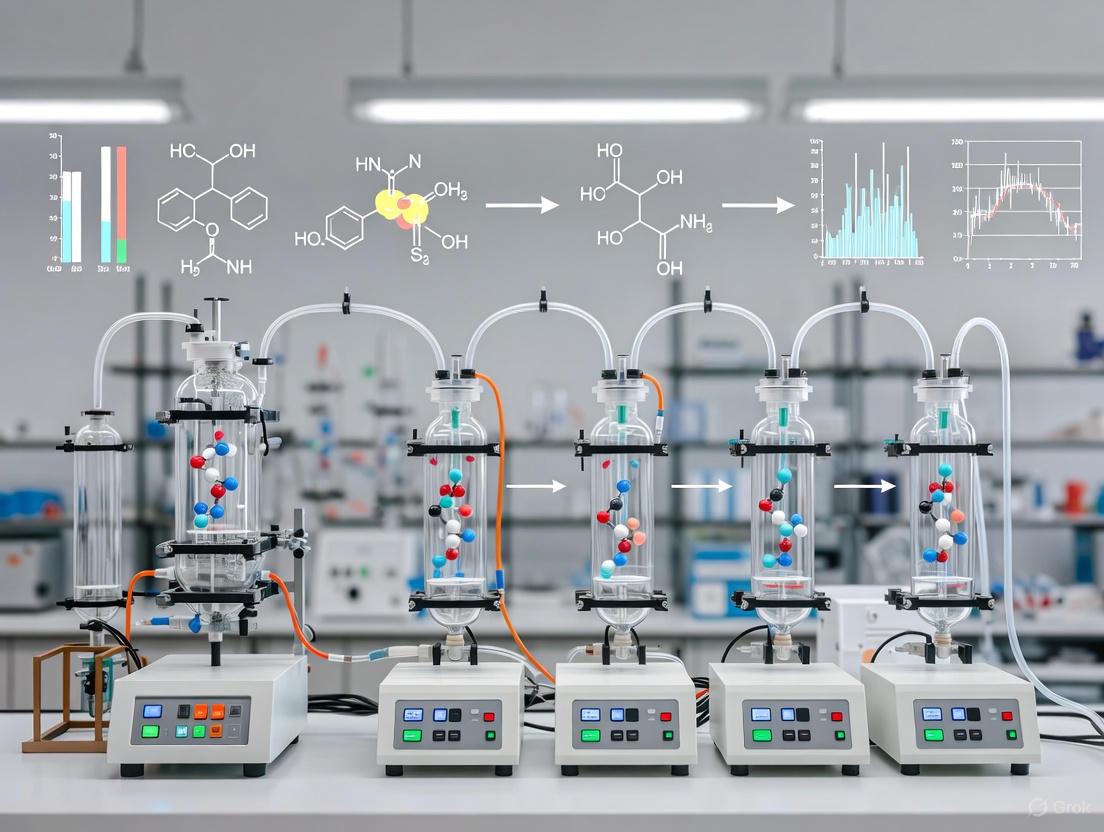
This article provides a comprehensive guide for researchers, scientists, and drug development professionals on selecting and implementing temperature control systems for parallel photoreactors.
Optimizing Parallel Photoreactor Temperature Control: A Guide for Reproducible Research and Drug Development
Abstract
This article provides a comprehensive guide for researchers, scientists, and drug development professionals on selecting and implementing temperature control systems for parallel photoreactors. It covers foundational principles of how temperature influences photochemical reaction kinetics and selectivity, explores methodological implementations of Peltier, liquid circulation, and air cooling systems, and offers troubleshooting strategies for common challenges like overheating and well-to-well variability. The content further delivers a comparative analysis of commercial systems based on recent validation studies, empowering scientists to achieve robust, reproducible, and scalable results in high-throughput experimentation and photoredox chemistry.
Why Temperature Control is Critical in Parallel Photochemistry
The Impact of Temperature on Photochemical Kinetics and Selectivity
In the field of synthetic photochemistry, the influence of temperature on reaction kinetics and selectivity is a critical, yet often underexplored, design parameter. While photochemical reactions are primarily driven by photon absorption, temperature plays a multifaceted role in modulating both reaction pathways and efficiencies. For researchers engaged in high-throughput experimentation with parallel photoreactors, understanding these thermal effects is not merely academic but fundamental to selecting appropriate temperature control systems and achieving reproducible, scalable results. This technical guide examines the complex interplay between temperature and photochemical processes, providing a scientific foundation for temperature control selection in parallel photoreactor research aimed at drug development and fine chemical synthesis.
The prevailing perception that photochemical reactions should simply be conducted at room temperature requires reassessment in light of emerging evidence. Although photon absorption initiates these processes, temperature exerts significant influence on subsequent ground-state reaction steps, catalyst stability, and competing reaction pathways. This document synthesizes current understanding to equip researchers with the principles and methodologies needed to strategically leverage temperature as a controlled variable in photochemical research.
Fundamental Principles of Temperature Effects in Photochemistry
Distinct Roles of Photons and Thermal Energy
Photochemical transformations operate under fundamentally different kinetic principles than thermally-driven reactions. Where traditional chemical kinetics follows the Arrhenius equation (Equation 1), with rate constants exponentially dependent on temperature, photochemical kinetics demonstrate a more complex relationship with both temperature and photon flux [1].
Equation 1: Arrhenius Equation for Thermal Reactions [ k = A e^{-Ea/(RT)} ] where ( k ) is the rate constant, ( A ) is the pre-exponential factor, ( Ea ) is the activation energy, ( R ) is the gas constant, and ( T ) is the absolute temperature [1].
For photochemical reactions, the rate constant depends on photon flux according to the relationship in Equation 2:
Equation 2: Photochemical Rate Dependence [ k = αI^β ] where ( I ) is the light intensity [W·m⁻²], and ( α ) and ( β ) are constants dependent on the photochemical system [1].
At lower light intensities (typically <200-250 W·m⁻²), the reaction rate increases linearly with light intensity (β = 1). However, as intensity increases further, the system eventually becomes photon-saturated (β = 0), where additional photons no longer enhance the reaction rate. This relationship highlights a crucial distinction: while thermal reactions respond exponentially to temperature changes, photochemical reactions can be finely tuned by modulating light intensity, with temperature playing a complementary role [1].
Temperature-Dependent Phenomena in Photochemical Systems
Despite the primary kinetic driver being photon absorption, temperature influences several aspects of photochemical processes:
Secondary Thermal Reactions: Following the initial photoexcitation, subsequent ground-state reactions often have thermal activation barriers. Lower temperatures may suppress undesirable side reactions that occur after the initial photon absorption, improving selectivity [1].
Catalyst Stability and Performance: Photocatalysts, particularly those based on transition metal complexes, may exhibit temperature-dependent degradation. Controlled temperatures can extend catalyst lifetime and maintain reaction efficiency over time [2] [3].
Diffusion-Limited Processes: At lower temperatures, reduced molecular diffusion can potentially limit reaction rates for processes where reagent transport to the excited catalyst becomes rate-determining [4].
Competing Pathways: Temperature can selectively favor one reaction pathway over another by differentially affecting activation energies, enabling strategic control over product selectivity [5].
The complex interplay between these factors necessitates careful experimental design to decouple thermal from photonic effects and optimize both reaction efficiency and selectivity.
Temperature Control Technologies for Parallel Photoreactors
Selecting appropriate temperature control methods is essential for maintaining optimal reaction conditions in parallel photoreactors. Different technologies offer distinct advantages depending on reaction requirements, scale, and operational constraints.
Table 1: Temperature Control Methods for Parallel Photoreactors
| Method | Temperature Range | Precision | Best Use Cases | Limitations |
|---|---|---|---|---|
| Peltier-Based Systems [6] | -20°C to +80°C [4] | High | Small-scale reactions requiring rapid temperature changes; high-throughput screening | Efficiency decreases at high temperature differentials; may need additional cooling for prolonged use |
| Liquid Circulation Systems [6] | -40°C to +150°C (fluid-dependent) | High | Large-scale or exothermic reactions; processes requiring uniform temperature distribution | Requires additional infrastructure; higher maintenance; increased operational complexity |
| Air Cooling Systems [6] | Ambient to moderate above-ambient | Moderate | Low-heat-load applications; cost-sensitive operations; simple photoreactions | Less effective for precise regulation or high-heat-load reactions; limited cooling capacity |
The selection of an appropriate temperature control system must align with specific research goals. For high-throughput drug discovery applications where rapid screening of diverse reaction conditions is prioritized, Peltier-based systems offer an optimal balance of precision and operational flexibility [6] [4]. For processes intended for eventual industrial scale-up, liquid circulation systems provide better pathway for translation despite higher initial complexity [6].
Advanced System Integration
Recent advancements in parallel photoreactor design have focused on integrating temperature control with optical systems to maintain performance across all reaction positions. Modern systems employ the same cooling concept and light source across all positions, ensuring remarkable reproducibility and enabling seamless transfer of reaction conditions from microscale (e.g., 96-position photoreactors) to flow reactors [4]. This interoperability is particularly valuable for pharmaceutical development workflows, where initial screening results must reliably predict performance at development scales.
Experimental Approaches for Temperature Optimization
High-Throughput Screening Methodologies
Advanced high-throughput experimentation (HTE) platforms enable systematic investigation of temperature effects alongside other reaction parameters. These approaches allow researchers to efficiently map the multidimensional reaction space where temperature interacts with catalyst concentration, solvent composition, and light intensity.
The FLOSIM (Flow Simulation) platform represents one such innovation, specifically designed to simulate flow reactor conditions in a high-throughput batch format [2]. This system utilizes 96-well glass plates with solution heights matching the internal diameter of flow reactor tubing, enabling direct translation of optimized conditions from screening to flow processes. The methodology includes:
- Path-Length Matching: Varying reaction volumes to maintain consistent light penetration depth [2]
- Thermal Uniformity: Implementing convective air temperature control across all positions [2]
- Parallel Processing: Simultaneously evaluating multiple temperature setpoints alongside other variables [2] [3]
This approach dramatically accelerates optimization cycles while conserving precious substrates, a critical consideration in early drug development where novel compounds may be available only in milligram quantities.
Protocol for Temperature Profiling in Photoreactions
The following detailed protocol enables systematic characterization of temperature effects on specific photochemical transformations:
Reaction Validation: Confirm baseline reaction performance under published conditions using a standard light source (e.g., Kessil PR160 LEDs) and room temperature [2].
Initial Temperature Screening:
- Prepare reaction mixtures in a temperature-controlled parallel photoreactor
- Set temperature control system (Peltier or liquid circulation) to a range from -20°C to +80°C in 10-20°C increments [4]
- Maintain constant light intensity and wavelength across all samples
- Use inert atmosphere (nitrogen or argon) for oxygen-sensitive reactions [2]
Residence Time Determination:
- Conduct time-course experiments at optimal temperature identified in step 2
- Collect samples at regular intervals for UPLC or HPLC analysis [3]
- Determine optimal reaction time balancing conversion and selectivity
Kinetic Parameter Extraction:
- Monitor reaction progress at multiple temperatures
- Determine apparent activation parameters for ground-state steps
- Identify temperature thresholds where selectivity profiles change
Scale-Up Validation:
This methodology enables researchers to identify not only the optimal temperature for a given transformation but also to understand the underlying thermal effects on reaction mechanism and selectivity.
Decision Framework for Temperature Control Selection
Selecting the appropriate temperature control system for parallel photoreactor applications requires consideration of multiple technical and practical factors. The following diagram outlines a systematic decision process:
Diagram 1: Temperature control selection for parallel photoreactors
This decision framework emphasizes that temperature control selection involves balancing multiple, sometimes competing, requirements. For drug development applications where reaction understanding and reproducibility are paramount, precision typically takes precedence over cost considerations.
The Scientist's Toolkit: Essential Research Reagents and Materials
Successful investigation of temperature effects in photochemistry requires specialized reagents and equipment. The following table details essential components for establishing a robust experimental platform.
Table 2: Essential Research Reagent Solutions for Temperature-Controlled Photochemistry
| Category | Specific Examples | Function/Application | Technical Notes |
|---|---|---|---|
| Photocatalysts [1] [2] | Iridium complexes (e.g., [Ir(dF(CF₃)ppy)₂(dtbbpy)]PF₆), Ruthenium complexes (e.g., Ru(bpy)₃Cl₂), Organic dyes (e.g., Eosin Y) | Light absorption and energy/electron transfer | Temperature sensitivity varies; ruthenium complexes generally more thermally stable |
| Temperature Control Systems [6] [4] | Peltier-based modules, Liquid circulation units with external chillers, Air cooling with heat sinks | Maintaining precise reaction temperatures | Peltier systems suitable for -20°C to +80°C range; liquid systems offer wider ranges |
| Light Sources [7] [1] | High-intensity LEDs (e.g., Kessil PR160), Xenon lamps, Laser systems | Providing specific wavelength irradiation | LED preferred for monochromaticity and minimal heat generation; intensity calibration critical |
| Reaction Vessels [2] [4] | Glass 96-well plates, Borosilicate vials, FEP tubing for flow reactors | Containing reaction mixtures while allowing light transmission | Material must withstand temperature extremes; glass plates enable high-throughput screening |
| Analytical Tools [2] [3] | UPLC/HPLC with PDA/MS detection, Inline IR/UV sensors, Integrating spheres for light measurement | Reaction monitoring and quantification | Real-time analysis enables kinetic studies; light measurement ensures reproducibility |
This toolkit represents the foundational components for conducting rigorous investigations into temperature effects on photochemical processes. Selection of specific reagents and equipment should align with the chemical transformations under investigation and the required throughput.
Temperature represents a powerful, yet nuanced, parameter in photochemical reaction engineering that directly impacts both kinetic profiles and selectivity outcomes. For researchers utilizing parallel photoreactors in drug development and fine chemical synthesis, strategic temperature control selection is not merely an engineering consideration but a fundamental aspect of reaction design and optimization. The methodologies and frameworks presented in this technical guide provide a systematic approach to leveraging thermal effects for improved photochemical processes.
As photochemical methodologies continue to gain adoption in pharmaceutical development, the integration of advanced temperature control with high-throughput experimentation platforms will be essential for accelerating reaction discovery and optimization. Future developments will likely focus on intelligent systems that dynamically adjust both temperature and light delivery in response to real-time reaction monitoring, further enhancing control over photochemical kinetics and selectivity.
Parallel photoreactors have emerged as transformative tools in modern organic synthesis, particularly impacting pharmaceutical and agrochemical research. These systems enable the simultaneous execution of multiple photochemical reactions, dramatically accelerating reaction optimization and compound library synthesis. However, their adoption in rigorous research and development settings is hampered by persistent challenges in reproducibility, scalability, and control over reaction selectivity. Among the critical factors influencing these challenges, temperature control stands as a paramount consideration that intersects with all three domains, affecting reaction kinetics, photon efficiency, and the formation of unwanted byproducts.
This technical guide examines the core challenges facing parallel photochemistry, with a specific focus on how temperature control systems serve as both a solution pathway and a critical selection criterion for research applications. By integrating experimental data, technical specifications, and practical protocols, we provide a framework for researchers to navigate the complex landscape of photoreactor technologies and their application in high-throughput experimentation (HTE) and drug development.
The Reproducibility Challenge in Photochemical Reactions
Reproducibility remains the most significant barrier to widespread adoption of photochemical methods in industrial applications. The fundamental issue stems from the complex interplay between multiple variables that are often inadequately controlled or reported in experimental protocols.
Critical Factors Impacting Reproducibility
According to a comprehensive head-to-head comparison of commercially available batch photoreactors, reproducibility issues primarily originate from inconsistencies in several key parameters [8]:
- Light Source Characteristics: Spectral output, intensity (W/m²), and photon flux vary significantly between systems and are often poorly characterized [9]
- Thermal Management: Reaction temperature fluctuates due to radiant heat from light sources and internal photophysical processes, leading to unintended thermal pathways [9]
- Geometric Considerations: Light penetration follows the Lambert-Beer law, with extinction limiting irradiation to superficial layers in many configurations [9]
- Mass Transfer Limitations: Inefficient mixing creates concentration gradients in reaction mixtures with high catalyst extinction coefficients [9]
A recent study evaluating eight commercial photoreactors revealed striking performance variations, with conversions ranging from <35% to approximately 65% for the same model reaction (amino radical transfer coupling) conducted for 5 minutes [8]. The observed discrepancies were directly correlated with inadequate temperature control and inhomogeneous irradiation patterns.
The Role of Temperature Control in Reproducibility
Temperature control emerges as a critical determinant of reproducibility, influencing both reaction kinetics and selectivity. Experimental data demonstrates that without precise thermal management, reaction temperatures can rise from ambient to 60-65°C within 30 minutes of irradiation, even in systems with external cooling jackets [8]. This thermal instability activates competing thermal pathways, resulting in inconsistent product distributions across reactor positions.
Advanced parallel photoreactors address this challenge through integrated recirculating liquid cooling systems that maintain stable internal temperatures. Systems equipped with such technology (e.g., photoreactors P6 and P7 in the comparative study) demonstrated superior well-to-well consistency, with standard deviations of 1.8-2.3% for product formation across 48 parallel reactions [8]. This represents a significant improvement over air-cooled or passively cooled systems, which exhibited positional variations up to ten times greater.
Scalability Considerations in Photochemical Processes
The transition from laboratory-scale discovery to production-scale synthesis presents unique challenges in photochemistry, where the relationship between reactor geometry and photon penetration dictates scalability strategies.
Scale-Up Pathways and Reactor Configurations
Photochemical scalability generally follows two primary pathways: numbered batch scale-up through parallel replication, and continuous flow processing [10]. Each approach presents distinct advantages and limitations:
Table 1: Scalability Pathways for Photochemical Processes
| Scale-Up Approach | Typical Scale Range | Advantages | Limitations |
|---|---|---|---|
| Lab-Scale Batch | mL scale | High-throughput screening, rapid optimization | Limited single-vessel volume, photon penetration depth constraints |
| Pilot-Scale Batch | dL to L scale | Process validation, parameter optimization | Heat transfer challenges, mixing limitations at larger volumes |
| Industrial Scale Batch | L to m³ scale | Commercial production | Significant engineering challenges, substantial capital investment |
| Continuous Flow | mL/min to L/h | Improved photon efficiency, better temperature control | Potential for channeling, requires continuous operation optimization |
Temperature Management Across Scales
The thermal management strategy must evolve with increasing reactor scale. At laboratory scale, air cooling or simple cooling jackets may suffice, but as reactor volume increases, more sophisticated approaches become necessary [10]:
- Lab Scale: For parallel microtiter plates, Peltier-based cooling or convective air cooling
- Pilot Scale: Recirculating chillers with heat exchangers capable of handling increased thermal loads
- Industrial Scale: Jacketed reactor systems with high-flow coolant circulation and temperature monitoring at multiple points
Side-loop photoreactors represent an effective industrial-scale solution, enabling photochemical reactions across temperature ranges from -20°C to +200°C with explosion-proof operation [10]. These systems facilitate commercial-scale production through optimized optical paths, high-flow recirculation, and sophisticated thermal monitoring.
Controlling Side Reactions Through Advanced Reactor Design
Unwanted byproduct formation represents a significant challenge in photochemical synthesis, often stemming from inadequate control of reaction parameters, with temperature being a primary contributor.
Thermal Pathways and Selectivity Loss
Comparative studies reveal that temperature instability directly correlates with increased byproduct formation. In the amino radical transfer coupling model reaction, photoreactors with insufficient temperature control produced significant side products (31-38% of reaction mixture), while systems with precise thermal management limited byproducts to approximately 10% [8]. This selectivity improvement stems from suppression of competing thermal pathways that become accessible at elevated temperatures.
The relationship between temperature control and selectivity follows predictable patterns across reaction classes:
- Photoredox Catalysis: Elevated temperatures promote background radical reactions uncoupled from photocatalytic cycles
- Energy Transfer Catalysis: Competing energy transfer pathways emerge at higher temperatures
- Electron Donor-Acceptor Complexes: Thermal dissociation reduces regioselectivity in transformations
Integrated Approaches to Selectivity Enhancement
Beyond temperature control, several complementary strategies enhance reaction selectivity in parallel photoreactors:
- Spectral Tuning: Matching LED emission spectra to photocatalyst absorption profiles minimizes direct substrate excitation [11]
- Photon Dosimetry: Integrated power meters enable precise delivery of photon equivalents, preventing over-irradiation [11]
- Optical Engineering: 3-point irradiation and broadband reflectors (e.g., aluminum) create homogeneous irradiation fields, reducing localized over-exposure [11]
Advanced parallel systems combine these features with precise thermal control to achieve selectivity improvements of >90% for challenging transformations such as C-H activation and C-C bond formations [12].
Experimental Protocols for Reactor Performance Evaluation
Robust evaluation of parallel photoreactor performance requires standardized experimental protocols that specifically address temperature control efficacy.
Temperature Mapping Procedure
Objective: Characterize thermal homogeneity across all reactor positions under operational conditions.
Materials:
- Parallel photoreactor system with temperature control features
- Multi-channel temperature data logger (±0.1°C accuracy)
- Thermocouples or resistance temperature detectors (RTDs)
- Calibration bath or block
- Transparent reaction simulant (e.g., aqueous dye solution)
Methodology:
- Calibrate all temperature sensors against reference standards
- Position sensors in representative reaction vessels across the reactor platform
- Fill all vessels with equal volumes of reaction simulant
- Initiate irradiation at target intensity with cooling system active
- Record temperature at 30-second intervals for 60 minutes
- Analyze spatial and temporal temperature variations
Acceptance Criteria: High-performance systems should maintain temperature stability within ±2°C of setpoint across all positions [8].
Photochemical Performance Validation
Objective: Quantify reproducibility and selectivity control using a standardized photochemical transformation.
Reaction Selection: Amino Radical Transfer (ART) coupling demonstrates sensitivity to both photonic and thermal parameters [8].
Table 2: Reaction Setup for Photoreactor Performance Validation
| Component | Specification | Function |
|---|---|---|
| Radical Precursor | Alkyl-Bpin (2.0 equiv) | Source of carbon-centered radicals |
| Aryl Halide | 4-Bromobenzotrifluoride (1.0 equiv) | Electron-accepting coupling partner |
| Nickel Precursor | Ni(COD)₂ (10 mol%) | Cross-coupling catalyst |
| Photocatalyst | Ir(ppy)₃ (2 mol%) | Photoinduced electron transfer mediator |
| Base | Morpholine (3.0 equiv) | Amine base for intermediate formation |
| Solvent | DMF (0.1 M concentration) | Reaction medium |
Procedure:
- Prepare stock solutions of all components under inert atmosphere
- Dispense equal volumes (0.5-2.0 mL) across reactor positions
- Initiate irradiation with continuous mixing
- Monitor reaction progression by LC/MS at 5, 15, and 30-minute intervals
- Quantify conversion, product formation, and byproduct generation
Performance Metrics:
- Well-to-well reproducibility: Standard deviation of product formation <3% across positions
- Temperature sensitivity: Product yield variation <5% over 15-35°C range
- Selectivity: Byproduct formation <15% of total product distribution [8]
The Scientist's Toolkit: Research Reagent Solutions
Implementing robust photochemical methodologies requires careful selection of specialized reagents and materials. The following table details essential components for parallel photoreactor applications:
Table 3: Essential Research Reagents and Materials for Parallel Photochemistry
| Reagent/Material | Function | Technical Considerations |
|---|---|---|
| Photocatalysts | Initiate photoinduced electron/energy transfer | Ir(ppy)₃, Ru(bpy)₃²⁺, organic dyes; match absorption to LED emission |
| Transition Metal Catalysts | Facilitate cross-coupling steps | Ni, Cu, Co complexes; ligand selection critical for selectivity |
| Radical Precursors | Source of reactive radical species | Alkyl-Bpin, Barton esters, Hantzsch esters; stability under irradiation |
| Solvents | Reaction medium | Acetonitrile, DMF, DMSO; UV transparency, redox stability |
| Calibration Standards | Photon flux quantification | Ferrioxalate actinometry, optical power meters |
| Temperature Sensors | Reaction monitoring | Fiber-optic probes, IR sensors; non-interfering with light path |
| LED Arrays | Light source | Narrow emission bands (FWHM 15-20 nm), liquid cooling compatibility |
Visualization of Experimental Workflows
The following diagrams illustrate key experimental workflows and decision processes for parallel photoreactor implementation.
Photoreactor Performance Evaluation Workflow
Temperature Control System Selection Logic
Temperature control represents a fundamental parameter in addressing the core challenges of reproducibility, scalability, and side-reaction control in parallel photoreactor applications. The experimental evidence demonstrates that systems with advanced thermal management capabilities consistently outperform alternatives through enhanced well-to-well reproducibility, superior selectivity control, and more predictable scale-up pathways.
When selecting parallel photoreactor systems for research applications, scientists should prioritize integrated liquid cooling systems capable of maintaining precise temperature control across all reaction positions. The combination of robust thermal management with optical optimization and automated workflow integration creates a foundation for reliable photochemical method development and implementation in drug discovery and development pipelines.
As photochemistry continues to evolve as a mainstream synthetic methodology, the integration of physics-informed machine learning approaches promises further optimization of the complex interplay between thermal, optical, and chemical parameters [13]. This advancement will ultimately accelerate the adoption of photochemical technologies across the pharmaceutical and fine chemical industries.
Temperature control is a critical parameter in modern photochemical research, directly influencing reaction kinetics, selectivity, and reproducibility. Within parallel photoreactors, which enable high-throughput experimentation for applications ranging from pharmaceutical development to material science, maintaining precise thermal conditions across all reaction vessels is particularly challenging yet essential for obtaining reliable and scalable data [6]. The selection of an appropriate temperature control method balances factors including heat load requirements, desired temperature range, precision, scalability, and operational costs.
This technical guide provides an in-depth examination of the three core temperature control technologies utilized in parallel photoreactors: Peltier-based systems, liquid circulation, and air cooling. Framed within the context of selecting optimal systems for parallel photoreactor research, this review equips scientists with the necessary knowledge to make informed decisions based on their specific experimental requirements, facilitating advancements in photoredox catalysis, photocatalytic screening, and related fields [4] [6].
Core Temperature Control Technologies
Peltier-Based (Thermoelectric) Systems
Operating Principle: Peltier devices operate on the thermoelectric effect, functioning as solid-state heat pumps that can both heat and cool without moving parts. When an electric current passes through the device, it transfers heat from one side to the other, creating a cold side and a hot side [6]. Effective cooling requires optimal heat rejection from the hot side, which can be achieved through traditional heat sinks or more advanced mechanisms like the self-capillary coated PVC membrane, which cools through water evaporation [14].
Key Components: A typical Peltier system comprises the Peltier module itself, a heat rejection mechanism for the hot side, a temperature sensor, and a feedback controller that adjusts the electrical current to maintain the setpoint [14] [6].
Performance Characteristics: Peltier systems offer precise temperature control and are ideal for small-scale reactions requiring rapid temperature changes [6]. Their efficiency, however, decreases at higher temperature differentials, and they may require additional cooling for prolonged use [6]. Recent research has demonstrated innovative approaches to enhance performance, such as a self-capillary ultra-thin membrane that improved hot-side heat rejection, allowing temperatures lower than ambient in some configurations [14].
Liquid Circulation Systems
Operating Principle: Liquid circulation systems regulate temperature by pumping a heat transfer fluid through a jacket or coil surrounding the reaction vessel. The fluid, which can be water or specialized thermal oils, is itself temperature-controlled by an external chiller or heater [6]. This method leverages the high heat capacity of liquids for efficient thermal transfer.
Key Components: These systems consist of a reservoir of heat transfer fluid, a circulation pump, a heat exchanger, fluid conduits, and a control unit. The choice of fluid depends on the required temperature range, with water suitable for near-ambient applications and oils for extended ranges [6].
Performance Characteristics: Liquid circulation offers excellent heat capacity and uniform temperature distribution, making it suitable for large-scale or highly exothermic reactions [6]. The HANU PX 9 parallel photoreactor and the Lighthouse reactor are examples of systems that can integrate liquid-based cooling to achieve temperatures as low as -30 °C to -20 °C [4] [15]. The primary limitations are increased system complexity, the need for additional infrastructure, and higher maintenance requirements compared to other methods [6].
Air Cooling Systems
Operating Principle: Air cooling relies on the convective heat transfer of ambient air to dissipate thermal energy. It often combines passive components with active mechanisms. Passive cooling involves heat sinks made from thermally conductive materials to draw heat away from the source. Active cooling uses strategically placed fans or blowers to force air over these hot surfaces, enhancing heat dissipation [16].
Key Components: A basic air-cooling system includes heat sinks, one or more fans, and optionally, a temperature sensor coupled with a controller that modulates fan speed based on real-time thermal readings [16].
Performance Characteristics: The main advantages of air cooling are its simplicity, low maintenance, and cost-effectiveness, as it avoids complications like coolant leaks or pump failures [16]. Its effectiveness is highly dependent on ambient temperature and may struggle with high heat loads, making it less suitable for precise temperature regulation in demanding applications [16] [6]. In photochemical reactors, it is commonly employed to maintain the LED light source at a stable operating temperature and for reactions that do not require sub-ambient cooling [16] [15].
Comparative Analysis of Technical Specifications
Table 1: Quantitative comparison of core temperature control methods for parallel photoreactors.
| Parameter | Peltier-Based Systems | Liquid Circulation Systems | Air Cooling Systems |
|---|---|---|---|
| Typical Temperature Range | -20 °C to +80 °C [4] [15] | -30 °C to +80 °C [15] | Ambient and above ambient [16] [6] |
| Cooling/Heating Rate | Rapid temperature changes [6] | Moderate, depends on fluid circulation rate | Slow, limited by heat capacity of air [16] |
| Temperature Uniformity | High | Excellent, best for large-scale [6] | Moderate, risk of hotspots [16] |
| Suitable Heat Load | Low to Moderate [6] | Moderate to High [6] | Low [6] |
| Energy Efficiency | Efficient at small scales and low ΔT [6] | More energy-intensive for high-capacity cooling [6] | High for low-heat-load applications [16] |
| Scalability | More suitable for laboratory-scale [6] | Preferred for large-scale operations [6] | Limited scalability [6] |
| Maintenance Needs | Low (no moving parts) [6] | Higher (pumps, fluid leaks, external chillers) [6] | Very Low (only fan maintenance) [16] |
| Initial Cost | Moderate | High [6] | Low [6] |
Table 2: Qualitative comparison of suitability for research applications.
| Criterion | Peltier-Based Systems | Liquid Circulation Systems | Air Cooling Systems |
|---|---|---|---|
| Best-Suited Applications | Small-scale, high-throughput screening requiring precise & rapid adjustments [4] [6] | Large-scale, exothermic reactions, or processes requiring very low temperatures [6] [15] | Low-heat-load reactions, cost-sensitive labs, LED heat sink management [16] [6] |
| Ease of Integration | Compact design, easily integrated into parallel systems [6] | Requires external chiller and fluid lines, more complex integration [6] | Simple to implement and maintain [16] [6] |
| Operational Complexity | Low to Moderate | High [6] | Very Low |
| Reproducibility | High, due to precise control [4] | High, due to stable temperature distribution [6] | Lower, susceptible to ambient conditions [16] |
Selection Workflow and System Integration
The following diagram illustrates the decision-making process for selecting an appropriate temperature control method, based on key criteria derived from the research requirements.
Advanced Experimental Protocols & Methodologies
Protocol: Evaluating a Novel Peltier Heat Rejection Mechanism
Objective: To experimentally assess the performance of an innovative self-capillary coated PVC membrane for enhanced heat rejection on the hot side of a Peltier module under both transient and steady-state conditions [14].
Methodology:
- Apparatus Setup: Configure a Peltier refrigerator module. Integrate the self-capillary ultra-thin (0.1 mm) water-attracting coated PVC membrane to the hot side. Install temperature sensors to monitor hot-side, cold-side, and ambient temperatures.
- Comparative Testing: Compare the SCCP against a traditional aluminum heat sink of equivalent base dimensions. Test both configurations under identical voltage inputs and ambient conditions.
- Data Collection: Record temperature data over time to analyze transient behavior. Measure steady-state temperatures for both the hot and cold sides across a range of input voltages. Systematically vary the ambient temperature to assess performance sensitivity.
- Performance Metrics: Calculate the key metrics, including the maximum temperature differential achieved and the coefficient of performance. Note the hot-side temperature relative to ambient [14].
Expected Outcome: The SCCP method is expected to demonstrate superior performance, with the hot side temperature being cooler than both the traditional heatsink mode and the ambient temperature in most cases. It should also show reduced sensitivity to ambient temperature fluctuations [14].
Protocol: High-Throughput Screening in a Temperature-Controlled Parallel Photoreactor
Objective: To conduct a high-throughput screening campaign for photoredox C–C and C–N coupling reactions on a micromolar scale using a temperature-controlled modular photoreactor [4].
Methodology:
- Reactor Configuration: Utilize a 96-position parallel photoreactor equipped with a uniform cooling concept and identical light sources. Ensure the reactor can precisely control the internal temperature of irradiated reaction mixtures from -20 °C to +80 °C.
- Reaction Setup: Prepare reaction mixtures in microtiter plates at scales as little as 2 µmol. Use a liquid handling system to transfer mixtures to the photoreactor vessels.
- Temperature Control: Engage the reactor's Peltier-based temperature control system to maintain a constant, user-defined setpoint for the duration of the reaction.
- Execution & Analysis: Initiate simultaneous irradiation of all 96 positions. After the reaction time, quench the reactions and analyze yields and conversion rates using analytical techniques.
- Scale Transfer: Seamlessly transfer the optimized reaction conditions from the microscale batch photoreactor to a flow photoreactor that utilizes the same cooling concept [4].
Expected Outcome: Achieve remarkable reproducibility across all positions in the batch photoreactor and successful scaling of the reaction conditions to flow systems, demonstrating the critical role of precise temperature control in photoredox reaction development [4].
The Scientist's Toolkit: Essential Research Reagent Solutions
Table 3: Key materials and components for temperature control systems in photoreactor research.
| Item | Function/Description | Application Context |
|---|---|---|
| Peltier Module | Solid-state heat pump for precise cooling/heating [6]. | Core component of thermoelectric temperature control systems in compact reactors. |
| Self-Capillary Coated PVC (SCCP) | Innovative membrane for passive heat rejection via water evaporation [14]. | Enhances Peltier cooler performance as a powerful alternative to common heatsinks. |
| Heat Transfer Fluid | Liquid medium for transporting thermal energy [6]. | Used in liquid circulation systems; choice dictates operational temperature range. |
| Aluminum Heat Sink | Passive component with fins to maximize surface area for heat dissipation [16]. | Used in air cooling and Peltier systems to reject heat to the surrounding air. |
| Temperature Sensor | Monitors real-time temperature for feedback control [16]. | Essential for all closed-loop temperature control systems. |
| Microcontroller | Processes sensor data and adjusts cooling/heating power accordingly [16]. | The "brain" of an automated temperature control system. |
The selection of a temperature control method for parallel photoreactors is a multifaceted decision that directly impacts the success and reproducibility of photochemical research. As detailed in this guide, each technology—Peltier, liquid circulation, and air cooling—occupies a distinct performance niche.
Peltier-based systems offer an excellent balance of precision, compact size, and rapid response for small to medium-scale high-throughput screening [6]. Liquid circulation remains the most robust solution for managing high heat loads and achieving very low temperatures, which is crucial for scaling up promising reactions [6] [15]. Air cooling provides a simple, cost-effective, and low-maintenance option for applications where precise sub-ambient cooling is not required [16] [6].
Future advancements will likely focus on hybrid systems and material innovations, such as the self-capillary PVC membrane for Peltier coolers [14], to push the boundaries of efficiency and capability. By carefully weighing reaction requirements against the technical specifications and trade-offs outlined herein, researchers can strategically select the optimal temperature control technology to accelerate and enhance their photochemical research outcomes.
Implementing Temperature Control Systems: From Peltier to Liquid Circulation
Within the field of modern chemical research, parallel photoreactors have become indispensable tools for high-throughput screening and optimization of photochemical reactions. The selection of an appropriate temperature control method is a critical factor influencing reaction kinetics, selectivity, and product yield, making it vital for achieving reproducible and efficient results [6]. Among the available technologies, Peltier-based thermoelectric systems have emerged as a leading solution for small-scale reactions, offering a combination of precision, flexibility, and solid-state reliability that is particularly suited to laboratory research and drug development [6] [17]. This whitepaper provides an in-depth technical examination of Peltier-based temperature control, detailing its fundamental principles, performance characteristics, and practical implementation within parallel photoreactors.
Fundamental Principles of Peltier Cooling
Thermoelectric cooling operates on the Peltier effect, a phenomenon wherein heat is absorbed or released when an electric current passes through the junction of two dissimilar materials [18] [19]. In modern Peltier modules, these materials are typically n-type and p-type semiconductors, fabricated from compounds such as Bismuth Telluride (Bi₂Te₃) [18] [20].
The fundamental building block of a thermoelectric cooler (TEC) is a "couple," consisting of one n-type and one p-type semiconductor pellet. These pellets are electrically connected in series via metal interconnects (typically copper) and sandwiched between two ceramic plates that provide structural rigidity and electrical insulation [18] [20]. When a direct current is applied, charge carriers (electrons in n-type and holes in p-type) absorb thermal energy from one ceramic substrate, creating a cold side. The carriers then transport and release this energy on the opposite substrate, creating a hot side [18]. The direction of heat pumping is reversed by switching the polarity of the applied current, enabling the same module to provide both cooling and heating [21] [18].
The following diagram illustrates the internal structure and operating principle of a typical Peltier module.
Figure 1: Peltier Module Structure and Operating Principle
The amount of heat absorbed on the cold side ((Qc)) can be calculated as: [Qc = \alpha Tc I - \frac{1}{2}I^2R] where (\alpha) is the material-specific Seebeck coefficient, (Tc) is the cold-side temperature, (I) is the current, and (R) is the module's internal electrical resistance [19].
Advantages for Small-Scale Reactions
Peltier-based systems offer a distinct set of advantages that make them particularly suitable for small-scale photoreactor applications in research and development.
Precision and Responsive Control
Thermoelectric modules enable highly precise temperature control, with tolerances better than ±0.1°C achievable [21] [18]. This exceptional stability is crucial for reproducible photochemical research where temperature fluctuations can significantly impact reaction kinetics and product distribution. The solid-state nature of Peltier devices also allows for rapid response times, enabling nearly instantaneous temperature changes essential for studying fast reaction dynamics or implementing complex temperature ramps [17].
Compact Solid-State Design
The compact, solid-state construction of Peltier modules, with no moving parts, translates to several practical benefits for laboratory environments. These systems demonstrate high reliability with mean time between failures (MTBF) exceeding 100,000 hours, minimal maintenance requirements, and silent operation [21] [20]. Their operational orientation independence and resilience to harsh conditions make them versatile for integration into various reactor configurations [18] [17].
Operational Flexibility
A single Peltier module can provide both heating and cooling functions simply by reversing current polarity, eliminating the need for separate heating and cooling systems [18]. This capability for rapid temperature cycling between heating and cooling phases within a single experiment provides researchers with unprecedented flexibility in reaction optimization [21]. Furthermore, Peltier systems can achieve sub-ambient cooling, which is particularly valuable for controlling exothermic reactions or studying temperature-sensitive photochemical processes [20].
Quantitative Performance Analysis
The cooling performance and efficiency of a Peltier module are characterized by several key parameters that vary significantly with operating conditions.
Efficiency Metrics and Performance Trade-offs
The cooling efficiency of a Peltier element is expressed by the Coefficient of Performance (COP), defined as: [COPc = \frac{Qc}{P{input}}] where (Qc) is the heat absorbed from the cold side and (P_{input}) is the input electrical power [19]. Experimental studies demonstrate that COP is not constant but peaks at specific operating conditions. Research using the TEC1-12706 module shows maximum cooling efficiency (COP~3) occurs at relatively low current (0.5 A) and voltage (4-5 V), with significantly reduced efficiency at higher currents due to increased Joule heating losses [19].
Table 1: Performance Characteristics of a Typical TEC1-12706 Module Under Various Operating Conditions
| Current (A) | Voltage (V) | Temperature Difference ΔT (°C) | Cooling Capacity Qc (W) | COP (Cooling) | Recommended Application |
|---|---|---|---|---|---|
| 0.5 | 4-5 | 20-30 | ~5 W | ~3 (Max) | High-efficiency precision control |
| 1.0 | 3-5 | 30-40 | ~15 W | 1.5-2.0 | Balanced performance |
| 2.0 | 8-10 | 40-50 | ~25 W | <1.0 | Maximum cooling capacity |
| 3.0 | >10 | 50-60 | ~35 W | <0.5 | High heat load (reduced efficiency) |
Impact of System Scaling on Efficiency
For applications requiring higher cooling capacities, multiple Peltier modules can be deployed. However, system design must balance efficiency with capital cost. Experimental studies on multi-module air coolers reveal that while increasing module count (for a fixed total input power) enhances overall COP by reducing the voltage allocated to each module, this relationship is not linear [22]. One study found that while increasing from 2 to 4 modules reduced cooling cost by 100%, further increasing to 6 modules provided only an additional 35% improvement, suggesting an optimal point beyond which diminishing returns occur [22].
Table 2: Comparative Analysis of Temperature Control Methods for Parallel Photoreactors
| Parameter | Peltier-Based Systems | Liquid Circulation | Air Cooling |
|---|---|---|---|
| Temperature Range | -20°C to +70°C [17] | Broad (dependent on fluid) | Limited to above ambient |
| Temperature Stability | ±0.1°C [21] | ±0.5°C (typical) | >±1°C |
| Response Time | Very Fast (seconds) [17] | Moderate (minutes) | Slow (minutes) |
| Cooling/Heating Mode | Single device (reversible) [18] | Separate units typically needed | Cooling only |
| Scalability | Excellent for small scale [6] | Excellent for large scale [6] | Limited |
| Energy Efficiency (COP) | Low to moderate (decreases with ΔT) [19] | High at large scales [6] | Low |
| Maintenance | Low (solid-state) [21] | High (pumps, fluid, leaks) [6] | Very Low |
| Initial Cost | Moderate | High | Low |
| Best Suited For | Small-scale, high-precision, rapid cycling [6] | Large-scale, high heat-load [6] | Low heat-load, cost-sensitive applications [6] |
Implementation and Experimental Protocols
Successful integration of Peltier-based temperature control into parallel photoreactors requires careful attention to system design, component selection, and operational protocols.
System Architecture and Integration
A typical Peltier-based cooling unit for photoreactors consists of the Peltier module sandwiched between a metal block (often aluminum) that interfaces with the reaction vessel and a finned heat sink attached to the hot side [20]. Thermal interface materials (TIMs), such as thermal grease, are applied at both interfaces to minimize thermal contact resistance. The heat sink must be appropriately sized for the heat load and may employ forced air or liquid cooling depending on the application requirements [20]. The following diagram illustrates a typical system architecture for integrating Peltier cooling into a photoreactor setup.
Figure 2: Peltier-Based Cooling System Integration
Control System Design
Precise temperature regulation requires a closed-loop control system comprising temperature sensors (e.g., thermocouples or RTDs) monitoring both the reaction vessel and hot-side temperature, and a PID controller that modulates the current supplied to the Peltier module [20]. To ensure stable long-term operation and prevent thermal runaway, the operating current should typically remain below 70% of the module's maximum rated current, as joule heating effects become increasingly significant at higher currents [20].
Experimental Measurement Protocol
For researchers characterizing Peltier performance, the following methodology provides reliable results:
- Setup Configuration: Mount the Peltier module between cold block and heat sink with TIM. Attach temperature sensors to both ceramic plates [19].
- Constant Current Testing: Apply fixed DC currents (e.g., 0.5A, 1.0A, 2.0A) and record voltage, temperatures, and time to reach steady state [19].
- Data Acquisition: Use microcontroller systems (e.g., ARDUINO) for automated data collection of voltage, current, and temperatures at regular intervals [19].
- Parameter Calculation: Compute internal resistance ((R = V/I)) and COP at various operating points using measured heat absorption and input power [19].
- Performance Mapping: Generate curves for COP vs. voltage, (Q_c) vs. current, and ΔT vs. current to identify optimal operating conditions for specific application requirements [19].
The Scientist's Toolkit: Essential Research Reagents and Materials
Table 3: Key Components for Peltier-Based Photoreactor Temperature Control Systems
| Component / Reagent | Technical Function | Application Notes |
|---|---|---|
| Bismuth Telluride (Bi₂Te₃) Modules | Semiconductor thermoelectric material providing Peltier effect | High zT at room temperature; optimal for ~-20°C to +80°C range [18] |
| Thermal Interface Materials (TIM) | Minimize thermal contact resistance between surfaces | Thermal greases/pads critical for performance; apply thin, even layers [20] |
| Heat Sink Assemblies | Dissipate rejected heat to environment | Finned aluminum with forced air for moderate loads; liquid cooling for high power [20] |
| PID Temperature Controllers | Maintain precise setpoint temperature through feedback control | Enable ±0.1°C stability; require proper tuning [21] [20] |
| Arduino/Raspberry Pi Microcontrollers | Automated data acquisition and system control | Open-source platforms for custom experimental control setups [19] |
Peltier-based thermoelectric systems offer an unparalleled combination of precision, flexibility, and reliability for temperature control in small-scale parallel photoreactors. Their compact solid-state design, rapid response characteristics, and ability to provide both heating and cooling make them particularly suited for research environments where experimental conditions require exacting control and frequent modification. While their energy efficiency decreases at higher temperature differentials and they are less suited for large-scale industrial applications with substantial heat loads, their performance characteristics align exceptionally well with the requirements of laboratory-scale photochemical research, drug development, and reaction optimization. By understanding the fundamental operating principles, performance trade-offs, and proper implementation protocols detailed in this whitepaper, researchers can effectively leverage Peltier technology to enhance reproducibility and outcomes in their photochemical investigations.
In the field of parallel photoreactor research, precise temperature control is a fundamental requirement for achieving reproducible and efficient results. Among the available methods, liquid circulation systems stand out for their ability to handle high-heat-load applications and provide a scalable solution for both laboratory and industrial-scale operations. This whitepaper provides an in-depth technical examination of liquid circulation systems, detailing their core performance metrics, experimental validation methodologies, and essential components. Framed within the broader context of selecting temperature control methods for parallel photoreactors, this guide equips researchers and drug development professionals with the data and protocols necessary to implement these robust systems effectively [6].
Performance Metrics for Liquid Circulation Systems
Quantitative metrics are vital for evaluating, specifying, and operating liquid circulation systems. The key parameters can be categorized into thermal performance, energy efficiency, and fluid dynamics.
Table 1: Thermal Performance and Stability Metrics
| Metric | Typical Target Value | Implication |
|---|---|---|
| Temperature Gradient (ΔT) | ≤65°C under full load [23] | Indicates uniform heat dissipation and identifies hot spots. |
| Coolant Inlet/Outlet ΔT | 10-20°F (5.5-11°C) [24] | Assesses heat transfer efficiency; deviations suggest issues like fouling. |
| Process Temperature Stability | Minimal fluctuations [24] | Critical for product quality and equipment reliability in sensitive processes. |
| Return Temperature Index (RTI) | Favorable value against design specs [24] | Evaluates effectiveness of heat capture and removal from the cooled environment. |
Table 2: Energy Efficiency and Fluid Dynamic Metrics
| Metric | Formula/Calculation | Significance |
|---|---|---|
| Coefficient of Performance (COP) | Thermal Energy Output / Electrical Energy Input [24] | Measures effectiveness of heat pumps and chillers; higher values indicate better efficiency. |
| kW per Ton of Cooling | Energy Consumption (kW) / Cooling Capacity (Ton) [24] | Benchmarks chiller efficiency; values of 0.5-0.6 kW/Ton are considered efficient. |
| Flow Rate Stability | Minimal oscillation under changing thermal conditions [23] | Consistent flow is the "lifeline" of cooling; deviations predict maintenance needs. |
| Pressure Gradient | Differential pressure across the cooling loop [23] | Monitored to identify clogged filters, air pockets, or pump degradation. |
Experimental Protocols for System Validation
Rigorous experimental validation is essential to ensure a liquid circulation system meets the required performance and safety standards. The following protocols outline key tests.
Thermal Stability and Heat Rejection Test
This protocol validates the system's ability to manage heat under maximum load.
- Objective: To verify thermal stability and measure the heat rejection rate of the system under full load.
- Pre-Test Setup: Strategically place the load bank unit or reactor, ensuring proper connections to the power source and coolant lines. Activate the cooling circuit and check for consistent flow rate and pressure [23].
- Procedure:
- Methodically apply electrical or chemical load to the system in incremental steps.
- Continuously monitor and document coolant inlet and outlet temperatures to calculate the heat rejection rate.
- Use IR thermography to identify and locate any hot spots across critical components, ensuring the temperature gradient (ΔT) remains within the target specification (e.g., ≤65°C) [23].
- Data Analysis: Consistent thermal performance indicates proper heat dissipation design. Fluctuating temperatures may reveal cooling distribution problems or insufficient flow rates [23].
Flow Rate and Pressure Consistency Measurement
This protocol assesses the hydrodynamic performance of the cooling loop.
- Objective: To evaluate the consistency of flow dynamics and pressure under operational conditions.
- Procedure:
- Use calibrated flow meters and pressure transducers to measure flow velocity distribution and pressure gradients across the cooling loop.
- Record these parameters while the system is under a changing thermal load to observe stability indicators, such as oscillation amplitude [23].
- For aerated systems, a momentum transfer model using gas-liquid separation flow can be employed to estimate the internal liquid circulation flow rate [25].
- Data Analysis: Deviations from design specifications in flow or pressure often indicate developing problems like clogged filters, air pockets, or pump degradation [23].
Leak Detection and Safety Validation
Managing water near electrical or sensitive laboratory equipment requires rigorous safety protocols.
- Objective: To ensure the integrity of all fluid connections and validate safety systems.
- Procedure:
- Conduct pre-test inspections of all connections, hoses, and fittings using systematic gas leak detection methods [23].
- Perform a pressurized test of the fluid circuit with an inert gas or liquid at or above the maximum expected operating pressure.
- Verify that automated leak sensors and emergency shutdown procedures are functional. These should trigger immediate shutdown, cutting power and activating flow diversion valves in the event of a leak [23].
- Data Analysis: The system is deemed safe for operation only if no leaks are detected and all safety interlocks function as designed.
System Architecture and Workflow
The following diagram illustrates the core components and operational logic of a typical liquid circulation system integrated with a parallel photoreactor setup.
System Control Logic
The diagram above shows a closed-loop system where a circulation pump moves coolant from a reservoir through the parallel photoreactor bank, where it absorbs reaction heat. The heated coolant then passes through a heat exchanger to reject the waste heat before being recirculated. A control system uses real-time data from temperature sensors to modulate the pump and maintain precise thermal stability [23] [6].
The Scientist's Toolkit: Essential Research Reagent Solutions
Implementing and experimenting with liquid circulation systems requires specific components and materials. The following table details essential items for a typical setup.
Table 3: Essential Components for a Liquid Circulation System
| Item | Function |
|---|---|
| Liquid-Cooled Load Bank | Simulates real-world electrical loads to validate the performance and reliability of the cooling system under controlled, demanding conditions [23]. |
| Heat Transfer Fluid (e.g., Water, Specialized Coolant) | The medium that absorbs and transports heat from the reaction site to the heat exchanger; selection depends on temperature range and chemical compatibility [6]. |
| Circulation Pump | Provides the mechanical energy to move the heat transfer fluid through the closed-loop system at a defined flow rate and pressure [26]. |
| Flow Meters & Pressure Transducers | Sensors that provide critical real-time data on flow velocity distribution and pressure gradients for performance monitoring and system control [23]. |
| IR Thermography Camera | A non-contact tool for identifying and locating hot spots across critical components, revealing potential failure points and uneven cooling distribution [23]. |
| Leak Detection Sensors | Automated sensors that monitor for coolant leaks and can trigger immediate system shutdown to protect sensitive electrical and laboratory equipment [23]. |
Liquid circulation systems represent a robust and scalable temperature control solution, particularly suited for high-heat-load applications in parallel photoreactors. Their superior heat capacity and uniform temperature distribution ensure reaction reproducibility and system reliability, which are paramount in research and drug development. By leveraging the performance metrics, experimental protocols, and component knowledge outlined in this guide, scientists and engineers can make informed decisions, optimize their systems, and successfully scale photochemical processes from laboratory research to industrial production.
In scientific research, particularly in photoredox chemistry and photocatalysis, precise temperature control is fundamental to achieving reproducible and reliable results. The selection of a cooling system is a critical decision that balances experimental requirements with practicality and cost. For many low-heat applications, air cooling emerges as a robust, straightforward, and economical solution. This guide details the role of air cooling within the context of parallel photoreactor systems, providing researchers with the data and methodologies needed to make an informed selection. It demonstrates that for a significant range of experimental conditions, the simplicity of air cooling does not come at the expense of performance, but rather enhances operational efficiency and accessibility.
Air vs. Liquid Cooling: A Technical Comparison
The choice between air and liquid cooling hinges on the specific thermal load and stability demands of the application. The following table summarizes the core distinctions, highlighting the niche where air cooling excels.
Table 1: Comparative Analysis of Air-Cooled and Water-Cooled Systems for Research Equipment
| Feature | Air-Cooled Systems | Water-Cooled Systems |
|---|---|---|
| Cooling Capacity | Suitable for low to moderate thermal loads (e.g., lasers under 100W) [27]. | Superior for high thermal loads and continuous, high-power operations (e.g., lasers above 100W) [28] [27]. |
| Temperature Stability | Adequate for many chemical reactions; less efficient at maintaining consistent temperatures in very high-power situations [28]. | Superior, precise temperature control, ideal for applications where minimal fluctuation is critical [28] [4]. |
| Initial Cost & Complexity | Lower initial cost and simpler design with no need for pumps, chillers, or complex plumbing [28] [29] [27]. | Higher upfront investment and greater system complexity due to additional components like pumps and heat exchangers [28] [30]. |
| Maintenance | Reduced maintenance; no risks of leaks, corrosion, or scaling associated with water circuits [28] [29]. | Requires maintenance of water circuits, including monitoring for leaks, water quality, and pump operation [28]. |
| Portability & Space | Compact and portable, ideal for installations with limited space or for flexible lab setups [28] [27]. | Requires additional space for pumps, pipes, and chillers, limiting portability [28]. |
| Environmental Impact | No water consumption, making it advantageous in areas with water scarcity [29]. | Consumes water (in open-loop systems) and may require water treatment chemicals [29]. |
| Typical Research Applications | Low-power solid-state lasers for marking/engraving [27], parallel photoreactor screening at micro- and millimolar scales [4], UV-LED photoreactors for dye degradation [31]. | High-power lasers for cutting/welding [28], high-intensity photoredox reactions requiring exact temperature control [4], high-density data center computing [30]. |
Selecting the Right Cooling System for Your Reactor
The decision between air and liquid cooling is not merely a binary choice but a strategic selection based on technical parameters. The following diagram outlines a logical workflow to guide researchers through this decision-making process.
Diagram 1: A logical workflow for selecting a cooling system for research equipment, based on power, stability, and cost requirements.
Air Cooling in Action: A Photocatalytic Degradation Experiment
To illustrate the practical application and effectiveness of air cooling in a research setting, we can examine a protocol for photocatalytic dye degradation using a UV-LED photoreactor.
Experimental Protocol: Degradation of Rhodamine B Using a UV-LED Photoreactor
This methodology is adapted from research demonstrating high-efficiency degradation using an air-cooled UV-LED system [31].
- Reactor Setup: Utilize a photoreactor equipped with a UV-LED source emitting at a wavelength of 365 nm. The reactor should be constructed with a black acrylic body to block UV light and include an integrated aluminum heatsink and cooling fan for air-based thermal management [31].
- Reaction Mixture Preparation: In a glass reactor vessel, prepare a 17 ppm aqueous solution of Rhodamine B (Rh B). Add 100 mg of zinc oxide (ZnO) photocatalyst to the solution [31].
- Initial Sampling: Prior to irradiation, withdraw a small sample (e.g., 3-5 mL) from the reaction mixture. This serves as the "time zero" (t₀) reference.
- Initiation of Photoreaction: Place the reactor vessel inside the photoreactor, ensuring consistent distance between the light source and the solution. Start the UV-LED lamp and simultaneously begin continuous magnetic stirring of the mixture.
- Temperature Monitoring: Monitor the solution temperature throughout the experiment using the reactor's integrated temperature sensor to confirm the air-cooling system maintains a stable operational temperature [31].
- Sampling and Analysis: At regular intervals (e.g., every 20-30 minutes), withdraw samples from the reaction mixture. Centrifuge or filter each sample to remove the solid ZnO catalyst.
- Quantification: Analyze the clarified supernatant using UV-Vis spectroscopy. Measure the absorbance at the characteristic peak of Rh B (around 554 nm). Calculate the degradation efficiency at each time point (t) using the formula: Efficiency (%) = [(A₀ - Aₜ) / A₀] × 100 where A₀ is the initial absorbance and Aₜ is the absorbance at time t.
- Completion: Under these optimal conditions, the experiment typically achieves a degradation efficiency of over 99% within 120 minutes [31].
The Scientist's Toolkit: Essential Materials for Photocatalytic Dye Degradation
Table 2: Key research reagents and equipment for the featured photocatalytic degradation experiment.
| Item | Function / Relevance |
|---|---|
| UV-LED Photoreactor (365 nm) | The core light source. Its air-cooled design ensures stable operation without the complexity of liquid cooling systems [31]. |
| Rhodamine B (Rh B) | A model organic dye (pollutant) used to evaluate the photocatalytic efficiency of the system [31]. |
| Zinc Oxide (ZnO) | A semiconductor photocatalyst. When activated by UV light, it generates reactive oxygen species that mineralize the dye molecules [31]. |
| Borosilicate Glass Reactor | A transparent vessel that allows for optimal transmission of UV light to the reaction mixture. |
| UV-Vis Spectrophotometer | The analytical instrument used to quantify the concentration of Rh B remaining in solution by measuring its light absorbance [31]. |
| Magnetic Stirrer | Provides continuous mixing of the reaction mixture to ensure uniform irradiation and suspension of the catalyst [31]. |
Air cooling stands as a profoundly effective engineering solution for a wide spectrum of scientific research applications. Its inherent advantages in cost, maintenance, and operational simplicity make it the optimal choice for systems with low to moderate thermal loads, such as low-power lasers and many modern LED-based photoreactors. By providing a clear framework for selection and a detailed experimental example, this guide empowers researchers to confidently implement air-cooling solutions, thereby streamlining their workflows and focusing resources on core scientific discovery.
The integration of parallel photoreactors with automated laboratory systems is transforming photochemical research, enabling unprecedented levels of reproducibility, efficiency, and data quality in the development of new chemical entities, particularly in pharmaceutical applications. This technical guide examines the critical components, workflows, and experimental protocols for establishing robust end-to-end automated photochemical platforms.
The Imperative for Automation in Photochemistry
Photoredox catalysis has emerged as a powerful tool for constructing complex molecular architectures, yet its adoption in high-throughput research and development has been hampered by significant reproducibility challenges. Factors including light intensity, spectral output, light path length, and reaction temperature vary considerably across different reactor systems and significantly impact data consistency and yields [8]. These challenges are compounded in high-throughput experimentation (HTE) where uniformity across multiple reaction positions is essential.
Automation addresses these limitations by reducing human intervention, thereby minimizing operational variability. The implementation of end-to-end automated workflows enhances reproducibility, productivity, and the quality of acquired data, which is crucial for accelerating discovery cycles in medicinal chemistry [8]. Furthermore, automation enables the generation of high-quality, consistent data sets that are essential for developing predictive synthesis models [8].
Core Components of an Automated Photochemistry Workflow
An integrated automated platform for parallel photochemistry consists of several key hardware and software subsystems that work in concert to enable a seamless, user-independent operation from reaction setup to analysis.
Hardware Integration
- Liquid Handling Systems: Automated dispensers equipped with disposable tips for precise reagent addition. These systems handle the transfer of pre-prepared stock solutions to reaction vials arranged in standard SBS-format plates [8].
- Temperature-Controlled Photoreactors: Advanced parallel photoreactors featuring integrated recirculating liquid cooling systems are paramount. These reactors maintain precise internal temperatures (e.g., 15-16 °C), preventing undesired thermal side reactions and ensuring remarkable reproducibility across all positions [4] [8]. Examples include the Lumidox 48 Well TCR (P6) and TT-HTE 48 Photoreactor (P7), which demonstrated superior well-to-well consistency in comparative studies [8].
- Agitation and Stirring: Integrated systems such as magnetic vertical tumble stirrers ensure homogeneous mixing of reaction mixtures during irradiation [8].
- Process Analytical Technology (PAT): Inline or online analytical instruments are integrated for real-time monitoring of critical reaction parameters and product quality, providing continuous, non-destructive data collection [32].
Software and Control Systems
- Integrated Control Interfaces: Software that enables users to program multiple reaction conditions, set irradiation parameters, and monitor reactions in real-time [33].
- Data Acquisition Modules: Systems that automatically record temperature, light intensity, and reaction progress for subsequent analysis and optimization [33].
- Interoperability Standards: Modern systems support APIs and standard data formats, allowing seamless connection with Laboratory Information Management Systems (LIMS) and other automation tools, thereby streamlining the entire workflow from reaction setup to data analysis [33].
Quantitative Performance Analysis of Photoreactor Platforms
The selection of an appropriate photoreactor is critical for the success of an automated workflow. A comprehensive head-to-head comparison of commercially available batch photoreactors evaluated their performance based on conversion, selectivity, byproduct formation, and well-to-well consistency [8].
Table 1: Performance Comparison of Commercial Batch Photoreactors in a Model Amino Radical Transfer (ART) Coupling Reaction
| Commercial Name | Reactor Code | Wells | Cooling System | Avg. Temp. after 5 min | Conversion of 1 | Product 3 Formation | Well-to-well Consistency (Std. Dev.) |
|---|---|---|---|---|---|---|---|
| Penn PhD Photoreactor M2 | P1 | 5 | Fan (F) | 26-46 °C | <35% | Low | 0.3-3.2% |
| Lumidox 24 GII | P2 | 24 | Cooling Jacket (CJ) | 46-47 °C | ~65% | High (~65%) | 0.9-1.2% |
| Luzchem WPI | P3 | 24 | None (N) | 26-46 °C | <35% | Low | 0.3-3.2% |
| SynLED Parallel | P4 | 24 | None (N) | 26-46 °C | <35% | Low | 0.3-3.2% |
| HepatoChem EvoluChem PhotoRedOx Box | P5 | 8 | None (N) | 26-46 °C | <35% | Low | 0.3-3.2% |
| Lumidox 48 Well TCR | P6 | 48 | Liquid (L) | 15-16 °C | ~50% | ~40% | 1.8-2.3% |
| TT-HTE 48 Photoreactor | P7 | 48 | Liquid (L) | 15-16 °C | ~50% | ~40% | 1.8-2.3% |
| Lumidox II 96-Well LED Arrays | P8 | 96 | Cooling Jacket (CJ) | 46-47 °C | ~65% | High (~65%) | 0.9-1.2% |
The data reveals a clear correlation between advanced cooling systems and superior reaction control. Reactors P6 and P7, featuring integrated recirculating liquid cooling, maintained stable, low temperatures and produced more consistent outcomes with significantly lower byproduct formation (~10%) compared to reactors with less effective cooling, where byproducts reached 31-38% [8]. This precise temperature control is a foundational requirement for any automated platform aiming to generate robust and reproducible data.
Experimental Protocol: Automated Photoredox C-N Coupling
The following detailed protocol is adapted from a published automated workflow, termed "PhotoPlay&GO," which integrates a liquid handler with a temperature-controlled photoreactor for a photoredox-mediated Amino Radical Transfer (ART) coupling [8].
Reaction Setup and Workflow Diagram
Reagent Preparation
- Radical Precursor Solution: Prepare a 0.4 M solution of the alkyl-Bpin (e.g., B2pin2) in anhydrous DMF. This will be used as a constant component across the plate.
- Catalyst/Substrate Master Stock Solution: Prepare a 0.1 M solution in anhydrous DMF containing:
- Nickel precursor (e.g., Ni(cod)₂)
- Iridium photocatalyst (e.g., [Ir{dF(CF₃)ppy}₂(dtbbpy)]PF₆)
- Aryl halide substrate
- Morpholine (or other amine)
Automated Workflow Execution
- Reaction Vessel Setup: Arrange 1-dram vials in a 24-well plate in an SBS format. Pre-weigh the respective alkyl-Bpin radical precursors (2.0 equivalents) directly into each vial [8].
- Automated Liquid Handling: Using a liquid handler (e.g., Tecan Freedom EVO200) equipped with disposable tips, automatically add the pre-prepared catalyst/substrate master stock solution across all wells in the plate. The system is programmed to dispense volumes corresponding to a 200 μmol scale reaction [8].
- Reactor Transfer & Initiation: The platform transfers the loaded reaction plate to the designated position within the parallel photoreactor (e.g., P2 Lumidox 24 GII). The system engages a magnetic vertical tumble stirrer and initiates irradiation with blue LEDs (λmax = 445 nm) for the prescribed reaction time (e.g., 5-30 minutes) [8].
- Quenching and Analysis: Upon completion, the automated system can be programmed to add a quenching agent or solvent, followed by sampling for analysis. Analysis is typically performed via LC-MS or UPLC to determine conversion and yield [8].
The Scientist's Toolkit: Key Research Reagent Solutions
Table 2: Essential Materials for Automated Photoredox C-N Coupling
| Item | Function / Role in the Workflow |
|---|---|
| Iridium Photocatalyst (e.g., [Ir{dF(CF₃)ppy}₂(dtbbpy)]PF₆) | Absorbs visible light to initiate the photoredox cycle, generating reactive radical species via single-electron transfer [8] [32]. |
| Nickel Catalyst (e.g., Ni(cod)₂) | Acts as a transition metal catalyst in concert with the photocatalyst (metallaphotoredox) to trap radicals and facilitate C-N bond formation [8] [32]. |
| Alkyl-Boron Reagents (e.g., Alkyl-Bpin) | Serve as radical precursors. Interaction with an in-situ generated amino radical leads to homolytic C-B bond cleavage and release of an alkyl radical [8] [32]. |
| Anhydrous DMF | A common polar aprotic solvent suitable for dissolving the various catalysts and substrates, ensuring homogeneous reaction conditions. |
| Liquid Handler with Disposable Tips | Provides precise, cross-contamination-free dispensing of liquid reagents, a cornerstone of automated workflow reliability [8]. |
| Temperature-Controlled Parallel Photoreactor | Provides uniform, intense light irradiation and critical active cooling to maintain stable reaction temperature, ensuring reproducibility and suppressing side reactions [4] [8] [34]. |
Advanced Integration: Machine Learning and Flow Chemistry
Beyond batch automation, the integration of continuous flow photoreactors with advanced optimization algorithms represents the cutting edge of this field. Flow chemistry offers superior control over parameters like residence time and enables safer operation with hazardous reagents [32]. When combined with automation, it allows for seamless scale-up.
Machine learning-driven optimization, particularly Bayesian optimization (BO), is now being deployed to navigate complex reaction spaces with multiple continuous (e.g., concentration, temperature, residence time) and discrete (e.g., solvent) variables efficiently [35]. These "self-optimizing" systems can identify optimal conditions for competing objectives (e.g., yield vs. cost) by building statistical models from experimental data, drastically reducing the number of experiments required to develop a robust process [35].
Machine Learning-Optimized Flow Workflow
The integration of automation with parallel photoreactors is no longer a luxury but a necessity for research environments demanding high reproducibility, efficiency, and data robustness. The synergistic combination of temperature-controlled photoreactors, automated liquid handling, and data management systems creates a powerful platform for accelerating photochemical research and development. As these technologies mature, deeper integration with machine learning for closed-loop optimization and the wider adoption of continuous flow protocols will further solidify end-to-end automation as the standard approach for advanced photochemical synthesis in both academic and industrial settings.
Solving Common Temperature Control Problems and Enhancing Performance
Preventing Overheating and Managing Exothermic Reactions
This guide provides a technical framework for managing thermal phenomena in chemical reactors, with a specific focus on selecting and implementing temperature control for parallel photoreactors. Effective thermal management is critical for ensuring reaction safety, reproducibility, and scalability in research and drug development.
The synergy of light and chemical reactions in photoreactors introduces unique thermal challenges. Photochemical transformations, particularly those driven by visible light via photoredox catalysis, have become indispensable in organic synthesis and drug discovery, enabling novel bond formations and access to unexplored chemical space [8]. However, the energy input from light sources, combined with the heat released from exothermic reactions, can lead to rapid temperature increases. If uncontrolled, this can trigger thermal runaway reactions—processes that accelerate to a point of being difficult or impossible to control, potentially leading to explosions, fires, toxic emissions, and facility damage [36].
The need for precise temperature control is further amplified in parallel photoreactors used for High-Throughput Experimentation (HTE). These systems allow multiple reactions to be conducted simultaneously to accelerate research cycles, but they also magnify the risks and consequences of poor thermal management [6] [8]. Factors such as spectral output, light intensity, and reaction path length vary across reactor designs and significantly impact both reaction outcomes and thermal profiles [8]. Therefore, a systematic approach to preventing overheating is not just a safety requirement but a fundamental prerequisite for generating robust and reproducible data.
Fundamental Principles of Heat Management
Understanding the core principles of heat generation and removal is the first step in preventing overheating.
The Exothermic Reaction and Adiabatic Temperature Rise
Exothermic reactions release energy, often as heat. The adiabatic temperature rise is a key concept for assessing worst-case scenarios; it is the potential temperature increase if all reactants were to react without any heat removal. Calculating this value is essential for understanding the maximum potential energy that a cooling system must be designed to handle [37].
Heat Transfer in Reactor Systems
Effective heat management relies on balancing the heat generated by a reaction with the heat removed by the system. In photoreactors, heat is generated from two primary sources: the energy of the chemical reaction itself and the energy absorbed from the irradiation source [7]. The cooling system must have the capacity to handle the maximum heat load from both. Heat removal capacity is a function of the cooling system's design (e.g., cooling jackets, external heat exchangers, cooling coils) and the heat transfer properties of the reactor materials [37].
Temperature Control Methods for Parallel Photoreactors
Selecting the appropriate temperature control method is a critical design decision that depends on reaction requirements, scalability, and energy efficiency [6]. The following table summarizes the primary methods used in parallel photoreactors.
Table 1: Temperature Control Methods for Parallel Photoreactors
| Control Method | Principle of Operation | Advantages | Limitations | Ideal Use Cases |
|---|---|---|---|---|
| Peltier-Based Systems [6] | Thermoelectric effect for both heating and cooling. | Compact design, precise temperature control, rapid temperature changes. | Efficiency decreases at high temperature differentials; may need additional cooling for prolonged use. | Small-scale reactions in laboratory research requiring precision and speed. |
| Liquid Circulation Systems [6] [8] | Circulates a heat transfer fluid (water/oil) via an external chiller/heater. | High heat capacity, uniform temperature distribution, robust performance. | Requires additional infrastructure (pumps, chillers); higher operational complexity and maintenance. | Large-scale, high-heat-load, or exothermic reactions; scalable operations. |
| Air Cooling Systems [6] | Uses fans or natural convection to dissipate heat. | Simple implementation, cost-effective, low maintenance. | Less effective for precise regulation or high-heat-load reactions. | Low-heat-load applications or as a secondary cooling measure. |
| Integrated Recirculating Liquid Systems [8] | Advanced liquid circulation integrated directly into the reactor plate. | Precise internal temperature control, enhances reaction consistency and minimizes by-products. | Integration can be complex; may challenge compatibility with automated workflows. | High-throughput experimentation (HTE) campaigns requiring high data robustness and yield homogeneity. |
Impact of Cooling Method on Experimental Outcomes
The choice of cooling system has a direct and measurable impact on reaction performance. A 2024 head-to-head comparison of commercial batch photoreactors highlighted this criticality. The study evaluated reactors using an Amino Radical Transfer (ART) coupling, a reaction relevant to pharmaceutical industry [8].
Reactors with integrated recirculating liquid cooling (P6 and P7) maintained a stable, low internal temperature (15-16 °C) and demonstrated consistent yield homogeneity across 48 parallel reactions, with low levels of side-products. In contrast, reactors with less effective cooling saw internal temperatures rise to 46-47 °C within just 5 minutes, and as high as 60-65 °C after 30 minutes. This inadequate temperature control led to significant variability and increased formation of side-products through undesired thermal pathways, despite achieving high conversion [8].
Table 2: Experimental Impact of Temperature Control in Parallel Photoreactors (based on ART coupling reaction data from [8])
| Reactor Category | Example Reactors | Average Temp. after 5 min | Product Formation Consistency | Key Observation |
|---|---|---|---|---|
| Integrated Liquid Cooling | P6, P7 | 15-16 °C (stable) | High (Standard Deviation: 1.8-2.3%) | Lower byproducts (~10%); excellent reaction control. |
| External Cooling Jacket | P2, P8 | 46-47 °C (rising) | Moderate to High (SD: 0.9-1.2%) | High conversion but significant byproducts (31-38%). |
| Basic or No Cooling | P1, P3, P4, P5 | 26-46 °C (variable) | Low to Variable (SD: 0.3-3.2%) | Low conversion rates (<35%). |
Advanced Strategies for Runaway Reaction Prevention
Beyond primary cooling, a multi-layered safety approach is necessary for managing highly exothermic processes.
Sensor-Based Process Monitoring
Temperature sensors are the first line of defense. For fast and accurate monitoring, the sensor's response time is paramount. This is influenced by several factors [36]:
- Sensor Type: Thermocouples generally have a faster response time than Resistance Temperature Detectors (RTDs).
- Sensor Size: Smaller sensors respond faster.
- Protection: The use of thermowells protects sensors but adds a thermal barrier. A thinner thermowell wall improves response time but may compromise structural integrity.
- Medium: Liquid media yield faster response times than gases.
For tubular reactors, miniature multipoint thermocouples are recommended to quickly detect sudden temperature changes along the reactor's length [36].
Proactive Safety and Kinetic Studies
Preventing runaway reactions requires proactive characterization of the reaction itself.
- Calorimetry: Techniques like Differential Scanning Calorimetry (DSC) or Reaction Calorimetry (RC) are used to understand the thermodynamics and potential hazards of a reaction. They provide essential data on the maximum heat release, which is needed to design an adequate cooling system [37].
- Kinetic Studies: Understanding the reaction rate at various temperatures and its activation energy helps predict how the reaction will behave upon scale-up and allows for the modeling of worst-case scenarios [37].
The Scientist's Toolkit: Essential Reagents and Materials
Selecting the right equipment and materials is fundamental to designing a safe and effective experimental workflow for photochemical HTE.
Table 3: Research Reagent Solutions for Thermal-Managed Photoreactions
| Item / Reagent | Function / Role | Technical Notes |
|---|---|---|
| HTE Photoreactor (e.g., P6/P7) [8] | Conducts multiple photochemical reactions in parallel with precision temperature control. | Integrated recirculating liquid cooling is critical for data robustness and minimizing thermal by-products. |
| Miniature Multipoint Thermocouple [36] | Fast detection of temperature changes along a reactor; critical for runaway prevention. | Model TC96-M is an example; configured for fast response in aggressive media. |
| Temperature Transmitter | Relays sensor data quickly to the control room for real-time monitoring and alarm triggers. | Enables rapid response to process upsets. |
| Peltier Module [6] | Provides solid-state, precise heating and cooling for small-scale parallel reactors. | Ideal for rapid temperature cycling but limited in high-heat-load applications. |
| Process Analytical Technology (PAT) [3] | Inline/real-time analysis (e.g., IR, UV) for reaction monitoring. | Reduces human intervention and enables efficient, material-sparing HTE workflows. |
| Automated Liquid Handler [8] | Integrates with photoreactors for automated reagent addition. | Minimizes human variability, enhances reproducibility and productivity in library synthesis. |
Integrated Workflow for Thermal Management
Implementing an end-to-end workflow that integrates the aforementioned principles and tools is key to successful and safe operation. The diagram below outlines a logical workflow for preventing and responding to overheating in a parallel photoreactor system.
This workflow emphasizes a continuous cycle of monitoring and graduated response:
- Real-Time Monitoring: Continuous tracking of temperature using fast-response sensors is the foundation [36].
- Primary Controls: If a temperature excursion is detected, initial automated or manual interventions are triggered. These include adjusting feedstock flow rates, activating cooling jackets, or adjusting light intensity [36] [37].
- Emergency Protocols: If primary controls fail to curb the temperature rise, pre-defined emergency plans are activated. These may include dumping reactor contents into a quenching bath, employing an emergency cooling system, or initiating a controlled shutdown [37].
Preventing overheating and managing exothermic reactions in parallel photoreactors is a multi-faceted challenge that demands a systematic approach. It requires a deep understanding of the reaction thermodynamics, careful selection of temperature control hardware—where integrated liquid cooling systems have demonstrated superior performance for robust HTE—and the implementation of layered safety measures from fast-response sensors to emergency protocols. As photochemistry continues to be a driving force in medicinal chemistry and drug development, integrating these thermal management strategies into automated high-throughput workflows will be essential for accelerating discovery while maintaining the highest standards of safety and data quality.
Achieving Well-to-Well Temperature Uniformity Across the Plate
This technical guide outlines the critical principles and methodologies for achieving precise well-to-well temperature uniformity in parallel photoreactors, a fundamental requirement for reproducible and reliable research in photochemistry and drug development. Ensuring thermal homogeneity across all reaction vessels is a cornerstone of the broader thesis that the selection of an appropriate temperature control system is paramount to the success of parallel photoreactor research.
In parallel photoreactor systems, inconsistent temperature across the reaction plate is a significant source of experimental error. Temperature gradients can lead to variations in reaction kinetics, product distribution, and catalyst performance, compromising data integrity and the validity of high-throughput screening results [6]. The selection of a temperature control method is therefore not merely a technical specification but a core component of experimental design. This guide examines the available technologies and provides a validated protocol for quantifying and achieving the thermal uniformity essential for advanced research and development.
Core Temperature Control Methodologies
The choice of a temperature control system involves balancing performance, scalability, and operational complexity. Three primary methods are prevalent in laboratory and industrial settings, each with distinct advantages and limitations.
2.1 Peltier-Based (Thermoelectric) Systems operate on the thermoelectric effect, providing both heating and cooling without moving parts. They offer compact design and precise, rapid temperature control for small-scale reactions. A key limitation is that their efficiency decreases at higher temperature differentials, and they may require additional cooling for prolonged operations [6].
2.2 Liquid Circulation Systems use a heat transfer fluid (e.g., water or oil) circulated through a base plate or reactor block. This method provides excellent heat capacity and uniform temperature distribution, making it suitable for large-scale or highly exothermic reactions. The main drawbacks are increased operational complexity and higher maintenance requirements due to the need for external chillers or heaters and fluid management [6].
2.3 Air Cooling Systems represent a simple and cost-effective approach, relying on fans or natural convection to dissipate heat, often augmented with heat sinks. While easy to implement and maintain, air cooling is less effective for precise temperature regulation and is generally recommended only for low-heat-load applications [6].
Table 1: Comparison of Primary Temperature Control Methods
| Control Method | Optimal Temperature Range | Heating/Cooling Rate | Best-Suited Application Scale | Key Advantage |
|---|---|---|---|---|
| Peltier-Based | Limited by high ΔT [6] | Rapid [6] | Laboratory-scale [6] | Precision & compactness [6] |
| Liquid Circulation | Broad [6] | High capacity [6] | Large-scale/Industrial [6] | High heat load capacity [6] |
| Air Cooling | Ambient or low-heat-load [6] | Low [6] | Small-scale/Low-power [6] | Low cost & simplicity [6] |
Table 2: System Selection Guidelines Based on Performance and Practicality
| Selection Criterion | Peltier-Based | Liquid Circulation | Air Cooling |
|---|---|---|---|
| Precision Control | Excellent [6] | Good [6] | Poor [6] |
| Energy Efficiency (Small Scale) | High [6] | Moderate [6] | High [6] |
| Energy Efficiency (Large Scale) | Low [6] | Moderate-High [6] | N/A |
| Initial Cost | Moderate | High [6] | Low [6] |
| Maintenance Requirements | Low | High [6] | Low [6] |
Experimental Protocol: Validation of Temperature Uniformity
A systematic experimental approach is required to validate well-to-well temperature uniformity. The following protocol can be adapted for most parallel photoreactor systems.
3.1 Objective To quantify the temperature gradient across a multi-well reaction plate under operational conditions and verify that it remains within a specified tolerance (e.g., ±0.5 °C).
3.2 Materials and Equipment
- Parallel photoreactor system (e.g., SynLED Parallel Photoreactor 2.0, LightOx PhotoReact 365) [38].
- Calibrated multi-channel temperature probe or thermal camera.
- Data acquisition system.
- Reaction plate or vial block filled with a heat transfer simulant (e.g., water or solvent).
3.3 Procedure
- Setup: Insert the calibrated temperature probes into multiple, strategically selected wells across the plate (e.g., four corners, center, and edges). Ensure probes are immersed in the simulant and do not touch the well walls.
- Stabilization: Set the temperature control system to the desired target temperature (e.g., 25°C). Activate the system and allow it to stabilize for a duration sufficient to reach a steady state (typically 30-60 minutes).
- Data Collection: Record the temperature from all probes simultaneously at a high frequency (e.g., 1 Hz) for a minimum of 30 minutes after stabilization.
- Stress Test: Repeat the data collection at least one additional, more challenging temperature setpoint (e.g., 40°C) to evaluate performance across a range of conditions.
- Analysis: Calculate the mean temperature, standard deviation, and the range (maximum minus minimum) across all monitored wells for each setpoint.
3.4 Data Analysis and Acceptance Criteria The dataset should be analyzed to determine if the system meets the required performance. A sample of expected data output is shown below.
Table 3: Sample Temperature Uniformity Validation Data at 25°C Setpoint
| Well Position | Average Temperature (°C) | Standard Deviation (°C) | Max-Min Range During Test (°C) |
|---|---|---|---|
| A1 (Corner) | 24.9 | 0.08 | 0.24 |
| A6 (Edge) | 25.1 | 0.07 | 0.22 |
| C4 (Center) | 25.0 | 0.06 | 0.19 |
| F3 (Edge) | 24.9 | 0.09 | 0.25 |
| F6 (Corner) | 25.1 | 0.08 | 0.23 |
| Overall Plate | 25.0 | 0.09 | 0.25 |
The experiment's workflow, from setup to data-driven decision-making, is outlined in the following diagram:
Diagram 1: Temperature uniformity validation workflow.
The Scientist's Toolkit: Essential Research Reagent Solutions
The following table details key components and materials critical for conducting temperature-controlled experiments in parallel photoreactors.
Table 4: Essential Materials for Temperature-Controlled Photoreactor Experiments
| Item | Function/Description | Application Note |
|---|---|---|
| Calibrated Temperature Probes | Precisely measure actual well temperature for validation and monitoring. | Critical for quantifying and verifying uniformity [39]. |
| Heat Transfer Simulant | A liquid (e.g., water, solvent) placed in wells to simulate reaction mass during validation. | Provides a consistent thermal load for testing. |
| UV-LED Light Source | Provides controlled irradiation with specific wavelengths (e.g., 365 nm). | Energy-efficient and generates less heat than traditional lamps [31]. |
| Photocatalyst (e.g., ZnO) | Semiconductor material that drives the photochemical reaction upon light absorption. | Its activity can be highly sensitive to temperature fluctuations [31]. |
| Personal Protective Equipment (PPE) | Lab coat, gloves, and safety goggles. | Mandatory for safe operation, especially with UV light and chemicals [39]. |
Achieving and maintaining well-to-well temperature uniformity is a critical, achievable objective that underpins the reliability of data generated in parallel photoreactors. The selection of an appropriate temperature control system—be it Peltier-based for laboratory precision or liquid circulation for industrial-scale heat loads—must be a deliberate decision based on specific reaction requirements and scalability needs [6]. By adhering to the systematic validation protocols and utilizing the essential tools outlined in this guide, researchers and drug development professionals can significantly enhance the reproducibility, efficiency, and overall success of their photochemical research.
Optimizing Energy Efficiency and Managing Operational Costs
Temperature control is a foundational element in parallel photoreactor research, directly determining both the experimental success and the operational economics of photochemical processes. Precise thermal management is not merely a technical requirement for reaction reproducibility and yield optimization; it is also a significant lever for controlling the energy consumption and long-term operational costs of research programs [6]. Within the broader context of selecting temperature control systems, this guide provides a technical framework for researchers and drug development professionals to achieve superior scientific outcomes while directly addressing the twin challenges of energy efficiency and cost management. The principles outlined here apply across the spectrum of parallel photoreactor applications, from high-throughput drug discovery to the scalable synthesis of advanced materials [40] [12].
Temperature Control Methods: A Technical and Economic Analysis
Selecting a temperature control system requires balancing performance, energy efficiency, and cost. The optimal choice is dictated by the specific reaction requirements, scale, and economic constraints of the research program.
Table 1: Comparative Analysis of Temperature Control Methods for Parallel Photoreactors
| Control Method | Optimal Temperature Range | Energy Efficiency Profile | Initial Cost | Operational Cost | Best-Suited Applications |
|---|---|---|---|---|---|
| Peltier-Based Systems | -20 °C to +80 °C [4] | High efficiency for small-scale, low ΔT; efficiency drops with high ΔT [6] | Moderate | Low to Moderate | Small-scale, high-throughput screening; reactions requiring rapid T changes [6] |
| Liquid Circulation | Broad (dependent on fluid) | High efficiency for high heat-load applications; energy-intensive at full scale [6] | High | Moderate to High | Large-scale or highly exothermic reactions; pilot-scale operations [6] |
| Air Cooling | Ambient to moderate cooling | Simple but less effective; low energy consumption [6] | Low | Low | Low-heat-load reactions; cost-sensitive lab settings [6] |
Key Selection Criteria
- Reaction Requirements: The required temperature range, heating/cooling rate, and uniformity are primary drivers. Peltier systems excel where rapid, precise adjustments are needed, while liquid circulation is superior for managing high heat loads [6].
- Scalability: Scalability from lab to pilot scale is a critical consideration for industrial R&D. Liquid circulation systems are often preferred for larger-scale operations, whereas Peltier systems are ideal for laboratory-scale research [6].
- Energy Efficiency and Total Cost of Ownership: Beyond the initial purchase price, the total cost of ownership includes energy consumption, maintenance, and potential downtime. While Peltier devices are energy-efficient for small scales, their performance wanes with larger temperature differentials. Liquid systems, though more energy-intensive, offer robust performance for high-capacity reactors, and air cooling remains the most economical, albeit least capable, option [6].
Strategic Framework for Energy and Cost Optimization
Optimizing a parallel photoreactor system involves an integrated approach that addresses the light source, process design, and system-level management.
Photon Efficiency and Reactor Design
The fundamental goal is to maximize the utilization of input energy for the photochemical reaction itself. This begins with reactor designs informed by optical laws.
- Principles of Optical Optimization: The application of the Inverse Square Law and Lambert’s Cosine Law in reactor design ensures uniform and reproducible irradiation across all reaction vessels. This eliminates "hot" and "cold" spots, reducing the need for excess light intensity to guarantee minimum activation energy in all samples, thereby saving energy [11].
- Advanced Light Sources and Reflectors: Light-Emitting Diodes (LEDs) have become the source of choice for energy efficiency. They offer high wall-plug efficiency (conversion of electrical energy to light), precise wavelength targeting to match reactant absorption profiles, long lifetimes, and reduced waste heat compared to traditional lamps [41] [42]. Furthermore, integrating broad-band aluminum reflectors around the reaction array redirects stray photons back into the reaction chambers, enhancing the overall photon efficiency of the system [11].
Process Intensification and Advanced Control
- Adoption of Continuous-Flow Systems: Transitioning from traditional batch processes to continuous-flow photoreactors represents a major step in process intensification. These systems offer enhanced light penetration per unit volume, superior heat transfer capabilities (reducing the cooling load), and higher productivity, which collectively lower energy and operational costs per unit of product [40] [43].
- Automation and Real-Time Monitoring: Integrating advanced control systems with real-time monitoring of parameters like light intensity and internal temperature prevents energy waste through unnecessary over-irradiation or excessive cooling. The trend toward AI-driven control systems is emerging to further optimize reaction parameters dynamically for both yield and energy consumption [33] [43]. Displaying and adjusting photon flux via an integrated optical power meter is a key practice for maintaining energy-efficient operations [11].
Sustainability and Green Chemistry
The drive for energy efficiency aligns with the broader principles of green chemistry. Photoreactors enable reactions under milder conditions (e.g., room temperature and ambient pressure) compared to traditional thermal methods, significantly reducing energy consumption [12]. Using light as a clean reagent replaces the need for energy-intensive reagents and minimizes waste generation, leading to lower costs for raw materials and waste disposal [42].
Experimental Protocol: Evaluating Temperature Control Efficiency
This protocol provides a standardized methodology for empirically determining the energy efficiency and performance of a temperature control system in a parallel photoreactor setup.
Aim: To quantify the cooling power, temperature stability, and energy consumption of a temperature control system under a simulated reaction load.
Materials:
- Parallel photoreactor system (e.g., 4 or 6 reaction stations)
- Temperature control unit (Peltier, liquid circulator, or air cooling)
- Calibrated thermocouples or RTDs for each reaction vessel
- Power meter (to measure energy draw of the temperature control system)
- Heat load simulation solution (e.g., a calibrated exothermic reaction mixture or electrical heater)
- Data acquisition system
Methodology:
- Setup: Fill all reaction vessels with a standardized volume of a heat load simulation solution. Insert temperature probes into each vessel to monitor the internal reaction temperature.
- Baseline Measurement: Set the temperature control system to a standard set point (e.g., 25 °C). Without any external heat load, record the energy consumption of the temperature control system over 30 minutes to establish a baseline.
- Load Application: Apply a calibrated heat load to all reaction vessels simultaneously, simulating the exotherm of a chemical reaction.
- Performance Monitoring: Record the following for a period of 60 minutes or until stability is achieved:
- The actual temperature of each reaction vessel (to assess uniformity and stability).
- The power (in Watts) drawn by the temperature control system.
- The time taken for the system to re-establish the set-point temperature.
- Data Analysis:
- Temperature Uniformity: Calculate the standard deviation of temperature across all vessels at steady state.
- Energy Efficiency: Calculate the total energy consumed (in kWh) to maintain the set point under the applied load.
- Stability: Plot temperature vs. time for each vessel to identify oscillations or drift.
The system that maintains the tightest temperature uniformity with the lowest energy consumption demonstrates superior efficiency. This data-driven approach allows for direct comparison between different cooling methodologies.
The Scientist's Toolkit: Essential Research Reagent Solutions
The successful and efficient operation of a parallel photoreactor relies on a suite of supporting technologies and reagents.
Table 2: Key Research Reagent Solutions and Materials for Parallel Photoreactors
| Item | Function / Explanation | Relevance to Energy Efficiency & Cost |
|---|---|---|
| Tunable LED Light Sources | Provides specific wavelengths of light to match reactant absorption. Replaces broad-spectrum, energy-intensive lamps [41] [12]. | High. Reduces wasted light energy as heat, lowering cooling load and electricity use. |
| Specialized Photocatalysts | Molecules (e.g., transition metal complexes) that absorb light and catalyze reactions, enabling milder conditions [42]. | High. Directly enables reactions at room temperature, avoiding energy-intensive thermal heating. |
| Microfluidic Reactor Chips | Miniaturized reaction channels for continuous-flow chemistry [40] [43]. | Medium. Improves light penetration and heat transfer, intensifying the process and reducing reagent consumption. |
| Process Analytical Technology (PAT) | Tools (e.g., in-line IR, UV sensors) for real-time reaction monitoring [42]. | Medium. Prevents over-irradiation and allows for precise endpoint detection, saving energy and time. |
| Aluminum Reflectors | Components that redirect stray photons back into the reaction mixture [11]. | Low. A low-cost addition that improves photon economy with minimal energy investment. |
Decision-Making and Future Outlook
The following diagram synthesizes the strategic decision-making process for optimizing energy efficiency and managing costs, incorporating the key elements discussed in this guide.
The future of energy-efficient parallel photoreactor research is being shaped by several key trends. The integration of Artificial Intelligence (AI) and machine learning for predictive modeling and dynamic process control will further optimize energy use [33] [44]. The continued development of novel, high-power LED light sources will provide even greater wavelength selectivity and efficiency [40]. Furthermore, the push for sustainable and green chemistry,
driven by both environmental concerns and economic sense, will continue to be a primary catalyst for adopting the energy-saving strategies outlined in this guide [42] [12]. By making informed, strategic choices about temperature control and system design, researchers can significantly advance their scientific goals while exercising rigorous stewardship of financial and energy resources.
Maintenance Best Practices for Different Cooling System Types
In chemical, pharmaceutical, and materials processing research, the reliability of temperature control systems directly impacts experimental outcomes, reproducibility, and safety. Parallel photoreactors, essential for high-throughput photochemical reaction optimization, depend on precisely maintained cooling systems to manage heat loads generated during irradiation. Failure to maintain these supporting cooling systems can lead to catastrophic reactor failures, compromised research data, and significant safety hazards. This guide provides an in-depth technical framework for maintaining the primary cooling system types that support photoreactor operations, ensuring these critical assets support, rather than undermine, research objectives.
Adopting a proactive, strategic maintenance approach transforms cooling systems from a potential source of experimental variability into a pillar of laboratory reliability. For researchers and drug development professionals, this translates to greater experimental consistency, enhanced safety, and protection of valuable samples and catalysts. The practices outlined below are framed within the broader context of selecting and operating temperature control for parallel photoreactors, where thermal stability is a non-negotiable prerequisite for success.
Understanding Cooling System Types and Their Maintenance Profiles
Different cooling systems offer varying advantages for photoreactor applications, each with distinct maintenance requirements. Selecting the appropriate system involves balancing performance needs with maintenance capabilities.
Liquid Circulation Systems: These systems use a heat transfer fluid (e.g., water or specialty coolants) circulated through the photoreactor to remove heat. They excel in applications requiring uniform temperature distribution and are suitable for managing high heat loads from powerful light sources [6]. Their maintenance is more complex, involving fluid quality management, pump maintenance, and leak prevention.
Air Cooling Systems: Utilizing fans or natural convection, these systems are simple and cost-effective for low-heat-load applications [6]. They are often integrated directly into smaller photoreactors or used for spot cooling. Maintenance primarily focuses on airflow assurance through filter cleaning and fan motor maintenance, but their limited cooling capacity makes them unsuitable for highly exothermic reactions.
Cooling Towers and Fluid Coolers: In larger research facilities or pilot plants, centralized cooling towers or fluid coolers may provide cooling water to multiple photoreactors. These are complex systems whose neglect can decrease efficiency, increase energy consumption, and cause catastrophic failures [45]. They require rigorous water treatment and mechanical inspection to prevent scaling, corrosion, and biological growth, particularly Legionella, which poses serious health risks [45].
Table: Cooling System Type Comparison for Photoreactor Applications
| System Type | Typical Applications | Maintenance Intensity | Key Maintenance Focus |
|---|---|---|---|
| Liquid Circulation | High-intensity photoreactors, exothermic reactions, precise temperature control | Medium to High | Fluid quality, pump performance, leak prevention, component corrosion |
| Air Cooling | Low-heat-load reactors, supplemental cooling, cost-sensitive applications | Low | Airflow path cleanliness, fan operation, heat sink integrity |
| Cooling Towers/Fluid Coolers | Centralized facility cooling, pilot plant operations, large-scale photoreactors | High | Water treatment, biological control, mechanical component wear, drift elimination |
Core Maintenance Best Practices by System Component
Effective maintenance requires moving from reactive repairs to a disciplined, systematic approach. The following best practices are organized by system component and function.
Water Quality Management and Treatment
For liquid-based systems, water quality is the single most critical maintenance factor. Poor water quality accelerates corrosion, promotes scale formation, and fosters biological growth that can clog systems and reduce heat transfer efficiency.
- Monitoring Parameters: Implement a regular testing regimen for key water quality parameters [45]. Maintain a log to track trends and identify deteriorating conditions before they cause damage.
- Treatment Protocols: Use a tailored water treatment program based on monitoring results. This typically includes scale inhibitors to prevent mineral deposition, corrosion inhibitors to protect metal components, and biocides to control microbial growth [45]. The specific chemicals and dosages depend on make-up water quality and system operating conditions.
Table: Critical Water Quality Parameters and Maintenance Actions
| Parameter | Target Range | Testing Frequency | Corrective Action for Deviation |
|---|---|---|---|
| pH | Manufacturer Specified (e.g., 7.0-9.0) | Weekly | Add pH adjuster (acid or caustic) to restore balance |
| Conductivity | As per water treatment program | Weekly | Blowdown system to reduce dissolved solids concentration |
| Total Dissolved Solids (TDS) | As per water treatment program | Monthly | Increase blowdown rate; review make-up water quality |
| Microbial Count (ATP) | As per biocide program | Weekly/Bi-weekly | Shock dose with biocide; clean system if needed |
Mechanical Component Inspection and Maintenance
The mechanical components of any cooling system are subject to wear and require scheduled inspection and servicing.
- Fans and Motors: In air-cooled systems and cooling towers, fans are critical for airflow. Regularly inspect fan blades for cracks, imbalance, and debris. Check motor bearings for wear and ensure proper lubrication according to manufacturer specifications [45]. Vibration analysis can be a powerful tool for detecting imbalances or bearing failures before they cause catastrophic damage [45].
- Pumps and Seals: In liquid systems, pump maintenance is essential. Check pump seals for leaks and replace them proactively. Monitor for unusual noises or vibrations that indicate impeller wear or bearing failure. Maintain proper lubrication in pump motor bearings [46].
- Fill Media (Cooling Towers): The fill media, which increases surface area for heat exchange, must be kept clean and free of scale, biofilm, and debris. Inspect annually and clean using low-pressure water and non-corrosive cleaning agents. Severely fouled or damaged fill should be replaced [45].
System Cleaning and Disinfection Protocols
Accumulated deposits severely impair heat transfer. A systematic cleaning and disinfection protocol is essential.
- Cleaning Procedure: For liquid systems and cooling towers, this involves draining the system, mechanically removing debris from basins and fill media, and circulating a chemical cleaning solution to dissolve scale and biofilm [45]. Always use non-corrosive cleaners compatible with system materials.
- Disinfection Procedure: After cleaning, disinfect the system to control Legionella and other pathogens. Circulate an EPA-approved biocide at the recommended dosage and contact time. The frequency of disinfection should increase during warmer months when microbial growth rates are higher [45]. Always follow safety protocols when handling chemicals.
Instrumentation and Safety Device Verification
Faulty sensors or safety devices can lead to uncontrolled operation and dangerous conditions.
- Sensor Calibration: Calibrate temperature sensors (e.g., thermocouples) and pressure transmitters annually or as recommended by the manufacturer to ensure readings are accurate [46].
- Safety Device Testing: Test safety valves annually to ensure they open at the set pressure [46]. Replace rupture discs every 1-2 years, or immediately if they show any signs of deformation or corrosion [46].
Advanced Maintenance Strategies for Research Environments
Moving beyond basic time-based maintenance, advanced strategies can optimize resource allocation and improve reliability, which is crucial for uninterrupted research activities.
- Computerized Maintenance Management Systems (CMMS): Implement a CMMS to automate maintenance scheduling, track work orders, manage spare parts inventory, and maintain detailed equipment histories [47]. This is a foundational tool for moving from a reactive to a proactive maintenance culture.
- Risk-Based Maintenance (RBM): Prioritize maintenance resources on the systems whose failure would have the greatest impact on research operations, safety, or costs [47]. This ensures that the most critical assets, such as a photoreactor supporting a long-term synthesis campaign, receive the most attention.
- Condition-Based Monitoring (CBM): Leverage IoT sensors to continuously monitor system health parameters like vibration, temperature, and pressure in real-time [47]. This data, analyzed with predictive analytics, can identify developing faults before they lead to failure, allowing for planned intervention that avoids unplanned research downtime.
The Scientist's Toolkit: Essential Materials for Cooling System Maintenance
Table: Key Reagents and Materials for Cooling System Maintenance
| Item | Function | Application Notes |
|---|---|---|
| Scale Inhibitor | Prevents precipitation of minerals (e.g., CaCO3) on heat exchange surfaces. | Dosed continuously based on make-up water rate; choice depends on water hardness. |
| Corrosion Inhibitor | Forms a protective film on metal surfaces to prevent oxidative degradation. | Selection depends on system metallurgy (e.g., steel, copper). |
| Biocide | Controls growth of bacteria, algae, and fungi in water systems. | Use oxidizing (e.g., bleach) and non-oxidizing types in alternation to prevent resistance. |
| pH Adjusters | Maintains water pH in a non-corrosive range. | Typically acidic (to lower pH) or basic (to raise pH) compounds. |
| Leak Detection Fluid | Visually identifies leak points at fittings and seals. | Non-corrosive, bubble-forming fluid applied while system is pressurized. |
| Lithium-Based Grease | Lubricates pump and fan motor bearings. | Prevents wear and reduces energy consumption. |
Rigorous, systematic maintenance of cooling systems is not a peripheral laboratory activity but a core component of research integrity. For scientists relying on parallel photoreactors, the stability of the temperature control system directly influences reaction kinetics, product yield, and the very validity of experimental data. By implementing the best practices and advanced strategies outlined in this guide—from fundamental water treatment to predictive condition monitoring—research facilities can ensure their cooling systems provide the reliable, precise thermal management that modern photochemistry demands. This proactive approach safeguards valuable research, protects significant capital investment, and upholds the highest standards of laboratory safety.
Data-Driven Comparisons: Evaluating Commercial Photoreactor Performance
The selection of an appropriate temperature control system is a critical determinant of performance in parallel photoreactor operations. Within the broader context of optimizing photochemical processes for research and drug development, maintaining precise and uniform temperature across multiple simultaneous reactions directly influences key performance indicators (KPIs) including conversion, selectivity, and reproducibility [6]. Photochemical transformations are particularly sensitive to thermal fluctuations, as temperature affects reaction kinetics, catalyst stability, and pathway selectivity [7]. This technical guide provides an in-depth analysis of performance metrics across different temperature control methodologies, supported by quantitative data and detailed experimental protocols to inform selection criteria for research applications.
The transition from traditional batch photoreactors to parallel and flow systems introduces significant challenges in thermal management [3]. While parallelization enables high-throughput experimentation, it compounds the difficulty of maintaining uniform temperature profiles across all reaction vessels [48]. Furthermore, photochemical reactions inherently generate or absorb heat through light-matter interactions, creating complex thermal dynamics that must be carefully managed to ensure reproducible results [7]. This review systematically evaluates how different temperature control approaches address these challenges and their measurable impact on critical performance metrics.
Temperature Control Modalities and Performance Characteristics
Comparative Performance of Temperature Control Methods
The selection of temperature control methodology significantly influences reactor performance across multiple dimensions. Table 1 summarizes the quantitative and qualitative characteristics of major temperature control systems used in parallel photoreactors.
Table 1: Performance Comparison of Temperature Control Methods for Parallel Photoreactors
| Control Method | Temperature Range | Heating/Cooling Rate | Temperature Uniformity | Best Application Context | Impact on Conversion | Impact on Selectivity |
|---|---|---|---|---|---|---|
| Peltier-Based | -20°C to 100°C [6] | Rapid [6] | High (for small scales) [6] | Small-scale, rapid screening [6] | Excellent for precise thermal requirements [6] | High for thermally sensitive pathways [6] |
| Liquid Circulation | -40°C to 200°C [6] | Moderate [6] | Excellent (high heat capacity) [6] | Large-scale, exothermic reactions [6] | Superior for high heat load applications [6] | Maintains stability in exothermic reactions [6] |
| Air Cooling | Ambient to 50°C above ambient [6] | Slow [6] | Low to moderate [6] | Low-heat-load applications [6] | Variable depending on heat load [6] | Potential issues with thermal gradients [6] |
Performance Trade-offs in Temperature Control Selection
The data in Table 1 reveals fundamental trade-offs between temperature control methodologies. Peltier-based systems offer superior precision and rapid response, making them ideal for reaction optimization where precise thermal profiling is required [6]. However, their efficiency diminishes at higher temperature differentials and scales, limiting their application in production contexts. Liquid circulation systems provide exceptional thermal stability and uniformity for exothermic reactions or processes requiring strict temperature control, though they introduce additional complexity and infrastructure requirements [6]. Air cooling represents a cost-effective solution for low-heat-load applications but struggles to maintain uniformity and precision in high-throughput or thermally demanding contexts [6].
The relationship between temperature control and photochemical efficiency extends beyond simple thermal management. In photothermal and thermo-photo catalytic systems, temperature directly influences photon efficiency and reaction pathways [7]. Combined light-heat reactors leverage these interactions to enhance reaction efficiencies beyond what either stimulus could achieve independently, particularly in applications such as fuel production and environmental remediation [7].
Experimental Protocols for Performance Evaluation
Standardized Methodology for Temperature Control Assessment
To generate comparable performance metrics across different temperature control platforms, researchers should implement standardized experimental protocols. The following methodology provides a framework for head-to-head performance evaluation:
Reaction Selection and Setup:
- Select a benchmark photochemical reaction with known temperature sensitivity (e.g., photoredox fluorodecarboxylation, metallaphotoredox cross-coupling) [3]
- Prepare identical reaction mixtures across all parallel vessels using automated liquid handling systems to ensure consistency
- Implement the temperature control systems to be evaluated (Peltier, liquid circulation, air cooling)
- Equip each reaction vessel with calibrated temperature probes at multiple positions to map thermal gradients
Parameter Monitoring and Data Collection:
- Monitor temperature in real-time using integrated sensors with ±0.1°C precision
- Control light intensity using calibrated LED arrays with adjustable output (0-100% power)
- Sample reactions at predetermined time points using automated sampling systems
- Analyze conversion and selectivity using inline or offline analytical methods (HPLC, GC, NMR)
Performance Metric Calculation:
- Calculate conversion based on substrate depletion: Conversion (%) = [1 - (St/S0)] × 100
- Determine selectivity toward desired product: Selectivity (%) = [Pd / (S0 - S_t)] × 100
- Assess reproducibility through statistical analysis of variance across parallel vessels: RSD (%) = (σ/μ) × 100
This protocol was effectively implemented in a study evaluating flavin-catalyzed photoredox fluorodecarboxylation, where high-throughput screening in 96-well plates identified optimal conditions that were subsequently scaled through flow reactors with precise temperature control [3].
Advanced Workflow for Integrated Thermal and Photochemical Optimization
For more complex reaction systems, particularly those combining thermal and photochemical activation, an advanced experimental workflow is required. Figure 1 illustrates this integrated optimization approach.
Figure 1: Integrated workflow for optimizing temperature and light parameters in parallel photoreactors
This workflow emphasizes the iterative relationship between parameter screening and temperature control selection. In phase 1, preliminary screening identifies temperature-sensitive and photo-sensitive reaction components. Phase 2 evaluates different temperature control strategies based on the thermal requirements identified in initial screening. The most promising conditions are then validated through extended operation to assess long-term stability and reproducibility [48].
Performance Metrics and Data Analysis
Quantitative Performance Benchmarks
Rigorous evaluation of temperature control systems requires quantitative assessment across multiple performance dimensions. Table 2 presents benchmark data for different reactor configurations, highlighting the relationship between temperature control and key performance metrics.
Table 2: Performance Metrics Across Photoreactor Configurations with Different Temperature Controls
| Reactor Configuration | Temperature Control Method | Typical Conversion (%) | Selectivity (%) | Reproducibility (RSD%) | Optimal Application Context |
|---|---|---|---|---|---|
| Droplet Microfluidic [48] | Peltier | 85-98 | 90-96 | <5% [48] | Reaction screening and optimization |
| Parallel Well Plates [3] | Air Cooling (ambient) / Active heating | 65-92 | 75-90 | 5-15% | High-throughput substrate screening |
| Flow Microreactors [32] | Liquid Circulation | 88-99 | 92-98 | 3-8% | Scale-up and production |
| Fixed-Bed Photoreactors [49] | External Heating | 70-90 | 80-95 | 7-12% | Heterogeneous photocatalysis |
The data in Table 2 reveals several important trends. Systems with advanced temperature control (Peltier, liquid circulation) consistently demonstrate superior reproducibility (RSD <5-8%) compared to simpler thermal management approaches [48]. This enhanced reproducibility directly correlates with improved temperature uniformity across parallel reaction vessels. Additionally, reactions with complex selectivity requirements (e.g., pharmaceutical intermediate synthesis) particularly benefit from precise thermal management, as evidenced by the high selectivity values in droplet microfluidic and flow microreactor systems [3] [32].
Impact on Reproducibility and Scalability
Reproducibility represents perhaps the most critical metric for parallel photoreactor performance, particularly in pharmaceutical applications where regulatory compliance demands consistent output. Studies demonstrate that temperature variability contributes to approximately 60% of observed performance variance in photochemical reactions [48]. Advanced thermal control systems address this challenge through multiple mechanisms:
Spatial Uniformity: Liquid circulation systems maintain temperature gradients of <0.5°C across reactor surfaces, minimizing vessel-to-vessel variation [6]. This is particularly important for parallel systems where consistent performance across all positions is required.
Temporal Stability: Peltier systems achieve temperature stability of ±0.1°C over extended operation, preventing drift-induced performance degradation [6]. This temporal stability ensures that reaction kinetics remain consistent throughout the experimental timeline.
Scale-up Consistency: Proper temperature control enables direct translation of optimized conditions from microscale screening to production-scale reactors [3]. The continuous flow photoreactors used for scale-up consistently demonstrate reproducibility metrics (RSD 3-8%) comparable to their microscale counterparts when appropriate temperature control is maintained [32].
The Scientist's Toolkit: Essential Research Reagents and Materials
Successful implementation of parallel photoreactor systems with optimized temperature control requires specialized materials and reagents. Table 3 catalogues essential components for establishing robust experimental workflows.
Table 3: Essential Research Reagents and Materials for Parallel Photoreactor Studies
| Category | Specific Examples | Function/Role | Performance Considerations |
|---|---|---|---|
| Photocatalysts | Iridium complexes (e.g., Ir(ppy)₃), ruthenium polypyridyl complexes, organic dyes (e.g., eosin Y, rose bengal), flavin catalysts [3] | Initiate photoredox cycles, absorb light and transfer energy/electrons | Temperature affects catalyst lifetime and quantum yield [32] |
| Temperature Control Fluids | Silicone oil, ethylene glycol/water mixtures, perfluorinated fluids [6] | Heat transfer media for liquid circulation systems | Thermal stability, viscosity, heat capacity affect control precision [6] |
| Reactor Materials | Borosilicate glass, quartz, fluoropolymer tubing (PFA, FEP) [48] | Contain reaction mixtures while transmitting light | Thermal conductivity affects heat transfer; UV transparency varies [49] |
| Advanced Catalytic Systems | Dual photoredox/nickel catalysts, plasmonic nanomaterials, immobilized heterogeneous catalysts [7] [32] | Enable coupled catalytic cycles, photothermal transformations | Temperature optima differ for individual catalytic cycles [7] |
| Process Analytical Tools | Inline IR/UV-Vis spectroscopy, automated HPLC/UPLC systems, temperature mapping arrays [48] [32] | Real-time monitoring of conversion, selectivity, and temperature | Enable feedback control and rapid optimization [32] |
The selection of appropriate photocatalysts represents a particularly critical consideration, as these materials often exhibit temperature-dependent performance characteristics. For example, flavin-based catalysts enabled a photoredox fluorodecarboxylation reaction that was successfully optimized through high-throughput screening and scaled to kilogram production with precise temperature control [3]. Similarly, dual catalyst systems combining photoredox and nickel catalysis require careful temperature optimization, as the individual catalytic cycles may have different thermal requirements [32].
Implementation Framework and Decision Protocol
Temperature Control Selection Algorithm
Selecting the optimal temperature control system for a specific parallel photoreactor application requires systematic evaluation of multiple parameters. Figure 2 provides a decision framework to guide this selection process.
Figure 2: Decision algorithm for selecting temperature control methods in parallel photoreactors
This decision protocol emphasizes the hierarchical consideration of scale, thermal dynamics, performance requirements, and practical constraints. For large-scale or highly exothermic reactions, liquid circulation systems provide the necessary heat capacity and stability [6]. When rapid thermal cycling or high precision is required, Peltier-based systems offer superior performance despite their limitations at larger scales [6]. Air cooling remains a viable option for limited-budget applications where thermal demands are modest.
Implementation Guidelines and Best Practices
Successful implementation of temperature control systems in parallel photoreactors requires attention to several critical operational factors:
System Integration and Calibration:
- Calibrate temperature sensors against certified references with periodic verification
- Map thermal profiles across all reactor positions under operational conditions
- Validate light intensity and spectrum at reaction planes
- Establish baseline performance metrics before experimental campaigns
Operational Protocols:
- Implement gradual thermal ramping to minimize stress on reactor components
- Establish equilibration periods before reaction initiation
- Monitor temperature differentials between setpoints and actual reaction mixtures
- Document any deviations from protocols for reproducibility assessment
Performance Validation:
- Conduct periodic test reactions with known thermal sensitivity
- Compare performance metrics across reactor positions to identify drift
- Validate reproducibility through statistical analysis of control experiments
- Maintain comprehensive documentation for regulatory compliance
These practices are particularly important in pharmaceutical applications, where the integration of Process Analytical Technology (PAT) tools enables real-time monitoring and control of critical quality attributes [32]. Automated platforms with integrated temperature control and analytical capabilities have demonstrated reproducibility standards of <5% RSD, meeting rigorous pharmaceutical development requirements [48].
Temperature control methodology significantly influences the performance of parallel photoreactors across the critical metrics of conversion, selectivity, and reproducibility. The quantitative data presented in this review demonstrates that advanced thermal management systems, particularly Peltier-based and liquid circulation approaches, enable superior performance compared to passive thermal control. The selection of an appropriate temperature control system must be guided by specific reaction requirements, scale considerations, and performance priorities.
Future developments in parallel photoreactor technology will likely focus on enhanced integration of thermal and photonic control, with advanced sensors and machine learning algorithms enabling real-time optimization of combined light and heat parameters [7]. As photochemical methodologies continue to gain adoption in pharmaceutical and fine chemical synthesis, precise thermal management will remain a critical factor in achieving reproducible, scalable, and economically viable processes.
Within modern chemical research, particularly in pharmaceutical development, parallel photoreactors have become indispensable tools for high-throughput screening and reaction optimization. The selection of an appropriate temperature control method for these systems is a critical consideration that directly influences not only the speed but, more importantly, the purity and reproducibility of photochemical reactions. This case study examines how precise thermal management specifically mitigates the formation of undesired byproducts, a key challenge in photoredox catalysis and parallel medicinal chemistry (PMC). By analyzing head-to-head comparisons of commercial systems and underlying control principles, this work provides a framework for selecting temperature control methods that enhance data robustness and reduce impurity profiles in light-mediated reactions [6] [8].
The Critical Link Between Temperature and Byproduct Formation
In photochemical reactions, photons provide the energy to access high-energy reaction pathways. However, reaction temperature governs the kinetic and thermodynamic landscape, influencing the prevalence of desired versus undesired pathways. Inadequate temperature control can lead to two primary issues:
- Thermal Side Reactions: Even in photomediated reactions, many side reactions are thermally activated. Poor heat dissipation can cause local or bulk temperature rises, triggering these parasitic pathways. This is particularly critical in exothermic reactions or those using high-intensity light sources [8].
- Catalyst Deactivation: Many precious metal photocatalysts (e.g., Iridium or Ruthenium complexes) are sensitive to elevated temperatures, which can accelerate their decomposition, leading to reduced conversion and new impurity streams [50].
A comparative study of eight commercial photoreactors highlighted this starkly. Reactors with inferior cooling (P2 and P8), despite high conversion, generated significant byproducts (31% and 38%, respectively) attributed to a temperature rise to 46-47°C within just five minutes. In contrast, reactors with integrated liquid circulation (P6 and P7) maintained a stable temperature of 15-16°C, limiting byproduct formation to approximately 10% while maintaining high conversion homogeneity across 48 parallel reactions [8]. This demonstrates that precise temperature control is not merely about maintaining a setpoint but is essential for reaction selectivity.
Comparative Performance of Temperature Control Systems
Different temperature control methodologies offer varying levels of precision, scalability, and complexity. The selection depends heavily on the reaction requirements, scale, and required throughput [6].
Table 1: Temperature Control Methods for Parallel Photoreactors
| Control Method | Mechanism | Best For | Advantages | Limitations |
|---|---|---|---|---|
| Air Cooling [6] [51] | Fans or natural convection dissipate heat, often assisted by heat sinks. | Low-heat-load reactions; cost-sensitive applications. | Simple implementation; low cost; easy maintenance. | Low efficiency; less effective for precise regulation or high-heat-load reactions. |
| Liquid Circulation [6] [8] | A heat transfer fluid (water or oil) circulates through a jacket or block, regulated by an external chiller/heater. | Large-scale or highly exothermic reactions; applications requiring high uniformity and stability. | High heat capacity; excellent temperature distribution and stability; suitable for scaling. | Higher initial cost; increased operational complexity and maintenance. |
| Peltier (Thermoelectric) [6] | Solid-state devices that create a heat flux between two different materials when an electric current passes through. | Small-scale reactions requiring rapid temperature changes and high precision. | Compact design; precise control; both heating and cooling without moving parts. | Efficiency decreases at high temperature differentials; may need supplemental cooling for prolonged use. |
Quantitative Impact on Reaction Outcomes
The performance of various commercially available photoreactors, categorized by their cooling systems, was quantitatively assessed using an Amino Radical Transfer (ART) coupling model reaction. The results underscore the direct impact of temperature control on byproduct formation [8].
Table 2: Reactor Performance in ART Coupling Model Reaction (5 min irradiation) [8]
| Reactor Category | Example Reactors | Cooling System | Avg. Temp. after 5 min | Product 3 Formation | Byproduct Formation | Well-to-Well Consistency (Std. Dev.) |
|---|---|---|---|---|---|---|
| Low Conversion, Poor Control | P1, P3, P4, P5 | Fan or None | 26 - 46 °C | < 35% | Varying | 0.3 - 3.2% |
| High Conversion, Poor Selectivity | P2, P8 | External Cooling Jacket | 46 - 47 °C | ~ 65% | 31 - 38% | 0.9 - 1.2% |
| Optimized Control | P6, P7 | Integrated Recirculating Liquid | 15 - 16 °C | ~ 40% | ~ 10% | 1.8 - 2.3% |
The data reveals that reactors P6 and P7, equipped with integrated liquid cooling, achieved an optimal balance by maintaining a low and stable temperature. This precise control suppressed thermal side reactions, resulting in significantly lower byproduct formation (~10%) compared to reactors with less effective cooling, which exhibited byproduct levels over 30% [8]. Furthermore, the stability of the liquid cooling system prevented temperature drift over time, a issue observed in air-cooled systems where internal temperatures were found to rise to 60–65°C after 30 minutes [8].
Experimental Protocols for Evaluation
Model Reaction: Amino Radical Transfer (ART) Coupling
The following protocol was used to generate the comparative data in Table 2, establishing a clear link between temperature control and byproduct formation [8].
Objective: To evaluate the performance and byproduct profile of different parallel photoreactors using a standardized photochemical transformation.
Reaction Setup:
- Photoreactors Tested: P1-P8, as listed in Table 2.
- Reaction Vessel: Utilized standard vials or wells as per the reactor's design.
- Path Length: Kept constant across all reactors to ensure consistent light penetration [8].
Chemicals:
- Radical precursor (Alkyl-Bpin, 2.0 equiv)
- Aryl halide
- Nickel precursor (e.g., NiCl₂·glyme)
- Iridium photocatalyst (e.g., Ir[dF(CF3)ppy]₂(dtbbpy)PF₆)
- Solvent: Anhydrous DMF [8]
Procedure:
- Reaction Preparation: A stock solution containing the nickel precursor, iridium photocatalyst, and aryl halide in DMF was prepared under inert atmosphere.
- Loading: The solution was dispensed into the reaction vessels, followed by the addition of pre-weighed alkyl-Bpin radical precursor.
- Initiating Reaction: The reaction plates were loaded into the pre-equilibrated photoreactors and irradiated for a short period (5 minutes) to achieve partial conversion, making differences in performance more discernible.
- Temperature Monitoring: Internal reaction temperatures were recorded at 5 minutes and 30 minutes.
- Quenching and Analysis: Reactions were quenched and analyzed by LC-MS or HPLC to determine conversion, yield of the desired product (3), and formation of key byproducts [8].
Automated Workflow for Enhanced Reproducibility
To minimize human intervention and improve reproducibility, an automated platform ("PhotoPlay&GO") can be implemented. This integrates a liquid handler with a temperature-controlled photoreactor (e.g., P2 or P6/P7). The workflow involves automated addition of reagents from stock solutions into SBS-format plates, followed by robotic transfer to the photoreactor for stirring and irradiation. This ensures highly consistent setup and execution across all parallel reactions [8].
Diagram 1: Experimental workflow for the ART coupling model reaction.
Underlying Engineering Principles
Advanced Control Algorithms
Beyond the cooling mechanism, the control algorithm itself is vital for precision. While conventional Proportional-Integral-Derivative (PID) controllers are common, they can struggle with the complex, multi-stage thermal profiles of batch reactors (heating, maintenance, cooling). Model Predictive Control (MPC), and specifically Predictive Functional Control (PFC), offers superior performance.
PFC uses an explicit internal model of the process to predict future system behavior and proactively optimizes control actions. This allows for precise setpoint tracking, handles process delays effectively, and manages the different dynamics of the reactor and its jacket cooling system. The implementation of a cascade PFC structure, where one controller regulates the reactor temperature and a subordinate controller manages the jacket temperature, has been shown to provide highly robust and precise thermal control for exothermic batch reactions, ensuring consistent conditions from batch to batch [52].
System Design and Photon Delivery
The physical design of the reactor is integral to temperature management. Direct irradiation designs, as seen in the 3D-printed M-Arc reactor, often outperform reflection-based systems by delivering photons more efficiently, which can reduce the required irradiation time and associated heat load. Furthermore, active cooling systems must be designed for efficient heat exchange. The M-Arc reactor, for instance, uses an integrated fan and an internal arc structure to direct airflow, managing to maintain a steady state temperature of 31°C with 12W of fan power, a significant improvement over the 55°C reached without active cooling [51].
Diagram 2: Logical pathway from poor temperature control to high byproduct formation.
The Scientist's Toolkit: Essential Research Reagent Solutions
The successful execution of reproducible, high-throughput photochemistry relies on a combination of specialized reagents and equipment.
Table 3: Key Research Reagents and Materials for Photoredox Chemistry
| Item | Function/Description | Example in Case Study |
|---|---|---|
| Iridium Photocatalyst | Absorbs light to form an excited state that drives single-electron transfer (SET) processes. | Ir[dF(CF3)ppy]₂(dtbbpy)PF₆ used in ART coupling [8]. |
| Nickel Catalyst | Engages in organometallic cycles for C-C and C-X bond formation, synergizing with the photocatalyst. | NiCl₂·glyme with dtbbpy ligand [8]. |
| Alkyl-Bpin Reagent | Stable, radical precursor that fragments under photoredox conditions to provide alkyl radicals. | Used as the radical source in the ART coupling reaction [8]. |
| Liquid Circulation Chiller | External unit that circulates a cooled heat transfer fluid to maintain precise and stable reaction temperatures. | Critical component for reactors like P6 and P7, enabling stable low-temperature operation [8]. |
| Parallel Photoreactor with Liquid Cooling | A reactor system with an integrated recirculating liquid system for high-precision temperature control of multiple reactions. | Lumidox 48 Well TCR (P6) and TT-HTE 48 Photoreactor (P7) [8]. |
This case study unequivocally demonstrates that precise temperature control is a critical determinant in minimizing byproduct formation in parallel photoreactors. The comparative data shows that systems with advanced liquid circulation cooling can reduce byproduct levels by over two-thirds compared to reactors with less effective temperature management. The strategic selection of a temperature control method—guided by reaction thermodynamics, scale, and throughput requirements—is therefore not an operational detail but a foundational aspect of experimental design in photochemical research. Integrating robust engineering solutions like predictive control algorithms and efficient cooling systems ensures the reproducibility, scalability, and purity required for accelerating discovery in fields like parallel medicinal chemistry.
Analysis of Integrated Liquid Cooling Systems for High-Throughput Experimentation
The transition to high-throughput experimentation (HTE) in chemical and pharmaceutical research represents a paradigm shift, enabling the rapid screening and optimization of thousands of reactions simultaneously. However, this acceleration generates significant thermal management challenges, particularly in photochemical reactions where heat from intense light sources and exothermic processes can compromise reproducibility and reaction yields. Traditional air-cooling methods often prove inadequate for maintaining the precise, uniform temperatures required across multi-well platforms. Integrated liquid cooling systems have emerged as a critical technology to address these challenges, offering superior heat transfer capabilities essential for data robustness and experimental fidelity in high-throughput workflows [8].
This analysis examines the integration of liquid cooling technology within HTE systems, specifically focusing on parallel photoreactors. The content is framed within the broader context of selecting appropriate temperature control methodologies to meet the rigorous demands of modern drug development and chemical synthesis. For researchers and scientists, understanding the operational principles, performance characteristics, and implementation protocols of these systems is paramount for advancing sustainable and efficient research processes [53] [6].
The Critical Role of Temperature Control in High-Throughput Photoreactors
Thermal Challenges in Photochemical HTE
Photochemical reactions are inherently sensitive to temperature fluctuations, which can significantly alter reaction kinetics, selectivity, and ultimate product yield. In high-throughput systems, these challenges are magnified by several factors:
- Heat Load from Light Sources: High-intensity LEDs or lamps generate substantial heat, which must be efficiently dissipated to prevent unwanted thermal background reactions and maintain light source integrity [54] [55].
- Exothermic Reactions: Many photochemical processes, including photocatalyzed cross-couplings, release significant heat during progression, creating risk of runaway conditions and thermal degradation of products [8].
- Spatial Uniformity Requirements: Across multi-well platforms, maintaining temperature consistency (±0.1°C) is essential for obtaining comparable results and ensuring data reliability across all parallel experiments [56] [8].
The limitations of conventional cooling methods become apparent under these demanding conditions. Air cooling and Peltier-based systems, while suitable for lower heat loads, struggle to maintain precision and uniformity in high-density reactor configurations, leading to well-to-well variability and irreproducible results [6] [8].
Quantitative Impact on Experimental Outcomes
Recent comparative studies underscore the critical importance of advanced thermal management. Research examining eight commercial photoreactors performing amino radical transfer (ART) coupling—a reaction relevant to pharmaceutical synthesis—revealed stark performance differences based on cooling methodology [8]:
- Reactors with inadequate temperature control exhibited internal temperatures reaching 60-65°C within 30 minutes, resulting in significant side-product formation (31-38%).
- Systems featuring integrated liquid cooling maintained stable temperatures (15-16°C) and demonstrated superior control, reducing side-products to approximately 10% while ensuring consistent yield homogeneity across 48-well plates (standard deviation: 1.8-2.3%) [8].
These findings validate liquid cooling as an enabling technology for high-throughput photochemistry, directly addressing the reproducibility crisis while enhancing overall reaction performance.
Liquid Cooling Technologies: System Architectures and Working Principles
Fundamental Heat Transfer Mechanisms
Liquid-cooled temperature-controlled photoreactors operate on the principle of convective heat transfer. A heat transfer fluid—typically water, oil, or specialized coolant—circulates through channels or jackets surrounding the reactor vessel, absorbing thermal energy generated by the reaction and light source. The heated fluid then transports this energy to a heat exchanger, where it dissipates to the environment or a secondary cooling system [54].
This process relies on the superior thermal capacity and conductivity of liquids compared to air, enabling more efficient heat removal with less energy input. The system functions as a closed-loop, with temperature sensors providing real-time feedback to a control unit that modulates flow rates and fluid temperature to maintain setpoint conditions within narrow tolerances (±0.1°C) [54].
System Components and Configurations
A typical integrated liquid cooling system comprises several key components:
- Reactor Vessel: Constructed from materials with high thermal conductivity and chemical resistance (e.g., glass, quartz, stainless steel) to facilitate heat transfer while allowing light penetration [54].
- Coolant Circulation System: Consisting of a pump, heat transfer fluid, and network of channels or jackets in direct contact with reaction vessels [54].
- Heat Exchanger: Transfers thermal energy from the coolant to the environment, often incorporating additional chilling elements for sub-ambient operations [54].
- Temperature Control Unit: A closed-loop system with proportional-integral-derivative (PID) control logic that continuously adjusts cooling parameters based on sensor feedback [54] [56].
Implementation configurations vary based on application requirements:
- Direct-to-Chip Cooling: Circulates coolant through microchannels in direct contact with heat-generating components, ideal for targeting specific high-wattage elements [53].
- Jacketed Vessel Systems: Employs coolant-filled jackets surrounding reaction vessels, providing uniform temperature control across the reaction volume [54].
- Immersion Cooling: Submerges entire reactor assemblies in dielectric fluids, offering exceptional heat transfer for extreme thermal loads [53].
Performance Analysis of Commercial Systems
Comparative Evaluation of Photoreactor Platforms
Recent head-to-head comparisons of commercially available photoreactors provide quantitative insights into the performance benefits of integrated liquid cooling. The study evaluated systems across multiple parameters, including temperature control, well-to-well consistency, and reaction outcomes for photochemical transformations [8].
Table 1: Performance Comparison of Commercial Photoreactors with Varying Cooling Methods
| Commercial Name | Cooling System | Number of Wells | Temperature After 5 Min | Product Formation (%) | Byproduct Formation (%) | Well-to-Well Consistency (Std Dev) |
|---|---|---|---|---|---|---|
| P1, P3, P4, P5 | Fan or None | 5-24 | 26-46°C | <35% | Varying | 0.3-3.2% |
| P2, P8 | External Jacket | 24-96 | 46-47°C | ~65% | 31-38% | 0.9-1.2% |
| P6, P7 | Integrated Liquid | 48 | 15-16°C | ~40% | ~10% | 1.8-2.3% |
The data demonstrates that reactors P6 and P7, featuring integrated recirculating liquid systems, provide optimal temperature control with minimal thermal byproducts while maintaining excellent cross-platform consistency [8]. Although product formation percentages appear moderate, the significantly reduced byproduct formation translates to superior overall efficiency and purification outcomes.
Operational Advantages for HTE Workflows
The implementation of integrated liquid cooling delivers substantial benefits for high-throughput workflows:
- Enhanced Reproducibility: Stable temperature maintenance ensures consistent reaction conditions across all wells, critical for reliable HTE screening data [8].
- Reaction Optimization: Precise thermal control enables exploration of temperature-sensitive transformations and prevents degradation of thermally-labile compounds [55].
- Extended Equipment Lifespan: Efficient heat dissipation protects sensitive optical components and electronics from thermal stress [54].
- Scalability: Liquid cooling systems maintain performance efficiency when transitioning from laboratory-scale research to industrial production [54].
For automated HTE platforms, these advantages prove particularly valuable. The integration of liquid-cooled photoreactors with robotic liquid handlers enables end-to-end automated workflows with minimal human intervention, substantially enhancing throughput and data quality [8].
Implementation Guidelines and Experimental Protocols
System Selection Criteria
Choosing an appropriate liquid cooling system requires careful consideration of multiple factors:
Table 2: Temperature Control Method Selection Guide for Parallel Photoreactors
| Criterion | Peltier-Based Systems | Liquid Circulation | Air Cooling |
|---|---|---|---|
| Temperature Range | Limited at high ΔT | Wide (-80°C to +150°C) | Narrow |
| Precision | High for small scale | Very High (±0.1°C) | Low |
| Heat Load Capacity | Low to Moderate | High | Very Low |
| Scalability | Poor for large systems | Excellent | Moderate |
| Initial Cost | Moderate | Higher | Low |
| Maintenance Needs | Low | Higher | Very Low |
| Best Application | Small-scale, rapid changes | High-heat-load, exothermic reactions | Low-heat-load reactions |
Based on these parameters, liquid circulation systems represent the optimal choice for high-throughput photoreactors where thermal loads are significant, temperature uniformity is critical, and operational scalability is required [6].
Integrated Workflow for Automated High-Throughput Experimentation
The implementation of a fully automated photochemical HTE workflow requires seamless integration of liquid handling, temperature control, and irradiation systems. The following diagram illustrates the component relationships and process flow for such a system:
Automated High-Throughput Screening Workflow
This integrated approach, exemplified by the "PhotoPlay&GO" workflow, combines a liquid handler with a liquid-cooled photoreactor to enable unattended operation [8]. The process involves:
- Automated Reagent Dispensing: A robotic liquid handler (e.g., Tecan Freedom EVO200) equipped with disposable tips transfers pre-prepared stock solutions to reaction vials arranged in standard SBS-format plates [8].
- Temperature Stabilization: The reaction plate is transferred to a liquid-cooled stirring platform with a recirculating fluid block pre-equilibrated to the target temperature.
- Photoreaction Phase: The platform moves to the irradiation station with precisely controlled LEDs, while the liquid cooling system maintains temperature throughout the reaction.
- Data Collection and Analysis: Post-reaction, samples are processed and analyzed, with results informing subsequent experimental iterations.
Protocol for Amino Radical Transfer Coupling with Liquid Cooling
The following detailed protocol exemplifies the application of integrated liquid cooling for a photochemical transformation relevant to pharmaceutical research:
Reaction: Amino Radical Transfer (ART) Coupling [8] Scale: 200 μmol in 1-dram vials Equipment: Liquid-cooled parallel photoreactor (e.g., P6 or P7 systems), automated liquid handler
Procedure:
- System Preparation:
- Pre-weigh alkyl-Bpin radical precursors (2.0 equiv) into reaction vials arranged in a 24-well SBS-format plate.
- Initialize the liquid cooling system and set temperature to 15°C, allowing stabilization before reagent addition.
- Prepare a 0.1 M DMF stock solution containing nickel precursor, iridium photocatalyst, aryl halide, and morpholine.
Automated Reagent Addition:
- Using the liquid handler, dispense the stock solution across all reaction vials.
- Seal vials to prevent evaporation during mixing and irradiation.
Reaction Execution:
- Transfer the plate to the liquid-cooled photoreactor with integrated stirring mechanism.
- Initiate simultaneous irradiation with blue LEDs (λmax = 447-470 nm) while maintaining temperature at 15°C.
- Continue reaction for 5-30 minutes, depending on desired conversion.
Termination and Analysis:
- Remove plate from photoreactor and quench reactions.
- Analyze samples via UPLC/HPLC to determine conversion, product formation, and byproduct distribution.
Key Advantages with Liquid Cooling:
- Temperature maintenance at 15°C prevents thermal degradation pathways, reducing byproduct formation from ~35% to ~10% compared to air-cooled systems [8].
- Well-to-well consistency improves significantly (standard deviation of 1.8-2.3% across 48 wells), enhancing data reliability for HTE screening [8].
The Scientist's Toolkit: Essential Research Reagent Solutions
Table 3: Key Components for Liquid-Cooled High-Throughput Photoreactor Systems
| Component | Function | Implementation Example |
|---|---|---|
| Recirculating Chillers | Provide precise temperature control of heat transfer fluid | External chillers with temperature range from -80°C to +150°C [55] |
| Heat Transfer Fluids | Medium for convective heat transport | Water, oil, or specialized coolants with high thermal capacity [54] |
| Temperature Sensors | Real-time monitoring of reaction conditions | PT100 sensors integrated in reactor blocks for closed-loop control [56] |
| Microfluidic Reactor Chips | Enable small-volume reactions with efficient cooling | ColdChip/PhotoChip with temperature-controlled glass static mixer [55] |
| Cooling Bases | Platform for temperature control of multiple reaction vessels | SnowStorm base for single or parallel batch chemistry (-30°C to +150°C) [55] |
| Jacketed Reactor Vessels | Maximize heat transfer surface area | ReactoMate glass-jacketed vessels with circulator fluid [55] |
Emerging Trends and Sustainability Considerations
The evolution of liquid cooling technology continues with several promising developments:
- AI-Optimized Thermal Management: Integration of machine learning algorithms for predictive maintenance and dynamic cooling adjustment based on workload variations, potentially reducing fan energy consumption by 20% in pilot implementations [53] [57].
- Sustainable Cooling Fluids: Adoption of biodegradable, non-toxic heat transfer fluids to minimize environmental impact [53].
- Water-Free Cooling Systems: Development of "dry cooling" technologies that eliminate water consumption, addressing sustainability concerns in water-scarce regions [57].
- Hybrid Cooling Architectures: Combination of liquid cooling with complementary technologies (e.g., Air-Assisted Liquid Cooling) to balance efficiency and implementation complexity [57].
These advancements align with growing regulatory pressures and sustainability initiatives within the research and industrial sectors, positioning liquid cooling as both a performance-enhancing and environmentally-responsible technology choice.
Integrated liquid cooling systems represent a transformative technology for high-throughput experimentation, directly addressing the critical thermal management challenges that compromise data quality and reproducibility in parallel photoreactors. Through precise temperature control, enhanced uniformity, and superior heat dissipation capabilities, these systems enable researchers to harness the full potential of photochemical methodologies while ensuring robust, reliable experimental outcomes.
The quantitative evidence demonstrates clear performance advantages, with liquid-cooled systems reducing thermal byproducts by approximately two-thirds while maintaining exceptional well-to-well consistency. When implemented within automated workflows and combined with appropriate experimental protocols, integrated liquid cooling provides a foundational element for advancing drug discovery, materials science, and sustainable chemical synthesis.
As thermal densities continue to increase with advancing research methodologies, the adoption of sophisticated liquid cooling technologies will transition from competitive advantage to operational necessity—ensuring that thermal management limitations no longer constrain scientific innovation.
Temperature control is a pivotal factor in parallel photoreactor systems, directly influencing reaction kinetics, selectivity, and reproducibility in photochemical research and drug development. This technical guide provides researchers with a structured decision-making framework for selecting optimal temperature control methods based on specific reaction requirements, scalability needs, and energy efficiency considerations. By integrating quantitative data comparison tables, detailed experimental protocols, and visual workflows, we present a comprehensive methodology for aligning reactor capabilities with research objectives to enhance experimental outcomes and facilitate scalable processes.
Parallel photoreactors have revolutionized photochemical research by enabling high-throughput screening and optimization of multiple reactions simultaneously under controlled conditions. Within this framework, precise temperature control emerges as a critical parameter, as it significantly affects reaction rates, product distribution, and catalyst stability. The fundamental challenge researchers face involves selecting the most appropriate temperature control system from several available technologies, each with distinct operational characteristics and suitability profiles. This guide establishes a decision matrix framework grounded in technical specifications and practical experimental requirements, providing scientists with a systematic approach to reactor configuration that aligns with both immediate research goals and long-term scalability objectives within the context of advanced photochemical synthesis and development.
Temperature Control Methods: Technical Specifications and Performance Metrics
Various temperature control technologies offer different advantages for photochemical applications. The table below summarizes the core characteristics, performance metrics, and suitability of the primary systems used in parallel photoreactors.
Table 1: Technical Comparison of Primary Temperature Control Methods for Parallel Photoreactors
| Control Method | Operating Principle | Temperature Range | Heating/Cooling Rate | Best For | Limitations |
|---|---|---|---|---|---|
| Peltier-Based Systems [6] | Thermoelectric effect (Peltier effect) for both heating and cooling | Varies; systems can achieve specific ranges like -20°C to +80°C [4] and down to -30°C [15] | Rapid temperature changes [6] | Small-scale reactions, applications requiring rapid, precise adjustments [6] | Efficiency decreases at high temperature differentials; may need auxiliary cooling for prolonged use [6] |
| Liquid Circulation Systems [6] | Circulation of heat transfer fluid (e.g., water, oil) | Standard chillers offer -20°C to 100°C [58] | Slower than Peltier, but offers high uniformity [6] | Large-scale or exothermic reactions; applications requiring uniform temperature distribution [6] | Requires additional infrastructure (chillers, reservoirs); higher maintenance; increased operational complexity [6] |
| Air Cooling Systems [6] | Heat dissipation via fans or natural convection, often with heat sinks | Ambient and above ambient; limited low-end capability | Slow, less effective for active cooling [6] | Low-heat-load applications; cost-sensitive operations [6] | Less effective for precise regulation or high-heat-load reactions [6] |
Decision Matrix: Selecting the Optimal Control Method
Selecting the appropriate temperature control system requires a multi-faceted analysis of reaction parameters, scalability goals, and practical constraints. The following decision matrix provides a structured framework for evaluation.
Table 2: Decision Matrix for Selecting Temperature Control Methods Based on Reaction Requirements
| Selection Criterion | Peltier-Based Systems | Liquid Circulation Systems | Air Cooling Systems |
|---|---|---|---|
| Reaction Scale | Laboratory-scale research [6] | Pilot/production scale (5L to 100L+) [6] [58] | Small-scale, low-power reactions |
| Required Temperature Precision | High precision [6] | High uniformity over large volumes [6] | Low precision [6] |
| Heat Load of Reaction | Low to moderate heat loads [6] | High-heat-load applications (e.g., exothermic reactions) [6] | Very low heat loads [6] |
| Reaction Time | Short to moderate; may need support for long, high-load runs [6] | Suitable for prolonged reactions, including those >30 minutes requiring chillers [58] | Short durations |
| Scalability to Production | Less suitable for large-scale industrial operations [6] | Preferred for large-scale operations due to handling of higher heat loads [6] | Not scalable for production |
| Energy Efficiency | Energy-efficient for small-scale applications [6] | More energy-intensive, but optimal for high-capacity reactors [6] | Highly energy-efficient for suitable applications [6] |
| Initial Cost & Maintenance | Moderate cost; low maintenance (no moving parts) [6] | High upfront investment and ongoing maintenance [6] | Most economical option; low maintenance [6] |
Application of the Decision Matrix
To utilize this matrix effectively, researchers should first define their non-negotiable reaction requirements. For instance, a high-throughput screening campaign for a new photoredox C-C coupling on a microscale (e.g., using a 96-well photoreactor) prioritizes rapid, precise temperature control and positional reproducibility, making a Peltier-based system the optimal choice [4]. Conversely, developing a continuous flow process for a highly exothermic photocatalytic transformation at a multi-liter scale would necessitate the robust heat capacity of a liquid circulation system [6] [58]. Furthermore, integrating a cooling system is mandatory for reactions exceeding 30 minutes of irradiation to manage heat load effectively [58].
Experimental Protocols for Temperature-Controlled Photoreactions
Reproducibility in photochemistry demands rigorous experimental methodology. The following protocols provide a template for conducting reliable, temperature-controlled reactions in parallel photoreactors.
Protocol A: High-Throughput Screening of Photoredox Couplings Using a 96-Position Photoreactor (96xPR)
This protocol is designed for screening reaction conditions on a micro- to millimolar scale with precise temperature control [4].
- Reactor Setup: Configure a 96-position parallel photoreactor (96xPR) equipped with a Peltier-based temperature control system. Set the internal temperature to the desired value (e.g., 25°C) and allow the system to stabilize [4].
- Vial Preparation: In each reaction vial, combine substrates (e.g., 2 µmol scale), photoredox catalyst, and base in a suitable solvent (0.1-0.2 mL total volume) [4].
- Reaction Execution: Seal the vials and place them in the pre-equilibrated photoreactor. Initiate irradiation simultaneously for all positions using the integrated LED light sources.
- Monitoring & Control: Maintain constant temperature and stirring throughout the reaction. The system software typically logs these parameters.
- Reaction Quenching & Analysis: After the set time, terminate the reactions simultaneously or in sequence. Analyze yields via UPLC or GC-MS.
Protocol B: Scale-up Synthesis in a Temperature-Controlled Flow Photoreactor
This protocol enables the translation of optimized batch conditions to a scalable, continuous flow process.
- System Priming: Assemble a flow photoreactor (e.g., annular design) integrated with a liquid circulation thermostat. Set the chiller to the target temperature (e.g., -20°C to 80°C [4]). Circulate the heat transfer fluid through the reactor jacket.
- Solution Preparation: Dissolve reactants and catalyst in the appropriate solvent at the determined concentration, ensuring a homogeneous solution.
- Flow Process Initiation: Pump the reaction mixture through the temperature-equilibrated flow reactor at a defined flow rate, controlling residence time.
- In-Line Monitoring (Optional): Incorporate an in-line IR or UV spectrometer post-reactor to monitor conversion in real-time.
- Collection & Work-up: Collect the effluent in a receiving flask. The reaction mixture can be directed to a second reactor or collected for work-up and analysis.
Visualization of System Selection and Integration
The following diagrams, generated using Graphviz DOT language, illustrate the logical workflow for selecting a temperature control system and the integration of components within a parallel photoreactor.
Temperature Control Selection Logic
Parallel Photoreactor System Integration
The Scientist's Toolkit: Essential Research Reagent Solutions
Successful execution of temperature-controlled photoreactions requires specific materials and equipment. The table below details key components and their functions.
Table 3: Essential Materials and Equipment for Temperature-Controlled Photoreactions
| Item | Function/Description | Key Considerations |
|---|---|---|
| Parallel Photoreactor (e.g., TOPT-V, Lighthouse) [58] [15] | Core platform for conducting multiple simultaneous reactions. | Number of positions (e.g., 8, 96 [4]), material compatibility (e.g., quartz for UV [58]), and available ports for sampling/gas introduction. |
| Interchangeable LED Modules [15] | Provides specific wavelengths (e.g., 365, 420, 523 nm) to match catalyst absorption. | Wavelength availability, intensity stability, and built-in cooling for the LED chip [15]. |
| Temperature Control Unit | Maintains reaction mixture at a set temperature. | Choice between Peltier, liquid circulator, or air cooling based on the decision matrix. Requires a double-jacket reactor or cold-finger for efficient heat transfer [58]. |
| Quartz Reaction Vials & Light Guides | Optimal material for UV-Vis light transmission. Quartz rods direct photons into the reaction medium, minimizing losses [15]. | Superior light transmission over glass; submerged light guides enhance photon delivery efficiency [15]. |
| PTFE-coated Stirrer Bars | Provides agitation for reagent mixing and temperature homogeneity. | Essential for reactions requiring stirring; PTFE is chemically inert [15]. |
| Photocatalysts (e.g., TiO₂, g-C₃N₄, Ru/Ir complexes) [59] [60] | Absorbs light and initiates the photoredox reaction. | Bandgap energy (for semiconductors), redox potential matching, and stability under irradiation [59] [60]. |
The path to reproducible and scalable photochemistry is paved with precise environmental control, with temperature management being a cornerstone. This guide demonstrates that the selection of a temperature control system is not a one-size-fits-all decision but a strategic choice based on a clear understanding of reaction requirements, throughput goals, and resource constraints. By applying the provided decision matrix, experimental protocols, and system visualizations, researchers and development professionals can make informed, justified selections for parallel photoreactor systems. This structured approach accelerates research and development cycles, enhances data reliability, and facilitates the successful translation of photocatalytic reactions from laboratory discovery to industrial application.
Conclusion
The selection of an appropriate temperature control system is not a mere technical detail but a fundamental determinant of success in parallel photochemistry. As demonstrated, precise thermal management directly enhances reproducibility, suppresses undesired thermal pathways, and enables reliable scale-up from screening to synthesis. For biomedical and clinical research, mastering this variable is pivotal for accelerating drug discovery cycles, generating high-quality data for predictive models, and developing robust manufacturing processes for photochemical reactions. Future advancements will likely focus on smarter, more integrated systems that combine precise temperature control with automated workflows and real-time analytics, further solidifying photochemistry's role in creating tomorrow's therapeutics.
References
- 1. Technological Innovations in Photochemistry for Organic ... [https://pmc.ncbi.nlm.nih.gov/articles/PMC8796205/]
- 2. Rapid Optimization of Photoredox Reactions for ... [https://pmc.ncbi.nlm.nih.gov/articles/PMC8323116/]
- 3. Flow chemistry as a tool for high throughput experimentation [https://pubs.rsc.org/en/content/articlehtml/2025/dd/d5dd00129c]
- 4. Parallel and flow photoredox chemistry enabled by ... [https://chemrxiv.org/engage/chemrxiv/article-details/679a5a226dde43c908ddce1c]
- 5. Temperature-driven reaction pathways of gas-phase ... [https://pubs.rsc.org/en/content/articlehtml/2025/cp/d5cp01732g]
- 6. Selection of Temperature Control Methods for Parallel ... [https://www.3s-tech.net/en/contents/53/1780.html]
- 7. Innovative photo-thermal and thermo-photo reactors [https://www.sciencedirect.com/science/article/pii/S1385894725057365]
- 8. Addressing Reproducibility Challenges in High- ... [https://pmc.ncbi.nlm.nih.gov/articles/PMC11267557/]
- 9. Improving reproducibility of photocatalytic reactions—how ... [https://www.nature.com/articles/s41467-023-44362-0]
- 10. Side-Loop Photoreactors [https://peschl-inc.com/products/side-loop-photoreactors/]
- 11. Parallel photoreactor development with enhanced photon ... [https://www.sciencedirect.com/science/article/pii/S2666554922001065]
- 12. Advantages of Parallel Photoreactor in Organic Synthesis ... [https://www.3s-tech.net/en/contents/53/1889.html]
- 13. Artificial Intelligence in Multiscale Physics of Photocatalyst and ... [https://pmc.ncbi.nlm.nih.gov/articles/PMC11095204/]
- 14. Enhanced Peltier refrigerator using an innovative hot-side ... [https://www.sciencedirect.com/science/article/pii/S0360544224029074]
- 15. Key Functions of a Screening Photoreactor [https://www.asynt.com/blog/key-functions-screening-photoreactor/]
- 16. Principle of air cooling temperature control for ... [https://www.3s-tech.net/en/contents/53/1874.html]
- 17. Peltier vs. Compressor Cooling – 8 Key Considerations To ... [https://shop.amstechnologies.com/blog/Cases-Applications/Peltier-vs.-Compressor-Cooling-8-Key-Considerations-To-Help-You-Make-The-Right-Choice]
- 18. How Thermoelectric Cooling Works [2025] [https://thermoelectricsolutions.com/how-thermoelectric-cooling-works/]
- 19. Investigation of the Efficiency of a Peltier Element [https://www.mdpi.com/2673-4591/100/1/8]
- 20. digikey.com/en/articles/choosing-using-advanced- peltier -modules... [https://www.digikey.com/en/articles/choosing-using-advanced-peltier-modules-thermoelectric-cooling]
- 21. Peltier Cooling vs Traditional Refrigeration - Thermoelectric [https://thermal.ferrotec.com/technology/te-modules-vs-traditional-refrigeration/]
- 22. Economic cost analysis of air-cooling process using ... [https://www.sciencedirect.com/science/article/pii/S2214157X22008644]
- 23. Inside a Liquid-Cooled Load Test: Key Metrics and Insights for ... [https://www.bytebt.com/liquid-cooled-load-test-key-metrics-insights/]
- 24. Understanding Cooling System Performance Metrics and KPIs [https://icsthailand.co.th/cooling-system-performance-metrics/]
- 25. Experimental evaluation of liquid circulation flow rate ... [https://www.sciencedirect.com/science/article/pii/S1944398624004168]
- 26. Fluid Handling Metrics and Their Impact on Success [https://revalizesoftware.com/blog/metrics-for-fluid-handling-manufacturers/]
- 27. - Air vs. Water- Cooled : Choosing the Right Cooled System for... Cooling [https://coolingstyle.com/air-cooled-vs-water-cooled-choosing-the-right-cooling-system-for-low-power-solid-state-lasers/]
- 28. Comparing the Features and Advantages of Water- Cooled vs.... [https://www.hanslaserus.com/knowledge/comparing-the-features-and-advantages-of-water-cooled-vs-air-cooled-laser-cooling-systems/]
- 29. of Advantages Condenser: Efficient and Sustainable... Air Cooled [https://www.longhuatech.com/advantages-of-air-cooled-condenser-efficient-and-sustainable-cooling-solution.html]
- 30. Liquid Cooling vs. Air : The Data Center Debate in Cooling 2025 [https://www.microscan.co.in/post/liquid-cooling-vs-air-cooling-the-data-center-debate-in-2025]
- 31. Development of a UV-LED Photoreactor for Colorant ... [https://www.mdpi.com/2073-4352/15/8/688]
- 32. Homogeneous catalysis in continuous flow integrating ... [https://www.nature.com/articles/s42004-025-01725-6]
- 33. How Parallel Photoreactors Works — In One Simple Flow ... [https://www.linkedin.com/pulse/how-parallel-photoreactors-works-one-simple-flow-2025-bcrec/]
- 34. Why Choose a Commercial Photoreactor over Building ... [https://www.asynt.com/blog/why-choose-a-commercial-photoreactor-over-building-your-own/]
- 35. Machine Learning-Driven Optimization of Continuous-Flow ... [https://pmc.ncbi.nlm.nih.gov/articles/PMC12186674/]
- 36. How to Prevent Thermal Runaway Reactions [https://blog.wika.com/us/knowhow/preventing-thermal-runaway-reactions-with-fast-response-sensors/]
- 37. Working with Exothermic Reactions during Lab and Scale up [https://amarequip.com/blog-details/working-with-exothermic-reactions-during-lab-and-scale-up]
- 38. Photoreactors [https://www.sigmaaldrich.com/US/en/products/chemistry-and-biochemicals/synthesis-enabling-tools/photoreactors?srsltid=AfmBOopzsm9JqFd8zIMDMFO1gKBUEdipKp-Ipa9wOGoNe0YMEYimOJjK]
- 39. Common operating guidelines for laboratory photoreactors [https://www.3s-tech.net/en/contents/53/1521.html]
- 40. Parallel Photoreactors Analysis Report 2025 [https://www.archivemarketresearch.com/reports/parallel-photoreactors-469149]
- 41. North America Parallel Photoreactors Market : Demand ... [https://www.linkedin.com/pulse/north-america-parallel-photoreactors-market-demand-be9ff/]
- 42. Parallel Photoreactors Market Size, Share, Trend, Forecast, ... [https://www.businessresearchinsights.com/market-reports/parallel-photoreactors-market-114351]
- 43. Photoreactors for Industrial Scale Process Analysis 2025 ... [https://www.marketreportanalytics.com/reports/photoreactors-for-industrial-scale-process-328205]
- 44. Analyzing Parallel Reactors: Opportunities and Growth ... [https://www.datainsightsmarket.com/reports/parallel-reactors-75570]
- 45. Optimizing Cooling Tower Maintenance: Best Practices [https://coolingtowerchemistry.com/optimizing-cooling-tower-maintenance-best-practices/]
- 46. Maintenance Guide for High-Pressure Reactors [https://njhjchem.com/blogs/high-pressure-reactor-maintenance/]
- 47. 7 Preventive Maintenance Best Practices for HVAC in 2025 [https://www.pmechanicalfl.com/post/7-preventive-maintenance-best-practices-for-hvac-in-2025]
- 48. Parallel multi-droplet platform for reaction kinetics and ... [https://pmc.ncbi.nlm.nih.gov/articles/PMC10445457/]
- 49. A review from design to large-scale applications [https://www.sciencedirect.com/science/article/abs/pii/S2214714425016927]
- 50. Setting Up Your Initial Photochemistry Reactions [https://hepatochem.com/photochemistry-101-part-iii-setting-up-your-initial-photochemistry-reactions/]
- 51. An accessible and efficient 3D printed modular 'M-Arc ... [https://pubs.rsc.org/en/content/articlehtml/2026/re/d5re00395d]
- 52. Predictive functional control for the temperature control of a ... [https://www.sciencedirect.com/science/article/abs/pii/S0098135406000482]
- 53. Latest Trends in Liquid Cooling Technology for AI Data ... [https://www.bytebt.com/trends-liquid-cooling-ai-data-centers-2025/]
- 54. Working Principles of Liquid-Cooled Temperature ... [https://www.3s-tech.net/en/contents/53/1781.html]
- 55. Methods for Running Sub Ambient Chemistry [https://www.asynt.com/blog/methods-for-running-sub-ambient-chemistry/]
- 56. Thermal Management in High-Throughput Screening [https://mls.ascentialtech.com/mls/resources/thermal-management-guide/]
- 57. Meta's Liquid Cooling 2025: Inside the $65B AI Overhaul [https://enkiai.com/data-center/metas-liquid-cooling-2025-inside-the-65b-ai-overhaul]
- 58. Types of Photobioreactors and How to Choose One? [https://www.toptiontech.com/info/types-of-photobioreactors-and-how-to-choose-on-103184681.html]
- 59. Key requirements for photocatalysts and reactor ... [https://sciexplor.com/articles/smd.2025.0014]
- 60. Selection of reaction conditions for photocatalytic reactors? [https://www.3s-tech.net/en/contents/53/1721.html]