Organic Molecule Structure Determination: From Classical Spectroscopy to AI-Driven Techniques
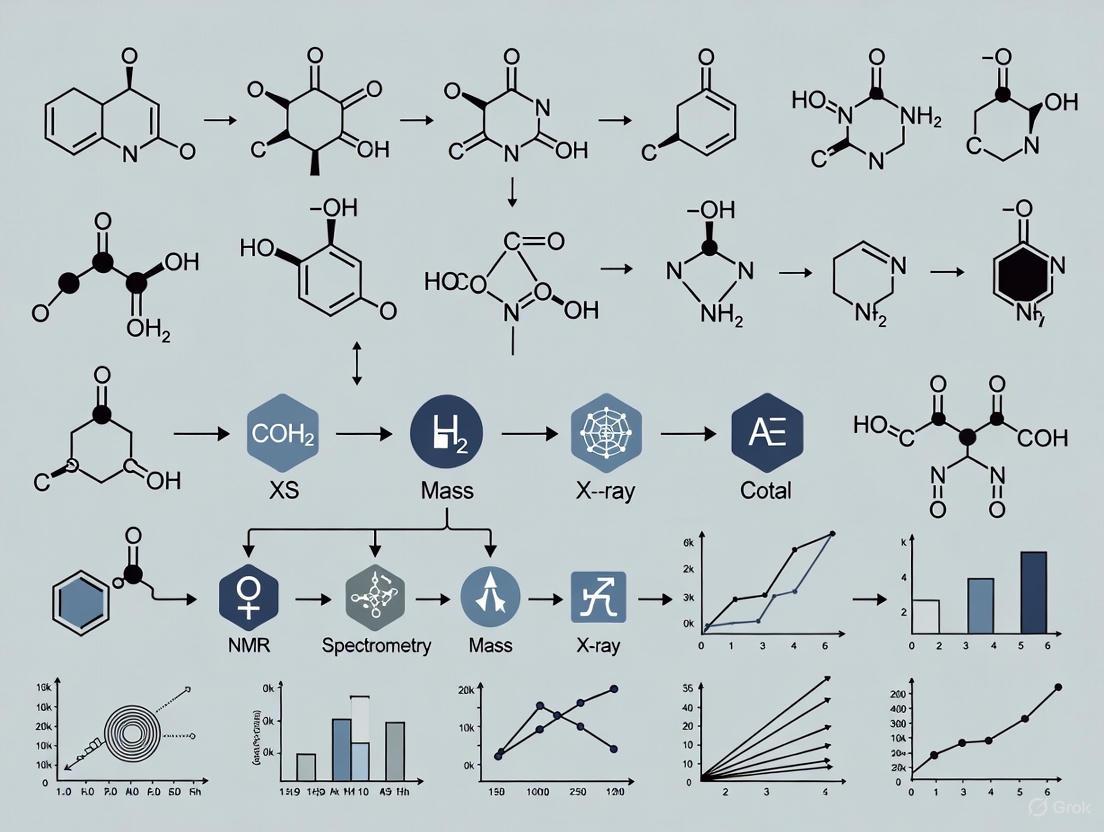
This article provides a comprehensive overview of the techniques used for determining the structure of organic molecules, a critical process in drug discovery and materials science.
Organic Molecule Structure Determination: From Classical Spectroscopy to AI-Driven Techniques
Abstract
This article provides a comprehensive overview of the techniques used for determining the structure of organic molecules, a critical process in drug discovery and materials science. It covers foundational spectroscopic methods like NMR and IR, explores advanced applications of scanning probe microscopy and powder XRD, addresses troubleshooting for complex natural products and nanocrystalline materials, and evaluates the growing role of machine learning and computational validation. Aimed at researchers and development professionals, this review synthesizes established and emerging methodologies to guide the selection and optimization of structure elucidation strategies.
Core Principles and Classical Spectroscopic Techniques for Organic Structure Elucidation
The determination of a molecule's precise structure represents a cornerstone of modern scientific research, particularly in the field of drug development. For researchers and scientists, this process is a multi-stage endeavor that begins with the crude biological source and culminates in a definitive molecular formula and three-dimensional configuration. This technical guide delineates the fundamental workflow for organic molecules, focusing on the critical pathway from isolation and purification through to final structural elucidation. The integrity of every subsequent analytical step is contingent upon the initial purity and stability of the isolated molecule, making the early stages of this workflow paramount to success [1]. Within the broader context of organic molecule structure determination techniques, this document provides a comprehensive framework, integrating detailed methodologies, essential tools, and advanced analytical protocols to guide research and development efforts.
Core Workflow: From Crude Sample to Molecular Formula
The journey to determining a molecular formula is a systematic, multi-phase process. Each stage is designed to progressively transform a complex crude mixture into a pure compound, followed by rigorous analysis to reveal its identity. The following diagram illustrates this integrated pathway, highlighting the key objectives and outputs at each stage.
Phase 1: Isolation and Purification
The initial phase focuses on extracting the target molecule from its native environment and separating it from contaminants. This involves a series of techniques selected based on the source material and the properties of the target molecule.
2.1.1 Sample Sourcing and Extraction Proteins can be isolated from native tissues or produced recombinantly using genetically engineered systems in bacteria (e.g., E. coli), yeast, insect, or mammalian cells (e.g., Expi293, ExpiCHO, ExpiSf systems) to achieve high yields [2] [3]. The primary goal of extraction is to break open cells and release their contents. Table 1 summarizes the common extraction methods.
Table 1: Protein Extraction Methods
| Method | Principle | Common Applications | Key Considerations |
|---|---|---|---|
| Mechanical Homogenization [3] | Applies shear force to disrupt cells. | Tough plant and animal tissues. | Scalable but may generate heat. |
| Sonication [3] | Uses ultrasonic waves to disrupt cell membranes. | Bacterial cells, small volumes. | Requires cooling to prevent denaturation. |
| Detergent-Based Lysis [2] [3] | Solubilizes cell membranes by disrupting lipid bilayers. | Total protein extraction; especially effective for membrane proteins. | Risk of protein denaturation at high concentrations. |
| Enzymatic Treatment [3] | Uses enzymes (e.g., lysozyme) to break down cell walls. | Bacterial cells. | Specific and gentle; often requires a complementary method. |
| Chaotropic Agents [1] [3] | Disrupts hydrogen bonding to solubilize proteins. | Insoluble proteins (e.g., inclusion bodies). | Often denatures proteins, requiring refolding. |
During and after extraction, protein stability is critical. The use of protease and phosphatase inhibitor cocktails is essential to prevent enzymatic degradation and preserve post-translational modifications [2].
2.1.2 Purification Techniques Following extraction, purification techniques are employed to isolate the target molecule. Chromatography is the most powerful and versatile set of methods for this purpose.
- Affinity Chromatography: This is often the first and most powerful step, especially for recombinant proteins with engineered tags (e.g., His-tag). It exploits specific interactions between the target protein and a ligand immobilized on a resin. The target protein binds selectively and is later eluted under specific conditions [2] [3].
- Ion Exchange Chromatography (IEX): Separates proteins based on their net charge. Proteins bind to oppositely charged resin and are eluted by increasing the ionic strength of the buffer. It is highly effective for further refining purity after an initial capture step [2] [3].
- Size Exclusion Chromatography (SEC): Also known as gel filtration, SEC separates proteins based on their hydrodynamic size and shape. It is typically used as a final "polishing" step to remove aggregates and exchange the buffer [2] [3].
Other techniques like precipitation (e.g., using ammonium sulfate or organic solvents) and ultrafiltration are frequently used for concentration and initial crude fractionation [1] [3].
Phase 2: Characterization and Purity Assessment
Before proceeding to structural analysis, it is imperative to confirm the purity and integrity of the isolated molecule. A combination of techniques provides a comprehensive assessment.
- Electrophoresis (SDS-PAGE): Used to assess protein purity, homogeneity, and approximate molecular weight. A single band on a gel after Coomassie or silver staining indicates a high degree of purity [3].
- Spectroscopic Quantitation: Methods like UV-Vis spectroscopy are used to determine protein concentration accurately (e.g., using the Pierce BCA Assay) and can provide information on cofactors or contaminants [2] [3].
- Mass Spectrometry (MS): Provides an exact molecular mass of the protein or peptide, which is a critical parameter for confirmation and identification. It is highly sensitive and can detect minor impurities or post-translational modifications [1] [3].
Phase 3: Structure Determination and Molecular Formula
With a pure and characterized molecule, the final phase is to determine its three-dimensional structure. For natural products and small organic molecules, this often involves crystallography, while for proteins, both crystallography and other biophysical methods are employed.
2.3.1 Crystallography for Absolute Configuration Crystallographic analysis is the most reliable method for elucidating the absolute configuration of natural products and small molecules, providing precise spatial arrangement information at the atomic level [4]. The traditional requirement for high-quality single crystals has been a major hurdle. Recent advancements have introduced innovative strategies to overcome this:
- Crystalline Sponge Method: Involves orienting target molecules within pre-prepared porous crystals, eliminating the need to grow crystals of the target itself [4].
- Microcrystal Electron Diffraction (MicroED): Allows for structure determination from nanocrystals that are too small for conventional X-ray diffraction, using an electron microscope [4].
2.3.2 Integrated Workflow for Protein Structure Determination For proteins, the structure determination pipeline is computationally intensive. A recent demonstration involves an Evolutionary Algorithm (EA) informed by Crystal Structure Prediction (CSP). This approach searches vast organic chemical spaces for molecules with desired solid-state properties by predicting their most stable crystal structures and evaluating properties like charge carrier mobility directly from the predicted packing [5]. This method outperforms searches based on molecular properties alone.
2.3.3 Deriving the Molecular Formula The molecular formula is a definitive output of this phase. For small molecules, high-resolution mass spectrometry (HR-MS) provides the exact mass, from which the molecular formula can be deduced with high confidence. For novel compounds, this data is combined with elemental analysis and the atomic coordinates obtained from X-ray crystallography to unambiguously confirm the molecular formula.
The Scientist's Toolkit: Essential Reagents and Materials
Successful execution of the isolation-to-structure workflow requires a suite of reliable reagents and kits. The following table details key solutions used in the featured experiments and protocols.
Table 2: Key Research Reagent Solutions for Protein Isolation and Purification
| Product/Reagent Name | Function/Application | Key Features |
|---|---|---|
| Expi293/ExpiCHO Expression System [2] | High-yield transient recombinant protein expression in mammalian cells. | Chemically defined medium; yields up to 3 g/L; adapted for suspension culture. |
| M-PER Mammalian Protein Extraction Reagent [2] | Total protein extraction from mammalian cells. | Gentle, detergent-based; eliminates need for mechanical disruption; preserves protein activity. |
| Mem-PER Plus Membrane Protein Extraction Kit [2] | Selective enrichment of membrane proteins from cells and tissues. | Provides improved yield of integral membrane proteins compared to other kits. |
| Pierce Protease & Phosphatase Inhibitor Tablets [2] | Prevention of protein degradation and dephosphorylation during extraction. | Ready-to-use, broad-spectrum formulations; EDTA-free options available. |
| Pierce BCA Protein Assay Kit [2] | Colorimetric quantification of protein concentration. | Compatible with samples containing detergents; highly sensitive. |
| Surfact-Amps Detergent Solutions [2] | Highly purified detergents for cell lysis and protein solubilization. | Precisely diluted (10%); exceptionally pure with low peroxides and carbonyls. |
Advanced Technical Protocols
Detailed Protocol: Purification of a Recombinant His-Tagged Protein
This protocol outlines a standard procedure for purifying a recombinant protein expressed in E. coli using Immobilized Metal Affinity Chromatography (IMAC).
Materials:
- Cell pellet from induced culture.
- Lysis Buffer: (e.g., 50 mM Tris-HCl, pH 8.0, 300 mM NaCl, 10 mM imidazole, 1 mg/mL lysozyme, protease inhibitors).
- IMAC Resin (e.g., Ni-NTA Agarose).
- Wash Buffer: (e.g., 50 mM Tris-HCl, pH 8.0, 300 mM NaCl, 20-50 mM imidazole).
- Elution Buffer: (e.g., 50 mM Tris-HCl, pH 8.0, 300 mM NaCl, 250-500 mM imidazole).
- Dialysis Buffer: (e.g., 50 mM Tris-HCl, pH 8.0, 150 mM NaCl).
Method:
- Cell Lysis: Resuspend the cell pellet in Lysis Buffer. Incubate on ice for 30 minutes. Lyse cells by sonication on ice (e.g., 3-5 cycles of 30 seconds pulse, 30 seconds rest). Clarify the lysate by centrifugation at >14,000 x g for 30 minutes at 4°C. Retain the supernatant [2] [3].
- Chromatography: Equilibrate the IMAC resin with Lysis Buffer. Incubate the clarified lysate with the resin for 1 hour at 4°C with gentle mixing. Load the mixture into a column and allow the flow-through to collect.
- Washing: Wash the resin with 10-15 column volumes of Wash Buffer to remove weakly bound contaminants.
- Elution: Elute the bound His-tagged protein with 5-10 column volumes of Elution Buffer. Collect the eluate in small fractions.
- Buffer Exchange and Polishing: Analyze fractions by SDS-PAGE. Pool fractions containing the pure target protein. Dialyze against Dialysis Buffer or perform a buffer exchange using a desalting column (SEC) to remove imidazole [2] [3]. Concentrate the protein using a centrifugal concentrator with an appropriate molecular weight cutoff.
Detailed Protocol: Crystal Structure Prediction-Informed Evolutionary Algorithm
This protocol describes the computational search for organic molecules with optimal solid-state properties, as demonstrated for organic semiconductors [5].
Objective: To identify molecules with high charge carrier mobility by evaluating their predicted crystal structures.
Workflow:
- Initialization: Define a search space of possible organic molecules and generate an initial population.
- Fitness Evaluation: a. Crystal Structure Prediction (CSP): For each candidate molecule, perform an automated CSP search. A cost-effective scheme may involve generating 500-2000 trial crystal structures in each of the 5-10 most common space groups (e.g., P1, P2₁, P2₁2₁2₁, P2₁/c, C2/c) [5]. b. Property Calculation: For the low-energy predicted crystal structures (e.g., within 7 kJ/mol of the global minimum), calculate the target property—in this case, the electron mobility based on the transfer integrals and reorganization energies derived from the crystal packing [5]. c. Assign Fitness: Assign a fitness score to the molecule based on the highest (or landscape-averaged) predicted mobility from its stable crystal structures.
- Evolution: Select the fittest molecules as "parents." Generate a new "child" generation through crossover (combining molecular fragments from parents) and mutation (introducing random chemical modifications).
- Iteration: Repeat the fitness evaluation and selection process for multiple generations until convergence is achieved, i.e., no significant improvement in the maximum fitness is observed.
Key Consideration: This method's efficacy relies on a balance between computational cost and the completeness of the CSP search. Biased sampling towards frequently observed space groups can recover over 70% of low-energy structures at a fraction of the cost of a comprehensive search [5].
Infrared (IR) spectroscopy remains a cornerstone technique for organic molecule structure determination, prized for its rapid analysis, cost-effectiveness, and non-destructive nature. The technique identifies functional groups by measuring the absorption of infrared radiation by molecular vibrations, providing a characteristic spectral fingerprint. While nuclear magnetic resonance (NMR) spectroscopy and mass spectrometry (MS) have become predominant for complete structure elucidation, IR spectroscopy maintains critical advantages for specific applications, including minimal sample preparation, low operational costs, and rapid measurement times that enable high-throughput analysis [6] [7]. This technical guide examines both traditional interpretation methods and emerging artificial intelligence (AI) approaches that are revolutionizing spectroscopic analysis for researchers and drug development professionals.
Fundamental Principles of IR Spectroscopy
IR spectroscopy operates on the principle that molecules absorb specific frequencies of infrared radiation corresponding to the natural vibrational frequencies of their chemical bonds. When the frequency of IR radiation matches the vibrational frequency of a bond, absorption occurs, resulting in characteristic peaks in the IR spectrum.
The spectrum is typically divided into two primary regions. The functional group region (4000-1500 cm⁻¹) contains absorptions from stretching vibrations of key functional groups like O-H, C=O, and C-H bonds. The fingerprint region (1500-500 cm⁻¹) presents a complex pattern resulting from a combination of stretching and bending vibrations that is unique to each molecule, much like a human fingerprint [8]. This region is particularly valuable for confirming a compound's identity by comparison to reference spectra.
The intensity and shape of absorption bands provide additional structural information. Intensity depends primarily on bond polarity, with more polar bonds producing stronger absorptions. Shape characteristics—whether a peak is broad or sharp—can indicate specific bonding environments, such as the broad hydrogen-bonded O-H stretches of alcohols and carboxylic acids [8].
Characteristic IR Absorptions of Major Functional Groups
Structured Reference Table of Key IR Frequencies
Table 1: Characteristic IR Absorption Frequencies of Common Functional Groups
| Functional Group | Bond/Vibration Type | Frequency Range (cm⁻¹) | Intensity |
|---|---|---|---|
| Alcohol, Phenol | O-H stretch | 3200-3600 | Broad, medium-strong |
| Carboxylic Acid | O-H stretch | 2500-3300 | Very broad |
| Amine, Amide | N-H stretch | 3300-3500 | Medium, sharp |
| Terminal Alkyne | ≡C-H stretch | 3250-3350 | Strong, sharp |
| Alkene/Aromatic | =C-H stretch | 3000-3100 | Medium |
| Alkane | C-H stretch | 2850-2950 | Medium-strong |
| Aldehyde | C-H stretch | 2700-2800 (doublet) | Weak |
| Carbonyl (general) | C=O stretch | 1650-1750 | Very strong |
| Ketone | C=O stretch | 1705-1725 | Very strong |
| Aldehyde | C=O stretch | 1720-1740 | Very strong |
| Ester | C=O stretch | 1730-1750 | Very strong |
| Carboxylic Acid | C=O stretch | 1700-1725 | Very strong |
| Amide | C=O stretch | 1640-1670 | Strong |
| Nitrile | C≡N stretch | 2240-2260 | Medium |
| Alkyne | C≡C stretch | 2100-2260 | Weak (strong for terminal) |
| Alkene | C=C stretch | 1620-1680 | Variable |
| Aromatic | C=C stretch | 1475-1600 (multiple) | Variable |
| Alcohol, Ether, Ester | C-O stretch | 1000-1300 | Strong |
Compiled from multiple spectroscopic references [9] [10] [11]
Strategic Interpretation of IR Spectra
Effective IR spectrum analysis requires a strategic approach rather than attempting to assign every absorption band. The "tongue and sword" method provides a prioritized framework, focusing first on two critical regions: the hydroxyl region (3200-3600 cm⁻¹) for broad "tongue-like" O-H stretches, and the carbonyl region (1630-1800 cm⁻¹) for sharp "sword-like" C=O stretches [12].
Additional diagnostic regions include the 3000 cm⁻¹ dividing line between alkene/aromatic C-H stretches (above 3000 cm⁻¹) and alkane C-H stretches (below 3000 cm⁻¹), and the triple-bond region (2050-2250 cm⁻¹) for nitriles and alkynes [12]. This prioritized approach enables rapid functional group identification before delving into finer structural details.
Experimental Protocols for IR Spectrum Acquisition
Sample Preparation Methodologies
Table 2: Standard IR Sample Preparation Techniques
| Technique | Application Scope | Protocol Details | Advantages/Limitations |
|---|---|---|---|
| KBr Pellet | Solid powders | 1-2 mg sample mixed with 100-200 mg dry KBr; pressed under vacuum at 10,000-15,000 psi | Excellent spectral quality; hygroscopic KBr requires drying |
| Solution Cell | Liquid samples, solutions | Pathlength 0.1-1.0 mm; NaCl or KBr windows; typical concentration 1-10% | Quantitative analysis possible; solvent absorption may interfere |
| ATR-FTIR | Solids, liquids, pastes | Sample placed on crystal (diamond, ZnSe); pressure applied for contact | Minimal preparation; non-destructive; surface analysis only |
| Thin Film | Non-volatile liquids | Sample squeezed between two salt plates | Rapid analysis; suitable for qualitative identification |
| Gas Cell | Volatile compounds | Sealed cell with pathlength 5-20 cm; NaCl or KBr windows | Requires specialized equipment; quantitative vapor analysis |
Instrument Operation and Data Collection
Modern Fourier Transform IR (FTIR) spectrometers have standardized IR analysis, but proper operational protocols remain essential for reproducible results:
- Instrument Calibration: Perform daily validation using polystyrene reference film, verifying key absorption peaks at 1601 cm⁻¹, 2850 cm⁻¹, and 3026 cm⁻¹ [10].
- Background Collection: Collect background spectrum with pure solvent or empty ATR crystal under identical analytical conditions.
- Parameter Optimization: Set resolution to 4 cm⁻¹ for most applications; 8 cm⁻¹ for qualitative screening; accumulate 16-64 scans depending on signal-to-noise requirements [13].
- Quality Assessment: Verify absorption bands are within linear response range (transmittance 15-85%); check for saturation effects in key diagnostic regions.
- Data Processing: Apply baseline correction when necessary; avoid over-processing that may distort spectral features.
Advanced AI-Driven Approaches to IR Spectral Interpretation
Machine Learning and Deep Learning Applications
Traditional interpretation of IR spectra has been limited to identifying a select few functional groups, leaving much of the information in the fingerprint region underutilized. Recent advances in machine learning are overcoming these limitations through several approaches:
Functional Group Classification: Neural networks can now identify 17 or more functional groups simultaneously from IR spectra alone, achieving F1 scores above 0.7 [13]. These models learn spectral features directly from data rather than relying on handcrafted rules, improving accuracy and reproducibility.
Complete Structure Elucidation: Transformer-based models represent the cutting edge in IR analysis, directly predicting molecular structures from IR spectra. These sequence-to-sequence models use both the chemical formula and IR spectrum as input to generate the molecular structure in SMILES notation [6]. Recent architectures employing patch-based representations similar to Vision Transformers preserve fine-grained spectral details, significantly enhancing performance [7].
Multimodal Integration: Advanced systems combine IR data with other analytical techniques, such as mass spectrometry, to constrain the chemical space and improve prediction accuracy [13] [6].
Performance Benchmarks and Validation
Current state-of-the-art models achieve remarkable accuracy in structure elucidation. The best-performing systems report top-1 accuracy of 63.8% and top-10 accuracy of 83.9% for compounds containing 6-13 heavy atoms [7]. When predicting molecular scaffolds rather than complete structures, accuracy increases to 84.5% top-1 and 93.0% top-10 [6].
These models are typically pretrained on large datasets of simulated IR spectra (over 600,000 compounds) followed by fine-tuning on experimental spectra from reference databases like NIST [6] [7]. This approach leverages the abundance of computational data while maintaining real-world applicability.
Key Research Reagent Solutions
Table 3: Essential Materials for IR Spectroscopy Analysis
| Resource | Function/Application | Technical Specifications |
|---|---|---|
| FTIR Spectrometer | IR spectrum acquisition | Resolution: 1-4 cm⁻¹ for research, 8 cm⁻¹ for routine; Spectral range: 4000-400 cm⁻¹ |
| ATR Accessory | Sample analysis without preparation | Crystal materials: diamond (universal), ZnSe (aqueous solutions), Ge (high refractive index) |
| KBr Pellets | Solid sample preparation | FTIR grade, 300 mg for 13 mm die; requires drying at 110°C to remove water |
| NIST Database | Reference spectra | >16,000 compounds; GC-IR vapor phase spectra; 8 cm⁻¹ resolution [13] |
| Sigma-Aldrich Library | Commercial spectral database | >11,000 pure compounds; subscription-based access [13] |
| SDBS Database | Free spectral resource | IR, NMR, MS data for organic compounds; measured at AIST, Japan [13] |
The development of AI-based IR analysis has created new essential resources for researchers:
Spectral Databases: The NIST SRD 35 database provides 5,228 infrared spectra with chemical structures, combining EPA vapor-phase spectra and NIST laboratory measurements [13]. These datasets serve as critical benchmarks for training and validating machine learning models.
Simulated Spectra: Molecular dynamics simulations using force fields like PCFF can generate realistic IR spectra incorporating anharmonic effects, providing large-scale training data (over 600,000 compounds) for AI models [6].
Open Data Repositories: Resources like the Chemotion repository provide open-access, specialized research data that can supplement commercial databases and improve model performance for specific compound classes [13].
IR spectroscopy continues to evolve as an indispensable tool for organic molecule structure determination. While traditional interpretation methods focusing on characteristic functional group absorptions remain valuable for rapid analysis, emerging AI technologies are dramatically expanding the information that can be extracted from IR spectra. The integration of transformer-based models and comprehensive spectral databases enables increasingly accurate structure elucidation, making IR spectroscopy more powerful and accessible than ever before. For researchers in drug development and chemical sciences, these advances promise enhanced analytical capabilities that leverage the inherent advantages of IR spectroscopy—speed, cost-effectiveness, and operational simplicity—while overcoming traditional limitations in interpretation complexity.
Nuclear Magnetic Resonance (NMR) spectroscopy constitutes an indispensable analytical technique in the modern research laboratory, providing unparalleled insights into the structure and dynamics of organic molecules. For researchers and drug development professionals, mastery of both proton (1H) and carbon-13 (13C) NMR is fundamental to elucidating molecular skeletons and determining complete chemical structures without the need for extensive purification or crystallization [14]. This technical guide examines the core principles, applications, and experimental protocols of these complementary spectroscopic methods, framing them within the broader context of organic molecule structure determination techniques.
The evolution of Fourier transform (FT) NMR instruments has revolutionized the field, making the acquisition of carbon spectra routine despite the intrinsic sensitivity challenges of the 13C nucleus [14]. When employed in concert with other spectroscopic methods such as mass spectrometry and infrared spectroscopy, NMR enables the complete structural determination of unknown organic compounds, forming the foundational toolkit for analytical chemists in pharmaceutical development and basic research [15] [16].
Fundamental Principles of NMR Spectroscopy
NMR spectroscopy exploits the magnetic properties of certain atomic nuclei when placed in a strong external magnetic field. Nuclei with non-zero spin, such as 1H and 13C, absorb electromagnetic radiation in the radiofrequency range, and the resulting resonance signals provide detailed information about molecular structure.
The 1H nucleus (proton) is the most sensitive NMR-active nucleus, while 13C presents significant detection challenges due to two fundamental limitations. First, the natural abundance of the 13C isotope is only 1.08%, meaning that in a molecule with few carbon atoms, it is statistically unlikely that any single molecule will contain more than one 13C atom [14]. Second, the magnetic gyration ratio of a 13C nucleus is smaller than that of hydrogen, resulting in a lower resonance frequency and reduced sensitivity for NMR detection [14]. These factors combine to make 13C resonances approximately 6,000 times weaker than proton resonances, necessitating specialized approaches for signal acquisition [14].
Table 1: Fundamental Properties of NMR-Active Nuclei
| Property | 1H NMR | 13C NMR |
|---|---|---|
| Natural Abundance | ~99.98% | ~1.08% |
| Nuclear Spin | 1/2 | 1/2 |
| Relative Sensitivity | 1 | 1.76 × 10⁻⁴ |
| Magnetic Gyration Ratio | 26.75 × 10⁷ rad·T⁻¹·s⁻¹ | 6.73 × 10⁷ rad·T⁻¹·s⁻¹ |
| Standard Reference Compound | Tetramethylsilane (TMS) | Tetramethylsilane (TMS) |
1H NMR Spectroscopy: Proton Analysis
Information Content and Spectral Interpretation
Proton NMR spectroscopy provides three critical pieces of information for structural elucidation: chemical shift, integration, and spin-spin coupling. The chemical shift (δ, measured in ppm) reveals the electronic environment of each proton, with typical values ranging from 0-12 ppm [14] [17]. Integration measures the area under absorption peaks, indicating the relative number of protons contributing to each signal [15]. Spin-spin splitting patterns arise from interactions between neighboring non-equivalent protons, following the n+1 rule where n represents the number of adjacent coupling protons [15].
The phenomenon of spin-spin splitting occurs due to magnetic interactions between neighboring hydrogen atoms, resulting in the splitting of NMR signals into multiple peaks [15]. This coupling provides crucial information about molecular connectivity and stereochemistry. More complex splitting patterns emerge from interactions between non-equivalent protons on adjacent carbons, producing multiplet patterns rather than simple doublets or triplets [15].
Chemical Shift Factors
Chemical shifts in 1H NMR are influenced primarily by the electronegativity of adjacent atoms and the hybridization of the carbon atom to which the proton is attached [15]. Electronegative elements cause a deshielding effect, shifting proton resonances downfield (to higher ppm values), with the effect diminishing as the distance between the proton and electronegative atom increases [14]. Proton equivalence, determined by molecular symmetry and chemical environments, simplifies NMR spectra as equivalent protons produce identical signals, while non-equivalent protons yield distinct resonances [15].
Table 2: Characteristic 1H NMR Chemical Shifts for Common Functional Groups
| Functional Group | Chemical Shift Range (ppm) | Proton Environment |
|---|---|---|
| Alkanes | 0.9-1.8 | R-CH₃, R-CH₂-R |
| Allylic | 1.6-2.2 | R-CH₂-C=C |
| Alkynes | 2.0-3.0 | ≡C-CH |
| Alcohols | 3.3-4.0 | R-OH |
| Ethers | 3.3-4.0 | R-O-CH |
| Alkyl Halides | 3.0-4.5 | R-X-CH (X = Cl, Br, I) |
| Aldehydes | 9.0-10.0 | R-CHO |
| Carboxylic Acids | 11.0-12.0 | R-COOH |
| Aromatics | 6.0-8.5 | Ar-H |
| Alkenes | 4.5-6.5 | C=CH |
13C NMR Spectroscopy: Carbon Skeleton Analysis
Special Considerations for Carbon NMR
Carbon-13 NMR spectroscopy provides direct information about the carbon skeleton of organic molecules, complementing the proton information obtained from 1H NMR [14]. The most significant advantage of 13C-NMR is the breadth of its spectral window, with carbon resonances occurring across a range of 0-220 ppm compared to only 0-12 ppm for protons [17]. This wide chemical shift distribution means that 13C signals rarely overlap, allowing researchers to distinguish separate peaks for each unique carbon environment, even in complex molecules [17].
Unlike 1H NMR, the area under 13C-NMR signals cannot be reliably used to determine the number of carbons due to the variable relaxation times and nuclear Overhauser effects that differentially affect signal intensities for different types of carbons [17]. Carbonyl carbons, for example, typically exhibit much smaller peaks than methyl or methylene carbons [17]. Consequently, the most valuable information provided by a 13C-NMR spectrum is the number of distinct signals and their chemical shifts, rather than integration values or multiplicity [17].
Decoupling Techniques
To address the challenge of carbon-proton coupling (with coupling constants typically ranging from 100-250 Hz), chemists generally employ broadband decoupling techniques that effectively 'turn off' C-H coupling, resulting in a spectrum where all carbon signals appear as singlets [17]. This proton decoupling dramatically simplifies the spectrum and enhances signal-to-noise ratio, making 13C NMR data more interpretable.
Chemical Shift Ranges for Carbon Nuclei
The chemical shifts of 13C nuclei are profoundly affected by electronegative effects and hybridization. When a hydrogen atom in an alkane is replaced by an electronegative substituent (O, N, halogen), the 13C signals for nearby carbons shift downfield, with the effect diminishing with distance from the electron-withdrawing group [17].
Table 3: Characteristic 13C NMR Chemical Shifts for Organic Functional Groups
| Carbon Type | Chemical Shift Range (ppm) | Representative Compounds |
|---|---|---|
| Alkyl | 0-50 | R-CH₃, R-CH₂-R |
| Alkynes | 50-80 | HC≡C-R |
| Alkenes | 100-150 | H₂C=CH-R |
| Aromatics | 110-170 | Benzene derivatives |
| Nitriles | 115-125 | R-C≡N |
| Amides | 160-180 | R-CONR₂ |
| Carboxylic Acids | 160-185 | R-COOH |
| Esters | 160-180 | R-COOR |
| Aldehydes | 190-220 | R-CHO |
| Ketones | 190-220 | R-COR |
Comparative Analysis: 1H vs. 13C NMR
While both techniques provide structural information, 1H and 13C NMR offer complementary data for organic structure elucidation. Proton NMR is superior for determining the number and type of hydrogen atoms, integration (relative proton counts), and connectivity through spin-spin coupling patterns [15]. In contrast, carbon NMR excels at determining the number of non-equivalent carbon atoms, identifying carbon types (methyl, methylene, aromatic, carbonyl, etc.), and providing direct information about the carbon skeleton [14] [17].
The broader chemical shift range of 13C NMR (0-220 ppm) compared to 1H NMR (0-12 ppm) makes it particularly valuable for analyzing larger, more complex structures where proton signals often overlap [17]. For example, in the proton spectrum of 1-heptanol, only the signals for the alcohol proton and the two protons on the adjacent carbon are easily analyzed, while the remaining proton signals overlap. However, in the 13C spectrum of the same molecule, each carbon signal is readily distinguishable, confirming the presence of seven non-equivalent carbons [17].
Advanced Applications and Experimental Protocols
Structure Elucidation of Unknown Compounds
For complete structure determination of unknown organic molecules, NMR spectroscopy is typically employed in combination with high-resolution mass spectrometry (HRMS) [16]. Two-dimensional NMR techniques have dramatically advanced the field, allowing structure elucidation of new organic compounds with sample amounts of less than 10 μg [16]. Key 2D-NMR experiments include COSY (Correlation Spectroscopy), HSQC (Heteronuclear Single Quantum Coherence), and HMBC (Heteronuclear Multiple Bond Correlation), which provide crucial information about through-bond connectivities.
The pure shift approach, which provides 1H-decoupled proton spectra, has dramatically simplified the interpretation of both 1D and 2D NMR spectra [16]. For extremely hydrogen-deficient compounds, methodology combining new 2D-NMR experiments providing long-range heteronuclear correlations with computer-assisted structure elucidation (CASE) has proven particularly powerful [16].
Diagram 1: NMR Structure Elucidation Workflow. This flowchart illustrates the systematic process for determining molecular structures using NMR spectroscopy, from sample preparation to final structure confirmation.
Computer-Assisted Structure Elucidation (CASE)
CASE expert systems mimic the reasoning of a human expert during structure elucidation, offering significant advantages in reliability and comprehensiveness [16]. These systems explicitly state all axioms about the interrelationship between spectra and structures, deduce all logical consequences without exclusion, and can determine structures that would be manually undecipherable [16]. When initial spectral data are complete and consistent, computer-based structure elucidation proceeds far more quickly and reliably than manual approaches [16].
Experimental Protocol: Basic 1H and 13C NMR Acquisition
Sample Preparation:
- Sample Quantity: For 1H NMR, 1-10 mg of compound; for 13C NMR, 10-50 mg (due to lower sensitivity)
- Solvent Selection: Deuterated chloroform (CDCl₃) is most common; use DMSO-d6 for polar compounds, D₂O for water-soluble compounds
- Reference Standard: Add 0.1% tetramethylsilane (TMS) as internal reference (δ = 0 ppm) or use solvent residual peak as secondary reference
- NMR Tube: Use high-quality 5 mm NMR tubes; sample volume typically 500-600 μL
Spectral Acquisition Parameters for 1H NMR [18]:
- Pulse Sequence: zg30 (standard single pulse) or NOESY for solvent suppression
- Spectral Width: 12-16 ppm
- Relaxation Delay: 1-5 seconds
- Number of Scans: 16-64 for 1H NMR
- Temperature: 25-30°C (298-303 K)
- 90° Pulse Width: Typically 8-12 μs
Spectral Acquisition Parameters for 13C NMR [18]:
- Pulse Sequence: zgpg30 with broadband proton decoupling
- Spectral Width: 220-240 ppm
- Relaxation Delay: 2-5 seconds
- Number of Scans: 100-1000 (due to low sensitivity)
- Temperature: 25-30°C (298-303 K)
- Acquisition Time: 1-2 seconds
Spectral Processing [19]:
- Fourier Transformation: Apply appropriate window function (exponential for S/N enhancement, Gaussian for resolution enhancement)
- Phase Correction: Adjust zero-order and first-order phase for pure absorption lineshape
- Baseline Correction: Apply polynomial or spline functions to correct baseline distortions
- Chemical Shift Referencing: Reference spectrum to TMS at 0 ppm or solvent residual peak
Protocol for 2D NMR Experiments
For complex structure elucidation, the following 2D NMR experiments are recommended as a standard set [16]:
- 1H-1H COSY: Identifies proton-proton through-bond correlations (3-bond couplings)
- HSQC (or HMQC): Identifies direct 1H-13C correlations (1-bond couplings)
- HMBC: Identifies long-range 1H-13C correlations (2- and 3-bond couplings)
- NOESY or ROESY: Provides through-space correlations for stereochemical assignment
The Scientist's Toolkit: Essential Research Reagents and Materials
Table 4: Essential Research Reagents for NMR Spectroscopy
| Reagent/Material | Function | Application Notes |
|---|---|---|
| Deuterated Chloroform (CDCl₃) | Primary NMR solvent for organic compounds | Contains 0.03% TMS as reference; residual CHCl₃ peak at 7.26 ppm (1H), 77.16 ppm (13C) |
| Deuterated DMSO (DMSO-d6) | Solvent for polar compounds | Residual DMSO peak at 2.50 ppm (1H), 39.52 ppm (13C); hygroscopic |
| Deuterated Water (D₂O) | Solvent for water-soluble compounds | Requires water suppression techniques; no internal reference |
| Tetramethylsilane (TMS) | Internal chemical shift reference | Inert, volatile, single sharp peak at 0 ppm for both 1H and 13C |
| DSS (4,4-dimethyl-4-silapentane-1-sulfonic acid) | Water-soluble chemical shift reference | Single sharp methyl peak at 0 ppm; preferred over TSP for biofluids |
| TSP (3-(trimethylsilyl)-2,2′,3,3′-tetradeuteropropionic acid) | Water-soluble chemical shift reference | pH-sensitive; use with caution in unbuffered solutions |
| NMR Tubes (5 mm) | Sample containment | High-quality tubes essential for reproducible results |
| Shimming Tools | Magnetic field homogeneity optimization | Automated shimming routines standard on modern instruments |
Emerging Trends and Future Directions
The field of NMR spectroscopy continues to evolve with several emerging trends enhancing its capabilities for molecular structure determination. Ultrafast 2D-NMR can now acquire a 2D-NMR spectrum in several seconds, dramatically increasing throughput [16]. Pure shift methods that provide 1H-decoupled proton spectra are simplifying the interpretation of complex spectra [16]. Additionally, new methodologies for mixture analysis without physical separation are expanding the application of NMR to complex biological and environmental samples [16].
Recent developments in NMR instrumentation include the availability of spectrometers operating at frequencies exceeding 1 GHz, cryogenically cooled probe technology for enhanced sensitivity, and microprobe designs for small-volume samples [19]. These advances, combined with dynamic nuclear polarization techniques, have pushed detection limits to nanomolar concentrations for samples as small as 50 μL [19].
Diagram 2: NMR Experiment Classification. This diagram categorizes the primary NMR experiments used in structural elucidation, showing the relationship between 1D and 2D techniques.
1H and 13C NMR spectroscopy remain cornerstone techniques for unraveling molecular skeletons and determining organic compound structures. While 1H NMR provides detailed information about proton environments and connectivity, 13C NMR directly probes the carbon skeleton with a wider chemical shift range that minimizes signal overlap. The integration of these complementary approaches, enhanced by advanced 2D experiments and computer-assisted structure elucidation, provides researchers and drug development professionals with a powerful toolkit for molecular characterization.
As NMR technology continues to advance with higher field strengths, improved sensitivity, and faster acquisition methods, its role in structural determination will undoubtedly expand. The ongoing development of pure shift methods, mixture analysis techniques, and sophisticated algorithms for spectral interpretation promises to further solidify NMR spectroscopy's position as an indispensable technique in the analytical sciences.
Determining Molecular Mass and Fragmentation Patterns with Mass Spectrometry
Mass spectrometry (MS) is an indispensable analytical technique for determining the molecular mass and structural characteristics of organic compounds. It enables researchers to elucidate chemical structures by measuring the mass-to-charge ratio (m/z) of gas-phase ions, providing critical information about molecular weight, elemental composition, and functional groups through analysis of fragmentation patterns [20]. The fundamental process involves converting sample molecules into ions, separating these ions based on their m/z ratios, and detecting them to generate a mass spectrum that serves as a molecular fingerprint.
The continued evolution of mass spectrometry instrumentation and computational methods is pushing the boundaries of what is analyzable, allowing researchers to probe ever-larger molecules and more complex chemical systems [21]. As noted in assessments of the 2025 mass spectrometry landscape, technical advances are fostering interdisciplinary collaborations that turn complex data into insights with real-world impact, particularly in drug discovery and development [21] [20]. This guide provides a comprehensive technical overview of current methodologies for determining molecular mass and interpreting fragmentation patterns, framed within the context of modern organic molecule structure determination research.
Instrumentation and Ionization Techniques
The selection of appropriate instrumentation and ionization methods is fundamental to successful mass spectrometric analysis. Different interfaces and ion sources accommodate varying sample types and analytical requirements.
Table 1: Common Ionization Techniques in Mass Spectrometry
| Technique | Abbreviation | Principle | Optimal Mass Range | Common Applications |
|---|---|---|---|---|
| Electrospray Ionization | ESI | Solution-phase ions transferred to gas phase through charged aerosol | Up to megadalton [21] | Polar molecules, proteins, protein-protein interactions [20] |
| Electron-Activated Dissociation | EAD | Electron removal from protonated molecular ions | Typical small molecules | Structural elucidation of synthetic opioids (e.g., nitazene analogs) [22] |
| Matrix-Assisted Laser Desorption/Ionization | MALDI | Laser desorption of sample embedded in light-absorbing matrix | Up to megadalton [21] | Large biomolecules, polymers, imaging |
The sophistication of modern mass spectrometers has increased to the point where instruments have become more "turnkey," facilitating ease of use by researchers who may not have deep fundamental expertise in mass spectrometry [21]. This accessibility has broadened the influence of MS into diverse fields including molecular biology, immunology, and infectious disease research [21].
Determining Molecular Mass
Fundamental Approaches
Molecular mass determination relies on accurate measurement of the m/z ratio of molecular ions or charged adducts formed during the ionization process. In the MS1 spectrum (the initial mass analysis), the protonated molecular ion [M+H]^+ is typically observed for organic molecules analyzed using electrospray ionization [22]. For molecules with multiple basic sites, double-charge ions such as [M+2H]^{2+} may also be detected, particularly for larger compounds [22].
High-resolution mass spectrometry (HRMS) provides exact mass measurements that enable determination of elemental composition with sufficient accuracy to distinguish between different molecular formulas. Modern HRMS instruments can measure mass with precision sufficient to confirm molecular formulas, which is particularly valuable when analyzing novel compounds or complex mixtures.
Advanced Applications: Megadalton Measurements
Recent technical advances have dramatically expanded the mass range amenable to MS analysis. As highlighted in assessments of the field, "new ion sources and megadalton capabilities are emerging, [and] the boundaries of mass spectrometry are being redefined" [21]. This capability to analyze extremely large biomolecules opens new possibilities for characterizing macromolecular complexes, viral capsids, and other massive structures relevant to drug development.
Fragmentation Patterns and Structural Elucidation
Principles of Fragmentation
Fragmentation patterns provide the structural information necessary for comprehensive molecular characterization. When molecules undergo ionization, they often fragment in predictable ways that reflect their chemical structure. Tandem mass spectrometry (MS/MS) isolates precursor ions and subjects them to collision-induced dissociation (or other fragmentation methods), generating product ions that reveal structural details.
The resulting MS2 spectra contain fragment ions characteristic of the molecular structure. For example, in the analysis of nitazene analogs using electron-activated dissociation, characteristic product ions include double-charge free radical fragment ions [M+H]^{•2+} produced through removal of one electron from protonated molecular ions, along with alkyl amino side chain fragment ions, benzyl side chain fragment ions, and methylene amino ions [22].
Experimental Workflow for Structure Determination
The following diagram illustrates the logical workflow for determining molecular structure through mass spectrometry:
Advanced Fragmentation Techniques
Electron-Activated Dissociation (EAD) represents an advanced fragmentation method that has demonstrated particular utility for structural elucidation of complex molecules. In the analysis of nitazene analogs, EAD produces characteristic fragment ions that enable differentiation of structurally similar compounds [22]. The technique generates double-charge free radical fragment ions [M+H]^{•2+} through removal of one electron from protonated molecular ions, providing complementary fragmentation pathways compared to traditional collision-based methods [22].
Data Analysis and Computational Tools
Mass Spectrometry Query Language (MassQL)
The increasing volume and complexity of mass spectrometry data have necessitated development of sophisticated computational tools. Mass Spectrometry Query Language (MassQL) is an open-source language introduced in 2025 that enables flexible, manufacturer-independent searching of MS data [23]. This innovative approach allows researchers to directly query mass spectrometry data with an expressive set of user-defined mass spectrometry patterns without requiring programming expertise [23].
MassQL implements a specialized grammar to search for chemically and biologically relevant molecules by leveraging patterns in MS1 data (e.g., isotopic patterns, adduct mass shifts) and MS/MS fragmentation spectra (e.g., presence/absence of fragments and neutral losses) [23]. The language can incorporate chromatographic and ion mobility constraints, with query elements combinable using Boolean operators (AND, OR, NOT) to form complex queries [23].
Data Management Challenges
Mass spectrometry generates tremendous amounts of data, with dataset sizes having grown from 20-40 megabytes in the early days of GC-MS to modern laboratories generating 1-10 terabytes of data monthly [24]. This exponential growth in data volume presents significant challenges for storage, processing, and analysis, necessitating sophisticated data management strategies and computational tools [24].
The Scientist's Toolkit: Essential Research Reagents and Materials
Table 2: Essential Research Reagents and Materials for Mass Spectrometry Experiments
| Item | Function | Technical Considerations |
|---|---|---|
| Protease Inhibitor Cocktails | Prevents protein degradation during sample preparation | Use EDTA-free formulations; PMSF is recommended [25] |
| HPLC-Grade Water | Preparation of mobile phases and sample solutions | Prevents contamination that interferes with detection [25] |
| Filter Tips | Prevents sample contamination | Essential for avoiding keratin and polymer contamination [25] |
| Appropriate Enzymes | Protein digestion for proteomics | Selection affects peptide size; trypsin most common [25] |
| Calibration Standards | Mass accuracy calibration | Required for precise mass measurement, especially in HRMS |
| Chromatography Columns | Sample separation prior to MS analysis | Choice affects resolution of complex mixtures |
Advanced Applications in Drug Discovery
Mass spectrometry plays increasingly critical roles throughout the drug discovery and development pipeline. Key applications include:
Proteomics and Biomarker Discovery
MS-based proteomics can reveal alterations in protein abundance, isoforms, or post-translational modifications such as phosphorylation and ubiquitination [25]. In vivo protein crosslinking studies enable detailed investigation of protein-protein interactions, providing insights that were previously only addressable through systematic mutation studies [25].
Metabolomics and Lipidomics
The increasing availability of multiomics approaches is influencing personalized medicine and biomedical research [21]. Mass spectrometry allows researchers to study a wide variety of biomolecules—proteins, peptides, lipids, metabolites, and glycans—and their spatial distributions in tissues [20]. This capability is particularly valuable for understanding disease mechanisms and identifying potential therapeutic targets.
Molecular Imaging
Advanced mass spectrometry imaging techniques, such as the integration of tissue expansion microscopy with MS imaging, enable researchers to visualize biomolecular detail in tissues like cancer tumors in their native environments at unprecedented resolution [20]. This approach preserves molecular composition and native structure while achieving higher resolution without requiring expensive new hardware, making it accessible to biomedical researchers [20].
Future Perspectives and Challenges
The field of mass spectrometry continues to evolve rapidly, with several emerging trends shaping its future applications in organic molecule structure determination:
Artificial Intelligence and Machine Learning: These technologies are increasingly employed to manage the huge volumes of data generated by modern MS systems, translating complex datasets into biological and clinical insights [20]. AI shows great potential for biomarker discovery and predictive modeling in precision medicine [20].
Data Integration Challenges: The biggest technical challenges currently facing the field involve integrating multiple data streams coming from different types of experiments—some from mass spectrometry technologies, others from orthogonal techniques [21]. Successfully integrating these diverse data into a cohesive framework represents both a challenge and opportunity for advancing personalized medicine [21].
Fundamental Training: Despite technological advances that have made MS more accessible, maintaining expertise in fundamental mass spectrometry principles remains critical. As noted by mass spectrometry leaders, "the more thoroughly and fundamentally you understand a piece of technology, the more creative you can be in exploiting it—the more creative you can be in designing new experiments and pushing into new areas" [21].
As mass spectrometry capabilities continue to advance—with instruments potentially becoming ubiquitous in clinics for real-time personalized medicine or deployed in extraterrestrial environments—the fundamental principles of molecular mass determination and fragmentation pattern analysis will remain cornerstone techniques for elucidating organic molecular structures [21].
The determination of unknown molecular structures is a cornerstone of scientific advancement in fields ranging from drug discovery to materials science. This process has evolved from relying solely on experimental spectral data to integrating sophisticated computational predictions. Traditionally, structure elucidation has depended on a suite of spectroscopic techniques, including mass spectrometry (MS) and nuclear magnetic resonance (NMR). However, a modern paradigm shift is underway, fueled by the integration of machine learning (ML) and quantum chemistry. This new approach enhances the accuracy and efficiency of identifying molecular structures, particularly for complex organic molecules and novel compounds [26] [5]. This guide, framed within a broader thesis on organic molecule structure determination techniques, details a step-by-step methodology that marries traditional experimental clues with cutting-edge computational power, providing a robust framework for researchers and drug development professionals.
Foundational Steps in Structure Elucidation
The initial steps in solving an unknown structure involve determining the fundamental molecular formula and assessing the molecule's saturation. These steps provide the critical framework upon which all subsequent hypotheses are built.
Determining Molecular Formula
The molecular formula is the foundational clue in any structural investigation. It is typically determined through the combined use of mass spectrometry (MS) and combustion analysis [27].
- Mass Spectrometry (MS): MS provides the molar mass of the unknown compound by identifying the molecular ion peak (M⁺), which corresponds to the intact molecule after the loss of a single electron. The m/z value of this peak gives the molecular weight [27].
- Combustion Analysis: This technique provides the mass percent composition of each element within the compound (e.g., carbon, hydrogen, chlorine). The mass percentages are used to calculate the empirical formula, which is then scaled up to the molecular formula using the molar mass obtained from MS [27].
Example Calculation: A combustion analysis report showing a composition of 52.0% C, 38.3% Cl, and 9.7% H, coupled with an MS molecular ion peak at m/z = 92, leads to the molecular formula C₄H₉Cl [27].
Calculating the Index of Hydrogen Deficiency (IHD)
Once the molecular formula is known, the Index of Hydrogen Deficiency (IHD) is calculated. The IHD reveals the number of rings and multiple bonds (double or triple bonds) present in the molecule, offering immediate insight into the structural backbone [27].
The formula for calculating IHD is:
IHD = ( (2n + 2) - A ) / 2
Where:
n= number of carbon atomsA= (number of hydrogen atoms) + (number of halogen atoms) - (number of nitrogen atoms) - (net charge) [27]
Table: IHD Interpretation Guide
| IHD Value | Structural Implications | Examples |
|---|---|---|
| 0 | No rings or multiple bonds; saturated molecule | Alkanes (e.g., hexane) |
| 1 | One double bond or one ring | Cyclohexane, 2-hexene |
| 4 or more | Often indicates an aromatic ring system (3 π-bonds + 1 ring) | Benzene (C₆H₆, IHD=4) |
The Computational Toolkit: Machine Learning and Crystal Structure Prediction
For complex molecules, particularly those with potential solid-state applications like pharmaceuticals, predicting the three-dimensional crystal structure is paramount. Modern computational methods have made this previously intractable problem feasible.
Machine Learning for Efficient CSP
Traditional CSP is computationally prohibitive because it requires exploring a vast space of possible molecular arrangements. Machine learning models can dramatically increase the efficiency of CSP by intelligently narrowing the search space.
- Space Group and Density Prediction: ML models can predict the most probable space groups and crystal packing density for a given molecule based on its molecular fingerprint (e.g., MACCSKeys) or 3D structure. This "sample-then-filter" strategy prevents the generation of low-density, unstable structures that are computationally expensive to process [28] [29].
- Performance Gains: One ML-based workflow, SPaDe-CSP, achieved an 80% success rate in predicting the correct crystal structure for a test set of 20 organic molecules—twice the success rate of a random search [28]. Graph neural networks (GNNs) trained with 3D molecular information have achieved a top-1 accuracy of 47.2% in predicting a molecule's space group, a significant improvement over baseline methods [29].
Table: Machine Learning Models in Crystal Structure Prediction
| Model/Workflow | Input Features | Key Function | Reported Performance |
|---|---|---|---|
| SPaDe-CSP [28] | Molecular Fingerprint (MACCSKeys) | Predicts space group & packing density | 80% success rate on test set |
| Graph Neural Network [29] | 3D Molecular Graph | Predicts space group preference | 47.2% top-1 accuracy |
| Random Forest [29] | 2D & 3D Molecular Features | Predicts space group preference | Improved accuracy with combined features |
Integrating CSP into Broader Searches
Crystal structure prediction is not only an end in itself but also a powerful component in the larger quest for functional materials. Evolutionary algorithms (EAs) can search vast chemical spaces for molecules with desired properties. By embedding CSP directly into the fitness evaluation of an EA, researchers can now optimize for solid-state properties, such as charge carrier mobility in organic semiconductors, which are highly sensitive to crystal packing [5]. This "crystal structure-aware" evolutionary search has been shown to outperform methods that rely on molecular properties alone [5].
Advanced and Emerging Techniques
The frontier of structure determination is being pushed by methods that incorporate deeper quantum-mechanical insights and tackle long-standing computational challenges.
Incorporating Quantum-Chemical Insight
Traditional molecular representations in machine learning, such as simplified graphs, often overlook crucial quantum-mechanical details. A new approach involves creating stereoelectronics-infused molecular graphs (SIMGs) that explicitly include information about natural bond orbitals and their interactions [26]. This quantum-chemical insight allows models to capture phenomena like stereoelectronic effects, which directly influence molecular geometry and reactivity. This approach enhances predictive performance, especially with the small datasets common in chemistry [26].
Orbital-Free Density Functional Theory
For decades, a major goal in quantum chemistry has been to perform accurate calculations using only electron density, without the computational cost of modeling individual orbitals. A recent breakthrough, STRUCTURES25, is a machine learning-powered orbital-free density functional theory (OF-DFT) method that achieves chemical accuracy in energy predictions for small organic molecules [30]. This advancement opens the door to fast, quantum-level modeling of large molecular systems, such as proteins, that are currently beyond the reach of standard methods [30].
Experimental Protocols and Workflows
A Protocol for Machine Learning-Enhanced CSP
The following detailed protocol is adapted from recent research for implementing a machine learning-guided CSP workflow [28].
Data Curation and Model Training:
- Source a dataset from a reliable repository like the Cambridge Structural Database (CSD). Apply filters for data quality (e.g., organic molecules, R-factor < 10, no solvents) and to remove outliers based on lattice parameters and molecular weight.
- Split the curated dataset into training and test subsets (e.g., 80:20 ratio).
- Train machine learning models using the training subset. A model for space group prediction (a classifier) can be trained using cross-entropy loss, while a model for crystal density prediction (a regressor) can be trained using L2 loss. Algorithms like LightGBM, random forest, or neural networks can be compared for performance.
Structure Generation (SPaDe-CSP):
- Convert the SMILES string of the target molecule into a molecular fingerprint vector (e.g., MACCSKeys).
- Use the trained ML models to predict the most likely space group candidates and the target crystal density.
- Randomly select one of the predicted space groups and sample lattice parameters within reasonable ranges.
- Check if the sampled parameters satisfy the predicted density tolerance. If they do, place the molecules in the lattice to generate a candidate crystal structure.
- Repeat this process until a sufficient number of valid candidate structures (e.g., 1000) are generated.
Structure Relaxation:
- Optimize the generated crystal structures using a neural network potential (NNP) such as PFP, which provides near-DFT accuracy at a lower computational cost.
- Perform the optimization using an algorithm like L-BFGS with a defined force threshold (e.g., 0.05 eV Å⁻¹) to ensure the structures reach a stable energy minimum.
Workflow for Evolutionary Optimization Informed by CSP
For discovering new materials, the following workflow integrates CSP into a larger optimization loop [5]:
- Initialize a population of candidate molecules.
- For each molecule in the population, perform an automated, efficient CSP (see Section 5.1) to generate its likely crystal structures.
- Evaluate the fitness of each molecule based on the predicted property (e.g., electron mobility) of its most stable predicted crystal structure.
- Select the fittest molecules as parents for the next generation.
- Generate new candidate molecules ("children") by applying evolutionary operators (e.g., crossover, mutation) to the parent molecules.
- Repeat steps 2-5 for multiple generations until convergence, guiding the search toward regions of chemical space with optimal solid-state properties.
The diagram below visualizes this iterative process.
Modern structure determination relies on a combination of experimental data, computational tools, and extensive reference libraries.
Table: Key Resources for Structure Determination
| Resource/Solution | Type | Function in Research |
|---|---|---|
| Cambridge Structural Database (CSD) [28] | Database | A curated repository of experimentally determined organic and metal-organic crystal structures used for training ML models and validating predictions. |
| Neural Network Potentials (NNPs) [28] [5] | Computational Tool | Machine learning potentials (e.g., PFP, ANI) that provide near-DFT accuracy for energy and force calculations at a fraction of the computational cost, enabling rapid structure relaxation. |
| Sadtler Spectral Libraries [31] | Reference Library | Authoritative collections of IR, Raman, and MS spectra used to verify compound identity by comparing experimental data against known references. |
| NIST Mass Spectral Library [32] | Reference Library | A comprehensive database of mass spectra used for compound identification and deconvolution of complex mixture data via tools like AMDIS. |
| KnowItAll Software [31] | Analytical Software | A platform that provides access to Wiley's extensive spectral databases and analysis tools for interpretation, identification, and verification of compounds. |
| Orbital-Free DFT (OF-DFT) [30] | Computational Method | An emerging quantum chemistry method that uses electron density alone, accelerated by ML, to enable accurate calculations for large systems currently intractable with orbital-based methods. |
The process of solving unknown molecular structures has been transformed into a highly integrative discipline. The classical approach, which moves systematically from molecular formula to IHD and on to spectral interpretation, remains a vital foundation. However, the integration of machine learning for crystal structure prediction and the incorporation of quantum-chemical insights now provide an unprecedented level of accuracy and predictive power. Furthermore, the ability to conduct evolutionary searches of chemical space informed by solid-state properties opens new avenues for the rational design of pharmaceuticals and advanced materials. As spectral libraries continue to expand and computational models become ever more sophisticated, the synergy between experimental clues and computational prediction will undoubtedly remain the central paradigm for elucidating molecular structures.
Advanced and Specialized Methods for Complex Structural Challenges
Atomic-Resolution Scanning Probe Microscopy for Direct Molecular Imaging
The determination of organic molecule structures is a cornerstone of modern scientific research, with profound implications for drug development, materials science, and molecular engineering. Within this context, atomic-resolution scanning probe microscopy (SPM) has emerged as a transformative technique, enabling the direct visualization of molecular structures with unprecedented clarity. Unlike conventional crystallographic methods that often require high-quality single crystals, SPM techniques can resolve molecular configurations without long-range crystalline order, making them particularly valuable for studying complex molecular systems where traditional approaches face limitations.
This technical guide examines the principles, methodologies, and applications of atomic-resolution SPM for direct molecular imaging, with emphasis on its growing role in structural determination of organic molecules. We present quantitative performance data, detailed experimental protocols, and emerging research directions that collectively establish SPM as an indispensable tool in the structural analyst's arsenal.
Fundamental Principles and Techniques
Core Imaging Modalities
Atomic-resolution scanning probe microscopy encompasses several specialized techniques that enable direct molecular imaging:
Non-contact Atomic Force Microscopy (nc-AFM): Utilizes frequency shift detection of an oscillating cantilever with a sharp tip to map surface topography with atomic resolution. Recent advancements in probe-particle models have significantly improved the accuracy of simulating nc-AFM images, enabling better interpretation of molecular structures [33].
qPlus-based AFM: A specific implementation of AFM that uses a quartz tuning fork sensor for enhanced stability and resolution. This technology has enabled atomic-resolution imaging of two-dimensional amorphous ice on graphite surfaces, revealing nucleation-free crystallization pathways [34].
Scanning Tunneling Microscopy (STM): Measures electronic tunneling current between a sharp tip and a conductive surface, providing atomic-scale information on electronic structure. When combined with AFM, it offers complementary structural and electronic information.
Bond-Resolved AFM: An advanced AFM technique that achieves sufficient resolution to visualize individual chemical bonds within molecules, providing direct insight into molecular connectivity and bonding arrangements.
Recent Technical Advancements
The field of SPM has seen significant technical progress in recent years, enhancing its capabilities for molecular imaging:
Probe-Particle Model Improvements: The latest version of the Probe-Particle Model, implemented in the open-source ppafm package, represents substantial advancements in accuracy, computational performance, and user-friendliness [33]. These improvements facilitate more reliable simulation of SPM images, bridging the gap between experimental observations and molecular structure.
High-Speed Detector Technology: The development of fast pixelated detectors capable of frame speeds of 1 kHz or greater has enabled new imaging modalities like electron ptychography to be performed simultaneously with traditional Z-contrast imaging [35]. This combination provides both structural and compositional information from the same sample region.
Mixed Reality Integration: Emerging metaverse laboratory systems integrate mixed reality technologies with SPM, allowing intuitive gesture-based probe manipulation and imaging control [36]. This integration enhances spatial understanding of three-dimensional atomic arrangements, particularly beneficial for complex manipulation sequences.
Quantitative Performance Data
The table below summarizes key performance characteristics of different atomic-resolution SPM techniques based on recent literature:
Table 1: Performance Characteristics of Atomic-Resolution SPM Techniques
| Technique | Lateral Resolution | Vertical Resolution | Optimal Environment | Key Applications in Molecular Imaging |
|---|---|---|---|---|
| qPlus AFM | Atomic (< 1 Å) [34] | Sub-Ångström [34] | Ultra-high vacuum, Cryogenic (15-120 K) [34] | 2D ice crystallization, Hydrogen-bonding networks, Defect visualization [34] |
| Probe-Particle AFM | Sub-molecular (1-2 Å) [33] | ~10 pm [33] | Variable (UHV to ambient) | Single-molecule analysis, Surface science, Automated structure recovery [33] |
| STM | Atomic (~1 Å) | ~1 pm | UHV, Cryogenic | Electronic structure mapping, Molecular orbitals, Surface adsorption |
| Electron Ptychography | Ångström-level [35] | N/A | UHV, STEM configuration | Light element imaging, Beam-sensitive materials, Biological structures [35] |
Table 2: Fractal Dimension Analysis of 2D Ice Crystallization [34]
| Temperature (K) | Phase | Fractal Dimension (Df) | Morphological Characteristics |
|---|---|---|---|
| 70 K | Phase I | ~1.7 | Dendritic hexagonal ice islands with narrow branches |
| 95 K | Phase II | ~1.7 | Larger dendritic structures with increased branch length |
| 120 K | Phase III | ~2.0 | Compact hexagonal structures with line defects |
Experimental Protocols
Sample Preparation Methods
Proper sample preparation is critical for successful atomic-resolution imaging of organic molecules:
Substrate Selection and Preparation:
- Graphite is preferred for many applications due to its weak interaction and structural incommensurability with water molecules, preserving metastable states during crystallization processes [34].
- Substrates must be atomically flat and clean, typically achieved through mechanical cleavage and in-situ heating under ultra-high vacuum (UHV) conditions.
- Functionalized substrates can be used to promote specific molecular adsorption while maintaining mobility for self-assembly.
Molecular Deposition Techniques:
- Thermal sublimation in UHV allows controlled deposition of organic molecules onto pristine surfaces.
- Solution-based deposition enables study of molecules that cannot be vaporized without decomposition.
- In-situ preparation methods minimize contamination between synthesis and characterization.
Confinement Strategies for Single-Molecule Imaging: Recent advances utilize spatial confinement to stabilize individual molecules for imaging:
- Crystalline Sponge Method: Orientation of organic molecules within pre-prepared porous crystals [4].
- Encapsulated Nanodroplet Crystallization: Confinement of organic molecules within inert oil nanodroplets [4].
- Microporous Material Encapsulation: Using materials like zeolites to fix and visualize molecular configurations inside channels, even at room temperature [37].
Imaging Procedure for Atomic-Resolution AFM
The following protocol details the steps for obtaining atomic-resolution images of organic molecules using qPlus-based AFM:
Step-by-Step Protocol:
Sample Preparation:
- Prepare graphite substrate by mechanical cleavage in air.
- Immediately transfer to UHV system with base pressure < 1×10⁻¹⁰ mbar.
- Thermally anneal substrate at 773 K for 30 minutes to remove contaminants.
Molecular Deposition:
- For water molecules, deposit using a precision leak valve with chamber pressure of 5×10⁻⁹ mbar for 30-120 seconds at 15 K [34].
- For organic molecules, use a thermal evaporator with controlled temperature to achieve sub-monolayer coverage.
- Anneal at specific temperatures (70 K, 95 K, or 120 K for water ice) to induce crystallization [34].
AFM Imaging:
- Approach the surface using coarse positioning system until tunneling contact is established.
- Set qPlus sensor to oscillate with amplitude of ~1 Å at its resonance frequency.
- Use frequency shift detection (Δf) as feedback parameter for topography imaging.
- Acquire images with pixel resolution of 256×256 or 512×512 at scan rates of 1-10 minutes per frame.
- For high-resolution imaging, optimize parameters at specific temperatures: 70 K for fractal structures, 120 K for compact crystalline phases [34].
Data Processing:
- Apply line-by-line flattening to remove thermal drift artifacts.
- Use Fourier filtering to enhance periodic features while reducing noise.
- Compare with simulated images from probe-particle models for structural interpretation [33].
The Scientist's Toolkit: Essential Research Reagents and Materials
Table 3: Essential Research Reagents and Materials for Atomic-Resolution SPM
| Item | Specification | Function/Application |
|---|---|---|
| qPlus Sensor | Quartz tuning fork with etched tungsten tip | Core sensing element for high-resolution AFM; provides exceptional stability for atomic-resolution imaging [34] |
| Graphite Substrate | HOPG (Highly Oriented Pyrolytic Graphite) | Atomically flat surface for molecular deposition; weak interaction preserves molecular metastable states [34] |
| Molecular Sources | High-purity organic compounds (>99.9%) | Sample materials for structure determination; purity critical for interpretable results |
| Crystalline Sponges | Porous coordination polymers | Confinement method for pre-orienting organic molecules to facilitate structure determination [4] |
| Probe-Particle Software | ppafm open-source package | Simulation of SPM images; enables interpretation of experimental data and automated structure recovery [33] |
| Fast Pixelated Detector | Frame rates ≥1 kHz, high dynamic range | Enables simultaneous acquisition of multiple signals (e.g., ptychography with Z-contrast) [35] |
Case Studies and Applications
Direct Imaging of Two-Dimensional Ice Crystallization
Atomic-force microscopy has revealed non-classical crystallization pathways in two-dimensional bilayer ice on graphite surfaces. Contrary to classical nucleation theory, the crystallization proceeds via dendritic extension of fractal islands without forming a critical nucleus [34]. The process undergoes a distinct fractal-to-compact transition as temperature increases from 70 K to 120 K, with fractal dimension increasing from approximately 1.7 to 2.0 [34].
This study demonstrated the critical role of out-of-plane adsorbed water molecules in facilitating the rearrangement of hydrogen-bonding networks from disordered pentagons or heptagons to ordered hexagons. These ad-molecules dynamically shuttle between the adsorbate layer and the 2D bilayer structure, mediating three-dimensional interactions vital for the 2D crystallization process [34].
Metal-Organic Coordination Systems
SPM techniques have proven invaluable for characterizing metal-organic coordination systems, including two-dimensional metal-organic coordination networks (MOCNs), crystalline metal-organic frameworks (MOFs), and discrete metallosupramolecular architectures (DMSAs) [38]. The combination of scanning tunneling microscopy and atomic force microscopy provides nanoscale resolution imaging across different length scales, revealing both structural and electronic properties of these complex systems.
These characterization capabilities are particularly important for applications in functional materials, where precise control over metal-organic structures enables tuning of functional properties for specific technological applications [38].
Single-Molecule Imaging via Confinement Strategies
Recent advances have demonstrated ångström-level spatial resolution for single molecules using confinement strategies with various microscopy techniques [37]. These approaches address the fundamental challenges of molecular thermal activity and beam sensitivity by physically restricting molecular movement.
Notably, spatial confinement at room temperature has been achieved using microporous materials like zeolites, enabling fixation and visualization of single-molecule configurations inside channels [37]. This development represents a significant advancement for studying molecular structures under more physiologically relevant conditions.
Integration with Complementary Techniques
Correlation with Crystal Structure Prediction
Computational methods like crystal structure prediction (CSP) have emerged as powerful complements to experimental SPM data. Recent developments enable high-throughput CSP on hundreds to thousands of molecules, allowing evolutionary algorithms to optimize materials properties based on predicted crystal structures [5].
The integration of SPM with CSP is particularly valuable for organic semiconductor development, where charge carrier mobilities are sensitive to crystal packing [5]. SPM provides experimental validation of predicted structures at the molecular level, creating a virtuous cycle of computational prediction and experimental verification.
Hybrid SPM-Electron Microscopy Approaches
Combined SPM and electron microscopy approaches offer complementary information for structural determination. Electron ptychography in scanning transmission electron microscopy (STEM) enables quantitative phase imaging simultaneously with traditional Z-contrast imaging [35]. This combination is particularly powerful for complex nanostructures containing both light and heavy elements, such as carbon nanotube conjugates with potential biological applications [35].
The relationship between these techniques and their applications can be visualized as follows:
Future Perspectives
The field of atomic-resolution scanning probe microscopy continues to evolve rapidly, with several promising directions emerging:
Automated Structure Recovery: The combination of advanced probe-particle models with machine learning approaches shows significant potential for automated recovery of atomic structures from AFM measurements [33]. This capability could revolutionize high-throughput materials characterization and discovery.
Mixed Reality Interfaces: The integration of mixed reality technologies with SPM operations creates more intuitive interfaces for nanoscale manipulation [36]. These systems allow researchers to perform complex manipulation sequences through gesture-based controls while maintaining awareness of physical experimental conditions.
In-situ Characterization: Advances in confinement strategies enable atomic-resolution imaging of molecules under more realistic conditions, including room temperature operation [37]. This development bridges the gap between high-resolution structural characterization and physiologically relevant environments.
Multi-modal Integration: Simultaneous acquisition of multiple signals, such as combined ptychography and Z-contrast imaging, provides more comprehensive material characterization [35]. Future systems will likely incorporate additional spectroscopic and manipulation capabilities within unified platforms.
As these technical advances mature, atomic-resolution SPM will play an increasingly central role in the structural determination of organic molecules, particularly for systems resistant to traditional crystallographic approaches. The continued refinement of preparation methods, imaging protocols, and computational integration positions SPM as a cornerstone technique in the evolving landscape of molecular structure analysis.
Solving Structures from Powder X-ray Diffraction (XRD) Data
Powder X-ray diffraction (PXRD) is a foundational technique for characterizing crystalline materials, with patterns serving as fingerprints for phase identification. Crystal structure determination from powder diffraction data (SDPD) originated in the early 20th century, but has seen significant advancements in recent decades, particularly for molecular organic compounds and active pharmaceutical ingredients (APIs) where growing single crystals of sufficient quality is often challenging [39]. The development of the Rietveld refinement method and intensity extraction approaches provided key components of pathways to solve structures from PXRD data [39].
The 1990s marked a turning point for SDPD, as patent disputes over pharmaceutical polymorphs highlighted its value when single crystals were unavailable [39]. However, the low symmetry and large unit cells of active pharmaceutical ingredients often result in heavily overlapped PXRD patterns, especially at high 2θ angles. Weak diffraction beyond approximately 1.5 Å further complicates intensity extraction, challenging traditional single-crystal methods [39]. These limitations spurred advances in real-space SDPD techniques, expanding the range of solvable structures [39].
The key challenge for SDPD is determining a chemically, crystallographically, and energetically sensible structure that fits the observed diffraction data convincingly [39]. Accordingly, accurate SDPD demands rigorous attention to multiple factors, from optimized sample preparation to a verification protocol combining Rietveld refinement and crystal structure geometry optimization [39]. This guide provides a comprehensive technical overview of current methodologies, best practices, and tools for solving crystal structures from powder XRD data, with particular emphasis on organic molecules in pharmaceutical and natural product research.
Theoretical Foundations of Powder XRD
Basic Principles of X-ray Diffraction
X-ray diffraction relies on the interaction of X-rays with the electron cloud of atoms arranged in a periodic crystal lattice. When X-rays interact with a crystal, they are scattered by the electrons of the atoms, and under specific conditions, these scattered waves constructively interfere to produce diffraction patterns. The fundamental relationship governing diffraction is Bragg's Law:
nλ = 2d sinθ
Where n is an integer, λ is the wavelength of the incident X-ray beam, d is the spacing between lattice planes, and θ is the angle between the incident beam and the lattice planes [40].
The intensity and position of diffraction peaks provide critical information about the crystal structure. Peak position is determined by the dimension of the unit cell, while peak intensity derives from the arrangement of atoms within the unit cell—specifically, where the electrons are located [41]. The complete diffraction pattern thus serves as a unique fingerprint of the crystalline material, encoding information about unit cell parameters, crystal symmetry, and atomic positions.
Unique Challenges of Powder Diffraction
In powder diffraction, the three-dimensional reciprocal lattice information is compressed into a one-dimensional diffraction pattern, leading to fundamental challenges:
- Peak Overlap: Unlike single-crystal diffraction where reflections are separated, powder diffraction patterns exhibit significant peak overlap, especially for materials with large unit cells or low symmetry [39]
- Intensity Extraction: Determining accurate integrated intensities for individual reflections is complicated by this overlap, posing particular challenges for structure solution [39]
- Preferred Orientation: Non-random orientation of crystallites in the sample can distort intensity information, leading to inaccurate structural models [39]
These challenges necessitate specialized approaches for structure solution that differ from single-crystal methods, particularly through the implementation of direct-space structure solution techniques and sophisticated whole-pattern fitting algorithms [39] [42].
Experimental Design and Data Collection
Instrumentation and Configuration
Optimal experimental configuration is crucial for obtaining high-quality powder diffraction data capable of supporting structure solution. Key considerations include:
X-ray Source and Wavelength: Monochromatic Cu Kα1 radiation (λ = 1.54056 Å) is recommended for two key reasons: (i) with scattering intensity proportional to λ³, stronger diffraction is obtained with Cu Kα1 compared to Mo Kα1 radiation (λ = 0.70930 Å); (ii) an incident monochromator eliminates Cu Kα2 and Kβ radiation, ensuring single-peak reflections and avoiding the need for computational line stripping [39].
Sample Geometry: The gold standard for SDPD involves collecting data from a sample held in a rotating borosilicate glass capillary in transmission geometry. This minimizes the effects of preferred orientation and ensures optimal beam-sample interaction for accurate intensity extraction [39]. Capillary diameters of 0.7 mm typically provide the best balance between sample quantity and data quality.
Detector Configuration: Position-sensitive detectors have long been standard in laboratory PXRD systems, offering superior resolution and count rates compared to point detectors. Some modern detectors also feature energy discrimination, effectively suppressing fluorescence from organometallic samples [39].
Data Collection Strategies
Strategic data collection is essential for successful structure solution. The following table summarizes two recommended data collection schemes for SDPD:
Table 1: Recommended Data Collection Schemes for SDPD
| Time (hr) | Count Type | Step (°) | Range (°) | Resolution (Å) | Purpose |
|---|---|---|---|---|---|
| 2 | Fixed | 0.017 | 2.5–40 | 2.25 | Indexing, Pawley refinement, space group determination, global optimization |
| 12 | Variable | 0.017 | 2.5–70 | 1.35 | Pawley and Rietveld refinement |
For Rietveld refinement purposes, data to higher values of 2θ are required, with at least 1.35 Å real-space resolution desirable. Given the rapid fall-off in diffracted intensity at high values of 2θ, a variable count time (VCT) scheme should be employed to obtain a good signal-to-noise ratio [39]. A simple generic VCT scheme is shown in the following table:
Table 2: Variable Count Time Scheme for High-Resolution Data Collection
| Start (°) | End (°) | Step (°) | Count Time per Step (s) |
|---|---|---|---|
| 2.5 | 22 | 0.017 | 2 |
| 22 | 40 | 0.017 | 4 |
| 40 | 55 | 0.017 | 15 |
| 55 | 70 | 0.017 | 24 |
Low-temperature data collection (∼150 K) is highly advantageous, provided that the sample is not susceptible to a temperature-induced phase transition. Cooling the capillary helps mitigate the form-factor fall-off observed in PXRD patterns and significantly improves diffraction data signal-to-noise at higher values of 2θ, where high-quality data are critical for accurate crystal structure refinement [39].
Sample Preparation
Proper sample preparation is critical for obtaining high-quality powder diffraction data:
- Particle Size: The ideal powder particle size (typically 5–20 µm) balances three critical requirements: ensuring homogeneous packing, obtaining a true powder average, and mitigating preferred orientation [39] [41]. Gentle sample grinding is recommended to achieve an optimal particle size distribution, while avoiding excessive mechanical stress that could induce peak broadening or unintended phase transitions [41]
- Sample Mounting: For capillary mounting, homogeneous packing without density gradients is essential. Sample spinning during data collection is generally recommended for polycrystalline materials to improve particle statistics [39] [41]
- Crystal Quality: Where feasible, recrystallization often yields sharper diffraction peaks, substantially improving the reliability of crystal structure determination. Overly broad peaks increase reflection overlap, complicating indexing, crystal structure solution, and Rietveld refinement [39]
Data Analysis Workflow
The complete workflow for structure determination from powder XRD data involves multiple stages, from initial data processing to final structure validation, as illustrated in the following diagram:
Indexing and Space Group Determination
The first critical step in structure solution is indexing the diffraction pattern to determine the unit cell parameters. This involves determining the unit cell dimensions (a, b, c, α, β, γ) that account for all observed peak positions in the pattern [39]. Modern indexing algorithms (implemented in software such as DASH, TOPAS, and Jade Pro) can typically handle this task automatically, provided high-quality data with well-defined peak positions is available [39] [43].
Following successful indexing, space group determination identifies the crystal symmetry. This process involves analyzing systematic absences in the diffraction pattern to determine the space group extinction symbol [39]. Software tools like DASH (implementing the ExtSym algorithm) can automate space group determination, though chemical intuition and knowledge of similar structures often play an important role [39].
Intensity Extraction and Structure Solution
Once the unit cell and space group are known, the next challenge is extracting integrated intensities for individual reflections from the overlapped powder pattern. The two primary methods for this are:
- Pawley Refinement: A technique that refines the complete diffraction profile without a structural model, extracting individual reflection intensities [39]
- Le Bail Fitting: Similar to Pawley refinement, this method iteratively adjusts intensities to achieve the best fit to the observed pattern [39]
With extracted intensities, structure solution can proceed via several approaches:
Direct Methods: Traditional reciprocal-space methods that use probabilistic relationships between reflection phases to solve structures. These work best for high-quality data with good resolution and minimal overlap [39].
Real-Space/Global Optimization Methods: Particularly powerful for powder diffraction of molecular structures, these methods (implemented in software like DASH and GALLOP) use Monte Carlo/simulated annealing approaches to optimize the position and orientation of a known molecular fragment within the unit cell [39]. The molecular geometry is typically kept fixed during this process, with the algorithm searching for the crystal packing that best reproduces the experimental diffraction pattern.
Charge Flipping and Dual-Space Methods: Modern algorithms that iteratively refine electron density maps between real and reciprocal space [39].
Rietveld Refinement
Once a preliminary structural model is obtained, Rietveld refinement optimizes the model against the complete powder diffraction pattern rather than extracted intensities [39]. This whole-pattern fitting method refines numerous parameters simultaneously:
- Background parameters to model the non-Bragg scattering contribution
- Profile parameters to describe the instrumental and sample-induced peak shapes
- Unit cell parameters
- Atomic coordinates and atomic displacement parameters
The quality of refinement is assessed using reliability factors (R-factors) including the profile R-factor (Rp) and weighted profile R-factor (Rwp), with the expected R-factor (Rexp) providing reference for data quality [39]. Modern software such as TOPAS, Profex, and HighScore Plus provide sophisticated implementations of Rietveld refinement with various constraints and restraints to ensure chemically sensible results [39] [44] [45].
Advanced Techniques and Complementary Methods
Multi-Technique Strategies
Significant advantages may be gained by incorporating information derived from other experimental and computational techniques at different stages of the structure determination process [42]. This multi-technique approach may reveal specific structural insights that can enhance direct-space structure solution calculations and provide robust validation of the final refined crystal structure [42].
Among the range of experimental and computational techniques utilized in such strategies, the methods of NMR Crystallography are a particularly powerful complement to structure determination from powder XRD data [42]. Solid-state NMR can provide information on local atomic environments, hydrogen bonding networks, and molecular dynamics that complements the long-range order information from diffraction.
Other valuable complementary techniques include:
- Thermal Analysis (DSC, TGA) to identify phase transitions and stability
- Computational Chemistry for geometry optimization and energy calculations
- Spectroscopic Methods (IR, Raman) to identify functional groups and hydrogen bonding
Emerging Crystallographic Methods
Recent advancements have introduced innovative strategies to overcome traditional crystallization obstacles for challenging samples:
- Crystalline Sponge Method: This approach uses porous metal-organic frameworks to absorb and align organic molecules inside their cavities, allowing for structure determination without crystallizing the target compound itself [46]. The method is particularly valuable for mass-limited natural products available only in nanogram to microgram quantities [46]
- Microcrystal Electron Diffraction (MicroED): This revolutionary technique enables structure determination from nanocrystals too small for conventional single-crystal X-ray diffraction [46]. It has proven particularly valuable for natural products and pharmaceutical compounds that resist growth of larger crystals [46]
- Quantum Crystallography: Emerging methods such as Hirshfeld Atom Refinement (HAR) and X-ray constrained wavefunction (XCW) fitting enable more accurate structure determination, particularly for hydrogen atom positions, even from conventional X-ray diffraction data [47]
Essential Software Tools
The following table summarizes key software packages used in various stages of structure determination from powder XRD data:
Table 3: Software Tools for Powder XRD Structure Determination
| Software | Primary Application | Key Features | Availability |
|---|---|---|---|
| DASH | Indexing, space group determination, crystal structure solution | Implementation of global optimization algorithms for molecular structures | Commercial |
| TOPAS | Indexing, Pawley refinement, Rietveld refinement | Powerful refinement capabilities, flexible modeling options | Academic and commercial versions |
| Profex | Rietveld refinement | User-friendly interface, based on BGMN refinement kernel | Open Source (GPL) |
| HighScore Plus | Phase identification, Rietveld refinement | Comprehensive analysis suite, extensive database support | Commercial |
| JADE Pro | Pattern processing, whole pattern fitting, Rietveld refinement | Advanced analysis tools, cluster analysis, multilingual interface | Commercial |
| Mercury | Structure visualization, analysis | Crystal structure visualization, intermolecular interactions | Free for academic use |
| Quantum ESPRESSO | Crystal structure geometry optimization | Density functional theory calculations for periodic systems | Open Source |
These software packages provide comprehensive solutions for the entire structure determination workflow, from initial data processing to final refinement and validation [39] [44] [45].
Applications in Pharmaceutical and Natural Product Research
Structure determination from powder XRD data has proven particularly valuable in pharmaceutical research and natural product chemistry, where obtaining suitable single crystals is often challenging:
- Polymorph Characterization: Identification and structural characterization of different solid forms of active pharmaceutical ingredients is crucial for intellectual property protection and product development [39]
- Natural Product Structure Elucidation: Many natural products are available only in limited quantities or form crystals too small for conventional single-crystal analysis, making powder methods invaluable [46]
- Host-Guest Complexes: Structural characterization of inclusion compounds, solvates, and other multi-component systems relevant to formulation science [46]
The crystalline sponge method has been successfully applied to determine the absolute configuration of complex natural products such as elatenyne, collimonins, and tenebrathin, often resolving longstanding structural uncertainties [46].
Structure determination from powder X-ray diffraction data has evolved from a specialized technique to a robust methodology capable of solving complex molecular structures, particularly for organic compounds, pharmaceuticals, and natural products. The continued development of experimental techniques, analytical algorithms, and computational methods has significantly expanded the range of solvable structures.
Success in SDPD requires careful attention to every stage of the process, from sample preparation and data collection through to structure solution and validation. The integration of complementary techniques and the adoption of emerging methods such as quantum crystallography and MicroED promise to further extend the capabilities of powder diffraction for structural characterization of challenging materials.
As these methodologies continue to mature and become more accessible through user-friendly software implementations, structure determination from powder XRD data is positioned to play an increasingly important role in materials research, pharmaceutical development, and natural product chemistry.
Determining Local Structure with Pair Distribution Function (PDF) Analysis
The determination of organic molecule structures is a cornerstone of scientific advancement in fields ranging from pharmaceutical development to materials science. While single-crystal X-ray diffraction has long been the gold standard for obtaining precise atomic arrangements, a significant challenge persists: many organic compounds, including active pharmaceutical ingredients (APIs) and nanostructured materials, resist formation of high-quality single crystals necessary for such analysis [4]. These materials may be nanocrystalline, amorphous, or otherwise disordered, rendering them effectively invisible to conventional crystallographic methods that rely on long-range periodicity.
Pair Distribution Function (PDF) analysis has emerged as a powerful alternative technique capable of probing local structure irrespective of long-range order. PDF analysis utilizes total scattering data, including both Bragg and diffuse scattering components, to determine the probability of finding atom pairs at specific distances within a material [48] [49]. This technical guide explores the fundamental principles, methodologies, and applications of PDF analysis for determining local structure in organic systems, positioning it within the broader context of modern structure determination techniques for challenging organic materials.
Theoretical Foundations of PDF Analysis
Fundamental Principles
The Pair Distribution Function, denoted as G(r), represents the probability of finding two atoms separated by a distance r. Mathematically, it is defined through the Fourier transformation of the total scattering structure function S(Q):
[ G(r) = \frac{2}{\pi} \int_{0}^{\infty} Q[S(Q) - 1] \sin(Qr) dQ ]
where Q is the magnitude of the scattering vector ((Q = 4π\sinθ/λ)), with θ being the scattering angle and λ the wavelength of the incident radiation [49]. The PDF provides a real-space representation of atomic pair correlations, effectively capturing both short-range and intermediate-range order in materials.
Unlike conventional diffraction methods that primarily utilize Bragg peak positions and intensities, PDF analysis incorporates the entire scattering signal—including the diffuse background—making it particularly sensitive to local structural deviations, defects, and nanoscale domains [48]. This comprehensive utilization of scattering data enables PDF to address the "nanostructure problem" where traditional crystallographic methods fail due to the disappearance of sharp Bragg peaks in nanocrystalline systems [48].
Comparison with Conventional Techniques
Table 1: Comparison of PDF Analysis with Conventional Structure Determination Methods
| Feature | Single-Crystal XRD | Powder XRD | PDF Analysis |
|---|---|---|---|
| Required Sample Form | Large, high-quality single crystals | Polycrystalline powder | Any form: amorphous, nanocrystalline, crystalline |
| Long-Range Order Requirement | Essential | Essential | Not required |
| Information Obtained | Average crystal structure | Average crystal structure (if indexable) | Local structure (short- and intermediate-range) |
| Data Utilization | Bragg peaks only | Primarily Bragg peaks | Total scattering (Bragg + diffuse) |
| Effective Domain Size Range | > 1 μm | > 10-50 nm | No lower limit |
| Application to Organic Compounds | Limited by crystal growth | Challenging for nanocrystalline materials | Increasingly successful [49] |
The distinctive capability of PDF to probe local structure makes it particularly valuable for investigating disordered organic materials where the local atomic arrangement may significantly differ from the average structure inferred from traditional methods [49]. Such local deviations profoundly influence material properties including solubility, stability, and bioavailability—critical factors in pharmaceutical development.
Methodological Approaches to PDF Analysis
Data Collection Considerations
PDF analysis can be implemented using various radiation sources, each offering distinct advantages:
X-ray PDF: High-energy X-rays (typically > 60 keV) are preferred for PDF measurements as they enable access to high Q-values, improving real-space resolution. The penetrating power of high-energy X-rays also facilitates studies of samples in complex environments such as reaction cells [48]. Synchrotron sources are ideal due to their high brilliance and energy tunability, though laboratory X-ray sources with appropriate optics can also be employed.
Electron PDF (ePDF): Transmission electron microscopes equipped with diffraction capabilities can implement ePDF for nanoscale volumes [50]. The "Simple ePDF" method provides a standalone solution for processing electron diffraction patterns to extract PDFs without requiring specialized software environments [50]. ePDF is particularly valuable for heterogeneous samples where local variations occur at nanometer length scales.
Neutron PDF: Although not explicitly discussed in the search results, neutron PDF complements X-ray and electron techniques, offering superior sensitivity to light elements and isotopic contrasts.
PDF-Computed Tomography (PDF-CT)
A significant advancement in the field is the combination of PDF analysis with computed tomography, enabling spatially resolved nanostructural mapping [48]. This approach, termed PDF-CT, generates quantitative structural and nanostructural parameters for each voxel within a heterogeneous sample, allowing researchers to monitor physicochemical state variations across complex materials [48].
PDF-CT has been successfully applied to industrial catalyst systems, revealing the distribution of nanocrystalline and amorphous components under realistic operating conditions [48]. For organic systems, this capability could illuminate phase distributions in pharmaceutical formulations or structural gradients in polymer composites.
Structure Solution Approaches
PDF-Global-Fit Method: For ab initio structure determination of organic compounds without prior knowledge of lattice parameters or space group, the PDF-Global-Fit method has been developed [49]. This approach extends the FIDEL program and employs a global optimization strategy starting from random structural models in selected space groups. The methodology requires only molecular geometry and a carefully determined experimental PDF, bypassing the challenging indexing step that often hinders conventional powder diffraction analysis of nanocrystalline materials [49].
The PDF-Global-Fit procedure involves five key steps:
- Generation of trial structures with random lattice parameters and molecular orientations
- Comparison of simulated PDFs from trial structures with experimental data using similarity measures
- Fitting of promising candidates to the experimental PDF
- Structure solution using restricted simulated annealing
- Final refinement against the PDF data [49]
This methodology has been successfully demonstrated for barbituric acid form IV, yielding excellent agreement with published crystal structure data [49].
Experimental Workflows
PDF Data Collection and Processing Workflow
The following diagram illustrates the standard workflow for PDF data collection and analysis, integrating both X-ray and electron-based approaches:
Table 2: Key Research Resources for PDF Analysis of Organic Compounds
| Resource Category | Specific Tools | Functionality | Application in Organic PDF Studies |
|---|---|---|---|
| Analysis Software | PDF-Global-Fit/FIDEL [49] | Ab initio structure solution without prior indexing | Determining local structure of unindexable nanocrystalline organic compounds |
| Simple ePDF [50] | Standalone program for PDF extraction from electron diffraction | Local structure analysis of amorphous organic thin films or nanoscale volumes | |
| PDFgetX3 [50] | PDF analysis of X-ray diffraction data | Processing laboratory or synchrotron X-ray data for organic materials | |
| Reference Databases | PDF-5+ [51] | Comprehensive powder diffraction database with 1.1+ million entries | Phase identification and reference patterns for organic compounds |
| Cambridge Structural Database | Crystal structure database of organic and metal-organic compounds | Source of molecular models and comparison structures | |
| Experimental Facilities | Synchrotron Beamlines | High-energy X-ray sources with rapid data collection | Time-resolved PDF studies of organic phase transformations |
| TEM with ePDF Capability [50] | Nanoscale electron diffraction with PDF processing | Mapping structural variations in heterogeneous organic composites |
Applications in Organic Systems
Pharmaceutical Materials Characterization
PDF analysis provides unique insights into pharmaceutical materials where different solid forms (polymorphs, amorphous phases) exhibit distinct physicochemical properties affecting drug performance. For organic compounds, PDF analysis has been successfully applied to investigate the local structure of pharmaceuticals, including barbituric acid derivatives [49]. The technique is particularly valuable for characterizing nanocrystalline and amorphous drug forms where conventional single-crystal and powder diffraction methods face limitations.
The local structure information obtained through PDF analysis helps explain anomalous properties in disordered pharmaceutical systems, such as enhanced solubility or unexpected stability, by revealing structural deviations at the molecular level that are not apparent from average structure models [49].
Catalyst Systems
PDF analysis has been applied to study industrial catalyst systems, such as Pd/γ-Al2O3 catalyst bodies, under realistic preparation and operation conditions [48]. The technique revealed the formation and distribution of nanocrystalline palladium species within the catalyst support—information crucial for understanding and optimizing catalytic performance. This approach could be extended to organic catalytic systems where molecular catalysts are supported on high-surface-area substrates.
Complex Organic Composites
For complex organic composites containing both crystalline and amorphous regions, PDF-CT enables spatially resolved mapping of different structural components [48]. This capability was demonstrated in a phantom sample containing silica glass, basalt spheres, polystyrene, and poly(methyl methacrylate) fragments, where all constituents were correctly identified and mapped despite their varying degrees of crystallinity [48]. Similar approaches could elucidate phase distributions in pharmaceutical formulations or organic electronic materials.
The integration of PDF analysis with complementary techniques represents a promising direction for advancing organic structure determination. Multi-technique strategies incorporating solid-state NMR, computational chemistry, and PDF analysis provide enhanced validation and more complete structural understanding [42]. For organic compounds, such integrated approaches can address challenges related to the low scattering power of carbon and hydrogen atoms by incorporating additional constraints from spectroscopic methods.
Methodological developments in PDF analysis continue to expand its applications to organic systems. Recent advances include the incorporation of energy-filtered electron diffraction to correct for dynamical scattering effects [50], machine learning approaches for automated classification of PDF components [50], and the development of more sophisticated structure solution algorithms specifically designed for molecular systems [49].
In conclusion, Pair Distribution Function analysis has evolved from a specialized technique primarily applied to inorganic materials to a versatile method capable of addressing challenging structural problems in organic chemistry and pharmaceutical science. Its unique ability to probe local structure in nanocrystalline, disordered, and amorphous materials fills a critical gap in the analytical toolkit available to researchers studying organic compounds. As experimental methodologies advance and computational approaches become more sophisticated, PDF analysis is poised to play an increasingly important role in the structure-driven design and optimization of organic materials for pharmaceutical and technological applications.
Leveraging Raman Microscopy and Theoretical Calculations for Routine Analysis
The determination of organic molecular structure is a cornerstone of chemical research, with implications from synthetic chemistry to drug development. For decades, techniques such as NMR and mass spectrometry have dominated this field. However, an emerging paradigm combines Raman microscopy with theoretical calculations, creating a powerful synergy for routine structure analysis [52] [53]. This approach leverages the compound-specific vibrational "fingerprint" obtained via Raman spectroscopy with the predictive power of modern computational chemistry, offering a complementary method that requires minimal sample preparation and is non-destructive [53].
Raman microscopy provides significant practical advantages, including the ability to analyze microgram quantities of material without preparation and the capacity to handle air-, moisture-, and temperature-sensitive samples [53]. When interpreting the information-dense spectra of novel compounds, researchers can employ theoretical calculations to predict spectral data. The integration of these domains, facilitated by user-friendly software for objective spectral matching, is poised to transform routine organic structure determination in research and industrial laboratories [52] [53].
Fundamental Principles of Raman Spectroscopy
The Raman Effect
Raman spectroscopy is based on the inelastic scattering of monochromatic light, typically from a laser source. When photons interact with a molecule, most are elastically scattered (Rayleigh scattering) with unchanged energy. However, approximately 1 in 10^7 photons undergoes inelastic scattering, resulting in energy shifts that provide molecular vibrational information [54] [55].
The energy shift, known as the Raman shift, is measured in wavenumbers (cm⁻¹) and corresponds to the vibrational energy levels of the molecule. Stokes-Raman scattering occurs when scattered photons have lower energy than incident photons, while anti-Stokes-Raman scattering involves higher-energy scattered photons. Stokes scattering is typically measured in Raman spectroscopy as most molecules reside in the ground vibrational state at room temperature [54] [55].
Raman vs. Complementary Techniques
Compared to infrared (IR) spectroscopy, which also probes molecular vibrations, Raman spectroscopy offers distinct advantages and limitations as summarized in Table 1.
Table 1: Comparison of Raman Microscopy with Other Structural Techniques [53]
| Technique | Information Obtained | Sub-mg Sample Possible? | Non-Destructive? | Sample Preparation Required? |
|---|---|---|---|---|
| Infrared (IR) Spectroscopy | Fingerprint | No | Yes | Yes |
| Mass Spectrometry | Mass | Yes | No | Yes |
| ¹H NMR | Structural | Yes | Yes | No |
| ¹³C NMR | Structural | No | Yes | No |
| Conventional Raman | Fingerprint | No | Yes* | Yes |
| Raman Microscopy | Fingerprint | Yes | Yes* | No |
*Proper care must be taken to avoid sample damage from high laser intensity.
Raman spectroscopy is particularly advantageous for analyzing aqueous solutions due to weak water scattering, unlike IR spectroscopy where water creates strong interference [53] [55]. Additionally, Raman spectra feature narrower peaks in the fingerprint region (∼200-1800 cm⁻¹), providing detailed molecular information [53].
Advanced Raman Techniques
Raman Microscopy
Confocal Raman microscopy combines spatial resolution with chemical specificity, enabling analysis of microscopic sample areas. This technique can achieve spatial resolution below 10 μm, requiring only about 10 pg of solid sample [53]. This minimal sample requirement makes it invaluable for characterizing synthetic intermediates or scarce natural products.
Coherent Raman Scattering (CRS) Microscopy
CRS techniques, particularly Stimulated Raman Scattering (SRS) and Coherent Anti-Stokes Raman Scattering (CARS), offer significantly enhanced speed and sensitivity compared to spontaneous Raman scattering [56] [57]. These nonlinear optical processes use multiple laser beams to coherently excite molecular vibrations, dramatically increasing signal intensity and enabling real-time imaging of dynamic processes [56].
SRS provides linear concentration dependence and avoids non-resonant background, facilitating quantitative analysis, while CARS offers inherent background rejection through anti-Stokes signal detection [57]. These techniques have enabled applications including monitoring drug distribution in cells, imaging lipid metabolism, and tracking metabolic responses to drug treatments [57].
Surface- and Tip-Enhanced Raman Spectroscopy
Surface-Enhanced Raman Spectroscopy (SERS) amplifies Raman signals by several orders of magnitude when molecules are adsorbed on nanostructured metal surfaces, through electromagnetic enhancement (surface plasmon resonance) and chemical enhancement (charge-transfer complexes) [56] [54]. Tip-Enhanced Raman Spectroscopy (TERS) combines SERS with scanning probe microscopy, achieving nanoscale spatial resolution for analyzing surfaces, single nanoparticles, and biological macromolecules [56].
Theoretical Calculations for Raman Spectrum Prediction
Computational Approaches
Theoretical calculations, particularly Density Functional Theory (DFT), play a crucial role in interpreting Raman spectra by predicting vibrational modes and their corresponding Raman activities. DFT calculations solve the electronic Schrödinger equation to determine molecular structure and properties, with the r²SCAN-3c method emerging as an efficient approach that provides accurate vibrational spectra while significantly reducing computation time compared to conventional functionals like B3LYP [53].
The accuracy of theoretical calculations depends on the chosen functional, basis set, and accounting for environmental effects. While DFT calculations accurately predict peak positions, modeling peak intensities remains challenging due to the computational complexity of calculating the third derivative of electronic densities [53].
Workflow for Integrated Analysis
The practical integration of experimental Raman microscopy with theoretical calculations follows a systematic workflow as illustrated below:
Figure 1: Integrated Raman and Computational Workflow
Quantitative Spectral Matching with SARA
The SARA Algorithm
The Similarity Assessment of Raman Arrays (SARA) software provides an objective, quantitative method for comparing experimental and theoretical Raman spectra [53]. SARA employs a multi-step processing pipeline:
- File Parsing and Peak Broadening: Theoretical wavenumbers are converted to realistic spectra using Voigt profile broadening
- Sorting and Frequency Correction: Spectra are sorted by wavenumber with applied correction factor (typically 0.98)
- Resampling: Both spectra resampled to 1 cm⁻¹ resolution for direct comparison
- Normalization: Spectral intensities normalized using min-max method
- Intensity Compression: Logarithm-like function compresses intensity range to reduce bias from poorly predicted peak heights
- Score Calculation: Weighted cross-correlation average (WCCA) computes final match score [53]
This algorithm specifically addresses the challenge of inaccurate intensity prediction in DFT calculations by penalizing peak position mismatches more severely than intensity discrepancies [53].
Match Score Interpretation
The SARA software generates a percentage match score, where values closer to 100 indicate higher similarity between experimental and theoretical spectra. This quantitative metric reduces subjective bias in spectral interpretation and enables confident structure verification, particularly for novel compounds without reference spectra [53].
Experimental Protocols
Sample Preparation and Measurement
Materials Required:
- Confocal Raman microscope system
- Laser source (wavelength appropriate for sample)
- Microscope slides or appropriate sample holders
- Calibration standards (e.g., silicon, cyclohexane)
- μg quantities of sample material
Procedure:
- Sample Mounting: Place microgram quantities of solid sample on microscope slide without preparation. Air-sensitive samples may be measured through quartz vial or under inert atmosphere [53]
- Instrument Calibration: Calibrate Raman instrument using known standard (silicon or cyclohexane) to standardize peak positions [53]
- Laser Alignment: Focus laser beam on sample area of interest using microscope objective
- Spectrum Acquisition:
- Set appropriate laser power to avoid sample damage
- Adjust integration time to balance signal-to-noise ratio with acquisition time
- Collect spectrum across appropriate wavenumber range (typically 200-1800 cm⁻¹ for fingerprint region)
- Data Export: Export spectrum in compatible format (CSV, Renishaw WiRE) for analysis
Theoretical Spectrum Calculation
Computational Requirements:
- ORCA quantum chemistry software (free for academics)
- Access to high-performance computing resources
- Molecular structure file (coordinates)
Procedure:
- Molecular Structure Input: Provide initial 3D molecular structure, ideally from crystallographic data or conformational search
- Geometry Optimization: Perform DFT geometry optimization at r²SCAN-3c/Def2-mTZVPP level with geometrical counterpoise and D4 dispersion corrections [53]
- Frequency Calculation: Calculate harmonic vibrational frequencies and Raman activities using same theoretical method
- Spectrum Generation: Apply broadening function to calculated wavenumbers and intensities to generate theoretical spectrum
- Data Processing: Apply frequency correction factor (0.98) to account for systematic overestimation [53]
Table 2: Key Research Reagent Solutions [52] [53]
| Item | Function/Specification | Application Note |
|---|---|---|
| Confocal Raman Microscope | Spatial resolution <10 μm, various laser wavelengths | Enables analysis of μg samples without preparation |
| ORCA Software | Quantum chemistry package with r²SCAN-3c implementation | Free for academic use; efficient geometry optimization |
| Silicon Wafer | Raman shift standard (peak at 520.7 cm⁻¹) | Essential for instrument calibration |
| r²SCAN-3c Method | Composite DFT method with Def2-mTZVPP basis set | Accurate vibrational spectra with reduced computation time |
| SARA Software | Spectral matching algorithm (Python-based) | Objective comparison of experimental/theoretical spectra |
Applications in Drug Discovery and Development
The integration of Raman microscopy with theoretical calculations has significant implications for pharmaceutical research, particularly in addressing the high failure rate of drug candidates in clinical development [57].
Drug Distribution and Metabolism Studies
Raman techniques enable direct visualization of drug distribution within cells and tissues without fluorescent labeling, which can alter drug physicochemical properties [57]. This capability is particularly valuable for tracking unmodified drug molecules and their metabolites in complex biological environments. For topical drug products, Raman spectroscopy can quantify spatiotemporal drug disposition within skin layers, providing critical pharmacokinetic data for establishing bioequivalence of complex generic products [58].
Analysis of Complex Biological Systems
Raman microscopy's compatibility with aqueous environments and living systems enables real-time monitoring of cellular responses to drug treatments [56] [57]. The technique has been applied to differentiate benign and malignant tissues based on chemical composition, study inhomogeneity in individual cells during biocatalytic processes, and monitor drug effects on cellular metabolism [56] [57].
Limitations and Future Perspectives
Current Limitations
Despite significant advances, several challenges remain in routine implementation of Raman microscopy with theoretical calculations:
- Intensity Prediction: Theoretical methods still struggle to accurately predict Raman peak intensities, necessitating specialized algorithms like SARA [53]
- Computational Requirements: Even with efficient methods like r²SCAN-3c, calculating spectra for large biomolecules remains computationally demanding [59] [53]
- Sensitivity: Spontaneous Raman scattering has relatively low sensitivity compared to fluorescence techniques, though CRS methods address this limitation [57]
- Spectral Interpretation: Without theoretical guidance, interpreting Raman spectra of unknown compounds remains challenging [52]
Emerging Trends
Future developments will likely focus on enhancing computational efficiency, improving intensity prediction algorithms, and expanding applications to complex biological systems. The integration of machine learning approaches for spectral analysis and the development of more accurate force fields for molecular dynamics simulations represent promising directions. As computational power increases and algorithms refine, the routine application of this integrated approach will expand to larger molecular systems and more complex materials [59] [57].
The synergy between Raman microscopy and theoretical calculations represents a transformative approach to organic structure determination, offering unique advantages of minimal sample requirements, non-destructive analysis, and detailed molecular fingerprinting. With continued development of computational methods and experimental techniques, this integrated methodology is poised to become a routine tool in chemical research, pharmaceutical development, and materials science, enabling researchers to address increasingly complex structural challenges with greater efficiency and confidence.
The identification of organic molecules is a cornerstone of chemical research, pivotal to fields ranging from natural product discovery to drug development. Within this landscape, dereplication—the process of rapidly identifying known compounds in a mixture to avoid redundant isolation and characterization—is crucial for efficiency. Database-driven identification, which uses nuclear magnetic resonance (NMR) and mass spectrometry (MS) libraries, has emerged as a powerful strategy for this purpose. This guide details the methodologies and tools that enable researchers to leverage spectral databases for rapid and confident molecular identification, framing them within the broader context of organic molecule structure determination techniques.
Core Concepts and Definitions
What is Dereplication?
Dereplication is an early-stage screening process used to recognize previously studied compounds in complex mixtures. Its primary goal is to prioritize novel chemicals for further investigation, thereby saving significant time and resources. In the context of natural product research, for instance, it prevents the repeated isolation of common metabolites, allowing scientists to focus on discovering new molecular entities.
The Role of Spectral Databases
Spectral databases are curated collections of reference spectra linked to known chemical structures. They are the foundation for rapid comparison and identification.
- NMR Databases store chemical shift information, coupling constants, and sometimes full spectral curves for compounds. An example is
nmrshiftdb2, an open-access database that facilitates shift prediction and substructure search, and has been extended to handle organometallic compounds using specialized bond representations [60]. - MS Databases contain mass-to-charge ratios (
m/z), fragmentation patterns (MS/MS or MS²), and isotopic distributions. Tandem MS data is particularly valuable for distinguishing between isobaric compounds (those with the same mass but different structures) [61].
Database-Driven Workflow: A Step-by-Step Guide
The following diagram illustrates the integrated workflow for database-driven dereplication using NMR and MS.
Experimental Protocol 1: In-House Database Construction and Querying
This protocol is ideal for specialized applications, such as profiling the "chemicalome" of Chinese medicinal formulas [62].
1. Define Scope and Gather Data:
- Scope: Define the chemical space of interest (e.g., specific plant genera, synthetic compound libraries).
- Data Curation: Systematically gather known compounds from the literature, including their:
- Structural Information: SMILES, InChI, or SDF files.
- Physicochemical Properties: Molecular formula, weight,
logP. - Spectral Data: High-resolution MS data (
m/z, fragmentation patterns) and NMR chemical shifts.
2. Build the Database:
- Format: Use a relational database (e.g., MySQL) or specialized chemical database software (e.g., BIOVIA Direct) [60].
- Structure Storage: Represent molecules as graphs (atoms as vertices, bonds as edges) to enable substructure searching [60].
- Spectral Linking: Link each compound entry to its corresponding experimental or literature-sourced NMR and MS spectra.
3. Query and Identify:
- MS Data: Input the experimentally obtained precursor
m/zand MS/MS spectrum. The database searches for matches within a specified mass tolerance (e.g., 5-10 ppm). - NMR Data: Input the list of observed
^1Hand^13Cchemical shifts. The database returns compounds with similar shift patterns. - Result Ranking: Candidates are ranked based on the closeness of fit for both MS and NMR data.
Experimental Protocol 2: Untargeted Identification with Diagnostic Fragmentation
This strategy is powerful for identifying compounds absent from the initial database by leveraging diagnostic fragmentation patterns [62].
1. Initial Database Screening:
- Process the raw MS and NMR data against the in-house database as described in Protocol 1.
2. Chemical Diagnostic Characteristics (CDC) Algorithm:
- Characterize Fragments: For chemical families known to be present (e.g., flavonoids, saponins), summarize their characteristic fragmentation pathways and neutral losses. For example, flavonoids may exhibit a retro-Diels-Alder fragmentation in the C-ring.
- Mine Unknown Spectra: Apply the CDC algorithm to the full set of acquired MS/MS spectra to flag ions that exhibit these diagnostic features, even if their parent mass is not in the database.
- Structure Proposal: For flagged ions, propose plausible structures that explain both the observed parent mass and the diagnostic fragments.
3. Confidence Level Assignment: Propose a tiered system for reporting identification confidence [62]:
- Level 1 (Confirmed): Identification confirmed by comparison with an authentic standard.
- Level 2 (Probable): Unequivocal match to literature or database MS/MS and NMR data.
- Level 3 (Tentative): Plausible structure proposed based on diagnostic spectral evidence.
- Level 4 (Unknown): Distinguished by spectral features but no structure proposed.
Essential Databases and Software Tools
A variety of databases and software suites are available to support these workflows, ranging from open-access resources to commercial platforms.
Table 1: Key Spectral Databases for Dereplication
| Database/Software | Type | Key Features | Application in Dereplication |
|---|---|---|---|
| nmrshiftdb2 [60] | NMR Database | Open-access; contains assigned structures & spectra; supports shift prediction and substructure search. | Identifying known compounds via chemical shift matching. |
| In-House Databases [62] | Custom NMR/MS | Tailored to a specific research focus (e.g., herbal medicine); integrates literature data. | Rapid recognition of known compounds within a narrow field. |
| SIRIUS/CSI:FingerID [61] | MS Software | Uses tandem MS data to predict molecular fingerprints and search structural databases. | De novo identification of compounds not in reference libraries. |
| ACD/Structure Elucidator [63] | CASE Software | Integrates NMR & MS data; generates all structures consistent with data; ranks candidates. | De novo structure elucidation of completely unknown compounds. |
| Mnova Verify [64] | NMR Software | Compares experimental NMR data with predicted spectra to verify proposed structures. | Final confirmation of a putative identity. |
Table 2: Commercial Computer-Assisted Structure Elucidation (CASE) Suites
| Software Suite | Vendor | Core Technologies | Strengths |
|---|---|---|---|
| Mnova Structure Elucidation [64] | Mestrelab Research | Computer-Assisted Structure Elucidation (CASE), NMR prediction. | Integrates with a full suite of NMR processing tools; user-friendly. |
| Structure Elucidator Suite [63] | ACD/Labs | CASE, Fragment Library (>2.2M fragments), DP4 probability metrics. | Industry-leading; cited in >1000 publications; handles complex unknowns. |
| CMC-se [65] | Bruker | CASE, Automated workflow from acquisition to proposal. | Tight integration with Bruker NMR spectrometers. |
Advanced and Emerging Techniques
Hybrid NMR-MS Correlation Methods
Advanced protocols like the PLANTA protocol integrate ^1H NMR profiling, high-performance thin-layer chromatography (HPTLC), and bioassays with statistical correlation [66].
- STOCSY-guided Spectral Depletion: Uses Statistical TOtal Correlation SpectroscopY (STOCSY) to resolve overlapping NMR signals. It isolates covarying peaks and removes non-matching ones to generate a "depleted" spectrum that can be matched directly against NMR databases.
- SH-SCY (Statistical Heterocovariance–SpectroChromatographY): A new method that correlates NMR peaks with specific HPTLC bands, providing orthogonal validation and increasing dereplication confidence.
Artificial Intelligence and Machine Learning
Emerging frameworks are harnessing AI to transform structure elucidation.
- NMR-Solver: A practical framework that combines large-scale spectral matching with physics-guided, fragment-based optimization to determine structures from
^1Hand^13CNMR spectra [67]. - Self-Encoded Libraries (SELs): A barcode-free affinity selection platform that uses tandem MS and custom software for automated structure annotation of hundreds of thousands of small molecules simultaneously, overcoming limitations of DNA-encoded libraries [61].
The Scientist's Toolkit: Essential Research Reagent Solutions
Table 3: Key Reagents and Materials for Dereplication Workflows
| Item | Function/Application |
|---|---|
| Deuterated Solvents (e.g., Methanol-d4) | Essential for NMR spectroscopy to provide a stable lock signal and avoid overwhelming ^1H signals from the solvent [66]. |
| Tetramethylsilane (TMS) | Internal chemical shift reference standard for NMR spectroscopy calibration [66]. |
| LC-MS Grade Solvents | High-purity solvents for mass spectrometry to minimize background noise and ion suppression [62]. |
| Solid Phase Synthesis Beads | Support for combinatorial library synthesis used in barcode-free affinity selection platforms like SELs [61]. |
| Immobilized Protein Beads | Used in Affinity Selection Mass Spectrometry (AS-MS) workflows to capture small molecule binders from complex mixtures [68]. |
| Artificial Extract (ArtExtr) | A defined mixture of standard compounds used as a control to validate and benchmark new dereplication protocols [66]. |
Overcoming Obstacles in Natural Products, Nanocrystalline, and Complex Systems
Strategies for Unindexable Powder Patterns and Nanocrystalline Materials
The determination of crystal structures for organic molecules is a cornerstone of pharmaceutical development and materials science. While single-crystal X-ray diffraction remains the gold standard, many materials of pharmaceutical interest—including novel polymorphs, metastable phases, and formulated products—cannot be grown as single crystals of sufficient quality or size. In these cases, powder X-ray diffraction (PXRD) becomes an essential characterization tool [4]. However, traditional PXRD analysis faces significant challenges when patterns cannot be indexed reliably or when dealing with nanocrystalline materials exhibiting broad, low-intensity peaks.
The inherent limitation of PXRD lies in its projection of three-dimensional diffraction data onto a one-dimensional scale, often resulting in peak overlap that obscures critical intensity information [69]. These challenges are exacerbated in nanocrystalline materials, where finite size effects and disorder produce powder patterns with broad peaks and poor resolution [70] [71]. Within pharmaceutical development, these limitations can impede the identification of critical polymorphs, potentially affecting drug efficacy, stability, and intellectual property protection.
This technical guide examines advanced methodologies that have emerged to address these challenges, focusing on computational and algorithmic approaches that enable structure determination from problematic powder data. By framing these techniques within the context of organic molecule structure determination, we provide researchers with practical strategies to overcome previously intractable characterization barriers.
Technical Challenges in Pharmaceutical Powder Diffraction
The Fundamental Limitations of Powder Data
Traditional structure determination from PXRD relies on extracting integrated intensities from individual reflections, which require accurate unit cell parameters obtained through pattern indexing. When powder patterns cannot be indexed due to few observable peaks, significant peak overlap, or broad reflections, conventional direct-space and reciprocal-space methods fail because they presuppose known unit cell dimensions [71]. For nanocrystalline organic materials, these problems are compounded by diffraction line broadening resulting from small coherently scattering domains, typically less than 100 nm in size [72].
The information content in a powder pattern extends beyond peak positions and intensities to include parameters such as peak shape, width, and background contributions, all of which contain valuable structural information [70]. In pharmaceutical materials, additional complications arise from preferred orientation effects, partial amorphization, and phase mixtures—common scenarios in formulated drug products that further complicate pattern analysis.
Specific Challenges for Organic Molecules
Organic molecular crystals present unique difficulties for powder diffraction analysis. Their crystal structures typically feature lower symmetry than inorganic compounds, with larger unit cells containing many atoms, leading to dense diffraction patterns with substantial peak overlap [5]. Additionally, the dominance of light elements (C, H, N, O) in organic pharmaceuticals results in weaker scattering power compared to inorganic materials, reducing the signal-to-noise ratio in collected data. The presence of flexible torsion angles and conformational disorder in organic molecules further expands the parameter space that must be explored during structure solution.
Table 1: Key Challenges in Pharmaceutical Powder Diffraction
| Challenge Category | Specific Issues | Impact on Structure Solution |
|---|---|---|
| Pattern Quality | Few observable peaks, broad peaks, high background | Precludes reliable indexing and intensity extraction |
| Sample Characteristics | Nanocrystallinity, preferred orientation, phase mixtures | Reduces effective resolution and introduces systematic errors |
| Molecular Complexity | Flexible torsions, conformational disorder, weak scattering | Expands parameter space and reduces scattering power |
| Computational Limitations | Large search spaces, local minima, scoring function sensitivity | Increases computational cost and risk of incorrect solutions |
Computational Methodologies for Challenging Patterns
Global Optimization Without Indexing
The FIDEL-GO (FIt with DEviating Lattice parameters - Global Optimization) approach represents a significant advancement for structure determination from unindexed powder data. This method performs global optimization using pattern comparison based on cross-correlation functions, eliminating the need for prior indexing [71]. The algorithm starts from large sets of random structures across multiple space groups, simultaneously fitting unit cell parameters, molecular position and orientation, and selected internal degrees of freedom to the powder pattern.
The core innovation in FIDEL-GO is its use of a generalized similarity measure (S~12~) based on weighted cross-correlation functions, which compares simulated and experimental powder data even when unit-cell parameters deviate strongly. This similarity measure correlates data points within a definable 2θ neighborhood range, making it tolerant to peak position shifts while emphasizing strong reflections [71]. The optimization employs an elaborate multi-step procedure with built-in clustering of duplicate structures and iterative adaptation of parameter ranges, with the best structures selected for automated Rietveld refinement.
AI-Driven Structure Generation
Recent advances in artificial intelligence have produced end-to-end neural networks capable of determining crystal structures directly from PXRD data. The PXRDGen framework exemplifies this approach, integrating a pretrained XRD encoder, a diffusion/flow-based structure generator, and a Rietveld refinement module to produce atomically accurate structures in seconds rather than hours or days [73].
PXRDGen employs contrastive learning to align the latent space of PXRD patterns with crystal structures, providing crucial information for generating conditional lattice parameters and fractional coordinates [73]. The system effectively addresses key PXRD challenges including resolution of overlapping peaks, localization of light atoms, and differentiation of neighboring elements. Evaluation on the MP-20 dataset of inorganic materials demonstrated remarkable performance, with matching rates of 82% (1-sample) and 96% (20-samples) for valid compounds, approaching the precision limits of Rietveld refinement [73].
Evolutionary Algorithms Guided by Powder Data
Evolutionary algorithms (EAs) have been successfully adapted to incorporate experimental PXRD data as a fitness criterion alongside traditional energy minimization. The XtalOpt-VC-GPWDF methodology implements a multi-objective evolutionary search that simultaneously minimizes enthalpy and maximizes similarity to a reference PXRD pattern [69]. This approach transcends both computational limitations (theoretical method choices, 0 K approximation) and experimental constraints (external stimuli, metastability) by computing similarity indices for locally optimized cells that are subsequently distorted to find the best match with reference data.
In this implementation, the fitness function combines both objectives through a weighted sum:
f_s = (1-w)*(H_s - H_min)/(H_max - H_min) + w*(S_s - S_min)/(S_max - S_min)
where H~s~ represents enthalpy, S~s~ represents PXRD similarity, and w is a weighting factor between the objectives [69]. This balanced approach has proven particularly advantageous for identifying metastable phases common in pharmaceutical systems, where the thermodynamically most stable structure may not correspond to the experimentally observed form.
Table 2: Computational Methods for Unindexable Patterns
| Methodology | Key Innovation | Applicable Scenarios | Reported Performance |
|---|---|---|---|
| FIDEL-GO | Cross-correlation similarity metric without indexing | Nanocrystalline phases with 14-20 peaks only | Successful for fluoro-/chloro-quinacridones and coordination polymers [71] |
| PXRDGen | End-to-end neural network with contrastive learning | Complex structures with overlapping peaks and light elements | 82-96% matching on MP-20 dataset; RMSE < 0.01 [73] |
| XtalOpt-VC-GPWDF | Multi-objective evolutionary algorithm with PXRD similarity | Metastable phases under non-ambient conditions | Successful for minerals, compressed elements, molecular crystals [69] |
| CSP-Informed EA | Crystal structure prediction in fitness evaluation | Organic molecular semiconductors with packing-dependent properties | Identifies high electron mobility materials better than molecular properties alone [5] |
Experimental Protocols
FIDEL-GO Protocol for Unindexable Patterns
The FIDEL-GO protocol enables ab initio structure determination without prior indexing through these key steps:
Initial Structure Generation: Create large sets of random crystal structures (typically thousands) across multiple plausible space groups for the target molecule. Molecular geometry should be fixed or allowed limited flexibility based on computational resources.
Global Optimization Setup: Define parameter ranges for unit cell parameters (a, b, c, α, β, γ), molecular position (x, y, z), orientation (θ~1~, θ~2~, θ~3~), and selected internal degrees of freedom. Use wide initial ranges that are iteratively refined.
Similarity-Driven Optimization: Employ the multi-step FIDEL-GO procedure with cross-correlation similarity measure S~12~. Use an initial neighboring range parameter l of 1-2° 2θ to accommodate significant peak position deviations, gradually decreasing for finer optimization.
Clustering and Selection: Apply built-in clustering to identify and consolidate duplicate structures throughout the optimization. Select the best-performing structures based on similarity metrics for further refinement.
Automated Rietveld Refinement: Submit top-ranked structures to automated Rietveld refinement within FIDEL-GO to optimize agreement with experimental data.
Final Validation: Perform careful manual Rietveld refinement of the best structure, validating against additional data where available (e.g., spectroscopic evidence, density measurements) [71].
PXRD-Assisted Evolutionary Algorithm Protocol
For evolutionary algorithms guided by experimental PXRD data:
Reference Pattern Preparation: Process experimental PXRD data to establish a reference pattern, including background subtraction and normalization. Define key peak positions and intensities if using reduced representations.
EA Parameterization: Configure the evolutionary algorithm with appropriate population size (typically 20-50 structures), stopping criteria, and evolutionary operations (heredity, permutation, mutation).
Multi-Objective Fitness Definition: Implement fitness function combining enthalpy (from DFT optimization) and PXRD similarity (e.g., using VC-GPWDF similarity index in critic2). Initial weightings of 0.5-0.7 for similarity often provide balanced optimization.
Parallel Structure Optimization: For each generation, perform local geometry optimization on new structures using DFT while calculating similarity to reference PXRD.
Fitness Evaluation and Selection: Calculate multi-objective fitness for all optimized structures, selecting the fittest as parents for subsequent generations.
Result Screening and Validation: Upon convergence, screen all predicted structures for both thermodynamic stability and pattern matching, selecting the best candidates for experimental verification [69].
Efficient CSP Sampling for Organic Molecules
When performing crystal structure prediction as part of fitness evaluation in evolutionary algorithms, computational efficiency requires balanced sampling:
Space Group Selection: Focus on the most frequently observed space groups for organic molecules (P2~1~/c, P1, P2~1~2~1~2~1~, P-1, C2/c), which collectively account for >80% of known molecular crystals.
Sampling Density: For each space group, generate 1000-2000 trial structures using low-discrepancy, quasi-random sampling of structural degrees of freedom.
Landscape Evaluation: Locate the global lattice energy minimum and identify low-energy structures (within ~7 kJ/mol), which typically represent experimentally relevant polymorphs.
Property Calculation: Compute the target properties (e.g., charge carrier mobility, solubility parameters) for the most stable predicted crystal structures to inform fitness evaluation [5].
This sampling approach typically recovers 70-80% of low-energy structures at approximately 15% of the computational cost of comprehensive sampling [5].
Visualization of Methodologies
FIDEL-GO Workflow
PXRD-Assisted Evolutionary Algorithm
PXRDGen Neural Network Architecture
Table 3: Essential Resources for Advanced PXRD Structure Solution
| Resource Category | Specific Tools/Software | Primary Function | Application Context |
|---|---|---|---|
| Specialized Software | FIDEL-GO [71] | Global optimization without indexing using cross-correlation | Nanocrystalline phases with unindexable patterns |
| PXRDGen [73] | End-to-end neural network for structure determination | Rapid solution of complex structures from powder data | |
| XtalOpt with VC-GPWDF [69] | Evolutionary algorithm with PXRD similarity fitness | Identifying metastable phases matching experimental data | |
| critic2 [69] | Similarity index calculation between PXRD patterns | Quantitative comparison of experimental and simulated patterns | |
| Computational Methods | Crystal Structure Prediction (CSP) [5] | Predicting stable crystal packing of organic molecules | Guiding evolutionary algorithms with packing-dependent properties |
| Density Functional Theory (DFT) | Local geometry optimization and energy calculation | Providing enthalpy component for multi-objective fitness | |
| Rietveld Refinement | Full-pattern fitting of structural models | Final structure validation and precision improvement | |
| Experimental Considerations | High-Brilliance X-ray Sources | Synchrotron radiation facilities | Enhancing signal-to-noise for nanocrystalline samples |
| Low-Background Sample Holders | Single-crystal silicon or capillary mounts | Minimizing background contribution to diffraction patterns | |
| Variable-Temperature Stages | Controlling temperature during data collection | Assessing phase stability and thermal effects |
The field of structure determination from powder diffraction has undergone transformative advances with the development of specialized computational methods that bypass traditional indexing requirements. Techniques such as FIDEL-GO, PXRD-assisted evolutionary algorithms, and end-to-end neural networks like PXRDGen have demonstrated remarkable success in solving previously intractable structures from unindexable patterns and nanocrystalline materials.
For pharmaceutical researchers, these methodologies offer new pathways to characterize challenging materials critical to drug development—including metastable polymorphs, nanocrystalline formulations, and complex multi-component systems. The integration of experimental data directly into computational search algorithms bridges the gap between predicted and observed structures, particularly important for organic molecules where subtle packing differences can significantly impact material properties.
As these methods continue to evolve, we anticipate further improvements in computational efficiency, accuracy for complex organic systems, and integration with complementary characterization techniques. The ongoing development of FAIR data principles in crystallography [70] will additionally enhance the utility of deposited powder data for machine learning approaches, creating a virtuous cycle of improvement in structure determination capabilities for the most challenging materials in pharmaceutical science.
Cheminformatic Analysis and Similarity Searching for Modular Natural Products
Modular natural products (MNPs), such as nonribosomal peptides, polyketides, and their hybrids, represent a critically important class of molecules in drug discovery and development. Their biosynthetic origins, arising from multi-domain enzymatic assembly lines, endow them with complex chemical structures and potent biological activities. However, their structural complexity, which often includes large scaffolds, extensive stereochemistry, and diverse tailoring modifications, presents unique challenges for traditional cheminformatic methods. These methods, while effective for synthetic compound libraries, often underperform when applied to the unique chemical space of natural products. This guide provides an in-depth technical framework for conducting robust cheminformatic analyses and similarity searches specifically tailored to MNPs, enabling researchers to more effectively explore this valuable chemical space for drug discovery applications. This work is situated within the broader context of organic molecule structure determination research, complementing advanced crystallographic techniques such as the crystalline sponge and microcrystal electron diffraction methods that are increasingly used for elucidating complex natural product structures [4].
The Unique Challenges of Modular Natural Products
Modular natural products possess distinct chemical characteristics that differentiate them from synthetic compounds and complicate similarity assessment. Cheminformatic studies have established that natural products exhibit greater molecular complexity, with higher molecular weights, more stereocenters, a greater fraction of sp³ carbons, more rotatable bonds, more heteroatoms, and greater numbers of hydrogen bond donors and acceptors compared to synthetic compounds [74]. These molecules are biosynthesized through combinatorial strategies from simple metabolic building blocks, resulting in structural features rarely encountered in synthetic libraries. Only approximately 17% of natural product ring scaffolds are present in commercially available screening collections, highlighting their structural uniqueness [74].
The modular nature of these compounds means that small changes in monomer selection or tailoring reactions can significantly alter their biological activity, necessitating similarity methods sensitive to these biosynthetically relevant modifications. Traditional similarity methods developed for synthetic compounds may fail to capture these functionally important relationships, requiring specialized approaches for meaningful analysis.
Molecular Similarity Methods and Their Performance for MNPs
Molecular Fingerprints and Similarity Metrics
Molecular similarity calculation is a fundamental task in cheminformatics, underpinning virtual screening, chemical space exploration, and activity prediction. The underlying assumption—that structurally similar molecules tend to have similar properties—is particularly relevant for natural products, whose biological activities have been extensively optimized by natural selection [74]. Most similarity methods employ two-dimensional molecular fingerprints, which encode molecular structures as bit strings, combined with distance metrics for comparison.
The Tanimoto coefficient remains the most widely used and validated similarity metric for chemical fingerprints [74]. It is calculated as the intersection of bits set in two fingerprints divided by the union of bits set. For bit-based fingerprints, the formula is T = c/(a+b-c), where 'a' and 'b' are the number of bits set in fingerprints A and B, and 'c' is the number of common bits set.
Comparative Performance Analysis
A comprehensive comparative analysis using the LEMONS (Library for the Enumeration of MOdular Natural Structures) algorithm has provided critical insights into the performance of various fingerprint methods for MNP similarity assessment [74]. LEMONS enumerates hypothetical natural product structures based on biosynthetic parameters, introduces modifications (monomer substitutions, tailoring reactions), and evaluates whether similarity methods can correctly match modified structures to their origins.
Table 1: Performance of Molecular Similarity Methods for Modular Natural Products
| Similarity Method | Type | Key Characteristics | Performance for MNPs |
|---|---|---|---|
| ECFP4/6 | Circular fingerprint | Atom environments to specified diameter; captures local structure | Generally high performance; positive correlation between radius and accuracy [74] |
| FCFP4/6 | Feature-based circular fingerprint | Focuses on functional groups and pharmacophoric features | High performance for activity-relevant similarities [74] |
| GRAPE/GARLIC | Retrobiosynthetic alignment | In silico retrobiosynthesis and sequence alignment | Exceptional performance when rule-based retrobiosynthesis applies; outperforms 2D fingerprints [74] |
| MACCS | Structural key | Predefined structural fragments | Moderate performance; limited by predefined patterns |
| AtomPairs | Topological | Captures atomic relationships and distances | Variable performance depending on MNP structural class |
Key findings from controlled studies using LEMONS include:
- Circular fingerprints (ECFP, FCFP) generally show strong performance, with accuracy positively correlating with radius (Kendall's τ = 0.85, P < 10⁻³⁰⁰) [74].
- The GRAPE/GARLIC algorithm, which performs retrobiosynthetic decomposition followed by sequence alignment, achieves nearly perfect accuracy (99.99%) for unmodified peptides and outperforms conventional 2D fingerprints when rule-based retrobiosynthesis applies [74].
- Similarity search accuracy demonstrates significant dependency on MNP structural features, including assembly line type (nonribosomal peptide, polyketide, hybrid), presence of starter units, macrocyclization patterns, and tailoring modifications [74].
Experimental Protocols for Cheminformatic Analysis
Data Preparation and Standardization
Robust cheminformatic analysis requires meticulous data preparation to ensure consistent and meaningful results. The following protocol outlines essential steps for curating MNP datasets:
Structure Standardization: Apply consistent rules for representing chemical structures, including nitro groups (pentavalent nitrogen vs. charge-separated forms), tautomers, and stereochemistry [75]. Utilize cheminformatics toolkits (RDKit, OpenChemLib) to generate canonical representations.
File Formats: For 2D analysis, use comma-separated value (CSV) files with structures encoded as SMILES (slightly more human-readable) or InChI (provides unique identifiers and handles tautomers) [75]. For enhanced stereochemistry information, use V2000 SD or MOL files [75].
Data Aggregation: For compounds with multiple experimental values, calculate arithmetic means for properties with similar orders of magnitude or geometric means for properties spanning multiple orders of magnitude (e.g., IC₅₀ values) [75]. Carefully handle qualifiers (>, <) and outliers that may skew analysis.
Data Transformation: Convert widely ranging values (e.g., IC₅₀) to logarithmic scales (e.g., pIC₅₀ = -log₁₀(IC₅₀)) to normalize distributions [75]. Preserve raw values alongside transformed data to enable verification and alternative analyses.
Metadata Documentation: Maintain comprehensive documentation including units, experimental protocols, and data sources in a README file to ensure reproducibility [75] [76].
Similarity Search Workflow
The following diagram illustrates the comprehensive workflow for conducting similarity searches and chemical space analysis of modular natural products:
Diagram 1: Comprehensive workflow for MNP similarity search and analysis
Chemical Space Visualization Protocol
Chemical space visualization enables intuitive exploration of MNP structural relationships and identification of activity clusters:
Fingerprint Generation: Encode structures using circular fingerprints (e.g., Morgan fingerprints with radius 2-3) or pattern fingerprints [77].
Distance Calculation: Compute pairwise distances using Tanimoto, Cosine, Sokal, or other appropriate similarity metrics [77].
Dimensionality Reduction: Apply nonlinear techniques to project high-dimensional fingerprint space into 2D or 3D:
Cluster Analysis: Implement post-processing algorithms like DBSCAN to identify density-based clusters, automatically grouping closely related structures and detecting outliers [77].
Visualization: Create interactive scatterplots using chemically-aware viewers that enable selection, filtering, and structure inspection across linked visualizations [77].
Advanced Topics and Future Directions
Crystal Structure Prediction-Informed Evolutionary Algorithms
Recent advances integrate crystal structure prediction (CSP) with evolutionary algorithms (EAs) to optimize materials properties strongly influenced by crystal packing [5]. This CSP-EA approach demonstrates significant promise for molecular materials discovery, including for natural product-derived semiconductors. By embedding automated CSP within fitness evaluation, researchers can evolve molecules toward desired solid-state properties, outperforming optimization based solely on molecular properties [5]. Efficient CSP sampling schemes (e.g., targeting the 5-10 most common space groups with 500-2000 structures per group) enable practical implementation while recovering 70-80% of low-energy crystal structures [5].
Machine Learning and Table Mining in Chemical Patents
The increasing application of machine learning to chemical data extraction, particularly from patent literature, offers new avenues for expanding MNP datasets. The ChemTables corpus enables development of models like Table-BERT (achieving 88.66 F₁ score) for semantic classification of tables in chemical patents, facilitating identification of valuable spectroscopic, physical, and biological data [78]. As natural products frequently appear first in patent literature, with delays of 1-3 years before journal publication, these methods provide earlier access to structural and activity data [78].
The Researcher's Toolkit
Table 2: Essential Tools and Resources for MNP Cheminformatic Analysis
| Tool/Resource | Type | Function | Application to MNPs |
|---|---|---|---|
| RDKit | Open-source cheminformatics toolkit | Fingerprint generation, substructure search, molecular descriptors | Primary workhorse for structural analysis and similarity calculation [77] |
| LEMONS | Algorithm for hypothetical MNP enumeration | Library generation with controlled modifications | Benchmarking similarity method performance for MNPs [74] |
| GRAPE/GARLIC | Retrobiosynthesis and alignment algorithm | Retrobiosynthetic decomposition and sequence comparison | High-accuracy similarity assessment for peptides and polyketides [74] |
| Datagrok | Enterprise cheminformatics platform | Chemical space visualization, interactive analysis | UMAP/t-SNE visualization with chemical intelligence [77] |
| CSP Methods | Crystal structure prediction | Crystal packing landscape generation | Materials property prediction for solid-form MNPs [5] |
| ChemTables | Annotated patent table dataset | Training data for information extraction models | Accessing MNP data from patent literature [78] |
Cheminformatic analysis of modular natural products requires specialized approaches that account for their unique biosynthetic origins and structural complexity. Circular fingerprints with appropriate radii, particularly ECFP/FCFP variants, provide generally strong performance, while retrobiosynthetic alignment methods like GRAPE/GARLIC offer exceptional accuracy when applicable. Robust experimental protocols encompassing careful data standardization, appropriate similarity metrics, and advanced chemical space visualization enable meaningful exploration of MNP chemical space. Emerging methodologies incorporating crystal structure prediction and machine learning for patent mining promise to further enhance our ability to discover and optimize these valuable molecules for pharmaceutical applications. As structure determination techniques continue advancing, integrating computational and experimental approaches will be essential for unlocking the full potential of modular natural products in drug discovery.
Machine Learning for Molecule Optimization (MO) with Property Constraints
The discovery and optimization of organic molecules with tailored properties is a central challenge in scientific fields ranging from drug development to materials science. Traditional experimental approaches, guided by chemical intuition and trial-and-error, are often expensive, time-consuming, and ill-suited for navigating the vastness of organic chemical space. Within the broader context of organic molecule structure determination techniques research, computational methods have emerged as powerful tools for rational design. This whitepaper provides an in-depth technical guide on the application of machine learning (ML) for molecule optimization (MO) under specific property constraints. We focus on core methodologies, detailed experimental protocols, and key resources that enable researchers to efficiently identify novel organic compounds with desired electrical, thermal, and optoelectronic characteristics for applications such as energy-efficient materials and organic semiconductors.
Foundational Concepts and Key ML Models
Molecular property prediction is the cornerstone of ML-driven molecule optimization. Molecules can be represented in several ways for ML input, each with associated model architectures:
- Fixed Representations: These include molecular descriptors (e.g., molecular weight, logP) and fingerprints (e.g., Extended-Connectivity Fingerprints, ECFP), which are numerical vectors encoding structural information [79]. They are often used with traditional machine learning models.
- SMILES Strings: Simplified Molecular-Input Line-Entry System (SMILES) is a line notation for representing molecular structures as text sequences. Recurrent Neural Networks (RNNs) and Transformers are typically used to process this format [79].
- Molecular Graphs: Atoms and bonds are represented as nodes and edges in a graph. Graph Neural Networks (GNNs) are the dominant architecture for this representation, as they natively capture molecular topology [79].
A systematic study has highlighted that the performance of these representation learning models is heavily dependent on dataset size, and traditional fixed representations can be highly competitive, particularly in low-data regimes [79].
For property prediction, pre-trained models have shown remarkable success. The Org-Mol model is a prominent example—a 3D transformer-based model pre-trained on 60 million semi-empirically optimized small organic molecule structures [80]. After fine-tuning on experimental data, it can accurately predict various physical properties of pure organics, with test set R² values exceeding 0.92 for properties like dielectric constant [80]. This capability to predict bulk properties from single-molecule inputs bridges a critical gap in high-throughput screening.
Core Optimization Methodologies
Evolutionary Algorithms Informed by Crystal Structure Prediction
A significant advancement in the field is the integration of crystal structure prediction (CSP) into evolutionary algorithms (EAs). This approach, termed CSP-EA, addresses a major limitation: many material properties depend not just on the molecule itself, but on its solid-state packing [5].
In a CSP-EA, the fitness of a candidate molecule is evaluated based on the predicted properties of its most stable crystal structures, rather than on molecular properties alone [5]. The workflow involves:
- Population Initialization: Generating an initial set of candidate molecules.
- Fitness Evaluation: Performing automated CSP for each candidate to generate and rank its likely crystal structures. Properties (e.g., charge carrier mobility) are calculated from the predicted crystal structures.
- Selection and Evolution: Selecting the fittest candidates to "parent" the next generation through operations like mutation and crossover [5].
To make this computationally feasible, efficient CSP sampling schemes are critical. Research has shown that sampling 5-10 of the most common space groups with 1000-2000 structures per group can recover over 70% of the low-energy crystal structures at a fraction of the cost of a comprehensive search [5].
High-Throughput Screening with Pre-trained Models
An alternative to evolutionary search is high-throughput screening of large molecular libraries. The Org-Mol model exemplifies this approach [80]. The protocol is as follows:
- Define Property Constraints: Identify target values or ranges for key properties (e.g., low dielectric constant, high thermal conductivity for immersion coolants).
- Screen Molecular Library: Use a fine-tuned Org-Mol model to predict the relevant properties for millions of candidate molecules (e.g., ester compounds).
- Filter and Validate: Filter candidates based on the constraints and experimentally validate the most promising ones [80].
This method successfully identified two novel ester molecules for experimental validation as immersion coolants [80].
Quantitative Performance of ML Models
The accuracy of ML models is paramount for effective optimization. The following table summarizes the performance of various models and strategies on key tasks.
Table 1: Performance Metrics of Key ML Models and Optimization Strategies
| Model / Strategy | Task / Property | Key Performance Metric | Value / Outcome | Reference |
|---|---|---|---|---|
| Org-Mol (Fine-tuned) | Dielectric Constant Prediction | Test Set R² | > 0.968 | [80] |
| Org-Mol (Fine-tuned) | Glass Transition Temp. (Polymers) | Test Set R² | > 0.92 | [80] |
| CSP-Informed EA | Optimizing Electron Mobility | Outcome vs. Molecular Reorganization Energy | CSP-EA identified molecules with significantly higher predicted mobility | [5] |
| SPaDe-CSP Workflow | Crystal Structure Prediction | Success Rate (vs. Random CSP) | 80% (vs. 40% for random) | [28] |
| Group-wise Sparse Learning | Rhodopsin Absorption Wavelength | Prediction Error (MAE) | ±7.8 nm | [81] |
Table 2: Efficiency of CSP Sampling Schemes in an Evolutionary Algorithm
| Sampling Scheme | Description | Avg. Core-Hours per Molecule | Global Minima Found (out of 20) | Low-Energy Structures Recovered |
|---|---|---|---|---|
| SG14-1000 | 1 space group, 1000 structures | < 5 | 15 | ~34% |
| Sampling A | Biased 5 space groups, 2000 structs. | ~76 | 19 | ~73% |
| Top10-2000 | 10 space groups, 2000 structures | ~169 | 20 | ~77% |
| Comprehensive | 25 space groups, 10,000 structs. | ~2533 | 20 | 100% (Reference) |
Detailed Experimental Protocols
Protocol A: Fine-tuning the Org-Mol Model for a New Property
This protocol enables researchers to adapt the pre-trained Org-Mol model to predict a new physical property of interest [80].
Data Curation
- Source: Collect a dataset of experimental property measurements for diverse organic molecules. Public databases and literature are common sources.
- Standardization: Ensure molecular structures are standardized and provided in a format that includes 3D atomic coordinates.
- Splitting: Split the data into training, validation, and test sets (e.g., 80/10/10). Use scaffold splitting to assess generalization to novel chemotypes.
Model Setup
- Base Model: Obtain the pre-trained Org-Mol model weights.
- Modification: Replace the final output layer of the model to match the new prediction task (e.g., a single neuron for regression).
- Framework: Use a deep learning framework like PyTorch or TensorFlow, implementing the Uni-Mol architecture.
Fine-tuning
- Hyperparameters: Use a low learning rate (e.g., 1e-5) and a batch size suited to available computational resources. The loss function is typically Mean Squared Error for regression tasks.
- Training: Train the model on the training set, using the validation set for early stopping to prevent overfitting.
- Evaluation: Evaluate the final model on the held-out test set, reporting R², MAE, and RMSE.
Protocol B: Running a CSP-Informed Evolutionary Search
This protocol outlines the steps to perform a crystal structure-aware optimization for materials properties [5].
Define Search Parameters
- Objective: Define the target property to maximize/minimize (e.g., electron mobility).
- Constraints: Set chemical constraints for the EA (e.g., permitted atoms, functional groups, molecular weight).
- CSP Settings: Choose an efficient CSP sampling scheme (e.g., Sampling A from Table 2) based on available computational budget.
Initialization
- Population: Generate an initial population of molecules, either randomly or from a seed set of promising candidates.
- Representation: Define the molecular representation for the EA (e.g., SMILES, graph).
Evolution Loop
- Fitness Evaluation: For each molecule in the current generation:
- Generate an initial 3D molecular conformation.
- Perform CSP using the predefined sampling scheme.
- Identify the lowest-energy predicted crystal structure(s).
- Calculate the target property (e.g., using DFT or a pre-trained ML model) for the predicted crystal structure.
- Assign this property value as the molecule's fitness.
- Selection & Evolution:
- Select the top-performing molecules as parents.
- Create a new generation by applying stochastic mutations (e.g., atom change, bond alteration) and crossover (recombination) to the parents.
- Iteration: Repeat the fitness evaluation and evolution steps for a fixed number of generations or until convergence.
- Fitness Evaluation: For each molecule in the current generation:
Validation
- Prioritization: Select the top-ranked molecules from the final population.
- Synthesis: Synthesize the top candidates.
- Characterization: Experimentally determine the crystal structure and measure the target property to validate the predictions.
This section details key datasets, software, and computational resources that form the foundation for ML-driven molecule optimization.
Table 3: Essential Research Reagents and Resources for ML-driven MO
| Resource Name | Type | Primary Function | Relevance to MO |
|---|---|---|---|
| OMC25 Dataset | Dataset | Provides over 27 million DFT-relaxed molecular crystal structures for training ML potentials [82]. | Foundational dataset for developing and validating models that predict crystal structure and properties. |
| Cambridge Structural Database (CSD) | Dataset | A repository of experimentally determined organic and metal-organic crystal structures [28]. | Primary source for curating training data for space group and density predictors in CSP workflows. |
| Neural Network Potentials (e.g., PFP) | Software/Model | Machine-learning interatomic potentials trained on DFT data [28]. | Enables fast, accurate relaxation of crystal structures during CSP, approaching DFT accuracy at lower cost. |
| Org-Mol | Software/Model | A pre-trained 3D transformer model for predicting physical properties of organic molecules [80]. | Allows for high-throughput screening of molecular libraries for specific property profiles without synthesis. |
| PyXtal | Software | A Python library for generating random crystal structures from molecular inputs [28]. | A core tool for the structure generation phase in a CSP workflow. |
| RDKit | Software | Open-source cheminformatics toolkit [79]. | Used for generating molecular descriptors, fingerprints, and handling molecular I/O across the workflow. |
| LightGBM | Software | A fast, distributed gradient boosting framework [28]. | An effective model for building predictors for crystal properties like space group and density from fingerprints. |
Addressing Disorder and Non-Averaging Local Structures in Pharmaceuticals
In the realm of pharmaceuticals, the solid-form landscape of an active pharmaceutical ingredient (API) is a critical determinant of its manufacturability, stability, and bioperformance. While traditional structure determination techniques often presume a perfectly ordered, crystalline state, a significant number of APIs exhibit varying degrees of structural disorder and non-averaging local structures. These phenomena, where local molecular arrangements deviate from the global average crystal structure, present substantial challenges for characterization and control yet offer potential opportunities for tailoring material properties [83]. This technical guide examines the origins, analytical methodologies, and implications of disorder within the broader context of organic molecule structure determination, providing drug development professionals with a comprehensive framework for addressing these complex material characteristics.
Disorder in pharmaceutical solids can manifest as localized polymorphic configurations, amorphous regions, or dynamic conformational flexibility. Understanding these features is not merely an academic exercise; it is essential for robust control over drug product quality, performance, and shelf life. The presence of multiple local configurations can effectively frustrate the formation of a single global crystal phase, as demonstrated in non-pharmaceutical colloidal systems of monodisperse particles which form disordered glasses despite the geometric capacity to crystallize [84]. Such geometric frustration mechanisms have direct analogues in molecular crystals, where competing packing motifs can stabilize metastable disordered states that defy conventional crystallographic analysis.
Fundamental Concepts: Beyond the Average Structure
Classification of Disorder Phenomena
- Positional Disorder: Molecular centers occupy slightly different positions within the lattice while maintaining rotational orientation.
- Rotational Disorder: Molecules rotate to different orientations about fixed lattice positions.
- Conformational Disorder: Flexible molecules adopt different conformations within the same crystal structure.
- Mixed Crystals and Solid Solutions: Multiple components or conformers coexist statistically within a single crystal lattice.
Origins and Energetic Considerations
Disorder typically arises when the energy penalty for structural variation is small compared to thermal energy (kT) at relevant temperatures. The stabilization of disordered structures often results from entropic contributions to the free energy, which can outweigh enthalpic penalties at higher temperatures. In systems with competing polymorphic possibilities, the maximization of entropy can preserve highly diverse local polymorphic configurations (LPCs), effectively masking a single global crystal phase [84]. This mechanism explains the formation of disordered glasses in slowly compressed colloidal systems and has direct parallels in molecular systems where similar geometric frustration occurs.
Table 1: Energetic Scales and Associated Disorder Types
| Energy Scale (kJ/mol) | Type of Disorder | Characteristic Timescale | Primary Analytical Method |
|---|---|---|---|
| < 5 | Rotational disorder | ps-ns | NMR relaxation [83] |
| 5-15 | Conformational disorder | µs-ms | Dynamic NMR [83] |
| 15-30 | Positional disorder | ms-s | Diffuse scattering |
| > 30 | Polymorphic mixtures | Infinite (static) | Microscopy techniques |
Experimental Methodologies for Characterization
Advanced Crystallographic Approaches
Traditional single-crystal X-ray diffraction (SCXRD) provides the gold standard for structure determination but often fails to adequately characterize disorder due to its reliance on periodic, averaging models. Several advanced techniques have emerged to address this limitation:
Microcrystal Electron Diffraction (MicroED): This technique enables structure determination from nanocrystals too small for conventional SCXRD, making it particularly valuable for disordered systems that often resist growth of large, high-quality crystals [4]. MicroED can probe local variations in structure across multiple microcrystals within a heterogeneous sample.
Crystalline Sponge Method: When direct crystallization of a compound fails, the crystalline sponge method allows for structure determination by post-orienting organic molecules within pre-prepared porous crystals, effectively bypassing the need for high-quality single crystals of the target molecule [4].
Pair Distribution Function (PDF) Analysis: Using high-energy X-ray or neutron total scattering, PDF analysis provides information about local structure beyond the long-range periodicity captured by conventional diffraction, making it ideal for characterizing short-range order in disordered pharmaceuticals.
Spectroscopic Techniques for Local Structure Analysis
Spectroscopic methods provide complementary information about local molecular environments and dynamics:
Solid-State NMR (ssNMR): This is arguably the most powerful technique for characterizing disorder in pharmaceuticals, offering atomic-level insights into local environments and dynamics across multiple timescales [83]. Key advancements include:
- 13C detection: Overcomes challenges posed by spectral overcrowding in 1H spectra of complex systems.
- Non-uniform sampling: Enables rapid data acquisition for unstable systems.
- Segmental isotope labeling: Allows specific probing of disordered regions within larger structured molecules.
- Relaxation measurements: Provide dynamics information at fast (ps-ns) and slow (µs-ms) timescales.
Terahertz Spectroscopy: Sensitive to collective molecular motions and weak intermolecular interactions that often manifest differently in ordered versus disordered regions.
Fluorescence Spectroscopy: Particularly single-molecule FRET, which can probe heterogeneity in local environments and conformational distributions within seemingly uniform samples [83].
Computational and Theoretical Frameworks
Computational approaches play an increasingly vital role in interpreting experimental data and predicting disordered structures:
Crystal Structure Prediction (CSP): Modern CSP methods generate and rank likely crystal packing possibilities by exploring the lattice energy surface for the lowest energy local minima [5]. For disordered systems, CSP can identify competing low-energy structures that may coexist or form solid solutions.
CSP-Informed Evolutionary Algorithms (CSP-EA): This approach incorporates CSP within an evolutionary algorithm to search chemical space for molecules with desired solid-state properties, explicitly accounting for the effects of crystal packing on materials properties [5]. For disordered systems, CSP-EA can predict the propensity for multiple packing arrangements.
Molecular Dynamics Simulations: Can model the dynamic behavior of disordered systems at atomic resolution, providing insights into molecular motions and local environmental fluctuations.
Workflow for structural analysis of disordered pharmaceuticals
Quantitative Structure-Property Relationships
Correlating Structural Features with Adverse Drug Reactions
Emerging evidence suggests that molecular structural features, including specific functional groups, may correlate with adverse drug reaction (ADR) profiles, potentially through influences on solid-form behavior and dissolution characteristics. A comprehensive analysis of 261 top-prescribed drugs revealed statistically significant associations between specific chemical functional groups and incidence of gastrointestinal (GI) and central nervous system (CNS) adverse effects [85]:
Table 2: Functional Group Associations with Adverse Drug Reactions
| Functional Group | ADR Association | Statistical Significance | Potential Mechanism |
|---|---|---|---|
| Piperazine | Higher CNS ADRs | p < 0.05 | Blood-brain barrier penetration |
| Methylene groups | Higher CNS ADRs | p < 0.05 | Increased lipophilicity |
| Amides | Lower GI/CNS ADRs | p < 0.05 | Favorable solid-form properties |
| Secondary alcohols | Lower GI/CNS ADRs | p < 0.05 | Reduced membrane permeability |
| Di-substituted phenyl | Lower GI ADRs | p < 0.05 | Metabolic stability |
These associations highlight the potential role of solid-state structure in determining clinical performance, possibly through impacts on dissolution kinetics, polymorphic stability, or excipient compatibility. Drugs featuring structural groups associated with specific ADRs may benefit from particular attention to disorder characterization during development.
Analytical Techniques for Disordered Systems
A multi-technique approach is essential for comprehensive characterization of disordered pharmaceuticals, as each method provides complementary information:
Table 3: Technique Selection Guide for Disorder Analysis
| Technique | Information Obtained | Disorder Type Addressed | Limitations |
|---|---|---|---|
| ssNMR [83] | Local molecular environments, dynamics | All types | Spectral complexity, sensitivity |
| PDF Analysis | Short-range order, local structure | Positional disorder | Requires synchrotron source |
| MicroED [4] | Structure from nanocrystals | Heterogeneous systems | Sample preparation challenges |
| CSP [5] | Predicted polymorphic landscape | Conformational disorder | Computational cost |
| Fluorescence [83] | Heterogeneity, local environments | Dynamic disorder | Requires fluorophores |
Research Reagent Solutions and Essential Materials
Successful characterization of disordered pharmaceutical systems requires specialized materials and reagents tailored to specific analytical challenges:
Table 4: Essential Research Reagents for Disorder Analysis
| Reagent/Material | Function | Application Context |
|---|---|---|
| Segmental isotope labels (13C, 15N) | Enhances ssNMR signal for specific regions | IDP analysis, domain-specific disorder [83] |
| Crystalline sponges (e.g., metal-organic frameworks) | Enables structure determination without target crystallization | Molecules resisting crystallization [4] |
| Depletion agents (e.g., PEG, dextran) | Induces controlled aggregation for structure analysis | Colloidal systems, particle interactions [84] |
| Cryoprotectants (glycerol, sugars) | Preserves native structure during cryo-analysis | Electron diffraction, cryo-NMR |
| CSP force fields (e.g., FIT) | Accurate lattice energy calculations | Crystal structure prediction [5] |
Experimental Protocols for Key Methodologies
Solid-State NMR for Dynamics Characterization
Purpose: To characterize molecular dynamics across multiple timescales in disordered pharmaceutical systems.
Materials: Solid API sample, magic-angle spinning (MAS) NMR rotor, ssNMR spectrometer with variable temperature capability.
Procedure:
- Sample Preparation: Pack 20-40 mg of solid API into MAS rotor under controlled humidity if hydrates are being studied.
- 1H-13C CP-MAS Experiment: Establish basic structural fingerprints using cross-polarization magic-angle spinning with contact time 1-2 ms and MAS rate 10-15 kHz.
- Relaxation Measurements:
- T1 relaxation: Measure longitudinal relaxation using inversion recovery to probe fast (ps-ns) dynamics.
- T1ρ relaxation: Measure spin-lock relaxation to characterize intermediate timescale motions.
- T2 relaxation: Measure transverse relaxation to detect slow conformational exchange.
- Variable Temperature Studies: Acquire spectra at temperatures from 173 K to 373 K to activate different dynamic processes.
- Spectral Analysis: Deconvolute overlapping signals using line shape analysis to extract dynamics parameters for individual molecular sites.
Data Interpretation: Shorter relaxation times generally indicate greater mobility at specific molecular sites, while heterogeneous relaxation across the molecule suggests localized rather than global dynamics [83].
Crystal Structure Prediction for Disordered Systems
Purpose: To predict the landscape of possible crystal structures and identify potential disordered phases.
Materials: Molecular structure in digital format (SMILES, InChI, or 3D coordinates), CSP software (such as CrystalPredictor, GRACE, or Random Structure Generator), high-performance computing resources.
Procedure:
- Conformational Analysis: Generate low-energy molecular conformers using quantum mechanical calculations (e.g., DFT with dispersion correction).
- Structure Generation: Generate trial crystal structures using quasi-random sampling of structural degrees of freedom across multiple space groups, with emphasis on commonly observed space groups for organic molecules (P21/c, P-1, P212121, etc.) [5].
- Lattice Energy Minimization: Optimize all trial structures using accurate force fields (e.g., FIT force fields with electron density-based models).
- Energy Ranking: Rank structures by lattice energy and identify low-energy minima (within 7.2 kJ/mol of global minimum, capturing 95% of known polymorph pairs) [5].
- Property Calculation: Calculate materials properties (charge mobility, solubility parameters, etc.) for low-energy structures.
- Landscape Analysis: Assess the diversity of packing motifs and identify potential for disorder or polymorphic coexistence.
Data Interpretation: A densely populated low-energy landscape with multiple competing structures suggests high propensity for disorder, while a sparse landscape with one dominant structure indicates tendency toward well-ordered crystals [5].
Crystal structure prediction workflow for disordered systems
Implications for Drug Development and Regulatory Strategy
The presence of disorder in pharmaceutical solids necessitates specialized approaches throughout development and regulatory submission:
Stability and Shelf-Life Considerations
Disordered systems often exhibit higher free energy and greater molecular mobility than their crystalline counterparts, leading to potential instability during storage. Key considerations include:
- Physical Stability: Disordered systems may undergo gradual crystallization or phase separation, altering dissolution behavior and bioavailability.
- Chemical Stability: Enhanced molecular mobility can accelerate degradation pathways, particularly for hydrolysis or oxidation-sensitive compounds.
- Excipient Compatibility: Disordered APIs may exhibit unusual interactions with excipients, requiring specialized formulation approaches.
Bioavailability and Performance Implications
The higher free energy of disordered systems typically enhances apparent solubility and dissolution rate, potentially improving bioavailability for poorly soluble compounds. However, this advantage must be balanced against:
- Consistency Challenges: Variable degrees of disorder may lead to batch-to-batch performance differences.
- In Vivo Crystallization: Disordered forms may crystallize in the gastrointestinal tract, altering exposure profiles.
- Food Effects: The performance of disordered forms may be more susceptible to food effects and other physiological variables.
Regulatory and Control Strategies
Regulatory submissions for drugs exhibiting disorder require comprehensive characterization and appropriate control strategies:
- Critical Quality Attributes: Identify and monitor attributes that correlate with disorder level and performance.
- Process Parameter Controls: Establish manufacturing parameters that consistently produce the desired disorder profile.
- Stability-Indicating Methods: Develop analytical methods capable of detecting and quantifying changes in disorder during stability studies.
- Acceptance Criteria: Set scientifically justified acceptance criteria for disorder-related attributes based on clinical performance data.
Addressing disorder and non-averaging local structures in pharmaceuticals represents a frontier in solid-form science that requires integration of advanced analytical techniques, computational modeling, and specialized experimental protocols. As structure determination methodologies continue to advance, particularly through techniques like MicroED, crystalline sponge methods, and enhanced NMR approaches, our ability to characterize and control these complex systems will continue to improve. The strategic application of these tools within a holistic development framework enables researchers to transform the challenges of structural disorder into opportunities for optimizing drug product performance and reliability. For drug development professionals, mastering these concepts and methodologies is increasingly essential for navigating the complexities of modern pharmaceutical development and delivering robust, effective medicines to patients.
Handling Spectral Overlap and Low-Sensitivity in NMR of Complex Mixtures
Nuclear Magnetic Resonance (NMR) spectroscopy is an indispensable tool for determining the structure of organic molecules, providing unparalleled insights into molecular connectivity, dynamics, and environment [86] [87]. However, two persistent challenges confound its application to complex mixtures: spectral overlap, where signals from multiple compounds or nuclei coincide, obscuring critical information, and low sensitivity, which limits the detection of low-abundance or low-γ nuclei [19] [88]. These issues are particularly acute in fields like drug development, where researchers routinely analyze complex biofluids, natural product extracts, or reaction mixtures [19] [88].
This technical guide synthesizes current strategies to overcome these limitations. It provides a structured overview of advanced techniques, from hardware innovations to sophisticated pulse sequences and data processing protocols, framed within the context of a broader thesis on organic molecule structure determination. The subsequent sections offer a detailed examination of these methods, complete with comparative tables, experimental protocols, and workflow visualizations tailored for researchers, scientists, and drug development professionals.
Hardware and Instrumental Advances
Instrumental advancements form the foundation for overcoming sensitivity and resolution barriers. Recent developments have focused on increasing magnetic field strength, enhancing detector technology, and re-imagining the fundamental principles of NMR detection.
High-Field and Cryogenic Probes
The move to higher magnetic fields is a primary strategy for increasing both sensitivity and spectral dispersion. The sensitivity of NMR scales approximately with ( B0^{3/2} ), while the chemical shift dispersion in Hz increases linearly with ( B0 ) [19]. This directly alleviates spectral overlap by spreading resonances over a wider frequency range. Furthermore, the adoption of cryogenically cooled probe technology can reduce noise by a factor of 4-5, leading to a similar dramatic increase in signal-to-noise ratio (S/N) [19] [88]. This is crucial for detecting low-concentration metabolites in complex biofluids like urine or cell lysates.
Zero-to Ultralow-Field (ZULF) NMR
A paradigm-shifting approach is the development of Zero-to Ultralow-Field (ZULF) NMR, which addresses the throughput and cost limitations of conventional NMR [89]. This technique decouples polarization from detection. Samples are prepolarized in a strong, inhomogeneous magnetic field, but detection occurs in a magnetically shielded, near-zero-field environment using highly sensitive optically pumped magnetometers (OPMs) [89].
- Principle: In the ZULF regime, NMR spectra are dominated by J-couplings, not chemical shifts, providing a different type of structural information.
- Advantages for Mixtures: This method is inherently robust against magnetic field inhomogeneity, eliminating the need for shimming and allowing for the use of large-bore, cost-effective magnets. Most importantly, it enables parallelized detection of multiple samples. A proof-of-concept device has demonstrated simultaneous detection from three distinct samples, with estimates that the technology could scale to over 100 channels, functioning as a high-throughput "NMR camera" for applications in robotic chemistry and quality control [89].
- Sensitivity: Through technical improvements, ZULF NMR has achieved sensitivity for organic molecules at natural 13C abundance that is comparable to conventional benchtop 13C NMR systems [89].
Table 1: Key Hardware Solutions for Sensitivity and Resolution
| Technology | Mechanism | Key Benefit | Ideal Application |
|---|---|---|---|
| High-Field Magnets | Increases Zeeman splitting and S/N [19] | Enhances spectral dispersion and sensitivity | Structural studies of macromolecules and complex mixtures |
| Cryogenic Probes | Cools receiver coil to reduce electronic noise [19] [88] | Up to 5-fold S/N increase vs. room-temp probes | Analysis of low-concentration compounds in biofluids |
| ZULF NMR with OPMs | Parallel detection of J-coupled spectra in near-zero field [89] | High-throughput, no shimming, scalable to >100 samples | Inline reaction monitoring, high-throughput assays |
| Reduced-Volume Probes (e.g., 1mm) | Increases mass sensitivity by reducing detected volume [88] | Enables analysis of single insects or limited samples | Natural product discovery from small organisms |
Pulse Sequences and Spectral Processing Techniques
Beyond hardware, a sophisticated suite of pulse sequences and data processing strategies is available to the NMR spectroscopist to disentangle complex spectra.
Heteronuclear Decoupling
A highly effective method for improving spectral resolution in 1H spectra is heteronuclear decoupling [90]. While commonly used in 13C NMR to collapse multiplets and boost S/N, it is equally powerful for removing 13C satellite signals from 1H spectra.
- Impact on 1H Spectra: In a standard 1H spectrum, each signal is flanked by 13C satellites, which arise from the 1.1% of molecules where the proton is bound to a 13C nucleus. These satellites can span a spectral range twice that of the central signal and often obscure small signals from low-abundance compounds or impurities [90].
- Protocol: Applying a continuous low-power adiabatic decoupling pulse at the 13C frequency during 1H acquisition collapses these satellites. This results in a cleaner baseline with enhanced spectral dispersion, allowing for the clear identification of minor components without any loss in S/N for the main signals [90]. This should be a standard comparative experiment for analyzing complex mixtures.
Two-Dimensional (2D) NMR and Correlation Experiments
The most powerful approach for resolving severe overlap is the move to higher dimensions. Two-dimensional NMR experiments spread correlated signals across a second frequency dimension, separating resonances that are degenerate in the 1D spectrum [88].
- Key Experiments for Mixtures: Experiments like COSY (Correlation Spectroscopy) and TOCSY (Total Correlation Spectroscopy) reveal through-bond proton-proton connectivities, while HSQC/HMBC (Heteronuclear Single/Multiple Quantum Coherence) map out direct and long-range carbon-proton relationships [87] [88].
- Application to Unfractionated Mixtures: High-resolution 2D NMR, particularly double-quantum filtered COSY (dqfCOSY), has been successfully used to identify novel, unstable alkaloids directly from unfractionated ant secretions and sulfated nucleosides from spider venom, bypassing the need for chromatographic purification that could lead to compound decomposition [88].
Advanced Data Processing and Spectral Deconvolution
The post-processing of NMR data is critical for extracting meaningful information from complex mixtures [19].
- Spectral Referencing and Alignment: Consistent chemical shift referencing using internal standards like DSS is non-negotiable. For biofluids like urine, where pH can cause shifts, proper buffering and alignment algorithms are essential [19].
- Spectral Deconvolution vs. Statistical Spectroscopy: Two main camps exist for data analysis. Spectral deconvolution software (e.g., Chenomx NMR Suite, AMIX) fits known spectral signatures to the mixture spectrum to identify and quantify individual compounds. This works well for less complex biofluids like serum or CSF [19]. For highly complex mixtures like urine, statistical spectroscopy (e.g., STOCSY, MVAPACK) is often more robust. It aligns multiple spectra, identifies differentiating spectral regions or peaks through statistical analysis, and performs compound identification only on the features of interest [19].
The following workflow diagram summarizes the decision process for selecting the appropriate technique based on the sample's complexity and the analytical goal.
Experimental Protocols
This section provides detailed methodologies for key experiments cited in this guide.
Protocol: 1H NMR with Heteronuclear Decoupling for Improved Dispersion
This protocol, adapted from Bruker applications, is used to acquire a 1H spectrum free of 13C satellites, thereby enhancing spectral clarity for detecting minor mixture components [90].
- Sample Preparation: Prepare the sample in a suitable deuterated solvent. For biofluids like urine, add a buffer and a chemical shift reference (e.g., 0.1 mM DSS) [19].
- Spectrometer Setup: Load the parameter set for the proton experiment with inverse-gated decoupling (e.g.,
P_PROTON_IGon Bruker systems) [90]. - Generate Shaped Pulses: Create the shaped pulses required for 13C decoupling using the appropriate command (e.g.,
wvm -a) [90]. - Set Power Levels: Read the pulse power parameters for the decoupling channel by executing the
getprosolcommand [90]. - Data Acquisition: Initiate the experiment (e.g.,
zg). The acquisition will record the 1H FID while simultaneously applying the decoupling pulse sequence to the 13C channel. - Processing: After acquisition, process the FID with exponential multiplication and Fourier transformation (e.g.,
efp), followed by automatic phase and baseline correction (e.g.,apk) [90].
Protocol: 2D NMR for Compound Identification from Unfractionated Mixtures
This general protocol outlines the steps for identifying novel compounds directly from a complex mixture, as demonstrated in arthropod natural products research [88].
- Sample Handling: Use the mixture with minimal manipulation. For air- or temperature-sensitive compounds, analyze the fresh, unfractionated sample immediately. If necessary, partition between D2O and an organic deuterated solvent (e.g., benzene-d6) to separate components by polarity [88].
- Probe Selection: For limited sample quantities, use a high-sensitivity cryogenic probe or a reduced-volume probe (e.g., 1 mm) to maximize mass sensitivity [88].
- Data Acquisition: Acquire a suite of 2D spectra. A typical battery includes:
- dqfCOSY: For high-fidelity H-H coupling networks.
- TOCSY: To identify spins within coupled networks.
- 1H-13C HSQC: For direct C-H connectivity.
- 1H-13C HMBC: For long-range C-H correlations (2-3 bonds).
- NOESY/ROESY: For through-space relationships and stereochemistry.
- Data Analysis: Analyze the 2D spectra collectively. Trace coupling networks through the COSY/TOCSY spectra and assign carbon chemical shifts via HSQC/HMBC correlations. Computational deconvolution tools like "DemixC" can assist in interpreting TOCSY data of mixtures [88].
Table 2: Research Reagent Solutions for NMR of Complex Mixtures
| Reagent/Material | Function | Technical Explanation |
|---|---|---|
| DSS (4,4-dimethyl-4-silapentane-1-sulfonic acid) | Chemical shift reference | Provides a sharp, internal standard signal (at 0 ppm) for precise and consistent chemical shift referencing across samples, critical for spectral alignment and database matching [19]. |
| Deuterated Solvents (e.g., D₂O, DMSO-d6) | NMR solvent & field-frequency lock | Provides a deuterium signal for the spectrometer's lock system to maintain a stable magnetic field, and minimizes the large solvent proton signal [19]. |
| Phosphate Buffer | pH control | Maintains a stable pH in biofluids, which prevents signal shifting of pH-sensitive compounds (e.g., carboxylic acids, amines) and ensures the reference compound (DSS/TSP) functions correctly [19]. |
| ZD / NMR Tubes | Sample containment | High-quality tubes with consistent specifications minimize magnetic susceptibility variations and vortexing, leading to better lineshape and resolution. |
| TSP (3-(trimethylsilyl)-propionic acid) | Alternative chemical shift reference | Similar to DSS, but can be pH-sensitive and may interact with proteins; DSS is generally preferred for biofluids [19]. |
The challenges of spectral overlap and low sensitivity in the NMR analysis of complex mixtures are being met with a powerful and diverse arsenal of techniques. As this guide illustrates, effective solutions range from revolutionary hardware like ZULF NMR platforms and cryogenic probes to advanced pulse sequences such as heteronuclear decoupled 1H NMR and comprehensive 2D correlation experiments. The choice of strategy is highly dependent on the nature of the mixture and the research objective. By strategically combining these hardware, spectroscopic, and computational approaches—as outlined in the provided workflows and protocols—researchers can significantly enhance the resolution and sensitivity of their NMR analyses. This integrated methodology is essential for advancing structural determination of organic molecules in complex environments, from characterizing novel natural products and metabolites to accelerating drug discovery pipelines.
Evaluating, Comparing, and Validating Structural Data and Methods
Benchmarking Molecular Similarity Methods for Natural Product Scaffolds
The determination of organic molecular structures is a cornerstone of chemical research, particularly in the field of drug discovery where natural products represent a historically invaluable source of pharmaceutical agents [74]. The unique and complex scaffolds of natural products distinguish them from synthetic compounds, presenting both opportunities and challenges for structural analysis [74] [91]. This technical guide examines the benchmarking of molecular similarity methods specifically for natural product scaffolds, framing this analysis within the broader context of organic structure determination techniques.
Molecular similarity quantification represents a fundamental task in cheminformatics, operating on the principle that structurally similar molecules are more likely to exhibit similar biological properties [74] [92]. This principle underpins various applications in drug discovery, including ligand-based virtual screening and medicinal chemistry optimization [74]. However, the performance of molecular similarity methods must be rigorously evaluated through controlled benchmarking studies to establish their reliability for natural product research [74].
Natural products exhibit distinct structural characteristics that complicate similarity assessment. Compared to synthetic compounds, they typically possess greater molecular complexity, including higher molecular weights, more stereocenters, a greater fraction of sp³ hybridized carbons, and more diverse ring systems [74]. These distinctive physicochemical properties necessitate specialized approaches for accurate similarity quantification [74]. This guide provides a comprehensive technical framework for benchmarking molecular similarity methods tailored to the unique challenges of natural product scaffolds.
Theoretical Foundations of Molecular Similarity
Molecular Representation and Similarity Quantification
The foundation of molecular similarity analysis rests on two critical questions: how to represent molecular structure in a computationally tractable form, and how to establish a functional relationship between this representation and the property of interest [92]. The process can be formalized as:
Property = f(g(Structure))
Where g represents the transformation of molecular structure into a descriptor amenable to computational analysis, and f establishes the relationship between the descriptor representation and the molecular property [92]. The fundamental challenge lies in selecting optimal descriptor and similarity functions without a priori knowledge of which molecular features contribute most significantly to a particular property [92].
For natural products, this challenge is exacerbated by their structural complexity and the sparse distribution of experimental data across the vastness of chemical space [92]. The chemical space for typical drug-like molecules has been estimated at approximately 10⁶⁰ structures, while experimental datasets rarely exceed 10⁶ compounds for any given property [92]. This discrepancy highlights the critical importance of robust benchmarking to establish reliable structure-property relationships for natural products.
The Distinctive Nature of Natural Product Chemistry
Natural products occupy a unique region of chemical space characterized by specific structural attributes. Cheminformatic analyses have consistently demonstrated that natural products display greater chemical diversity, increased molecular weight, enhanced three-dimensional complexity (with more rotatable bonds and stereocenters), lower hydrophobicity, greater polarity, fewer aromatic rings, more heteroatoms, and more hydrogen bond donors and acceptors compared to synthetic compounds [74]. Additionally, natural products contain unique pharmacophores and ring systems, with only approximately 17% of natural product ring scaffolds present in commercially available screening collections [74].
These distinctive properties arise from biosynthetic origins. Natural products are typically biosynthesized from simple metabolic building blocks by large, multi-domain enzymes or enzyme complexes employing combinatorial strategies [74]. This biosynthetic paradigm results in structural features that challenge conventional similarity methods optimized for synthetic compound libraries.
Experimental Benchmarking Frameworks
Controlled Benchmarking with Synthetic Data
Rigorous benchmarking of molecular similarity methods requires controlled experimental frameworks that enable performance evaluation against known structural relationships. The LEMONS (Library for the Enumeration of MOdular Natural Structures) algorithm provides such a framework specifically designed for natural products [74]. This software enumerates hypothetical modular natural product structures based on user-defined biosynthetic parameters, then systematically modifies these structures by substituting monomers or altering tailoring reactions [74].
The benchmarking process follows a structured workflow:
Diagram 1: Natural Product Benchmarking Workflow
This methodology establishes a ground truth for structural relationships, enabling quantitative assessment of similarity method performance through the proportion of correct matches between original and modified structures [74]. A correct match is recorded when a modified structure shows highest similarity to its parent structure rather than other library members [74].
Molecular Descriptors and Similarity Metrics
Multiple classes of molecular descriptors exist for similarity quantification, each with distinct strengths and limitations for natural product applications:
Table 1: Molecular Descriptor Classes for Natural Products
| Descriptor Class | Representative Methods | Key Characteristics | Natural Product Applicability |
|---|---|---|---|
| 2D Fingerprints | ECFP, FCFP, Daylight | Encodes molecular structure as bit strings based on structural features | Widely used; performance varies with structural complexity |
| Circular Fingerprints | ECFP4, ECFP6, FCFP4, FCFP6 | Captects circular atom environments with specified radius | Generally superior performance for natural products [74] |
| Retrobiosynthetic | GRAPE/GARLIC | Performs in silico retrobiosynthesis and alignment | Excellent for modular natural products when applicable [74] |
| 3D Descriptors | FEPOPS, Pharmacophores | Encodes three-dimensional molecular features | Computationally intensive; potential for scaffold hopping |
Similarity between molecular descriptors is typically quantified using distance metrics, with the Tanimoto coefficient being the most widely adopted [74]. This coefficient calculates the proportion of common features between two molecules relative to their total unique features. For fingerprint representations, the Tanimoto coefficient is defined as:
[ Tanimoto(A,B) = \frac{|A \cap B|}{|A \cup B|} ]
Where A and B represent the feature sets of two molecules. Extensive benchmarking studies have validated the Tanimoto coefficient as generally optimal for molecular similarity applications [74].
Performance Evaluation of Similarity Methods
Comparative Analysis of Fingerprint Performance
Systematic benchmarking using the LEMONS framework has revealed significant performance differences among similarity methods for natural product scaffolds. In controlled experiments with libraries of hypothetical modular natural products, including nonribosomal peptides, polyketides, and hybrid structures, circular fingerprints generally achieved superior performance compared to other fingerprint methods [74].
Table 2: Fingerprint Performance for Natural Product Similarity Search
| Similarity Method | Type | Average Accuracy (%) | Key Strengths | Limitations |
|---|---|---|---|---|
| GRAPE/GARLIC | Retrobiosynthetic | ~99.99% (peptides) | Excellent for modular structures | Limited to compatible natural product classes |
| ECFP6 | Circular fingerprint | >85% | Robust across diverse structures | Performance declines with macrocyclization |
| FCFP6 | Circular fingerprint | >84% | Feature-based circular patterns | Slightly lower accuracy than ECFP6 |
| ECFP4 | Circular fingerprint | ~80% | Balanced specificity/sensitivity | Lower accuracy than ECFP6 |
| MACCS keys | Structural keys | ~75% | Interpretable features | Reduced performance on complex scaffolds |
| Atom pairs | 2D fingerprint | ~70% | Captures atom relationships | Lower accuracy on natural products |
| Topological torsions | 2D fingerprint | ~68% | Bond connectivity patterns | Moderate performance |
Performance evaluation demonstrated a significant positive correlation between accuracy and radius for circular fingerprints (Kendall's τ = 0.85, P < 10⁻³⁰⁰), with larger radii generally providing better discrimination for natural product structures [74]. The ECFP6 and FCFP6 fingerprints typically achieved accuracies exceeding 85% for identifying related modular natural product structures [74].
Impact of Structural Features on Similarity Search
Natural product structures contain distinctive features that significantly impact similarity method performance:
- Macrocyclization: Ring formation substantially affects molecular shape and properties, reducing the accuracy of most 2D fingerprint methods [74]
- Tailoring reactions: Modifications such as glycosylation, halogenation, and N-methylation alter molecular properties while potentially preserving core scaffolds
- Starter units: Specific initiating building blocks in biosynthetic pathways provide important structural cues
- Scaffold size: Performance generally decreases with increasing natural product size (number of monomers) [74]
The retrobiosynthetic GRAPE/GARLIC approach achieved nearly perfect accuracy (99.99%) for simple peptide structures but requires compatible natural product classes for application [74]. For broad applicability across diverse natural product classes, circular fingerprints with radius 4-6 provide the optimal balance of performance and generality.
Research Reagent Solutions
Table 3: Essential Research Tools for Similarity Benchmarking
| Resource/Tool | Type | Function | Application Context |
|---|---|---|---|
| LEMONS algorithm | Software library | Enumerates hypothetical natural products | Controlled benchmarking study design [74] |
| ChEMBL database | Bioactivity database | Provides curated compound activity data | Real-world performance validation [93] [94] |
| Circular fingerprints | Molecular descriptor | Encodes circular atom environments | General-purpose similarity searching [74] |
| GRAPE/GARLIC | Retrobiosynthetic tool | Aligns natural products biosynthetically | Modular natural product analysis [74] |
| Tanimoto coefficient | Similarity metric | Quantifies fingerprint similarity | Standard similarity quantification [74] |
| RDKit | Cheminformatics toolkit | Fingerprint generation and manipulation | Method implementation and application |
| CARA benchmark | Activity prediction benchmark | Evaluates real-world predictive performance | Practical application assessment [93] |
Advanced Applications and Future Perspectives
Integration with Structure Determination Techniques
Molecular similarity methods complement established structure determination techniques such as nuclear magnetic resonance (NMR) spectroscopy, mass spectrometry, and emerging methods like atomic-resolution scanning probe microscopy [87] [91]. When conventional spectroscopic techniques fail to unambiguously determine chemical structures of unknown compounds, similarity-based classification against known natural product classes can provide valuable structural hypotheses [91].
The integration of similarity methods with genomic information enables targeted exploration of natural product chemical space and facilitates microbial genome mining [74]. By associating putative natural product structures predicted from genomic data with known natural product classes through similarity searching, researchers can prioritize biosynthetic gene clusters for experimental investigation [74].
Challenges in Real-World Application
Translating benchmarked performance to real-world drug discovery applications presents significant challenges. The CARA (Compound Activity benchmark for Real-world Applications) study highlighted the discrepancy between controlled benchmarks and practical performance, noting that compound activity data in real-world scenarios are generally "sparse, unbalanced, and from multiple sources" [93].
The critical challenge lies in defining the "domain of applicability" for similarity methods—the region of chemical space where models provide reliable predictions [92]. Cross-validation approaches demonstrate internal consistency but do not guarantee predictive performance for novel compound classes [92]. For natural products, this challenge is exacerbated by their structural diversity and sparse data coverage.
Future methodological development should focus on:
- Hybrid approaches combining multiple similarity methods
- Application domain estimation to quantify prediction reliability
- Integration with biosynthetic knowledge to enhance relevance
- Standardized benchmarking datasets specific to natural products
Molecular similarity methods for natural product scaffolds represent powerful tools for structural analysis and drug discovery when appropriately benchmarked and applied within their domain of applicability. Circular fingerprints, particularly with radii of 4-6, generally provide robust performance across diverse natural product classes, while specialized retrobiosynthetic approaches offer exceptional performance for compatible modular structures. As structural determination techniques continue to evolve, molecular similarity methods will remain essential components of the analytical toolkit for natural product research.
Within the rigorous pipeline of organic molecule structure determination and drug development, the ability to build predictive computational models that generalize reliably to novel chemical entities is paramount. Traditional model validation methods often fall short in this context, as their optimistic performance estimates can mislead research directions, wasting valuable experimental resources. This whitepaper explores advanced cross-validation (CV) techniques, moving beyond simple random splits to methodologies that provide a more realistic assessment of a model's prospective performance. Framed within a broader thesis on enhancing the reliability of computational research in molecular sciences, we detail a case-based approach centered on predicting small molecule bioactivity—a critical task in early-stage drug discovery. By implementing k-fold n-step forward cross-validation and introducing metrics like discovery yield, we provide a framework for researchers to rigorously evaluate models intended for the discovery of new bioactive compounds, thereby bridging the gap between computational prediction and experimental success [95].
Theoretical Foundation of Cross-Validation
The Critical Role of Validation in Computational Research
In supervised machine learning, evaluating a model on the same data used for its training constitutes a fundamental methodological error, a phenomenon known as overfitting. A model that merely memorizes training labels would fail to predict anything useful on unseen data. Cross-validation was developed to address this by providing a robust estimate of a model's generalization ability [96]. The core principle involves partitioning the available data into subsets, using some for training and the remainder for validation, and repeating this process multiple times to obtain a stable performance estimate [97].
The necessity for sophisticated validation is particularly acute in molecular sciences due to the vast, unexplored chemical space (over 10^60 small molecules). Models trained on existing data must perform well on out-of-distribution data, specifically on novel chemical series not represented in the training set. Conventional random split cross-validation often creates an overly optimistic performance estimate because the test compounds are frequently similar to those in the training set. This creates a mismatch between published studies and real-world utility in drug discovery projects, where the goal is to accurately predict the properties of compounds that have not yet been synthesized [95].
Comparison of Resampling Methods
While cross-validation is a cornerstone of model evaluation, bootstrapping is another powerful resampling technique. Understanding their distinctions is crucial for selecting the appropriate tool.
- Cross-Validation: Partitions the dataset into k mutually exclusive subsets (folds). The model is trained on k-1 folds and validated on the remaining fold. This process is repeated k times until each fold has served as the validation set once. The final performance is the average across all iterations [98] [99].
- Bootstrapping: Involves drawing random samples from the dataset with replacement to create multiple new training sets (bootstrap samples). The model is trained on each bootstrap sample and evaluated on the data points not selected (the out-of-bag sample) [98] [99].
The table below summarizes the key differences:
Table 1: Key Differences Between Cross-Validation and Bootstrapping
| Aspect | Cross-Validation | Bootstrapping |
|---|---|---|
| Primary Purpose | Model performance estimation & generalization error [98] | Estimating the variability of a statistic or model performance [98] |
| Data Partitioning | Splits data into k mutually exclusive folds [99] | Samples data with replacement to create multiple datasets [99] |
| Sample Structure | Each data point appears exactly once in each test set over all folds [99] | Bootstrap samples contain duplicate data points; out-of-bag data is used for testing [99] |
| Bias-Variance | Generally offers a lower variance estimate [98] | Can provide a lower bias estimate but may have higher variance [98] |
| Ideal Use Case | Model comparison and hyperparameter tuning on balanced datasets [98] | Small datasets or when an estimate of performance variability is needed [98] |
Case Study: Prospective Validation in Bioactivity Prediction
Problem Definition and Dataset
Objective: To assess the performance of machine learning models in prospectively predicting the bioactivity of novel small molecules, simulating a real-world drug discovery scenario.
Datasets: The study utilizes three distinct datasets of small molecules with experimentally measured bioactivity (IC50 values) against specific protein targets, selected for their relevance to drug discovery [95]:
- hERG (1467 compounds): Inhibition of the hERG channel is linked to cardiotoxicity, a property to be avoided in drug candidates.
- MAPK14 (1513 compounds): A target for inflammatory diseases and cancer; inhibition is a positive therapeutic attribute.
- VEGFR2 (1751 compounds): A potent target for anti-angiogenesis cancer therapy.
Data Preprocessing: IC50 values were converted to pIC50 (-log10(IC50)) for a more intuitive scale (higher values indicate greater potency). Molecular structures were standardized using the RDKit library, and each molecule was represented by 2048-bit ECFP4 fingerprints (Morgan fingerprints) for machine learning input [95].
Experimental Protocol: k-Fold n-Step Forward Cross-Validation
The core of this case study is the implementation of a time-series-inspired validation method adapted from materials science: k-fold n-step forward cross-validation (SFCV). This method is designed to mimic the iterative optimization process in medicinal chemistry, where compounds are progressively refined to become more "drug-like," often characterized by a reduction in logP (a measure of hydrophobicity) to a moderate range (typically 1-3) [95].
Table 2: Summary of Model Algorithms Used in the Case Study
| Model Algorithm | Implementation Details | Rationale |
|---|---|---|
| Random Forest (RF) Regressor | Number of trees set dynamically based on training data size (sqrt(n_samples), max 25) [95] | Balances model complexity and helps prevent overfitting with limited data. |
| Gradient Boosting | Number of estimators limited to 25 [95] | Provides a powerful, sequential ensemble method. |
| Multi-Layer Perceptron (MLP) | Number of hidden-layer nodes limited to 25 [95] | Offers a flexible non-linear modeling approach. |
SFCV Workflow:
- Sorting: The entire dataset is sorted by a key physicochemical property—in this case, logP—from high to low values.
- Binning: The sorted dataset is divided into k equal-sized bins (e.g., k=10).
- Iterative Training & Validation:
- Iteration 1: Train the model on Bin 1 (highest logP) and validate on Bin 2.
- Iteration 2: Train the model on Bins 1-2 and validate on Bin 3.
- Iteration i: Train the model on Bins 1-i and validate on Bin i+1.
- This continues until the final iteration, where training is on Bins 1-(k-1) and validation is on Bin k (lowest logP) [95].
This workflow ensures that the model is always validated on compounds that are more "drug-like" (with lower, more optimal logP values) than those it was trained on, directly testing its ability to generalize to the region of chemical space most relevant for drug candidates.
Diagram 1: SFCV Experimental Workflow
Key Performance Metrics for Drug Discovery
Beyond standard metrics like Mean Squared Error, this case study introduces two critical concepts from materials science to better evaluate model performance in a discovery context [95]:
- Discovery Yield: This metric assesses a model's ability to correctly identify molecules with desirable bioactivity compared to other small molecules. It moves beyond simple prediction error to evaluate how useful the model would be in a virtual screen for novel active compounds.
- Novelty Error: This measures a model's performance on new, unseen data that differs significantly from its training data. It is analogous to the concept of an "applicability domain" and helps researchers understand the boundaries within which the model's predictions are reliable.
The Scientist's Toolkit: Research Reagent Solutions
The following table details the essential computational tools and data used in the featured case study, which can be considered the "research reagents" for building robust bioactivity prediction models.
Table 3: Essential Research Reagents for Bioactivity Modeling
| Reagent / Tool | Type | Function in the Experiment |
|---|---|---|
| RDKit | Software Library | Used for molecular standardization (desalting, charge neutralization), calculation of logP, and generation of ECFP4 molecular fingerprints [95]. |
| Scikit-learn | Software Library | Provides implementations of machine learning algorithms (Random Forest, Gradient Boosting, MLP) and utilities for data splitting and model evaluation [95]. |
| ECFP4 Fingerprints | Molecular Descriptor | A binary vector representation of molecular structure that encodes circular atom neighborhoods. Serves as the input feature matrix (X) for the ML models [95]. |
| pIC50 Values | Bioactivity Data | The negative log of the IC50 concentration. Serves as the target variable (y) for the regression models, representing compound potency [95]. |
| Landrum et al. Datasets | Curated Data | Provides the clean, experimentally derived bioactivity data for hERG, MAPK14, and VEGFR2 targets, forming the foundation of the case study [95]. |
Discussion and Implications for Molecular Research
The transition from conventional random cross-validation to more prospective methods like k-fold n-step forward CV represents a significant evolution in computational chemistry and bioinformatics. The SFCV method provides a more realistic and stringent assessment of model performance by explicitly testing its ability to extrapolate to more optimal regions of chemical space [95]. This is crucial for de-risking drug discovery projects, as it gives researchers greater confidence that a model performing well under SFCV will have a higher likelihood of identifying truly novel active compounds.
The metrics of discovery yield and novelty error further enrich this evaluation. Discovery yield directly aligns with the economic goal of virtual screening: to maximize the number of true positives found while minimizing costly experimental follow-up on false positives. Novelty error provides a quantifiable measure of a model's applicability domain, warning researchers when they are venturing into chemical territory where predictions may become unreliable [95].
These advanced validation techniques are part of a broader trend in structural bioinformatics and computational chemistry, where the integration of high-fidelity data (e.g., from Cryo-EM, advanced crystallography) with robust, prospectively-validated AI models is accelerating the design of new molecules and materials [100] [101] [102]. By adopting a case-based approach with a strong emphasis on realistic validation, as demonstrated here, researchers can better bridge the gap between theoretical prediction and practical application in the determination of organic molecule structures and their bioactivity profiles.
The Role of Density Functional Theory (DFT) in Corroborating Experimental Results
Density Functional Theory (DFT) has emerged as a cornerstone computational tool in modern scientific research, providing an indispensable bridge between experimental observation and theoretical understanding. As a quantum mechanical method, DFT enables the calculation of electronic structure and properties of molecules and materials with an optimal balance of accuracy and computational cost [103]. Its significance is particularly pronounced in the field of organic molecule structure determination, where it serves to validate, explain, and predict experimental findings across diverse domains including pharmaceuticals, materials science, and catalysis [104] [105]. This technical guide examines the integral role of DFT in corroborating experimental results, detailing specific methodologies, applications, and protocols that demonstrate its transformative impact on research workflows for scientists and drug development professionals.
The fundamental principle of DFT rests on the Hohenberg-Kohn theorems, which establish that the ground-state energy and properties of a quantum mechanical system are uniquely determined by its electron density [103]. This theoretical foundation allows researchers to bypass the computational complexity of solving the many-electron Schrödinger equation directly, making accurate quantum mechanical calculations feasible for systems of industrial and pharmaceutical relevance. By functioning as a "computational microscope," DFT provides atomic-level insights into phenomena that are often inaccessible through experimental means alone, thereby enriching the interpretation of experimental data and guiding the design of subsequent investigations [106].
Theoretical Foundations and Computational Approaches
Fundamental DFT Framework
The theoretical framework of DFT is built upon the Kohn-Sham equations, which reformulate the many-electron problem into an effective single-electron system [103]. The central component of this approach is the exchange-correlation functional, which accounts for quantum mechanical effects not captured by classical electrostatics. The selection of an appropriate functional is critical for achieving accurate results, with popular choices including the Perdew-Burke-Ernzerhof (PBE) functional for solid-state systems and the hybrid PBE0 functional for molecular properties [104] [107]. These functionals are often combined with dispersion corrections to properly describe weak intermolecular interactions such as van der Waals forces, which are essential for modeling molecular crystals and supramolecular assemblies [104].
Basis Sets and Computational Protocols
The application of DFT requires careful selection of basis sets, which define the mathematical functions used to represent electron orbitals. Plane-wave basis sets are typically employed for periodic systems like crystals and surfaces, while atomic-centered basis sets (e.g., cc-pVDZ, 6-311G(dp)) are preferred for molecular calculations [104] [107]. The integration of DFT with experimental validation involves a systematic workflow encompassing system modeling, computational parameter selection, property calculation, and direct comparison with experimental data, as visualized below:
DFT in Structural Validation and Electronic Properties
Crystal Structure and Intermolecular Interactions
DFT provides powerful capabilities for validating and interpreting crystal structures determined through X-ray diffraction. In a comprehensive study of a bismuth-based organic-inorganic hybrid material, (C8H14N2)2[Bi2Br10]·2H2O, single-crystal X-ray diffraction (SCXRD) revealed a monoclinic crystal system with a centrosymmetric P21/c space group featuring edge-sharing [Bi2Br10]4− dimers [108]. DFT calculations corroborated these structural findings and further illuminated the nature of intermolecular interactions through Hirshfeld surface analysis and fingerprint plots, which quantified the dominant H⋯Br and H⋯H interactions responsible for stabilizing the crystalline architecture [108]. This combined experimental-DFT approach demonstrated how hydrogen bonding and other non-covalent interactions direct the assembly of complex hybrid materials.
Table 1: Structural Validation of Bismuth-Based Hybrid Material via SCXRD and DFT
| Analysis Method | Experimental Results | DFT Corroboration | Significance |
|---|---|---|---|
| Crystal System | Monoclinic, P2₁/c space group | Optimized geometry matches experimental coordinates | Confirms structural stability and packing |
| Intermolecular Interactions | Edge-sharing [Bi2Br10]⁴⁻ dimers | Hirshfeld surface analysis identifies H⋯Br (34.5%) and H⋯H (31.8%) contacts | Explains crystal packing via non-covalent interactions |
| Electronic Structure | UV-vis shows 2.9 eV band gap (solid) | DFT calculates compatible electronic band structure | Validates indirect band gap nature |
Electronic Properties and Band Structure
The synergy between experimental spectroscopy and DFT calculations is particularly evident in the characterization of electronic properties. For the bismuth-based hybrid material, solid-state diffuse reflectance spectroscopy (DRS) measured an indirect band gap of 2.9 eV, while solution-phase UV-vis spectroscopy indicated a band gap of 3.086 eV [108]. Time-Dependent DFT (TD-DFT) calculations successfully reproduced these optical properties and provided the theoretical foundation for understanding the electronic transitions responsible for the observed absorption characteristics. Additionally, DFT-based electron localization function (ELF), localized orbital locator (LOL), and non-covalent interaction (NCI) analyses offered deep insights into charge distribution and bonding patterns that underpin the material's electronic behavior [108].
Spectroscopic Corroboration with DFT
Vibrational Spectroscopy
DFT serves as an essential tool for assigning and interpreting vibrational spectra obtained through Fourier-transform infrared (FTIR) and Raman spectroscopy. In the characterization of (C8H14N2)2[Bi2Br10]·2H2O, researchers recorded experimental FTIR spectra spanning 4000–500 cm⁻¹ and Raman spectra from 4000–50 cm⁻¹ [108]. DFT calculations enabled precise assignment of molecular vibrations to specific spectral features, distinguishing organic cation vibrations from inorganic framework motions. The theoretical simulations accurately predicted vibrational frequencies and relative intensities, confirming the identity of the synthesized compound and providing a complete interpretation of its vibrational signature that would be challenging to achieve through experimental data alone.
Nuclear Magnetic Resonance Spectroscopy
DFT has revolutionized the interpretation of Nuclear Magnetic Resonance (NMR) parameters for organic molecule structure determination. A recent study established a validated experimental NMR dataset containing over 1000 proton-carbon (nJCH) and proton-proton (nJHH) scalar coupling constants with assigned chemical shifts for fourteen complex organic molecules [105]. DFT calculations at the mPW1PW91/6-311G(dp) level of theory were employed to validate assignments and identify potential misassignments in the experimental data. This approach demonstrated how DFT can authenticate NMR parameter assignments, particularly for diastereotopic protons and complex spin systems where conventional interpretation methods prove insufficient.
Table 2: DFT Validation of NMR Parameters for Organic Molecules
| NMR Parameter | Experimental Data | DFT Validation Role | Application in Structure Determination |
|---|---|---|---|
| ¹H/¹³C Chemical Shifts | 332 ¹H and 336 ¹³C shifts measured | Computes magnetic shielding tensors; validates assignments | Confirms molecular connectivity and functional groups |
| ⁿJHH Coupling Constants | 300 values (63 ²JHH, 200 ³JHH, 37 ⁴JHH+) | Calculates conformation-dependent J-couplings; verifies stereochemistry | Determines relative configuration and conformation |
| ⁿJCH Coupling Constants | 775 values (241 ²JCH, 481 ³JCH, 53 ⁴JCH+) | Predicts long-range couplings; validates 3D structure | Probes quaternary centers and connects separated spin systems |
Electrochemical Properties and Redox Potentials
Prediction of Oxidation Potentials
DFT has proven invaluable in predicting and correlating electrochemical properties of organic molecules, particularly oxidation potentials (Eₒₓ), which are crucial for understanding redox behavior in pharmaceutical compounds and energy materials. The OxPot dataset, comprising over 15,000 chemically diverse organic molecules, demonstrates a strong near-linear correlation (R² = 0.977) between DFT-calculated highest occupied molecular orbital (HOMO) energies and experimental oxidation potentials measured via cyclic voltammetry [107]. This relationship enables accurate prediction of Eₒₓ for novel compounds, with the PBE0 hybrid functional and cc-pVDZ basis set providing an optimal balance of accuracy and computational efficiency for these calculations.
Error-Cancellation Protocols
To address the functional-dependent errors in DFT-calculated redox potentials, sophisticated error-cancellation protocols have been developed. The Connectivity-Based Hierarchy for Redox (CBH-Redox) method produces thermochemical data with near-G4 (high-level quantum chemistry) accuracy at DFT cost [109]. This approach systematically cancels errors by leveraging the principle that larger molecular systems share common molecular fragments with smaller, more easily calculable systems. When applied to 46 organic molecules containing C, O, N, F, Cl, and S atoms, CBH-Redox reduced the mean absolute errors (MAEs) for eight density functionals to within 0.09 V of both experimental and G4 reference values, significantly improving upon standard DFT approaches [109].
Advanced Applications and Methodologies
Catalysis and Reaction Mechanisms
In homogeneous and heterogeneous catalysis, DFT provides atomic-level insights into reaction mechanisms and catalyst performance that complement experimental kinetic studies. DFT calculations enable the estimation of adsorption energies, activation barriers, and reaction pathways that are challenging to measure experimentally [103]. For example, the Brønsted-Evans-Polanyi (BEP) relation, which establishes a linear correlation between reaction energy barriers and substrate adsorption energies, has been extensively validated through DFT studies [103]. This approach allows researchers to rationalize catalytic activity and selectivity patterns observed in experimental systems, guiding the design of improved catalysts for pharmaceutical synthesis and energy applications.
High-Pressure Polymorphs and Material Properties
DFT has emerged as a powerful predictive tool for studying the behavior of molecular crystals under high-pressure conditions, which is relevant for pharmaceutical formulation and materials science. Experimental high-pressure crystallography combined with DFT geometry optimization and enthalpy calculations can identify stable polymorphs and phase transitions [104]. For organic crystalline materials, DFT simulations at elevated pressures (typically 0.1-20 GPa) successfully predict structural modifications, anisotropic compression, and alterations in electronic properties that are subsequently verified through high-pressure diffraction and spectroscopic measurements [104].
Machine Learning Integration
The integration of DFT with machine learning (ML) represents a cutting-edge development that accelerates materials discovery and property prediction. ML models trained on large-scale DFT datasets, such as the Open Molecules 2025 (OMol25) dataset containing over 100 million DFT calculations, can predict material properties with quantum mechanical accuracy at significantly reduced computational cost [110] [111]. This synergistic approach is particularly valuable for high-throughput screening of organic molecules and nanomaterials for drug development and optoelectronic applications, where exhaustive experimental characterization would be prohibitively time-consuming and resource-intensive.
Experimental and Computational Protocols
Synthesis and Characterization of Hybrid Materials
The protocol for synthesizing and characterizing the bismuth-based organic-inorganic hybrid material (C8H14N2)2[Bi2Br10]·2H2O exemplifies the integrated experimental-DFT approach [108]:
Synthesis: Dissolve 4-ethyl aminomethyl pyridine (C8H12N2) and BiBr3 separately in distilled water in a 1:1 molar ratio. Stir each solution for 30 minutes, then combine and add concentrated HBr in three equal portions at 30-minute intervals with continuous stirring. Filter the resulting yellow plate-shaped crystals after four days of slow evaporation at ambient temperature (~30°C).
Structural Characterization: Perform single-crystal X-ray diffraction (SCXRD) at 293 K for structural determination. Collect complementary powder XRD data to verify phase purity and crystallinity. Conduct elemental mapping via energy-dispersive X-ray spectroscopy (EDS) to confirm chemical composition and homogeneity.
Spectroscopic Analysis: Record FTIR spectra (4000-500 cm⁻¹) and Raman spectra (4000-50 cm⁻¹) for vibrational characterization. Measure solid-state optical properties using diffuse reflectance spectroscopy (DRS) and solution properties via UV-vis spectroscopy (250-600 nm). Perform photoluminescence studies with excitation at 319 and 350 nm.
Computational Modeling: Optimize molecular geometry using DFT with appropriate functional (e.g., ωB97M-V) and basis set. Calculate vibrational frequencies and compare with experimental IR/Raman spectra. Perform TD-DFT calculations to simulate UV-vis absorption spectra and electronic transitions. Conduct Hirshfeld surface analysis and electron localization function (ELF) studies to interrogate non-covalent interactions and charge distribution.
Table 3: Key Experimental and Computational Resources for Integrated DFT-Experimental Studies
| Resource Category | Specific Tools | Function in Research |
|---|---|---|
| Computational Software | Gaussian 09W, Multiwfn, VASP, Quantum ESPRESSO | Perform DFT calculations, electronic structure analysis, and property prediction |
| Spectroscopic Instruments | FTIR Spectrometer, Raman Spectrometer, UV-vis-NIR Spectrophotometer | Measure experimental vibrational, optical, and electronic properties for DFT validation |
| Crystallographic Tools | Single-crystal X-ray Diffractometer, Olex2 software | Determine atomic-level structures for DFT geometry optimization and validation |
| Electrochemical Equipment | Cyclic Voltammetry apparatus, Potentiostat | Measure redox potentials for correlation with DFT-calculated HOMO energies |
| Reference Datasets | OxPot, OMol25, CCCBDB | Provide benchmark data for validating DFT methodologies and machine learning models |
Density Functional Theory has evolved from a specialized computational technique to an essential component of the modern research infrastructure, playing a critical role in corroborating experimental results across pharmaceutical, materials, and chemical sciences. By providing atomic-level insights into structural, electronic, and dynamic properties, DFT bridges the gap between experimental observation and theoretical understanding. The continued development of more accurate functionals, efficient computational algorithms, and synergistic integration with machine learning promises to further expand DFT's utility in validating and interpreting experimental data, ultimately accelerating the discovery and development of novel molecules and materials for technological and therapeutic applications.
Comparative Analysis of Fingerprinting Algorithms in Cheminformatics
In the field of cheminformatics, molecular fingerprints are essential computational tools for representing chemical structures as numerical vectors, enabling rapid similarity searching, virtual screening, and chemical space mapping [112] [113]. These representations serve as a crucial bridge between the structural information of organic molecules and their predicted properties or activities, playing a fundamental role in modern drug discovery and materials science research [113]. The selection of an appropriate fingerprint algorithm directly influences the accuracy and efficiency of computational approaches, yet the vast and growing diversity of available methods presents a significant challenge for researchers seeking to optimize their workflows [113]. This technical guide provides a comprehensive comparative analysis of major fingerprinting algorithms, detailing their underlying methodologies, performance characteristics, and practical applications within the broader context of organic molecule structure determination research.
Classification and Principles of Molecular Fingerprints
Molecular fingerprints can be broadly categorized based on their fundamental representation strategies and the structural information they encode [113]. Table 1 summarizes the primary fingerprint classes, their algorithmic principles, and key characteristics.
Table 1: Classification of Major Molecular Fingerprint Types
| Fingerprint Type | Algorithmic Principle | Structural Information Encoded | Key Characteristics |
|---|---|---|---|
| Dictionary-Based (Structural Keys) [113] | Predefined list of structural fragments; bits indicate presence/absence [113]. | Specific functional groups and substructure motifs [113]. | Interpretable, fast searching; limited to known fragments [113]. |
| Circular Fingerprints [113] | Generates circular atom environments iteratively from each atom [113]. | Local bond topology and atomic neighborhoods [113]. | Captures novel patterns; excellent for small molecules (e.g., ECFP, FCFP) [112] [113]. |
| Topological (Path-Based) [113] | Enumerates linear atom-bond paths or atom pairs within the molecular graph [114] [113]. | Global molecular shape and connectivity [112] [113]. | Effective for scaffold hopping; perceives regioisomers (e.g., Daylight, AP) [112]. |
| Pharmacophore Fingerprints [113] | Represents spatial arrangement of chemical features (e.g., H-bond donors) [113]. | 3D functional characteristics relevant to binding [113]. | Captures activity-related features; requires 3D conformations [113]. |
| Protein-Ligand Interaction Fingerprints (PLIFP) [113] | Encodes interaction patterns between a ligand and its protein binding site [113]. | Structural interaction patterns and binding modes [113]. | Structure-based design; requires protein-ligand complex data [113]. |
| Hybrid Fingerprints (e.g., MAP4) [112] | Combines concepts from multiple approaches (e.g., atom pairs with circular substructures) [112]. | Both local substructures and global shape descriptors [112]. | Versatile for small and large molecules; unified chemical description [112]. |
Detailed Algorithmic Methodologies
RDK Fingerprint (Daylight-like)
The RDKFingerprint method, implemented in the RDKit library, follows a modified Daylight fingerprint algorithm [114]. Its methodology can be broken down into distinct steps:
- Subgraph Enumeration: The algorithm first identifies all unique molecular subgraphs (paths) with bond lengths between a specified
minPath(default: 1) andmaxPath(default: 7) [114]. - Hash Calculation: A hash value is computed for each unique subgraph [114].
- Bit Setting: Each hash value is used as a seed to generate
nBitsPerHashrandom numbers (default: 2) corresponding to bit positions in the fingerprint (defaultfpSize: 2048). These bits are set to '1' [114]. - Fingerprint Folding: The fingerprint may be folded to increase bit density until a target density (
tgtDensity) is reached, stopping when the length reaches a specifiedminSize[114].
The algorithm provides optional parameters such as useHs (to include hydrogens), branchedPaths (to include branched paths), and useBondOrder (to incorporate bond order information) [114]. The bitInfo parameter is particularly useful for interpretation, as it returns a dictionary mapping set bits to the specific bond paths that generated them [114].
Figure 1: RDK Fingerprint Generation Workflow
MAP4 Fingerprint
The MinHashed Atom-Pair fingerprint up to a diameter of four bonds (MAP4) is a hybrid fingerprint designed to perform well on both small molecules and large biomolecules [112]. Its calculation involves the following protocol:
- Input Requirement: The process requires a canonical, non-isomeric SMILES representation of the input molecule [112].
- Circular Substructure Generation: For each non-hydrogen atom ( j ) in the molecule, the circular substructures at radii 1 to ( r ) (default ( r = 2 ) for MAP4) are written as canonical, rooted SMILES strings, denoted ( CS_{r}(j) ) [112].
- Topological Distance Calculation: The minimum topological distance ( TP_{j,k} ) between every atom pair ( (j, k) ) in the molecule is computed [112].
- Atom-Pair Shingle Creation: For each atom pair ( (j, k) ) and each radius value, an atom-pair shingle is created in the format ( CS{r}(j) \vert TP{j,k} \vert CS_{r}(k) ), with the two SMILES strings placed in lexicographical order [112].
- Hashing and MinHashing: The resulting set of atom-pair shingles is hashed to a set of integers using the SHA-1 algorithm. This set is then MinHashed to form the final MAP4 vector. The MinHash technique, borrowed from natural language processing, enables fast similarity searches in very large databases via locality-sensitive hashing (LSH) [112].
Figure 2: MAP4 Fingerprint Generation Workflow
SubGrapher: Visual Fingerprinting
SubGrapher introduces a novel approach by generating molecular fingerprints directly from chemical structure images, bypassing the need for SMILES or graph reconstruction [115] [116]. This method is particularly valuable for extracting information from patent documents and literature where structures are often available only as images. Its experimental protocol consists of:
Substructure Segmentation:
- Two Mask-RCNN-based segmentation models are employed [115] [116].
- The first network detects 1,534 expert-defined functional groups [115] [116].
- The second network identifies 27 distinct carbon backbone patterns [115] [116].
- Mask-based segmentation provides fine-grained supervision, improving detection accuracy and robustness to drawing variations [115].
Substructure-Graph Construction:
- Detected substructures (functional groups and carbon backbones) become nodes in a graph [115] [116].
- Edges are created between nodes if their predicted bounding boxes overlap. A margin expansion (e.g., 10% of the smallest detected box's diagonal) ensures connectivity between adjacent substructures sharing atoms [115].
- This graph incorporates spatial relationships from the molecular depiction, enhancing the fingerprint's representativity [115].
Fingerprint Generation:
- The substructure-graph is converted into a Substructure-based Visual Molecular Fingerprint (SVMF) [115].
- The SVMF is structured as an upper triangular matrix ( \text{SVMF}(m) \in \mathbb{R}^{n \times n} ), where ( n ) is the total number of substructures (1561) [115] [116].
- Diagonal elements ( f{i,i} ) represent the count or occurrence of a specific substructure ( i ), while off-diagonal elements ( f{i,j} ) encode relationships, such as distances, between substructures ( i ) and ( j ) [115].
Figure 3: SubGrapher Visual Fingerprinting Workflow
Performance Analysis and Benchmarking
Quantitative Performance Comparison
Table 2 summarizes the relative performance of different fingerprint types across various benchmarking tasks, highlighting their strengths and weaknesses.
Table 2: Fingerprint Performance Benchmarking
| Fingerprint Type | Small Molecule Virtual Screening [112] [113] | Peptide/ Biomolecule Screening [112] | Scaffold Hopping [113] | Regioisomer Sensitivity [112] | Remarks |
|---|---|---|---|---|---|
| Circular (ECFP4) | Excellent [112] [113] | Poor [112] | Moderate [113] | Poor [112] | Industry standard for small molecules; poor perception of global features [112]. |
| Topological (AP) | Moderate [112] [113] | Excellent [112] | Strong [113] | Strong [112] | Excellent perception of molecular shape and size [112]. |
| Dictionary-Based (MACCS) | Good for predefined features [113] | Limited [113] | Weak [113] | Weak [113] | Fast and interpretable; limited by predefined fragment library [113]. |
| Hybrid (MAP4) | Excellent, outperforms ECFP4 [112] | Excellent, outperforms AP [112] | Strong [112] | Strong [112] | Universal fingerprint suitable for drugs, biomolecules, and the metabolome [112]. |
| Visual (SubGrapher) | Effective for image-based retrieval [115] | Not evaluated | Effective for image-based retrieval [115] | Robust to drawing conventions [115] | Bypasses OCSR; superior retrieval performance for molecule and Markush structure images [115]. |
Case Study: MAP4 Benchmarking
In a direct benchmark combining the Riniker and Landrum small molecule benchmark with a peptide benchmark, the MAP4 fingerprint significantly outperformed all other fingerprints [112]. The benchmark task for peptides involved recovering BLAST analogs from either scrambled sequences or point mutation analogs [112]. MAP4's superior performance stems from its hybrid design, which successfully combines the detailed local substructure perception of circular fingerprints with the global shape sensitivity of atom-pair fingerprints, making it a truly universal fingerprint capable of describing a wide range of chemical entities from small drugs to large biomolecules and metabolites [112].
The Scientist's Toolkit: Essential Research Reagents and Materials
Table 3: Key Research Reagents and Computational Tools for Fingerprint Experimentation
| Item / Software | Function / Description | Use Case in Fingerprinting |
|---|---|---|
| RDKit [114] [112] | An open-source cheminformatics toolkit and library. | Primary software for calculating RDKFingerprint, Morgan (ECFP), and other fingerprints; used for molecule handling and SMILES parsing [114] [112]. |
| MAP4 Python Code [112] | Source code for the MAP4 fingerprint calculation, available on GitHub. | Required for generating and benchmarking the MAP4 hybrid fingerprint [112]. |
| SubGrapher Model [115] | Pre-trained segmentation models for functional group and carbon backbone detection. | Essential for replicating the visual fingerprinting workflow on chemical structure images [115]. |
| Chemical Databases (e.g., PubChem) [115] [113] | Large, publicly accessible repositories of chemical structures and associated data. | Used as a source of molecules for substructure coverage analysis and for validating fingerprint performance in retrieval tasks [115] [113]. |
| SHA-1 Algorithm [112] | A cryptographic hash function. | Used within the MAP4 algorithm to hash atom-pair shingles to integers prior to MinHashing [112]. |
| Mask-RCNN Framework [115] [116] | A deep learning architecture for object instance segmentation. | The underlying model for SubGrapher's substructure detection from images [115] [116]. |
Assessing Performance of Structure Determination Pipelines with Controlled Data
Within the broader scope of research on organic molecule structure determination techniques, the ability to objectively assess the performance of analytical pipelines is paramount. These pipelines, which integrate various spectroscopic and computational methods, are critical for deducing the precise chemical structure of unknown compounds, especially in drug discovery and natural product chemistry. Using controlled, well-characterized data sets is the most reliable method for evaluating the accuracy, efficiency, and limitations of these integrated workflows [117]. This guide provides a technical framework for conducting such performance assessments, detailing current methodologies, experimental protocols, and quantitative metrics essential for researchers and development professionals.
Current Techniques in Structure Determination
The field has moved beyond reliance on single-method analysis to integrated pipelines that combine multiple techniques to overcome the limitations of any individual approach.
Advanced Crystallography Methods
For crystalline samples, X-ray crystallography remains the gold standard for providing absolute configuration. However, traditional single-crystal analysis is often hampered by the inability to obtain high-quality crystals. Recent advancements have introduced innovative strategies to bypass this bottleneck [4]:
- Crystalline Sponge Method: Involves the post-orientation of organic molecules within pre-prepared porous crystals, eliminating the need to grow crystals of the target molecule.
- Microcrystal Electron Diffraction (MicroED): Leverages electron diffraction on nanocrystals, which are often easier to obtain than large single crystals, making it suitable for natural products that are difficult to crystallize.
- Encapsulated Nanodroplet Crystallization: Encapsulates molecules within inert oil nanodroplets to control the crystallization process.
These methods expand the applicability of crystallographic analysis but require specialized expertise and equipment [4].
Nuclear Magnetic Resonance (NMR) Spectroscopy
NMR spectroscopy is a versatile, non-destructive technique that provides detailed information on molecular structure, conformation, and dynamics in solution [118]. It is particularly powerful for:
- Determining the number and type of hydrogen and carbon environments via chemical shifts.
- Elucidating bond connectivity through spin-spin coupling and 2D experiments.
- Establishing stereochemistry and relative configuration through techniques like NOESY and ROESY [119] [118].
The comprehensive data provided by suites of 1D and 2D NMR experiments (e.g., COSY, HSQC, HMBC) make it a cornerstone of modern structure elucidation pipelines, especially for complex molecules in pharmaceutical development [118].
Integrated Pipeline Approach
High-throughput structural genomics efforts have pioneered the pipeline approach, which systematically progresses from target selection to final model dissemination [117]. A successful pipeline integrates multiple techniques, where failure at one stage (e.g., crystallization) can be mitigated by redirecting the sample to an alternative technique (e.g., NMR). This multi-pronged strategy increases the overall throughput and success rate of structure determination for a diverse range of organic molecules.
Quantitative Performance Metrics for Pipeline Assessment
Evaluating pipeline performance requires controlled datasets and well-defined quantitative metrics. The following criteria are essential for a comprehensive assessment.
Table 1: Key Quantitative Metrics for Pipeline Performance
| Metric Category | Specific Metric | Description & Measurement Method |
|---|---|---|
| Accuracy | Structure Completeness | Percentage of correct atomic positions assigned versus known reference structure. |
| Stereochemical Accuracy | Percentage of correctly assigned chiral centers or double-bond geometries. | |
| Throughput | Success Rate | Percentage of input samples that yield a definitive structural output. |
| Average Time per Structure | Total processing time from sample receipt to final validated structure (days). | |
| Data Quality | Spectral Resolution | For NMR: Signal-to-noise ratio in key 2D spectra (e.g., HMBC). For Crystallography: Resolution limit (Å) of diffraction data. |
| Data Completeness | For Crystallography: Percentage of unique reflections measured. | |
| Cost-Efficiency | Cost per Successful Structure | Total operational cost divided by number of structures solved. |
| Automation Level | Degree of manual intervention required, scored on a 1-5 scale. |
The choice of controlled data is critical. Ideal test sets include:
- Synthetic Datasets: Computer-generated spectra or diffraction patterns with introduced noise or artifacts to stress-test analysis algorithms.
- Characterized Compound Libraries: Collections of natural products or synthetic compounds with previously confirmed structures, used for end-to-end pipeline validation.
Experimental Protocols for Assessment
A robust assessment of a structure determination pipeline requires controlled experiments following detailed protocols.
Protocol for Crystallography-Centric Pipeline Assessment
1. Objective: To determine the success rate and accuracy of a crystallography pipeline using the crystalline sponge method for molecules that fail standard crystallization [4].
2. Materials:
- Controlled Data Set: A library of 20 organic molecules of known structure with varying complexity (5 rigid, 10 flexible, 5 containing heavy atoms).
- Crystalline Sponges: Commercially available porous coordination polymers.
- Instrumentation: X-ray diffractometer capable of micro-focus source.
3. Methodology:
- Sample Loading: Soak crystalline sponges in a solution of each target molecule for 24 hours.
- Data Collection: For each soaked sponge, collect X-ray diffraction data at 100K. Standardize data collection parameters.
- Structure Solution: Process data using standard software (e.g., SHELXT, OLEX2) without manual intervention initially.
- Analysis: Refine structures and compare the program-generated model to the known reference structure. Record the time from data collection to final refinement.
4. Key Measurements:
- Success Rate: Percentage of 20 molecules for which a structure was solved.
- Accuracy: Root-mean-square deviation (RMSD) of atomic positions between the pipeline output and the reference structure.
- Resolution: The diffraction resolution limit for each solved structure.
Protocol for NMR-Centric Pipeline Assessment
1. Objective: To evaluate the performance of an automated NMR structure elucidation software in identifying and characterizing isomeric impurities [118].
2. Materials:
- Controlled Data Set: Mixtures of a primary active pharmaceutical ingredient (API) with 1-5% of known isomeric impurities.
- Instrumentation: NMR spectrometer (500 MHz or higher) with a cryoprobe.
- Software: Automated structure elucidation software (e.g., ACD/Labs, MestReNova).
3. Methodology:
- Data Acquisition: For each sample, acquire a standard set of 1D (^1)H and 2D NMR spectra (COSY, HSQC, HMBC).
- Automated Analysis: Input the spectral data into the software. Use automated algorithms to propose molecular structures and identify impurities.
- Manual Verification: Compare the software's output to the known composition of the mixture.
4. Key Measurements:
- Impurity Detection Rate: Percentage of known impurities correctly identified.
- False Positive Rate: Number of incorrect structural features or impurities proposed.
- Spectral Analysis Time: Time required for the software to process data and propose structures.
Workflow Visualization of Assessment Pipeline
The following diagram illustrates the logical flow and decision points in a comprehensive performance assessment protocol for a structure determination pipeline.
Performance Assessment Workflow
The Scientist's Toolkit: Essential Research Reagents & Materials
Successful execution of the described experimental protocols relies on a set of key reagents and materials.
Table 2: Essential Research Reagents and Materials for Structure Elucidation
| Item Name | Function / Purpose | Specific Application Example |
|---|---|---|
| Deuterated Solvents (e.g., CDCl₃, DMSO-d₆) | Provides a non-interfering magnetic field for NMR analysis without producing a large solvent signal. | Essential for all 1D and 2D NMR experiments to dissolve samples and lock the magnetic field [118]. |
| Crystalline Sponges | Porous coordination polymers that can absorb and orient guest molecules for crystallographic analysis. | Used in the crystalline sponge method to determine structures of molecules that cannot be crystallized themselves [4]. |
| Selenomethionine-labeled Protein | Provides a heavy atom for experimental phasing in protein crystallography via MAD phasing. | A key reagent in high-throughput structural genomics pipelines for solving novel protein structures [117]. |
| Reference Compounds (e.g., TMS) | Provides a universal baseline for chemical shift measurement in NMR spectroscopy. | Tetramethylsilane (TMS) is added to samples to calibrate the 0 ppm point in ¹H and ¹³C NMR spectra [119]. |
| Characterized Compound Libraries | A collection of molecules with known structures used as a benchmark or controlled data set. | Serves as the ground truth for validating and assessing the performance of a structure determination pipeline. |
Conclusion
The field of organic structure determination is being transformed by the convergence of classical spectroscopic methods with powerful new computational and analytical techniques. While NMR, MS, and IR remain foundational, advanced methods like atomic-resolution force microscopy, PDF-Global-Fit for nanocrystalline materials, and machine learning-driven molecule optimization are dramatically expanding our capabilities. For researchers in drug development, this synergy is crucial for tackling the complexity of natural products and for the rapid optimization of lead compounds, as demonstrated in applications for SARS-CoV-2 inhibitors and antimicrobial peptides. Future progress will hinge on the deeper integration of AI for predictive modeling and automated analysis, the increased accessibility of techniques like Raman microscopy for routine use, and the continued development of robust methods to solve local structures, ultimately accelerating the discovery and validation of new bioactive molecules.
References
- 1. A Simple Outline of Methods for Protein Isolation and ... [https://pmc.ncbi.nlm.nih.gov/articles/PMC5368116/]
- 2. 5 Steps to Protein Isolation and Purification [https://www.thermofisher.com/us/en/home/life-science/protein-biology/protein-purification-isolation/5-steps-protein-purification.html]
- 3. Protein Purification: Techniques and Protocols Explained [https://www.technologynetworks.com/analysis/articles/an-introduction-to-protein-purification-methods-technologies-and-applications-388443]
- 4. Advanced crystallography for structure determination ... [https://pubs.rsc.org/en/content/articlelanding/2025/np/d4np00071d]
- 5. Exploring organic chemical space for materials discovery ... [https://www.nature.com/articles/s41467-025-65564-8]
- 6. Leveraging infrared spectroscopy for automated structure ... [https://www.nature.com/articles/s42004-024-01341-w]
- 7. Setting new benchmarks in AI-driven infrared structure ... [https://pubs.rsc.org/en/content/articlehtml/2025/dd/d5dd00131e]
- 8. 30. IR Spectrum and Characteristic Absorption Bands [https://open.maricopa.edu/fundamentalsoforganicchemistry/chapter/6-3-ir-spectrum-and-characteristic-absorption-bands/]
- 9. 12.8: Infrared Spectra of Some Common Functional Groups [https://chem.libretexts.org/Bookshelves/Organic_Chemistry/Organic_Chemistry_(Morsch_et_al.)/12%3A_Structure_Determination_-_Mass_Spectrometry_and_Infrared_Spectroscopy/12.08%3A_Infrared_Spectra_of_Some_Common_Functional_Groups]
- 10. IR Absorption Frequencies - NIU - Department of Chemistry ... [https://www.niu.edu/chembio/research/analytical-lab/ftir/ir-frequencies-table.shtml]
- 11. IR Chart [https://orgchemboulder.com/Spectroscopy/specttutor/irchart.shtml]
- 12. Infrared (IR) Spectroscopy: A Quick Primer On Interpreting ... [https://www.masterorganicchemistry.com/2016/11/23/quick_analysis_of_ir_spectra/]
- 13. Infrared spectrum analysis of organic molecules with neural ... [https://jcheminf.biomedcentral.com/articles/10.1186/s13321-025-00960-2]
- 14. Spectroscopy 13C NMR and 1H NMR - Mesbah Energy [https://www.irisotope.com/en/blog/44/spectroscopy-13c-nmr-and-1h-nmr]
- 15. 13: Structure Determination - Nuclear Magnetic Resonance ... [https://chem.libretexts.org/Bookshelves/Organic_Chemistry/Organic_Chemistry_(OpenStax)/13%3A_Structure_Determination_-_Nuclear_Magnetic_Resonance_Spectroscopy]
- 16. Identification and structure elucidation by NMR spectroscopy [https://www.sciencedirect.com/science/article/abs/pii/S0165993615000874]
- 17. 6.8: Principles of ¹³C NMR Spectroscopy [https://chem.libretexts.org/Courses/Brevard_College/CHE_202%3A_Organic_Chemistry_II/06%3A_Structural_Determination_II/6.08%3A_Principles_of_C_NMR_Spectroscopy]
- 18. Application of 1H and 13C NMR Fingerprinting as a Tool for ... [https://pmc.ncbi.nlm.nih.gov/articles/PMC7353642/]
- 19. Recommended strategies for spectral processing and post- ... [https://pmc.ncbi.nlm.nih.gov/articles/PMC5809546/]
- 20. UW–Madison Scientists are Pushing the Boundaries of Mass ... [https://pharmacy.wisc.edu/2025/07/02/uw-madison-scientists-are-pushing-the-boundaries-of-mass-spectrometry-and-molecular-imaging/]
- 21. Special Edition: Mass Spectrometry in 2025 [https://conexiant.shorthandstories.com/special-edition-mass-spectrometry-in-2025/index.html?md5=6d79680d26013ca8ea211b489d05ef32&mktId=23247493&utm_medium=email&utm_campaign=eNews&utm_source=TEX-MASSSPEC-ASMS-NEWSLETTER-20-08-25&mkt_tok=ODI0LVhPRy0wNTQAAAGcZppBA9W3N27e5LX8aMnTPZFbHPuqfHx-O539U-0Tb18q5HmzFVAbbLZ_mI-havCQAMdsg2wqljyxmxP3vauDdIZ76NZF3JEtXRg0GsUf6LbilLxb]
- 22. Characterization of Mass Spectrometry Fragmentation ... [https://pubmed.ncbi.nlm.nih.gov/40130801/]
- 23. A universal language for finding mass spectrometry data ... [https://www.nature.com/articles/s41592-025-02660-z]
- 24. Managing Mass Spectrometric Data [https://www.spectroscopyonline.com/view/managing-mass-spectrometric-data]
- 25. Tips and tricks for successful Mass spec experiments [https://www.ptglab.com/news/blog/tips-and-tricks-for-successful-mass-spec-experiments/?srsltid=AfmBOopuWXT8ZPRNbiIh_JmQQNoSkfaT8_QBYx0CPMwSYzgfIr48GOKt]
- 26. Enhancing Molecular Machine Learning with Quantum ... [https://www.cmu.edu/chemistry/news/2025/0605_machine-learning-quantum-chemical-insight.html]
- 27. 5.8: Solving Unknown Structures - Chemistry LibreTexts [https://chem.libretexts.org/Bookshelves/Organic_Chemistry/Book:_Organic_Chemistry_with_a_Biological_Emphasis_v2.0_(Soderberg)/05:_Structure_Determination_Part_II_-_Nuclear_Magnetic_Resonance_Spectroscopy/5.08:_Solving_Unknown_Structures]
- 28. Crystal structure prediction of organic molecules by machine ... [https://pubs.rsc.org/en/content/articlehtml/2025/dd/d5dd00304k]
- 29. Can machine learning predict the space group preference ... [https://chemrxiv.org/engage/chemrxiv/article-details/691e10b5ef936fb4a272f0d9]
- 30. New Machine Learning Model Advances Decades-Old ... [https://www.structures.uni-heidelberg.de/news.php?showId=335]
- 31. Wiley expands spectral libraries with major updates to IR ... [https://www.eurekalert.org/news-releases/1106486]
- 32. Mass Spectral Libraries: The Next Generation [https://www.spectroscopyonline.com/view/mass-spectral-libraries-next-generation]
- 33. Advancing scanning probe microscopy simulations [https://www.sciencedirect.com/science/article/pii/S0010465524002649]
- 34. Atomic-resolution imaging reveals nucleus-free ... [https://www.nature.com/articles/s41467-025-63664-z]
- 35. Simultaneous atomic-resolution electron ptychography and ... [https://www.nature.com/articles/ncomms12532]
- 36. A metaverse laboratory setup for interactive atom ... [https://www.nature.com/articles/s41598-025-01578-y]
- 37. Atomic single-molecule imaging by the confinement ... [https://www.sciencedirect.com/science/article/pii/S2667325824001304]
- 38. Scanning probe microscopy of metal–organic coordination ... [https://pubs.rsc.org/en/content/articlelanding/2025/cs/d4cs01303d]
- 39. (IUCr) A good-practice guide to solving and refining molecular ... [https://journals.iucr.org/c/issues/2025/10/00/ky3231/]
- 40. XRD basics [https://myscope.training/XRD_XRD_basics]
- 41. Basics to powder X-ray diffraction: How to achieve high- ... [https://www.malvernpanalytical.com/en/learn/knowledge-center/insights/basics-to-powder-x-ray-diffraction-how-to-achieve-high-quality-xrd-patterns-qa]
- 42. Structure determination of organic materials from powder X ... [https://orca.cardiff.ac.uk/id/eprint/180245/]
- 43. MDI/JADE - [https://www.icdd.com/mdi-jade/]
- 44. Profex – Open Source XRD and Rietveld Refinement [https://www.profex-xrd.org/]
- 45. XRD Data Analysis Software [https://www.malvernpanalytical.com/en/products/category/software/x-ray-diffraction-software]
- 46. Advanced crystallography for structure determination of ... [https://pubs.rsc.org/pl/content/articlehtml/2025/np/d4np00071d]
- 47. A quantum crystallographic protocol for general use [https://www.nature.com/articles/s41598-025-96400-0]
- 48. Pair distribution function computed tomography [https://www.nature.com/articles/ncomms3536]
- 49. Structure determination of organic compounds by a fit to ... [https://pmc.ncbi.nlm.nih.gov/articles/PMC8202035/]
- 50. Simple ePDF: A Pair Distribution Function Method Based ... [https://www.mdpi.com/2079-4991/13/24/3136]
- 51. PDF-5+ - [https://www.icdd.com/pdf-5/]
- 52. Towards routine organic structure determination using Raman ... [https://pubs.rsc.org/en/content/articlelanding/2024/sc/d3sc02954a]
- 53. Towards routine organic structure determination using ... [https://pmc.ncbi.nlm.nih.gov/articles/PMC10763559/]
- 54. Introduction to Raman Spectroscopy Techniques [https://andor.oxinst.com/learning/view/article/raman-spectroscopy]
- 55. Raman Spectroscopy - Electrochemical Techniques ... [https://www.gamry.com/application-notes/EIS/raman-spectroscopy/]
- 56. Raman Techniques: Fundamentals and Frontiers - PMC [https://pmc.ncbi.nlm.nih.gov/articles/PMC6626094/]
- 57. Innovative Approaches for Drug Discovery - PubMed Central [https://pmc.ncbi.nlm.nih.gov/articles/PMC11108735/]
- 58. Raman spectroscopy as a tool to accelerate development ... [https://www.sciencedirect.com/science/article/pii/S0168365925008028]
- 59. Calculations of molecular structure | Research Starters [https://www.ebsco.com/research-starters/science/calculations-molecular-structure]
- 60. An NMR Database for Organic and Organometallic ... [https://www.mdpi.com/1420-3049/30/16/3442]
- 61. Barcode-free hit discovery from massive libraries enabled ... [https://pmc.ncbi.nlm.nih.gov/articles/PMC12559350/]
- 62. An in-house database-driven untargeted identification ... [https://www.sciencedirect.com/science/article/abs/pii/S0021967322000607]
- 63. CASE NMR Software | Structure Elucidator Suite™ [https://www.acdlabs.com/products/spectrus-platform/structure-elucidator-suite/]
- 64. Structure Characterization [https://mestrelab.com/applications/structure-elucidation]
- 65. Structure Elucidation | CMC-se [https://www.bruker.com/en/resources/library/application-notes-mr/structure-elucidation-with-cmc-se.html]
- 66. PLANTA Protocol for the Direct Detection and Identification ... [https://pmc.ncbi.nlm.nih.gov/articles/PMC12529470/]
- 67. NMR-Solver: Automated Structure Elucidation via Large ... [https://arxiv.org/abs/2509.00640]
- 68. Optimizing the affinity selection mass spectrometry ... [https://www.sciencedirect.com/science/article/pii/S2472630324000566]
- 69. Powder X-ray diffraction assisted evolutionary algorithm for ... [https://pubs.rsc.org/en/content/articlehtml/2025/dd/d4dd00269e]
- 70. Powder diffraction data beyond the pattern: a practical review [https://journals.iucr.org/j/issues/2025/04/00/iu5064/]
- 71. Structure determination from unindexed powder data from ... [https://pmc.ncbi.nlm.nih.gov/articles/PMC9004021/]
- 72. Deformation of nanocrystalline materials by molecular ... [https://www.sciencedirect.com/science/article/abs/pii/S1359645404005087]
- 73. Powder diffraction crystal structure determination using ... [https://www.nature.com/articles/s41467-025-62708-8]
- 74. Comparative analysis of chemical similarity methods for ... [https://jcheminf.biomedcentral.com/articles/10.1186/s13321-017-0234-y]
- 75. How should I prepare and store my data for ... [https://optibrium.com/knowledge-base/blog-how-should-i-prepare-and-store-my-data-for-cheminformatics-applications/]
- 76. A guideline for reporting experimental protocols in life sciences [https://pmc.ncbi.nlm.nih.gov/articles/PMC5978404/]
- 77. Cheminformatics [https://datagrok.ai/help/datagrok/solutions/domains/chem/]
- 78. ChemTables: a dataset for semantic classification on tables in ... [https://jcheminf.biomedcentral.com/articles/10.1186/s13321-021-00568-2]
- 79. A systematic study of key elements underlying molecular ... [https://www.nature.com/articles/s41467-023-41948-6]
- 80. High-accuracy physical property prediction for pure ... [https://www.nature.com/articles/s41524-025-01720-4]
- 81. Understanding Colour Tuning Rules and Predicting ... [https://www.nature.com/articles/s41598-018-33984-w]
- 82. Open Molecular Crystals 2025 (OMC25) Dataset and Models [https://ai.meta.com/research/publications/open-molecular-crystals-2025-omc25-dataset-and-models/]
- 83. Experimental methods to study the structure and dynamics ... [https://www.sciencedirect.com/science/article/pii/S2665928X24000151]
- 84. Shape-designed frustration by local polymorphism in a near ... [https://pmc.ncbi.nlm.nih.gov/articles/PMC4593104/]
- 85. Interdisciplinary analysis of drugs: Structural features and ... [https://pmc.ncbi.nlm.nih.gov/articles/PMC9108004/]
- 86. 4.7: NMR Spectroscopy [https://chem.libretexts.org/Bookshelves/Analytical_Chemistry/Physical_Methods_in_Chemistry_and_Nano_Science_(Barron)/04%3A_Chemical_Speciation/4.07%3A_NMR_Spectroscopy]
- 87. 13: Structure Determination - Nuclear Magnetic Resonance ... [https://chem.libretexts.org/Bookshelves/Organic_Chemistry/Organic_Chemistry_(Morsch_et_al.)/13%3A_Structure_Determination_-_Nuclear_Magnetic_Resonance_Spectroscopy]
- 88. NMR-spectroscopic analysis of mixtures: from structure to ... [https://pmc.ncbi.nlm.nih.gov/articles/PMC3053045/]
- 89. Sensitive multichannel zero-to ultralow-field NMR with ... [https://pmc.ncbi.nlm.nih.gov/articles/PMC12202879/]
- 90. Achieving High Resolution in One-Dimensional NMR Spectra [https://www.azom.com/article.aspx?ArticleID=24161]
- 91. Organic structure determination using atomic-resolution ... [https://pubmed.ncbi.nlm.nih.gov/20861896/]
- 92. Chapter 9 Molecular Similarity: Advances in Methods ... [https://pmc.ncbi.nlm.nih.gov/articles/PMC7185533/]
- 93. Benchmarking compound activity prediction for real-world ... [https://www.nature.com/articles/s42004-024-01204-4]
- 94. A Benchmark Set of Bioactive Molecules for Diversity Analysis ... [https://pmc.ncbi.nlm.nih.gov/articles/PMC12421692/]
- 95. Step Forward Cross Validation for Bioactivity Prediction [https://pmc.ncbi.nlm.nih.gov/articles/PMC11245006/]
- 96. 3.1. Cross-validation: evaluating estimator performance [https://scikit-learn.org/stable/modules/cross_validation.html]
- 97. “From Hold-Out to K-Fold: Understanding Cross-Validation ... [https://medium.com/@kavyasrirelangi100/from-hold-out-to-k-fold-understanding-cross-validation-methods-in-machine-learning-37402f406759]
- 98. Cross-Validation vs. Bootstrapping [https://www.geeksforgeeks.org/machine-learning/cross-validation-vs-bootstrapping/]
- 99. What is the difference between bootstrapping and cross- ... [https://datascience.stackexchange.com/questions/32264/what-is-the-difference-between-bootstrapping-and-cross-validation]
- 100. Emerging Trends and Techniques in Structural Bioinformatics [https://clinilaunchresearch.in/structural-bioinformatics-trends-techniques/]
- 101. New computational chemistry techniques accelerate the ... [https://news.mit.edu/2025/new-computational-chemistry-techniques-accelerate-prediction-molecules-materials-0114]
- 102. challenges and breakthroughs in plant biology applications [https://www.sciencedirect.com/science/article/pii/S017616172500104X]
- 103. Density functional theory methods applied to ... [https://pubs.rsc.org/en/content/articlehtml/2024/cp/d4cp00266k]
- 104. Review of Applications of Density Functional Theory (DFT ... [https://www.mdpi.com/1422-0067/24/18/14155]
- 105. A validated experimental NMR parameter dataset of organic ... [https://pubs.rsc.org/en/content/articlehtml/2025/an/d5an00240k]
- 106. Validation of Density Functional Theory for Materials | NIST [https://www.nist.gov/programs-projects/validation-density-functional-theory-materials]
- 107. Predicting Oxidation Potentials with DFT-Driven Machine ... [https://pmc.ncbi.nlm.nih.gov/articles/PMC12225624/]
- 108. Comprehensive structural and DFT analysis of a newly ... [https://pubs.rsc.org/en/content/articlehtml/2025/ra/d5ra06614j]
- 109. G4 accuracy at DFT cost: unlocking accurate redox potentials for... [https://pubmed.ncbi.nlm.nih.gov/32051989/]
- 110. [2505.08762] The Open Molecules 2025 (OMol25) Dataset, ... [https://arxiv.org/abs/2505.08762]
- 111. Applications of density functional theory and machine ... [https://www.sciencedirect.com/science/article/pii/S2949822825002011]
- 112. One molecular fingerprint to rule them all: drugs, biomolecules ... [https://jcheminf.biomedcentral.com/articles/10.1186/s13321-020-00445-4]
- 113. Concepts and applications of chemical fingerprint for hit ... [https://www.sciencedirect.com/science/article/abs/pii/S135964462200349X]
- 114. RDKFingerprint() Method in RDKit [https://herongyang.com/Cheminformatics/Fingerprint-RDKit-Daylight-Generator-RDKFingerprint.html]
- 115. Subgrapher: visual fingerprinting of chemical structures | Journal of... [https://jcheminf.biomedcentral.com/articles/10.1186/s13321-025-01091-4]
- 116. SubGrapher: Visual Fingerprinting of Chemical Structures [https://arxiv.org/html/2504.19695v1]
- 117. A pipeline for providing structures for the biologist - PMC [https://pmc.ncbi.nlm.nih.gov/articles/PMC2373525/]
- 118. 2025 Pharma Trends: Structure elucidation services by NMR [https://resolvemass.ca/structure-elucidation-services-by-nmr/]
- 119. NMR - Interpretation [https://chem.libretexts.org/Bookshelves/Physical_and_Theoretical_Chemistry_Textbook_Maps/Supplemental_Modules_(Physical_and_Theoretical_Chemistry)/Spectroscopy/Magnetic_Resonance_Spectroscopies/Nuclear_Magnetic_Resonance/NMR%3A_Experimental/NMR_-_Interpretation]