Parallel Reactor Temperature Control: Principles, Optimization, and Advanced Applications for Biomedical Research
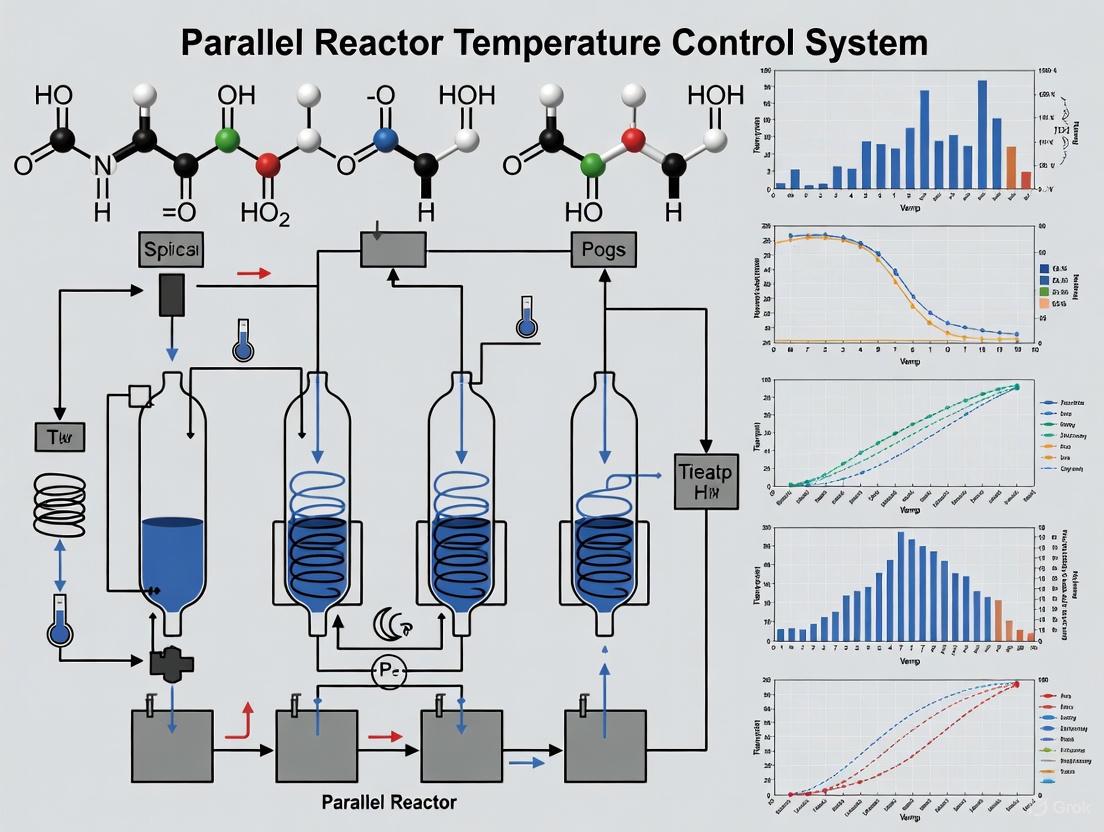
This article provides a comprehensive guide to parallel reactor temperature control, a critical technology for accelerating and scaling biomedical research and drug development.
Parallel Reactor Temperature Control: Principles, Optimization, and Advanced Applications for Biomedical Research
Abstract
This article provides a comprehensive guide to parallel reactor temperature control, a critical technology for accelerating and scaling biomedical research and drug development. It covers foundational principles of heat transfer and reactor design, explores advanced methodological implementations including photoredox chemistry and microfluidic systems, and details strategies for troubleshooting and performance optimization. The content also addresses validation frameworks and comparative analyses of different control configurations, offering researchers and scientists a practical resource to enhance reproducibility, efficiency, and scalability in their experimental workflows.
Core Principles and System Architectures: Building a Foundation for Parallel Reactor Temperature Control
Fundamental Heat Transfer Modes in Parallel Reactor Systems
Parallel reactor systems have become indispensable in modern research and development, particularly in pharmaceuticals and drug development, where they enable high-throughput experimentation for rapid compound screening and optimization. The core principle of parallel synthesis involves conducting multiple chemical reactions simultaneously under carefully controlled conditions [1]. The ability to precisely manage heat transfer within these systems is fundamental to their success, as it directly impacts reaction kinetics, selectivity, product yield, and ultimately, the reproducibility and validity of experimental data [2]. This guide provides an in-depth examination of the fundamental heat transfer modes employed in parallel reactor systems, detailing their operational principles, implementation methodologies, and critical considerations for researchers.
Fundamental Heat Transfer Principles in Reactor Design
Heat transfer in parallel reactors, as in all thermal systems, occurs through three primary modes: conduction, convection, and radiation. In most reactor designs, these modes operate in combination. For instance, heat is typically transferred from a heating block to a reactor vial wall via conduction, then from the inner wall to the reaction mixture via convection, and if significant thermal gradients exist, radiation may also contribute.
A key concept in designing and analyzing heat exchangers for reactor temperature control is the Log Mean Temperature Difference (LMTD). The LMTD represents the driving force for heat transfer in flow systems and is crucial for calculating the heat removal or addition required. For a counter-flow heat exchanger (often more efficient), the LMTD is calculated as follows, where ΔT₁ and ΔT₂ are the temperature differences at each end of the exchanger [3]:
The overall heat transfer rate (Q) can then be determined using the equation:
Where U is the overall heat transfer coefficient and A is the heat transfer area [3]. The overall heat transfer coefficient accounts for the conductive and convective resistances throughout the entire assembly, from the heat transfer fluid to the reactor wall and finally to the reaction mixture [3].
Table 1: Comparison of Flow Arrangements in Heat Exchangers for Reactor Systems
| Flow Arrangement | Principle | Advantages | Disadvantages | Common Reactor Applications |
|---|---|---|---|---|
| Parallel Flow | Hot and cold fluids flow in the same direction. | Design simplicity; large initial temperature difference minimizes surface area needed initially. | Large thermal stress due to high initial temperature difference; cold fluid exit temperature cannot approach hot fluid inlet temperature. | Less common; used when fluids need to be brought to nearly the same temperature [3]. |
| Counter-Flow | Hot and cold fluids flow in opposite directions. | More uniform temperature difference minimizes thermal stress; higher average ΔT allows for greater heat transfer efficiency; cold fluid exit can approach hot fluid inlet temperature. | Slightly more complex design. | Standard for most jacketed reactor systems and condensers; ideal for precise temperature control [3]. |
The choice between parallel and counter-flow designs significantly impacts the efficiency and control of reactor temperature. The counter-flow arrangement is generally preferred for its superior performance and more uniform rate of heat transfer [3].
Heat Transfer Methods in Parallel Reactor Systems
Various active temperature control methods are employed in parallel reactors, each with distinct mechanisms for heat transfer. The selection of a method depends on the specific reaction requirements, including temperature range, precision, heat load, and scalability.
Active Temperature Control Modalities
Liquid Circulation Systems utilize a heat transfer fluid (e.g., water, silicone oil, or glycol mixtures) pumped through a jacketed reactor block. This method offers high heat capacity and excellent temperature uniformity across the reactor block [2] [4]. One implementation is the Temperature Controlled Reactor (TCR), a fluid-filled, 24 or 48-position reactor capable of maintaining temperatures from -40°C to 82°C with a remarkable well-to-well uniformity of ±1°C [4]. These systems are particularly valuable for managing heat loads from external sources like high-powered LEDs in photochemistry [4].
Peltier-Based (Thermoelectric) Systems employ solid-state heat pumps that use the Peltier effect to either heat or cool. When an electric current flows through the junctions of two dissimilar semiconductors, heat is absorbed on one side (cooling) and released on the other (heating). Their key advantages are compact design, rapid temperature changes, and the ability to both heat and cool without moving parts [2]. However, their efficiency decreases with larger temperature differentials, and they may require auxiliary cooling for prolonged use, making them ideal for small-scale laboratory reactors [2].
Air Cooling Systems represent a simpler, more cost-effective method that relies on fans or natural convection to dissipate heat, often augmented with heat sinks. While easy to implement and maintain, air cooling is less effective for precise temperature regulation or for reactions that generate significant exotherms [2]. Its use is typically confined to low-heat-load applications.
Table 2: Performance Characteristics of Active Temperature Control Methods
| Parameter | Liquid Circulation | Peltier-Based Systems | Air Cooling |
|---|---|---|---|
| Typical Temperature Range | -40°C to +150°C+ (fluid dependent) [4] | Limited by heat sink; efficient for small ΔT [2] | Ambient to moderate cooling/heating |
| Temperature Uniformity | High (±1°C achievable) [4] | Good for small volumes | Low |
| Best for Heat Load | High & Exothermic reactions [2] | Low to Moderate | Very Low |
| Scalability | Excellent for industrial scale [2] | Good for lab scale | Poor |
| Relative Cost & Maintenance | Higher initial cost & maintenance [2] | Moderate | Low [2] |
| Primary Advantage | High heat capacity & uniformity | Compact, reversible heating/cooling | Simplicity & low cost |
The following diagram illustrates the logical decision-making process for selecting an appropriate temperature control method based on key reaction parameters, synthesizing the criteria outlined in the search results [2].
System-Specific Heat Transfer Configurations
Heat transfer configurations are often tailored to specialized reactor types. In parallel photochemistry, temperature control must manage not only reaction enthalpy but also heat from high-intensity light sources [1] [4]. Systems like the Illumin8 or Lighthouse photoreactors incorporate cooling directly into their design to counteract radiative heating from LEDs, ensuring that temperature remains a controlled variable [1].
In parallel pressure reactors (e.g., for hydrogenation), systems like the Multicell run multiple reactions at elevated pressures in a single module [1]. Heat transfer in these systems must be designed to handle exothermic reactions safely, often incorporating robust heating blocks and, in some cases, cooling capabilities alongside pressure safety features like release valves [1].
Droplet-based microfluidic platforms represent another advanced configuration, where heat transfer occurs to or from individual nanoliter to microliter-scale reaction droplets flowing through a fluoropolymer tube [5]. The high surface-area-to-volume ratio enables very rapid heat transfer, allowing for precise thermal control and excellent reproducibility of fast, small-scale reactions [5].
Experimental Protocols for Heat Transfer Analysis
To ensure reliable and reproducible results in parallel synthesis, standardized protocols for verifying and utilizing heat transfer performance are essential.
Protocol: Verification of Temperature Uniformity in a Parallel Reactor Block
This protocol is designed to empirically validate the temperature uniformity of a reactor block, a critical factor for experimental consistency [4].
- Equipment Setup: Prepare the parallel reactor system (e.g., a Temperature Controlled Reactor, DrySyn SnowStorm MULTI, or similar) according to the manufacturer's instructions. Connect the temperature probe to a calibrated data logger or multimeter [6] [4].
- System Stabilization: Fill identical reactor vials with a thermally stable solvent (e.g., silicone oil) to mimic a standard reaction volume. Place the vials in all positions of the reactor block. Set the control temperature and allow the system to stabilize for a duration sufficient to reach a steady state (typically 30-60 minutes, depending on the system) [4].
- Data Collection: Using a fine-gauge thermocouple or RTD probe, measure the temperature of the solvent in the center of each vial. Record the temperature for every reactor position simultaneously or in rapid succession to minimize temporal drift.
- Data Analysis: Calculate the average temperature across all positions. Determine the maximum deviation from the average and the standard deviation of all measurements. A high-performance system should demonstrate a uniformity of ±1°C or better across the block [4].
Protocol: Performing a Parallel Synthesis with Controlled Low-Temperature Cooling
This methodology outlines the steps for executing exothermic or sub-ambient parallel reactions using an actively cooled system [6].
- Reactor Preparation: Mount the cooling unit (e.g., a DrySyn SnowStorm MULTI) on a magnetic stirrer plate and connect it to a refrigerated circulator. Set the circulator to the desired sub-ambient temperature (e.g., -30°C) and pre-cool the system [6].
- Reaction Mixture Assembly: In an inert atmosphere if necessary, charge the reaction vessels (e.g., 3 x 50 mL round-bottom flasks) with reactants and solvent. Equip each vessel with a stirrer bar [6].
- Initiating the Reaction: Once the reactor block has reached the target temperature, carefully place the charged reaction vessels into their positions. Start the magnetic stirrer to ensure efficient mixing and heat transfer.
- Reaction Monitoring: Maintain constant cooling and stirring for the required reaction time. Monitor the reaction progress using in-situ analytical techniques (e.g., RAMAN) or by periodically extracting samples for off-line analysis like TLC or HPLC [5].
- Sampling and Quenching: Upon completion, halt the reaction by removing the vessels or introducing a quench solution. The system's ability to hold constant sub-ambient temperatures enables safe handling of highly exothermic reactions and supports unattended operation, such as overnight reactions [6].
The Scientist's Toolkit: Essential Research Reagent Solutions
The following table details key materials and equipment essential for implementing effective heat transfer control in parallel reactor experiments.
Table 3: Essential Materials and Equipment for Parallel Reactor Temperature Control
| Item | Function/Description | Key Considerations |
|---|---|---|
| Temperature Controlled Reactor (TCR) Block | A fluid-filled, multi-position reactor block that circulates a thermal fluid to maintain consistent temperature around samples [4]. | Provides superior well-to-well uniformity (±1°C); crucial for mitigating heat gradients in high-throughput photocatalysis [4]. |
| Refrigerated/Heating Circulator | An external device that pumps a heat transfer fluid at a precisely controlled temperature through a reactor jacket or block [6]. | Enables active cooling and heating; essential for maintaining sub-ambient temperatures (e.g., down to -30°C) for extended periods [6]. |
| Heat Transfer Fluids | Fluids such as water, silicone-based fluids (e.g., SYLTHERM), ethylene glycol, or polypropylene glycol used as the heat transfer medium [4]. | Selection depends on the working temperature range, viscosity, and chemical compatibility; water is suitable down to 5°C, while glycols are for lower temperatures [4]. |
| Parallel Photoreactor | A system like the Illumin8 or Lighthouse that allows multiple photochemical reactions to run simultaneously with controlled light irradiation and temperature [1]. | Integrated temperature control is vital to counteract heat from high-power LEDs, preventing unwanted thermal side reactions [1] [4]. |
| Microfluidic Droplet Reactor Platform | A system using discrete droplets suspended in a carrier fluid within tubing to perform reactions in nanoliter volumes [5]. | The high surface-area-to-volume ratio facilitates extremely rapid heat transfer, enabling high-fidelity screening with minimal material usage [5]. |
| Calibrated Temperature Probe | A precision sensor (e.g., thermocouple, RTD) for verifying the actual temperature within a reaction vessel or block. | Critical for empirical validation of setpoint temperatures and mapping thermal uniformity across a reactor block [4]. |
The precise control of heat transfer is a cornerstone of successful parallel reactor operation. Understanding the fundamental modes of heat transfer and the practical implementations of temperature control systems—from liquid circulation and Peltier devices to specialized configurations for photochemistry and microfluidics—empowers researchers to design more reliable and efficient experiments. The selection of an appropriate temperature control method must be guided by a clear understanding of reaction requirements, including heat load, desired precision, and scalability. By adhering to rigorous experimental protocols and utilizing the appropriate toolkit of reagent solutions, scientists and drug development professionals can leverage the full potential of parallel synthesis to accelerate research and development while ensuring the highest standards of data quality and reproducibility.
In the realm of thermal management systems for advanced reactors, the selection of an appropriate flow configuration within heat exchangers is a critical design decision with far-reaching implications for efficiency, safety, and operational stability. This analysis provides a comprehensive technical comparison between parallel flow and counter-flow configurations, framing this examination within the broader context of reactor temperature control research. Effective temperature control is fundamental to reactor safety, efficiency, and longevity, particularly in sensitive applications ranging from nuclear energy to pharmaceutical production where thermal precision dictates process success [7] [8].
The fundamental distinction between these configurations lies in fluid directionality: in parallel flow (or cocurrent flow), both hot and cold fluids move in the same direction, whereas in counter-flow (or countercurrent flow), the fluids move in opposite directions [9] [10]. While this difference appears simple, it creates significantly different thermal-hydraulic phenomena that directly impact the performance and safety of reactor temperature control systems. This whitepaper details these differences through quantitative data, experimental methodologies, and visualizations tailored for researchers, scientists, and drug development professionals engaged in thermal system design.
Theoretical Foundations of Flow Configurations
Fundamental Principles and Temperature Distribution Profiles
The underlying thermodynamics of the two flow configurations create distinctly different temperature distribution patterns along the heat exchanger length, which directly influence their operational characteristics and suitability for various applications.
In a parallel flow arrangement, the hottest and coldest fluids enter at the same end and move concurrently. This results in a large initial temperature difference at the inlet, which decreases exponentially along the flow path as the fluids approach thermal equilibrium [9]. This decaying temperature differential creates a fundamental limitation: the outlet temperature of the cold fluid can never approach or exceed the outlet temperature of the hot fluid. The significant temperature difference at the inlet can also induce substantial thermal stresses at the entrance region, potentially compromising material integrity over time [9] [10].
In a counter-flow arrangement, the fluids enter from opposite ends. The hot fluid transfers heat to the cold fluid along the entire exchange path, but crucially, the temperature difference between the two fluids remains more consistent throughout the device [9] [11]. This uniform gradient enables the cold fluid outlet temperature to approach much closer to the hot fluid inlet temperature, a thermodynamic advantage that makes counter-flow configurations particularly valuable in processes requiring precise high-temperature control or maximum heat recovery [11] [12].
Mathematical Basis for Performance Comparison
The performance superiority of counter-flow configurations can be quantified mathematically through the concept of Log Mean Temperature Difference (LMTD), which represents the driving force for heat transfer in exchangers [12]. For a counter-flow heat exchanger, the LMTD is calculated as:
[ \text{LMTD} = \frac{(T{h,i} - T{c,o}) - (T{h,o} - T{c,i})}{\ln\left(\frac{T{h,i} - T{c,o}}{T{h,o} - T{c,i}}\right)} ]
Where (T{h,i}) and (T{h,o}) are the hot fluid inlet and outlet temperatures, and (T{c,i}) and (T{c,o}) are the cold fluid inlet and outlet temperatures. For parallel flow, the calculation changes to:
[ \text{LMTD} = \frac{(T{h,i} - T{c,i}) - (T{h,o} - T{c,o})}{\ln\left(\frac{T{h,i} - T{c,i}}{T{h,o} - T{c,o}}\right)} ]
For the same inlet temperatures, the counter-flow arrangement consistently yields a higher LMTD, enabling greater heat transfer in an equivalently sized apparatus [12]. This mathematical foundation explains the higher thermal efficiency observed in counter-flow systems, which can reach efficiencies up to 85% in well-designed applications [11].
Quantitative Comparative Analysis
The theoretical advantages of counter-flow configurations manifest in measurable performance improvements across multiple operational parameters. The following tables consolidate quantitative findings from comparative studies, providing researchers with concrete data for design decisions.
Table 1: Thermal-Hydraulic Performance Comparison in Reactor Applications
| Performance Parameter | Parallel Flow Configuration | Counter-Flow Configuration | Experimental Context |
|---|---|---|---|
| Heat Transfer Efficiency | Lower heat transfer rates; gradual temperature equalization [13] | Higher efficiency; consistent temperature gradient maintained [13] | DFR Mini Demonstrator CFD simulations [13] |
| Temperature Approach | Cold fluid outlet temperature cannot exceed hot fluid outlet temperature [9] | Cold fluid can approach hottest temperature of incoming fluid [9] [11] | Industrial heat exchanger performance analysis [9] [10] |
| Thermal Stress | Large temperature differences at ends cause significant thermal stresses [9] | More uniform temperature difference minimizes thermal stresses [9] [10] | Material stress analysis in nuclear applications [13] |
| Swirling Effects | Intense swirling in fuel pipes enhancing local heat transfer but increasing mechanical stress [13] | Reduced swirling effects in fuel pipes, decreasing mechanical stress [13] | DFR fuel flow velocity analysis [13] |
| Temperature Distribution | Less uniform coolant temperature distribution; higher risk of localized overheating [13] | More uniform coolant temperature distribution across core [13] | Liquid lead coolant analysis in DFR [13] |
Table 2: Application-Specific Considerations for Flow Configuration Selection
| Application Domain | Preferred Configuration | Technical Rationale | Performance Notes |
|---|---|---|---|
| Nuclear Reactors (DFR) | Counter-flow | Higher heat transfer efficiency; more uniform flow velocity; reduced swirling and mechanical stresses [13] | Enhanced reactor safety and operational performance [13] |
| Pharmaceutical Industry | Parallel-flow | Gentler thermal transfer prevents product alteration; no thermal shocks [8] | Preserves quality of heat-sensitive compounds [8] |
| Chemical Processes | Counter-flow | Efficient heat recovery between process streams; maximum temperature utilization [11] | High efficiency up to 85% [11] |
| Ventilation & AC | Counter-flow | Efficient heat transfer between incoming and outgoing air streams [11] | Energy recovery in air handling systems [11] |
Experimental Protocols for Flow Configuration Analysis
Computational Fluid Dynamics (CFD) Methodology for Reactor Analysis
Advanced computational methods provide detailed insights into thermal-hydraulic behavior without requiring full-scale physical prototypes. The following protocol outlines a validated methodology for comparing flow configurations in nuclear reactor contexts, based on published research using the Dual Fluid Reactor (DFR) Mini Demonstrator (MD) as a test case [13].
Computational Model Setup:
- Geometry Definition: Create a 3D model representing the reactor core internals. The DFR MD model included 7 fuel pipes and 12 coolant pipes (6 large diameter, 6 small diameter). To optimize computational resources, leverage geometric symmetry by simulating only a quarter of the full domain [13].
- Mesh Generation: Develop a structured computational mesh with refined elements near pipe walls to resolve boundary layer effects. Implement mesh sensitivity analysis to ensure results are grid-independent.
Governing Equations and Physical Models:
- Solve the time-averaged mass, momentum, and energy conservation equations:
- Continuity: (\frac{\partial \rho}{\partial t} + \frac{\partial \rho Ui}{\partial xi} = 0)
- Momentum: (\frac{\partial \rho Ui}{\partial t} + \frac{\partial \rho Uj Ui}{\partial xj} = -\frac{\partial P}{\partial xi} + \frac{\partial}{\partial xj} \left[ \mu \left( \frac{\partial Ui}{\partial xj} + \frac{\partial Uj}{\partial xi} \right) - \rho \overline{u'i u'j} \right])
- Energy: (\frac{\partial \rho T}{\partial t} + \frac{\partial \rho Uj T}{\partial xj} = \frac{\partial}{\partial xj} \left[ \left( \frac{\lambda}{cp} + \frac{\mut}{\sigmat} \right) \frac{\partial T}{\partial xj} - \rho \overline{u'j T'} \right]) [13]
Specialized Modeling for Liquid Metal Coolants:
- Implement a variable turbulent Prandtl number model to accurately capture heat transfer in liquid metals with low Prandtl numbers. Use the empirical correlation: (Prt = 0.85 + \frac{0.7}{Pet}) where (Pet) is the turbulent Peclet number ((Pet = \frac{v_t}{v} Pr)) [13].
- Apply appropriate wall functions validated for liquid metal flows to bridge viscous sublayer regions.
Boundary Conditions and Simulation Parameters:
- Set mass flow inlet and pressure outlet boundaries for both fuel and coolant streams.
- Define operating temperatures representative of reactor conditions (e.g., 600-800°C for fuel, 400-600°C for coolant).
- Configure opposing flow directions for counter-flow analysis and same-direction flows for parallel flow assessment.
- Implement the k-ω SST turbulence model with curvature correction to capture swirling flows accurately.
Data Collection and Analysis Metrics:
- Extract temperature distributions throughout the domain to identify thermal hotspots and gradients.
- Quantify velocity profiles and swirling intensity using vorticity magnitude calculations.
- Calculate wall shear stresses to evaluate mechanical loading on components.
- Determine overall heat transfer coefficients and effectiveness for both configurations.
Experimental Validation Protocol for Laboratory-Scale Heat Exchangers
While computational studies provide valuable insights, experimental validation remains essential for confirming theoretical predictions. The following protocol describes a laboratory-scale approach for comparing flow configurations using representative heat exchanger test platforms.
Experimental Apparatus:
- Test Section: Utilize a concentric tube heat exchanger with transparent sections for flow visualization, or instrumented industrial plate heat exchanger modules.
- Flow System: Implement separate loops for hot and cold fluids with precision pumps for flow control.
- Heating and Cooling Systems: Incorporate electric heaters with PID control for the hot loop and a chiller unit for the cold loop.
- Instrumentation: Install resistance temperature detectors (RTDs) or thermocouples at all inlets and outlets, with additional temperature sensors along the flow path if possible. Include flow meters, pressure transducers, and differential pressure sensors to characterize hydraulic performance.
Experimental Procedure:
- System Preparation: Fill both loops with appropriate working fluids (water for initial validation, specialized coolants for application-specific testing).
- Flow Configuration Setup: Arrange piping and valves to establish either parallel or counter-flow configuration while maintaining identical flow paths and components.
- Steady-State Operation: For each test condition, adjust flow rates to desired values, activate heating and cooling systems, and allow the apparatus to reach thermal steady-state (confirmed by stable temperature readings over 10-15 minutes).
- Data Collection: Record all temperature, pressure, and flow rate measurements at steady-state conditions across a range of flow rates (e.g., 0.5-5.0 L/min) and inlet temperature combinations.
- Configuration Change: Carefully reconfigure the system to the alternate flow arrangement while maintaining all other system parameters, and repeat the measurement sequence.
Data Analysis Methods:
- Calculate heat transfer rates from both fluid sides: (Qh = \dot{m}h c{p,h} (T{h,i} - T{h,o})) and (Qc = \dot{m}c c{p,c} (T{c,o} - T{c,i}))
- Determine overall heat transfer coefficient (U) using the formula: (Q = U \times A \times \text{LMTD})
- Evaluate thermal effectiveness for both configurations: (\varepsilon = \frac{Q}{Q_{\text{max}}} = \frac{\text{Actual Heat Transfer}}{\text{Maximum Possible Heat Transfer}})
- Correlate pressure drop with flow rate to characterize hydraulic performance.
- Quantify temperature profile uniformity and identify any localized hotspots through detailed sensor arrays.
Visualization of Thermal-Hydraulic Phenomena
To enhance understanding of the fundamental differences between flow configurations, the following diagrams illustrate key concepts, relationships, and experimental workflows using standardized DOT visualization.
Diagram 1: Thermal Performance Characteristics Comparison
Diagram 2: CFD Analysis Workflow for Flow Configuration Assessment
The experimental and computational analysis of flow configurations requires specialized tools, materials, and computational approaches. The following table details essential resources referenced in the studies analyzed for this technical guide.
Table 3: Research Reagent Solutions and Essential Materials for Thermal-Hydraulic Experiments
| Resource Category | Specific Examples | Function/Application | Technical Notes |
|---|---|---|---|
| Computational Fluid Dynamics Software | ANSYS CFX, OpenFOAM, STAR-CCM+ | Simulation of thermal-hydraulic phenomena in complex geometries [13] | Requires specialized turbulence models for low Prandtl number fluids [13] |
| Advanced Coolants | Liquid lead, Lead-Bismuth Eutectic (LBE), Sodium | High-temperature reactor coolant with superior heat transfer properties [13] | Low Prandtl number requires modified simulation approaches [13] |
| Turbulence Models | k-ω SST with curvature correction, Variable Prandtl number models | Accurate prediction of heat transfer in liquid metal flows [13] | Prt = 0.85 + 0.7/Pet correlation for liquid metals [13] |
| Experimental Test Facilities | NACIE-UP Loop (ENEA), LIFUS5 Facility (ENEA), EAGLE (JAEA) | Experimental validation of thermal-hydraulic performance [13] | Provide benchmark data for computational model validation [13] |
| Temperature Measurement | Resistance Temperature Detectors (RTDs), Thermocouples | Precise temperature mapping in experimental setups | Critical for validating temperature distribution predictions |
| Flow Characterization | Coriolis flow meters, Laser Doppler Velocimetry, Particle Image Velocimetry | Flow rate measurement and velocity field mapping | Essential for quantifying swirling effects and flow distribution [13] |
Application Contexts and Configuration Selection Guidelines
Nuclear Reactor Temperature Control Applications
Within nuclear reactor systems, particularly advanced Generation IV designs like the Dual Fluid Reactor (DFR), thermal-hydraulic performance directly impacts safety, efficiency, and operational longevity. Research conducted on the DFR Mini Demonstrator reveals significant performance differences between flow configurations that inform design decisions [13].
The counter-flow configuration demonstrates distinct advantages in nuclear contexts, including higher heat transfer efficiency, more uniform flow velocity distributions, and reduced swirling effects in fuel pipes. These characteristics collectively reduce mechanical stresses on components, enhancing reactor safety and potentially extending service life [13]. The more uniform temperature distribution achieved in counter-flow arrangements mitigates the risk of localized overheating (hot spots) that can accelerate material degradation and compromise safety margins.
Conversely, parallel flow configurations in nuclear applications exhibit intense swirling in some fuel pipes, which while enhancing local heat transfer, simultaneously increases mechanical stress on components. This swirling phenomenon, combined with less uniform temperature distributions, presents challenges for long-term operational stability in high-temperature nuclear environments [13].
Pharmaceutical and Chemical Process Applications
In pharmaceutical manufacturing and specialized chemical processes, thermal considerations extend beyond efficiency to encompass product stability and quality preservation. Unlike nuclear applications where maximum heat transfer is often prioritized, pharmaceutical processes frequently require gentle, controlled thermal treatment to prevent product degradation [8].
For these applications, parallel flow configurations offer distinct advantages despite their lower thermodynamic efficiency. The progressively decreasing temperature differential along the flow path provides a gentler thermal environment that minimizes the risk of thermal shock to sensitive compounds [8]. This "softer" thermal transfer profile helps maintain molecular integrity in heat-sensitive pharmaceuticals, biologics, and specialty chemicals where excessive or rapid temperature changes could alter product characteristics.
Counter-flow configurations in pharmaceutical contexts are typically reserved for utility applications where product contact is not direct, such as initial heating or cooling of heat transfer fluids that subsequently interact with products through secondary exchangers. This approach leverages the efficiency benefits of counter-flow arrangements while maintaining precise control over product thermal history [11] [8].
The comparative analysis of parallel and counter-flow configurations reveals a consistent thermodynamic superiority of counter-flow arrangements in applications prioritizing maximum heat transfer efficiency and temperature utilization. The maintained temperature differential across the entire heat exchanger length enables performance unattainable with parallel flow designs, particularly in high-temperature nuclear reactor applications where thermal efficiency directly correlates with safety and operational effectiveness.
However, parallel flow configurations retain significant value in specialized applications where gentle thermal treatment outweighs efficiency considerations, such as in pharmaceutical manufacturing processes involving heat-sensitive compounds. The selection between these configurations ultimately represents a multi-variable optimization problem balancing thermal efficiency, hydraulic performance, mechanical stress, material compatibility, and process requirements.
For reactor temperature control systems specifically, the evidence strongly favors counter-flow configurations, which provide more uniform temperature distributions, reduced thermal stresses, and minimized localized overheating risks. These advantages translate directly to enhanced safety margins and potentially longer operational lifespans in critical nuclear applications. As thermal-hydraulic modeling capabilities continue advancing through improved computational methods and validated experimental data, further refinement of these flow configurations will emerge, enabling increasingly sophisticated temperature control strategies for next-generation reactor systems.
Parallel reactor systems are engineered platforms that enable researchers to conduct multiple chemical reactions simultaneously under carefully controlled conditions. These systems are fundamental to accelerating research and development in fields such as pharmaceutical discovery, catalyst testing, and materials science, where high-throughput experimentation is critical [1]. The core value of these systems lies in their ability to rapidly generate reproducible and comparable data, significantly reducing the time and resource demands associated with traditional sequential experimentation. This technical guide examines the key components of these systems, framing the discussion within the broader context of parallel reactor temperature control basics research. Effective temperature management is the cornerstone of reliable parallel reactor operation, as it ensures that each reaction vessel maintains its specified thermal environment independently, without interference from neighboring reactors, thus guaranteeing the integrity of experimental results.
Core Components of a Parallel Reactor System
A parallel reactor system is an integrated assembly of several critical subsystems. Each component must be carefully selected and configured to work in harmony, ensuring precise control over reaction parameters and enabling high-fidelity, high-throughput experimentation [5].
Reaction Vessels and Materials of Construction
The reaction vessels are the primary containment units where chemical transformations occur. The material selection for these vessels is paramount for ensuring both chemical compatibility and operational safety, especially when dealing with corrosive reagents, elevated temperatures, and high pressures.
Common Alloys: The choice of alloy directly impacts the system's resistance to corrosion and its maximum operating temperature.
- 316 Stainless Steel: This is the most commonly used material, composed of iron, chromium, nickel, and molybdenum. The molybdenum addition enhances corrosion resistance, making it suitable for a wide range of applications [14].
- Inconel: A nickel-iron-chromium-based superalloy known for its ability to retain strength and corrosion resistance at a high fraction of its melting point, ideal for extremely high-temperature processes [14].
- Hastelloy: This nickel-chromium-molybdenum alloy offers the highest corrosion resistance among the three, often selected for processes involving highly aggressive media [14].
Protective Liners: To further protect the reactor's internal structure, removable liners can be employed. These are typically made from borosilicate glass or PTFE (Polytetrafluoroethylene), providing an inert barrier between the reaction mixture and the metal vessel [14].
Heating and Temperature Control
Precise and uniform temperature control is one of the most critical aspects of parallel reactor design, directly influencing reaction kinetics and outcomes. Systems employ various methods to achieve this, often tailored to the specific application.
- Heating Methods: Common techniques include heating mantles, integrated hotplates, and aluminum heating blocks that accommodate multiple reaction vials or flasks [14] [1]. For very high-temperature applications beyond 800°C, specialized systems such as molten salt reactors are custom-designed [14].
- Cooling: To quench reactions or manage exothermic processes, cooling is typically provided by a refrigerated circulator that pumps a coolant through jackets or blocks surrounding the reaction vessels [14].
- Temperature Uniformity: Advanced systems housed in a single furnace, like the BenchCAT example, can maintain multiple reactors at identical high temperatures (e.g., 1000°C) with minimal gradient, which is essential for valid comparative screening [15].
Agitation and Mixing
Efficient mixing is essential for achieving homogeneity in the reaction mixture, which is critical for consistent heat and mass transfer. Parallel systems offer different agitation mechanisms to suit various viscosities and reaction types.
- Magnetic Stirring: This common method uses stir bars driven by a rotating magnet beneath the reaction vessel. It is suitable for many standard applications [14].
- Overhead Stirring: For reactions involving high viscosity or high solids content, overhead stirrers with mechanical seals provide more robust and reliable mixing torque [14].
- Droplet-Based Oscillation: In microfluidic droplet platforms, mixing is achieved by oscillating the reaction droplet back and forth within a tubular reactor, ensuring efficient mass transfer at a very small scale [5].
Pressure Management
Many advanced chemical reactions, such as hydrogenations and carbonylations, require elevated pressures to increase gas solubility and enhance reaction rates. Parallel systems are designed to safely contain and control these pressures.
- Pressure Control: Systems can be configured for independent pressure control in each reactor cell, allowing for the screening of pressure as a variable, or they can be manifolded together to run all reactions at the same pressure [14] [1].
- Safety Features: To ensure operational safety, these systems are equipped with pressure release valves and burst disks that activate if the internal pressure exceeds a predetermined safe limit [1].
- Operating Range: Standard parallel reactors, such as the Multicell PLUS, routinely operate at pressures up to 50 bar, with high-pressure options available up to 200 bar and beyond [14].
Automation, Control, and Sensor Networks
The integration of automation, sensors, and control software is what transforms a collection of reactors into a sophisticated high-throughput experimentation platform.
- Automated Fluid Handling: Liquid handlers and selector valves are used for precise, automated dosing of reagents into individual reactor channels, enabling the preparation of reaction mixtures without manual intervention [5].
- Sensor Networks: A critical component for process understanding and control. These networks typically include:
- Thermocouples: For accurate temperature monitoring of each reactor.
- Pressure Transducers: To monitor and provide feedback for pressure control systems.
- Scales: Integrated onto liquid feed vessels to enable mass balance calculations [15].
- Process Control Systems: These systems orchestrate all hardware operations, including scheduling, and can integrate Bayesian optimization algorithms for closed-loop, iterative experimental design. This allows the platform to autonomously propose and execute the next set of experiments based on previous outcomes [5].
- On-line Analytics: Integration with analytical instruments like HPLC or GC allows for real-time, automated analysis of reaction outcomes, minimizing delays between reaction completion and evaluation [5].
Table 1: Key Specifications of Commercial Parallel Reactor Systems
| System Name | Number of Reactors | Reactor Volume | Max Temperature | Max Pressure | Key Features |
|---|---|---|---|---|---|
| Quadracell [14] | 4 | 10 mL | 250 °C | 50-200 bar | Small footprint, Stainless Steel or Hastelloy construction. |
| Multicell [14] | 10 | 30 mL | 200 °C | 50 bar | Standardized 10-position screening. |
| Multicell PLUS [14] | 4, 6, 8, or 10 | Up to 100 mL | 200-300+ °C | 50-200 bar | Highly customizable, individual cell control options. |
| Integrity 10 [14] | 10 | N/A | N/A | 100 bar (std) | Parallel Pressure Reactor Module system. |
| Automated Droplet Platform [5] | 10 | Microscale | 0-200 °C | 20 atm | Independent channels, on-line HPLC, photochemistry capability. |
| Custom BenchCAT [15] | 6 | N/A | 1000 °C | N/A | Single furnace, dedicated MFCs per station, mass balance capability. |
Experimental Protocol for a High-Pressure Parallel Catalysis Screening
The following methodology details a representative experiment for screening catalysis reaction conditions using a parallel high-pressure reactor system, incorporating best practices for temperature control and data collection.
Experimental Setup and Preparation
- System Configuration: Select a parallel reactor system, such as a 10-position Multicell, constructed from 316 Stainless Steel, with independent temperature and pressure control for each cell [14].
- Reactor Preparation: Fit each reactor cell with the appropriate protective liner (e.g., PTFE). Ensure all vessels are clean, dry, and free of contaminants.
- Catalyst and Reagent Loading: In an inert atmosphere glovebox, weigh and load the solid catalyst candidates (e.g., 5 mg ± 0.1 mg) directly into the individual reactor cells. Subsequently, add the liquid substrate solution (e.g., 5 mL of a 0.1 M concentration in an appropriate solvent) to each cell using a positive displacement pipette for accuracy.
- Sealing and Leak Checking: Securely seal all reactor cells according to the manufacturer's instructions. Pressurize the system with an inert gas (e.g., N₂) to 10 bar and monitor the pressure gauge for 15 minutes to confirm there are no leaks before proceeding.
Process Execution and Data Acquisition
- Initialization and Purging: Initiate the system's software and create a new experiment profile. Purge the headspace of each reactor three times with the process gas (e.g., H₂ for hydrogenation) to ensure an oxygen-free environment.
- Parameter Setting and Reaction Start: Set the desired experimental parameters for each cell via the control software (e.g., Temperature: 150 °C, Stirring Rate: 750 rpm, Pressure: 50 bar H₂). Commence the experiment, noting ( t = 0 ) when the set temperature is reached in all cells.
- In-Process Monitoring: Throughout the reaction, the sensor network will continuously log data. Monitor the temperature of each cell in real-time to ensure it remains within ±1.0 °C of the setpoint, confirming the system's temperature control fidelity [5].
- Sampling and Analysis: For systems with in-line analytics, automated sampling will occur at pre-defined intervals. For manual systems, after a 2-hour reaction time, rapidly quench the reactions by activating the cooling circulator. Once at ambient temperature, carefully depressurize each cell and extract a representative sample (e.g., 100 µL) from each for off-line analysis by GC-MS.
Data Analysis and Interpretation
- Conversion and Yield Calculation: Process the chromatographic data to calculate the conversion of the starting material and the yield of the desired product for each catalyst candidate.
- Performance Comparison: Compare the results across all 10 reactors to identify the lead catalyst. Advanced systems with integrated Bayesian optimization would use this data to automatically propose the next set of conditions for further optimization [5].
- Final Reporting: The final report should document the performance of each catalyst under the controlled conditions, highlighting the reproducibility of the parallel system, which should demonstrate a standard deviation of less than 5% in reaction outcomes for replicate experiments [5].
System Architecture and Workflow
The logical flow of operation in an automated parallel reactor system, from experimental design to data acquisition, can be visualized as a continuous cycle. The following diagram illustrates the integrated relationship between the hardware components and the control software.
Diagram 1: Automated parallel reactor control loop.
The Scientist's Toolkit: Essential Research Reagent Solutions
The successful operation of a parallel reactor system relies on more than just the hardware. This table details key reagents, materials, and software solutions that constitute the essential toolkit for researchers in this field.
Table 2: Essential Research Reagent Solutions and Materials
| Item Name | Function / Purpose | Application Context |
|---|---|---|
| PTFE Liners [14] | Provides an inert, non-stick, and corrosion-resistant barrier inside the metal reactor vessel. | Essential for reactions with corrosive reagents or when metal catalysis interference must be avoided. |
| Borosilicate Glass Liners [14] | Offers chemical inertness and visual access to the reaction mixture. | Ideal for non-ablative reactions where visual monitoring of precipitation or color change is beneficial. |
| Standard Catalyst Libraries | Pre-selected collections of homogeneous or heterogeneous catalysts for rapid screening. | Used in catalyst discovery and optimization campaigns to identify the most active and selective catalyst for a given transformation. |
| High-Purity Process Gases | Reactants or inert atmospheres for pressure reactions (e.g., H₂, CO, CO₂, N₂). | Critical for hydrogenation, carbonylation, and other gas-liquid reactions where solubility and purity directly impact results. |
| Bayesian Optimization Software [5] | An algorithm integrated into the control system for intelligent, closed-loop experimental design. | Proposes the most informative next experiments based on previous results, dramatically accelerating reaction optimization. |
The pursuit of uniform irradiation is a critical objective in the design of advanced photochemical reactors, particularly for applications in pharmaceutical development and high-throughput experimentation where reproducibility and scalability are paramount. Achieving this uniformity requires the deliberate application of fundamental optical principles, primarily the Inverse Square Law and Lambert's Cosine Law [16] [17]. These laws govern how light intensity distributes itself spatially and angularly from a source, directly impacting reaction kinetics and product yields in photochemically-driven processes.
Within the broader context of parallel reactor temperature control research, precise optical management serves as a complementary and equally vital parameter. Just as thermal energy must be uniformly distributed to prevent hot spots and ensure consistent reaction rates, so too must photonic energy be evenly delivered to all reaction vessels or channels [18]. This guide provides an in-depth examination of how these optical laws inform reactor design, supported by quantitative data, validated experimental protocols, and essential implementation tools.
Fundamental Optical Principles
The Inverse Square Law
The Inverse Square Law is a foundational principle of radiometry that describes the geometric dilution of light intensity with distance from a point source. It states that the intensity of light is inversely proportional to the square of the distance from the source.
Mathematical Formulation: The law is expressed as: ( I = \frac{P}{4\pi r^2} ) Where:
- ( I ) is the irradiance (intensity per unit area)
- ( P ) is the total power emitted by the source
- ( r ) is the distance from the source
Design Implications: In reactor design, this law implies that small variations in the distance between a light source and a reaction vessel can lead to significant differences in incident light intensity [19]. For example, doubling the distance from the source reduces the irradiance to a quarter of its original value. This effect is particularly critical in parallel reactor systems where multiple vessels must receive identical irradiation; a failure to maintain equal source-to-vessel distances will result in inconsistent reaction outcomes.
Lambert's Cosine Law
Lambert's Cosine Law governs the angular distribution of light emitted or reflected from a surface. For a Lambertian (ideal diffuse) surface or emitter, the observed radiant intensity is directly proportional to the cosine of the angle θ between the observer's line of sight and the surface normal [20] [21].
Mathematical Formulation: The law is expressed as: ( I = I_0 \cdot \cos\theta ) Where:
- ( I ) is the intensity observed at angle θ
- ( I_0 ) is the intensity observed normal to the surface (at θ=0°)
Design Implications: This law has two primary consequences for reactor design [19] [21]:
- Surface Orientation: Reaction vessels or flow cells must be positioned normal to the incident light direction to maximize photon capture. A surface tilted at 60° receives only half the irradiance (( \cos60° = 0.5 )) of a normally-oriented surface.
- Apparent Brightness: For diffuse reflecting surfaces inside a reactor chamber, the perceived brightness remains constant regardless of viewing angle, which aids in creating uniform illumination environments.
Table 1: Quantitative Relationship Between Angle and Relative Intensity According to Lambert's Cosine Law
| Angle θ (degrees) | cos(θ) | Relative Intensity (I/I₀) |
|---|---|---|
| 0 | 1.000 | 100.0% |
| 15 | 0.966 | 96.6% |
| 30 | 0.866 | 86.6% |
| 45 | 0.707 | 70.7% |
| 60 | 0.500 | 50.0% |
| 75 | 0.259 | 25.9% |
| 90 | 0.000 | 0.0% |
Reactor Design Applications and Optimization
The strategic application of these optical laws enables the creation of photochemical platforms that deliver high irradiance intensity and exceptional uniformity across well plates, flow reactors, and droplet stop-flow systems [19].
Design Parameters and Optimization
Comprehensive ray-tracing simulations have been employed to optimize key design parameters for planar light sources comprising multiple LEDs [19]:
- LED Arrangement: Grid and offset grid patterns outperform concentric circles and spirals, particularly at higher irradiance intensities.
- Number of LEDs: Increasing LED count consistently improves performance; simulations tested configurations from 4 to 81 LEDs.
- Source Height: An optimal height of approximately 20 mm above the reaction surface minimizes normalized irradiance standard deviation, balancing hotspot reduction against intensity falloff.
- Pattern Width: Wider LED patterns enhance uniformity but with diminishing returns, creating a tradeoff between irradiance intensity and uniformity.
Table 2: Optimization Parameters for Planar LED Array Design from Ray-Tracing Analysis [19]
| Design Parameter | Tested Range | Optimal Value/Strategy | Impact on Performance |
|---|---|---|---|
| LED Arrangement Pattern | Concentric circles, spirals, grid, offset grid | Grid or offset grid | Superior uniformity at high mean irradiance |
| Number of LEDs | 4 to 81 LEDs | Maximize number within constraints | Always beneficial for both intensity and uniformity |
| Height Above Surface | 10-150 mm | ~20 mm | Minimizes normalized standard deviation of irradiance |
| Pattern Width | 75-150 mm | Wider patterns preferred | Improves uniformity with diminishing returns |
Optical Elements for Enhanced Performance
Incorporating optical elements can further refine irradiance profiles [19]:
- Mirrored Surfaces: Surrounding LED arrays with mirrors on all four sides contains and redistributes light.
- Diffusing Layers: Ground glass diffusers placed between lights and the reaction surface scatter light to eliminate hotspots. Ray-tracing simulations show optimal placement closer to the light source.
Experimental Validation Protocols
Radiometric Validation of Uniform Irradiance
Purpose: To quantitatively measure irradiance intensity and distribution across the reaction plane to validate design uniformity [19].
Materials:
- Optical power meter with calibrated radiometer probe
- Translation stage for precise positional control
- Data acquisition system
Methodology:
- Secure the photochemical platform in a fixed position
- Mount the radiometer probe on a translation stage capable of XY movement
- Position the probe at a defined height corresponding to the reaction plane
- Measure irradiance at multiple points across the entire reaction surface using a predefined grid pattern
- Record measurements with sufficient density to characterize intensity gradients (typically 100+ points for a 100 mm × 100 mm area)
- Calculate mean irradiance, standard deviation, and coefficient of variation (standard deviation/mean) across all points
Data Analysis:
- Generate 2D contour plots of irradiance distribution
- Calculate uniformity metric: ( U = (1 - \frac{\sigma}{\mu}) \times 100\% ), where σ is standard deviation and μ is mean irradiance
- Compare experimental results with ray-tracing simulations
Chemical Actinometry for Photon Flux Quantification
Purpose: To measure the total photon flux incident on reaction vessels using a standardized chemical reaction [16].
Materials:
- Potassium ferrioxalate solution (standard chemical actinometer)
- Spectrophotometer
- Reaction vessels identical to those used in experimental applications
Methodology:
- Prepare potassium ferrioxalate solution according to established protocols
- Fill reaction vessels with actinometer solution
- Expose to the photochemical platform for precisely measured time intervals
- Analyze the formation of Fe²⁺ complexes spectrophotometrically
- Calculate photon flux based on known quantum yield of the actinometric reaction
Data Analysis:
- Determine photon flux for each reaction vessel position
- Map spatial variation of photon flux across the reactor platform
- Correlate with radiometric measurements
The Scientist's Toolkit: Essential Research Reagent Solutions
Table 3: Essential Materials and Equipment for Uniform Irradiation Reactor Implementation [19] [16]
| Item | Function/Application | Implementation Example |
|---|---|---|
| High-Power LEDs | Primary light source with tunable intensity and multiple wavelength options | Array of visible light LEDs (avoiding UV for safety); computer-controlled for integration with automation platforms [19] |
| Mirrored Surfaces | Reflect and redistribute light to enhance uniformity | Placed on all four sides of LED array to contain and direct light toward reaction plane [19] |
| Ground Glass Diffusers | Scatter light to eliminate hotspots and create uniform illumination | 300 mm × 300 mm layer placed between LEDs and reaction surface [19] |
| Optical Power Meter | Quantify irradiance and validate uniformity | Measure photon flux with display integrated into reactor control system [16] |
| Aluminum Reflectors | Broad-band light reflection to improve photon efficiency | Incorporated to redirect otherwise lost photons toward reaction vessels [16] [17] |
| Cooling Systems | Manage heat from high-power LEDs to prevent thermal effects on reactions | Active cooling solutions to maintain temperature control alongside optical optimization [19] |
Implementation Framework and Temperature Control Integration
Successful implementation requires systematic consideration of both optical and thermal factors:
- Hierarchical Design Approach: Begin with optical layout based on ray-tracing simulations, then integrate thermal management around this optical core [19].
- Control Systems Integration: Implement PID control algorithms for both LED output (intensity tuning) and temperature regulation, preferably with self-tuning capabilities for simplified operation [18].
- Validation Protocol: Employ both radiometric measurements and chemical actinometry to confirm performance before proceeding to experimental use.
The integration of optical and thermal control systems creates a comprehensive reactor environment where both photonic and thermal energy are precisely managed, enabling unprecedented reproducibility in photochemical research and development [19] [18].
The deliberate application of the Inverse Square Law and Lambert's Cosine Law provides the foundational framework for designing photochemical reactors capable of delivering uniform irradiation. Through strategic LED arrangement, optimized source-to-surface distances, and incorporation of reflective and diffusive elements, researchers can create systems that ensure consistent reaction conditions across all vessels in parallel setups.
When these optical principles are integrated with precision temperature control systems, the resulting platforms offer researchers in pharmaceutical development and other high-value chemical sectors the unprecedented ability to conduct photochemical reactions with exceptional reproducibility and scalability. This synergistic approach to managing both photonic and thermal energy represents the future of robust parallel reactor systems for advanced chemical research and development.
Impact of Temperature Gradients, Flow Patterns, and Swirling Effects on System Performance
The precise control of temperature and fluid dynamics is a cornerstone of efficient and safe operation across numerous industrial and research systems, from chemical reactors to energy generation equipment. This whitepaper, framed within broader thesis research on parallel reactor temperature control basics, examines the critical interplay between temperature gradients, flow patterns, and swirling effects on overall system performance. Understanding these coupled phenomena is essential for researchers and drug development professionals aiming to optimize reaction yields, enhance operational safety, and improve the scalability of processes. The following sections provide a detailed analysis of these parameters, supported by computational and experimental studies, and present structured data, experimental protocols, and visualization tools to guide further research and development.
Theoretical Foundations and Key Concepts
Flow Configurations and Heat Transfer Efficiency
The arrangement of fluid flows within a system is a primary determinant of its thermal performance. Two fundamental configurations are prevalent:
- Parallel Flow: In this configuration, the hot and cold fluids move in the same direction. This leads to a gradual temperature equalization along the flow path, resulting in a decreasing temperature gradient. While simpler to implement, this configuration typically yields lower heat transfer rates [22].
- Counter Flow: Here, the hot and cold fluids enter from opposite ends. This arrangement maintains a more consistent temperature gradient across the entire length of the heat exchanger, typically achieving higher heat transfer efficiency and allowing for more compact designs. It is widely used in high-temperature and cryogenic processes [22].
The Role and Implications of Swirling Flows
Swirling flows, intentionally generated by devices like twisted-tape inserts or axial-vane swirlers, are a key passive method for heat transfer intensification [23].
- Heat Transfer Intensification: The primary mechanism involves the creation of secondary flows and vortices that disrupt the thermal boundary layer at the tube wall, enhancing the mixing between the core of the flow and the wall region. This leads to a significant increase in the heat transfer coefficient [23].
- Trade-offs and Challenges: A universal drawback of heat transfer intensification is an increased pressure drop, which elevates the pumping power required. The efficiency of any intensification method must therefore be evaluated based on a combination of the improved heat transfer and the accompanying pressure loss [23]. Furthermore, in reactor systems, intense swirling can induce high mechanical stresses on components and create complex, unstable flow structures that may lead to undesirable temperature fluctuations [22].
Temperature Distribution and System Safety
Non-uniform temperature distributions pose significant risks to system integrity and performance.
- Hot-Spots: These are localized regions of excessively high temperature that can develop due to inadequate mixing, uneven flow distribution, or excessive heat generation. In pharmaceutical reactors, hot-spots can degrade product quality, while in nuclear applications, they threaten structural integrity through thermal fatigue [22] [24].
- Outlet Temperature Distribution Factor (OTDF): In combustors, the OTDF is a critical performance indicator that characterizes the temperature uniformity at the turbine inlet. A high OTDF, indicating significant non-uniformity, can lead to overheating of turbine blades and reduced component lifespan [25].
Quantitative Analysis of System Performance
The following tables synthesize key quantitative findings from various studies on flow configurations and swirling flows.
Table 1: Performance Comparison of Parallel vs. Counter Flow Configurations in a Dual Fluid Reactor Mini Demonstrator (DFR MD) [22]
| Performance Parameter | Parallel Flow Configuration | Counter Flow Configuration |
|---|---|---|
| Heat Transfer Efficiency | Lower | Higher |
| Temperature Gradient | Decreasing along flow path | More consistent and stable |
| Flow Velocity Uniformity | Less uniform | More uniform |
| Swirling Effects | Intense in fuel pipes | Significantly reduced |
| Mechanical Stress | Higher | Lower |
| Thermal Hot-Spot Risk | Higher | Lower |
Table 2: Influence of Swirl Number on Combustor Performance and Flow Features [25]
| Parameter / Feature | Low Swirl Number | High Swirl Number |
|---|---|---|
| Outlet Temperature Uniformity (OTDF) | Lower (Less Uniform) | Higher (More Uniform) |
| Precessing Vortex Core (PVC) Dynamics | Lower intensity | More pronounced, altered dynamics |
| Recirculation Zone Structure | Standard two vortices | Altered and strengthened |
| Hot-Spot Migration | Axial accumulation likely | Suppressed, promotes radial mixing |
| Mixing Efficiency | Standard | Enhanced |
Table 3: Generalized Heat Transfer and Friction Correlations for Swirling Flows in Tubes with Twisted Tape Inserts [23]
| Flow Regime | Nusselt Number (Nu) Correlation | Friction Factor (λ) Correlation |
|---|---|---|
| Turbulent Flow | ( Nu = 0.023 Re^{0.8} Pr^{0.4} \left(1 + \frac{0.769}{s/d}\right) ) | ( \lambda = \frac{0.0791}{Re^{0.25}} \left(1 + \frac{2.752}{(s/d)^{1.29}}\right) ) |
| Laminar Flow | ( Nu = 4.612 \left(1 + 0.0951 Gz^{0.894}\right)^{2.5} ) (Complex dependency on Sw) | ( \lambda = \frac{15.767}{Re} \left(1 + 10^{-6} Sw^{2.55}\right)^{0.16} ) |
| Transition Flow | ( Nu = 0.3 Re^{0.6} Pr^{0.43}_{f} \left(0.5 + \frac{8}{\pi^2}(s/d)^2\right)^{-0.135} ) | ( \lambda = \frac{6.34}{Re^{0.474}} \left(0.5 + \frac{8}{\pi^2}(s/d)^2\right)^{-0.263} + \frac{25.6}{Re} ) |
Note: ( Re ) = Reynolds number; ( Pr ) = Prandtl number; ( s/d ) = twist ratio (swirl pitch / tube diameter); ( Gz ) = Graetz number; ( Sw ) = Swirl parameter [23].
Experimental Protocols and Methodologies
Protocol 1: Comparative Thermal-Hydraulic Analysis of Flow Configurations
This protocol outlines the methodology for comparing parallel and counter-flow configurations using Computational Fluid Dynamics (CFD), as applied to a Dual Fluid Reactor [22].
- Objective: To evaluate and compare the thermal-hydraulic performance, including heat transfer efficiency, temperature gradients, velocity profiles, and swirling effects, between parallel and counter-flow configurations.
- Computational Model:
- Geometry: A 3D model of the reactor core is created. To save computational resources, simulations can often be performed on a symmetric segment (e.g., a quarter) of the full domain.
- Governing Equations: The time-averaged mass, momentum, and energy conservation equations are solved.
- Turbulence and Heat Transfer Model:
- The Reynolds-Averaged Navier-Stokes (RANS) framework is employed.
- A variable turbulent Prandtl number model is critical for accurate simulation of fluids with low Prandtl numbers (e.g., liquid metals). The Kays correlation is recommended: ( Prt = 0.85 + \frac{0.7}{Pet} ), where ( Pe_t ) is the turbulent Péclet number [22].
- Boundary Conditions: Set inlet flow rates and temperatures for hot and cold streams, and specify pressure or outflow conditions at the outlets.
- Simulation and Analysis:
- Run steady-state simulations for both configurations.
- Post-process the results to extract:
- Temperature and velocity field contours.
- Profiles of temperature and velocity along specified paths.
- Quantification of swirling intensity and identification of vortex structures.
- Calculation of global performance metrics like heat transfer rate and pressure drop.
Protocol 2: Experimental Analysis of Swirling Flow and Heat Transfer
This protocol describes an experimental approach to characterize the performance of different swirlers in a heat exchanger setup [23].
- Objective: To determine the heat transfer enhancement and pressure drop associated with different swirlers (e.g., constant vs. variable twist pitch) under controlled conditions.
- Experimental Setup:
- Apparatus: A vertical "pipe-in-pipe" heat exchanger with counter-current coolant flow. The test section is equipped with a swirler insertion port.
- Instrumentation:
- Thermocouples: For measuring the temperature field along the length and at the outlet of the test section.
- Pressure Transducers: For measuring the pressure drop across the test section.
- Flow Meters: For measuring the flow rates of the hot and cold streams.
- Procedure:
- Install a specific swirler into the test section.
- Set the flow rates of the hot internal fluid and the cold external coolant to desired values.
- Allow the system to reach steady-state conditions.
- Record temperature readings at all thermocouples and the pressure drop.
- Repeat measurements for various combinations of flow rates.
- Repeat the entire procedure for each swirler geometry under investigation.
- Data Analysis:
- Calculate the heat transfer coefficient and Nusselt number for each test case.
- Calculate the friction factor.
- Plot Nu and λ against Reynolds number for each swirler.
- Establish an efficiency criterion (e.g., ( \frac{Nu/Nu{smooth}}{\lambda/\lambda{smooth}}^{1/3} )) to compare the overall performance of different swirlers against a smooth pipe [23].
Visualization of Core Concepts and Workflows
Relationship Between Flow, Heat, and Swirl
The following diagram illustrates the logical relationships and feedback loops between flow patterns, swirling effects, and temperature distribution, which collectively determine system performance.
Diagram 1: Interplay of key parameters affecting system performance.
Workflow for CFD-Based Reactor Analysis
This diagram outlines the structured workflow for conducting a computational analysis of a reactor system, as detailed in Experimental Protocol 1.
Diagram 2: CFD analysis workflow for reactor design.
The Scientist's Toolkit: Essential Research Reagents and Materials
This section details key components and reagents used in experimental setups for studying temperature gradients and flow patterns, particularly in the context of parallel reactor systems [5] [1] [26].
Table 4: Essential Research Reagent Solutions and Materials
| Item | Function / Application | Key Characteristics |
|---|---|---|
| Parallel Reactor Stations | Enables high-throughput screening of reactions under controlled, parallel conditions. | Multiple independent reaction vessels; independent control of T, P, and stirring [26]. |
| Twisted Tape Swirlers | Passive heat transfer intensifier; induces swirling flow in tubular reactors and heat exchangers. | Simple, low-cost insert; defined by twist ratio (s/d); creates secondary flows [23]. |
| Bayesian Optimization Algorithm | Data-driven control software for automated reaction optimization over continuous & categorical variables. | Enables iterative experimental design; reduces time and material consumption [5]. |
| Fluoropolymer Tubing Reactor | Flexible and chemically resistant material for constructing microreactors. | High surface-to-volume ratio; excellent heat transfer; broad chemical compatibility [5]. |
| On-line HPLC System | Integrated analytics for real-time evaluation of reaction outcomes. | Provides immediate feedback; eliminates need for manual quenching and sampling [5]. |
| Liquid Handling Robot | Automated preparation and dosing of reaction mixtures. | Improves reproducibility; enables high-throughput experimentation [5]. |
The control of temperature gradients, flow patterns, and swirling effects is a complex but essential aspect of optimizing system performance in research and industrial applications. This whitepaper has demonstrated that counter-flow configurations generally offer superior heat transfer efficiency and temperature uniformity compared to parallel flow, while swirling flows are a powerful tool for enhancing mixing and heat transfer, albeit at the cost of increased pressure drop. The provided quantitative data, detailed experimental protocols, and visualizations offer a foundation for researchers to design, analyze, and optimize their systems. For drug development professionals, leveraging these principles through advanced tools like parallel reactors and machine learning-driven optimization promises accelerated discovery and development cycles, underpinned by a deeper understanding of fundamental thermal-fluid processes.
Implementation and Workflow Integration: Advanced Methodologies for Precision Temperature Control
Precise temperature control is a fundamental requirement in microfluidic technology, enabling advancements in a wide range of biological applications from rapid nucleic acid amplification and targeted cancer therapy to efficient cellular lysis [27]. The evolution of lab-on-a-chip devices necessitates the integration of robust, miniaturized thermal management systems that can deliver accurate spatial and temporal temperature profiles. Among the various techniques developed, induction, photothermal, and electrothermal (Joule) heating have emerged as prominent mechanisms for integrated thermal control. These methods facilitate direct, rapid, and localized heating within microfluidic systems, overcoming limitations of conventional external heaters [28] [29]. This guide provides a technical examination of these three core heating mechanisms, detailing their operating principles, implementation protocols, and performance characteristics to support research and development in parallel reactor temperature control.
Core Heating Mechanisms: Principles and Comparisons
The selection of a heating mechanism is critical in microfluidic design, with induction, photothermal, and electrothermal methods each offering distinct advantages for different application scenarios.
Electrothermal or Joule heating operates on the principle of power dissipation when an electric current passes through a resistive conductor. The generated power (P) is given by ( P = I^2R ) or ( P = V^2/R ), where I is the current, V is the voltage, and R is the electrical resistance. This heat is then transferred to the fluid within the microchannel through conduction [28] [29]. Joule heating enables rapid temperature ramp rates—exceeding 1000 °C/s in some implementations—and can achieve temperatures from ambient to 130 °C, making it suitable for applications like on-chip PCR [28].
Photothermal heating utilizes electromagnetic radiation, typically from lasers or LEDs, to excite nanoparticles or dyes within the fluid. These photothermal agents absorb photon energy and convert it to thermal energy through non-radiative relaxation processes [27]. The heating is highly localized to the vicinity of the nanoparticles, enabling precise thermal patterning without significantly heating the entire device substrate. Gold nanorods, for instance, have achieved heating rates of 12 °C/s under 808 nm laser irradiation [30].
Induction heating employs alternating magnetic fields to generate eddy currents within conductive materials, such as embedded metal nanoparticles or micro-electrodes. These currents encounter electrical resistance, resulting in Joule heating of the material [27]. The inductive coupling allows for non-contact heating through the device substrate, enabling efficient thermal transfer while isolating the power source from the fluidic pathways.
Table 1: Comparative Analysis of Microfluidic Heating Mechanisms
| Heating Mechanism | Operating Principle | Typical Temp. Range | Max. Ramp Rate | Spatial Resolution | Integration Level | Key Applications |
|---|---|---|---|---|---|---|
| Electrothermal (Joule) | Current through resistive element [28] | 25–130 °C [28] | >1000 °C/s [28] | Moderate (channel-level) [29] | High (on-chip) [28] | PCR, TGF, mixing [28] [29] |
| Photothermal | Light absorption by nanoparticles [27] | Ambient to >100 °C [27] | ~12 °C/s [30] | High (sub-cellular) [27] | Moderate (external source) [27] | Cellular lysis, cancer therapy [27] |
| Induction | Magnetic field on nanoparticles [27] | Not specified in results | Not specified in results | Moderate to High [27] | High (on-chip) [27] | Hyperthermia, droplet control [27] |
Table 2: Typical Power Requirements and Control Characteristics
| Heating Mechanism | Power Requirement | Control Method | Response Time | Temperature Homogeneity | Gradient Generation Capability |
|---|---|---|---|---|---|
| Electrothermal (Joule) | Up to 2.2 W [28] | PID on current/voltage [30] | Milliseconds-seconds [28] | High with design [29] | Yes (via electrode patterning) [28] |
| Photothermal | ~500 mW (laser) [28] | PID on laser power [27] | Seconds [30] | Localized to NPs [27] | Yes (via beam shaping) [27] |
| Induction | Varies with coil design [27] | PWM on magnetic field [27] | Seconds [27] | Dependent on NP distribution [27] | Possible with field focusing [27] |
Experimental Implementation and Protocols
Successful implementation of heating mechanisms requires careful attention to material selection, fabrication techniques, and control systems. Below are detailed methodologies for integrating each heating approach.
Electrothermal (Joule) Heating System
Integrated Microheater Fabrication:
- Substrate Preparation: Begin with a clean glass or silicon wafer. Deposit a 50-200 nm layer of platinum or indium tin oxide (ITO) via sputtering or evaporation. These materials are preferred for their stable resistive properties and biocompatibility [29].
- Patterning: Apply photoresist and pattern microheater designs using standard photolithography. The design typically features serpentine patterns to maximize resistance and heating uniformity within the target microchannel area.
- Etching: Use wet or dry etching to remove excess metal, creating the final microheater structure.
- Insulation: Deposit a thin dielectric layer (e.g., silicon nitride, SU-8) over the microheater for electrical insulation and fluid compatibility.
- Bonding: Bond the substrate containing microheaters with the PDMS microfluidic channel layer using oxygen plasma treatment [29].
Temperature Control Protocol:
- Calibration: Correlate electrical resistance of the microheater with temperature by measuring its resistance at known reference temperatures. Platinum's linear resistance-temperature relationship simplifies this process [29].
- Controller Implementation: Employ a PID feedback controller. Connect the microheater in a Wheatstone bridge configuration, using the imbalance voltage to drive a power amplifier that supplies the microheater.
- Validation: Use an infrared camera or integrated fluorescent dyes (e.g., Rhodamine B) to map temperature distribution during operation, verifying setpoint accuracy and homogeneity [28].
Photothermal Heating System
Nanoparticle Synthesis and Functionalization:
- Synthesis: Prepare gold nanorods using seed-mediated growth. First, create a seed solution by reducing chloroauric acid with sodium borohydride in the presence of cetyltrimethylammonium bromide (CTAB). Then, add seeds to a growth solution containing chloroauric acid, CTAB, and silver nitrate, with ascorbic acid as a reducing agent [30].
- Functionalization: Exchange CTAB coating with polyethylene glycol (PEG) thiol to improve biocompatibility and stability. Purify via centrifugation and resuspension in buffer.
- Characterization: Verify nanorod dimensions and concentration using UV-Vis spectroscopy (showing longitudinal surface plasmon resonance peak at ~800 nm) and transmission electron microscopy.
Optical Setup and Heating Protocol:
- System Configuration: Mount an 808 nm diode laser with adjustable power (0-2W) on a micromanipulator above the microfluidic device. Implement a beam expander for wide-field illumination or focus for localized heating [30].
- Integration: Inject nanoparticle suspension into microfluidic channels at optimized concentration (typically OD ~1-2 at 808 nm).
- Control System: Use a PID controller to modulate laser power based on real-time temperature feedback from an infrared sensor or calibrated camera. Implement safety interlocks to prevent overheating.
Induction Heating System
Magnetic Nanoparticle Integration:
- Nanoparticle Selection: Use superparamagnetic iron oxide nanoparticles (SPIONs) with appropriate surface functionalization for the target application.
- Device Integration: Two primary approaches exist:
- Direct Mixing: Incorporate nanoparticles directly into reagents or droplets within the microfluidic system.
- Stationary Embedding: Embed magnetic microparticles within PDMS during device fabrication, creating fixed heating elements [27].
Induction Coil Setup:
- Coil Design: Wind a copper coil (3-10 turns) with diameter matching the microfluidic heating zone. Mount the coil beneath or around the microfluidic device.
- Driver Circuit: Use a high-frequency AC power supply (typically 100-500 kHz) connected to the coil through impedance matching networks for efficient energy transfer.
- Control Strategy: Implement PWM control of the AC power based on temperature feedback from an integrated sensor (e.g., resistance temperature detector or fluorescent thermometry) [27].
The Scientist's Toolkit: Essential Research Reagents and Materials
Table 3: Key Research Reagent Solutions for Microfluidic Heating Applications
| Item Name | Function/Role | Specific Examples & Applications |
|---|---|---|
| Gold Nanorods | Photothermal conversion agents [30] | 808 nm absorption for PCR thermal cycling [30] |
| Platinum Thin Films | Resistive heating elements [29] | Patterned microheaters for temperature gradients [29] |
| Iron Oxide Nanoparticles | Induction heating mediators [27] | SPIONs for hyperthermia cancer therapy studies [27] |
| PDMS (Polydimethylsiloxane) | Microfluidic device substrate [28] [29] | Low thermal conductivity (0.15 W/mK) enables efficient heat transfer to fluid [29] |
| Fluorescent Thermometry Dyes | Non-contact temperature mapping [28] | Rhodamine B for in-situ temperature calibration and validation [28] |
| ITO (Indium Tin Oxide) | Transparent conductive material [30] | Electrodes for digital microfluidics with optical access [30] |
System Workflows and Control Architectures
The integration of heating mechanisms within complete microfluidic systems requires sophisticated control architectures to achieve precise thermal management. The following diagrams illustrate key operational workflows.
Performance Analysis and Optimization Strategies
Achieving optimal performance in microfluidic heating systems requires careful consideration of multiple interrelated parameters and potential limitations.
Thermal Response Optimization: For electrothermal systems, reducing thermal mass is critical for rapid response. This can be achieved through:
- Thin-film microheaters: Minimize the heated material volume while maintaining electrical integrity.
- Substrate selection: Use materials with lower thermal conductivity (like PDMS) to concentrate heat in the fluidic channel rather than dissipating to the substrate [29].
- Pulse-width modulation (PWM): Implement transient heating pulses that leverage the thermal inertia of the system for faster response compared to steady-state operation [30].
Spatial Uniformity Challenges: Temperature gradients naturally occur in microfluidic channels due to laminar flow profiles and heat transfer to channel walls. Improvement strategies include:
- Serpentine channel designs: Increase residence time for thermal equilibration.
- Multiple distributed microheaters: Enable zone-specific temperature control along the flow path.
- Advanced controller tuning: Implement adaptive fuzzy PID control to minimize temperature fluctuations and overshoot, significantly improving stability compared to conventional PID [31].
Integration Challenges and Solutions:
- Electrical interference: In electrothermal systems, isolate control wiring from sensitive detection systems.
- Optical accessibility: For photothermal systems, maintain clear optical paths while integrating other functional components.
- Biocompatibility: Ensure nanoparticle concentrations and heating profiles maintain cell viability in biological applications [27].
Induction, photothermal, and electrothermal heating mechanisms provide versatile solutions for precise temperature control in microfluidic platforms, each with distinct advantages for specific applications. Electrothermal heating offers rapid response and high-level integration for applications like PCR; photothermal heating enables highly localized thermal patterning for cellular studies; and induction heating provides non-contact energy transfer for embedded heating elements. Future developments will likely focus on multi-modal approaches that combine these heating mechanisms with advanced control algorithms and innovative nanomaterials to achieve unprecedented precision in thermal management. As these technologies mature, they will continue to enable breakthroughs in precision medicine, high-throughput diagnostics, and fundamental biological research.
Temperature-Controlled Modular Photoreactors for Batch and Flow Syntheses
Photoredox catalysis has emerged as a powerful tool in modern synthetic chemistry, enabling previously challenging transformations through light-mediated processes. Despite remarkable advancements, the field continues to face significant challenges in reproducibility and scalability, hindering its widespread adoption in both academic and industrial settings [32]. Traditional batch photochemistry presents several practical limitations, including uneven light penetration in round-bottom flasks where only outer layers receive adequate irradiation, limited reaction efficiency at scale, and safety concerns when handling UV lamps and photochemically generated intermediates in bulk [33].
Temperature-controlled modular photoreactors represent a technological solution to these challenges, offering precise thermal management across different reaction scales and formats. This technical guide examines the core principles, implementation methodologies, and applications of these advanced reactor systems within the broader context of parallel reactor temperature control fundamentals, providing researchers with the knowledge needed to optimize photochemical processes.
Core Architecture and Temperature Control Specifications
Temperature-controlled modular photoreactors are engineered systems that integrate precision light sources, advanced cooling mechanisms, and modular designs to enable reproducible photochemistry across micro- to millimolar scales in both batch and flow configurations [32]. These systems demonstrate remarkable capability to precisely control the internal temperature of irradiated reaction mixtures across a wide range, typically from -20 °C to +80 °C [32], addressing the critical need for thermal management during photochemical processes.
The fundamental operating principle centers on maintaining isothermal conditions throughout the reaction vessel despite heat generated by both the light source and the exothermic nature of many photochemical transformations. This is achieved through integrated cooling concepts that ensure remarkable reproducibility across all positions in batch photoreactors and enable seamless transfer of reaction conditions from microscale screening platforms to preparative-scale flow systems [32].
Temperature Control Methodologies
Three primary temperature control methods are employed in modern photoreactor systems, each with distinct advantages and implementation considerations:
Table 1: Temperature Control Methods for Parallel Photoreactors
| Method | Temperature Range | Precision | Best Use Cases | Scalability |
|---|---|---|---|---|
| Peltier-Based Systems | Moderate | High precision, rapid changes | Small-scale reactions, rapid screening | Laboratory-scale |
| Liquid Circulation | Wide | Excellent uniformity, high capacity | Large-scale, exothermic reactions | Industrial-scale |
| Air Cooling | Ambient to moderate | Limited precision, cost-effective | Low-heat-load applications | Small to medium scale |
Peltier-based systems utilize the thermoelectric effect to provide both heating and cooling without moving parts, making them ideal for applications requiring rapid temperature changes and compact design. However, their efficiency decreases at higher temperature differentials and may require additional cooling for prolonged use [2].
Liquid circulation systems employ a heat transfer fluid (water or oil) to regulate temperature, offering excellent heat capacity and uniform temperature distribution. These systems are particularly suitable for large-scale or exothermic reactions but require additional infrastructure and maintenance, increasing operational complexity [2].
Air cooling systems represent the most cost-effective approach, utilizing fans or natural convection for heat dissipation. While easy to implement and maintain, this method is less effective for precise temperature regulation or high-heat-load reactions [2].
Implementation and Experimental Protocols
System Configuration and Workflow
The implementation of temperature-controlled photoreactors follows a structured workflow to ensure experimental reproducibility and effective scaling. The diagram below illustrates the core operational workflow and control pathways in these integrated systems:
Diagram 1: Photoreactor Experimental Workflow (ExpWF)
Temperature Control Calibration Protocol
Proper temperature calibration is essential for experimental reproducibility. The following protocol ensures accurate temperature management:
Sensor Placement: Position temperature sensors (RTD or thermocouple) directly within the reaction vessel or flow stream at the point of maximum illumination.
System Equilibrium: Allow the reactor to reach thermal equilibrium (typically 10-15 minutes) before initiating reactions.
Validation Measurements: Record temperatures at multiple positions within batch reactors to verify uniformity (±0.5°C tolerance).
Heat Load Testing: Conduct preliminary runs with solvent-only systems to characterize thermal performance under actual irradiation conditions.
Advanced systems employ model predictive control (MPC) strategies to maintain temperature stability, particularly during exothermic reactions where heat release can cause runaway conditions [34]. These controllers use multiple reduced-models running in series to accommodate the non-stationary operating conditions characteristic of batch processes, significantly improving robustness in the presence of plant/model mismatches [34].
Parallel Screening Methodology
For high-throughput screening applications using parallel photoreactors (e.g., 96-well format):
Reaction Scale: Utilize micro- to nanomolar reaction volumes (2 µmol scale demonstrated) [32].
Position Validation: Confirm temperature and light intensity uniformity across all reactor positions.
Control Reactions: Include reference reactions for actinometric and temperature validation.
Heat Transfer Medium: Select appropriate heat transfer fluids based on temperature requirements (silicone oil for >150°C, water/ethylene glycol for -20°C to 90°C).
Research Reagents and Essential Materials
Table 2: Essential Research Reagent Solutions for Temperature-Controlled Photoreactions
| Reagent/Material | Function | Application Notes | Technical Specifications |
|---|---|---|---|
| UV-Transparent Tubing (FEP/Quartz) | Flow reactor channel | Provides optimal light penetration | FEP: 220-700 nm; Quartz: Deep UV range |
| Peltier Elements | Solid-state heating/cooling | Compact design, precise control | Typical efficiency: 5-15% of Carnot |
| Heat Transfer Fluids | Temperature regulation | Selection depends on range | Silicone oil (high temp), Water/EG (low temp) |
| LED Arrays | Monochromatic light source | Specific wavelength control | 365-740 nm range, narrow emission spectra |
| Actinometric Solutions | Light intensity measurement | Quantifies photon flux | Ferrioxalate method common [35] |
| Temperature Sensors | Process monitoring | RTD/thermocouple for accuracy | ±0.1°C precision recommended |
Applications and Performance Data
Reaction Scope and Temperature Optimization
Temperature-controlled photoreactors enable diverse photochemical transformations with enhanced selectivity and yield:
- Photoredox Catalysis: C-C and C-N coupling reactions benefiting from precise temperature control [32]
- [2+2] Cycloadditions: UV-light-mediated transformations requiring thermal management [33]
- Singlet Oxygen Generation: Oxidation processes with temperature-sensitive intermediates
- Halogenations: UV-promoted bromination or chlorination reactions [33]
The critical importance of temperature control is demonstrated in reactions where minor thermal variations significantly impact outcomes. In one documented case, a photocatalytic carbocyclization exhibited complete product distribution divergence based on temperature differences as small as 6°C [35].
Commercial System Performance Comparison
Table 3: Performance Metrics of Commercial Photoreactor Systems
| Reactor System | Temperature Control Method | Reported Temperature Stability | Light Intensity (μEinstein/s/mL) | Active Cooling Capability |
|---|---|---|---|---|
| Advanced 96xPR | Peltier/Liquid Circulation | -20°C to +80°C [32] | Varies with vial size/volume [35] | Full active cooling |
| PhotoRedox Box | Passive/Air Cooling | ~29-30°C (stable) [35] | Volume-dependent [35] | Limited |
| Lucent 360 | Liquid Circulation | 0°C to 80°C [35] | Volume-dependent [35] | Full active cooling |
| Vapourtec UV-150 | Liquid Jacket | Ambient to 80°C [33] | System-specific | Integrated temperature regulation |
Technical Implementation Diagrams
Temperature Control System Architecture
The diagram below illustrates the integrated components and control pathways in advanced temperature-controlled photoreactor systems:
Diagram 2: Temperature Control System Architecture (TempCtrlArch)
Scale-Up Pathway
The transition from screening to production follows a structured pathway enabled by consistent temperature control methodologies:
Diagram 3: Photoreactor Scale-Up Pathway (ScalePath)
Temperature-controlled modular photoreactors represent a significant advancement in photochemical synthesis, addressing critical challenges in reproducibility, scalability, and safety. Through implementation of precise temperature management systems—including Peltier devices, liquid circulation, and advanced control algorithms—these reactors enable researchers to maintain optimal reaction conditions across scales from micromolar screening to multigram production.
The integration of consistent temperature control methodologies with modular design principles facilitates seamless transfer of reaction conditions from parallel screening platforms to continuous flow production systems. This capability is particularly valuable in pharmaceutical development, where accelerated reaction optimization and reproducible scaling are essential. As photoredox chemistry continues to evolve, temperature-controlled reactor systems will play an increasingly vital role in enabling its widespread adoption across research and industrial applications.
The precise measurement and control of temperature is a cornerstone of scientific research and industrial processes. In fields ranging from drug development to materials science, the ability to accurately monitor thermal conditions is critical for ensuring product quality, process efficiency, and research validity. Traditional sensor technologies, particularly conventional thermocouples, have long served as the workhorse for temperature monitoring across diverse applications. These sensors operate on the well-established Seebeck effect, where a temperature differential between two dissimilar metals generates a measurable voltage. While thermocouples offer advantages in terms of cost, simplicity, and wide temperature range coverage, they face significant limitations in spatial resolution, sensitivity, and suitability for emerging applications at the micro- and nanoscale.
The evolving demands of modern research, particularly in parallel reactor systems where multiple reactions proceed simultaneously under identical conditions, have highlighted the need for more advanced sensing capabilities. The emergence of quantum sensing technologies, especially those based on nitrogen-vacancy (NV) centers in nanodiamonds, represents a paradigm shift in temperature measurement. These quantum sensors leverage the unique quantum mechanical properties of atomic-scale defects in diamond crystals to provide unprecedented spatial resolution and sensitivity. This technical guide examines the trajectory from conventional thermometry to quantum-based sensing, with particular emphasis on the integration of multi-modal sensing platforms that simultaneously monitor multiple parameters. The content is framed within the context of parallel reactor temperature control basics research, providing researchers and drug development professionals with a comprehensive overview of current capabilities and future directions in advanced sensing technologies.
Conventional Temperature Sensing Approaches
Thermocouples and Their Limitations
Thermocouples remain one of the most widely used temperature sensors in industrial and research settings due to their simplicity, robustness, and wide temperature range. These sensors function based on the thermoelectric effect, generating a voltage proportional to the temperature difference between their measuring junction and reference junction. Despite their widespread application, thermocouples suffer from several inherent limitations that restrict their effectiveness in advanced research applications. They typically offer limited spatial resolution (millimeter to centimeter scale), making them unsuitable for measuring temperature gradients at micro- and nanoscales. Their sensitivity is generally confined to the milliKelvin range, which is insufficient for applications requiring extreme precision. Additionally, they are susceptible to electromagnetic interference, require reference junction compensation, and cannot easily be miniaturized for integration into microfluidic or lab-on-a-chip systems.
In the context of parallel reactor systems, where multiple reactions run concurrently under supposedly identical conditions, these limitations become particularly problematic. Even slight temperature variations between reactors can lead to significant differences in reaction kinetics, product yields, and selectivity. The relatively large thermal mass of thermocouples can also introduce measurement lag and perturb the very thermal environment they are attempting to monitor.
Emerging Conventional Alternatives
Beyond thermocouples, other conventional sensing approaches include resistance temperature detectors (RTDs), thermistors, and infrared thermometry. Each of these technologies offers specific advantages and limitations. RTDs provide excellent accuracy and stability but have slower response times and larger form factors. Thermistors offer high sensitivity but limited temperature ranges. Infrared thermometry enables non-contact measurement but requires knowledge of surface emissivity and provides only surface temperature information. While these technologies have their respective niches, they share fundamental limitations in spatial resolution and compatibility with emerging nanoscale applications, particularly in biological systems and advanced materials characterization.
Quantum Sensing with Nanodiamond NV Centers
Fundamental Principles
The nitrogen-vacancy (NV) center in diamond is a atomic-scale defect consisting of a nitrogen atom adjacent to a lattice vacancy in the diamond crystal structure. This defect center possesses unique quantum properties that make it exceptionally well-suited for sensing applications. In its negatively charged state (NV⁻), the center features a spin-triplet ground state with spin-selective optical transitions that can be optically initialized, manipulated with microwave radiation, and read out using laser-induced fluorescence. This combination of properties provides the foundation for a powerful quantum sensing platform [36] [37].
The temperature sensitivity of NV centers arises from the temperature dependence of the zero-field splitting (ZFS) parameter (D), which describes the energy separation between the ms = 0 and ms = ±1 spin states in the absence of an external magnetic field. This ZFS parameter exhibits a linear temperature dependence with a coefficient of approximately -74 kHz/K near room temperature [38] [39]. Temperature changes induce lattice expansion or contraction in the diamond crystal, modifying the local crystal field experienced by the NV center's unpaired electrons and consequently shifting the resonance frequencies observed in optically detected magnetic resonance (ODMR) spectra.
Comparative Advantages Over Conventional Approaches
Nanodiamond NV centers offer several transformative advantages over conventional temperature sensing technologies. Their atomic-scale size enables temperature mapping with spatial resolutions down to approximately 200 nanometers, far exceeding the capabilities of conventional thermocouples [40]. Sensitivity levels reaching 1.8 mK with integration times of 30 seconds have been demonstrated in bulk diamond samples, with potential single-defect sensitivities better than 1 mK/√Hz under optimal conditions [40]. Unlike many conventional sensors, NV centers maintain functionality over an extremely wide temperature range (200-600 K), making them suitable for diverse applications from cryogenic environments to biological systems [40]. The chemical inertness of diamond allows NV centers to operate reliably in harsh chemical environments and biological systems where conventional sensors would degrade or interfere with the system being measured [40]. Additionally, NV centers can simultaneously measure multiple parameters, including temperature, magnetic fields, electric fields, and pressure, enabling truly multi-modal sensing capabilities [36].
Table 1: Performance Comparison of Temperature Sensing Technologies
| Technology | Spatial Resolution | Temperature Sensitivity | Measurement Speed | Multi-Parameter Capability |
|---|---|---|---|---|
| Thermocouples | Millimeter scale | ~100 mK | Moderate | No (temperature only) |
| RTDs | Millimeter scale | ~10 mK | Moderate | No (temperature only) |
| Thermistors | Sub-millimeter | ~1 mK | Fast | No (temperature only) |
| IR Thermometry | Diffraction-limited (~μm) | ~100 mK | Very fast | No (temperature only) |
| NV Centers (bulk) | ~200 nm [40] | 1.8 mK [40] | Moderate to slow | Yes (temp, magnetic field, electric field, strain) [36] |
| NV Centers (nanodiamond) | ~200 nm [40] | 44 mK [40] | Moderate | Yes (temp, magnetic field, electric field, strain) [36] |
| Pentacene-doped p-terphenyl | Sub-micron | 0.04 K/√Hz [41] | Moderate | Yes (temperature and pressure) [41] |
Multi-Modal Sensing Capabilities
Simultaneous Temperature and Magnetic Field Sensing
One of the most powerful features of NV-based quantum sensors is their ability to simultaneously measure multiple physical parameters. Recent research has demonstrated real-time dual-parameter sensing using NV nanodiamonds for concurrent temperature and magnetic field measurements [36]. This capability is particularly valuable for studying magnetic materials whose magnetization depends on both temperature and applied magnetic fields, such as ferromagnetic and ferrimagnetic materials.
The dual-sensing approach leverages the fact that the ZFS parameter (D) is primarily temperature-dependent, while the separation between the ms = -1 and ms = +1 resonance peaks is predominantly magnetic-field-dependent. By analyzing the ODMR spectrum, both parameters can be extracted simultaneously. This approach has achieved a mean temperature sensitivity of 0.4 K/√Hz and a mean magnetic field sensitivity of 3.5 μT/√Hz using a cost-effective readout system based on an ESP32 microcontroller and lock-in detection [36].
Advanced Multi-Modal Sensing Platforms
Beyond quantum-based approaches, significant advances have been made in developing fully integrated multi-modal sensing systems for continuous health monitoring, which share similar integration challenges with parallel reactor systems. One such system integrates an implantable glucose/lactate biosensor with wearable electrocardiogram (ECG) and temperature sensors, along with reusable electronics for wireless real-time monitoring [42]. This fully printed multimodal sensing system (MSS) demonstrates the feasibility of combining multiple sensing modalities in a compact, integrated package—a capability that could be adapted for parallel reactor monitoring.
Another innovative platform focuses on therapeutic drug monitoring (TDM) using wearable sensors that measure drug concentrations in biofluids such as sweat [43]. These sensors enable real-time, continuous measurement of drug concentrations, allowing for personalized dosage adjustments and reduced toxicity risks. For instance, one developed sensor specifically targets levodopa (L-Dopa), an anti-Parkinson's drug, using an enzyme-based electrochemical approach with a detection limit of 300 nM [43]. The correlation between sweat and blood L-Dopa concentrations (0.678) validates this approach for non-invasive monitoring [43].
Experimental Protocols and Methodologies
ODMR-Based Temperature Sensing Protocol
Optically detected magnetic resonance (ODMR) forms the cornerstone of NV-based temperature sensing. The following protocol outlines a standard approach for temperature measurement using NV centers in nanodiamonds:
Materials and Equipment:
- NV-rich nanodiamonds (typically 5-200 nm in size)
- Microscope setup with high numerical aperture objective
- Green laser source (532 nm typical for excitation)
- Microwave source with frequency sweep capability
- Microwave antenna or waveguide for delivery to sample
- Photodetector (photodiode or avalanche photodiode)
- Fluorescence filters (longpass filter with cutoff ~650 nm)
Procedure:
- Deposit nanodiamonds onto the substrate or region of interest using appropriate functionalization if necessary.
- Initialize the NV centers by illuminating with green laser light, which preferentially pumps the population into the ms = 0 ground state.
- Apply microwave radiation while sweeping the frequency across the resonance range (typically 2.7-3.1 GHz).
- Monitor the red photoluminescence intensity, which decreases when the microwave frequency resonates with the ms = 0 to ms = ±1 transitions.
- Record the ODMR spectrum by plotting fluorescence intensity versus microwave frequency.
- Determine the zero-field splitting parameter (D) by identifying the center point between the resonance dips.
- Convert the D value to temperature using a pre-established calibration curve of D versus temperature.
For enhanced precision, pulsed ODMR sequences such as Hahn echo or XY8 can be employed to extend the coherence time and improve sensitivity [40].
Dual-Parameter Sensing Methodology
The following methodology enables simultaneous temperature and magnetic field sensing using NV nanodiamonds [36]:
Setup Configuration:
- Implement a lock-in detection scheme to improve signal-to-noise ratio
- Use an amplitude-modulated microwave source
- Employ a photodiode for fluorescence detection
- Integrate an ESP32 microcontroller for cost-effective control and data acquisition
Measurement Process:
- Acquire the ODMR spectrum under modulated microwave excitation
- Process the signal using lock-in detection to extract the resonant features
- Apply frequency domain analysis to determine both the ZFS parameter (D) and the Zeeman splitting
- Calculate temperature from the D value using the established temperature coefficient
- Determine magnetic field strength from the Zeeman splitting using the known gyromagnetic ratio of the NV center
- Perform real-time monitoring with sub-second acquisition times enabled by the ESP32 microcontroller and SPI-based data acquisition
This approach has been successfully demonstrated for studying temperature-dependent magnetic phenomena and for failure analysis in integrated circuits where both temperature and magnetic field information are critical [36].
Intracellular Temperature Measurement Protocol
The application of NV thermometry to biological systems requires specific methodological considerations [40]:
Nanodiamond Preparation:
- Use single-crystalline nanodiamonds containing approximately 500 NV centers to ensure sufficient signal
- Functionalize nanodiamond surfaces as needed for cellular uptake
- Characterize NV coherence times, typically ~1 μs for commercial nanodiamonds
Cellular Integration:
- Introduce nanodiamonds into cells using nanowire-assisted delivery or other appropriate methods
- Confirm nanodiamond localization using confocal microscopy
- Co-localize with heat sources (e.g., gold nanoparticles) if applying local heating
Measurement Procedure:
- Use a confocal microscope with independent laser sources for NV excitation and external heating
- Record continuous-wave ESR spectra by measuring fluorescence at four different frequencies centered around Δ = 2.87 GHz
- Determine changes in zero-field splitting by analyzing spectral shifts
- Map temperature gradients within the cell by measuring multiple NV locations
- Control for potential artifacts by displacing the heating laser from the nanodiamond location
This protocol has enabled the measurement of controlled temperature gradients of up to 5 K over distances of approximately 7 μm within human embryonic fibroblast cells [40].
Implementation in Parallel Reactor Systems
Integration Approaches
The implementation of NV-based quantum sensors in parallel reactor systems requires careful consideration of integration methodologies. Two primary approaches have emerged: discrete nanodiamond sensors and fully integrated quantum sensing platforms.
Discrete nanodiamond sensors can be incorporated directly into reactor vessels or microfluidic channels, leveraging their small size and biocompatibility. These sensors can be functionalized to remain in specific locations or suspended in reaction mixtures to provide distributed temperature mapping. This approach offers maximum flexibility but requires external optical and microwave systems for readout.
Fully integrated quantum sensing platforms represent a more sophisticated approach, with recent demonstrations of extremely compact devices. One such fully integrated sensor features a form factor of just 6.9 × 3.9 × 15.9 mm³ and integrates a pump light source (LED), photodiode, microwave antenna, filtering, and fluorescence detection [37]. This all-electric interface eliminates the need for optical alignment and represents a significant advancement toward practical deployment in multi-reactor systems.
Control System Integration
The integration of quantum sensors with reactor control systems enables closed-loop temperature regulation, a critical capability for parallel reactor operations. Model predictive control (MPC) strategies have been successfully implemented for exothermic batch reactors, utilizing multiple reduced-models running in series to handle the non-stationary operating conditions characteristic of batch processes [34].
Advanced MPC approaches for batch reactors involve three key steps: reference-profile determination, operating-condition selection, and model-reduction. These controllers have demonstrated improved performance in the presence of plant/model mismatches compared to conventional single-model approaches [34]. The integration of real-time temperature data from NV-based sensors with such advanced control algorithms could significantly enhance the precision and reliability of parallel reactor systems.
The Scientist's Toolkit: Research Reagent Solutions
Table 2: Essential Materials for NV-Based Quantum Sensing Experiments
| Material/Reagent | Specifications | Function/Application | Representative Examples |
|---|---|---|---|
| NV-rich Nanodiamonds | 5-200 nm size range; 2.5-3 ppm NV concentration [37] | Primary sensing element for temperature measurement | MDNV150umHi30mg (Adámas Nanotechnologies) [37] |
| Pentacene-doped p-terphenyl | 0.1% doping level; single crystal [41] | Alternative quantum sensor with enhanced pressure and temperature sensitivity | Bridgman-grown crystals [41] |
| Microwave Antenna | λ/2 resonator tuned to ~2.87 GHz [37] | Delivery of microwave fields for spin manipulation | Omega-shaped PCB antenna [37] |
| Optical Adhesive | UV-curable type [37] | Immobilization of nanodiamonds in sensor assembly | NOA61 (Norland Products) [37] |
| Fluorescence Filter | Longpass with cutoff ~650 nm [37] | Separation of excitation light from NV emission | 622 nm Longpass Filter (Knight Optics) [37] |
| Photodetector | Silicon photodiode [37] | Detection of NV fluorescence | Integrated photodiode in custom PCB [37] |
| Microcontroller | ESP32 [36] | Control of microwave source and data acquisition | Commercial ESP32 module [36] |
Data Analysis and Machine Learning Approaches
Traditional Analysis Methods
Traditional analysis of ODMR spectra for temperature determination has primarily relied on two approaches: the 4-point method and double Lorentzian fitting. The 4-point method measures fluorescence at four specific frequencies centered around the zero-field splitting and calculates temperature based on the relative intensities [39] [40]. This approach offers speed but sacrifices accuracy due to limited spectral information. Double Lorentzian fitting involves fitting the ODMR spectrum to a sum of two Lorentzian functions, extracting the ZFS parameter from the dip positions [39]. While more comprehensive than the 4-point method, this approach often produces inconsistent results, particularly for nanodiamond ensembles with varying crystal orientations [39].
Machine Learning-Enhanced Analysis
Recent advances have introduced machine learning approaches to improve the accuracy and robustness of NV-based thermometry. Gaussian process regression (GPR) has demonstrated superior performance compared to traditional methods, providing more accurate temperature estimates even with limited data points [39]. The GPR approach learns the relationship between ODMR spectra and temperature without assuming a specific functional form for the spectral shape, making it particularly valuable for analyzing complex spectra from nanodiamond ensembles with random crystal orientations.
The implementation of GPR for NV thermometry typically involves:
- Acquiring a complete dataset of ODMR spectra at precisely known temperatures
- Training the GPR model on a subset of the data (Data #1)
- Validating the model on a separate dataset (Data #2)
- Comparing performance against traditional methods using metrics such as mean absolute error and robustness to limited data points
This machine learning approach has shown particular value for analyzing ODMR spectra acquired in magnetic fields, where traditional methods struggle with the increased spectral complexity [39].
Visualization of Experimental Workflows
Diagram 1: Workflow for NV-based quantum temperature sensing, covering sample preparation to data analysis.
Diagram 2: Multi-modal sensing ecosystem showing integration of various sensor types and applications.
The field of temperature sensing is undergoing a transformative shift from conventional approaches to quantum-based technologies. Nanodiamond NV centers represent a particularly promising platform, offering unparalleled spatial resolution and multi-modal sensing capabilities. The integration of these advanced sensors into parallel reactor systems promises to revolutionize research in drug development, materials science, and chemical engineering by providing unprecedented insight into thermal processes at the micro- and nanoscale.
Future developments in NV-based sensing will likely focus on several key areas. Enhanced material systems, such as pentacene-doped p-terphenyl, offer dramatically improved sensitivity to pressure and temperature, with pressure sensitivity >1200-fold greater than NV centers and temperature sensitivity >3-fold greater [41]. Further miniaturization of fully integrated sensors will enable more widespread deployment in space-constrained applications. Advanced machine learning algorithms will continue to improve the accuracy and robustness of data analysis, particularly for complex spectra from nanodiamond ensembles. Increased integration with control systems will enable more sophisticated feedback loops for precision process control. Expansion of multi-parameter capabilities will allow simultaneous monitoring of increasingly diverse sets of physical and chemical parameters.
For researchers and professionals working with parallel reactor systems, the implications of these advancements are substantial. The ability to monitor temperature with milliKelvin sensitivity at nanometer scales across multiple simultaneous reactions will enable new levels of process understanding and control. The multi-modal nature of NV-based sensors further provides opportunities to correlate temperature with other critical parameters, offering a more comprehensive view of reaction dynamics. As these technologies continue to mature and become more accessible, they are poised to become indispensable tools in advanced research and development environments.
The integration of quantum sensors with conventional measurement approaches represents a powerful hybrid strategy, leveraging the respective strengths of each technology. This synergistic approach, combined with advanced data analysis and control algorithms, provides a robust foundation for the next generation of parallel reactor systems with unprecedented capabilities for precision temperature control and multi-modal sensing.
Precision temperature control is a foundational parameter in modern laboratory research, directly influencing the kinetics, yield, and reproducibility of biological and chemical processes. Within the framework of parallel reactor systems, which enable high-throughput experimentation, the challenge of maintaining exact thermal conditions across multiple reaction vessels is magnified. This whitepaper provides an in-depth technical examination of three advanced application areas—Nucleic Acid Amplification, Photoredox Catalysis, and Cell Culture—where precise thermal management is indispensable. We explore the specific temperature requirements, experimental protocols, and control methodologies that underpin success in these fields, providing researchers and drug development professionals with actionable guidelines for optimizing their parallel reactor strategies.
Application I: Nucleic Acid Amplification
Nucleic acid amplification tests (NAATs) are cornerstone techniques in molecular diagnostics, biomedical research, and pathogen detection. The integration of these assays into automated, miniaturized systems like digital microfluidics (DMF) is revolutionizing point-of-care testing (POCT) by completing entire workflows with minimal human intervention [44].
Core Principles and Temperature Requirements
NAATs can be broadly categorized into thermal-cycling and isothermal methods, each with distinct temperature control profiles.
- Polymerase Chain Reaction (PCR): As a gold standard, PCR requires precise thermal cycling between three temperatures: denaturation (95°C), primer annealing (50–65°C), and strand extension (72°C) [44]. This typically occurs over 30-40 cycles, demanding rapid and accurate temperature transitions from a reactor's control system.
- Loop-Mediated Isothermal Amplification (LAMP): This method uses a strand-displacing DNA polymerase to amplify nucleic acids at a constant temperature between 60°C and 65°C [45] [46]. It employs 4-6 primers targeting 6-8 regions of the desired gene, which promotes high specificity and allows for amplification of up to 10^9 copies in under one hour [45].
- Recombinase Polymerase Amplification (RPA): Another prominent isothermal technique, RPA operates at even lower, near-physiological temperatures of 37–42°C and can yield results in 20-40 minutes [44] [46].
Detailed LAMP Experimental Protocol
The following procedure outlines a standard LAMP assay suitable for implementation in a thermally controlled parallel reactor block.
Procedure:
- Reaction Mixture Preparation: On ice, combine the following reagents in a nuclease-free microtube:
- 12.5 µL of 2X LAMP reaction buffer
- 1.0 µL of Primer Mix (containing FIP and BIP at 40 µM each; F3 and B3 at 5 µM each)
- 1.0 µL of strand-displacing DNA polymerase (e.g., Bst 2.0 or 3.0)
- 2.0 µL of target DNA template (or RNA template with added reverse transcriptase for RT-LAMP)
- Nuclease-free water to a final volume of 25 µL
- Reaction Setup: Aliquot the master mix into individual reaction tubes or wells of a parallel reactor plate.
- Amplification: Place the reactions in a parallel reactor pre-heated and stabilized at 63°C. Incubate for 30-60 minutes.
- Product Visualization: Post-amplification, analyze results using one of the methods below.
Detection and Visualization Methods for LAMP
The table below summarizes common techniques for detecting LAMP amplification products.
Table 1: Common LAMP Product Detection Methods
| Method | Principle | Detection | Key Features |
|---|---|---|---|
| Turbidimetry | Measures white precipitate of magnesium pyrophosphate, a reaction by-product [45] | Real-time turbidimeter or naked eye (turbidity) | Label-free; allows for real-time monitoring [45] |
| Fluorometry | Uses fluorescent dyes (e.g., SYTO-9, SYBR Green I) that intercalate into double-stranded DNA [45] [47] | Fluorometer or UV light | Highly sensitive; enables real-time quantification [45] |
| Colorimetry | Detects pH change (e.g., with xylenol orange) or metal ion reduction (e.g., with calcein or hydroxy naphthol blue) [45] [47] | Naked eye (color change) | Ideal for point-of-care; no specialized equipment needed [45] |
| Gel Electrophoresis | Separates DNA fragments by size through an agarose matrix [47] | UV transilluminator | Standard confirmatory method; reveals characteristic ladder pattern [47] |
Figure 1: LAMP Assay Workflow. The process begins with primer binding and proceeds through the formation of stem-loop structures that enable rapid, exponential amplification under isothermal conditions.
Temperature Control Considerations for Parallel Reactor Setup
- Uniformity and Stability: For LAMP and RPA, the reactor must maintain a uniform temperature across all wells with minimal fluctuation (e.g., ±0.2°C at 63°C for LAMP) to ensure consistent amplification efficiency [44] [45].
- Ramp Rates: For PCR, the system must support rapid heating and cooling cycles to minimize process time and non-specific amplification.
- Miniaturization and DMF: In Digital Microfluidics (DMF), droplets are manipulated electrically on a planar electrode array. Here, integrated, localized heating elements are critical for performing NAAT workflows like nucleic acid extraction, amplification, and detection in a miniaturized, automated format [44].
Application II: Photoredox Catalysis
Photoredox catalysis is a transformative methodology in synthetic chemistry that uses light energy to drive chemical reactions. It offers a sustainable alternative to traditional thermal processes by enabling transformations under milder conditions, often at room temperature, with high selectivity and reduced waste [48].
Core Principles and Temperature Interactions
This process relies on a photocatalyst (often a metal complex or an organic dye) that, upon absorption of visible light, enters an excited state. This excited species can then transfer electrons or energy to other substrates, generating reactive intermediates that propagate the desired reaction [48]. While many photoredox reactions are performed at ambient temperatures, precise temperature control remains vital for several reasons:
- Suppressing Competing Reactions: Exothermic steps can cause local heating, leading to undesired thermal side-reactions.
- Enhancing Catalyst Stability: Some photocatalysts are sensitive to thermal degradation. Maintaining a constant, low temperature prolongs their activity and enables recyclability [48].
- Improving Reproducibility: Controlling the temperature ensures consistent reaction kinetics and product yields across parallel experiments.
Detailed Protocol for a Model Photoredox Reaction
The following procedure describes a representative alkylation reaction using a parallel photoreactor.
Procedure:
- Reaction Vessel Preparation: To each vial in the parallel photoreactor carousel add:
- 0.1 mmol of the organic substrate
- 1 mol% of the photocatalyst (e.g., an iridium complex such as [Ir(ppy)₃] or a metal-free organic photocatalyst)
- 1.2 equivalents of the alkylating reagent
- 2.0 mL of a degassed solvent (e.g., acetonitrile or DMF)
- Reactor Sealing and Atmosphere: Seal the reactor and purge the headspace with an inert gas (e.g., nitrogen or argon) for 5 minutes to create an oxygen-free environment.
- Initiation of Reaction: Turn on the light source (e.g., blue LED array, ~450 nm) and start the reaction timer. Simultaneously, activate the temperature control system to maintain the setpoint (e.g., 25°C).
- Reaction Monitoring: Allow the reaction to proceed for 2-16 hours, with periodic sampling for analytical checks (e.g., TLC or UPLC-MS).
- Work-up and Analysis: Terminate the reaction by turning off the light source. Remove the reaction mixture for standard work-up (e.g., dilution, extraction, purification). Analyze the product for yield and purity.
Temperature Control Methods for Parallel Photoreactors
The choice of temperature control system is critical for the outcome and scalability of photoredox reactions.
Table 2: Temperature Control Methods for Parallel Photoreactors
| Method | Principle | Optimal Use Case | Advantages | Limitations |
|---|---|---|---|---|
| Peltier-Based | Thermoelectric heating/cooling [2] | Small-scale, rapid temperature changes [2] | Compact, precise control, no moving parts [2] | Lower efficiency at high ΔT, may need auxiliary cooling [2] |
| Liquid Circulation | Circulates heated/cooled fluid [2] | Large-scale, exothermic reactions [2] | High heat capacity, uniform temperature [2] | Higher cost, more complex maintenance [2] |
| Air Cooling | Convective heat dissipation [2] | Low-heat-load applications [2] | Simple, cost-effective, easy to implement [2] | Less precise, unsuitable for high-heat loads [2] |
Figure 2: Basic Photoredox Catalysis Cycle. The photocatalyst absorbs light to form an excited state, which engages in electron transfer with a substrate to generate a reactive radical intermediate, ultimately regenerating the ground-state catalyst.
Application III: Cell Culture
Cell culture is a fundamental technique for studying cellular behavior, producing biologics, and developing advanced therapies. Maintaining optimal and stable temperature is a non-negotiable requirement for ensuring cell viability, proliferation, and consistent experimental outcomes [49].
Core Principles and Temperature Requirements
Mammalian cells, the most common type cultured, require a temperature of 37°C to mimic in vivo conditions [49]. Even minor deviations can induce cellular stress, alter metabolism, and impact gene expression, compromising data integrity. In parallel bioreactor systems, especially for process intensification like perfusion culture, temperature control is coupled with pH and dissolved oxygen monitoring to achieve high cell densities and productivity [50].
Detailed Protocol for Passaging Adherent Mammalian Cells
This standard protocol is essential for maintaining healthy, proliferative cell cultures and can be adapted for parallelized operations.
Procedure:
- Preparation: Pre-warm culture medium, phosphate-buffered saline (PBS), and trypsin-EDTA in a 37°C water bath. Perform all subsequent steps in a laminar flow hood using aseptic technique.
- Media Aspiration: Remove the spent culture medium from the culture vessel (e.g., T-flask or multi-well plate).
- Washing: Gently add a sufficient volume of sterile PBS to the cell layer to remove residual serum and calcium, which can inhibit trypsin. Aspirate the PBS.
- Cell Detachment: Add enough trypsin-EDTA solution to cover the cell monolayer. Incubate the vessel at 37°C for 2-5 minutes until cells detach (observable under a microscope).
- Trypsin Neutralization: Add complete culture medium (containing serum) in a volume at least equal to the trypsin volume to neutralize the enzyme.
- Cell Suspension and Counting: Gently pipette the cell suspension to break up clumps and perform a cell count using a hemocytometer or automated counter.
- Re-seeding (Subculturing): Calculate the volume of cell suspension needed to seed new culture vessels at the desired density (e.g., 10,000 cells/cm²). Centrifuge the suspension if a medium change is required, then re-suspend the cell pellet in fresh, pre-warmed medium and aliquot into new vessels.
- Incubation: Place the new cultures in a 37°C, 5% CO₂ incubator.
Advanced Cell Culture Techniques and Temperature Implications
- 3D Cell Culture and Organoids: These complex models more accurately mimic tissue architecture. Heat and mass transfer limitations in 3D structures necessitate careful control to ensure all cells receive adequate nutrients and are maintained at 37°C [49].
- Process Analytical Technology (PAT): Advanced monitoring uses in-line sensors (e.g., Raman spectroscopy) to track parameters like metabolite levels (glucose, lactate) and cell density in real-time. This data can be integrated with temperature control systems for automated, dynamic adjustments to the culture environment, enhancing product consistency and yield [50].
The Scientist's Toolkit: Essential Research Reagent Solutions
The table below catalogs key reagents and materials critical for the experimental workflows described in this guide.
Table 3: Essential Research Reagents and Materials
| Item | Function/Application | Key Characteristics |
|---|---|---|
| Bst DNA Polymerase | Enzyme for LAMP amplification [45] | Strand-displacement activity, thermostable (60-65°C) [45] |
| LAMP Primer Mix | Targets specific gene sequences for amplification [45] | Set of 4-6 primers (F3/B3, FIP/BIP, LF/LB) [45] |
| Photocatalyst (e.g., [Ir(ppy)₃]) | Absorbs light to initiate photoredox reactions [48] | Metal-based or metal-free organic molecules [48] |
| Trypsin-EDTA | Proteolytic enzyme for cell detachment [49] | Dissociates adherent cells from culture surfaces [49] |
| Cell Culture Media (e.g., DMEM) | Nutrient source for cell growth [49] | Contains vitamins, amino acids, glucose, and buffers [49] |
| Fluorescent Dyes (e.g., SYBR Green I) | Detection of amplified DNA in LAMP and PCR [45] | Intercalates with double-stranded DNA, emits fluorescence [45] |
| MXene-based Supports | Material for enzyme immobilization and precise heating [51] | High thermal conductivity, biocompatible, enables efficient heat transfer [51] |
The parallel execution of nucleic acid amplification, photoredox catalysis, and cell culture experiments presents significant thermal management challenges that directly impact experimental success. Mastering the specific temperature demands and control strategies for each application—from the isothermal precision required for LAMP, to the ambient yet stable conditions for photoredox catalysis, to the unwavering 37°C necessary for cell viability—is fundamental. By leveraging the detailed protocols, comparative analyses of control methods, and essential toolkits provided in this whitepaper, researchers can design robust, reproducible, and high-throughput experimental workflows that accelerate discovery and development across the life sciences and chemistry.
Seamless Workflow Transfer from Microscale (96-well) to Macroscale Flow Reactors
The optimization of chemical processes, particularly within pharmaceutical development, traditionally relies on high-throughput experimentation (HTE) in microtiter plates (e.g., 96-well format) for rapid reaction screening. However, a significant bottleneck often occurs when transferring an optimized protocol from these microscale batch conditions to a production-ready macroscale flow reactor. A seamless transfer strategy is crucial for accelerating development timelines, reducing costs, and maintaining product quality.
This guide details a methodology for the direct transfer of workflows from 96-well plates to macroscale flow reactors, framed within the critical context of parallel reactor temperature control basics. Precise thermal management is a foundational element that ensures reaction consistency and predictability across scales, making its understanding vital for successful translation.
Fundamental Concepts and Advantages
Microscale and Macroscale Defined
In encapsulation and reactor technology, scales are often distinguished by the size of the reaction vessel or domain [52]:
- Microscale: Reactors or systems with diameters from 1 to 100 μm, such as microfluidic chips and channels.
- Macroscale: Conventional reactors with dimensions above 100 μm, including typical batch stirrer reactors and packed-bed flow columns.
Comparative Advantages of Each System
The choice between systems involves trade-offs between throughput, control, and scalability.
Table 1: Comparison of Microscale (96-well) and Macroscale Flow Reactor Characteristics
| Characteristic | Microscale (96-well) Batch | Macroscale Flow Reactor |
|---|---|---|
| Primary Use | High-throughput screening of reaction variables and substrates [53] | Process intensification, scalable synthesis, and safe handling of hazardous conditions [53] |
| Reaction Control | Limited control over continuous variables like temperature and time [53] | Superior control over residence time, temperature, and pressure [53] |
| Heat Transfer | Less efficient, can lead to temperature gradients | Highly efficient due to high surface-area-to-volume ratio [53] |
| Process Windows | Limited to ambient pressure and solvent boiling points | Enables use of solvents above their boiling points and access to wider, safer process windows [53] |
| Scale-Up Path | Optimized conditions often require re-optimization upon scale-up [53] | Scale-up is achieved by increasing runtime ("scale-out") with minimal re-optimization [53] |
| Throughput | High parallelization for "brute force" screening [53] | High sequential throughput via process intensification [53] |
The Role of Temperature Control in Scale Translation
Temperature control is a cornerstone of reactor design. The small dimensions of flow reactors provide excellent heat transfer properties, minimizing hot spots and ensuring a uniform temperature profile—a challenge in larger batch vessels. This superior thermal management is a key reason why reactions optimized in a well-controlled microscale system can be more reliably translated to tubular flow reactors at a larger scale, as the environment is more predictable and controllable [54].
Quantitative Data and Comparative Analysis
Empirical studies demonstrate the performance impact of choosing the appropriate scale and system.
Table 2: Quantitative Experimental Outcomes from Microscale vs. Macroscale Techniques
| Experiment Description | Microscale System & Result | Macroscale System & Result | Key Implication |
|---|---|---|---|
| Encapsulation of Plant Extract (Calotropis gigantea) [52] | Microfluidic System:• Encapsulation Efficiency: 80.25%• Nanoparticle Size: 92 ± 19 nm• Cytotoxicity at 80 µg/mL: 90% | Conventional Batch Method:• Encapsulation Efficiency: 52.5%• Nanoparticle Size: Not specified (less uniform)• Cytotoxicity at 80 µg/mL: 70% | Microscale technique produces superior, size-controlled nanoparticles with higher efficacy and efficiency. |
| Temperature Control System Validation [55] | Digital Twin Simulation:• Peak Temp: 80.18°C• Overshoot: 0.23%• Settling Time: 909 s | Actual Chamber Experiment:• Peak Temp: 81°C• Overshoot: 1.25%• Settling Time: 953 s | Simulation models can predict system behavior with high accuracy (0.775% error), de-risking scale-up. |
| Knoevenagel Condensation Optimization [56] | Bayesian Optimization in Flow Reactor:• Autonomous parameter search using inline NMR.• Achieved 59.9% yield. | Demonstrates a closed-loop, model-informed workflow for optimizing flow reactor conditions directly. |
Methodologies and Experimental Protocols
A Roadmap for Seamless Workflow Transfer
The following workflow diagram outlines a strategic path for transferring a chemical reaction from a 96-well plate screening platform to a macroscale flow reactor.
Detailed Experimental Protocols
Protocol 1: Microscale Encapsulation via Microfluidic System
This protocol, adapted from a comparative study, is used for generating size-controlled nanoparticles with high encapsulation efficiency [52].
- Apparatus: PMMA (polymethyl methacrylate) microchip microfluidic system, syringe pumps.
- Reagent Preparation:
- Prepare the aqueous phase: Dissolve the active compound (e.g., plant extract) and polymer (e.g., poliglusam) in an aqueous buffer.
- Prepare the continuous oil phase: Use canola oil or another suitable immiscible solvent.
- Procedure:
- Load the aqueous and oil phases into separate syringes mounted on precision syringe pumps.
- Connect the syringes to the inlets of the microfluidic chip.
- Set the aqueous and oil flow rates to achieve the desired aqueous-to-oil flow rate ratio (e.g., 1.0:1.5 or 1.0:3.0). The total flow rate and ratio control nanoparticle size.
- Initiate flow to generate a water-in-oil emulsion within the microchip channels.
- Collect the emulsion from the outlet and allow the solvent to evaporate or solidify to form solid nanomatrices.
- Analysis: Characterize particles for size (e.g., dynamic light scattering), encapsulation efficiency (via UV-Vis spectroscopy of unencapsulated material), and morphology (electron microscopy).
Protocol 2: Autonomous Optimization of a Flow Reactor
This protocol describes setting up a self-optimizing flow reactor using inline NMR and Bayesian algorithms, as demonstrated in the Knoevenagel condensation example [56].
- Apparatus:
- Modular flow reactor system (e.g., Ehrfeld MMRS) with micromixer, capillary reactor, and temperature control.
- Syringe pumps for reagent feeds.
- Benchtop NMR spectrometer (e.g., Magritek Spinsolve Ultra) with a flow cell.
- Process automation software (e.g., HiTec Zang LabManager and LabVision).
- Reagent Preparation:
- Feed 1: Salicylaldehyde (104.5 mL, 1 mol) and Piperidine catalyst (9.88 mL, 10 mol%) dissolved in 1 L of Ethyl acetate.
- Feed 2: Ethyl acetoacetate (126.5 mL, 1 mol) dissolved in 1 L of Ethyl acetate.
- Dilution solvent: Dichloromethane (8.0 mL) in 1 L of Acetone.
- Procedure:
- Setup: Connect reagent feeds and dilution solvent to the reactor inlet via pumps. Connect the reactor outlet to the NMR flow cell.
- Automation Integration: Configure the automation software to control pump flow rates, reactor temperature, and to trigger NMR measurements.
- NMR Method: Set up a quantitative NMR (qNMR) template with solvent suppression. A typical method uses a 1D pulse sequence with 4 scans, 6.55 s acquisition time, and a 15 s repetition time.
- Algorithm Configuration: Implement a Bayesian optimization algorithm within the control software. The objective function is to maximize the reaction yield, calculated in real-time from the NMR integrals.
- Run Optimization: Initiate the autonomous optimization. The system will:
- Set initial flow rates (e.g., between 0-1 mL/min).
- Wait for steady state (monitored by consecutive stable NMR spectra).
- Calculate and record the yield.
- Use the Bayesian algorithm to suggest new, improved flow rates for the next experiment.
- Iterate automatically (e.g., for 30 iterations) to converge on the optimal conditions.
The Scientist's Toolkit: Essential Research Reagent Solutions
Successful implementation of these protocols requires specific reagents and tools.
Table 3: Key Research Reagent Solutions for Flow Reactor Transfer
| Item | Function/Description | Example Use Case |
|---|---|---|
| Poliglusam | A natural, biodegradable polymer used to form nanomatrices for the encapsulation of active compounds. | Encapsulation of plant extracts for improved delivery and efficacy [52]. |
| Benchtop NMR Spectrometer | A compact, cryogen-free NMR instrument for real-time, inline monitoring of reaction conversion and yield. | Provides the critical feedback for autonomous reactor optimization [56]. |
| Bayesian Optimization Algorithm | An intelligent search algorithm that efficiently explores a multi-parameter space to find optimal conditions with minimal experiments. | Used in self-optimizing reactor systems to autonomously maximize yield or other objectives [56]. |
| Modular Microreactor System | A system of mixers, residence time units, and temperature controllers that can be configured for specific reactions. | Provides the platform for continuous-flow synthesis with enhanced heat and mass transfer [56]. |
| PMMA Microchip | A microfluidic chip fabricated from polymethyl methacrylate, used to create precise emulsions or perform reactions on a microliter scale. | Serves as the core component in a microscale encapsulation system [52]. |
Implementation and Integration
The Digital Twin Approach for Temperature Control
A parallel simulation and digital twin method can be employed to virtualize the temperature control system of a reactor. This involves creating a high-fidelity computational model that runs in parallel with the physical reactor. The study on an environmental experimental chamber demonstrated the power of this approach: the digital twin predicted the system's settling time and temperature overshoot with a maximum relative error of only 0.775% compared to the actual experiment [55]. This allows for in-silico testing and optimization of temperature control parameters, significantly de-risking and accelerating the scale-up process.
The Role of Additive Manufacturing
Additive manufacturing (3D printing) is opening new frontiers in reactor engineering. 3D-printed reactors allow for the creation of complex, optimized internal geometries that are impossible to produce with traditional manufacturing. These structures can enhance mass and heat transfer, reduce pressure drops, and improve the performance of catalytic continuous-flow reactors, leading to more efficient and sustainable processes [57]. This technology provides a direct pathway to fabricate bespoke, high-performance macroscale reactors designed from first principles.
The seamless transfer from microscale screening to macroscale production in flow reactors is an achievable goal that hinges on strategic planning and the integration of modern technologies. By leveraging the strengths of high-throughput screening, employing model-informed development strategies like digital twins and Bayesian optimization, and utilizing advanced reactor fabrication techniques, researchers can dramatically shorten development cycles. A deep understanding of core engineering principles, especially parallel reactor temperature control, remains the foundation upon which successful, scalable, and efficient chemical processes are built.
Troubleshooting Common Challenges and Strategies for System Optimization
Identifying and Mitigating Thermal Hotspots and Non-Uniform Flow Distribution
In the realm of chemical research and drug development, precise temperature control is a cornerstone of reactor performance, directly influencing reaction kinetics, product yields, and process safety. A paramount challenge in this domain is the management of thermal hotspots—localized areas of elevated temperature—and non-uniform flow distribution, where fluid passes unevenly through parallel channels or across a reactor volume. These phenomena can lead to undesirable consequences including thermal stress, accelerated catalyst degradation, unwanted side reactions, and reduced product selectivity [18] [58]. The drive towards process intensification, miniaturization, and the adoption of continuous flow chemistry exacerbates these challenges, as systems become more compact and power-dense [59] [60]. This guide, framed within a broader thesis on parallel reactor temperature control fundamentals, provides researchers and scientists with an in-depth technical examination of these issues, from root causes to advanced mitigation strategies, equipping professionals with the knowledge to enhance reactor reliability and experimental reproducibility.
Fundamentals and Root Causes
Defining Thermal Hotspots and Flow Maldistribution
A thermal hotspot is defined as a spatially confined region within a reactor or on a catalyst surface where the temperature significantly exceeds the average bulk temperature of the system. In chemical reactors, these often form due to the exothermic nature of reactions, inadequate heat removal, or localized catalyst activity [58]. The synthesis of phthalic anhydride, for example, is a classic case where achieving high conversion must be carefully balanced against the safe limitation of reactor temperature to prevent runaway reactions and product degradation [58].
Flow maldistribution describes the uneven distribution of a fluid stream as it passes through a system containing multiple parallel flow paths, such as a multi-tubular reactor, a microchannel heat exchanger, or a fixed-bed reactor. It is crucial to distinguish between non-uniform flow, which can be intentionally designed to counteract non-uniform heating, and maldistribution, which is an undesirable, performance-degrading phenomenon [61]. In the context of cooling a non-uniform heat source, a deliberately non-uniform flow can be engineered to eliminate temperature hotspots by providing more coolant to high-heat-flux regions [61].
Underlying Physical Causes
The primary causes of these issues are interconnected and can be categorized as follows:
- Geometric Factors: The design of inlet and outlet manifolds is a critical factor. Sudden expansions or contractions, along with poorly designed manifold geometries, can lead to flow separation, recirculation zones, and swirls, which promote uneven distribution [61]. Furthermore, variations in the cross-sectional area or length of parallel channels will inherently create unequal flow resistances.
- Process Conditions: Higher volumetric flow rates often exacerbate maldistribution by increasing the influence of inertial forces over frictional forces within the distribution system [61]. In reactions, the spatial variation in reaction rates, often tied to catalyst loading or activation, directly creates non-uniform heat generation.
- Fabrication Tolerances: Imperfections in manufacturing, such as slight differences in channel dimensions or blockages, can create unintended flow paths with varying resistance.
- Three-Dimensional (3D) Non-Uniformity: A particularly complex challenge arises from heat sources that are non-uniform not just in a 2D plane, but also in the vertical direction. This requires cooling systems where the channel depth and structure vary in all three dimensions to efficiently address heat sources at different embedded depths [59].
Quantitative Analysis and Measurement
Accurately quantifying flow and temperature distribution is a prerequisite for effective mitigation. Several coefficients and methods have been developed for this purpose.
Flow Maldistribution Quantification Methods
The following table summarizes the principal methods for quantifying flow maldistribution, each with its own advantages and applications [61].
Table 1: Methods for Quantifying Flow Maldistribution
| Method Basis | Quantification Formula | Application Notes |
|---|---|---|
| Velocity | Φ = √( (1/N) * Σ((Uᵢ - U_avg)/U_avg)² ) * 100% |
Requires channels to have identical cross-sections. Useful for non-intrusive measurements like Particle Image Velocimetry (PIV) [61]. |
| Mass Flow Rate | Φ = (ṁ_max - ṁ_min) / ṁ_avg * 100% |
Most direct method, as mass flow directly impacts heat transfer. Independent of channel cross-sectional area [61]. |
| Temperature | Analysis of outlet temperature profile across the heat exchanger face. | Indirect method. A non-uniform temperature profile at the outlet is a strong indicator of flow or heat flux maldistribution. |
Performance Data for Advanced Cooling Designs
Experimental studies on advanced heat sink designs provide quantitative benchmarks for thermal performance under non-uniform heating conditions.
Table 2: Performance of a 3D Channel Heat Sink for Non-Uniform Heat Sources [59]
| Parameter | Sub-Heat Source 1 | Sub-Heat Source 2 |
|---|---|---|
| Embedded Depth | 1.2 mm | 5.5 mm |
| Heat Flux | 102.5 W/cm² | 14.6 W/cm² |
| Cooling Performance | Value | |
| Maximum Surface Temperature | < 60 °C | |
| Temperature Difference | 7.7 °C | |
| System Pressure Drop | 1.4 kPa |
Experimental Protocols for Identification and Validation
This section outlines detailed methodologies for experimentally characterizing thermal and flow distributions, critical for validating reactor designs and computational models.
Protocol 1: Velocity Field Mapping in Minichannel Reactors/Heat Exchangers
Objective: To quantitatively measure the velocity distribution in parallel minichannels to calculate the flow maldistribution coefficient [61].
- Apparatus Setup: Construct a test section with multiple parallel minichannels (e.g., 34 channels with a semi-circular cross-section, diameter 3.1 mm) fabricated from a material like aluminum. The top should be sealed with a transparent acrylic glass for visualization. Configure the flow system with a precise pump, inlet/outlet manifolds, and a temperature-controlled bath.
- Flow Visualization and Measurement: Introduce a water-soluble dye (e.g., red ink) periodically into the main water stream. Use a high-speed camera positioned to view the entire channel array, recording at a high frame rate (e.g., 200 fps).
- Data Extraction: Track the boundary between the dyed and un-dyed water as it travels through each channel. The velocity (Uᵢ) in each channel is calculated by dividing the distance the boundary travels by the time elapsed, as determined from the video frames.
- Data Analysis: Calculate the average velocity (U_avg) for all channels. Use the velocity-based formula from Table 1 (
Φ = √( (1/N) * Σ((Uᵢ - U_avg)/U_avg)² ) * 100%) to determine the overall maldistribution coefficient for the system [61].
Protocol 2: Thermal-Hydraulic Performance of a 3D Heat Sink
Objective: To experimentally evaluate the effectiveness of a 3D heat sink design in maintaining a low and uniform temperature on a surface with a 3D non-uniform heat source [59].
- Test Article Fabrication: Design and fabricate a 3D channel heat sink using Computer Numerical Control (CNC) machining. The design should feature varying channel depths and a manifold structure (e.g., six-inlet, seven-outlet) tailored to the specific depths and heat fluxes of the sub-heat sources.
- Instrumentation and Testing: Embed cartridge heaters within the test block to simulate the non-uniform heat source. Instrument the heat source surface with calibrated thermocouples to map the temperature distribution. Connect the heat sink to a recirculating chiller and flow system equipped with a flow meter and pressure transducers.
- Data Collection: Apply power to the heaters to achieve the target heat fluxes (e.g., 102.5 W/cm² and 14.6 W/cm² at different depths). For a range of coolant flow rates, record the stable temperatures at all thermocouple locations and the pressure drop across the heat sink.
- Performance Calculation: Determine the maximum temperature, temperature difference between hotspots, and overall hydraulic-thermal performance. Compare the results with those from traditional 2D uniform channel designs to validate the superiority of the 3D approach [59].
Protocol 3: Individual Channel Mass Flow Rate Measurement
Objective: To directly measure the mass flow rate in each channel of a parallel system, providing the most accurate maldistribution data [61].
- Apparatus Modification: Construct a test section with parallel channels where the outlet manifold is replaced with individual outlet tubes for each channel.
- Flow Collection: For a given total inlet flow rate, collect the effluent from each individual outlet tube over a measured period of time.
- Gravimetric Analysis: Weigh the collected fluid from each channel to determine the mass. Calculate the mass flow rate (ṁᵢ) for each channel.
- Coefficient Calculation: Identify the maximum (ṁmax), minimum (ṁmin), and average (ṁ_avg) mass flow rates. Use the mass-flow-rate-based formula from Table 1 (
Φ = (ṁ_max - ṁ_min) / ṁ_avg * 100%) to quantify the maldistribution [61].
Visualization of Thermal Management Workflows
The following diagrams, generated with Graphviz, illustrate the logical workflow for tackling non-uniform cooling and the experimental setup for validating a 3D heat sink.
Diagram 1: A systematic workflow for designing and validating a thermal management system for non-uniform heat sources, integrating simulation and experimentation [59].
Diagram 2: Schematic of the experimental setup for validating the thermal-hydraulic performance of a 3D heat sink, showing the flow loop and data acquisition paths [59] [60].
Mitigation Strategies and Advanced Solutions
Structural Optimizations for Heat Sinks and Reactors
- Microchannel Sidewall Modification: Introducing features like jetting/throttling structures, micro-ribs, or grooves on channel sidewalls periodically interrupts the thermal boundary layer, enhancing heat transfer and improving temperature uniformity [60].
- Embedded Pin-Fins: Incorporating pin-fins in a staggered arrangement within flow passages induces chaotic advection, redistributes the thermofluid, and significantly enhances cooling efficiency, particularly in hotspot regions [60].
- 3D Channel Design: Moving beyond traditional 2D layouts, 3D heat sinks feature varying channel depths tailored to the vertical location of heat sources. This design can maintain a heat source surface below 60°C with a minimal temperature difference of 7.7°C, even with a >7x variation in heat flux between components [59].
- Hybrid and Composite Structures: Combining different materials (e.g., silicon for low-heat-flux regions and diamond for high-heat-flux regions) or structures (e.g., microchannel-pinfin hybrids) can yield substantial performance enhancements without a commensurate increase in pumping power [59].
Advanced Control and System-Level Strategies
- Precision Temperature Control: Employing advanced circulators with PID control algorithms and high-precision sensors (e.g., PT100 RTDs) allows for fine-tuning of reactor temperature setpoints, ensuring stability and reproducibility [18].
- Active Oxygen Control (for Nuclear Reactors): In Lead-based Fast Reactors (LFRs), active control of oxygen concentration is critical to mitigate coolant-induced corrosion. Advanced surrogate models like Kriging to Kolmogorov-Arnold Networks (K2K) are used to develop robust oxygen control strategies under complex multiphysics conditions [62].
- Multi-Scale Synergistic Cooling: A novel strategy involves integrating chip-level microchannel cooling with large-scale room air conditioning in data centers. This approach suppresses local hotspots at the source while improving the overall energy efficiency of the facility, a concept transferable to large-scale chemical plants [60].
- Leveraging Non-Uniform Flow: Intentionally designing for non-uniform flow distribution can be a powerful solution. By tailoring the mass flow rate in individual channels to match a non-uniform, multiple-peak heat flux, temperature hotspots can be effectively eliminated [61].
The Scientist's Toolkit: Research Reagent Solutions
The following table details key materials and computational tools used in advanced thermal management research, as cited in this guide.
Table 3: Essential Research Tools for Thermal-Fluids Experimentation and Modeling
| Item / Solution | Function / Application | Example from Literature |
|---|---|---|
| CNC Machining | Fabrication of complex, high-precision 3D channel heat sink prototypes from metals. | Used to manufacture three different structural configurations of 3D heat sinks for experimental testing [59]. |
| High-Speed Camera with Flow Visualization | Non-intrusive measurement of velocity distribution in parallel mini/microchannels. | Employed to track dye fronts in water to calculate channel-specific velocities [61]. |
| PID-Controlled Circulators | Provides precise and stable temperature control for jacketed reactors or external loops. | JULABO circulators (e.g., Presto, Magio series) used for reactor temperature management in R&D [18]. |
| K2K (Kriging to Kolmogorov-Arnold Network) Surrogate Model | A high-fidelity, data-efficient model for accelerating multiphysics analysis and optimization. | Replaced a computationally expensive multiphysics code (COMMA) to rapidly develop oxygen control strategies for LFRs [62]. |
| Computational Fluid Dynamics (CFD) Software | Numerical simulation of fluid flow, heat transfer, and species concentration for system design and analysis. | Used for in-depth analysis and optimization of 3D heat sink designs, complementing experimental work [59]. |
| Phase Change Materials (PCM) | Substances with high latent heat for thermal energy storage and buffering, smoothing temperature transients. | Applied in thermal management of electronics, buildings, and battery systems for passive temperature control [63]. |
Optimizing Photon Efficiency and Reaction Reproducibility via Reactor Geometry
The transition to sustainable chemical manufacturing and energy systems demands technologies that maximize resource efficiency. In photodriven processes, the design of the photoreactor is as critical as the catalyst itself, playing a pivotal role in determining overall photon utilization and process reproducibility [64] [65]. This whitepaper explores the central thesis that reactor geometry is a powerful, often underexploited, variable for achieving superior control over parallel photoreactions. By moving beyond traditional one-size-fits-all reactor designs, researchers can intentionally engineer geometries to optimize light distribution, heat management, and fluid dynamics. This approach directly enhances two of the most critical parameters in photochemical process development: photon efficiency, which dictates economic viability, and reaction reproducibility, which is fundamental for reliable scaling and commercialization, particularly within the demanding field of pharmaceutical drug development.
The Critical Role of Geometry in Photon Efficiency
Reactor geometry directly governs how photons interact with the catalyst and reactants. Inefficient designs lead to significant parasitic light losses, shadowing, and non-uniform irradiation, which drastically reduce the observable reaction rate and apparent quantum yield.
Comparative Analysis of Photoreactor Geometries
The table below summarizes the photon utilization characteristics of different reactor types, highlighting the impact of geometry.
Table 1: Photon Utilization Characteristics of Different Reactor Geometries
| Reactor Type | Typical Geometry | Key Features Impacting Photon Efficiency | Best Use Cases |
|---|---|---|---|
| Fixed-Bed Reactor (FBR) | Catalyst particles stationary on a support | Only the top catalyst layer receives full illumination; severe internal shadowing [64] | High-temperature gas-phase reactions; simple catalyst screening |
| Photofluidized Bed Reactor (PFBR) | Mobile catalyst particles suspended in upward gas flow | Enhanced light penetration; dynamic particle-light interactions; reduced shadowing [64] | Reactions with low-absorptivity catalysts; scalable solar-driven processes |
| Structured/Monolithic Reactor | Channels or periodic open-cell structures (POCS) | High surface-to-volume ratio; controlled light paths through complex internal geometry [66] [65] | Multiphase reactions requiring excellent mass/heat transfer |
| Coiled-Tube Reactor | Tubing wound in a helix or optimized path | Induces Dean vortices for radial mixing; customizable path for light exposure [67] | Liquid-phase flow chemistry; photochemical synthesis |
| Annular Reactor | Concentric tubes, catalyst in annular space | Uniform axial light irradiation from a central source [64] | Laboratory-scale kinetic studies |
Quantitative Performance of Advanced Geometries
Recent studies provide quantitative data on the benefits of geometry optimization. Computational fluid dynamics and discrete element method (CFD-DEM) simulations coupled with ray tracing have demonstrated that photofluidized bed reactors (PFBRs) can achieve significantly improved light absorption compared to fixed-bed systems, particularly for particles with lower intrinsic absorptivity [64]. This translates directly to enhanced photocatalytic performance, as evidenced by the successful operation of a solar-driven reverse Boudouard reaction (C + CO₂ → 2CO) in a PFBR, which showed improved carbon monoxide production rates at low gas flow rates [64].
Similarly, the exploration of periodic open-cell structures (POCS) has shown great promise. A digital platform called "Reac-Discovery," which integrates parametric design, 3D printing, and machine learning, was used to generate and test advanced geometries like Gyroids [66] [68]. For the triphasic CO₂ cycloaddition reaction, this approach identified a custom reactor geometry that achieved a record space–time yield (STY) of 803 g L⁻¹ h⁻¹, the highest reported for this reaction under such conditions [66] [68]. This demonstrates that a geometry tailored to a specific reaction can unlock unprecedented performance.
Enhancing Reproducibility through Engineered Flow and Thermal Profiles
Reaction reproducibility is intrinsically linked to the uniformity of the reaction environment. Variations in reactant concentration, light flux, or temperature across the reactor volume lead to inconsistent product formation and yield irreproducibility.
The Impact of Geometry on Mixing and Flow
Geometry is a primary lever for controlling fluid flow. In coiled-tube reactors, optimal geometry can promote the formation of Dean vortices—counter-rotating flow patterns that enhance radial mixing. This ensures that reactants are uniformly exposed to the catalyst and irradiated surface, preventing concentration gradients that degrade reproducibility [67]. A machine learning-assisted study optimized a coiled reactor's cross-section and path, resulting in a design that induced fully developed Dean vortices at low Reynolds numbers (Re=50) under steady-state flow. This led to an experimental plug flow performance improvement of approximately 60% compared to a conventional coiled reactor, as measured by a narrower residence time distribution (RTD) [67]. A narrower RTD means all molecules in the flow spend a similar time in the reaction zone, which is a fundamental prerequisite for reproducible product quality and yield.
Achieving Thermal Uniformity
Temperature control is a critical aspect of reproducibility, especially in exothermic reactions or high-intensity photochemical processes where localized heating can create hot spots. Advanced reactor geometries contribute to superior thermal management. Structured reactors and fluidized beds offer excellent heat transfer characteristics, leading to a more uniform temperature distribution [64] [65]. This is encapsulated in the concept of achieving isothermal and isophotonic reaction conditions, a key advantage of photofluidized bed reactors which provide uniform mixing of gases, particles, and light [64]. For sub-ambient photochemistry, specialized flow reactors with cooled jackets or bases (e.g., Cold Coil, Borealis reactors) are essential to manage the heat from both the reaction and the high-energy light sources, ensuring temperature remains a controlled variable [69].
Experimental Protocols for Geometry Optimization
Protocol: CFD-DEM and Ray Tracing for PFBR Analysis
This protocol outlines the methodology for simulating light absorption in a photofluidized bed reactor [64].
- System Setup: Define the reactor dimensions (e.g., an annular quartz tube) and the properties of the catalytic particles (size, density, optical properties).
- CFD-DEM Simulation:
- Model the gas phase as a continuous phase using the Eulerian approach.
- Model the solid (catalyst) phase using the Discrete Element Method (DEM) to track the trajectory and collisions of individual particles.
- Simulate the initial sedimentation of particles to form a packed bed.
- Introduce the gas flow to fluidize the particles, coupling the momentum exchange between gas and solid phases.
- Run the simulation for multiple time steps, updating particle positions and velocities at each step.
- Ray Tracing Analysis:
- Using the particle positions from each time step in the CFD-DEM simulation, employ a ray tracing model.
- Project a large number of simulated photons (rays) into the fluidized reaction zone.
- Track the interaction of each ray with particles, including absorption and scattering events.
- Data Analysis: Calculate the overall light absorption efficiency of the particle bed by determining the fraction of incident photons that are absorbed. Compare the time-averaged absorption to that of a static fixed bed.
Protocol: AI-Driven Discovery of Optimal Reactor Geometries
This protocol describes the "Reac-Discovery" platform for autonomously designing and testing structured reactors [66] [68].
- Reac-Gen (Geometry Generation):
- Select a base structure from a library of mathematical families (e.g., Gyroid, Schwarz).
- Define the parameters for the structure: Size (S) to set bounding box dimensions, Level (L) to control porosity and wall thickness, and Resolution (R) to define geometric fidelity.
- Compute geometric descriptors (surface area, free volume, tortuosity, porosity) for the generated structure.
- Reac-Fab (Fabrication):
- Validate the printability of the generated design using a predictive machine learning model.
- Fabricate the reactor using high-resolution Masked Stereolithography (MSLA) and photocurable resins.
- Reac-Eval (Evaluation & Optimization):
- Install the 3D-printed reactor in a self-driving laboratory (SDL) setup.
- Connect to automated pumps for liquid and gas feeds, a temperature control unit, and real-time analysis (e.g., benchtop NMR).
- The SDL varies process descriptors (flow rates, concentration, temperature) and collects performance data.
- The data is used to train two machine learning models: one for optimizing process conditions and another for refining the reactor topology.
- The loop (Reac-Gen → Reac-Fab → Reac-Eval) iterates until a performance target is met.
Visualization of Workflows
AI-Driven Reactor Optimization
PFBR Simulation & Analysis
The Scientist's Toolkit: Essential Research Reagents and Materials
Table 2: Key Research Reagent Solutions for Photoreactor Studies
| Item | Function / Application | Example in Context |
|---|---|---|
| Sulfonated Graphene (SGR) | Solid acid catalyst for enhancing reaction efficiency, e.g., in biodiesel production transesterification [70]. | Used as a heterogeneous catalyst to achieve high biodiesel yield (e.g., 94%) from biomass [70]. |
| Photocurable Resins | Materials for high-resolution 3D printing (e.g., via MSLA) of complex structured reactors [66] [68]. | Enables rapid prototyping of complex Periodic Open-Cell Structure (POCS) reactors in the Reac-Fab module [68]. |
| Titanium Dioxide (TiO₂) | Widely used semiconductor photocatalyst for reactions like water splitting and pollutant degradation [64]. | Coated on silica beads or spheres for use in fluidized bed and fixed bed photoreactors [64]. |
| Periodic Open-Cell Structures (POCS) | Mathematically defined, repeating unit cells (e.g., Gyroids) that enhance heat and mass transfer in structured reactors [66]. | Used as the foundational geometry in AI-driven design platforms to create tailored reactor internals [66]. |
| Temperature Control Chillers | Provide precise sub-ambient or elevated temperature control for batch and flow reactors, managing exotherms [69]. | Critical for operating specialized reactors like the "Cold Coil" for low-temperature photochemistry [69]. |
Precise temperature regulation is a critical requirement across a multitude of industrial and research processes, from chemical reactor control in biodiesel production to pharmaceutical development and nuclear power generation. Traditional control methods, particularly the Proportional-Integral-Derivative (PID) controller, often reach their operational limits when faced with complex, nonlinear, or time-varying systems [71] [72]. The confluence of increasing process complexity and the need for optimal resource utilization has catalyzed the adoption of advanced control strategies. This technical guide provides an in-depth examination of modern control paradigms—fuzzy logic, neural networks, and metaheuristic algorithms—framed within the context of parallel reactor temperature control research. It offers researchers and drug development professionals a detailed overview of these methodologies, supported by quantitative performance comparisons, experimental protocols, and implementation frameworks.
Core Advanced Control Strategies
Fuzzy Logic Control
Fuzzy logic controllers (FLCs) emulate human decision-making processes by using linguistic variables and a set of "if-then" rules to determine control actions. Unlike conventional controllers that require precise mathematical models, FLCs can effectively manage systems with inherent ambiguity or nonlinearity. The fundamental components of a fuzzy logic system are the fuzzifier, which converts crisp input data into fuzzy sets; the inference engine, which applies fuzzy rules to the input sets; and the defuzzifier, which converts the resultant fuzzy output back into a precise control signal.
In temperature control applications, inputs such as the error (the difference between the setpoint and measured temperature) and the change in error are typically mapped to fuzzy sets like "Negative Large," "Positive Small," etc. The rule base, constructed from expert knowledge, defines the relationship between these input states and the appropriate output, such as a change in heating or cooling power. A key advantage in reactor control is the ability to smoothly handle transitions and nonlinear effects without explicit model identification, making them robust to parameter variations commonly encountered in parallel reactor systems [71] [72].
Neural Network-Based Control
Artificial Neural Networks (ANNs) offer a powerful model-free approach to system identification and control, learning complex nonlinear relationships directly from operational data. In temperature regulation, two primary applications are prominent: system identification and direct control.
For system identification, a neural network, such as a Convolutional Neural Network (CNN) or a Recurrent Neural Network (RNN), is trained to model the dynamic response of the reactor temperature to control inputs and disturbances [71]. Once trained, this model can be used for precise simulation and controller design testing. A significant advancement is the sensorless technique, where a CNN is trained to accurately estimate the reactor temperature based on other available process variables, providing a reliable backup in case of primary sensor failure and avoiding unscheduled shutdowns [71].
In direct control, a neural network can function as the controller itself, mapping the current state and error to an optimal control signal. More commonly, Neuro-Fuzzy Controllers (NFCs) hybridize the two approaches, using neural network learning algorithms to automatically tune the membership functions and rule base of a fuzzy logic controller. This combines the interpretability of fuzzy systems with the adaptive learning capability of neural networks [71] [72].
Metaheuristic Optimization Algorithms
The performance of fuzzy and neural controllers is highly dependent on their hyper-parameters (e.g., membership function shapes, rule weights, network learning rates). Metaheuristic algorithms provide a powerful framework for the global optimization of these parameters, especially when the underlying objective function is non-differentiable, noisy, or complex.
- Genetic Algorithms (GA): GAs evolve a population of potential solutions over generations using selection, crossover, and mutation operations. A real-coded GA has been successfully applied to schedule PID gains for a nonlinear, time-varying Pressurized Water Reactor (PWR), optimizing an objective function based on overshoot, settling time, and a Lyapunov-based stability measure [73].
- Differential Evolution (DE): As a variant of GA, DE has been specifically used to tune Neuro-Fuzzy Controllers for a biodiesel production reactor. The objective was to minimize performance indices like the Integral of Time multiplied by Absolute Error (ITAE) and the Total Control Variation (TVU), leading to substantial improvements in both tracking error and control effort efficiency [71].
- Particle Swarm Optimization (PSO): Inspired by social behavior, PSO adjusts the trajectories of particles in the search space to find optimal solutions. It has been used to adapt the responsiveness rate of neural controllers, reducing the time to find the optimal setting [72].
These algorithms help overcome the inherent dependence on initial conditions and hyper-parameters that often plagues intelligent controllers, ensuring stability and convergence toward an optimal control law [71].
Quantitative Performance Analysis
The efficacy of advanced control strategies is validated through standard control performance indices. The table below summarizes a quantitative comparison between a metaheuristic-tuned Neuro-Fuzzy Controller (NFC) and a classical PID controller, applied to a chemical reactor for biodiesel production.
Table 1: Performance Comparison of Controllers for a Biodiesel Reactor
| Control Strategy | Performance Index | Value | Context/Interpretation |
|---|---|---|---|
| Neuro-Fuzzy Controller (NFC) with Metaheuristic Tuning | ITAE (Integral of Time × Absolute Error) | 8.1657 × 10⁴ | A lower ITAE indicates superior setpoint tracking with minimal accumulated error over time [72]. |
| TVU (Total Control Variation) | 25.7697 | A lower TVU signifies a smoother control signal, reducing actuator wear and energy consumption [72]. | |
| Classical PID Controller | ITAE | 7.8770 × 10⁷ | This value is orders of magnitude higher than the NFC, indicating significantly poorer tracking performance [72]. |
| TVU | 32.0287 | A higher TVU suggests more aggressive control action, leading to greater actuator wear and higher energy use [72]. | |
| NFC with Different Optimization Restrictions | ITAE | 3.3928 × 10⁶ | Demonstrates how optimization constraints can be tailored to find a balance between performance metrics [71]. |
| TVU | 17.9132 | A further reduction in control effort, achieved by specific optimization goals focused on minimizing cooling usage [71]. |
Further evidence from nuclear reactor control shows that a PID controller tuned with a real-coded genetic algorithm provides good stability and high performance in tracking demand power level changes across a wide range for load-following operations [73]. In controlling a Nonlinear Continuous Stirred Tank Reactor (CSTR), a Parallel Cascade Control Structure (PCCS) demonstrated superior performance in load disturbance rejection and setpoint tracking compared to Series Cascade and single-loop control structures [74].
Experimental Protocols and Methodologies
Protocol 1: Implementing a Metaheuristic-Tuned Neuro-Fuzzy Controller
This protocol outlines the procedure for developing and validating an NFC for a chemical reactor, based on the methodology successfully applied to a biodiesel transesterification reactor [71] [72].
System Identification:
- Objective: To develop a dynamic model of the reactor temperature response.
- Procedure: Collect high-frequency time-series data of the reactor temperature under different operating conditions, including variations in the control signal (e.g., heating/cooling valve position) and introduce known disturbance variables (e.g., feed flow rate).
- Tool: Train a Convolutional Neural Network (CNN) using this data. The input to the CNN is typically a historical sequence of control signals and temperatures, and the output is the predicted future temperature.
- Validation: The trained CNN model is validated by comparing its predictions against a separate dataset not used for training.
Controller Tuning via Differential Evolution (DE):
- Objective: To find the optimal set of hyper-parameters for the Neuro-Fuzzy Controller.
- Procedure: a. Define Objective Function: A combined performance index (J) is formulated, for example: ( J = w1 \cdot ITAE + w2 \cdot TVU ), where ( w1 ) and ( w2 ) are weighting factors that prioritize tracking performance versus control effort. b. Initialize Population: Randomly generate an initial population of candidate solutions, where each candidate represents a full set of NFC parameters. c. Evaluate and Evolve: For each generation, simulate the closed-loop system using the CNN model and each candidate NFC. Calculate the objective function ( J ). Apply DE operations (mutation, crossover, selection) to create a new, improved generation. d. Termination: The algorithm terminates after a fixed number of generations or when convergence is achieved.
Sensorless Technique Implementation:
- Objective: To create a backup temperature estimation model for sensor fault tolerance.
- Procedure: Train a second CNN to estimate the reactor temperature using only correlated process variables (e.g., jacket temperature, inlet flows, pressure). This model is run in parallel with the physical sensor.
- Validation: In case of a sensor fault, the control system can seamlessly switch to the CNN-estimated temperature signal, maintaining continuous operation [71].
Protocol 2: Controlling a Nonlinear CSTR with Parallel Cascade Control
This protocol details the methodology for applying a PCCS to a Nonlinear CSTR, as described in recent research [74].
System Modelling:
- Objective: Derive a third-order unstable transfer function that captures the dynamics of the CSTR with a recirculating jacket.
- Procedure: Based on mass and energy balance principles, the reactor dynamics are described by nonlinear differential equations (e.g., for concentration ( C_a ) and temperature ( T )). This model is linearized around an unstable operating point to obtain the transfer function model.
PCCS Controller Design:
- Objective: Synthesize the primary and secondary loop controllers.
- Procedure: a. Secondary Loop (Inner Loop): A PI controller is designed for enhanced regulatory performance and fast disturbance rejection. The desired closed-loop model for load disturbance (DCLMFLD) is used to synthesize the controller parameters. b. Primary Loop (Outer Loop): A PID controller is designed for optimal setpoint tracking. The desired closed-loop model for setpoint tracking (DCLMFST) is used, and a pole is placed at a specific desired position to achieve the required transient performance. c. Model Matching: The controller parameters from the synthesis are approximated into standard PI/PID forms using a model matching technique in the frequency domain to ensure robust steady-state performance.
Closed-Loop Simulation:
- Objective: Validate controller performance under realistic conditions.
- Procedure: The designed controllers are implemented and tested not on the linearized transfer function, but on the original nonlinear differential equations of the NCSTR. Performance is evaluated under nominal conditions, with parameter perturbations, and in the presence of measurement noise.
Implementation Workflow and System Architecture
The following diagram illustrates the integrated workflow for developing and deploying an advanced temperature control system, synthesizing elements from the cited experimental protocols.
Diagram: Advanced Temperature Control System Workflow
The Scientist's Toolkit
Implementing the strategies outlined in this guide requires a combination of specific software algorithms and physical hardware systems. The following table details these essential components.
Table 2: Essential Research Reagents and Materials for Advanced Temperature Control Experiments
| Category | Item / Solution | Function / Explanation |
|---|---|---|
| Software & Algorithms | Convolutional Neural Network (CNN) | Used for dynamic system identification of the reactor and for creating sensorless temperature estimation models [71]. |
| Fuzzy Logic Inference Engine | The core software component that evaluates "if-then" rules based on fuzzy sets to determine control actions [71] [72]. | |
| Metaheuristic Algorithm Library | Software implementation of algorithms like Differential Evolution (DE) or Genetic Algorithms (GA) for offline or online controller parameter optimization [71] [73]. | |
| Parallel Cascade Control Structure (PCCS) | A control architecture that decouples primary and secondary loops, offering superior disturbance rejection and flexibility for complex systems like CSTRs [74]. | |
| Hardware & Reactor Systems | Jacketed Reactor Vessel | A standard reactor design where temperature is controlled by a thermal fluid circulating in a surrounding jacket. The makeup flowrate of this fluid is a common manipulated variable [74]. |
| Precision Recirculating Chiller/Heater | Provides precise temperature control for the jacket fluid. Systems like the ReactoMate offer a wide temperature range using circulator fluid [69]. | |
| Programmable Automation Controller (PAC) | Industrial-grade hardware capable of executing advanced control algorithms (e.g., NFC, PCCS) in real-time and interfacing with sensors and actuators. | |
| IoT-Enabled Sensors | Temperature, pressure, and flow sensors with digital communication capabilities (e.g., IoT) for real-time data acquisition and integration into cloud-based monitoring systems [75] [76]. |
The transition from classical PID control to advanced strategies incorporating fuzzy logic, neural networks, and metaheuristic optimization represents a significant leap forward in temperature regulation technology. As demonstrated by quantitative results from chemical and nuclear reactor applications, these strategies offer tangible benefits: drastically improved tracking performance, reduced energy consumption, and enhanced robustness to disturbances and sensor failures. For researchers and professionals in drug development and other fields requiring precise parallel reactor control, the integration of these intelligent control frameworks provides a pathway to achieving new levels of process efficiency, reliability, and automation. The experimental protocols and architectural workflows detailed in this guide serve as a foundational blueprint for the successful implementation of these sophisticated control systems.
The evolution of intelligent control systems has catalyzed the development of sensorless techniques, where critical parameters are inferred through computational models rather than direct physical measurement. Within this domain, Convolutional Neural Networks (CNNs) have emerged as a powerful tool for signal estimation and fault-tolerant control, particularly in applications demanding high reliability and accuracy. These methodologies are especially relevant for complex systems like parallel chemical reactors, where precise environmental control—such as temperature regulation—is paramount for reaction fidelity, reproducibility, and ultimately, successful drug development [5]. The core strength of CNNs in this context lies in their exceptional capability to perform automatic feature extraction from raw, multi-dimensional input data, such as signals from voltage or current sensors, and to learn the complex, nonlinear relationships that govern system dynamics [77] [78].
The impetus for adopting sensorless techniques is strong in research and industrial environments where physical sensors present a point of failure. In critical applications, from electric aircraft propulsion to pharmaceutical synthesis, sensor failures can compromise system stability, lead to costly shutdowns, or result in batch failures [79] [5]. CNN-based estimators provide a robust alternative by creating virtual sensors. These data-driven models learn the mapping between easily measurable system variables (e.g., electrical inputs, command signals) and the target variable that is difficult or risky to measure continuously (e.g., temperature in an individual microreactor channel, internal motor currents) [78] [79]. Furthermore, the integration of CNNs with other neural network architectures, such as Long Short-Term Memory (LSTM) networks, creates hybrid models that can simultaneously extract spatial features and model temporal dependencies, offering a comprehensive solution for monitoring dynamic systems subject to complex fault conditions [77].
Core Technical Principles of CNNs for Signal Estimation
The application of Convolutional Neural Networks for signal estimation and fault tolerance is underpinned by several key technical principles that differentiate them from other neural network architectures. A CNN is fundamentally designed to process data with a grid-like topology, making it exceptionally suited for structured numerical data, time-series signals arranged in sequences, or even 2D representations of 1D data [78]. The architecture typically consists of an input layer, a series of hidden layers (including convolutional, pooling, and fully connected layers), and an output layer that provides the estimated signal or fault diagnosis.
The operation of a convolutional layer, the core building block of a CNN, can be described by its discrete convolution operation. For a one-dimensional input signal, which is common in sensor data, the output of a convolutional layer is computed as follows:
y_CONV = x1 · ω1 + x2 · ω2 + ... + xn · ωn
where y_CONV represents the output of the convolution operation, x1, x2, ..., xn are the input values from the receptive field, and ω1, ω2, ..., ωn are the learned parameters of the convolutional kernel [78]. This operation allows the network to extract local patterns from the input signal that are invariant to their position in the sequence—a critical capability for identifying characteristic signatures of impending faults or for estimating system states from noisy sensor readings.
Following the convolutional layers, pooling layers are often incorporated to reduce the dimensionality of the feature maps, thereby decreasing the computational load and providing a form of translation invariance. A common approach is max pooling, which selects the maximum value from a set of inputs. For a pooling window of size 2, this is expressed as:
x_POOL = max(x1, x2)
where x1 and x2 are the inputs to the pooling operation, and x_POOL is the output [78]. Finally, the processed features are passed through one or more fully connected layers that perform the final regression or classification task, such as estimating a reactor temperature or identifying a specific fault condition. Throughout the network, activation functions like the Rectified Linear Unit (ReLU), defined as f(x) = max(0, x), introduce non-linearity, enabling the model to learn complex representations of the system's behavior [78].
Implementation Frameworks and Hybrid Architectures
While CNNs are powerful alone, their efficacy for signal estimation and fault tolerance is often enhanced through integration into hybrid architectures that combine their spatial feature extraction strengths with other networks' temporal modeling capabilities. The most prominent of these hybrid models is the CNN-LSTM framework, which has demonstrated superior performance in handling complex spatiotemporal data. In this architecture, the CNN layer acts as a feature extractor that identifies relevant local patterns and robust features from the input signal segments. These extracted features are then fed into the LSTM network, which models the long-term temporal dependencies and dynamics of the system [77]. This is particularly valuable for systems like chemical reactors or electric motors where the current state is heavily dependent on historical operating conditions.
A further enhancement to this hybrid model is the incorporation of an Attention Mechanism, creating a CNN-LSTM-Attention architecture. The attention mechanism allows the model to dynamically focus on the most relevant parts of the input sequence when making estimations or diagnoses, effectively weighting the importance of different time steps. This is achieved by calculating attention scores for each temporal segment, enabling the model to prioritize critical periods—such as the moment a fault initiates—while ignoring irrelevant or noisy segments [77]. Research has shown that such optimized deep learning frameworks can achieve remarkable accuracy; for instance, one study on structural health monitoring reported a classification accuracy of 98.5% for damage identification, significantly outperforming conventional models [77].
Another advanced implementation involves fusing CNN-based signal processing with Sliding Mode Observers (SMO). In such a configuration, the SMO provides a model-based estimation that is robust to uncertainties, while the CNN compensates for nonlinearities and adapts to unmodeled dynamics. This co-design approach synergizes the complementary strengths of both techniques: the SMO captures transient high-frequency disturbance characteristics in real-time, while the CNN provides a refined, data-driven estimation that can overcome the limitations of a purely analytical model [79]. This hybrid strategy has been successfully applied in critical systems, such as fault-tolerant control for permanent magnet synchronous motors in electric aircraft, where it achieved mode switching within 10 ms of a sensor failure—an 80% improvement over traditional Extended Kalman Filter methods [79].
Table 1: Performance Comparison of Sensorless Estimation Techniques
| Method | Application Context | Key Performance Metric | Reported Value |
|---|---|---|---|
| CNN-LSTM-Attention [77] | Structural Health Monitoring | Damage Classification Accuracy | 98.5% |
| LSTM + Sliding Mode Observer [79] | Electric Aircraft Motor Control | Mode Switching Time After Fault | < 10 ms |
| LSTM + Sliding Mode Observer [79] | Electric Aircraft Motor Control | Speed Error | < 2.5% |
| Adaptive SMC + RBF Neural Network [80] | UAV Fault-Tolerant Control | Chattering Reduction & Stability | Significant Improvement vs. SMC |
Experimental Protocols and Validation Methodologies
Validating CNN-based sensorless techniques requires rigorous experimental protocols to ensure the models are accurate, robust, and reliable for real-world deployment. The first critical phase is data acquisition and preprocessing. This involves collecting a comprehensive dataset that captures the system's behavior under normal and various fault conditions. For a parallel reactor control system, this would entail gathering time-series data of all available electrical parameters (e.g., voltages, currents), actuator commands, and the corresponding physical measurements (e.g., temperatures from calibrated sensors) across different operating points [79] [5]. The raw data must then be preprocessed, which includes steps like normalization to a common scale, handling missing values, and synchronizing time-series from different sources. A crucial step for CNNs is structuring the 1D sequential data into a suitable 2D format for convolutional processing, often achieved by arranging the data into a matrix where the structure represents the relationship between different sensor channels and time steps [78].
The next phase is model training and optimization. The preprocessed data is partitioned into training, validation, and test sets. The CNN architecture is defined, specifying the number of layers, kernel sizes, pooling strategies, and neurons in fully connected layers. The model is trained by minimizing a loss function, such as the error variance between the network's output and the true measured values, using optimization algorithms like Adam [78]. To prevent overfitting, techniques like Dropout—where a random subset of neurons is ignored during training—are employed. The training process is iterative, with the model's performance on the validation set guiding hyperparameter tuning. The final model is evaluated on the held-out test set to obtain an unbiased estimate of its performance, using metrics like Root Mean Square Error (RMSE) for estimation tasks or accuracy for classification tasks [77] [79].
The final validation step is real-time or hardware-in-the-loop (HIL) testing. In this stage, the trained CNN model is deployed in a simulated or real-time control environment. For instance, in a motor control application, the physical current sensor is physically disconnected or simulated as failed, forcing the controller to rely solely on the CNN's current estimates. The system's performance is then monitored against key metrics such as speed error, torque ripple, and overall stability [79]. Similarly, for a reactor system, the model would estimate temperatures based on power input and fluid flow readings. The system must demonstrate the ability to maintain stable operation and acceptable performance standards, as defined by the application requirements (e.g., a speed error of less than 3% for electric aircraft [79] or a standard deviation of less than 5% in reaction outcomes for chemical synthesis [5]).
Fault-Tolerant Control Integration Strategies
Integrating CNN-based signal estimators into fault-tolerant control (FTC) systems requires strategic architectural designs to ensure seamless operation during sensor failures. Two primary FTC paradigms exist: active and passive. In an active FTC system, the CNN estimator is part of a supervisory framework that includes a dedicated fault detection, isolation, and identification (FDII) module. This module continuously monitors the discrepancy between physical sensor readings and the CNN's estimates. Under normal operation, the control law utilizes the physical sensor. When a fault is detected—signified by a residual error exceeding a predefined threshold—the system actively reconfigures itself, switching the control law to use the CNN's estimate instead [79]. This approach was successfully demonstrated in a PMSM control system, where a 5% error threshold between a sliding mode observer and measured currents triggered a switch to an LSTM-based reconstruction layer [79].
In contrast, a passive FTC system does not require an explicit fault detection or switching mechanism. Instead, the controller is designed from the outset to be robust against a predefined set of faults, including sensor failures. In this architecture, the CNN estimator works in parallel with the physical sensor, and its output is continuously fused with other available data (e.g., through a weighted average or a more sophisticated filter). If a sensor fails, the CNN's estimate naturally dominates the fused output due to its consistency with other system states, allowing for graceful degradation without the need for abrupt switching or explicit fault diagnosis [80]. This method is inherently simpler and offers a faster response to failures but may be less optimal in performance under fully functional sensor conditions.
A prominent example of a robust passive FTC strategy is the fusion of CNN estimators with Sliding Mode Control (SMC). SMC is inherently robust to uncertainties and disturbances, making it well-suited for fault conditions. The role of the CNN in this hybrid setup is to accurately estimate unknown system dynamics and the effects of faults, which are then used by the SMC law to compensate for these perturbations. This synergy significantly mitigates the classic "chattering" problem in SMC—high-frequency oscillations around the sliding surface—that is often caused by unmodeled dynamics and is exacerbated by faults [80]. By providing a precise estimate of the system's state, the CNN allows the SMC to use a lower switching gain, resulting in smoother control actions and reduced wear on actuators, while maintaining the robustness and stability guarantees of the sliding mode framework.
Table 2: Essential Research Reagent Solutions for Sensorless System Development
| Category | Item / Tool | Function / Purpose |
|---|---|---|
| Data Acquisition | Voltage/Current Sensing Modules [79] | Measures electrical parameters from system components for model input. |
| Data Acquisition | Position/Speed Encoders [79] | Provides ground truth data for training and validating estimation models. |
| Software & Algorithms | Deep Learning Framework (e.g., TensorFlow, PyTorch) | Provides libraries for building and training CNN and hybrid models. |
| Software & Algorithms | Adam Optimizer [78] | An adaptive learning rate optimization algorithm for efficient model training. |
| Validation Tools | Hardware-in-the-Loop (HIL) Simulator [79] [80] | Enables safe testing of control algorithms and fault scenarios against a simulated plant. |
| Validation Tools | Signal Processing & Analysis Software | For analyzing model performance, calculating RMSE, and visualizing signals. |
Application in Parallel Reactor Systems: A Prospective Analysis
The principles of CNN-based sensorless estimation and fault tolerance hold significant potential for advancing the control and reliability of parallel reactor systems used in pharmaceutical research and development. In a typical parallel synthesis platform, multiple reactor channels operate independently, each requiring precise control of temperature to ensure reaction fidelity and reproducibility [5]. A direct, redundant temperature sensor for each channel adds cost and complexity and represents a potential point of failure. A sensorless approach, using CNNs to estimate the temperature in each reactor channel based on other available data, presents an elegant and robust solution.
A prospective implementation could leverage a CNN-LSTM hybrid model to create a virtual temperature sensor for each reactor. The input features to the network would be readily available electrical and control signals, such as the power input to the heating element, the flow rate and inlet temperature of the coolant, and the ambient temperature. The CNN layers would extract spatial features from the snapshot of these inputs across all channels, while the LSTM layers would model the temporal dynamics of the thermal system, accounting for heat transfer delays and cumulative effects. This model would be trained on historical data where both the input features and the actual temperature measurements (from physical sensors) were recorded. Once trained and validated, the model could reliably estimate each reactor's temperature, even if a physical temperature sensor failed.
Furthermore, integrating this estimator into the reactor's control system would create a powerful fault-tolerant framework. In an active FTC setup, a significant deviation between the physical sensor reading and the CNN's estimate would trigger an alarm and switch the control loop to use the estimated temperature, preventing a catastrophic batch failure due to incorrect temperature control. This enhances the platform's reliability, a critical factor for automated reaction screening and optimization where the integrity of experimental data is paramount [5]. By ensuring continuous and accurate temperature monitoring despite sensor faults, CNN-based sensorless techniques can increase the operational uptime and trust in automated parallel reactor systems, accelerating the drug development process.
In the realm of advanced process control, particularly for temperature regulation in parallel reactor systems, the strategic minimization of performance indices is paramount for achieving precision and sustainability. This technical guide elucidates the critical role of the Integral of Time multiplied by Absolute Error (ITAE) and the Total Control Variation (TVU) as complementary metrics for optimizing control system performance. ITAE prioritizes the rapid settlement of errors over time, while TVU directly quantifies the control effort and associated energy consumption. Framed within ongoing research on parallel reactor temperature control, this whitepaper demonstrates how the concurrent optimization of ITAE and TVU—facilitated by advanced control strategies like neuro-fuzzy controllers tuned with metaheuristic algorithms—can yield substantial improvements in both product quality and energy efficiency, thereby accelerating development in pharmaceuticals and fine chemicals.
Precise temperature control is a foundational requirement in industrial processes such as chemical synthesis, pharmaceutical production, and biodiesel manufacturing. It directly impacts reaction kinetics, product yield, purity, and operational safety [81]. The advent of parallel reactor systems has transformed research and development by enabling high-throughput experimentation, where multiple reactions are conducted simultaneously under independently controlled conditions [1] [5]. This parallelization, however, introduces distinct challenges for control systems, which must deliver exceptional performance across multiple independent units without escalating energy costs.
Effective controller tuning must balance two often competing objectives: minimizing process variable error and conserving actuator energy. This is where the performance indices ITAE and TVU become indispensable. The ITAE metric, which integrates time-weighted absolute error, penalizes persistent deviations more heavily than short-lived ones, leading to responses with minimal overshoot and rapid settling times [82]. Meanwhile, TVU sums the absolute changes in the control signal, serving as a direct proxy for the energy expended by the final control element [71] [72]. For parallel systems where energy demands are multiplicative, optimizing these metrics is not merely an academic exercise but a practical necessity for economic and environmental sustainability.
Core Performance Metrics: ITAE and TVU
Mathematical Definitions and Control Objectives
The formulation of ITAE and TVU provides clear insight into their respective control objectives.
ITAE (Integral of Time multiplied by Absolute Error): This performance index is defined as: ( \text{ITAE} = \int_{0}^{\infty} t|e(t)| dt ) Where ( e(t) ) is the error between the setpoint and the process variable at time ( t ). By incorporating the time multiplier ( t ), ITAE places a progressively heavier penalty on errors that persist as time advances. This characteristic makes it exceptionally effective for designing control systems that require minimal overshoot and fast settling times [82].
TVU (Total Control Variation): This index quantifies the total movement, or "activity," of the control signal: ( \text{TVU} = \sum_{k=0}^{\infty} |u(k+1) - u(k)| ) Where ( u(k) ) is the controller output at the ( k )-th time step. A high TVU value indicates an excessively aggressive or "chattering" control signal, which leads to accelerated actuator wear and high energy consumption. Minimizing TVU is therefore directly linked to improving energy efficiency and reducing mechanical stress on control system hardware [71] [72].
The Optimization Trade-Off: Performance vs. Efficiency
The relationship between ITAE and TVU is typically one of trade-off. A very aggressive controller, which reacts forcefully to any error, might achieve a low ITAE but will do so at the cost of a high TVU. Conversely, an overly conservative controller will have a low TVU but may result in a sluggish response and a high ITAE. The ultimate goal of advanced controller tuning is to identify a Pareto-optimal solution that finds the best possible balance between these two metrics for a given application.
Advanced Control Strategies for Metric Optimization
Traditional Proportional-Integral-Derivative (PID) controllers often reach their performance limits in complex, nonlinear processes like reactor temperature control. Recent research has demonstrated the superior capability of advanced control strategies in simultaneously minimizing ITAE and TVU.
Neuro-Fuzzy Control with Metaheuristic Tuning
A prominent and effective strategy is the Neuro-Fuzzy Controller (NFC) tuned via metaheuristic algorithms such as Differential Evolution (DE).
- Controller Architecture: An NFC synergistically combines the human-like reasoning of fuzzy logic, which uses "if-then" rules to handle process nonlinearities, with the learning capability of artificial neural networks. The neural network refines the fuzzy rules and membership functions based on process data, creating an adaptive and powerful control structure [71] [72].
- Optimization Methodology: The tuning process involves defining an optimization problem where the DE algorithm iteratively adjusts the NFC parameters (e.g., membership functions, rule weights) to minimize a composite cost function that includes both ITAE and TVU. This approach directly addresses the multi-objective nature of the problem [71].
The following table summarizes a quantitative performance comparison between a metaheuristic-tuned NFC and a classical PID controller for a biodiesel reactor temperature control application, illustrating the effectiveness of this approach [71] [72].
Table 1: Performance Comparison of PID vs. Neuro-Fuzzy Control for a Reactor
| Control Strategy | ITAE Performance Index | TVU Performance Index | Key Characteristics |
|---|---|---|---|
| Classical PID | ( 7.8770 \times 10^{7} ) [72] | 32.0287 [72] | Simpler structure but leads to higher error and energy use. |
| Neuro-Fuzzy (Unoptimized) | ( 1.9597 \times 10^{7} ) [71] | 22.3993 [71] | Better than PID but still suboptimal due to improper tuning. |
| Neuro-Fuzzy (DE-Optimized) | ( 3.3928 \times 10^{6} ) [71] | 17.9132 [71] | ~95% lower ITAE and ~44% lower TVU vs. PID. |
Parallel Cascade Control Structures (PCCS)
For complex reactor systems, such as a Nonlinear Continuous Stirred Tank Reactor (CSTR) with a jacketed cooling system, the Parallel Cascade Control Structure (PCCS) has emerged as a powerful architecture.
- System Dynamics: A jacketed CSTR can be modeled as a third-order unstable process, making it difficult to control with a single loop [74].
- PCCS Architecture: This structure employs two feedback loops that operate in parallel. The secondary loop, typically controlling jacket temperature or flow rate, is designed for fast disturbance rejection. The primary loop, controlling the core reactor temperature, is tuned for optimal setpoint tracking [74].
- Benefits for ITAE/TVU: The decoupling of the two control objectives provides greater flexibility. The secondary loop can rapidly suppress disturbances before they significantly affect the reactor temperature (potentially improving ITAE), while the independent tuning of the primary controller allows for a less aggressive, more energy-efficient (lower TVU) response [74].
The diagram below illustrates the information flow and logical relationships in a Parallel Cascade Control Structure for a jacketed reactor.
Experimental Protocols and Methodologies
This section outlines a general experimental workflow for implementing and validating an optimized control strategy in a parallel reactor system, synthesizing methodologies from cited research.
System Identification and Modeling
The first step involves developing a dynamic model of the process, which is essential for simulation and controller tuning.
- Procedure: Utilize historical operational data or perform a bump test on the physical reactor. Advanced techniques employ Convolutional Neural Networks (CNNs) to identify system dynamics from input-output data, creating a highly accurate "digital twin" of the reactor [71].
- Outcome: A validated mathematical model (e.g., a transfer function or state-space representation) that reliably predicts the reactor's temperature response to control actions and disturbances.
Controller Tuning via Metaheuristic Optimization
With a process model in place, the controller parameters can be optimally tuned.
- Optimization Algorithm Selection: Choose a suitable metaheuristic algorithm such as Differential Evolution (DE) [71] or the Electric Eel Foraging Optimizer (EEFO) [83]. These algorithms are effective at navigating complex, non-convex search spaces to find global minima.
- Cost Function Definition: Formulate a cost function, ( J ), that incorporates both ITAE and TVU. A weighted sum is a common approach: ( J = w1 \cdot \text{ITAE} + w2 \cdot \text{TVU} ) The weights ( w1 ) and ( w2 ) can be adjusted to prioritize either performance or energy efficiency based on project goals [71] [84].
- Execution: The optimization algorithm is run offline in simulation, iteratively adjusting controller parameters to minimize the cost function ( J ) under various operational scenarios, including setpoint changes and simulated load disturbances.
Validation and Performance Benchmarking
The final step is to validate the tuned controller and compare its performance against benchmarks.
- Protocol: Conduct high-fidelity simulations or implement the controller on a physical pilot system. Test the controller's response to step changes in setpoint and the introduction of simulated disturbances (e.g., a sudden change in feed temperature or flow rate) [72] [74].
- Data Collection: For each test, record the process variable (temperature), control signal, and compute the resulting ITAE and TVU values.
- Comparative Analysis: Compare the performance indices of the new controller against those of a baseline controller (e.g., a classically tuned PID). Statistical analysis of multiple runs ensures significance.
The workflow for this experimental methodology is visualized below.
The Scientist's Toolkit: Research Reagent Solutions
Implementing advanced control in a parallel reactor environment requires a suite of specialized hardware and software tools. The following table details key components and their functions in this research domain.
Table 2: Essential Research Tools for Parallel Reactor Control Systems
| Tool Category | Specific Example / Function | Role in Control & Experimentation |
|---|---|---|
| Parallel Reactor Systems | Multi-channel photoreactors (e.g., Illumin8, Lighthouse) [1]; Automated droplet reactor platforms [5] | Provides the physical platform for high-throughput experimentation, allowing simultaneous testing of different conditions or controllers. |
| Temperature Control Units | Integrated Heating/Cooling Chillers (e.g., -120°C to +350°C range) [85] | Delivers precise thermal management; their control signals are a primary source of energy consumption (linked to TVU). |
| Modeling & Identification | Convolutional Neural Networks (CNN) for "sensorless" estimation [71] | Creates accurate process models and can provide virtual sensor signals in case of hardware failure, maintaining control integrity. |
| Optimization Software | Metaheuristic Algorithms (Differential Evolution, EEFO) [71] [83] | The core engine for automatically tuning controllers to minimize composite objectives like ITAE and TVU. |
| Control Hardware/Software | Programmable Logic Controller (PLC); Neuro-Fuzzy Control Modules [71] [72] | Executes the advanced control algorithms in real-time, translating optimized parameters into physical actuator commands. |
The strategic minimization of ITAE and TVU represents a sophisticated approach to control system design that aligns the dual imperatives of precision and efficiency. For researchers and engineers working with parallel reactor systems, embracing advanced control strategies like metaheuristic-optimized neuro-fuzzy controllers and parallel cascade structures is no longer a frontier concept but a practical pathway to superior outcomes. The experimental protocols and tools outlined in this guide provide a framework for implementing these strategies, enabling the development of control systems that not only accelerate drug development and material discovery through faster, more reliable reactions but also do so in a more energy-conscious and sustainable manner. As parallel synthesis continues to evolve, the integration of these advanced control methodologies will be a key differentiator in research and industrial productivity.
Validation Frameworks and Comparative Analysis of Reactor Performance and Control Configurations
Validation protocols are fundamental to ensuring the reliability and accuracy of computational models used in the design and safety analysis of nuclear reactors and chemical processes. Within the context of parallel reactor temperature control research, establishing robust validation methodologies is critical for predicting system behavior under varying operational conditions. Validation encompasses two primary techniques: code-to-code verification, which compares results from different software solutions to identify discrepancies and confirm numerical accuracy, and experimental benchmarking, which grounds computational predictions in empirical data from physical experiments [86] [87]. These protocols form the cornerstone of credible simulation results, enabling researchers and drug development professionals to make informed decisions based on dependable data, particularly when scaling from laboratory-scale reactors to production systems.
The integration of these verification and validation (V&V) activities is especially vital for parallel reactor systems, where consistent temperature control across multiple units is essential for reproducible results in pharmaceutical applications such as catalyst testing and optimized synthesis [26]. The Organisation for Economic Co-operation and Development Nuclear Energy Agency (OECD-NEA) coordinates extensive international benchmark activities to develop consensus on reactor physics, thermal-hydraulics, and multi-physics modeling, underscoring the global recognition of these protocols' importance [86].
Code-to-Code Verification Fundamentals
Code-to-code verification involves the systematic comparison of results from independent computer codes when solving identical problems. This process helps identify numerical errors, inconsistencies in physical models, and implementation bugs that may not be apparent when using a single code. The core objective is to build confidence in computational predictions by demonstrating that different numerical approaches yield consistent results for well-defined problems.
The verification process typically begins with simple cases with known analytical solutions before progressing to more complex scenarios. For parallel reactor systems, this might start with single-channel thermal-hydraulics and advance to multi-reactor simulations with coupled heat and mass transfer. The OECD-NEA benchmarks provide exemplary frameworks for such activities, encompassing a wide range of reactor types including Light Water Reactors (LWRs), Heavy Water Reactors (HWRs), and advanced systems like Sodium-cooled Fast Reactors (SFRs) and High-Temperature Gas-cooled Reactors (HTGRs) [86].
International Benchmark Frameworks
International organizations have established comprehensive benchmark programs to facilitate code-to-code verification. The Working Party on Scientific Issues and Uncertainty Analysis of Reactor Systems (WPRS) under the OECD-NEA coordinates numerous benchmark activities that serve as standardized protocols for the global nuclear community [86].
Table: Selected OECD-NEA Benchmark Activities for Reactor Simulation Verification
| Benchmark Title | Reactor Type | Benchmark Focus | Status |
|---|---|---|---|
| C5G7-TD | PWR | Time-dependent neutron transport without spatial homogenization | Ongoing |
| UAM LWR | PWR, BWR, VVER | Uncertainty analysis in best-estimate modeling | Ongoing |
| UAM SFR | Sodium Fast Reactor | Uncertainty analysis for sodium-cooled fast reactor systems | Ongoing |
| V1000CT | VVER-1000 | Coolant transient analysis | Completed |
| PBMR-400 | HTGR | Coupled neutronics/thermal-hydraulics transients | Completed |
| BWR-TT | BWR | Turbine trip transients | Completed |
These benchmark exercises provide participants with detailed problem specifications, allowing for direct comparison of results obtained with different computational tools. The benchmarks often progress from simpler, well-defined problems to increasingly complex scenarios, building confidence in the codes' predictive capabilities [86].
Experimental Benchmarking Methodologies
Experimental benchmarking establishes the connection between computational predictions and physical reality by comparing simulation results with empirical data from controlled experiments. This process validates not only the numerical methods but also the underlying physical models and their implementation within the code. For parallel reactor systems, benchmarking against experimental data is particularly crucial for confirming the accuracy of temperature distribution predictions across multiple reactor channels.
A comprehensive experimental benchmark follows a structured approach, beginning with the selection of a suitable validation experiment that represents the phenomena of interest. The International Atomic Energy Agency (IAEA) has coordinated multiple research projects focusing on benchmarking thermal-hydraulic codes against research reactor measurements, establishing standardized methodologies for the nuclear community [87].
Case Study: IEA-R1 Research Reactor Benchmark
An exemplary experimental benchmark was conducted using the IEA-R1 research reactor in Brazil, where multiple international teams applied different thermal-hydraulic codes to model a Loss of Flow Accident (LOFA) scenario [87]. This benchmark provides a template for designing validation experiments and establishes protocols for comparing computational results with experimental measurements.
Table: IEA-R1 Benchmark Configuration and Parameters
| Parameter | Specification | Measurement Details |
|---|---|---|
| Reactor Power | 3.5 MW | Averaged over 70s measuring time |
| Transient Scenario | Loss of Flow Accident (LOFA) | Progression to natural circulation |
| Instrumentation | Instrumented Fuel Assembly (IFA) | 12 measuring points for coolant and cladding temperatures |
| Participating Codes | RELAP5, CATHARE, MERSAT, PARET | Applied by 7 independent international teams |
| Assessment Metrics | Coolant temperature, cladding temperature, flow rate, pressure drop | Quantitative discrepancy analysis |
The benchmark results demonstrated that while most codes could accurately predict steady-state conditions, transient predictions showed discrepancies ranging from 7% to 20% for peak cladding temperatures during LOFA [87]. These findings highlight the importance of experimental benchmarking for identifying limitations in computational models, particularly for transient scenarios relevant to temperature control in parallel reactor systems.
Integrated Validation Framework for Parallel Reactors
An effective validation strategy for parallel reactor temperature control integrates both code-to-code verification and experimental benchmarking within a structured framework. This integrated approach ensures comprehensive assessment of computational tools across their intended range of application, from fundamental model verification to full system validation.
Workflow for Validation Protocol Implementation
The following diagram illustrates the integrated workflow for establishing validation protocols for parallel reactor systems:
This workflow emphasizes the complementary nature of verification and benchmarking activities, both contributing to a comprehensive uncertainty analysis before final documentation and deployment of validated tools. For parallel reactor systems, this process should specifically address temperature control challenges, including cross-channel interference, heat loss compensation, and control system interactions.
Advanced Validation Techniques
Emerging technologies are expanding validation capabilities, particularly for complex parallel reactor systems. Artificial intelligence (AI) and machine learning (ML) are being integrated into validation frameworks through platforms like Reac-Discovery, which combines reactor design, fabrication, and optimization in a digital environment [66]. These platforms enable high-throughput validation of multiple reactor geometries and operational parameters, significantly accelerating the validation process.
The U.S. Food and Drug Administration (FDA) has released draft guidance outlining a risk-based framework for establishing AI model credibility in drug development contexts, which directly impacts validation requirements for AI-enhanced reactor control systems [88]. For high-risk applications where AI outputs impact patient safety or drug quality, comprehensive details regarding model architecture, data sources, training methodologies, and validation processes must be documented and submitted for evaluation [88].
Essential Research Reagent Solutions and Materials
Successful implementation of validation protocols requires specific computational tools and experimental capabilities. The selection of appropriate resources depends on the reactor type, phenomena of interest, and available facilities.
Table: Research Reagent Solutions for Reactor Validation Activities
| Tool Category | Specific Solutions | Function in Validation | Application Context |
|---|---|---|---|
| System Thermal-Hydraulic Codes | RELAP5, CATHARE, MERSAT | System-level safety analysis, transient simulation | Loss of Flow Accidents (LOFA), coolant transients [87] |
| Multi-physics Platforms | Reac-Discovery, ANSYS, COMSOL | Coupled physics simulations, geometry optimization | Multi-physics phenomena, advanced reactor design [66] |
| Fuel Performance Codes | FP Codes (OECD-NEA benchmarks) | Fuel rod behavior under normal and accident conditions | Pellet-cladding mechanical interaction [86] |
| 3D Printing Materials | Photopolymer resins (SLA-compatible) | Fabrication of structured catalytic reactors with complex geometries | Prototyping advanced reactor designs, enhancing mass transfer [66] |
| Process Analytical Technology (PAT) | Benchtop NMR, inline sensors | Real-time reaction monitoring, data collection for benchmarking | Continuous flow reactors, self-optimizing systems [66] |
| Uncertainty Analysis Tools | DAKOTA, SUSA, RAVEN | Quantification of uncertainties in model predictions | Uncertainty quantification in best-estimate models [86] |
Implementation Protocols and Best Practices
Code-to-Code Verification Protocol
Implementing a structured code-to-code verification protocol ensures comprehensive assessment of computational tools. The following workflow details the step-by-step methodology:
For each verification activity, participants should receive detailed specifications including geometry, material properties, initial conditions, boundary conditions, and required output data [86]. The OECD-NEA benchmarks exemplify this approach, providing standardized problems that enable meaningful comparisons between different codes and users.
Experimental Benchmarking Protocol
Experimental benchmarking requires meticulous planning and execution to generate high-quality validation data. The IAEA Coordinated Research Project on "Innovative methods in research reactor analysis" established a comprehensive methodology that can be adapted for parallel reactor systems [87].
Phase 1: Test Facility Characterization
- Document facility design and instrumentation, including measurement uncertainties
- Calibrate all sensors and data acquisition systems
- Establish steady-state operating conditions with comprehensive measurements
- Quantify boundary conditions and their variations
Phase 2: Transient Experiment Execution
- Initiate from well-characterized steady-state conditions
- Record all operational parameters and system responses at high frequency
- Conduct multiple repeat tests to quantify random uncertainties
- Perform dedicated tests for parameter sensitivity analysis
Phase 3: Data Processing and Evaluation
- Apply uncertainty propagation methods to all measured quantities
- Document all data reduction techniques and assumptions
- Prepare benchmark data packages for distribution to participants
- Establish quantitative metrics for comparison between experimental and computational results
The IEA-R1 benchmark followed this general approach, providing participants with detailed specifications of the reactor core, fuel assembly design, thermocouple locations, and transient sequences [87]. This structured methodology enabled meaningful comparisons between different codes and identified specific areas where model improvements were needed.
Establishing comprehensive validation protocols through code-to-code verification and experimental benchmarking is essential for developing credible computational tools for parallel reactor temperature control. The structured methodologies outlined in this guide provide a framework for assessing and improving simulation capabilities, ultimately supporting the development of safer and more efficient reactor systems for pharmaceutical applications. International benchmark activities continue to play a crucial role in advancing these validation practices, fostering collaboration, and building consensus within the research community. As reactor technologies evolve, particularly with the integration of AI and advanced manufacturing, validation protocols must similarly advance to address new challenges and ensure continued reliability in computational predictions for drug development and manufacturing.
The control of thermal energy is a cornerstone of efficient process engineering, particularly within the context of parallel reactor systems where precise temperature management is critical to reaction kinetics, product yield, and operational safety. The configuration of fluid flow within heat exchangers—the primary devices for temperature regulation—is a fundamental design choice that directly impacts both thermal performance and mechanical integrity. This whitepaper provides an in-depth technical analysis of two primary flow configurations: parallel flow and counter flow. Framed within broader research on parallel reactor temperature control basics, this guide examines the characteristics of each configuration, focusing on heat transfer efficiency and induced mechanical stresses. Aimed at researchers, scientists, and drug development professionals, this document synthesizes current computational and experimental findings to inform the optimal selection and design of heat exchange systems in advanced research and industrial applications, including nuclear systems and chemical processing [10] [22].
Fundamental Principles of Flow Configurations
Defining Parallel and Counter Flow
In a parallel flow (or cocurrent flow) heat exchanger, both the hot and cold fluids enter the device from the same end and travel through it in the same direction. This arrangement results in a large temperature difference at the inlet, which decreases exponentially along the flow path as the fluids approach thermal equilibrium [10] [9].
In a counter flow (or countercurrent flow) heat exchanger, the hot and cold fluids enter the device from opposite ends and travel through it in opposite directions. This arrangement maintains a more uniform temperature difference between the two fluids across the entire length of the exchanger, as the hottest hot fluid is always in contact with the coldest cold fluid [10] [89] [12].
Visualizing Flow and Temperature Profiles
The logical relationship between flow direction, temperature profile, and key performance outcomes is summarized in the diagram below.
Quantitative Performance Comparison
The fundamental differences in temperature profile directly translate to significant variations in performance metrics, as detailed in the comparative table below.
Table 1: Comparative Analysis of Parallel Flow and Counter Flow Configurations
| Performance Characteristic | Parallel Flow Configuration | Counter Flow Configuration |
|---|---|---|
| Thermal Efficiency | Lower; typically 50-70% for cross-plate designs [90]. | Higher; typically 70-90% for cross-plate designs, and can exceed 90% in optimized systems [90] [89]. |
| Temperature Approach | The cold fluid outlet temperature cannot exceed the hot fluid outlet temperature [9]. | The cold fluid outlet can approach the hot fluid inlet temperature, allowing for tighter temperature approaches [89] [9]. |
| Log Mean Temperature Difference (LMTD) | Lower for the same inlet/outlet conditions, leading to a lower driving force for heat transfer [91]. | Higher for the same inlet/outlet conditions, maximizing the driving force for heat transfer [91]. |
| Heat Transfer Rate | Lower under identical operating conditions and surface area [91]. | Higher under identical operating conditions and surface area [91]. |
| Thermal Stress | Large temperature differences at the ends can cause significant thermal stresses, risking material failure [9]. | More uniform temperature difference minimizes thermal stresses throughout the exchanger [10] [9]. |
| Flow-Induced Stress | Can generate intense swirling in pipes, increasing mechanical stress and fatigue [22]. | Promotes more uniform flow velocity, reducing swirling and mechanical stresses [22]. |
Mechanical Stress Analysis
Nature and Causes of Stress in Heat Exchangers
Mechanical stress in this context is defined as the internal forces that neighbouring particles of a continuous material exert on each other, with units of force per area (Pascals) [92]. In heat exchangers, stress arises from two primary sources:
- Thermal Stress: Caused by the constrained expansion or contraction of materials due to temperature gradients. A large temperature difference at the inlet of a parallel flow exchanger creates substantial thermal stress [9].
- Flow-Induced Stress: Encompasses shear and normal stresses imposed on the internal walls by the fluid flow itself. This includes viscous shear stresses and forces from flow phenomena like swirling [92] [22].
Impact of Flow Configuration on Stress
Recent Computational Fluid Dynamics (CFD) studies on advanced reactor systems provide a direct comparison of stress generation. Research on a Dual Fluid Reactor (DFR) mini demonstrator revealed that the parallel flow configuration generates intense swirling effects within the fuel pipes. This swirling enhances local heat transfer at the cost of increased mechanical stress and potential fatigue on the components [22].
In contrast, the same study found the counter flow configuration significantly reduces swirling, leading to more uniform flow velocity and lower mechanical stresses. The more stable temperature gradient inherent to counter flow also reduces the risk of thermal fatigue, thereby enhancing the structural longevity and safety of the system—a critical consideration in nuclear and high-pressure chemical applications [22] [9].
Experimental Protocols and Methodologies
Validating the thermal-hydraulic performance and mechanical response of different flow configurations requires robust experimental and computational protocols. The following section details key methodologies cited in recent literature.
Computational Fluid Dynamics (CFD) Analysis for Advanced Reactors
A comparative study of parallel and counter flow in a Dual Fluid Reactor (DFR) "mini demonstrator" (MD) employed the following validated CFD protocol [22]:
- 1. Model Geometry: A 3D model of the DFR MD core, containing 7 fuel pipes and 12 coolant pipes of varying diameters, was created. To optimize computation, a quarter of the domain was simulated using geometric symmetry.
- 2. Governing Equations: The time-averaged mass, momentum, and energy conservation equations were solved.
- 3. Turbulence and Heat Transfer Modeling:
- The Shear Stress Transport (SST) k-ω model was used for turbulence closure.
- A critical adaptation was the use of a variable turbulent Prandtl number (Pr~t~) model to accurately capture heat transfer in the liquid metal coolant, which has a uniquely low molecular Prandtl number. The Kays correlation
Prt = 0.85 + 0.7/Petwas adopted for this purpose.
- 4. Boundary Conditions: Specific mass flow rates and temperatures were set for the inlets of the molten fuel and liquid metal coolant. Outlets were defined as pressure boundaries.
- 5. Data Analysis: The simulations output fields of velocity, temperature, and stress. Key analyzed metrics included:
- Temperature gradients and identification of thermal hotspots.
- Velocity distribution and quantification of swirling intensity.
- Mechanical stress on pipe walls.
Experimental Thermal Performance Testing
Research on air-to-air heat exchangers under unbalanced flow conditions provides a protocol for empirical efficiency measurement [90]:
- 1. Test Setup: The heat exchangers (e.g., Recair Sensitive RS160, Core ERV366, custom 3D-printed prototypes) are integrated into a test rig featuring controlled fan systems and flow measurement instruments.
- 2. Flow Regulation: Fans are adjusted to establish specific balanced and unbalanced flow conditions between the supply and exhaust air streams. Unbalanced conditions are defined as a mass flow difference exceeding 3% [90].
- 3. Temperature Measurement: Precision thermocouples or resistance temperature detectors (RTDs) are placed at the inlets and outlets of both fluid streams.
- 4. Data Acquisition: Temperature readings are recorded under steady-state conditions for each predefined flow rate.
- 5. Efficiency Calculation: Temperature efficiency (ε) is calculated using the formula:
ε = (T_supply,out - T_supply,in) / (T_exhaust,in - T_supply,in)where T is temperature, and the subscripts denote the airstream and measurement point. - 6. Performance Degradation Assessment: Efficiency values under unbalanced flow are compared to baseline balanced performance to quantify the impact of flow asymmetry.
Experimental Workflow for Thermal-Hydraulic Testing
The generalized workflow for conducting a comparative analysis of flow configurations is outlined below.
The Researcher's Toolkit: Essential Research Reagent Solutions
The following table details key computational, experimental, and material solutions essential for research in this field.
Table 2: Key Research Reagent Solutions for Heat Exchanger Analysis
| Tool / Solution | Category | Function in Research |
|---|---|---|
| CFD Software (e.g., ANSYS Fluent, OpenFOAM) | Computational Modeling | To solve governing equations for fluid flow and heat transfer, allowing for detailed analysis of temperature fields, velocity profiles, and stresses before physical prototyping [22]. |
| Variable Turbulent Prandtl Number Model | Computational Model | A specialized sub-model critical for accurate simulation of heat transfer in fluids with low Prandtl numbers (e.g., liquid metals, molten salts) [22]. |
| Shear Stress Transport (SST) k-ω Model | Computational Model | A turbulence closure model used in RANS simulations that provides accurate predictions of flow separation under adverse pressure gradients [22]. |
| Atomic Force Microscopy (AFM) | Experimental Apparatus | Used to measure nanoscale mechanical properties (e.g., cell cortical stiffness) of surfaces or biological layers subjected to fluid shear stress in specialized flow chambers [93]. |
| Parallel Plate Flow Chamber (PPFC) | Experimental Apparatus | A device designed to apply a uniform, laminar shear stress to a surface or cell monolayer, accurately replicating physiological flow conditions for experimental studies [93]. |
| Liquid Metal Coolants (e.g., Liquid Lead, Lead-Bismuth Eutectic) | Research Material | Advanced coolant media used in high-temperature reactor research due to their high thermal conductivity; they present unique modeling challenges due to low Prandtl numbers [22]. |
The choice between parallel flow and counter flow configurations is a fundamental design decision with significant implications for the efficiency and mechanical reliability of heat exchange systems in reactor control and chemical processing. This analysis demonstrates that the counter flow configuration is superior in most performance-driven applications, offering higher heat transfer efficiency, the ability to achieve tighter temperature approaches, and reduced mechanical and thermal stresses. The parallel flow configuration, while simpler, is best reserved for applications where a moderate temperature difference is sufficient and where its more uniform wall temperature at the outlet is desirable. For researchers and engineers, the selection process must be guided by a holistic view of process requirements, weighing the higher efficiency of counter flow against potential design complexities. The experimental and computational protocols outlined provide a roadmap for rigorous, data-driven validation to ensure optimal and safe performance in critical applications.
Evaluating Temperature Uniformity, Swirling Reduction, and Operational Stability Across Configurations
This whitepaper provides a technical evaluation of the critical parameters governing performance in parallel reactor systems, with a specific focus on temperature uniformity, swirling reduction, and operational stability. Within the broader context of foundational research on parallel reactor temperature control, we detail how the precise management of these interlinked factors is paramount for achieving reproducible and scalable results in chemical research and drug development. The document synthesizes current research to present structured quantitative data, detailed experimental methodologies, and essential research tools, providing a foundational reference for scientists and engineers working to optimize reaction outcomes and facilitate successful technology transfer from research to production.
Temperature Control Technologies and Performance
Effective temperature control is the cornerstone of reliable parallel reactor operation. The selection of a temperature control method directly impacts reaction kinetics, selectivity, and yield, making it a critical variable in any Design of Experiment (DoE) exercise [2] [94]. The following table summarizes the primary temperature control methods used in parallel photoreactors and their performance characteristics.
Table 1: Temperature Control Methods for Parallel Photoreactors
| Control Method | Mechanism | Temperature Range & Precision | Best For | Limitations |
|---|---|---|---|---|
| Peltier-Based Systems | Thermoelectric effect for heating/cooling [2] | Rapid temperature changes; high precision for small scales [2] | Laboratory-scale research, reactions requiring rapid & precise adjustments [2] | Efficiency decreases at high temperature differentials; may need auxiliary cooling [2] |
| Liquid Circulation | Heat transfer fluid (e.g., water, oil) regulated by external chillers/heaters [2] | Uniform distribution; handles high heat loads (e.g., exothermic reactions) [2] | Large-scale operations, exothermic reactions [2] | Higher infrastructure cost and maintenance; increased operational complexity [2] |
| Air Cooling | Fans or natural convection with heat sinks [2] | Cost-effective for low-heat-load applications [2] | Low-heat-load reactions, cost-sensitive applications [2] | Less effective for precise regulation or high-heat-load reactions [2] |
The impact of precise temperature control is not merely theoretical. Case studies demonstrate its direct correlation with experimental outcomes. For instance, development chemists at Johnson Matthey observed that inconsistent temperature control (variations between 51.2–55.3°C) in a parallel reactor led to significant fluctuations in impurity content (1.98–3.23%). Upon switching to a system with more accurate control (maintaining a steady 55°C), the impurity profile became both lower and more consistent at 1.84 ± 0.07% [94]. This level of precision is essential for understanding key processing parameters, especially in temperature-sensitive experiments involving biomolecules or highly exothermic reactions [94].
Advanced predictive methods are also being developed to further enhance temperature control. Neural network models, such as the Chaotic Particle Swarm Optimization RBF-BP (CPSO-RBF-BP) model, have been shown to improve reactor temperature prediction accuracy, achieving a root-mean-square error of 17.3% and a fitting value of 99.791%, outperforming standard BP and RBF-BP models [95]. This is particularly valuable for controlling reactors, which are often nonlinear systems with significant lag and hysteresis [95].
Experimental Protocols for System Evaluation
To ensure reliable and scalable process development, standardized experimental protocols for evaluating reactor performance are critical. The following sections outline detailed methodologies for assessing key performance parameters.
Protocol for Quantifying Temperature Uniformity
Objective: To measure temperature gradients across multiple reaction vessels in a parallel reactor system under simulated reaction conditions.
Materials:
- Parallel reactor station (e.g., Radleys Mya 4 Reaction Station or equivalent) [94].
- Multiple calibrated temperature probes (e.g., PT100 sensors).
- Data logging system.
- Heat transfer fluid (if using a liquid circulation system).
Methodology:
- Setup: Place a temperature probe in each reaction vessel, ensuring consistent depth and location within the vessel. Fill vessels with a solvent matching the thermal properties of the intended reaction mixture.
- Stabilization: Set all reactor zones to a target temperature (e.g., 55.0°C). Initiate stirring at a defined speed consistent across all vessels.
- Data Collection: Once the system indicates it has reached the target temperature, record the temperature from each probe at 1-second intervals for a minimum of 60 minutes.
- Analysis: Calculate the mean temperature, standard deviation, and range (max-min) across all vessels over the entire data collection period. The standard deviation is a key metric for uniformity.
Significance: This protocol directly assesses the system's ability to provide identical thermal conditions to all experiments running in parallel, a prerequisite for any meaningful DoE [94]. High variance indicates poor uniformity, which can lead to inconsistent results and flawed parameter optimization.
Protocol for Assessing Swirling Flow and Mixing Efficiency
Objective: To characterize the flow patterns and mixing efficiency within a microfluidic reactor, such as a Swirling Microvortex Reactor (SMR), and correlate them with product properties.
Materials:
- Custom or commercial swirling microvortex reactor [96].
- High-precision pressure or flow control system [96].
- Computational Fluid Dynamics (CFD) simulation software.
- Equipment for Dynamic Light Scattering (DLS) or other nanoparticle characterization.
Methodology:
- CFD Modeling:
- Create a geometric model of the reactor.
- Use CFD simulations to calculate the mixing efficiency (volumetric average within the reactor) for different reactor diameters and inlet flow rates [96].
- Identify the reactor geometry and flow conditions (Reynolds number, Re) that achieve a mixing efficiency of >90% [96].
- Experimental Validation:
- Fabricate the tuned SMR based on simulation results.
- Use a high-precision feedback pressure control system to maintain the required inlet pressure corresponding to the target Reynolds number [96].
- Synthesize nanoparticles (e.g., Lipid-Polymer NPs) at various Re.
- Characterize the resulting nanoparticles for size and polydispersity index (PDI) [96].
- Analysis: Correlate the experimental Reynolds number (and thus the mixing efficiency) with the PDI of the synthesized nanoparticles. A higher mixing efficiency should yield a narrower size distribution (lower PDI) [96].
Significance: This protocol establishes a direct link between reactor hydrodynamics, which governs micromixing, and critical quality attributes of the product (e.g., nanoparticle size distribution). It allows for the rational design and tuning of reactors for superior performance and uniformity.
Protocol for Evaluating Operational Stability with Feedback Control
Objective: To demonstrate the superiority of feedback control over open-loop systems in rejecting disturbances and maintaining stable operation during continuous synthesis.
Materials:
- Parallelized microvortex array (PMA) reactor [96].
- Custom high-precision, feedback pressure control system [96].
- Commercial syringe pump (for comparison).
Methodology:
- Steady-State Performance:
- Set up the PMA for continuous production of nanoparticles.
- Operate the system using both the feedback pressure control and a standard syringe pump to maintain the same target flow rate/Re.
- Over a prolonged period (e.g., several hours), record the inlet pressure and collect samples of the output product at regular intervals.
- Characterize the nanoparticles from each sample for size and PDI.
- Transient Performance:
- Introduce a deliberate disturbance (e.g., a rapid, small change in downstream resistance).
- Measure the settling time—the time taken for the control system to return the pressure to within a specified tolerance of the setpoint.
- Analysis: Compare the stability of the inlet pressure, the variance in PDI, and the settling time between the two control systems.
Significance: Feedback control systems have demonstrated a settling time of <0.3 seconds, compared to minutes for syringe pumps, leading to significantly narrower nanoparticle size distributions during both transient and steady-state operation [96]. This robustness is essential for reliable, long-term, and scalable manufacturing.
Visualization of Technical Relationships
The following diagrams, generated with Graphviz using the specified color palette, illustrate the core logical and experimental relationships discussed in this whitepaper.
Diagram 1: Reactor Performance Optimization Framework
This diagram outlines the decision-making framework and interrelationships between core control parameters and the resulting performance metrics in a parallel reactor system.
Diagram 2: Mixing Efficiency Experimental Workflow
This diagram details the sequential workflow for evaluating mixing efficiency in a microfluidic reactor, from computational design to experimental validation.
The Scientist's Toolkit: Essential Research Reagents and Materials
The following table catalogs key materials, reagents, and systems essential for conducting research in the field of parallel reactor technology and microfluidic synthesis.
Table 2: Essential Research Reagents and Solutions
| Item Name | Function/Application | Technical Specification & Rationale |
|---|---|---|
| High-Precision Pressure Control System | To maintain stable, disturbance-resistant flow rates in microreactors [96]. | Settling time <0.3 s. Essential for rejecting flow disturbances and ensuring uniform precursor composition, directly impacting product PDI [96]. |
| Peltier-Temperature Reactor Module | For precise thermal control in small-scale parallel reactions [2] [94]. | Precision of ±0.1°C. Critical for DoE and temperature-sensitive reactions (e.g., biomolecule immobilization) to control impurity profiles [94]. |
| Swirling Microvortex Reactor (SMR) | To achieve rapid, efficient mixing for nanoparticle synthesis [96]. | Diameter-tuned for >90% mixing efficiency. Enables continuous, highly reproducible synthesis of multicomponent nanostructures with high size uniformity [96]. |
| Lipid-Polymer Nanoparticle (LPNP) Precursors | A model multicomponent system for evaluating reactor performance [96]. | Combines liposomal and polymeric components. Used to validate synthesis reproducibility and the effect of mixing parameters on final NP properties [96]. |
| Computational Fluid Dynamics (CFD) Software | For virtual design and optimization of reactor geometry and flow parameters [96]. | Used to simulate mixing efficiency and fluid flow patterns, reducing the need for costly and time-consuming empirical reactor tuning [96]. |
High-Fidelity Multi-Physics Modeling for Predictive Performance and Safety Analysis
High-fidelity multi-physics modeling and simulation (M&S) represents an advanced computational paradigm that integrates multiple physical phenomena with high spatial and temporal resolution to accurately capture real-world system behavior. In nuclear engineering, these tools provide more accurate and realistic predictions of nuclear reactor behavior, including local safety parameters, by simultaneously treating feedback effects between different physics domains such as neutronics, thermal-hydraulics, fuel performance, and structural mechanics [97]. True high-fidelity simulation transcends simple approximations, demanding resolution sufficient to capture critical phenomena, multi-physics coupling that mirrors real-world interactions, and computational stability across extreme operating conditions [98].
The current trends in reactor design and safety analysis are toward further development, verification, and validation of multi-physics multi-scale M&S combined with uncertainty quantification and propagation [97]. These capabilities are particularly crucial for complex systems like nonlinear continuous stirred tank reactors (NCSTR), which exhibit different dynamics including linear, nonlinear, and complex behaviors when operated in various functioning regions [74]. Operating such reactors at higher transfiguration rates optimizes frugality and efficiency, especially under the effect of load disturbances, necessitating proper controller design within suitable structures [74].
Core Principles and Methodologies
Multi-Physics Simulation Approaches
Multi-physics simulation tools can be subdivided into two primary categories: traditional and novel high-fidelity approaches. Traditional multi-physics M&S, currently used in industry and regulation, operate on an assembly/channel spatial scale and typically employ coarse-mesh diffusion approaches using nodal nuclear data [97]. These tools utilize approximations for evaluating local safety parameters through methods like pin-power reconstruction in neutronics and simplified lumped fuel rod models [97].
In contrast, novel high-fidelity multi-physics M&S operate on pin (sub-pin)/sub-channel spatial scale, enabling high-resolution coupling of several physics phenomena. These advanced approaches provide insights crucial for resolving industry challenges and high-impact problems previously impossible with traditional tools [97]. The key advantage of high-fidelity modeling lies in its ability to capture small-scale phenomena that drive large-scale system behavior, which is particularly important in safety-critical applications [98].
Physics-Informed Machine Learning Frameworks
A significant methodological advancement in this domain is the emergence of Physics-Informed Machine Learning (PIML), which integrates traditional physics-based modeling with data-driven machine learning approaches [99]. PIML methods leverage physical principles as 'prior' knowledge to enhance the power of machine learning models, addressing limitations of both pure physics-based and purely data-driven approaches [99].
The Multi-Fidelity Residual Physics-Informed Neural Process (MFR-PINP) framework represents a cutting-edge implementation of this paradigm, introducing a residual learning mechanism that explicitly models the discrepancy between simple, low-fidelity predictions and complex, high-fidelity ground-truth dynamics [100]. This approach enables the estimator to correct systematic biases introduced by approximate models while still benefiting from the inductive structure they provide [100].
Diagram 1: Multi-Fidelity Residual Physics-Informed Neural Process Framework
Implementation in Reactor Systems
Alkaline Water Electrolyzer Modeling
Recent research has demonstrated the application of comprehensive multi-physics CFD modeling to complete alkaline electrolyzer cells, incorporating bubble coverage effects and electrolysis-driven heat sources [101]. This approach enables analysis of the mutual influence of main variables in both working and start-up conditions, allowing for the detection of hot spots for cell design optimization [101].
A significant innovation in this domain is the capability to simulate any specific cell within a stack without the computational costs of a full stack geometry by enabling boundary conditions to be tailored for the positioning of the cell at hand [101]. This approach successfully replicates the expected fluid-dynamic and heating trends of real-cell geometries and highlights critical areas for design improvement [101].
Parallel Cascade Control for Nonlinear CSTR
For nonlinear continuous stirred tank reactors (NCSTR), the parallel cascade control structure (PCCS) represents a significant advancement in temperature control methodology. This approach models the dynamic behavior of CSTR with a recirculating jacket heat transfer system into a third-order unstable transfer function and uses model matching technique to synthesize controller parameters [74].
The PCCS architecture provides enhanced disturbance rejection capabilities compared to conventional cascade control because disturbances and manipulated variables influence secondary and primary responses simultaneously [74]. This structure offers several advantages:
- Enhanced flexibility in control design as both loops are more independent
- Reduced risk of controller interaction and instability through decoupled primary and secondary loops
- Faster response to setpoint changes and disturbances
- Reduced risk of saturation or nonlinearity in the control system [74]
Table 1: Performance Comparison of Control Structures for Nonlinear CSTR
| Control Structure | Setpoint Tracking | Disturbance Rejection | Implementation Complexity | Robustness to Model Uncertainty |
|---|---|---|---|---|
| Single Loop Control | Moderate | Poor | Low | Low |
| Series Cascade Control | Good | Good | Moderate | Moderate |
| Parallel Cascade Control (PCCS) | Excellent | Excellent | Moderate to High | High |
| Model Predictive Control | Excellent | Good | High | Moderate to High |
Model Predictive Control with Multiple Reduced-Models
Model Predictive Control (MPC) utilizing multiple reduced-models running in series has been developed and studied for improved temperature-control performance of exothermic batch reactors [34]. This approach involves three key steps in batch-model construction:
- Reference-profile determination to establish desired operational trajectories
- Operating-condition selection along closed-loop reference profiles with regards to overall closed-loop poles
- Model-reduction to attain only controllable and observable states, potentially resulting in different model orders corresponding to their controllability and observability characteristics [34]
Simulation results demonstrate that while the proposed controller provides control performances comparable to single-model based controllers in nominal cases, it delivers significantly better and more robust performance in the presence of plant/model mismatches [34].
Experimental Protocols and Validation Methodologies
Validation Frameworks for Multi-Physics Simulations
The validation of multi-physics simulation tools follows rigorous methodologies to ensure predictive accuracy. Established international benchmarks, such as those developed by the Nuclear Energy Agency/Organization for Economic Cooperation and Development (NEA/OECD), provide standardized frameworks for validation [97]. These benchmarks enable systematic comparison of simulation results across different codes and institutions.
For traditional multi-physics tools, validation typically involves:
- Comparison with experimental data from operating reactors
- Benchmarking against more detailed simulations
- Uncertainty quantification through systematic parameter variation [97]
Novel high-fidelity multi-physics tools face additional validation challenges due to their increased complexity and computational requirements, creating needs for developing validation benchmarks based on high-resolution experimental data [97].
Automated Droplet Reactor Platform for Validation
Recent advances in experimental validation include the development of automated droplet reactor platforms possessing parallel reactor channels and scheduling algorithms that orchestrate parallel hardware operations [5]. These platforms incorporate Bayesian optimization algorithms to enable reaction optimization over both categorical and continuous variables, demonstrating capabilities for both preliminary single-channel and parallelized versions [5].
Table 2: Key Performance Characteristics of Automated Droplet Reactor Platforms
| Parameter | Target Specification | Experimental Demonstration | Application in Model Validation |
|---|---|---|---|
| Reproducibility | <5% standard deviation | Achieved in single-channel prototype [5] | Provides high-quality data for model calibration |
| Temperature Range | 0 to 200 °C (solvent-dependent) | Verified across range [5] | Enables validation across operational envelope |
| Operating Pressure | Up to 20 atm | Implemented in platform design [5] | Tests model performance under extreme conditions |
| Analysis Capability | Online HPLC with minimal delay | Integrated into platform [5] | Enables real-time model prediction comparison |
| Reaction Types | Thermal and photochemical | Both modes demonstrated [5] | Validates multi-physics coupling in models |
The platform design emphasizes excellent reproducibility (<5% standard deviation in reaction outcomes) and incorporates ten independent parallel reactor channels, each capable of operating at conditions independent of neighbors [5]. This independence is particularly valuable for integration with experimental design algorithms, as it removes constraints requiring batches of experiments to share common conditions [5].
The Scientist's Toolkit: Research Reagent Solutions
Table 3: Essential Research Tools for High-Fidelity Multi-Physics Modeling
| Tool/Category | Specific Examples | Function in Research | Application Context |
|---|---|---|---|
| Multi-Physics CFD Platforms | FUN3D [102], VERA-CASL [97] | High-fidelity simulation of coupled physics phenomena | Aerospace design, nuclear reactor analysis |
| Parallel Reactor Systems | Multicell (10 position) [1], Quadracell (4 position) [1] | High-throughput reaction screening under controlled conditions | Chemical reaction optimization, kinetics studies |
| Control System Architectures | Parallel Cascade Control Structure (PCCS) [74], Model Predictive Control [34] | Advanced regulation of multivariable processes with stability guarantees | Nonlinear CSTR temperature control, batch reactor optimization |
| Uncertainty Quantification Tools | DAKOTA [97], Split Conformal Prediction [100] | Quantification and propagation of uncertainties through modeling chain | Risk assessment, safety margin determination |
| Physics-Informed Machine Learning | Multi-Fidelity Residual PINP [100], QA-PINNs [98] | Integration of physical principles with data-driven modeling | Real-time state estimation, digital twins |
| Validation Benchmarks | OECD/NEA Multi-Physics Benchmarks [97], BWR Turbine Trip Benchmark [97] | Standardized assessment of simulation tool accuracy | Nuclear reactor safety analysis, code-to-code comparison |
Diagram 2: Integrated Workflow for High-Fidelity Multi-Physics Model Development
Applications in Predictive Performance and Safety Analysis
High-fidelity multi-physics modeling enables transformative capabilities in predictive performance and safety analysis across multiple domains. In nuclear engineering, these tools allow for improved estimation of local safety margins for real-size reactor core modeling while maintaining computational efficiency [97]. The integration of high-fidelity fuel performance models, such as CTFFuel, demonstrates significant improvements in predicting Doppler (fuel) temperature distributions for different fuel types in BWR cores compared to traditional lumped fuel rod models [97].
In chemical process safety, advanced control strategies like Parallel Cascade Control Structure (PCCS) demonstrate superior performance for NCSTR temperature control by regulating jacket makeup flowrate, showing enhanced capabilities in setpoint tracking and disturbance rejection compared to conventional series cascade and single-loop control structures [74]. The PCCS approach enables operation of NCSTR in unstable regions, providing several advantages including prompt response to disturbances, optimized process efficiency, enhanced conversion rates, and greater reaction rates [74].
For aerospace applications, high-fidelity simulations capture failure modes and rare edge cases that simpler analyses miss, ensuring better risk prediction and stronger safety margins across critical systems [98]. These capabilities are particularly valuable for hypersonic vehicle design, where control authority depends on shock-boundary layer interactions occurring at millimeter scales while trajectories span thousands of kilometers [98].
High-fidelity multi-physics modeling represents a paradigm shift in predictive performance and safety analysis, enabling unprecedented capabilities for understanding and optimizing complex systems. The integration of traditional physics-based approaches with emerging technologies like physics-informed machine learning and multi-fidelity residual modeling creates powerful frameworks for addressing previously intractable challenges.
The continued advancement of these methodologies, coupled with rigorous validation using automated parallel experimental systems and comprehensive uncertainty quantification, promises to transform safety analysis and design optimization across numerous domains including nuclear engineering, chemical process safety, and aerospace systems. As computational capabilities grow and methodologies mature, high-fidelity multi-physics modeling will play an increasingly central role in ensuring the safety and reliability of next-generation engineering systems.
The adoption of photoredox catalysis in pharmaceutical research and industrial process chemistry has been rapid, yet significant challenges in reproducibility and scalability persist. These challenges primarily stem from the exponential decrease in photon flux penetration according to the Beer-Lambert Law, which limits light availability in traditional batch reactors and creates substantial barriers for process scale-up [103]. Consequently, translating photoredox reactions from meticulous small-scale optimization to reliable production-scale processes remains a critical hurdle.
This case study examines integrated technological solutions that address these limitations through advanced reactor design and systematic optimization methodologies. By framing these solutions within the broader context of parallel reactor temperature control fundamentals, we demonstrate how precise thermal management and photon delivery systems can jointly enhance reproducibility and enable seamless scaling of photoredox C–C and C–N coupling reactions essential to pharmaceutical development.
Fundamental Challenges in Photoredox Chemistry
Photon Transfer Limitations
In photoredox catalysis, efficient photon transfer to the reaction mixture is paramount. The Beer-Lambert Law dictates that photon flux penetration decreases exponentially with depth in the reaction medium. In practical terms, this means visible-light-mediated reactions occur predominantly within a 2 mm proximity of the vessel wall in traditional batch reactors [103]. This severe limitation creates fundamental scaling problems, as increasing reactor volume disproportionately decreases the percentage of reaction mixture receiving adequate illumination.
Temperature Control Challenges
Photoredox reactions are particularly sensitive to temperature fluctuations due to several factors:
- Exothermic reactions can lead to thermal runaway if not properly managed
- LED heat output can significantly increase reaction temperature without adequate cooling
- Viscosity changes from temperature variations affect mixing efficiency and photon penetration
- Catalyst stability may be compromised at elevated temperatures
Traditional cooling methods often prove insufficient for maintaining the precise temperature control required for reproducible photoredox outcomes, particularly in parallel screening applications where positional temperature variations can introduce significant experimental artifacts [32].
Technological Solutions for Reproducibility and Scalability
The FLOSIM Platform: Bridging Batch and Flow Chemistry
Researchers have developed the FLOSIM (FLow Simulation) platform, a microscale high-throughput experimentation (HTE) approach that enables direct translation of optimized photoredox reactions from batch to flow systems [103]. This innovative platform addresses the core challenges through several key design principles:
- Path-length matching: By varying solution volume in standard 96-well plates to match the internal diameter of flow system tubing, the platform recreates the photon penetration profile of flow reactors [103]
- Modular light source integration: Implementation of Kessil LEDs with ThorLabs concave lenses ensures uniform photon dispersion across all reaction positions [103]
- Miniaturized reaction scale: Reactions can be screened at the 60 μL scale, dramatically reducing material requirements while enabling extensive parameter exploration [103]
This approach successfully decouples reaction optimization from scale-up challenges, allowing researchers to identify optimal conditions for flow systems using minimal resources before committing to larger-scale implementations.
Advanced Temperature-Controlled Photoreactors
Recent innovations in reactor design have introduced temperature-controlled modular photoreactors capable of maintaining precise internal temperatures from -20°C to +80°C [32]. These systems address critical reproducibility challenges through:
- Uniform cooling technology: Consistent thermal management across all reaction positions eliminates positional temperature gradients [32]
- Seamless scale translation: Identical cooling concepts and light sources enable direct transfer of reaction conditions from microscale (96-position photoreactors) to flow systems [32]
- Microscale screening capability: Successful implementation of photoredox C–C and C–N coupling screening at scales as small as 2 μmol [32]
This technological advancement demonstrates that precise thermal management is equally critical as photon management for achieving reproducible photoredox reaction outcomes.
Sustainable Catalyst Systems
Beyond reactor engineering, catalyst development plays a crucial role in improving photoredox processes. Recent work has introduced carbon nitride nanosheets (nCNx) as a sustainable alternative to precious metal photocatalysts [104]. This system offers:
- Elimination of rare metals: Replacement of iridium- and ruthenium-based photocatalysts with abundant elements [104]
- Recyclability: The heterogeneous nCNx catalyst can be filtered and reused across multiple reaction cycles [104]
- Proven efficacy: Successful application in challenging C(sp3)–C(sp3) cross-coupling reactions of carboxylic acids and alkyl halides [104]
This catalyst innovation addresses both economic and environmental sustainability concerns while maintaining high catalytic performance.
Experimental Protocols and Workflows
FLOSIM Platform Workflow
The FLOSIM methodology follows a systematic workflow for translating photoredox reactions from batch discovery to flow production:
Figure 1. FLOSIM workflow for translating photoredox reactions from batch to flow systems.
Step-by-Step Protocol:
Initial Reaction Validation
- Conduct preliminary batch reactions using conventional photoredox conditions
- Establish baseline conversion and selectivity metrics
- Document initial energy requirements and reaction times [103]
Wavelength Optimization
- Systematically evaluate reaction efficiency across different wavelengths using tunable LEDs (e.g., Kessil PR160 series)
- Identify optimal excitation wavelength for target transformation [103]
HTE Plate Preparation
- Load 96-well glass plate under nitrogen atmosphere in glovebox
- Prepare reaction mixtures at 60 μL scale matching target flow system concentration
- Seal plate with transparent, chemically compatible film [103]
Controlled Light Exposure
- Position plate in benchtop HTE device with calibrated light source
- Expose to uniform irradiation for duration matching target flow residence time
- Maintain temperature control throughout exposure period [103]
Analytical Processing
- Quantitatively analyze crude reaction mixtures by UPLC
- Calculate conversion, yield, and selectivity metrics for all conditions
- Identify optimal parameter combinations [103]
Flow System Implementation
- Directly translate optimal conditions to commercial flow system (e.g., Vapourtec E-Series)
- Utilize identical wavelength, light intensity, concentration, and residence time
- Validate performance at target production scale [103]
Temperature-Controlled Parallel Screening Protocol
For temperature-sensitive photoredox transformations, the following protocol ensures reproducible results:
Reactor Calibration
- Verify temperature uniformity across all reaction positions
- Confirm light intensity consistency at each reaction vessel
- Establish correlation between external settings and internal conditions [32]
Miniaturized Reaction Setup
- Prepare reaction mixtures at 2-10 μmol scale in temperature-controlled parallel photoreactor
- Implement appropriate agitation method for small volumes
- Ensure identical headspace and sealing across all positions [32]
Thermal Management
- Pre-equilibrate reactor to target temperature before initiation
- Monitor temperature throughout reaction duration
- Account for thermal contributions from light source [32]
Parallel Processing
- Conduct simultaneous reactions under systematic variation of key parameters
- Include control positions for baseline performance assessment
- Implement standardized quenching and sampling procedures [32]
Carbon Nitride-Nickel Dual Catalysis Protocol
For sustainable C(sp3)–C(sp3) cross-coupling using carbon nitride nanosheets:
Catalyst Preparation:
- Synthesize nCNx via thermal polymerization of melamine at 550°C for 3 hours
- Perform thermal exfoliation at 550°C for 3 hours (2°C/min ramp) to increase surface area
- Characterize material by BET surface analysis, XRD, and UV-Vis DRS [104]
Reaction Setup:
- Combine alkyl halide (1.0 equiv), carboxylic acid (1.5 equiv), nCNx (5 mg), and Ni(II) complex (5 mol%) in solvent mixture
- Optimize base selection—K2CO3 demonstrated superior performance over Cs2CO3 or organic bases
- Purge reaction vessel with inert gas and irradiate with visible light (420-460 nm)
- Maintain efficient agitation to suspend heterogeneous catalyst
- Monitor reaction progress by TLC or LCMS
- Recover catalyst by filtration for reuse in subsequent cycles [104]
Quantitative Analysis of Reproducibility and Scalability
Reproducibility Metrics Across Reactor Platforms
Table 1. Comparative reproducibility metrics for photoredox C–N coupling across different reactor platforms.
| Reactor Platform | Reaction Scale | Temperature Control | Positional Yield Variance | Batch-to-Batch Consistency | Reference |
|---|---|---|---|---|---|
| Traditional Batch | 50 mmol | ±5°C | N/A | 12% RSD | [103] |
| FLOSIM HTE | 60 μL | ±2°C | <5% | 8% RSD | [103] |
| Temperature-Controlled Parallel Batch | 2 μmol | ±0.5°C | <3% | 5% RSD | [32] |
| Optimized Flow System | 100 mmol | ±1°C | N/A | 3% RSD | [103] |
Scalability Performance for Model Transformations
Table 2. Scalability metrics for photoredox C–C and C–N coupling reactions using advanced reactor technologies.
| Transformation Type | Optimal Catalyst System | Batch Yield (%) | Flow Yield (%) | Scale-Up Factor | Throughput Improvement | Reference |
|---|---|---|---|---|---|---|
| Decarboxylative Arylation | Ir/Ni Dual Catalyst | 88 (36 h) | 85 (30 min) | 100× | 72× | [103] |
| C(sp3)–C(sp3) Cross-Coupling | nCNx/Ni Dual Catalyst | 76 (12 h) | 81 (45 min) | 50× | 16× | [104] |
| C–N Coupling (Buchwald-Hartwig) | Ir Photocatalyst | 82 (24 h) | 84 (35 min) | 80× | 41× | [32] |
Catalyst Recycling and Sustainability Metrics
Table 3. Sustainability and recycling performance of carbon nitride nanosheets versus traditional photocatalysts.
| Performance Metric | Carbon Nitride Nanosheets | Traditional Ir Photocatalyst |
|---|---|---|
| Catalyst Cost per mmol | $0.25 | $12.50 |
| Recyclability | 5 cycles with <10% activity loss | Not recyclable |
| Heavy Metal Content | None | Iridium (rare earth) |
| Typical Yield in C–C Coupling | 76-84% | 80-85% |
| Reaction Scale Demonstrated | Up to 10 mmol | Up to 5 mmol |
The Scientist's Toolkit: Essential Research Reagents and Materials
Table 4. Key research reagent solutions for reproducible photoredox C–C and C–N coupling reactions.
| Reagent/Material | Function | Application Notes |
|---|---|---|
| Carbon Nitride Nanosheets (nCNx) | Sustainable photocatalyst | Band gap: 2.68 eV; Surface area: 23 m²/g; Recyclable alternative to Ir/Ru catalysts [104] |
| Kessil PR160 LEDs | Tunable wavelength light source | 427 nm optimal for many transformations; Compatible with HTE platforms [103] |
| Nickel(II) Complexes | Cross-coupling catalyst | Synergistic with photocatalysts; Enables C(sp3) coupling [104] |
| Fluorinated Ethylene Propylene (FEP) Tubing | Flow reactor material | Optimal light transmission; Chemical resistance [103] |
| 96-Well Glass Plates | HTE reaction vessels | Compatible with photoredox chemistry; Enable path-length matching [103] |
| Inert Atmosphere Enclosure | Oxygen exclusion | Critical for radical intermediates; Maintains catalyst activity [103] [104] |
Integrated Temperature and Photon Management System
The relationship between temperature control, photon delivery, and reaction performance in advanced photoredox systems follows an integrated framework:
Figure 2. Integrated framework for temperature and photon management in photoredox systems.
This case study demonstrates that quantifying and improving reproducibility and scalability in photoredox C–C and C–N coupling reactions requires an integrated approach addressing both photon and thermal management challenges. The implementation of advanced reactor systems like the FLOSIM platform and temperature-controlled parallel photoreactors enables direct translation from microscale screening to production-scale flow systems while maintaining high reproducibility.
Future developments in this field will likely focus on several key areas:
- Intelligent control systems that dynamically adjust both temperature and light intensity based on real-time reaction monitoring
- Further miniaturization of screening platforms to enable even more extensive parameter exploration with minimal material consumption
- Integration of machine learning approaches to predict optimal reaction conditions based on limited experimental data
- Expanded sustainability through development of increasingly efficient earth-abundant photocatalysts
As these technologies mature, photoredox catalysis will transition from a specialized methodology to a robust, reliable manufacturing platform capable of addressing the complex synthetic challenges in modern pharmaceutical development.
Conclusion
Effective parallel reactor temperature control is a multidisciplinary cornerstone that directly impacts the throughput, reproducibility, and success of modern biomedical research. The synthesis of foundational thermal-hydraulic principles with advanced implementation methodologies—such as modular photoreactors and AI-driven optimization—enables unprecedented control over reaction environments. Troubleshooting and rigorous validation are not ancillary but central to achieving reliable and scalable processes. Future directions point toward deeper system integration, increased automation through intelligent control systems, and the broader adoption of sensorless techniques for robust fault-tolerant operation. These advancements will be pivotal in accelerating drug discovery, enabling precision medicine, and meeting the demands of high-throughput clinical and research applications.
References
- 1. How to run a parallel synthesis reaction [https://www.asynt.com/blog/how-to-run-a-parallel-synthesis-reaction/]
- 2. Selection of Temperature Control Methods for Parallel ... [https://www.3s-tech.net/en/contents/53/1780.html]
- 3. Heat Exchangers [https://engineeringlibrary.org/reference/heat-exchangers-heat-transfer-doe-handbook]
- 4. Paradox Temperature Controlled Reactor [https://www.analytical-sales.com/product-category/photoredox-parallel-synthesis/aluminum-reaction-blocks/temperature-controlled-reactor/?srsltid=AfmBOor4mFnePzpIb9wi9utBN6Wl0xpGKhV0NCwKk_y5alAGuHEd5dkV]
- 5. Parallel multi-droplet platform for reaction kinetics and ... [https://pmc.ncbi.nlm.nih.gov/articles/PMC10445457/]
- 6. Parallel Reactor Kit for Low Temperature Chemistry [https://www.labbulletin.com/articles/parallel-reactor-kit-low-temperature-chemistry]
- 7. Research Progress and Prospects of Temperature Control ... [https://bcpublication.org/index.php/WSRJ/article/view/8589]
- 8. Fluid's flow in heat exchangers, counter-flow vs. parallel-flow [https://www.tempco.it/blog/en/8569/fluids-flow-in-heat-exchangers-counter-flow-vs-parallel-flow/]
- 9. Parallel and Counter Flow Designs Heat Exchangers [https://www.engineersedge.com/heat_transfer/parallel_counter_flow_designs.htm]
- 10. Difference Between Parallel Flow, Counter Flow, and ... [https://www.enerquip.com/whats-the-difference-between-parallel-flow-counter-flow-and-crossflow-heat-exchangers/]
- 11. How does a counter flow heat exchanger work? [https://nordictec-store.com/blog/post/how-does-a-counter-flow-heat-exchanger-work]
- 12. 18.5 Heat Exchangers [https://web.mit.edu/16.unified/www/FALL/thermodynamics/notes/node131.html]
- 13. Comparative thermal-hydraulic analysis of parallel and ... [https://www.sciencedirect.com/science/article/pii/S0306454925006620]
- 14. Key features of a parallel high-pressure reactor [https://www.asynt.com/blog/key-features-of-a-parallel-high-pressure-reactor/]
- 15. Designing a System for Parallel Reactions [https://www.altamirainstruments.com/blog/posts/designing-a-system-for-parallel-reactions]
- 16. Parallel photoreactor development with enhanced photon ... [https://www.sciencedirect.com/science/article/pii/S2666554922001065]
- 17. Parallel photoreactor development with enhanced photon ... [https://ui.adsabs.harvard.edu/abs/2023GrSC....4..169A/abstract]
- 18. Enhancing Reactor Temperature Control: A Vital ... [https://julabo.us/enhancing-reactor-temperature-control-a-vital-component-in-rd-process-development-and-optimization/]
- 19. Design and simulation of a uniform irradiance ... [https://pubs.rsc.org/en/content/articlehtml/2023/re/d2re00329e]
- 20. Lambert's cosine law [https://en.wikipedia.org/wiki/Lambert%27s_cosine_law]
- 21. Physics Lambert Cosine Law - SATHEE [https://sathee.iitk.ac.in/article/physics/physics-lambert-cosine-law/]
- 22. Comparative thermal-hydraulic analysis of parallel and ... [https://www.sciencedirect.com/science/article/abs/pii/S0306454925006620]
- 23. Features of Motion and Heat Transfer of Swirling Flows in ... [https://www.mdpi.com/2311-5521/9/12/293]
- 24. Steady thermal regimes of a parallel-plane packed bed ... [https://www.sciencedirect.com/science/article/abs/pii/S138589470800572X]
- 25. Effects of swirl mixing on high-temperature zone evolution ... [https://www.sciencedirect.com/science/article/abs/pii/S1359431125028662]
- 26. Demystifying Lab Reactors: From Single Station to Multi ... [https://www.deepaliunited.co.in/demystifying-lab-reactors-from-single-station-to-multi-reaction-workstations-2/]
- 27. Advanced microfluidic systems with temperature ... [https://pubmed.ncbi.nlm.nih.gov/40322640/]
- 28. A Review of Heating and Temperature Control in Microfluidic ... [https://pmc.ncbi.nlm.nih.gov/articles/PMC4665581/]
- 29. Review | heating & temperature control in microfluidics [https://elveflow.com/microfluidic-reviews/a-review-of-heating-and-temperature-control-in-microfluidic-systems-techniques-and-applications/]
- 30. Research on Optimization Strategies for Thermal ... [https://www.sciencedirect.com/science/article/abs/pii/S0140700725004335]
- 31. Temperature Control in Microfluidic Devices [https://www.mdpi.com/2076-3417/15/18/9902]
- 32. Parallel and flow photoredox chemistry enabled by ... [https://chemrxiv.org/engage/chemrxiv/article-details/679a5a226dde43c908ddce1c]
- 33. What Is Flow Photochemistry? [https://www.vapourtec.com/blog/what-flow-photochemistry/]
- 34. Batch control improvement by model predictive ... [https://www.sciencedirect.com/science/article/abs/pii/S138589470800466X]
- 35. Comparing Commercial Photoreactors [https://hepatochem.com/comparing-commercial-photoreactors/]
- 36. Real-time simultaneous dual sensing of temperature and ... [https://www.sciencedirect.com/science/article/abs/pii/S0263224125018214]
- 37. Compact and Fully Integrated LED Quantum Sensor Based ... [https://www.mdpi.com/1424-8220/24/3/743]
- 38. Precise temperature sensing with nanoscale thermal ... [https://www.sciencedirect.com/science/article/pii/S1567173918301573?dgcid=rss_sd_all#!]
- 39. Nanodiamond quantum thermometry assisted with ... [https://arxiv.org/html/2504.07582v1]
- 40. Nanometer scale thermometry in a living cell - PMC [https://pmc.ncbi.nlm.nih.gov/articles/PMC4221854/]
- 41. High sensitivity pressure and temperature quantum sensing in ... [https://pmc.ncbi.nlm.nih.gov/articles/PMC12658087/]
- 42. Fully printed multimodal sensing system for continuous ... [https://www.sciencedirect.com/science/article/abs/pii/S095656632500716X]
- 43. Exploring Wearable Sensors for Therapeutic Drug Monitoring ... [https://pmc.ncbi.nlm.nih.gov/articles/PMC10377150/]
- 44. Nucleic acid amplification tests in digital microfluidics [https://www.nature.com/articles/s41378-025-00977-5]
- 45. Advancements and applications of loop-mediated ... [https://www.frontiersin.org/journals/microbiology/articles/10.3389/fmicb.2024.1406632/full]
- 46. Progress in the application of isothermal amplification ... [https://pmc.ncbi.nlm.nih.gov/articles/PMC12271116/]
- 47. Visualization methods for loop mediated isothermal ... [https://pubs.rsc.org/en/content/articlehtml/2025/an/d4an01287a]
- 48. A Beacon for Sustainable Change [https://www.unco.edu/unc-magazine/northern-vision/2025/beacon-for-sustainable-change.aspx]
- 49. Mastering Cell Culture Techniques: From Basics to ... [https://cellculturecollective.com/blog/mastering-cell-culture-techniques-from-basics-to-advanced-applications/?srsltid=AfmBOooTFbwA3mEuqMsbHdYLKT-7tLyv50xPM4-skQUM3HeFAMnzw5Os]
- 50. Cell Culture Trends To Watch In 2025 [https://www.bioprocessonline.com/doc/cell-culture-trends-to-watch-in-0001]
- 51. Construction of a precise temperature–controlled ... [https://www.sciencedirect.com/science/article/abs/pii/S1385894724104627]
- 52. Comparative study of microscale and macroscale ... [https://www.nature.com/articles/s41598-023-39330-z]
- 53. Flow chemistry as a tool for high throughput experimentation [https://pubs.rsc.org/en/content/articlehtml/2025/dd/d5dd00129c]
- 54. Temperature control strategy for safer and heat-efficient ... [https://www.sciencedirect.com/science/article/pii/S1385894724035162]
- 55. Research on parallel simulation and digital twin method for ... [https://iopscience.iop.org/article/10.1088/1361-6501/add954]
- 56. Automated optimization of a flow reactor by using Bayesian ... [https://magritek.com/2025/06/13/automated-optimization-of-a-flow-reactor-by-using-bayesian-algorithms-and-inline-nmr-monitoring/]
- 57. New frontiers in sustainable process engineering with ... [https://www.sciencedirect.com/science/article/pii/S1385894725002414]
- 58. Maximum allowable temperatures in chemical reactors [https://www.sciencedirect.com/science/article/abs/pii/0009250962850118]
- 59. Efficient cooling of non-uniform heat sources using three- ... [https://www.sciencedirect.com/science/article/abs/pii/S0735193325009893]
- 60. A Review of Non-Uniform Load Distribution and Solutions ... [https://www.mdpi.com/1996-1073/18/1/149]
- 61. Comparison of various flow maldistribution quantification ... [https://www.nature.com/articles/s41598-023-38784-5]
- 62. Kriging to Kolmogorov-Arnold Network model accelerated ... [https://www.nature.com/articles/s41467-025-64747-7]
- 63. Review Thermal energy storage performance, application ... [https://www.sciencedirect.com/science/article/pii/S2772683525000196]
- 64. Photofluidized bed reactor maximizes photon utilization in ... [https://pubs.rsc.org/en/content/articlehtml/2025/ey/d5ey00023h]
- 65. Innovative photo-thermal and thermo-photo reactors [https://www.sciencedirect.com/science/article/pii/S1385894725057365]
- 66. Reac-Discovery: an artificial intelligence–driven platform ... [https://www.nature.com/articles/s41467-025-64127-1]
- 67. Machine learning-assisted discovery of flow reactor designs [https://www.nature.com/articles/s44286-024-00099-1]
- 68. Behind the Paper — The Story Behind Reac-Discovery [https://communities.springernature.com/posts/behind-the-paper-the-story-behind-reac-discovery]
- 69. Methods for Running Sub Ambient Chemistry [https://www.asynt.com/blog/methods-for-running-sub-ambient-chemistry/]
- 70. An experimental approach varying piston geometry for ... [https://www.nature.com/articles/s41598-025-15700-7]
- 71. Computer Science Techniques Applied to Temperature ... [https://www.mdpi.com/2227-9717/13/3/672]
- 72. Temperature Control of a Chemical Reactor Based on ... [https://www.mdpi.com/1996-1073/16/17/6187]
- 73. Control of the reactor core power in PWR using optimized ... [https://www.sciencedirect.com/science/article/abs/pii/S0306454918301567]
- 74. Design of parallel cascade controller for nonlinear ... [https://www.nature.com/articles/s41598-025-89455-6]
- 75. Temperature Controlled System Analysis 2025 and ... [https://www.archivemarketresearch.com/reports/temperature-controlled-system-714458]
- 76. HVAC Controls Market Report Size, Share & Growth, 2025 ... [https://www.marketsandmarkets.com/Market-Reports/smart-hvac-controls-market-130456761.html]
- 77. Development of an intelligent CNN-LSTM-attention model ... [https://www.sciencedirect.com/science/article/abs/pii/S0029801825017081]
- 78. 一种基于卷积神经网络的电力系统状态估计方法 [https://patents.google.com/patent/CN109784480A/zh]
- 79. A Neural Network-Based Fault-Tolerant Control Method for ... [https://www.mdpi.com/2226-4310/12/8/697]
- 80. Adaptive sliding mode fault-tolerant control of UAV systems ... [https://www.nature.com/articles/s41598-025-13659-z]
- 81. 11.6: Common Control Loops and Model for Temperature Control [https://eng.libretexts.org/Bookshelves/Industrial_and_Systems_Engineering/Chemical_Process_Dynamics_and_Controls_(Woolf)/11%3A_Control_Architectures/11.06%3A_Common_control_loops_and_model_for_temperature_control]
- 82. Minimum IAE Tuning Rules - Control Notes - OptiControls [https://blog.opticontrols.com/minimum-iae-tuning-rules/]
- 83. Advanced control strategy based on hybrid energy storage ... [https://www.nature.com/articles/s41598-025-23283-6]
- 84. Optimal tuning of PID controllers focused on energy ... [https://www.sciencedirect.com/science/article/pii/S1359431125006441]
- 85. lneya-online.com/ temperature - control -for- reactor .html [https://www.lneya-online.com/temperature-control-for-reactor.html]
- 86. Benchmark Activities on Reactor Single- and Multi-Physics ... [https://www.oecd-nea.org/jcms/pl_71167/benchmark-activities-on-reactor-single-and-multi-physics-of-the-working-party-on-scientific-issues-and-uncertainty-analysis-of-reactor-systems-wprs]
- 87. International benchmark study of advanced thermal ... [https://www.sciencedirect.com/science/article/abs/pii/S0029549314004269]
- 88. AI Drug Development: FDA Releases Draft Guidance [https://www.foley.com/insights/publications/2025/01/ai-drug-development-fda-releases-draft-guidance/]
- 89. How counter flow heat exchangers work [https://www.tranter.com/blog/how-counter-flow-heat-exchangers-work-pros-cons-and-types]
- 90. Comparison of the Heat Transfer Efficiency of Selected ... [https://www.mdpi.com/1996-1073/18/1/117]
- 91. Comparison of Heat Exchanger Types [https://www.engineersedge.com/heat_exchanger/Camparison_heat_exchanger_types.htm]
- 92. Stress (mechanics) [https://en.wikipedia.org/wiki/Stress_(mechanics)]
- 93. A Parallel-Plate Flow Chamber for Mechanical ... [https://pmc.ncbi.nlm.nih.gov/articles/PMC5629975/]
- 94. Accurate Temperature Control; Small Scale, Big Results [https://www.radleys.com/blog/accurate-temperature-control-achieving-big-results-on-a-small-scale/?srsltid=AfmBOooLMWG5dfdJ5GpzN52y38PVH_5puTkHqnQm6esZ1gFutsowKBVL]
- 95. Reactor Temperature Prediction Method Based on CPSO- ... [https://www.mdpi.com/2076-3417/13/5/3230]
- 96. Robust Manufacturing of Lipid-Polymer Nanoparticles ... [https://pmc.ncbi.nlm.nih.gov/articles/PMC5560772/]
- 97. Innovations in Multi-Physics Methods Development ... [https://www.mdpi.com/2673-4362/2/1/5]
- 98. The Future of High-Fidelity Aerospace Simulations [https://www.bqpsim.com/blogs/high-fidelity-aerospace-simulations]
- 99. Physics-informed machine learning for reliability and ... [https://www.sciencedirect.com/science/article/abs/pii/S0951832022005154]
- 100. Real-Time Performance Analysis of Multi-Fidelity Residual ... [https://arxiv.org/html/2511.08231v1]
- 101. Towards a comprehensive, high-fidelity, multi-physics ... [https://www.sciencedirect.com/science/article/pii/S0360319925008766]
- 102. High-Fidelity Physics-Based Analysis and Design of ... [https://www.nas.nasa.gov/SC15/demos/demo6.html]
- 103. Rapid Optimization of Photoredox Reactions for ... [https://pmc.ncbi.nlm.nih.gov/articles/PMC8323116/]
- 104. C(sp3) cross-coupling of carboxylic acids and alkyl halides ... [https://www.nature.com/articles/s41467-025-61639-8]