Precision Temperature Control in Parallel Reactors: Ensuring Reproducibility, Efficiency, and Product Quality in Pharmaceutical Development
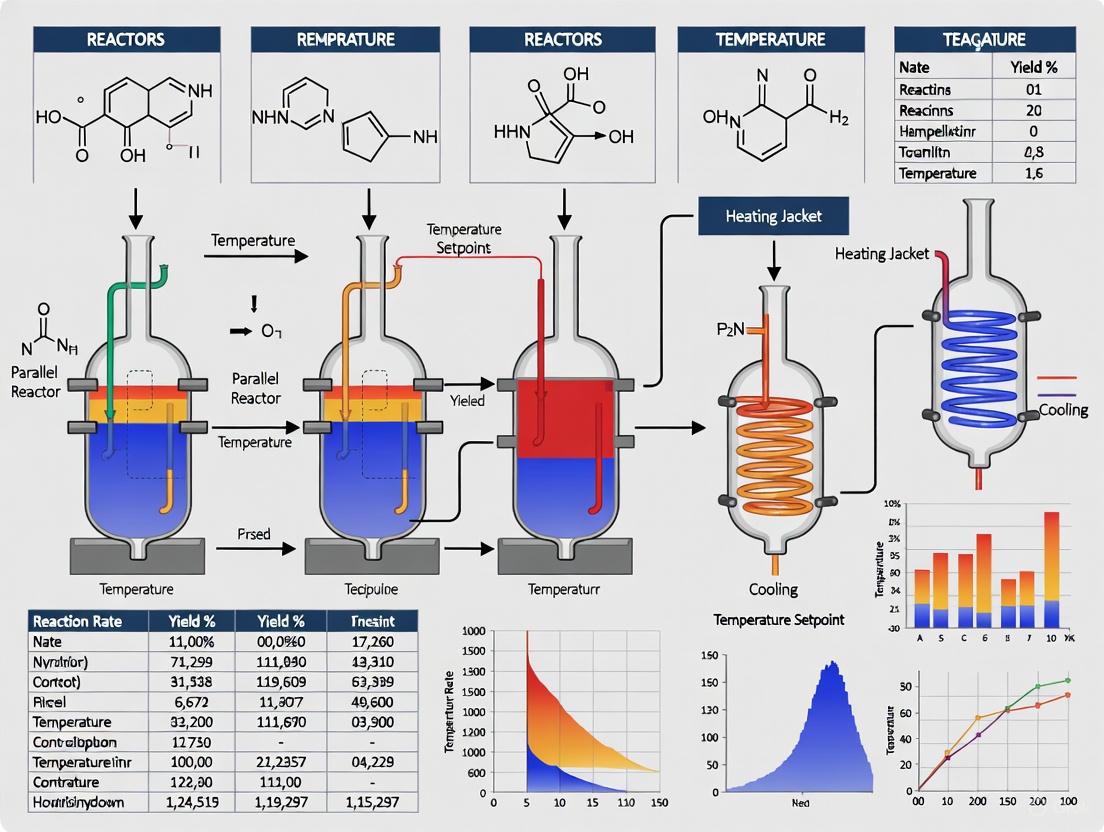
This article explores the critical role of precise temperature control in parallel reactor systems for pharmaceutical research and drug development.
Precision Temperature Control in Parallel Reactors: Ensuring Reproducibility, Efficiency, and Product Quality in Pharmaceutical Development
Abstract
This article explores the critical role of precise temperature control in parallel reactor systems for pharmaceutical research and drug development. It establishes the fundamental impact of temperature on reaction kinetics and product yield, details advanced control methodologies from PID to AI-driven systems, and provides strategies for troubleshooting common thermal management challenges. By presenting validation frameworks and comparative analyses of control architectures, this guide equips scientists with the knowledge to design robust, reproducible, and efficient reaction screening and optimization campaigns, ultimately accelerating the development of new therapeutics.
The Critical Role of Temperature in Reaction Outcomes and System Design
Impact on Kinetics, Selectivity, and Product Distribution
In parallel reactor research, precise temperature control is not merely an operational detail but a fundamental determinant of experimental success. It directly governs reaction kinetics, product selectivity, and final product distribution, especially when multiple reactions compete for the same reactant. Modern automated platforms, such as the droplet reactor system featuring multiple independent parallel channels, enable high-throughput screening under meticulously controlled conditions [1]. The ability to independently control each reactor's temperature is crucial for generating reproducible, high-fidelity data essential for both reaction optimization and kinetic studies [1]. This technical guide examines the profound impact of temperature control within the context of parallel reactors, providing researchers with the theoretical foundation and practical methodologies needed to harness its full potential.
Theoretical Foundations: Temperature, Kinetics, and Selectivity
Temperature Dependence of Reaction Kinetics
The rate of a chemical reaction exhibits a strong, exponential dependence on temperature, as described by the Arrhenius equation: ( k = Ae^{-Ea/RT} ) where ( k ) is the rate constant, ( A ) is the pre-exponential factor, ( Ea ) is the activation energy, ( R ) is the gas constant, and ( T ) is the absolute temperature [2]. In a parallel reaction system where a single reactant ( A ) can form products ( B ) and ( C ) via two pathways with rate constants ( k1 ) and ( k2 ), the rate of formation for each product is given by:
- ( \frac{d[B]}{dt} = k_1[A] )
- ( \frac{d[C]}{dt} = k_2[A] ) [2]
Temperature as a Tool for Controlling Selectivity
In parallel reactions, the product distribution is determined by the ratio of the rate constants. For the aforementioned system:
- Ratio of products: ( \frac{[B]}{[C]} = \frac{k1}{k2} ) [2] Consequently, any factor affecting the relative values of ( k1 ) and ( k2 ) will directly influence selectivity. Since activation energy (( Ea )) governs a rate constant's sensitivity to temperature, the pathway with the higher ( Ea ) will experience a more dramatic rate increase with rising temperature [2]. This principle allows researchers to manipulate selectivity by strategically adjusting the reaction temperature to favor the desired pathway.
The diagram below illustrates how temperature influences the competition between parallel reaction pathways and the resulting product distribution.
Temperature Control Methods for Parallel Photoreactors
Selecting an appropriate temperature control system is critical for the performance of parallel photoreactors. The choice depends on reaction requirements, scalability, energy efficiency, and cost [3].
Table 1: Comparison of Temperature Control Methods for Parallel Photoreactors
| Method | Mechanism | Best For | Advantages | Limitations |
|---|---|---|---|---|
| Peltier-Based Systems [3] | Thermoelectric effect for heating/cooling | Small-scale reactions, rapid temperature changes | Compact design, precise control, no moving parts | Efficiency decreases at high ΔT, may need auxiliary cooling |
| Liquid Circulation [3] | Heat transfer fluid (e.g., water, oil) | Large-scale or exothermic reactions | High heat capacity, uniform temperature distribution | Requires more infrastructure and maintenance |
| Air Cooling [3] | Fans or natural convection | Low-heat-load applications | Simple, cost-effective, easy to maintain | Less effective for precise regulation or high-heat-load reactions |
Advanced parallel reactor platforms, like the automated droplet system with ten independent reactor channels, integrate these control methods to maintain precise temperatures (0–200 °C, solvent-dependent) across all experiments simultaneously [1]. This independent control is vital for meaningful reaction optimization and kinetics investigation, as it allows each reaction to proceed at its ideal temperature without cross-talk or compromise between parallel experiments [1].
Experimental Protocols and Workflow
Integrating precise temperature control into an automated, machine-learning-driven workflow significantly accelerates reaction optimization. The following protocol outlines this process for a parallel reactor system.
Protocol: Automated Reaction Optimization with Integrated Temperature Control
Objective: To efficiently identify optimal reaction conditions (including temperature) that maximize yield and selectivity for a given transformation using a parallelized reactor platform and machine learning guidance.
Materials and Equipment:
- Parallel reactor platform with independent temperature control per channel (e.g., 10-channel droplet reactor [1])
- Automated liquid handler
- On-line HPLC or similar analytical system
- Integrated control software and scheduling algorithm
Procedure:
- Reaction Space Definition: Define the combinatorial reaction condition space, including categorical variables (e.g., solvent, ligand) and continuous variables (e.g., temperature, concentration). Apply filters to exclude impractical or unsafe condition combinations [4].
- Initial Experiment Selection: Use an algorithmic sampling method (e.g., Sobol sampling) to select an initial batch of experiments. This ensures the reaction space is explored widely and increases the likelihood of finding promising regions [4].
- Experiment Execution and Analysis: a. The control software schedules operations, orchestrating the liquid handler and reactor bank. b. Reactions are executed in parallel reactors, with each channel maintaining its specified temperature [1]. c. Upon completion, reaction outcomes (e.g., yield, selectivity) are automatically analyzed by the on-line HPLC [1].
- Machine Learning-Guided Iteration: a. The experimental data is used to train a machine learning model (e.g., a Gaussian Process regressor) to predict reaction outcomes and their uncertainties for all possible conditions [4]. b. A multi-objective acquisition function (e.g., q-NParEgo, TS-HVI) uses the model's predictions to select the next batch of experiments that best balance exploration of unknown conditions and exploitation of currently promising ones [4].
- Iteration and Termination: Steps 3 and 4 are repeated. The campaign terminates when performance converges, objectives are met, or the experimental budget is exhausted [4].
The workflow diagram below visualizes this iterative, closed-loop optimization process.
The Scientist's Toolkit: Essential Research Reagent Solutions
Table 2: Key Reagents and Materials for Parallel Reaction Optimization
| Item | Function / Relevance | Example / Note |
|---|---|---|
| Non-Precious Metal Catalysts [4] | Lower-cost, earth-abundant alternatives to precious metals like Palladium. | Nickel catalysts for Suzuki and Buchwald-Hartwig couplings. |
| Solvent Library [4] | Screening solvent effects on kinetics and selectivity; adheres to pharmaceutical guidelines. | A diverse set selected for broad chemical compatibility and varying polarity. |
| Ligand Library [4] | Critical for modulating catalyst activity and selectivity, especially with non-precious metals. | A key categorical variable in ML-driven optimization campaigns. |
| Heat Transfer Fluids [3] | Medium for temperature regulation in liquid circulation systems. | Water or specialized oils, chosen for operational temperature range. |
Case Studies in Pharmaceutical Process Development
The integration of precise temperature control with highly parallelized experimentation and machine learning has led to groundbreaking successes in industrial process development.
Case Study 1: Nickel-Catalyzed Suzuki Reaction Optimization: A traditional, chemist-designed HTE approach failed to find successful conditions for this challenging transformation. However, an ML-driven workflow exploring an 88,000-condition search space in a 96-well HTE format identified conditions achieving a 76% area percent (AP) yield and 92% selectivity. The algorithm's ability to navigate complex variable interactions, including temperature, was key to this success [4].
Case Study 2: Accelerated API Synthesis: In the process development for an Active Pharmaceutical Ingredient (API) involving a Ni-catalyzed Suzuki coupling and a Pd-catalyzed Buchwald-Hartwig reaction, the ML-driven approach identified multiple conditions achieving >95% yield and selectivity for both transformations. This approach led to improved process conditions at scale in just 4 weeks, compared to a previous 6-month development campaign, dramatically accelerating the timeline [4].
Temperature control is a cornerstone of effective parallel reactor research, wielding direct and powerful influence over kinetic rates, reaction selectivity, and ultimate product distribution. As the case studies demonstrate, coupling this precise environmental control with the throughput of parallelized systems and the intelligence of machine learning creates a transformative paradigm for chemical research and development. This synergistic approach enables researchers to navigate vast reaction spaces with unprecedented efficiency, accelerating the discovery and optimization of chemical processes from laboratory curiosity to scalable industrial reality.
In the pursuit of accelerated chemical research and drug development, parallel reactor systems have become indispensable. These systems enable the simultaneous execution of multiple experiments, dramatically increasing throughput for reaction screening and optimization [1] [5]. The performance of these systems, and consequently the validity of the data they produce, rests upon three fundamental technical criteria: reproducibility, range, and fidelity. Within a parallel reactor, these criteria are profoundly influenced by the precision and stability of temperature control. Temperature is not merely a setting; it is a core reaction parameter that dictates kinetics, selectivity, yield, and mechanism. Inadequate temperature control introduces variability that undermines experimental integrity, making it impossible to distinguish true chemical effects from system-induced artifacts. This whitepaper defines these critical performance criteria, details their dependence on temperature management, and provides researchers with the methodological frameworks for their rigorous assessment.
Core Performance Criteria in Parallel Reactors
Reproducibility
Reproducibility refers to the ability of a parallel reactor system to yield consistent results under identical nominal conditions across its multiple reaction channels and over repeated experimental runs. It is the foundation for reliable and statistically significant data.
Quantifying Reproducibility: Performance is typically measured by the standard deviation in reaction outcomes (e.g., yield, conversion) across parallel channels. High-performance systems, like the automated droplet platform developed by MIT and Pfizer, target a standard deviation of less than 5% in reaction outcomes, a benchmark for excellent reproducibility [1] [6]. This low variability ensures that observed differences in outcome are due to intentional changes in reaction parameters rather than system noise.
The Critical Link to Temperature Control: Reproducibility is inextricably linked to temperature uniformity. In a study of a continuous fermentative biohydrogen process using three parallel reactors, even under strictly controlled conditions, full consistency was not achieved, underscoring the sensitivity of chemical and biological processes to operational disturbances [7]. Precise temperature control ensures that each reaction vessel in a parallel block experiences the same thermal environment. Inconsistent heating or cooling across vessels directly leads to divergent reaction rates and outcomes, invalidating comparative studies. Furthermore, stable temperature control prevents fluctuations that can alter reaction pathways during an experiment.
Range
Range defines the spectrum of operating conditions a parallel reactor system can accommodate. A broad range allows researchers to explore a more extensive experimental space, from mild to extreme conditions.
Key Operational Ranges:
- Temperature: Modern systems aim for a broad operating window. For instance, the parallel droplet reactor platform was designed for reaction temperatures from 0 to 200 °C (solvent-dependent) [1]. The PolyBLOCK 8 parallel reactor has been characterized to achieve internal reactor temperatures up to 180 °C [8].
- Pressure: Systems may support pressures up to 20 atm or higher, enabling reactions with volatile solvents or gaseous reagents [1].
- Reaction Scale: Systems can operate from nanoliter-scale droplets to millilitres [1] [9].
The Role of Temperature Range: The ability to accurately control temperature across a wide range is crucial for mimicking diverse reaction conditions, from cryogenic biological processes to high-temperature thermal transformations. This allows for the comprehensive investigation of reaction kinetics and the identification of optimal conditions for a given synthesis [1]. A wide temperature range also future-proofs equipment against evolving research needs.
Fidelity
Fidelity is the degree to which the conditions set by the researcher (e.g., setpoint temperature) are faithfully replicated and maintained within the actual reaction mixture. It reflects the "truthfulness" of the system's control.
Defining Fidelity: High fidelity means the recorded and controlled parameters match the actual experimental environment. Low fidelity introduces a hidden variable, as the assumed reaction conditions differ from the true conditions.
Temperature Fidelity in Practice: Achieving high temperature fidelity is an engineering challenge. Factors such as reactor material (glass vs. metal), solvent volume, and heating mechanism create a difference between the setpoint and the actual reaction temperature. A characterization of the PolyBLOCK 8 revealed that the maximum difference between the internal reactor temperature and the external oil-bath circulator could be as high as 90 °C [8]. Furthermore, smaller reactor volumes (e.g., 8 mL in a 16 mL reactor) showed different heating profiles and a reduced maximum temperature difference of 80 °C [8]. This highlights that the reactor material and solvent volume are critical considerations in experimental design to ensure fidelity.
Table 1: Quantitative Performance Targets for Parallel Reactor Systems
| Performance Criterion | Target Metric | Exemplary System Performance |
|---|---|---|
| Reproducibility | Standard Deviation in Reaction Outcome | <5% [1] [6] |
| Temperature Range | Minimum to Maximum Operating Temperature | 0°C to 200°C [1] |
| Heating Rate | Ramp Rate Under Control | Up to 6°C/min with no significant overshoot [8] |
| Pressure Range | Maximum Operating Pressure | Up to 20 atm [1] |
Experimental Protocols for Performance Validation
To ensure data quality, researchers must routinely validate the performance of their parallel reactor systems. The following protocols provide a framework for this essential activity.
Protocol for Assessing Reproducibility
Aim: To determine the inter-reactor variability of the parallel system by running a standardized reaction across all channels under identical nominal conditions.
Materials:
- Parallel reactor station (e.g., PolyBLOCK 8 [8] or a custom droplet platform [1])
- A well-characterized, robust probe reaction (e.g., a known catalytic transformation or hydrolysis reaction)
- Analytical instrument (e.g., HPLC, GC)
Method:
- Preparation: Prepare a large, homogeneous master batch of the reaction mixture for the probe reaction.
- Loading: Dispense identical volumes of the reaction mixture into each reactor vessel.
- Operation: Set all reactors to the same predetermined conditions (temperature, stirring speed, pressure). For temperature, use a setpoint within the common working range (e.g., 80°C).
- Execution: Initiate the reactions simultaneously and allow them to proceed for a fixed duration.
- Sampling & Analysis: Quench and sample each reaction mixture at the end of the run. Analyze each sample using the chosen analytical method to determine the reaction outcome (e.g., percent yield or conversion).
Data Analysis:
- Calculate the average and standard deviation of the reaction outcome across all reactors.
- High reproducibility is indicated by a low coefficient of variation (standard deviation / mean × 100%). The benchmark is a standard deviation of less than 5% [1].
Protocol for Characterizing Temperature Fidelity and Range
Aim: To map the relationship between the system setpoint temperature and the actual temperature achieved within individual reactor vessels across the operational range.
Materials:
- Parallel reactor station
- External, calibrated temperature probes (e.g., fine-wire thermocouples) traceable to a national standard
- Data logger
Method:
- Setup: Fill reactor vessels with solvents commonly used in your research (e.g., water, DMSO, silicone oil). Fit each vessel with a calibrated temperature probe immersed in the solvent.
- Data Collection:
- Set the system to a series of temperature setpoints (e.g., 40, 80, 120, 160°C) covering its claimed range.
- For each setpoint, record both the system's internal sensor reading (if available) and the reading from the calibrated external probe once thermal equilibrium is reached.
- Repeat this for different reactor positions and with different solvent volumes to understand spatial and volume-dependent effects [8].
- Ramp Rate Test: Program a linear temperature ramp (e.g., +4°C/min and +6°C/min) and record the actual temperature profile. This assesses the system's ability to track dynamic setpoints without overshoot [8].
Data Analysis:
- Plot actual temperature vs. setpoint temperature. The deviation from the y=x line represents the system's fidelity error.
- Calculate the average offset and the maximum deviation observed. This data is critical for applying corrections to future experimental setpoints.
Table 2: Research Reagent Solutions for Parallel Reactor Characterization
| Item | Function & Importance |
|---|---|
| Calibrated Fine-Wire Thermocouple | Provides ground-truth measurement of the actual reaction temperature, essential for validating system fidelity and identifying calibration offsets. |
| Well-Characterized Probe Reaction | A chemically robust reaction with known kinetics used as a diagnostic tool to measure reproducibility and inter-reactor variability across the platform. |
| Silicone Oil Heat Transfer Fluid | A common heat transfer fluid with a broad liquid phase temperature range, enabling system characterization across a wide range of temperatures [8]. |
| Swappable Nanoliter-Scale Injection Rotors | Enables direct, automated sampling from microreactors for online analysis (e.g., HPLC), eliminating the need for dilution and preserving reaction integrity [1]. |
System Integration and Workflow
The integration of hardware, software, and experimental design is what transforms a parallel reactor from a simple heater-stirrer into an intelligent experimentation platform. The workflow below visualizes how reproducibility, range, and fidelity are embedded throughout a modern, automated optimization campaign.
This workflow is embodied in platforms like the one described by Eyke et al., which integrates a bank of parallel microfluidic reactors with an online HPLC and a Bayesian optimization algorithm [1] [6]. The scheduling algorithm orchestrates all parallel hardware operations to ensure both droplet integrity and overall efficiency. This closed-loop system exemplifies how high-fidelity control over parameters like temperature directly feeds into the generation of high-quality data, which the machine learning model uses to efficiently navigate the complex reaction landscape and identify optimal conditions with minimal experimental iterations [4].
Reproducibility, range, and fidelity are not isolated specifications but interconnected pillars supporting the integrity of high-throughput experimentation in parallel reactors. As this whitepaper establishes, precise temperature control is the unifying thread that binds these criteria together. It is the foundational element that enables researchers to trust their data, confidently explore vast experimental spaces, and accelerate the development of new pharmaceuticals and chemicals. The ongoing integration of advanced temperature control systems with machine learning and automation, as seen in platforms like Minerva [4] and the MIT/Pfizer droplet reactor [1], promises to further enhance the performance and capabilities of these essential research tools. By adhering to the validation protocols and understanding the critical importance of these performance criteria, researchers can fully leverage parallel reactor technology to drive innovation.
In parallel reactor research, where multiple experiments are conducted simultaneously to accelerate development, precise temperature control is not merely convenient but foundational to scientific integrity. The ability to maintain uniform thermal conditions across all reaction vessels is a critical determinant of success, directly impacting the reliability of kinetic studies, the accuracy of catalyst screening, and the reproducibility of synthetic pathways. Thermal gradients—spatial variations in temperature within a single reactor—and hotspots—localized areas of significantly elevated temperature—introduce profound risks that can compromise data quality and derail scale-up efforts. Effective thermal management ensures that each reactor in a parallel array operates under identical, well-defined conditions, enabling high-throughput experimentation (HTE) to generate statistically significant and comparable data. This technical analysis explores the mechanisms by which thermal non-uniformity jeopardizes experimental outcomes, details methodologies for its characterization and mitigation, and provides a quantitative framework for assessing its impact, thereby underscoring why meticulous temperature control is indispensable in parallel reactor research.
Mechanisms and Risks of Thermal Non-Uniformity
Thermal gradients and hotspots arise from complex interplays between reaction engineering, fluid dynamics, and heat transfer. Understanding their underlying mechanisms is the first step toward effective mitigation.
Fundamental Formation Mechanisms
- Inhomogeneous Mixing: Inefficient mixing of reactants and initiators can create localized microenvironments with varying concentrations. This non-uniformity leads to disparate reaction rates, causing some regions to generate heat much faster than others. In polymerization processes, such as in Low-Density Polyethylene (LDPE) tubular reactors, poor initiator dispersion is a primary cause of localized hotspots that can trigger dangerous thermal runaways [10].
- Exothermic Reactions: Most industrial chemical reactions are exothermic. If the heat generated by the reaction exceeds the system's heat removal capacity, the temperature rises, further accelerating the reaction rate in a positive feedback loop known as thermal runaway [11] [12].
- Inefficient Heat Transfer: The physical design of a reactor and the properties of its materials dictate its heat transfer efficiency. Systems with low thermal conductivity or inadequate heat exchange surface area struggle to remove heat uniformly, leading to the establishment of persistent thermal gradients [13].
- External Radiant Heating: In applications like photocatalysis, the high-powered light sources used to drive reactions can themselves be significant, non-uniform heat sources. This can create severe "heat island" effects, where samples directly under the light source become drastically hotter than their neighbors [14].
Consequences for Data Integrity and Scalability
The impacts of poor temperature control permeate every aspect of research and development.
- Compromised Reaction Kinetics and Selectivity: Temperature directly influences reaction rate constants and pathways. A gradient across a reactor vessel means that the reaction proceeds at different rates in different locations, making accurate kinetic modeling impossible. Furthermore, many complex reactions have competing pathways with different activation energies. A hotspot can favor a secondary, undesirable reaction, altering product selectivity and yielding misleading results about the system's true behavior [12].
- Irreproducible Results and False Conclusions: In parallel reactors, the primary value is comparative. If thermal gradients differ from well to well, the same reaction condition may yield different outcomes across the block. This lack of reproducibility makes it difficult to identify genuine trends, such as the performance of different catalysts, leading to false conclusions and poor decision-making [14].
- Accelerated Material Degradation and Safety Hazards: Sustained high temperatures at hotspots can degrade sensitive catalysts or reaction components, invalidating long-term stability studies. More critically, localized overheating can initiate exothermic decomposition reactions, potentially leading to a thermal runaway. This presents a severe safety risk at any scale, from benchtop to production [12] [10].
- Failed Scale-Up (The "Scale-Up Paradox"): A process optimized in a small-scale reactor with uncharacterized or uncontrolled hotspots is a prime candidate for failure upon scale-up. Larger reactors have fundamentally different heat and mass transfer characteristics. A thermal gradient that was negligible at 100 mL can become a catastrophic 50°C hotspot in a 10,000 L production vessel. This scale-up paradox is a major source of cost and delay in process development, underscoring that a process developed under non-uniform conditions is not truly optimized at all [11].
Table 1: Quantified Impact of Thermal Non-Uniformity in Various Systems
| System/Context | Observed Thermal Issue | Consequence | Source |
|---|---|---|---|
| Standard 96-well Photoredox Reactor | Heat gradient of up to ±13°C from LED array | Severe heat island effects; invalid comparison between wells | [14] |
| LDPE Tubular Reactor | Localized hotspots from poor initiator mixing | Fluctuations in local temperature, potential for ethylene decomposition and thermal runaway | [10] |
| PEM Fuel Cell (Large-load) | Temperature deviation under load fluctuations | Risk of membrane dehydration, local hotspots, and membrane perforation | [15] |
| Temperature Controlled Reactor (TCR) | Uniformity controlled to ±1°C | Enables reproducible high-throughput experimentation | [14] |
| Bench-scale Exothermic Reaction | Thermal runaway in larger vessels due to lower surface-to-volume ratio | Hazardous conditions requiring careful scale-up safety testing | [11] |
Experimental Characterization and Monitoring Methodologies
Accurately characterizing thermal landscapes is essential for diagnosing problems and validating solutions. The following experimental protocols and tools are critical for this task.
Protocol 1: Mapping Temperature Uniformity in a Parallel Reactor Block
Objective: To quantitatively assess the spatial temperature distribution across a parallel reactor block under standard operating conditions.
Materials:
- Parallel reactor system (e.g., 48-position block)
- Multi-channel temperature data logger
- Calibrated fine-gauge thermocouples (e.g., T-type) or RTDs (e.g., PT100), one for each monitored position
- Heat-transfer fluid circulator (e.g., JULABO Presto)
- Insulating mat
Methodology:
- Setup: Place the reactor block on the heating/cooling platform. Select a representative subset of reaction vessel positions (e.g., the four corners and the center) for monitoring.
- Sensor Placement: Insert a temperature sensor into each selected vessel, ensuring identical depth and placement. For dry runs, suspend the sensor in the center of the well. For wet runs, immerse the sensor in a solvent with similar thermal properties to the reaction mixture.
- Conditioning: Set the circulator to the desired target temperature (e.g., 70°C). Allow the system to reach a steady state as indicated by the master sensor of the circulator.
- Data Acquisition: Record the temperature from all sensors simultaneously at 5-second intervals for a minimum of 30 minutes after the system has stabilized.
- Data Analysis: Calculate the average temperature, the standard deviation, and the range (max-min) across all sensors. Visualize the data as a heat map to identify spatial patterns of gradients.
Protocol 2: Investigating Mixing-Induced Hotspots via CFD
Objective: To simulate and visualize the formation of temperature hotspots resulting from inadequate mixing of reactants, as exemplified in LDPE tubular reactor studies [10].
Materials:
- Computational Fluid Dynamics (CFD) software (e.g., ANSYS Fluent, COMSOL)
- Workstation with sufficient processing power
- Geometry of the reactor and mixer (e.g., intrusive tee-junction)
- Physical properties of reactants (density, viscosity, thermal conductivity)
Methodology:
- Model Setup: Create a 3D geometric model of the reactor, including the precise details of the mixing element (e.g., insertion length and diameter of a side-feed pipe).
- Mesh Generation: Discretize the geometry into a computational mesh, refining it in critical areas like the mixing zone to ensure accuracy.
- Physics Definition:
- Select appropriate turbulence models (e.g., k-ε or k-ω).
- Activate the Energy Equation to model heat transfer.
- Activate the Species Transport Equation to model reactant concentration.
- Define a Volumetric Reaction source term that links the reaction rate to local species concentration and temperature, incorporating the reaction enthalpy.
- Boundary Conditions: Set inlet flow rates and temperatures for the main and side feeds. Define wall boundaries, often as no-slip and adiabatic or with a fixed heat flux.
- Simulation & Analysis: Run the simulation until convergence. Post-process the results to visualize contours of temperature and species concentration. Identify recirculation zones or stagnant areas where reactants can accumulate and form hotspots. The study in [10] used this approach to discover a "climbing mixing" pattern that can influence hotspot formation.
Diagram 1: CFD Hotspot Analysis Workflow
Mitigation Strategies and Control Systems
A multi-faceted approach is required to effectively combat thermal gradients and hotspots, encompassing hardware design, advanced control algorithms, and strategic process operation.
Advanced Reactor Hardware and Design
- Integrated Fluid Circulation Systems: Temperature Controlled Reactors (TCRs) that circulate a heat-transfer fluid through a built-in path within the reactor block are highly effective. This design ensures that heat is added or removed uniformly from every vessel, achieving well-to-well temperature uniformity as tight as ±1°C, a drastic improvement over the ±13°C gradients found in standard blocks [14].
- Optimized Mixer Configurations: For tubular and continuous flow reactors, the design of the mixing element is paramount. CFD studies have shown that intrusive tee-junctions with specific geometries can induce flow patterns like "climbing mixing" that enhance the dispersion of a side-stream initiator into the main flow, thereby preventing the concentration pockets that lead to hotspots [10].
- Jacketed Reactors and Micro-Finned Tubes: Incorporating double jackets for coolant flow or using tubes with extended internal surfaces increases the effective heat transfer area, improving the system's capacity to maintain a uniform temperature [12] [16].
Sophisticated Control Algorithms
Moving beyond simple Proportional-Integral-Derivative (PID) control can yield significant robustness, especially under dynamic load conditions.
- Cascade Internal Model Control (IMC): This strategy uses a nested loop architecture. The outer loop calculates the required cooling action based on the temperature error, while the inner loop rapidly adjusts the coolant valve to achieve that action. This effectively handles disturbances in the coolant system. When combined with current feedforward for actuators like cooling fans, it can drastically reduce the time delay in responding to load changes, keeping temperature deviations within ±0.6°C even under large fluctuations [15].
- Model Predictive Control (MPC): MPC uses a dynamic model of the process to predict future temperatures and proactively computes optimal control actions. This is particularly effective for managing the thermal inertia of large systems and for constraint handling, preventing temperature overshoot [15] [12].
- Modified Smith Predictors: For systems with significant and variable time delays (e.g., slow fluid transport), a Smith predictor can effectively compensate for the delay, improving stability. A modified version integrated into a cascade IMC structure has demonstrated enhanced rejection of delayed disturbances [15].
Table 2: Performance Comparison of Advanced Thermal Management Strategies
| Control Strategy | Application Context | Key Performance Metric | Advantages | Limitations | |
|---|---|---|---|---|---|
| Cascade IMC with Current Feedforward (CS3) | 150 kW PEM Fuel Cell | Limits deviation to ±0.6 °C under large-load steps | Best responsiveness to load changes; reduces time delay | [15] | |
| Double Inner-Loop Cascade IMC with Smith Predictor (CS2) | 150 kW PEM Fuel Cell | Strongest temperature tracking under voltage decay and disturbances | Best robustness and delayed disturbance rejection | Slightly worse convergence than CS3 | [15] |
| PID with Peltier Elements | Microfluidic PCR Chip | Ramp rates of ~100°C/s for heating, ~90°C/s for cooling | Fast cycling; mature, widely available technology | Can require complex tuning; performance can degrade with non-linearities | [13] |
| Active Disturbance Rejection Control (ADRC) | General Nonlinear Systems | Estimates and compensates for "total disturbance" in real-time | Does not require a highly accurate process model | Complex to configure with multiple parameters; high computational cost | [15] |
The Scientist's Toolkit: Essential Solutions for Thermal Management
Table 3: Key Research Reagent Solutions for Thermal Management
| Item / Solution | Function in Thermal Management | Key Characteristics |
|---|---|---|
| Temperature Controlled Reactor (TCR) [14] | Provides a fluid-filled block to maintain consistent temperature around all samples in a parallel array. | Achieves well-to-well uniformity of ±1°C; compatible with various heat-transfer fluids; operates from -40°C to 82°C. |
| High-Precision Circulator (e.g., JULABO) [12] | Pumps a thermostatic fluid through a reactor jacket or TCR to add/remove heat with high accuracy. | Features self-tuning PID control; integrates with PT100 sensors; capable of complex temperature profiles. |
| PT100 Resistance Temperature Detector (RTD) [12] | Provides high-precision temperature monitoring and feedback for control systems. | High accuracy and stability over time; preferred for precise measurements in circulators. |
| Heat-Transfer Fluids (e.g., SYLTHERM, Glycols) [14] | Medium that transfers thermal energy between the circulator and the reactor block. | Varieties cover wide temperature ranges; selected for thermal stability, viscosity, and safety. |
| Computational Fluid Dynamics (CFD) Software [10] | Models fluid flow, heat transfer, and reactions to predict and diagnose thermal gradients and hotspots. | Enables virtual prototyping of mixers and reactors; identifies problematic flow patterns. |
Mitigating the risks posed by thermal gradients and hotspots requires a holistic strategy that integrates design, control, and characterization. The journey begins with selecting appropriate hardware, such as fluid-cooled parallel reactors, designed for intrinsic thermal uniformity. The next layer of defense is implementing sophisticated control algorithms like cascade IMC or MPC, which provide the robustness needed to maintain setpoints despite internal and external disturbances. Underpinning all these efforts is the rigorous experimental and computational characterization of the thermal environment, ensuring that gradients are not merely hidden but are understood and eliminated.
Diagram 2: Integrated Strategy for Thermal Management
This integrated approach transforms parallel reactor research from a high-speed screening tool into a reliable engine of discovery and development. By systematically controlling the thermal variable, researchers can generate data with uncompromised integrity, build accurate kinetic models, and develop processes that transition smoothly from benchtop to production, thereby fully realizing the promise of high-throughput methodologies in advancing science and technology.
Temperature control is a foundational element in chemical reaction engineering, directly influencing reaction kinetics, product yield, and safety. In parallel reactor systems, the imperative for precise temperature control is magnified, transitioning from maintaining a single setpoint to ensuring absolute thermal uniformity across multiple simultaneous reaction vessels. This whitepaper examines the unique thermal challenges inherent in parallel systems, which are not merely scaled versions of single reactor problems but present distinct obstacles related to heat distribution, load variation, and system interdependency. We detail the critical consequences of thermal imprecision, including unreliable catalyst evaluation and flawed scale-up data, and provide a technical guide to methodologies and technologies that enable researchers to overcome these challenges. The content is framed within the core thesis that mastering thermal control in parallel reactors is not an operational detail but a fundamental prerequisite for generating high-fidelity, reproducible research data that can confidently inform drug development and commercial process design.
In the drive for accelerated catalyst screening and reaction optimization, parallel reactor systems have become an indispensable tool for researchers and drug development professionals. These systems allow for the high-throughput testing of multiple catalysts or reaction conditions simultaneously. However, their performance is critically dependent on a single, often underestimated factor: thermal control uniformity. The central thesis of this discussion is that without meticulous thermal management, the fundamental advantage of parallel systems—the generation of directly comparable, high-quality data—is compromised.
Temperature is a primary variable affecting reaction rate, selectivity, and mechanism. In a single reactor system, the challenge is to maintain a consistent temperature throughout the reaction volume. In a parallel system, this challenge is compounded exponentially. The requirement shifts from controlling one temperature to ensuring that multiple reactors operate at identical temperatures, despite potential variations in catalyst activity, fluid flow, and heat loss between individual vessels. Even minor temperature gradients between reactors can lead to significant differences in reaction outcomes, making it impossible to distinguish between a truly superior catalyst and one that merely operated at a slightly higher temperature. Therefore, precision thermal control is not a peripheral support function; it is the bedrock upon which valid and reliable parallel reactor research is built [17].
Comparative Analysis: Single vs. Parallel Reactor Systems
The transition from single to parallel reactor architectures fundamentally transforms the nature of thermal management. The table below summarizes the key distinctions that define the unique control challenges in parallel systems.
Table 1: Thermal Control Challenges in Single vs. Parallel Reactor Systems
| Aspect | Single Reactor System | Parallel Reactor System |
|---|---|---|
| Primary Control Objective | Maintain stable temperature at a single setpoint. | Ensure uniform temperature across all reactors simultaneously. |
| System Complexity | Relatively low; a single control loop. | High; multiple, potentially interacting control loops. |
| Impact of Heat Load Variation | Managed for one reactor; no cross-reactor impact. | A varying load in one reactor can disrupt the thermal equilibrium of the entire system. |
| Heat Distribution Challenge | Ensuring internal uniformity within one vessel. | Overcoming inherent physical layout differences (e.g., edge effects) to achieve inter-reactor uniformity. |
| Data Comparability | Not applicable. | Directly contingent on thermal uniformity; non-uniformity introduces critical experimental error. |
| Scalability of Solution | Standard heating mantles, jackets, or internal coils. | Requires specialized, integrated systems like microfluidic distributors and individual reactor control [17]. |
The core challenge in parallel systems, as illuminated by the concepts of precision and accuracy, is the equal distribution of process conditions. In this context, accuracy can be defined as the closeness of a measured temperature in any reactor to the desired setpoint, while precision is the closeness of the temperature measurements across all reactors to each other. A system must be both accurate and precise to generate truly comparable data. Traditional systems using capillaries for flow distribution are susceptible to manual tuning errors and cannot actively compensate for changes during operation, leading to a loss of precision [17].
Unique Thermal Control Challenges in Parallel Systems
The architecture of parallel reactor systems introduces specific, compounded thermal challenges that are absent in single-reactor setups.
The Interdependency of Flow and Thermal Distribution
In parallel systems, fluid flow and heat transfer are intrinsically linked. A common feed flow is distributed to multiple reactors, often through a network of capillaries or, more advancedly, a microfluidic flow distributor chip [17]. The precision of this flow distribution is a prerequisite for thermal uniformity. If the flow rate to one reactor differs from the others, the residence time and heat capacity of the fluid stream change, directly leading to a temperature discrepancy. Furthermore, changes in catalyst bed pressure drop or partial blockages over time can alter flow distribution dynamically, making sustained thermal precision difficult with passive hardware alone.
Dynamic and Variable Heat Loads
Unlike a single reactor running a homogeneous reaction, a parallel system may contain reactors with different catalysts, each exhibiting unique reaction kinetics and exothermicity. This creates a scenario of highly variable and dynamic heat loads across the reactor block. A highly active catalyst in one reactor may generate significant exothermic heat, while a less active one in an adjacent reactor may require constant heating. A traditional single-zone heating system for the entire block is incapable of managing this variation, leading to severe temperature imbalances that invalidate the experimental results.
The Critical Need for Individual Reactor Control
The challenges of interdependency and variable heat loads culminate in the requirement for individual reactor control. Passive systems, such as carefully balanced capillary networks, lack the feedback mechanism to respond to changing conditions during an experiment. As noted in research on parallel reactor systems, a change in pressure drop in one reactor "will have a direct impact on the precision of the feed distribution," subsequently affecting thermal performance [17]. The solution is active, per-reactor control. Technologies such as the Reactor Pressure Control (RPC) module demonstrate this principle by actively controlling the inlet pressure at each reactor to maintain precise flow distribution, which is a direct analogue to the requirement for individual thermal control to maintain temperature uniformity [17].
Methodologies for Effective Thermal Control
Addressing the challenges outlined requires a combination of advanced hardware design and sophisticated control strategies.
System Architecture and Hardware Solutions
The foundation of effective thermal management is laid by the physical design of the system.
- High-Precision Microfluidic Distributors: These chips, often made of silicon or glass, are engineered with micro-scale channels to provide a guaranteed flow distribution with high precision (< 0.5% RSD as reported in one system) [17]. This establishes a uniform starting point for thermal conditions across all reactors.
- Integrated Heating and Cooling Loops: Drawing from best practices in other industries, effective Thermal Management Systems (TMS) often segregate components into different cooling loops based on their heat load magnitudes and temperature requirements [18]. For example, a high-power motor-inverter loop might be separate from a battery-converter loop. In a chemical reactor context, this translates to separate thermal fluid loops for high-exothermicity reactors versus low-energy reactions, or for different temperature zones.
- Active and Passive Cooling Strategies: A robust system employs multiple cooling strategies. Passive cooling through natural convection and radiation requires no power and adds no complexity but is often insufficient for high heat loads. Active cooling, using pumped fluids or refrigerants, provides powerful heat removal but consumes energy and adds subsystems. The optimal approach is often a hybrid strategy that uses passive cooling where possible and seamlessly engages active cooling when heat loads exceed a threshold, thereby minimizing total power consumption while ensuring control [18].
Control Strategies and Experimental Protocols
Hardware must be directed by intelligent software and validated experimental protocols.
- Model Predictive Control (MPC): Advanced control strategies like MPC use a dynamic model of the reactor system to predict future temperatures and proactively adjust heating or cooling inputs. This is far more effective than simple reactive PID controllers at managing the thermal inertia and cross-talk in a tightly packed parallel reactor block.
- Protocol for Thermal Performance Validation: Before commencing catalytic testing, researchers should execute a validation protocol.
- Step 1: With reactors loaded with an inert material, set all reactors to a common target temperature.
- Step 2: Use the system's data logging to record the temperature in each reactor over a period of time until stable.
- Step 3: Calculate the mean temperature and standard deviation across all reactors. The standard deviation is a direct measure of the system's inter-reactor thermal precision.
- Step 4: Repeat this process at multiple temperature setpoints across the intended operating range to fully characterize system performance.
The following diagram illustrates a generalized workflow for achieving and maintaining thermal control in a parallel reactor system, integrating both the hardware components and the logical decision processes.
Diagram: Parallel Reactor Thermal Control Workflow. This diagram outlines the decision process for managing thermal modes in a parallel reactor system to maintain uniformity.
The Scientist's Toolkit: Essential Research Reagent Solutions
Implementing effective thermal control requires more than just reactors and heaters. The following table details key components and their functions in a typical advanced parallel reactor setup.
Table 2: Essential Components for Thermal Control in Parallel Reactor Systems
| Component | Function | Key Consideration |
|---|---|---|
| Microfluidic Distributor Chip | Precisely splits a common feed flow into multiple equal streams for each reactor, establishing a baseline for uniform conditions [17]. | Guaranteed flow distribution precision (e.g., < 0.5% RSD). |
| Individual Cartridge Heaters | Provides independent heating for each reactor vessel, allowing compensation for variable exothermicity and heat loss. | Response time and maximum power output. |
| In-line Temperature Sensors | PT100 or thermocouple sensors placed at the inlet and outlet of each reactor for real-time, per-reactor temperature monitoring. | Accuracy, response time, and chemical compatibility. |
| Coolant Control Valve Bank | A set of electronically controlled valves to adjust coolant flow through individual reactor jackets or heat exchangers. | Valve actuation speed and flow control resolution. |
| Back Pressure Regulator (BPR) | Maintains an elevated and consistent pressure within the reactor system, preventing solvent boil-off and ensuring consistent fluid properties [19]. | Setpoint accuracy and corrosion resistance. |
| Reactor Pressure Control (RPC) Module | Actively controls individual reactor inlet/outlet pressures to maintain precise flow distribution, indirectly securing thermal stability [17]. | Ability to compensate for catalyst pressure drop changes. |
| Thermal Insulation | Minimizes heat loss to the environment from each reactor and transfer lines, reducing external influences on reactor temperature. | Thermal conductivity and maximum service temperature. |
The pursuit of efficient and reliable research in catalysis and drug development has made parallel reactor systems a cornerstone of modern R&D. However, this paper has demonstrated that the data generated by these systems are only as valid as the thermal uniformity maintained across the reactor block. The challenges of flow-thermal interdependency, variable heat loads, and the need for individual control are unique to the parallel architecture and demand dedicated solutions. These solutions—ranging from precision microfluidic distributors and hybrid cooling strategies to advanced control protocols—are not mere accessories but essential components of a robust experimental setup. By recognizing thermal control as a fundamental research variable and investing in the appropriate "Scientist's Toolkit," researchers can ensure that their parallel reactor studies produce data of the highest fidelity, enabling confident decision-making in the journey from laboratory discovery to commercial application.
Advanced Control Architectures and Hardware for Parallel Reactor Platforms
The Critical Role of Temperature Control in Parallel Reactors
In parallel reactor systems, precise temperature control is not merely a convenience but a fundamental requirement for successful research and development. These systems, which enable the simultaneous execution of multiple experiments under varying conditions, rely on temperature stability to ensure reproducible results, effective scaling from laboratory to production, and comprehensive kinetic studies. The PolyBLOCK 8, a representative parallel reactor system, demonstrates this critical dependence through its capability to maintain different temperature setpoints across multiple reactors, typically achieving an 80°C range between the lowest and highest reactor temperatures [20]. This precise thermal management allows researchers to efficiently explore parameter spaces and accelerate development timelines for pharmaceutical compounds and specialty chemicals.
The consequences of inadequate temperature control are particularly pronounced in exothermic reactions, where the heat released can quickly lead to thermal runaway if not properly managed. This is especially dangerous during transitions from heating to cooling modes in batch operations [21]. Furthermore, temperature variations significantly impact reaction selectivity, as demonstrated in pharmaceutical attenuation studies where a 10°C temperature increase (from 25°C to 35°C) enhanced the removal rates of specific pharmaceuticals by 5-12% under certain redox conditions [22]. In parallel systems, where multiple reactions proceed simultaneously, maintaining independent precise temperature control for each reactor is essential for obtaining reliable, comparable data across all experimental conditions.
Fundamental Control Strategies
PID Control
Proportional-Integral-Derivative (PID) controllers represent the most widely deployed control algorithm in industrial processes, including chemical reactors. These controllers calculate the difference between a measured process variable and a desired setpoint (error), then apply correction based on proportional, integral, and derivative terms. The Parr 4848 Reactor Controller exemplifies modern PID implementation in reactor systems, featuring auto-tuning capabilities for precise temperature control with minimal overshoot, along with ramp and soak programming for complex temperature profiles [23].
Despite their widespread use, PID controllers face significant limitations when applied to nonlinear systems like chemical reactors. As operating conditions change, a single set of fixed PID parameters often proves inadequate. This challenge is particularly evident in Continuous Stirred Tank Reactors (CSTRs), where a PID controller designed for one conversion rate may perform poorly or even cause instability at different operating points [24]. Research demonstrates that using a family of PID controllers, each tuned for specific operating regions (C = 2 through 9), yields considerably better performance than a single controller across all conditions [24].
Table 1: PID Controller Performance at Different Operating Points in a CSTR
| Output Concentration (C) | Plant Stability | Controller Parameters (Kp, Ki, Kd) | Closed-Loop Performance |
|---|---|---|---|
| 2 | Stable | Tuned for C=2 | Satisfactory |
| 3 | Stable | Tuned for C=3 | Satisfactory |
| 4 | Unstable | Tuned for C=4 | Large overshoot |
| 5 | Unstable | Tuned for C=5 | Large overshoot |
| 6 | Unstable | Tuned for C=6 | Large overshoot |
| 7 | Unstable | Tuned for C=7 | Large overshoot |
| 8 | Stable | Tuned for C=8 | Satisfactory |
| 9 | Stable | Tuned for C=9 | Satisfactory |
Cascade Control
Cascade control architectures address complex dynamics by implementing multiple control loops arranged in a hierarchical structure. In reactor temperature control, a common implementation places a secondary loop (slave) for rapid disturbance rejection of jacket temperature, while a primary loop (master) maintains the core reactor temperature. This approach significantly improves disturbance rejection compared to single-loop configurations.
Recent research has introduced innovative parallel cascade control structures (PCCS) for nonlinear CSTRs, demonstrating superior performance over traditional series cascade configurations. In PCCS, both primary and secondary loops receive the same error signal simultaneously, enabling faster response to disturbances as the manipulated variable affects both responses concurrently [25]. For a third-order unstable CSTR model, the secondary loop controller is designed for enhanced regulatory performance, while the primary loop controller optimizes setpoint tracking [25]. This architecture provides greater flexibility in control design with reduced risk of controller interaction.
Figure 1: Parallel Cascade Control Structure for Reactor Temperature Control
Further advancements combine traditional PID with modern learning algorithms. In fluidized bed reactors for polyethylene production, a PID-DRL cascade control scheme places a Deep Reinforcement Learning controller in the secondary loop, outperforming conventional PID-only cascade control by reducing integral absolute error (IAE) by more than 50% [26].
Advanced Control: Model Predictive Control
Model Predictive Control (MPC) represents a significant advancement in control strategy by using a dynamic process model to predict future system behavior and compute optimal control actions through online optimization. Unlike PID controllers which react to current errors, MPC proactively determines control moves by solving a constrained optimization problem at each time step, making it particularly suited for processes with complex dynamics, constraints, and significant time delays.
In batch reactor applications, MPC has demonstrated exceptional capability in handling the challenging transition from heating to cooling modes in exothermic reactions. Traditional control strategies often struggle with this switching, but MPC can effectively manage the entire temperature trajectory from initial heat-up to setpoint maintenance [21]. For the highly nonlinear batch reactor system with parallel exothermic reactions, MPC utilizing multiple reduced-models running in series has shown robust performance even in the presence of plant/model mismatches [21].
Table 2: MPC Performance in Batch Reactor Temperature Control
| Control Aspect | Traditional Dual-Mode Control | Single-Model MPC | Multiple Reduced-Model MPC |
|---|---|---|---|
| Heating Phase | Open-loop, no feedback | Controlled using single model | Controlled using series of models |
| Cooling Phase | Switching to maximum cooling | Controlled using single model | Controlled using series of models |
| Model Mismatch Handling | Poor, no allowance for errors | Performance degradation | Robust performance |
| Computational Complexity | Low | Moderate | Higher but manageable |
The implementation of MPC typically involves three key steps in batch reactor control: (1) reference profile determination to establish the desired temperature trajectory, (2) operating condition selection at various points along the profile, and (3) model reduction to eliminate uncontrollable or unobservable states [21]. This approach ensures that the controller adapts to the changing dynamics throughout the batch process, maintaining precise temperature control despite the non-stationary operating conditions.
Emerging Approaches: Machine Learning and AI Integration
Reinforcement Learning in Reactor Control
Deep Reinforcement Learning (DRL) represents a paradigm shift in process control, combining the learning capabilities of neural networks with the decision-making framework of reinforcement learning. In the actor-critic framework specifically applied to reactor temperature control, the DRL agent (actor) interacts with the reactor environment, observing states and selecting actions to maximize cumulative reward, with an additional critic network evaluating the quality of the selected actions [26].
For fluidized bed polyethylene reactors, which exhibit significant time delays (approximately 5 minutes) and nonlinear dynamic behavior, a PID-DRL cascade control scheme has demonstrated substantial improvements over conventional approaches. The DRL controller in the secondary loop is trained using the Deep Deterministic Policy Gradient (DDPG) algorithm, with careful design of state, action, and reward functions to capture the system characteristics [26]. This hybrid approach leverages the reliability of PID control while incorporating the adaptability of DRL, resulting in improved setpoint tracking and disturbance rejection capabilities.
Machine Learning for Reaction Optimization
Beyond direct control, machine learning plays an increasingly important role in experimental optimization for parallel reactor systems. The Minerva framework exemplifies this approach, combining Bayesian optimization with automated high-throughput experimentation (HTE) to efficiently navigate complex reaction spaces [4]. This methodology is particularly valuable in pharmaceutical process development, where it has identified optimal conditions for Ni-catalyzed Suzuki coupling and Pd-catalyzed Buchwald-Hartwig reactions achieving >95% yield and selectivity.
The ML optimization workflow typically begins with quasi-random Sobol sampling to select initial experiments that maximally cover the reaction space [4]. A Gaussian Process regressor then predicts reaction outcomes and uncertainties for all possible conditions, guiding the selection of subsequent experiments through acquisition functions that balance exploration and exploitation. This approach has successfully navigated search spaces of up to 530 dimensions with batch sizes of 96 parallel reactions, dramatically accelerating process optimization timelines from months to weeks [4].
Figure 2: Machine Learning Optimization Workflow for Reaction Optimization
Experimental Protocols & Methodologies
Parallel Cascade Controller Synthesis for Nonlinear CSTR
The design of parallel cascade controllers for nonlinear CSTRs involves specific methodological steps to ensure robust performance:
System Identification: Model the dynamic behavior of the CSTR with a recirculating jacket heat transfer system as a third-order unstable transfer function [25].
Controller Synthesis: Apply model matching techniques in the frequency domain to design both secondary and primary loop controllers without approximating to lower-order systems [25].
Performance Validation: Conduct simulations using the nonlinear differential equations of the NCSTR rather than simplified transfer function models to ensure realistic performance assessment [25].
Robustness Testing: Evaluate controller performance under nominal, perturbed, and noisy conditions to verify disturbance rejection capabilities [25].
The parallel cascade control structure specifically employs a PI controller in the secondary loop designed for enhanced regulatory performance, and a PID controller in the primary loop optimized for setpoint tracking [25]. This configuration demonstrates satisfactory performance across all tested conditions, outperforming both series cascade control and simple parallel control structures.
Temperature Control in Exothermic Batch Reactors
For exothermic batch reactors, particularly those with complex reaction networks, temperature control requires specialized methodologies:
Reference Profile Determination: Establish closed-loop reference profiles using adaptive MPC controllers with specific tuning parameters (input weighting: 0.5, prediction horizon: 30, control horizon: 20) [21].
Operating Condition Selection: Identify pseudo steady-state conditions at various points along the reference profiles based on overall closed-loop system poles [21].
Model Reduction: Develop minimal-phase state-space models by eliminating uncontrollable and unobservable states through subspace identification methods [21].
This methodology successfully handles the challenging heating-cooling transition in exothermic batch reactors, achieving precise temperature control during both heating (0 ≤ t ≤ 17.1 minutes) and cooling (t ≥ 17.1 minutes) phases while minimizing temperature overshoot [21].
The Scientist's Toolkit: Essential Research Reagent Solutions
Table 3: Key Research Reagent Solutions for Parallel Reactor Systems
| Reagent/Equipment | Function in Research | Application Example |
|---|---|---|
| PolyBLOCK 8 Parallel Reactor System | Provides eight independently controlled reaction zones for high-throughput experimentation | Enables temperature range of 80°C across reactors with heating rates up to 6°C/min [20] |
| Silicone Oil (Huber P20-275) | Heat transfer fluid for temperature control in jacketed reactors | Maintains temperature stability across broad operating range in parallel reactors [20] |
| Mn-Na₂WO₄/SiO₂ Catalyst | Metal oxide catalyst for oxidative coupling of methane (OCM) reactions | Achieves C₂ selectivity of 23% in packed bed membrane reactors [27] |
| BSCF (Ba₀.₅Sr₀.₅Co₀.₈Fe₀.₂O₃−δ) | Oxygen carrier material for chemical looping reactors | Enhances O₂ storage capacity and improves C₂ yield in OCM reactions [27] |
| Ni-catalyzed Suzuki Reaction Kit | Earth-abundant metal catalysis for cross-coupling reactions | Pharmaceutical process development with >95% yield achieved through ML optimization [4] |
Temperature control in parallel reactor systems has evolved significantly from basic PID algorithms to sophisticated model-based and learning-driven approaches. The fundamental limitation of single PID controllers for nonlinear systems operating across wide ranges has been addressed through advanced strategies including gain-scheduled PID families, cascade control architectures, model predictive control, and emerging deep reinforcement learning methods. The integration of machine learning with automated high-throughput experimentation further accelerates reaction optimization, enabling rapid identification of optimal conditions for complex chemical transformations. As parallel reactor technology continues to advance, the synergy between traditional control fundamentals and modern artificial intelligence approaches will undoubtedly yield even more powerful tools for chemical research and pharmaceutical development.
In parallel reactor research, precise temperature control is not merely a convenience but a fundamental prerequisite for success. It is the cornerstone of achieving reproducibility, accelerating process development, and ensuring operational safety, particularly in critical fields like pharmaceutical drug development. Parallel Pressure Reactors (PPR) enable the simultaneous execution of 2 to 6 reactions, screening catalysts, and optimizing processes like hydrogenations and carbonylation under pressures up to 150 bar and temperatures from -20 °C to +300 °C [28]. Within this context, the accuracy of temperature measurement directly impacts the reliability of the data generated. The choice of sensor technology—typically Pt100 RTDs or thermocouples—and the rigor of its calibration become paramount. Errors in temperature measurement can lead to flawed kinetic data, inaccurate scale-up predictions, and ultimately, failed experiments, wasting valuable resources and time. This guide provides researchers and scientists with an in-depth technical understanding of these essential sensor technologies and the best practices for their calibration.
Sensor Technologies: A Technical Deep Dive
Pt100 Resistance Temperature Detectors (RTDs)
Principle of Operation: A Pt100 is a type of Resistance Temperature Detector (RTD) whose operation is based on the predictable increase in the electrical resistance of platinum with rising temperature. Specifically, the "100" denotes a resistance of 100 ohms at 0 °C [29].
Key Characteristics:
- Accuracy and Linearity: Pt100 sensors are known for their high accuracy and excellent stability over time. They provide a more linear response compared to thermocouples over a wide temperature range [29].
- Temperature Range: They are typically used within a range of -200 °C to +420 °C, making them suitable for most parallel reactor applications [29].
- Wiring Configurations: The accuracy of a Pt100 is influenced by its wiring configuration. To mitigate the effect of lead wire resistance, a 3-wire or 4-wire system is essential. A 2-wire system is generally avoided for precision measurement as it cannot compensate for lead resistance [30].
Accuracy and Specifications: Pt100 sensors are available in different tolerance classes defined by international standards (IEC 60751). The two most common classes are:
- Class A: Permissible deviation of ±(0.15 + 0.002|t|) °C. This is used for higher-precision applications.
- Class B: Permissible deviation of ±(0.30 + 0.005|t|) °C [29].
Where 't' is the absolute value of the temperature in °C. For example, at 100 °C, a Class B sensor would have a tolerance of ±0.8 °C.
Thermocouples
Principle of Operation: A thermocouple operates on the Seebeck effect, where a voltage is generated when two dissimilar metal wires are joined at a junction and there is a temperature difference between this measuring ("hot") junction and the reference ("cold") junction [31].
Key Characteristics:
- Wide Temperature Range: Certain thermocouple types (e.g., Type R, S) can measure extremely high temperatures, far beyond the range of Pt100 sensors.
- Ruggedness and Cost: They are generally more rugged and less expensive than Pt100 sensors.
- Complexity and Drift: Their readings are less linear than RTDs and are susceptible to drift over time due to chemical changes in the metal wires (e.g., oxidation) [31]. They also require a stable and accurate reference junction compensation.
Pt100 vs. Thermocouple: A Quantitative Comparison for Reactor Applications
The choice between a Pt100 and a thermocouple depends on the specific requirements of the parallel reactor experiment. The following table summarizes the key differences to guide this decision.
Table 1: Comparative Analysis of Pt100 and Thermocouple Sensors
| Feature | Pt100 RTD | Thermocouple (Type K) |
|---|---|---|
| Principle | Electrical resistance change of platinum [29] | Thermoelectric voltage (Seebeck effect) [31] |
| Typical Range | -200 °C to 420 °C [29] | -200 °C to 1260 °C (Type K) [32] |
| Accuracy (at 100°C) | High; ±0.8 °C (Class B) or better [29] | Moderate; ±2.2 °C (Standard Limit of Error) [32] |
| Stability & Drift | Excellent long-term stability [29] | Prone to drift due to oxidation and aging [31] |
| Linearity | Good linearity | Moderate non-linearity |
| Response Time | Slower (depends on sheath diameter) [29] | Faster (junction is typically exposed) |
| Cost | Higher | Lower |
| Ideal Use Case | High-precision process development, catalyst screening, reproducible DoE studies [28] | High-temperature reactions, non-critical monitoring, where cost is a primary driver |
For parallel reactor systems where reproducibility and data integrity are critical—such as in Design of Experiments (DoE) and Quality by Design (QbD) initiatives for pharmaceutical development—the Pt100 is often the preferred sensor due to its superior accuracy and stability [28] [30].
Calibration Best Practices for Measurement Integrity
Calibration is the process of verifying and documenting the accuracy of a temperature sensor against a known reference standard. For a Pt100, this process is essentially a validation, as the sensor itself cannot be adjusted [30].
Calibration Methodologies
There are two primary methods for calibrating temperature sensors in a laboratory setting:
- Fluid-Filled Baths: A stirred fluid bath provides a highly stable and uniform temperature environment. It offers intimate contact between the sensor and the medium, leading to high accuracy and the ability to calibrate multiple sensors of different sizes simultaneously [30].
- Dry-Block Calibrators: A dry-block calibrator uses a metal block with drilled holes. It is portable and suitable for on-site calibration. However, air gaps between the sensor and the block can increase response time and reduce accuracy, and they are less suitable for calibrating short sensors or multiple probes of varying diameters at once [30].
Table 2: Comparison of Temperature Calibration Methods
| Method | Uniformity & Accuracy | Portability | Throughput | Key Consideration |
|---|---|---|---|---|
| Fluid-Filled Bath | High [30] | Low (fixed installation) [30] | High (multiple sensors) [30] | Temperature range limited by fluid properties [30] |
| Dry-Block Calibrator | Moderate (due to air gaps) [30] | High [30] | Low (limited by block holes) [30] | Must fully insert sensor; block size must match probe diameter [30] |
Step-by-Step Calibration Protocol for a Pt100 Sensor
The following workflow outlines a standardized procedure for calibrating a Pt100 sensor, incorporating best practices to minimize error.
Title: Pt100 Sensor Calibration Workflow
Detailed Protocol Steps:
- Preparation and Visual Inspection: Check the Pt100 sensor and its thermowell for any physical damage or corrosion. Ensure the connection head is secure and the cables are intact.
- Reference System Setup: Select a calibrated, high-accuracy reference thermometer and indicator. Choose the temperature points for calibration; typically, a minimum of three points (e.g., low, medium, high) that are representative of your process temperature range is recommended [30].
- Sensor Immersion: Place both the reference sensor and the Pt100 sensor under test (SUT) into the calibration bath or dry-block. To minimize stem conduction errors, immerse the sensors to a sufficient depth—a general rule is 10 times the stem diameter plus the sensing length of the element [30]. Position the sensors close to each other to ensure they experience the same temperature.
- Achieve Temperature Stability: Allow the system to stabilize at each set temperature point. Do not rush this process. It can take a minimum of 15 minutes or longer after the bath or block indicates stability for the entire sensor assembly to reach a uniform temperature [30].
- Record Measurement Data: Once stability is achieved, record the readings from both the reference standard and the SUT. For higher accuracy, take multiple readings and use the average value to reduce the influence of random errors [33].
- Generate Calibration Certificate: The recorded data is used to populate a calibration certificate. This certificate will detail the measured values and the associated errors or deviations at each temperature point, providing traceability to national standards [30].
Error Analysis and Correction
Understanding potential errors is crucial for accurate temperature measurement. Errors can be categorized as systematic or random.
- Systematic Errors: These are consistent, repeatable errors often caused by inaccuracies in the reference standard or poor temperature uniformity in the calibration bath. They can be quantified and corrected for in the final results [33]. For example, if a reference thermometer has a known deviation of +0.3 °C, this offset can be subtracted from the final measurement.
- Random Errors: These are non-repeatable fluctuations caused by environmental noise, small variations in the measuring instrument, or operator influence. Their impact can be reduced by taking the average of multiple measurements at each calibration point [33].
For thermocouples, additional common errors include:
- Sensor Type Mismatch: Configuring the transmitter for the wrong thermocouple type (e.g., selecting Type K for a Type J sensor) will cause significant inaccuracies [31].
- Polarity Errors: Reversing the positive and negative thermocouple wires will produce incorrect readings [31].
- Reference Junction Errors: Fluctuations in the temperature at the connection point (cold junction) of the thermocouple wires to the measuring instrument will introduce error. Using instruments with built-in cold junction compensation is essential [31].
- Drift and Aging: Over time, thermocouples can drift from their initial specifications due to metallurgical changes caused by high temperatures and chemical exposure. Regular calibration and scheduled replacement are necessary to mitigate this [31].
The Scientist's Toolkit: Essential Reagents and Materials
The following table lists key components and reagents used in advanced, automated parallel reactor systems, illustrating the ecosystem in which these temperature sensors operate.
Table 3: Research Reagent Solutions for Parallel Reactor Experimentation
| Item | Function | Application Example in Parallel Reactors |
|---|---|---|
| Parallel Pressure Reactor (PPR) | Enables simultaneous, automated execution of multiple pressurized reactions with individual parameter control [28]. | Core platform for catalyst screening, hydrogenations, and process development [28]. |
| Catalyst Library | Substances that increase the rate of a chemical reaction without being consumed. | Parallel testing of different catalysts (e.g., Ni vs. Pd) to identify the most effective and cost-efficient option [4]. |
| Ligand Library | Molecules that bind to a metal catalyst, modifying its reactivity and selectivity. | Optimizing challenging metal-catalyzed couplings (e.g., Suzuki, Buchwald-Hartwig) by screening ligand structures in parallel [4]. |
| Solvent Library | The medium in which a reaction takes place, capable of influencing mechanism and rate. | Screening solvent effects on yield and selectivity as part of a Design of Experiment (DoE) approach [28] [4]. |
| Machine Learning Software | Algorithmic-guided platforms for experimental design and multi-objective optimization. | Replaces traditional one-factor-at-a-time searches; efficiently navigates complex parameter spaces to find optimal conditions in fewer experiments [4]. |
In the high-stakes environment of parallel reactor research, particularly for pharmaceutical development, temperature control is a non-negotiable element of the scientific method. The selection of the appropriate sensor technology—prioritizing the accuracy and stability of Pt100s for most precision applications—and the implementation of a rigorous, traceable calibration protocol are fundamental to generating reliable and meaningful data. By adhering to the best practices outlined in this guide, researchers can ensure their parallel reactor systems operate as true engines of discovery, efficiently delivering the reproducible and high-quality results needed to accelerate innovation.
In modern chemical, pharmaceutical, and biotechnology research, parallel reactor systems have become indispensable tools for accelerating process development. These systems enable researchers to conduct multiple reactions simultaneously under varying conditions, dramatically reducing the time required for screening and optimization. At the heart of these advanced research platforms lies precise thermal management—a factor that fundamentally influences reaction kinetics, product selectivity, yield, and reproducibility. Effective temperature control in parallel reactors is not merely a technical convenience but a fundamental requirement for generating reliable, scalable data that can transition successfully from laboratory research to industrial production.
The importance of thermal management extends beyond basic reaction control to encompass critical safety considerations, particularly when dealing with exothermic reactions that can lead to runaway conditions if not properly managed. Furthermore, with the increasing emphasis on sustainable processes, energy-efficient temperature control has become both an economic and environmental imperative. This technical guide examines the core thermal management technologies—jacketed reactors and heat exchangers—that enable precise temperature regulation in parallel reactor systems, providing researchers with the foundational knowledge needed to design, implement, and optimize these critical systems.
Fundamental Principles of Reactor Temperature Control
Temperature control in chemical reactors operates on the fundamental principle of heat transfer, which occurs through three primary mechanisms: conduction, convection, and radiation. In parallel reactor systems, the thermal management system must maintain each reactor at its target temperature despite varying heat loads generated or consumed by chemical reactions. The heat transfer rate (Q) is governed by the equation Q = U × A × ΔT, where U is the overall heat transfer coefficient, A is the heat transfer area, and ΔT is the temperature difference between the reaction mixture and the heat transfer fluid.
The dynamics of temperature control become increasingly complex in parallel systems due to potential variations between individual reactors. Factors such as slight differences in reactor geometry, heat transfer fluid distribution, and varying reaction exothermicity/endothermicity across reactors create control challenges that require sophisticated solutions. The temperature control system must compensate for these variations to ensure uniform conditions across all reactors in the parallel array, which is essential for meaningful comparative results.
Advanced temperature control strategies often employ PID (Proportional-Integral-Derivative) control algorithms that continuously calculate the difference between a desired setpoint and a measured process variable, then apply correction based on proportional, integral, and derivative terms. In parallel systems, these controllers may operate in a cascaded fashion, with master controllers setting parameters for individual reactor slave controllers to maintain synchronization across the system while accommodating reactor-specific variations.
Jacketed Reactors: Design and Operation
Jacket Configurations and Applications
Jacketed vessels facilitate energy transfer from a heat transfer medium to the product inside using a surrounding jacket. This outer jacket forms an annular space around the main vessel and can be designed in various configurations, each optimized for specific applications and operational requirements [34].
Table 1: Types of Jacketed Vessels and Their Characteristics
| Jacket Type | Key Features | Optimal Applications | Pressure Range |
|---|---|---|---|
| Conventional/Single-Walled | Creates an annular space for circulation | Low-pressure operations, certain high-pressure applications | Low to Medium |
| Dimple Jacket | Dimples enhance turbulence, improving heat transfer efficiency; thinner construction | Applications requiring higher pressures with thinner walls | Medium to High |
| Half-Pipe Coil | Split pipes welded around vessel | High-pressure environments, liquid heat transfer, high-temperature applications | High |
| Plate Coils | Fabricated separately then attached to vessel; slightly less efficient due to double metal layer | Applications where welded attachments are preferable | Medium |
| Vacuum Jacketed | Vacuum between vessel and jacket improves thermal efficiency | Cryogenic processes, vacuum distillation, applications requiring minimal heat loss | Specialized |
Heat Transfer Mechanisms in Jacketed Systems
Temperature control in a jacketed vessel involves regulating the temperature of the vessel's contents by controlling the temperature of the heat transfer medium inside the surrounding jacket [34]. This medium—which can be water, water-glycol, oil, or steam—circulates through the jacket, either adding or removing heat from the vessel's contents. The circulation creates convective heat transfer at the jacket wall, followed by conductive transfer through the vessel wall, and finally convective transfer to the reactor contents.
The efficiency of heat transfer in jacketed systems depends on multiple factors, including the thermal conductivity of the vessel material, the velocity and thermal properties of the heat transfer fluid, the geometry of the jacket, and the agitation of the reactor contents. Agitated jacketed vessels incorporate internal impellers or stirrers that enhance heat transfer by continuously renewing the fluid at the vessel wall, preventing the formation of stagnant boundary layers that would impede thermal transfer [34]. This is particularly important for viscous reactions or suspensions where natural convection is insufficient.
Advanced jacketed systems often employ Temperature Control Units (TCUs) that measure and control the fluid temperature flowing through the jacket, precisely adjusting the medium's supply temperature to maintain specific conditions inside the vessel [34]. These TCUs feature automated controls and sensors for real-time monitoring and adjustment, ensuring consistent and accurate temperature regulation essential for parallel reactor applications where reproducibility is critical.
Diagram: Temperature Control System for a Jacketed Reactor
Heat Exchanger Technologies for Reactor Systems
Types and Performance Characteristics
Heat exchangers are essential components in thermal management systems for both heating and cooling operations, serving as the interface between the primary heat transfer fluid and utility services [35]. Different exchanger designs offer varying advantages suited to specific reactor applications.
Table 2: Heat Exchanger Types for Reactor Thermal Systems
| Exchanger Type | Advantages | Limitations | Reactor Applications |
|---|---|---|---|
| Shell and Tube | Widely understood; versatile; comprehensive temperature/pressure range; robust design | Stagnant zones causing corrosion; not suited for temperature cross; flow-induced vibration | General purpose, high temperature/pressure reactions |
| Plate Heat | Low upfront cost; high efficiency; compact footprint; lower fouling | Thin walls require careful material selection; narrow temperature/pressure range | Pharmaceutical, food processing, limited space applications |
| Spiral Plate | Handles viscous fluids without clogging; high turbulent flow | More complex fabrication; limited manufacturers | Fluids with particulates, high viscosity materials |
| Plate and Frame | Multiple configuration options; easy maintenance and cleaning | Gasketed versions require special procedures; potential for leakage | Applications requiring frequent cleaning or fluid changes |
Flow Configurations and Thermal Efficiency
The flow arrangement within heat exchangers significantly impacts their thermal efficiency. Countercurrent flow designs, where fluids move parallel but in opposite directions, provide the greatest heat transfer efficiency and are the most common arrangement in reactor thermal systems [35]. Cocurrent flow arrangements, where fluids move in the same direction, offer more uniform temperature distribution across the exchanger walls but lower overall efficiency. Crossflow configurations, with fluids moving perpendicular to each other, provide efficiency between cocurrent and countercurrent systems and are often used in space-constrained applications.
The selection of appropriate flow configuration depends on the temperature program required for the reaction. For parallel reactors requiring precise temperature ramps or complex temperature profiles, countercurrent heat exchangers typically provide the most responsive control. The temperature scanning reactor approach, which enables rapid kinetic studies, particularly benefits from these high-efficiency configurations [36].
Integrated Thermal Management in Parallel Reactor Systems
System Architectures for Parallel Operation
Parallel reactor systems present unique thermal management challenges as they require maintaining multiple reactors at potentially different temperatures with high precision. System architectures for parallel thermal control typically follow one of two approaches: a centralized system where a single thermal unit serves multiple reactors, or a distributed system where each reactor has dedicated temperature control.
Centralized systems typically employ a primary heat transfer loop that maintains a constant temperature, with individual control valves modulating flow to each reactor jacket. This approach offers cost advantages but can suffer from cross-talk between reactors when heat loads change rapidly. Distributed systems provide independent thermal control for each reactor, eliminating cross-talk but at higher equipment cost. Advanced implementations may combine both approaches, using a central primary loop with secondary trim control for each reactor.
Modern parallel bioreactor systems like the BIO-SPEC exemplify innovative approaches to thermal management, utilizing thermoelectric condensers to eliminate the need for a chiller and ensure stable long-term operation [9]. These open-source, Raspberry Pi-controlled systems demonstrate how modular thermal control can be implemented cost-effectively while maintaining the precision required for research applications.
Temperature Control Method Selection
Selecting the appropriate temperature control method for parallel reactors requires consideration of multiple factors, including reaction requirements, scalability, and energy efficiency [3].
Peltier-based systems operate on the thermoelectric effect, enabling both heating and cooling without moving parts [3]. These systems are ideal for small-scale reactions and applications requiring rapid temperature changes, though their efficiency decreases at higher temperature differentials. Liquid circulation systems utilize a heat transfer fluid to regulate temperature, offering excellent heat capacity and uniform temperature distribution suitable for large-scale or exothermic reactions [3]. Air cooling systems provide a simple and cost-effective solution for low-heat-load applications but are less effective for precise temperature regulation.
For parallel photoreactors—essential tools in modern chemical research—the selection criteria must additionally consider light exposure and its thermal implications [3]. The optimal control method balances precision requirements with scalability needs, as Peltier systems typically suit laboratory-scale research while liquid circulation systems better accommodate industrial-scale operations.
Advanced Thermal Control Methodologies
Fault-Tolerant Temperature Control
In safety-critical applications, particularly those involving exothermic reactions, fault-tolerant control systems provide essential protection against component failures. Research on Continuous Stirred-Tank Reactors (CSTRs) with coil and jacket cooling systems has demonstrated dual control solutions with both passive and active fault-tolerant capabilities [37].
These systems incorporate fault detection and diagnosis algorithms that identify cooling system failures, such as jacket cooling water cutoff, and implement contingency control strategies [37]. Passive fault tolerance handles jacket cooling failures through inherent system design, while active fault tolerance addresses coil cooling malfunctions through control system reconfiguration. This integrated approach to fault-tolerant control ensures reactor safety even during severe cooling system malfunctions.
Implementation of these advanced control strategies requires comprehensive system modeling and understanding of failure modes. The fault detection methodology often employs correlation coefficient analysis between system parameters to identify deviations from normal operation patterns [37]. Once a fault is detected and diagnosed, the control system reconfigures to maintain stable operation using remaining functional components, demonstrating the robustness required for unattended parallel reactor operations.
Model-Based and Optimization Approaches
Advanced thermal control increasingly relies on model-based approaches that incorporate fundamental understanding of reactor thermodynamics and kinetics. The Temperature Scanning Reactor (TSR) methodology represents a significant departure from conventional isothermal kinetic studies, enabling rapid determination of kinetic parameters across temperature ranges [36]. This approach treats thermal data as a continuous signal rather than discrete points, requiring specialized mathematical techniques including signal filtering and two-dimensional splining for proper interpretation.
Modern optimization approaches leverage machine learning frameworks like Minerva for highly parallel multi-objective reaction optimization with automated high-throughput experimentation [4]. These systems use Bayesian optimization with Gaussian Process regressors to predict reaction outcomes and their uncertainties, efficiently navigating complex reaction landscapes with unexpected chemical reactivity. The algorithmic approach balances exploration of unknown regions of the search space with exploitation of previous experimental results, outperforming traditional experimentalist-driven methods.
The integration of these advanced optimization approaches with parallel reactor systems enables autonomous experimental campaigns that rapidly identify optimal temperature parameters alongside other reaction conditions. This capability is particularly valuable in pharmaceutical process development, where these methods have demonstrated identification of improved process conditions in significantly reduced timelines—4 weeks compared to a previous 6-month development campaign in one documented case [4].
Experimental Protocols and Methodologies
Temperature Control System Calibration
Proper calibration of temperature control systems is fundamental to obtaining reliable data from parallel reactors. The following protocol ensures accurate temperature measurement and control:
Sensor Calibration: Immerse temperature sensors (typically RTDs or thermocouples) in a calibrated reference bath at multiple known temperatures across the expected operating range. Record the sensor outputs and generate correction curves if necessary. For critical applications, use NIST-traceable reference temperatures.
System Response Characterization: Determine the time constants and response dynamics of the thermal system by introducing step changes in temperature setpoints and recording the response curves. This characterization enables proper tuning of PID control parameters.
Inter-reactor Uniformity Verification: Operate all reactors in the parallel system at identical setpoints with identical heat transfer fluid flow rates. Measure the actual temperatures in each reactor using calibrated independent sensors. Document any variations and implement compensation if necessary.
Heat Transfer Fluid Property Validation: Verify the concentration and condition of heat transfer fluids, as degradation or dilution can significantly impact performance. For water-glycol mixtures, use refractometry to confirm concentration.
High-Throughput Temperature Optimization
The integration of machine learning with parallel reactor systems enables efficient optimization of temperature parameters alongside other reaction variables. The following methodology outlines this approach:
Experimental Space Definition: Define the multidimensional experimental space encompassing temperature ranges alongside categorical variables such as catalysts, solvents, and ligands. Implement constraint checking to exclude impractical or unsafe combinations (e.g., temperatures exceeding solvent boiling points).
Initial Design Generation: Employ algorithmic quasi-random Sobol sampling to select initial experiments that maximally cover the experimental space, increasing the likelihood of discovering regions containing optima.
Model Training and Iteration: Using initial experimental data, train Gaussian Process regressors to predict reaction outcomes and their uncertainties. Employ acquisition functions (e.g., q-NParEgo, TS-HVI, or q-NEHVI) to select subsequent experimental batches that balance exploration and exploitation.
Multi-objective Optimization: For simultaneous optimization of multiple objectives (e.g., yield, selectivity, cost), use hypervolume metrics to evaluate optimization performance, quantifying both convergence toward optimal objectives and diversity of solutions.
The Scientist's Toolkit: Essential Research Reagent Solutions
Table 3: Key Components for Reactor Thermal Management Systems
| Component | Function | Selection Considerations |
|---|---|---|
| Heat Transfer Fluids | Medium for energy transfer between heat exchangers and reactors | Temperature range, viscosity, thermal stability, safety profile (food/pharma compliance) |
| Temperature Sensors | Measure reaction temperature for control and monitoring | Accuracy, response time, chemical compatibility, calibration requirements (RTDs, thermocouples) |
| Agitation Systems | Maintain uniform temperature distribution in reaction mixture | Shear sensitivity, viscosity range, gas-liquid dispersion requirements, power input |
| Temperature Control Units (TCUs) | Regulate heat transfer fluid temperature | Heating/cooling capacity, temperature stability, programmability, communication interfaces |
| Heat Exchangers | Transfer heat between process fluid and utilities | Fouling resistance, pressure/temperature limits, maintenance requirements, efficiency |
| Control Software | Implement temperature programs and data logging | Algorithm options (PID, model predictive control), integration capabilities, user interface |
Thermal management systems based on jacketed reactors and heat exchangers represent enabling technologies for advanced parallel reactor research. The precision, reliability, and robustness of these systems directly impact the quality and reproducibility of experimental data, ultimately determining the success of research and development programs. As parallel reactor technologies continue to evolve, incorporating increasingly sophisticated control strategies including fault-tolerant operation and machine-learning-driven optimization, thermal management will remain a critical focus area for innovation.
The future development of thermal management systems will likely emphasize greater integration of sensing and control, enhanced energy efficiency, and improved scalability from laboratory to production. For researchers working with parallel reactor systems, a comprehensive understanding of these thermal management technologies provides the foundation for designing experiments that generate meaningful, actionable data while ensuring operational safety and efficiency.
Integrating Automation and Scheduling for Parallel Channel Operation
This technical guide examines the critical integration of advanced automation systems and intelligent scheduling algorithms for the operation of parallel reactor channels, with a specific focus on the pivotal role of precise temperature control. In chemical research and pharmaceutical development, parallel reactors enable high-throughput experimentation (HTE) but introduce significant challenges in maintaining independent control over reaction variables across multiple channels. Temperature control represents a particularly demanding parameter due to its profound influence on reaction kinetics, selectivity, and catalyst performance. This whitepaper synthesizes current methodologies for automating parallel reactor operations, implementing optimal scheduling protocols, and maintaining thermal fidelity across reactor channels, providing researchers with implementable frameworks for enhancing experimental reproducibility and throughput in complex reaction optimization campaigns.
The Critical Role of Temperature Control in Parallel Reactor Systems
Temperature control in parallel reactor systems transcends basic heating and cooling functions to become a fundamental determinant of experimental validity and scalability. Precise thermal management across independent reactor channels enables researchers to generate high-fidelity data that accurately reflects specified reaction conditions rather than artifacts of system limitations.
Temperature as a Reaction Kinetics Driver
In chemical reaction engineering, temperature fundamentally influences reaction rates according to the Arrhenius equation, where even minor deviations can significantly alter kinetic profiles. In parallel systems studying multiple reaction conditions simultaneously, independent temperature control per channel is essential for generating comparable data. Research demonstrates that temperature variations as small as 2-5°C can alter reaction yields by 10-20% in sensitive transformations, particularly in catalytic systems where catalyst activation and decomposition pathways have distinct thermal thresholds. The platform developed by [1] maintains temperatures from 0-200°C across independent channels with high precision, enabling reliable kinetics investigation.
Thermal Management for Catalyst Performance
Catalyst performance exhibits pronounced temperature dependence, particularly with decaying catalyst systems common in pharmaceutical processes. Optimal scheduling must balance production demands with maintenance cycles triggered by thermal degradation. Research by [38] demonstrates that formulating catalyst replacement scheduling as a multistage mixed-integer optimal control problem (MSMIOCP) significantly improves reactor utilization and product yield. Their approach, applied to parallel reactors using decaying catalysts, obviates the need for combinatorial optimization solvers and provides reliable convergence for industrial applications, directly linking temperature management to economic outcomes.
System-Level Implications of Thermal Gradients
In parallel reactor platforms, thermal gradients between channels introduce experimental noise that obscures structure-activity relationships. Advanced systems incorporate independent thermal modules per channel alongside system architectures that minimize cross-channel interference. The operational challenge extends beyond mere temperature setting to encompass thermal inertia during ramping phases, overshoot mitigation, and stability maintenance despite ambient fluctuations. Effective parallel reactor automation must therefore integrate both the thermal hardware and control algorithms necessary to maintain specified conditions consistently across all active channels throughout experimental timelines.
Automation Architectures for Parallel Channel Operation
Modern automated parallel reactor platforms combine specialized hardware components with sophisticated control software to enable unattended operation across multiple experimental conditions. These systems transcend simple parallelization to offer fully independent control over each reaction channel while maintaining synchronization across the platform.
Core System Components
Automated parallel reactor platforms incorporate several critical subsystems that work in concert to enable complex experimentation. The platform described by [1] exemplifies this integration, featuring a reactor bank with multiple independent parallel reactor channels, selector valves for fluid routing, isolation valves for reaction incubation, and automated sampling interfaces for analytical integration. Each component addresses specific challenges in parallel operation while maintaining flexibility across diverse chemical domains.
Table 1: Core Components of Automated Parallel Reactor Platforms
| Component | Function | Implementation Example |
|---|---|---|
| Reactor Bank | Houses parallel reaction channels | Ten independent reactor channels [1] |
| Fluid Handling System | Manages reagent introduction and routing | Selector valves (VICI Valco C5H-3720EUHAY) [1] |
| Isolation Mechanism | Enables independent reaction incubation | Six-port, two-position valve per channel [1] |
| Thermal Control System | Maintains precise temperature per channel | Independent heating/cooling (0-200°C range) [1] |
| Analytical Interface | Automates sample transfer to analysis | Internal injection valve with swappable rotors [1] |
Scheduling and Synchronization Algorithms
Operation of parallel reactor systems requires sophisticated scheduling algorithms that orchestrate hardware operations while ensuring experimental integrity. These algorithms must manage competing resource demands, such as shared fluidic paths and analytical instrumentation, while respecting timing constraints critical to reaction outcomes. Effective scheduling ensures that droplet integrity is maintained throughout transfer operations and that analysis occurs within temporal windows that prevent sample degradation or continued reaction. The scheduling system must also dynamically adapt to unexpected events, such as blockages or pressure anomalies, while maintaining overall experimental throughput.
Integration with Analytical Systems
True closed-loop automation requires seamless integration between reactor platforms and analytical instrumentation for real-time reaction monitoring. The platform described by [1] incorporates an on-line HPLC with automated sampling valves featuring nanoliter-scale rotors (20 nL, 50 nL, 100 nL). This minuscule injection volume eliminates the need to dilute concentrated reactions prior to analysis and mitigates the effects of strong solvents on analytical outcomes. The minimal delay between reaction completion and evaluation enables real-time feedback for iterative experimental design, effectively closing the automation loop.
Temperature Control Methodologies and Technologies
Precision temperature control in parallel reactor systems requires multi-layered approaches that address both individual channel performance and cross-channel interference. Different methodological frameworks offer distinct advantages depending on the specific reactor architecture and control objectives.
Model Predictive Control Strategies
Model Predictive Control (MPC) has emerged as a powerful approach for temperature regulation in complex chemical processes. Research on proton exchange membrane fuel cells (PEMFCs) demonstrates the efficacy of MPC for maintaining precise temperature control under dynamic operating conditions [39]. Their approach combines nonlinear model predictive control with an extended Kalman filter to actively adjust temperature control objectives in real-time based on prevailing operating currents, achieving performance enhancements up to 1.30% compared to conventional strategies. This adaptive control objective framework shows particular promise for parallel reactor systems where thermal loads vary significantly between channels.
Optimal Control for Maintenance Scheduling
The optimal control approach to scheduling maintenance and production in parallel reactors using decaying catalysts represents a significant advancement over traditional mixed-integer methods [38]. By formulating the problem as a multistage mixed-integer optimal control problem (MSMIOCP), this methodology enables solution as a standard nonlinear optimization problem rather than requiring combinatorial optimization techniques. The resulting feasible path approach provides reliable, robust solutions that converge consistently from any starting point - a critical characteristic for real industrial applications where catalyst deactivation presents significant economic challenges.
Bayesian Optimization for Reaction Optimization
Machine learning approaches, particularly Bayesian optimization, have demonstrated remarkable efficacy in navigating complex reaction spaces with multiple variables. The Minerva framework reported by [4] enables highly parallel multi-objective reaction optimization with automated high-throughput experimentation. This system employs Gaussian Process (GP) regressors to predict reaction outcomes and their uncertainties, with acquisition functions that balance exploration of unknown regions of the search space against exploitation of previous experimental results. When applied to a nickel-catalyzed Suzuki reaction in a 96-well HTE format, this approach identified conditions achieving 76% yield and 92% selectivity where traditional experimentalist-driven methods failed.
Experimental Protocols and Implementation
Implementation of automated parallel reactor systems requires meticulous experimental design and validation protocols to ensure data quality and operational reliability.
System Validation and Performance Verification
Rigorous validation protocols establish system capability and identify operational boundaries. The single-channel prototype development described by [1] exemplifies this approach, with systematic verification against predefined performance criteria including reproducibility (<5% standard deviation in reaction outcomes), temperature range (0-200°C, solvent-dependent), and operational pressure (up to 20 atm). This validation methodology ensures that reported reaction outcomes accurately reflect specified conditions rather than system artifacts, establishing the foundation for reliable parallel operation.
Workflow for Parallel Reaction Optimization
The integration of automation with experimental design algorithms creates powerful workflows for reaction optimization. [4] details a comprehensive workflow beginning with algorithmic quasi-random Sobol sampling to select initial experiments that maximize reaction space coverage. This is followed by iterative cycles of Gaussian Process model training, acquisition function evaluation, batch experiment selection, and experimental execution. This closed-loop optimization typically continues until convergence, improvement stagnation, or exhaustion of the experimental budget, with chemists retaining the ability to integrate evolving insights with domain expertise throughout the campaign.
Figure 1: Automated Bayesian Optimization Workflow for Parallel Reactors
Multi-objective Optimization Implementation
Real-world reaction optimization typically involves balancing multiple competing objectives such as yield, selectivity, cost, and safety. Scalable multi-objective acquisition functions including q-NParEgo, Thompson sampling with hypervolume improvement (TS-HVI), and q-Noisy Expected Hypervolume Improvement (q-NEHVI) enable efficient navigation of complex trade-offs in highly parallel HTE applications [4]. The hypervolume metric quantifies optimization performance by calculating the volume of objective space enclosed by the set of reaction conditions identified by the algorithm, considering both convergence toward optimal objectives and solution diversity.
Essential Research Reagent Solutions
Parallel reactor automation requires specialized materials and reagents that maintain consistency across multiple simultaneous experiments while enabling precise control over reaction conditions.
Table 2: Essential Research Reagents for Automated Parallel Reactor Systems
| Reagent Category | Specific Examples | Function in Parallel Systems |
|---|---|---|
| Catalysts | Nickel-based catalysts (Suzuki couplings), Palladium catalysts (Buchwald-Hartwig) | Enable non-precious metal catalysis; subject to thermal degradation studies [4] |
| Solvents | DMAC, DMF, NMP, THF, MeCN | Varied polarity and coordinating ability; must be compatible with reactor materials [1] |
| Ligands | Phosphine ligands, N-heterocyclic carbenes | Influence catalyst activity and stability; categorical variable in optimization [4] |
| Catalyst Stabilizers | Antioxidants, coordinating additives | Mitigate catalyst decay in high-temperature parallel operations [38] |
| Calibration Standards | Internal standards for HPLC, NMR | Enable accurate quantification across parallel analytical measurements [1] |
Temperature Monitoring and Control Systems
Advanced temperature monitoring and control technologies form the foundation of reliable parallel reactor operation, ensuring that thermal conditions remain stable and consistent across all channels throughout experimental timelines.
Sensor Technologies and Calibration
Precision temperature measurement in parallel reactors employs calibrated thermocouples positioned at critical locations within the reactor assembly. As noted by [1], proper calibration and standardized positioning of temperature sensors is essential for achieving the cross-channel consistency required for meaningful comparative analysis. Systems typically incorporate multiple sensors per channel to monitor both setpoint achievement and gradient formation, with data logging capabilities that capture thermal profiles throughout reaction timelines for subsequent correlation with reaction outcomes.
Active Thermal Management Systems
Advanced parallel reactor platforms employ active thermal management systems capable of both heating and cooling to maintain precise temperature control despite exothermic or endothermic reaction events. These systems typically combine resistive heating elements with Peltier coolers or liquid heat exchangers, enabling rapid temperature adjustments and stability within ±0.5°C [39]. The integration of model predictive control strategies allows these systems to anticipate thermal transients based on reaction characteristics and adjust control parameters proactively rather than reactively.
Figure 2: Integrated Temperature Control System for Parallel Reactors
Cross-Channel Interference Mitigation
Thermal crosstalk between adjacent reactor channels represents a significant challenge in parallel systems, particularly when channels operate at substantially different temperatures. Engineering solutions include physical isolation methods, active insulation, and thermal mass optimization. Additionally, scheduling algorithms can sequence temperature transitions to minimize simultaneous demands on heating/cooling systems, reducing the potential for interference. The parallel platform described by [1] addresses this through independent reactor channels with dedicated thermal control, selector valves for distribution, and isolation valves that allow each reaction droplet to be isolated during incubation.
The integration of automation systems with intelligent scheduling algorithms represents a transformative advancement in parallel reactor technology, with precise temperature control serving as the cornerstone of experimental reliability. The methodologies detailed in this whitepaper - from Bayesian optimization frameworks to multistage optimal control approaches - provide researchers with implementable strategies for enhancing throughput without compromising data quality. As pharmaceutical development timelines intensify and reaction spaces grow increasingly complex, these integrated approaches will become increasingly essential for navigating multi-dimensional optimization challenges. The continuing evolution of machine learning integration and adaptive control systems promises further enhancements in autonomous experimental design, potentially unlocking reaction domains currently inaccessible through conventional approaches.
Solving Common Thermal Challenges and Leveraging AI for Optimization
Identifying and Mitigating Temperature Excursions and Swirling Effects
In research and development, particularly in pharmaceuticals and specialty chemicals, parallel reactors are indispensable for accelerating reaction screening and optimization. These systems enable scientists to conduct multiple chemical reactions simultaneously under controlled conditions, drastically reducing development timelines [5]. Within this context, precise temperature control is a foundational pillar ensuring the reliability, reproducibility, and safety of high-throughput experimentation (HTE) [12].
Temperature excursions—deviations from the intended reaction temperature—can directly compromise critical objectives. They alter reaction kinetics and selectivity, impact product yield and distribution, and pose significant safety risks, including thermal runaway events [12]. Furthermore, in geometrically complex parallel systems, inconsistent swirling and fluid flow between reactor vessels can lead to varied heat and mass transfer rates, creating a non-uniform environment that undermines the comparative validity of the experiments [40] [41]. This technical guide examines the sources of these challenges and provides detailed, actionable protocols for their identification and mitigation, framed within the essential thesis that robust temperature and fluid dynamic control is a prerequisite for meaningful parallel reactor research.
Understanding and Identifying Temperature Excursions
A temperature excursion is any unplanned deviation of a reactor's temperature from its predefined setpoint or profile. These excursions can be transient or sustained and have multifaceted origins.
Primary Causes of Temperature Excursions
The common causes can be categorized as follows:
- Inadequate Heat Transfer: The reactor material, vessel size, and solvent properties dictate the system's thermal mass and heat transfer efficiency. For instance, glass and metal reactors demonstrate different cooling profiles, and larger solvent volumes take longer to cool [42]. Insufficient cooling capacity in the system's thermal management unit is a frequent culprit.
- Exothermic Reactions: Many reactions, especially in catalysis, are exothermic. If the heat generated by the reaction exceeds the cooling capacity of the system, it causes a rapid increase in temperature, potentially leading to a dangerous runaway reaction [12].
- Control System Limitations: Simple on/off controllers can cause temperature oscillations. While Proportional-Integral-Derivative (PID) control is superior, it requires proper tuning to handle the dynamic thermal loads of chemical reactions [12].
- Experimental Workflow Errors: Incorrect parameter input, failing to account for solvent boiling points, or improper sealing of reactor vessels can introduce unexpected thermal behavior.
Quantitative Analysis of Cooling Performance
Understanding the practical cooling capabilities of a parallel reactor system is the first step in prevention. The following table summarizes characterized cooling performance data for a PolyBLOCK 8 parallel reactor system with different solvents and active cooling [42].
Table 1: Experimental Cooling Performance of a Parallel Reactor System
| Reactor Material | Reactor Volume | Solvent | Solvent Boiling Point | Maximum Achievable Cooling Rate (°C/min) | Key Observation |
|---|---|---|---|---|---|
| Glass | 50 - 150 mL | Water | 100 °C | -0.5 (without active cooling) | Slow cooling without a circulator |
| Glass | 50 - 150 mL | Methanol | 65 °C | -2.0 (with circulator) | Slower profiles provide best temperature control |
| SS316 | 16 - 50 mL | Methanol | 65 °C | -2.0 (with circulator) | Consistent performance across glass & metal |
| Glass | 50 - 150 mL | Silicone Oil | ~300 °C | -4.0 (with circulator) | Best rate for glass and high-pressure reactors |
| SS316 | 16 - 50 mL | Silicone Oil | ~300 °C | -9.0 (with circulator) | Maximum rate in Constant Reactor Temperature mode |
Experimental Protocol: Characterizing System Cooling Performance
Objective: To determine the maximum cooling rate and stability of an individual vessel in a parallel reactor system for a given solvent.
Materials:
- Parallel reactor system (e.g., PolyBLOCK 8) [42]
- Active cooling circulator (e.g., Huber Unistat 430) [42]
- Appropriate reactor vessels (glass or metal)
- Solvent of choice (e.g., Methanol, Silicone oil)
- PTFE Rushton or SS316 anchor impellers [42]
- Data logging software (e.g., labCONSOL) [42]
Method:
- Setup: Fill the reactor vessel with a defined volume of solvent. Attach the active cooling circulator to the system. Ensure the impeller is correctly installed and set a constant stirring speed (e.g., 400 rpm) [42].
- Heating Phase: Set the reactor to heat the solvent to a target temperature above ambient (e.g., 50°C for Methanol, 120°C for Silicone oil) and allow it to stabilize [42].
- Cooling Phase: Engage the "Constant Reactor Temperature" control mode or a defined "Heat/Cool Reactor" ramp to cool the solvent to a lower target temperature (e.g., 10°C for Methanol, 40°C for Silicone oil) [42].
- Data Logging: Record the temperature at high frequency (e.g., every second) throughout the cooling process.
- Analysis: Calculate the cooling rate (dT/dt) from the time-temperature data. Identify the maximum sustainable cooling rate and note any instabilities.
This protocol establishes a performance baseline, allowing researchers to design experiments within the system's proven thermal management capabilities.
Diagram 1: Cooling performance test workflow.
The Impact and Analysis of Swirling Effects
In parallel reactors, "swirling effects" refer to the hydrodynamics of fluid motion within and between reaction vessels. Consistent swirling is critical for uniform micromixing, which ensures that temperature and concentration gradients are minimized, leading to reproducible results across all vessels [41].
The Role of Swirl in Heat and Mass Transfer
Intensely swirling flows enhance mixing by creating recirculation zones and increasing the interfacial area between reactants. This is quantified by the specific energy dissipation rate (ε), a key parameter determining micromixing quality. Higher ε values lead to faster mixing and more uniform temperature distributions [41]. Research on multi-stage swirl combustors has shown that increasing swirl intensity alters recirculation structures, suppresses hot spot migration, and improves outlet temperature uniformity—principles directly applicable to chemical reactor design [40].
Identifying Swirling-Related Inconsistencies
Non-uniform outcomes across a parallel reactor block can often be traced to variations in swirling, caused by:
- Different Impeller Types or Sizes: Using Rushton impellers in some vessels and anchor impellers in others, as seen in a single PolyBLOCK setup, creates fundamentally different flow patterns [42].
- Vessel Geometry Variations: Using different vessel sizes and materials (e.g., 50 mL glass vs. 16 mL metal) in the same experiment block can lead to different swirl dynamics and heat transfer coefficients [42].
- Feed Introduction Method: The manner in which reactant solutions are introduced into the mixing zone has a profound impact. One study on a two-stage microreactor found that supplying one solution tangentially and another axially resulted in a specific energy dissipation rate 6.0 times higher than other methods, dramatically improving micromixing [41].
Table 2: Comparison of Liquid Feeding Methods on Micromixing [41]
| Feeding Method Description | Key Feature | Relative Specific Energy Dissipation Rate | Segregation Index (Xs) Implication |
|---|---|---|---|
| TU+TL: Upper & Lower Tangential Inlets | Sequential swirling stages | 1.0x (Baseline) | Less efficient mixing |
| TU+TU: Two Upper Tangential Inlets | Concurrent tangential flows | 1.7x higher than TU+TL | Improved mixing |
| TU+C: Tangential & Central Axial Inlet | Opposing flow directions creating high shear | 6.0x higher than TU+TL | Most efficient micromixing |
Experimental Protocol: Assessing Mixing Uniformity via Model Reaction
Objective: To evaluate the consistency of mixing efficiency across all vessels in a parallel reactor block using a qualitative or quantitative chemical probe.
Materials:
- Parallel reactor system with identical vessels and impellers.
- Solutions for Iodide-Iodate reaction (or a pH-sensitive dye). [41]
- UV-Vis spectrophotometer or pH meter.
Method:
- Standardization: Ensure all vessels, impellers, and stirring speeds are identical.
- Reaction Execution: Prepare a standardized solution in each vessel. For the iodide-iodate method, this involves solutions that react to form a color change (I₃⁻) whose intensity is inversely proportional to mixing quality [41]. Alternatively, a simple acid-base reaction with a pH indicator can be used for a qualitative check.
- Initiation: Simultaneously introduce a second reactant solution to all vessels using the same method (e.g., syringe pump).
- Analysis: Measure the outcome (e.g., absorbance of I₃⁻ at 353 nm or final color/ph) in each vessel.
- Interpretation: A low variation in the measured outcome across vessels indicates uniform mixing. A high variation signals significant differences in swirling efficiency, necessitating equipment check or protocol adjustment.
Diagram 2: How swirl intensity improves temperature distribution.
Mitigation Strategies and the Researcher's Toolkit
A proactive approach, combining modern hardware, intelligent software, and rigorous experimental design, is required to mitigate temperature and mixing issues.
Advanced Temperature Control Strategies
- Enhanced Thermal Hardware: Integrate the reactor block with a high-capacity, refrigerated circulator that provides active cooling, which is "massively beneficial" for achieving rapid and consistent cooling rates [42].
- Sophisticated Control Algorithms: Move beyond basic PID to use auto-tuning PIDs [12], model predictive control (MPC), or adaptive control algorithms. These strategies can handle the non-linear and dynamic nature of chemical reactors, improving disturbance rejection [12].
- Precise Sensor Technology: Use high-precision sensors like Resistance Temperature Detectors (RTDs/PT100) or thermocouples for accurate feedback. The placement of the sensor, ideally in a dedicated thermometer well within the reaction slurry, is as important as its type [12].
Optimizing Swirling and Mixing
- Standardize Hardware: Use identical vessel geometries, impeller types, and impeller sizes across all positions in a single experiment to ensure hydrodynamics are consistent [42].
- Optimize Feed Introduction: Based on the application, design the reactant addition method to maximize energy dissipation. For instance, using a tangential-central (TU+C) feed can yield a significant micromixing improvement [41].
- Characterize and Validate: Perform the mixing uniformity protocol (Section 3.3) periodically, especially when using new reaction vessels or substrates, to confirm system performance.
The Scientist's Toolkit: Essential Reagents and Materials
Table 3: Key Research Reagents and Materials for Temperature and Mixing Studies
| Item | Function/Brief Explanation | Example Use Case |
|---|---|---|
| Silicone Oil (Thermal Fluid) | High-bopoint solvent for high-temperature stability testing; also used as circulator fluid. | Characterizing cooling performance from 120°C to 40°C [42]. |
| Methanol | Low-boiling point, low-viscosity solvent for testing cooling performance at lower temperatures. | Evaluating cooling rate stability from 50°C to 10°C [42]. |
| Iodide-Iodate Reaction Solutions | A well-characterized chemical probe reaction for quantitatively assessing micromixing quality. | Measuring the segregation index (Xs) to compare mixing efficiency of different reactor geometries [41]. |
| PT100 Sensor (RTD) | A high-precision resistance temperature detector for accurate reactor temperature monitoring. | Providing reliable feedback to a PID control loop for stable temperature maintenance [12]. |
| Active Cooling Circulator | External unit that pumps temperature-controlled fluid through the reactor block's jacket. | Enabling rapid cooling rates (e.g., -9.0 °C/min) that are impossible with passive cooling [42]. |
| SS316 Anchor Impeller | A magnetic impeller style that promotes bulk fluid movement and minimizes dead zones. | Used in high-pressure metal reactors for effective mixing of viscous solutions [42]. |
| PTFE Rushton Impeller | A magnetic impeller style that creates high shear, radial flow, and is chemically inert. | Standard use in glass reactors for efficient gas dispersion and mixing [42]. |
Within the demanding environment of parallel reactor research, where the acceleration of discovery and process development is paramount, controlling temperature and swirling effects is not merely a technical detail—it is a fundamental determinant of success. Temperature excursions directly threaten experimental validity, product quality, and operational safety. Inconsistent mixing induces variability that can obscure true chemical insights and lead to incorrect conclusions. By understanding the sources of these challenges, quantitatively characterizing system performance, and implementing the mitigation strategies outlined—leveraging advanced thermal management, intelligent control, and standardized, optimized mixing protocols—researchers can transform their parallel reactor systems from a source of variability into a robust and reliable engine for innovation.
Machine Learning for Multi-Objective Optimization and Dynamic Control
In modern chemical and pharmaceutical research, parallel reactors have become indispensable tools for accelerating reaction screening and process optimization. These systems enable the simultaneous execution of multiple experiments, dramatically increasing throughput compared to traditional sequential approaches. Within this context, precise temperature control emerges as a fundamental parameter that directly influences both experimental fidelity and outcomes. Temperature affects critical reaction aspects including kinetics, selectivity, yield, and safety profiles. In parallel systems, maintaining uniform and accurate temperature across individual reactor vessels is particularly challenging yet essential for generating reproducible, high-quality data suitable for optimization campaigns.
The integration of machine learning (ML) with parallel reactor systems creates a powerful synergy for tackling complex optimization challenges. ML algorithms can navigate multidimensional parameter spaces—including temperature, pressure, concentration, and catalyst loading—to identify conditions that simultaneously satisfy multiple, often competing objectives. This guide explores how ML-driven multi-objective optimization (MOO) establishes robust dynamic control frameworks for parallel reactor systems, enabling researchers to efficiently identify optimal process conditions while maintaining precise reaction control.
Multi-Objective Optimization Fundamentals
Core Concepts and Definitions
Multi-objective optimization involves simultaneously optimizing multiple objective functions that are typically in conflict. In chemical reaction terms, this might involve maximizing yield while minimizing cost, impurity formation, or environmental impact. Unlike single-objective optimization that yields a single optimal solution, MOO identifies a set of optimal trade-off solutions known as the Pareto front [43] [44].
A solution is considered Pareto optimal if none of the objectives can be improved without worsening at least one other objective. For example, increasing a reaction's conversion might require higher temperature that reduces selectivity or increases energy consumption. The Pareto front represents all such non-dominated solutions, providing decision-makers with a spectrum of optimal compromises from which to select based on their priorities [43].
Key MOO Strategies for Chemical Applications
Table 1: Multi-Objective Optimization Methods Relevant to Chemical Process Optimization
| Method Category | Key Examples | Advantages | Limitations | Chemical Applications |
|---|---|---|---|---|
| Scalarization Methods | Weighted Sum, Chebyshev Scalarization | Easy implementation; Works with existing optimizers; Differentiable | Struggles with non-convex Pareto fronts; Requires weight tuning; Single solution per run | Preliminary screening; Non-conflicting objectives [43] |
| Gradient-Based Methods | MGDA, PCGrad, CAGrad | Adaptive balancing during training; No manual weight tuning; Handles gradient conflicts | Computational intensity; Implementation complexity | Multi-task learning; Strongly conflicting objectives [43] |
| Pareto Front Approximation | NSGA-II, MOEAs | Identifies complete trade-off space; No prior preference assumptions | Computationally expensive; Scaling challenges | Materials design; Final process optimization [43] [44] |
| Bayesian Optimization | q-NParEgo, TS-HVI, q-NEHVI | Handles noise; Balances exploration/exploitation; Efficient for expensive experiments | Complex implementation; Computational overhead | Reaction optimization with limited data [4] |
Machine Learning Integration with Parallel Reactor Systems
Data Requirements and Workflow
The successful application of ML to parallel reactor optimization requires careful attention to data management. The ML workflow typically involves several interconnected stages: data collection, feature engineering, model selection and evaluation, and finally model application [44].
For multi-objective optimization, data can be structured in different modes depending on experimental design:
- Mode 1: A unified dataset where all samples share the same features and have measurements for all target objectives.
- Mode 2: Separate datasets for each objective, potentially with different samples and feature sets, requiring multiple specialized models [44].
Feature engineering is particularly critical for chemical applications. Relevant descriptors might include atomic, molecular, or crystal descriptors; process parameters; and domain knowledge descriptors. Dimensionality reduction techniques such as SISSO (Sure Independence Screening and Sparsifying Operator) can help identify the most informative feature combinations from initially large descriptor spaces [44].
ML-Aided MOO-MCDM Framework
A comprehensive framework combining machine learning, multi-objective optimization, and multi-criteria decision making (ML-MOO-MCDM) has proven effective for chemical process optimization. This structured approach consists of seven key steps [45]:
- Application Analysis: Study the specific application and available datasets to identify objectives, constraints, and required ML models.
- ML Model Selection: Choose appropriate ML models for objectives and constraints based on data characteristics.
- Model Training: Train selected models, including hyperparameter optimization using advanced algorithms like particle swarm optimization or genetic algorithms.
- MOO Problem Formulation: Mathematically define the multi-objective optimization problem.
- MOO Method Selection: Choose and implement suitable MOO algorithms such as NSGA-II.
- MOO Problem Solving: Execute the optimization multiple times to generate Pareto-optimal solutions.
- MCDM Analysis: Apply decision-making methods like TOPSIS or PROBID to select the final implementation solution from Pareto-optimal candidates [45].
Experimental Protocols and Case Studies
Automated HTE Optimization Campaign Protocol
Recent advances demonstrate highly parallel optimization of chemical reactions through automation and machine intelligence. The following protocol outlines a representative methodology for ML-driven reaction optimization in parallel reactor systems [4]:
Experimental Setup:
- Utilize a 96-well HTE plate system or parallel reactor platform with independent temperature control (0-200°C range) and pressure capability (up to 20 bar).
- Implement automated liquid handling for reagent addition and sampling.
- Integrate online analytics (e.g., HPLC, GC) for real-time reaction monitoring.
- Employ a scheduling algorithm to coordinate parallel hardware operations and maintain droplet integrity in flow systems [1] [4].
Initial Experimental Design:
- Define reaction condition space as a discrete combinatorial set of plausible parameters (reagents, solvents, temperatures, etc.).
- Apply constraint programming to filter impractical conditions (e.g., temperatures exceeding solvent boiling points).
- Use algorithmic quasi-random Sobol sampling to select initial experiments that maximally cover the reaction space [4].
ML Optimization Loop:
- Data Collection: Execute initial batch of experiments (typically 96 reactions) using robotic platforms.
- Model Training: Train Gaussian Process regressors or other surrogate models on collected data to predict reaction outcomes and uncertainties.
- Condition Selection: Apply acquisition functions (e.g., q-NParEgo, TS-HVI) to balance exploration and exploitation in selecting the next experiment batch.
- Iteration: Repeat steps 1-3 for multiple cycles (typically 3-5 iterations) until convergence or exhaustion of experimental budget.
- Validation: Confirm predicted optimal conditions through experimental verification [4].
Case Study: Pharmaceutical Process Development
In a recent application to pharmaceutical process development, this approach was successfully deployed for optimizing two active pharmaceutical ingredient (API) syntheses: a Ni-catalyzed Suzuki coupling and a Pd-catalyzed Buchwald-Hartwig reaction. The ML framework identified multiple conditions achieving >95% yield and selectivity for both transformations, directly translating to improved process conditions at scale. Notably, this approach condensed process development timelines from 6 months to just 4 weeks in one case [4].
Temperature Control Integration in Experimental Design
Precise temperature control is integral to these optimization campaigns. Parallel reactors must maintain specified temperatures with high accuracy (typically ±1°C) across all reaction vessels despite varying exothermic/endothermic characteristics. Advanced systems employ various temperature control mechanisms:
- Peltier-Based Systems: Offer precise control and rapid temperature changes for small-scale reactions.
- Liquid Circulation Systems: Provide superior heat capacity and uniform distribution for larger-scale or exothermic reactions.
- Air Cooling Systems: Deliver cost-effective cooling for low-heat-load applications [3].
The selection of appropriate temperature control methodology depends on reaction requirements, scalability needs, energy efficiency considerations, and cost constraints [3].
Visualization of Key Workflows
ML-MOO Workflow for Reaction Optimization
Temperature Control in Parallel Reactor System
The Scientist's Toolkit: Essential Research Reagents and Materials
Table 2: Key Research Reagent Solutions for ML-Driven Reaction Optimization
| Reagent/Material | Function | Application Examples | Compatibility Notes |
|---|---|---|---|
| Nickel Catalysts | Non-precious metal catalysis; Cost reduction | Suzuki couplings; Cross-couplings | Earth-abundant alternative to Pd [4] |
| Specialty Ligands | Tunable steric/electronic properties; Selectivity control | Phosphine ligands for coupling reactions | Library approach for screening [4] |
| Diverse Solvent Systems | Solvation power; Polarity modulation; Green chemistry | Screening for optimal reaction medium | Consider pharmaceutical guidelines [4] |
| Hastelloy/Inconel Reactors | Corrosion resistance; High pressure/temperature operation | Hydrogenation; Oxidation; High-T processes | Superior to stainless steel for harsh conditions [46] |
| Borosilicate/PTFE Liners | Chemical inertness; Reaction compatibility | Acidic/corrosive reaction systems | Enable broader chemistry scope [46] |
| Oxygen Carriers (CLC) | Chemical looping combustion; Clean energy | Packed bed reactors for gaseous fuels | Iron-, nickel-based materials common [47] |
The integration of machine learning with multi-objective optimization represents a paradigm shift in parallel reactor research and development. By leveraging ML algorithms to navigate complex parameter spaces while balancing multiple competing objectives, researchers can dramatically accelerate process optimization timelines while maintaining precise dynamic control over critical parameters like temperature. The frameworks and methodologies outlined in this guide provide a roadmap for implementing these advanced techniques across diverse chemical applications, from pharmaceutical development to clean energy technologies.
As parallel reactor systems continue to evolve with enhanced automation, analytics, and control capabilities, the synergy with machine learning approaches will undoubtedly grow stronger, enabling increasingly sophisticated optimization strategies that simultaneously address economic, environmental, and performance objectives.
Bayesian Optimization for Efficient Exploration of Reaction Conditions
In the landscape of chemical synthesis and pharmaceutical development, reaction optimization remains a foundational yet resource-intensive challenge. Chemists navigate a complex, high-dimensional space of continuous variables (e.g., temperature, concentration) and categorical variables (e.g., solvents, catalysts) to simultaneously optimize multiple objectives such as yield, selectivity, and cost. [4] [48] Traditional methods, such as one-factor-at-a-time (OFAT) approaches, are inefficient and often fail to identify global optima due to their inability to account for parameter interactions. [48] Within this framework, precise temperature control in parallel reactors is not merely a technical detail but a critical enabler for generating high-quality, reproducible data. It ensures that the subtle, algorithmically suggested variations in reaction conditions can be executed faithfully, making reliable optimization possible. [12] [49]
Bayesian optimization (BO) has emerged as a powerful machine learning (ML) strategy for the global optimization of expensive "black-box" functions, making it ideally suited for guiding experimental campaigns in chemistry and biology. [48] [50] This in-depth technical guide will explore the core components of BO, detail its application in parallel reactor systems, and provide validated experimental protocols, highlighting the indispensable role of robust temperature management throughout the process.
Theoretical Foundations of Bayesian Optimization
Bayesian optimization is a sample-efficient, sequential strategy for global optimization. Its power derives from a probabilistic approach that does not rely on gradients, making it applicable to rugged, discontinuous, or stochastic experimental landscapes common in chemical and biological systems. [50] The BO framework is built upon three core components:
- A probabilistic surrogate model, typically a Gaussian Process (GP), that approximates the unknown objective function.
- An acquisition function that uses the surrogate's predictions to balance exploration and exploitation.
- A Bayesian update mechanism that iteratively refines the surrogate model with new experimental data. [48] [50]
Gaussian Process Surrogate Models
A Gaussian Process defines a distribution over functions and serves as a non-parametric surrogate for the reaction landscape. For any set of input parameters (e.g., temperature, catalyst loading, solvent), the GP provides a prediction (mean) and a measure of uncertainty (variance). This is encapsulated by the mean function ( m(\mathbf{x}) ) and the covariance kernel ( k(\mathbf{x}, \mathbf{x}') ):
\[ f(\mathbf{x}) \sim \mathcal{GP}(m(\mathbf{x}), k(\mathbf{x}, \mathbf{x}')) \]
The kernel function is critical, as it encodes assumptions about the function's smoothness and periodicity. Common choices include the Radial Basis Function (RBF) and Matérn kernels. [50] The ability of the GP to quantify uncertainty is what allows BO to make informed decisions about which regions of the search space to probe next.
Acquisition Functions for Parallel Experimentation
The acquisition function, ( \alpha(\mathbf{x}) ), guides the selection of subsequent experiments by quantifying the expected utility of evaluating a point ( \mathbf{x} ). For parallel reactors, where a batch of experiments is conducted simultaneously, parallel or "q-" versions of acquisition functions are required. Key functions include:
- q-Expected Improvement (q-EI): Measures the expected improvement over the current best value, extended for batch selection. [51]
- q-Noisy Expected Hypervolume Improvement (q-NEHVI): A popular multi-objective function that directly aims to increase the hypervolume of the Pareto front, which is the set of non-dominated solutions when optimizing for multiple competing objectives. [4] [48]
- Thompson Sampling (TS): Involves drawing a random sample from the GP posterior and selecting the batch of points that are optimal for that sample. Variants like TS-HVI (Thompson Sampling with Hypervolume Improvement) have been developed for scalable multi-objective optimization. [4]
Table 1: Comparison of Key Multi-Objective Acquisition Functions for Parallel Optimization
| Acquisition Function | Key Principle | Advantages | Scalability to Large Batches |
|---|---|---|---|
| q-NParEgo | Extends ParEGO using random scalarizations | Computationally efficient; good performance | Good [4] |
| Thompson Sampling-HVI (TS-HVI) | Random function draw from GP + NSGA-II | Highly scalable; robust performance | Excellent [4] [52] |
| q-Noisy Expected Hypervolume Improvement (q-NEHVI) | Directly targets hypervolume improvement | State-of-the-art multi-objective performance | Moderate (can be computationally heavy) [4] |
The workflow diagram below illustrates the iterative interaction between these components in a closed-loop, automated experimental system.
Implementing BO in Parallel Reactor Systems
The Critical Role of Temperature Control
In parallel reactor platforms like the PolyBLOCK 8, precise temperature control is a foundational requirement for the success of a BO campaign. The algorithm's suggestions for temperature are only as good as the system's ability to implement them accurately and consistently across all reactors.
- Reproducibility and Data Fidelity: Slight temperature variations can significantly alter reaction kinetics, product distributions, and catalyst performance. [12] Inconsistent temperature control introduces noise that the GP model must learn to separate from the underlying response surface, slowing down convergence.
- Managing Exothermic Reactions: BO may suggest conditions that risk thermal runaway. Advanced reactor systems integrate active cooling (e.g., via silicone oil circulators) to safely handle exotherms and rapidly quench reactions. [49] Studies on the PolyBLOCK 8 show that active cooling is "massively beneficial," enabling controlled cooling rates up to -9.0 °C/min for silicone oil, which is essential for both safety and executing precise temperature ramps. [49]
- Executing Complex Temperature Profiles: BO can optimize not just static temperatures but also dynamic ramps. This requires reactors capable of precise linear cooling (e.g., -0.5 °C/min) as well as rapid cooling to setpoints (Constant Reactor Temperature mode). [49]
Table 2: Key Reagent Solutions and Materials for Automated Reaction Optimization
| Item | Function/Role in Optimization |
|---|---|
| Parallel Reactor Block (e.g., PolyBLOCK 8) | Provides the core platform for highly parallel execution of reactions with independent control over temperature and stirring. [49] |
| Active Cooling Circulator (e.g., Unistat) | Essential for rapid heat removal, managing exotherms, and achieving precise cooling ramps suggested by the optimization algorithm. [49] |
| Precision Temperature Sensors (PT100, Thermocouples) | Delivers accurate and reliable temperature feedback to the control system, ensuring the physical reaction conditions match the algorithm's setpoints. [12] |
| Automated Liquid Handling Systems | Enables precise, robotic dispensing of reagents, catalysts, and solvents to prepare the batch of reaction conditions suggested by the BO algorithm. [4] |
| In-line/On-line Analytics (e.g., Benchtop NMR) | Provides real-time, quantitative data on reaction outcome (e.g., yield, conversion) for immediate feedback to the BO loop, as demonstrated in flow reactor optimization. [53] |
| Catalyst & Ligand Libraries | A diverse, pre-plated collection of catalysts and ligands is crucial for effectively exploring the categorical-variable space in cross-coupling reactions. [4] [52] |
A Generalized Experimental Protocol for Parallel BO
The following protocol outlines a standard workflow for running a Bayesian optimization campaign for a catalytic reaction in a parallel reactor system.
Objective: Maximize yield and selectivity of a nickel-catalyzed Suzuki coupling reaction. Materials: Parallel reactor system (e.g., PolyBLOCK 8) with active cooling, automated liquid handler, UPLC-MS for analysis.
Define the Search Space:
- Continuous Variables: Temperature (25°C - 100°C), catalyst loading (0.5 - 5.0 mol%), reaction time (1 - 24 hours).
- Categorical Variables: Solvent (DMF, THF, 1,4-Dioxane, Toluene), ligand (Bipyridine, DPPF, XPhos), base (K₂CO₃, Cs₂CO₃, K₃PO₄).
Algorithm Initialization:
Iterative Optimization Loop:
- Model Training: Train a multi-output GP surrogate model on all data collected so far. Use appropriate kernels for mixed (continuous/categorical) parameter spaces.
- Batch Selection: Using a multi-objective acquisition function (e.g., TS-HVI or q-NParEgo), select a batch of 24 new reaction conditions that promise the best trade-off between high performance and uncertainty reduction for both yield and selectivity. [4]
- Automated Execution:
- The liquid handler prepares the 24 reaction vials according to the selected conditions.
- Vials are transferred to the parallel reactor block.
- Reactions are run with precise temperature control and stirring. The system's active cooling capability ensures safe operation even at elevated temperatures and enables rapid quenching if needed. [49]
- Automated Analysis: Reaction outcomes are analyzed via UPLC-MS. Yield and selectivity are calculated and formatted for the algorithm.
Termination: The loop (Step 3) is typically repeated for 5-10 iterations. The campaign can be terminated after a predetermined number of cycles, upon convergence (diminishing returns), or when performance targets are met. [4]
Performance Benchmarks and Case Studies
Bayesian optimization has been rigorously validated against traditional methods in both simulated and real-world experimental campaigns.
In Silico Benchmarking
Performance is often evaluated using the hypervolume metric, which quantifies the volume of objective space dominated by the solutions found by the algorithm. Benchmarks on experimentally-derived virtual datasets show that scalable BO methods like TS-HVI and q-NParEgo efficiently navigate high-dimensional spaces. For instance, in a benchmark simulating a 96-well HTE campaign, these algorithms were able to identify high-performing conditions within 5 iterations, significantly outperforming simple Sobol sampling. [4]
Table 3: Selected Performance Results from BO Studies
| Study / System | Optimization Method | Key Outcome | Comparison to Traditional Methods |
|---|---|---|---|
| Ni-catalyzed Suzuki Reaction (Virtual Benchmark) [4] | Scalable MOBO (TS-HVI, q-NParEgo) | Efficiently identified optimal conditions in a space of 88,000 possibilities within 5 iterations (batch size 96). | Outperformed traditional chemist-designed HTE plates, which failed to find successful conditions. |
| Knoevenagel Condensation (Flow Reactor) [53] | BO with in-line NMR | Achieved 59.9% yield autonomously in 30 iterations, demonstrating effective trade-off between exploration and exploitation. | Showcased a fully autonomous workflow, drastically reducing human intervention and time. |
| Limonene Production in E. coli (Retrospective Study) [50] | BO (BioKernel framework) | Converged to near-optimum (within 10%) in just 18 investigated points. | Required 22% of the experiments (18 vs 83) needed by the grid-search method used in the original study. |
| Pharmaceutical API Synthesis (Prospective Study) [4] | Minerva ML framework | Identified conditions with >95% yield and selectivity for Ni-catalyzed Suzuki and Pd-catalyzed Buchwald-Hartwig reactions. | Accelerated process development; one case achieved in 4 weeks what previously took 6 months. |
Prospective Experimental Validation
The true test of any optimization strategy is its performance in the laboratory. The Minerva framework was deployed to optimize a challenging Ni-catalyzed Suzuki reaction in a 96-well HTE campaign. While traditional, chemist-designed experiments failed to find successful conditions, the BO-guided approach identified conditions yielding 76% AP yield and 92% selectivity. [4] Furthermore, in pharmaceutical process development, BO successfully optimized two API syntheses, identifying multiple conditions achieving >95% yield and selectivity, which directly translated to improved process conditions at scale. [4]
The following diagram summarizes the strategic decision-making process of a Bayesian optimization algorithm throughout an experimental campaign, highlighting the shifting balance between exploration and exploitation.
Bayesian optimization represents a paradigm shift in the approach to chemical reaction optimization. By intelligently balancing the exploration of unknown reaction spaces with the exploitation of promising regions, BO dramatically reduces the experimental burden required to discover high-performing conditions. This guide has detailed its theoretical foundation, practical implementation in parallel reactor systems, and demonstrated its superior performance through real-world case studies.
The success of this data-driven approach is fundamentally linked to the quality and reliability of the experimental data fed into the algorithm. In this context, precise and robust temperature control in parallel reactors is not a peripheral support function but a core component of the infrastructure. It ensures that the conditions suggested by the algorithm are the conditions that are executed in the laboratory, enabling BO to effectively navigate the complex chemical landscape and unlock new, high-performing reaction conditions for research and industrial application.
Sensorless Techniques and Fault-Tolerant Control Strategies
Fault-Tolerant Control (FTC) systems are crucial in industrial and research applications to ensure safe and reliable operation despite component malfunctions that may cause significant performance degradation or even system instability [54]. Over the past two decades, considerable research has focused on developing FTC methodologies that allow systems to recover from damage and operational faults [54]. In the specific context of parallel reactors used in chemical and pharmaceutical research, temperature control represents a critical parameter that directly influences reaction kinetics, selectivity, and product yield [3]. The implementation of sensorless techniques and fault-tolerant strategies ensures that temperature regulation remains robust even when sensor failures occur, thereby maintaining experimental integrity and preventing costly batch losses.
The importance of temperature control in parallel reactor systems stems from its direct impact on reaction outcomes. Precise thermal management enables reproducible results, facilitates scaling from laboratory to production, and ensures safety during exothermic processes [3]. When temperature sensors fail, the consequences can include failed experiments, inaccurate kinetic data, or even safety incidents. Sensorless techniques and fault-tolerant control strategies provide a framework for maintaining operational continuity and data quality despite such failures, making them indispensable in automated research environments where system reliability directly correlates with research efficiency and output quality.
Sensorless Control Fundamentals and Approaches
Sensorless control refers to methodologies that estimate critical system parameters without direct physical measurement, using mathematical models and computational algorithms instead. In the context of thermal management and motor control for reactor systems, these techniques eliminate the need for physical sensors that represent potential failure points while reducing system complexity and maintenance requirements [54].
Model Reference Adaptive Systems (MRAS)
Model Reference Adaptive Systems (MRAS) represent a prominent approach in sensorless estimation, utilizing a reference model and an adaptive model to estimate quantities such as motor speed in driving systems [54]. The difference between the outputs of these two models drives an adaptive mechanism that generates the estimated quantity. Conventional MRAS implementations often employ fixed-gain linear PI controllers, but recent advancements have introduced improved variations that enhance performance and reduce tuning requirements [54] [55].
For thermal systems in parallel reactors, similar model-based approaches can estimate temperature distributions and heat transfer rates without physical sensors, using instead mathematical models of thermal dynamics and measured electrical parameters from heating elements. The Boosted Model Reference Adaptive System (BMRAS) represents one such advancement, replacing traditional PI controllers with a booster constructed from a rate limiter and zero-order hold to reduce tuning time while maintaining responsive performance [54]. This approach cuts down on tuning requirements while providing good system response, making it suitable for the dynamic thermal environments found in parallel reactor systems.
Current and Voltage Estimation Techniques
Current and voltage estimation techniques provide critical information for sensorless control in reactor systems where these electrical parameters correlate with thermal performance. Space vector approaches utilizing Clarke and Park transformations enable the creation of virtual sensors for monitoring system states [54] [56]. The general principle involves transforming three-phase voltage and current measurements into two-phase dq rotating coordinates that rotate synchronously with the fundamental frequency, facilitating the decoupling of flux and torque components for more straightforward control implementation [54].
Table 1: Key Mathematical Transformations in Sensorless Control
| Transformation | Mathematical Representation | Primary Function |
|---|---|---|
| Clarke Transform | [iα, iβ] = [1, -1/2, -1/2; 0, √3/2, -√3/2] * [ia, ib, ic] |
Converts three-phase to two-phase stationary coordinates |
| Park Transform | [id, iq] = [cosφ, sinφ; -sinφ, cosφ] * [iα, iβ] |
Rotates reference frame to synchronize with rotating field |
| Inverse Park Transform | [iα, iβ] = [cosφ, -sinφ; sinφ, cosφ] * [id, iq] |
Returns to stationary reference frame |
These estimation techniques are particularly valuable in parallel reactor systems where direct sensor placement may be impractical due to space constraints, chemical compatibility issues, or the need to minimize system complexity across multiple parallel reaction channels.
Fault-Tolerant Control Architectures and Strategies
Fault-tolerant control architectures employ systematic approaches to maintain system operation despite component failures. These strategies typically involve fault detection, diagnosis, and system reconfiguration to mitigate the impact of failures.
Fault Detection and Diagnosis Methods
Effective fault detection forms the foundation of any FTC system, with wavelet-based approaches representing particularly promising methodologies. Wavelet transforms provide both time and frequency domain information, making them suitable for analyzing non-stationary signals with minor transients, such as current through a faulty motor or temperature fluctuations in reactor systems [54]. A wavelet index can serve as an excellent fault indicator, detecting anomalies in system operation by identifying characteristic patterns associated with specific failure modes [54].
Additional diagnostic approaches include:
- Current space vector analysis: Utilizing multiple space vectors converted from measured currents and estimated from current estimation techniques to diagnose sensor failures through comparison algorithms [56]
- Observer-based methods: Employing Luenberger observers, sliding mode observers, or extended Kalman filters to generate virtual signals for comparison with measured values [57] [56] [58]
- Signal processing techniques: Analyzing statistical properties and frequency characteristics of system parameters to identify deviations indicative of faults [58]
These diagnostic methods enable rapid identification of sensor failures, winding faults, and other common failure modes in reactor control systems, triggering appropriate fault-tolerant responses before system performance degrades significantly.
Controller Switching Mechanisms
Controller switching mechanisms represent a fundamental FTC architecture where the system transitions between different control strategies based on detected fault conditions [54]. A typical hierarchical switching scheme might employ:
- Vector control with sensor as the dominant control scheme under normal conditions
- Sensorless vector control when encoder or temperature sensor faults occur
- Closed-loop voltage by frequency (V/f) control for stator winding faults
- Open-loop V/f control for minimum voltage faults
- Protection circuit activation for compound faults requiring system shutdown [54]
This hierarchical approach ensures that system performance degrades gracefully rather than failing catastrophically, maintaining operation at progressively reduced capability levels as fault conditions escalate.
Table 2: Fault-Tolerant Control Hierarchy for Motor Drives in Reactor Systems
| Fault Condition | Primary Control Strategy | Backup Control Strategy | Performance Characteristics |
|---|---|---|---|
| Speed/Temperature Sensor Failure | Sensor Vector Control | Sensorless Vector Control | Minimal performance degradation |
| Stator Winding Fault | Vector Control | Closed-Loop V/f Control | Reduced efficiency maintained operation |
| Minimum Voltage Fault | Any Closed-Loop Control | Open-Loop V/f Control | Basic functionality preserved |
| Compound Faults | Any Single Control Strategy | Protection Circuit (Shutdown) | Safe system halt |
Signal Reconstruction and Estimation-Based FTC
Estimation-based FTC employs virtual sensors to replace faulty physical sensors, maintaining closed-loop control performance despite sensor failures [56]. This approach typically involves:
- Continuous signal estimation running in parallel with normal operation
- Fault detection through comparison of measured and estimated values
- Automatic signal switching to replace faulty sensor readings with estimates
- Continued closed-loop operation with minimal performance impact [56]
For current sensors in motor drives critical to reactor agitation and temperature control, Luenberger observers can provide estimated currents based on machine models, serving as replacement signals when sensor failures are detected [56]. Similarly, speed and temperature can be estimated using model-based techniques, ensuring continuous system operation despite sensor failures.
Implementation Methodologies and Experimental Protocols
Successful implementation of sensorless and fault-tolerant control strategies requires systematic methodologies and validation protocols. This section details practical implementation approaches and experimental verification methods.
BMRAS Implementation for Speed Estimation
The Boosted Model Reference Adaptive System (BMRAS) represents an advanced implementation for sensorless estimation. The experimental protocol involves the following steps:
System Identification: Characterize motor parameters (stator resistance Rs, stator inductance Ls, rotor resistance Rr, rotor inductance Lr, mutual inductance Lm) through standard blocked rotor and no-load tests [54]
Reference Model Setup: Implement the reference model using the equations:
where p represents the derivative operator, λ represents flux, v represents voltage, i represents current, and σ represents the leakage coefficient [54]
Adaptive Model Configuration: Implement the adaptive model using:
where Tr represents the rotor time constant and ωr represents rotor speed [54]
Booster Implementation: Replace traditional PI controllers with a booster comprising:
- Rate limiter with defined rising slew (δ) and falling slew (γ) parameters
- Zero-order hold to generate continuous-time input
- Output calculation as: where N refers to the input and Oo/p refers to the booster output [54]
Validation and Tuning: Compare estimated speeds with measured values under various load conditions, adjusting rate limiter parameters to optimize response time and stability
Current Sensor FTC Implementation
For current sensor fault-tolerant control in reactor motor drives, the following experimental protocol ensures reliable implementation:
Space Vector Establishment: Create three distinct current space vectors:
- Vector 1: Converted from measured currents using Clarke transformation
- Vector 2: Calculated from current estimation using measured speed
- Vector 3: Calculated from current estimation using reference speed [56]
Fault Detection Logic: Implement diagnostic algorithms comparing:
- Magnitudes of different space vectors (Ispm, Ispest, Ispref)
- Components of space vectors in α-β coordinates [56]
Decision-Making Algorithm: Develop a state machine that:
- Identifies specific sensor faults based on vector discrepancies
- Selects appropriate signal sources (measured or estimated)
- Maintains system stability during transition periods [56]
Validation Testing: Subject the system to various fault scenarios:
- Single sensor failures (current or speed sensors)
- Multiple simultaneous sensor faults
- Transient fault conditions and recovery events [56]
Wavelet-Based Fault Detection Protocol
Wavelet transform techniques provide powerful fault detection capabilities through the following implementation protocol:
Signal Acquisition: Collect current, voltage, or temperature signals at appropriate sampling rates (typically 10-100 kHz for motor current analysis)
Wavelet Decomposition: Decompose signals using appropriate mother wavelets (e.g., Daubechies, Morlet, or Gaussian-enveloped oscillation wavelets) [54]
Feature Extraction: Calculate wavelet indices at multiple decomposition levels to identify:
- Stator winding shorts through high-frequency components
- Open circuit faults through transient patterns
- Sensor failures through signal discontinuity detection [54]
Threshold Setting: Establish baseline wavelet indices for normal operation and define fault thresholds based on statistical analysis of historical data
Real-Time Monitoring: Implement continuous wavelet analysis with fault triggering when indices exceed predetermined thresholds
The Scientist's Toolkit: Essential Research Reagent Solutions
Implementing sensorless and fault-tolerant control strategies requires specific technical components and computational tools. The following table details essential resources for researchers developing these systems.
Table 3: Essential Research Reagent Solutions for FTC Implementation
| Component/Tool | Function | Implementation Example |
|---|---|---|
| Wavelet Analysis Library | Signal processing for fault detection | Gaussian-enveloped oscillation wavelet for mechanical fault detection [54] |
| Model Reference Adaptive System (MRAS) | Parameter estimation without physical sensors | Rotor speed estimation using reference and adaptive models [54] [55] |
| Luenberger Observer | Virtual signal generation for fault tolerance | Current estimation for sensor failure scenarios [56] |
| Clarke/Park Transform Library | Coordinate transformation for control algorithms | Conversion of three-phase quantities to rotating reference frame [54] [57] |
| Gaussian Process Regressor | Machine learning for system modeling | Bayesian optimization in experimental automation [4] |
| Boosted MRAS Controller | Enhanced adaptation without PI tuning | Speed estimation with rate limiter and zero-order hold [54] |
| Current Space Vector Analyzer | Multi-dimensional fault diagnosis | Simultaneous evaluation of multiple current vectors [56] |
System Integration and Workflow Architecture
Integrating sensorless techniques and fault-tolerant control into parallel reactor systems requires a structured architectural approach. The following diagram illustrates the comprehensive workflow from normal operation through fault detection to system reconfiguration.
Sensorless techniques and fault-tolerant control strategies represent critical enabling technologies for reliable parallel reactor systems where temperature control significantly impacts research outcomes. By implementing model-based estimation approaches, robust fault detection methodologies, and systematic controller reconfiguration strategies, researchers can ensure operational continuity and data integrity even when component failures occur. The hierarchical fault tolerance approach gracefully degrades system performance rather than permitting catastrophic failure, maintaining essential functions despite partial system impairments.
The integration of these advanced control strategies directly supports the broader thesis regarding temperature control importance in parallel reactors by ensuring thermal management reliability. As research institutions and pharmaceutical companies increasingly adopt automated parallel reactor platforms for high-throughput experimentation [4] [6], the implementation of sophisticated sensorless and fault-tolerant control systems will become increasingly essential for maximizing research productivity while maintaining strict safety and quality standards.
Validating Performance and Comparing Control Strategies for Robustness
This technical guide examines the critical role of advanced performance metrics—Integral of Time-Weighted Absolute Error (ITAE), Total Variation in Control Input (TVU), and Hypervolume (HV)—in evaluating temperature control systems for parallel reactor platforms. Precise thermal management is fundamental to reaction fidelity, reproducibility, and efficiency in chemical and pharmaceutical research. We explore the theoretical foundations, calculation methodologies, and practical applications of these metrics, providing researchers with a structured framework for quantitative benchmarking. Supported by experimental data and protocols, this whitepaper establishes why rigorous control assessment is indispensable for advancing parallel reactor technologies in drug development and process optimization.
In chemical and pharmaceutical research, parallel reactor systems enable high-throughput experimentation, dramatically accelerating reaction screening, optimization, and kinetic studies. The core value proposition of these platforms lies in their ability to conduct multiple experiments simultaneously under independently controlled conditions. Temperature control is a cornerstone of this capability, as it directly influences reaction kinetics, product selectivity, catalyst stability, and overall process yield [12]. In pharmaceutical development, where precise control over molecular synthesis is non-negotiable, the fidelity of temperature management can determine the success or failure of a research campaign.
Advanced parallel reactor platforms, such as the automated droplet-based system described in , are engineered for independent operation across broad temperature ranges (0–200 °C) and pressures up to 20 atm. These systems demand control strategies that deliver not only setpoint accuracy but also minimal overshoot, rapid disturbance rejection, and operational stability to ensure that reaction outcomes accurately reflect the intended conditions [1]. Even minor thermal deviations can compromise data integrity, leading to incorrect conclusions about reaction behavior. Furthermore, in optimization loops utilizing algorithms like Bayesian experimental design, the quality of the control system directly impacts the algorithm's convergence and the validity of the identified optimum [1]. Therefore, benchmarking control performance with robust, multi-faceted metrics is not merely a technical exercise but a fundamental prerequisite for reliable research outcomes.
Theoretical Foundations of Performance Metrics
A comprehensive evaluation of a control system requires assessing multiple performance aspects, including setpoint tracking, control effort, and multi-objective Pareto efficiency.
Integral of Time-Weighted Absolute Error (ITAE)
The ITAE metric is defined as: [ \text{ITAE} = \int_{0}^{T} t |e(t)| dt ] where ( e(t) ) is the error between the setpoint and the measured process variable over time ( T ). The inclusion of time ( t ) as a weighting factor ensures that steady-state errors are penalized more heavily than transient errors, making ITAE particularly sensitive to prolonged offsets. This characteristic makes it an excellent metric for quantifying long-term stability in processes like chemical reactions, where maintaining a precise temperature over an extended duration is critical for achieving target conversion and selectivity [59].
Total Variation in Control Input (TVU)
The TVU metric quantifies the total movement of the actuator, calculated as: [ \text{TVU} = \sum_{k=1}^{N-1} |u(k+1) - u(k)| ] where ( u(k) ) is the control signal at the ( k )-th time step. A high TVU value indicates excessive control effort and rapid actuation changes, which can lead to actuator wear, increased energy consumption, and potential system instability. In the context of reactor temperature control—often managed via cooling water valves, heaters, or thermoelectric coolers (TECs)—minimizing TVU is essential for equipment longevity and smooth operation [60] [39].
Hypervolume (HV)
Hypervolume is a metric from multi-objective optimization that evaluates the quality of a set of non-dominated solutions. Given an approximation set of solutions to a multi-objective problem and a reference point in objective space, the HV metric computes the volume of the space dominated by the approximation set and bounded by the reference point [61] [62]. A key advantage of HV is its strict monotonicity with respect to Pareto dominance: if one set of solutions dominates another, its HV will be greater. This property makes HV a reliable indicator for benchmarking controllers where multiple, often competing, objectives—such as minimizing ITAE (error) and minimizing TVU (control effort)—must be balanced [62].
Table 1: Summary of Key Performance Metrics
| Metric | Mathematical Formulation | Primary Focus | Interpretation in Reactor Context | ||
|---|---|---|---|---|---|
| ITAE | ( \int_{0}^{T} t | e(t) | dt ) | Setpoint Tracking & Long-term Stability | Lower values indicate better sustained temperature accuracy, crucial for reaction yield. |
| TVU | ( \sum_{k=1}^{N-1} | u(k+1) - u(k) | ) | Control Effort & Actuator Smoothness | Lower values indicate less valve or heater wear, promoting system longevity. |
| Hypervolume | Volume of dominated space relative to a reference point | Multi-Objective Performance | A larger volume indicates a better trade-off between all controlled objectives (e.g., ITAE vs. TVU). |
Experimental Protocols for Metric Evaluation
To ensure consistent and comparable benchmarking, the following experimental protocols are recommended.
System Identification and Model Development
Before controller tuning, develop a dynamic model of the reactor's thermal behavior. This involves:
- Applying Step Inputs: Introduce a step change in the control signal (e.g., heater power or cooling valve position) while the reactor is at a known initial temperature.
- Data Logging: Record the temperature response over time using a calibrated sensor (e.g., PT100 RTD or thermocouple) [12].
- Model Fitting: Fit the recorded data to a model structure (e.g., First-Order Plus Dead Time). For complex systems like fuel cell stacks, a control-oriented empirical model may be necessary to capture non-monotonic relationships between temperature and performance [39].
Controller Tuning and Testing
With a process model, controllers can be tuned and tested systematically.
- Tuning: Use the model to calculate initial controller parameters (e.g., for PID, BP-PID, or MPC). For PID controllers, tools like the Ziegler-Nichols method or software auto-tune functions can be employed [12].
- Testing: Evaluate controller performance by implementing it on the physical system or a high-fidelity simulation. Standard tests include:
Data Collection and Metric Calculation
From the test data, the metrics are computed:
- ITAE: Numerically integrate the time-weighted absolute error signal over the test duration.
- TVU: Sum the absolute differences between consecutive controller output samples.
- Hypervolume: To benchmark a controller's ability to balance ITAE and TVU, run multiple tests under different tuning configurations. For each configuration, compute the (ITAE, TVU) pair. After normalization and selecting a reference point, calculate the hypervolume of the resulting non-dominated set [62]. This provides a single scalar value representing the controller's multi-objective performance.
Diagram 1: Control Benchmarking Workflow
Case Studies in Temperature Control
Advanced PID Control in a Semiconductor Thermal Measurement System
A study on a Thermoelectric Cooler (TEC) for Transient Thermal Measurement demonstrated the impact of advanced control algorithms on performance metrics. The researchers implemented a Backpropagation-PID (BP-PID) algorithm, which adapts PID parameters online using a neural network approach. Compared to a standard PID controller, the BP-PID achieved a significant reduction in overshoot (from 11.1% to 5.7% when cooling to 25°C) and a marked improvement in disturbance rejection, reducing maximum temperature fluctuations from 3.7°C to 1.2°C [60]. This directly corresponds to a lower ITAE due to reduced error and settling time. While not explicitly reported, the BP-PID likely also moderated the TVU by providing smoother control actions compared to a aggressively tuned standard PID.
Optimal Temperature Control in a Batch Bioreactor
Research on a batch bioreactor for hydrogen peroxide decomposition catalyzed by catalase illustrates the application of optimal control theory. The study derived an analytical solution for the temperature profile that minimizes the total process time, accounting for parallel enzyme deactivation kinetics [59]. This optimal profile typically begins at the upper temperature constraint to maximize initial reaction rate, then decreases over time to mitigate catalyst deactivation. Implementing such a profile requires a high-performance control system capable of precise trajectory tracking. The performance of this system would be effectively benchmarked by a low ITAE, reflecting its accuracy in following the complex optimal path, and a manageable TVU, reflecting the practical feasibility of the required control actions.
Table 2: Representative Performance Data from Case Studies
| System & Control Strategy | Reported Performance Outcome | Inferred Metric Impact |
|---|---|---|
| TEC System with BP-PID [60] | Overshoot reduced from 11.1% to 5.7%; Max fluctuation under disturbance reduced from 3.7°C to 1.2°C. | Lower ITAE due to reduced error and faster settling. Potentially optimized TVU through adaptive tuning. |
| Batch Bioreactor with Optimal Control [59] | Derived temperature profile achieves minimum process time while managing catalyst deactivation. | Low ITAE is critical for accurately tracking the optimal profile. TVU is a key constraint for practical implementation. |
| PEMFC with Active Optimal Control [39] | Active adjustment of temperature setpoint maximized output voltage, enhancing performance by 1.15-1.30%. | Controller's setpoint tracking (affecting ITAE) directly impacts the achieved performance benefit. |
The Scientist's Toolkit: Essential Research Reagent Solutions
The following table details key components and materials essential for implementing and benchmarking advanced temperature control systems in reactor platforms.
Table 3: Essential Components for Reactor Temperature Control Systems
| Item | Function/Description | Relevance to Control & Benchmarking |
|---|---|---|
| PT100 Resistance Temperature Detector (RTD) | High-precision temperature sensor providing accurate feedback. | Accurate sensing is the foundation for low control error (ITAE). JULABO circulators often feature integrated PT100s [12]. |
| Thermoelectric Cooler (TEC) | Solid-state heat pump providing both heating and cooling. | Enables fast temperature adjustments for setpoint tracking and disturbance rejection, as used in [60]. |
| PID Control Circulator | Circulator (e.g., JULABO Presto) with self-tuning PID algorithm. | Provides a robust baseline control solution. Self-tuning functions simplify initial setup for benchmarking [12]. |
| Model Predictive Control (MPC) Software | Advanced control algorithm that predicts future system behavior. | Used in fuel cell temperature control [39] to optimize performance, balancing multiple objectives relevant to HV metric. |
| Bayesian Optimization Algorithm | Algorithm for global optimization over continuous and categorical variables. | Integrated into parallel reactor platforms for closed-loop reaction optimization, where control performance dictates optimization efficacy [1]. |
| Jacketed Glass Reactor | Reactor vessel with a circulating fluid jacket for temperature control. | Standard interface for applying controlled thermal profiles; enables uniform heat distribution, a prerequisite for valid control benchmarking [12]. |
The rigorous benchmarking of control performance using ITAE, TVU, and Hypervolume metrics is a critical practice in the development and operation of parallel reactor systems. As demonstrated, these metrics provide quantitative, multi-faceted insights that directly correlate with key research outcomes: reaction reproducibility, catalyst longevity, process efficiency, and the overall quality of data generated in drug development and reaction optimization campaigns. By adopting the structured methodologies and metrics outlined in this guide, researchers and engineers can make informed decisions about control strategies, ultimately enhancing the reliability and throughput of their scientific investigations.
In chemical and pharmaceutical research, precise temperature control is not merely an operational detail but a fundamental prerequisite for success. It directly governs reaction kinetics, product yields, selectivity, and process safety [12]. Within the framework of a broader thesis on parallel reactors research, effective temperature control is the enabling technology that ensures experimental fidelity, reproducibility, and the validity of high-throughput data. This is especially true for Nonlinear Continuous Stirred Tank Reactors (NCSTRs), which exhibit complex behaviors and are often operated at optimal but unstable points to maximize conversion rates [25] [63]. The choice of control architecture—be it single-loop, cascade, or the more advanced parallel cascade—profoundly impacts the system's ability to maintain this critical temperature setpoint amidst disturbances and nonlinear dynamics. This case study provides an in-depth technical comparison of Cascade Control (CC) and Parallel Cascade Control (PCC) structures for temperature regulation in a nonlinear CSTR, serving as a guide for researchers and process development professionals tasked with implementing robust and efficient reactor control systems.
Theoretical Foundations of Cascade and Parallel Cascade Control
Cascade Control Structure (CC)
Cascade control is a well-established strategy that employs a hierarchy of two control loops to improve regulatory performance [64] [65]. Its use is recommended when a secondary, faster-responding process variable can be measured and used to isolate disturbances before they significantly affect the primary process variable [64].
- Primary (Outer) Loop: This loop controls the main process variable of interest, which in this case is the reactor temperature. The primary controller (e.g., a PID) generates a setpoint for the secondary loop based on the error between the desired and actual reactor temperature.
- Secondary (Inner) Loop: This loop controls an auxiliary variable that rapidly influences the final control element and the primary variable. A common example is the jacket temperature or a flow rate [63] [65]. The secondary controller (e.g., a PI) acts quickly to reject disturbances affecting this secondary variable.
The output of the primary controller dynamically adjusts the setpoint of the secondary controller, creating a linked control action that provides superior disturbance rejection compared to a single-loop system, particularly for processes with significant time delays or complex dynamics [64].
Parallel Cascade Control Structure (PCC)
The Parallel Cascade Control Structure is a more advanced architecture that offers enhanced flexibility and performance. Unlike the series arrangement in traditional cascade control, in a PCCS, both the primary and secondary loops are connected in parallel to the single manipulated variable—the jacket makeup flowrate [25] [63].
- Decoupled Loops: The primary and secondary loops operate more independently. The secondary loop is designed explicitly for enhanced regulatory performance, focusing on rapid load disturbance rejection. The primary loop is designed for superior setpoint tracking [25].
- Simultaneous Influence: A key advantage is that disturbances and the manipulated variable influence the responses of both the secondary and primary loops simultaneously. This structure offers greater flexibility in control design, reduces the risk of controller interaction, and can provide a faster overall response [25].
Quantitative Comparison of Control Structures for a Nonlinear CSTR
To objectively evaluate the performance of these control structures, we summarize key quantitative findings from simulation studies performed on the nonlinear differential equations of an NCSTR, modeled as a third-order unstable system [25] [63].
Table 1: Performance Comparison of Control Structures for an NCSTR
| Performance Metric | Cascade Control (CC) | Parallel Cascade Control (PCC) | Single-Loop Control |
|---|---|---|---|
| Setpoint Tracking | Good | Excellent | Satisfactory |
| Disturbance Rejection | Good | Superior | Poor |
| Response Speed | Slower | Faster | Slowest |
| Robustness to Noise | Moderate | Satisfactory | Low |
| Design Flexibility | Limited | Enhanced | N/A |
| Control Effort | Moderate | Moderate | Can be High |
Table 2: Quantitative Closed-Loop Performance Data (Representative Values)
| Condition | Structure | Overshoot (%) | Settling Time | IAE (Integral Absolute Error) |
|---|---|---|---|---|
| Nominal | PCC | <5% | Shortest | Lowest |
| CC | ~10% | Moderate | Low | |
| Perturbed | PCC | ~8% | Short | Low |
| CC | ~15% | Longer | Moderate | |
| Noisy | PCC | Satisfactory | Satisfactory | Satisfactory |
Key Takeaways from Data:
- PCC excels in key areas: The data consistently shows that the Parallel Cascade Control structure delivers superior performance in both setpoint tracking and disturbance rejection, achieving lower overshoot and faster settling times across various operating conditions [25].
- Robust performance: PCC maintains satisfactory performance even under perturbed parameters and noisy conditions, which is critical for real-world industrial applications where process dynamics are not always perfect [25].
- Direct application to complex models: A significant advantage of the cited PCC approach is that the controllers are designed directly for a third-order unstable model of the CSTR, avoiding the performance decline associated with approximating the system to a lower-order model [25].
Experimental Protocol and Controller Design Methodology
System Dynamics and CSTR Modeling
The controlled process is a nonlinear CSTR with a recirculating jacket. A key design choice is using the jacket makeup flowrate as the manipulated variable to control the reactor temperature, which can offer advantages over using the jacket temperature directly, such as a faster response and a less complicated setup [25] [63]. The dynamic behavior is captured by a third-order unstable transfer function or a set of nonlinear differential equations representing mass and energy balances [25]:
Where C_a is the concentration of reactant A, T is the reactor temperature, and T_j is the jacket temperature.
Controller Design via Model Matching Technique
The following protocol details the design of controllers for the PCCS using a model matching technique in the frequency domain [25].
Step 1: Secondary Loop Controller Design
- Objective: Design a PI controller for the secondary loop to achieve enhanced regulatory performance and fast disturbance rejection.
- Methodology:
- Select a Desired Closed-Loop Model for Load Disturbance (DCLMFLD). This model specifies the intended speed and robustness of the response to disturbances.
- Apply a model matching technique in the frequency domain. This involves matching the frequency response of the actual closed-loop system to the desired DCLMFLD to synthesize the optimal PI controller parameters (proportional gain
K_p_sand integral timeτ_i_s).
Step 2: Primary Loop Controller Design
- Objective: Design a PID controller for the primary loop to ensure excellent setpoint tracking.
- Methodology:
- Select a Desired Closed-Loop Model for Setpoint Tracking (DCLM_FST).
- To achieve desired transient performance, place a dominant pole in the closed-loop system at a specific desired location.
- Use the model matching technique in the frequency domain to approximate the controller into a standard PID form, deriving the parameters
K_p_p,τ_i_p, andτ_d_p.
Step 3: Implementation and Validation
- Implement the designed PI and PID controllers in the parallel cascade structure.
- Carry out simulations on the full nonlinear differential equation model of the CSTR, not just the linearized transfer function, for a more realistic performance assessment.
- Evaluate the closed-loop performance under nominal conditions, with parameter perturbations, and in the presence of measurement noise.
Essential Research Reagent Solutions and Materials
For researchers aiming to implement or study these control strategies, the following toolkit of components and solutions is essential.
Table 3: The Researcher's Toolkit for Reactor Control Systems
| Item | Function/Description | Key Considerations |
|---|---|---|
| Jacketed CSTR System | Vessel where the chemical reaction occurs; jacket allows for heat addition/removal. | Material compatibility, volume, mixing efficiency. |
| Temperature Sensors (PT100/RTD) | High-precision measurement of reactor temperature for the primary loop. | Accuracy, response time, chemical compatibility [12]. |
| Flow Sensor/Controller | Measures and controls the jacket makeup flowrate (the manipulated variable). | Range, accuracy, compatibility with coolant. |
| Programmable Logic Controller (PLC) / Industrial Computer | Hardware platform for implementing the control algorithms (PCC, PID, etc.). | Processing speed, I/O capabilities, support for control software. |
| Control Software | Environment for algorithm implementation, simulation, and real-time control. | Support for advanced control algorithms (e.g., Model Predictive Control, adaptive control) [12]. |
| Data Acquisition System | Interfaces sensors with the controller and logs operational data. | Sampling rate, resolution, channel count. |
| Cooling/Heating System | Provides the thermal energy transfer medium to the jacket (e.g., circulator). | Temperature range, stability, pumping capacity [12]. |
Architectural and Workflow Diagrams
To clarify the logical relationships and operational workflows of the two control strategies, the following diagrams were generated using the Dot language and adhere to the specified color and formatting constraints.
PCCS Control Logic Diagram: illustrates the parallel structure where primary and secondary controllers drive the single manipulated variable.
CCS Control Logic Diagram: shows the series arrangement where the primary controller output sets the secondary loop's setpoint.
Controller Design Workflow: outlines the systematic process for designing and evaluating either a PCC or CC strategy.
This technical guide has detailed a direct comparison between Cascade and Parallel Cascade Control structures for temperature regulation in a nonlinear CSTR. The quantitative data and methodological analysis demonstrate that the Parallel Cascade Control Structure offers tangible performance benefits, including superior disturbance rejection, enhanced setpoint tracking, and greater design flexibility, while maintaining robust performance under uncertain conditions [25].
For researchers and drug development professionals, the implications are significant. Implementing a PCCS can lead to more stable and efficient reactor operation, which is paramount for ensuring product quality and consistency in pharmaceutical synthesis [12]. The ability to reliably control temperature at optimal, potentially unstable operating points can maximize reactor productivity and conversion rates [25]. Furthermore, the robustness of the PCCS contributes to safer process operation by providing tighter control and reducing the risk of temperature run-away, a critical concern in exothermic reactions [66]. As research in automated and parallelized reactor systems advances, integrating sophisticated control architectures like PCC will be a vital component in harnessing the full potential of these high-throughput platforms for accelerated process development and optimization [1] [4].
Automated droplet reactor platforms represent a transformative advancement in chemical synthesis, enabling high-throughput experimentation (HTE) with unparalleled precision. These systems function by creating isolated picoliter to nanoliter droplet reactors, which facilitate massive parallelization of chemical reactions [67]. The core thesis of this analysis is that precise temperature control is a foundational element for achieving reproducibility, reliable kinetic data, and successful optimization in parallel reactor research. This technical guide examines the quantitative data and experimental protocols that underpin the performance of these platforms, with a specific focus on the critical role of thermal management.
The transition from traditional batch processes to automated, miniaturized droplet systems addresses several historical challenges in chemical development, including reagent consumption, experimental throughput, and reaction reproducibility [68]. In these parallelized systems, temperature control ceases to be a simple utility and becomes a critical parameter that directly influences reaction kinetics, product distribution, and the validity of cross-experimental comparisons [69]. The following sections provide a detailed examination of the performance data, methodologies, and components that define the current state of automated droplet reactor technology.
Quantitative Performance Data from Platform Implementations
The performance of automated droplet platforms is quantified through key metrics such as droplet uniformity, throughput, and temperature stability. The following tables consolidate empirical data from recent implementations.
Table 1: Droplet Generation and System Performance Metrics
| Platform / Method | Droplet Volume Range | Droplet Uniformity (CV) | Generation Frequency | Primary Application Demonstrated |
|---|---|---|---|---|
| Parallel Multi-Droplet Platform [70] | Not Specified | Not Specified | Not Specified | Reaction kinetics & Bayesian optimization |
| Flow-Focusing [67] | 5 – 65 μm | High uniformity | 850 Hz | Drug delivery |
| Cross-Flow (T-junction) [67] | 5 – 180 μm | High uniformity | 2 Hz | Chemical synthesis |
| Step Emulsification [67] | 38.2 – 110.3 μm | < 2% (optimized) | 33 Hz | Single-cell analysis |
| Co-Flow [67] | 20 – 62.8 μm | Poor uniformity | 1,300 – 1,500 Hz | Biomedical |
Table 2: Temperature Control and Scalability Performance
| Platform / Study | Temperature Control Range | Reported Throughput / Scale | Key Performance Outcome |
|---|---|---|---|
| Advanced Photoreactors [69] | -20 °C to +80 °C | Microscale (2 µmol) to scalable flow | Remarkable reproducibility & seamless scale-up |
| Cost-Effective PIL Reactor [71] | Model-predicted profile | 0.8 kg h⁻¹ (lab) to 105 kg h⁻¹ (scaled) | Validated thermal model with minimal error |
| Flow Chemistry HTE [72] | Access to superheated solvents | 3000 compounds in 3-4 weeks vs. 1-2 years | Enables wide process windows & safer operation |
The data in Table 1 highlights the trade-offs between different droplet generation methods. For instance, while co-flow offers a high generation frequency, its poor uniformity may compromise reproducibility for sensitive applications. Conversely, step emulsification provides exceptional uniformity (CV < 2%) crucial for quantitative studies, albeit at a lower frequency [67]. Table 2 establishes that precise temperature control, whether for photoredox catalysis [69] or exothermic ionic liquid synthesis [71], is a common factor in achieving reproducible results and successful scale-up.
Detailed Experimental Protocols
Protocol: Bayesian Optimization of a Photochemical Reaction
This protocol is adapted from the parallel multi-droplet platform capable of handling both thermal and photochemical reactions [70].
Platform Initialization:
- Hardware Setup: Ensure all parallel reactor channels are clean and primed. Verify the operation of the light source for photochemical reactions and the Peltier cooling/heating elements for temperature control.
- Software Setup: Initialize the scheduling algorithm that orchestrates parallel hardware operations. Define the decision logic for the integrated Bayesian optimization algorithm, specifying both continuous (e.g., temperature, concentration) and categorical (e.g., catalyst type, solvent) variables.
Reaction Preparation:
- Stock Solutions: Prepare reactant and catalyst stock solutions according to the initial experimental design proposed by the optimization algorithm.
- Droplet Generation: Utilize the flow-focusing droplet generators to create a series of discrete reaction droplets. The platform's scheduling algorithm ensures droplet integrity by preventing collisions and managing timing.
Parallelized Reaction Execution:
- Reaction Initiation: Transport droplets through the parallel channels to temperature-controlled reaction zones.
- Process Control: Maintain the reactor block at the target temperature (e.g., -20 °C to +80 °C [69]) with a tolerance of ±0.5 °C. Simultaneously, irradiate droplets for the specified residence time.
- In-line Monitoring: The platform may incorporate in-line sensors to monitor reaction progress.
Quenching & Analysis:
- At the end of the residence time, merge droplets with a quenching solvent or direct them to an in-line analyzer (e.g., UHPLC-MS, GC-MS).
- Analyze the composition of each droplet to determine conversion and yield.
Iterative Optimization:
- Feed the analytical results back to the Bayesian optimization algorithm.
- The algorithm processes the data and proposes a new set of experimental conditions for the next iteration, autonomously refining towards the objective (e.g., maximizing yield).
Protocol: High-Throughput Substrate Scope Screening
This protocol leverages an LLM-based reaction development framework (LLM-RDF) to lower the barrier for high-throughput screening (HTS) [73].
Task Definition via Natural Language:
- The user inputs a prompt such as, "Screen the substrate scope of aerobic alcohol oxidation for 20 diverse alcohol structures using the Cu/TEMPO catalytic system in the 96-well plate reactor."
- The Experiment Designer agent interprets the prompt and generates a detailed robotic execution plan, including plate layouts and liquid handling volumes.
Automated Execution:
- The Hardware Executor agent translates the execution plan into low-level instrument commands.
- An automated liquid handling system dispenses reactants, catalysts, and solvents into a 96-well or 384-well microtiter plate housed in a temperature-controlled chamber.
- Reactions are carried out in parallel under open-cap conditions with continuous mixing.
Automated Analysis:
- Post-reaction, the Spectrum Analyzer agent controls analytical instruments (e.g., GC-MS) to analyze the samples.
- The Result Interpreter agent processes the chromatographic data, converts it into quantitative yields, and identifies any anomalous results.
Reporting:
- The framework compiles a comprehensive report on the substrate scope, highlighting high-performing and low-performing substrates, which is then presented to the chemist for validation and decision-making.
Workflow and System Architecture Diagrams
The following diagrams illustrate the logical workflow and physical architecture of a typical automated droplet platform, integrating elements from the cited research.
Diagram 1: Autonomous Reaction Optimization Workflow
This diagram illustrates the integration of AI and automation for closed-loop optimization. LLM-based agents handle literature review, experimental design, and analysis [73], while a Bayesian algorithm [70] iteratively proposes new conditions based on experimental outcomes, minimizing human intervention.
Diagram 2: Automated Droplet Platform System Architecture
This system architecture shows the integration of key hardware components. The temperature controller and light source are critical for maintaining consistent reaction environments [69]. The scheduler is essential for managing parallel operations and ensuring droplet integrity [70].
The Scientist's Toolkit: Essential Research Reagents & Materials
Table 3: Key Reagent Solutions and Materials for Automated Droplet Platforms
| Item | Function / Role | Example / Key Characteristic |
|---|---|---|
| Droplet Continuous Phase | Immiscible carrier fluid for droplet formation and transport. | Perfluorinated polyethers (e.g., HFE-7500); provides chemical inertness and prevents cross-contamination [67]. |
| Catalyst Stock Solutions | Enable high-throughput catalyst screening. | Photoredox catalysts (e.g., Ru(bpy)₃²⁺) or Cu/TEMPO dual catalytic system stocks; stability over the screening duration is critical [73] [72]. |
| Precision Syringe Pumps | Deliver reagents and continuous phase at highly controlled flow rates. | Pumps capable of µL/min to mL/min flow rates; determine droplet size and generation frequency in passive methods [67]. |
| Temperature-Control Module | Maintains isothermal conditions or applies thermal gradients. | Peltier-based heating/cooling systems; capable of sub-ambient control (e.g., -20°C) for sensitive reactions [69]. |
| Modular Photoreactor | Provides uniform irradiation for photochemical reactions. | LED arrays with short light path lengths; ensures consistent photon flux across all parallel reactions [69] [72]. |
| In-line Spectroscopic Flow Cell | Enables real-time reaction monitoring. | UV/Vis or FTIR flow cells; key for kinetic studies and process analytical technology (PAT) [72]. |
| Bayesian Optimization Software | Autonomous decision-making for reaction optimization. | Algorithm capable of handling both continuous (temp, time) and categorical (catalyst, solvent) variables [70]. |
The data and protocols presented herein unequivocally demonstrate that automated droplet reactor platforms are powerful tools for accelerating chemical research. Their value in generating high-quality, reproducible data is inextricably linked to the precise environmental control they afford, with temperature regulation being a cornerstone. As the field progresses, the integration of sophisticated AI for experimental planning and execution, alongside more advanced in-line analytics, will further enhance the reliability and scope of these systems. The ongoing development of these platforms, with a steadfast focus on controlling critical parameters like temperature, is pivotal to their role in reshaping the paradigms of chemical discovery and process development.
Economic and Efficiency Trade-offs in Control System Selection
Temperature control is a foundational element in parallel reactor research, directly influencing reaction kinetics, selectivity, product yield, and reproducibility. In modern chemical research and pharmaceutical development, parallel photoreactors enable high-throughput screening and optimization of photochemical reactions, making efficient temperature control not merely a technical consideration but a crucial economic and operational factor. The selection of an appropriate temperature control method involves navigating a complex landscape of performance specifications, initial investment, ongoing operational expenses, and scalability requirements. Within the context of a broader thesis on why temperature control is important in parallel reactors research, this whitepaper examines the economic and efficiency trade-offs involved in selecting between primary temperature control technologies: Peltier-based systems, liquid circulation, and air cooling. By synthesizing current technical data and experimental protocols, this guide provides researchers and drug development professionals with a structured framework for making informed decisions that balance technical requirements with economic constraints.
Fundamental Importance of Temperature Control in Parallel Reactors
Temperature control represents a critical parameter in photochemical processes, significantly affecting reaction outcomes across multiple dimensions. Precise thermal management ensures reproducible and efficient results in high-throughput experimentation environments where multiple reactions proceed simultaneously under controlled conditions. The fundamental importance extends to three key areas:
Reaction Kinetics and Selectivity: Temperature directly influences reaction rates according to the Arrhenius equation, with even minor deviations potentially altering pathway selectivity in complex reaction networks. This is particularly crucial in parallel-consecutive reaction systems where the desired intermediate product must be preserved against secondary reactions.
Catalyst Performance and Stability: In catalytic transformations, temperature affects both activity and deactivation rates. Optimal temperature profiles must balance production rates against catalyst longevity, as excessive temperatures can accelerate deactivation, requiring more frequent catalyst replacement and increasing operational costs.
Process Scalability and Reproducibility: Temperature gradients and non-uniform heating create significant challenges when scaling reactions from parallel screening platforms to production scale. Consistent thermal environments across all reactor positions ensure reliable data generation and predictable scale-up outcomes.
Temperature Control Methodologies: Technical Specifications and Performance Characteristics
Parallel reactor systems employ three primary temperature control methodologies, each with distinct operating principles and implementation considerations:
Peltier-Based (Thermoelectric) Systems operate on the thermoelectric effect, enabling both heating and cooling without moving parts through electrical current manipulation. These systems provide precise temperature control and rapid temperature changes, making them ideal for applications requiring dynamic thermal profiles. Their compact design facilitates integration into space-constrained parallel reactor configurations.
Liquid Circulation Systems utilize a heat transfer fluid (typically water, silicone oil, or specialized thermal fluids) circulated through reactor jackets or blocks to add or remove thermal energy. These systems offer high heat capacity and excellent temperature uniformity across multiple reactor stations, handling significantly greater thermal loads than solid-state alternatives.
Air Cooling Systems rely on convective heat transfer using fans or natural convection, often augmented with heat sinks. This approach provides the simplest implementation with minimal infrastructure requirements, though with limited heat dissipation capacity compared to liquid-based systems.
Quantitative Performance Comparison
The economic and efficiency trade-offs between control methodologies become apparent when comparing their quantitative performance characteristics. The following table synthesizes operational data from commercial systems and research applications:
Table 1: Performance Characteristics of Temperature Control Methods for Parallel Reactors
| Parameter | Peltier-Based Systems | Liquid Circulation Systems | Air Cooling Systems |
|---|---|---|---|
| Typical Temperature Range | -20°C to 100°C (limited by heat rejection method) | -40°C to 200°C (fluid-dependent) | Ambient +10°C to 60°C (ambient dependent) |
| Heating/Cooling Rate | Rapid (up to 6°C/min documented [74]) | Moderate (2-4°C/min typical) | Slow (1-2°C/min typical) |
| Temperature Uniformity | High (±0.1°C within reactor) | Very High (±0.05°C with proper flow design) | Low (±2°C or worse) |
| Maximum Heat Load Capacity | Low to Moderate (efficiency decreases at high ΔT) | High (excellent for exothermic reactions) | Very Low (suitable only for minimal heat loads) |
| Temperature Differential (Reactor to Heat Transfer Medium) | Direct contact | Up to 90°C difference achievable [74] | Not applicable |
| Scalability | Suitable for laboratory-scale research | Preferred for large-scale operations [3] | Limited to small-scale applications |
Table 2: Economic Considerations of Temperature Control Methods
| Economic Factor | Peltier-Based Systems | Liquid Circulation Systems | Air Cooling Systems |
|---|---|---|---|
| Initial Investment | Moderate | High (requires circulator, plumbing) | Low |
| Energy Efficiency | Efficient for small-scale applications; decreases at larger scales [3] | More energy-intensive but better performance for high-capacity reactors [3] | Highly efficient for low heat loads |
| Maintenance Requirements | Low (no moving parts) | High (fluid changes, pump maintenance, potential leaks) | Very Low (occasional fan replacement) |
| Operational Complexity | Low to Moderate | High (additional infrastructure) [3] | Very Low |
| Footprint | Compact | Large (requires external circulator) | Minimal |
Experimental Protocols for Temperature Control System Characterization
Maximum Heating Performance Characterization
Objective: Quantify the maximum heating capability and temperature differential between heat transfer fluid and reactor contents.
Materials and Setup:
- PolyBLOCK 8 parallel reactor system with eight independently controlled reaction zones
- Silicone oil (Huber P20-275-50) as heat transfer fluid
- Huber Unistat 430 thermal circulator
- Glass reactors (50mL, 100mL, 150mL) with PTFE lids
- SS316 high-pressure reactors (16mL, 50mL) rated for 200bar
- Six-blade PTFE Rushton impellers (glass reactors) and SS316 anchor impellers (metal reactors)
- Magnetic stirring system operating at 400 rpm [74]
Methodology:
- Implement temperature control plans using labCONSOL software with both "Heat/Cool Reactor" (ramping temperature at defined rate) and "Constant Reactor Temperature" (heating to setpoint as quickly as possible) modes.
- Execute sequential heating steps with increasing setpoints:
- Heat from 40°C to 120°C with circulator at 30°C
- Set circulator to 60°C and reactor to 70°C
- Heat from 70°C to 150°C with circulator at 60°C
- Set circulator to 90°C and reactor to 100°C
- Heat from 100°C to 180°C with circulator at 90°C
- Cool to ambient
- Record temperature stabilization times at each setpoint using different ramp rates (2°C/min, 4°C/min, 6°C/min).
- Calculate temperature differentials between circulator setting and stabilized reactor temperature for each reactor type and volume.
Key Findings: The PolyBLOCK 8 demonstrated a maximum heating capability of +90°C between circulator temperature and absolute reactor temperature in both glass and high-pressure reactors (50mL-150mL). Smaller reactors (16mL) achieved slightly lower differentials of 80°C. Ramping at 4°C/min or lower provided greater stability without significant overshoot compared to higher ramp rates [74].
Automated Reaction Optimization with Integrated Temperature Control
Objective: Demonstrate closed-loop optimization of reaction outcomes using automated temperature control alongside other reaction parameters.
Materials and Setup:
- Automated droplet reactor platform with ten independent parallel reactor channels
- Bayesian optimization framework (Minerva) for experimental design
- On-line HPLC with nanoliter-scale injection volumes (20nL, 50nL, 100nL)
- Selector valves for droplet distribution to individual reactors
- Six-port, two-position valves for reaction droplet isolation
- Temperature control capable of 0-200°C range at pressures up to 20atm [1]
Methodology:
- Define reaction condition space as discrete combinatorial set of potential conditions, including temperature as key continuous variable.
- Initiate optimization campaign with algorithmic quasi-random Sobol sampling to select initial experiments, maximizing reaction space coverage.
- Train Gaussian Process (GP) regressor on initial experimental data to predict reaction outcomes (yield, selectivity) and associated uncertainties.
- Employ acquisition function (q-NParEgo, TS-HVI, or q-NEHVI) to balance exploration and exploitation in selecting next experimental batch.
- Execute reactions in parallel channels with individualized temperature setpoints.
- Analyze outcomes via integrated analytics and update model.
- Repeat iterative experimentation until convergence or experimental budget exhaustion.
Key Findings: The platform demonstrated excellent reproducibility (<5% standard deviation in reaction outcomes) while efficiently navigating complex reaction landscapes with unexpected chemical reactivity. For a nickel-catalyzed Suzuki reaction, the approach identified conditions achieving 76% area percent yield and 92% selectivity where traditional chemist-designed approaches failed [4].
Economic Decision Framework for Control System Selection
Selection Criteria Matrix
The optimal temperature control technology depends on multiple application-specific factors. The following decision framework systematizes the selection process:
Table 3: Temperature Control Method Selection Guide
| Application Requirement | Recommended Method | Rationale |
|---|---|---|
| Small-scale laboratory research | Peltier-based systems | Precision, rapid changes, compact design [3] |
| High-heat-load or exothermic reactions | Liquid circulation systems | Superior heat capacity and temperature distribution [3] |
| Low-cost, minimal maintenance applications | Air cooling | Simplicity and cost-effectiveness for low-heat-load reactions [3] |
| Large-scale or industrial operations | Liquid circulation systems | Scalability and ability to handle higher heat loads [3] |
| Applications requiring rapid temperature cycling | Peltier-based systems | Fast response times and bidirectional control |
| Budget-constrained research | Air cooling | Lowest initial investment and operational costs |
| Pharmaceutical process development | Liquid circulation with advanced control | Proven scalability and robust performance for API synthesis [4] |
Total Cost of Ownership Analysis
Beyond initial acquisition costs, the economic evaluation of temperature control systems must consider total cost of ownership (TCO) across the system lifecycle:
Initial Investment: Includes control unit, reactor integration, necessary infrastructure, and installation. Liquid systems typically command premium pricing due to complex mechanical components and external circulators.
Energy Consumption: Varies significantly by technology and operating regime. Peltier devices demonstrate high efficiency at modest temperature differentials but degrade substantially with increasing ΔT. Liquid systems maintain better efficiency at high thermal loads but incur constant circulation power requirements.
Maintenance and Consumables: Liquid systems require periodic fluid changes, filter replacements, and potential pump maintenance. Peltier elements have finite lifespans dependent on operating cycles and thermal stress. Air cooling systems present minimal ongoing maintenance beyond occasional fan replacement.
Integration and Flexibility: Modular systems with standardized interfaces may justify premium pricing through enhanced utilization across multiple research programs. Systems supporting both heating and cooling functionality reduce capital equipment requirements.
The Scientist's Toolkit: Essential Research Reagent Solutions
Table 4: Key Research Reagent Solutions for Temperature Control Applications
| Item | Function | Application Notes |
|---|---|---|
| Silicone Oil (Huber P20-275-50) | Heat transfer fluid for liquid circulation systems | Broad liquid phase temperature range; suitable for high-temperature applications up to 200°C+ [74] |
| Peltier Elements | Solid-state heat pumping for precise temperature control | Enable both heating and cooling without moving parts; ideal for rapid temperature changes [3] |
| PTFE Rushton Impellers | Efficient mixing in glass reactors | Six-blade design provides effective heat transfer; chemically compatible with broad solvent range [74] |
| SS316 Anchor Impellers | Mixing in high-pressure metal reactors | Suitable for demanding applications with corrosive reagents; maintains mixing efficiency at 400 rpm [74] |
| Bayesian Optimization Software | Algorithmic experimental design | Enables efficient navigation of complex parameter spaces; balances multiple objectives (yield, selectivity, cost) [4] |
| Gaussian Process Regressors | Prediction of reaction outcomes with uncertainty quantification | Guides optimal experimental design; incorporates both categorical and continuous variables [4] |
Implementation Workflows and System Integration
Temperature Control Selection Algorithm
The following diagram illustrates the decision process for selecting appropriate temperature control methodology based on application requirements:
Automated Reaction Optimization Workflow
Advanced parallel reactor systems integrate temperature control with automated experimental execution and optimization:
The selection of temperature control systems for parallel reactors presents researchers with significant economic and efficiency trade-offs that must be carefully balanced against technical requirements. Peltier-based systems offer precision and flexibility for small-scale applications but face efficiency limitations at higher thermal loads. Liquid circulation systems provide robust performance for industrial-scale operations but require substantial infrastructure investment and maintenance. Air cooling remains a cost-effective solution for low-heat-load applications where precision is not critical. The integration of advanced control strategies, including machine learning-guided optimization, enables more efficient navigation of complex reaction parameter spaces while maximizing resource utilization. By applying the structured decision frameworks and quantitative comparisons presented in this technical guide, researchers and pharmaceutical development professionals can make informed selections that align temperature control capabilities with both experimental objectives and economic constraints, ultimately enhancing research productivity and accelerating development timelines.
Conclusion
Precise temperature control is not merely a technical detail but a foundational pillar for successful experimentation in parallel reactors. It is the key to achieving the high-fidelity, reproducible data required for reliable kinetic studies and effective reaction optimization. The integration of advanced control architectures with machine intelligence, as demonstrated by platforms capable of closed-loop Bayesian optimization, represents a paradigm shift. This synergy enables the navigation of complex reaction landscapes with unprecedented efficiency. Future directions point toward the wider adoption of Quality by Digital Design (QbDD) frameworks, the development of even more robust predictive controllers for highly nonlinear systems, and the creation of fully autonomous, self-optimizing reactor platforms. These advancements will profoundly accelerate process development in the biomedical and pharmaceutical sectors, shortening the timeline from discovery to clinical application.
References
- 1. Parallel multi-droplet platform for reaction kinetics and ... [https://pmc.ncbi.nlm.nih.gov/articles/PMC10445457/]
- 2. 9.2 Parallel reactions and product distribution [https://fiveable.me/chemical-kinetics/unit-9/parallel-reactions-product-distribution/study-guide/Twh5l13zxiv2LxVm]
- 3. Selection of Temperature Control Methods for Parallel ... [https://www.3s-tech.net/en/contents/53/1780.html]
- 4. Highly parallel optimisation of chemical reactions through ... [https://www.nature.com/articles/s41467-025-61803-0]
- 5. What is Parallel Reaction Station? Uses, How It Works & ... [https://www.linkedin.com/pulse/what-parallel-reaction-station-uses-how-works-top-9wztf/]
- 6. Parallel multi-droplet platform for reaction kinetics and ... [https://pubs.rsc.org/en/content/articlehtml/2023/sc/d3sc02082g]
- 7. A Parallel Approach to Assess Process Reproducibility [https://www.mdpi.com/2311-5637/11/9/545]
- 8. Characterizing maximum heating performance for the multi ... [https://helgroup.com/application-notes/characterization-maximum-heating-performance-for-the-polyblock-8/?srsltid=AfmBOooswklSRAJewZ3d-yM0MQwg10YjqdJZIv8V_x-7RM0_VH2eTNS9]
- 9. BIO-SPEC: An open-source bench-top parallel bioreactor ... [https://www.sciencedirect.com/science/article/pii/S2468067225000483]
- 10. Study on the mixing behaviors between the intrusive side ... [https://www.sciencedirect.com/science/article/abs/pii/S0009250925005871]
- 11. 5 Top Bench-Scale Strategies [https://helgroup.com/blog/5-top-bench-scale-strategies/?srsltid=AfmBOoprpFqHoM1nGcyIv2rIw_UEXgmmd4Z_2cS2kO9J0mT5l0vAdGZY]
- 12. Enhancing Reactor Temperature Control: A Vital ... [https://julabo.us/enhancing-reactor-temperature-control-a-vital-component-in-rd-process-development-and-optimization/]
- 13. Review | heating & temperature control in microfluidics [https://elveflow.com/microfluidic-reviews/a-review-of-heating-and-temperature-control-in-microfluidic-systems-techniques-and-applications/]
- 14. Paradox Temperature Controlled Reactor [https://www.analytical-sales.com/product-category/photoredox-parallel-synthesis/aluminum-reaction-blocks/temperature-controlled-reactor/?srsltid=AfmBOorHj30oMz_XsMKbOYMNJj7pTAe9dE_MuDoRubQzYJLqk7NCoMDa]
- 15. Control-oriented thermal management strategies for large- ... [https://www.sciencedirect.com/science/article/abs/pii/S0306261925006452]
- 16. Thermal gradient management in solid oxide fuel cells [https://www.sciencedirect.com/science/article/pii/S0378775325018531]
- 17. Precision and accuracy in fluid and pressure control for ... [https://rds.avantium.com/knowledge-base/precision-and-accuracy-in-fluid-and-pressure-control/]
- 18. Integrated Power and Thermal Management System in a ... [https://www.mdpi.com/2673-4591/90/1/36]
- 19. Flow Chemistry Equipment [https://freactor.com/learning_Equipment.html]
- 20. Characterizing maximum heating performance for the multi ... [https://helgroup.com/application-notes/characterization-maximum-heating-performance-for-the-polyblock-8/?srsltid=AfmBOopmflnHKW9eqRyZvNhxO-3HgpwxIvbP7Who7PIvpVk_kyx-9Wio]
- 21. Batch control improvement by model predictive ... [https://www.sciencedirect.com/science/article/abs/pii/S138589470800466X]
- 22. Exploring the influence of redox and temperature variations ... [https://www.sciencedirect.com/science/article/pii/S240566502500071X]
- 23. 4848 Reactor Controller [https://www.parrinst.com/products/controllers/4848-reactor-controller/]
- 24. Design Family of PID Controllers for Multiple Operating ... [https://www.mathworks.com/help/control/ug/designing-a-family-of-pid-controllers-for-multiple-operating-points.html]
- 25. Design of parallel cascade controller for nonlinear ... [https://www.nature.com/articles/s41598-025-89455-6]
- 26. A reinforcement learning-based temperature control of ... [https://www.sciencedirect.com/science/article/abs/pii/S0098135424000061]
- 27. Performance Evaluation of Different Reactor Concepts for ... [https://www.mdpi.com/2674-0389/4/4/25]
- 28. Parallel Pressure Reactor (PPR) [https://www.buchiglas.com/en/pressure-reactors-stirred-autoclaves/ppr-parallel-pressure-reactor.html]
- 29. RTD Sensor, Pt100, Thermowell [https://www.ato.com/rtd-sensor-pt100-thermowell?srsltid=AfmBOop7RIUZ4lR2ViKBiCs4z1C3AoOWuNXnOmsrgyWZ7nb0UTpZHL4M]
- 30. How to Calibrate Pt100 Sensors and Temperature Probes [https://www.processparameters.co.uk/how-to-calibrate-pt100/]
- 31. Preventing Errors in Thermocouple Measurement | CEL [https://clevelandelectriclabs.com/preventing-errors-in-thermocouple-measurement/]
- 32. How to Decrease the Error in Thermocouple Measurements [https://www.advancedenergy.com/en-us/about/news/blog/how-to-decrease-the-error-in-thermocouple-measurements/]
- 33. Error Analysis and Correction Methods in Thermocouple ... [https://www.panrantemperaturecalibration.com/Blog-Details?article_id=642]
- 34. Heat Transfer Systems for Jacketed Vessels [https://www.heat-inc.com/jacketed-vessel-heat-transfer-systems/]
- 35. Heat Exchangers for Thermal Fluid Systems [https://www.sigmathermal.com/heat-exchangers-for-thermal-fluid-systems/]
- 36. The temperature scanning reactor III: Experimental ... [https://www.sciencedirect.com/science/article/abs/pii/S0920586196002210]
- 37. fault-tolerant Temperature system of CSTR with coil and... control [https://link.springer.com/article/10.1007/s11771-017-3466-0]
- 38. An optimal control approach to scheduling maintenance ... [https://www.sciencedirect.com/science/article/abs/pii/S0098135420305238]
- 39. Experimental analysis and optimal control of temperature ... [https://www.sciencedirect.com/science/article/abs/pii/S2590116824000638]
- 40. Effects of swirl mixing on high-temperature zone evolution ... [https://ui.adsabs.harvard.edu/abs/2025AppTE.28028274T/abstract]
- 41. Two-stage microreactor with intensely swirling flows [https://www.sciencedirect.com/science/article/abs/pii/S0255270124003295]
- 42. Characterizing cooling performance for the PolyBLOCK 8 [https://helgroup.com/application-notes/characterizing-cooling-performance-for-the-polyblock-8/?srsltid=AfmBOooJCJyGOYesrqIa8rahF4aKy9QV9mSRdV3ryMU1FFt8rWzc50SJ]
- 43. Multi-Objective Optimization for Deep Learning : A Guide [https://www.geeksforgeeks.org/deep-learning/multi-objective-optimization-for-deep-learning-a-guide/]
- 44. Multi-objective optimization in machine learning assisted ... [https://www.oaepublish.com/articles/jmi.2024.108]
- 45. Machine learning aided multi-objective optimization and ... [https://www.sciencedirect.com/science/article/abs/pii/S0098135422002836]
- 46. Key features of a parallel high-pressure reactor [https://www.asynt.com/blog/key-features-of-a-parallel-high-pressure-reactor/]
- 47. A phenomenological design method of the parallel packed ... [https://www.sciencedirect.com/science/article/abs/pii/S0009250924002884]
- 48. Bayesian Optimization for Chemical Synthesis in the Era of ... [https://www.mdpi.com/2227-9717/13/9/2687]
- 49. Characterizing cooling performance for the PolyBLOCK 8 [https://helgroup.com/application-notes/characterizing-cooling-performance-for-the-polyblock-8/?srsltid=AfmBOoovnSwp1v_sp5aDEDiXI4JA8HA7cnl6e2QZ974SpY012eN_mg3g]
- 50. Model: Bayesian Optimisation for Biology | Imperial - iGEM 2025 [https://2025.igem.wiki/imperial/Model]
- 51. A parallel chemical reaction optimization method based on ... [https://www.sciencedirect.com/science/article/abs/pii/S1004954124004075]
- 52. Swarm Intelligence for Chemical Reaction Optimisation [https://arxiv.org/html/2509.11798v1]
- 53. Automated optimization of a flow reactor by using Bayesian ... [https://magritek.com/2025/06/13/automated-optimization-of-a-flow-reactor-by-using-bayesian-algorithms-and-inline-nmr-monitoring/]
- 54. Sensor and Sensorless Fault Tolerant Control for Induction ... [https://pmc.ncbi.nlm.nih.gov/articles/PMC3355397/]
- 55. Sensorless Fault-Tolerant Control of Dual Three-Phase ... [https://www.mdpi.com/2032-6653/12/4/183]
- 56. Fault-Tolerant Control Based on Current Space Vectors ... [https://pmc.ncbi.nlm.nih.gov/articles/PMC11175291/]
- 57. Fault-Tolerant Control of Induction Motor with Current ... [https://www.mdpi.com/1996-1073/16/8/3442]
- 58. Review of sensor fault diagnosis and fault-tolerant control ... [https://www.sciencedirect.com/science/article/pii/S2095756424001181]
- 59. Optimal temperature control in a batch bioreactor with parallel deactivation of enzyme - ScienceDirect [https://www.sciencedirect.com/science/article/abs/pii/S0959152410000570]
- 60. Design of a temperature control system for transient ... [https://www.sciencedirect.com/science/article/abs/pii/S1290072924007762]
- 61. Understanding Hypervolume Behavior Theoretically for ... [http://adsabs.harvard.edu/abs/2020ITEC...24..603S]
- 62. an algorithm for fast hypervolume-based many-objective ... [https://pubmed.ncbi.nlm.nih.gov/20649424/]
- 63. Control of nonlinear jacketed continuous stirred tank ... [https://www.sciencedirect.com/science/article/abs/pii/S0959152421001979]
- 64. Cascade Control — Dynamics and Control [https://apmonitor.com/pdc/index.php/Main/CascadeControl]
- 65. 11.3: Cascade Control [https://eng.libretexts.org/Bookshelves/Industrial_and_Systems_Engineering/Chemical_Process_Dynamics_and_Controls_(Woolf)/11%3A_Control_Architectures/11.03%3A_Cascade_control-_What_is_it_When_useful_When_not_Common_usage.]
- 66. Temperature Control of a Stirred Reactor [https://apmonitor.com/pdc/index.php/Main/StirredReactor]
- 67. Innovative Advances in Droplet Microfluidics - PMC [https://pmc.ncbi.nlm.nih.gov/articles/PMC12384975/]
- 68. Automated Intelligent Platforms for High‐Throughput ... [https://www.sciencedirect.com/science/article/pii/S2949747724000150]
- 69. Parallel and flow photoredox chemistry enabled by ... [https://chemrxiv.org/engage/chemrxiv/article-details/679a5a226dde43c908ddce1c]
- 70. Parallel multi-droplet platform for reaction kinetics and ... [https://pubs.rsc.org/en/content/articlelanding/2023/sc/d3sc02082g]
- 71. Design and operation of a cost-effective reactor for large ... [https://www.sciencedirect.com/science/article/pii/S0255270125001618]
- 72. Flow chemistry as a tool for high throughput experimentation [https://pubs.rsc.org/en/content/articlehtml/2025/dd/d5dd00129c]
- 73. An automatic end-to-end chemical synthesis development ... [https://www.nature.com/articles/s41467-024-54457-x]
- 74. Characterizing maximum heating performance for the multi ... [https://helgroup.com/application-notes/characterization-maximum-heating-performance-for-the-polyblock-8/?srsltid=AfmBOoo4CVmInVYAcHb823oVUiUccEuBenS7v0Cn4BVeCS7OyMT-HT_5]