Strategies for Managing Precipitation in Flow Chemistry: A Practical Guide for Pharmaceutical Researchers
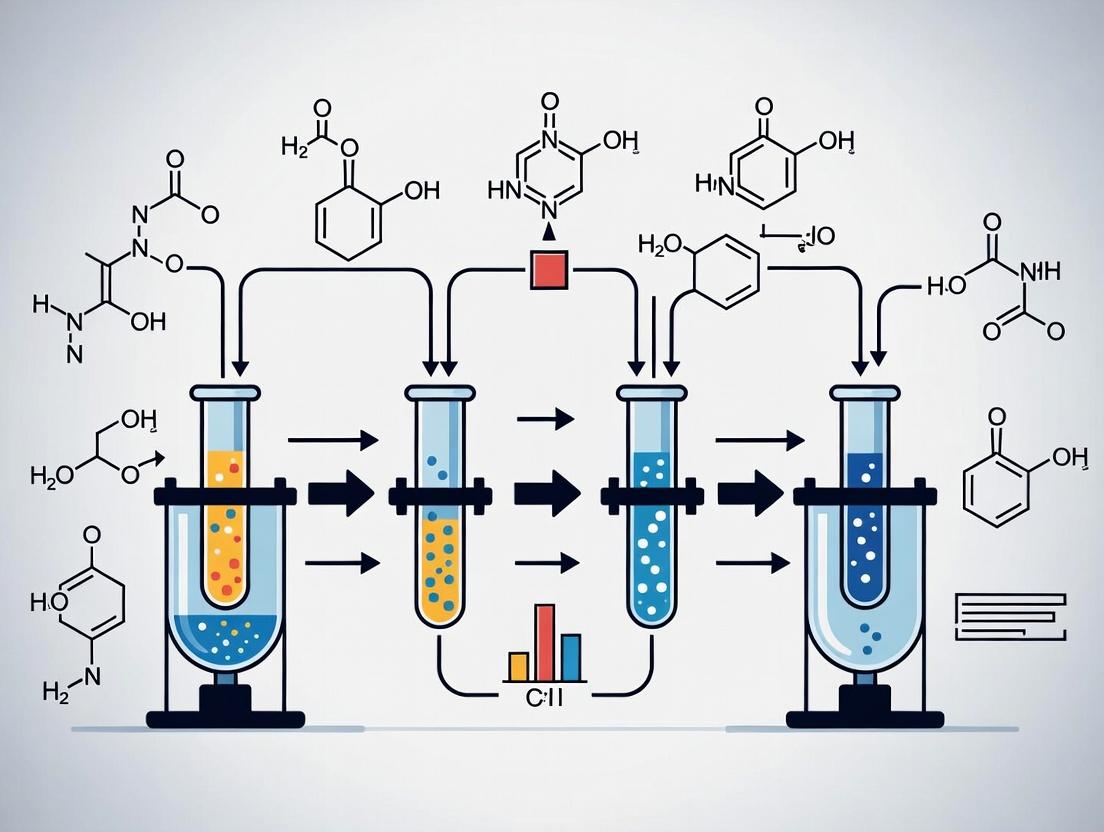
This comprehensive guide addresses the critical challenge of precipitation in flow chemistry systems, a common obstacle in continuous manufacturing for pharmaceutical development.
Strategies for Managing Precipitation in Flow Chemistry: A Practical Guide for Pharmaceutical Researchers
Abstract
This comprehensive guide addresses the critical challenge of precipitation in flow chemistry systems, a common obstacle in continuous manufacturing for pharmaceutical development. We explore the foundational science of why precipitation occurs in tubular reactors, detailing common mechanisms like solute supersaturation and pH-driven crystallization. The article presents proven methodological approaches for prevention and management, covering hardware modifications, solvent engineering, and process control strategies. We provide a systematic troubleshooting framework for identifying and resolving clogging events, along with optimization techniques to enhance reliability. Finally, we examine validation protocols and comparative analyses between different mitigation strategies, offering researchers and process chemists actionable insights to ensure robust, scalable, and uninterrupted flow synthesis for drug development.
Understanding Precipitation in Flow Reactors: Mechanisms and Root Causes
This technical support center is established within the context of ongoing thesis research on "Dealing with precipitation in flow chemistry tubes." It addresses the recurrent operational challenge of clogging in tubular reactors, a critical bottleneck in flow chemistry processes for pharmaceutical development and chemical synthesis.
Troubleshooting Guides & FAQs
FAQ 1: What are the primary mechanisms leading to precipitation and clogging?
Answer: Clogging typically results from three interlinked mechanisms: (1) Nucleation & Crystal Growth: Solute concentration exceeds solubility, leading to particle formation on reactor walls. (2) Agglomeration: Small particles adhere to form larger aggregates. (3) Wall Deposition: Interactions between particles and the tube material (e.g., PTFE, stainless steel) promote fouling. The rapid mixing and short residence times in flow reactors can create local super-saturation "hot spots."
FAQ 2: How can I quickly diagnose an imminent clog during an experiment?
Answer: Monitor these key indicators:
- Pressure Increase: A steady rise in back-pressure is the most reliable early warning sign.
- Flow Rate Instability: Fluctuations in delivered flow rates despite constant pump settings.
- Visual Inspection: Visible solids or discoloration in transparent tubing sections or connectors.
- Product Yield Drop: A sudden decrease in output or product concentration.
FAQ 3: What immediate steps should I take when a clog is detected?
Answer: Follow this protocol:
- Safety First: Immediately stop pumps and depressurize the system using designated valves.
- Isolate Section: Identify the clogged segment by disconnecting sections upstream to downstream.
- Solvent Flush: Attempt to dissolve the precipitate using a compatible, strong solvent (e.g., DMF, DMSO, dilute acid/base) in a static soak, followed by a low-flow flush. Never apply high pressure to clear a blockage.
- Replace: If flushing fails, replace the clogged tube or connector to minimize downtime.
FAQ 4: What are the best preventive strategies for precipitation-prone reactions?
Answer: Prevention relies on a multi-faceted approach:
- Solvent Engineering: Use solvent mixtures to enhance solute solubility.
- Dilution: Operate below the saturation concentration by increasing solvent flow.
- Temperature Control: Maintain a temperature gradient to keep products in solution until they reach a quench zone.
- Pulsed Flow/Ultrasound: Implement periodic flow reversals or attach an ultrasonic transducer to disrupt crystal adhesion.
- Surface Modification: Use chemically inert, smooth, or coated tubing (e.g., PFA-coated) to reduce nucleation sites.
FAQ 5: How do reactor geometry and mixing influence clogging risk?
Answer: Geometry is critical. Small inner diameters (< 1 mm) are highly prone to clogging from even minute particles. Tee-mixers and Coiled Flow Inverters (CFIs) provide more efficient mixing than simple T-mixers, reducing localized super-saturation zones. Recent studies favor oscillatory flow reactors for handling slurries.
Experimental Protocols
Protocol 1: Determining Solubility Limits for Clogging Risk Assessment
Objective: Identify the concentration threshold for precipitation under reaction conditions. Method:
- Prepare a series of solutions with the reactant/product at concentrations from 50% to 150% of its literature solubility.
- Pump each solution through a thermostatted reactor coil at the intended operating temperature and residence time.
- Monitor pressure for 30 minutes per concentration.
- The Clogging Concentration Threshold (CCT) is defined as the lowest concentration causing a >10% pressure increase. Operate at least 20% below this CCT.
Protocol 2: Evaluating Anti-Clogging Coatings
Objective: Compare the fouling resistance of different tube coatings. Method:
- Use three identical reactor coils: bare PTFE, silica-coated PTFE, and perfluoroalkoxy (PFA) tubing.
- Run a precipitation-prone reaction (e.g., a salt formation) simultaneously through each coil under identical conditions.
- Record the pressure profile and total product output over 4 hours.
- After the run, flush with solvent, dry, and weigh each coil to measure the mass of adhered solids.
Data Presentation
Table 1: Clogging Onset Time vs. Key Operational Parameters
| Inner Diameter (mm) | Concentration (% of Sat.) | Mixer Type | Temp. (°C) | Avg. Time to Clog (min) |
|---|---|---|---|---|
| 0.5 | 110 | Simple T-Mixer | 25 | 12.5 |
| 0.5 | 90 | Simple T-Mixer | 25 | >180 (No clog) |
| 1.0 | 110 | Simple T-Mixer | 25 | 45.2 |
| 0.5 | 110 | High-Efficiency | 25 | 28.7 |
| 0.5 | 110 | Simple T-Mixer | 50 | 20.1 |
Table 2: Efficacy of Common Flushing Solvents for Different Precipitate Types
| Precipitate Type | Recommended Solvent 1 (Efficacy) | Recommended Solvent 2 (Efficacy) | Solvent to Avoid |
|---|---|---|---|
| Organic Salts | Water (High) | Methanol/Water Mix (High) | Non-polar organics |
| Metal Oxides | 1M Aqueous Acid (Medium-High) | EDTA Solution (High) | -- |
| Polymer Gels | DMSO (Medium) | THF (Low-Medium) | Water (may worsen gel) |
| Inorganic Scales | 1M HCl (High) | 5% Citric Acid (Medium) | -- |
Mandatory Visualization
The Scientist's Toolkit: Key Research Reagent Solutions
Table 3: Essential Materials for Precipitation Management in Flow Reactors
| Item | Function & Rationale |
|---|---|
| Perfluoroalkoxy (PFA) Tubing | Offers superior chemical resistance and a smoother inner surface than PTFE, reducing nucleation sites for crystal growth. |
| In-line Back-Pressure Regulator (BPR) | Maintains consistent system pressure and allows for real-time monitoring of pressure fluctuations indicative of clogging. |
| Coiled Flow Inverter (CFI) Reactor | Enhances radial mixing, preventing the formation of localized concentration gradients that lead to super-saturation "hot spots." |
| Sonication Bath or Probe | Applies ultrasonic energy to disrupt particle agglomeration and wall adhesion in real-time or for cleaning clogged parts. |
| Precipitation Anti-Solvent Reservoir | Contains a miscible anti-solvent for rapid quenching or dilution of the reaction stream to immediately drop concentration below saturation. |
| In-line Particle Size Analyzer | Monysts particle formation and growth in real-time, providing early warning long before a pressure increase is detected. |
| Chelating Agent Solutions (e.g., EDTA) | Used in flush protocols to dissolve metal-containing precipitates or scales that are insoluble in common organic solvents. |
| High-Precision Syringe Pumps (Dual) | Enable precise control of reagent and diluent flows, allowing for instant dilution if precipitation is suspected. |
Troubleshooting Guides & FAQs
FAQ: What causes sudden clogging in my flow reactor tubes? Answer: The most common cause is the unintended precipitation of dissolved species. This occurs when the local solution concentration exceeds the solubility limit, creating a supersaturated state. This metastable state is often followed by rapid nucleation and particle growth, leading to clogging. Key factors include rapid mixing of incompatible streams, temperature gradients, and solvent composition changes.
FAQ: How can I predict if my reaction mixture will precipitate? Answer: While full prediction is complex, you can estimate risk using the Supersaturation Ratio (S). S = C / C, where C is the actual concentration and C is the equilibrium solubility under those conditions. If S > 1, the solution is supersaturated and at risk. Experimental determination of solubility limits (C*) for all key reagents and products under process conditions is essential. See Table 1 for typical thresholds.
FAQ: My system is supersaturated but doesn't precipitate immediately. Why? Answer: There is a kinetic barrier to nucleation. The region between the solubility limit and the concentration where spontaneous nucleation occurs is the metastable zone. The width of this zone (see Table 1) depends on factors like mixing efficiency, impurities, and surface roughness. Your system exists in this metastable supersaturated state until a nucleation event is triggered.
FAQ: What are the main types of nucleation, and which is relevant to flow tubing? Answer:
- Homogeneous Nucleation: Spontaneous formation of a solid phase from a clear solution. Requires very high supersaturation.
- Heterogeneous Nucleation: Formation of solids on surfaces, impurities, or trapped particles. This is the dominant and most problematic mechanism in flow chemistry tubes, as it occurs at much lower supersaturation levels on tube walls or fitting irregularities.
FAQ: What practical steps can I take to prevent nucleation and clogging? Answer: Implement a multi-strategy approach:
- Control Concentration: Operate below the solubility limit (S < 1). This may require dilution or slower reagent addition.
- Modify Solvent: Adjust solvent composition (e.g., co-solvents) to increase solubility of target compounds.
- Optimize Mixing: Ensure rapid and uniform mixing to avoid local pockets of high supersaturation. Consider using specialized static mixers.
- Surface Engineering: Use tubing with smooth, chemically inert inner surfaces (e.g., PTFE, PFA) to reduce sites for heterogeneous nucleation.
- Temperature Control: Maintain a consistent, optimal temperature to stabilize solubility.
Table 1: Critical Parameters for Precipitation in Flow Systems
| Parameter | Typical Range in Flow Chemistry | Risk Level & Implication | Measurement Method |
|---|---|---|---|
| Supersaturation Ratio (S) | 1.0 - 5.0+ | Low (S<1.2): Stable. Medium (1.2 |
Inline UV/Vis, PAT tools. |
| Metastable Zone Width (ΔC_max) | Highly compound-dependent; 1.5 - 10 x C* | A wider zone allows safer operation at low S. Narrow zones require precise control. | Polythermal or isothermal crystallization studies. |
| Nucleation Induction Time | Milliseconds to hours | Short times (< seconds) indicate high nucleation risk at process conditions. | Microscopic observation in a flow cell. |
| Critical Nucleus Radius (r*) | ~1-10 nm | Smaller r* means nucleation is easier. Function of supersaturation and interfacial energy. | Estimated from classical nucleation theory. |
Experimental Protocols
Protocol 1: Determining Solubility Limit (C*) for a Key Reagent Objective: To establish the equilibrium solubility of a target compound in the planned reaction solvent mixture at operational temperature. Materials: See "The Scientist's Toolkit" below. Method:
- Prepare a saturated solution by adding an excess of the solid compound to the solvent in a controlled temperature vessel.
- Agitate continuously for 24 hours to ensure equilibrium is reached.
- Filter the solution through a 0.2 µm syringe filter to remove all undissolved solids.
- Analyze the concentration of the filtrate using a calibrated method (e.g., HPLC, UV-Vis spectroscopy).
- Repeat at three different temperatures relevant to your flow process. Deliverable: A plot of C* vs. Temperature, defining the operational envelope.
Protocol 2: Mapping the Metastable Zone Width (MSZW) in a Flow System Objective: To determine the supersaturation level at which spontaneous nucleation occurs under flow conditions. Materials: Two syringe pumps, T-mixer, temperature-controlled reactor coil, inline particle detector or microscope. Method:
- Prepare two solutions: (A) a concentrated solution of your compound in a good solvent, (B) an anti-solvent.
- Using pumps, mix streams A and B at a fixed total flow rate and temperature. The mixture will be supersaturated.
- Gradually increase the concentration of A (or the ratio of A:B) in successive experiments, calculating S for each run.
- Monitor the outlet for the first appearance of detectable particles. The concentration (C) at this point defines the limit of the metastable zone.
- Calculate MSZW as ΔCmax = Cnucleation - C*. Deliverable: A plot of Induction Time vs. Supersaturation Ratio (S), identifying the "cloud point."
Visualizations
Title: Sequence from Supersaturation to Clogging
Title: Clogging Troubleshooting Decision Tree
The Scientist's Toolkit: Key Research Reagent Solutions
| Item | Function & Relevance to Precipitation Studies |
|---|---|
| PTFE or PFA Tubing | Provides a smooth, chemically inert inner surface to minimize heterogeneous nucleation sites on tube walls. |
| In-line Particle Sensor | (e.g., using laser diffraction or backscattering). Enables real-time monitoring of particle formation and growth, critical for detecting nucleation events. |
| Static Micromixer | Ensures rapid and complete mixing of reagent streams to prevent local zones of extreme supersaturation that trigger nucleation. |
| Syringe Pumps (High Precision) | Deliver precise, pulseless flows essential for maintaining steady-state concentrations and reproducible supersaturation ratios. |
| Anti-Solvent | A solvent in which the target compound has low solubility. Used intentionally to create controlled supersaturation or to test stability limits. |
| Seeding Crystals | Small, purified crystals of the target compound. Used to induce controlled crystallization in the metastable zone, bypassing unpredictable primary nucleation. |
| Process Analytical Technology (PAT) Tools | e.g., Inline FTIR, UV-Vis. Provide real-time concentration data to calculate S and verify operation below the solubility limit. |
Troubleshooting Guides & FAQs
FAQ 1: My flow reactor tubes are frequently clogging with solids. Which reaction types are most prone to causing precipitation?
Answer: Several reaction classes are notorious for generating solids that lead to clogging in flow chemistry systems. The most common culprits are:
- Cross-Couplings (e.g., Suzuki, Buchwald-Hartwig): Can produce inorganic salts (e.g., LiCl, NaOAc) and palladium black as byproducts.
- Nucleophilic Aromatic Substitution (SNAr): Often generates halide salts (e.g., NaBr, KCl) as stoichiometric wastes.
- Salt Formations (e.g., amine HCl salts): The intended product itself may precipitate when formed under certain conditions.
- Reactions with Poorly Soluble Starting Materials: If reactants are not fully dissolved upon mixing, they can agglomerate and deposit.
- Polymerizations & Multi-Component Reactions: Can form oligomers or gels that adhere to tube walls.
FAQ 2: How can I identify if an intermediate is causing the clog, rather than the final product?
Answer: Use a staged diagnostic protocol.
- Analyze the Clog Location: Use a back-pressure regulator (BPR) with a pressure sensor upstream. A rapid pressure spike at the reactor inlet suggests precipitation occurs early (likely from a reactant or early intermediate). A spike near the BPR suggests a later-stage product or byproduct.
- Perform Off-Line Compatibility Tests: Sample the reaction mixture at different residence times (by collecting effluent from different points in a loop reactor or by stopping flow) and observe for cloudiness or solid formation.
- Monitor In-Line with PAT: Implement in-line IR or UV/Vis spectroscopy. A sudden change in the spectrum followed by a pressure increase can pinpoint the moment of intermediate formation and precipitation.
FAQ 3: What are the most effective experimental strategies to prevent precipitation in flow tubes?
Answer: Prevention strategies depend on the identified culprit.
| Strategy | Mechanism | Best For Culprit Type |
|---|---|---|
| Increased Temperature | Enhances solubility of most materials. | Salt byproducts, final products. |
| Co-Solvent / Solvent Switching | Changes solubility parameters. | Organic intermediates, products. |
| Diluted Reaction Stream | Keeps concentrations below saturation. | All types, but reduces throughput. |
| In-Line Liquid-Liquid Extraction | Removes precipitating salts or acids/bases between steps. | Inorganic salts, ionic species. |
| Oscillatory Flow / Pulsed Flow | Creates shear forces that disrupt particle adhesion. | Particle agglomeration. |
| Use of a Sacrificial Solid Support | Traps particles in a packed bed before the tube. | Particulate byproducts. |
FAQ 4: Can you provide a detailed protocol for testing solvent compatibility to avoid clogging?
Experimental Protocol: Solvent Compatibility and Solubility Screening
Objective: To identify a solvent or solvent mixture that maintains all reaction components and potential intermediates in solution throughout the planned reaction duration and conditions.
Materials:
- Reactants A & B
- Candidate solvents (e.g., MeCN, THF, DMF, NMP, EtOH/H2O mixtures)
- Heating/stirring block
- HPLC vials with septa
- Syringes and filters (0.45 µm)
- Visual inspection microscope (optional)
Method:
- Prepare stock solutions of each reactant in each candidate solvent at 2x the target reaction concentration.
- In an HPLC vial, combine 500 µL of each reactant stock solution (e.g., A in DMF + B in DMF) to initiate the reaction at the target concentration.
- Immediately place the vial in a pre-heated block at the target reaction temperature.
- At time points t=0, t=1/2 residence time (τ), t=τ, and t=2τ, withdraw a 50 µL aliquot.
- Immediately filter the aliquot through a 0.45 µm PTFE syringe filter into a clean vial containing 50 µL of a quenching solvent (if needed).
- Visually inspect both the filtered aliquot (for clarity) and the used filter (for captured solids). Analyze the aliquot by HPLC to assess reaction progress.
- Repeat for all solvent systems. The optimal solvent shows no visible solids on the filter at any time point and maintains high conversion.
FAQ 5: What is a standard workflow for diagnosing and solving a precipitation issue in flow?
Title: Diagnostic Workflow for Flow Chemistry Clogging
The Scientist's Toolkit: Key Research Reagent Solutions
| Item | Function in Mitigating Precipitation |
|---|---|
| Back-Pressure Regulator (BPR) with Pressure Sensor | Maintains system pressure above boiling point and provides critical diagnostic data on clog location via upstream pressure monitoring. |
| In-line FTIR/UV-Vis Probe | Real-time Process Analytical Technology (PAT) to monitor concentration changes and detect the onset of precipitation or intermediate formation. |
| Co-solvents (e.g., NMP, DMSO) | High-boiling, dipolar aprotic solvents with excellent solubilizing power for polar intermediates and many inorganic salts. |
| In-line Liquid-Liquid Membrane Separator | Continuously removes water-soluble salts or acids/bases generated in a reaction, preventing their accumulation and precipitation. |
| Oscillatory Flow Mixer | Imparts a reciprocating motion to the flow, creating high shear and disrupting the boundary layer where particles deposit on tube walls. |
| Packed Bed of Glass Beads or Celtic | Placed before sensitive tubing, acts as a sacrificial site for particle aggregation, protecting downstream microchannels. Can be easily replaced. |
| Non-Stick Tubing (e.g., PTFE, PFA) | Provides a smooth, chemically inert surface that reduces the adhesion of crystals and solids compared to stainless steel or PEEK. |
| Precipitation Filter (In-line) | A purpose-designed, replaceable cartridge filter within the flow path to capture solids intentionally, allowing the liquid phase to proceed. |
The Impact of Mixing, Residence Time, and Temperature Gradients.
Technical Support Center
Troubleshooting Guides & FAQs
FAQ 1: How can I prevent solid precipitation from clogging my flow reactor tubing?
- Answer: Precipitation is often a function of rapid supersaturation. To mitigate clogging:
- Optimize Mixing: Ensure rapid and efficient mixing of reagent streams immediately at the T-junction or mixing unit. Consider using staggered herringbone or chaotic mixers for faster laminar flow diffusion.
- Adjust Residence Time: Shorten the residence time in the initial reaction zone to prevent the growth of large particles that can adhere to tubing walls. This may require a segmented flow (slug flow) approach.
- Control Temperature Gradients: A sudden temperature drop can trigger precipitation. Use pre-heating/cooling loops for all incoming streams to ensure they meet at the same temperature. Insulate the reactor to minimize axial temperature gradients.
FAQ 2: My reaction yield drops significantly when scaling up a flow protocol that worked in a small-diameter tube. What's wrong?
- Answer: This is a classic scaling issue related to mixing and temperature gradients. In larger diameter tubes, laminar flow dominates, reducing radial mixing. The Reynolds number (Re) decreases, leading to a broader residence time distribution and potential hot/cold spots.
- Solution: Scale out (number up) rather than scale up (diameter up). Maintain tube internal diameter (<1 mm) and run multiple tubes in parallel. Re-evaluate mixing geometry and consider active cooling/heating jackets to manage the temperature profile.
FAQ 3: How do I diagnose whether a clog is due to poor mixing, excessive residence time, or a temperature issue?
- Answer: Perform a systematic diagnostic experiment. Use the table below to vary parameters and observe the system pressure (a proxy for clogging) and product yield.
FAQ 4: What are the best practices for handling slurries or particles in flow to avoid clogging?
- Answer:
- Use In-line Ultrasound: An ultrasonic bath or probe on the reactor tube can disrupt particle aggregation and wall adhesion.
- Employ Oscillatory Flow: Superimpose an oscillatory motion onto the net flow to enhance radial mixing and keep particles suspended.
- Choose Tubing Wisely: Use chemically resistant tubing with a smooth inner lumen (e.g., PTFE, PFA) and avoid sharp bends. Implement a back-pressure regulator (BPR) at the reactor outlet to prevent gas bubble formation, which can nucleate precipitation.
Table 1: Impact of Flow Parameters on Clogging Frequency and Yield
| Parameter Changed | Condition A | Condition B | Condition C | Observed Clogging Frequency | Yield (%) |
|---|---|---|---|---|---|
| Mixing Geometry | Standard T-Junction | High-Efficiency Mixer | Static Mixer Chip | High -> Low | 65 -> 92 |
| Residence Time (s) | 120 | 60 | 30 (with BPR) | Medium -> Low | 70 -> 88 |
| ΔT at Mixing Point (°C) | 25 (RT Stream into 80°C) | 5 (Pre-heated) | 0 (Both at 80°C) | High -> Very Low | 40 -> 90 |
| Tube ID (mm) | 0.5 | 1.0 | 2.0 | Low -> High | 95 -> 58 |
Table 2: Key Material Properties for Precipitation-Prone Reactions
| Material | Function | Key Property for Precipitation Mitigation |
|---|---|---|
| PFA Tubing | Reaction conduit | Low surface energy, chemical inertness, smooth bore to reduce particle adhesion. |
| In-line Ultrasonic Cleaner | Particle dispersion | Applies high-frequency sound waves to break up aggregates and prevent wall deposition. |
| Back-Pressure Regulator (BPR) | Pressure control | Maintains single-phase flow, prevents solvent degassing/boiling which can nucleate solids. |
| Dynamic Mixing Chip (e.g., Herringbone) | Enhanced mixing | Induces chaotic advection for rapid molecular diffusion, ensuring uniform concentration before precipitation onset. |
| Thermally Conductive Reactor Block | Temperature control | Minimizes radial and axial temperature gradients for uniform supersaturation control. |
Experimental Protocols
Protocol 1: Diagnostic Test for Clogging Root Cause Objective: To determine the primary factor (Mixing, Residence Time, or Temperature) causing precipitation and clogging. Methodology:
- Baseline Run: Operate your precipitation-prone reaction at the originally problematic conditions. Record system pressure over time and final yield.
- Mixing Test: Replace the standard mixer with a high-efficiency mixer (e.g., staggered herringbone). Keep all other parameters (flow rate, temperature) identical. Monitor pressure and yield.
- Residence Time Test: Return to the original mixer. Double the total flow rate to halve the residence time. Use a BPR to maintain system pressure and prevent boiling. Monitor pressure and yield.
- Temperature Gradient Test: Return to original flow rate. Equip all feed streams with pre-heating/cooling loops to ensure they enter the mixing zone at the exact same temperature as the reactor block. Eliminate any ΔT. Monitor pressure and yield.
- Analysis: Compare the pressure profiles and yields from each test. The condition that most significantly reduces pressure rise (clogging) and improves yield indicates the dominant root cause.
Protocol 2: Establishing a Safe Operating Zone for a Precipitation-Prone Reaction Objective: To define a range of flow rates and temperatures that avoids clogging. Methodology:
- Set your reactor temperature to a starting point (T1).
- Begin with a total flow rate (F1) that gives a long residence time.
- Start the reaction and monitor the system's back-pressure.
- Gradually increase the flow rate in steps (e.g., 0.1 mL/min increments), allowing pressure to stabilize at each step.
- Record the flow rate at which the pressure begins to rise monotonically, indicating the onset of significant wall deposition/clogging. This is the maximum safe flow rate for T1.
- Repeat steps 1-5 at different reactor temperatures (T2, T3, etc.).
- Plot the results (Temperature vs. Max Safe Flow Rate) to create a "clog-free" operating envelope diagram.
Visualizations
Title: Troubleshooting Flow Reactor Clogging
Title: Precipitation Pathway in Laminar Flow
Troubleshooting Guides & FAQs
Q1: During a continuous API synthesis, I observe sudden, persistent precipitation in my reactor tube, leading to clogging. What are the primary causes? A: Precipitation in flow tubes is typically caused by:
- Rapid Changes in Solubility: A shift in solvent composition, pH, or temperature between stages can exceed the product's solubility limit.
- Intermediate Instability: Reactive intermediates may have low solubility and precipitate before reacting further.
- High Local Concentrations: Inefficient mixing at a T-junction or static mixer can create localized supersaturation.
- Nucleation on Solid Impurities: Particulates or reactor wall imperfections can act as nucleation sites.
Q2: How can I prevent or mitigate precipitation without halting the flow process? A: Implement these strategies:
- Solvent Engineering: Use a co-solvent or switch to a solvent with higher solubility for the precipitating species across all reaction stages.
- In-line Dilution: Immediately dilute the reaction stream post-reaction or between steps to maintain concentration below the critical supersaturation level.
- Temperature Control: Elevate temperature to increase solubility, ensuring the entire flow path is above the crystallization temperature.
- Use of In-line Filters/Ultrasound: Install in-line particulate filters or apply ultrasound to disrupt early crystal growth and prevent agglomeration.
Q3: My precipitation event is intermittent and hard to reproduce. How should I systematically diagnose it? A: Follow this diagnostic workflow:
Diagram Title: Diagnostic Workflow for Intermittent Precipitation
Q4: What are the standard protocols for studying and characterizing precipitation in a flow system? A: Protocol: Solubility Limit Determination for Flow
- Prepare Saturated Solutions: Generate API solutions in the planned reaction solvent(s) across a relevant temperature range (e.g., 20-80°C).
- In-line Monitoring: Use a compatible flow cell with PAT (Process Analytical Technology) tools like ATR-FTIR or UV-Vis to detect the onset of turbidity.
- Controlled Cooling/Evaporation: In a controlled flow reactor segment, precisely lower the temperature or introduce an anti-solvent stream.
- Detect & Record: Use particle size analyzers (e.g., FBRM) or simple image probes to detect the first nucleation event and record the exact conditions.
- Tabulate Results:
| Condition (Solvent Blend) | Temperature (°C) | Concentration at Precipitation (mg/mL) | Observed Particle Size (µm) |
|---|---|---|---|
| Ethanol/Water (80:20) | 25 | 15.2 | 5-10 |
| Ethanol/Water (80:20) | 40 | 28.7 | 2-5 |
| Acetonitrile | 25 | 102.5 | >50 (Rapid Growth) |
Q5: Are there real-world case studies where precipitation was successfully managed in API synthesis? A: Case Study 1: Diazotization & Coupling
- Problem: An unstable diazonium intermediate precipitated during a continuous diazotization, clogging the tube.
- Solution: The team used in-line dilution with chilled solvent immediately after the diazotization step and maintained the temperature below 5°C. This kept the intermediate in solution long enough for efficient coupling in the next reactor segment.
- Protocol: A slug flow of concentrated diazotization stream was injected into a cooled, high-velocity diluent stream to achieve instant dilution and temperature quenching.
Case Study 2: Final API Neutralization
- Problem: Precipitation during the final pH adjustment of a salt-forming reaction was inconsistent, causing variable crystal forms and blockages.
- Solution: Implemented seeded crystallization by injecting a stream of micronized seed crystals into the neutralization zone and used controlled anti-solvent addition with a multi-inlet vortex mixer (MIVM) for uniform supersaturation generation.
Diagram Title: Flow Seeded Crystallization Setup for Neutralization
The Scientist's Toolkit: Research Reagent Solutions
| Item | Function in Precipitation Management |
|---|---|
| Co-solvents (e.g., 2-MeTHF, Cyrene) | Modifies solvent polarity to maintain solubility of intermediates/final API across reaction steps. |
| In-line Particle Analyzer (FBRM/PVM) | Provides real-time chord length and particle count data to detect nucleation onset. |
| Ultrasound Flow Cell | Applies cavitation energy to break up early agglomerates and prevent tube wall fouling. |
| Static Mixer Elements (e.g., Helical) | Ensures rapid, homogeneous mixing of streams to avoid localized supersaturation spikes. |
| Back-Pressure Regulator (BPR) with Flush Port | Maintains system pressure for gaseous reactions and allows for solvent flushing to clear minor blockages. |
| Temperature-Controlled Chip Reactor | Allows for ultra-fast heat exchange to precisely control temperature-dependent solubility. |
| Polyether Ether Ketone (PEEK) Tubing | Chemically inert tubing with smooth inner surface to reduce nucleation sites. |
Preventive Strategies and Active Management Techniques for Reliable Flow Processing
Technical Support Center
Troubleshooting Guides & FAQs
Q1: We are experiencing persistent clogging in our standard coiled flow reactor when handling reactions with solid-forming intermediates. What immediate steps should we take?
A: Immediate mitigation involves implementing a pulsed flow or oscillatory flow regimen. Introduce a diaphragm or piston pump segment upstream to superimpose oscillations (5-10 Hz) on your net flow. This creates local vortices that suspend particles and prevent adhesion. Simultaneously, increase the reactor tube inner diameter to at least 3.0 mm for that section if possible. As a stopgap, consider injecting a compatible solvent slug (e.g., DMSO for organic solids) to dissolve the blockage, but this may affect reaction consistency.
Q2: How do we select between an Oscillatory Flow Reactor (OFR) and a Coiled Flow Inverter (CFI) for a new process with known, slow precipitation?
A: The choice hinges on precipitation kinetics and particle management goals. Use the following decision table:
| Criterion | Oscillatory Flow Reactor (OFR) | Coiled Flow Inverter (CFI) |
|---|---|---|
| Primary Mechanism | Active mixing via oscillating baffles/fluid. | Passive secondary flow from coiled geometry & periodic reorientation. |
| Best for Precipitation Type | Rapid, copious precipitation; requires active particle suspension. | Slower, controlled precipitation for consistent particle size. |
| Particle Size Control | Good, due to high shear and uniform energy dissipation. | Excellent, due to highly uniform mixing and reduced axial dispersion. |
| Scalability | High; well-established scale-up rules for oscillatory amplitude/frequency. | Moderate; requires careful re-design of coil and inverter elements. |
| Operational Complexity | Higher (moving parts, control of oscillation). | Lower (static geometry). |
| Recommended Flow Rate | Broad range, effective even at low net flows. | Requires sufficient net flow to induce secondary flows. |
Q3: What are the critical design parameters for a lab-scale coiled tube reactor to minimize dead zones where solids can accumulate?
A: Follow this detailed protocol for designing a precipitation-resistant coiled reactor:
- Tube Selection: Use chemically resistant tubing (e.g., PTFE, PFA) with a smooth inner surface. Recommended inner diameter: 1.5 - 2.5 mm for lab scale.
- Coiling Parameters:
- Coil Diameter (D): Maintain a ratio of tube diameter (d) to coil diameter (D), known as the curvature ratio (λ = d/D), between 0.03 and 0.07. This optimizes secondary flow.
- Pitch: Use a tight pitch (distance between coil turns) approximately equal to 1.2 * d.
- Inclusion of Flow Inversion: Integrate periodic 90-degree bends or re-orientation modules every 5-10 coil turns. This disrupts sedimentation patterns and renews the fluid interface.
- Orientation: Operate the coil reactor in a vertical plane to utilize gravitational effects on particle transport.
Q4: Our precipitation reaction is sensitive to shear. Can oscillatory flow still be applied?
A: Yes, but with precise control. Use an OFR with smooth periodic constrictions instead of sharp baffles. Conduct a shear sensitivity study by varying oscillation frequency (f) and amplitude (x₀) while monitoring product degradation. The oscillatory Reynolds number (Reₒ = 2πfx₀ρd/μ) should be kept below a critical threshold specific to your product. Start with low Reₒ (50-100) and incrementally increase until sufficient particle suspension is achieved without degradation.
Q5: How can we experimentally validate that our new reactor design is effectively managing precipitation?
A: Implement the following validation protocol:
- Method: Use a model precipitation reaction (e.g., barium sulfate from aqueous streams) spiked with a UV-active tracer.
- Procedure:
- Run the reaction in your new reactor (OFR/CFI) and a standard tubular reactor in parallel.
- Measure Pressure Drop (ΔP) across both reactors over time using in-line pressure sensors. A stable ΔP indicates no clogging.
- Use Flow Visualization (if reactor is transparent) or Particle Image Velocimetry (PIV) to confirm absence of stagnant zones.
- At the outlet, use an in-line particle analyzer or take periodic samples for offline analysis by Dynamic Light Scattering (DLS) to measure particle size distribution (PSD).
- Compare the PSD and the variance of the residence time distribution (measured via tracer response) between the two reactors.
- Success Criteria: The new design should show (1) stable ΔP, (2) 30-50% narrower PSD, and (3) reduced axial dispersion (Peclet number > 50 for the new design) compared to the standard reactor.
Title: Reactor Selection & Validation Workflow for Precipitation Management
The Scientist's Toolkit: Key Research Reagent & Hardware Solutions
| Item | Category | Function & Rationale |
|---|---|---|
| PTFE/PFA Tubing (1/16" OD, 1.5-3.0 mm ID) | Hardware | Chemically inert, smooth surface reduces particle adhesion. Larger ID reduces clogging risk in precipitation zones. |
| Diaphragm Pump with Pulsation Dampener | Hardware | Provides steady base flow. The dampener is removed to intentionally introduce pulses for oscillatory flow mitigation. |
| In-line Pressure Transducer (0-100 psi) | Diagnostic | Monitors pressure drop (ΔP) across reactor in real-time. A rising ΔP is the earliest indicator of clog formation. |
| In-line Particle Size Analyzer (e.g., FBRM) | Diagnostic | Provides real-time particle count and chord length distribution, allowing immediate adjustment of flow/oscillation parameters. |
| Barium Chloride / Sodium Sulfate | Reagent | Model reactants for generating barium sulfate precipitate, used for standardized reactor performance testing. |
| UV-Active Tracer (e.g., Acetone, NaNO₂) | Reagent | Used in Residence Time Distribution (RTD) studies to quantify mixing efficiency and identify dead zones. |
| Peristaltic Pump with OCR | Hardware | Provides precise, pulse-free flow. Optical Cog Recognition (OCR) models are essential for accurate dosing in CFI studies. |
| Dynamic Light Scattering (DLS) Instrument | Diagnostic | Offline analysis of particle size distribution (PSD) from collected samples to validate reactor performance. |
Technical Support Center
Troubleshooting Guide
Issue 1: Sudden Precipitation in Reactor Tube
- Problem: A clear solution precipitates upon entering the heated reactor block.
- Diagnosis: Likely due to a negative temperature coefficient of solubility or solvent composition change (e.g., evaporation of a volatile co-solvent).
- Solution:
- Introduce a secondary solvent inlet to create a pre-mixed, temperature-stable solvent blend.
- Increase system pressure to suppress boiling of volatile components.
- Consider a co-solvent with a positive or neutral temperature solubility coefficient.
Issue 2: Precipitation at Point of Mixing
- Problem: Solids form immediately when two reagent streams converge.
- Diagnosis: The mixing zone creates a local solvent environment where the product or intermediate is insoluble.
- Solution:
- Use a multi-inlet mixer to control the order of solvent introduction.
- Dilute one or both reagent streams with a compatible co-solvent to moderate the composition shift.
- Implement an in-line static mixer to accelerate homogenization and reduce localized "hot spots" of poor solubility.
Issue 3: Clogging in Residence Time Loops or Transfer Lines
- Problem: Precipitation occurs not in the reactor, but in downstream tubing, leading to clogging.
- Diagnosis: Solubility decreases over extended time (kinetic precipitation) or due to gradual cooling.
- Solution:
- Incorporate a "solvent sweep" or a maintenance flow of a strong solvent through all lines post-reaction.
- Insulate or heat-trace transfer lines to maintain reactor temperature.
- Introduce an anti-solvent in a controlled, quench stage at the very end of the flow path, just before collection.
Frequently Asked Questions (FAQs)
Q1: How do I select a co-solvent for my flow chemistry reaction? A: The primary goals are to increase solubility without degrading reaction performance. Use solubility parameters (Hansen, HSP) to identify solvents chemically similar to your solute. A table of common co-solvents is below. Always test compatibility with reactor materials (e.g., PFA, SS) and ensure it does not quench reactive intermediates.
Q2: What is the safest way to introduce an anti-solvent in flow to induce crystallization without clogging? A: Use a multi-port mixing tee immediately before the final outlet or a dedicated crystallizer chip. The key is to ensure rapid, efficient mixing on a timescale faster than particle agglomeration. A secondary pump for the anti-solvent must be precisely calibrated to maintain the desired volumetric ratio.
Q3: My API is only soluble in DMSO, but I need to switch to an organic solvent for the next step. How can I avoid precipitation during solvent exchange? A: Implement a gradual solvent swap using a multi-solvent gradient system. Use a multi-inlet pump to create a programmed transition from DMSO to a DMSO/organic blend, finally to the pure organic solvent. This can be achieved in a continuous stirred tank reactor (CSTR) in series or via dynamic pumping protocols.
Q4: How can I predict if a solvent blend will maintain solubility at elevated temperature and pressure in my flow system? A: Experimental measurement is best. Use a small-scale, high-pressure solubility cell or perform extrapolation using the Apelblat equation or NRTL models. Key parameters to gather are listed in the data table below.
Experimental Data & Protocols
Table 1: Common Solvent Engineering Agents in Flow Chemistry
| Solvent/Agent | Typical Role | Key Property | Consideration for Flow |
|---|---|---|---|
| Dimethyl Sulfoxide (DMSO) | Co-solvent | High polarity, high boiling point | Can be difficult to remove; may swell some polymers. |
| Methanol / Ethanol | Co-solvent or Anti-solvent | Miscible with water and organics | Can affect reaction kinetics; moderate boiling point. |
| Acetonitrile | Co-solvent | High solubilizing power, inert | Good for HPLC analysis; requires waste management. |
| Heptane / Hexane | Anti-solvent | Low polarity, poor solvent | Immiscible with water, useful for liquid-liquid extraction in-line. |
| Water | Co-solvent or Anti-solvent | Green, tunable with pH/electrolytes | Can cause hydrolysis; high heat capacity useful for temperature control. |
| Dichloromethane (DCM) | Co-solvent | Good solubilizer, volatile | Low boiling point requires pressure control; environmental and health concerns. |
Table 2: Solubility Data for Model Compound (X) Under Flow Conditions
| Solvent System (v/v) | Solubility at 25°C (mg/mL) | Solubility at 80°C (mg/mL) | Observed Clogging Risk |
|---|---|---|---|
| Pure THF | 15.2 | 45.8 | Low |
| THF:Water (90:10) | 12.1 | 10.5 | High (at T>60°C) |
| THF:MeOH (80:20) | 18.7 | 52.3 | Very Low |
| Pure MeOH | 8.4 | 22.6 | Medium |
Experimental Protocol: Screening Solvent Blends to Prevent Precipitation Objective: Identify a co-solvent blend that maintains solubility of intermediate Y during a 10-minute residence at 75°C in a PFA tube reactor.
- Preparation: Prepare 10 mL of a 0.1M solution of precursor to Y in a primary solvent (e.g., DCM).
- Blend Formulation: Prepare 5 co-solvent blends (e.g., DCM:EtOAc 90:10, 70:30; DCM:MeCN 80:20, etc.) in separate vials.
- Simulated Test: In a sealed vial, combine 1 mL of the precursor solution with 1 mL of the co-solvent blend. Add stoichiometric reagent to generate Y in situ. Place vial in a heated block at 75°C for 10 minutes, agitating constantly.
- Analysis: Visually inspect for precipitation. Filter any solids, dry, and weigh. Analyze supernatant by HPLC to determine concentration yield.
- Flow Validation: The top 2 performing blends are tested in a flow setup with an in-line particle detector or UV-vis to confirm no clogging over 30 minutes.
Diagrams
Diagram 1: Solvent Engineering Decision Pathway for Flow Chemistry
Diagram 2: Flow Setup with Co-solvent and Anti-solvent Inlets
The Scientist's Toolkit: Research Reagent Solutions
Table 3: Essential Materials for Solvent Engineering Experiments
| Item | Function in Experiment |
|---|---|
| Programmable Syringe Pumps (Multi-channel) | Precise, pulseless delivery of multiple solvent streams at defined ratios. |
| PFA or Stainless Steel Tubing (Various IDs) | Inert flow path for reaction and solvent blending; choice depends on pressure and temperature. |
| In-line Static Mixers (e.g., T-mixer, Chip-based) | Ensures rapid, homogeneous mixing of solvent streams to prevent local precipitation. |
| Heated Reactor Blocks with PID Control | Provides accurate and uniform temperature control to study temperature-dependent solubility. |
| In-line Particle Sensor (e.g., FBRM probe) | Real-time monitoring of particle formation and growth, allowing for immediate intervention. |
| Back Pressure Regulator (BPR) | Maintains system pressure above solvent boiling points, preventing gas formation and flow disruption. |
| HPLC with Auto-sampler | For quantitative analysis of solute concentration in various solvent blends pre- and post-reaction. |
| Hansen Solubility Parameters (HSP) Software | Predictive tool for selecting co-solvents based on theoretical solubility spheres. |
Technical Support Center: Troubleshooting Precipitation in Flow Chemistry Tubes
Troubleshooting Guides
Issue 1: Sudden Crystallization and Tube Blockage
Q: During a flow synthesis, we are experiencing sudden, unpredictable crystallization leading to complete tube blockage. What immediate steps should we take and how can we prevent it?
A: Immediate action is to activate the system's pressure relief valve if safe to do so, then halt all pumps. Do not attempt to clear by further increasing pressure. For prevention, you must analyze the supersaturation profile. Implement anti-solvent introduction immediately after the reaction zone and consider a stepwise temperature gradient instead of an isothermal profile. Use the following diagnostic table to identify the root cause:
| Suspected Cause | Diagnostic Check | Corrective Action Protocol |
|---|---|---|
| Localized Cooling | Measure temp at 3 points: inlet, reactor, outlet. Variance >5°C is critical. | Insulate all junctions; implement inline pre-heater for reagents. |
| Concentration Surge | Review pump calibration logs; check for pulsation. | Install pulse dampeners; switch to dual-piston pumps; implement real-time UV monitoring at reactor exit. |
| Nucleation Site Presence | Inspect tubing interior for scratches or particle adhesion. | Flush with 0.1M NaOH, then 20% HNO3; replace with electropolished tubing (Ra < 0.8 µm). |
| Solvent Composition Shift | Verify solvent mixing efficiency (Re number < 2000 indicates laminar flow). | Install static mixer prior to reactor inlet; increase flow rate to achieve turbulent flow (Re > 2500). |
Experimental Protocol for Determining Solubility Limits:
- Prepare: Create a saturated solution of your API in the primary solvent at the reaction temperature.
- Titrate: Use a syringe pump to precisely add anti-solvent (e.g., water into an organic solution) at a controlled rate (e.g., 0.1 mL/min) into a stirred, temperature-controlled vessel containing a known volume of the saturated solution.
- Monitor: Use an in-situ turbidity probe (laser diffraction) or FBRM (Focused Beam Reflectance Measurement) to detect the first onset of particles.
- Calculate: Record the volume of anti-solvent added at the cloud point. The mole fraction solubility limit = (moles API) / (moles API + moles primary solvent + moles anti-solvent at cloud point).
- Profile: Repeat at three key temperatures (reaction temp, quenching temp, room temp) to build a solubility vs. T curve.
Issue 2: Inconsistent Product Yield and Purity Due to Fouling
Q: We observe a gradual decrease in yield and purity over a 24-hour run, accompanied by a steady pressure increase, suggesting wall fouling. How can we maintain consistent performance?
A: This indicates heterogeneous nucleation and growth on the tube walls. Implement a combined strategy of surface modification and periodic cleaning cycles. The key is to shift the metastable zone width (MSZW).
| Parameter | Current Setting (Problem) | Optimized Setting (Solution) | Rationale |
|---|---|---|---|
| Tube Material | Standard PFA or SS316 | PTFE-lined or glass-coated; or dynamic coating with 1% w/v HPMC in line. | Reduces nucleation sites; HPMC acts as a crystallization inhibitor. |
| Post-Reaction Quench Rate | Immediate cooling to 20°C. | Controlled, linear cooling ramp (e.g., from 80°C to 40°C over 120s). | Prevents shock supersaturation at the wall. |
| Clean-in-Place (CIP) Cycle | At end of run. | Every 4-6 hours: flush with a "good solvent" for 10 min at 2x flow rate. | Removes nascent fouling layers before they become problematic. |
| Flow Regime | Laminar (Re ~ 100). | Transition to Turbulent (Re > 2500) via higher flow or a coiled flow inverter. | Enhances radial mixing, minimizing concentration gradients at the wall. |
Frequently Asked Questions (FAQs)
Q1: What is the single most important parameter to monitor in real-time to prevent precipitation? A1: System Pressure (ΔP). A steady, low pressure indicates clear flow. A rising ΔP is the earliest and most reliable indicator of nucleation and fouling, preceding visible blockage. Install pressure transducers at both the reactor inlet and outlet, with an alarm set for a ΔP increase >15% over baseline.
Q2: How do we optimize temperature and concentration profiles for a reaction with a precipitate product? A2: The goal is to control precipitation, not prevent it. Use a segmented flow or a pulsed flow reactor. Keep the reaction zone hot and homogeneous. Then, in a dedicated, cooled crystallization segment, introduce an anti-solvent in a controlled manner using the profile determined in the solubility protocol. This separates the reaction kinetics from the crystallization kinetics.
Q3: Our product is a salt that precipitates. How do we control particle size distribution (PSD) in a tube? A3: PSD is governed by nucleation rate vs. growth rate. To get larger, more uniform crystals:
- High Supersaturation at nucleation: Achieve rapid, uniform mixing of acid and base streams to generate a "seed storm" of many small nuclei.
- Immediately lower supersaturation: Use a downstream dilution zone to reduce concentration below the secondary nucleation threshold but above the growth threshold.
- Provide growth time: Implement a long, coiled aging loop with controlled, slow cooling. The table below summarizes the strategy:
| Process Goal | Parameter Control | Target Value Range |
|---|---|---|
| Nucleation (Seed Generation) | Mixing Time (τ_mix) | < 0.1 seconds (T-mixer recommended) |
| Supersaturation Ratio (S) at nucleation | High (S = 3-5) | |
| Crystal Growth | Growth Time (τ_residence in aging loop) | 300-600 seconds |
| Supersaturation Ratio (S) during growth | Low (S = 1.1-1.5) | |
| Cooling Rate in aging loop | < 0.5 °C/min |
Experimental Workflow for Precipitation Management
Title: Controlled Precipitation Workflow in Flow
The Scientist's Toolkit: Key Research Reagent Solutions
| Item | Function & Rationale |
|---|---|
| Electropolished Stainless Steel (EP-SS) or PFA Tubing | Provides a smooth inner surface (low Ra value) to minimize sites for heterogeneous nucleation and wall fouling. |
| In-line Static Mixer (e.g., Ehrfeld) | Ensures instantaneous, homogeneous mixing of reagent and anti-solvent streams, creating uniform supersaturation and consistent nucleation. |
| Back Pressure Regulator (BPR) with Zirconia Ceramic Seal | Maintains system pressure above the boiling point of solvents at process T, preventing gas bubble formation which can act as nucleation sites. Ceramic is chemically resistant. |
| In-line Process Analytical Technology (PAT) 1. Pressure Transducer 2. Turbidity/FTIR Probe 3. FBRM/PVM Probe | 1. Primary diagnostic for blockage. 2. Monors concentration and cloud point. 3. Provides real-time particle count and chord length distribution (PSD). |
| Polymeric Crystallization Inhibitors (e.g., HPMC, PVP) | Added in small amounts (0.1-1% w/v) to dynamically coat tubing and crystal surfaces, suppressing nucleation and modifying crystal growth habits. |
| Coiled Flow Inverter (CFI) Reactor | Induces secondary flow patterns, achieving superior radial mixing in laminar flow, ensuring uniform temperature and concentration profiles across the tube diameter. |
In-line Monitoring and Real-Time Analytics for Early Detection
Technical Support Center
Troubleshooting Guides & FAQs
Q1: Our in-line ATR-FTIR spectra show a sudden, persistent baseline shift during a precipitation-prone reaction. What is the likely cause and how can we confirm it? A1: This is a classic indicator of solid particulate adherence to the ATR crystal, scattering the IR beam. Confirm by running a post-experiment rinse protocol with a compatible solvent (e.g., THF for organic solids) and observe if the baseline returns to its original state. A permanent shift may indicate crystal etching.
Q2: Pressure fluctuations (>5 bar) are detected downstream of the reactor coinciding with predicted precipitate formation. Is this diagnostic of blockage? A2: Yes, sustained high-frequency pressure oscillations are highly diagnostic of a developing micro-obstruction. Immediately implement your safety protocol: 1) Engage the high-pressure solvent flush valve, 2) Ramp down the reactor temperature, and 3) Reduce feed pump rates. Do not ignore transient spikes.
Q3: Real-time particle size analyzer (PSD) data becomes noisy and loses resolution during a crystallization. Is the instrument failing? A3: Likely not. This often occurs when particle concentration exceeds the instrument's optimal range (typically >10^6 particles/mL), leading to multiple scattering. Dilute the sample stream using an automated, calibrated side-stream dilution module. Ensure dilution factor is accounted for in your analytics.
Q4: How do we distinguish between a true chemical precipitate (product) and a solid impurity (e.g., salt from a quenching reaction) using in-line analytics? A4: Combine multiple sensor inputs in your real-time dashboard. Correlate the temporal data:
- If solid detection (e.g., PSD, FBRM) coincides precisely with a new ATR-FTIR spectral peak for the product, it's likely the target precipitate.
- If solid detection occurs after a quench reagent addition point and correlates with no new organic IR peaks, it is likely an inorganic salt byproduct.
Q5: Our PAT (Process Analytical Technology) software alerts are delayed, causing us to miss the early detection window. How can we optimize data latency? A5: Implement a data pipeline review. Reduce the moving average window for key sensors (e.g., pressure, turbidity) from the default 60s to 10s for faster response. Ensure your OPC-UA or MQTT data bridge is configured for sub-second polling. Consider edge computing for FFT (Fast Fourier Transform) of pressure data to detect blockages within seconds.
Table 1: Key PAT Sensor Performance for Precipitation Detection
| Sensor Technology | Key Measured Parameter | Early Detection Threshold | Typical Latency | Primary Limitation |
|---|---|---|---|---|
| In-line ATR-FTIR | Spectral Baseline Shift | >2% Absorbance change | 10-30 s | Crystal fouling |
| Dynamic Pressure | High-frequency Oscillation Amplitude | >1.5 bar (pk-pk) | 1-5 s | Sensitive to pump pulsation |
| In-line Turbidity | Nephelometric Turbidity Units (NTU) | Increase of 15 NTU | 2-10 s | Non-specific to particle identity |
| FBRM / PSD | Chord Count Rate / Particle Count | Count Rate > 5000/s | 30-60 s | High concentration fouling |
Table 2: Efficacy of Mitigation Strategies Post-Detection
| Mitigation Action | Time to Implement (s) | Success Rate in Clearing Micro-Obstructions (%) | Notes |
|---|---|---|---|
| Solvent Flush (High Flow) | 5-10 | 92 | Must be chemically compatible with reaction. |
| Temperature Ramp (ΔT = +20°C) | 30-60 | 65 | Effective only for temperature-soluble precipitates. |
| Ultrasonic Pulse (on-tube) | 1-2 | 78 | Requires pre-installed PZT transducer. Limited tube diameter. |
Experimental Protocol: Calibration of an Integrated PAT System for Precipitation Studies
Title: Protocol for In-line Precipitation Detection System Calibration.
Objective: To establish a calibrated, multi-sensor (Pressure, ATR-FTIR, Turbidity) flow system for the early detection and study of precipitation in tubular reactors.
Materials: See "Scientist's Toolkit" below. Methodology:
- System Priming: Assemble the flow reactor with all PAT sensors installed in series as per the provided diagram. Prime the entire system with anhydrous solvent A (e.g., acetonitrile) at 2 mL/min until all pressure and turbidity readings are stable (±0.2 bar, ±1 NTU).
- Pressure Sensor Calibration: Using a calibrated dead-weight tester, apply known pressures (0, 5, 10, 20 bar) to the isolated pressure transducer port. Record the voltage output. Perform a linear regression to generate the calibration equation.
- Turbidity Calibration: Prepare a series of standard suspensions of known concentration (e.g., 0.1, 1, 10 wt%) of a model insoluble compound (e.g., silica microspheres) in solvent A. Pump each standard through the system at 1 mL/min and record the steady-state turbidity reading. Generate a standard curve (NTU vs. concentration).
- ATR-FTIR Background Capture: With pure solvent A flowing, collect a 64-scan background spectrum at the desired wavenumber range (e.g., 1800-600 cm⁻¹). This background must be updated for each new solvent system.
- Integrated Challenge Test: Prepare a solution of a sparingly soluble compound (e.g., benzoic acid) in a mixture of solvent A and a poor solvent B (e.g., water). Program the pumps to gradually increase the ratio of B over 10 minutes while continuously recording data from all sensors. The point of sustained turbidity increase coupled with a pressure oscillation >1.5 bar defines the "early detection point."
- Data Synchronization: Use a common timestamp server for all digital sensors and ensure analog signals are logged on the same DAQ (Data Acquisition) system with a shared trigger.
Visualization: Integrated PAT Workflow for Precipitation Monitoring
Title: PAT Data Flow for Early Precipitation Detection
Title: Decision Logic for Automated Precipitate Detection
The Scientist's Toolkit: Key Research Reagent Solutions
Table 3: Essential Materials for Flow Chemistry Precipitation Studies
| Item | Function & Rationale |
|---|---|
| PEEK-coated Pressure Transducers (0-100 bar) | Provides real-time hydraulic impedance data. PEEK coating ensures chemical resistance. Critical for detecting micro-blockages via high-frequency noise analysis. |
| Diamond-tip ATR-FTIR Flow Cell | Enables real-time vibrational spectroscopy of the flowing stream. Diamond is chemically inert and scratch-resistant, suitable for slurries. |
| In-line Laser Turbidity Meter | Measures scattered light to detect the onset of particulate formation. Provides a non-specific but fast-response signal for early warning. |
| Programmable, Pulse-dampened HPLC Pumps | Delivers precise, steady flow rates. Pulse dampening is essential to distinguish pump noise from pressure oscillations caused by precipitates. |
| Back-Pressure Regulator (BPR) with Ultrasonic Cleaner Port | Maintains system pressure. Integrated ultrasonic capability allows for in-situ disaggregation of soft precipitates. |
| Calibrated Silica Microsphere Suspensions | Used as standard particles for calibrating turbidity and particle size analyzers, ensuring quantitative data across experiments. |
| Chemically Resistant, In-line Mixing Tees (Static) | Ensures rapid and reproducible mixing of reactant streams before the reaction zone, defining a consistent precipitation onset point. |
Troubleshooting Guides & FAQs
Q1: During a multi-step flow synthesis, I am observing persistent solid precipitation in my reactor tubing after the second reaction step, leading to clogging. What are the primary causes?
A: Precipitation in multi-step sequences is typically caused by:
- Solvent Incompatibility: The solvent system optimal for Step 1 may be a poor solvent for the intermediate product of Step 2.
- pH Shift: A reaction step that generates acid or base (e.g., deprotection, neutralization) can alter the solubility of ionic species.
- Concentration Buildup: As reactants are consumed, by-product salts (e.g., LiCl, NaCl) can exceed their solubility limit.
- Temperature Gradient: A change in temperature between reaction zones (e.g., moving from a heated zone to a cooler quench zone) can reduce solubility.
Q2: What in-line diagnostic tools can I use to detect the onset of precipitation before it causes a full clog?
A: Implement these tools in series:
- In-line IR/UV-Vis Spectroscopy: A sudden change in baseline scattering or absorbance can indicate particle formation.
- Pressure Monitoring: The most direct method. A steady, gradual increase in back-pressure at a specific module is a key indicator.
- Microscopy Cells: Use a small viewing cell or a section of clear PFA tubing with a microscope camera to visually monitor fluid clarity.
Q3: What are practical strategies to re-dissolve or manage solids within the flow path without interrupting the sequence?
A: Several in-line engineering solutions can be applied:
- Segmented Flow (Slug Flow): Introduce an immiscible, inert perfluorocarbon solvent segment between reaction slugs to create a "self-cleaning" wall effect.
- Sonication Flow Cells: Integrate an ultrasonic transducer on the tube section just after the point of suspected precipitation to disrupt particle agglomeration.
- Precise, Localized Heating: Apply heat only to the tube segment where precipitation occurs, using a localized heater block, to increase solubility transiently.
- In-line Dilution: Immediately after a reaction step, use a T-mixer to introduce a "solvent switch" stream that adjusts the solvent composition to maintain solubility of the intermediate.
Q4: How do I design the solvent system for a 3-step sequence where intermediates have opposing solubility profiles (polar vs. non-polar)?
A: Employ a "Solvent Cycling" strategy. This involves a deliberate, stepwise change in solvent composition. See the detailed protocol below.
Experimental Protocols
Protocol 1: In-line Anti-Solvent Dosing to Prevent Salt Clogging Objective: Prevent precipitation of inorganic salts during a nucleophilic substitution step. Setup: Two syringe pumps (P1, P2), a T-mixer (M1), a 5 mL PFA coil reactor (R1, 70°C), a second T-mixer (M2), and a back-pressure regulator (BPR, 10 bar).
- Pump 1 (P1): Contains substrate (0.2 M in DMF) and base (0.24 M).
- Pump 2 (P2): Contains alkylating agent (0.3 M in DMF).
- React streams from P1 and P2 at M1, flow through R1 (residence time: 5 min).
- At mixer M2, immediately after R1, introduce a stream of deionized water (20% vol/vol of total flow) using a third pump (P3). The water acts as an anti-solvent for the DMF, causing inorganic salts (e.g., KBr) to precipitate in a controlled, finely divided form.
- The slurry passes directly into an in-line filter (e.g., a 7-µm frit) housed in a bypass module. The liquid phase proceeds to the next step.
Protocol 2: Solvent Cycling for a 3-Step Synthesis (Grignard - Oxidation - Suzuki Coupling) Objective: Conduct a sequence where the intermediate after Step 1 is polar, and after Step 2 is non-polar. Setup: A system with 3 reagent injection loops (L1-L3), 2 mixing tees (T1, T2), 2 heated coil reactors (R1: 20°C, R2: 50°C), and 2 solvent switching zones.
- Step 1 (Grignard Addition): React Grignard reagent (in THF) with ketone (in THF) in R1. Intermediate I (alkoxide) is polar and THF-soluble.
- Solvent Switch 1 (Polar to Medium Polarity): At T1, after R1, merge stream with a flow of ethyl acetate (EtOAc). A controlled vacuum evaporator (in-line) removes ~80% of THF, shifting solvent to EtOAc/THF mix.
- Step 2 (Oxidation): In R2, add a stream of oxidation reagent (e.g., pyridinium chlorochromate (PCC) in EtOAc) at T2. Intermediate II (aldehyde) is less polar.
- Solvent Switch 2 (To Aqueous-Compatible): After R2, merge with a stream of acetonitrile (MeCN) and aqueous buffer, making the medium compatible for the final aqueous Suzuki coupling step.
- Step 3 (Suzuki Coupling): Introduce aqueous base and arylboronic acid in MeCN/H₂O mixture for the final step.
Data Presentation
Table 1: Efficacy of Precipitation Management Strategies in Model Multi-Step Reactions
| Strategy | Test Reaction Sequence | Clogging Frequency (Control) | Clogging Frequency (With Strategy) | Mean Time Between Failure (MTBF) Increase |
|---|---|---|---|---|
| In-line Dilution | Acylation -> Alkylation | Every 2.1 hours | Every 8.5 hours | +305% |
| Segmented Flow | Suzuki -> Boc Deprotection | Every 1.5 hours | Every 6.0 hours | +300% |
| Localized Heating | SₙAr -> Cyclization | Every 3.0 hours | Every 10.2 hours | +240% |
| Sonication Flow Cell | Polymerization | Every 0.8 hours | Every 3.5 hours | +338% |
Table 2: Solvent Compatibility Guide for Common Intermediate Types
| Intermediate Type | Example Functional Groups | Recommended Solvent (Good) | Solvents to Avoid (Poor) | Suggested Switch Method |
|---|---|---|---|---|
| Ionic / Polar | Carboxylates, Alkoxides, Salts | Water, MeOH, DMF, DMSO | EtOAc, Toluene, CH₂Cl₂ | In-line Dilution |
| Non-polar Neutral | Aromatics, Alkenes, Alkanes | Toluene, Hexanes, CH₂Cl₂ | Water, MeOH | In-line Evaporation |
| Polar Protic | Alcohols, Amines, Acids | MeOH, EtOH, Water | Non-polar solvents | Solvent Exchange |
| Polar Aprotic | Amides, Ketones, Nitriles | DMF, THF, Acetone, EtOAc | Alkanes | Direct Mixing |
Visualizations
The Scientist's Toolkit
Table 3: Key Research Reagent Solutions for Managing Precipitation
| Item | Function in Managing Precipitation | Example Product/Brand |
|---|---|---|
| Perfluorinated Polyether (PFPE) Fluids | Acts as an immiscible, inert segmenting fluid in slug flow. Creates a lubricating layer on tube walls, preventing adhesion of solids. | Galden HT-110, Krytox GPL |
| In-line Membrane Filters | Physical capture of precipitated solids within the flow path, allowing filtrate to proceed. Can be housed in bypass modules for replacement. | Swagelok 7µm frit, Zaiput Flow Technologies membrane separator |
| Tubing-mounted Piezoelectric Transducers | Generate high-frequency ultrasonic waves locally on tubing to disaggregate particle clusters and prevent fouling. | Sono-Tek or custom ultrasonic flow cells. |
| Microfluidic Pressure Sensors | Real-time, high-precision monitoring of pressure at multiple points to identify the exact location of a developing clog. | Festo or Cole-Parmer micro pressure sensors. |
| In-line Static Mixers | Ensure instantaneous and homogeneous mixing of two streams, preventing local concentration spikes that cause precipitation. | Ehrfeld Mikrotechnik BTS static mixers. |
| PFA Tubing (Clear) | Chemically inert tubing with smooth inner walls to reduce nucleation sites. Clear versions allow for visual inspection. | IDEX Health & Science, 1/16" OD, 0.03" ID. |
| Back-Pressure Regulator (BPR) | Maintains system pressure above the boiling point of solvents, prevents gas bubble formation (which can seed crystallization), and ensures stable flow. | Zaiput BPR, Upchurch Scientific. |
Diagnosing and Resolving Clogging Events: A Step-by-Step Troubleshooting Framework
Troubleshooting Guides & FAQs
Q1: What are the immediate first steps when I suspect a clog is forming? A: Immediately pause reactant input and increase system pressure gradually using a back-pressure regulator (BPR) to 1.5x the operating pressure for 30 seconds. Simultaneously, switch the solvent flow to a strong dissolving solvent (e.g., DMF, DMSO, or concentrated acid/base, depending on compatibility) at 3x the standard flow rate for 60 seconds to attempt to dissolve the precipitate. Monitor pressure gauges upstream and downstream of the reactor. If pressure does not normalize within 2 minutes, proceed to full shutdown and isolation.
Q2: How can I locate the exact position of a clog within a tube reactor? A: Use a segmented pressure analysis. Isolate sections of the reactor loop by closing valves sequentially. The pressure upstream of the closed valve will spike if the clog is in that section. A systematic approach is detailed in the protocol below.
Q3: What are the safest and most effective methods for clearing a confirmed clog? A: The method depends on clog composition. For organic solids, reverse-flushing with a compatible strong solvent is primary. For inorganic salts, a water or dilute acid/base flush may be used. Ultrasonic bath treatment of the isolated reactor segment for 5-10 minutes can be highly effective. As a last resort, apply controlled pneumatic pressure (not exceeding the tube's maximum pressure rating) from the outlet side.
Experimental Protocols
Protocol 1: Segmented Pressure Analysis for Clog Localization
- Isolate the Reactor: Close the main inlet and outlet valves.
- Sectioning: Using installed valves, divide the reactor into logical segments (e.g., pre-heating coil, reaction coil, post-reaction cooler).
- Pressure Test: For each segment from outlet to inlet:
- Attach a syringe pump with a compatible solvent to the segment's inlet.
- Open the segment's valves and set the pump to a low, constant flow rate (e.g., 0.1 mL/min).
- Monitor the pressure. A rapid linear increase above 20 bar indicates a clog within that segment.
- Map Results: Record the pressure profile for each segment to identify the clog epicenter.
Protocol 2: Solvent-Mediated Clog Resolution
- Identify Clog Chemistry: Based on the reaction, hypothesize the clog's composition (e.g., metal salts, precipitated product, side-products).
- Select Solvent: Choose a solvent that dissolves the precipitate without damaging the reactor material (e.g., PFA, SS). See Reagent Solutions table.
- Reverse Flush: Connect a solvent reservoir to the outlet of the isolated clogged segment.
- Pressurize: Use a pump or regulated gas pressure to flow solvent backward through the segment at 2-3 mL/min for 5 minutes.
- Ultrasonication: Submerge the isolated, solvent-filled segment in an ultrasonic bath for 10 minutes.
- Flush and Test: Reconnect normally and flush with standard solvent at high flow. Test by running a non-critical reaction mixture.
Data Presentation
Table 1: Efficacy of Unclogging Protocols for Common Precipitate Types
| Precipitate Type | Example | Primary Solvent | Success Rate (%) | Avg. Clear Time (min) | Risk of Tube Damage |
|---|---|---|---|---|---|
| Organic Crystals | Final Product, Intermediates | DMSO, DMF | 85-90 | 8-12 | Low |
| Inorganic Salts | KCl, NaHCO₃ | DI H₂O, 1M HCl | 95+ | 3-5 | Low (Check pH compat.) |
| Metal Complexes | Pd-ligand, Organometallics | Conc. HNO₃, Aqua Regia* | 70-80 | 15-25 | High (Corrosion) |
| Polymer/Gels | Azide-Alkyne Cycloaddition Byproducts | DMF, NMP | 60-70 | 20-30 | Moderate |
- Use only with chemically resistant tubing (e.g., SS, HPLC).
Table 2: Pressure Response Diagnostics
| Pressure Reading (Upstream of Reactor) | Downstream Pressure | Likely Clog Location | Recommended Action |
|---|---|---|---|
| Rapidly rising (>1 bar/sec) | Near zero | Within main reactor coil | Execute Protocol 2. |
| Steady high pressure | Steady low pressure | At a specific junction/fitting | Isolate and inspect fitting. |
| Normal | Normal but yield drops | Micro-precipitation on tube wall | Increase solvent strength or temperature. |
| Oscillating | Oscillating | Partial clog near pump | Check pump check valves and pulse dampener. |
Visualization
Clog Response Decision Tree
Prevention-Mitigation-Resolution Workflow
The Scientist's Toolkit: Research Reagent Solutions
| Item | Function in Clog Management | Key Consideration |
|---|---|---|
| Back-Pressure Regulator (BPR) | Maintains super-solvation pressure; used for initial surge to disrupt clog. | Set pressure must be below tube burst pressure. |
| Multi-Port Selection Valves | Enables rapid switching to a strong cleansing solvent without manual re-plumbing. | Ensure chemical compatibility of valve wetted parts. |
| Dimethyl Sulfoxide (DMSO) | High-boiling, powerful dipolar aprotic solvent for dissolving organic precipitates. | Can permeate some polymers; verify tube compatibility. |
| 1M Hydrochloric Acid (HCl) | Effective for dissolving inorganic salt deposits (carbonates, hydroxides). | Avoid with PFA tubing at elevated temperatures. |
| Ultrasonic Cleaning Bath | Applies cavitation energy to dislodge particulates from tube walls. | Do not use with chips or packed columns. |
| In-line Pressure Sensors | Provide real-time data for early clog detection and localization. | Place before and after the reactor coil. |
| PFA Tubing (0.5-1.0 mm ID) | Standard reactor material; relatively inert and transparent for visual inspection. | Lower pressure/temp rating than steel; can kink. |
| Stainless Steel (SS) Swagelok Tees | Allow for the introduction of purge solvents or pressure probes at any point. | Essential for building a segmented diagnostics setup. |
Troubleshooting Guides & FAQs
FAQ 1: During a continuous flow synthesis, my reactor pressure suddenly spikes. How can I confirm this is due to solid precipitation and locate the blockage?
- Answer: A rapid pressure increase upstream of a reactor segment is a primary indicator of particulate buildup causing flow restriction. To locate and confirm:
- Immediate Diagnosis: Use in-line infrared (IR) flow cells positioned before and after suspected reactor zones. A shift in baseline transmission or specific scattering peaks can indicate particle presence.
- Non-Invasive Imaging: Employ a fiber-optic borescope camera to visually inspect transparent tubing and reactor channels at connection points and mixing tees, common nucleation sites.
- Pressure-Point Analysis: Install pressure sensors at multiple points along the flow path. The exact segment where a significant pressure differential occurs pinpoints the blockage location.
- Protocol for Confirmation: Safely depressurize and isolate the suspected segment. Flush with a compatible solvent (e.g., DMSO, THF) into a clean vial. Evaporate the solvent and analyze the residue via Raman microscopy or powder XRD for solid characterization.
FAQ 2: I suspect nanoscale precipitation is causing catalyst deactivation and yield drop, but no visible particles are present. What techniques can characterize this?
- Answer: Sub-micron particles require advanced analytical techniques.
- In-Line Dynamic Light Scattering (DLS): Use a flow-through DLS cell to detect particles in the 0.3 nm to 10 µm range in real-time. A rising baseline of particle counts correlates with precipitation onset.
- Flow Imaging Microscopy (FlowCam): Automatically captures images of particles from 2 µm upwards in flowing samples, providing shape and size distribution data.
- Protocol for Off-Line Analysis: Collect aliquot samples directly into a vial containing a stabilizing agent (e.g., surfactant). Analyze immediately via Nanoparticle Tracking Analysis (NTA) to determine hydrodynamic diameter and concentration. For chemical identification, use cryogenic Transmission Electron Microscopy (cryo-TEM) with Energy Dispersive X-ray Spectroscopy (EDS).
FAQ 3: What is the best experimental workflow to systematically identify the root cause of precipitation in my flow chemistry process?
- Answer: Follow a structured diagnostic workflow (see Diagram 1).
Diagram Title: Systematic Precipitate Diagnosis Workflow
Table 1: In-Line Diagnostic Tools for Precipitation Detection
| Technique | Effective Size Range | Key Output Metric | Response Time | Primary Advantage |
|---|---|---|---|---|
| In-Line IR Spectroscopy | > 1 µm (indirect) | Transmission/Scattering Signal | Real-time (< 1 sec) | Chemical identity & trend monitoring |
| Pressure Monitoring | N/A (bulk effect) | Pressure (bar) / ΔP | Real-time (< 100 ms) | Direct process impact indicator |
| Flow Imaging Microscopy (FlowCam) | 2 µm – 5 mm | Particle Count, Size & Shape | Near-real-time (min) | Visual confirmation & morphology |
| In-Line Dynamic Light Scattering (DLS) | 0.3 nm – 10 µm | Hydrodynamic Diameter (nm) | 1-3 minutes | Sub-micron particle detection |
Table 2: Off-Line Characterization Techniques for Precipitate Analysis
| Technique | Sample Requirement | Information Gained | Typical Analysis Time |
|---|---|---|---|
| Powder X-ray Diffraction (PXRD) | Dry solid (mg) | Crystalline phase, polymorphism | 15-60 minutes |
| Raman Microscopy | Single particle or bulk (µg) | Chemical composition, molecular structure | 5-15 minutes per spot |
| Scanning Electron Microscopy (SEM) | Dried, coated solid | High-resolution morphology, size distribution | 60-90 minutes |
| Nanoparticle Tracking Analysis (NTA) | Liquid suspension (mL) | Particle concentration, size distribution in liquid | 10-15 minutes per run |
Experimental Protocols
Protocol 1: In-Line Monitoring Setup for Precipitation Onset Detection.
- Setup: Integrate an IR flow cell (e.g., with SiN or Diamond windows) and pressure transducers immediately after each reaction zone or mixing unit.
- Calibration: Establish a baseline IR spectrum and stable pressure reading with pure solvent flow at the operational flow rate and temperature.
- Operation: Initiate the reaction flow. Monitor the IR spectrum for new absorbance/scattering bands and the pressure for deviations >10% from baseline.
- Data Collection: Log pressure and full IR spectra at intervals ≤30 seconds. Use software to track specific wavenumber regions associated with expected solid forms.
Protocol 2: Off-Line Precipitate Collection and Analysis for Root Cause.
- Collection: Install a high-pressure, zero-dead-volume sampling valve at the point of interest. Flush a sample loop (100-500 µL) directly into a vial containing 2 mL of a stabilizing solvent (e.g., 0.1% wt PVP in ethanol) to prevent Ostwald ripening.
- Separation: Centrifuge a 1 mL aliquot at 14,000 rpm for 10 minutes. Carefully decant the supernatant.
- Washing: Re-disperse the pellet in 1 mL of a weak solvent (e.g., heptane for polar organics) and centrifuge again. Repeat once.
- Analysis: Split the final pellet. (A) Re-disperse in µL of solvent for NTA/SEM. (B) Dry under vacuum for 24 hours for PXRD and Raman analysis.
The Scientist's Toolkit: Key Research Reagent Solutions
Table 3: Essential Materials for Precipitate Diagnosis in Flow Chemistry
| Item / Reagent | Function / Purpose |
|---|---|
| In-Line IR Flow Cell (Diamond Windows) | Provides chemical-resistant, high-pressure real-time monitoring of reaction streams for precipitate detection via scattering. |
| High-Pressure Fiber Optic Borescope (0.5-1.0mm OD) | Enables direct visual inspection of blockages in tubing and static mixer elements without disassembly. |
| Polyvinylpyrrolidone (PVP K15 or K30) | Polymer stabilizer used in sample collection vials to inhibit particle growth and aggregation post-sampling. |
| Zero-Dead-Volume Sampling Valves (Rheodyne type) | Allows representative, high-pressure sampling of slurry or particle-laden process streams for off-line analysis. |
| Anodisc Membrane Filters (0.02 µm pore) | Used for isolating nano-precipitates from suspension for SEM/EDS analysis with minimal background interference. |
| Deuterated Solvent Sprays (e.g., DMSO-d6 in wash bottles) | For quick-clean of spectroscopic equipment (e.g., IR, Raman probes) without leaving residue that confounds analysis. |
Troubleshooting Guides & FAQs
Q1: What is the most effective initial response to a sudden pressure spike indicating a partial clog? A: Immediately halt the flow of reactants. The most effective initial response is a series of controlled solvent flushes. Begin with a low-viscosity, strong polar aprotic solvent like DMSO or DMF at 2-3 times the system's void volume, flowing in the reverse direction if possible. This often dissolves amorphous organic precipitates without needing full disassembly.
Q2: When should I use a back-pressure manipulation technique versus a chemical flush? A: Use back-pressure manipulation (pulsing, oscillation) for physical dislodgement of crystalline or particulate blockages, especially near junctions or filters. Use chemical flushes for suspected solubility-related precipitates. If the clog persists after two solvent flush cycles, incorporate pressure pulsing (e.g., cycling between 50% and 150% of working pressure 10 times) during the next flush.
Q3: My system is clogged with inorganic salts. What solvent flush protocol should I follow? A: For inorganic salts (e.g., KCl, NaCl, ammonium salts), use a sequential wash protocol: 1. Flush with 5-10 void volumes of deionized water. 2. Follow with 3-5 void volumes of a dilute acid (e.g., 1% v/v HCl) for base-insensitive systems or a dilute chelant (e.g., 0.1 M EDTA) for metal ions. 3. Rinse thoroughly with 5-10 void volumes of water. 4. Perform a final rinse with a miscible organic solvent (e.g., ethanol, acetone) to displace water and prevent corrosion, followed by system drying with air or nitrogen if needed.
Q4: How can I safely perform a high-pressure "pulse" unclogging method without damaging my reactor? A: Safety requires a controlled, incremental approach. Isolate the clogged section between two valves if possible. Using a syringe pump or HPLC pump, introduce a compatible solvent. Manually or via software, apply short (1-2 second) pulses at increasing pressures, not exceeding 80% of the system's maximum pressure rating. Record the pressure before and after each pulse to gauge success. Always wear appropriate PPE and use a safety shield.
Q5: What are the signs that a clog requires complete physical disassembly of the flow path? A: Disassembly is required when: 1) All chemical flushes and back-pressure manipulations fail to restore baseline pressure; 2) Visible, insoluble, and persistent material (e.g., cross-linked polymers, degraded products) is known or suspected; 3) The clog's location is in an inaccessible part of the flow path (e.g., within a solid catalyst bed or a static mixer); or 4) Repeated clogs occur at the same spot, indicating a design flaw (e.g., dead volume, sharp edge).
Data Presentation: Unclogging Method Efficacy
Table 1: Comparative Efficacy of Common Solvent Flushes for Organic Precipitates
| Precipitate Type | Recommended Solvent(s) | Flush Volume (Void Volumes) | Temperature | Success Rate* |
|---|---|---|---|---|
| Amorphous Organics | DMSO, DMF | 3-5 | 25°C (RT) | 85-90% |
| Crystalline APIs | Methanol, Ethanol | 5-10 | 40-50°C | 70-80% |
| Polymer Gums | THF, Dichloromethane | 4-6 | 25°C (RT) | 60-70% |
| Lipidic Deposits | Acetone, Isopropanol | 3-5 | 30-40°C | >90% |
| Based on reported outcomes in literature for partial clogs in tubing ID <1 mm. Success defined as restoring >90% of original flow rate. |
Table 2: Back-Pressure Manipulation Parameters
| Technique | Pressure Range (% of Operating P) | Cycle Frequency | Max Duration | Best For |
|---|---|---|---|---|
| Steady-State Increase | 120-150% | N/A (Continuous) | 30-60 sec | Soft, compressible plugs |
| Cyclical Pulsing | 50-200% | 0.2 - 0.5 Hz | 10-20 cycles | Crystalline junctions |
| Sawtooth Oscillation | 20-180% | 0.1 - 1 Hz | 30 sec | Particulate in filters |
| Reverse Flow Pulse | 80-120% (reverse direction) | Single or few pulses | N/A | Asymmetric blockages |
Experimental Protocols
Protocol 1: Standardized Sequential Solvent Flush for Unknown Precipitates
- Isolation: Valve off the clogged reactor section. Bypass the pump if possible.
- Flush Direction: Connect a syringe pump to the outlet of the isolated section, aiming for reverse flow.
- Sequential Flushing: a. Polar Protic: Pump 5 void volumes of methanol or ethanol at 0.5 mL/min. b. Polar Aprotic: Pump 5 void volumes of DMSO or DMF at 0.5 mL/min. c. Non-Polar: Pump 5 void volumes of dichloromethane or ethyl acetate at 0.5 mL/min.
- System Re-equilibration: Flush with the original process solvent (2 mL/min) for 10 void volumes to re-equilibrate the system before restarting the reaction.
Protocol 2: Controlled Pressure Oscillation for Physical Dislodgement
- Setup: Install a fast-response pressure transducer upstream of the suspected clog and a controllable needle valve downstream.
- Baseline: With a weak solvent flowing, note the stable pressure (P_base).
- Oscillation: Using automated software or manual control, rapidly cycle the downstream valve to create pressure waves. A typical profile: Ramp from Pbase to 2.5*Pbase over 2s, hold for 1s, then release to 0.5*P_base over 1s.
- Monitoring: Repeat for 15 cycles while monitoring the flow rate. The method is successful if the flow rate increases and the baseline pressure (P_base) decreases after oscillation ceases.
Mandatory Visualization
Title: Flow Chemistry Unclogging Decision Workflow
The Scientist's Toolkit: Research Reagent Solutions
Table 3: Essential Materials for Unclogging & Prevention
| Item | Function & Application |
|---|---|
| DMSO (Dimethyl Sulfoxide) | Strong polar aprotic solvent for dissolving a wide range of organic precipitates. Primary choice for initial chemical flush. |
| 0.1 M EDTA Solution | Chelating agent for dissolving metal salt or metal-organic complex blockages. Use in aqueous flushes. |
| Back-Pressure Regulator (BPR) with Manual Override | Allows for controlled pressure pulsing and manipulation without software. Essential for physical methods. |
| In-line Ultrasound Probe (Flow Cell Type) | Applies ultrasonic energy directly to the flow stream to disrupt nucleation and prevent crystal growth leading to clogs. |
| Tubing with PFA Lining | Chemically inert, smooth inner surface reduces nucleation sites and adhesion of precipitates compared to standard PTFE or stainless steel. |
| Pre-column In-line Filter (2µm) | Removes particulates from reagent streams before they enter the reactor. Replaceable cartridge style is optimal. |
| Syringe Pump for Reverse Flushing | Dedicated pump for delivering solvent flushes in the reverse flow direction to dislodge blockages. |
| Dichloromethane | Effective for removing lipophilic, polymeric, or gummy deposits due to its high solvent strength and low viscosity. |
Troubleshooting Guides & FAQs
This technical support center addresses common issues in flow chemistry experiments aimed at managing and minimizing precipitate recurrence in tubing, within the broader thesis context of Dealing with precipitation in flow chemistry tubes.
FAQ 1: Why does precipitate re-form immediately downstream after I have increased the flow rate to clear a blockage? Answer: Increasing flow rate increases shear force, which can dislodge an existing blockage. However, if the supersaturation of the solution—driven by parameters like temperature, concentration, and mixing efficiency—is not addressed, nucleation will simply recur at the next nucleation-friendly site (e.g., a fitting, a rough inner surface). The solution is a multi-parameter approach: combine increased flow rate (for shear) with fine-tuning of temperature (to increase solubility) and solvent ratio (to adjust solvent quality) simultaneously.
FAQ 2: My antisolvent precipitation is inconsistent between runs despite using the same concentration and pump settings. What could be the cause? Answer: Inconsistent mixing at the point of antisolvent introduction is the most likely culprit. Laminar flow conditions can lead to varying diffusion-based mixing profiles. Ensure the use of an efficient static mixer (e.g., a T-mixer followed by a serpentine coil) and verify that the volumetric flow rate ratio of the two streams is precise and stable. Check pump calibration and for any pulsation.
FAQ 3: How can I prevent precipitate adhesion and build-up on the inner walls of PTFE tubing over long runtimes? Answer: Adhesion is often a function of surface energy and particle charge. Consider (1) using chemically inert but smoother tubing variants (e.g., PFA or FEP), (2) introducing a wetting agent or a sacrificial surfactant at a very low concentration compatible with your chemistry, or (3) periodically flushing the system with a strong solvent to re-dissolve nascent deposits before they consolidate.
FAQ 4: What is the most effective single parameter to adjust for minimizing recurrence of organic salt precipitation in a water/methanol system? Answer: Based on current literature, pH is frequently the most impactful and finely tunable parameter for ionic compounds. A small, controlled adjustment (e.g., ±0.5 units) can significantly alter solubility without necessarily requiring a major solvent composition change. Implement in-line pH monitoring and feedback control for optimal results.
FAQ 5: My precipitate particles are small but still cause recurrence by aggregating in low-flow zones. How can I control this? Answer: This points to a need for particle engineering. Optimize parameters that control particle size and surface charge (zeta potential). Slowing the antisolvent addition rate (via flow rate ratio) and introducing a stabilizer (e.g., a polymer or surfactant) can inhibit aggregation. Consider switching to a segmented (slug) flow regime where the carrier phase isolates particles.
Table 1: Impact of Key Parameters on Precipitation Recurrence Frequency
| Parameter | Typical Optimization Range | Effect on Recurrence (↓ = Reduce) | Key Mechanism |
|---|---|---|---|
| Flow Rate (ml/min) | 1.0 - 5.0 | ↓ Recurrence up to 70% | Increased shear, reduced residence time. |
| Temperature (°C) | Δ ±15 from ambient | ↓ Recurrence up to 60% | Alters solubility constant & nucleation energy. |
| Antisolvent Ratio (%) | 30 - 70% of total flow | ↓ Recurrence up to 80% (optimal peak) | Controls supersaturation generation rate. |
| In-line Mixer Type | T-mixer vs. High-efficiency | ↓ Recurrence by ~40% (comparative) | Ensures uniform supersaturation. |
| Tubing Material (Ra µm) | PTFE (0.2) vs. PFA (0.1) | ↓ Recurrence by ~25% (comparative) | Smoother surface reduces nucleation sites. |
Table 2: Reagent Solutions for Precipitation Management
| Reagent / Material | Function | Example / Note |
|---|---|---|
| Perfluorinated Solvent (e.g., FC-40) | Carrier fluid for segmented flow | Chemically inert, prevents wall contact. |
| Polyvinylpyrrolidone (PVP K30) | Particle stabilizer | Inhibits aggregation via steric hindrance. |
| In-line Ultrasonic Probe | Nucleation & disaggregation source | Applies localized energy to disrupt crystal growth. |
| 0.5 µm In-line Filter | Particle removal post-precipitation | Isolates product, prevents downstream clogging. |
| Non-invasive Flow Cell (IR) | Real-time concentration monitoring | Detects early-stage aggregation or clogging. |
Experimental Protocols
Protocol 1: Determining the Critical Antisolvent Ratio (CAR) Objective: Identify the volumetric ratio of antisolvent to main solution stream that yields consistent particle size without rapid recurrence.
- Setup: A dual-syringe pump drives the main solution (e.g., API in acetone) and the antisolvent (water) through a PFA T-mixer (0.5 mm ID) into 2m of PFA tubing (1/16" OD, 0.5 mm ID).
- Procedure: Fix the total flow rate at 2 ml/min. Systematically vary the antisolvent ratio from 30% to 70% in 5% increments. Run each condition for 10 minutes.
- Monitoring: Use an in-line particle analyzer or a microscope flow cell at the outlet to record particle size distribution and count. Monitor back pressure.
- Analysis: The CAR is identified as the ratio yielding stable pressure and a monomodal particle size distribution for the duration of the run. Ratios above or below CAR show rapid pressure increase (recurrence/aggregation).
Protocol 2: Surface Passivation for Glass Chip Reactors Objective: Treat glass microchannel surfaces to reduce heterogeneous nucleation sites.
- Cleaning: Flush channels with piranha solution (3:1 H2SO4:H2O2) CAUTION: Highly exothermic for 15 minutes, followed by exhaustive rinsing with DI water and acetone. Dry under N2 stream.
- Silanization: Prepare a 2% (v/v) solution of octadecyltrichlorosilane (OTS) in anhydrous toluene. Pump the solution through the cleaned, dry chip at 0.2 ml/min for 1 hour.
- Curing: Seal chip outlets/inlets and place it on a hotplate at 110°C for 1 hour.
- Rinsing: Flush sequentially with toluene, ethanol, and then the primary solvent of your intended experiment.
- Validation: Compare precipitation induction time between treated and untreated chips using the same supersaturated solution.
Visualizations
Title: Troubleshooting Precipitate Recurrence Decision Workflow
Title: Key Parameter Interactions Affecting Recurrence
Implementing Fail-Safes and Automated Shutdown Procedures for System Protection
Technical Support Center: Troubleshooting Flow Chemistry Precipitation
Frequently Asked Questions (FAQs)
Q1: My flow chemistry system is experiencing a rapid pressure spike (>30% above baseline). What are the immediate automated steps I should expect, and what manual checks are required? A1: A well-configured system should trigger an automated three-stage response:
- Stage 1 (P > 30% baseline): The peristaltic or HPLC pump should immediately halt. A system alert (visual/audible) is activated.
- Stage 2: Solvent flush valves (V1, V2) open to initiate a dilute acid or antisolvent purge (see Protocol A), based on your pre-configured fail-safe rules.
- Stage 3: If pressure remains critical (P > 50% baseline) for >10 seconds, the system engages a full thermal shutdown, cooling the reactor to 4°C and powering off heating jackets. Manual Check: First, inspect the tube visual inspection window (if installed) for visible solids. Then, isolate and examine the microreactor unit and the first inline filter (usually 10-100 µm) for clogging.
Q2: The automated antisolvent flush was triggered, but now my product yield appears compromised. How can I adjust the fail-safe protocol to protect my experiment? A2: The standard flush uses a generic solvent. To preserve your reaction, you must customize the "Precipitation Response Protocol" in your system software. Define a more compatible flush solvent (e.g., a stronger solvent for your specific API intermediate). Adjust the flush volume and flow rate to minimize dilution while clearing the blockage. Always test this customized flush procedure offline before implementing it as a fail-safe.
Q3: My temperature fail-safe did not activate during an exothermic event, leading to tube degradation. What system calibration is often overlooked? A3: This typically stems from sensor placement and calibration lag. The temperature probe must be in direct contact with the reactor tube, not just the heater block. Verify the calibration frequency; probes should be calibrated quarterly. Furthermore, ensure the software's shutdown threshold is set correctly—it should be at least 15°C below the tube material's maximum continuous use temperature (e.g., 80°C for standard PTFE).
Q4: I am receiving "False Positive" pressure alarms due to viscous solutions, not precipitation. How can I tune the system to distinguish between them? A4: Implement a dynamic pressure threshold algorithm instead of a fixed value. The system should monitor the rate of pressure increase (dP/dt). A sudden spike (>5 bar/sec) indicates precipitation, while a gradual rise suggests increasing viscosity. Configure your fail-safe to trigger the full shutdown sequence only for sudden spikes, while a gradual rise triggers a warning and a slight reduction in flow rate.
Table 1: Common Tube Materials & Their Failure Thresholds
| Material | Max Continuous Temp (°C) | Max Pressure (bar) | Chemical Resistance (to organics) | Recommended Inline Filter Size (µm) |
|---|---|---|---|---|
| PTFE (Standard) | 100 | 20 | Excellent | 50 |
| PFA | 180 | 25 | Excellent | 20 |
| Stainless Steel | 250 | 150 | Good (caution with acids) | 100 |
| Hastelloy | 300 | 200 | Excellent | 100 |
| Glass-lined | 200 | 50 | Excellent | 50 |
Table 2: Automated Shutdown Trigger Thresholds (Typical Configuration)
| Parameter | Warning Alert Threshold | Hard Shutdown Threshold | Recommended Response Action |
|---|---|---|---|
| Pressure | +20% from baseline | +50% from baseline | Pump halt -> Solvent flush -> Cool |
| Temperature | +5°C from setpoint | +20°C from setpoint OR >85°C | Ramp down heater -> Full power-off |
| Flow Rate (Pump) | -15% from setpoint | -40% from setpoint | Alert user -> Halt if persistent |
| pH (if monitored) | ±1.5 from target | ±3.0 from target | Divert flow to waste -> Halt reaction |
Experimental Protocols
Protocol A: Standardized Antisolvent Flush for Precipitation Clearance
- Objective: Safely dissolve and remove precipitated solids from blocked flow chemistry tubing.
- Materials: Secondary solvent pump, 3-way diversion valves (V1, V2), flush solvent (e.g., DMF, DMSO, or dilute acetic acid for basic compounds), waste reservoir.
- Method: a. Upon pressure-triggered shutdown, the main reaction pump (P1) is deactivated. b. Valve V1 diverts flow from the reagent lines to the flush solvent reservoir. c. Valve V2 is set to divert output from the reactor to a dedicated waste container (not the product collection). d. The secondary pump activates, flushing the system at 50% of the original flow rate with the chosen solvent for 120 seconds. e. Pressure is monitored in real-time. A return to within 10% of baseline pressure indicates clearance. f. The system switches to a neutral solvent flush (e.g., MeCN) for 60 seconds before returning to standby mode.
Protocol B: Calibration of Pressure Transducers for Fail-Safe Accuracy
- Objective: Ensure pressure readings are accurate to prevent false triggers or missed failures.
- Materials: Certified digital pressure gauge (0-50 bar range), calibration manifold, inlet solvent.
- Method: a. Isolate the system pressure transducer by closing valves upstream and downstream. b. Connect the calibrated reference gauge to the manifold port. c. Using a syringe pump, introduce solvent to generate precise pressures at 5, 15, 25, and 35 bar. d. Record the reading from the system transducer at each point. e. In the system software, input the reference values to generate a new calibration curve. Perform this protocol monthly or after any major maintenance.
The Scientist's Toolkit: Key Research Reagent Solutions
| Item | Function in Precipitation Prevention/Mitigation |
|---|---|
| In-line Ultrasonic Crystallizer | Applies ultrasonic energy to prevent agglomeration and promote consistent crystal size, reducing clogging. |
| Back-Pressure Regulator (BPR) with Heated Jacket | Maintains consistent system pressure and can be heated to prevent solidification of products at the point of restriction. |
| Dynamic In-line IR / PAT Probe | Provides real-time concentration data, allowing for immediate adjustment of antisolvent ratios before precipitation occurs. |
| Automated Dilution Valve Module | Can instantly increase solvent ratio in response to a PAT signal, keeping concentrations below saturation. |
| Redundant Parallel Microreactor | A fail-safe flow path that can be switched to if the primary reactor clogs, allowing for continuous operation during maintenance. |
System Diagrams
Title: Automated Fail-Safe Workflow for Pressure & Temperature Events
Title: Flow System Hardware Layout with Fail-Safe Components
Evaluating Anti-Precipitation Strategies: Performance Metrics and Comparative Analysis
Technical Support Center
Troubleshooting Guides & FAQs
Q1: During a continuous precipitation reaction, the system pressure suddenly spikes beyond safe operating limits. What are the immediate steps and likely causes? A: Immediate Action: 1) Activate the emergency pressure relief valve. 2) Stop all reagent pumps. 3) Initiate a flush cycle with a compatible solvent (e.g., DMF or NMP) to dissolve the blockage. Likely Causes & Preventive KPIs:
- Cause: Tubing Fouling or Particle Aggregation. Preventive KPI: Monitor Pressure Trend Slope (ΔP/Δt). A consistent upward drift indicates fouling. Maintain ΔP/Δt < 0.1 bar/hour.
- Cause: Precipitation occurs too early, before the intended residence time loop. Preventive KPI: Optimize Mixing Efficiency (η_mix) via Computational Fluid Dynamics (CFD) simulation to ensure >90% mixing completeness before the reactor entry.
- Cause: Inadequate anti-solvent selection or ratio. Preventive KPI: Use Solvent Parameter Differential (Δδ). For robust operation, maintain Δδ between target compound and anti-solvent > 5 MPa^(1/2).
Q2: The yield of my crystallized product from the flow precipitation unit is highly variable (50-85%) between runs, affecting robustness. How can I stabilize it? A: This indicates poor control over nucleation and growth kinetics. Implement the following protocol:
- In-line Particle Size Analysis (PSA): Integrate a PAT tool (e.g., FBRM) to monitor Chord Length Distribution (CLD) in real-time. Target a stable median size (Dv50) with <10% CV.
- Seeding Protocol: Introduce a calibrated seed crystal slurry upstream of the anti-solvent mixing point. KPI: Seed Loading Mass Ratio should be 0.1-0.5% w/w of theoretical product yield.
- Temperature Gradient Control: Implement a controlled cooling profile along the residence time tube. KPI: Cooling Rate (dT/dt) should not exceed -5°C/min to avoid excessive nucleation.
Q3: How do I calculate and improve 'Uptime' for my flow precipitation reactor, excluding planned maintenance? A: Operational Uptime (%) = [(Total Time - Unplanned Downtime) / Total Time] * 100. Target > 95% for validated systems. Common causes of unplanned downtime and solutions:
- Tubing Blockage: Use Oscillatory Flow Cleaning Pulses every 8 hours (e.g., 2-second reverse flow every 30 minutes).
- Pump Failure: Implement Dual Redundant Pumping Systems with automatic switchover. KPI: Mean Time Between Failures (MTBF) for pumps should be > 2,000 hours.
- Sensor Drift (pH, Conductivity): Calibrate in-line probes using automated standard solution injections every 24 hours. KPI: Calibration Drift < 2% of full-scale reading.
Q4: What are the key material compatibility considerations for tubing and connectors when switching from organic to aqueous-organic slurry precipitation? A: Material failure leads to leaks, contamination, and downtime. Consult this compatibility table:
| Material (Typical Use) | Key Property | Risk with Aqueous-Org. Slurries | Recommended Alternative |
|---|---|---|---|
| PTFE (Tubing) | Chemically inert | Permeation to oxygen/CO₂ can affect crystallization. | Use thick-walled PTFE or laminate tubing (e.g., PTFE/ETFE). |
| PFA (Connectors) | High clarity, flexible | Can become brittle with thermal cycling in presence of certain solvents (e.g., THF). | Use chemically resistant PCTFE or 316L SS connectors. |
| Silicone (Seals) | Excellent flexibility | Swells significantly in many organic solvents, causing failure. | Use FFKM (Perfluoroelastomer) or EPDM seals matched to solvent. |
| Stainless Steel 316L | High pressure rating | Prone to corrosion with halide salts (e.g., KCl, NaCl). | Use Hastelloy C-276 or Titanium for corrosive salt systems. |
Experimental Protocols
Protocol 1: Determining Optimal Anti-Solvent Addition Rate for Robust Yield Objective: To establish the critical addition rate that maximizes yield while avoiding tubing blockage. Method:
- Set up a continuous flow reactor with two inlet pumps (P1: API solution in solvent 'A', P2: Anti-solvent 'B'), a mixing tee, and a 10 mL residence time coil.
- Keep concentration, temperature, and total flow rate constant. Systematically vary the Anti-Solvent Ratio (Vol B / Vol A) from 0.5 to 5.0.
- For each ratio, run for 30 minutes to reach steady state. Collect output slurry for 10 minutes, then filter, dry, and weigh.
- Simultaneously, record the Maximum System Pressure during each run.
- Plot Yield (%) and Max Pressure (bar) vs. Anti-Solvent Ratio. The optimal operating point is at the knee of the yield curve before the pressure spike.
Protocol 2: In-line Monitoring for Uptime Assurance Objective: Implement PAT to predict fouling and prevent unplanned downtime. Method:
- Install an in-line UV-Vis spectrophotometer or ATR-FTIR probe immediately after the mixing point.
- Define a "clean state" baseline spectrum at the start of the campaign.
- During operation, monitor the Moving Correlation Coefficient (MCC) between the live spectrum and the baseline. A declining MCC indicates deposit formation or compositional drift.
- Set a control limit (e.g., MCC < 0.95). When triggered, automatically initiate a mild cleaning cycle (e.g., increased flow rate) to restore the system, preventing a full blockage and downtime.
Visualizations
Title: Flow Precipitation Process Monitoring & Downtime Decision Logic
Title: Essential Flow Precipitation Setup for KPI Measurement
The Scientist's Toolkit: Research Reagent & Material Solutions
| Item | Function in Flow Precipitation | Critical Consideration for KPIs |
|---|---|---|
| Precision Diaphragm Pumps | Deliver precise, pulse-free flow of reagent and anti-solvent. | Flow Accuracy (% CV) directly impacts mixing, nucleation, and Yield Robustness. Target < 1% CV. |
| In-line Particle Analyzer (e.g., FBRM) | Provides real-time chord length distribution for crystal size and count. | Key for monitoring Process Stability (Uptime) and Product Critical Quality Attributes. |
| Static Mixer (High Efficiency) | Ensures rapid, reproducible mixing of streams to initiate precipitation. | Mixing Time must be << Nucleation Induction Time for reproducible results and high Yield. |
| Chemically Resistant Tubing (PFA, PTFE) | Conduit for reactive and slurry streams. | Material integrity prevents leaks, contamination, and is essential for System Uptime. |
| Back Pressure Regulator (BPR) | Maintains consistent super-saturation by preventing out-gassing. | Stable pressure ensures consistent Solubility Profile, affecting Yield and Particle Size. |
| Seed Crystal Slurry Reservoir | Provides controlled nucleation sites to reduce yield variability. | Seed Quality & Dispersion is critical for Robustness of crystallization onset and final yield. |
| Temperature-Controlled Residence Loop | Allows precise control of crystal growth kinetics. | Temperature Uniformity (ΔT) along the loop impacts final Particle Size Distribution (PSD). |
Comparative Analysis of Reactor Geometries and Their Clogging Resistance
Troubleshooting Guides & FAQs
FAQ 1: Why does my tubular flow reactor clog, and how can geometry mitigate this?
- Answer: Clogging in flow chemistry occurs when precipitates adhere to the reactor wall, growing and restricting flow. Reactor geometry influences the fluid dynamics (e.g., shear stress, Dean vortices) that suspend particles and prevent adhesion. A comparative analysis of common geometries shows distinct clogging resistance profiles, as summarized in Table 1.
FAQ 2: How do I select the best reactor geometry for a precipitation-prone reaction?
- Answer: Selection depends on precipitate properties (particle size, adhesion strength) and process goals. Use Table 1 for initial screening. For fine, adhesive precipitates, coiled or oscillatory flow reactors often perform best. Always conduct a small-scale clogging test (see Protocol 1) before scaling.
FAQ 3: My reactor is clogging despite using a "clog-resistant" geometry. What are the primary troubleshooting steps?
- Answer: Follow this diagnostic path:
- Verify Feedstock: Ensure all reagents are fully dissolved before injection. Undissolved solids will seed clogging.
- Check Flow Rates: Confirm pumps are calibrated. Sub-optimal flow reduces shear and promotes settling.
- Inspect Temperature: Ensure the reactor temperature is uniform and as designed. Cold spots can cause localized precipitation.
- Consider Antisolvent Introduction: If using an antisolvent stream, ensure rapid, efficient mixing at the T-junction before the main reactor. Poor mixing creates zones of high supersaturation.
- Evaluate Geometry Fit: The precipitate characteristics may be mismatched to your geometry. Refer to the Experimental Protocols for a clogging propensity test.
FAQ 4: What real-time indicators predict imminent clogging in a tubular reactor?
- Answer: Monitor these parameters:
- Pressure Increase: A steady rise in upstream pressure is the most direct indicator.
- Flow Rate Instability: Oscillations or a gradual drop in output flow rate (at constant pump setting).
- Visual Inspection (if transparent): Visible accumulation or discoloration on tube walls.
FAQ 5: Are there in-line strategies to clear or prevent clogs without stopping the experiment?
- Answer: Yes, several proactive strategies can be implemented:
- Pulsed Flow: Implementing regular, short-duration flow rate spikes can dislodge nascent deposits.
- Solvent Wash Cycles: Schedule periodic washing with a good solvent for the precipitate during extended runs.
- Backflushing: For systems designed with the necessary valving, reversing flow direction can be highly effective.
- Ultrasonic Agitation: An external ultrasonic bath or probe can disrupt particle adhesion.
Data Presentation
Table 1: Clogging Resistance of Common Flow Reactor Geometries
| Geometry | Key Mechanism | Max. Clogging Time (Test Protocol 1)* | Relative Pressure Drop | Best For Precipitate Type | Scalability |
|---|---|---|---|---|---|
| Straight Tubular | Laminar flow, parabolic profile | Low (~30 min) | Low | Non-adhesive, coarse crystals | Excellent |
| Coiled Tubular | Dean vortices, secondary flow | High (>120 min) | Medium | Fine, adhesive particles | Good |
| Oscillatory Flow (Baffled) | Vortex generation, enhanced mixing | Very High (>240 min) | High | Sticky, amorphous solids | Moderate |
| Packed Bed | Interstitial flow, filtration | Very Low (<15 min) | Very High | Not recommended for precipitation | N/A |
| Microfluidic (Chaotic Mixer) | Laminar shear, split-and-recombine | Medium (~90 min) | Low-High (varies) | Nanoparticles, controlled precipitation | Challenging |
*Data based on standardized clogging test using calcium oxalate precipitation in a simulated pharmaceutical intermediate synthesis. Actual times vary with chemistry.
Experimental Protocols
Protocol 1: Standardized Clogging Propensity Test for Geometry Comparison
Objective: To quantitatively compare the clogging resistance of different reactor geometries under controlled precipitation conditions.
Materials: See "The Scientist's Toolkit" below.
Method:
- Setup: Install the test reactor geometry (e.g., 1/16" ID, 10 mL internal volume). Connect to a HPLC pump and a back-pressure regulator (set to 2 bar).
- Feedstock Preparation: Prepare two solutions:
- Solution A: 0.1M Sodium Oxalate in Water:Ethanol (4:1).
- Solution B: 0.1M Calcium Chloride in Water:Ethanol (4:1).
- Priming: Prime the entire flow path with the water:ethanol (4:1) solvent mixture.
- Experiment Initiation: Start both pumps simultaneously to deliver Solutions A and B at equal flow rates (e.g., 0.5 mL/min each) to a standard T-mixer, which feeds into the test reactor.
- Monitoring: Record the system pressure upstream of the reactor every 30 seconds.
- Endpoint: The experiment concludes when the upstream pressure reaches 10 bar (or a 5x increase from baseline), indicating severe clogging. Record the total elapsed time as the "Clogging Time."
- Cleaning: Flush the system with 0.1M HCl, followed by DI water and ethanol.
Protocol 2: In-line Ultrasonic Mitigation Assessment
Objective: To evaluate the effectiveness of ultrasonic agitation in extending reactor run-time.
Method:
- Assemble a coiled tubular reactor (1/16" ID, 5 mL volume) placed inside an ultrasonic bath.
- Perform Protocol 1 with the ultrasonic bath off to establish a baseline clogging time.
- Repeat Protocol 1 with the ultrasonic bath operating at a constant frequency (e.g., 40 kHz).
- Compare the clogging times and the final mass of adherent solid recovered from the tube post-experiment.
Mandatory Visualization
Title: Reactor Geometry Selection Logic for Clogging Mitigation
Title: Clogging Pathway and Mitigation Points
The Scientist's Toolkit: Key Research Reagent Solutions
| Item | Function in Clogging Analysis |
|---|---|
| PFA Tubing (1/16" ID) | Chemically inert reactor material; transparent for visual monitoring of clog formation. |
| Peristaltic or HPLC Pumps | Provide precise, pulseless (HPLC) or adjustable (peristaltic) flow for reproducibility. |
| Zero-Dead-Volume T-Mixer | Ensures rapid initial mixing of reagent streams, defining the starting point for precipitation. |
| In-line Pressure Sensors | Critical for quantitative, real-time monitoring of clogging progression (ΔP increase). |
| Back-Pressure Regulator (BPR) | Maintains system pressure, prevents outgassing, and standardizes experimental conditions. |
| Ultrasonic Cleaner Bath | Used as an external source of agitation to test ultrasonic clog mitigation strategies. |
| Calcium Oxalate | Model precipitate for standardized tests; forms reliably and is easy to quantify/clean. |
| Syringe Filters (0.45 µm) | For clarifying feedstock solutions to remove particulate seeds before entering the reactor. |
Benchmarking Solvent Systems and Additives for Solubility Enhancement
Technical Support Center: Troubleshooting Flow Chemistry Precipitation
Troubleshooting Guides
Issue 1: Sudden Precipitation in Reaction Tubing
- Problem: A clear reaction mixture turns cloudy or forms solid particulates within the tubing, leading to clogging and pressure spikes.
- Diagnosis: This is typically a result of solvent composition change, temperature gradient, or nucleation event.
- Step-by-Step Resolution:
- Immediate Action: Pause pump flow to prevent blockage. Apply gentle back-pressure if possible.
- Identify Zone: Use the reactor's transparent sections or a thermal camera to locate the precipitation point.
- Check Temperature: Verify the temperature of the heating/cooling module at that zone. Adjust to dissolve precipitate if possible (often increasing temperature).
- Solvent Flush: Flush the system with a strong, pure solvent (e.g., DMSO, DMF) from a secondary pump to dissolve the blockage.
- Review Composition: Re-calculate the solvent composition of the combined streams at the point of mixing. Ensure the mixture remains above the solute's minimum solubility threshold.
Issue 2: Steady-State Crystallization and Fouling
- Problem: Gradual deposition of material on tube walls over time, reducing internal diameter and heat transfer efficiency.
- Diagnosis: Likely due to saturated solutions or slow crystal growth at the solid-liquid interface.
- Step-by-Step Resolution:
- Preventive Design: Implement periodic "pulsing" or "slug flow" of a wash solvent between reaction cycles.
- Additive Screening: Introduce anti-solvent or nucleation-inhibiting additives (see Table 2) at a low concentration (0.1-5 mol%).
- Surface Modification: Consider using PTFE or PFA tubing with lower surface energy compared to stainless steel or standard FEP to reduce adhesion.
- Ultrasonic Agitation: Integrate an in-line ultrasonic transducer near the problem zone to disrupt crystal formation.
Issue 3: Precipitation upon Scale-Up from Batch
- Problem: A reaction that worked in batch mode precipitates immediately when transferred to a continuous flow setup.
- Diagnosis: Differences in mixing dynamics, localized concentration gradients, and faster heat transfer in flow.
- Step-by-Step Resolution:
- Benchmark Solvents: Systematically test the solubility of your starting materials and products in single and mixed solvents relevant to your reaction (see Protocol A).
- Introduce Co-solvents: Gradually introduce a miscible co-solvent (e.g., from Table 1) into the main feed to increase solubility.
- Optimize Mixing: Use a different static mixer (e.g., a high-efficiency chaotic mixer) to achieve faster and more homogeneous dilution of reagent streams.
- Adjust Concentration: Reduce the concentration of the limiting reagent in its feed stock solution. This is often the most direct fix.
Frequently Asked Questions (FAQs)
Q1: What is the first solvent or additive I should try to prevent precipitation? A: For organic molecules, start with a baseline of 10-20% v/v of a dipolar aprotic solvent like DMSO or DMF added to your primary reaction solvent. For acids/bases, consider 0.1-1.0 equivalents of a stabilizing additive like benzoic acid or diisopropylethylamine. Always ensure compatibility with your reaction chemistry.
Q2: How do I quantitatively compare the effectiveness of different anti-solvents or additives? A: Use a standardized solubility screening protocol (See Protocol A below). The key metric is the "Maximum Conc. Before Precipitation (MCBP)" measured in flow. This is the highest concentration of your target solute that can be pumped through the system at a given temperature and solvent composition without observed precipitation over a 30-minute period.
Q3: Can I use solubility-enhancing additives if my downstream step requires purification? A: Yes, but planning is crucial. Choose additives that are volatile (for easy removal by evaporation), immiscible in the work-up solvent (for extraction), or have a specific cleavage method (e.g., acid-labile). Ionic liquids or polymer-supported additives can also facilitate separation.
Q4: How do I know if precipitation is due to a chemical reaction (byproduct formation) or physical solubility? A: Perform an off-line control: Mix the reagent streams in a vial at the same concentration, temperature, and order as in flow. Immediate precipitation suggests physical incompatibility. Delayed precipitation suggests a reactive byproduct. Use in-line IR or UV-Vis to monitor for new spectral features indicating reaction.
Experimental Data & Protocols
Table 1: Benchmarking Common Co-solvents for Aqueous-Organic Flow Reactions
| Co-solvent | Dielectric Constant (ε) | Polarity Index | Typical % v/v Range | Key Advantage | Primary Risk |
|---|---|---|---|---|---|
| Dimethyl Sulfoxide (DMSO) | 46.7 | 7.2 | 5-30% | Excellent solvating power, high b.p. | Difficult to remove, can penetrate skin |
| N,N-Dimethylformamide (DMF) | 36.7 | 6.4 | 5-25% | Good for polar organics | Decomposes to amines at high T, hard to remove |
| Acetonitrile (MeCN) | 37.5 | 5.8 | 10-100% | Miscible with water, low viscosity | Can complex metals, volatile |
| 1,4-Dioxane | 2.2 | 4.8 | 10-50% | Good for non-polar solubilization | Peroxide formation, toxic |
| Tetrahydrofuran (THF) | 7.6 | 4.0 | 10-50% | Good for organometallics | Peroxide formation, volatile |
| Methanol (MeOH) | 32.7 | 5.1 | 10-40% | Polar protic, easy to remove | Can participate in reactions, low b.p. |
| Ionic Liquid [BMIM][BF4] | ~15 | N/A | 1-10% | Tunable, negligible vapor pressure | Viscous, expensive, purification challenge |
Table 2: Efficacy of Nucleation-Inhibiting Additives in Flow
| Additive Class | Example Compound | Typical Conc. | Mechanism of Action | Observed % Increase in MCBP* |
|---|---|---|---|---|
| Surfactants | Polysorbate 80 (Tween 80) | 0.01-0.1% w/v | Reduce surface tension, form micelles | 40-120% |
| Polymeric Inhibitors | Polyvinylpyrrolidone (PVP K30) | 0.5-2.0% w/v | Adsorb to crystal faces, steric hindrance | 60-200% |
| Complexing Agents | Cyclodextrins (β-form) | 1-10 mol% | Form inclusion complexes in solution | 80-300% |
| Ionic Stabilizers | Tetrabutylammonium bromide | 5-20 mol% | Modify ionic atmosphere, disrupt ordering | 50-150% |
| Co-crystal Formers | Benzoic Acid | 50-100 mol% | Create soluble molecular complexes | 100-500% |
*MCBP: Maximum Concentration Before Precipitation. Data is solute-dependent; ranges are illustrative.
Protocol A: Standardized Solubility Screening for Flow Chemistry Objective: Determine the Maximum Concentration Before Precipitation (MCBP) for a target compound under flow conditions. Materials: Syringe pumps (2), Static mixer (PEEK, 100 µL), FEP tubing (ID 1.0 mm), Temperature-controlled block, In-line particle detector or visual inspection cell.
- Solution Preparation: Prepare a stock solution of your target compound in a primary solvent (Solvent A) at a concentration suspected to be near saturation.
- Co-solvent/Additive Stream: Prepare a second solution containing your chosen co-solvent or additive in either Solvent A or a miscible solvent (Solvent B).
- Flow Setup: Connect the two solutions via separate pumps to a T-mixer, followed by the static mixer and a 1-meter residence loop in the temperature block. End with the inspection cell.
- Baseline Run: Pump only Solvent A and the co-solvent stream (without solute) to establish a clear baseline.
- Solute Introduction: Start the solute-containing pump at a low flow rate, maintaining a total flow rate of 1.0 mL/min and the desired temperature (e.g., 25°C).
- Concentration Ramping: Gradually increase the concentration of the solute in its feed stock (or increase the relative flow rate of the solute stream) in a stepwise manner.
- Endpoint Detection: The MCBP is recorded as the concentration step immediately preceding the first observation of sustained turbidity or particles in the inspection cell (over 5 mins).
- Replication: Repeat each condition in triplicate. Test a minimum of three solvent/additive systems for comparison.
Diagrams
Diagram 1: Flow Precipitation Troubleshooting Decision Tree
Diagram 2: Solubility Enhancement Screening Workflow
The Scientist's Toolkit: Research Reagent Solutions
| Item | Function & Rationale |
|---|---|
| Dipolar Aprotic Solvents (DMSO, DMF) | High polarity and dielectric constant disrupt crystal lattice energy, enhancing solubility of polar organic molecules and salts. |
| Polymeric Inhibitors (PVP, PEG) | Act as steric stabilizers by adsorbing to nascent crystal nuclei, preventing growth to a size that causes precipitation. |
| Cyclodextrins (α, β, γ) | Hydrophobic cavities form host-guest complexes with organic drug-like molecules, dramatically increasing apparent solubility in aqueous media. |
| Ionic Liquids (e.g., [BMIM][PF6]) | Offer unique, tunable solvation environments with very low vapor pressure, ideal for high-temperature flow processes. |
| In-line Particle Size Analyzer | Provides real-time, quantitative data on particle formation (size and count), allowing precise determination of MCBP. |
| Back-Pressure Regulator (BPR) | Maintains system pressure above the bubble point of solvents, preventing gas formation which can trigger nucleation. |
| Chaotic or Slug Flow Mixers | Ensure near-instantaneous and homogeneous mixing of reagent streams, minimizing local zones of supersaturation. |
| Temperature-Controlled Microreactors | Provide precise and uniform thermal management, avoiding cold spots that can lead to unintended crystallization. |
Technical Support Center: Troubleshooting Precipitation in Flow Chemistry Systems
FAQ & Troubleshooting Guide
Q1: During my API synthesis run, I am observing unexpected solid precipitation, leading to tube blockages and pressure spikes. What are the immediate troubleshooting steps? A: Follow this systematic protocol to diagnose and resolve the issue.
- Immediate Safety Shutdown: Halt reactant pumps and engage the system's pressure relief protocol.
- Pressure Analysis: Check pressure sensor logs upstream of the blockage. A rapid rise indicates a physical obstruction.
- Visual Inspection (If possible): Use in-line sight windows or temporarily decouple a tube segment (after depressurization and solvent flushing) to inspect for solids.
- Solubility Check: Review the solubility product (Ksp) of potential salts (e.g., from acid-base neutralization) or the API itself in the reaction medium at the operating temperature.
- Mitigation Flow: Implement the following decision workflow:
Diagram Title: Precipitation Response Protocol
Q2: How can I proactively screen for precipitation risk in a new flow chemistry process? A: Implement a controlled supersaturation screening protocol.
- Protocol: Use a dedicated microfluidic crystallization chip or a small-volume continuous stirred tank reactor (CSTR) cascade.
- Prepare solutions of individual reactants at their target concentrations.
- Mix them at the target stoichiometry under precise temperature control.
- Use in-line tools (see table below) to monitor for nucleation.
- Systematically vary one parameter (e.g., solvent ratio, temperature) per run to map the "operating envelope."
| Monitoring Tool | Parameter Measured | Early Warning Sign |
|---|---|---|
| In-line FTIR / ATR | Concentration shifts | Unexpected solute depletion. |
| Focused Beam Reflectance (FBRM) | Particle count & size | Sudden increase in particle density. |
| Turbidity Probe | Optical density | Rapid increase in signal. |
Q3: What are validated methods for preventing blockages in long-running pharmaceutical production campaigns? A: Validation requires demonstrating control over critical process parameters (CPPs) that affect solubility. A common protocol is Seeded Continuous Antisolvent Crystallization.
- Detailed Protocol:
- Solution Preparation: Prepare a stable, saturated solution of the API in the primary solvent (Solvent A). Filter (0.2 µm) to remove particulates.
- Seed Stock: Prepare a slurry of size-controlled API crystals (<10 µm) in an inert carrier.
- System Setup: Use a T-mixer for the main flow. Implement a separate, precision syringe pump for seed slurry introduction.
- Parameter Definition & Control: Define and fix CPPs: Temperature (±0.5°C), Total Flow Rate (±2%), Antisolvent (Solvent B) Ratio (±1%), and Seed Loading (mg API/hr ±5%).
- Validation Run: Operate the system for a minimum of 3x the intended batch campaign time or a minimum of 48 hours continuous operation.
- Data Collection: Record pressure, particle size distribution (PSD) via FBRM, and outlet concentration (HPLC) at defined intervals.
Validated Control Limits Table:
| CPP | Target | Proven Acceptable Range (PAR) | Justification |
|---|---|---|---|
| Temperature | 25°C | 22 - 28°C | Maintains supersaturation below rapid nucleation threshold. |
| Antisolvent Ratio | 40% v/v | 38 - 42% v/v | Controls growth rate within manageable limits. |
| Seed Loading | 50 mg/hr | 45 - 55 mg/hr | Provides sufficient surface area for controlled growth. |
| Critical Quality Attribute (CQA) | Specification | Result | |
| Mean Particle Size (Dv50) | 80 - 120 µm | 102 µm (±8) | Confirms controlled growth, not agglomeration. |
| System Pressure | < 5 bar | 2.3 bar (±0.4) | Demonstrates no fouling or blockage. |
| Product Potency | 98.5 - 101.5% | 99.8% (±0.3) | Confirms consistent chemical output. |
Diagram Title: Seeded Antisolvent Crystallization Flow Setup
The Scientist's Toolkit: Key Reagent Solutions for Precipitation Management
| Item | Function | Example/Note |
|---|---|---|
| Polyvinylpyrrolidone (PVP) | Crystal growth inhibitor; adsorbs to growing crystal faces, modifying morphology and preventing agglomeration. | Used at 0.1-1% w/w in process stream. |
| Silanized Glass Chips | Microfluidic reactors with antifouling surfaces to reduce heterogeneous nucleation. | For small-scale solubility screening. |
| In-line 0.5 µm Backflush Filter | Protects downstream equipment (e.g., pumps, detectors) from crystal ingress without stopping flow. | Installed before sensitive instruments. |
| Hydrophobic/Hydrophilic Millipore Filters | For rapid, small-volume solubility checks of intermediates via membrane rejection tests. | Determines if a species is in solution. |
| Precision Syringe Pump (Low Flow) | Enables precise addition of antisolvent or seed slurry for supersaturation control. | Critical for reproducibility in validation runs. |
Technical Support Center
Troubleshooting Guide & FAQs
Q1: What are the immediate, low-cost steps to address sudden precipitation in a continuous flow reactor? A: First, immediately increase the system pressure using the back-pressure regulator (BPR) by 2-3 bar increments. This can often re-dissolve precipitates by altering solubility. Second, introduce a pre-mixed "solvent bump"—a small, temporary increase (e.g., 10-20%) in the proportion of a stronger solvent (e.g., DMF, DMSO) in the relevant feed stream. Monitor back-pressure and reactor transparency. This is a rapid diagnostic; if pressure drops and clarity returns, the issue is likely solubility-limited.
Q2: How do I choose between investing in a high-temperature/pressure reactor versus using costly solvent mixtures to prevent precipitation? A: The decision requires a cost-benefit analysis of capital expenditure (CAPEX) vs. operational expenditure (OPEX). High-T/P systems have high upfront costs but lower long-term solvent costs and waste. High-solvent cocktails have low CAPEX but high recurring material costs and downstream purification complexity. For long-term projects (>6 months) or scale-up, the technical solution (high-T/P reactor) is often more economically feasible.
Q3: Our analytics show persistent micro-precipitates clogging the inline IR flow cell. What are the most effective cleaning protocols? A: Implement a sequenced clean-in-place (CIP) protocol:
- Flush with a broad-spectrum solvent (e.g., THF or acetone) at 3 mL/min for 10 minutes.
- Static Soak with a warm (40°C) 1:1 v/v mixture of 1M HCl and ethanol for 20 minutes to dissolve inorganic salts.
- Dynamic Wash with the acidic mixture at 1 mL/min for 15 minutes.
- Final Rinse with primary reaction solvent. Always check cell chemical compatibility first.
Q4: What is the cost impact of switching from batch quenching to an in-line liquid-liquid separator for precipitate-forming reactions? A: In-line separation reduces total processing time, minimizes degradation of unstable products, and decreases solvent inventory needs. While the separator unit and pump add capital cost, they reduce manual labor, improve yield (typically 5-15%), and enhance safety. The payback period is often less than one year for active development campaigns.
Table 1: Economic Comparison of Anti-Precipitation Strategies
| Strategy | Approx. Capital Cost (USD) | Recurring Material Cost/run (USD) | Typical Yield Improvement | Payback Period (at 5 runs/week) |
|---|---|---|---|---|
| High-Solvent Mixture | Low ($0) | High ($150-$300) | 0-5% | N/A (recurring cost) |
| High-T/P Reactor System | High ($25k-$50k) | Low ($20-$50) | 10-25% | 12-18 months |
| In-line Back-Pressure Filtration | Medium ($5k-$10k) | Medium ($30-$100 for membranes) | 5-15% | 6-9 months |
| Ultrasonic Flow Probe | Medium ($8k-$15k) | Very Low ($5-$10) | 5-10% | 9-15 months |
Table 2: Solvent Efficacy vs. Cost for Dissolving Common Precipitates
| Solvent | Efficacy (1=Low, 5=High) for Organic Salts | Relative Cost (per liter) | Environmental/ Safety Factor (1=Best, 5=Worst) |
|---|---|---|---|
| DMSO | 5 | 3 | 3 |
| DMF | 4 | 2 | 4 |
| NMP | 4 | 4 | 3 |
| Methanol | 2 | 1 | 2 |
| Acetonitrile | 1 | 2 | 2 |
| Water (with pH adjustment) | 3 (situation-dependent) | 1 | 1 |
Experimental Protocols
Protocol 1: Rapid Solubility Screening for Precipitation Prevention
- Objective: Determine the minimum solvent ratio to maintain solubility in flow.
- Methodology:
- Prepare the reactive species in the planned stock concentration.
- In vial scale, titrate the antisolvent (e.g., water, heptane) into the solution in 2% volume increments.
- After each addition, visually inspect and/or use turbidity spectrometry (at 600 nm) to detect the onset of precipitation.
- The "safety margin" is defined as 10% less antisolvent than the precipitation point. Use this ratio to set initial flow parameters.
Protocol 2: Evaluating In-line Filtration for Solid Handling
- Objective: Assess the feasibility of using a in-line filter to manage intentional precipitation (e.g., in a telescoped synthesis).
- Methodology:
- Install a 10µm stainless steel frit or a custom-packed filter column (e.g., with Celite) in a reactor loop post-precipitation point.
- Initiate flow at 0.5 mL/min, monitoring pressure upstream (P1) and downstream (P2) of the filter.
- The experiment endpoint is defined as ΔP (P1-P2) > 10 bar, indicating clogging.
- Record total volume processed and solid mass collected. This data informs filter sizing and replacement schedules for cost analysis.
Visualizations
Title: Flow Chemistry Precipitation Troubleshooting & Solution Decision Tree
Title: Cost Driver Mapping for Precipitation Solutions
The Scientist's Toolkit: Research Reagent Solutions
Table 3: Essential Materials for Managing Precipitation in Flow Chemistry
| Item | Function in Precipitation Context | Key Consideration |
|---|---|---|
| Back-Pressure Regulator (BPR) | Maintains super-atmospheric pressure to increase solubility of gases and prevent outgassing/solid formation. | Choose a chemically resistant (e.g., Hastelloy) and range-appropriate (0-100 bar) model. |
| In-line Filter (0.5-10µm) | Physically removes particulate matter to protect downstream components like pumps and detectors. | Use easily replaceable cartridges. Balance pore size (clogging rate) with need for particle removal. |
| Co-solvent (e.g., DMSO, NMP) | Increases solubility of polar organic molecules and inorganic salts in mixed aqueous/organic streams. | High boiling point can complicate downstream removal; assess green chemistry metrics. |
| Static Mixer / Ultrasonic Probe | Enhances micromixing to prevent local concentration gradients that lead to nucleation and precipitation. | Effective for scaling up reactions where mixing time is critical. |
| In-line IR / UV-Vis Analyzer | Provides real-time data on concentration and turbidity, allowing for early detection of precipitation onset. | Calibrate turbidity signal against known particle concentrations for quantitative alerts. |
| Solid-Supported Reagents/Catalysts | Can be used in packed-bed columns to generate reagents in situ, avoiding the need to dissolve them in the main flow. | Reduces stream complexity and potential for incompatible species mixing. |
Conclusion
Effectively managing precipitation is not merely a technical hurdle but a fundamental requirement for the successful implementation of continuous flow chemistry in pharmaceutical research and development. As synthesized from the four core intents, a proactive, multi-faceted strategy is essential. This begins with a deep foundational understanding of the precipitation mechanisms specific to one's chemistry, enabling the informed selection of methodological hardware and solvent solutions. A robust troubleshooting mindset, coupled with systematic optimization, transforms precipitation from a process-stopping failure into a manageable variable. Finally, rigorous validation and comparative analysis ensure that the chosen strategy is not only effective but also scalable and compliant. Future directions point toward the integration of advanced process analytical technology (PAT) and machine learning for predictive clogging avoidance, ultimately enabling more complex, automated, and resilient continuous manufacturing platforms for next-generation therapeutics. Mastering these techniques accelerates the translation of lab-scale flow chemistry to robust pilot and production-scale processes, solidifying its role in modern drug development.